Which is an example of a project stakeholder?
- Regulators and customers count.
- There are many others.
- There are many others.
- People outside the team can be stakeholders too.
Stakeholder management (inputs, tools, outputs), engagement levels, communication planning, push/pull/interactive communication, communication channels and the mapping models. Final 242 asked for the process’s inputs/techniques/outputs, channels for 7 people and an engagement-level table with push/pull/interactive; Final 251 asked how to identify and prioritize stakeholders.
Every original slide is shown unchanged. Yellow marks on a slide point to a numbered note: hover or tap a mark to jump to its note, and hover a note to see its marks. Questions tagged Past exam appeared on a real paper; Prediction questions are likely angles, not confirmed. Pick an answer to each question: a wrong pick tells you why it is wrong, so you can try again.
Stakeholder management → communication → stakeholder communication (mapping and engagement).
Three parts, all exam-relevant.
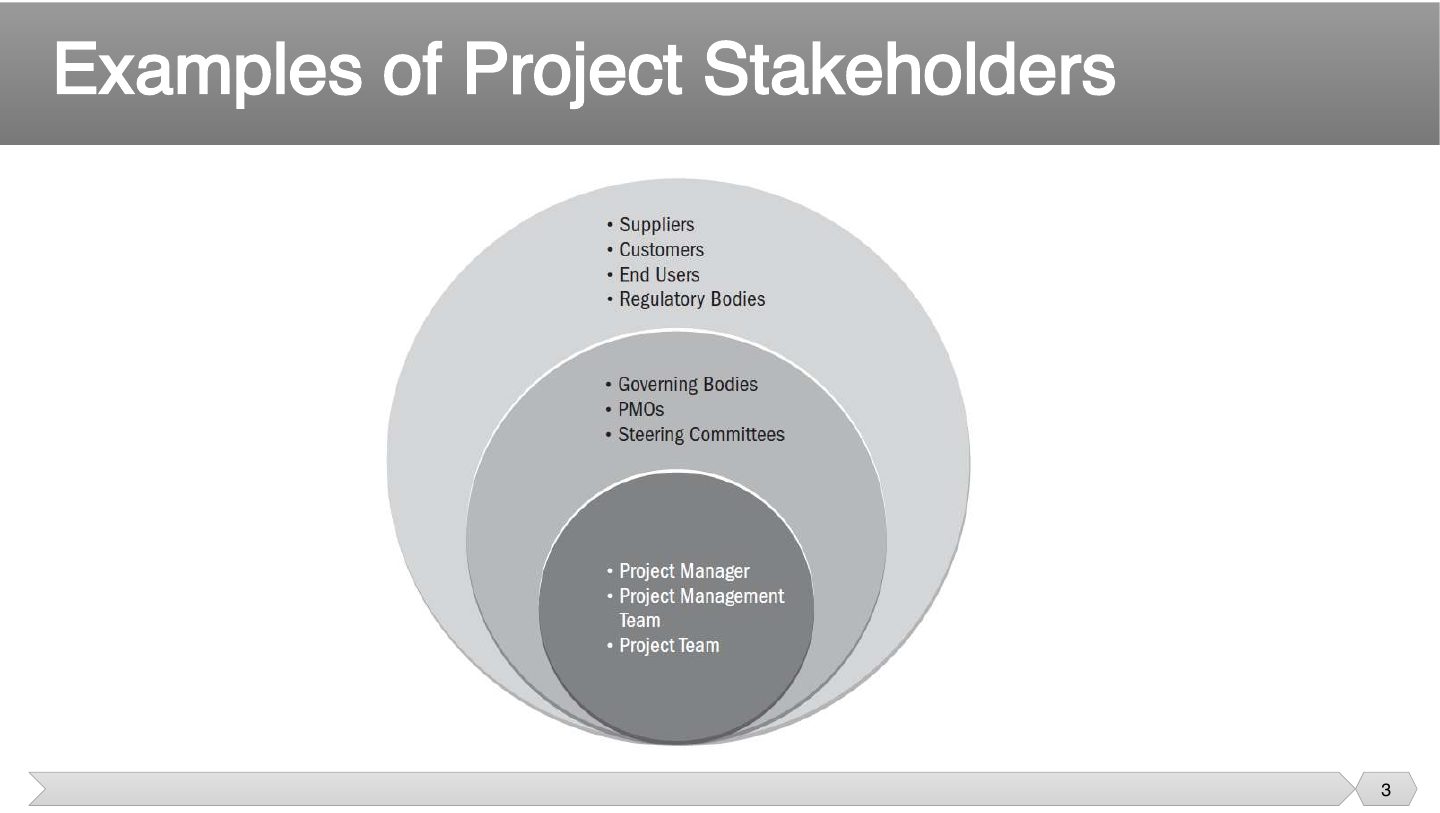
Stakeholders include sponsors, customers, team, suppliers, regulators, end users, functional managers…
Seen again Ch 2, slide 7: Internal vs. external stakeholders
Seen again Ch 1.2, slide 3: Stakeholder definition
Which is an example of a project stakeholder?
You can’t treat everyone the same way, as each stakeholder needs something different. Stakeholder management works out a suitable approach for each, and keeps it going throughout the project.
Q3.1 · stakeholder management process: inputs, techniques, outputs
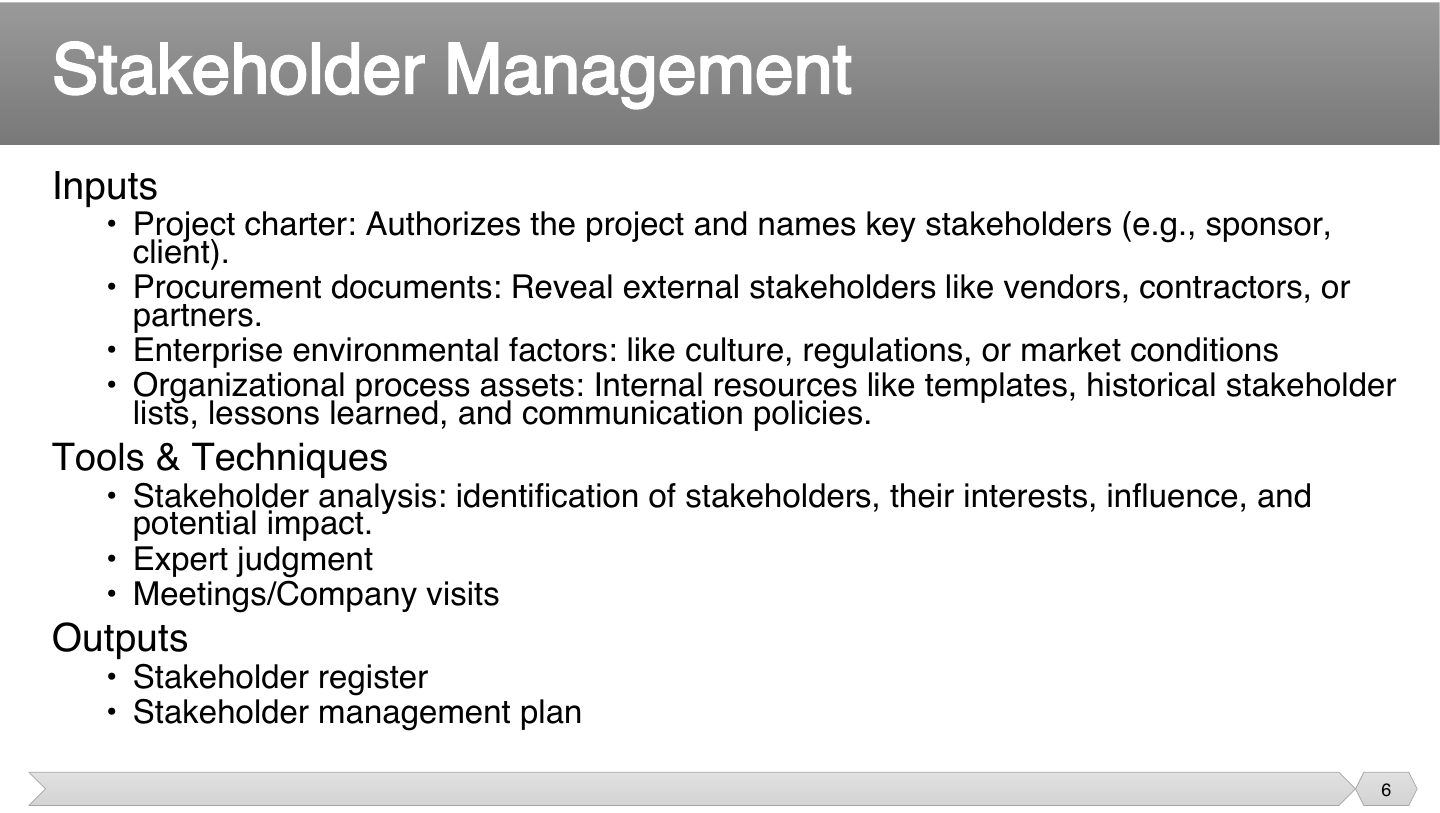
Where do you learn who’s involved? The charter names key people, and contracts reveal vendors. Past records save you from starting from nothing.
A list of names isn’t enough, so you need to find out what each person wants and how much power they have. Stakeholder analysis does that, and expert judgment catches what you’d miss.
One records who they are (the register), and the other says how you’ll deal with them (the management plan). Don’t mix them up, since each has a different purpose.
Tip This slide answers Final 242 Q3.1 almost word for word. Learn two items per column.
Q3.1 · stakeholder management process: inputs, techniques, outputs
How does the stakeholder management process contribute to project success? Give two inputs, techniques and outputs (Final 242).
It identifies everyone who can affect or is affected by the project, analyzes their interests and influence, and plans how to engage each one, so support is kept, resistance is handled early and requirements and expectations are clear. Inputs: the project charter (names key stakeholders such as sponsor and client) and procurement documents (reveal vendors and contractors); also enterprise environmental factors and organizational process assets. Tools and techniques: stakeholder analysis (interests, influence, impact, e.g. a power/interest grid) and expert judgment; also meetings. Outputs: the stakeholder register (who they are, requirements, expectations, influence, classification) and the stakeholder management plan (current vs desired engagement, communication needs, strategies).
Which is an OUTPUT of stakeholder management?
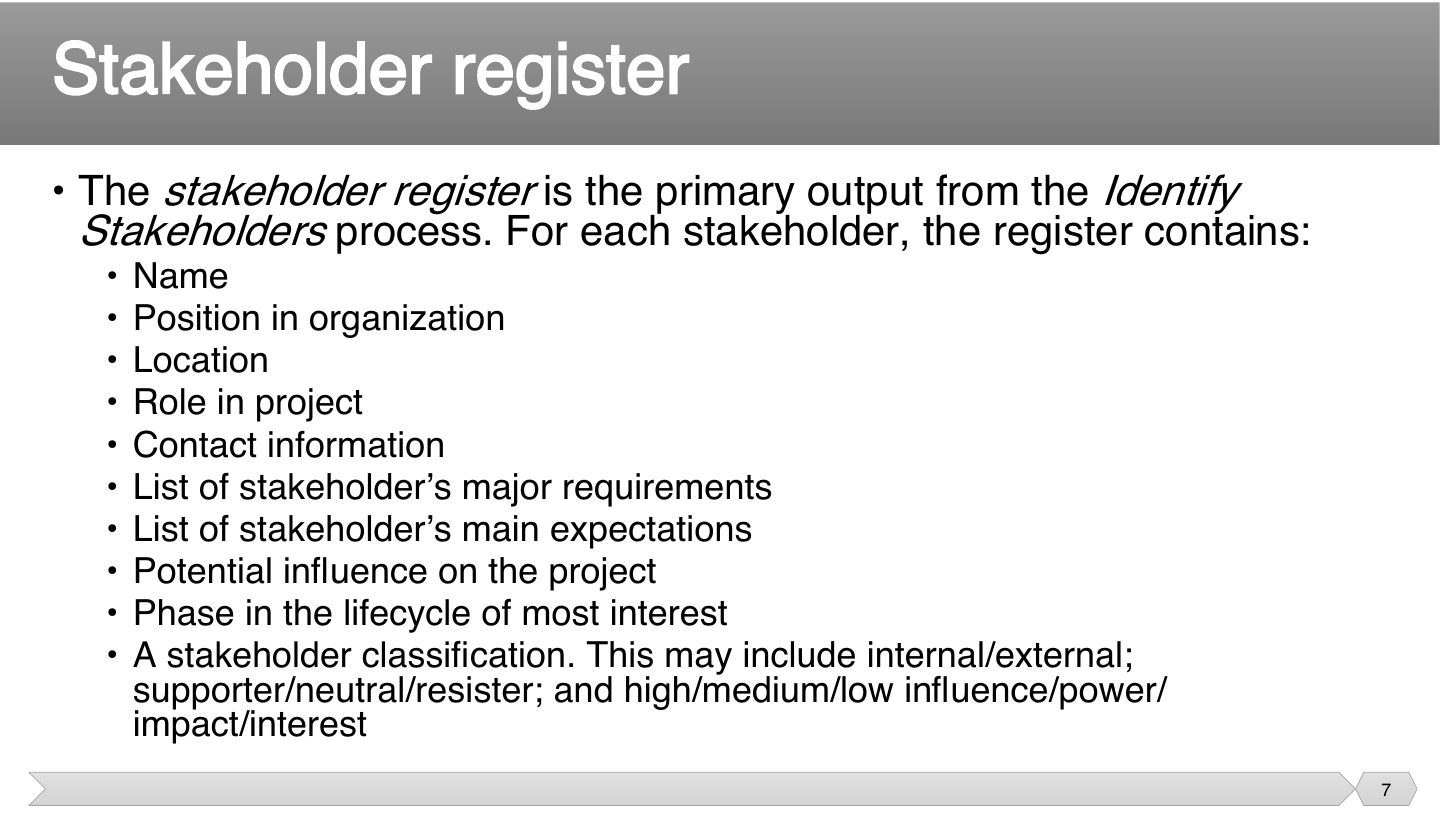
It’s a reference you’ll keep using. It records more than contact details: what they want and how much influence they have tell you how to treat them. It’s the main output of identifying stakeholders.
Which is the primary output of identifying stakeholders?
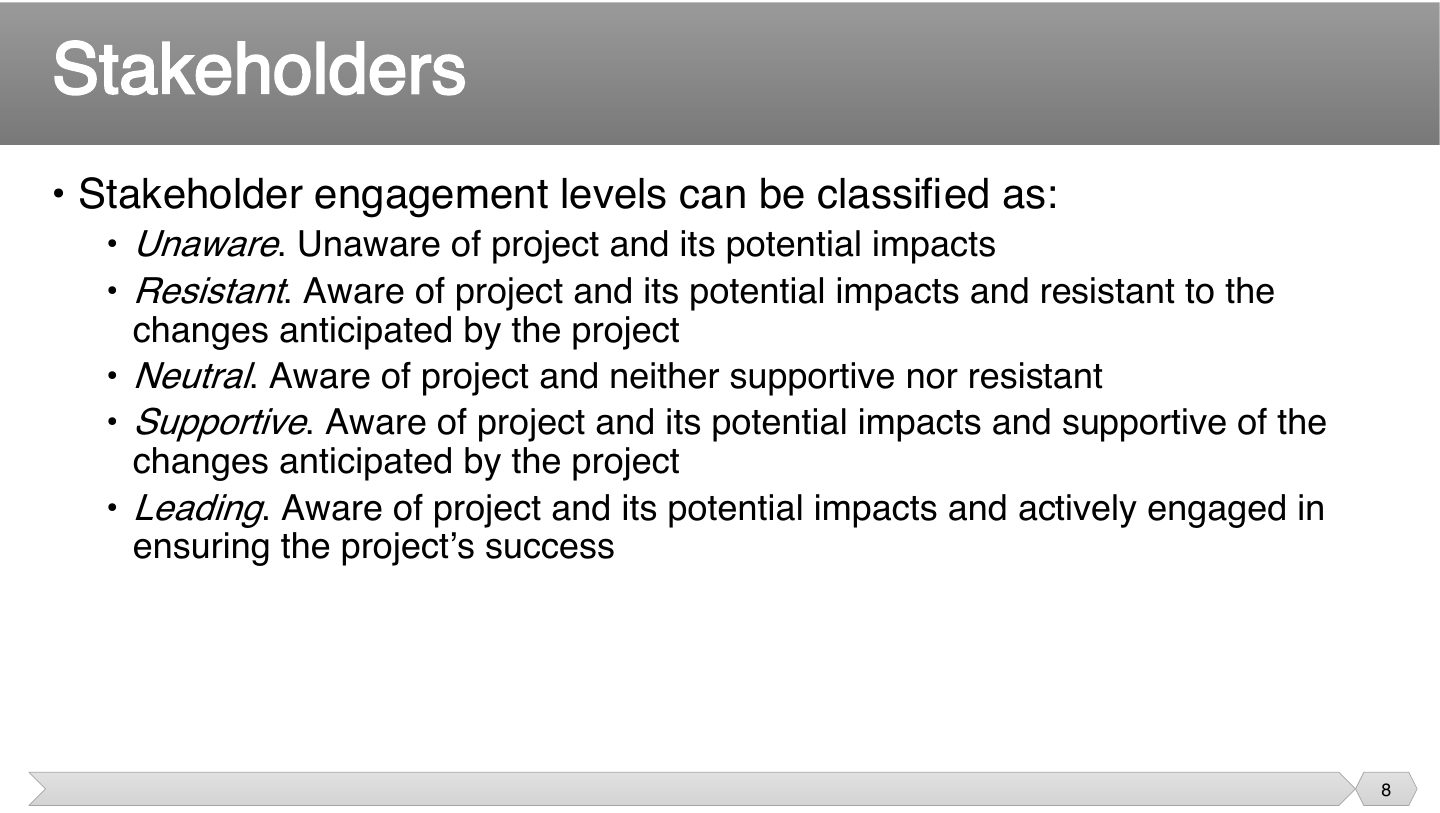
Think of it as a ladder from not knowing to helping lead. The aim is rarely to move everyone to the top, just to where the project needs them. A resistant person may need only to become neutral.
Memory trick “U R No Strong Leader”: Unaware, Resistant, Neutral, Supportive, Leading.
Q3.3 · engagement levels table with Pull / Push / Interactive
Compare stakeholder engagement levels and suggest the best communication method (pull, push or interactive) for each (Final 242).
Unaware (low knowledge, can’t support yet) → push: announcements and briefings to make them aware. Resistant (aware but opposed; can block) → interactive: meetings to hear concerns and negotiate. Neutral (aware, neither for nor against) → push status updates plus pull access to the wiki or dashboard to build interest. Supportive (aware and in favour) → pull dashboards and push periodic reports to keep them informed and championing. Leading (actively driving success; high influence) → interactive: steering meetings, demos and joint decisions.
A stakeholder who is aware of the project and actively engaged in ensuring its success is:
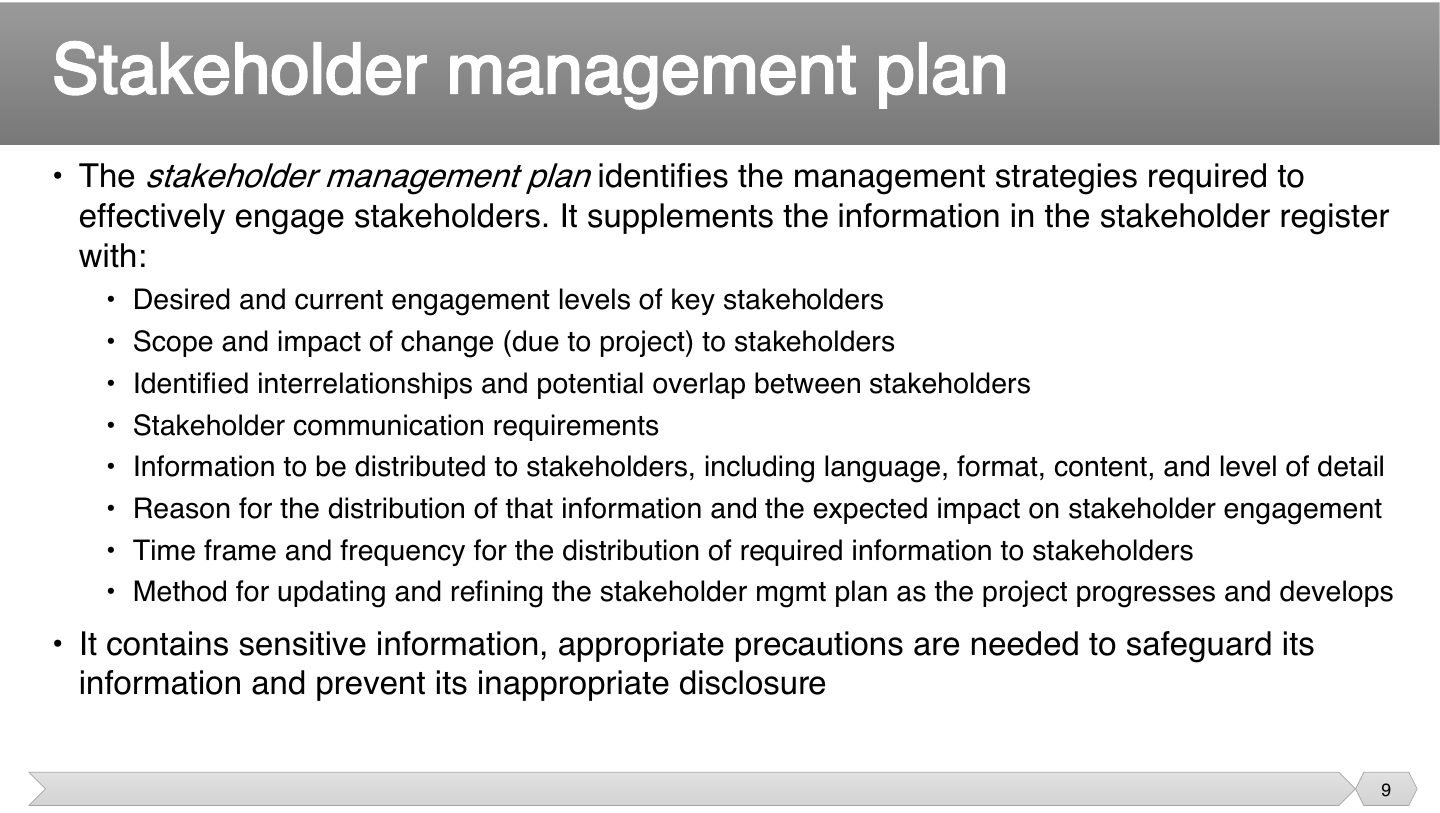
The plan describes real views about real people, so imagine a “resistant” person reading their entry. That’s why it’s sensitive and needs protecting. The key content is the gap between current and desired engagement.
Why should the stakeholder management plan be handled carefully?
What does the plan add to the register?
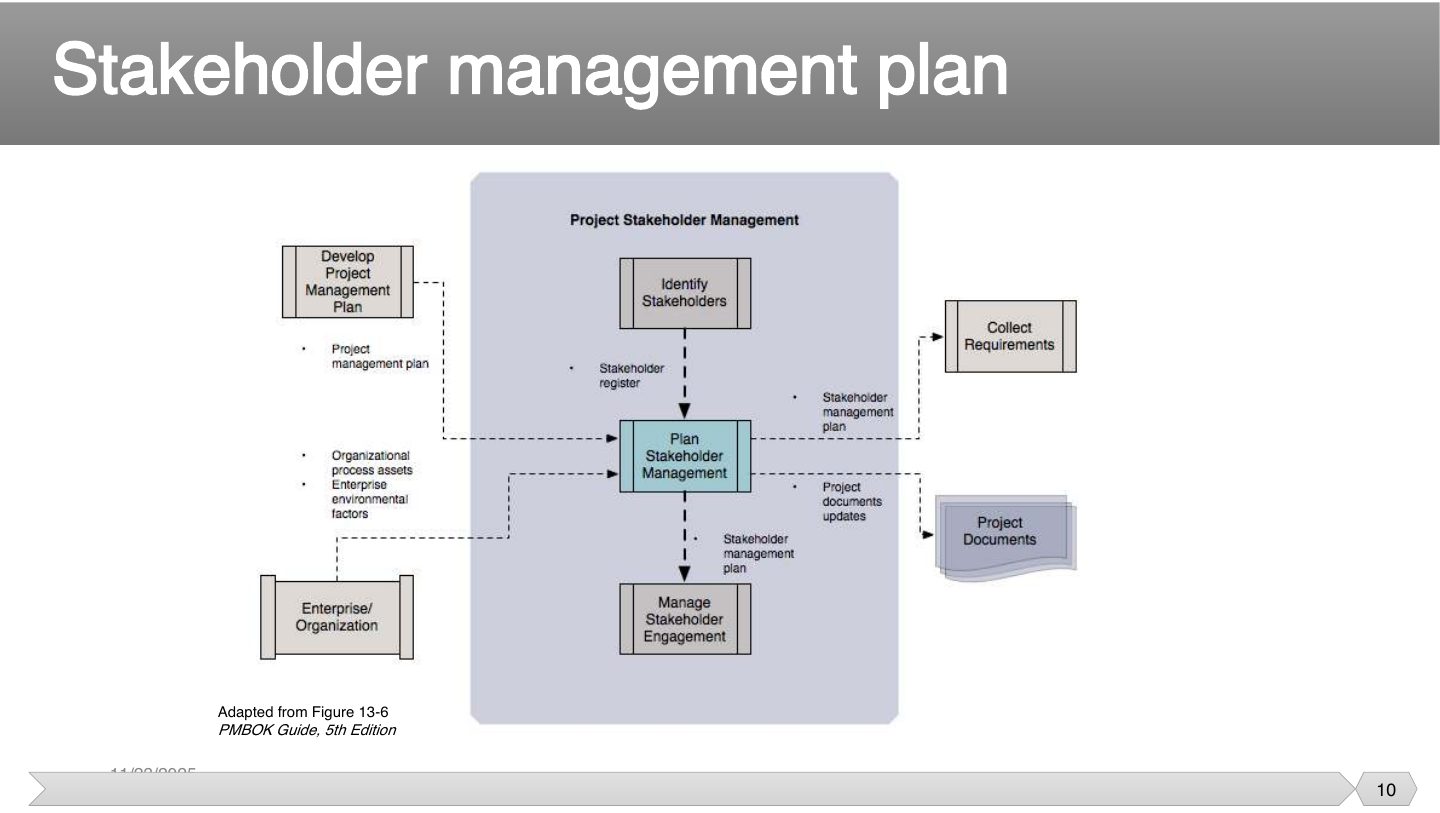
C = current, D = desired engagement. The gap shows where to act.
In the stakeholder engagement assessment matrix, “C” and “D” mean:
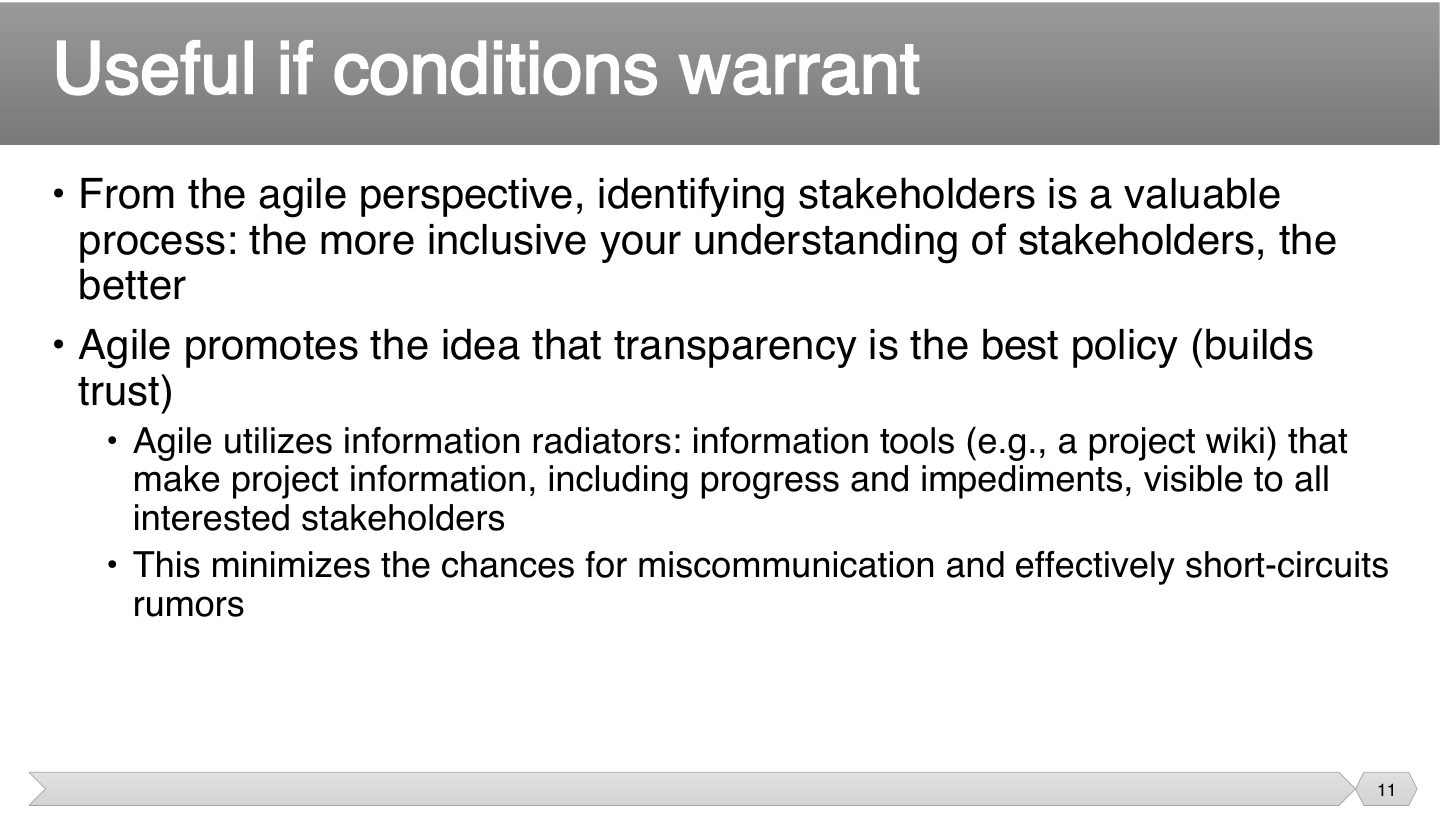
Agile leans the opposite way: share openly, and people fill fewer gaps with rumors. Information radiators make status visible to all, so nobody has to ask or guess.
Seen again Ch 1.2, slide 85: Information radiators
What does agile use to make information visible?
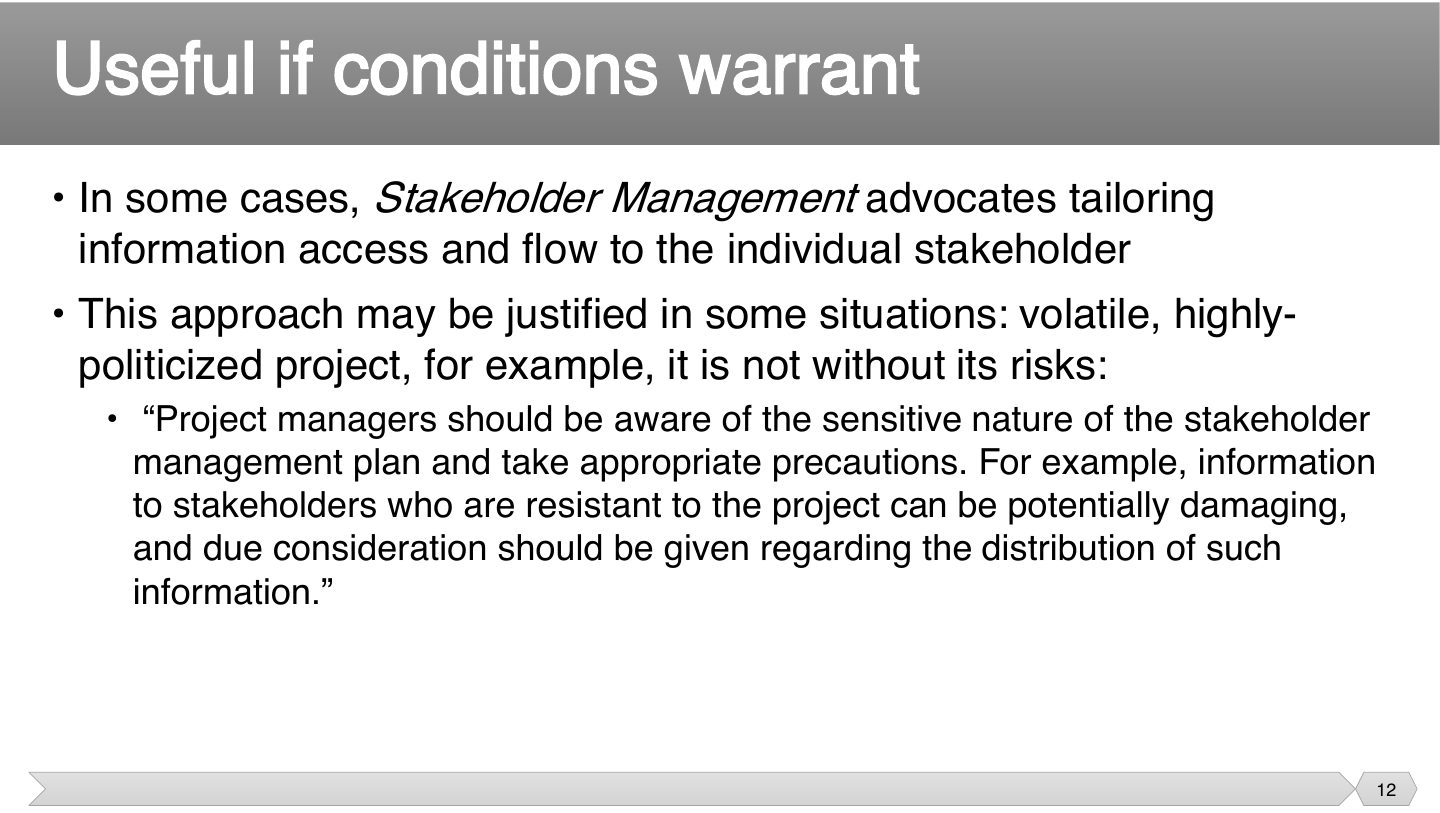
Sometimes people do get different information for good reason, say in a tense political project. But if it’s discovered, trust suffers, which is why it’s not without its risks.
Tailoring information for each stakeholder is:
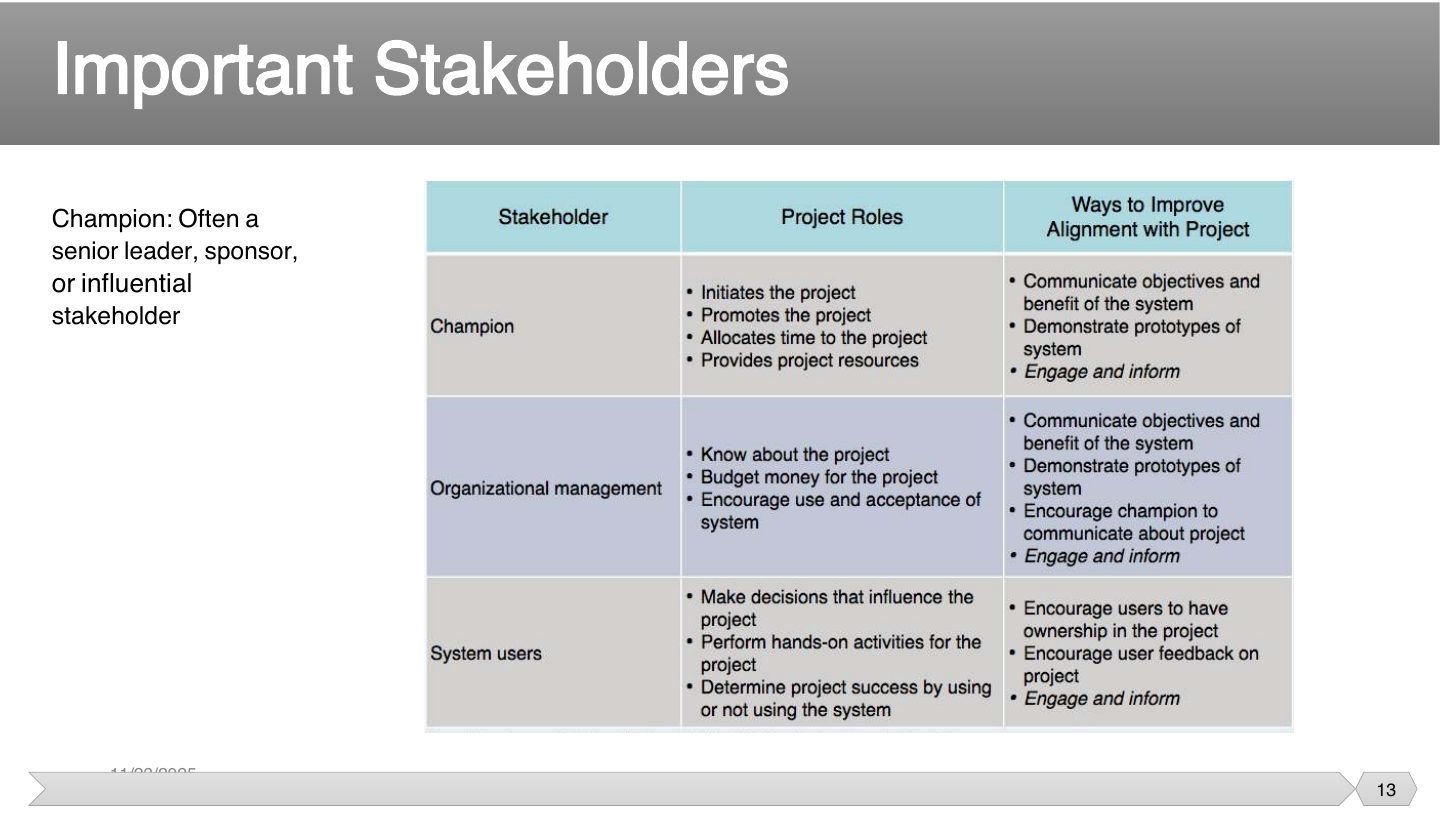
A champion has the power and willingness to speak up for the project when it matters. Finding one early can open doors a PM can’t open alone.
A senior leader actively promotes your project. What are they?
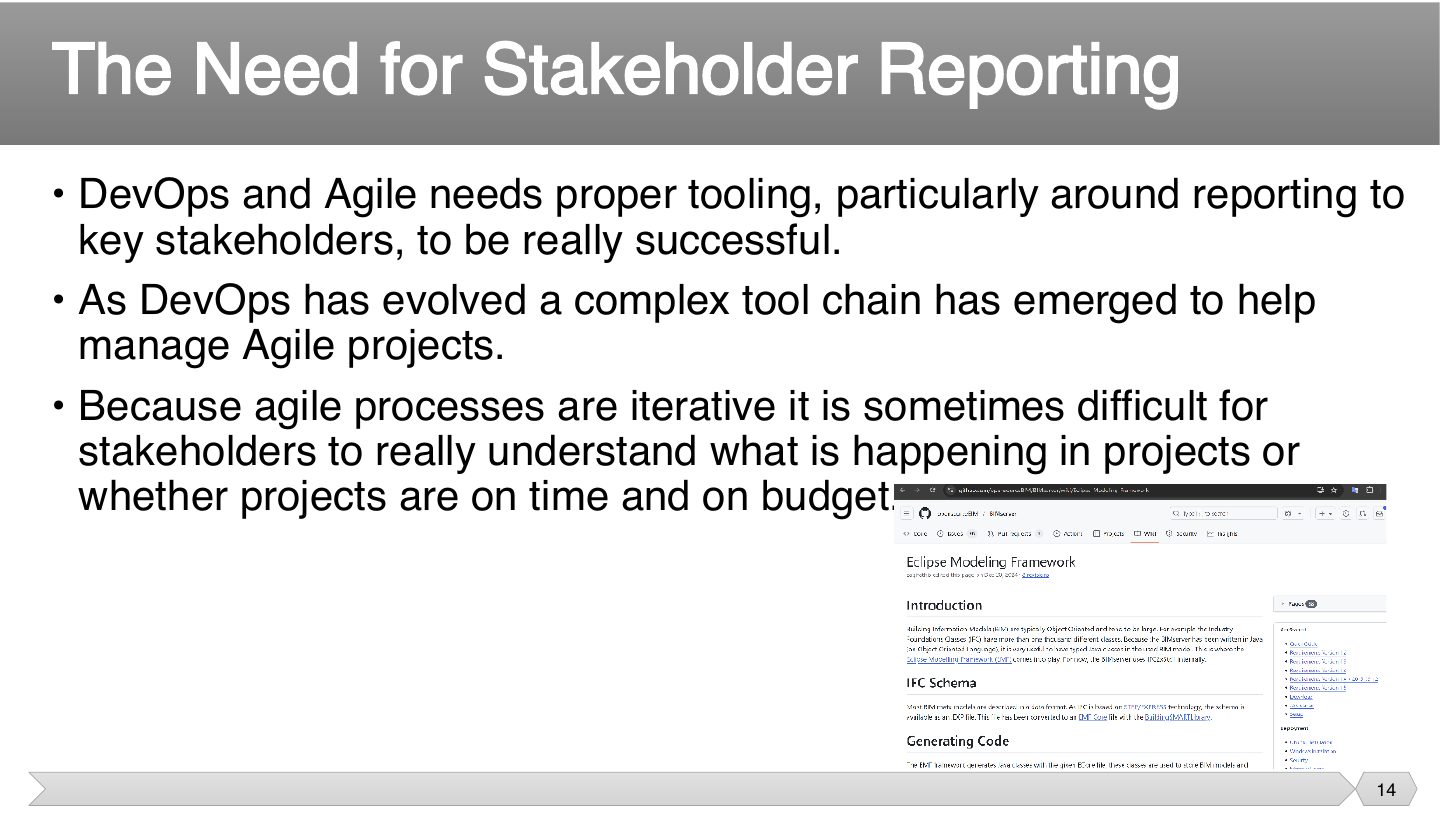
Iterative work doesn’t have obvious milestones, so outsiders can’t easily see progress. Good reporting tools fill that gap, without pulling developers away from their work.
Why do agile projects need good reporting?
A manager overseeing ten projects can’t read ten reports. Dashboards gather the numbers in one place and keep them current, so problems stand out.
How do dashboards help managers?
Even a perfect analysis of stakeholders is useless until you talk to them. That’s why communication is called the most important factor: it’s how all that planning reaches people.
Related question: Q3.1 · how communication skills help manage risk and success
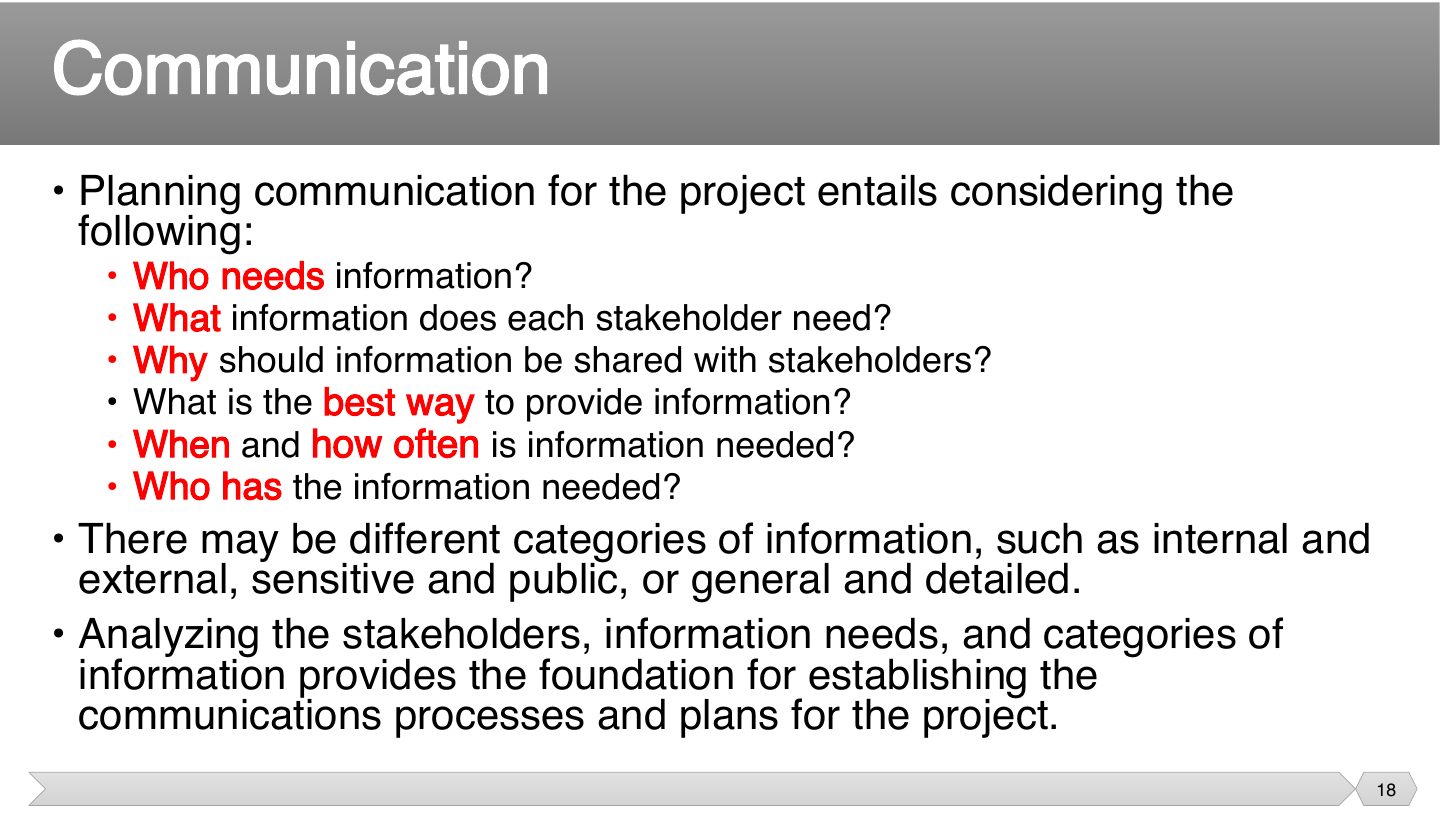
Sending everything to everyone just means nobody reads it. Asking these questions makes sure each person gets what they need, in a form they’ll use. That’s all communication planning is.
Memory trick Who · What · Why · How · When · Who-has.
Which is a question in planning communication?
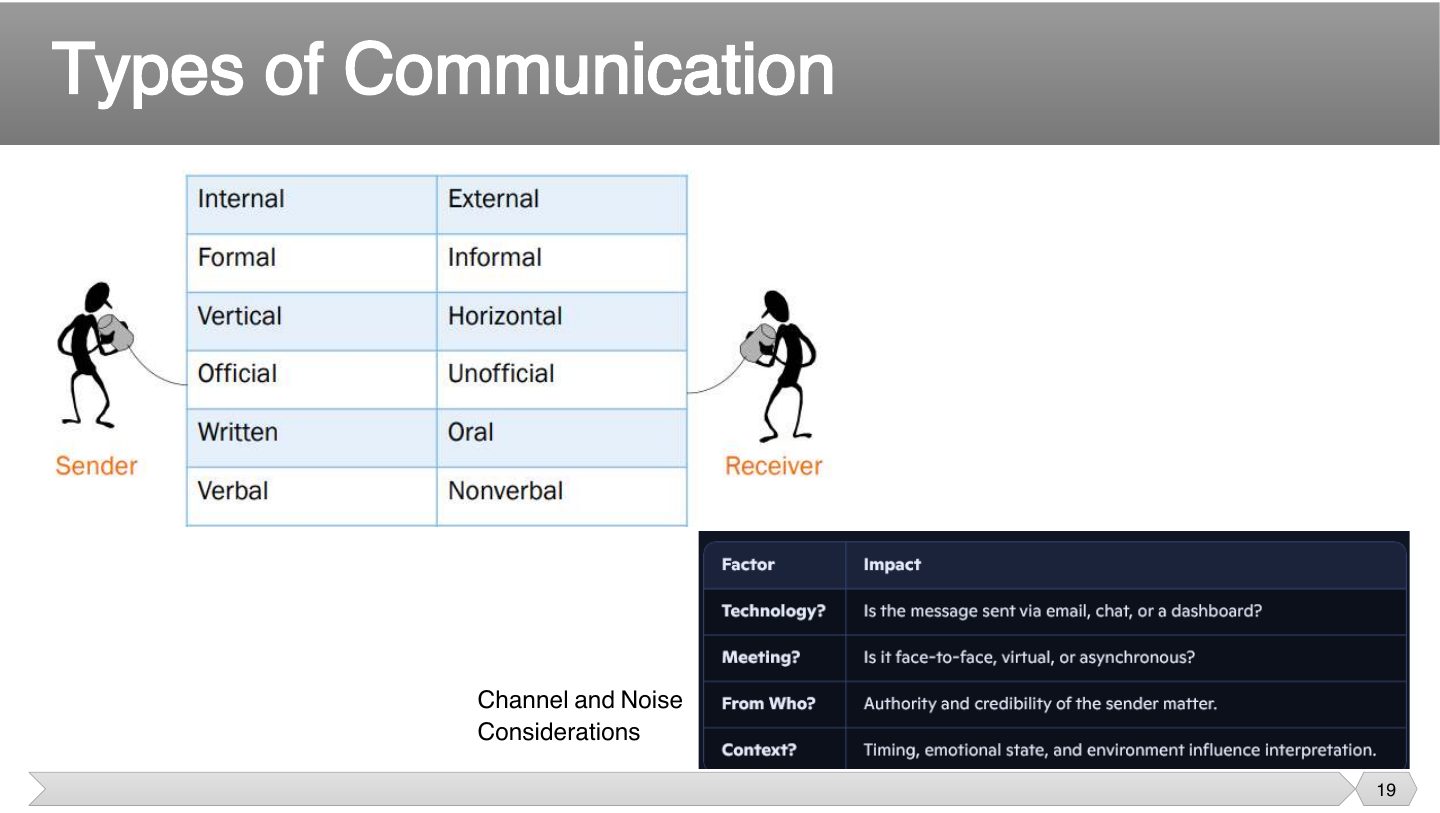
A casual chat between peers is:
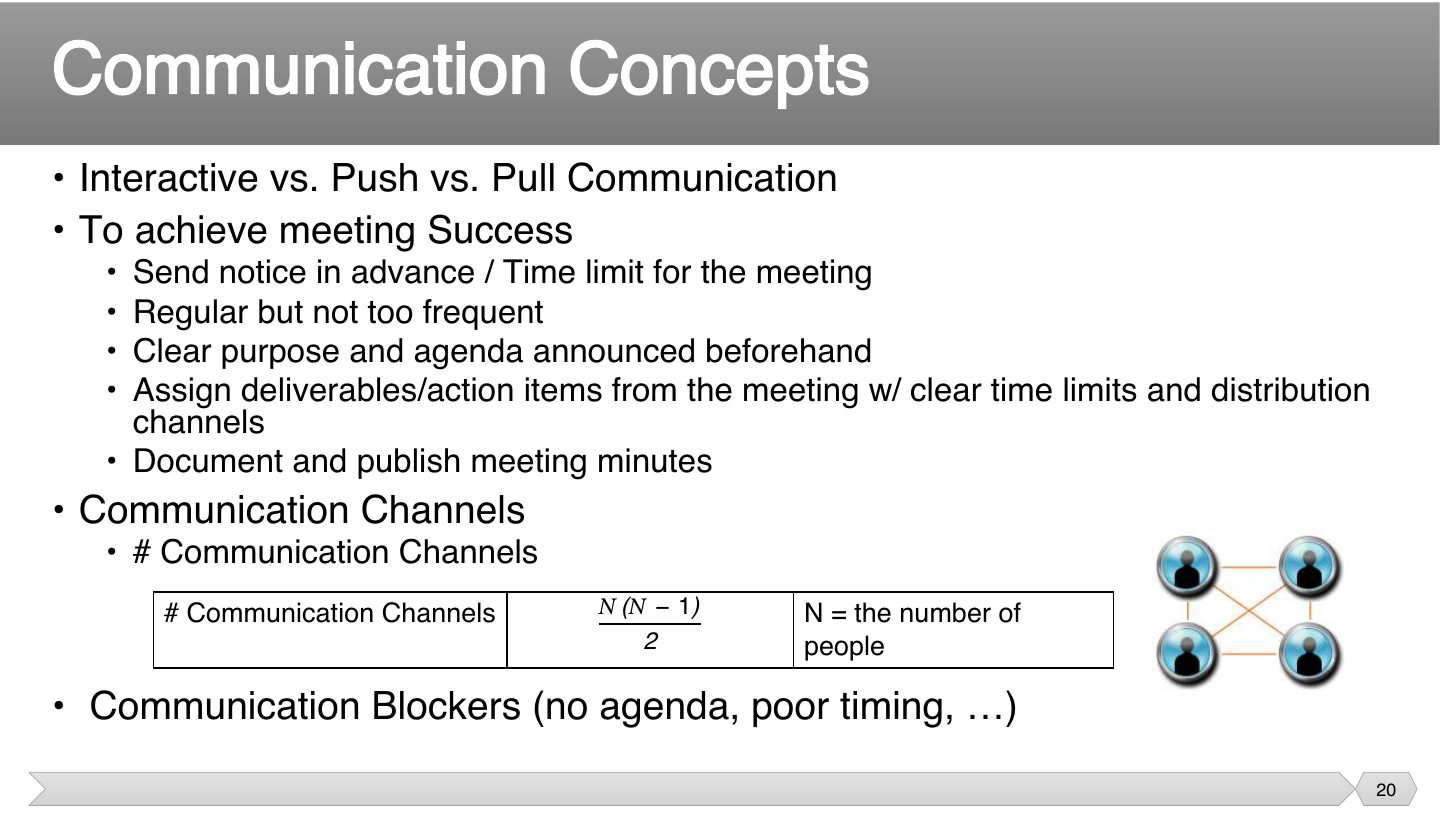
Channels = N(N−1)/2. Team of 7 → 21. This exact calculation was Final 242 Q3.2.
Seen again Ch 3, slide 34: Communication paths grow with team size
Q3.2 · number of communication channels for 7 members
Calculate the number of communication channels for a project team of 7 members.
A team grows from 5 to 8 people. How many channels are added?
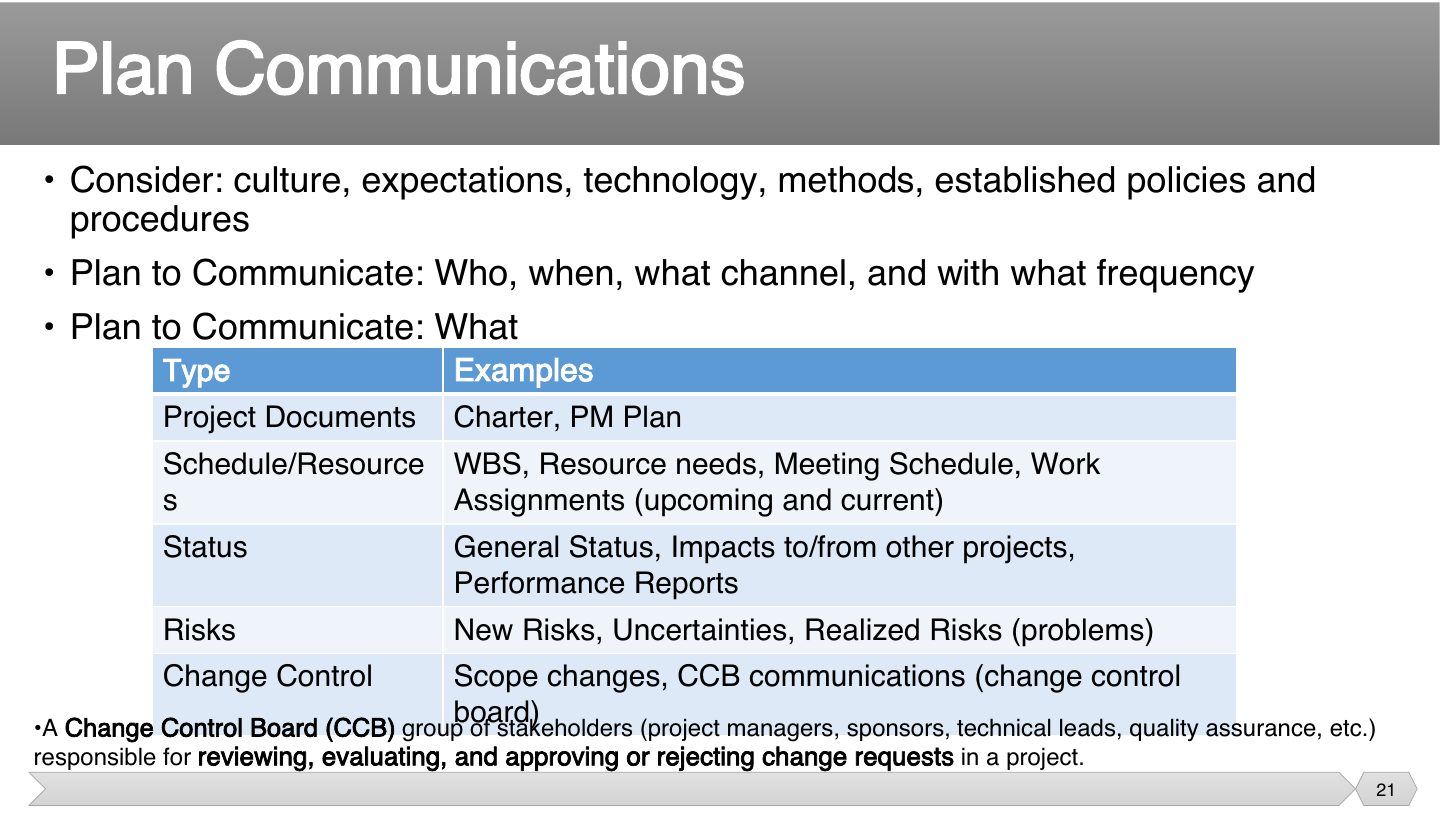
Each kind of information has different readers. A sponsor wants status and risks, while a developer wants work assignments. The CCB gets its own line, as it decides on changes.
Seen again Ch 9, slide 8: Integrated change control
What does a Change Control Board do?
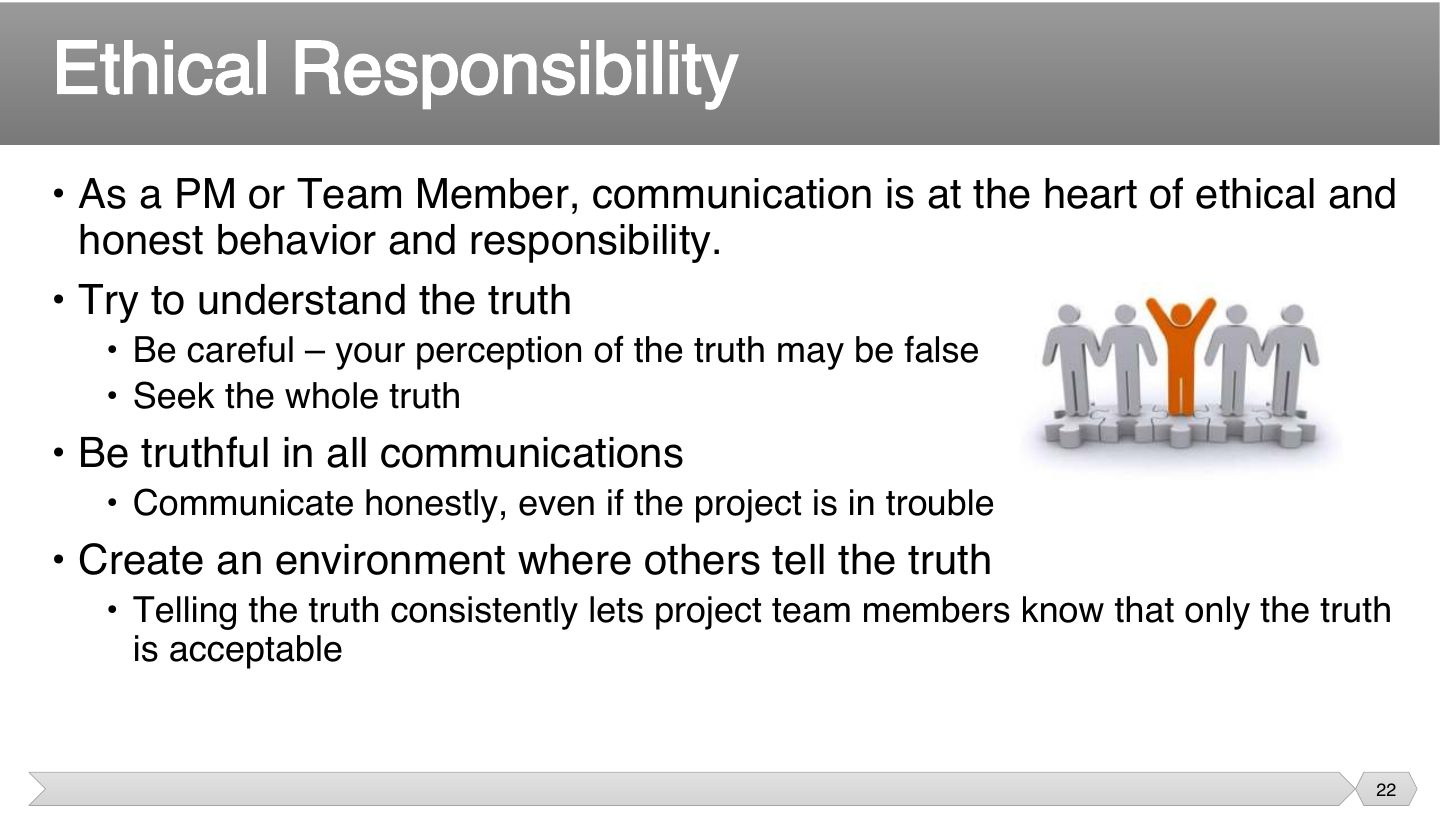
Bad news doesn’t improve with delay. Honesty lets others act in time, and if people see you tell the truth when it’s hard, they’ll do the same.
Seen again Ch 1, slide 55: PMI code: honesty
The project is in trouble. What should you do?
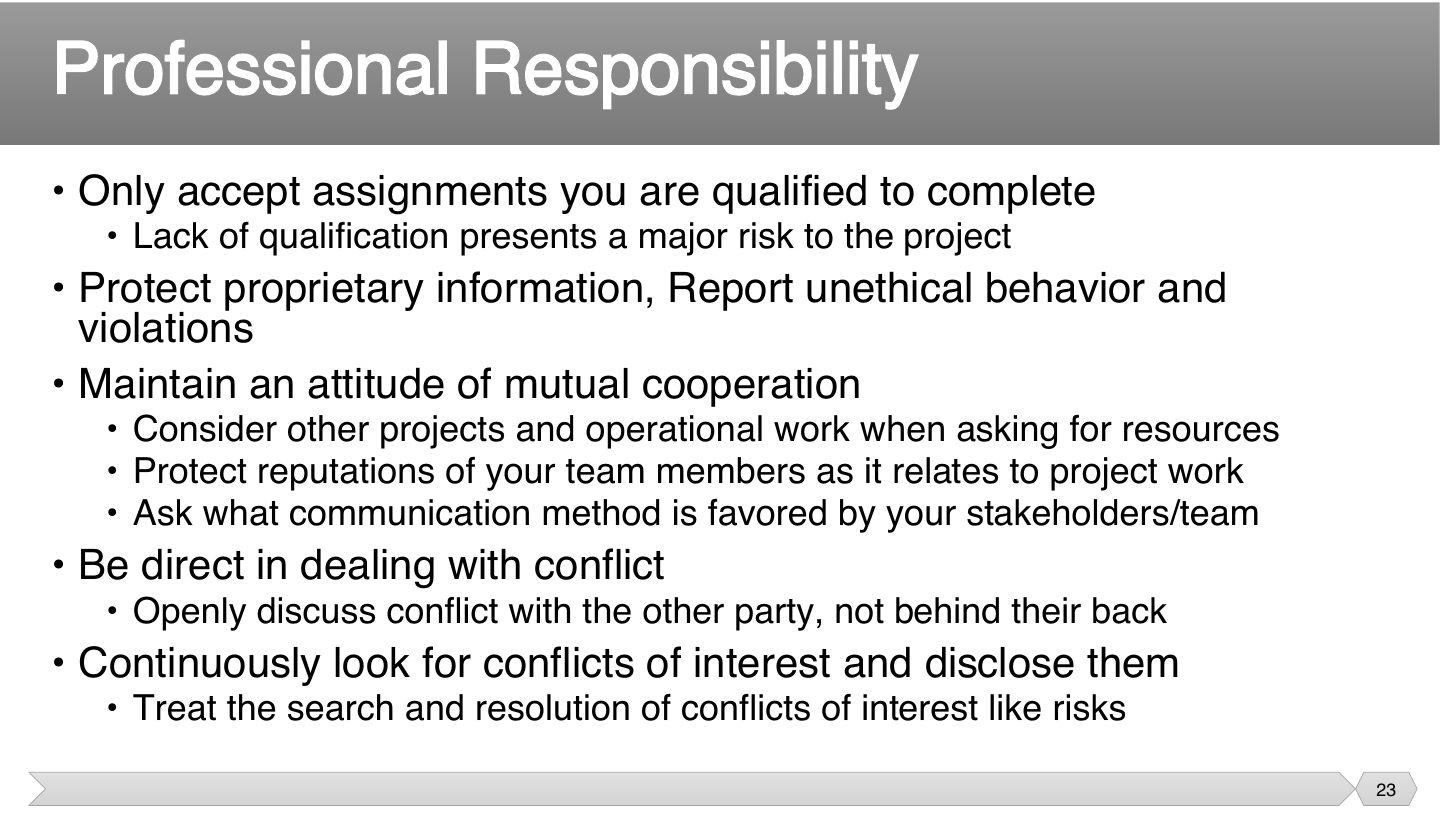
Taking on work you can’t do is a risk for the whole project, even if it’s flattering to be asked. So this is about protecting the project and people, by being open, not just following rules.
You’re offered an assignment you aren’t qualified for. What’s the professional response?
You spot a conflict of interest. What should you do?
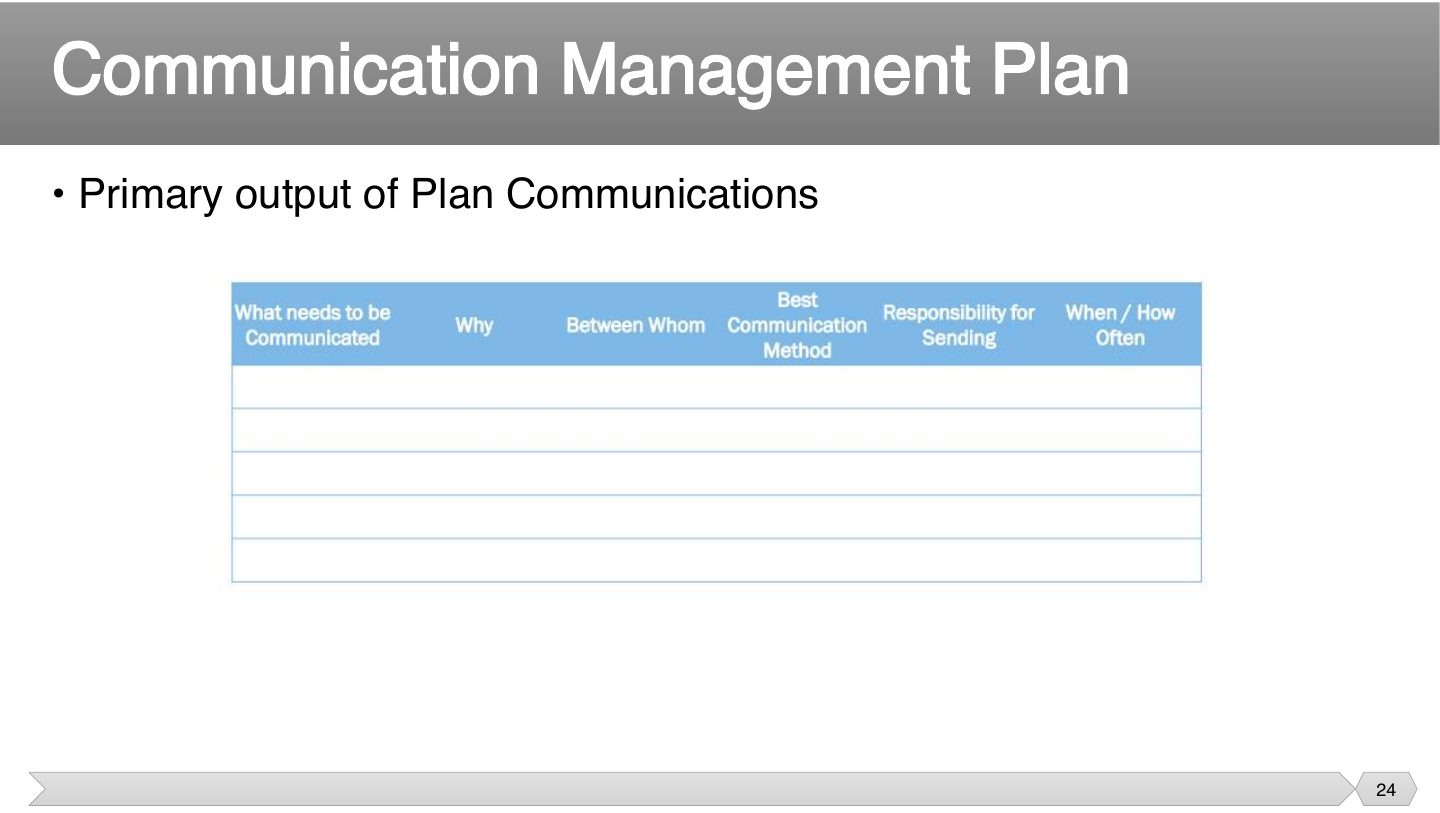
It’s the “who gets what, how and when” written down, so that people aren’t relying on memory. That’s why it’s the main output of plan communications.
The communication management plan is the primary output of:
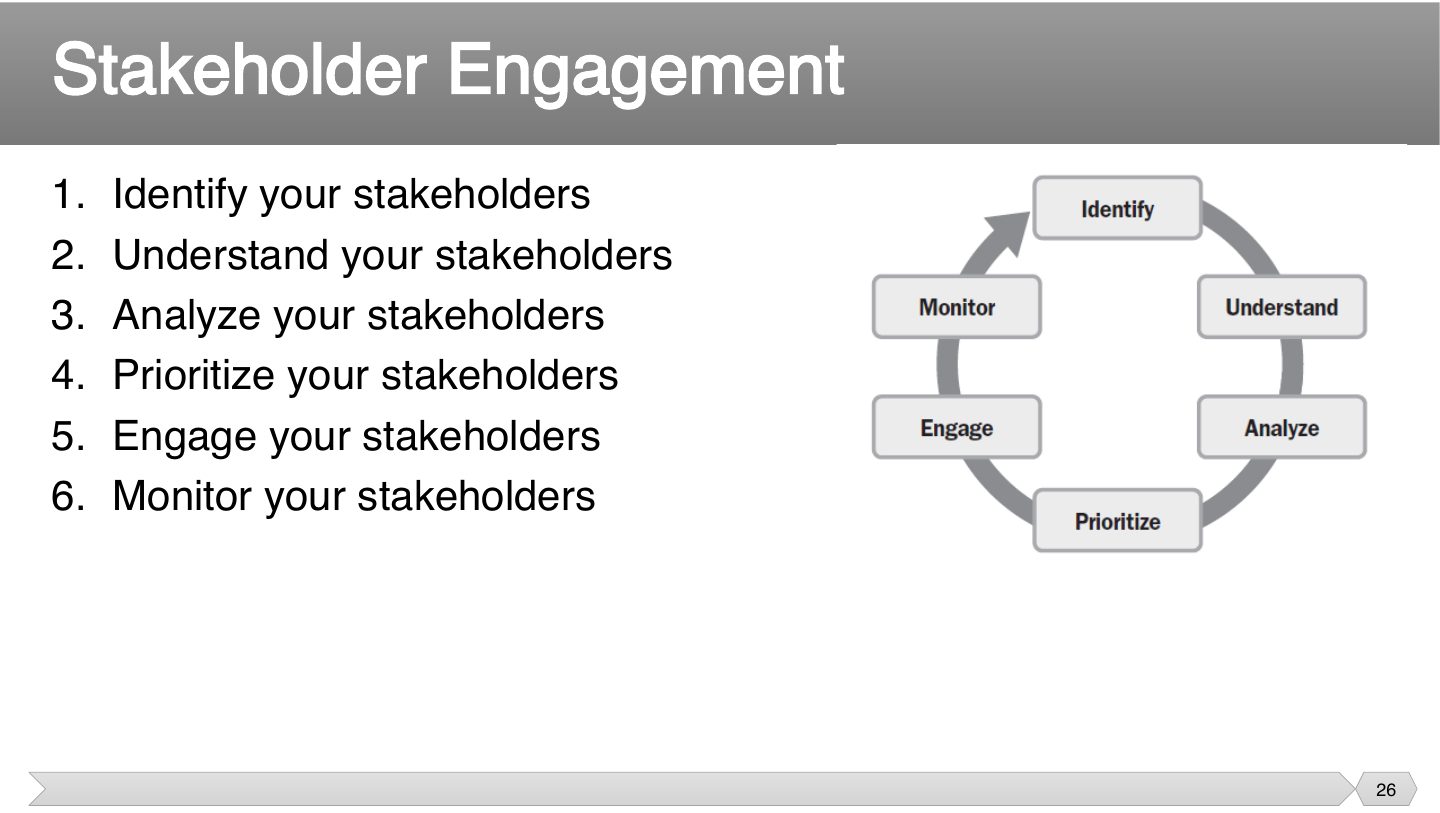
Each step builds on the last. You can’t prioritize people you haven’t analyzed, and monitoring feeds back to the start, as people’s views change.
Memory trick “I Understand And Prioritize Every Member”.
Q3.2 · identify and prioritize stakeholders; communicate with each group
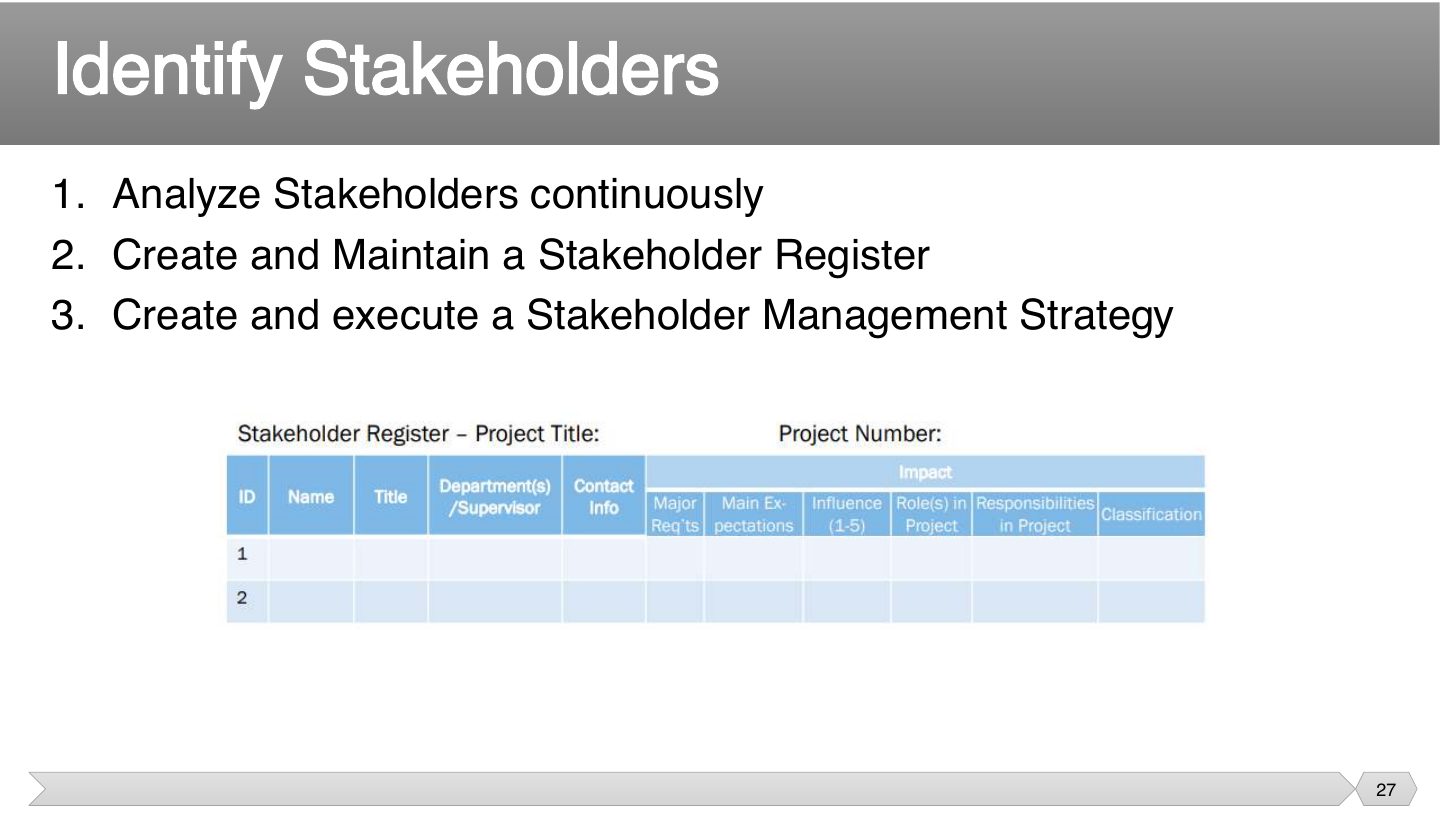
Stakeholders change as a project moves, which is why you analyze continuously. So the register stays alive, and the strategy follows what it shows.
When should stakeholders be analyzed?
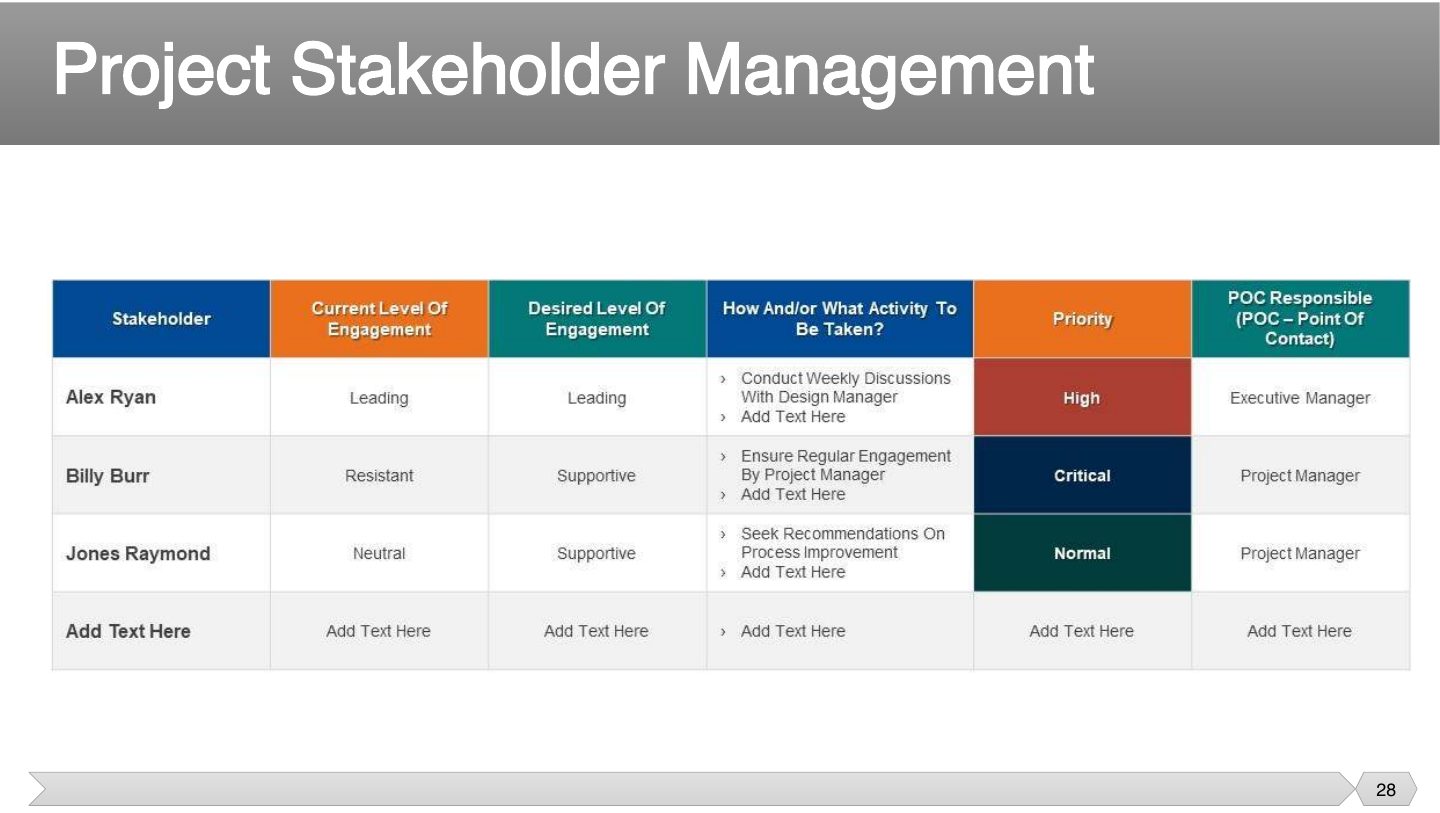
This is what the gap looks like in practice. The person is resistant today and is needed as supportive, so the plan targets that change, with critical priority.
A stakeholder is resistant, and the project needs support. What’s the job?
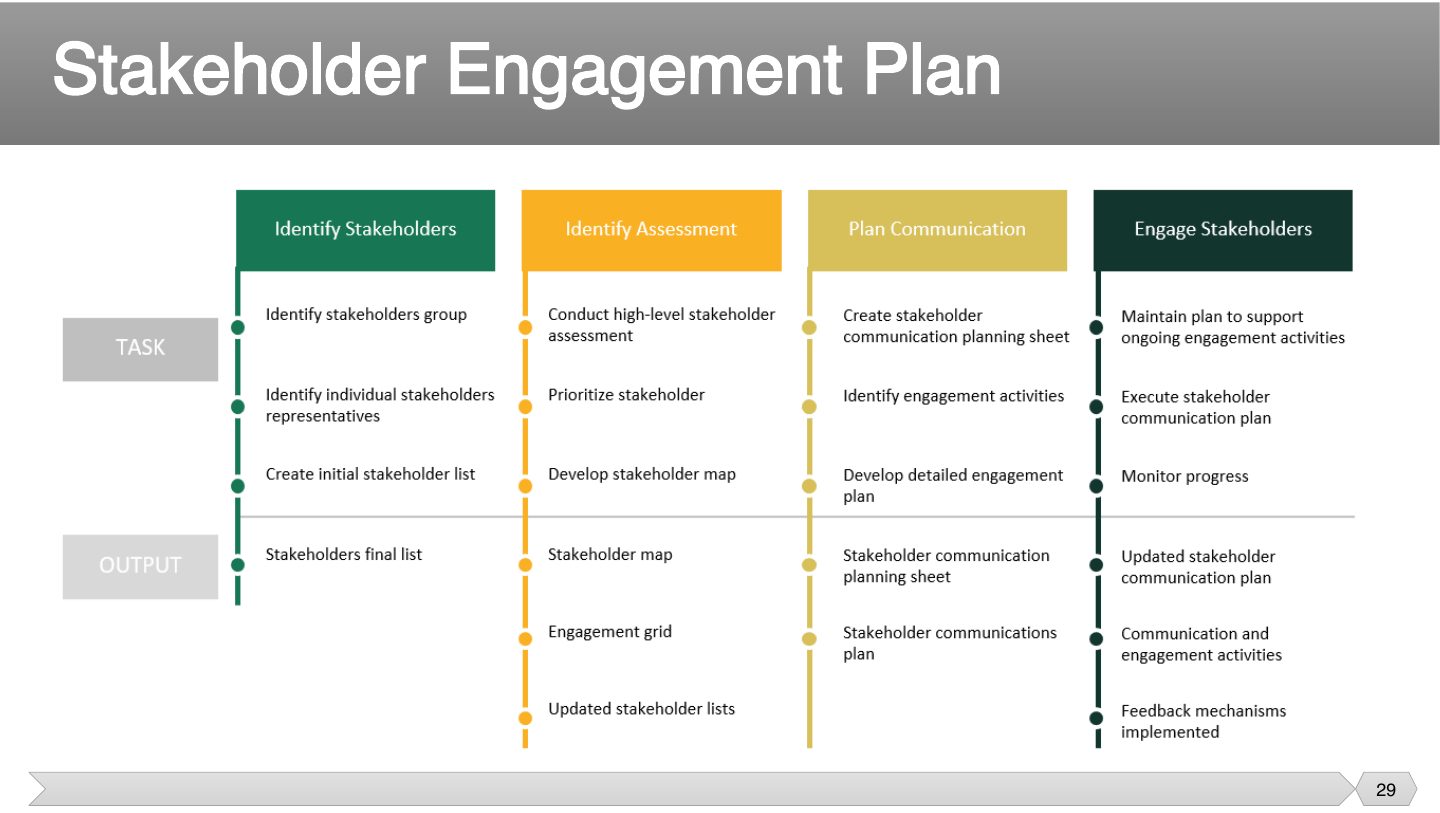
What does a stakeholder engagement plan set out?
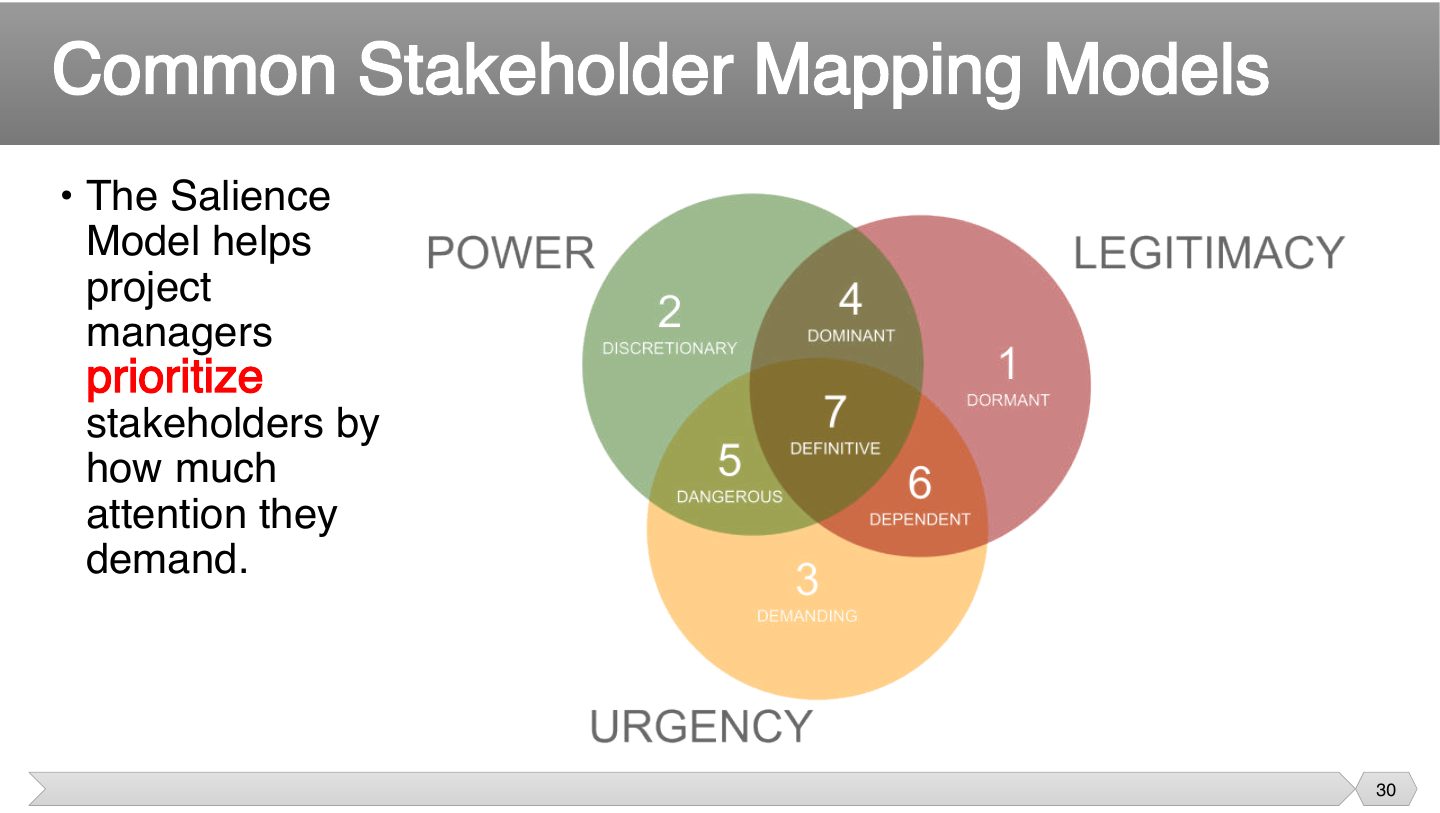
Instead of guessing who’s important, score each person. Someone with all three of power, legitimacy and urgency demands attention right now, and each missing attribute lowers the priority.
Q3.2 · identify and prioritize stakeholders; communicate with each group
In the salience model, a stakeholder with power, legitimacy AND urgency is:
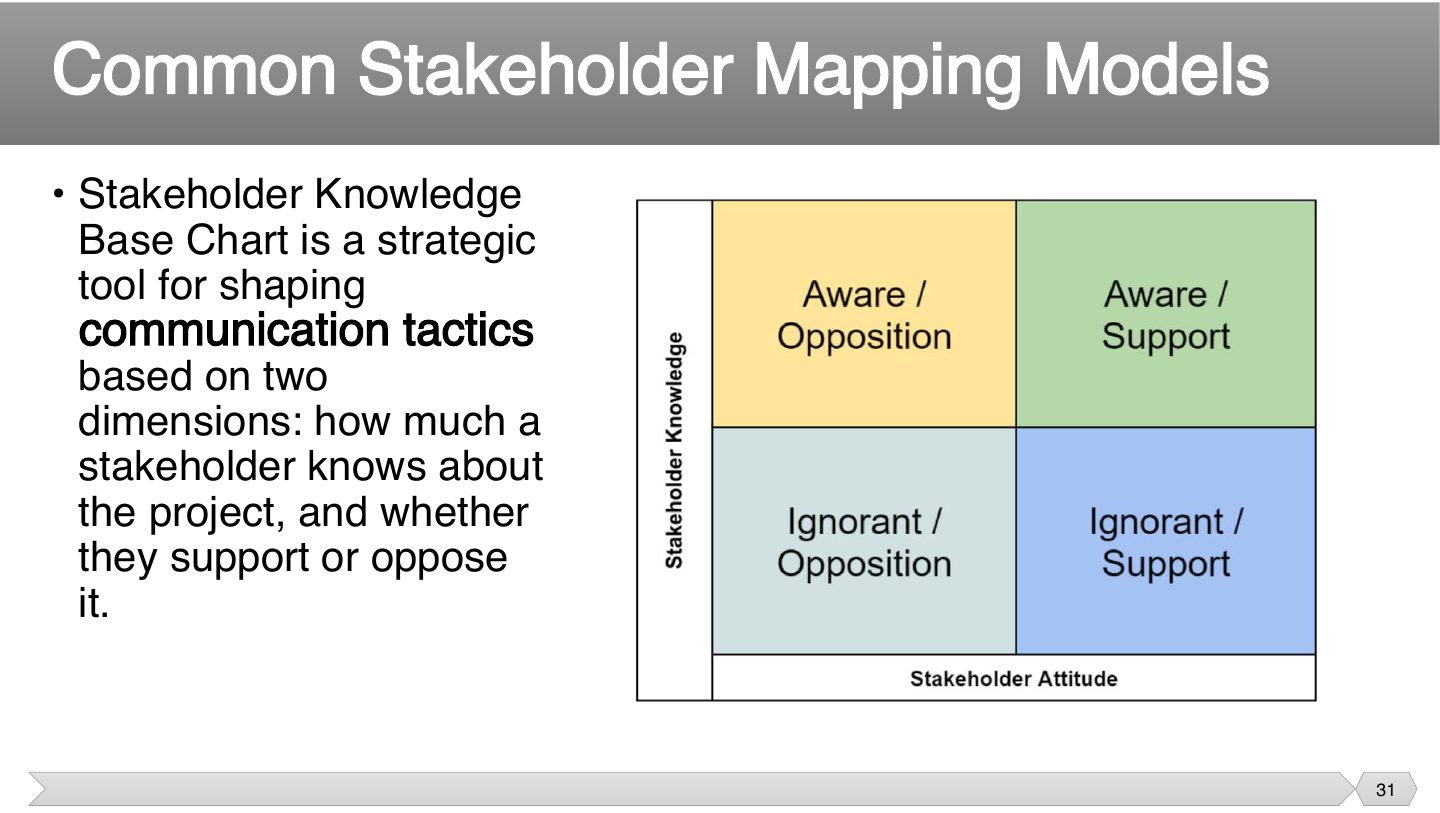
Knowledge and attitude change independently. Someone may oppose you because they don’t understand, so a knowledge base chart helps decide whether to inform them or manage them.
What two dimensions does the knowledge base chart use?
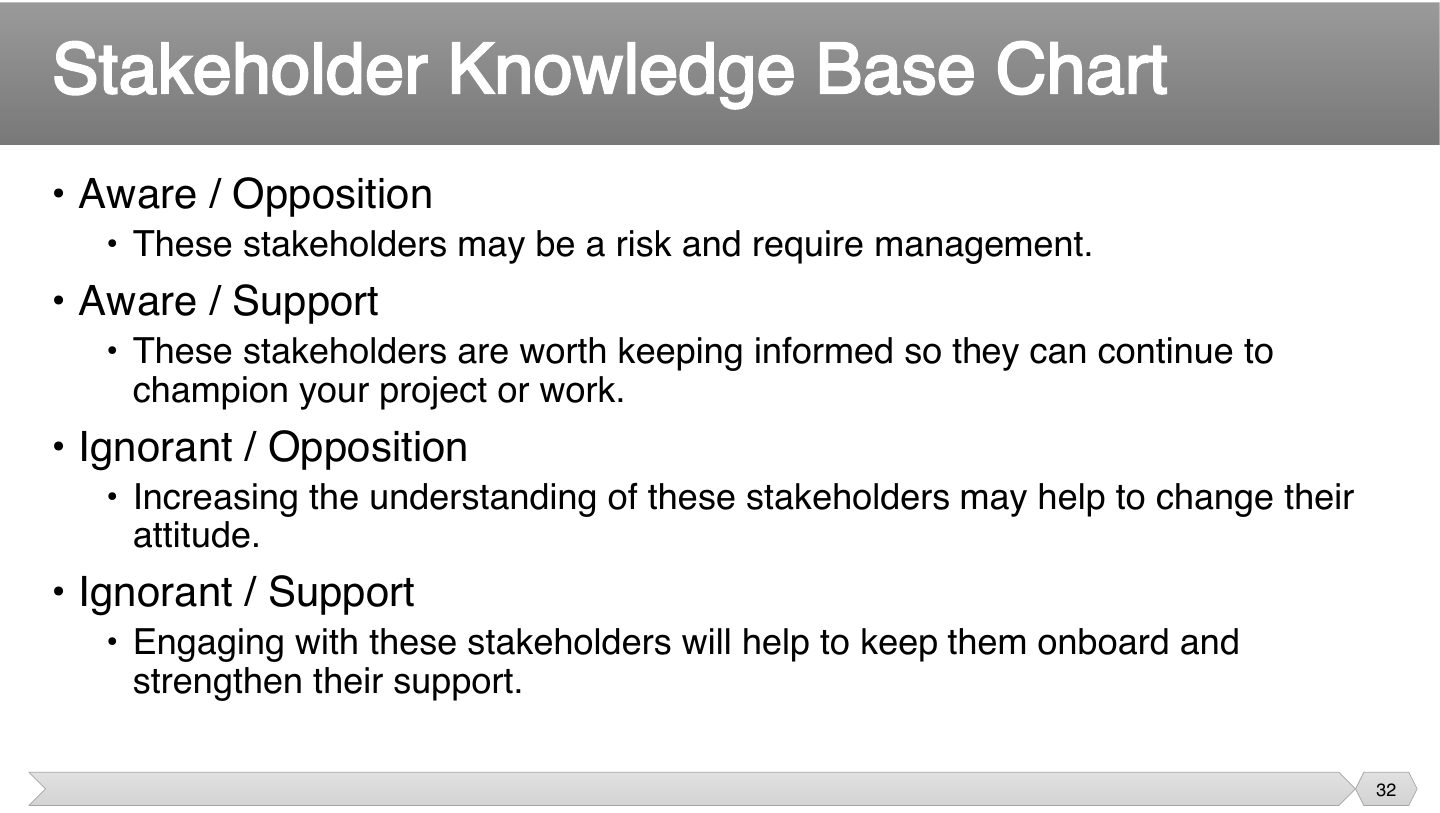
Why treat them differently? An informed opponent has a real objection, so they’re a risk to manage, whereas an uninformed one may change their mind once they understand.
A stakeholder who opposes the project because they misunderstand it (ignorant/opposition) should be:
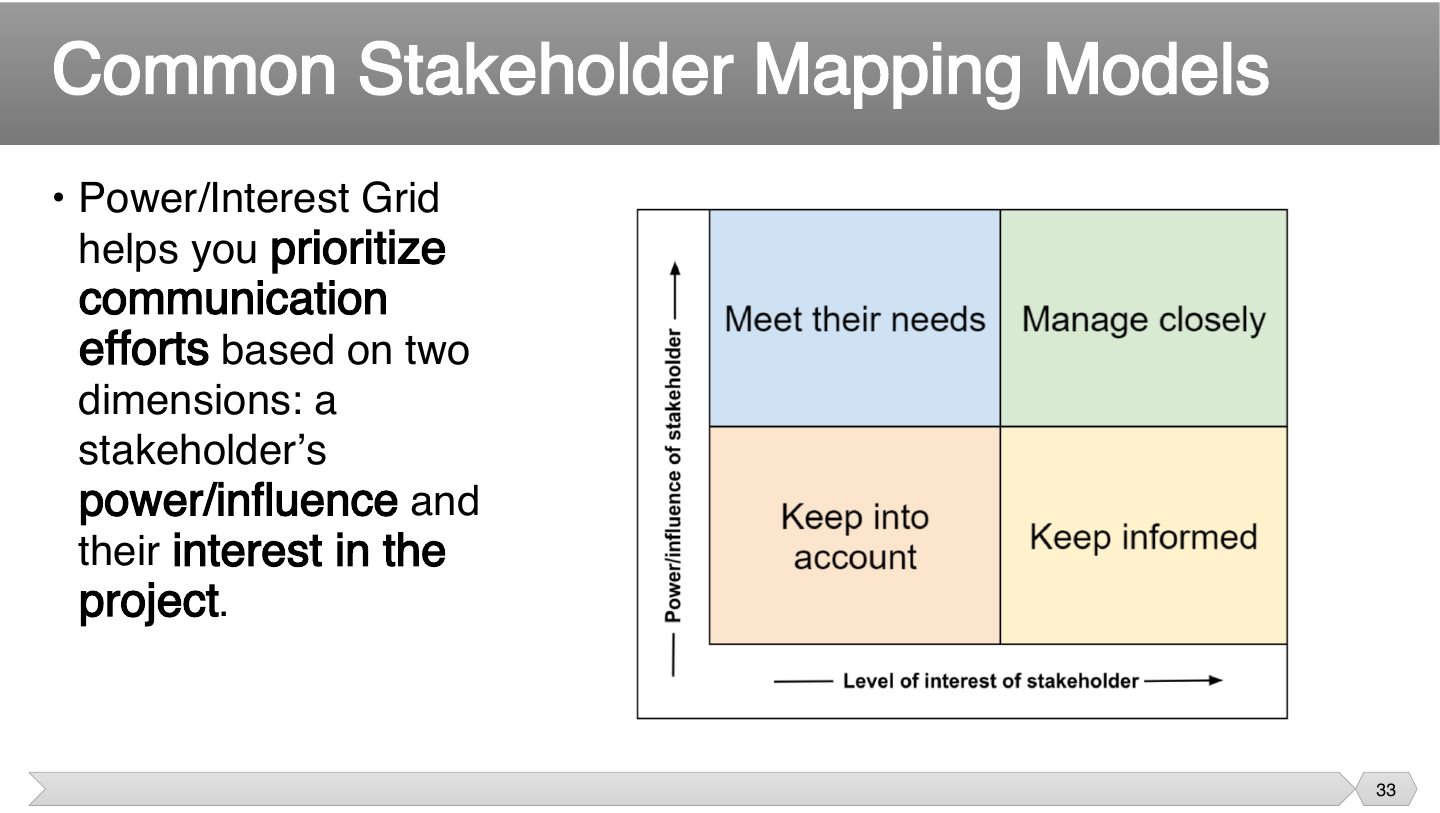
You can’t give everybody equal time. Two questions decide how much attention someone gets: can they affect the project, and do they care about it? That’s what a power/interest grid shows.
Q3.2 · identify and prioritize stakeholders; communicate with each group
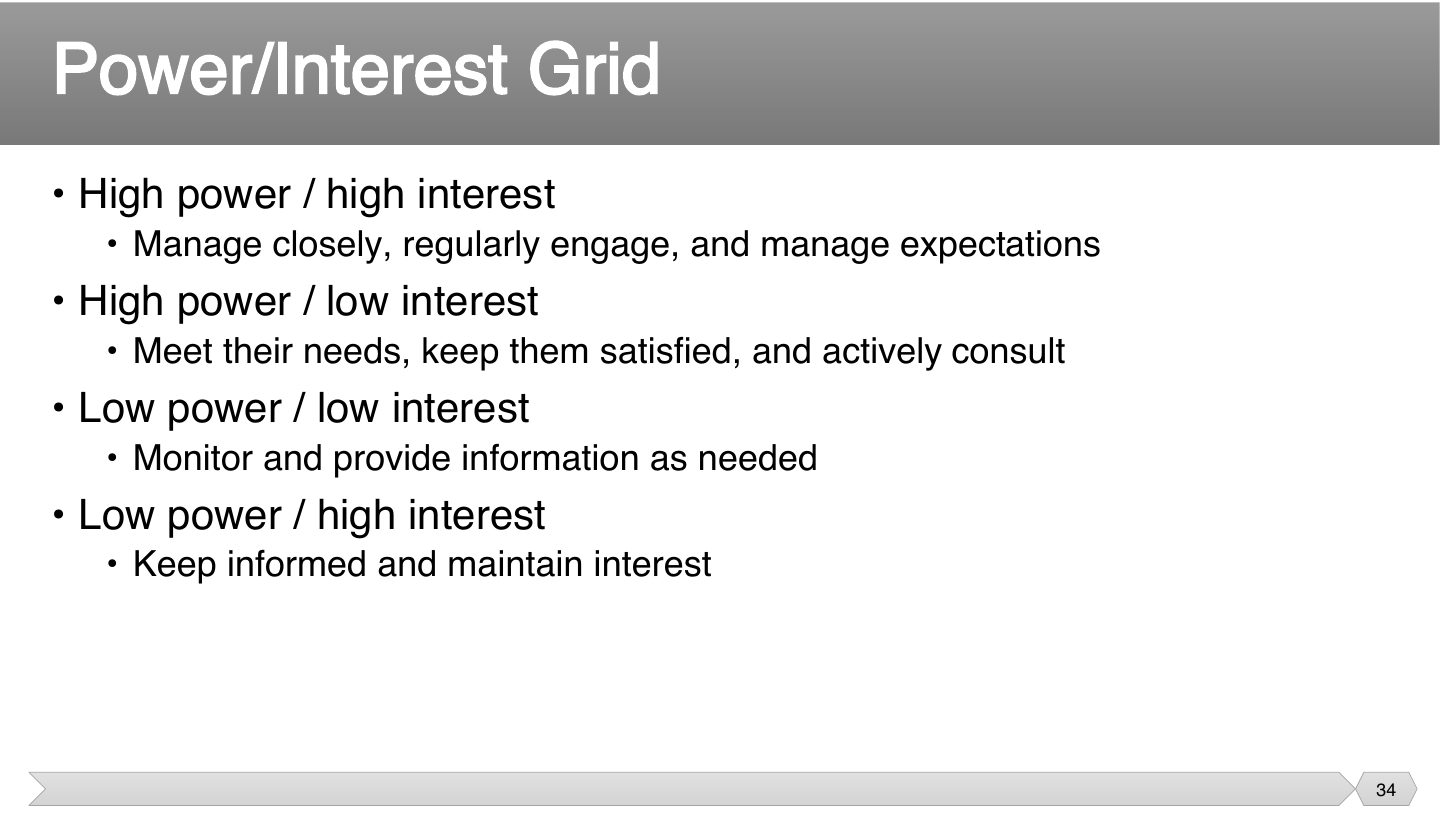
Someone powerful and interested can make or break you, so stay close. Powerful but not interested? Don’t bore them, just keep them satisfied, or they may turn on you.
Trap High power + low interest = keep SATISFIED, not manage closely.
Q3.2 · identify and prioritize stakeholders; communicate with each group
How can project managers identify and prioritize stakeholders, and how should they communicate with each group (Final 251)?
Identify: review the charter and procurement documents, brainstorm with the team and experts, and record everyone in a stakeholder register (role, requirements, expectations, influence, support/neutral/resistant). Prioritize with a mapping model: the power/interest grid (manage closely high-power/high-interest, keep satisfied high-power/low-interest, keep informed low-power/high-interest, monitor the rest) or the salience model (power, legitimacy, urgency). Communicate: interactive meetings and demos for key players, push status reports for those to keep satisfied, pull dashboards or a wiki for the informed, and minimal updates for the monitored group, adjusting as engagement levels change.
A regulator with high power but little interest in day-to-day work should be:
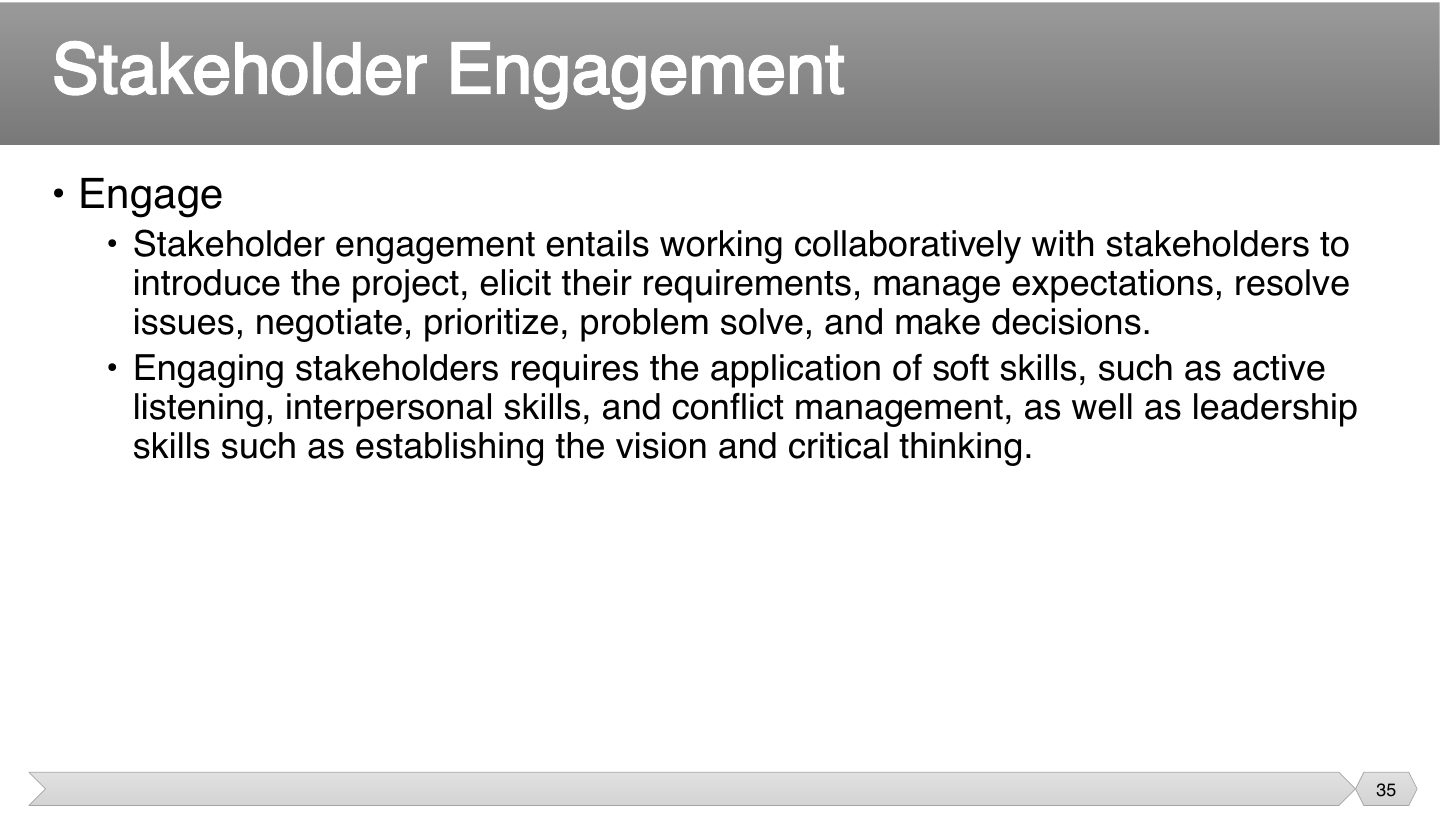
Engagement is about two-way work, not announcements. People trust those who listen, so soft skills often matter more than a good plan.
Which skills does engaging stakeholders rely on?
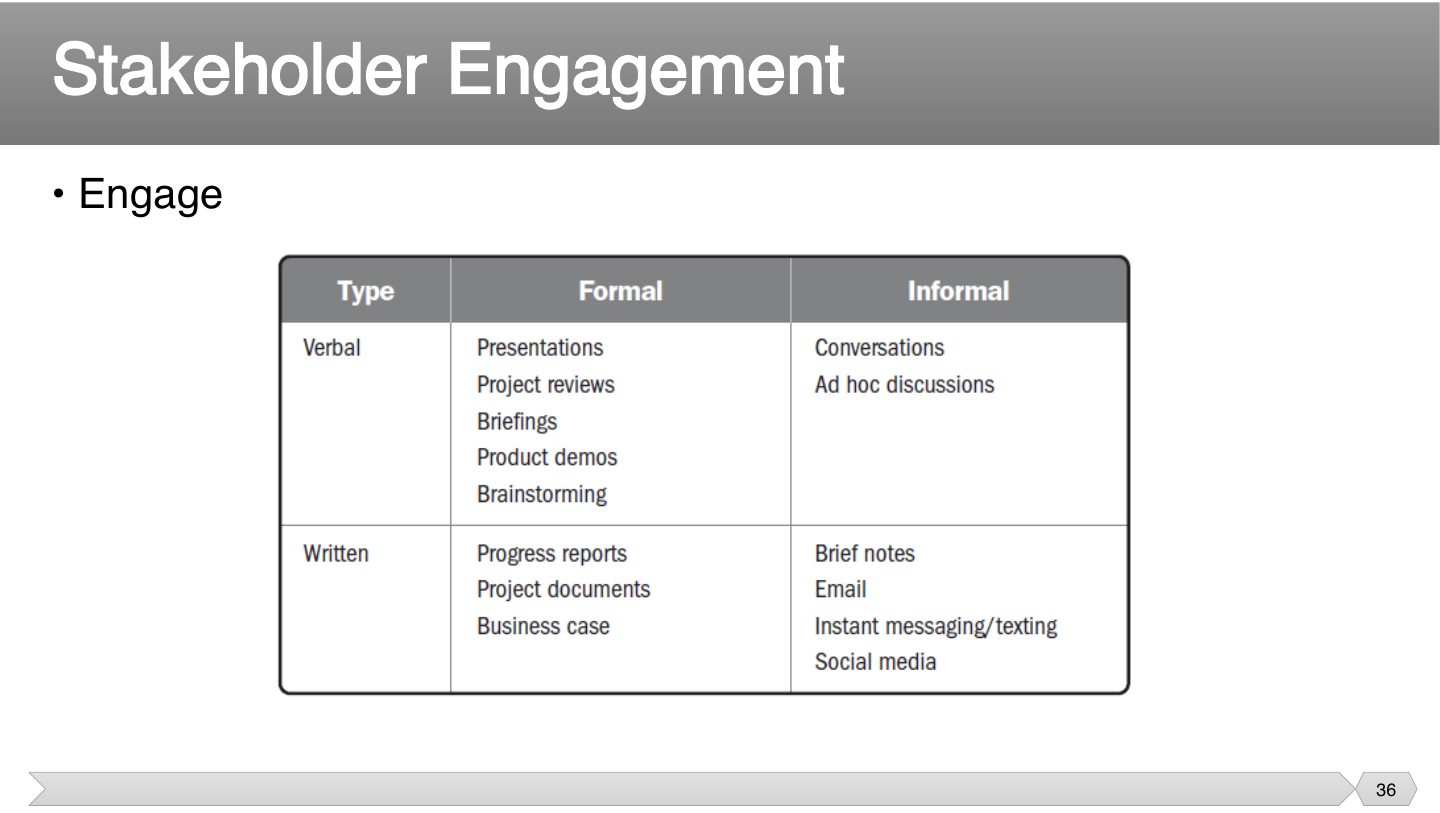
A formal presentation to a steering group is:
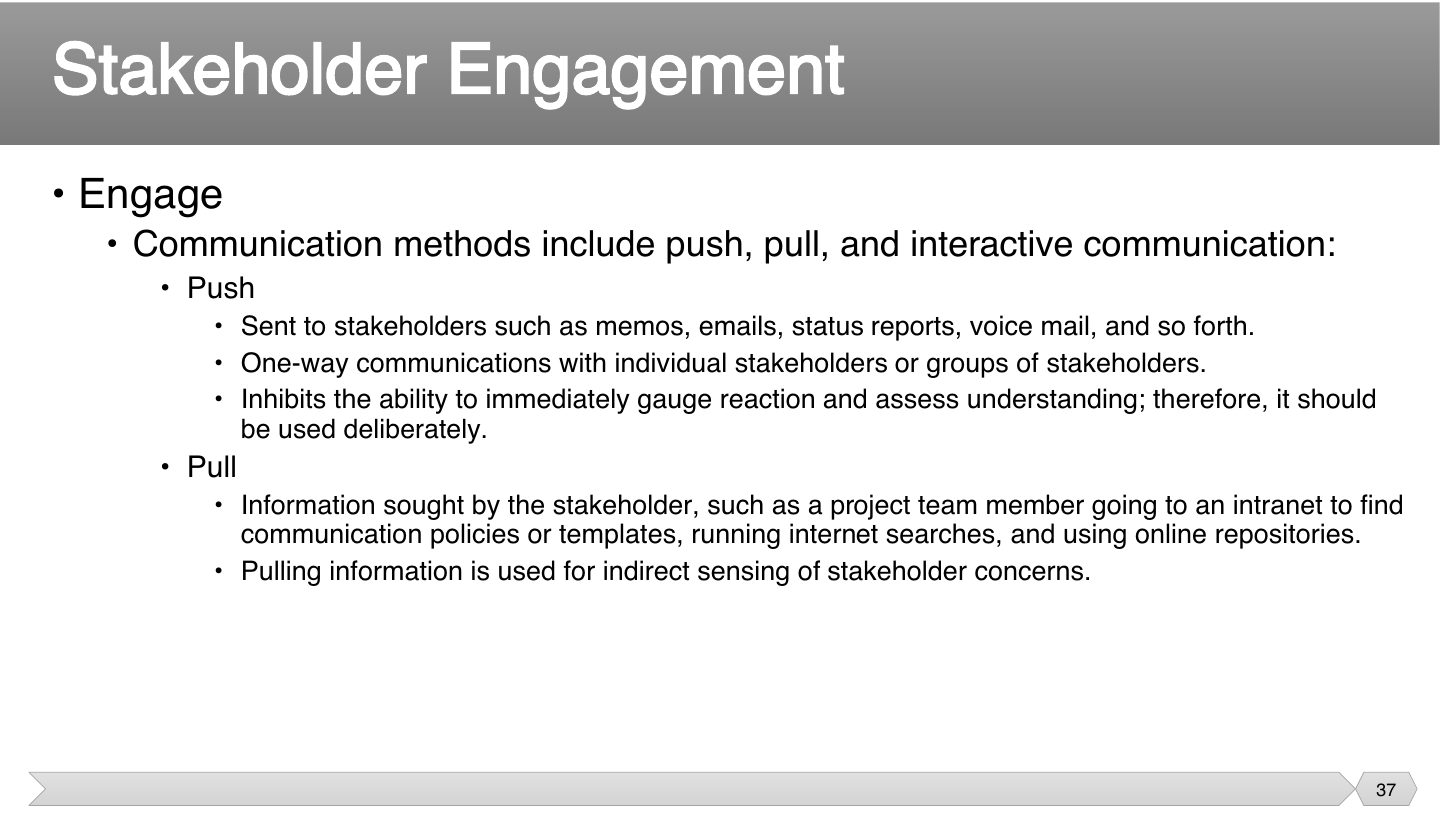
Sending an email is quick, but you can’t see how it’s received. So use push for simple facts, not for anything that may upset or confuse someone.
With pull, people fetch what they need, which suits large audiences. Use interactive when understanding matters, since it’s the only one where you can respond right away.
Memory trick Push = I send. Pull = you fetch. Interactive = we talk.
Q3.3 · engagement levels table with Pull / Push / Interactive
Posting templates on an intranet for team members to look up is:
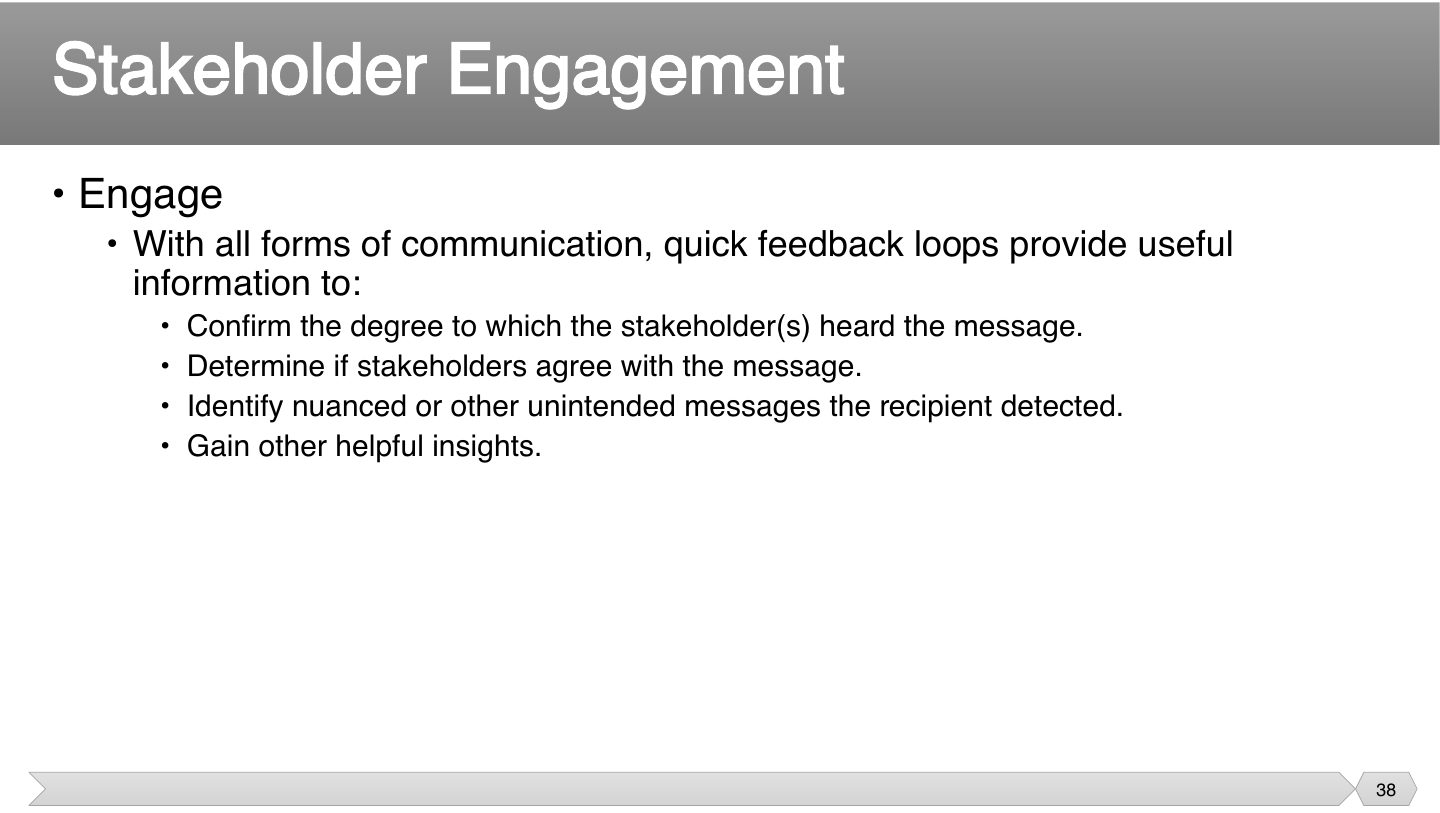
Sending a message doesn’t mean it arrived. Quick feedback shows if it was understood, and sometimes reveals a reaction you never expected.
What do quick feedback loops confirm?
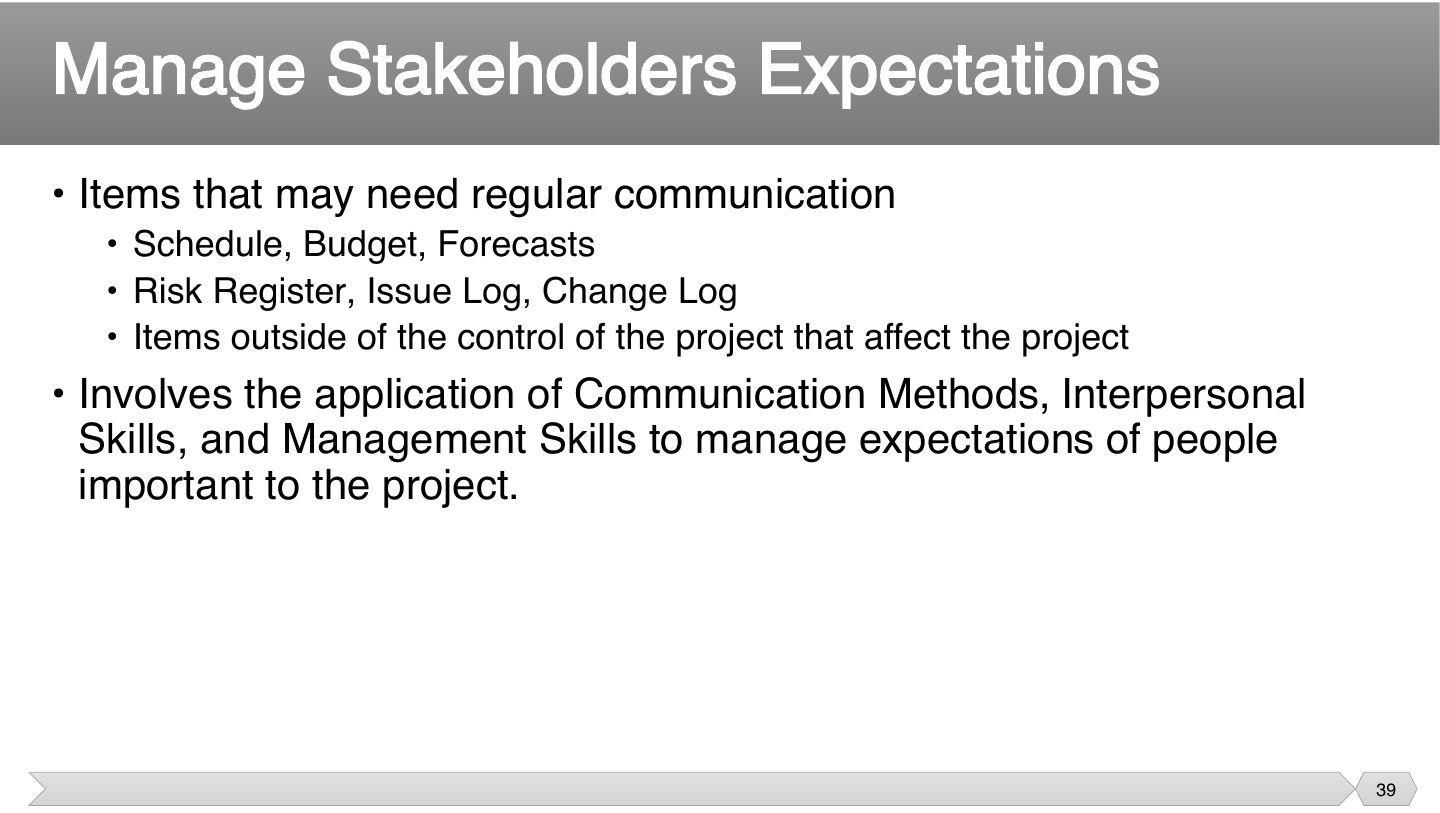
People get upset less about bad news than about surprises. Sharing schedule, budget and risks regularly keeps expectations realistic, including about things outside your control.
Which items may need regular communication?
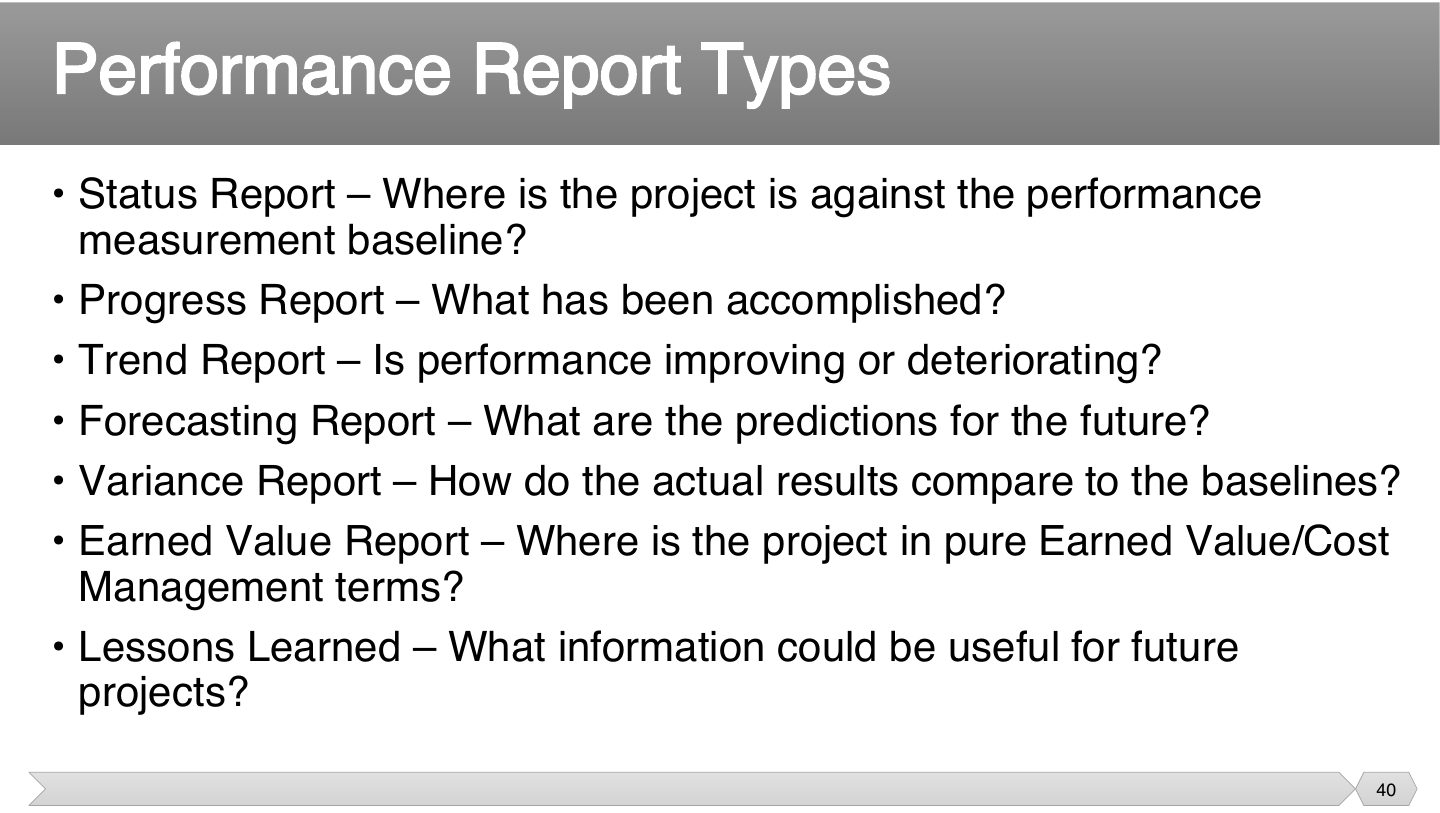
Each report answers one question. Asking “is it getting better or worse?” needs a trend report, while “what’s coming?” needs a forecast. Match the type to the question.
“Is performance improving or deteriorating?” is answered by a:
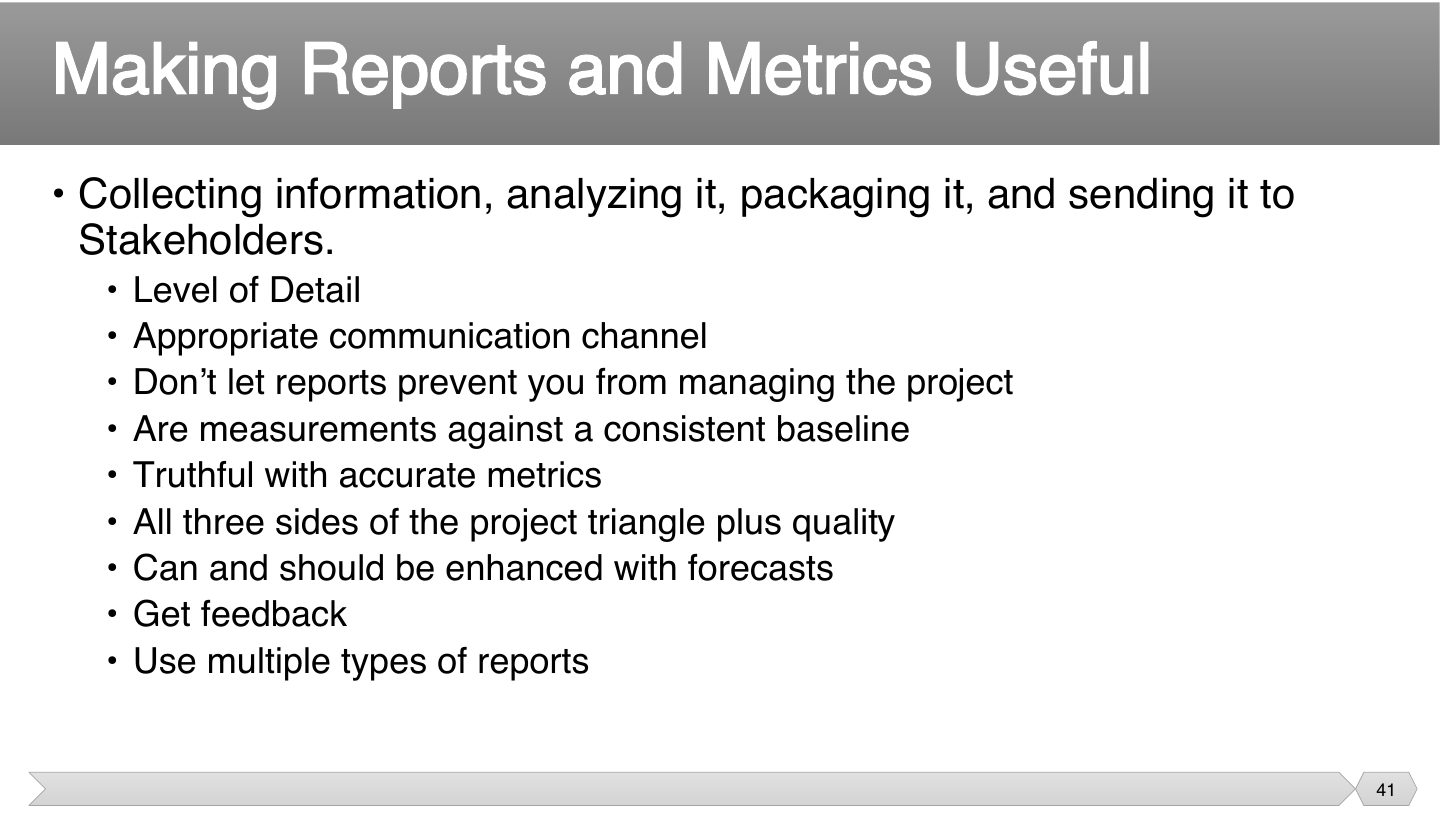
A report is only useful if someone can act on it. Too much detail gets ignored, and inconsistent baselines can’t be compared. And don’t let report writing replace managing the project.
What should you not let reports do?
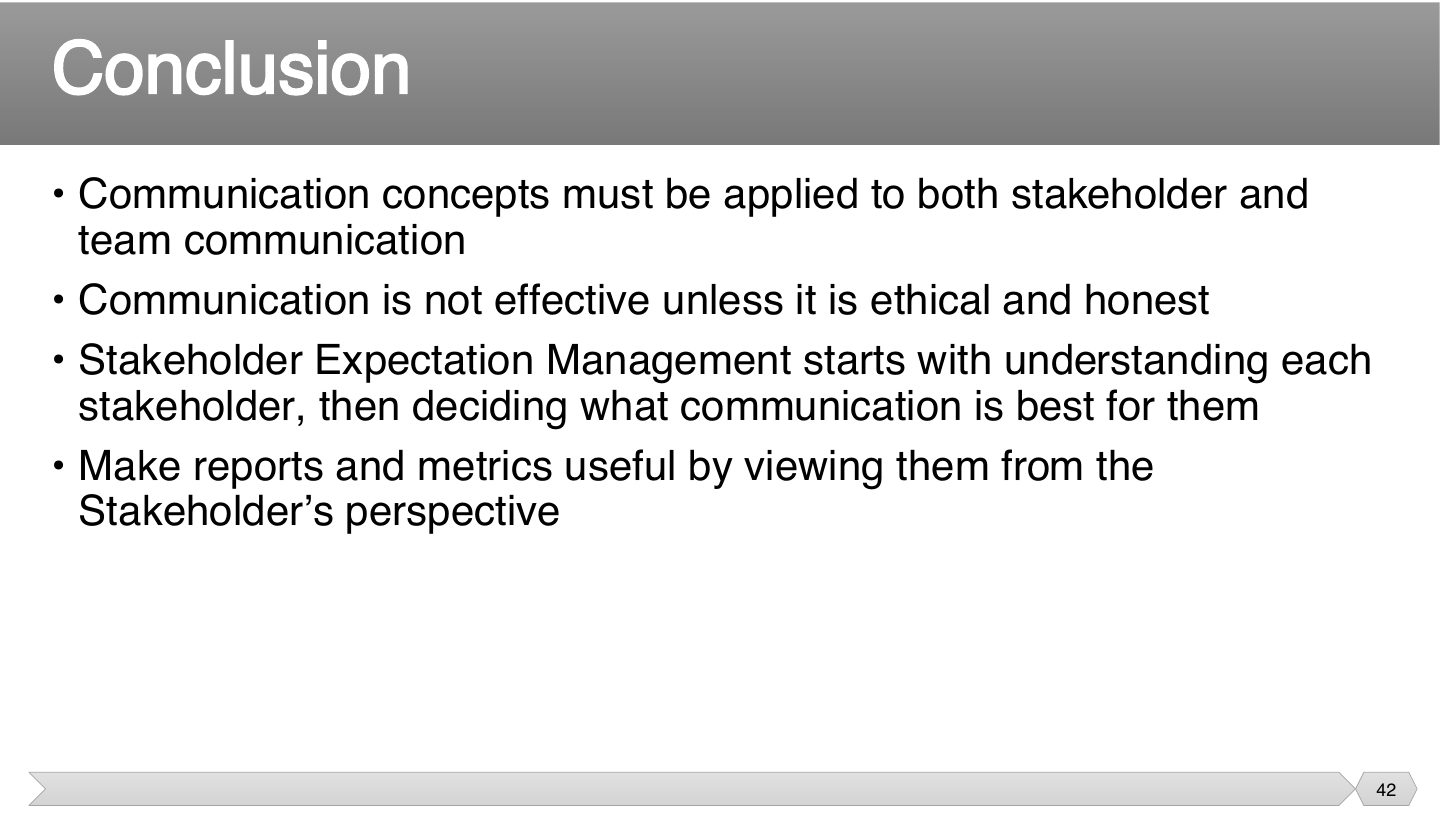
Everything comes down to knowing each person, and being honest with them. Communication that’s clever but not ethical will fail eventually, since people stop believing you.
Stakeholder expectation management starts with: