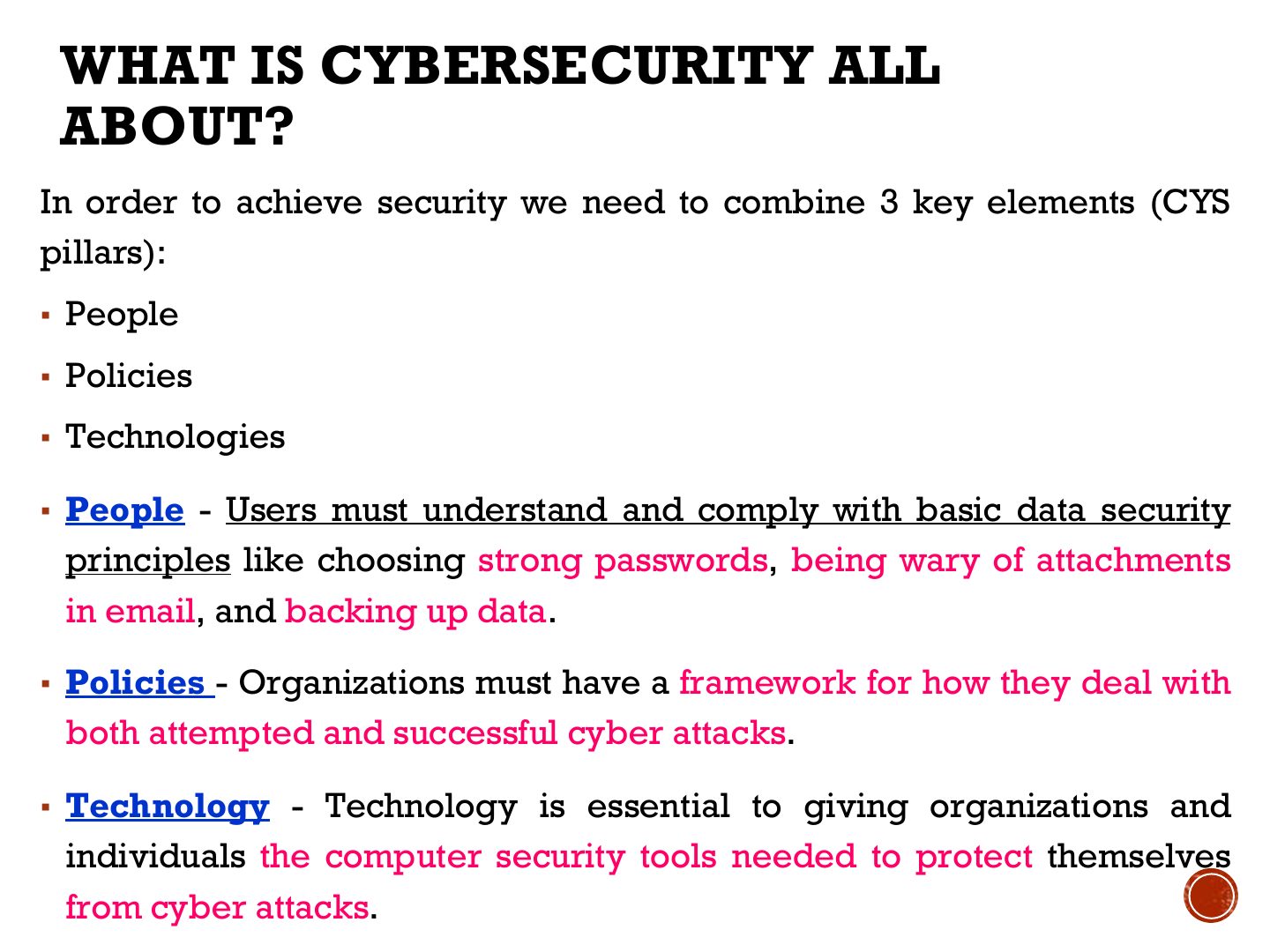
MCQ · all are pillars except
Security Foundations and Principles
The three pillars, vulnerability vs. threat vs. risk, malware and the threat landscape, social engineering (phishing, spear phishing, tailgating), the C.I.A. triad with the attacks on each and the methods that protect it, the AAA services, and the protection mechanisms. Final 221 A/B, Quiz 1 222 and Majors A–C all draw on this deck.
How to read this page
Every original slide is shown unchanged. Yellow marks on a slide point to a numbered note: hover or tap a mark to jump to its note, and hover a note to see its marks. Questions tagged Past exam appeared on a real paper; Prediction questions are likely angles, not confirmed. Pick an answer to each question: a wrong pick tells you why it is wrong, so you can try again.
All 34 slides
- 1 Cyber Security Foundations and Principles
- 2 WHAT IS CYBERSECURITY ALL ABOUT?
- 3 WHAT IS CYBERSECURITY ALL ABOUT?
- 4 VULNERABILITY, THREAT, COUNTERMEASURE
- 5 Risk is exist when you have a threats with a vulnerabilty in the system or in one of the security control.
- 6 THREAT DAMAGE
- 7 Slide 7
- 8 THREATS
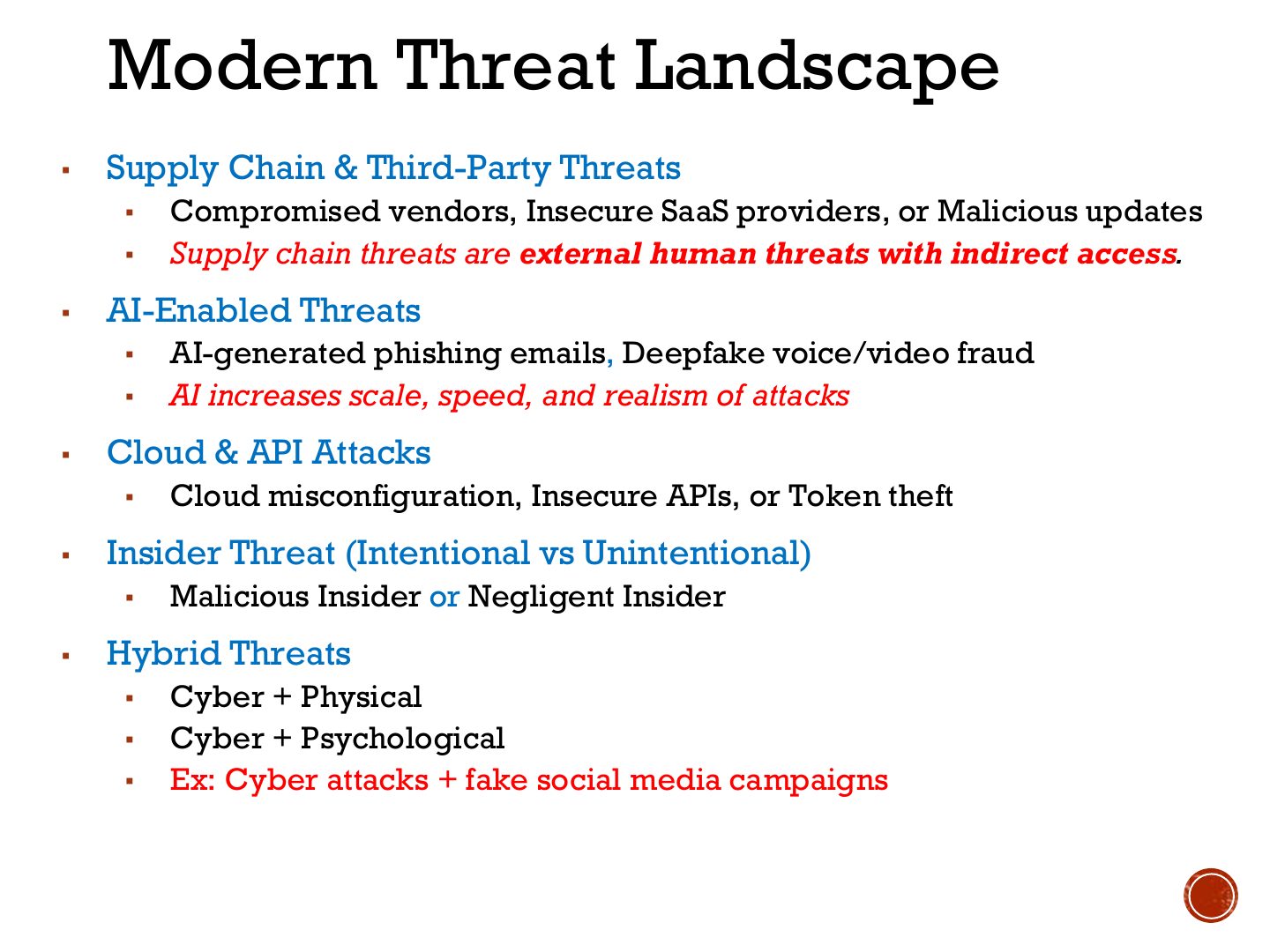
- 9 Modern Threat Landscape
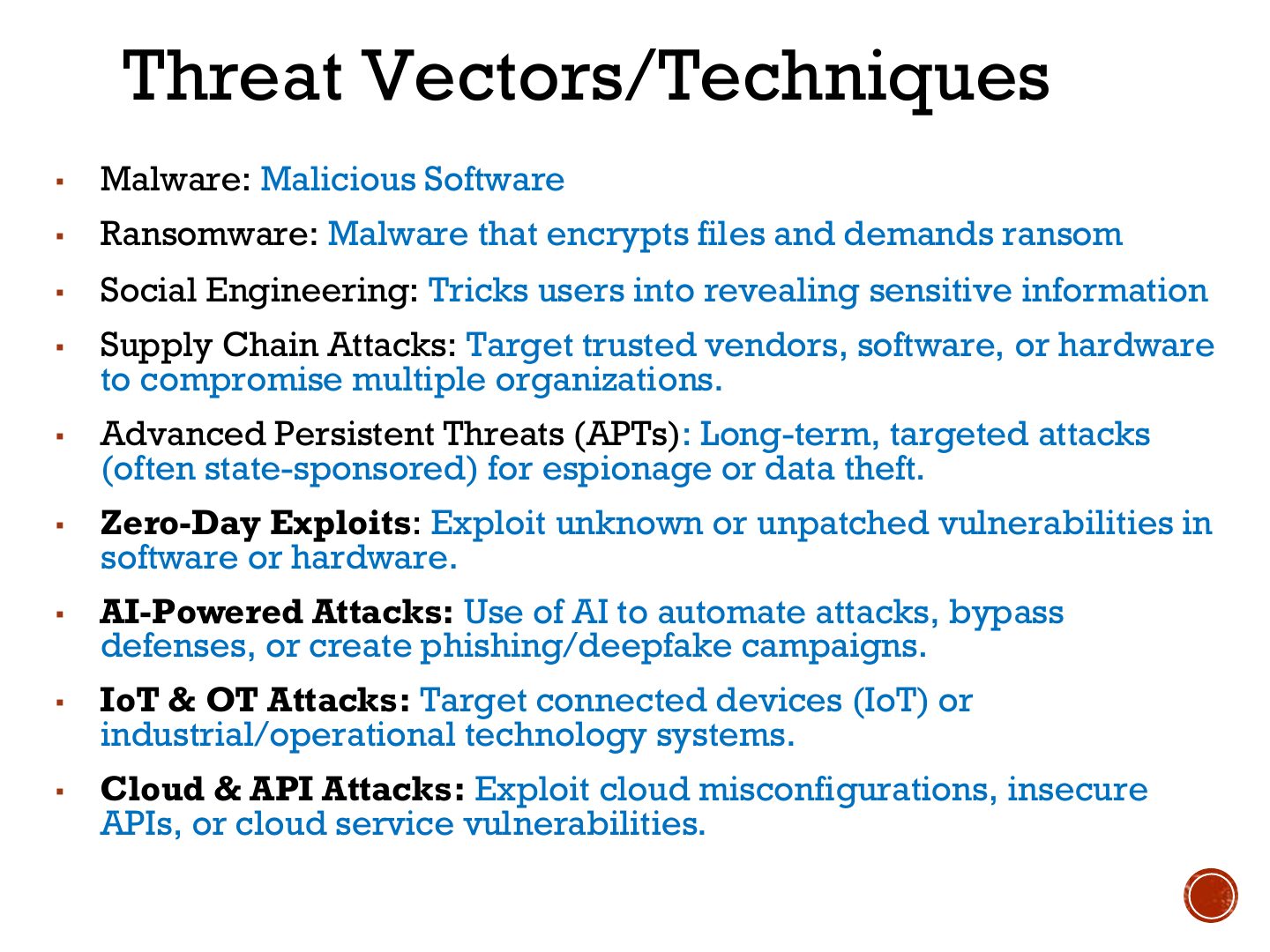
- 10 Threat Vectors/Techniques
- 11 TYPES OF MALWARE
- 12 Malware Symptoms
- 13 Malware Countermeasures
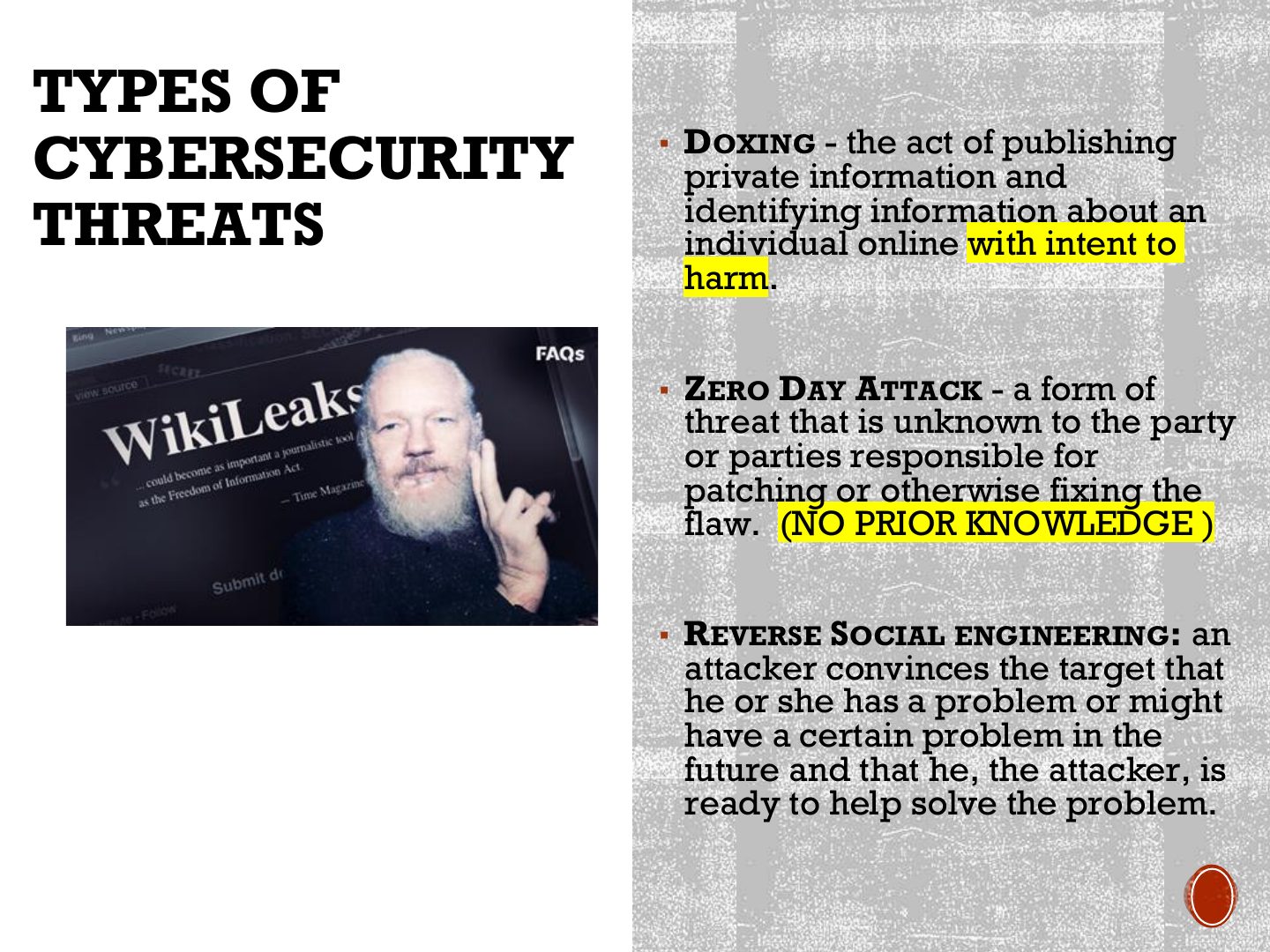
- 14 TYPES OF CYBERSECURITY THREATS
- 15 TYPES OF CYBERSECURITY THREATS
- 16 Slide 16
- 17 TYPES OF
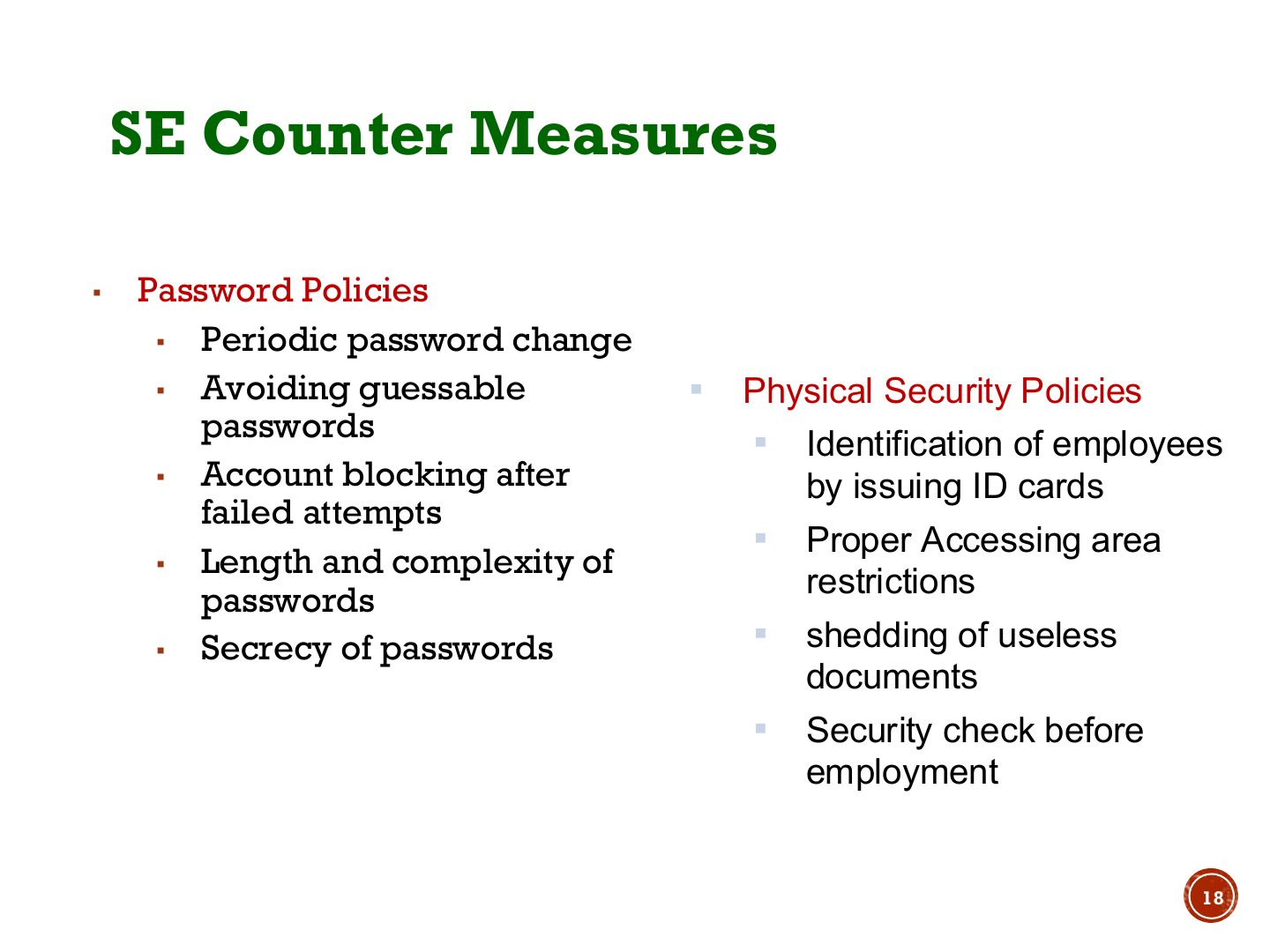
- 18 SE Counter Measures
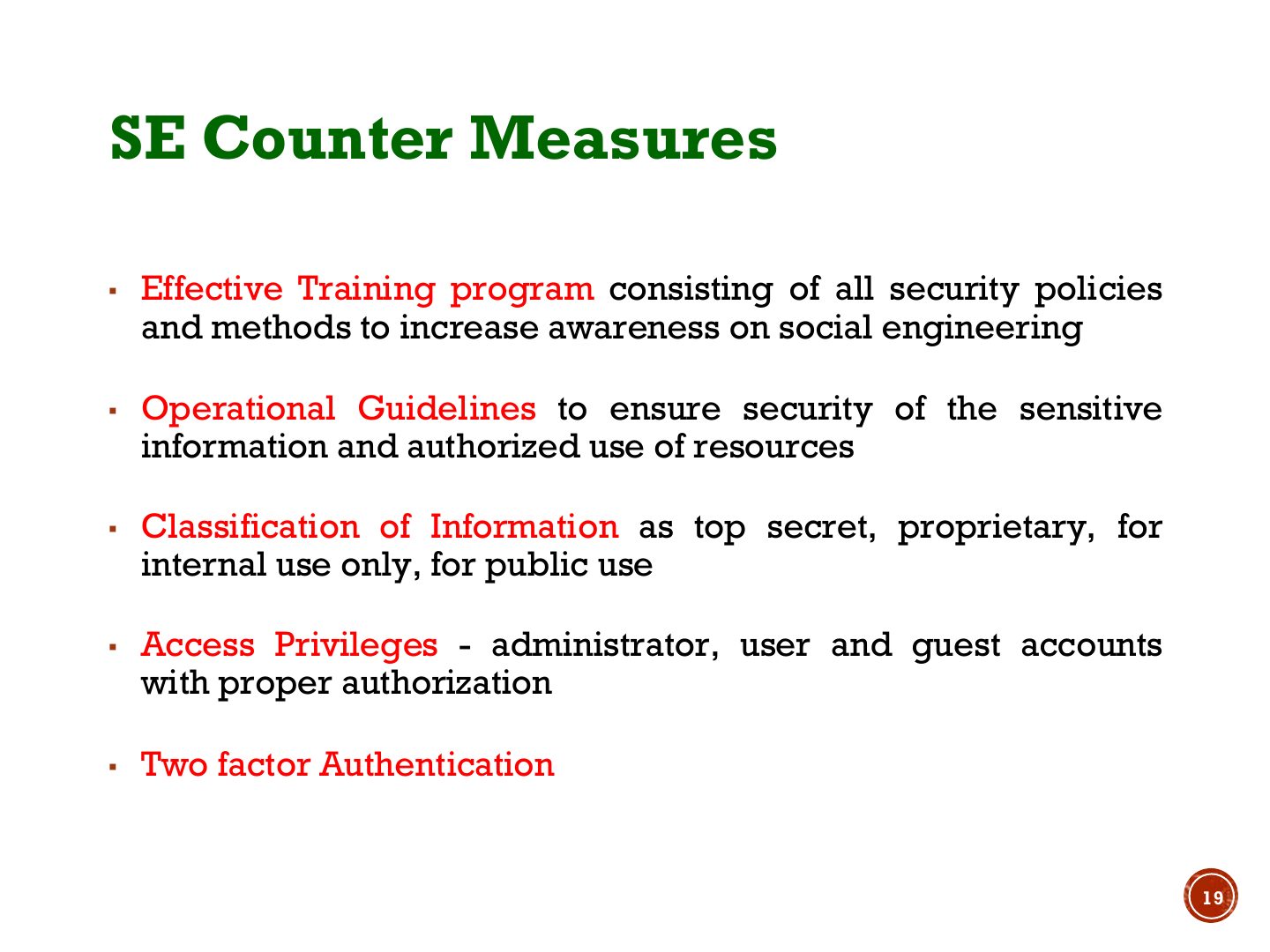
- 19 SE Counter Measures
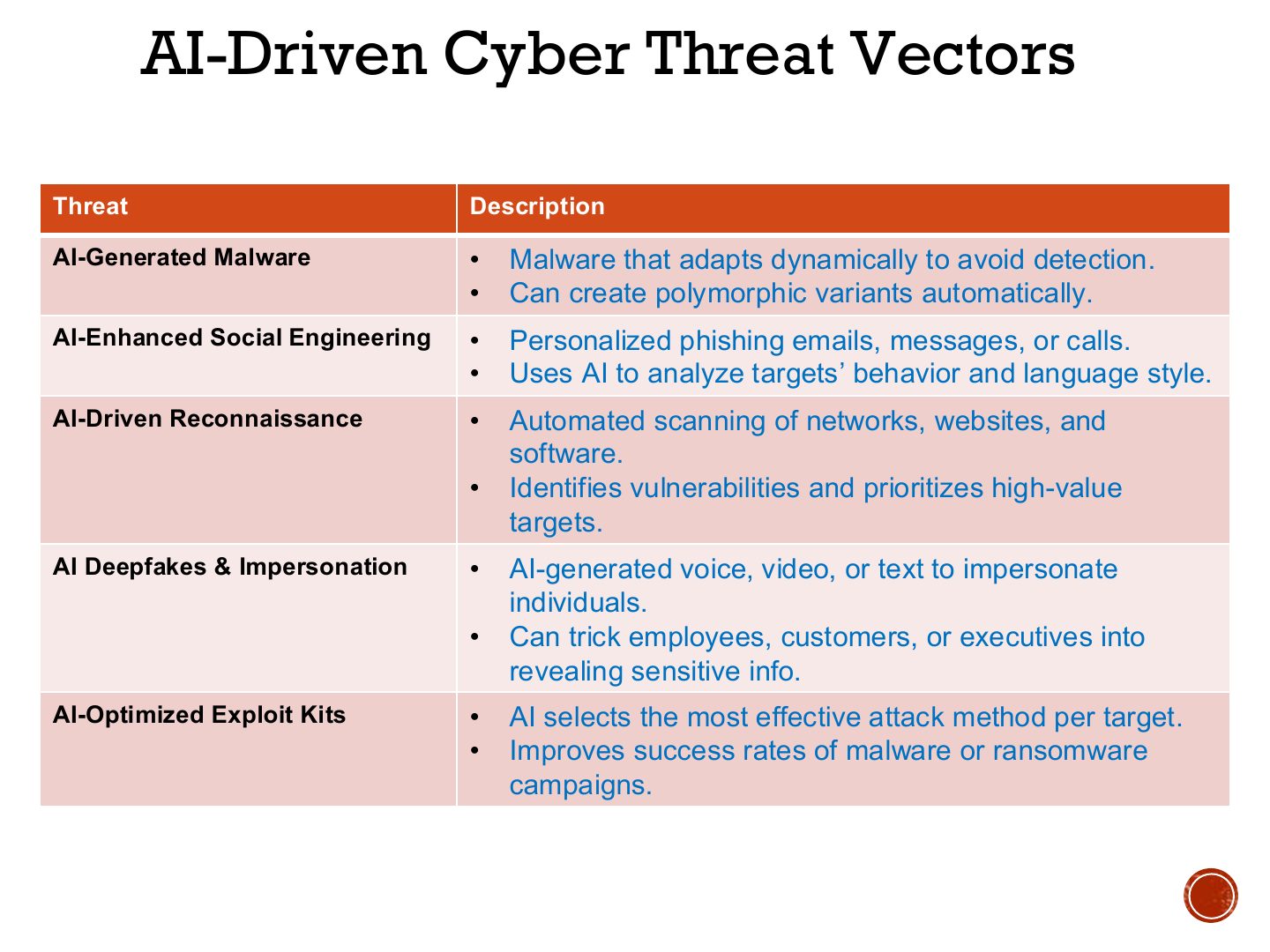
- 20 AI-Driven Cyber Threat Vectors
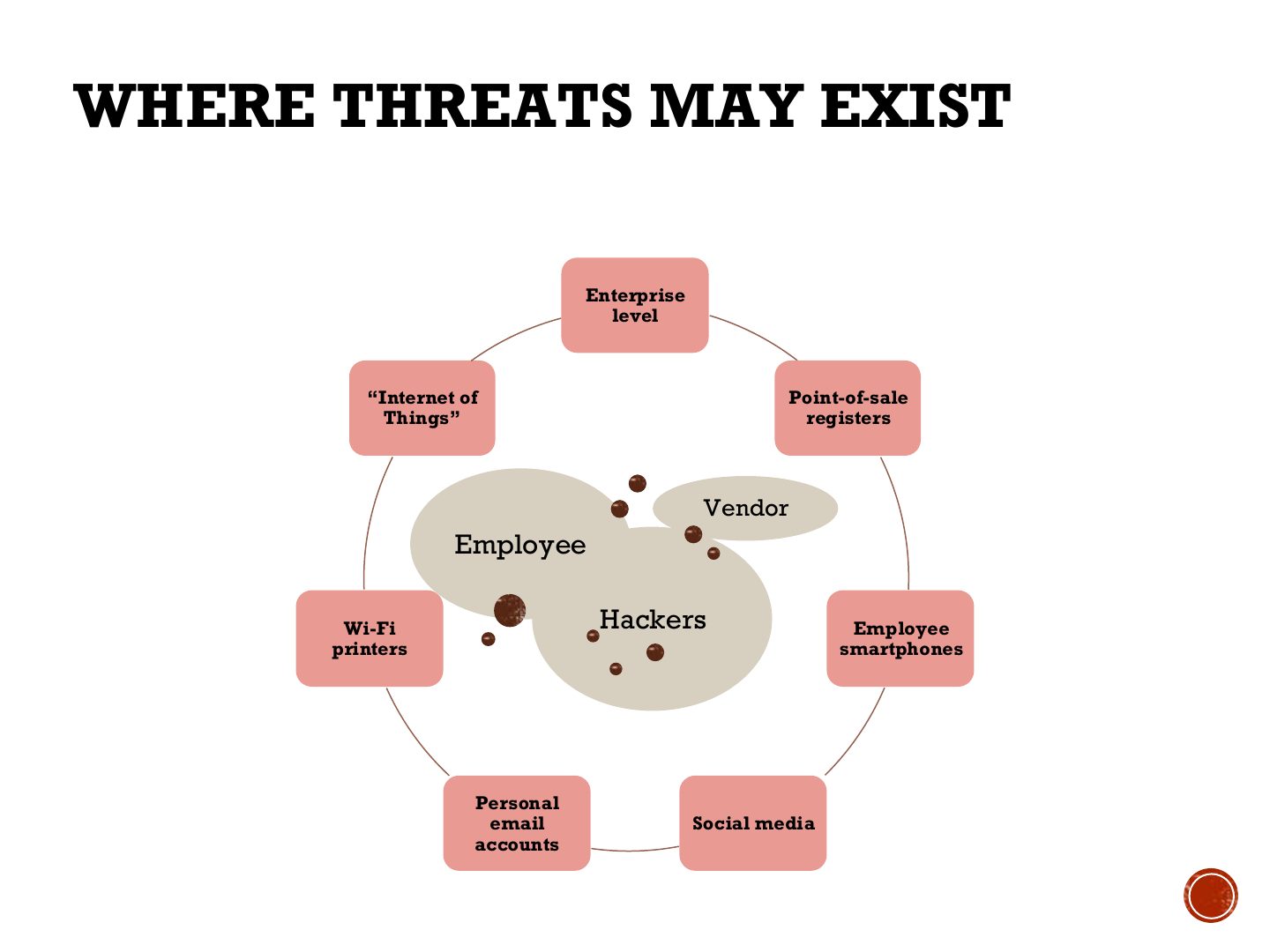
- 21 WHERE THREATS MAY EXIST
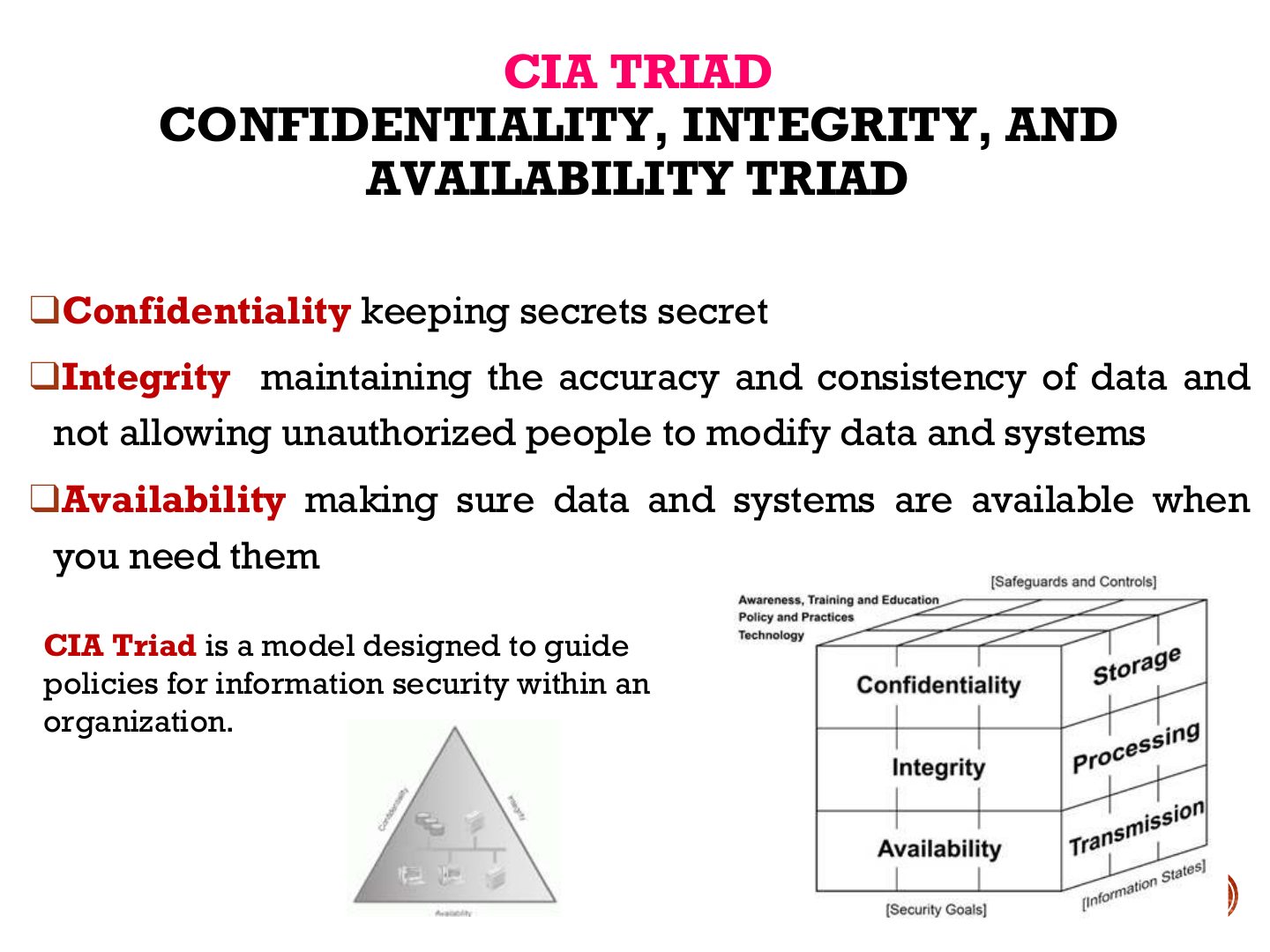
- 22 CIA TRIAD CONFIDENTIALITY, INTEGRITY, AND AVAILABILITY TRIAD
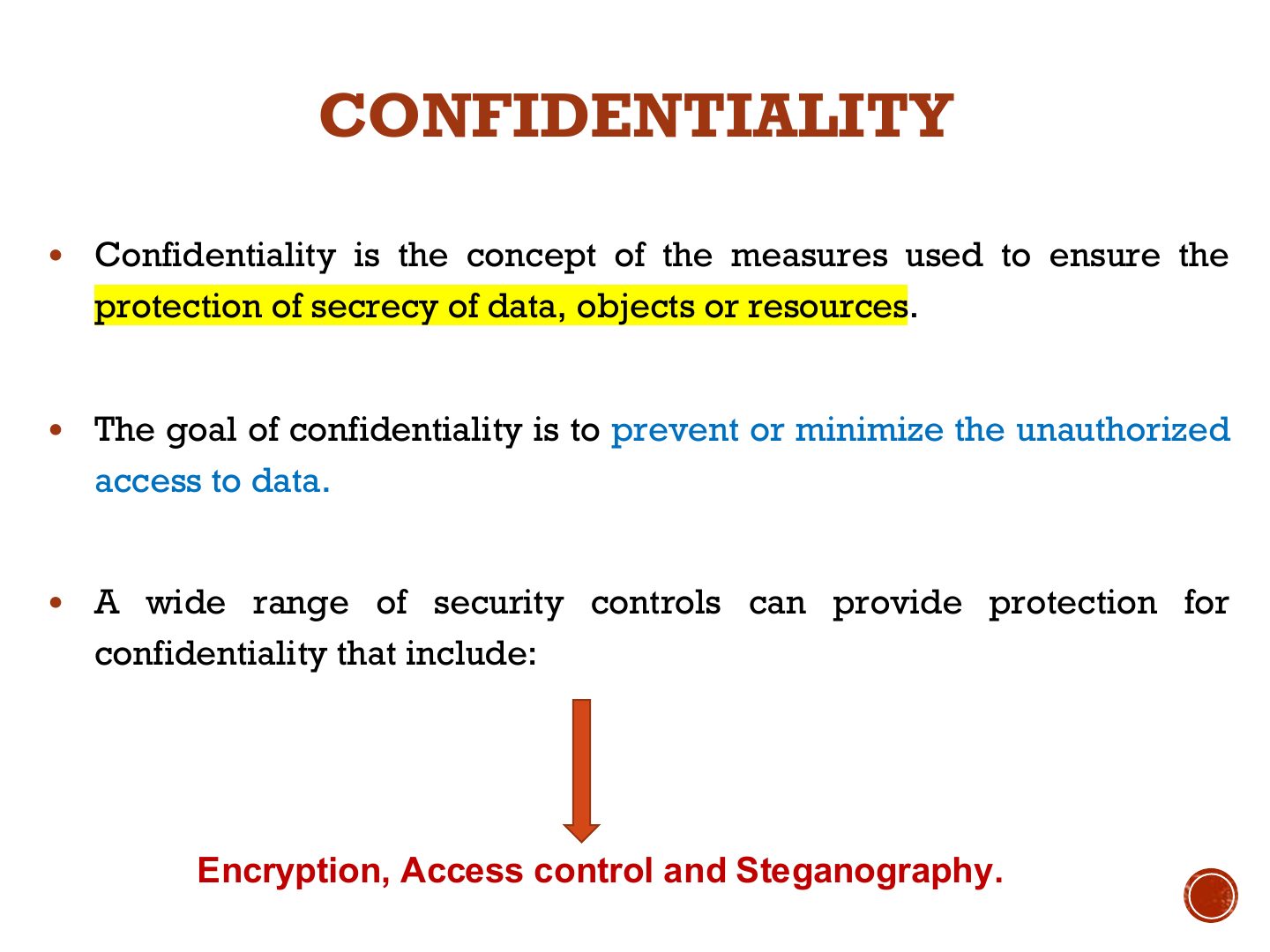
- 23 CONFIDENTIALITY
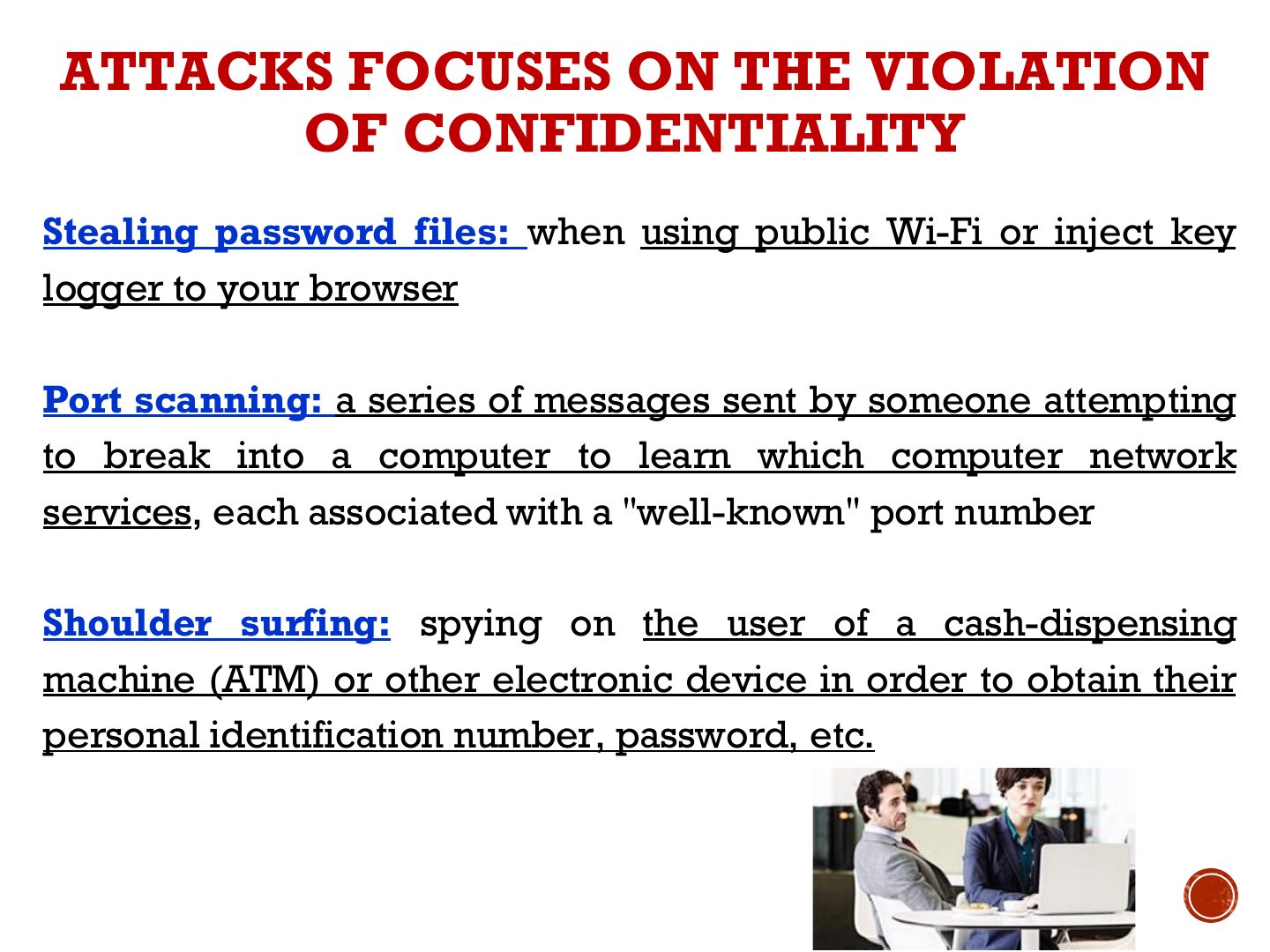
- 24 ATTACKS FOCUSES ON THE VIOLATION OF CONFIDENTIALITY
- 25 ATTACKS FOCUSES ON THE VIOLATION OF CONFIDENTIALITY
- 26 METHODS USED TO ENSURE CONFIDENTIALITY
- 27 METHODS USED TO ENSURE CONFIDENTIALITY
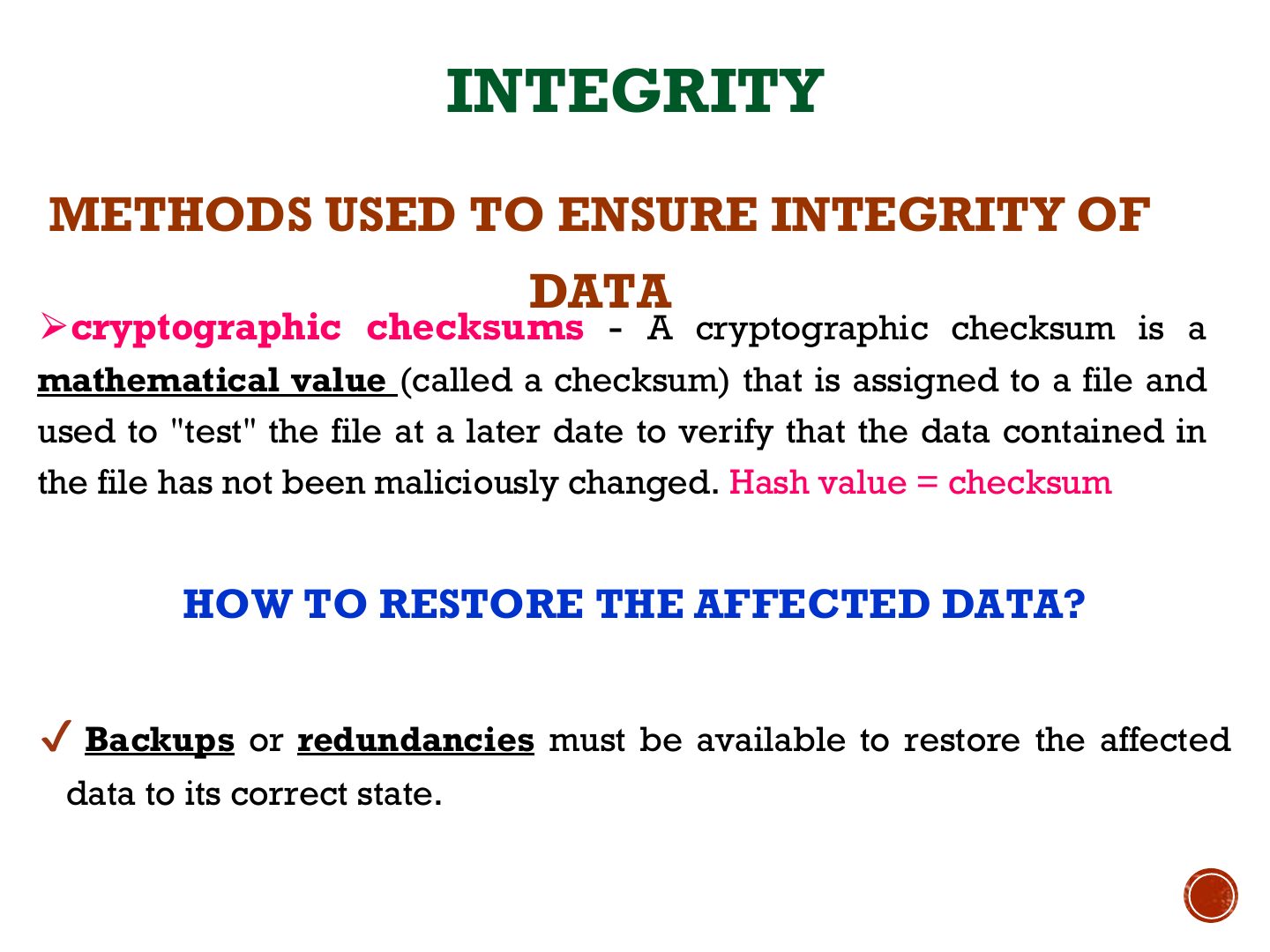
- 28 INTEGRITY
- 29 INTEGRITY
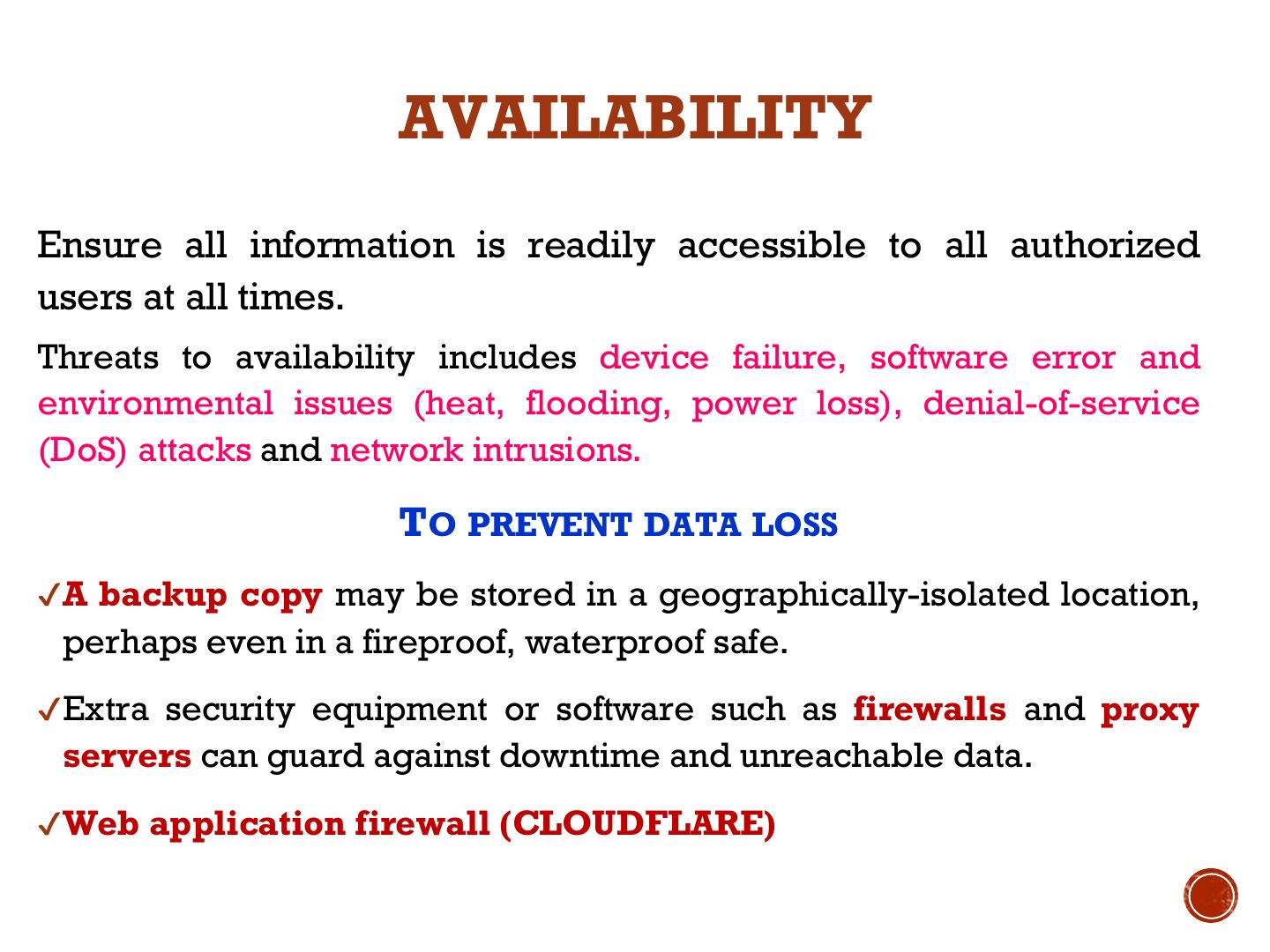
- 30 AVAILABILITY
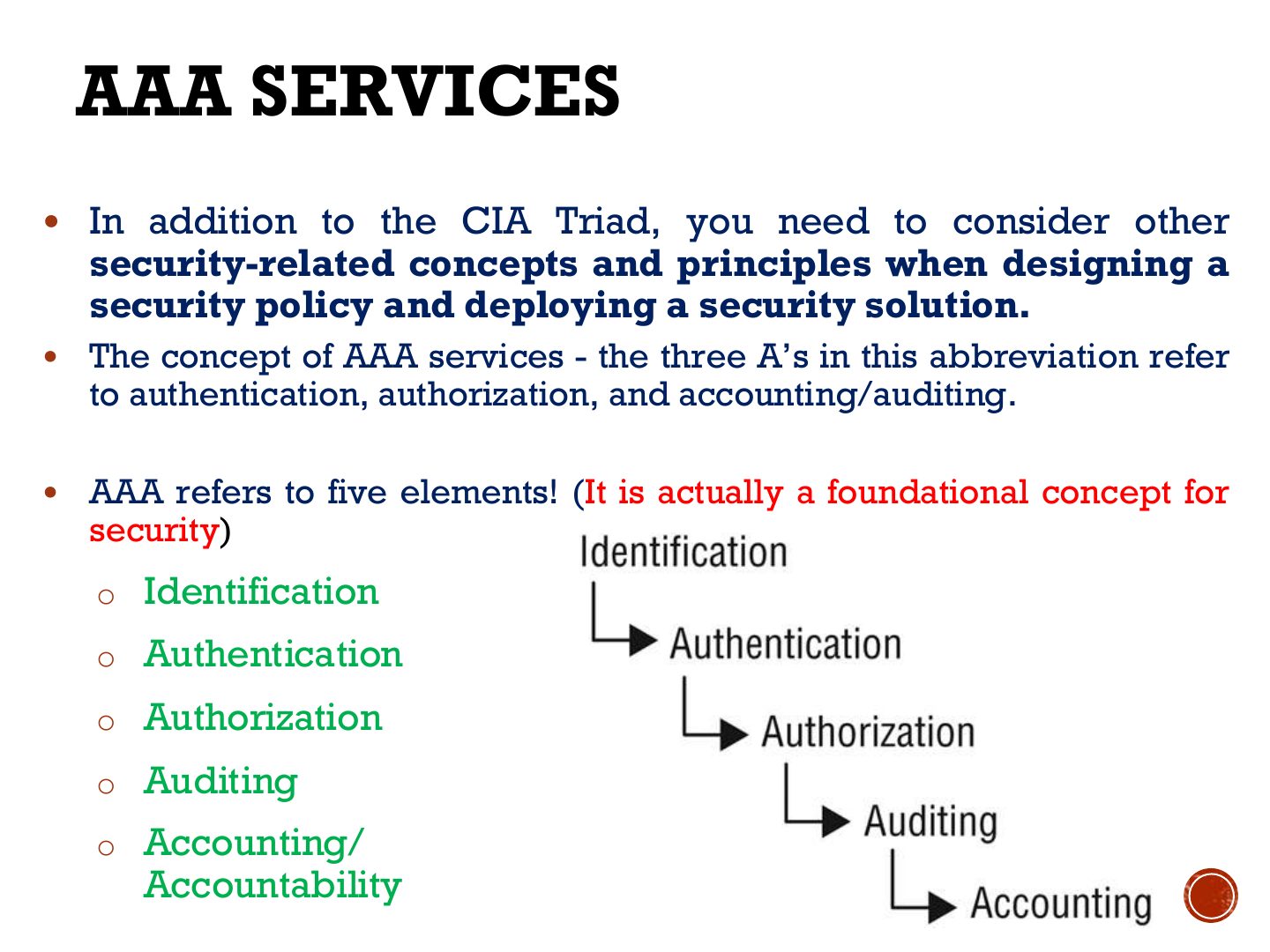
- 31 AAA SERVICES
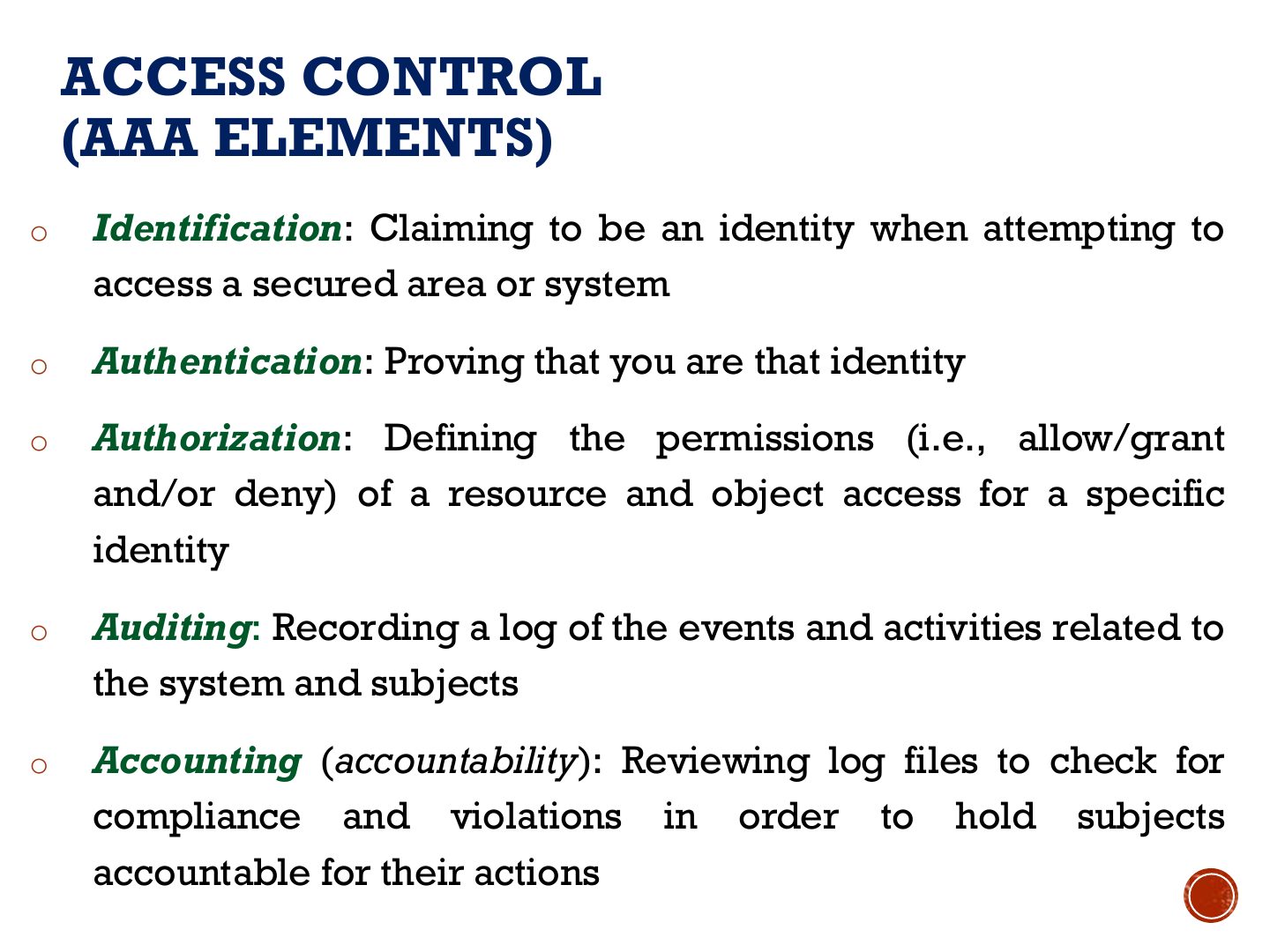
- 32 ACCESS CONTROL (AAA ELEMENTS)
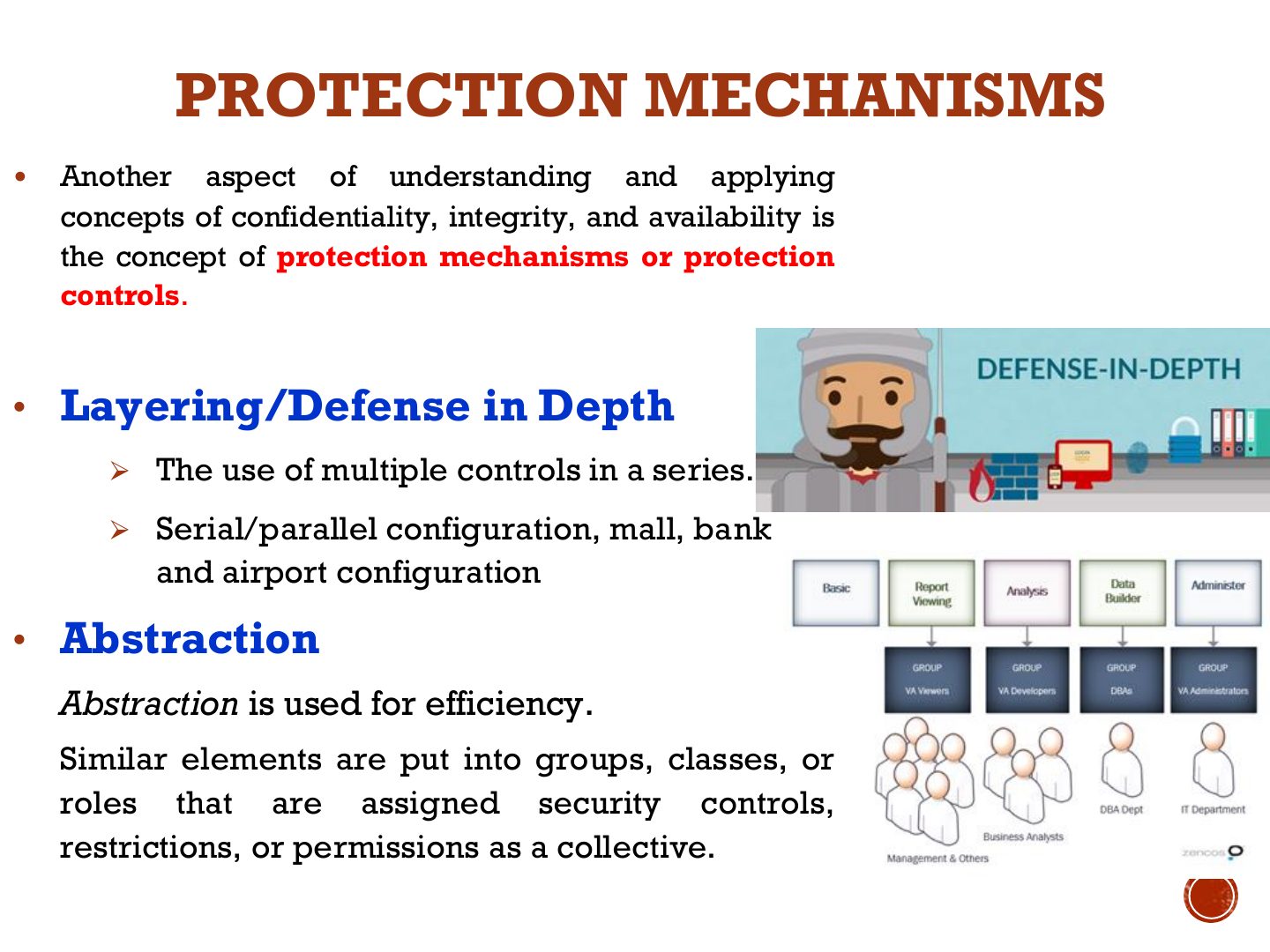
- 33 PROTECTION MECHANISMS
- 34 PROTECTION MECHANISMS
Cyber Security Foundations and Principles
Notes
Tip AAA = five elements: Identification (claim) → Authentication (prove) → Authorization (permissions) → Auditing (record) → Accounting (hold responsible). Phase 1 (getting in): identification, authentication, authorization. Phase 2 (afterwards): auditing, accountability.
WHAT IS CYBERSECURITY ALL ABOUT?
Exam angle
All of the following are cybersecurity pillars EXCEPT:
- Final 221 A.
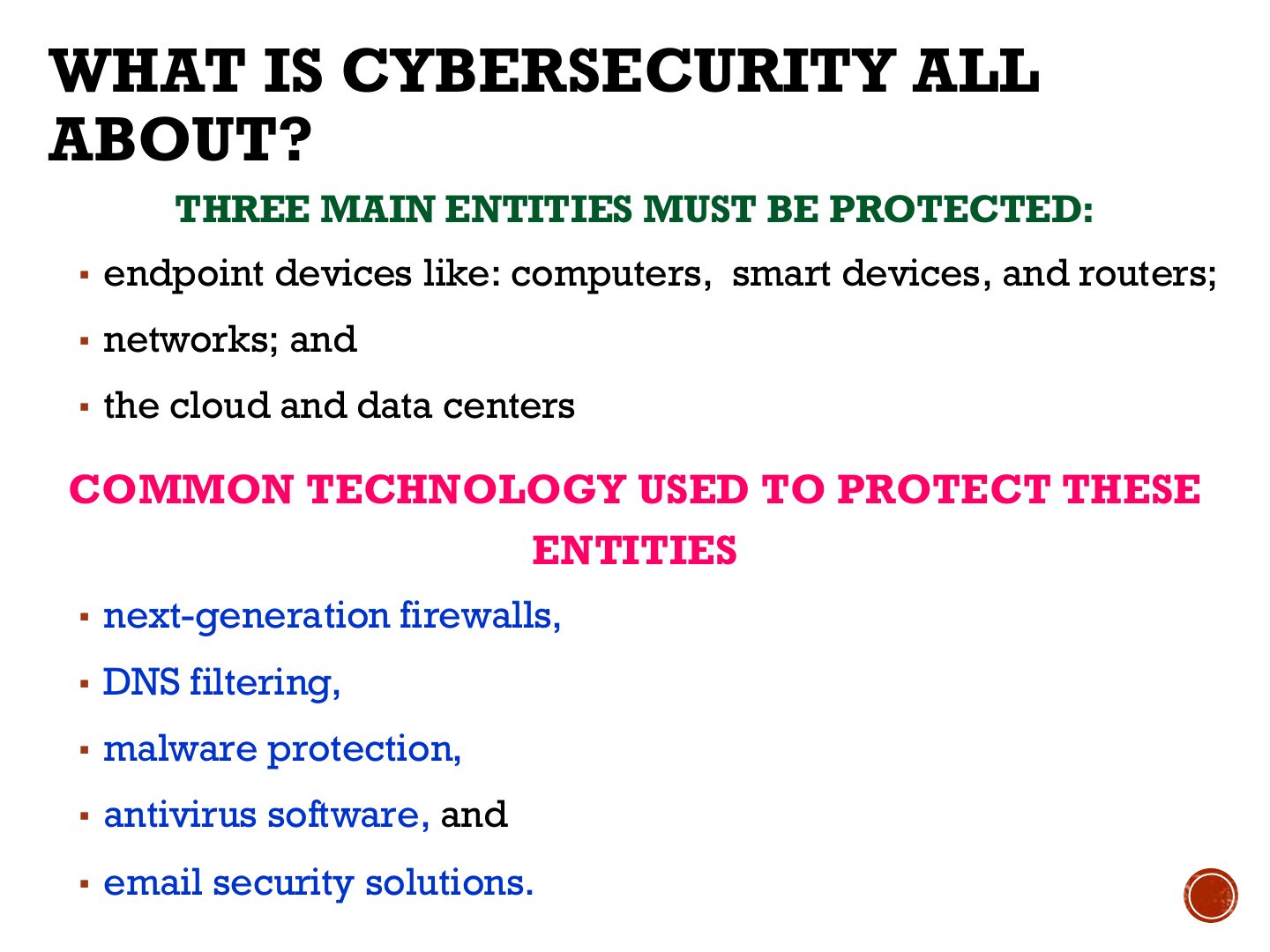
WHAT IS CYBERSECURITY ALL ABOUT?
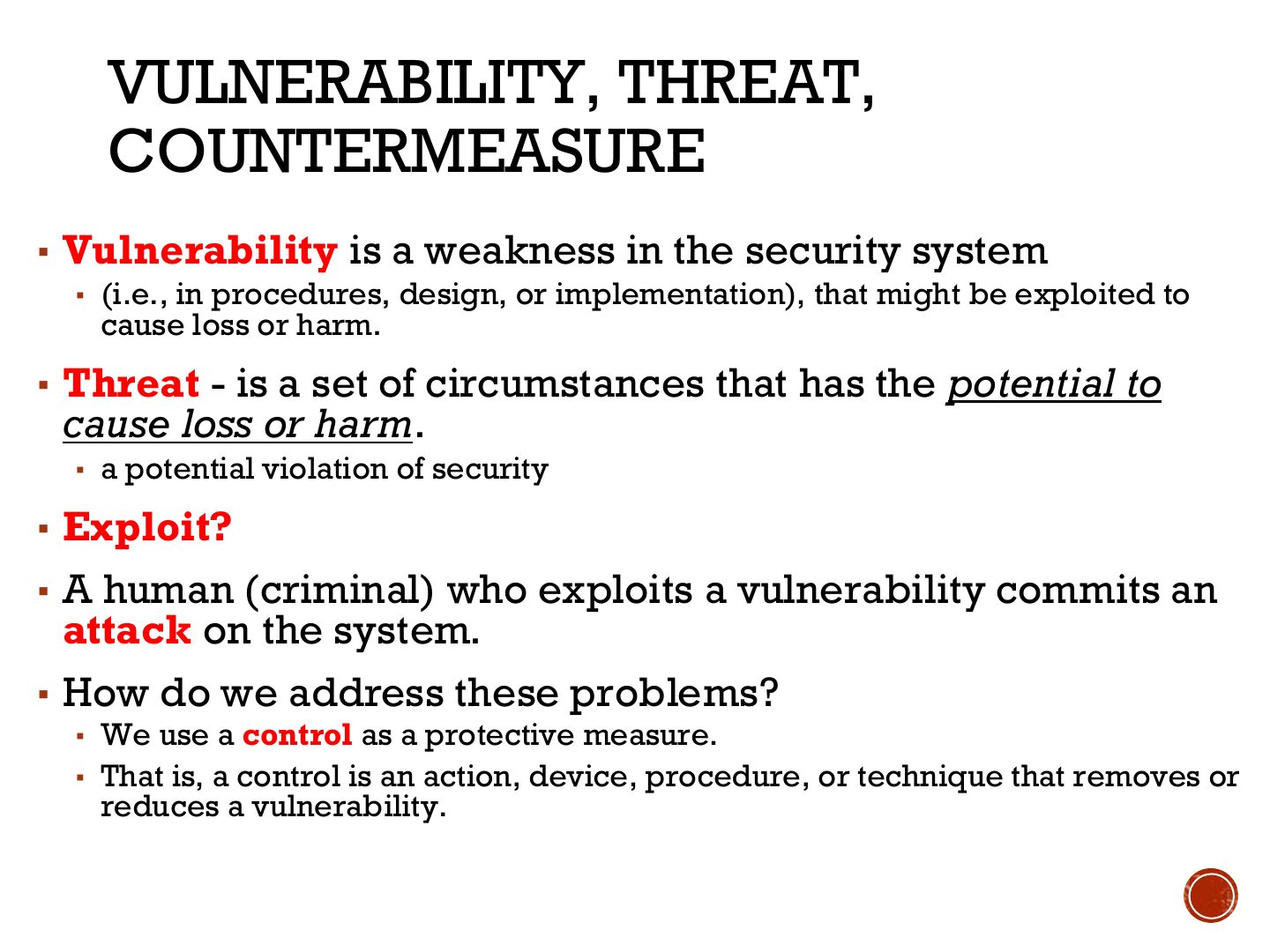
VULNERABILITY, THREAT, COUNTERMEASURE
Notes
Trap “Data breach” is a threat or an impact, never a vulnerability. A vulnerability is the WEAKNESS (weak passwords, misconfigured buckets).
Exam angle
scenario · two assets, threats and vulnerabilities
A misconfigured, publicly accessible storage bucket is a(n):
- Major A.
A ransomware attacker who could exploit weak passwords is a(n):
- Major A.
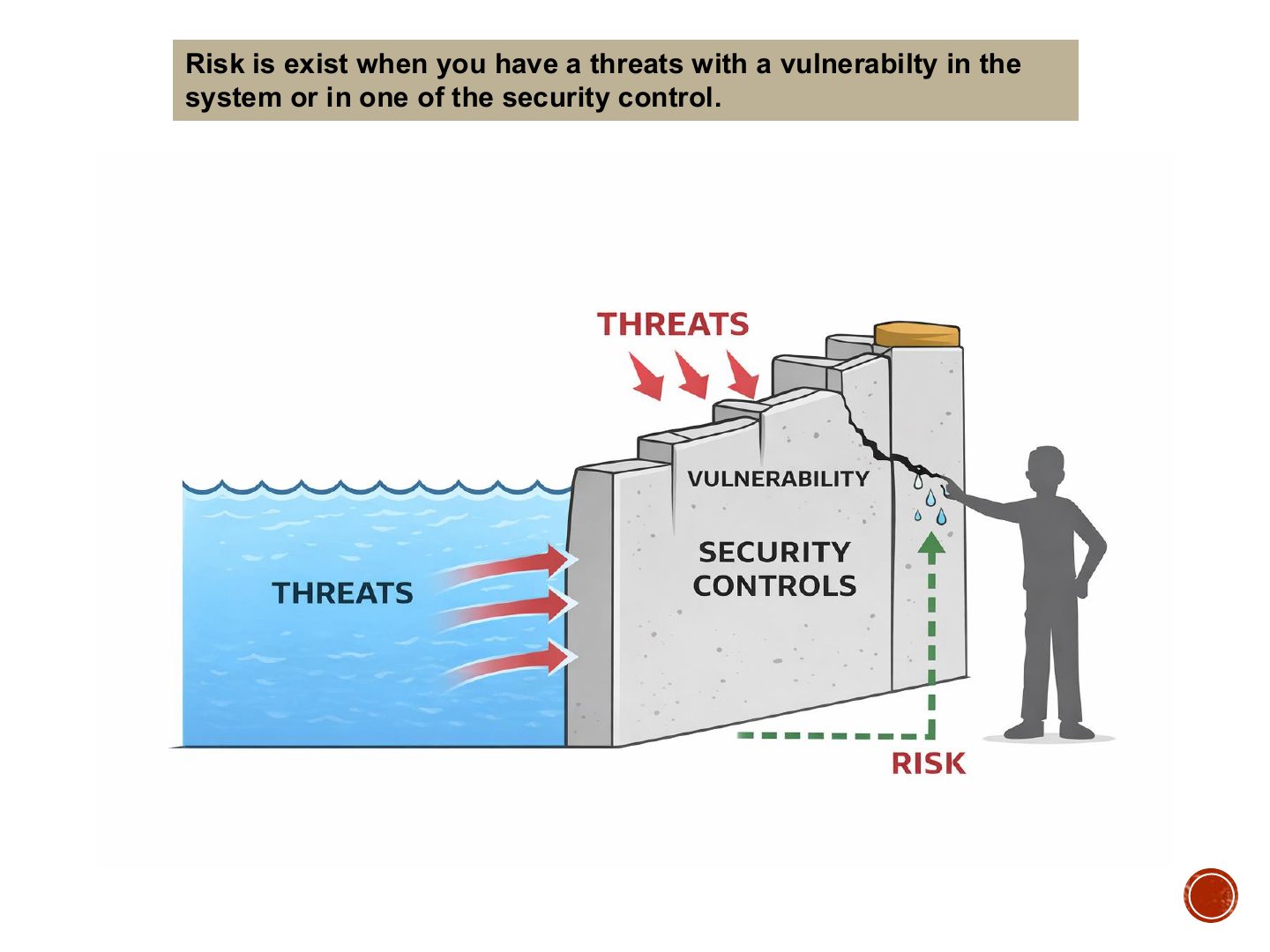
Risk is exist when you have a threats with a vulnerabilty in the system or in one of the security control.
Notes
Memory trick Risk = threat × vulnerability (× impact).
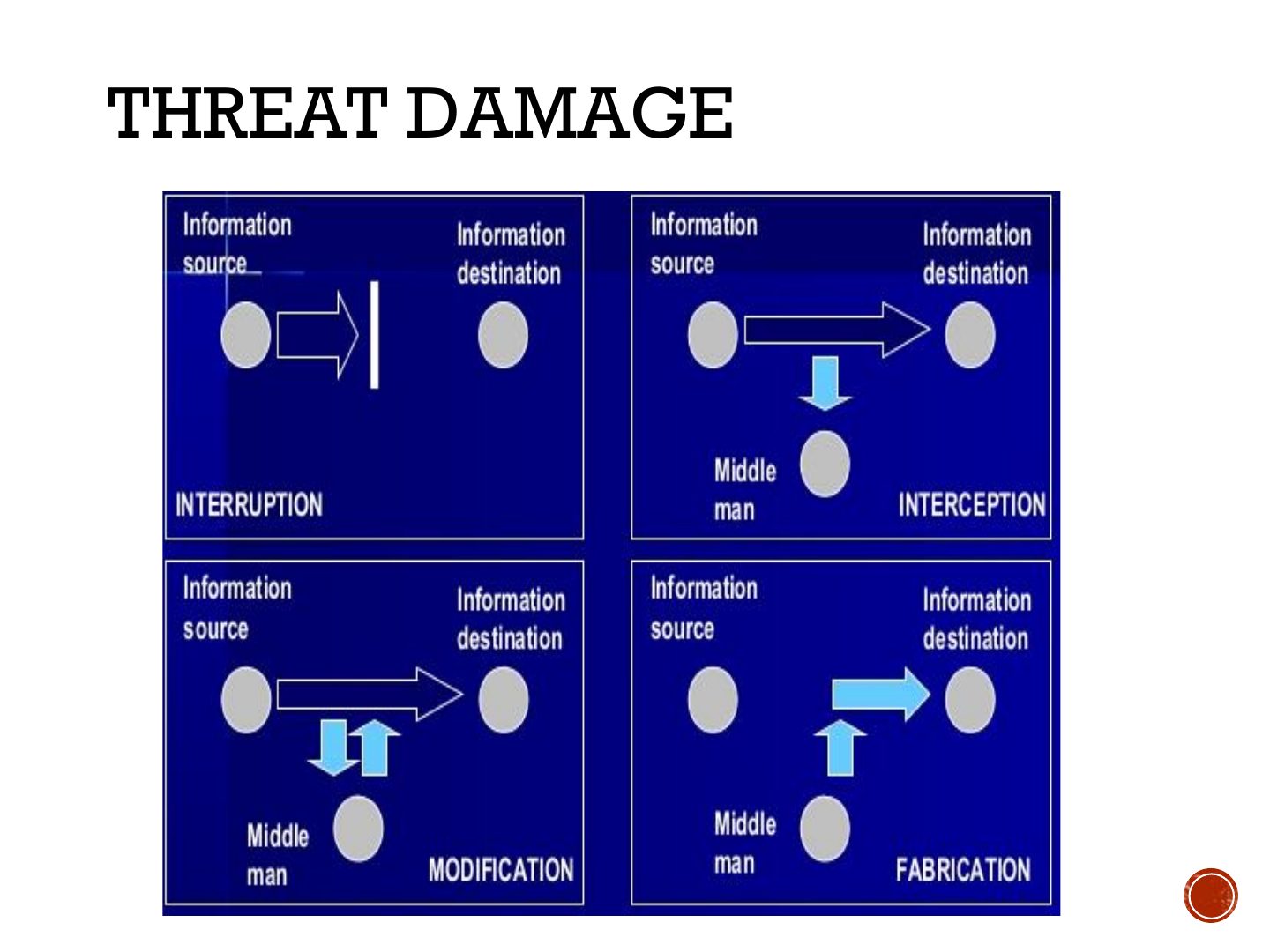
THREAT DAMAGE
Slide 7
Notes
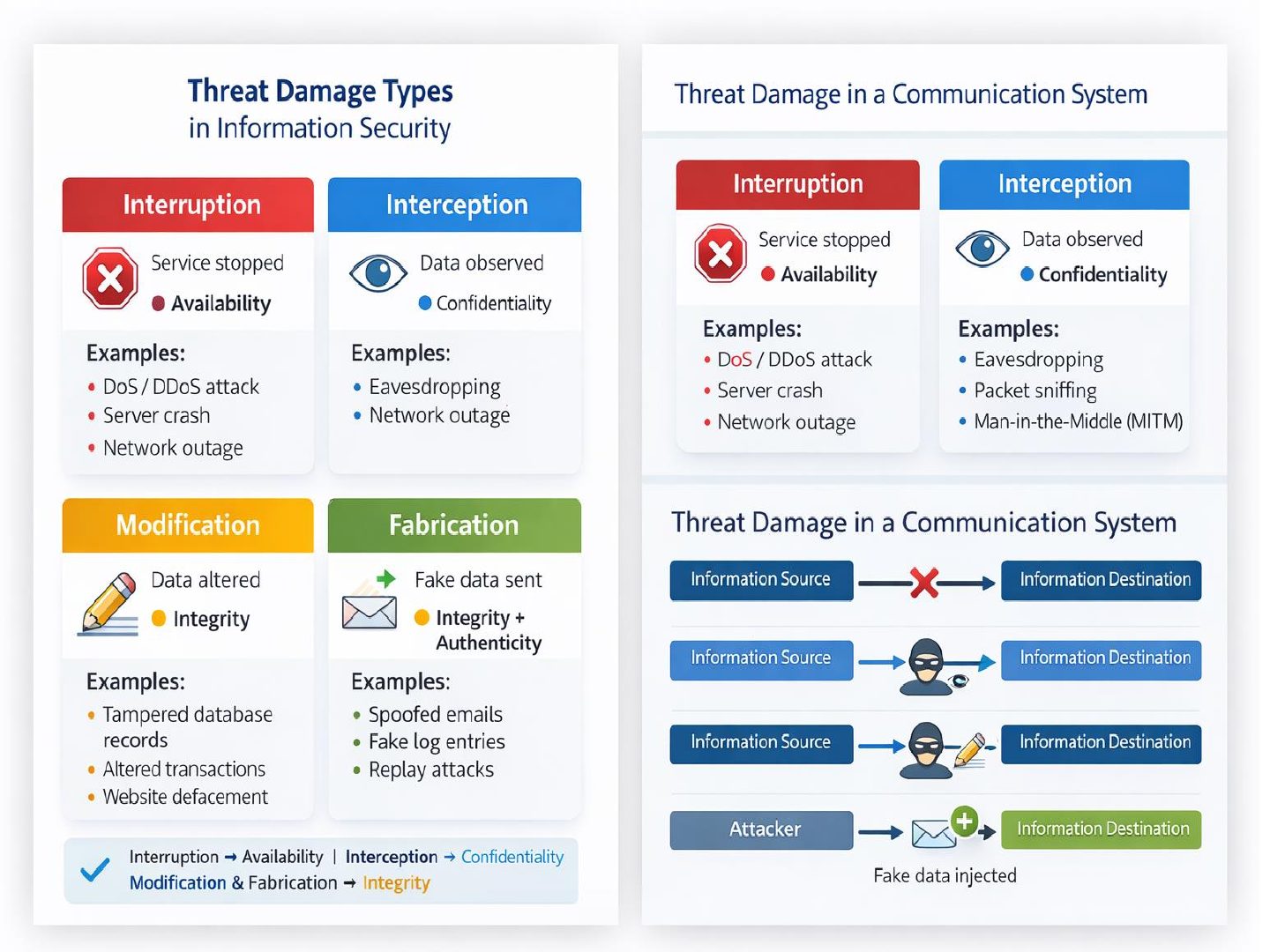
Threats overview.
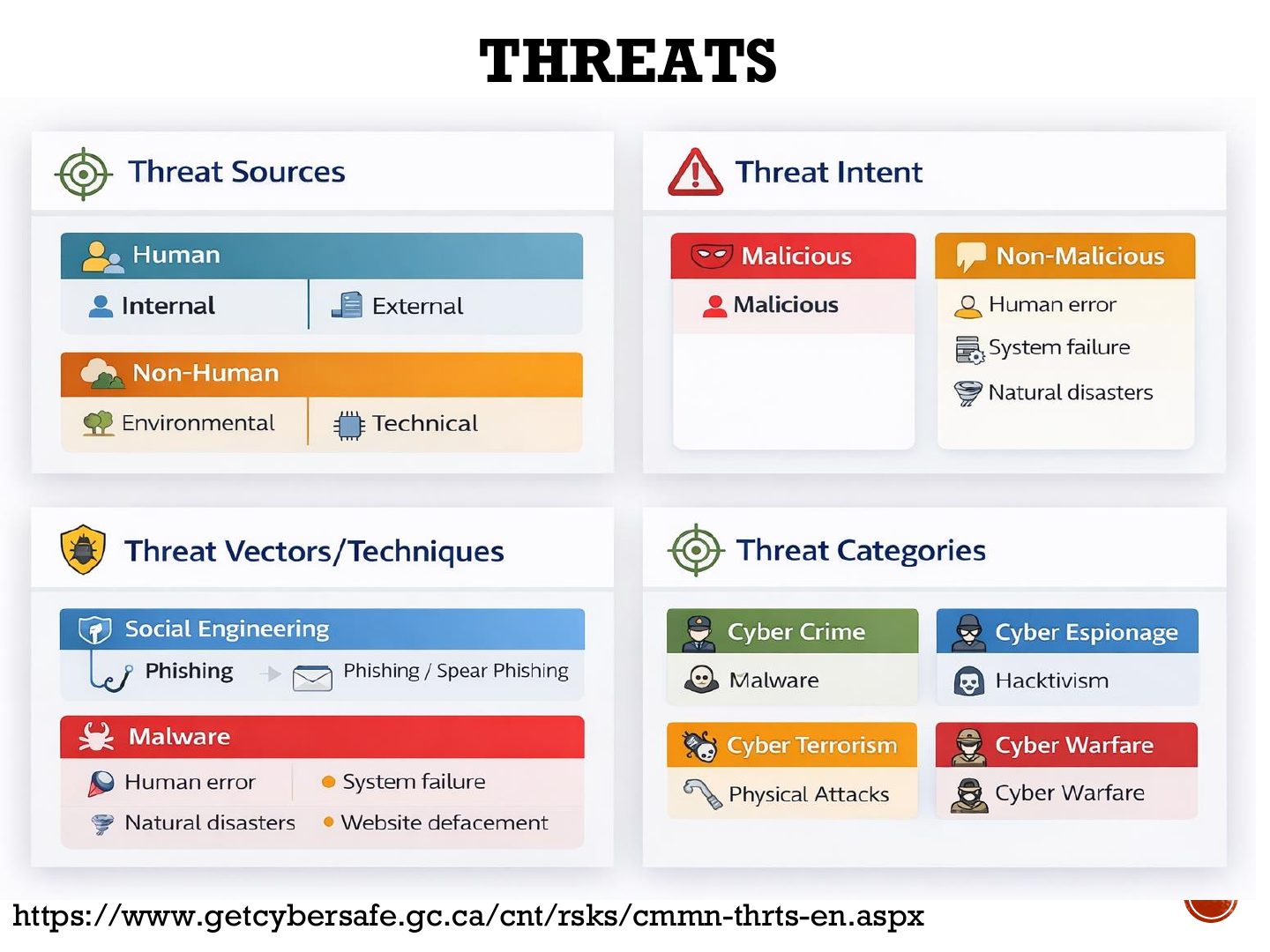
THREATS
Notes
Common threats (Get Cyber Safe list).
Modern Threat Landscape
Threat Vectors/Techniques
TYPES OF MALWARE
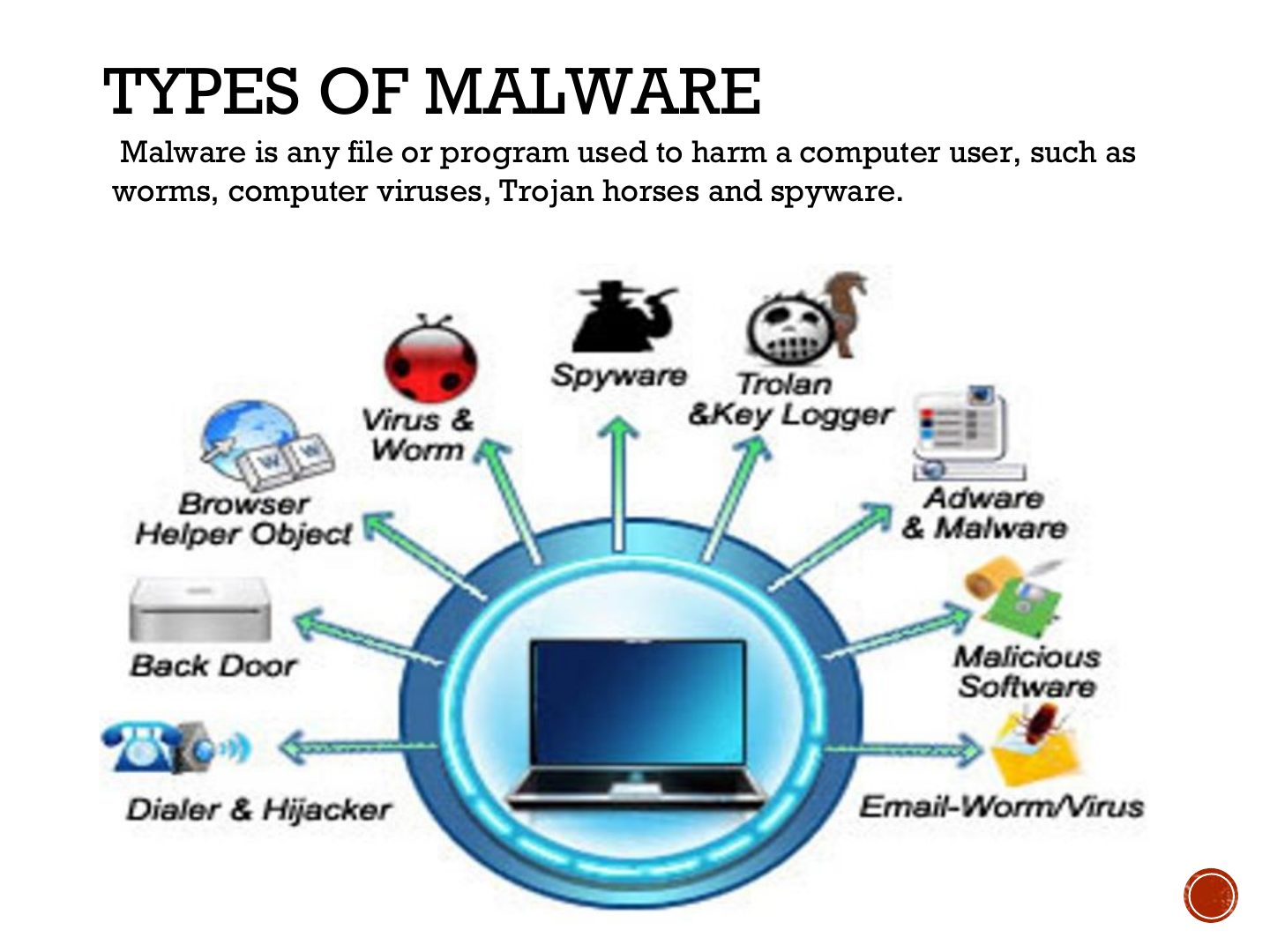
Notes
Malware types: virus, worm, Trojan, spyware, adware, rootkit, ransomware.
Malware Symptoms
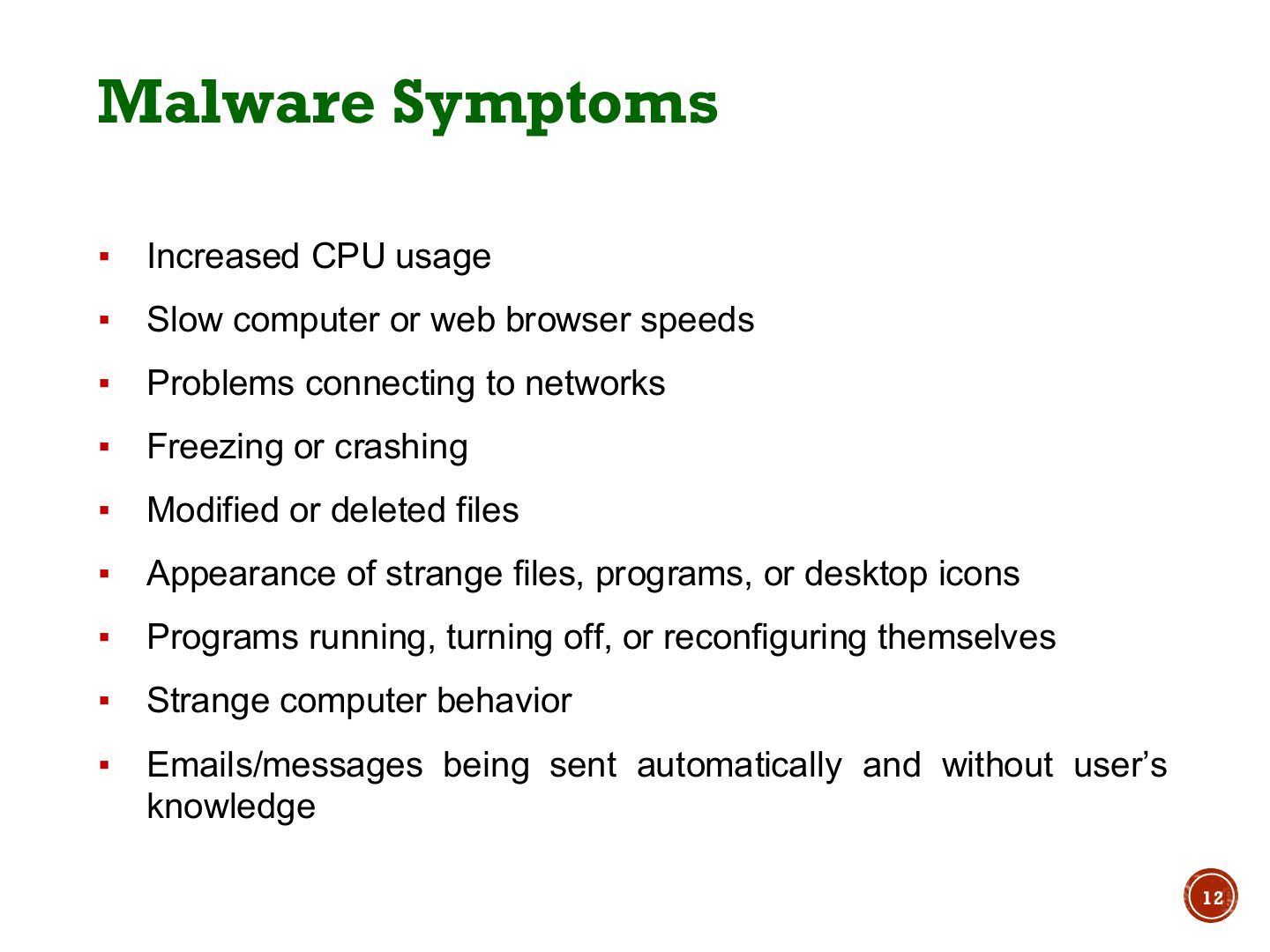
Notes
Symptoms: high CPU, slow browser, network problems, freezing, unknown programs, pop-ups.
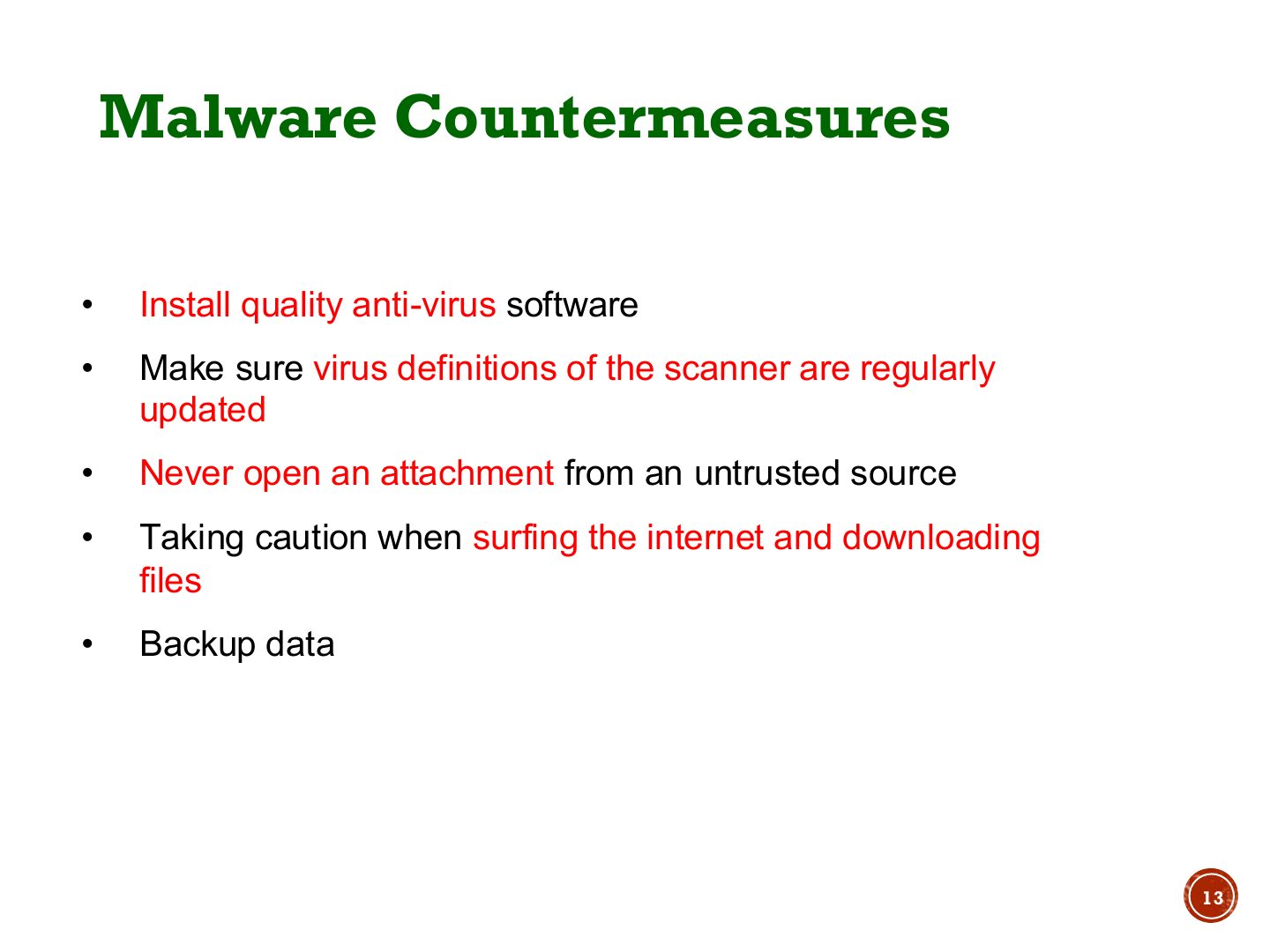
Malware Countermeasures
Notes
Countermeasures: good antivirus with updated definitions, don’t open untrusted attachments, patch, back up.
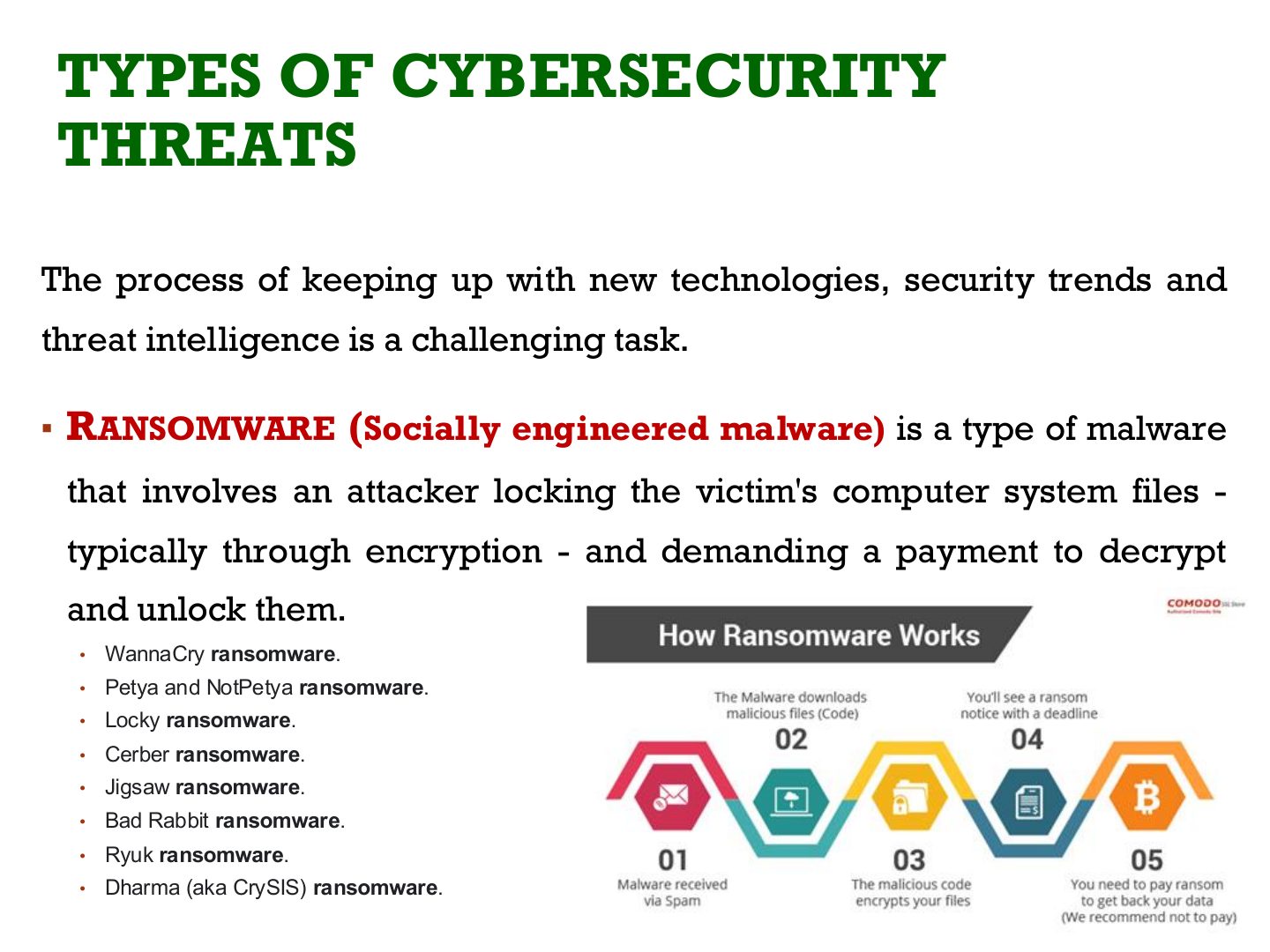
TYPES OF CYBERSECURITY THREATS
Exam angle
MCQ · malware asking the victim to pay
Social-engineering-based malware that demands payment to unlock or decrypt data is:
- Final 221 A.
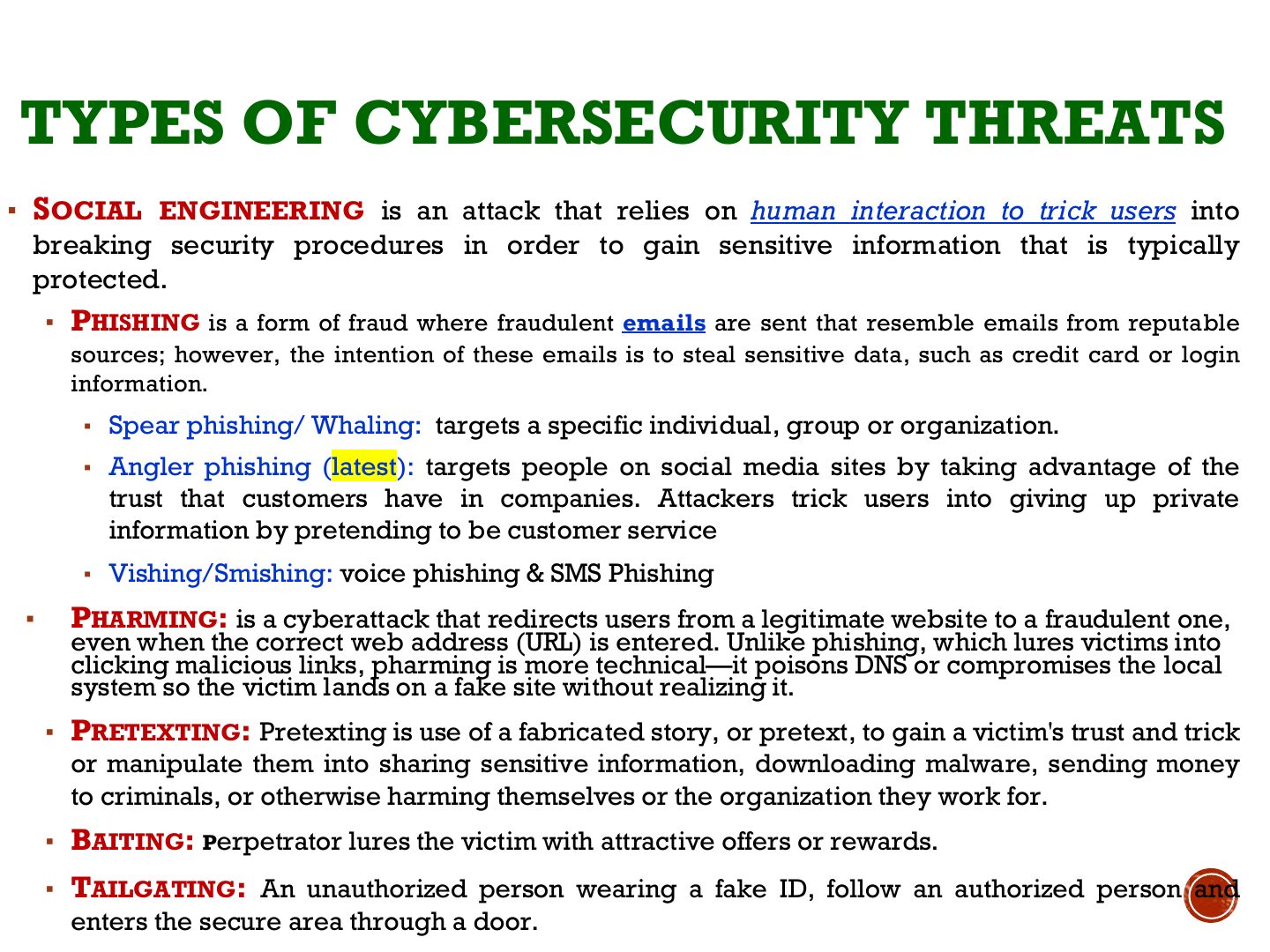
TYPES OF CYBERSECURITY THREATS
Exam angle
MCQ · emails targeting you specifically = spear phishing
Frequent emails impersonating your bank, crafted to convince YOU specifically to give your credentials, are:
- Final 221 A.
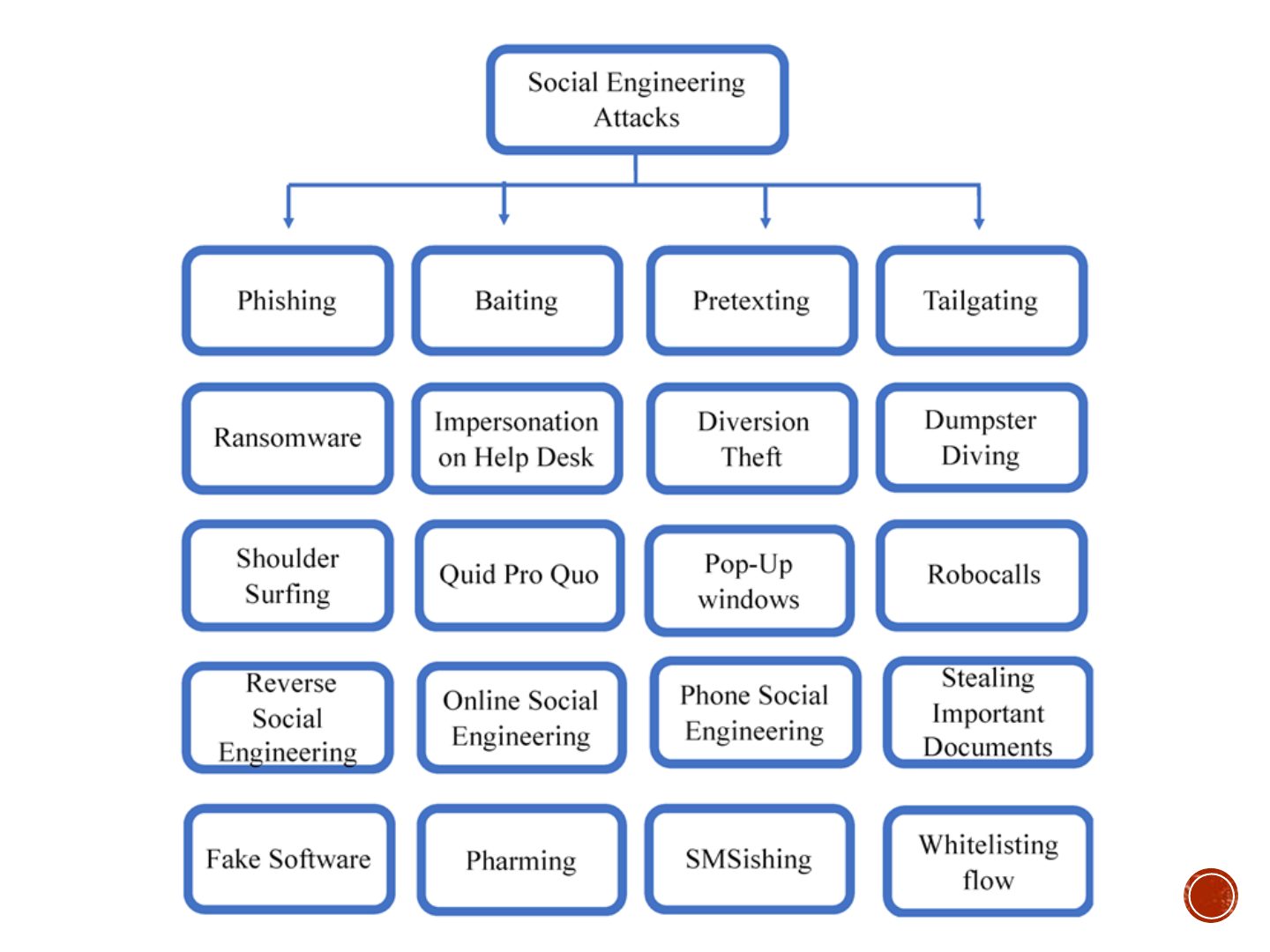
Slide 16
Notes
More social engineering: vishing, smishing, baiting, pretexting, tailgating.
Exam angle
A · following someone through a door = tailgating
Following an authorised person through a secured door without authenticating is:
- Major B.
TYPES OF
SE Counter Measures
Notes
Social engineering countermeasures: password policies (change, complexity), physical security, training.
SE Counter Measures
AI-Driven Cyber Threat Vectors
WHERE THREATS MAY EXIST
Notes
Threats exist at every level: personal, enterprise, Internet of Things, critical infrastructure.
CIA TRIAD CONFIDENTIALITY, INTEGRITY, AND AVAILABILITY TRIAD
Notes
C.I.A.: confidentiality (secrets stay secret), integrity (accurate, unmodified), availability (accessible when needed).
Seen again Ch 1, slide 14: C.I.A. definitions
CONFIDENTIALITY
ATTACKS FOCUSES ON THE VIOLATION OF CONFIDENTIALITY
ATTACKS FOCUSES ON THE VIOLATION OF CONFIDENTIALITY
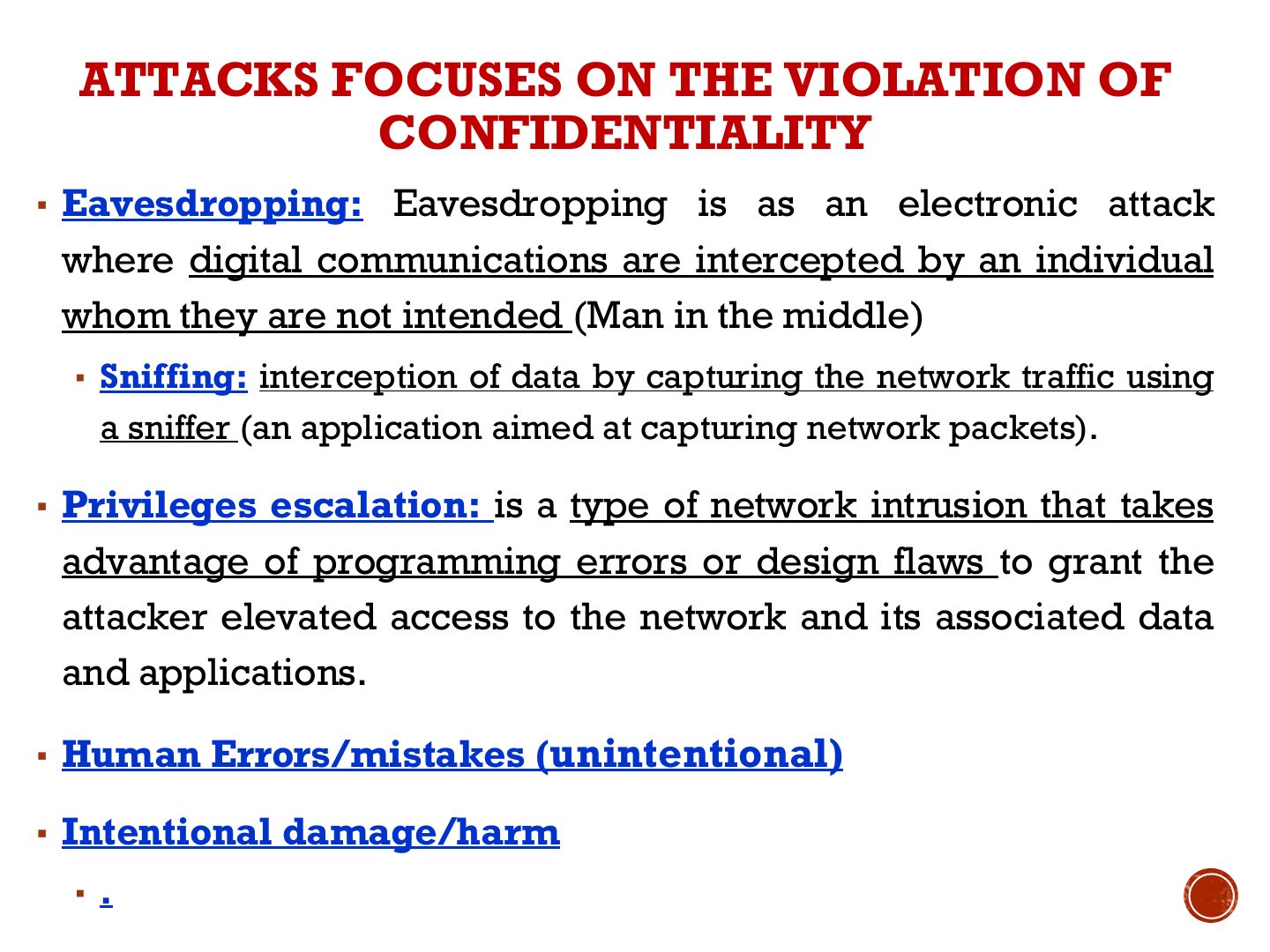
METHODS USED TO ENSURE CONFIDENTIALITY
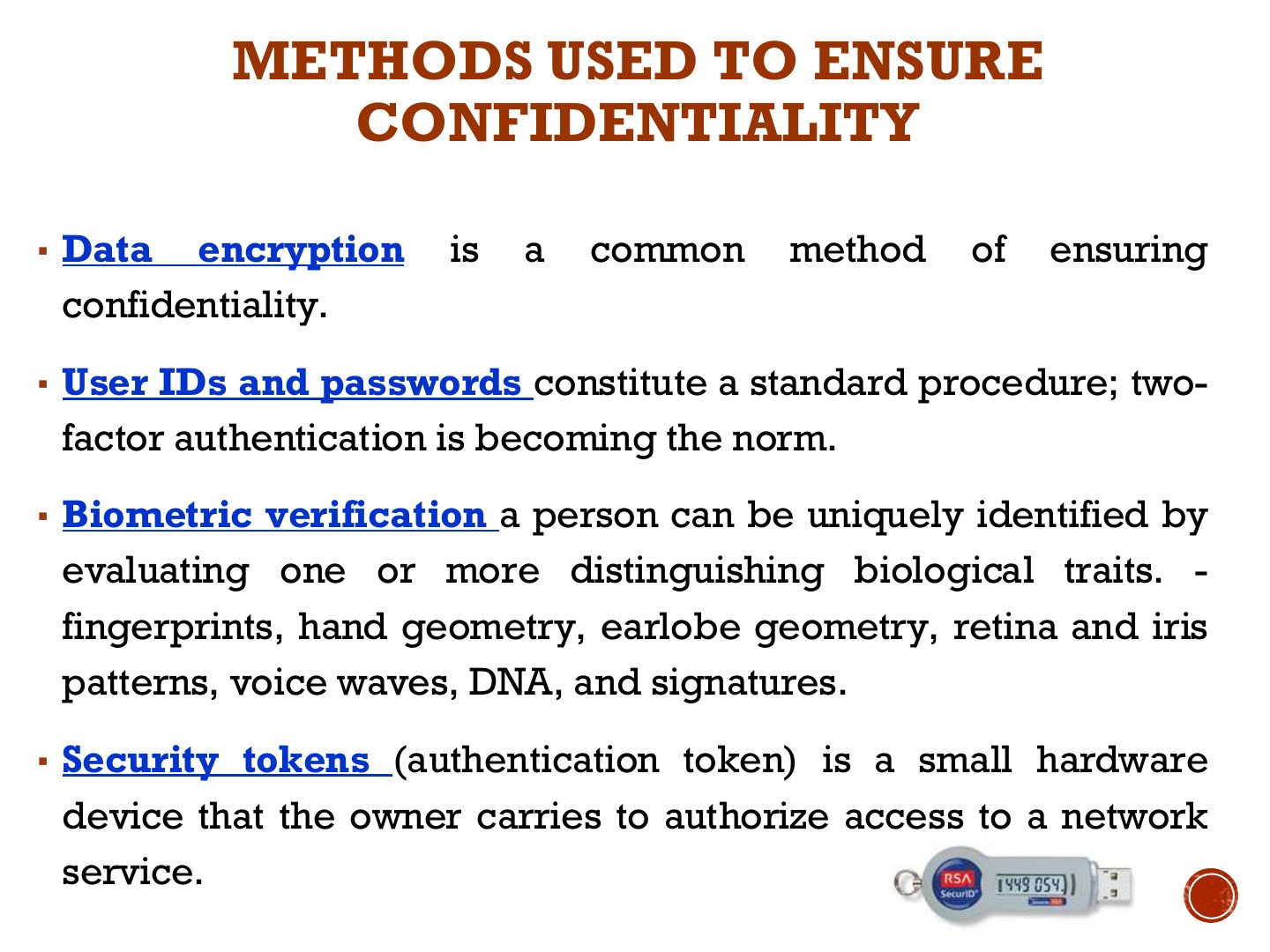
METHODS USED TO ENSURE CONFIDENTIALITY
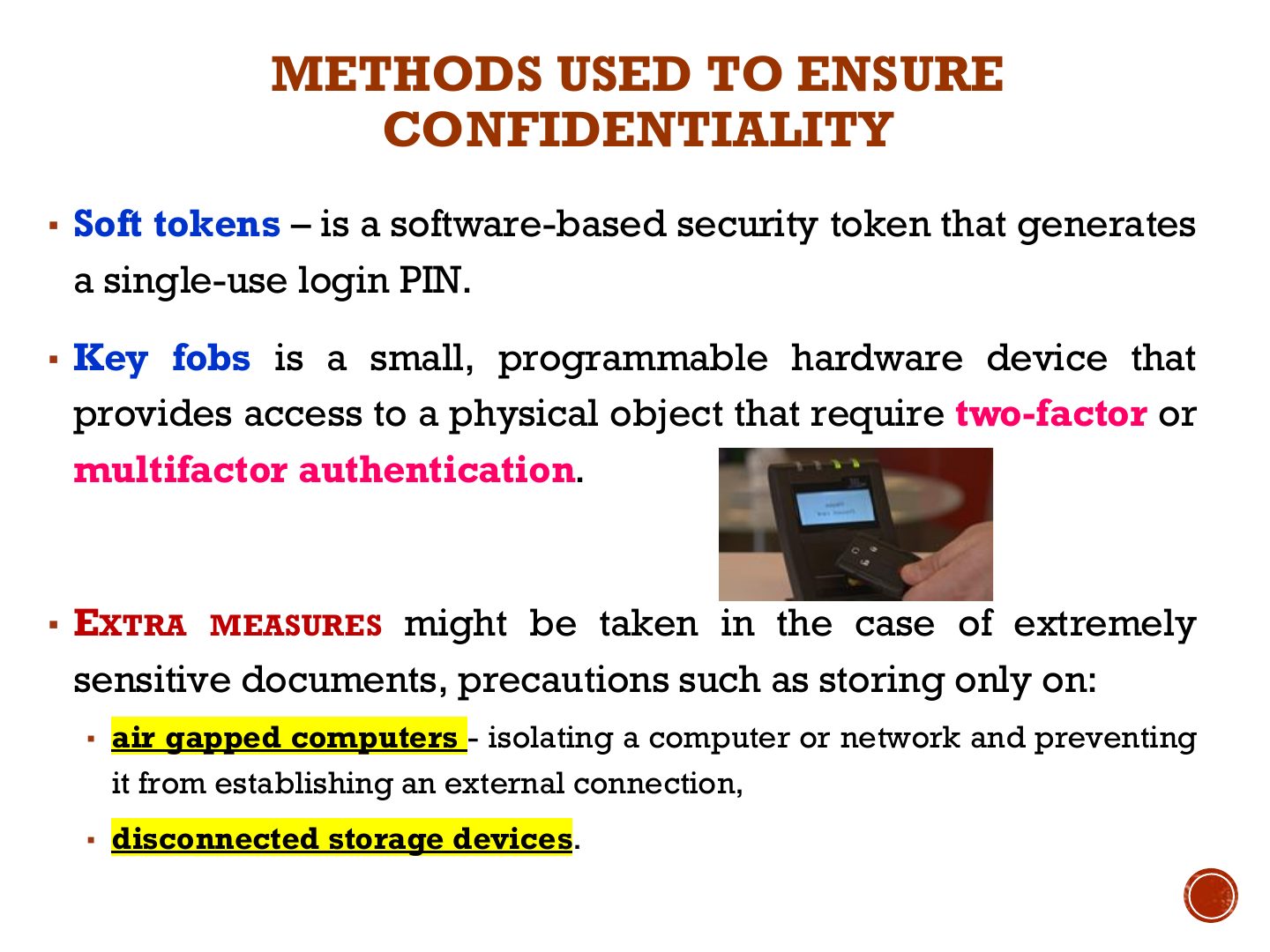
Notes
Soft tokens, key fobs (2FA/MFA), and storing sensitive documents offline.
Exam angle
A · what stops access even with a stolen password = MFA
Which control still blocks access when a user’s password is stolen?
- Major B.
INTEGRITY
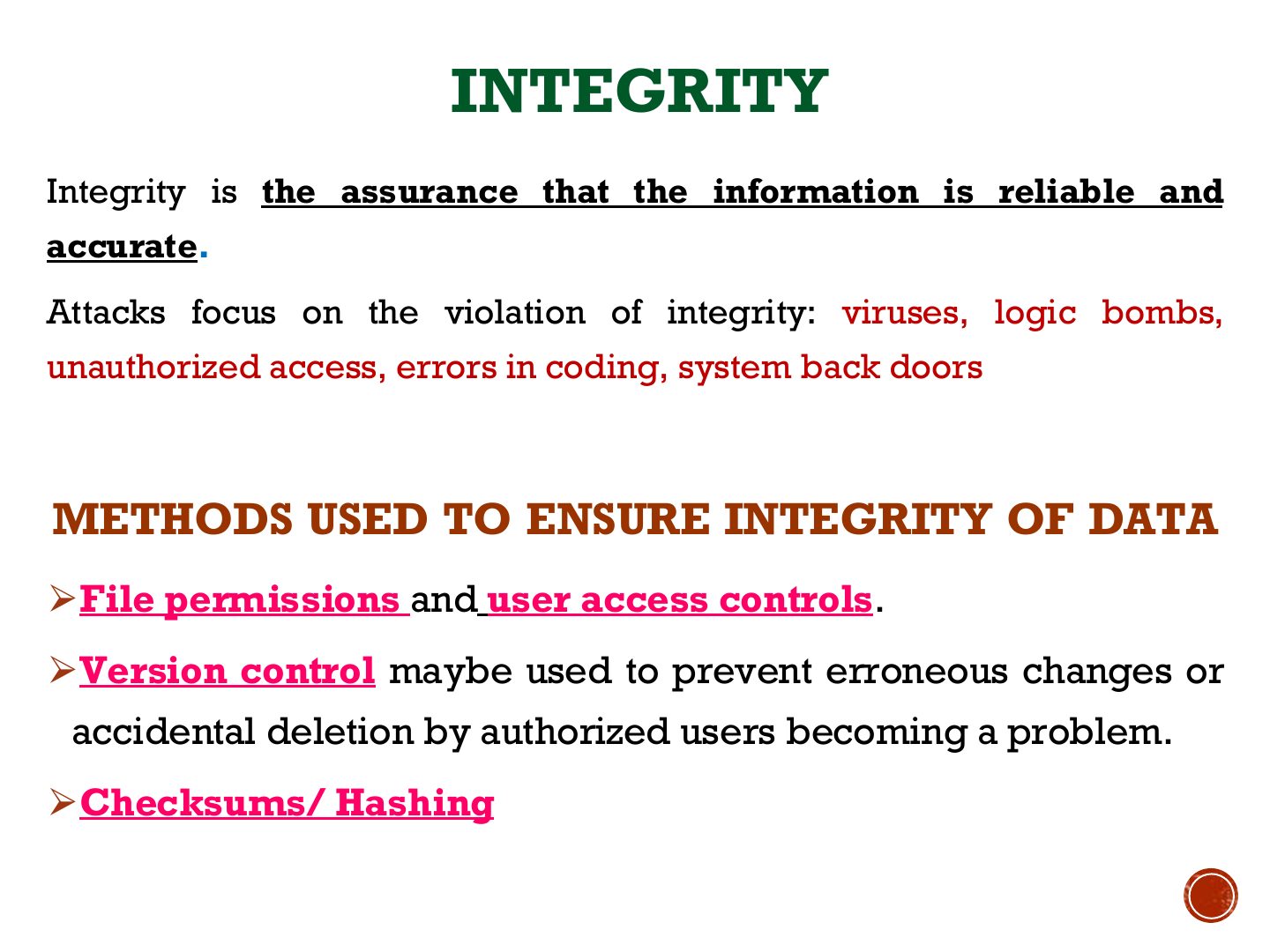
INTEGRITY
Notes
Ensure integrity: cryptographic checksums (hashes), digital signatures, backups.
Seen again Ch 6.2, slide 3: Hashing
AVAILABILITY
Notes
Availability threats: device failure, software errors, environment (heat, floods, power), DoS. Prevent data loss: backups, redundancy, disaster recovery.
Exam angle
MCQ · backups restore lost data
Q2 · availability calculation
Related question: MCQ · attack making assets unavailable
An attack that makes company assets unusable or unavailable is a(n):
- Final 221 A.
A system is offline 2 h 20 min a week for 13 weeks for testing. What is its availability over those 13 weeks (1 d.p.)? (Quiz 1 222 style)
Compare with the model answer
Downtime = 140 min × 13 = 1820 min. Total time = 13 weeks × 7 × 24 × 60 = 131,040 min. Availability = (131,040 − 1,820) / 131,040 = 98.6%.
AAA SERVICES
Notes
Tip AAA = five elements: Identification (claim) → Authentication (prove) → Authorization (permissions) → Auditing (record) → Accounting (hold responsible). Phase 1 (getting in): identification, authentication, authorization. Phase 2 (afterwards): auditing, accountability.
ACCESS CONTROL (AAA ELEMENTS)
Exam angle
written · the two phases of IAAA
Identification, authentication, authorization and accountability are divided into two phases. What are they? (Final 221 B)
Compare with the model answer
Phase 1, gaining access: identification, authentication and authorization. Phase 2, after access: auditing and accountability (accounting), which record and tie actions to the user.
Proving that you are the identity you claimed is:
PROTECTION MECHANISMS
Notes
Protection mechanisms: layering (defence in depth), abstraction, data hiding, encryption.
PROTECTION MECHANISMS
Notes
Data hiding: keep data out of reach of unauthorised subjects. Encryption: hide the meaning of a communication.