Mapping a host name to its IP address is called:
Application Layer: DNS
The Domain Name System: why names, the hierarchical name space and its labels, domains, FQDN vs. PQDN, name servers (root, primary, secondary, zone transfer, caching), and recursive vs. iterative resolution, traced step by step for lab.CS.PSU.EDU.SA looking up sales.mcgraw.com. Rebuilt from the highlighted copy of the deck until a clean one is uploaded.
How to read this page
Every original slide is shown unchanged. Yellow marks on a slide point to a numbered note: hover or tap a mark to jump to its note, and hover a note to see its marks. Questions tagged Past exam appeared on a real paper; Prediction questions are likely angles, not confirmed. Pick an answer to each question: a wrong pick tells you why it is wrong, so you can try again.
All 21 slides
- 1 Application Layer
- 2 Domain Name System
- 3 Name Space
- 4 Table 10.12 Generic domain labels
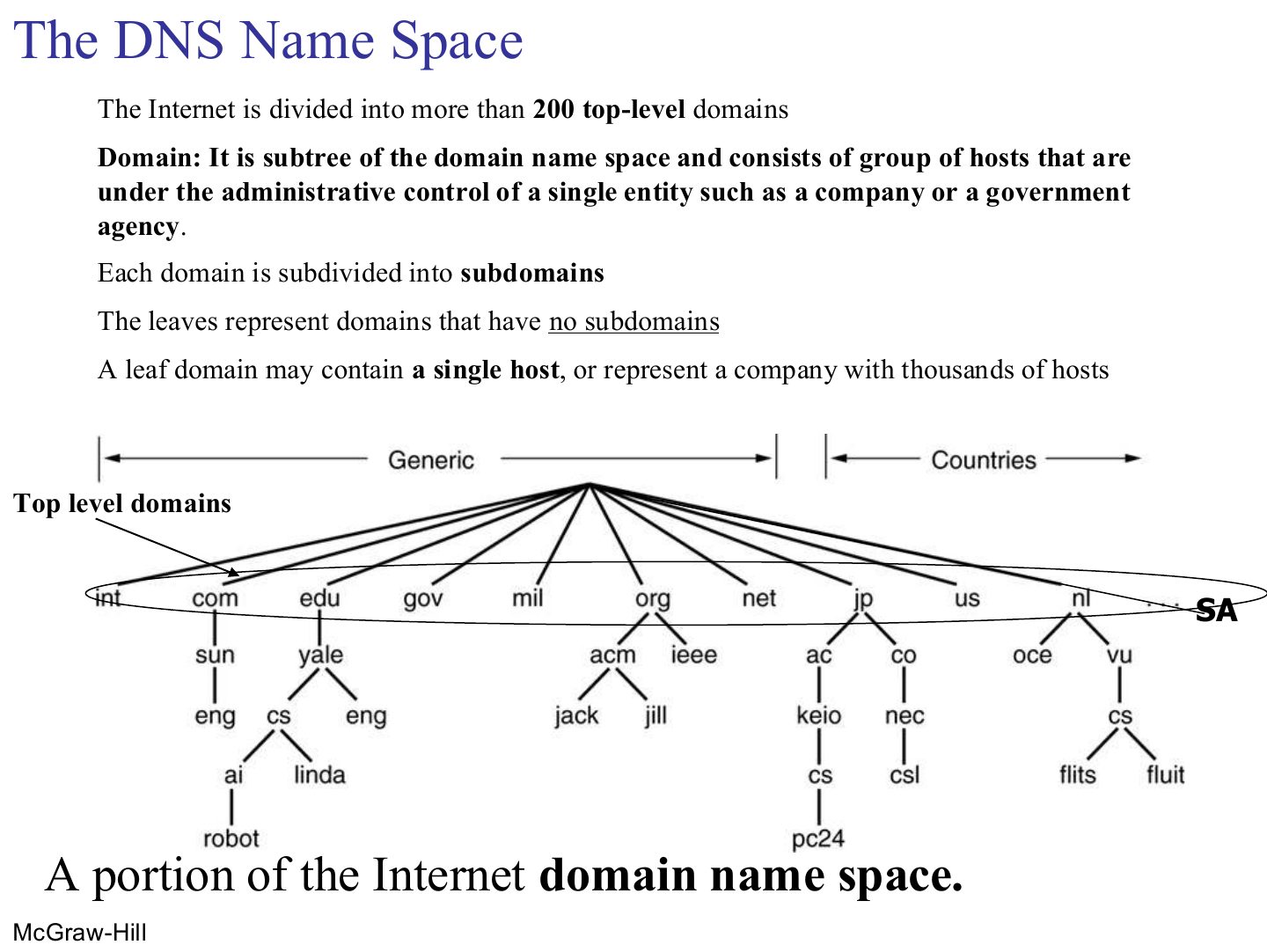
- 5 The DNS Name Space
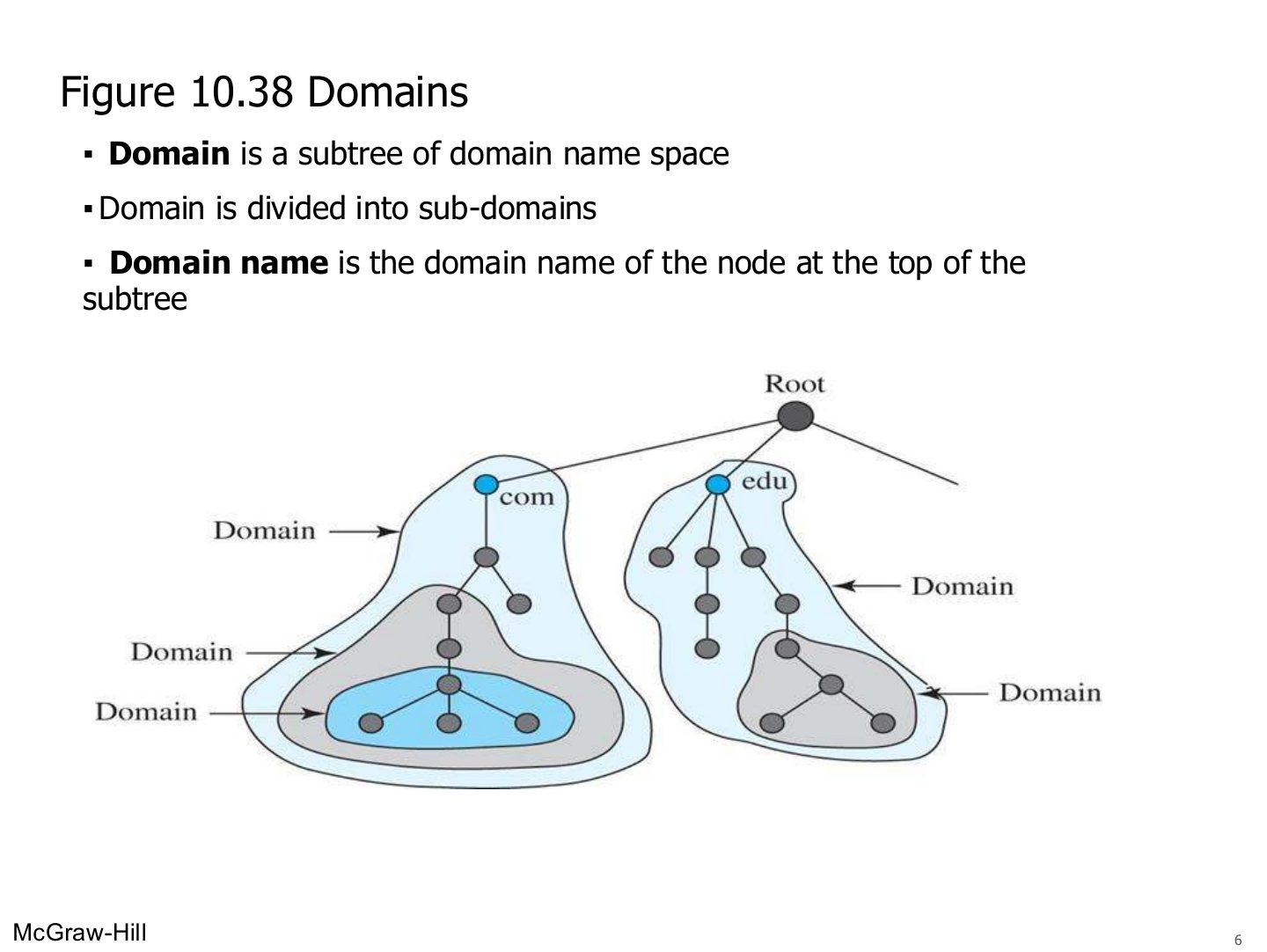
- 6 Domains (Figure 10.38)
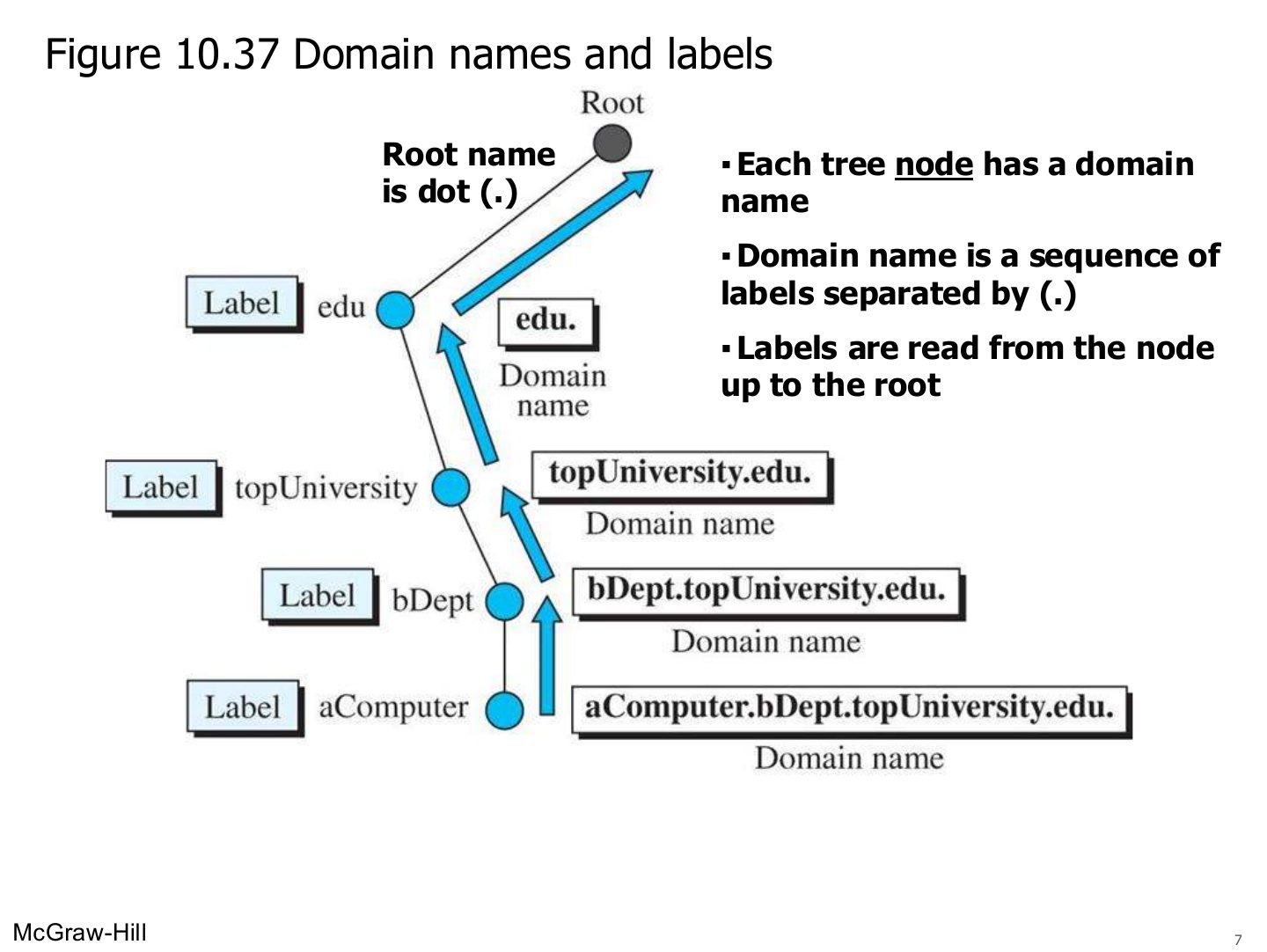
- 7 Domain names and labels
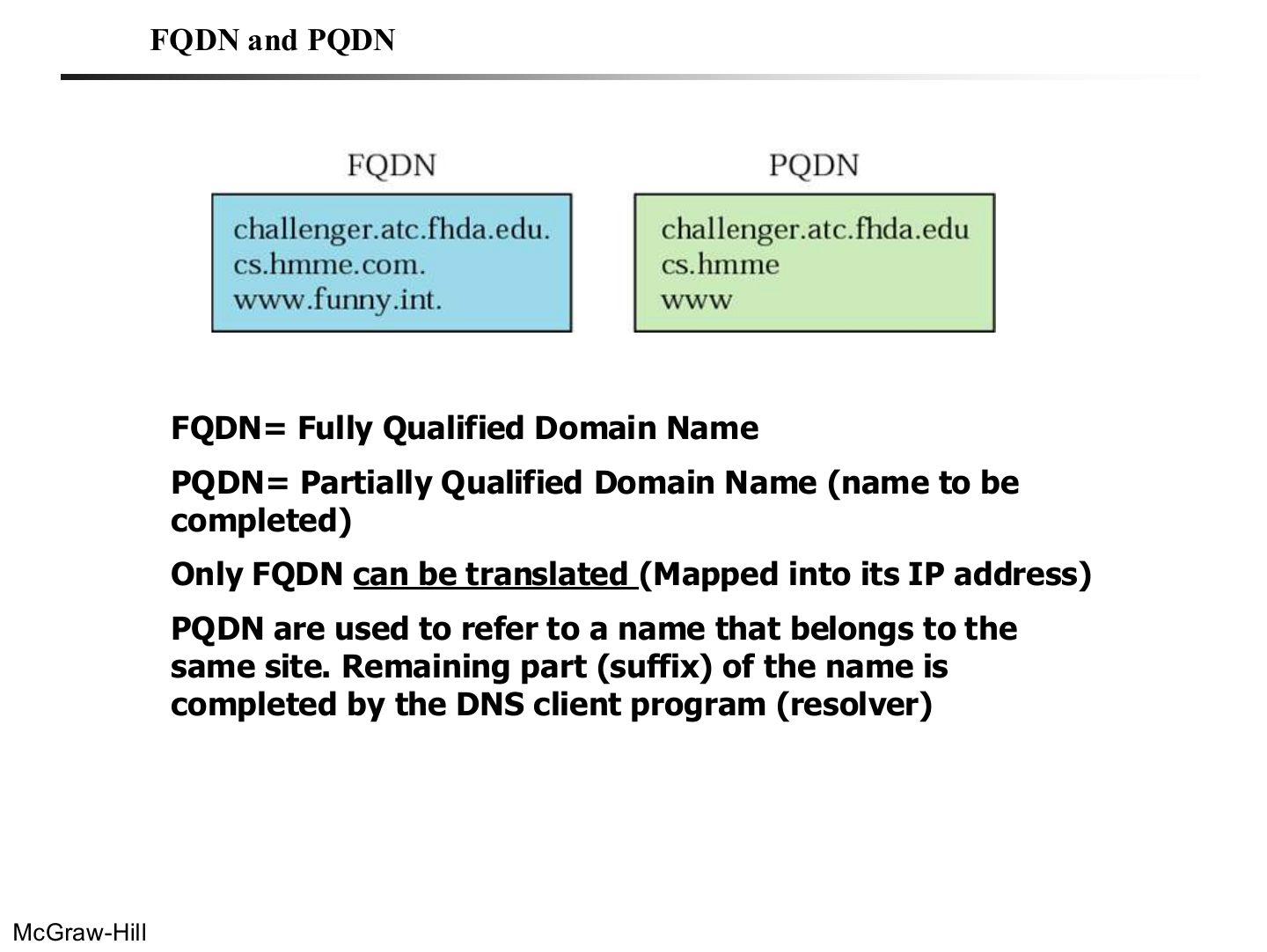
- 8 FQDN and PQDN
- 9 Distribution of Name Spaces
- 10 Hierarchy of name servers
- 11 Note: primary and secondary servers
- 12 Root servers
- 13 DNS Caching
- 14 Purpose of DNS
- 15 Name resolution
- 16 Recursive resolution: example
- 17 1- Recursive resolution – Example (cont’d.)
- 18 2- Iterative resolution (mapping)
- 19 Iterative resolution: example
- 20 2- Iterative resolution – Example (cont’d.)
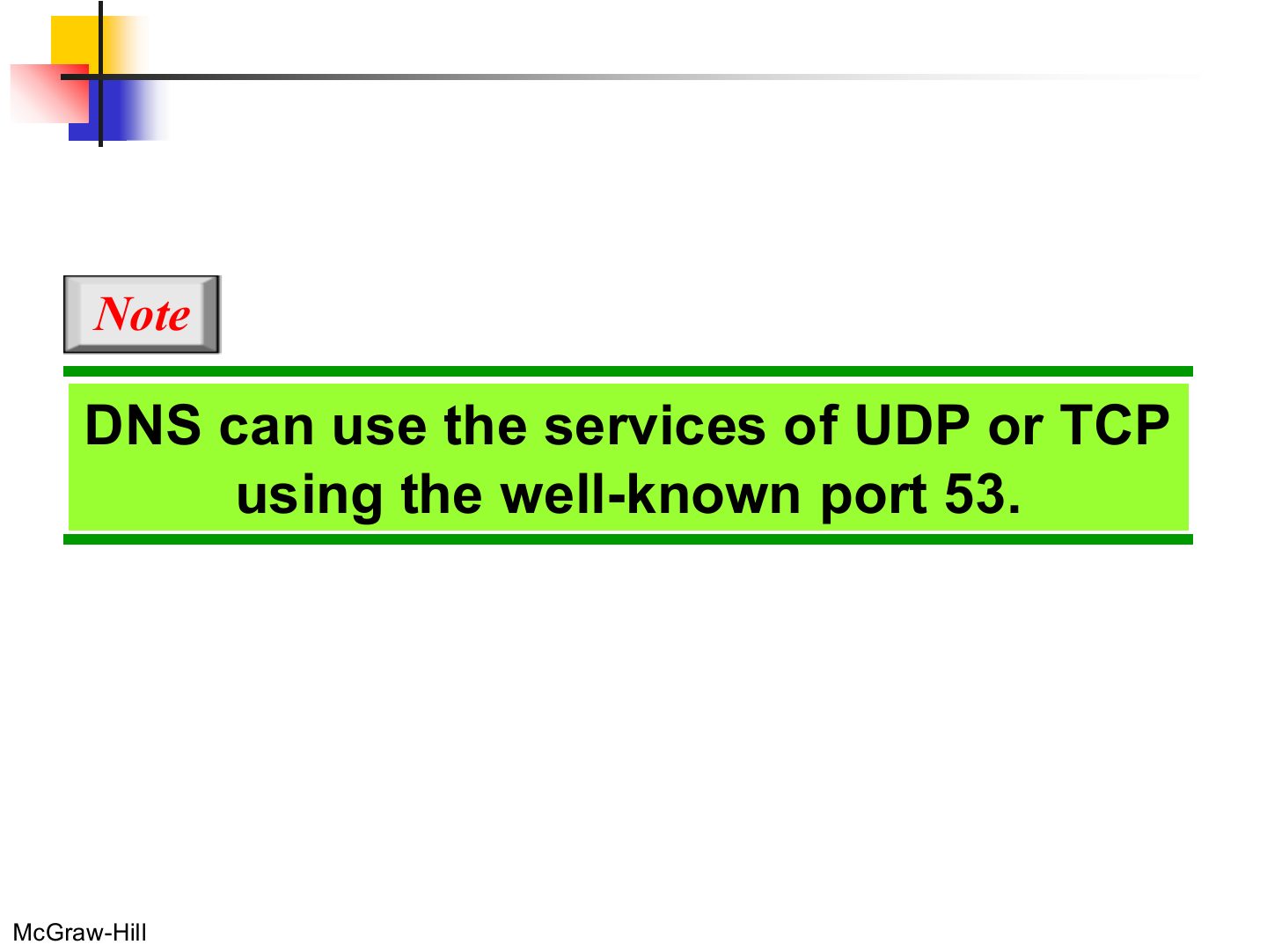
- 21 Note: DNS ports
Application Layer
Notes
Why DNS → name space and labels → domains, FQDN/PQDN → name servers → recursive vs. iterative resolution.
Domain Name System
Notes
Seen again Ch 7, slide 62: Every host is configured with a DNS server address
Exam angle
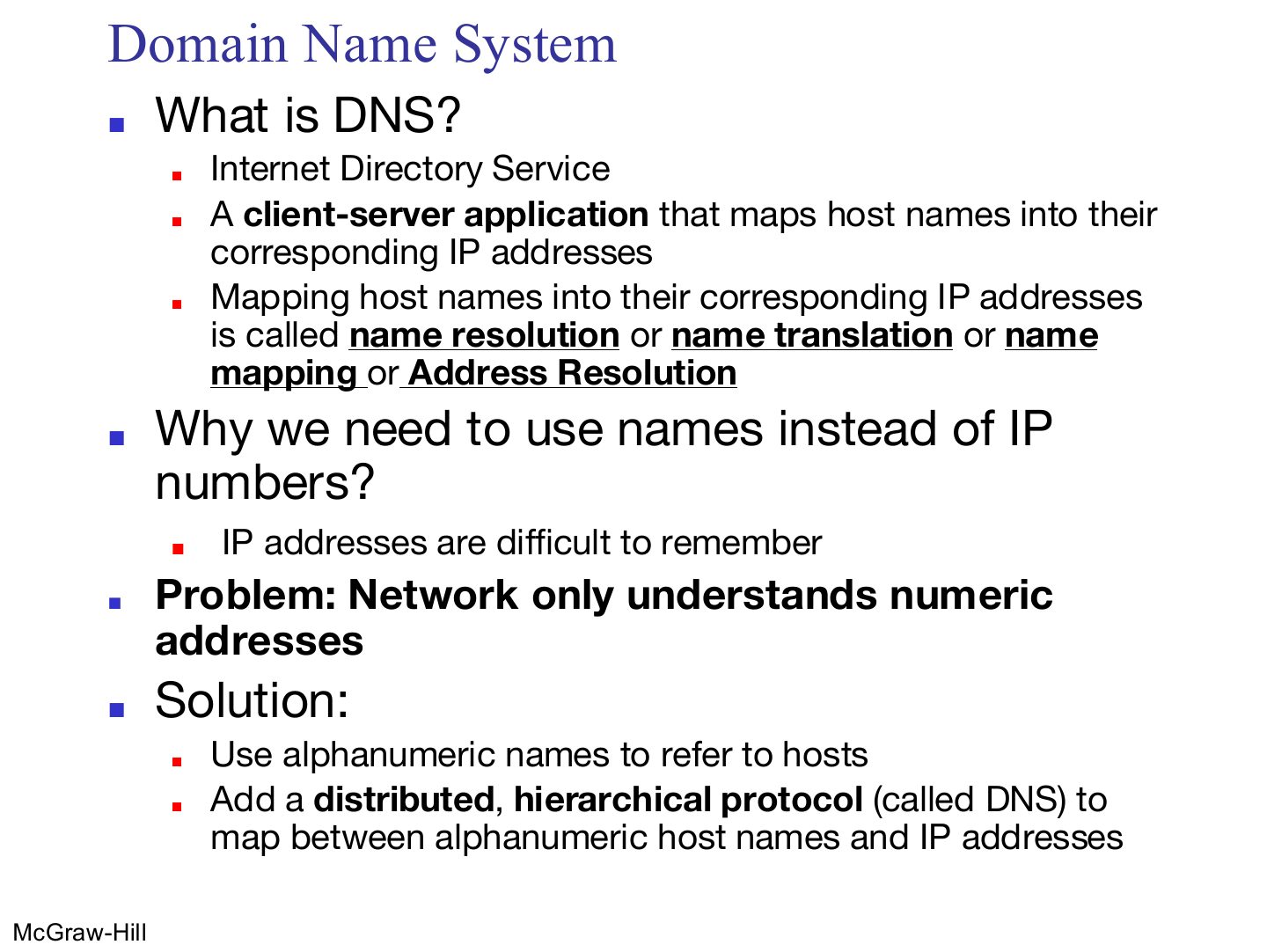
DNS is a client-server application.
Name Space
Notes
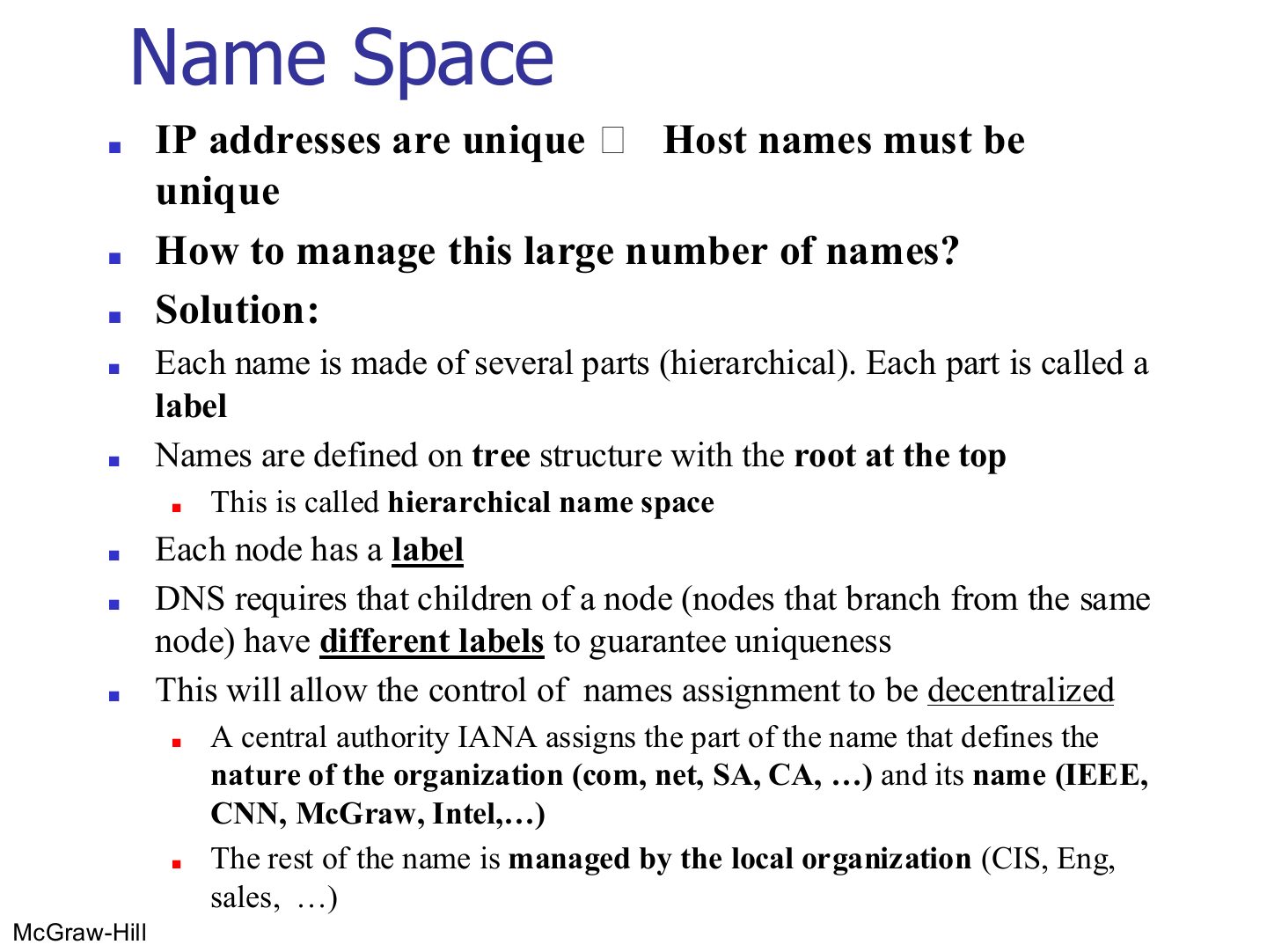
Siblings must have different labels → every full name is unique.
Exam angle
Children of the same node in the DNS tree must:
Table 10.12 Generic domain labels
Notes
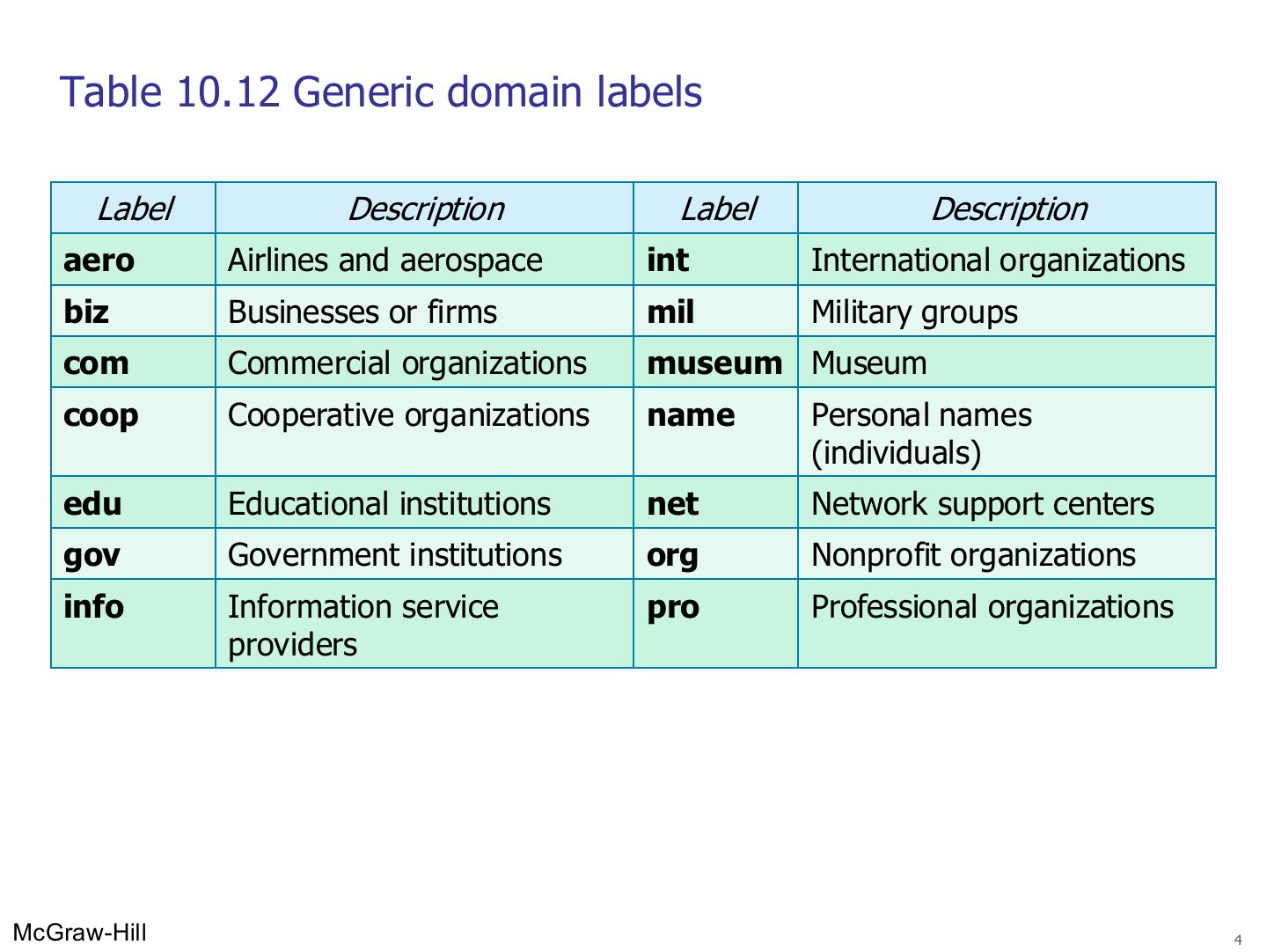
Generic top-level domains; country domains (sa, us, jp…) are the other kind.
Exam angle
The generic label for nonprofit organizations is:
The DNS Name Space
Notes
Domain = a subtree under ONE administrative authority. Leaves have no subdomains (a host or a whole company).
Domains (Figure 10.38)
Domain names and labels
Notes
Read from the leaf UP: aComputer → bDept → topUniversity → edu → root (the final dot).
Exam angle
In the name sales.mcgraw.com., the top-level domain is:
FQDN and PQDN
Notes
FQDN = complete, ends with a dot, can be resolved. PQDN = partial; the resolver adds the local suffix.
Memory trick Fully qualified = goes all the way to the root (the final dot).
Exam angle
Which name can be mapped directly to an IP address?
A PQDN is completed by the resolver on the client.
Distribution of Name Spaces
Notes
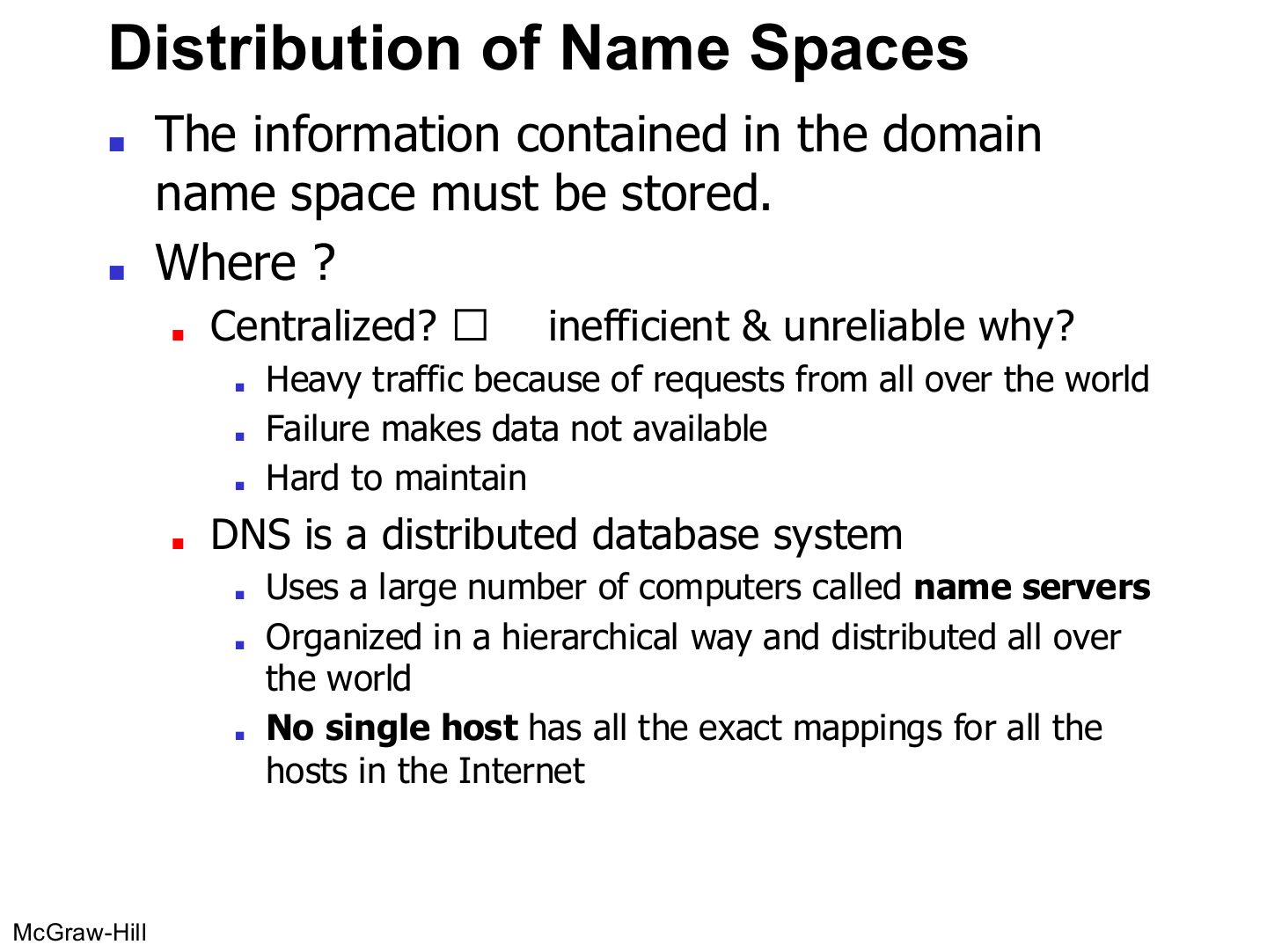
One central DNS server would be overloaded, a single point of failure, and hard to maintain.
Exam angle
Why isn’t the DNS database stored on one central server?
Compare with the model answer
It would get heavy traffic from all over the world, its failure would make every name unavailable, and it would be hard to maintain. DNS is a distributed, hierarchical database spread over many name servers.
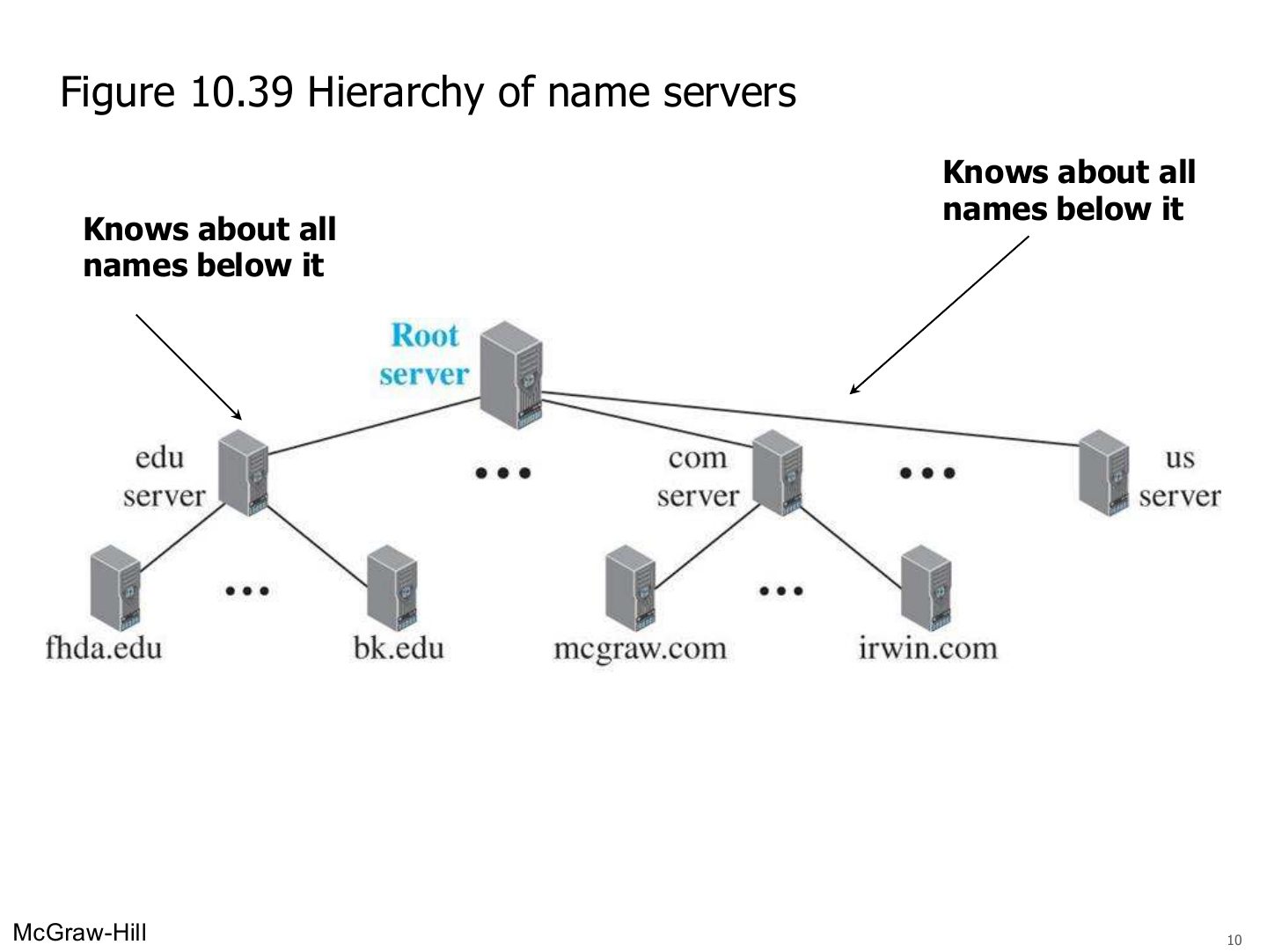
Hierarchy of name servers
Note: primary and secondary servers
Notes
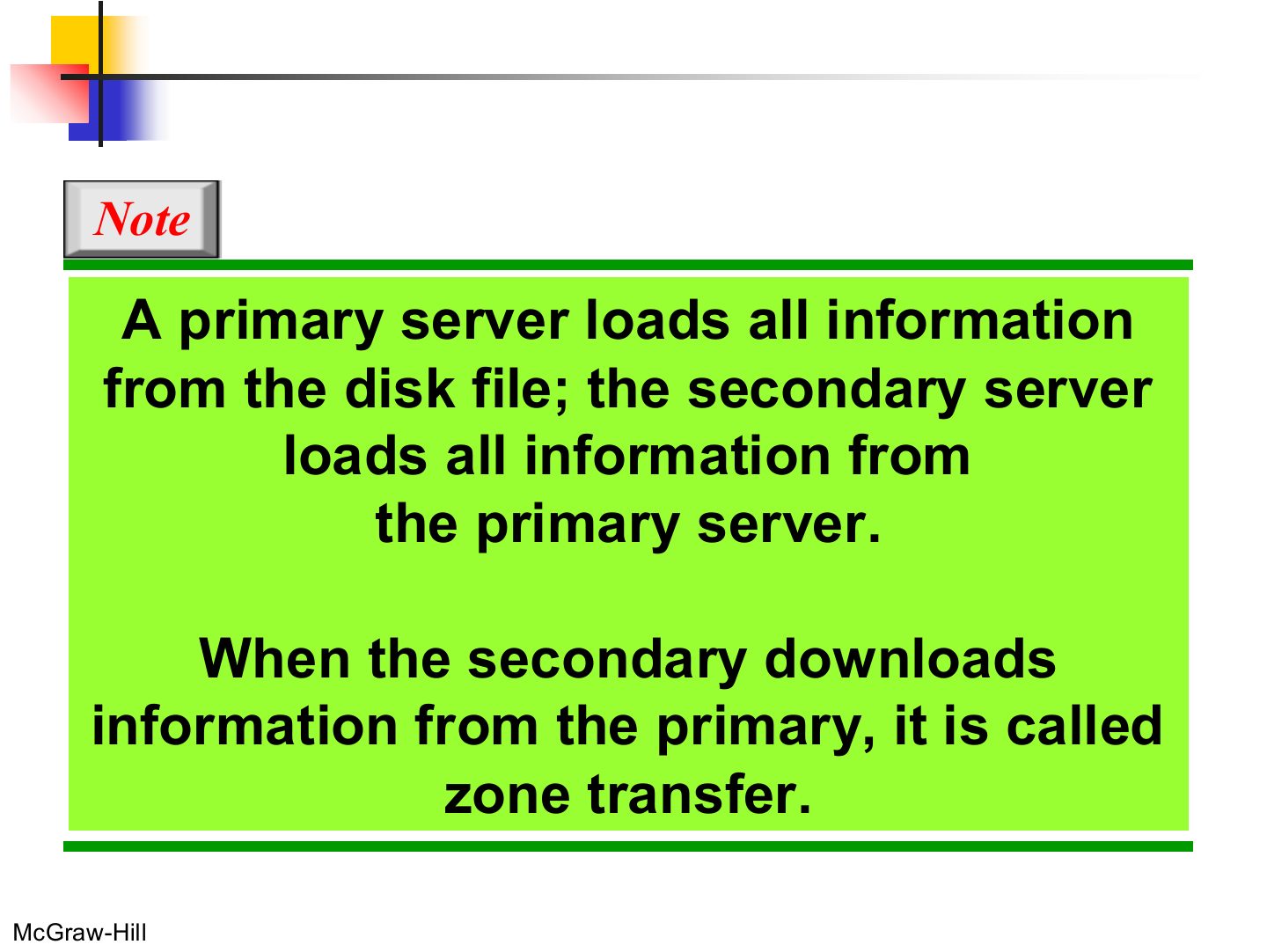
Primary: loads its data from its own disk file. Secondary: copies it from the primary → zone transfer.
Exam angle
A secondary DNS server downloading data from the primary is called:
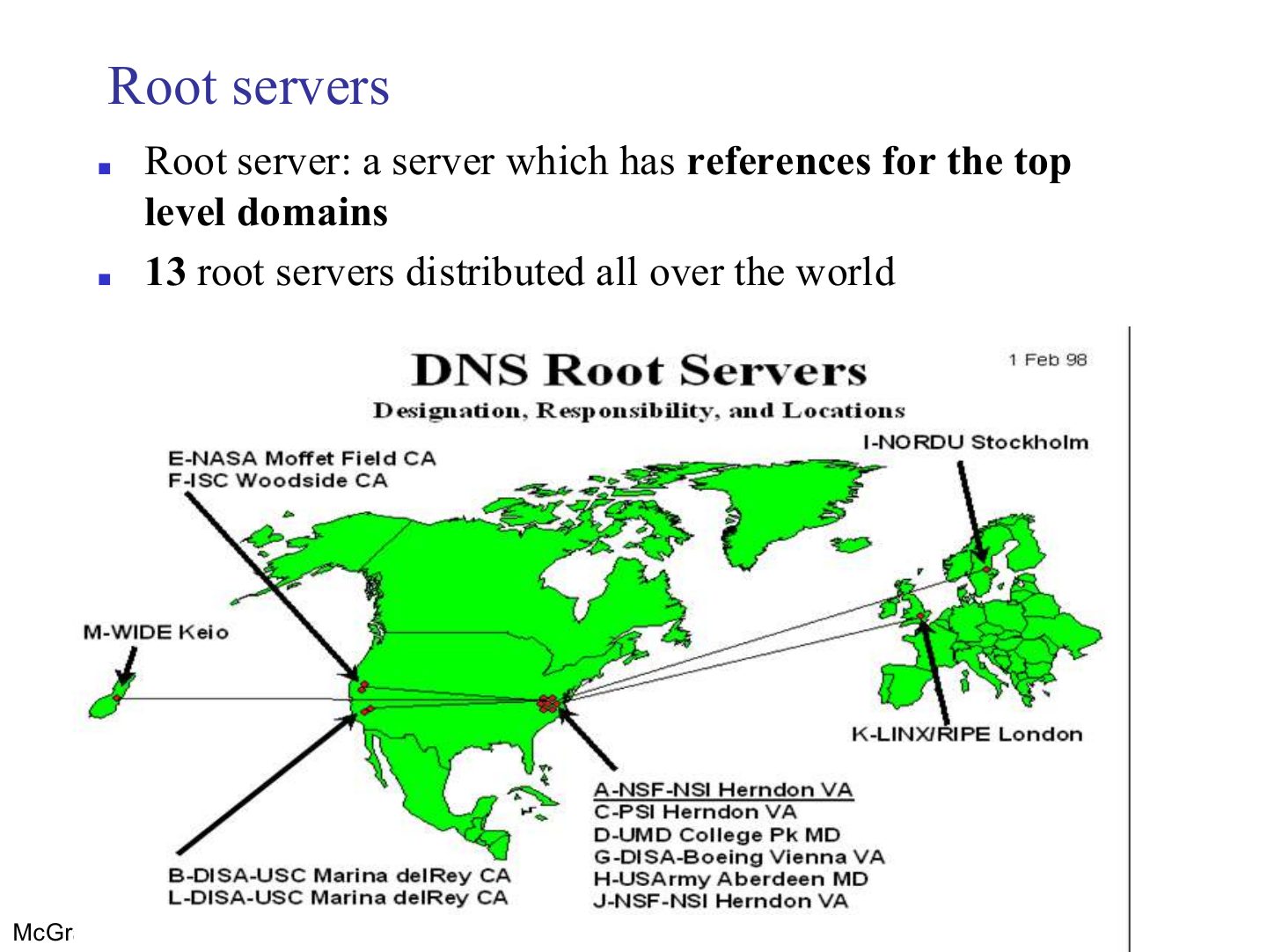
Root servers
Exam angle
How many root servers are there in the slides?
DNS Caching
Notes
Caching: servers remember recent answers so the next lookup skips the search.
Purpose of DNS
Notes
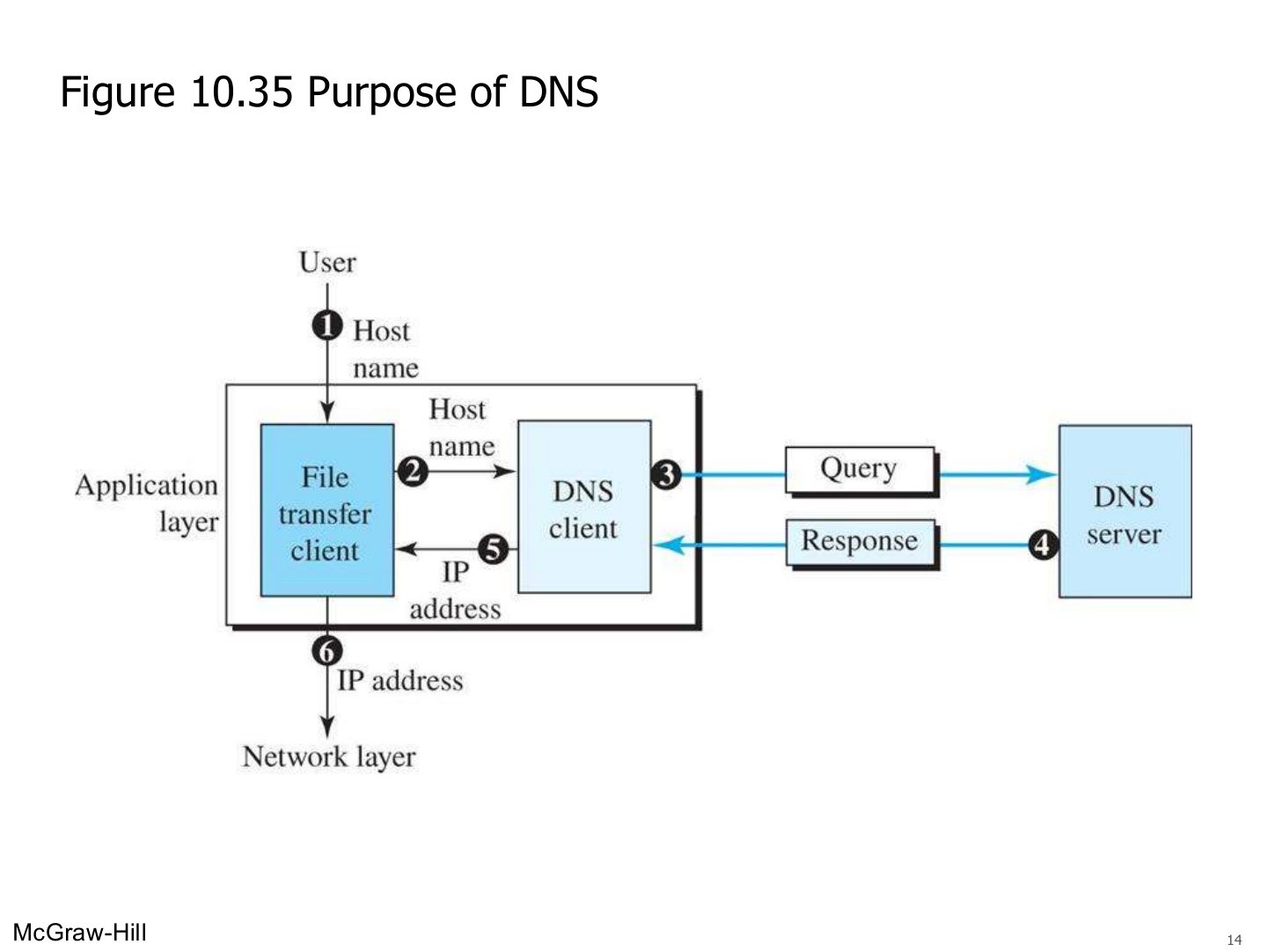
App gives the name to the DNS client (resolver) → query → response → IP address back to the app.
Name resolution
Notes
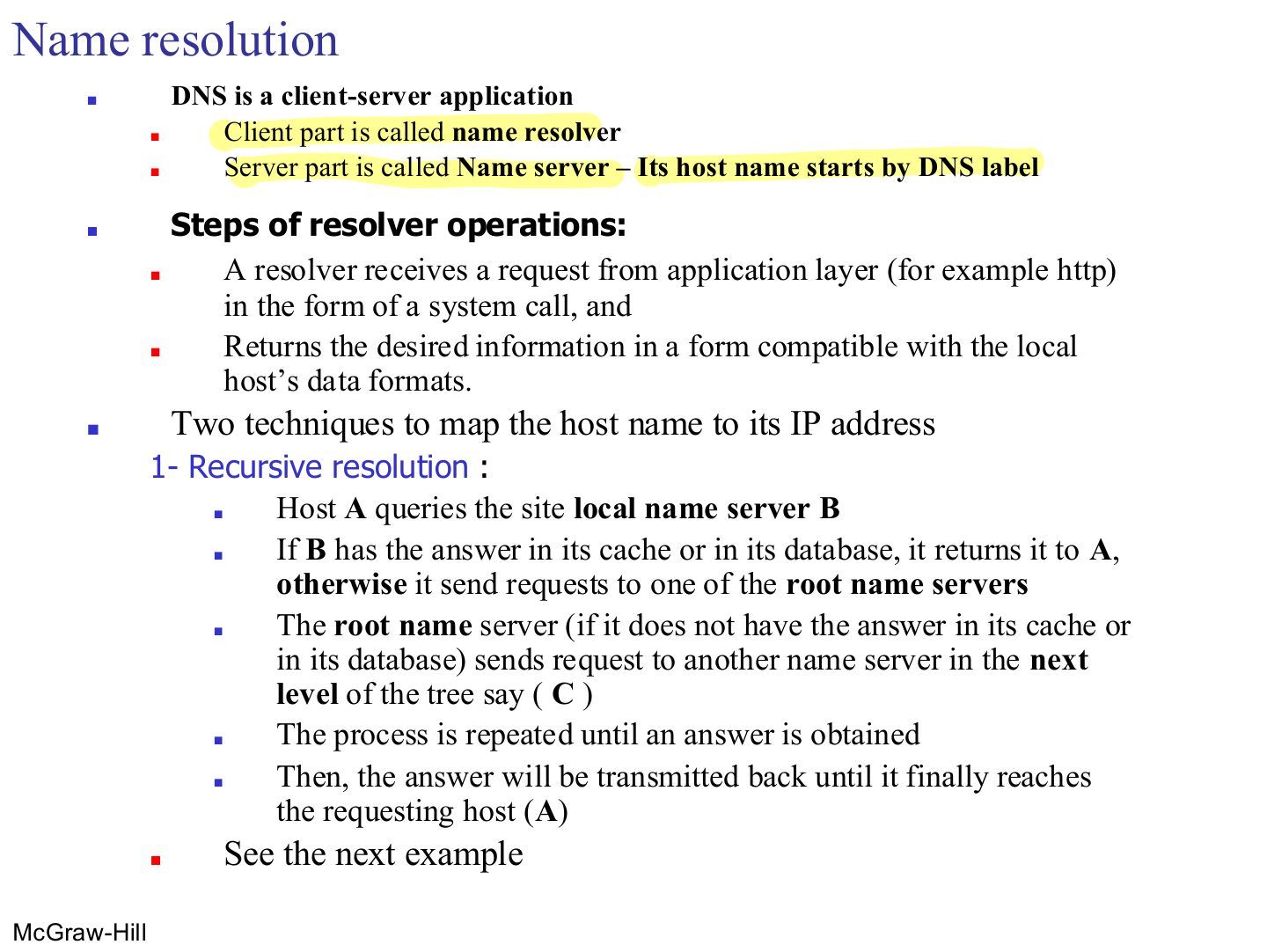
Recursive: each server that doesn’t know asks the NEXT server itself, and the answer travels back down the same chain.
Recursive resolution: example
Notes
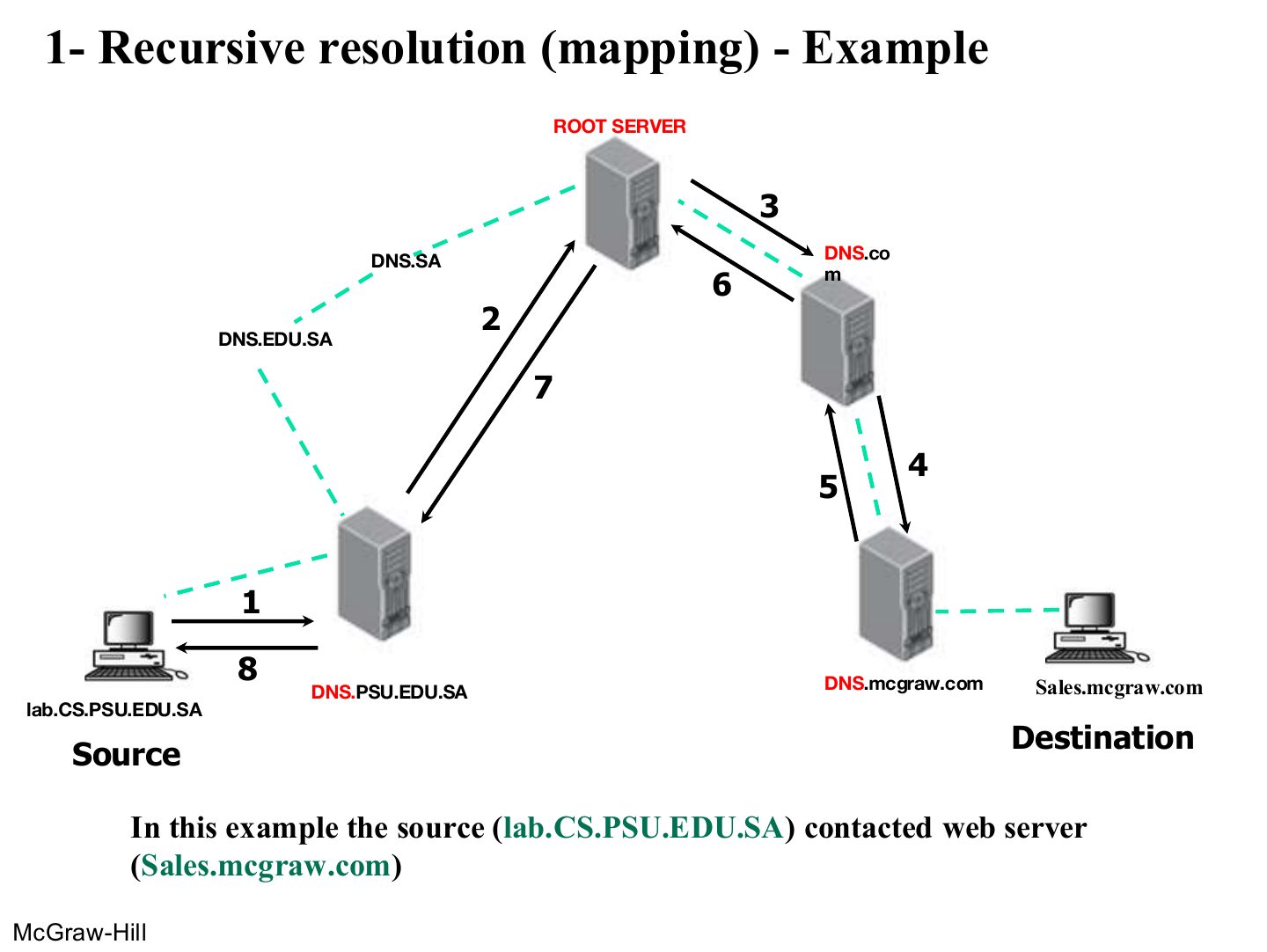
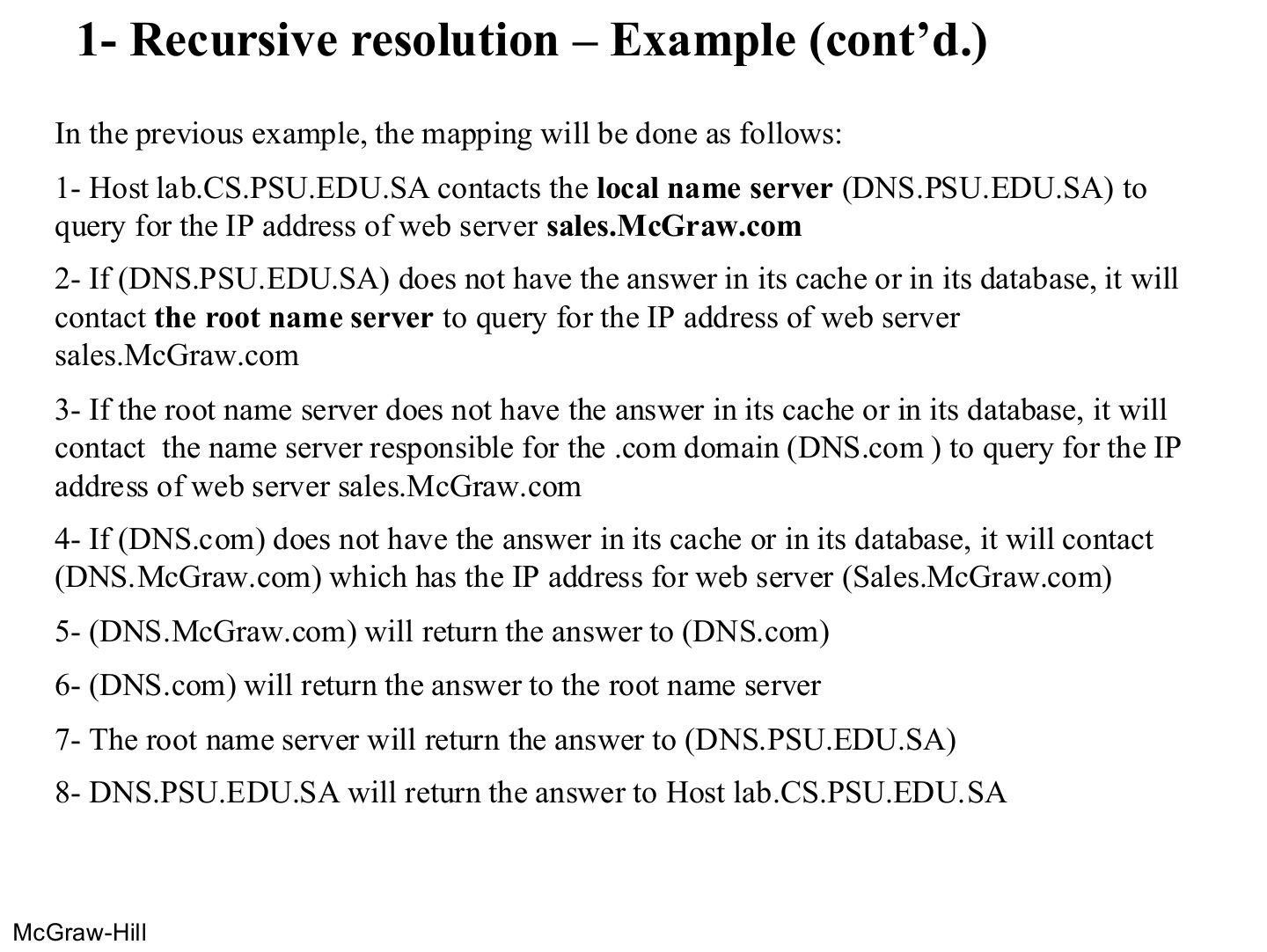
1–4: the query is passed along from server to server. 5–8: the answer comes back along the same chain.
1- Recursive resolution – Example (cont’d.)
Notes
Each server in the chain asks the next one on the host’s behalf.
Exam angle
In RECURSIVE resolution for sales.mcgraw.com from lab.CS.PSU.EDU.SA, who contacts DNS.com?
Compare with the model answer
The root name server. In recursive resolution the local server asks the root, the root asks DNS.com, and DNS.com asks DNS.McGraw.com; the answer then flows back through each of them to the host.
2- Iterative resolution (mapping)
Notes
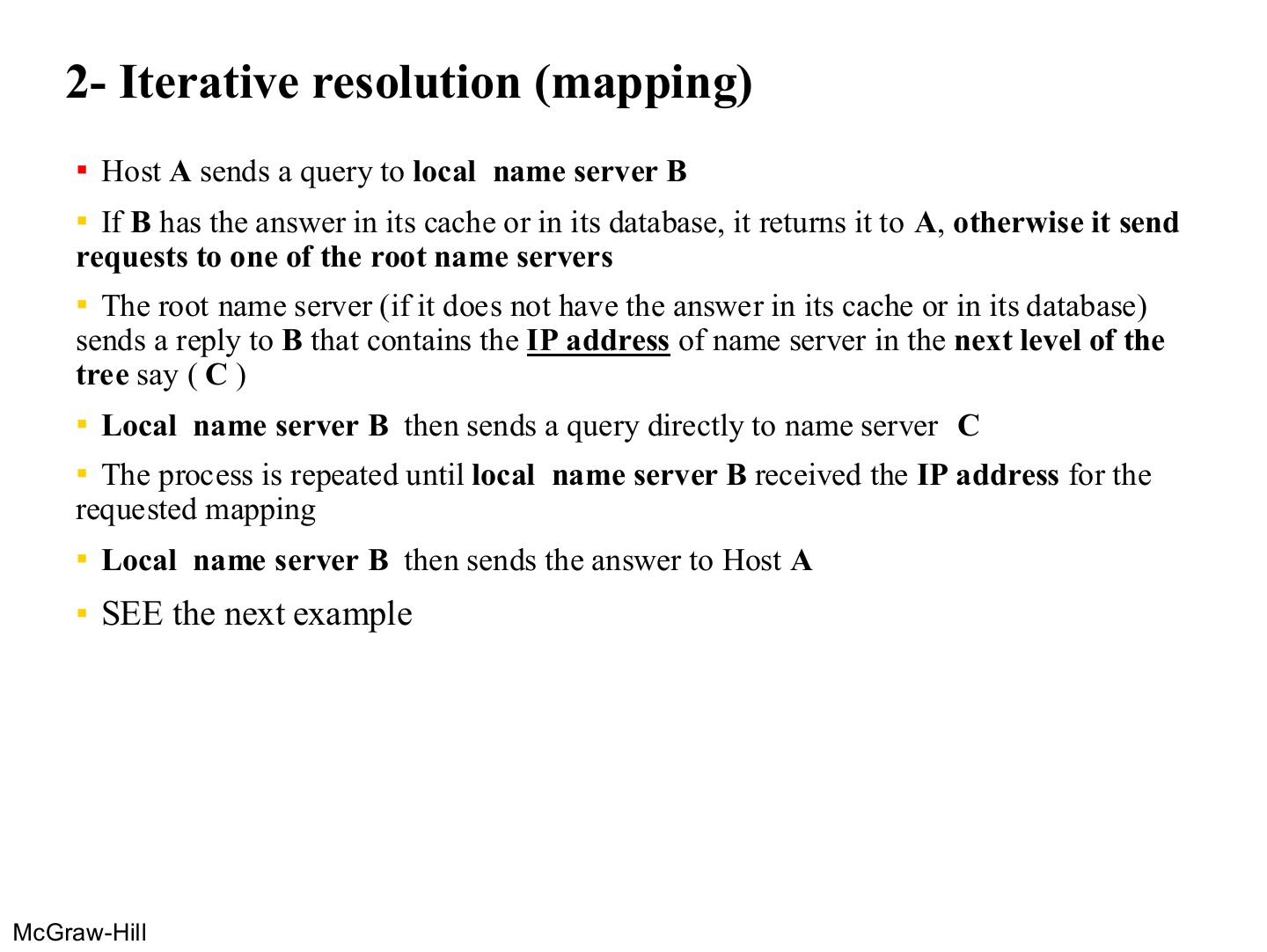
Iterative: a server that doesn’t know REPLIES with the address of the next server, and the LOCAL server does all the asking itself.
Memory trick Recursive = “I’ll find out for you.” Iterative = “Ask him instead.”
Trap In iterative resolution the root never contacts DNS.com; it only tells the local server where DNS.com is.
Exam angle
In iterative resolution, the root server answers the local server with:
Compare recursive and iterative DNS resolution.
Compare with the model answer
Recursive: each server that lacks the answer queries the next server itself, and the answer is passed back along the same chain. Iterative: a server that lacks the answer replies with the address of the next server to ask, and the local name server sends each query itself until it gets the mapping, then answers the host.
Iterative resolution: example
Notes
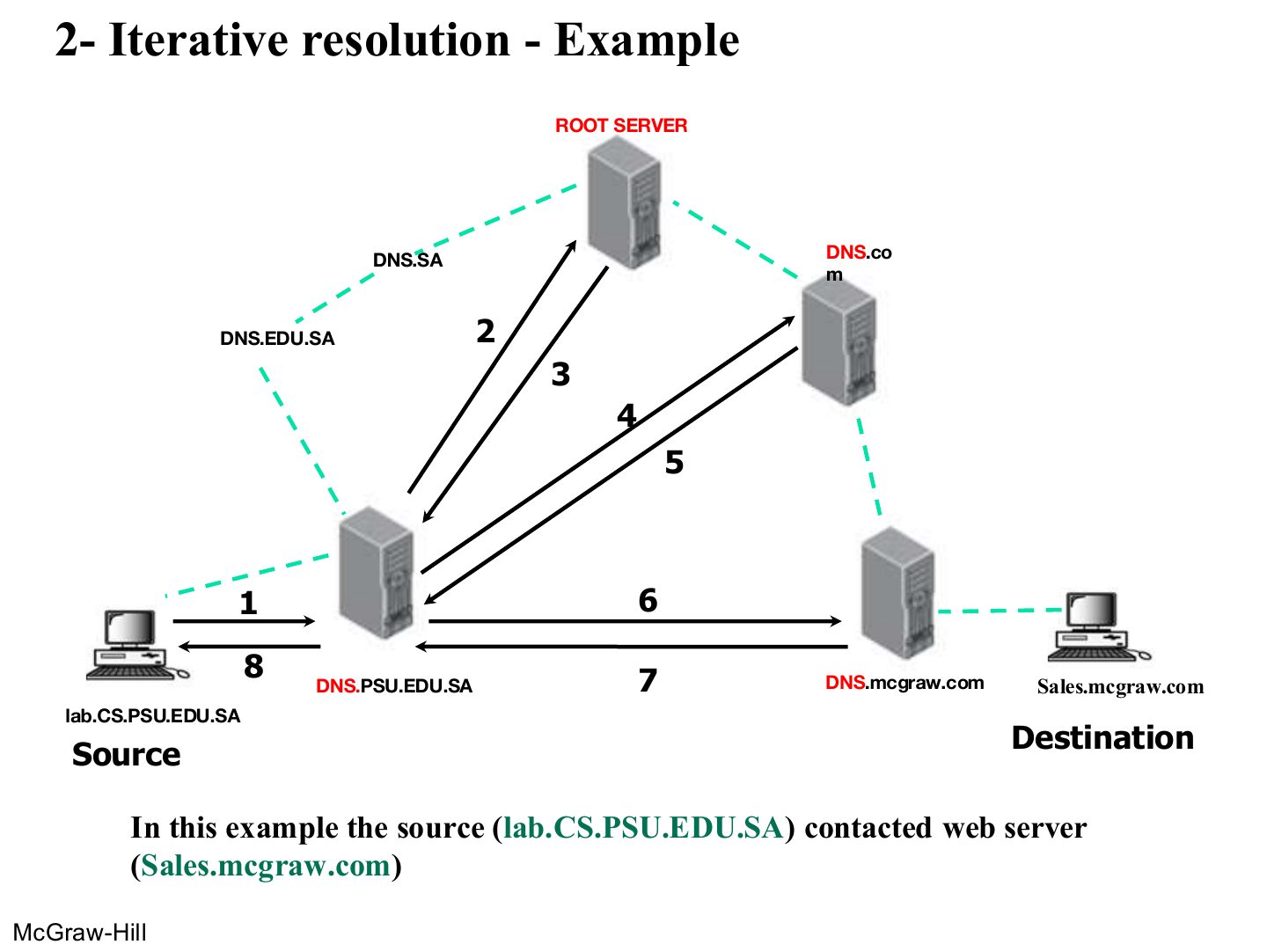
All the arrows start or end at the LOCAL server DNS.PSU.EDU.SA.
2- Iterative resolution – Example (cont’d.)
Notes
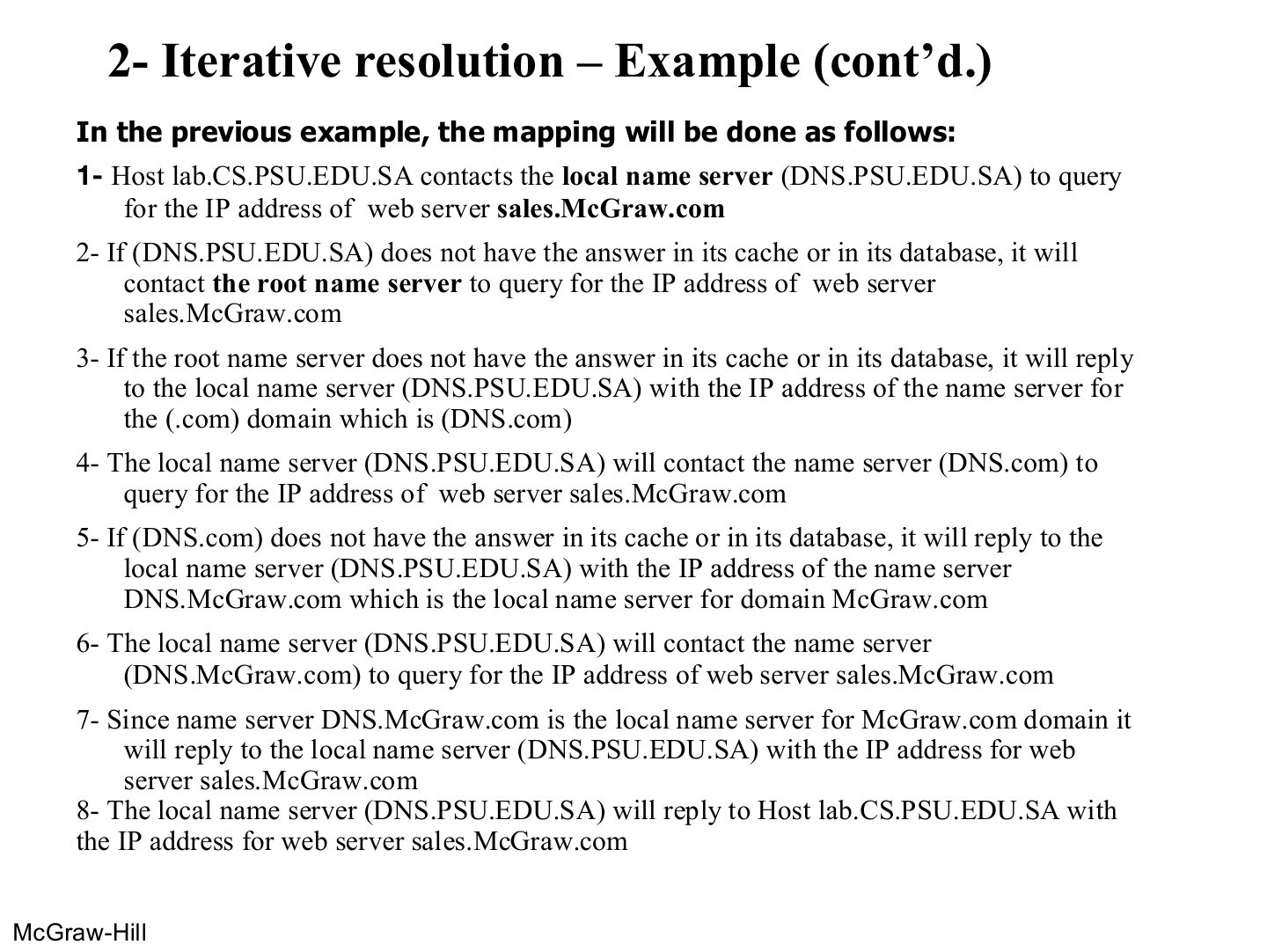
Count: the local server sends three queries (root, DNS.com, DNS.McGraw.com).
Exam angle
In the iterative example, which server sends the query to DNS.McGraw.com?
Note: DNS ports
Notes
DNS uses UDP or TCP on well-known port 53 (UDP for normal queries).
Seen again Ch 9, slide 46: Why DNS fits UDP
Exam angle
DNS uses well-known port: