Evaluation during design to improve the product is:
Evaluation Foundations
Why, what, where and when to evaluate, the types of evaluation (controlled settings with users, natural settings, settings without users), usability and living labs, an airline-booking usability case study, evaluation methods, participants’ rights and interpreting data.
How to read this page
Every original slide is shown unchanged. Yellow marks on a slide point to a numbered note: hover or tap a mark to jump to its note, and hover a note to see its marks. Questions tagged Past exam appeared on a real paper; Prediction questions are likely angles, not confirmed. Pick an answer to each question: a wrong pick tells you why it is wrong, so you can try again.
All 27 slides
- 1 Slide 1
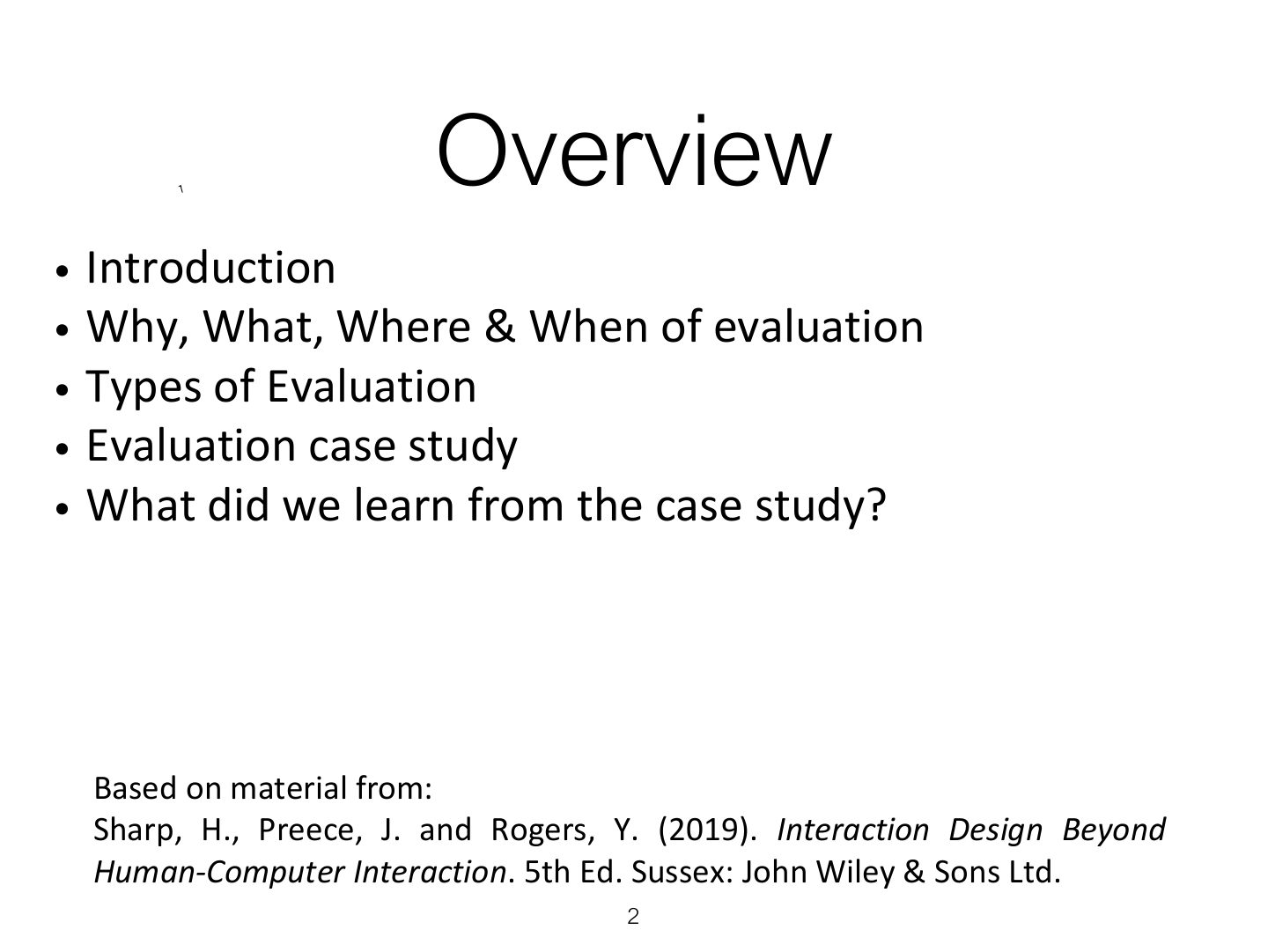
- 2 Overview
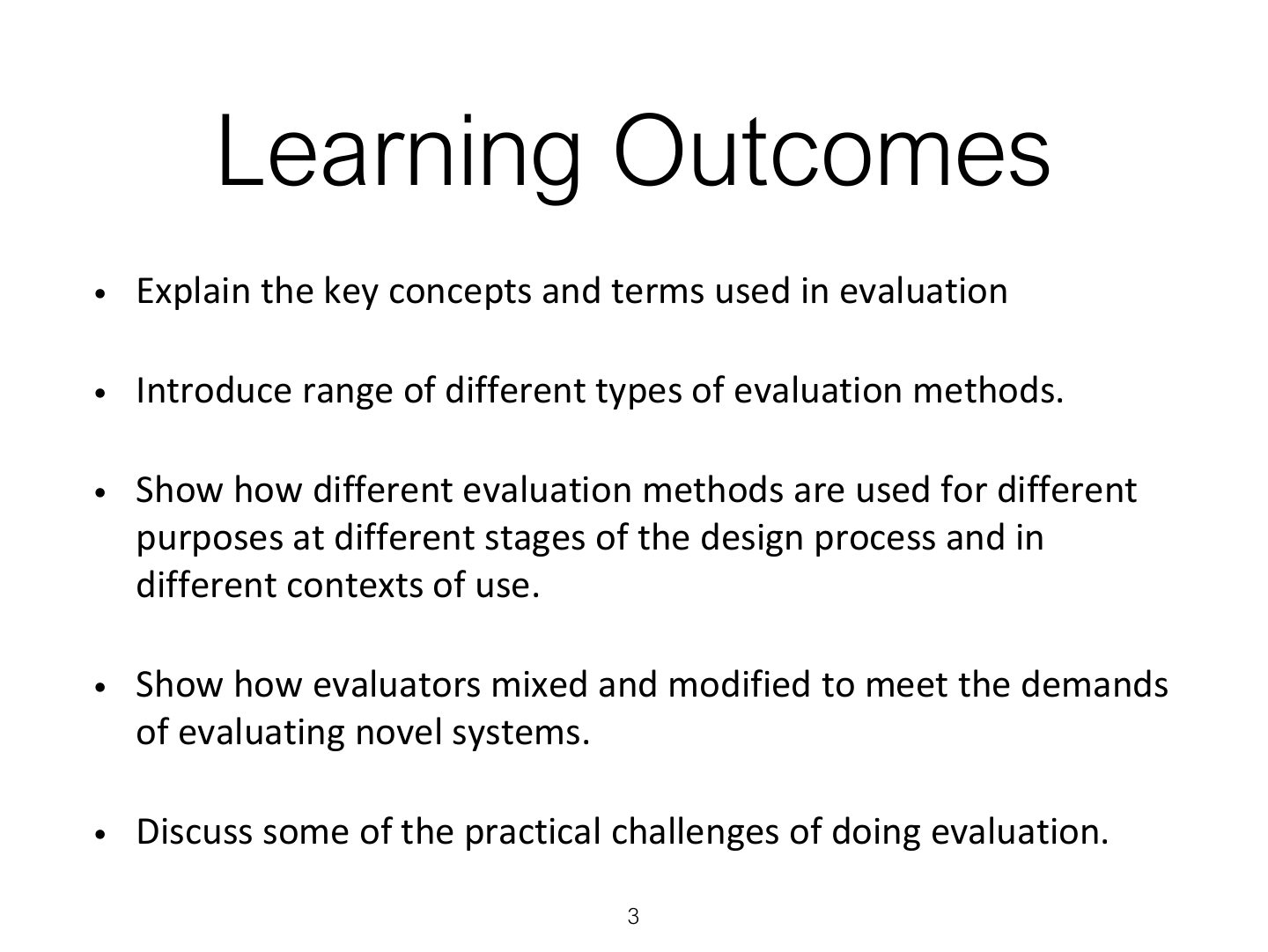
- 3 Learning Outcomes
- 4 1) Introduction
- 5 1) Introduction (cont)
- 6 2. Why, what, where & when to evaluate
- 7 3. Types of evaluation
- 8 Usability Lab
- 9 Living Lab
- 10 Evaluation Case Studies
- 11 3.1 Usability testing & field studies can compliment
- 12 4. Case study: Airline booking system
- 13 4.1 Task Instruction
- 14 4.1 Task Instruction (cont)
- 15 4.2 Testing with users
- 16 4.2 Testing with users (cont)
- 17 4.2 Testing with users (cont)
- 18 4.2 Testing with users (cont)
- 19 4.2 Testing with users (cont)
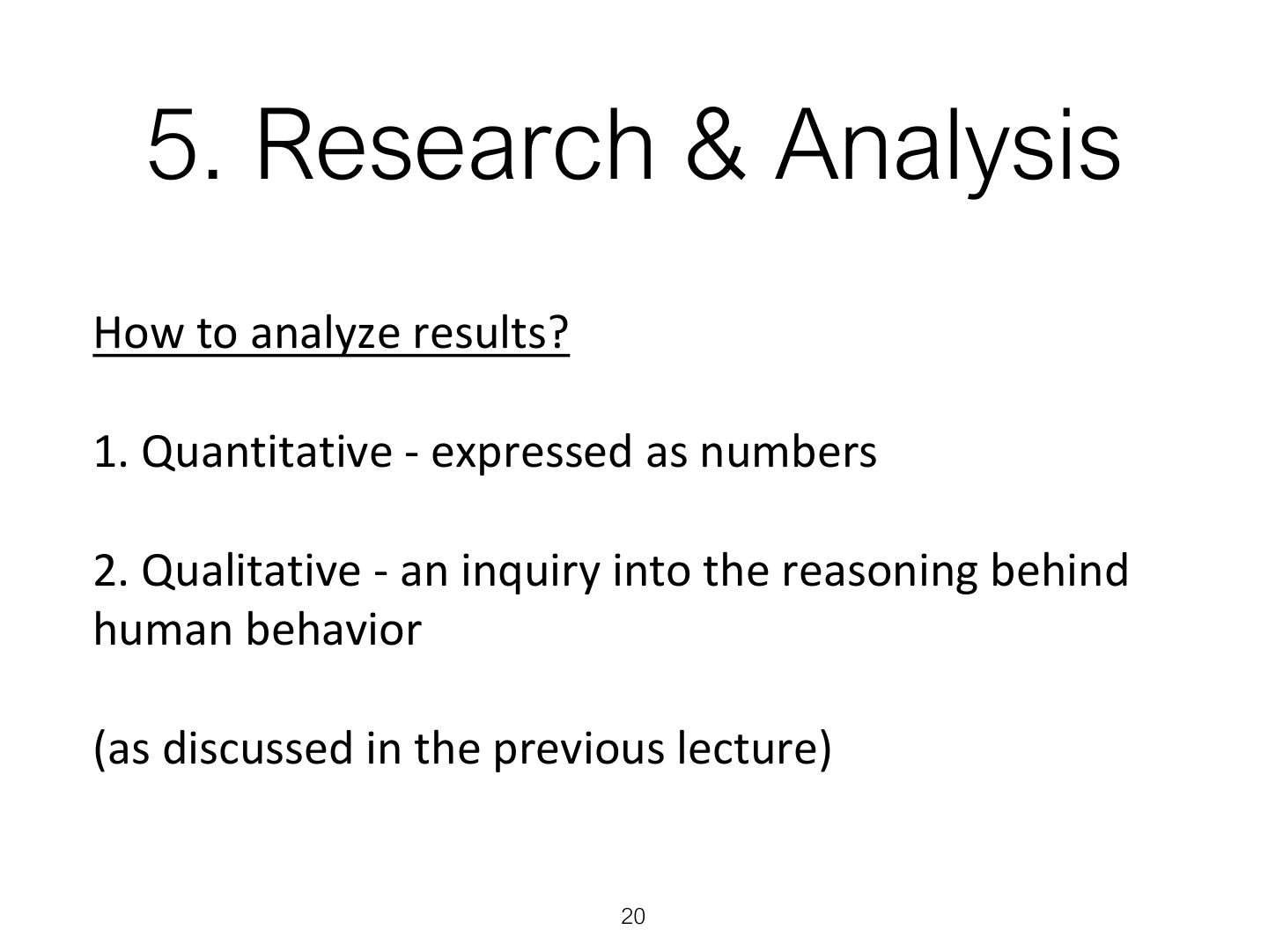
- 20 5. Research & Analysis
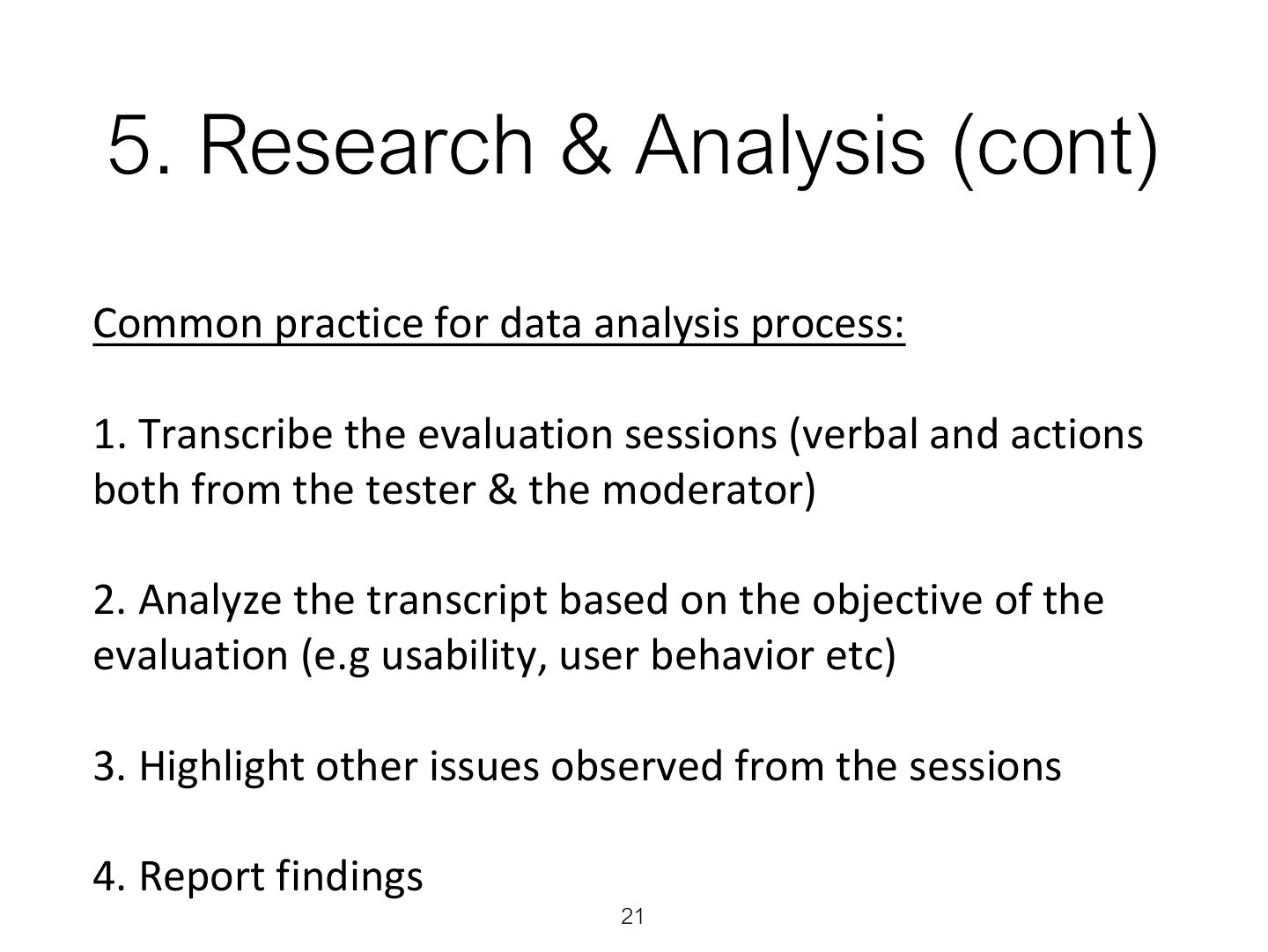
- 21 5. Research & Analysis (cont)
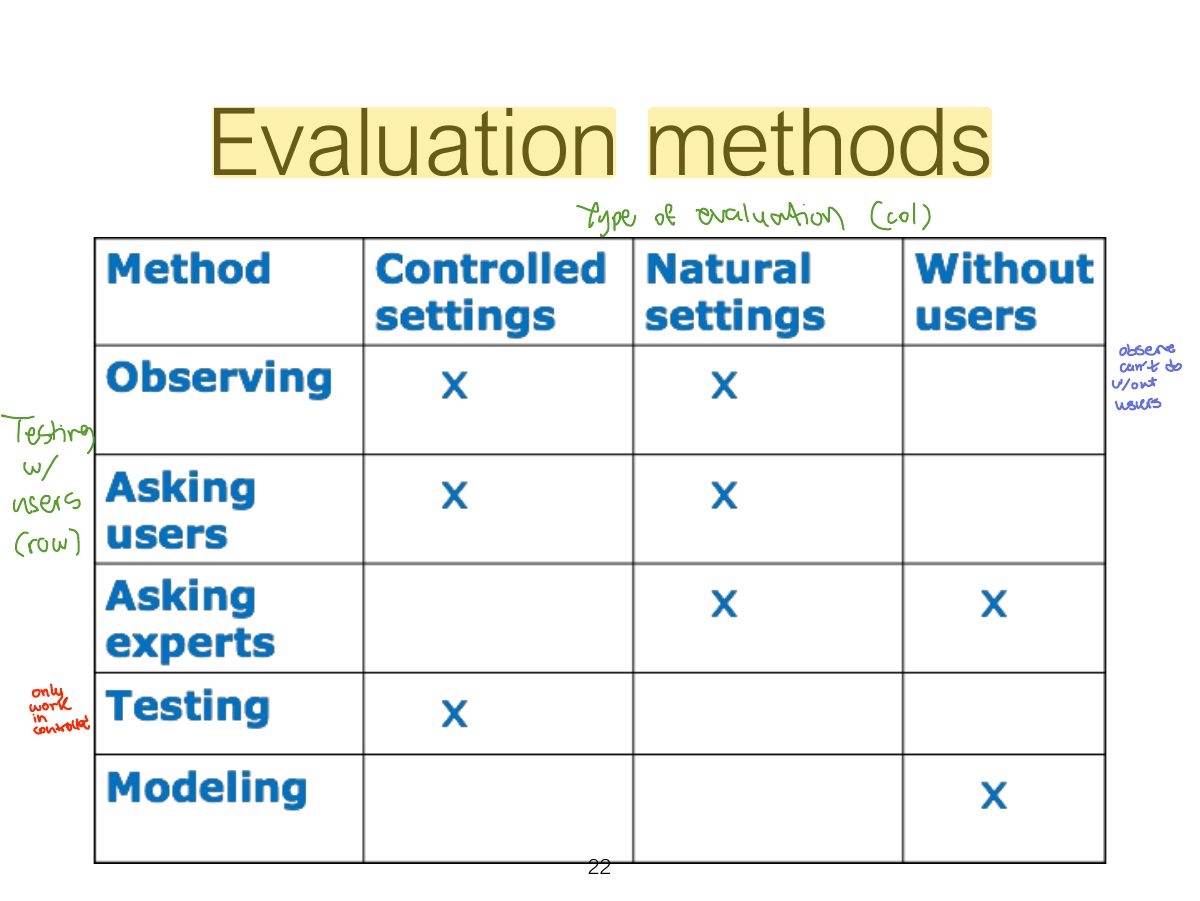
- 22 Evaluation methods
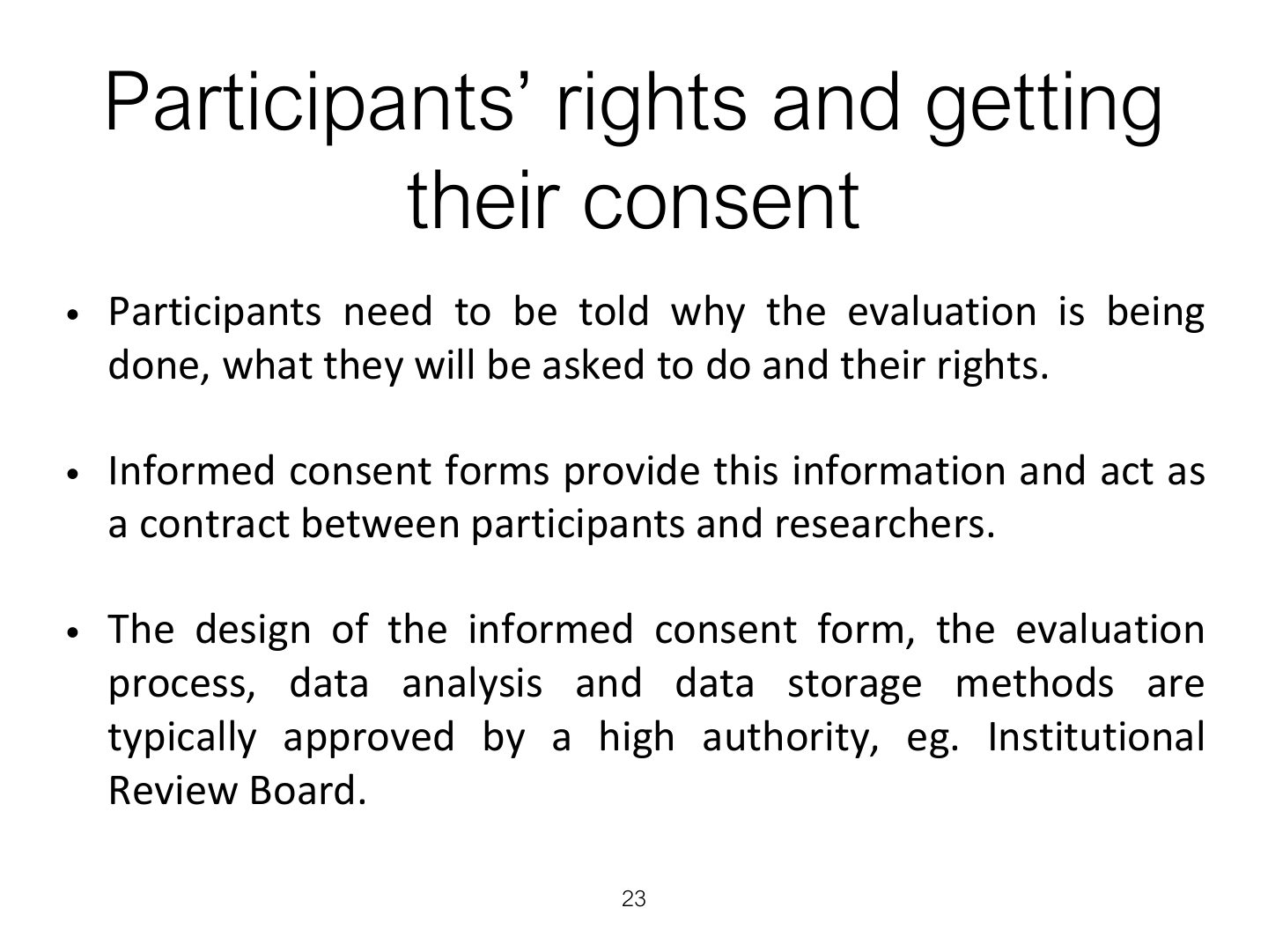
- 23 Participants’ rights and getting their consent
- 24 Things to consider when interpreting data
- 25 Key points
- 26 Summary
- 27 Link
Slide 1
Overview
Learning Outcomes
1) Introduction
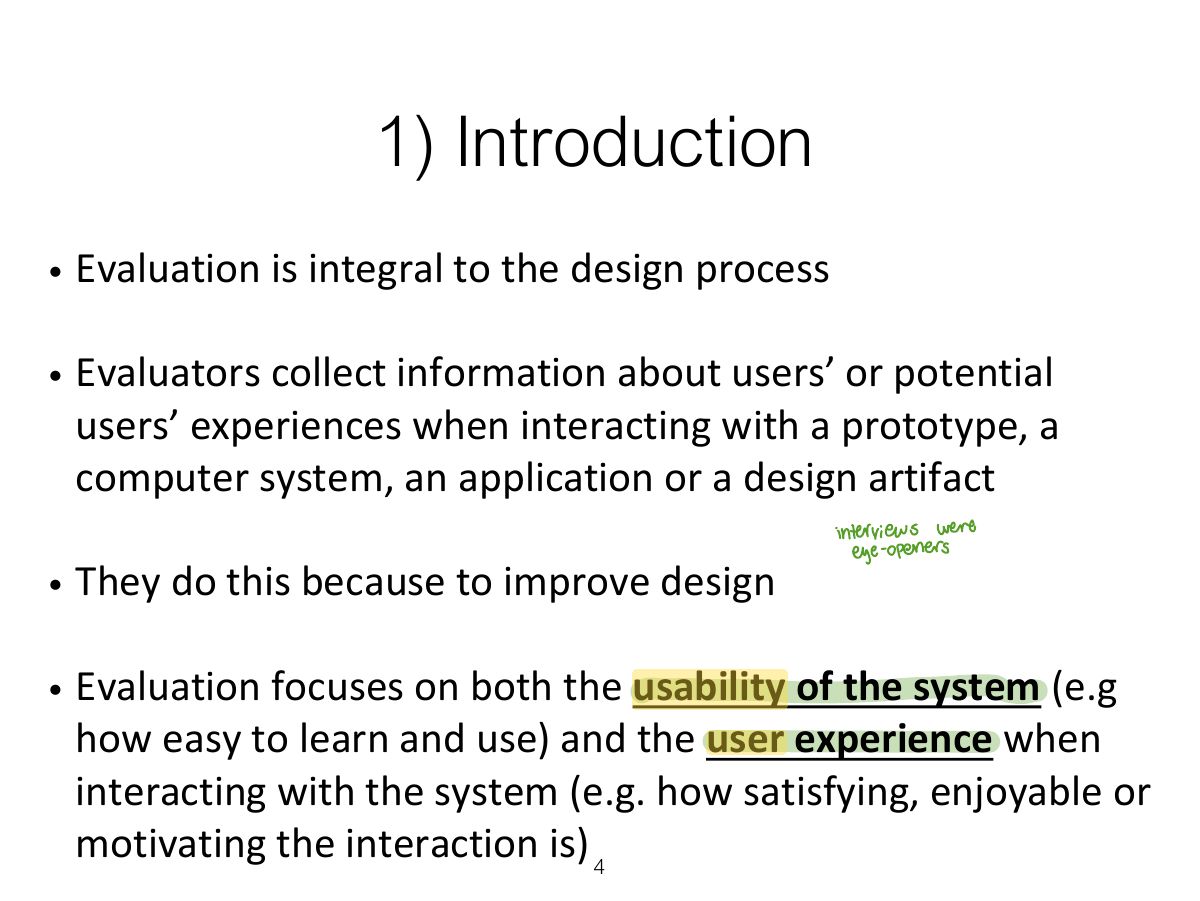
1) Introduction (cont)
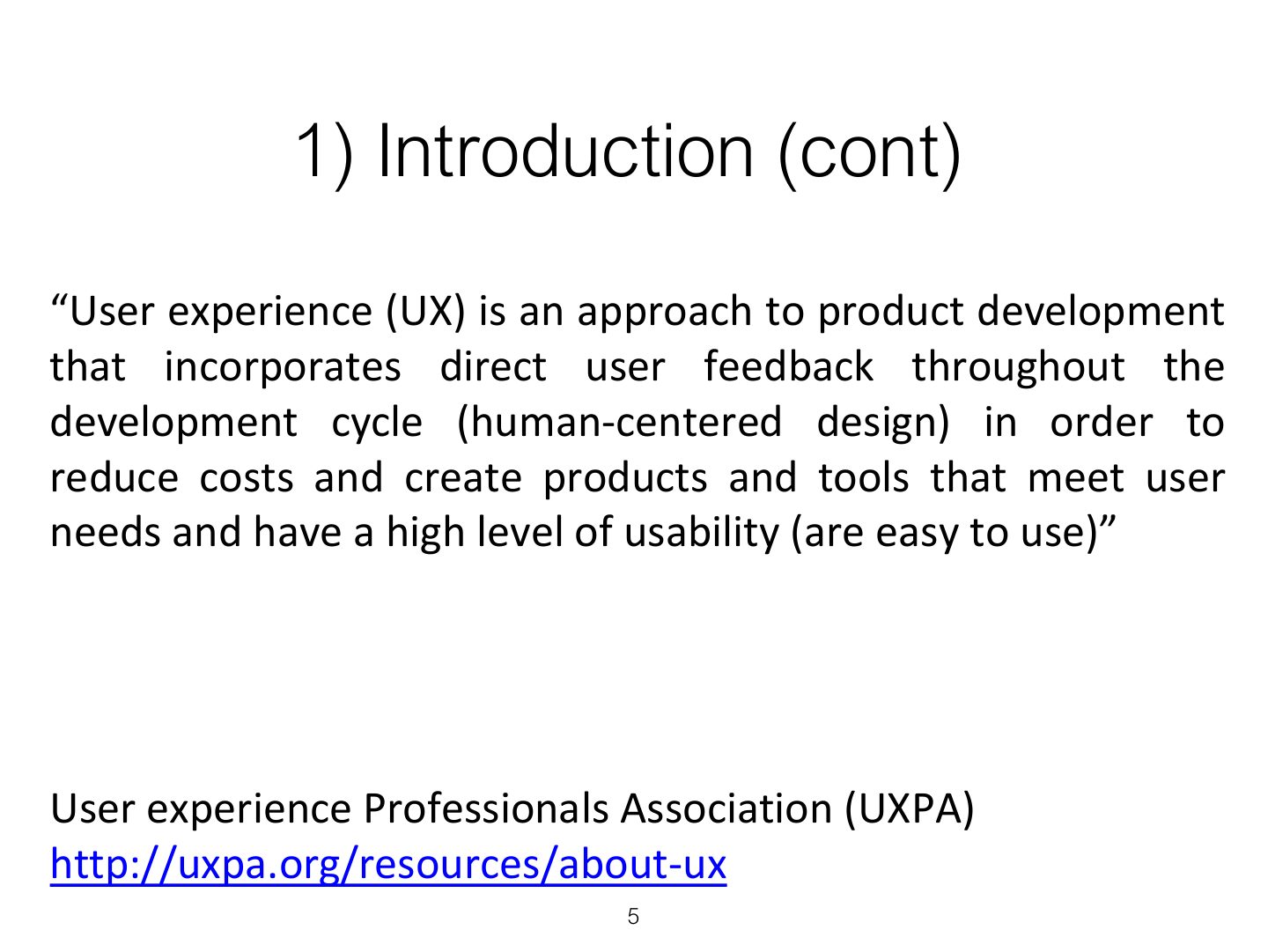
2. Why, what, where & when to evaluate
Notes
Why: check users can use the product and like it. What: prototypes to full systems. Where: lab, field, remotely. When: formative (during design) and summative (to assess a finished product).
Exam angle
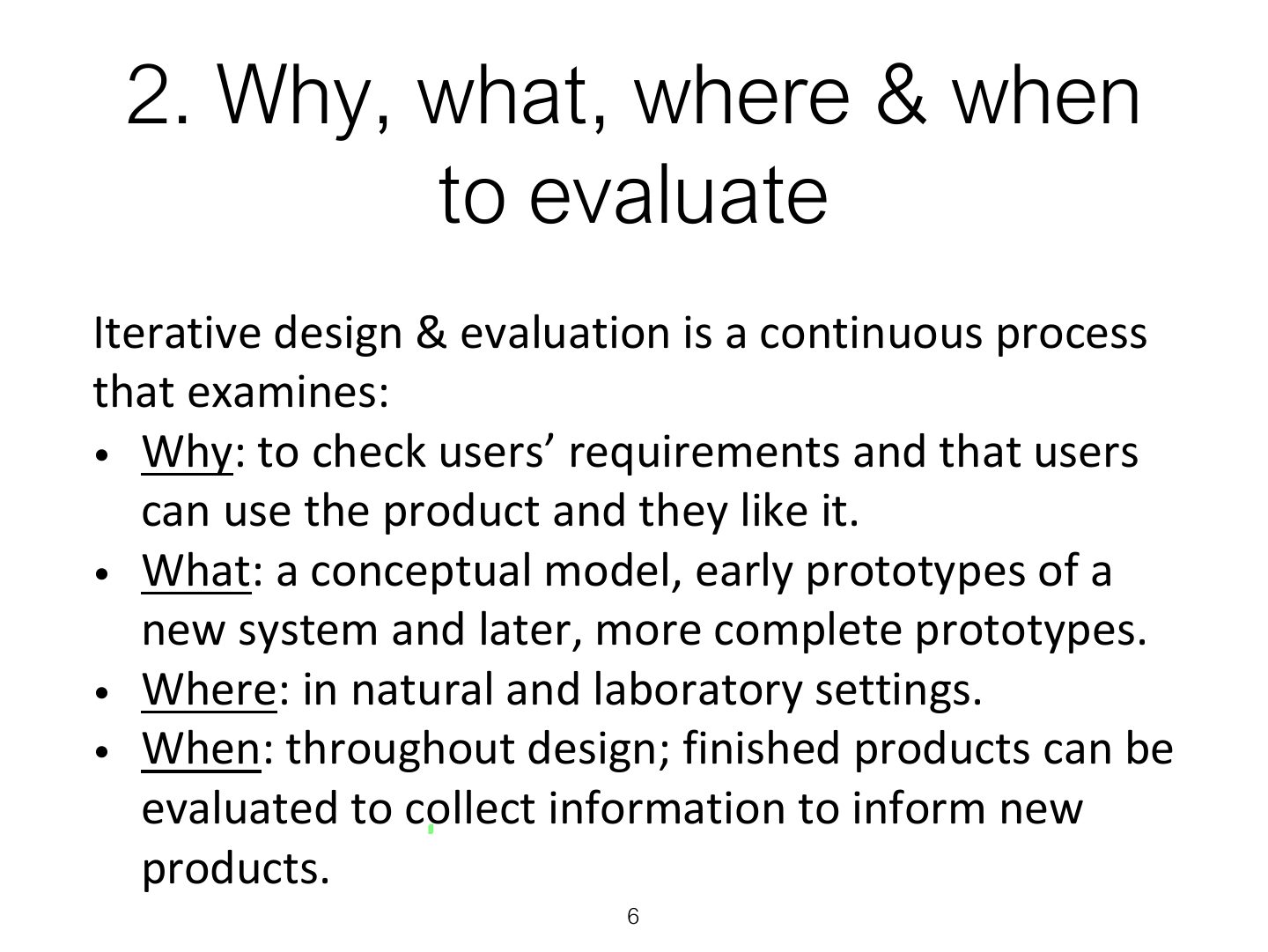
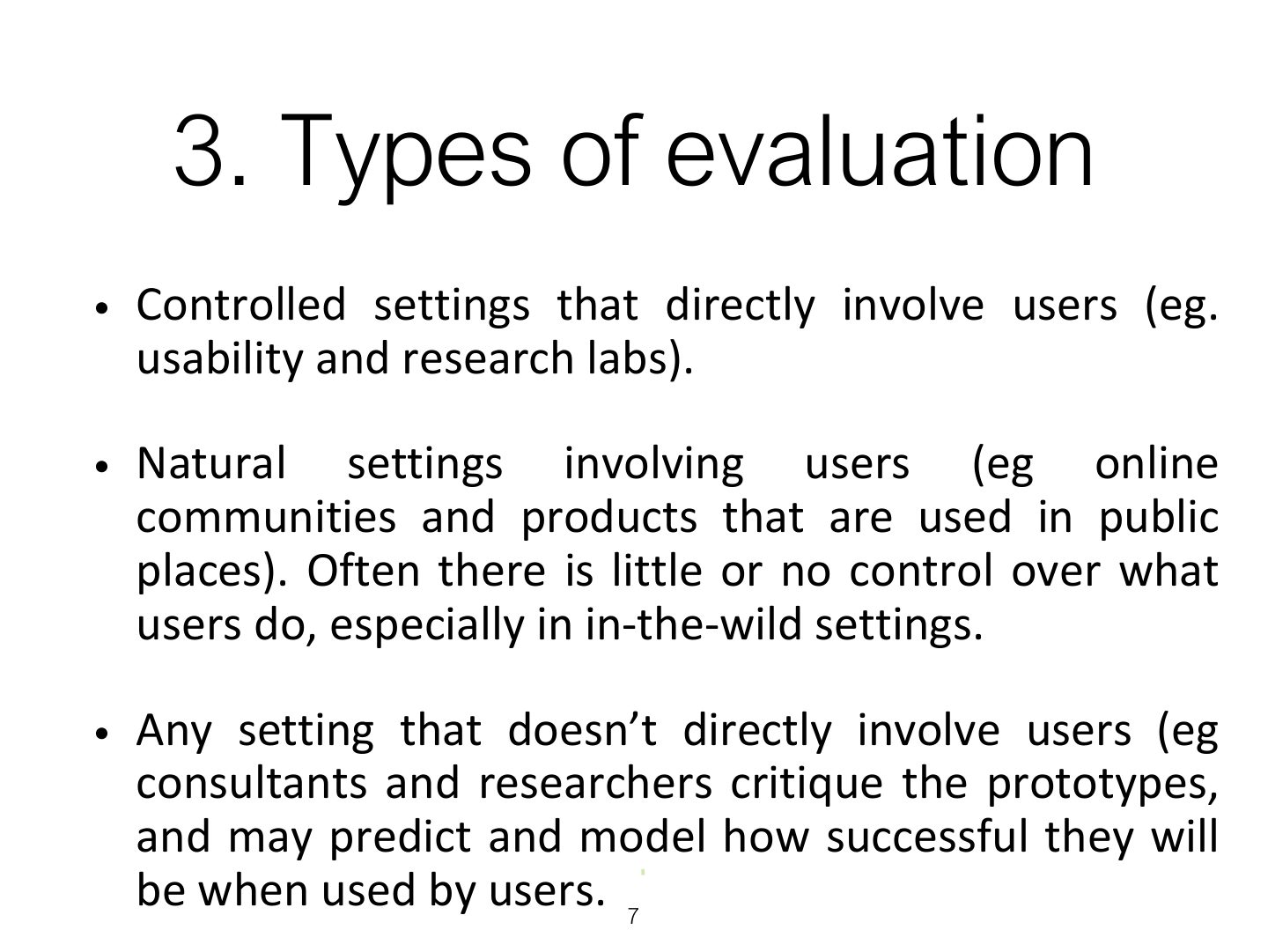
3. Types of evaluation
Notes
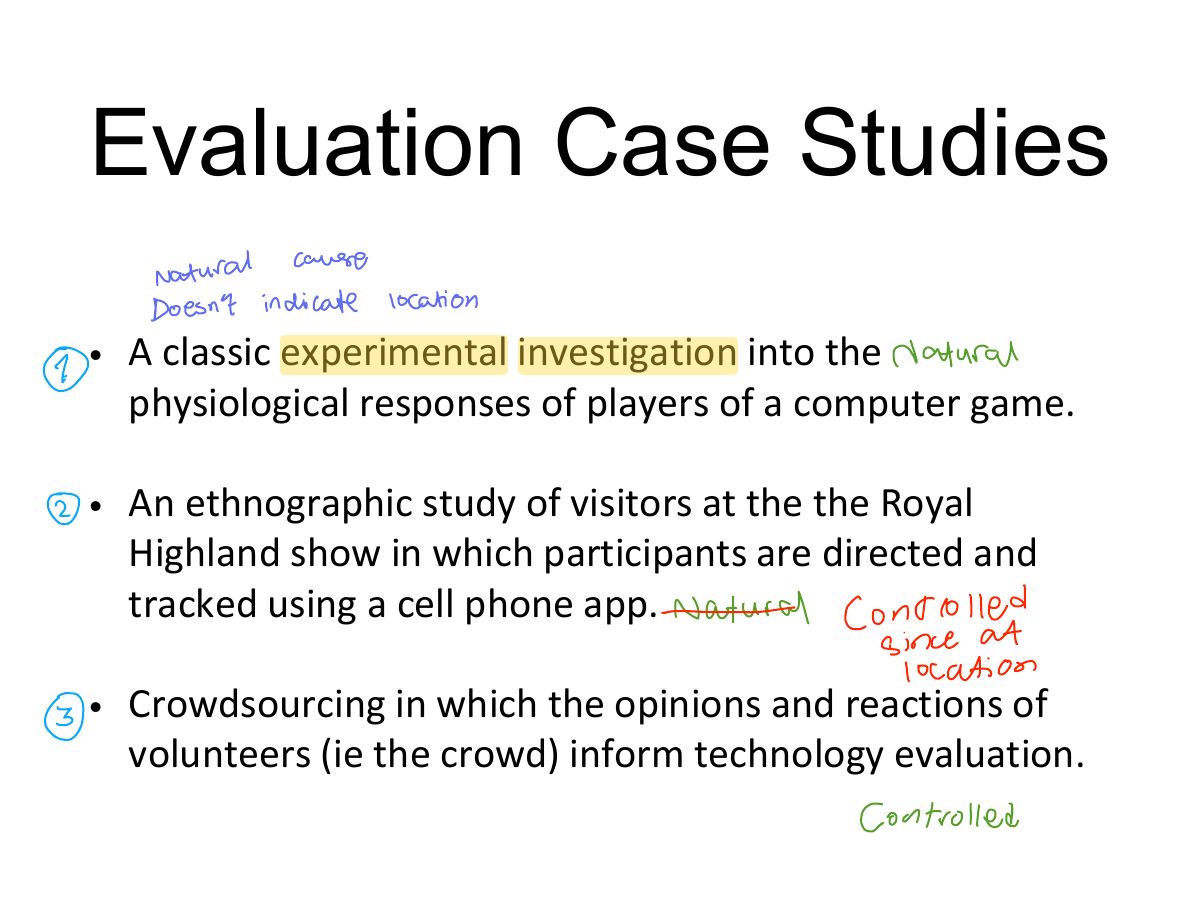
Types: controlled settings with users (usability testing, experiments), natural settings with users (field studies), any setting without users (inspections, heuristics, walkthroughs, models, analytics).
Exam angle
Heuristic evaluation is done:
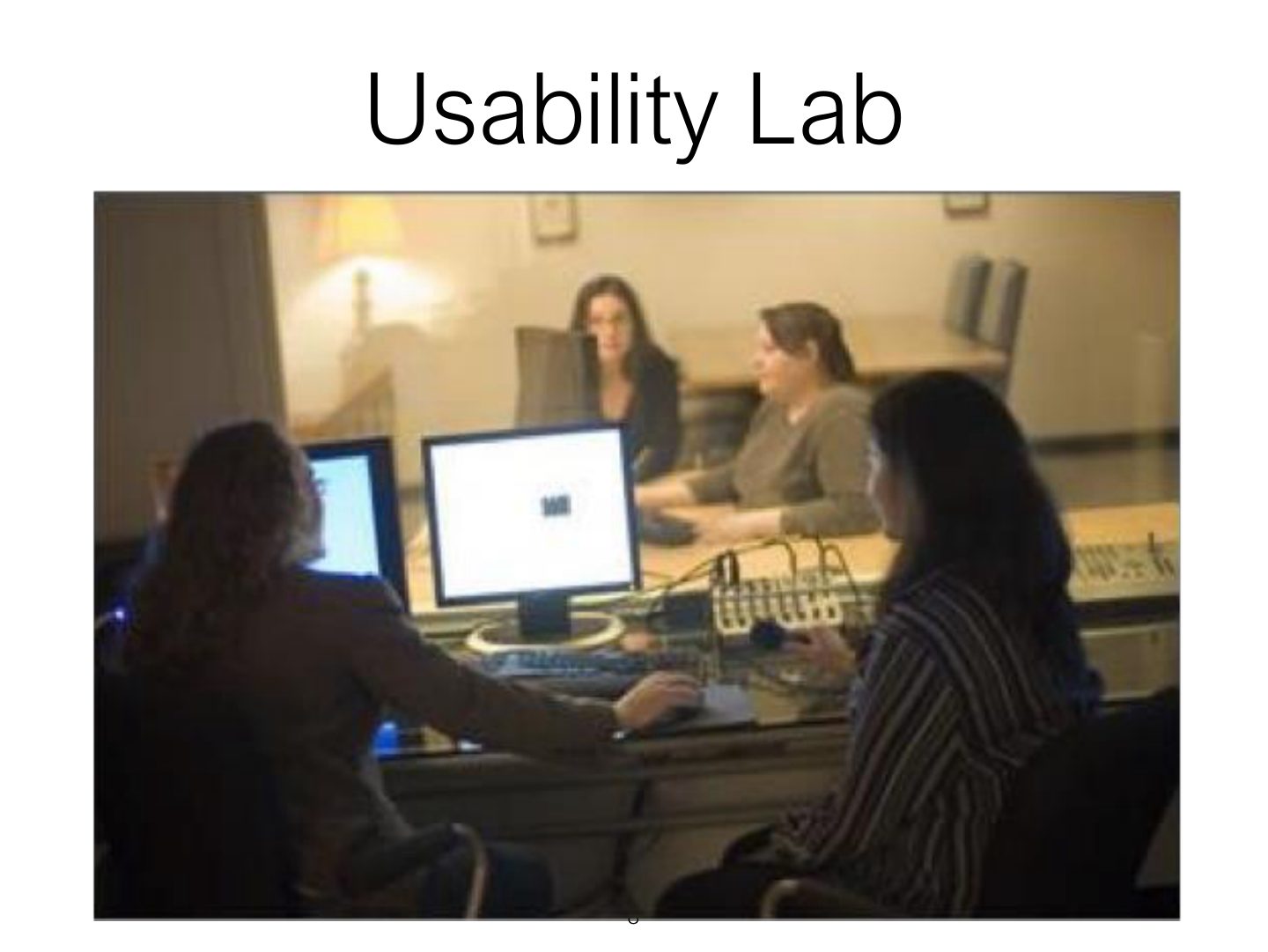
Usability Lab
Notes
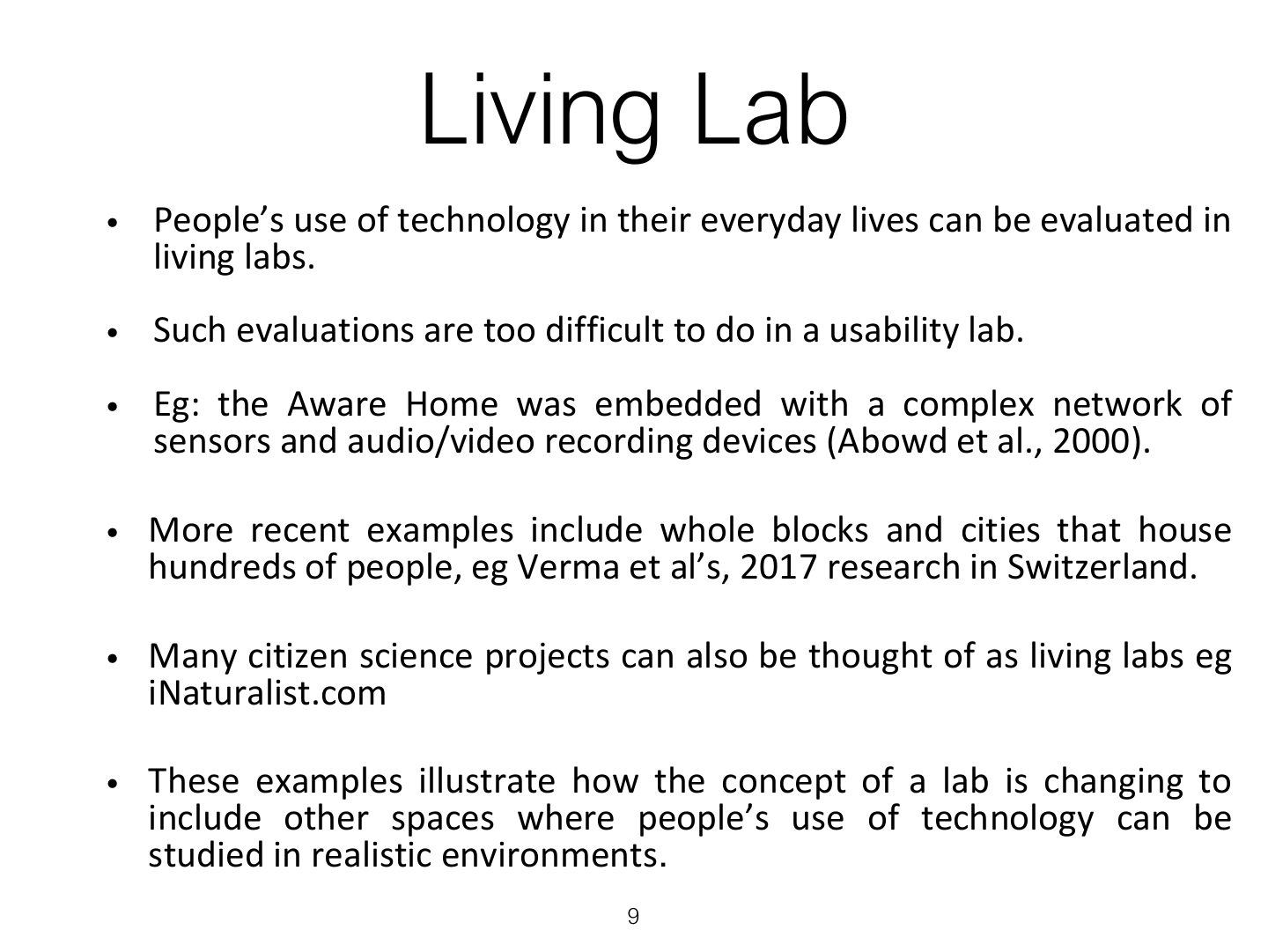
Usability lab: controlled environment with recording equipment; living lab: real everyday environment instrumented for study.
Living Lab
Evaluation Case Studies
3.1 Usability testing & field studies can compliment
Notes
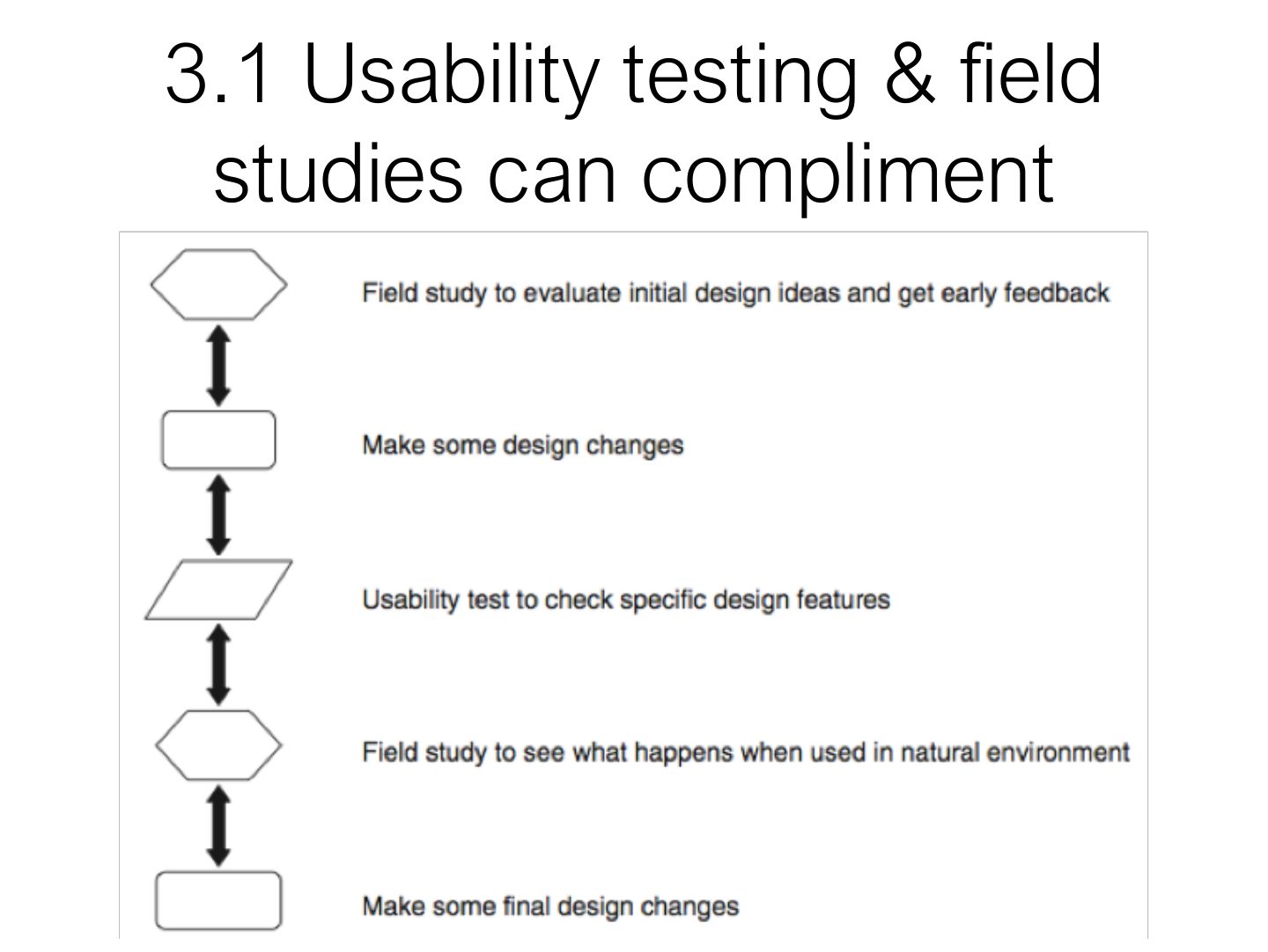
Usability testing: users do typical tasks; measure time, errors, satisfaction. Field studies: real use in context.
4. Case study: Airline booking system
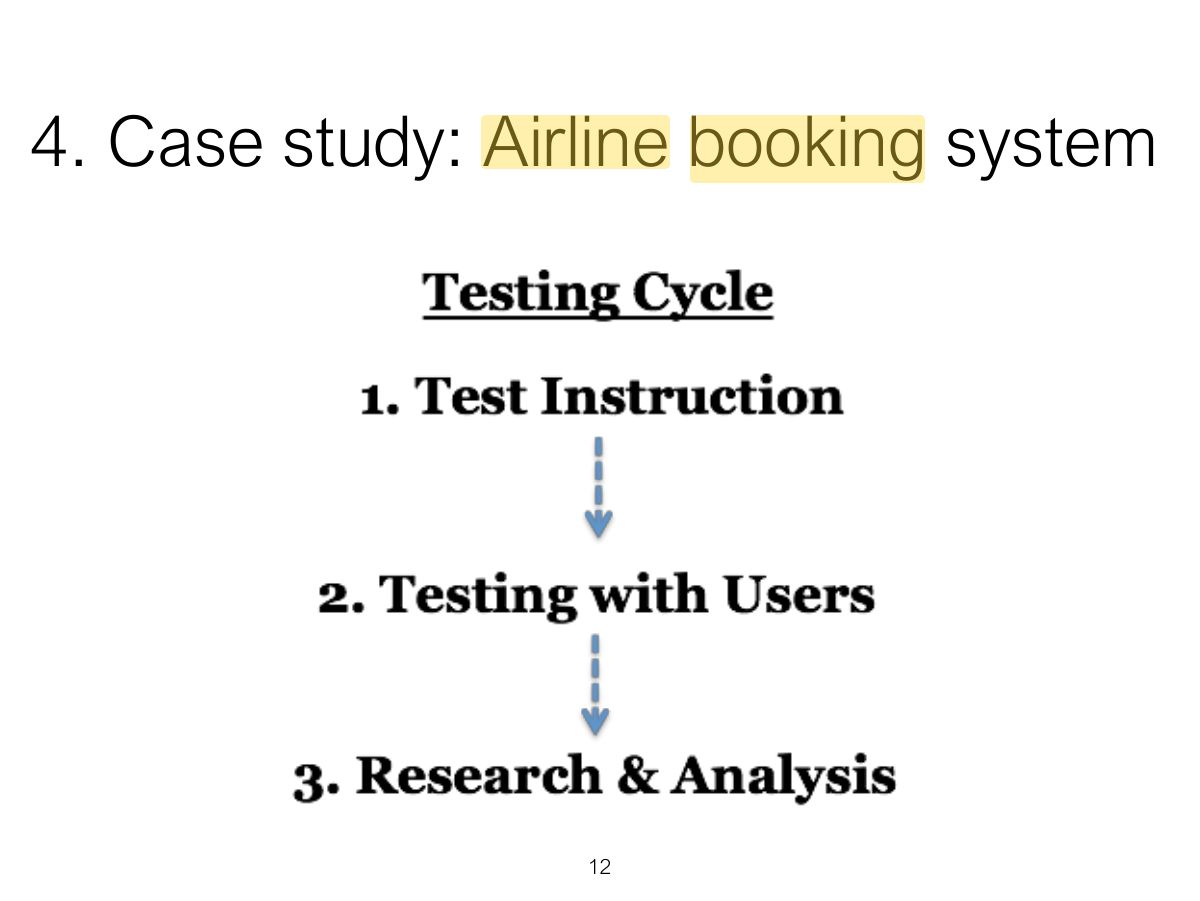
4.1 Task Instruction
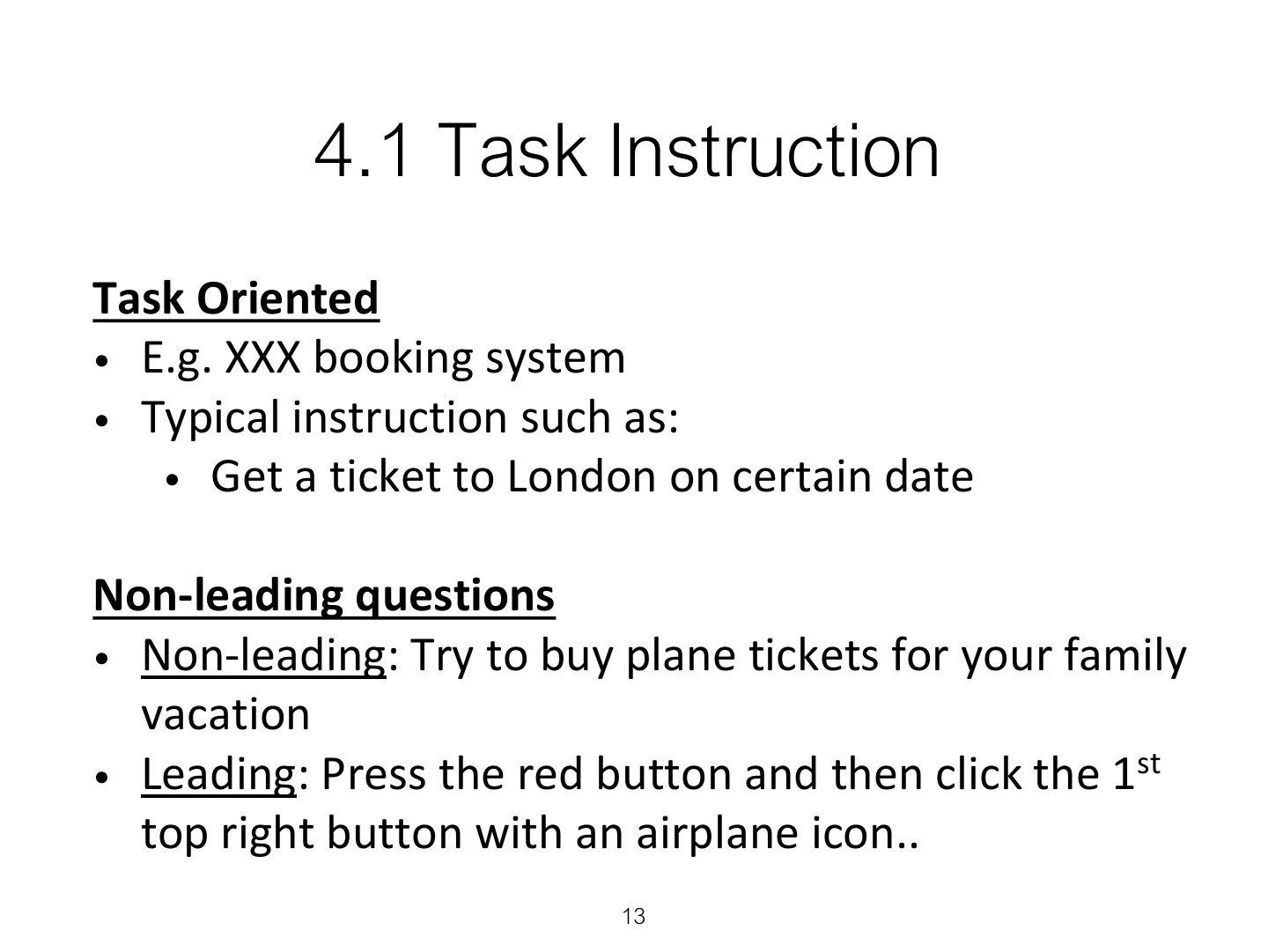
4.1 Task Instruction (cont)
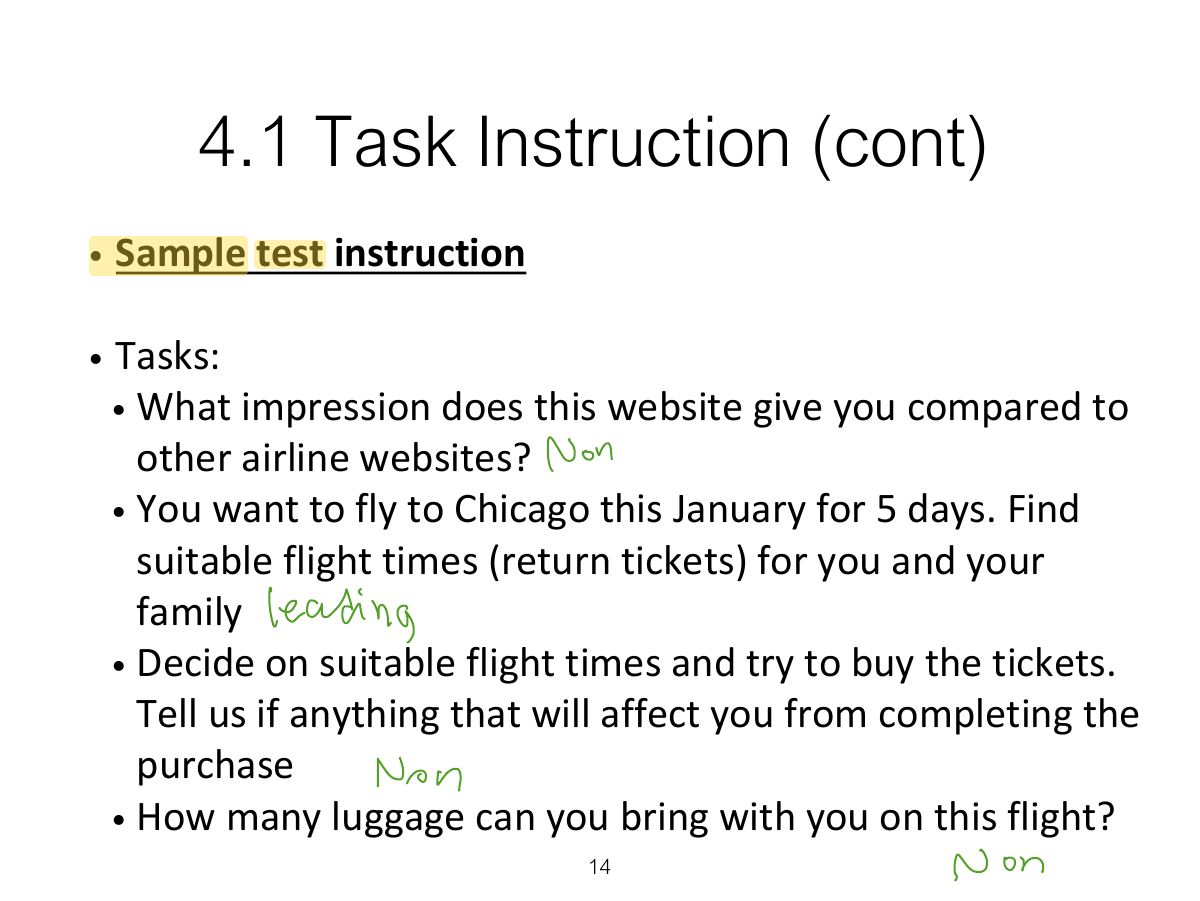
4.2 Testing with users
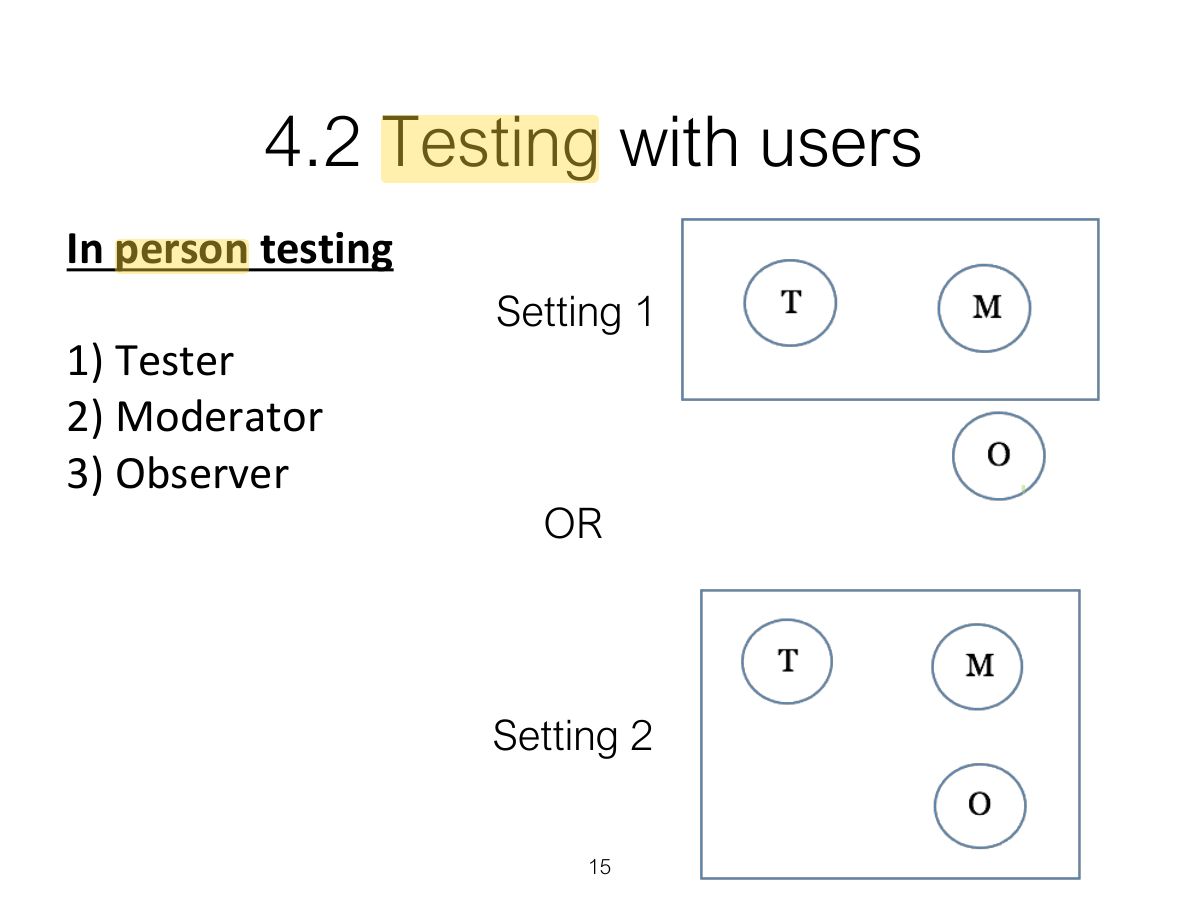
4.2 Testing with users (cont)
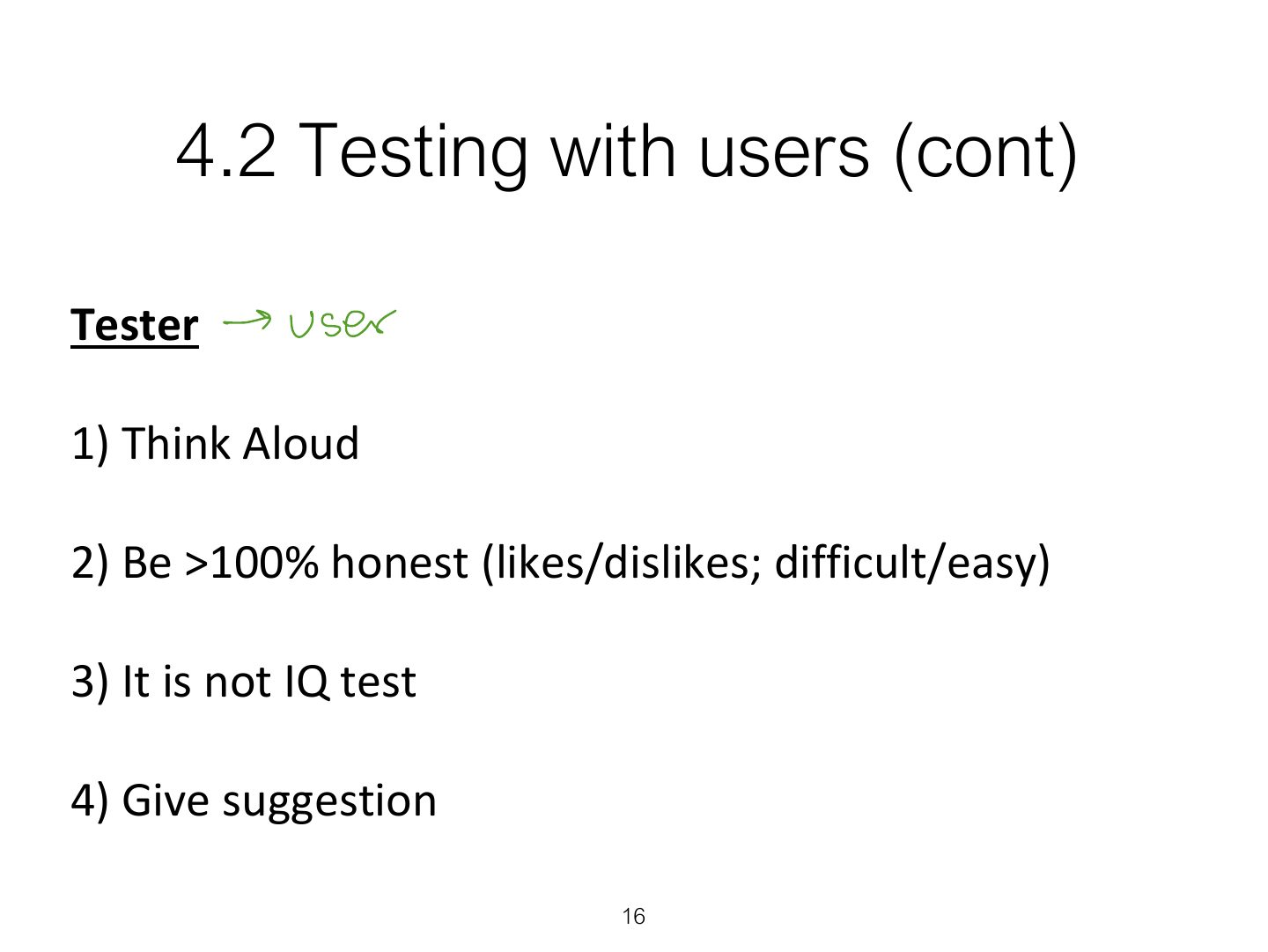
4.2 Testing with users (cont)
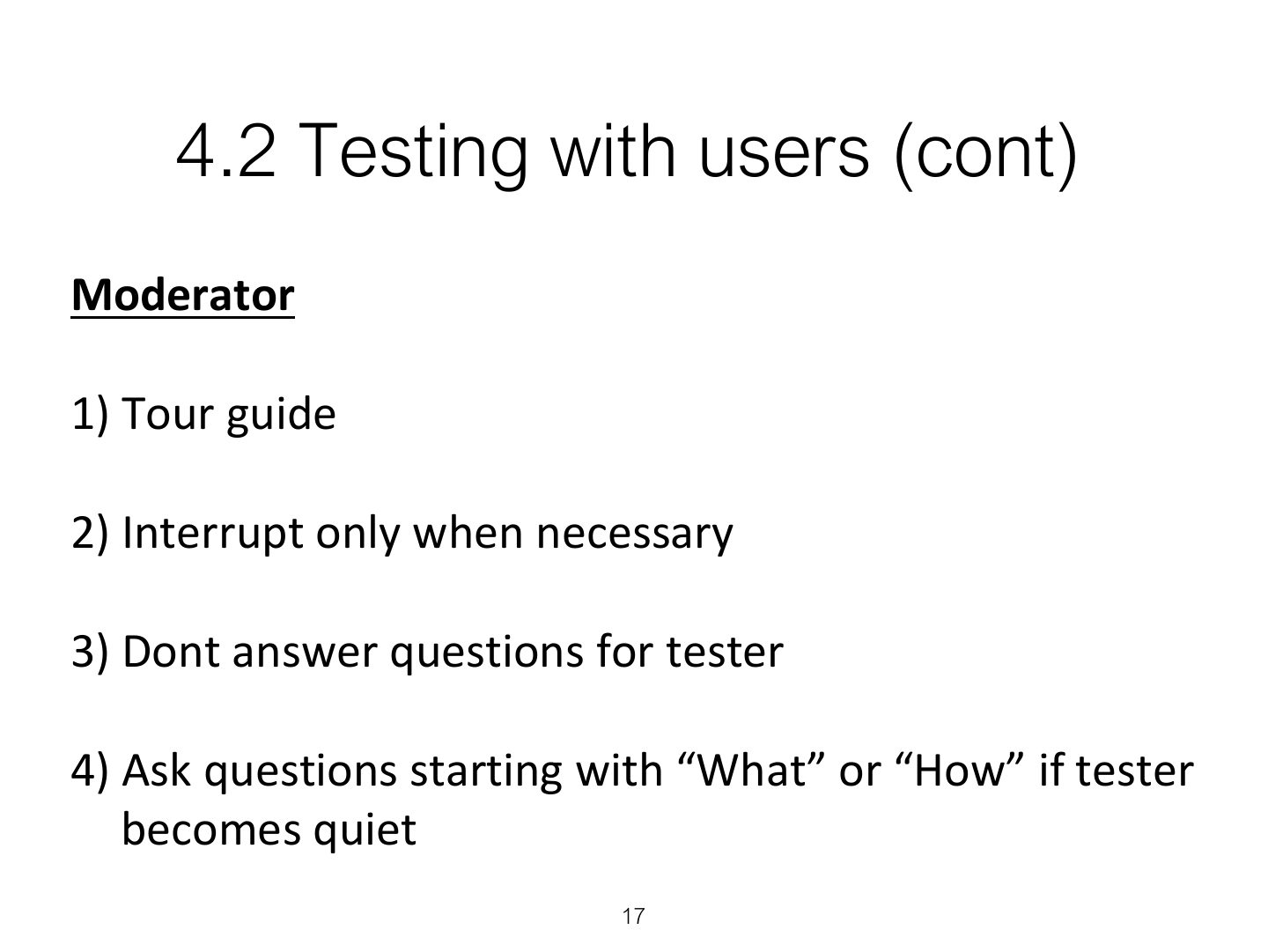
4.2 Testing with users (cont)
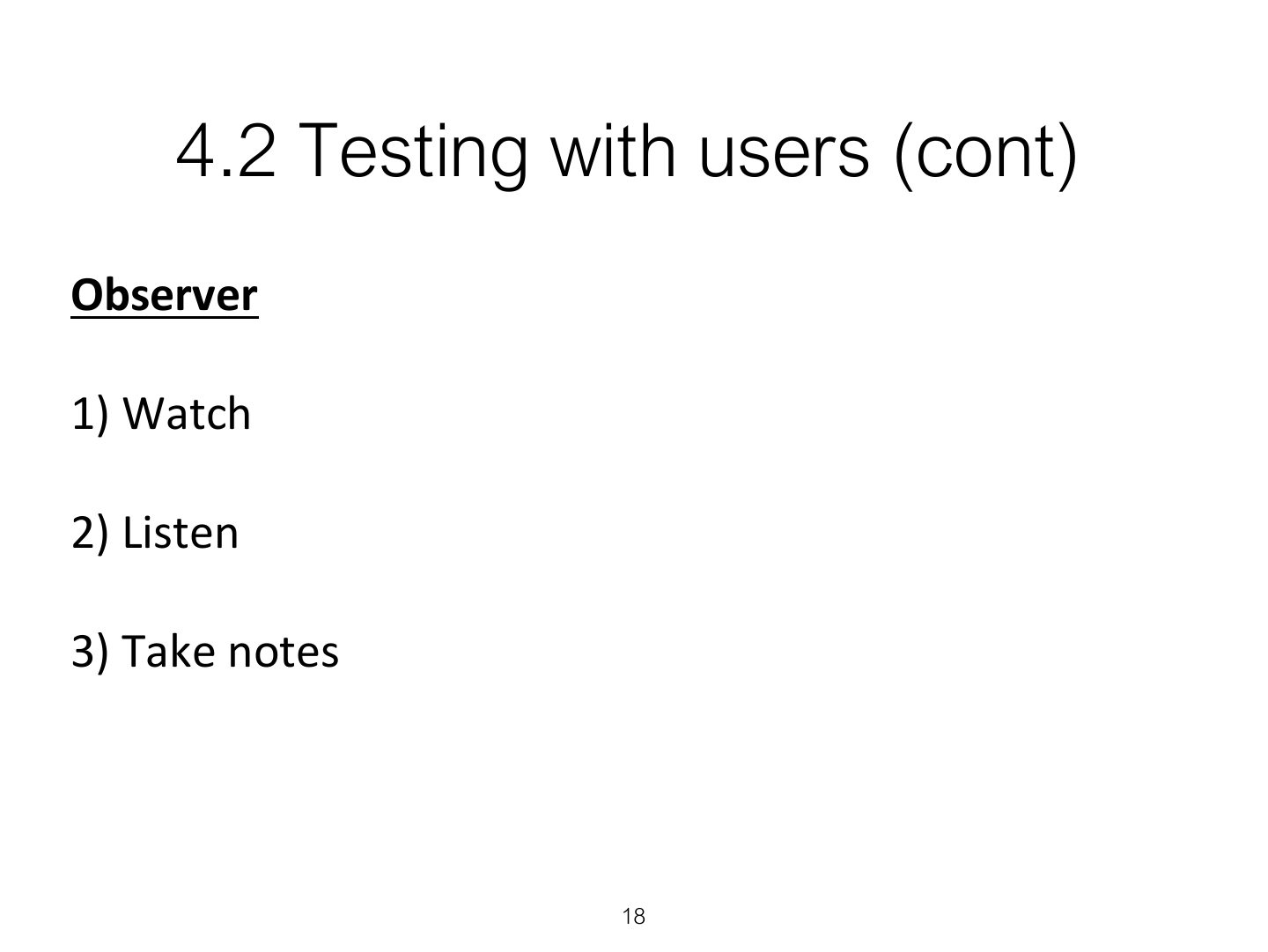
4.2 Testing with users (cont)
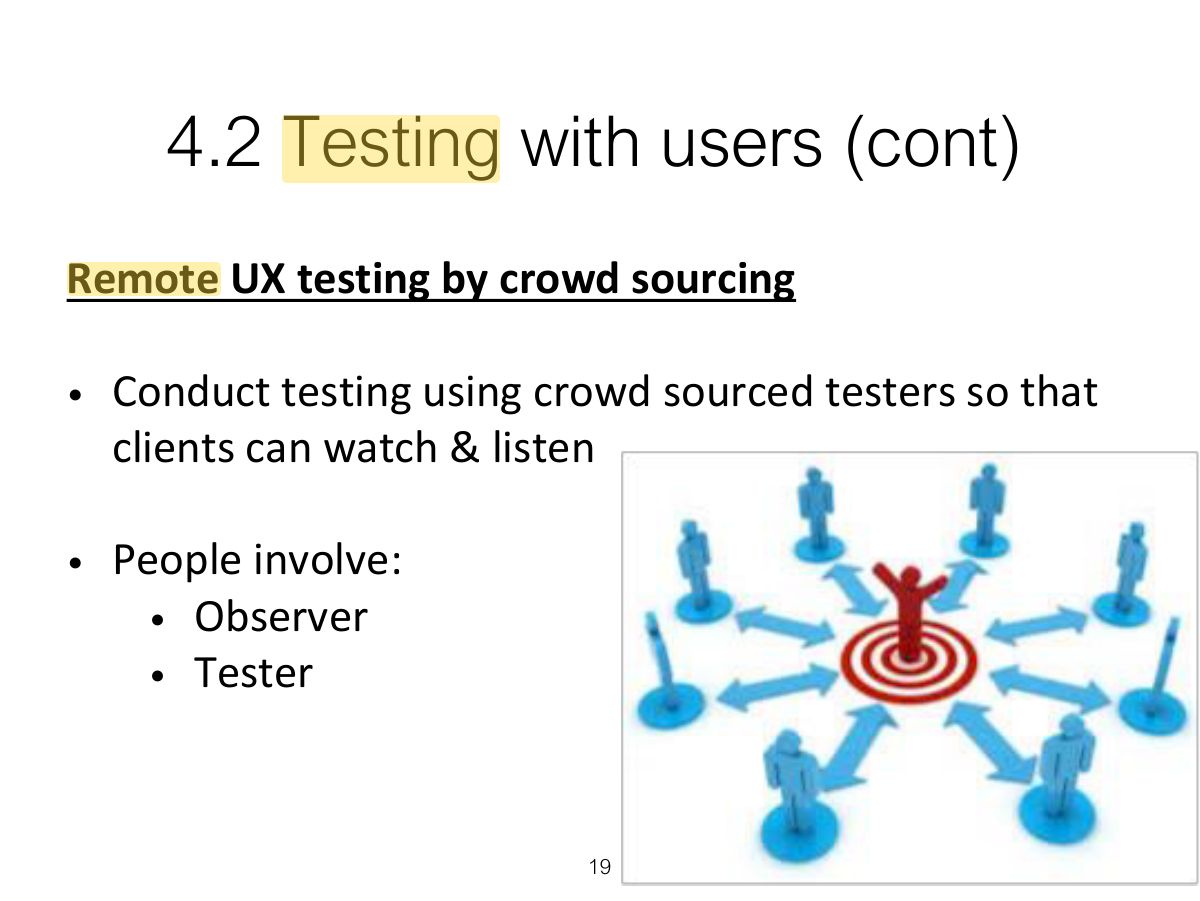
5. Research & Analysis
5. Research & Analysis (cont)
Evaluation methods
Participants’ rights and getting their consent
Notes
Participants’ rights: informed consent, privacy, the right to stop at any time.
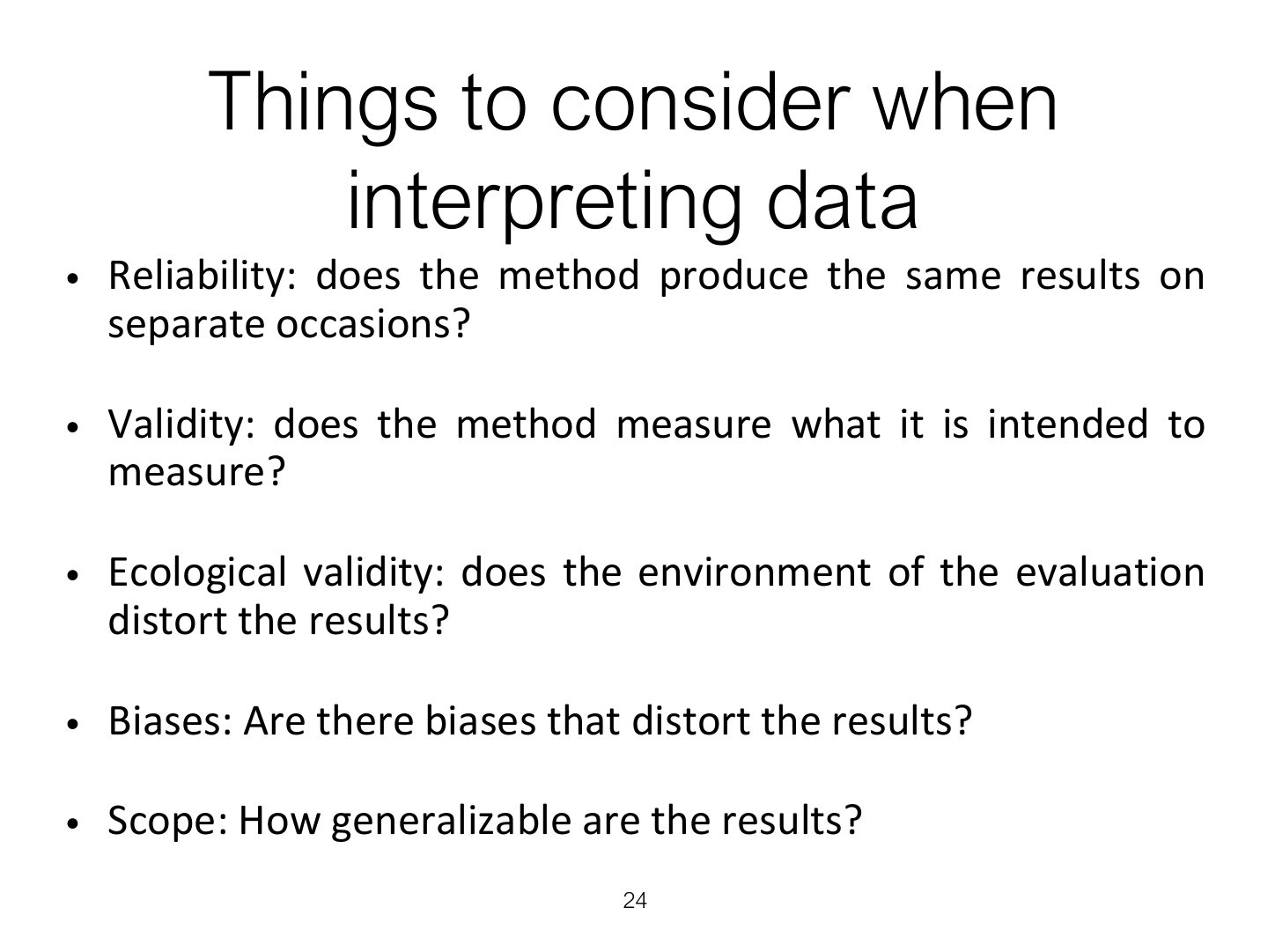
Things to consider when interpreting data
Exam angle
A lab study’s results may not reflect real-world use. This concerns:
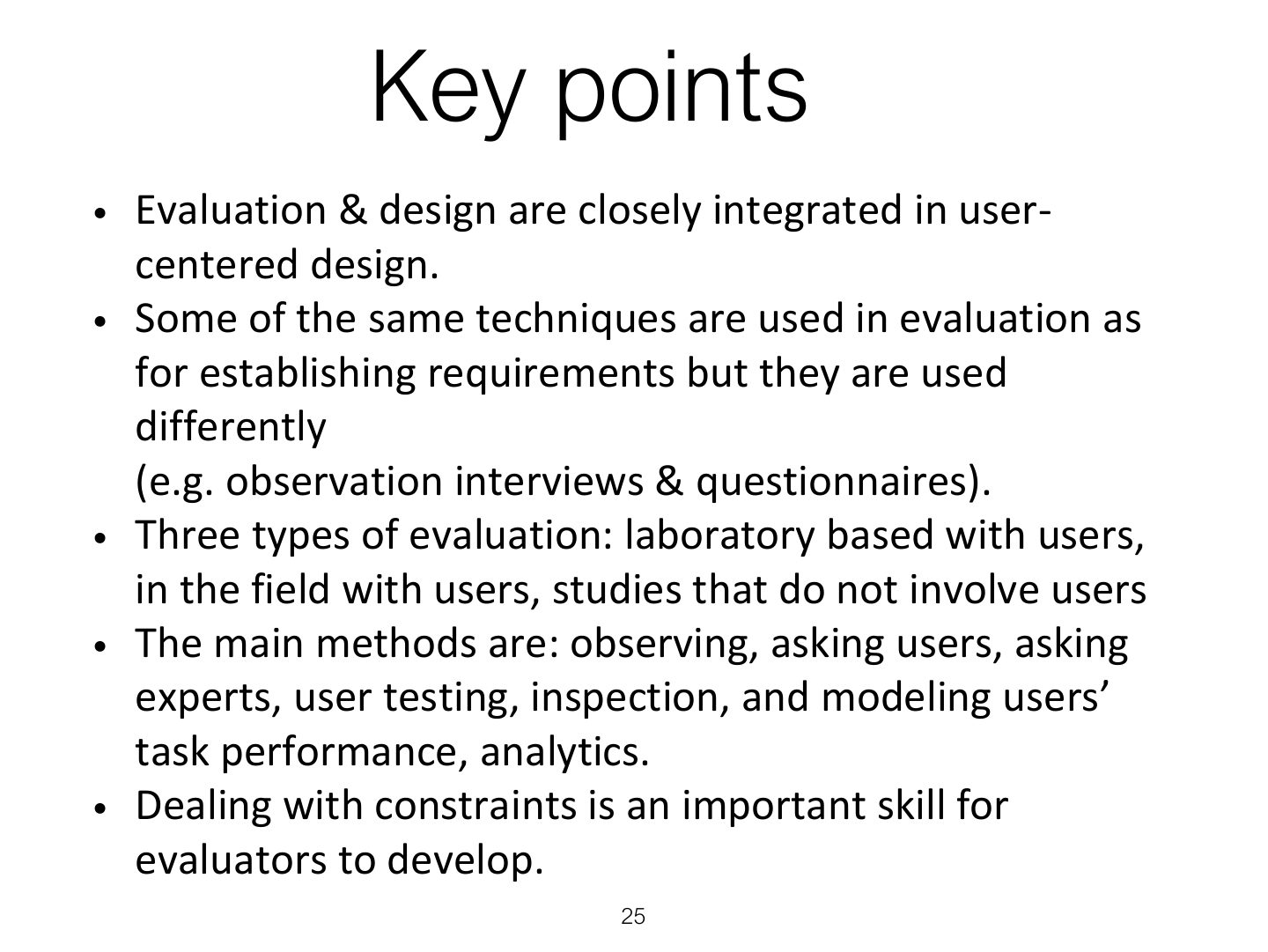
Key points
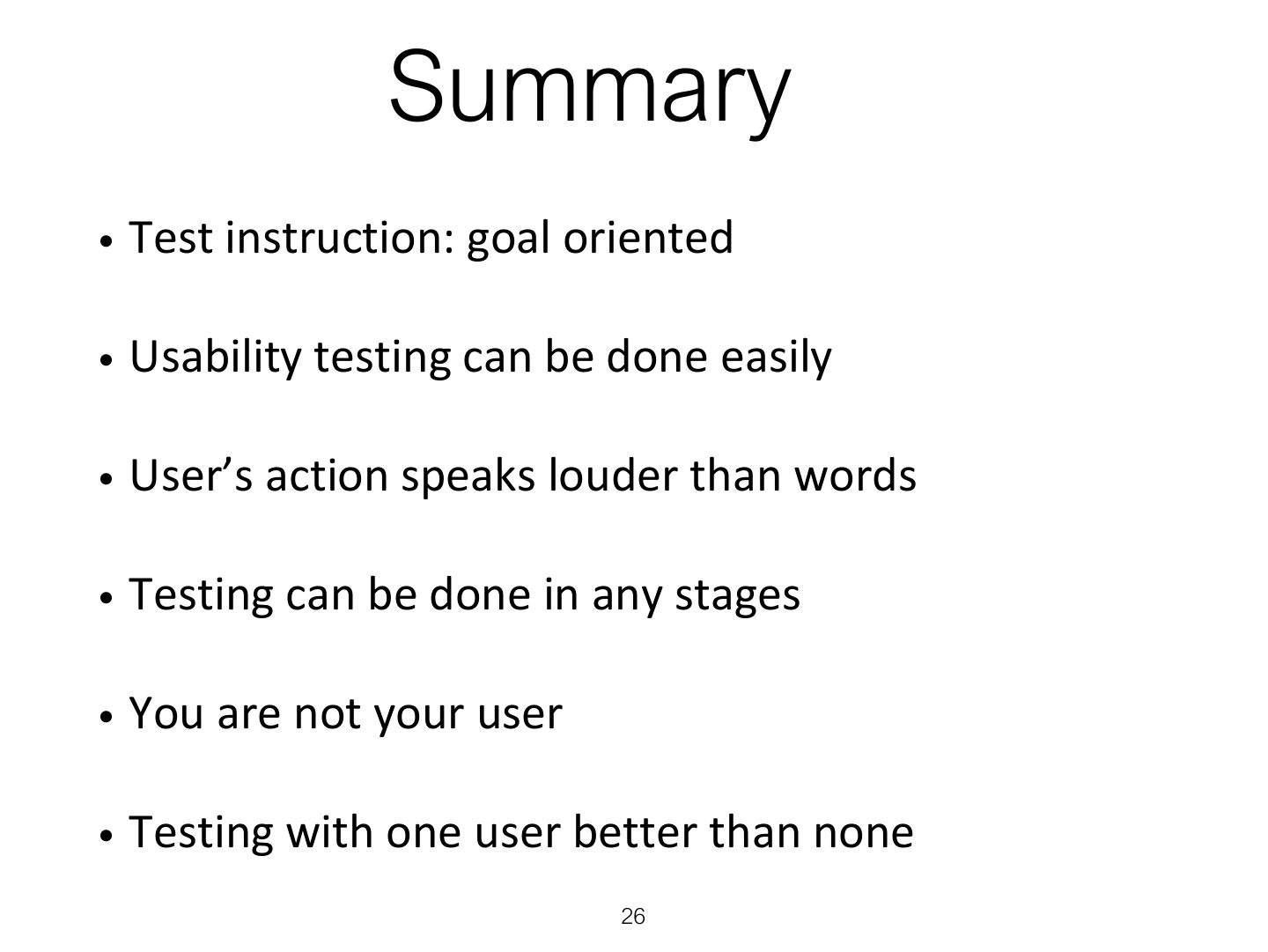
Summary
Link