Using more than one data-gathering technique to confirm findings is:
Establishing Requirements
Data gathering (interviews, questionnaires, observation, ethnography, contextual inquiry), recording and guidelines, kinds of requirements, personas and scenarios, use cases and hierarchical task analysis, then data analysis: quantitative and qualitative, grounded theory and activity theory.
How to read this page
Every original slide is shown unchanged. Yellow marks on a slide point to a numbered note: hover or tap a mark to jump to its note, and hover a note to see its marks. Questions tagged Past exam appeared on a real paper; Prediction questions are likely angles, not confirmed. Pick an answer to each question: a wrong pick tells you why it is wrong, so you can try again.
All 82 slides
- 1 Slide 1
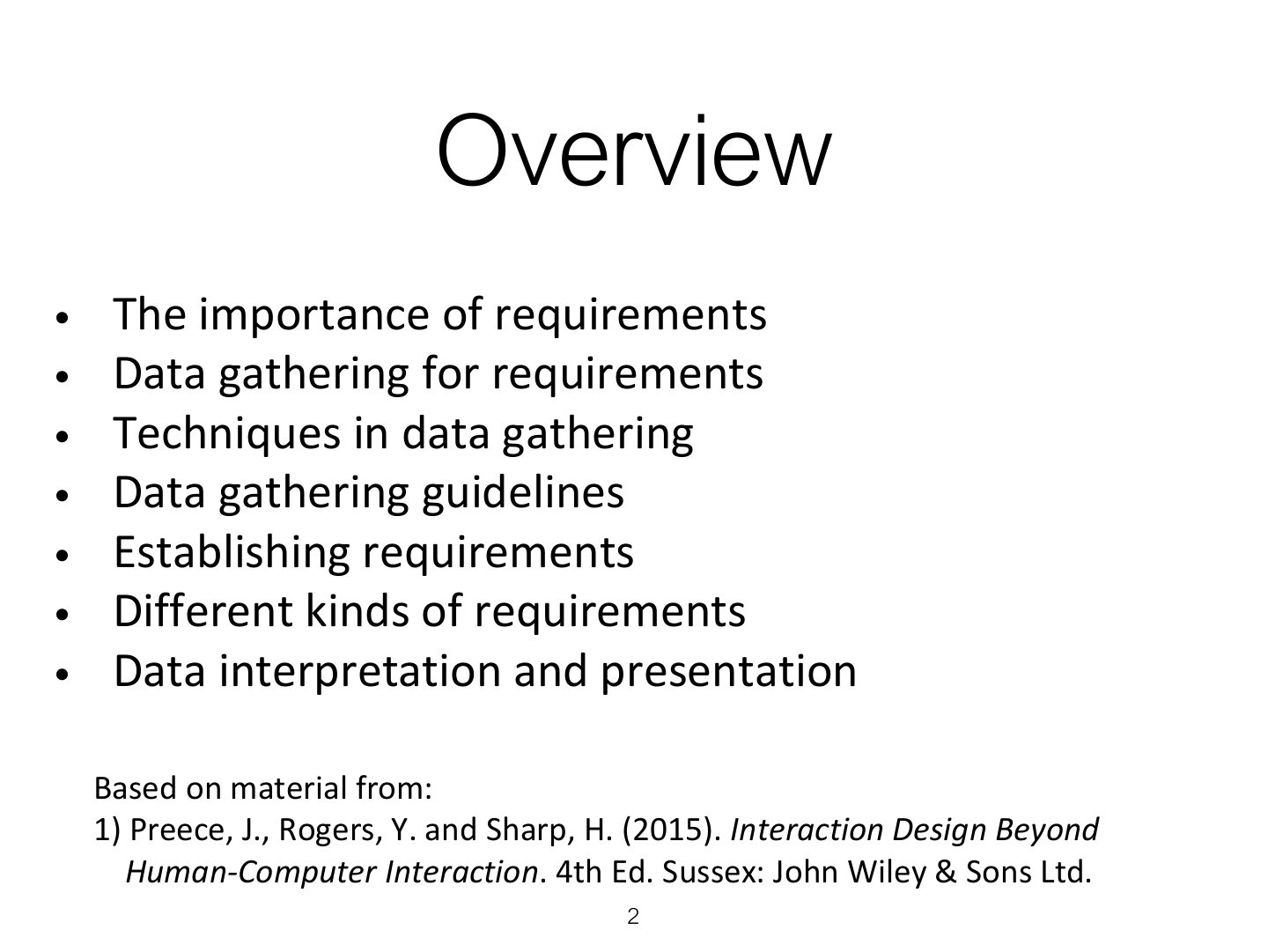
- 2 Overview
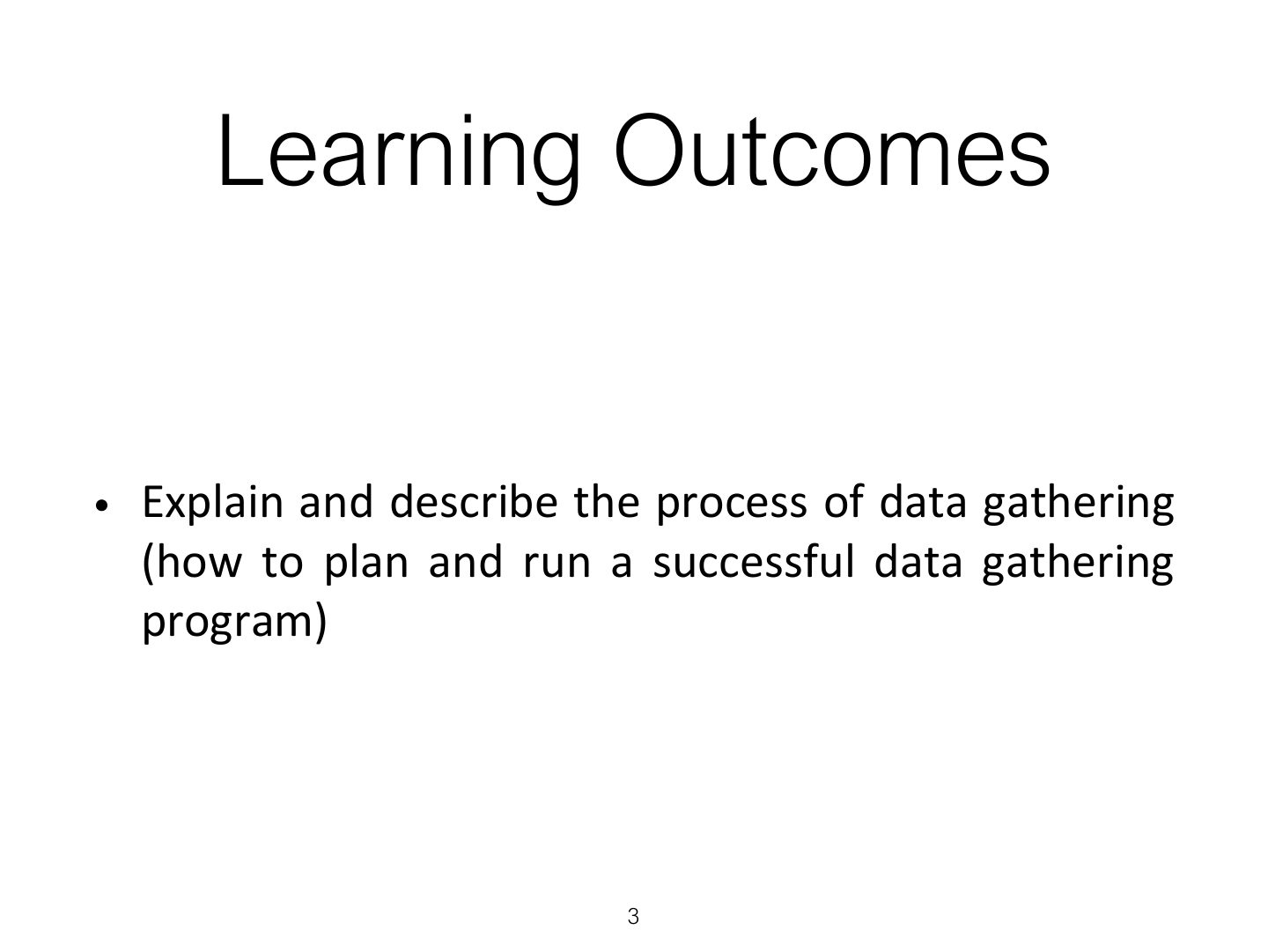
- 3 Learning Outcomes
- 4 Requirement: What, How and Why?
- 5 What, How and Why?
- 6 Data gathering: Five key issues
- 7 Data gathering for requirements
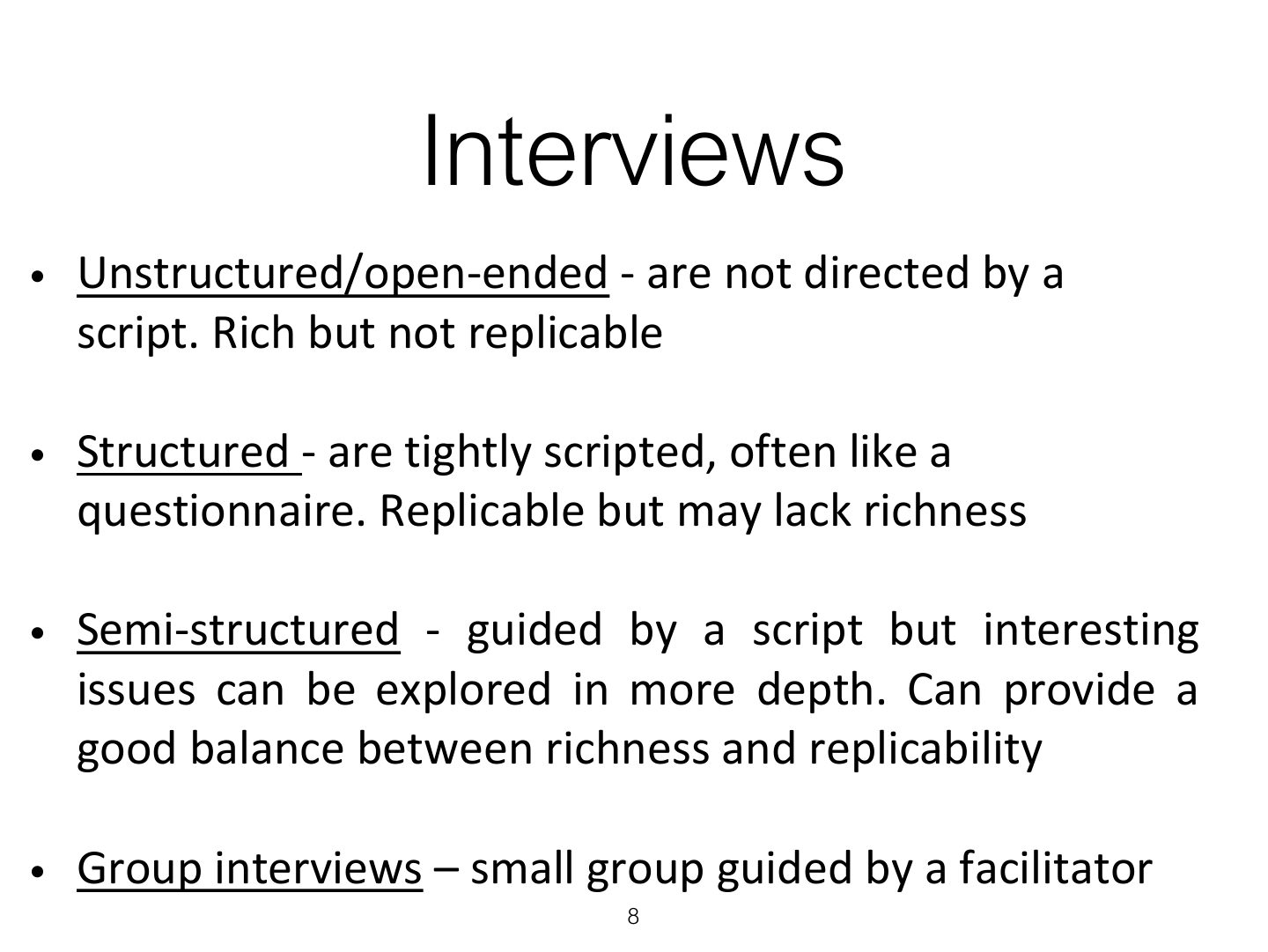
- 8 Interviews
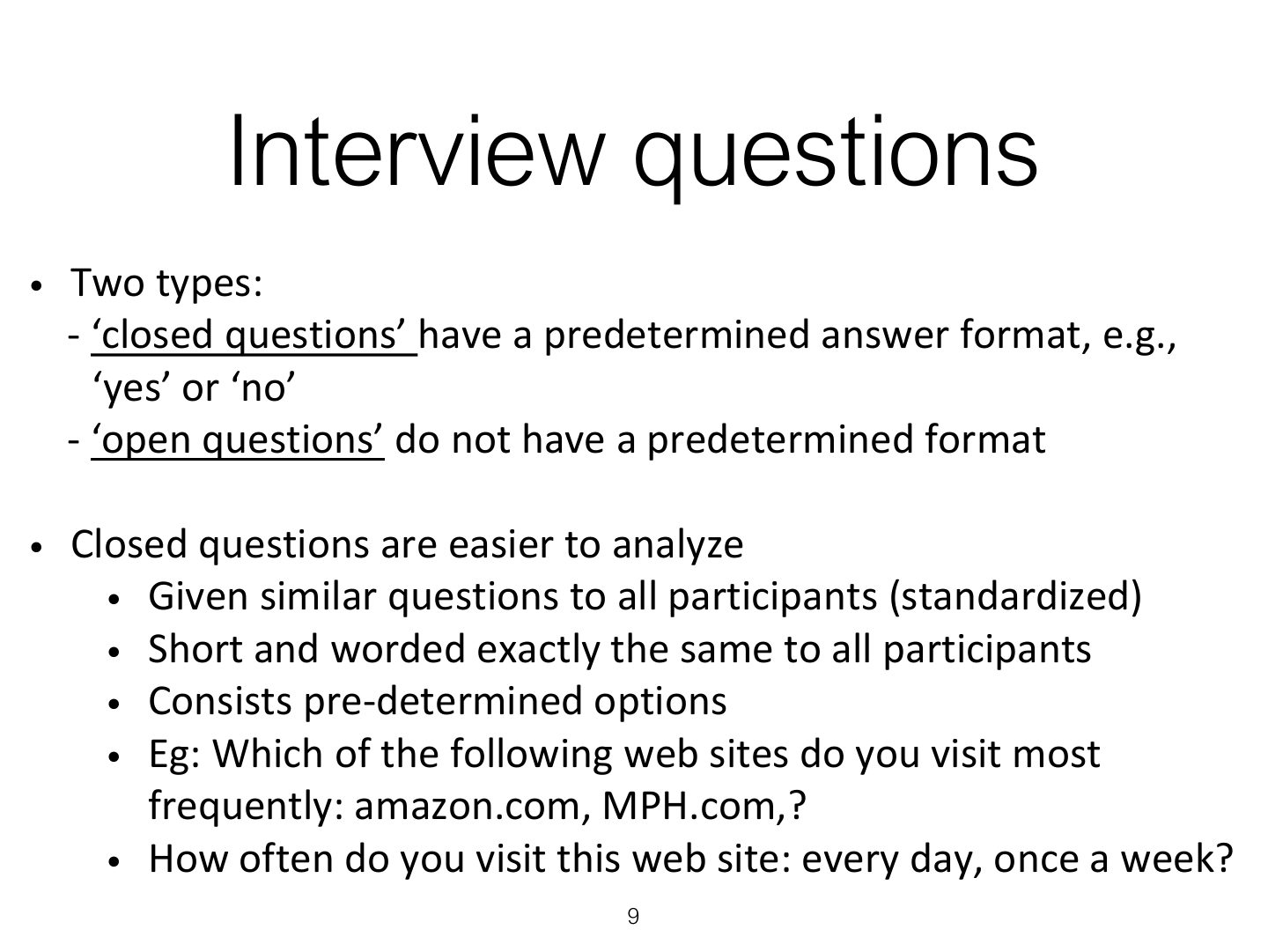
- 9 Interview questions
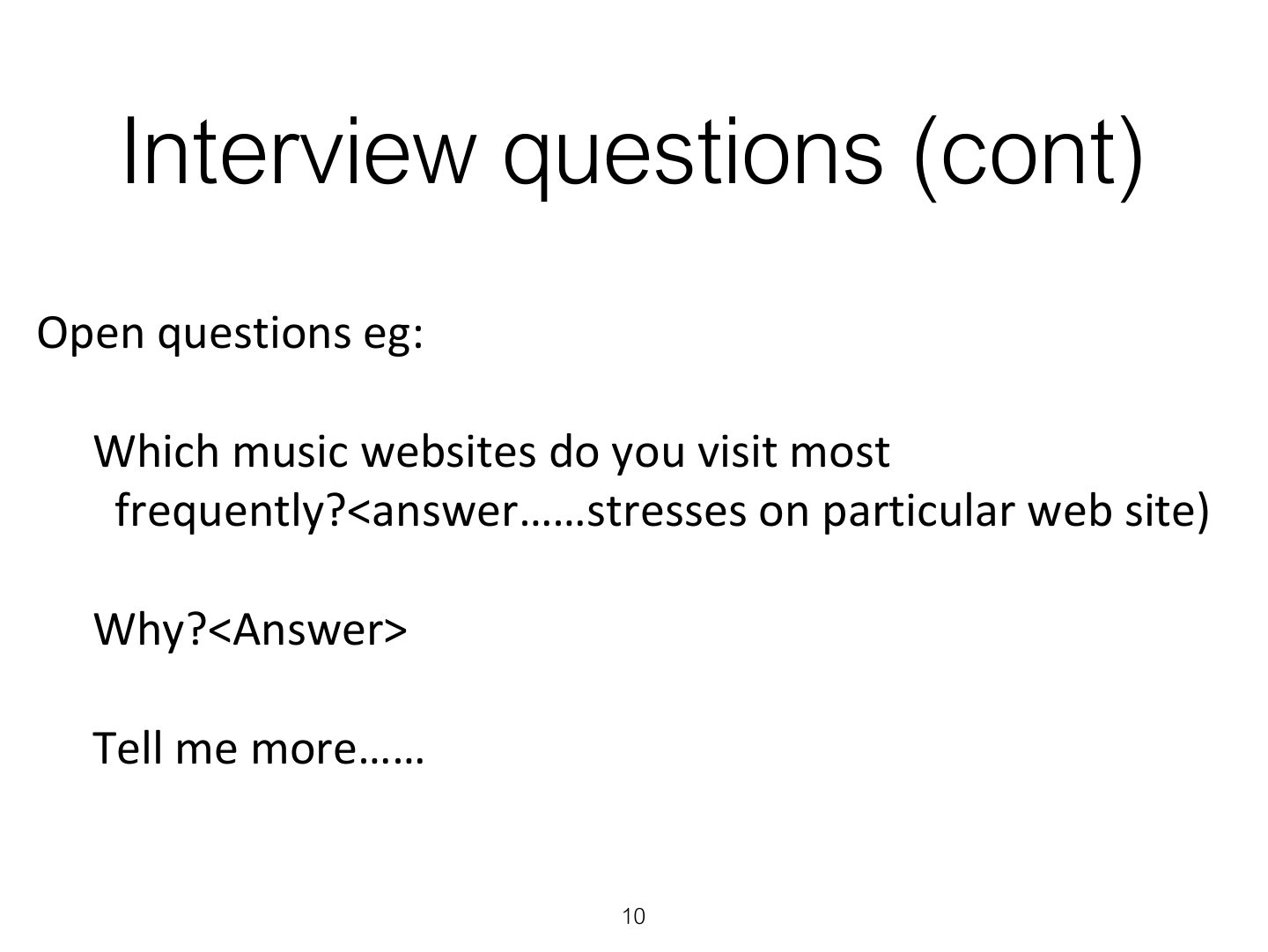
- 10 Interview questions (cont)
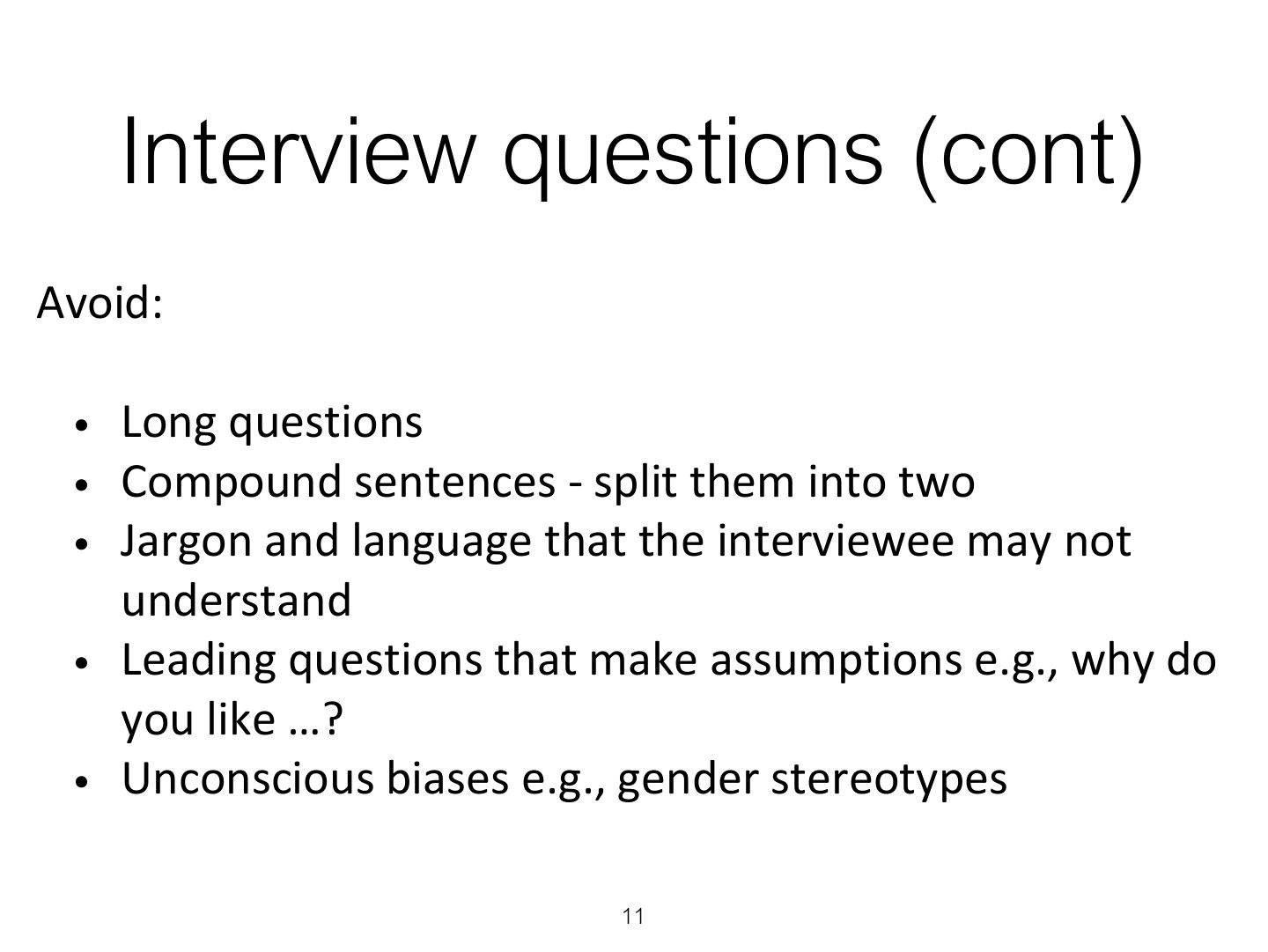
- 11 Interview questions (cont)
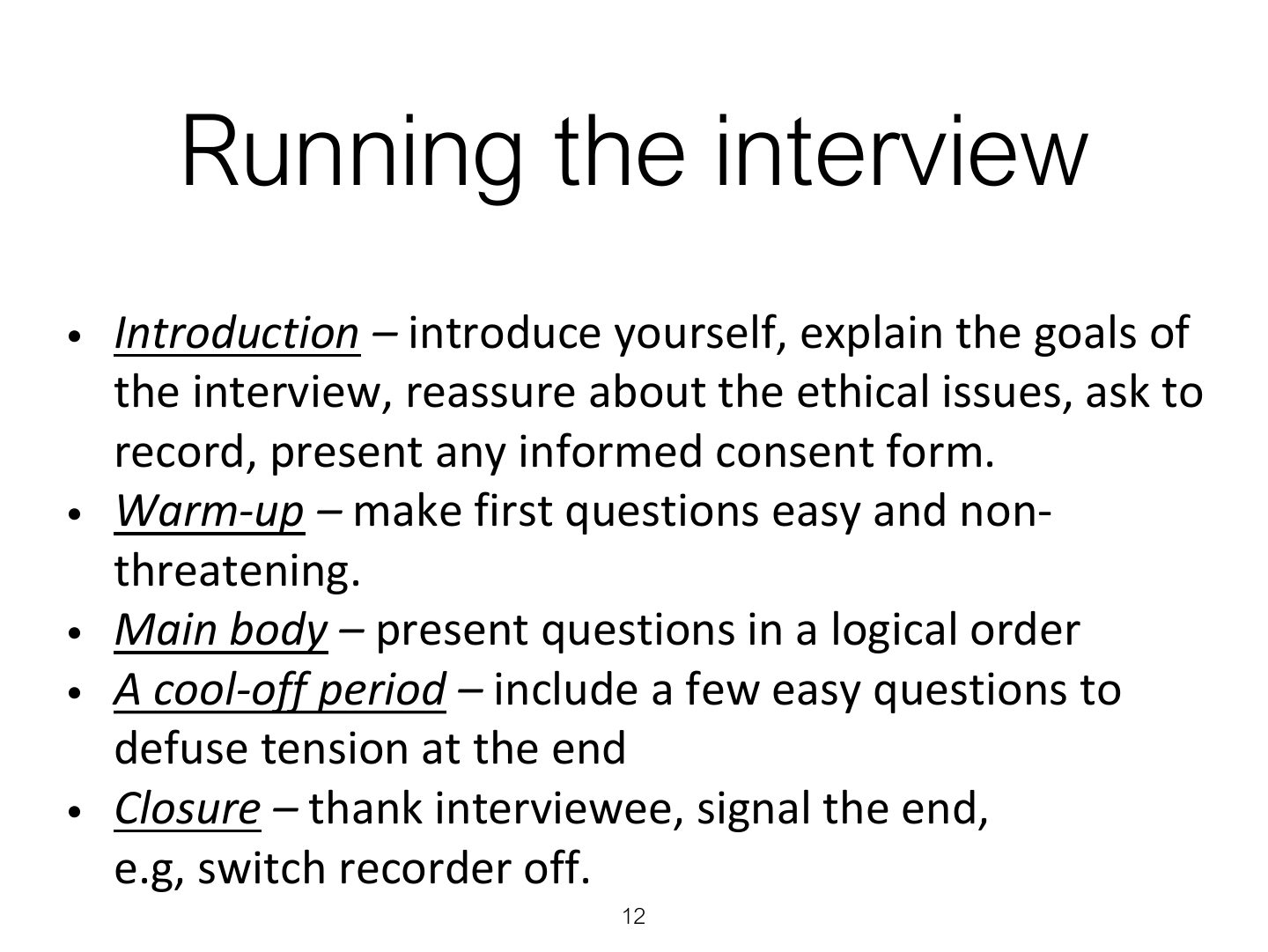
- 12 Running the interview
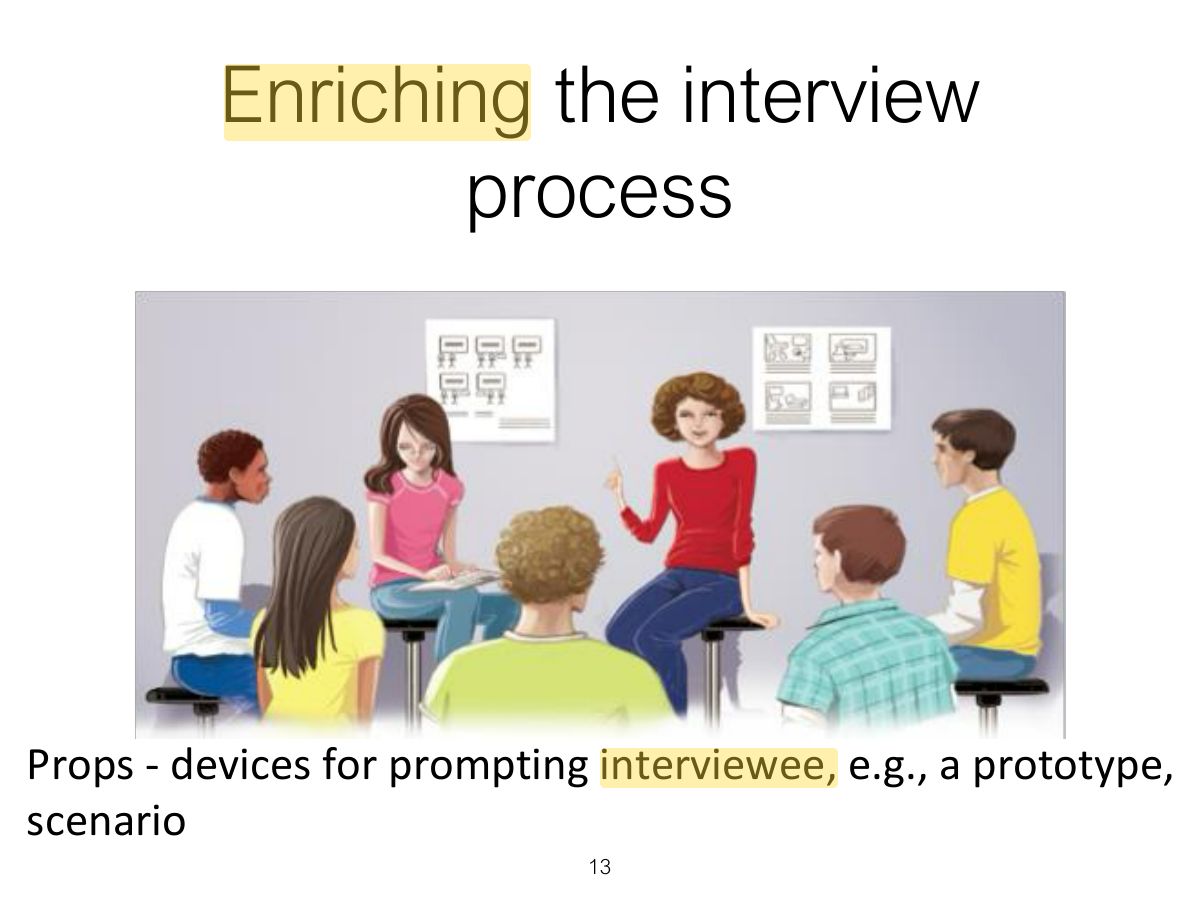
- 13 Enriching the interview process
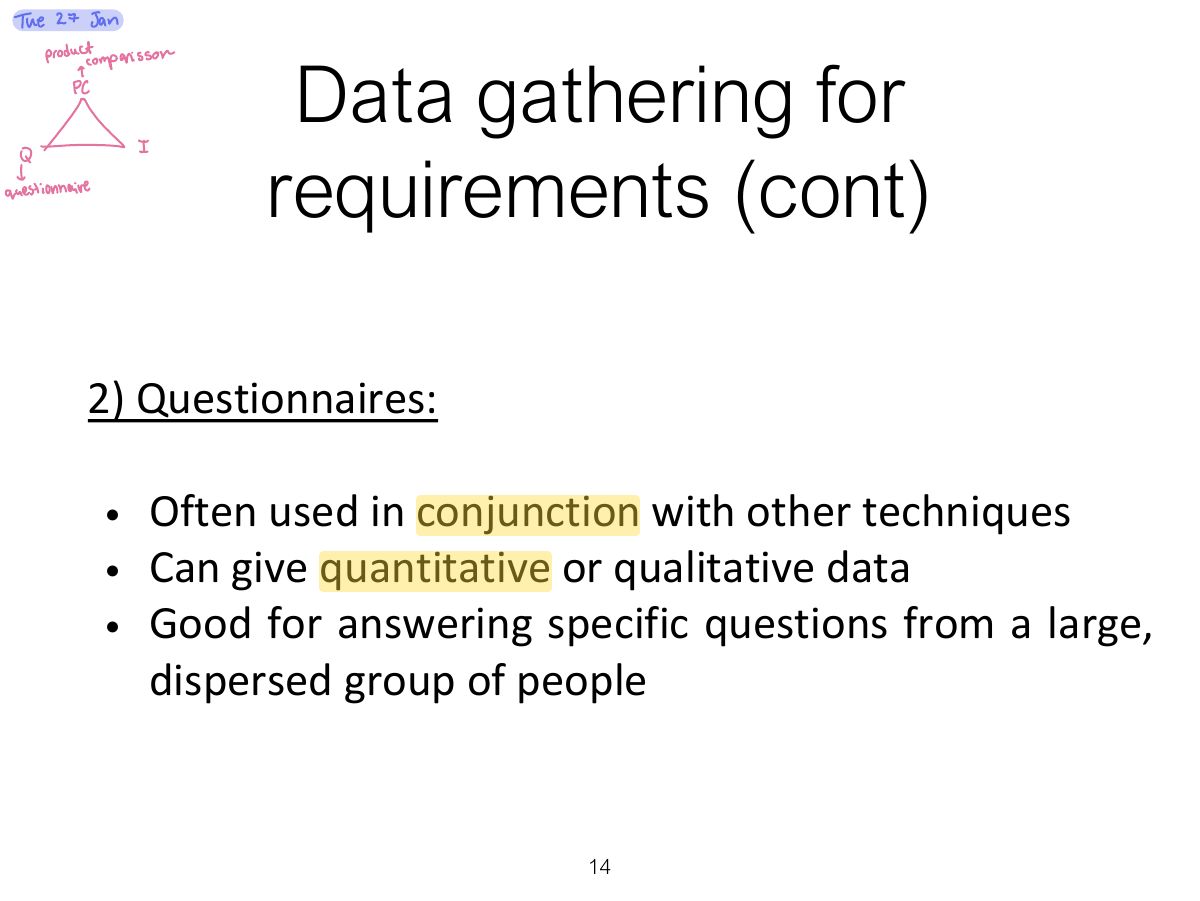
- 14 Data gathering for requirements (cont)
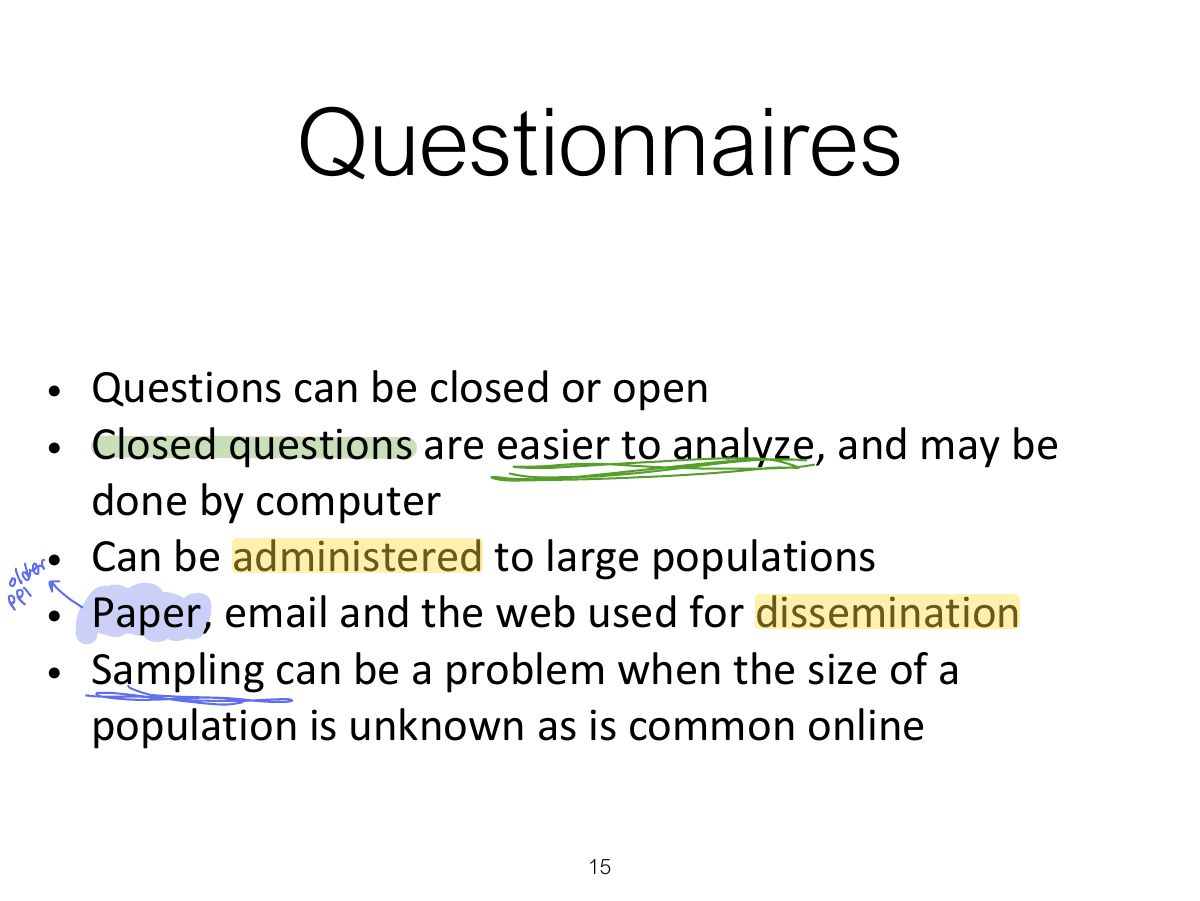
- 15 Questionnaires
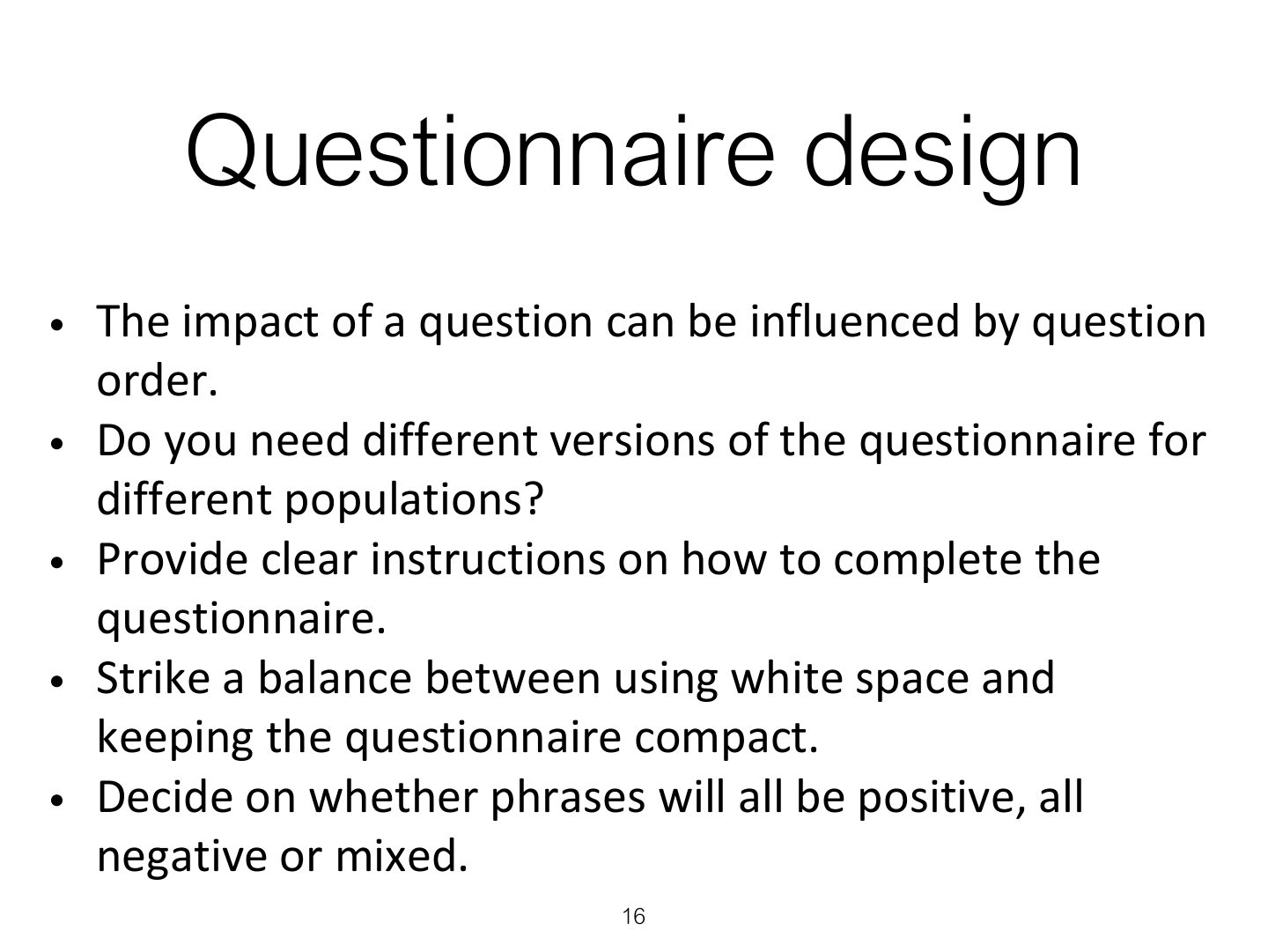
- 16 Questionnaire design
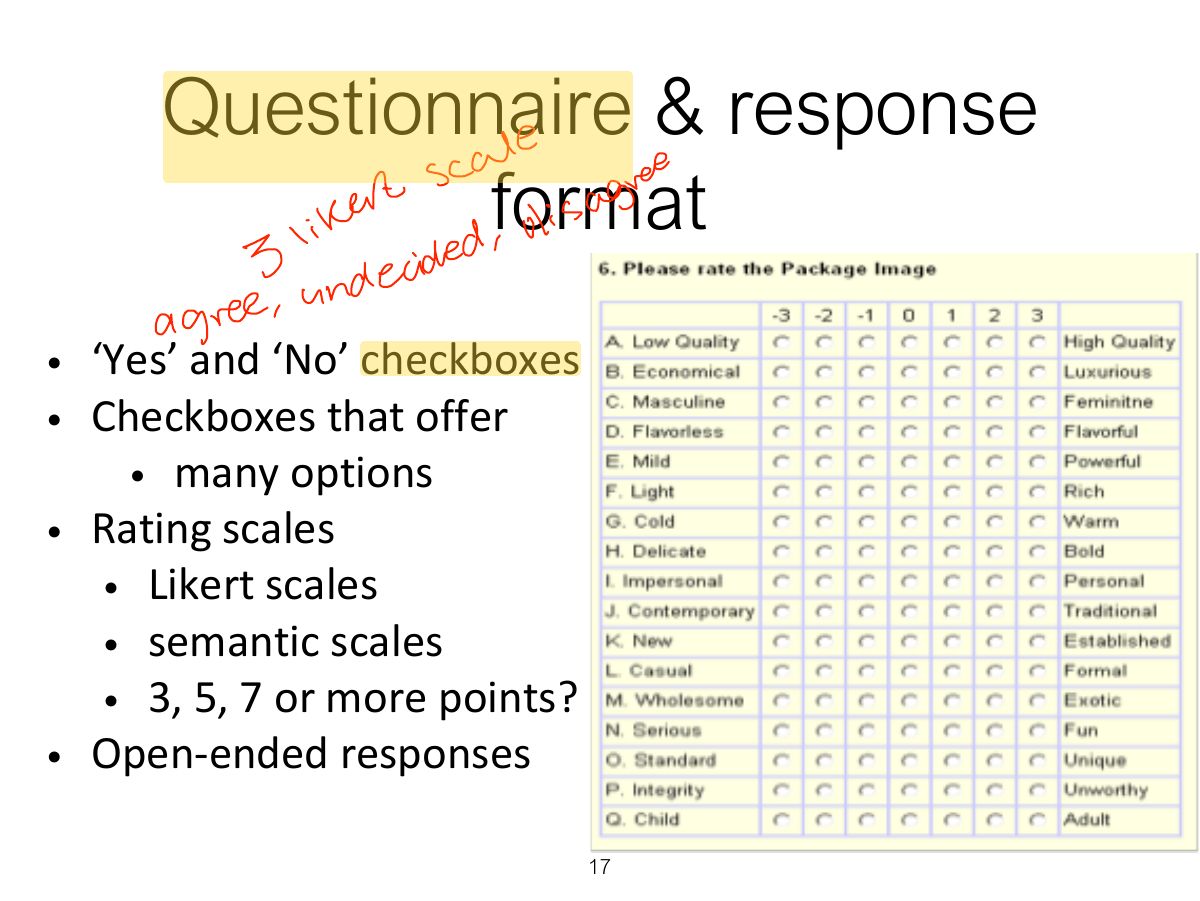
- 17 Questionnaire & response format
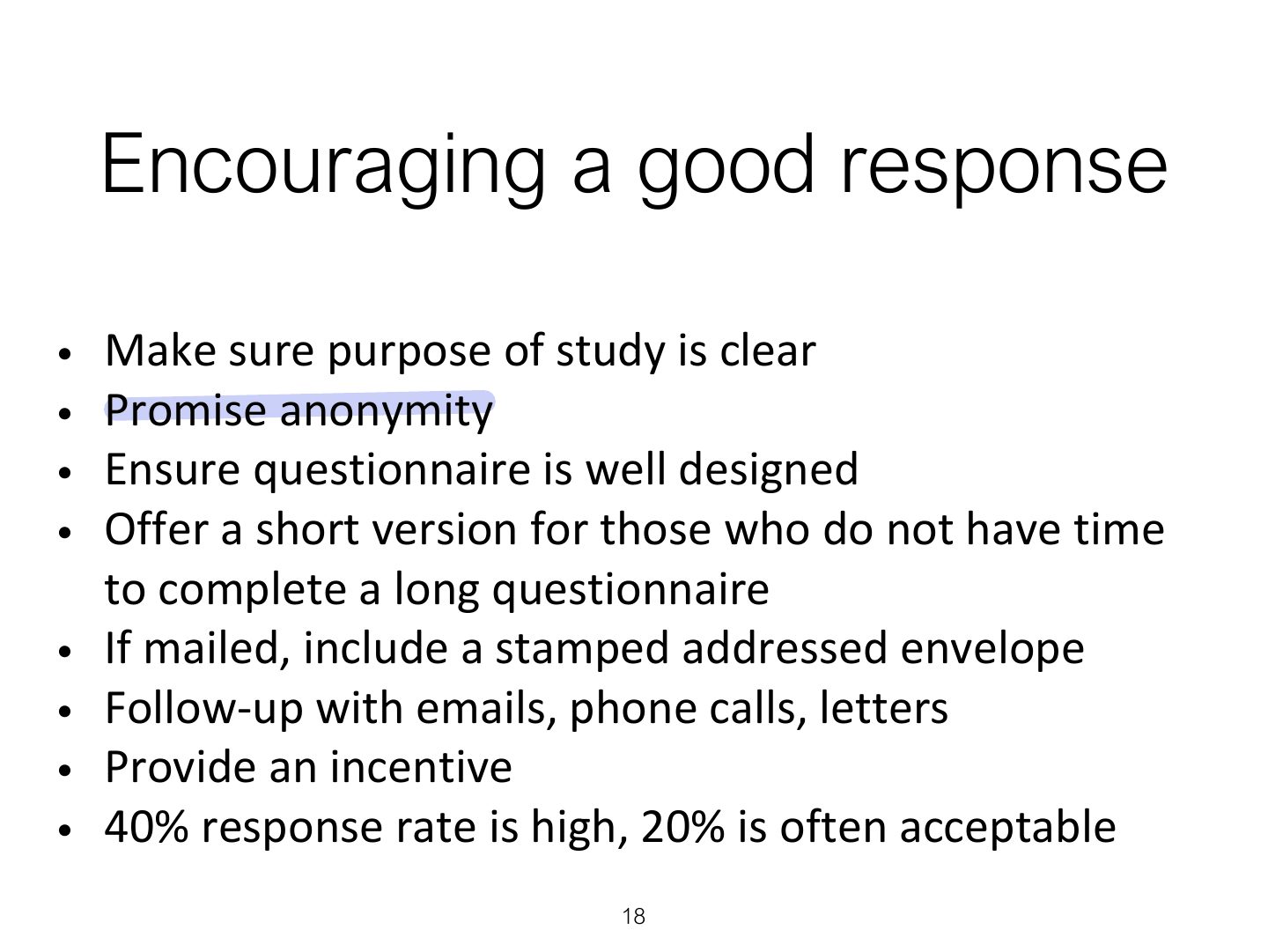
- 18 Encouraging a good response
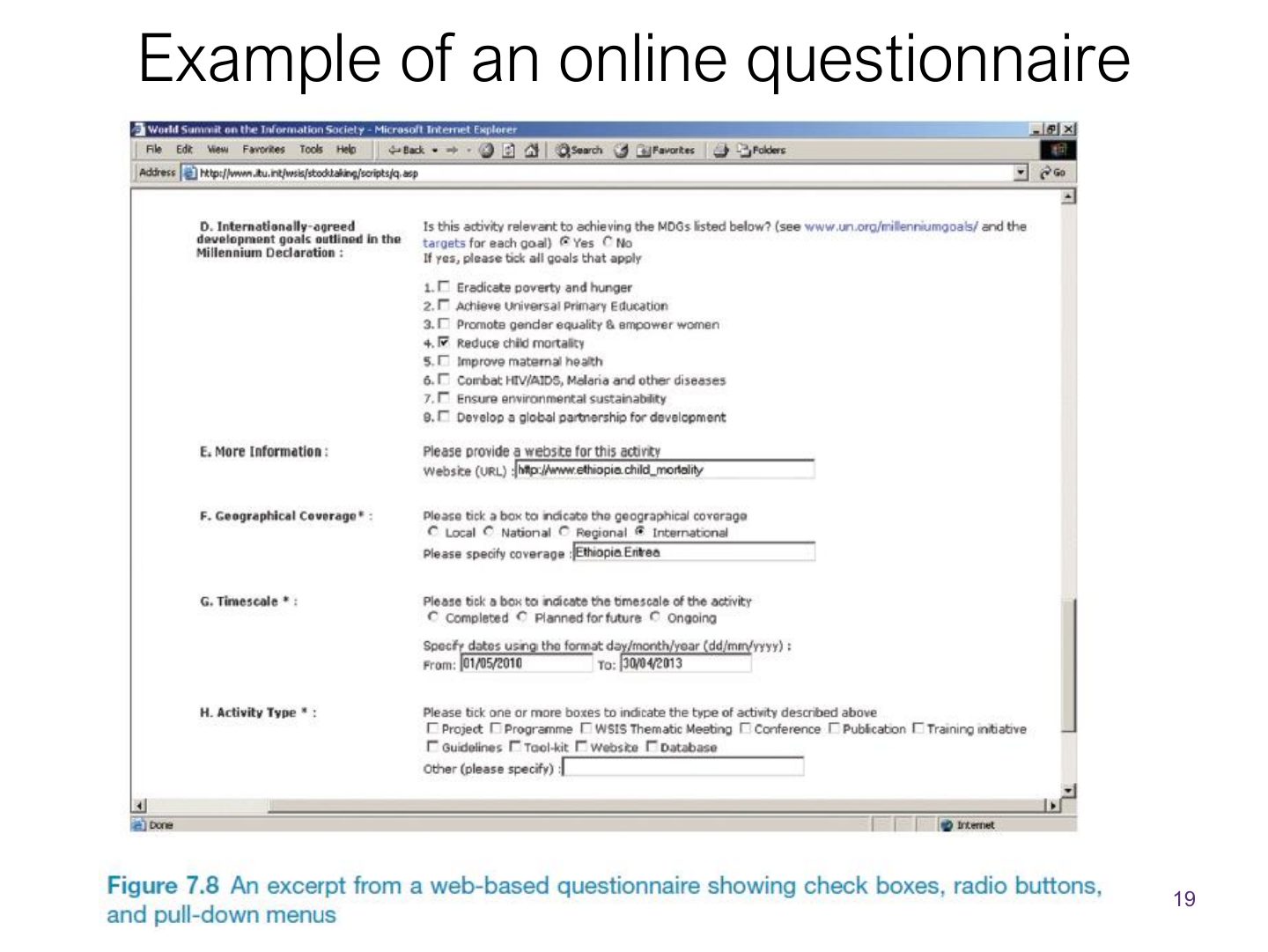
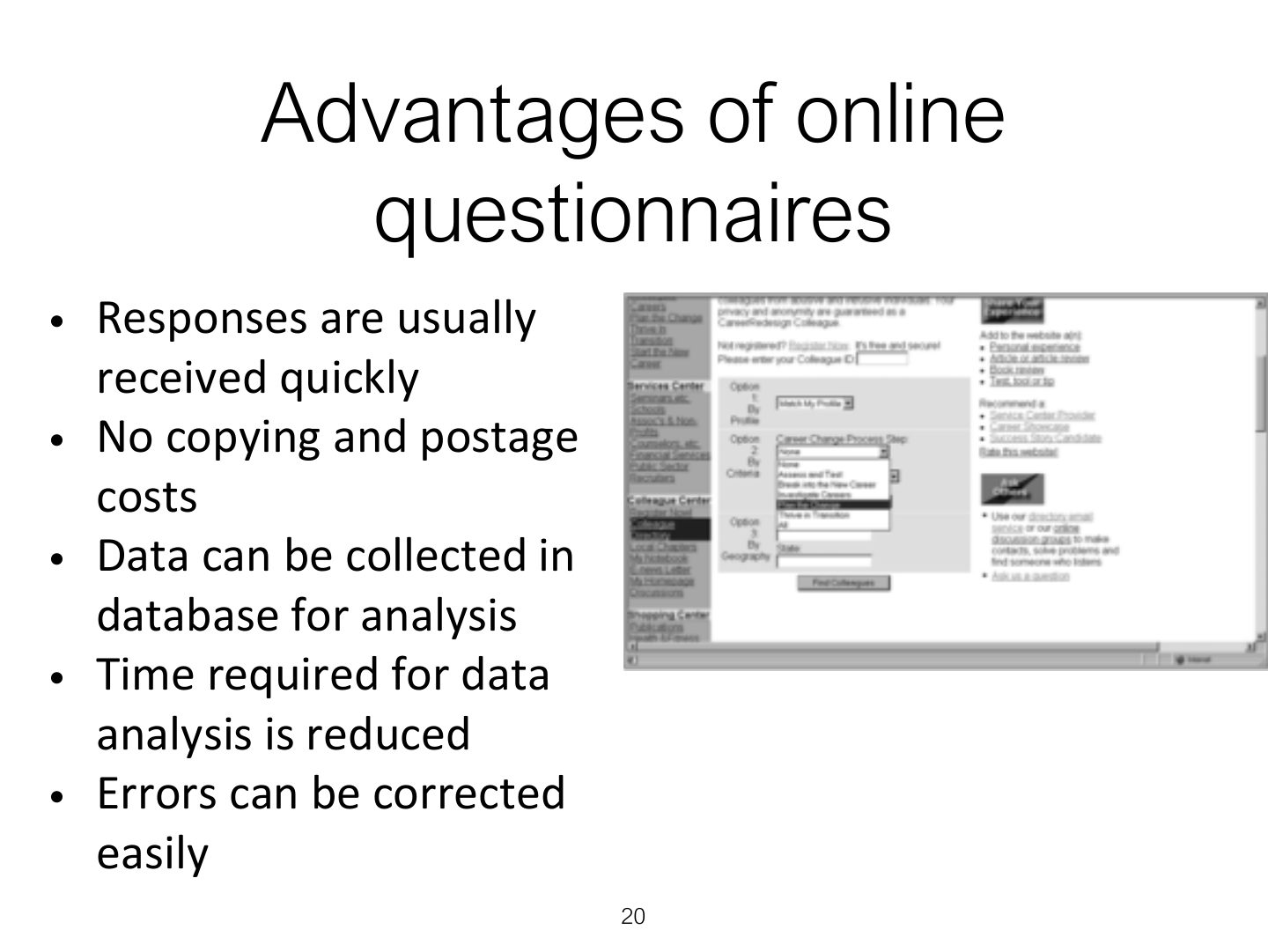
- 19 Example of an online questionnaire
- 20 Advantages of online questionnaires
- 21 Problems with online questionnaires
- 22 Data gathering for requirements (cont)
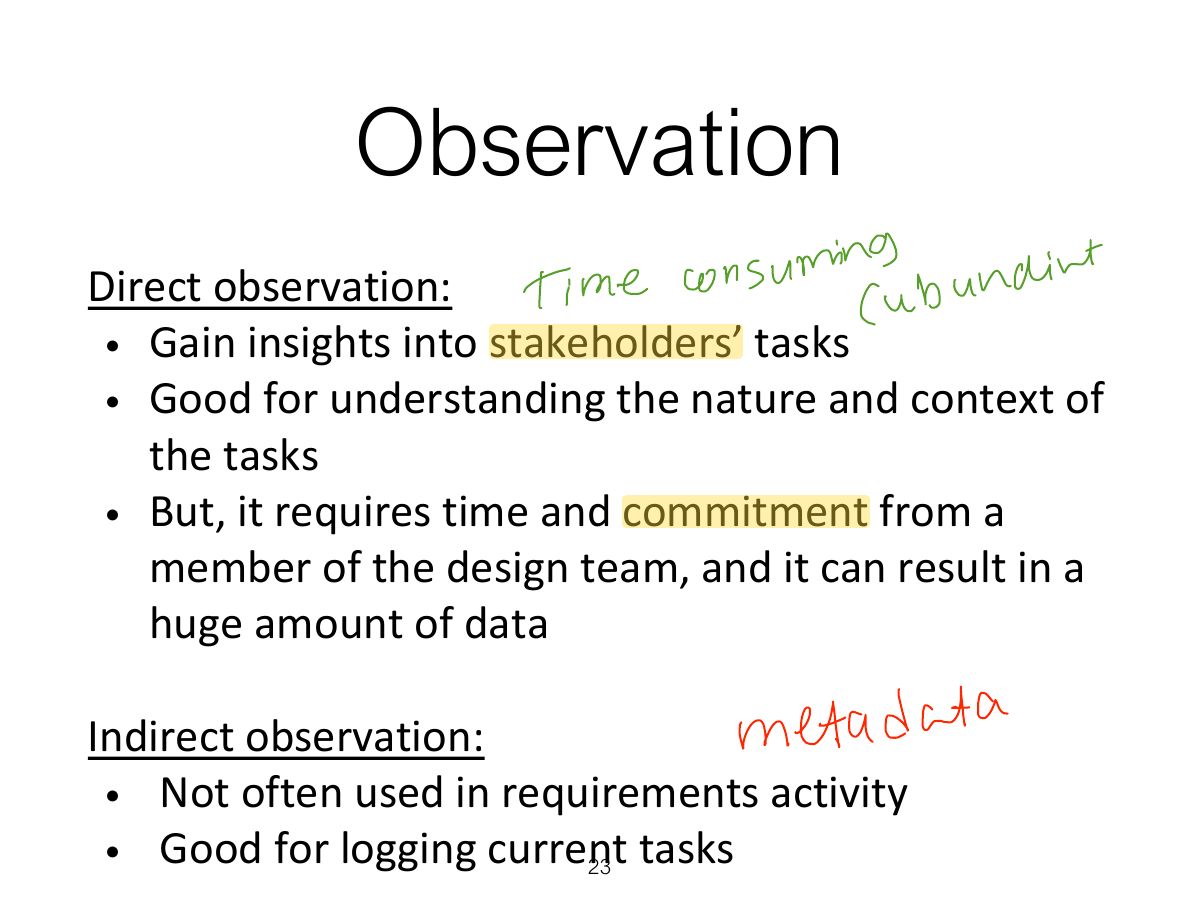
- 23 Observation
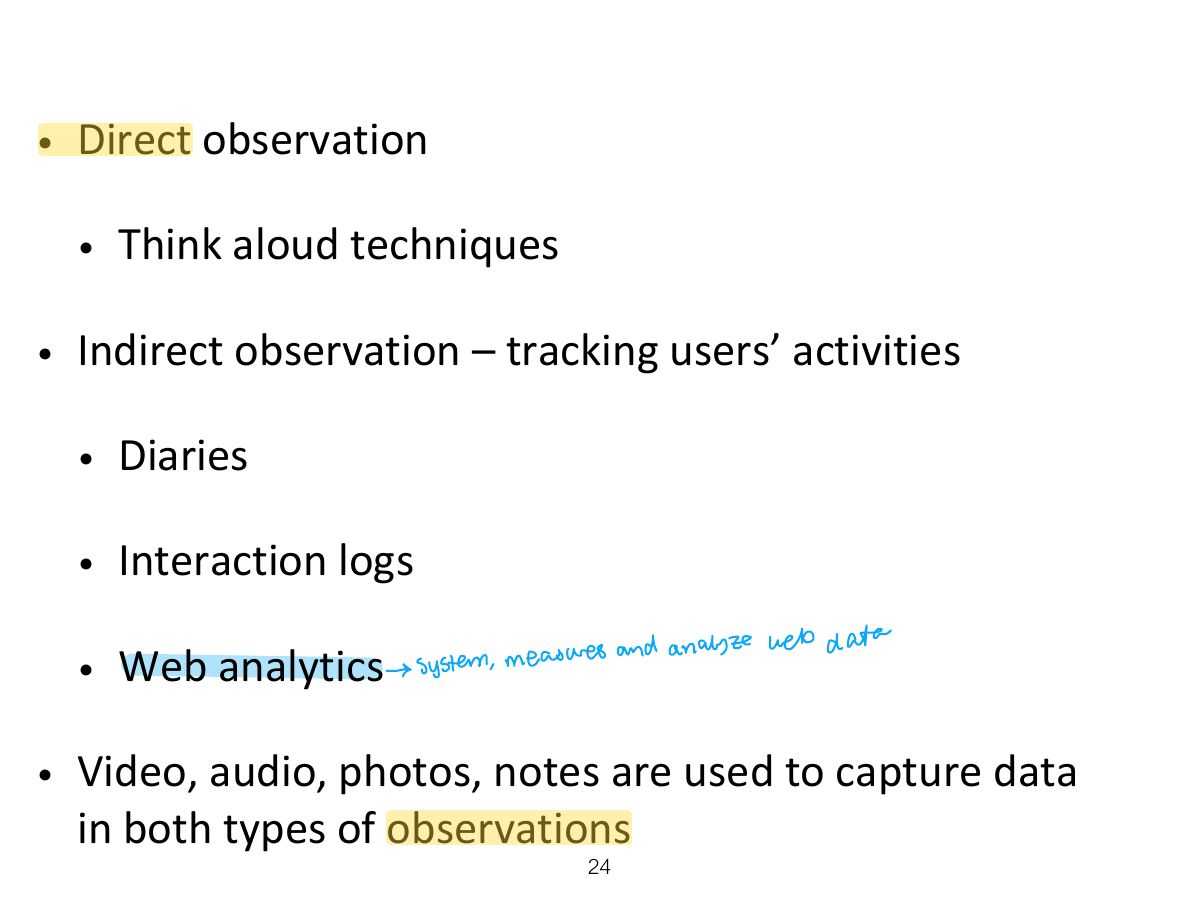
- 24 • Direct observation
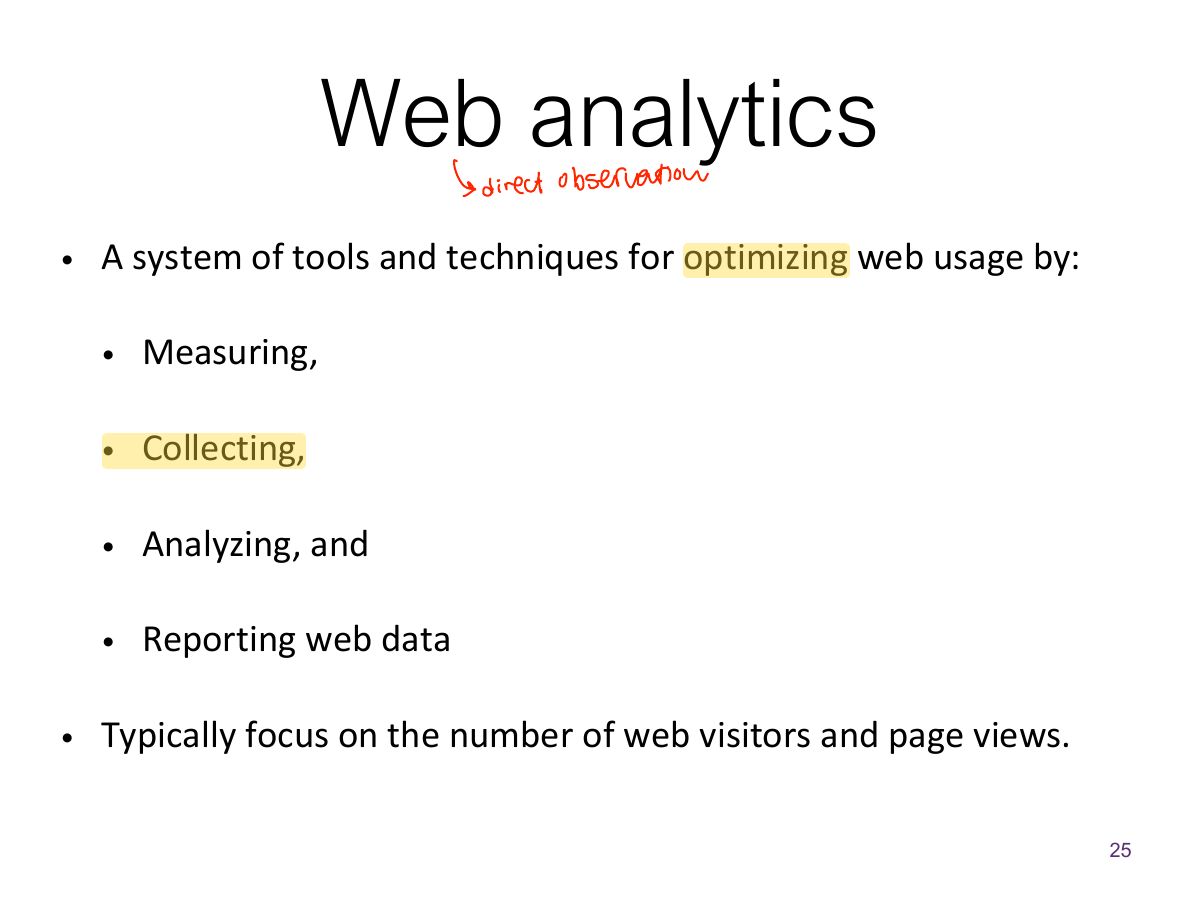
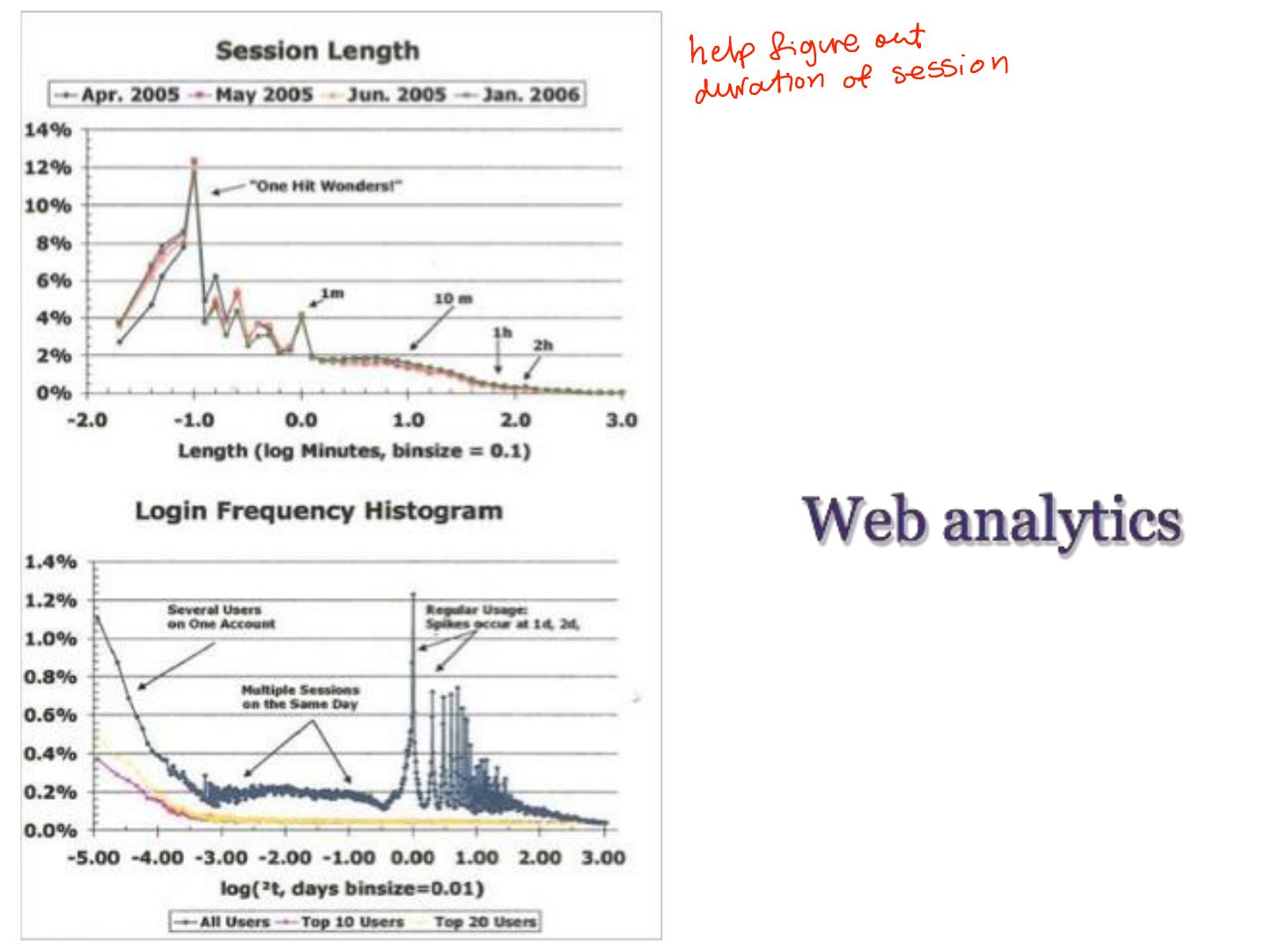
- 25 Web analytics
- 26 Slide 26
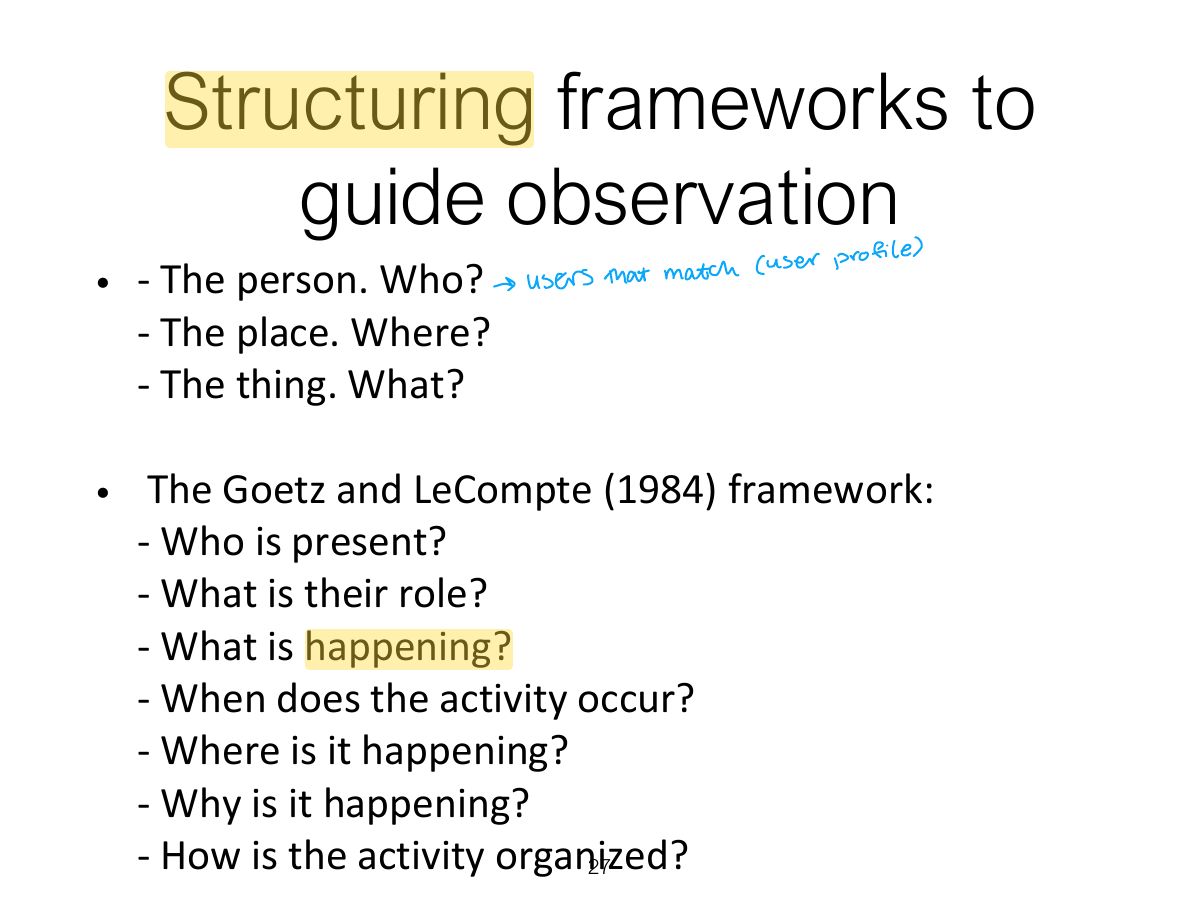
- 27 Structuring frameworks to guide observation
- 28 Ethnography
- 29 Ethnography (cont)
- 30 Ethnography
- 31 Online Ethnography
- 32 An Ethnography project for you..
- 33 An Ethnography project for you.. (cont)
- 34 Contextual Inquiry
- 35 Data gathering for requirements (cont)
- 36 Choosing and combining techniques
- 37 Summary
- 38 Techniques in data gathering
- 39 Data Recording
- 40 Data Recording (cont)
- 41 Data Recording (cont)
- 42 Problems with data gathering
- 43 Problems with data gathering (cont)
- 44 Problems with data gathering (cont)
- 45 Data gathering guidelines
- 46 Data gathering guidelines (cont)
- 47 Establishing requirements
- 48 Different kinds of requirements
- 49 Different kinds of requirements (cont)
- 50 Different kinds of requirements (cont)
- 51 What are users’ capabilities?
- 52 Kinds of requirements
- 53 Persona
- 54 Persona
- 55 Scenarios and Personas
- 56 Task descriptions
- 57 Scenario
- 58 Use Case
- 59 Alternative courses for travel organizer
- 60 Example use case diagram for travel organizer
- 61 Example essential use case for travel organizer
- 62 Task Analysis
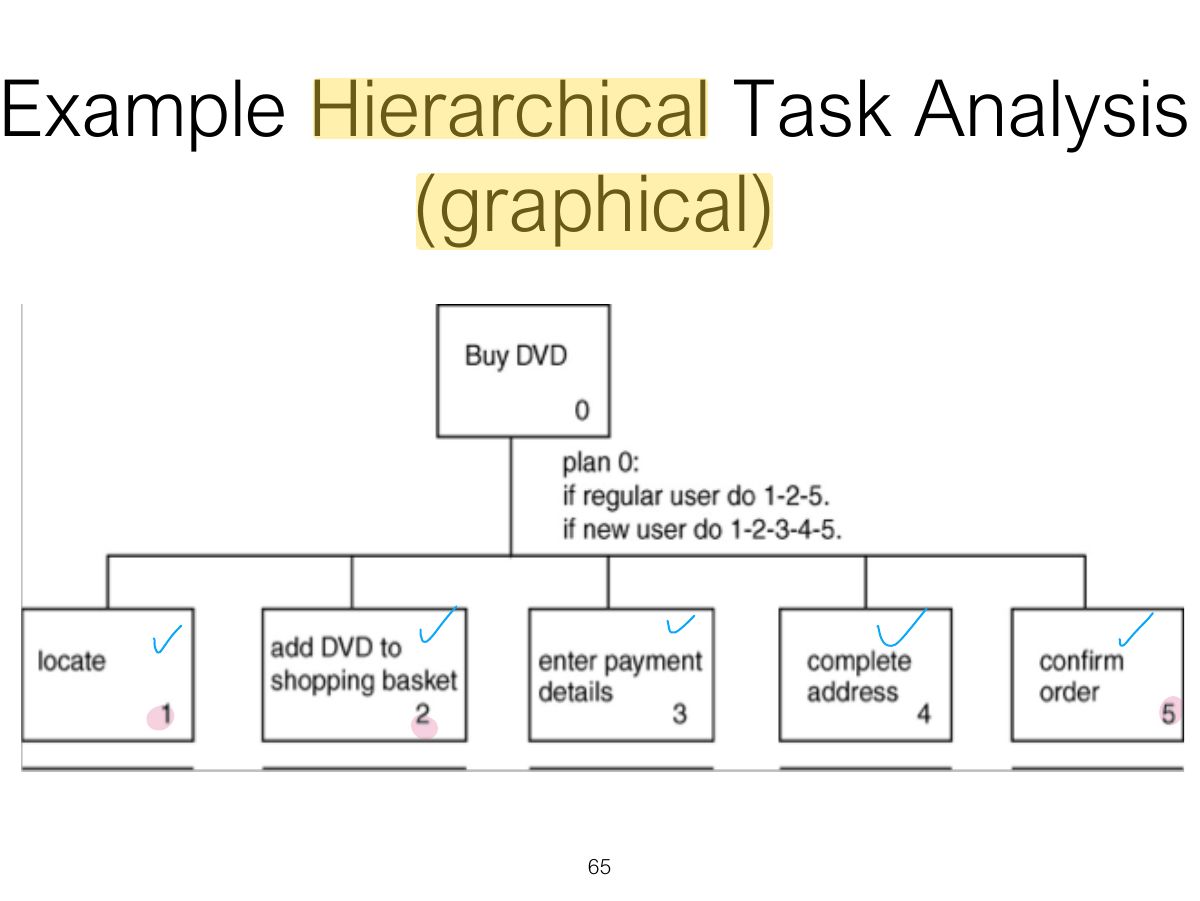
- 63 Hierarchical Task Analysis
- 64 Example Hierarchical Task Analysis
- 65 Example Hierarchical Task Analysis (graphical)
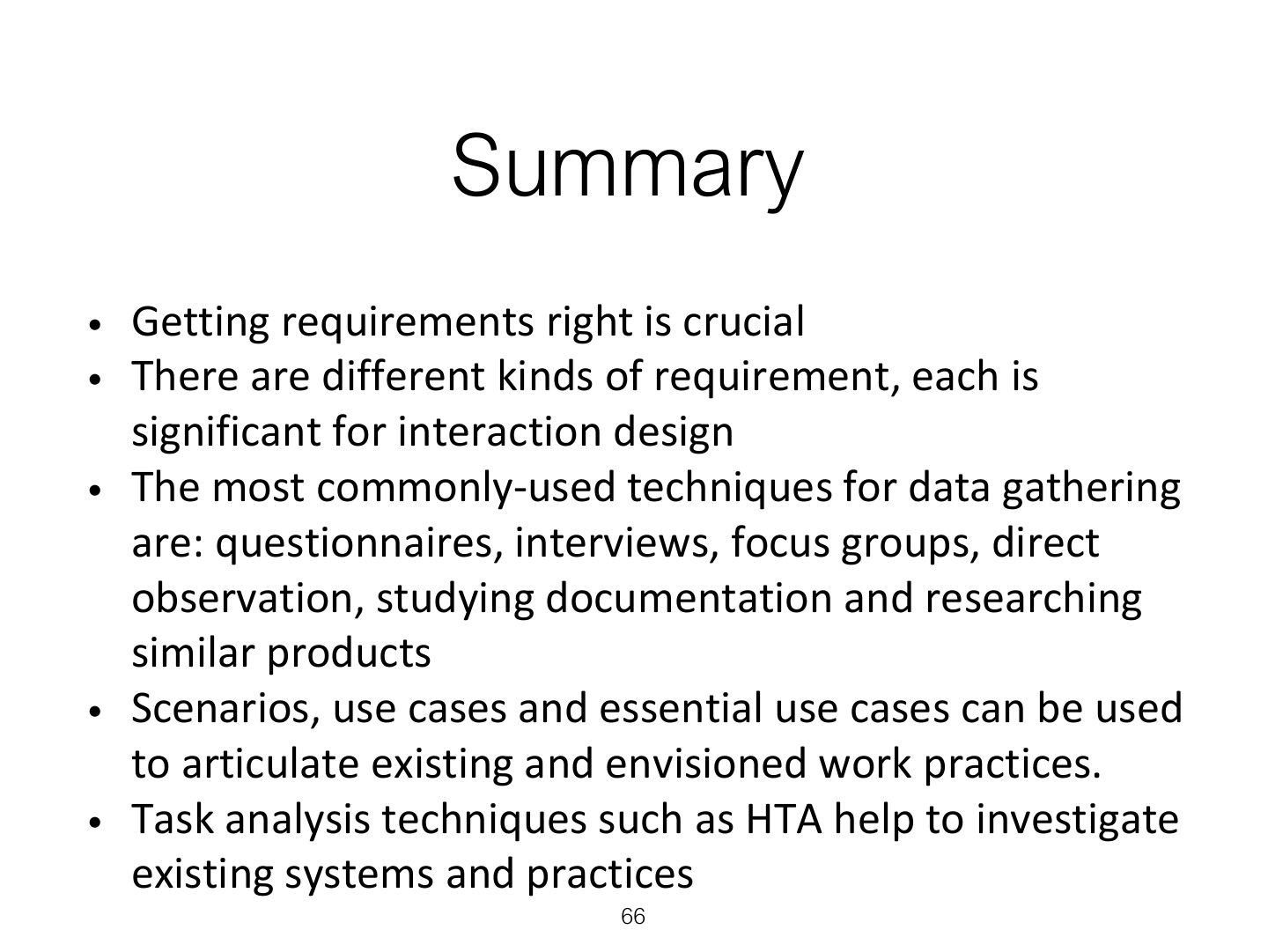
- 66 Summary
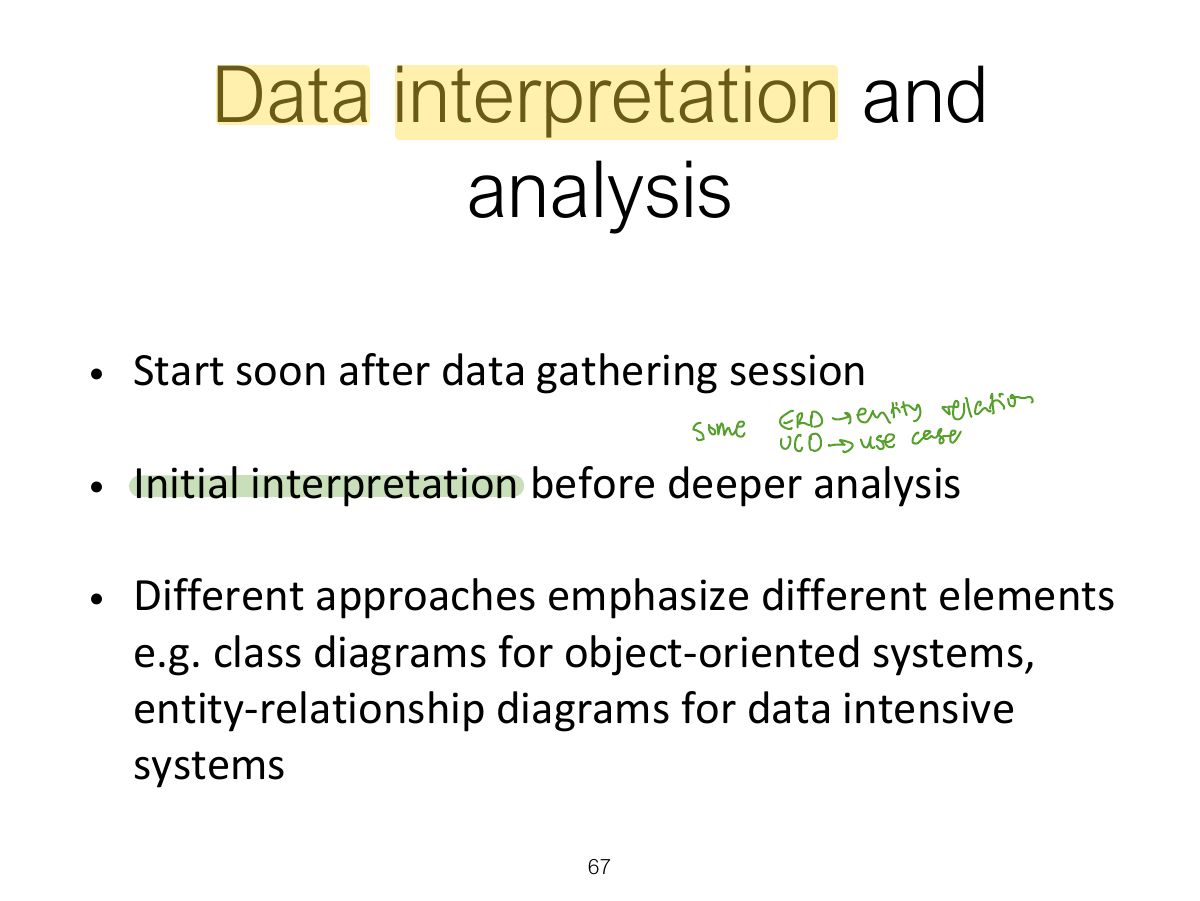
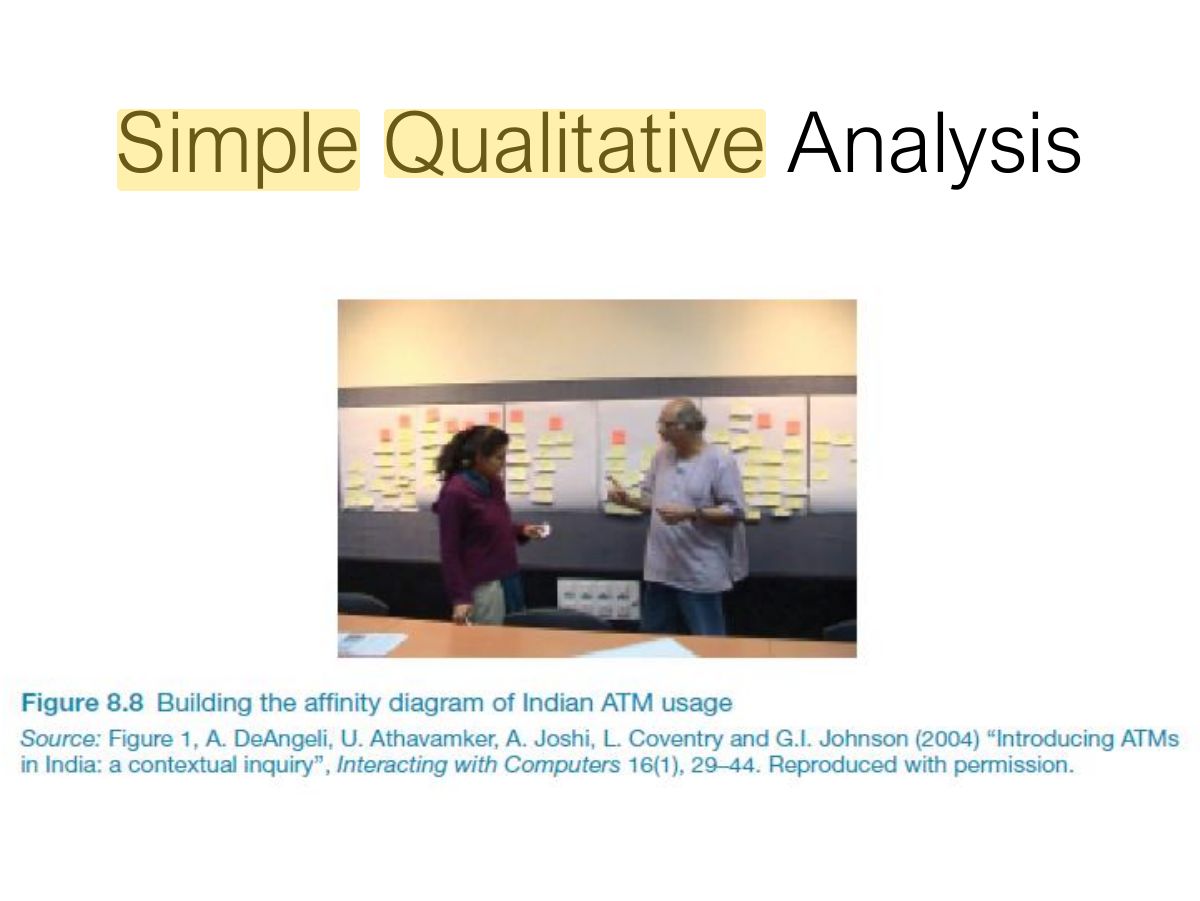
- 67 Data interpretation and analysis
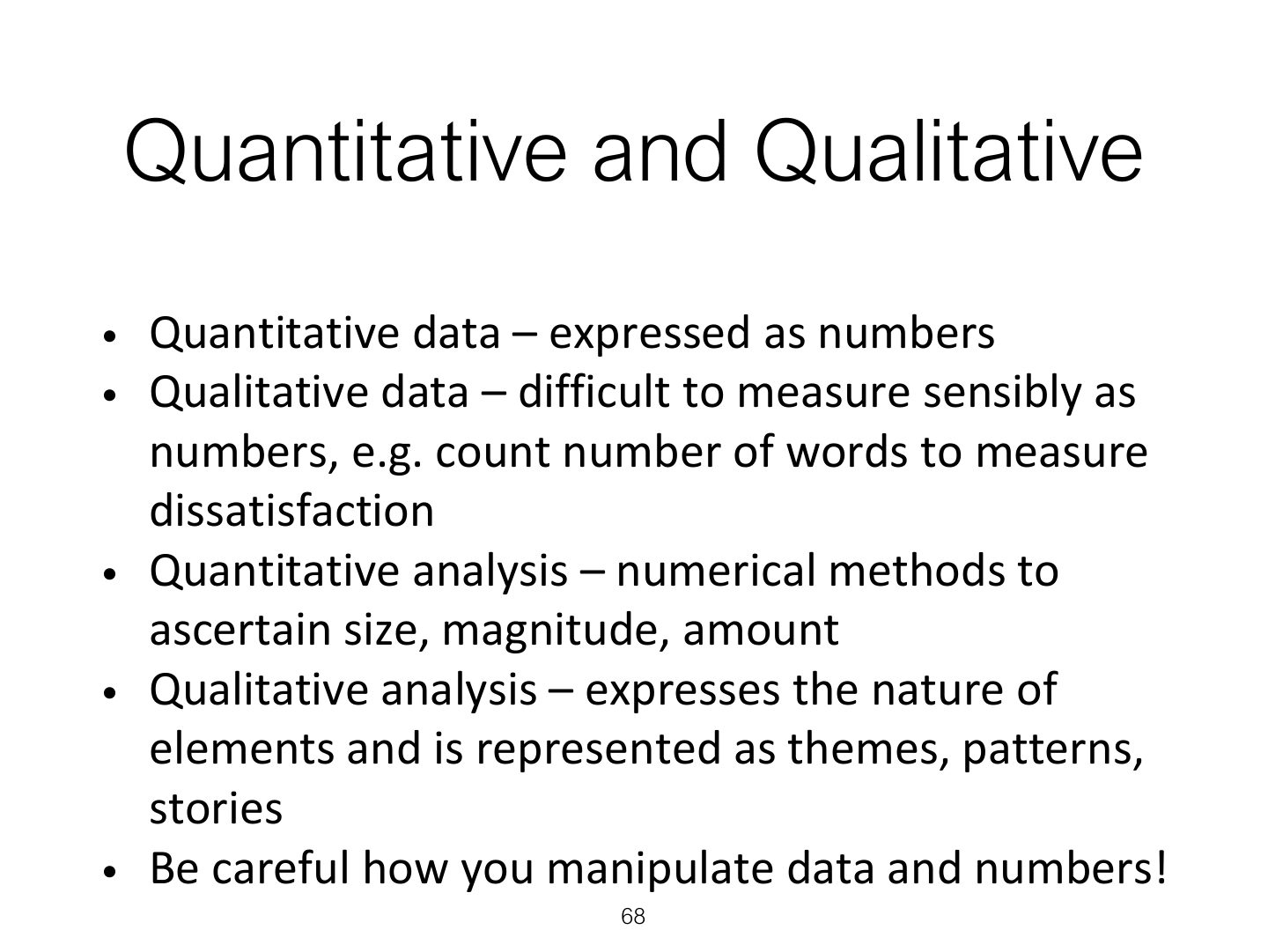
- 68 Quantitative and Qualitative
- 69 Simple Quantitative Analysis
- 70 Visualizing log data
- 71 Visualizing log data
- 72 Simple Qualitative Analysis
- 73 Simple Qualitative Analysis
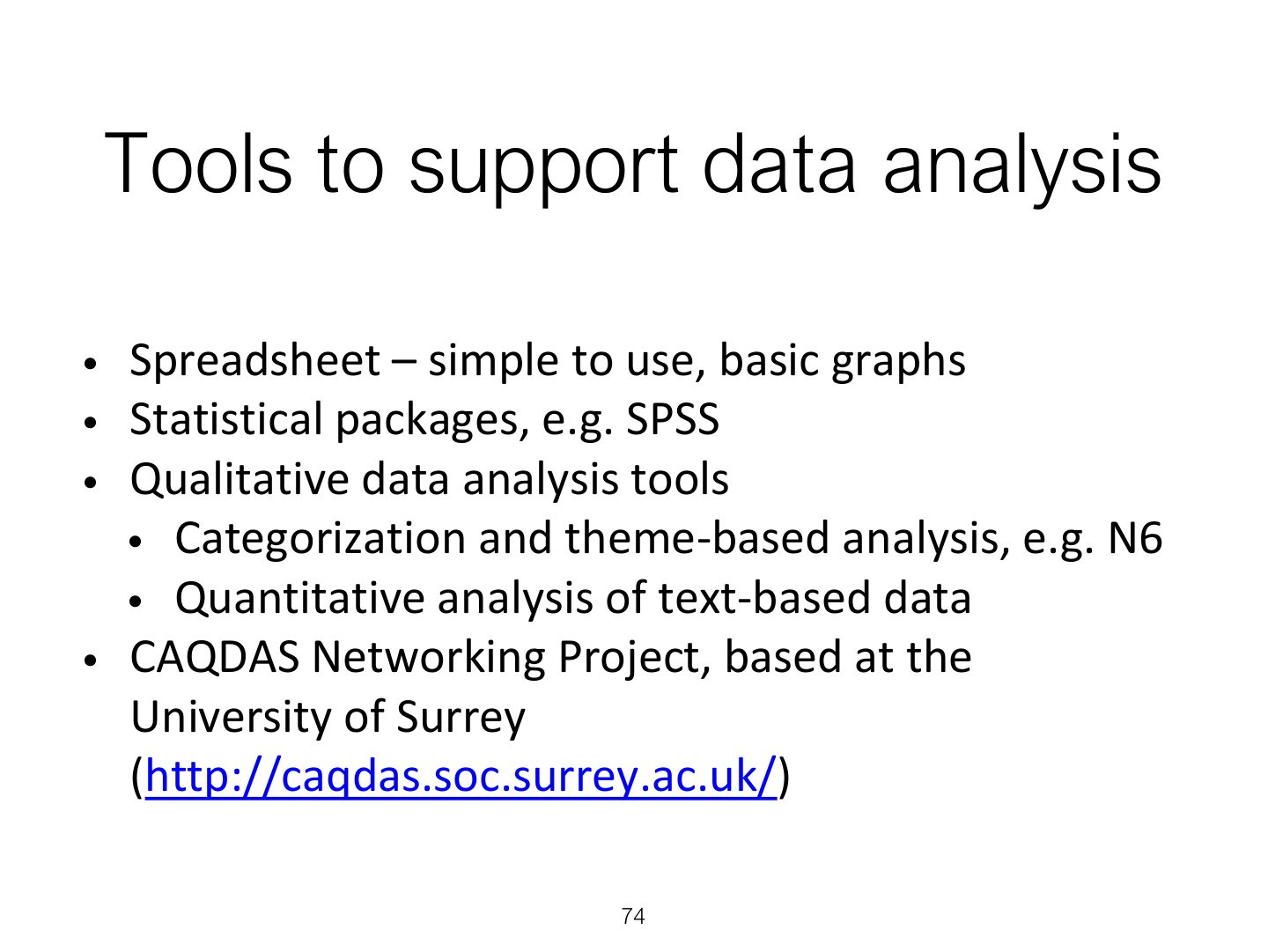
- 74 Tools to support data analysis
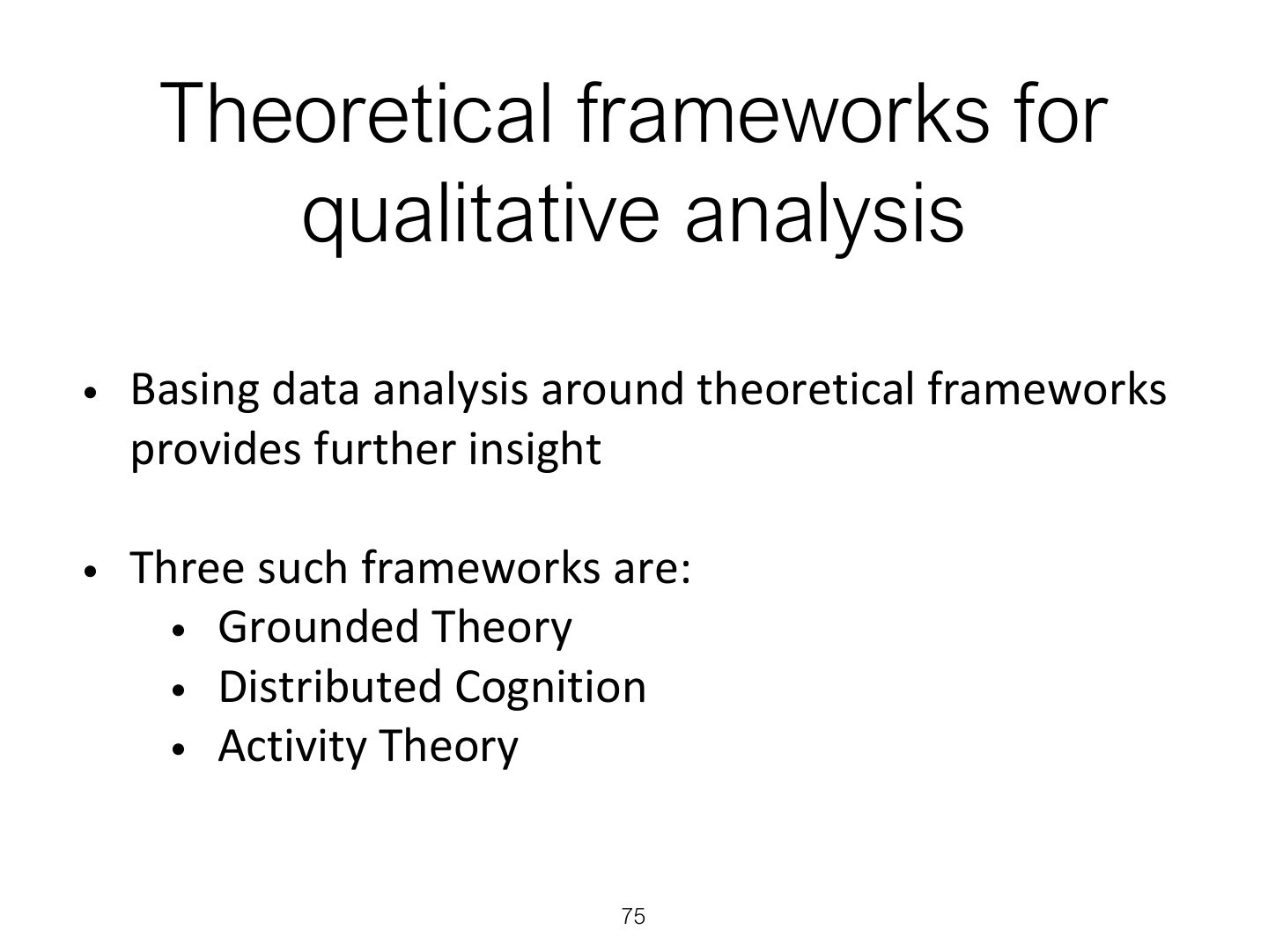
- 75 Theoretical frameworks for qualitative analysis
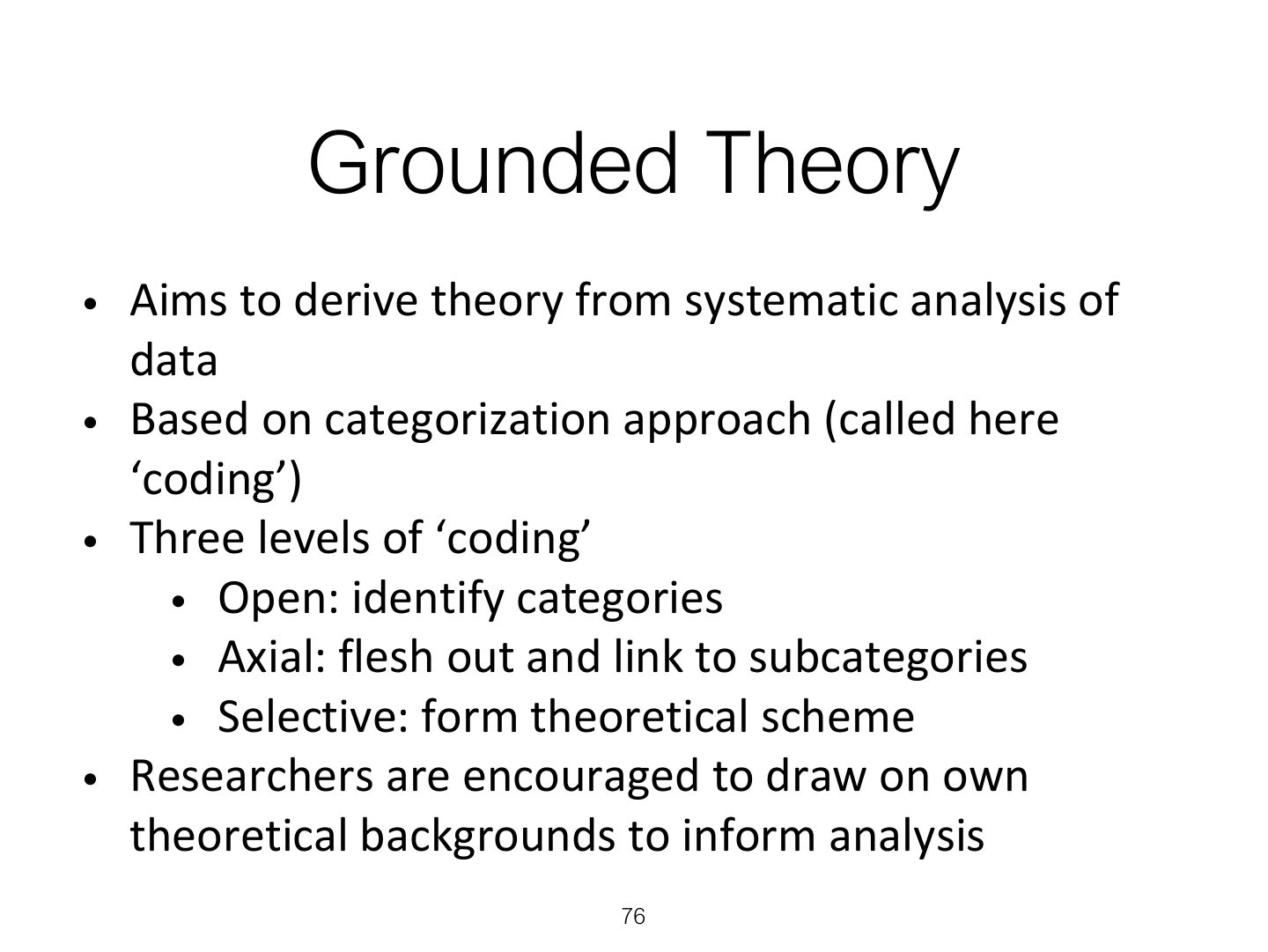
- 76 Grounded Theory
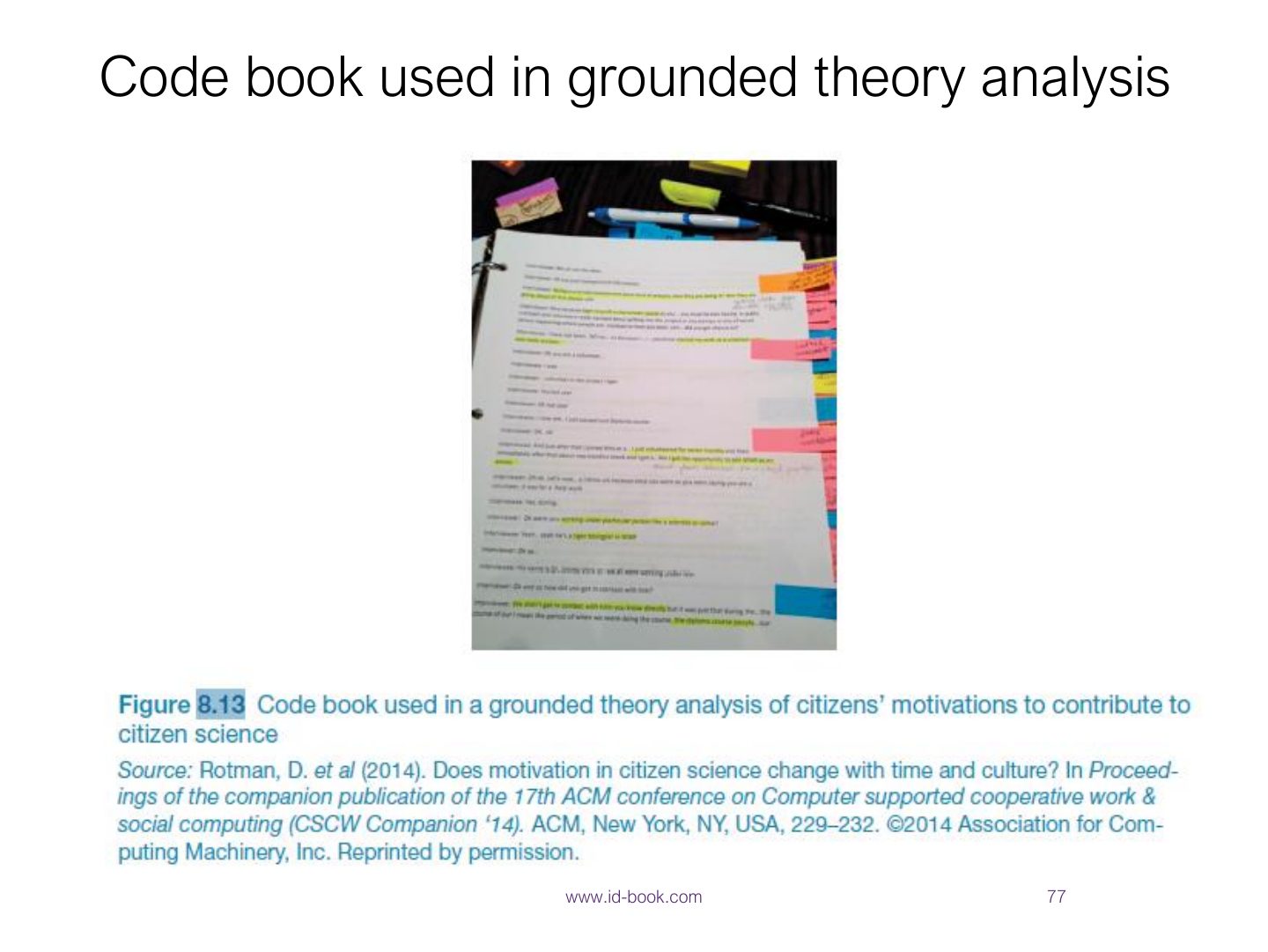
- 77 Code book used in grounded theory analysis
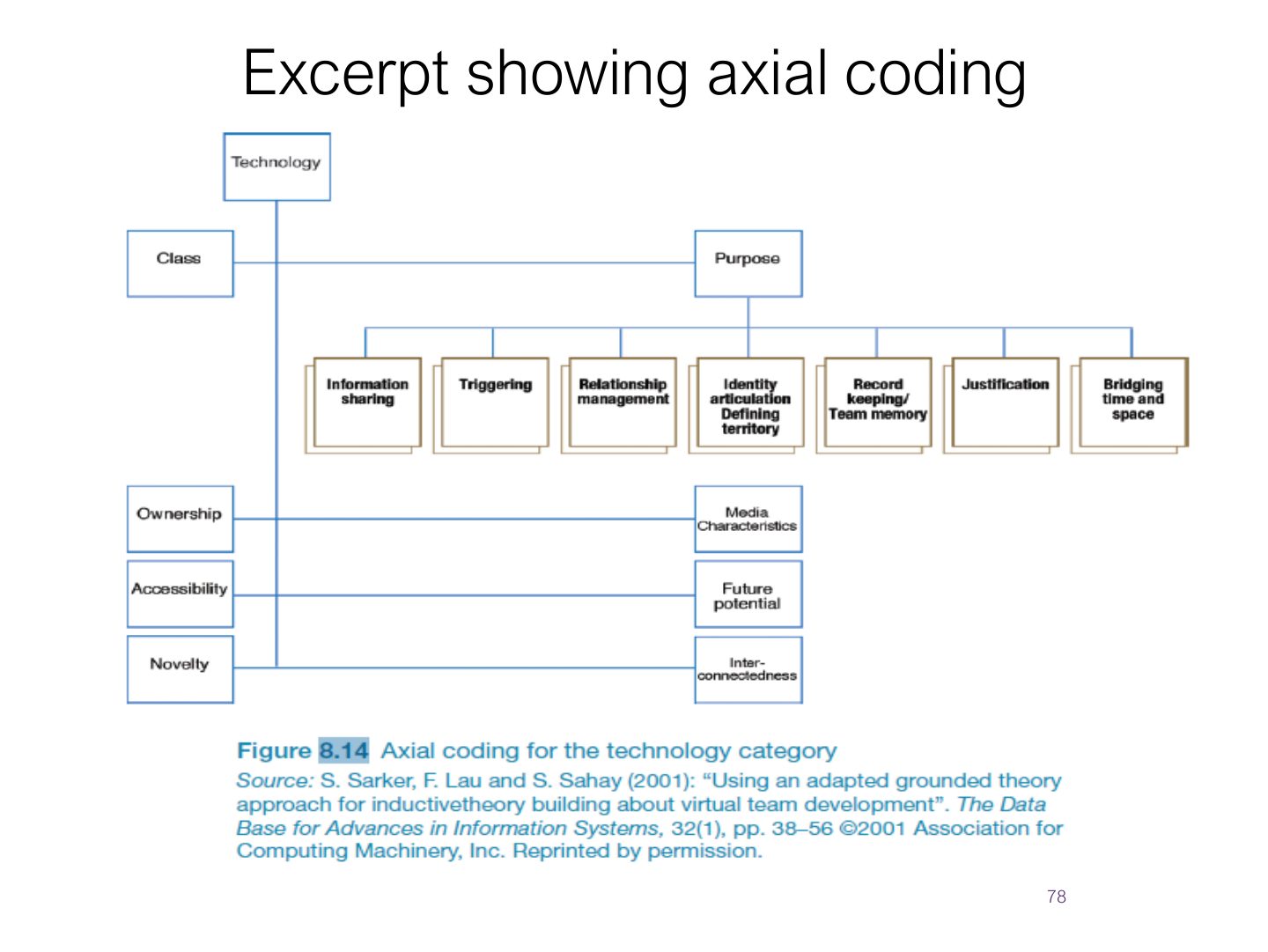
- 78 Excerpt showing axial coding
- 79 Activity Theory
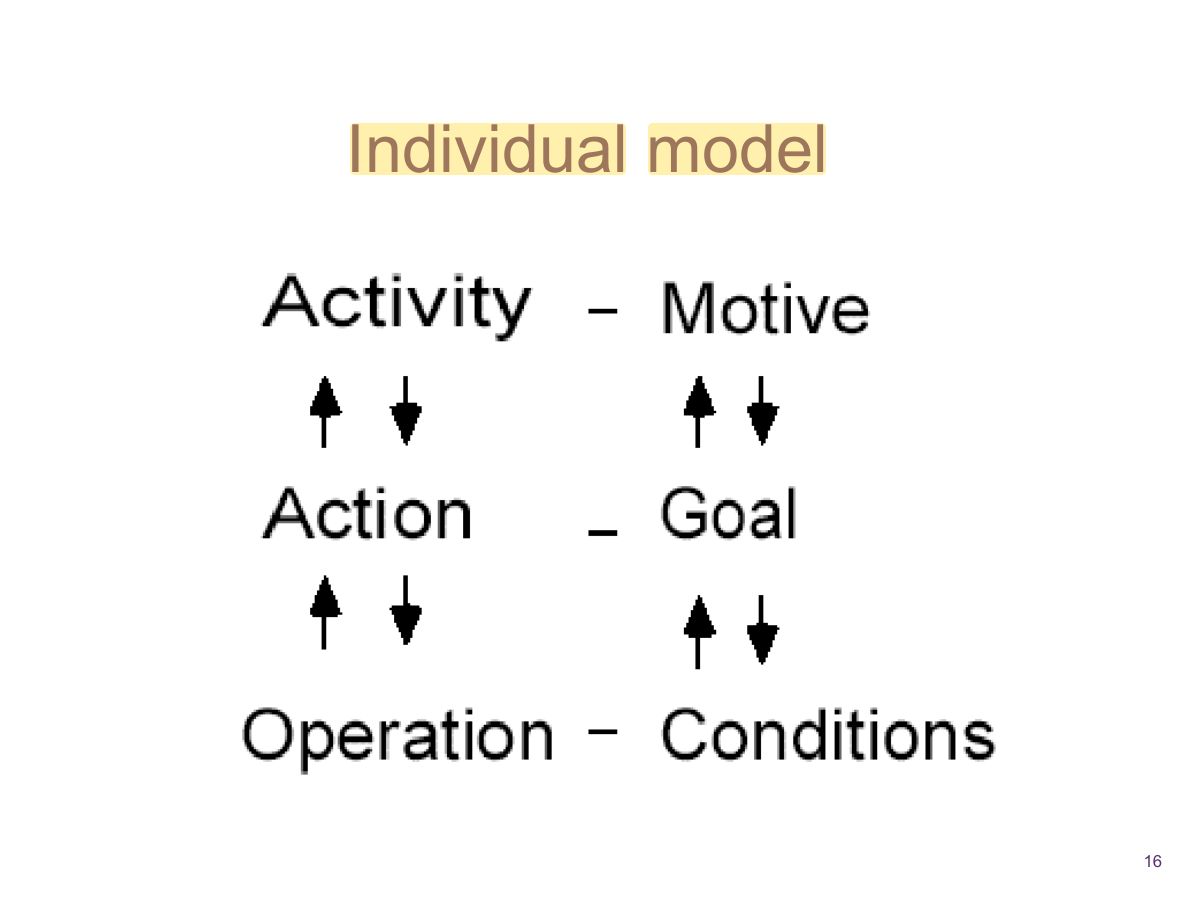
- 80 Individual model
- 81 Presenting the findings
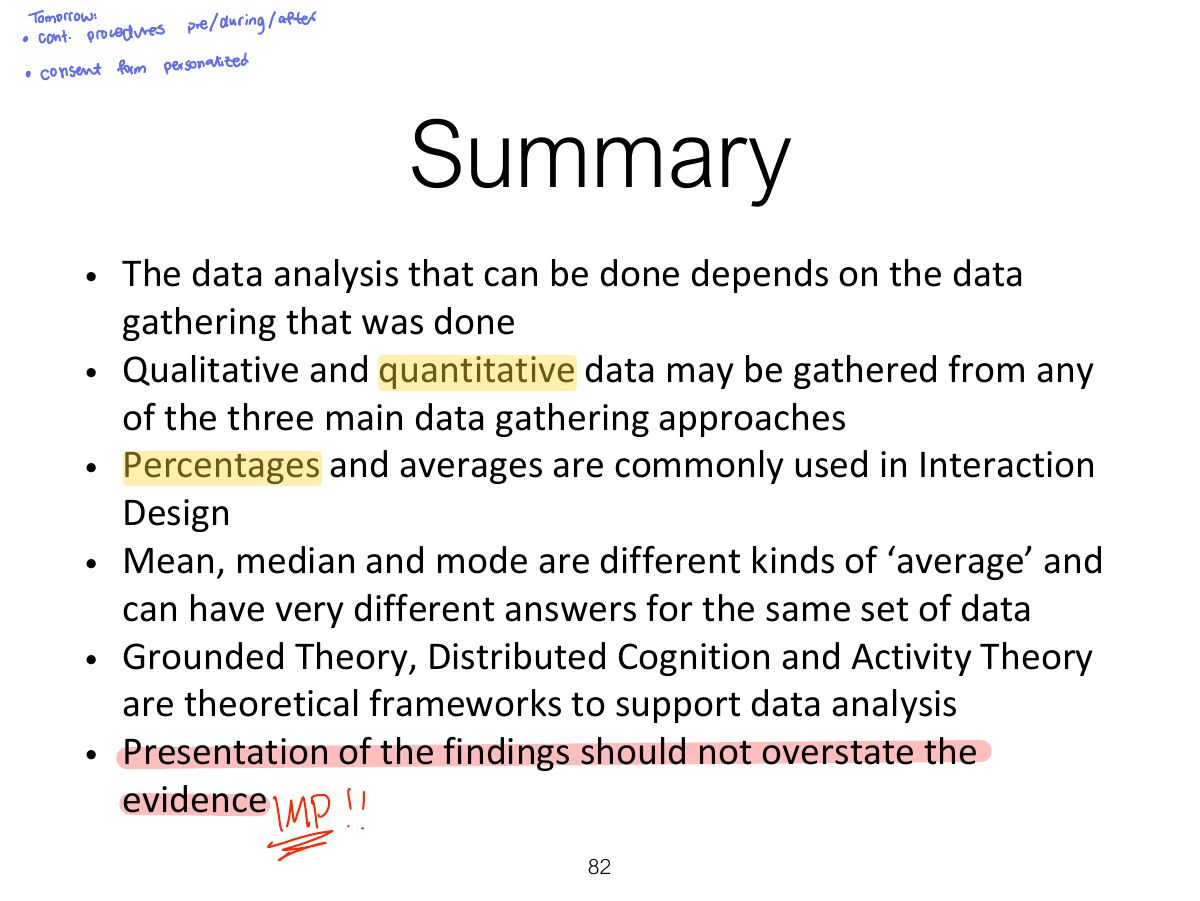
- 82 Summary
Slide 1
Overview
Learning Outcomes
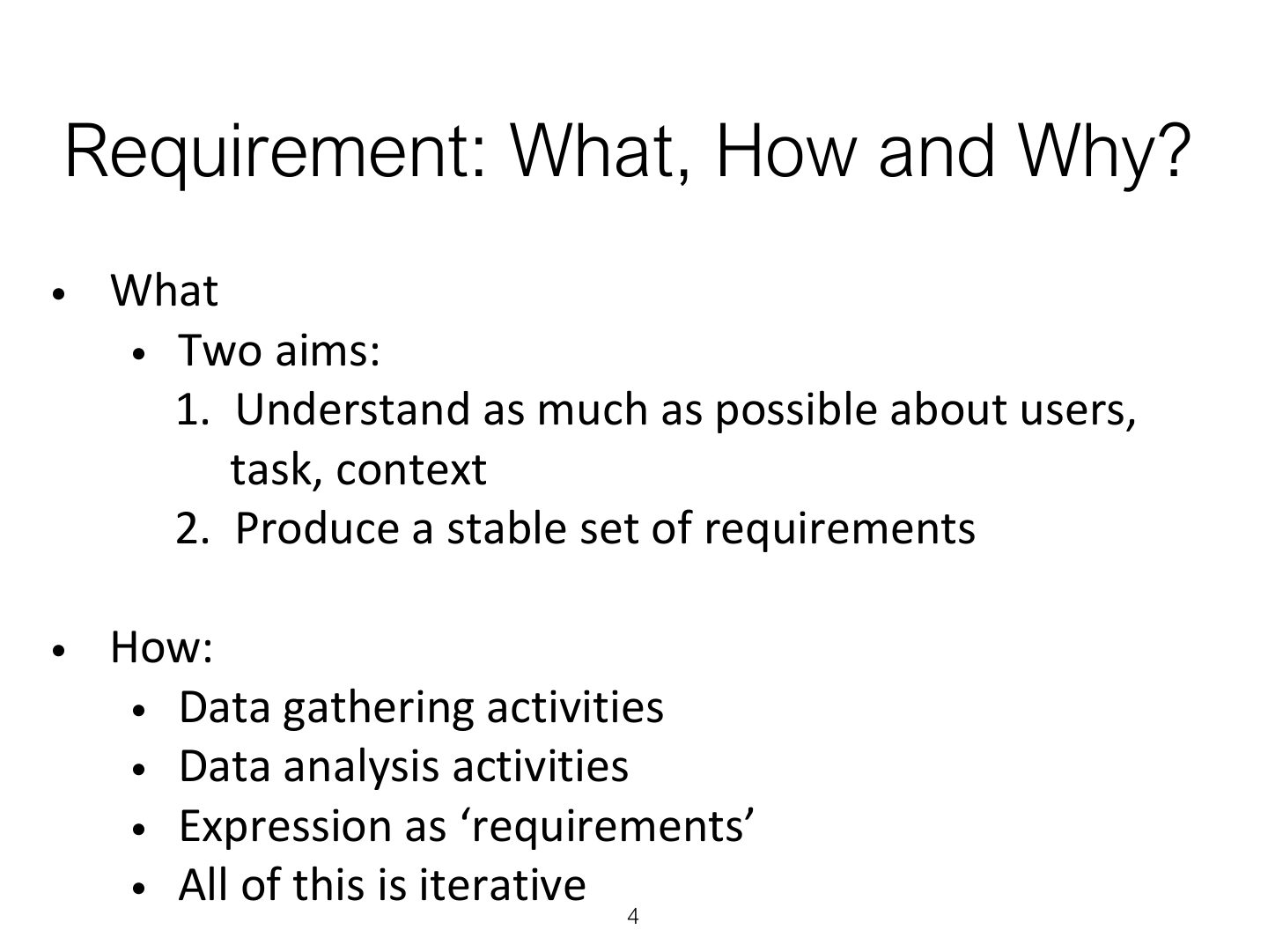
Requirement: What, How and Why?
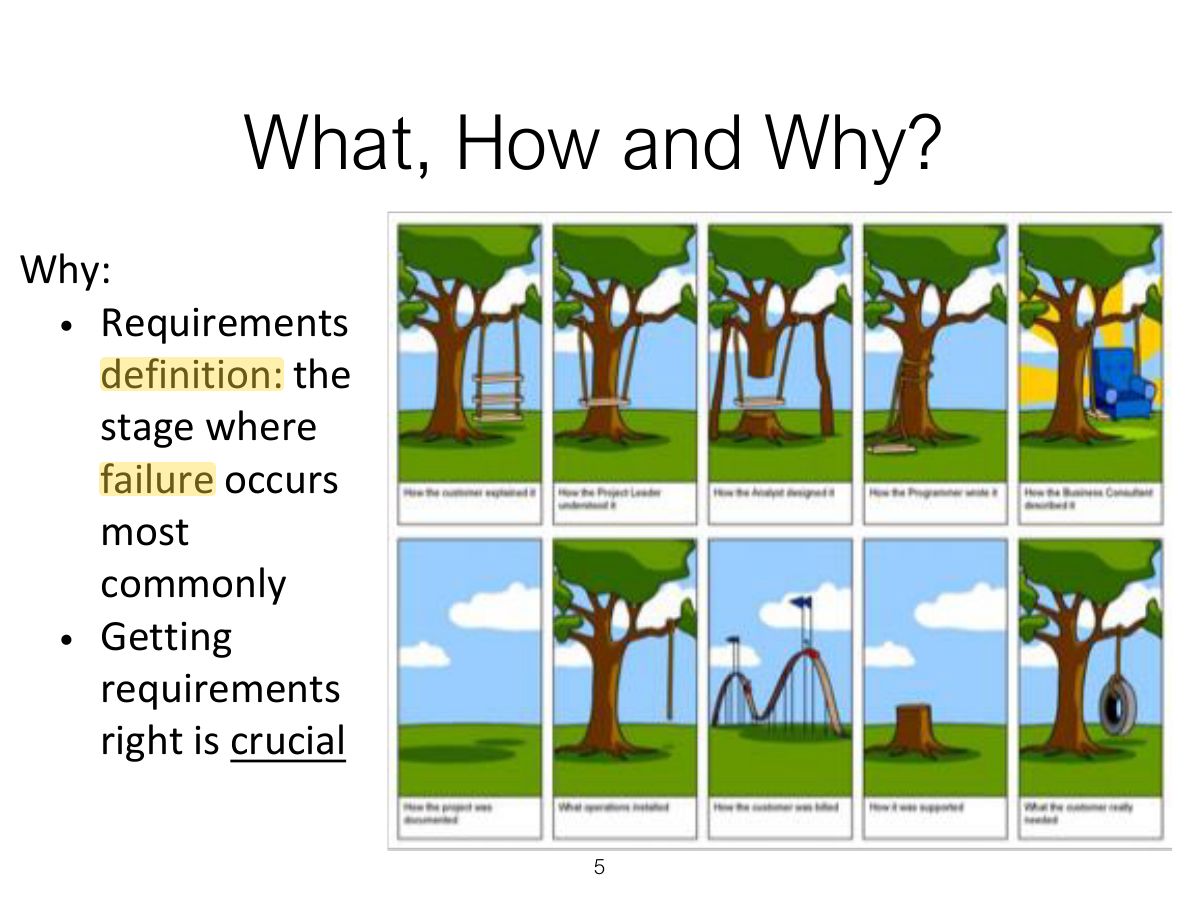
What, How and Why?
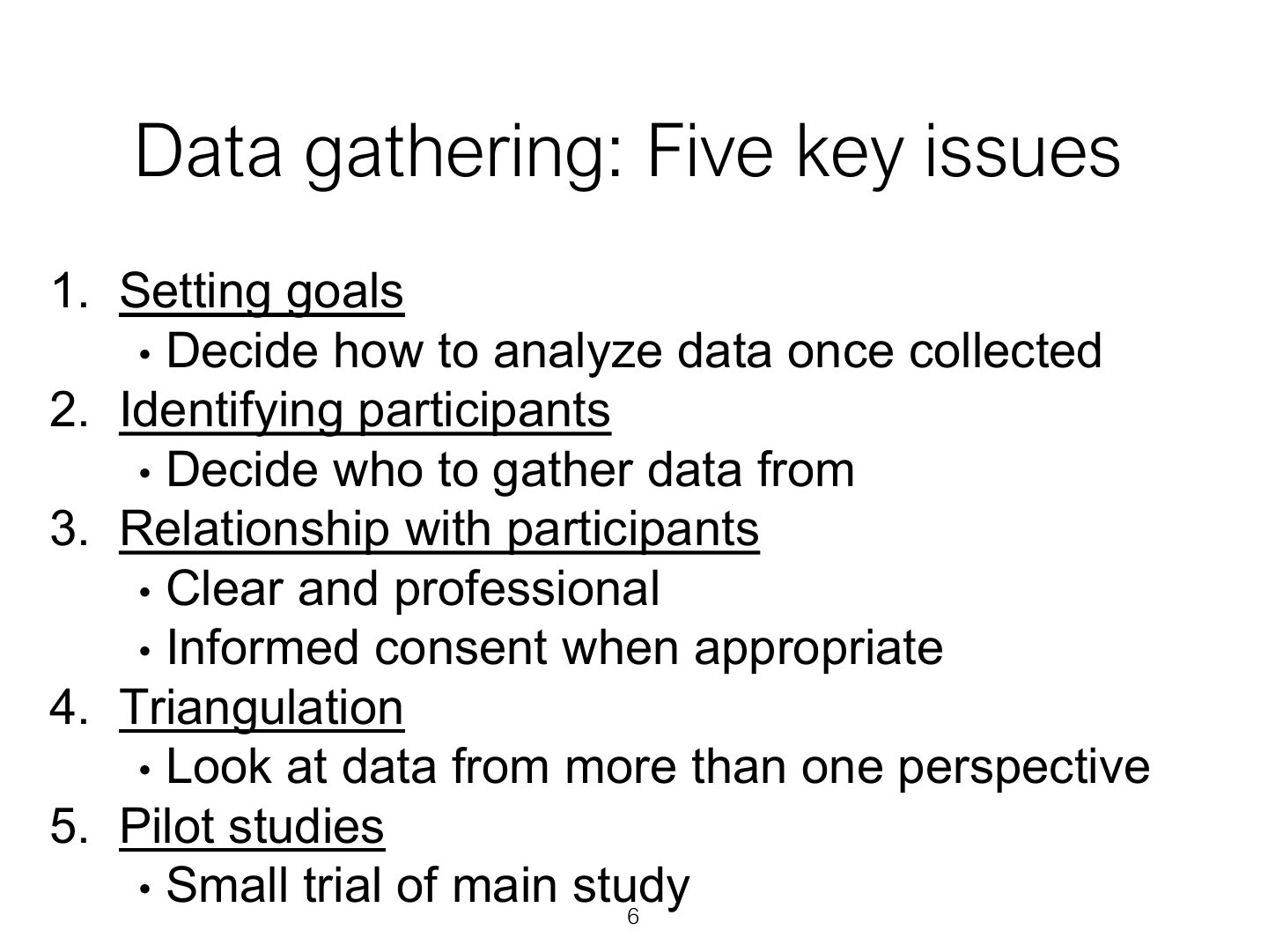
Data gathering: Five key issues
Exam angle
Data gathering for requirements
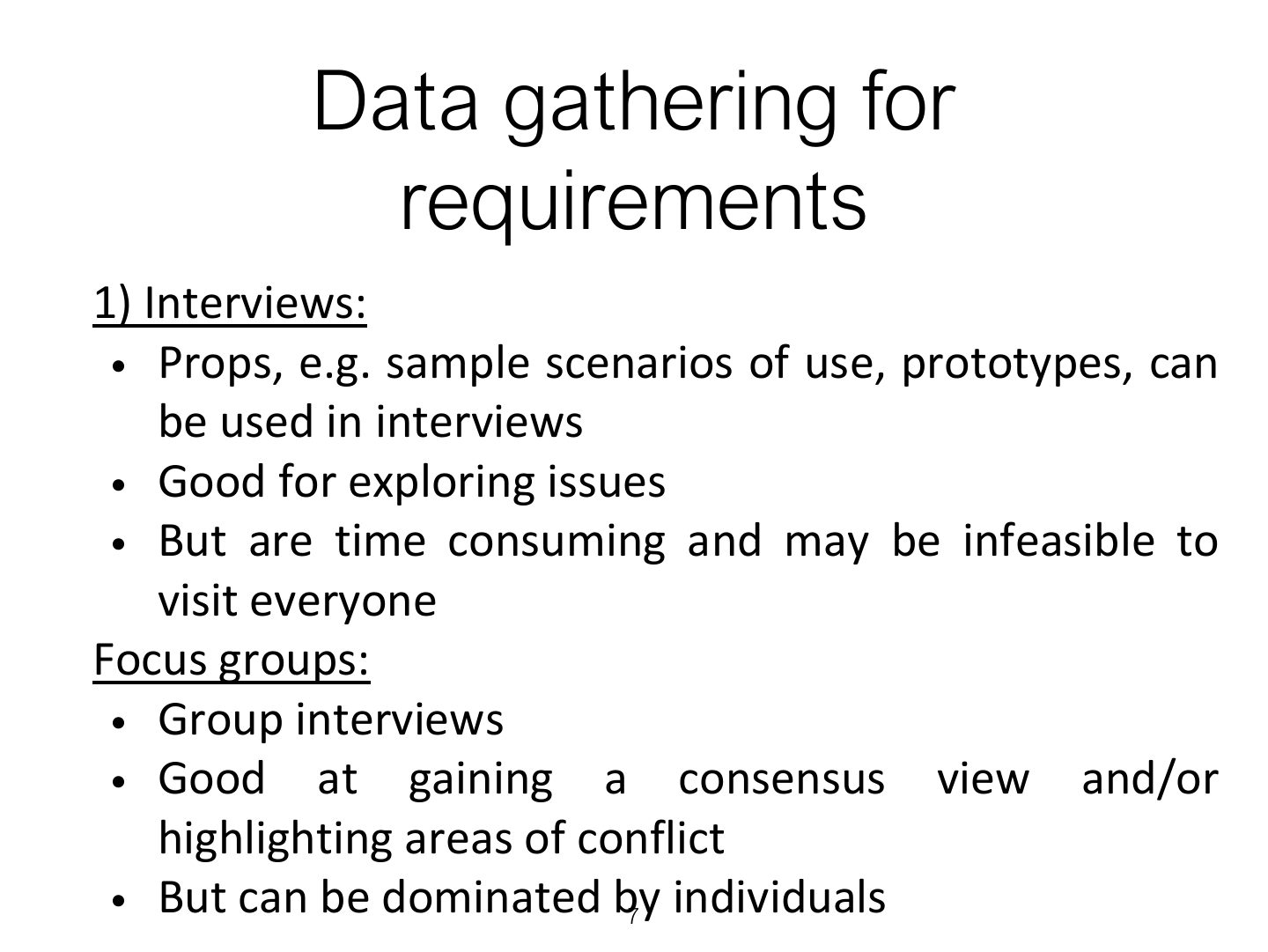
Interviews
Notes
Interviews: unstructured (open), structured (fixed questions), semi-structured (mix), group interviews / focus groups.
Exam angle
An interview with a script of set questions plus probing follow-ups is:
Interview questions
Interview questions (cont)
Interview questions (cont)
Running the interview
Enriching the interview process
Data gathering for requirements (cont)
Questionnaires
Notes
Questionnaires: reach many people; closed (easy to analyse) vs. open questions; Likert scales.
Questionnaire design
Questionnaire & response format
Encouraging a good response
Example of an online questionnaire
Advantages of online questionnaires
Problems with online questionnaires
Data gathering for requirements (cont)
Observation
Notes
Observation: direct (in the field or controlled) or indirect (diaries, logs, web analytics).
• Direct observation
Web analytics
Slide 26
Structuring frameworks to guide observation
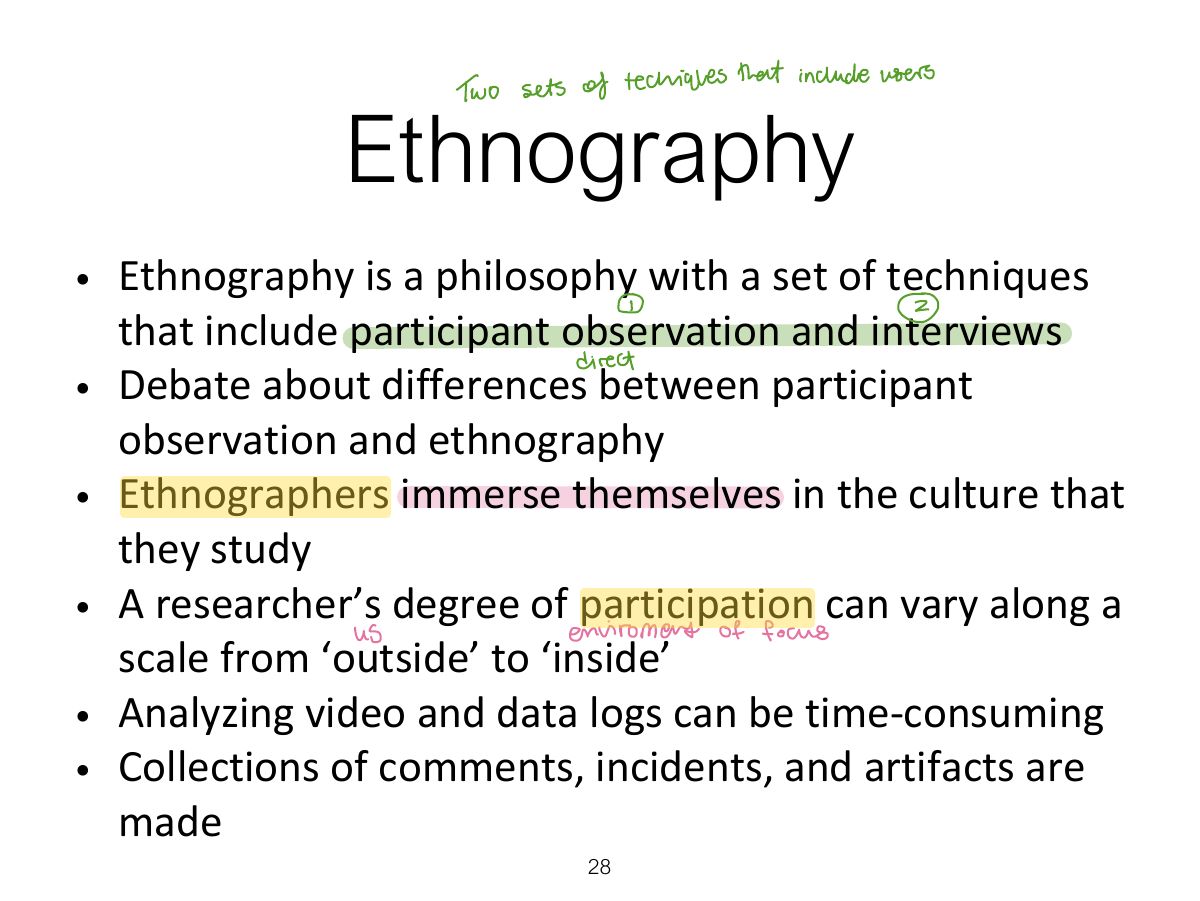
Ethnography
Notes
Ethnography: observing and taking part in a group’s everyday life over time.
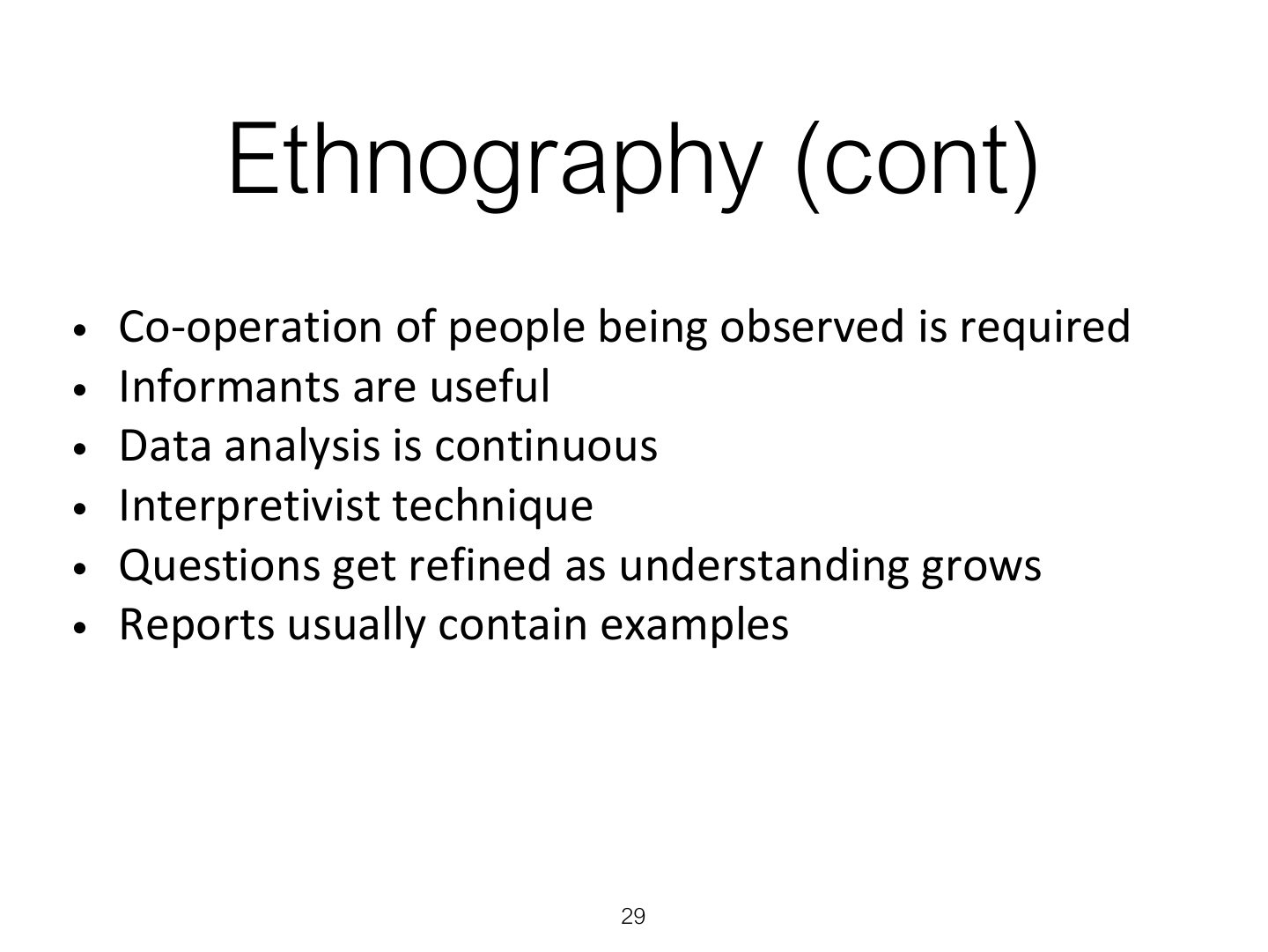
Ethnography (cont)
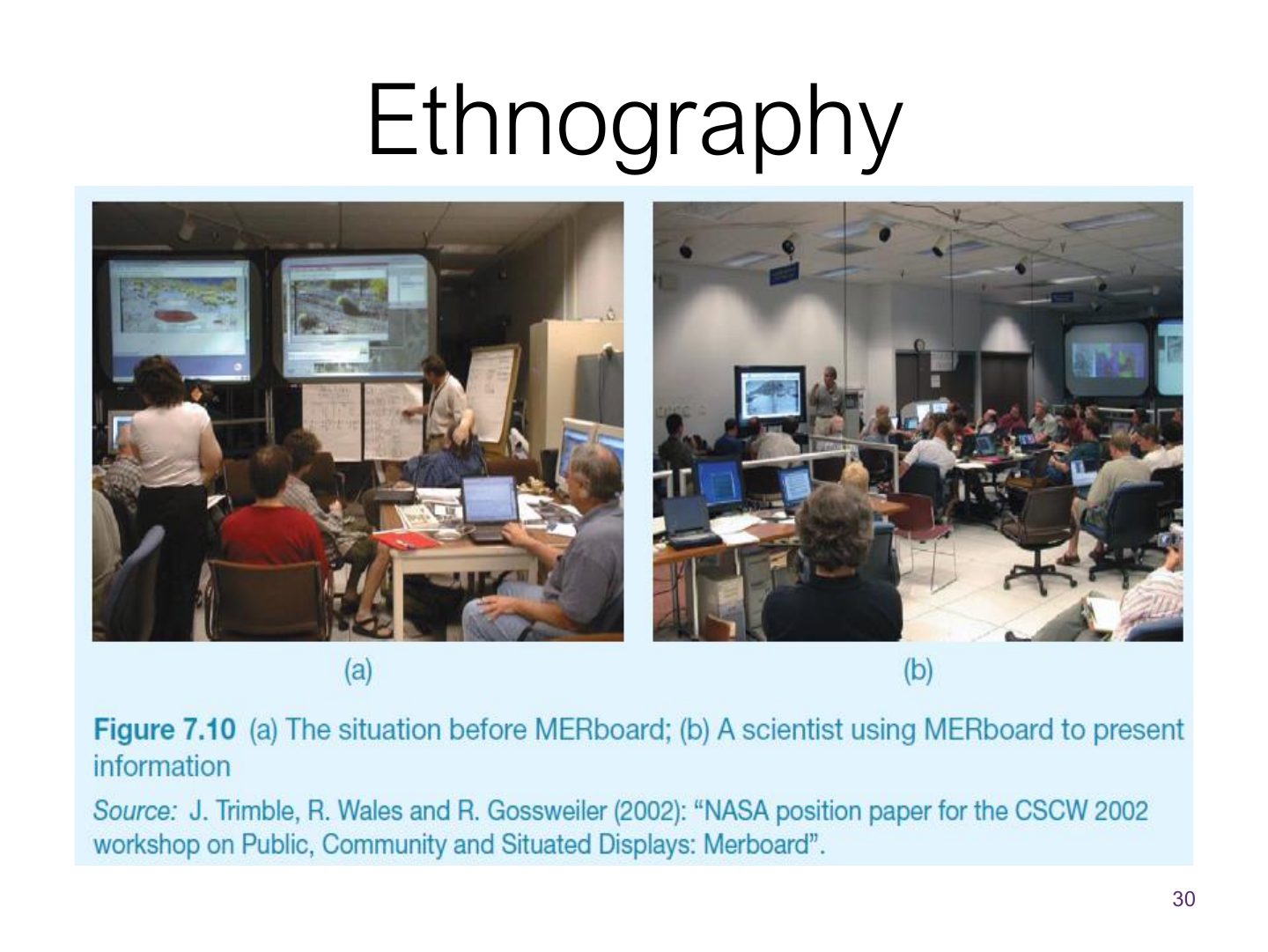
Ethnography
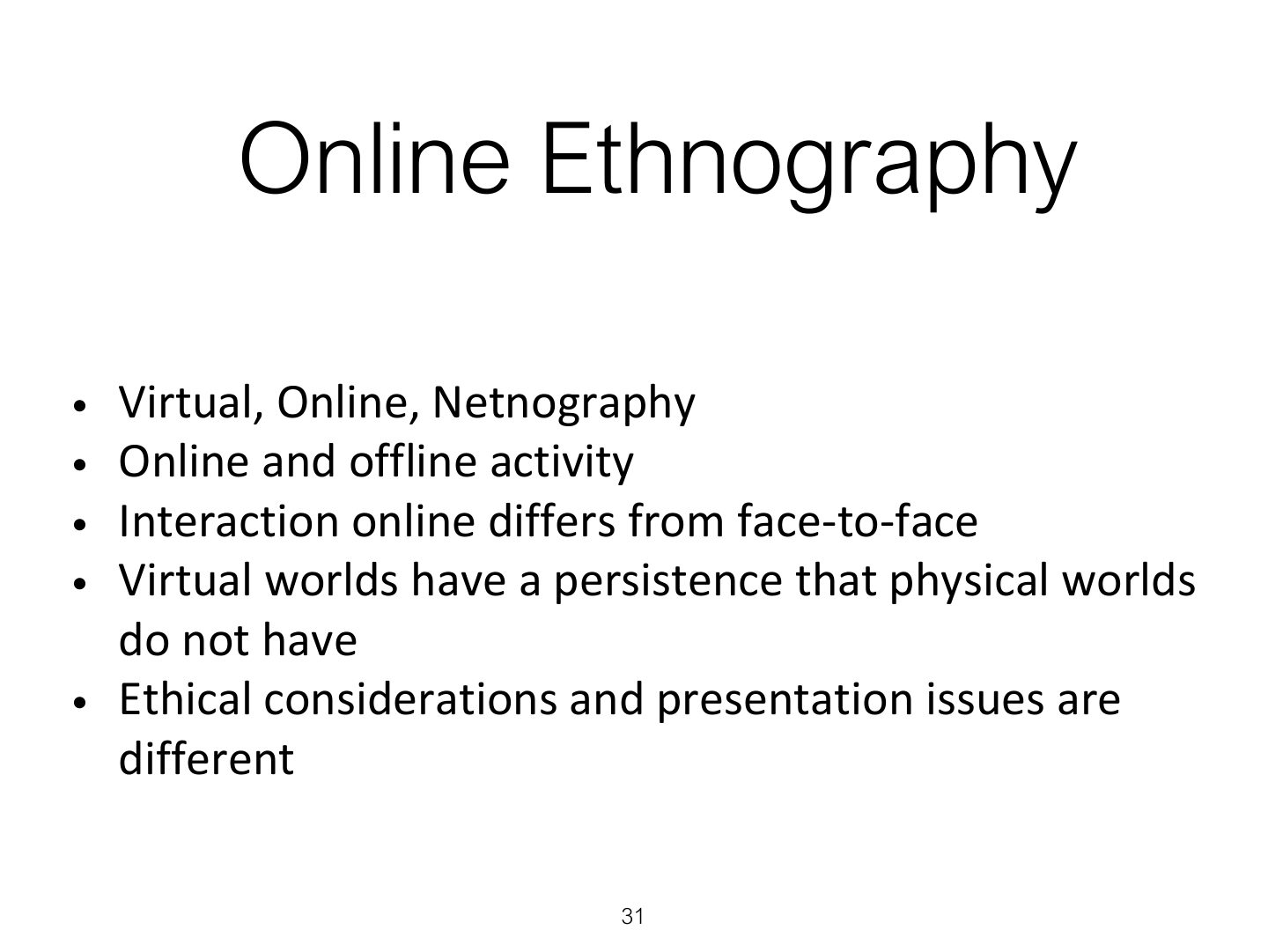
Online Ethnography
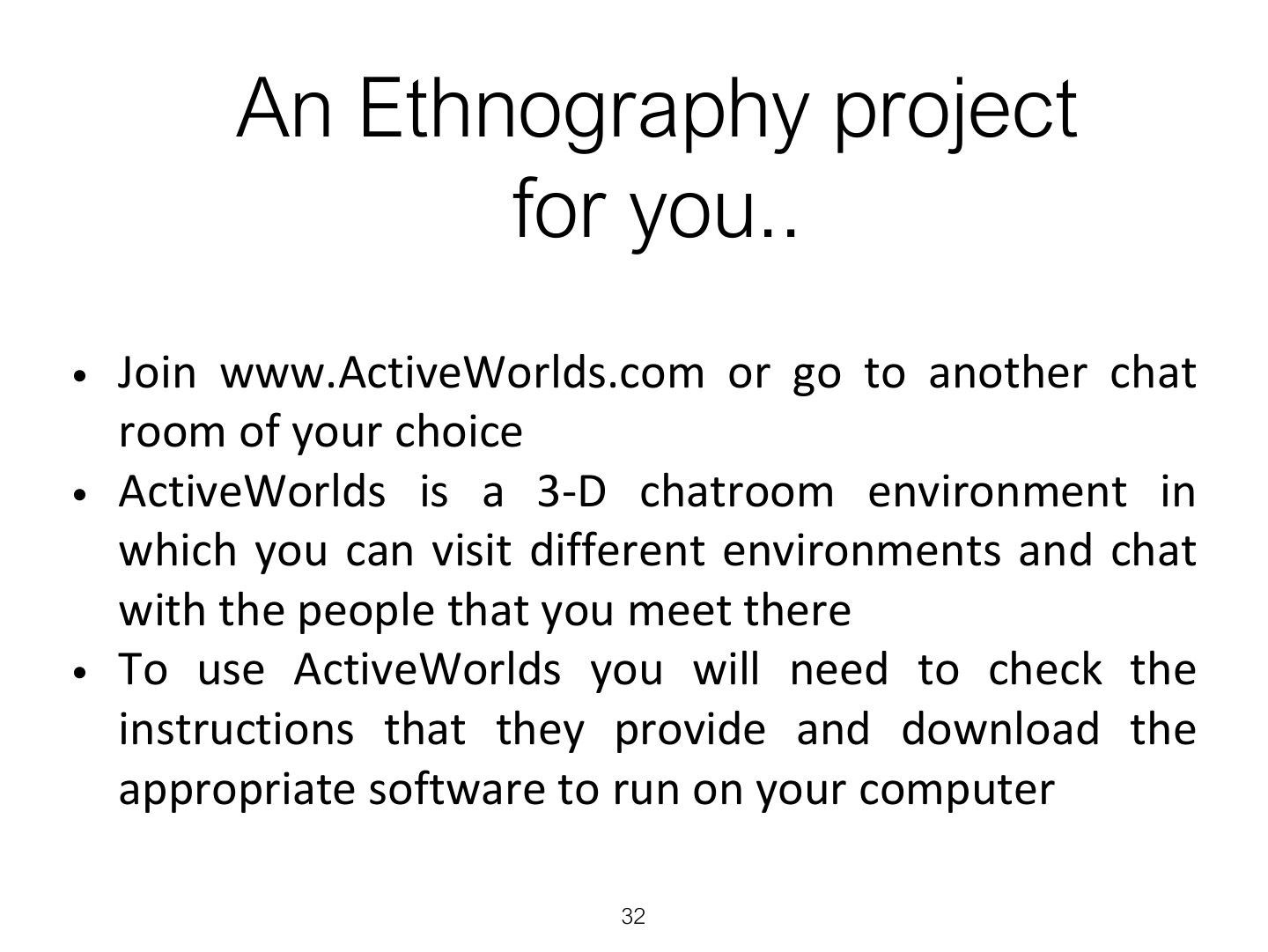
An Ethnography project for you..
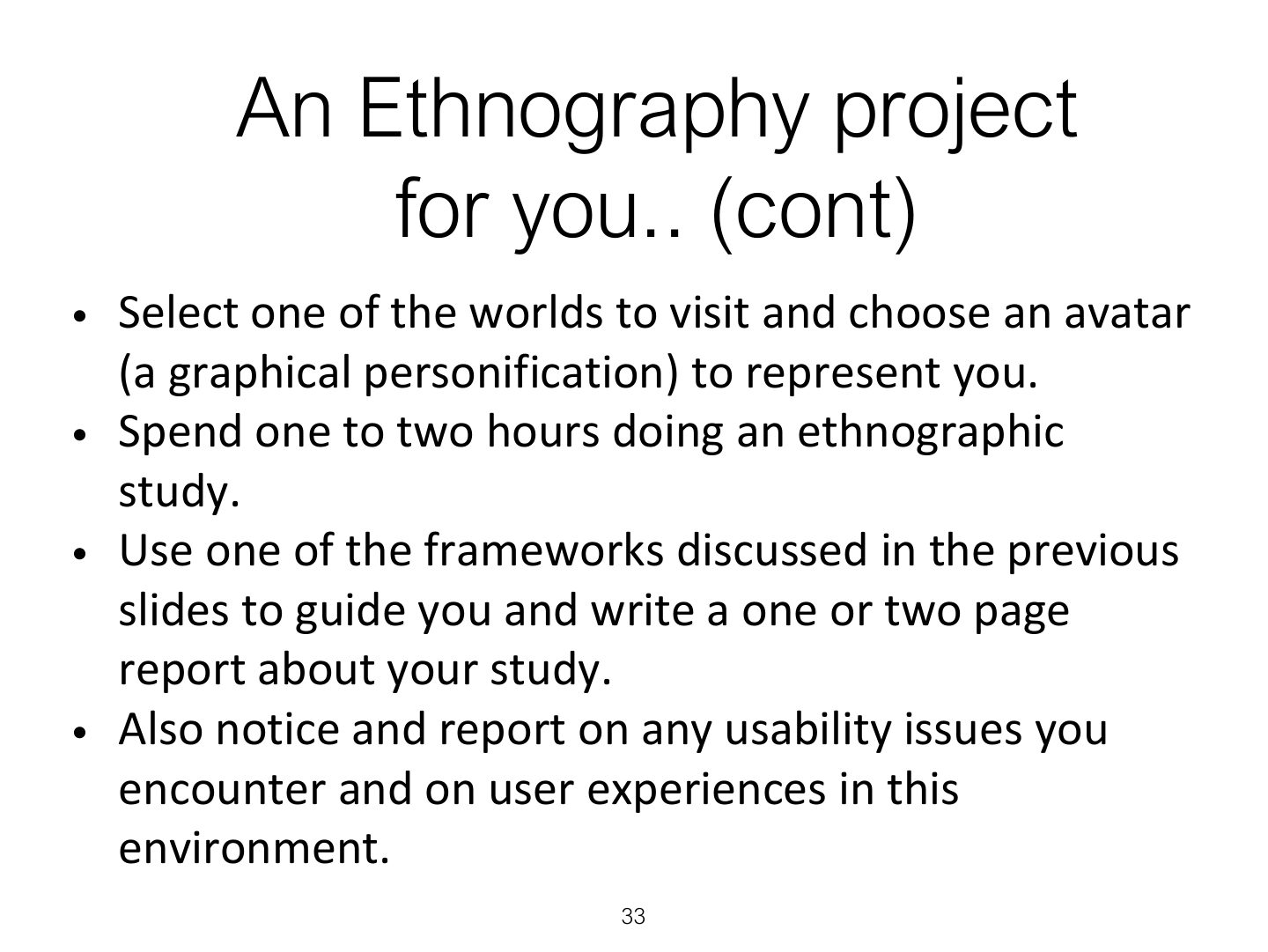
An Ethnography project for you.. (cont)
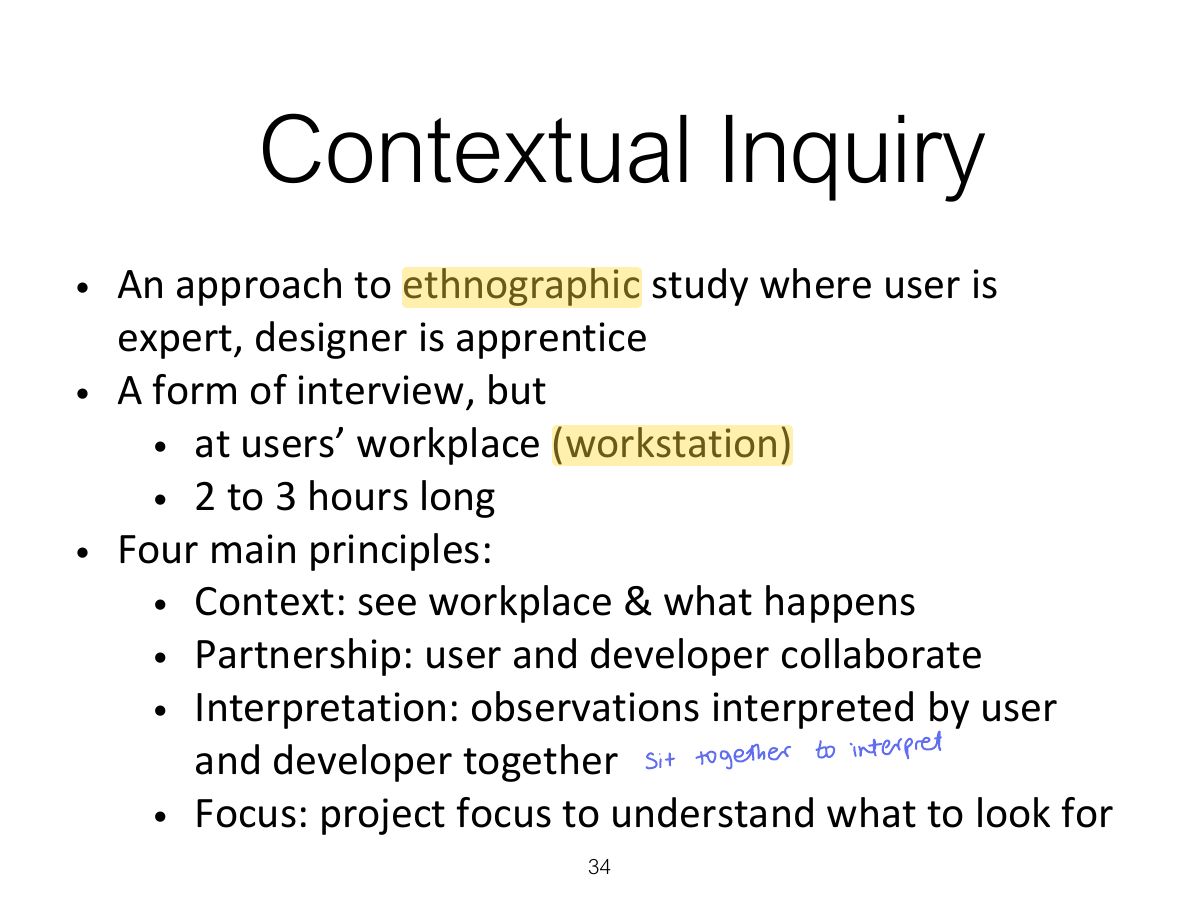
Contextual Inquiry
Notes
Contextual inquiry: interviewing users in their own work environment while they work (master–apprentice).
Data gathering for requirements (cont)
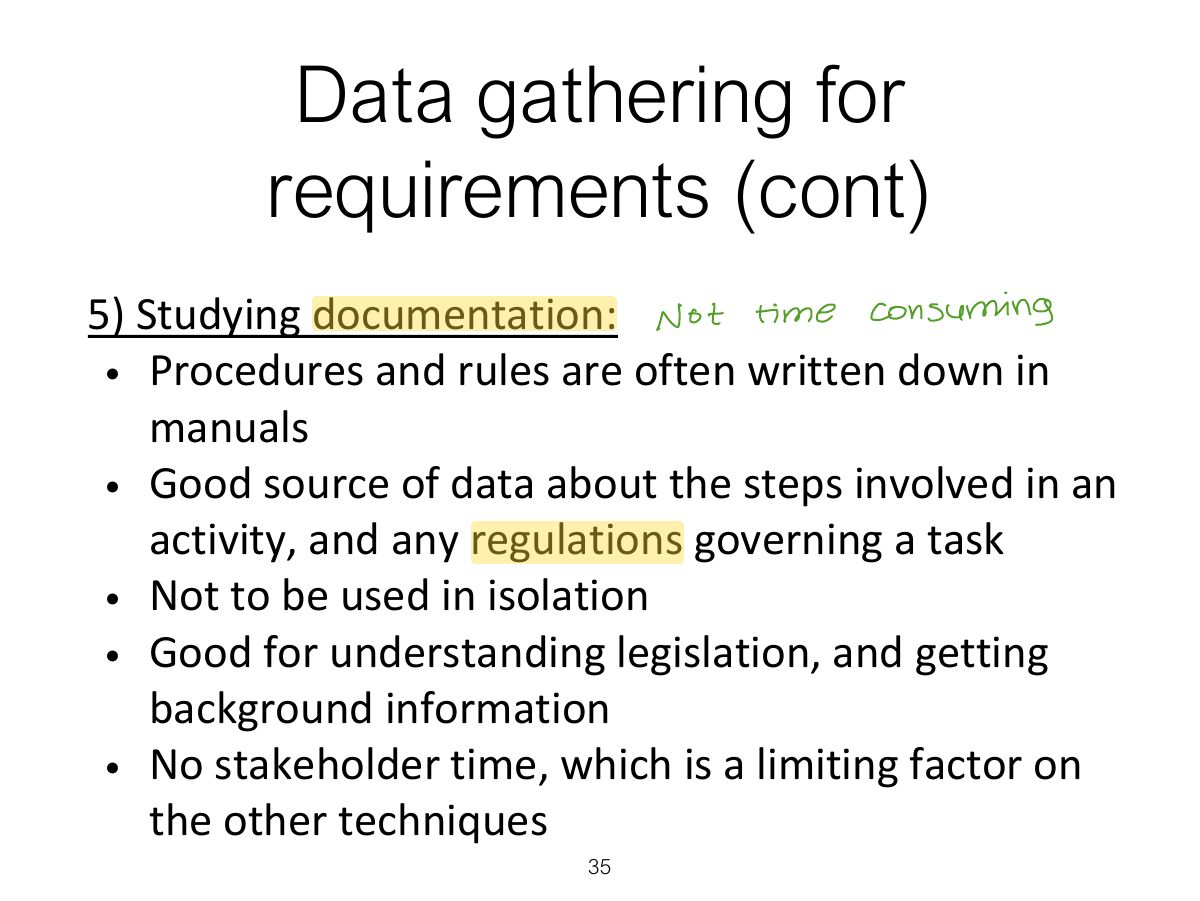
Choosing and combining techniques
Summary
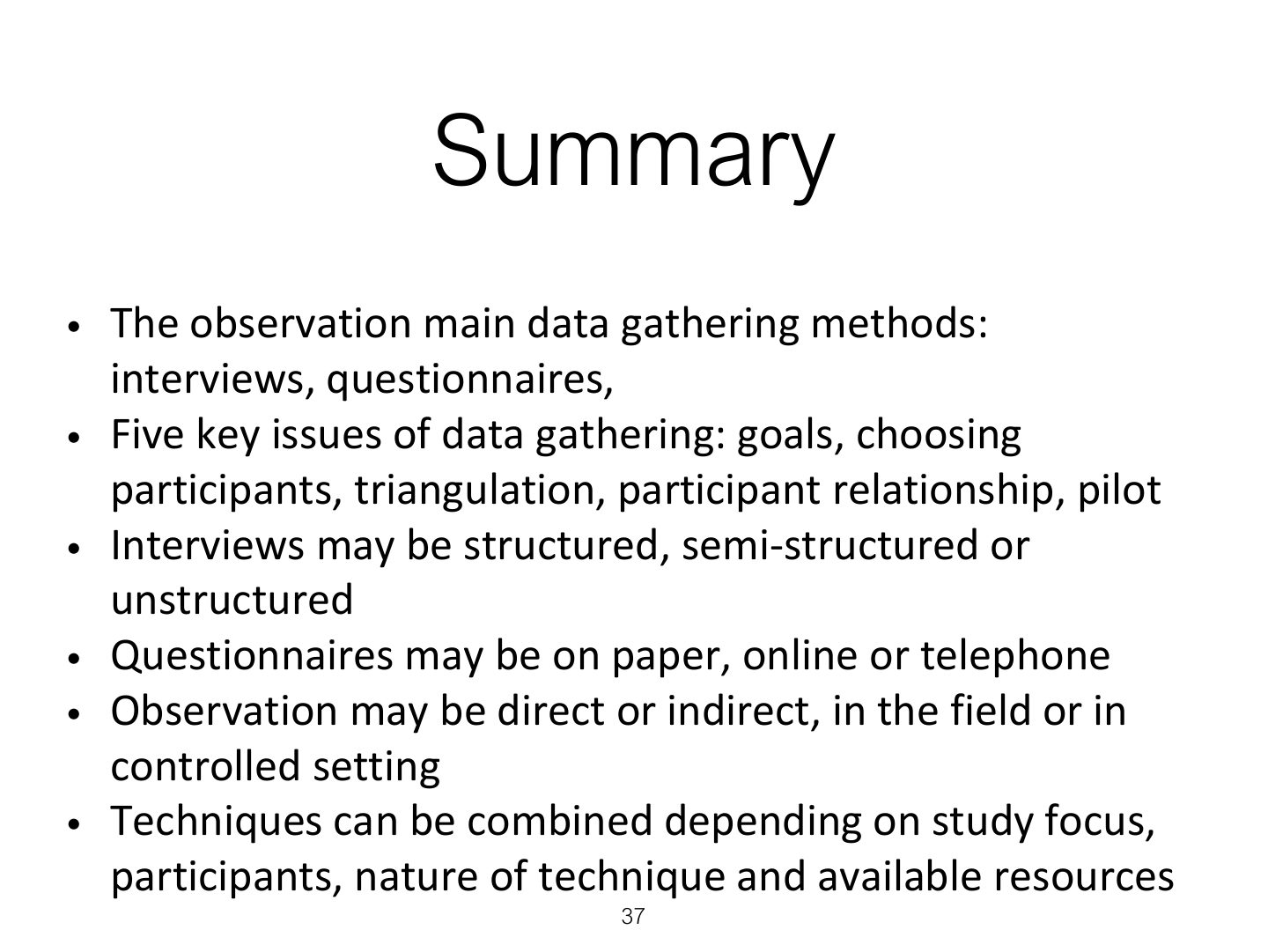
Techniques in data gathering
Data Recording
Notes
Recording: notes, audio, video, photographs.
Data Recording (cont)
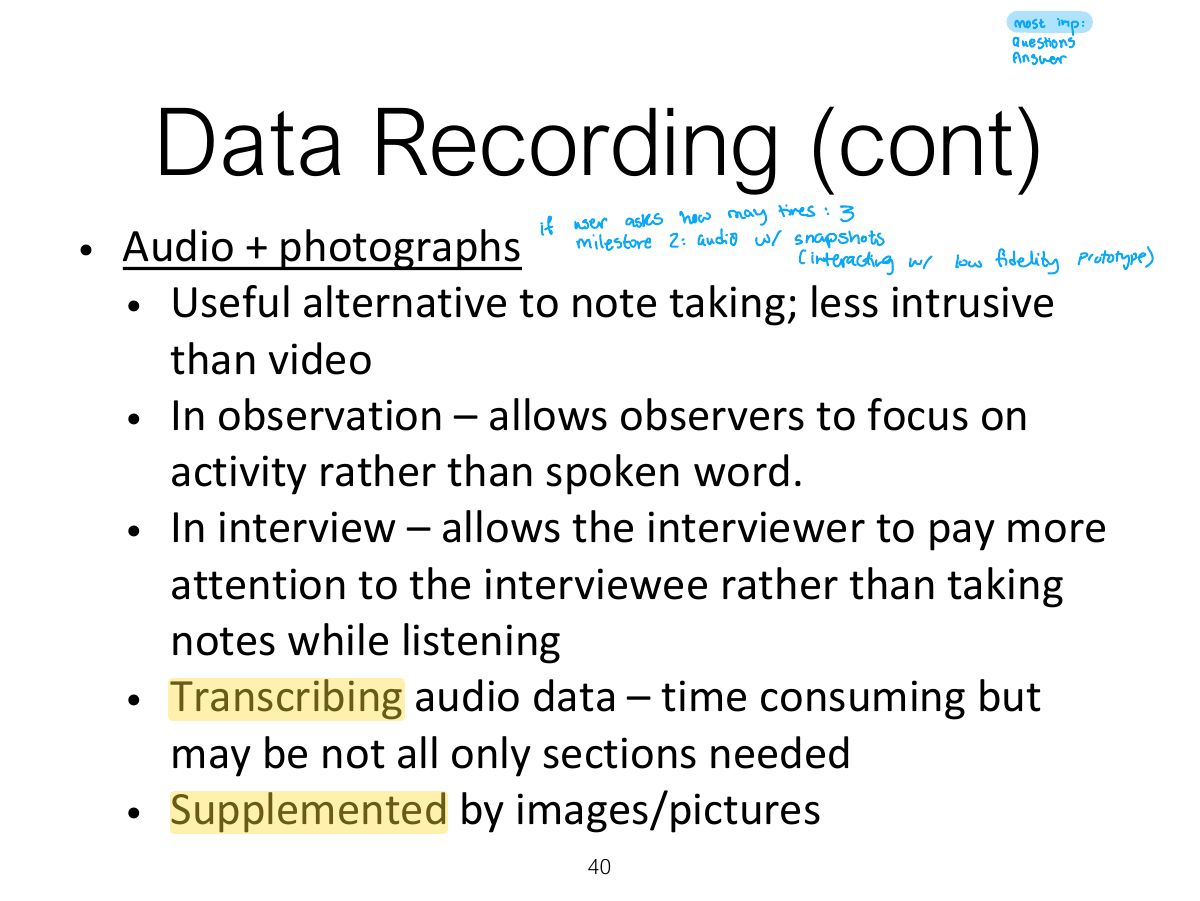
Data Recording (cont)
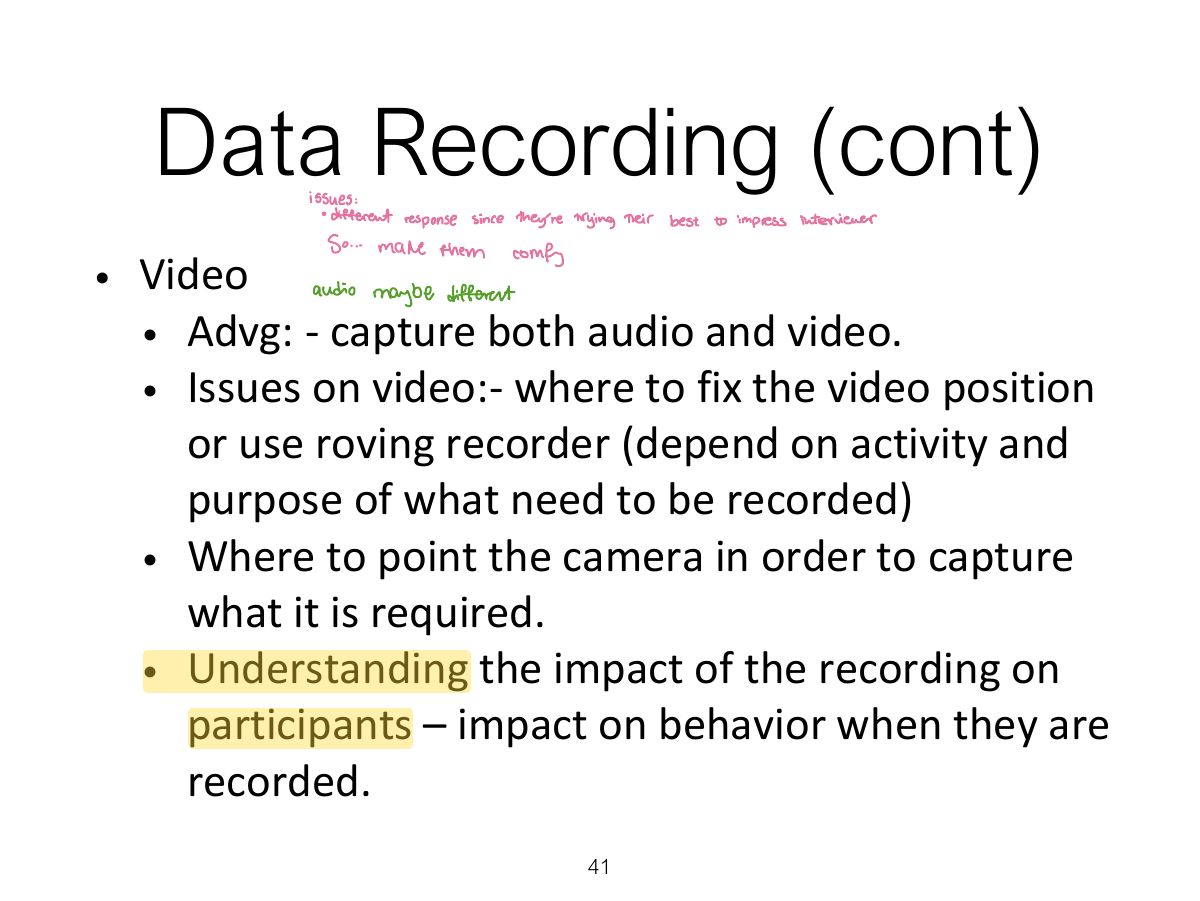
Problems with data gathering
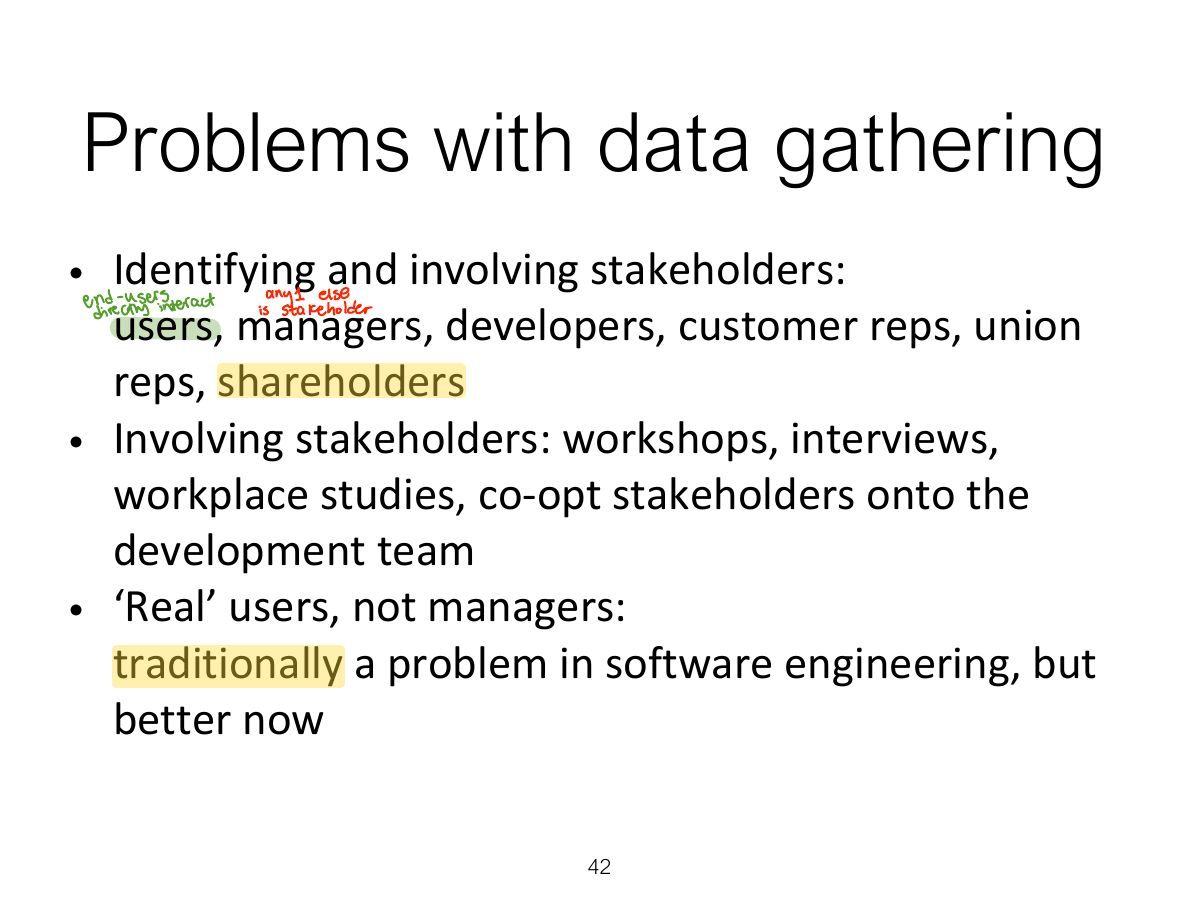
Problems with data gathering (cont)
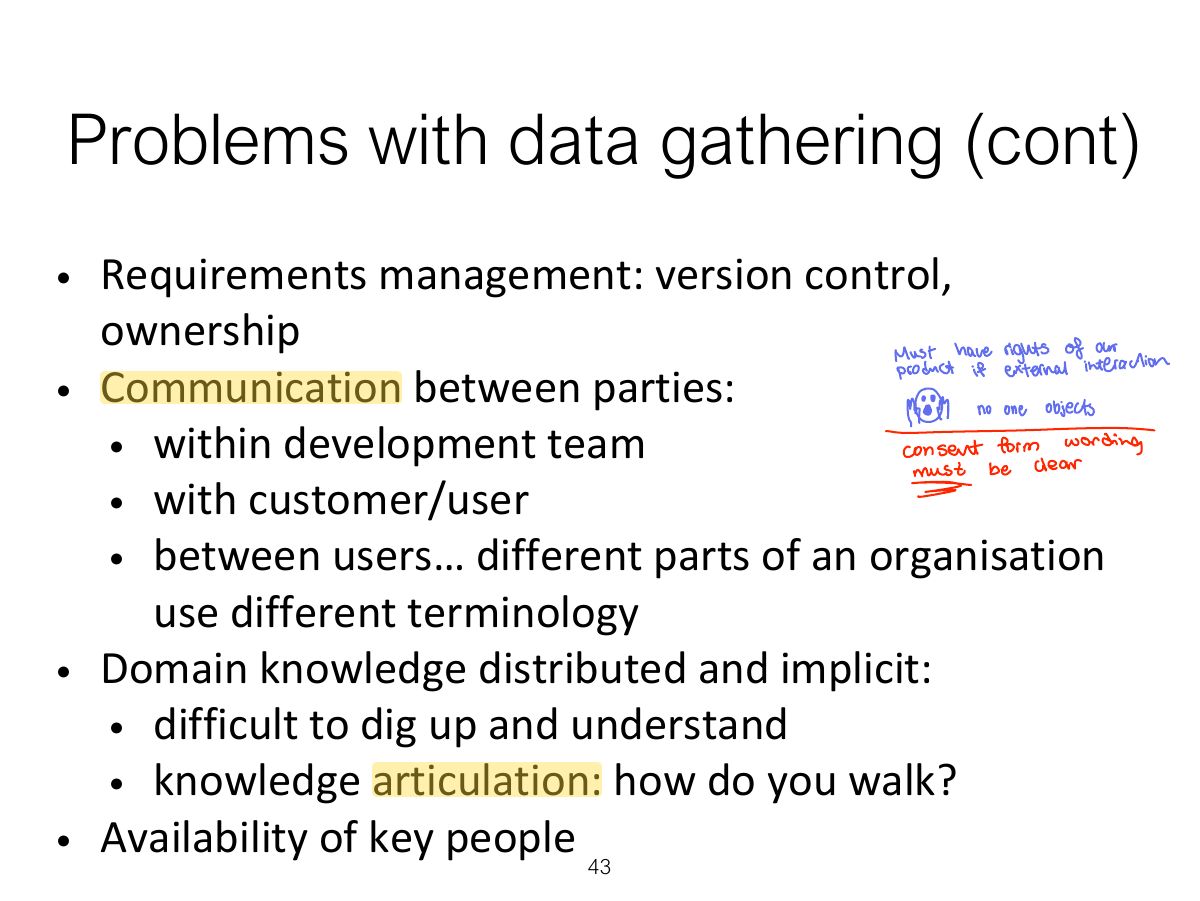
Problems with data gathering (cont)
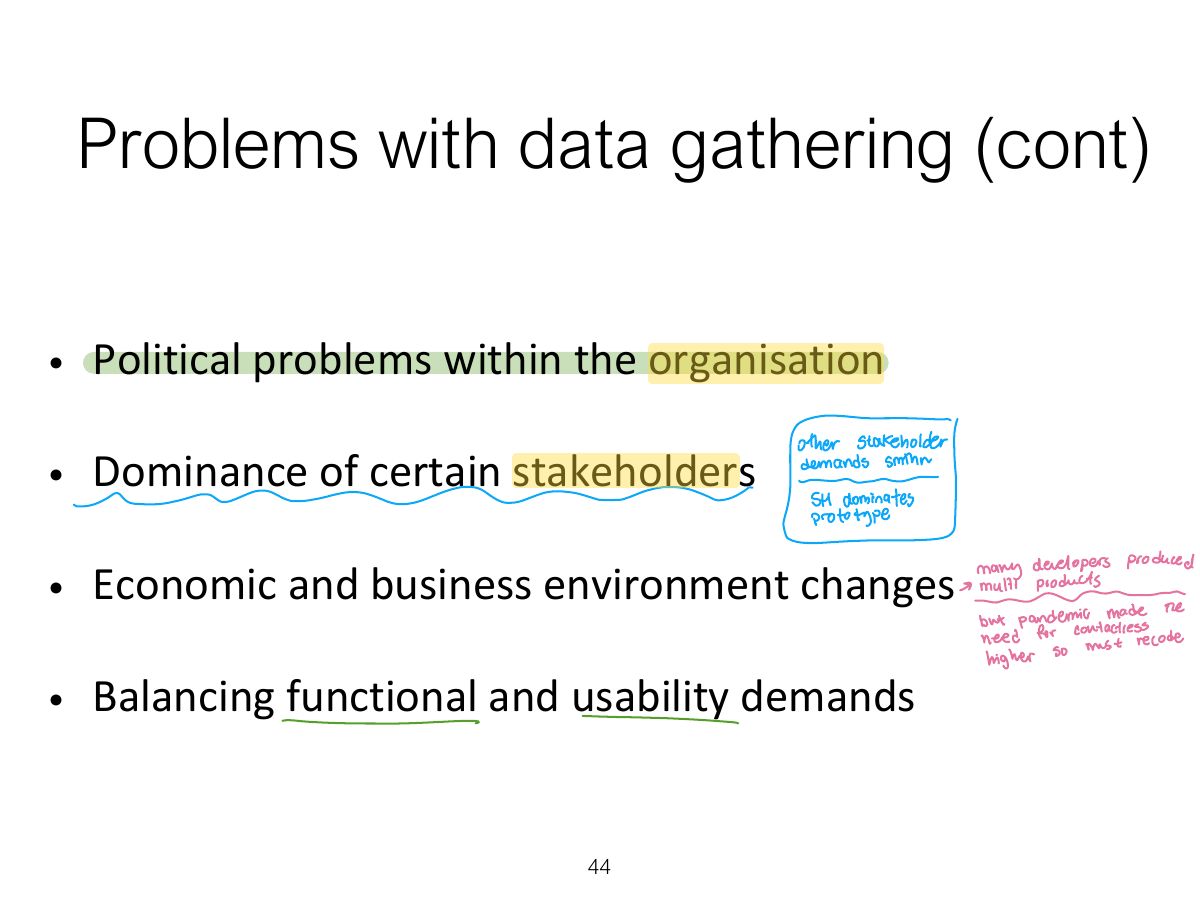
Data gathering guidelines
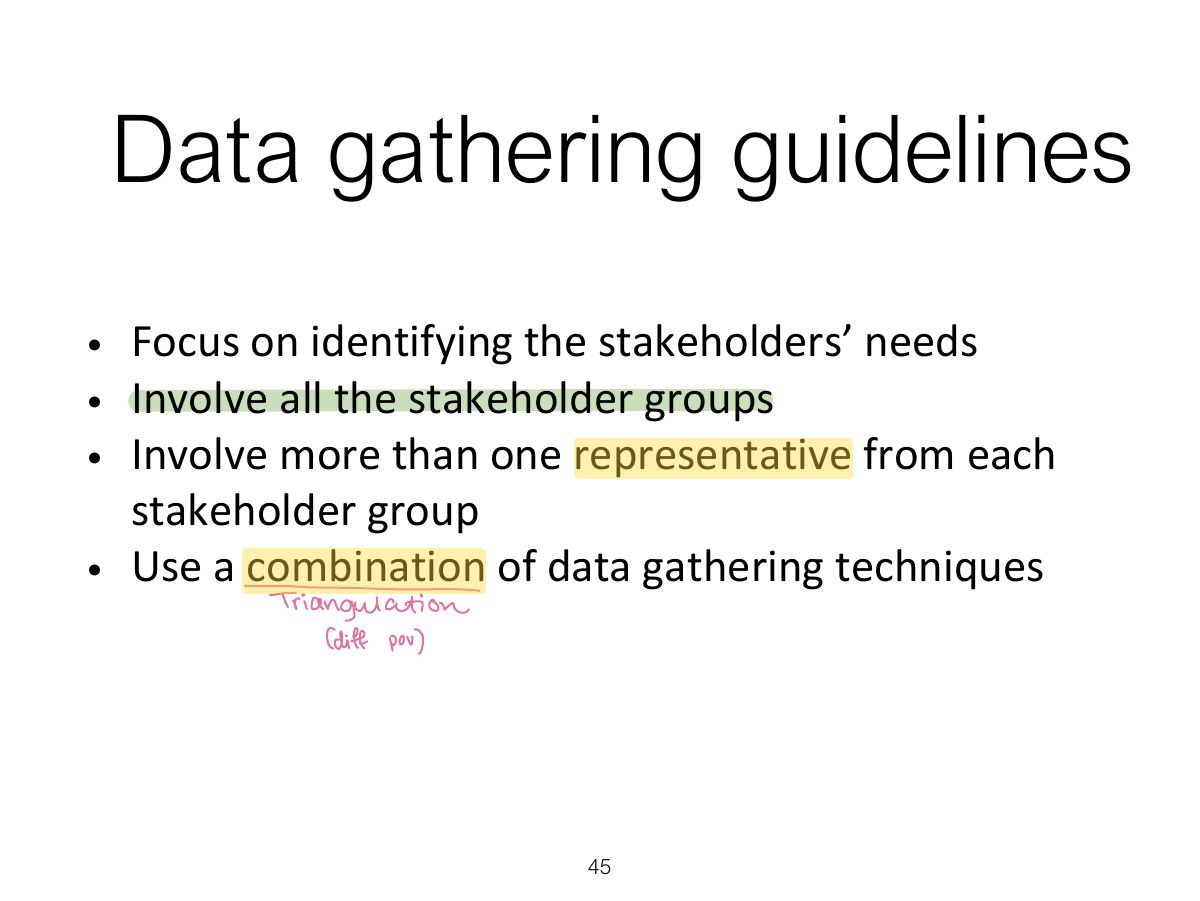
Data gathering guidelines (cont)
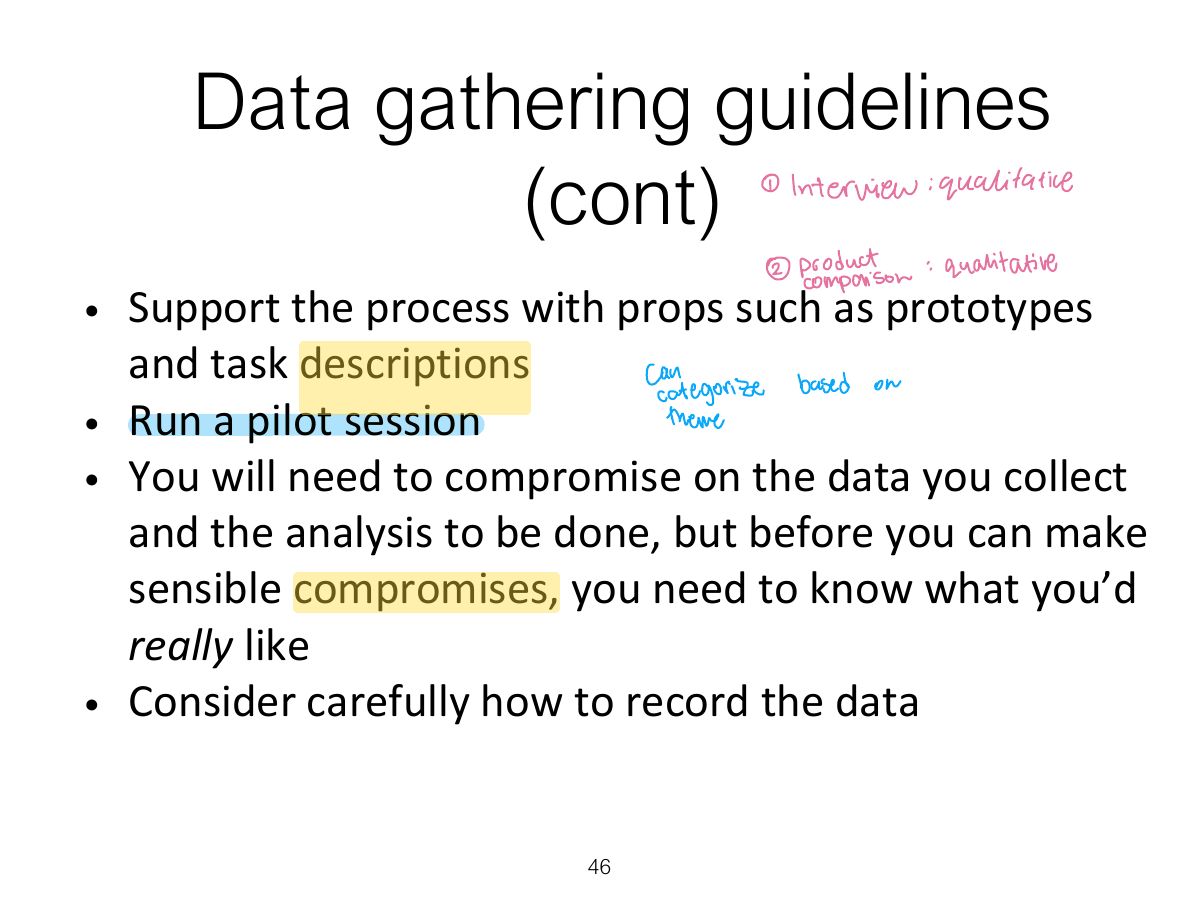
Establishing requirements
Different kinds of requirements
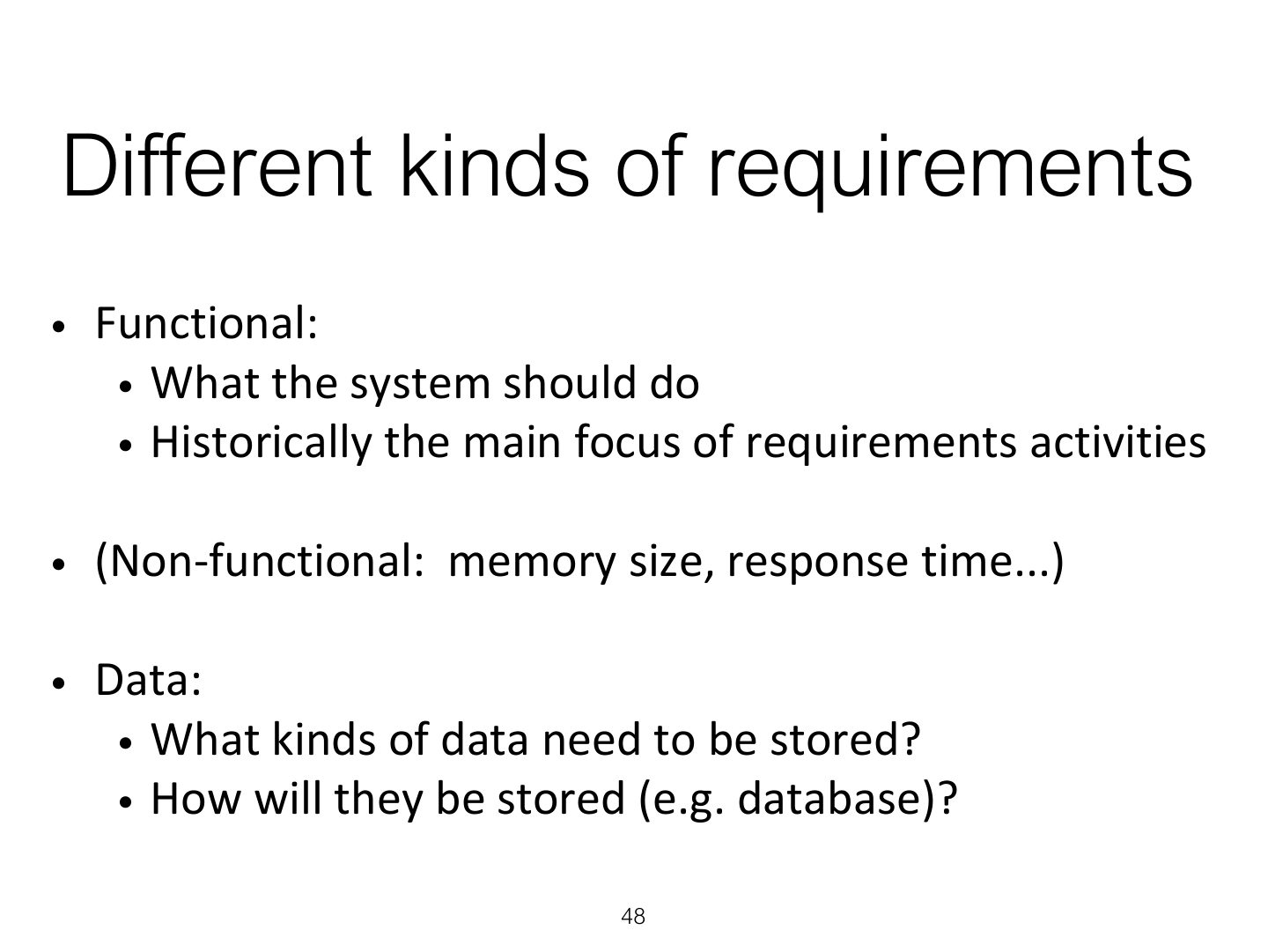
Notes
Kinds of requirements: functional, data, environment/context (physical, social, organizational, technical), user characteristics, usability and UX goals.
Different kinds of requirements (cont)
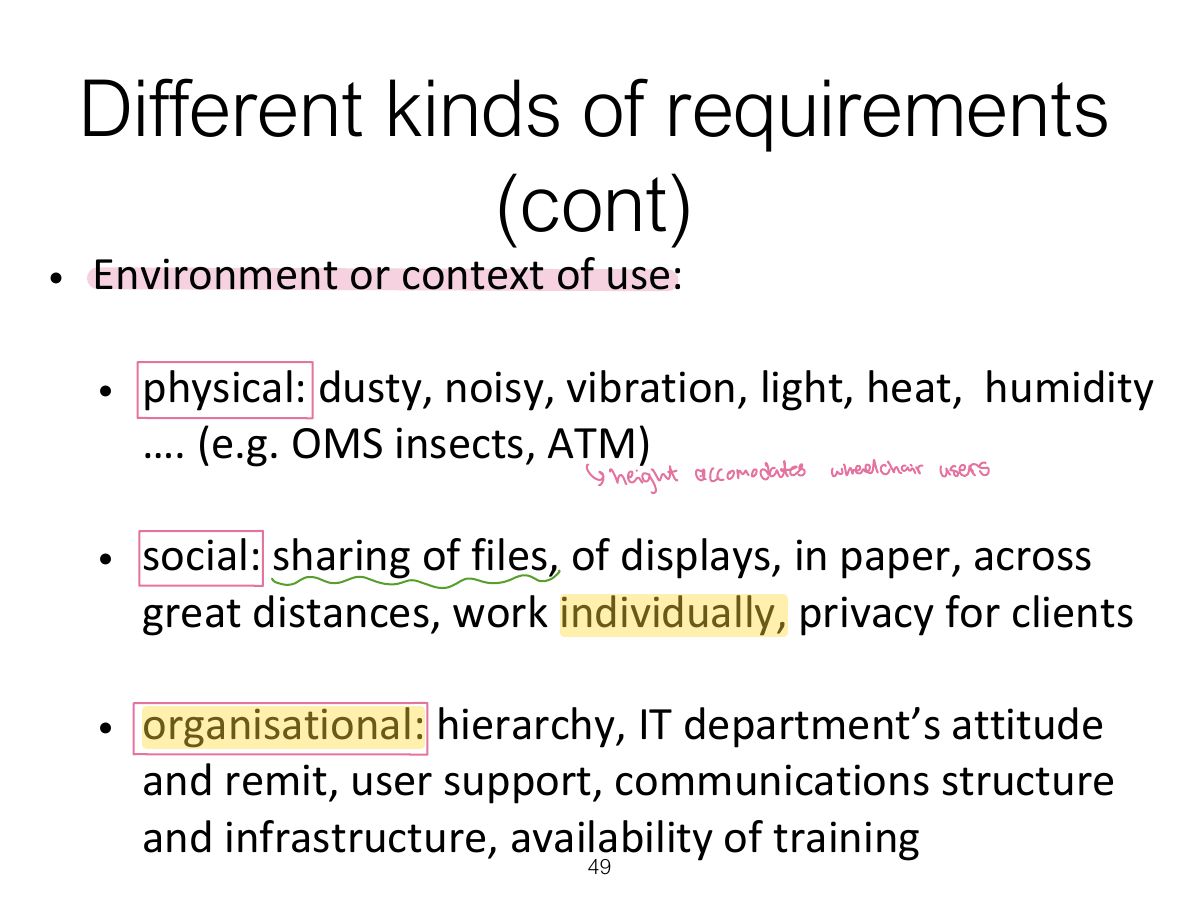
Different kinds of requirements (cont)
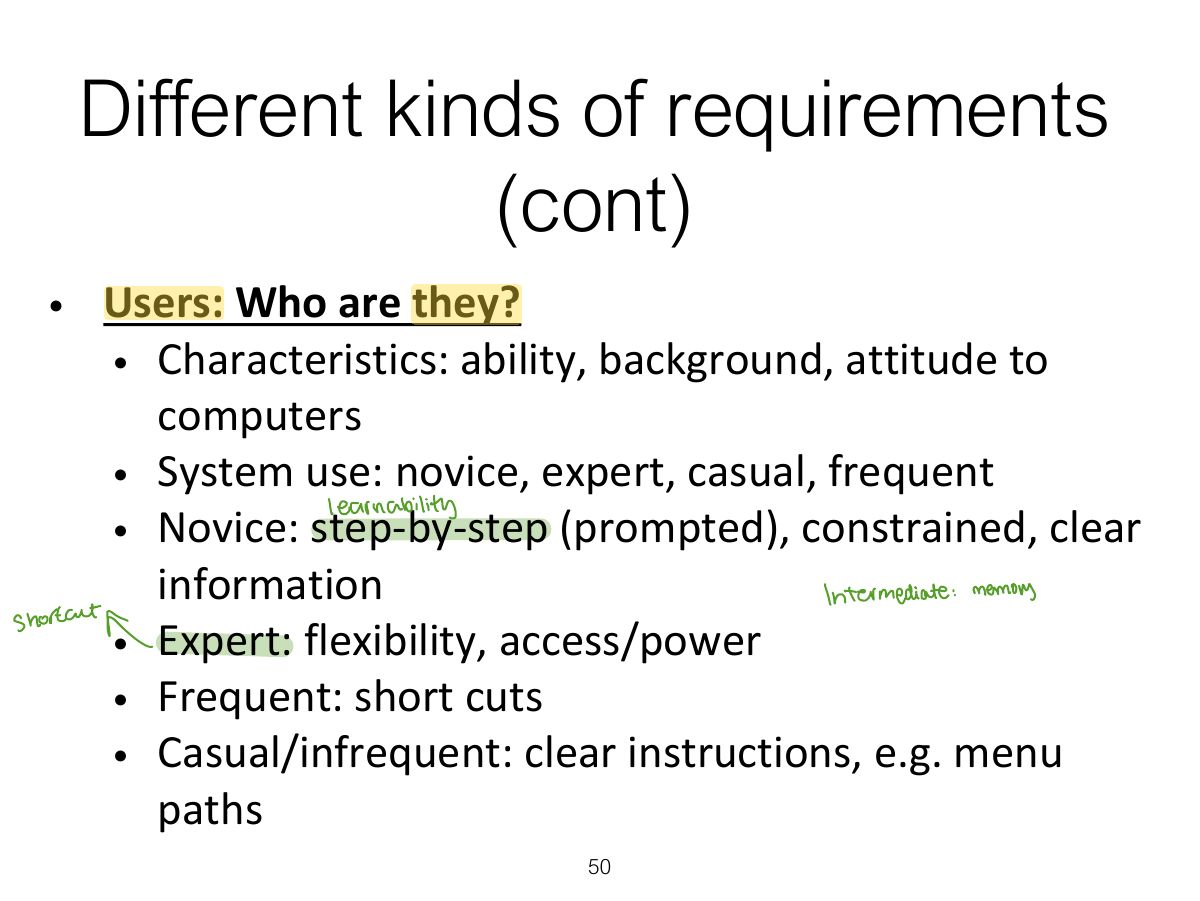
What are users’ capabilities?
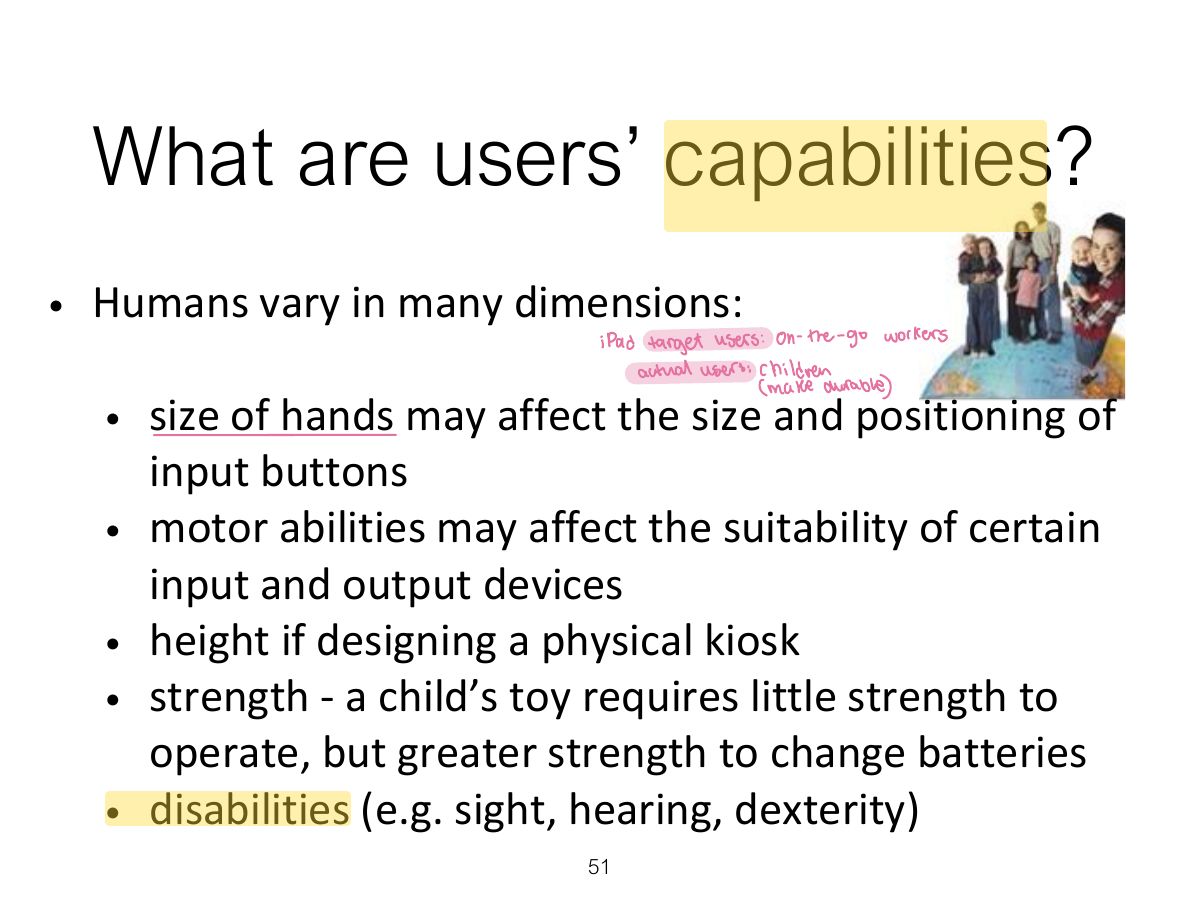
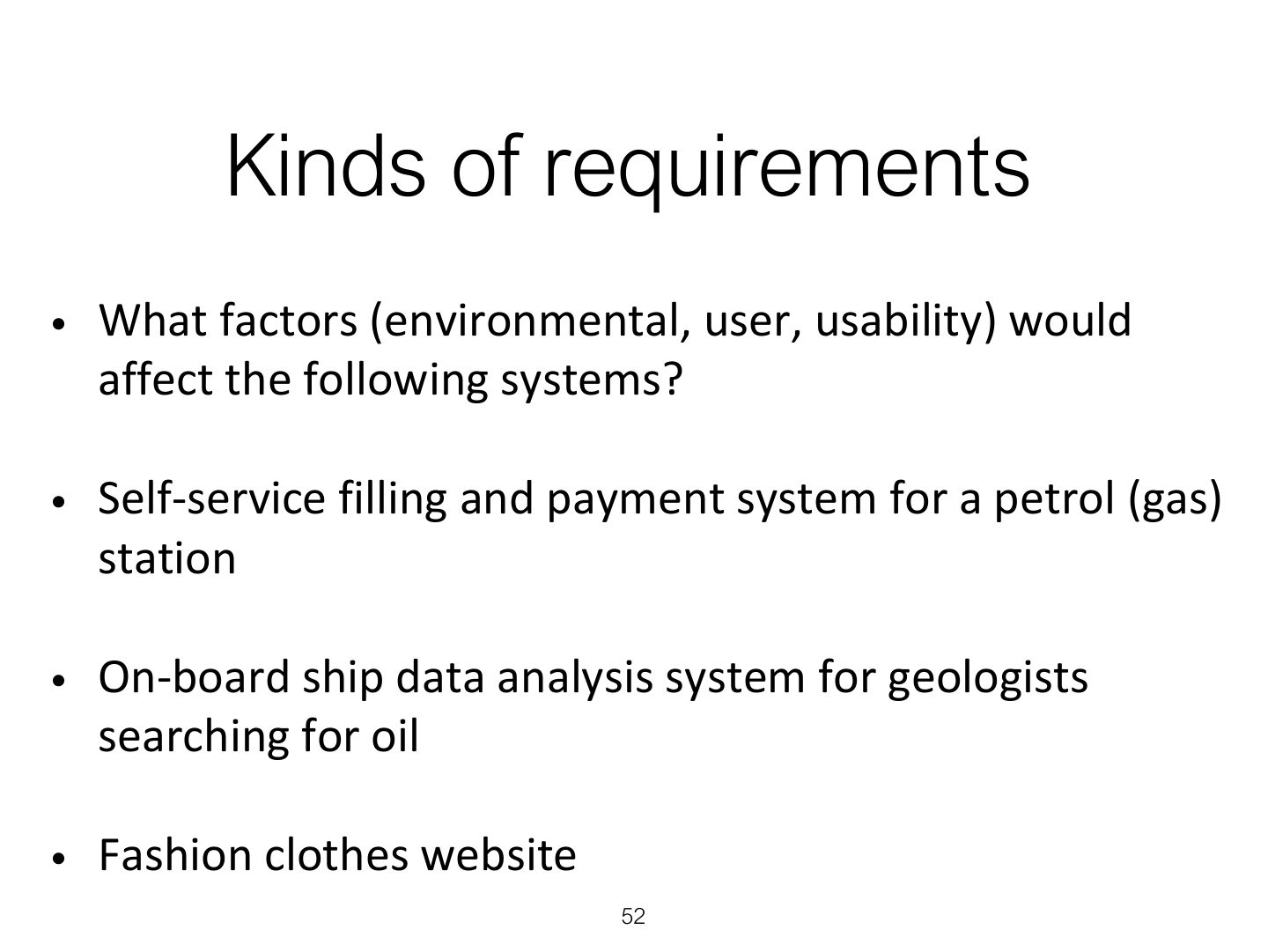
Kinds of requirements
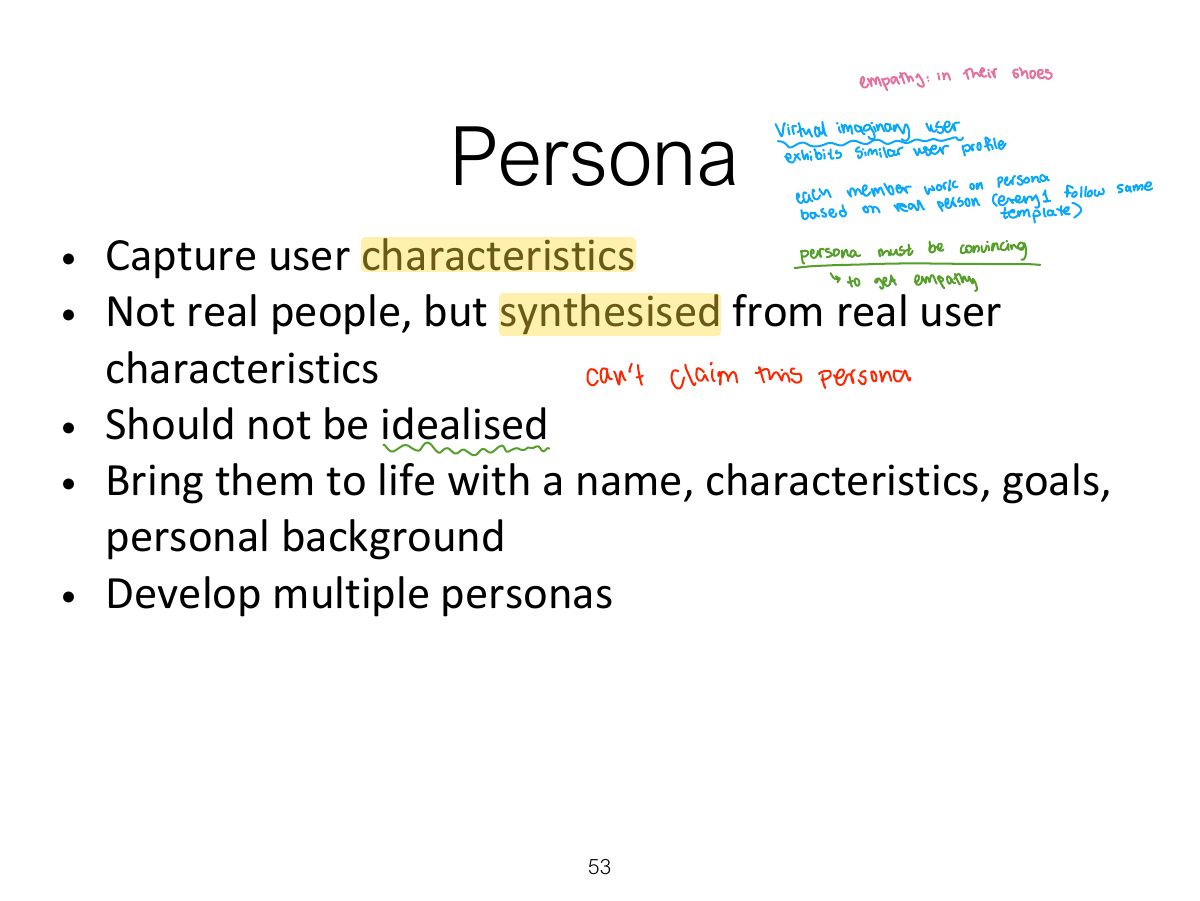
Persona
Notes
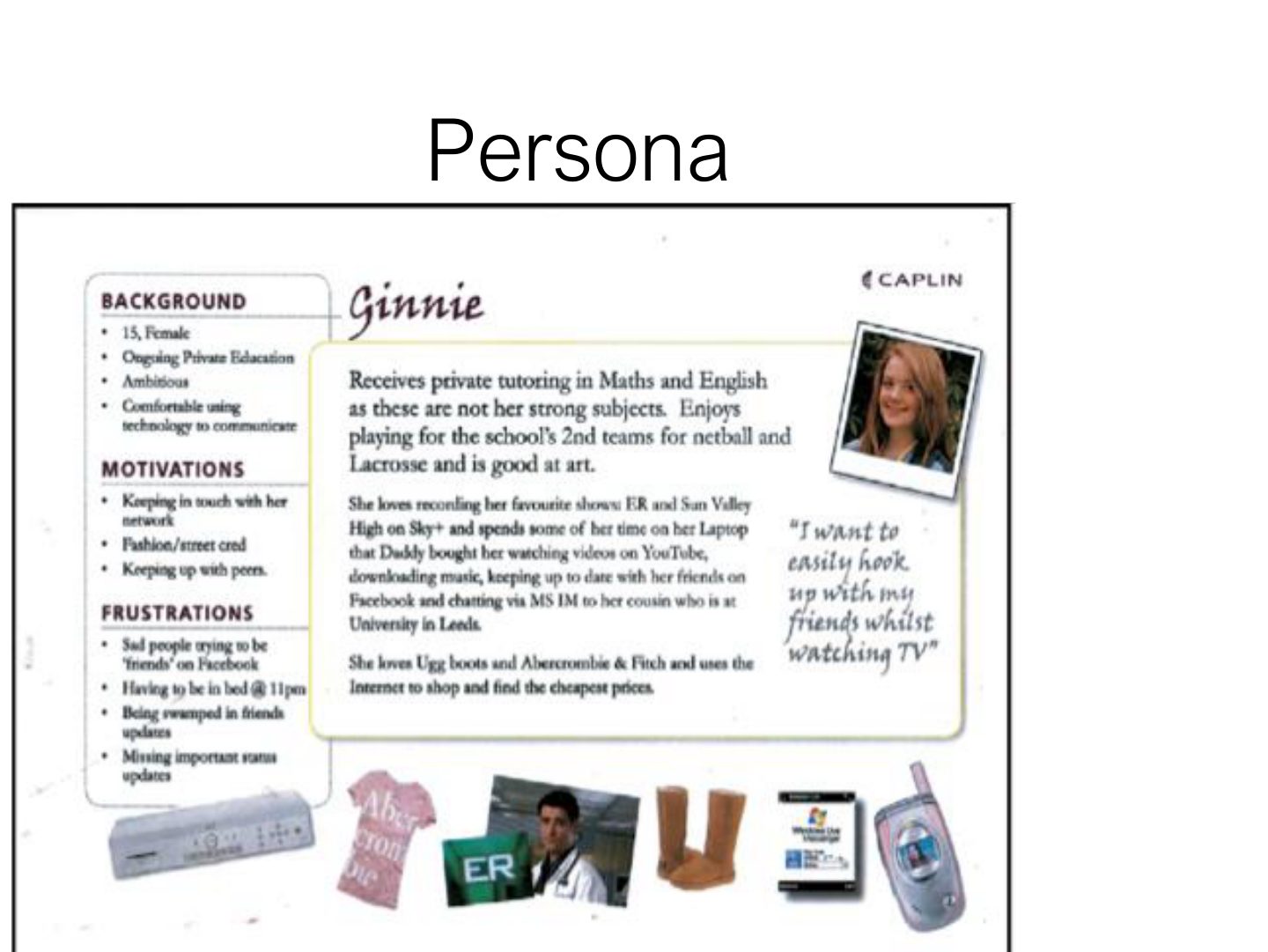
Persona: a rich, fictional but realistic description of a typical user, built from research data.
Exam angle
A fictional, data-based description of a typical user with a name and goals is a:
Persona
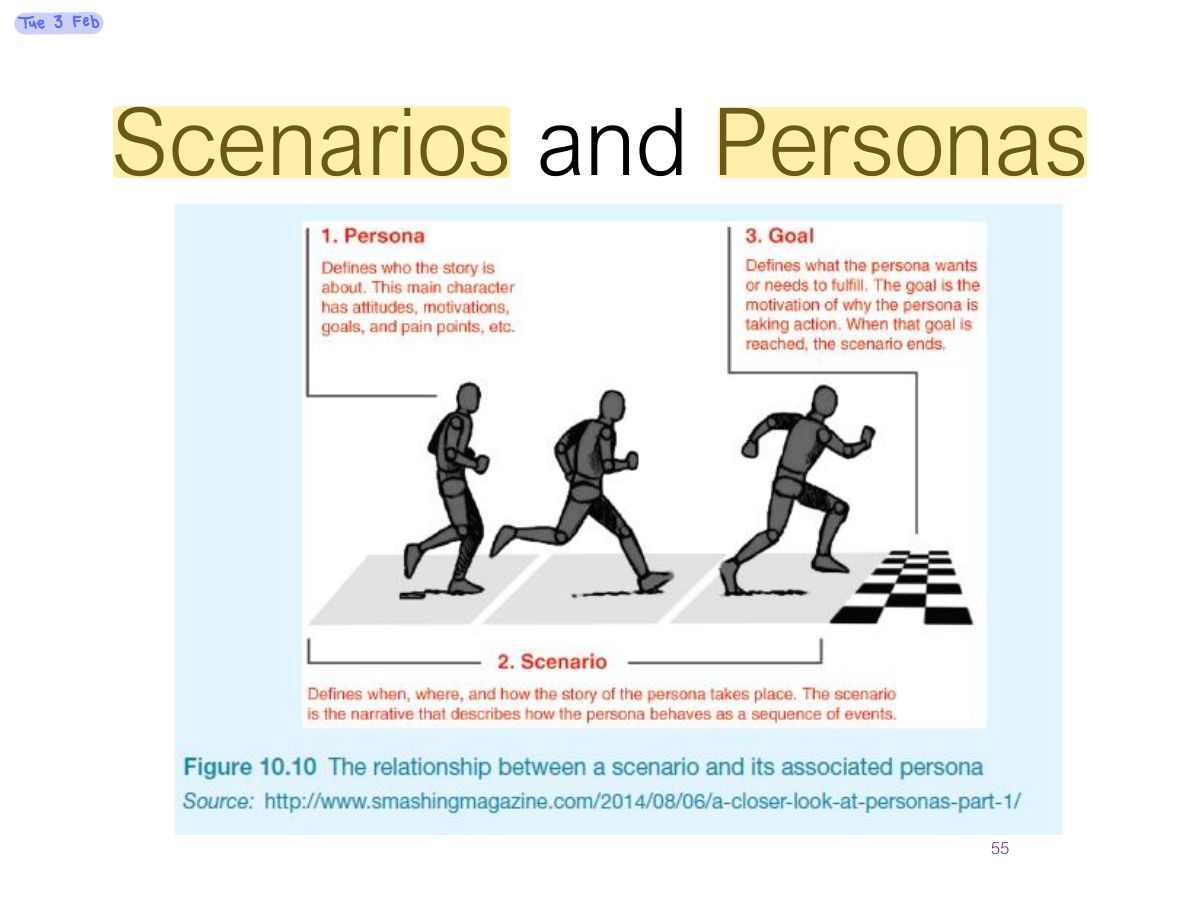
Scenarios and Personas
Task descriptions
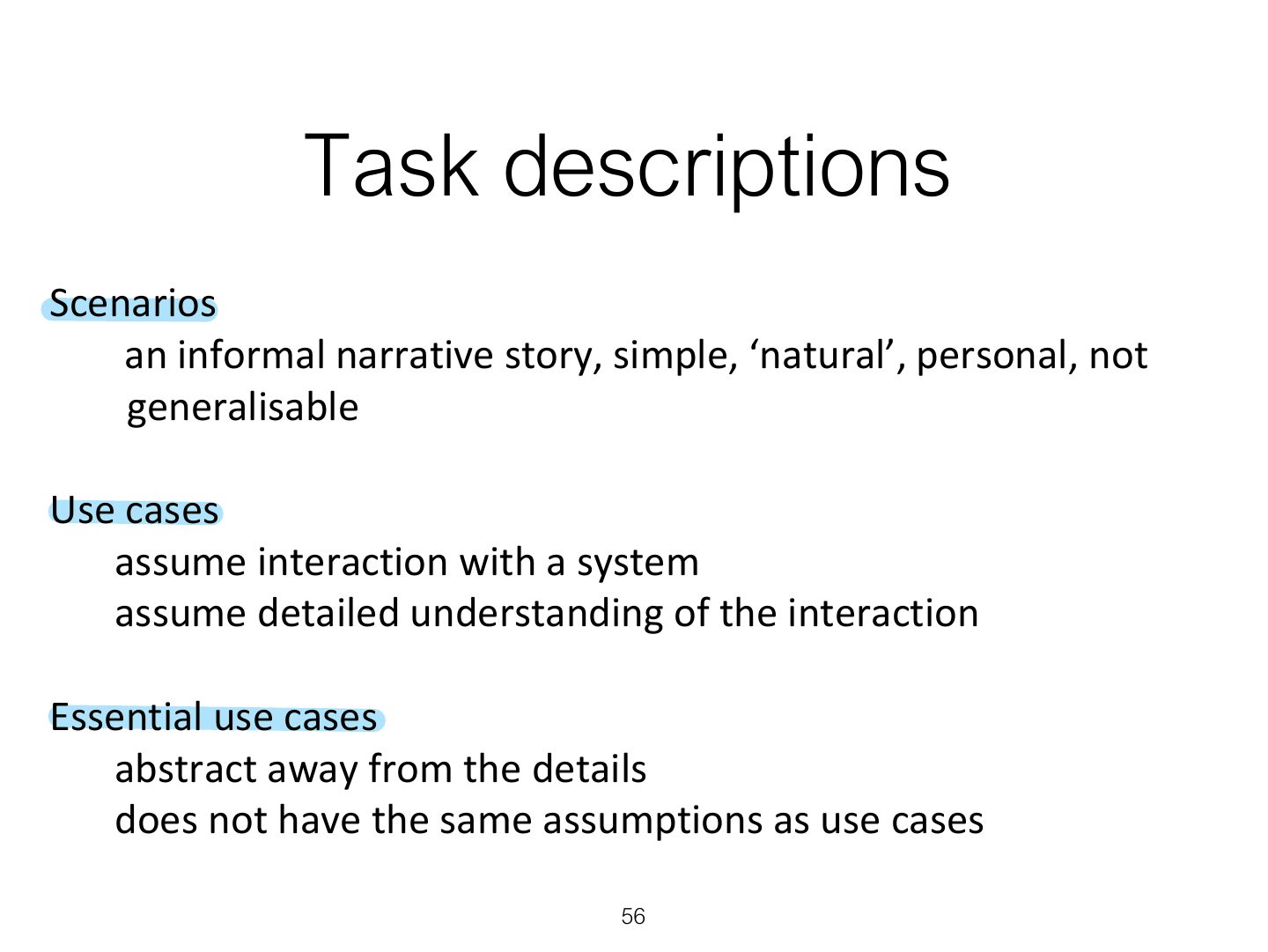
Scenario

Notes
Scenario: an informal narrative story about how people use a product to carry out a task.
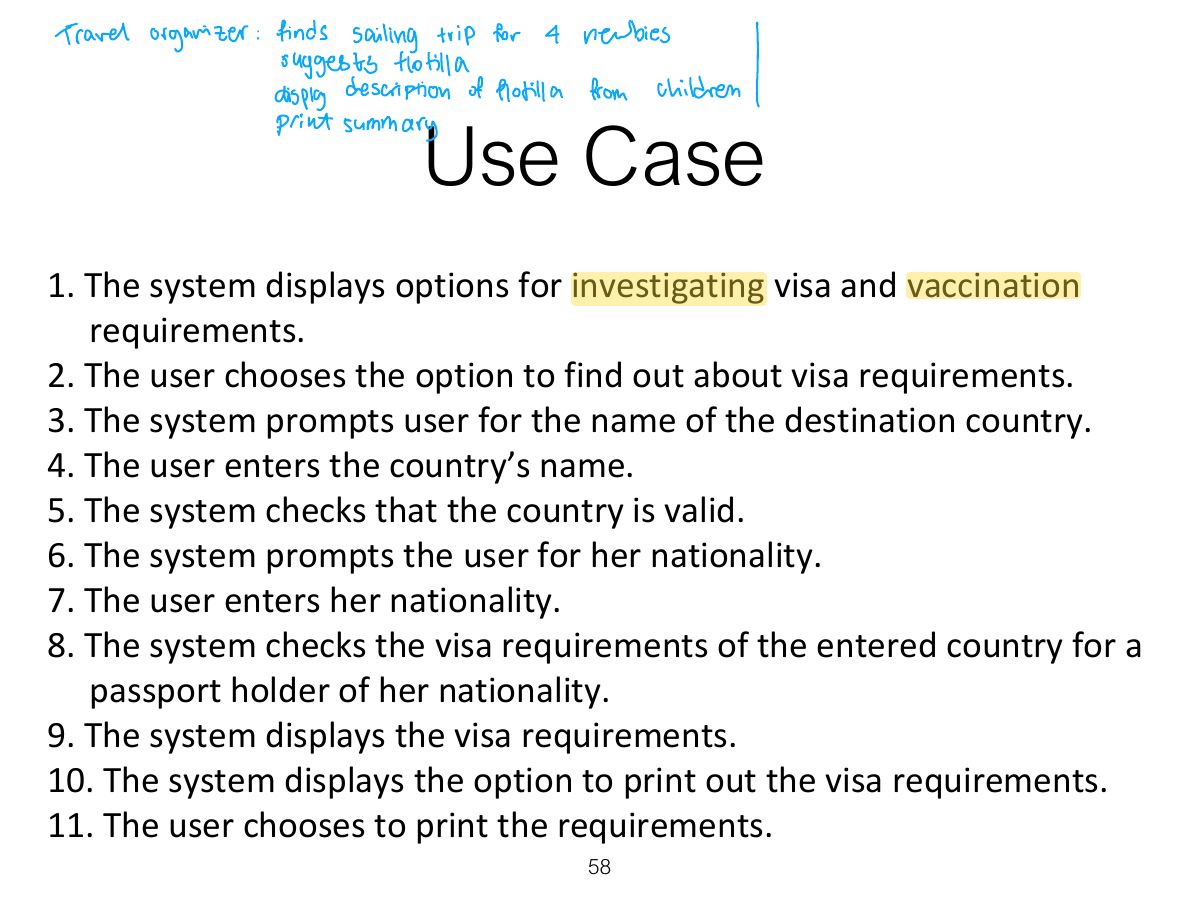
Use Case
Notes
Use case: actor–system interaction for one goal; essential use case: abstract user intention vs. system responsibility.
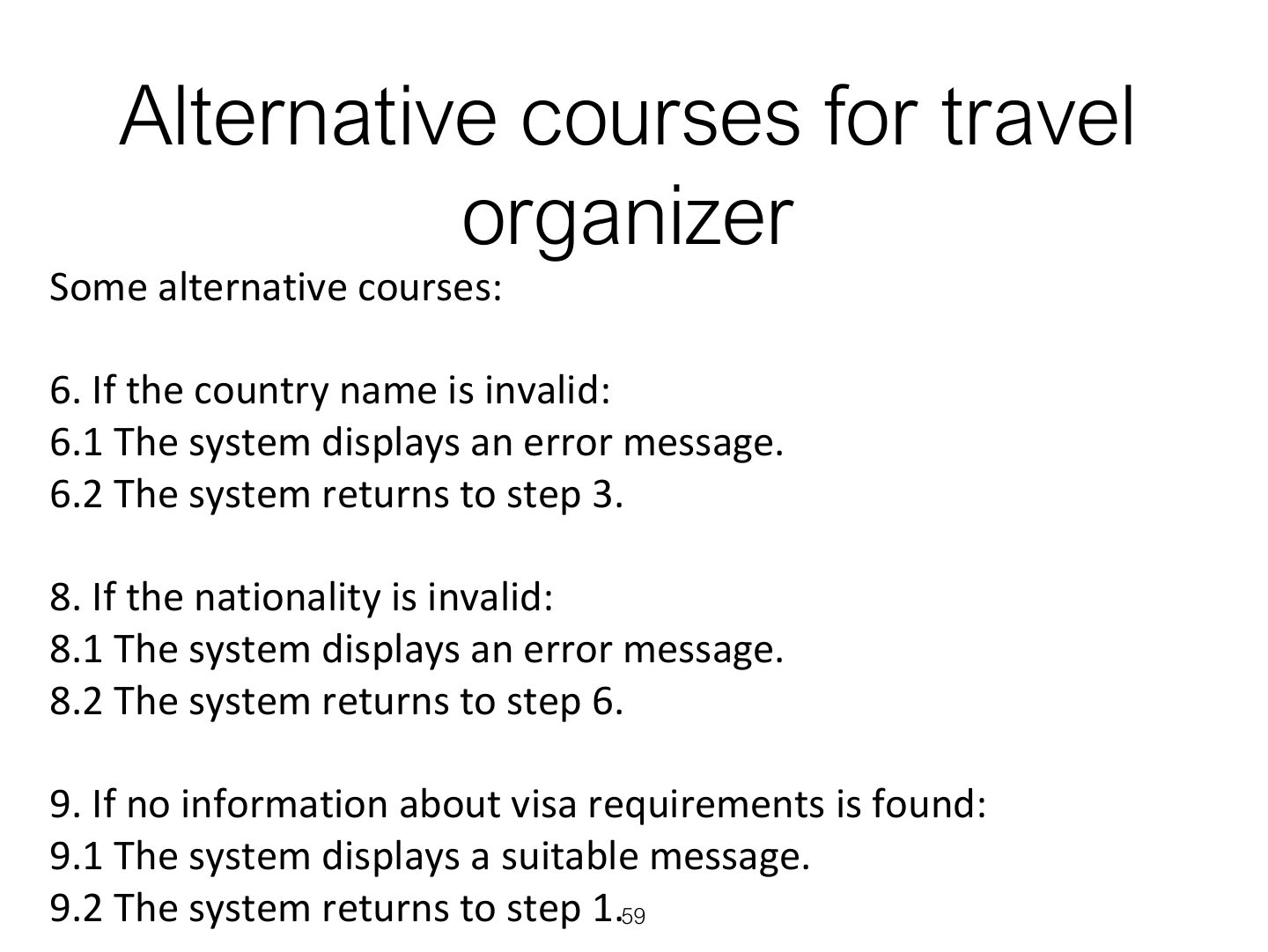
Alternative courses for travel organizer
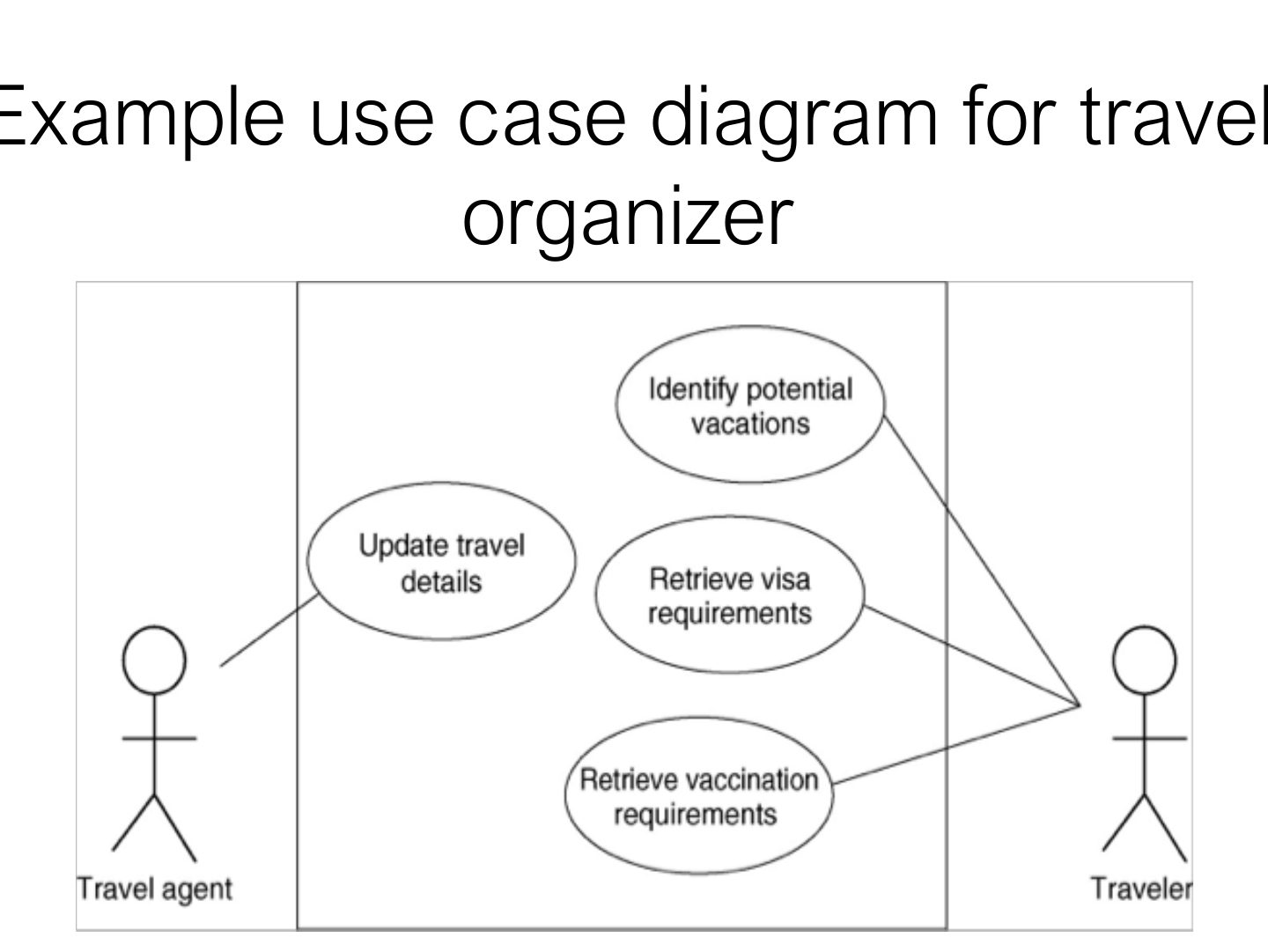
Example use case diagram for travel organizer
Example essential use case for travel organizer
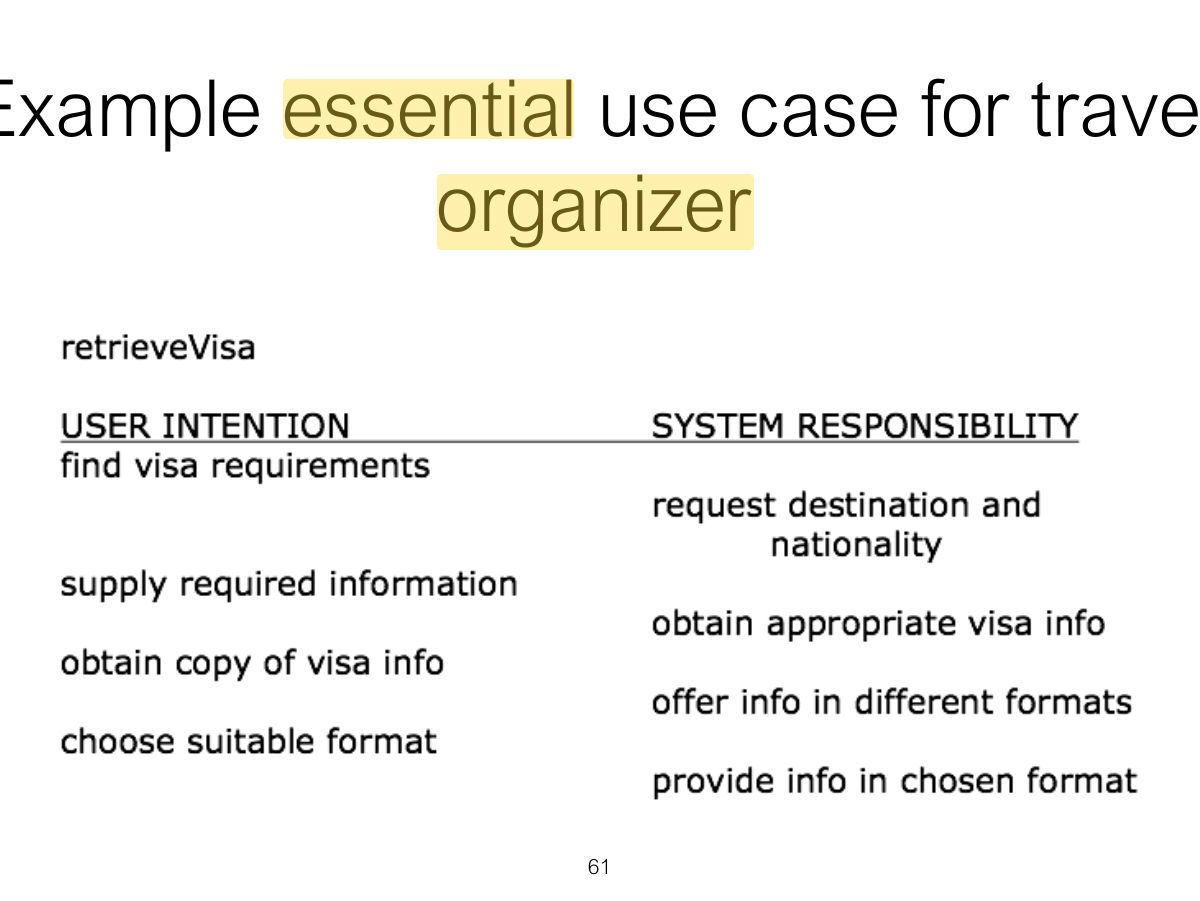
Task Analysis
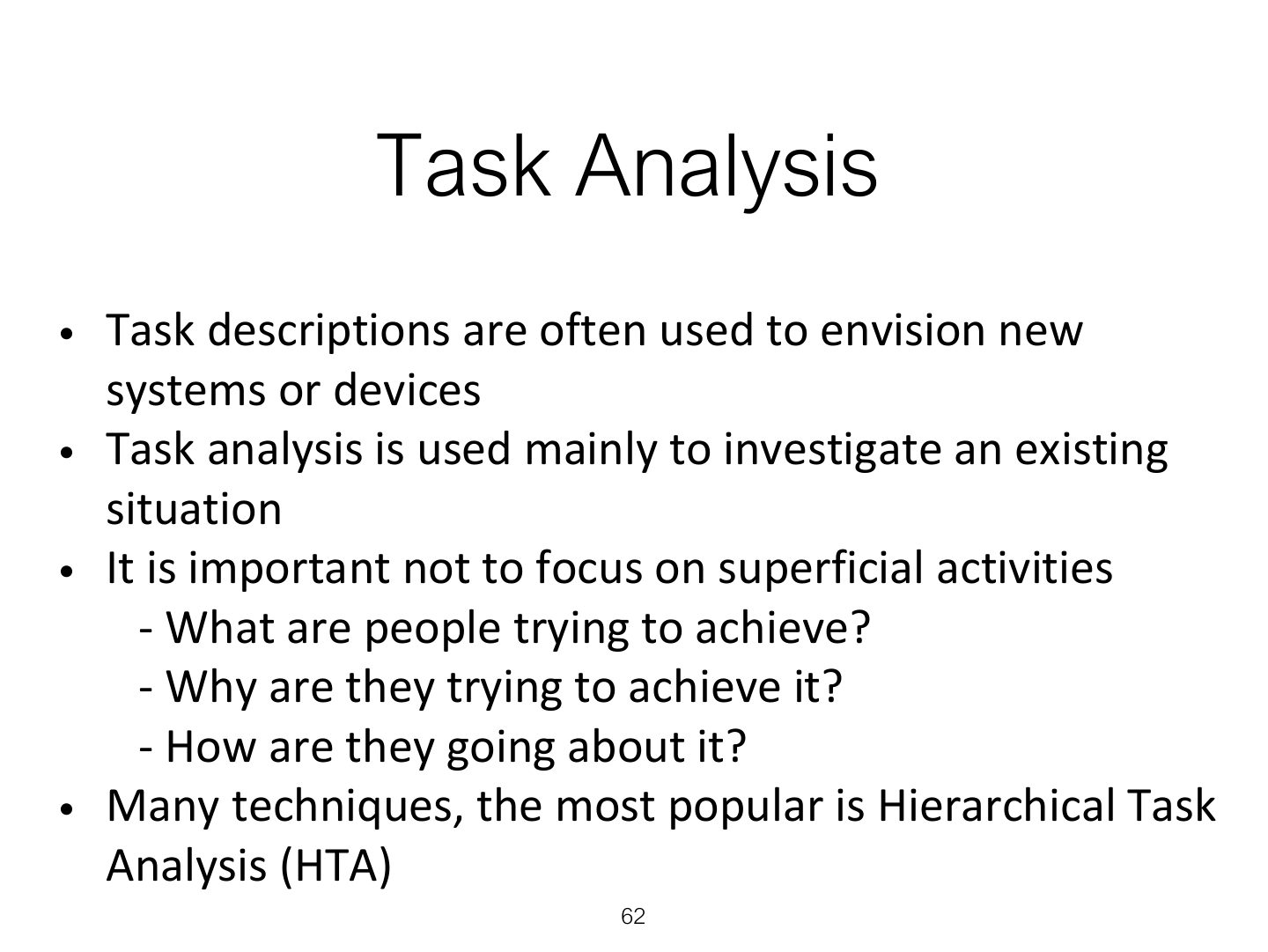
Hierarchical Task Analysis
Exam angle
Breaking "borrow a book" into numbered subtasks with plans is:
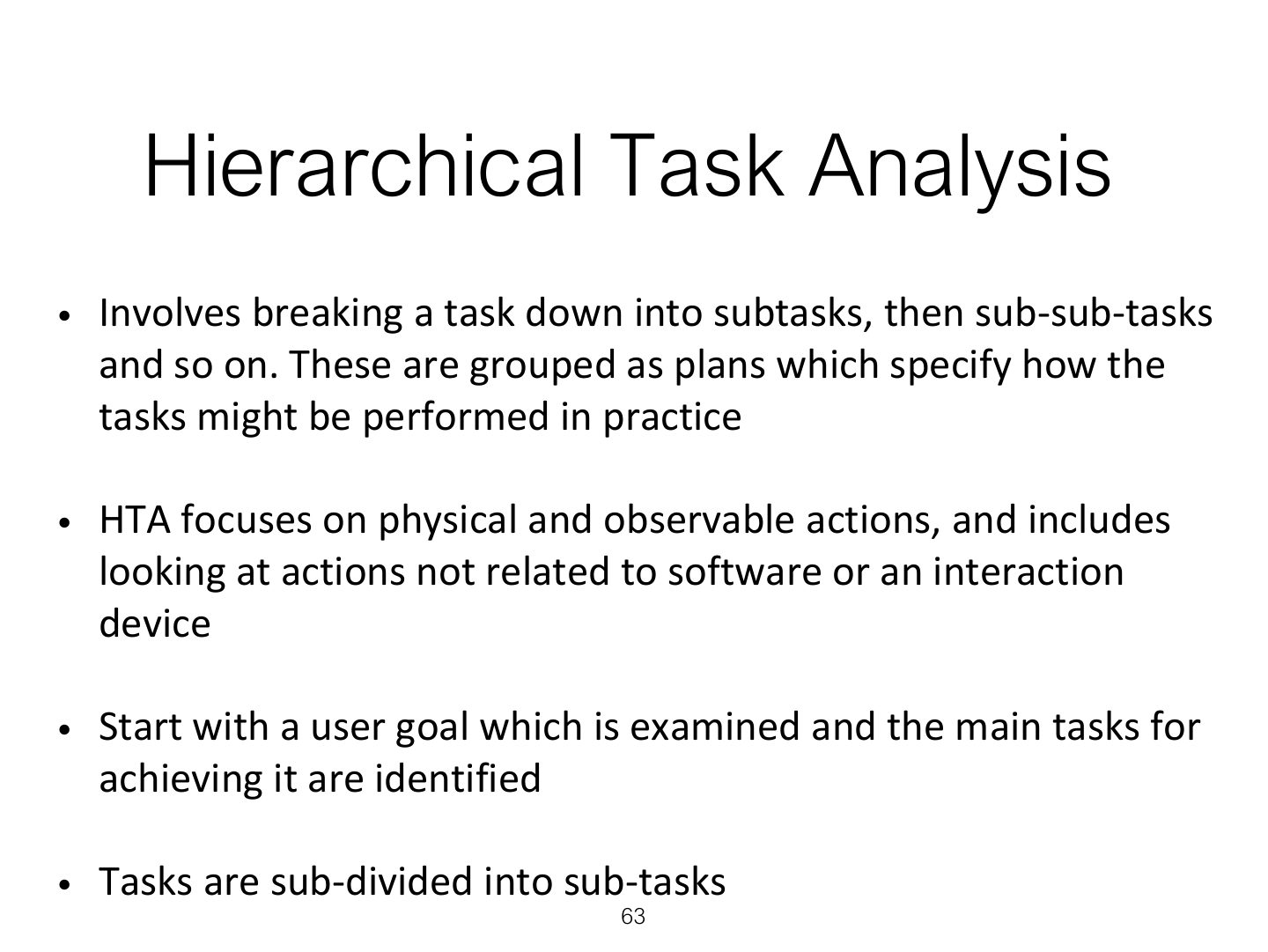
Example Hierarchical Task Analysis
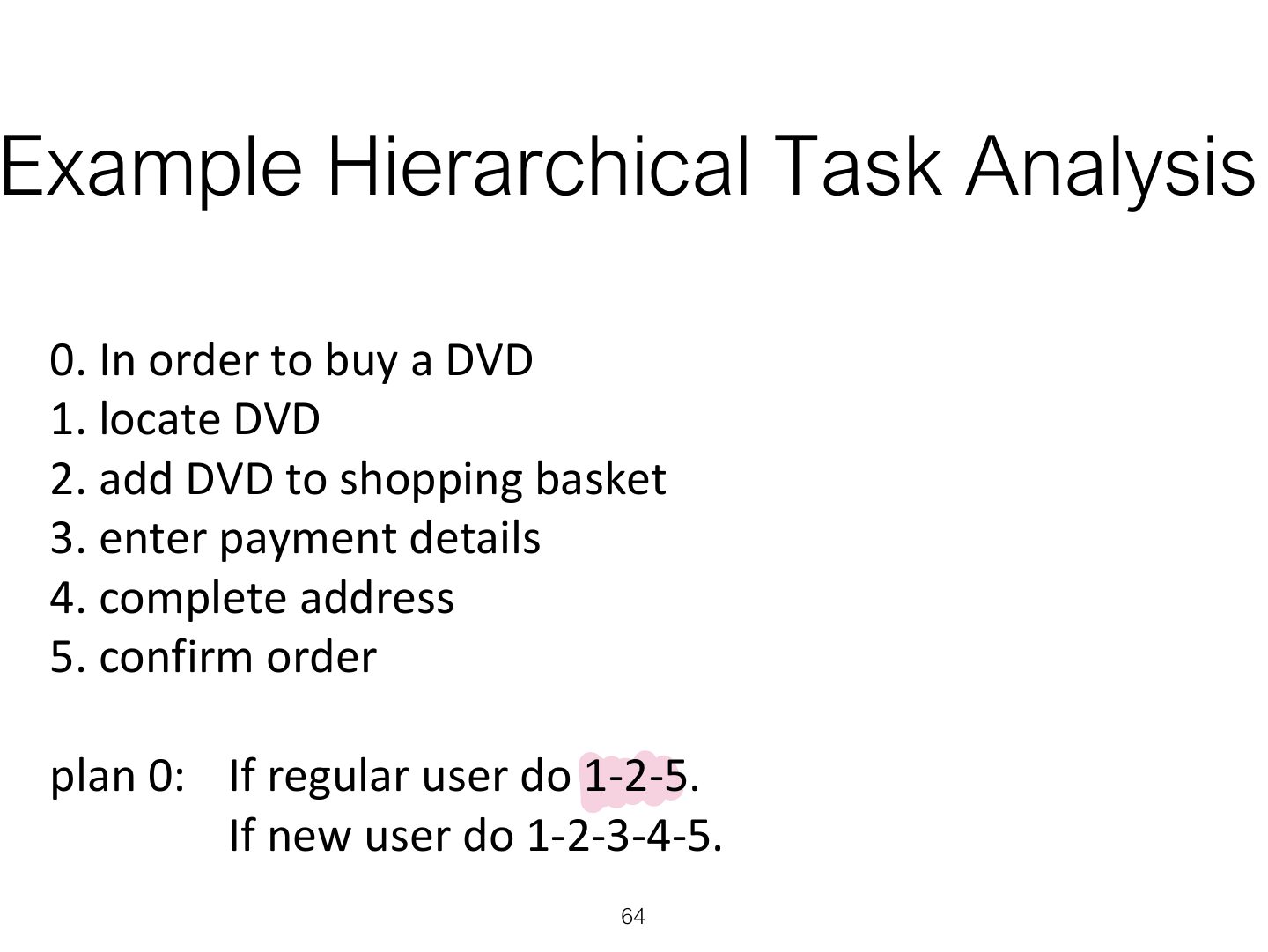
Example Hierarchical Task Analysis (graphical)
Summary
Data interpretation and analysis
Quantitative and Qualitative
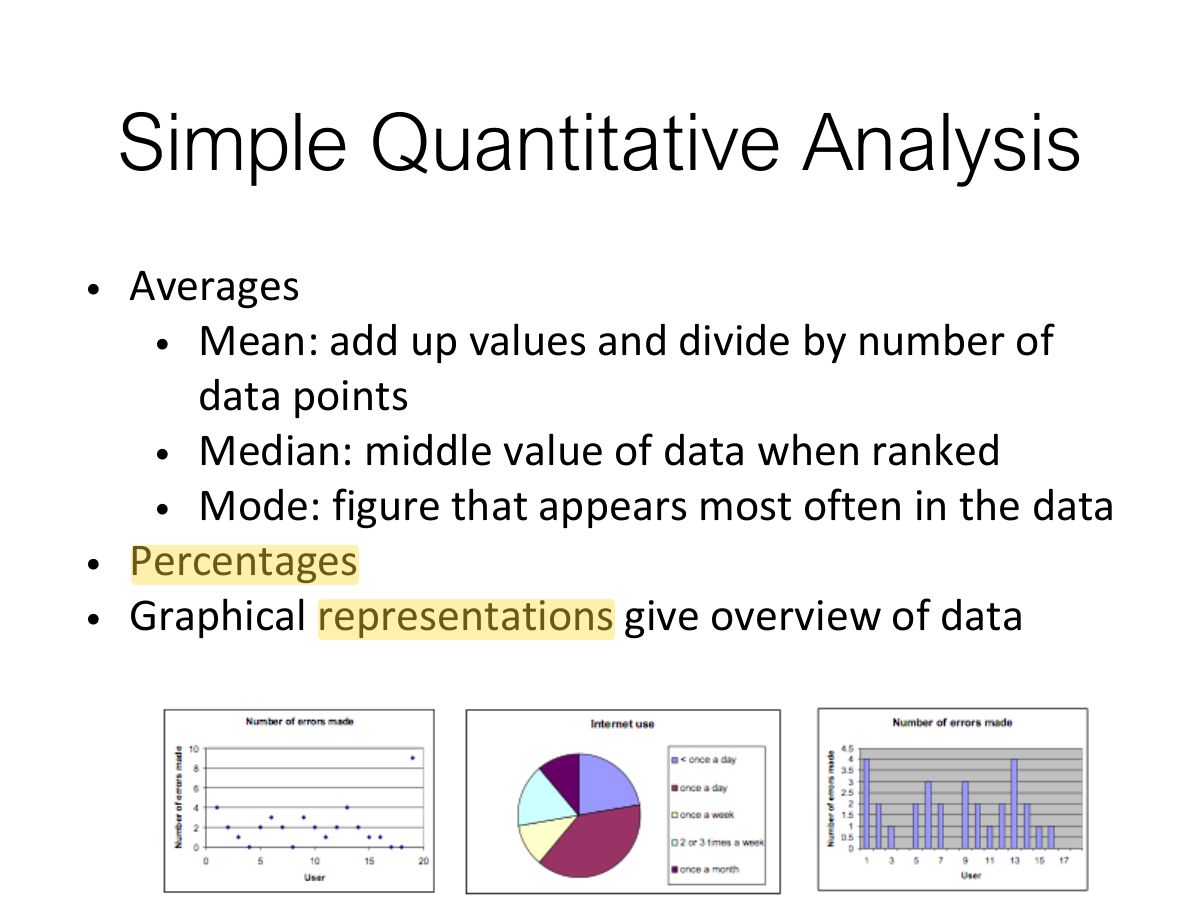
Simple Quantitative Analysis
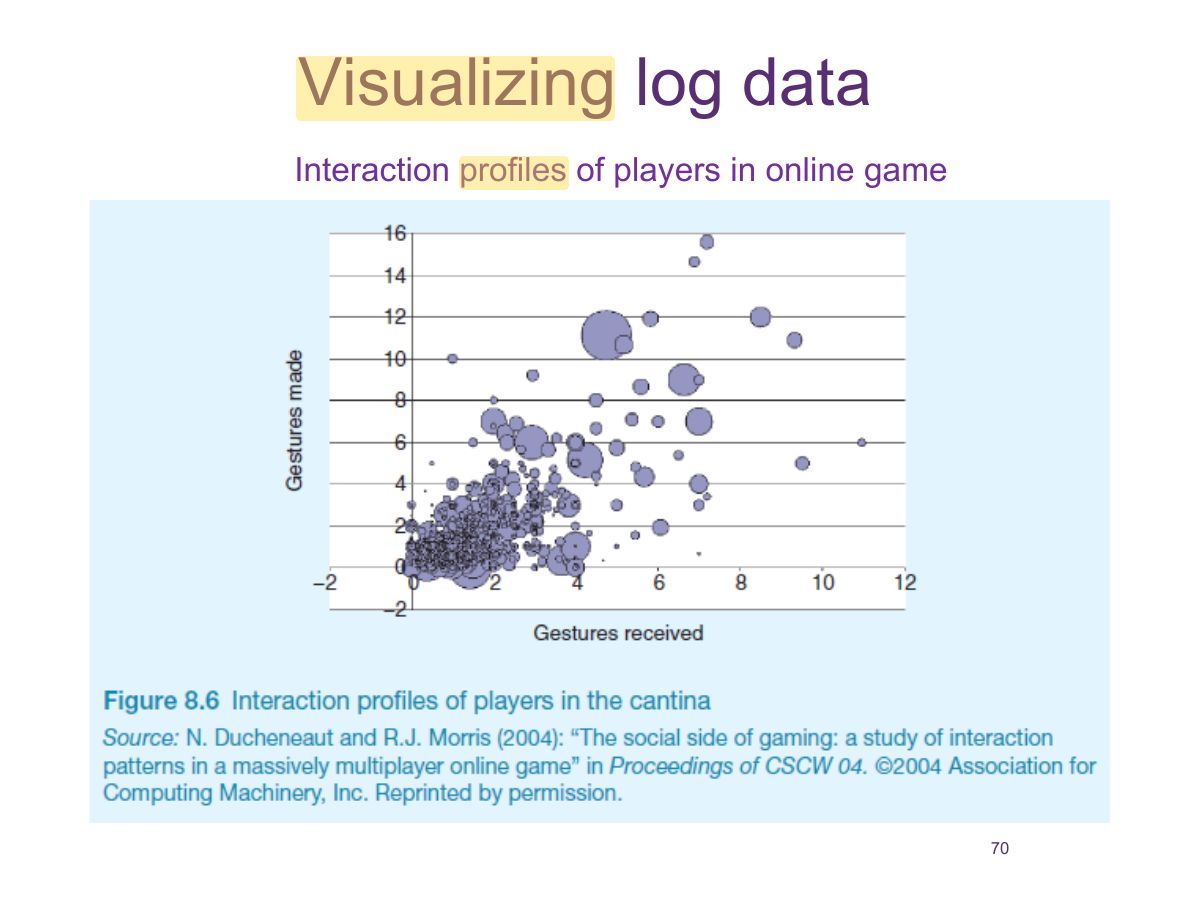
Visualizing log data
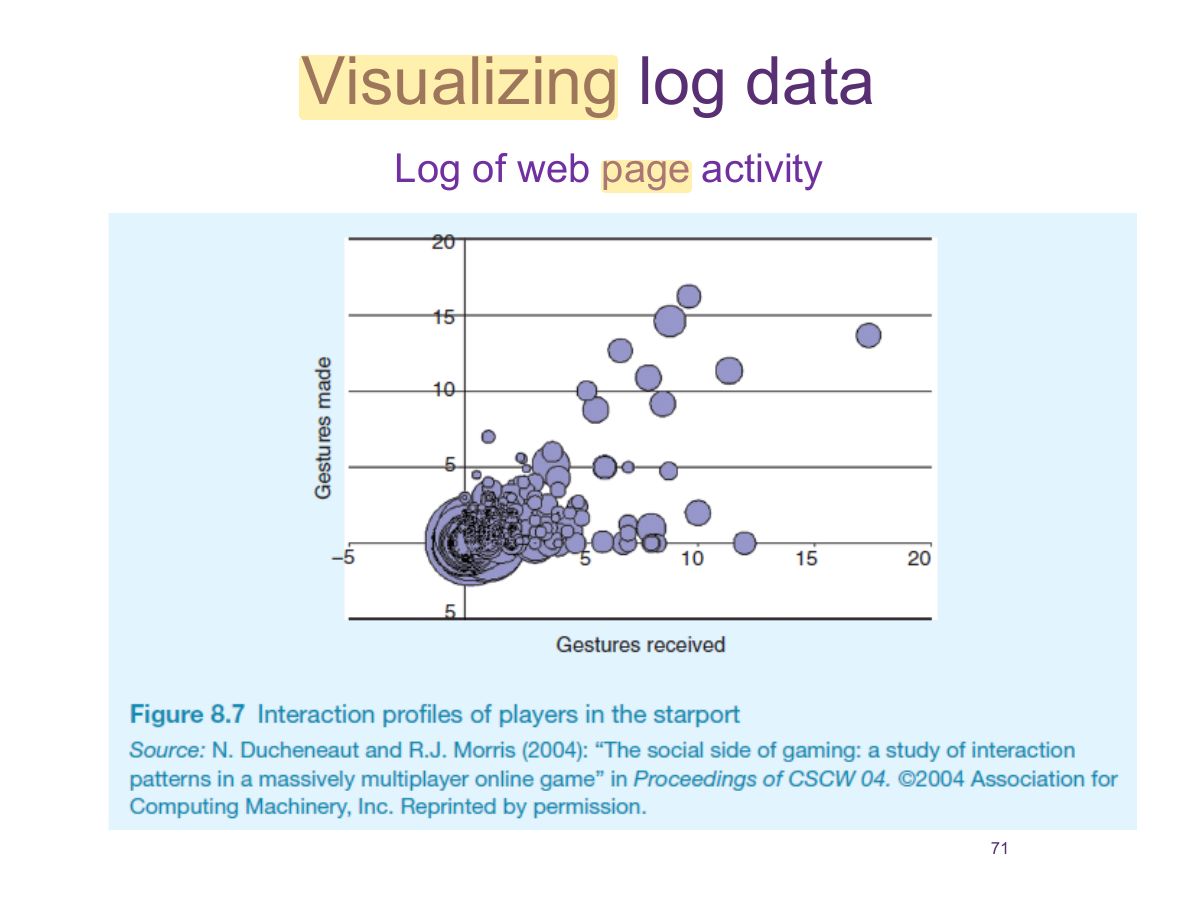
Visualizing log data
Simple Qualitative Analysis
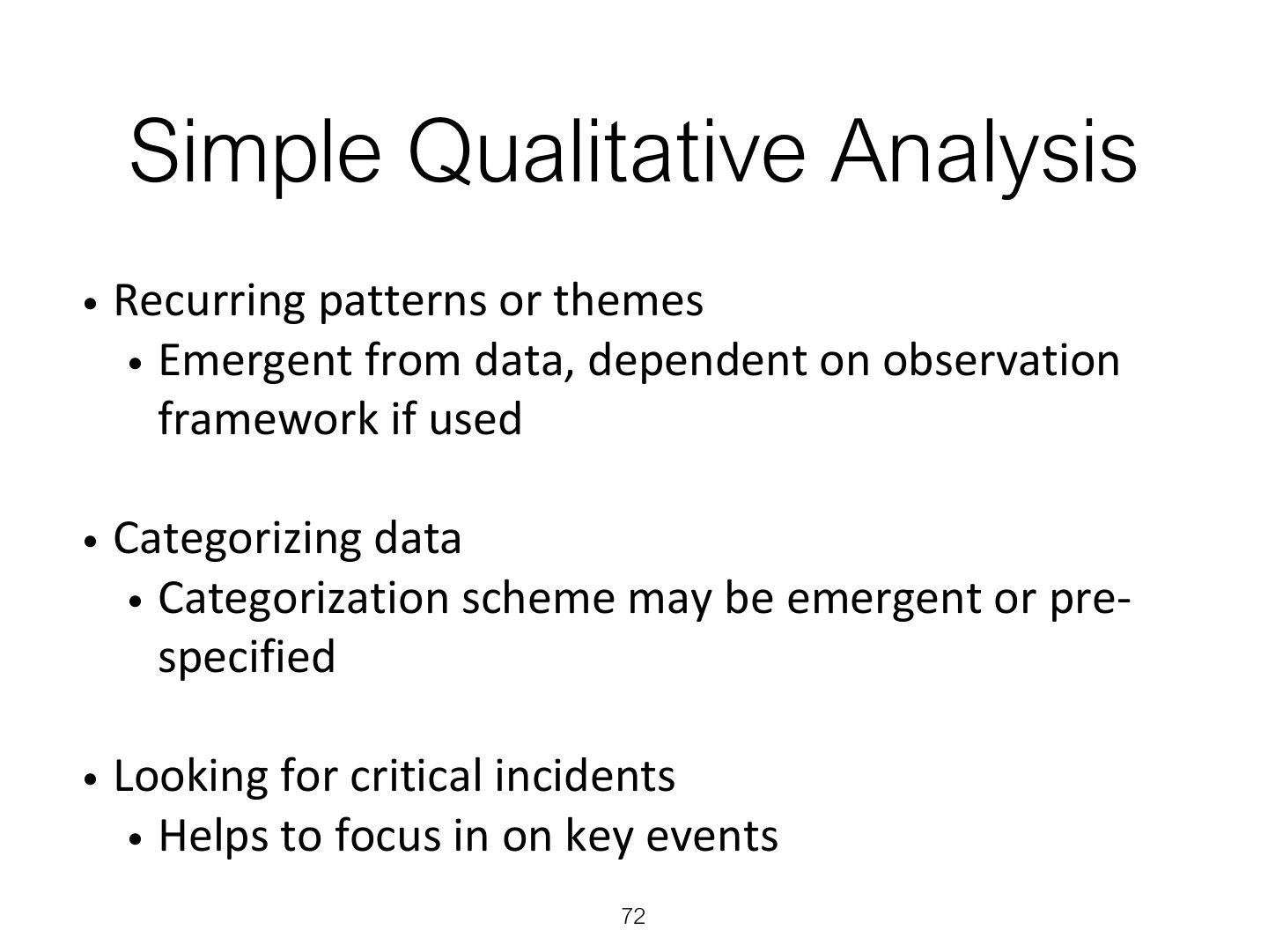
Simple Qualitative Analysis
Tools to support data analysis
Theoretical frameworks for qualitative analysis
Grounded Theory
Code book used in grounded theory analysis
Excerpt showing axial coding
Activity Theory
Notes
Activity theory: subject, object, tools, rules, community, division of labour.
Individual model
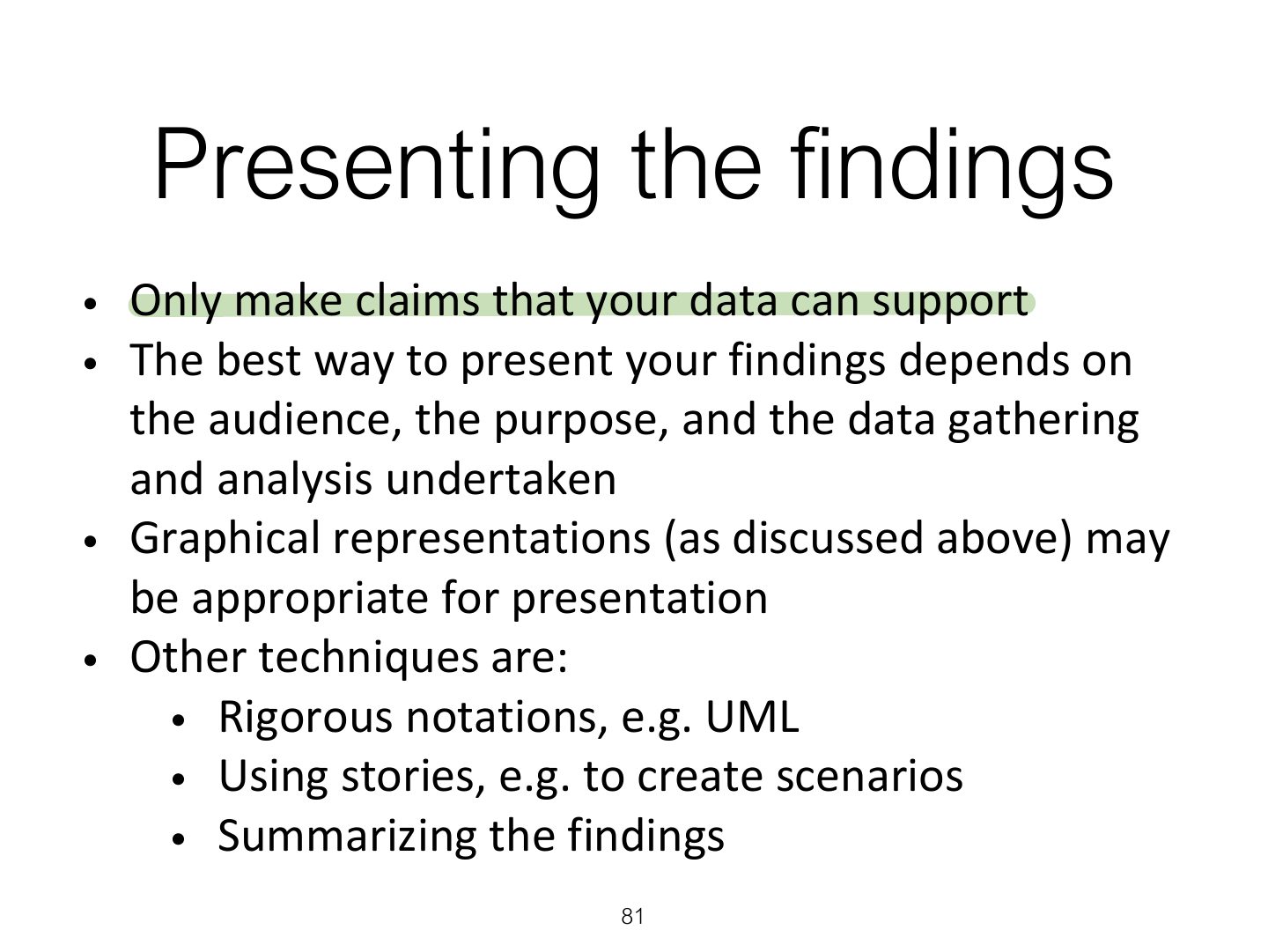
Presenting the findings
Summary