"The system shall be user-friendly" mainly fails to be:
Writing Excellent Requirements
Characteristics of excellent individual requirements and requirement sets, guidelines on perspective, writing style, level of detail, representation techniques and avoiding ambiguity, and sample requirements before and after improvement.
How to read this page
Every original slide is shown unchanged. Yellow marks on a slide point to a numbered note: hover or tap a mark to jump to its note, and hover a note to see its marks. Questions tagged Past exam appeared on a real paper; Prediction questions are likely angles, not confirmed. Pick an answer to each question: a wrong pick tells you why it is wrong, so you can try again.
All 61 slides
- 1 Slide 1
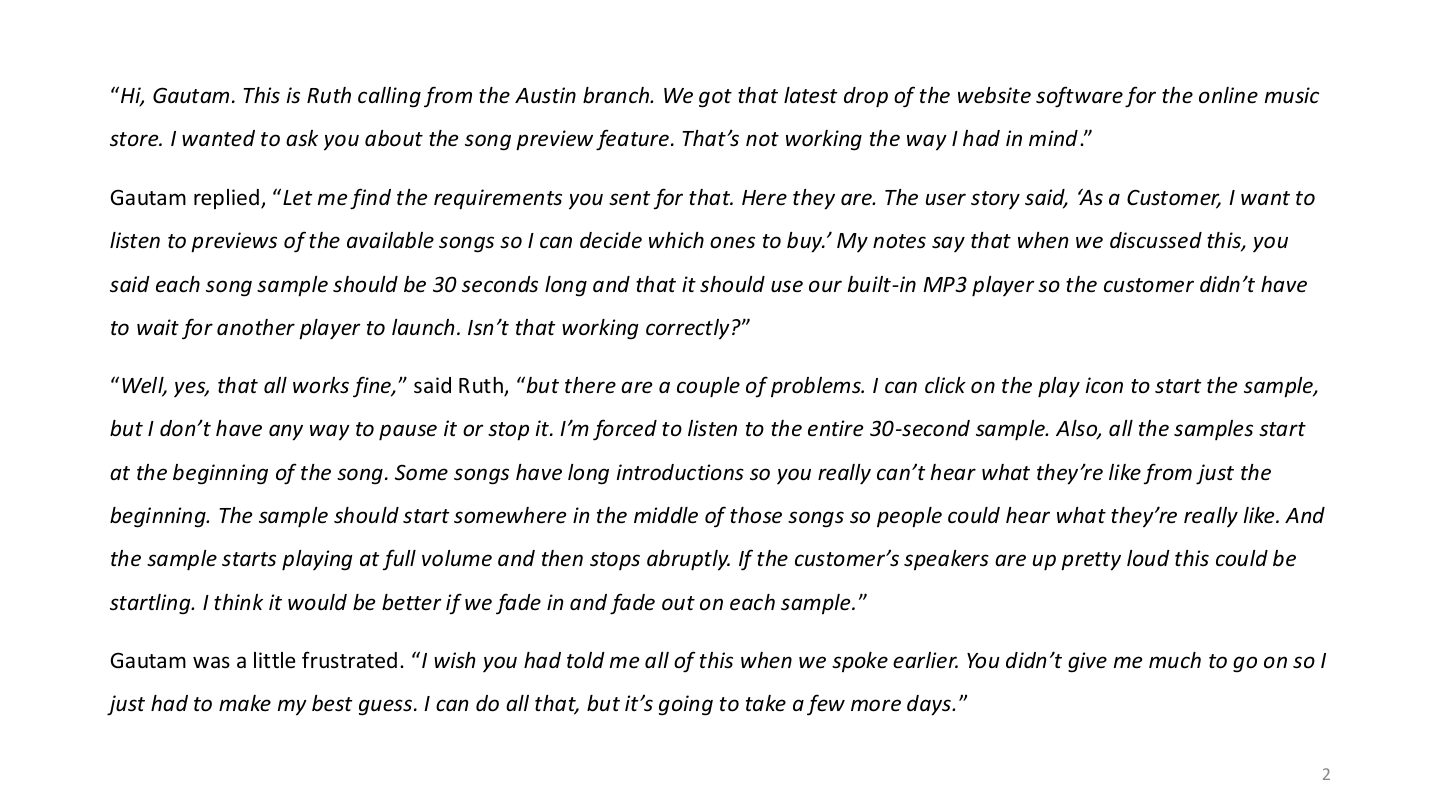
- 2 Hi, Gautam. This is Ruth calling from the Austin branch. We got that latest drop of the website software for the online music “
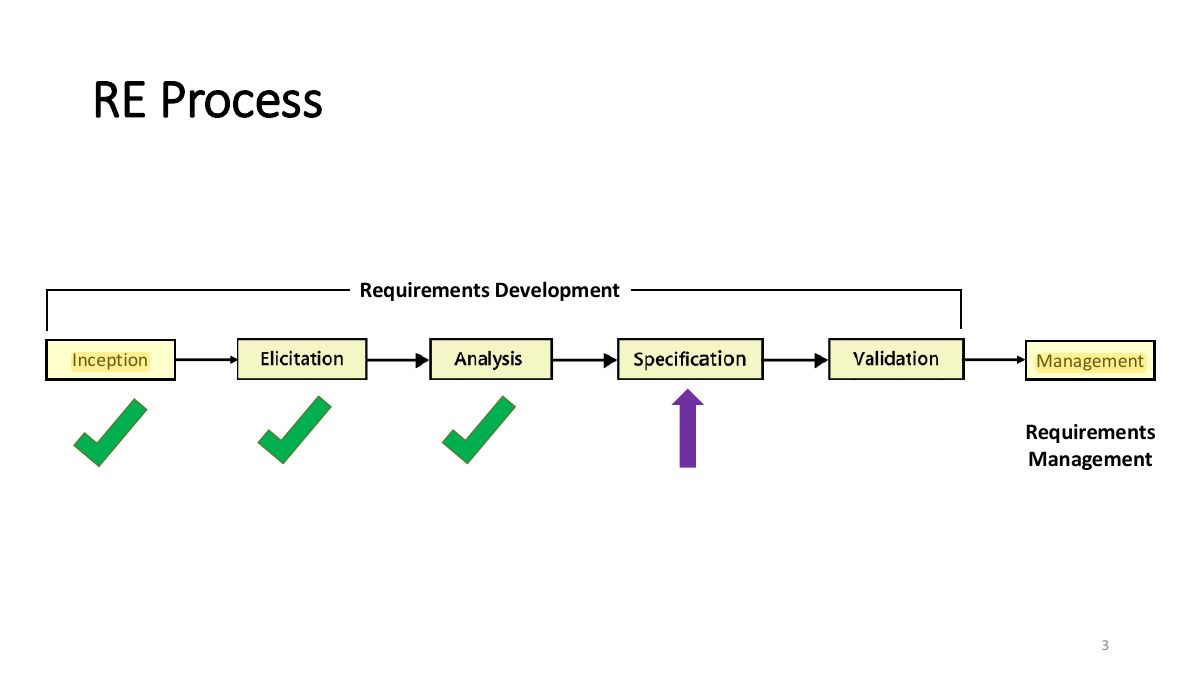
- 3 RE Process
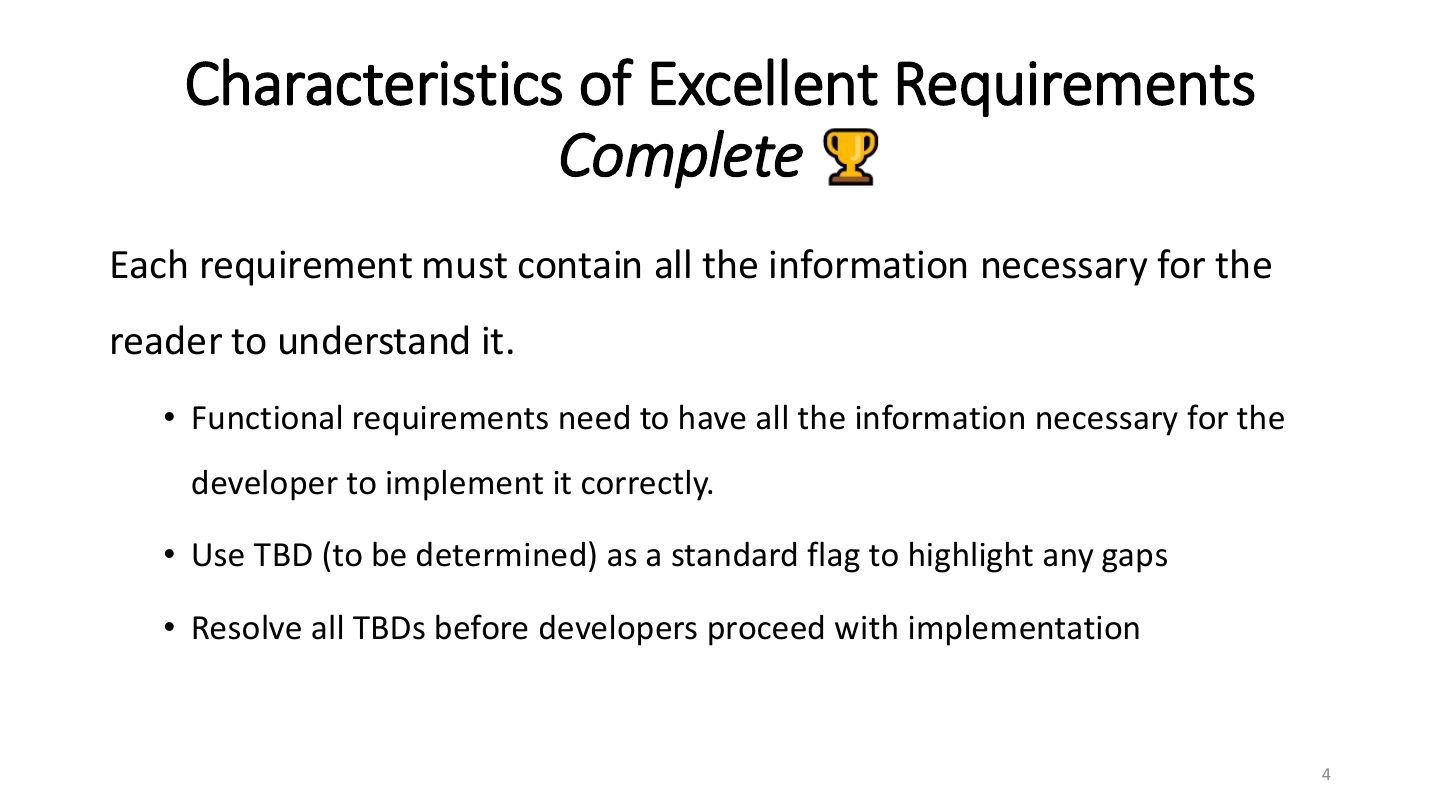
- 4 Characteristics of Excellent Requirements Complete
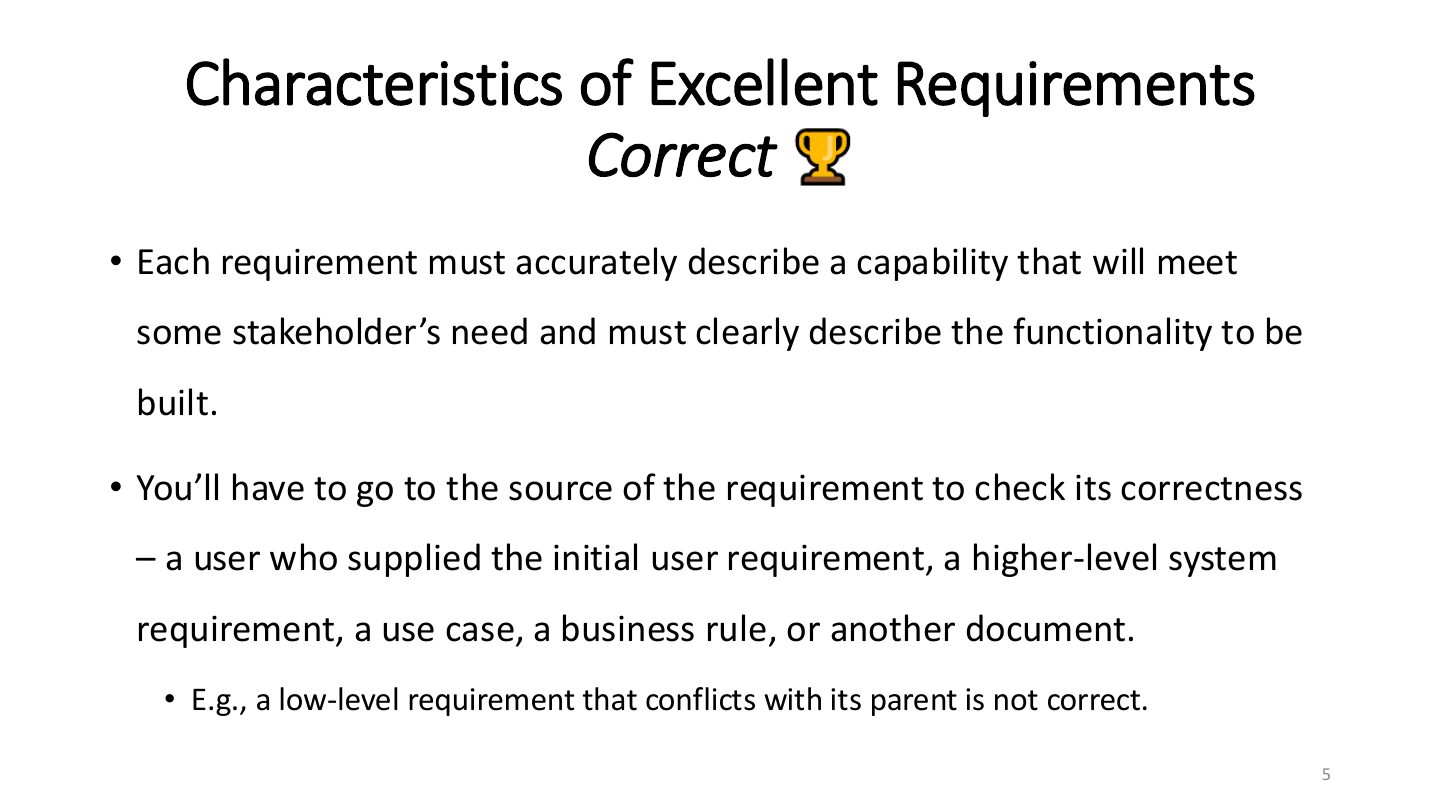
- 5 Characteristics of Excellent Requirements Correct
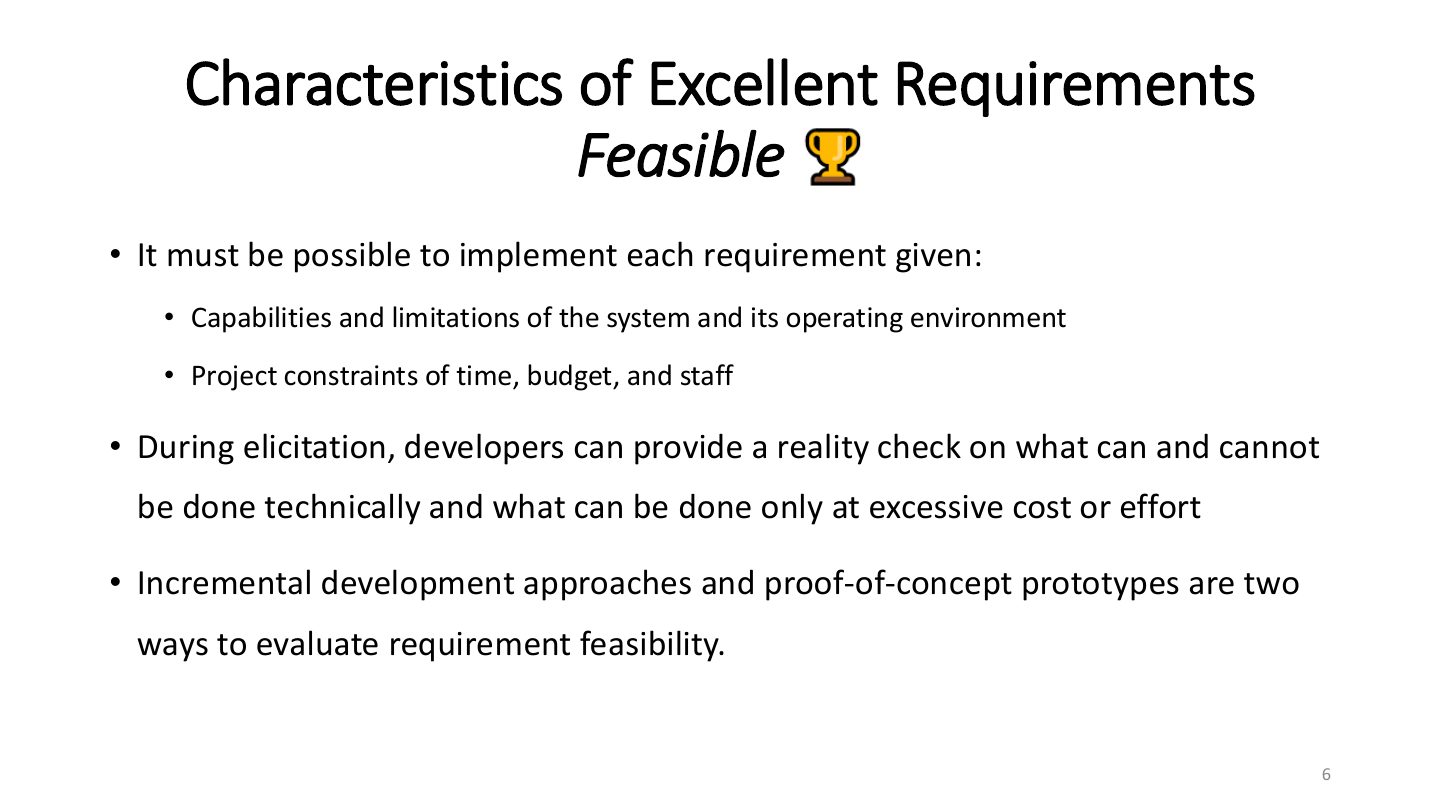
- 6 Characteristics of Excellent Requirements Feasible
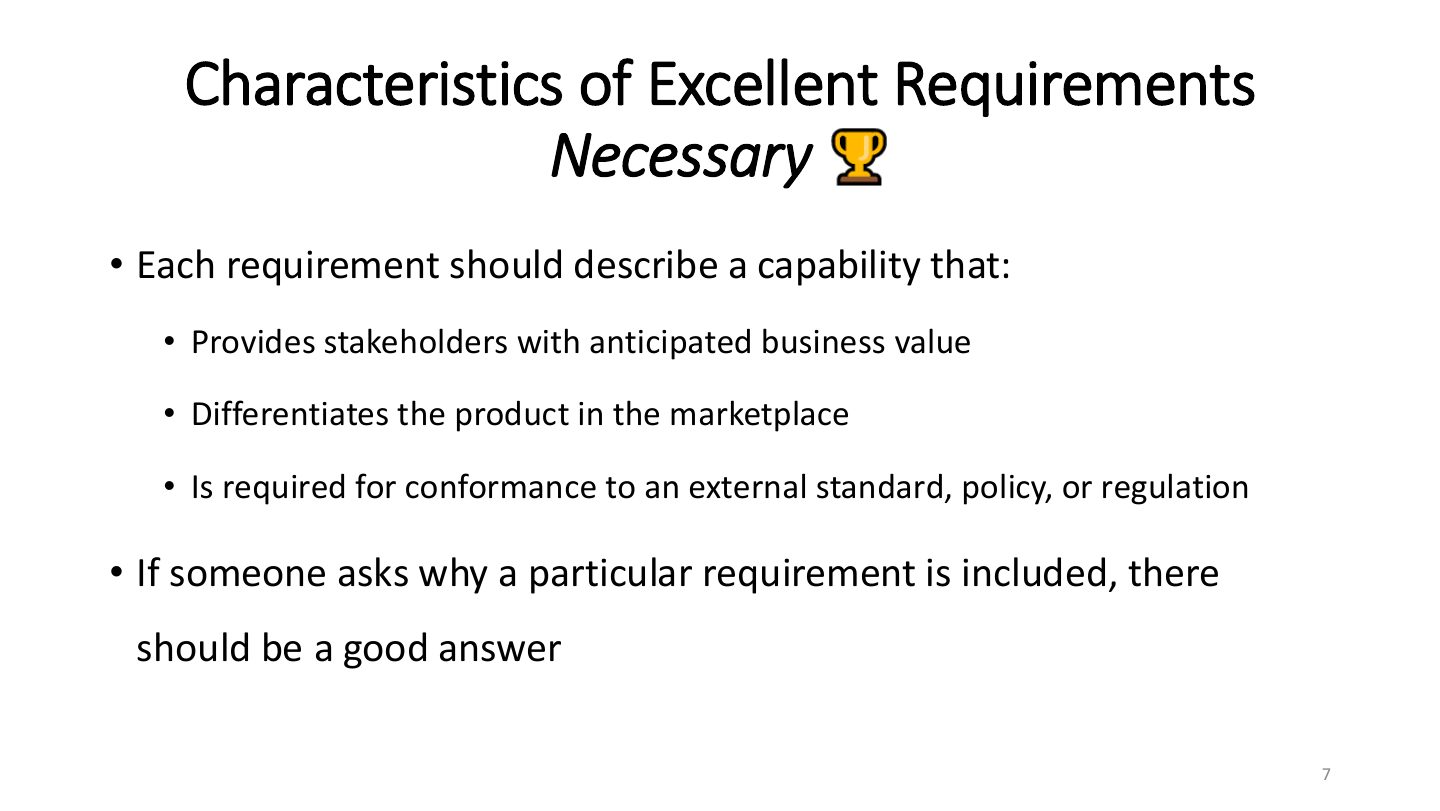
- 7 Characteristics of Excellent Requirements Necessary
- 8 Characteristics of Excellent Requirements Prioritized
- 9 Characteristics of Excellent Requirements Unambiguous
- 10 Characteristics of Excellent Requirements Verifiable
- 11 Characteristics of Requirements Collections Complete
- 12 Characteristics of Requirements Collections Consistent
- 13 Characteristics of Requirements Collections Modifiable
- 14 Characteristics of Requirements Collections Traceable
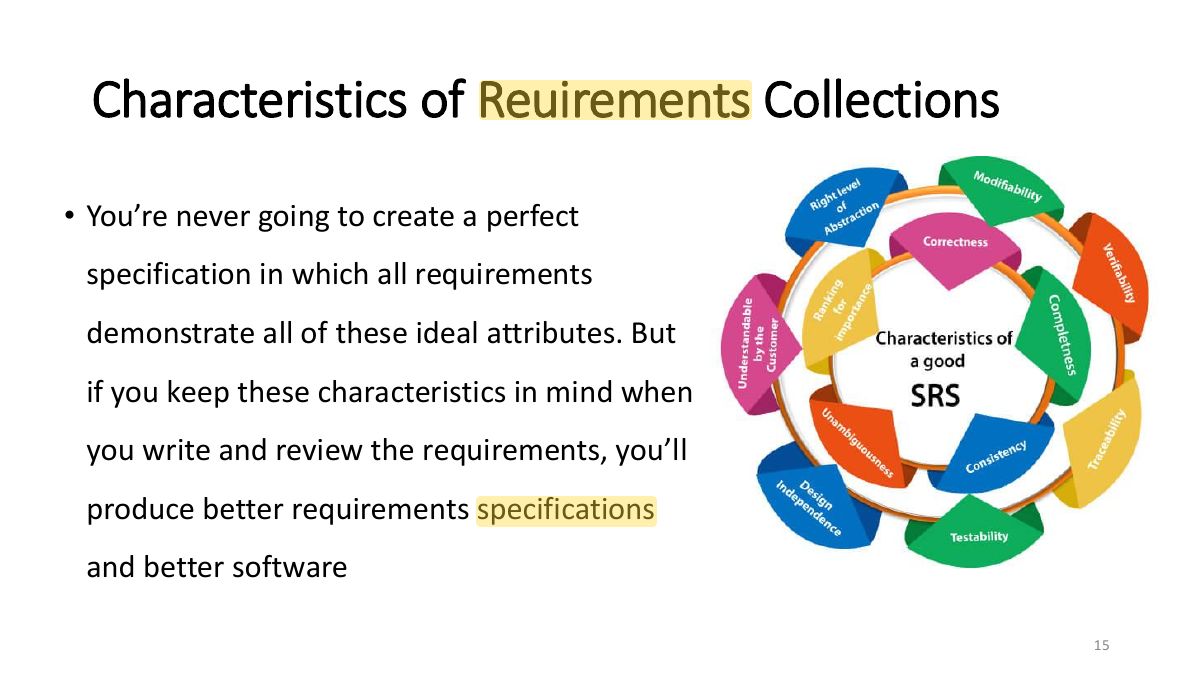
- 15 Characteristics of Reuirements Collections
- 16 Guideline for Writing Requirements
- 17 Guidelines for Requirements
- 18 1- System or User Perspective
- 19 1- System or User Perspective
- 20 1- System or User Perspective
- 21 2- Writing Style
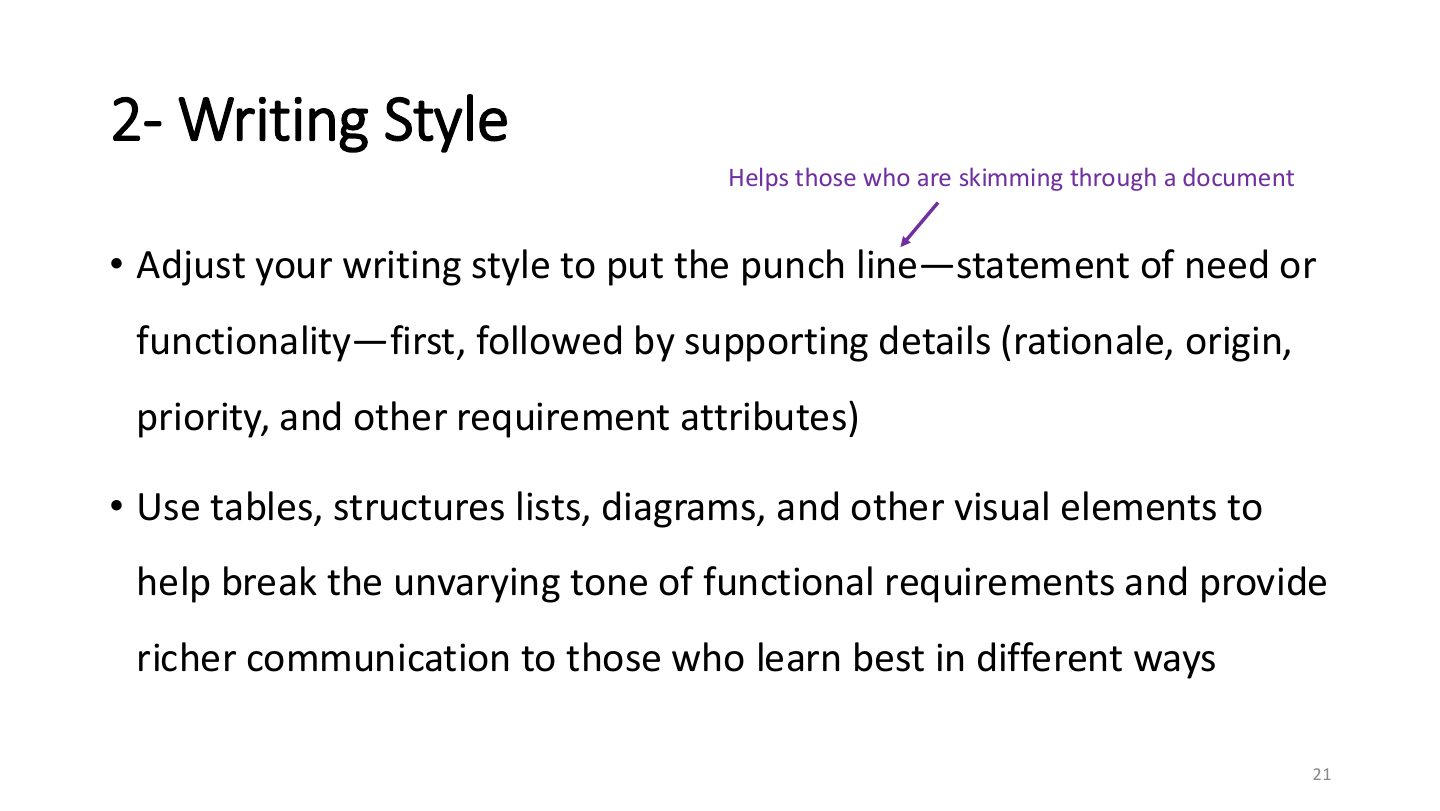
- 22 2- Writing Style
- 23 2- Writing Style - Tips
- 24 2- Writing Style - Tips
- 25 2- Writing Style - Tips
- 26 2- Writing Style - Tips
- 27 2- Writing Style - Tips
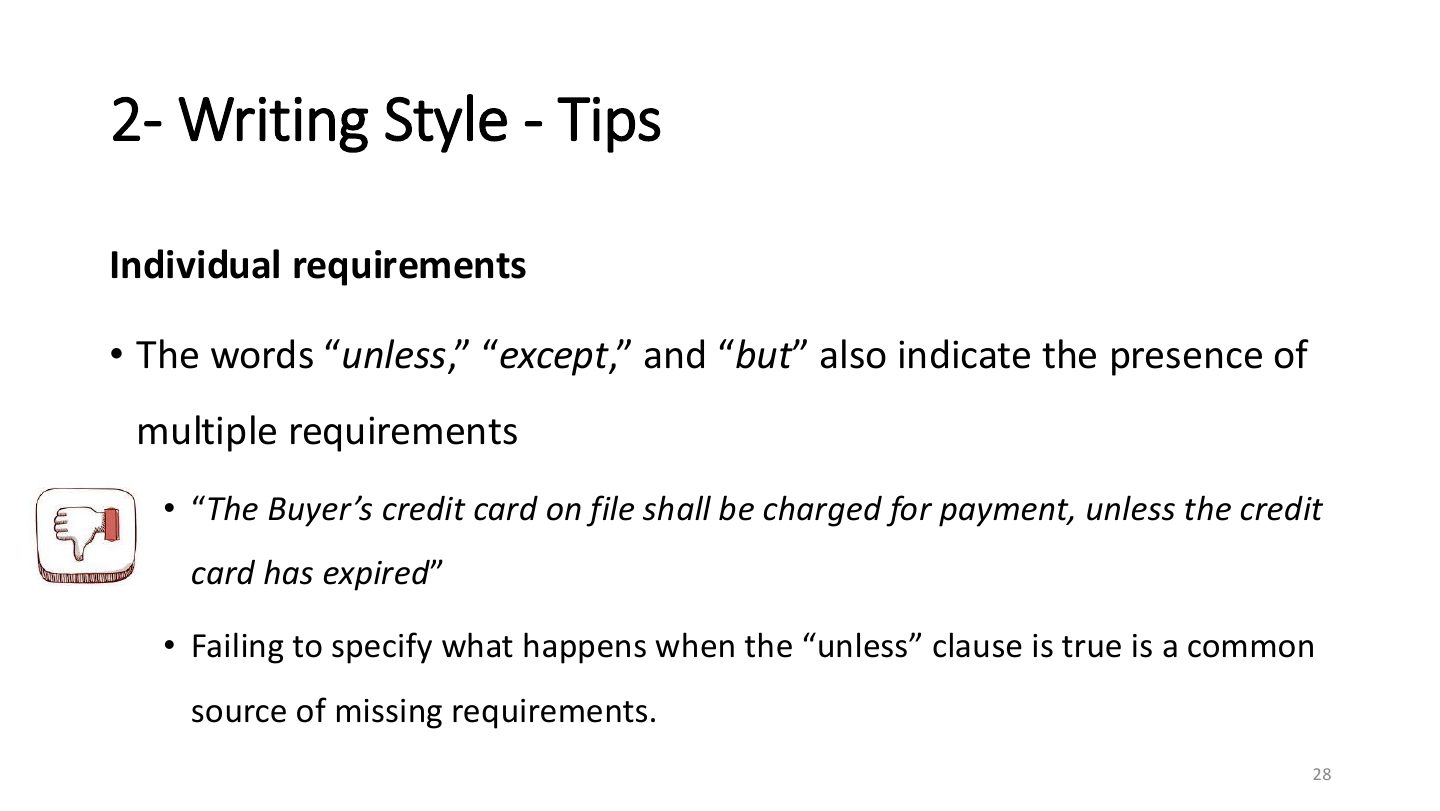
- 28 2- Writing Style - Tips
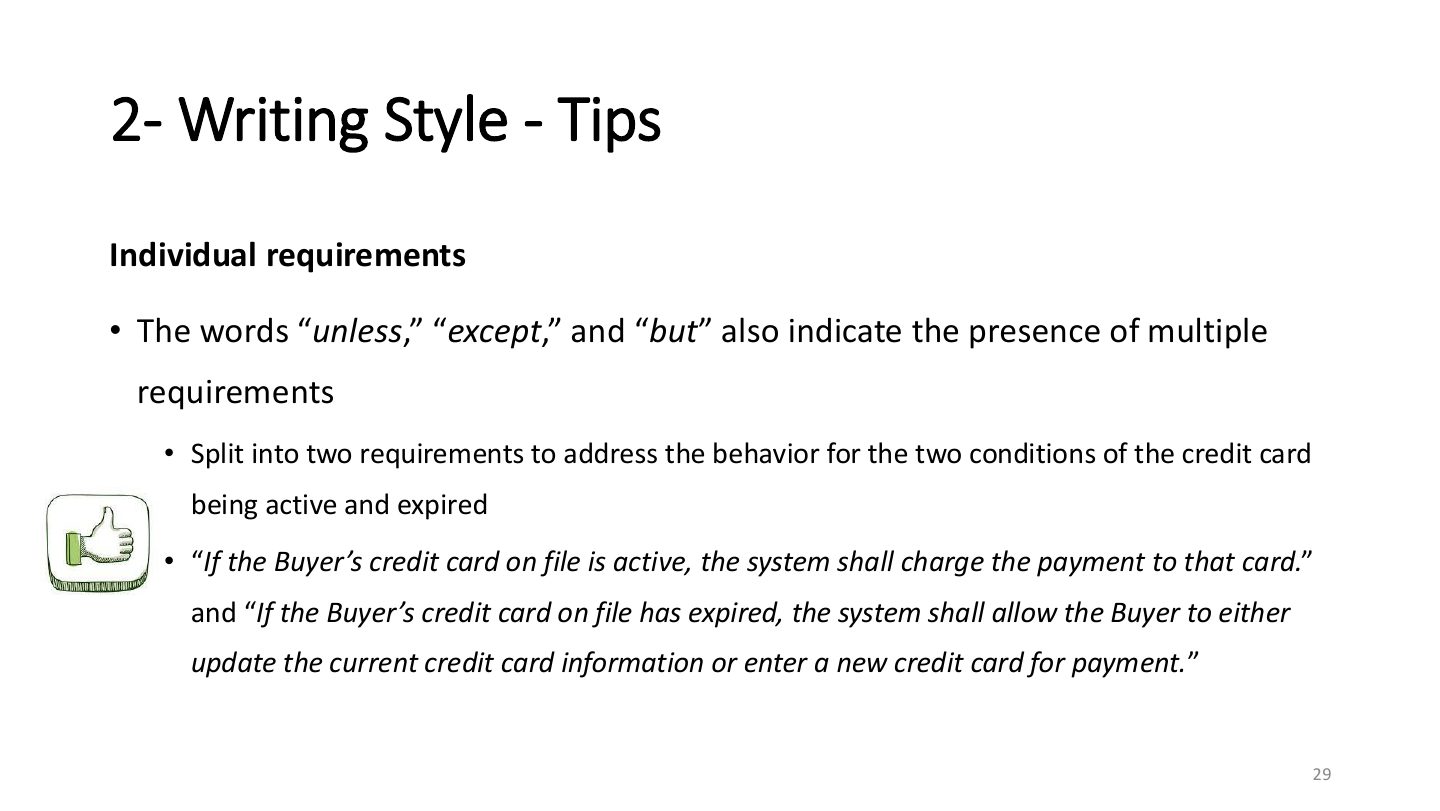
- 29 2- Writing Style - Tips
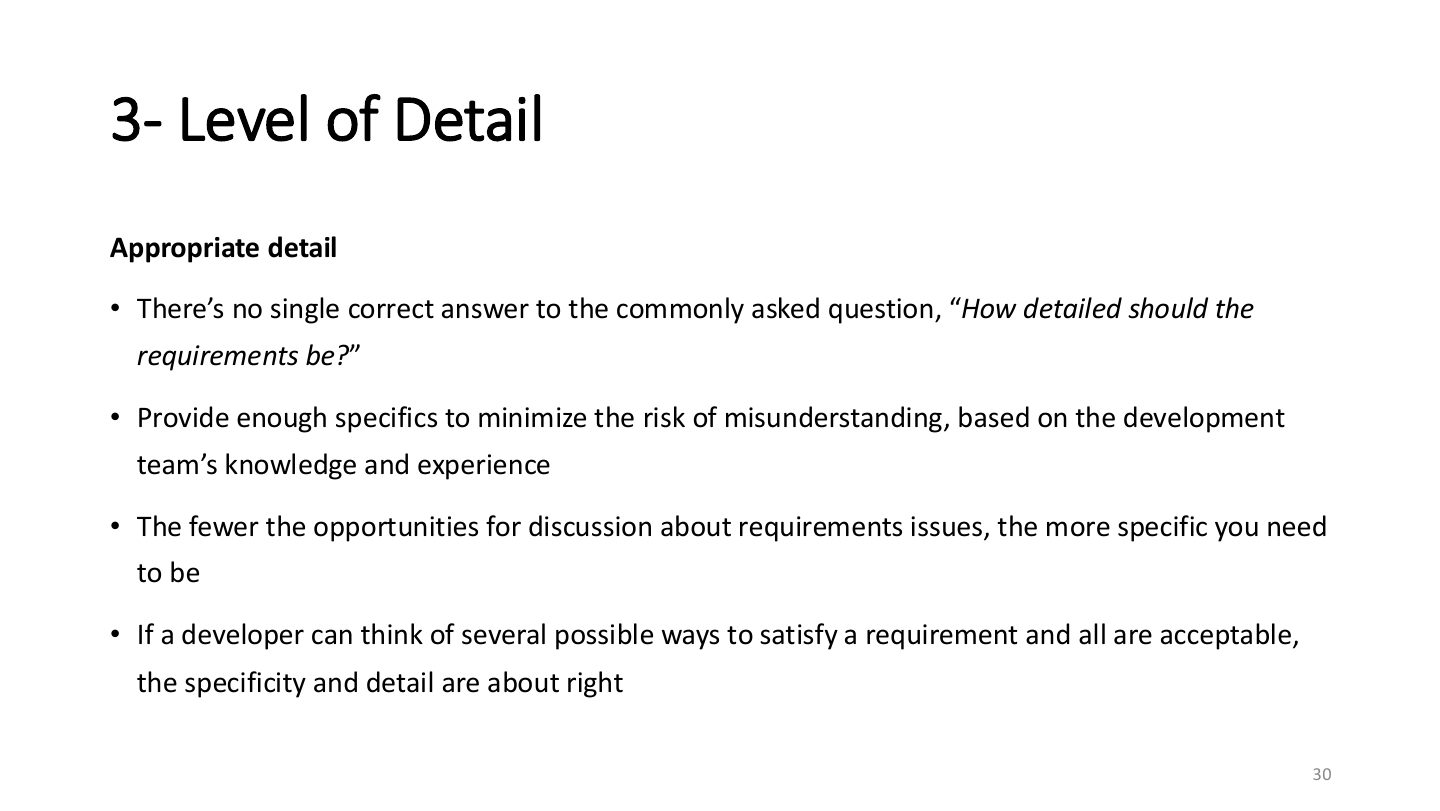
- 30 3- Level of Detail
- 31 3- Level of Detail
- 32 3- Level of Detail
- 33 3- Level of Detail
- 34 3- Level of Detail
- 35 3- Level of Detail
- 36 4- Representation Techniques
- 37 4- Representation Techniques
- 38 4- Representation Techniques
- 39 5- Avoiding Ambiguity
- 40 5- Avoiding Ambiguity – Sources
- 41 5- Avoiding Ambiguity – Sources
- 42 5- Avoiding Ambiguity – Sources
- 43 5- Avoiding Ambiguity – Sources
- 44 5- Avoiding Ambiguity – Sources
- 45 5- Avoiding Ambiguity – Sources
- 46 5- Avoiding Ambiguity – Sources
- 47 5- Avoiding Ambiguity – Sources
- 48 Sample Requirements, before and after
- 49 Sample Requirements, before and after
- 50 Sample Requirements, before and after
- 51 Sample Requirements, before and after
- 52 Sample Requirements, before and after
- 53 Sample Requirements, before and after
- 54 Sample Requirements, before and after
- 55 Sample Requirements, before and after
- 56 Sample Requirements, before and after
- 57 Sample Requirements, before and after
- 58 Sample Requirements, before and after
- 59 Sample Requirements, before and after
- 60 Sample Requirements, before and after
- 61 Sample Requirements, before and after
Slide 1
Hi, Gautam. This is Ruth calling from the Austin branch. We got that latest drop of the website software for the online music “
RE Process
Characteristics of Excellent Requirements Complete
Notes
Excellent requirement statements: complete, correct, feasible, necessary, prioritized, unambiguous, verifiable.
Exam angle
Characteristics of Excellent Requirements Correct
Characteristics of Excellent Requirements Feasible
Characteristics of Excellent Requirements Necessary
Characteristics of Excellent Requirements Prioritized
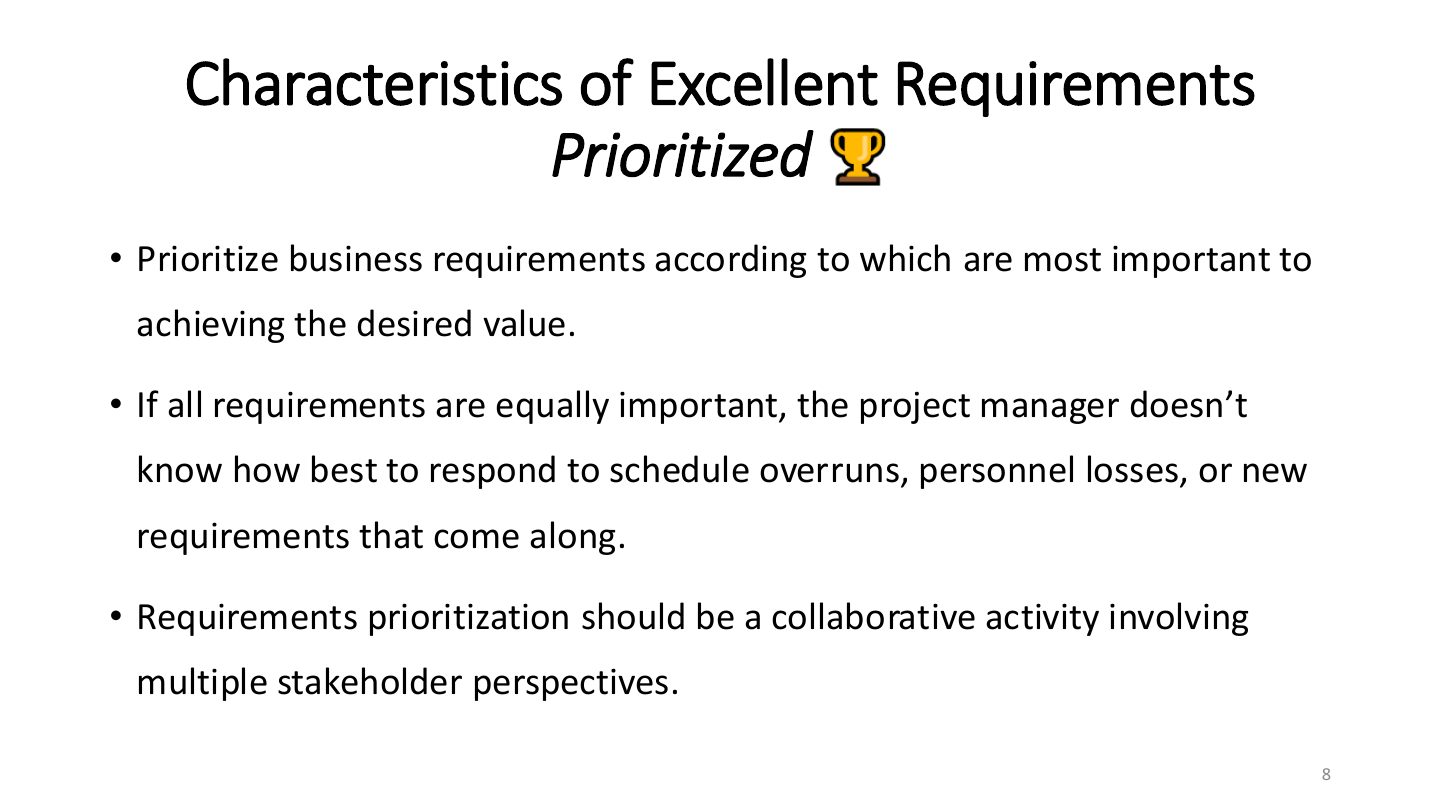
Characteristics of Excellent Requirements Unambiguous
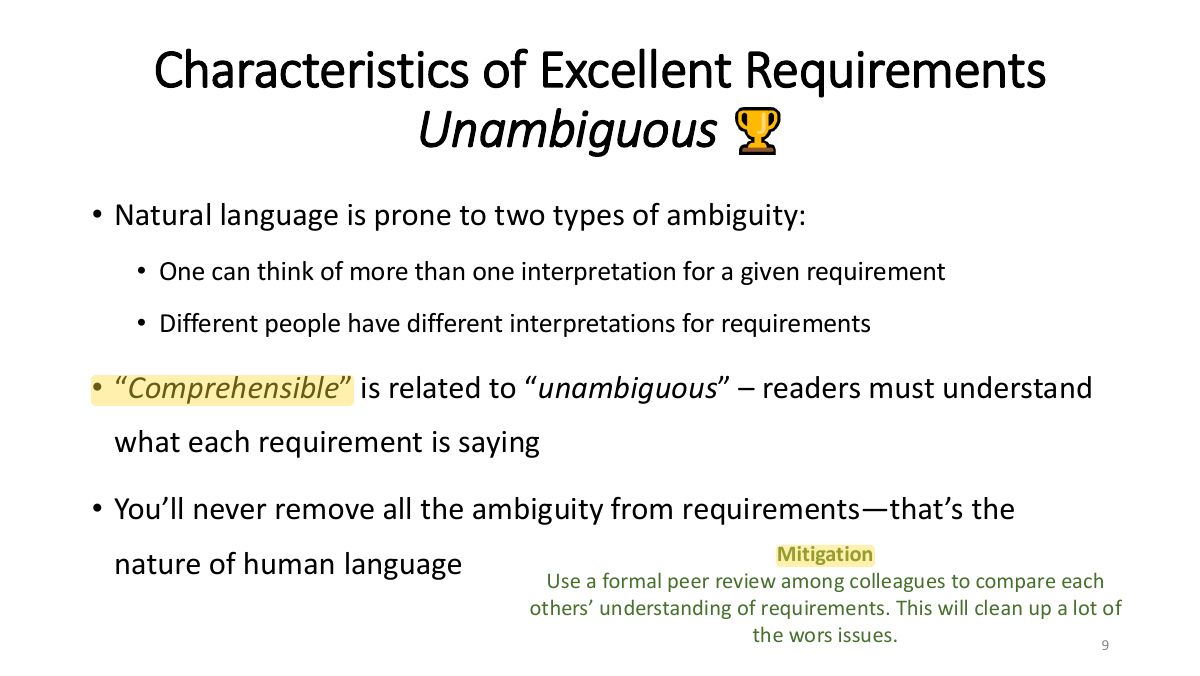
Characteristics of Excellent Requirements Verifiable
Characteristics of Requirements Collections Complete
Notes
Excellent requirement SETS: complete, consistent, modifiable, traceable.
Memory trick Statements: C-C-F-N-P-U-V. Sets: Complete, Consistent, Modifiable, Traceable.
Characteristics of Requirements Collections Consistent
Characteristics of Requirements Collections Modifiable
Characteristics of Requirements Collections Traceable
Characteristics of Reuirements Collections
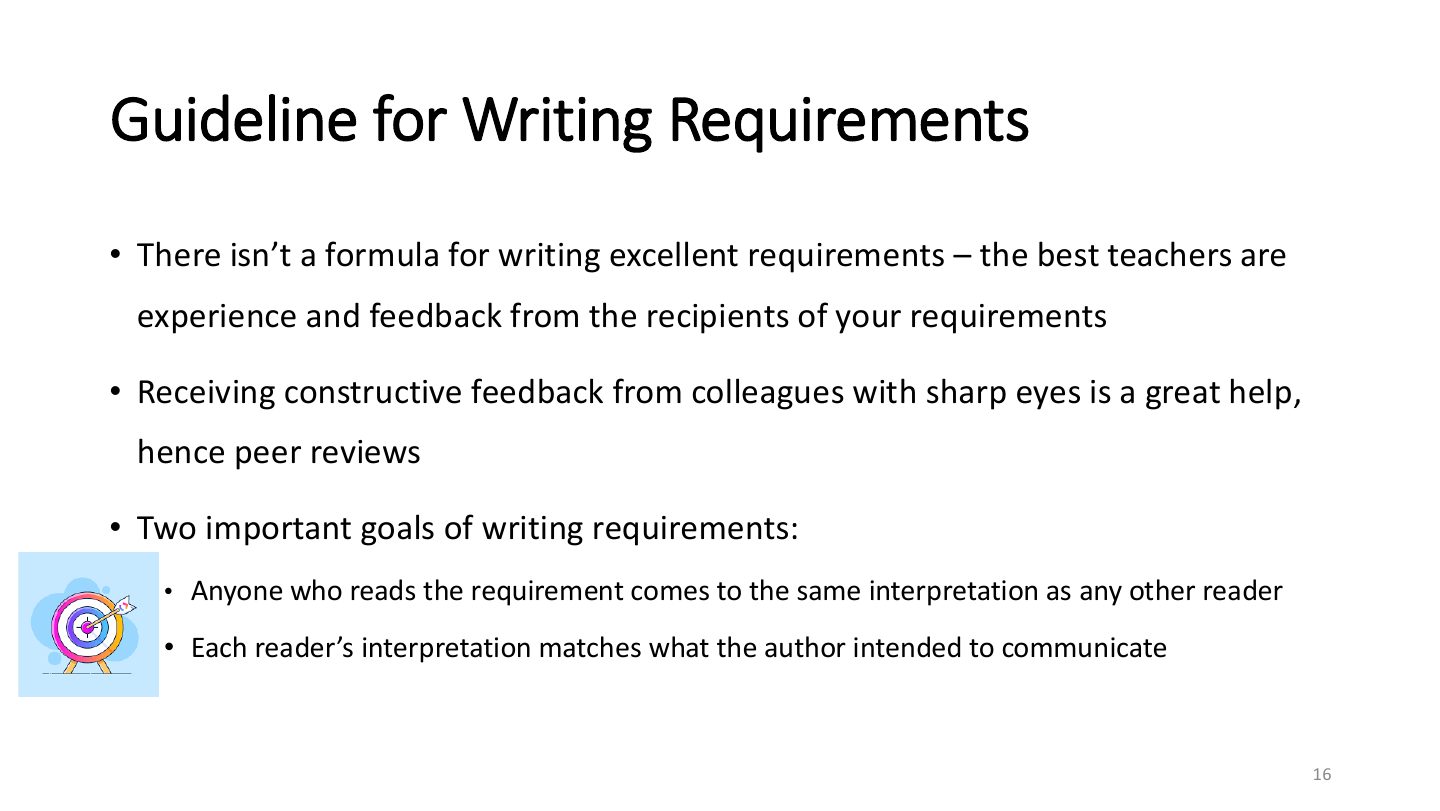
Guideline for Writing Requirements
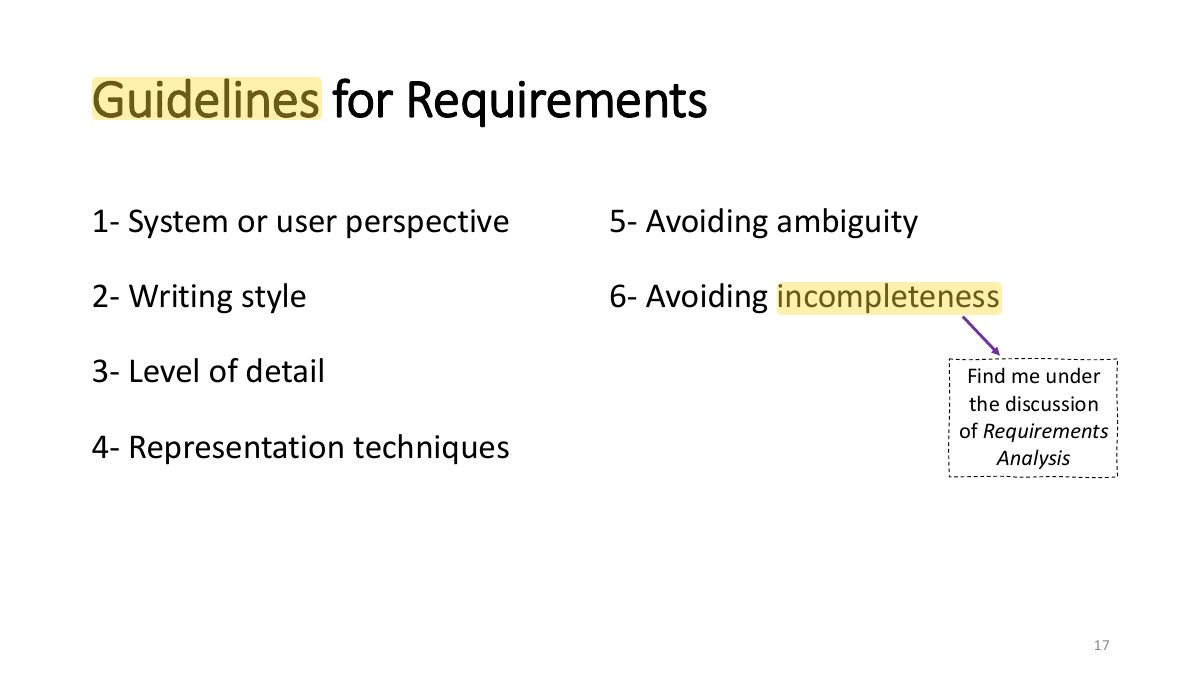
Guidelines for Requirements
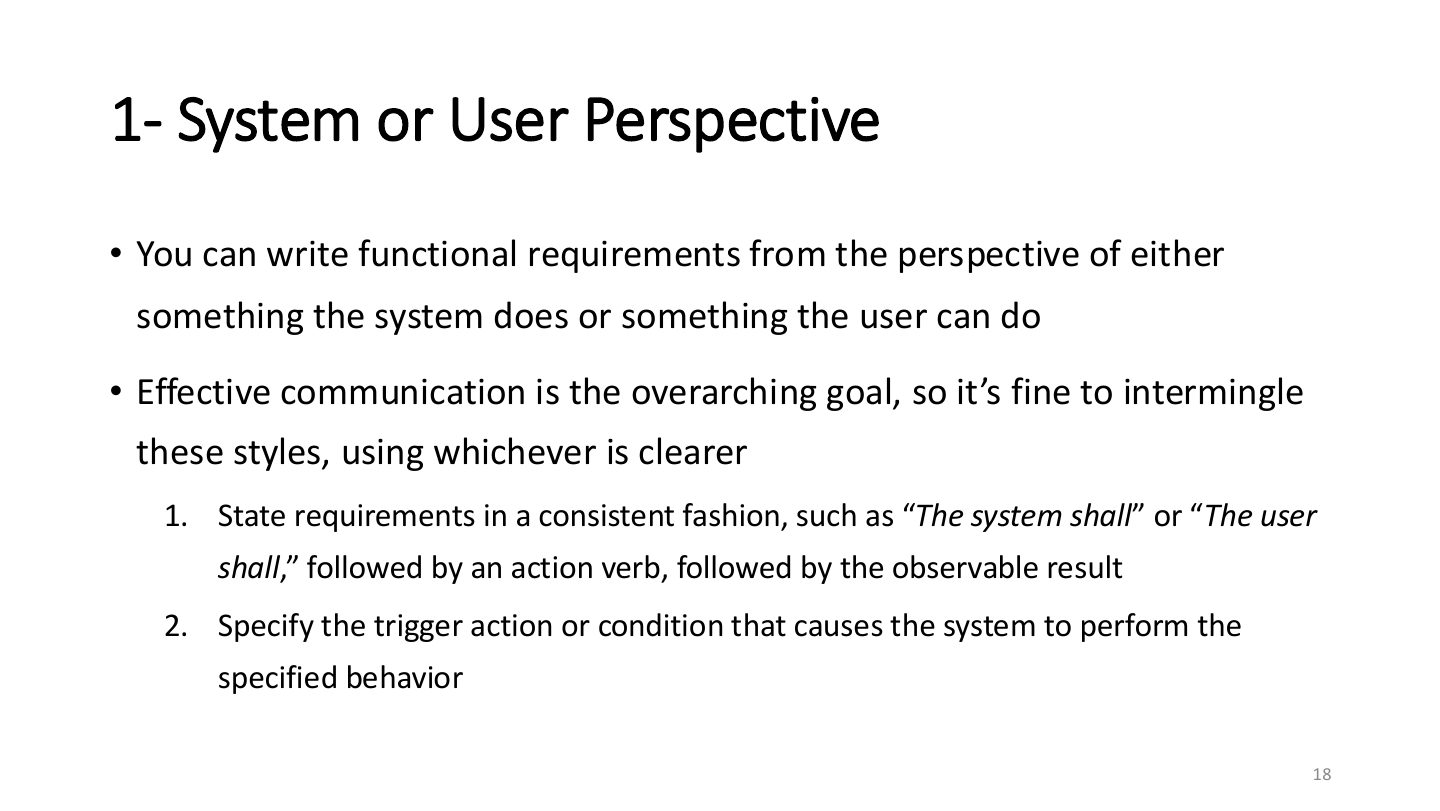
1- System or User Perspective
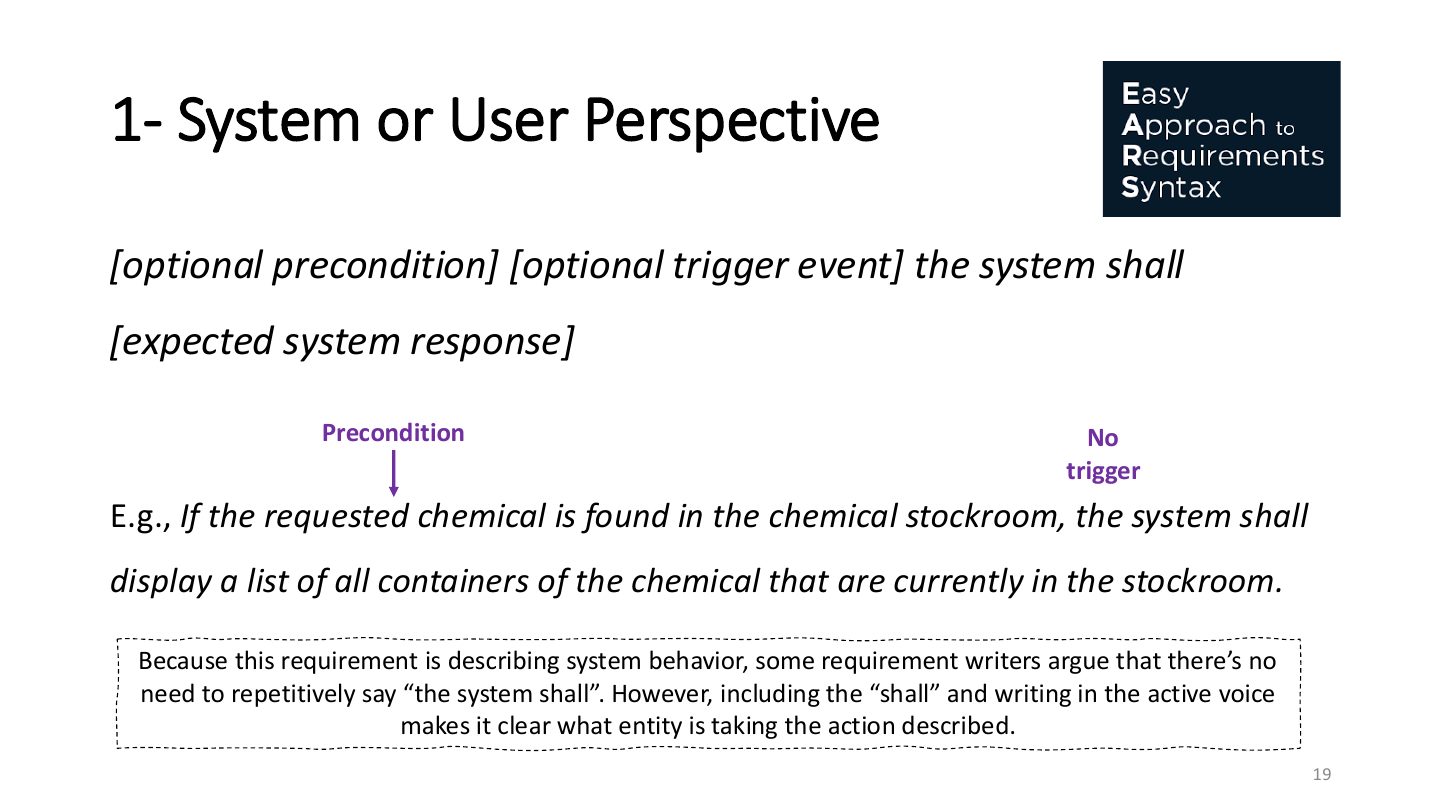
1- System or User Perspective
1- System or User Perspective
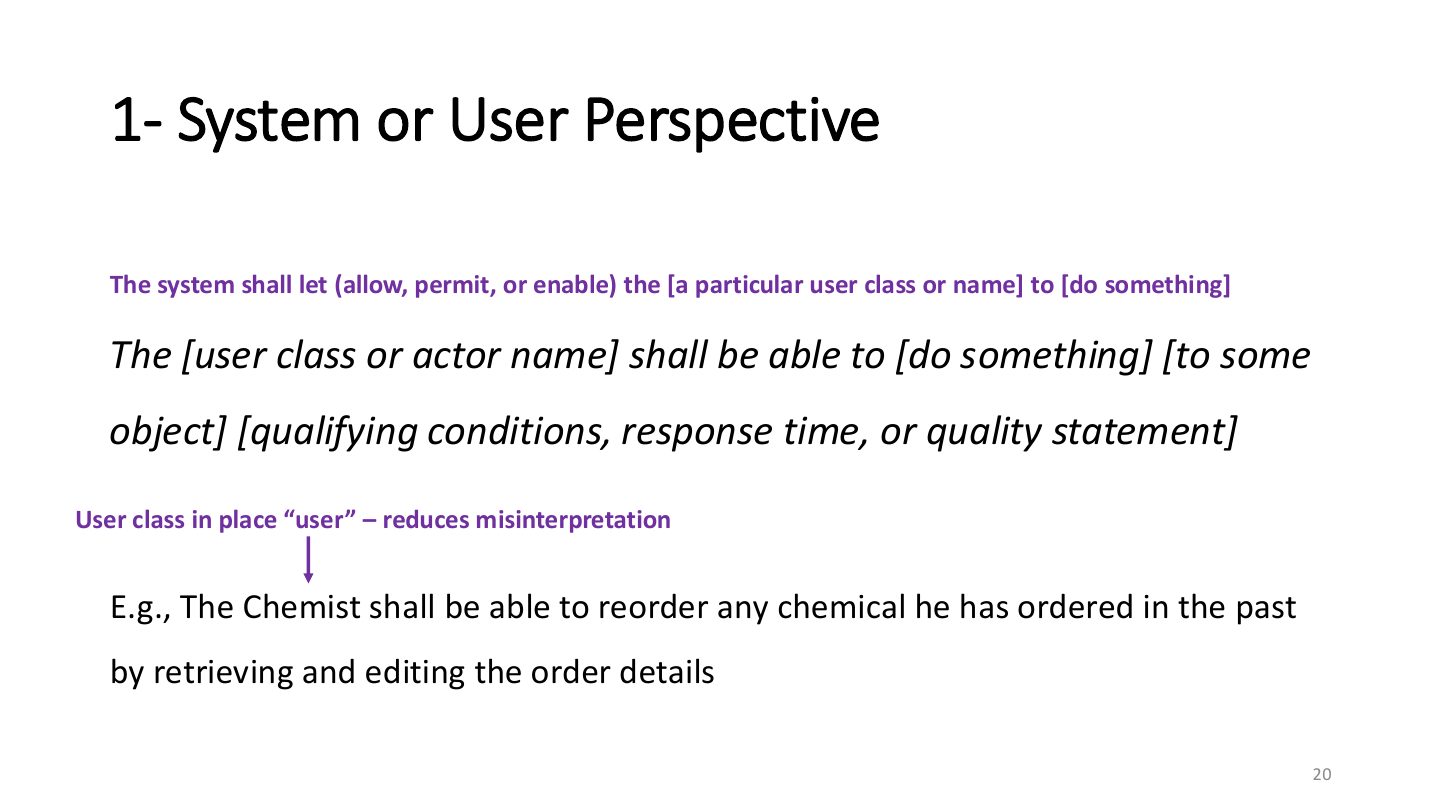
2- Writing Style
Notes
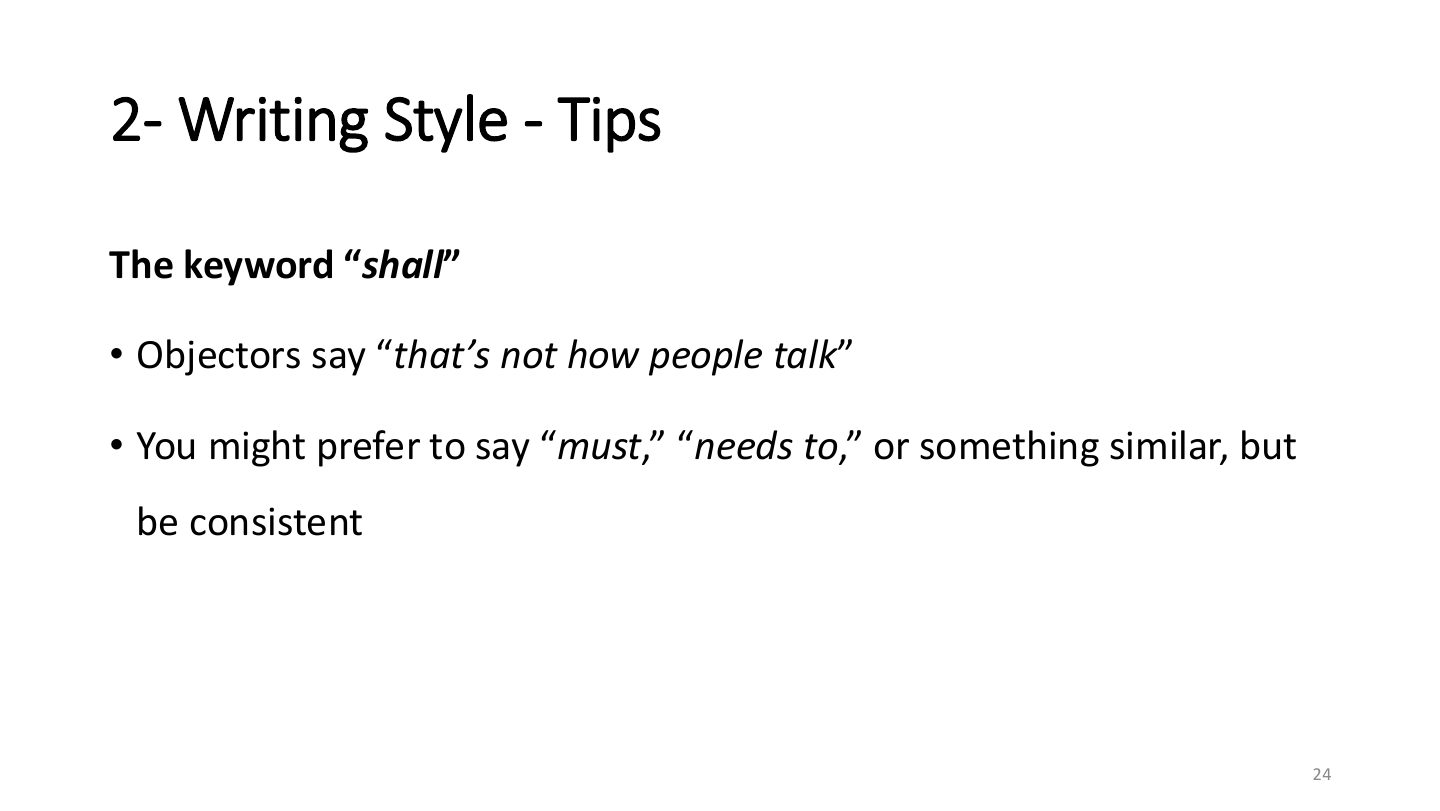
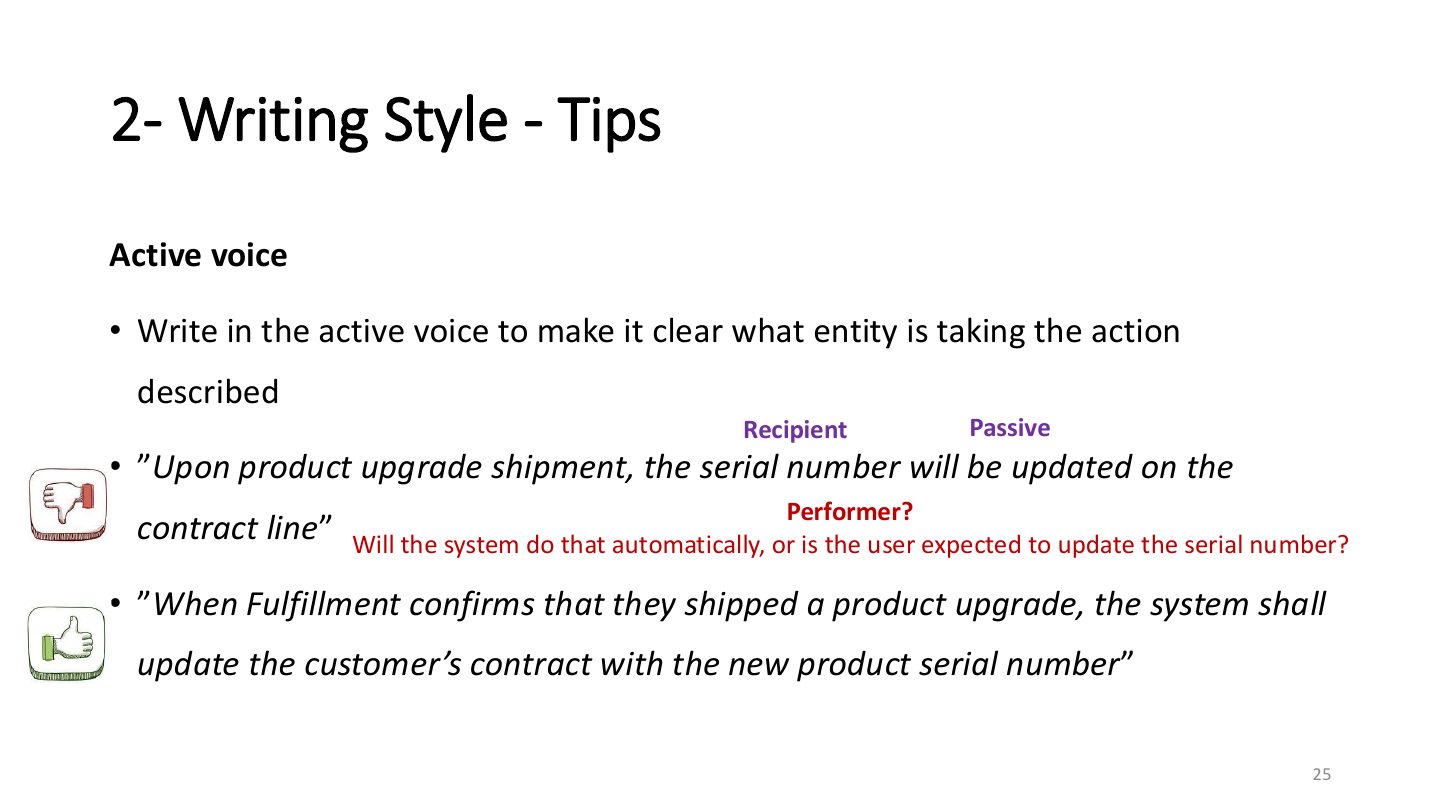
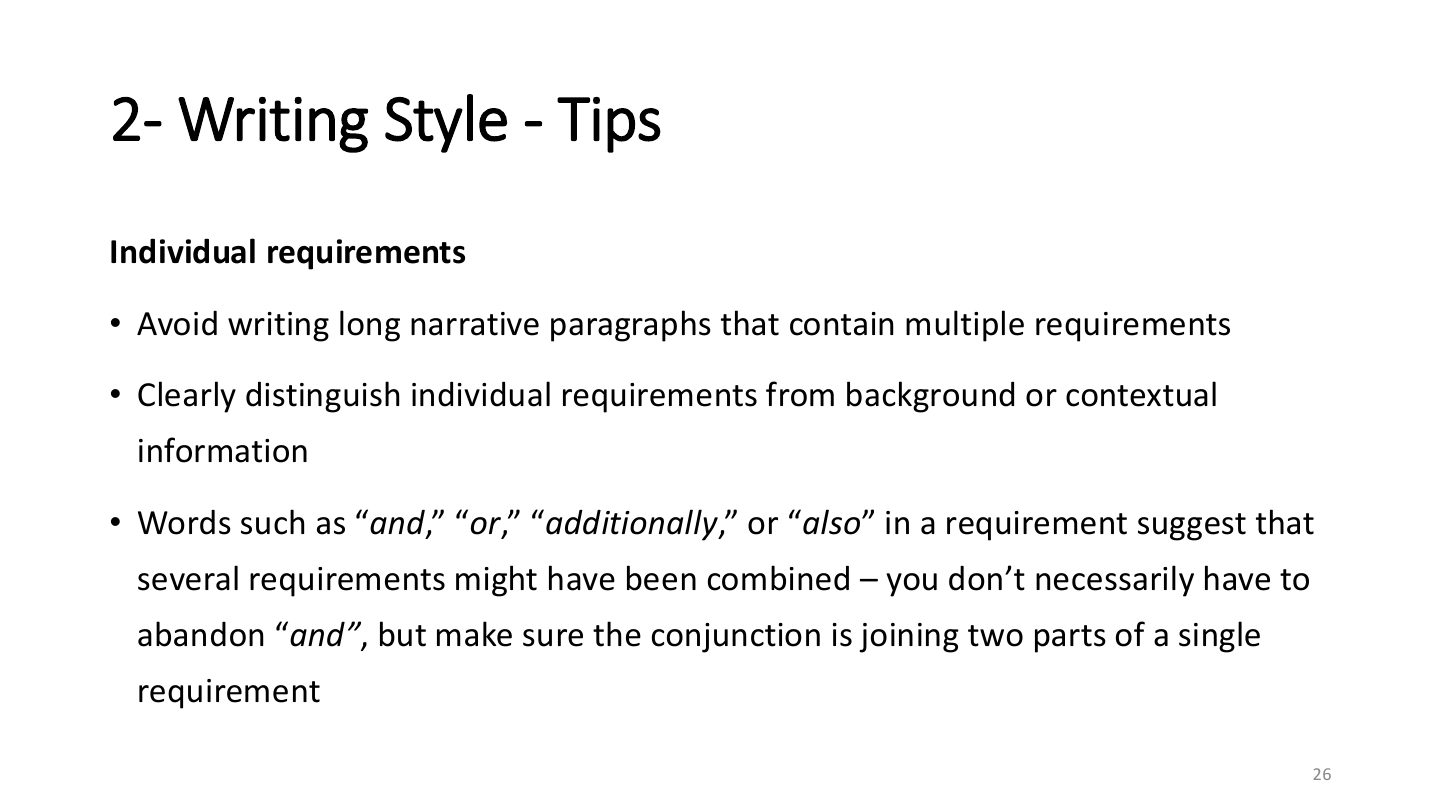
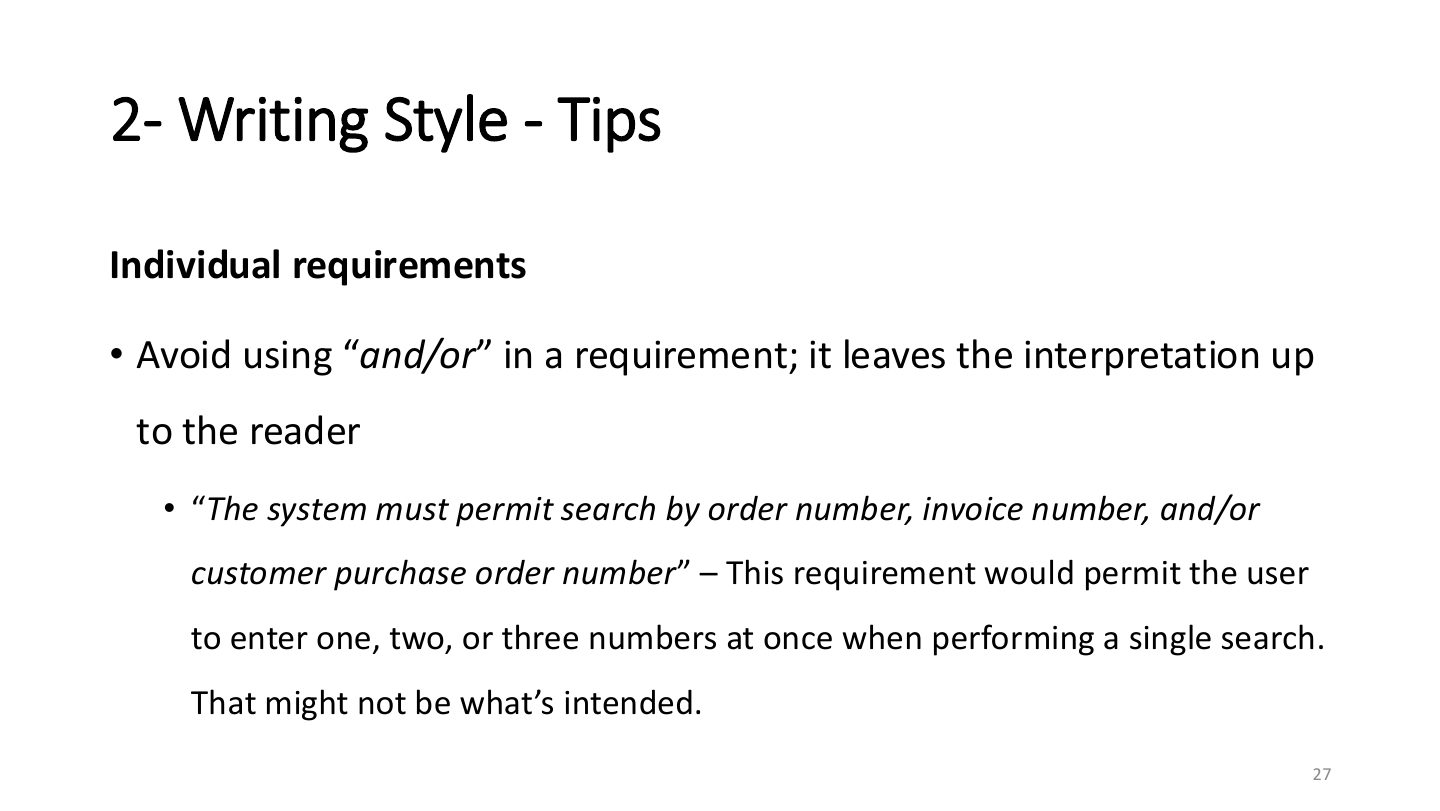
Style: one requirement per statement, active voice, "shall" for mandatory, consistent terms (glossary), avoid "and/or", "etc.".
2- Writing Style
2- Writing Style - Tips
2- Writing Style - Tips
2- Writing Style - Tips
2- Writing Style - Tips
2- Writing Style - Tips
2- Writing Style - Tips
2- Writing Style - Tips
3- Level of Detail
Notes
Level of detail: enough that developers and testers share the same understanding; more detail for outsourced or safety-critical work.
3- Level of Detail
3- Level of Detail
3- Level of Detail
3- Level of Detail
3- Level of Detail
4- Representation Techniques
Notes
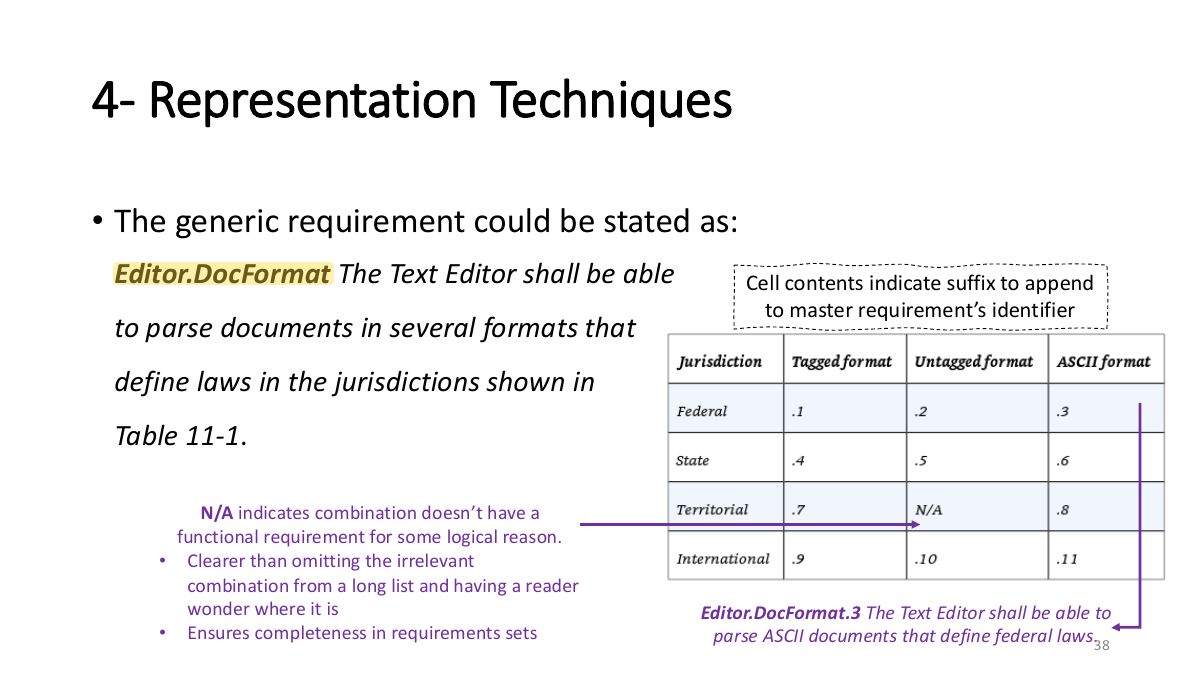
Use tables, decision tables, diagrams when text gets complicated.
4- Representation Techniques
4- Representation Techniques
5- Avoiding Ambiguity
Notes
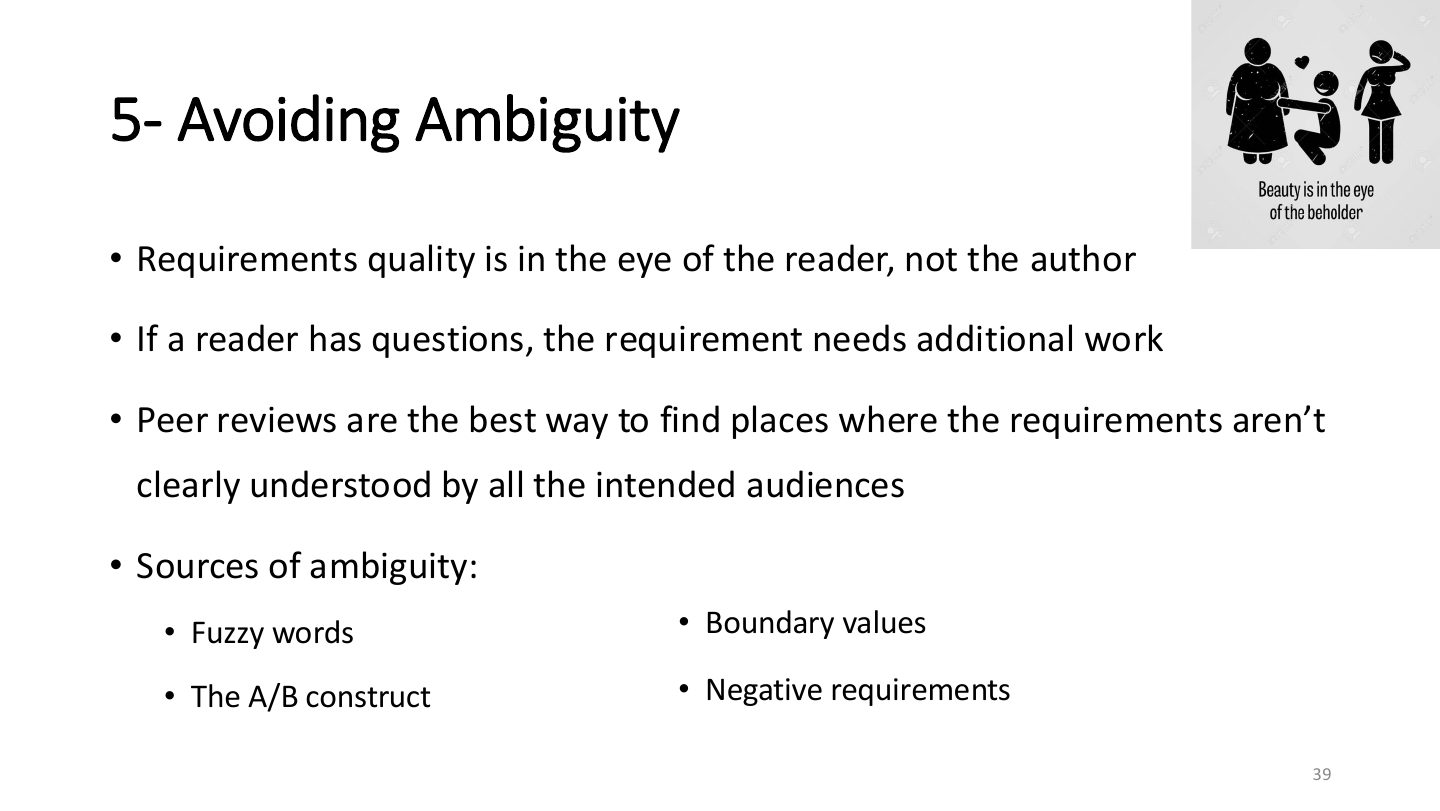
Ambiguity sources: vague words (fast, user-friendly, flexible, robust, efficient), "support", "etc.", "and/or", negative requirements, boundary values.
Trap Words like "fast", "easy", "flexible", "minimize", "several" are unverifiable until quantified.
Exam angle
Which is unambiguous?
5- Avoiding Ambiguity – Sources
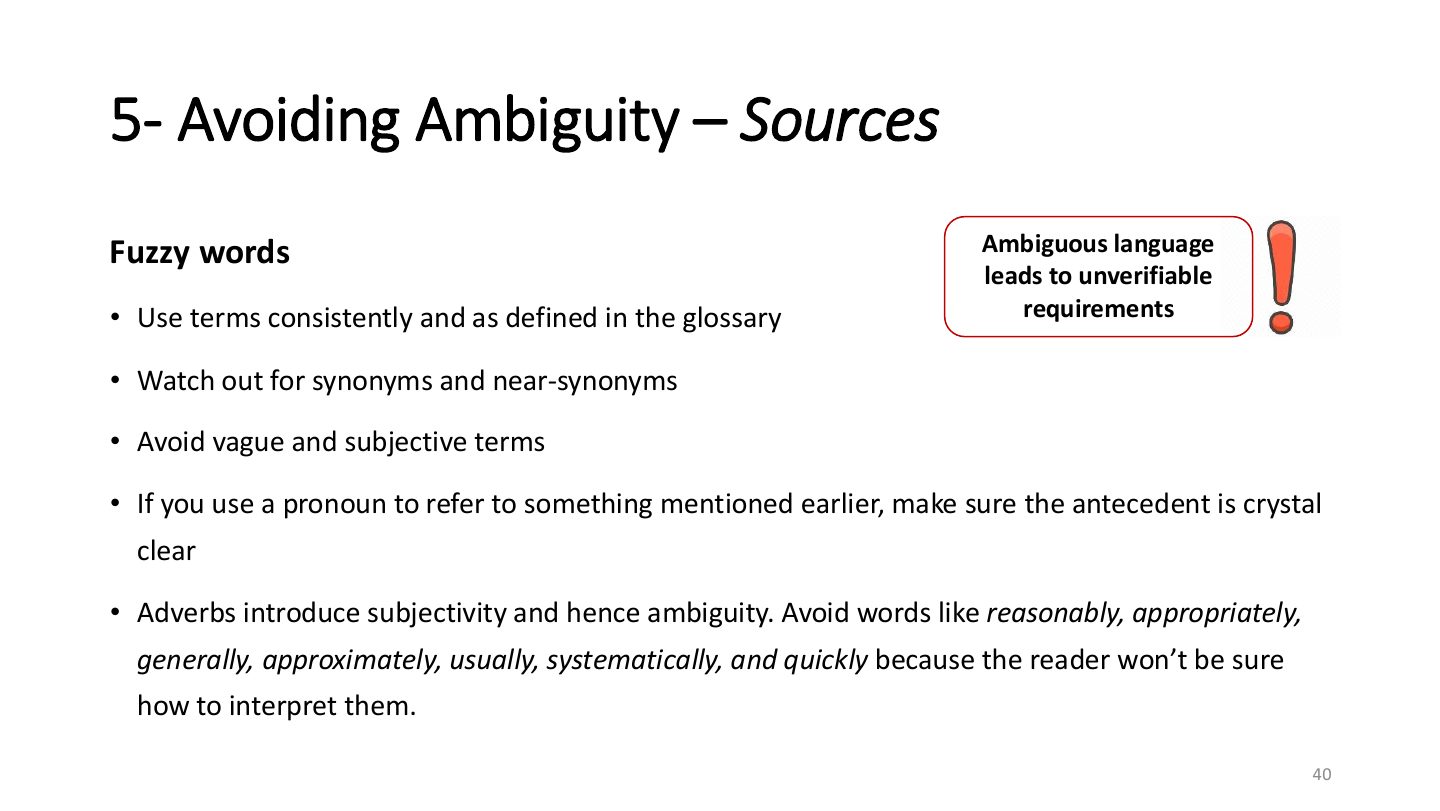
5- Avoiding Ambiguity – Sources
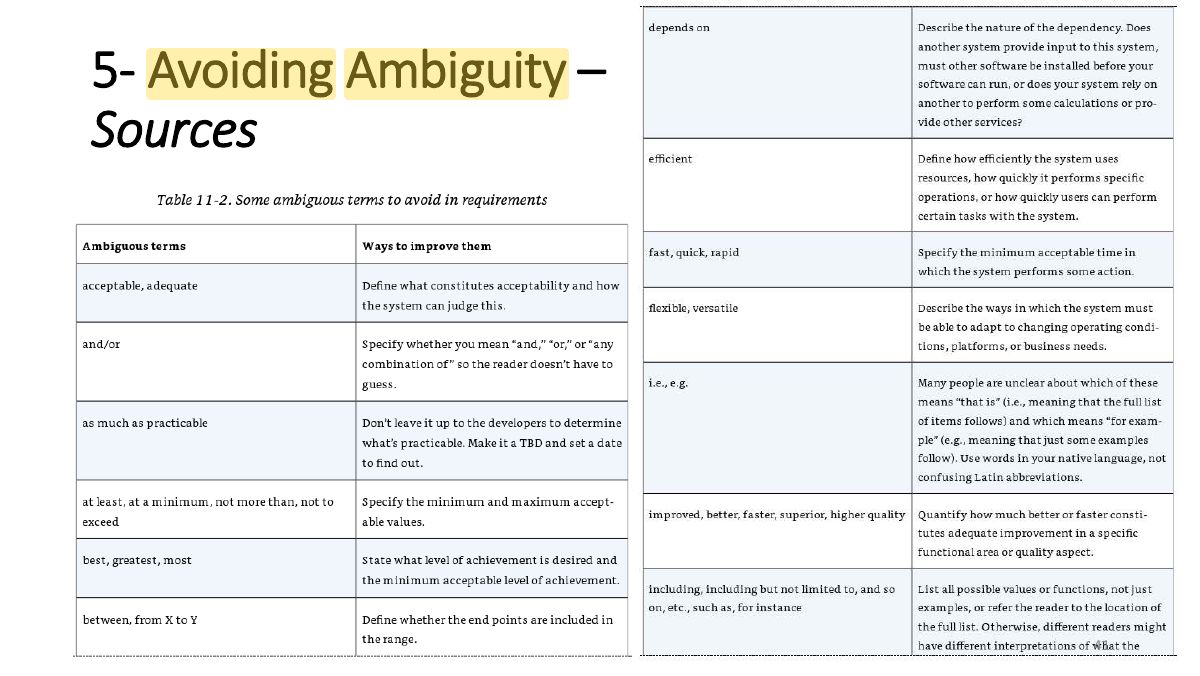
5- Avoiding Ambiguity – Sources
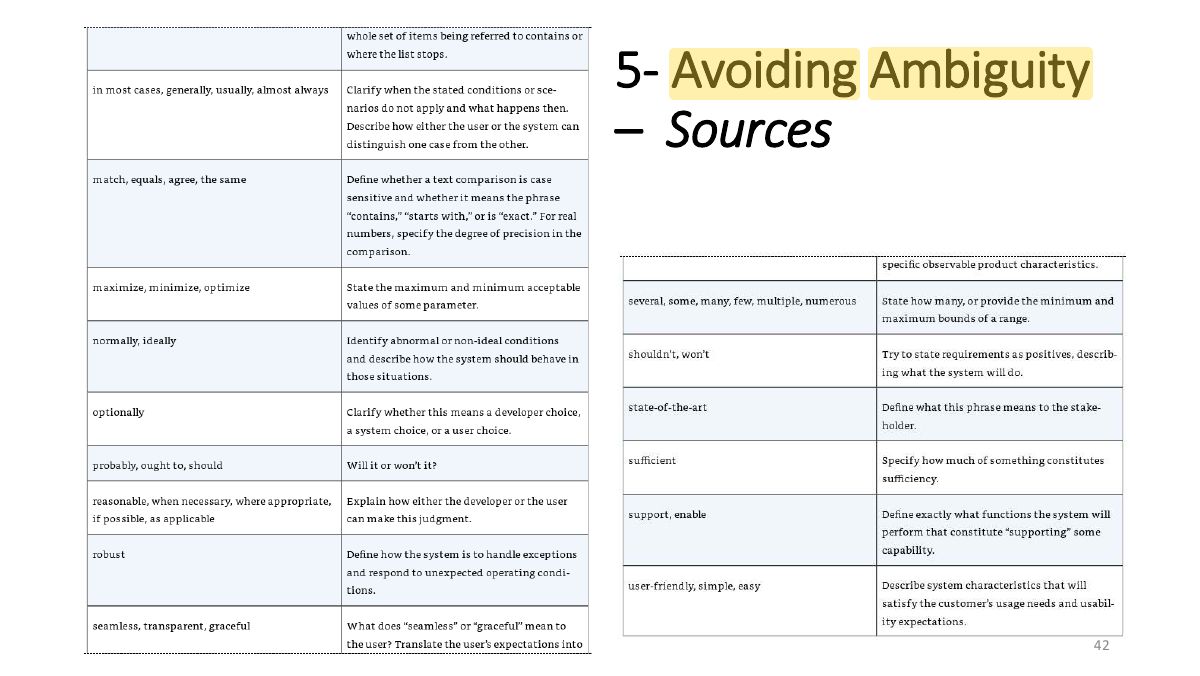
5- Avoiding Ambiguity – Sources
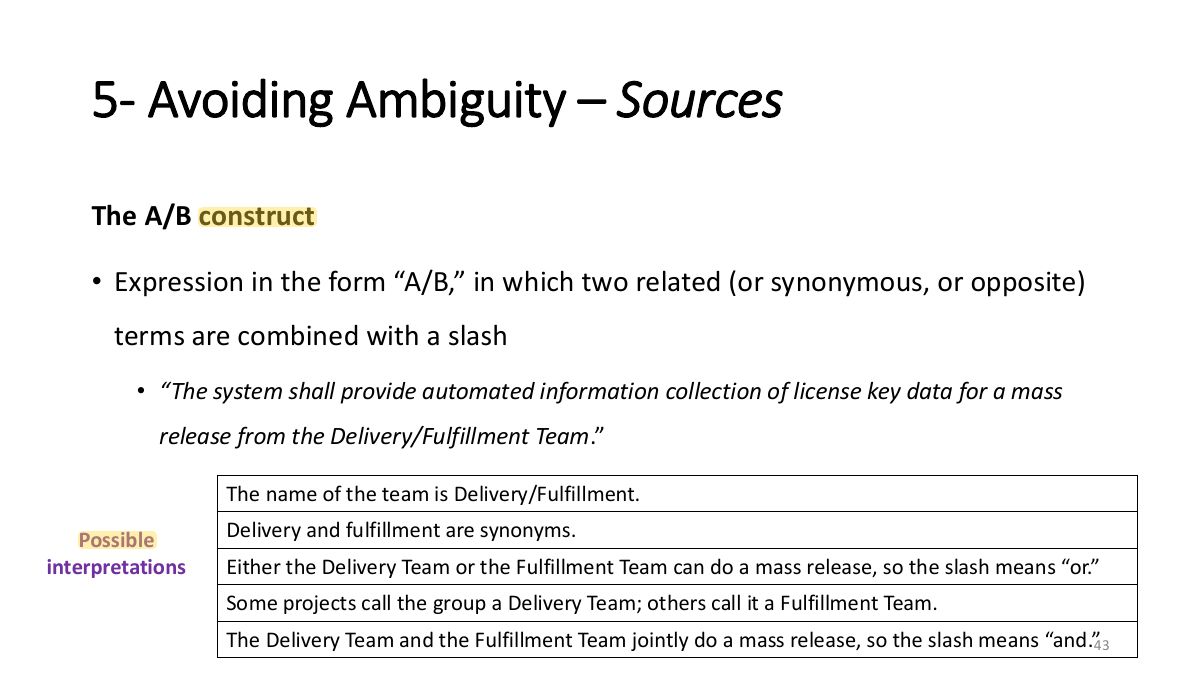
5- Avoiding Ambiguity – Sources
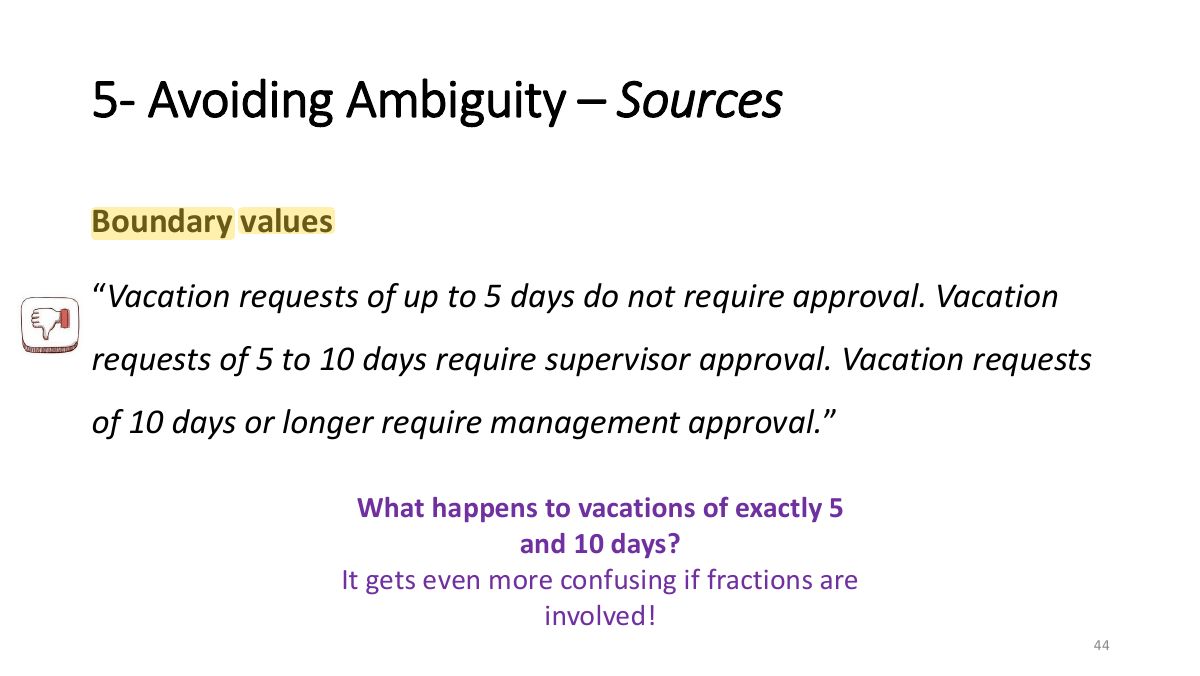
5- Avoiding Ambiguity – Sources
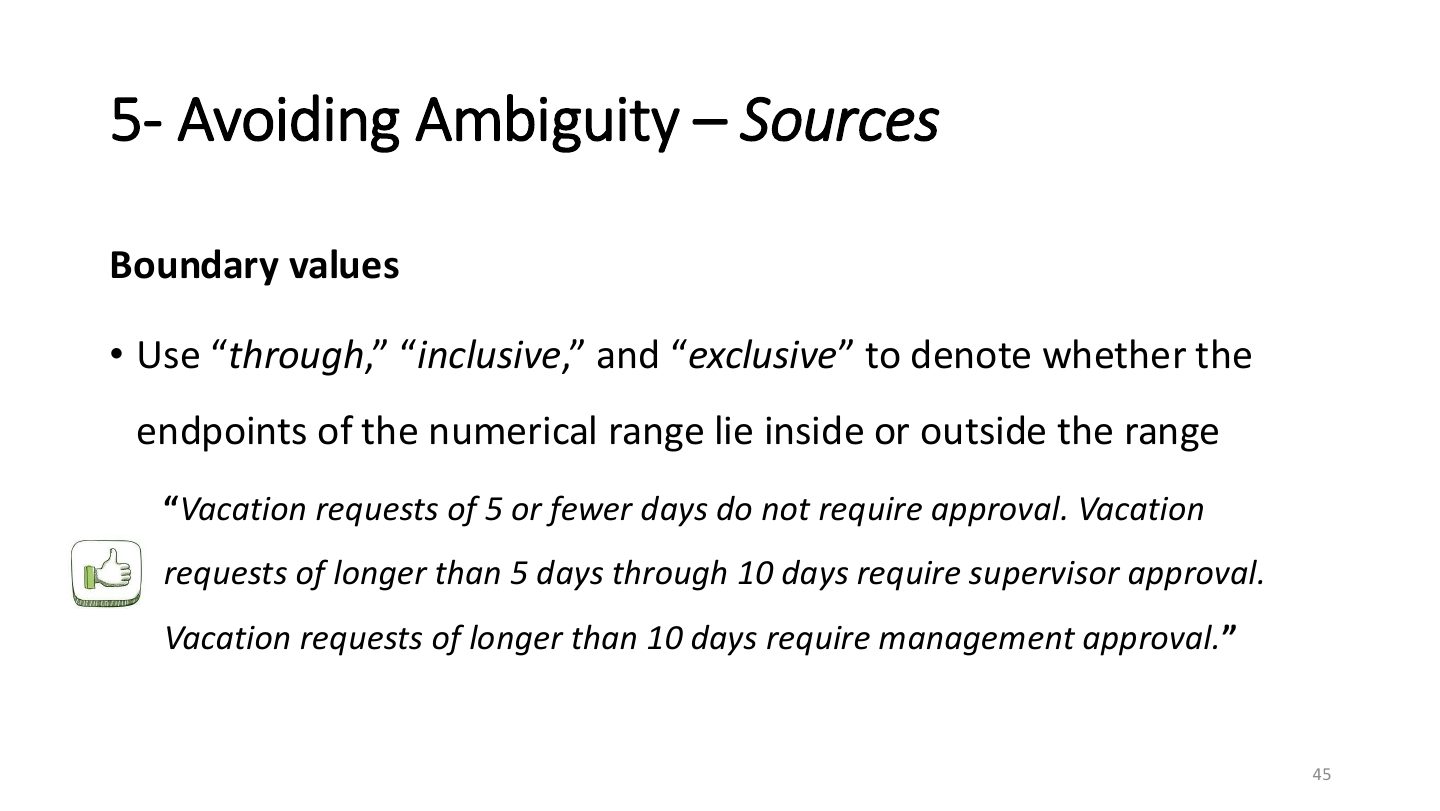
5- Avoiding Ambiguity – Sources
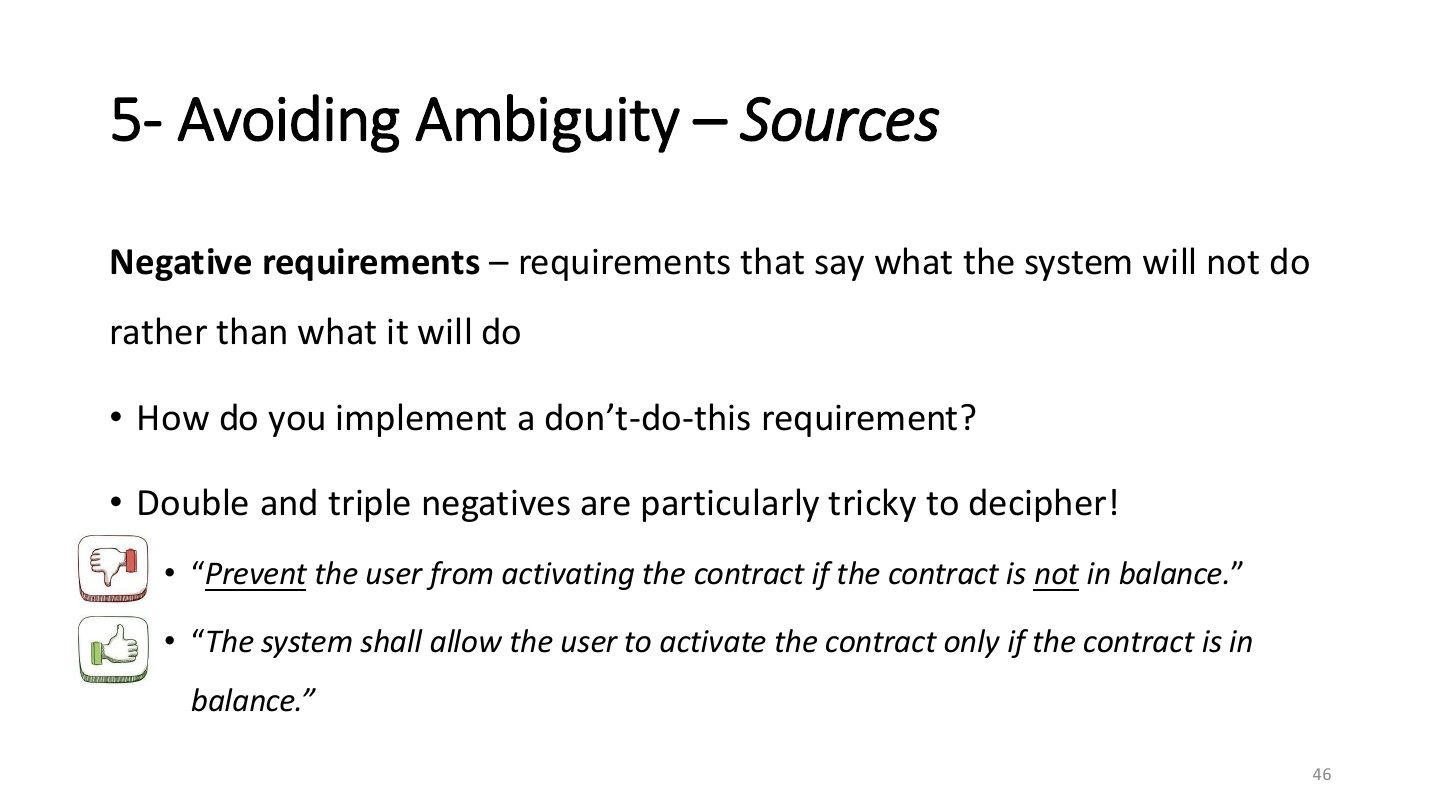
5- Avoiding Ambiguity – Sources
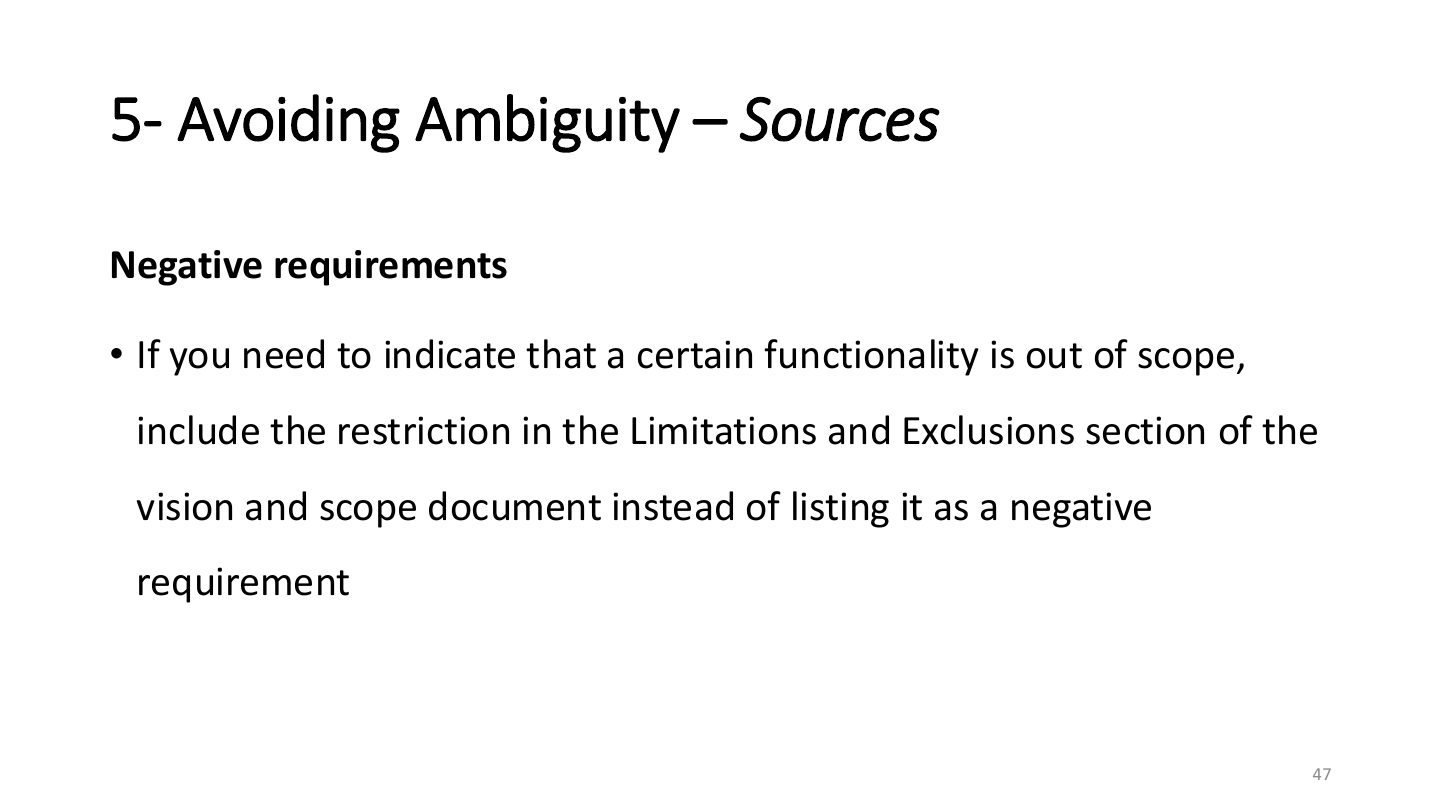
Sample Requirements, before and after
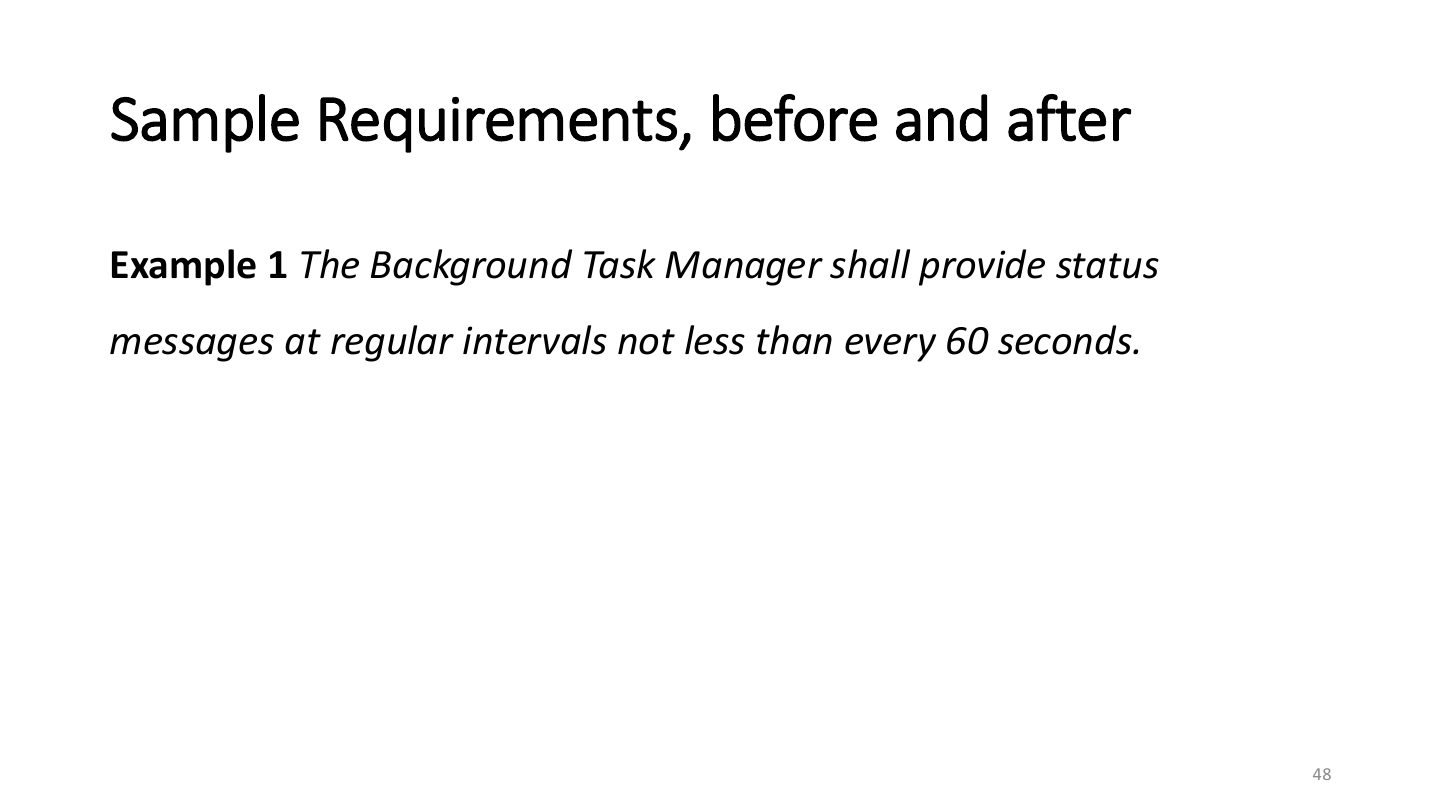
Notes
Before/after samples: split compound requirements, quantify quality attributes, remove design details, define terms.
Sample Requirements, before and after
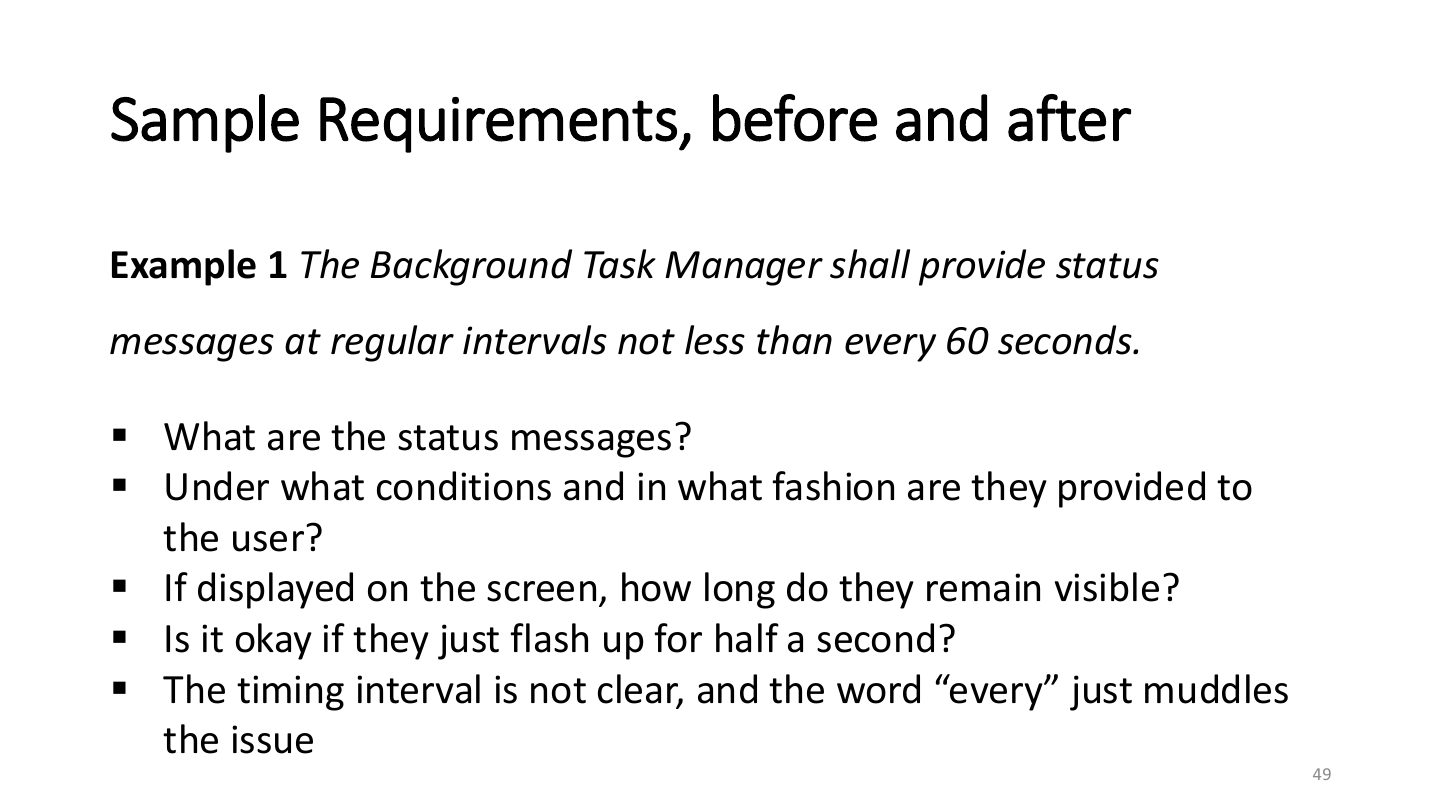
Sample Requirements, before and after
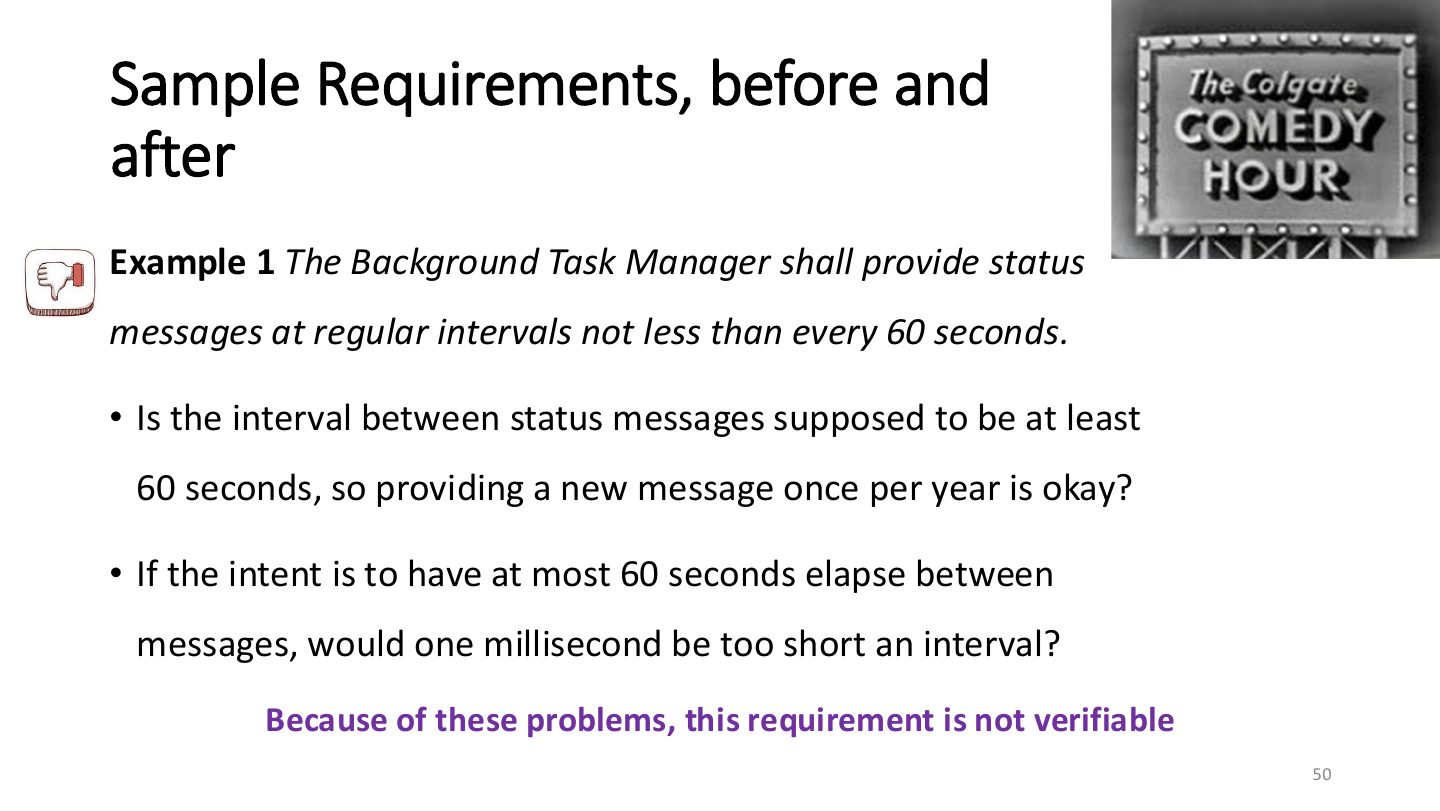
Sample Requirements, before and after
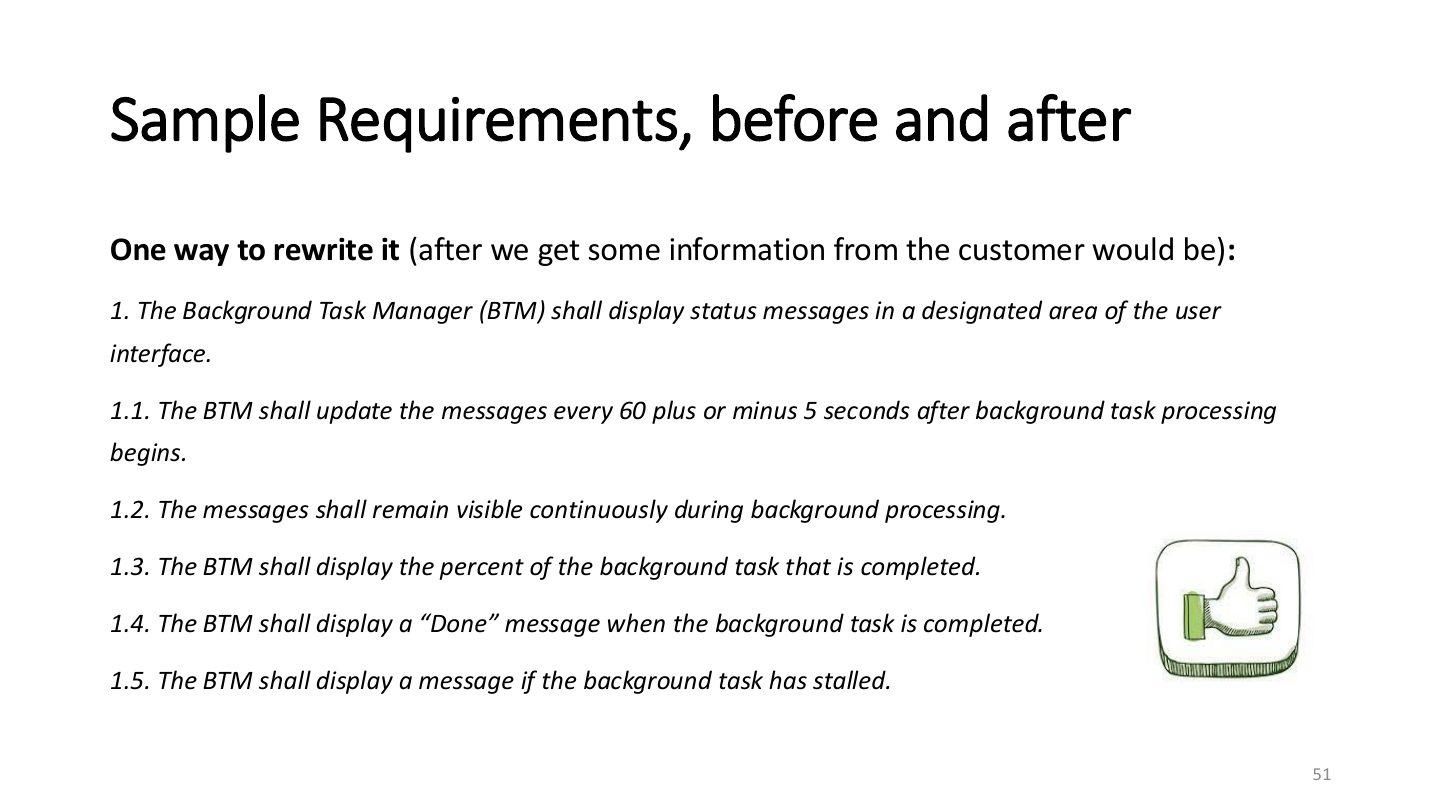
Sample Requirements, before and after
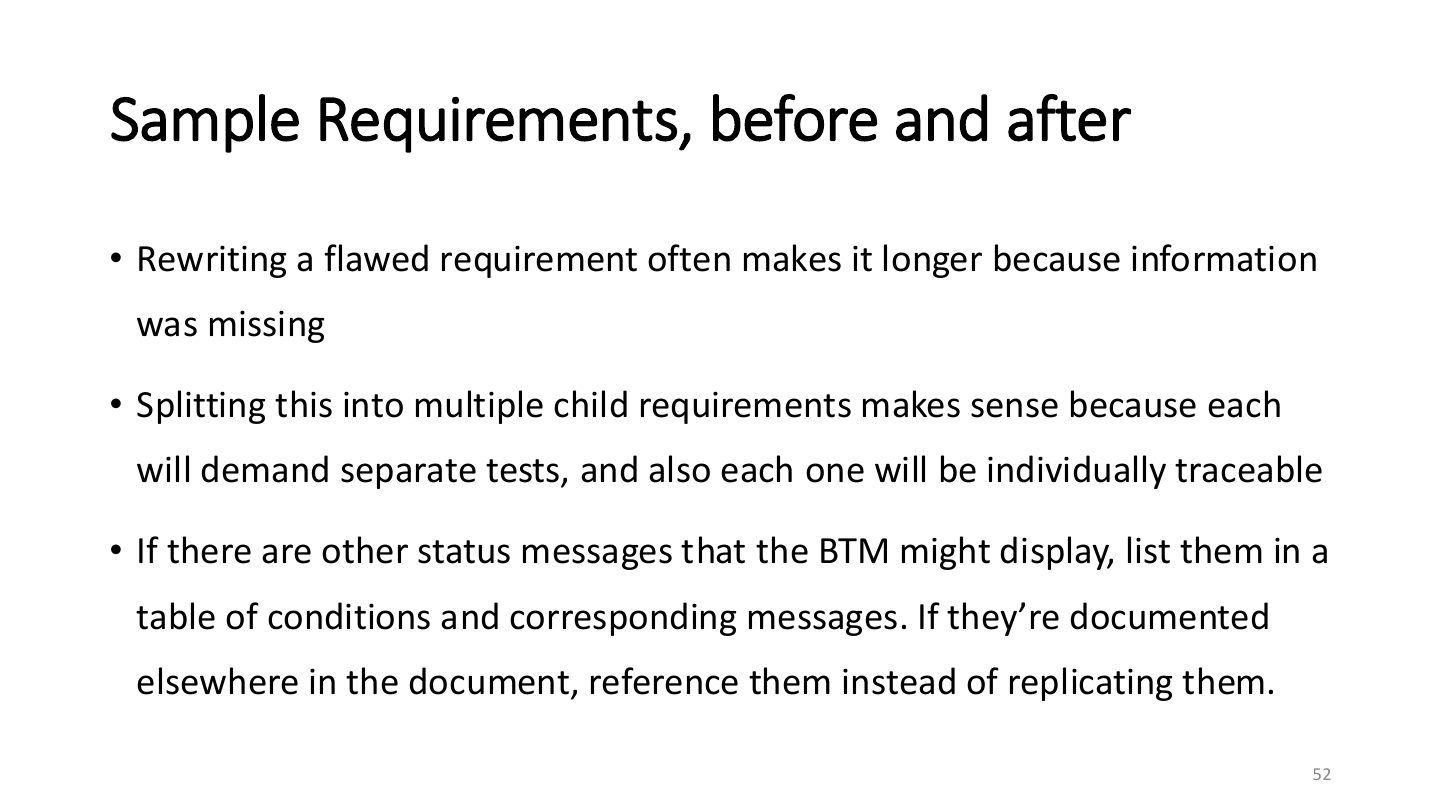
Sample Requirements, before and after
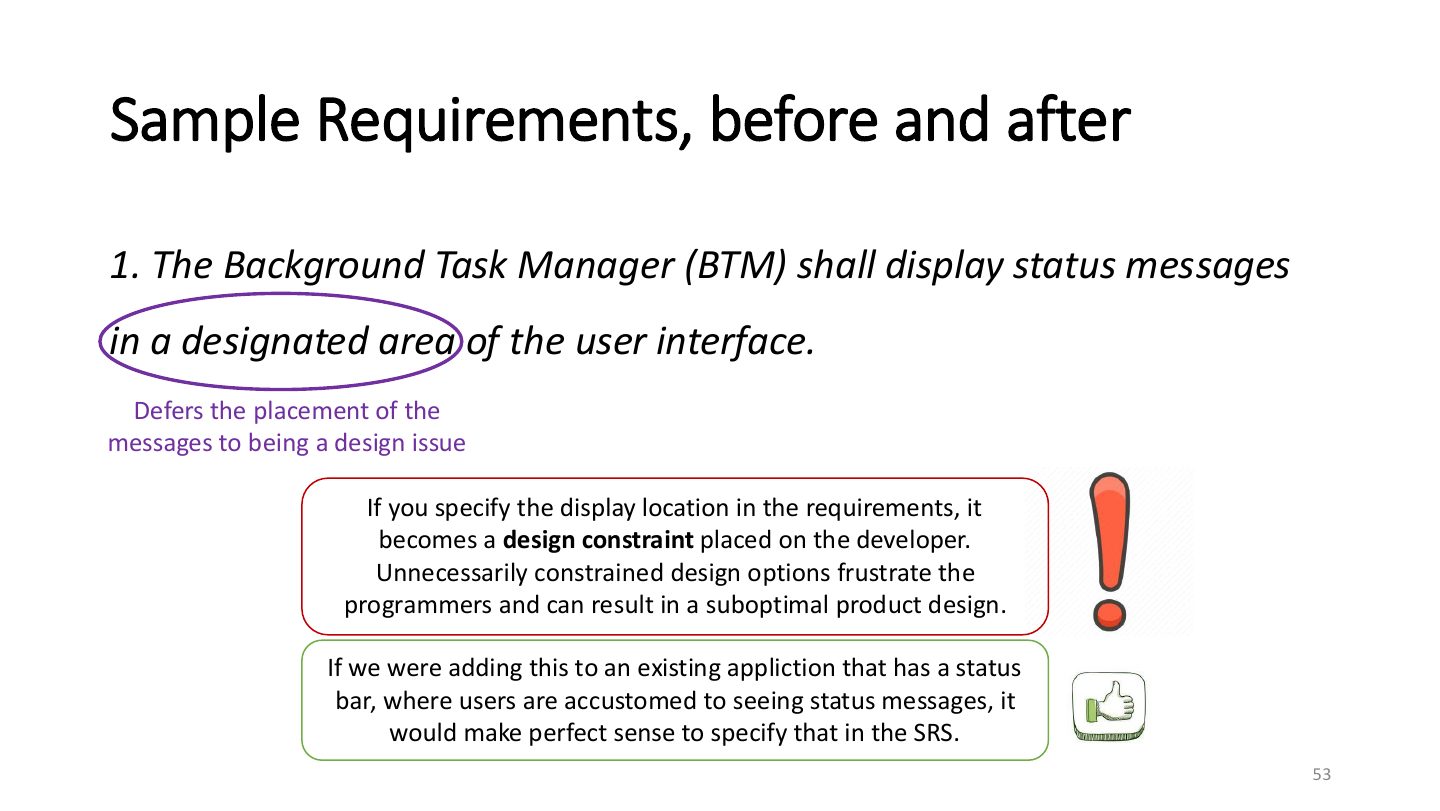
Sample Requirements, before and after
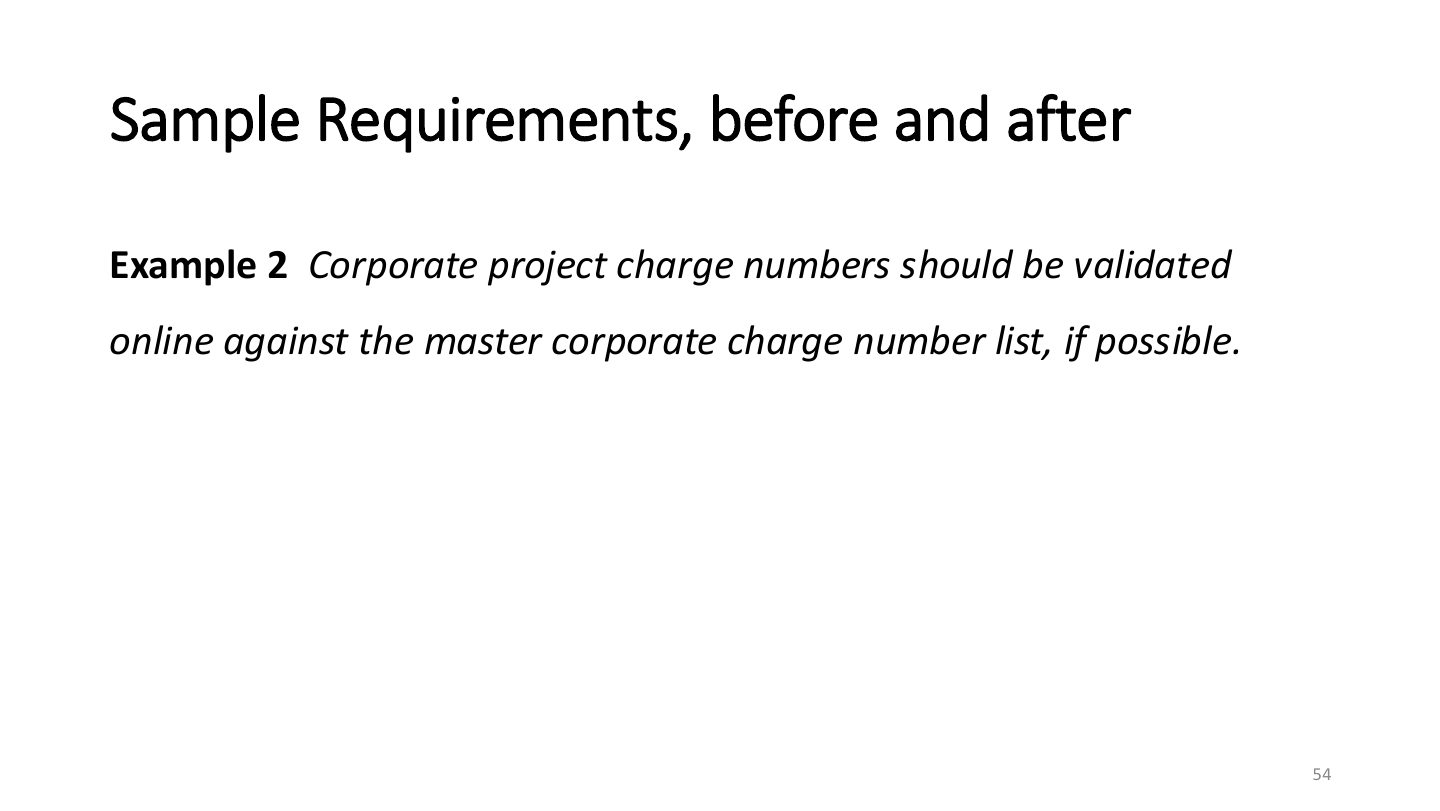
Sample Requirements, before and after
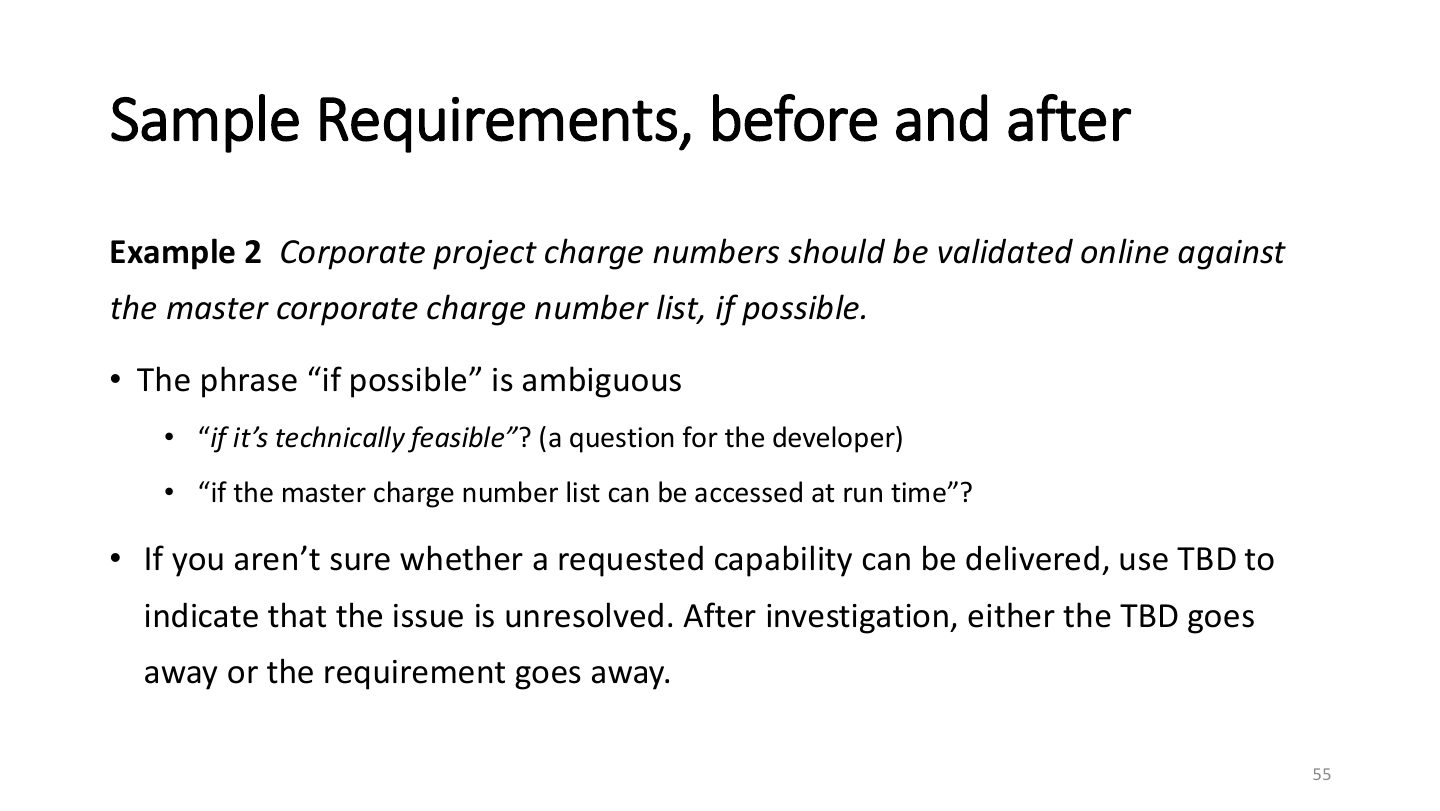
Sample Requirements, before and after
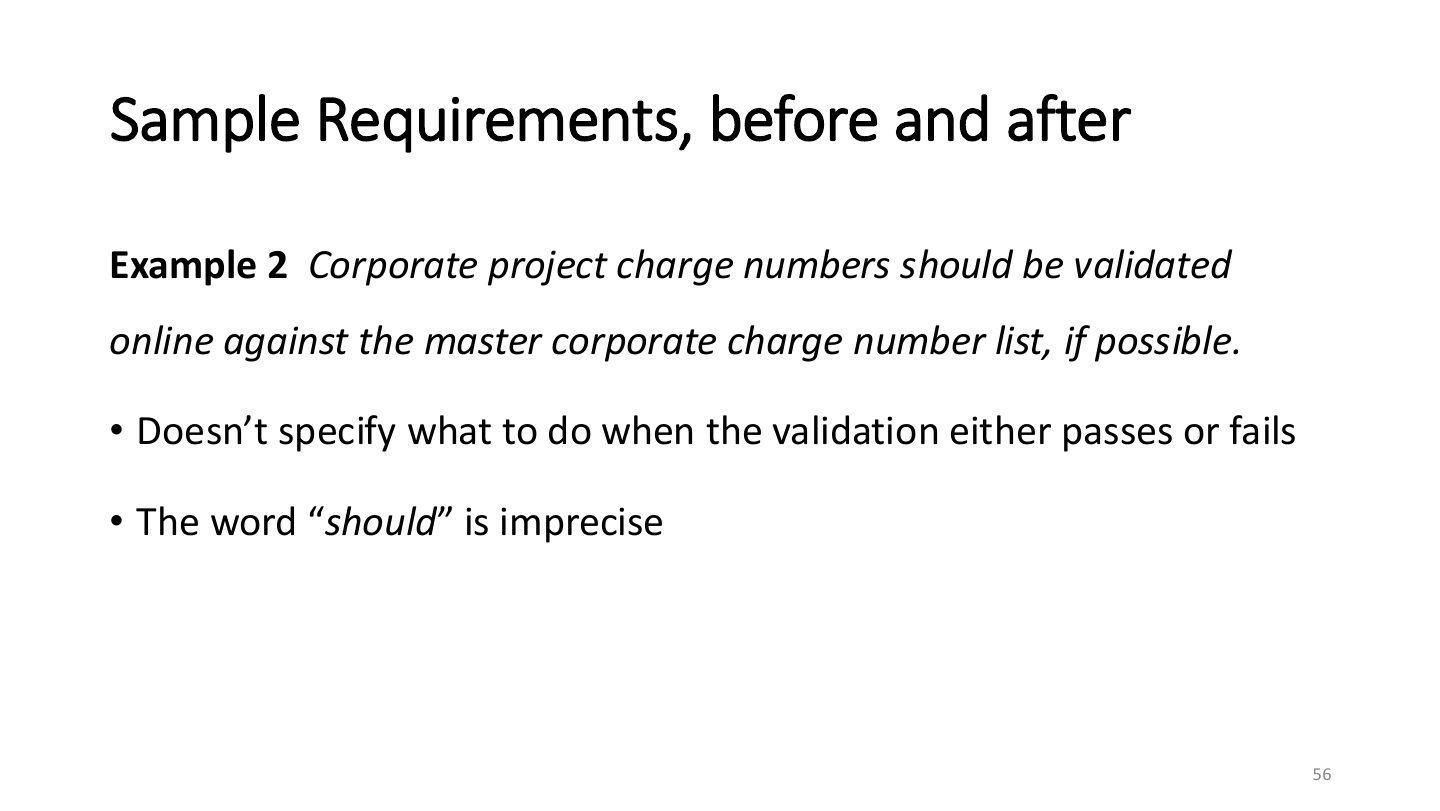
Sample Requirements, before and after
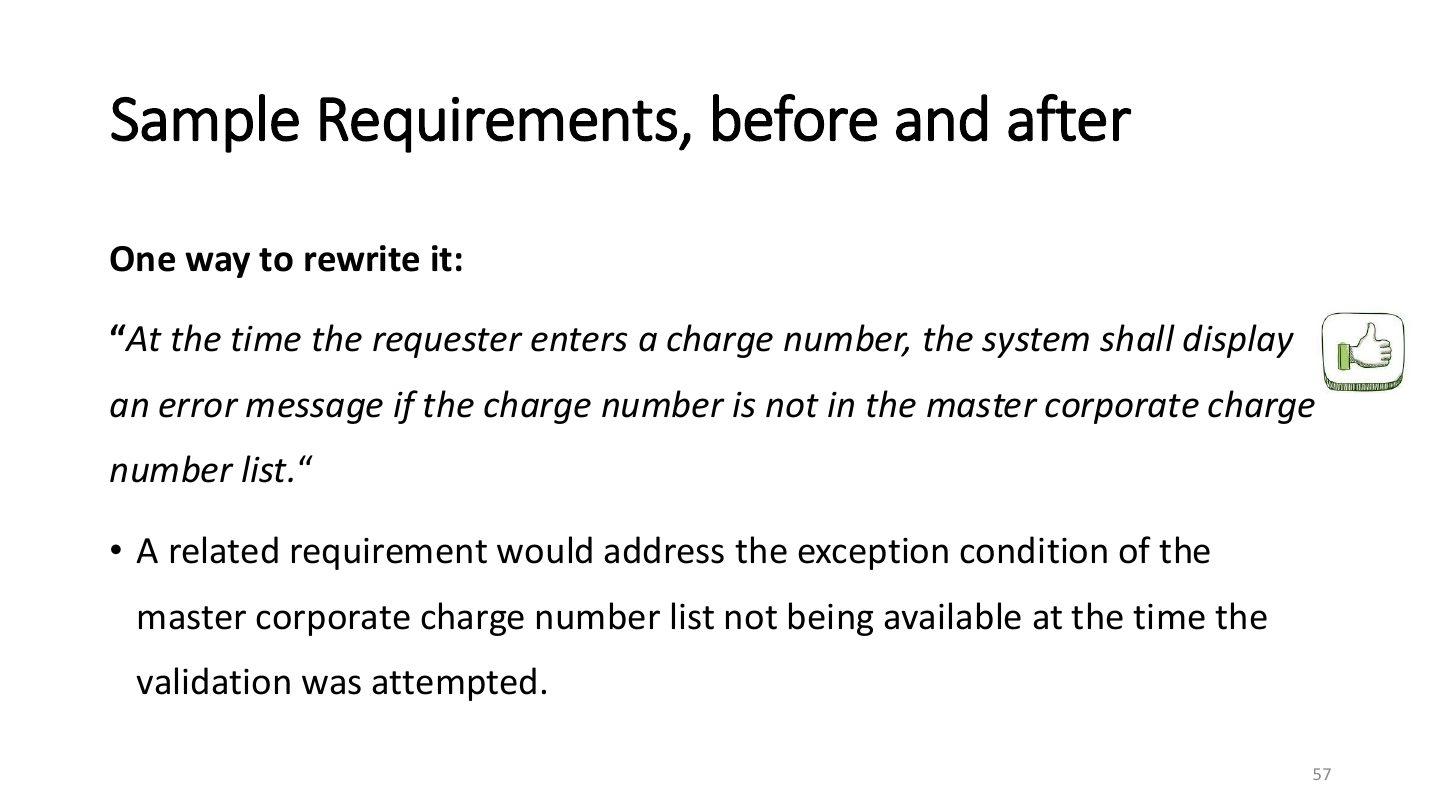
Sample Requirements, before and after
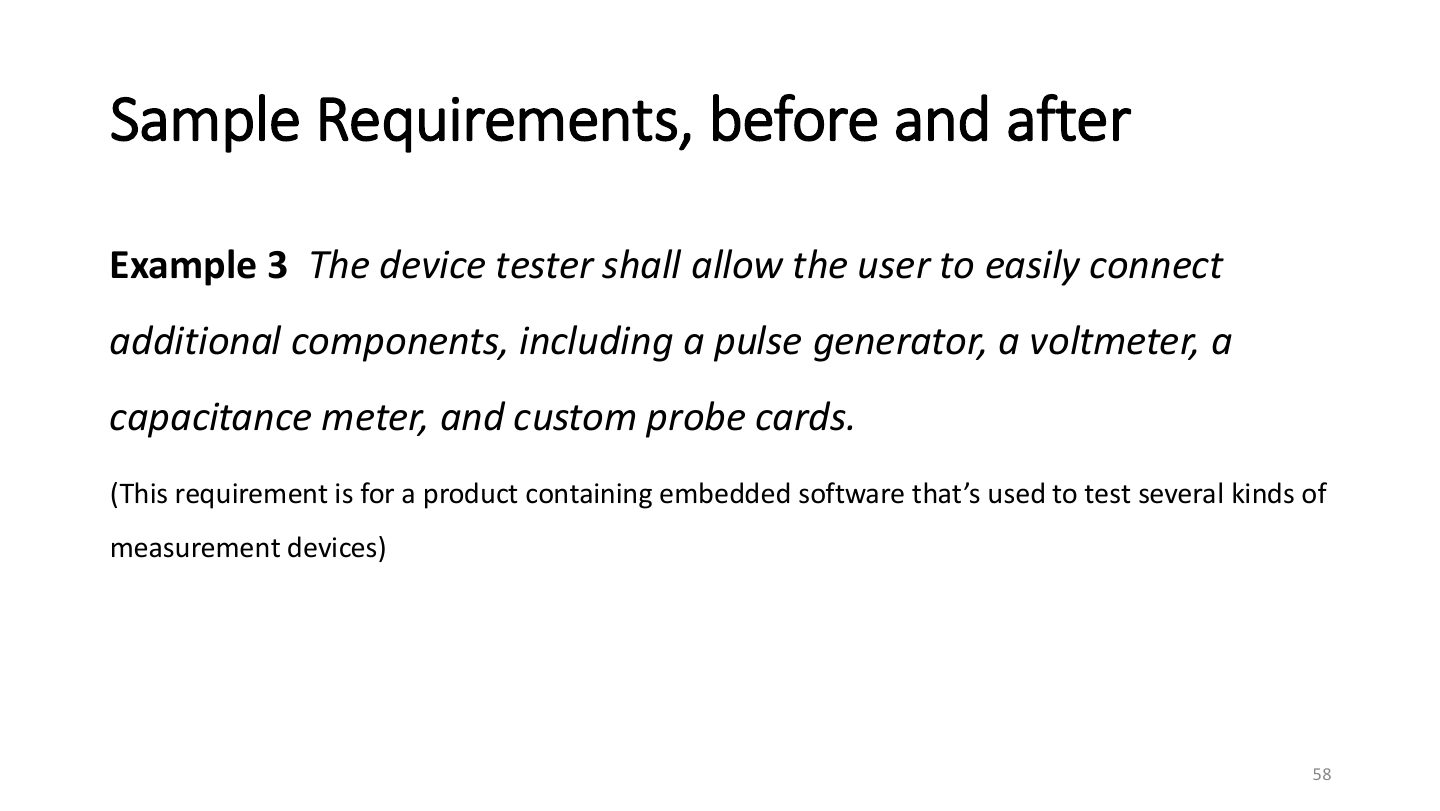
Sample Requirements, before and after
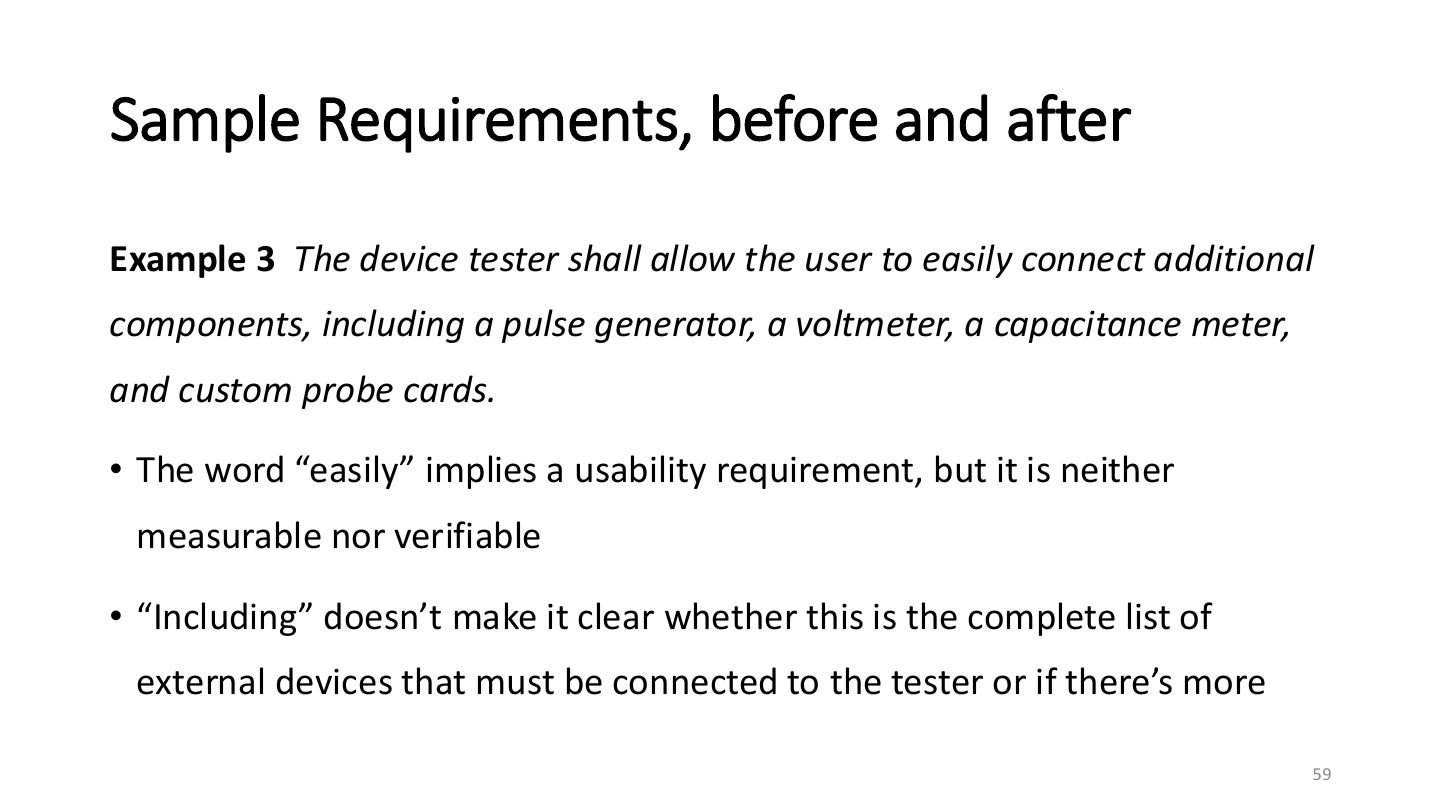
Sample Requirements, before and after
Sample Requirements, before and after