Q7: the goal of inception
Requirements Inception
Why inception matters, business requirements (problems, objectives, success metrics), the vision statement, scope and limitations, the Vision and Scope document, stakeholders, and scope representations: context diagrams, ecosystem maps, feature trees and event lists.
How to read this page
Every original slide is shown unchanged. Yellow marks on a slide point to a numbered note: hover or tap a mark to jump to its note, and hover a note to see its marks. Questions tagged Past exam appeared on a real paper; Prediction questions are likely angles, not confirmed. Pick an answer to each question: a wrong pick tells you why it is wrong, so you can try again.
All 32 slides
- 1 Slide 1
- 2 Requirements Inception
- 3 Why Requirements Inception?
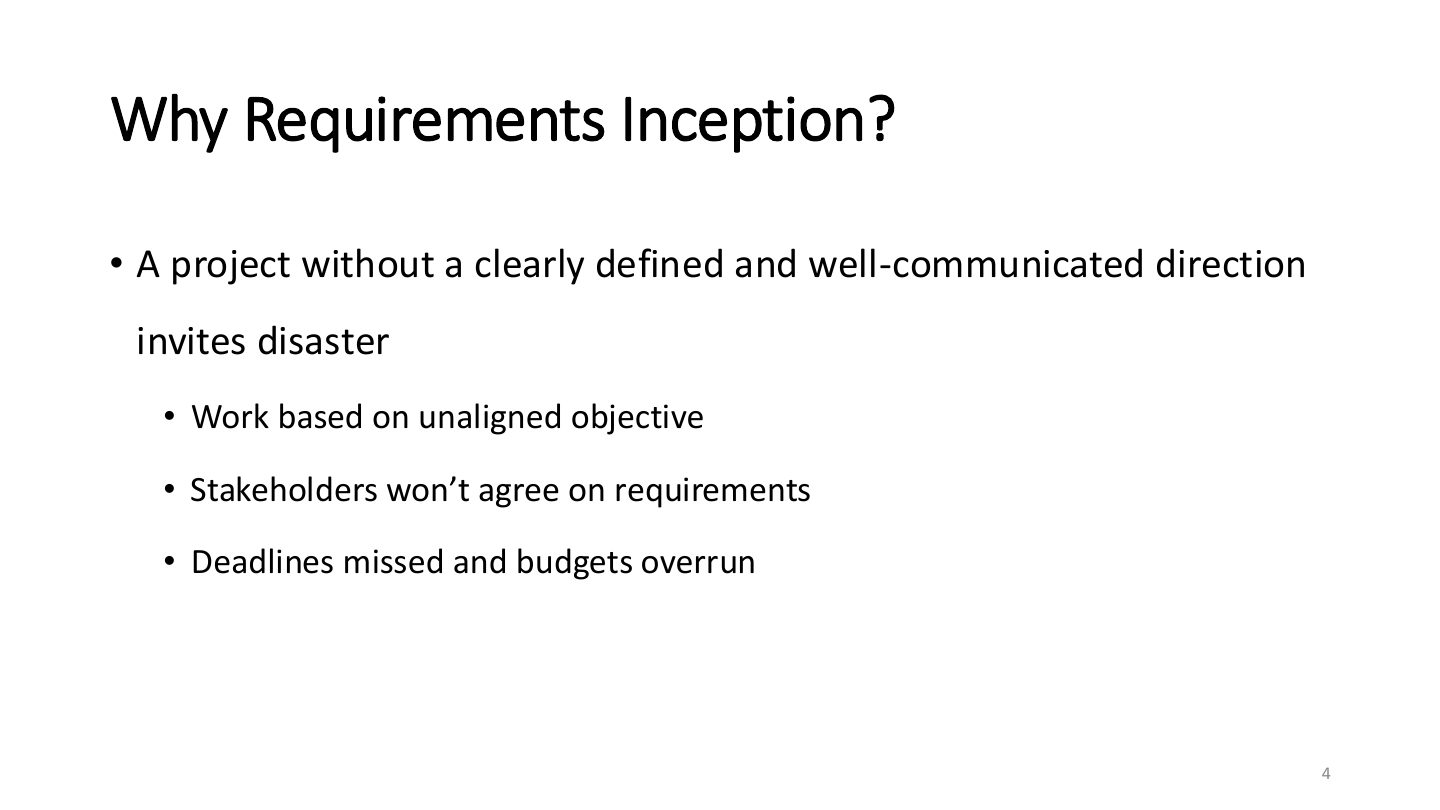
- 4 Why Requirements Inception?
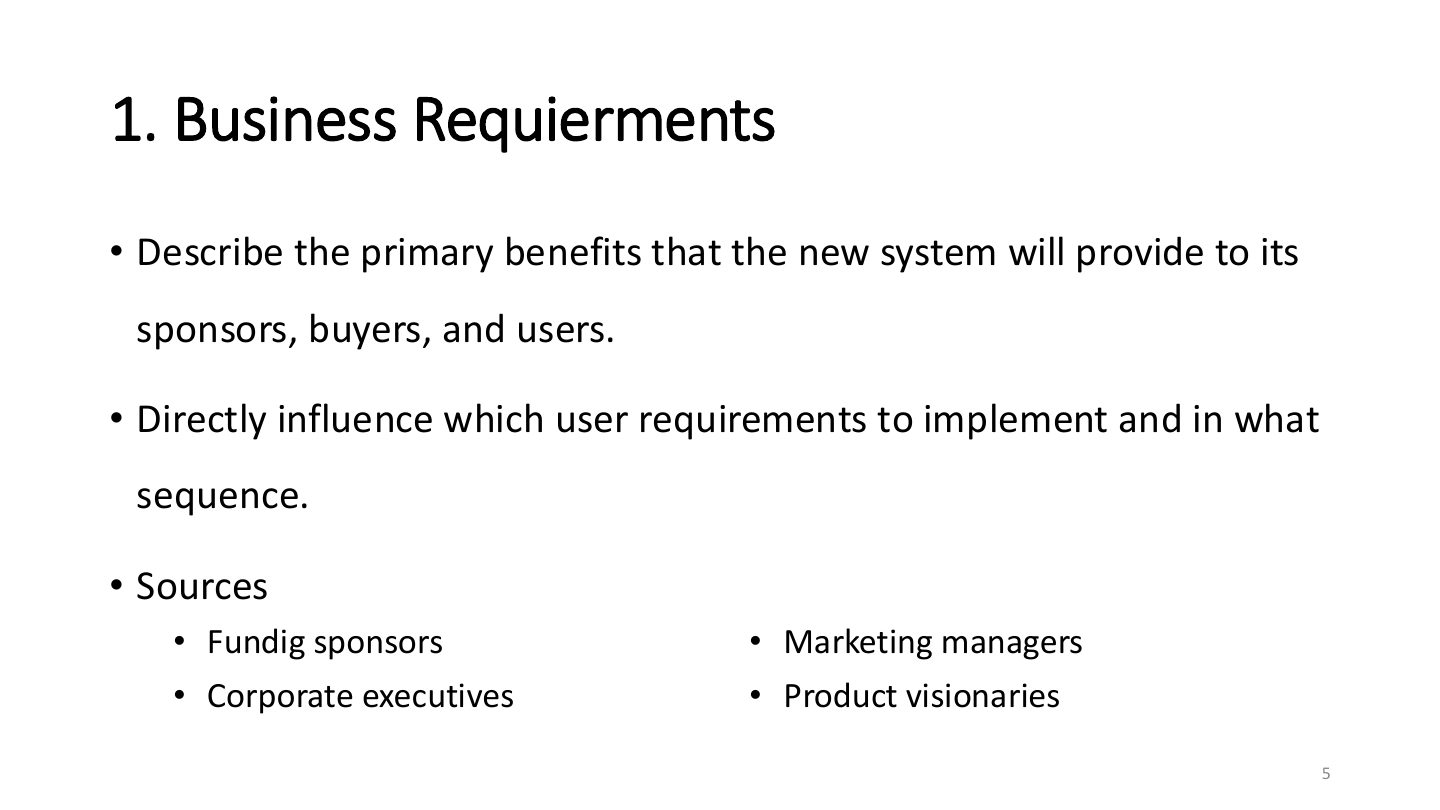
- 5 1. Business Requierments
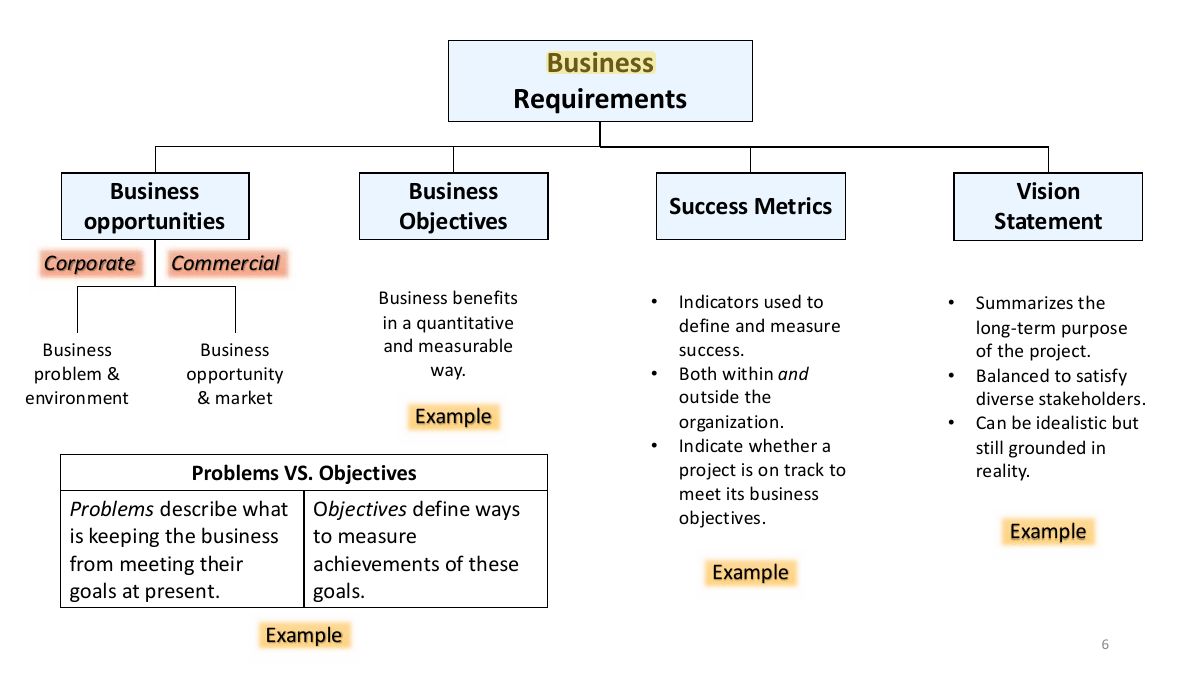
- 6 Business Requirements
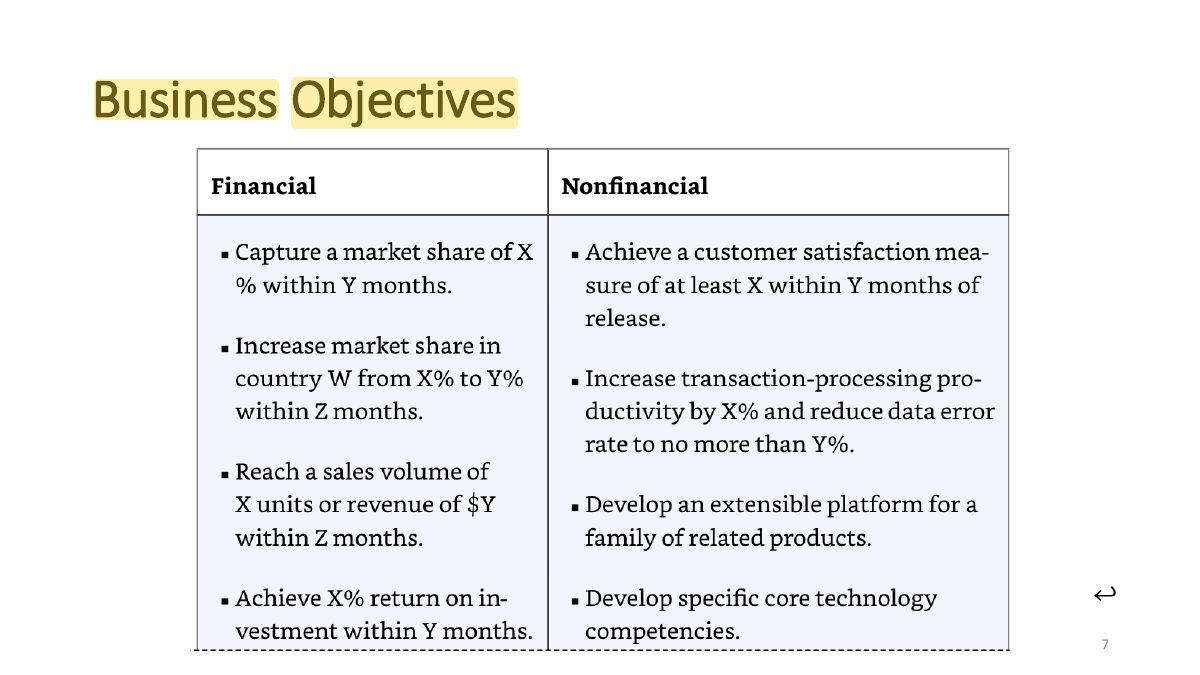
- 7 Business Objectives
- 8 Business Problems & Objectives
- 9 Example:
- 10 Business Problems & Objectives
- 11 Success Metrics
- 12 Vision Statement
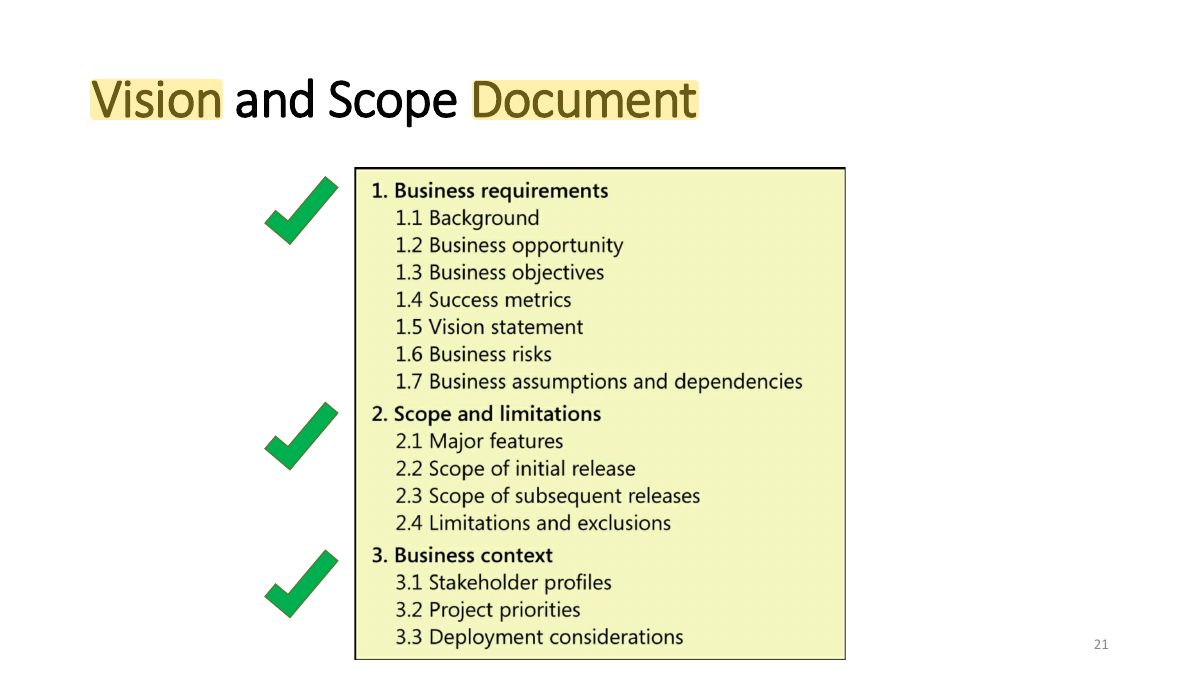
- 13 Vision and Scope Document
- 14 2. Scope and Limitations
- 15 2. Scope and Limitation
- 16 2. Scope and Limitations
- 17 2. Scope and Limitations
- 18 Scope & Limitations
- 19 Vision and Scope Document
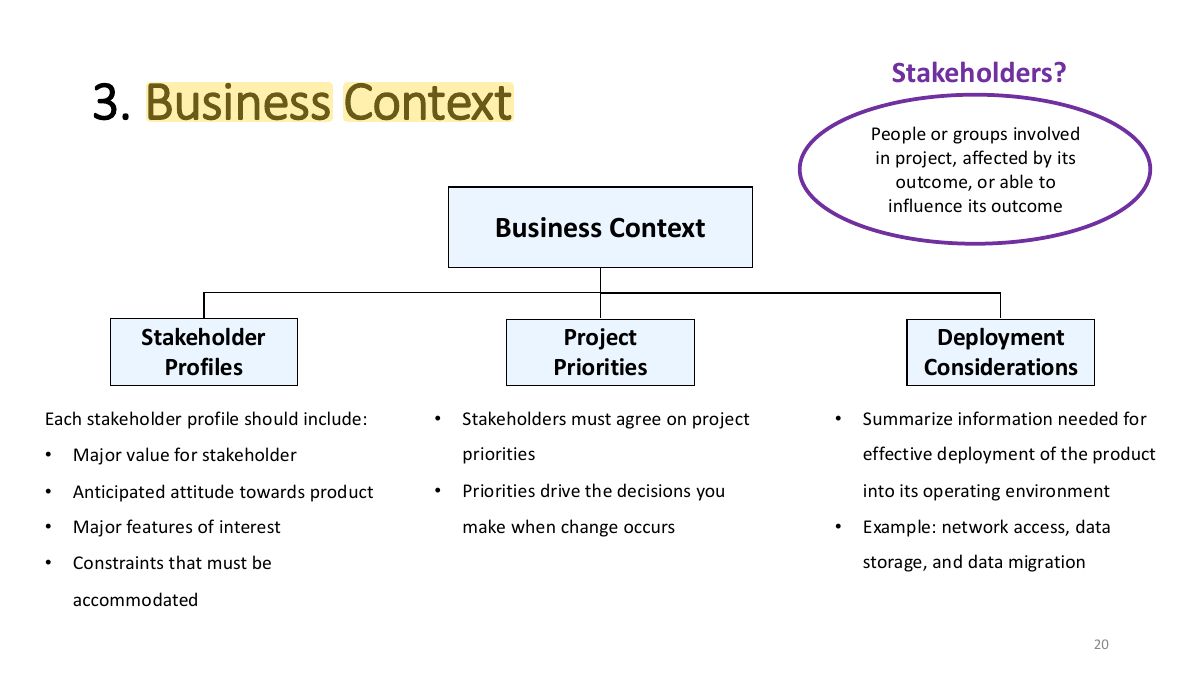
- 20 Stakeholders?
- 21 Vision and Scope Document
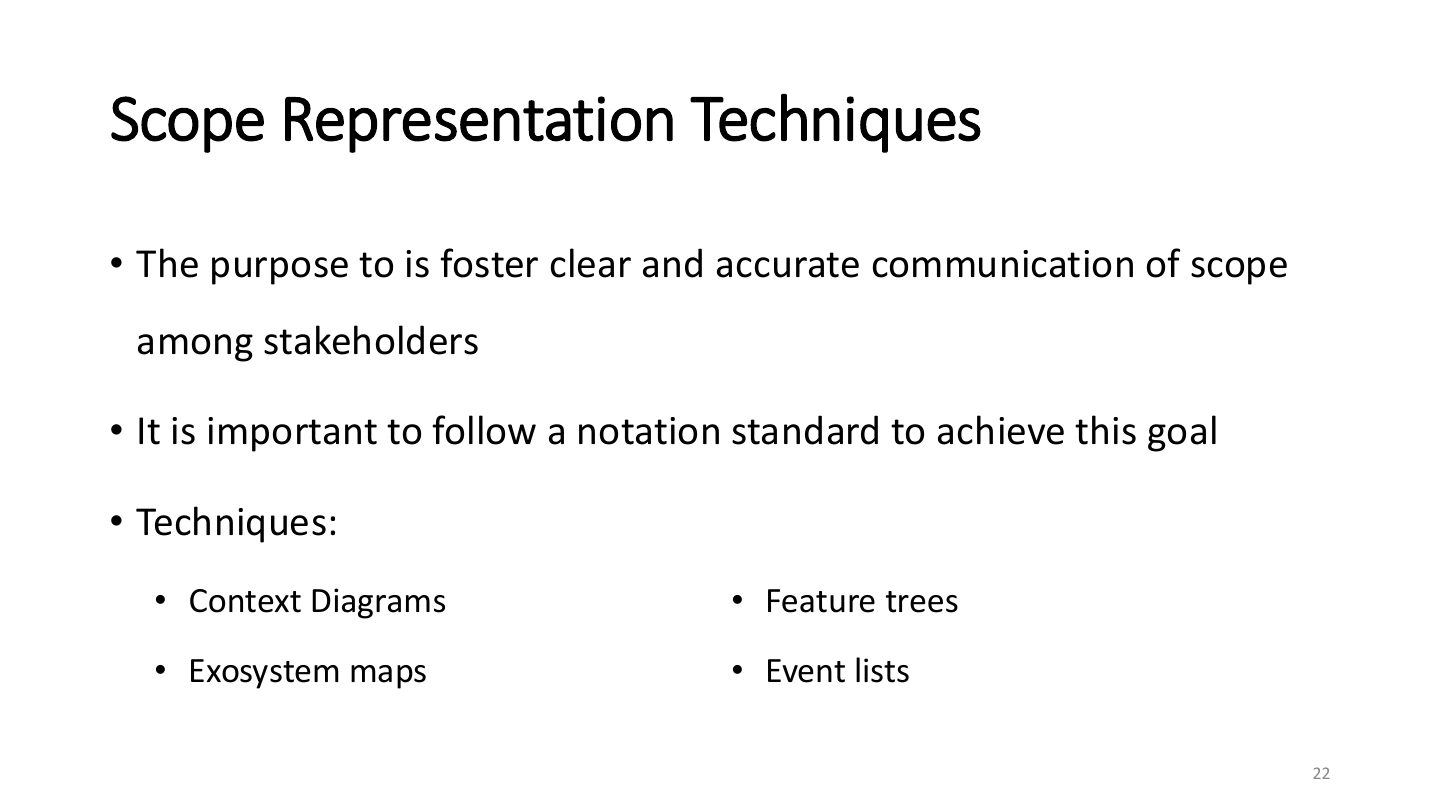
- 22 Scope Representation Techniques
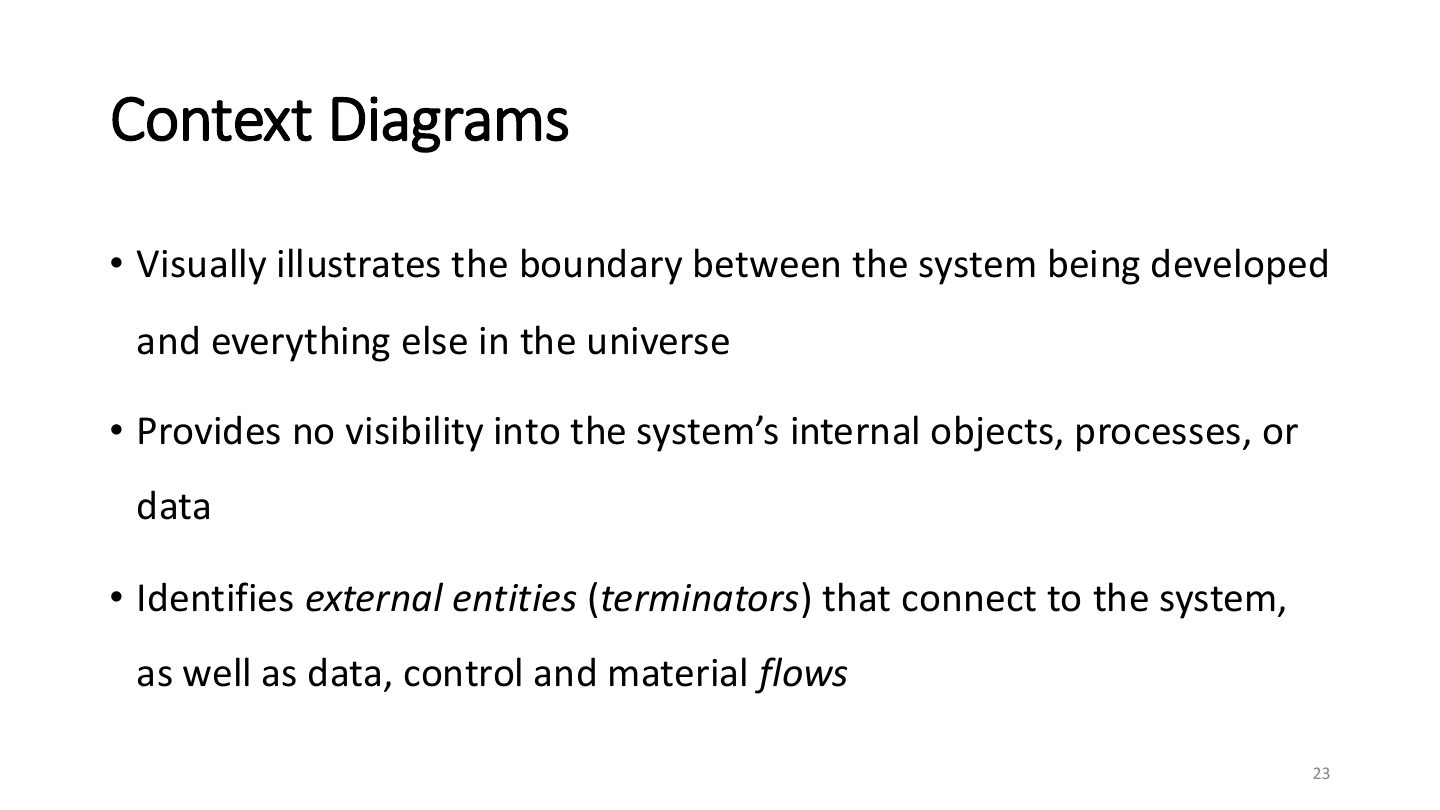
- 23 Context Diagrams
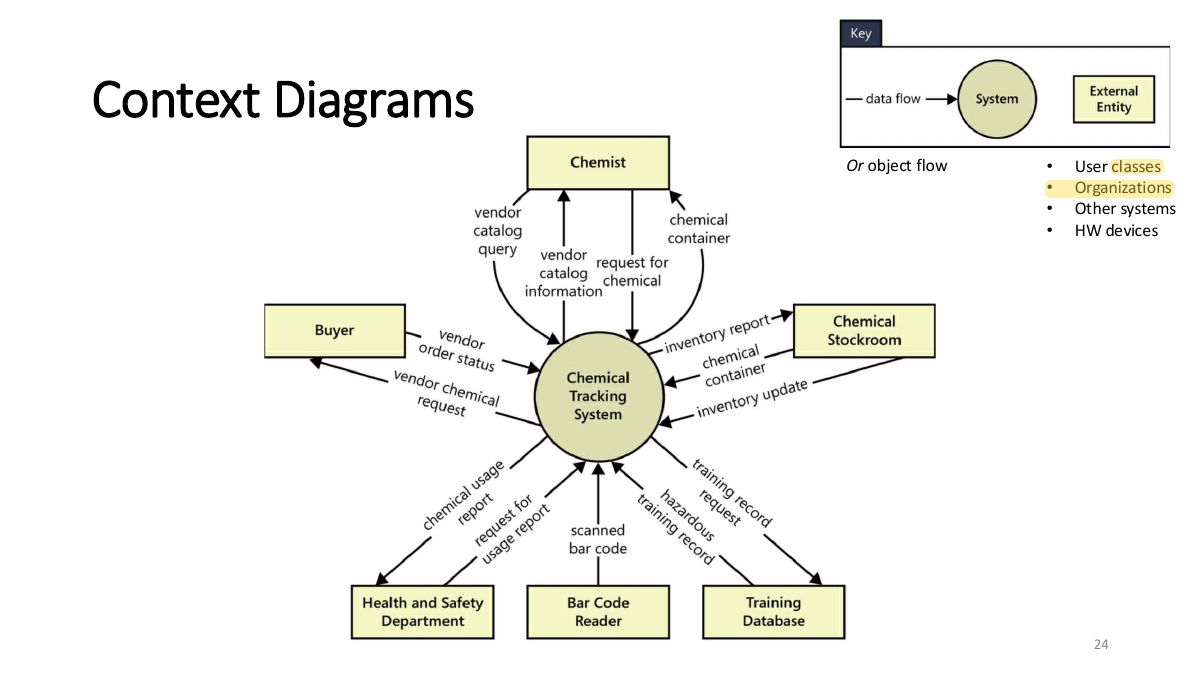
- 24 Context Diagrams
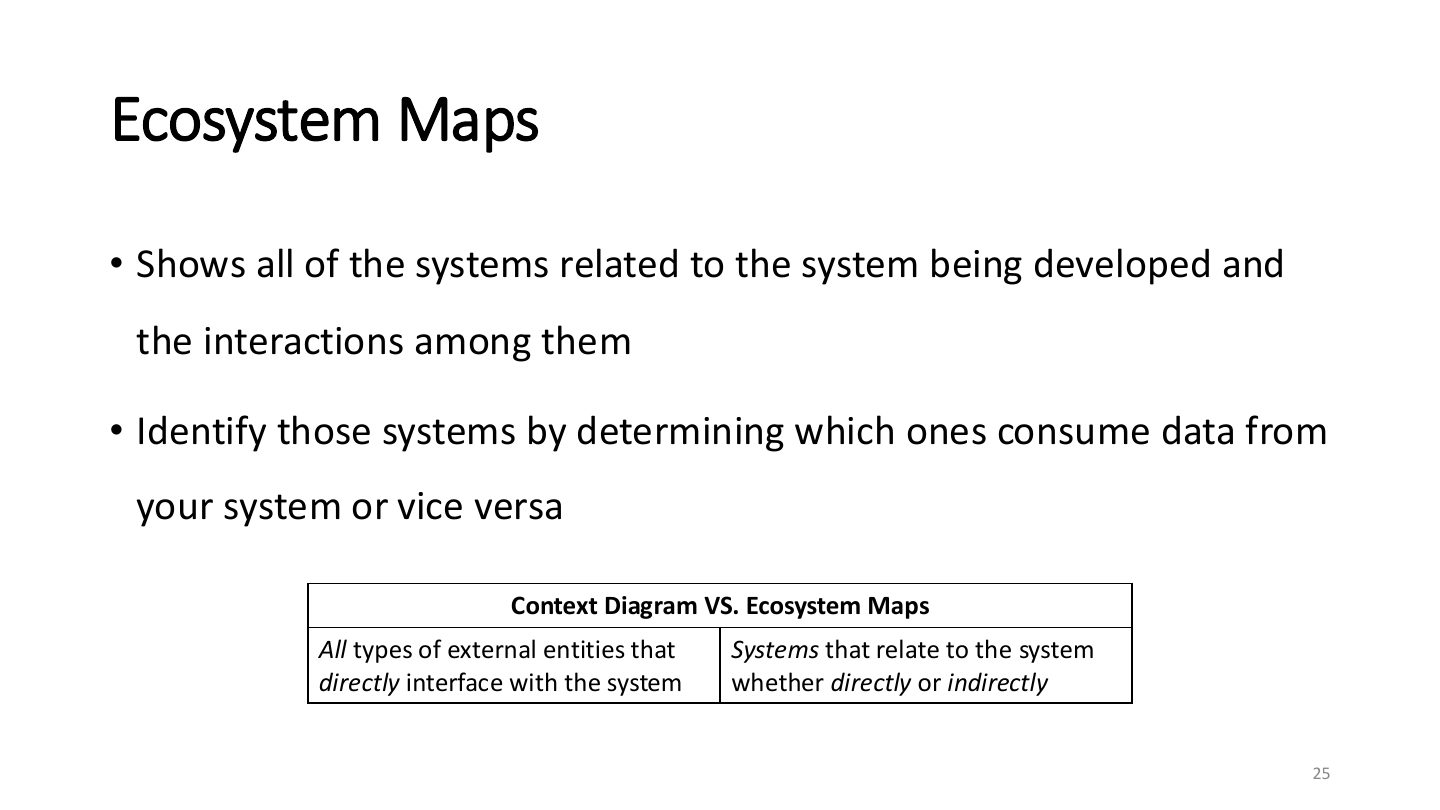
- 25 Ecosystem Maps
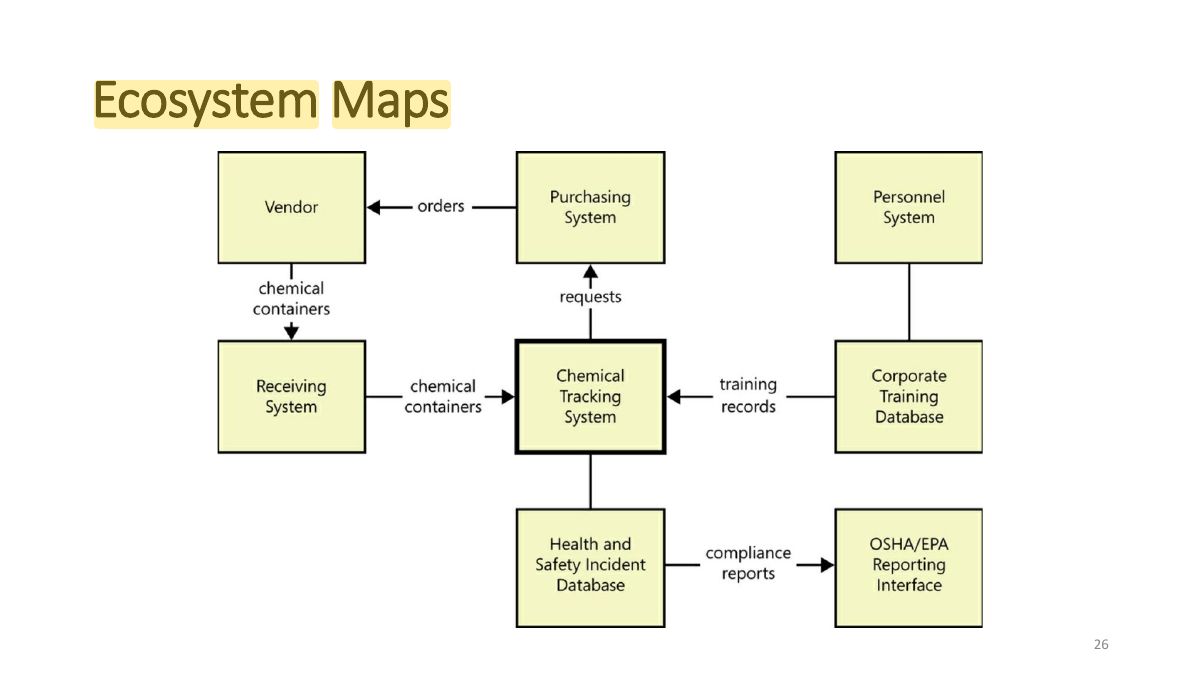
- 26 Ecosystem Maps
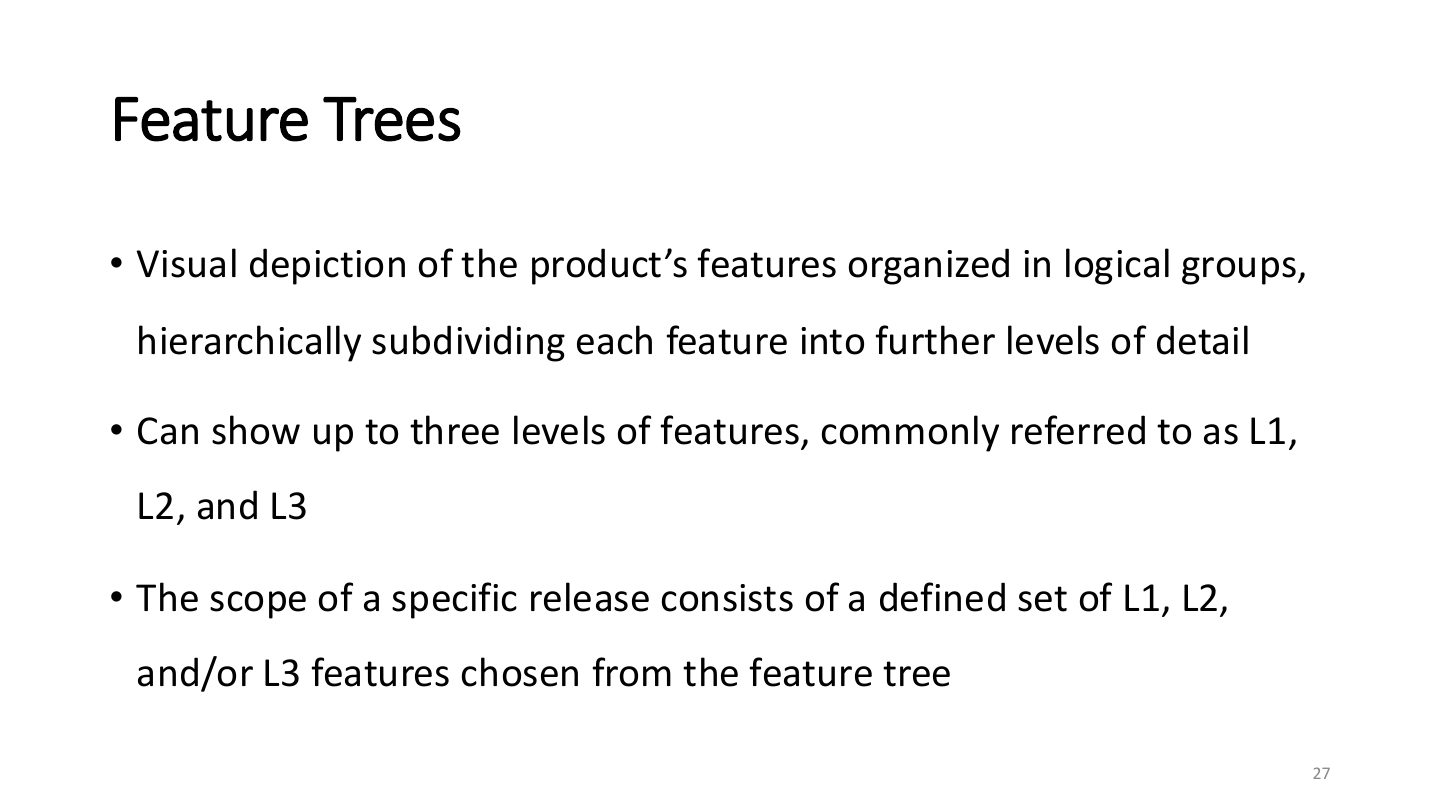
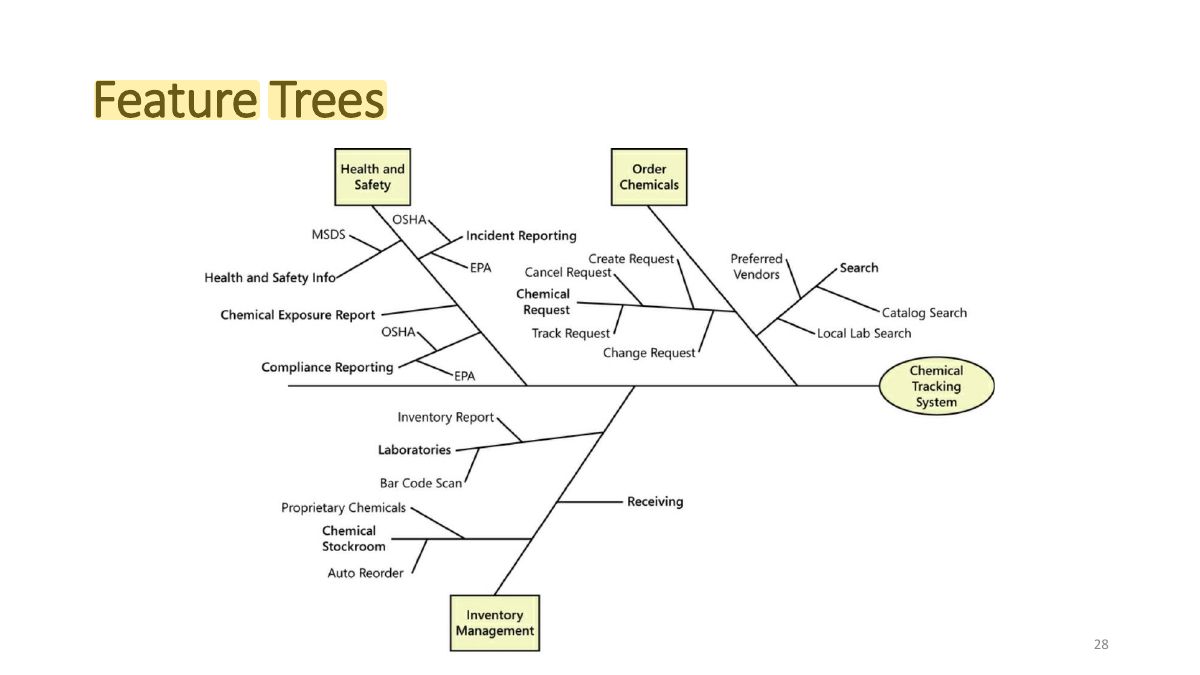
- 27 Feature Trees
- 28 Feature Trees
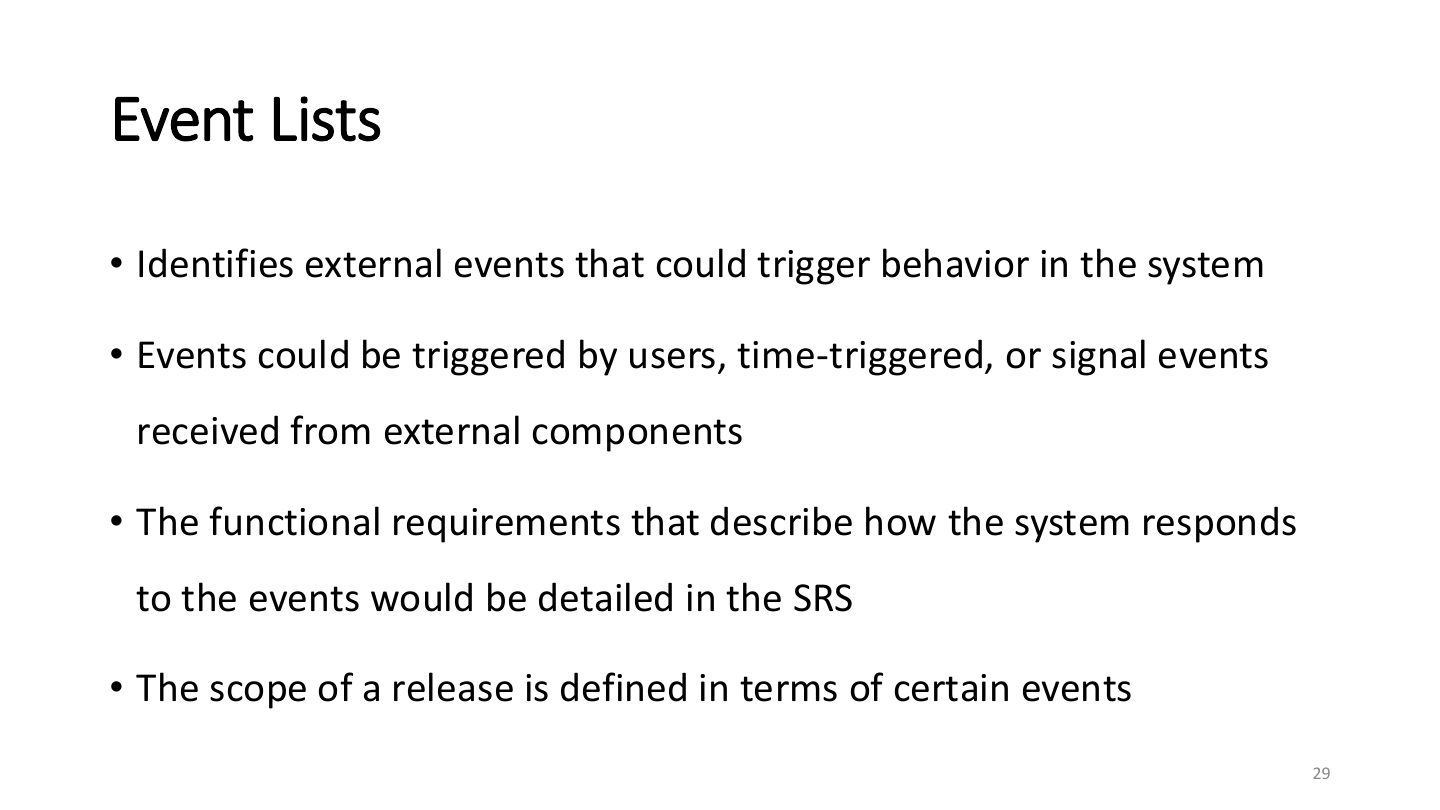
- 29 Event Lists
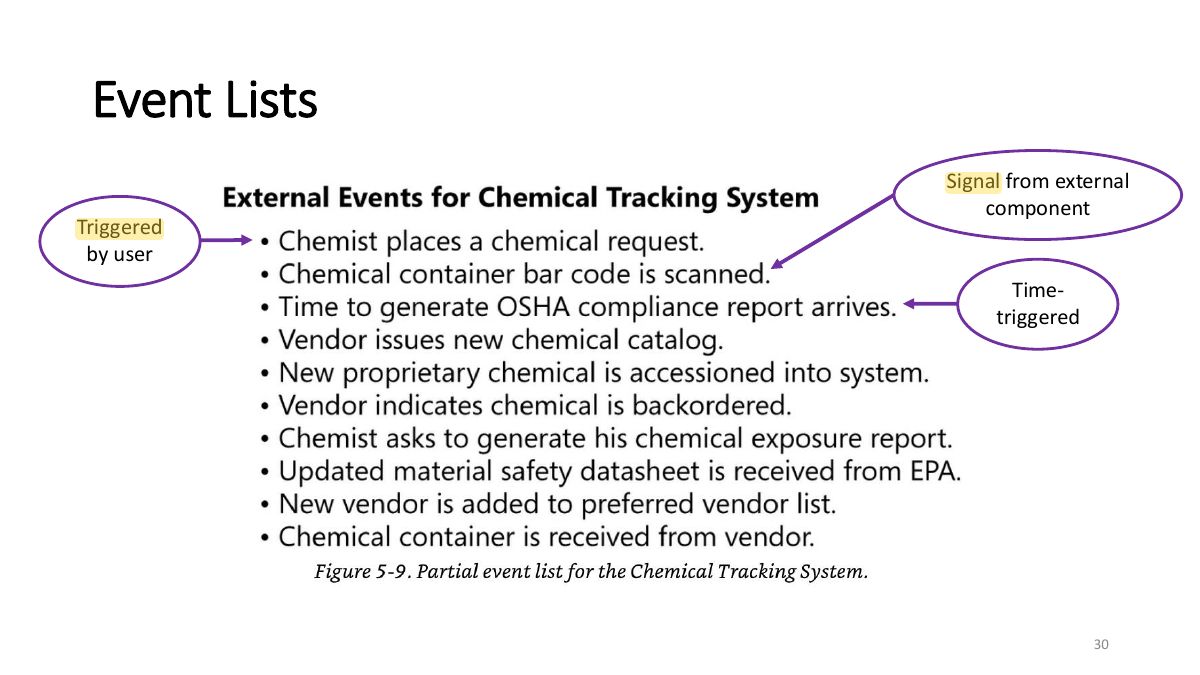
- 30 Event Lists
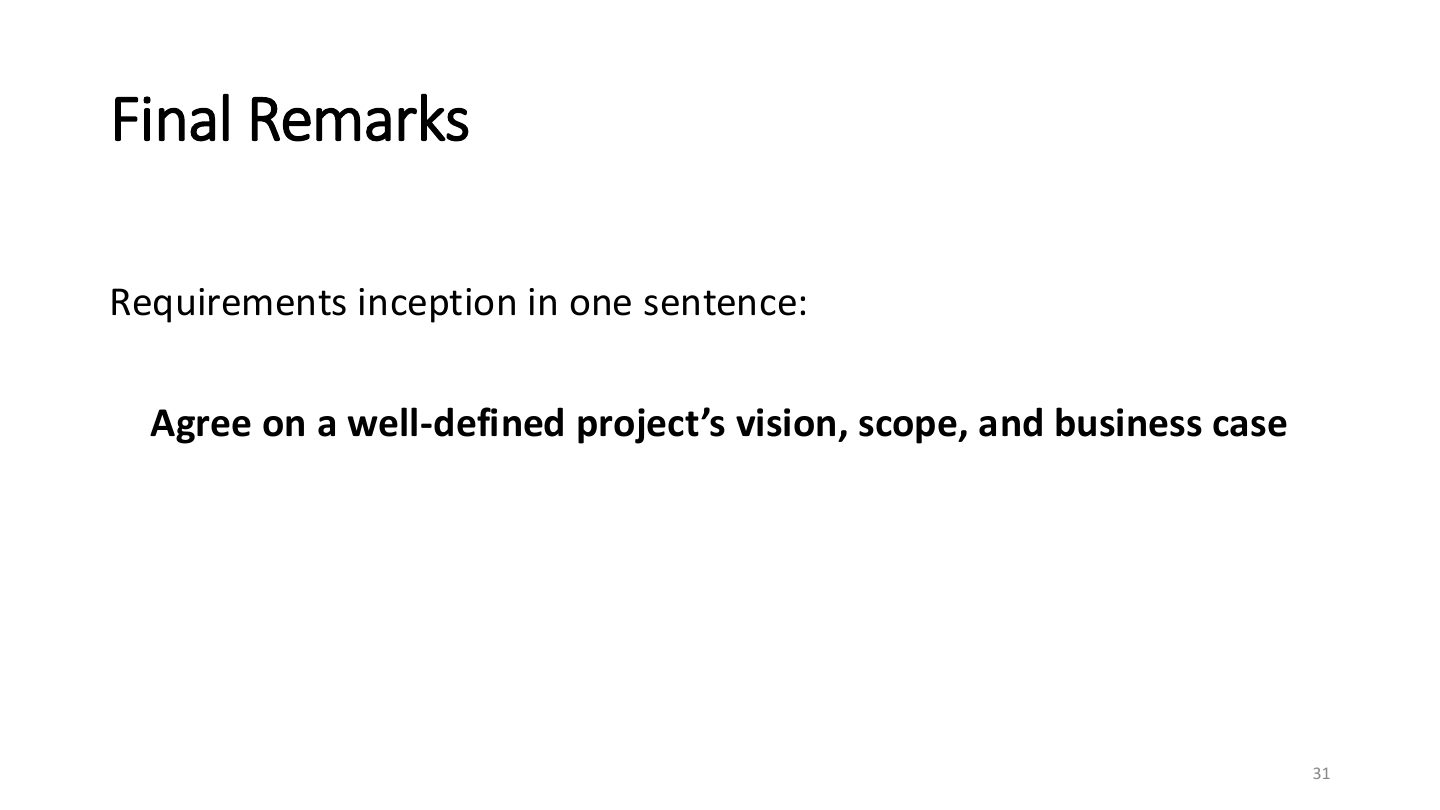
- 31 Final Remarks
- 32 Requirements Inception
Slide 1
Requirements Inception
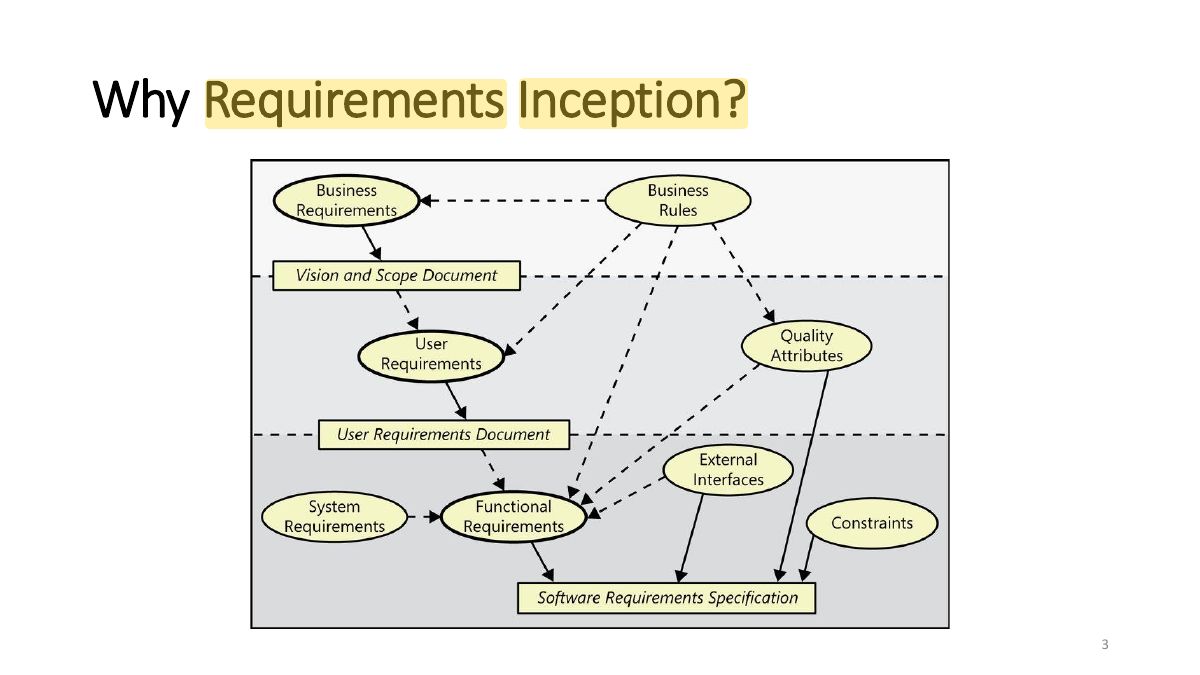
Why Requirements Inception?
Notes
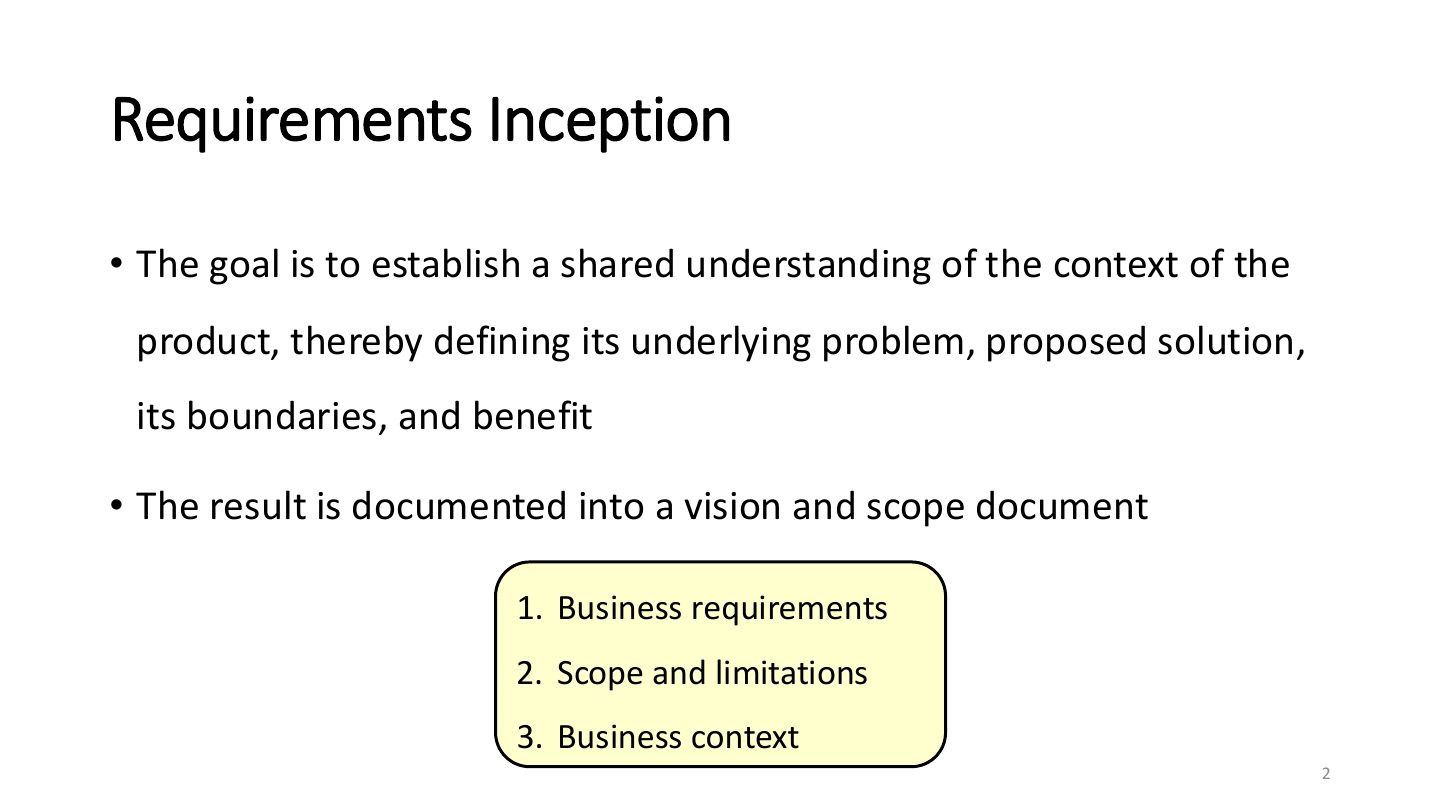
Inception establishes a shared understanding of the product’s context, problem, solution, boundaries and benefits.
Exam angle
The primary goal of requirements inception is to:
Why Requirements Inception?
1. Business Requierments
Business Requirements
Business Objectives
Business Problems & Objectives
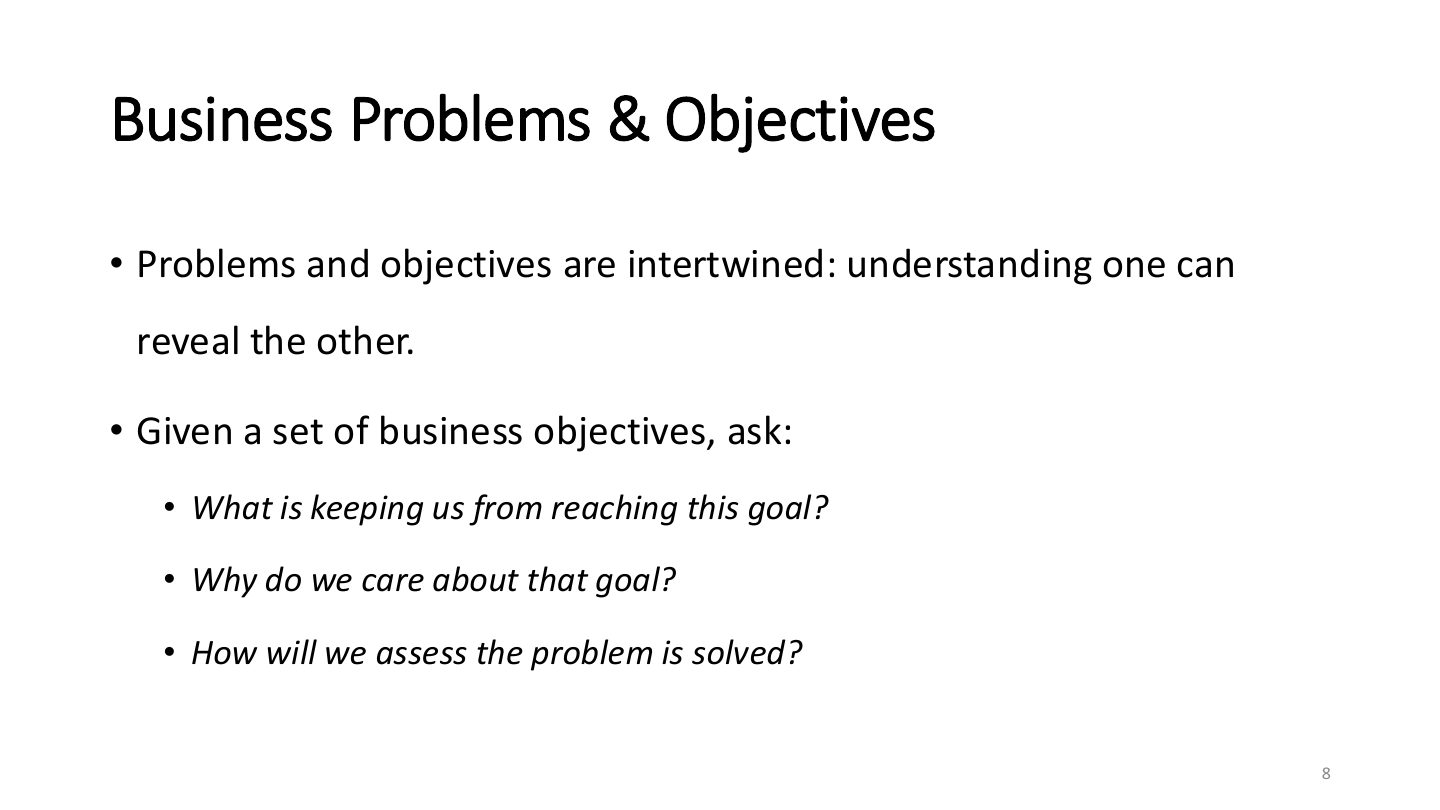
Example:
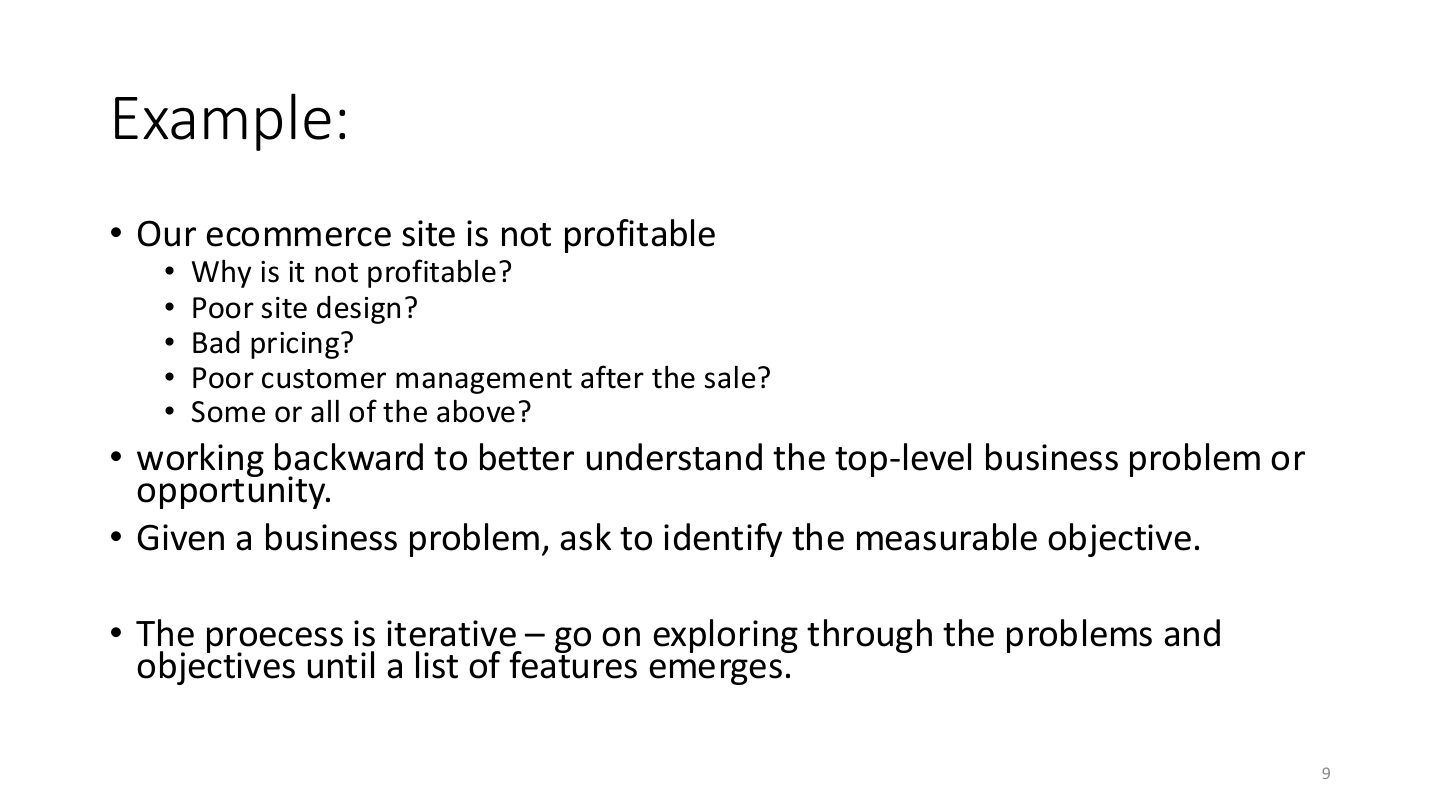
Business Problems & Objectives
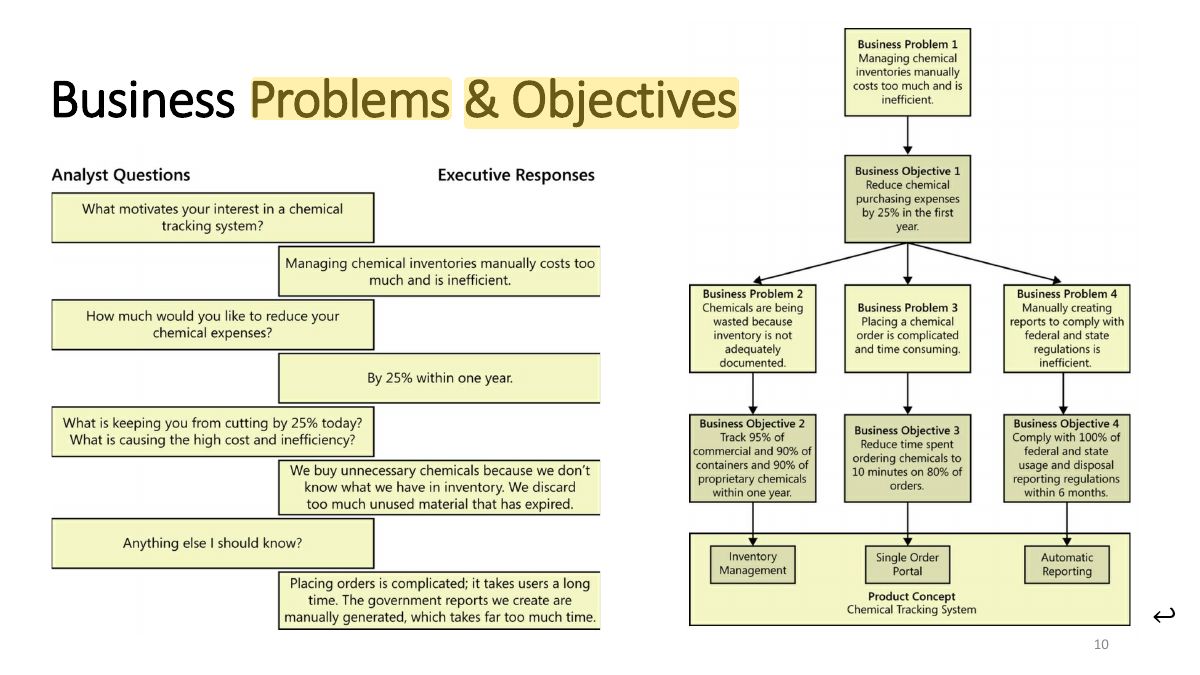
Success Metrics
Notes
Success metrics: measurable indicators that the objectives were achieved.
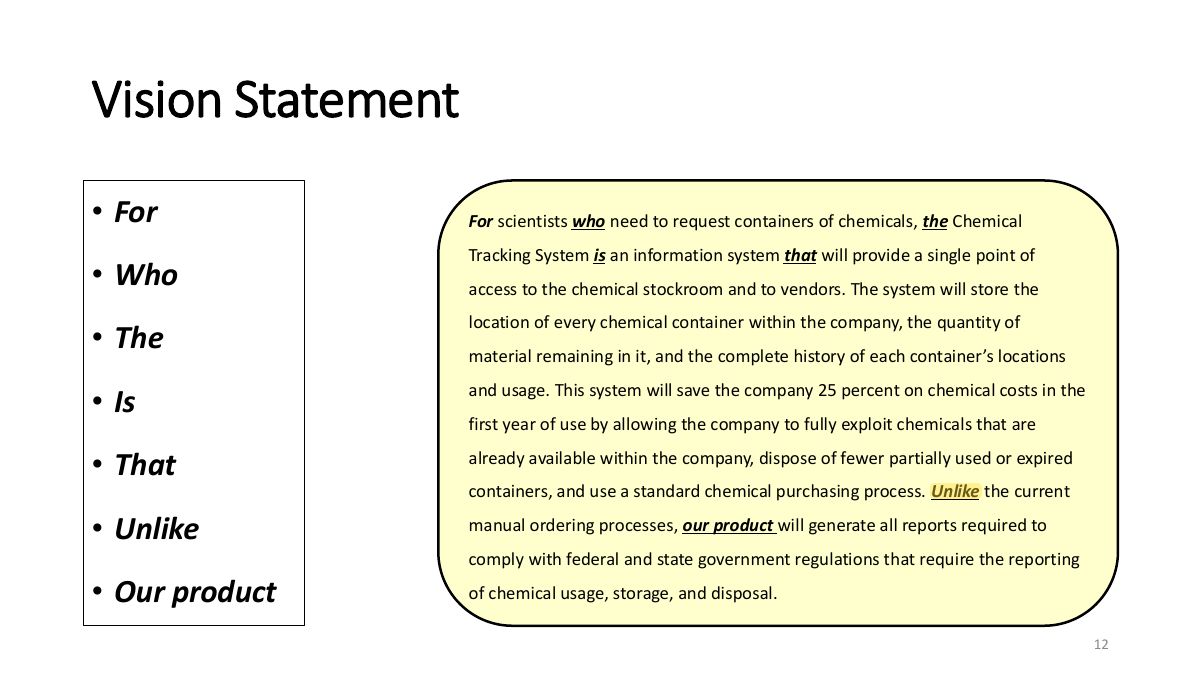
Vision Statement
Notes
Vision statement: a short summary of the long-term purpose: For [customer] who [need], the [product] is a [category] that [benefit]. Unlike [alternative], our product [differentiator].
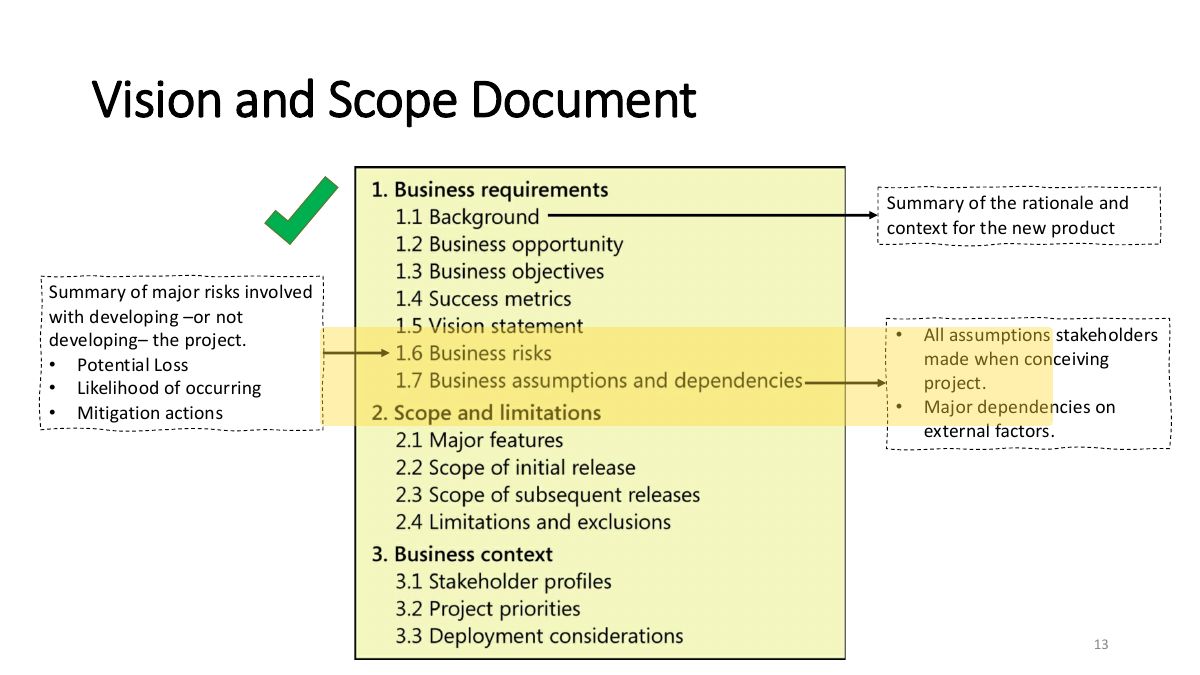
Vision and Scope Document
Notes
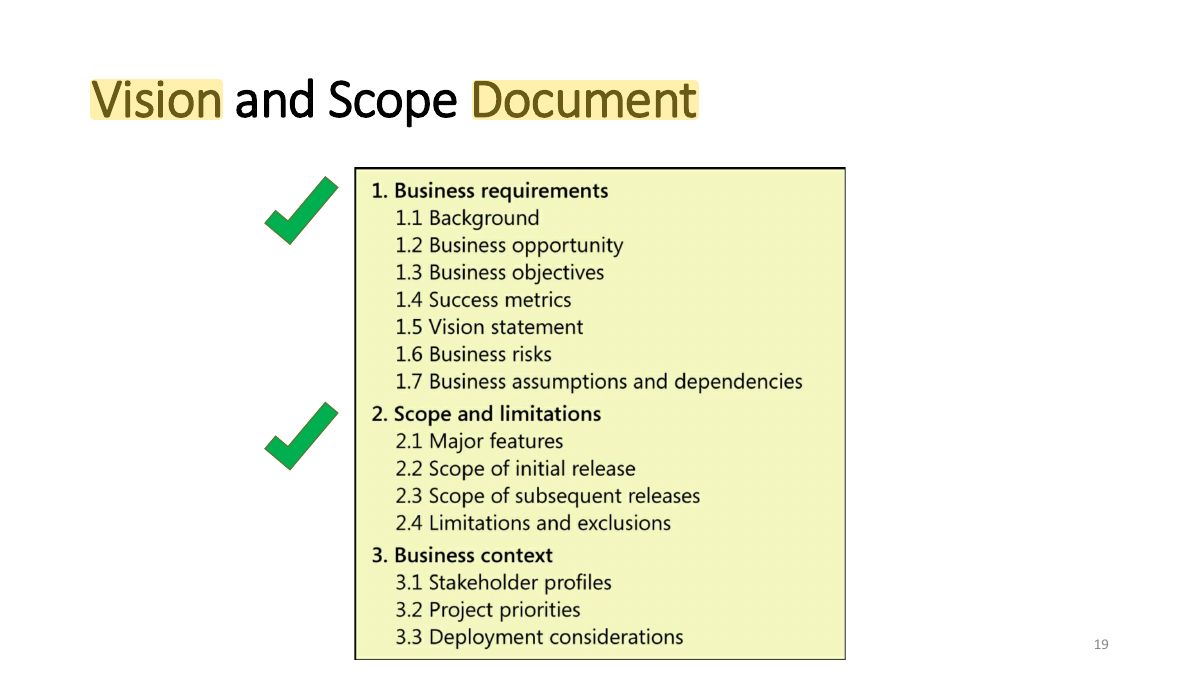
Vision and Scope document = the main OUTPUT of inception: business requirements, vision, scope and limitations, business context (stakeholders, priorities).
Exam angle
Q8, Q13: inception output and its components
The primary output of requirements inception is the:
List four components of a Vision and Scope document.
Compare with the model answer
Business requirements (background, opportunity, objectives, success metrics), the vision statement, scope and limitations (major features, scope of initial and later releases, what is excluded), and business context (stakeholder profiles, project priorities, deployment considerations); also business risks and assumptions.
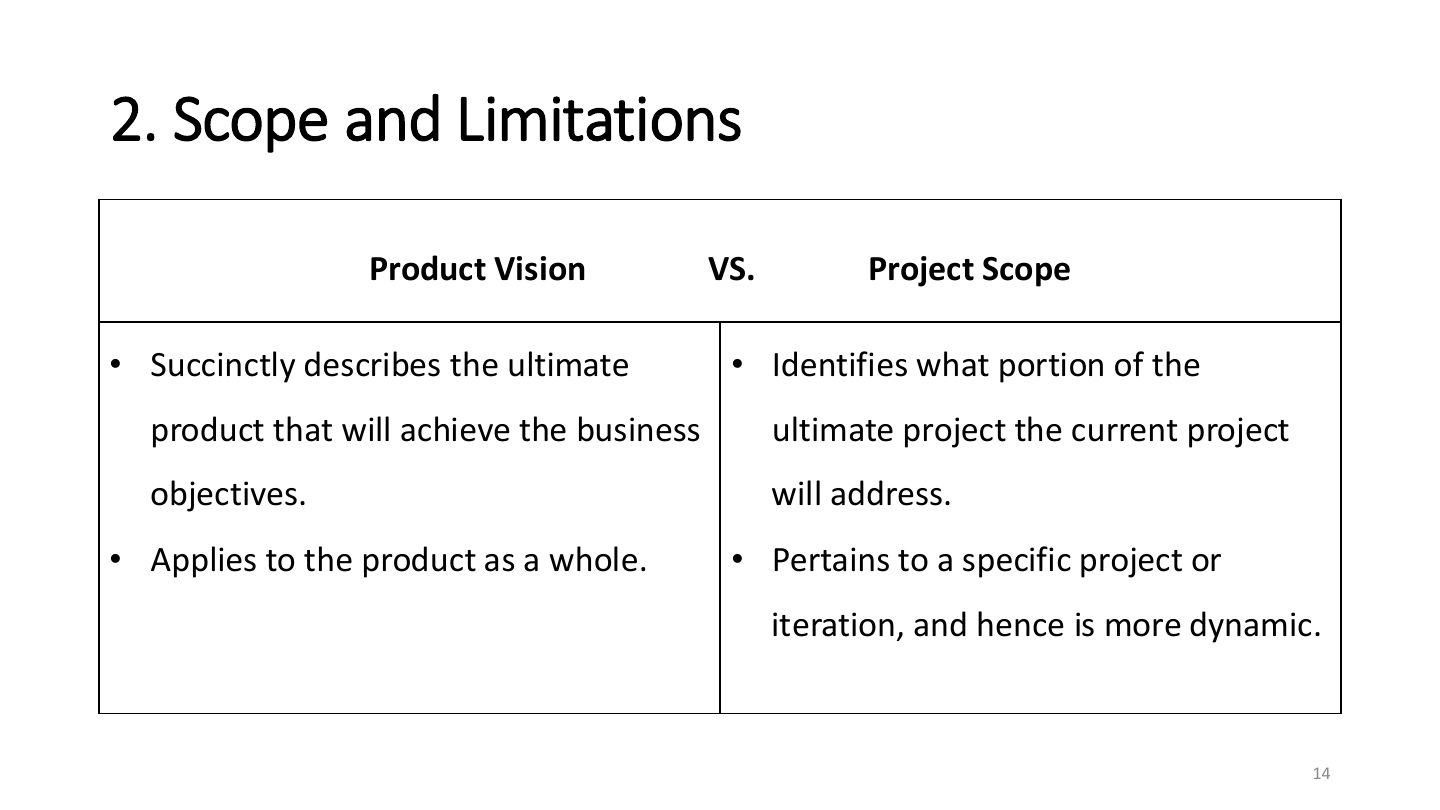
2. Scope and Limitations
Notes
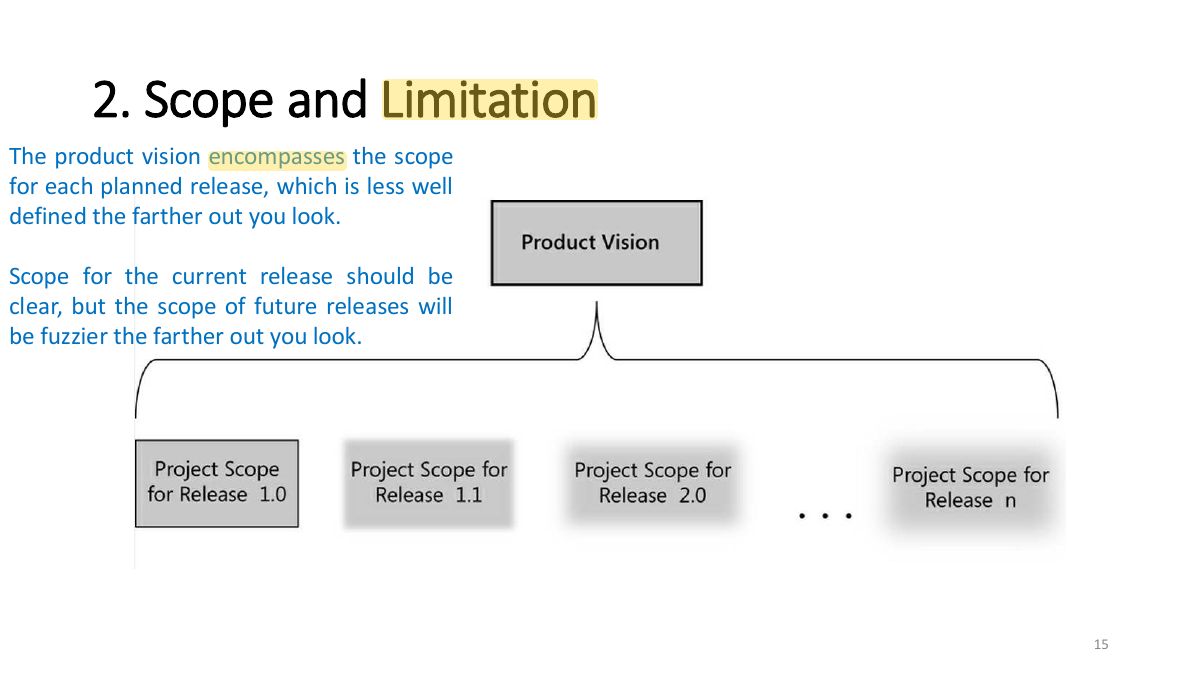
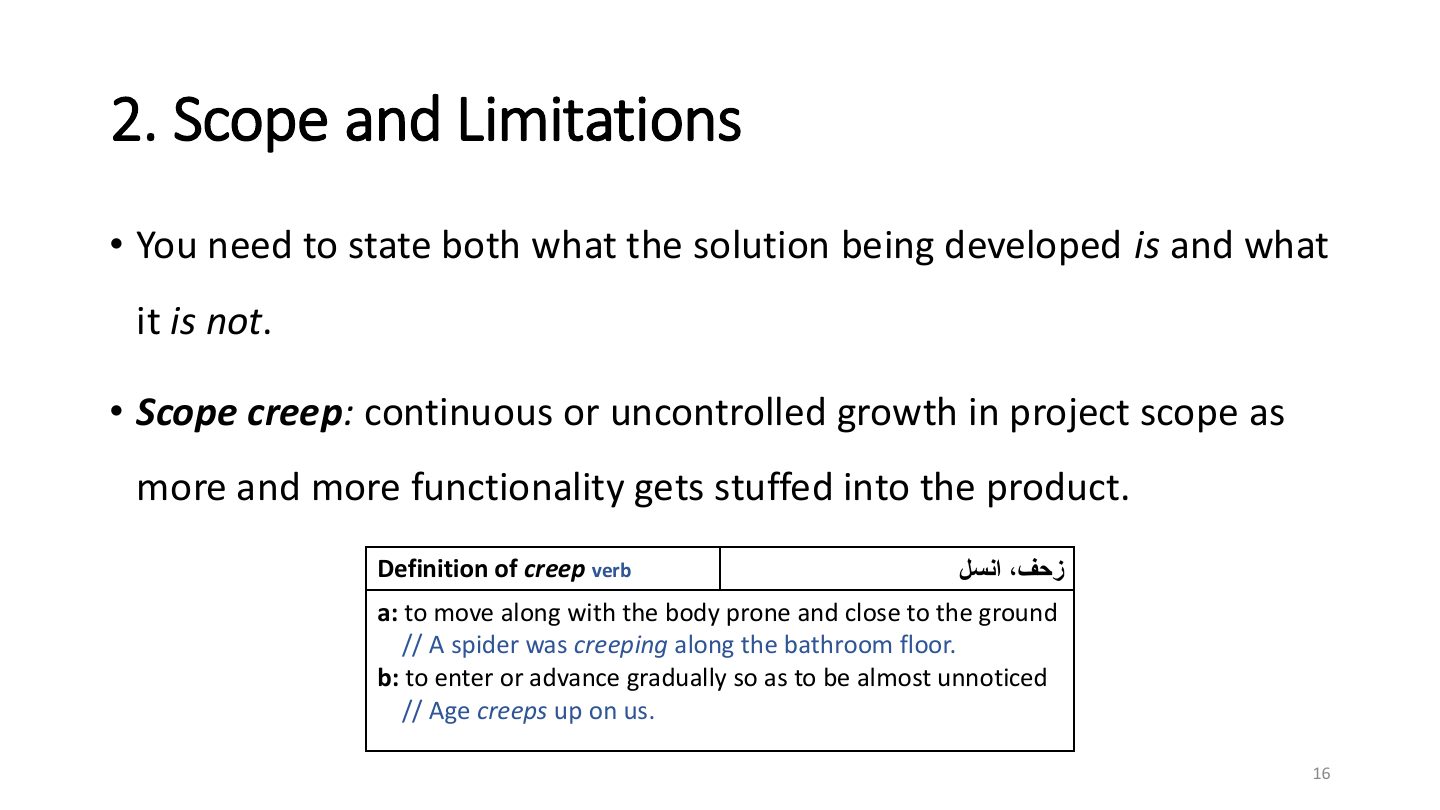
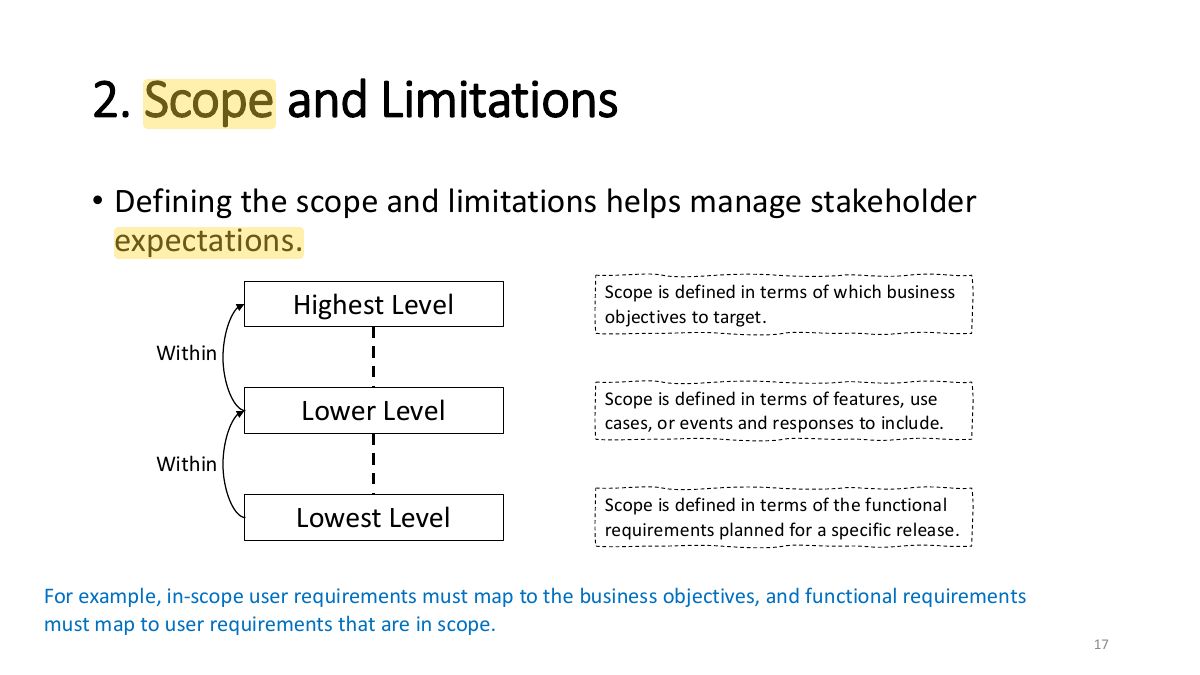
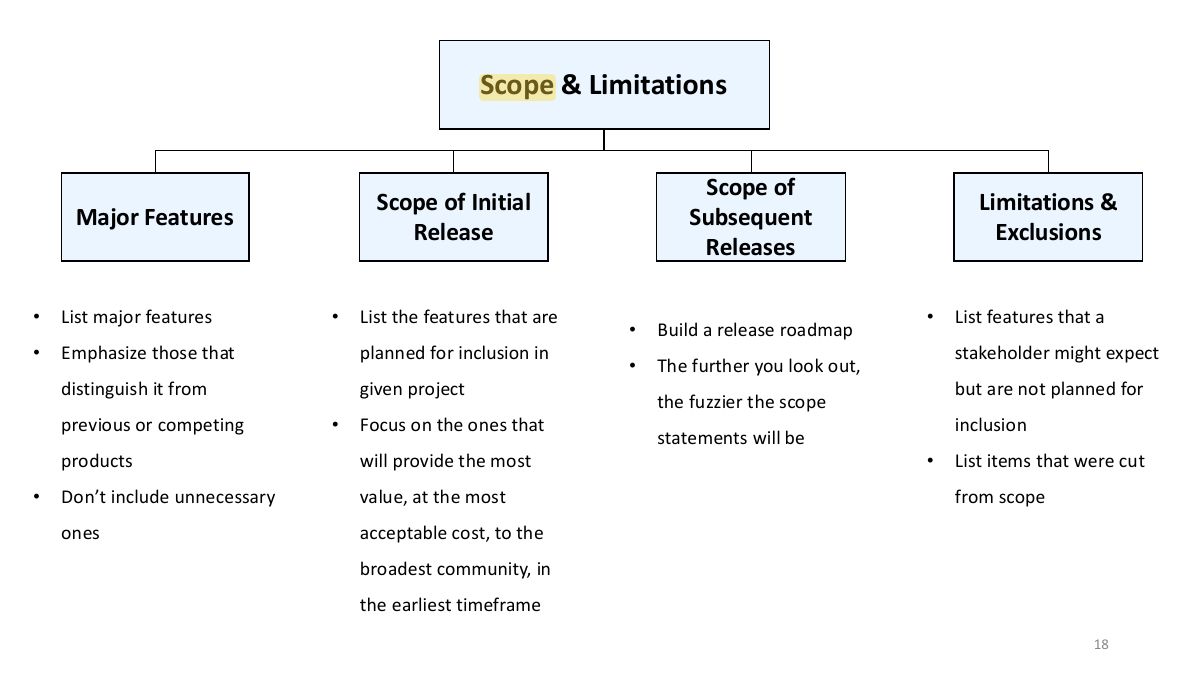
Scope: what is in the release. Limitations: what is explicitly OUT.
2. Scope and Limitation
2. Scope and Limitations
2. Scope and Limitations
Scope & Limitations
Vision and Scope Document
Stakeholders?
Notes
Trap A stakeholder is not just whoever purchases the system.
Exam angle
Q3: who is a stakeholder
A stakeholder is anyone who will purchase the completed software.
- Anyone actively involved, affected by, or able to influence the project.
Vision and Scope Document
Scope Representation Techniques
Context Diagrams
Notes
Context diagram: the system as ONE circle, external entities around it, data flows in and out. Shows the boundary, NOT internals.
Exam angle
Q10: what a context diagram does NOT show
A context diagram does NOT show:
Context Diagrams
Ecosystem Maps
Notes
Ecosystem map: all the systems that interact with this one, including indirect ones (no data flows detail).
Ecosystem Maps
Feature Trees
Feature Trees
Event Lists
Notes
Event list: external events (business, signal, temporal) the system must respond to.
Exam angle
"At 2 a.m. every night the system backs up data" is which kind of event?
Event Lists
Final Remarks
Requirements Inception