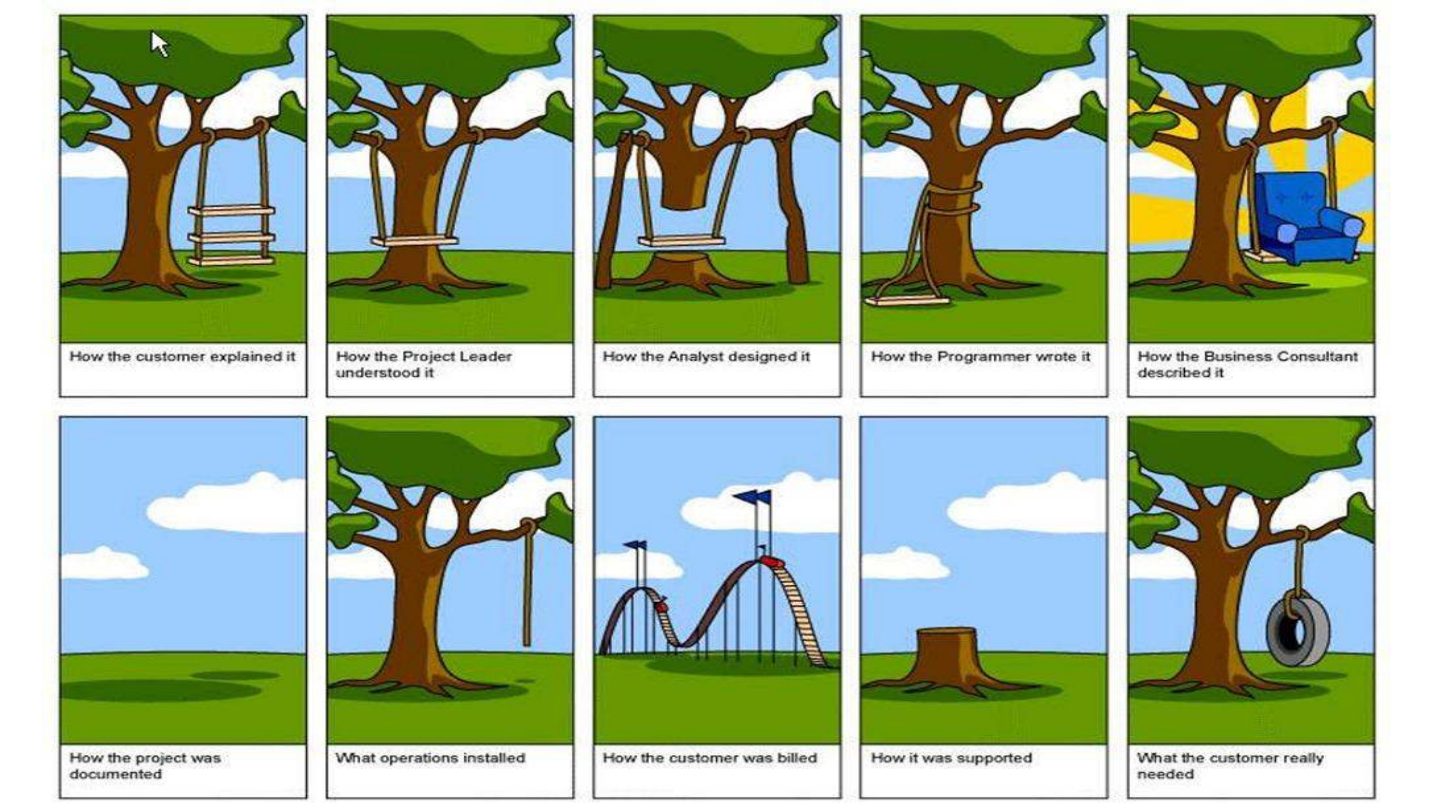
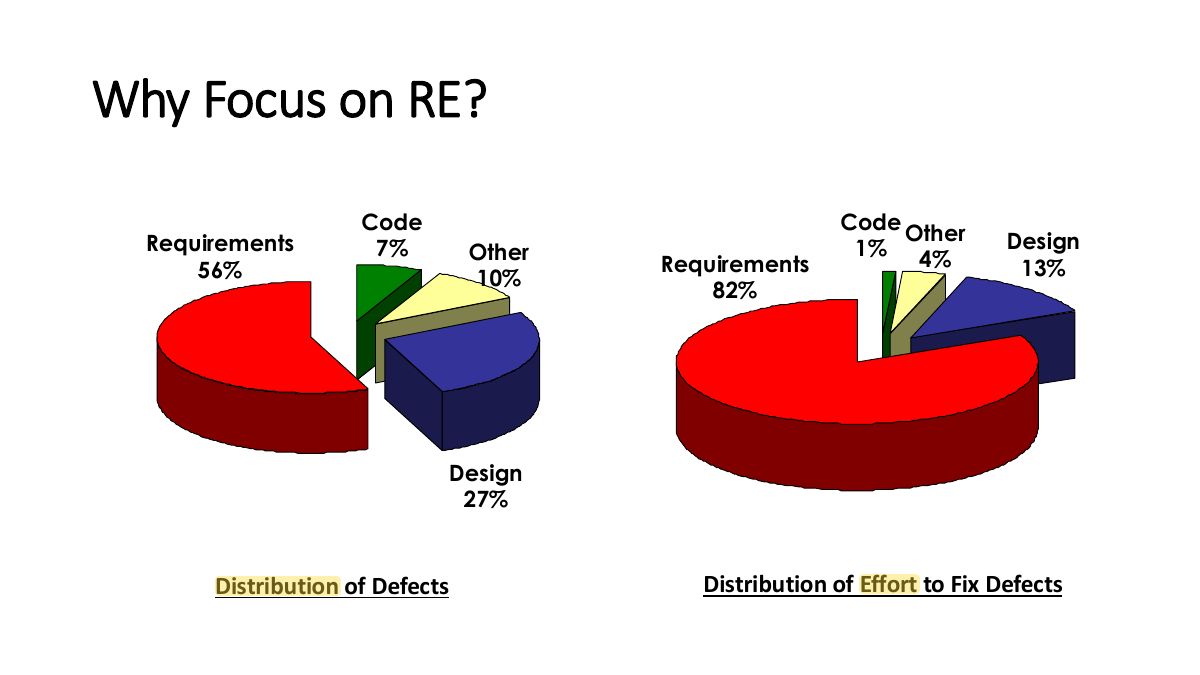
Q4: share of defects from requirements
Software Requirements Engineering Fundamentals
What a requirement is, the levels and types of requirements (business, user, functional, non-functional, domain), why requirements engineering matters (Mars Climate Orbiter), the RE activities and process, requirements development vs. management, and RE challenges.
How to read this page
Every original slide is shown unchanged. Yellow marks on a slide point to a numbered note: hover or tap a mark to jump to its note, and hover a note to see its marks. Questions tagged Past exam appeared on a real paper; Prediction questions are likely angles, not confirmed. Pick an answer to each question: a wrong pick tells you why it is wrong, so you can try again.
All 33 slides
- 1 Slide 1
- 2 Slide 2
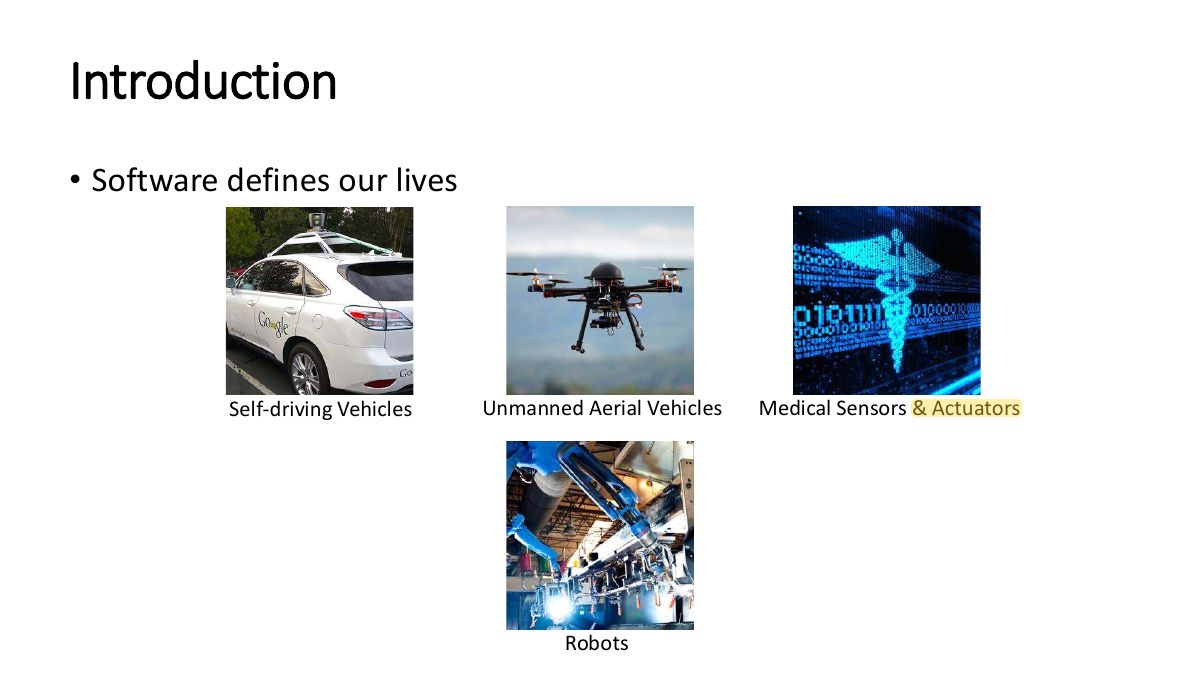
- 3 Introduction
- 4 Requirements Engineering (RE) Process
- 5 Given that
- 6 Course Objectives
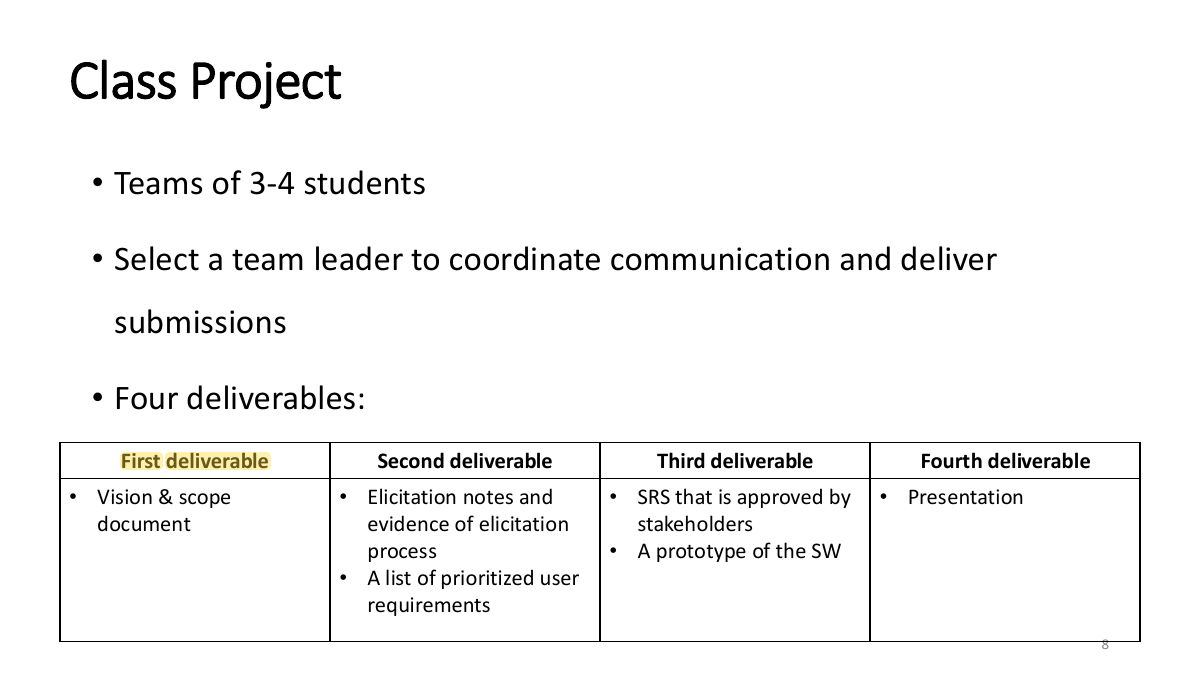
- 7 Class Project
- 8 Class Project
- 9 Slide 9
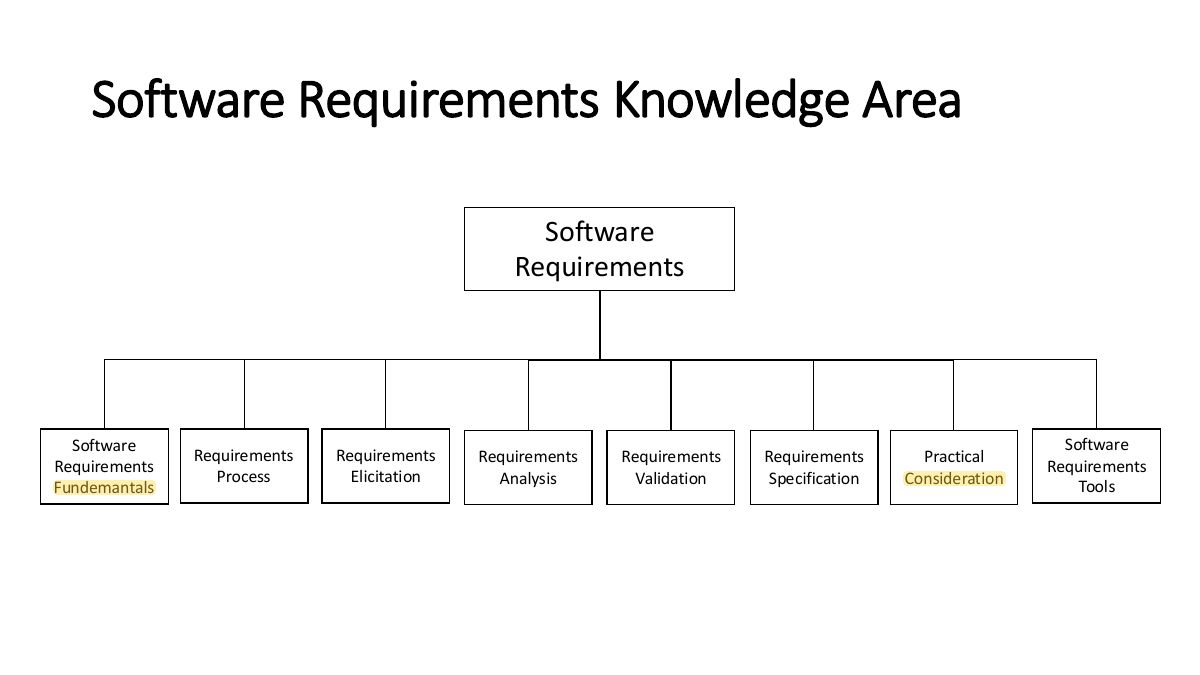
- 10 Software Requirements Knowledge Area
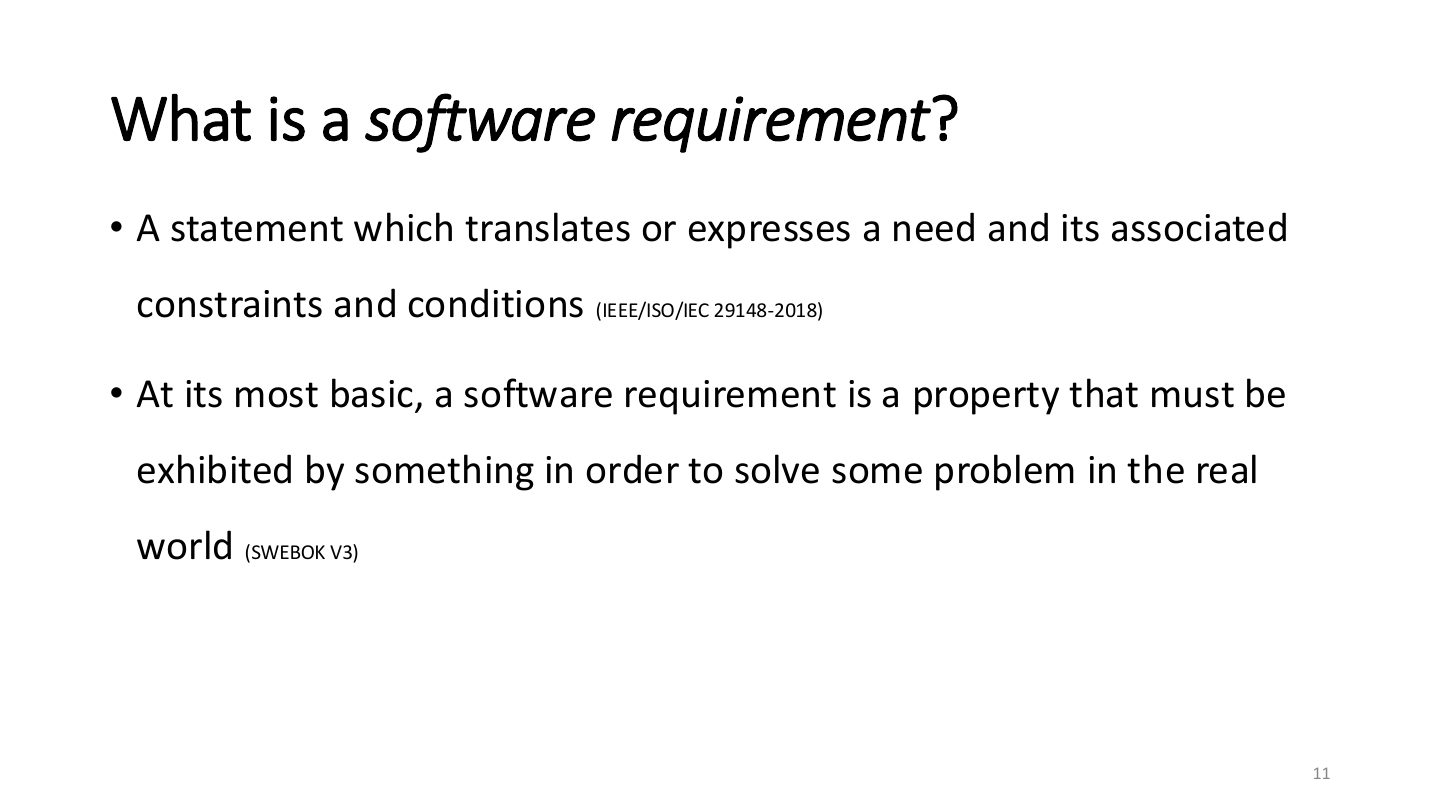
- 11 What is a software requirement ?
- 12 What are software requirements ?
- 13 Slide 13
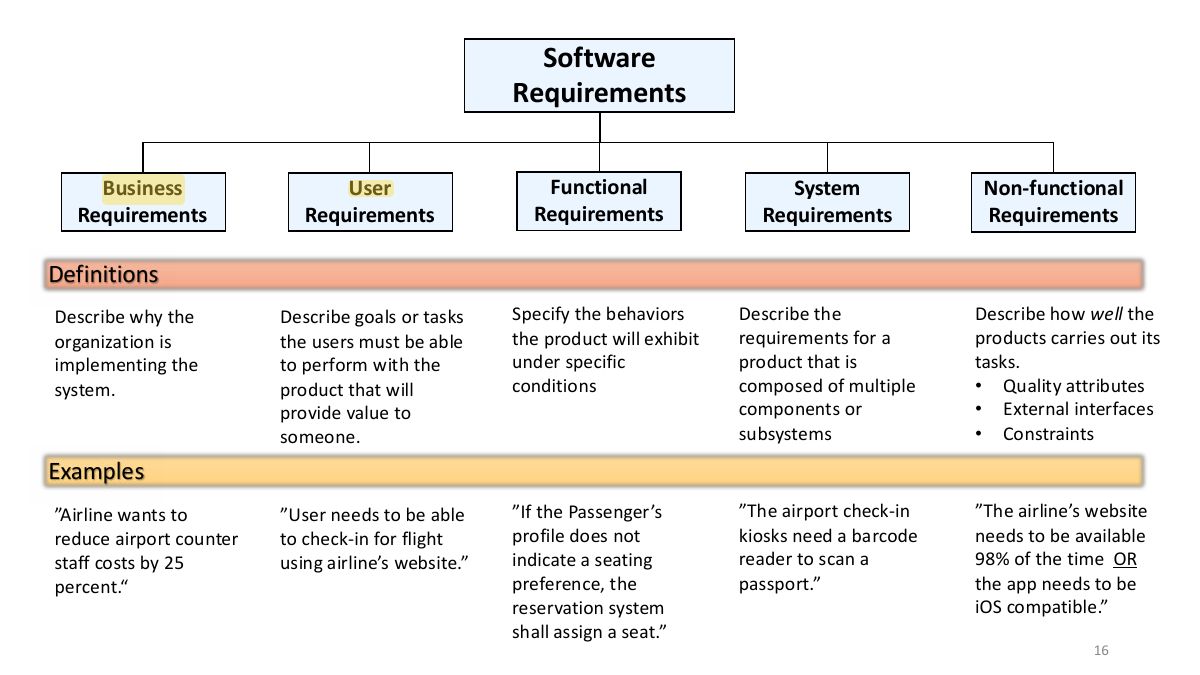
- 14 Software Requirements
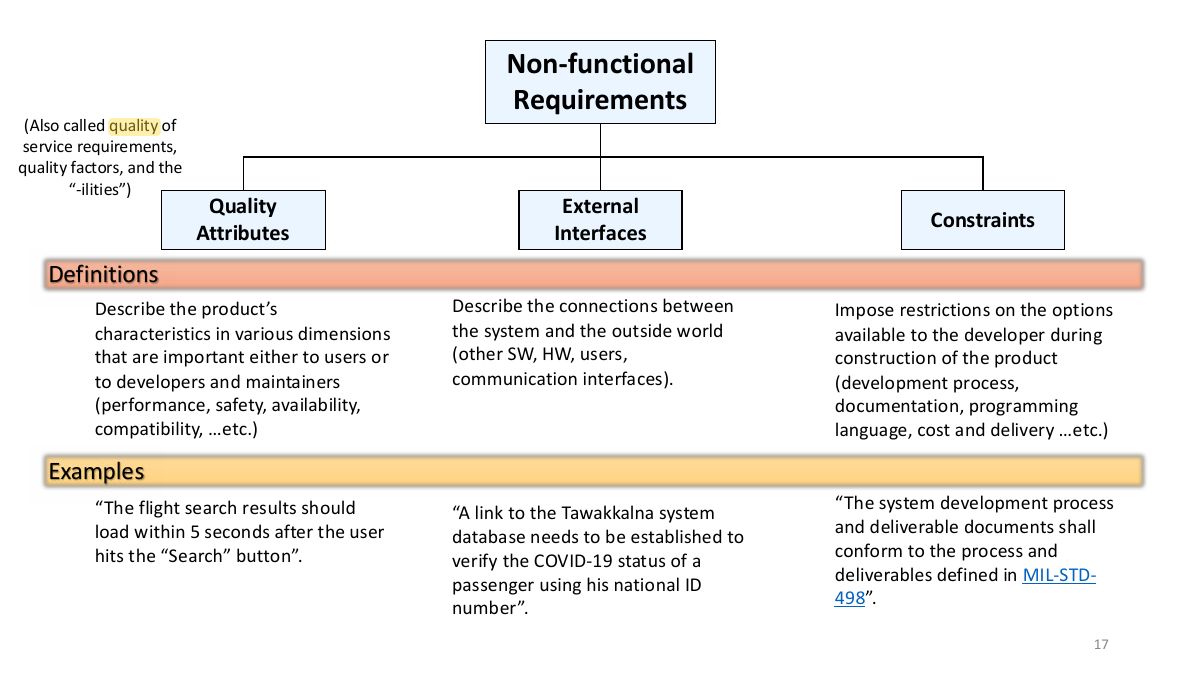
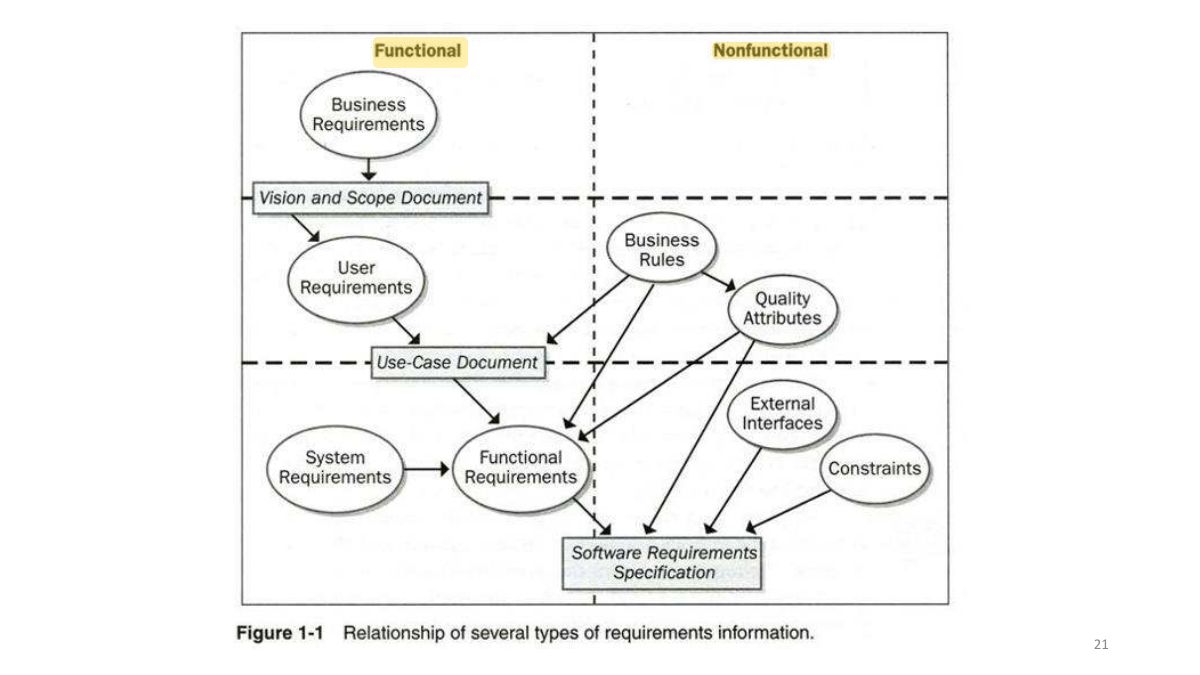
- 15 Non-functional Requirements
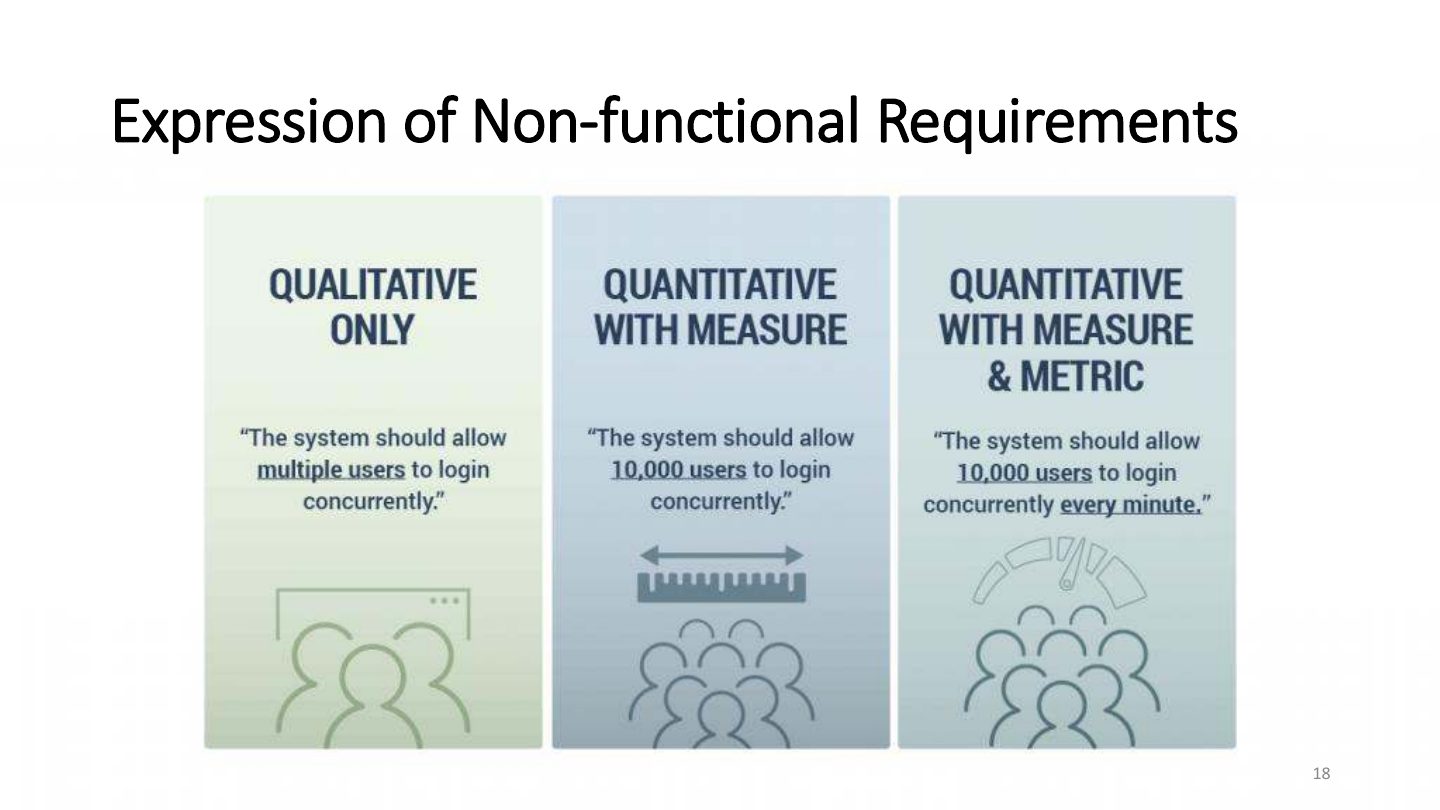
- 16 Expression of Non-functional Requirements
- 17 Slide 17
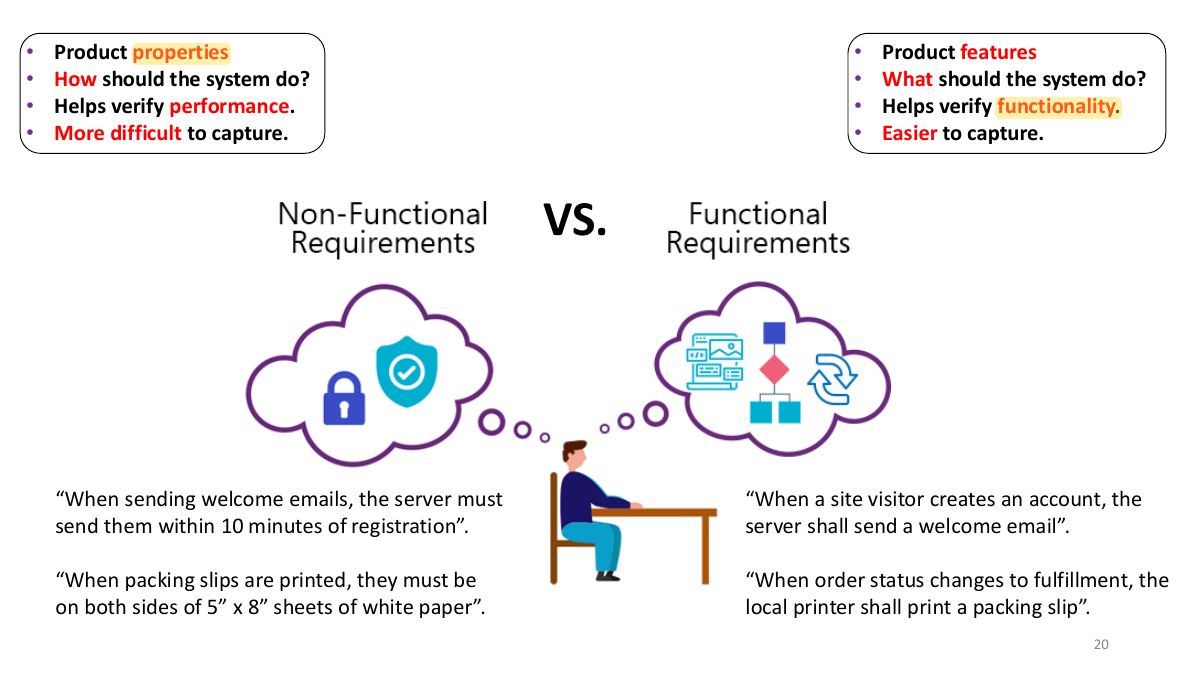
- 18 • Product properties • Product features • How should the system do? • What should the system do? • Helps verify performance. • Helps verify functionality. • More difficult to capture. • Easier to capture.
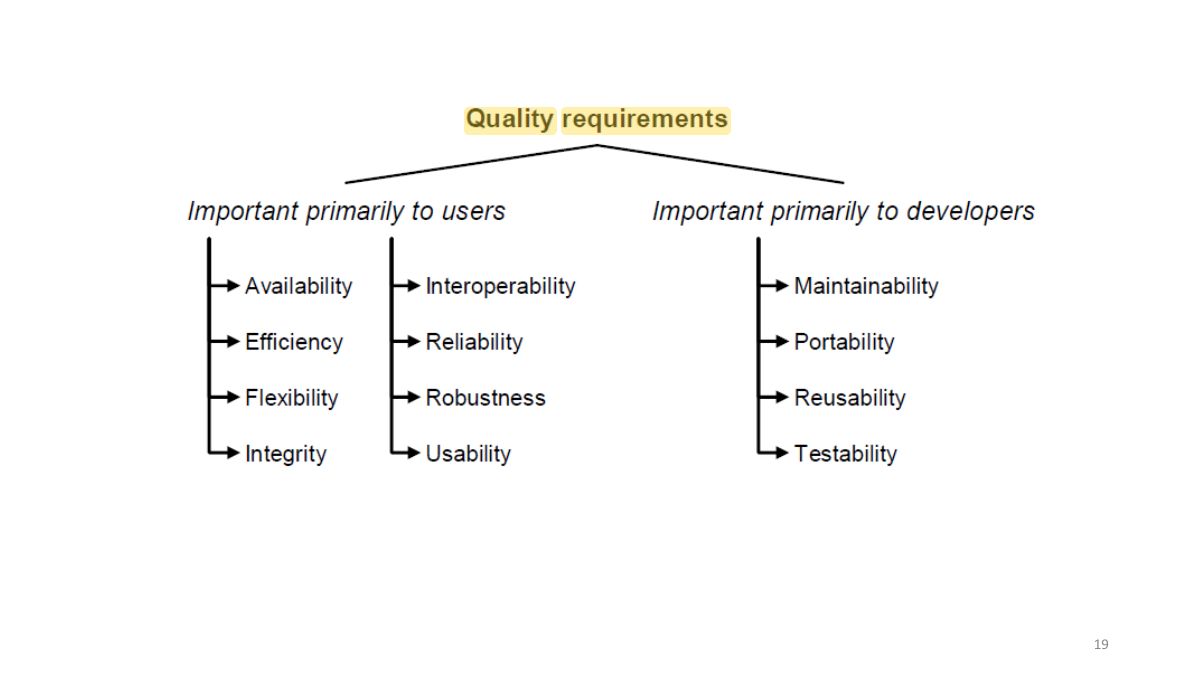
- 19 Slide 19
- 20 Slide 20
- 21 Domain Requirements
- 22 Slide 22
- 23 Mars Climate Orbiter
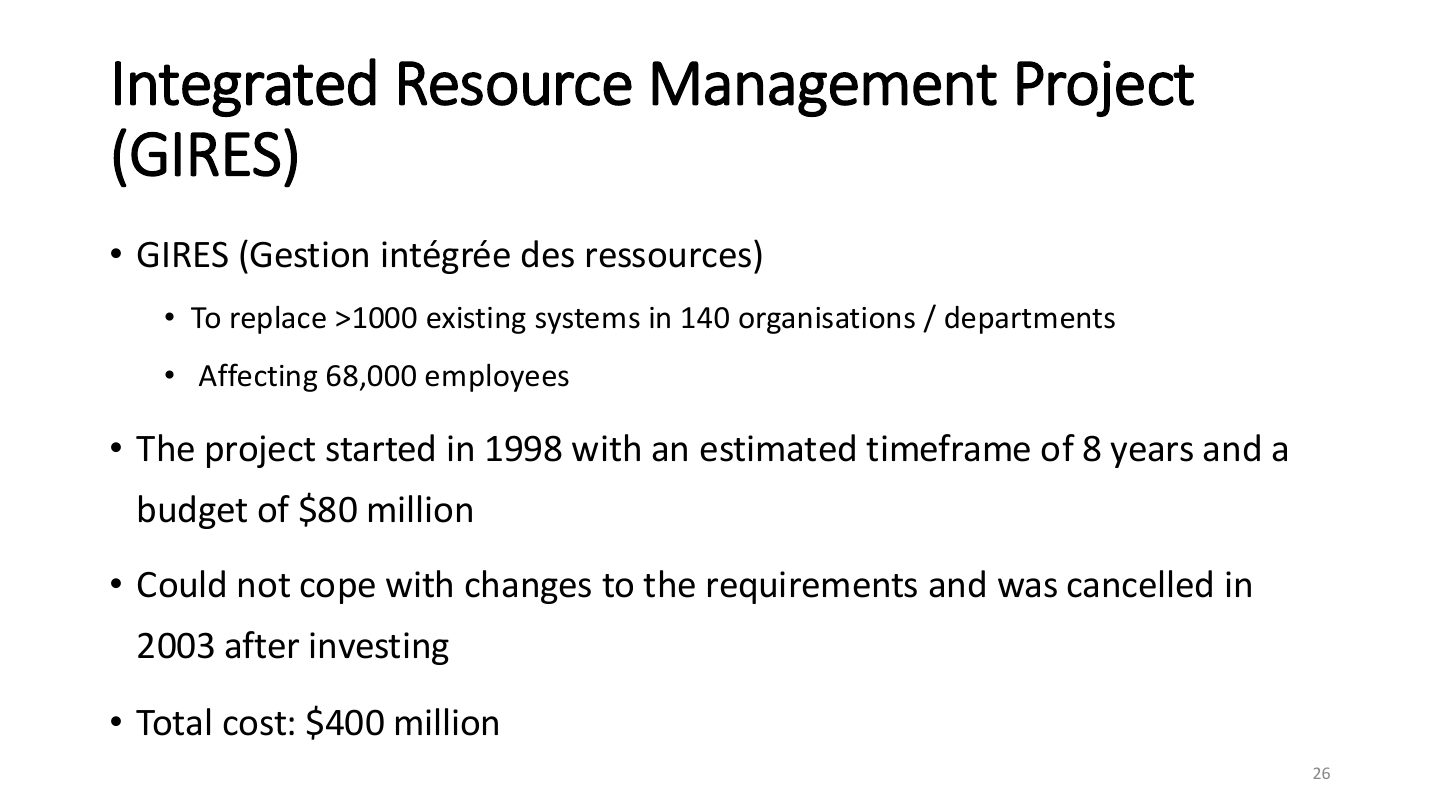
- 24 Integrated Resource Management Project (GIRES)
- 25 Why Focus on RE?
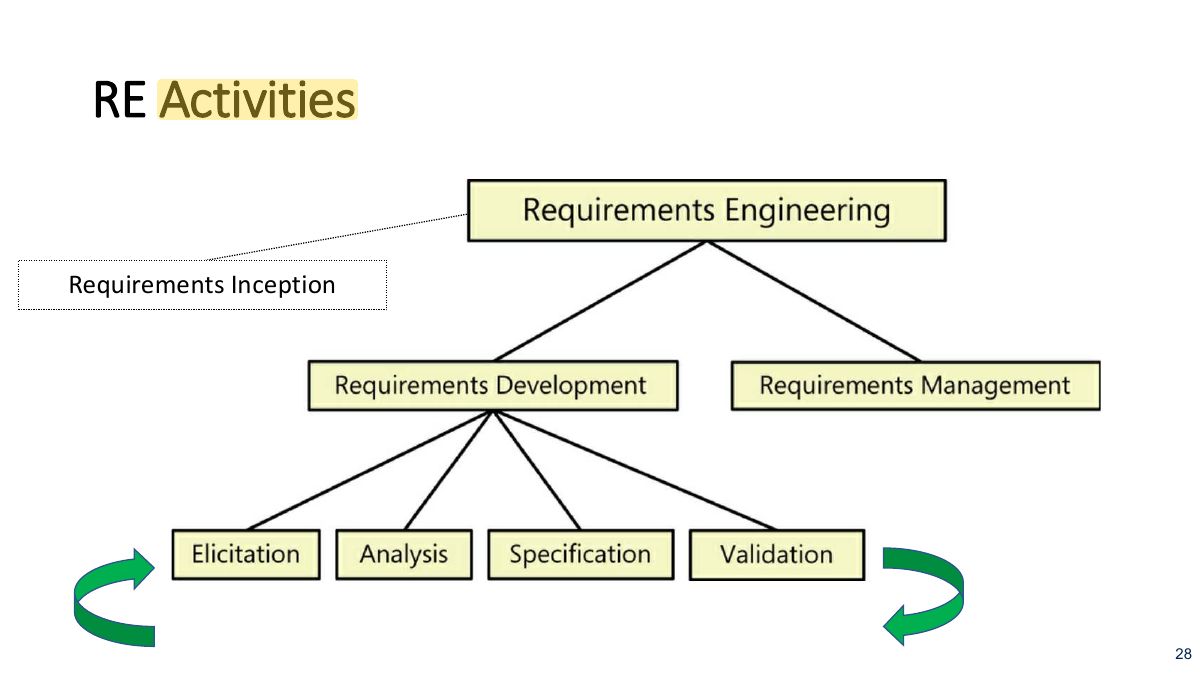
- 26 RE Activities
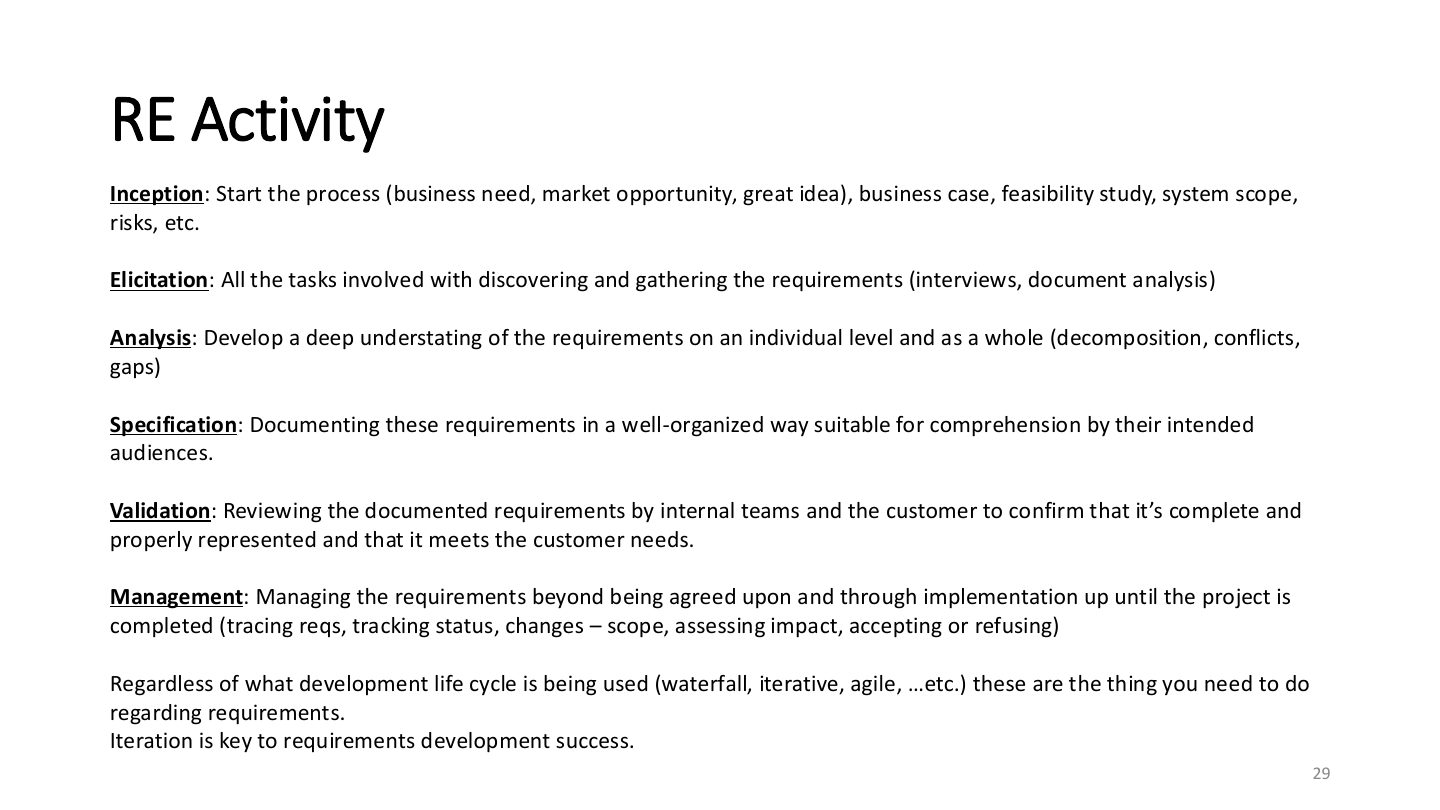
- 27 RE Activity
- 28 Requirements Engineering (RE) Process
- 29 RE Process
- 30 Requirements Development Process
- 31 Boundary Between RD and RM
- 32 RE Challenges
- 33 Slide 33
Slide 1
Slide 2
Introduction
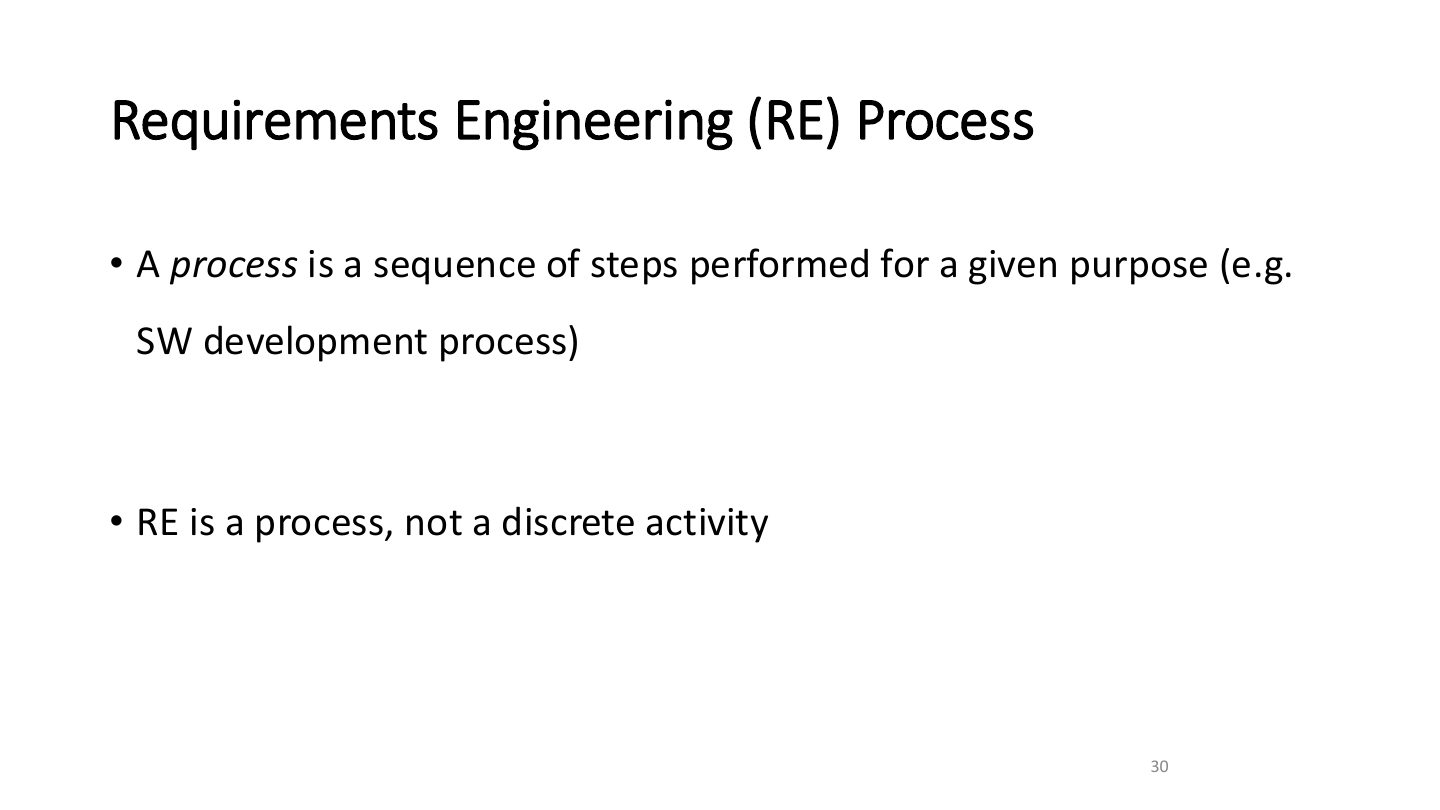
Requirements Engineering (RE) Process
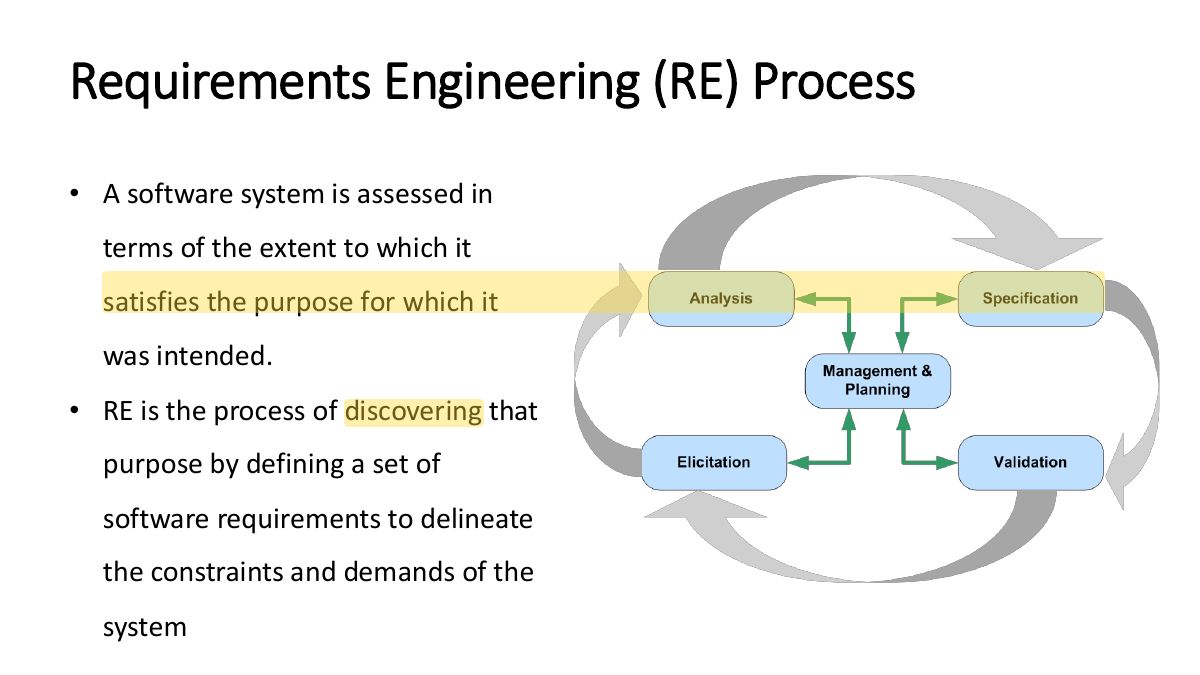
Notes
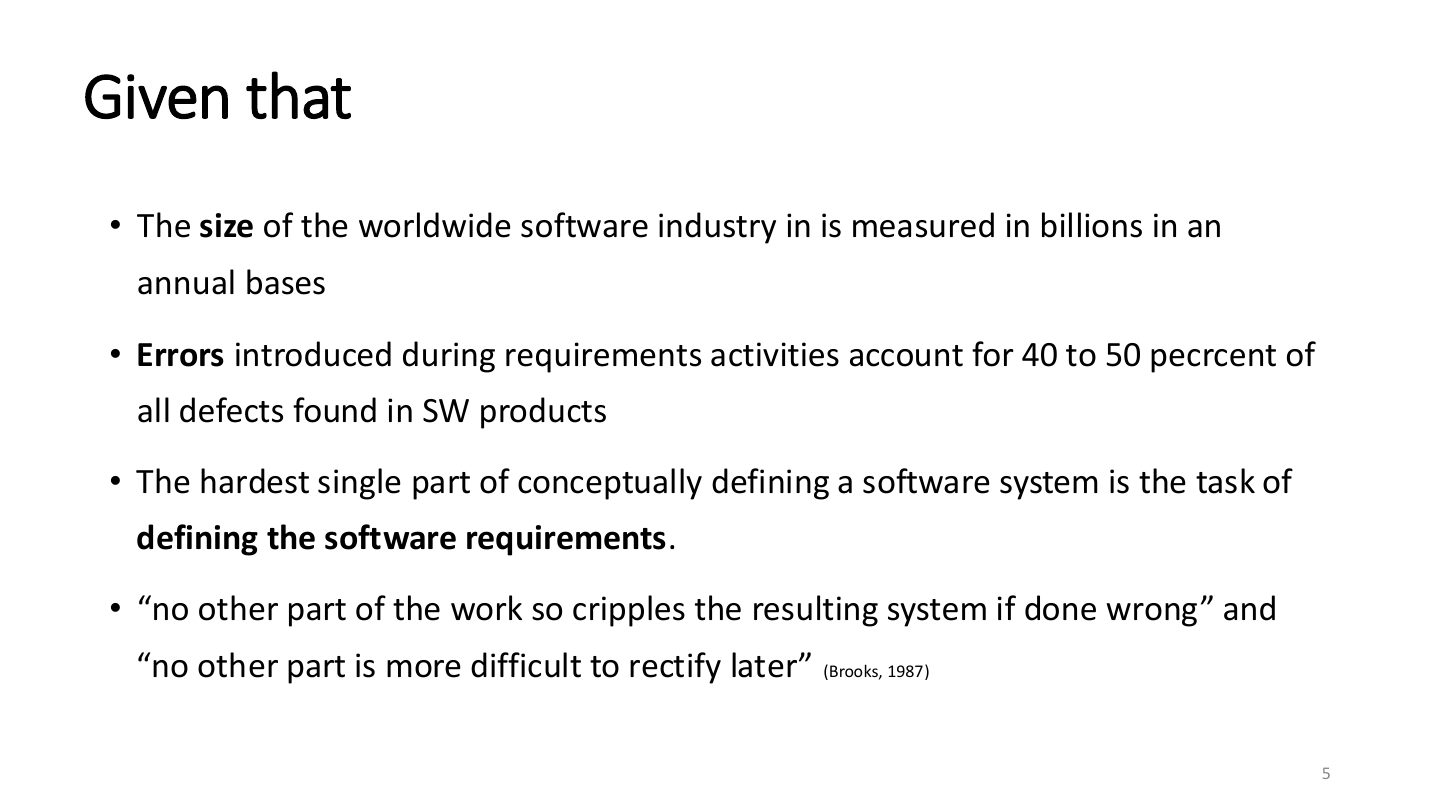
Requirements errors account for 40–50% of all defects, and they are the most expensive to fix late.
Exam angle
Errors introduced during requirements activities account for 40 to 50 percent of all defects found in software.
Given that
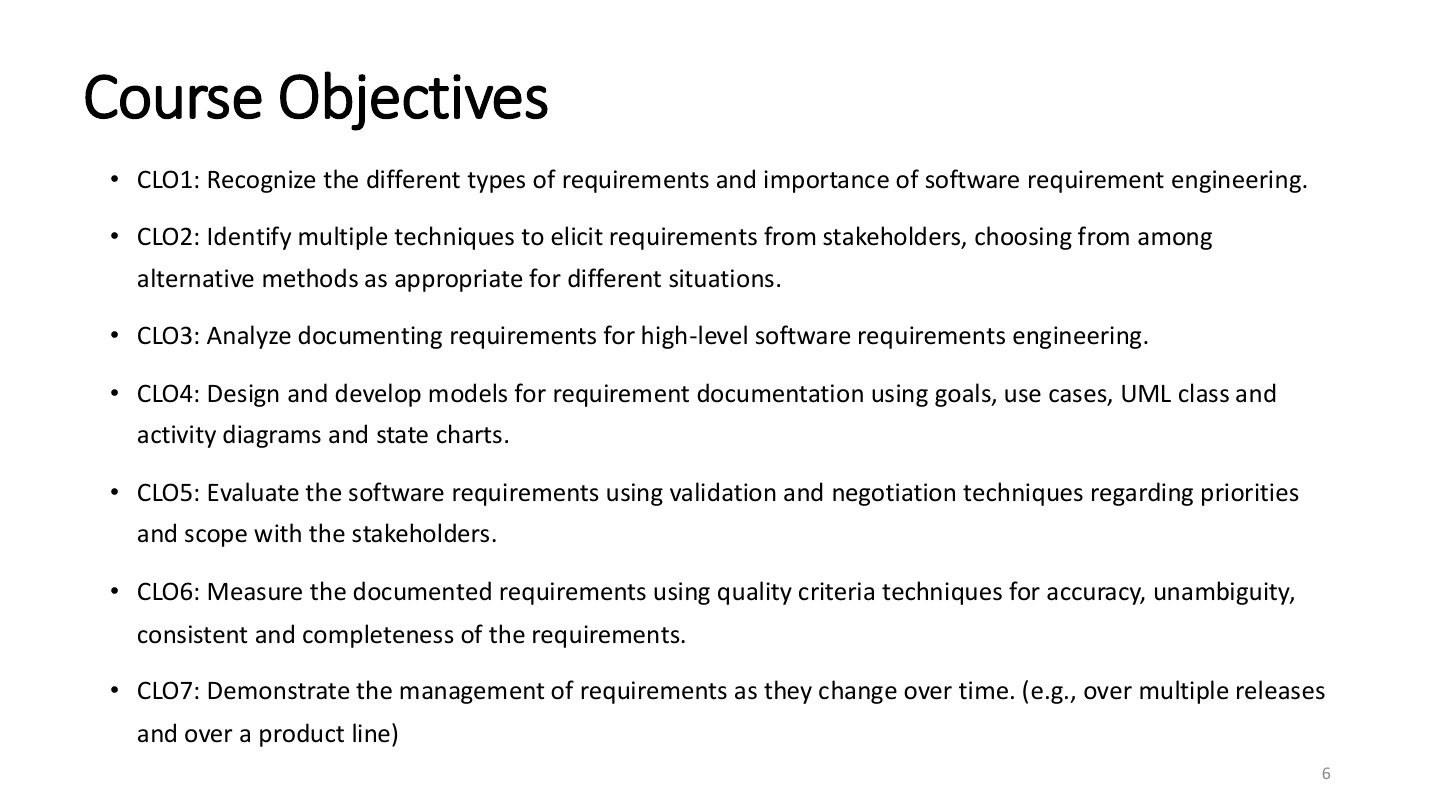
Course Objectives
Class Project
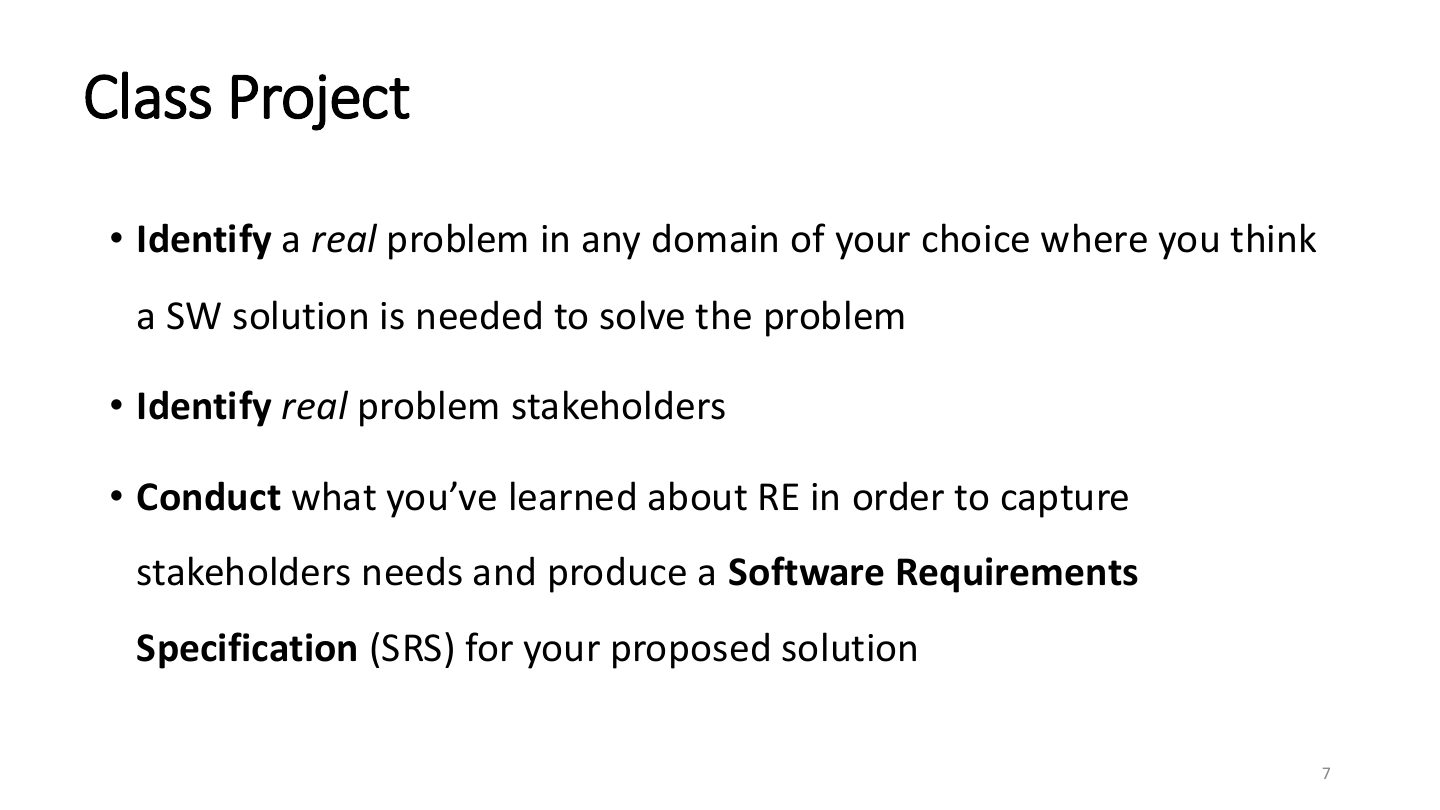
Class Project
Slide 9
Software Requirements Knowledge Area
What is a software requirement ?
Notes
A requirement: a statement of a capability or condition the system must have to satisfy a stakeholder need.
What are software requirements ?
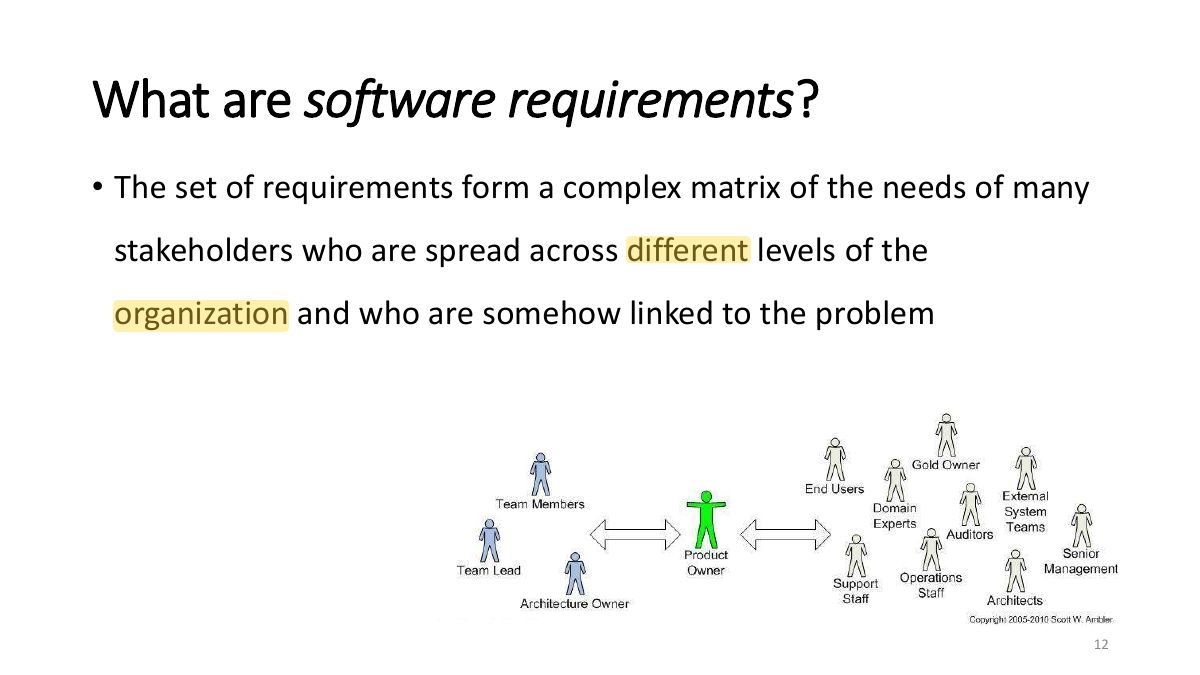
Slide 13
Notes
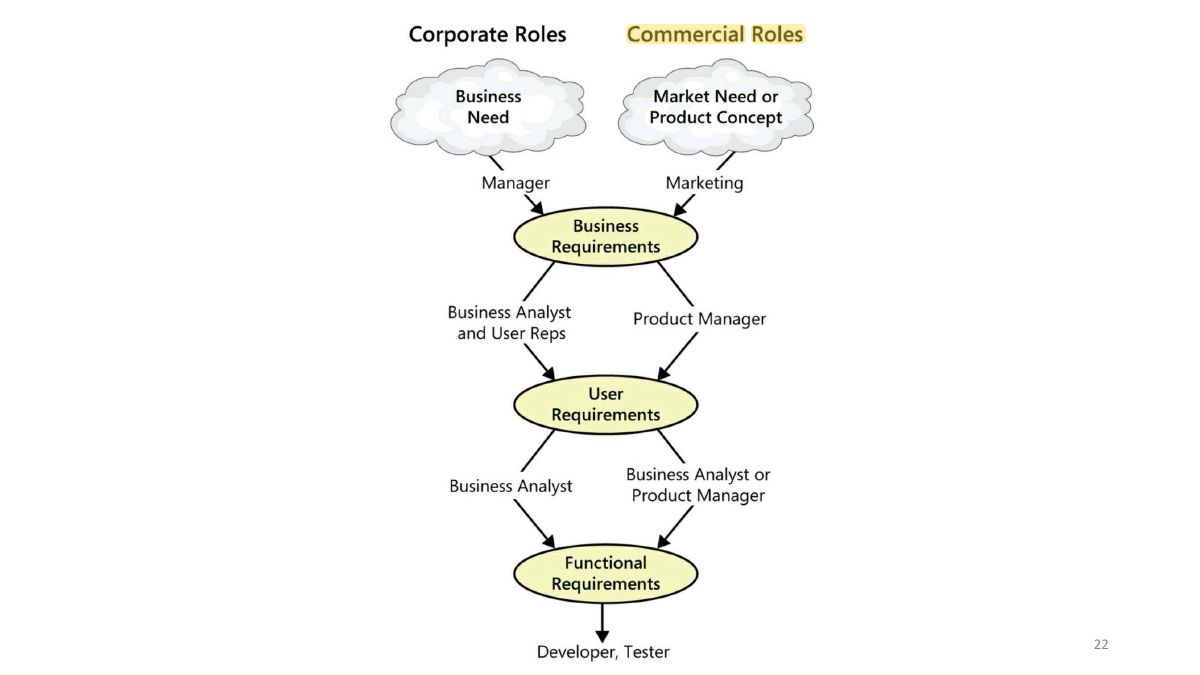
Three levels: BUSINESS requirements (why: objectives) → USER requirements (what users must be able to do) → FUNCTIONAL requirements (what the system must do), plus non-functional requirements and constraints.
Tip Three levels: BUSINESS requirements (why: objectives) → USER requirements (what users must be able to do) → FUNCTIONAL requirements (what the system must do), plus non-functional requirements and constraints.
Exam angle
Q12: three types of requirements with examples
List and briefly explain THREE types of requirements, with an example for each.
Compare with the model answer
Business requirement: why the organization builds the system (e.g. "reduce order processing time by 30%"). User requirement: a task users must be able to do (e.g. "a clerk can register a new customer"). Functional requirement: a behaviour the system must perform (e.g. "the system shall email a receipt after payment"). Non-functional: a quality or constraint (e.g. "pages load within 2 seconds").
Software Requirements
Exam angle
Q6: picking the functional requirement
Which is a functional requirement?
Non-functional Requirements
Notes
Non-functional: quality attributes (performance, security, usability, availability), external interfaces, constraints. Harder to capture than functional requirements.
Exam angle
Q1: which kind is harder to capture
Functional requirements are more difficult to capture than non-functional requirements.
- Non-functional requirements are usually harder.
Expression of Non-functional Requirements
Slide 17
• Product properties • Product features • How should the system do? • What should the system do? • Helps verify performance. • Helps verify functionality. • More difficult to capture. • Easier to capture.
Slide 19
Slide 20
Domain Requirements
Notes
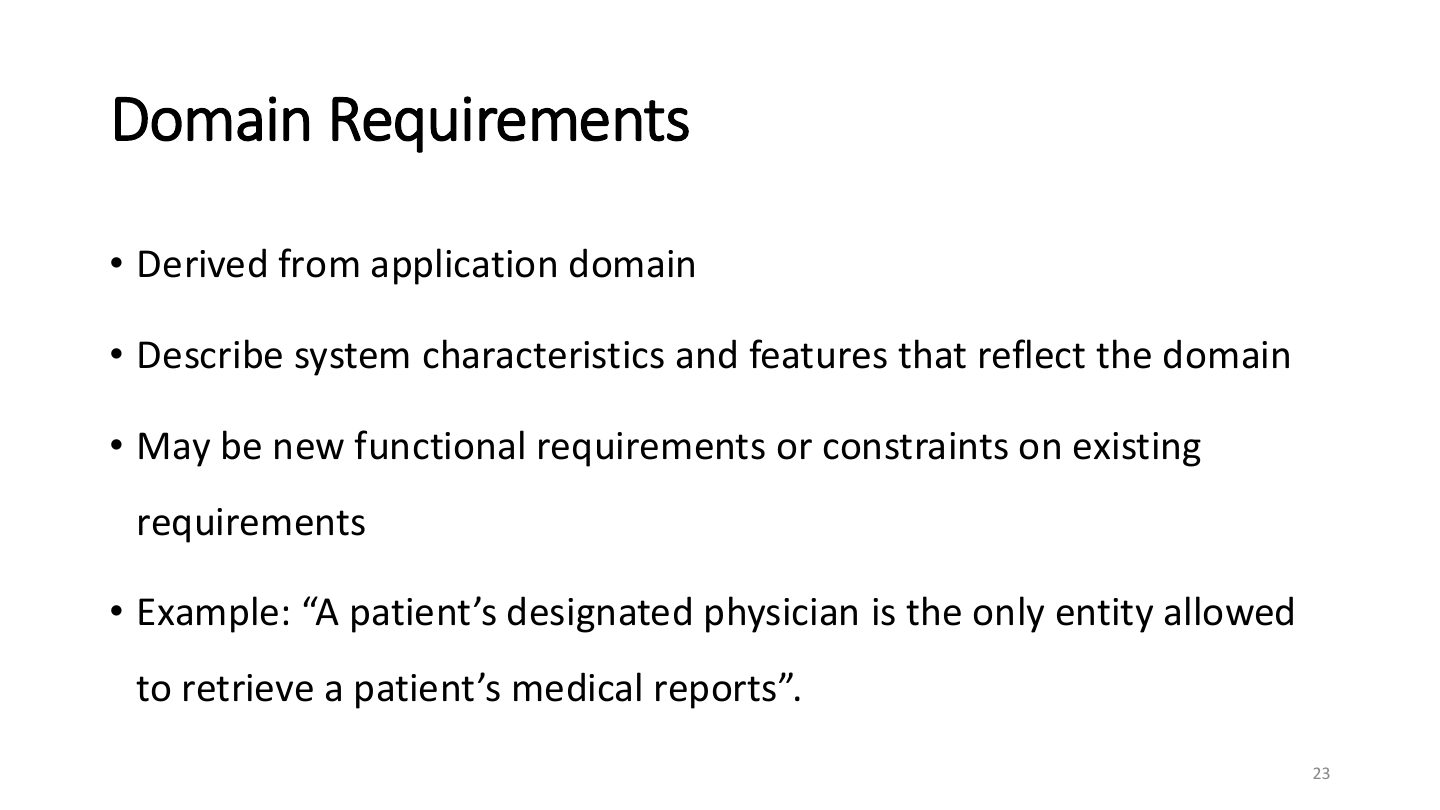
Domain requirements: come from the application domain (laws, regulations, domain rules).
Exam angle
Q5: an example of a domain requirement
Which is a domain requirement?
Slide 22
Mars Climate Orbiter
Notes
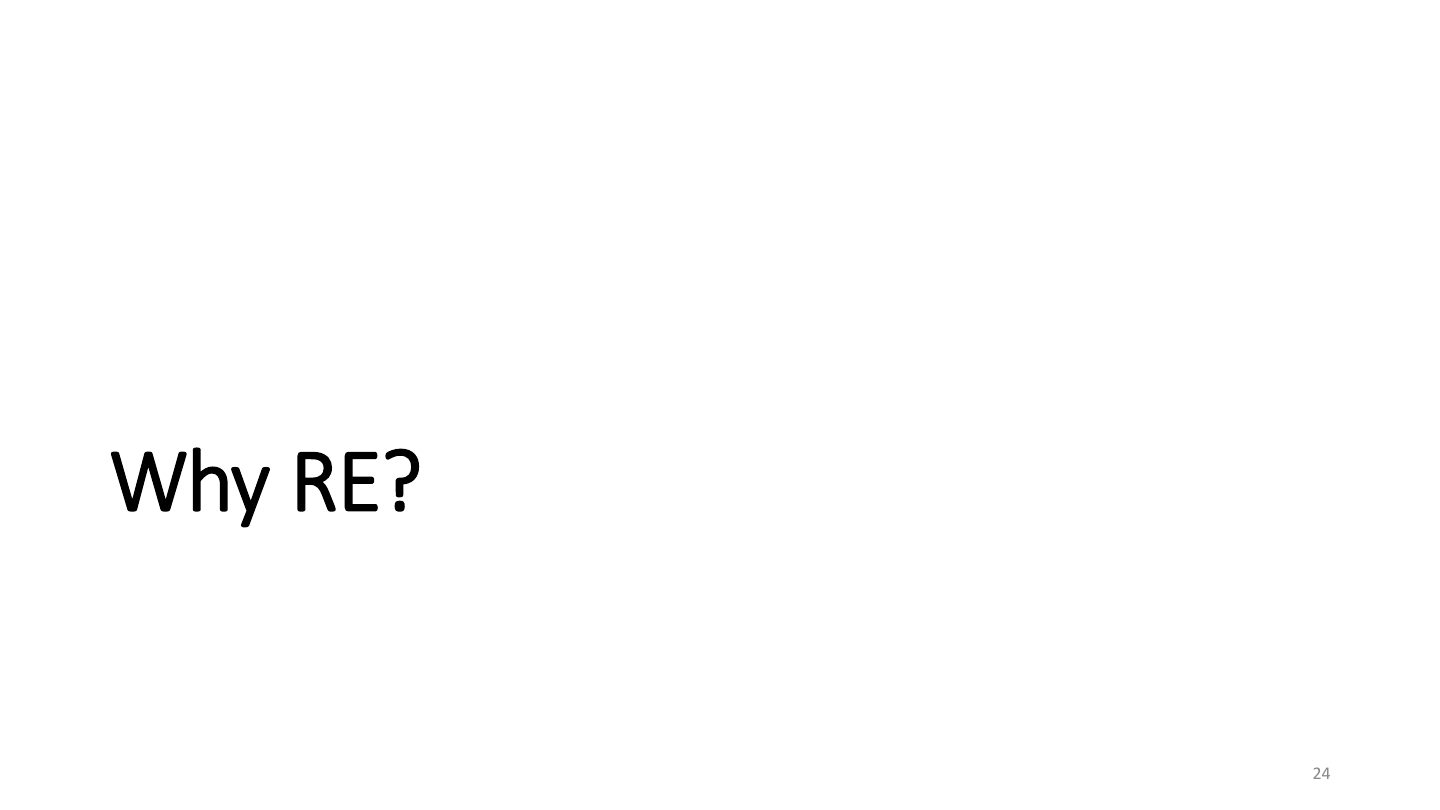
Mars Climate Orbiter (1999) was lost because one team used imperial units and another metric: a requirements/interface failure.
Integrated Resource Management Project (GIRES)
Why Focus on RE?
RE Activities
RE Activity
Requirements Engineering (RE) Process
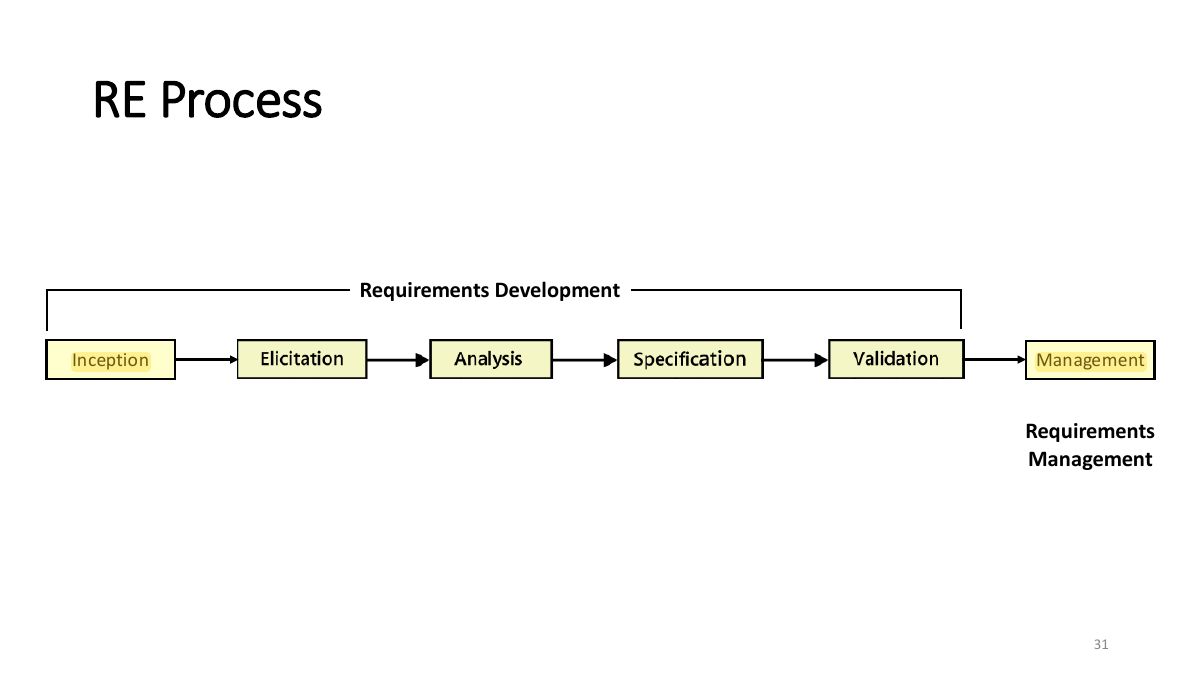
RE Process
Notes
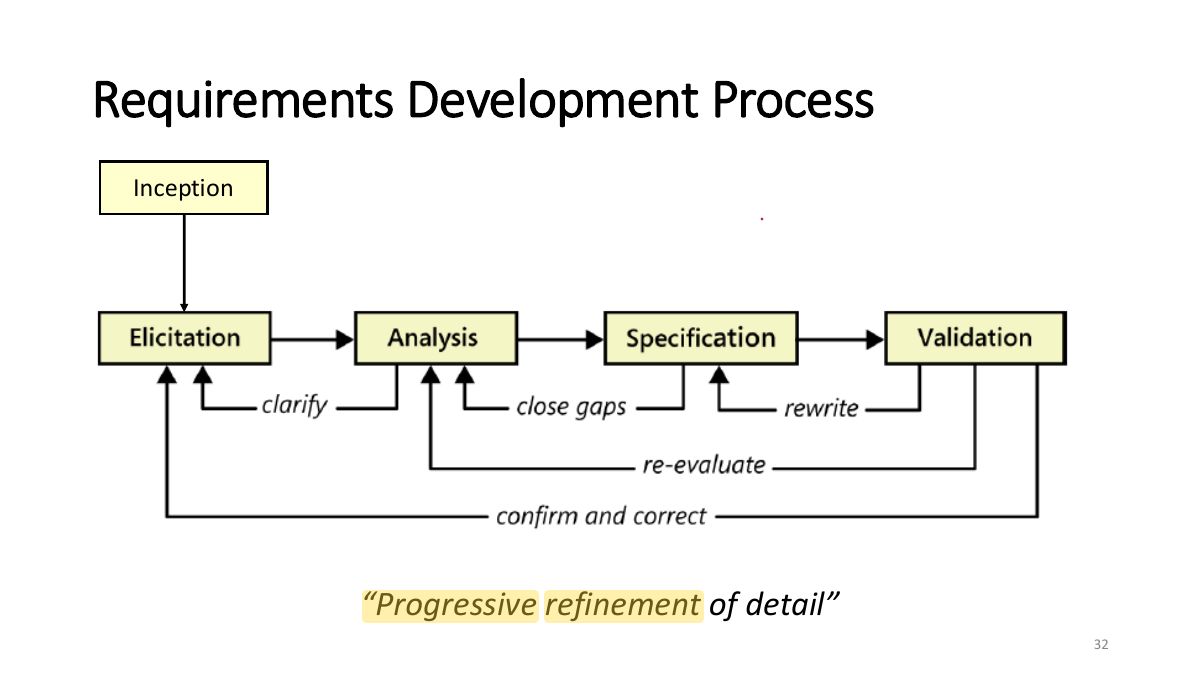
RE is iterative, not a one-time phase.
Exam angle
Q2: is RE iterative?
Requirements engineering is not an iterative process.
Requirements Development Process
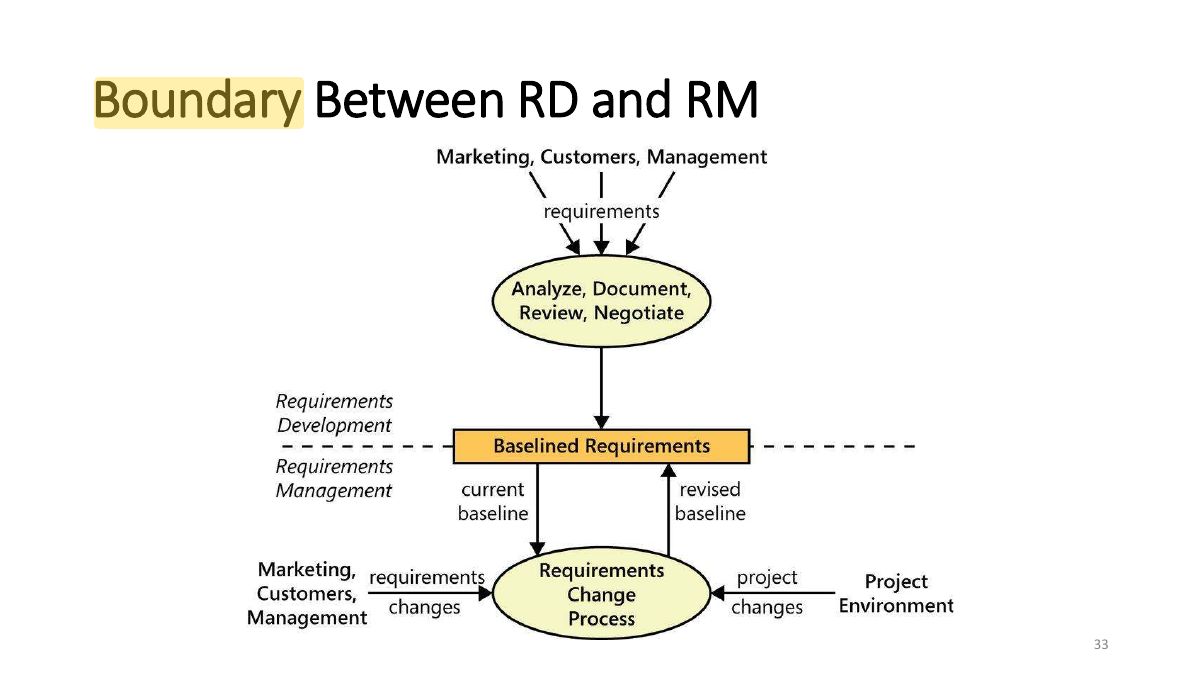
Boundary Between RD and RM
Notes
Requirements development produces the baseline; requirements management controls changes to it (traceability, versions, status).
RE Challenges
Notes
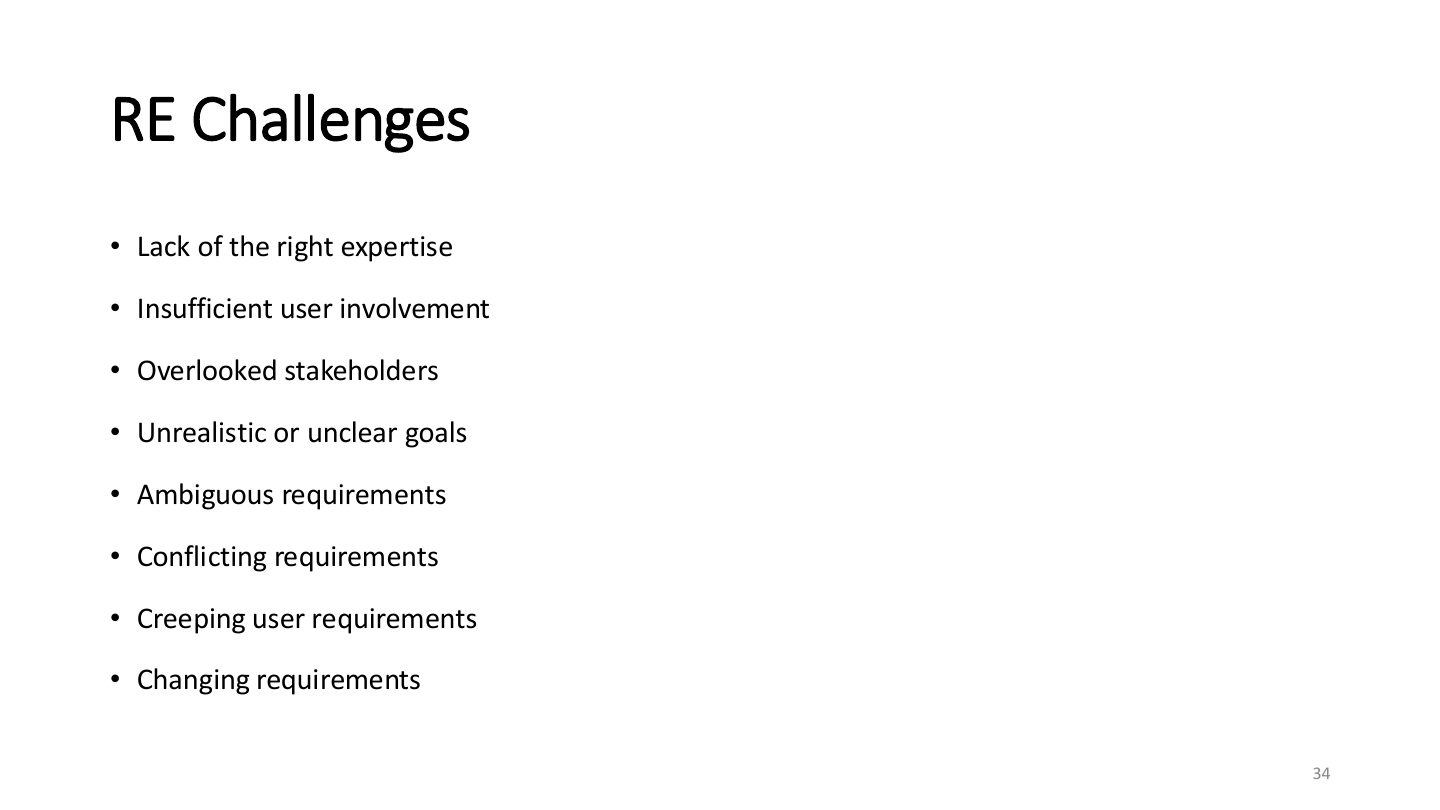
Challenges: unclear scope, changing requirements, stakeholders who disagree or are unavailable, ambiguity, gold-plating.
Slide 33