A good design aims for:
Software Design
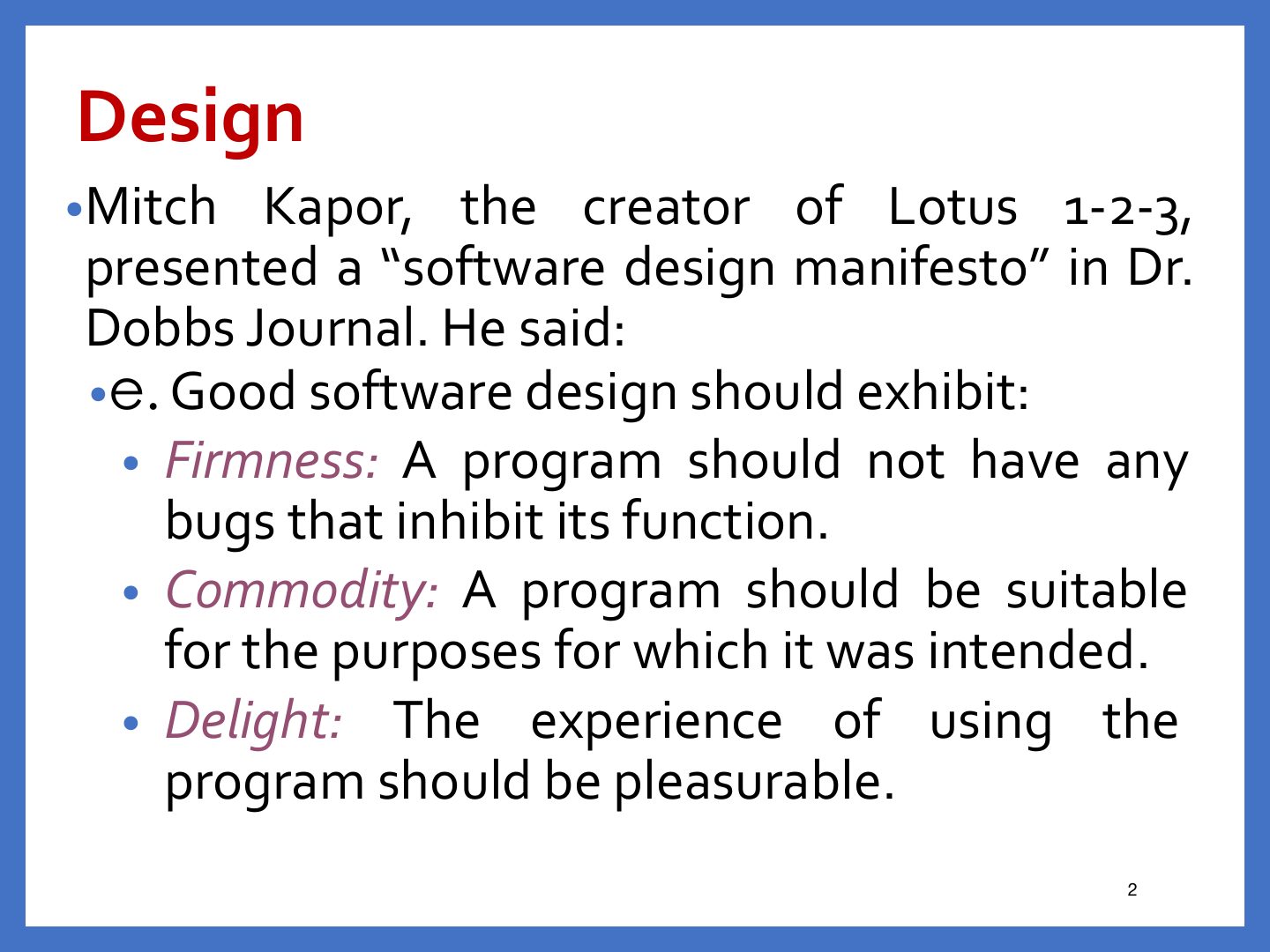
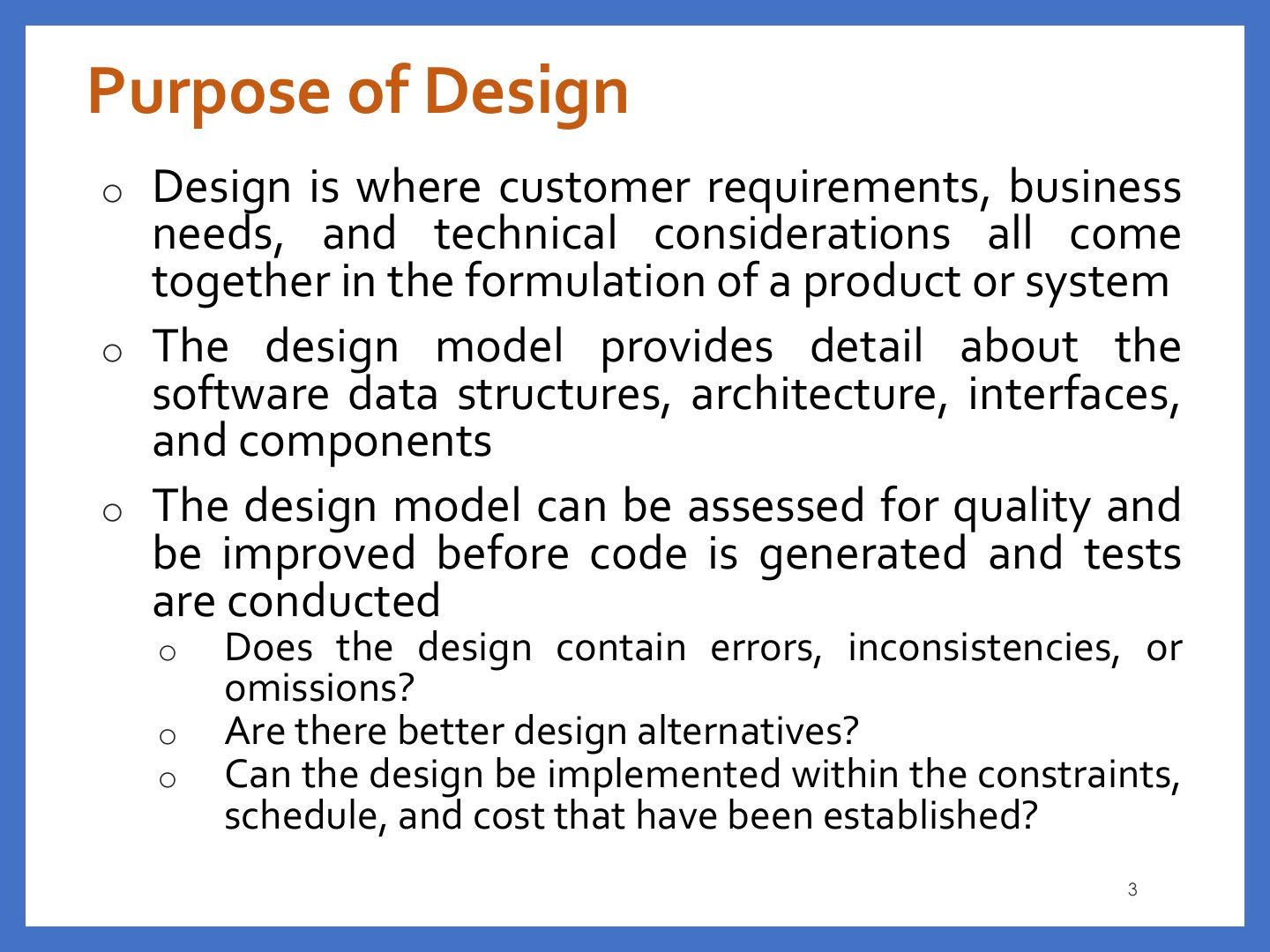
The purpose of design, quality guidelines and design principles, fundamental concepts (abstraction, architecture, modularity, information hiding, stepwise refinement, functional independence: cohesion and coupling), architectural patterns (MVC, layered, client–server, repository, pipe and filter) and user-interface design rules.
How to read this page
Every original slide is shown unchanged. Yellow marks on a slide point to a numbered note: hover or tap a mark to jump to its note, and hover a note to see its marks. Questions tagged Past exam appeared on a real paper; Prediction questions are likely angles, not confirmed. Pick an answer to each question: a wrong pick tells you why it is wrong, so you can try again.
All 50 slides
- 1 Slide 1
- 2 Design
- 3 Purpose of Design
- 4 Software Design
- 5 Software Engineering Design or From Analysis Model to Design Model
- 6 A possible step-by-step guide:
- 7 Design and Quality
- 8 Quality Guidelines
- 9 Quality Guidelines
- 10 Design Principles
- 11 Design Principles
- 12 Design Principles
- 13 Fundamental Concepts
- 14 Best practices
- 15 Architecture
- 16 Architecture
- 17 Modularity
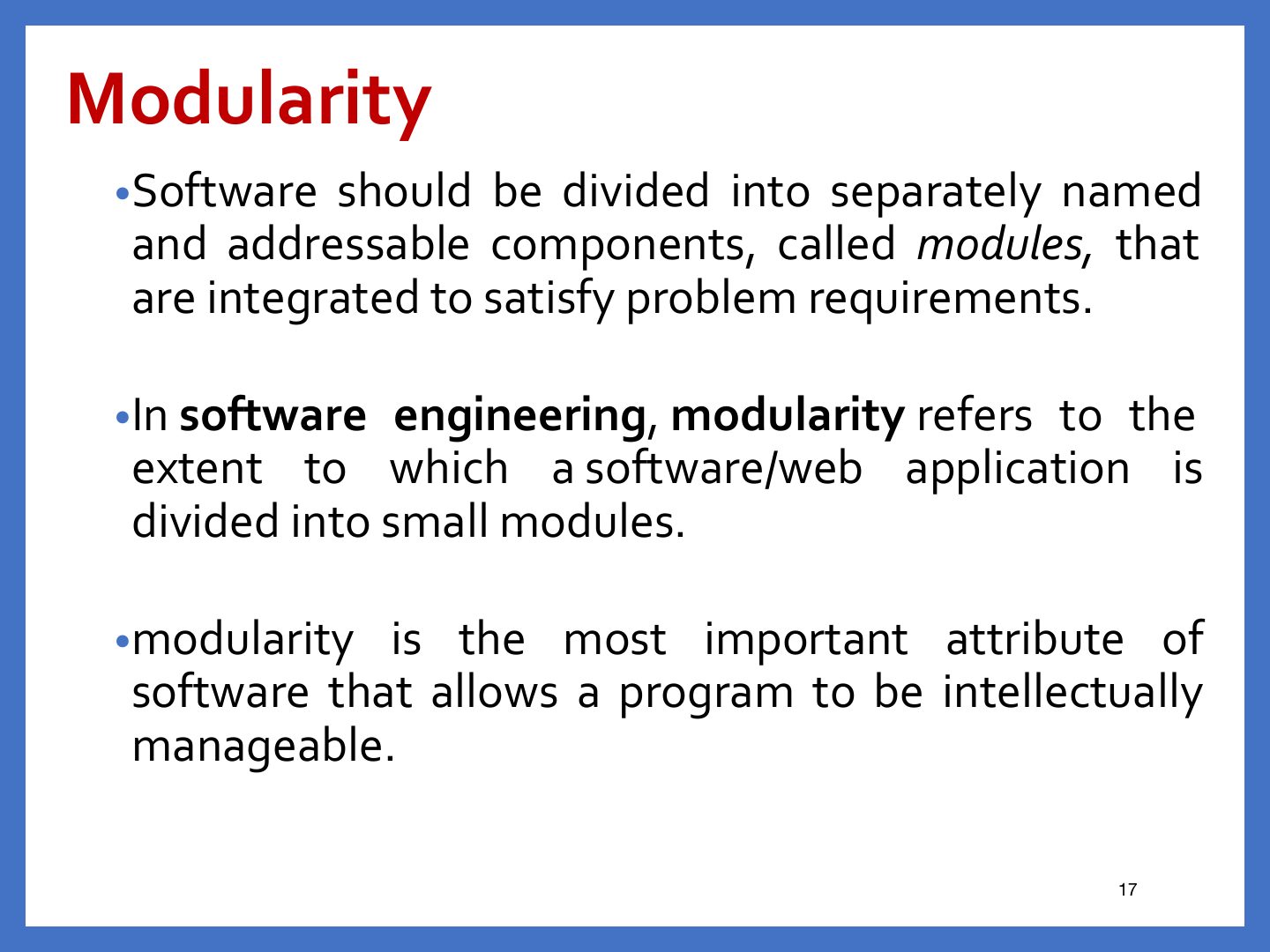
- 18 Modularity
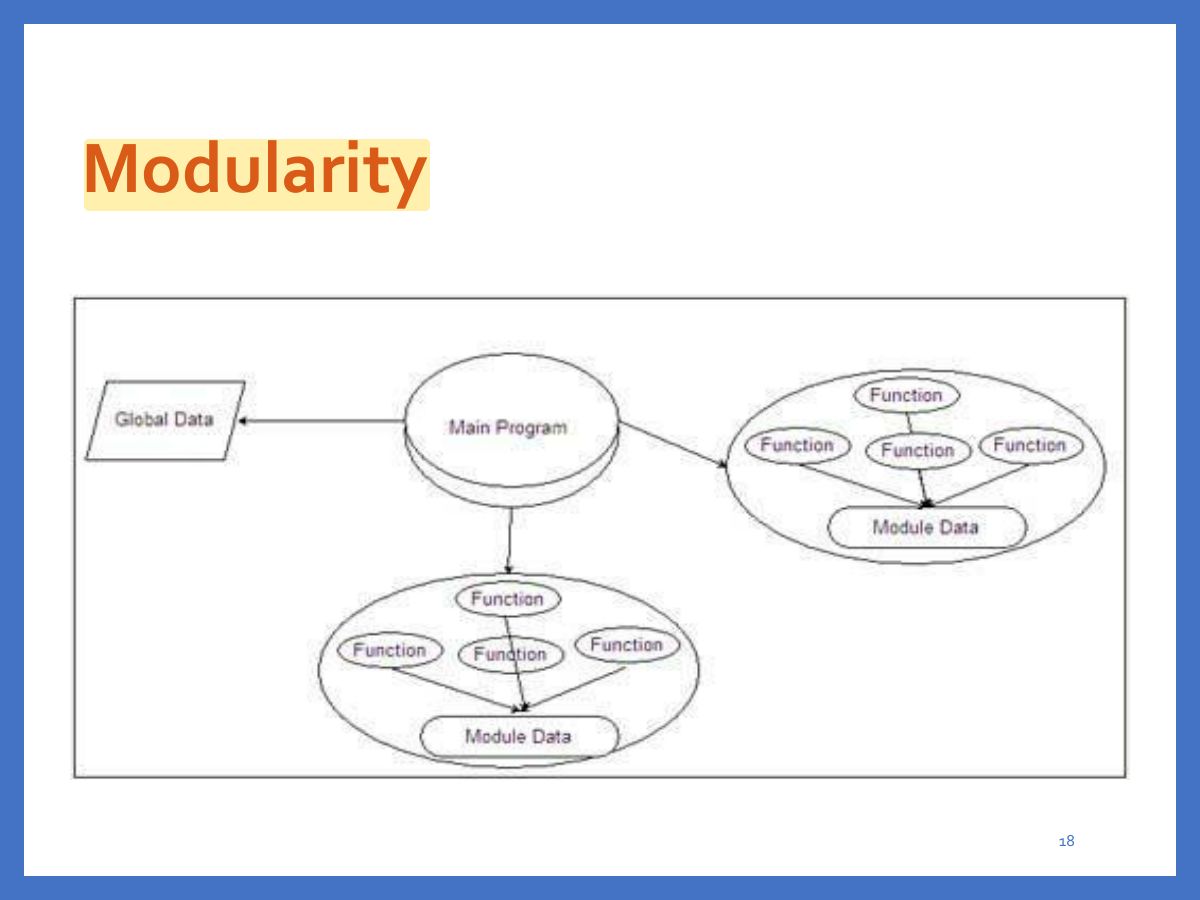
- 19 Sizing Modules: Two Views
- 20 Information Hiding
- 21 Stepwise Refinement
- 22 Stepwise Refinement
- 23 Functional Independence
- 24 Functional Independence
- 25 Architectural abstraction
- 26 Uses of Architectural Model
- 27 Non-functional system Requirements dictate Architectural Style
- 28 Slide 28
- 29 Architectural patterns
- 30 The Model-View-Controller (MVC) pattern
- 31 Model-View-Controller
- 32 Model-View-Controller
- 33 Layered architecture
- 34 A generic layered architecture
- 35 A generic layered architecture
- 36 Two Tier Client-Server Architecture
- 37 Data-Centered/Repository Architecture
- 38 Data-Centered/Repository Architecture
- 39 Data-Centered/Repository
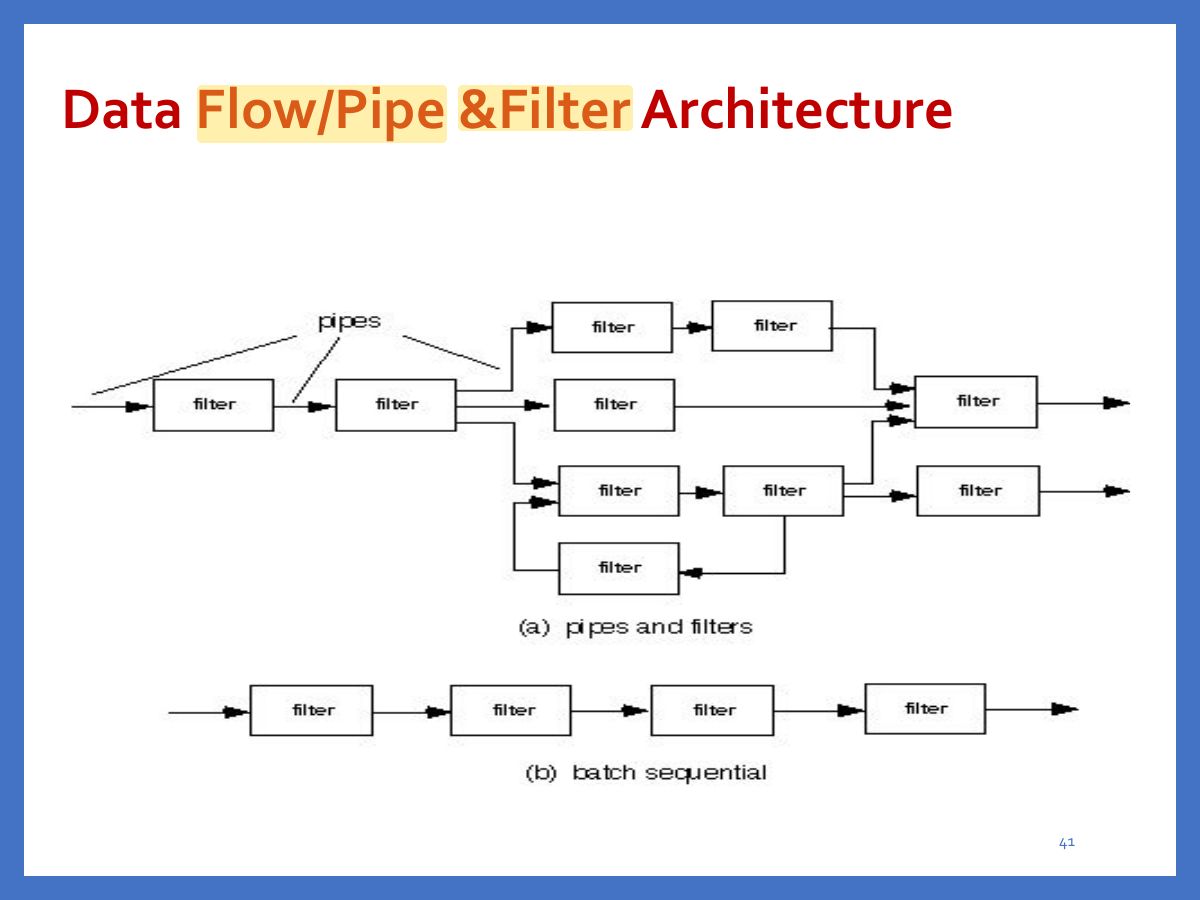
- 40 Data Flow/Pipe &Filter Architecture
- 41 Data Flow/Pipe &Filter Architecture
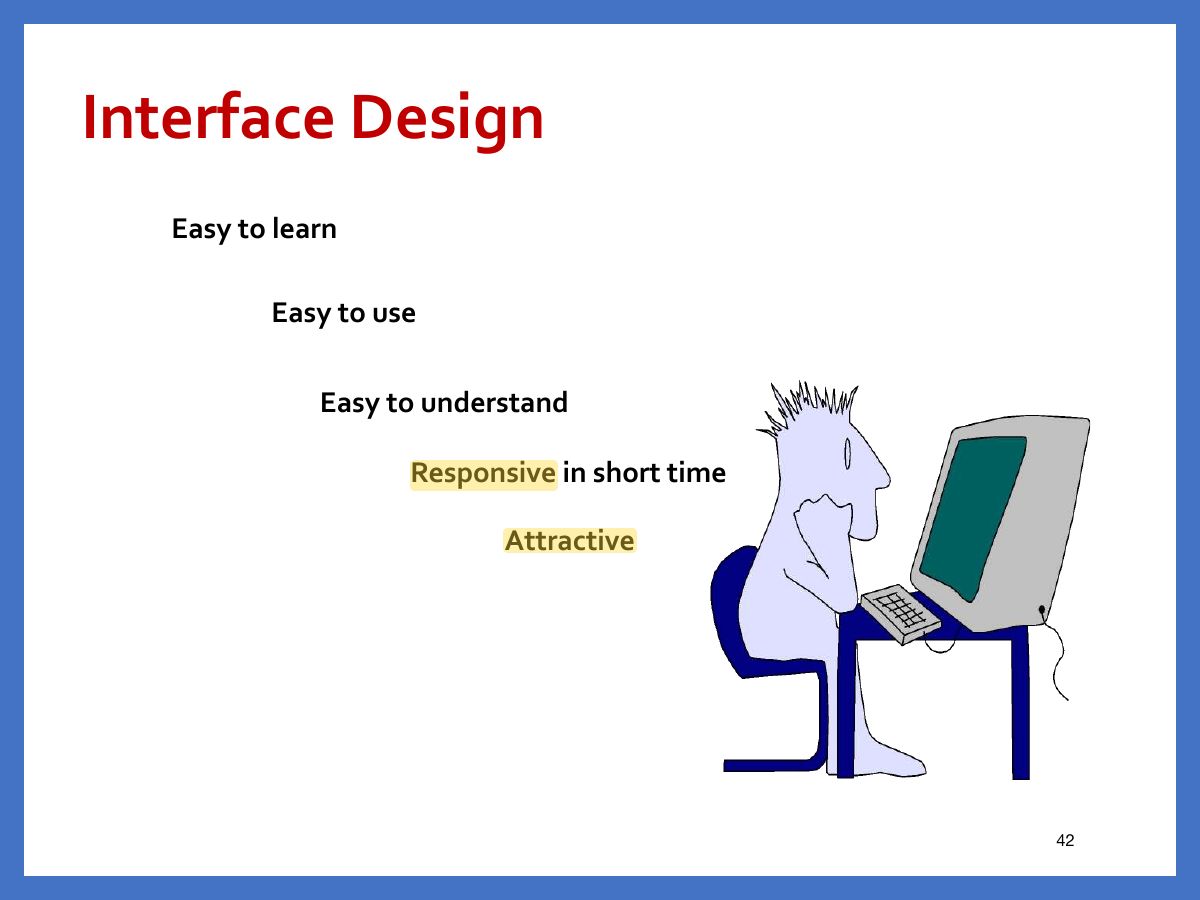
- 42 Interface Design
- 43 Interface Design
- 44 Design Issues
- 45 Golden Rules
- 46 Interface Design
- 47 Interface Analysis
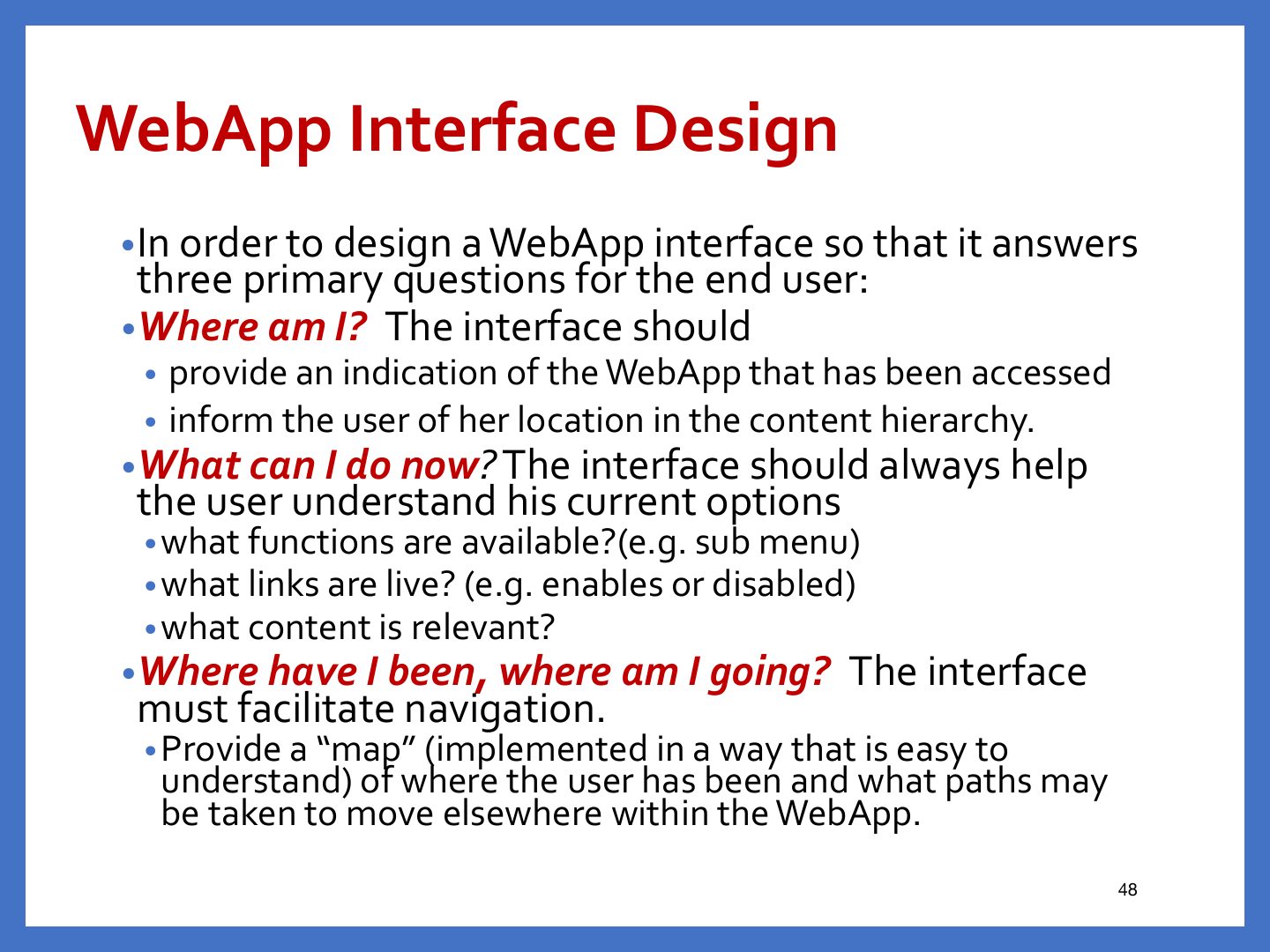
- 48 WebApp Interface Design
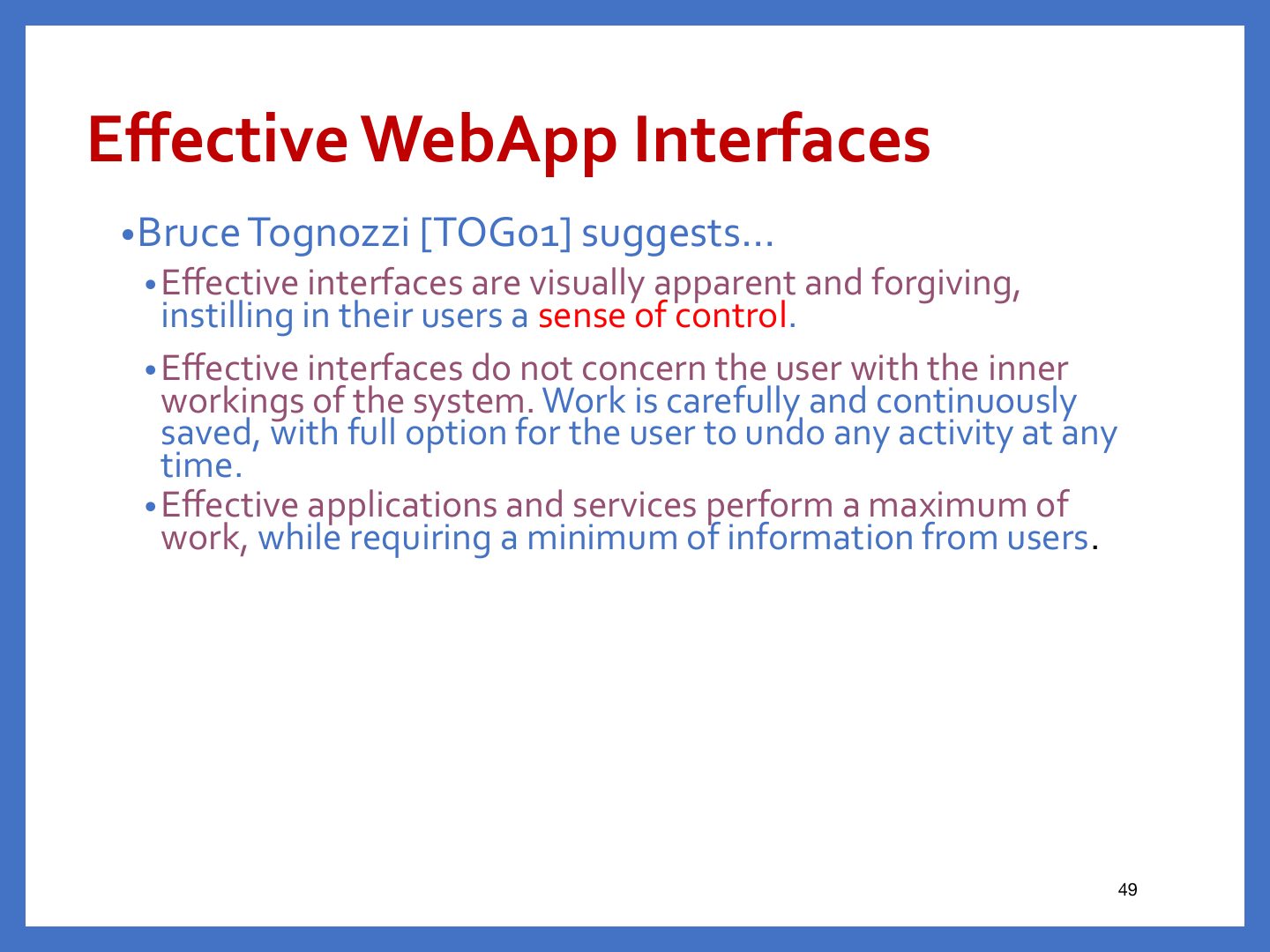
- 49 Effective WebApp Interfaces
- 50 References
Slide 1
Design
Purpose of Design
Notes
Design translates requirements into a blueprint for construction; it is where quality is built in.
Software Design
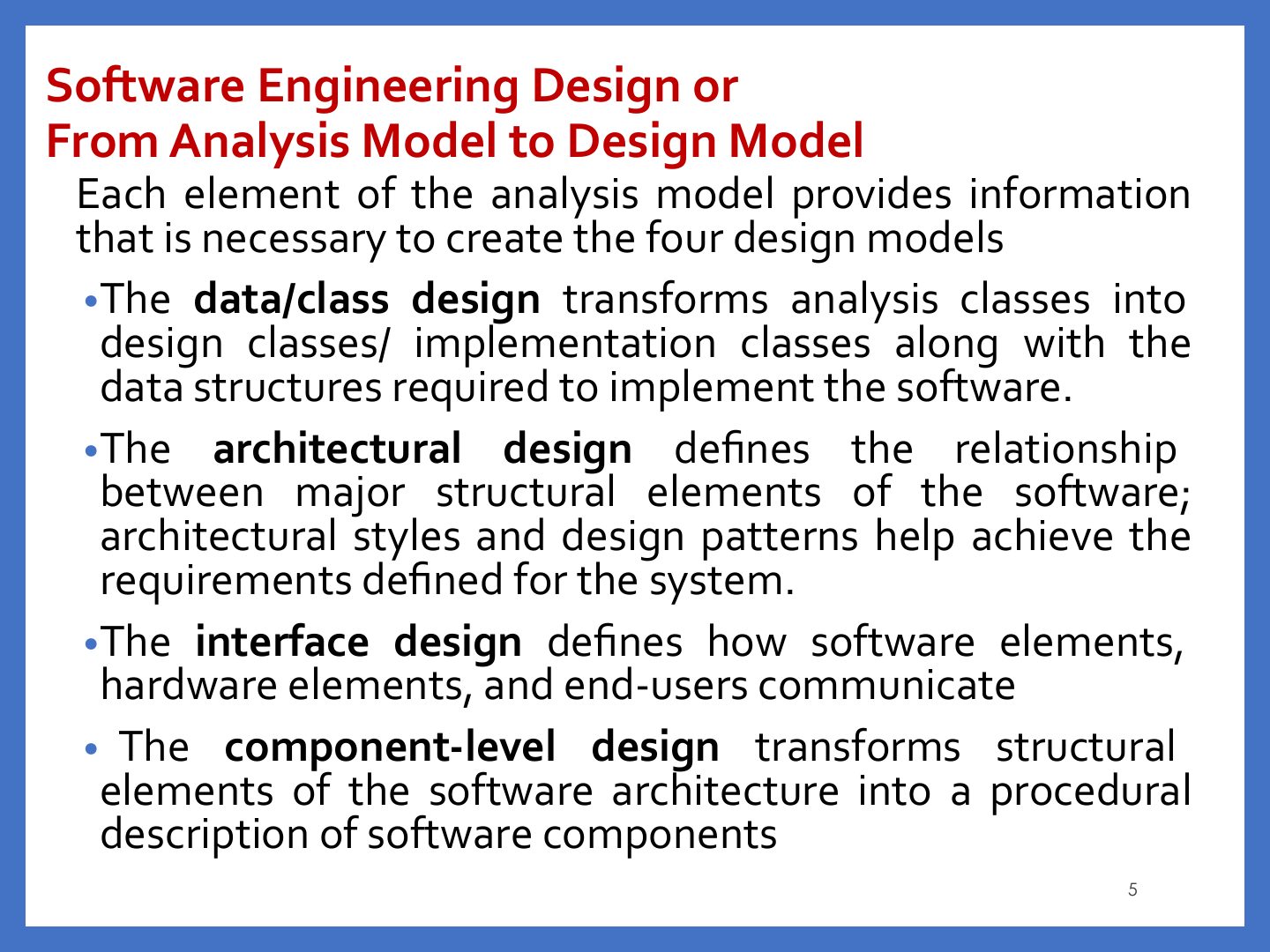
Software Engineering Design or From Analysis Model to Design Model
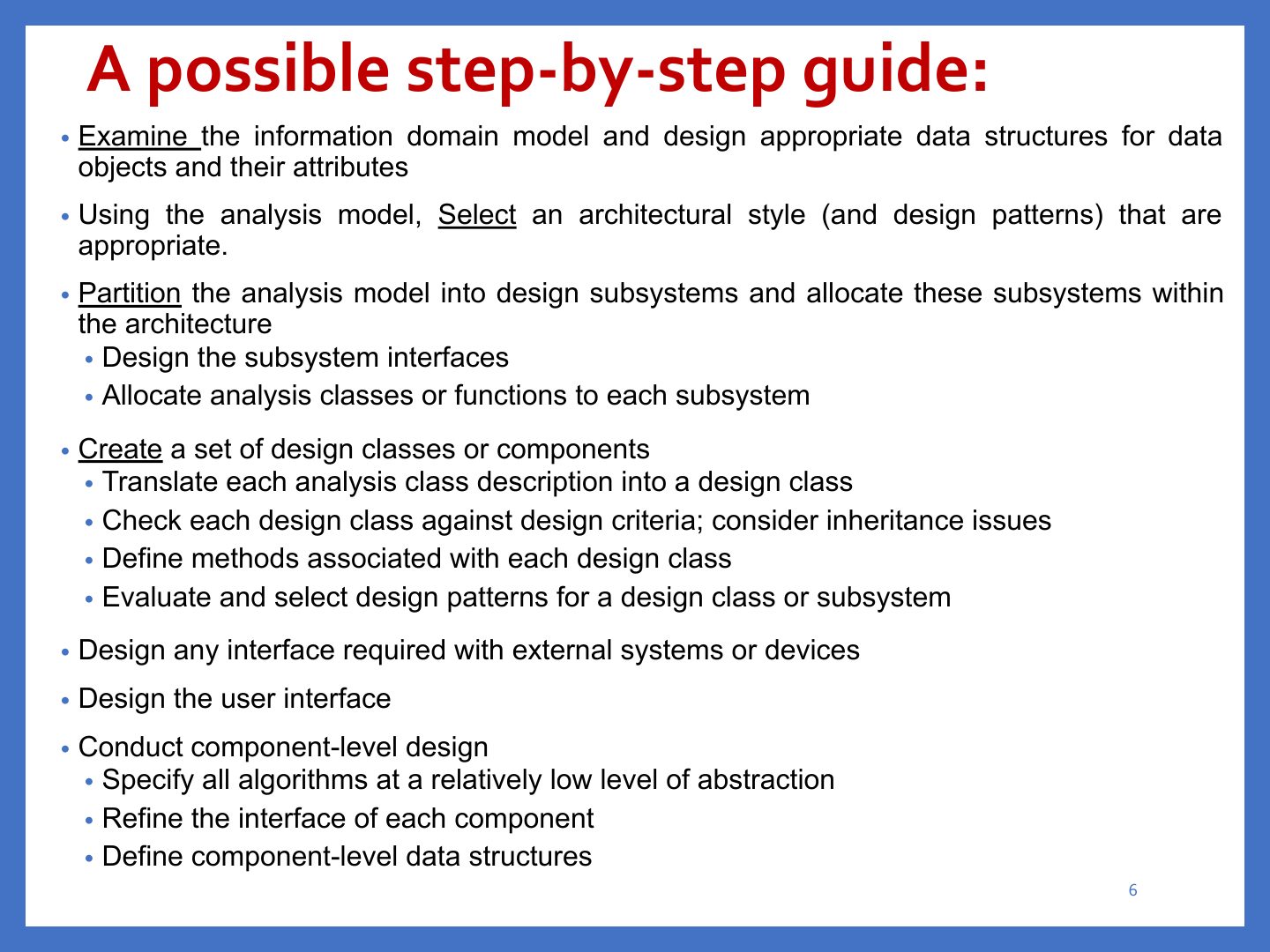
A possible step-by-step guide:
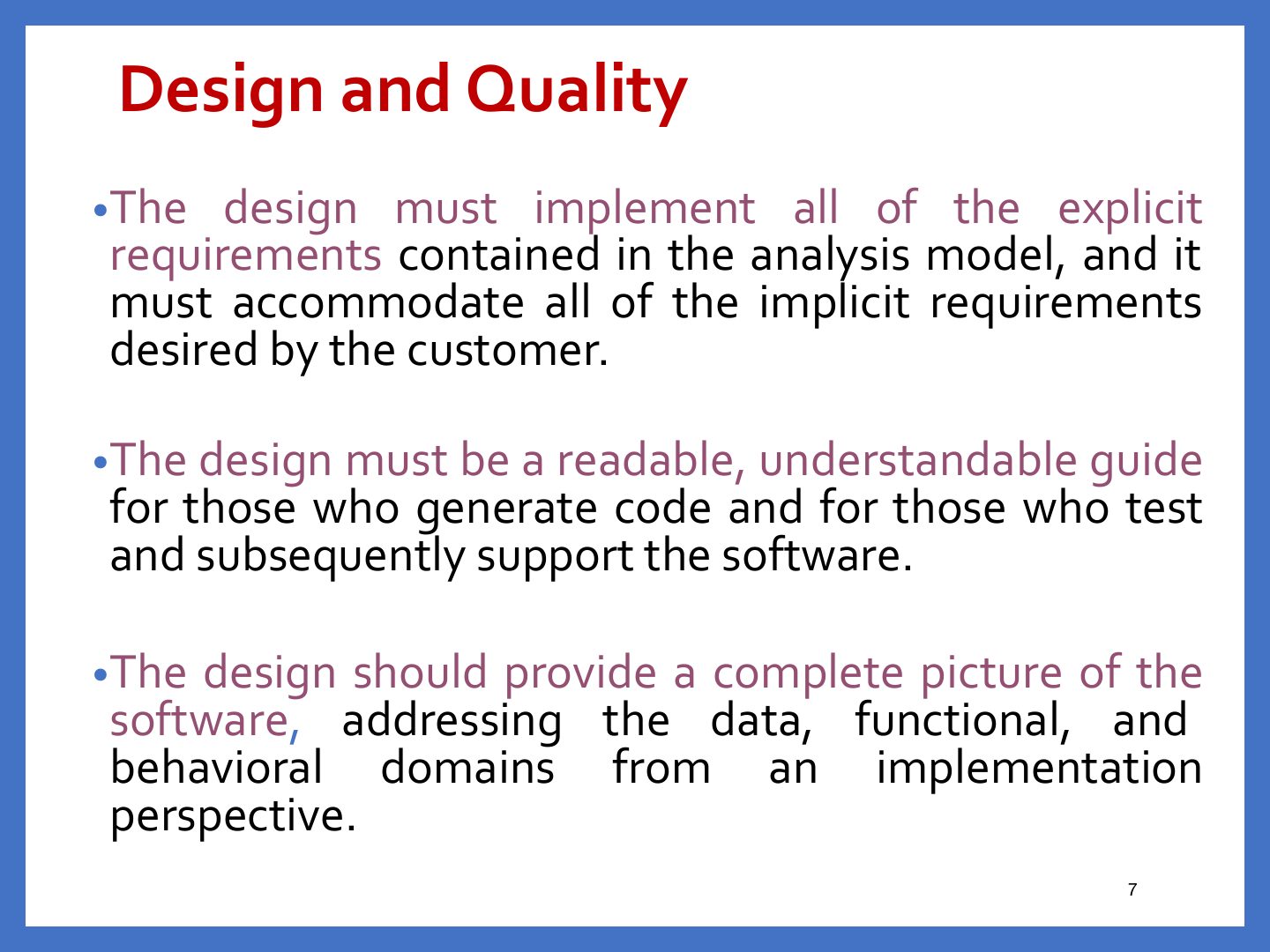
Design and Quality
Quality Guidelines
Quality Guidelines
Design Principles
Notes
Principles: design should be traceable to requirements, not reinvent the wheel, minimize the gap with the problem, be uniform, accommodate change.
Design Principles
Design Principles
Fundamental Concepts
Notes
Fundamental concepts: abstraction, architecture, patterns, separation of concerns, modularity, information hiding, functional independence, refinement, refactoring.
Best practices
Architecture
Architecture
Modularity
Notes
Modularity: divide into modules. Too few = hard to understand; too many = integration cost. Aim for the minimum-cost region.
Modularity
Sizing Modules: Two Views
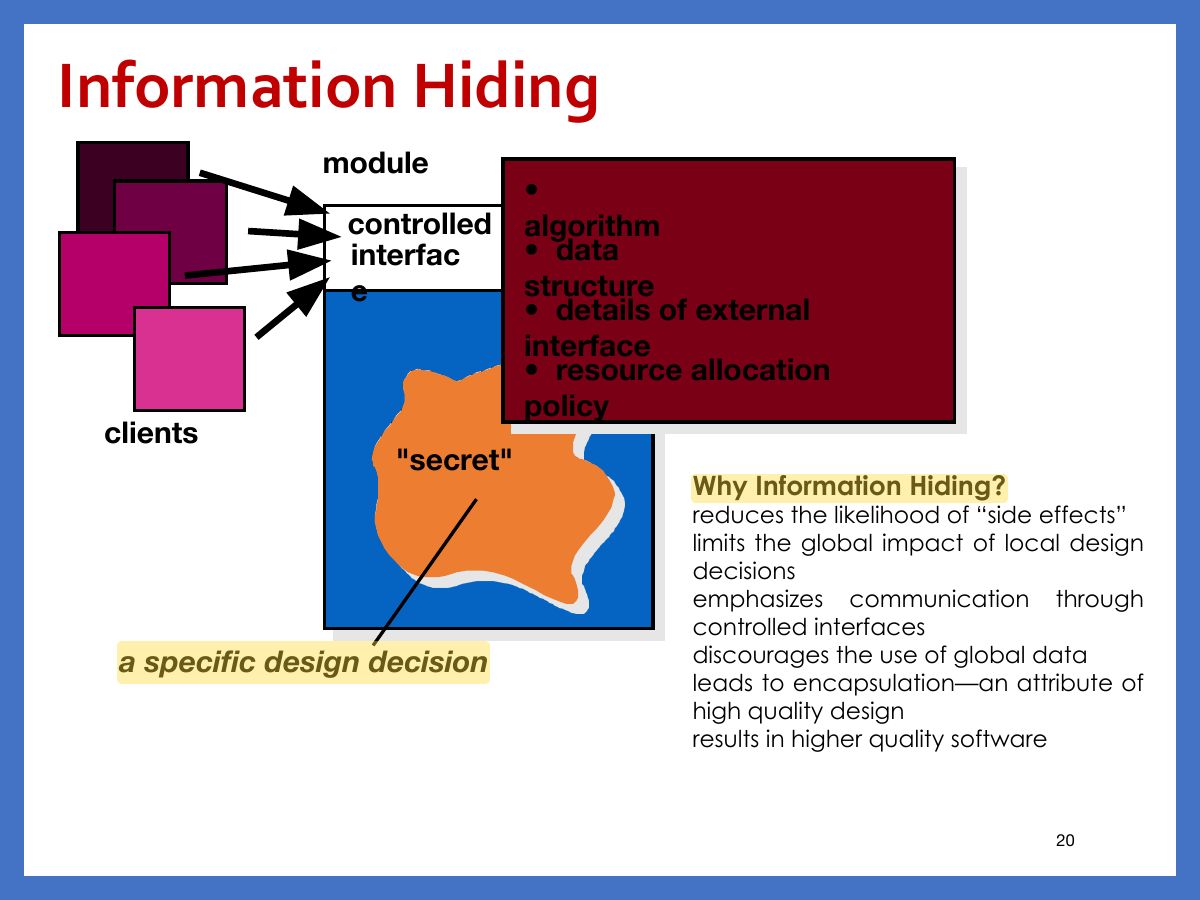
Information Hiding
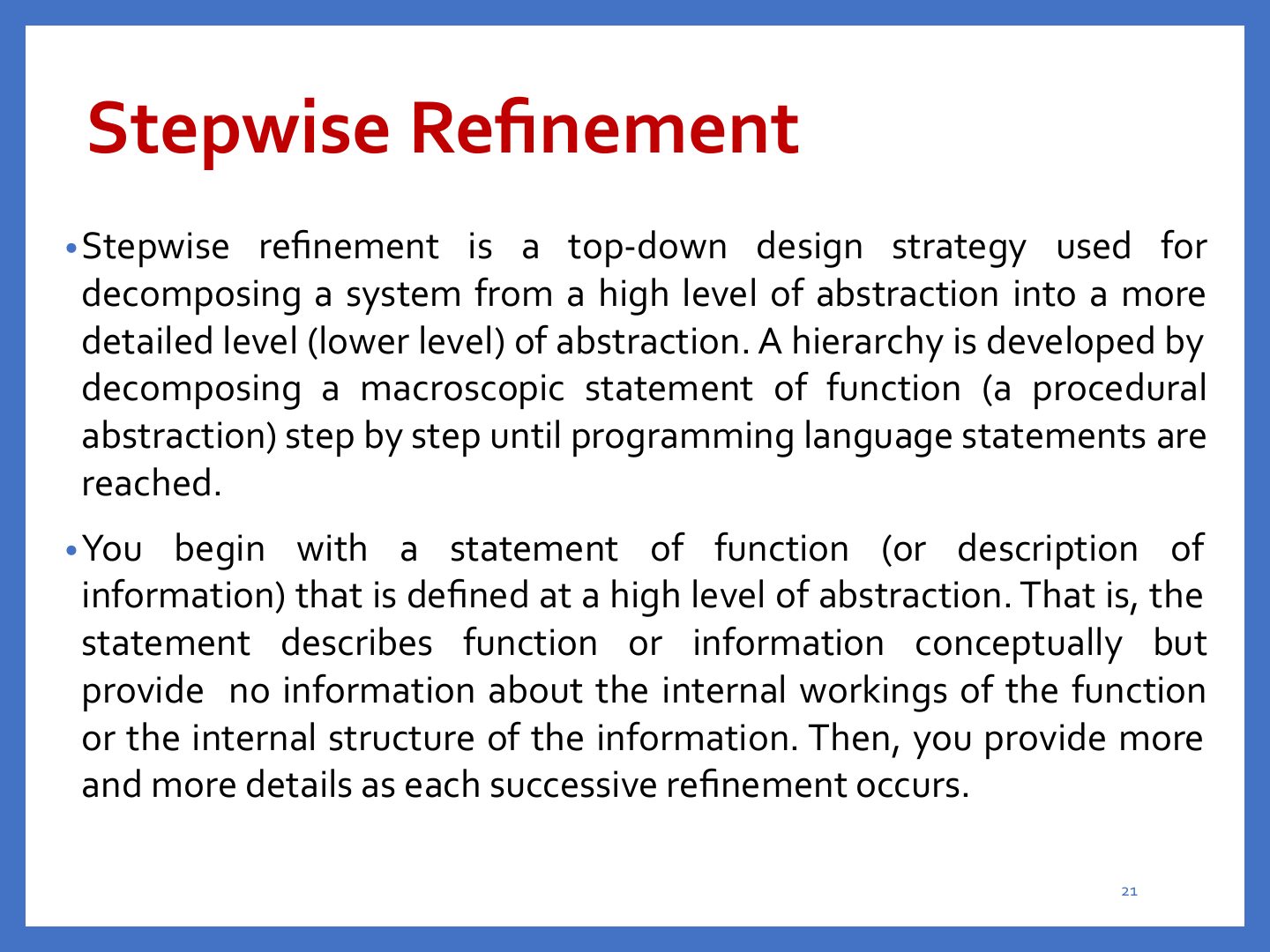
Stepwise Refinement
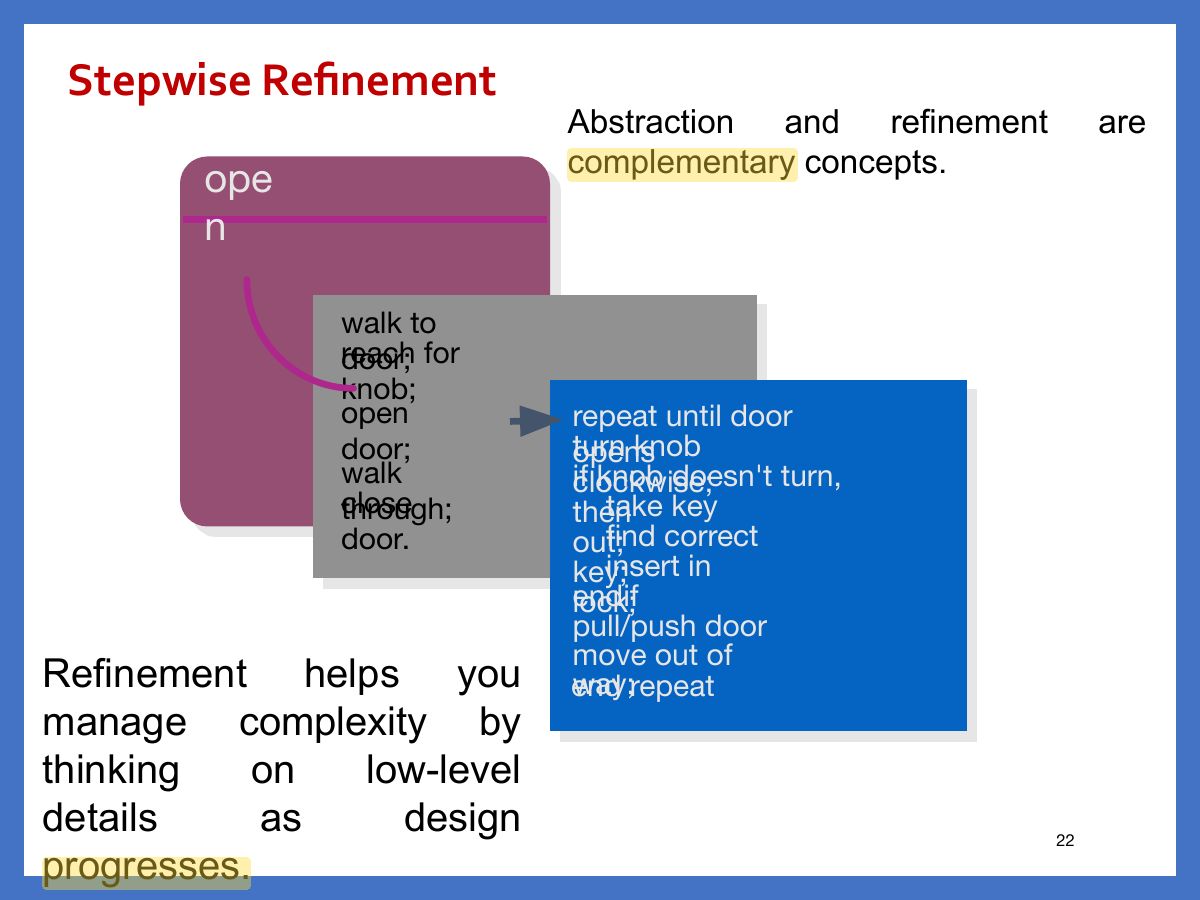
Stepwise Refinement
Functional Independence
Notes
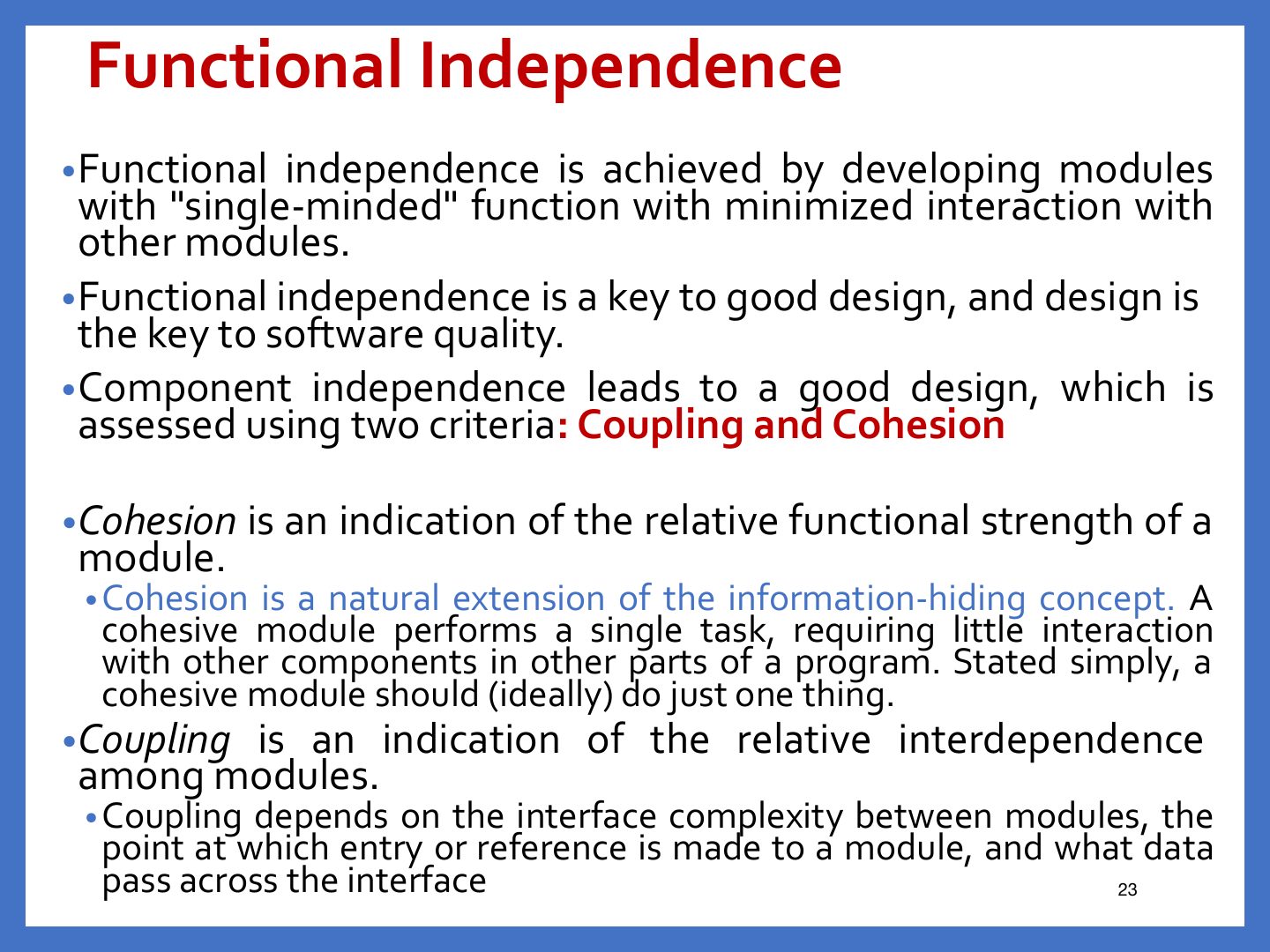
Functional independence: HIGH cohesion (a module does one thing) and LOW coupling (few dependencies between modules).
Memory trick High cohesion, low coupling.
Exam angle
Functional Independence
Architectural abstraction
Uses of Architectural Model
Non-functional system Requirements dictate Architectural Style
Slide 28
Architectural patterns
Notes
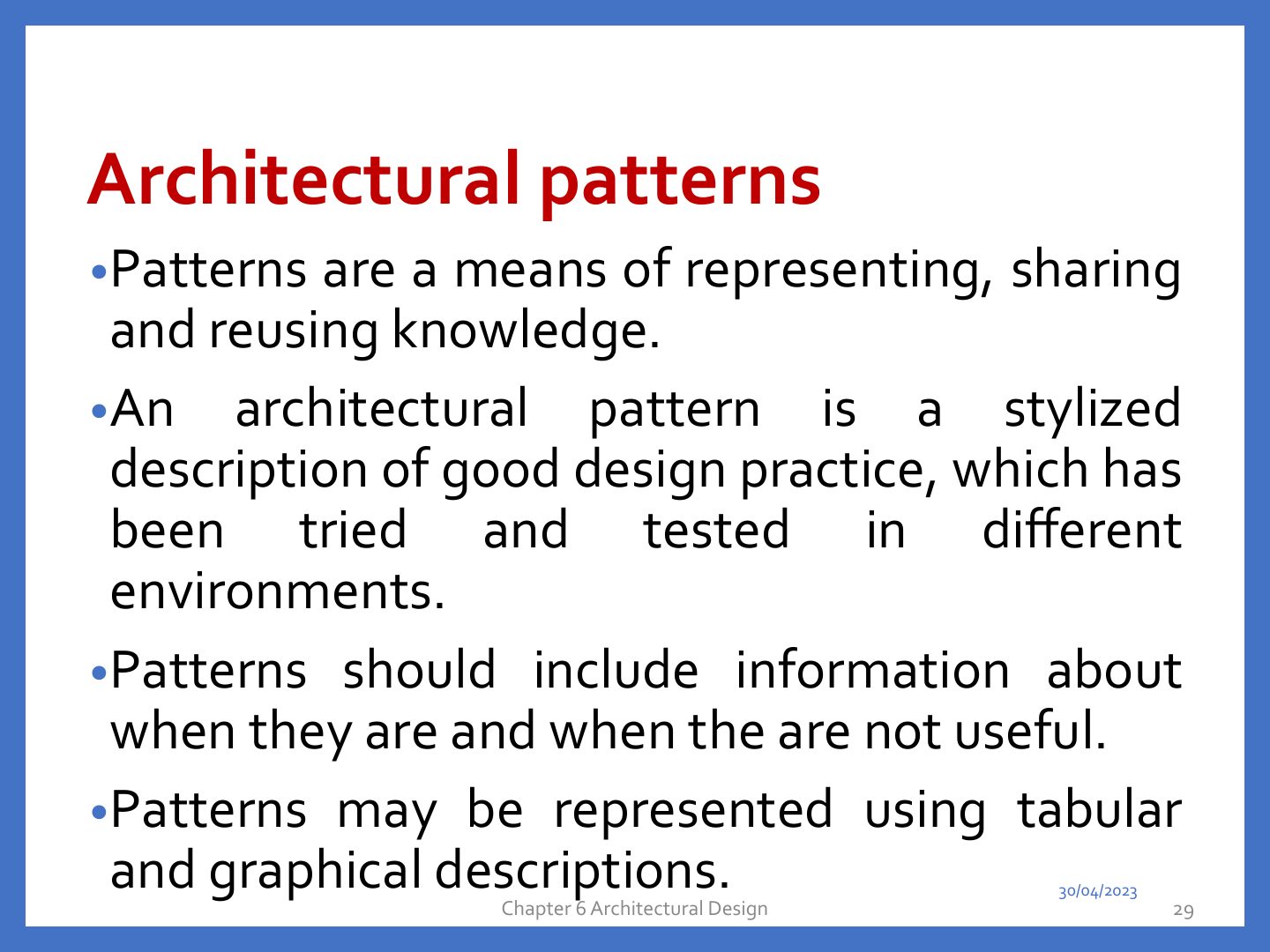
Architectural pattern: a proven, reusable solution to a recurring architecture problem.
The Model-View-Controller (MVC) pattern
Notes
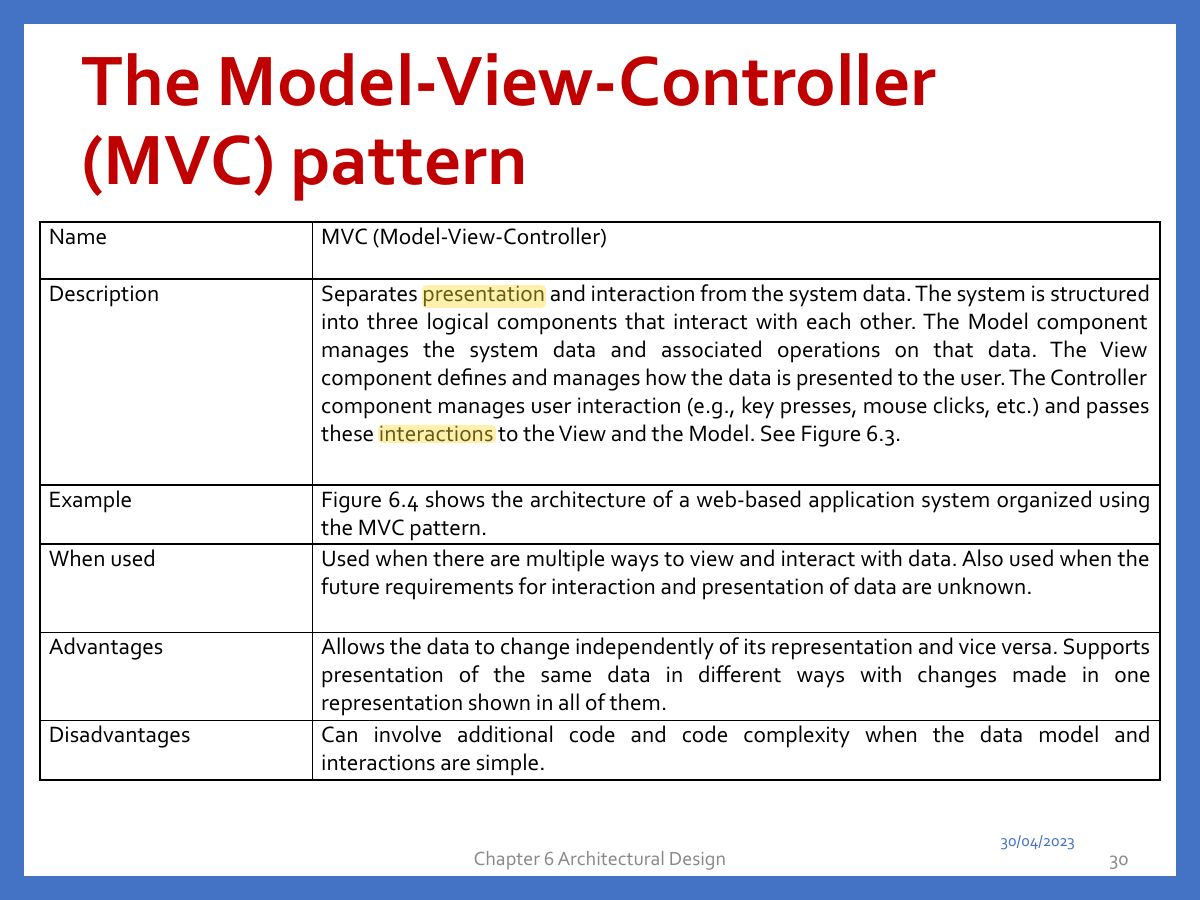
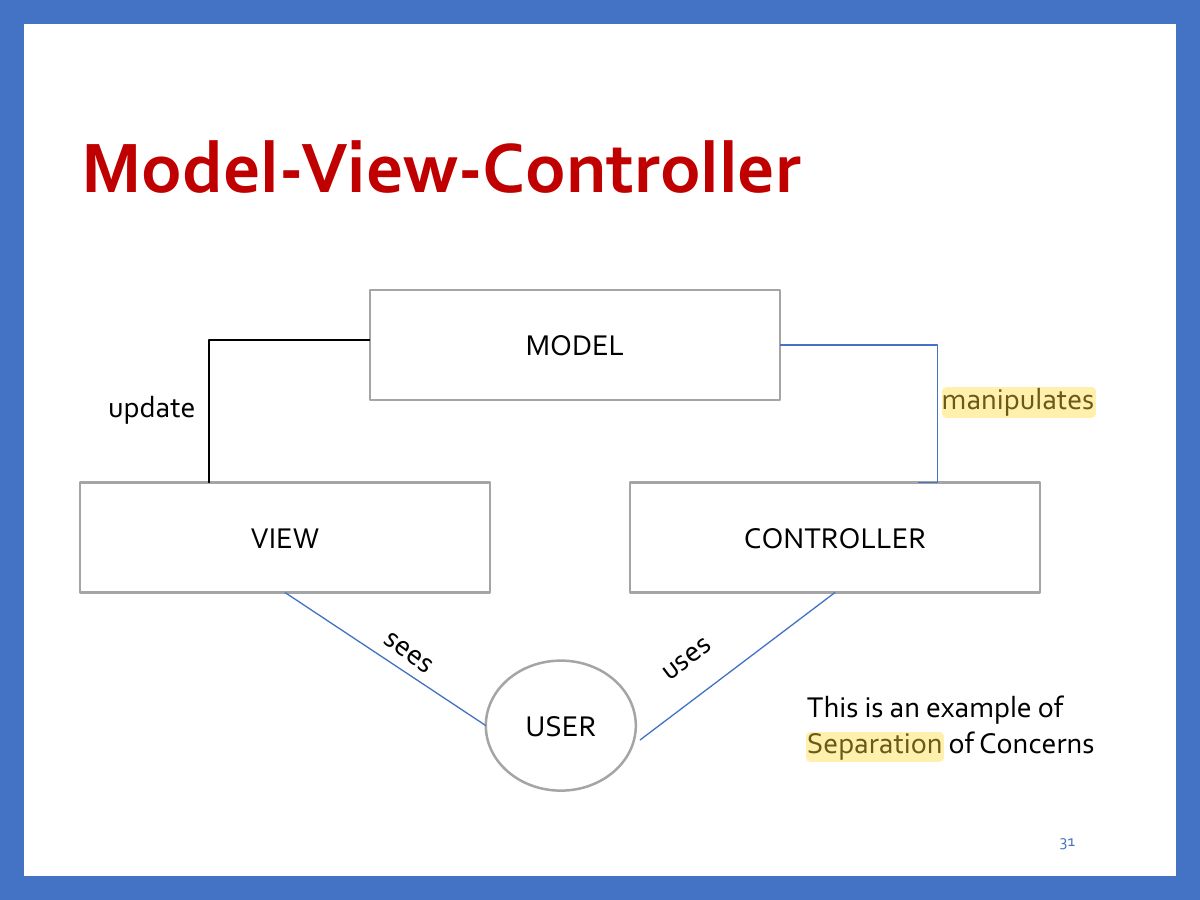
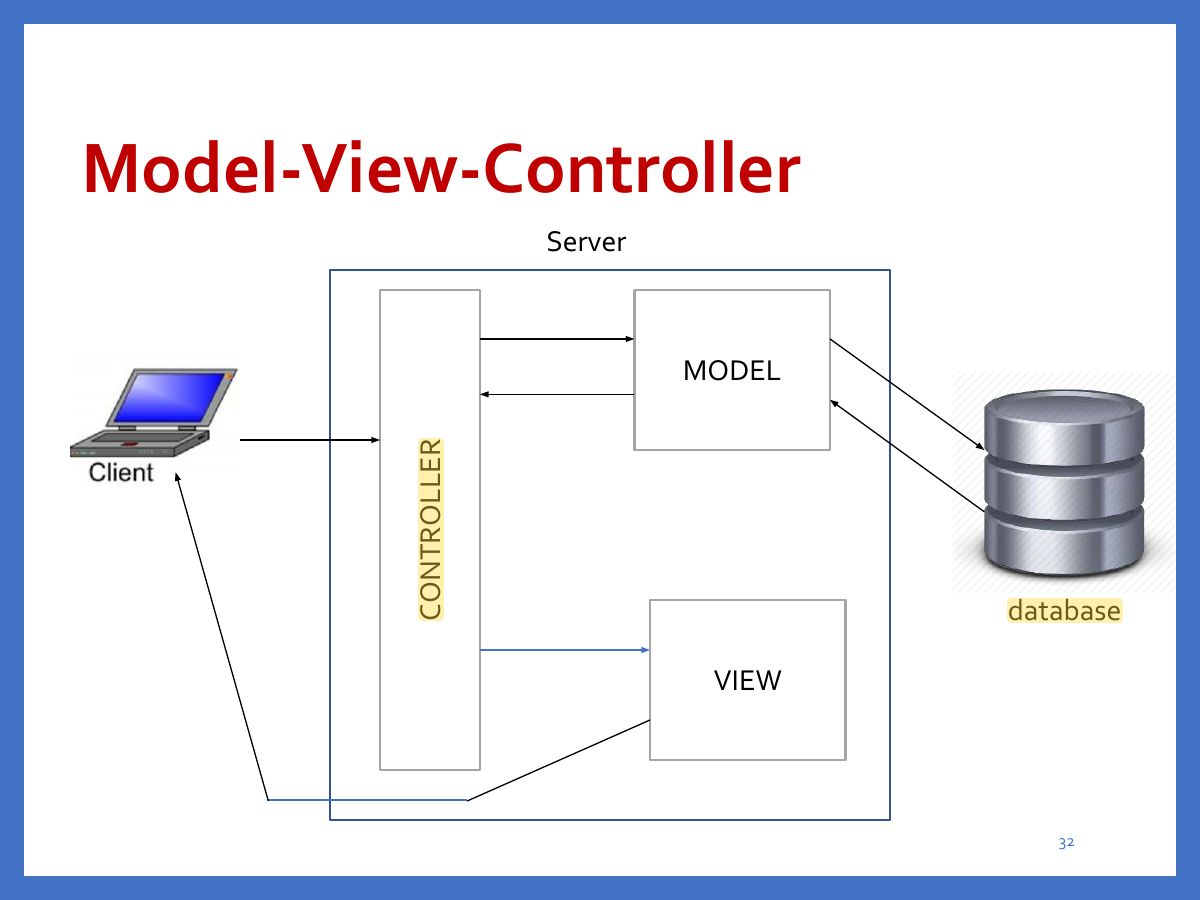
MVC: Model (data and logic), View (presentation), Controller (handles input, updates model). Lets one model have many views.
Exam angle
In MVC, the component that handles user input is the:
Model-View-Controller
Model-View-Controller
Layered architecture
Notes
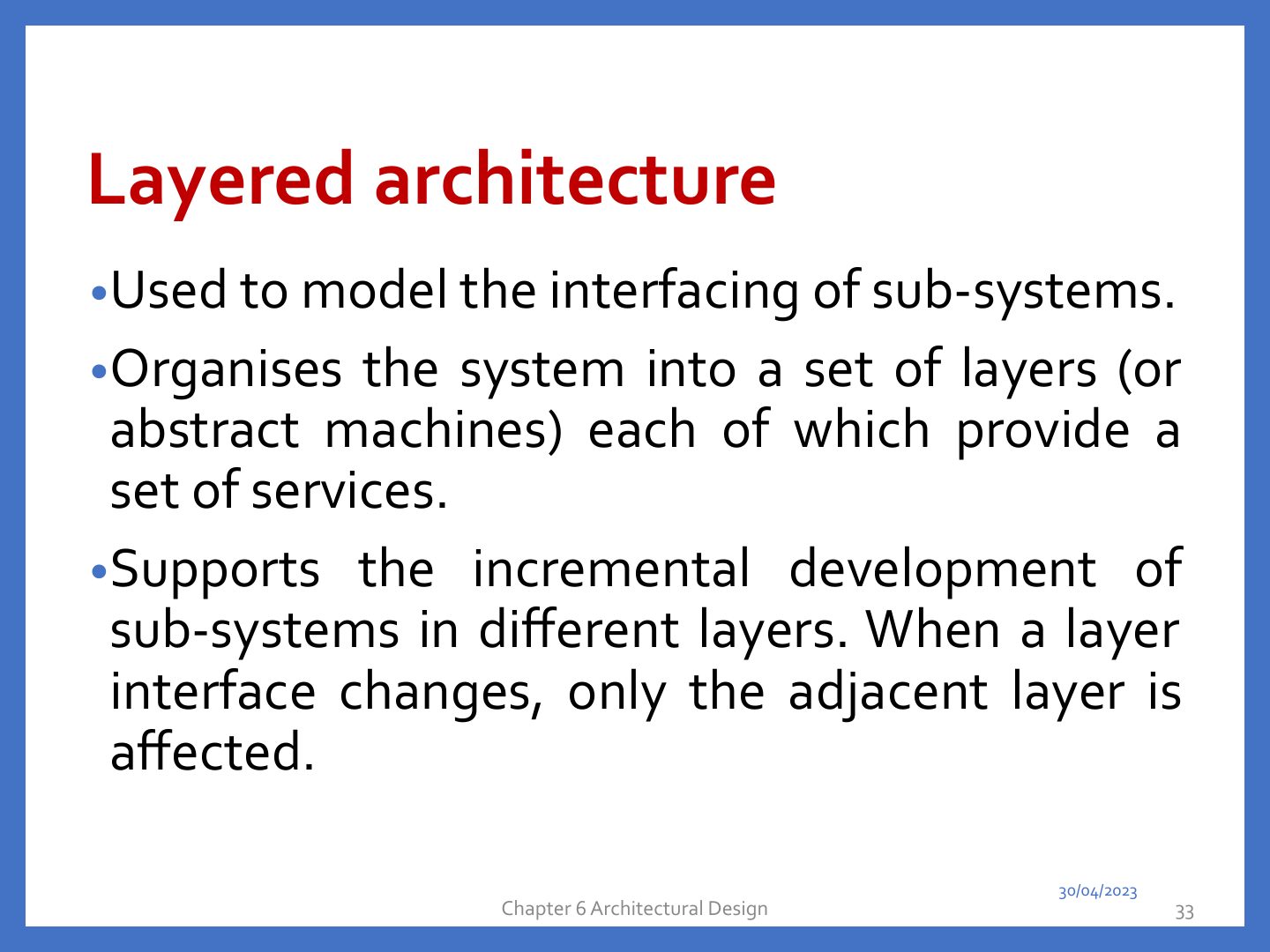
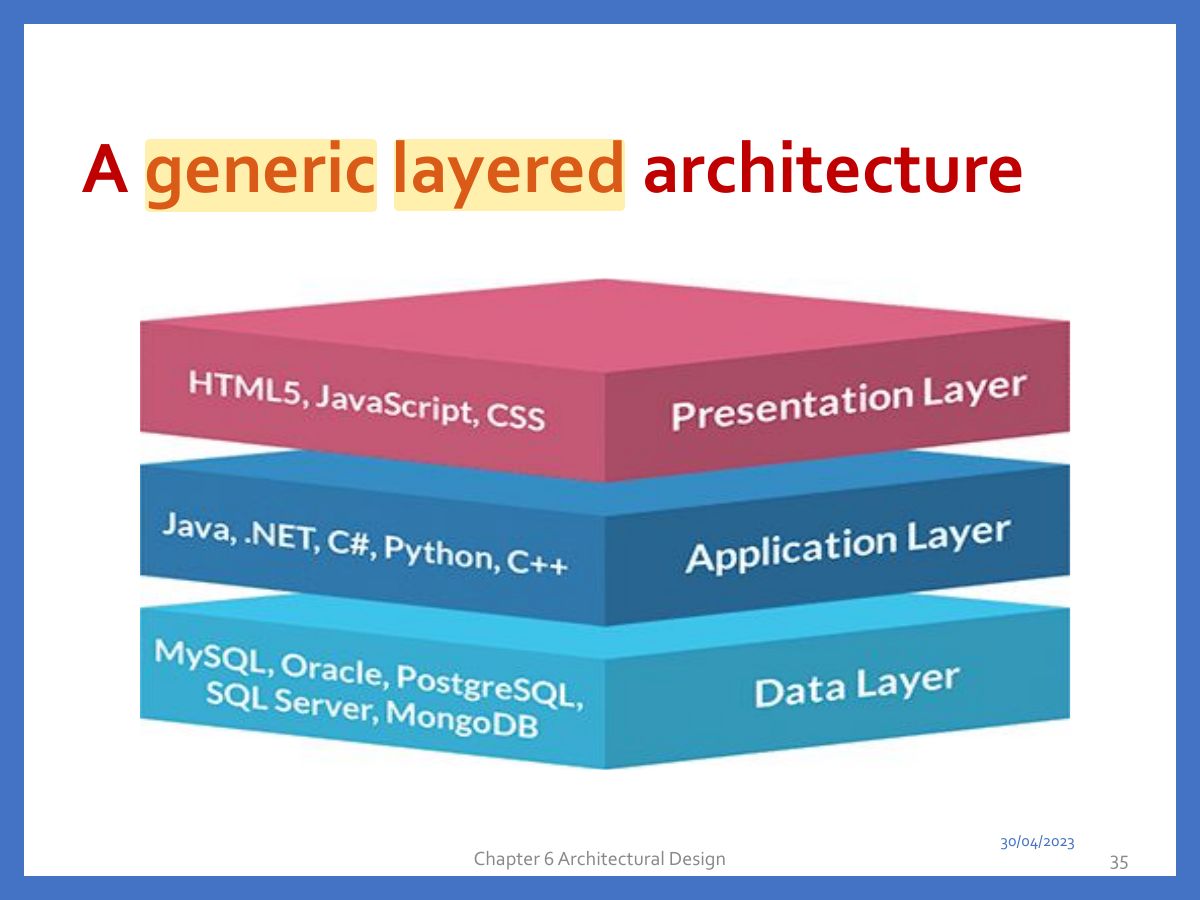
Layered: each layer uses only the layer below (UI → business logic → data). Easy to replace layers; performance overhead.
A generic layered architecture
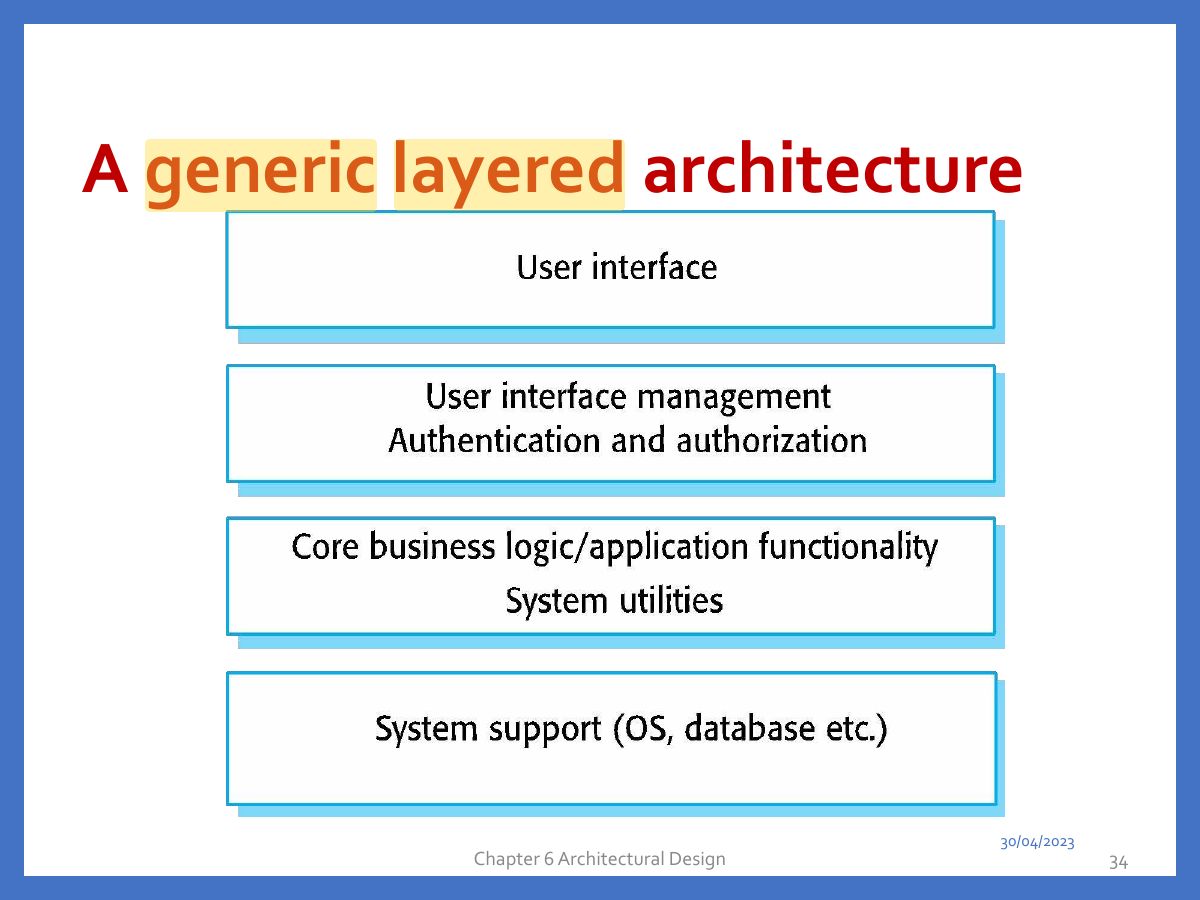
A generic layered architecture
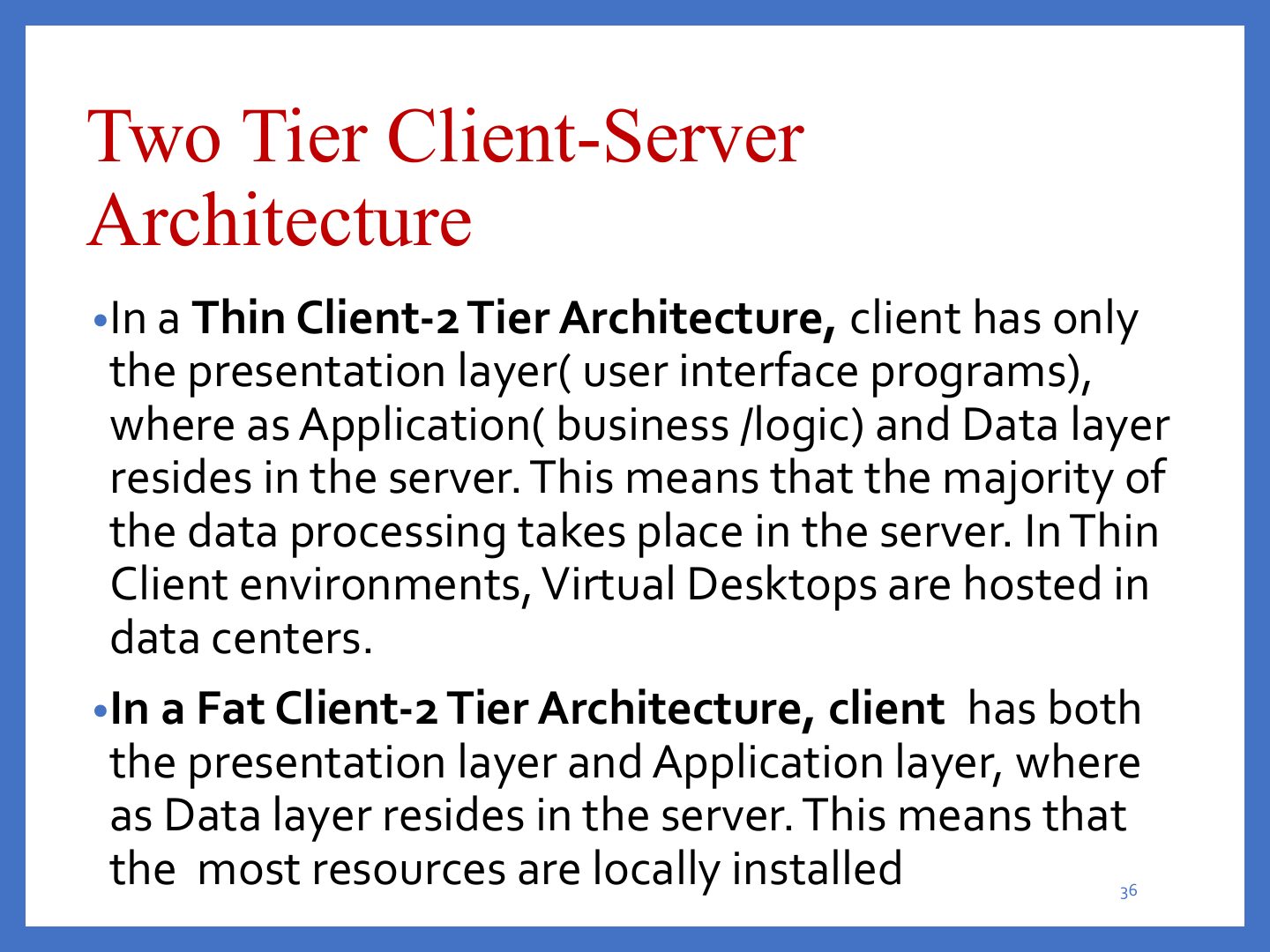
Two Tier Client-Server Architecture
Notes
Client–server: services on servers, clients request them over a network.
Data-Centered/Repository Architecture
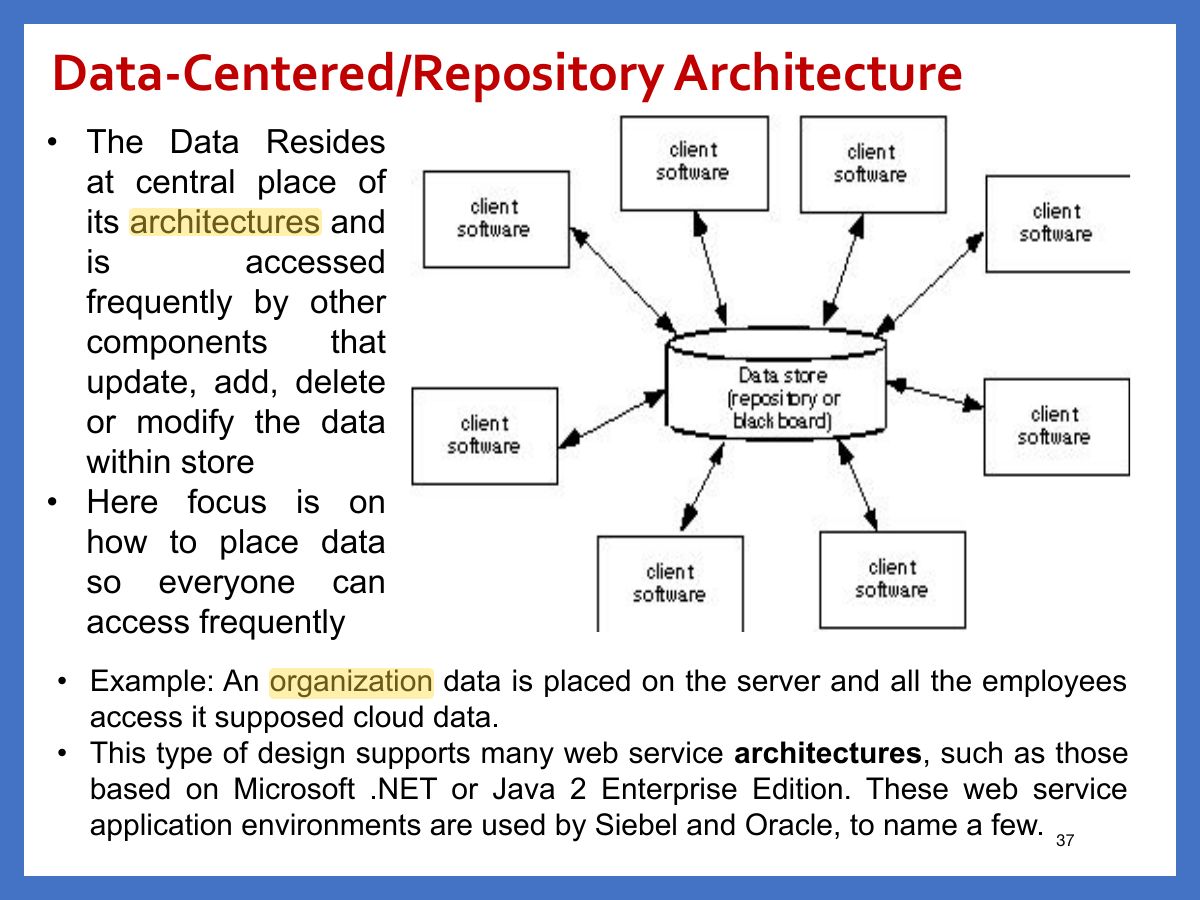
Data-Centered/Repository Architecture
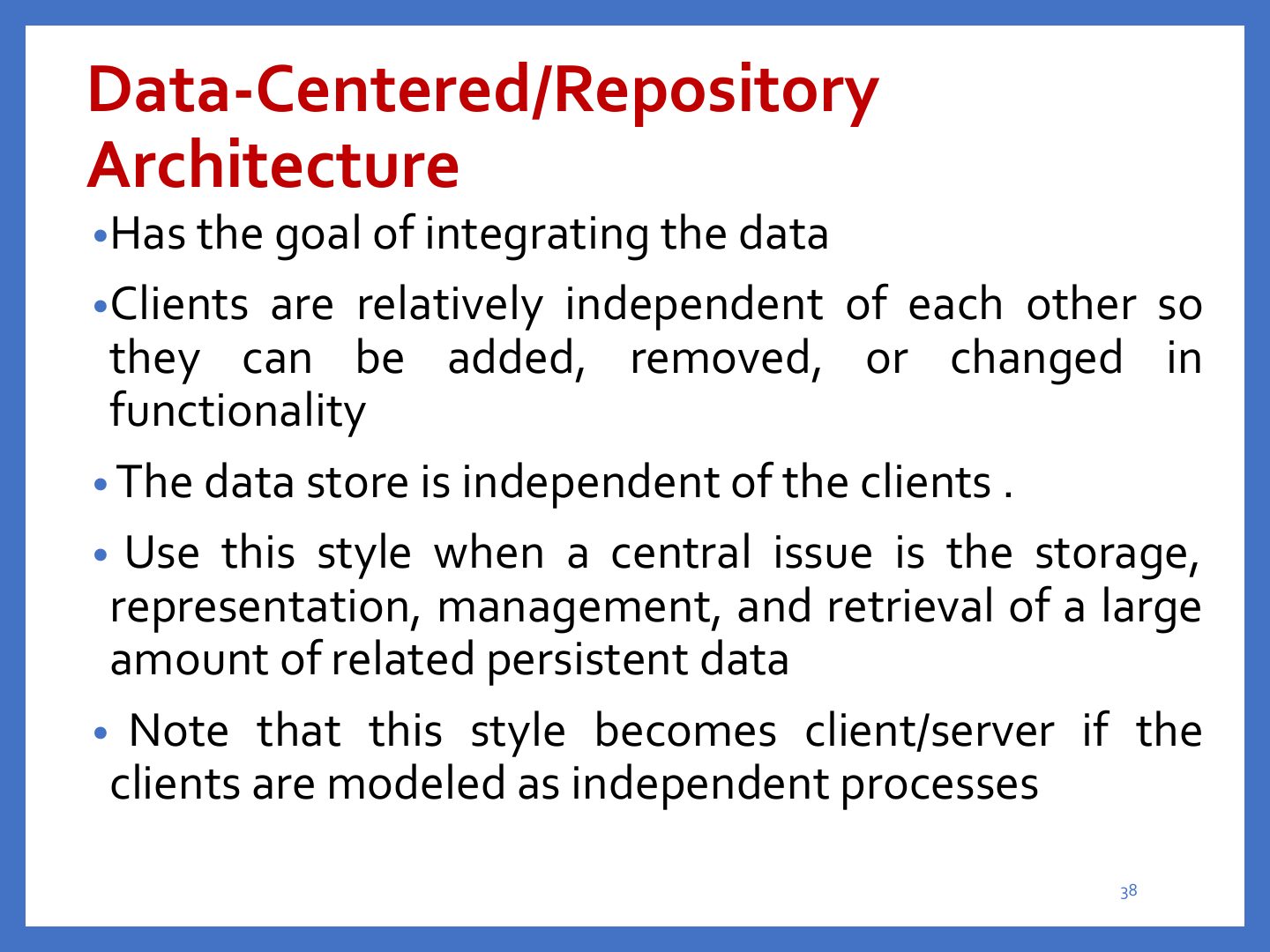
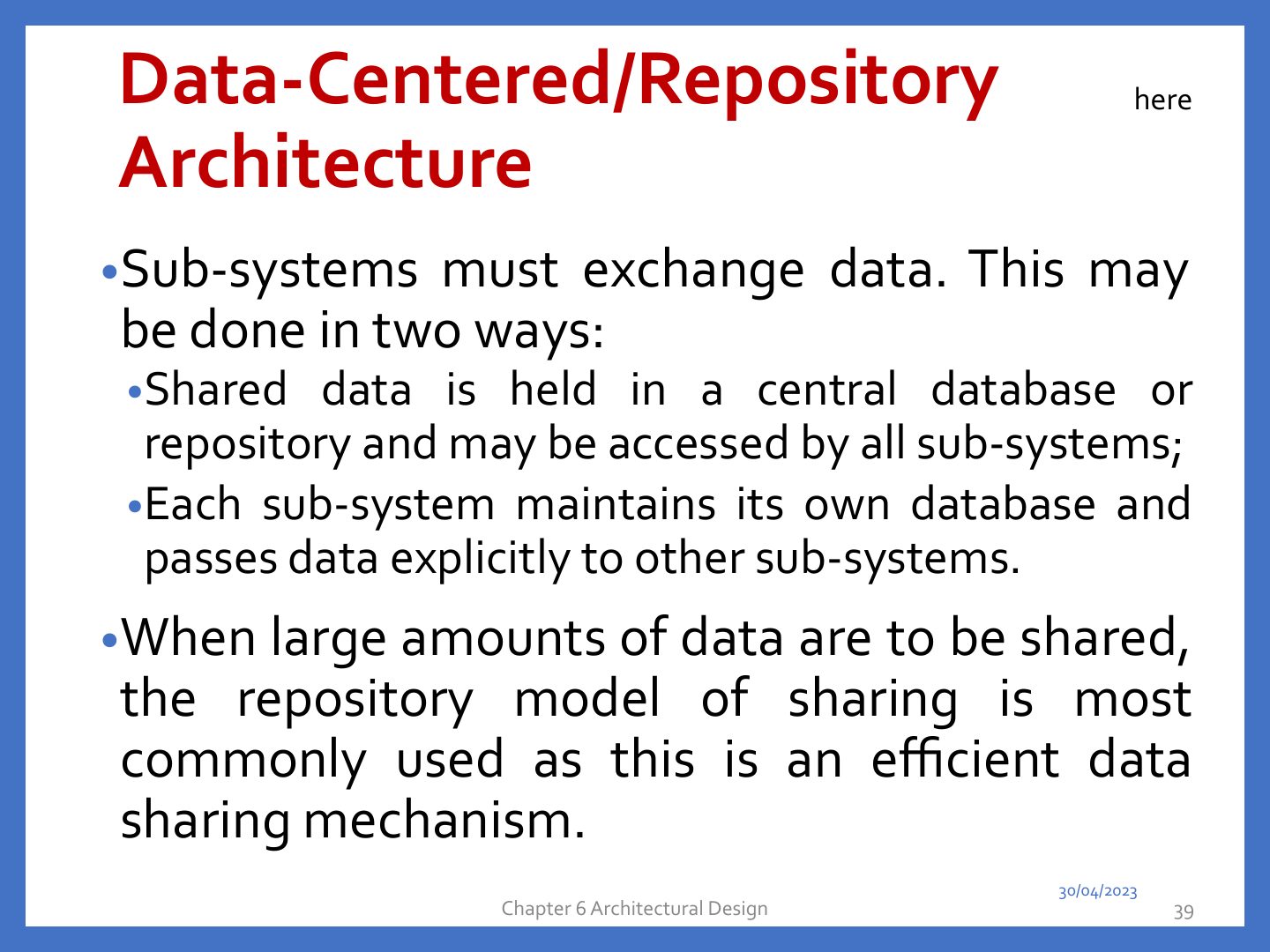
Data-Centered/Repository
Data Flow/Pipe &Filter Architecture
Notes
Pipe and filter: data flows through a sequence of transformations (compilers, batch processing).
Exam angle
A compiler (lexer → parser → code generator) best fits which pattern?
Data Flow/Pipe &Filter Architecture
Interface Design
Interface Design
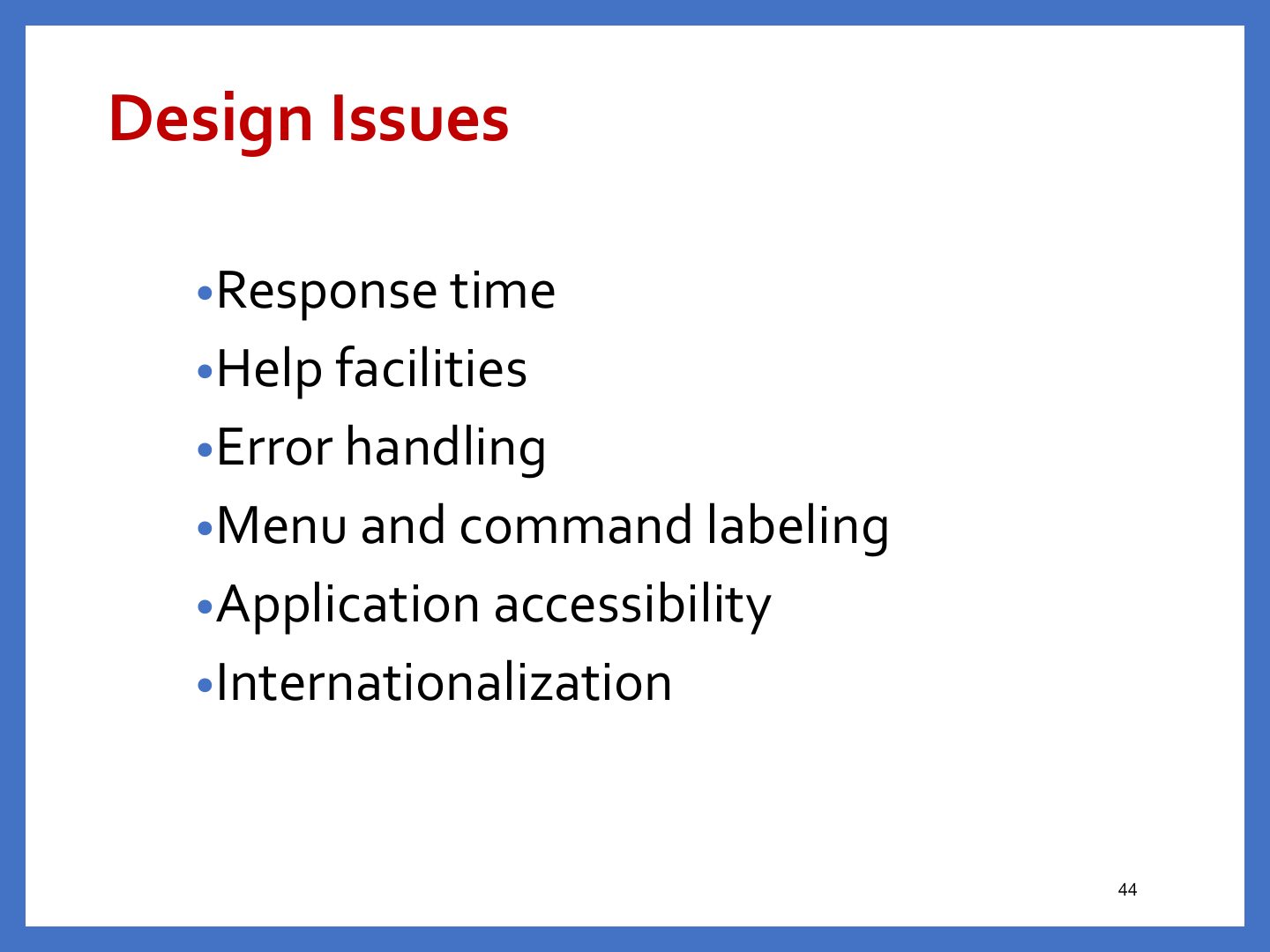
Design Issues
Golden Rules
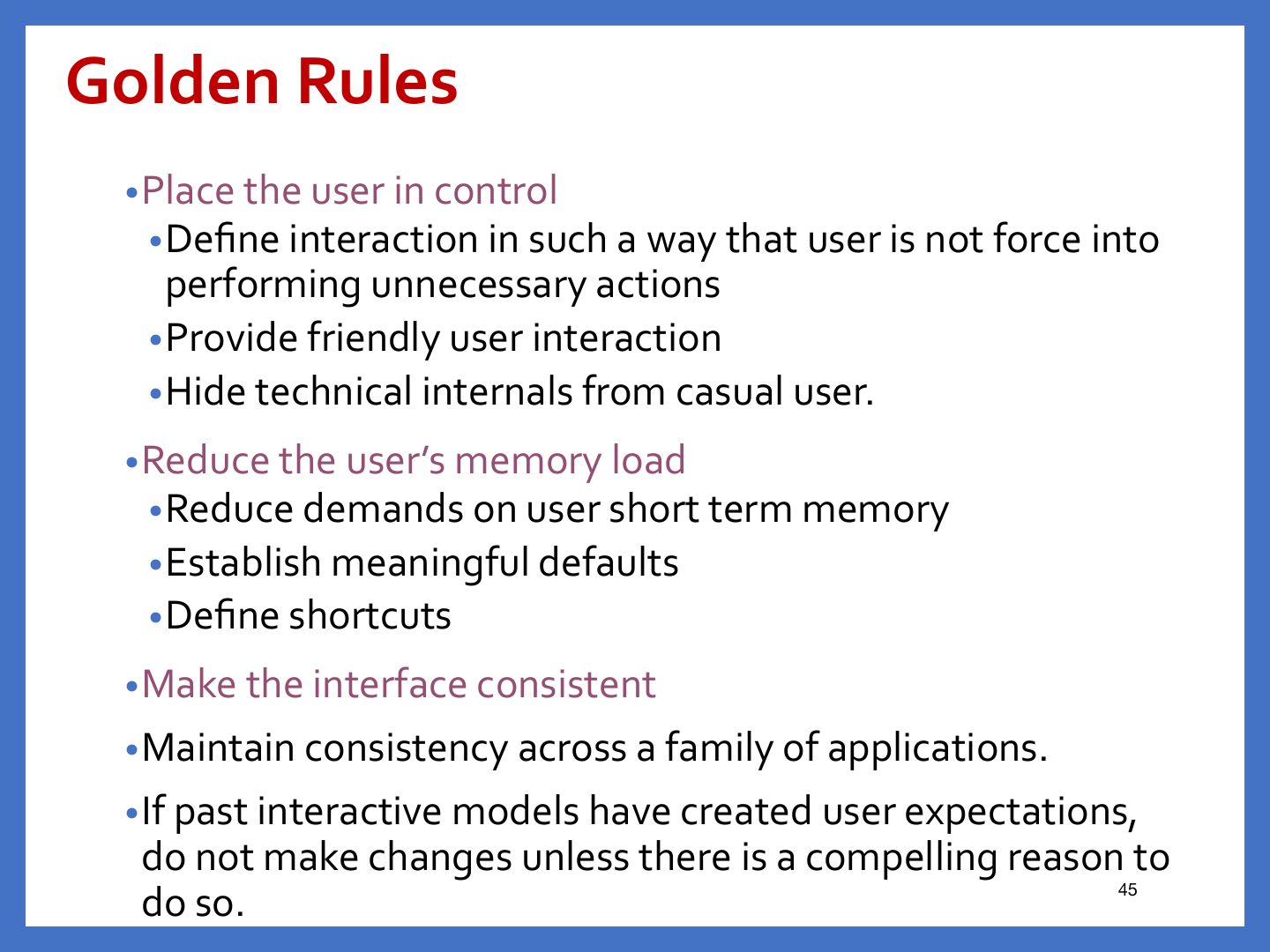
Exam angle
Which is one of Mandel’s golden rules?
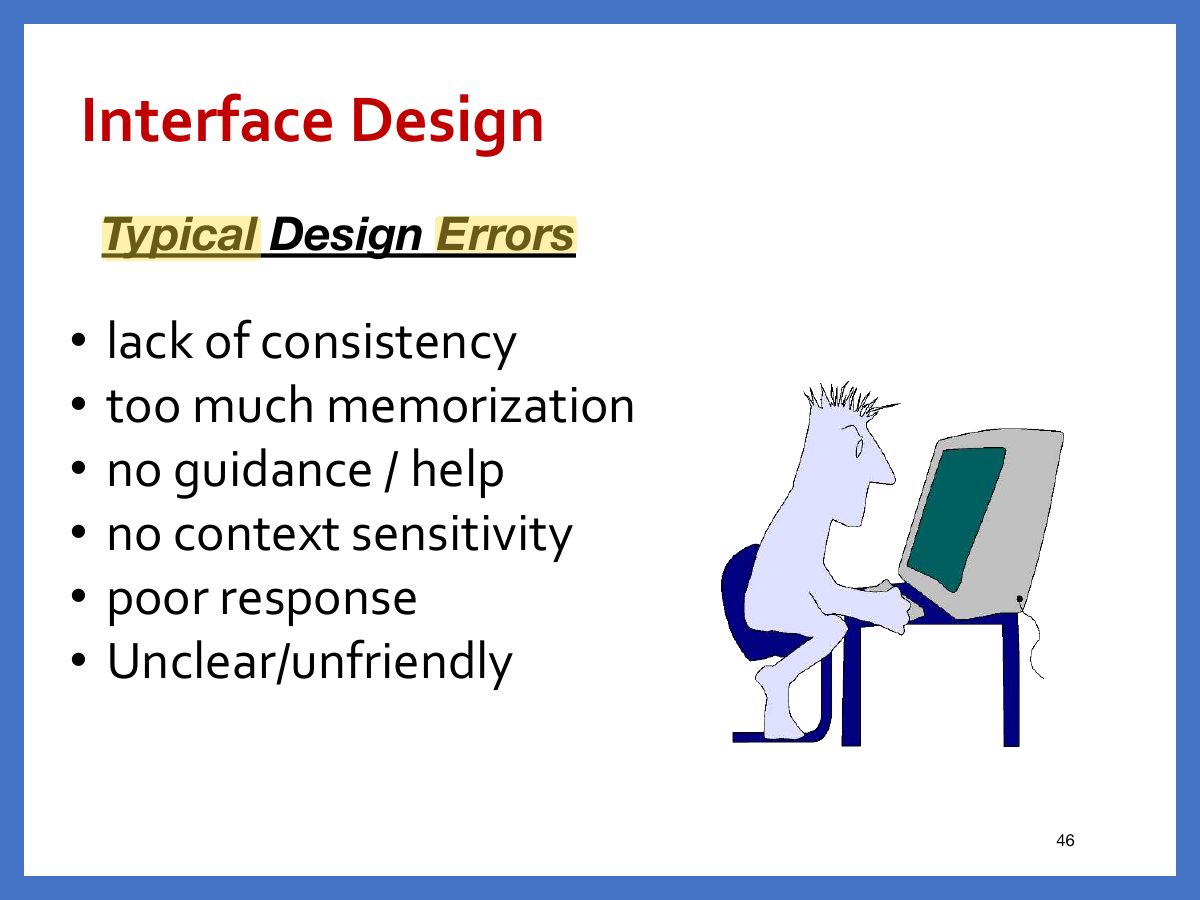
Interface Design
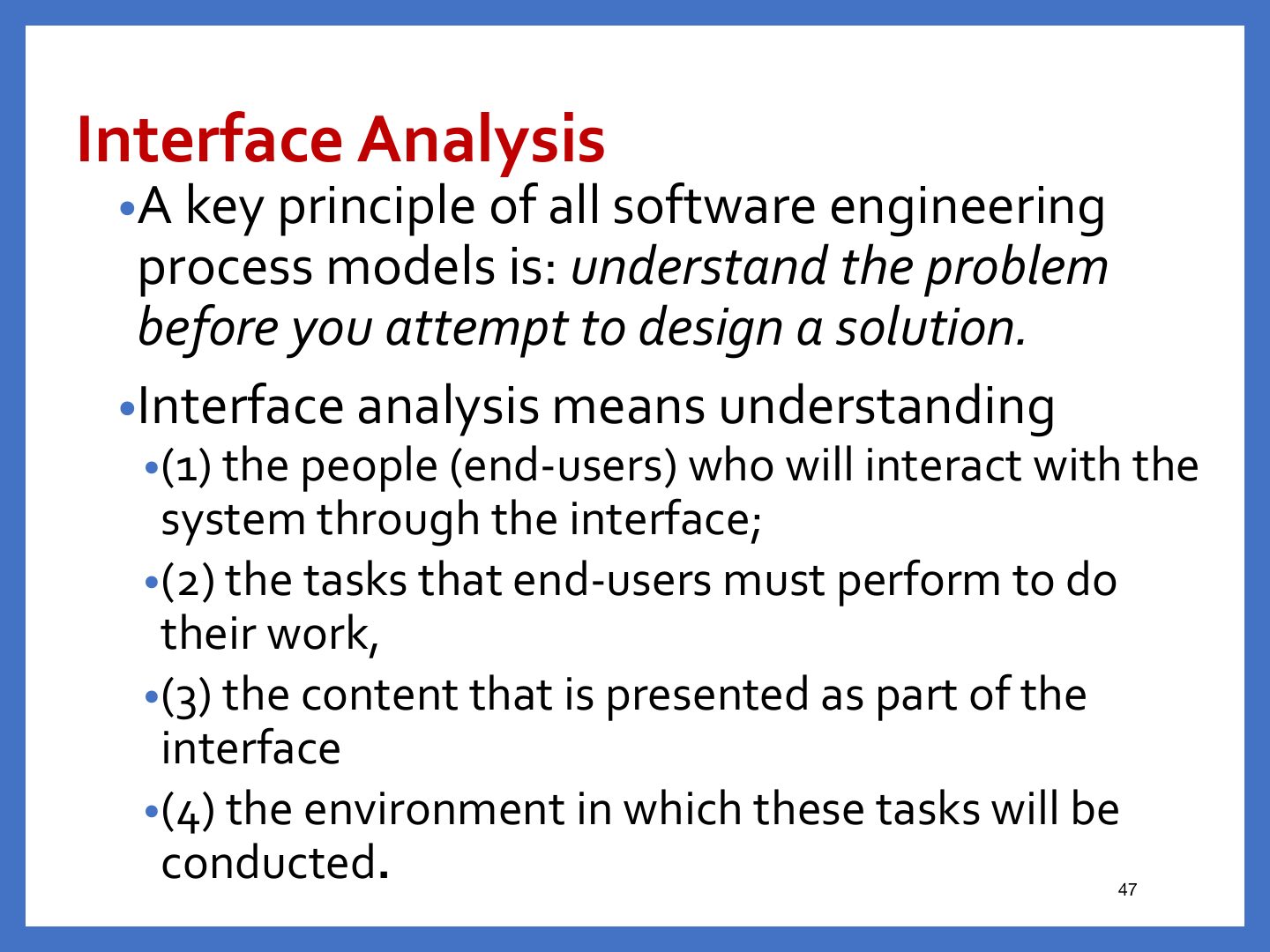
Interface Analysis
WebApp Interface Design
Effective WebApp Interfaces
References