The Elementary Theory of Initial-Value Problems
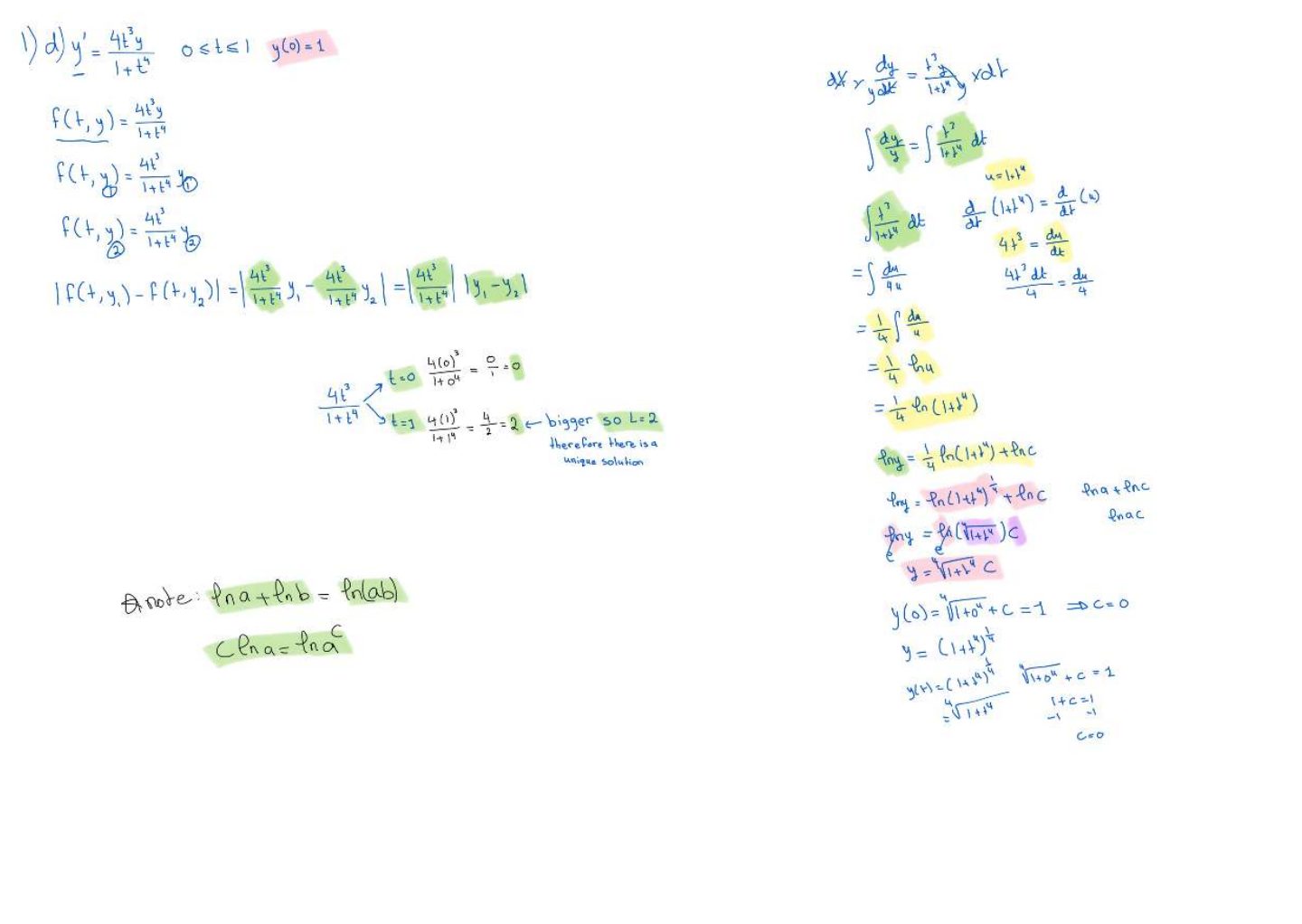
Initial-value problems y′ = f(t, y), y(a) = α: Lipschitz conditions, existence and uniqueness, and well-posed problems.
How to read this page
Every original slide is shown unchanged. Yellow marks on a slide point to a numbered note: hover or tap a mark to jump to its note, and hover a note to see its marks. Questions tagged Past exam appeared on a real paper; Prediction questions are likely angles, not confirmed. Pick an answer to each question: a wrong pick tells you why it is wrong, so you can try again.
5.1

The Elementary Theory of Initial-Value Problems
Notes
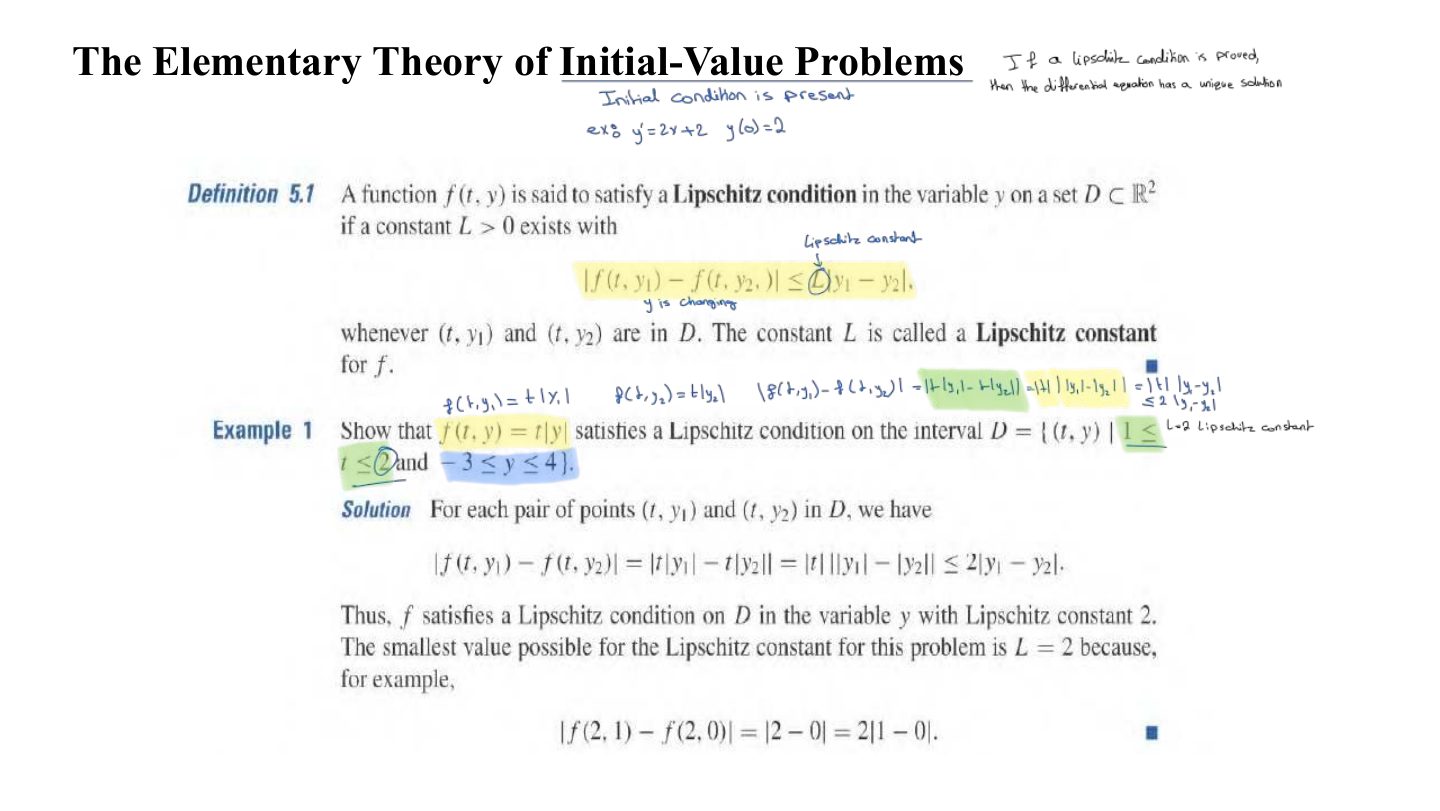
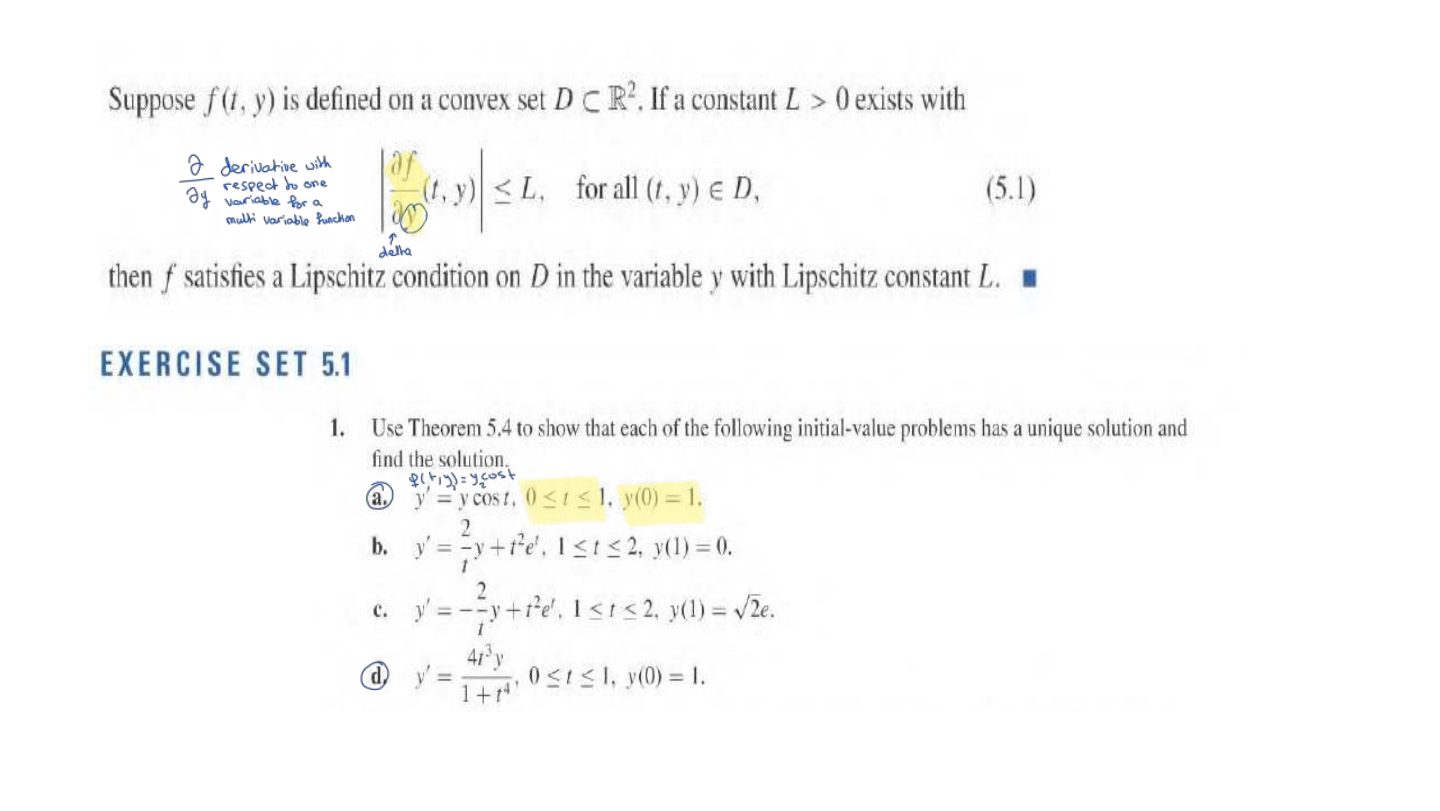
f satisfies a Lipschitz condition in y if |f(t, y₁) − f(t, y₂)| ≤ L|y₁ − y₂|; then the IVP has a unique solution and is well-posed.
Slide 3
Slide 4

Slide 5