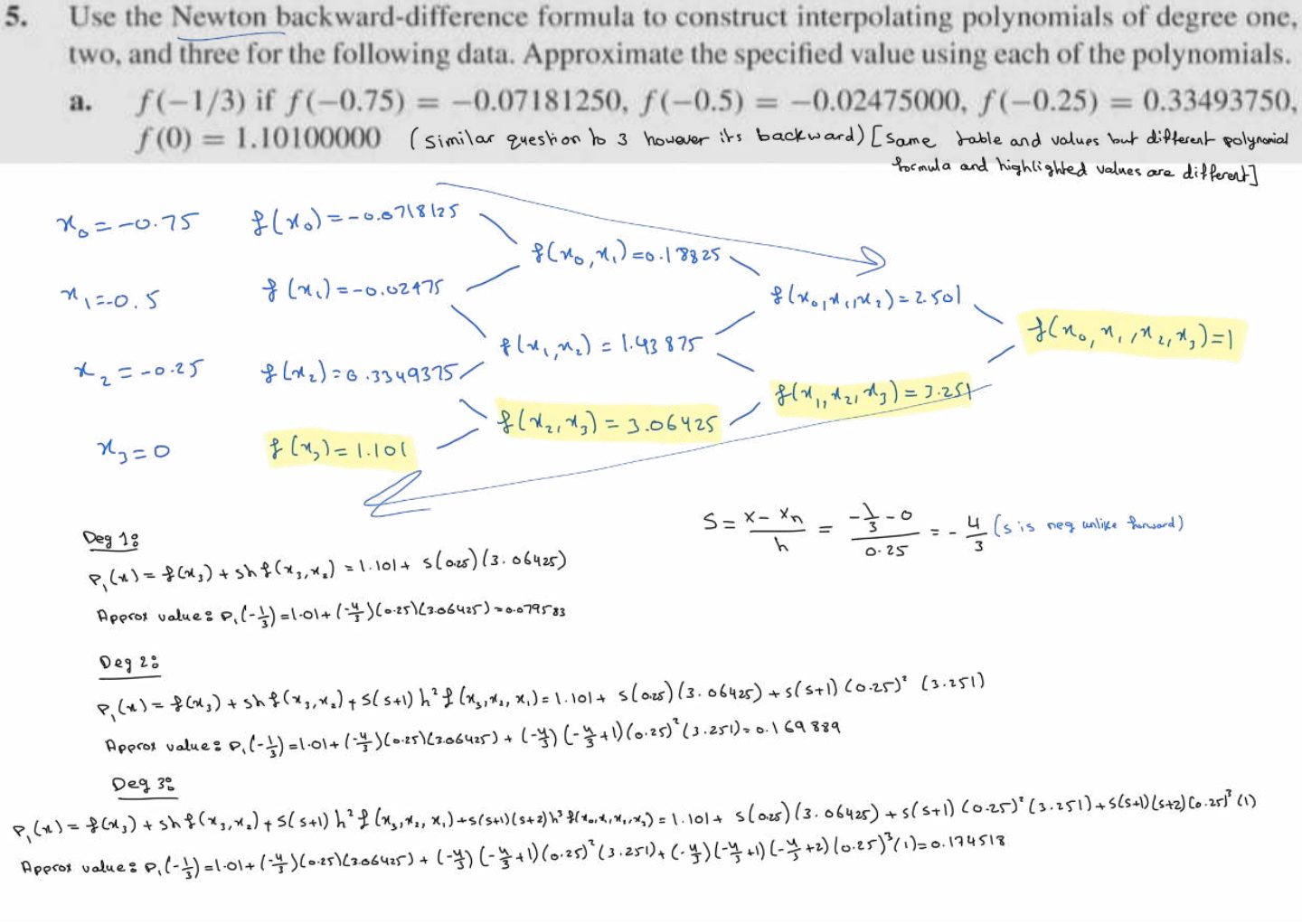
With f(1) = 2, f(2) = 5, the first divided difference f[1, 2] is:
Divided Differences
Newton's divided differences, the divided-difference table, and Newton's forward- and backward-difference formulas.
How to read this page
Every original slide is shown unchanged. Yellow marks on a slide point to a numbered note: hover or tap a mark to jump to its note, and hover a note to see its marks. Questions tagged Past exam appeared on a real paper; Prediction questions are likely angles, not confirmed. Pick an answer to each question: a wrong pick tells you why it is wrong, so you can try again.
Slide 1

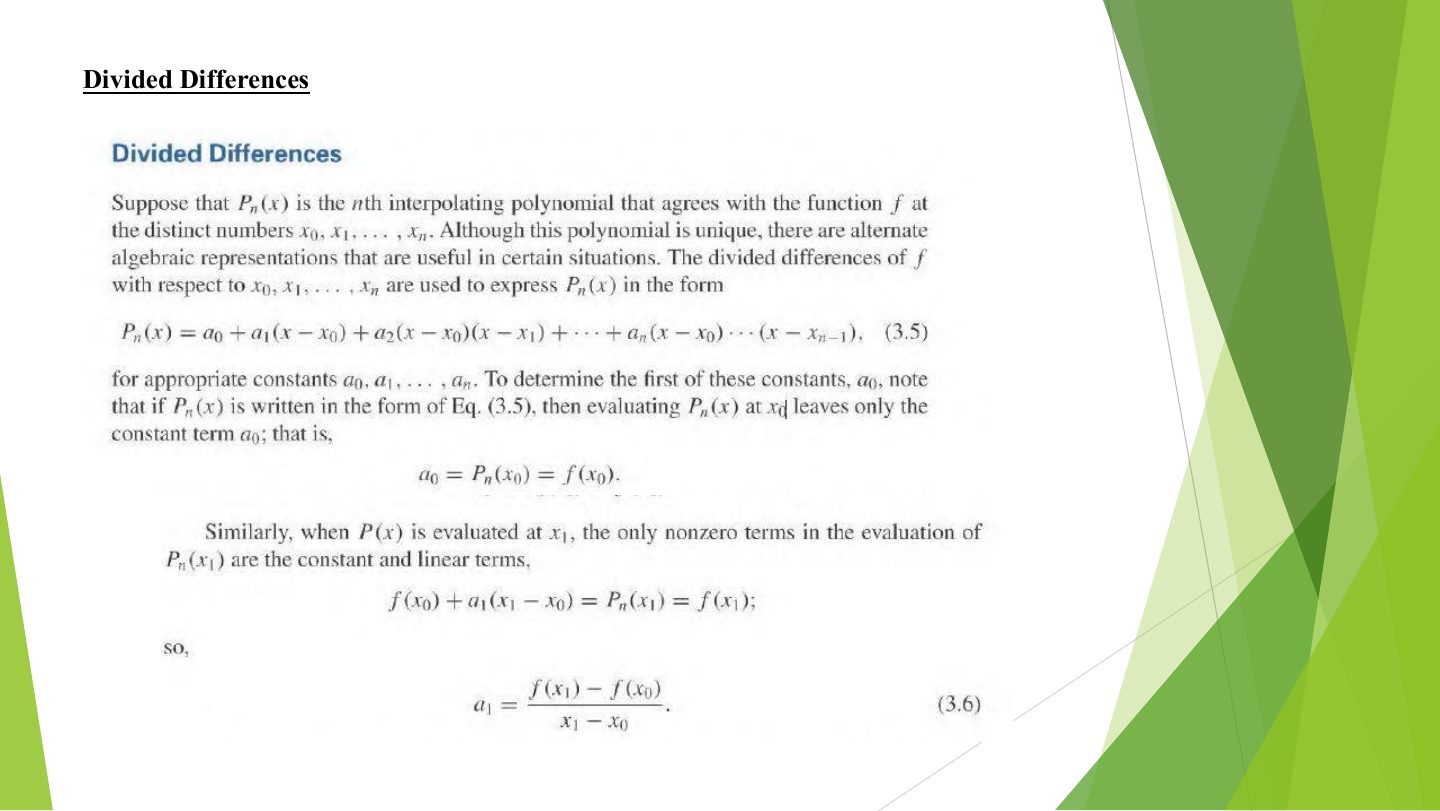
Divided Differences
Notes
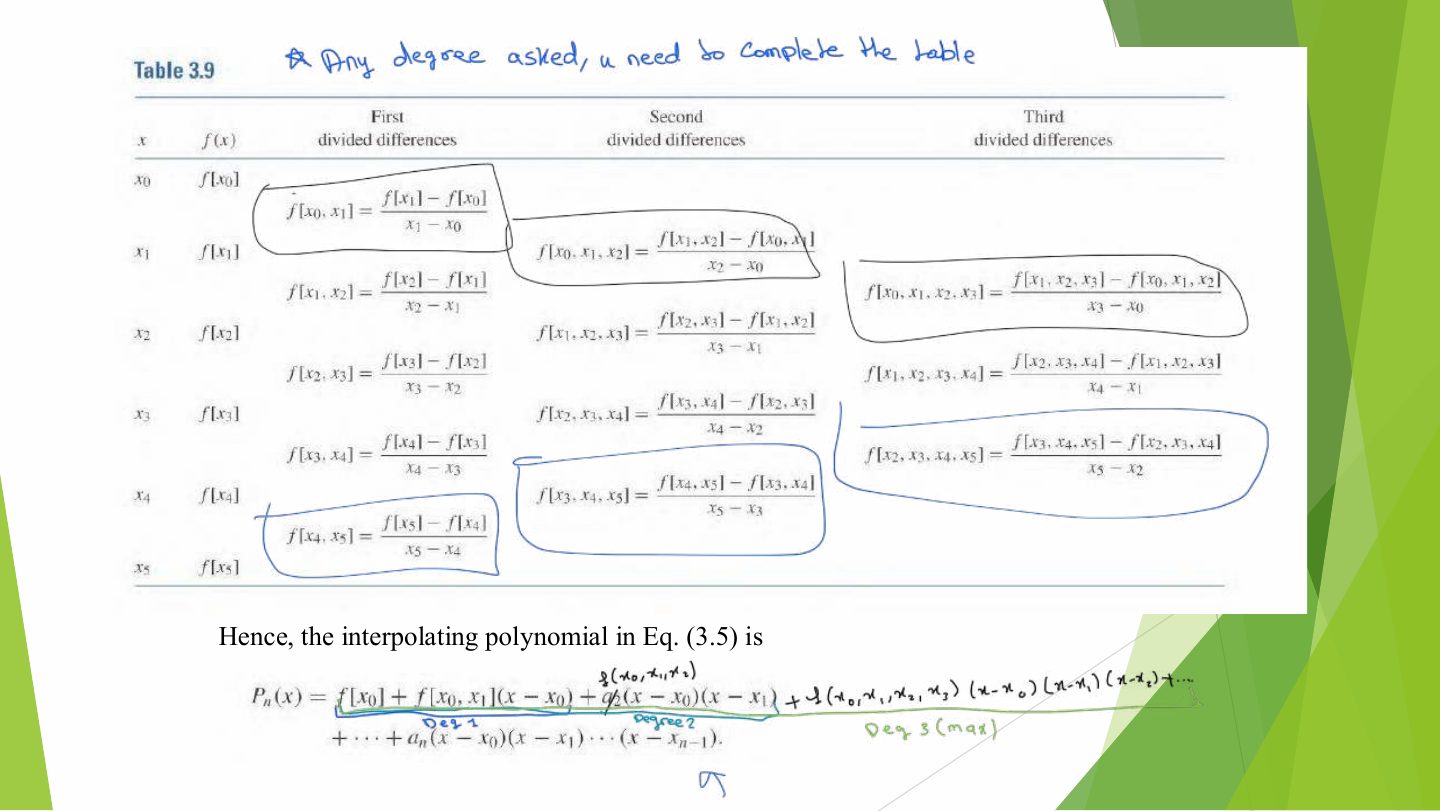
f[xᵢ, xᵢ₊₁] = (f[xᵢ₊₁] − f[xᵢ])/(xᵢ₊₁ − xᵢ), and so on. Pₙ(x) = f[x₀] + f[x₀, x₁](x − x₀) + f[x₀, x₁, x₂](x − x₀)(x − x₁) + …
Memory trick Adding a new point only adds one new term: no need to start over (unlike Lagrange).
Exam angle
Slide 3
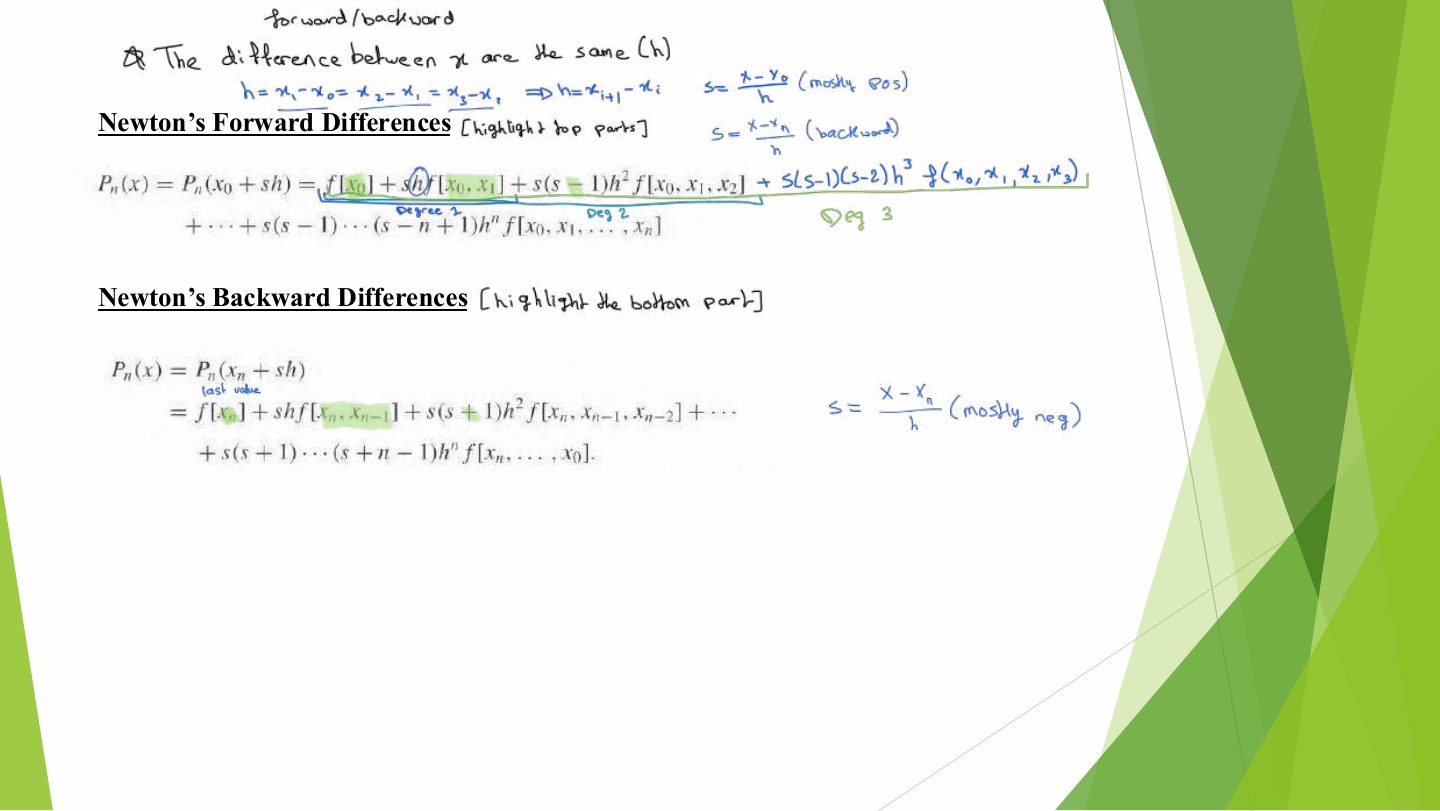
Newton’s Forward Differences
Notes
Equally spaced nodes: forward differences Δ and the binomial-coefficient form.
Solve Q1 & 2 using Divided Difference Rule
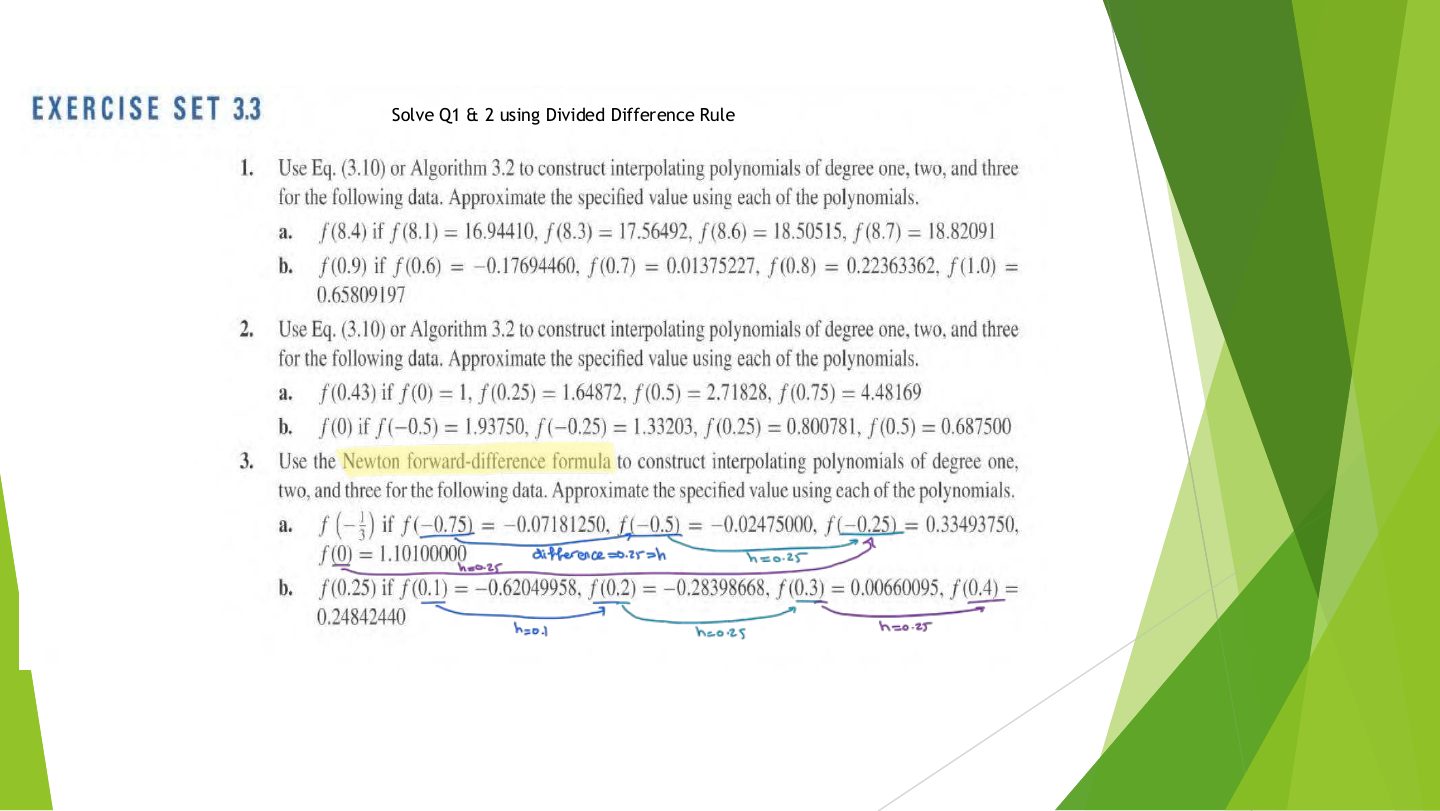
Slide 6
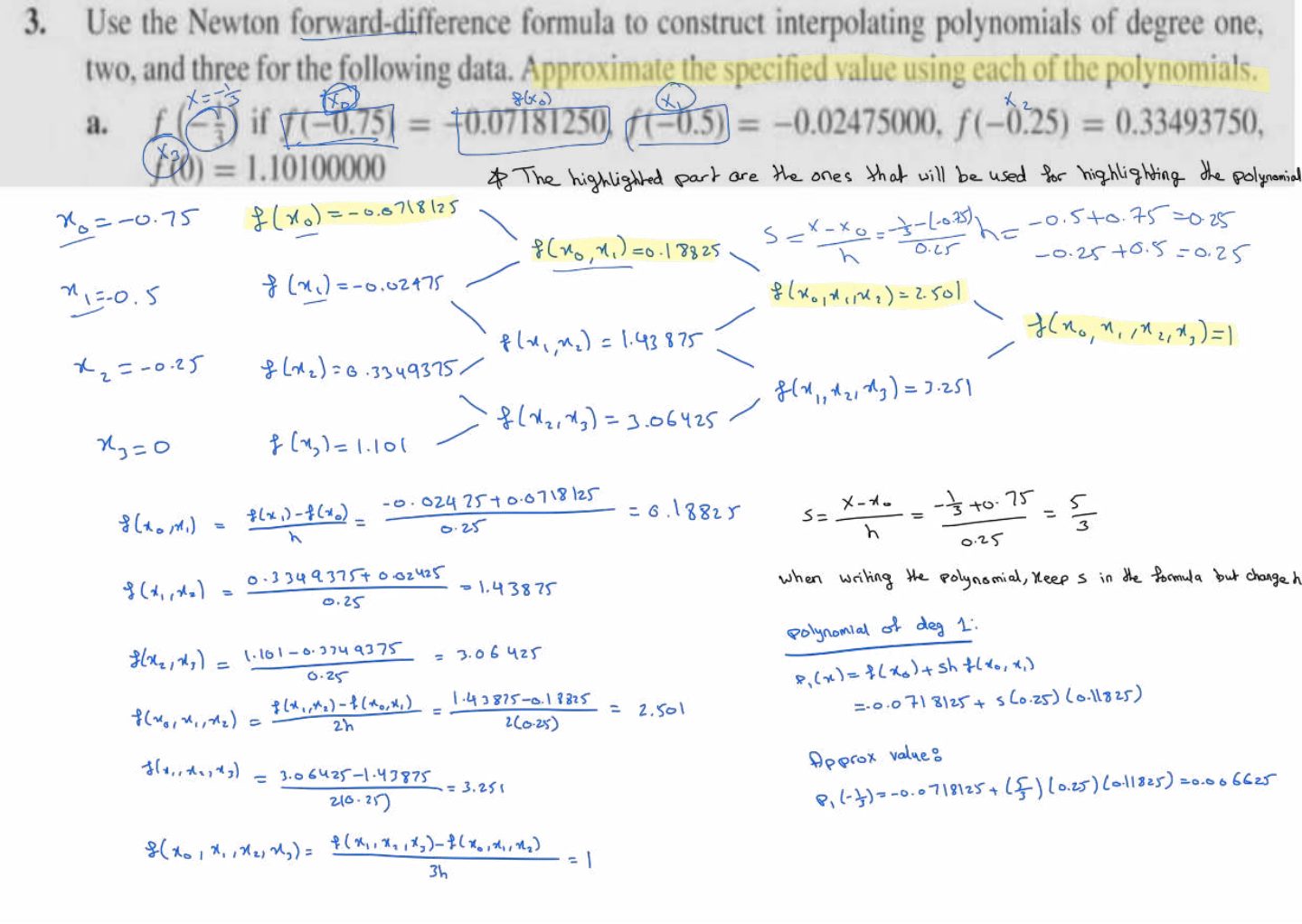
Slide 7
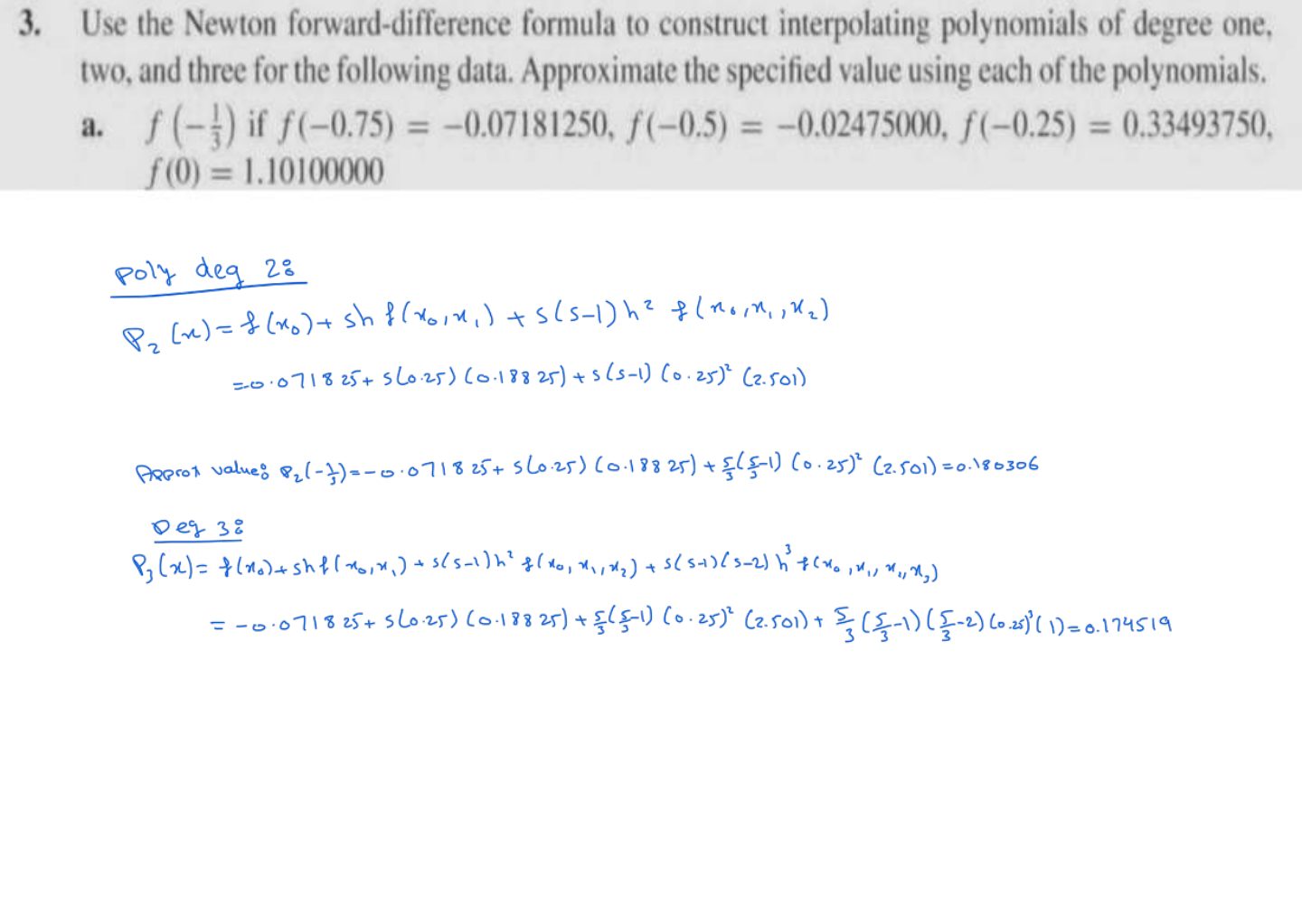
Slide 8