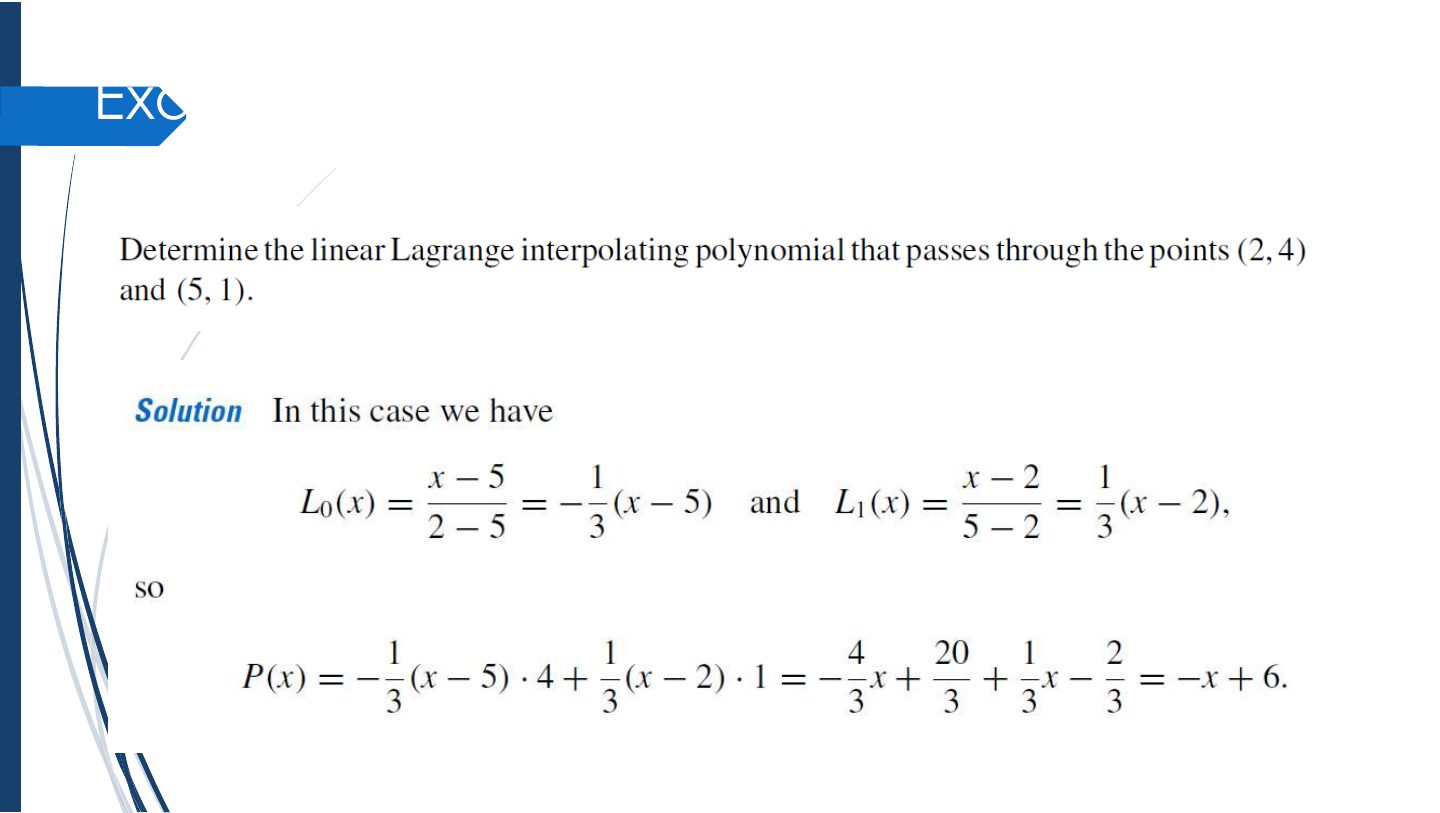
Find the linear Lagrange polynomial through (2, 4) and (5, 1).
Compare with the model answer
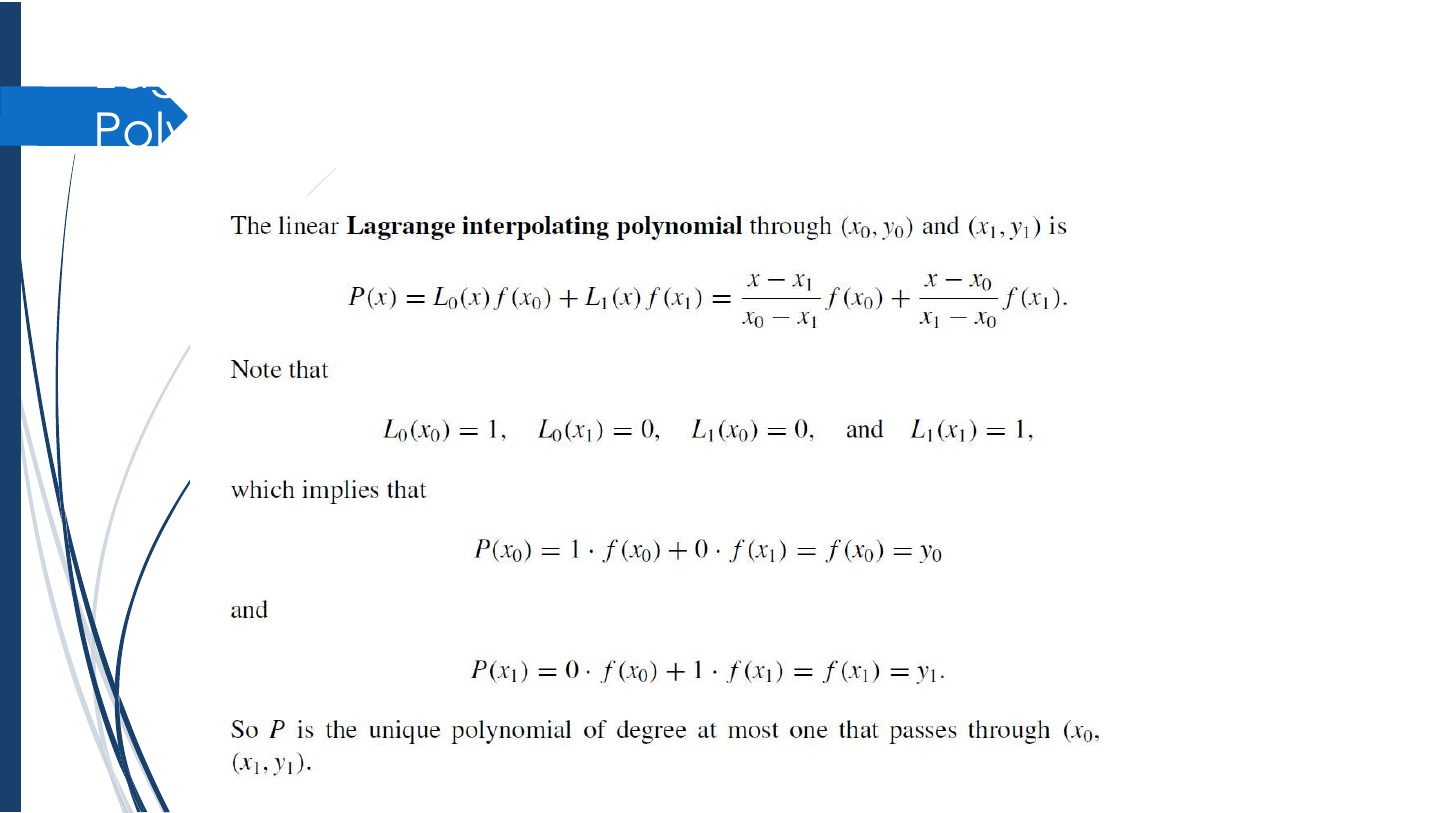
P(x) = 4(x − 5)/(2 − 5) + 1(x − 2)/(5 − 2) = −(4/3)(x − 5) + (1/3)(x − 2) = −x + 6.
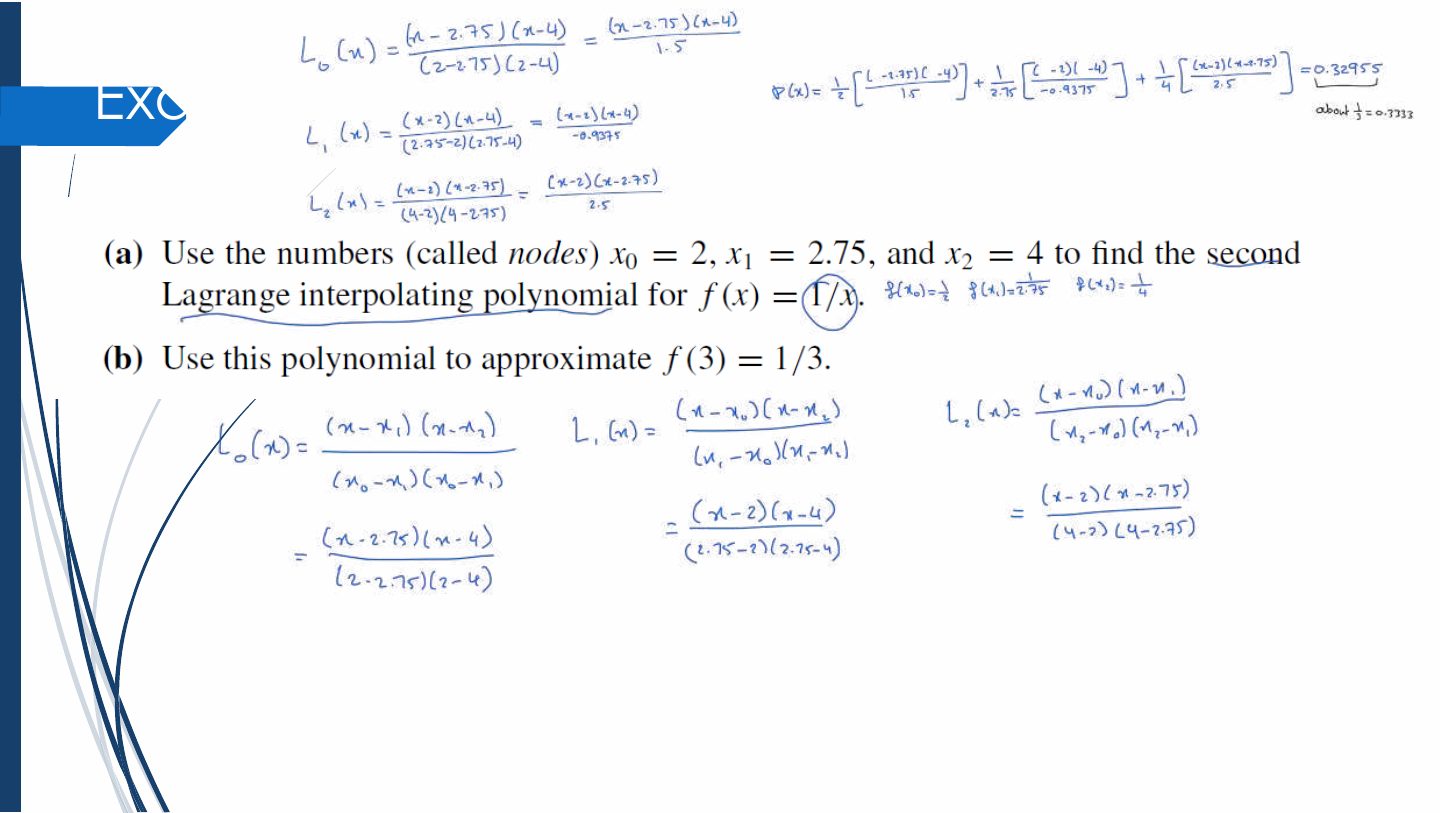
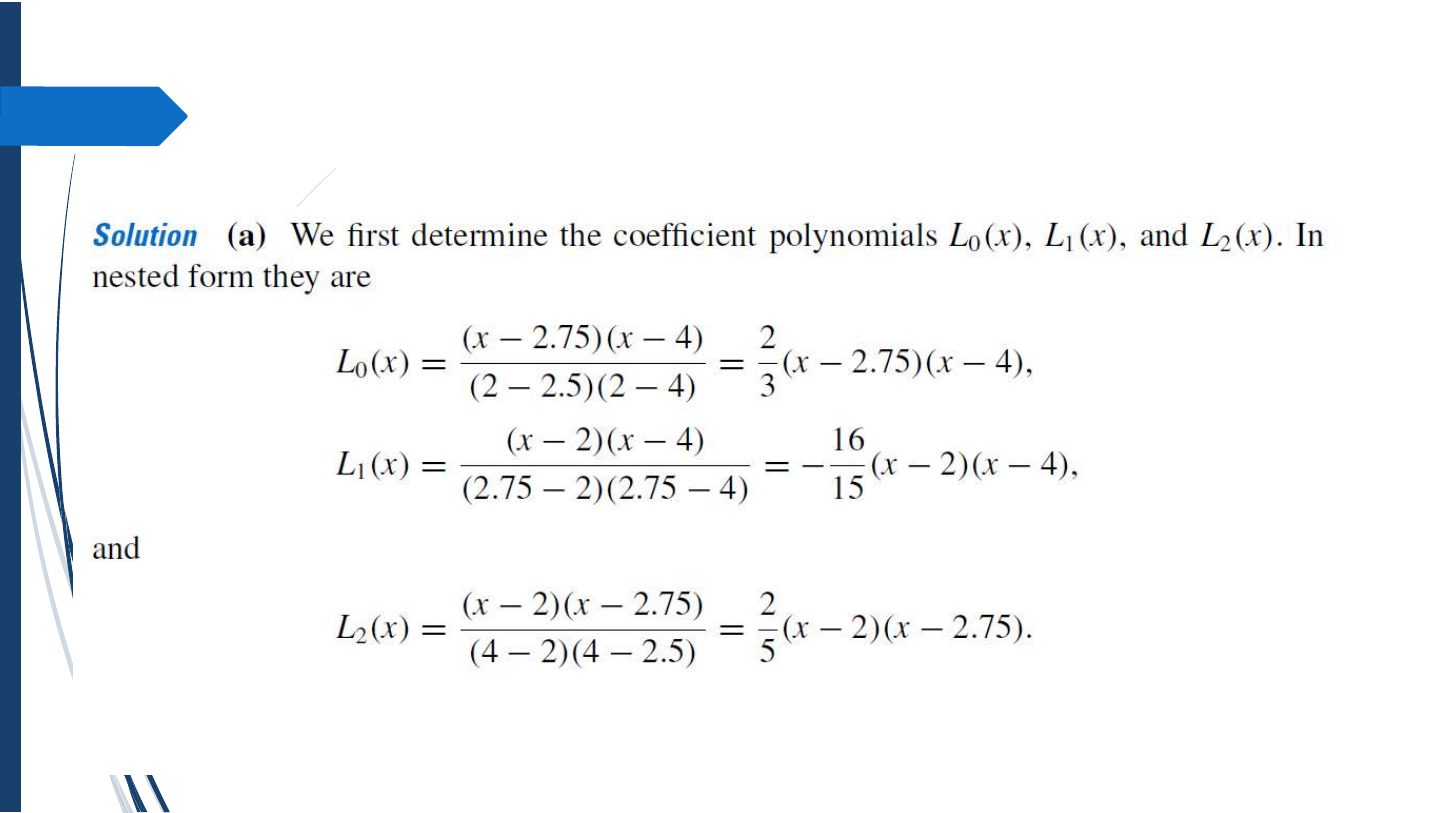
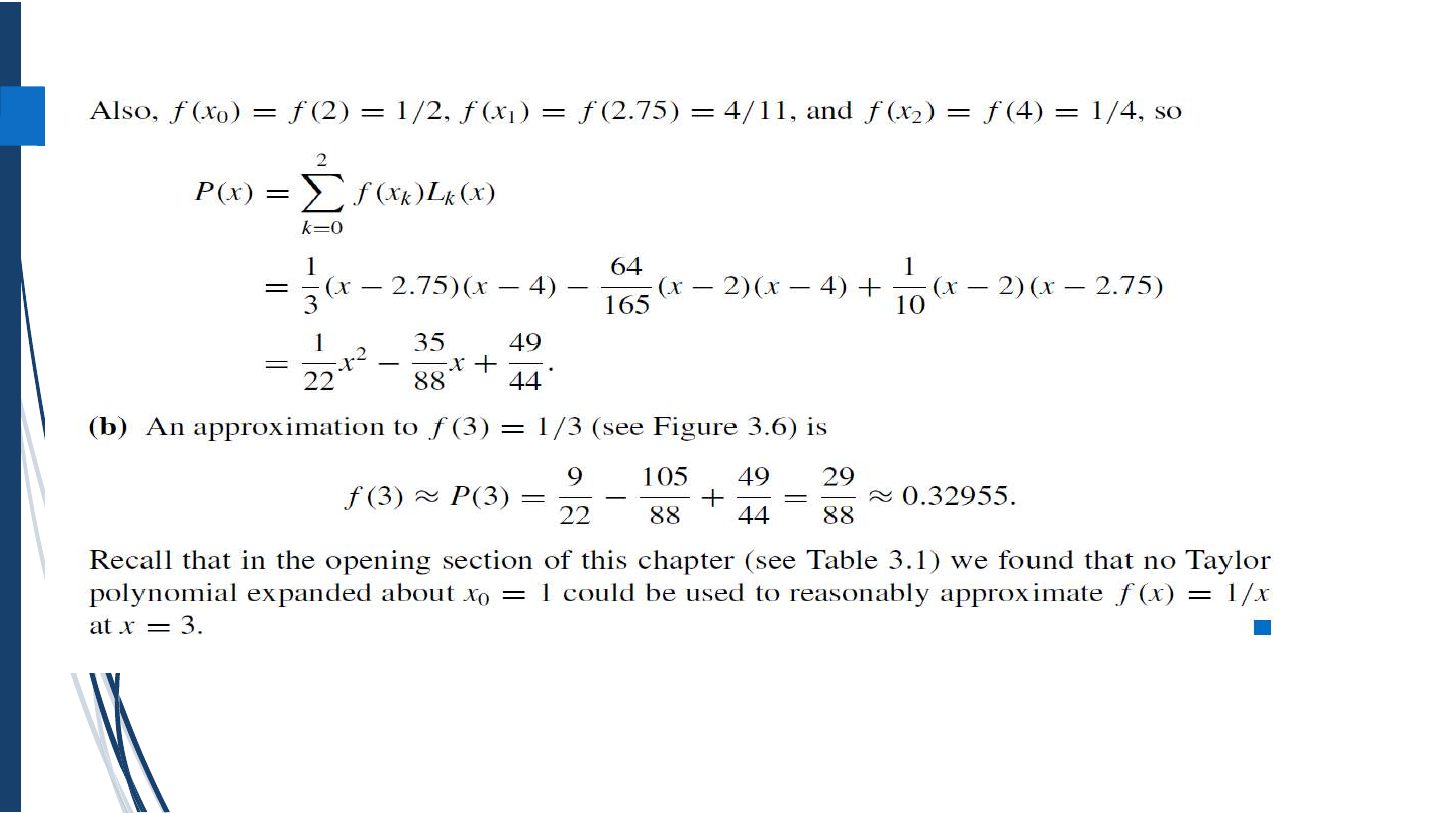
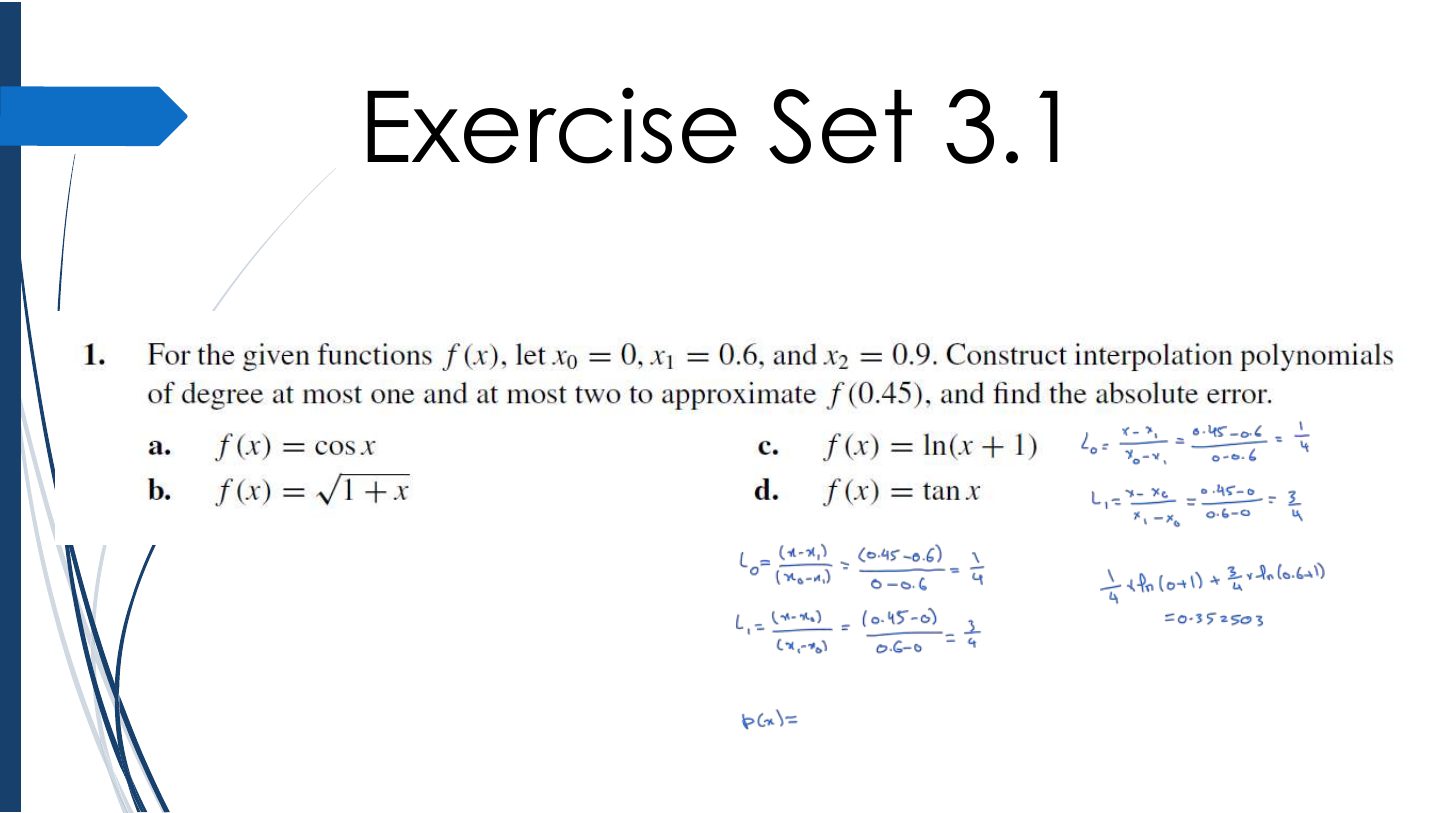
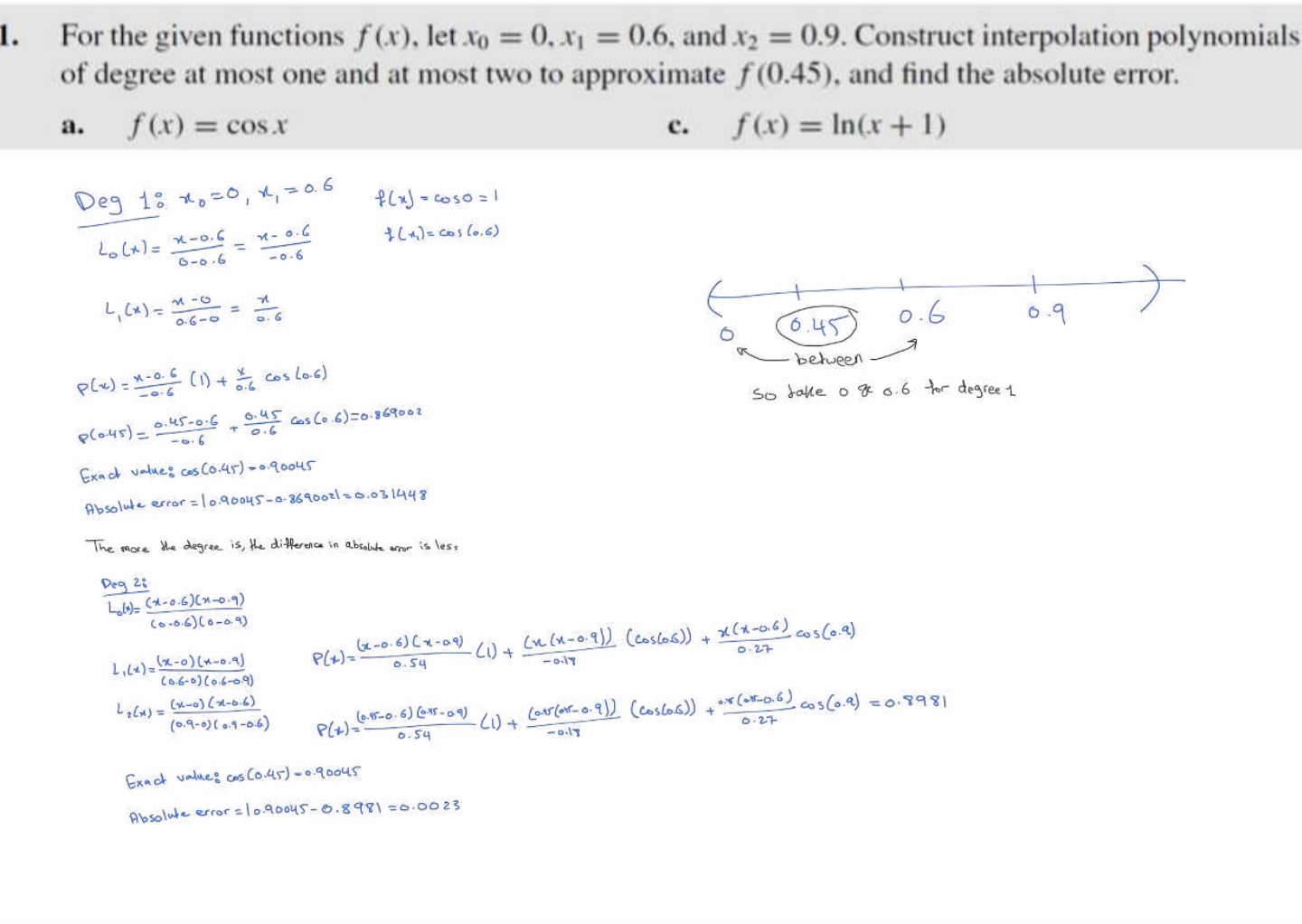
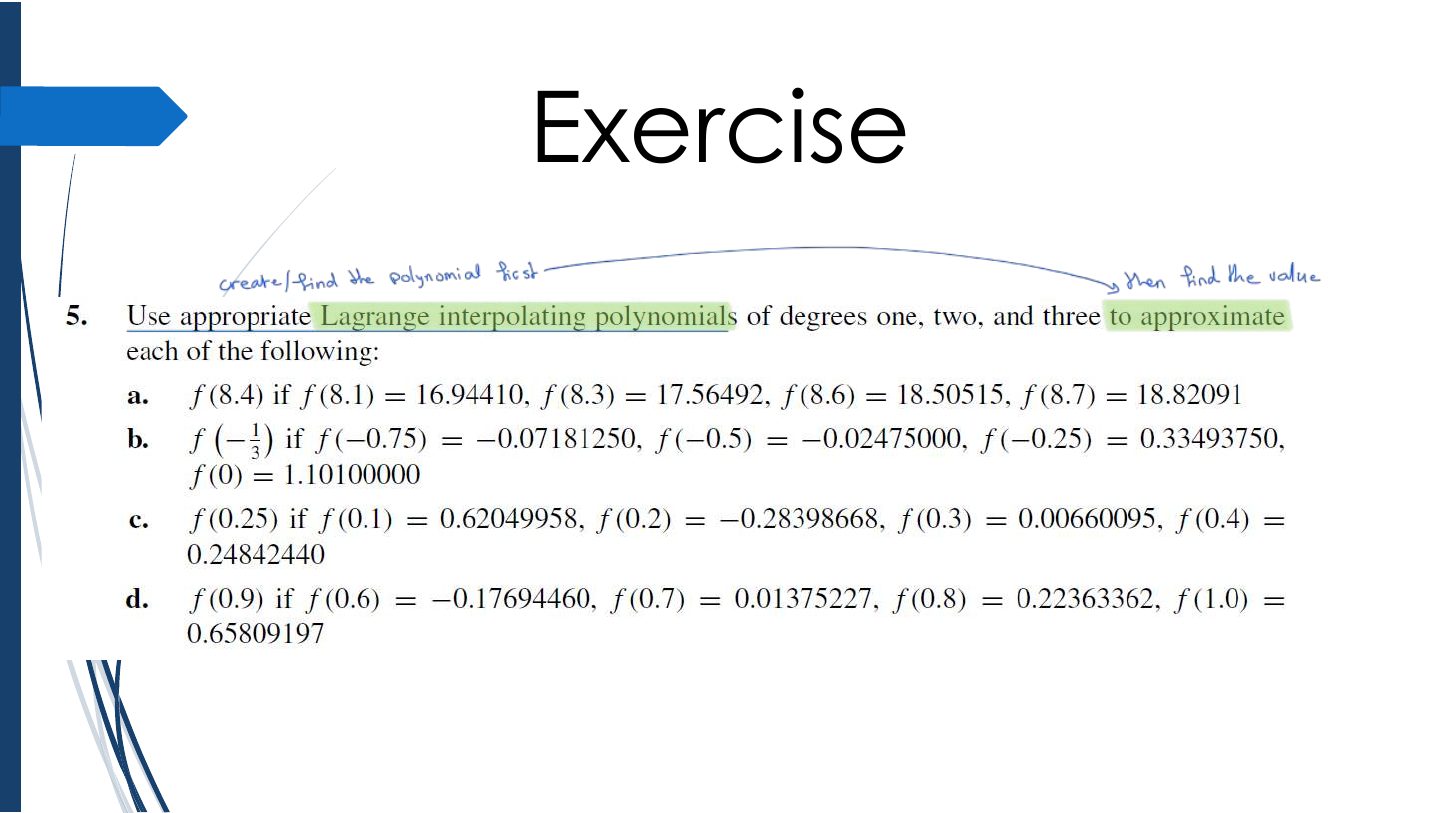
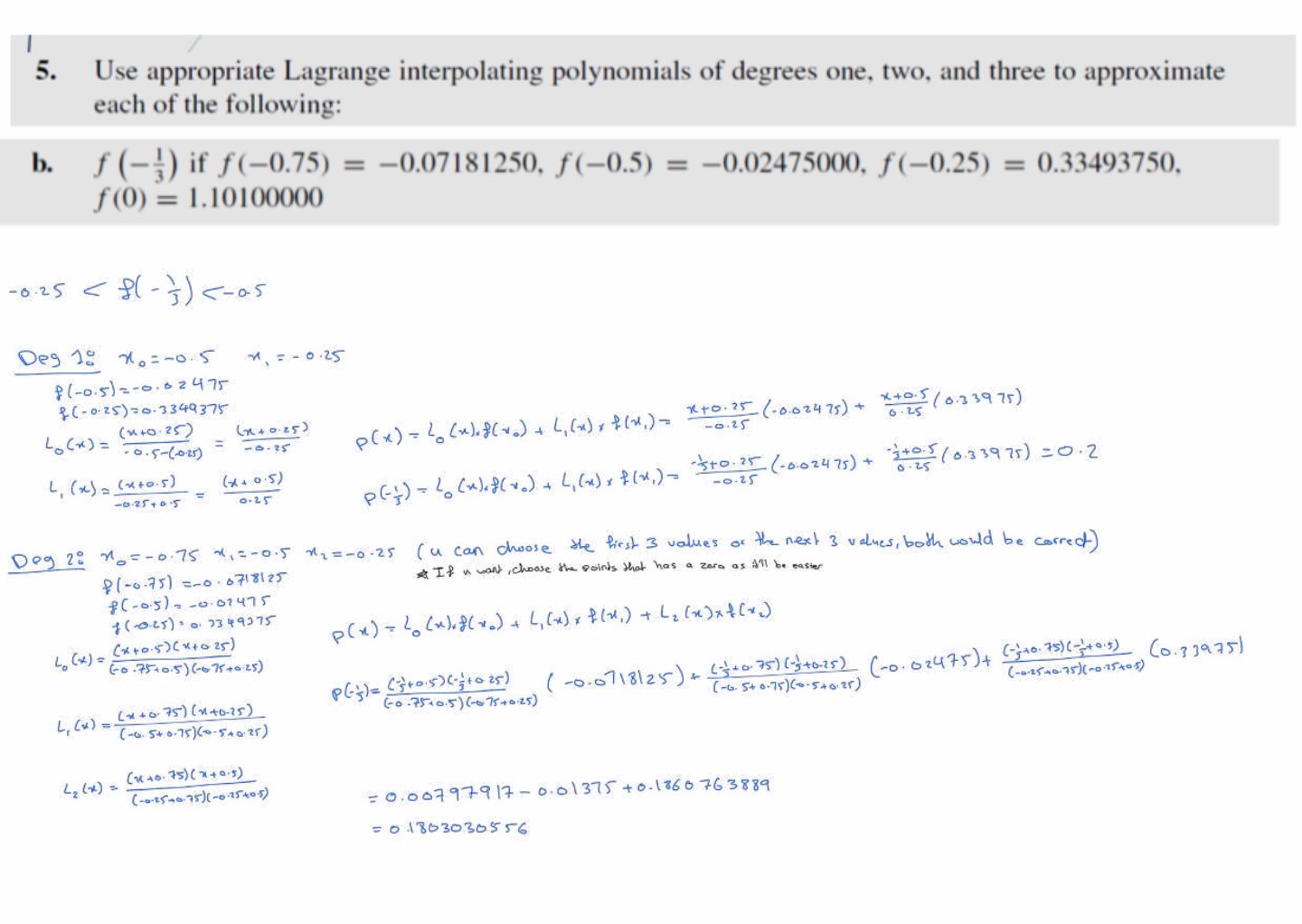
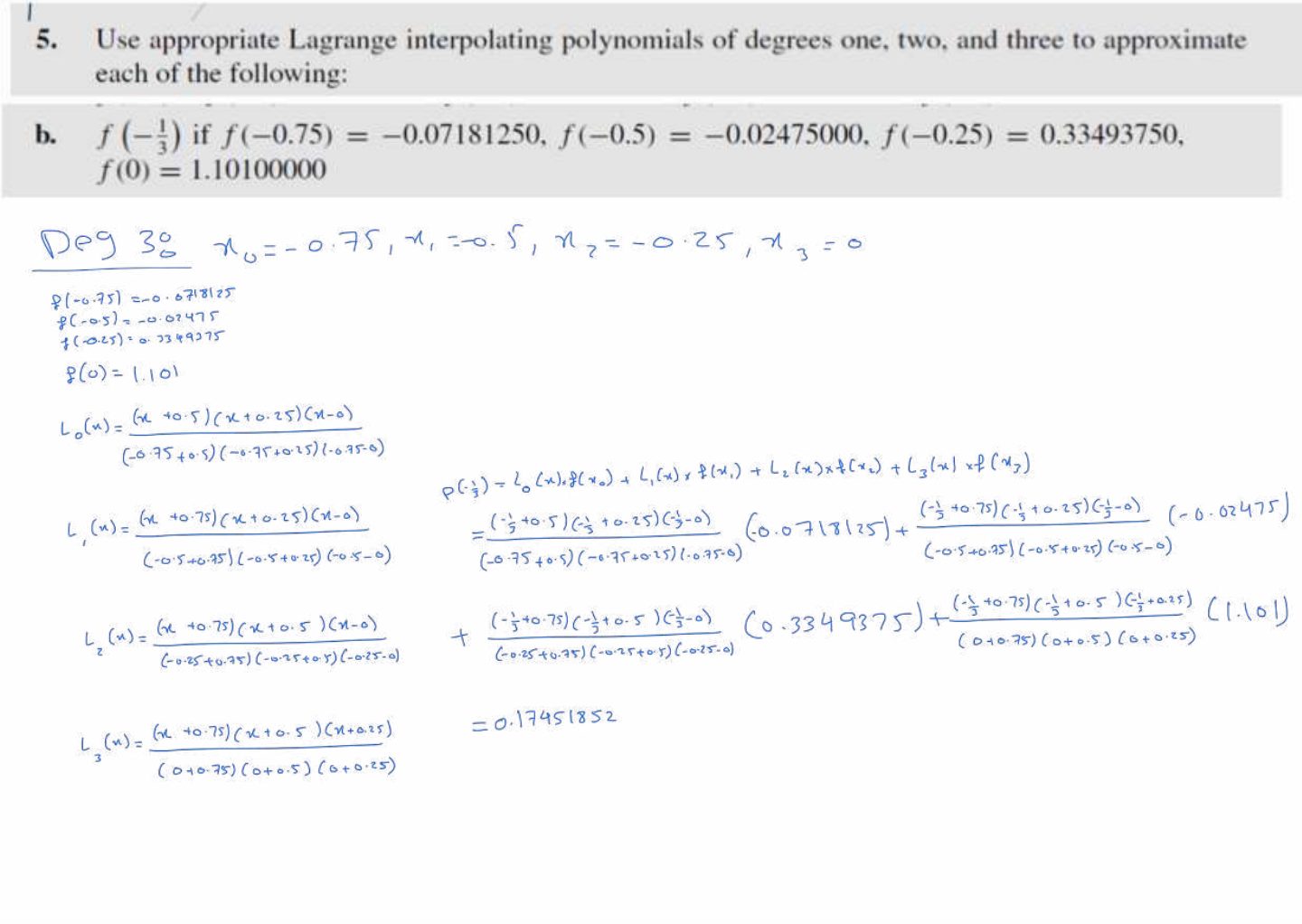
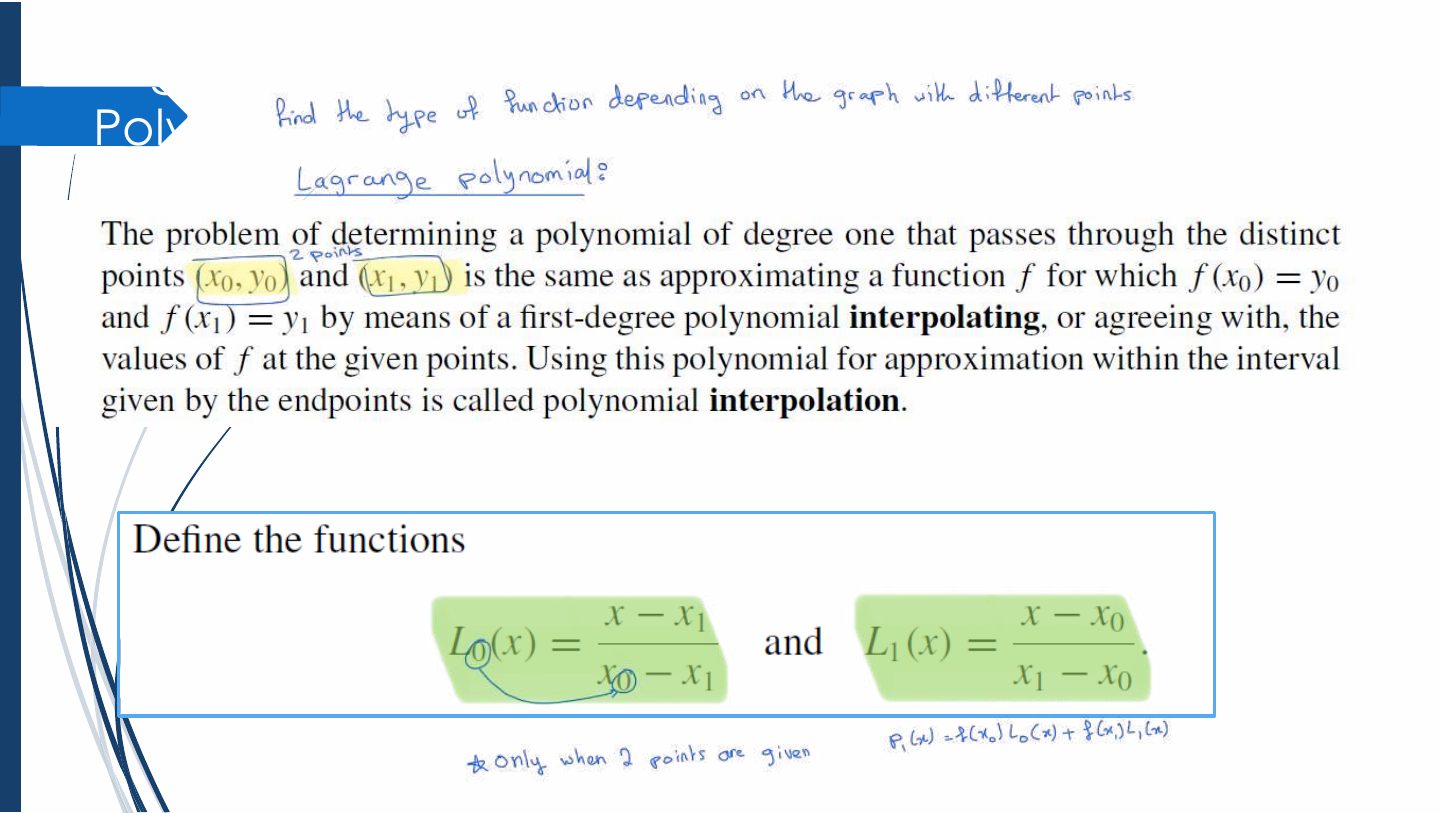
Interpolation and the Lagrange interpolating polynomial, its error formula, and worked examples.
Every original slide is shown unchanged. Yellow marks on a slide point to a numbered note: hover or tap a mark to jump to its note, and hover a note to see its marks. Questions tagged Past exam appeared on a real paper; Prediction questions are likely angles, not confirmed. Pick an answer to each question: a wrong pick tells you why it is wrong, so you can try again.

Error: f(x) − P(x) = f⁽ⁿ⁺¹⁾(ξ)/(n + 1)! · Π(x − xᵢ).
Find the linear Lagrange polynomial through (2, 4) and (5, 1).
P(x) = 4(x − 5)/(2 − 5) + 1(x − 2)/(5 − 2) = −(4/3)(x − 5) + (1/3)(x − 2) = −x + 6.