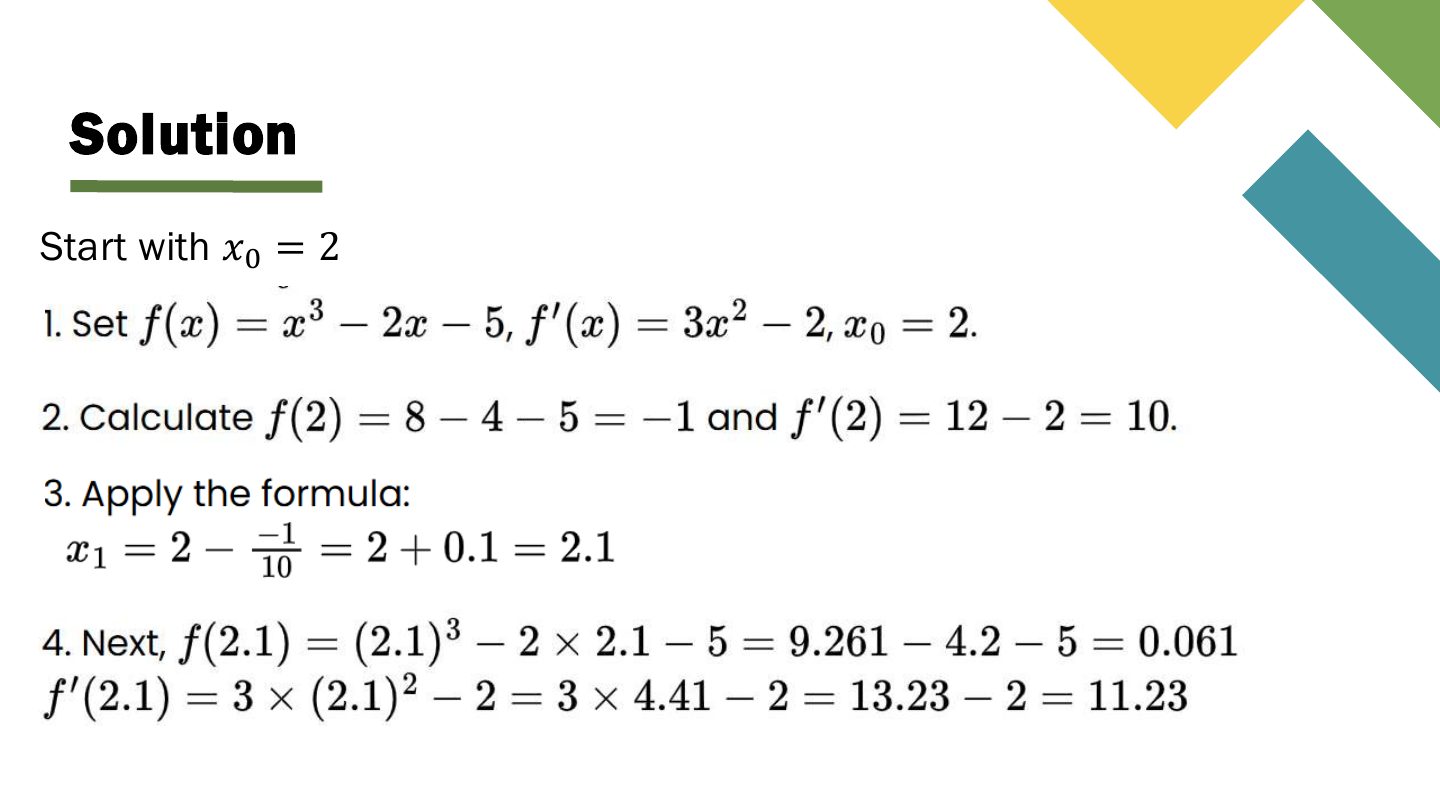
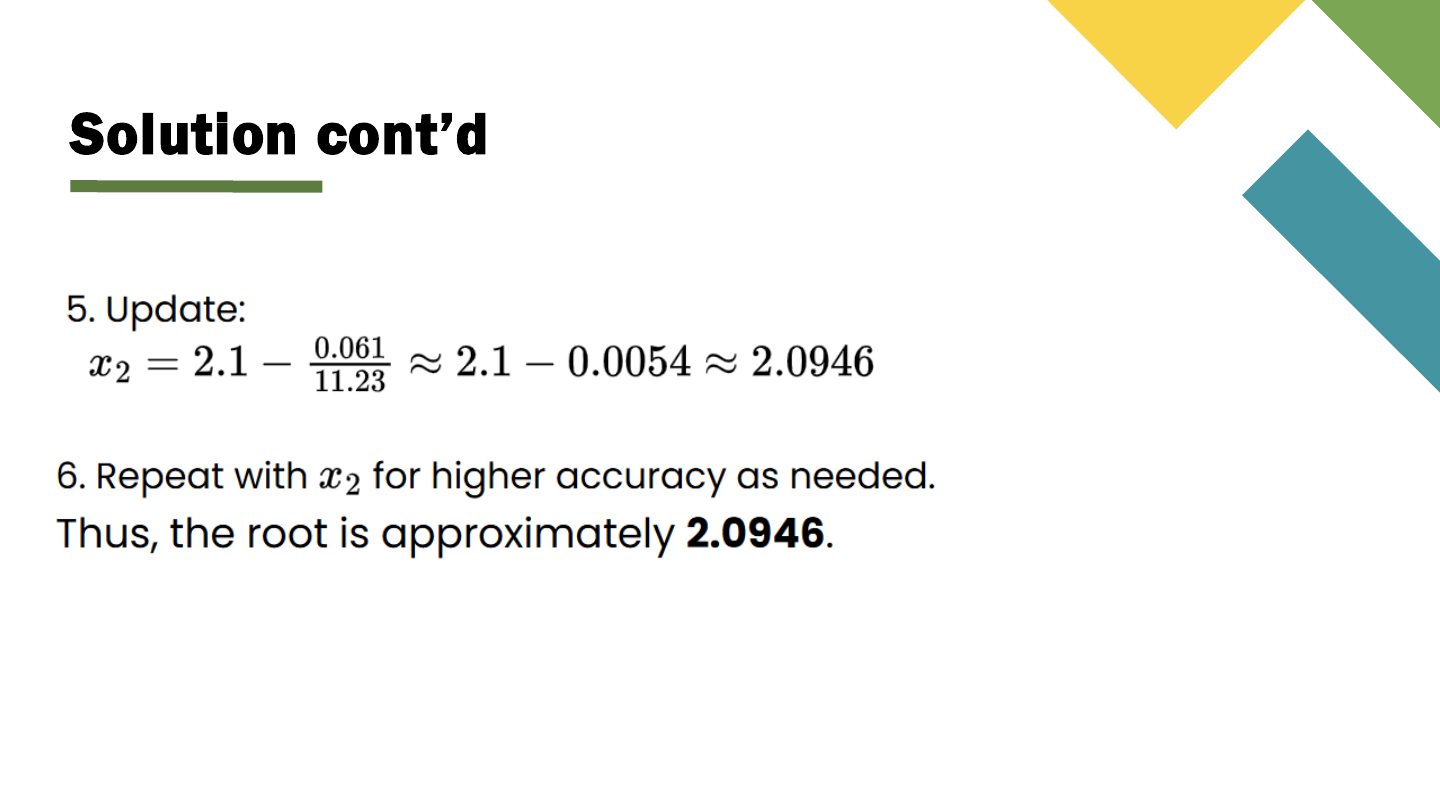
One Newton step for f(x) = x² − 2 from p₀ = 1.
Compare with the model answer
p₁ = 1 − (1 − 2)/(2·1) = 1.5.
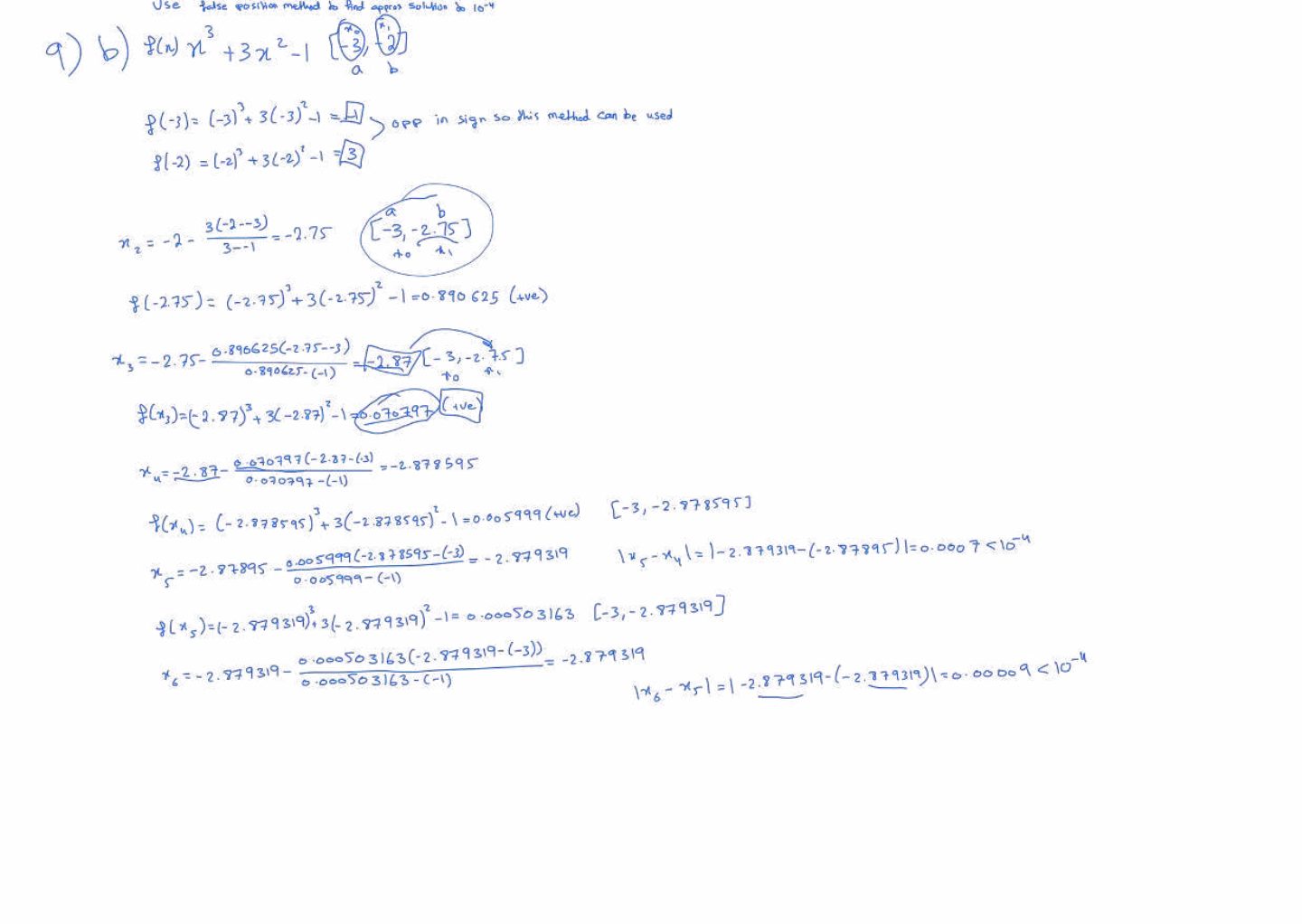
Newton–Raphson, the secant method and the method of false position (regula falsi): formulas, worked examples and how they compare.
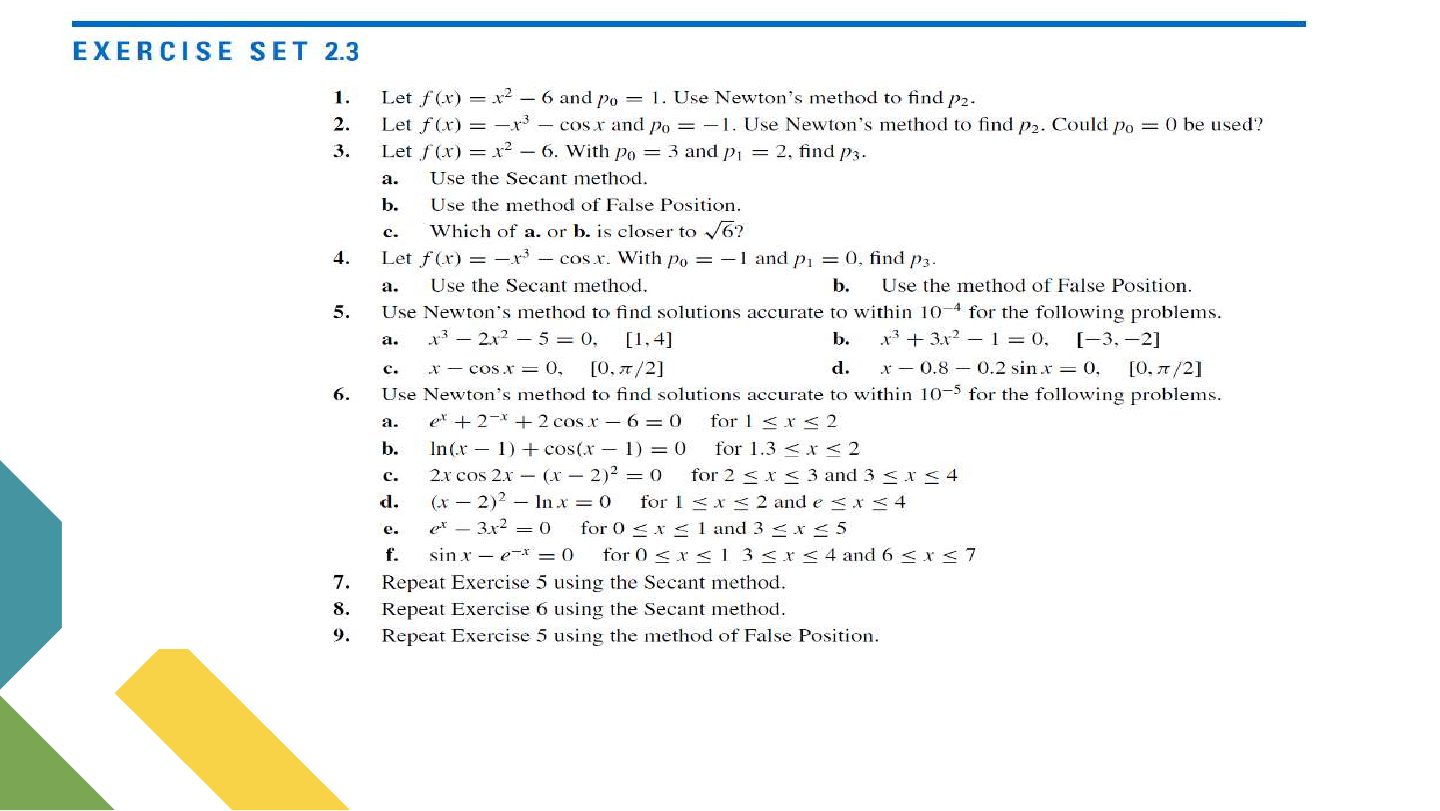
Every original slide is shown unchanged. Yellow marks on a slide point to a numbered note: hover or tap a mark to jump to its note, and hover a note to see its marks. Questions tagged Past exam appeared on a real paper; Prediction questions are likely angles, not confirmed. Pick an answer to each question: a wrong pick tells you why it is wrong, so you can try again.

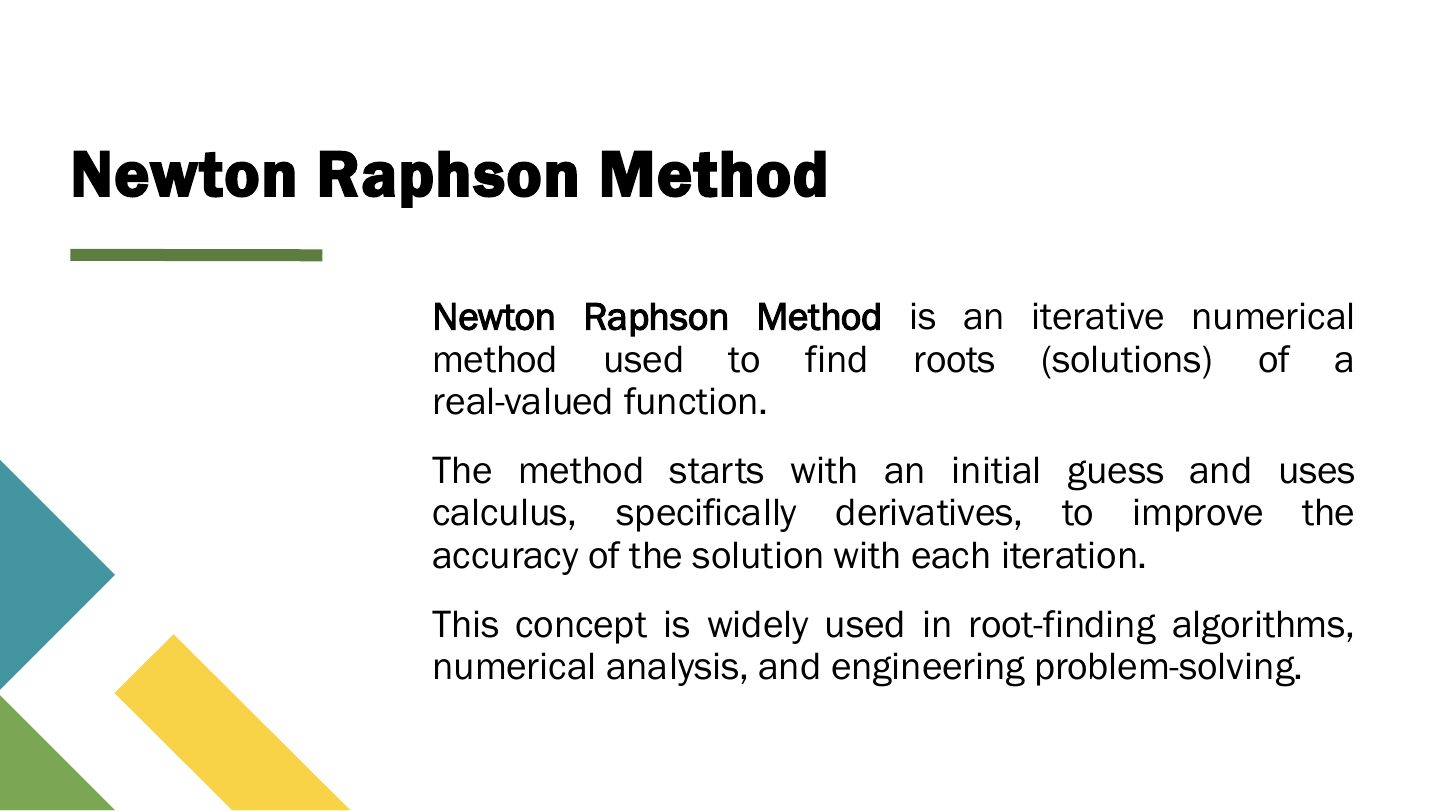
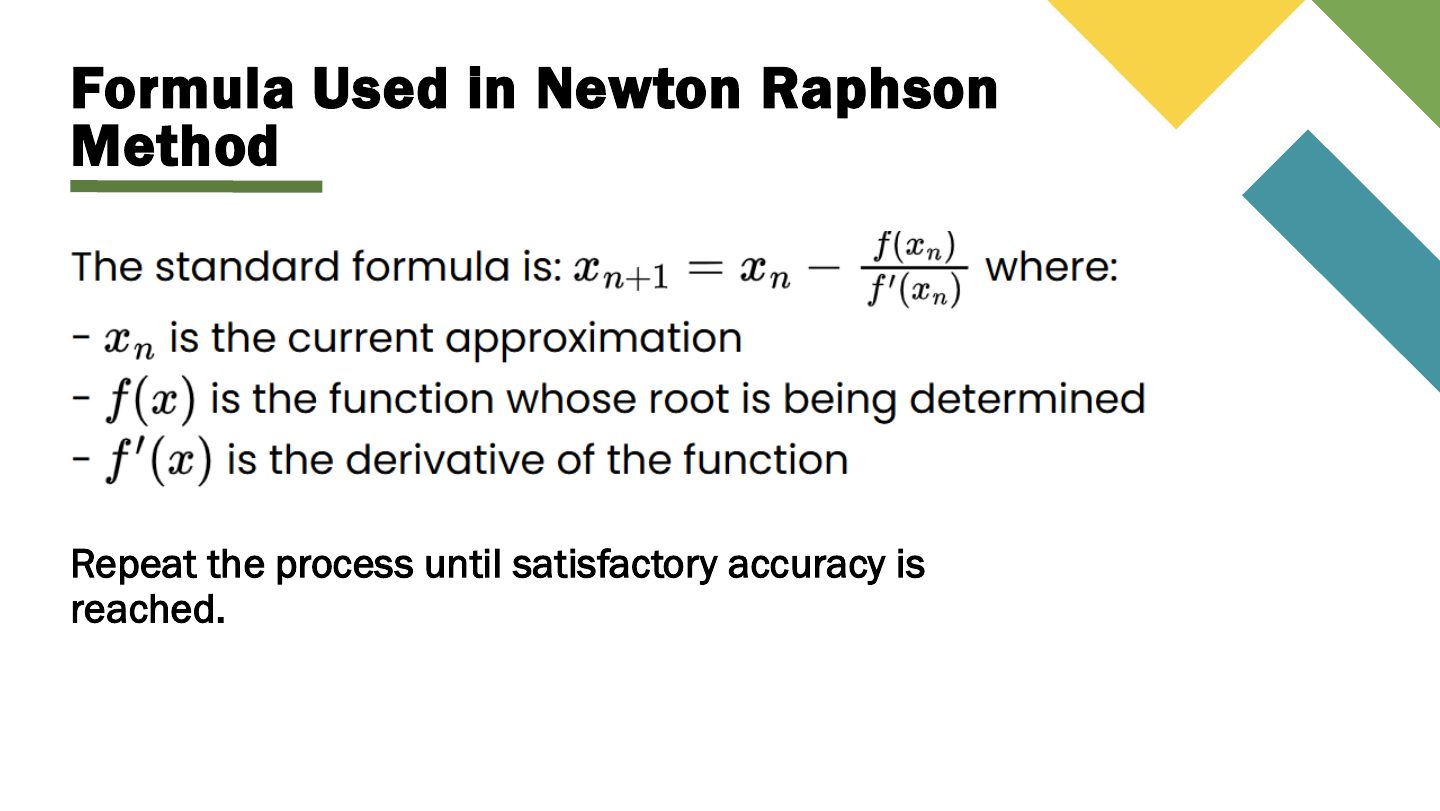
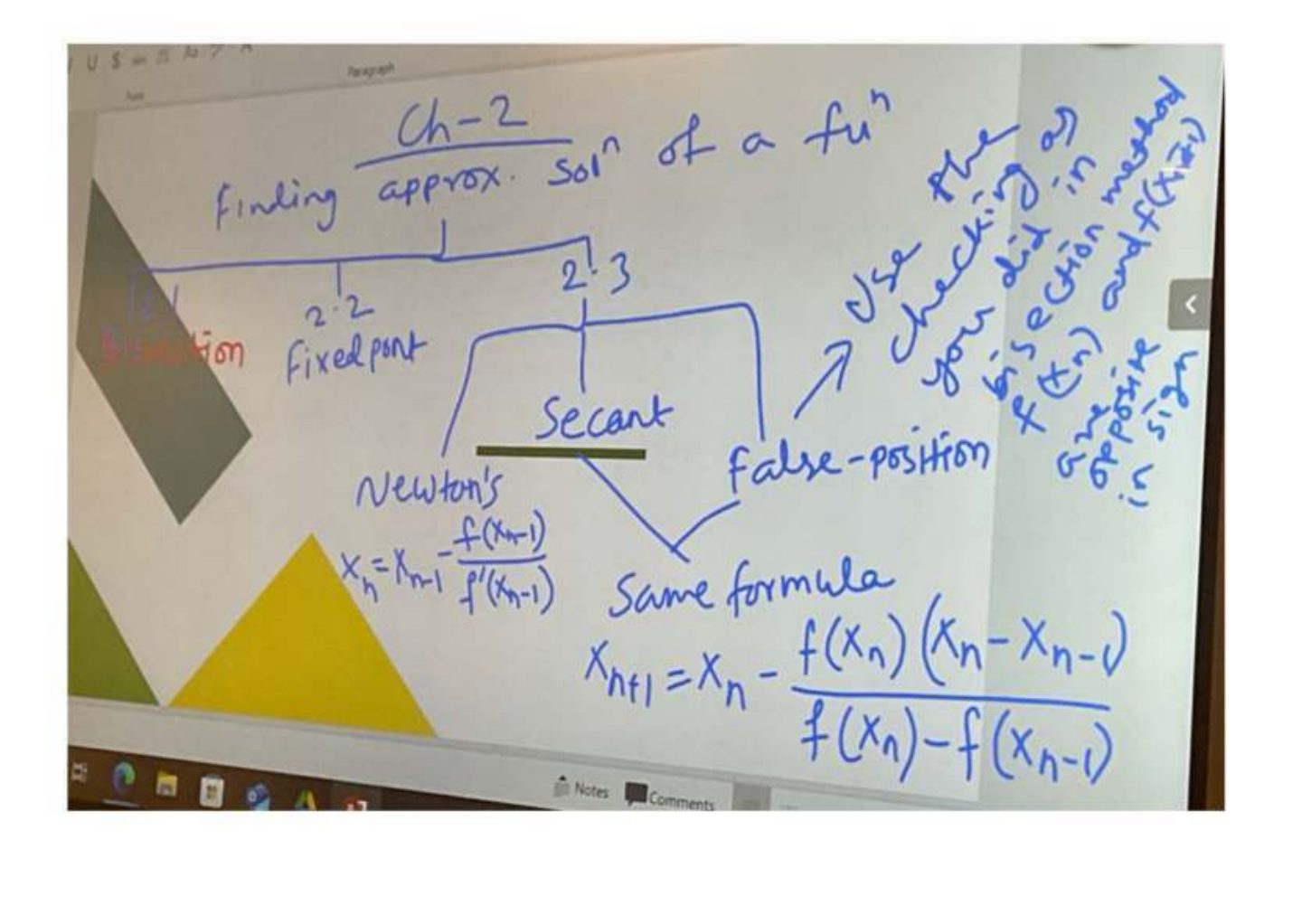
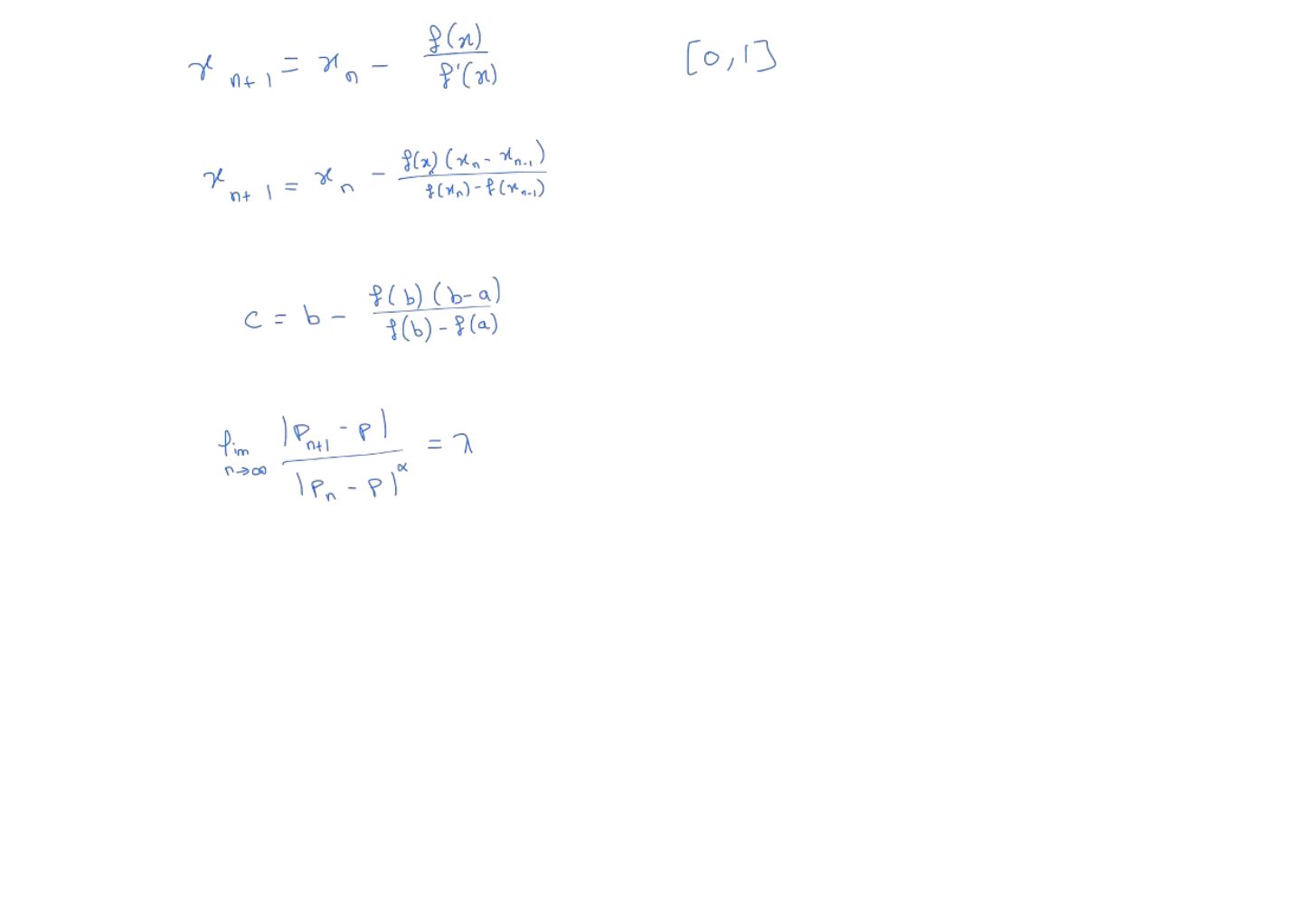
Newton: pₙ = pₙ₋₁ − f(pₙ₋₁)/f′(pₙ₋₁). Quadratic convergence near a simple root, but needs f′ and a good starting point.
One Newton step for f(x) = x² − 2 from p₀ = 1.
p₁ = 1 − (1 − 2)/(2·1) = 1.5.



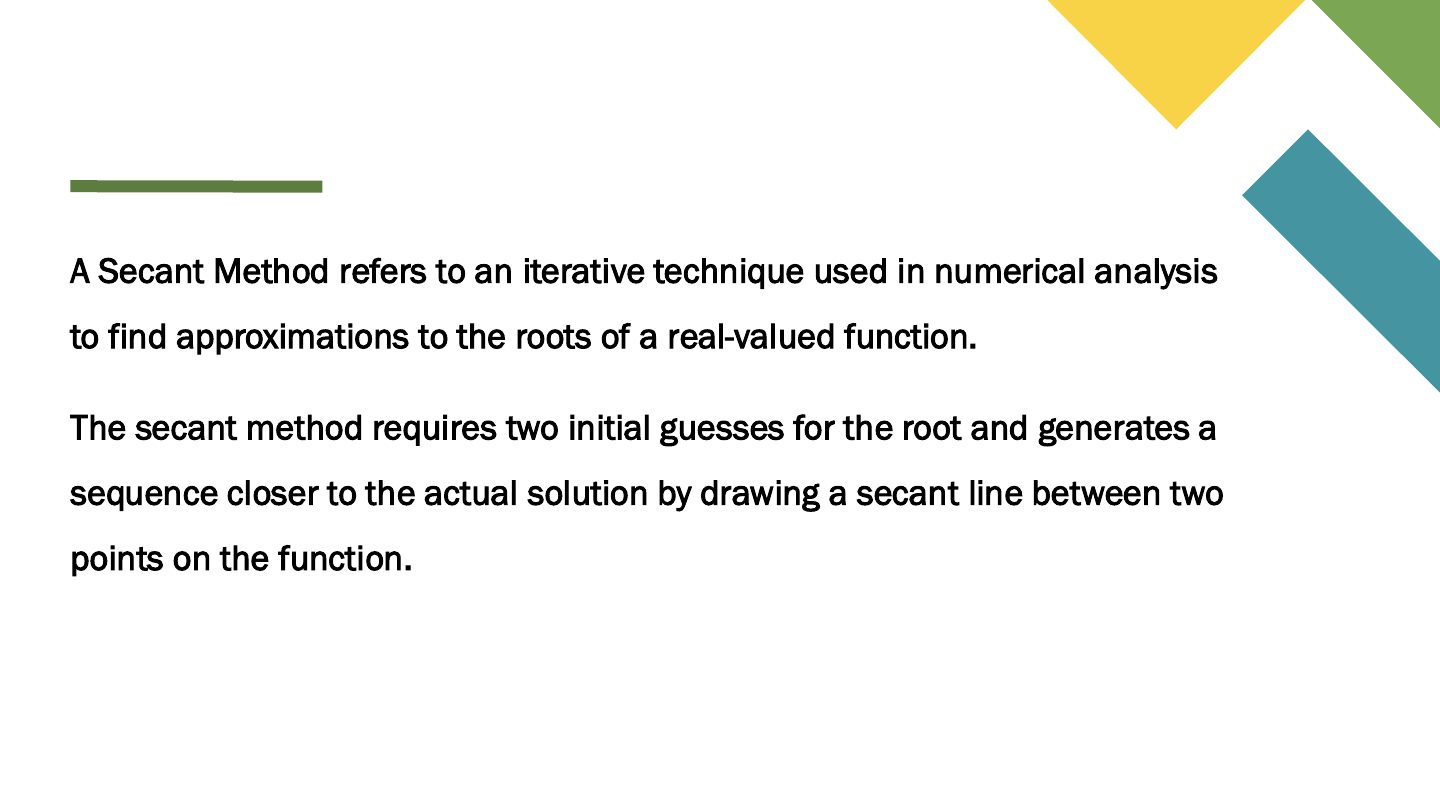
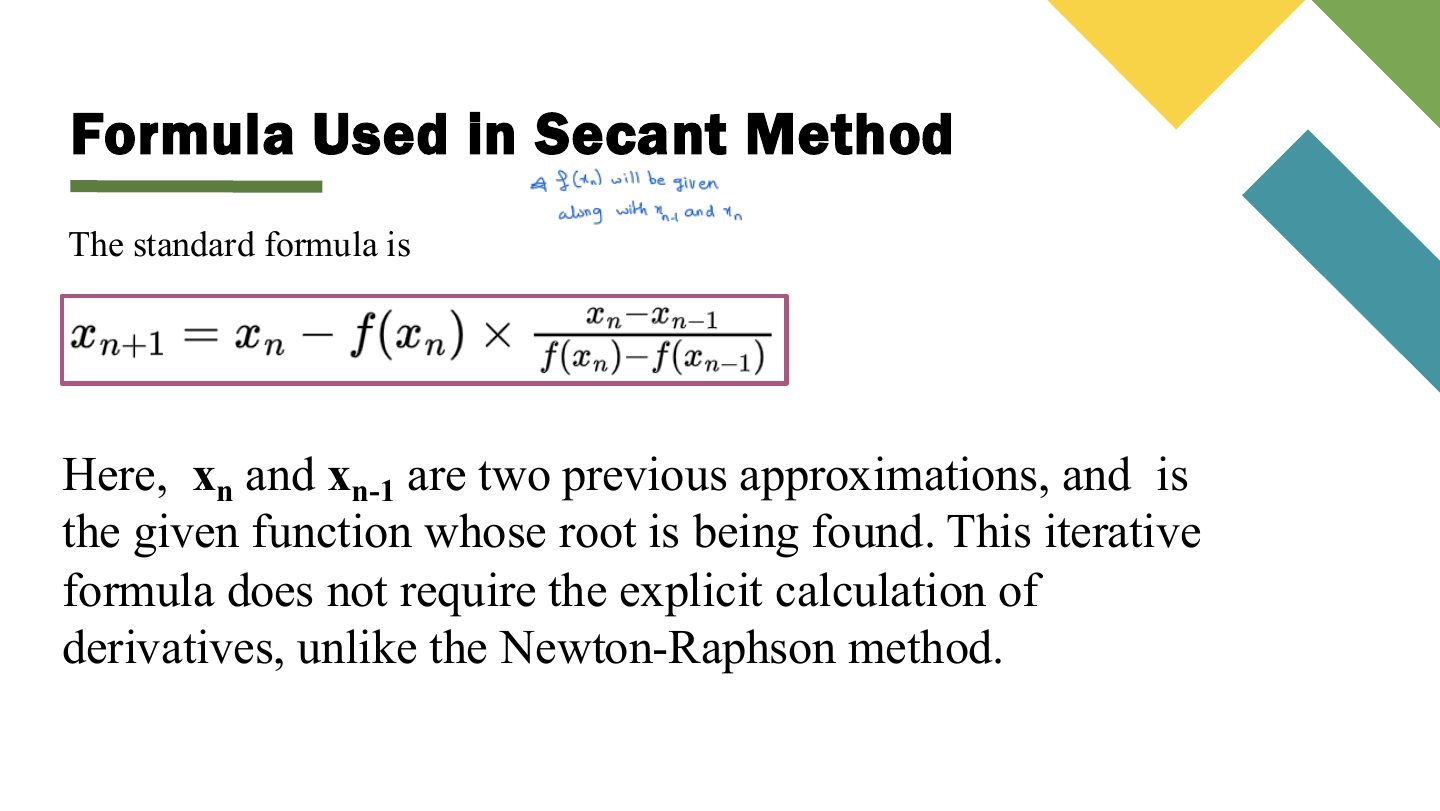
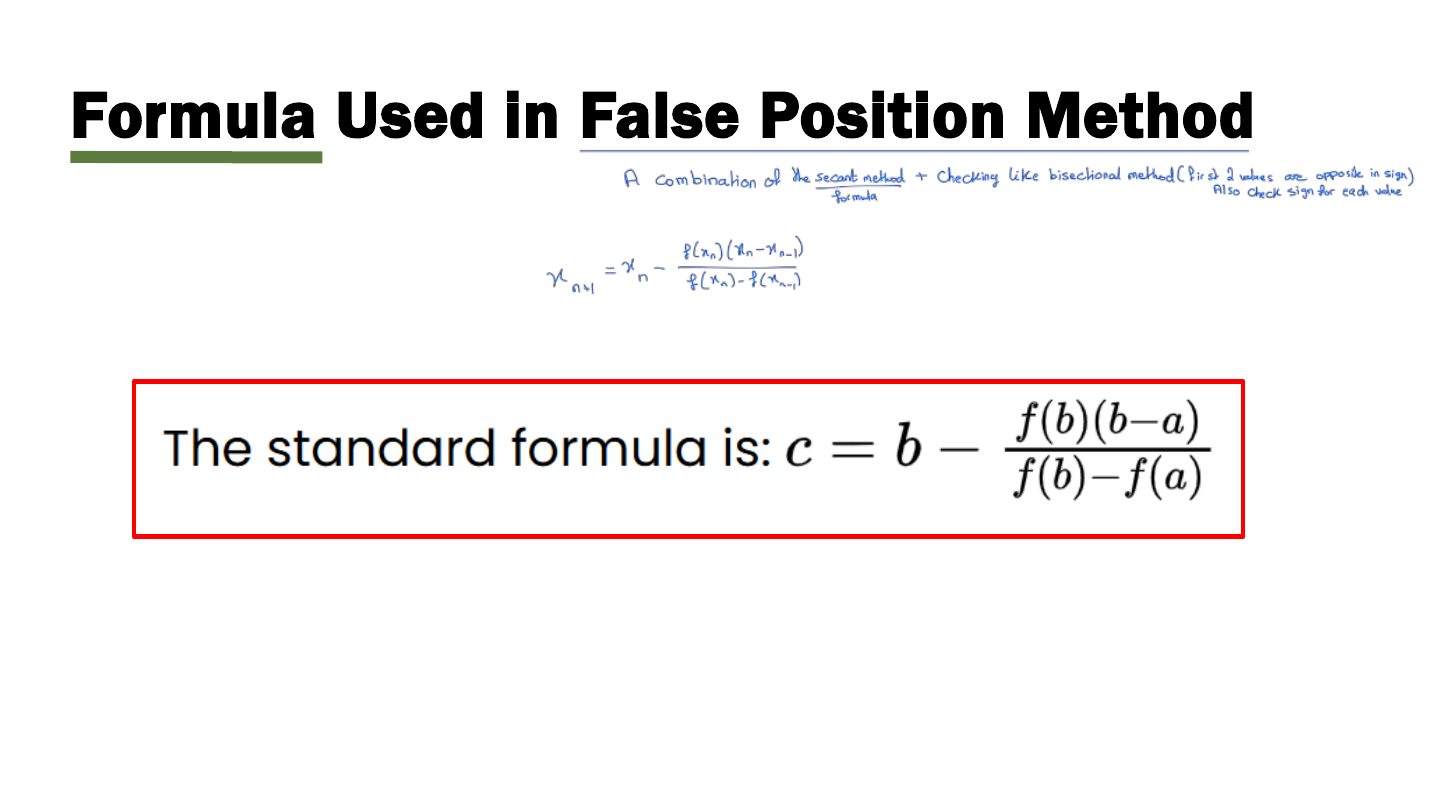
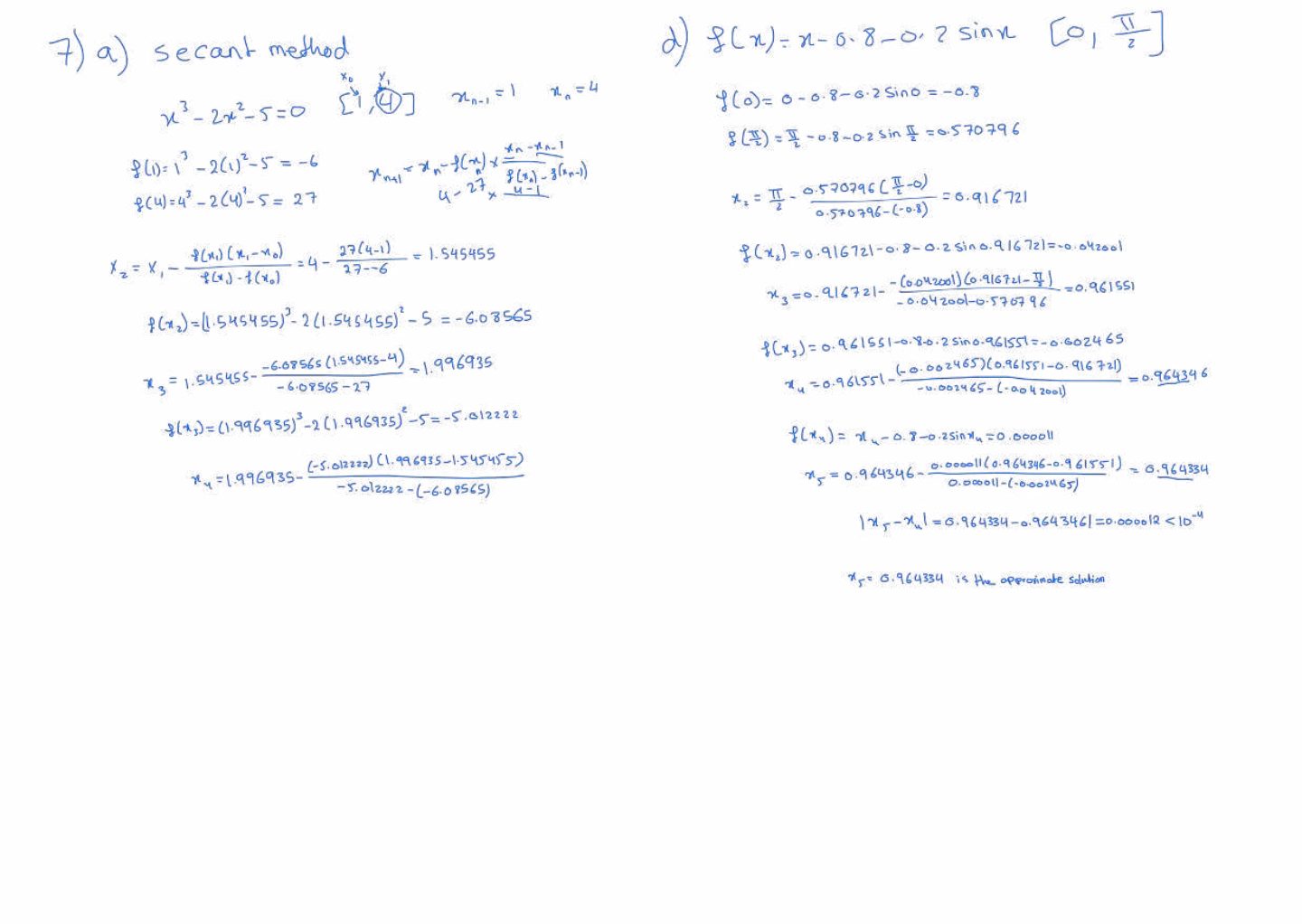
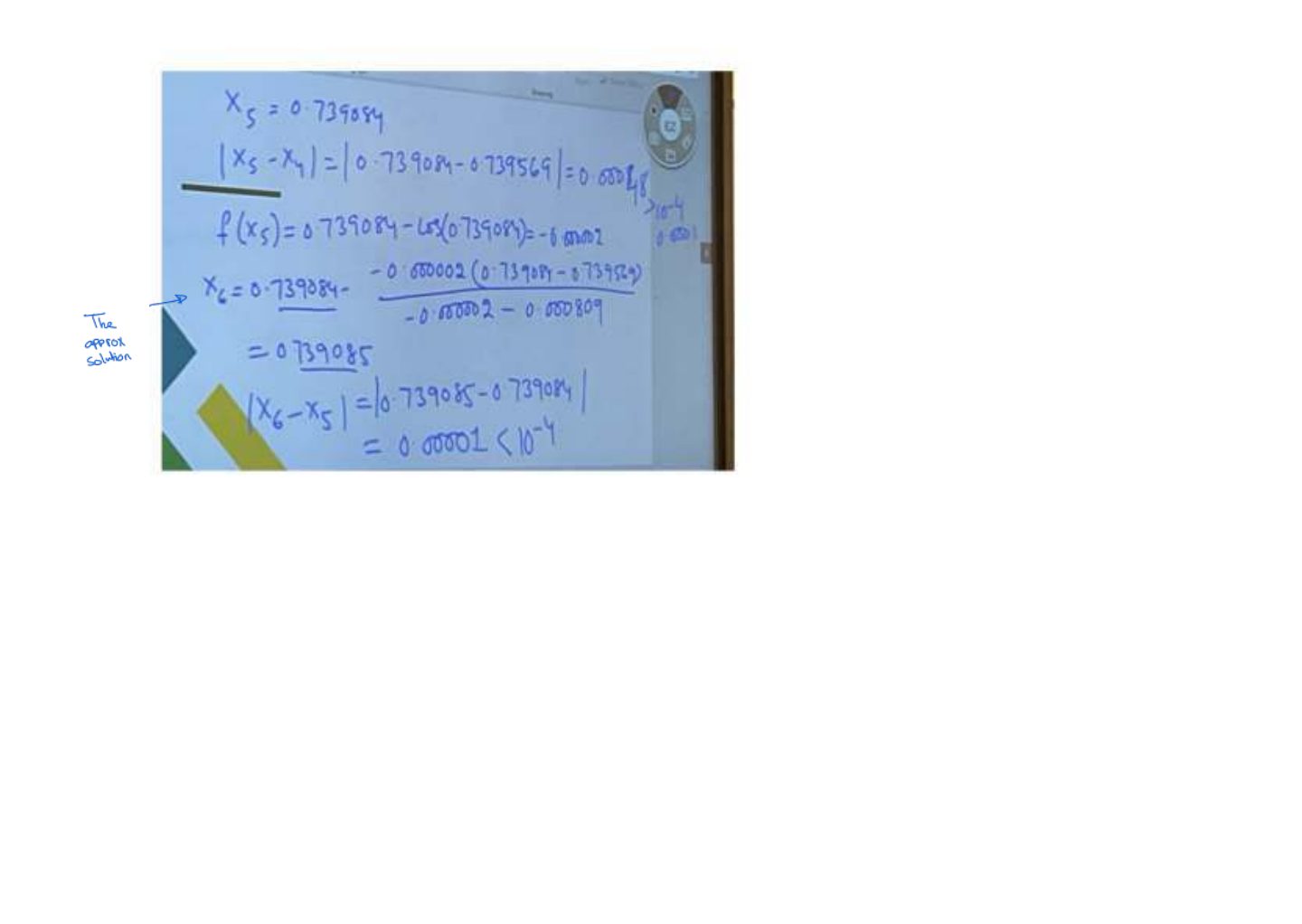
Secant: replaces f′ with the slope through the last two points: pₙ = pₙ₋₁ − f(pₙ₋₁)(pₙ₋₁ − pₙ₋₂)/(f(pₙ₋₁) − f(pₙ₋₂)). No derivative needed.

False position: secant formula but keeps the two points that bracket the root (like bisection), so it always converges.
Memory trick Newton needs f′; secant drops f′; false position = secant + bracketing.
Which method keeps the root bracketed at every step?