MATH221 · Chapter 2 · Annotated SlidesThe Bisection Method
Original
Overview

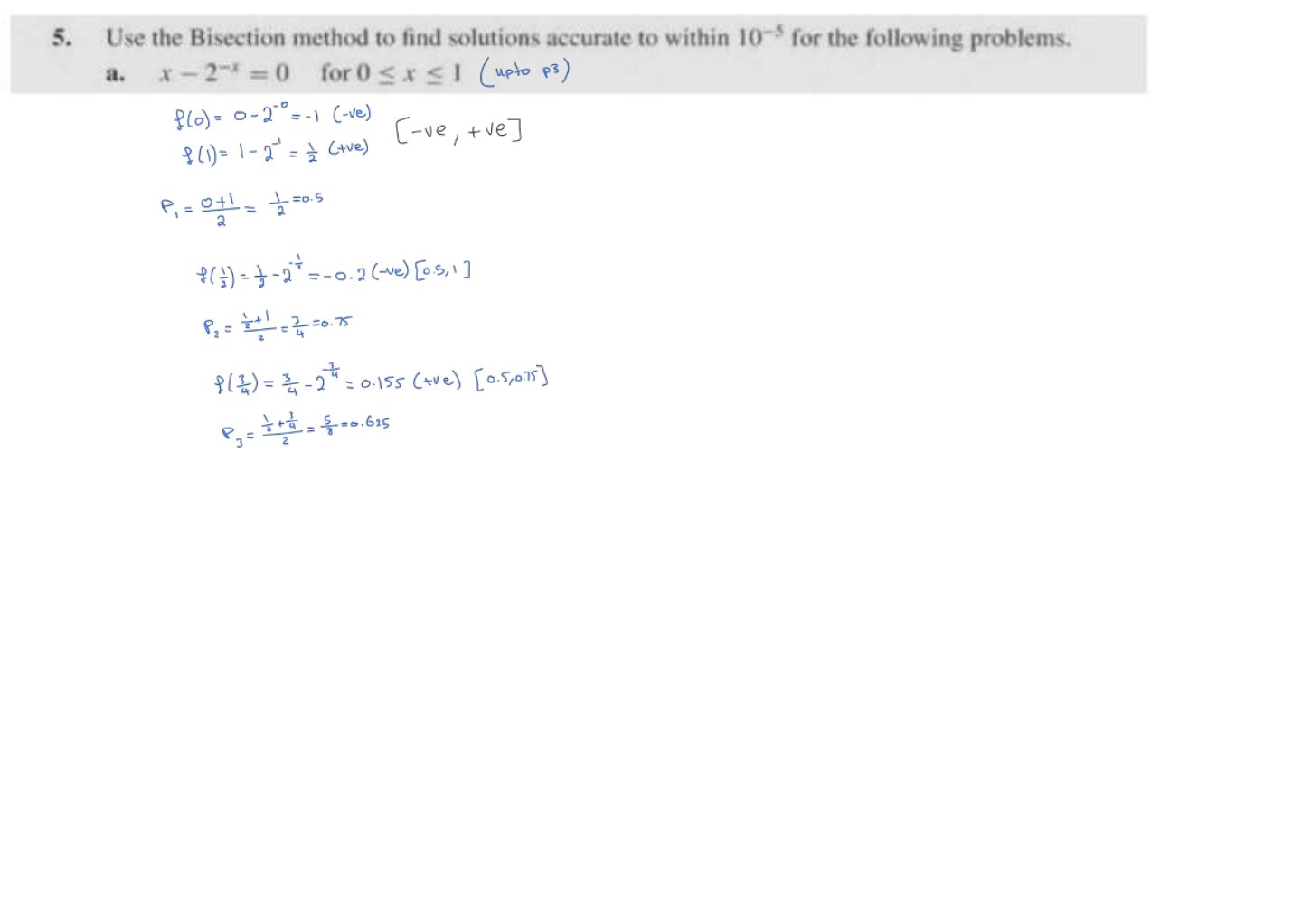
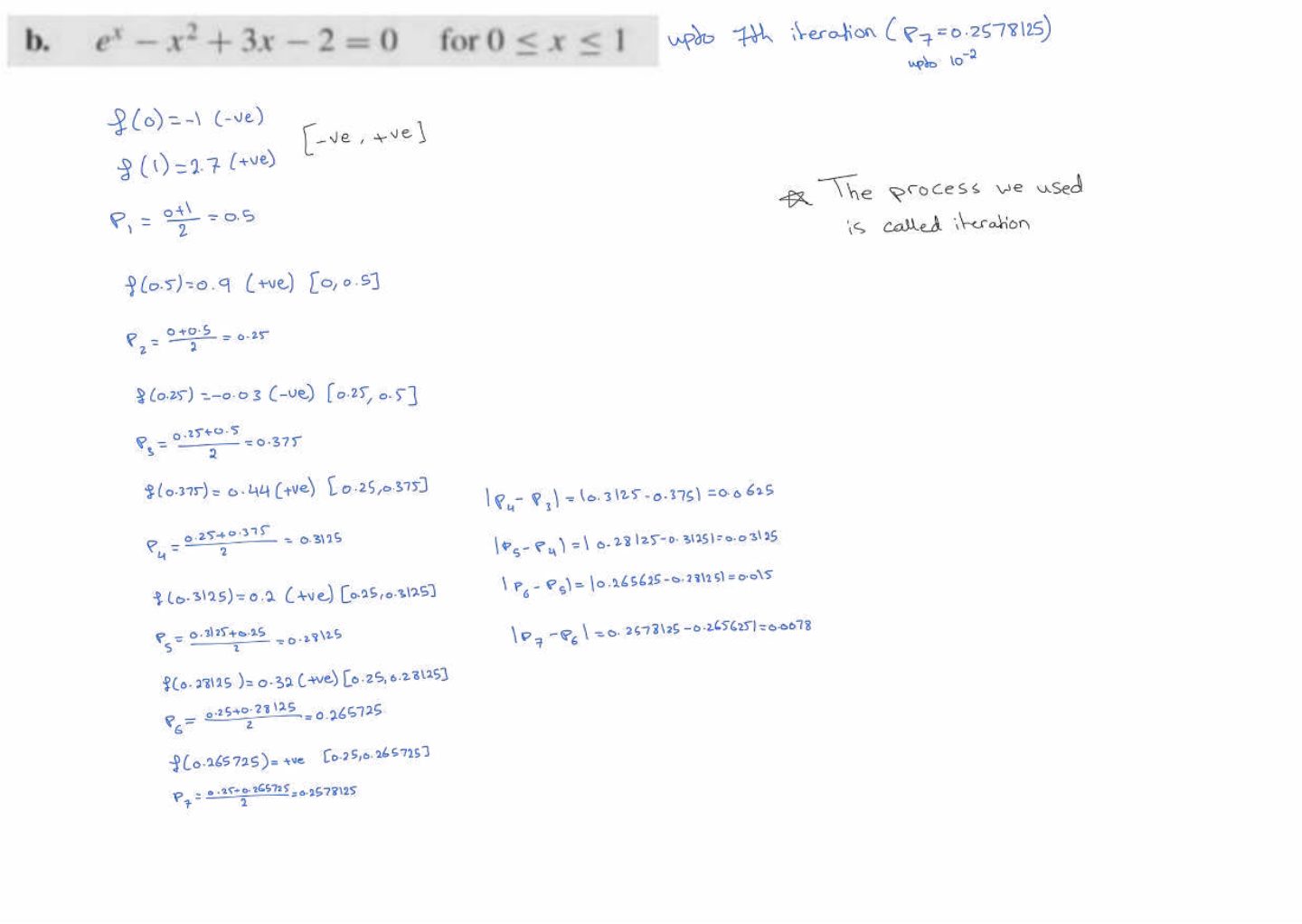
The Bisection Method

The bisection method: halving [a, b] on the sign change, stopping criteria and the error bound |pₙ − p| ≤ (b − a)/2ⁿ.

How to read this page

Every original slide is shown unchanged. Yellow marks on a slide point to a numbered note: hover or tap a mark to jump to its note, and hover a note to see its marks. Questions tagged Past exam appeared on a real paper; Prediction questions are likely angles, not confirmed. Pick an answer to each question: a wrong pick tells you why it is wrong, so you can try again.

All 8 slides
  1. 1 Slide 1
  2. 2 Bisection Technique The first technique, based on the Intermediate Value Theorem, is called the Bisection, or Binary-search, method. Suppose /is a continuous function defined on the interval [a, b], with f(a) and f(b) of opposite sign. The Intermediate Value Theorem implies that a number p exists in (a, b) with f(p) = 0. Although the procedure will work when there is more than one root in the
  3. 3 Slide 3
  4. 4 Slide 4
  5. 5 Slide 5
  6. 6 Slide 6
  7. 7 Slide 7
  8. 8 Slide 8
Slide 1 / 8

Slide 1

Slide 1: Slide 1

Notes

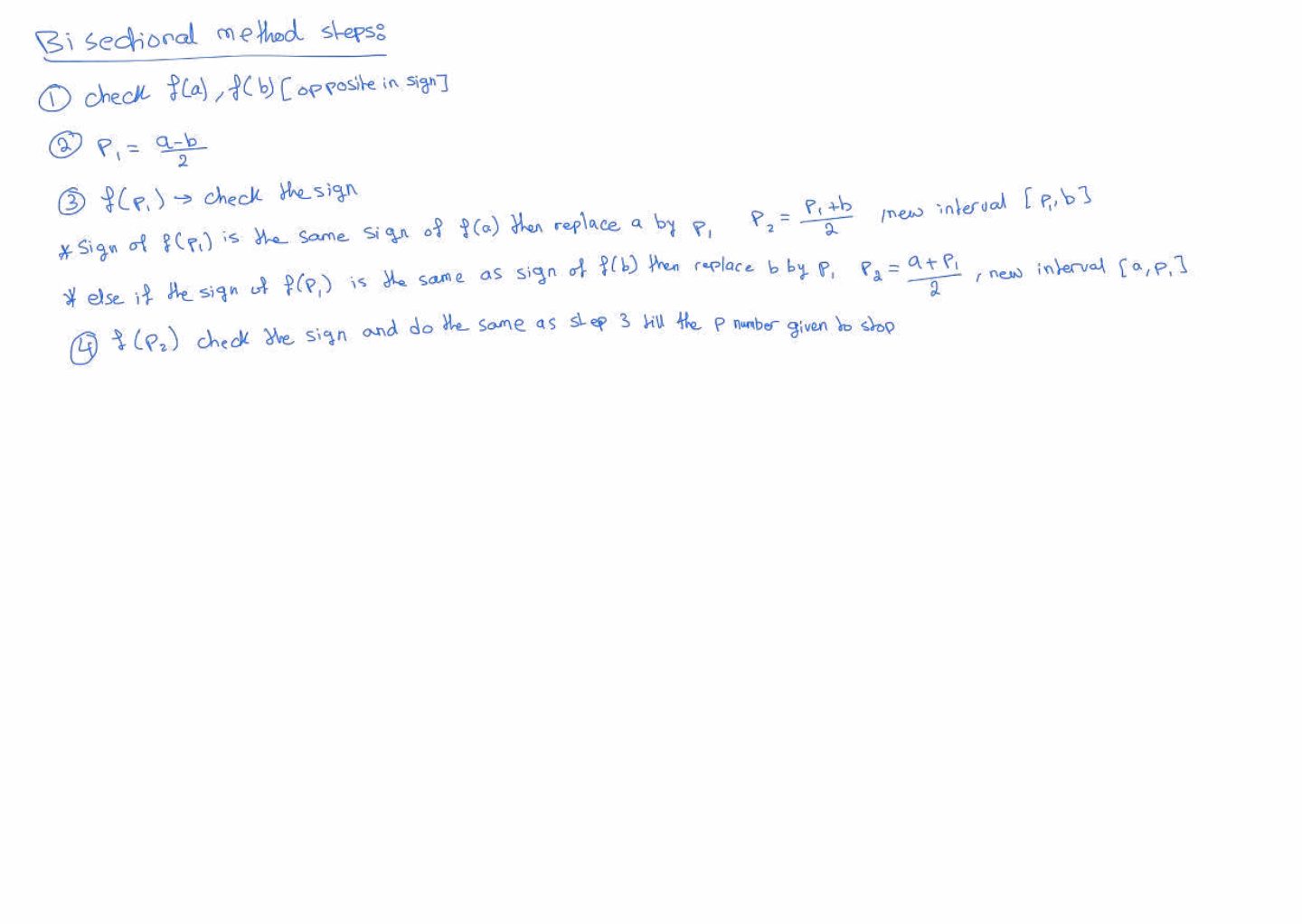
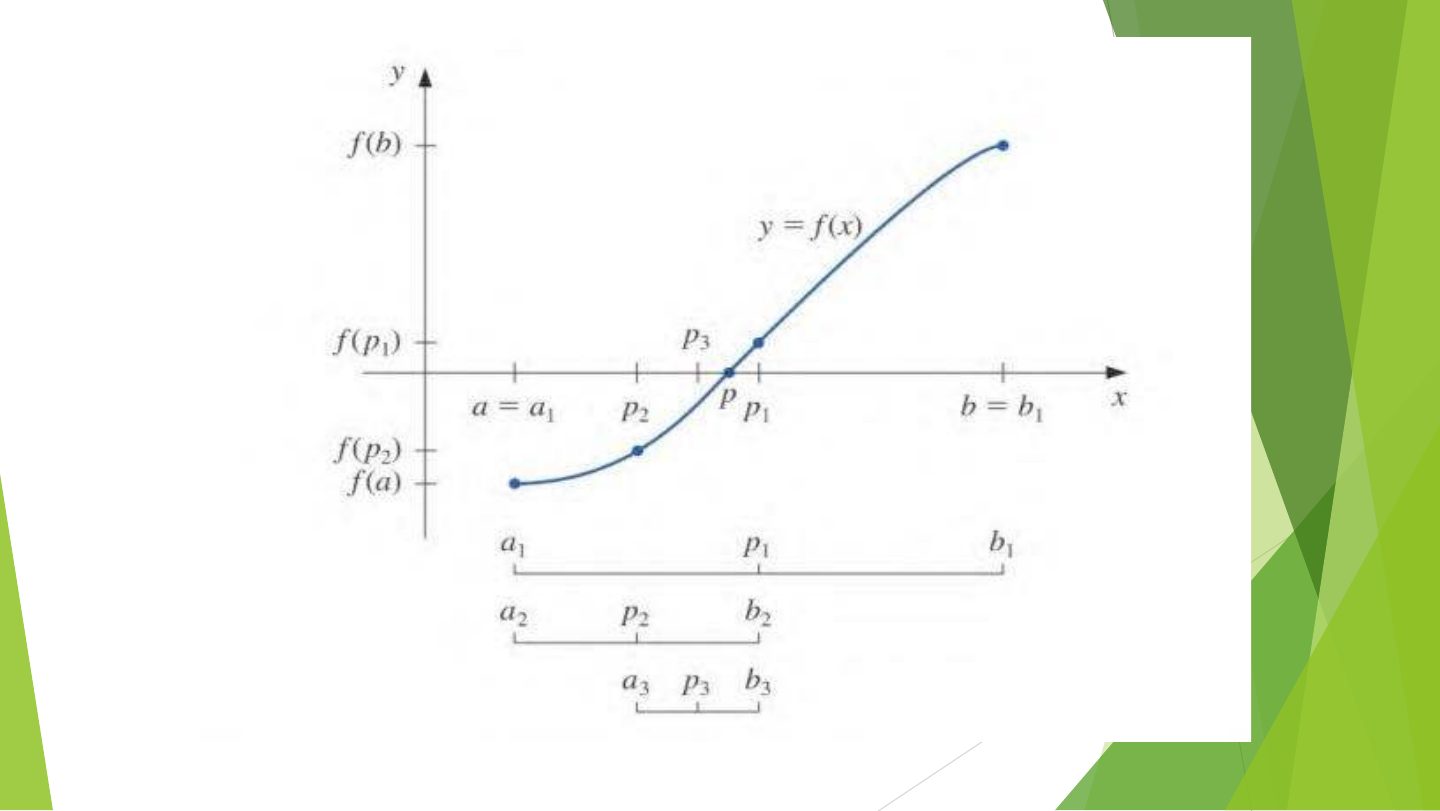
  1. Bisection: pₙ = (aₙ + bₙ)/2; keep the half where f changes sign. Always converges (slowly, linearly).

  2. Tip Error bound: |pₙ − p| ≤ (b − a)/2ⁿ. To reach tolerance ε, need n ≥ log₂((b − a)/ε).

Exam angle

PredictionQ1

How many bisection steps on [1, 2] guarantee an error below 10⁻³?

PredictionQ2

Do one bisection step for f(x) = x³ + 4x² − 10 on [1, 2].

Compare with the model answer

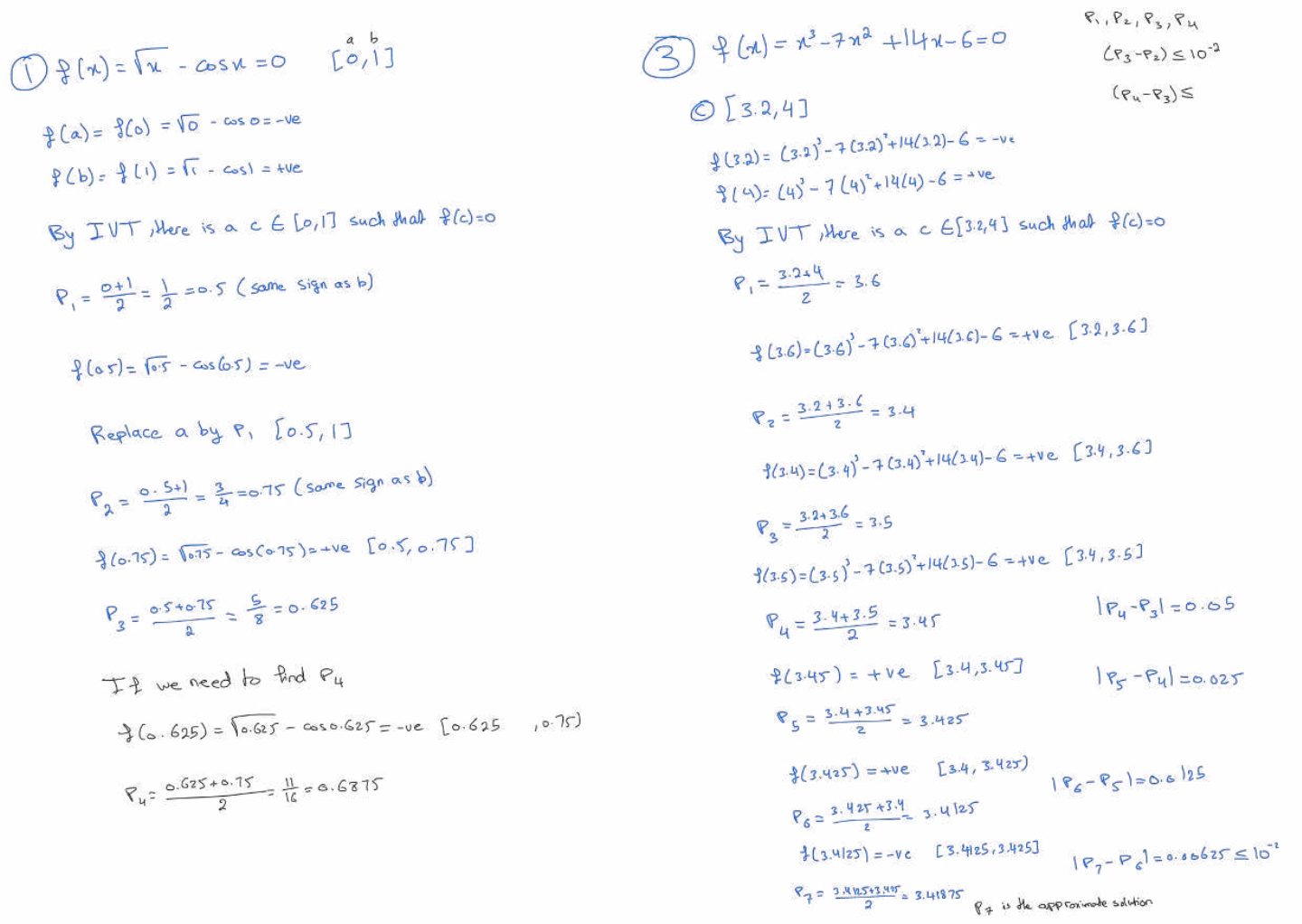
f(1) = −5 < 0, f(2) = 14 > 0. p₁ = 1.5, f(1.5) = 2.375 > 0, so the root is in [1, 1.5].
Slide 2 / 8

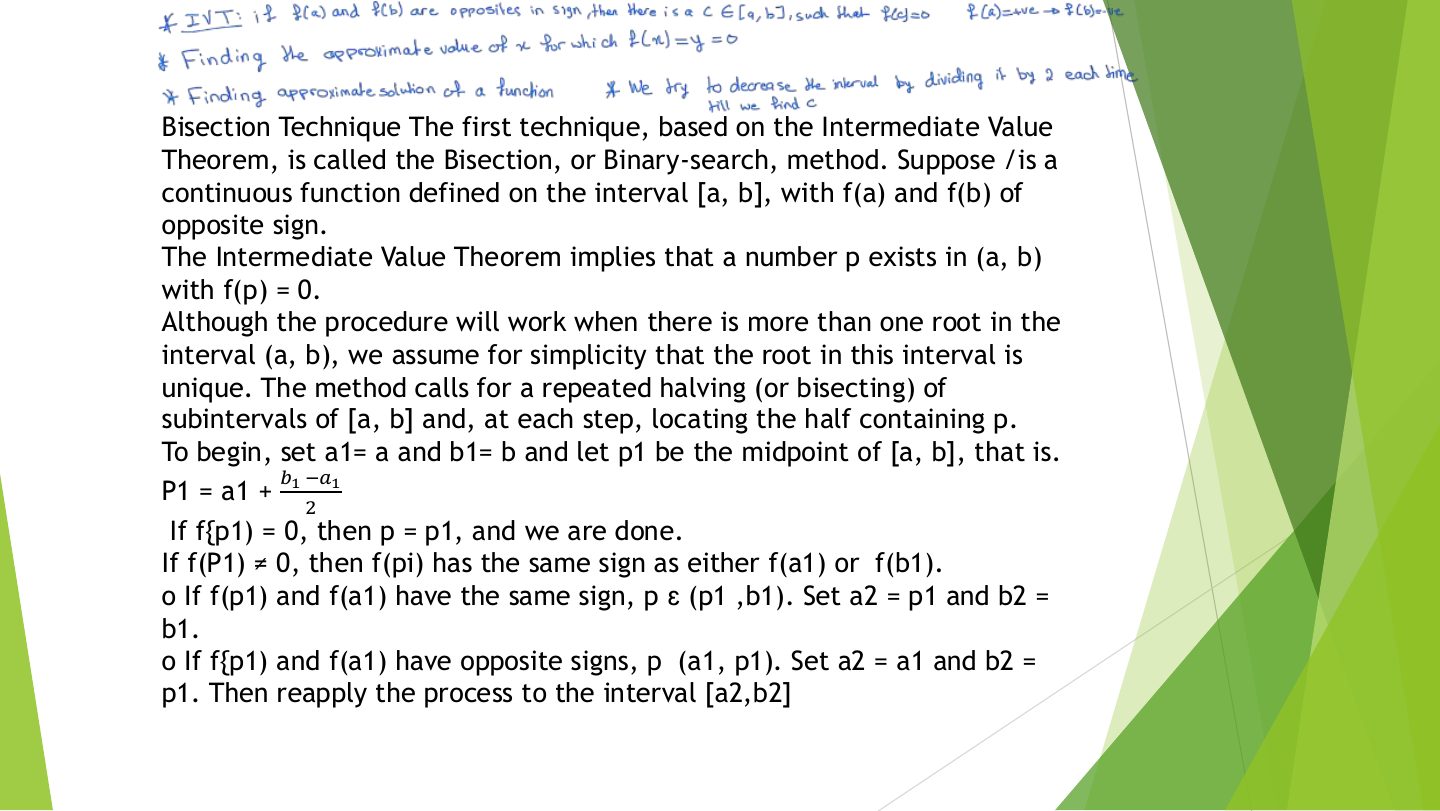
Bisection Technique The first technique, based on the Intermediate Value Theorem, is called the Bisection, or Binary-search, method. Suppose /is a continuous function defined on the interval [a, b], with f(a) and f(b) of opposite sign. The Intermediate Value Theorem implies that a number p exists in (a, b) with f(p) = 0. Although the procedure will work when there is more than one root in the

Slide 2: Bisection Technique The first technique, based on the Intermediate Value Theorem, is called the Bisection, or Binary-search, method. Suppose /is a continuous function defined on the interval [a, b], with f(a) and f(b) of opposite sign. The Intermediate Value Theorem implies that a number p exists in (a, b) with f(p) = 0. Although the procedure will work when there is more than one root in the
Slide 3 / 8

Slide 3

Slide 3: Slide 3
Slide 4 / 8

Slide 4

Slide 4: Slide 4
Slide 5 / 8

Slide 5

Slide 5: Slide 5
Slide 6 / 8

Slide 6

Slide 6: Slide 6
Slide 7 / 8

Slide 7

Slide 7: Slide 7
Slide 8 / 8

Slide 8

Slide 8: Slide 8