Related question: this topic is examined
Orthogonal Projections, Gram–Schmidt and QR
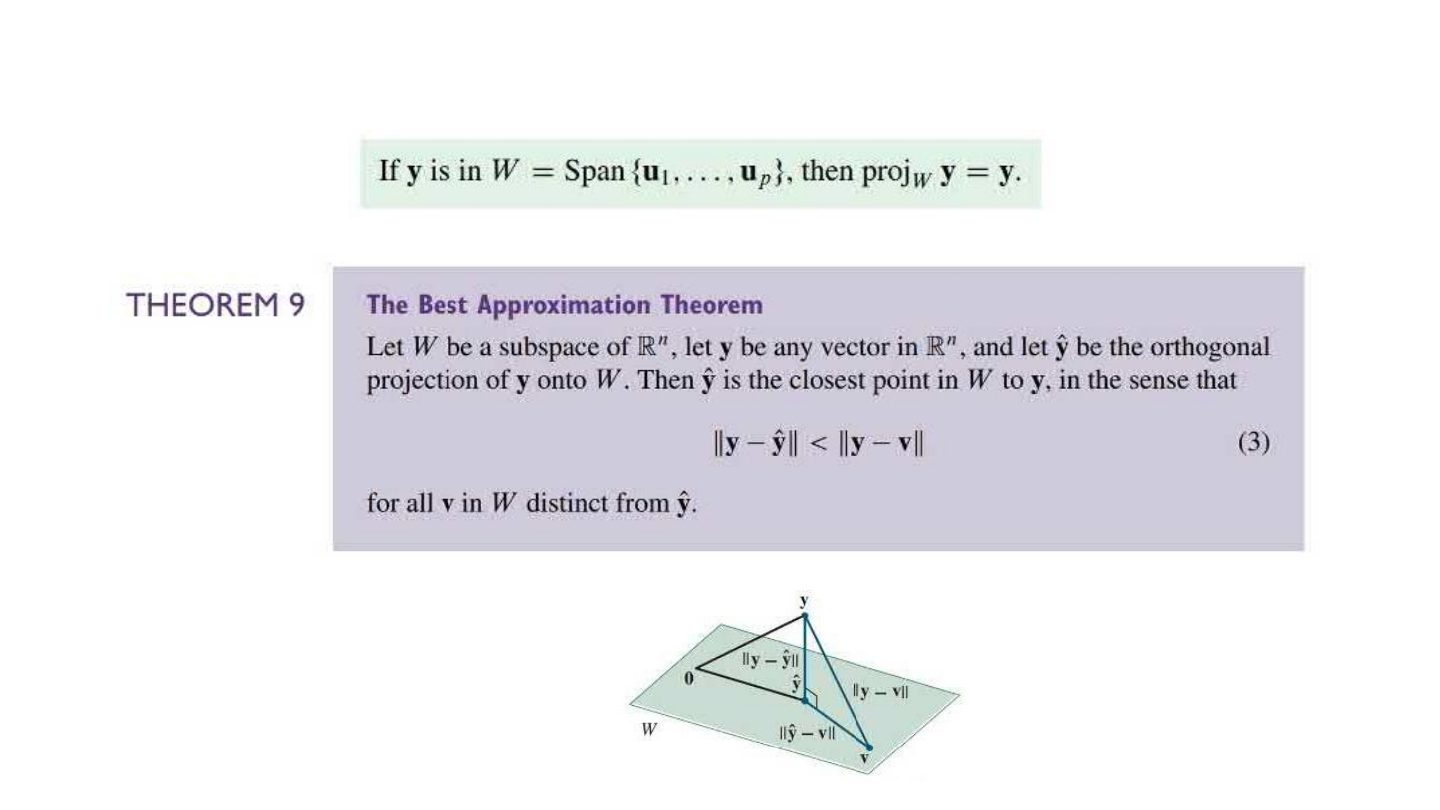
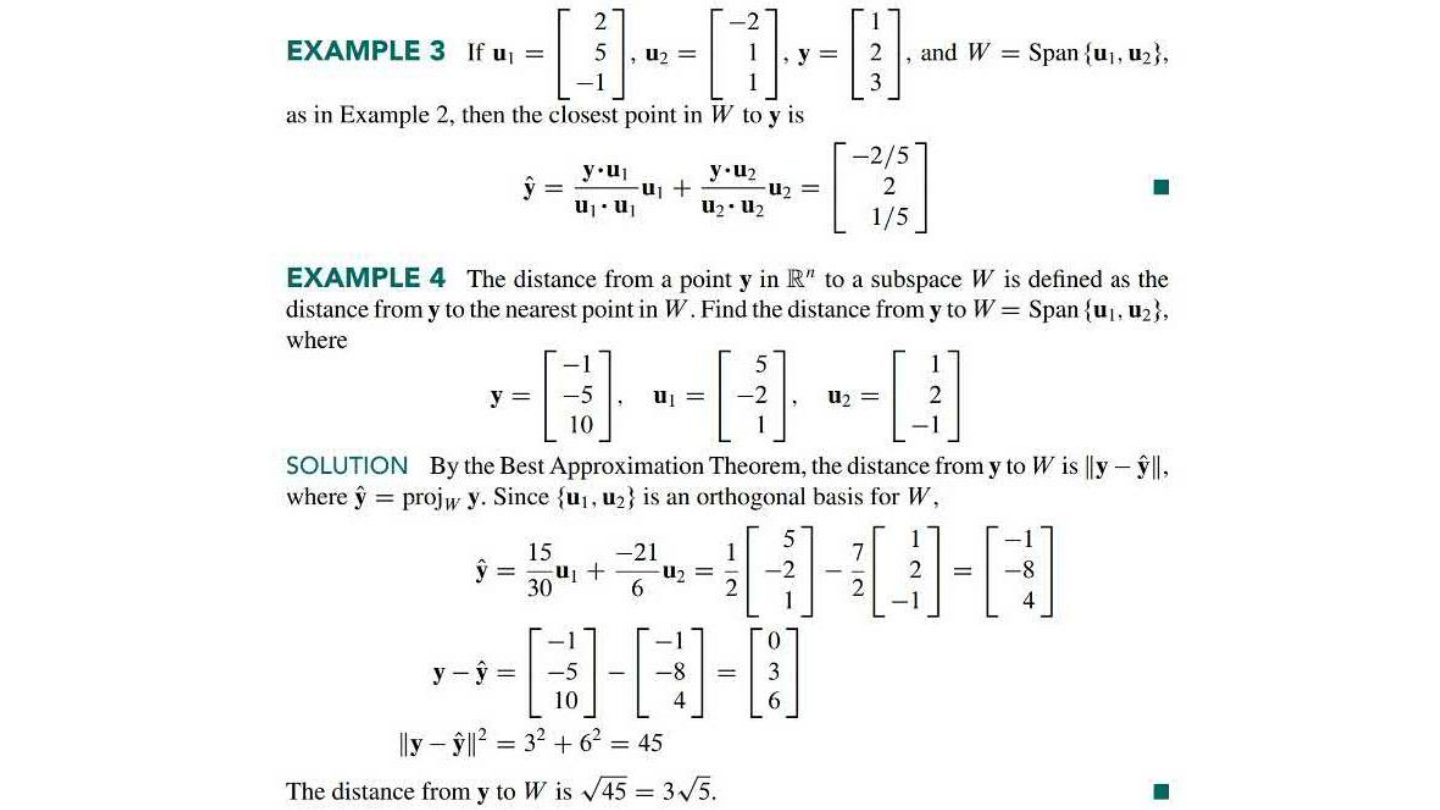
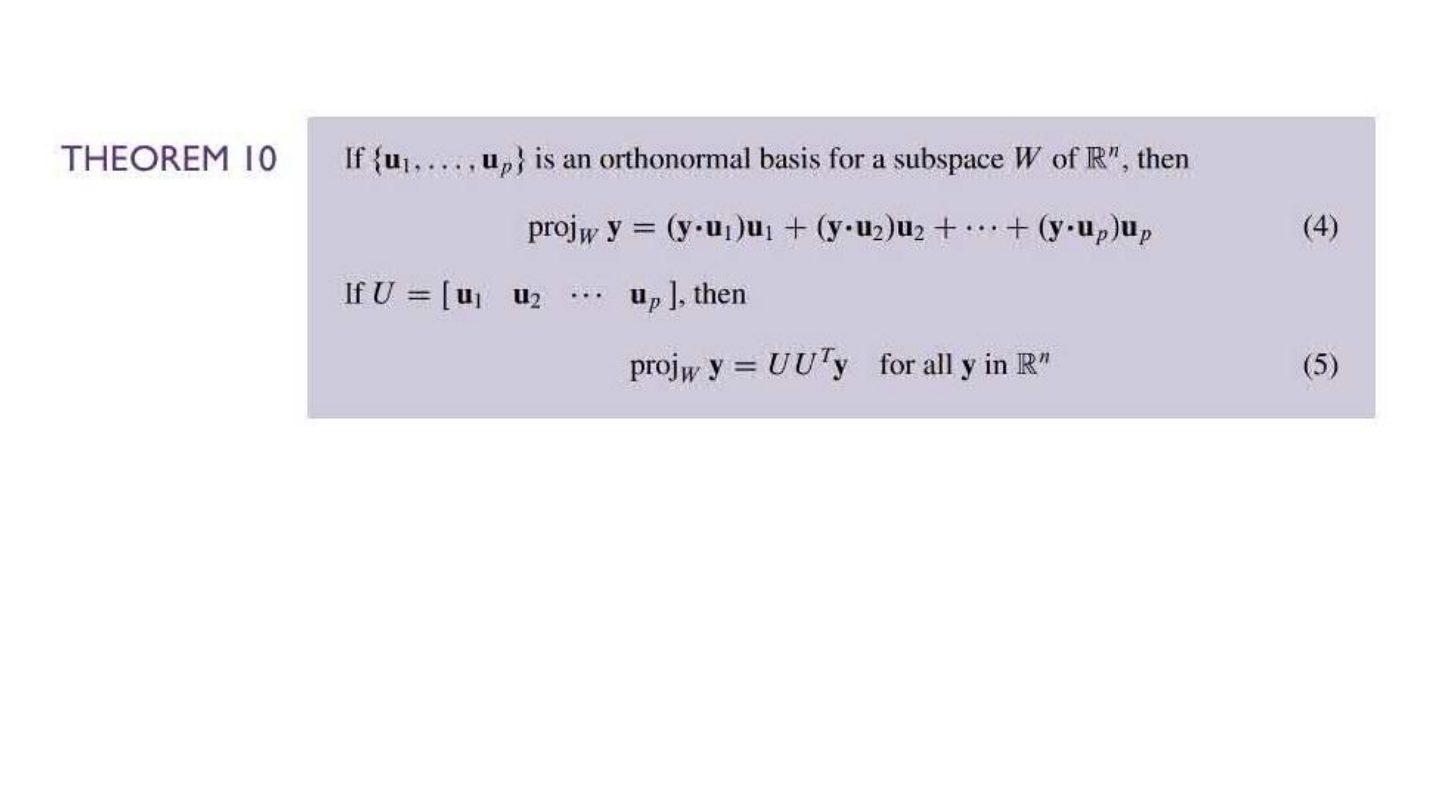
Orthogonal projection onto a subspace ŷ = Σ (y·uᵢ)/(uᵢ·uᵢ) uᵢ, the orthogonal decomposition y = ŷ + z, the best approximation theorem, the Gram–Schmidt process and the QR factorization.
How to read this page
Every original slide is shown unchanged. Yellow marks on a slide point to a numbered note: hover or tap a mark to jump to its note, and hover a note to see its marks. Questions tagged Past exam appeared on a real paper; Prediction questions are likely angles, not confirmed. Pick an answer to each question: a wrong pick tells you why it is wrong, so you can try again.
Slide 1
Exam angle
Related question: this topic is examined
Slide 2
Slide 3
Slide 4
Notes
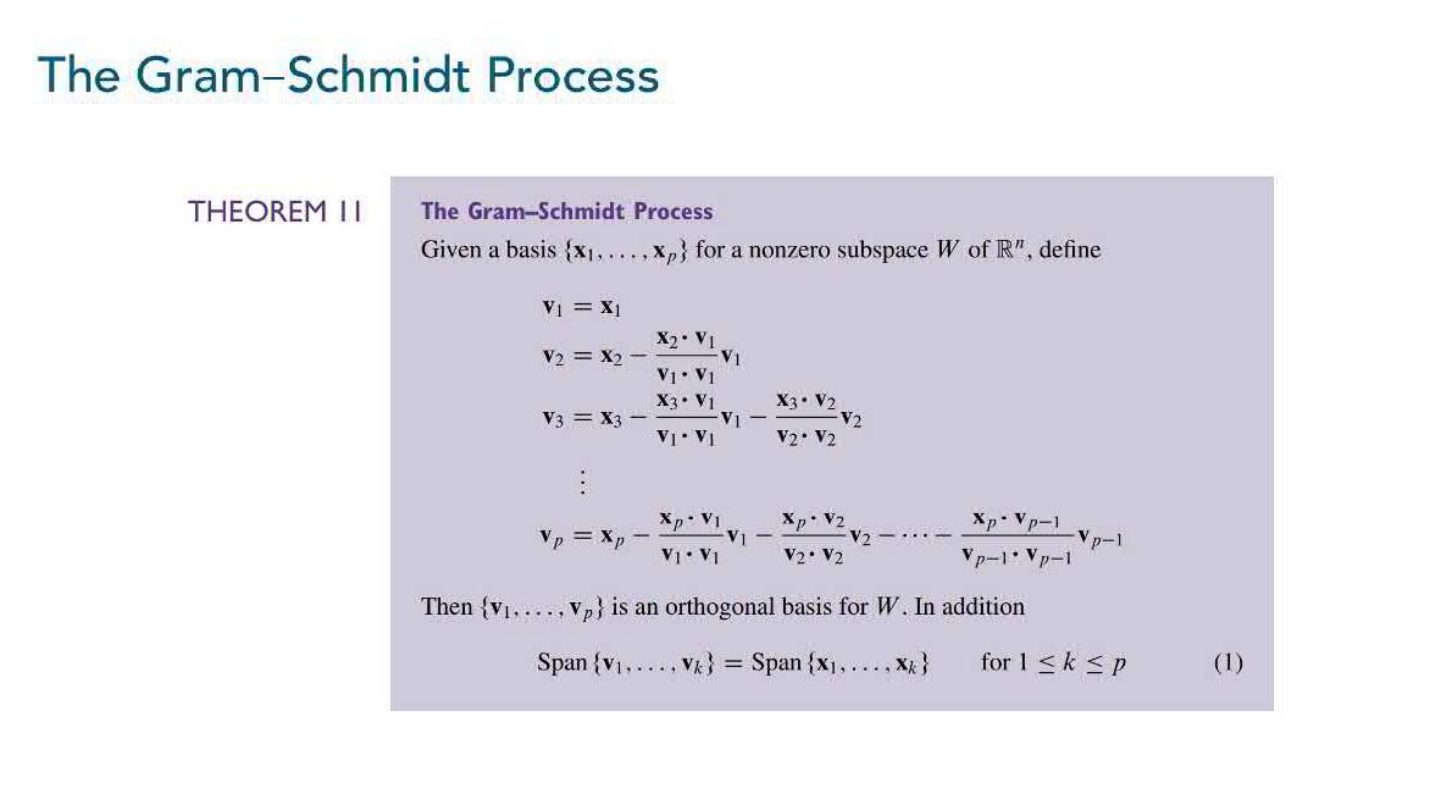
Gram–Schmidt: v₁ = x₁, v₂ = x₂ − (x₂·v₁)/(v₁·v₁) v₁, v₃ = x₃ − proj onto v₁ − proj onto v₂ … then normalize for an orthonormal basis.
Exam angle
Related question: this topic is examined
Related question: this topic is examined
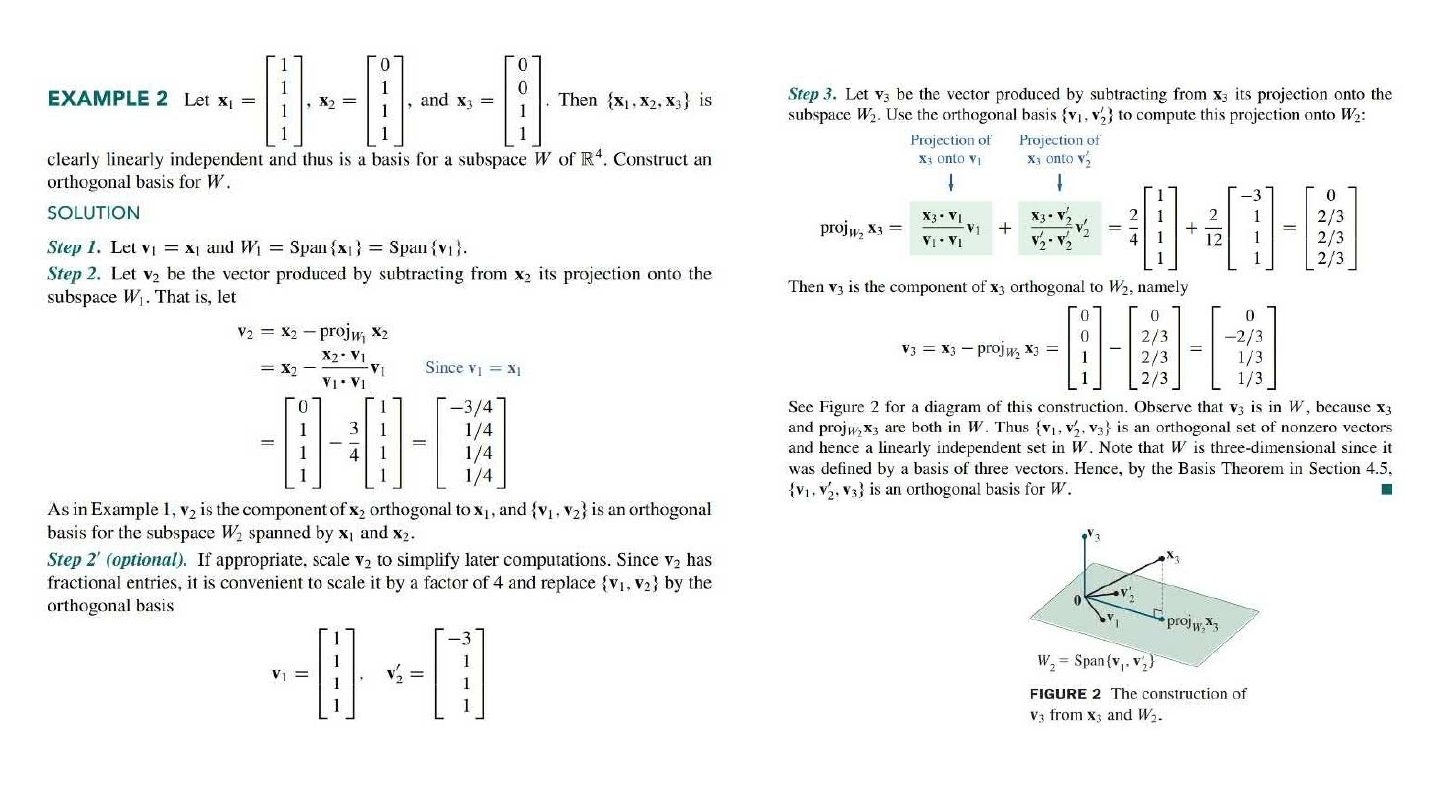
Apply Gram–Schmidt to x₁ = (3, 6, 0), x₂ = (1, 2, 2).
Compare with the model answer
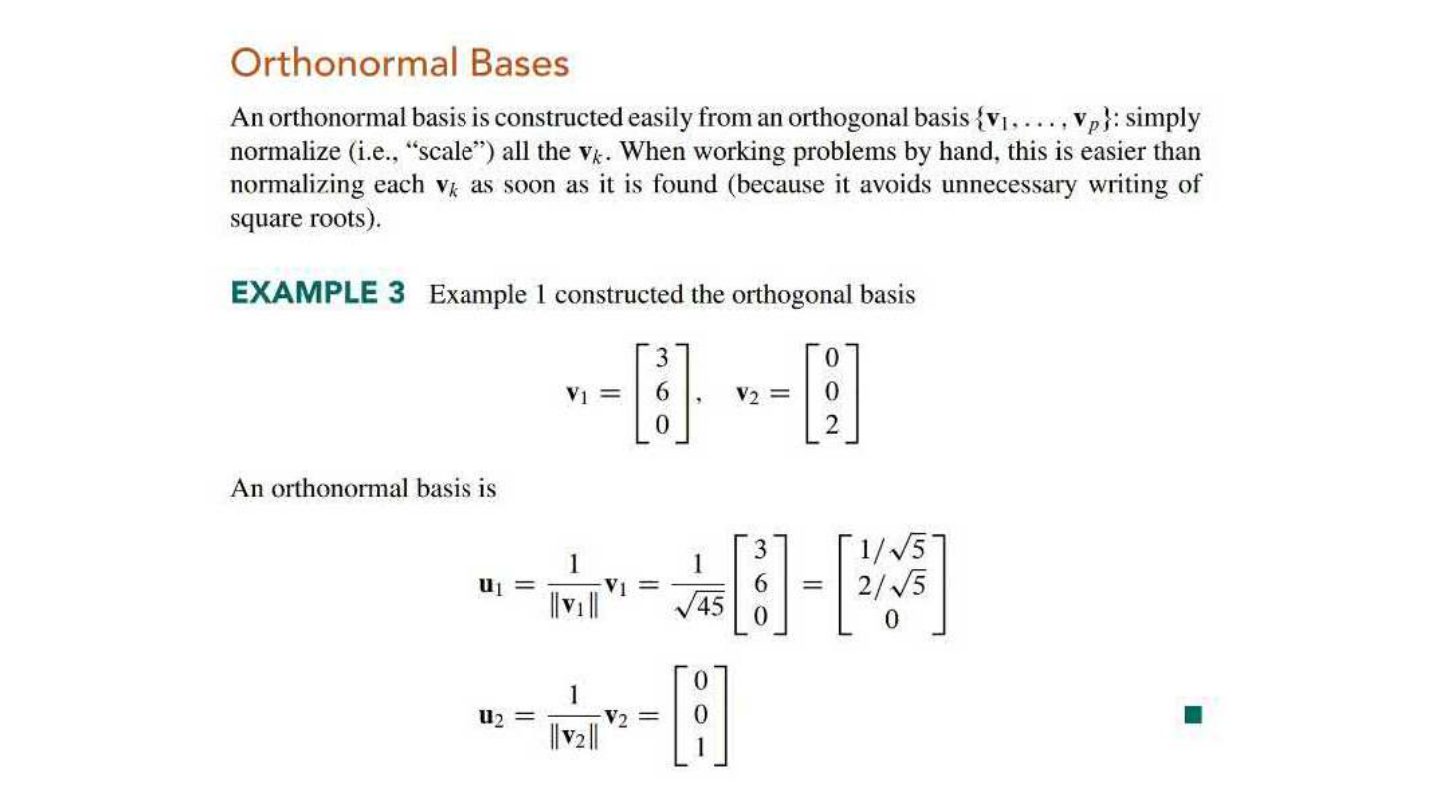
v₁ = (3, 6, 0). x₂·v₁ = 15, v₁·v₁ = 45, so v₂ = (1, 2, 2) − (1/3)(3, 6, 0) = (0, 0, 2). Orthogonal basis 3, 6, 0), (0, 0, 2.
Slide 5
Slide 6
Slide 7
Notes
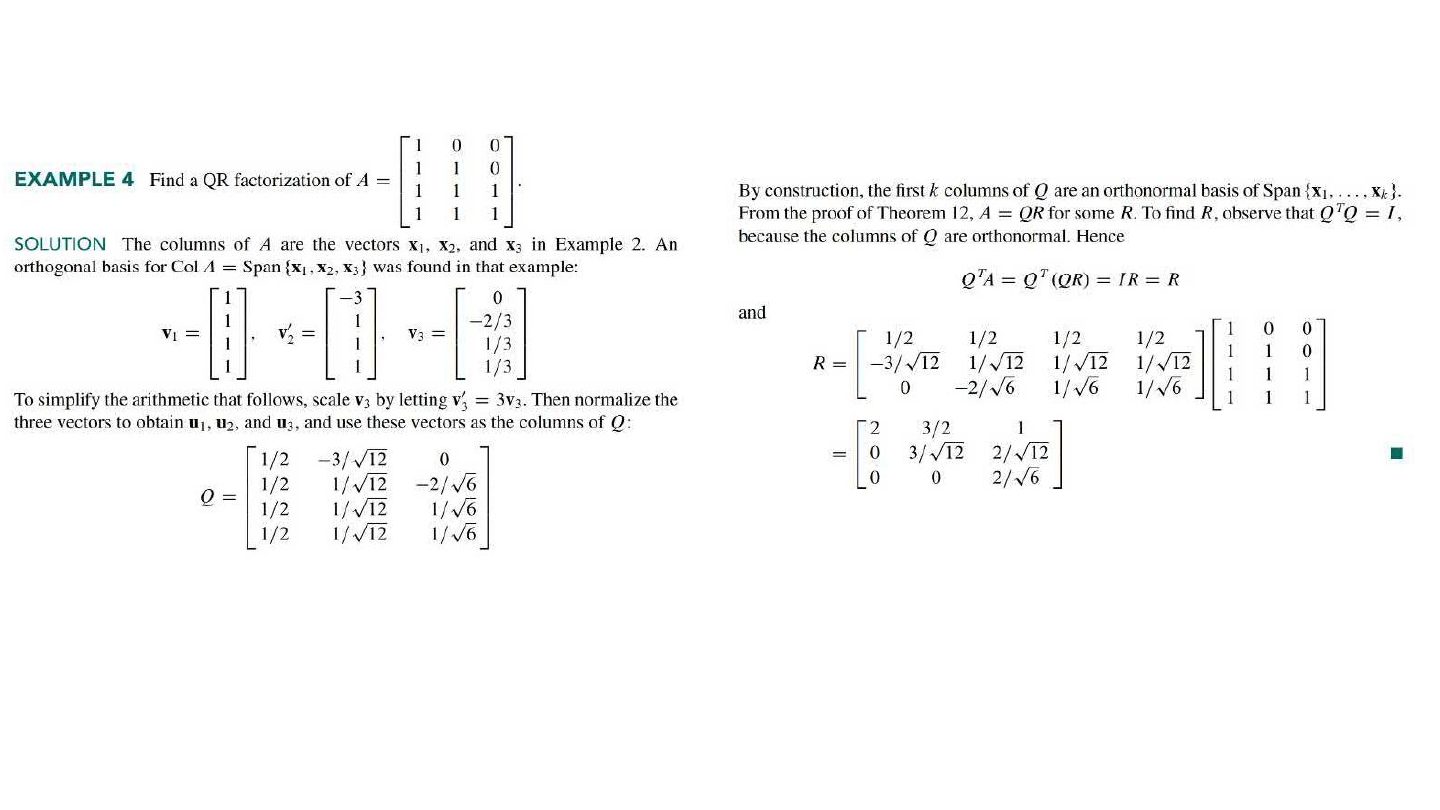
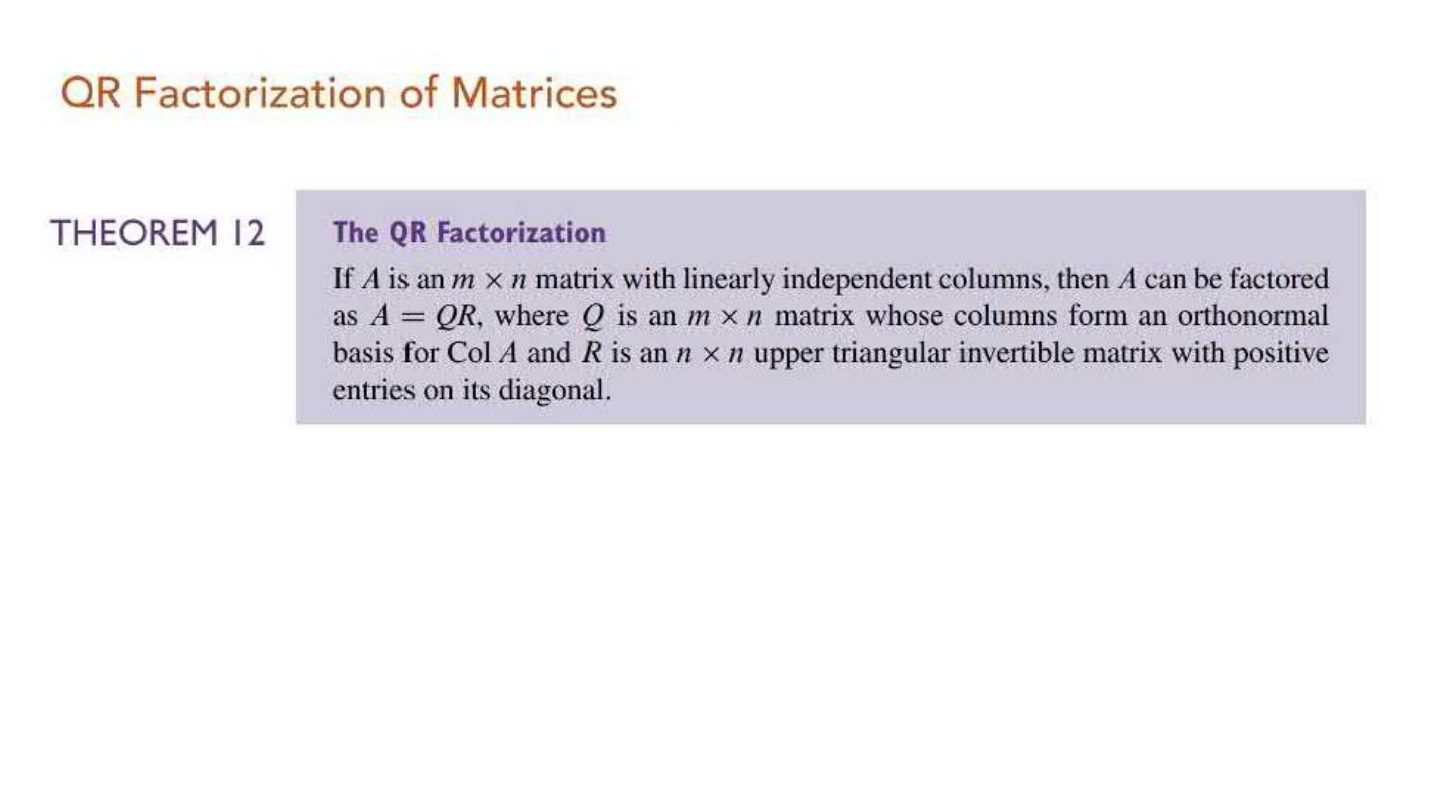
QR: A = QR, Q has orthonormal columns (Gram–Schmidt on A’s columns), R = QᵀA is upper triangular with positive diagonal.
Slide 8