For an orthogonal (square) matrix U, U⁻¹ equals:
Orthogonal Sets and Orthogonal Matrices
Orthogonal and orthonormal sets and bases, weights in an orthogonal basis cⱼ = (y · uⱼ)/(uⱼ · uⱼ), and matrices with orthonormal columns (UᵀU = I).
How to read this page
Every original slide is shown unchanged. Yellow marks on a slide point to a numbered note: hover or tap a mark to jump to its note, and hover a note to see its marks. Questions tagged Past exam appeared on a real paper; Prediction questions are likely angles, not confirmed. Pick an answer to each question: a wrong pick tells you why it is wrong, so you can try again.
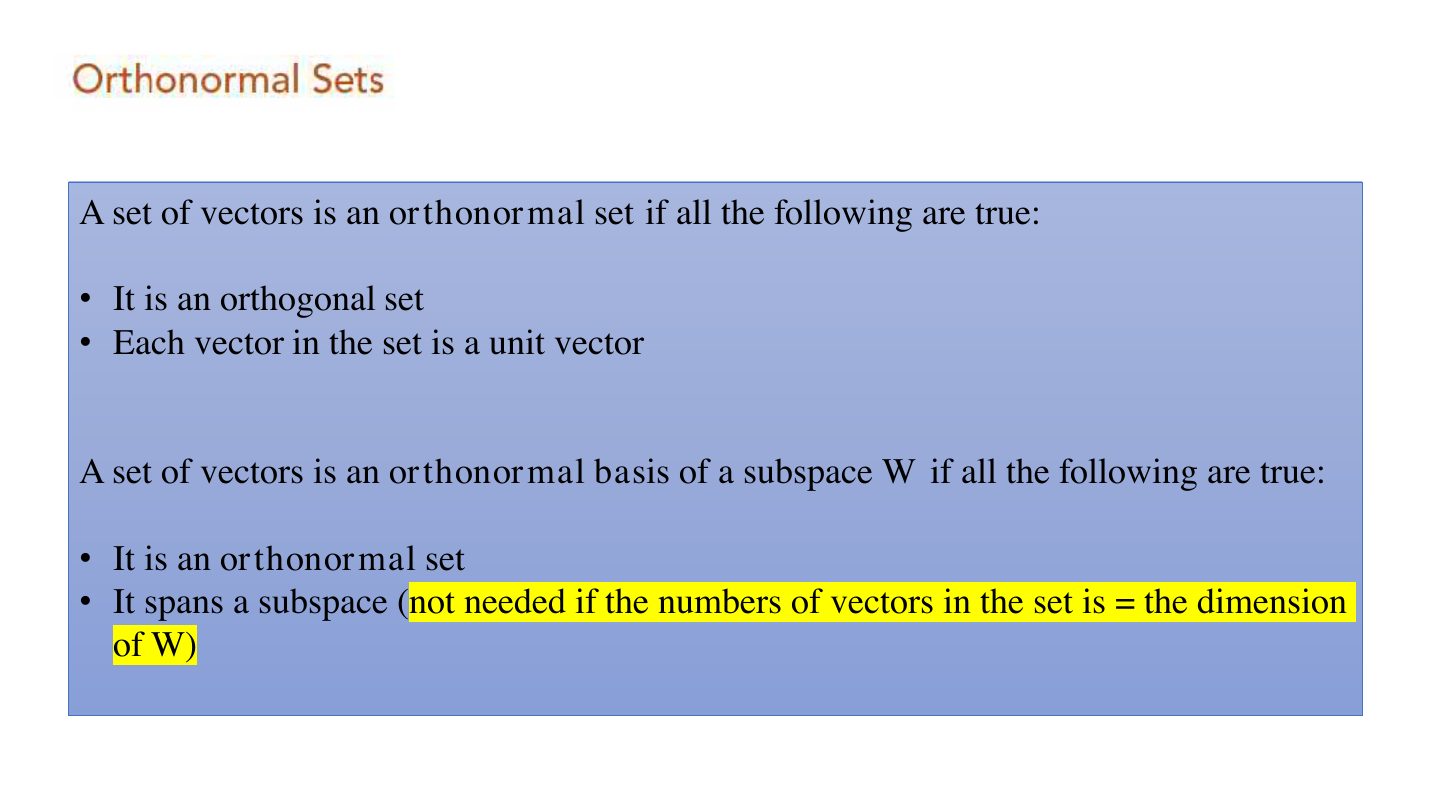
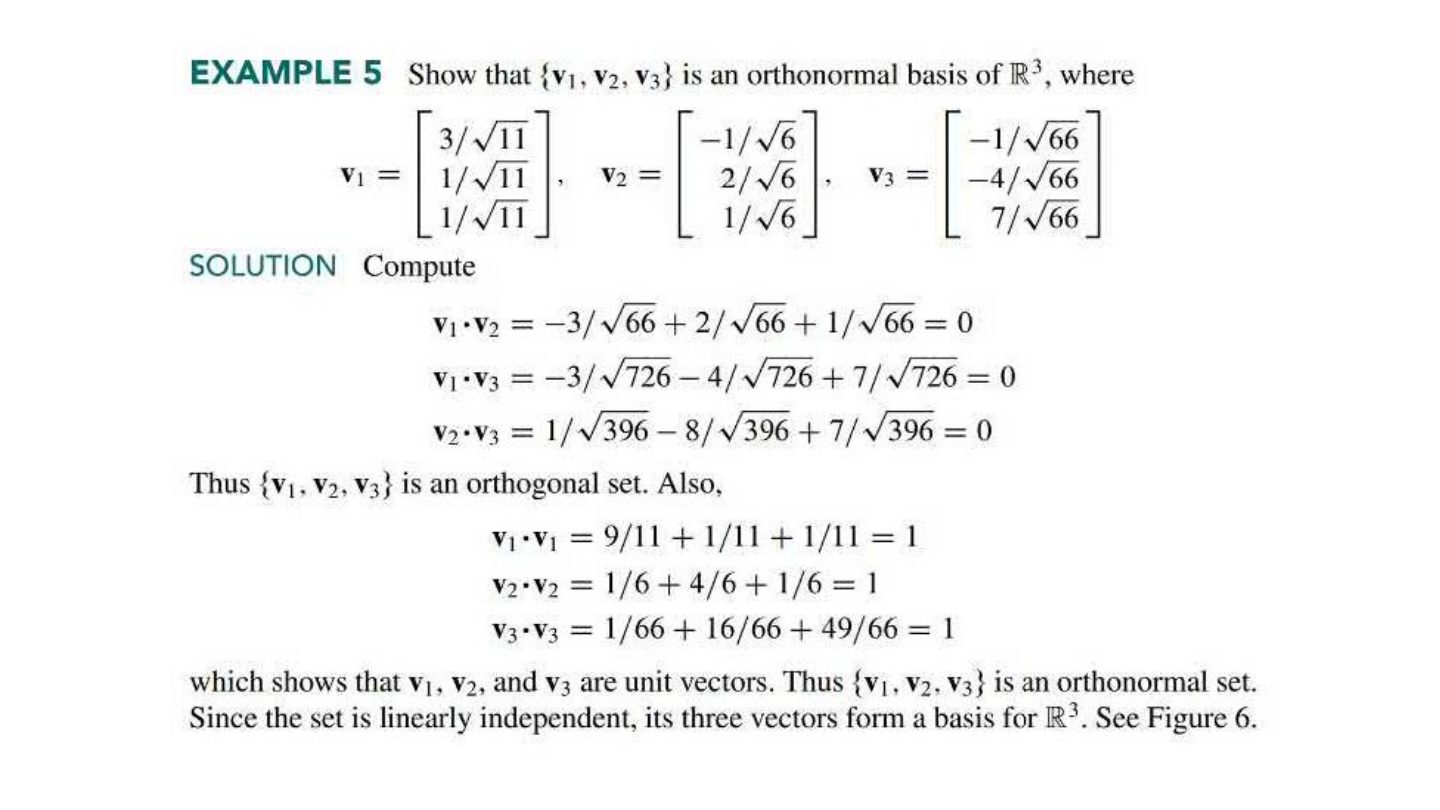
A set of vectors is an orthonormal set if all the following are true:
Notes
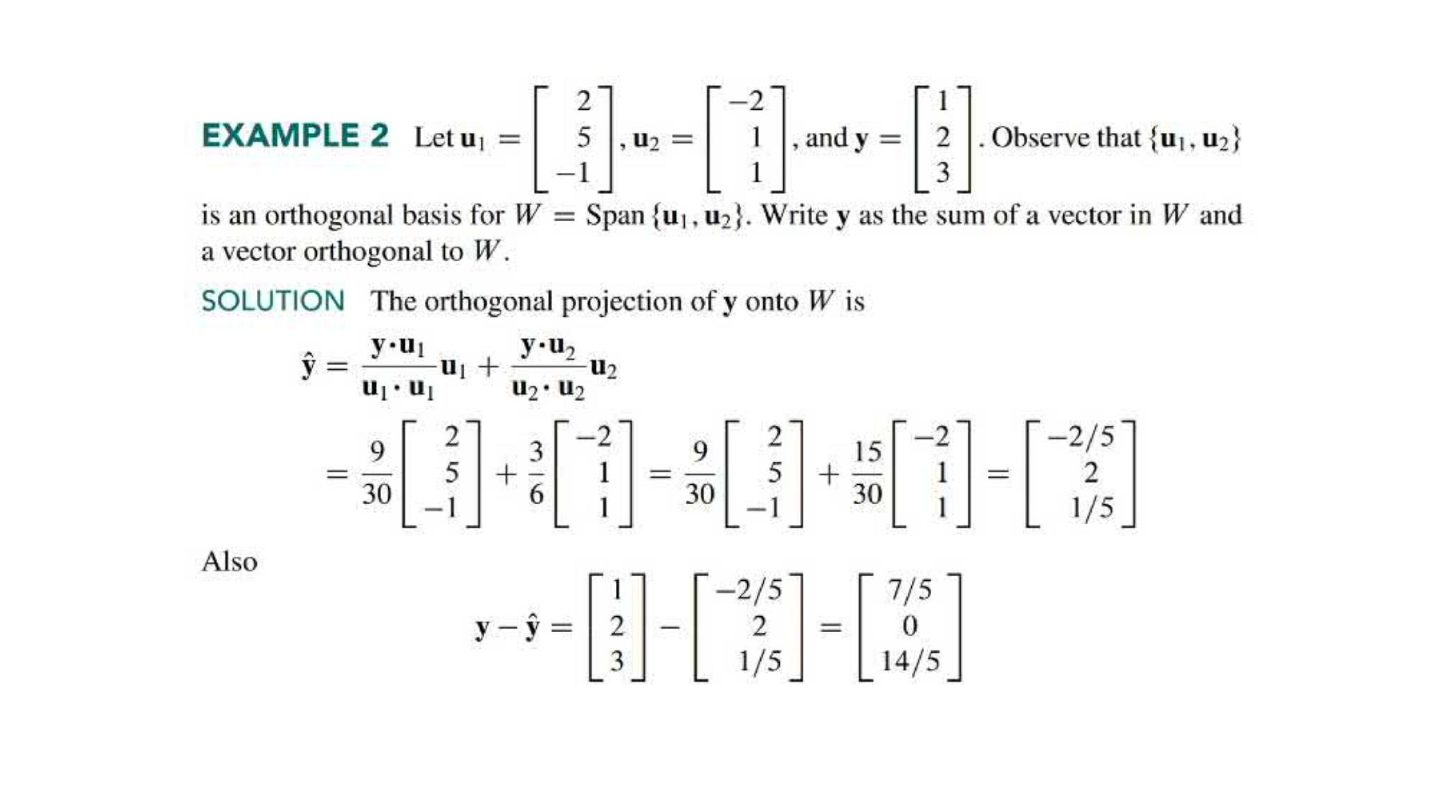
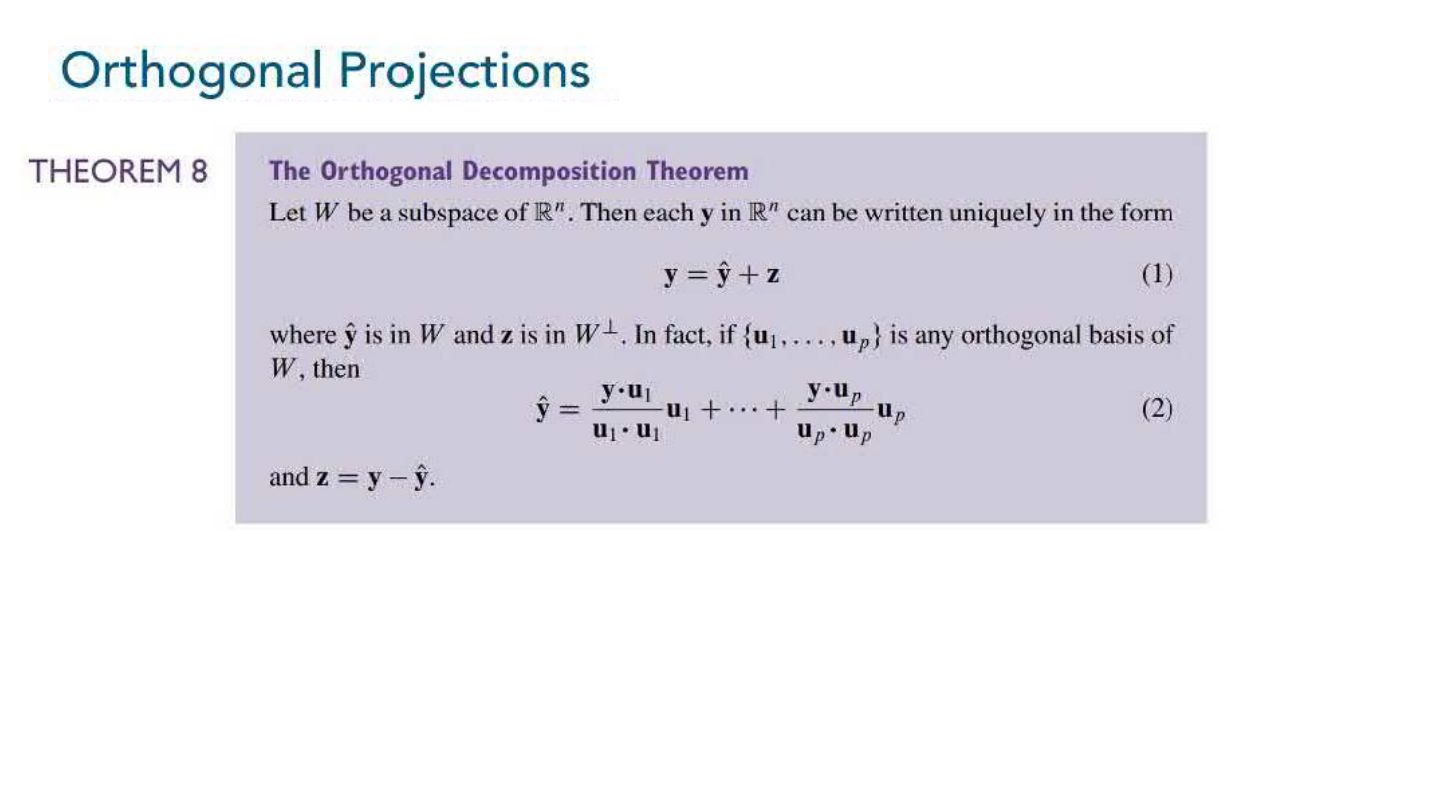
An orthogonal set of nonzero vectors is linearly independent. In an orthogonal basis, y = Σ cⱼuⱼ with cⱼ = (y · uⱼ)/(uⱼ · uⱼ): no row reduction needed.
Slide 2
Slide 3
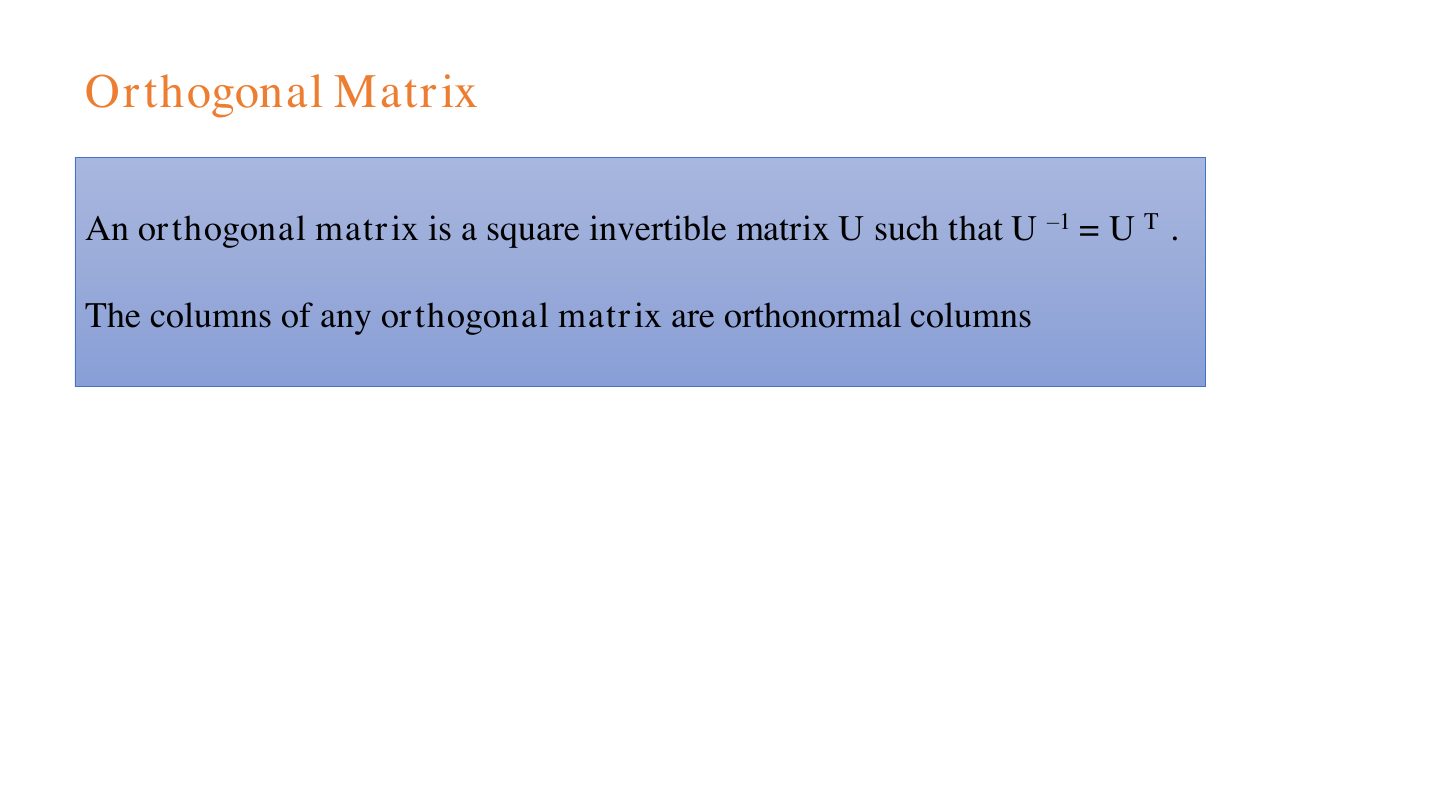
Orthogonal Matrix
Notes
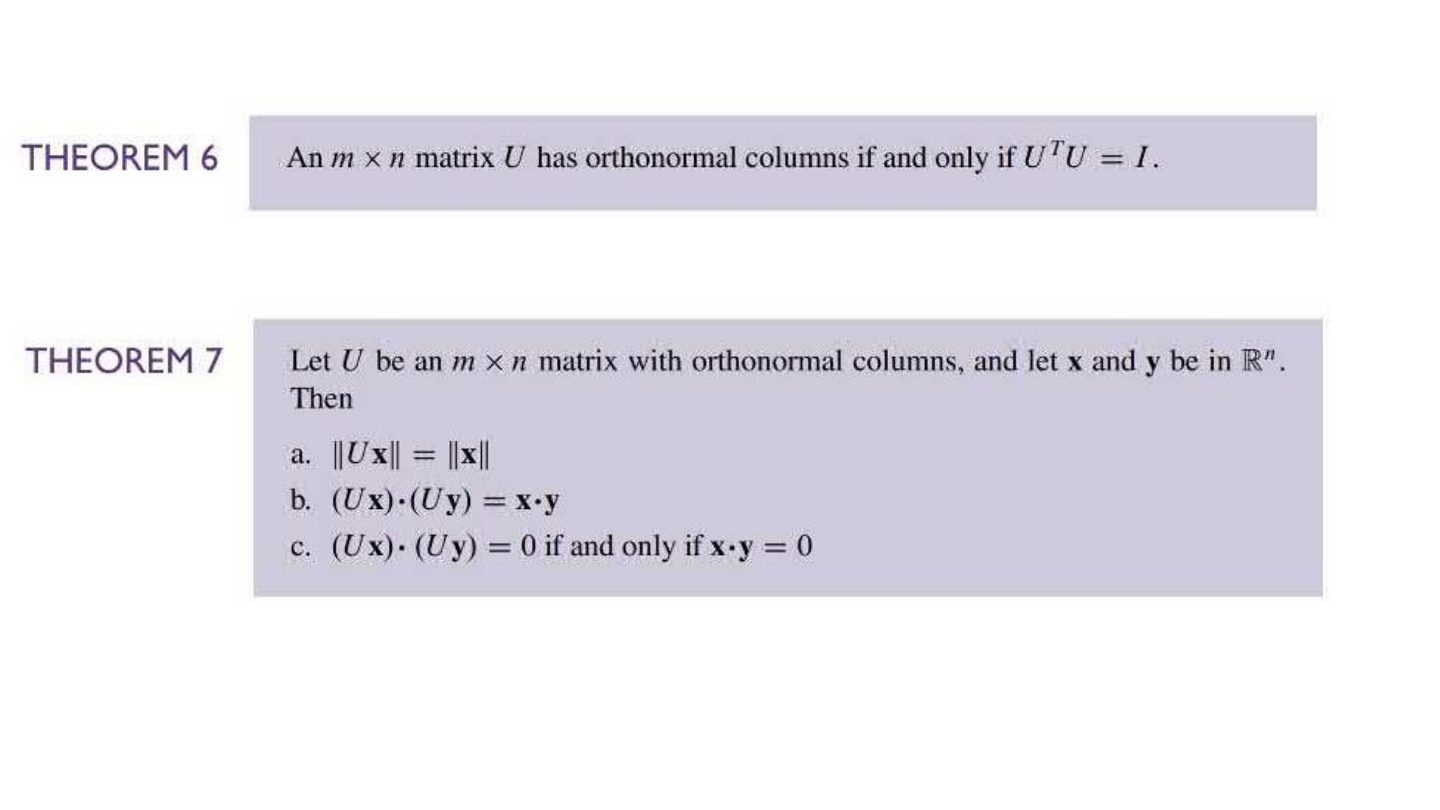
Orthonormal columns ⇔ UᵀU = I. A square such U is an orthogonal matrix: U⁻¹ = Uᵀ, and it preserves lengths and angles.
Exam angle
Slide 5
Slide 6