CS223 · Chapter 5 · Annotated SlidesComplex Eigenvalues and Dynamical Systems
Original
Overview

Complex Eigenvalues and Dynamical Systems

Complex eigenvalues and eigenvectors in conjugate pairs, rotation–scaling matrices, long-term behaviour of xₖ₊₁ = Axₖ, population models and steady-state vectors.

How to read this page

Every original slide is shown unchanged. Yellow marks on a slide point to a numbered note: hover or tap a mark to jump to its note, and hover a note to see its marks. Questions tagged Past exam appeared on a real paper; Prediction questions are likely angles, not confirmed. Pick an answer to each question: a wrong pick tells you why it is wrong, so you can try again.
All 18 slides
  1. 1 Slide 1
  2. 2 Slide 2
  3. 3 Slide 3
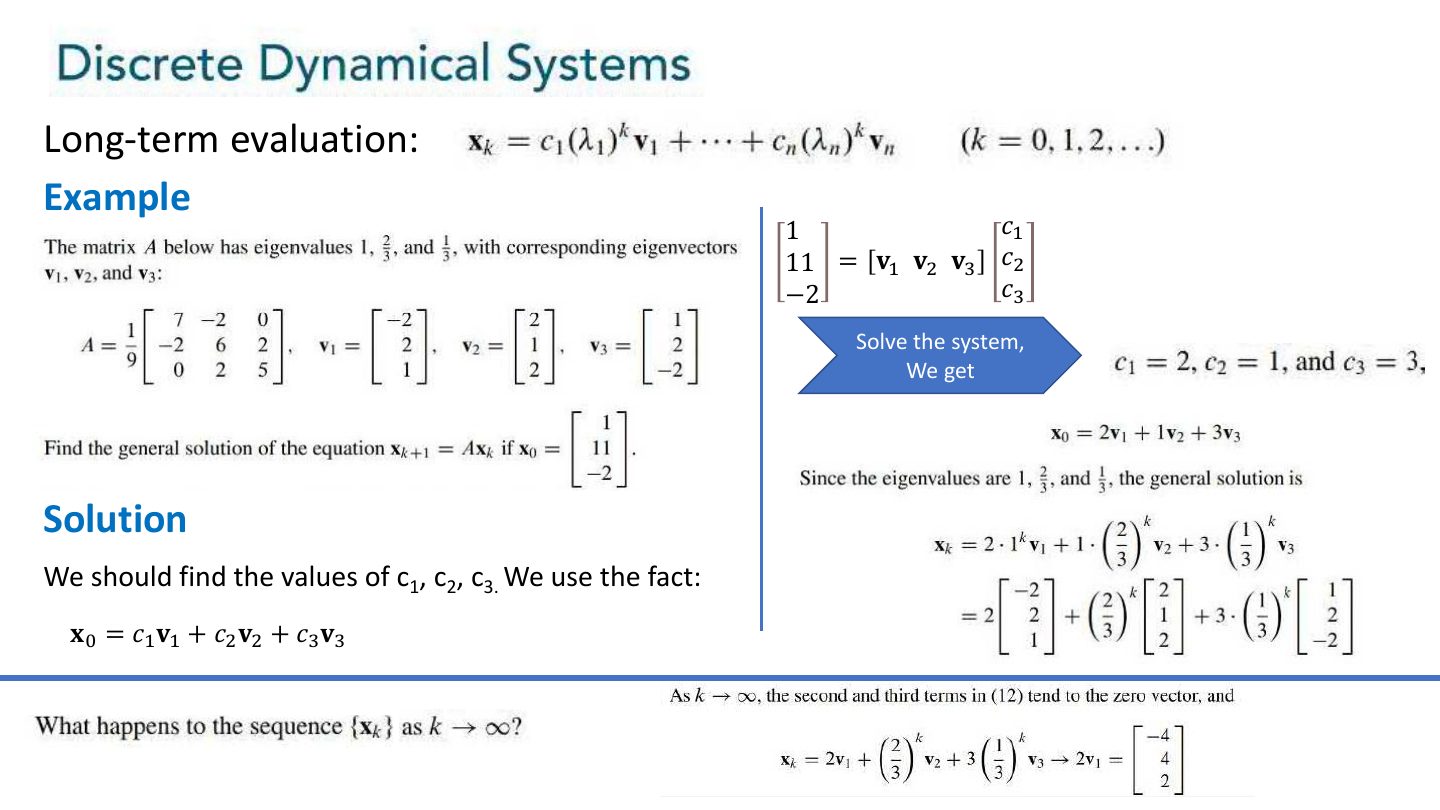
  4. 4 Long-term evaluation: Example
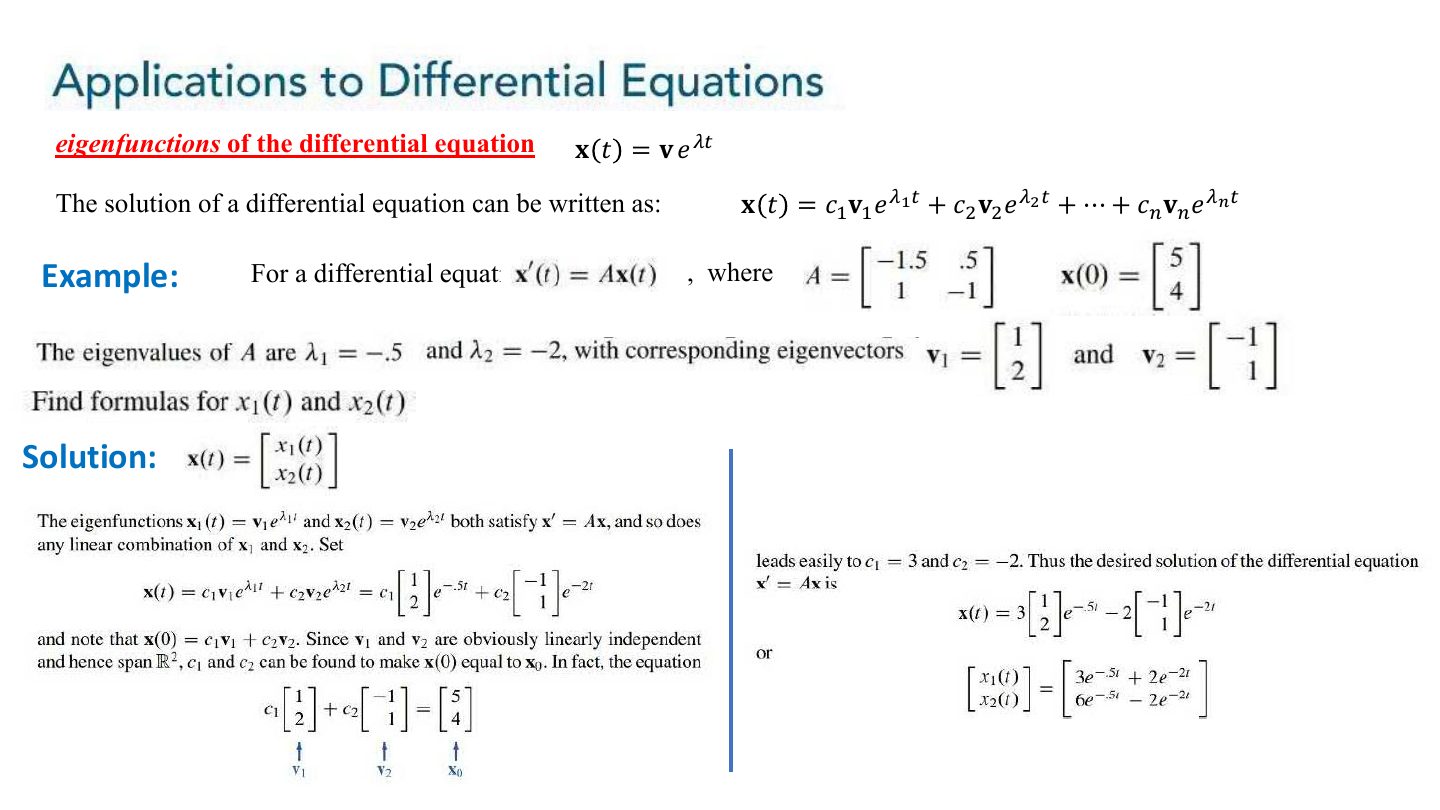
  5. 5 eigenfunctions of the differential equation
  6. 6 Example:
  7. 7 Slide 7
  8. 8 Slide 8
  9. 9 Slide 9
  10. 10 Slide 10
  11. 11 Slide 11
  12. 12 Slide 12
  13. 13 Example:
  14. 14 Slide 14
  15. 15 Slide 15
  16. 16 Slide 16
  17. 17 k
  18. 18 Example:
Slide 1 / 18

Slide 1

Slide 1: Slide 1
Slide 2 / 18

Slide 2

Slide 2: Slide 2

Notes

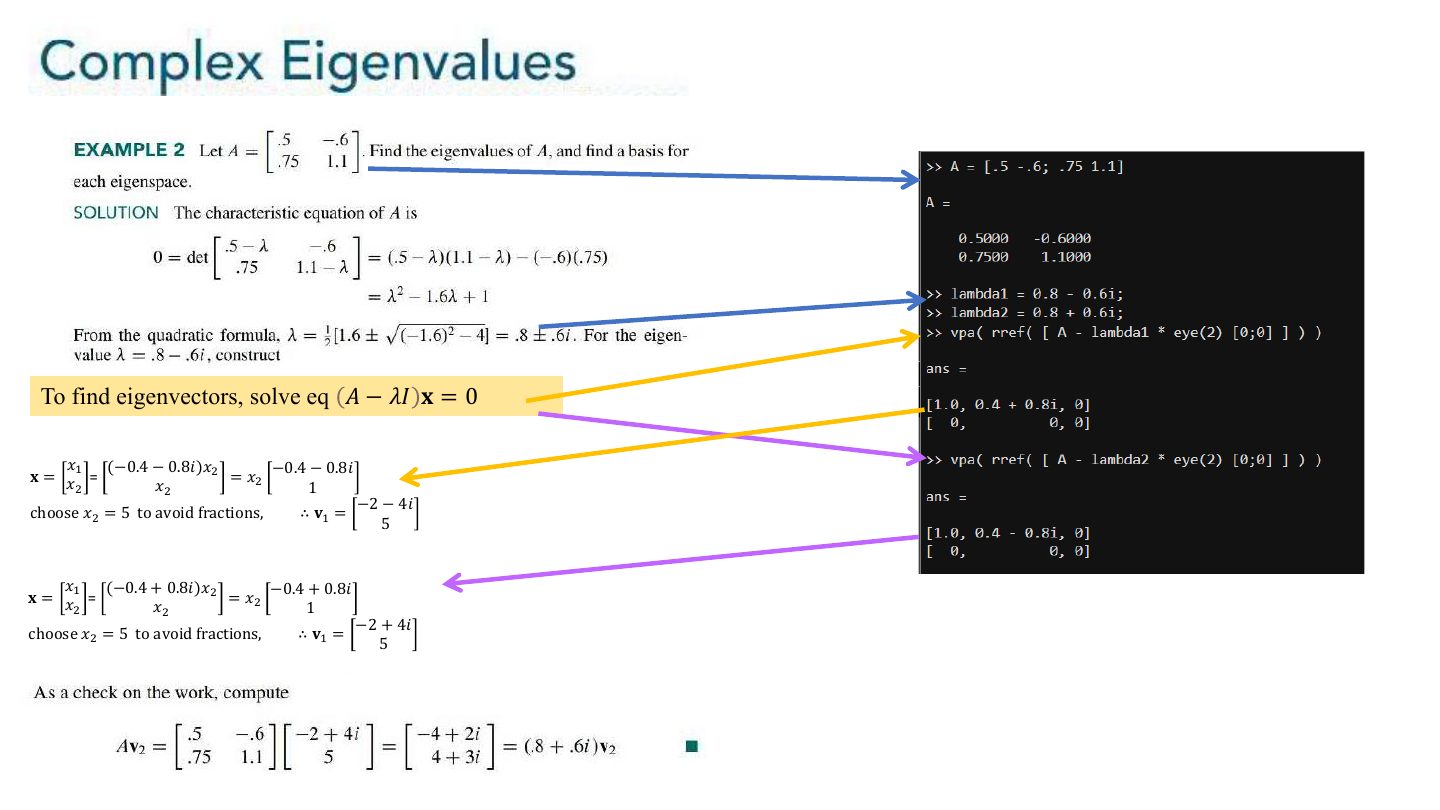
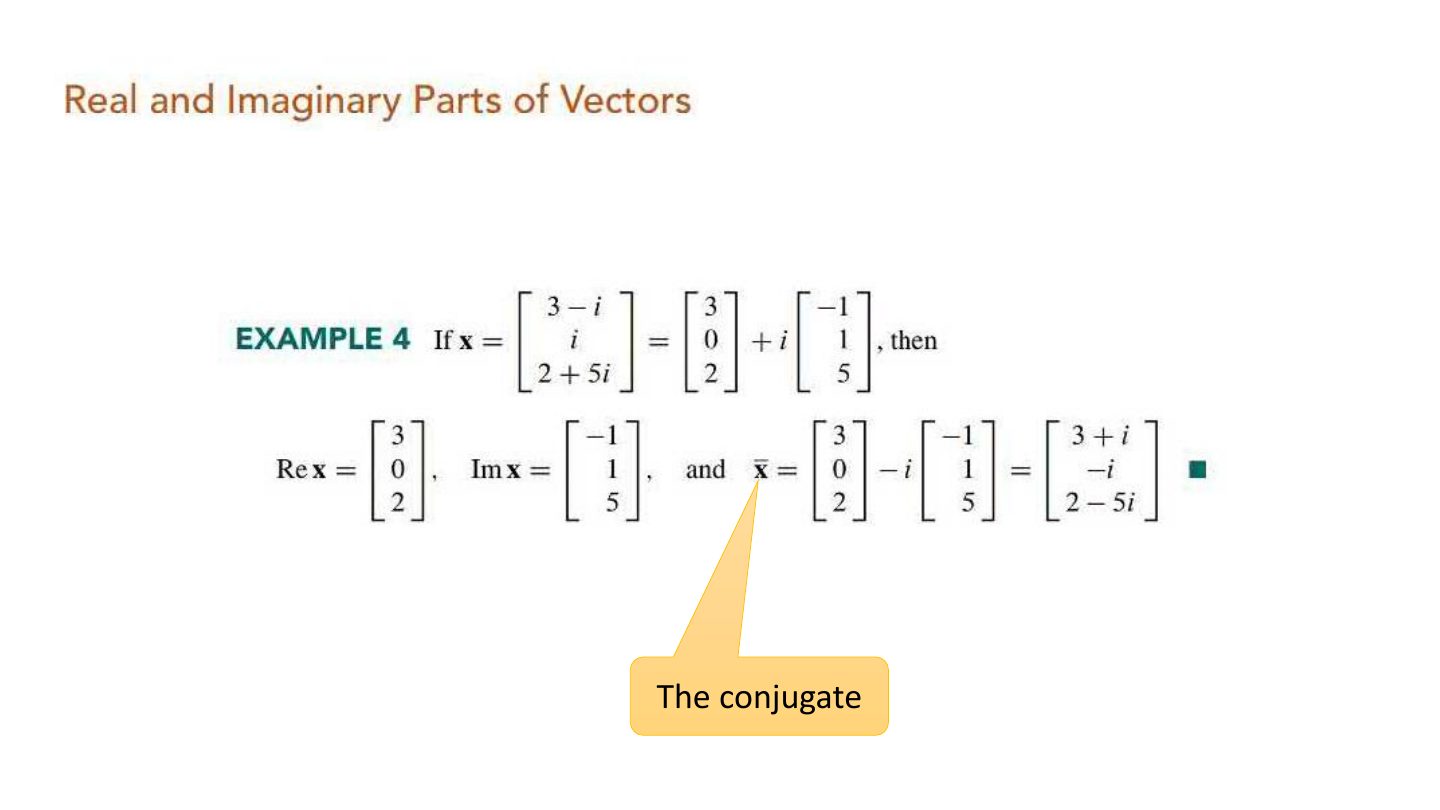
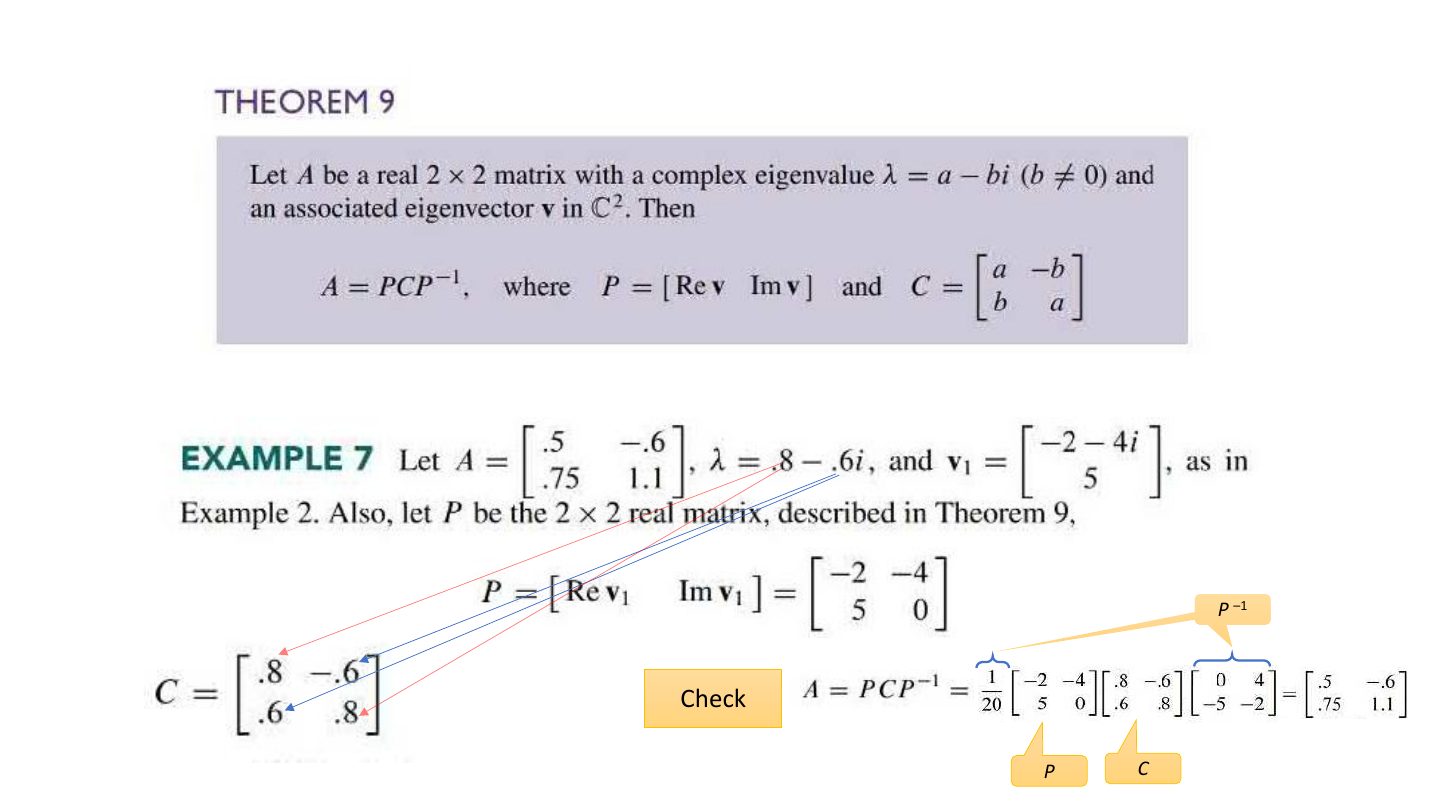
  1. For real A, complex eigenvalues come in conjugate pairs λ, λ̄ with eigenvectors x, x̄.
Slide 3 / 18

Slide 3

Slide 3: Slide 3
Slide 4 / 18

Long-term evaluation: Example

Slide 4: Long-term evaluation: Example

Notes

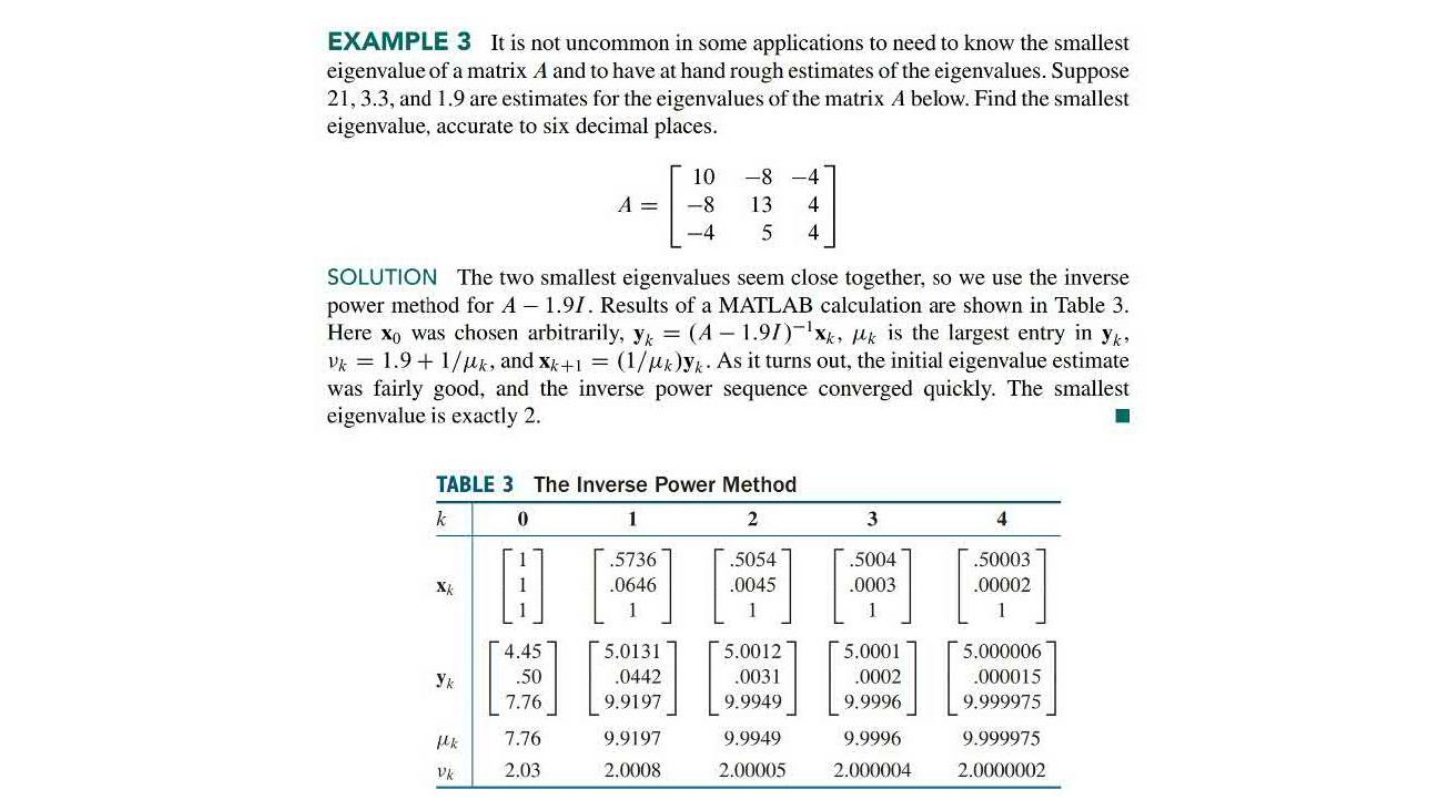
  1. Long-term behaviour of xₖ = Aᵏx₀: write x₀ in the eigenvector basis; terms with |λ| > 1 grow, |λ| < 1 decay.
Slide 5 / 18

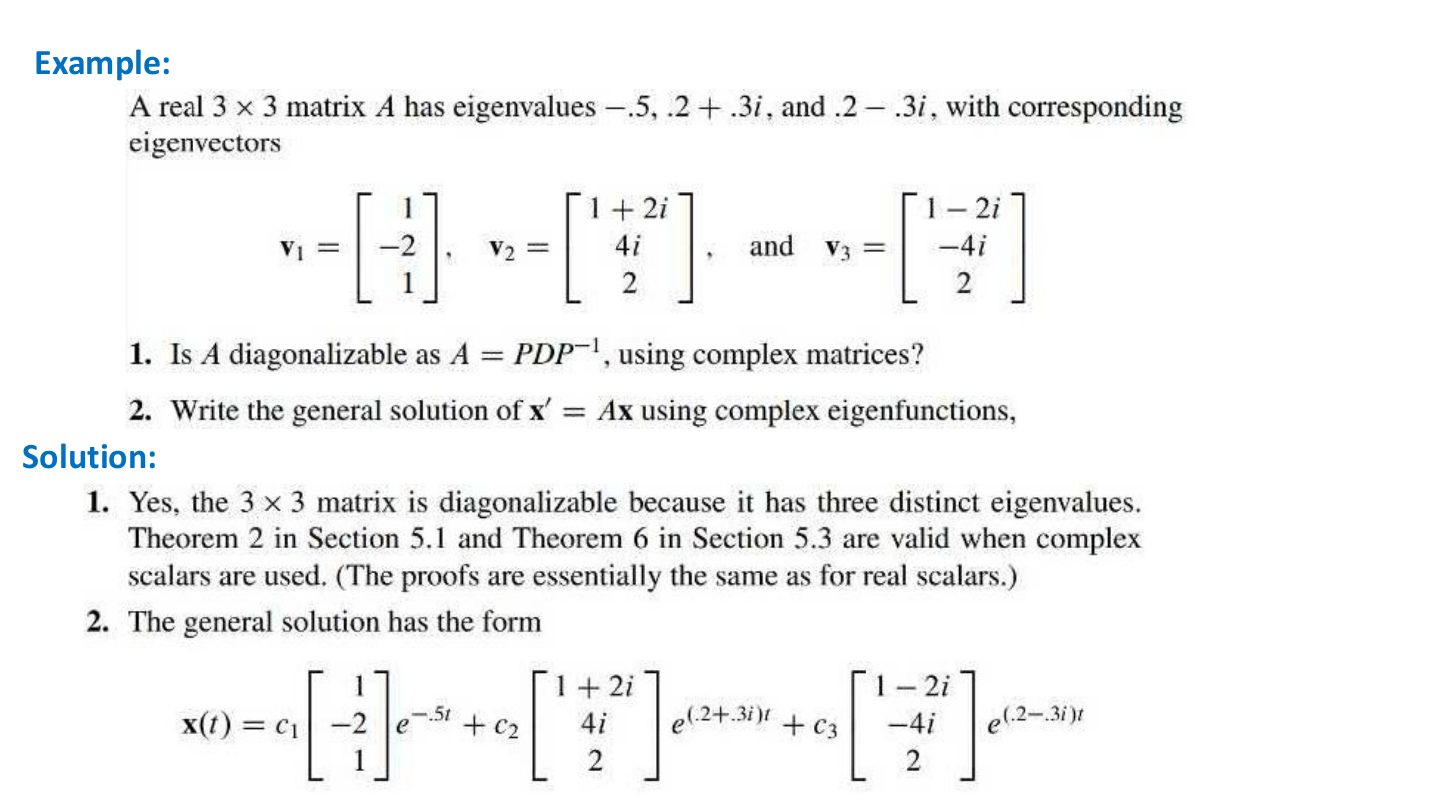
eigenfunctions of the differential equation

Slide 5: eigenfunctions of the differential equation
Slide 6 / 18

Example:

Slide 6: Example:
Slide 7 / 18

Slide 7

Slide 7: Slide 7
Slide 8 / 18

Slide 8

Slide 8: Slide 8
Slide 9 / 18

Slide 9

Slide 9: Slide 9
Slide 10 / 18

Slide 10

Slide 10: Slide 10
Slide 11 / 18

Slide 11

Slide 11: Slide 11
Slide 12 / 18

Slide 12

Slide 12: Slide 12
Slide 13 / 18

Example:

Slide 13: Example:
Slide 14 / 18

Slide 14

Slide 14: Slide 14
Slide 15 / 18

Slide 15

Slide 15: Slide 15

Notes

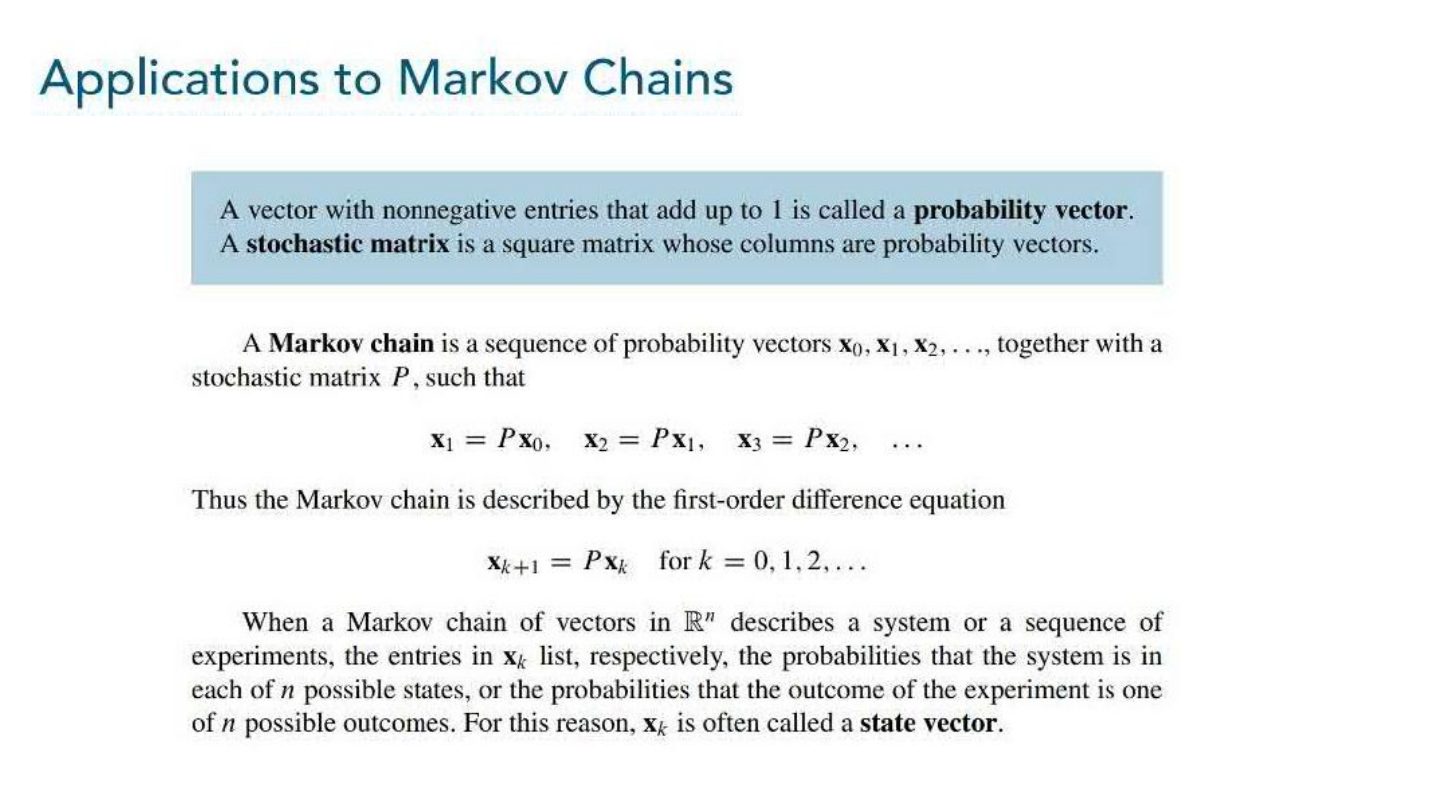
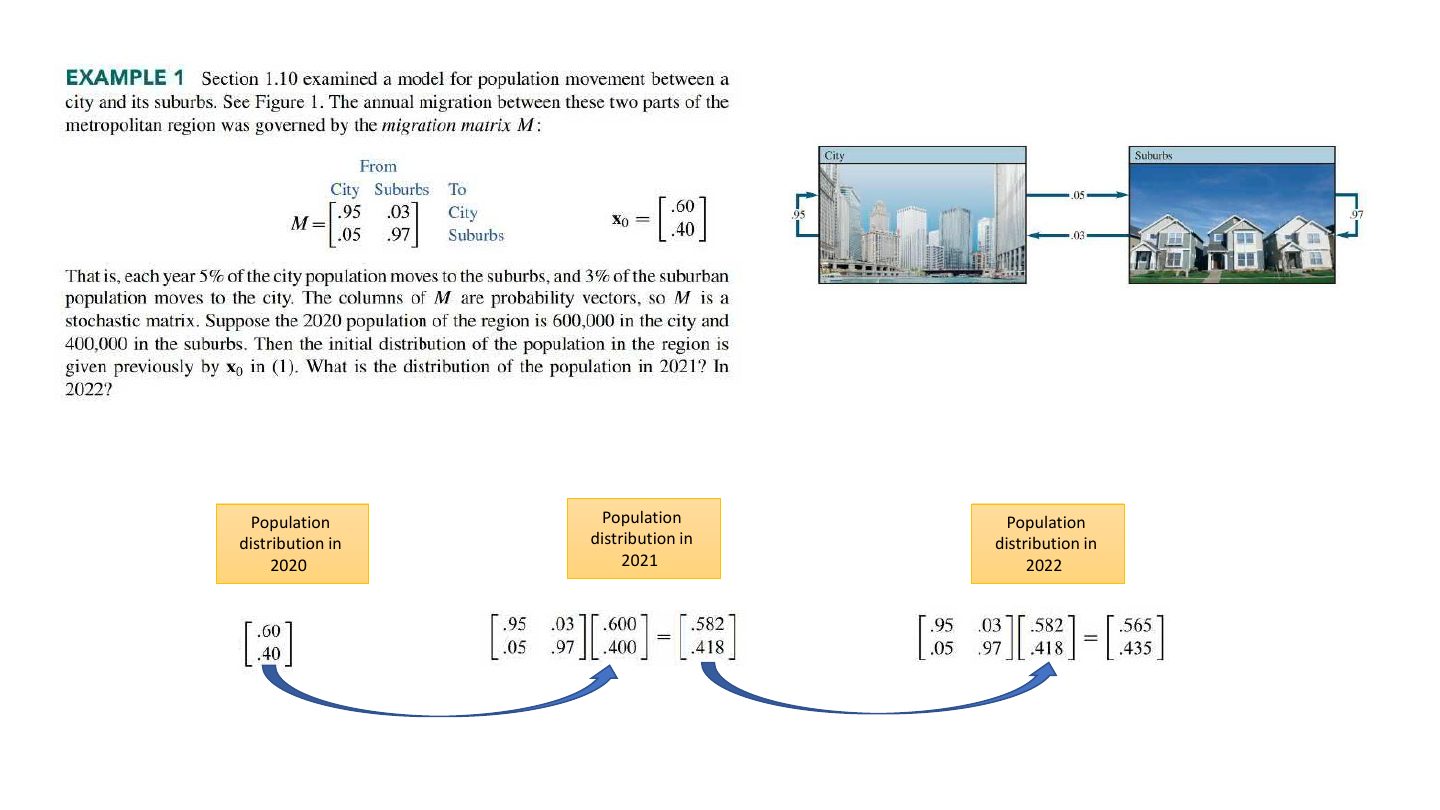
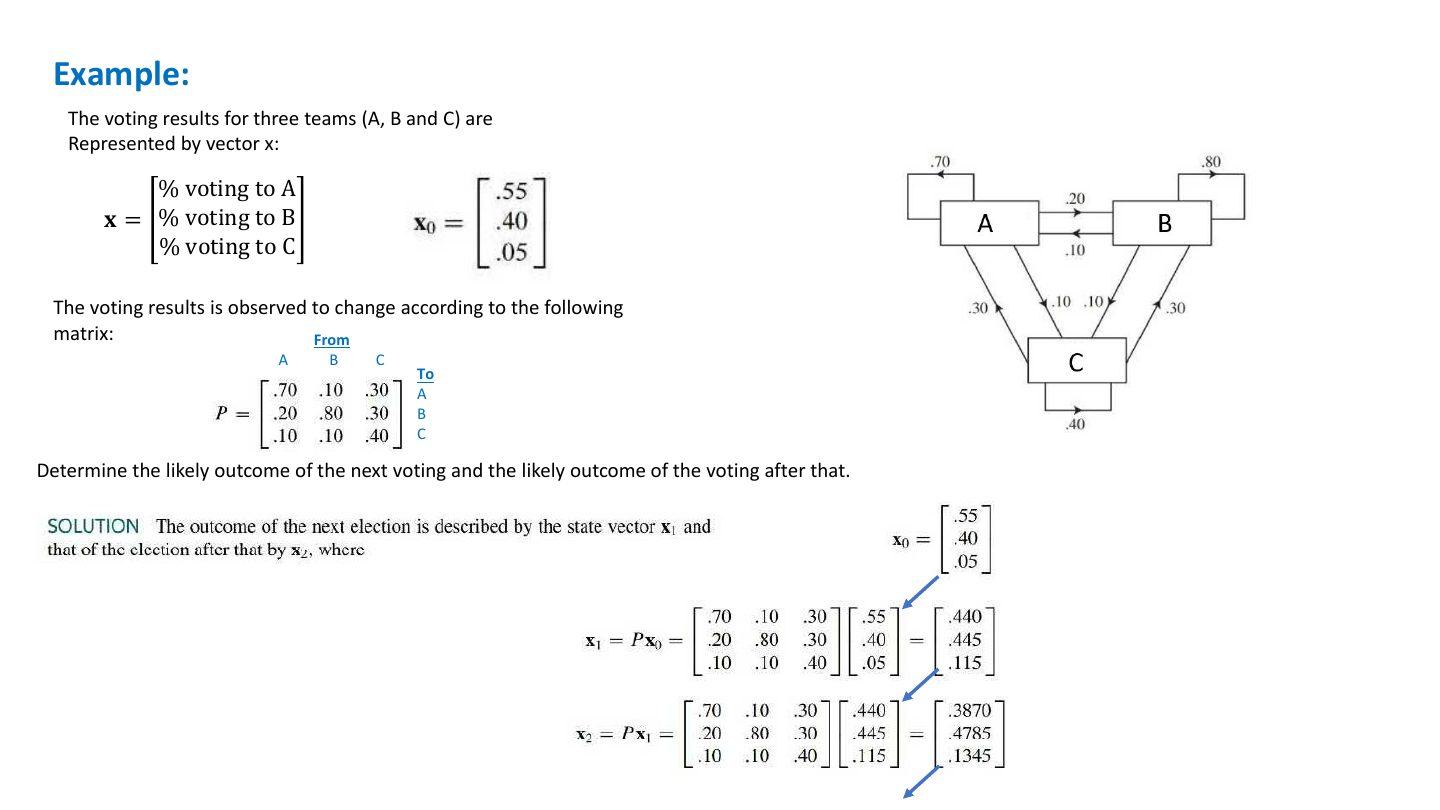
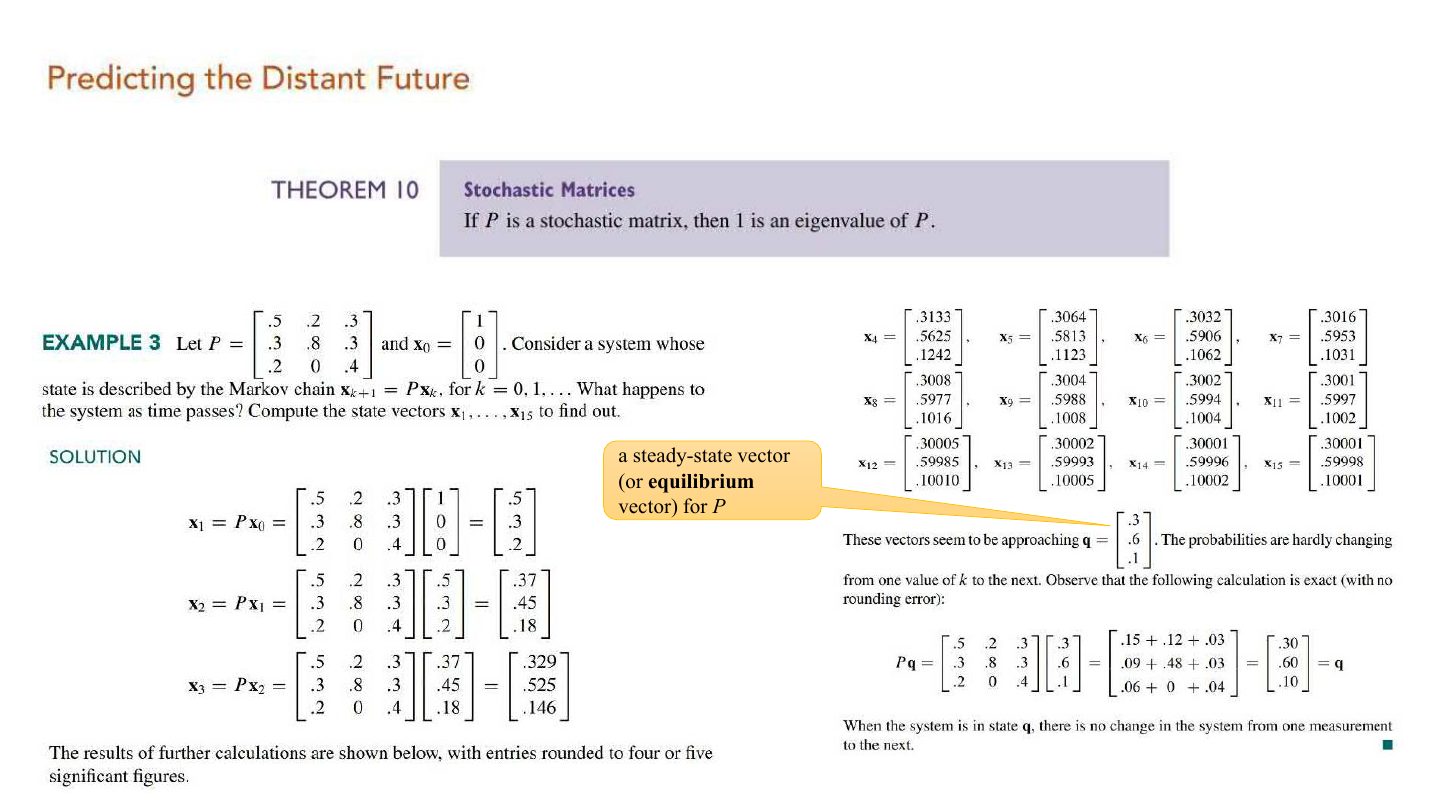
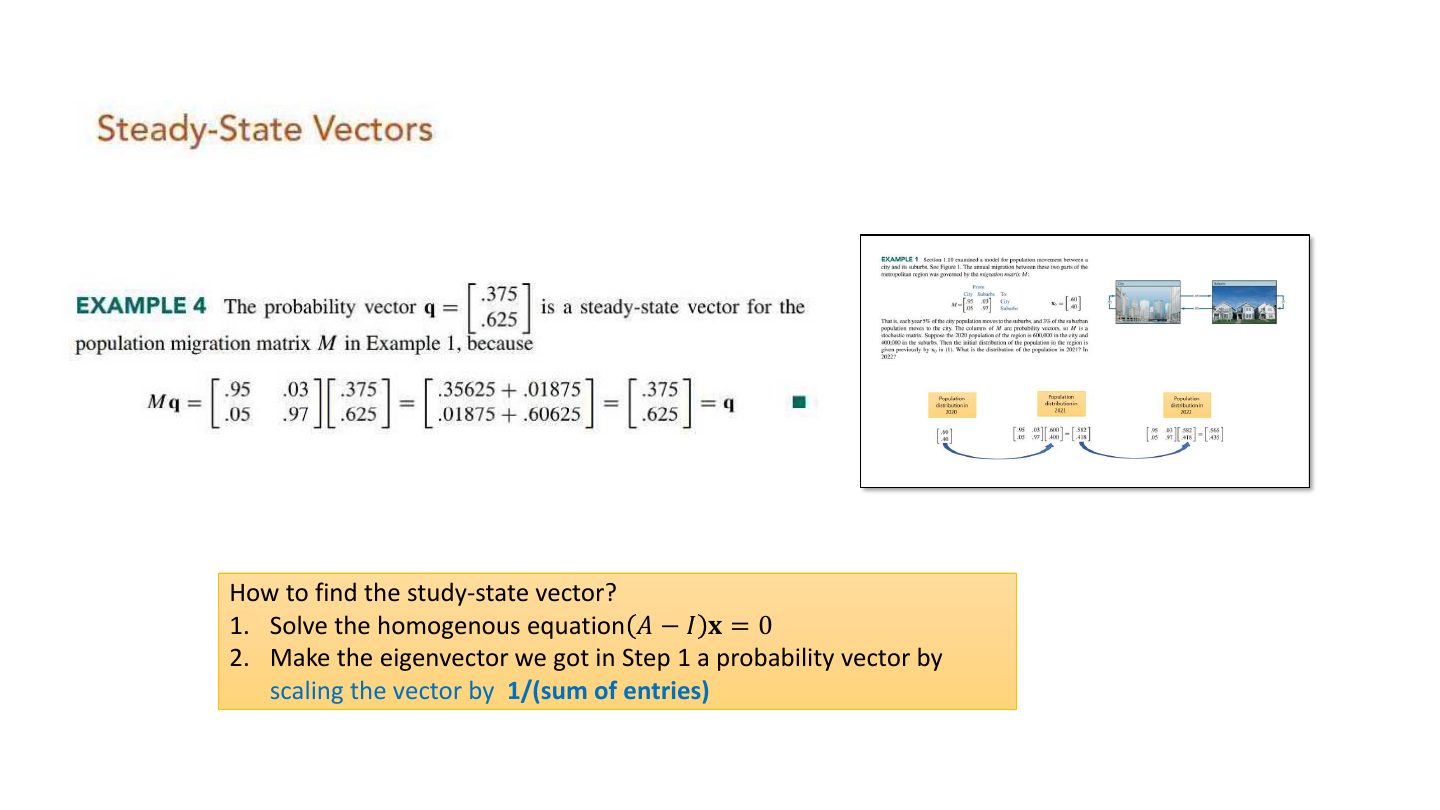
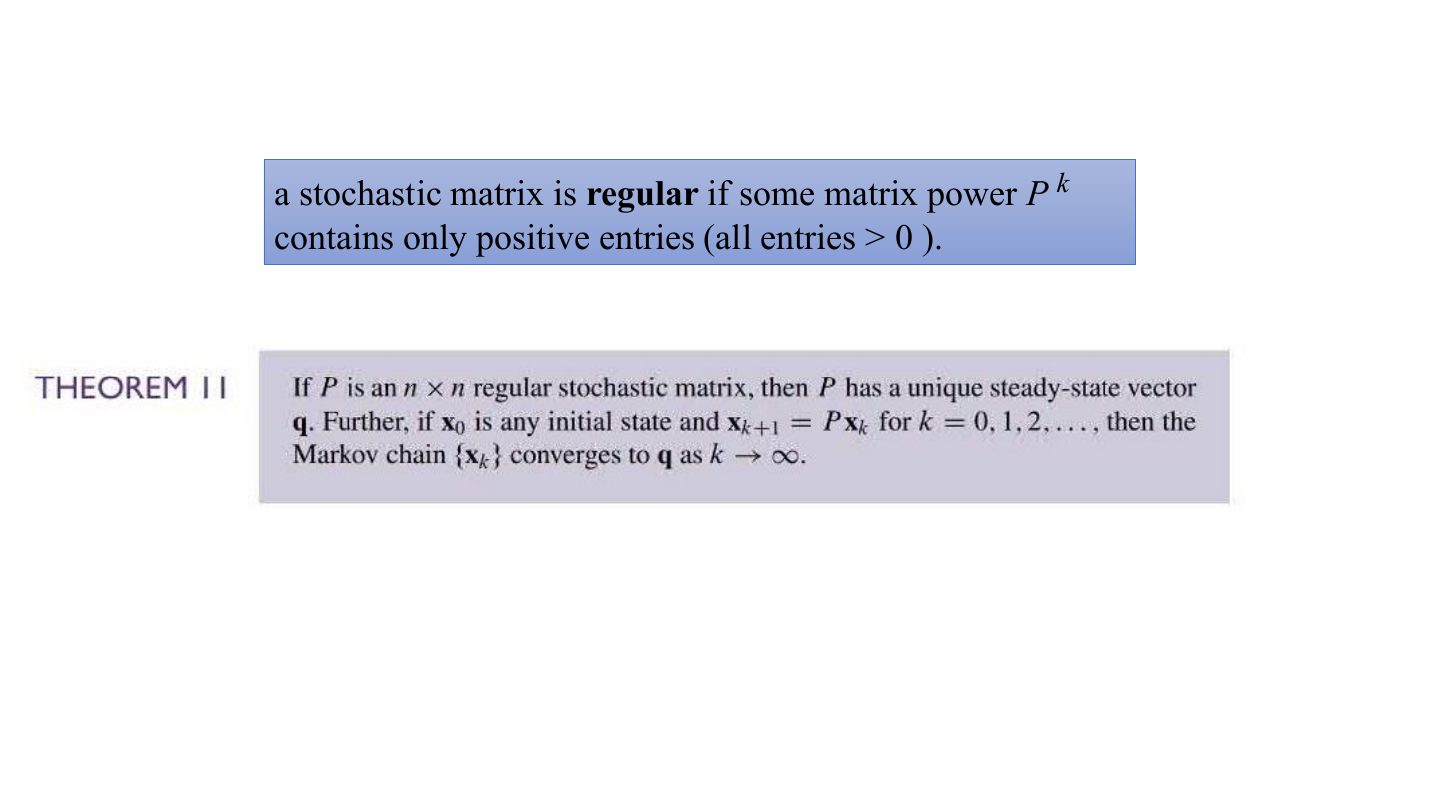
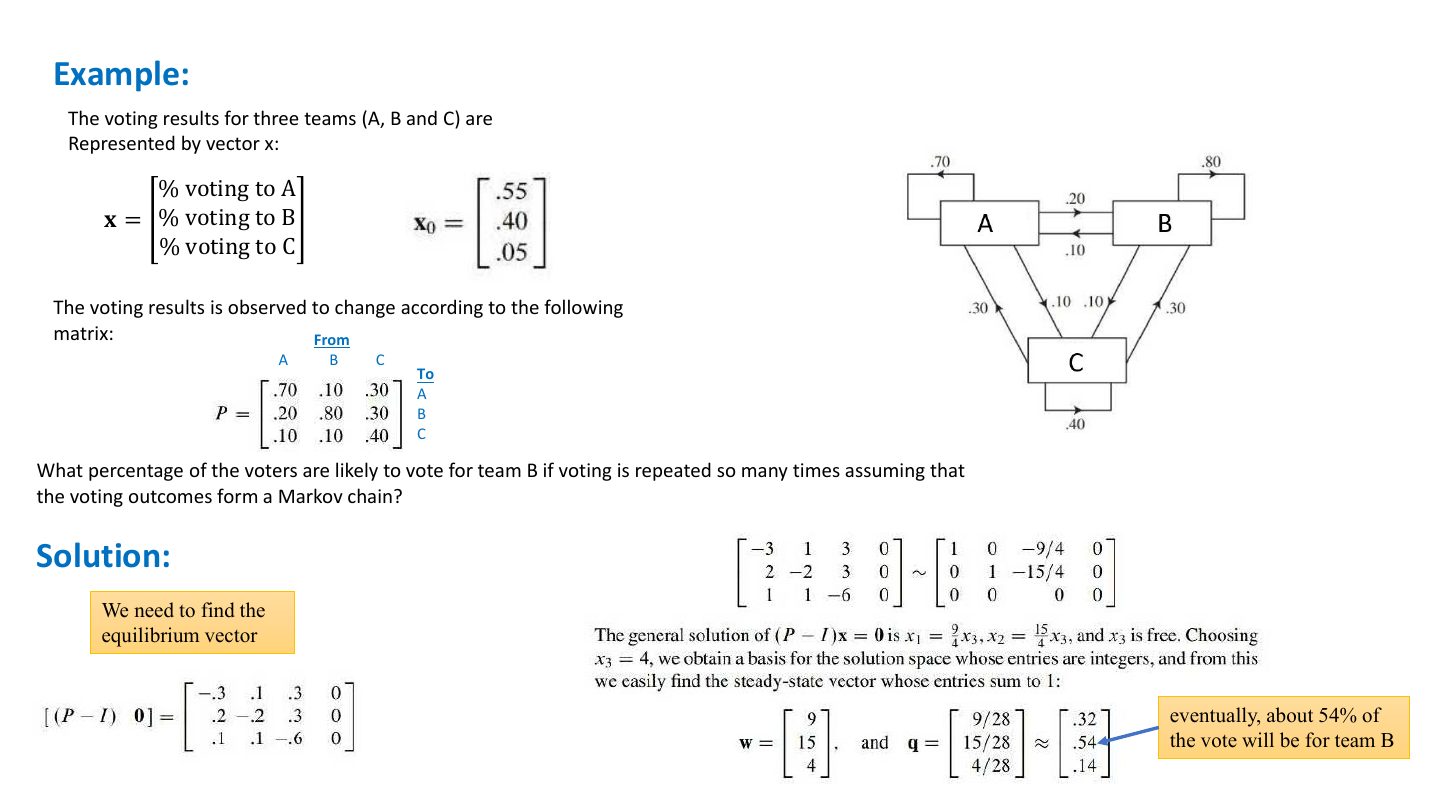
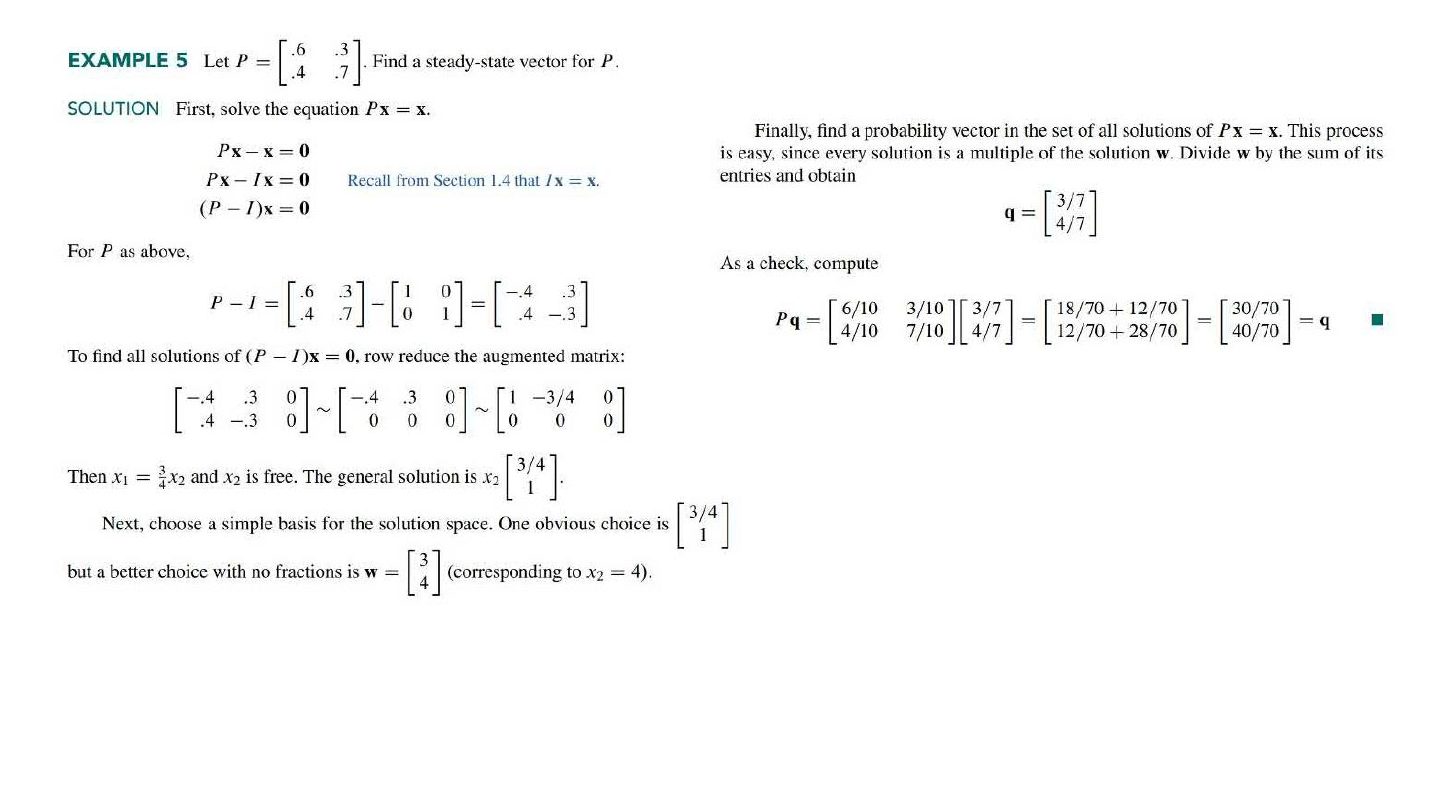
  1. Steady-state vector of a stochastic (Markov) matrix P: Pq = q with entries summing to 1: solve (P − I)q = 0.

Exam angle

PredictionQ1

How do you find the steady-state vector of a stochastic matrix P?

Compare with the model answer

Solve (P − I)x = 0, pick a nonzero solution, and scale it so its entries add up to 1.
Slide 16 / 18

Slide 16

Slide 16: Slide 16
Slide 17 / 18

k

Slide 17: k
Slide 18 / 18

Example:

Slide 18: Example: