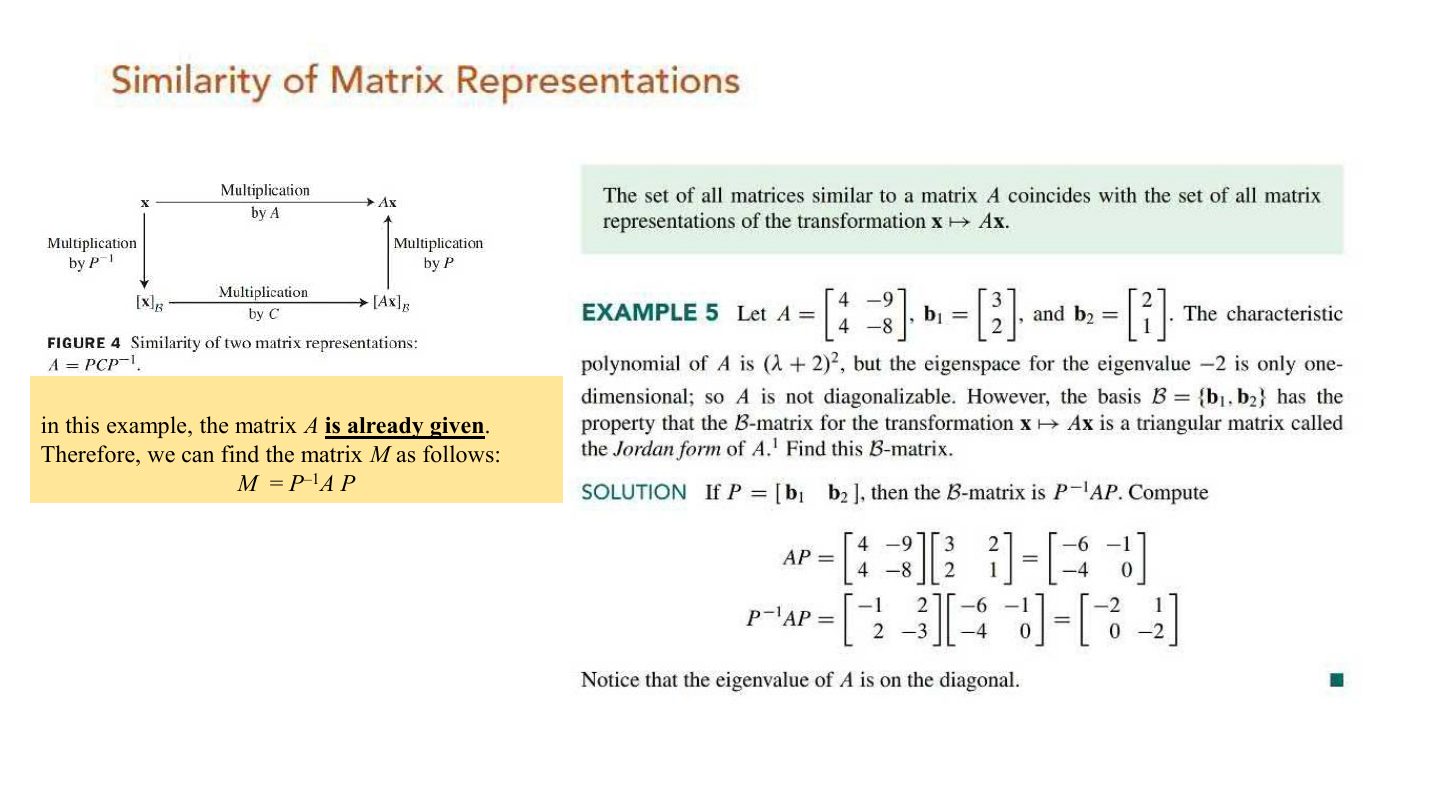
Eigenvectors and Linear Transformations
The matrix of a linear transformation relative to bases, the B-matrix [T]_B = P⁻¹AP, and diagonal matrix representations.
How to read this page
Every original slide is shown unchanged. Yellow marks on a slide point to a numbered note: hover or tap a mark to jump to its note, and hover a note to see its marks. Questions tagged Past exam appeared on a real paper; Prediction questions are likely angles, not confirmed. Pick an answer to each question: a wrong pick tells you why it is wrong, so you can try again.
Slide 1
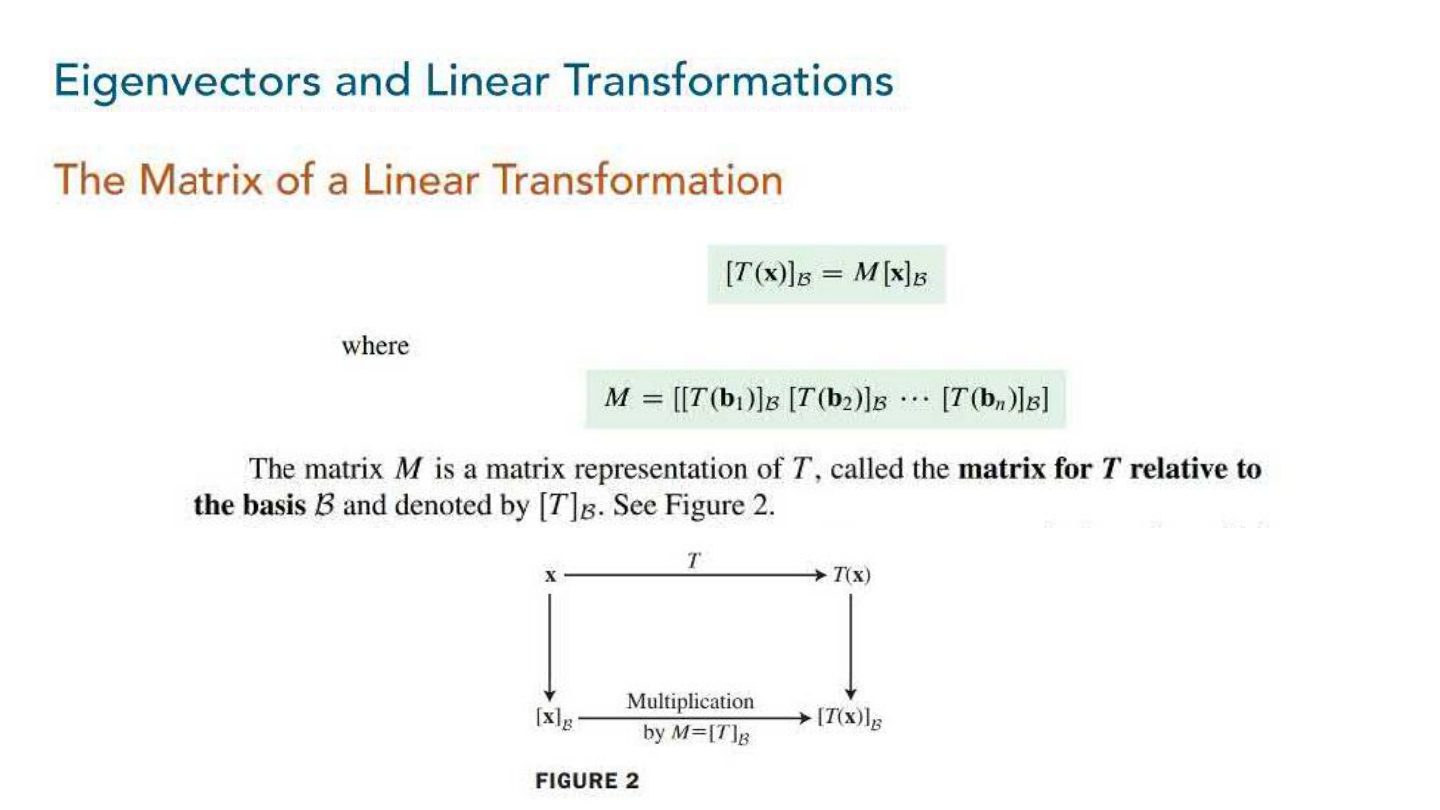
Slide 2
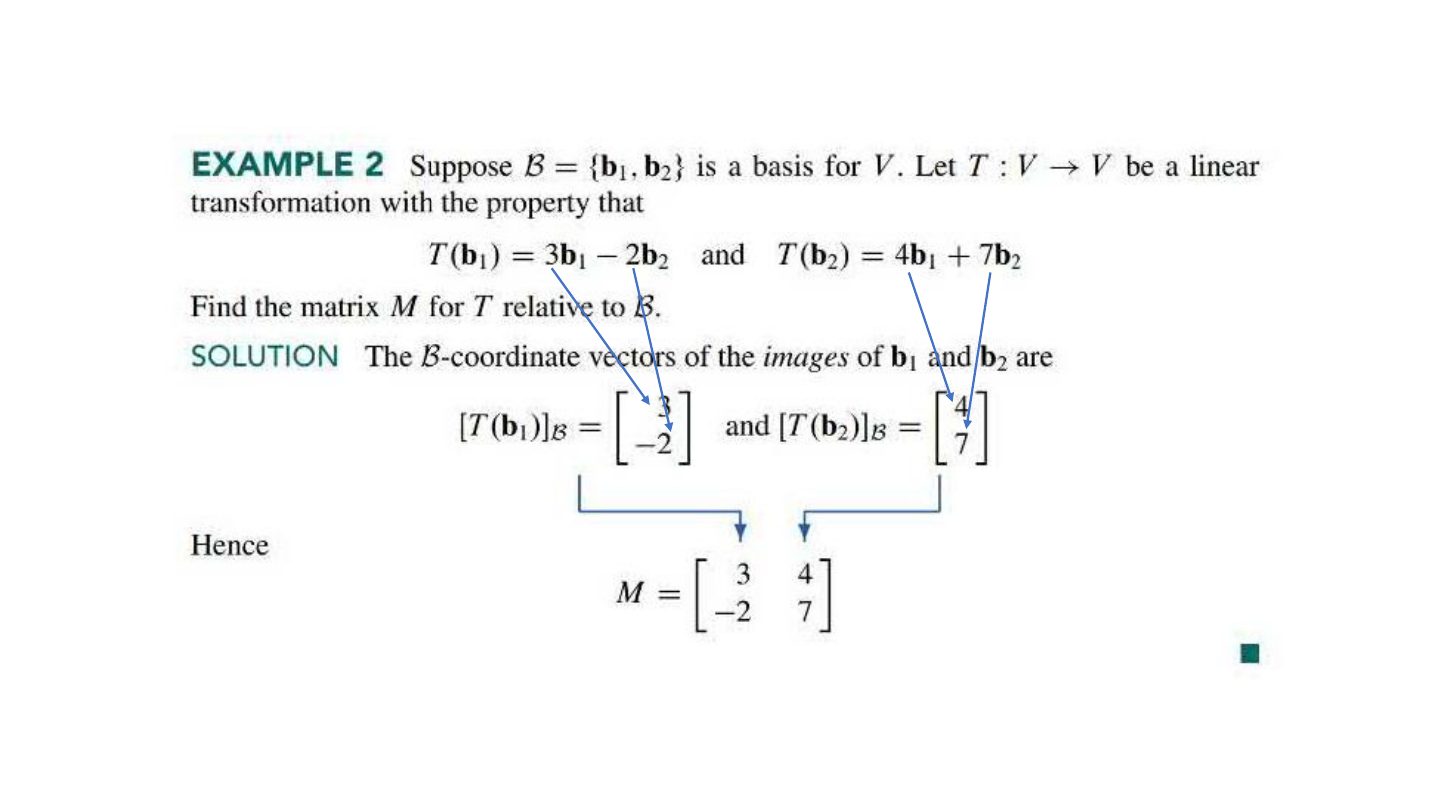
Slide 3
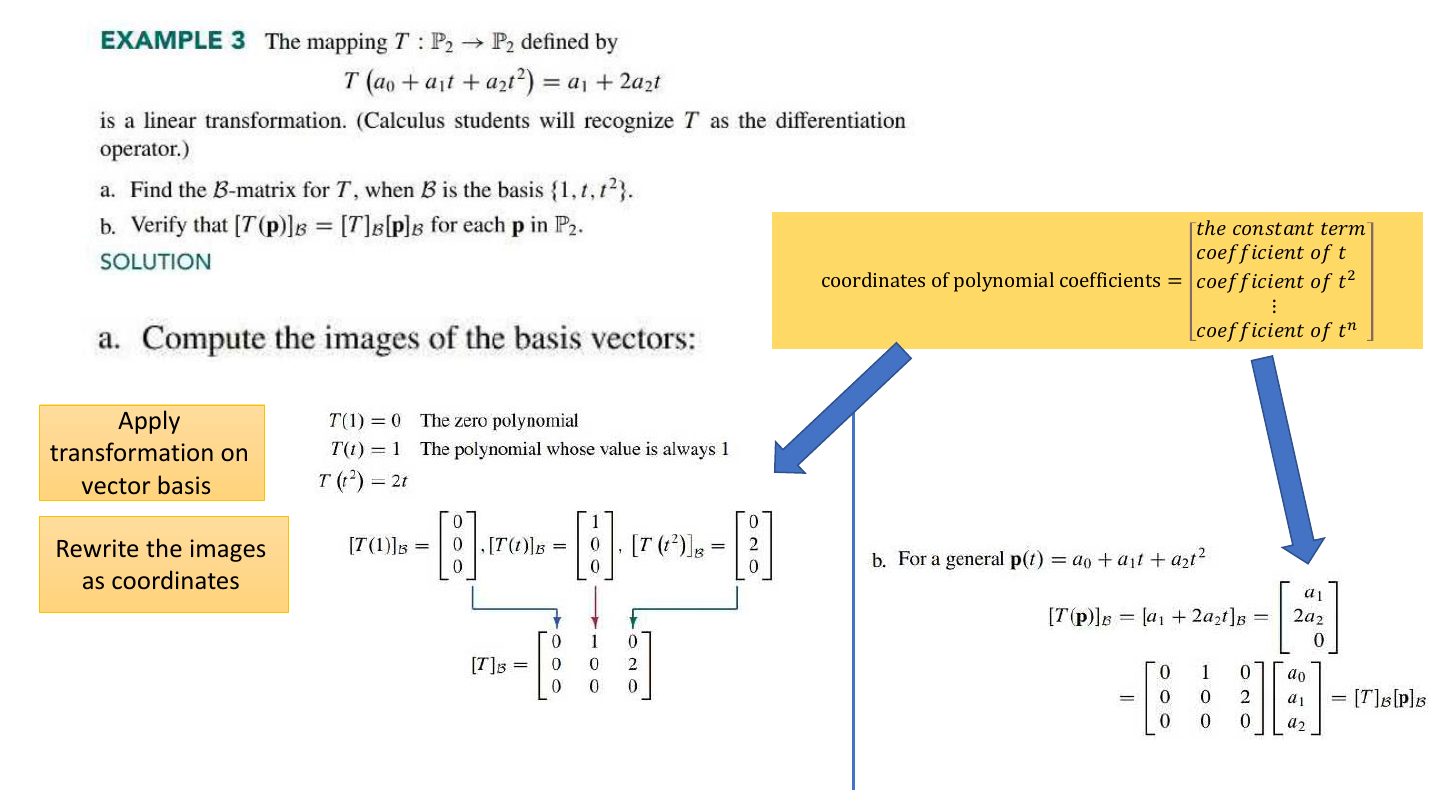
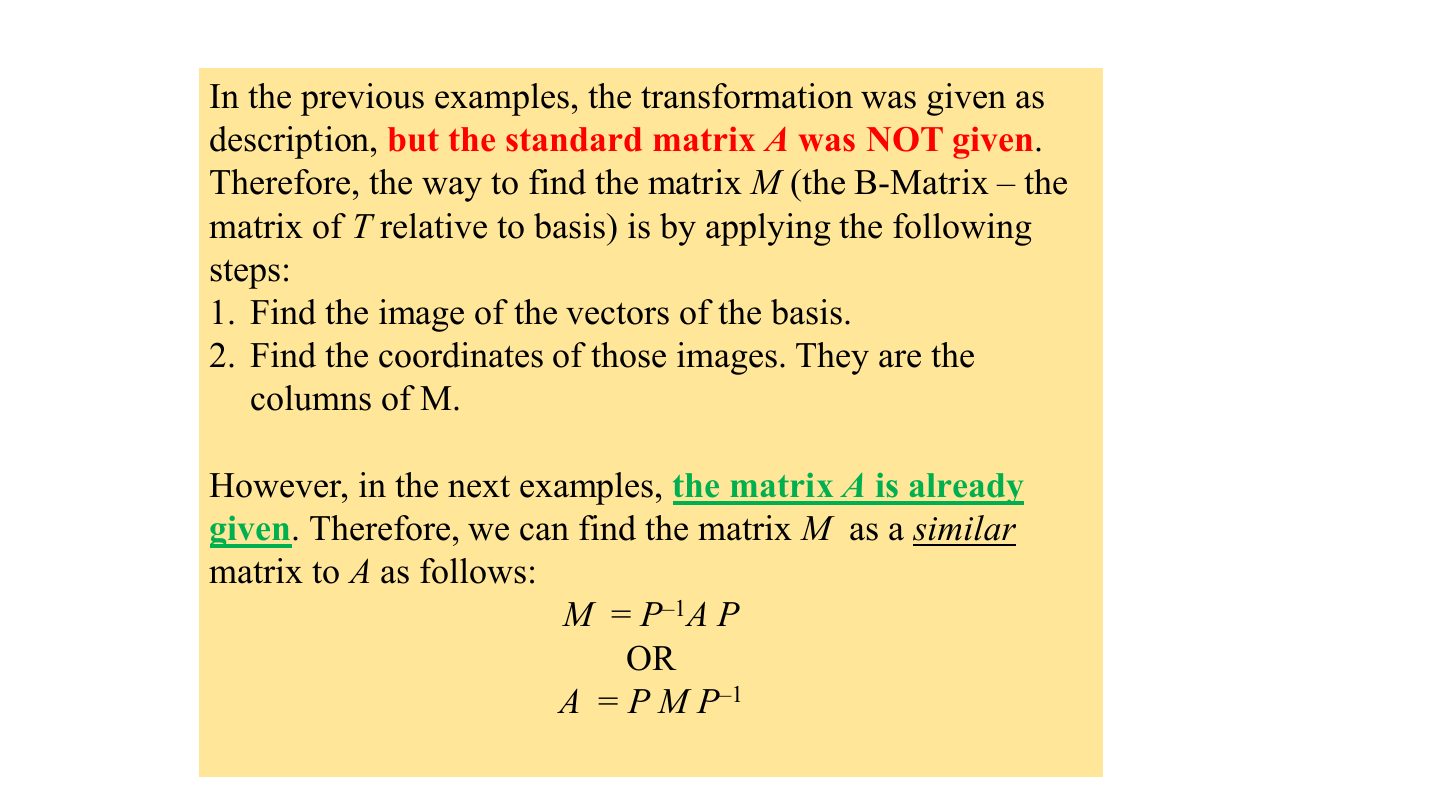
In the previous examples, the transformation was given as A description, but the standard matrix was NOT given . M Therefore, the way to find the matrix (the B-Matrix – the T matrix of relative to basis) is by applying the following
Notes
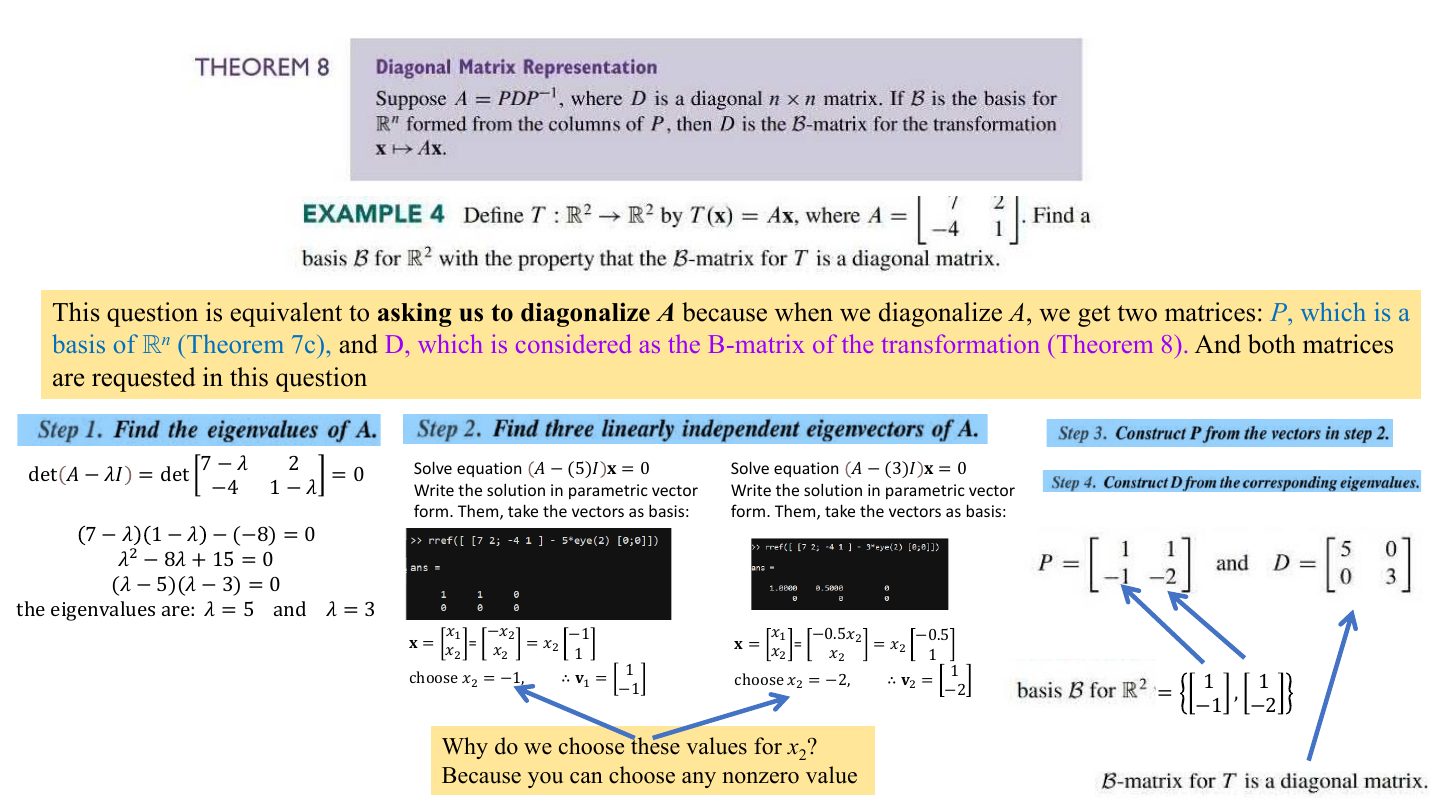
The B-matrix of x ↦ Ax is [T]_B = P⁻¹AP where P has the basis vectors as columns. If B is an eigenvector basis, [T]_B is diagonal.
Slide 5
Slide 6