Related question: this topic is examined
Diagonalization
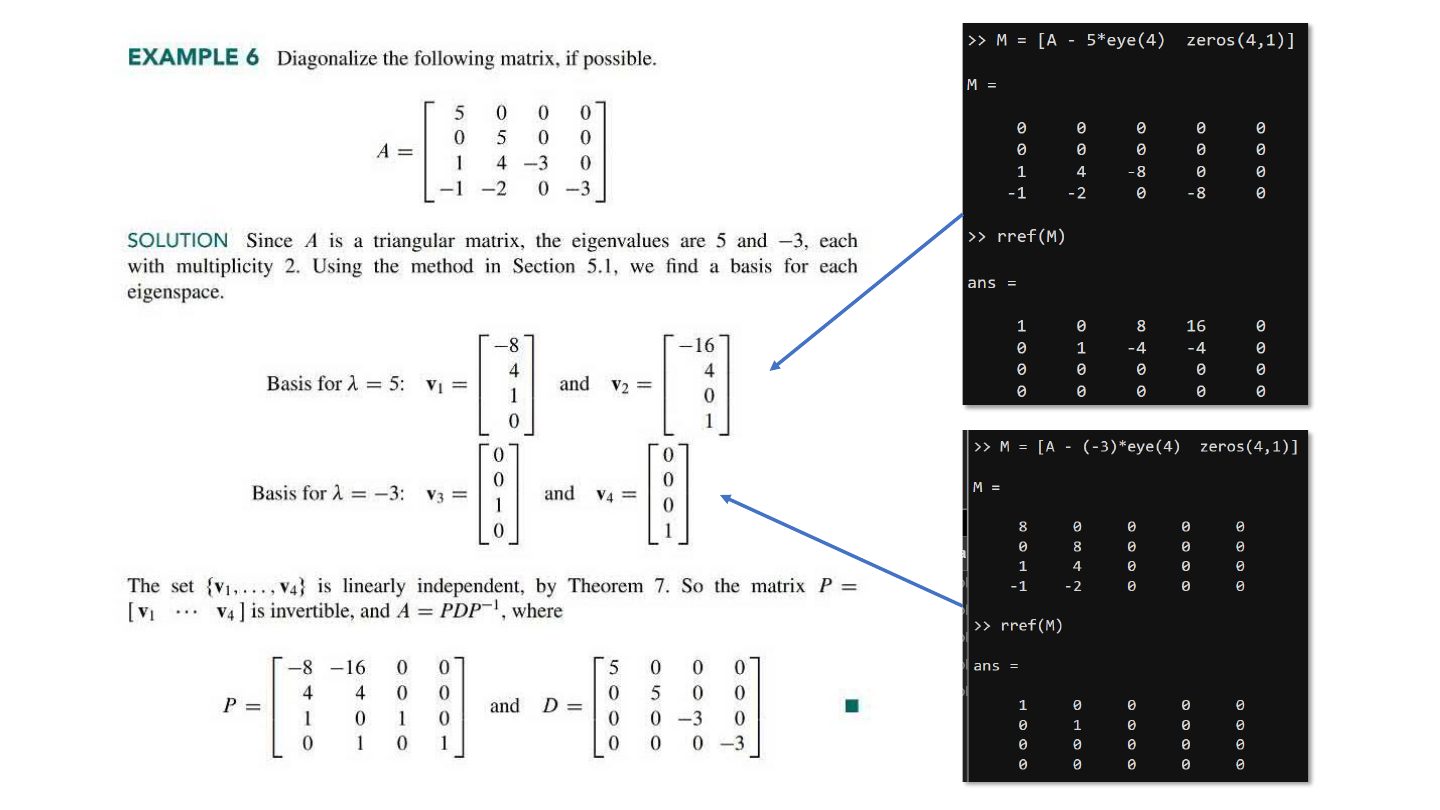
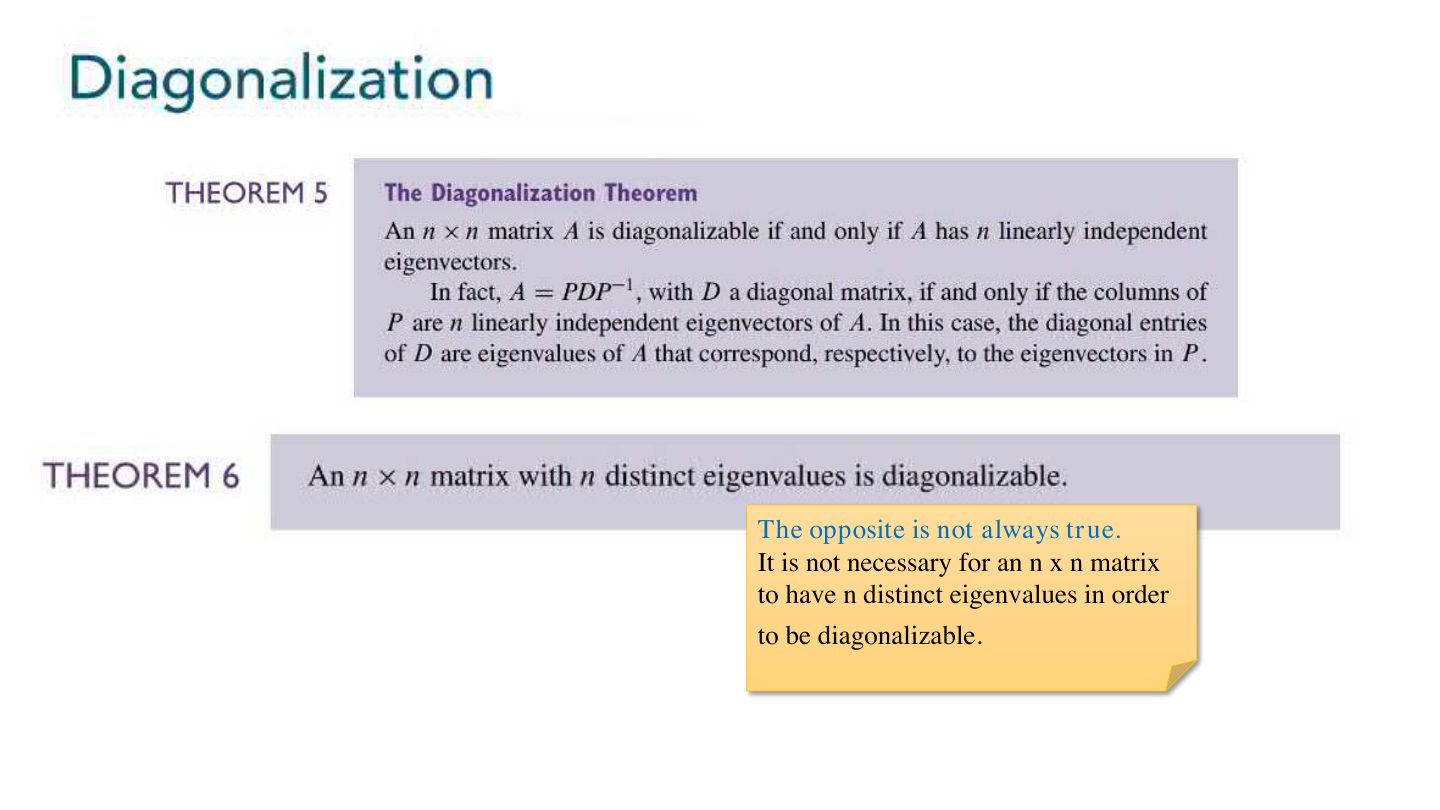
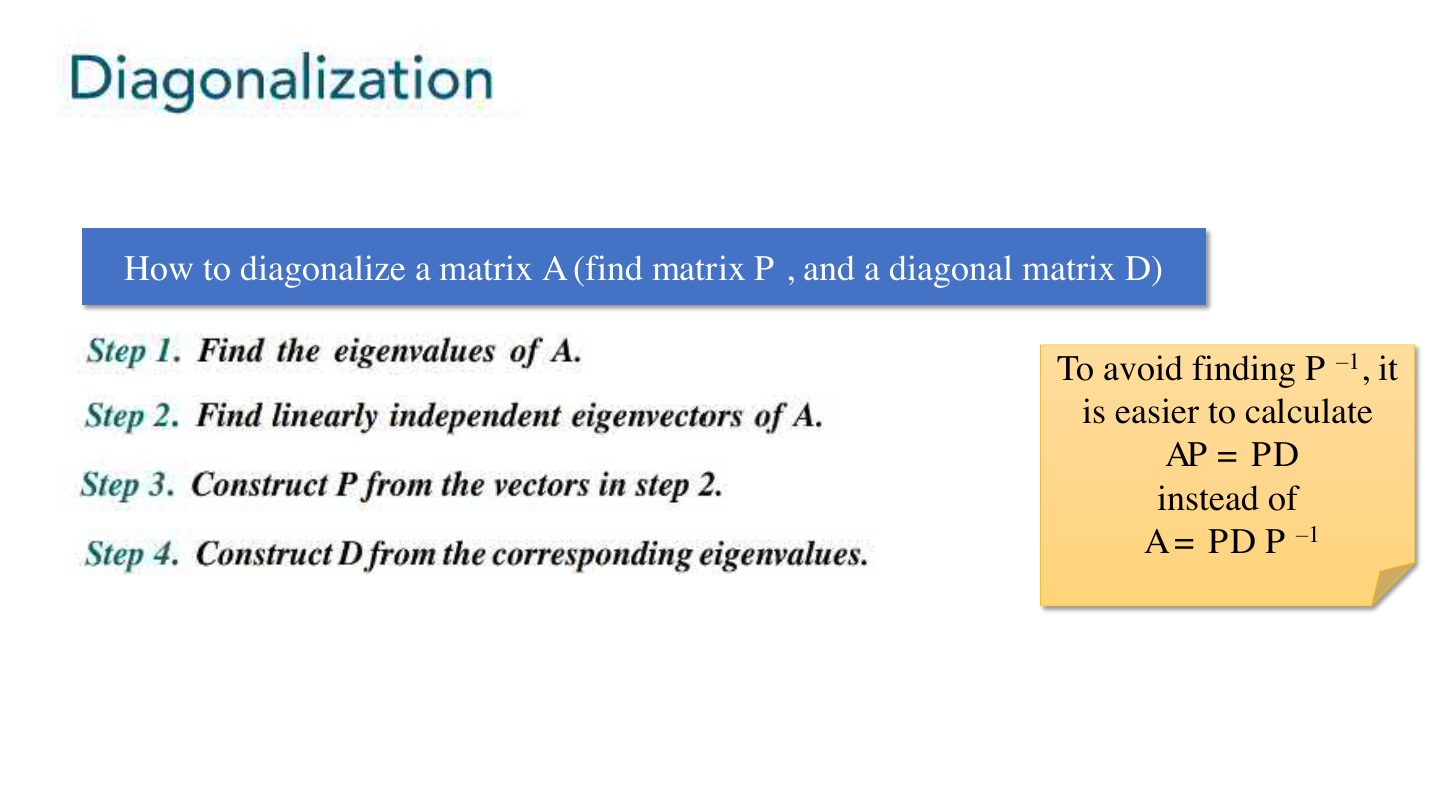
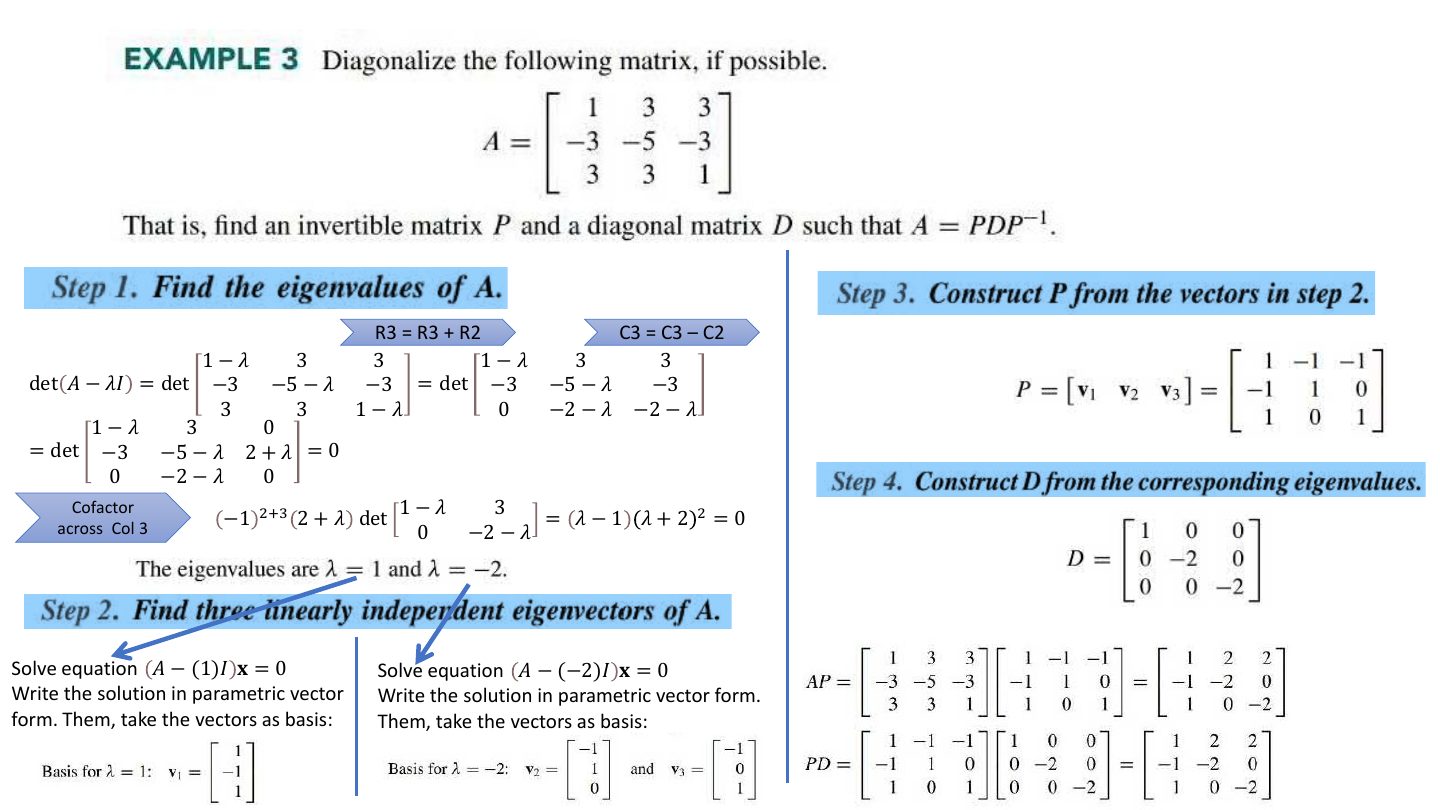
A = PDP⁻¹ and fast powers Aᵏ = PDᵏP⁻¹, the Diagonalization Theorem (n independent eigenvectors), the step-by-step procedure, and when distinct eigenvalues guarantee diagonalizability.
How to read this page
Every original slide is shown unchanged. Yellow marks on a slide point to a numbered note: hover or tap a mark to jump to its note, and hover a note to see its marks. Questions tagged Past exam appeared on a real paper; Prediction questions are likely angles, not confirmed. Pick an answer to each question: a wrong pick tells you why it is wrong, so you can try again.
Slide 1
Notes
A is diagonalizable ⇔ it has n linearly independent eigenvectors. Then A = PDP⁻¹: P’s columns are eigenvectors, D’s diagonal the matching eigenvalues. Aᵏ = PDᵏP⁻¹.
Memory trick n distinct eigenvalues ⇒ diagonalizable (sufficient, not necessary).
Exam angle
Related question: this topic is examined
Related question: this topic is examined
A 3×3 matrix with 3 distinct eigenvalues is diagonalizable.
Every diagonalizable matrix is invertible.
- 0 can be an eigenvalue.
Slide 2
Slide 3
Slide 4
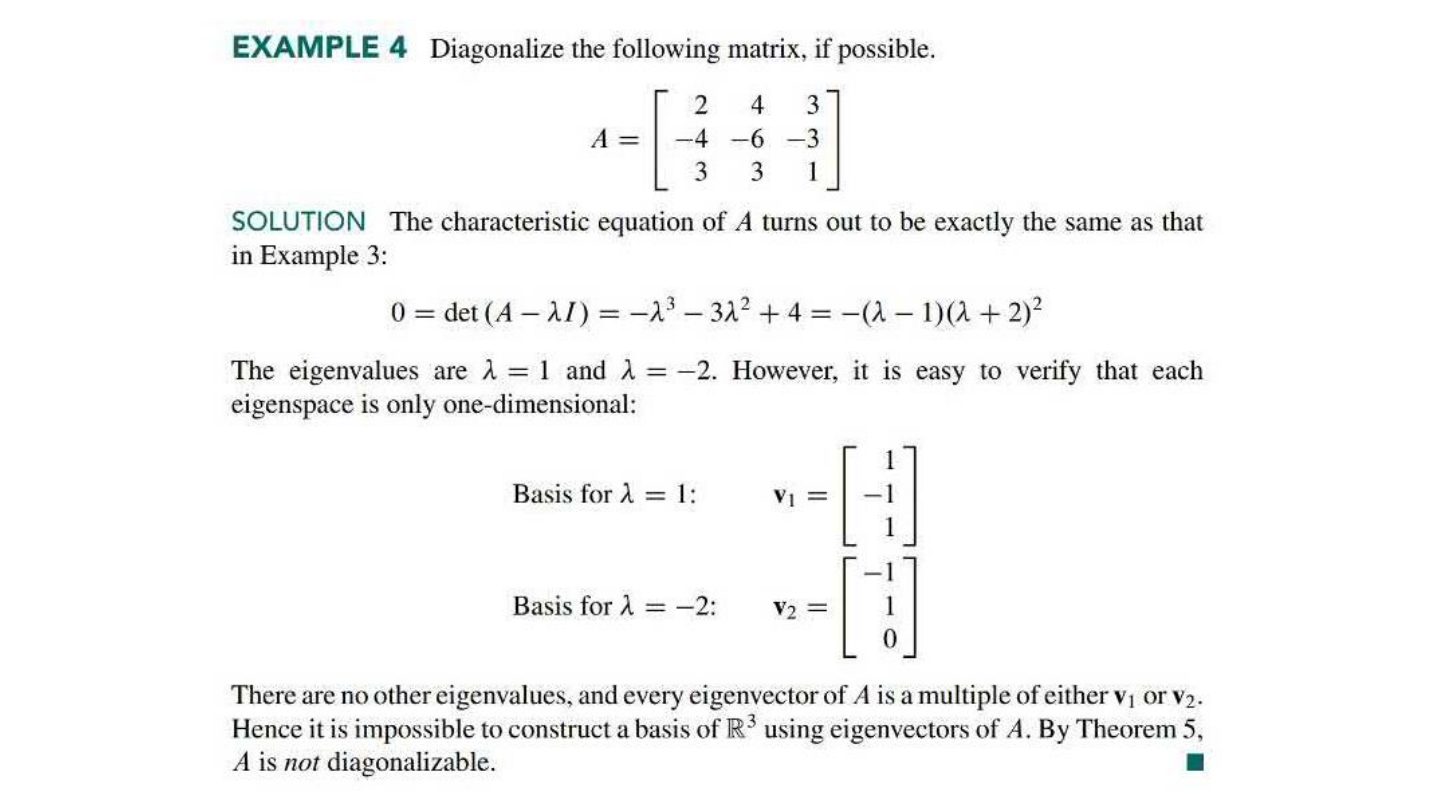
Slide 5
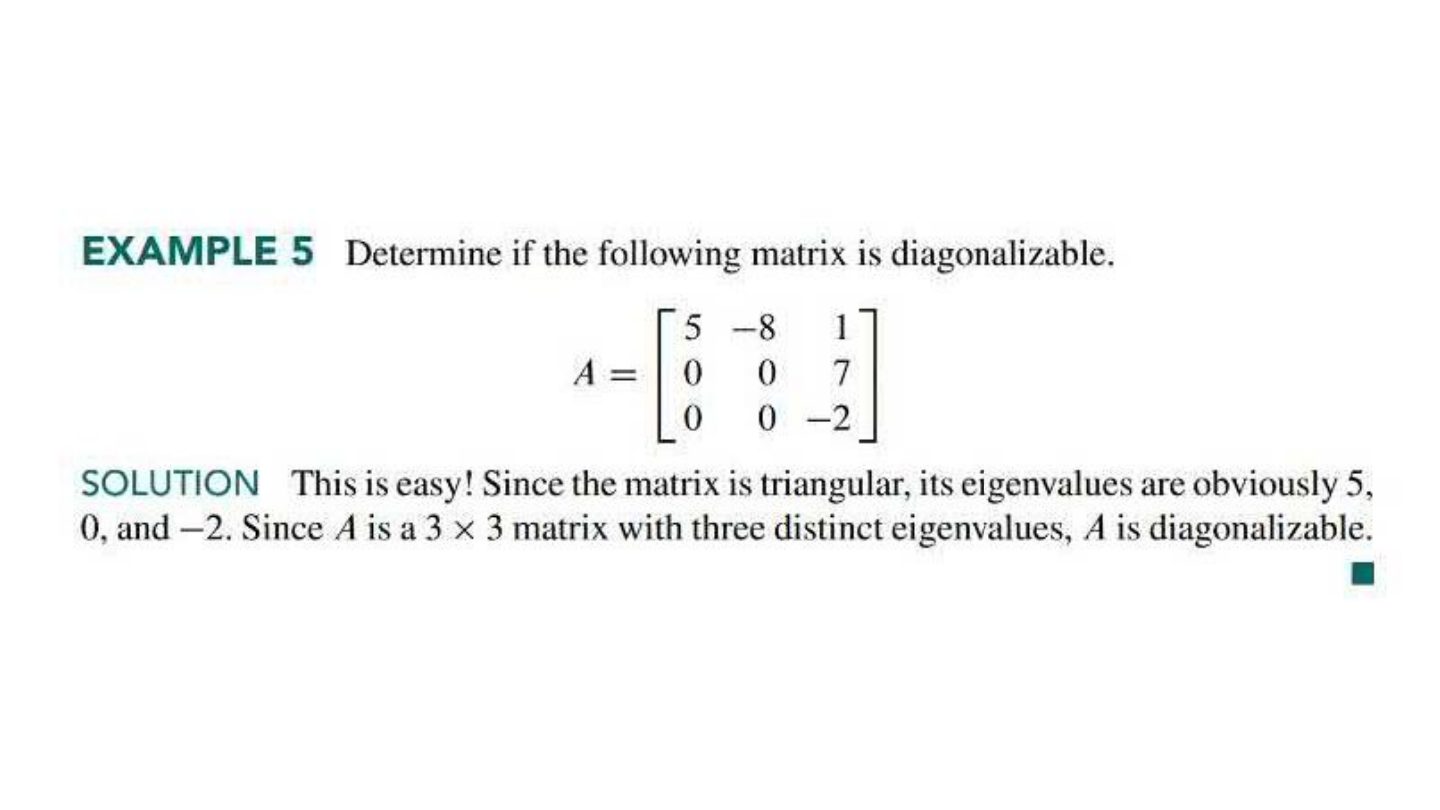
Notes
Steps: eigenvalues → basis of each eigenspace → if the total is n vectors, build P and D (same order).
Slide 6
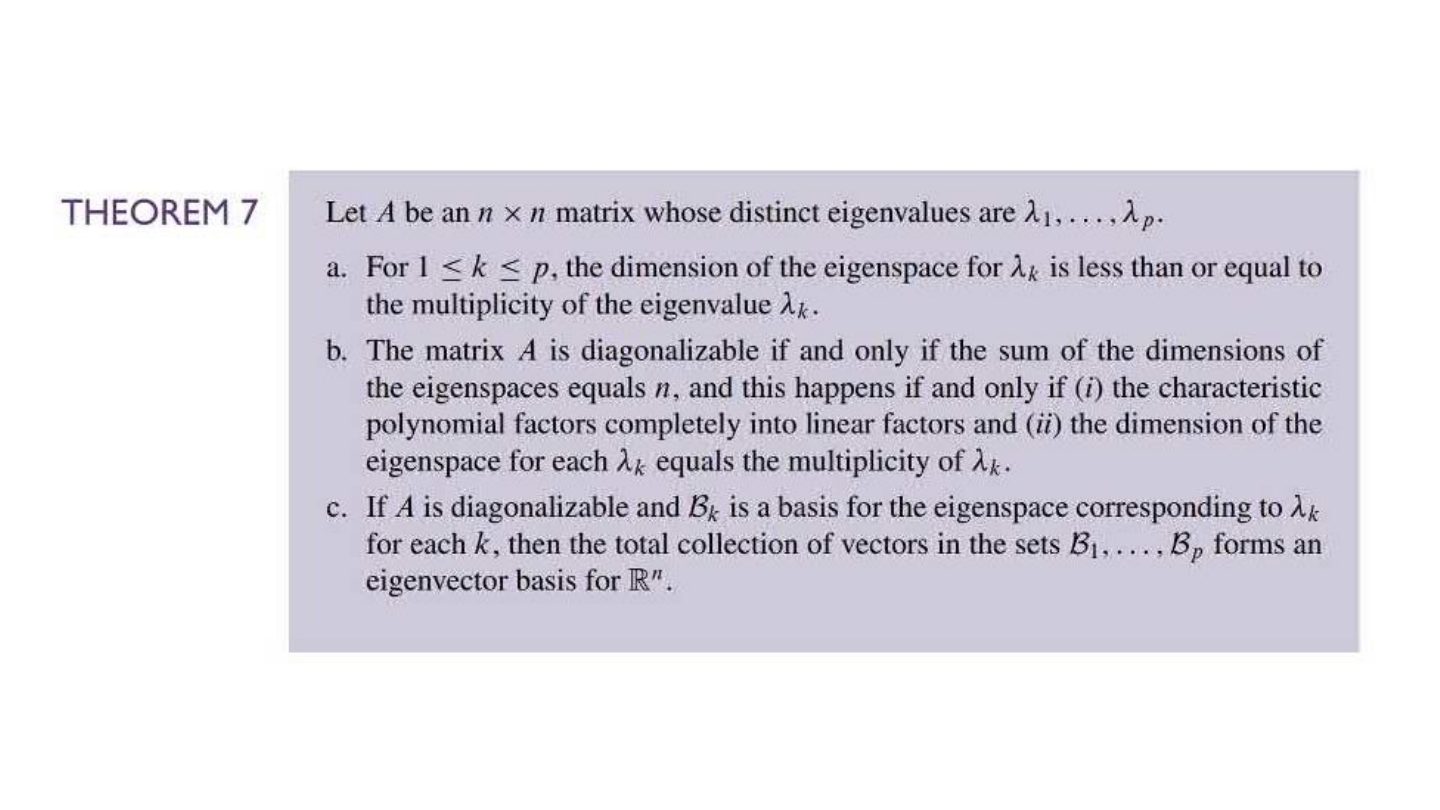
Slide 7