Related question: this topic is examined
Cramer's Rule, the Inverse Formula, Area and Volume
Cramer's rule xᵢ = det Aᵢ(b) / det A, the adjugate formula A⁻¹ = adj A / det A, and determinants as areas and volumes, including how a linear transformation scales area.
How to read this page
Every original slide is shown unchanged. Yellow marks on a slide point to a numbered note: hover or tap a mark to jump to its note, and hover a note to see its marks. Questions tagged Past exam appeared on a real paper; Prediction questions are likely angles, not confirmed. Pick an answer to each question: a wrong pick tells you why it is wrong, so you can try again.
All 10 slides
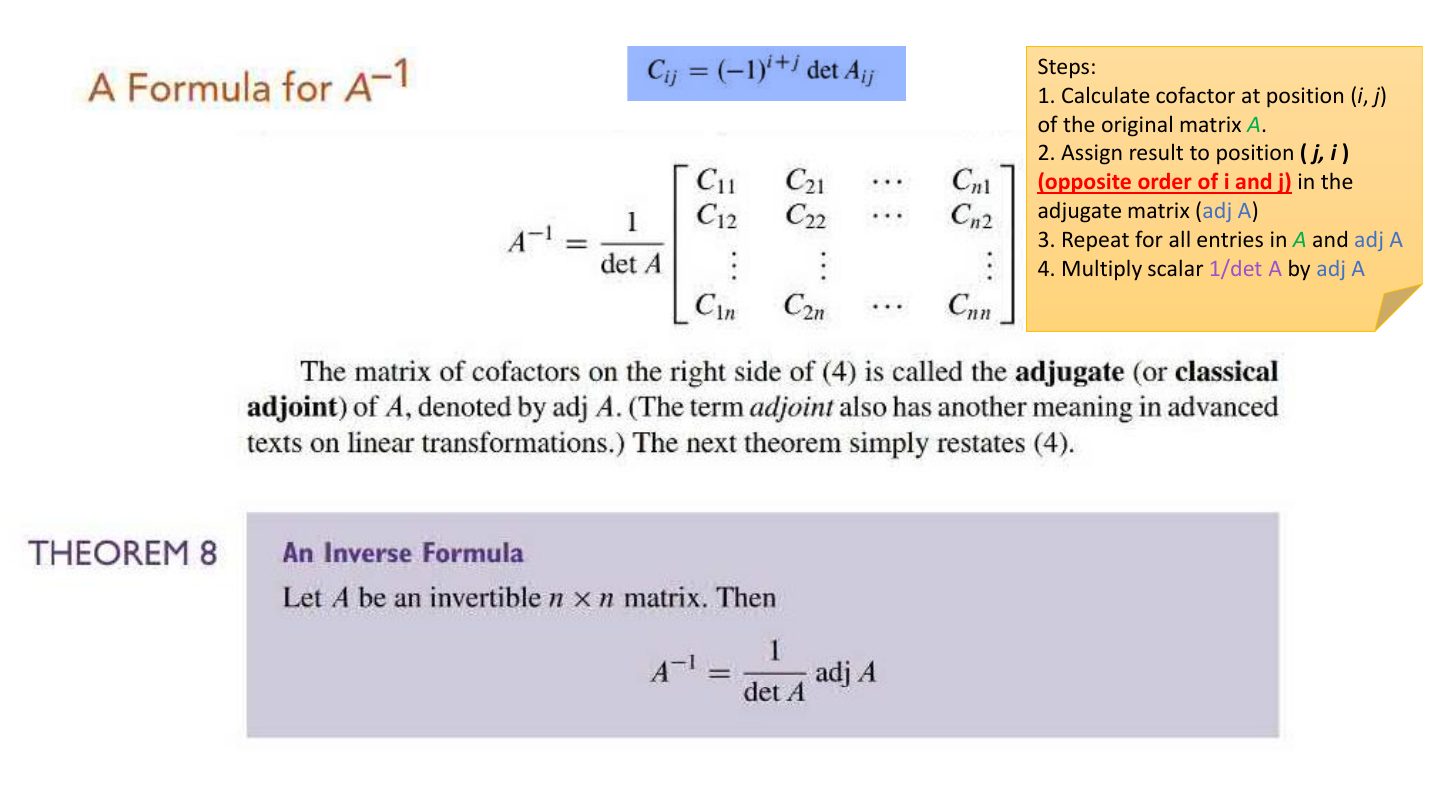
- 1 Steps: 1. Calculate cofactor at position ( i , j ) of the original matrix A . 2. Assign result to position ( j, i ) (opposite order of i and j) in the adjugate matrix (adj A)
- 2 Slide 2
- 3 Slide 3
- 4 Slide 4
- 5 The area after transformation is equal to the area before transformation multiplied by the det of A
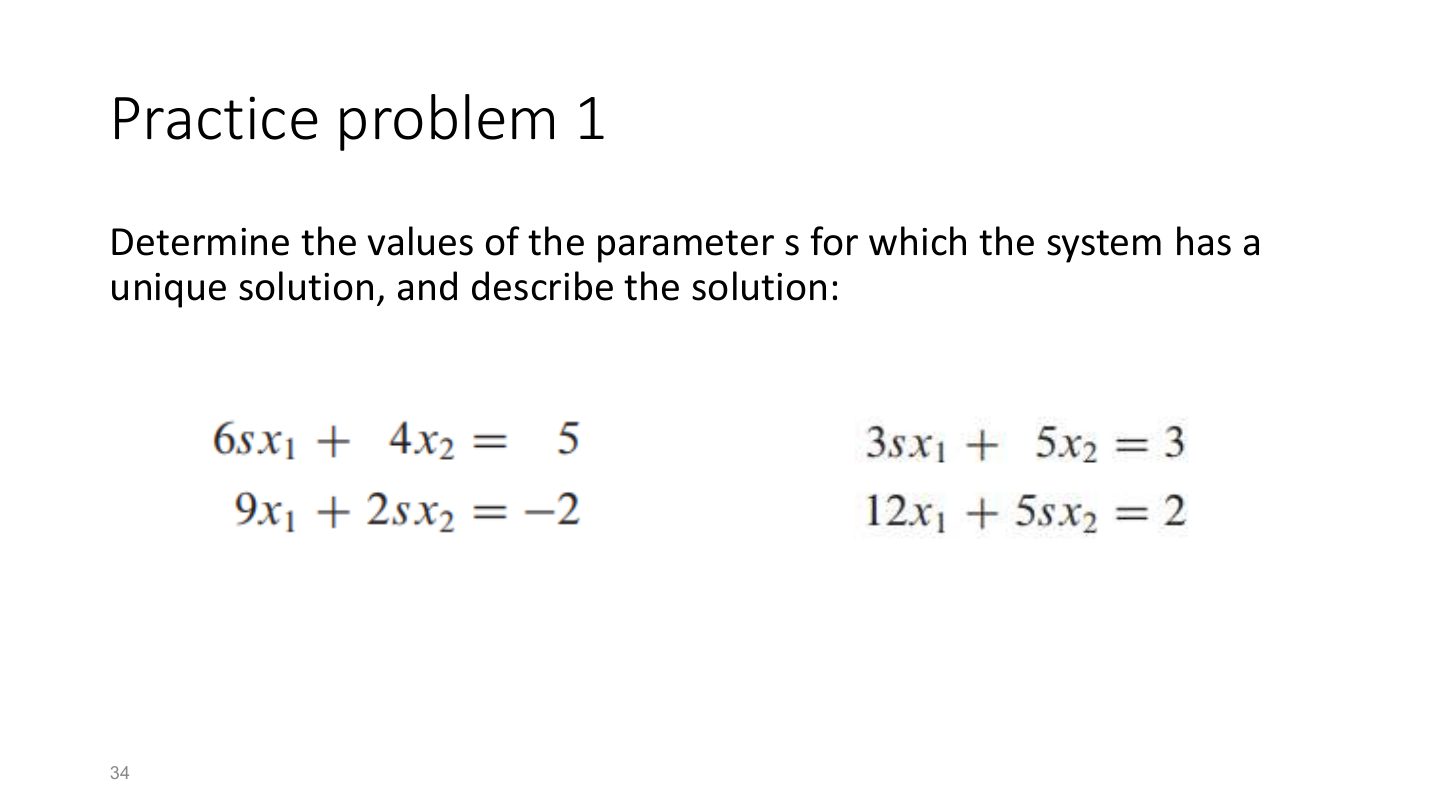
- 6 Practice problem 1
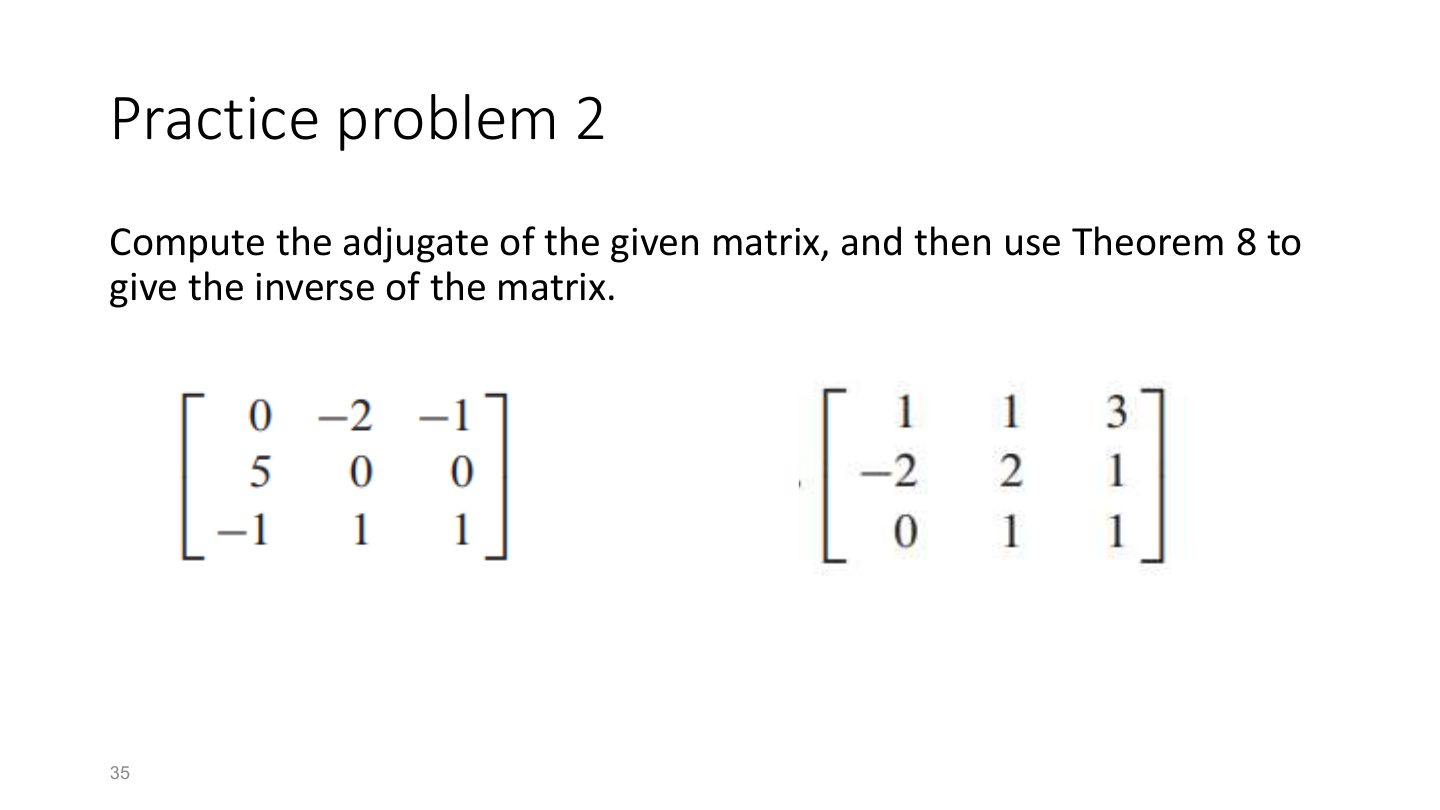
- 7 Practice problem 2
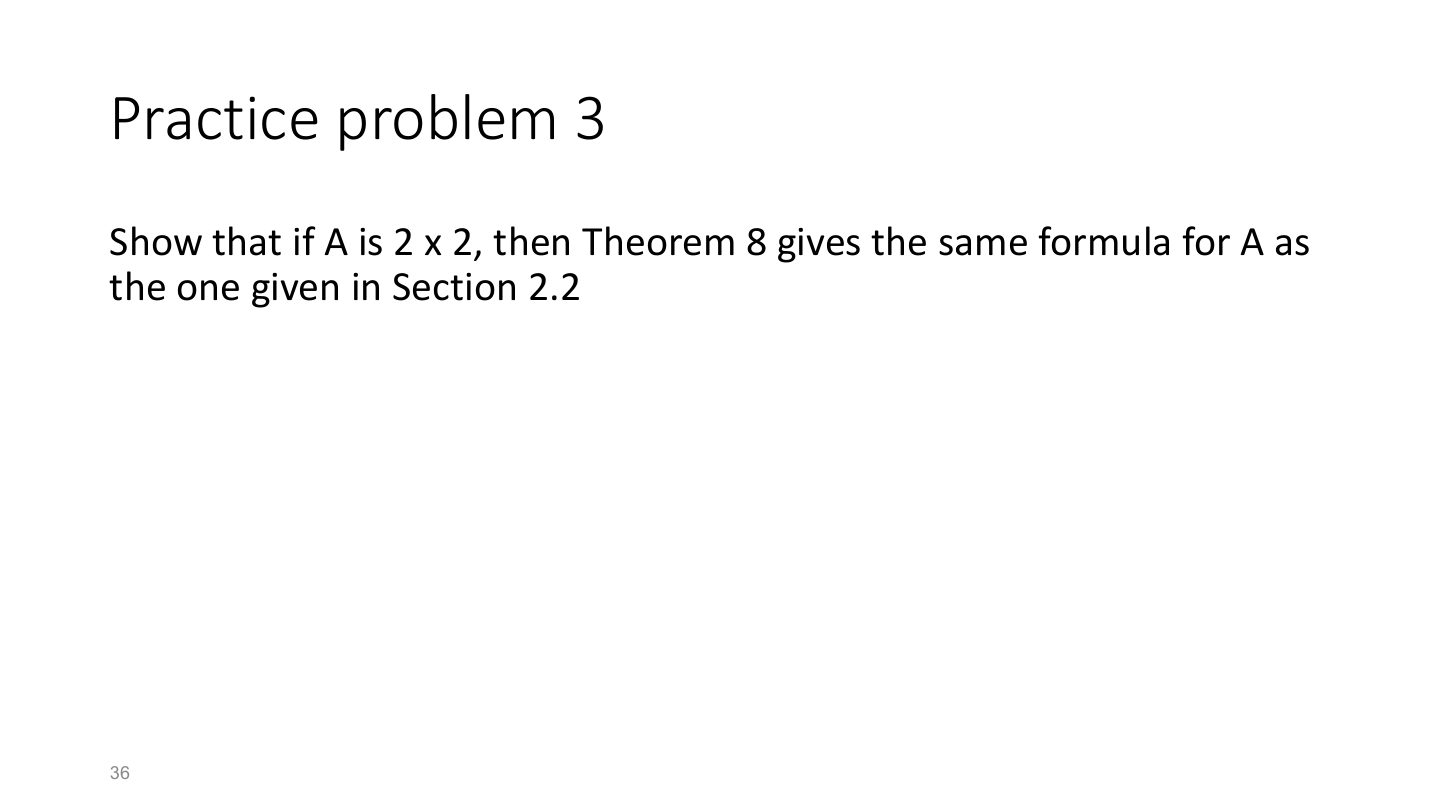
- 8 Practice problem 3
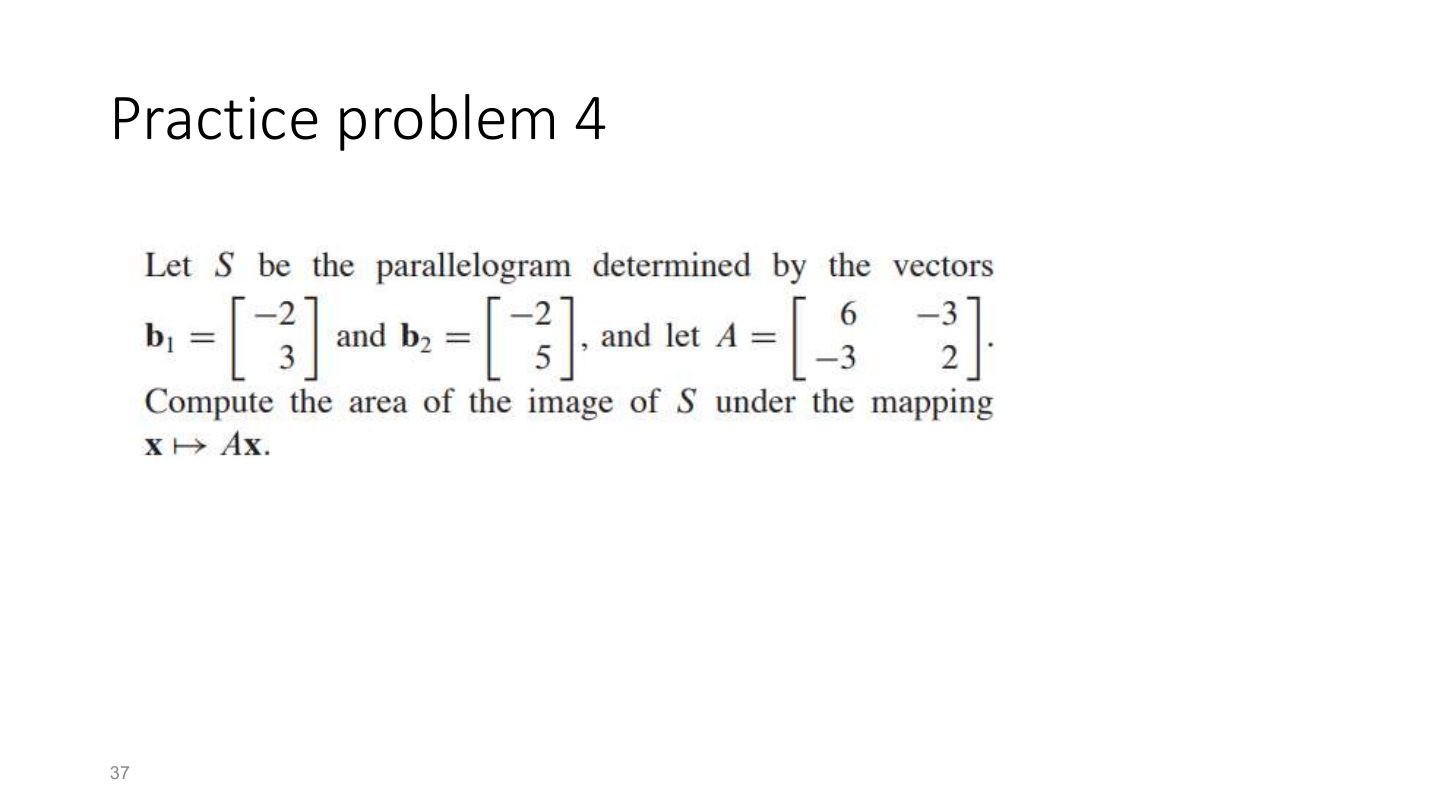
- 9 Practice problem 4
- 10 Practice problem 5
Steps: 1. Calculate cofactor at position ( i , j ) of the original matrix A . 2. Assign result to position ( j, i ) (opposite order of i and j) in the adjugate matrix (adj A)
Notes
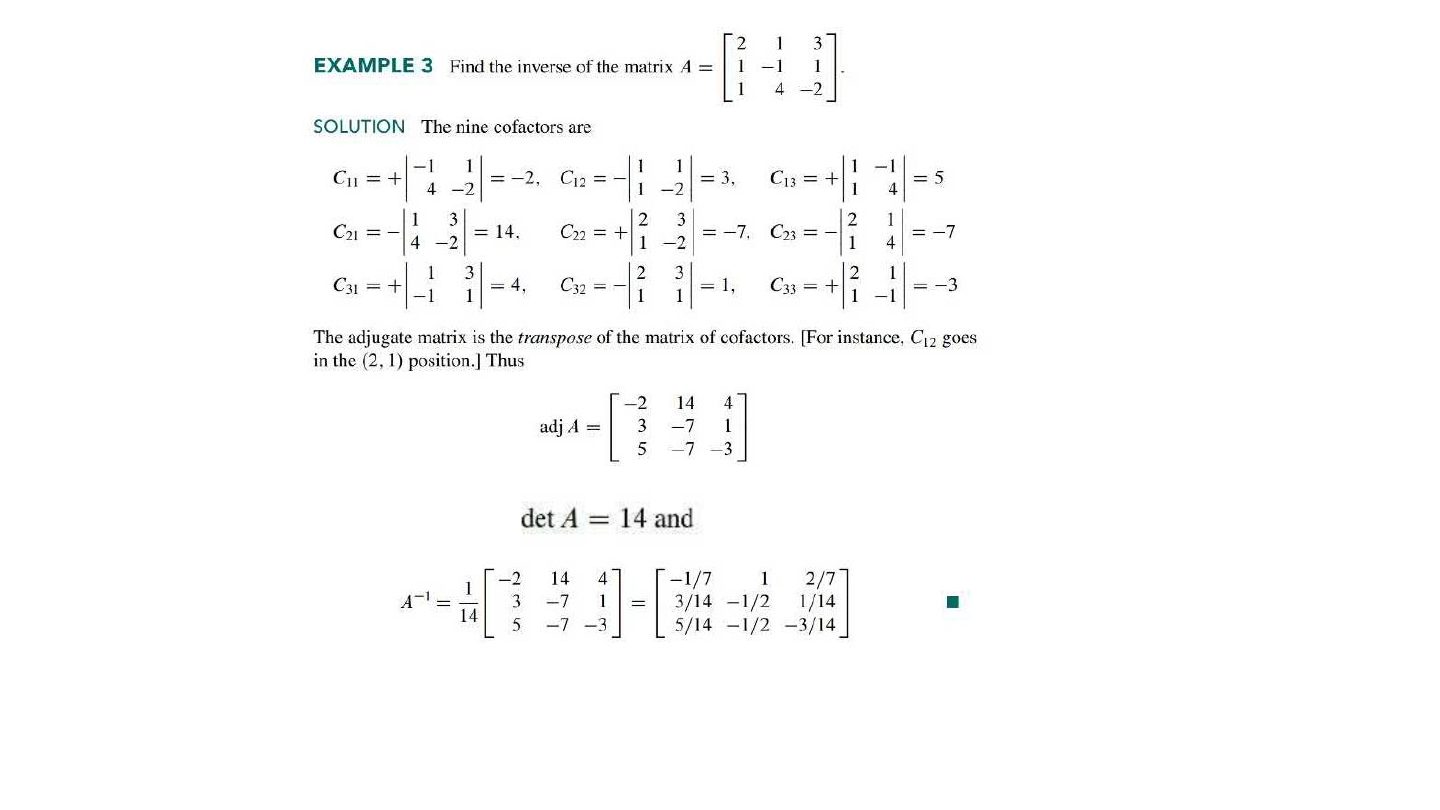
Cramer's rule: xᵢ = det Aᵢ(b) / det A, where Aᵢ(b) replaces column i with b. A⁻¹ = (1/det A)·adj A, adj A = transpose of the cofactor matrix.
Exam angle
Use Cramer's rule: 3x₁ − 2x₂ = 6, −5x₁ + 4x₂ = 8.
Compare with the model answer
det A = 12 − 10 = 2. det A₁ = 6·4 − (−2)·8 = 40 → x₁ = 20. det A₂ = 3·8 − 6·(−5) = 54 → x₂ = 27.
Slide 2
Slide 3
Slide 4
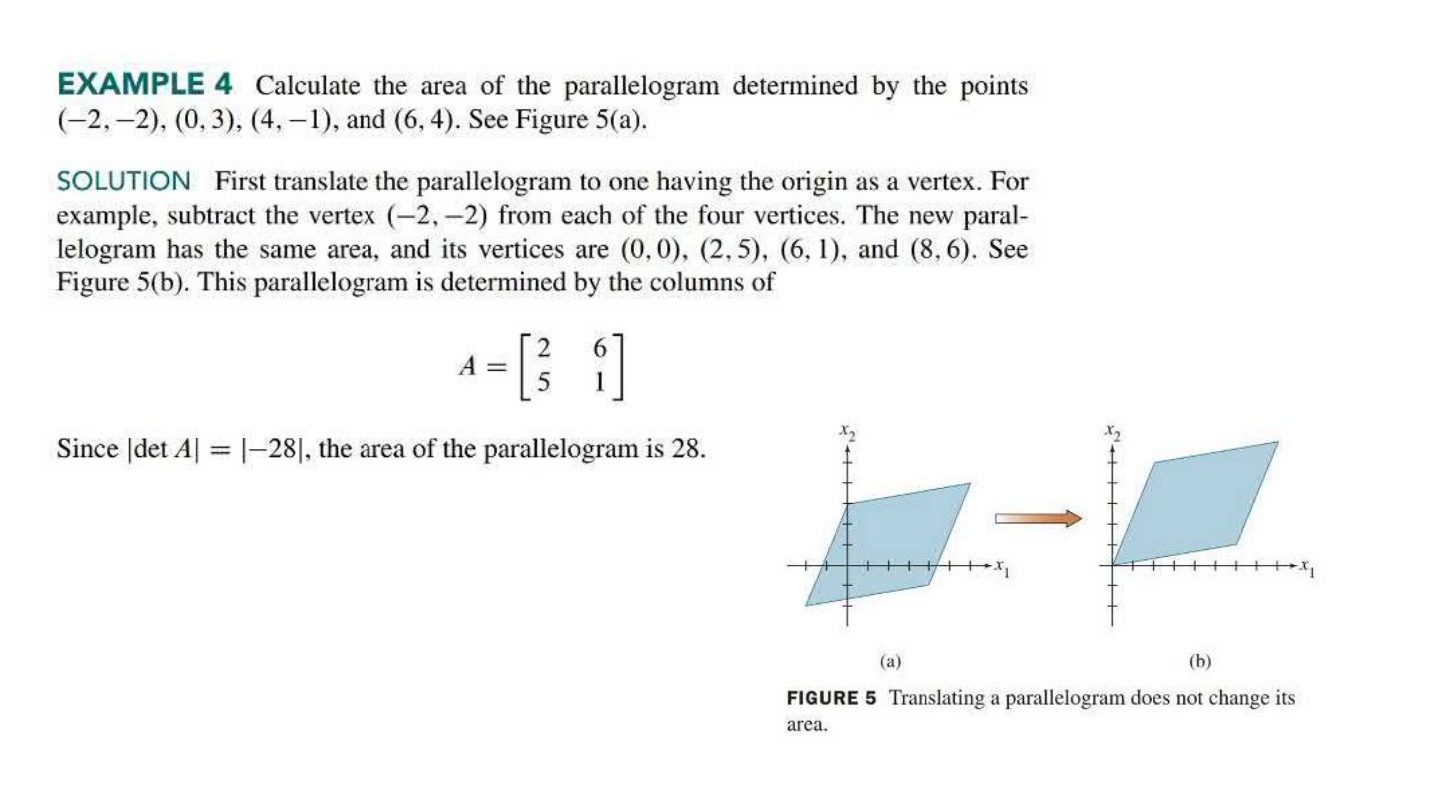
The area after transformation is equal to the area before transformation multiplied by the det of A
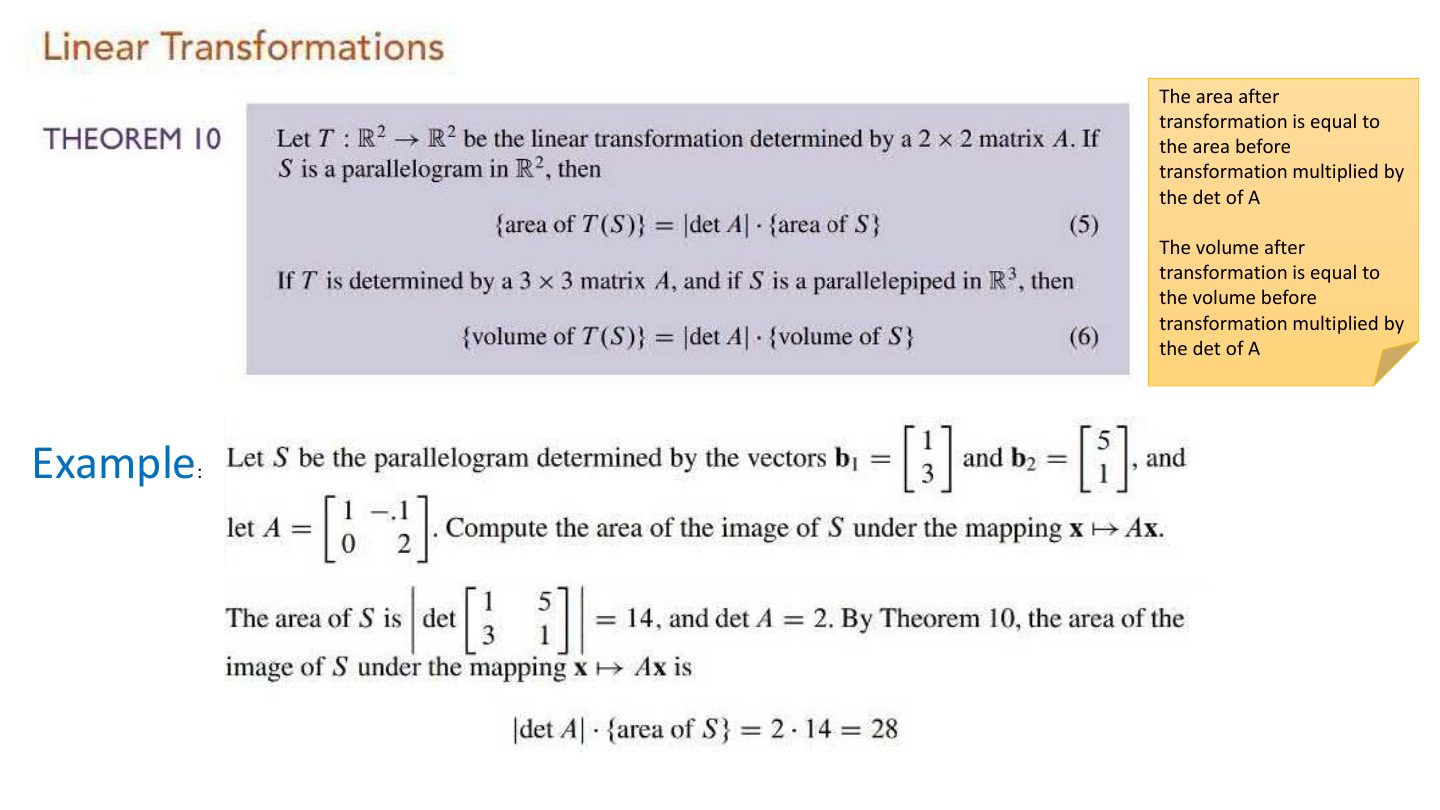
Notes
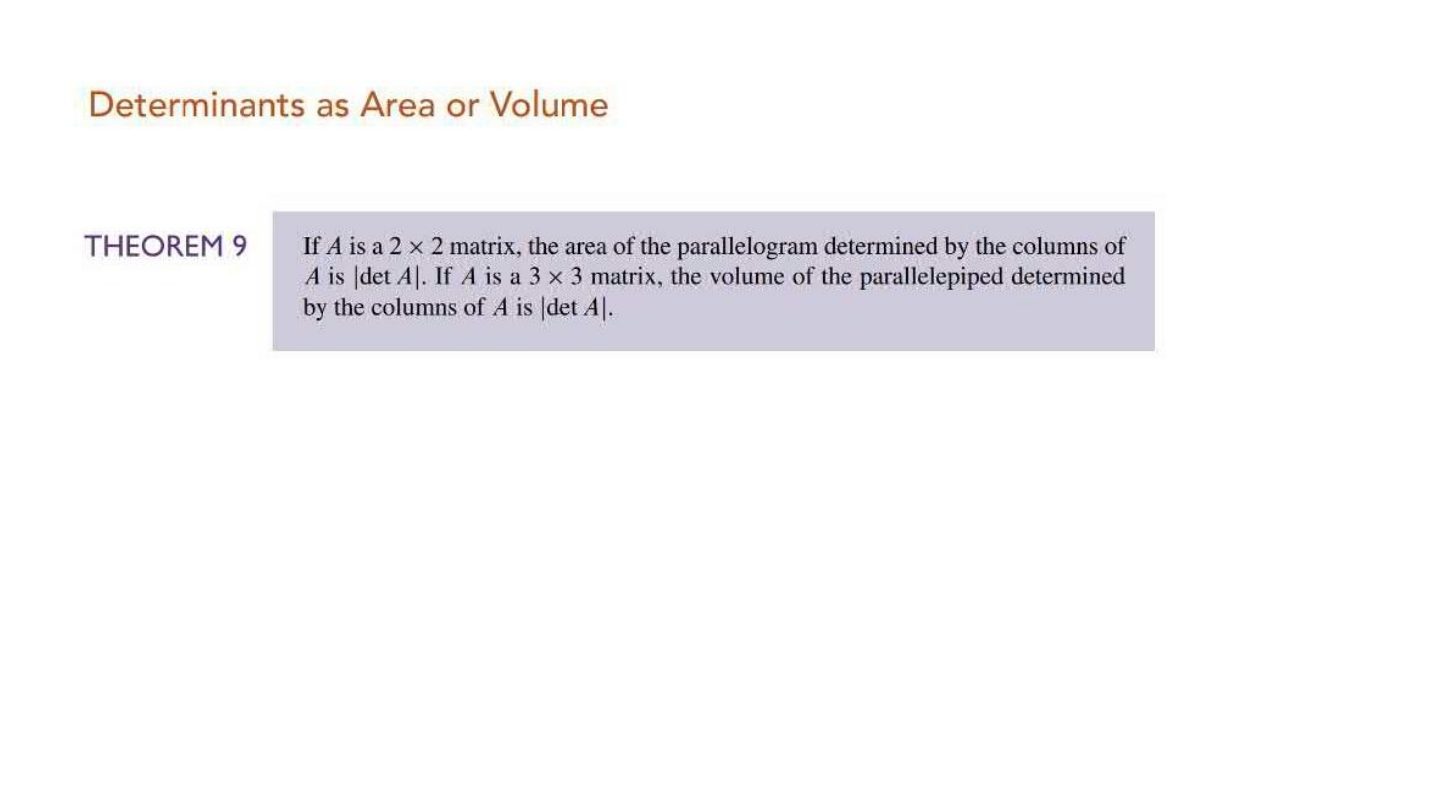
|det A| = area of the parallelogram (2×2) or volume of the parallelepiped (3×3) spanned by the columns. A transformation multiplies areas by |det A|.
Exam angle
T(x) = Ax with det A = −3 maps a region of area 4 to area:
Practice problem 1
Practice problem 2
Practice problem 3
Practice problem 4
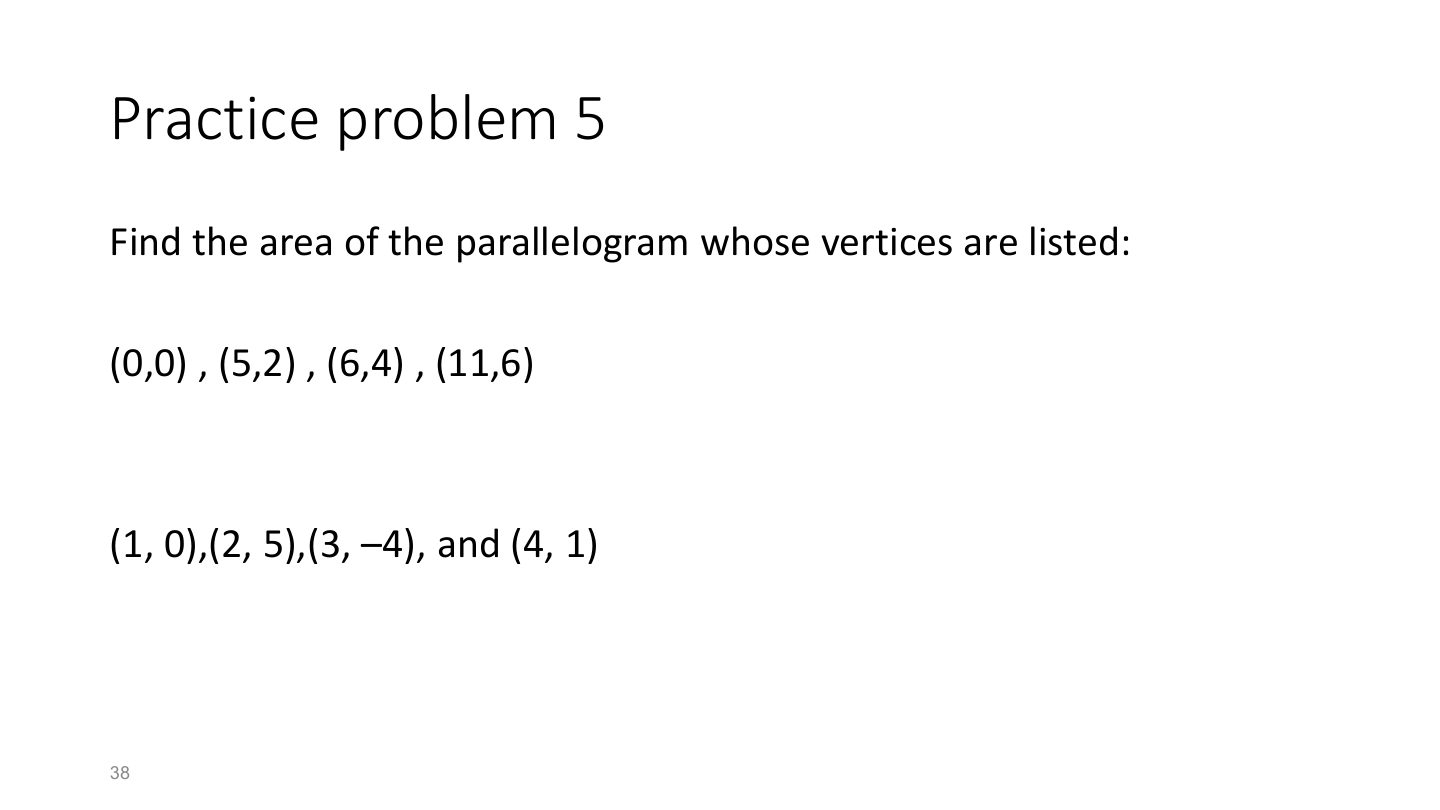
Practice problem 5