Related question: this topic is examined
The Inverse of a Matrix
The 2×2 inverse formula, solving Ax = b with A⁻¹, properties of inverses, elementary matrices, the algorithm [A | I] ~ [I | A⁻¹], the Invertible Matrix Theorem and invertible linear transformations.
How to read this page
Every original slide is shown unchanged. Yellow marks on a slide point to a numbered note: hover or tap a mark to jump to its note, and hover a note to see its marks. Questions tagged Past exam appeared on a real paper; Prediction questions are likely angles, not confirmed. Pick an answer to each question: a wrong pick tells you why it is wrong, so you can try again.
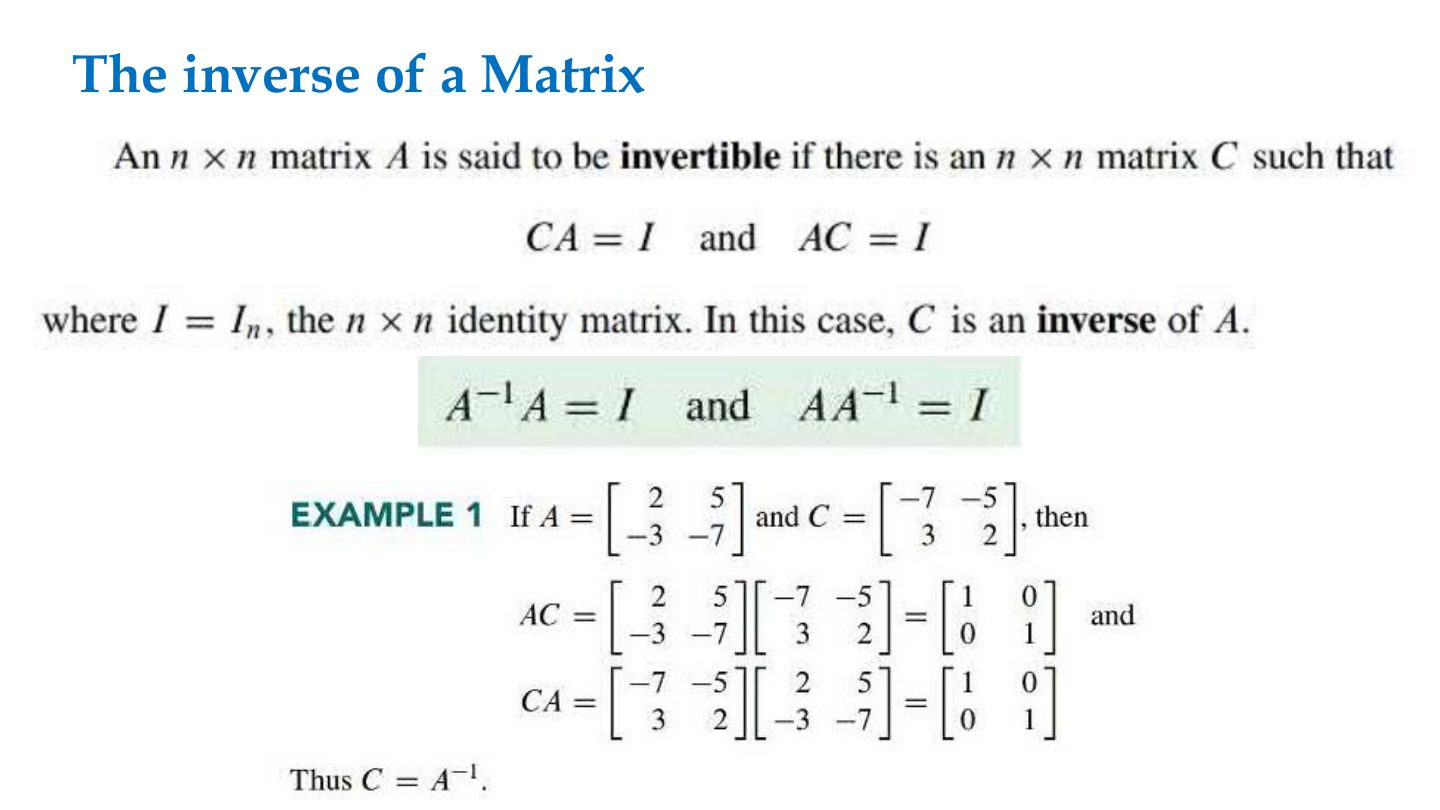
The inverse of a Matrix
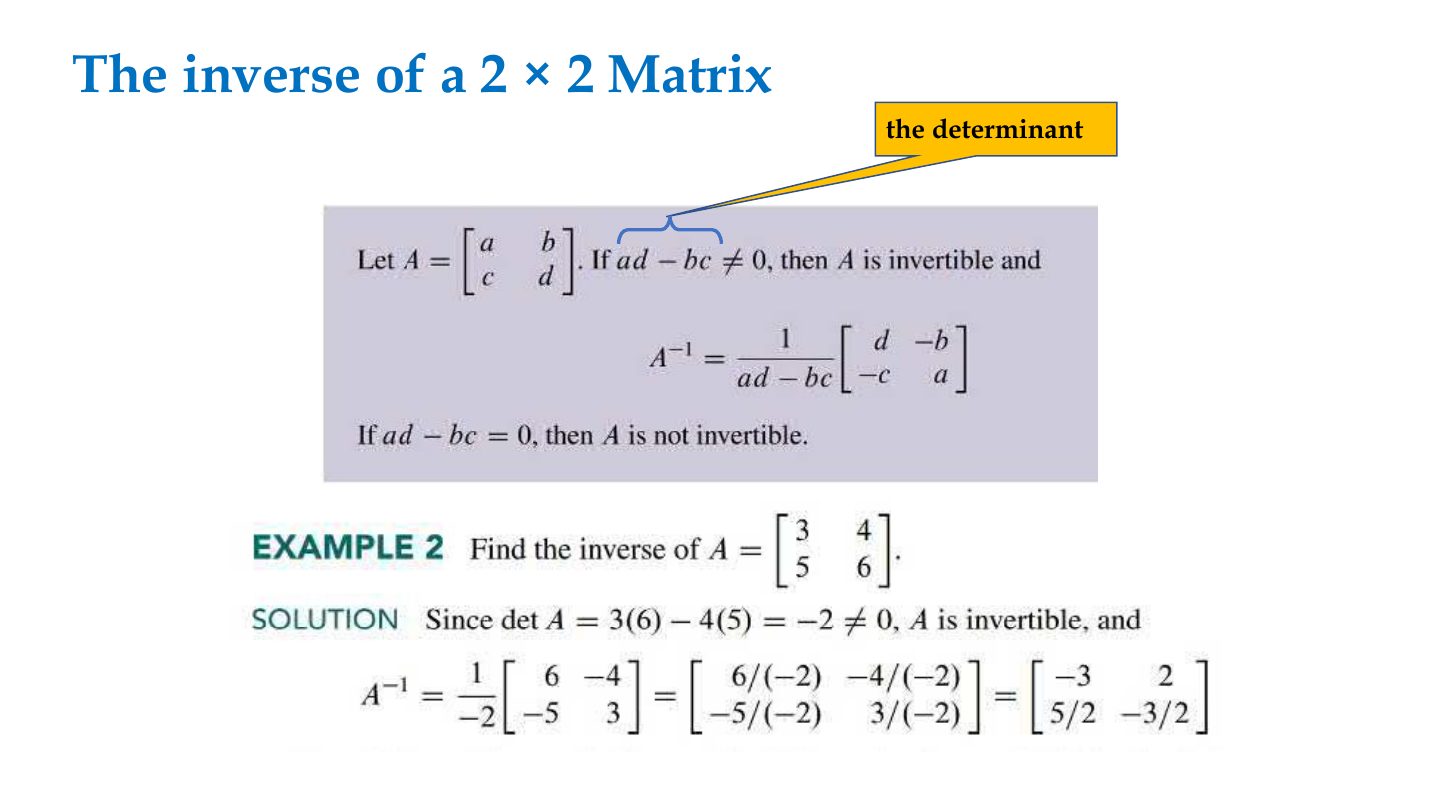
The inverse of a 2 × 2 Matrix
Notes
For A = [[a, b], [c, d]]: A⁻¹ = (1/(ad − bc))·[[d, −b], [−c, a]], when ad − bc ≠ 0.
Exam angle
Related question: this topic is examined
Related question: this topic is examined
The inverse of [[2, 1], [5, 3]] is:
- det = 1.
The inverse of a Matrix
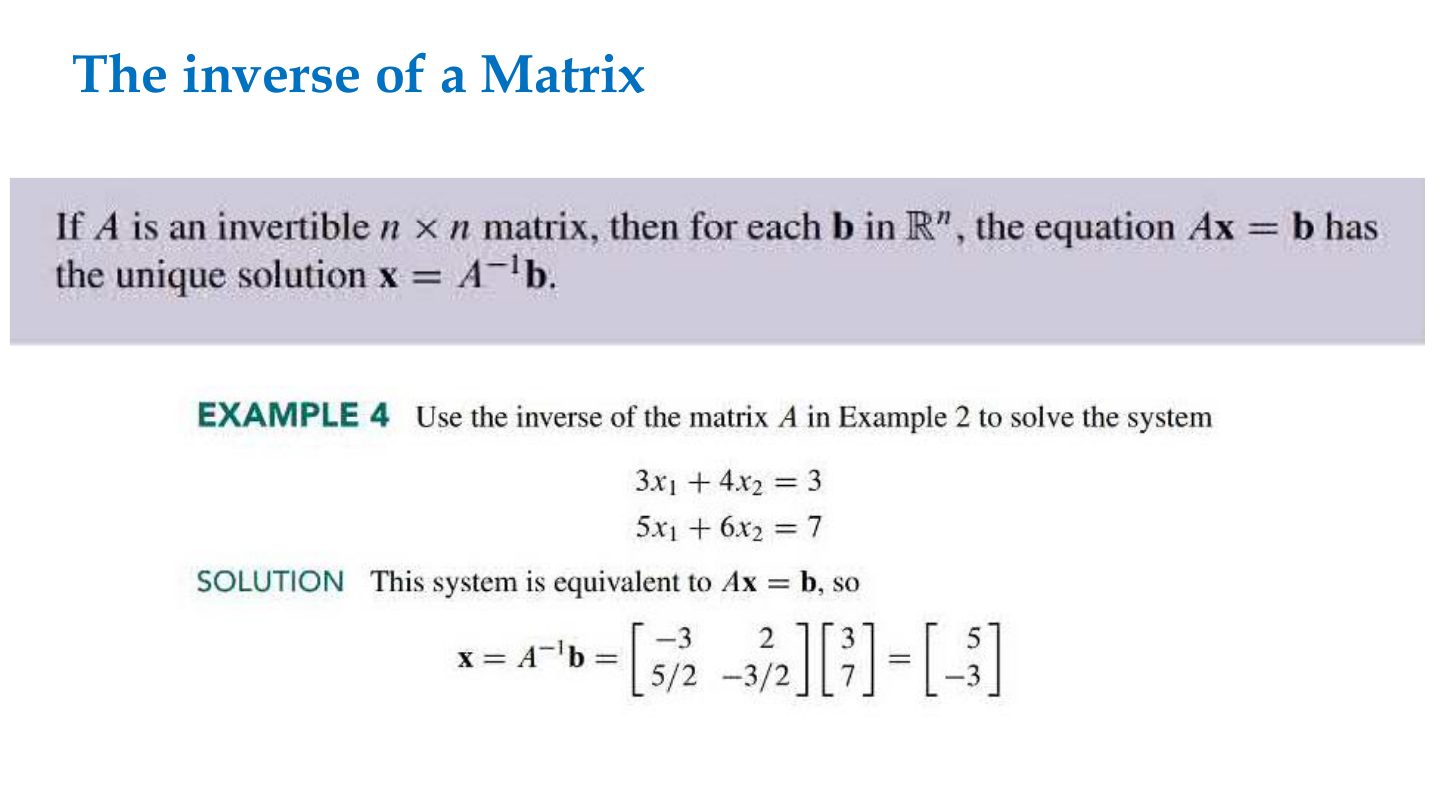
The inverse of a Matrix
Notes
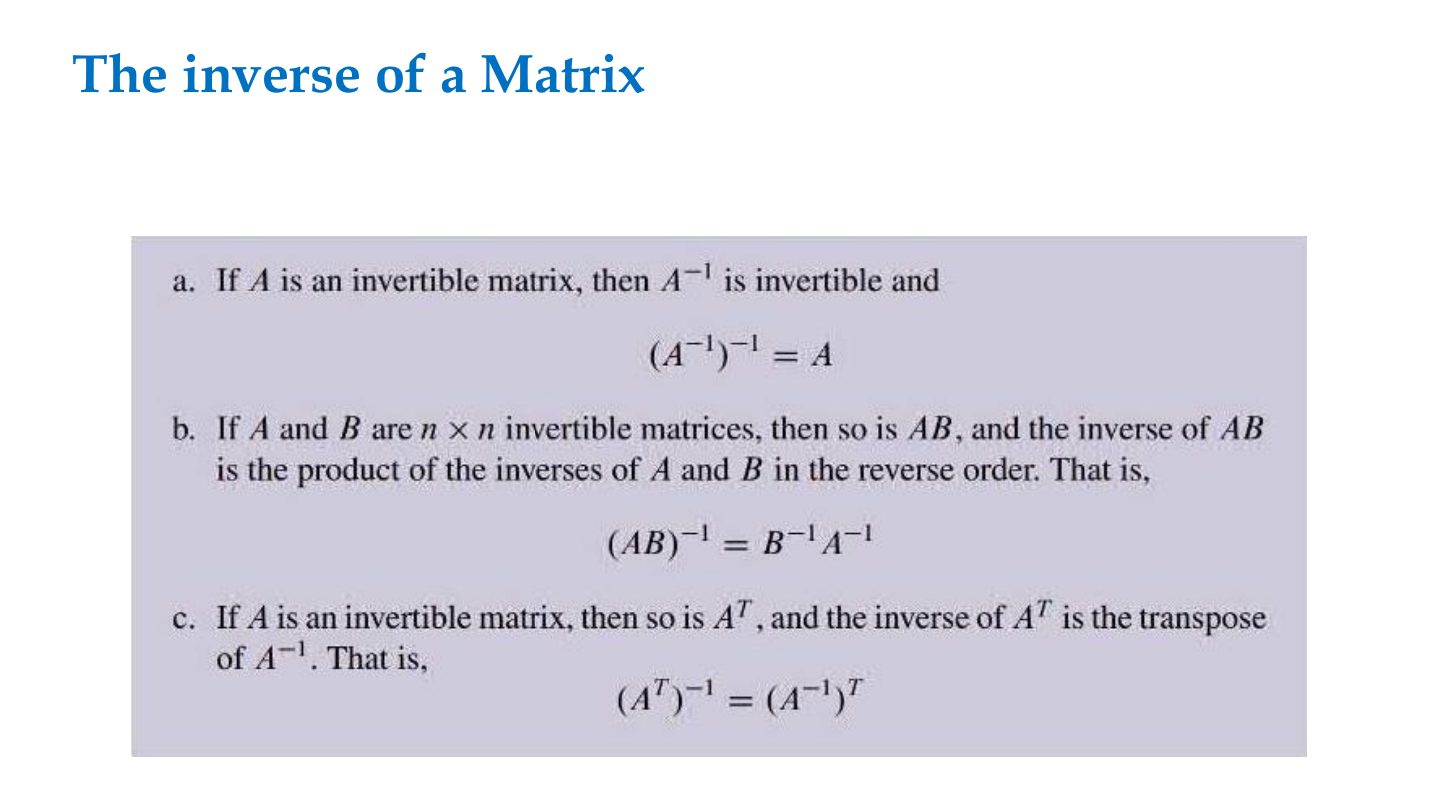
(A⁻¹)⁻¹ = A, (AB)⁻¹ = B⁻¹A⁻¹, (Aᵀ)⁻¹ = (A⁻¹)ᵀ.
Trap (AB)⁻¹ = B⁻¹A⁻¹: the order reverses.
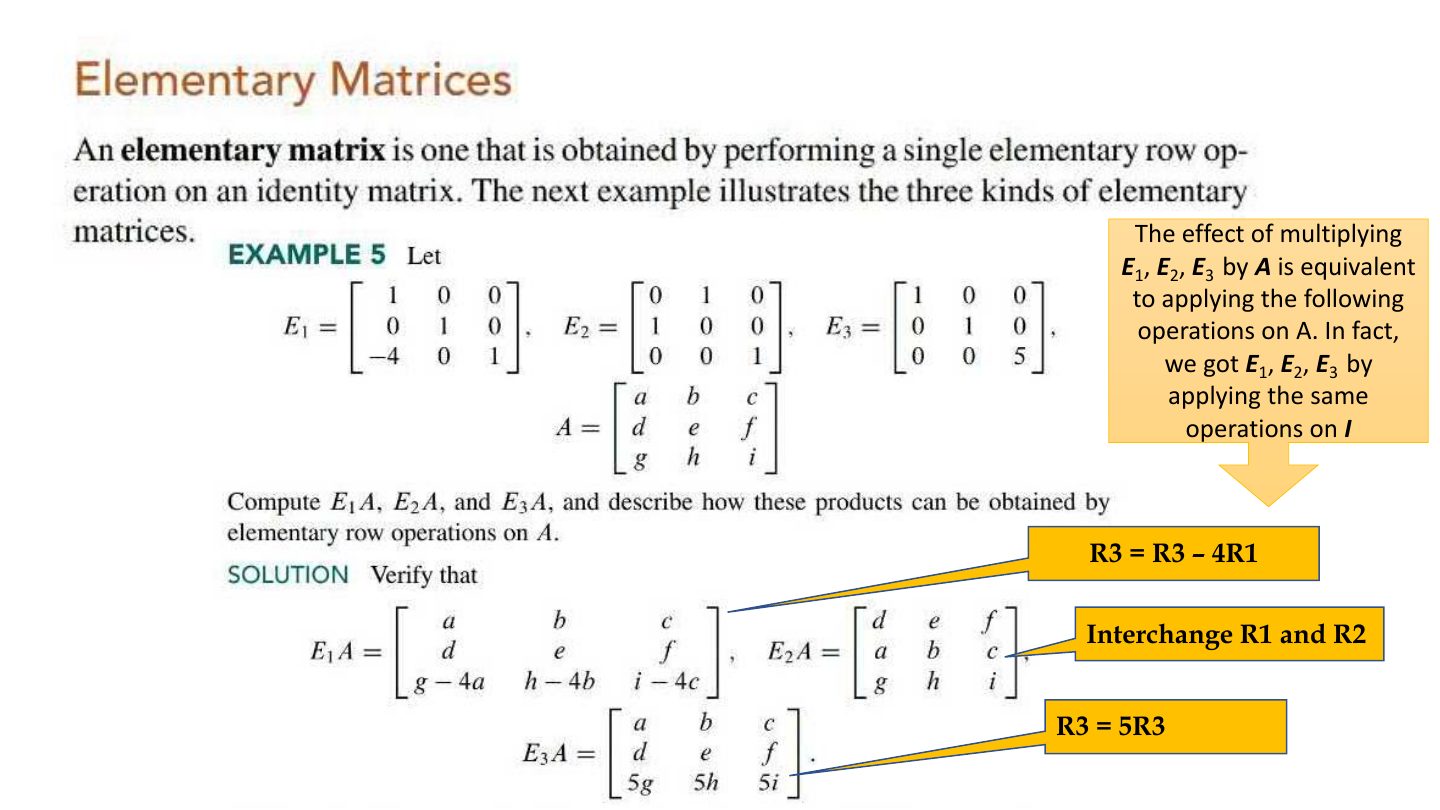
The effect of multiplying
Slide 6
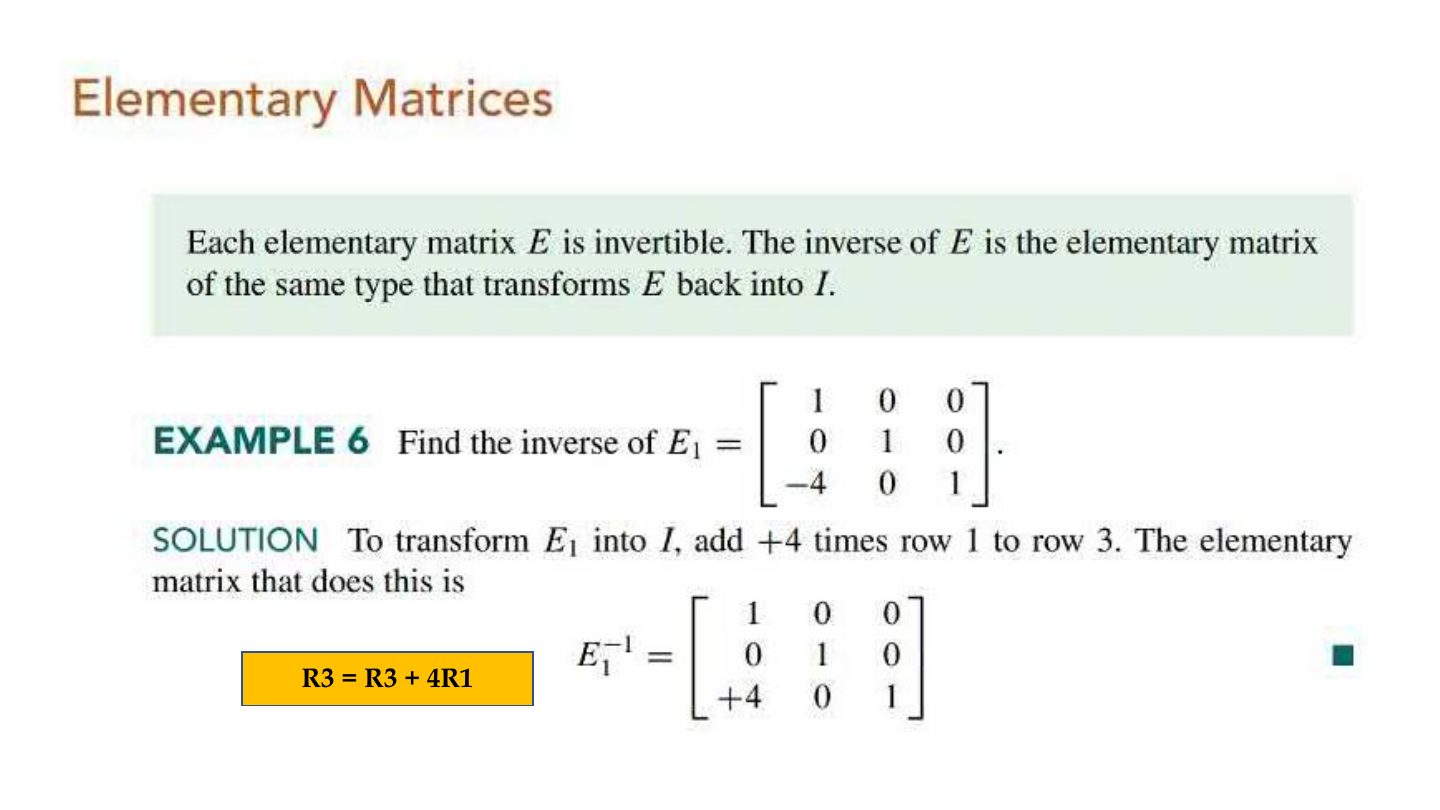
Notes
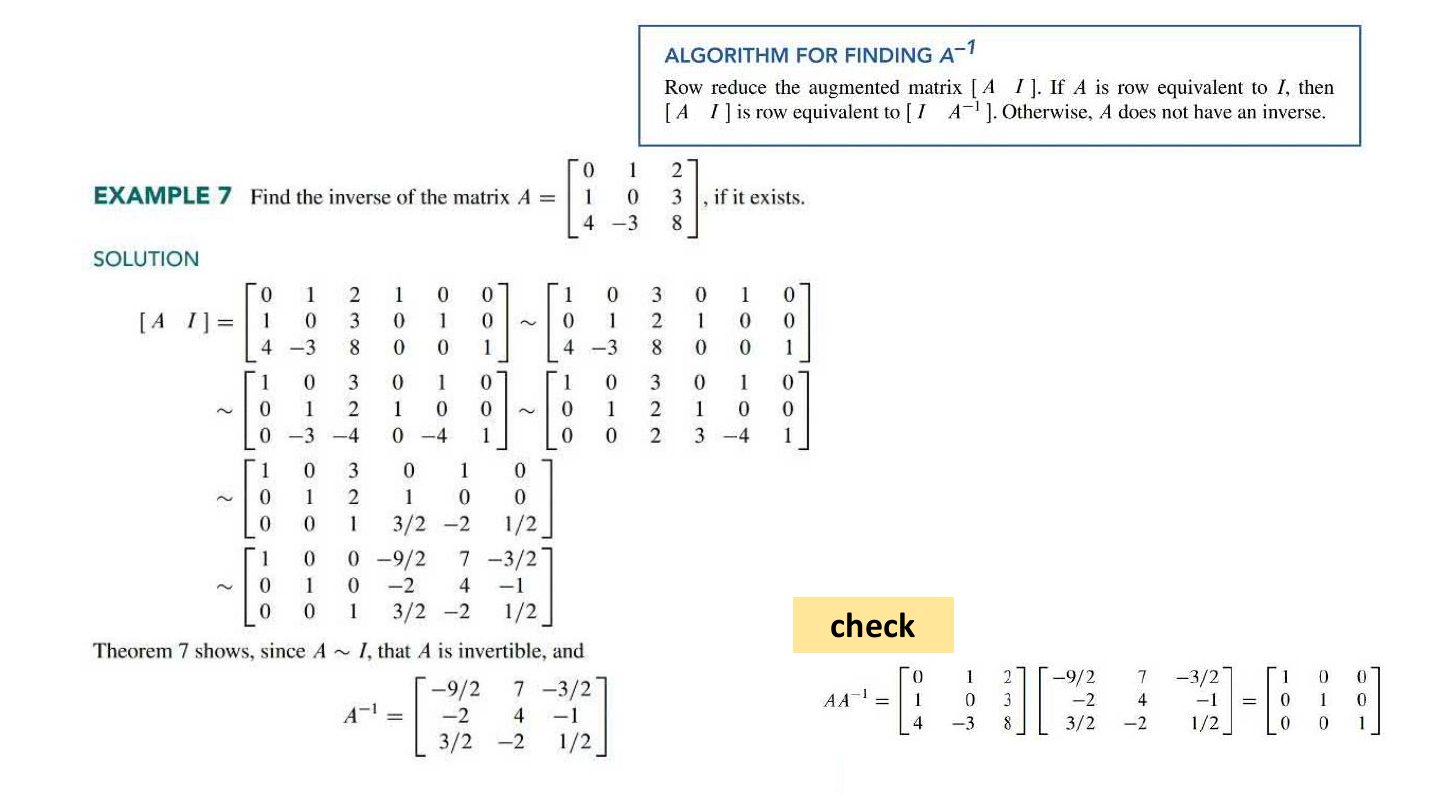
Algorithm: row reduce [A | I]. If A reduces to I, the right block is A⁻¹; otherwise A is not invertible.
Slide 7
Characterization of Invertible Matrices
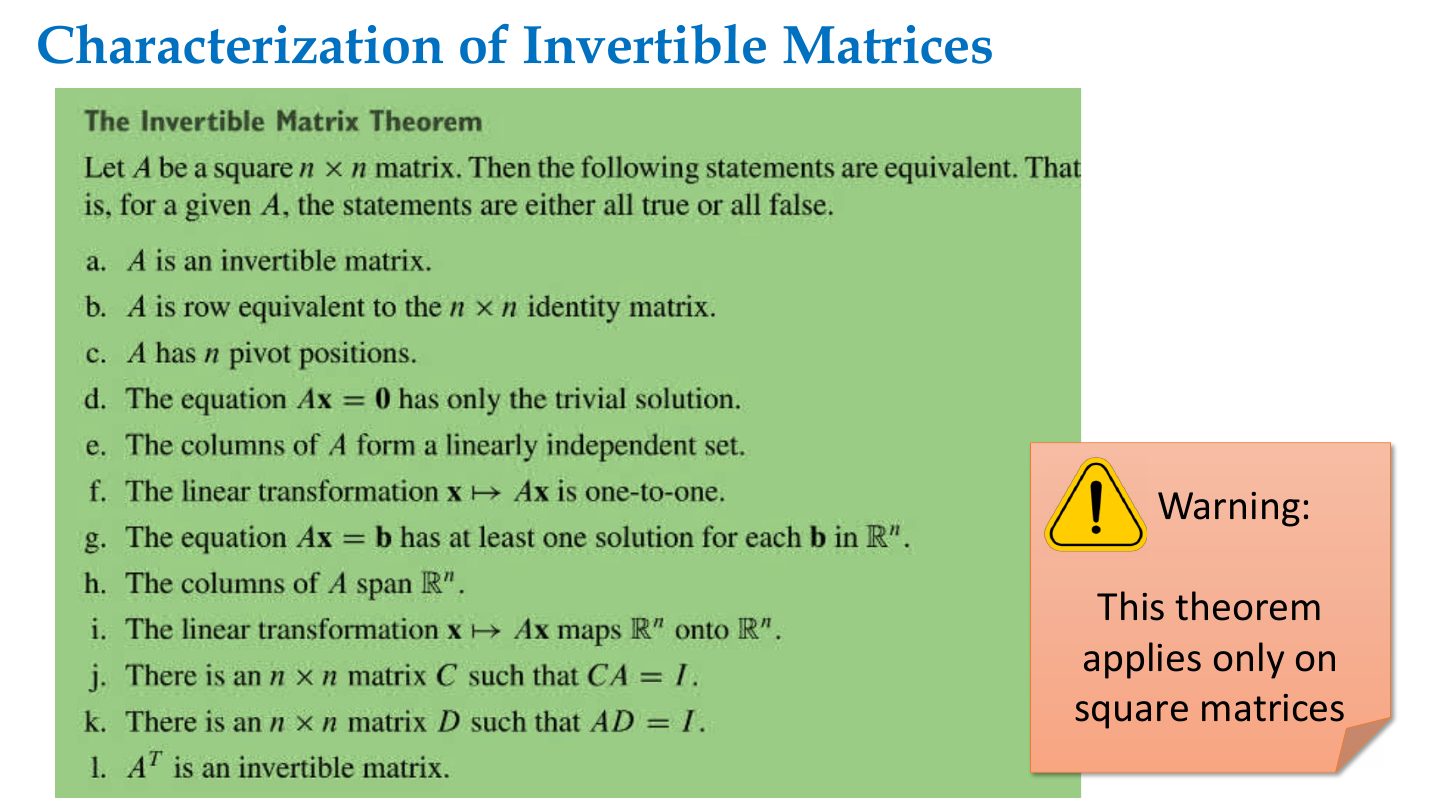
Notes
Invertible Matrix Theorem (n×n A): A invertible ⇔ n pivots ⇔ A ~ I ⇔ Ax = 0 has only the trivial solution ⇔ columns linearly independent ⇔ columns span ℝⁿ ⇔ Ax = b has a unique solution for every b ⇔ det A ≠ 0 ⇔ 0 is not an eigenvalue ⇔ rank A = n.
Tip Invertible Matrix Theorem (n×n A): A invertible ⇔ n pivots ⇔ A ~ I ⇔ Ax = 0 has only the trivial solution ⇔ columns linearly independent ⇔ columns span ℝⁿ ⇔ Ax = b has a unique solution for every b ⇔ det A ≠ 0 ⇔ 0 is not an eigenvalue ⇔ rank A = n.
Exam angle
If A is n×n and Ax = 0 has a nontrivial solution, then A is invertible.
- It is NOT invertible.
Slide 9
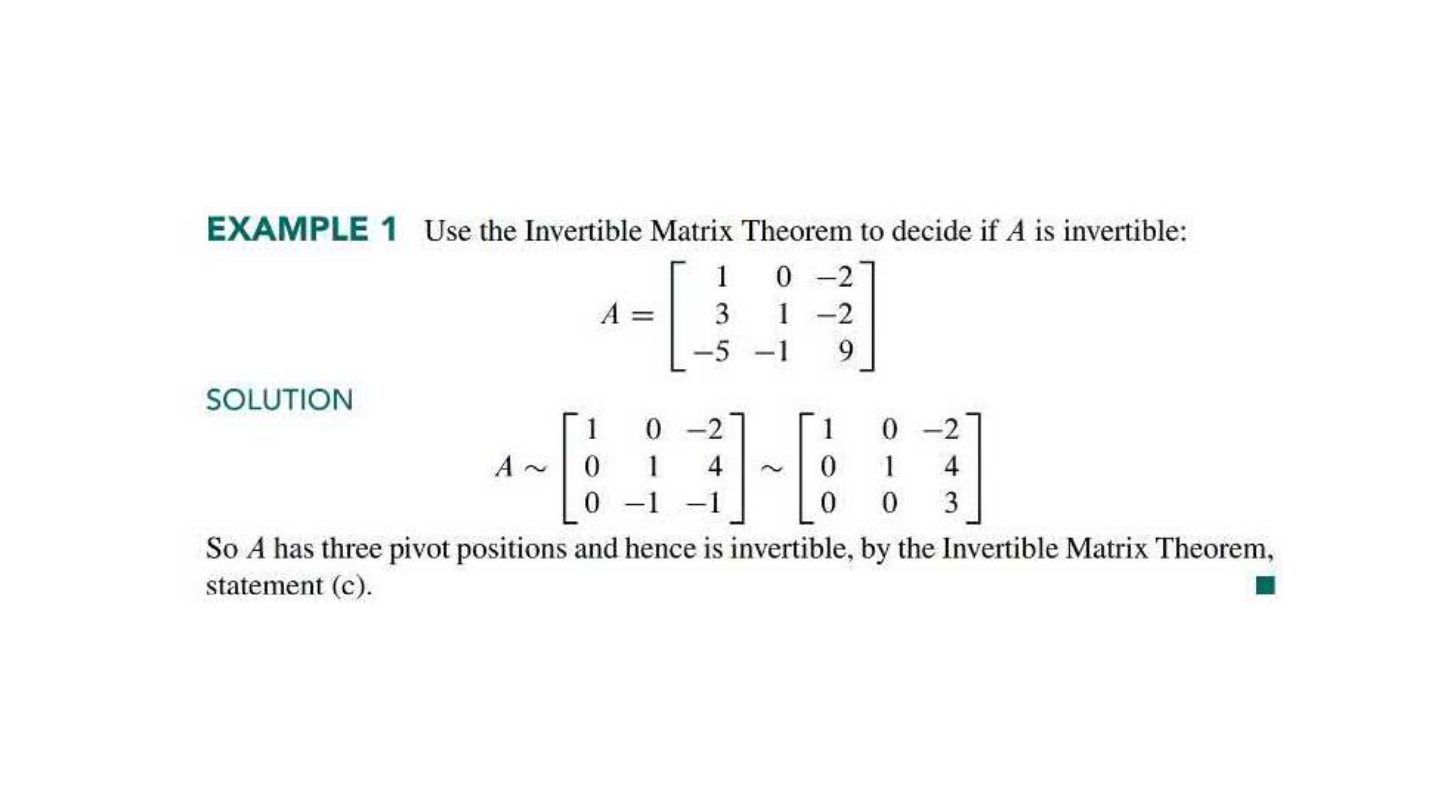
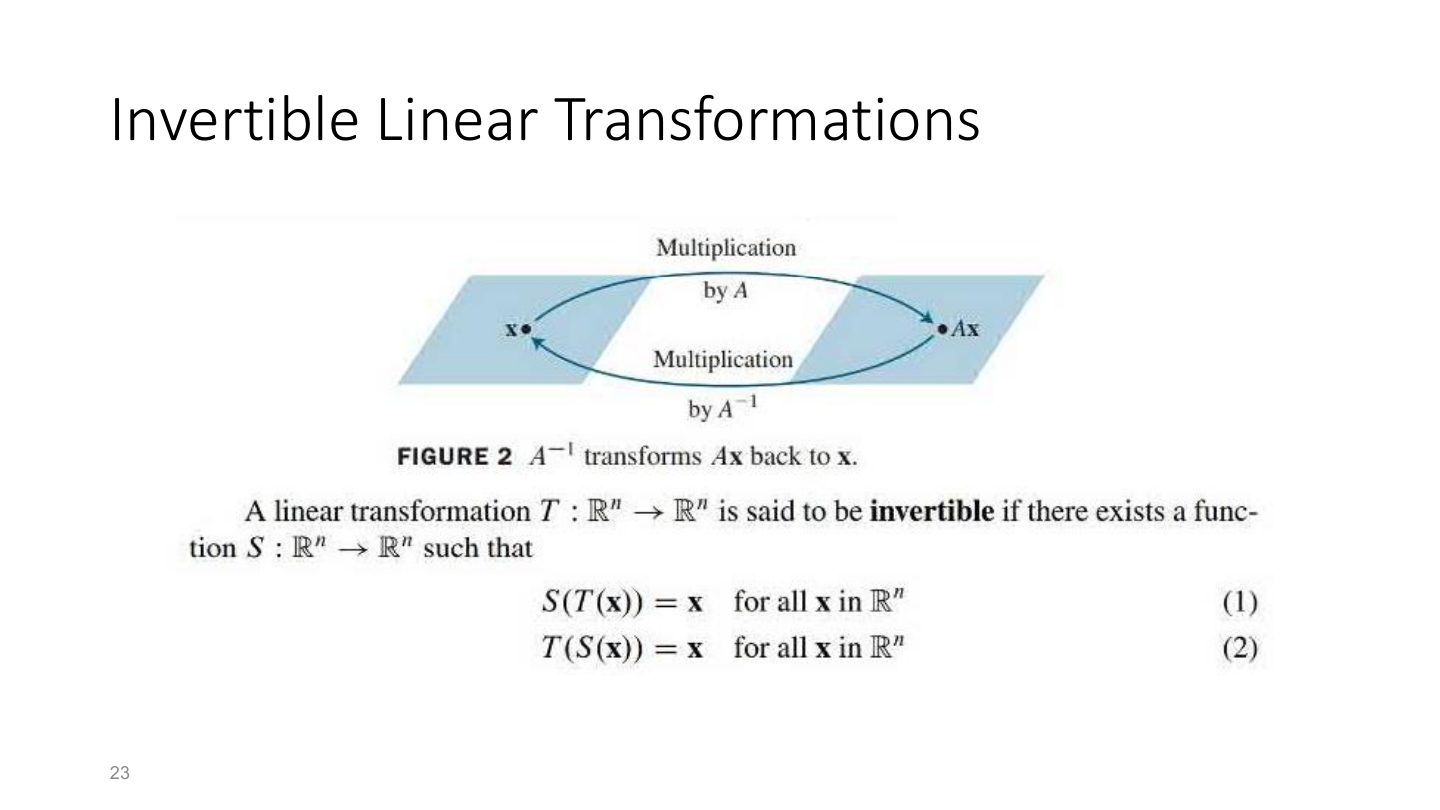
Invertible Linear Transformations