A homogeneous system with more unknowns than equations:
The Matrix Equation Ax = b and Solution Sets
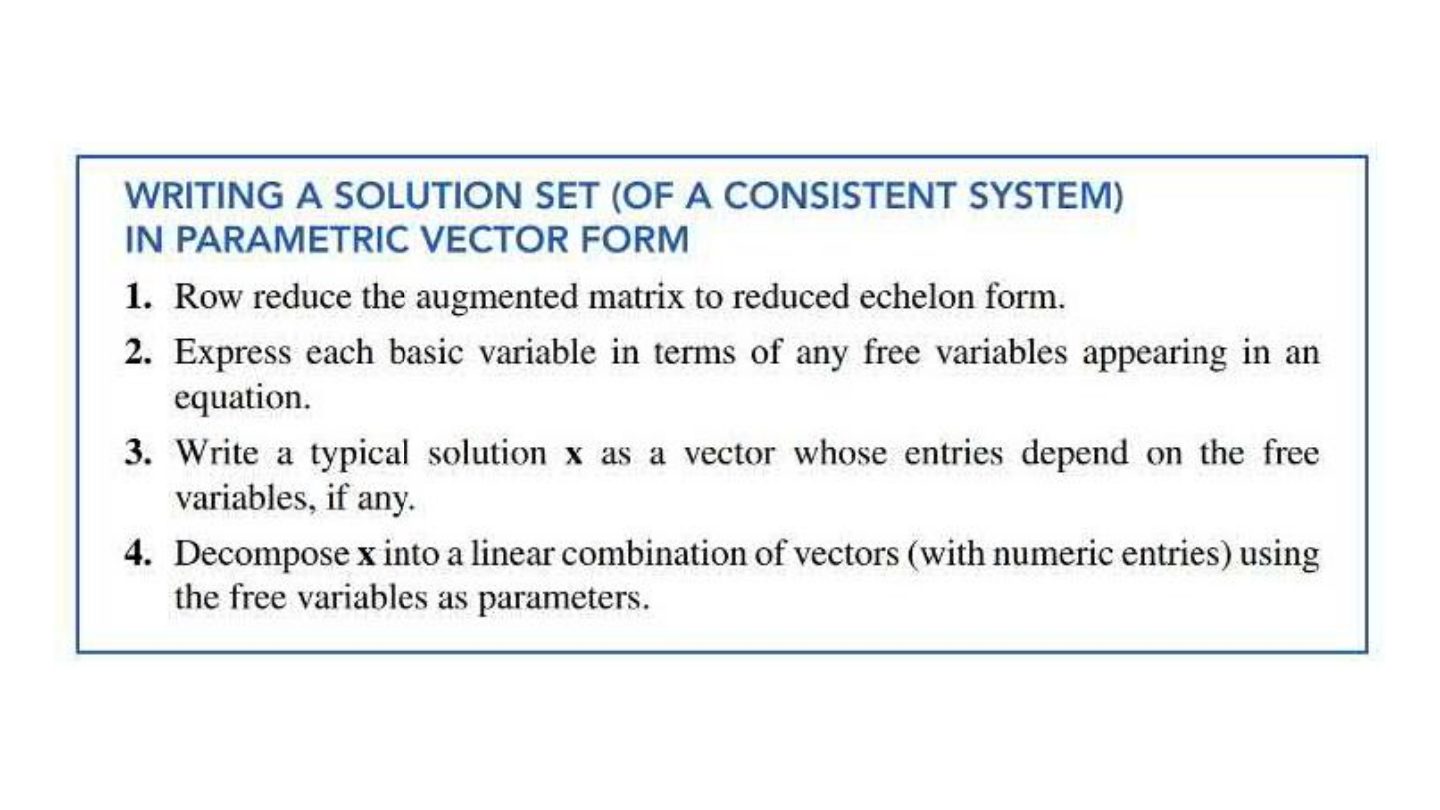
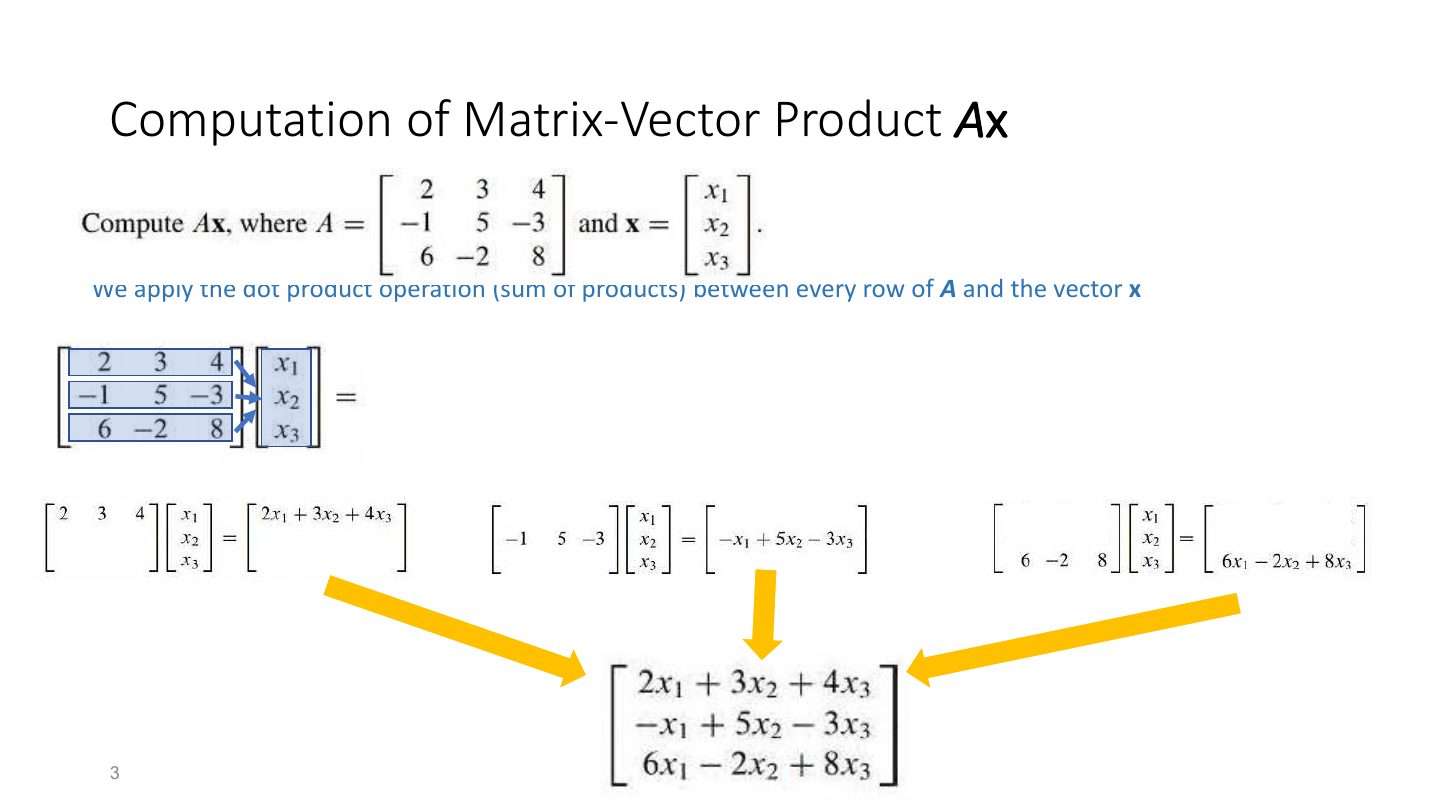
The product Ax as a linear combination of A’s columns, the row-vector rule, properties of Ax, homogeneous systems and nontrivial solutions, and solution sets in parametric vector form (p + vₕ).
How to read this page
Every original slide is shown unchanged. Yellow marks on a slide point to a numbered note: hover or tap a mark to jump to its note, and hover a note to see its marks. Questions tagged Past exam appeared on a real paper; Prediction questions are likely angles, not confirmed. Pick an answer to each question: a wrong pick tells you why it is wrong, so you can try again.
All 14 slides
- 1 Slide 1
- 2 A Computation of Matrix-Vector Product x
- 3 A Computation of Matrix-Vector Product x
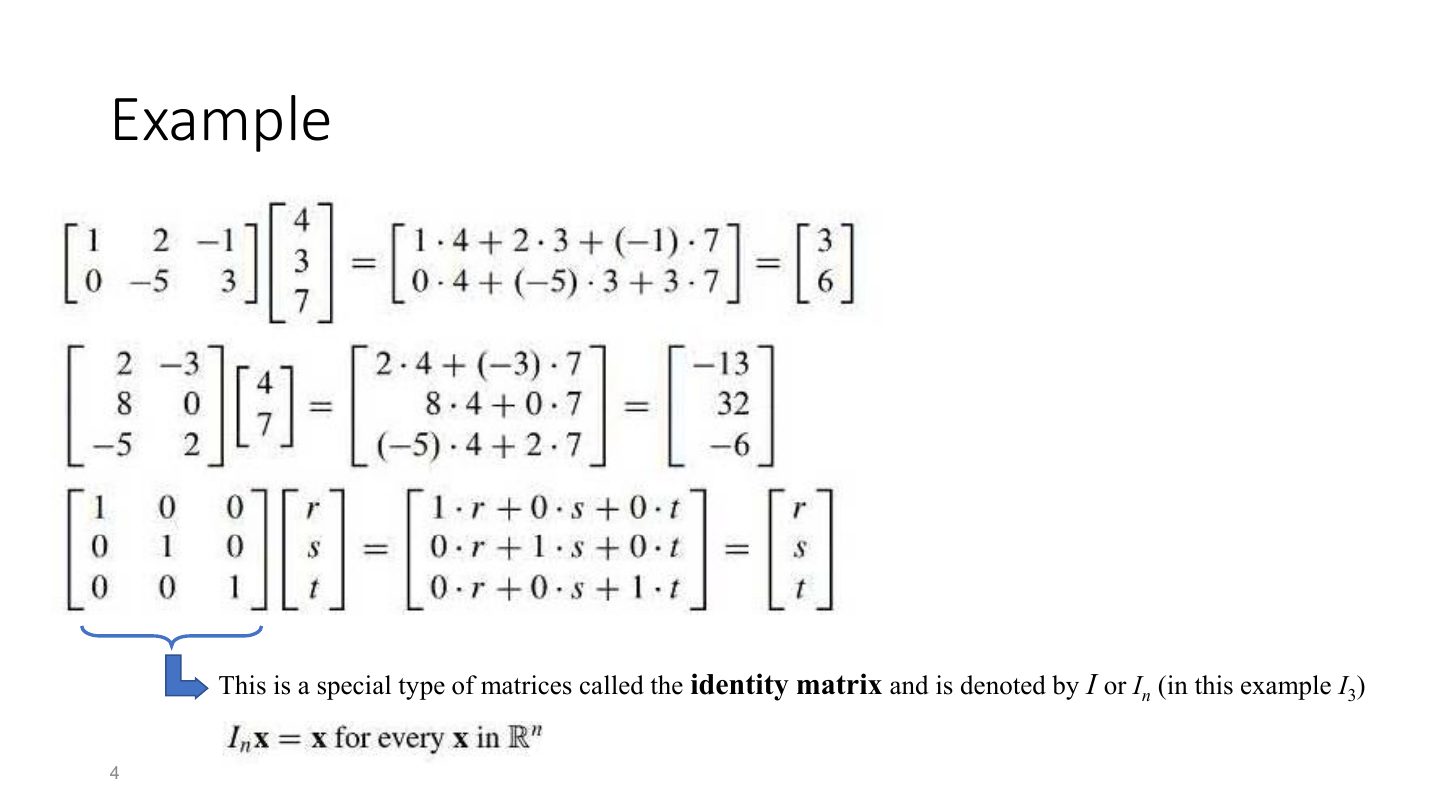
- 4 Example
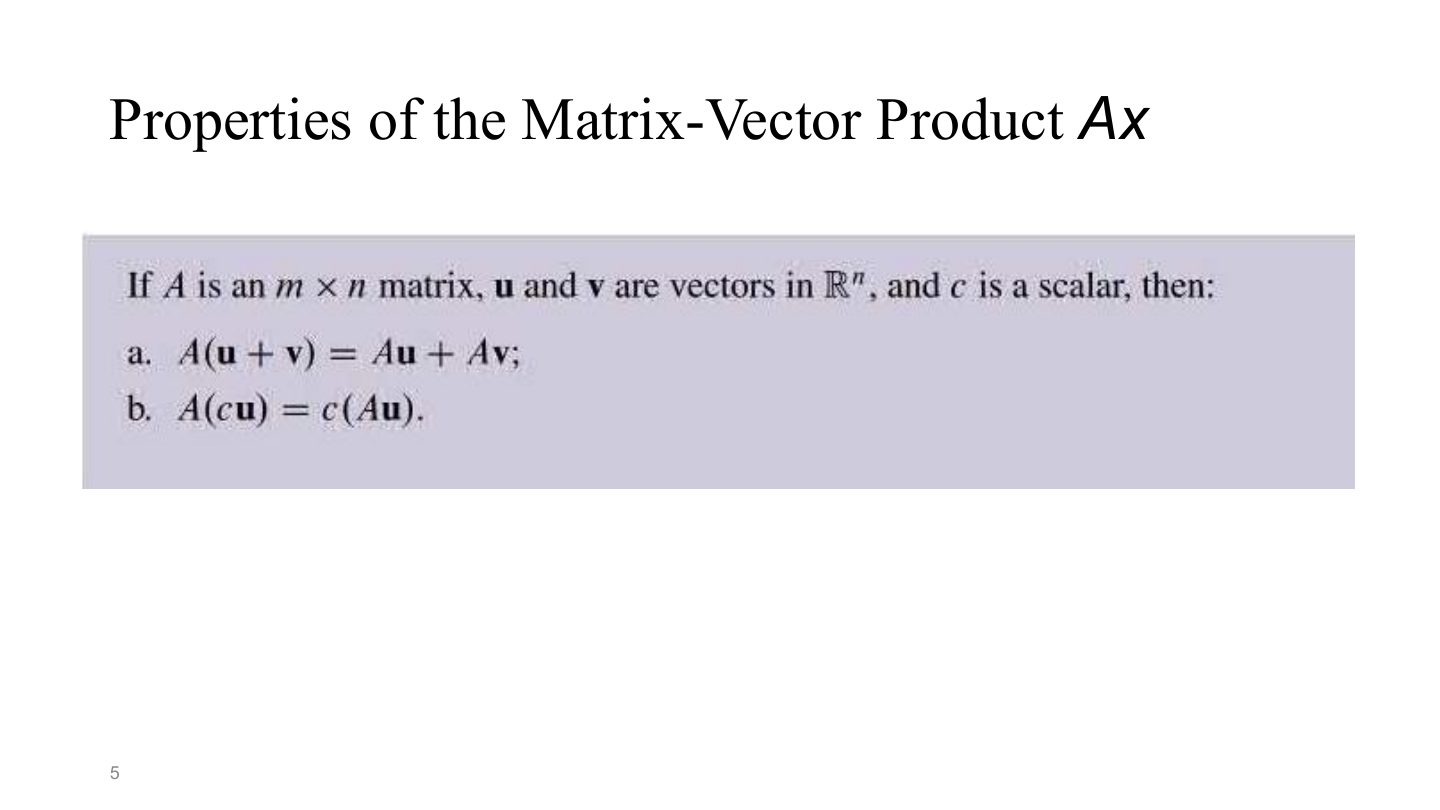
- 5 Ax Properties of the Matrix-Vector Product
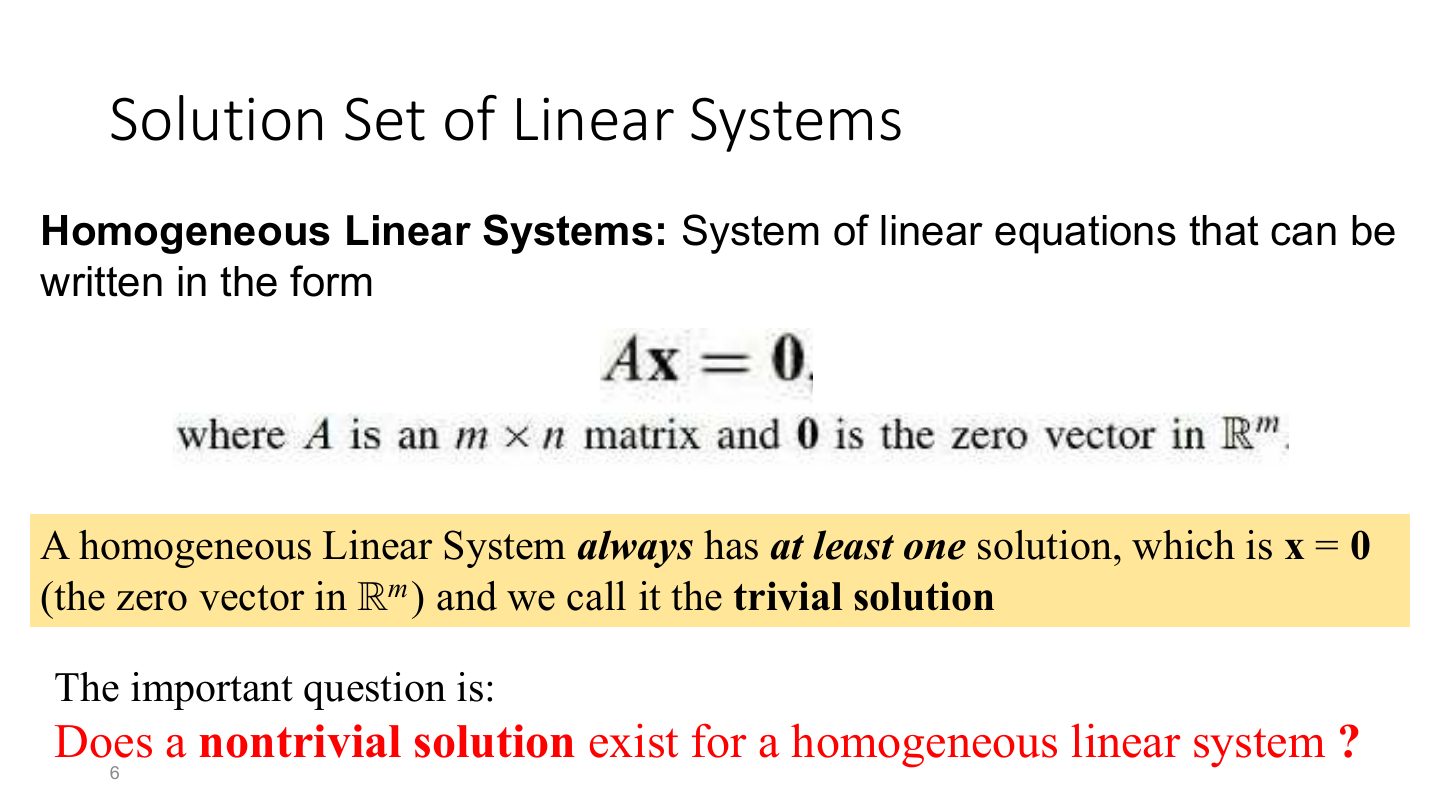
- 6 Solution Set of Linear Systems
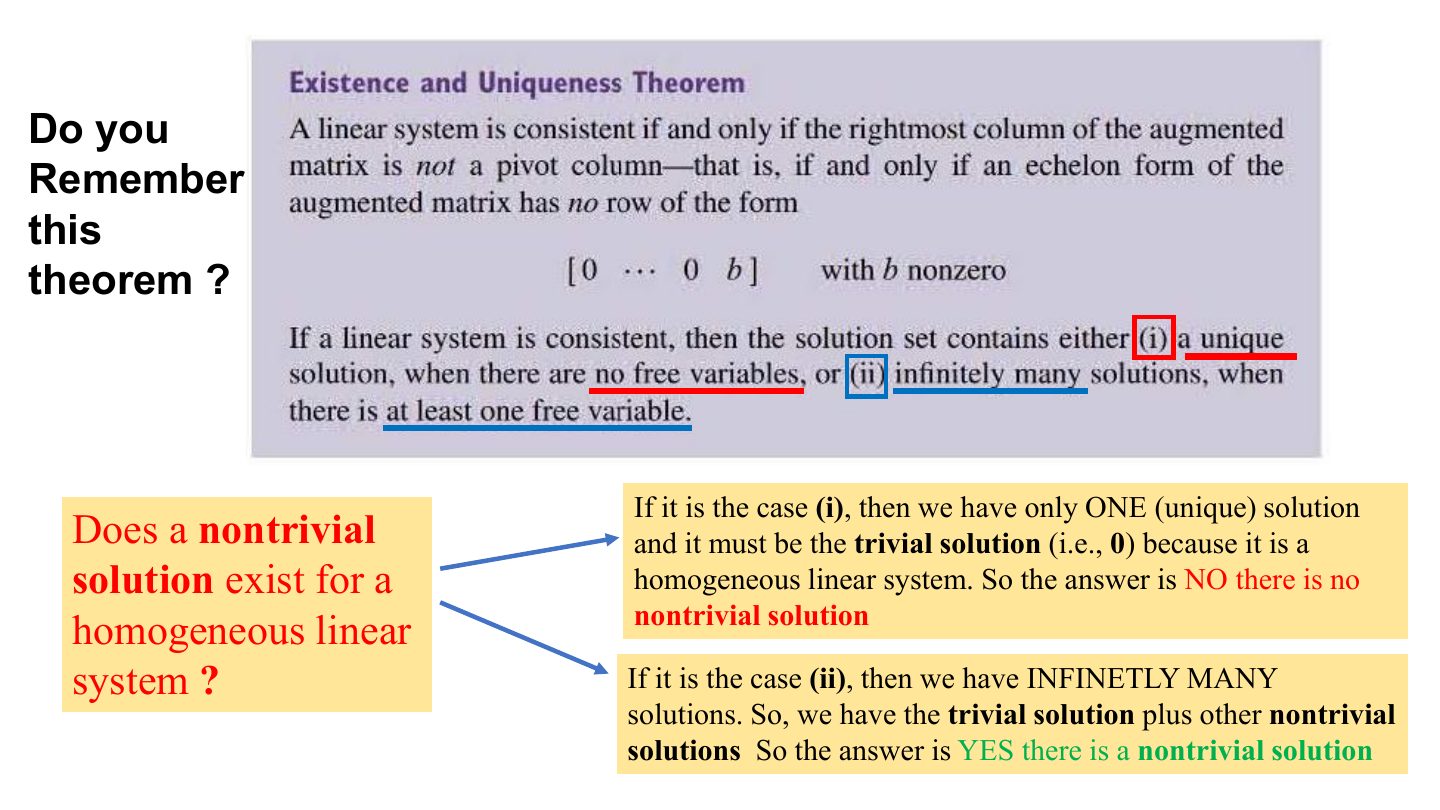
- 7 Do you Remember
- 8 Does a nontrivial solution exist for a homogeneous
- 9 ➔ x & x are basic
- 10 Example:
- 11 Fact
- 12 Solution Set of Linear Systems
- 13 Slide 13
- 14 Slide 14
Slide 1
A Computation of Matrix-Vector Product x
Notes
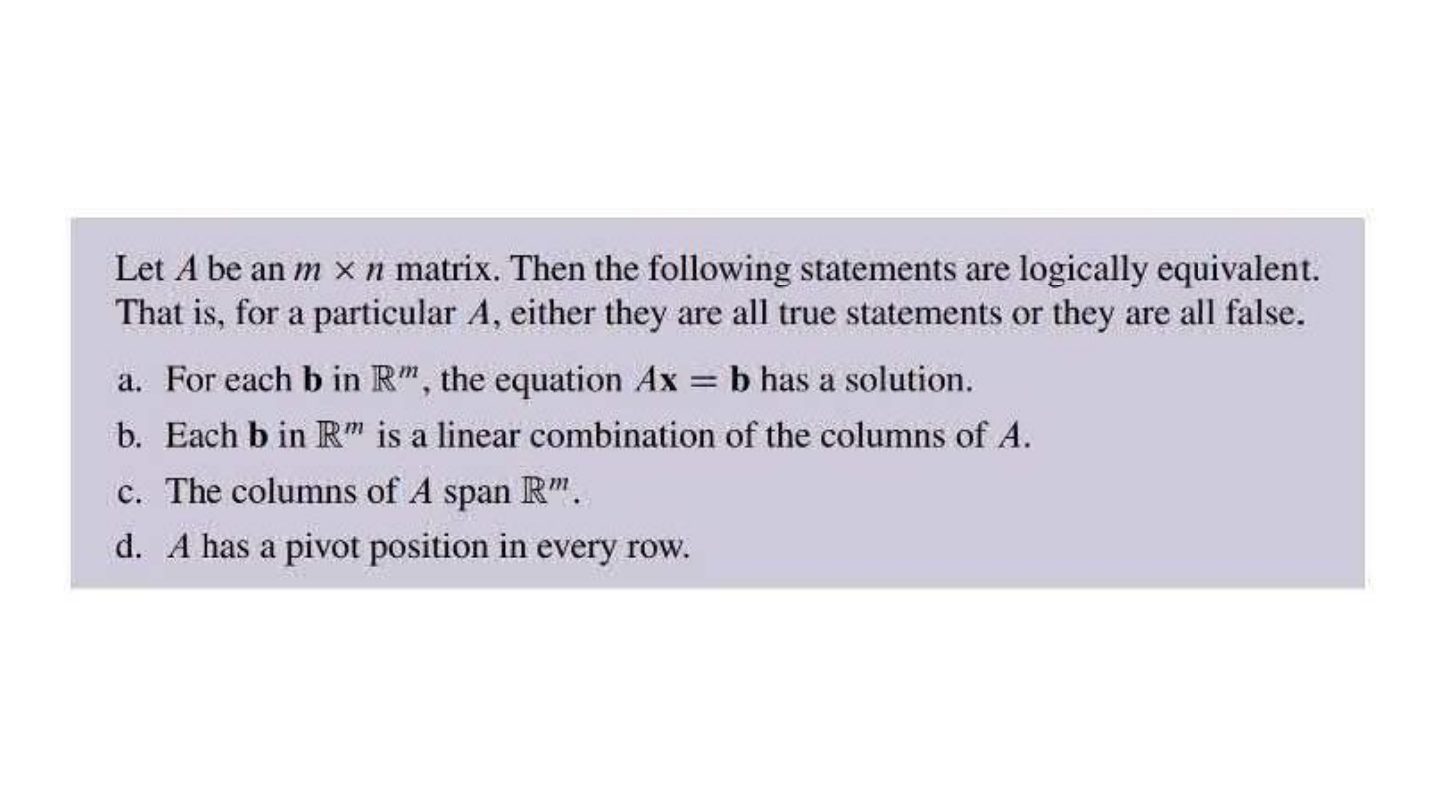
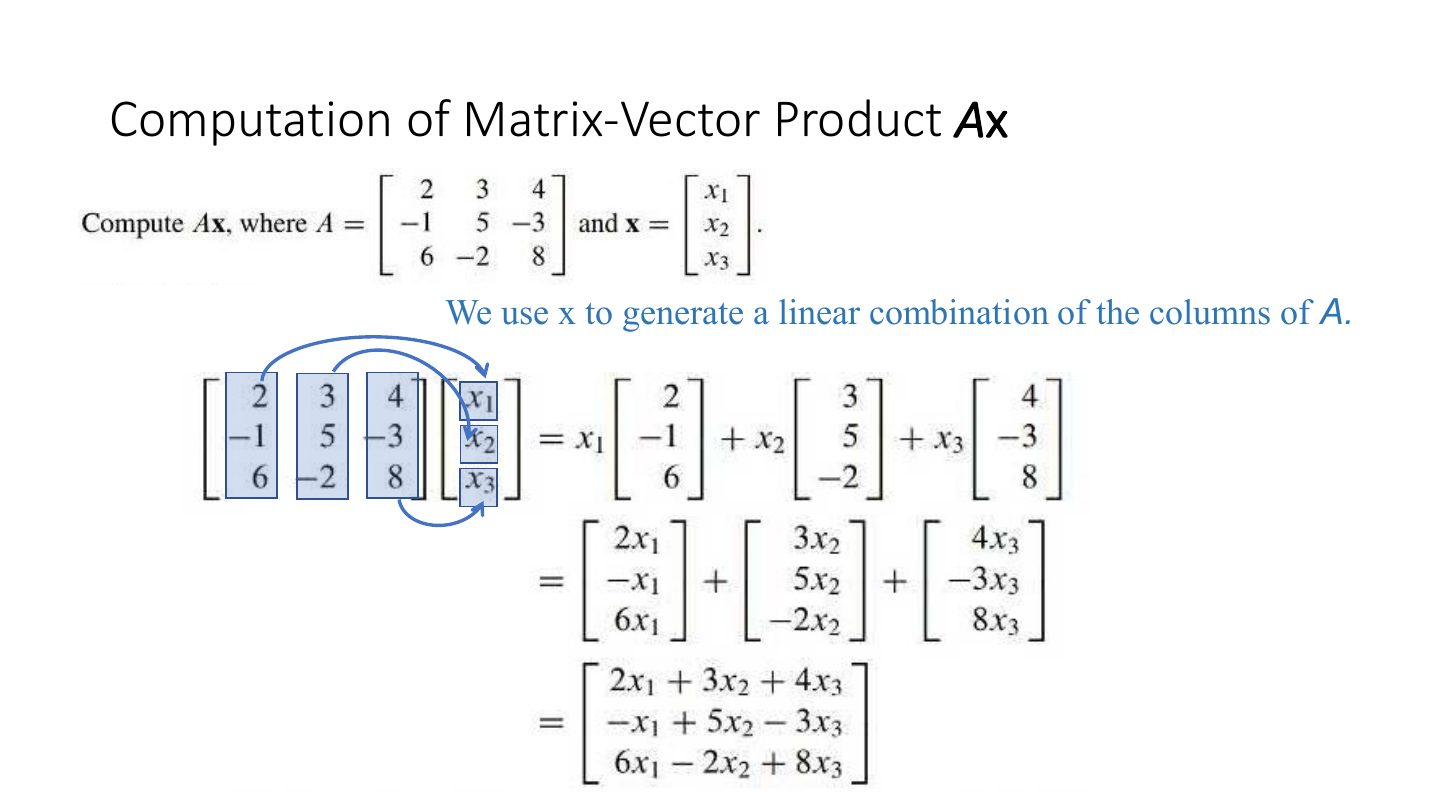
Ax = x₁a₁ + … + xₙaₙ (columns weighted by x). Defined only if A has as many columns as x has entries.
A Computation of Matrix-Vector Product x
Example
Ax Properties of the Matrix-Vector Product
Notes
A(u + v) = Au + Av and A(cu) = c(Au).
Solution Set of Linear Systems
Notes
For m×n A these are equivalent: Ax = b has a solution for EVERY b ⇔ columns span ℝᵐ ⇔ A has a pivot in every ROW.
Trap Spanning ℝᵐ needs a pivot in every ROW; uniqueness needs a pivot in every COLUMN.
Do you Remember
Does a nontrivial solution exist for a homogeneous
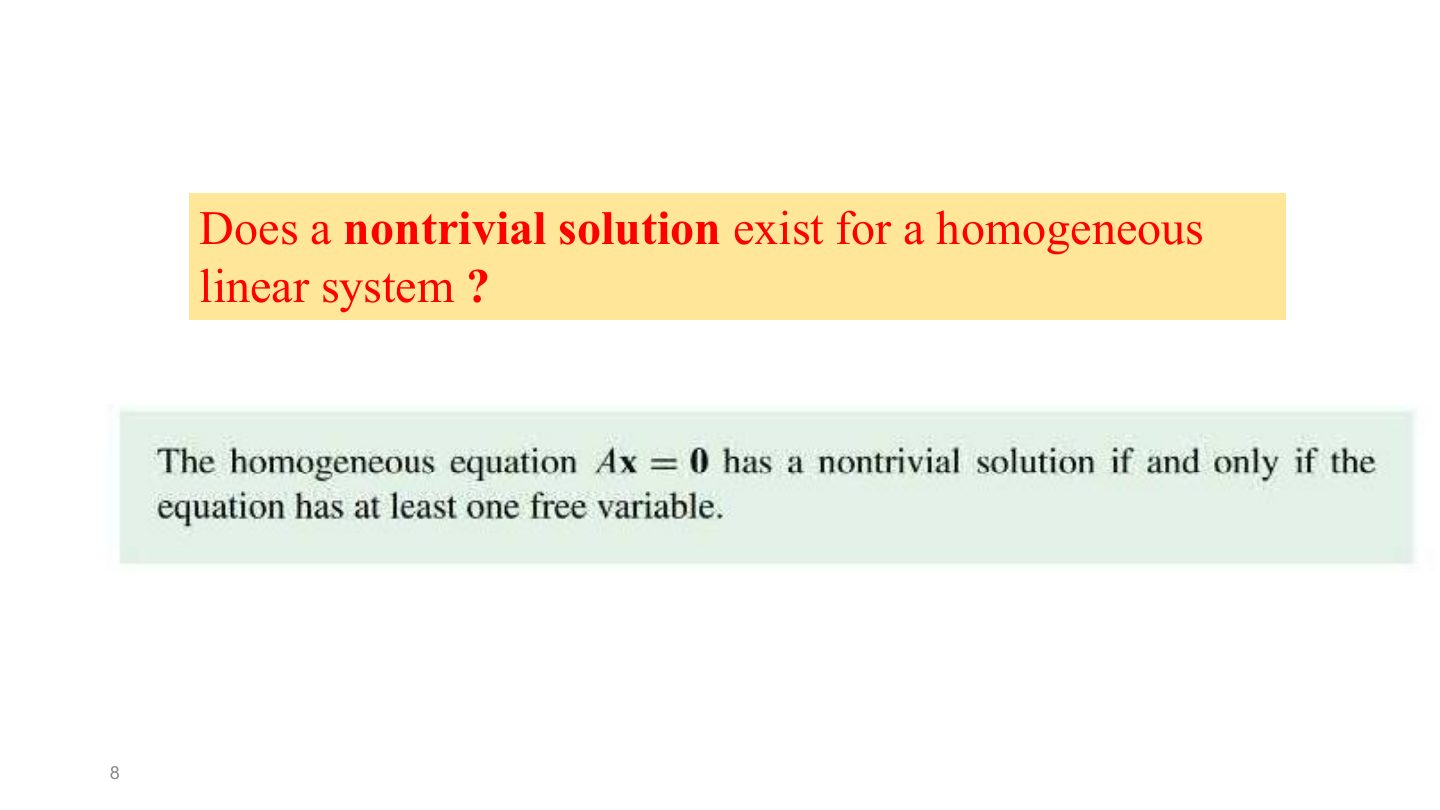
Exam angle
➔ x & x are basic
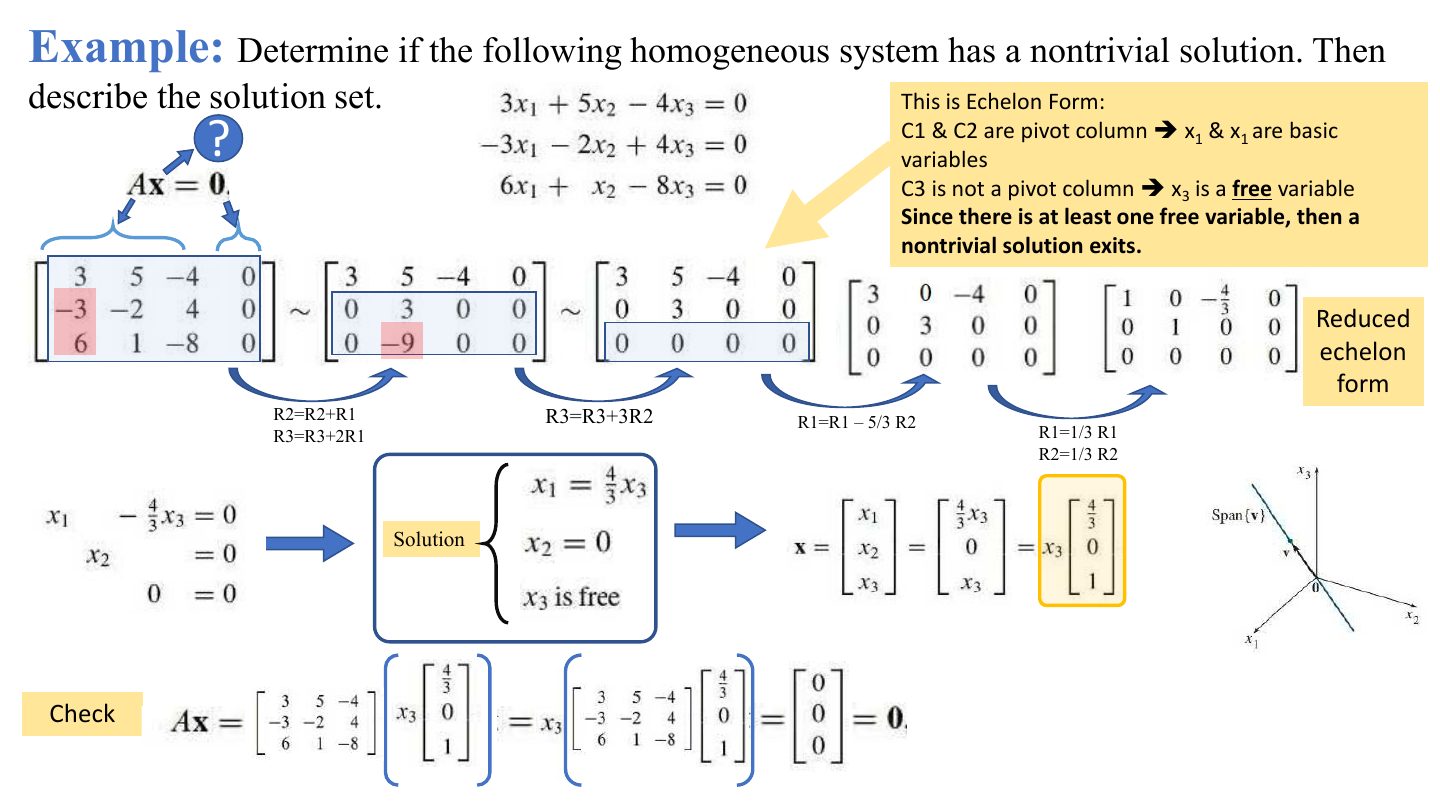
Example:
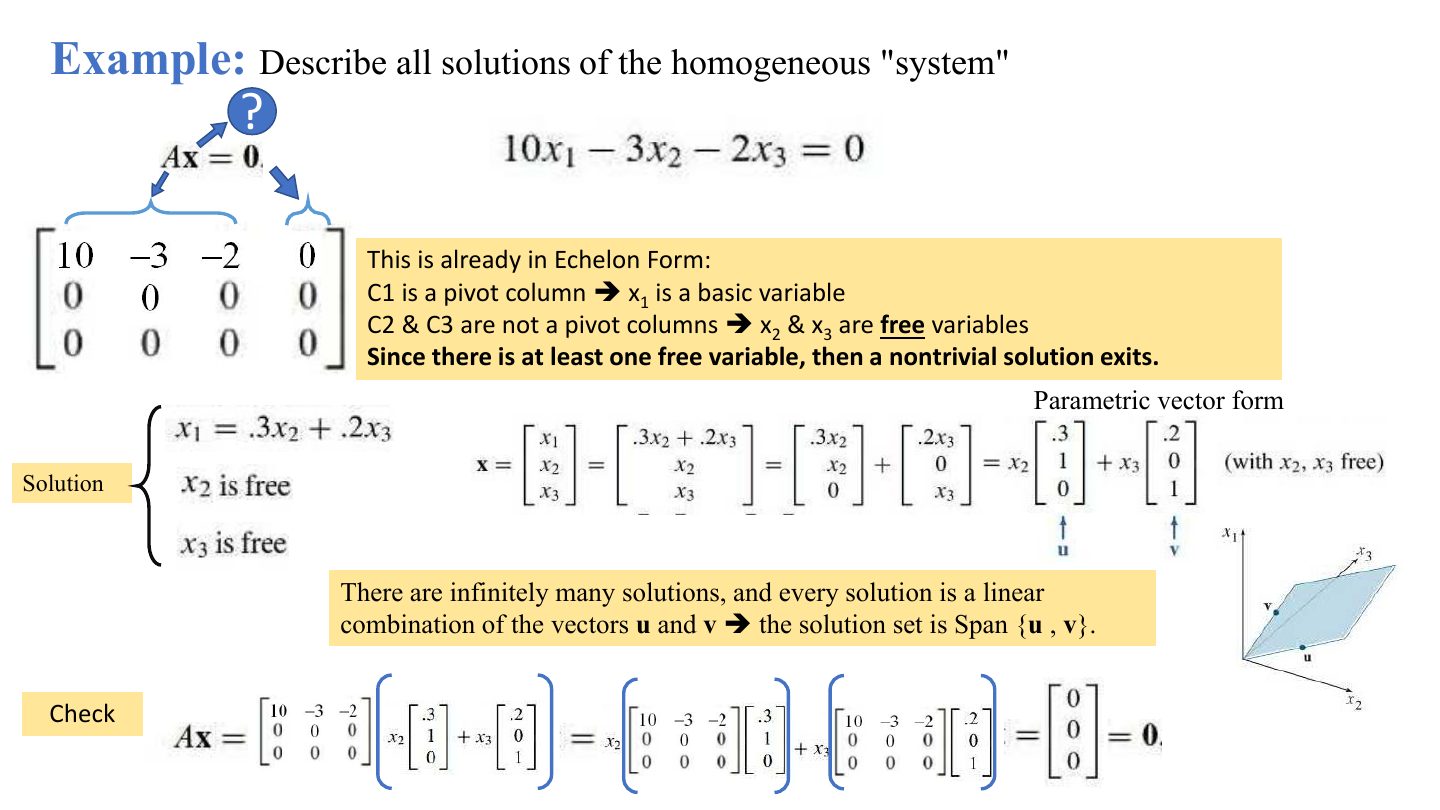
Fact
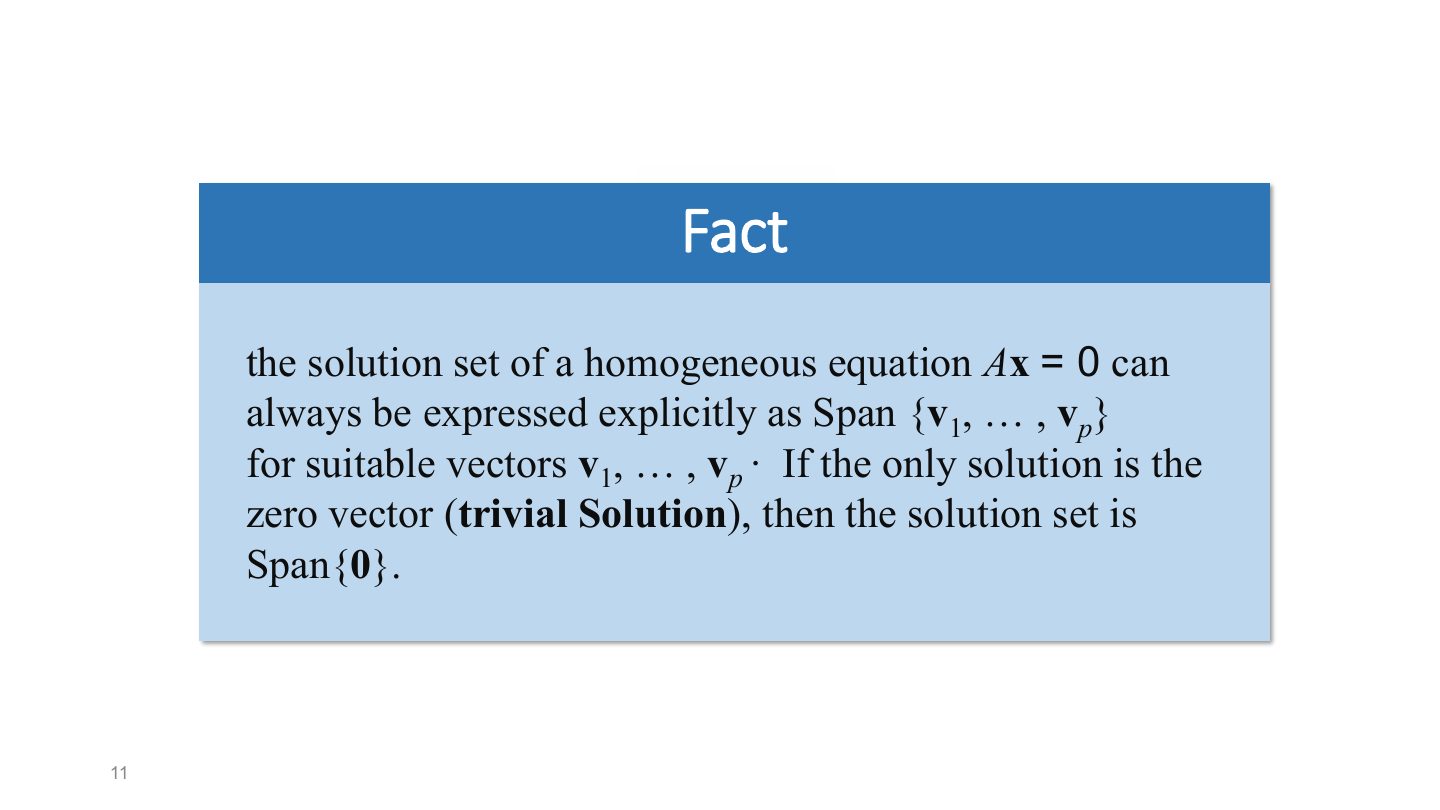
Solution Set of Linear Systems
Notes
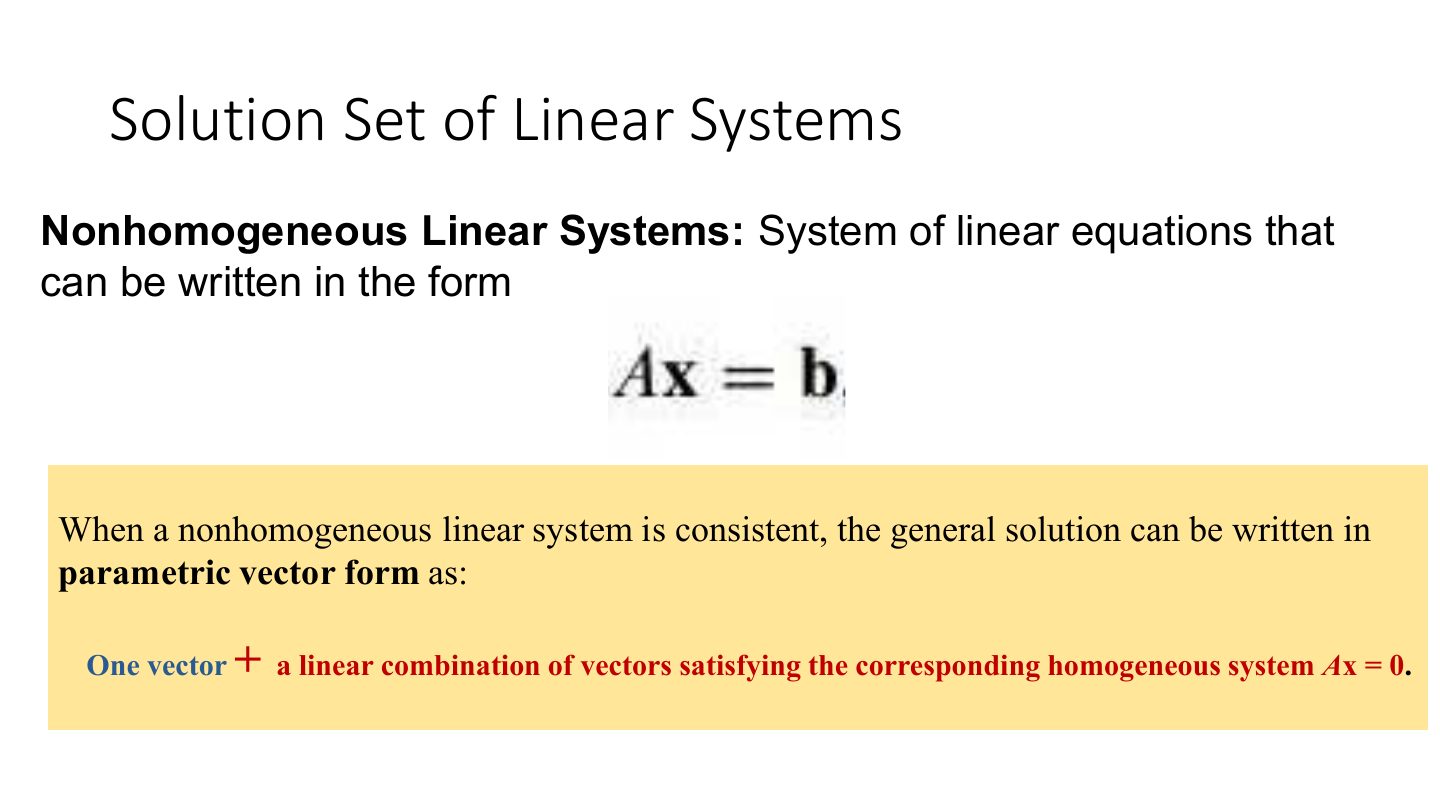
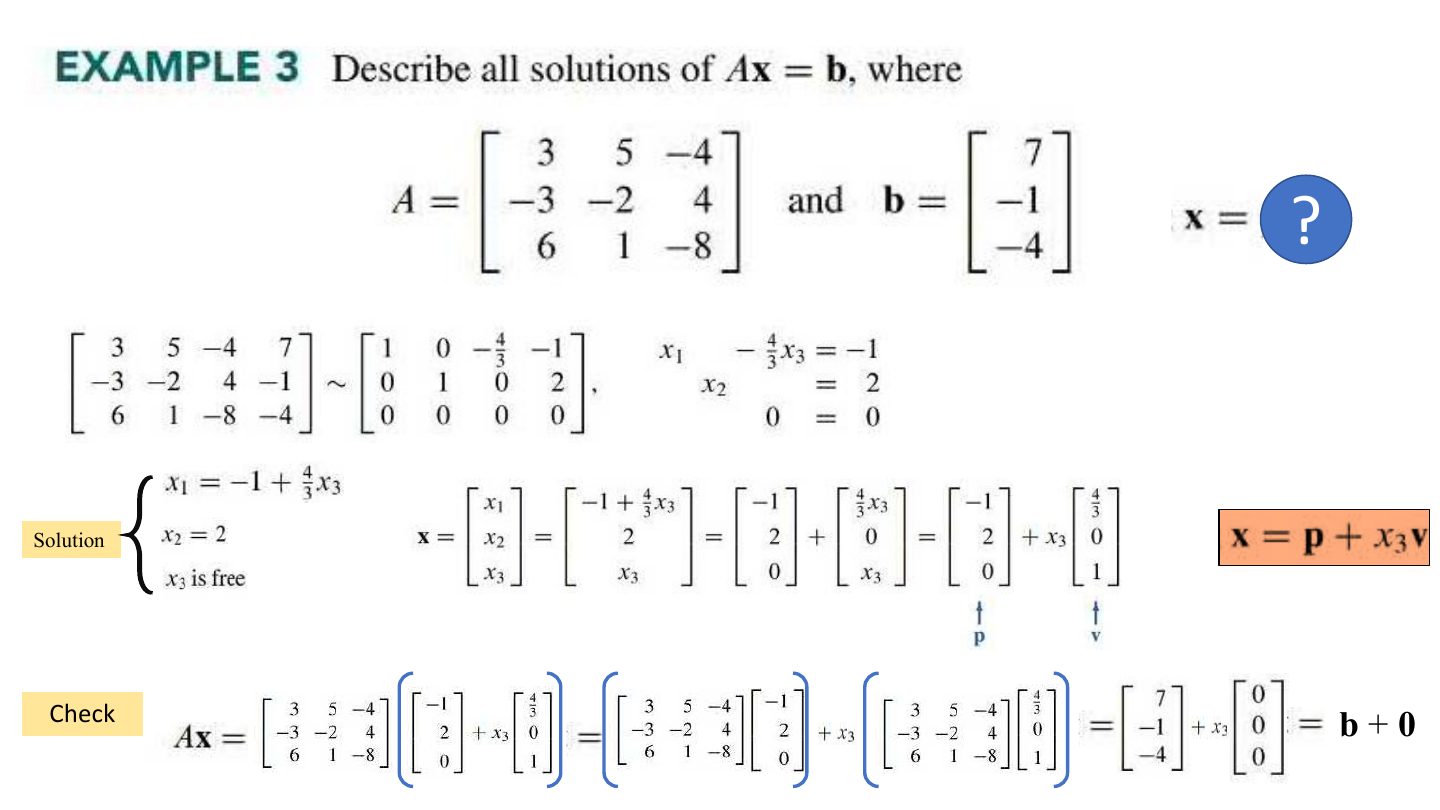
If Ax = b is consistent with particular solution p, every solution is p + vₕ where vₕ solves Ax = 0 (the solution set is a translated null space).
Slide 13
Slide 14