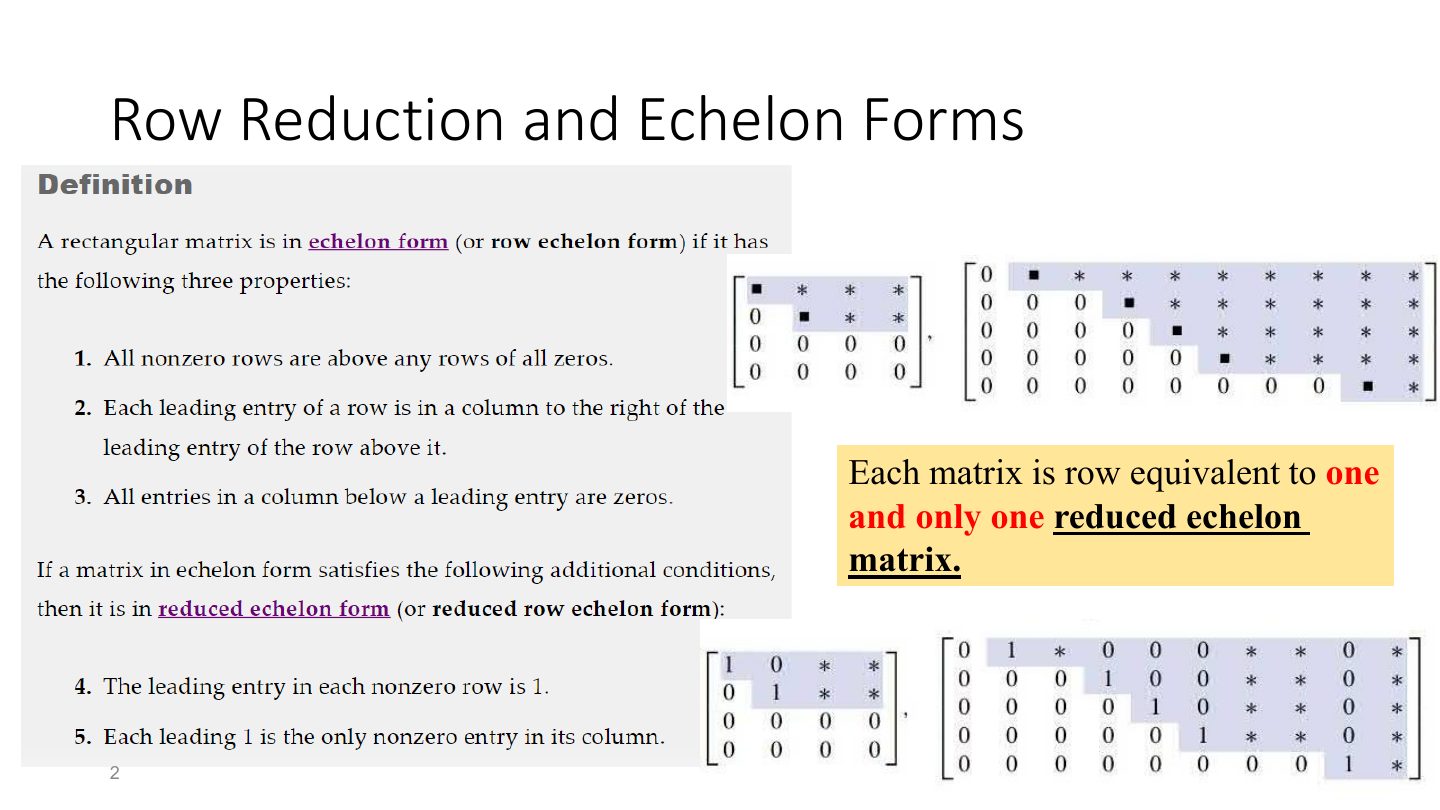
Each matrix is row equivalent to exactly one reduced echelon matrix.
Row Reduction and Echelon Forms
Echelon and reduced echelon form, pivot positions and columns, the row reduction algorithm, basic and free variables, parametric solutions, and existence and uniqueness of solutions.
How to read this page
Every original slide is shown unchanged. Yellow marks on a slide point to a numbered note: hover or tap a mark to jump to its note, and hover a note to see its marks. Questions tagged Past exam appeared on a real paper; Prediction questions are likely angles, not confirmed. Pick an answer to each question: a wrong pick tells you why it is wrong, so you can try again.
All 20 slides
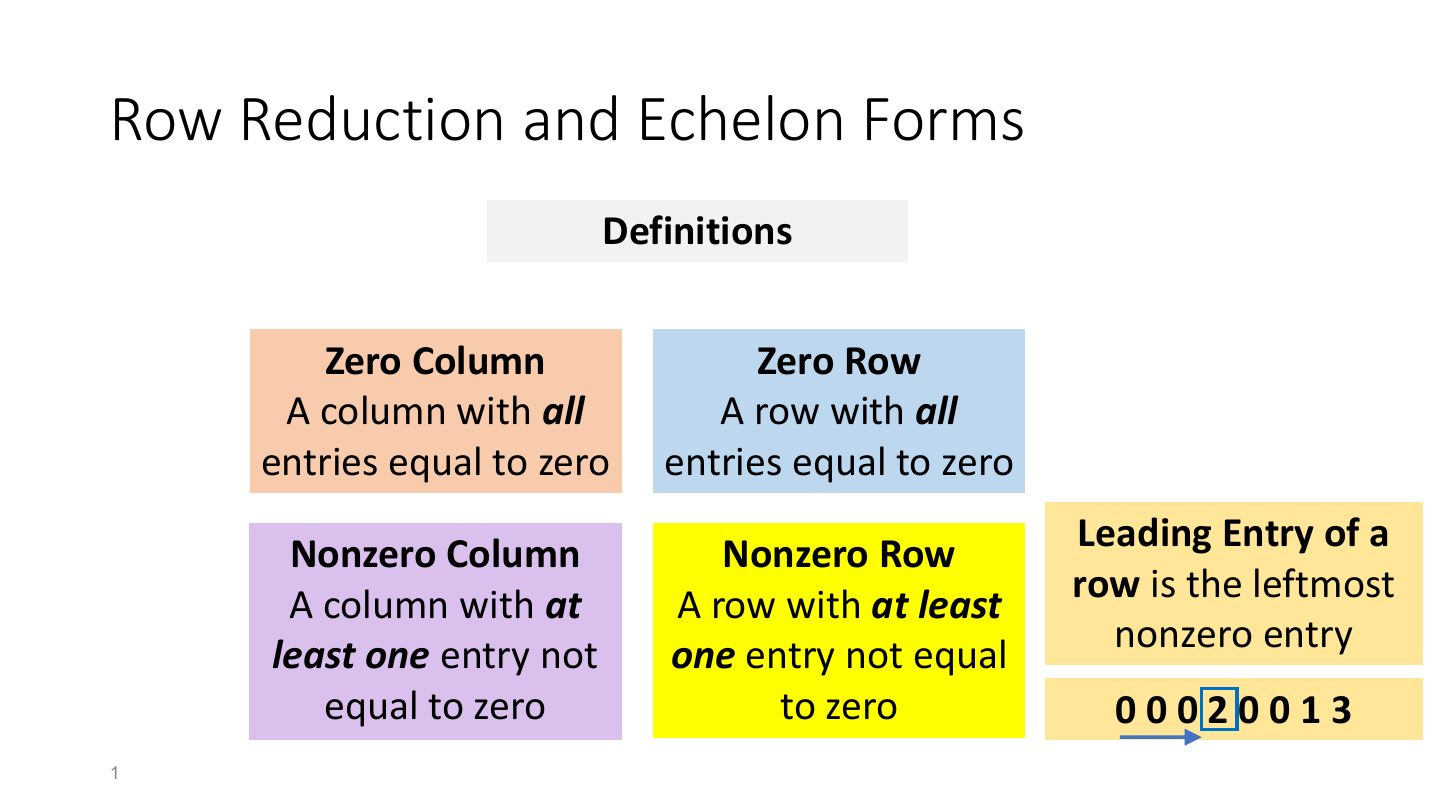
- 1 Row Reduction and Echelon Forms
- 2 Row Reduction and Echelon Forms
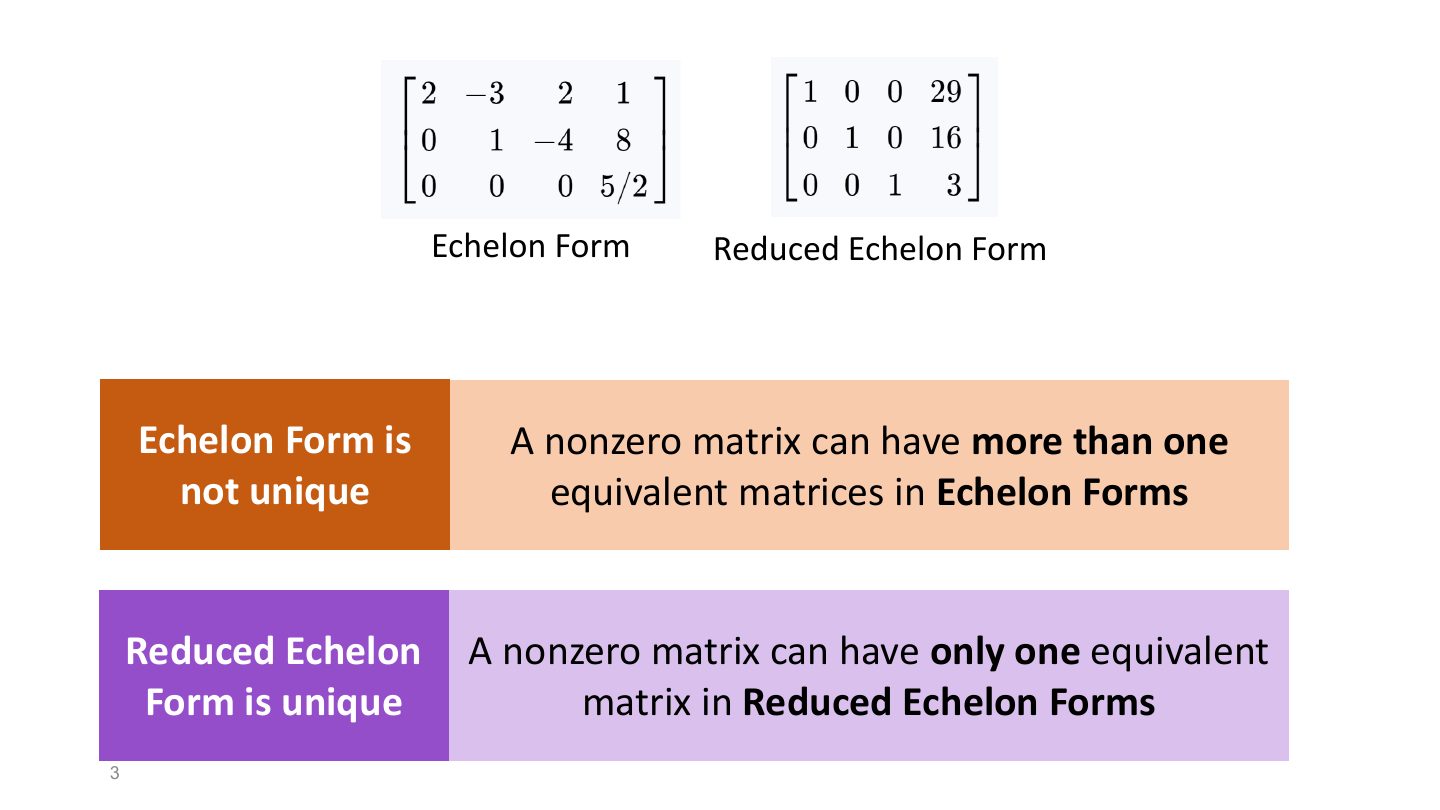
- 3 Echelon Form
- 4 pivots
- 5 Algorithms to produces a matrix in Echelon Form
- 6 Example
- 7 Algorithms to produce a matrix in Reduced Echelon Form
- 8 Apply elementary row operations to transform
- 9 Solutions of Linear Systems
- 10 Example
- 11 Parametric representation
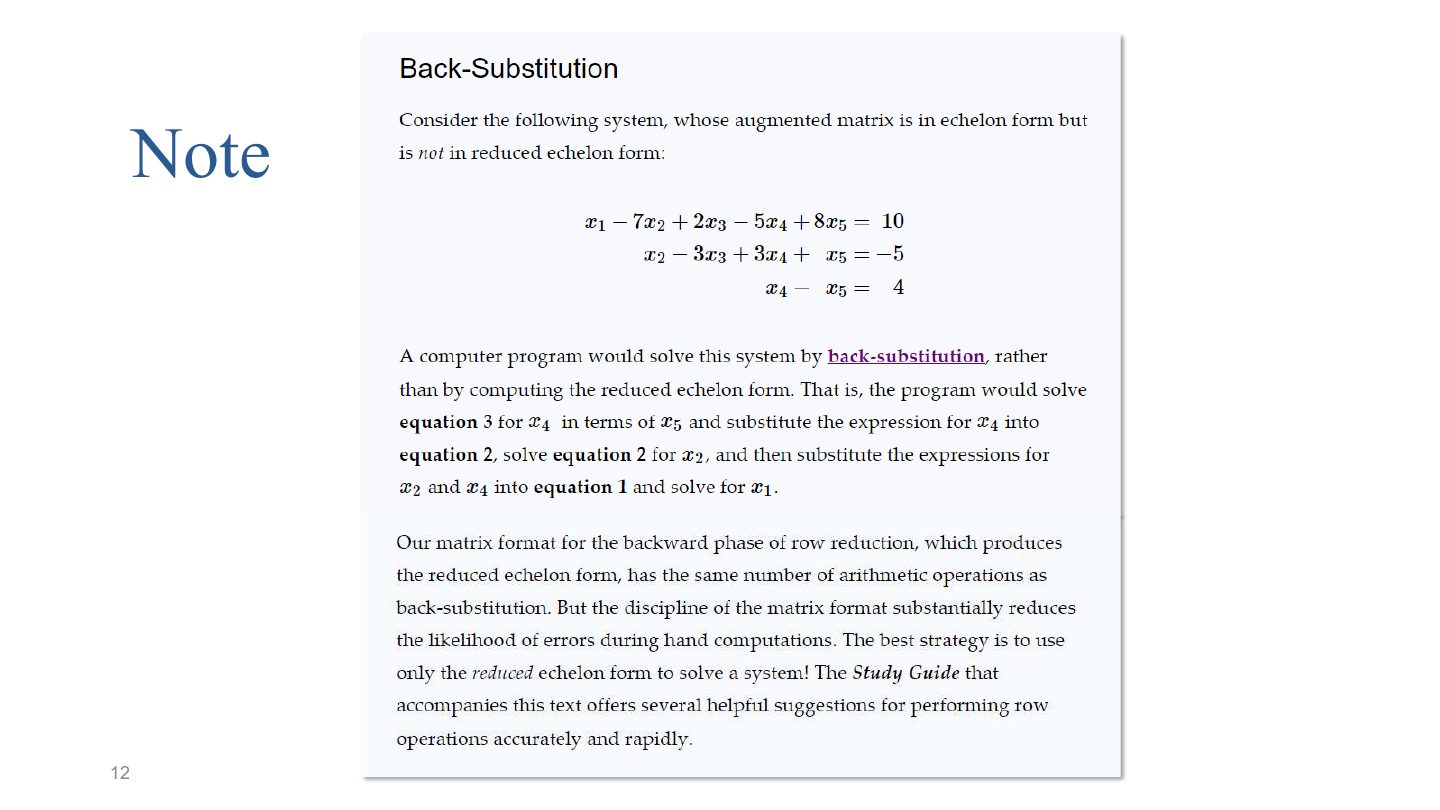
- 12 Note
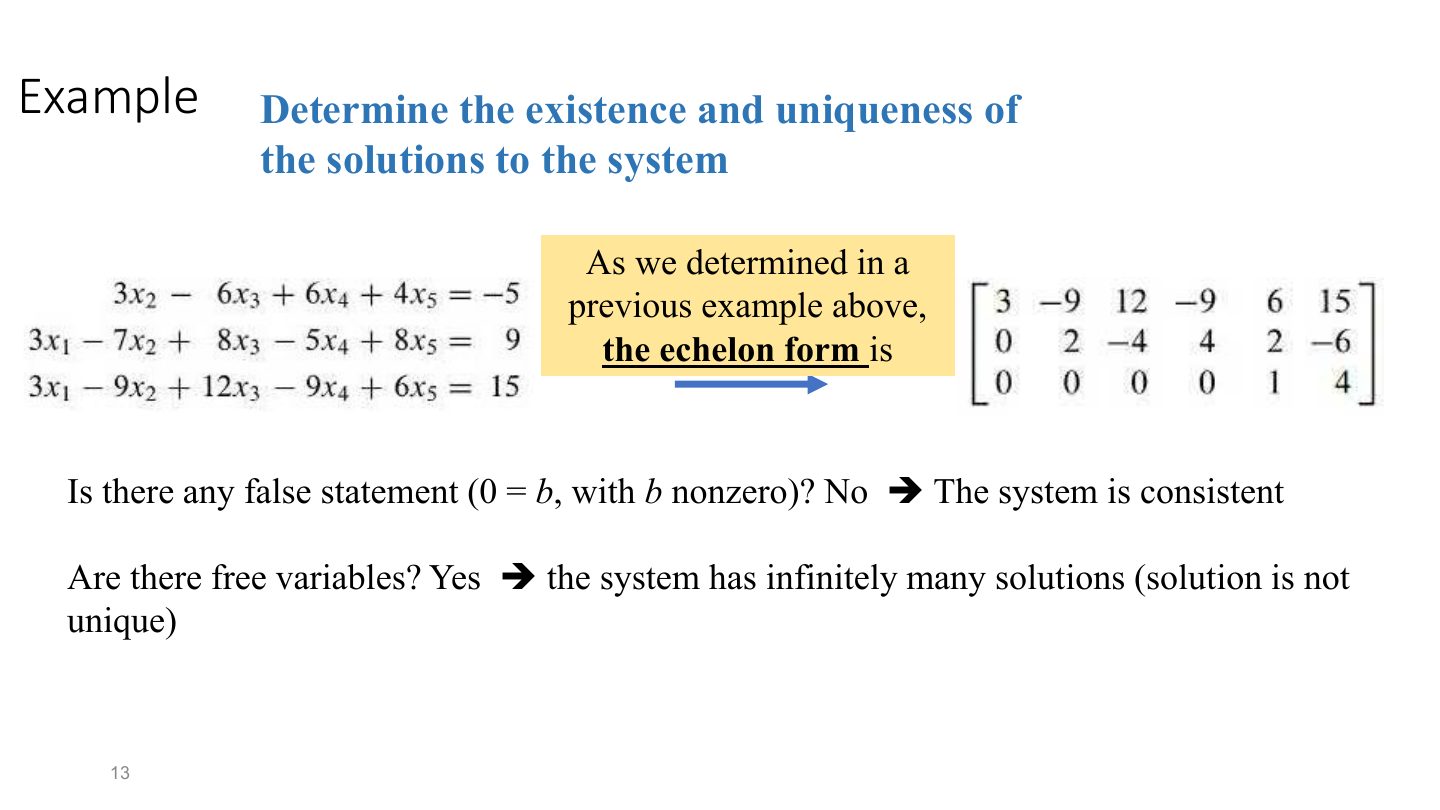
- 13 Example
- 14 Slide 14
- 15 Slide 15
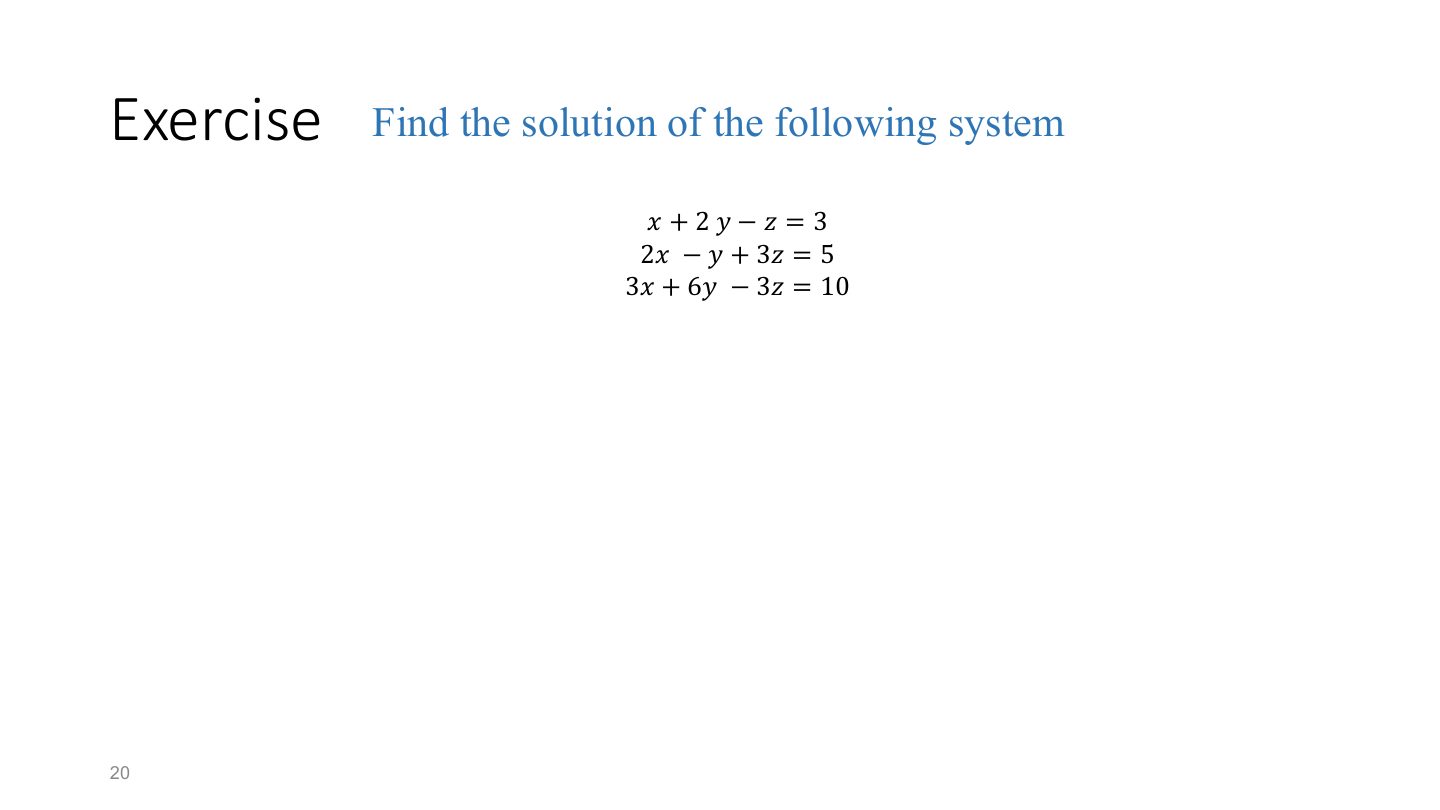
- 16 Exercise
- 17 Exercise
- 18 Exercise
- 19 Exercise
- 20 Exercise
Row Reduction and Echelon Forms
Row Reduction and Echelon Forms
Echelon Form
Notes
Echelon form: zero rows at the bottom, each leading entry to the right of the one above, zeros below each leading entry. REDUCED: leading entries are 1 and are the only nonzero entries in their columns.
Trap A matrix has many echelon forms but only ONE reduced echelon form.
Exam angle
pivots
Notes
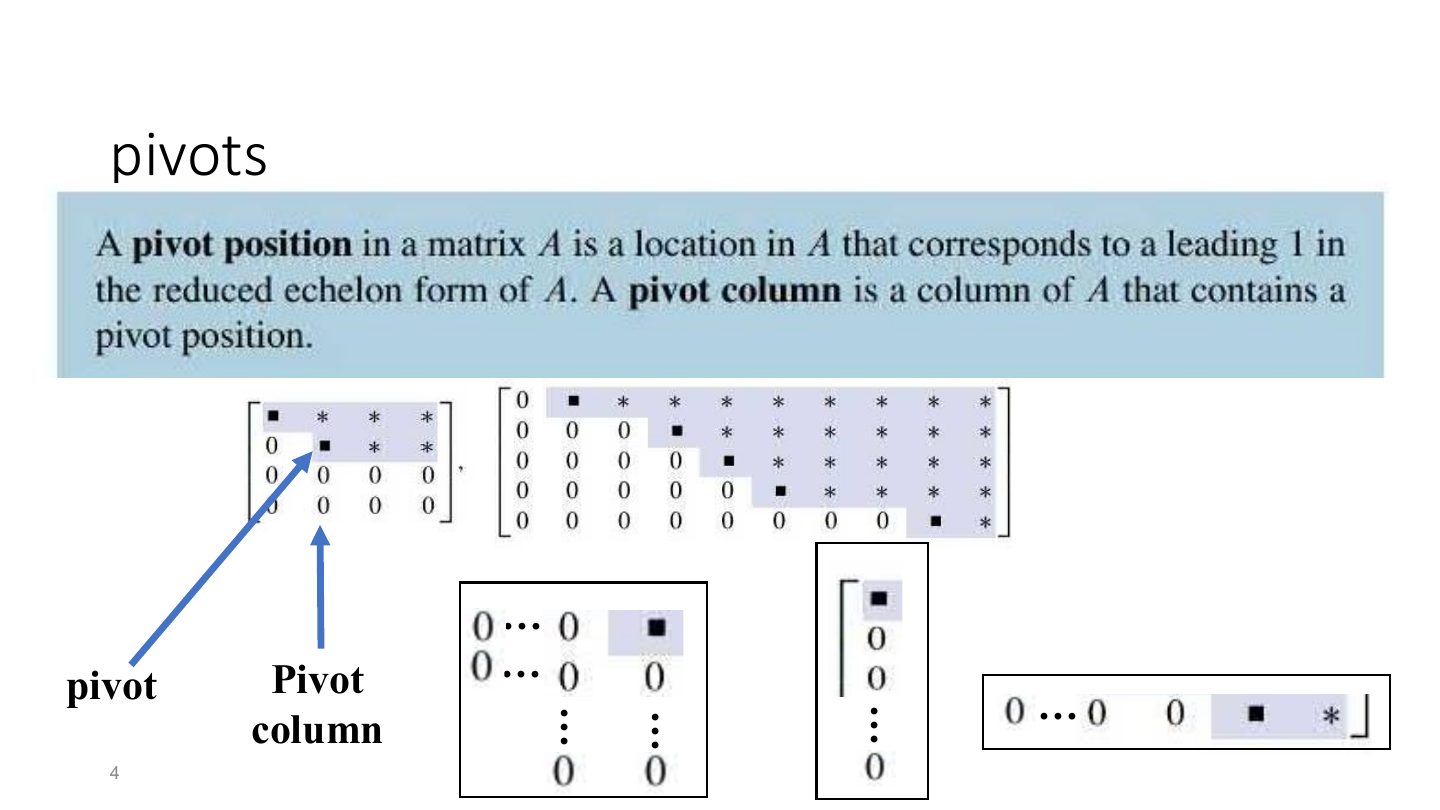
Pivot position: location of a leading 1 in the reduced echelon form; pivot column: a column containing one.
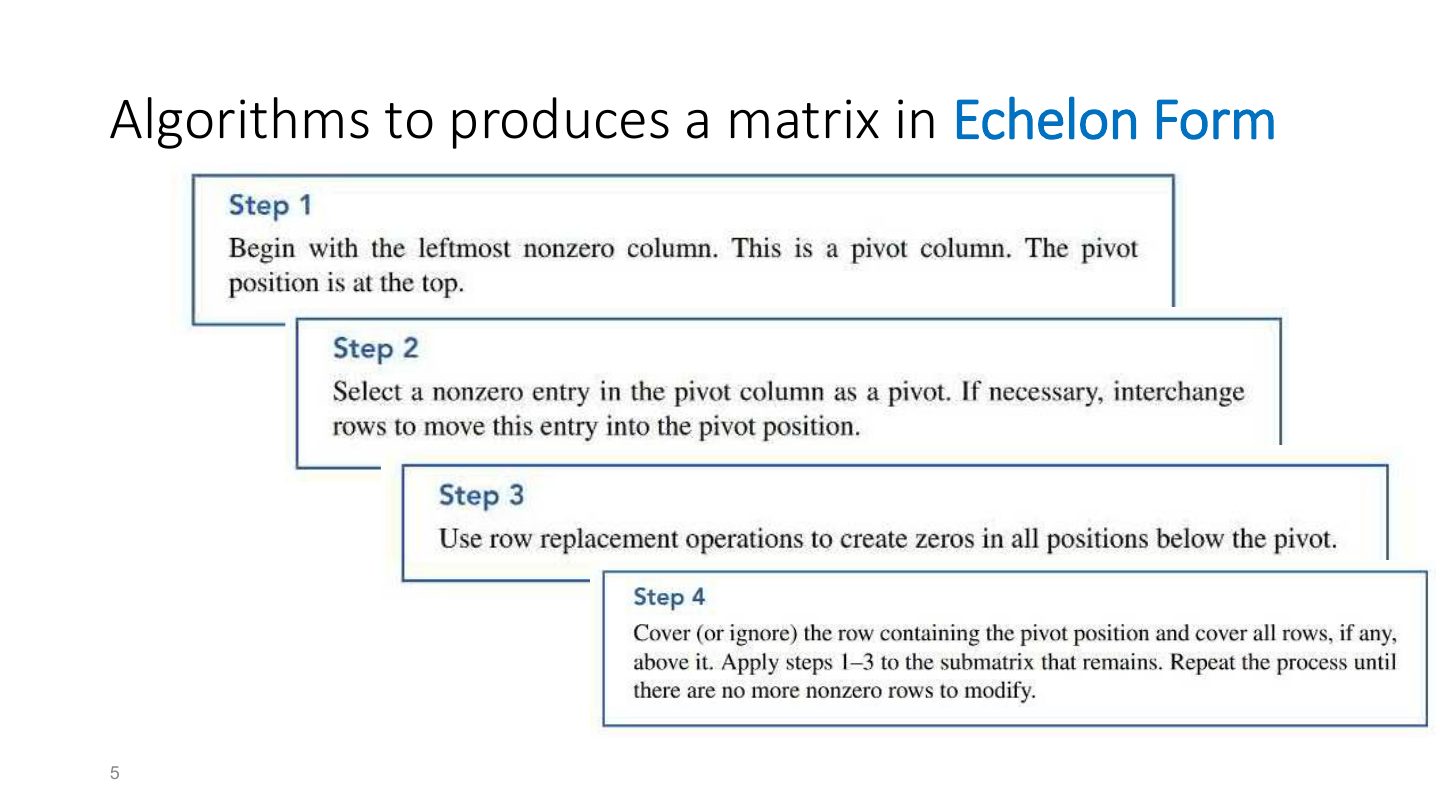
Algorithms to produces a matrix in Echelon Form
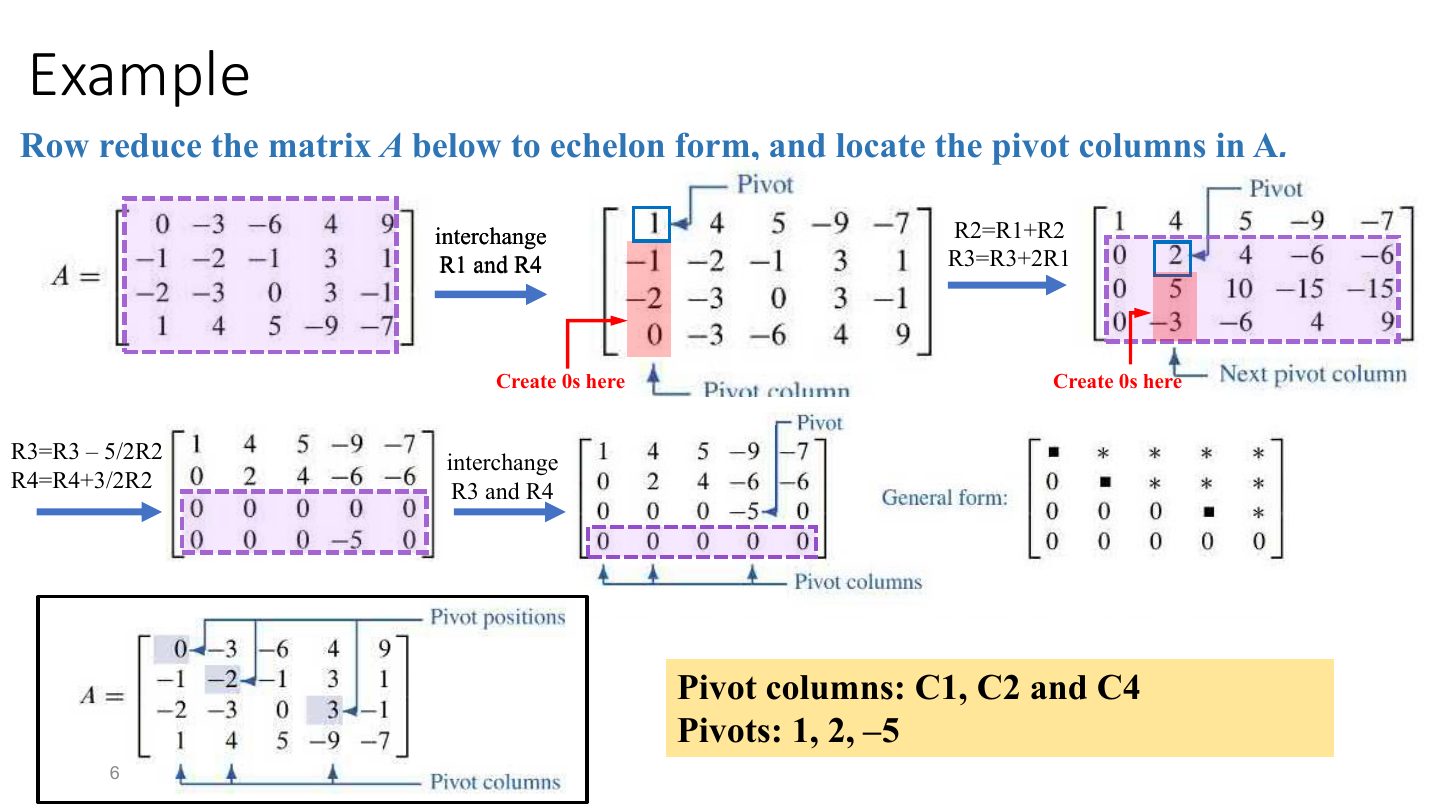
Example
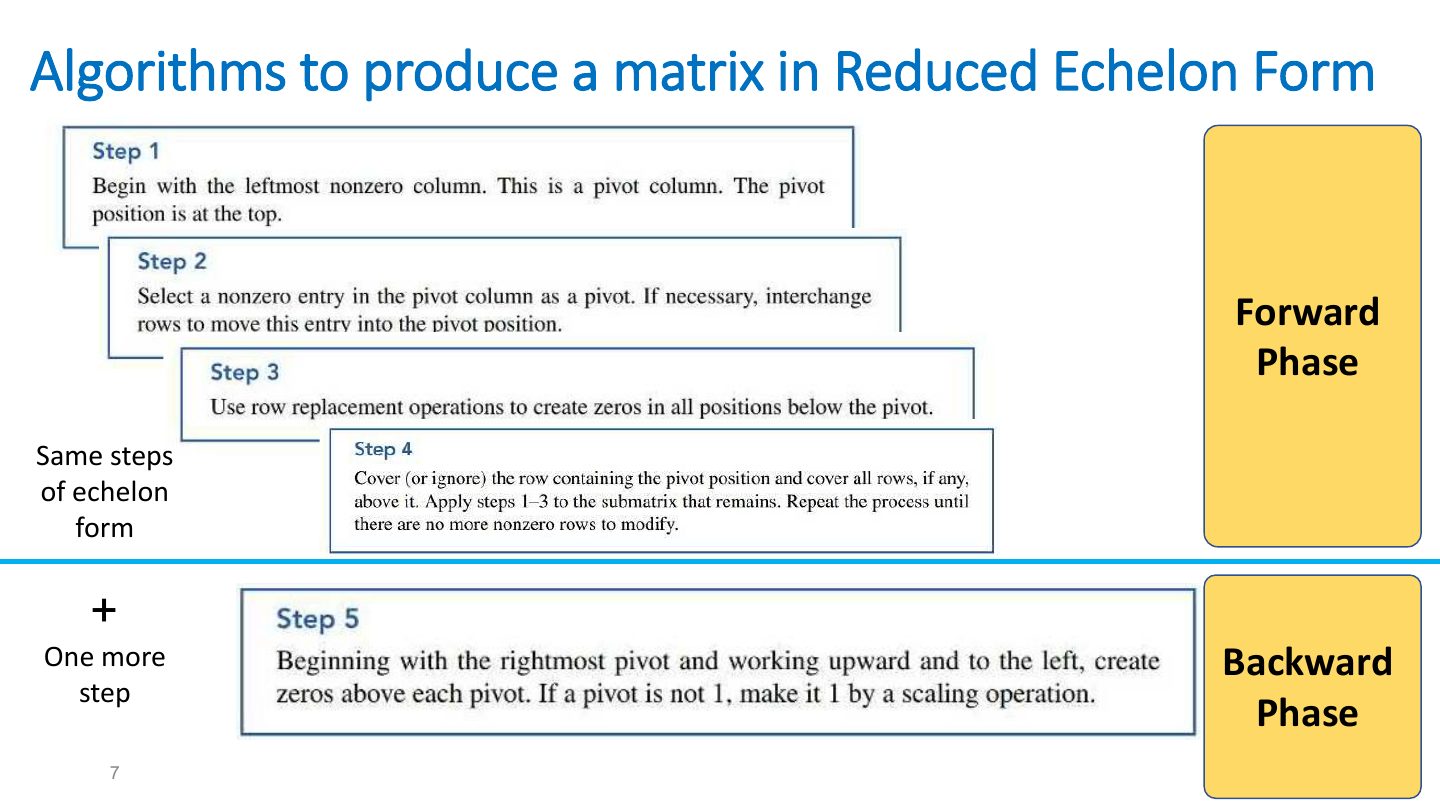
Algorithms to produce a matrix in Reduced Echelon Form
Apply elementary row operations to transform
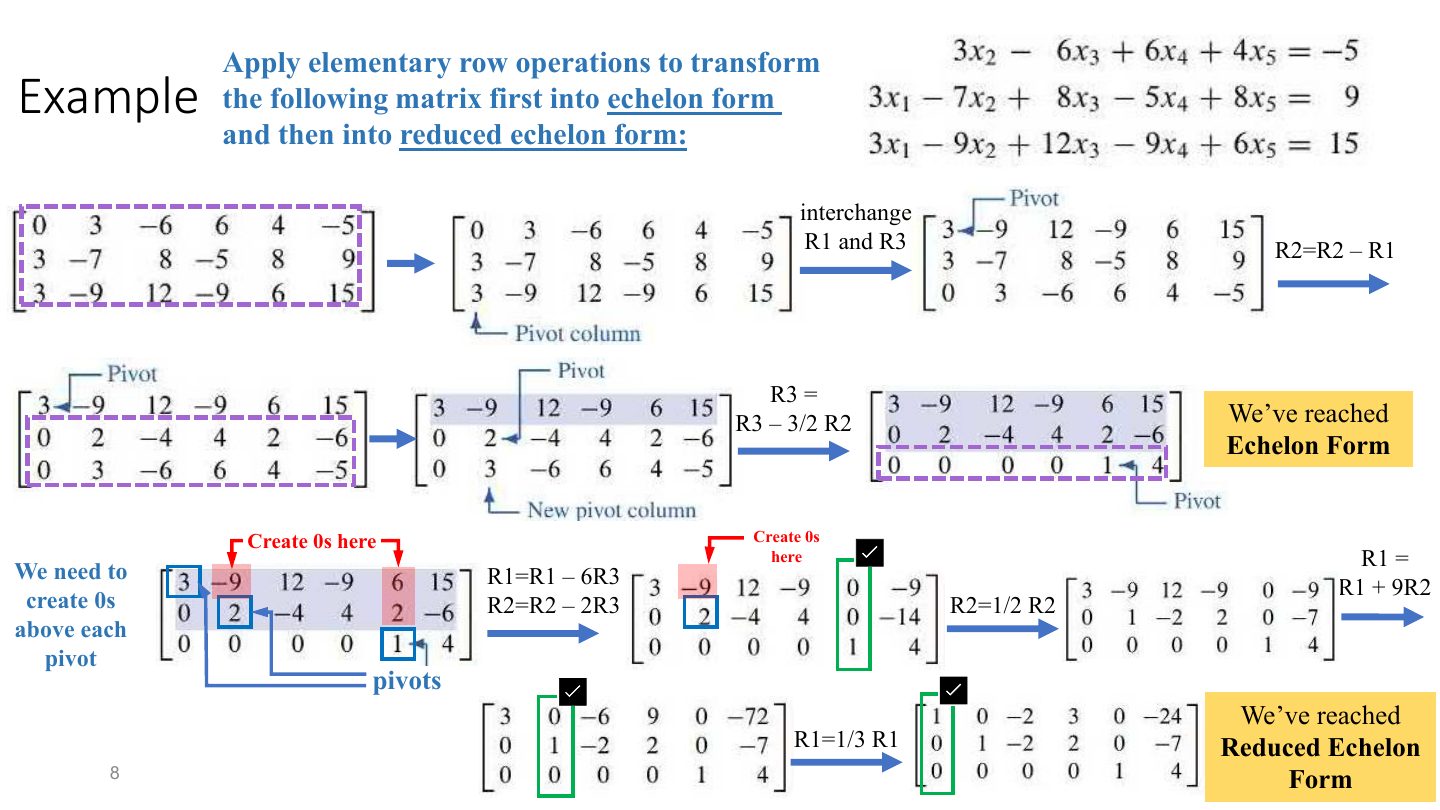
Solutions of Linear Systems
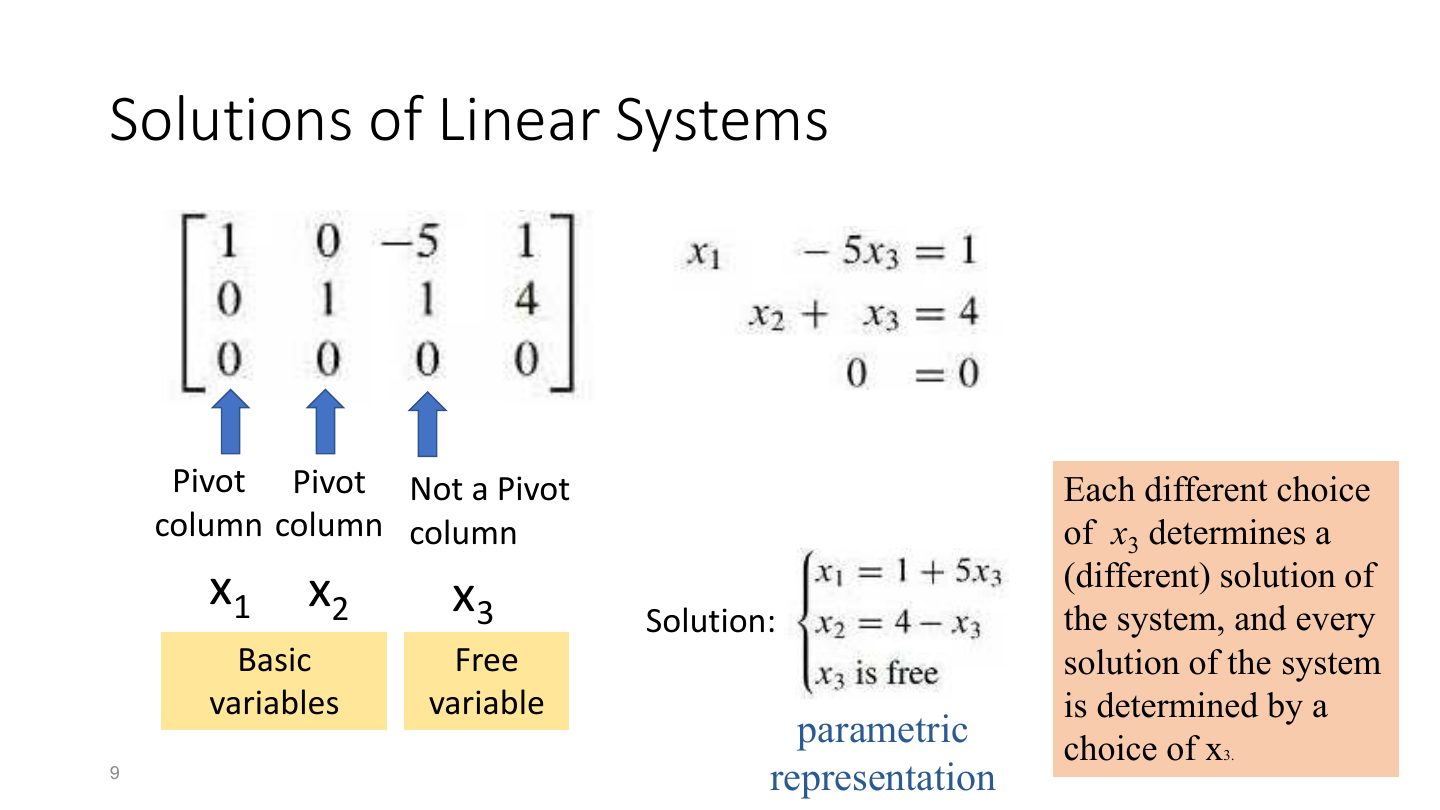
Example
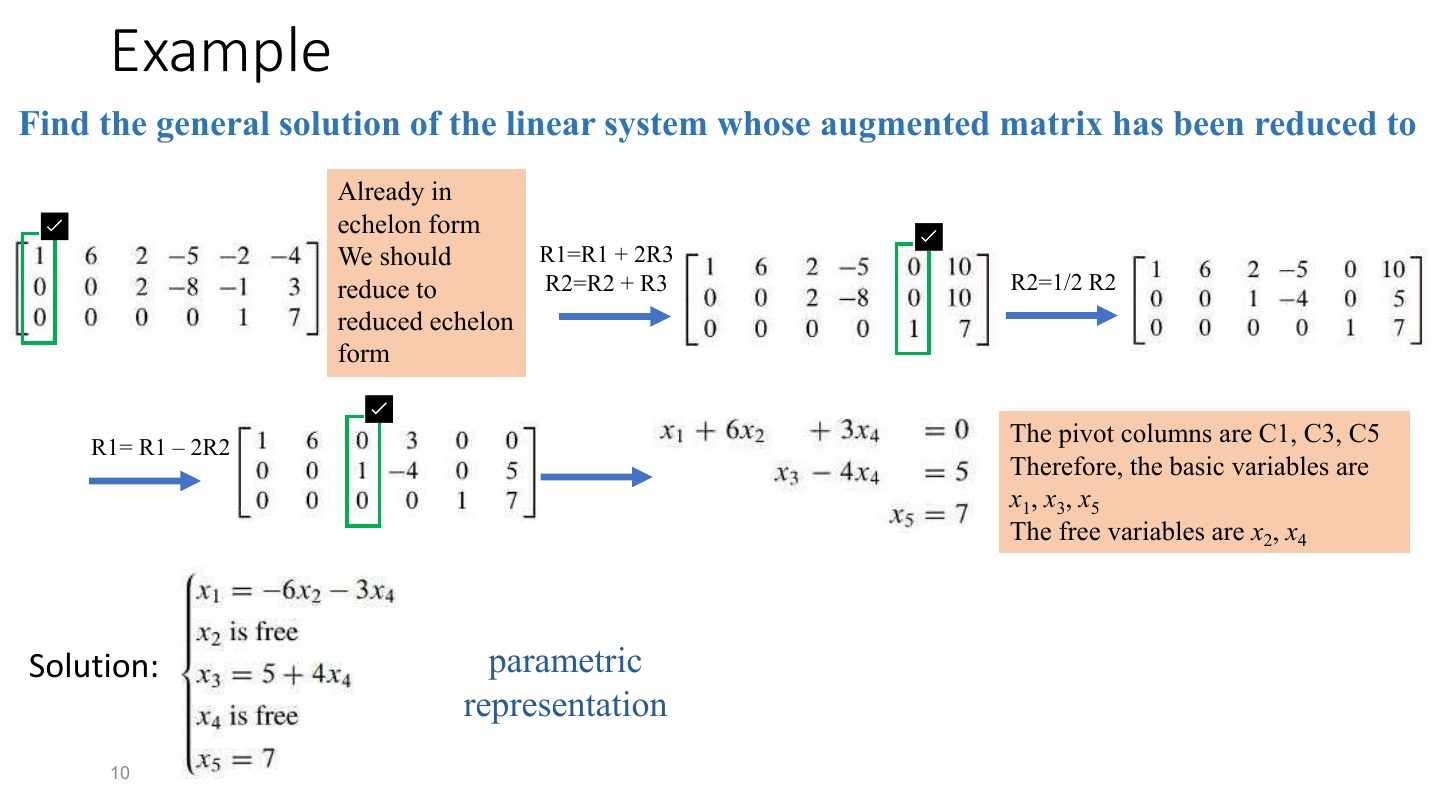
Parametric representation
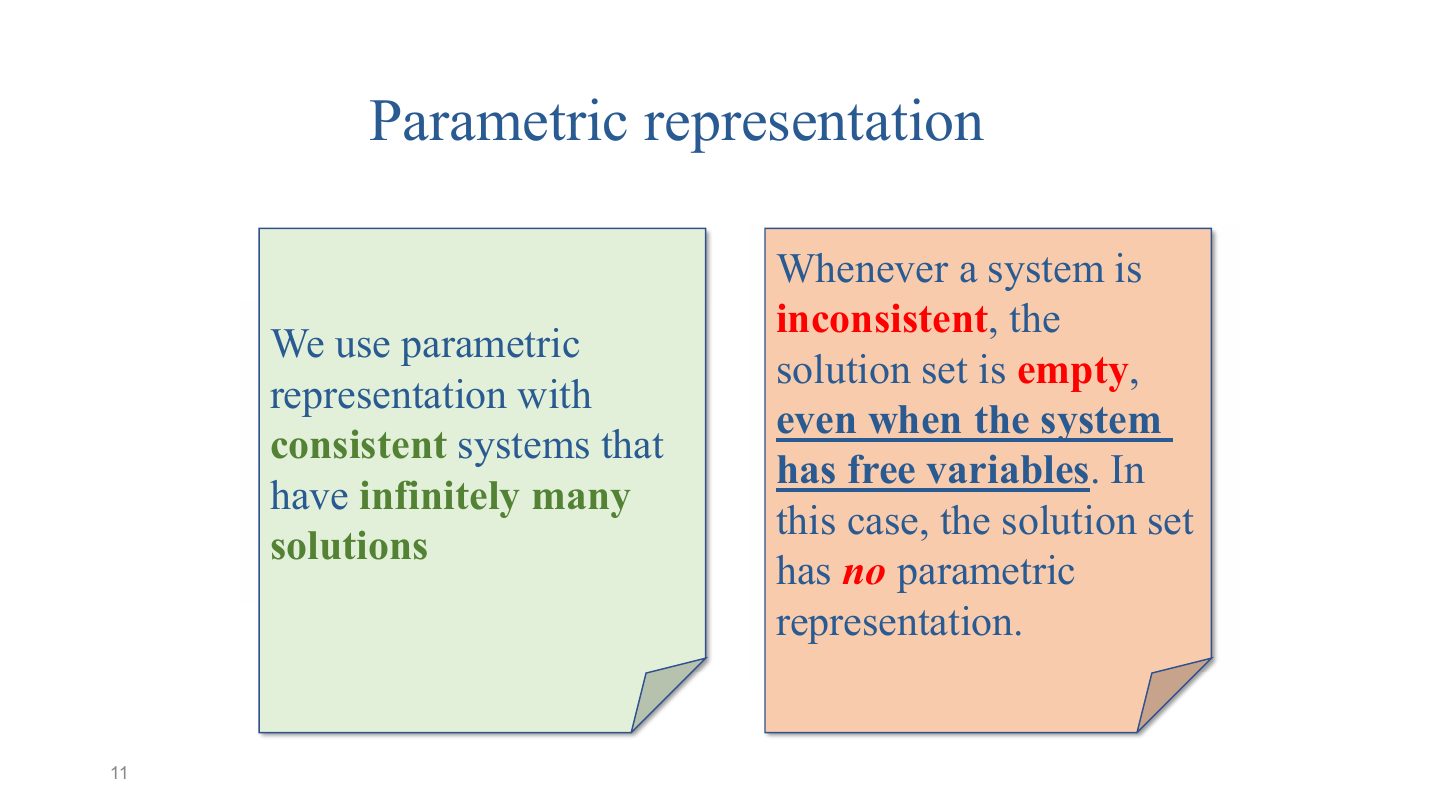
Notes
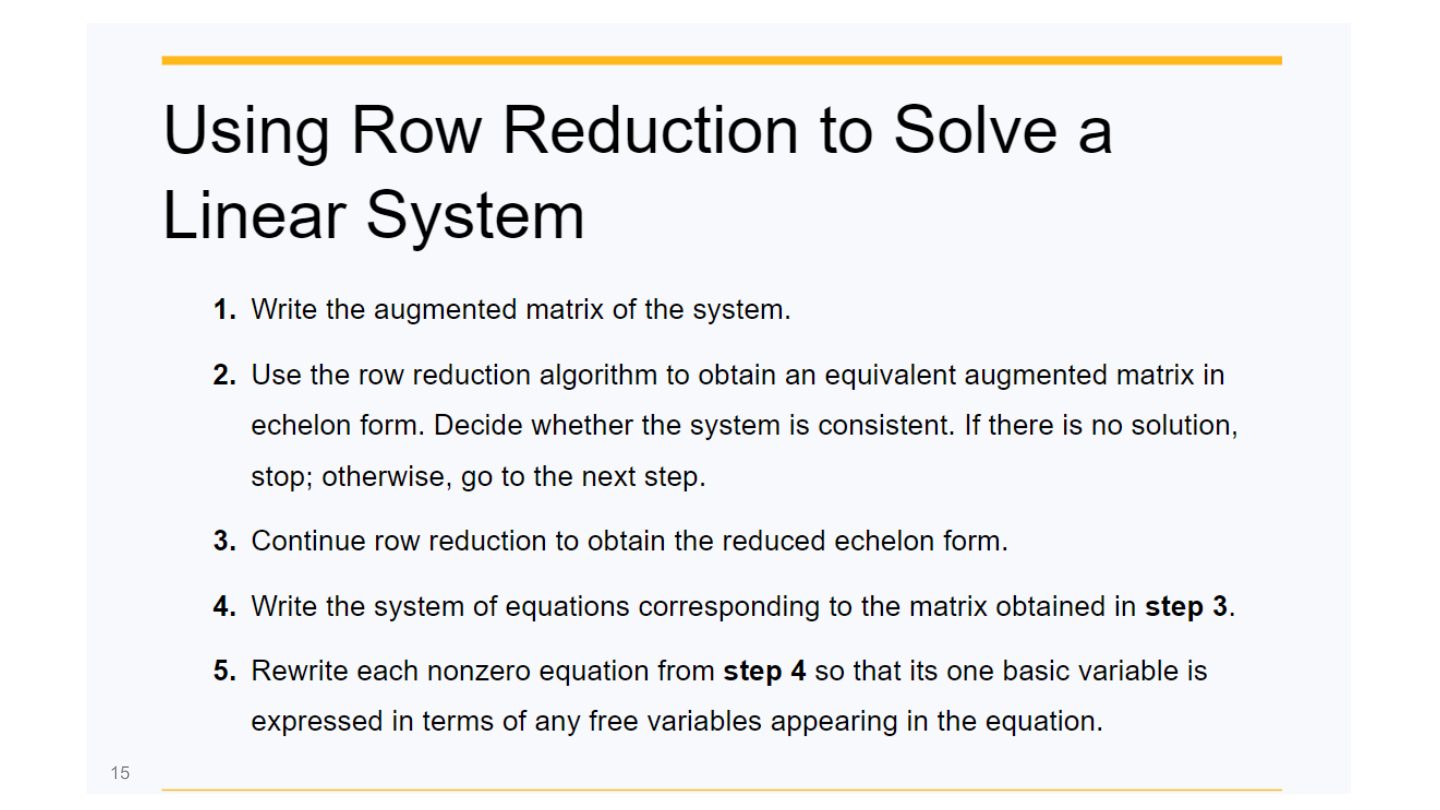
Write the general solution in parametric form: basic variables in terms of the free ones.
Note
Example
Notes
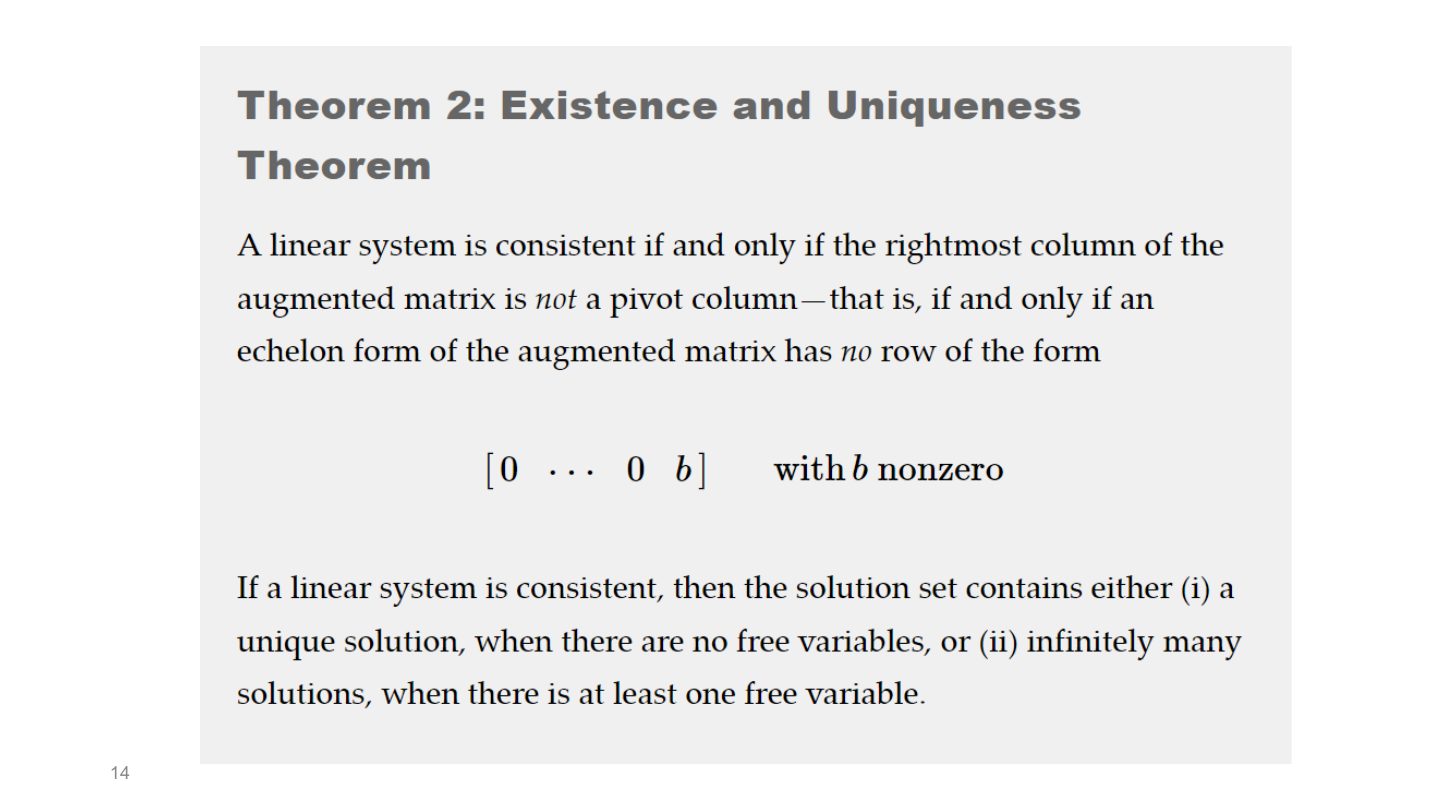
Existence and uniqueness: consistent ⇔ the last column of the augmented matrix is NOT a pivot column (no row [0 … 0 | b], b ≠ 0). If consistent: unique ⇔ no free variables; infinitely many ⇔ at least one free variable.
Exam angle
Related question: this topic is examined
An augmented matrix reduces to a row [0 0 0 | 5]. The system is:
A consistent system with 3 equations, 5 unknowns has:
- At least 2 free variables.
Slide 14
Slide 15
Exercise
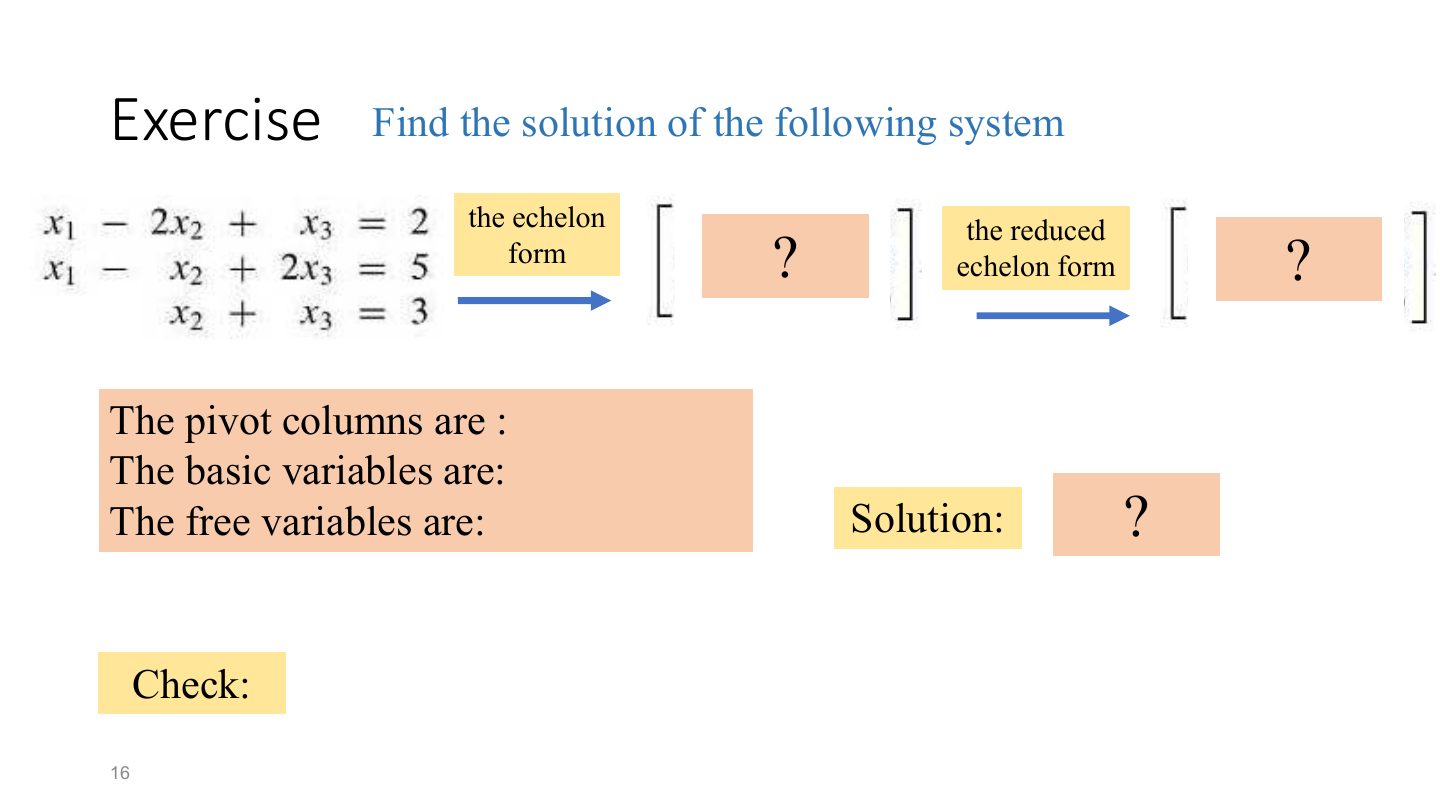
Exercise
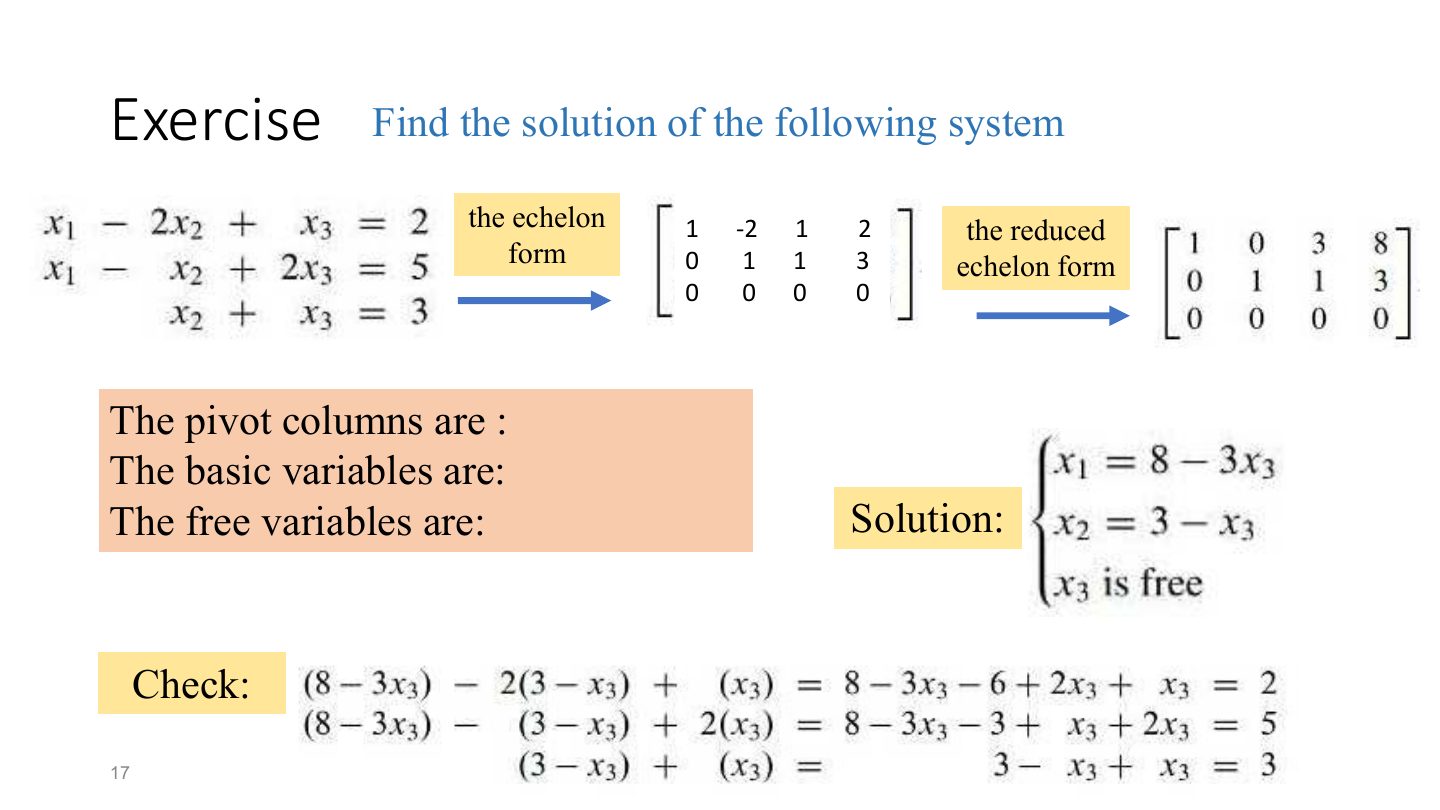
Exercise
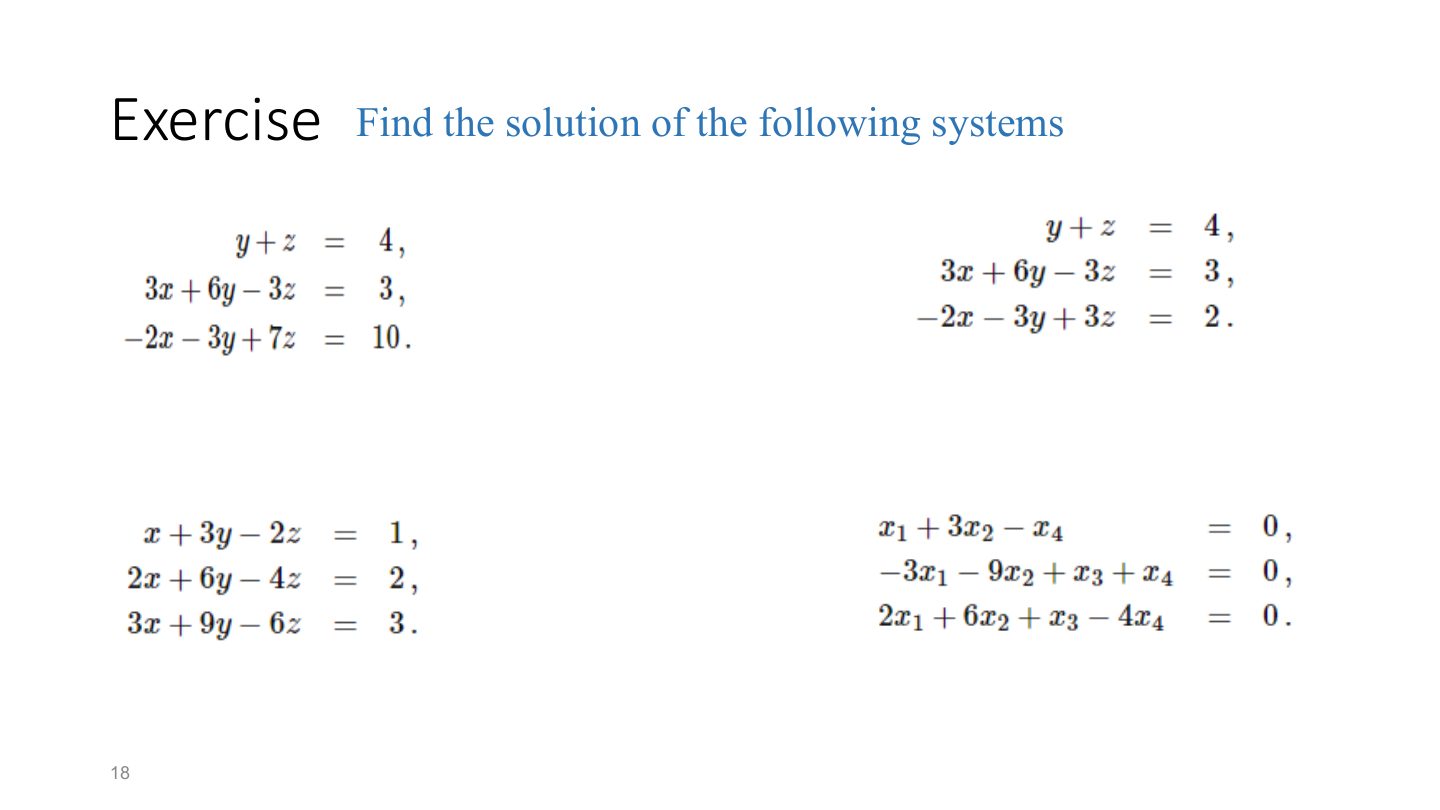
Exercise
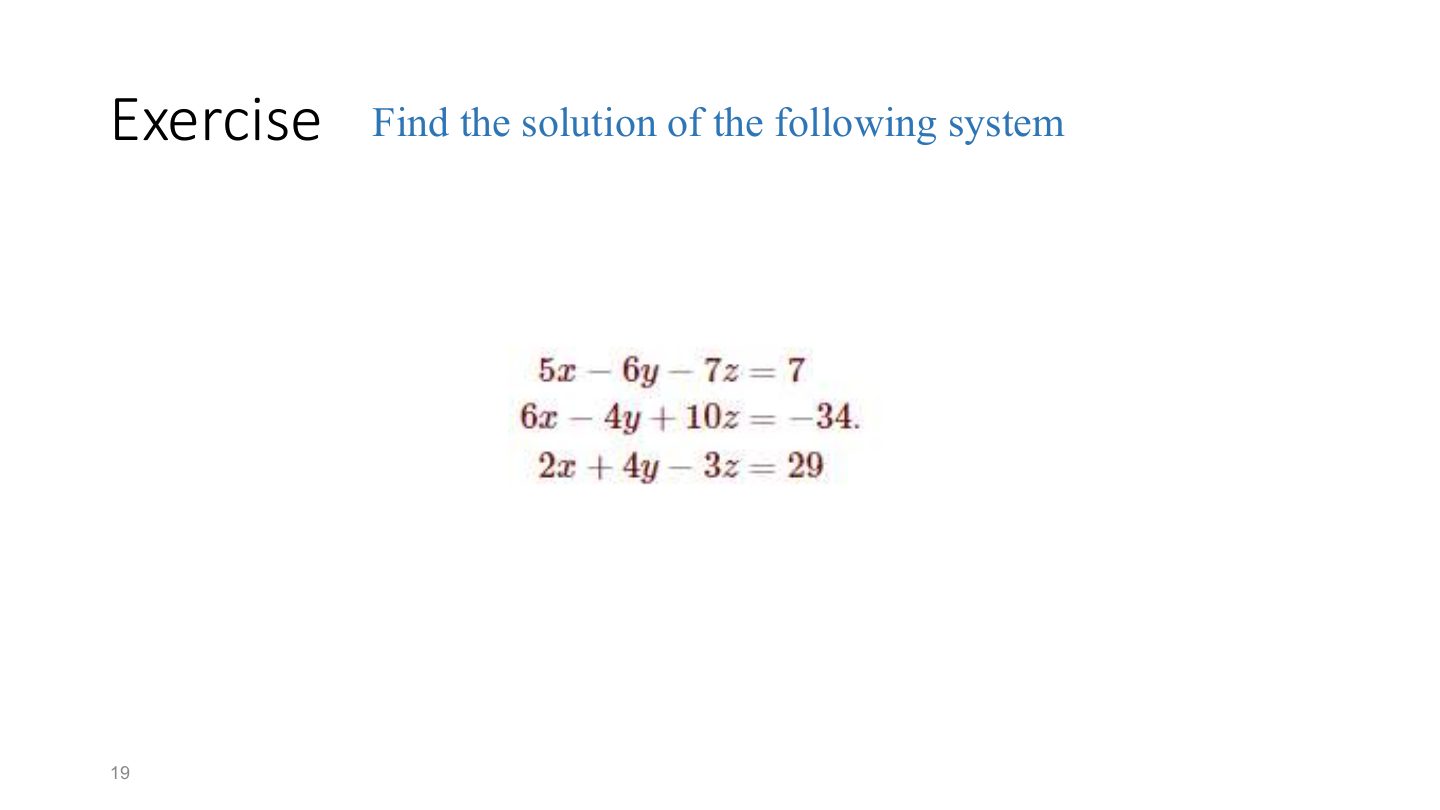
Exercise