The purpose of a honeypot is to:
Honeypots and Proxy Servers
Honeypots and their types (low, medium and high interaction, production vs. research), honeypot tools, then proxy servers: benefits, how they work, proxy vs. packet filter, transparent, non-transparent, SOCKS, anonymous and reverse proxies, configuration and limitations.
How to read this page
Every original slide is shown unchanged. Yellow marks on a slide point to a numbered note: hover or tap a mark to jump to its note, and hover a note to see its marks. Questions tagged Past exam appeared on a real paper; Prediction questions are likely angles, not confirmed. Pick an answer to each question: a wrong pick tells you why it is wrong, so you can try again.
All 25 slides
- 1 Module Flow
- 2 Honeypot
- 3 Types of Honeypots
- 4 Types of Honeypots (Cont’d)
- 5 Types of Honeypots (Cont’d)
- 6 Honeypot Tools
- 7 Module Flow
- 8 What are Proxy Servers?
- 9 Benefits of Proxy Server
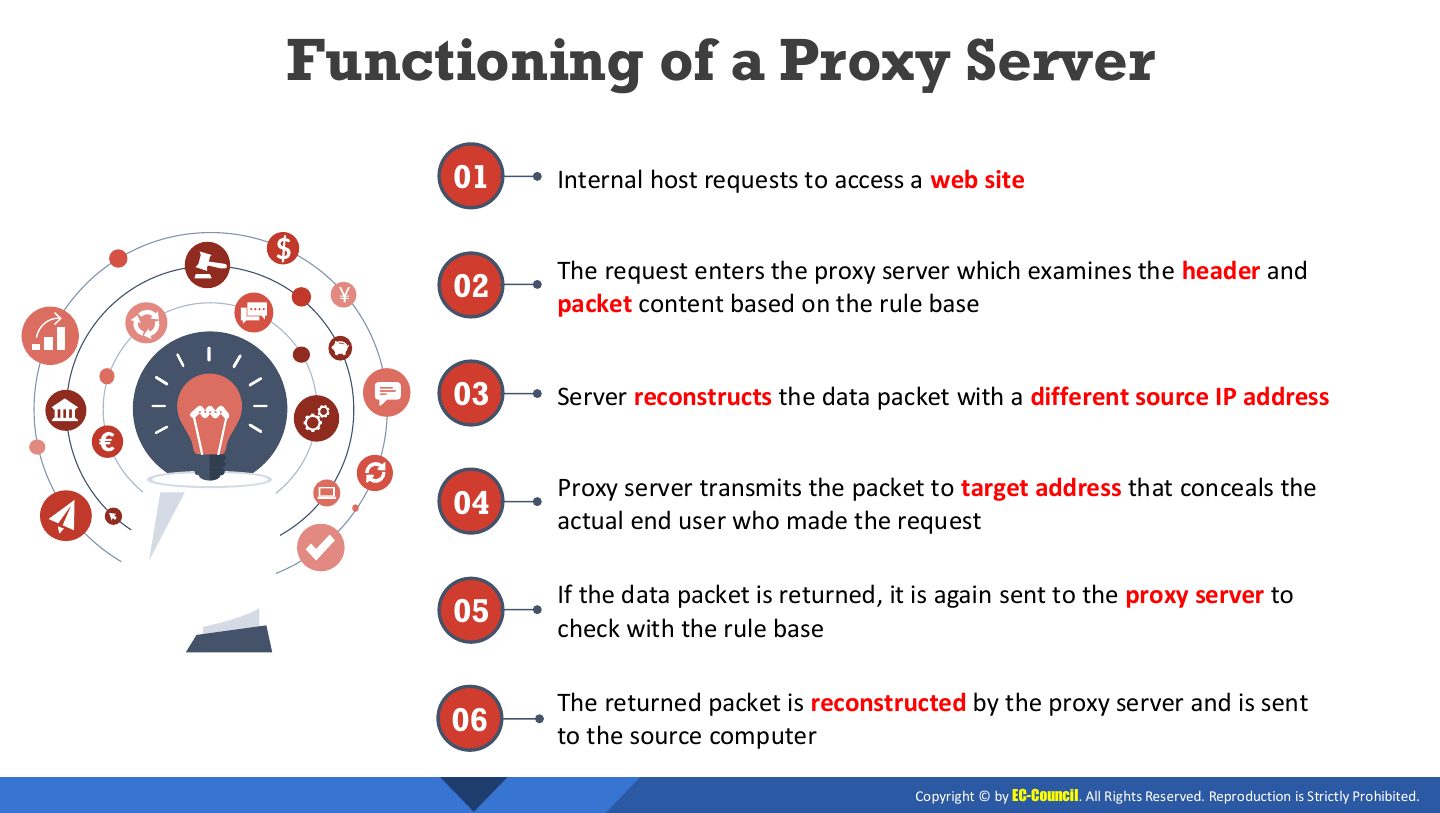
- 10 Functioning of a Proxy Server
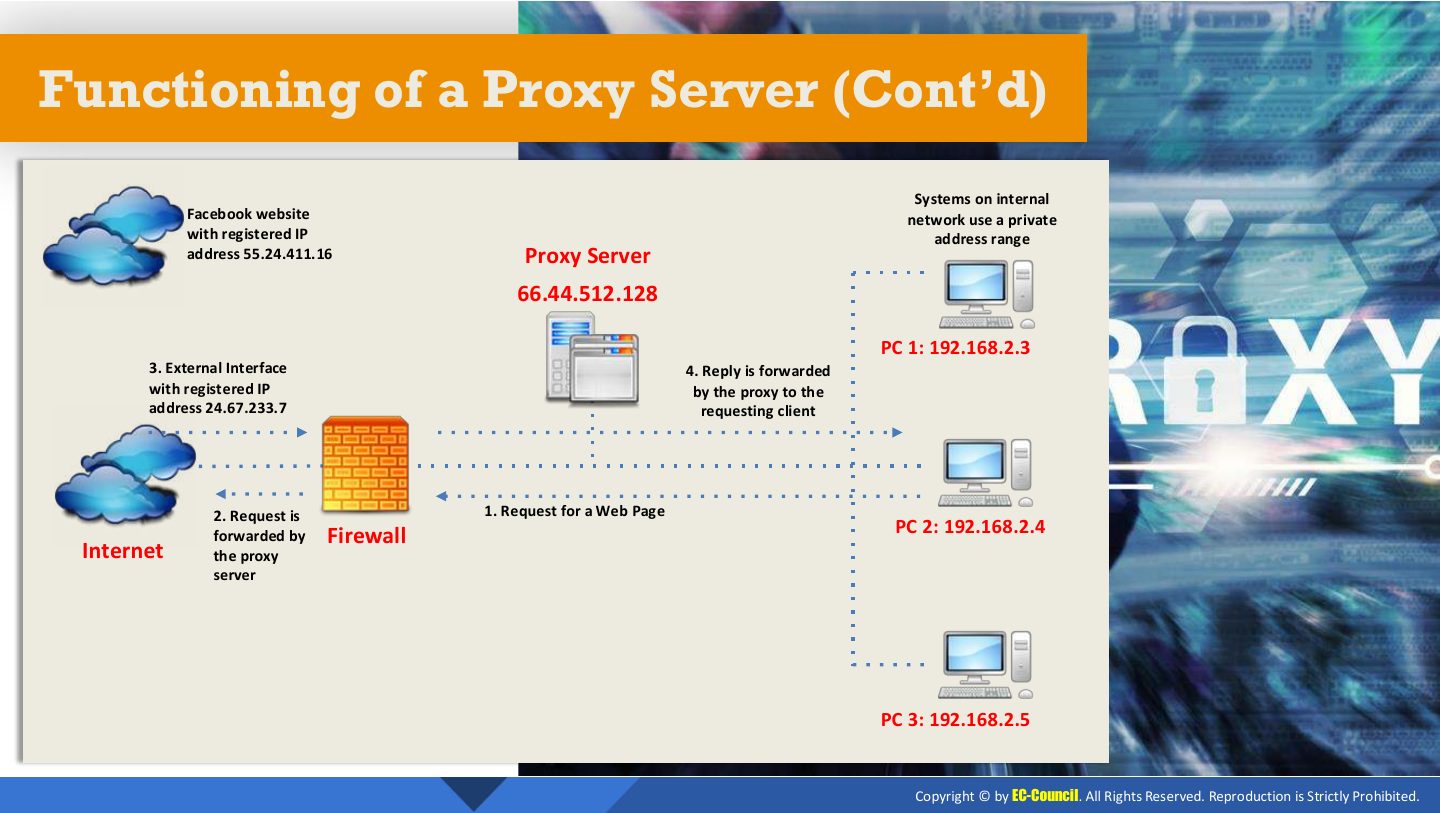
- 11 Functioning of a Proxy Server (Cont’d)
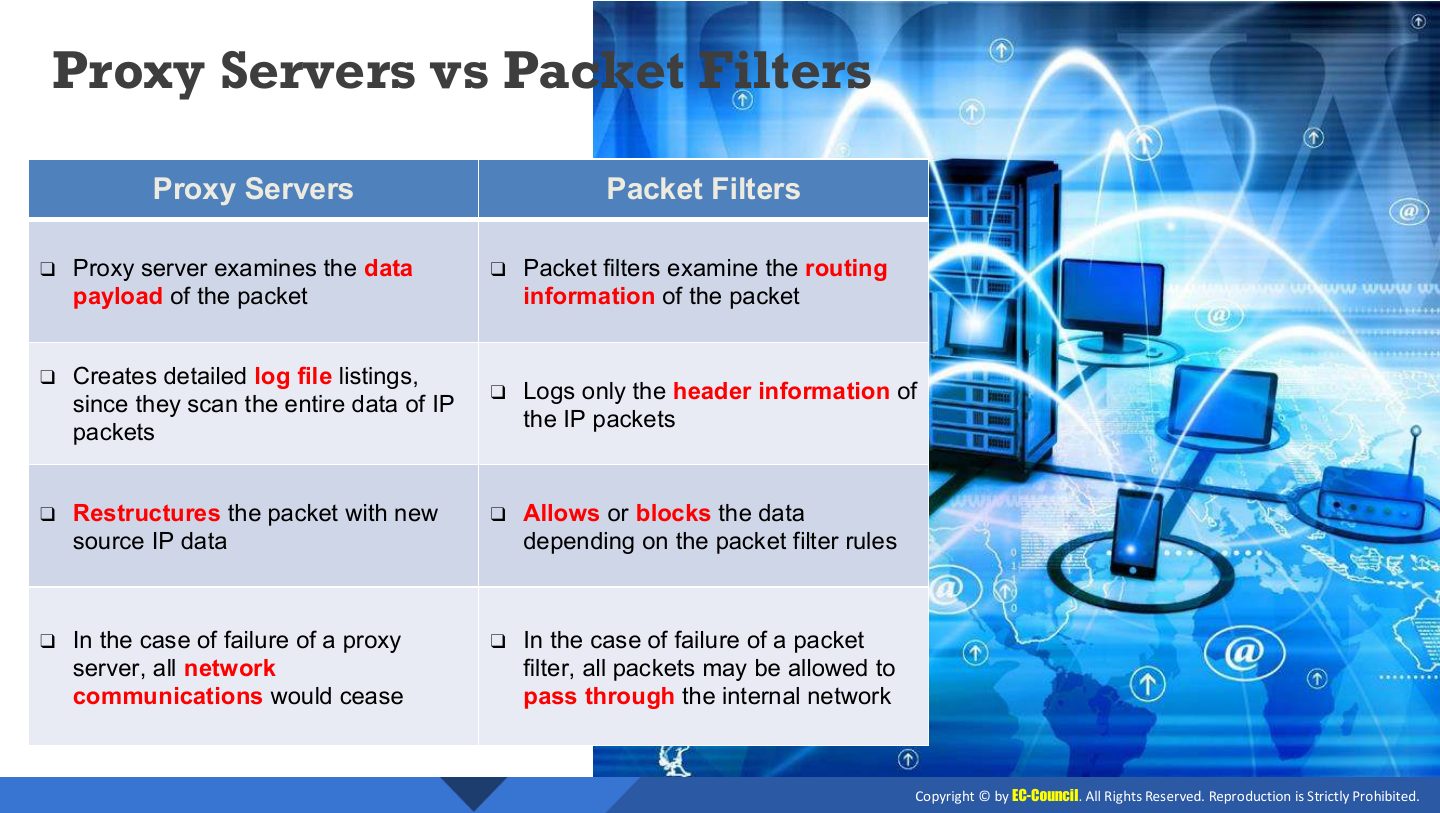
- 12 Proxy Servers vs Packet Filters
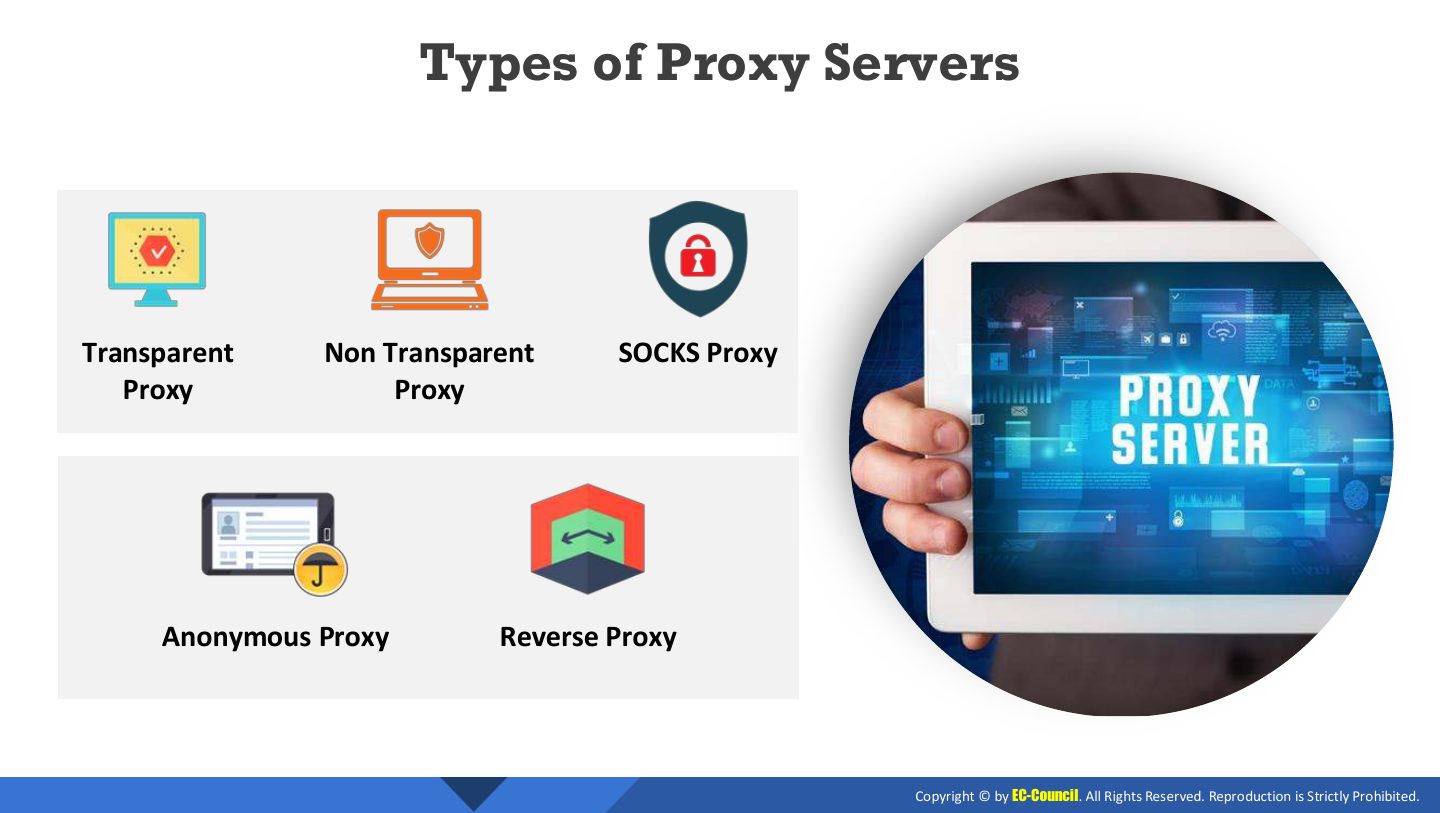
- 13 Types of Proxy Servers
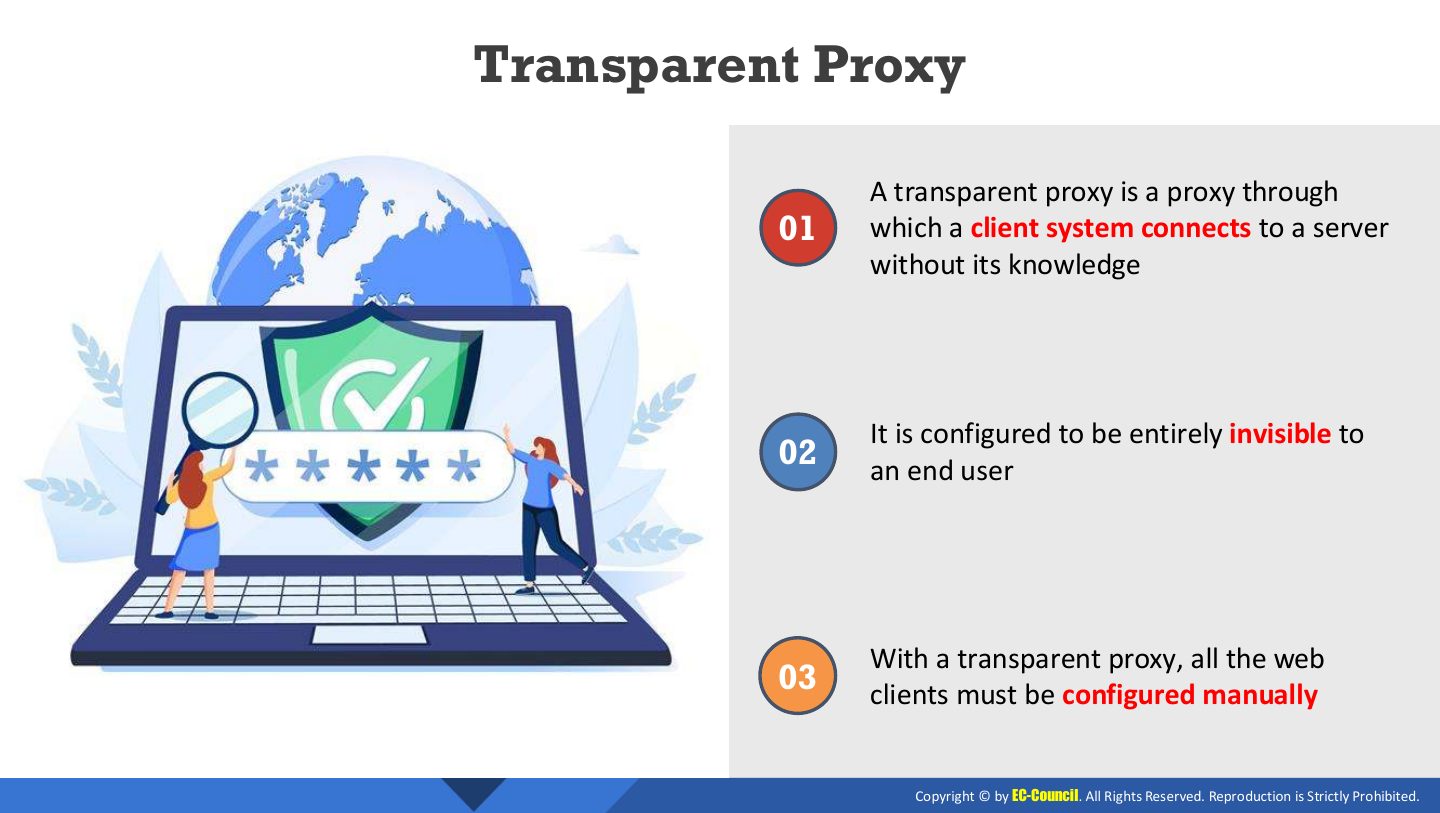
- 14 Transparent Proxy
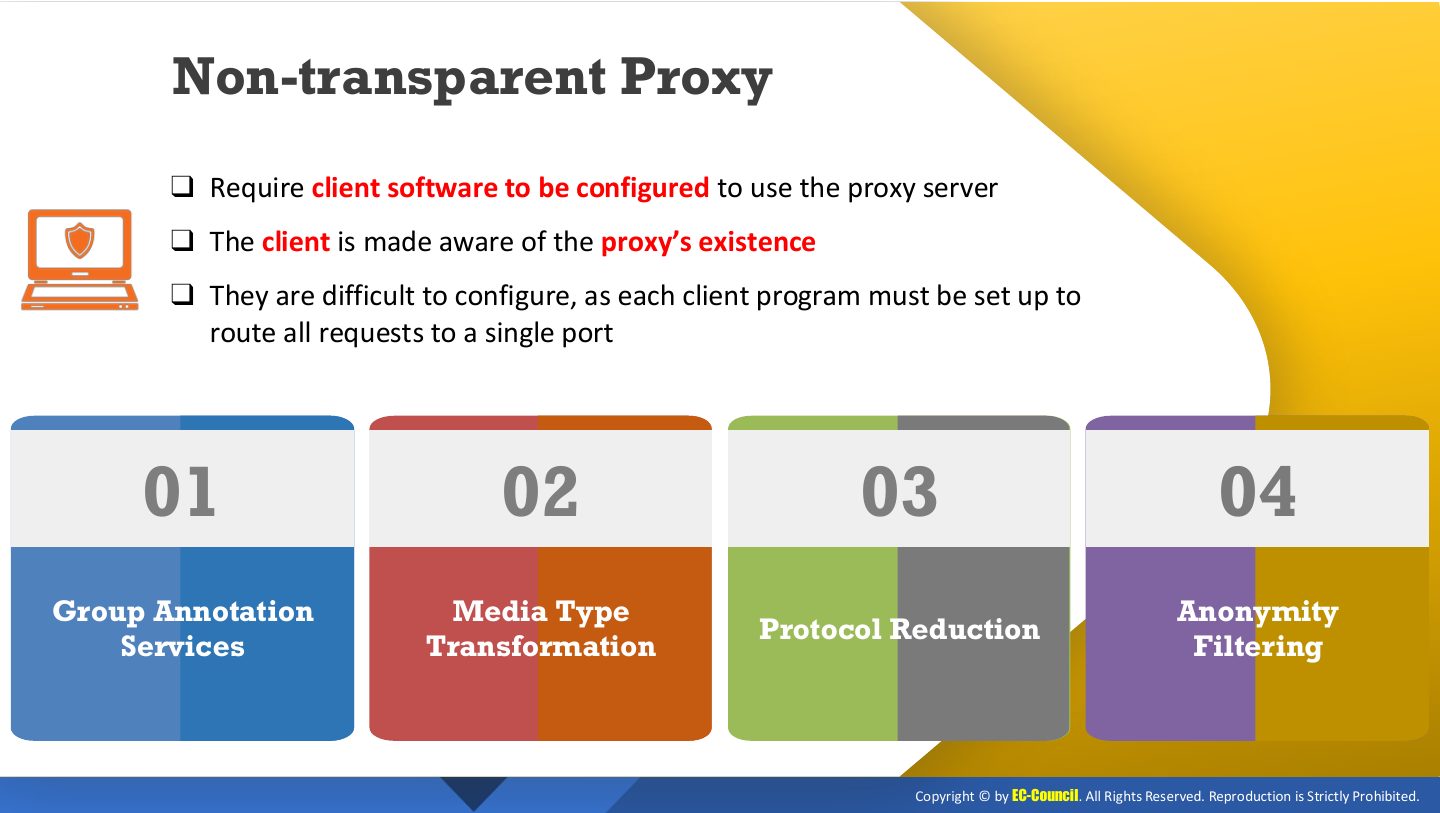
- 15 Non-transparent Proxy
- 16 SOCKS Proxy
- 17 Anonymous Proxy
- 18 Reverse Proxy
- 19 How to Configure Proxy Server
- 20 How to Configure Proxy Server (Cont’d)
- 21 How to Configure Proxy Server (Cont’d)
- 22 How to Configure Proxy Server (Cont’d)
- 23 Limitations of Proxy Server
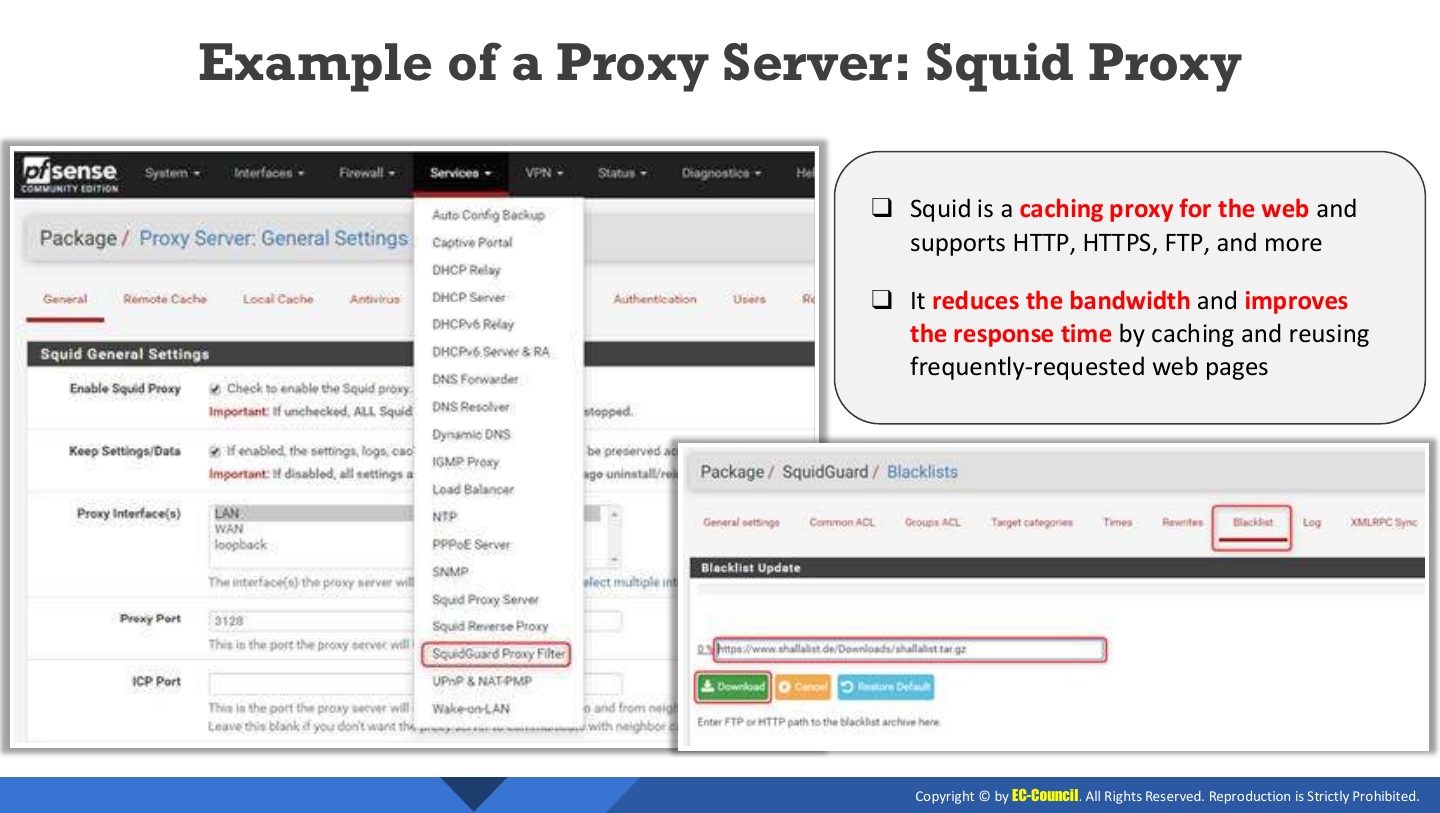
- 24 Example of a Proxy Server: Squid Proxy
- 25 List of Proxy Tools
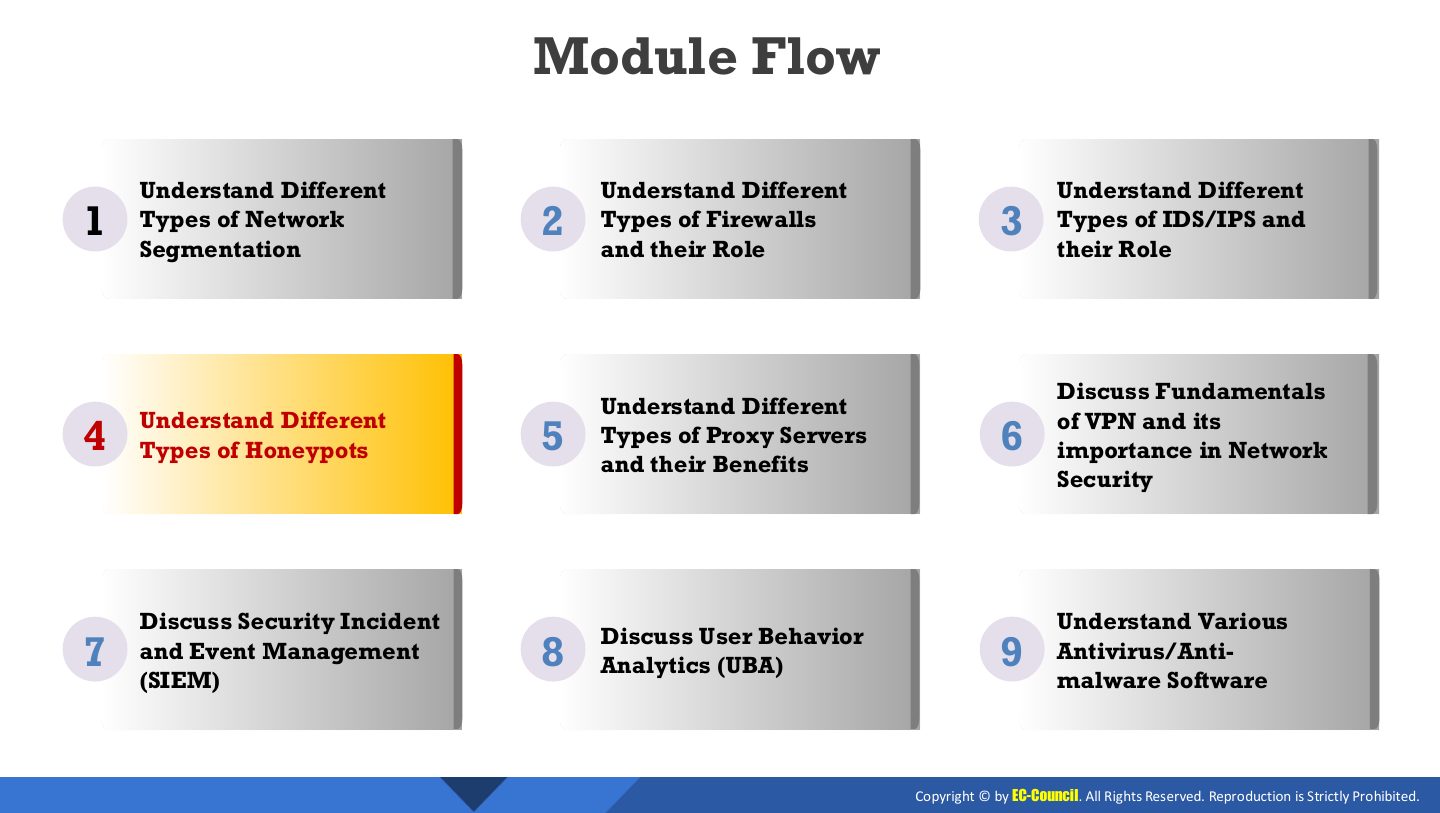
Module Flow
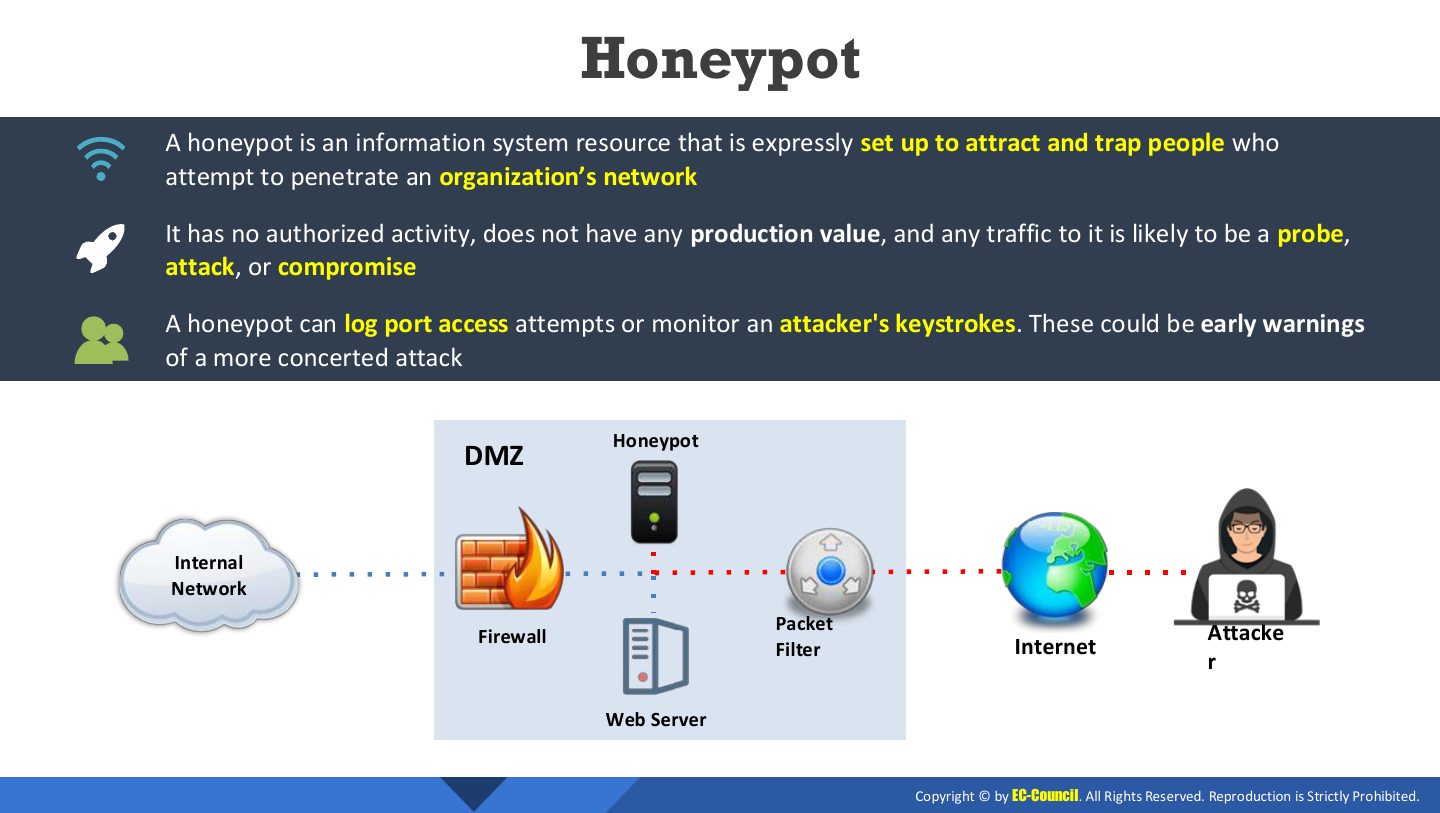
Honeypot
Notes
Honeypot: a decoy system with no production value; any interaction with it is suspicious. Used to detect and study attackers.
Exam angle
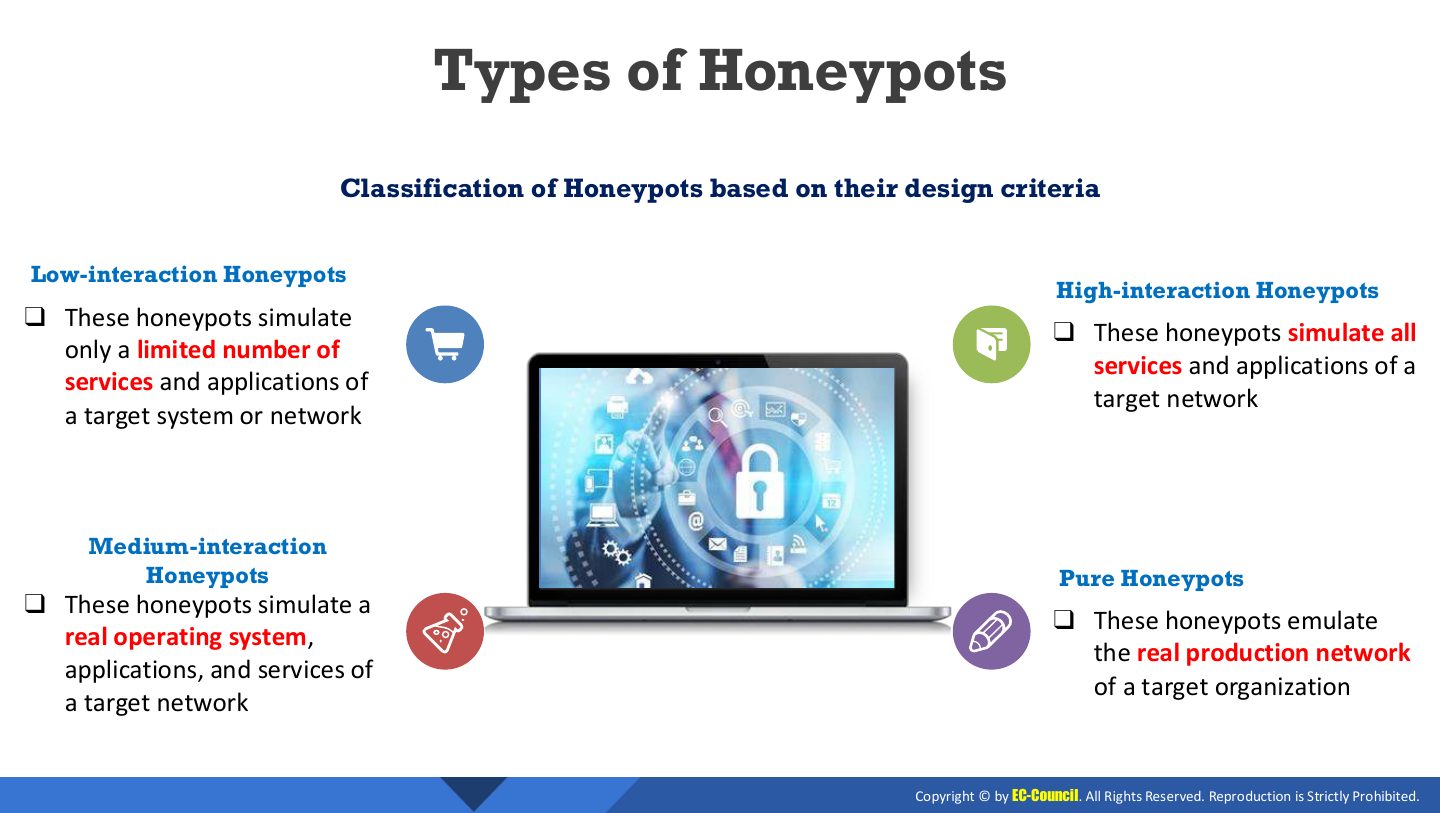
Types of Honeypots
Notes
Low-interaction: emulates a few services (safe, limited data). High-interaction: real OS and services (rich data, more risk). Production vs. research honeypots.
Exam angle
Which honeypot gives the most information but carries the most risk?
Types of Honeypots (Cont’d)
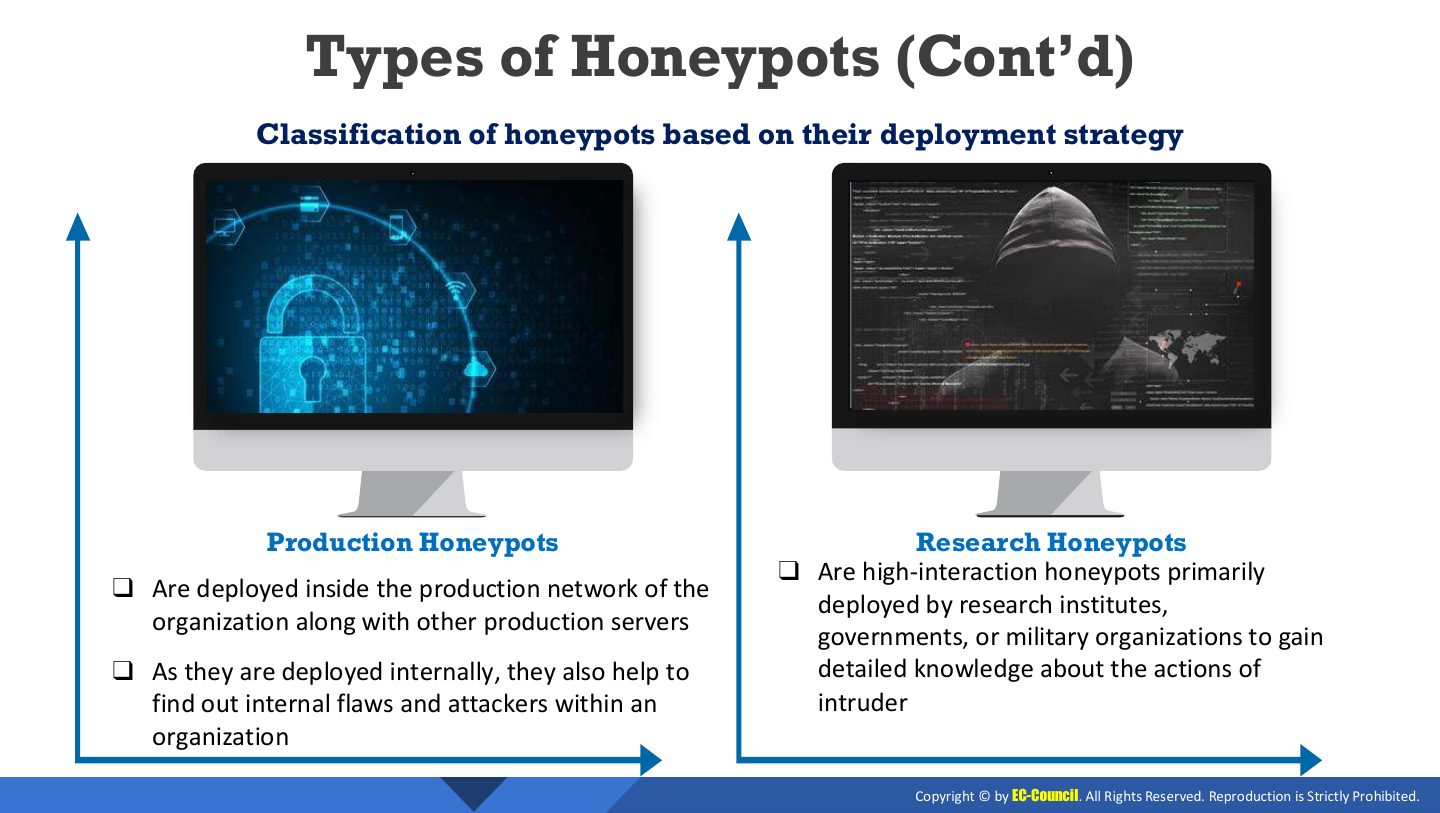
Types of Honeypots (Cont’d)
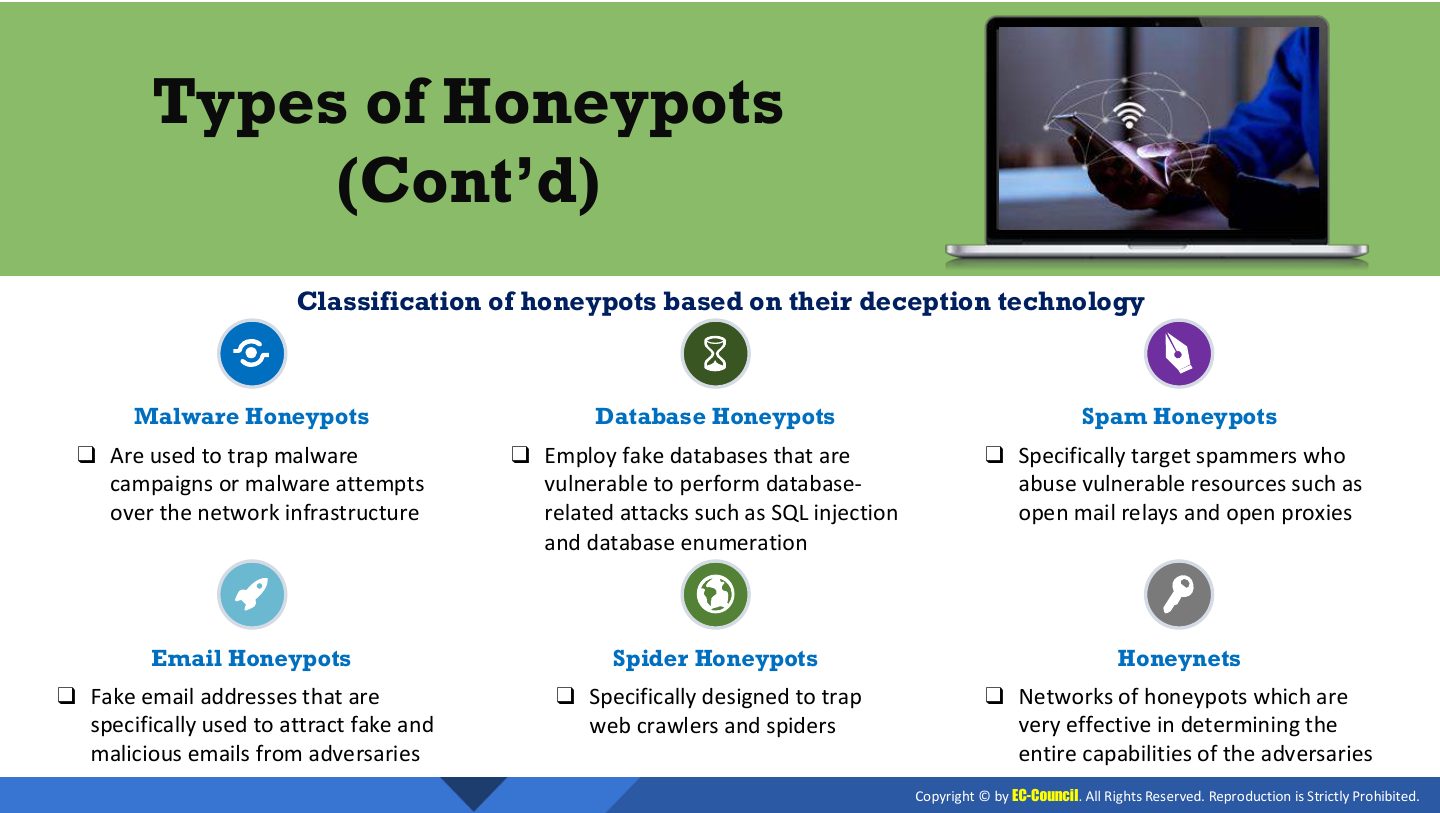
Honeypot Tools
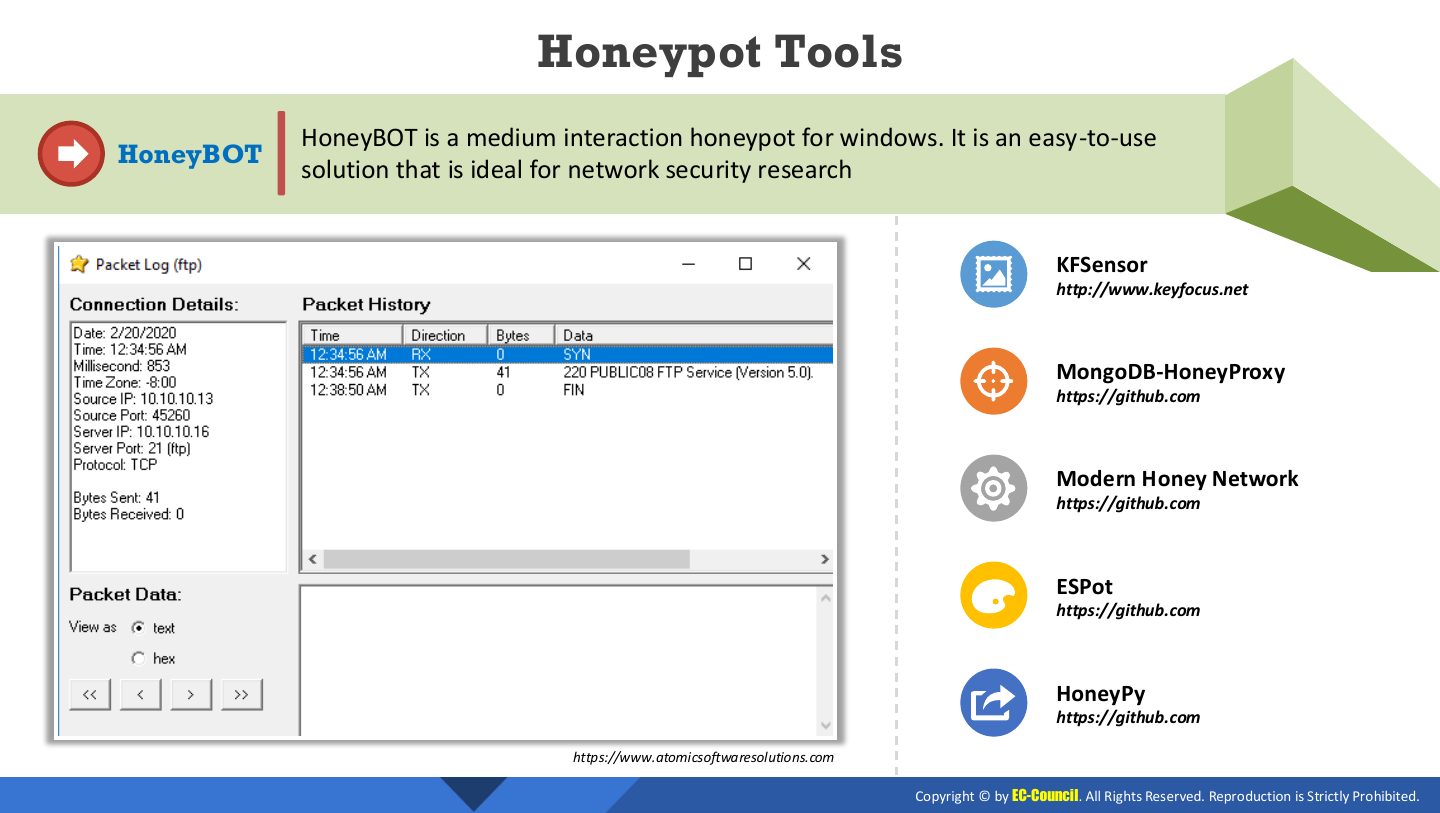
Module Flow
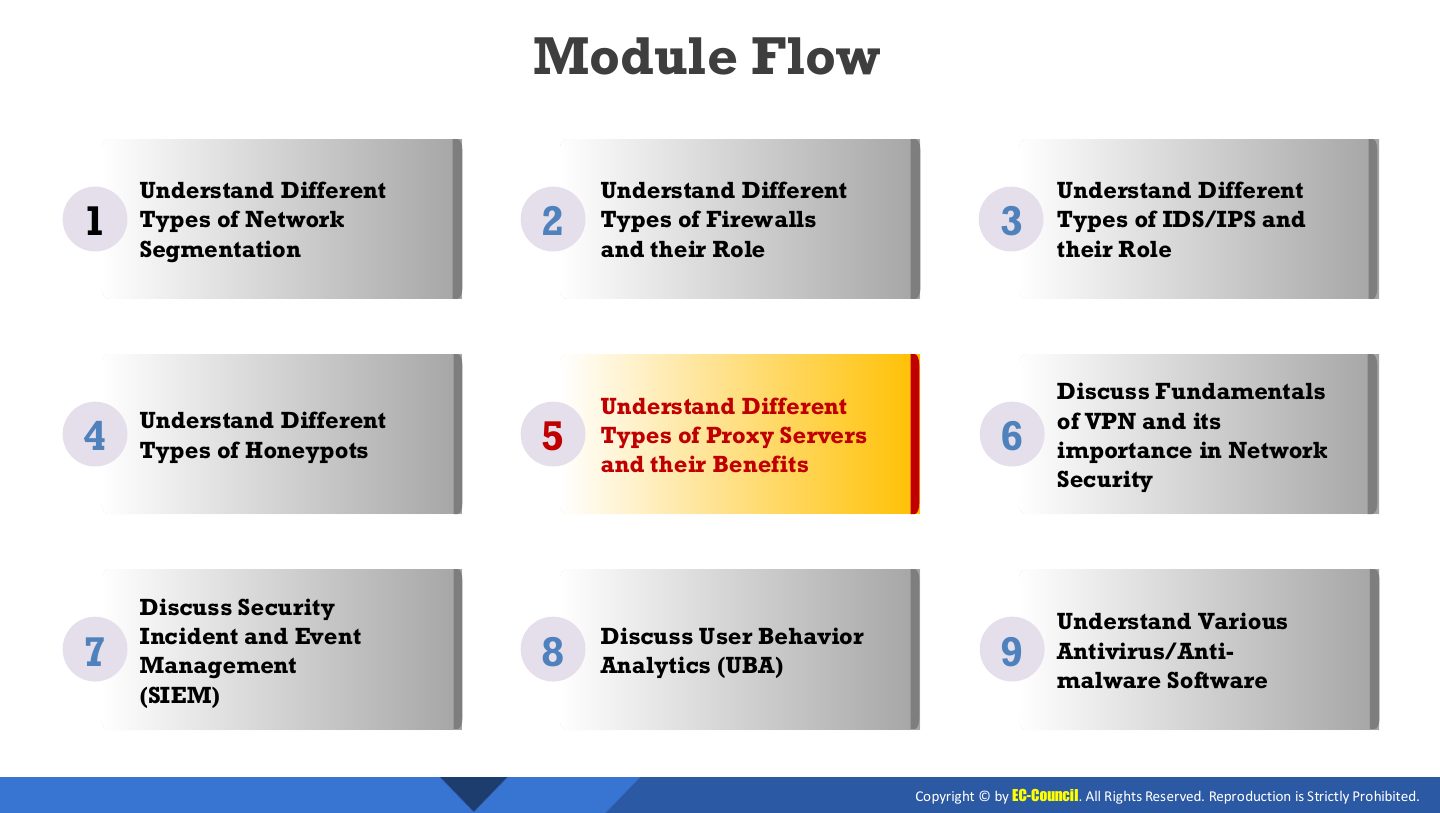
What are Proxy Servers?
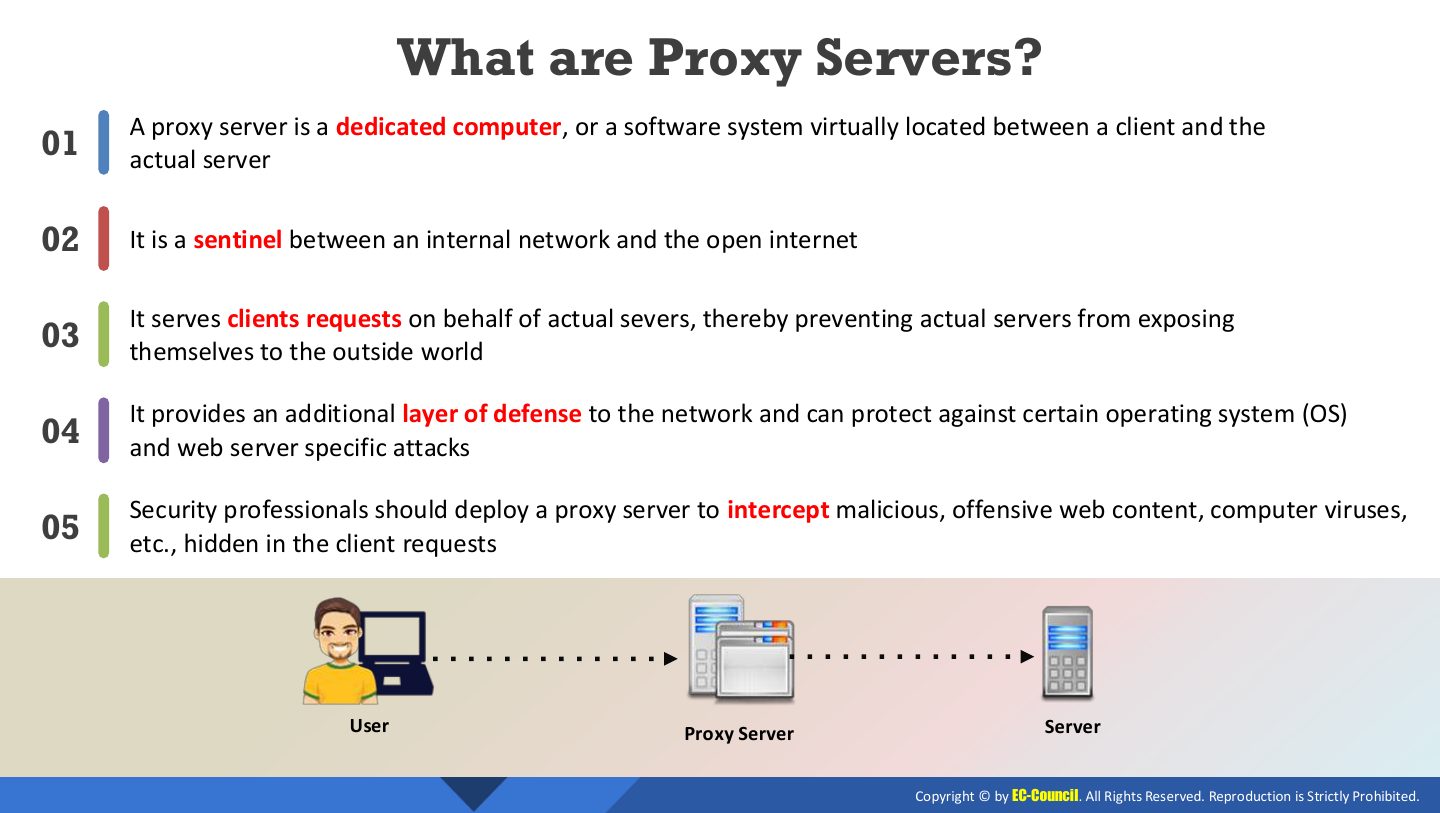
Notes
Proxy server: an intermediary that makes requests on behalf of clients (hides them, filters content, caches).
Benefits of Proxy Server
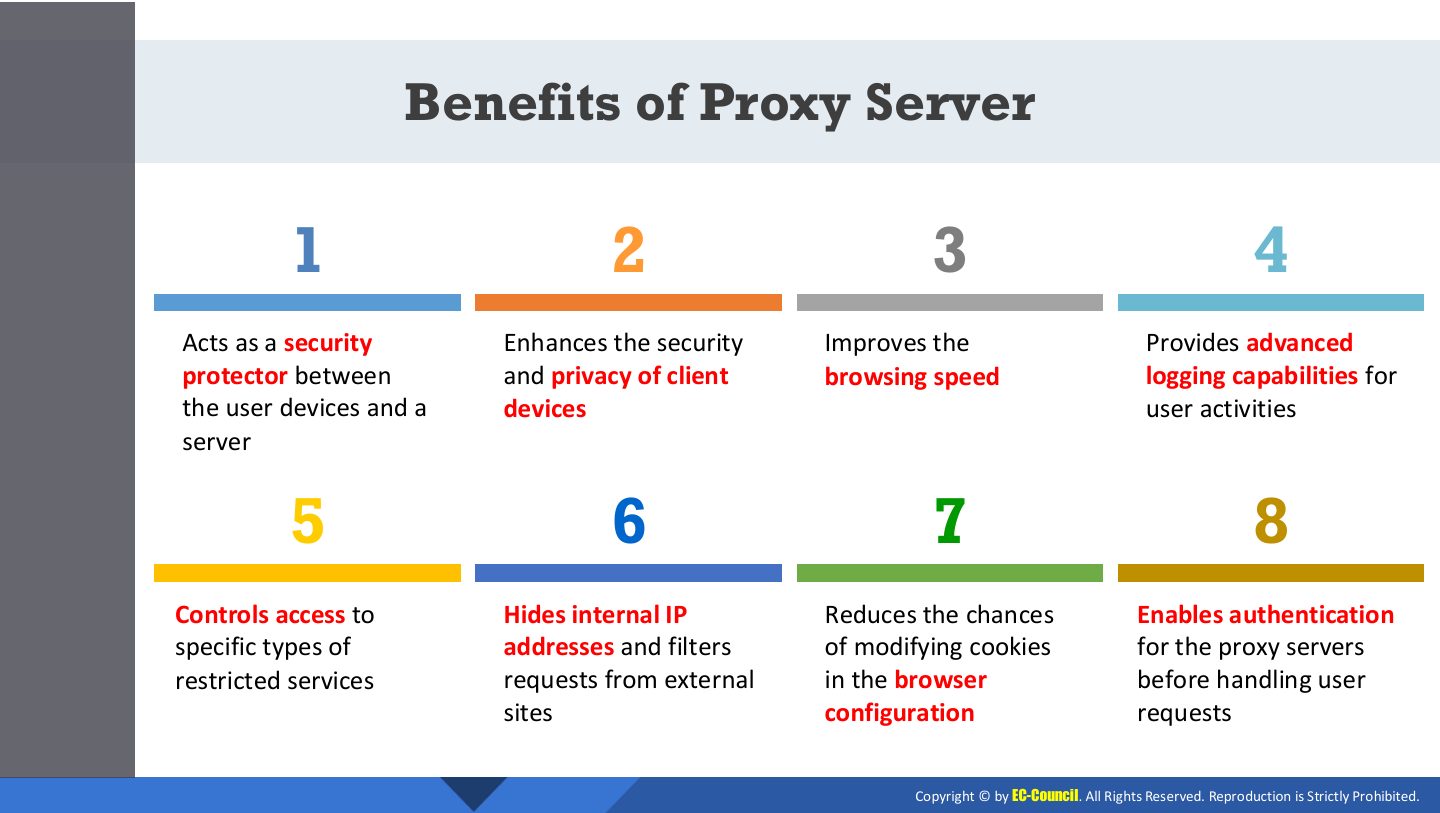
Functioning of a Proxy Server
Functioning of a Proxy Server (Cont’d)
Proxy Servers vs Packet Filters
Types of Proxy Servers
Transparent Proxy
Non-transparent Proxy
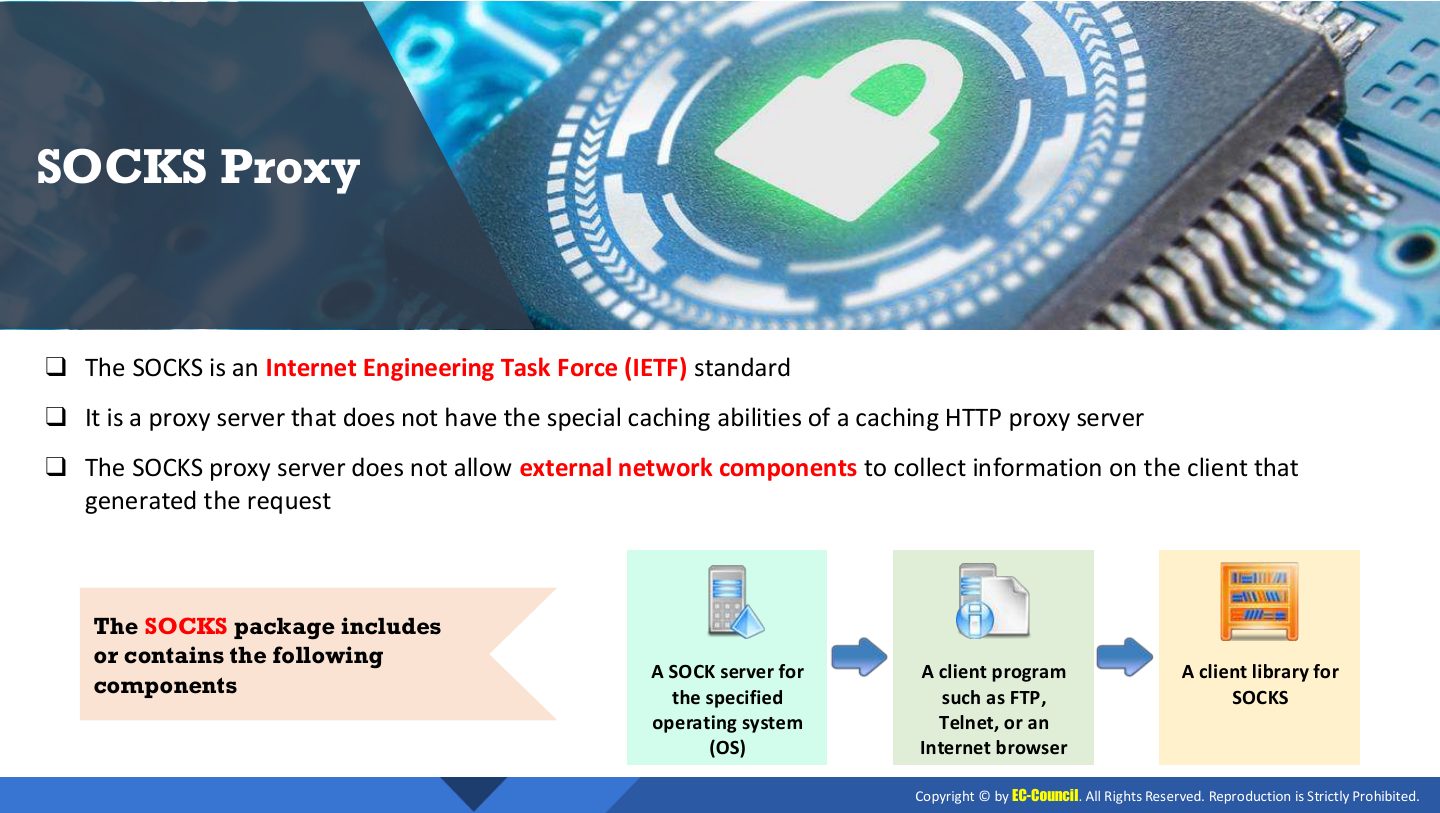
SOCKS Proxy
Notes
SOCKS proxy: generic, works for any TCP/UDP application.
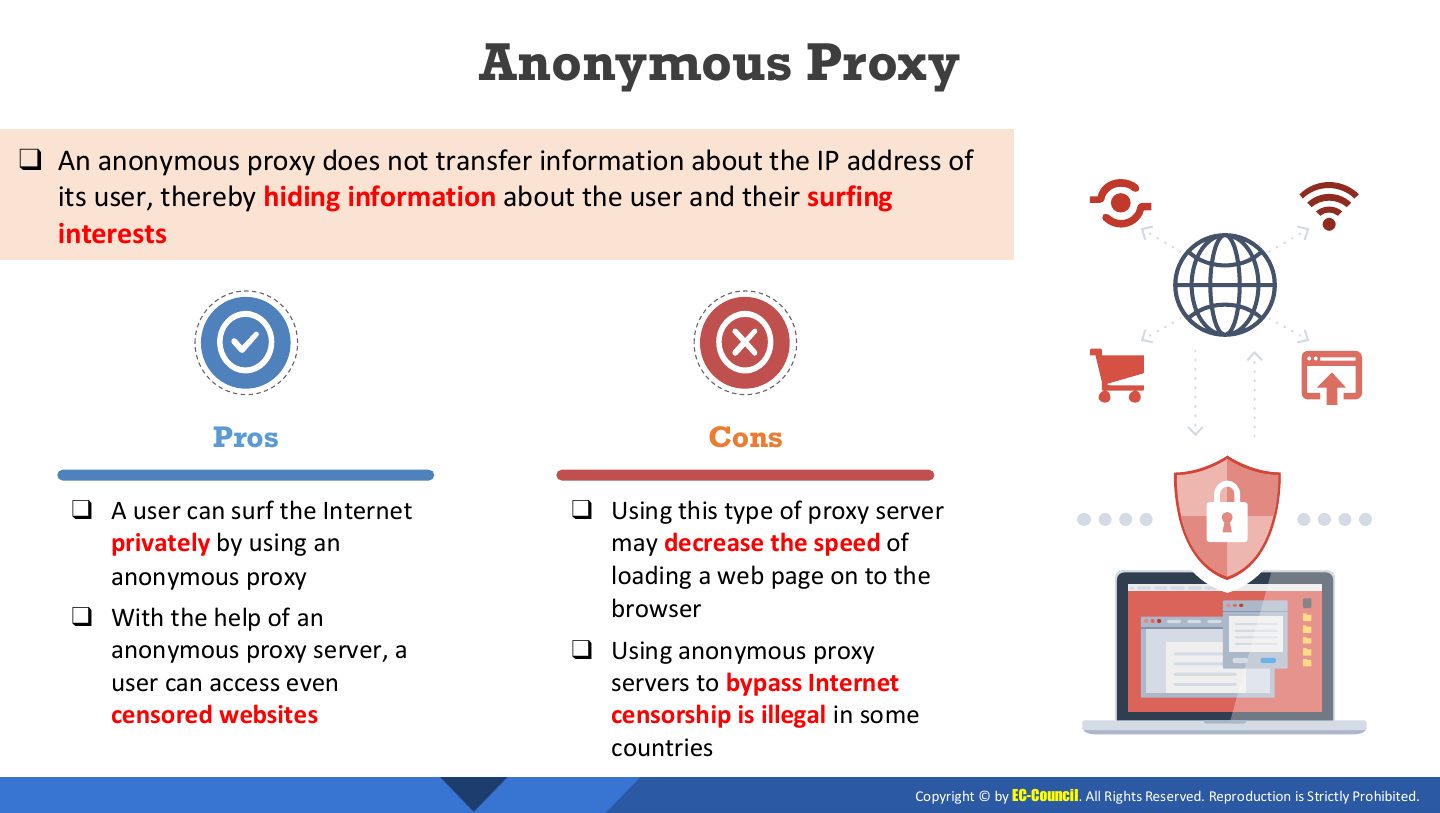
Anonymous Proxy
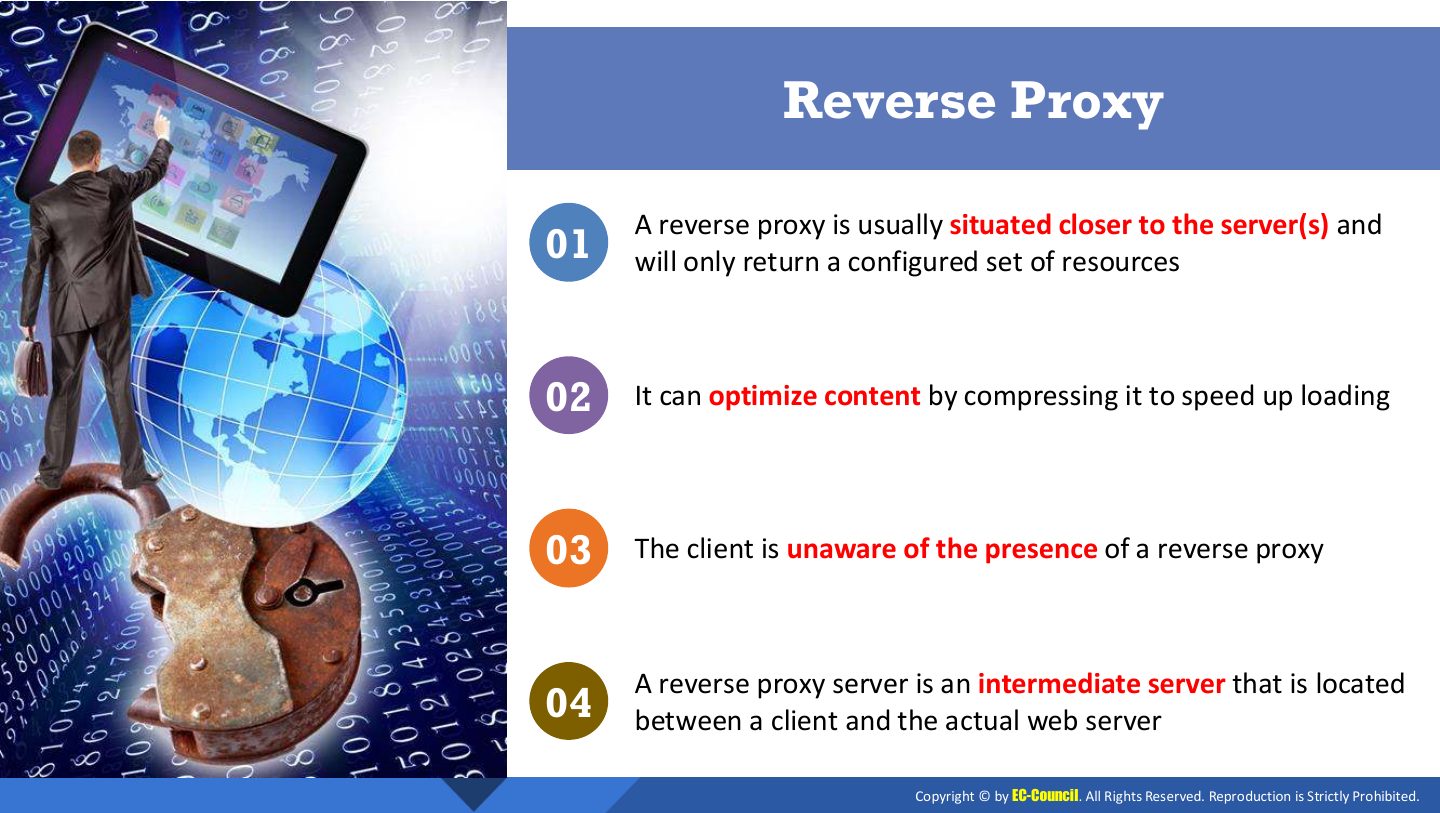
Reverse Proxy
Notes
Reverse proxy: sits in front of SERVERS (load balancing, TLS termination, protection).
Trap Forward proxy protects/represents clients; reverse proxy protects/represents servers.
Exam angle
A proxy that receives requests on behalf of a company’s web servers is a:
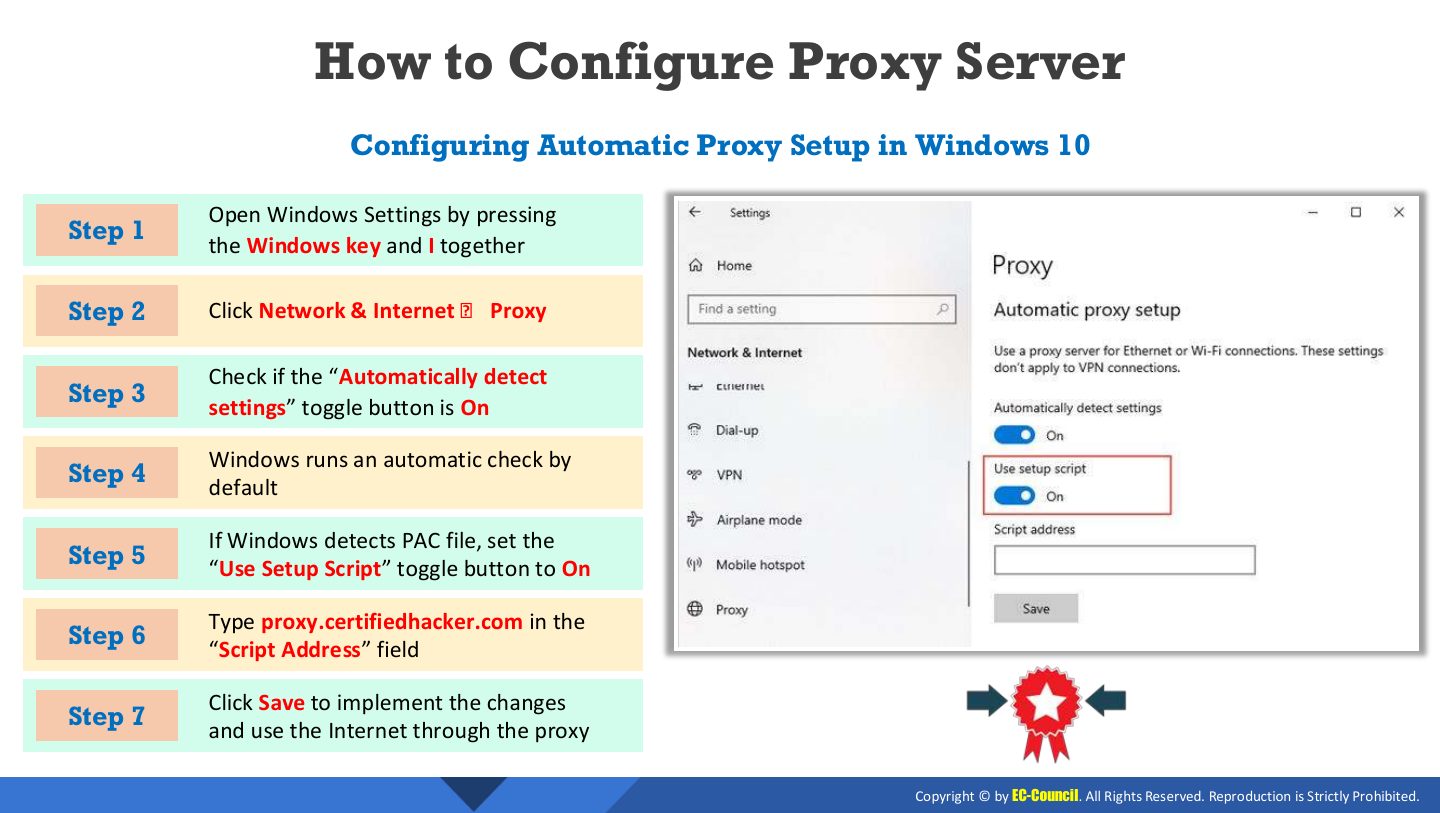
How to Configure Proxy Server
How to Configure Proxy Server (Cont’d)
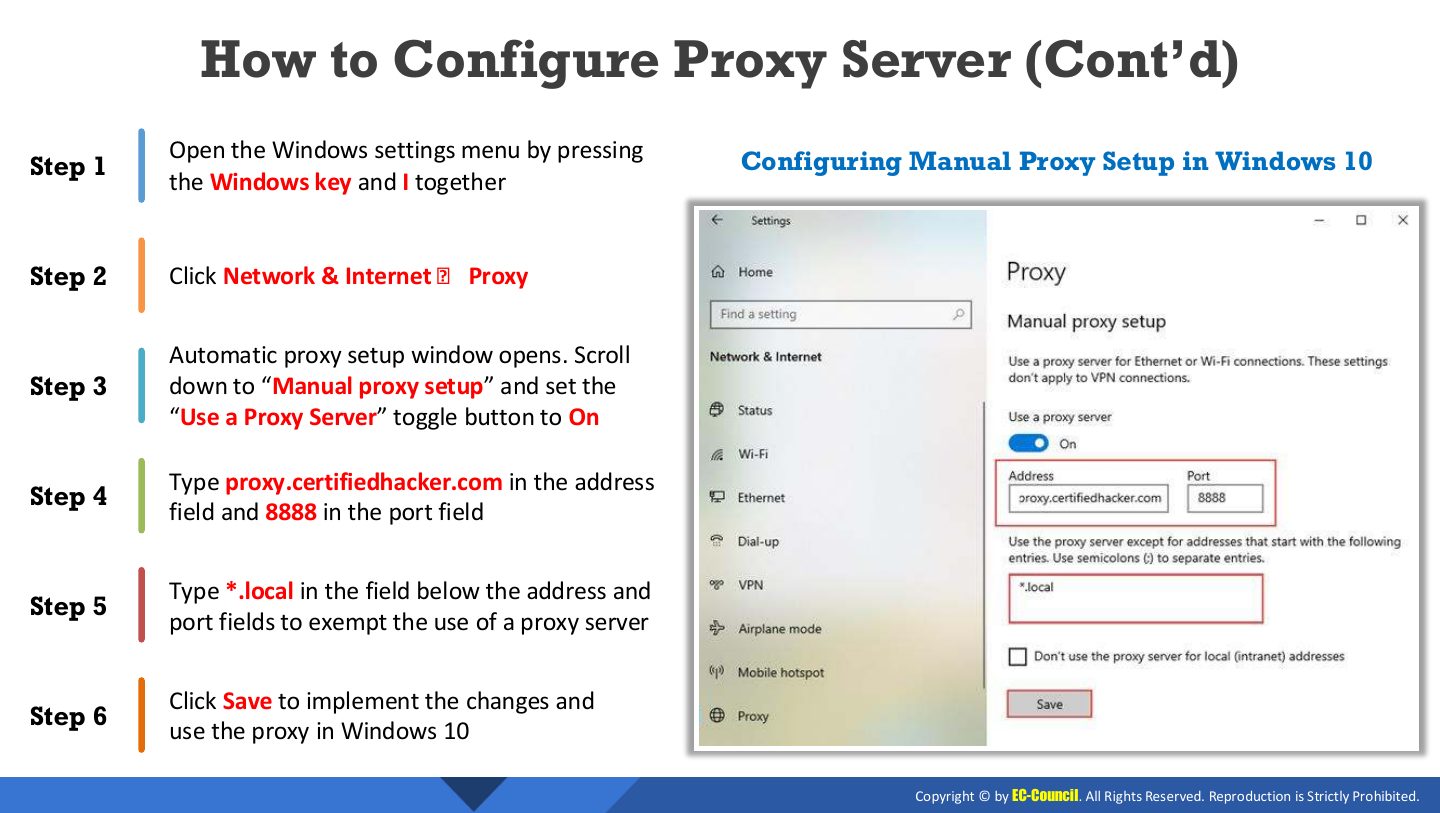
How to Configure Proxy Server (Cont’d)
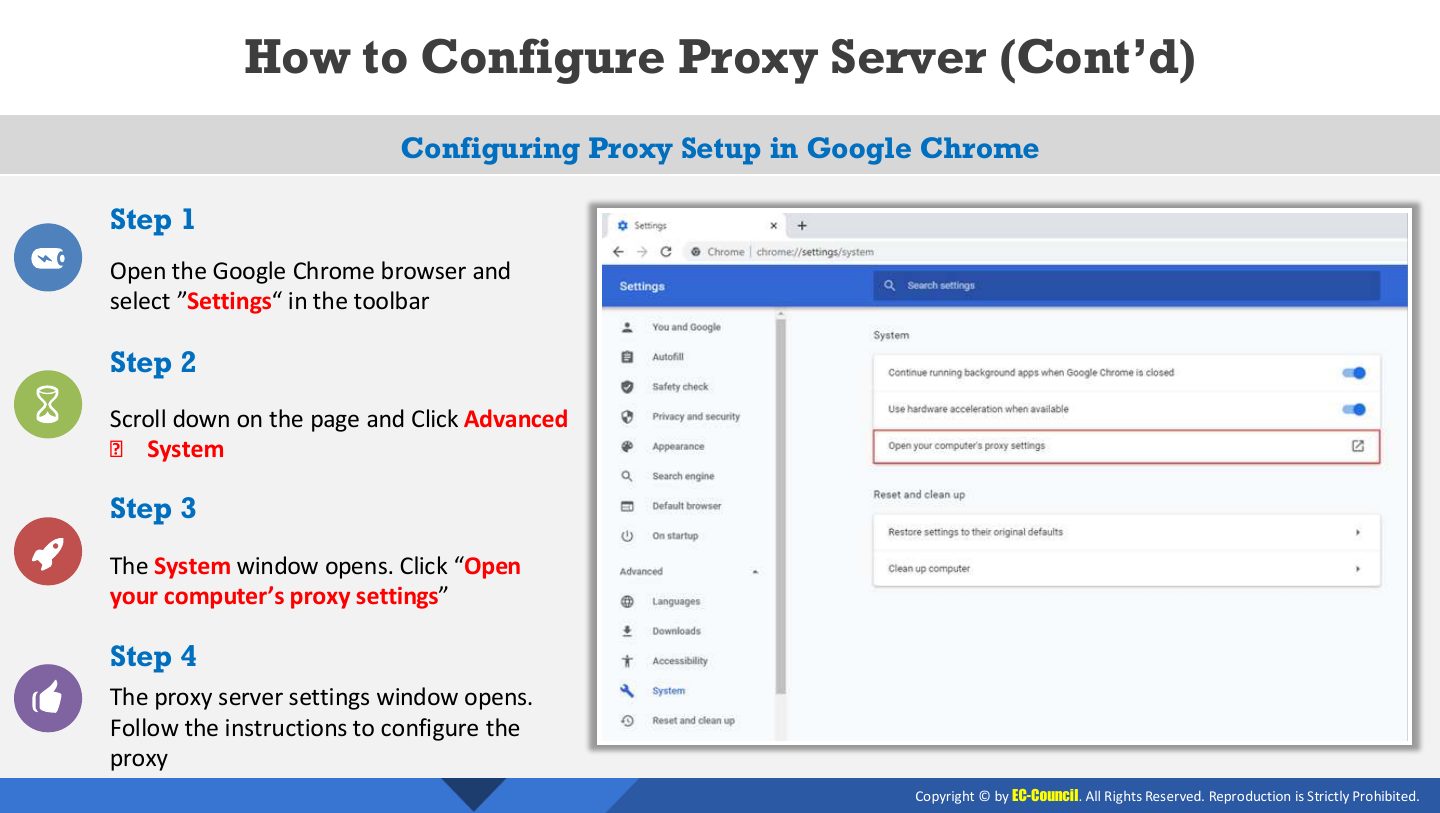
How to Configure Proxy Server (Cont’d)
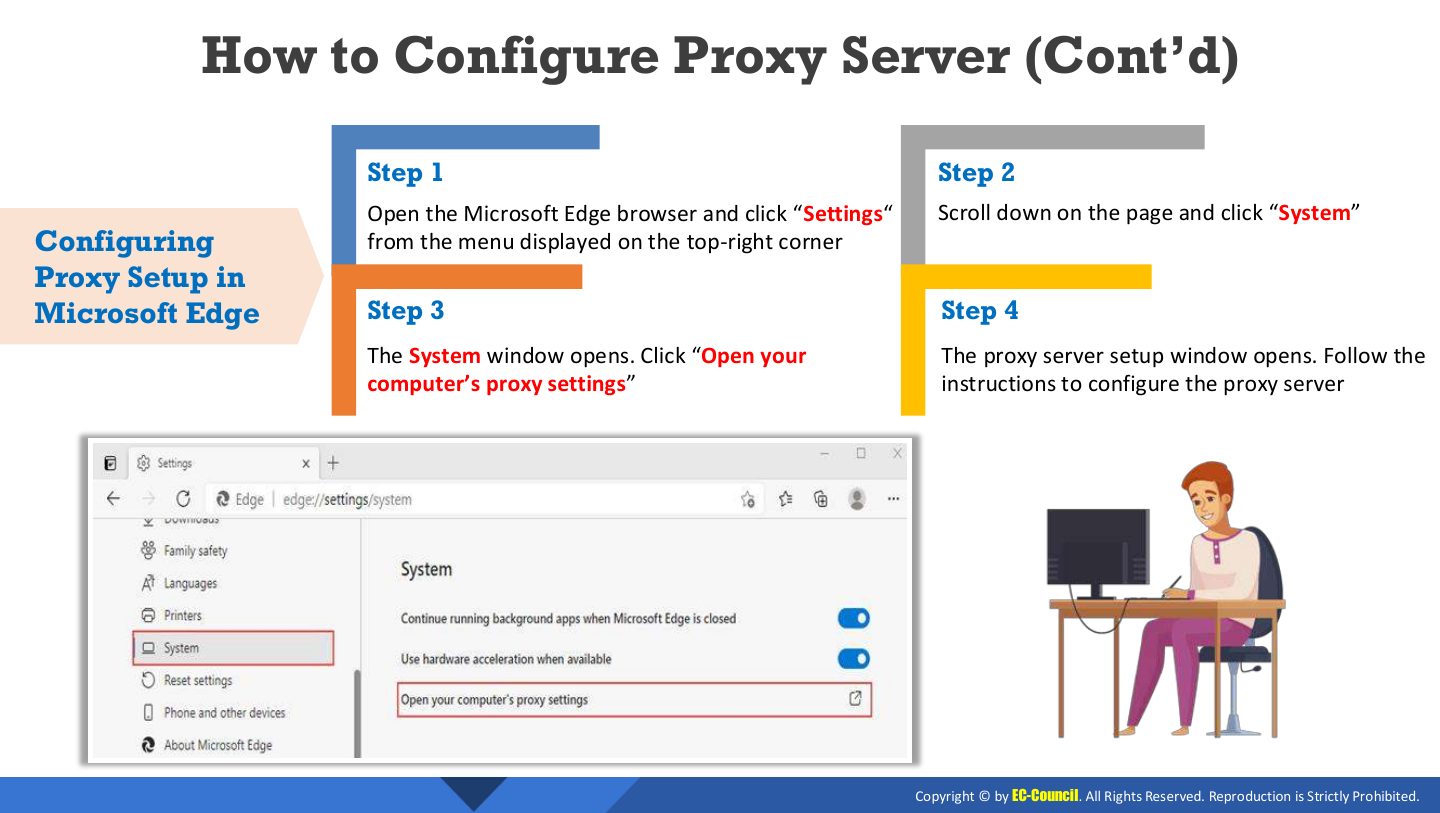
Limitations of Proxy Server
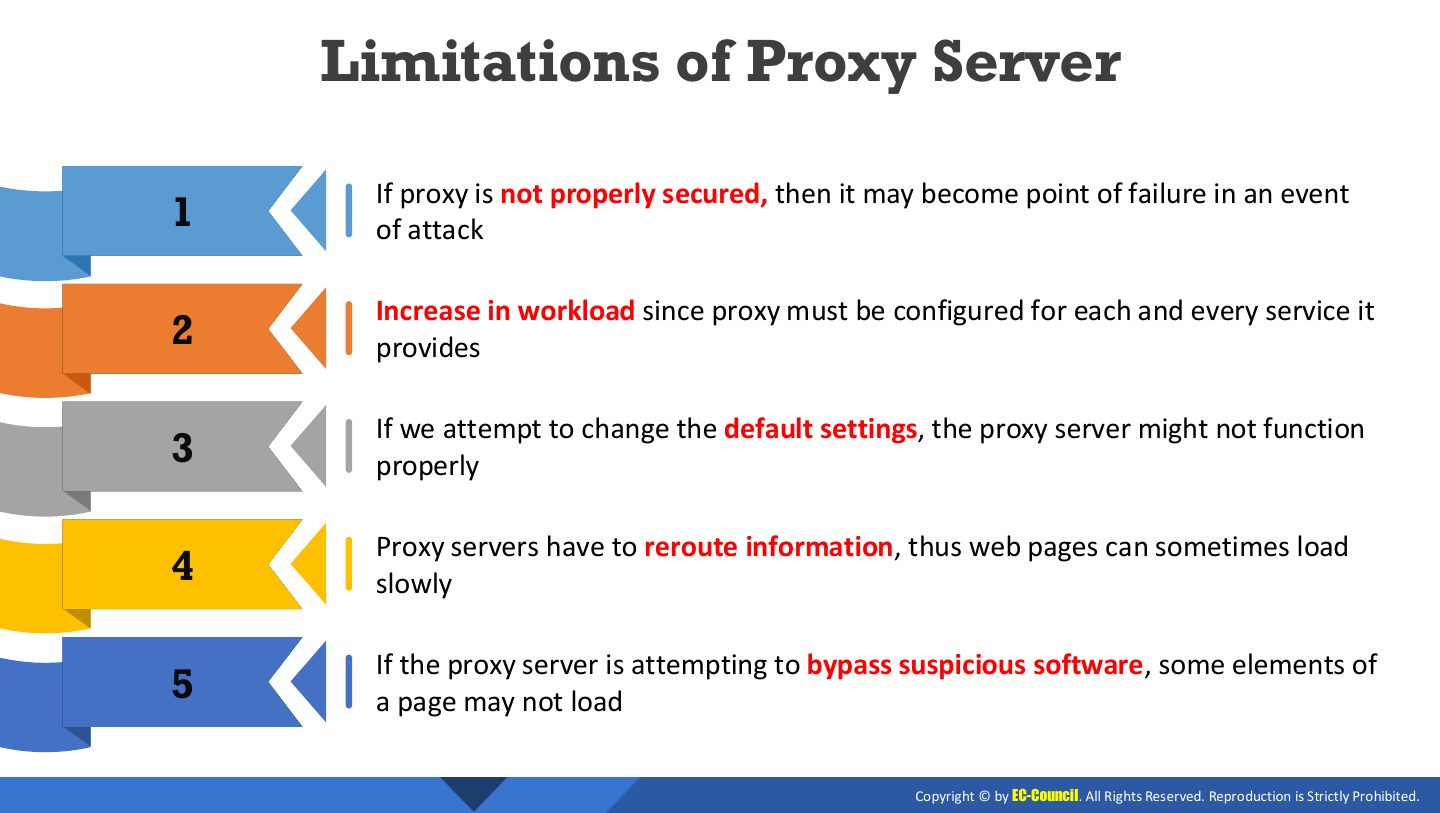
Example of a Proxy Server: Squid Proxy
List of Proxy Tools