Connecting a branch office network to headquarters is a:
VPN Fundamentals
How a VPN works and why to use one, VPN components and concentrators, remote-access vs. site-to-site VPNs, hardware vs. software VPNs, encapsulation, encryption and authentication, VPN technologies and topologies (hub-and-spoke, point-to-point, full mesh, star), security risks, and the AAA/RADIUS setup.
How to read this page
Every original slide is shown unchanged. Yellow marks on a slide point to a numbered note: hover or tap a mark to jump to its note, and hover a note to see its marks. Questions tagged Past exam appeared on a real paper; Prediction questions are likely angles, not confirmed. Pick an answer to each question: a wrong pick tells you why it is wrong, so you can try again.
All 35 slides
- 1 Module Flow
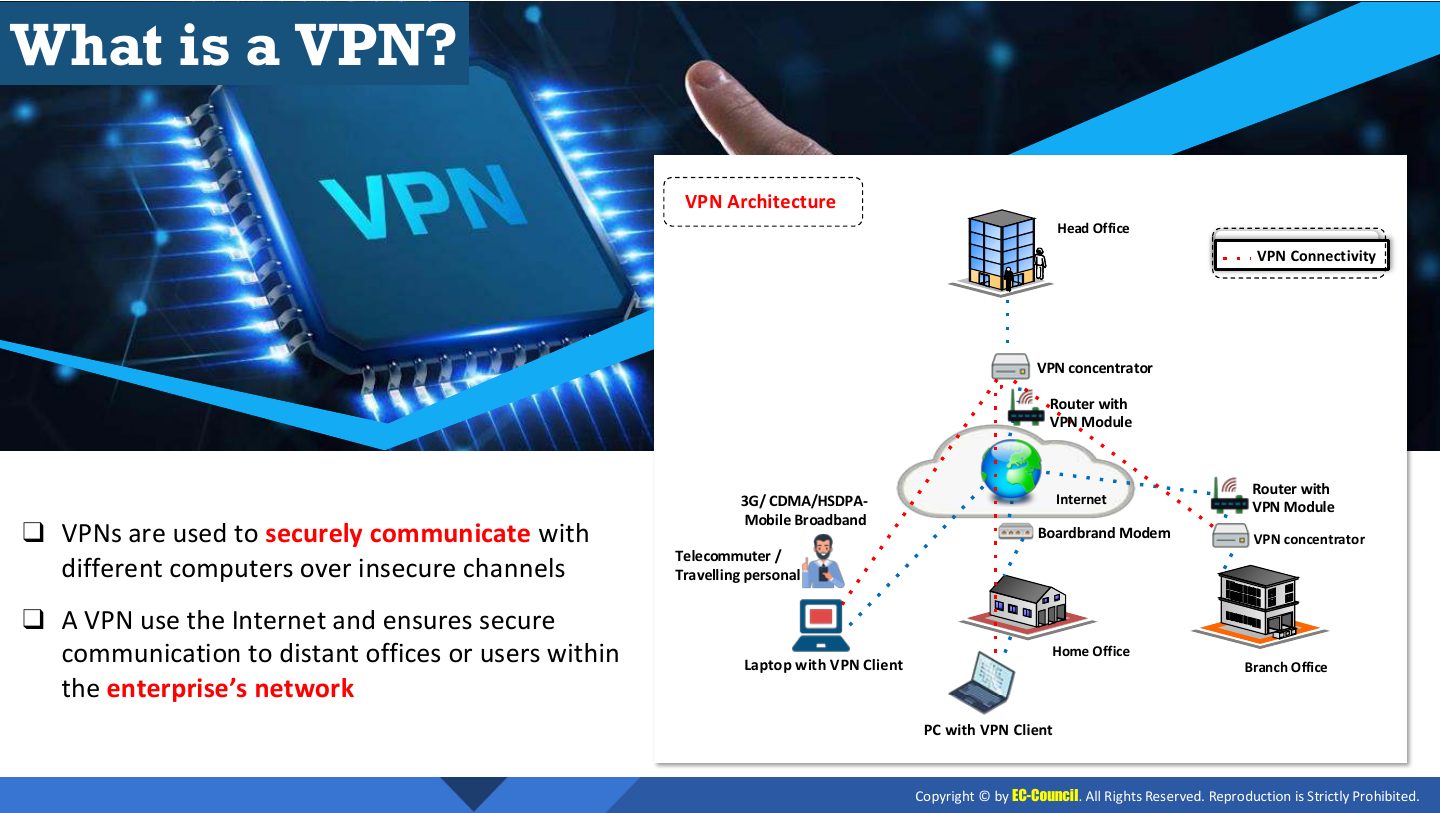
- 2 What is a VPN?
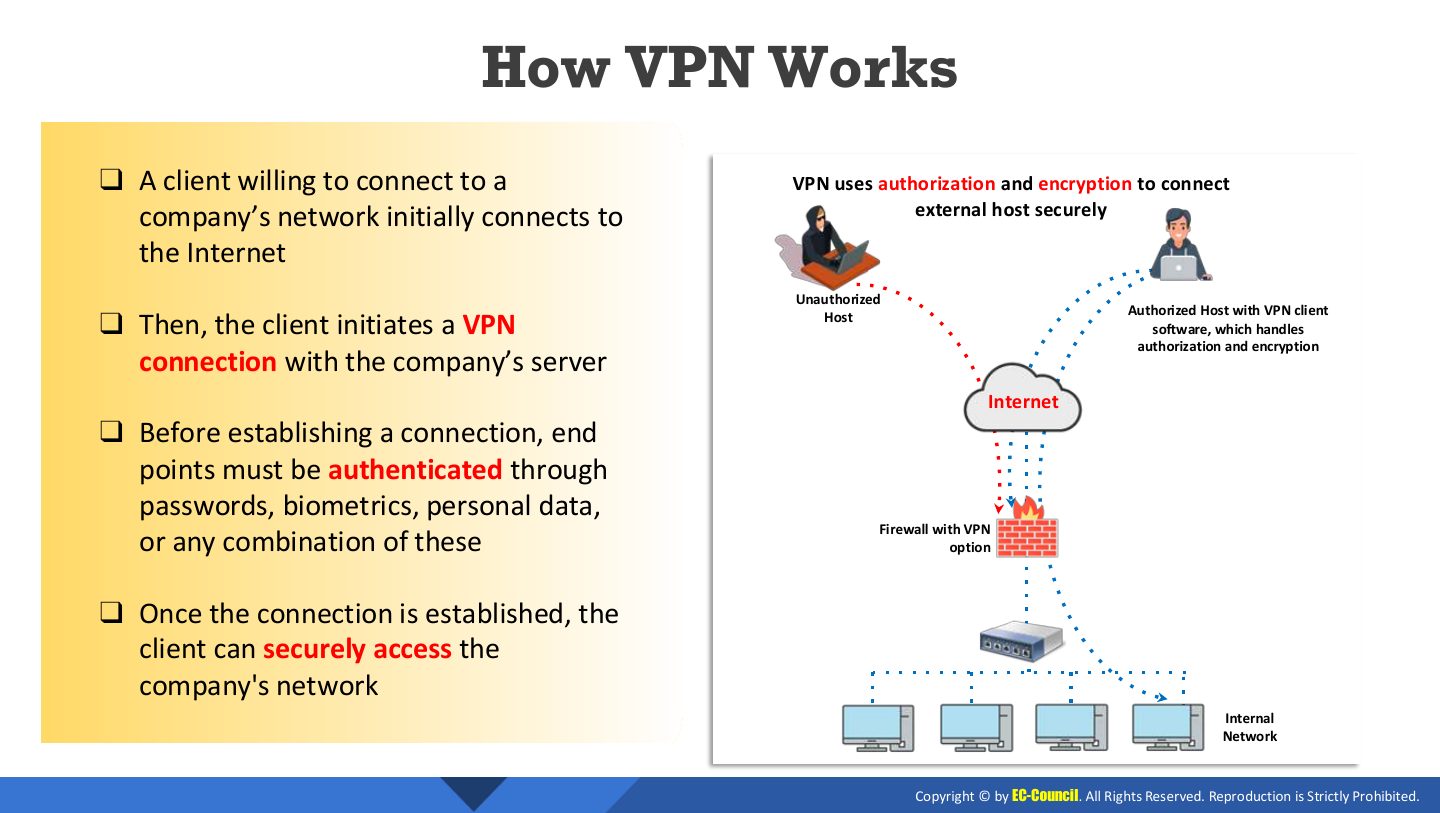
- 3 How VPN Works
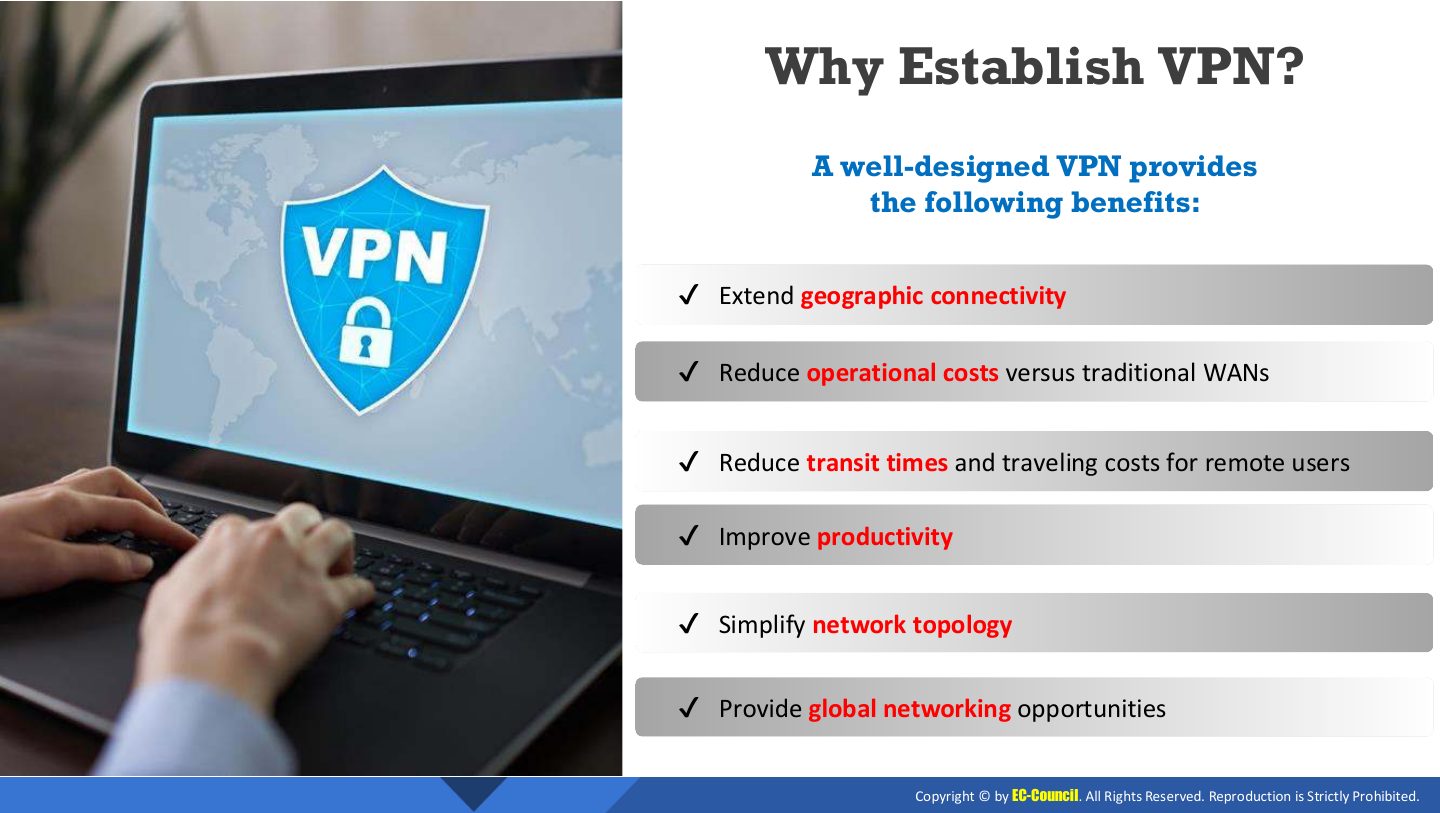
- 4 Why Establish VPN?
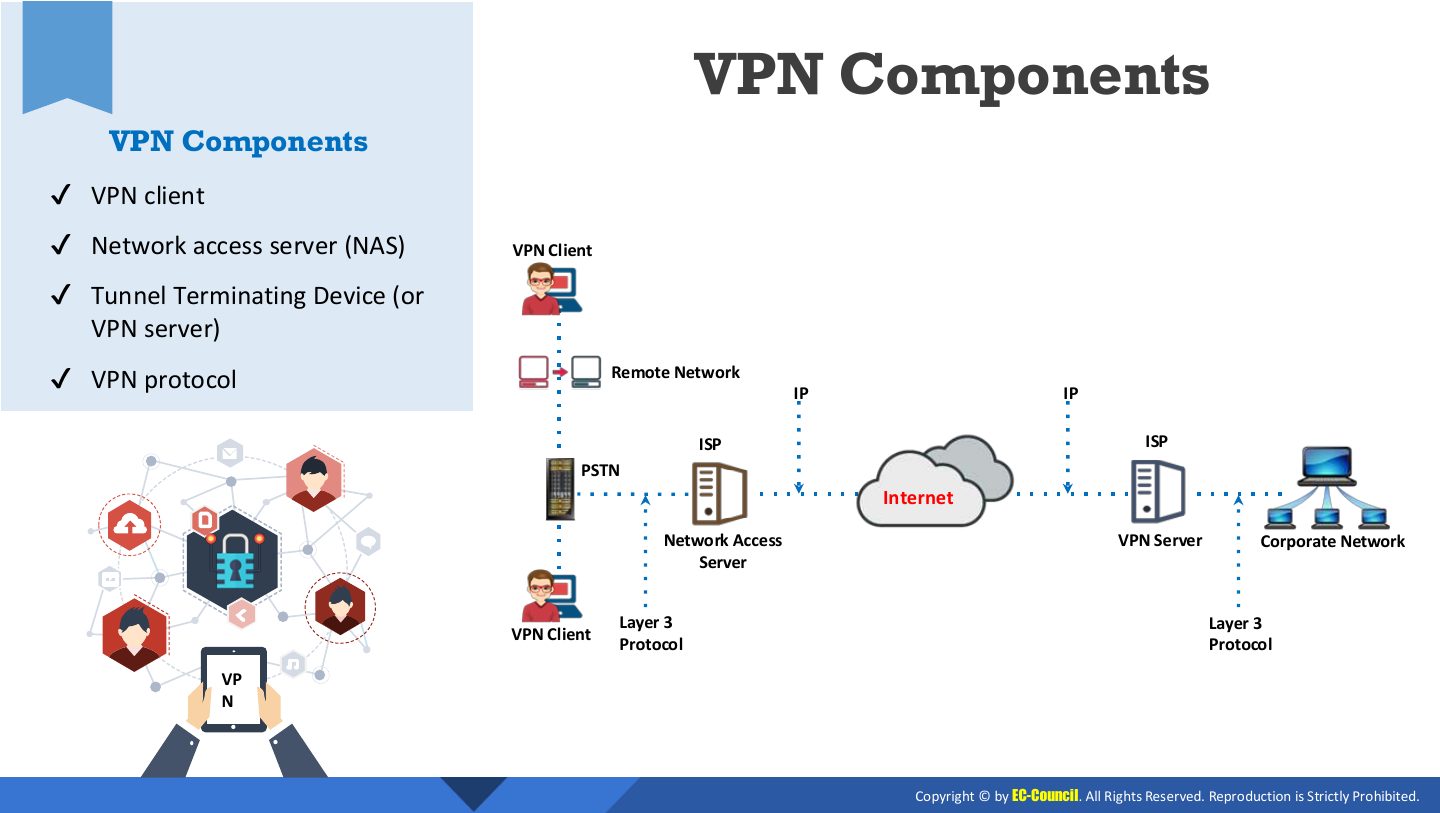
- 5 VPN Components
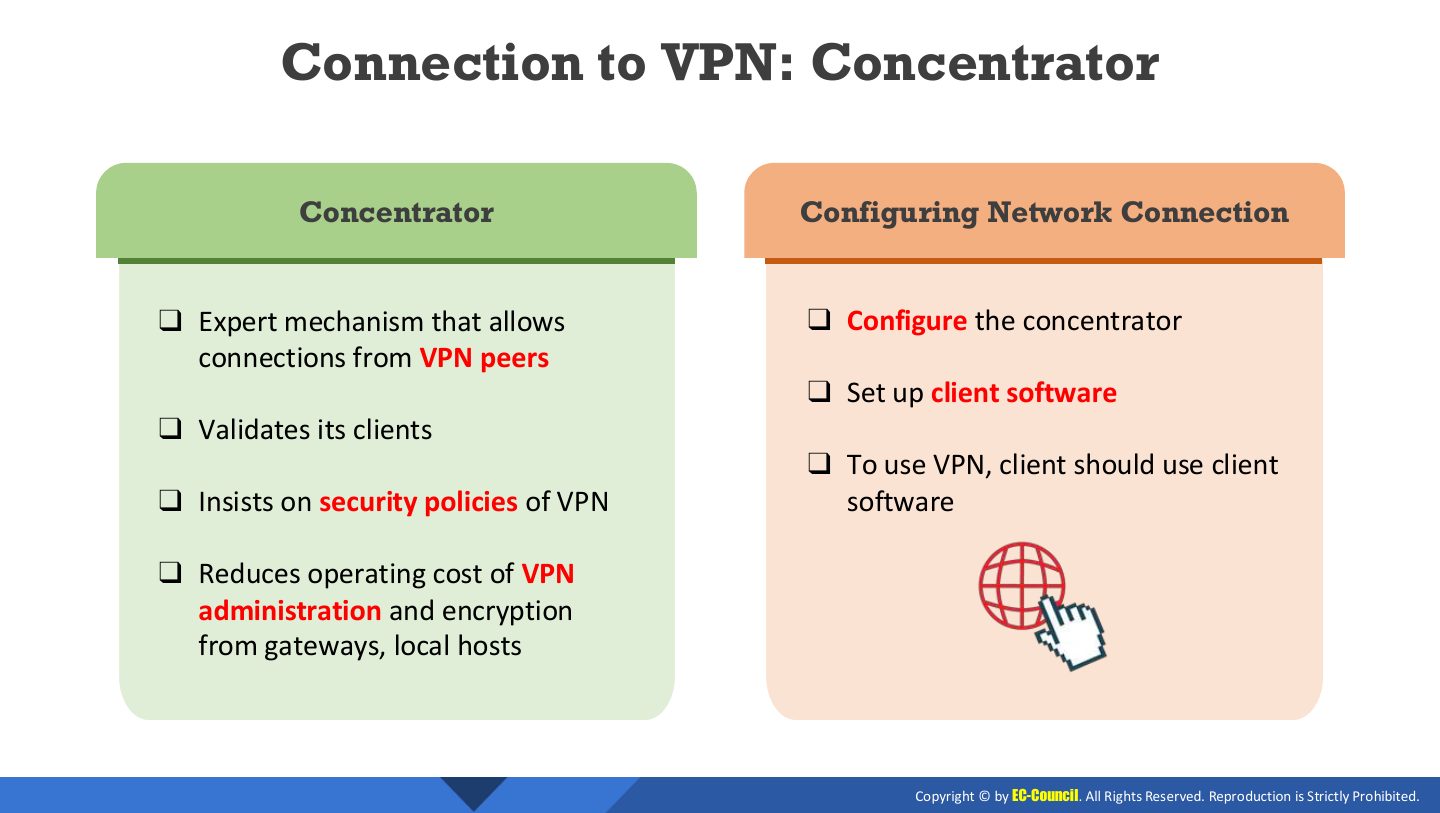
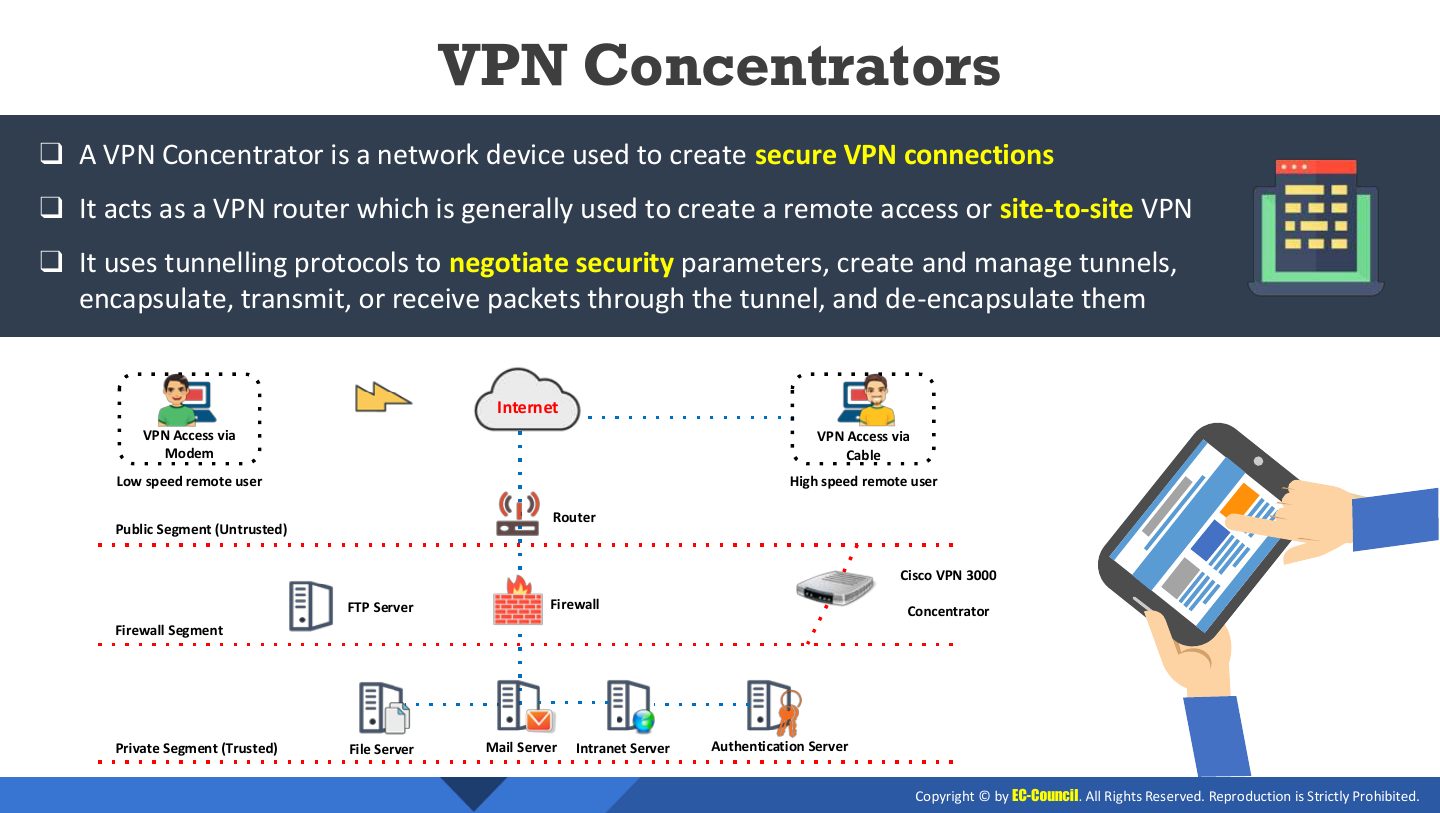
- 6 VPN Concentrators
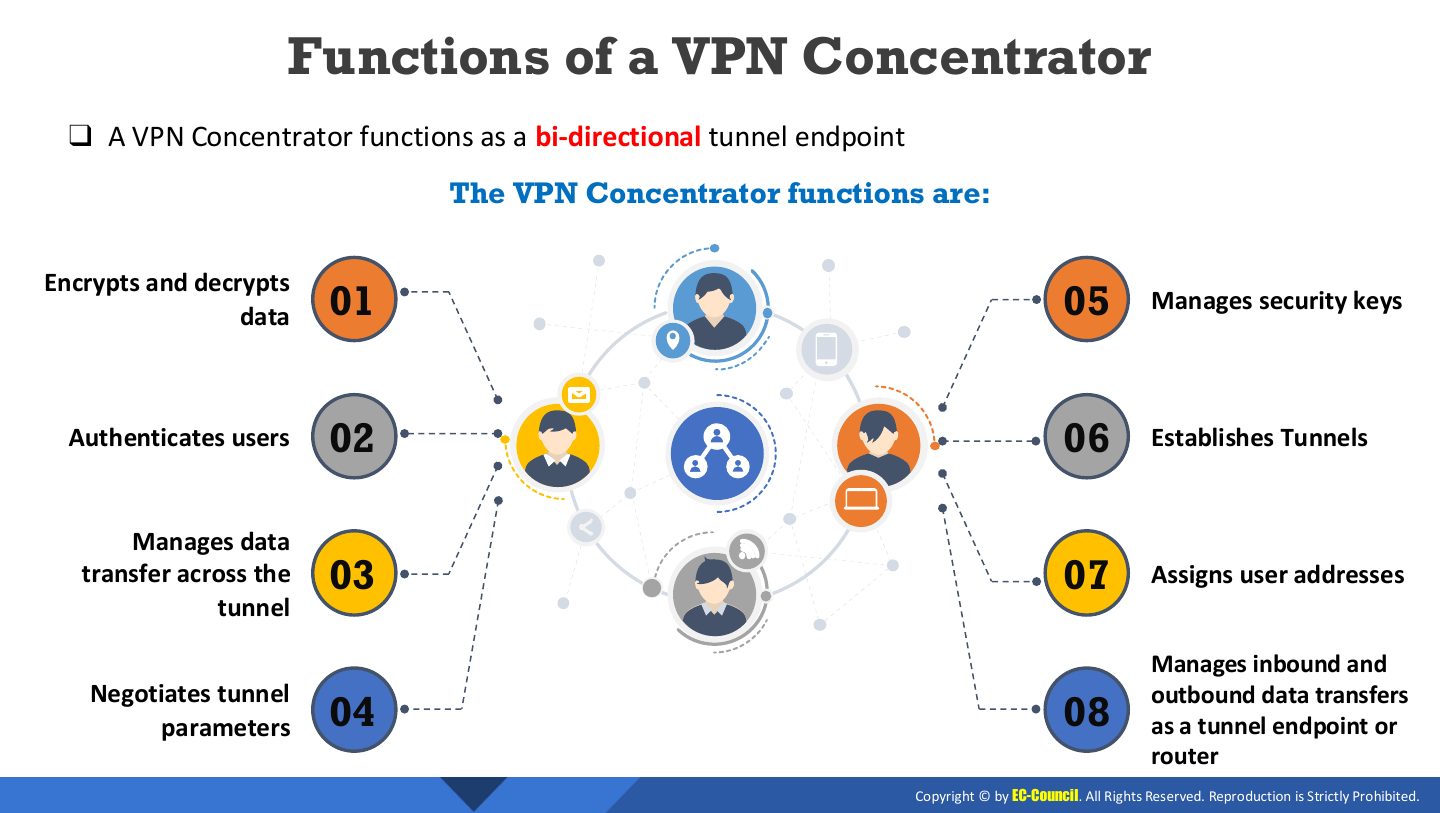
- 7 Functions of a VPN Concentrator
- 8 Slide 8
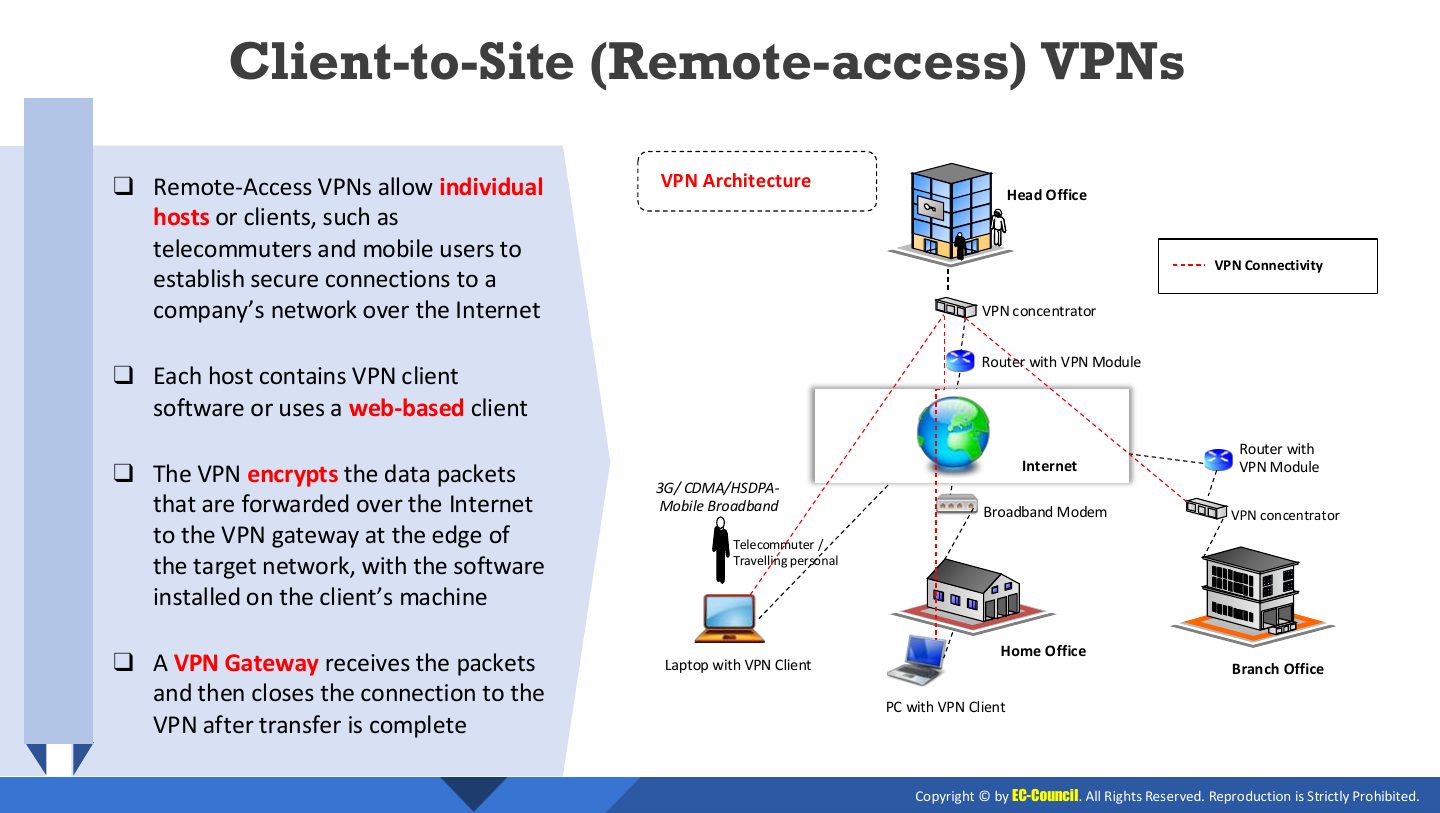
- 9 Client-to-Site (Remote-access) VPNs
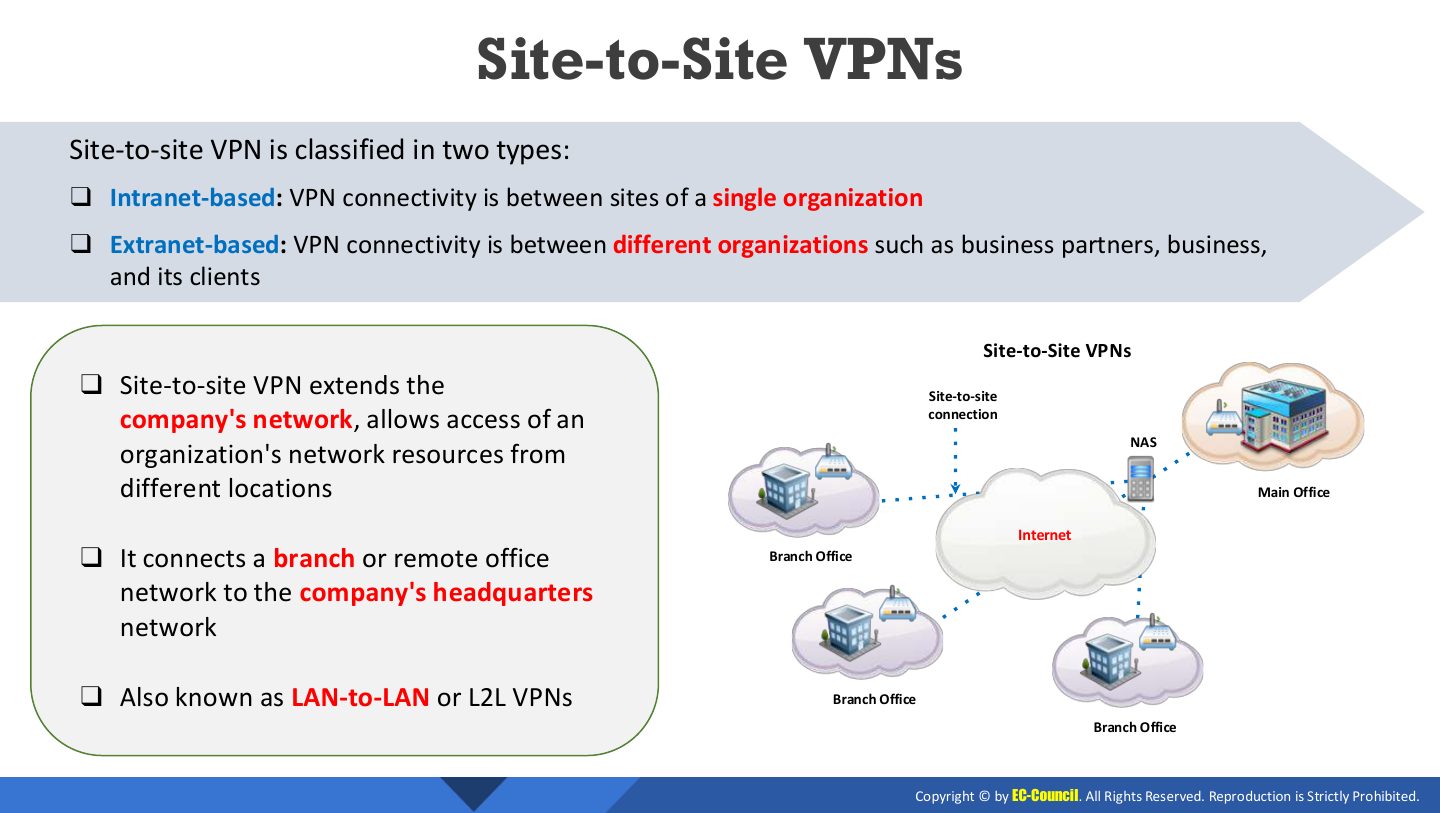
- 10 Site-to-Site VPNs
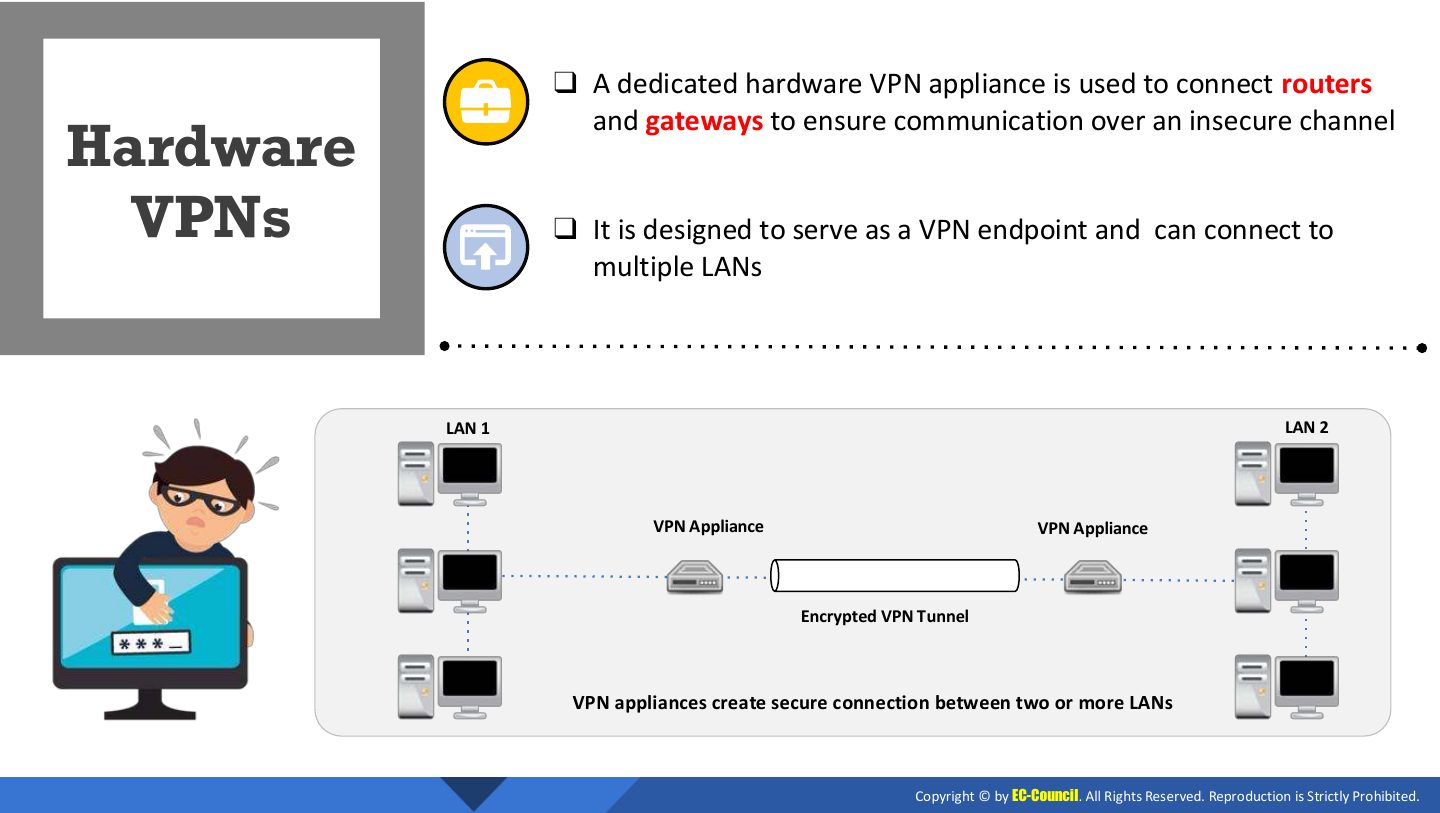
- 11 ❑ A dedicated hardware VPN appliance is used to connect routers and gateways to ensure communication over an insecure channel
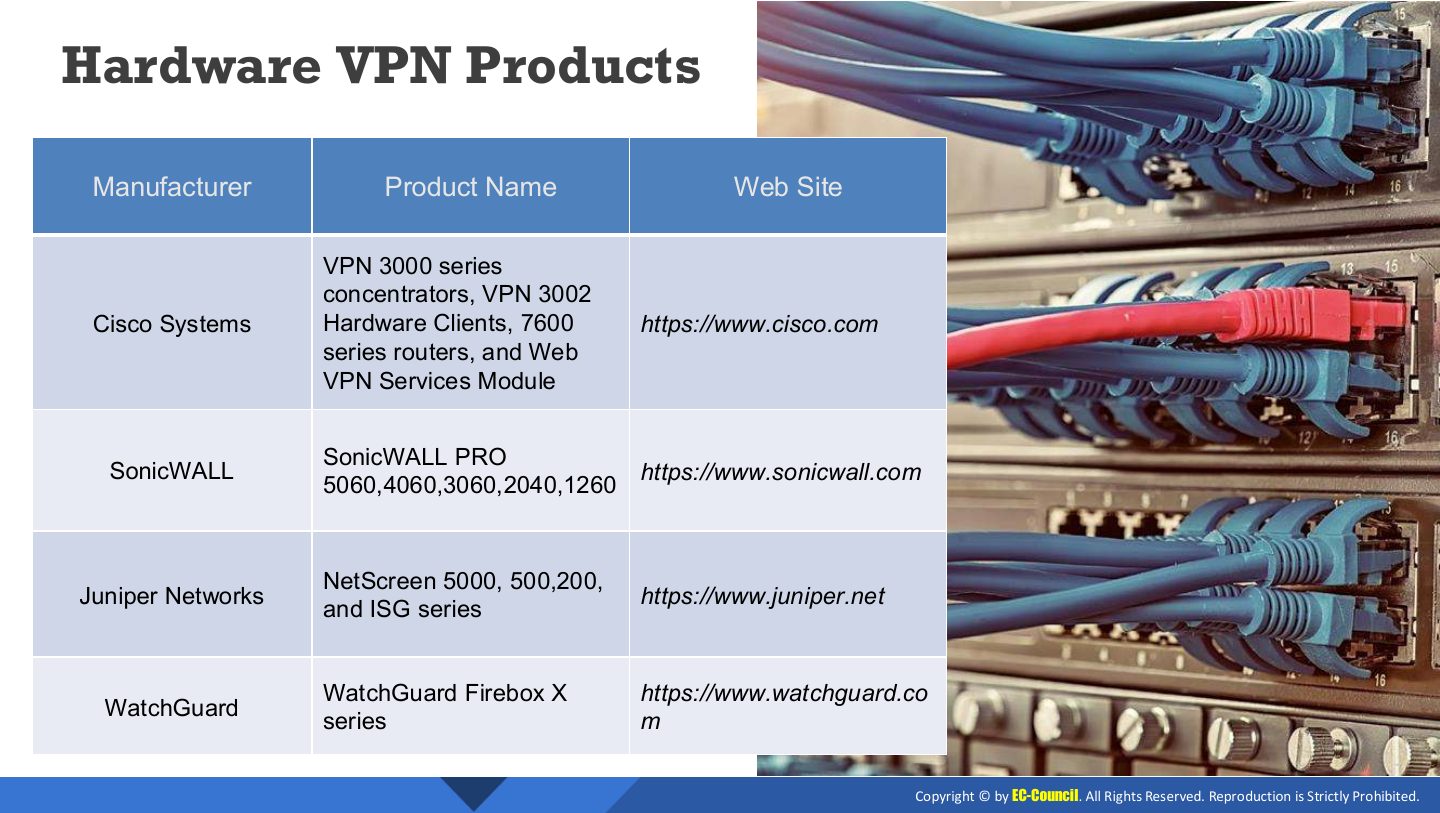
- 12 Hardware VPN Products
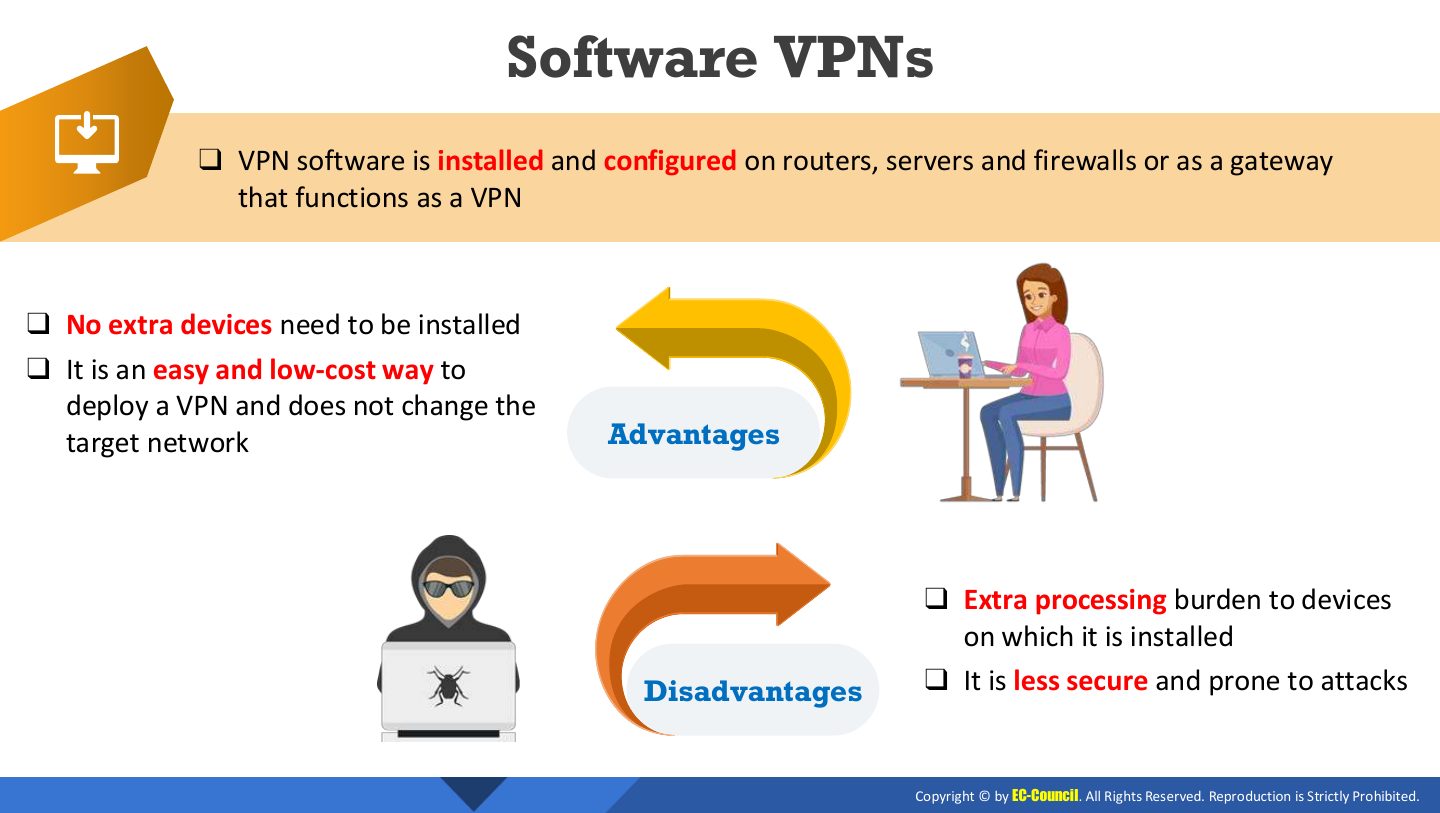
- 13 Software VPNs
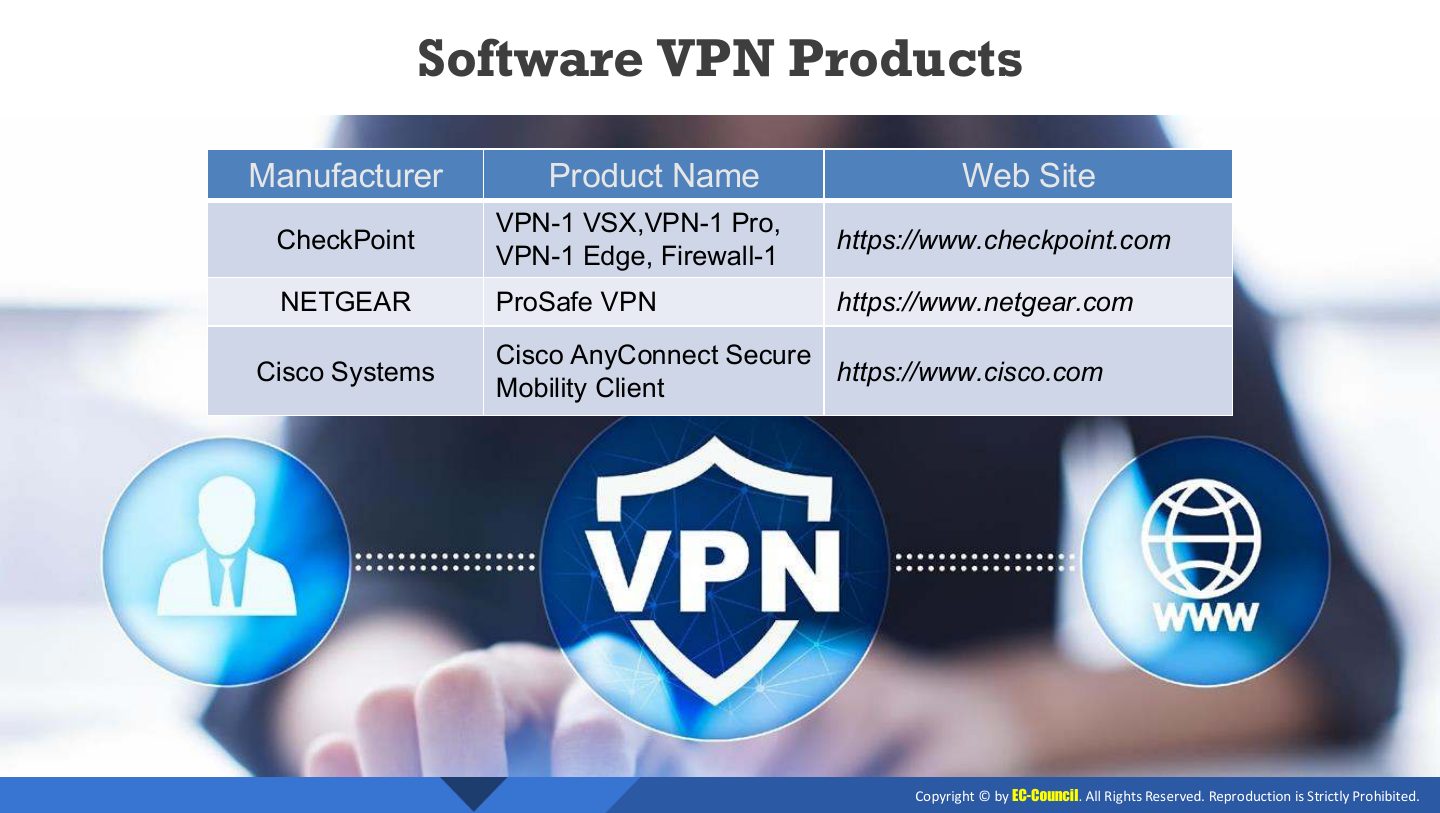
- 14 Software VPN Products
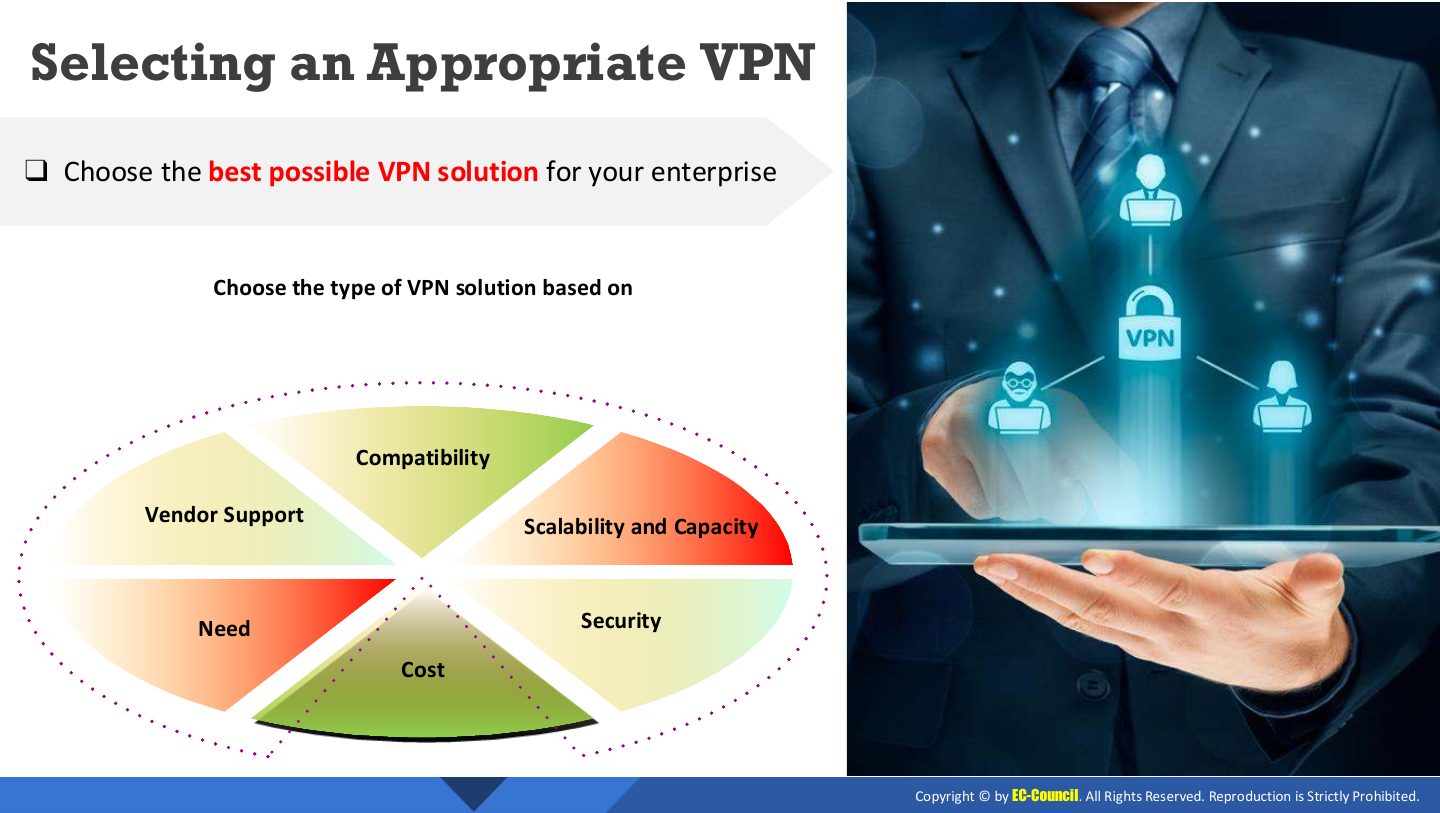
- 15 Selecting an Appropriate VPN
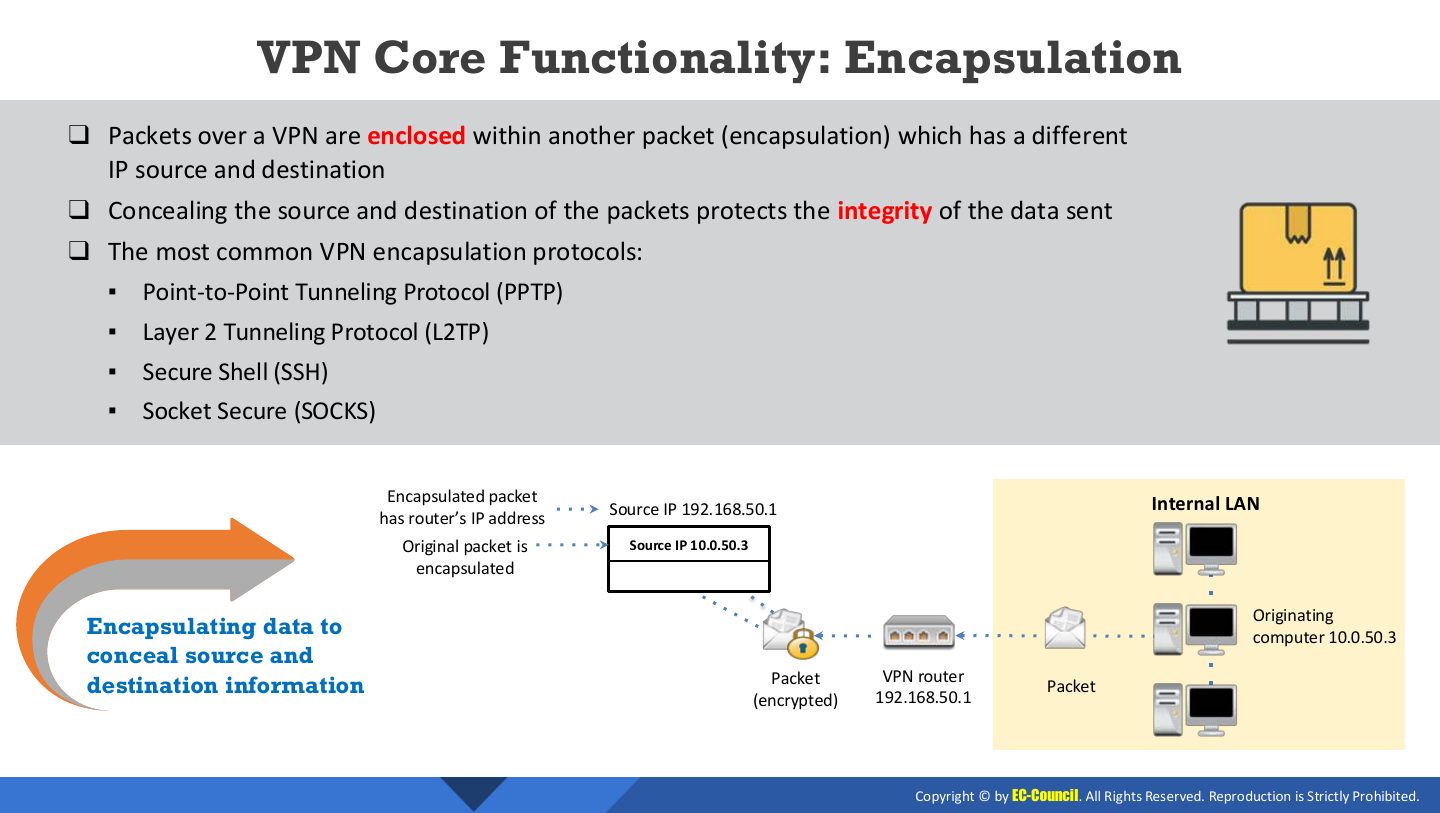
- 16 VPN Core Functionality: Encapsulation
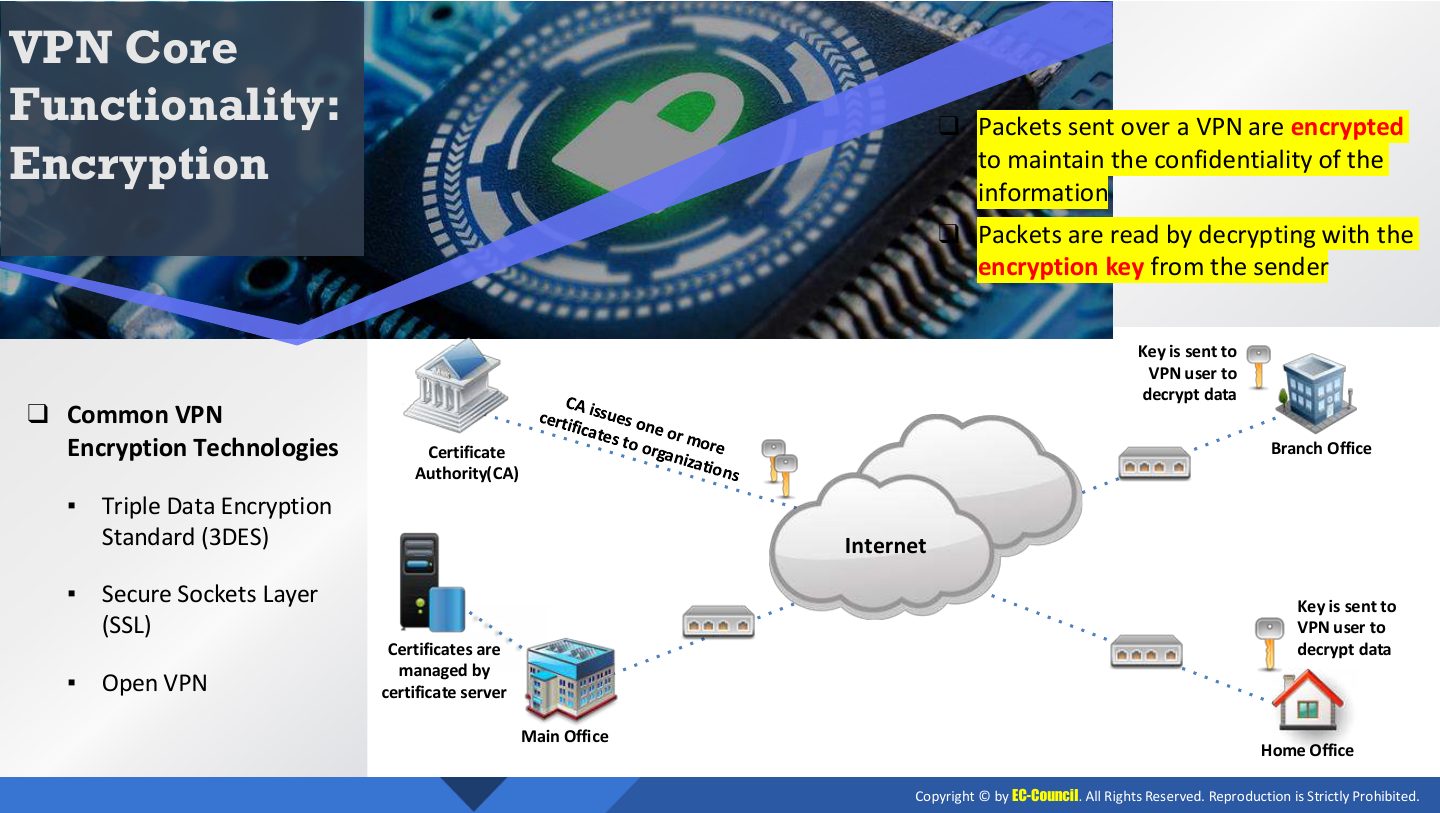
- 17 VPN Core
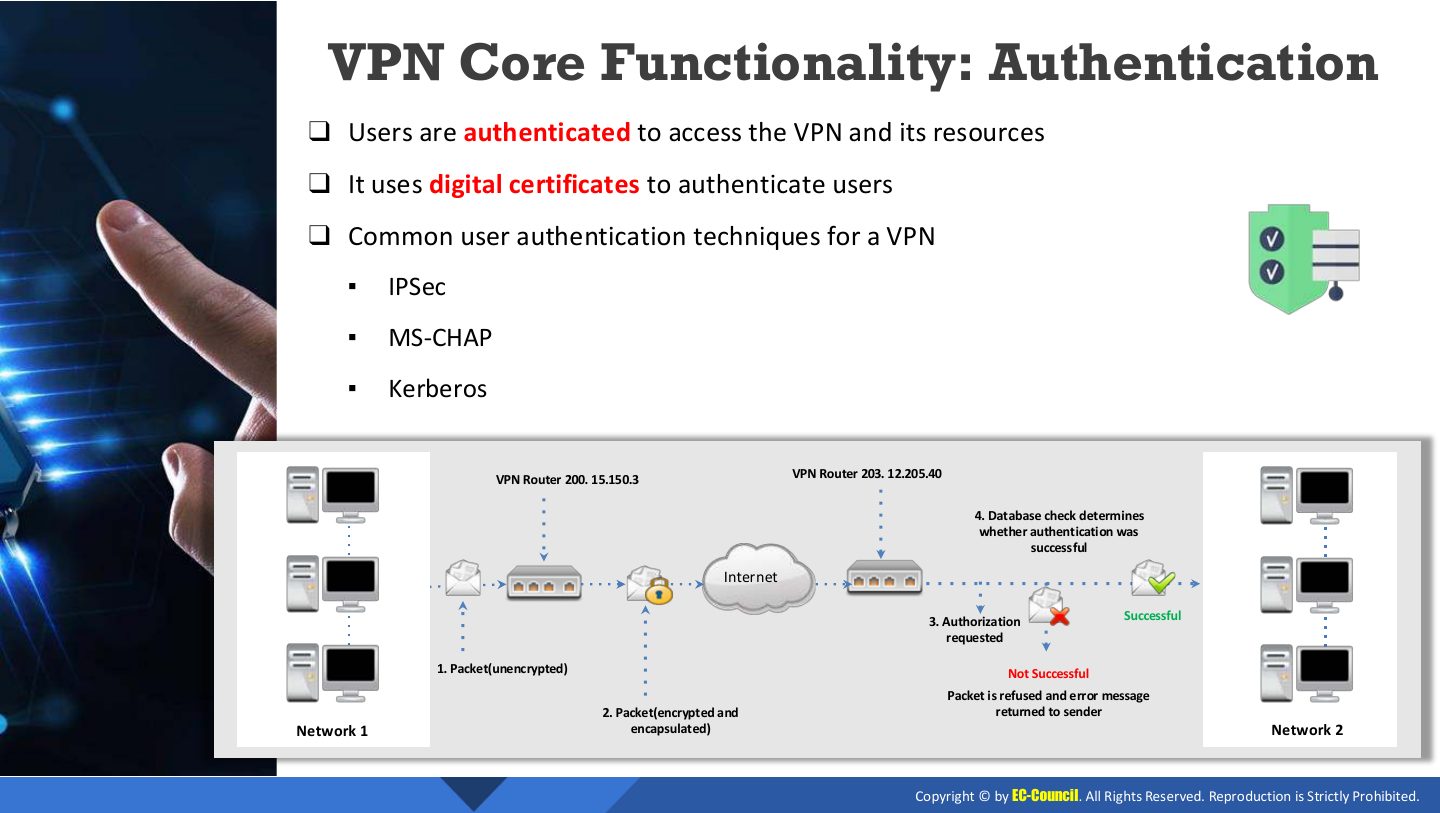
- 18 VPN Core Functionality: Authentication
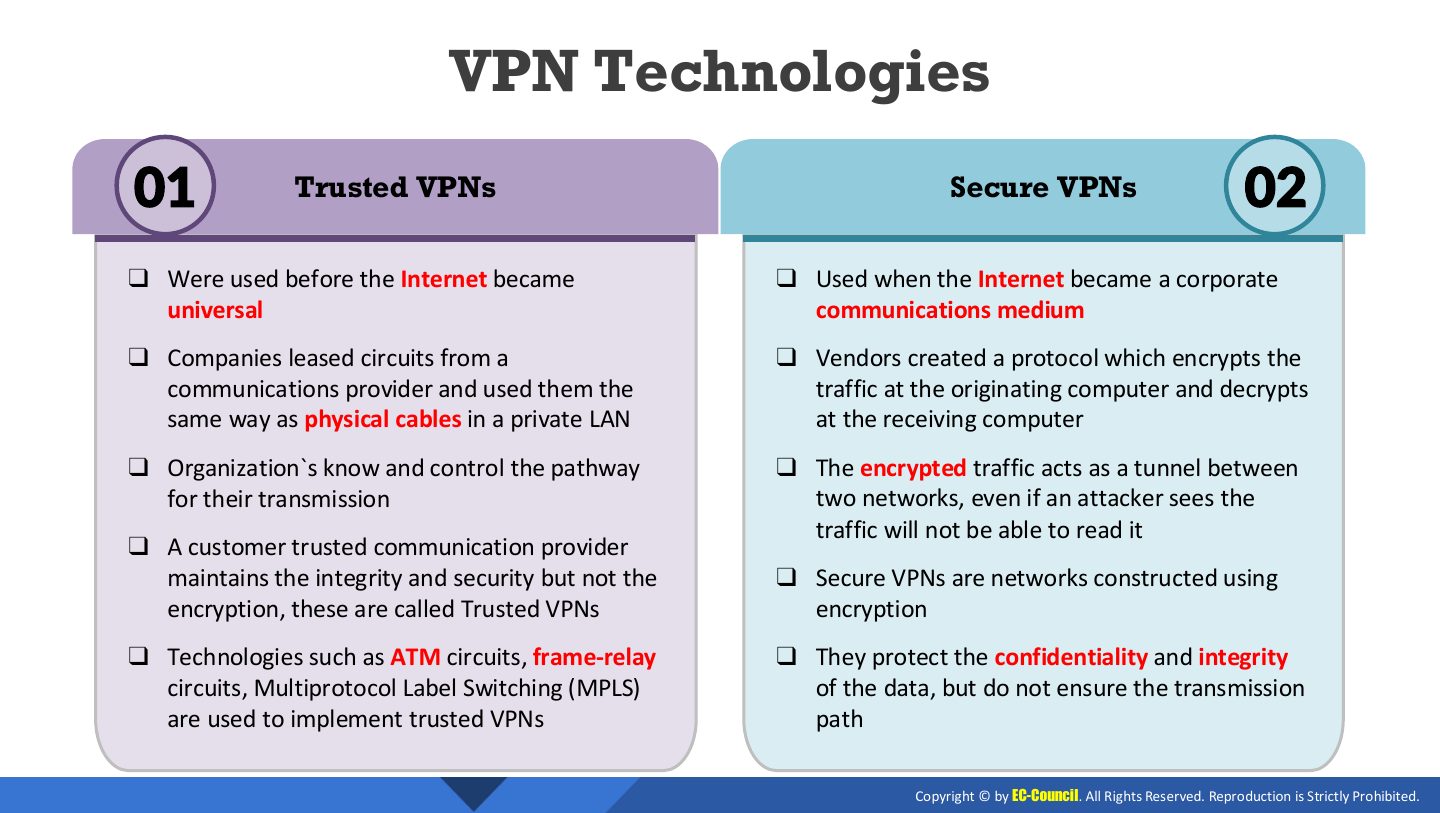
- 19 VPN Technologies
- 20 VPN Technologies (Cont’d)
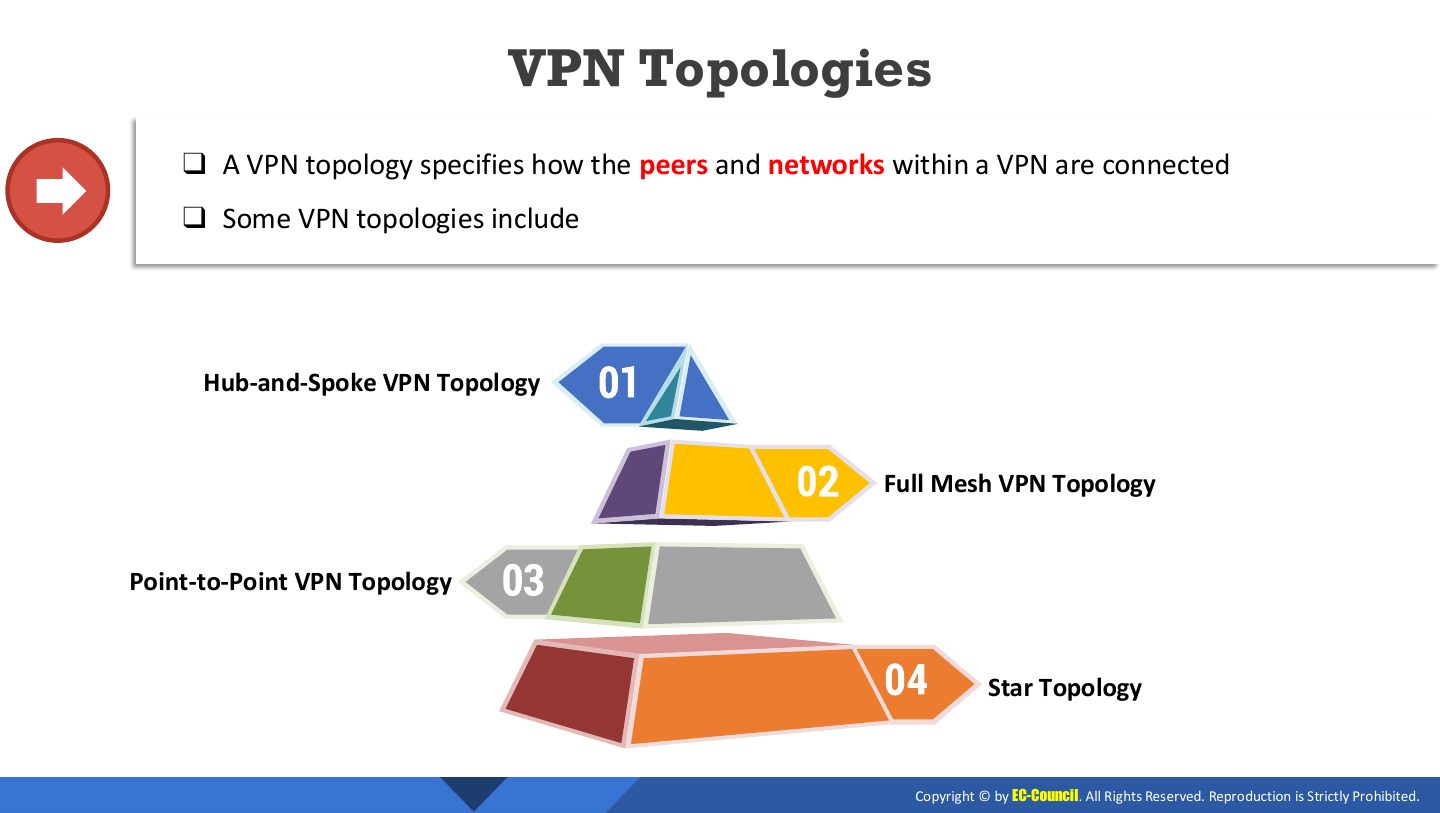
- 21 VPN Topologies
- 22 Hub-and-Spoke VPN Topology
- 23 Point-to-Point VPN Topology
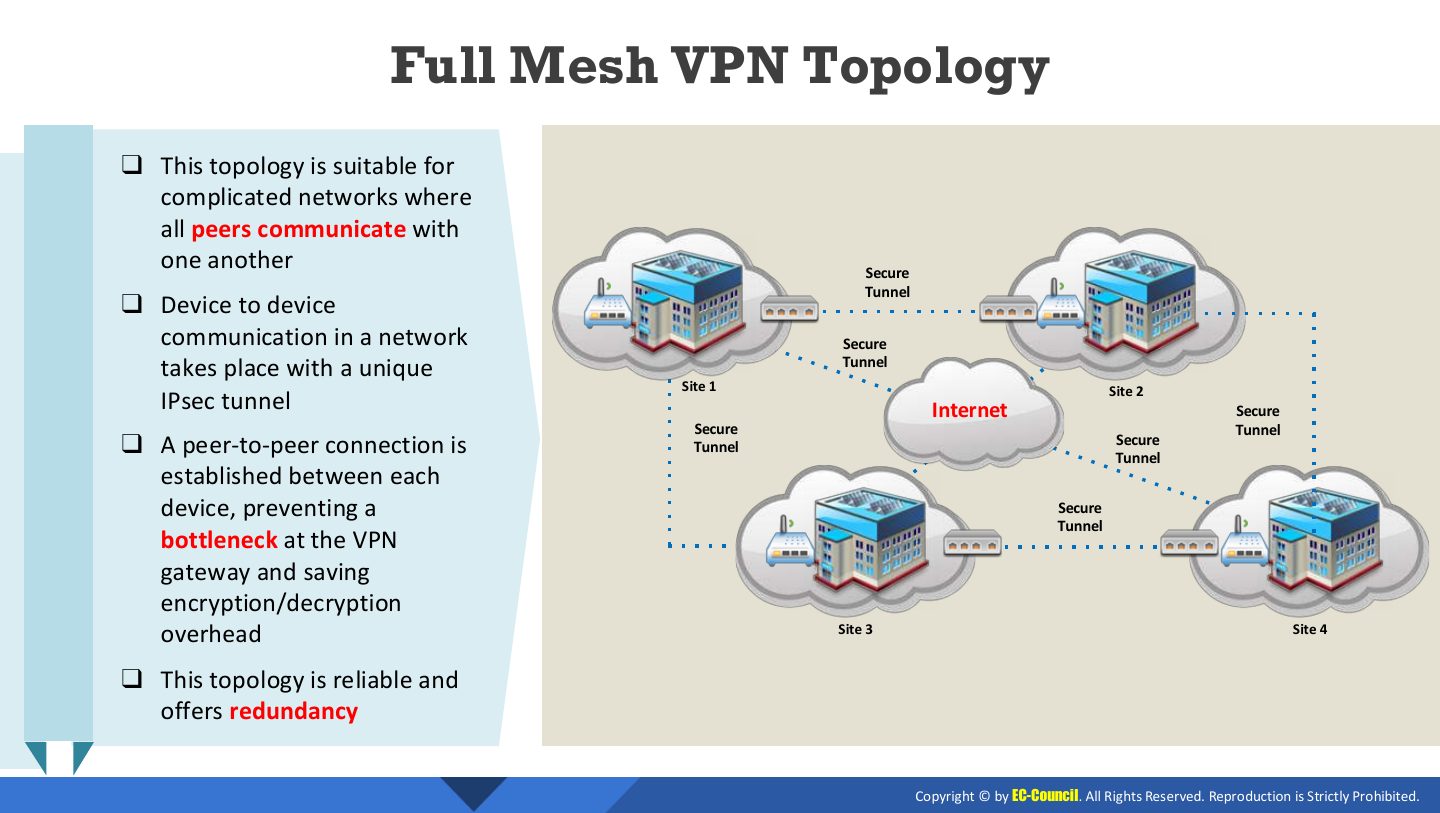
- 24 Full Mesh VPN Topology
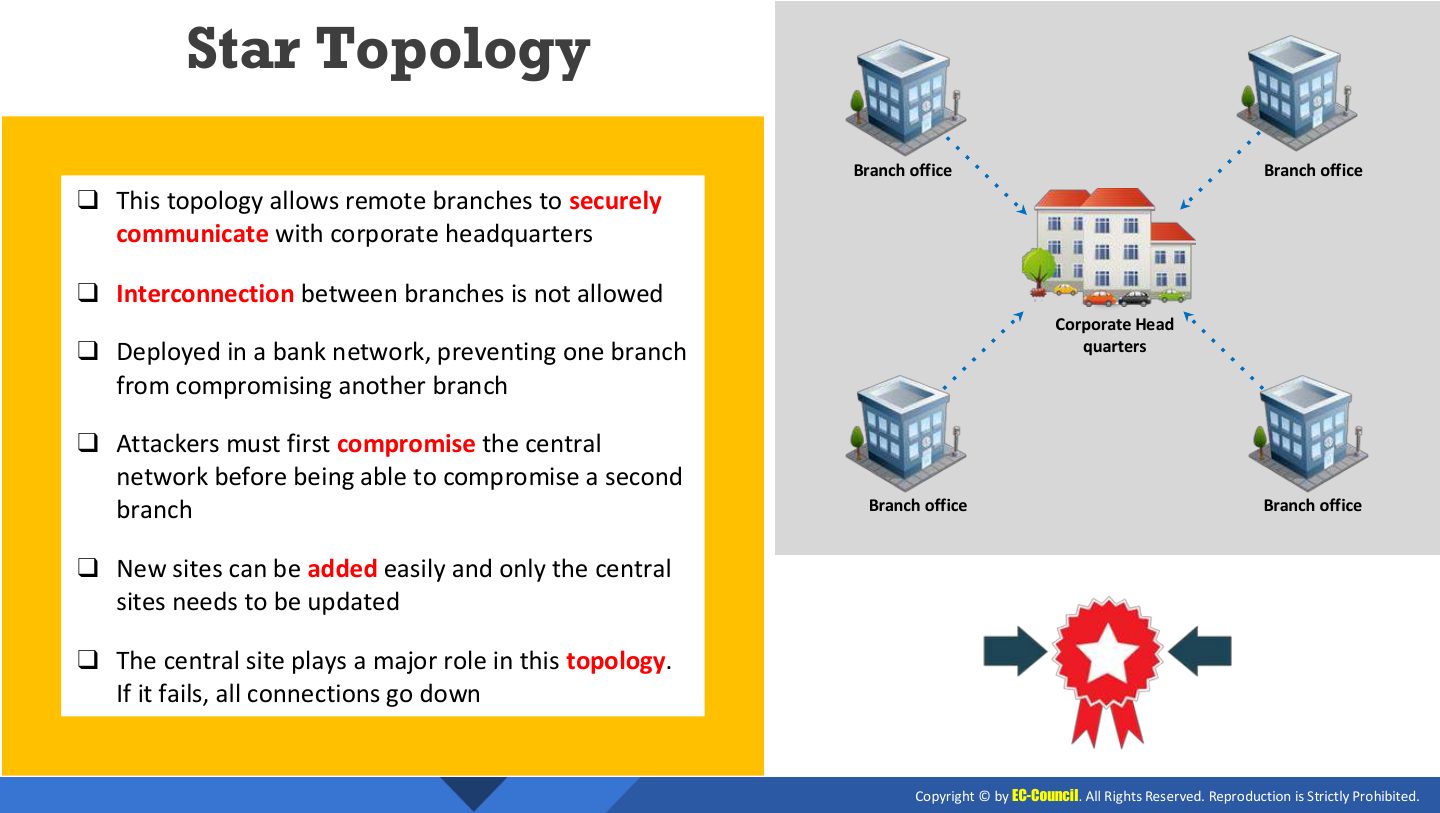
- 25 Star Topology
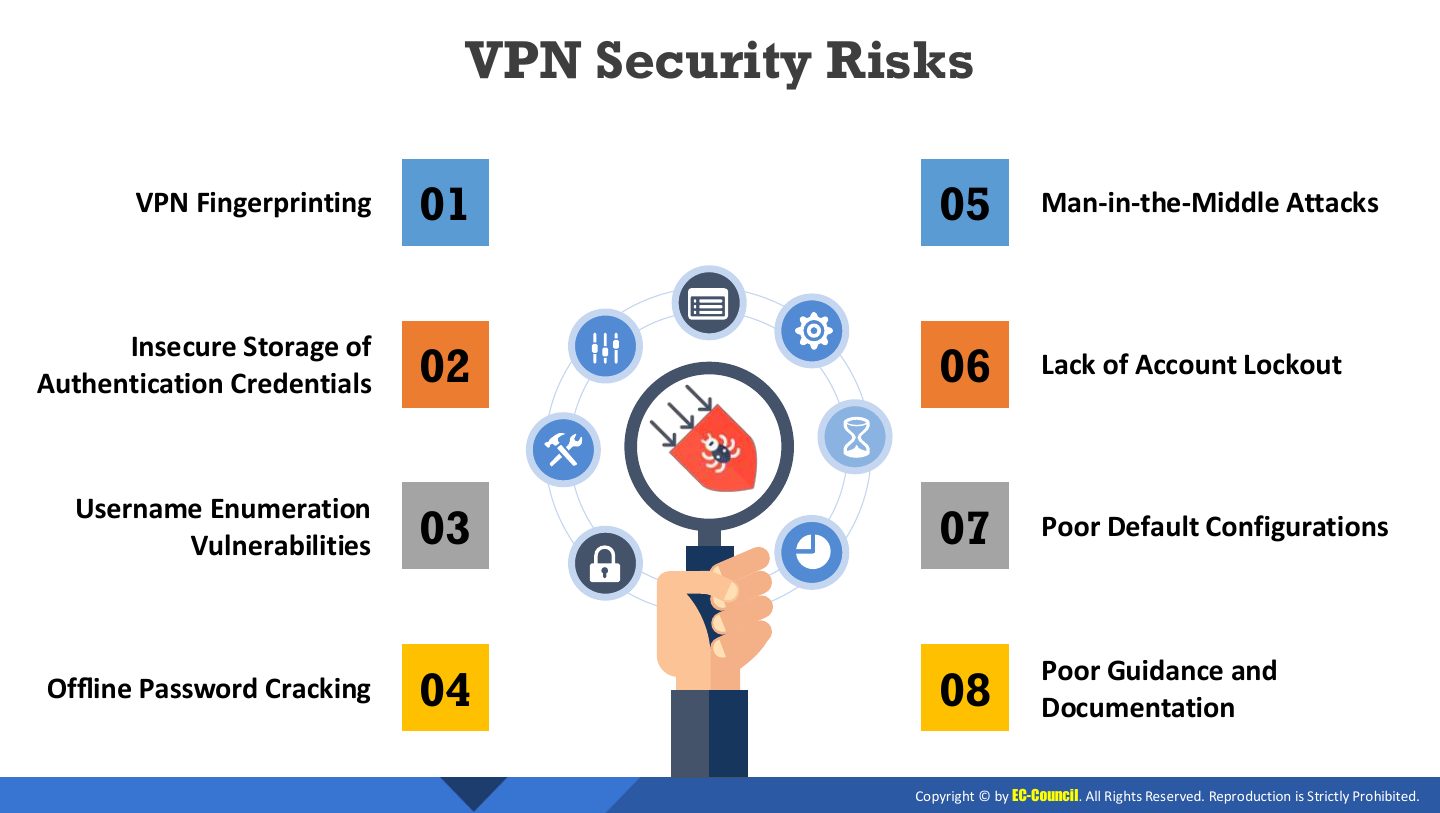
- 26 VPN Security Risks
- 27 Slide 27
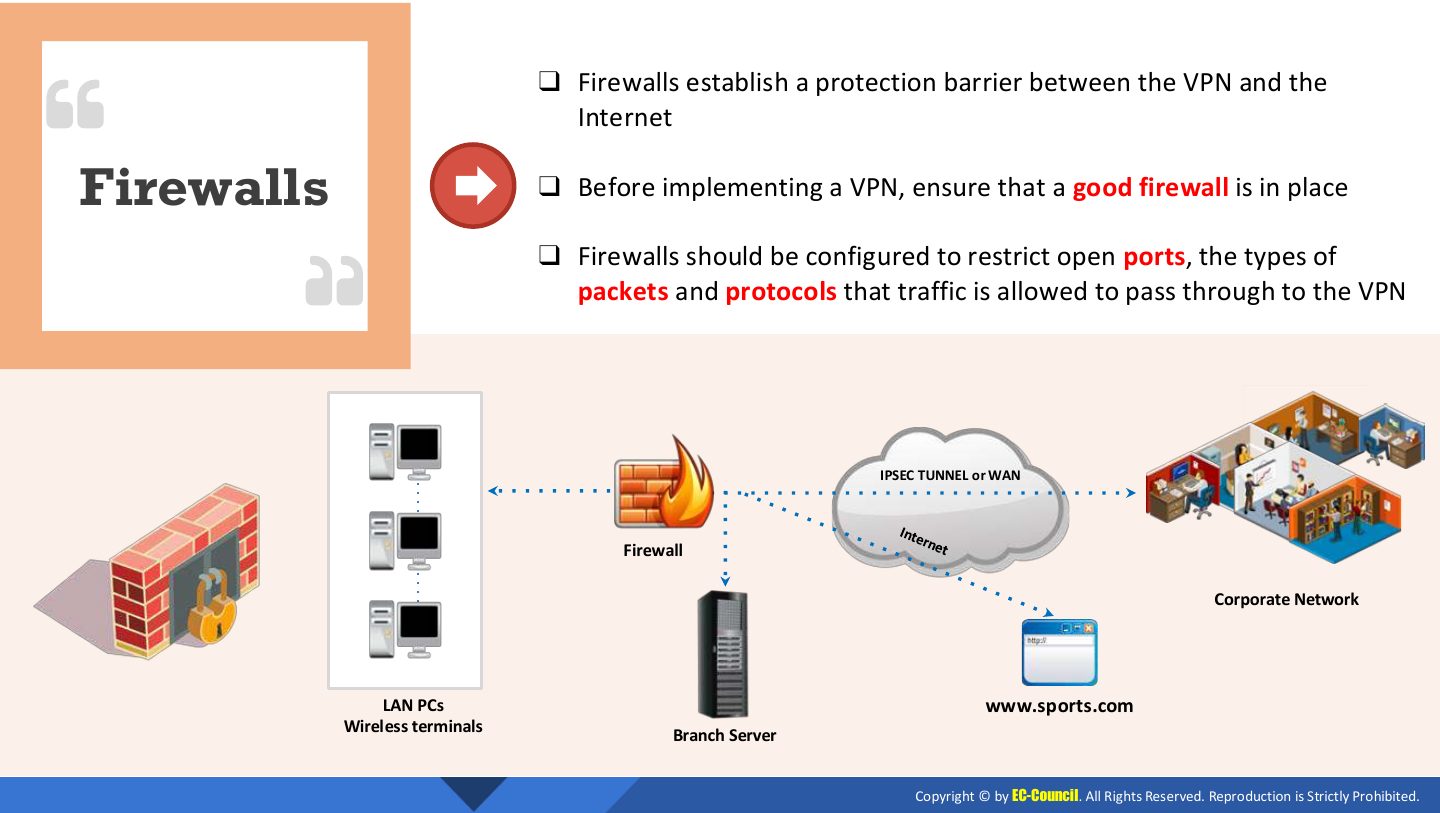
- 28 ❑ Firewalls establish a protection barrier between the VPN and the Internet
- 29 IPsec Server
- 30 AAA Server
- 31 Remote Access Dial-In User Service
- 32 Remote Access Dial-In User Service (Cont’d)
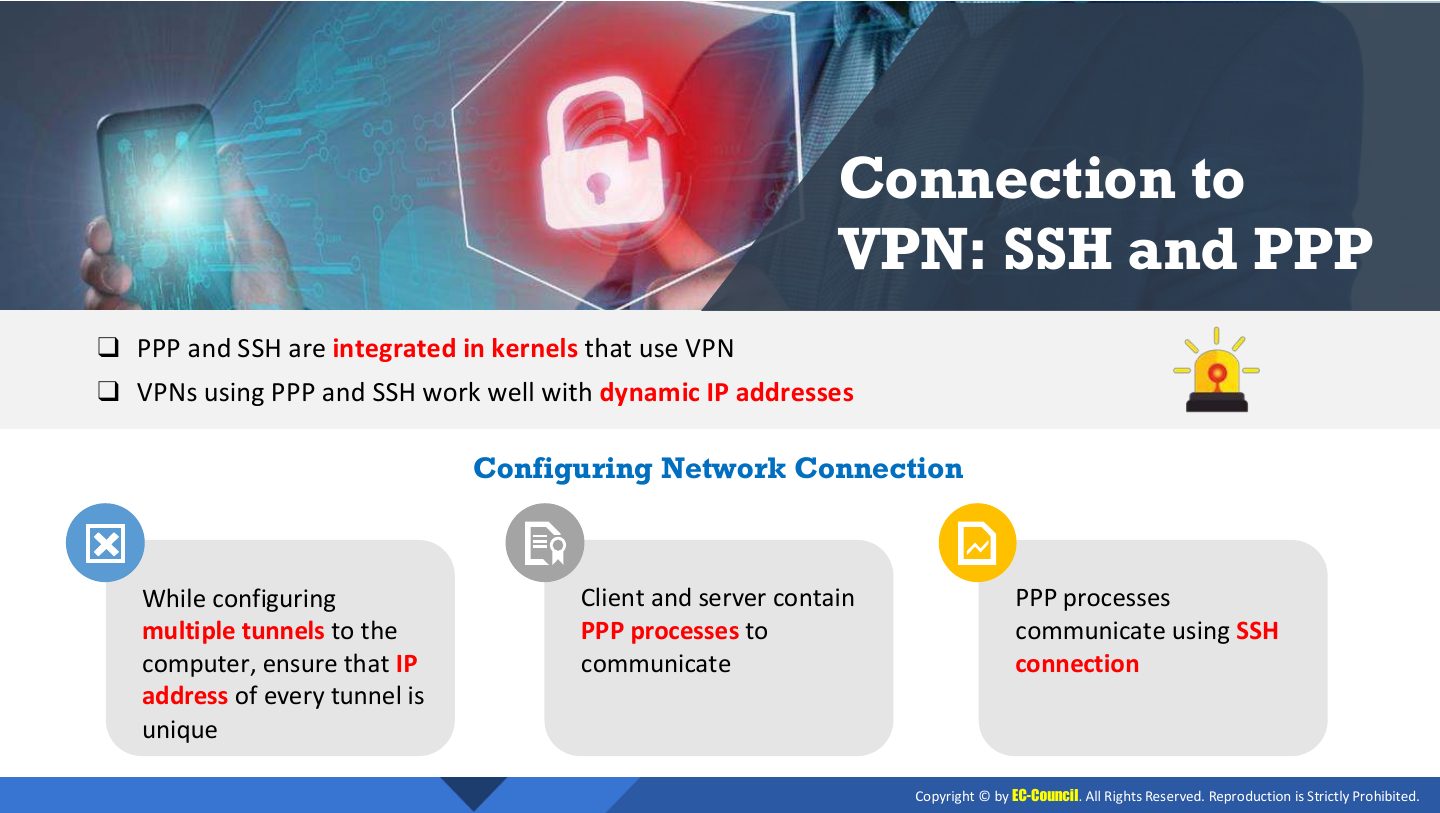
- 33 VPN: SSH and PPP
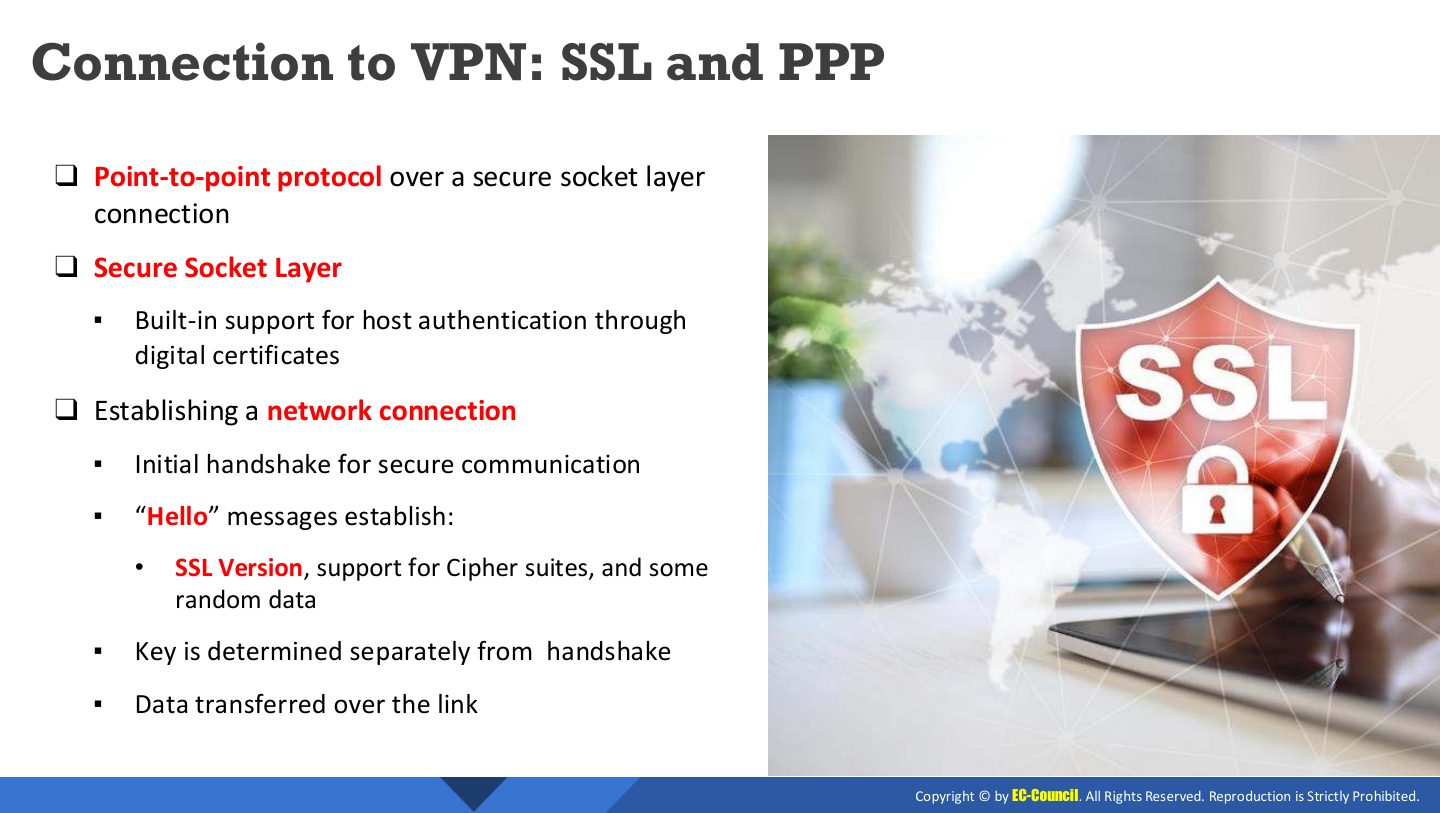
- 34 Connection to VPN: SSL and PPP
- 35 Connection to VPN: Concentrator
Module Flow
What is a VPN?
How VPN Works
Notes
A VPN builds an encrypted tunnel over a public network so remote users or sites act as if on the private LAN.
Why Establish VPN?
VPN Components
VPN Concentrators
Functions of a VPN Concentrator
Slide 8
Client-to-Site (Remote-access) VPNs
Site-to-Site VPNs
Exam angle
❑ A dedicated hardware VPN appliance is used to connect routers and gateways to ensure communication over an insecure channel
Hardware VPN Products
Software VPNs
Software VPN Products
Selecting an Appropriate VPN
VPN Core Functionality: Encapsulation
VPN Core
VPN Core Functionality: Authentication
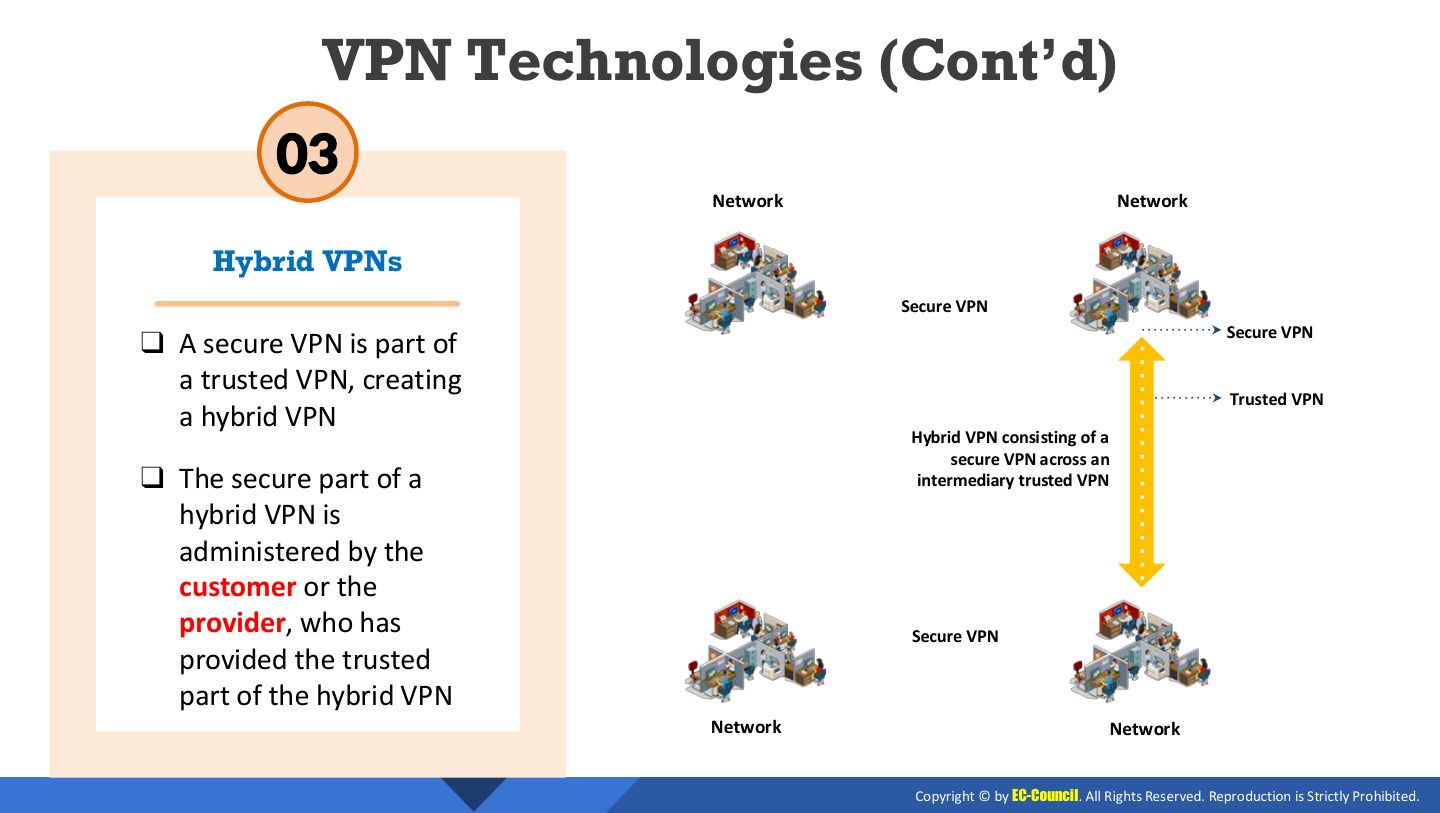
VPN Technologies
Notes
Technologies: IPsec, SSL/TLS VPNs, PPTP (obsolete), L2TP (with IPsec).
Exam angle
Which VPN protocol is considered insecure today?
VPN Technologies (Cont’d)
VPN Topologies
Notes
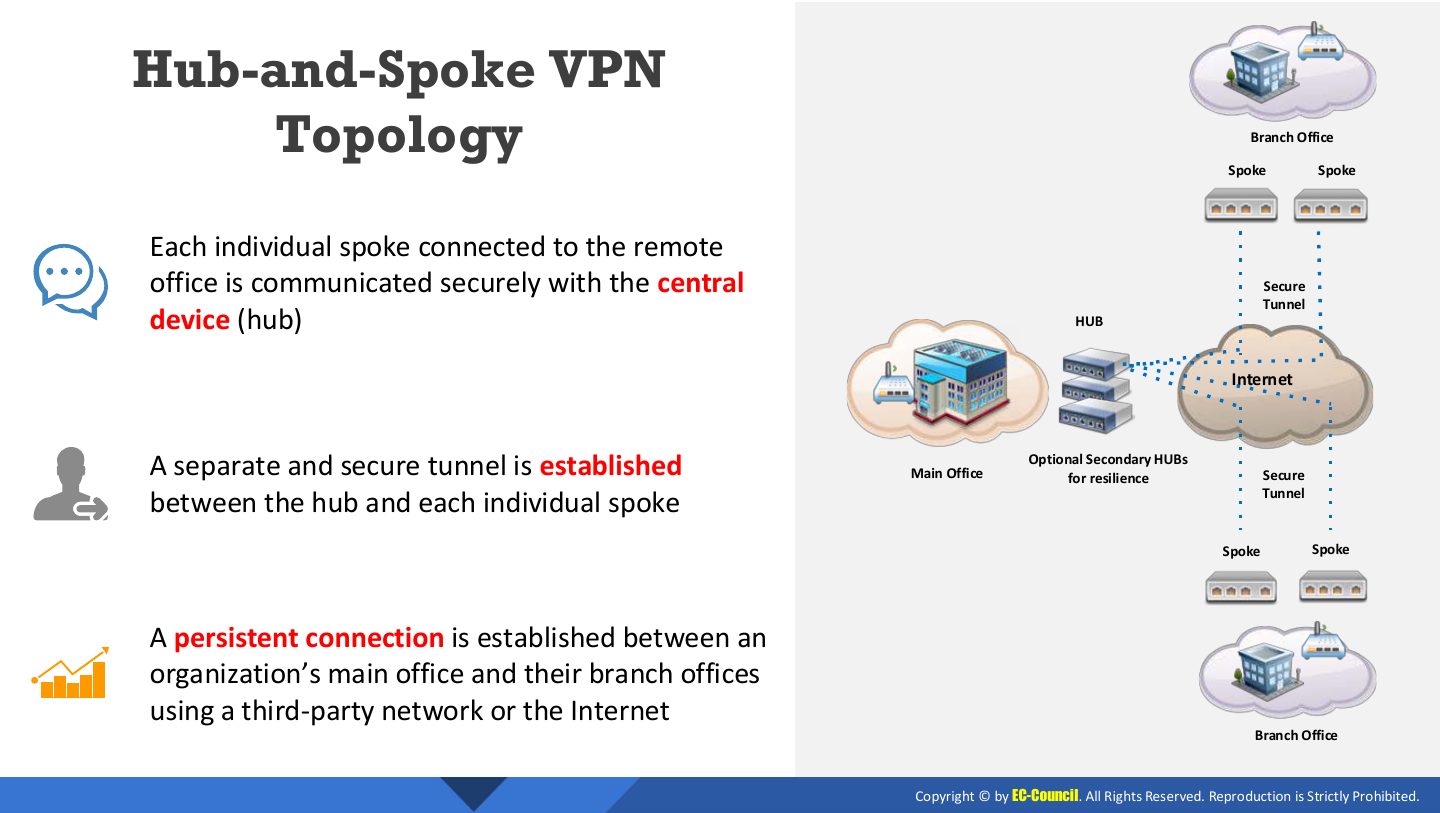
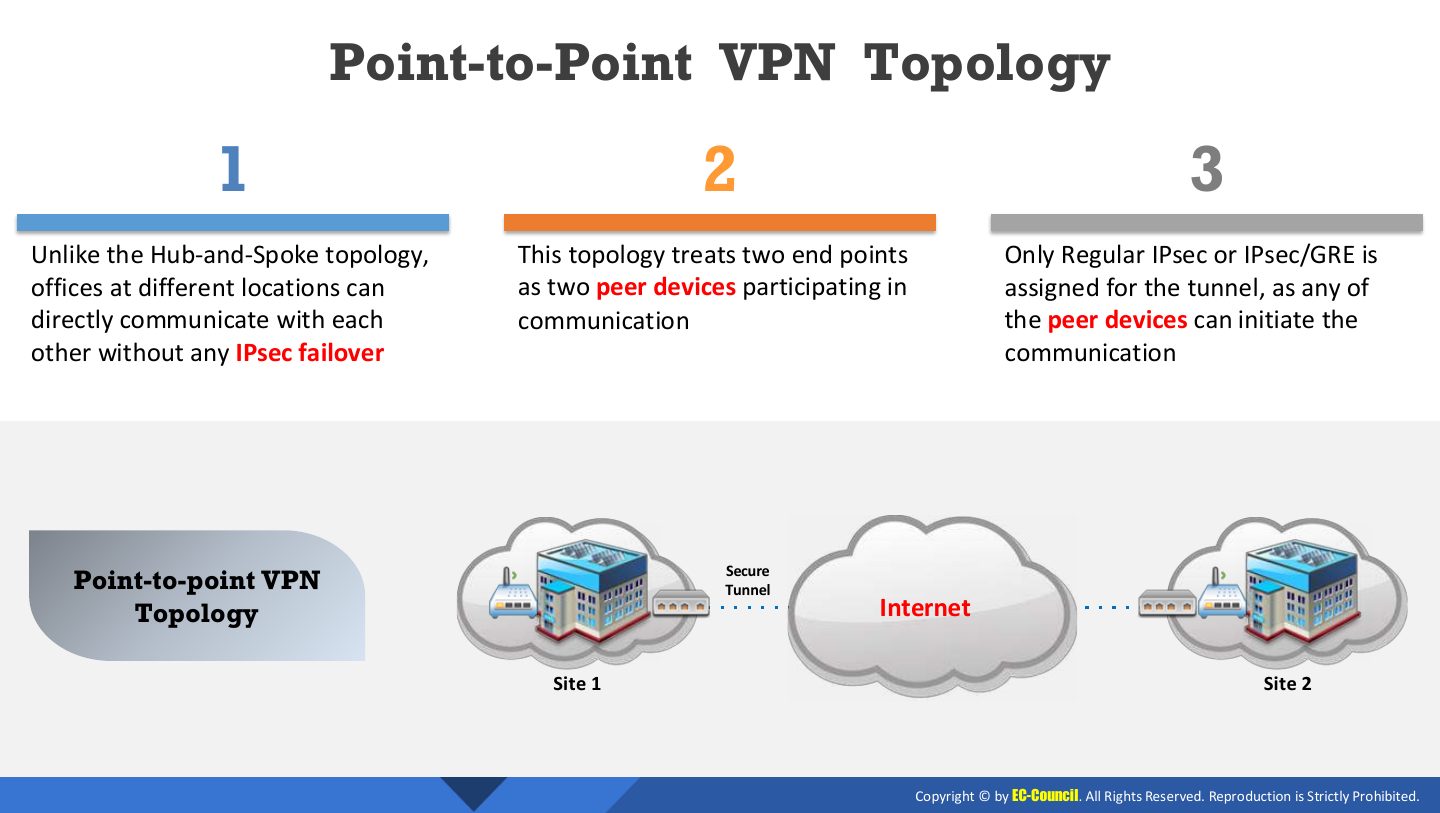
Topologies: hub-and-spoke (sites via a central hub), point-to-point, full mesh (every site to every site), star.
Exam angle
n sites in a full-mesh VPN need how many tunnels?
Hub-and-Spoke VPN Topology
Point-to-Point VPN Topology
Full Mesh VPN Topology
Star Topology
VPN Security Risks
Notes
Risks: weak authentication, compromised endpoints, split tunneling, outdated protocols.
Slide 27

❑ Firewalls establish a protection barrier between the VPN and the Internet
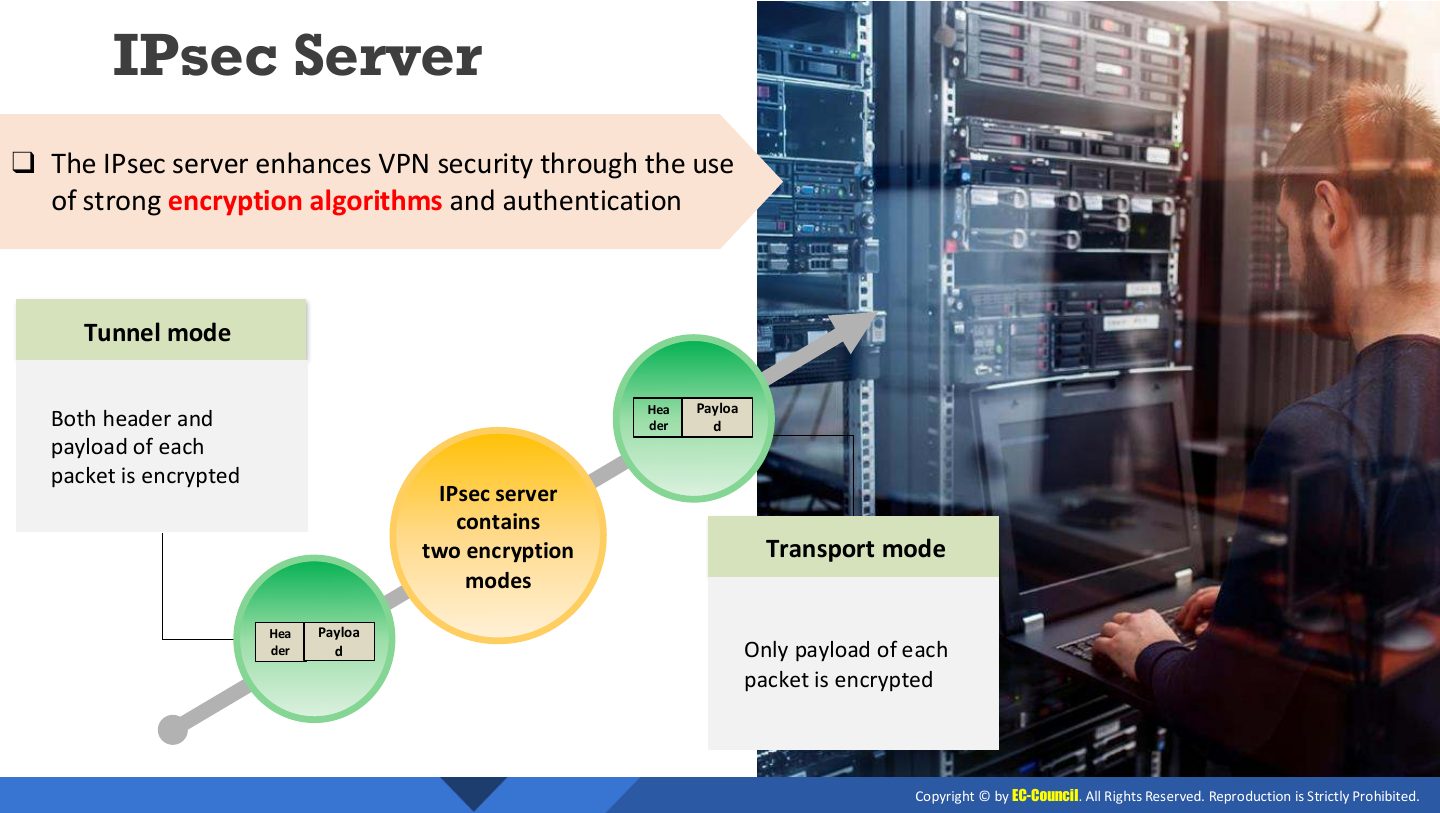
IPsec Server
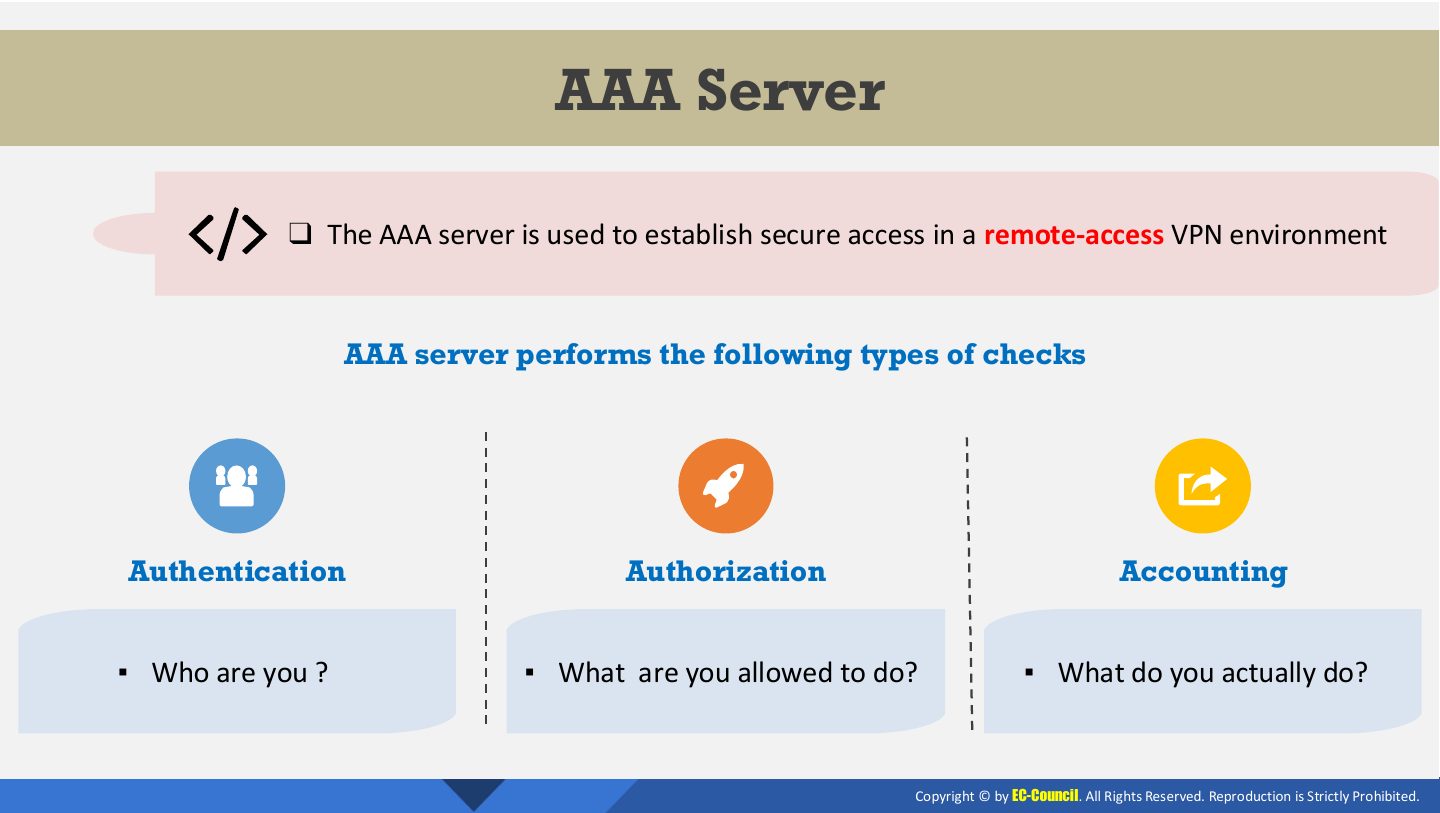
AAA Server
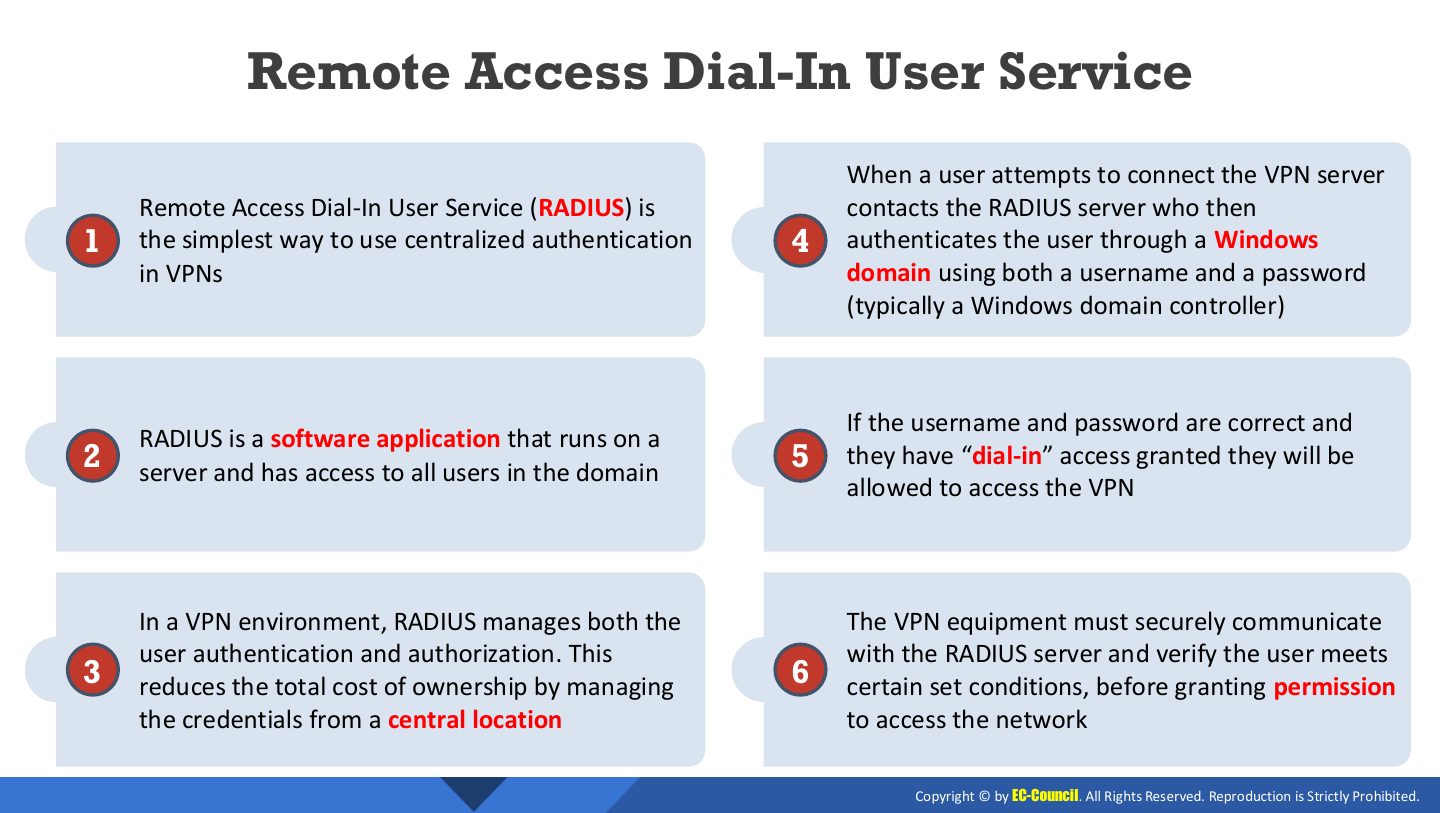
Remote Access Dial-In User Service
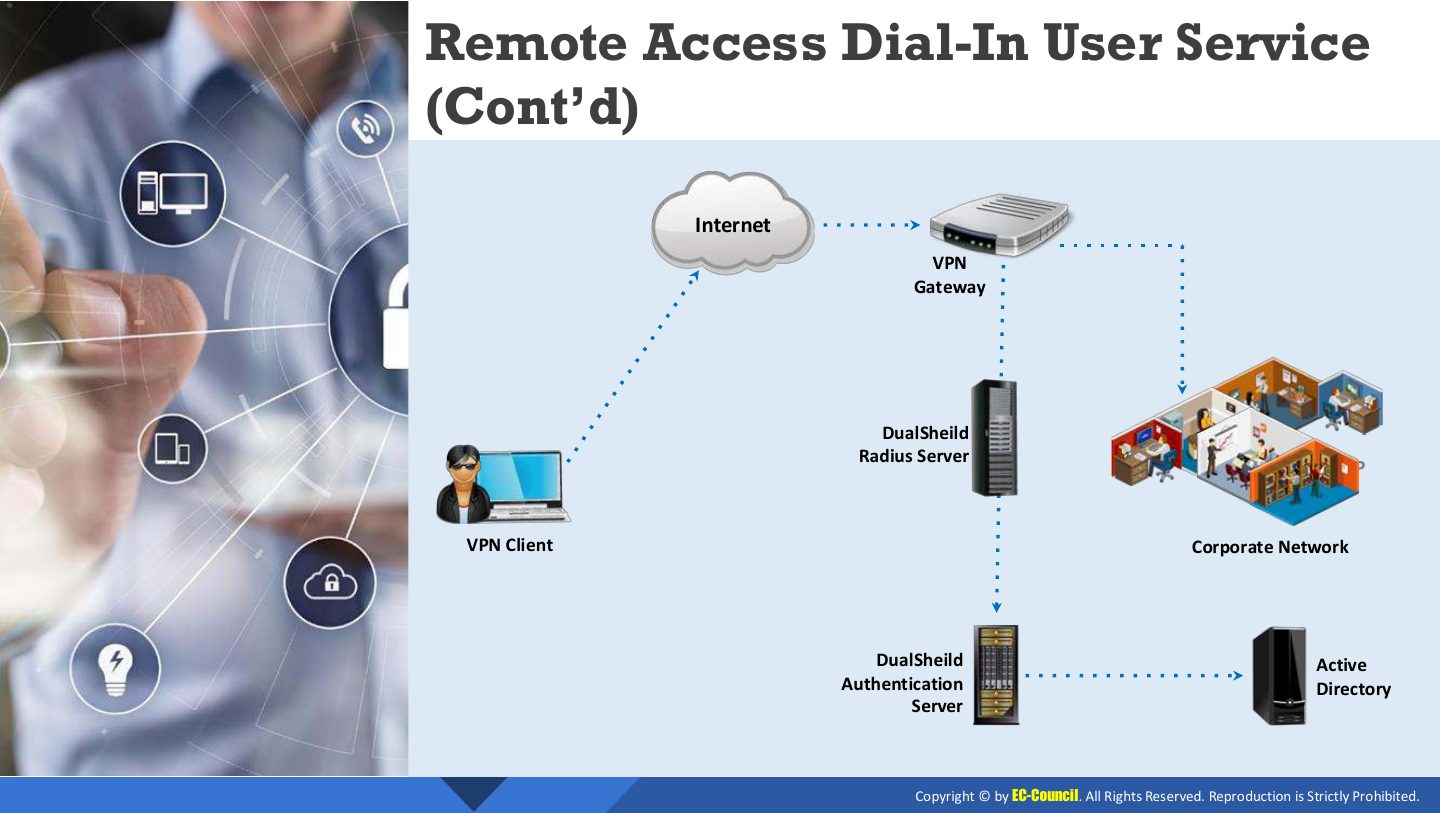
Remote Access Dial-In User Service (Cont’d)
VPN: SSH and PPP
Connection to VPN: SSL and PPP
Connection to VPN: Concentrator