The key difference between an IDS and an IPS is that an IPS:
Intrusion Detection and Prevention Systems
How an IDS works and what it can and can’t do, indications of intrusion, IDS classifications (signature vs. anomaly, active vs. passive, network vs. host), IDS components, deployment, alert types (true/false positives and negatives), choosing an IDS/IPS, and Snort.
How to read this page
Every original slide is shown unchanged. Yellow marks on a slide point to a numbered note: hover or tap a mark to jump to its note, and hover a note to see its marks. Questions tagged Past exam appeared on a real paper; Prediction questions are likely angles, not confirmed. Pick an answer to each question: a wrong pick tells you why it is wrong, so you can try again.
All 40 slides
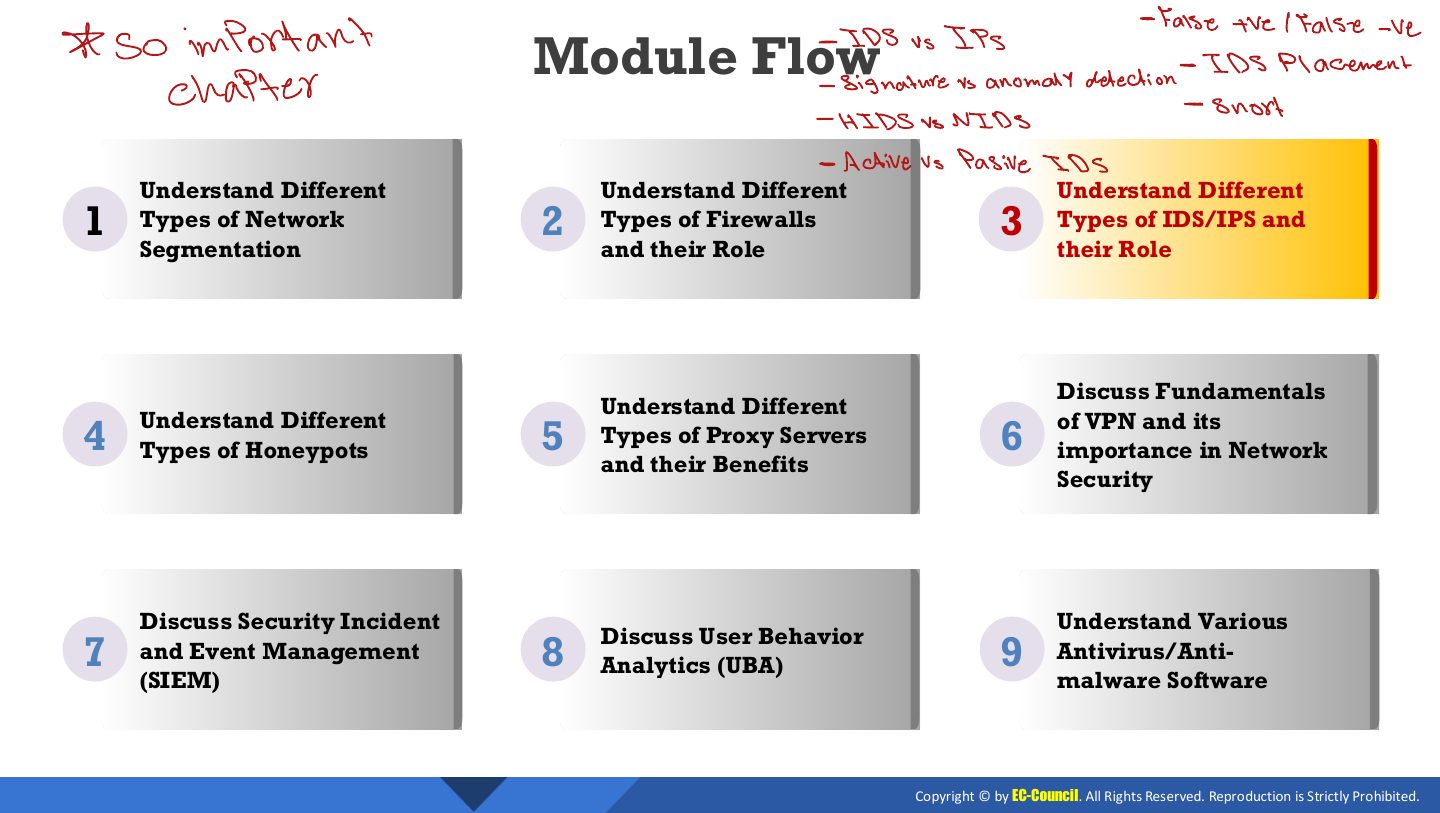
- 1 Module Flow
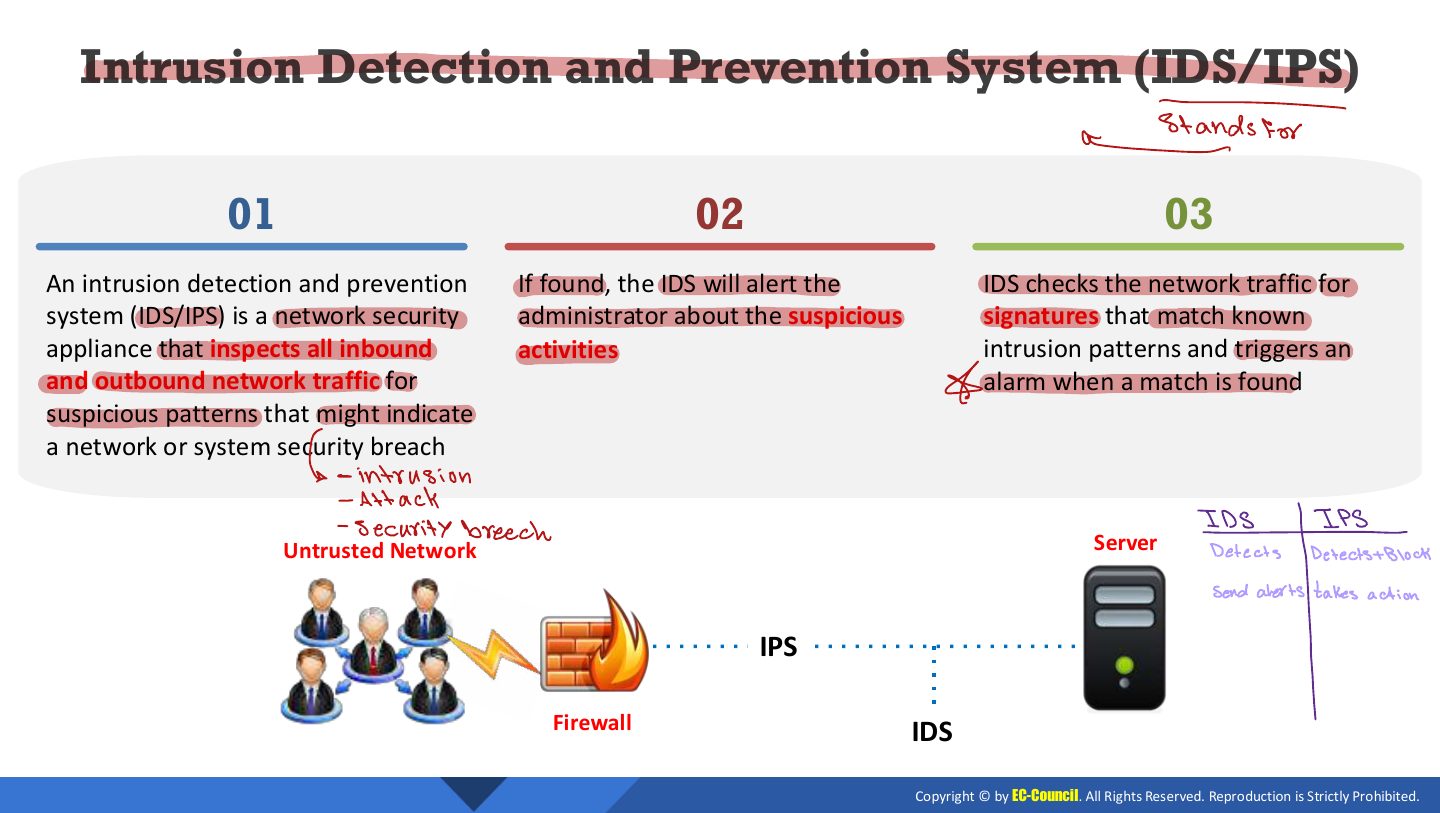
- 2 Intrusion Detection and Prevention System (IDS/IPS)
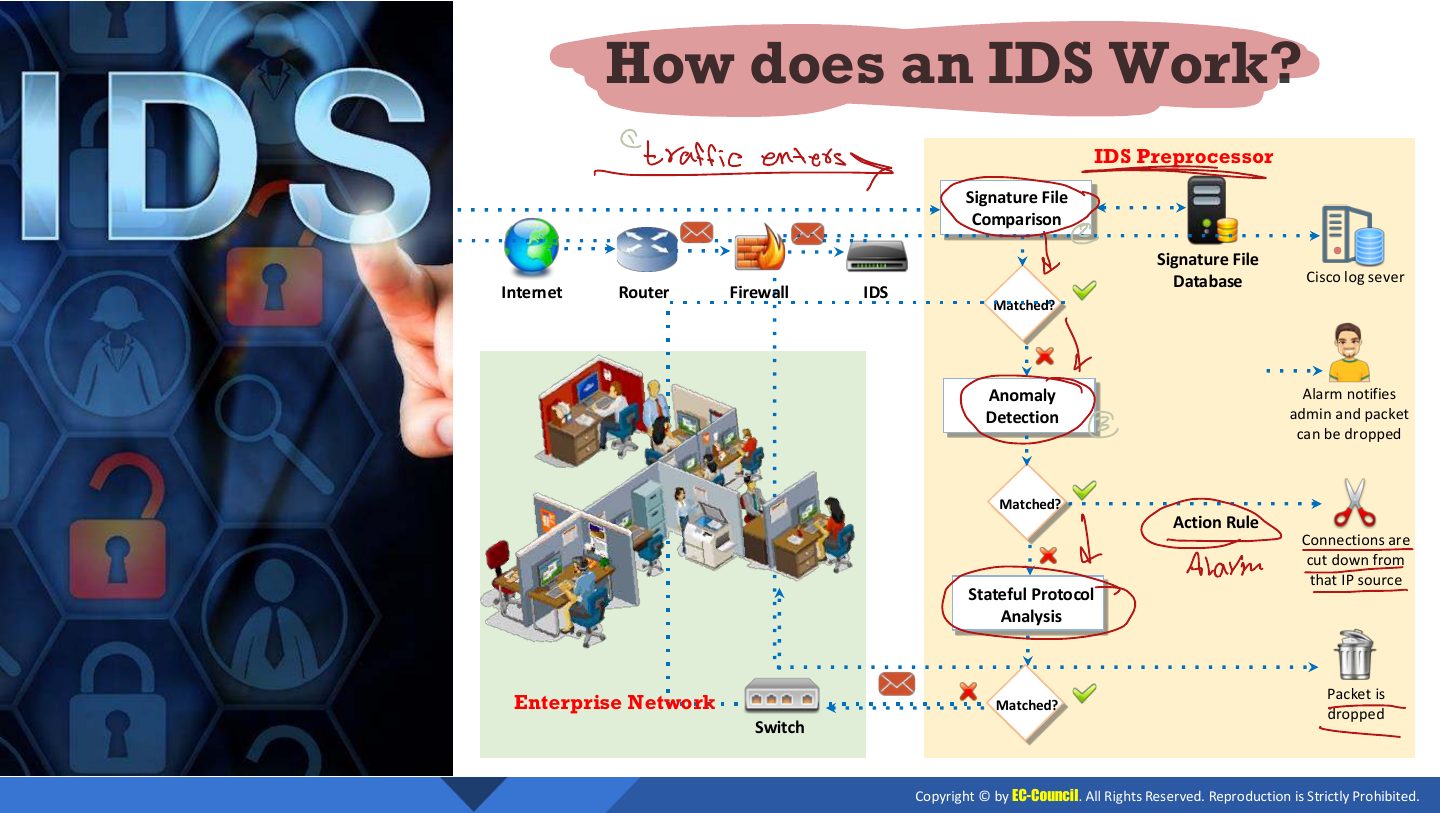
- 3 How does an IDS Work?
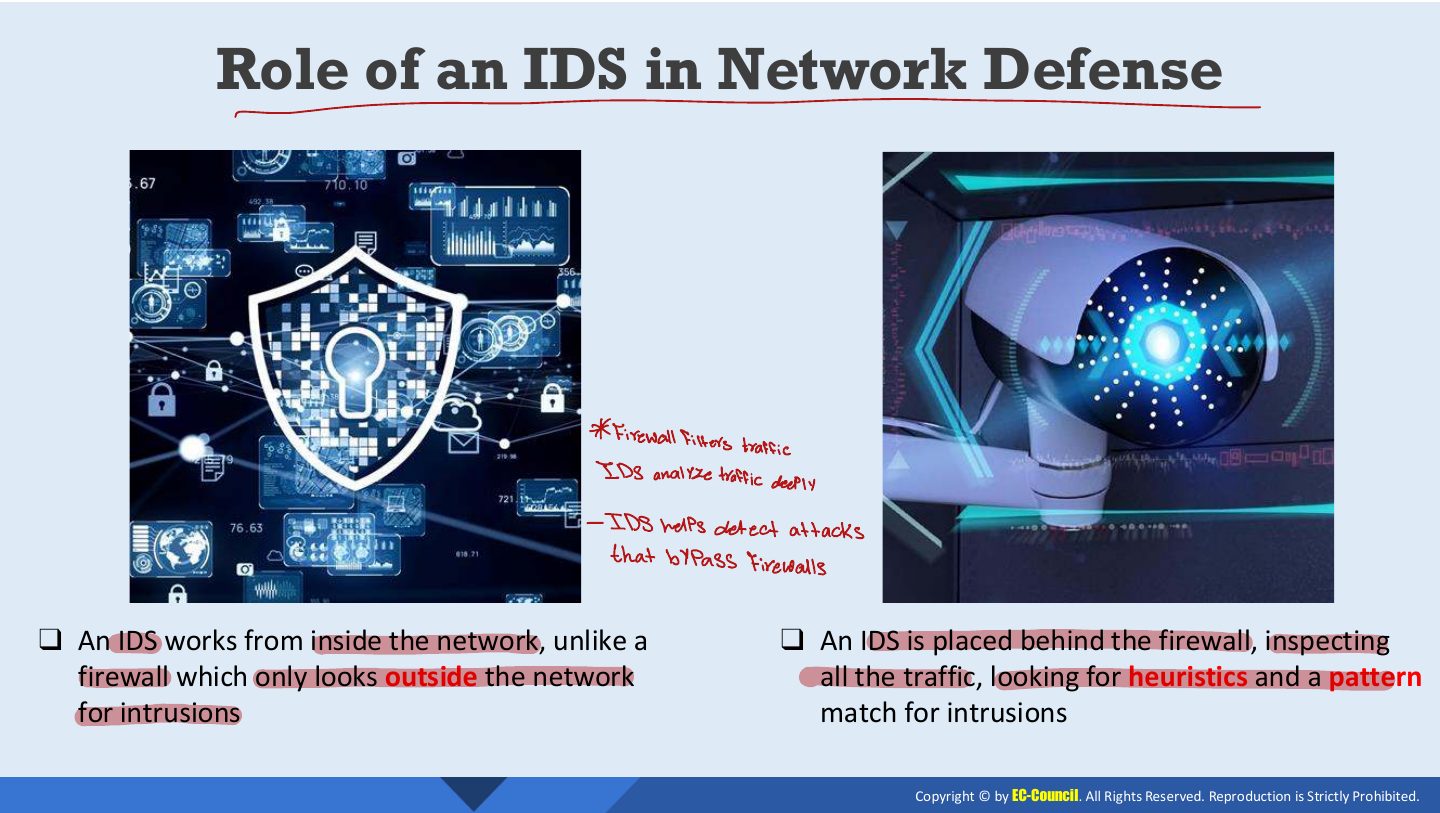
- 4 Role of an IDS in Network Defense
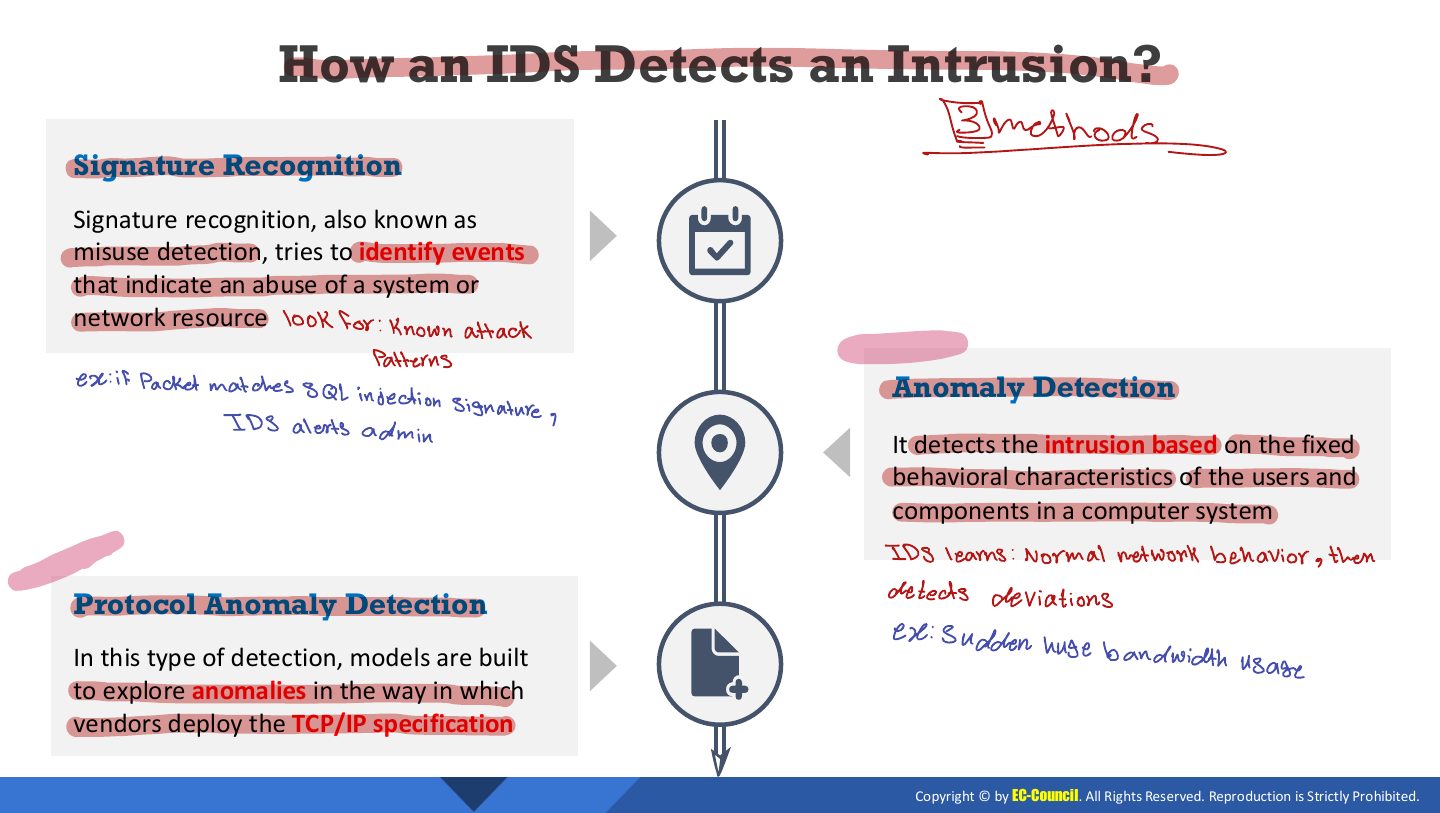
- 5 How an IDS Detects an Intrusion?
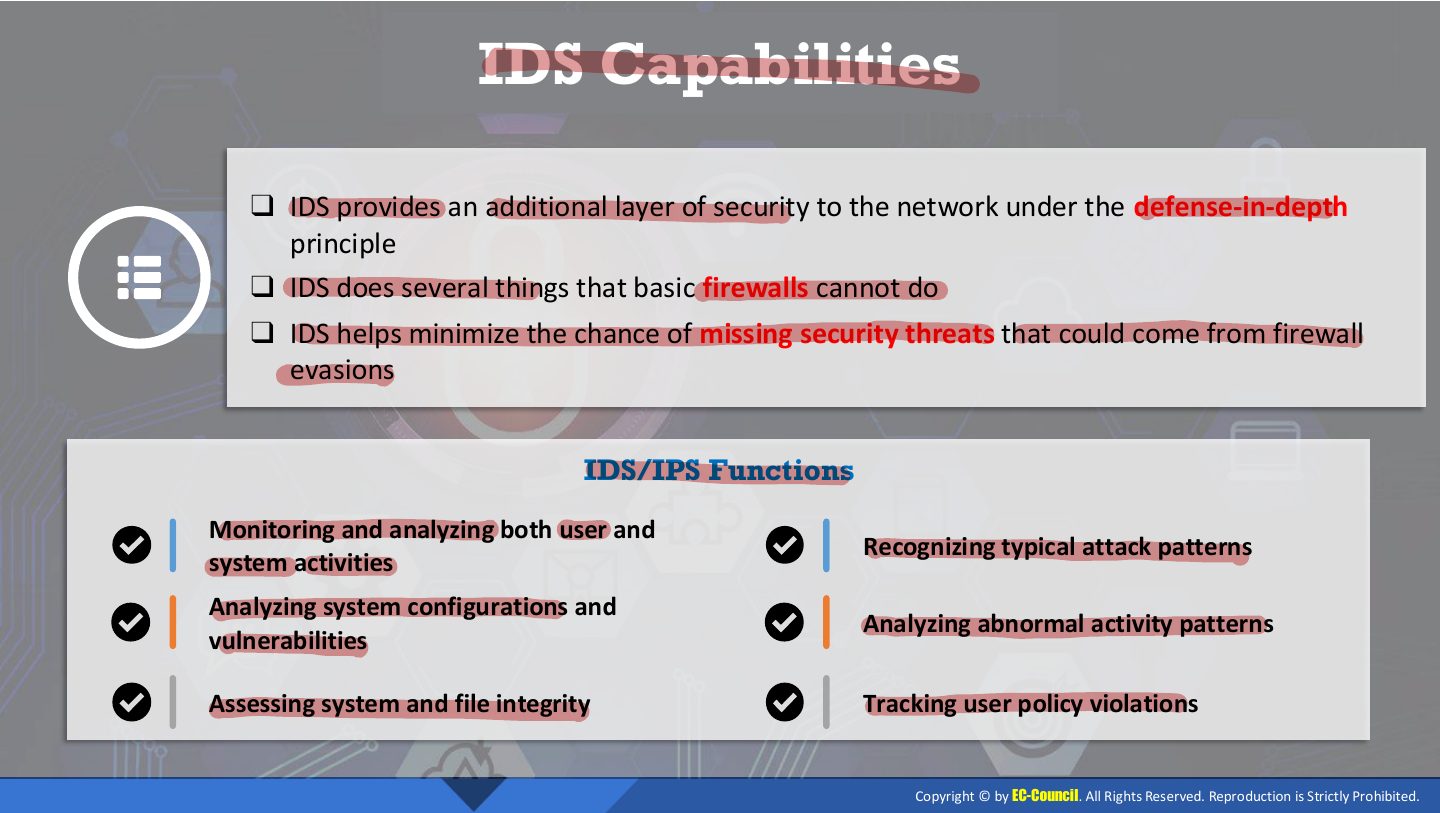
- 6 IDS Capabilities
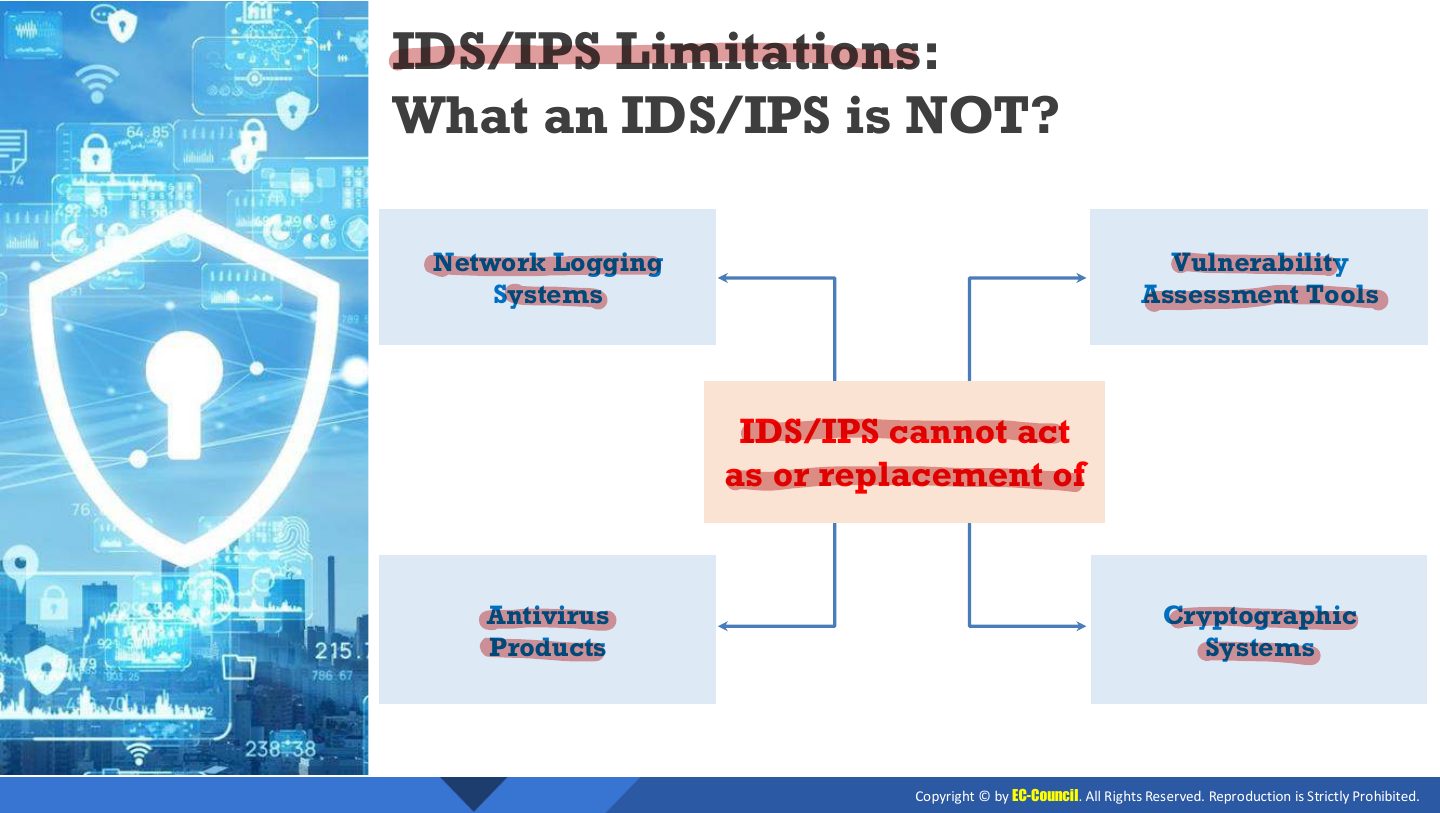
- 7 IDS/IPS Limitations: What an IDS/IPS is NOT?
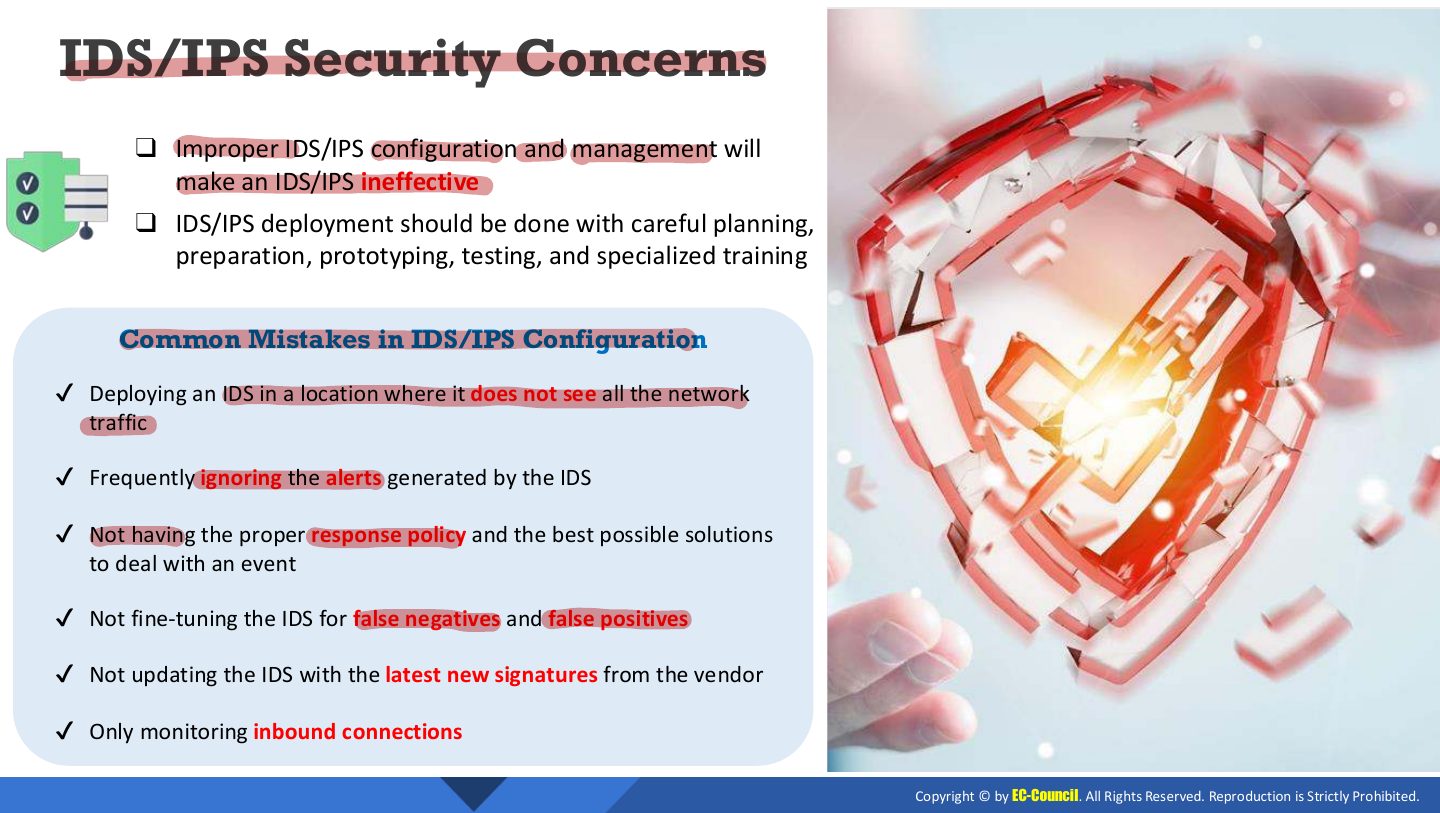
- 8 IDS/IPS Security Concerns
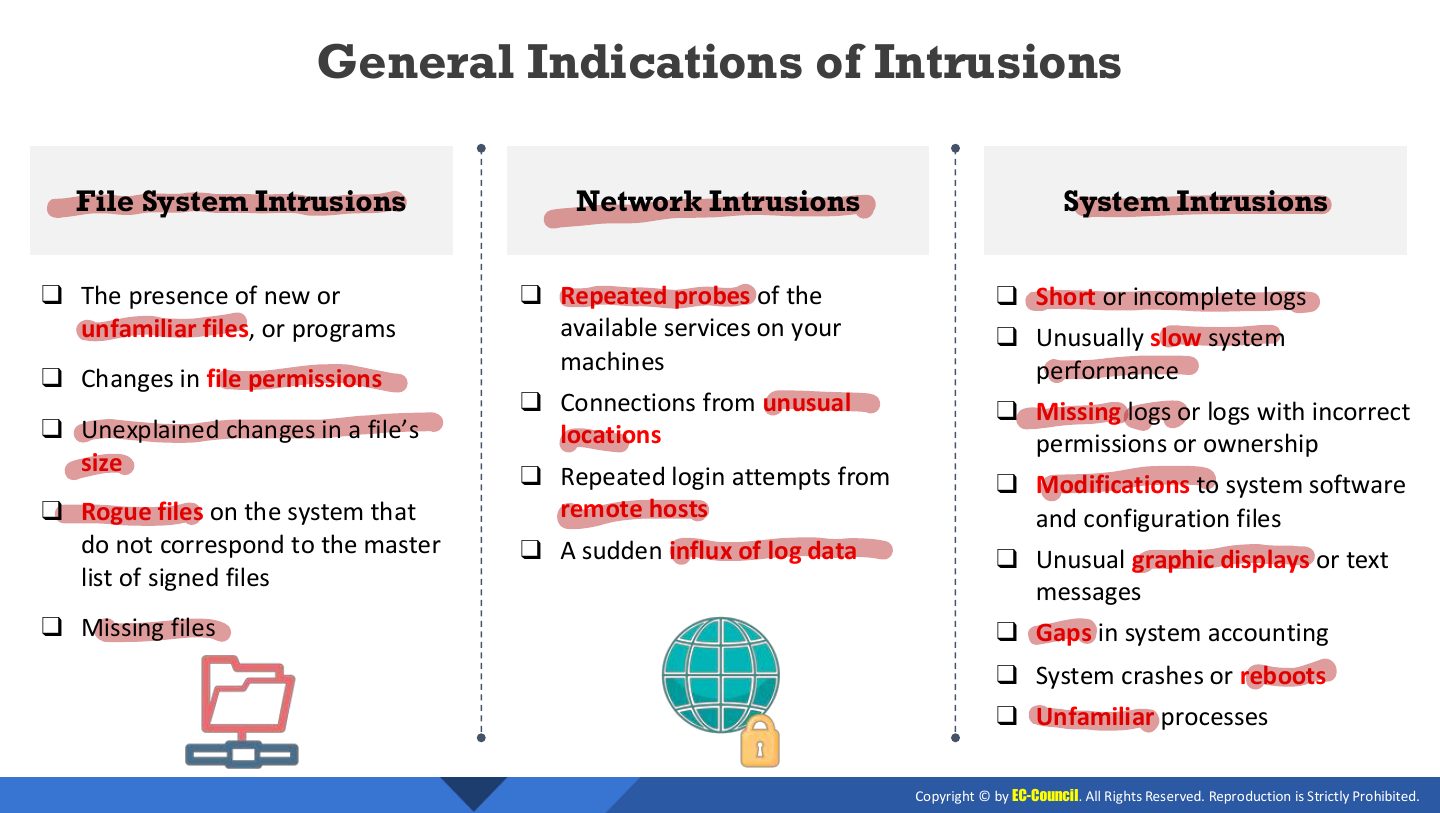
- 9 General Indications of Intrusions
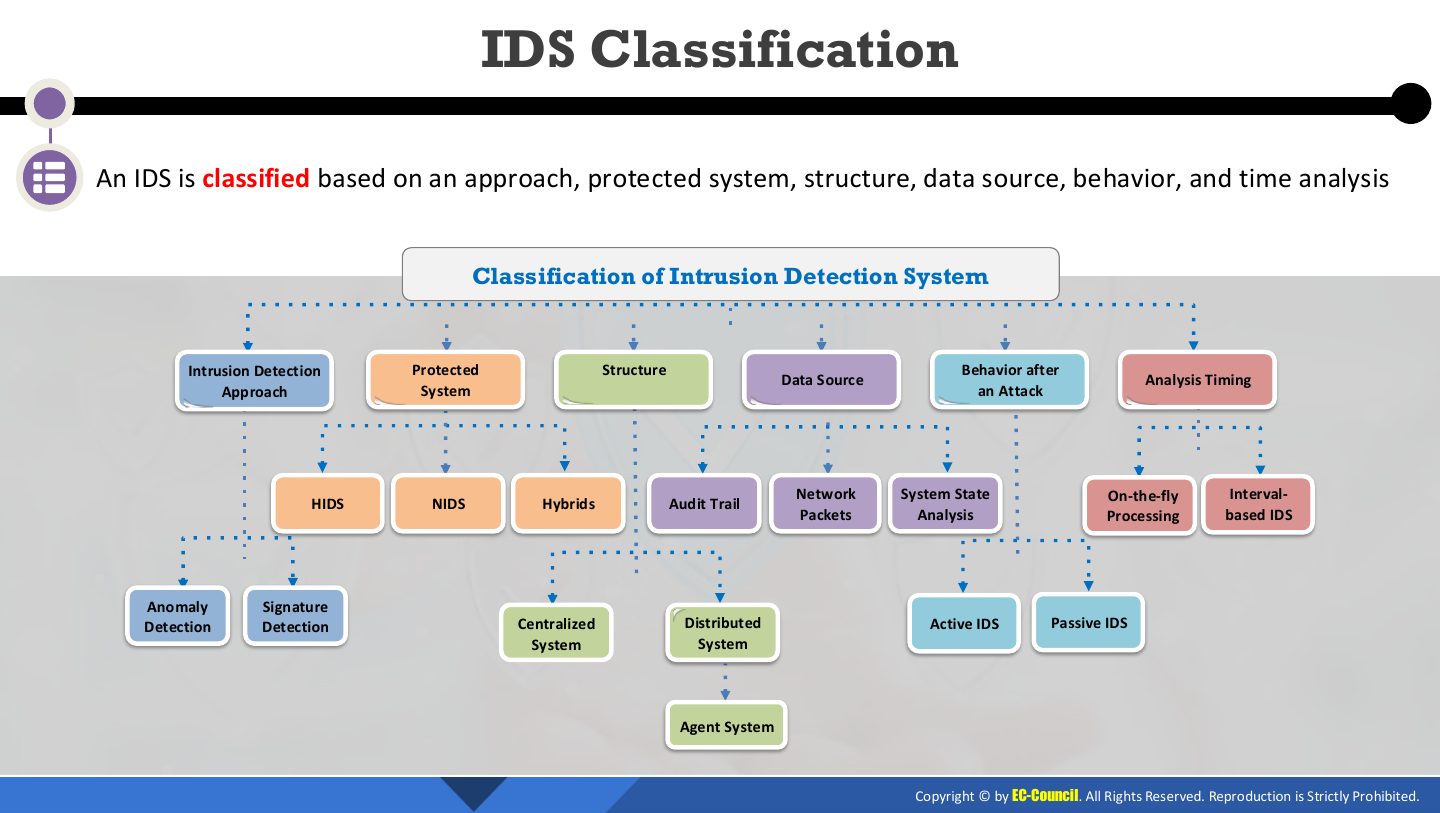
- 10 IDS Classification
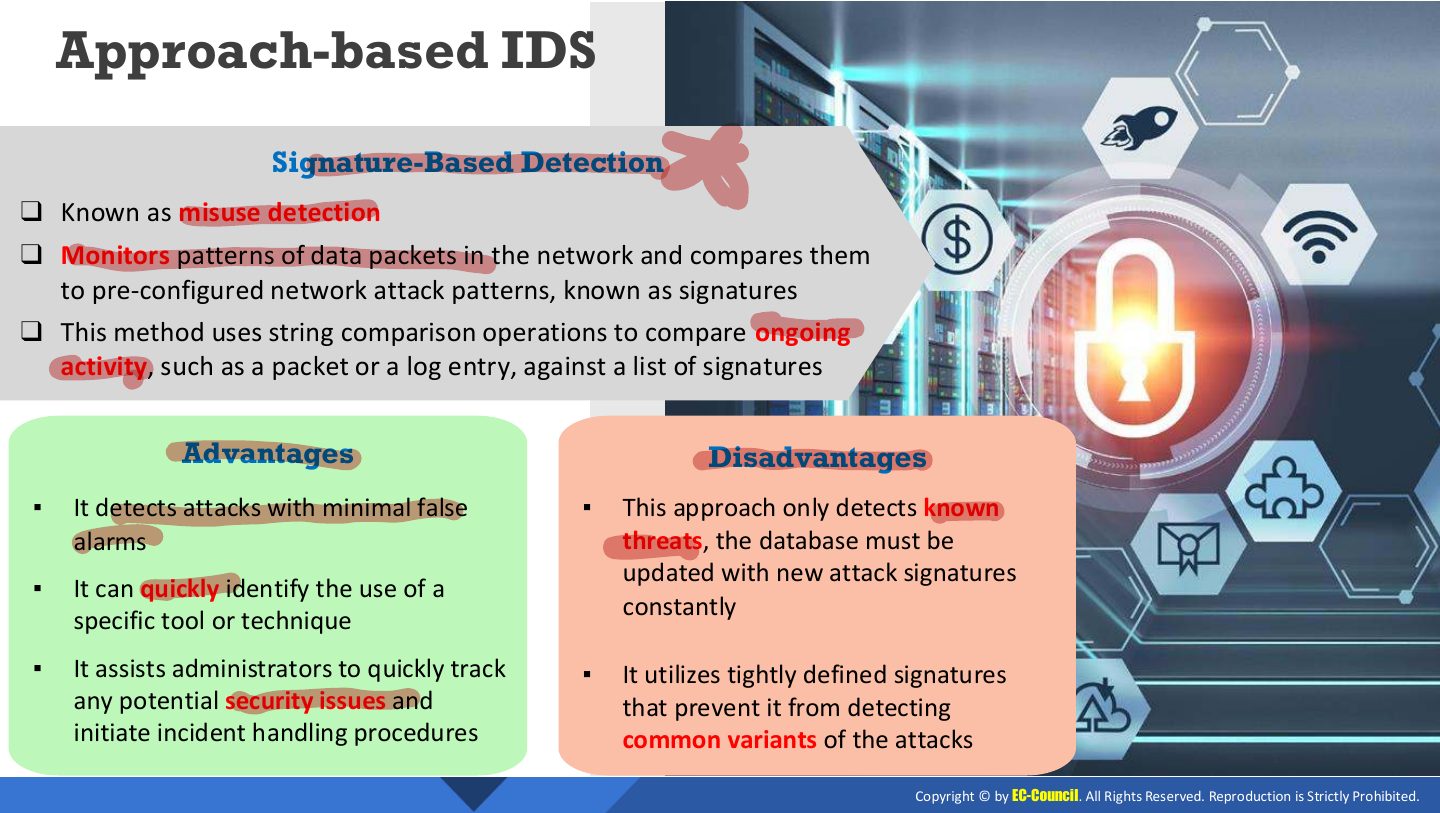
- 11 Approach-based IDS
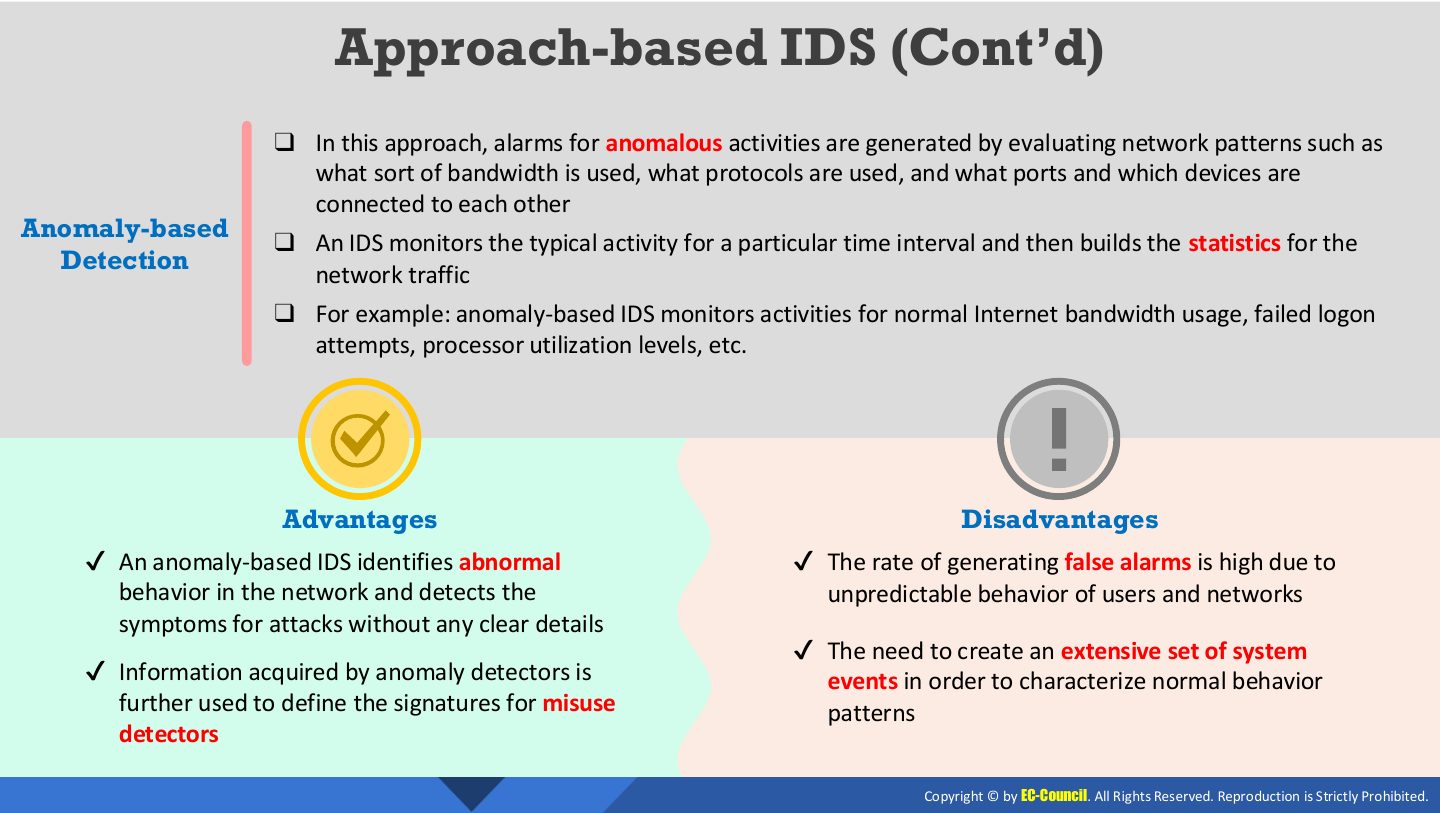
- 12 Approach-based IDS (Cont’d)
- 13 Approach- based IDS (Cont’d)
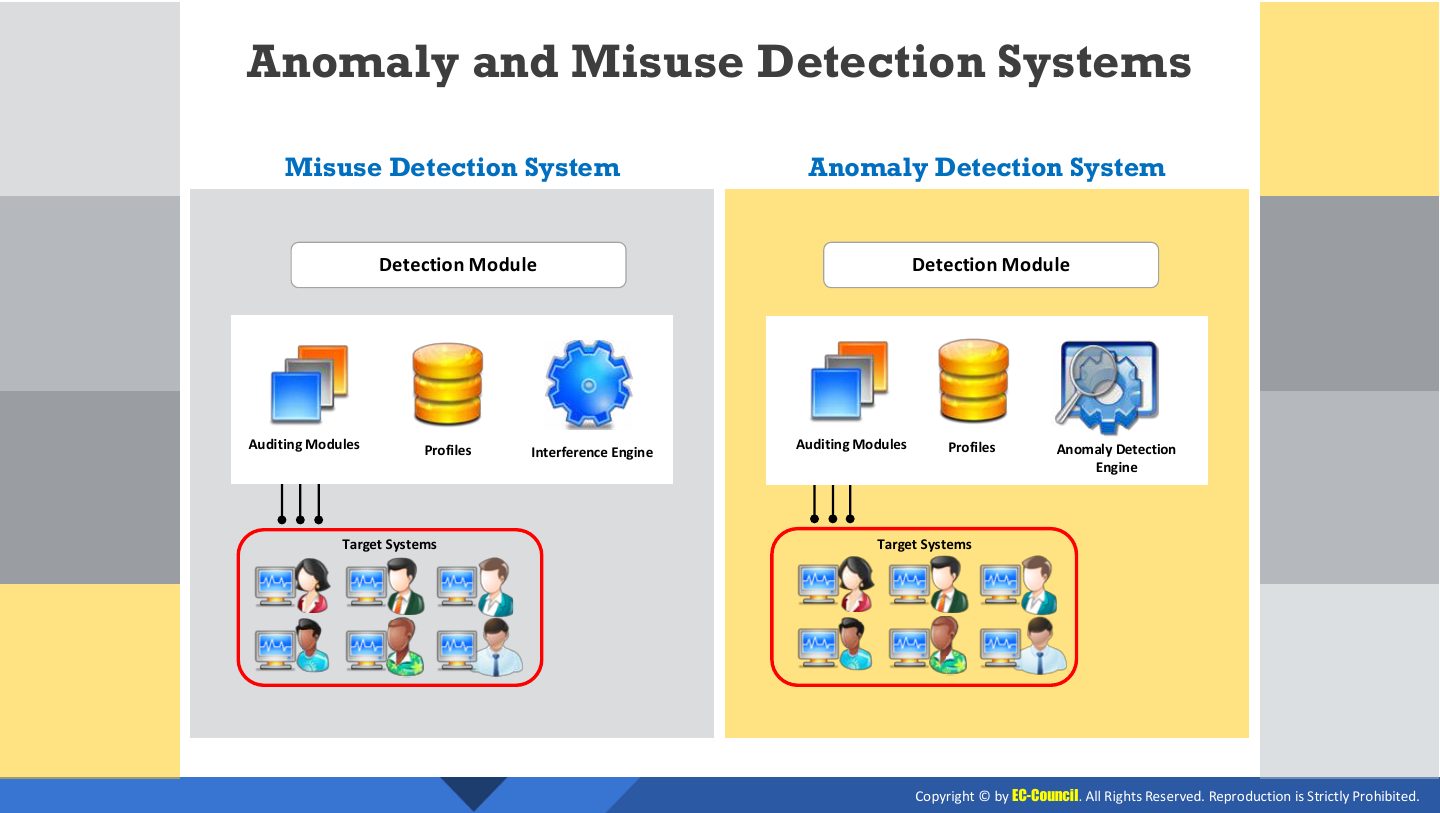
- 14 Anomaly and Misuse Detection Systems
- 15 ❑ how it reacts to a potential intrusion
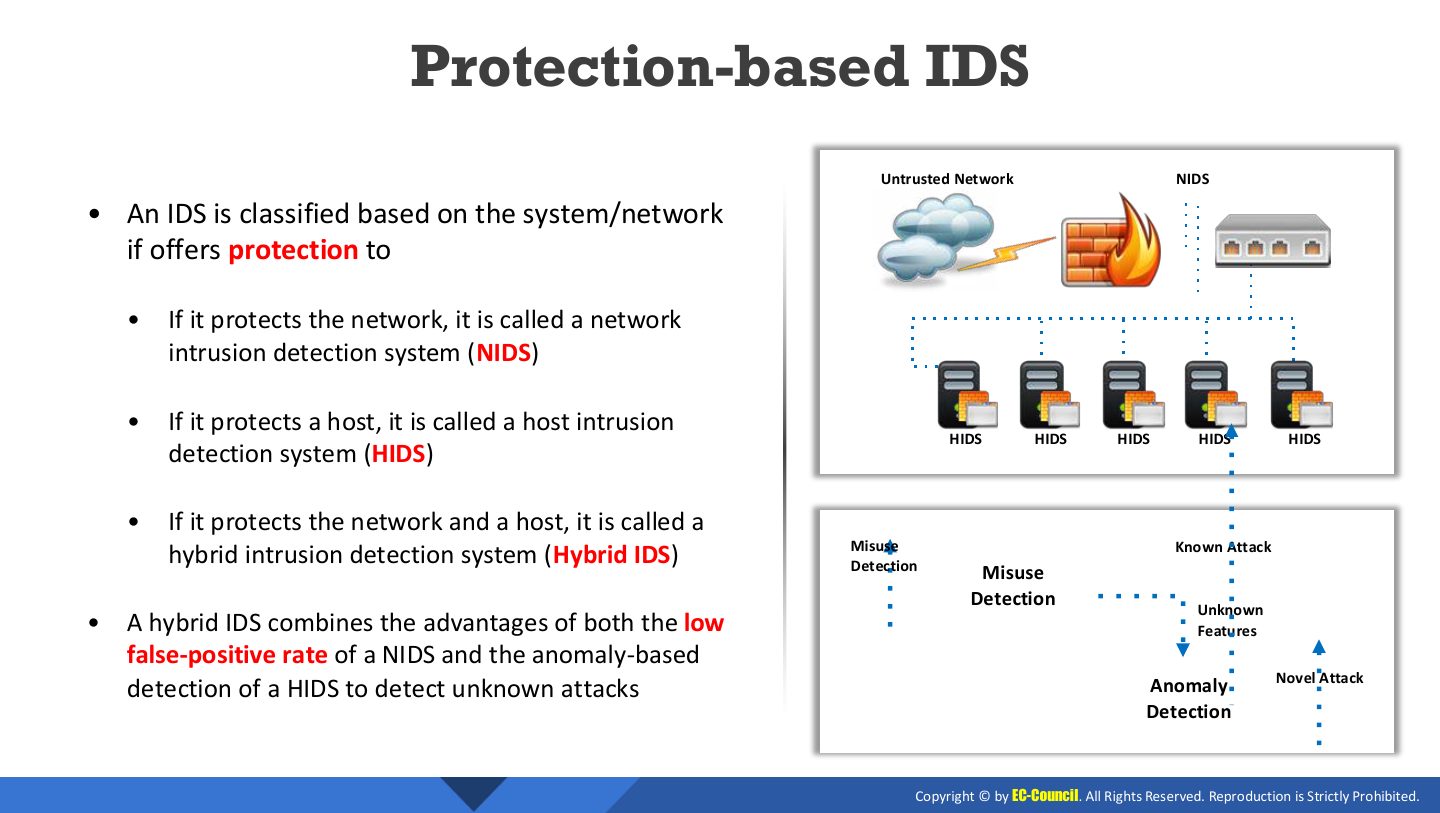
- 16 Protection-based IDS
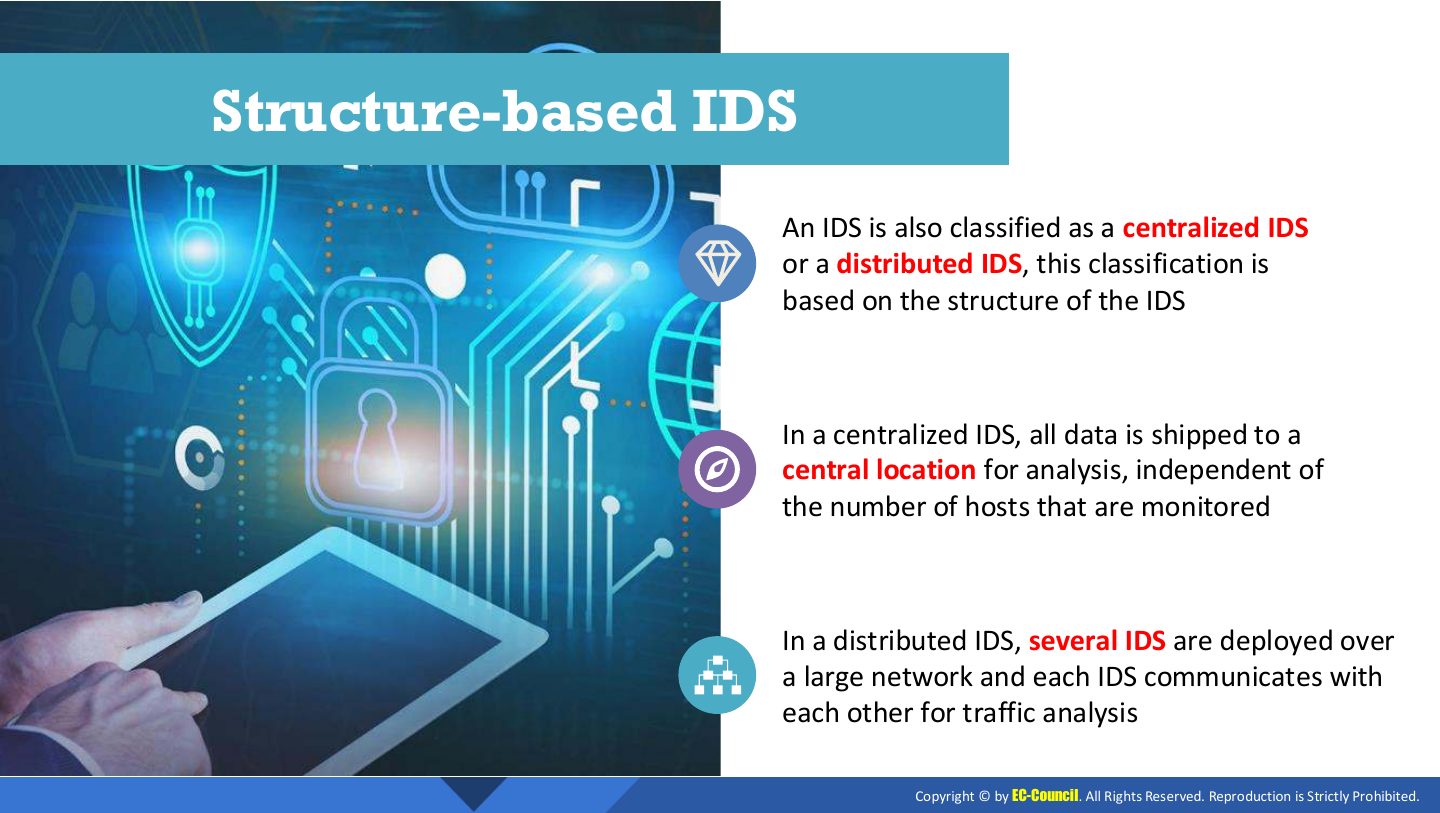
- 17 An IDS is also classified as a centralized IDS or a distributed IDS , this classification is based on the structure of the IDS
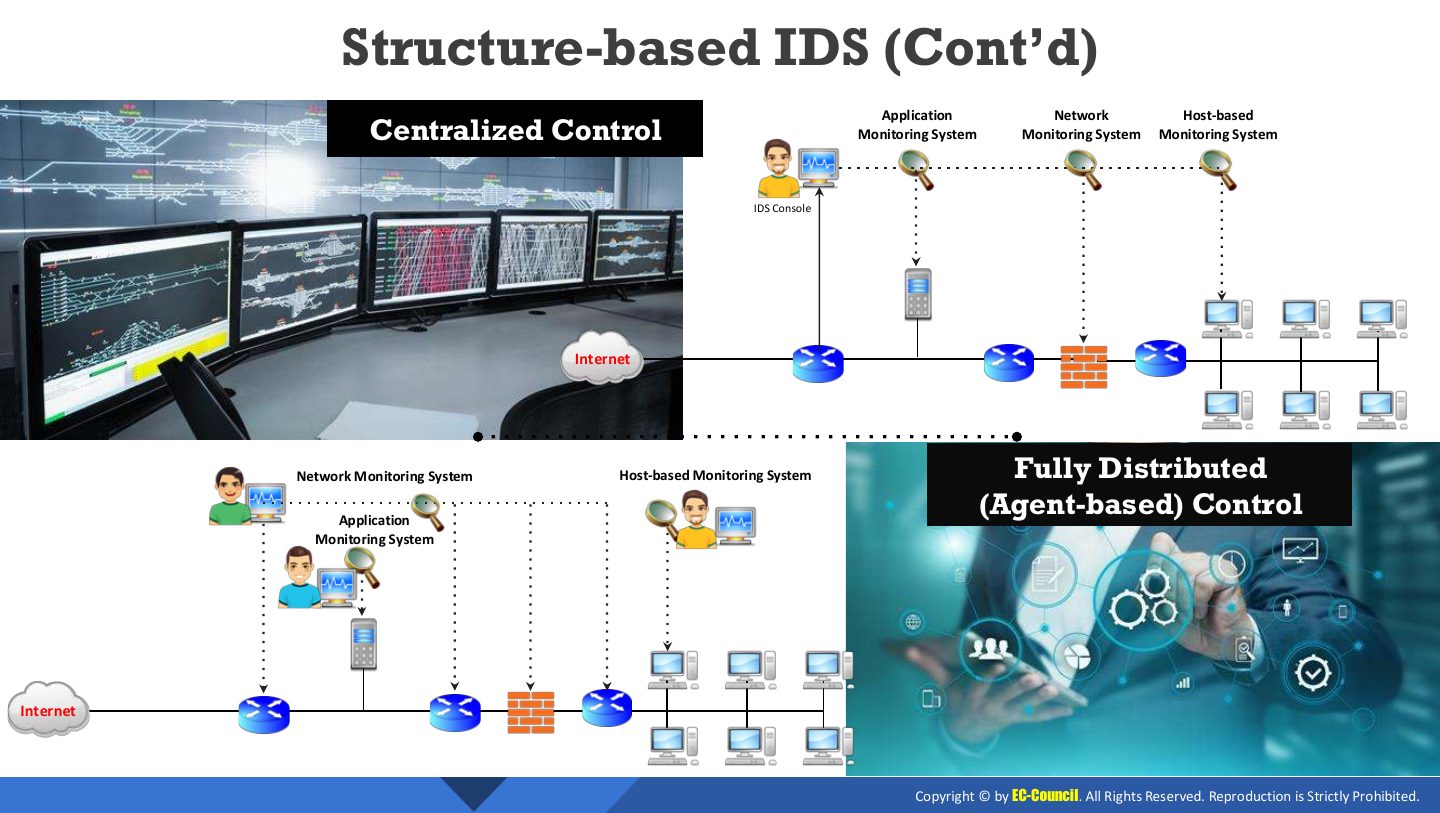
- 18 Structure- based IDS (Cont’d)
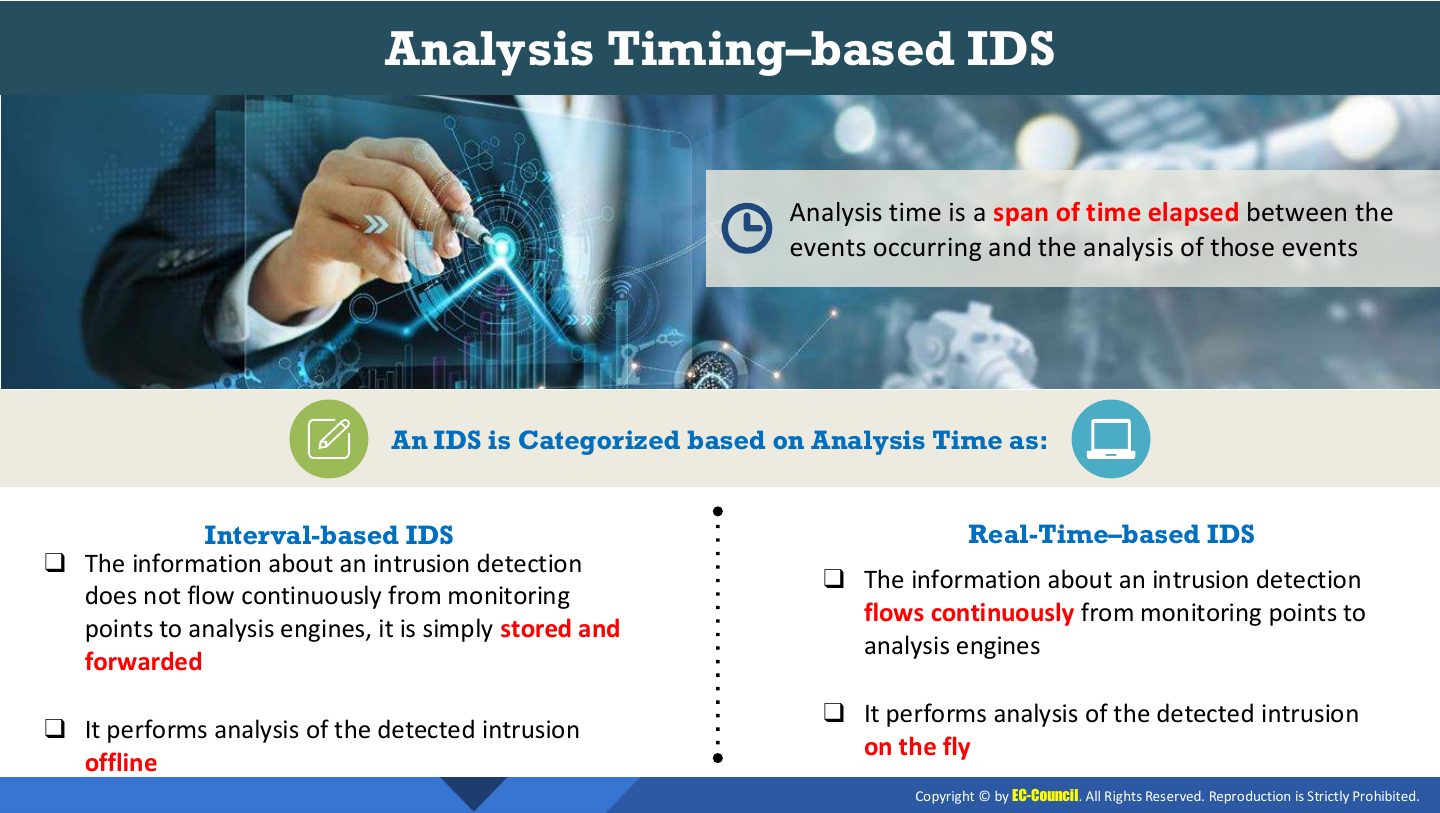
- 19 Analysis Timing–based IDS
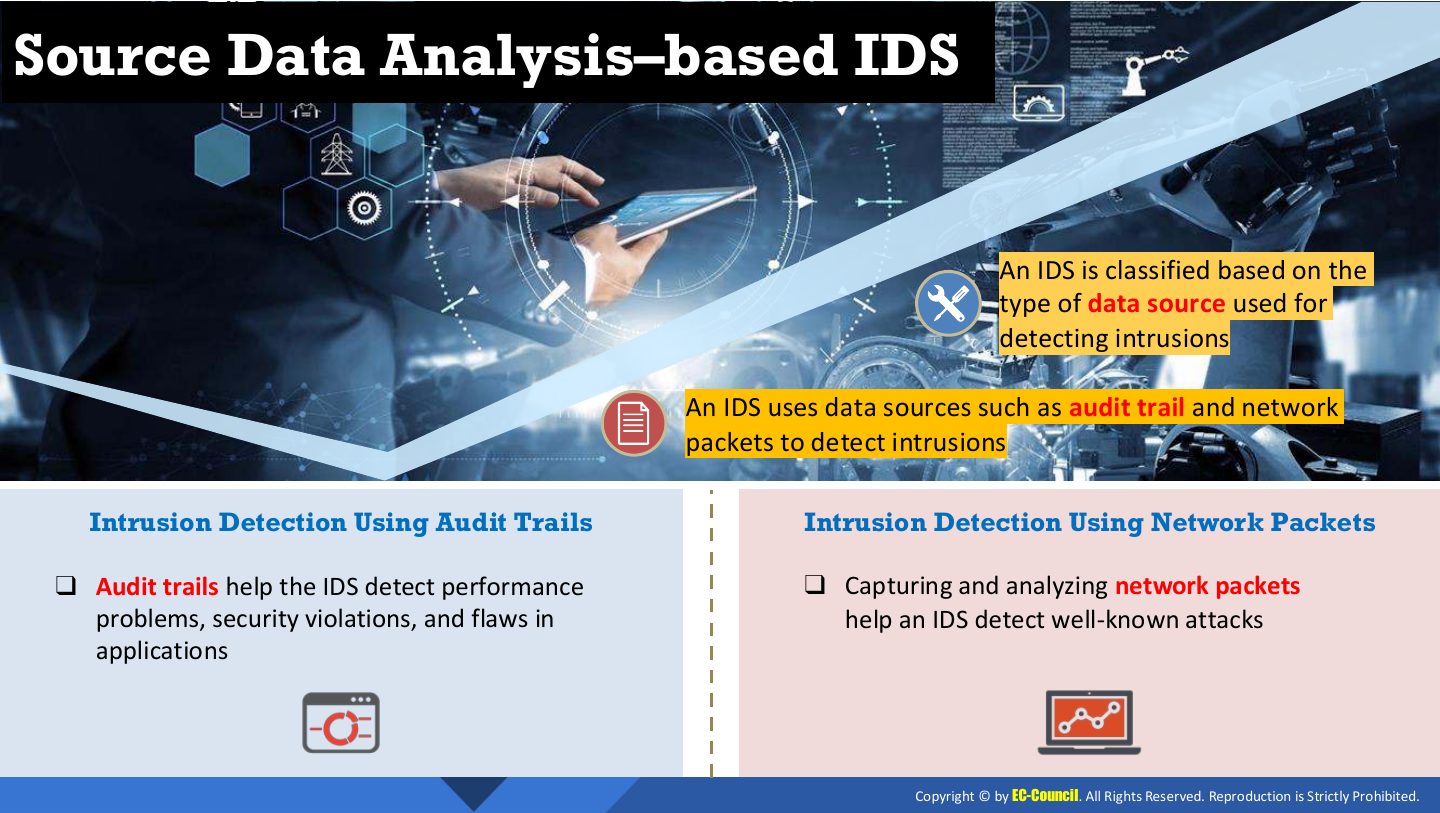
- 20 Source Data Analysis–based IDS
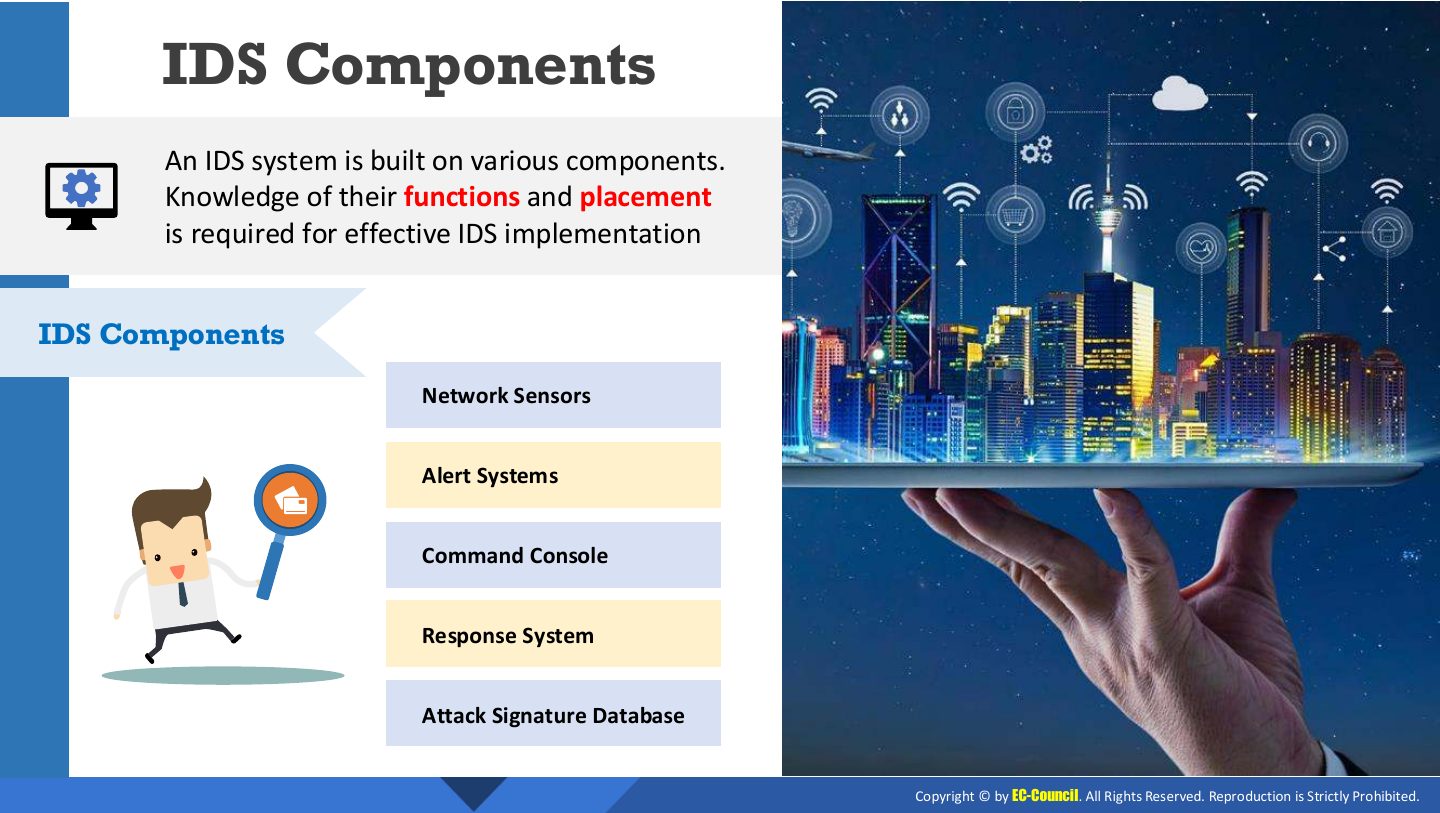
- 21 IDS Components
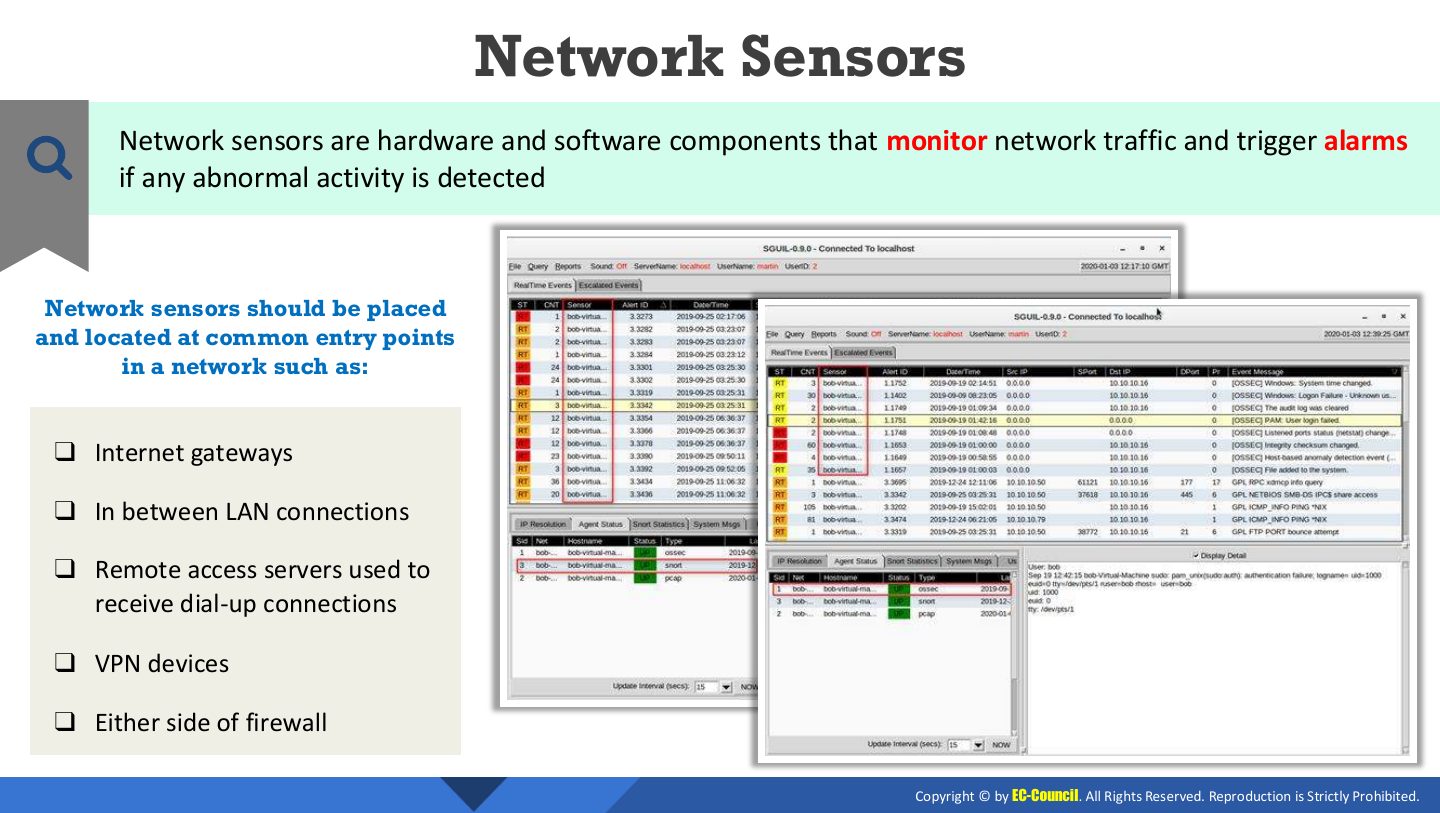
- 22 Network Sensors
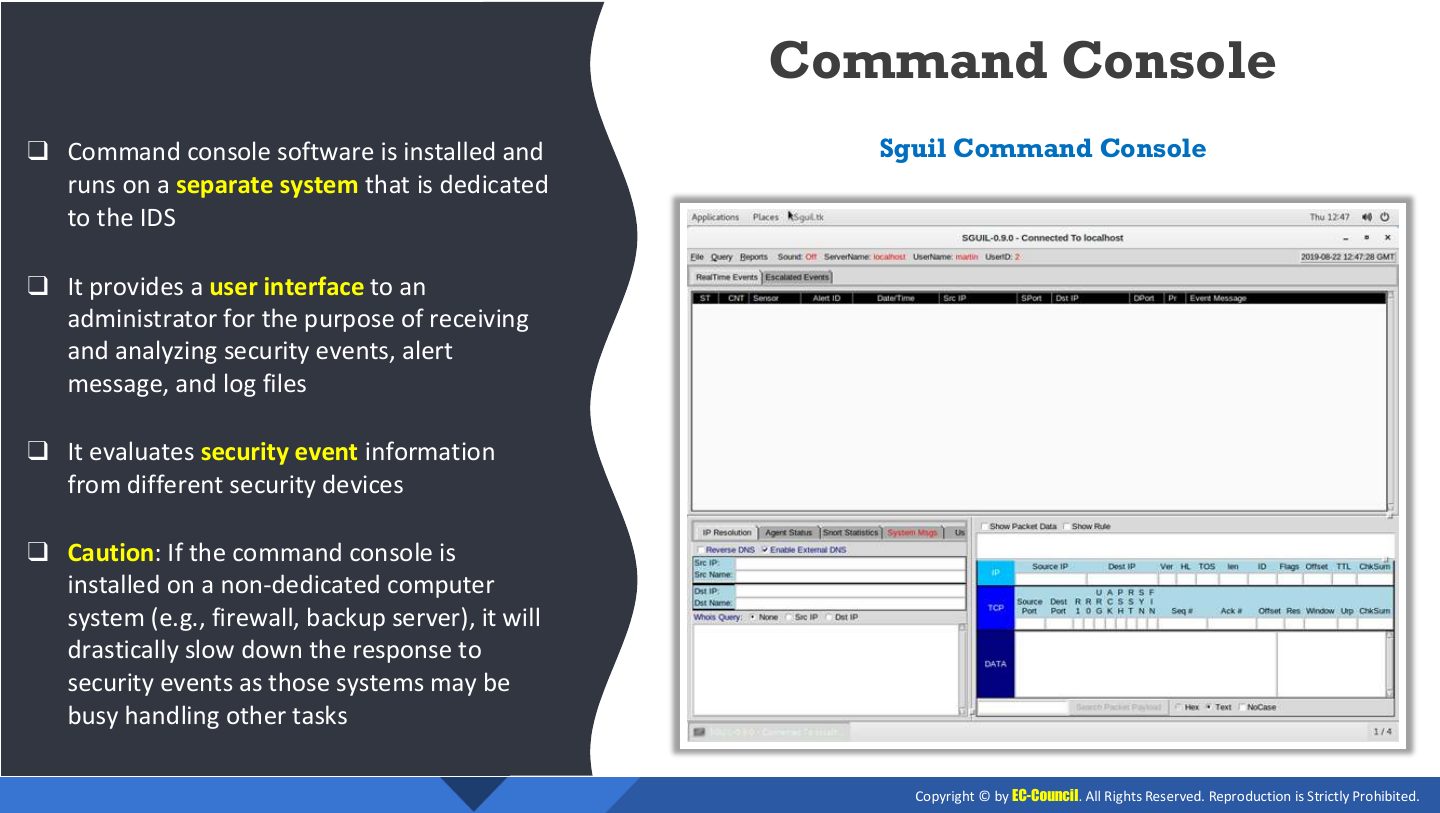
- 23 Command Console
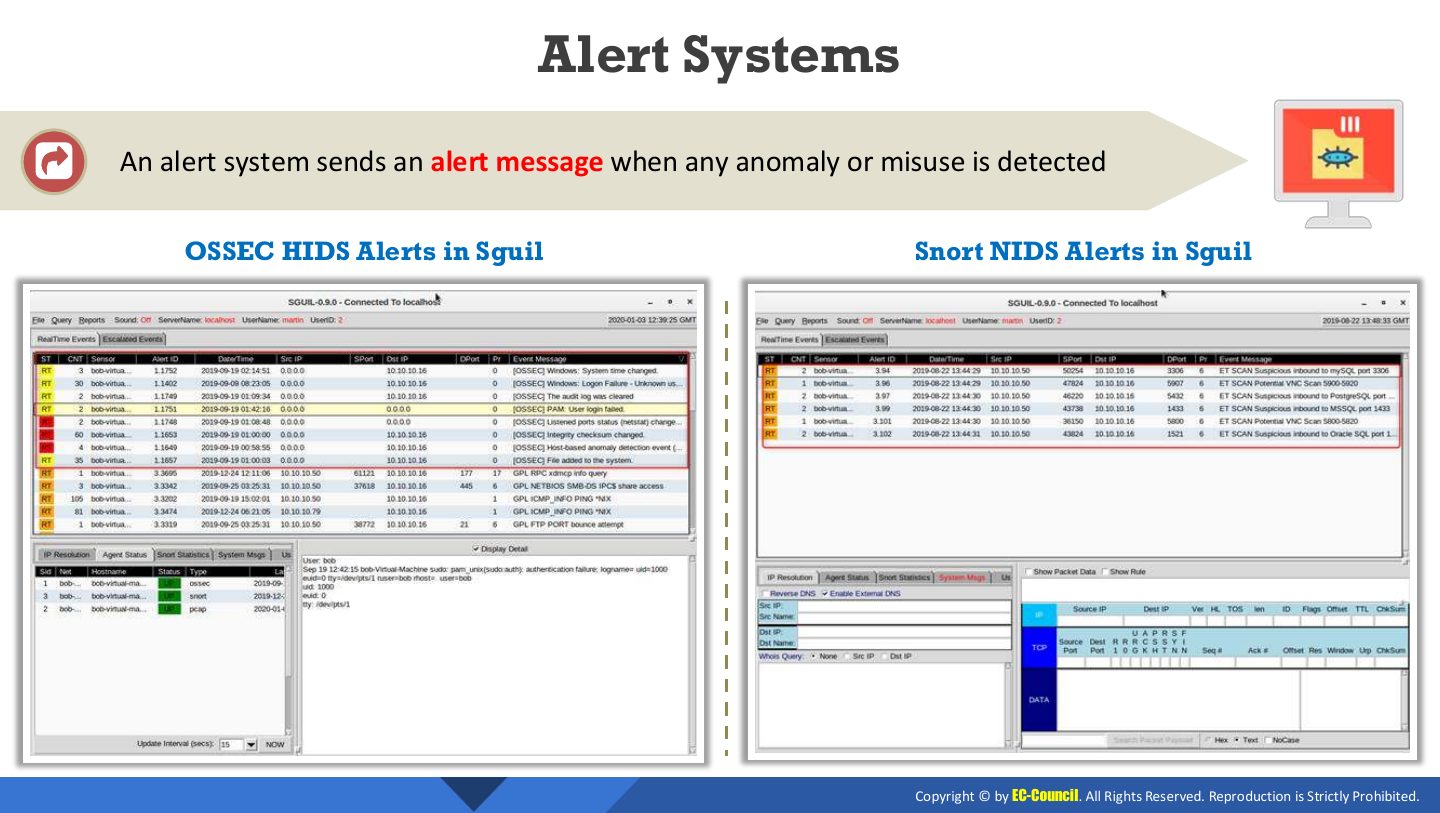
- 24 Alert Systems
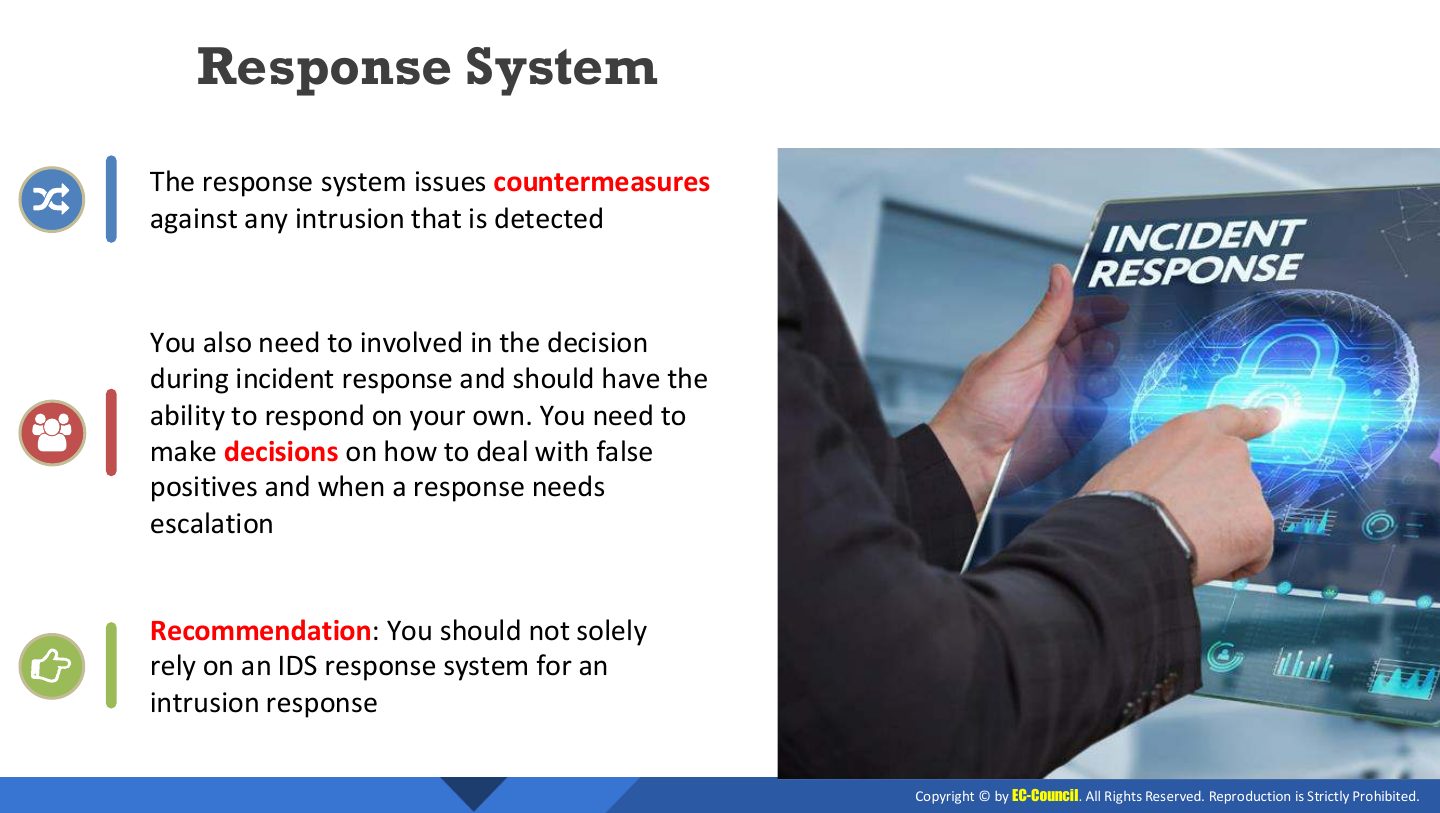
- 25 Response System
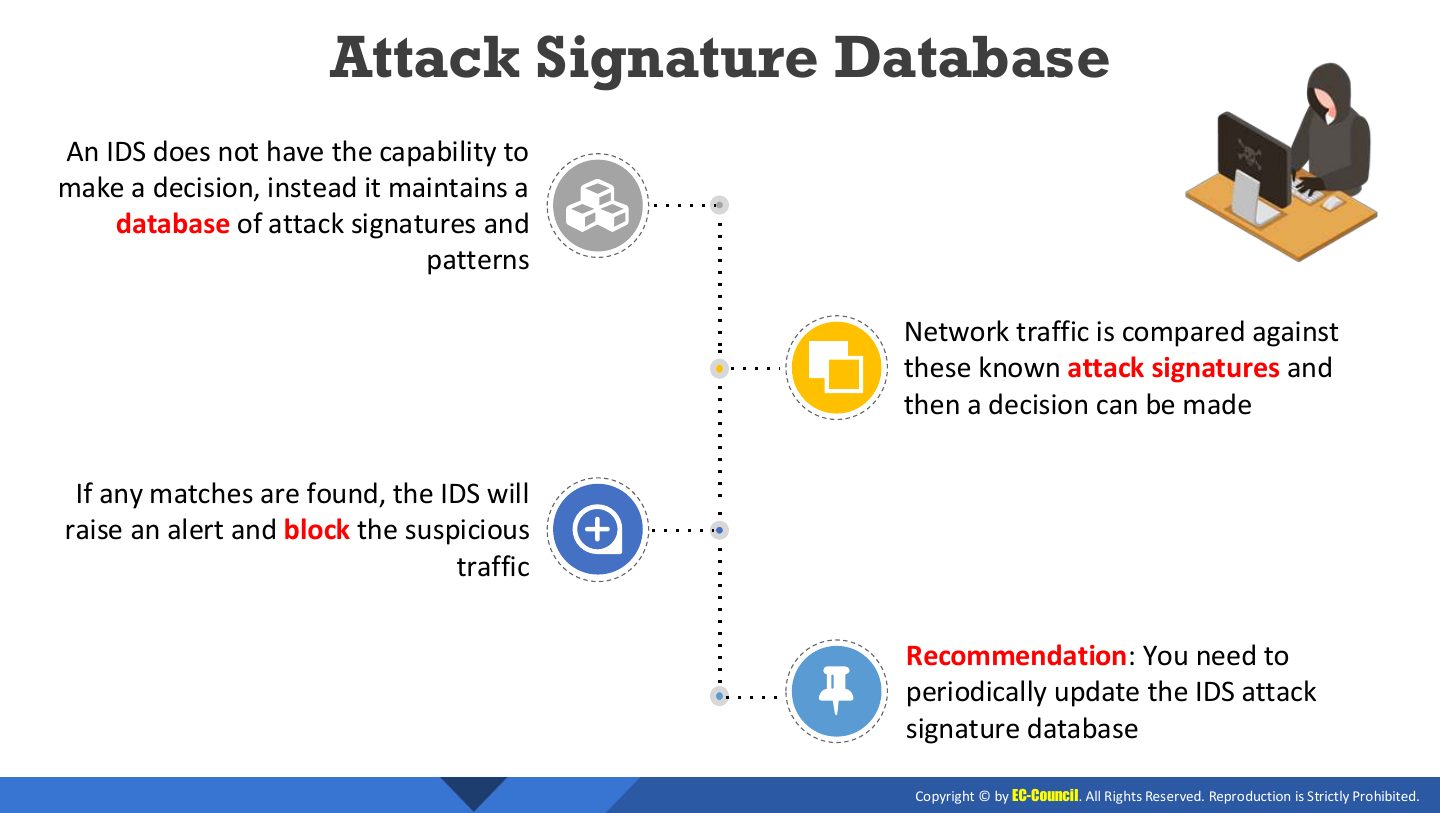
- 26 Attack Signature Database
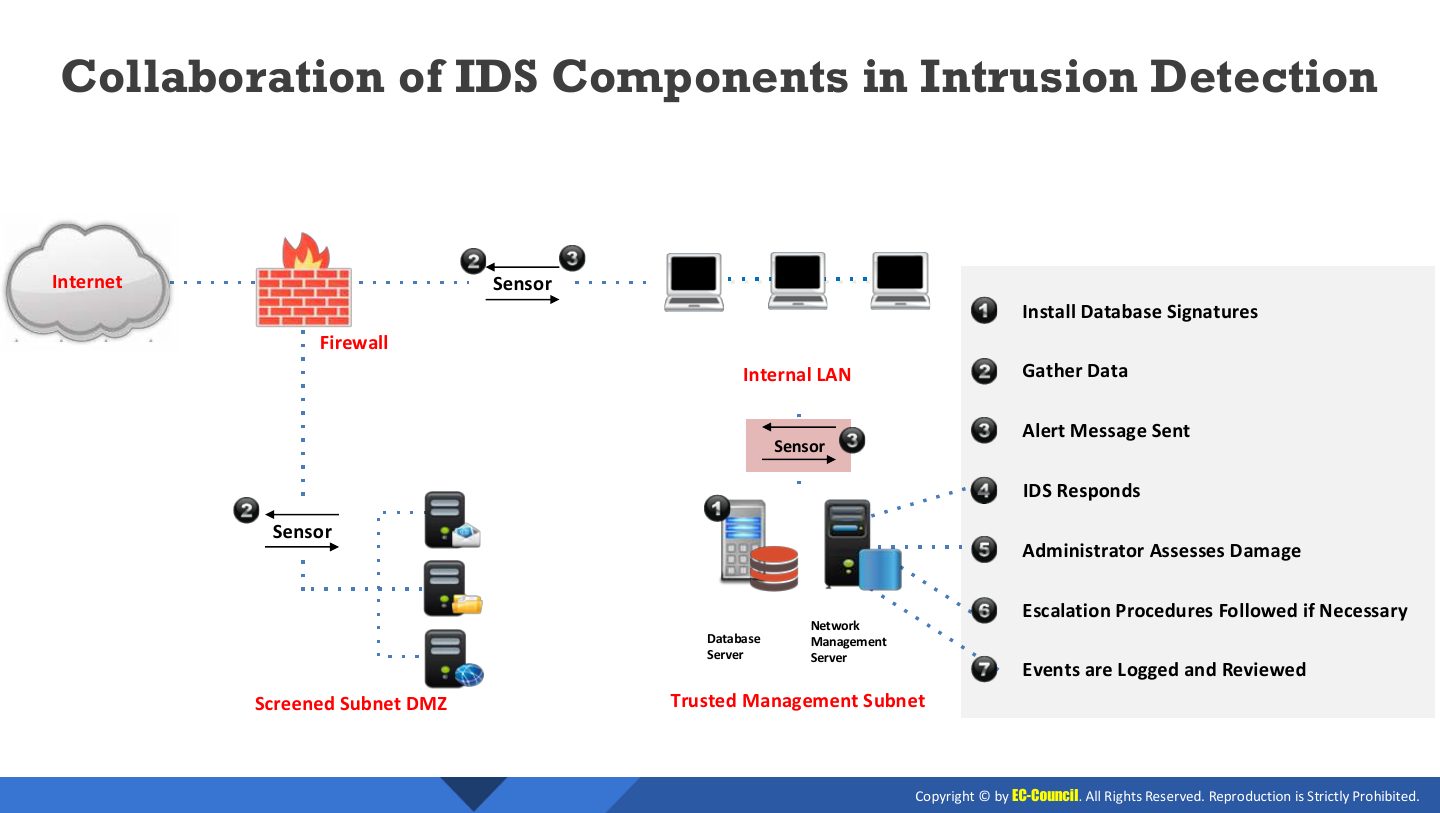
- 27 Collaboration of IDS Components in Intrusion Detection
- 28 Slide 28
- 29 Staged IDS Deployment
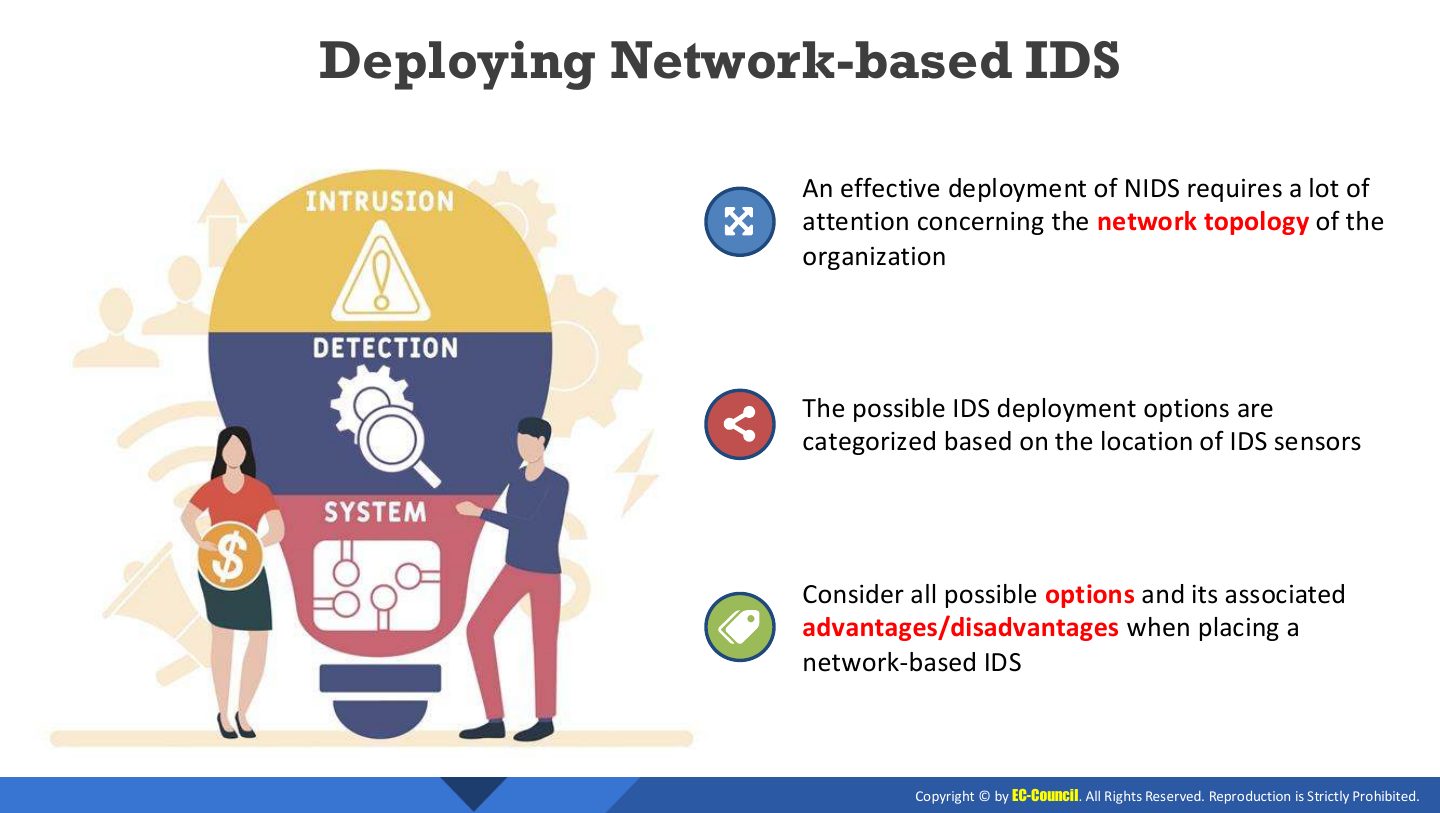
- 30 Deploying Network-based IDS
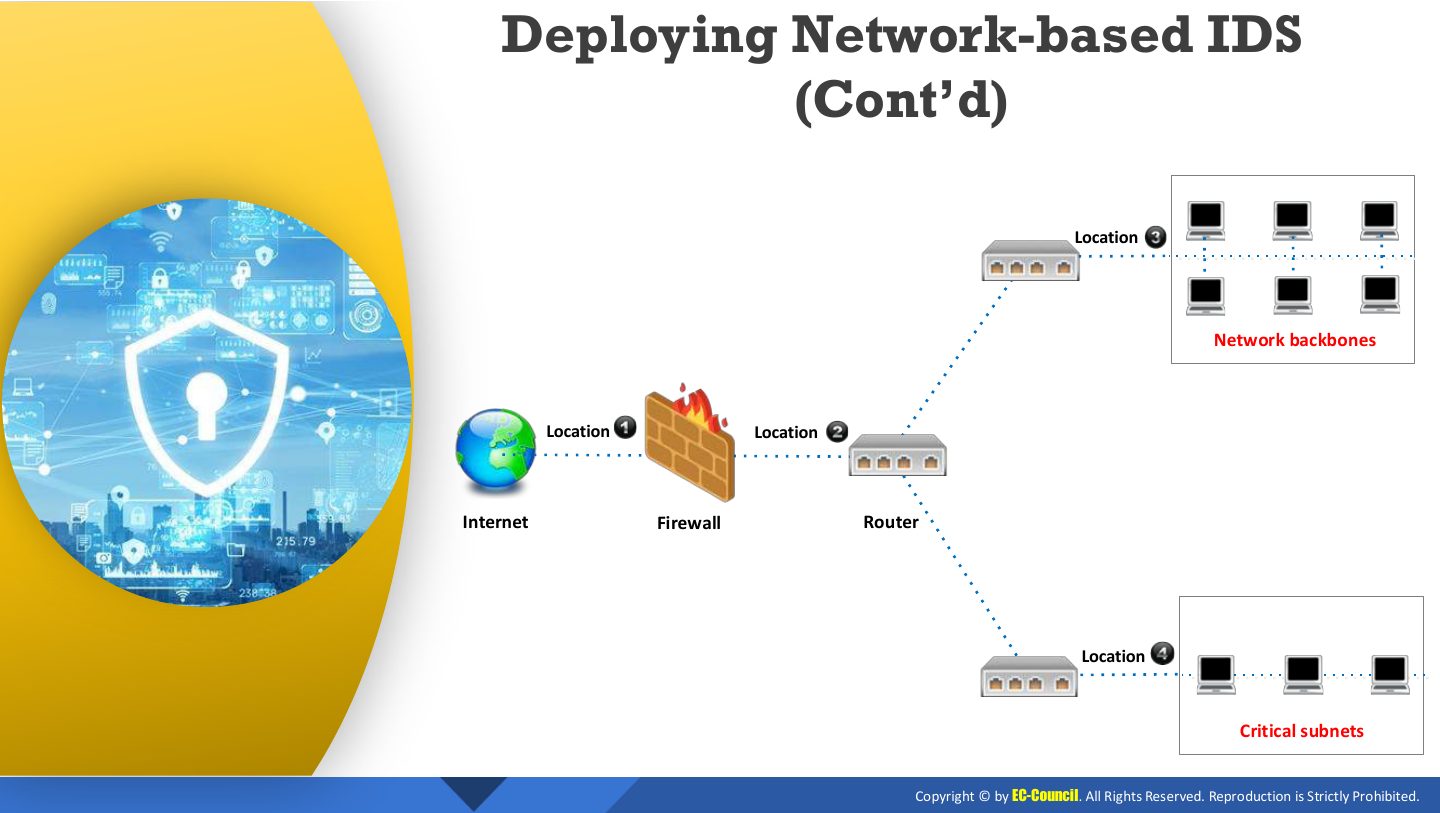
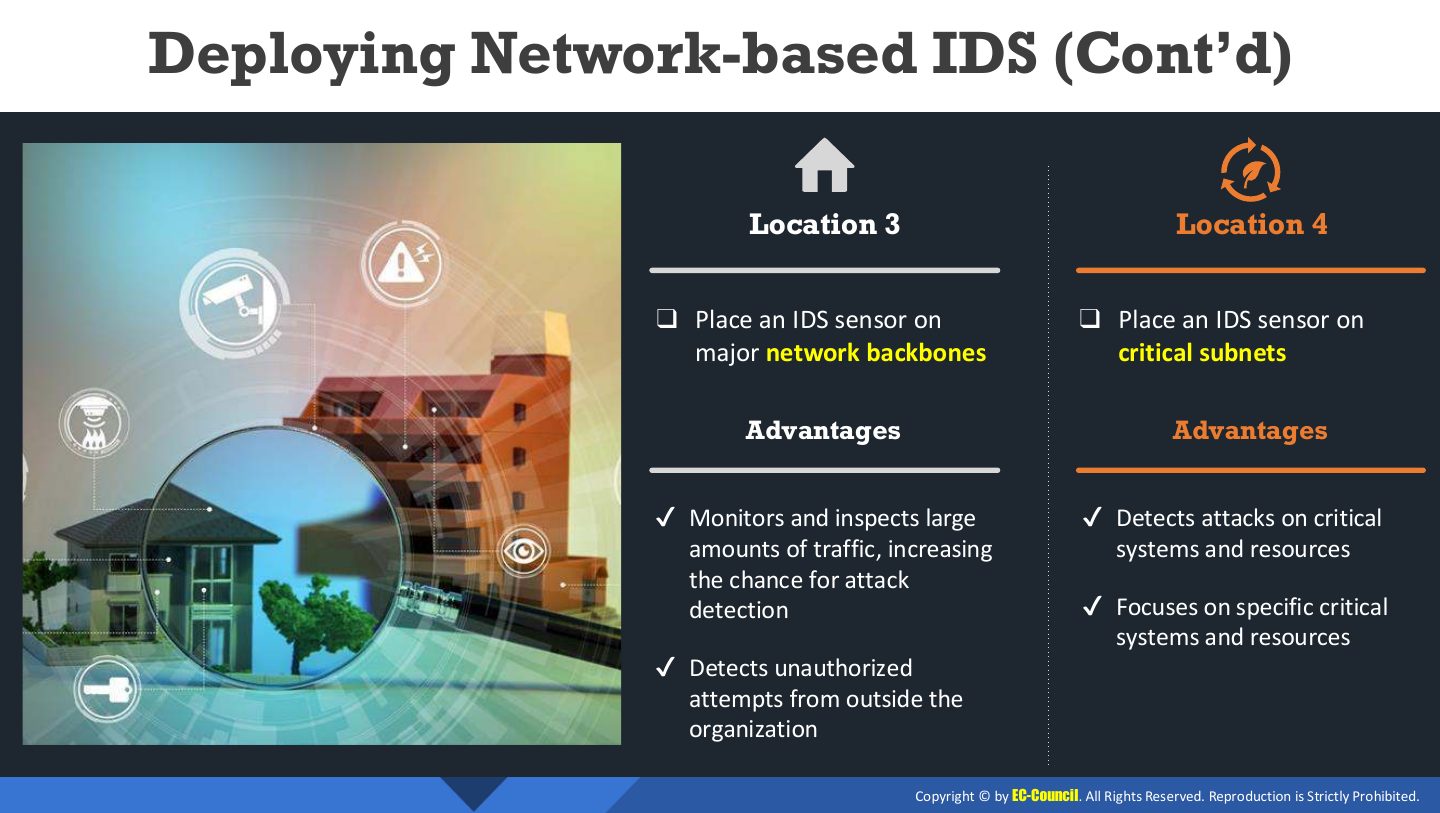
- 31 Deploying Network-based IDS (Cont’d)
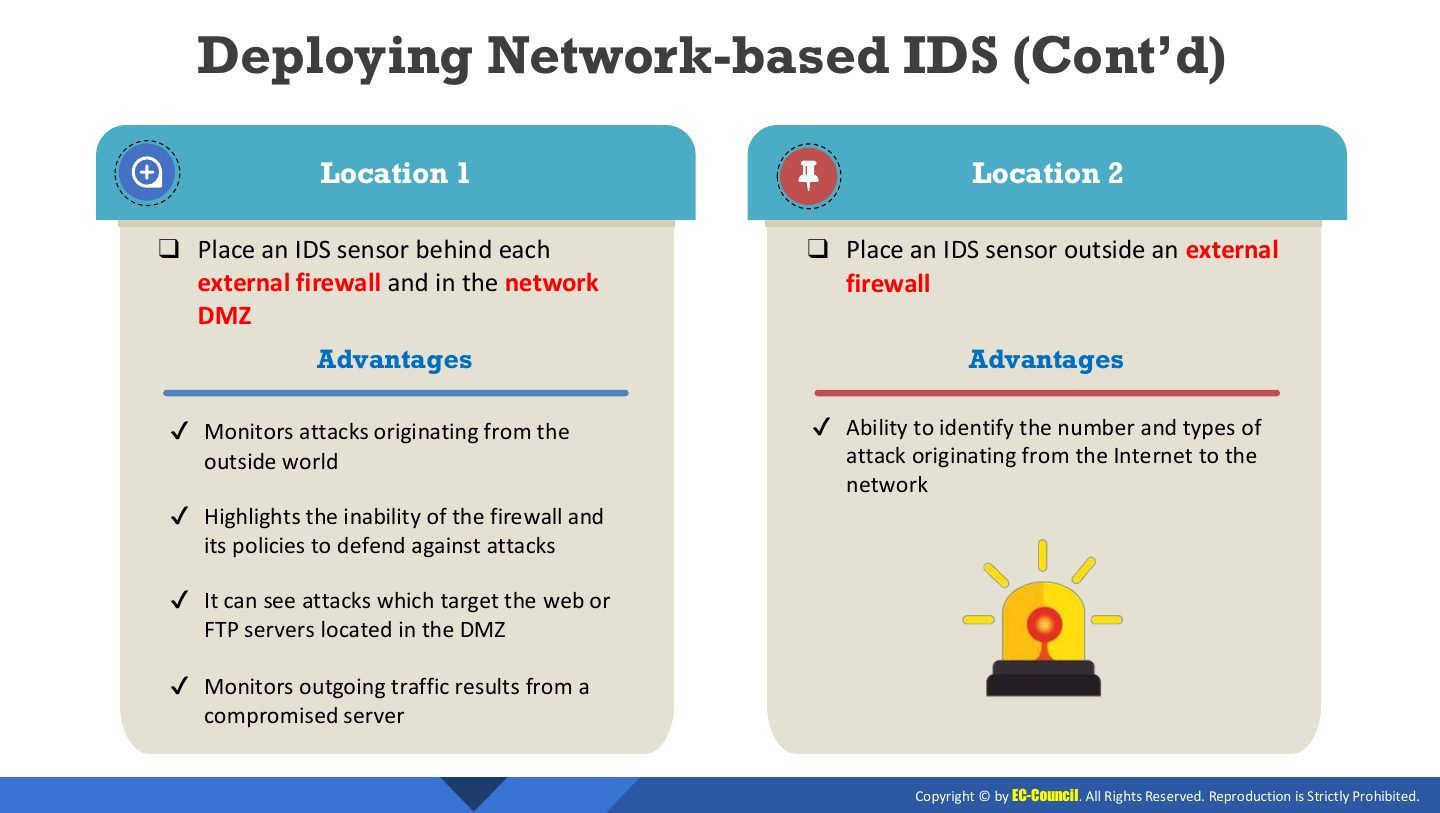
- 32 Deploying Network- based IDS (Cont’d)
- 33 Deploying Network- based IDS (Cont’d)
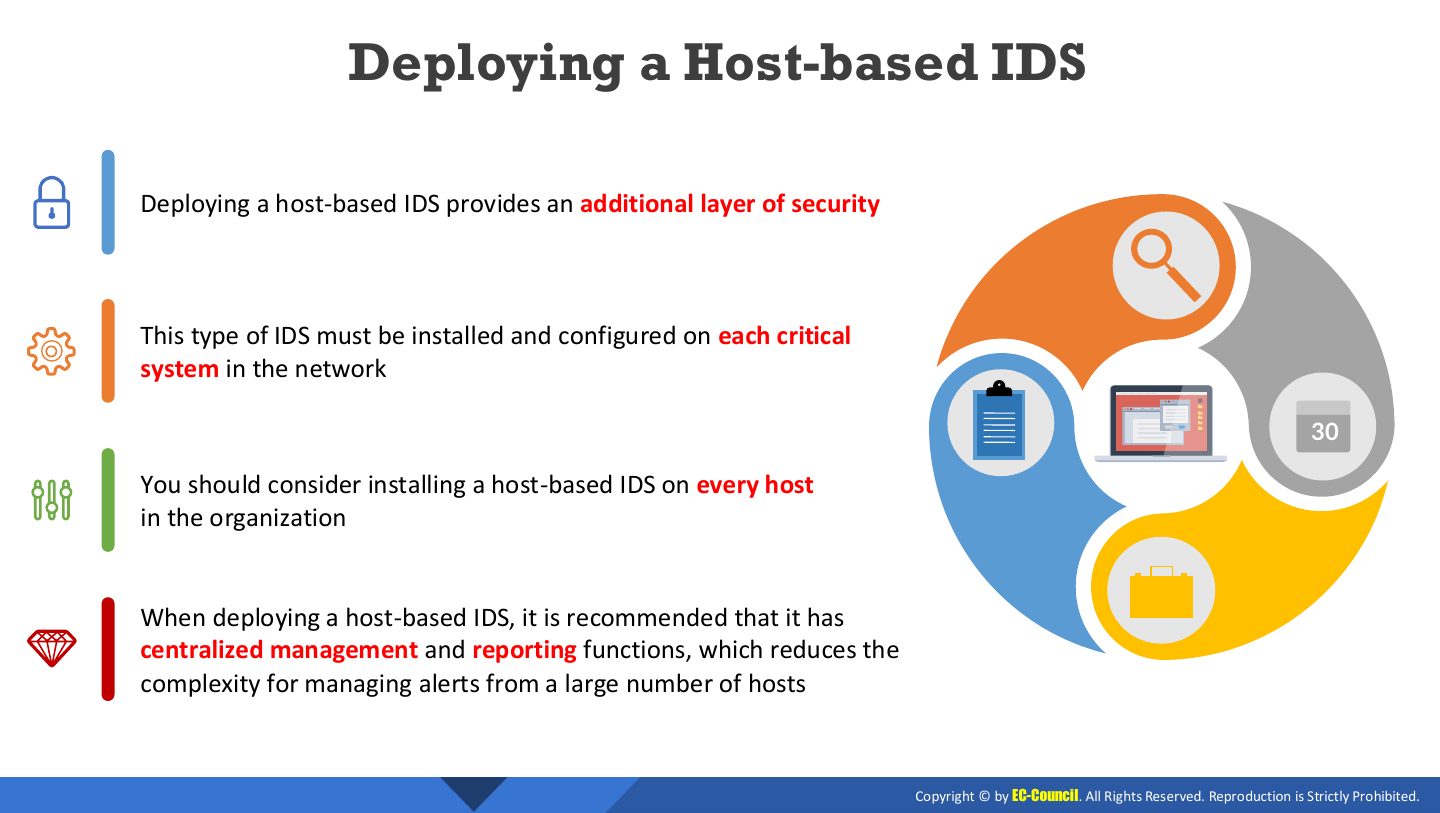
- 34 Deploying a Host-based IDS
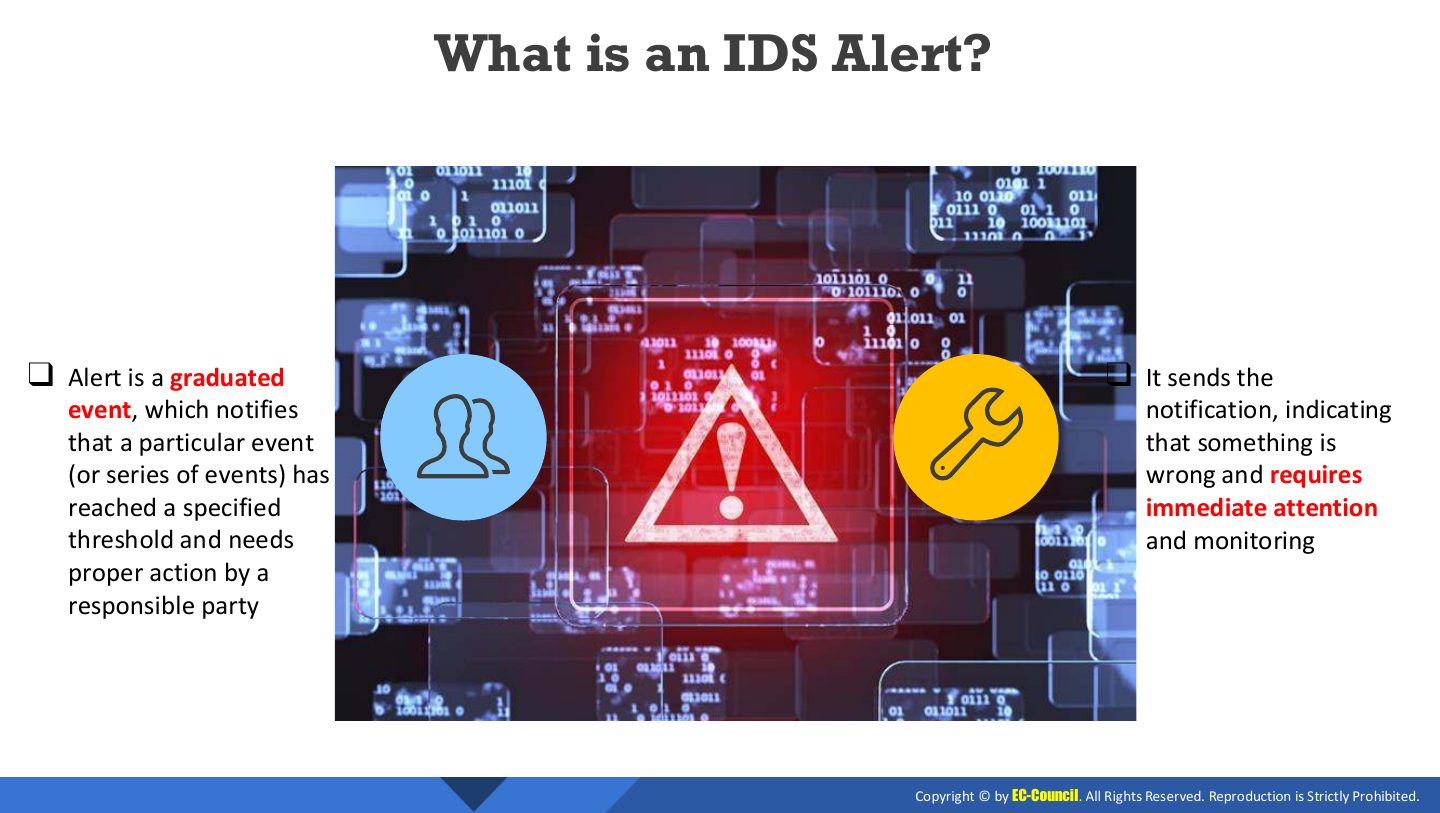
- 35 What is an IDS Alert?
- 36 Types of IDS
- 37 Characteristics of Good IDS Solutions
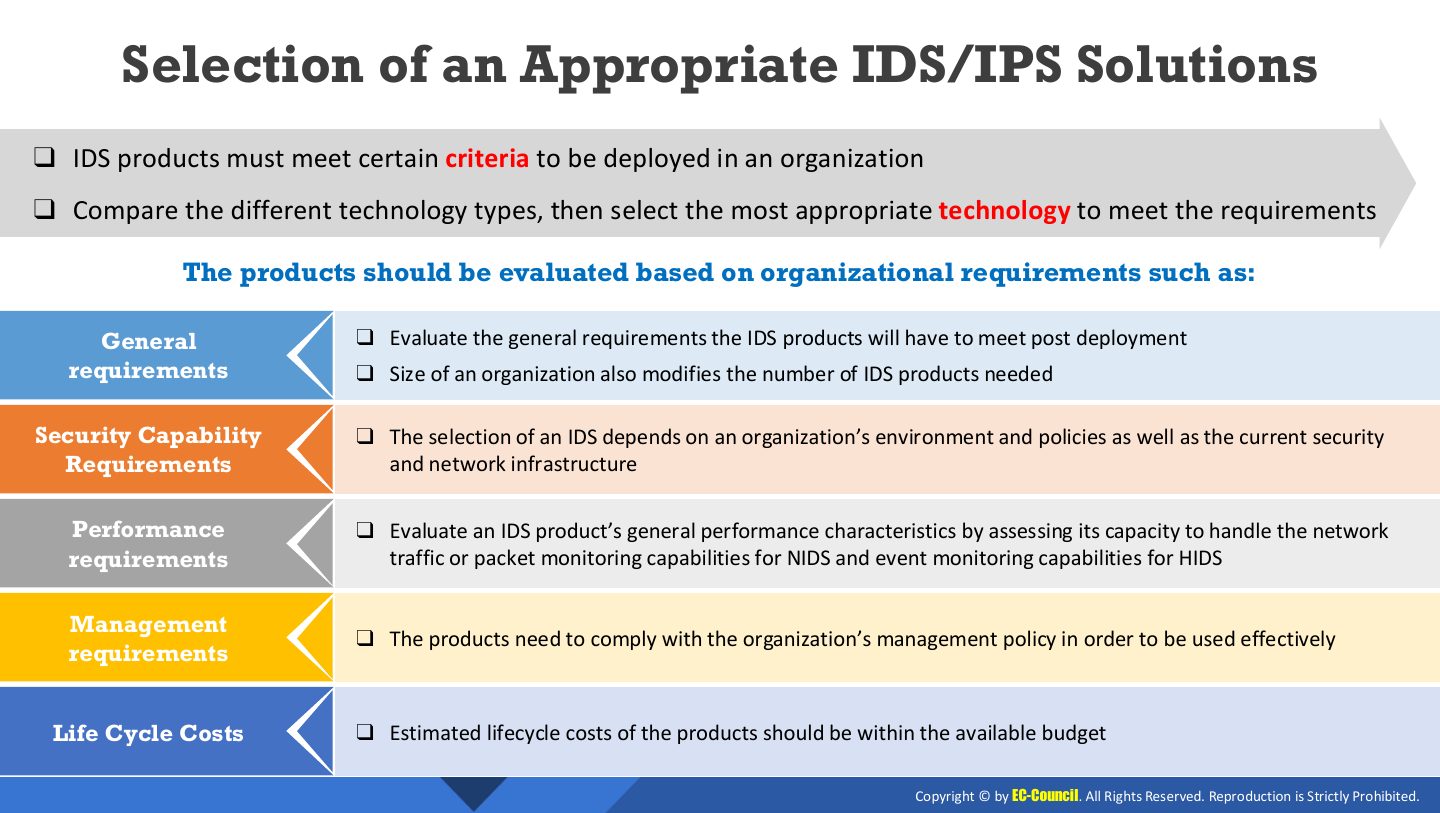
- 38 Selection of an Appropriate IDS/IPS Solutions
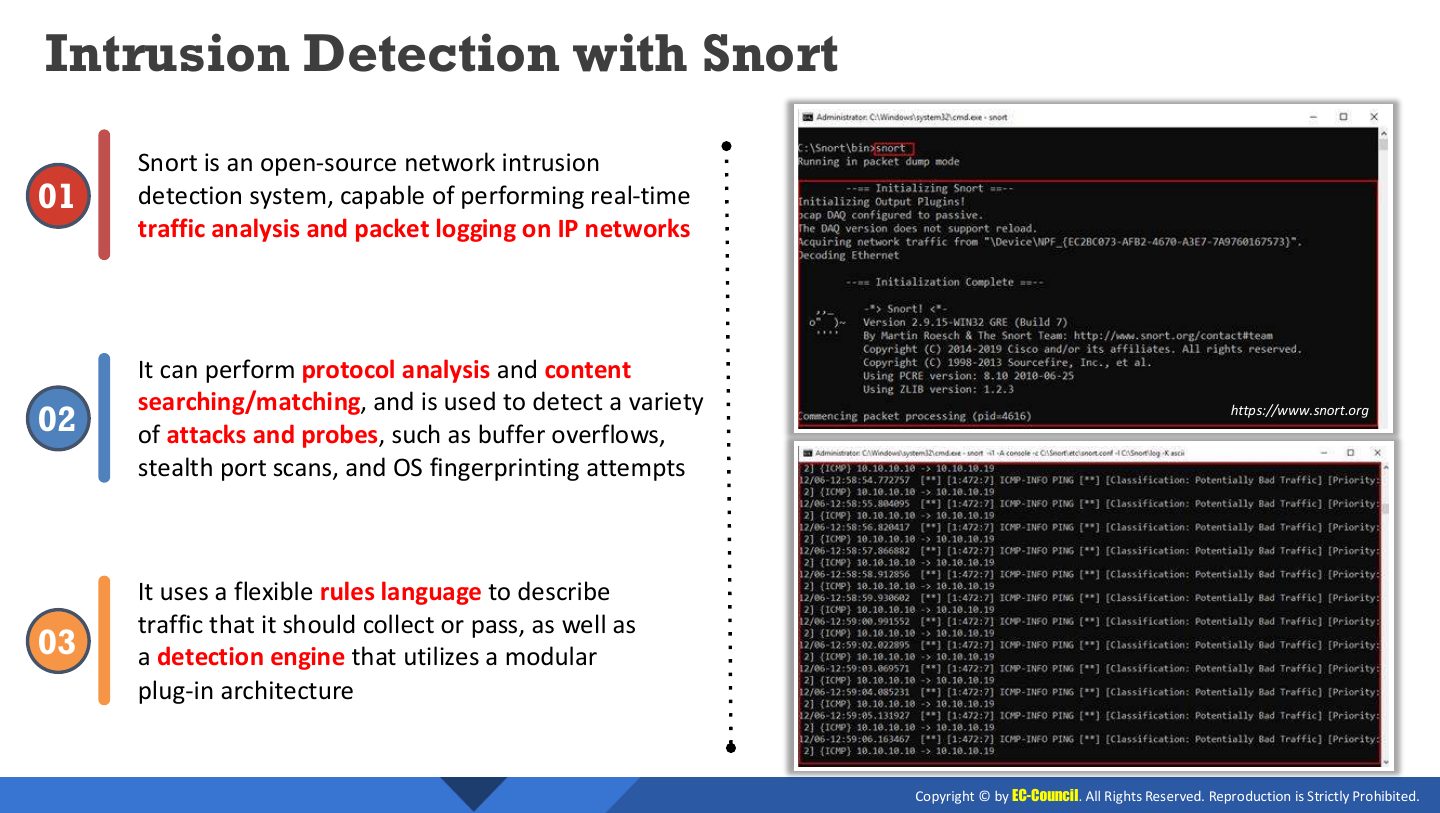
- 39 Intrusion Detection with Snort
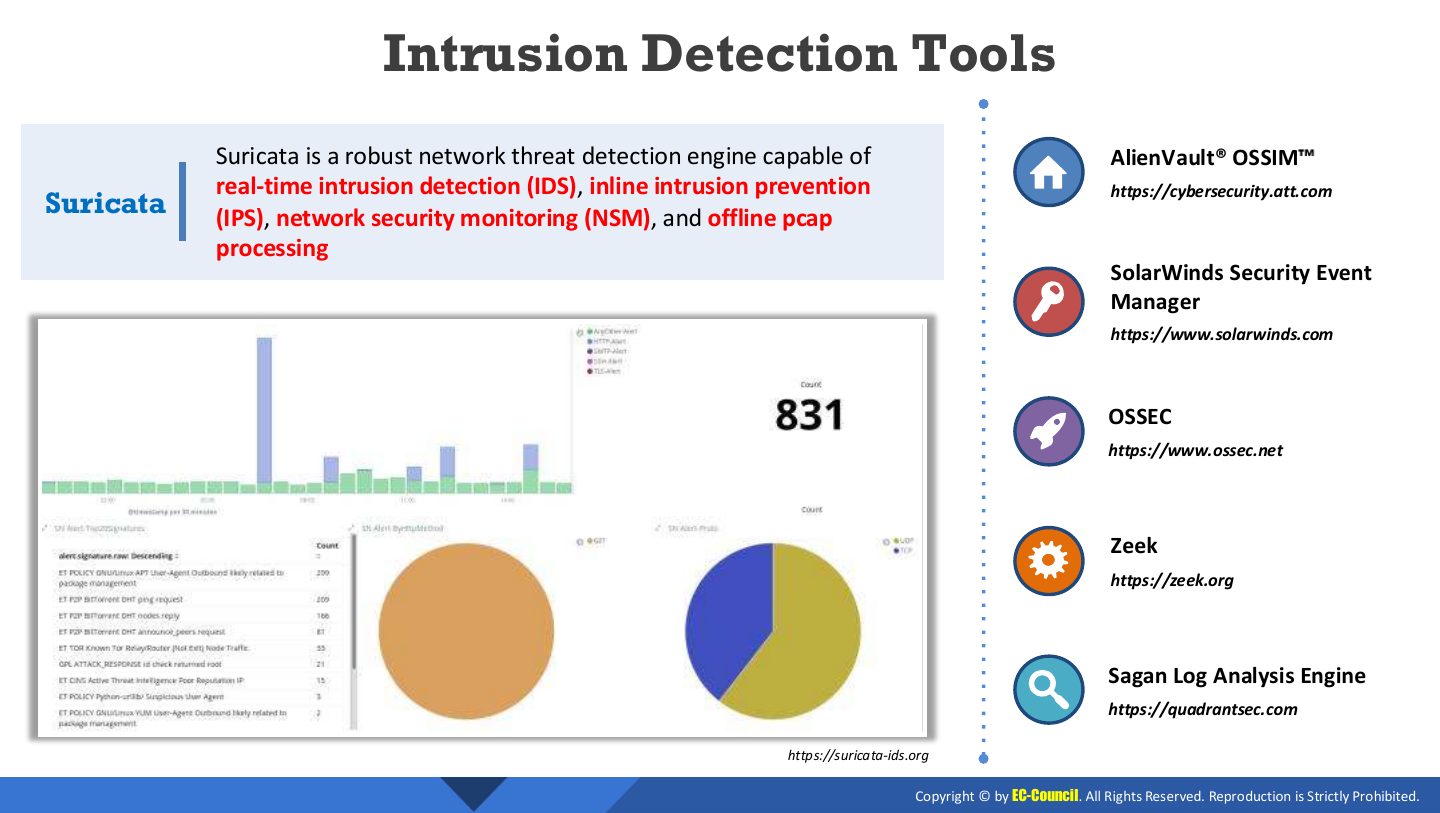
- 40 Intrusion Detection Tools
Module Flow
Intrusion Detection and Prevention System (IDS/IPS)
Notes
IDS detects and alerts (passive, out of band); IPS sits inline and can block.
Exam angle
How does an IDS Work?
Role of an IDS in Network Defense
How an IDS Detects an Intrusion?
IDS Capabilities
IDS/IPS Limitations: What an IDS/IPS is NOT?
IDS/IPS Security Concerns
General Indications of Intrusions
IDS Classification
Approach-based IDS
Notes
Signature (misuse) detection: matches known attack patterns. Low false positives; misses new (zero-day) attacks.
Approach-based IDS (Cont’d)
Approach- based IDS (Cont’d)
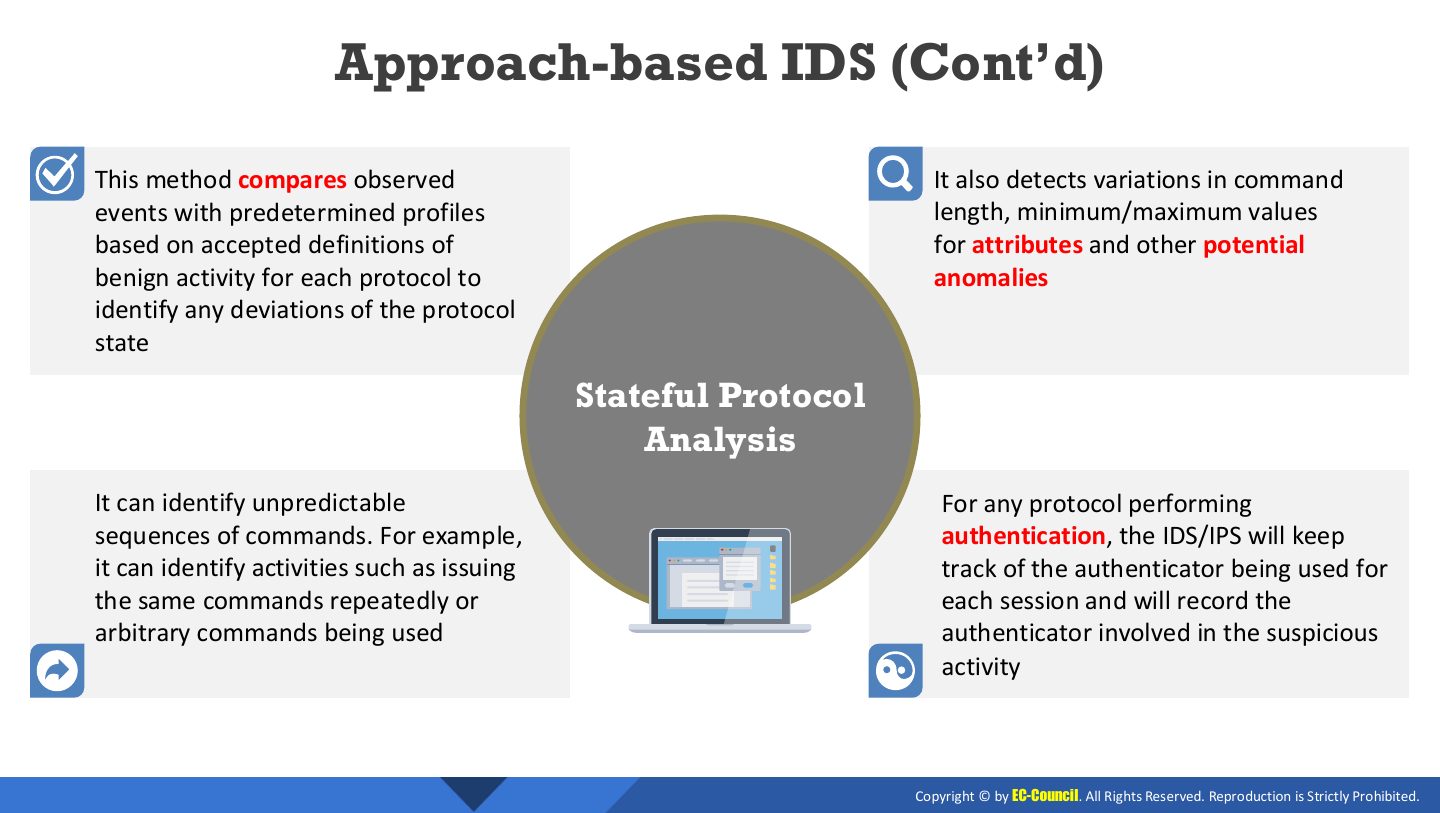
Notes
Anomaly detection: learns normal behaviour and flags deviations. Can catch new attacks; more false positives.
Memory trick Signature = known bad. Anomaly = not normal.
Exam angle
Which IDS approach can detect zero-day attacks?
Anomaly and Misuse Detection Systems
❑ how it reacts to a potential intrusion
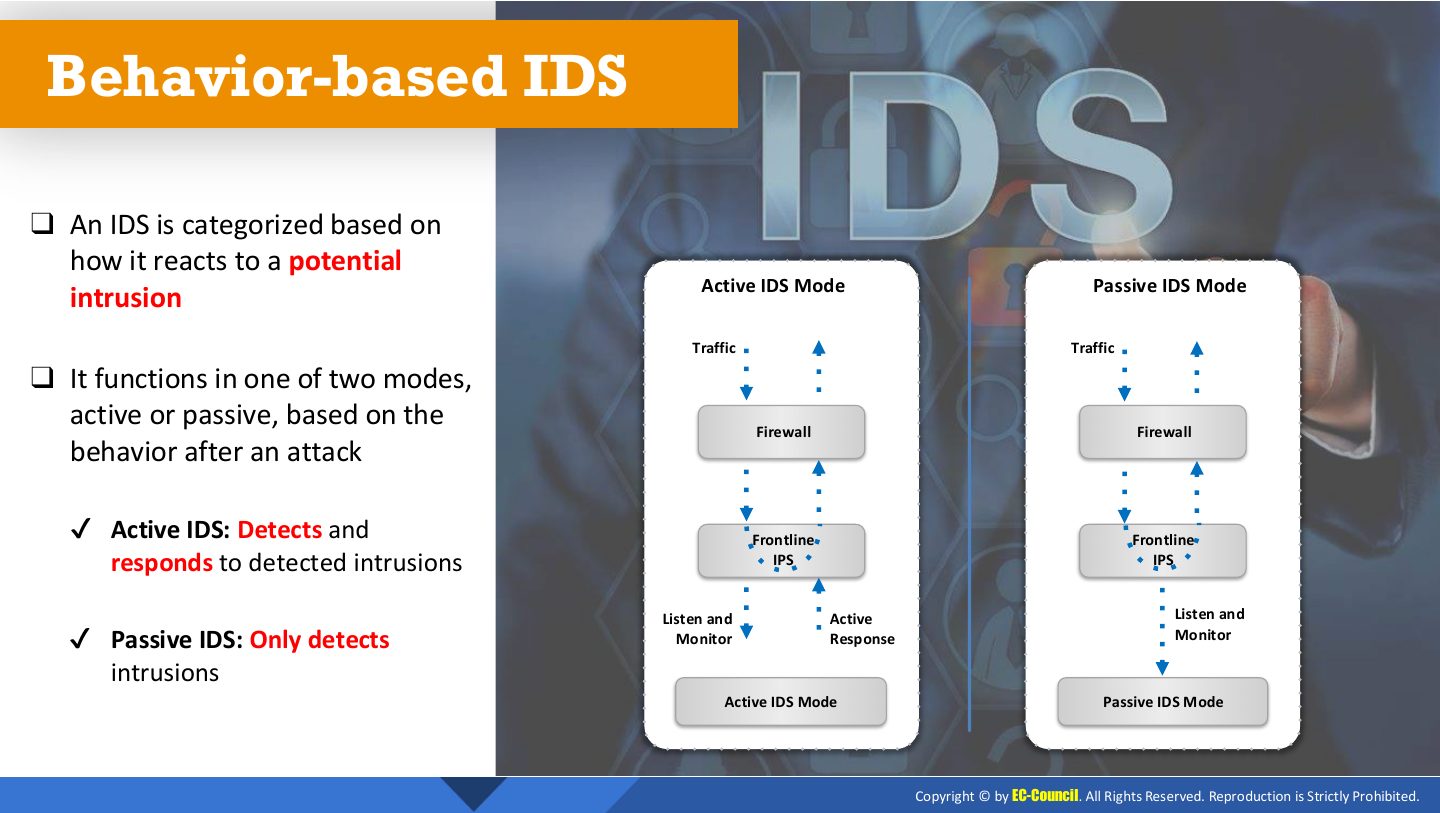
Protection-based IDS
An IDS is also classified as a centralized IDS or a distributed IDS , this classification is based on the structure of the IDS
Notes
NIDS monitors network traffic (sensors on segments); HIDS monitors one host (logs, files, system calls).
Exam angle
An IDS that monitors a server’s system files and logs is:
Structure- based IDS (Cont’d)
Analysis Timing–based IDS
Source Data Analysis–based IDS
IDS Components
Network Sensors
Command Console
Alert Systems
Response System
Attack Signature Database
Collaboration of IDS Components in Intrusion Detection
Slide 28

Staged IDS Deployment
Deploying Network-based IDS
Deploying Network-based IDS (Cont’d)
Deploying Network- based IDS (Cont’d)
Deploying Network- based IDS (Cont’d)
Deploying a Host-based IDS
What is an IDS Alert?
Types of IDS
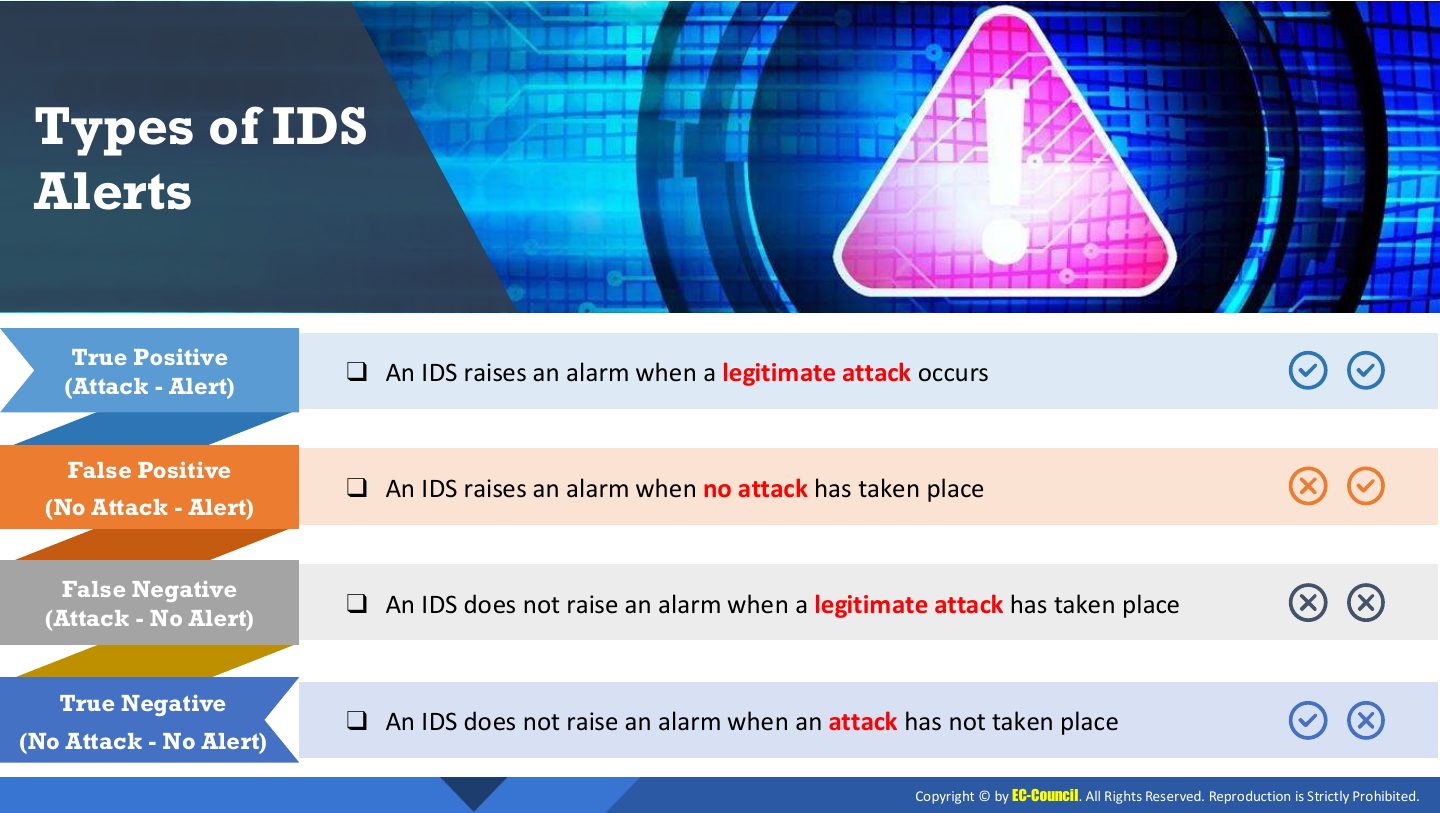
Exam angle
An IDS missing a real attack is a:
Characteristics of Good IDS Solutions

Selection of an Appropriate IDS/IPS Solutions
Intrusion Detection with Snort
Notes
Snort: open-source NIDS/IPS; rules: action protocol src_ip src_port -> dst_ip dst_port (options).
Intrusion Detection Tools