A company’s public web server should be placed in the:
Network Segmentation and Firewalls
Network segmentation and its types, bastion hosts and where to place them, the DMZ, then firewalls: hardware, software and host-based types, packet filtering, circuit-level and application-level gateways, stateful inspection, proxies, NAT, NGFWs, capabilities, limitations and secure deployment.
How to read this page
Every original slide is shown unchanged. Yellow marks on a slide point to a numbered note: hover or tap a mark to jump to its note, and hover a note to see its marks. Questions tagged Past exam appeared on a real paper; Prediction questions are likely angles, not confirmed. Pick an answer to each question: a wrong pick tells you why it is wrong, so you can try again.
All 41 slides
- 1 Slide 1
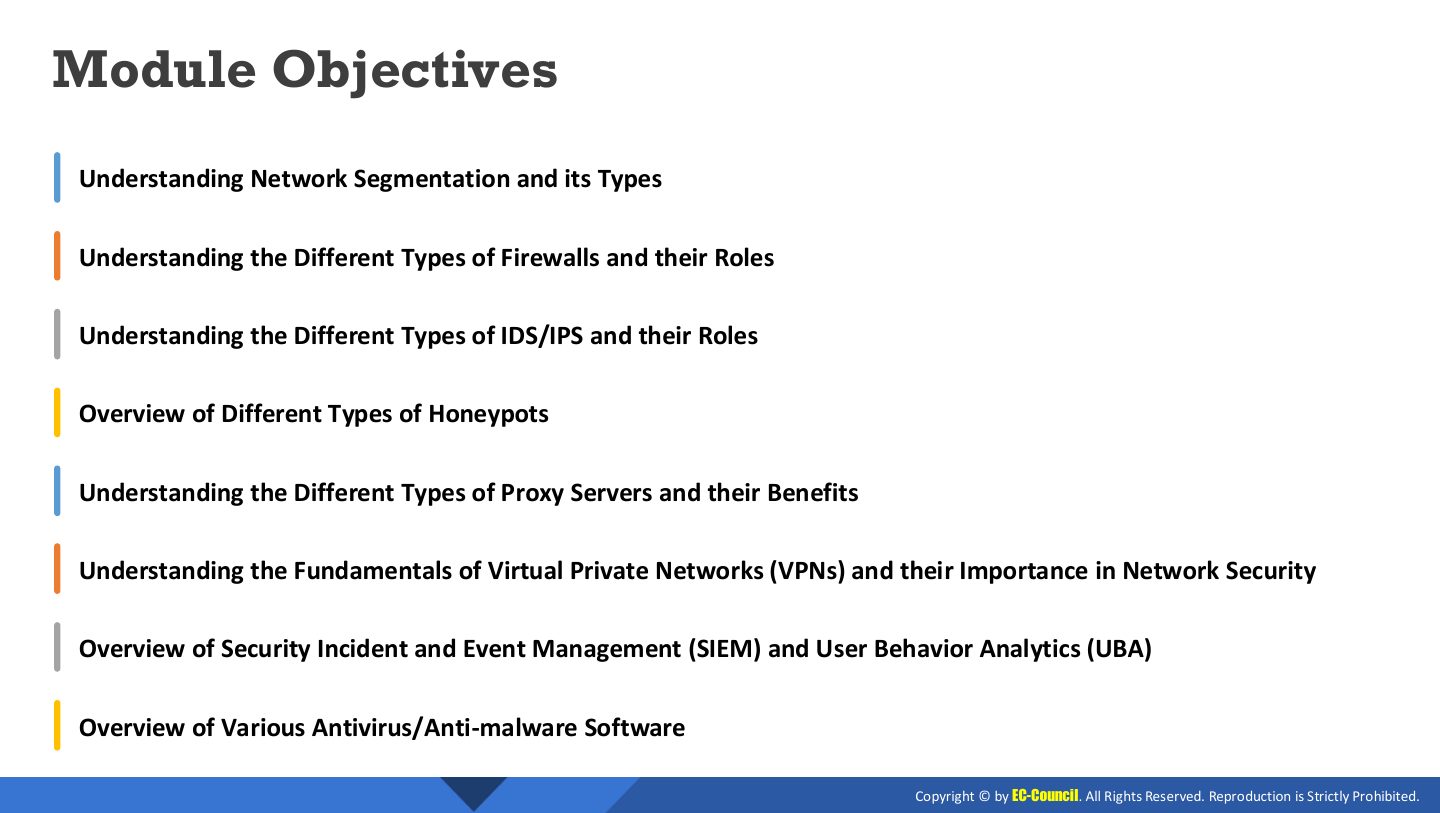
- 2 Module Objectives
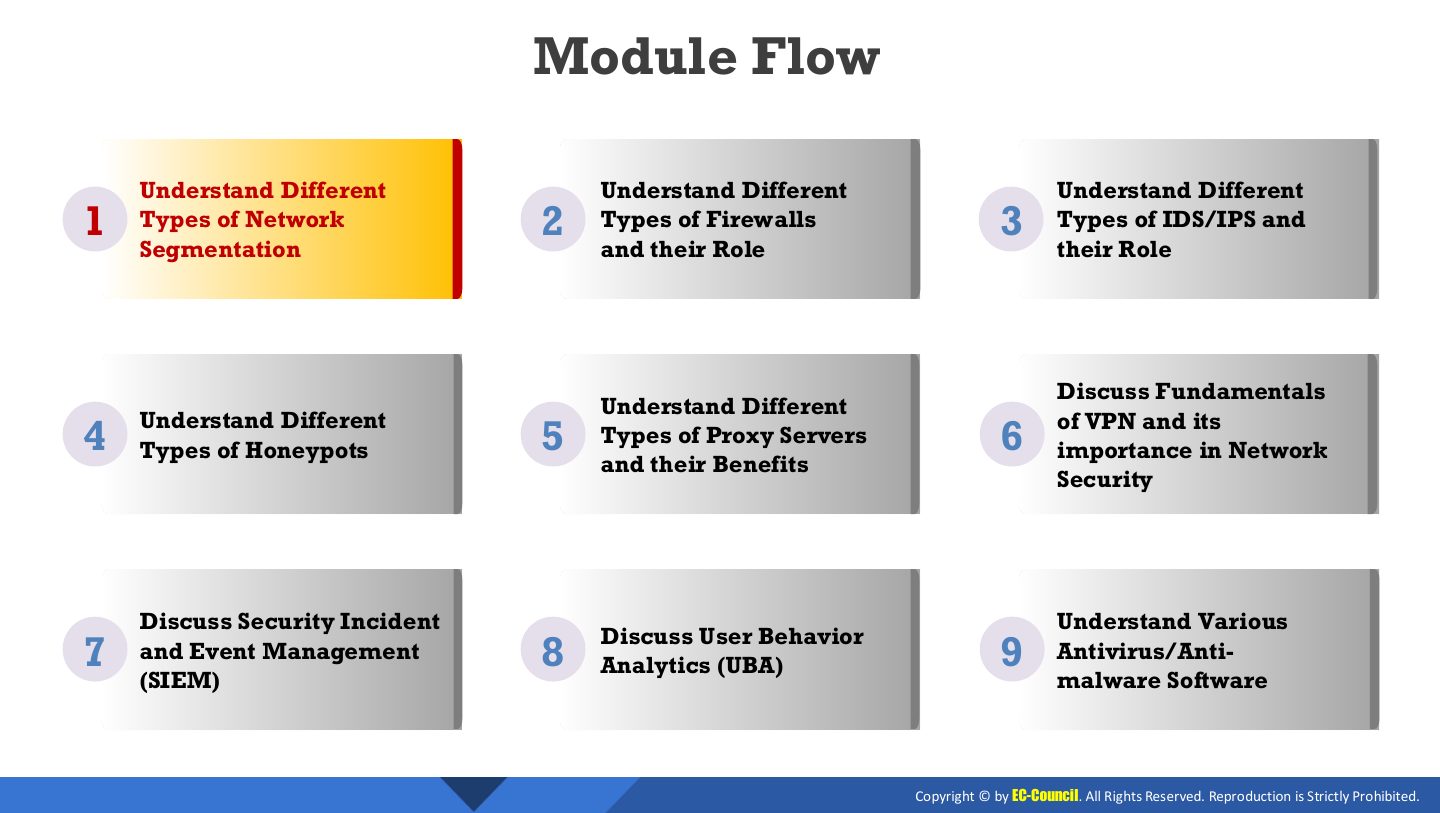
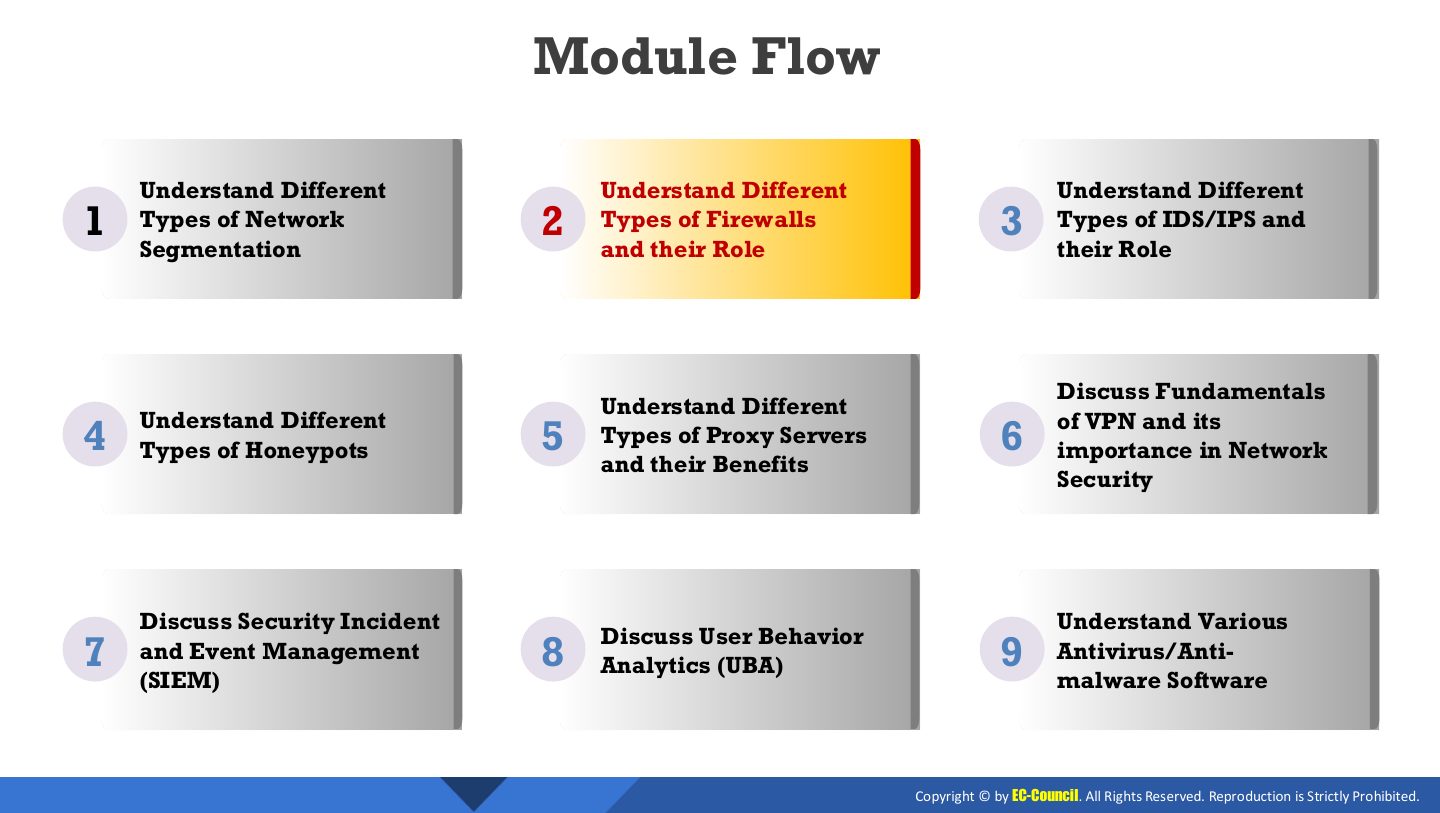
- 3 Module Flow
- 4 What is Network Segmentation?
- 5 Types of Network Segmentation
- 6 Types of Network Segmentation (Cont’d)
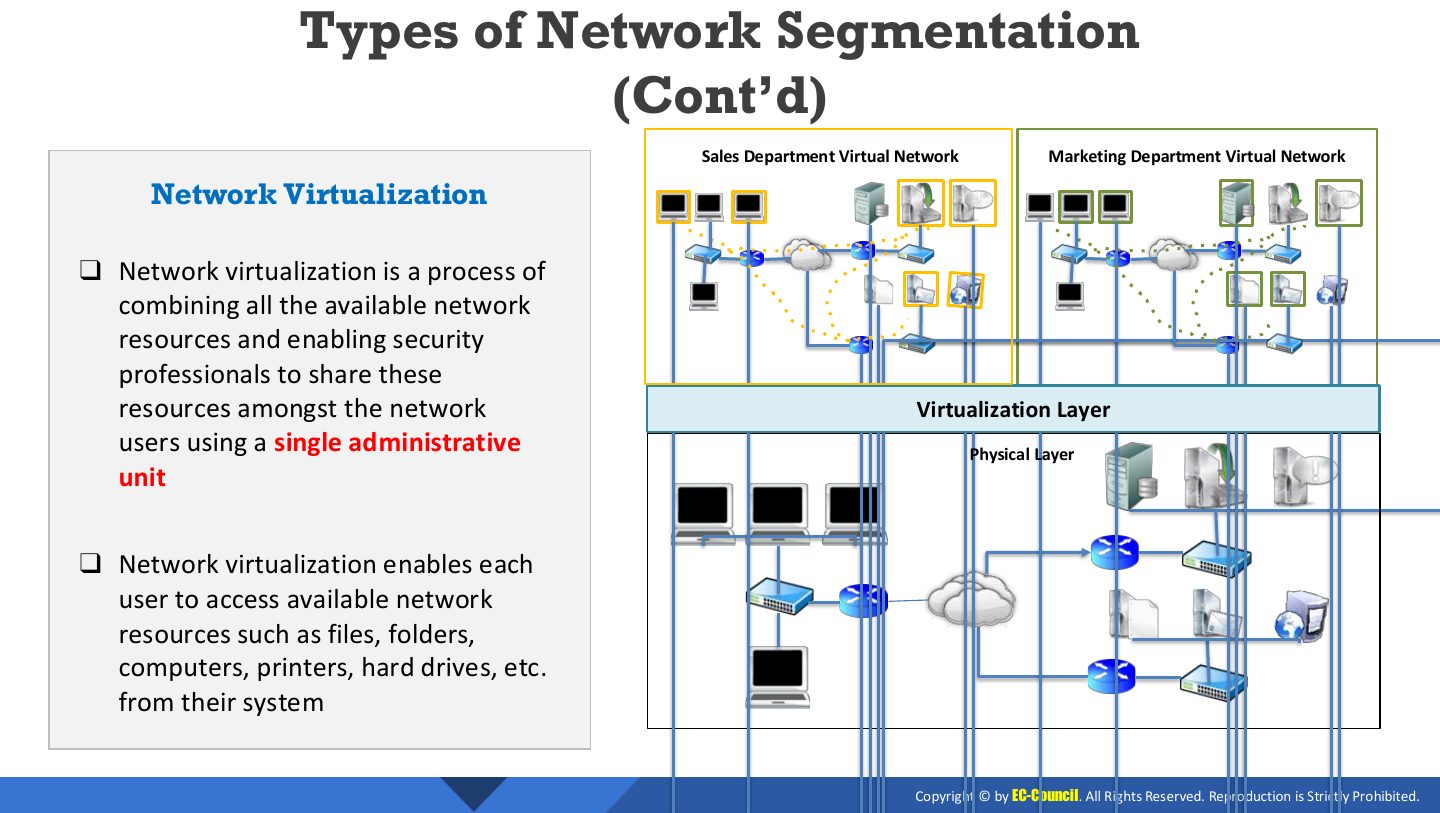
- 7 Types of Network Segmentation (Cont’d)
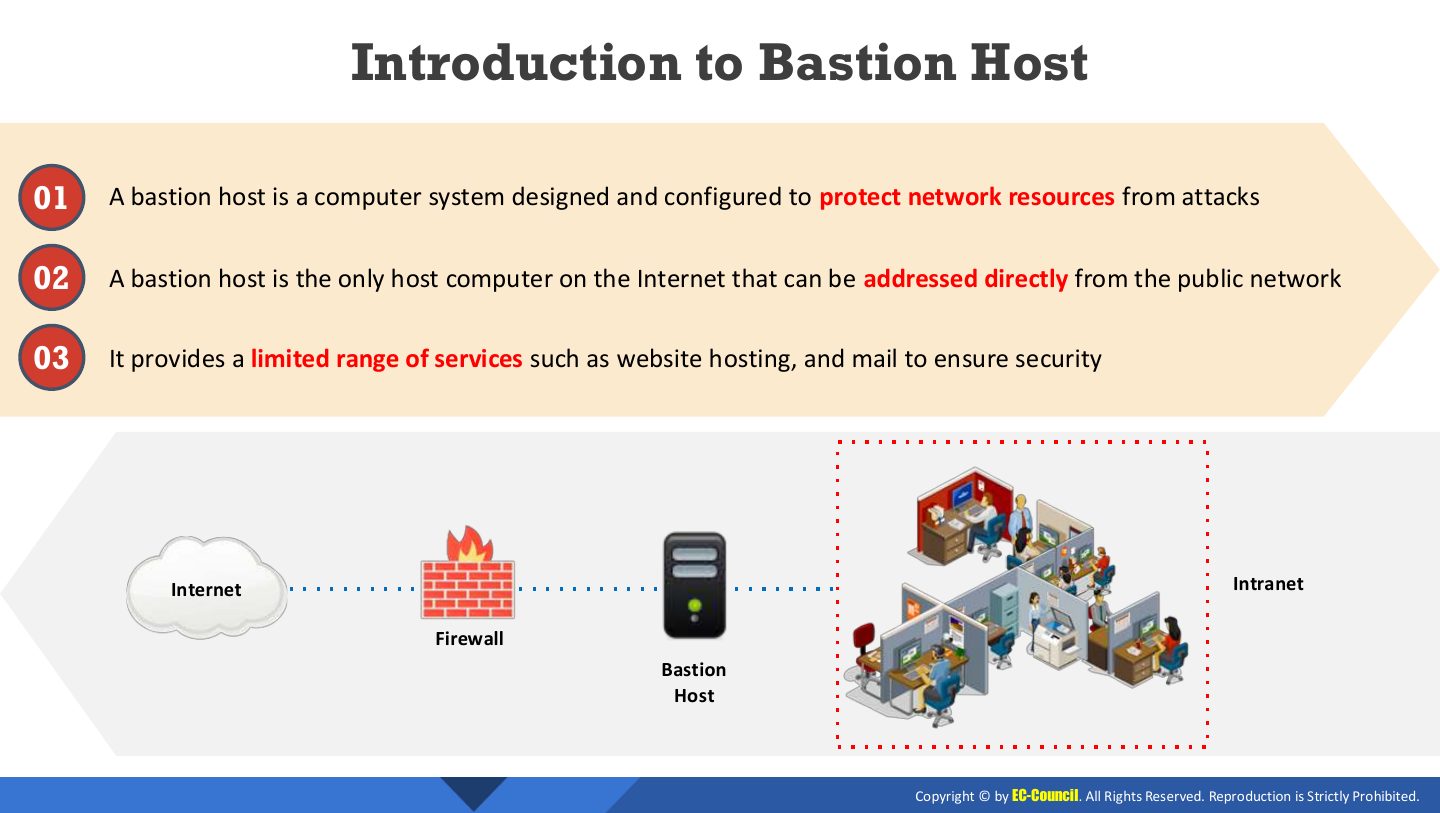
- 8 Introduction to Bastion Host
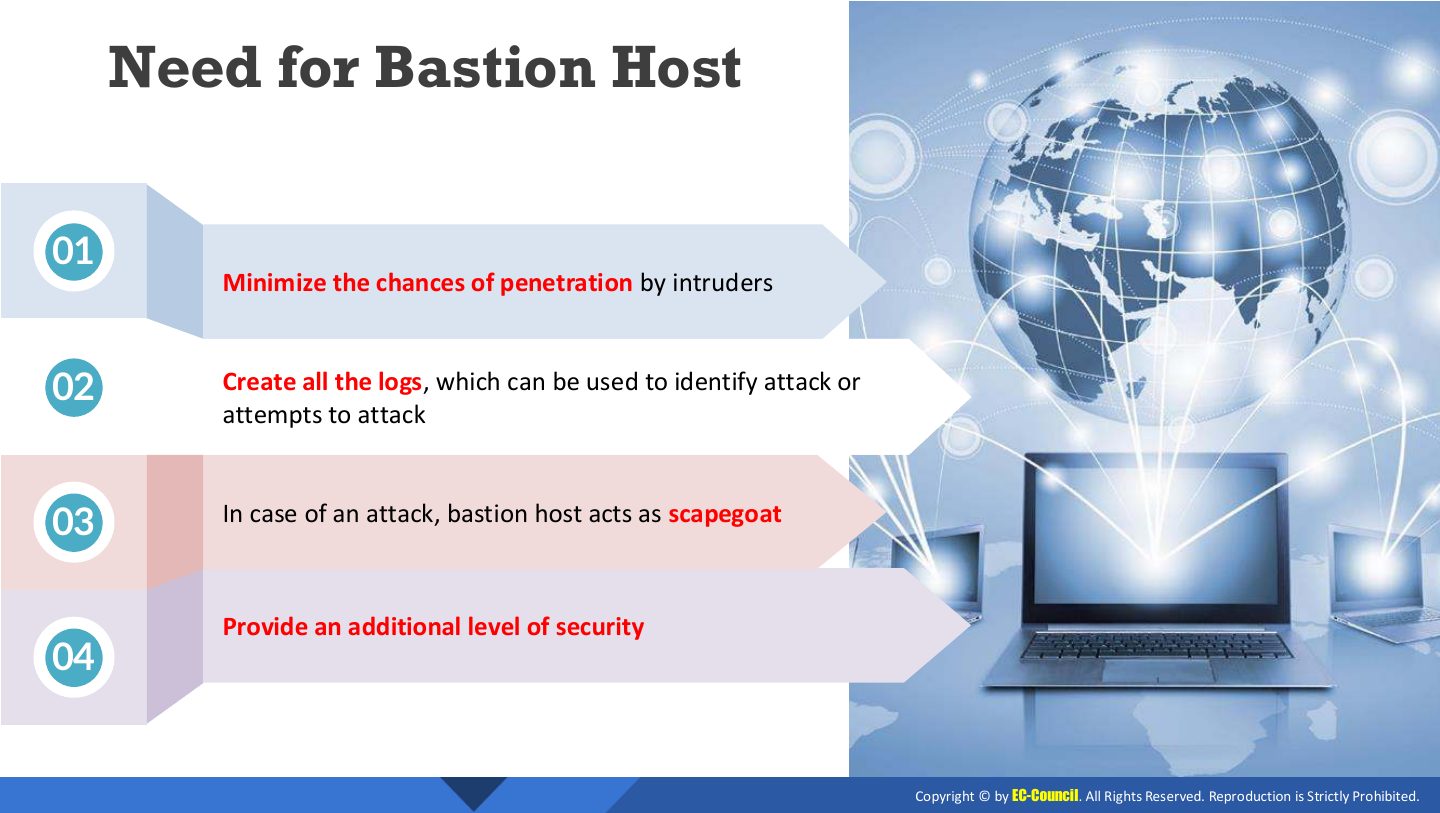
- 9 Need for Bastion Host
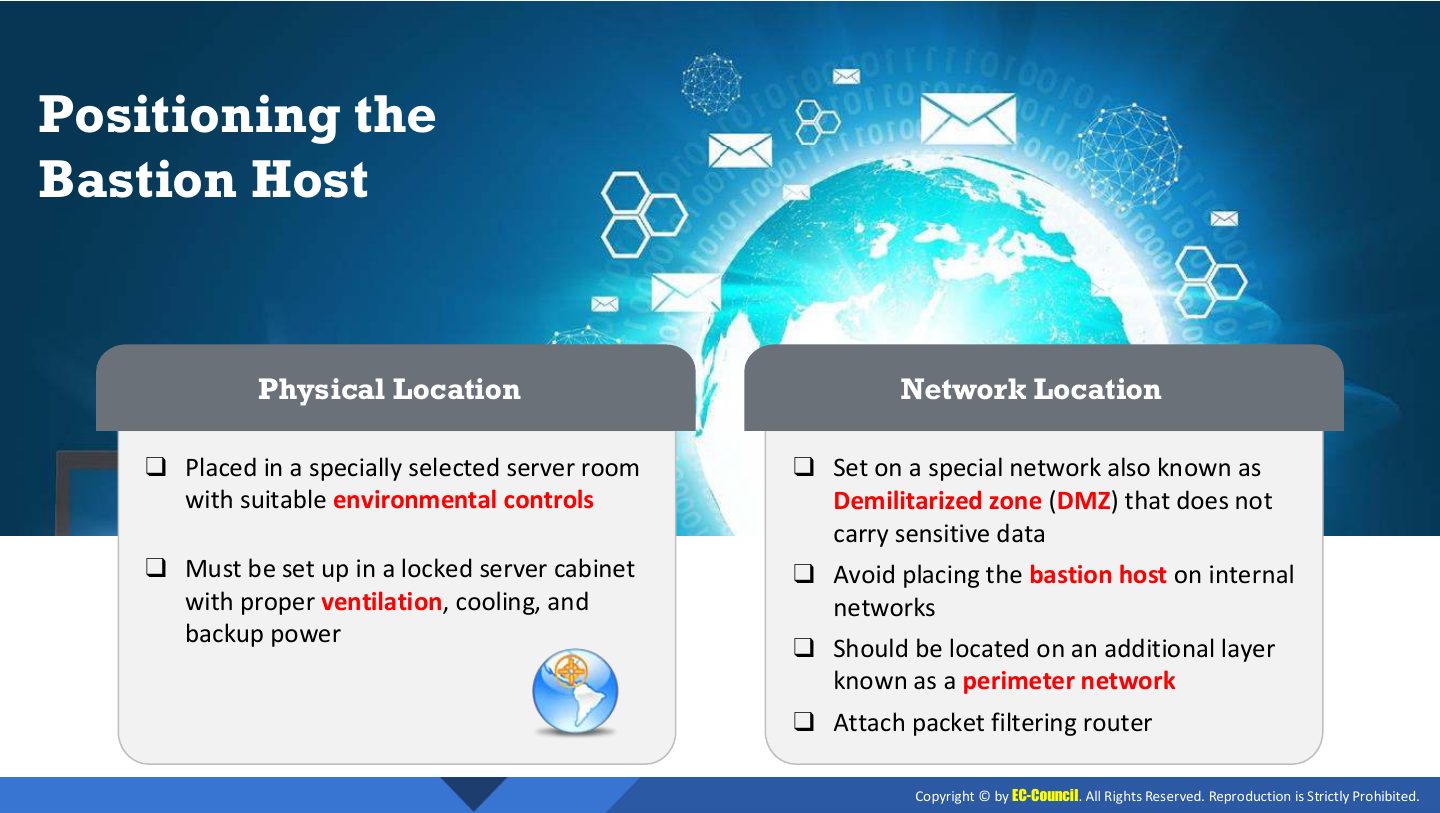
- 10 Positioning the Bastion Host
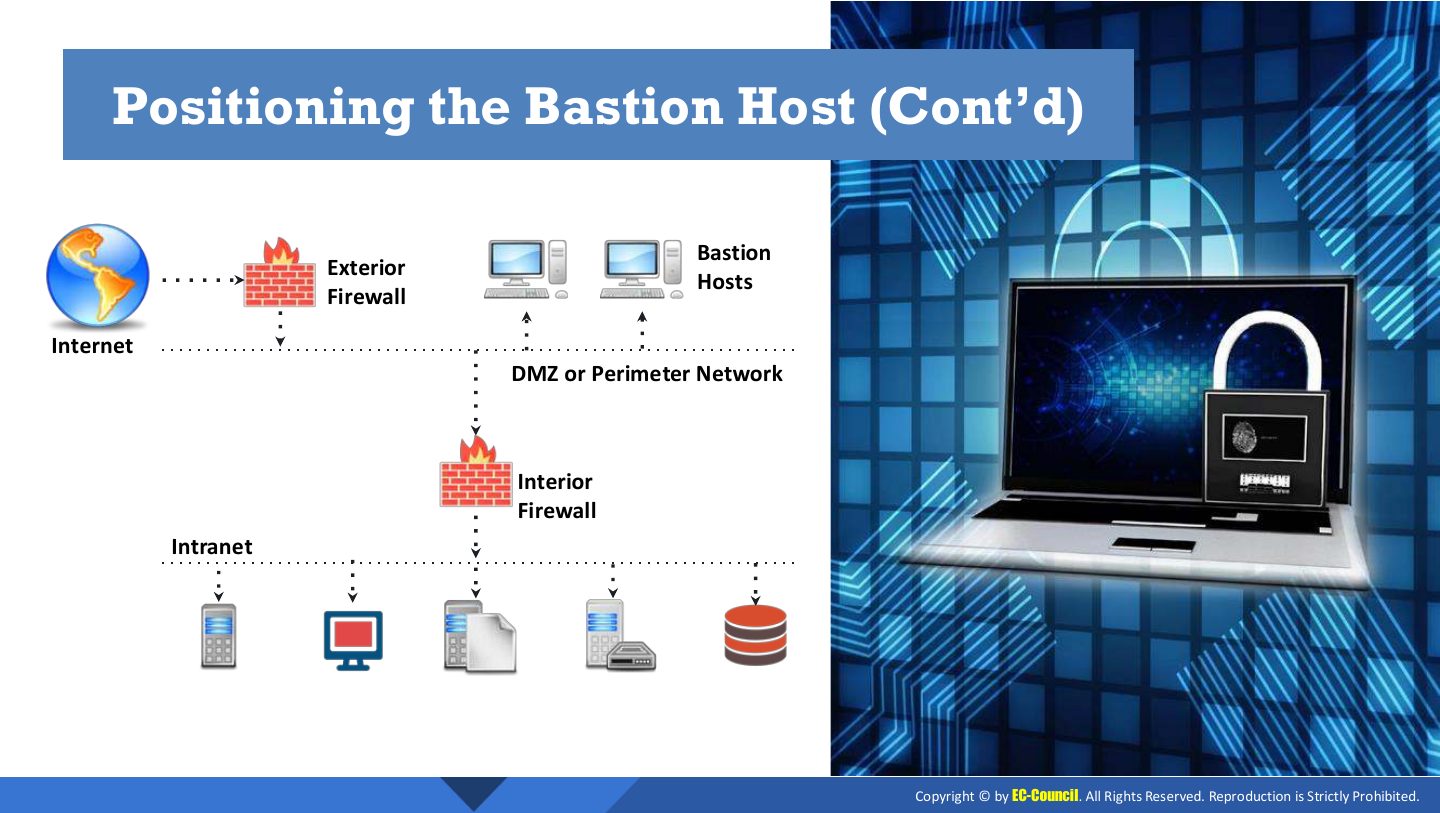
- 11 Positioning the Bastion Host (Cont’d)
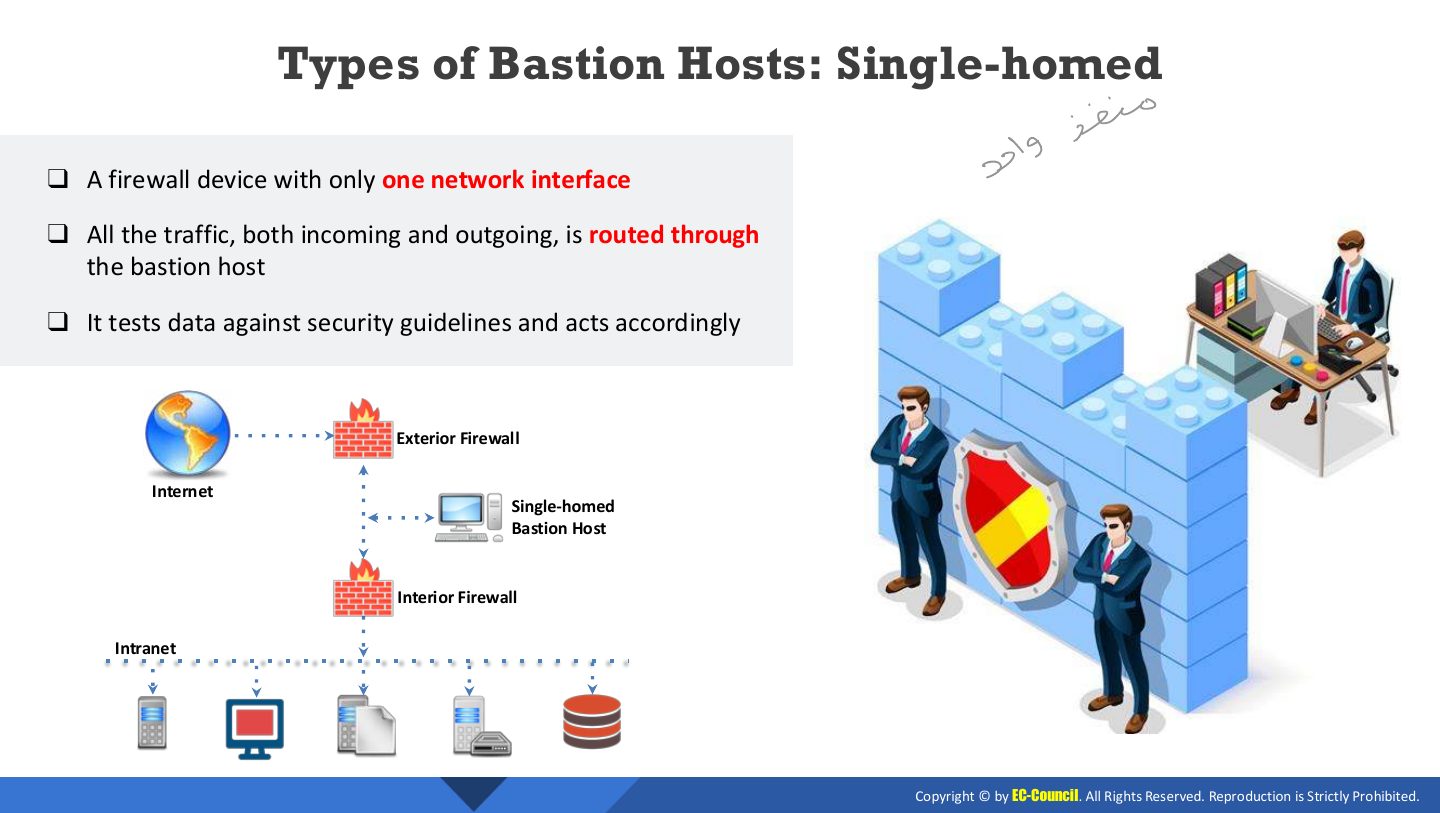
- 12 Types of Bastion Hosts: Single-homed
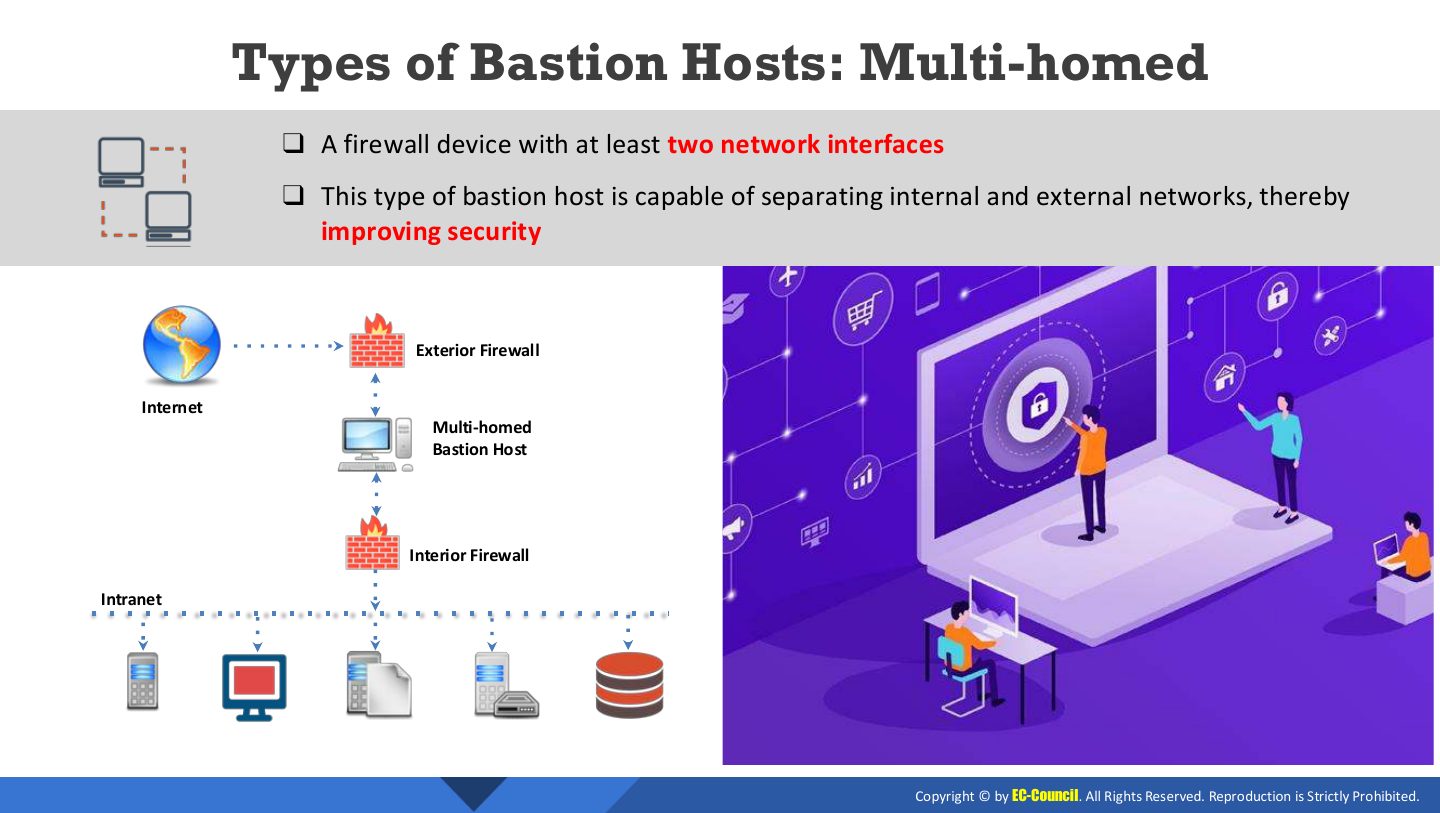
- 13 Types of Bastion Hosts: Multi-homed
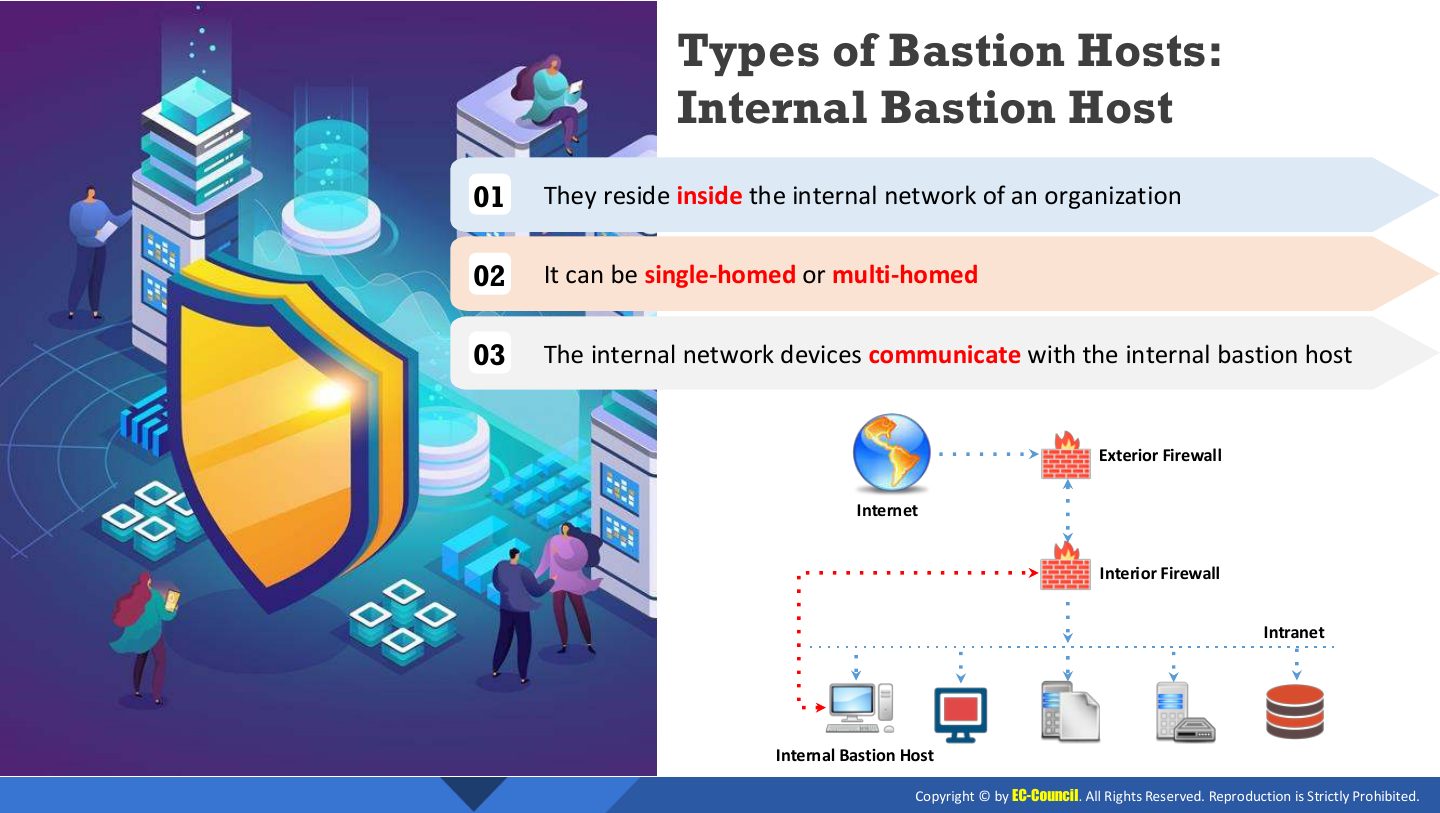
- 14 Types of Bastion Hosts: Internal Bastion Host
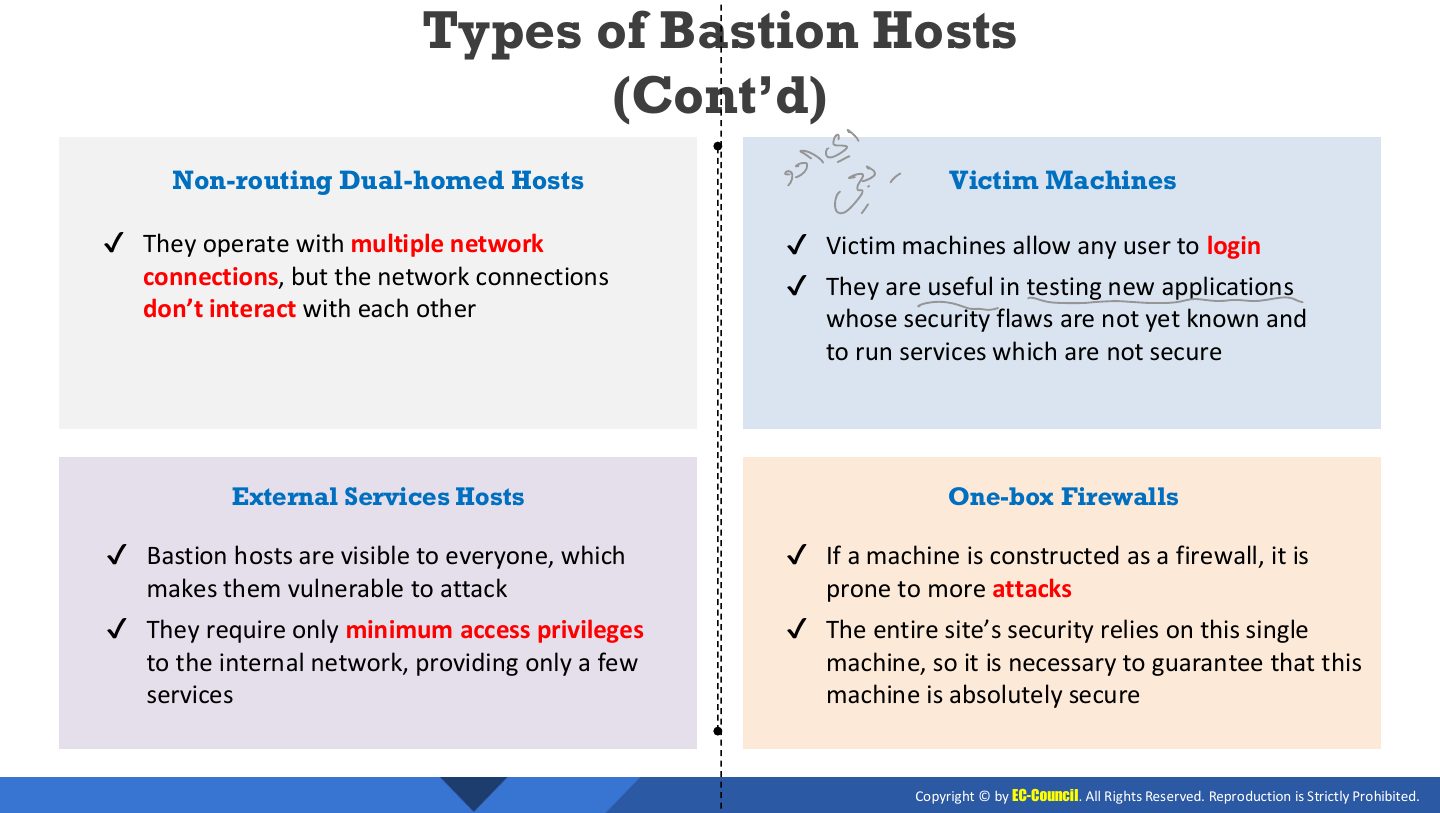
- 15 Types of Bastion Hosts (Cont’d)
- 16 What is Demilitarized Zone (DMZ)?
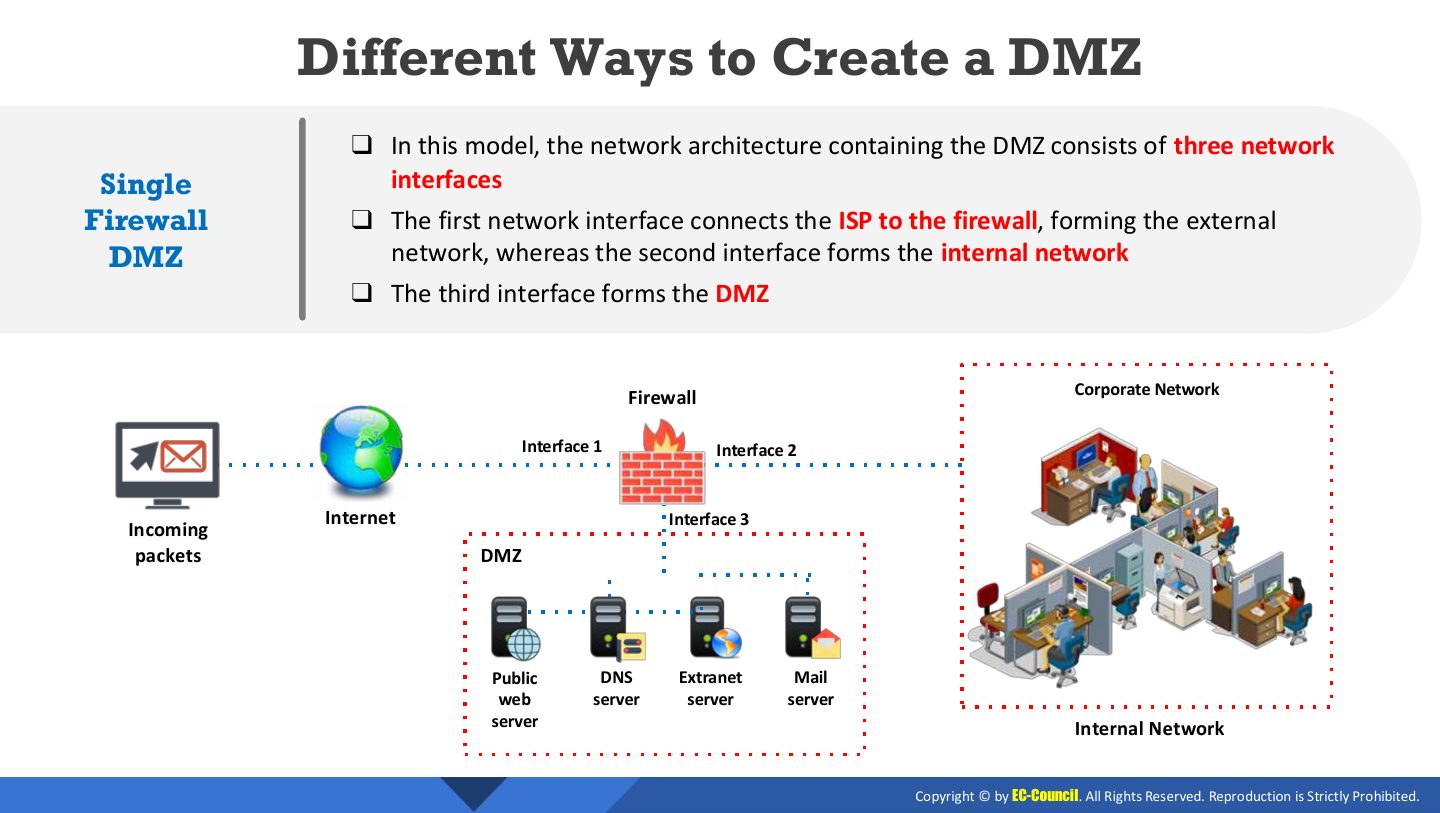
- 17 Different Ways to Create a DMZ
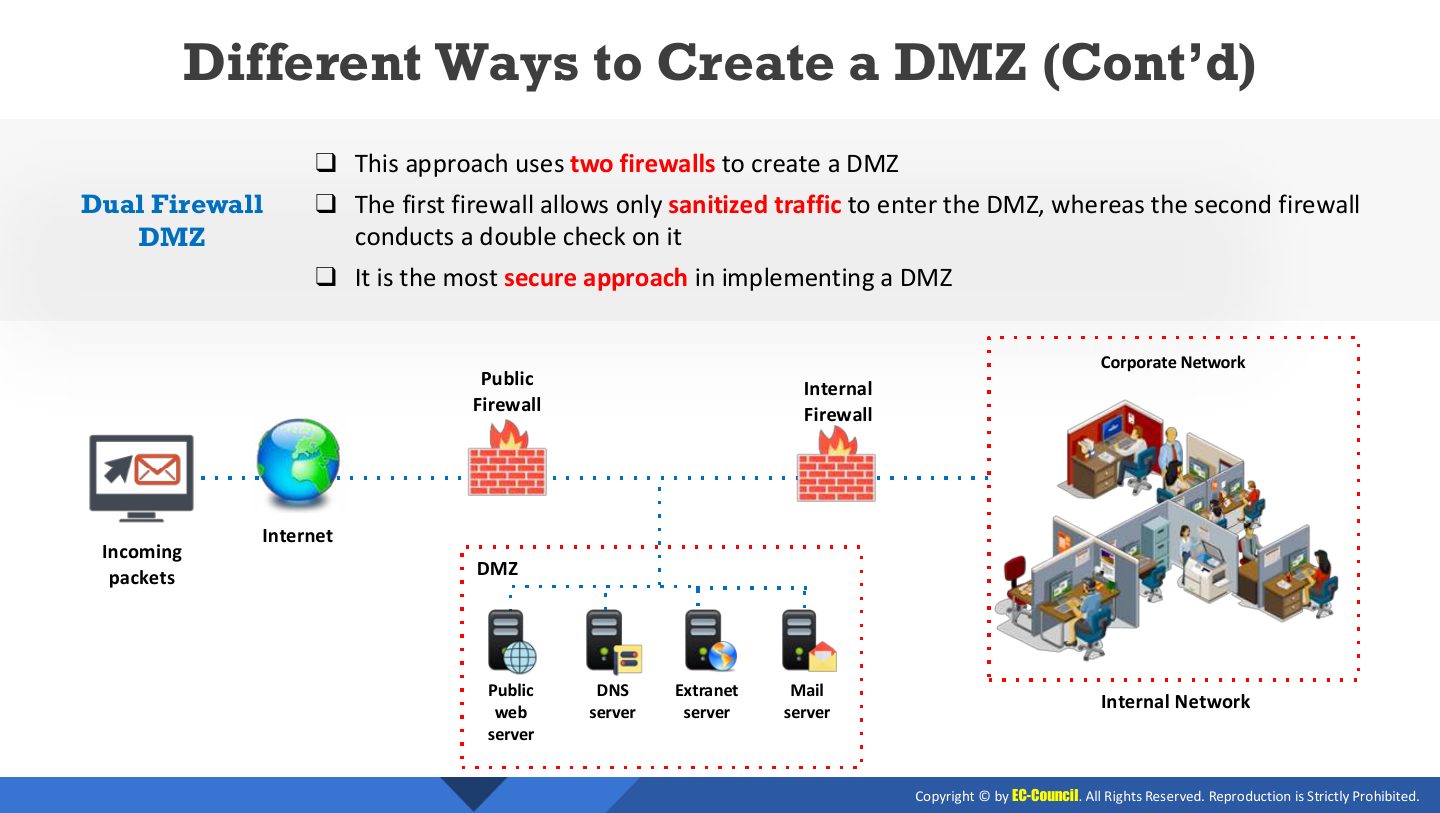
- 18 Different Ways to Create a DMZ (Cont’d)
- 19 Module Flow
- 20 What is a Firewall?
- 21 Types of Firewalls: Hardware Firewalls
- 22 Types of Firewalls: Software Firewalls
- 23 Types of Firewalls: Host-based and Network-based Firewalls
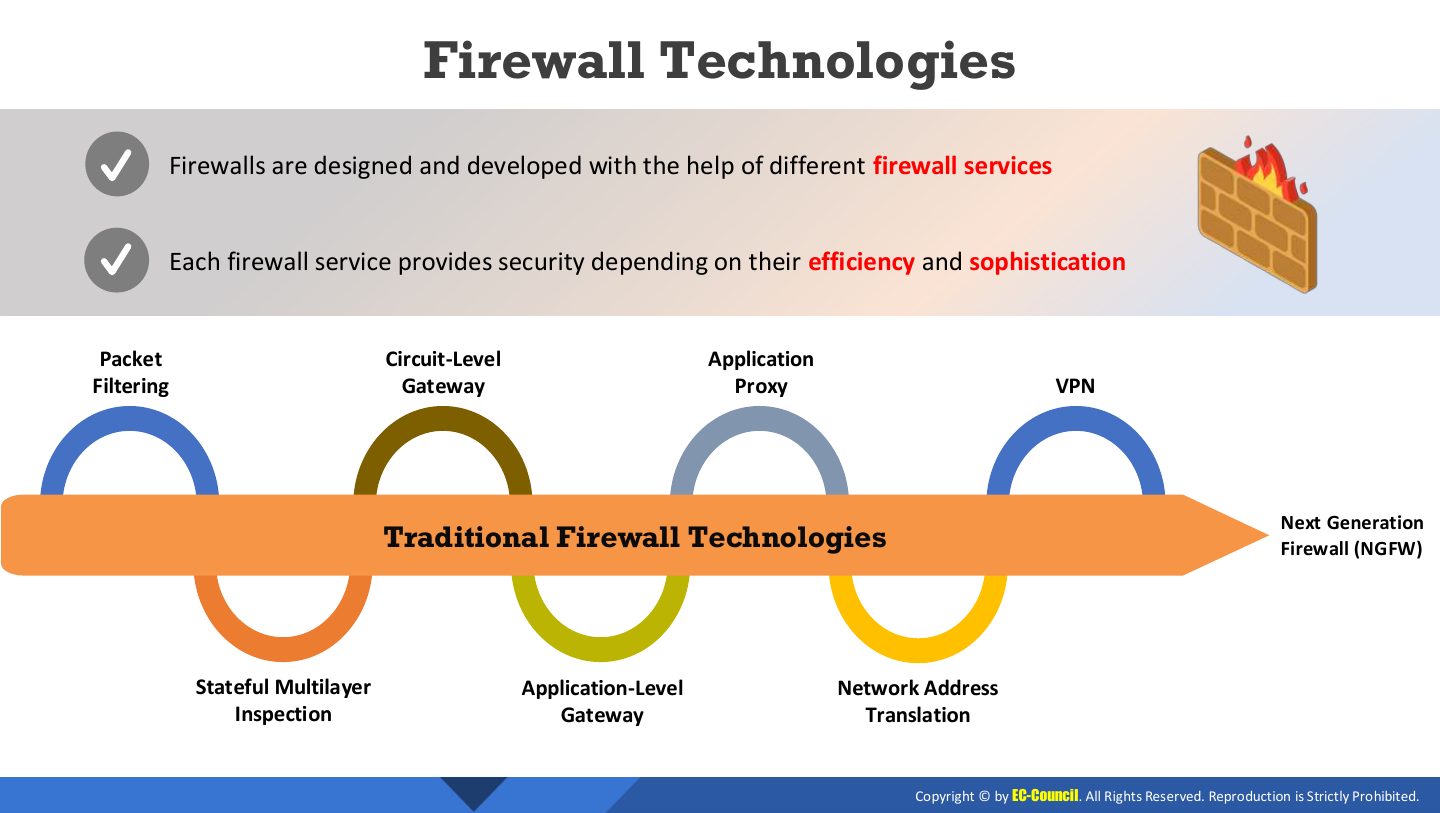
- 24 Firewall Technologies
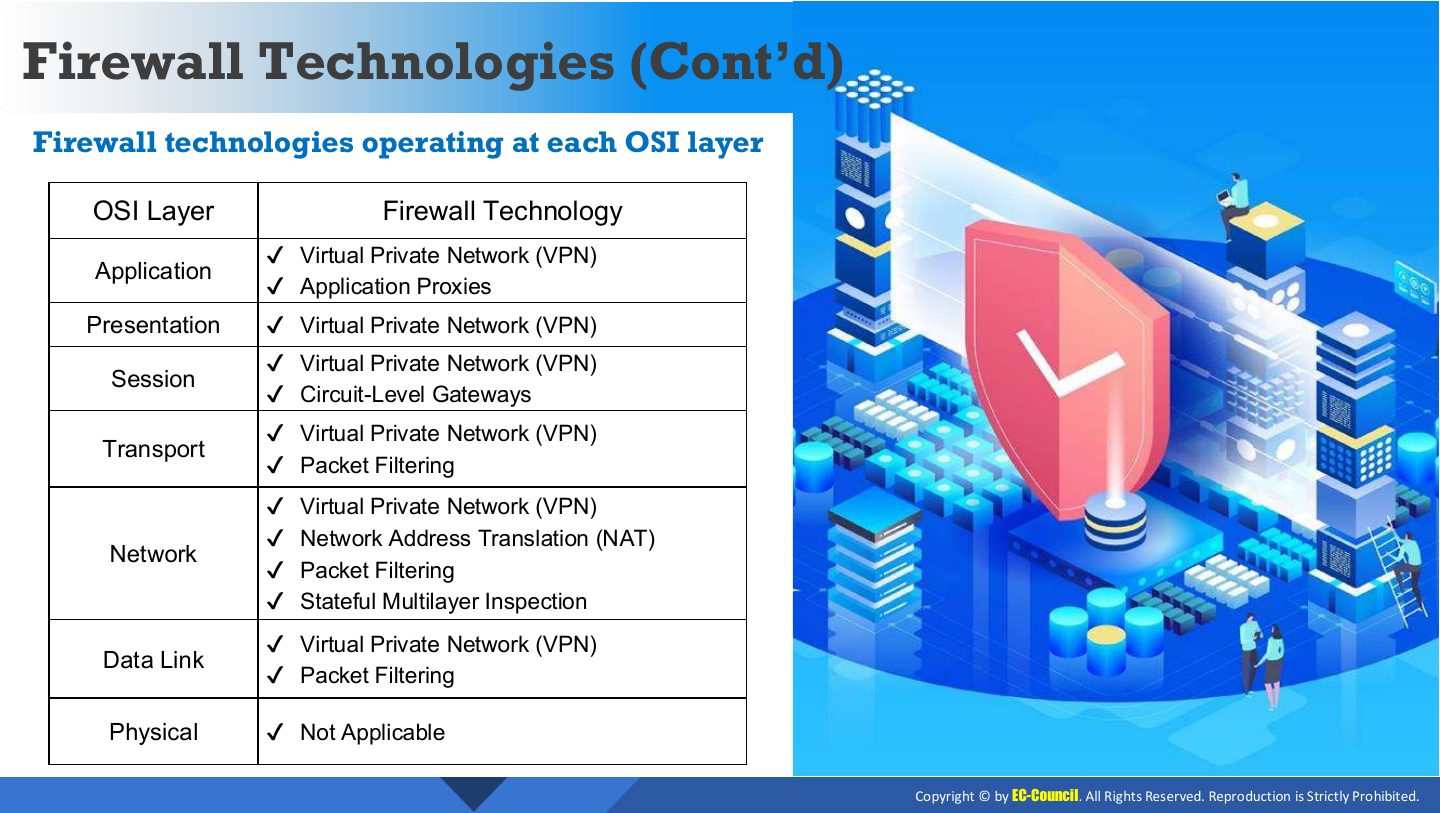
- 25 Firewall technologies operating at each OSI layer
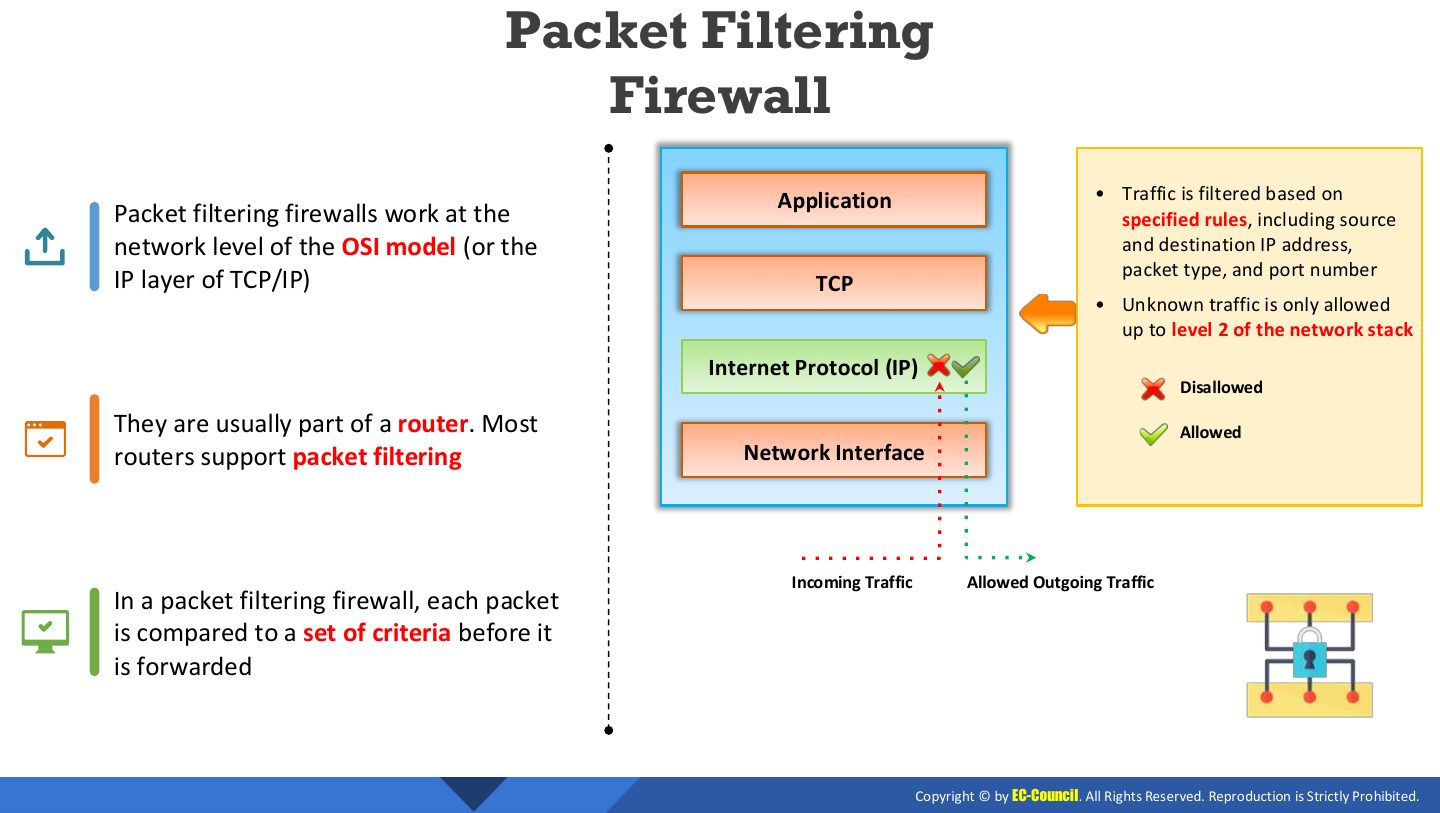
- 26 Packet Filtering Firewall
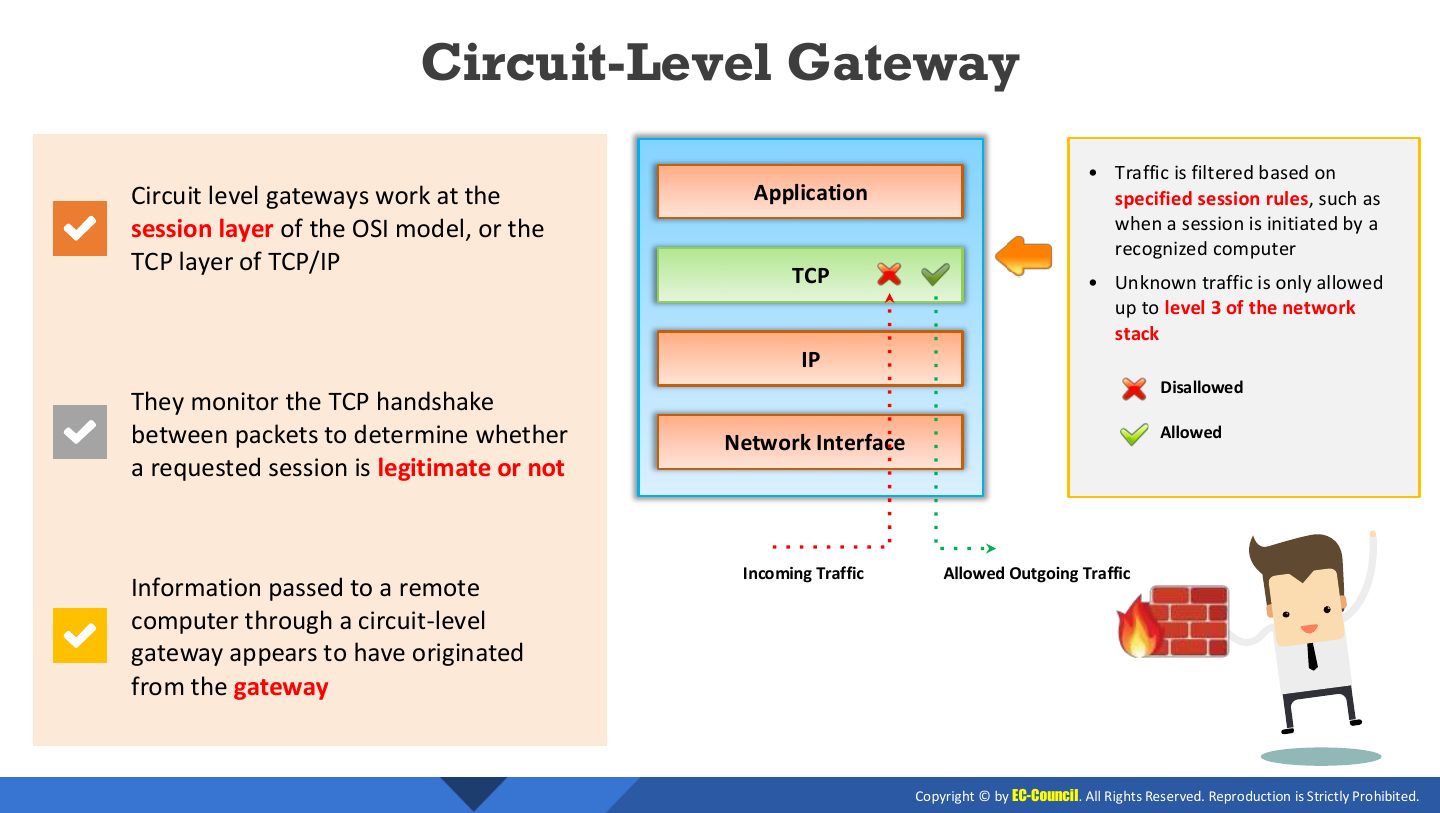
- 27 Circuit-Level Gateway
- 28 Application Level Gateways
- 29 Stateful Multilayer Inspection Firewall
- 30 Application Proxy
- 31 Network Address Translation (NAT)
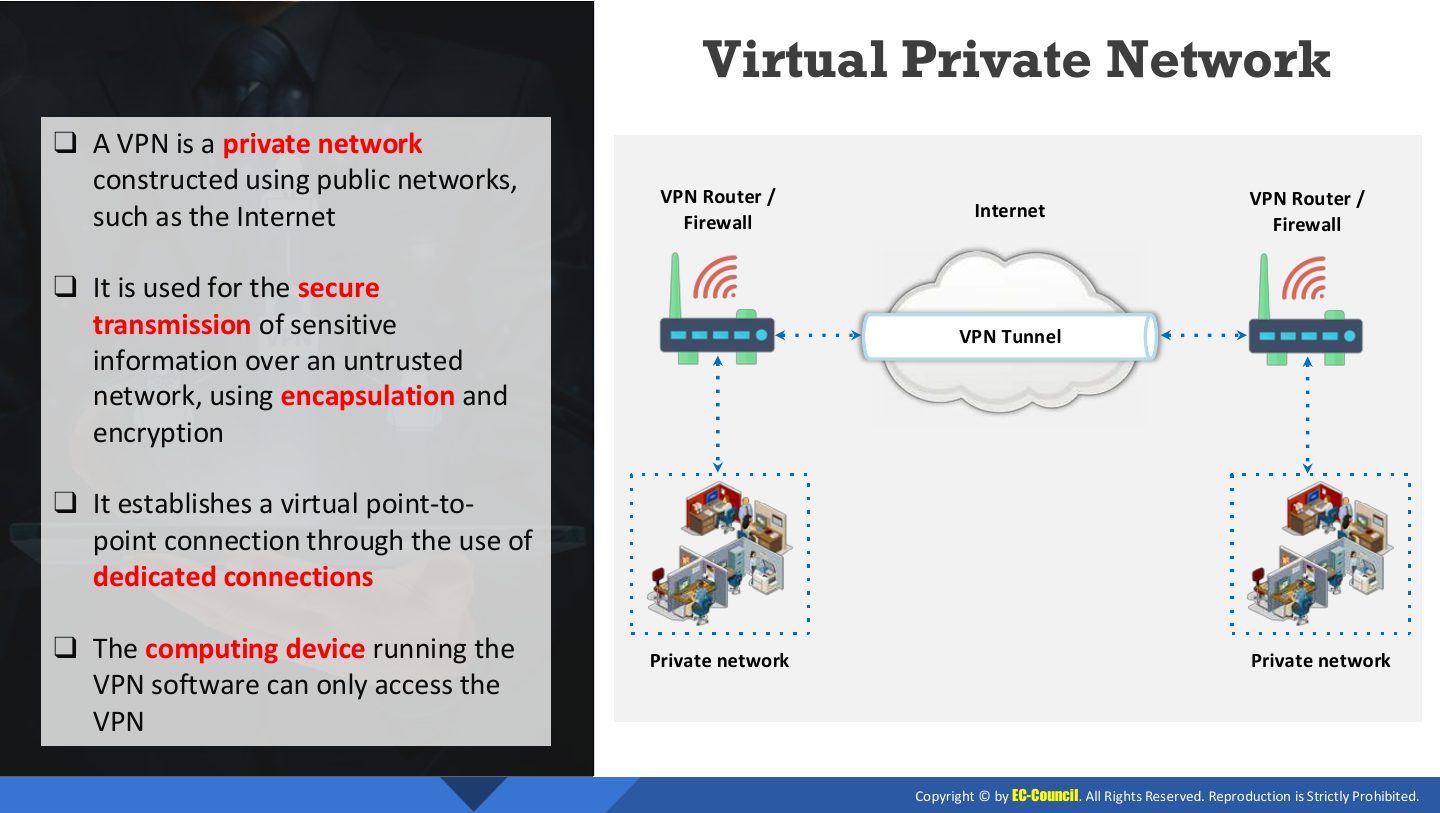
- 32 Virtual Private Network
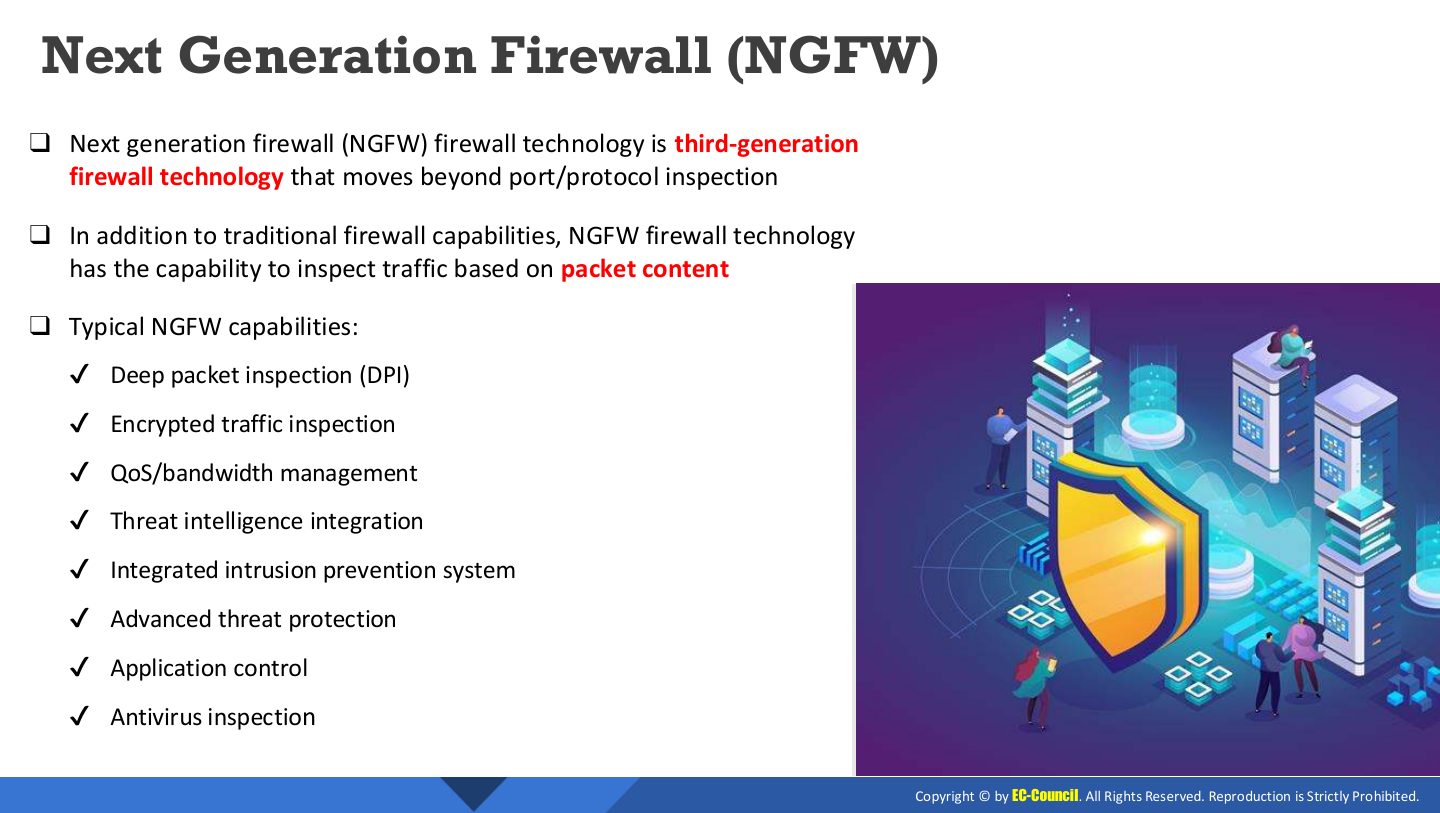
- 33 Next Generation Firewall (NGFW)
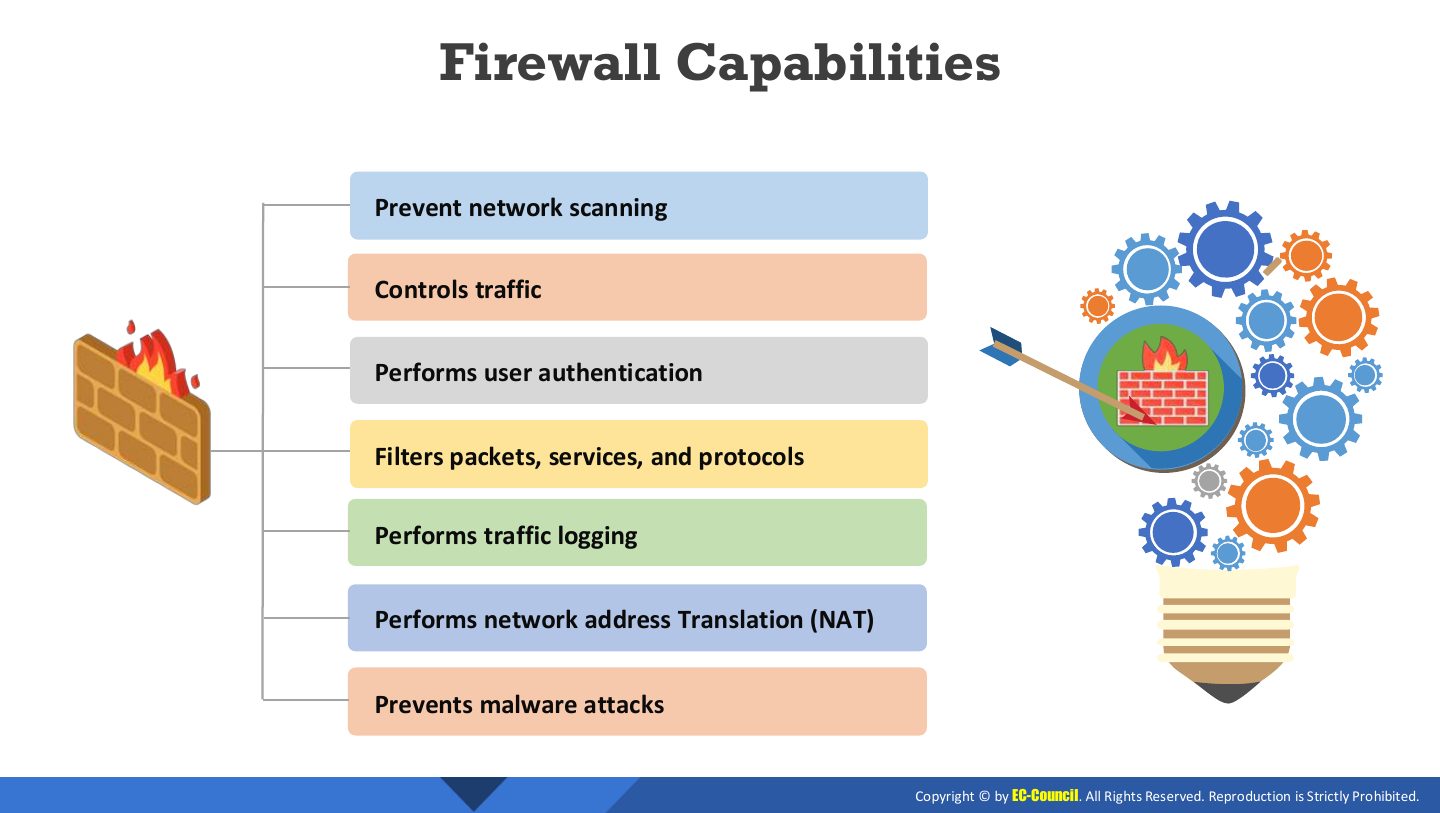
- 34 Firewall Capabilities
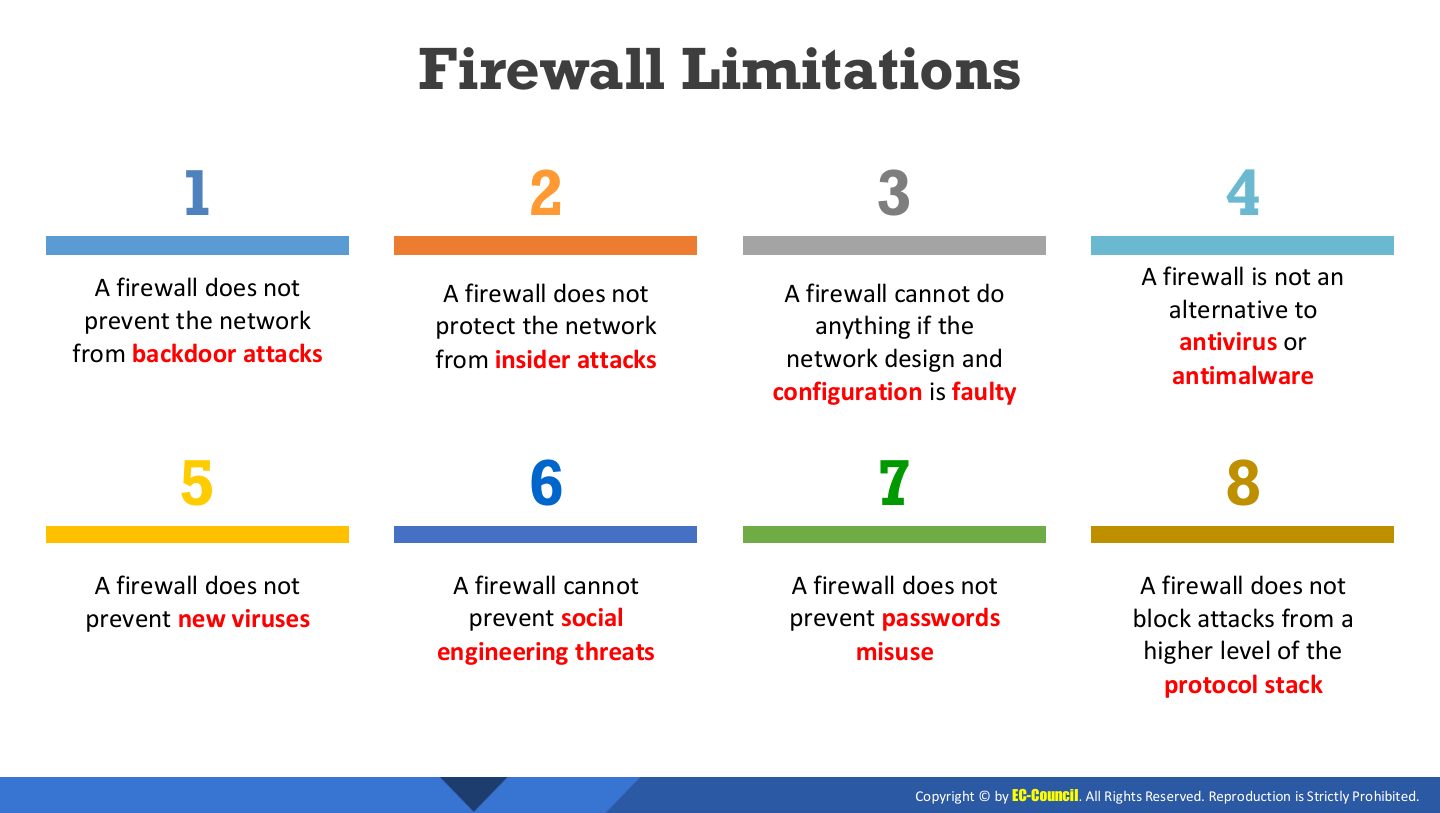
- 35 Firewall Limitations
- 36 Firewall Implementation and Deployment Process
- 37 Host-based Firewall Protection with Iptables
- 38 Host- based Firewall Protection with Iptables (Cont’d)
- 39 Secure Firewall Implementation: Best Practices
- 40 Secure Firewall Implementation: Recommendations
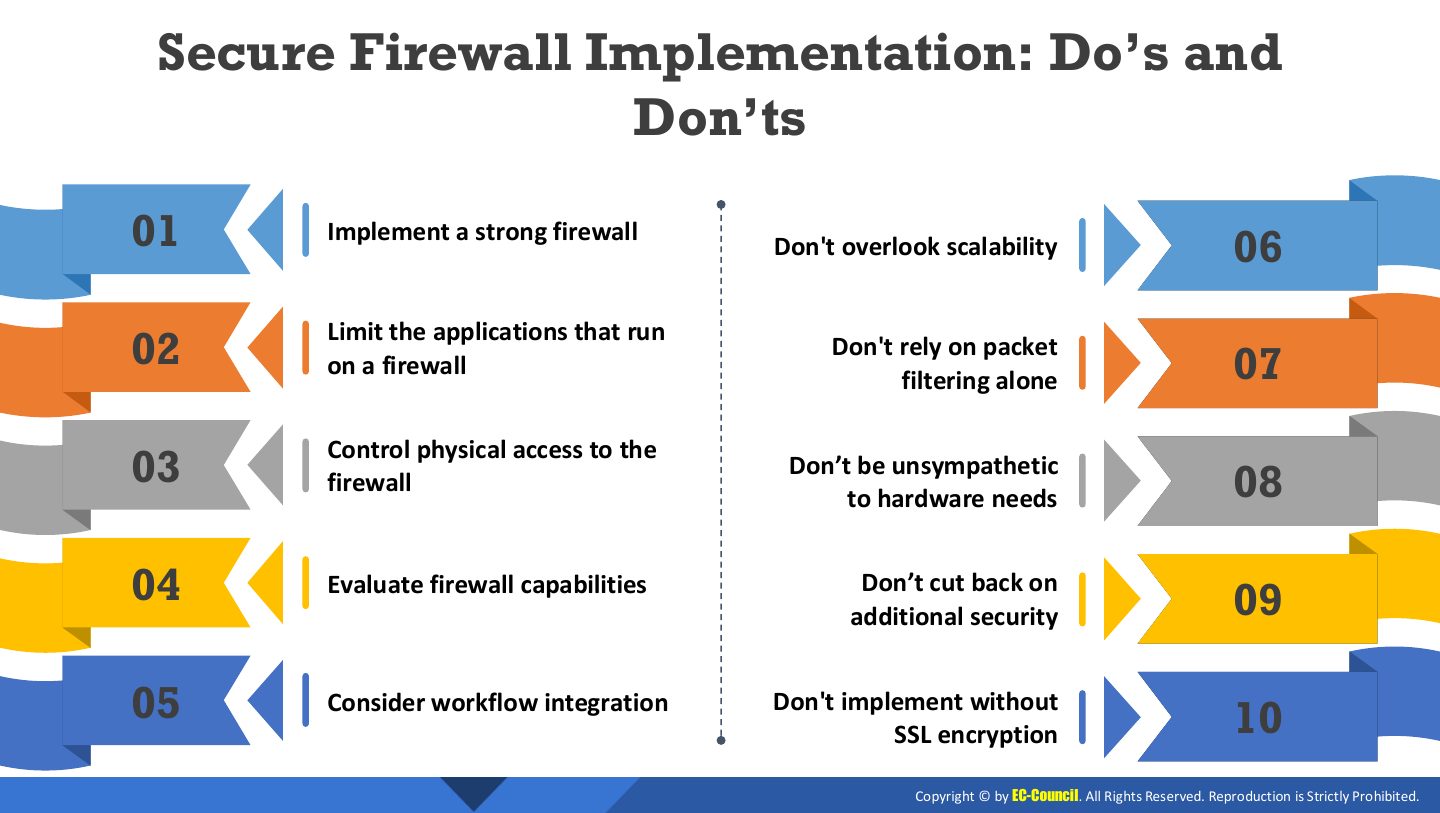
- 41 Secure Firewall Implementation: Do’s and Don’ts
Slide 1
Module Objectives
Module Flow
What is Network Segmentation?
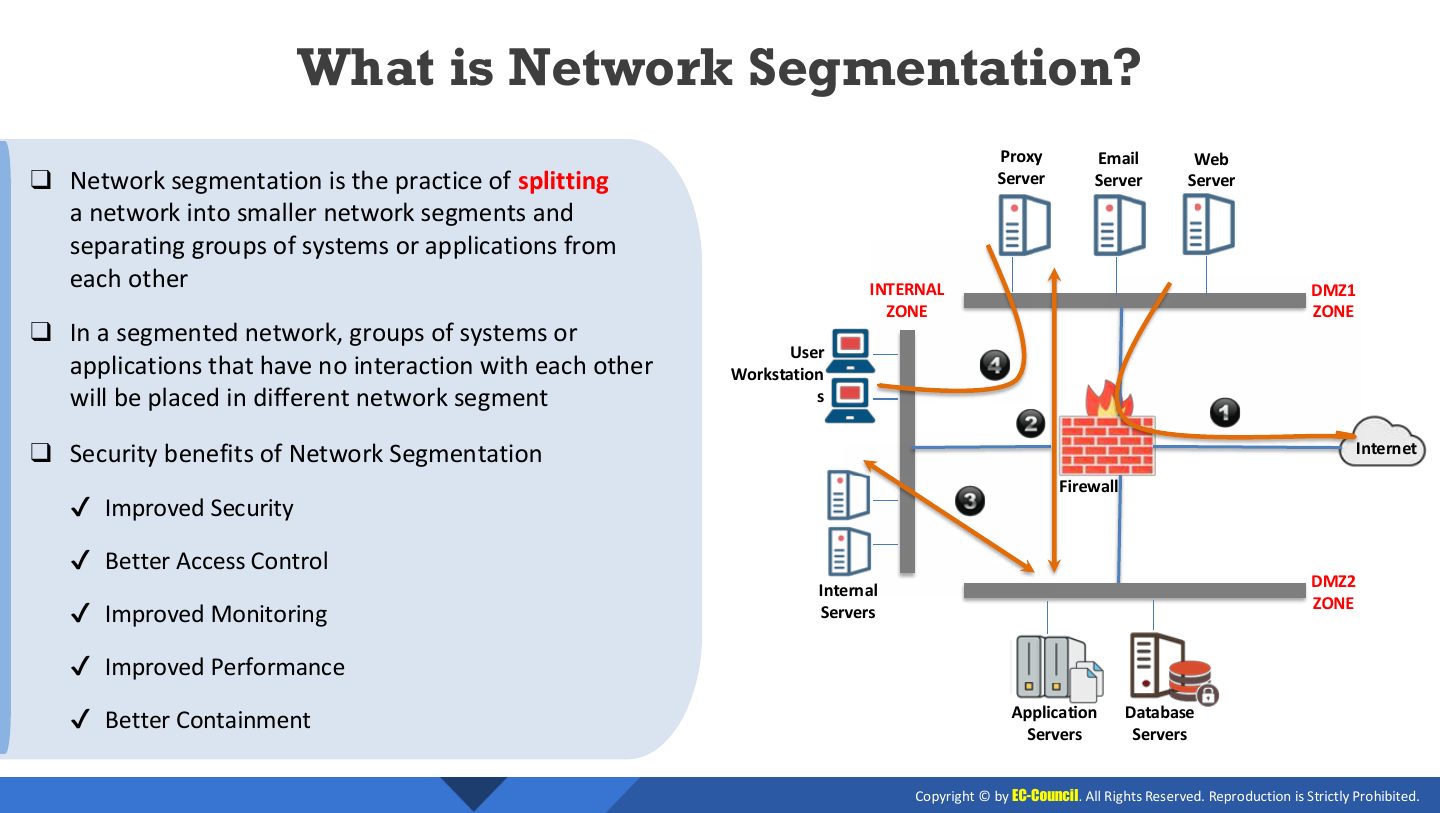
Notes
Segmentation splits the network into zones so a breach in one doesn’t expose everything (physical, logical/VLAN, network virtualization).
Types of Network Segmentation
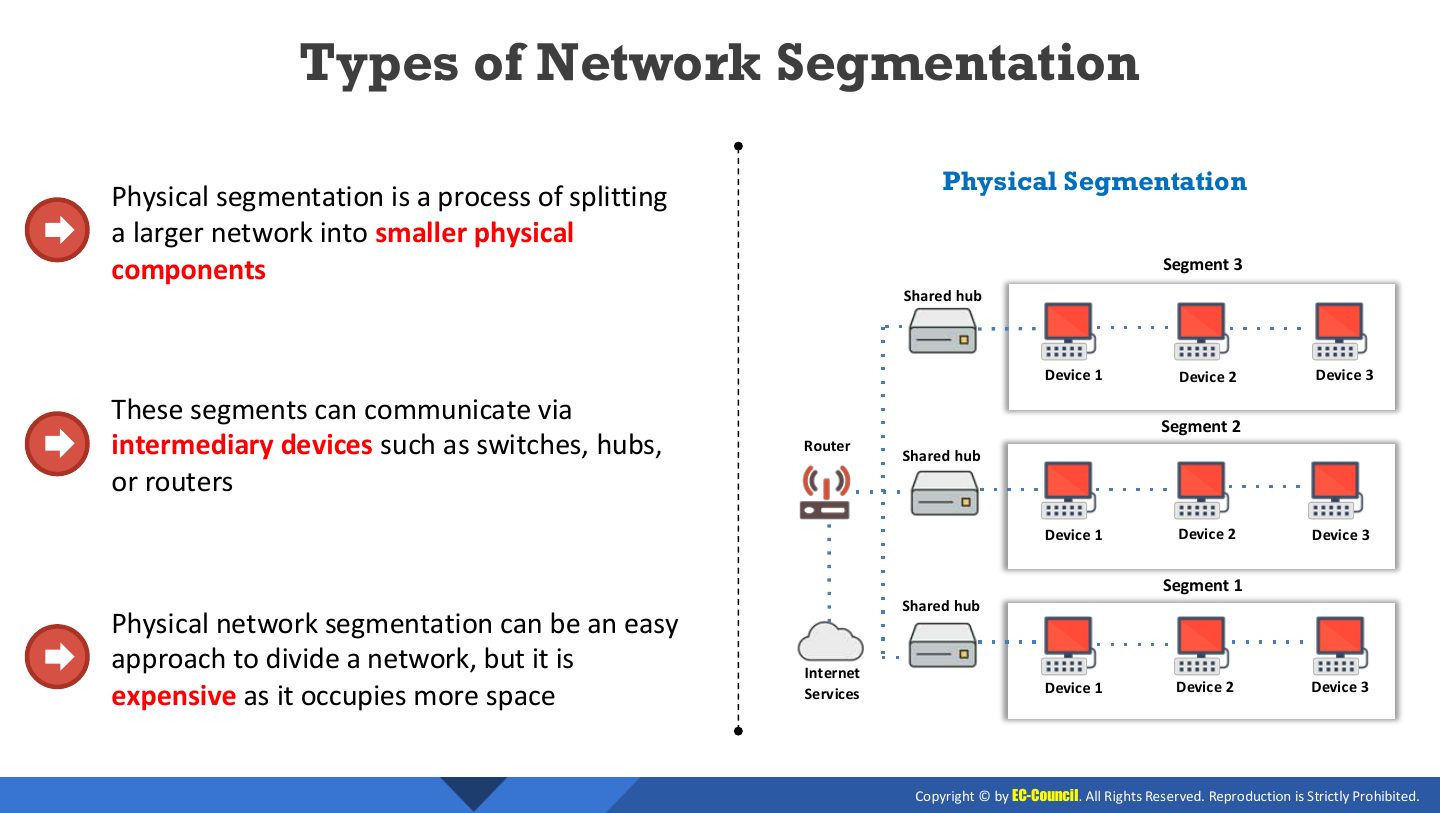
Types of Network Segmentation (Cont’d)
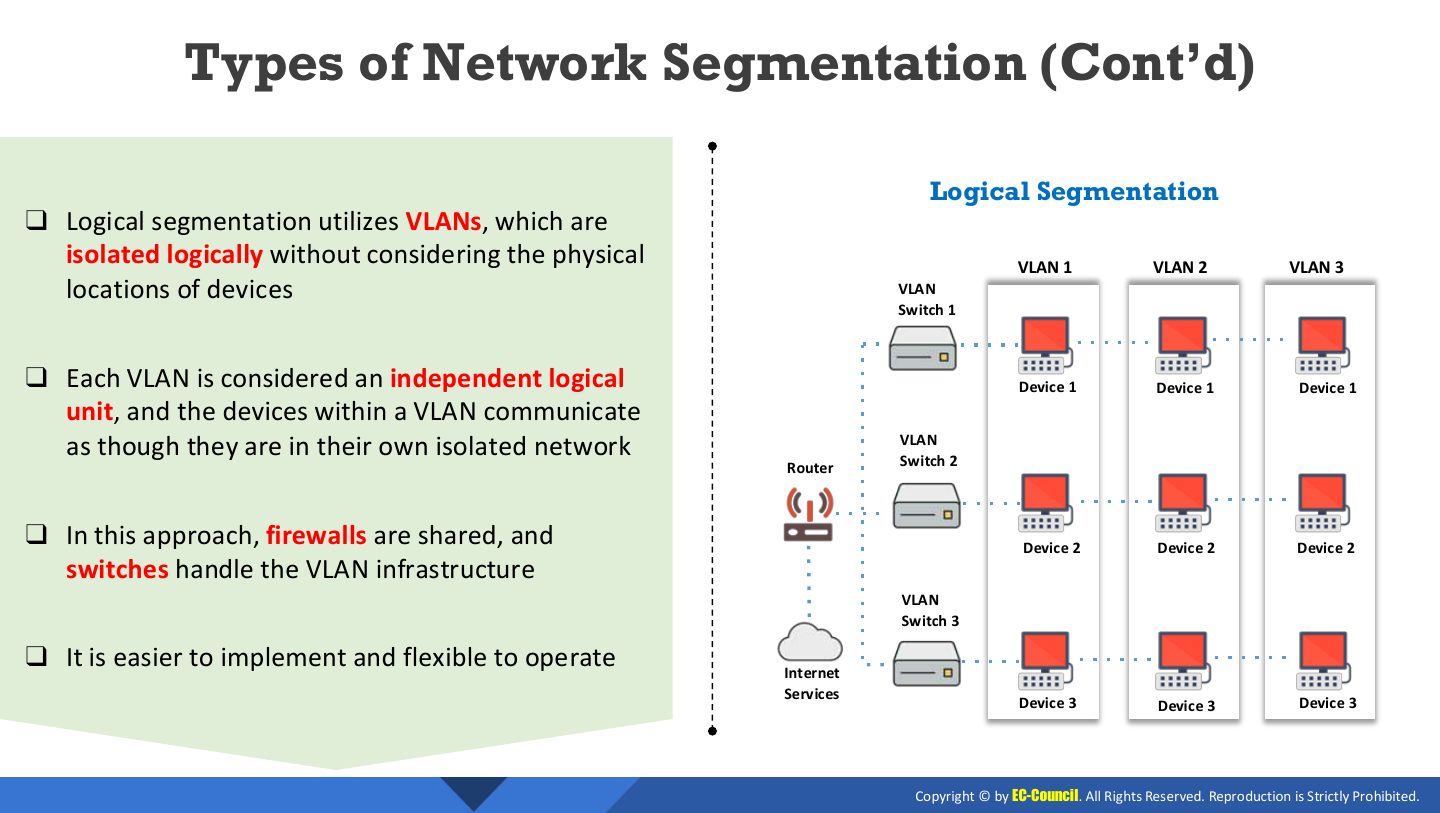
Types of Network Segmentation (Cont’d)
Introduction to Bastion Host
Notes
Bastion host: a hardened system exposed to attack, e.g. in the DMZ, running only essential services.
Need for Bastion Host
Positioning the Bastion Host
Positioning the Bastion Host (Cont’d)
Types of Bastion Hosts: Single-homed
Types of Bastion Hosts: Multi-homed
Types of Bastion Hosts: Internal Bastion Host
Types of Bastion Hosts (Cont’d)
What is Demilitarized Zone (DMZ)?
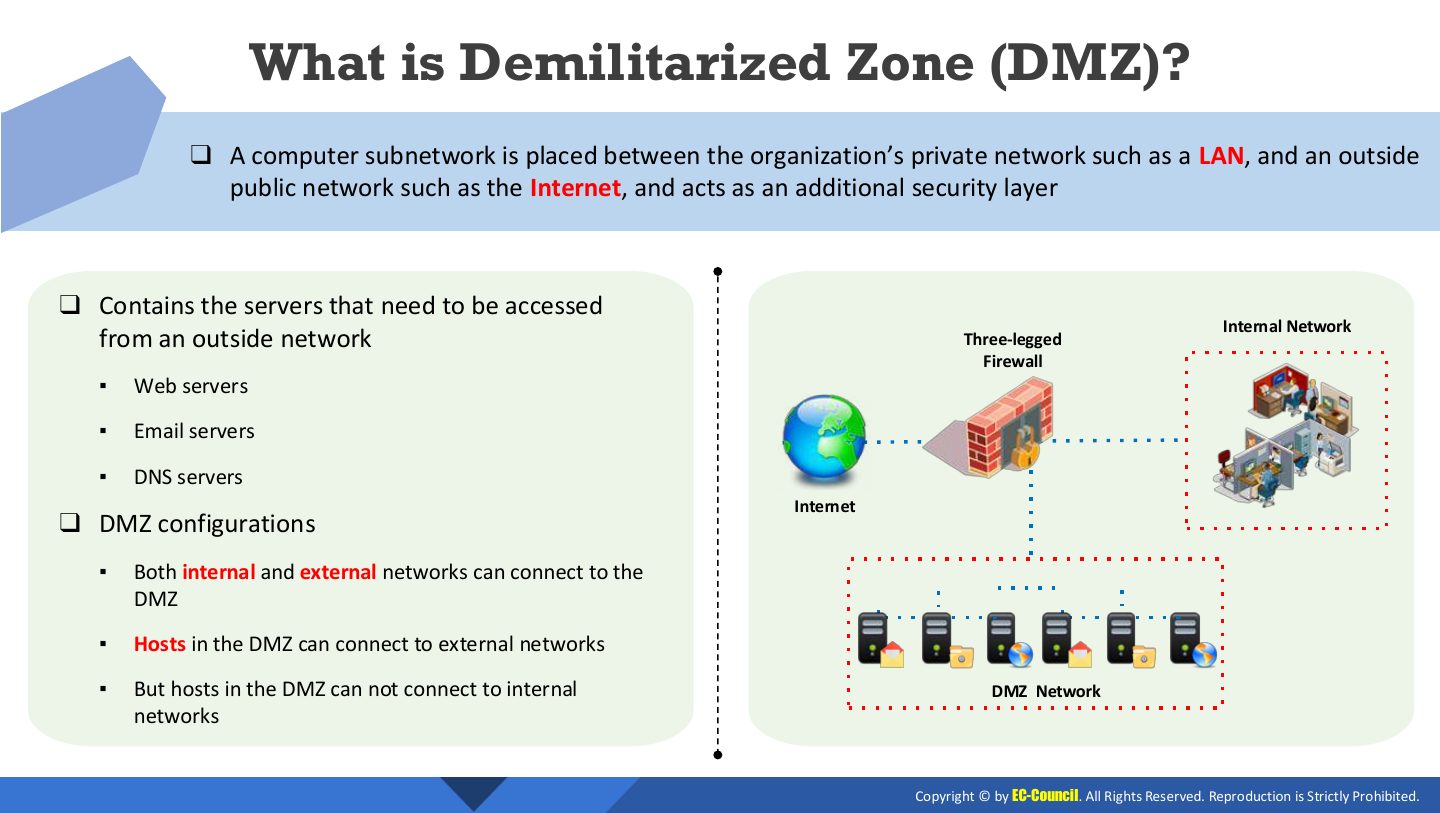
Exam angle
Different Ways to Create a DMZ
Different Ways to Create a DMZ (Cont’d)
Module Flow
What is a Firewall?
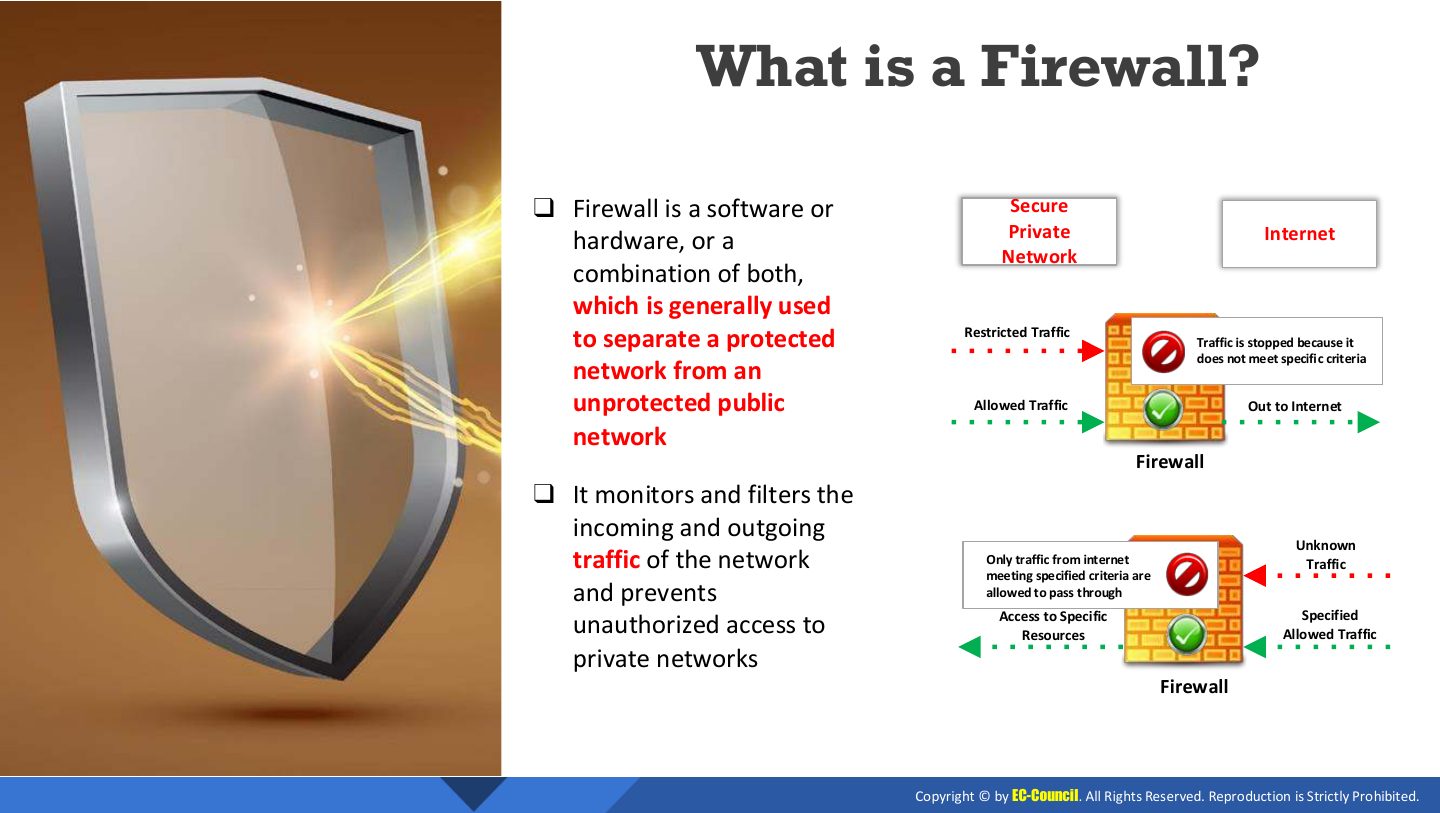
Notes
Firewall: enforces a policy on traffic between networks; default-deny is best practice.
Types of Firewalls: Hardware Firewalls
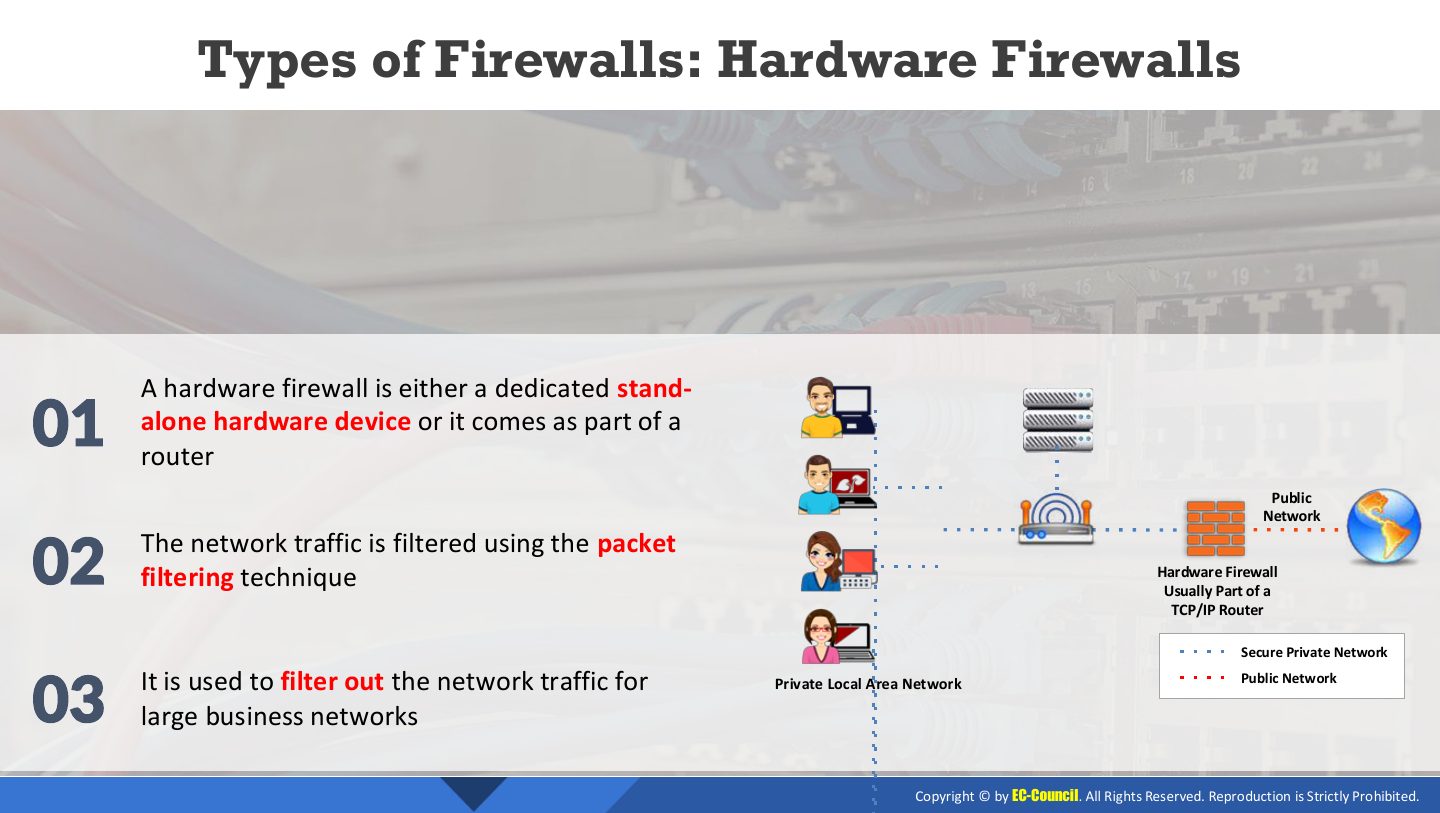
Types of Firewalls: Software Firewalls
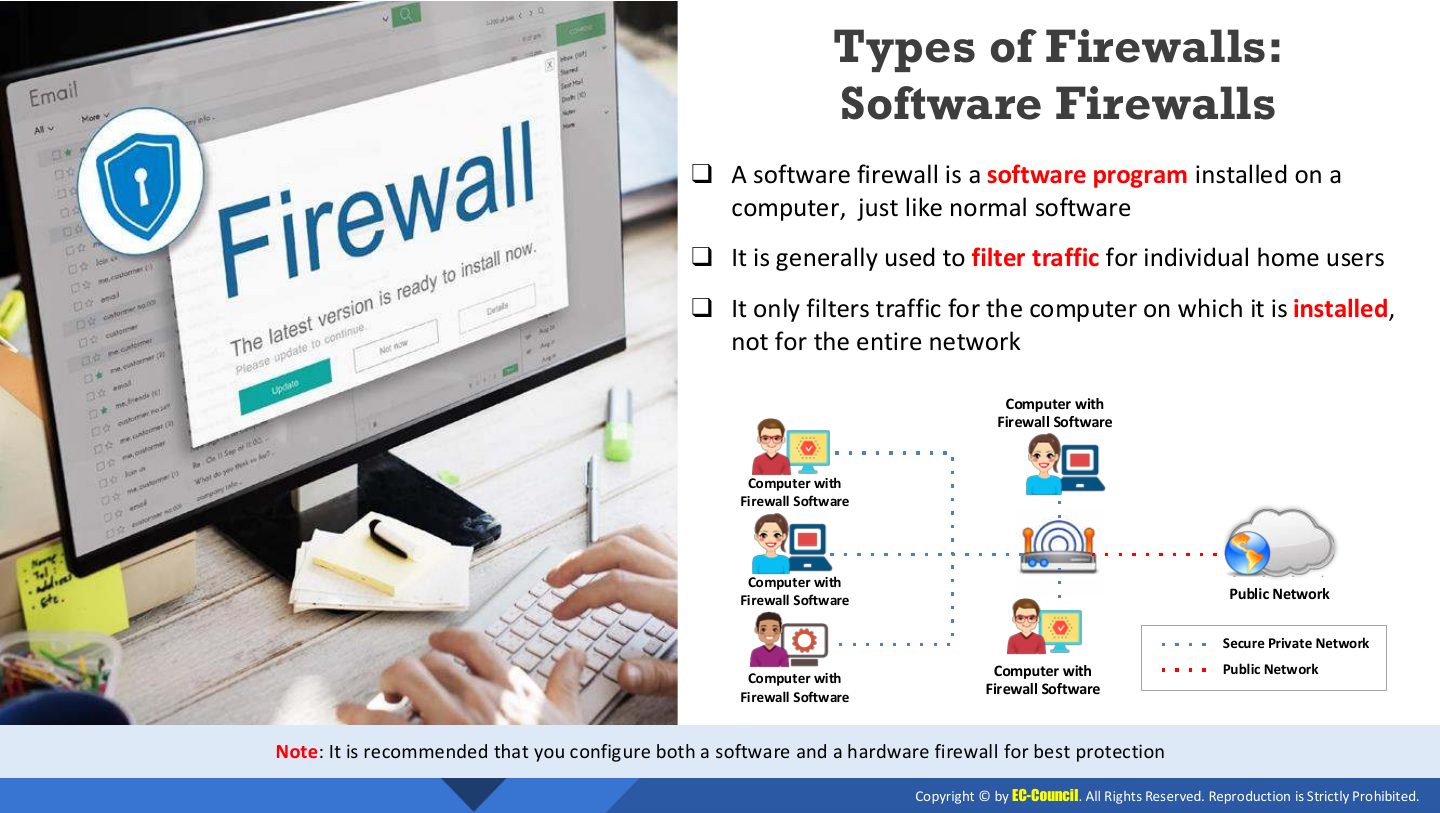
Types of Firewalls: Host-based and Network-based Firewalls
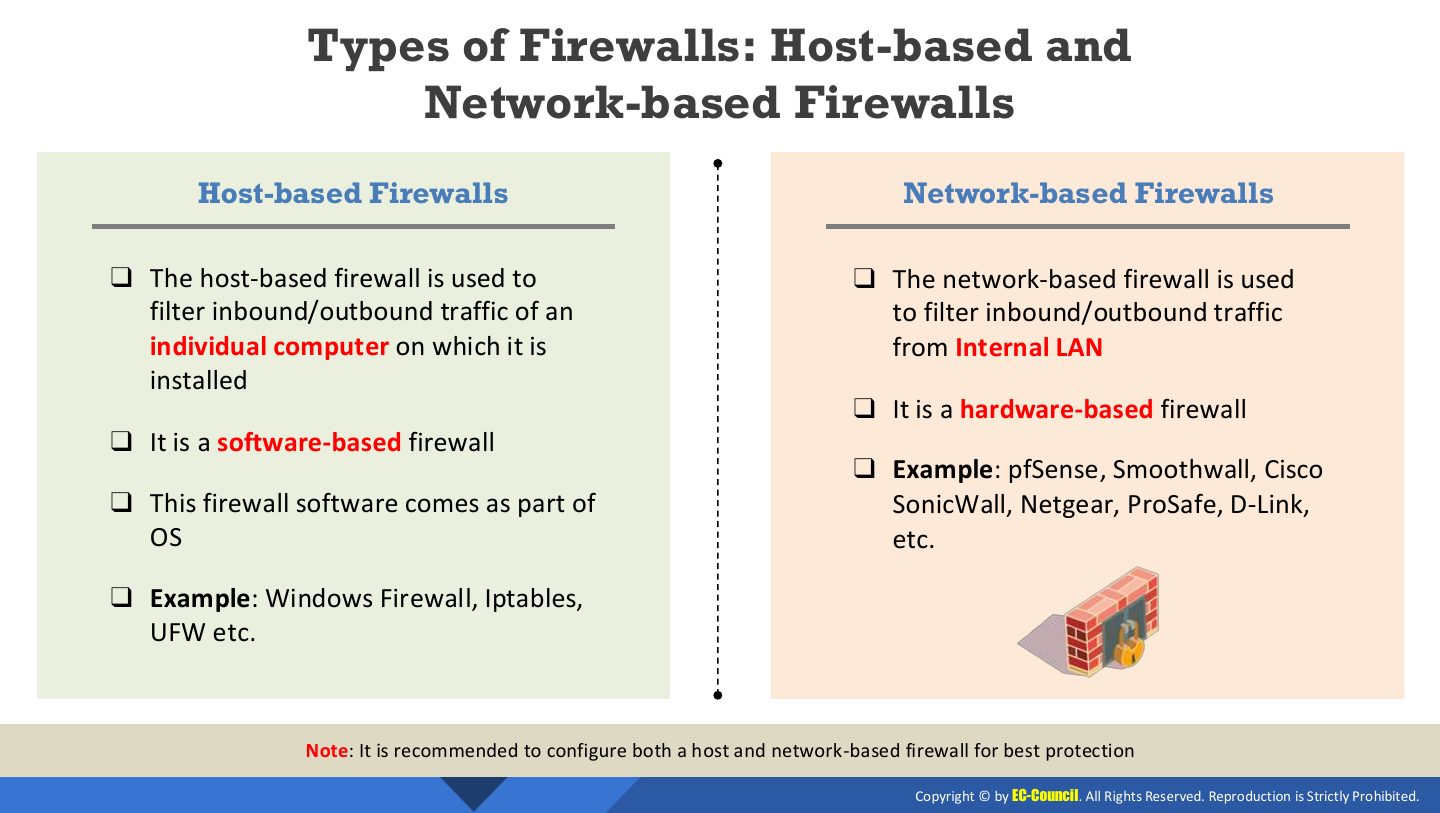
Firewall Technologies
Firewall technologies operating at each OSI layer
Packet Filtering Firewall
Notes
Packet filter (layer 3/4): checks IPs, ports, protocol of each packet independently. Fast but stateless.
Circuit-Level Gateway
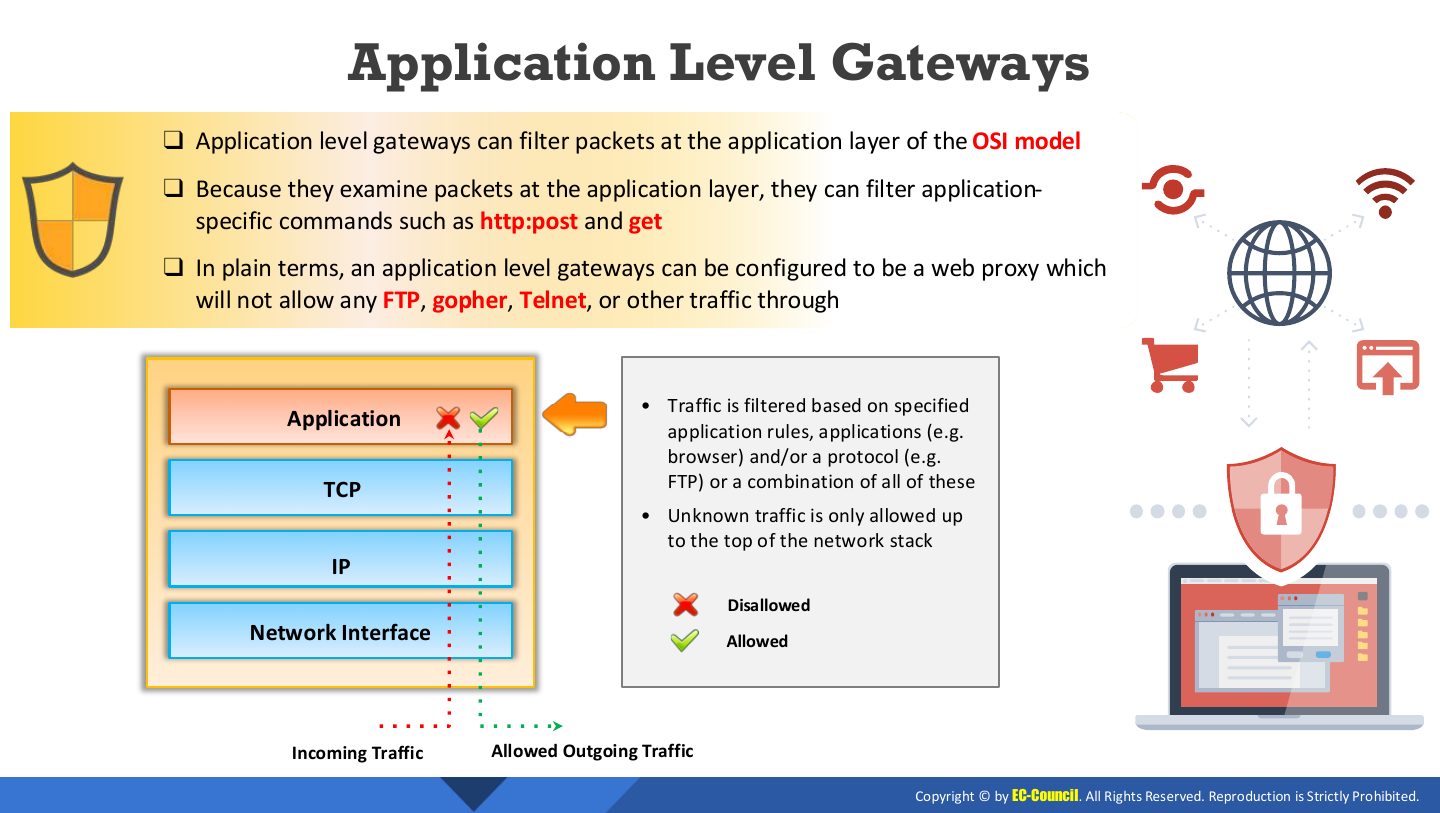
Application Level Gateways
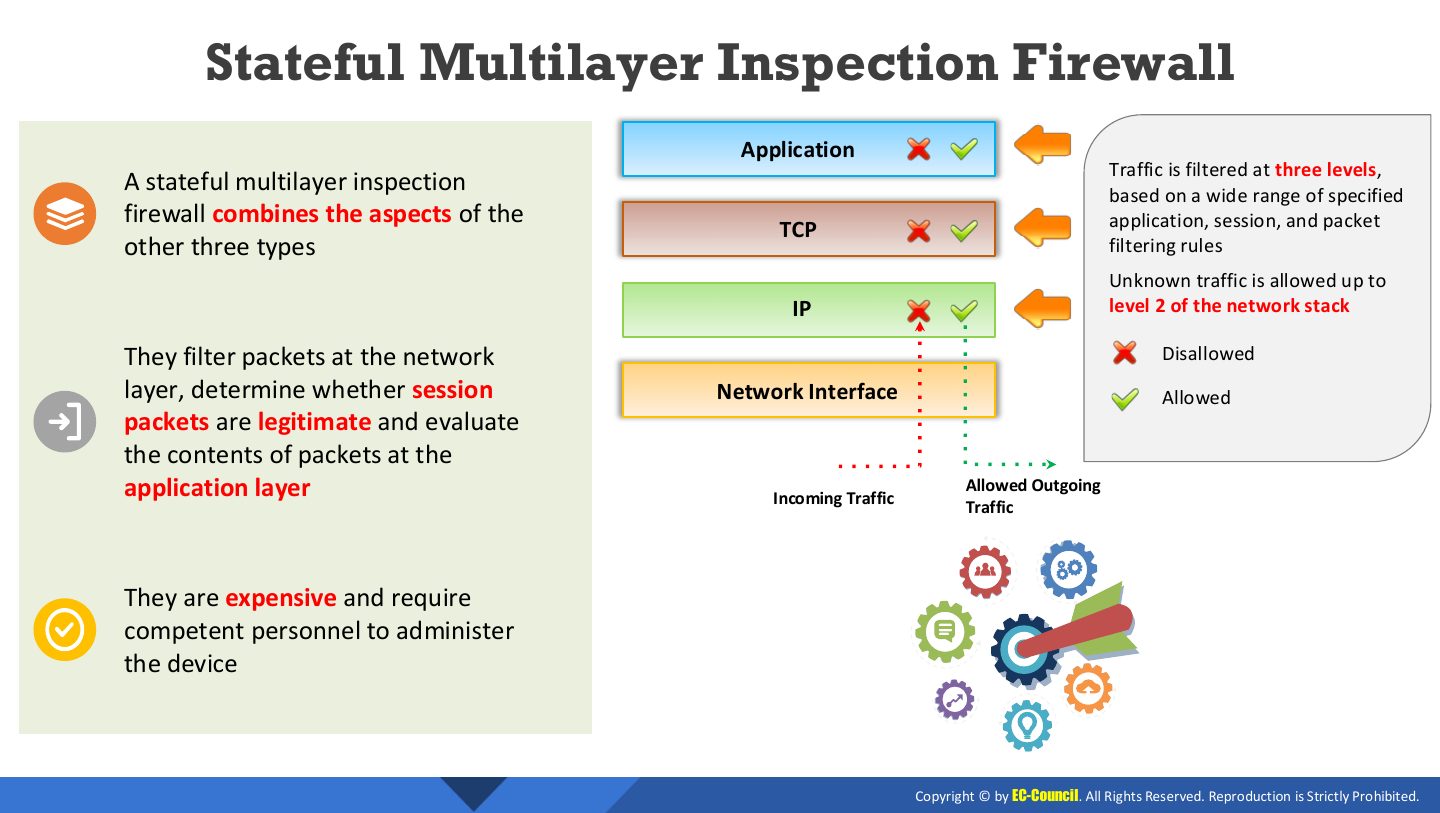
Stateful Multilayer Inspection Firewall
Notes
Stateful multilayer inspection: tracks connection state and examines multiple layers.
Exam angle
A firewall that tracks the state of connections in a table is a:
Which firewall type can inspect HTTP content?
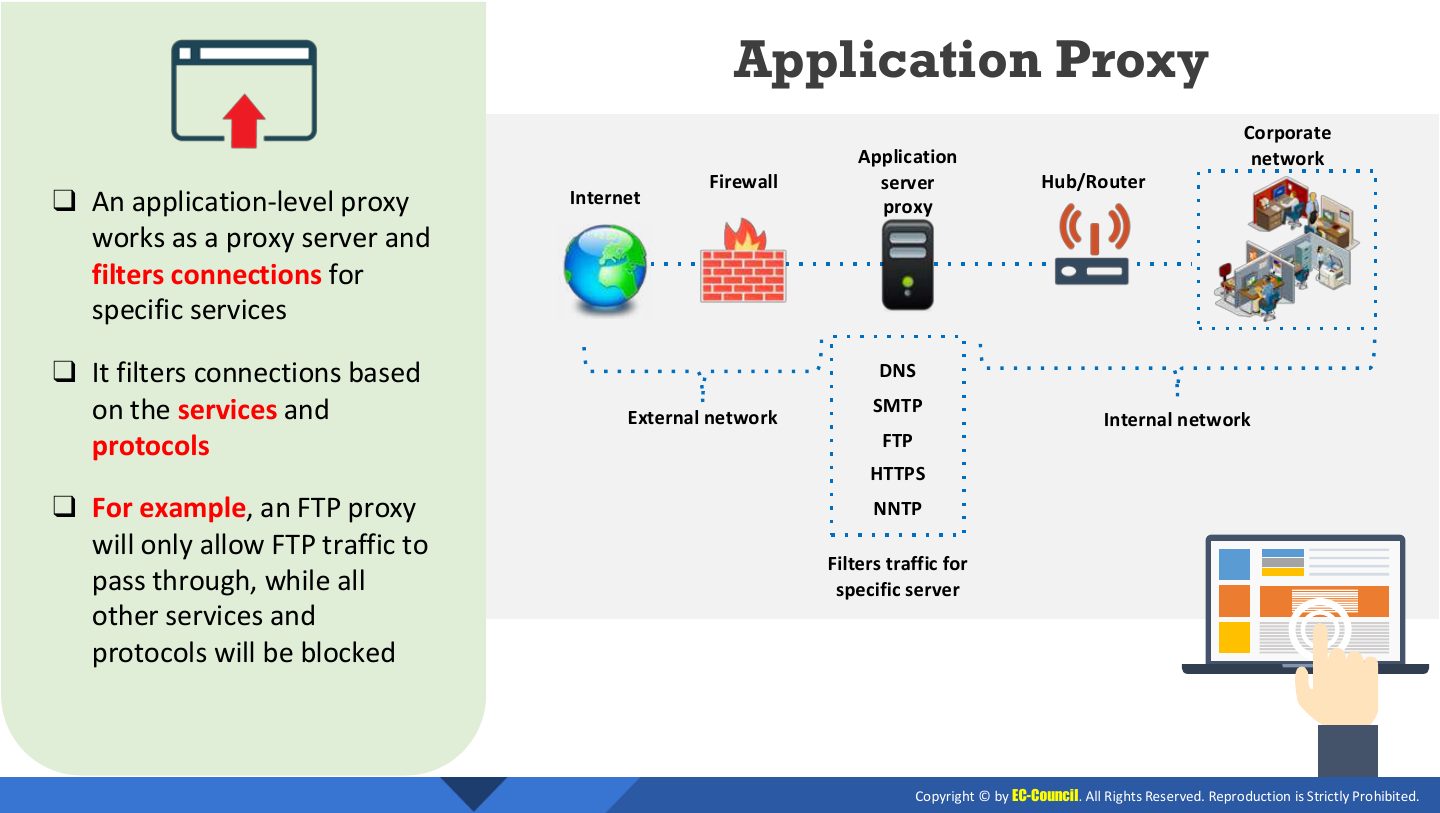
Application Proxy
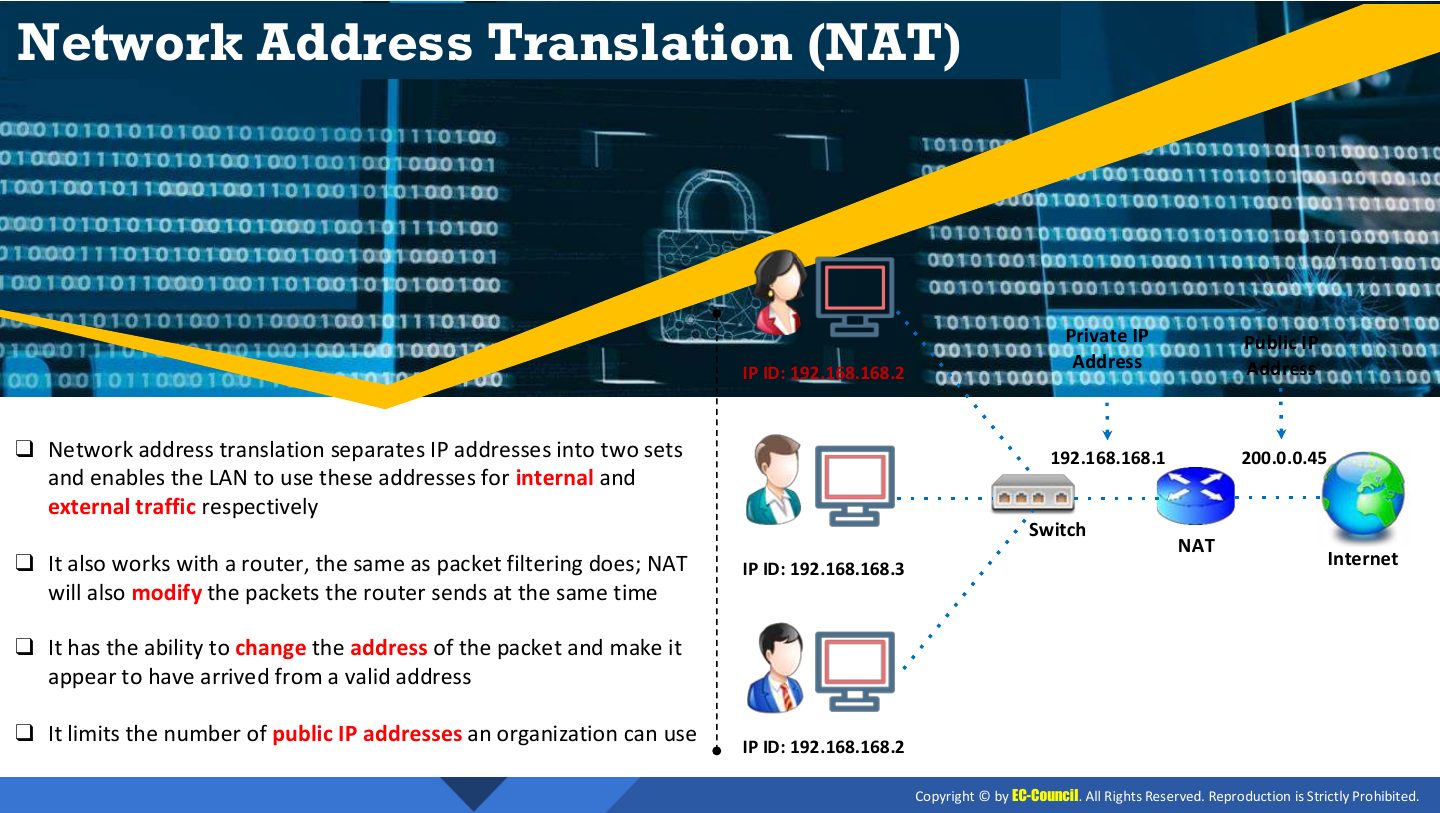
Network Address Translation (NAT)
Notes
NAT hides internal addresses behind one public IP.
Virtual Private Network
Next Generation Firewall (NGFW)
Notes
NGFW: stateful firewall + deep packet inspection, application awareness, IPS, user identity.
Firewall Capabilities
Firewall Limitations
Notes
Limitations: can’t stop insider attacks, malware in allowed traffic, social engineering, encrypted payloads it can’t inspect.
Exam angle
A firewall protects against attacks from inside the network.
- Traffic that never crosses it isn’t filtered.
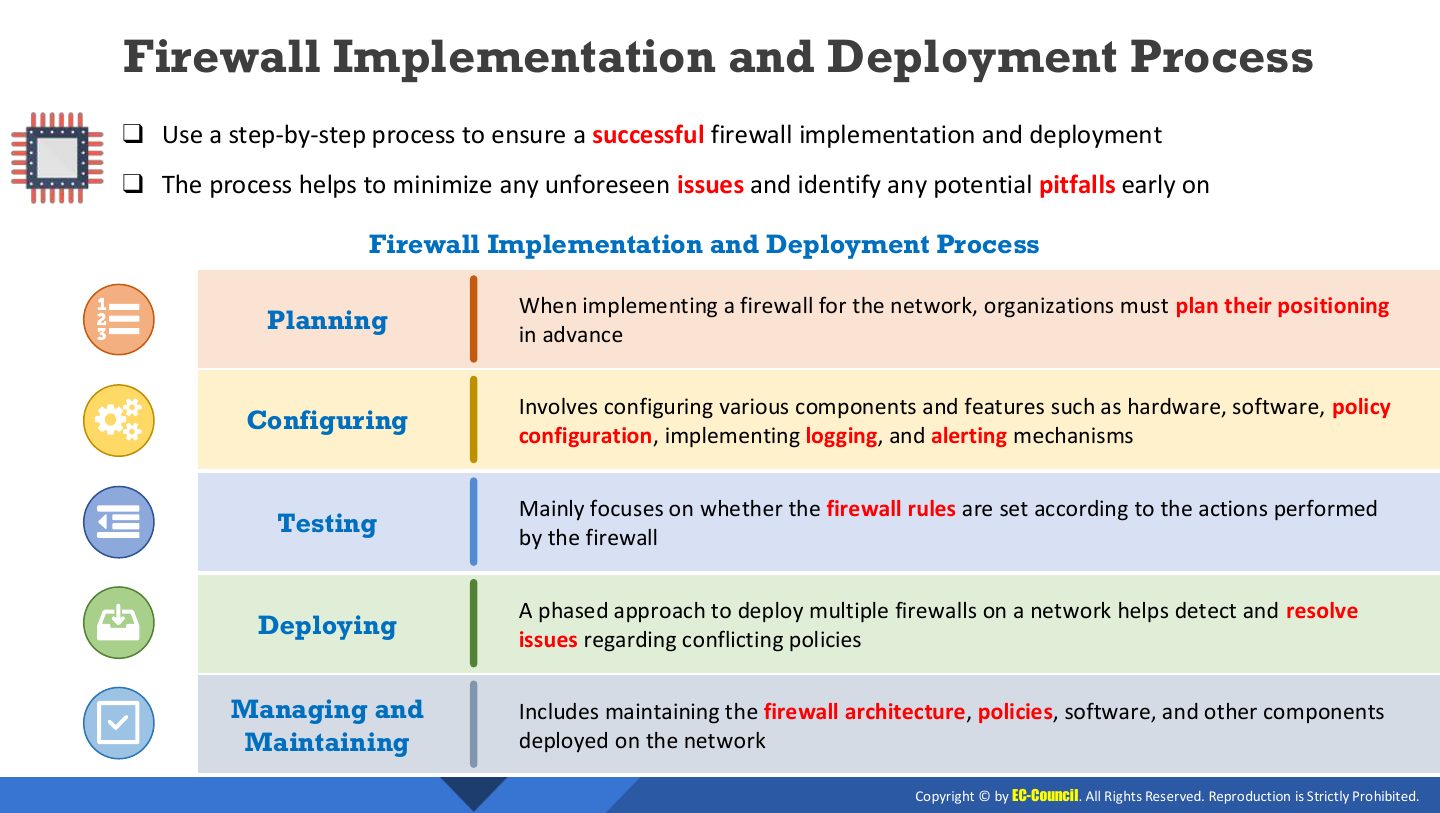
Firewall Implementation and Deployment Process
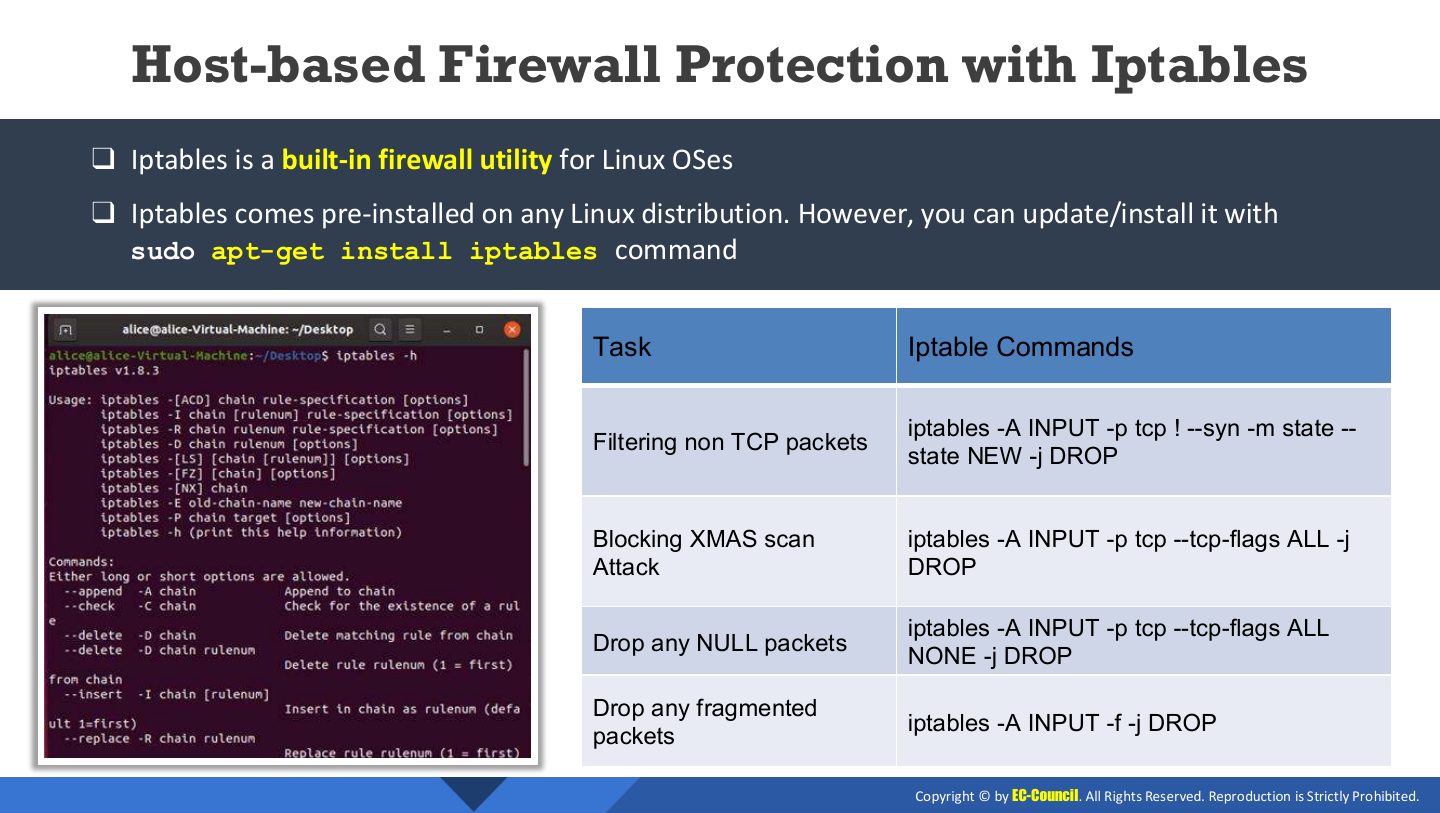
Host-based Firewall Protection with Iptables
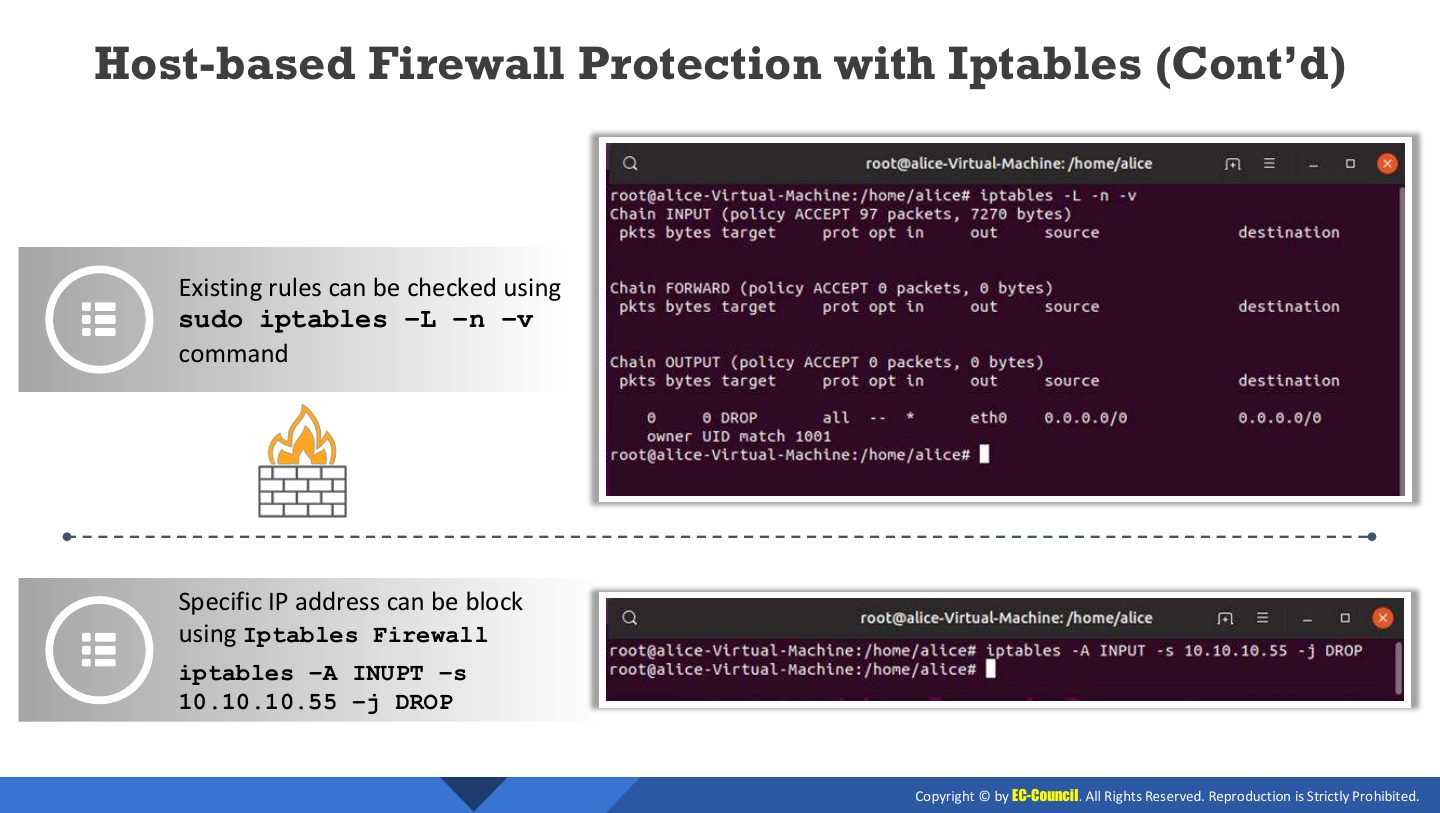
Host- based Firewall Protection with Iptables (Cont’d)
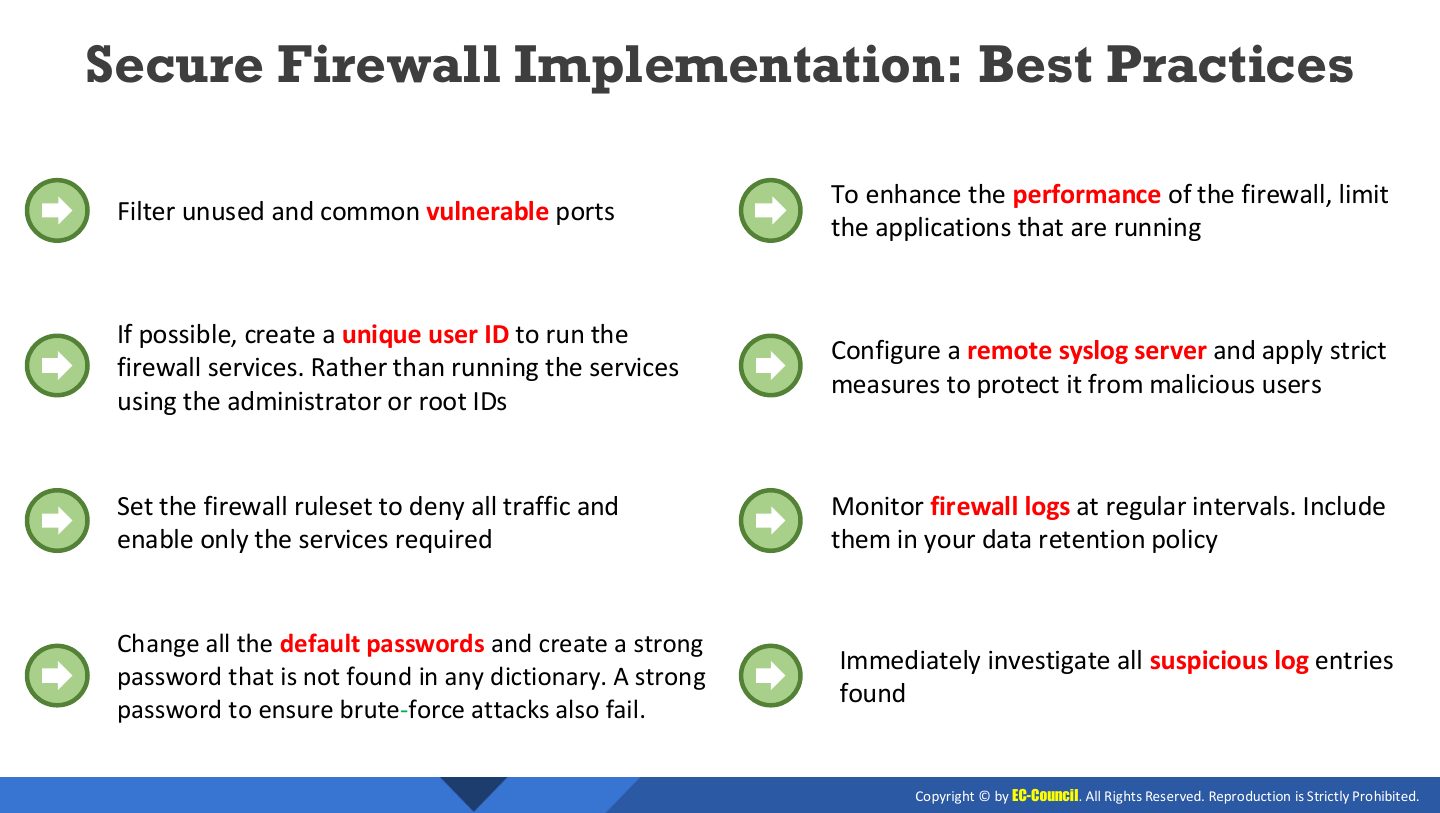
Secure Firewall Implementation: Best Practices
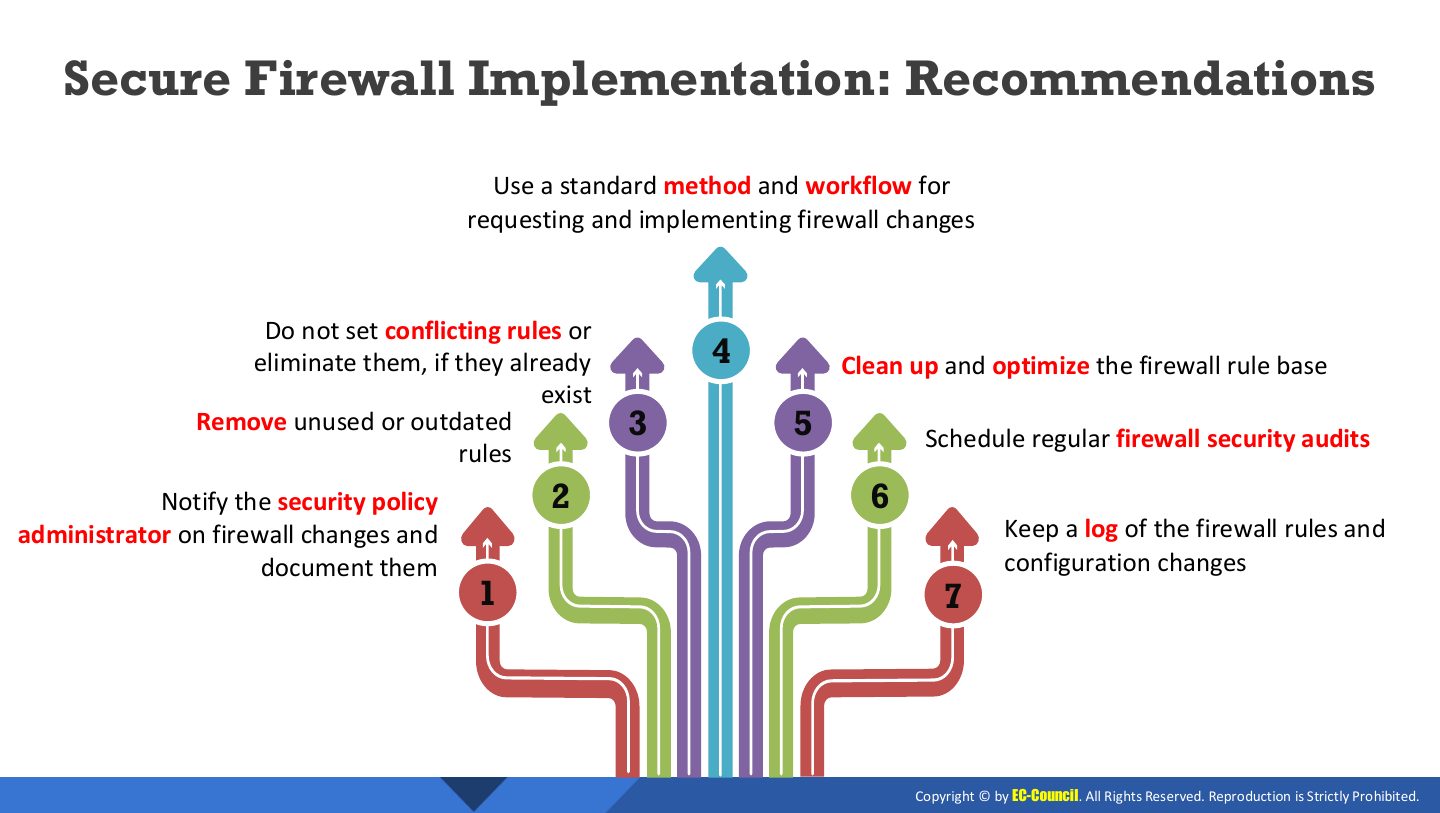
Secure Firewall Implementation: Recommendations
Secure Firewall Implementation: Do’s and Don’ts