Keys used for a single communication session and then discarded are:
Key Distribution and Management
Key management and its protocols, key hierarchies (master and session keys), symmetric key distribution with a KDC and its MITM risk, hybrid schemes, distributing public keys (announcement, directory, authority, certificates), X.509 certificates and CA hierarchies, revocation (CRL, OCSP) and PKI.
How to read this page
Every original slide is shown unchanged. Yellow marks on a slide point to a numbered note: hover or tap a mark to jump to its note, and hover a note to see its marks. Questions tagged Past exam appeared on a real paper; Prediction questions are likely angles, not confirmed. Pick an answer to each question: a wrong pick tells you why it is wrong, so you can try again.
All 48 slides
- 1 Slide 1
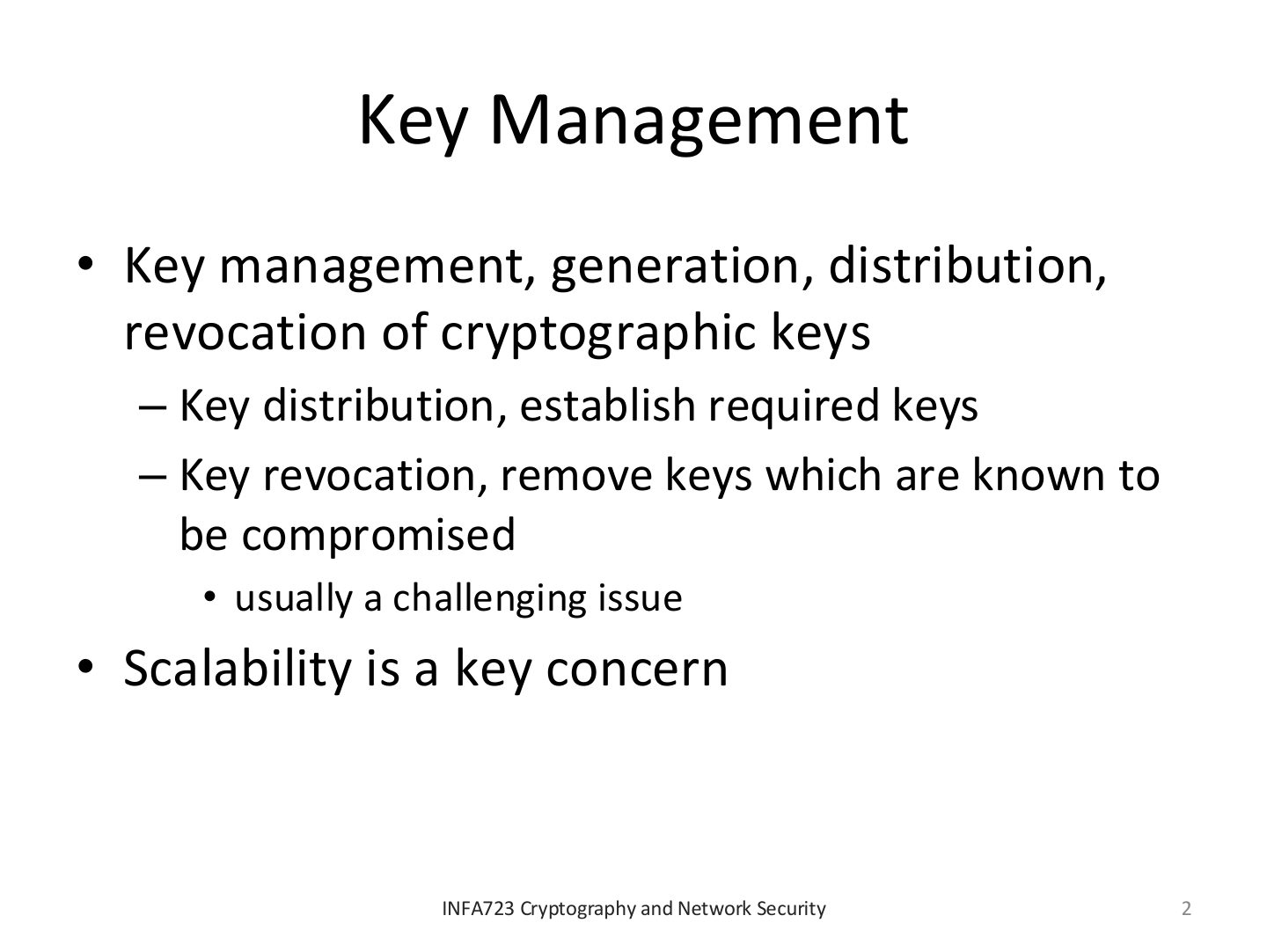
- 2 Key Management
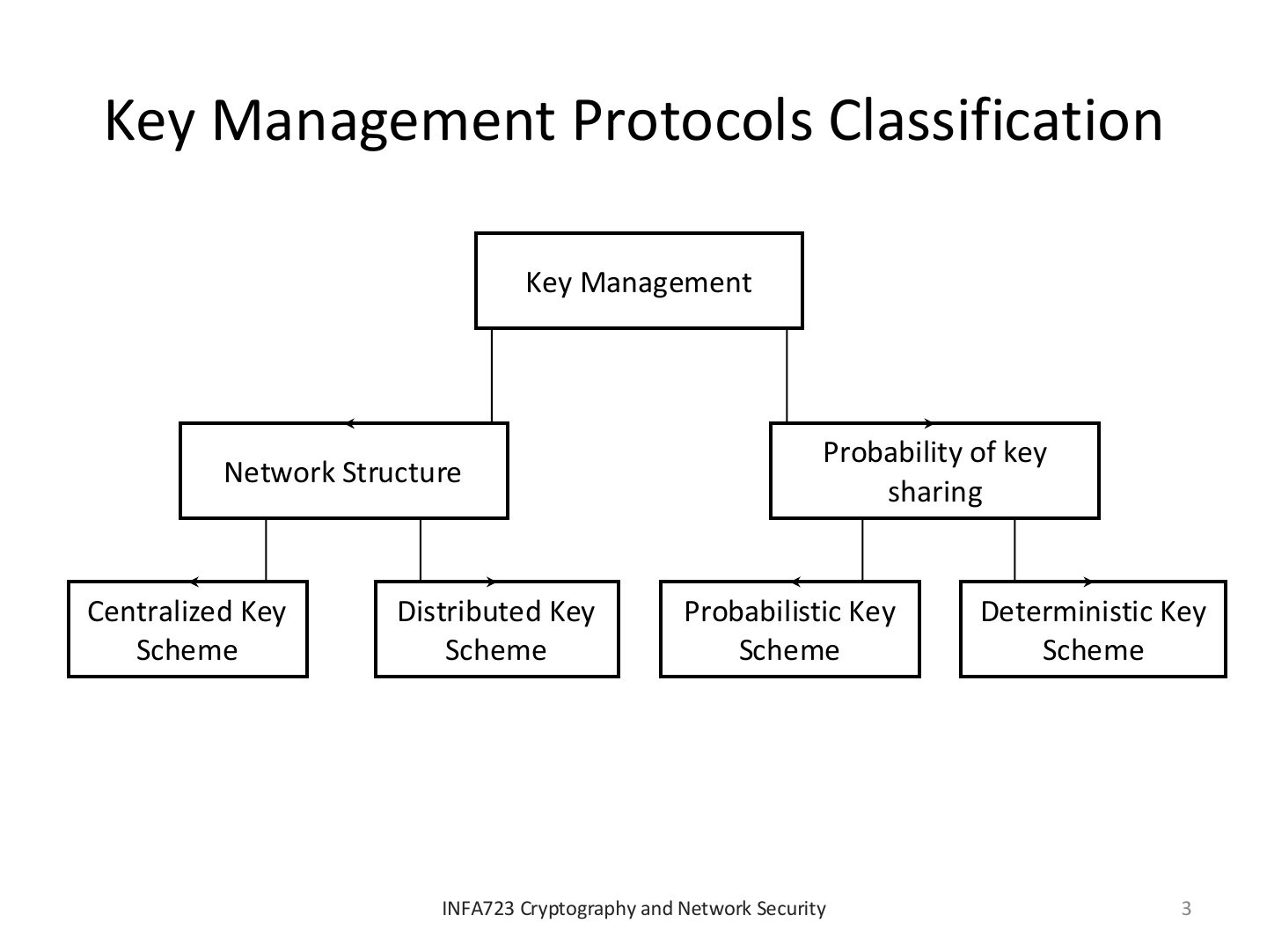
- 3 Key Management Protocols Classification
- 4 Key Management is a Fundamental Issue
- 5 Key Management and Distribution
- 6 Key Distribution
- 7 Key Distribution
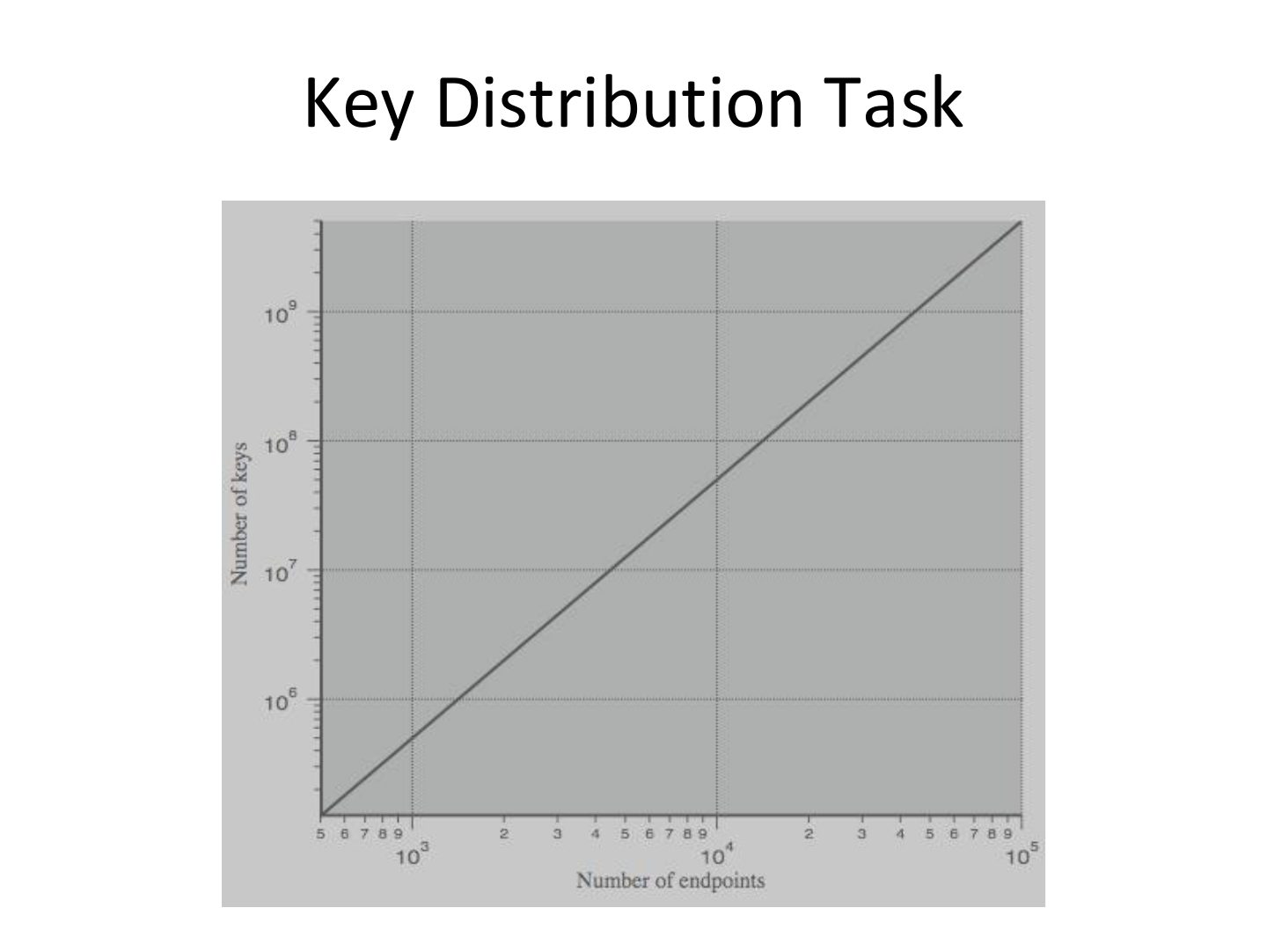
- 8 Key Distribution Task
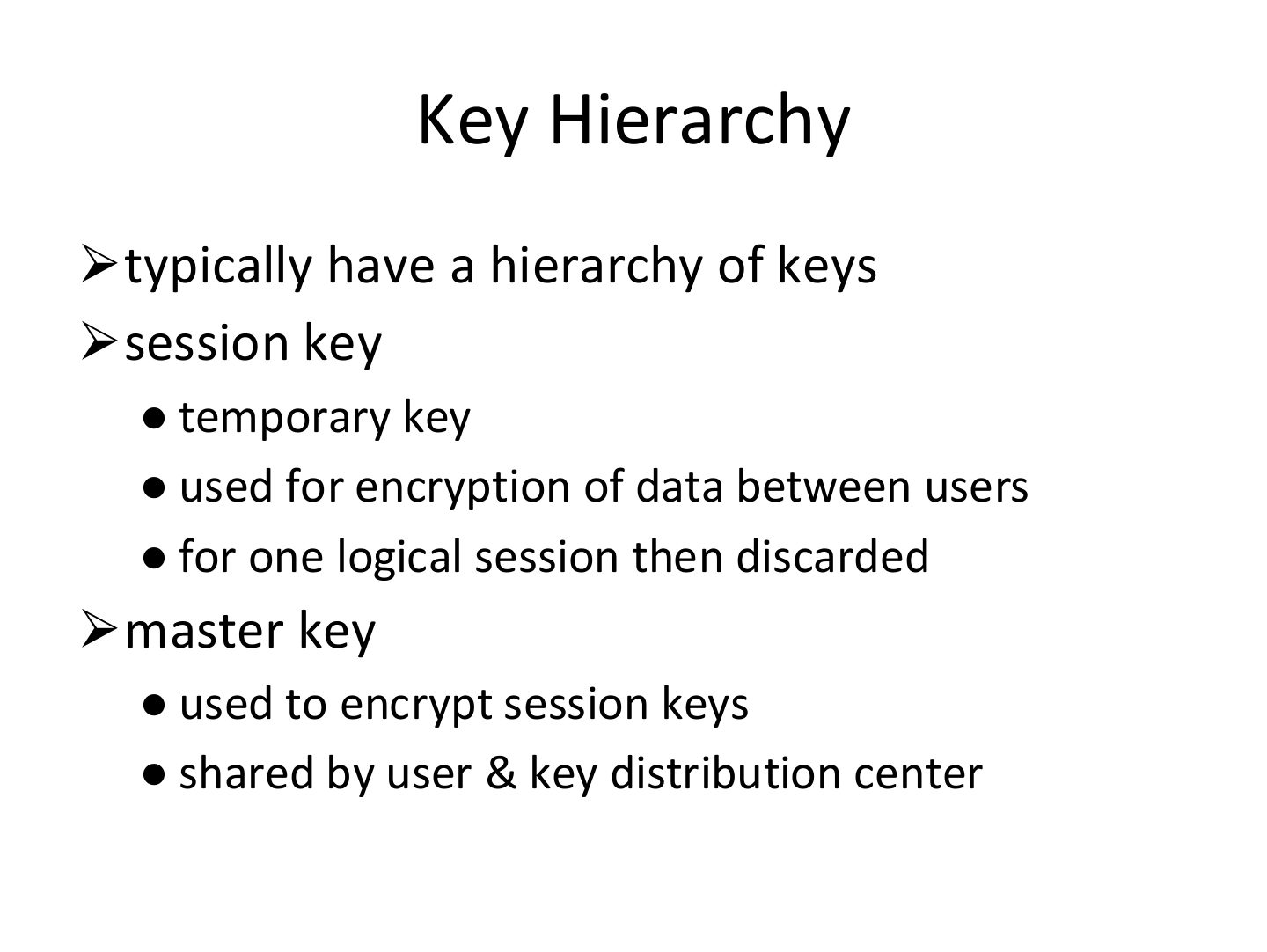
- 9 Key Hierarchy
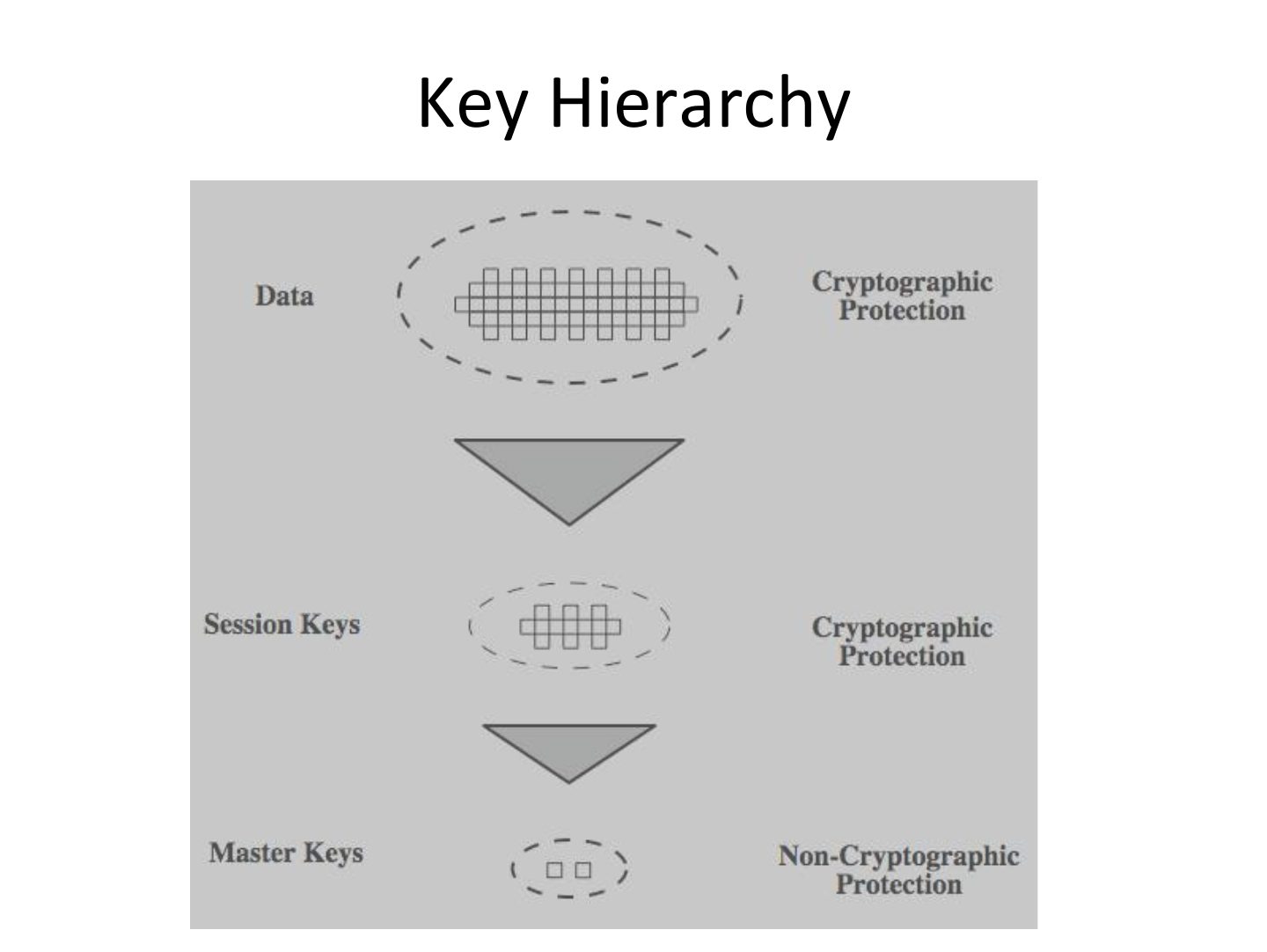
- 10 Key Hierarchy
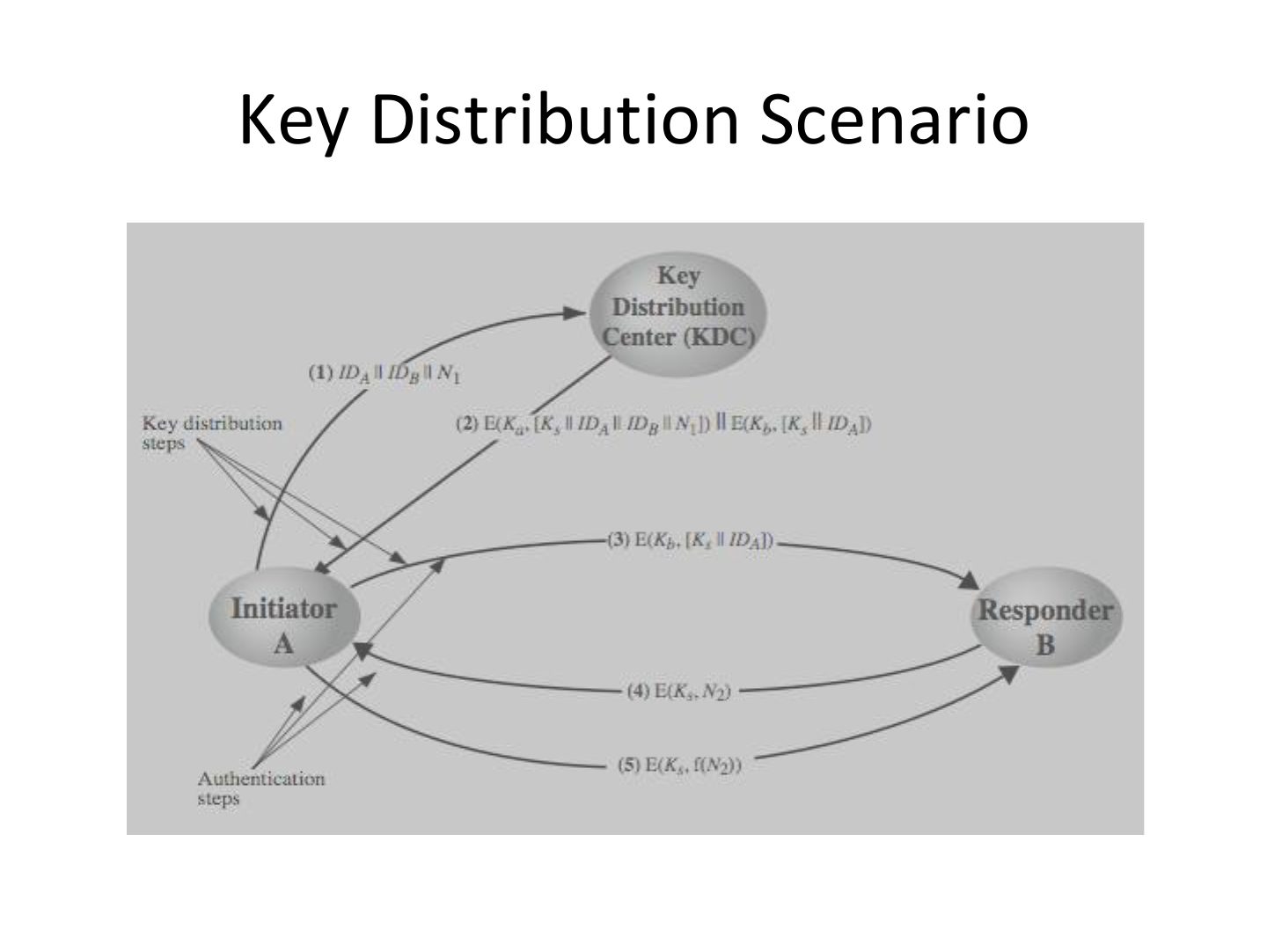
- 11 Key Distribution Scenario
- 12 Key Distribution Issues
- 13 Symmetric Key Distribution Using Public Keys
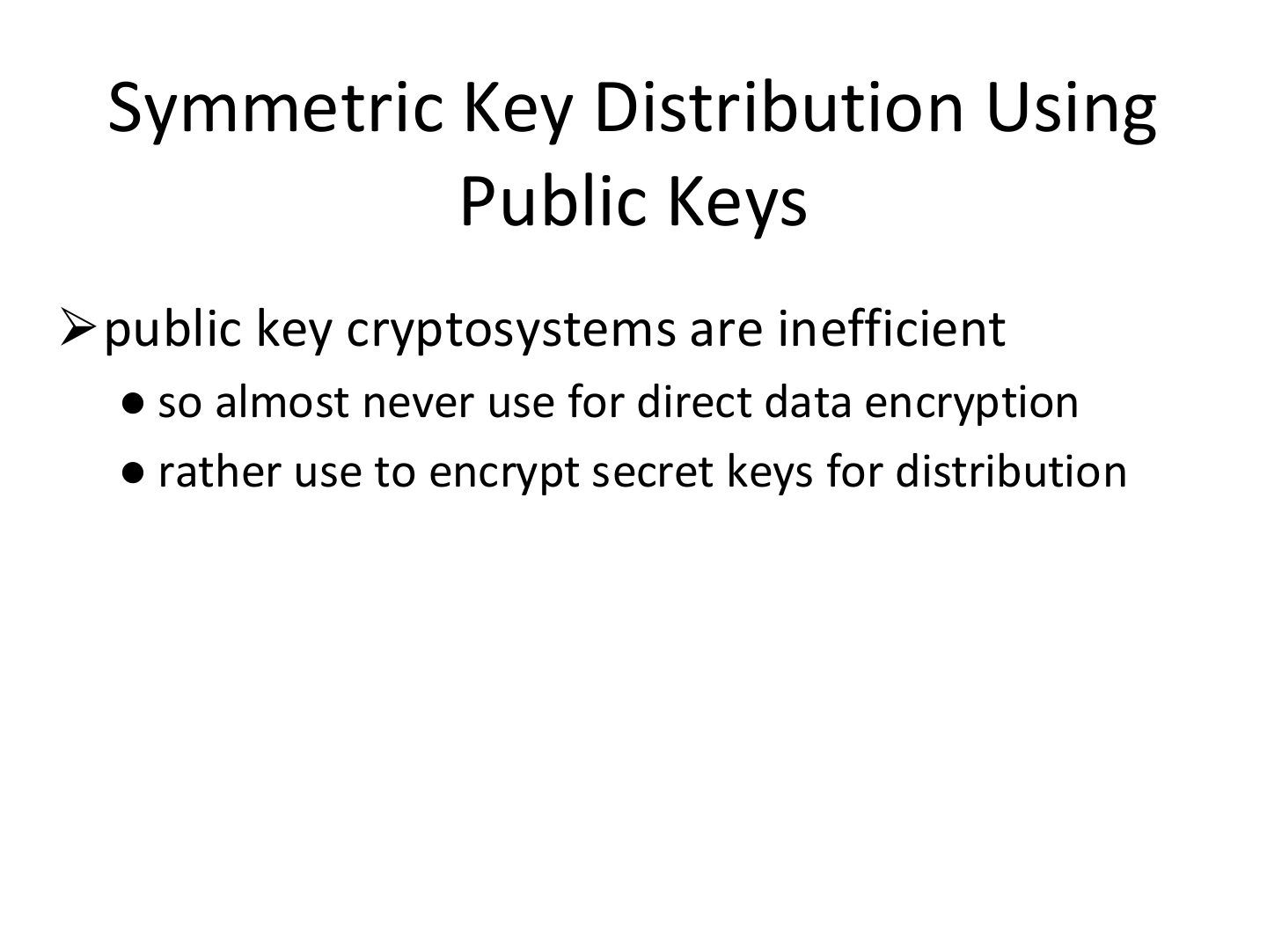
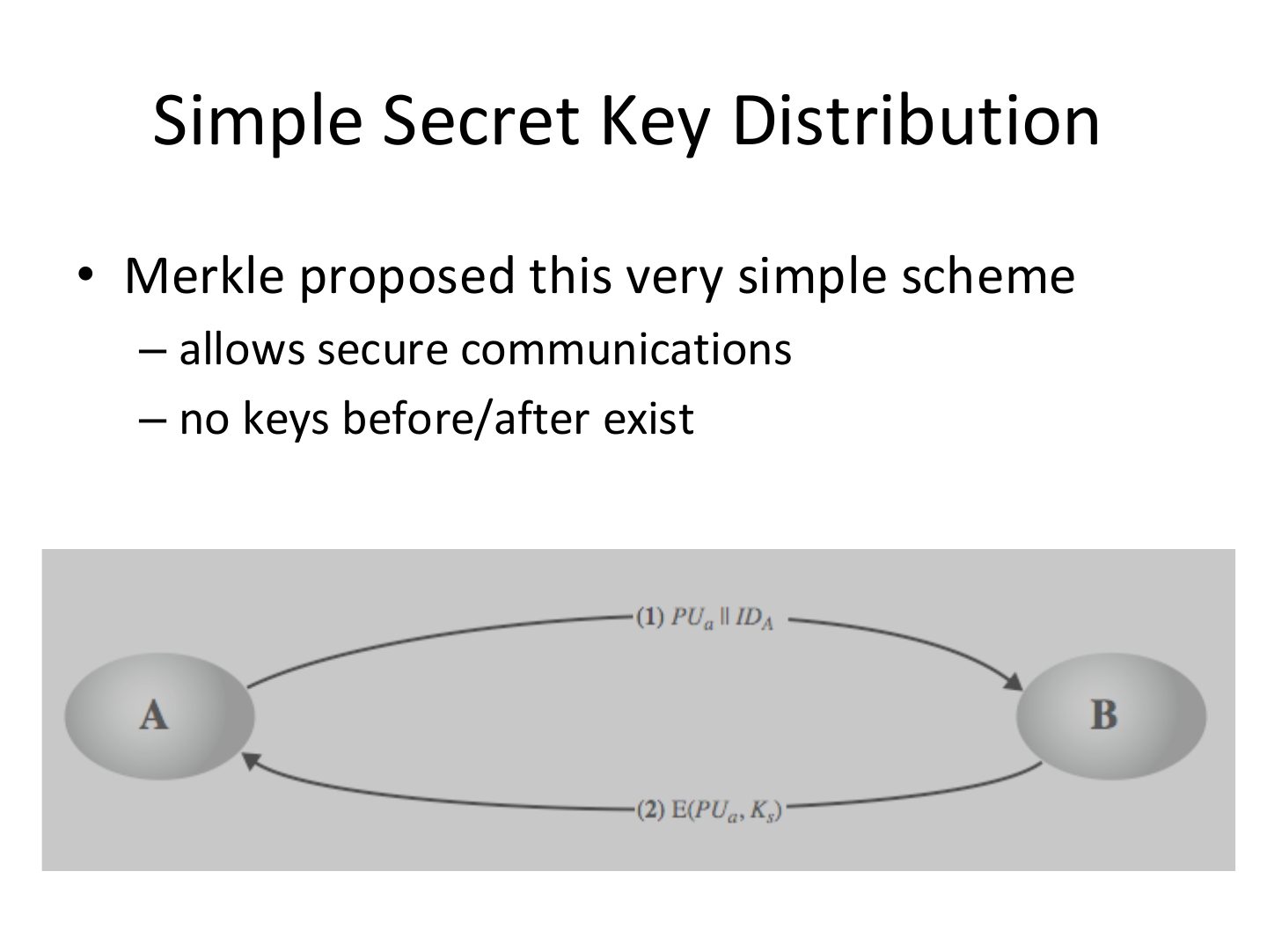
- 14 Simple Secret Key Distribution
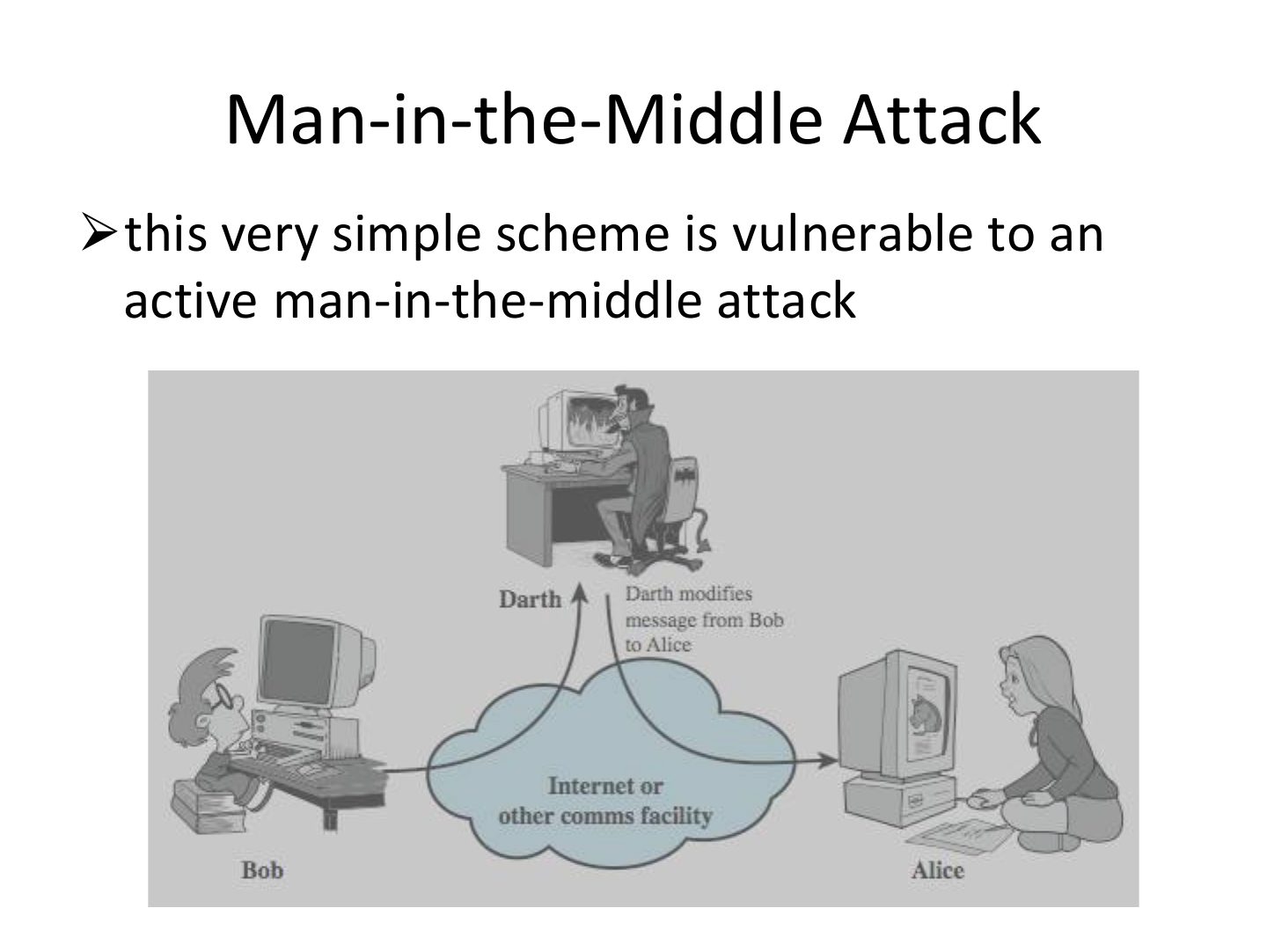
- 15 Man-in-the-Middle Attack
- 16 Secret Key Distribution with Confidentiality and Authentication
- 17 Hybrid Key Distribution
- 18 Distribution of Public Keys
- 19 Public Announcement
- 20 Publicly Available Directory
- 21 Public-Key Authority
- 22 Public-Key Authority
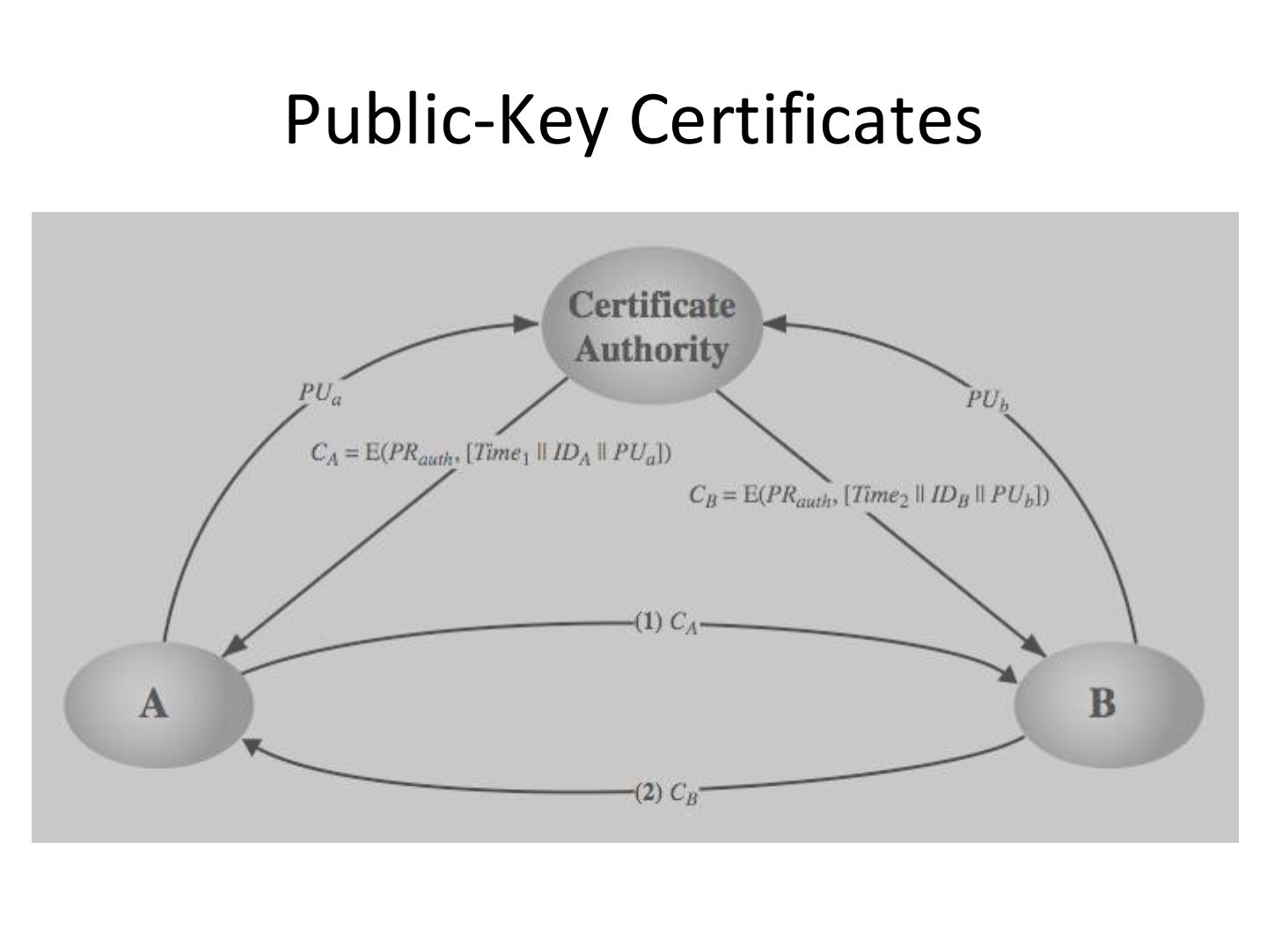
- 23 Public-Key Certificates
- 24 Public-Key Certificates
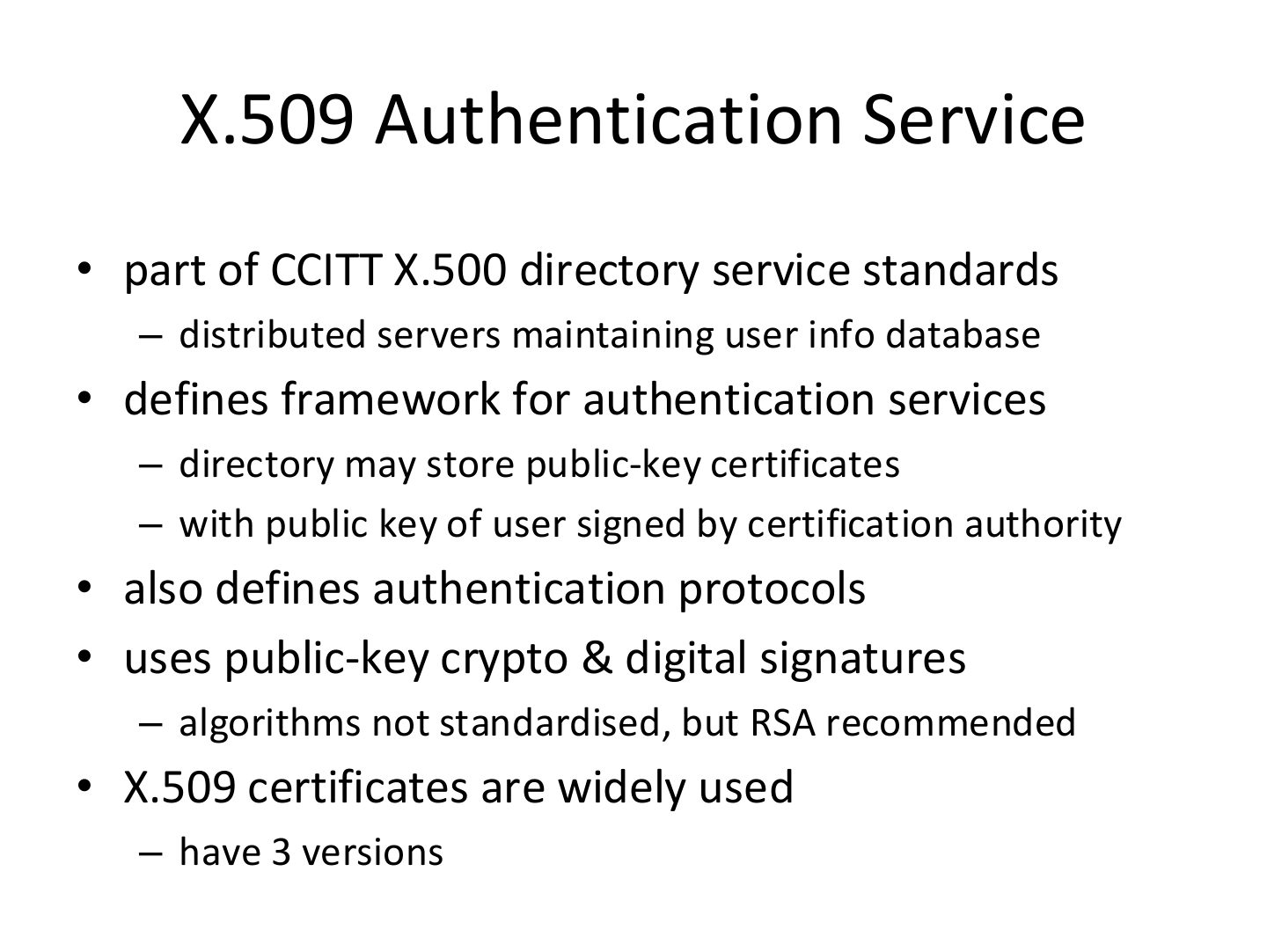
- 25 X.509 Authentication Service
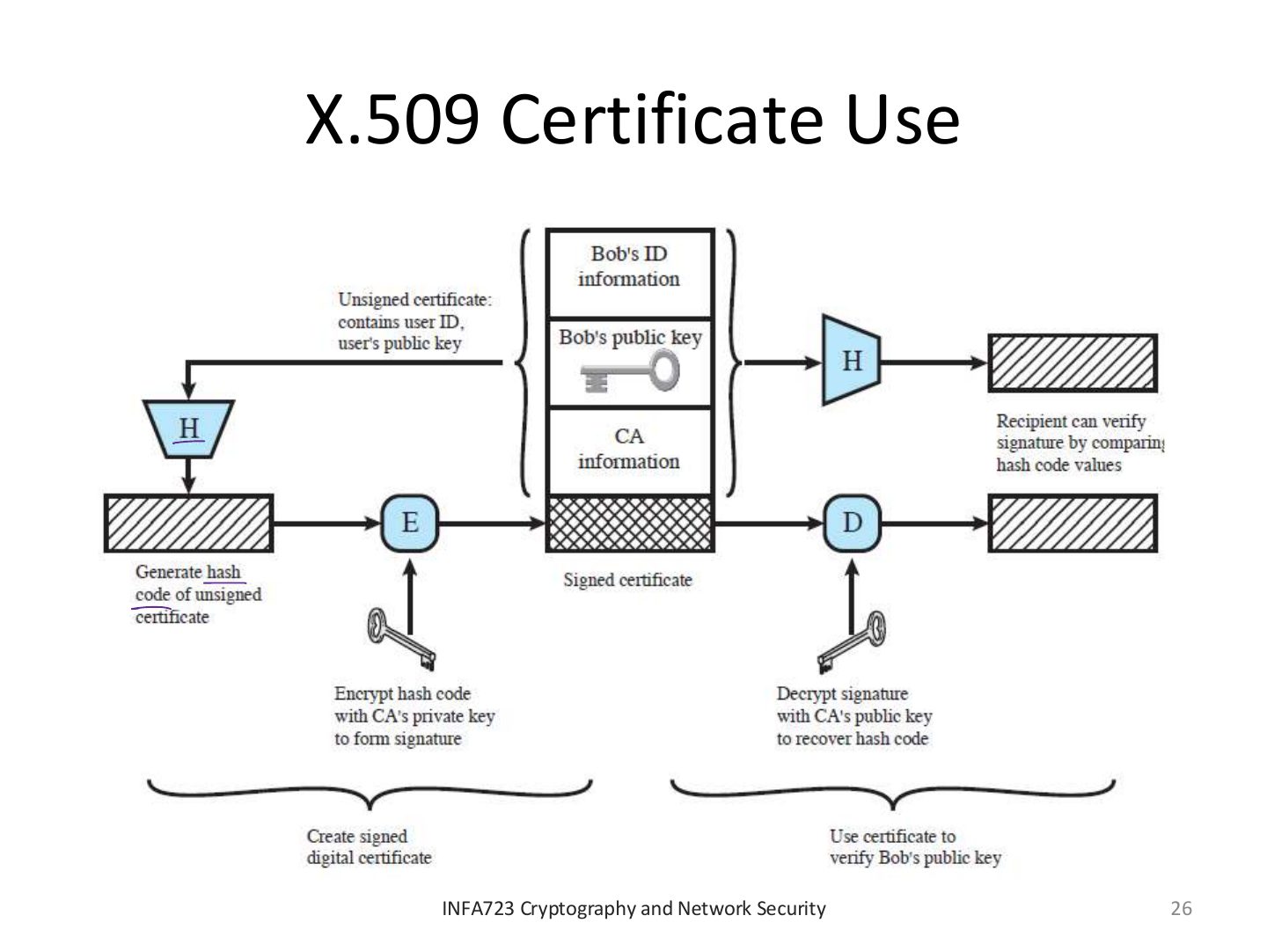
- 26 X.509 Certificate Use
- 27 X.509 Certificates
- 28 X.509 Certificates
- 29 Obtaining a Certificate
- 30 CA Hierarchy
- 31 CA Hierarchy Use
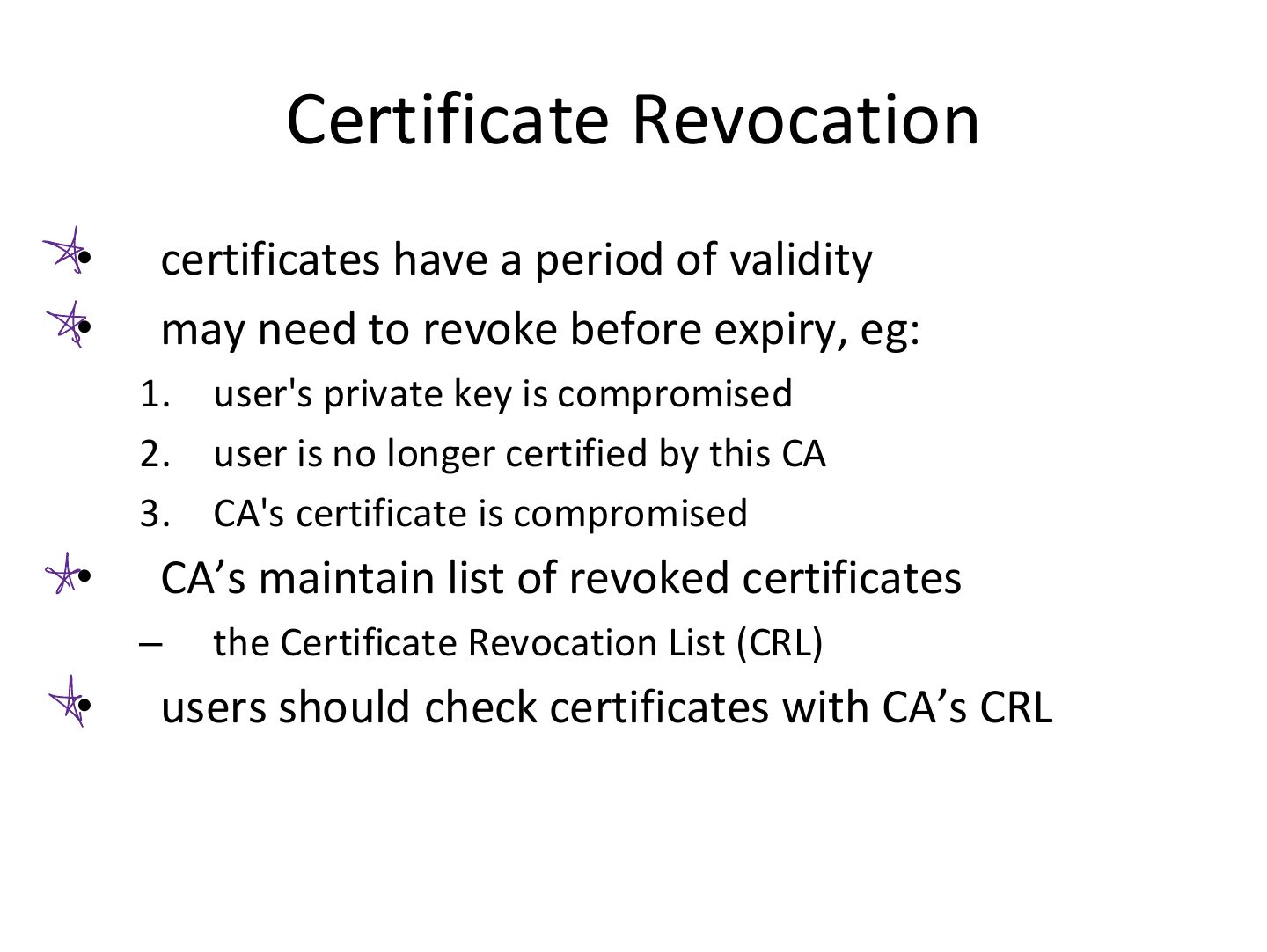
- 32 Certificate Revocation
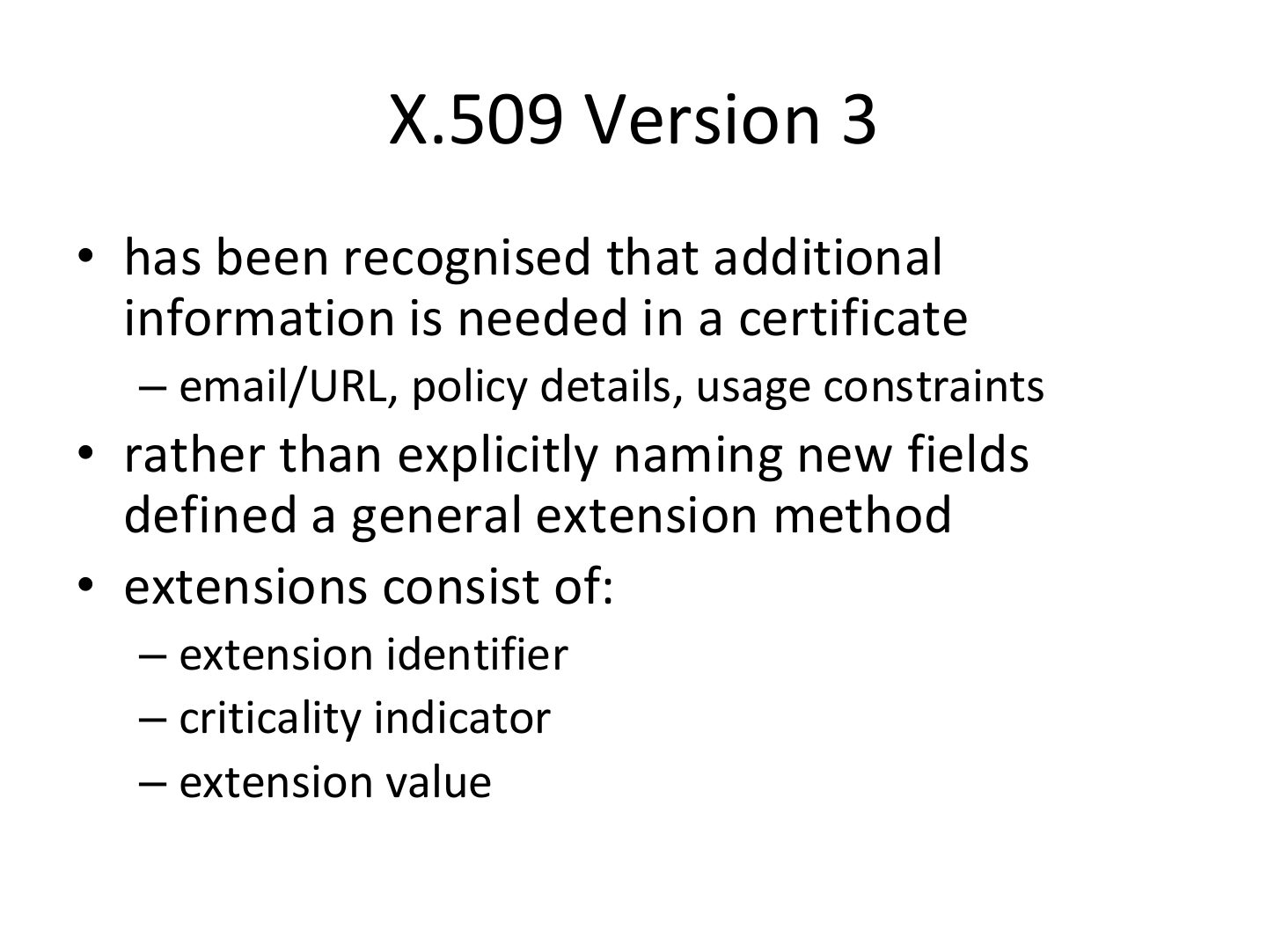
- 33 X.509 Version 3
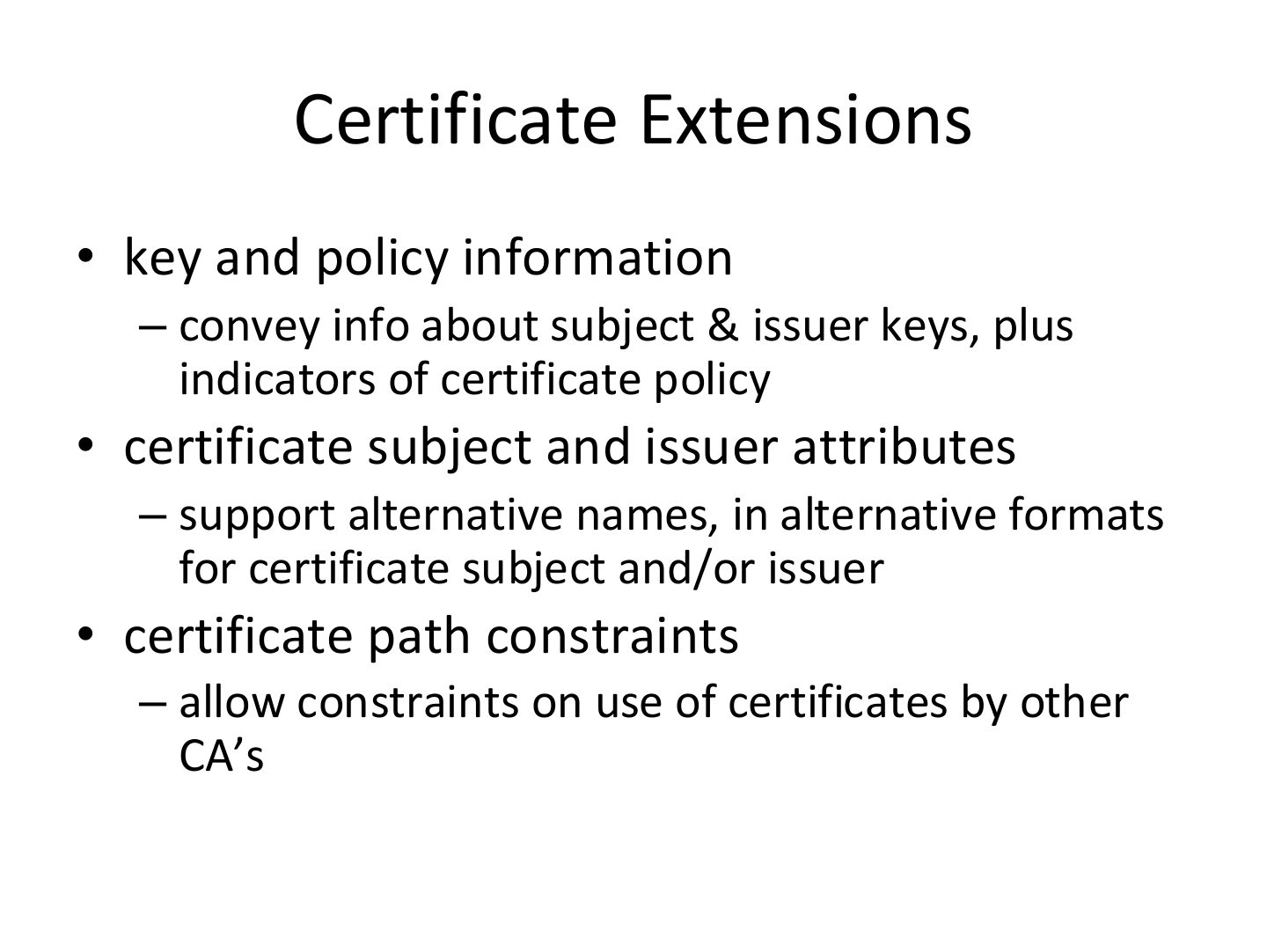
- 34 Certificate Extensions
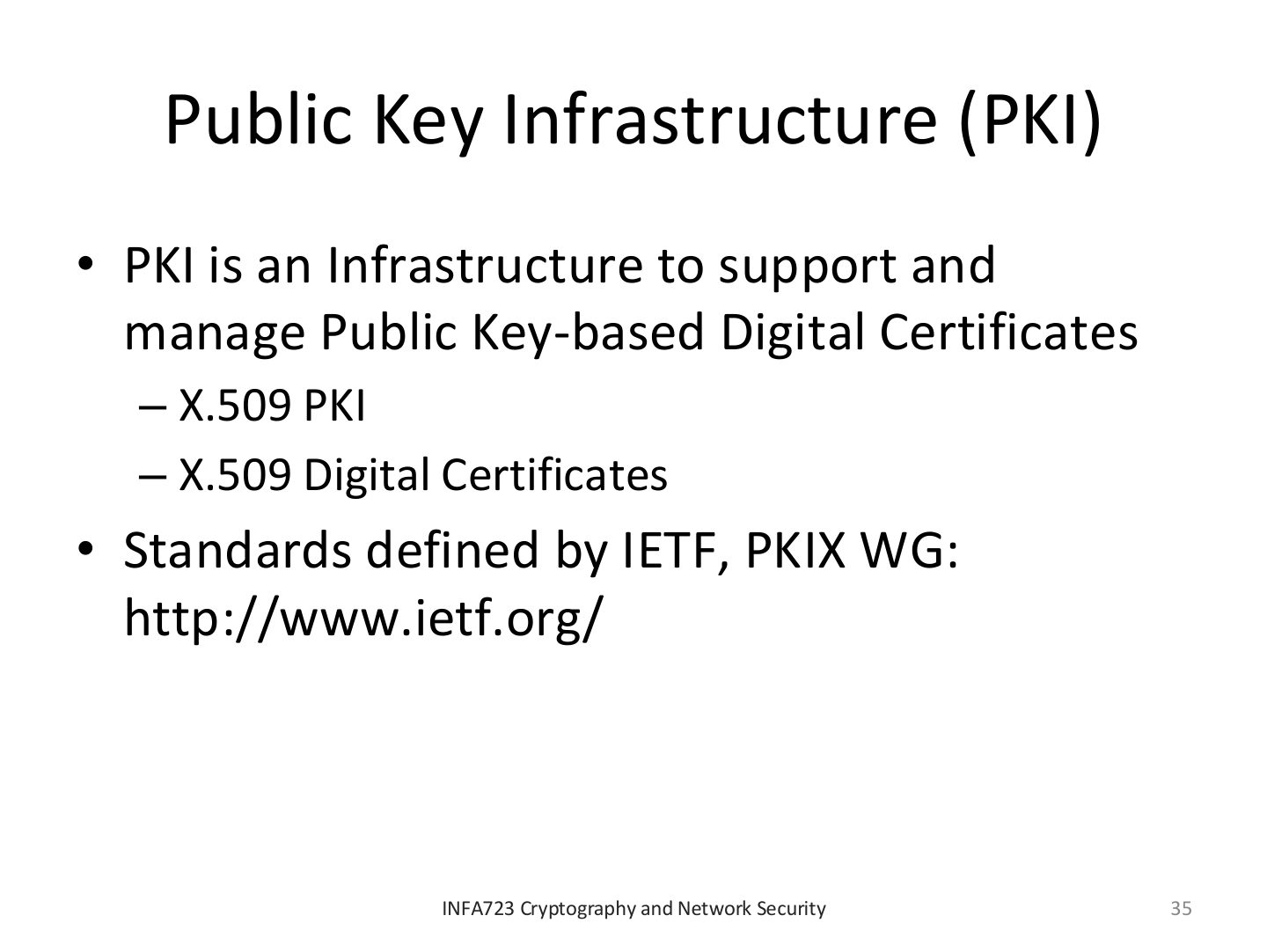
- 35 Public Key Infrastructure (PKI)
- 36 Public Key Infrastructure
- 37 X.509 PKI Simple Model
- 38 X.509 PKI Certificate Authority (CA)
- 39 X.509 PKI Registration Authority (RA)
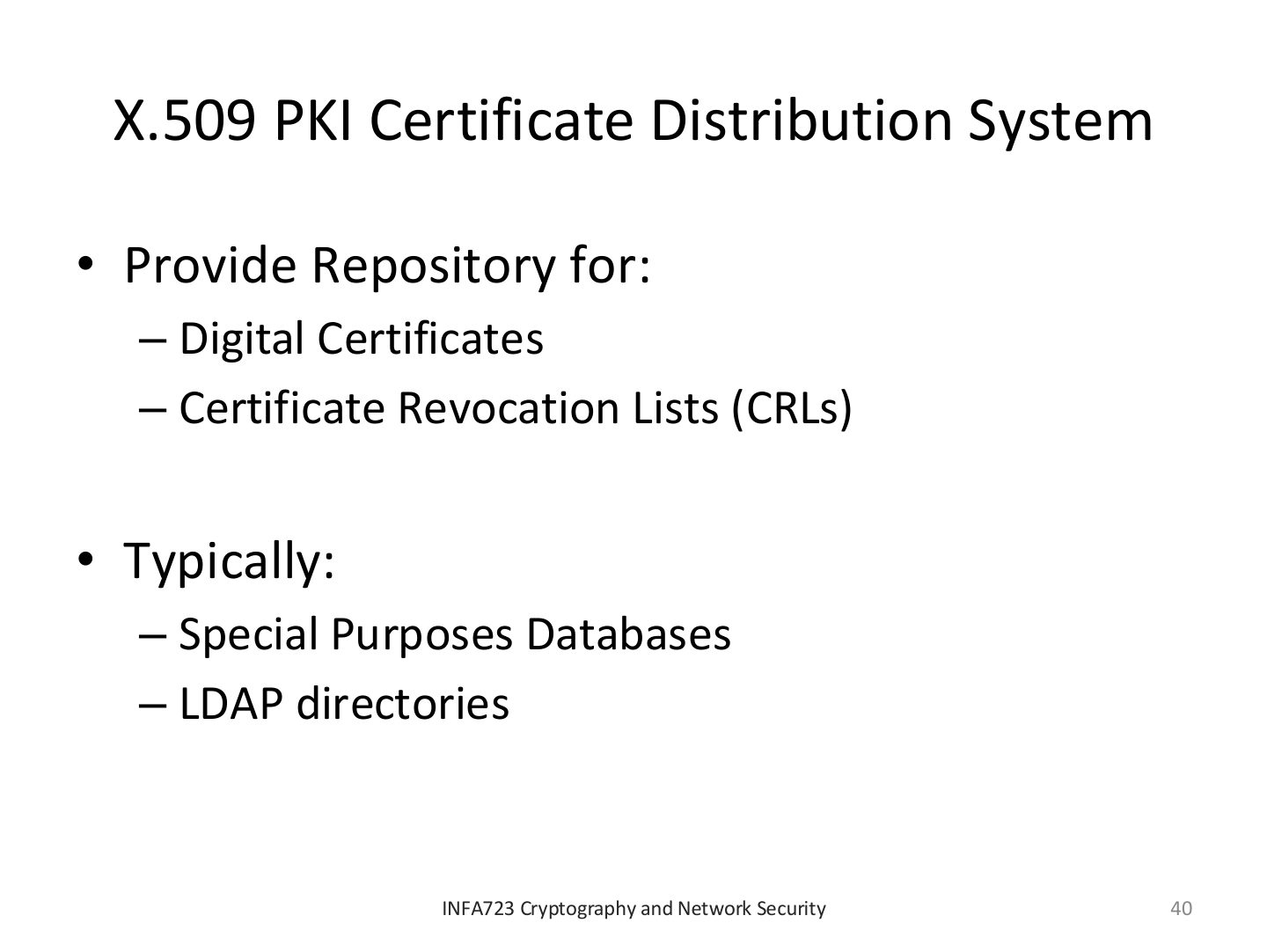
- 40 X.509 PKI Certificate Distribution System
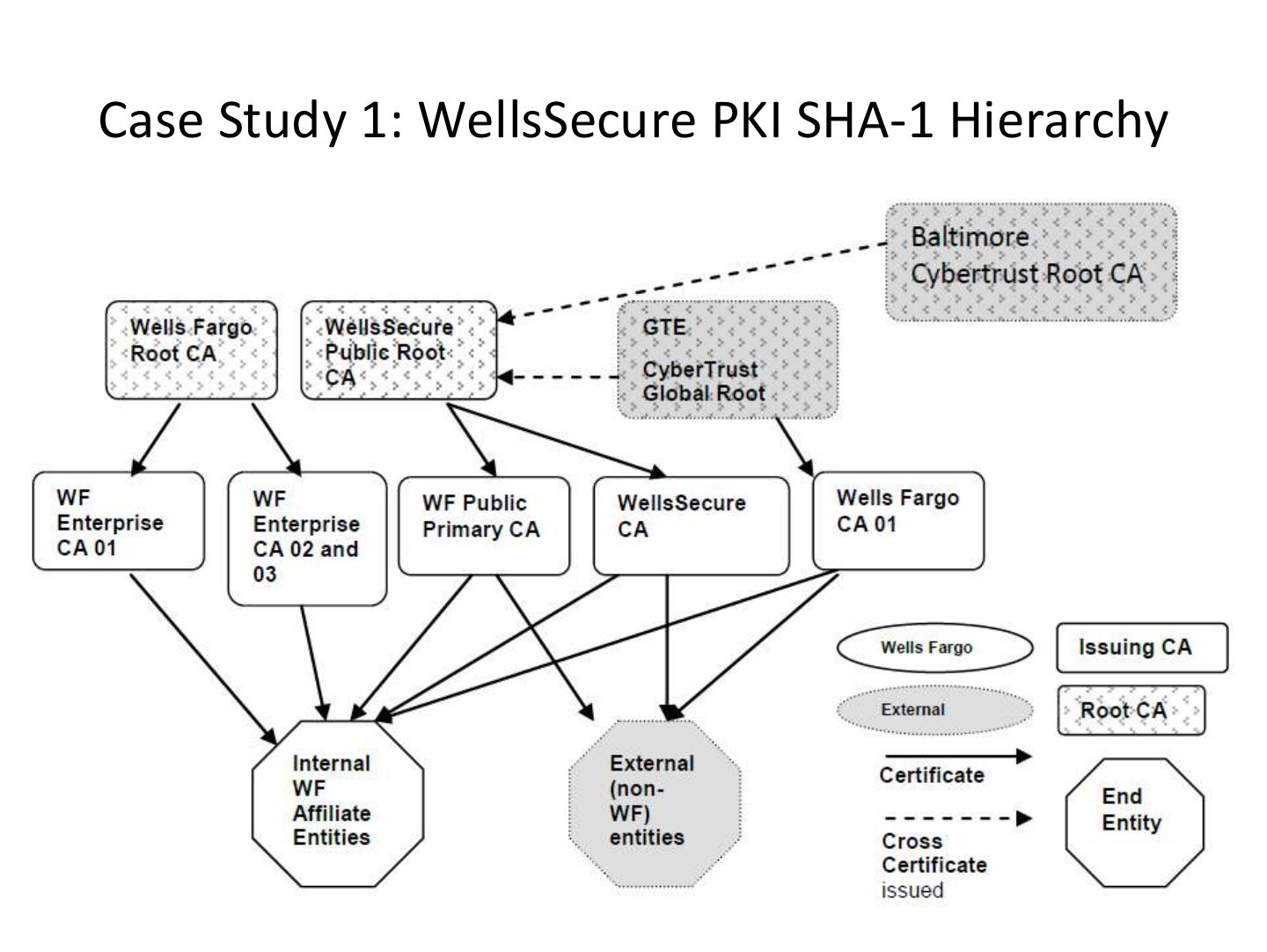
- 41 Case Study 1: WellsSecure PKI SHA-1 Hierarchy
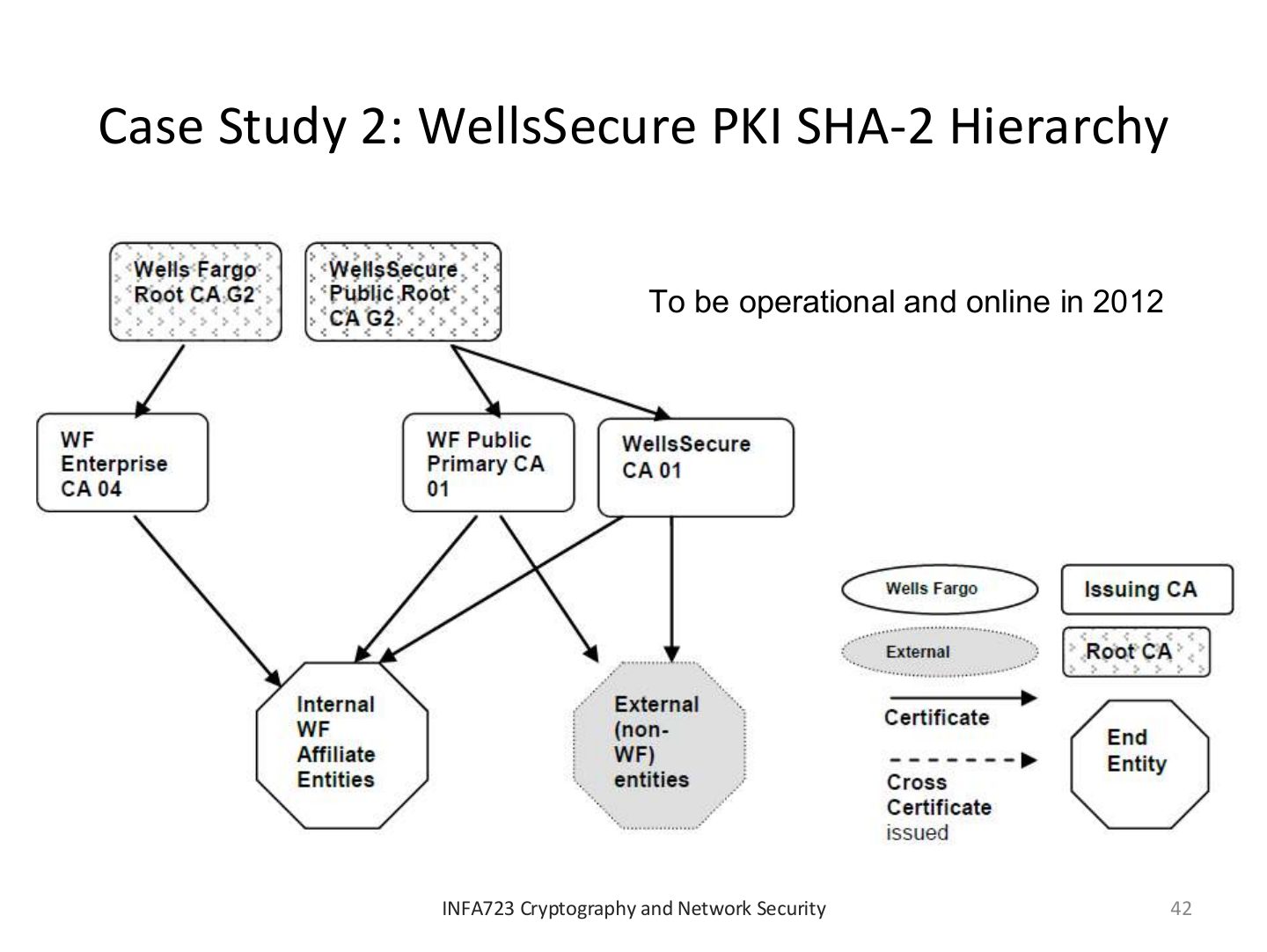
- 42 Case Study 2: WellsSecure PKI SHA-2 Hierarchy
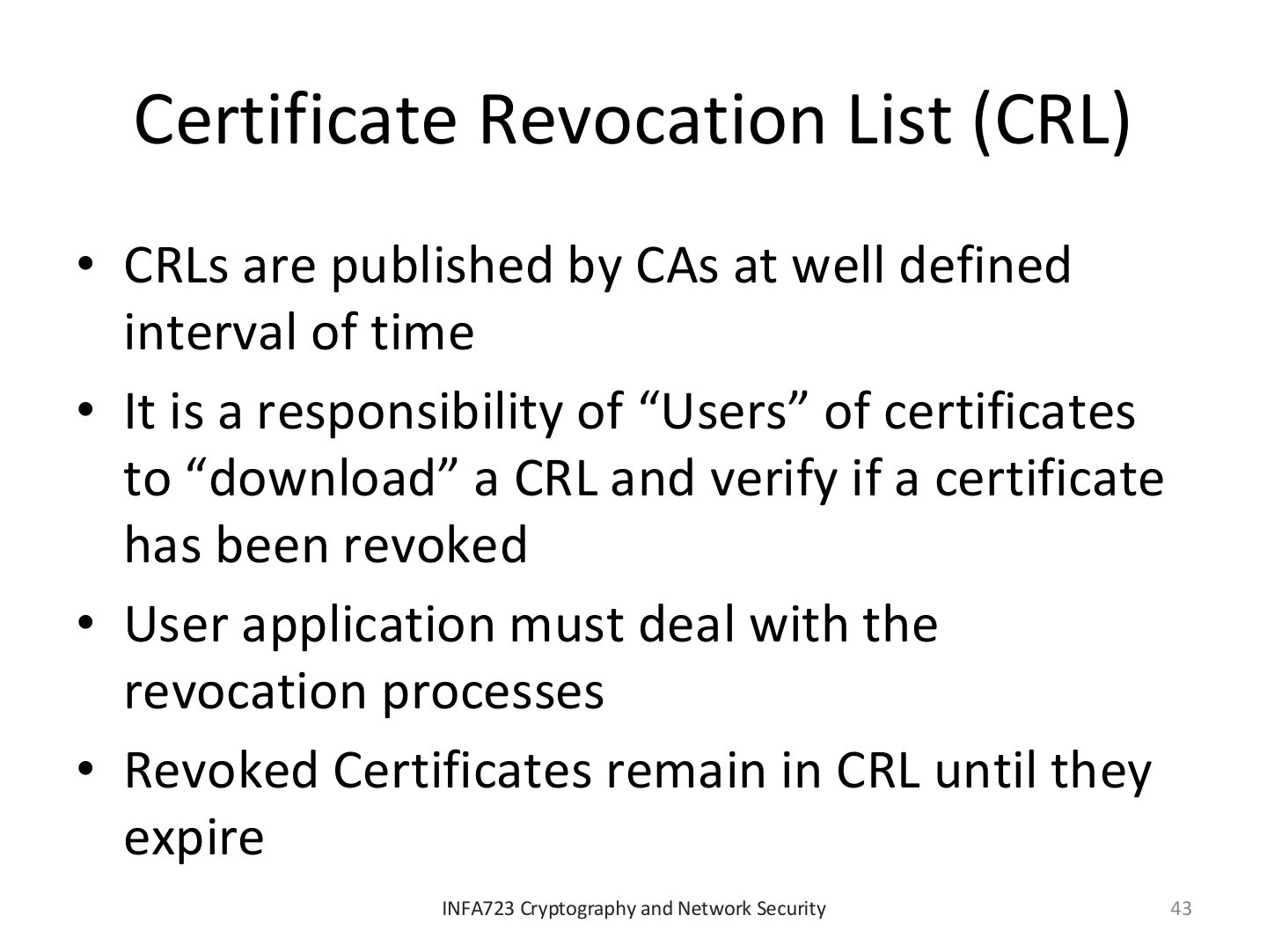
- 43 Certificate Revocation List (CRL)
- 44 Online Certificate Status Protocol (OCSP)
- 45 CRL vs OCSP Server
- 46 Case Study 3: Verify Certificates
- 47 X.509 PKI-enabled Applications
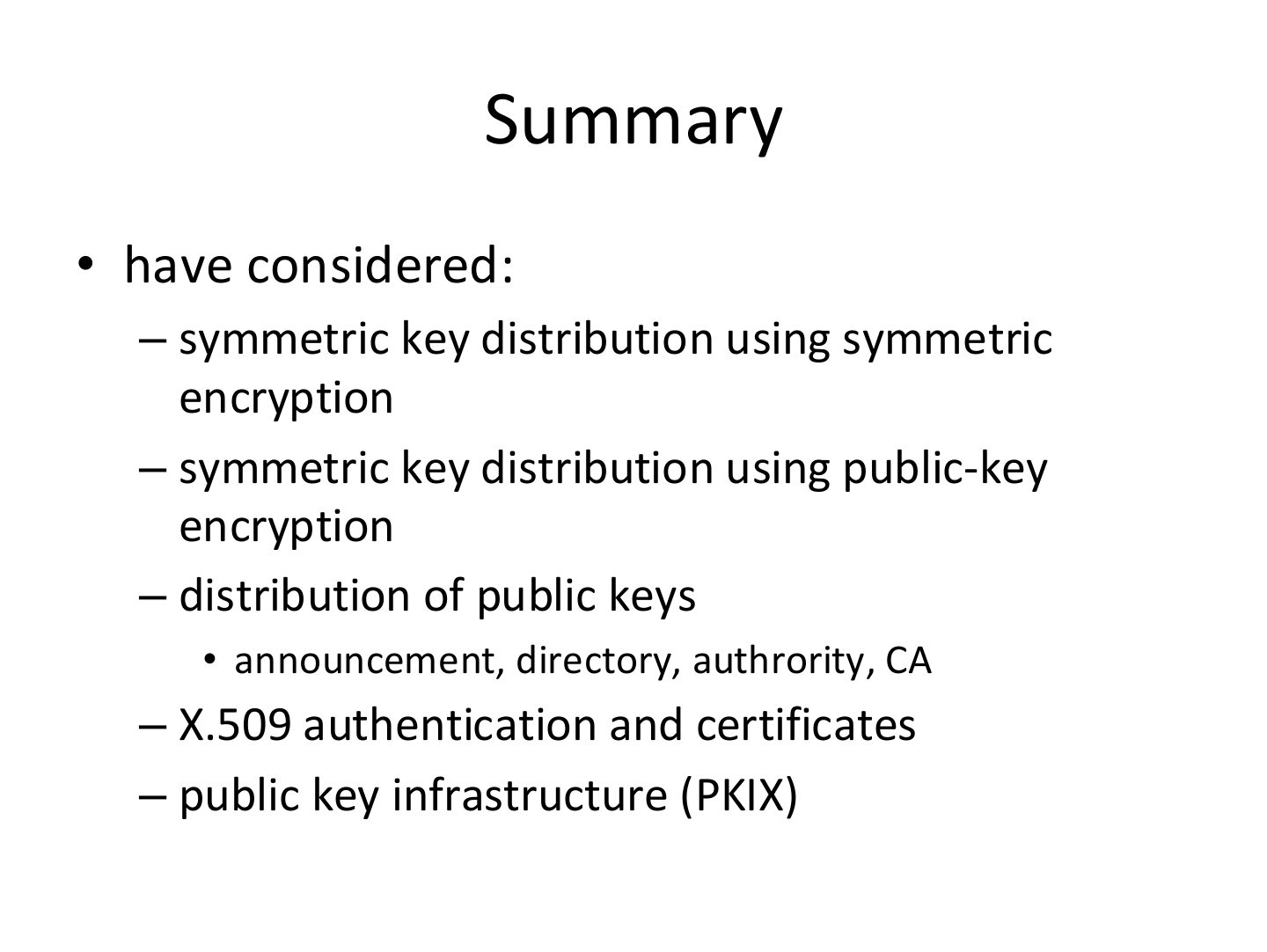
- 48 Summary
Slide 1
Key Management
Key Management Protocols Classification
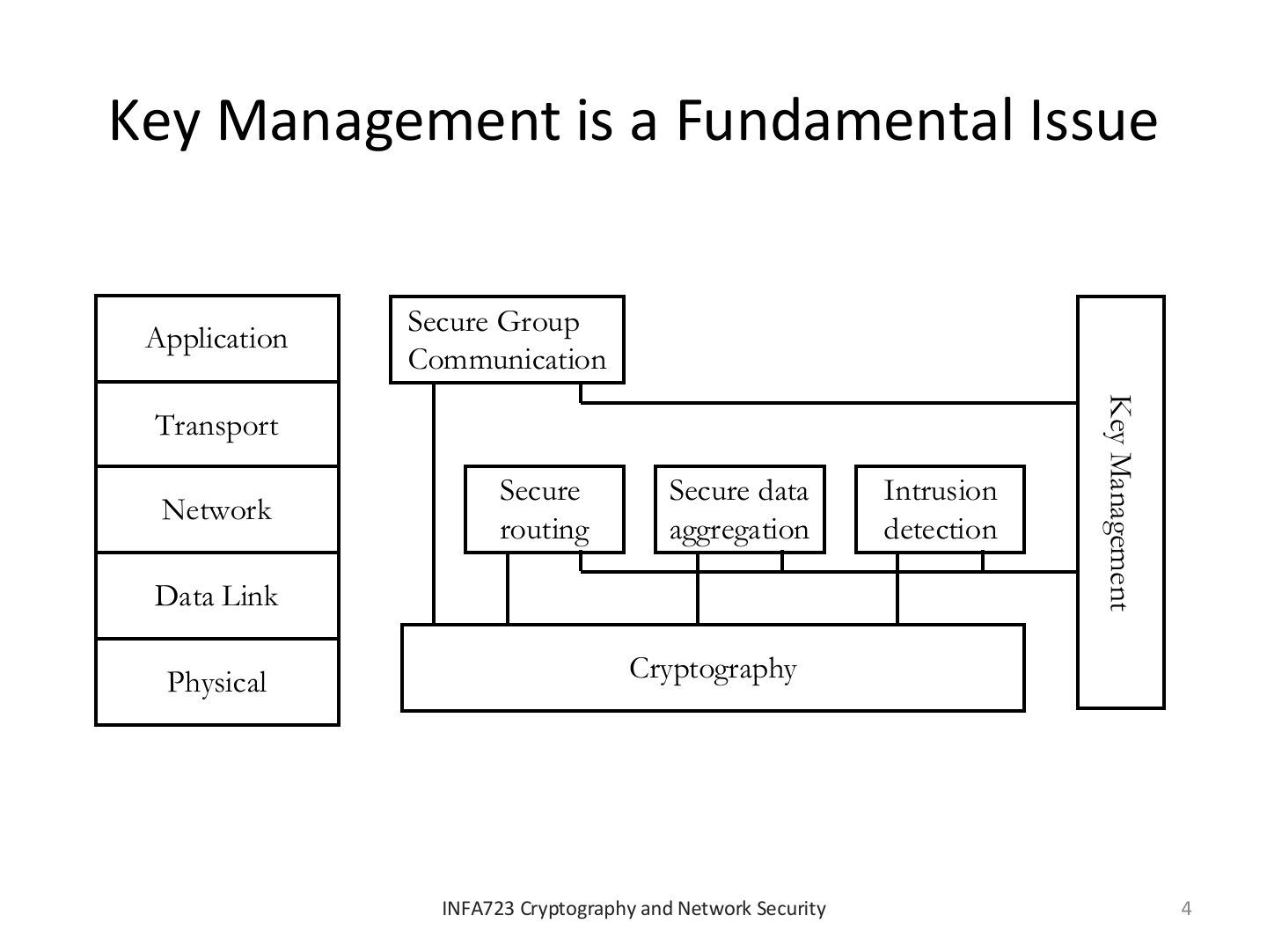
Key Management is a Fundamental Issue
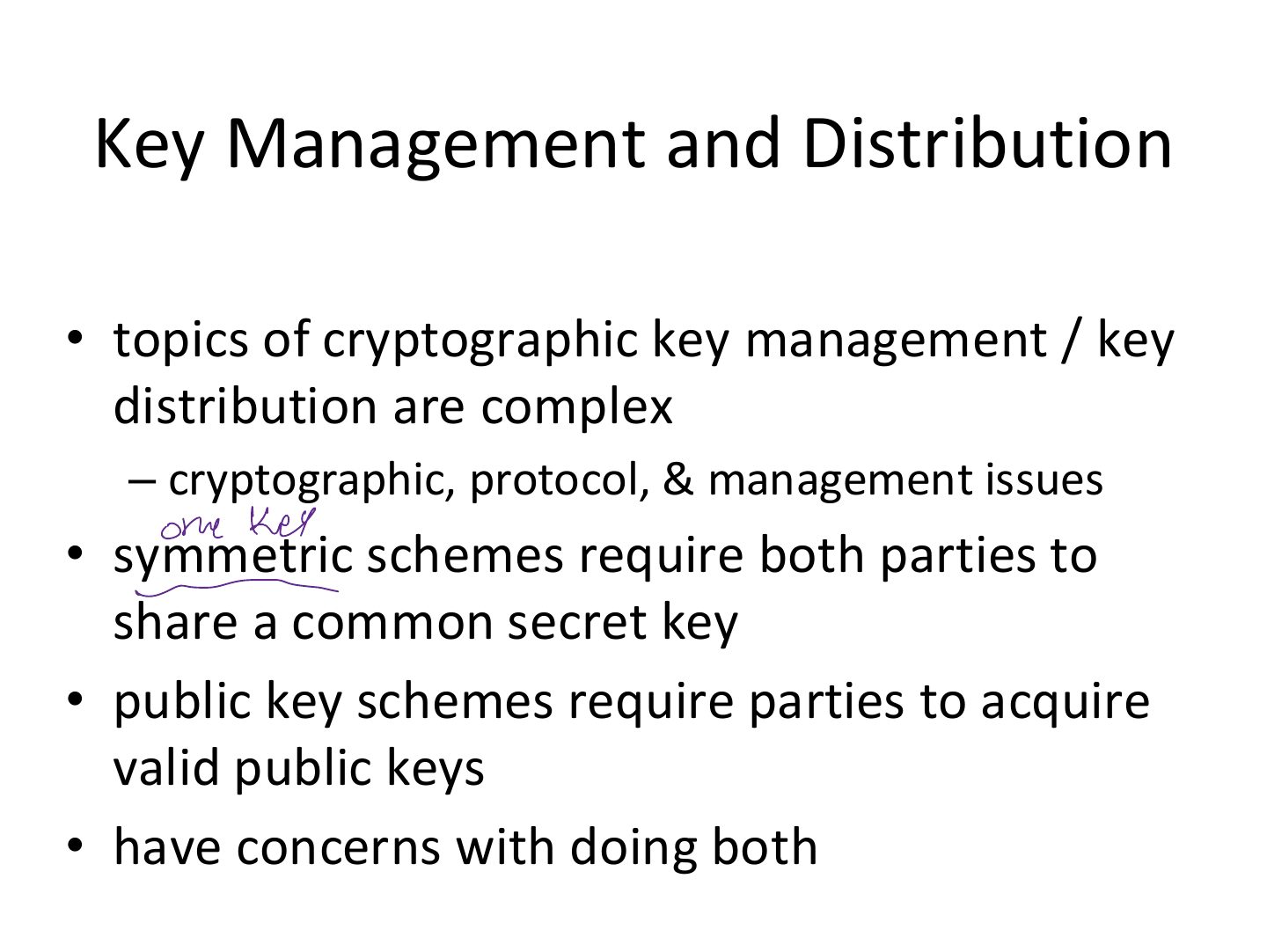
Key Management and Distribution
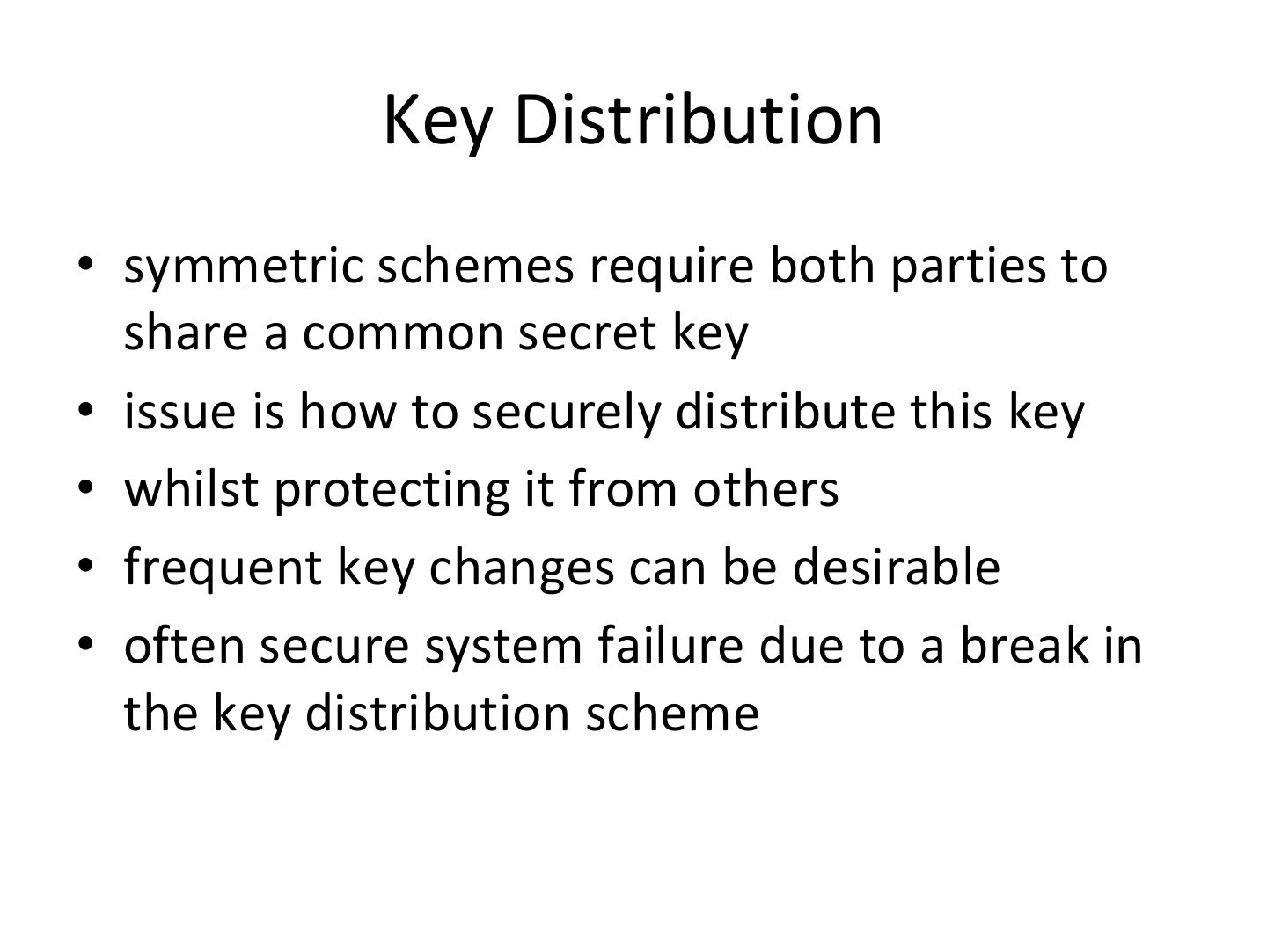
Key Distribution
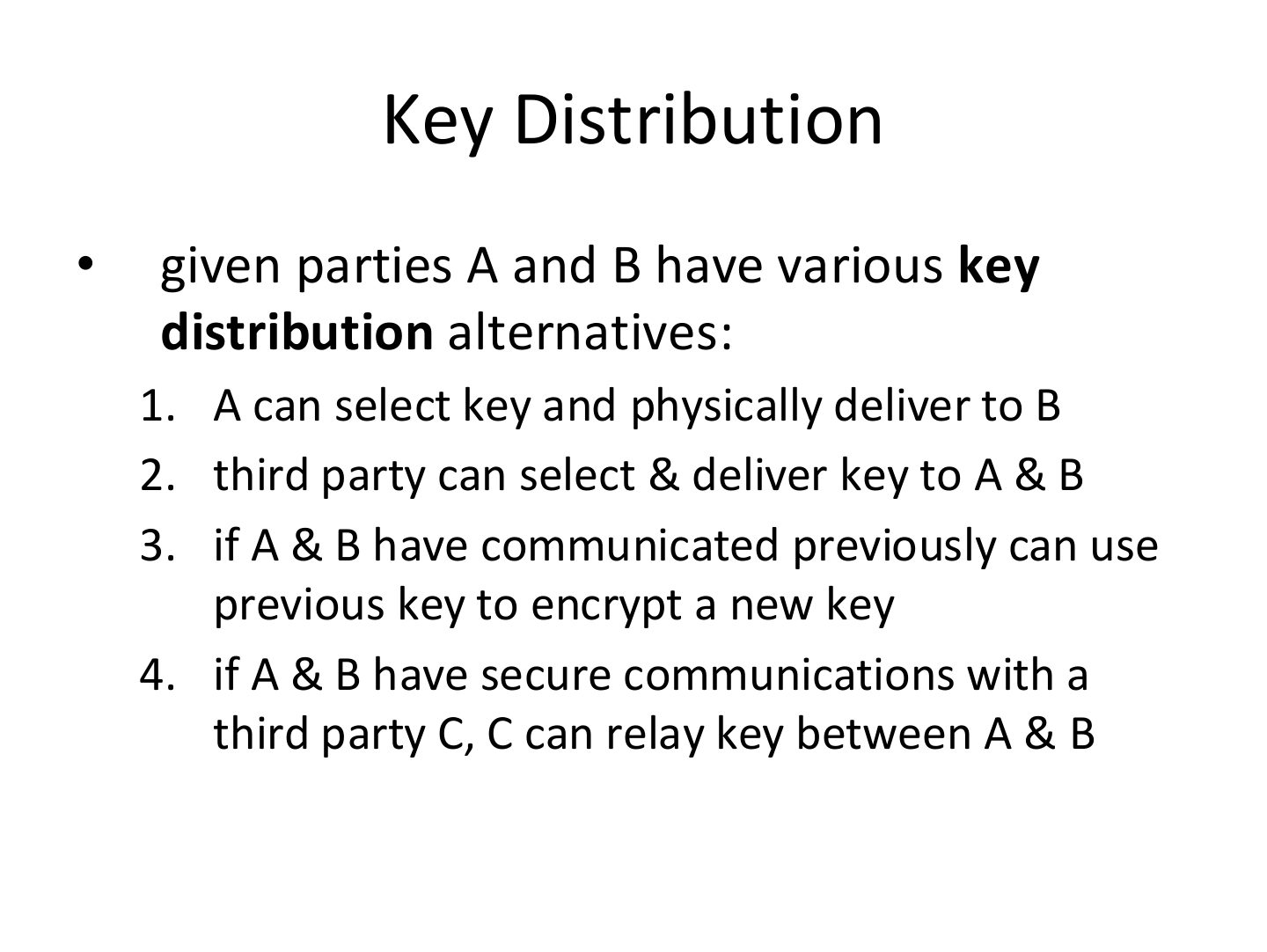
Key Distribution
Key Distribution Task
Key Hierarchy
Notes
Key hierarchy: long-term master keys (shared with the KDC) protect short-lived session keys.
Exam angle
Key Hierarchy
Key Distribution Scenario
Notes
KDC (Key Distribution Center): a trusted third party that creates session keys and sends them encrypted with each user’s master key.
Key Distribution Issues
Symmetric Key Distribution Using Public Keys
Simple Secret Key Distribution
Notes
Merkle’s simple scheme (A sends a public key, B returns a secret key encrypted with it) is open to man-in-the-middle.
Man-in-the-Middle Attack
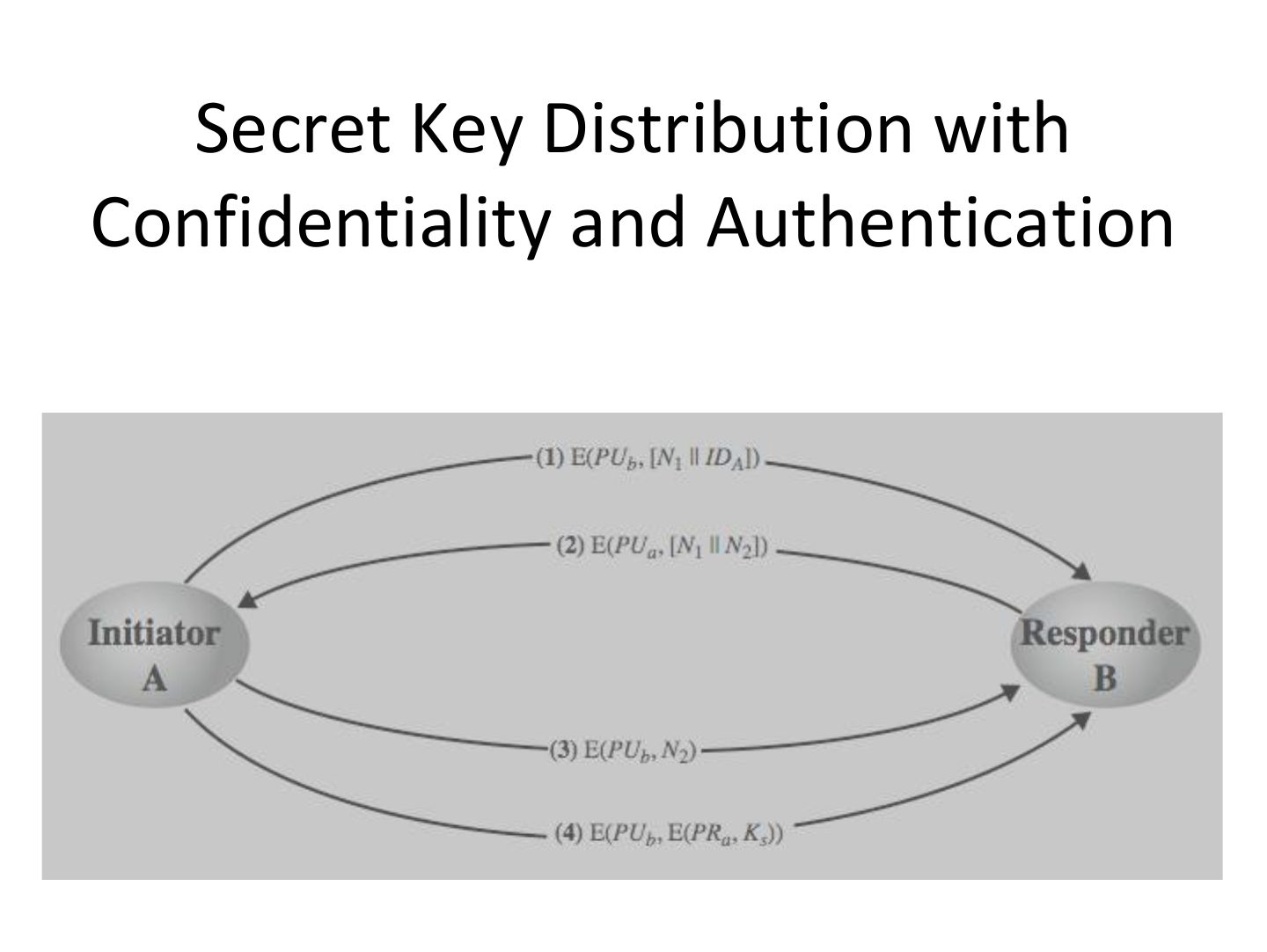
Secret Key Distribution with Confidentiality and Authentication
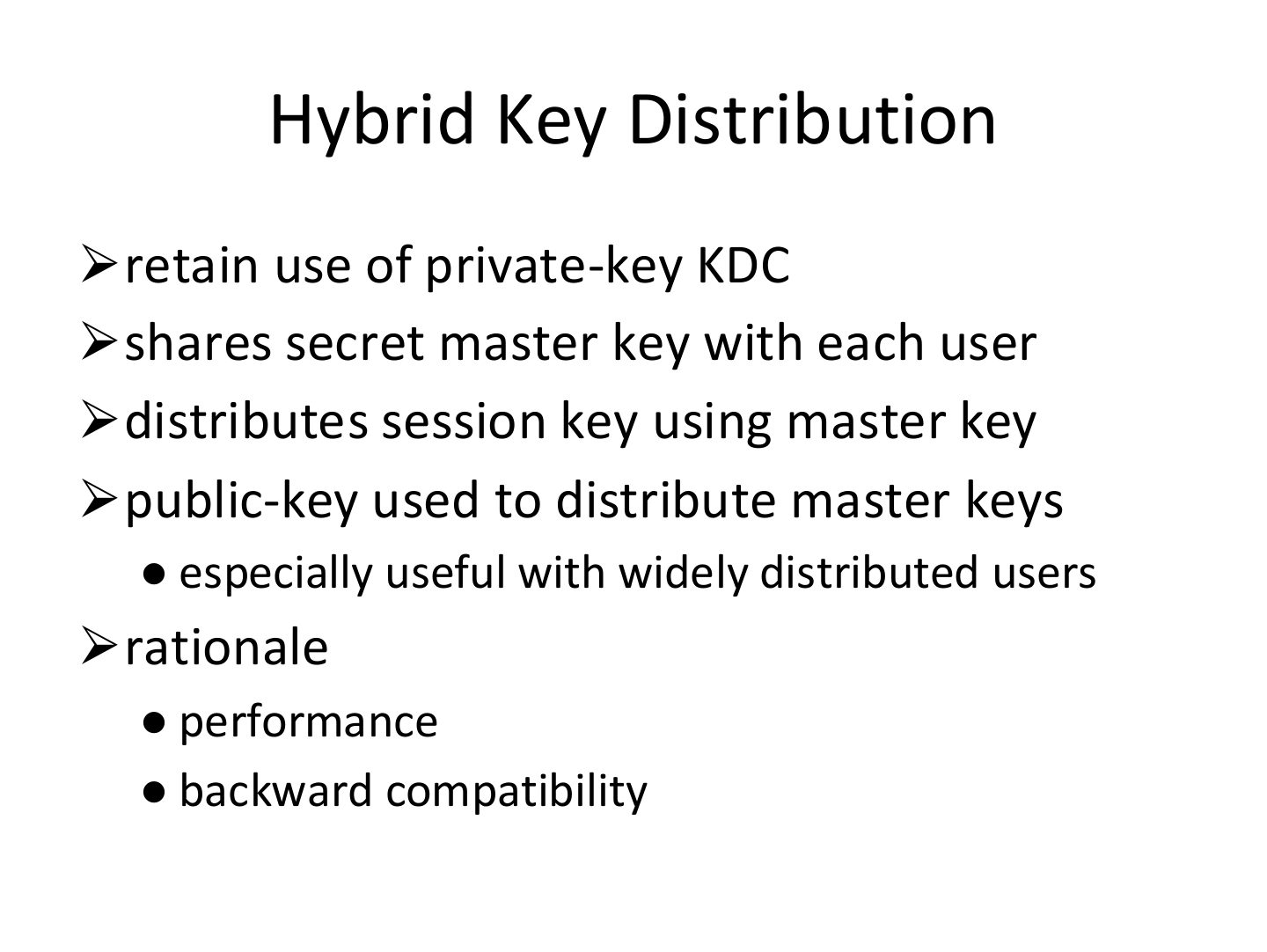
Hybrid Key Distribution
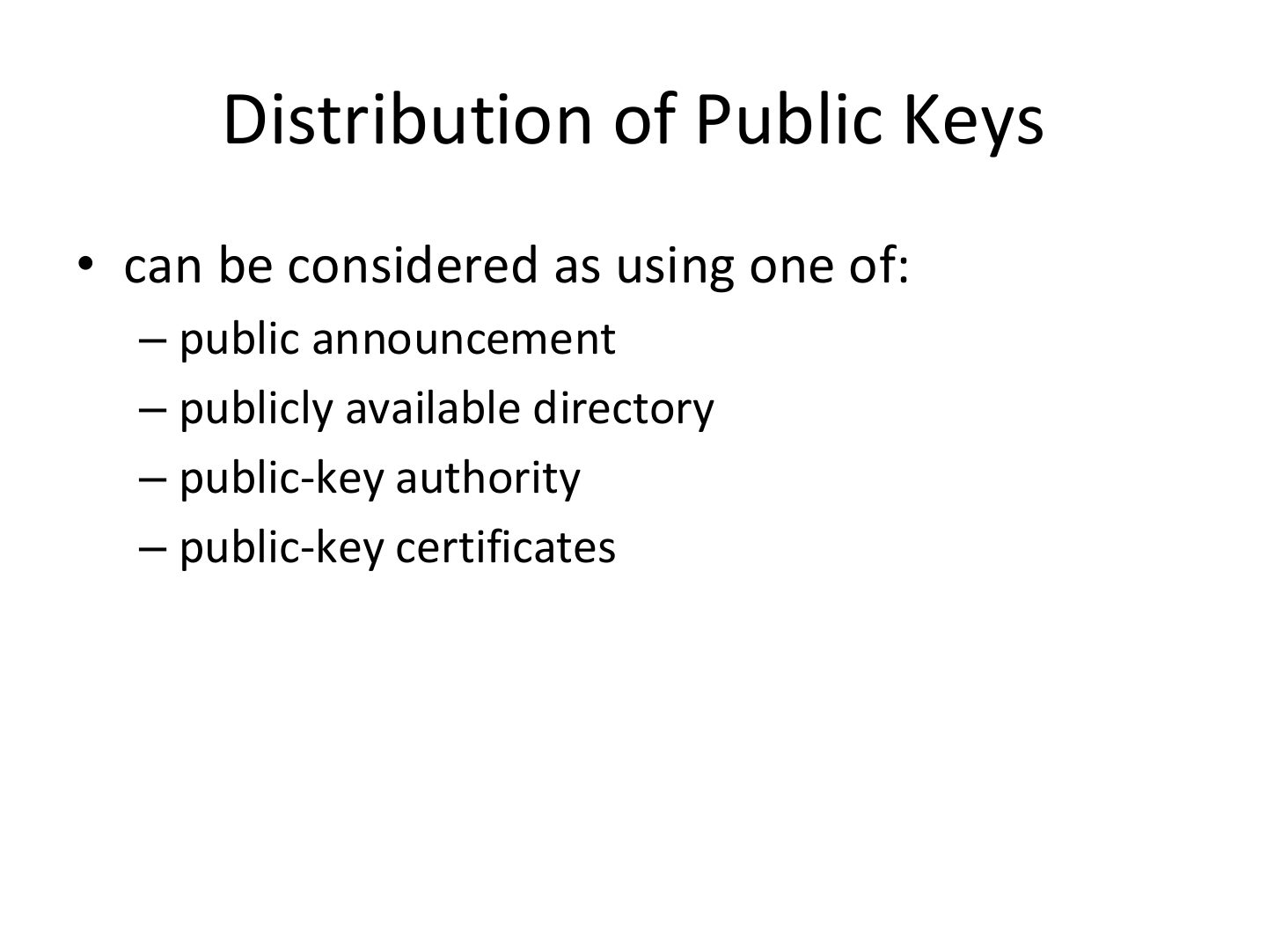
Distribution of Public Keys
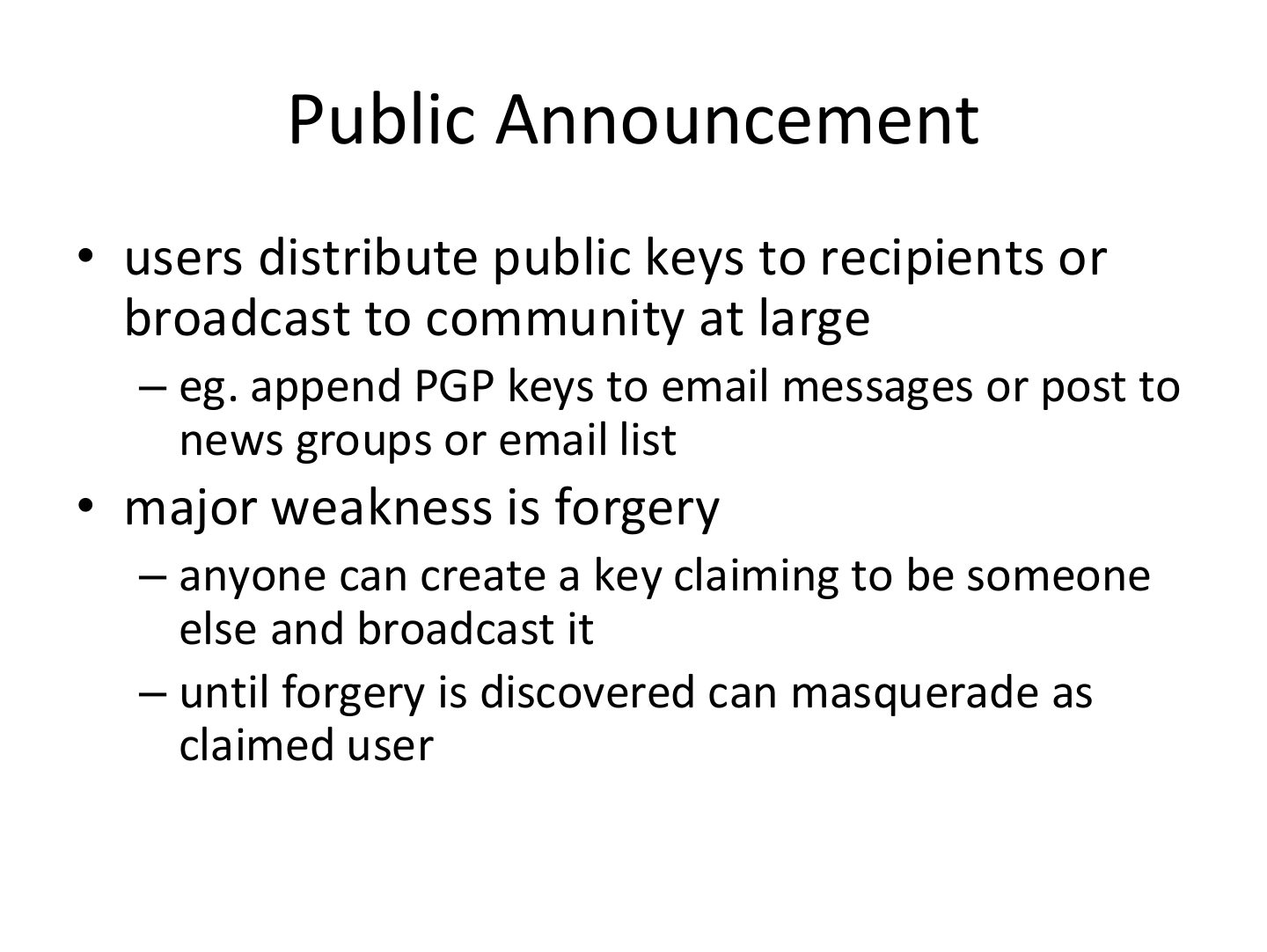
Public Announcement
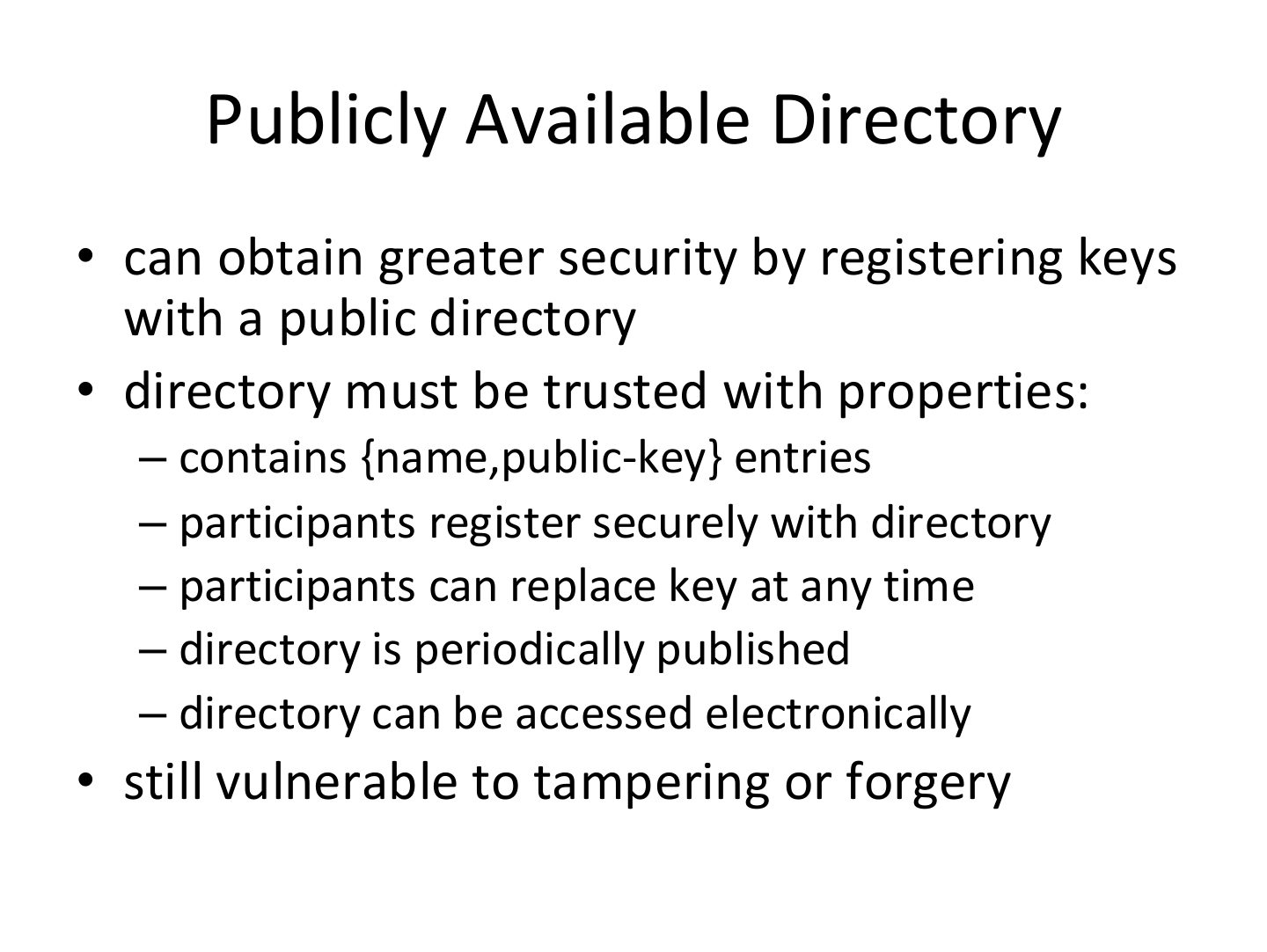
Publicly Available Directory
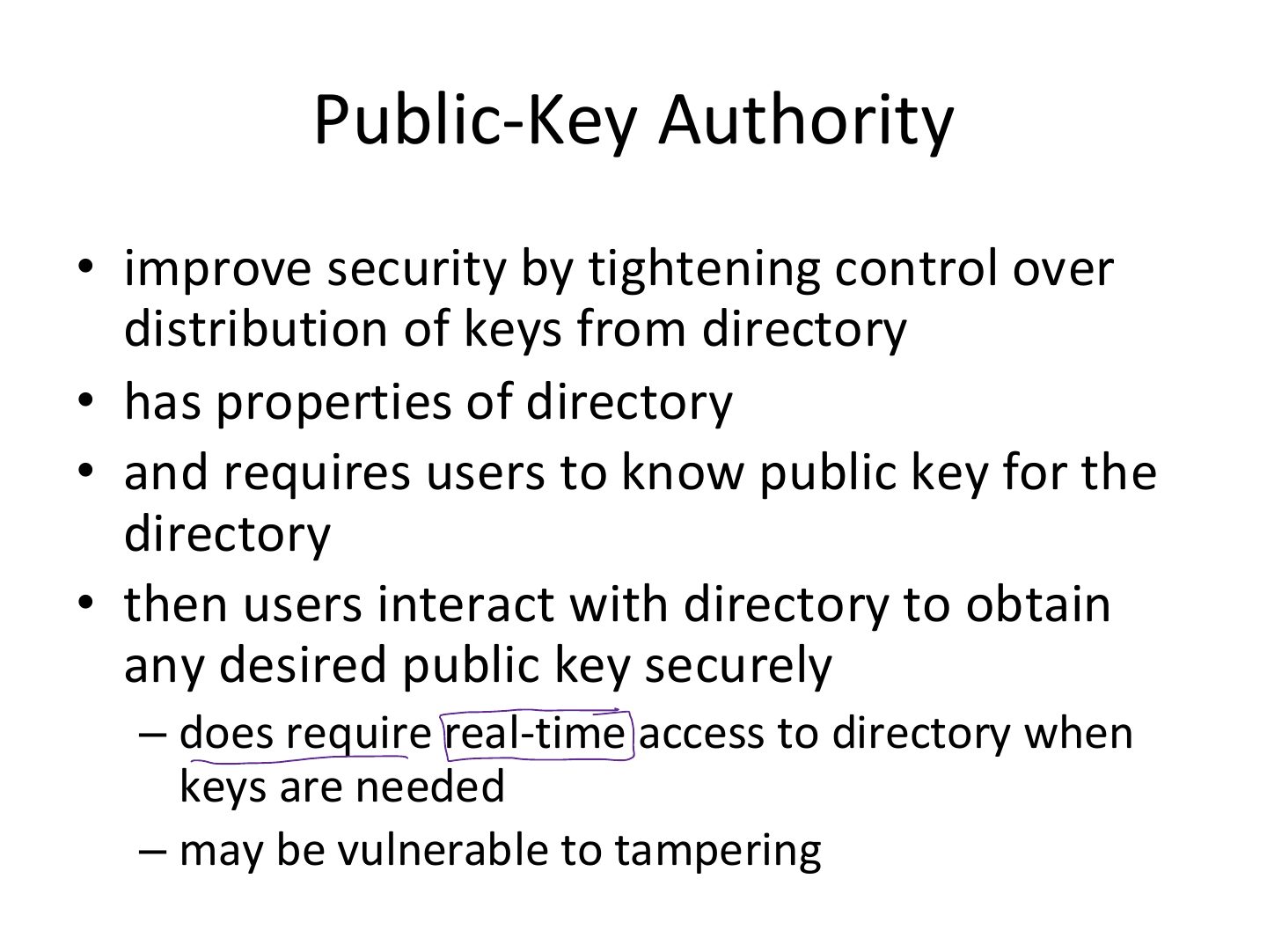
Public-Key Authority
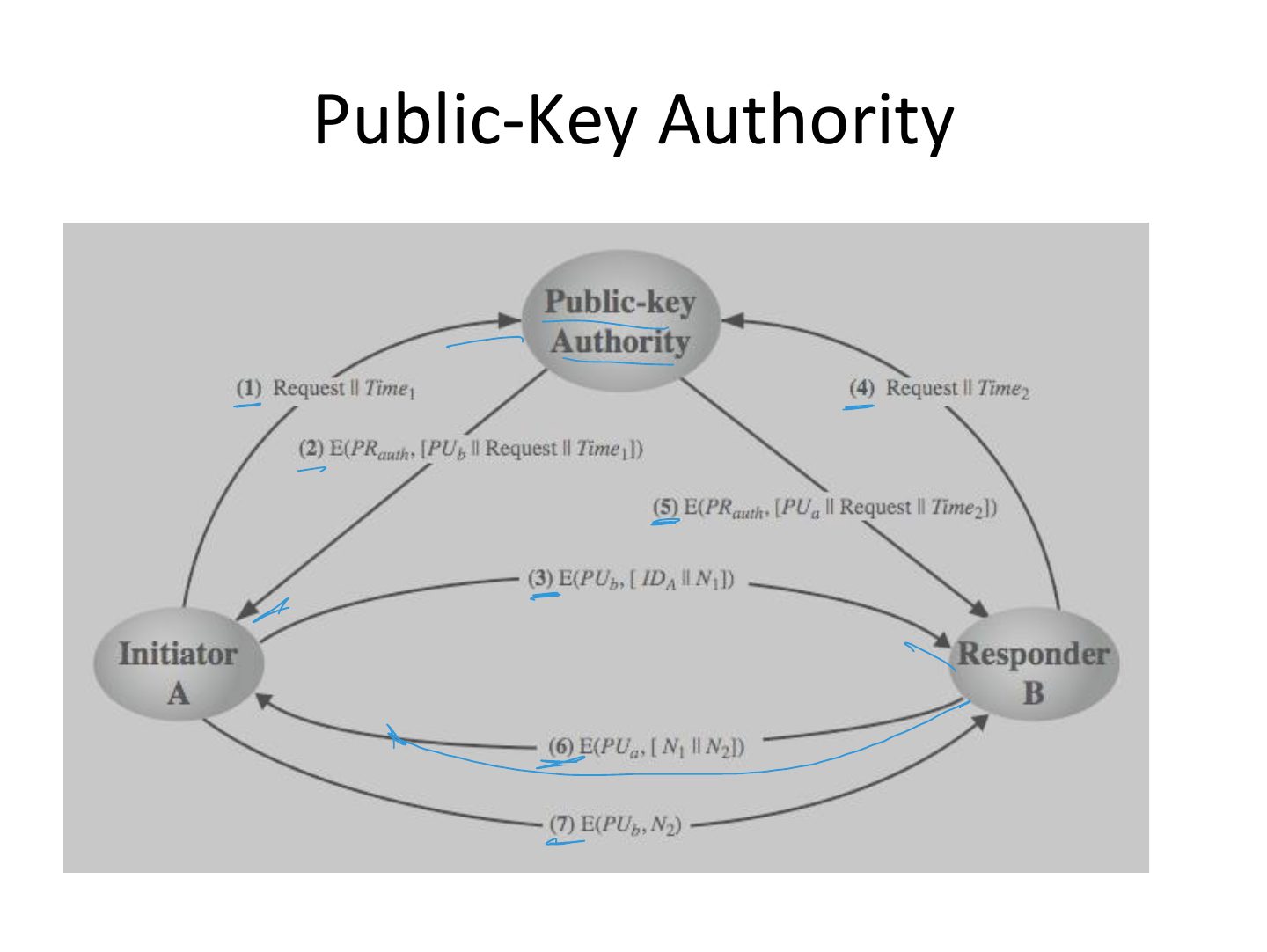
Public-Key Authority
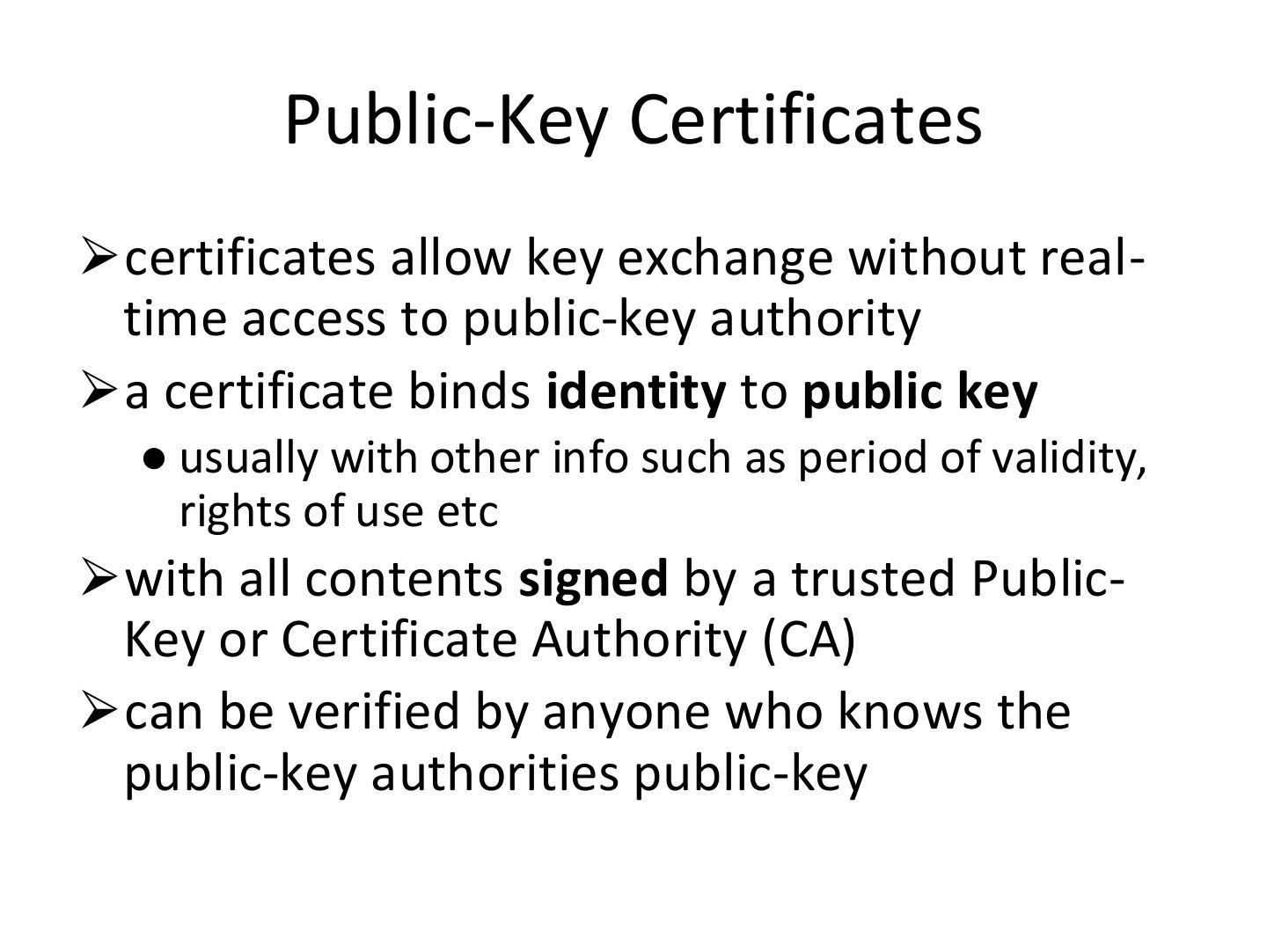
Public-Key Certificates
Exam angle
A digital certificate binds:
Public-Key Certificates
X.509 Authentication Service
X.509 Certificate Use
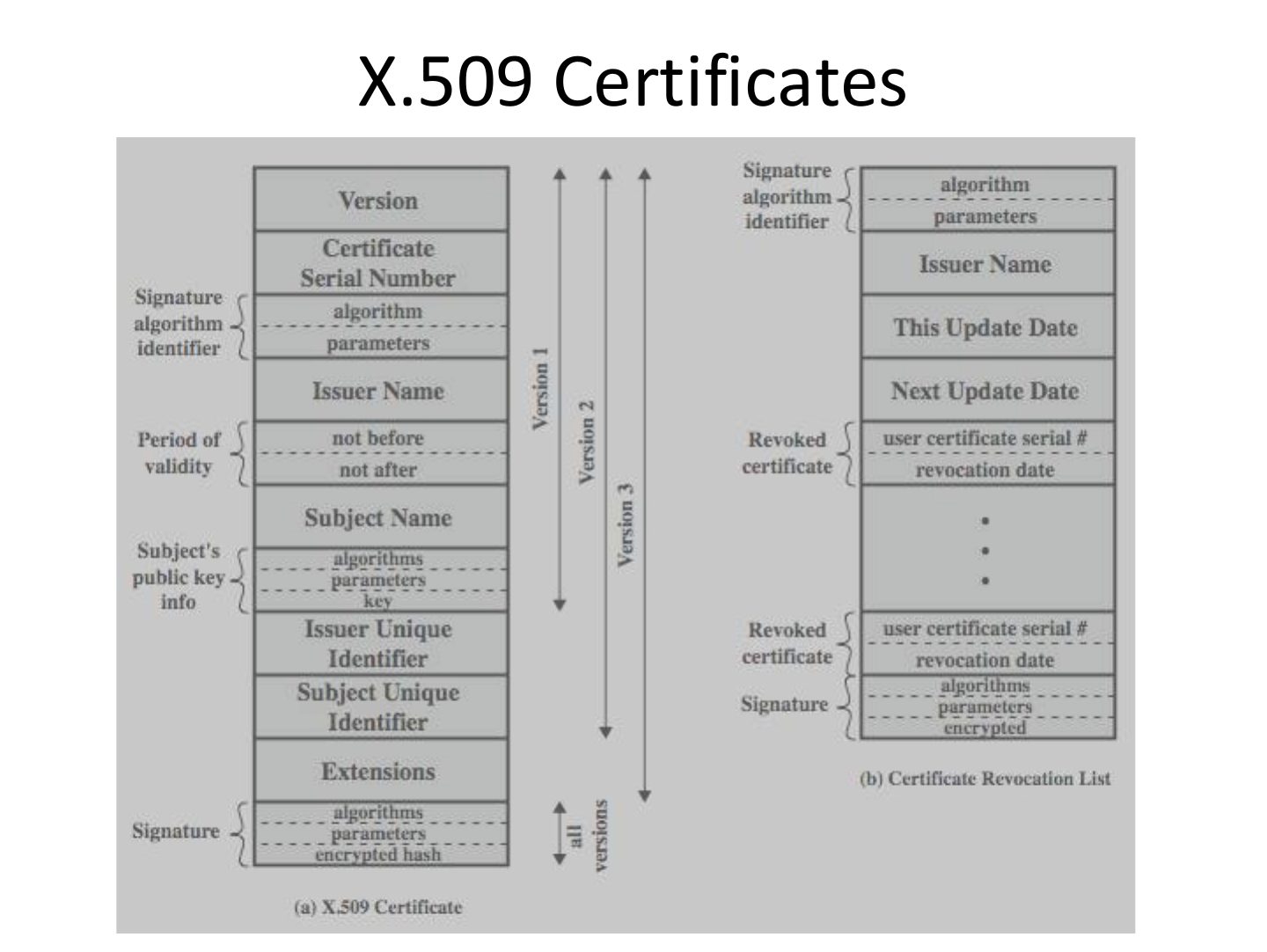
X.509 Certificates
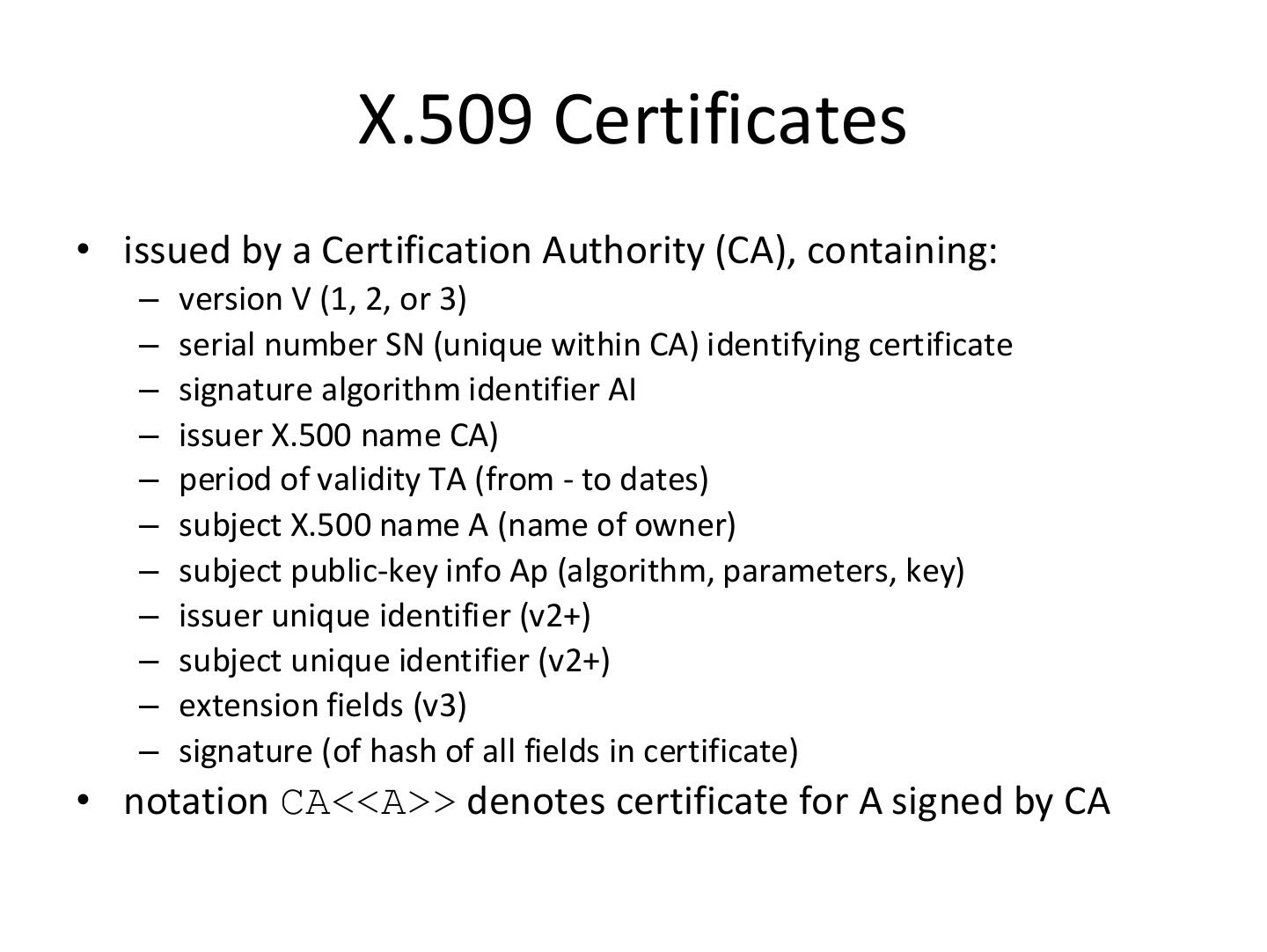
X.509 Certificates
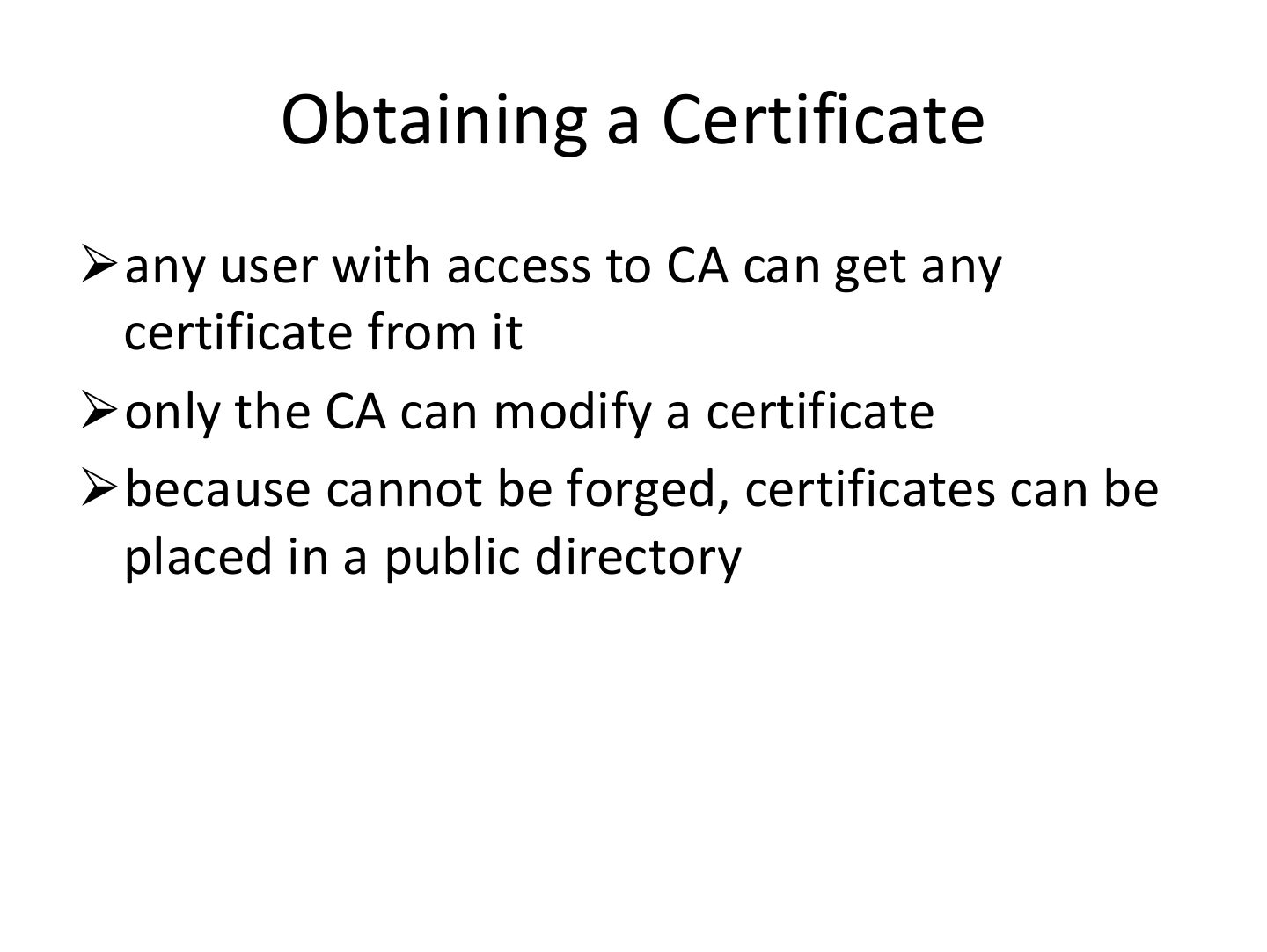
Obtaining a Certificate
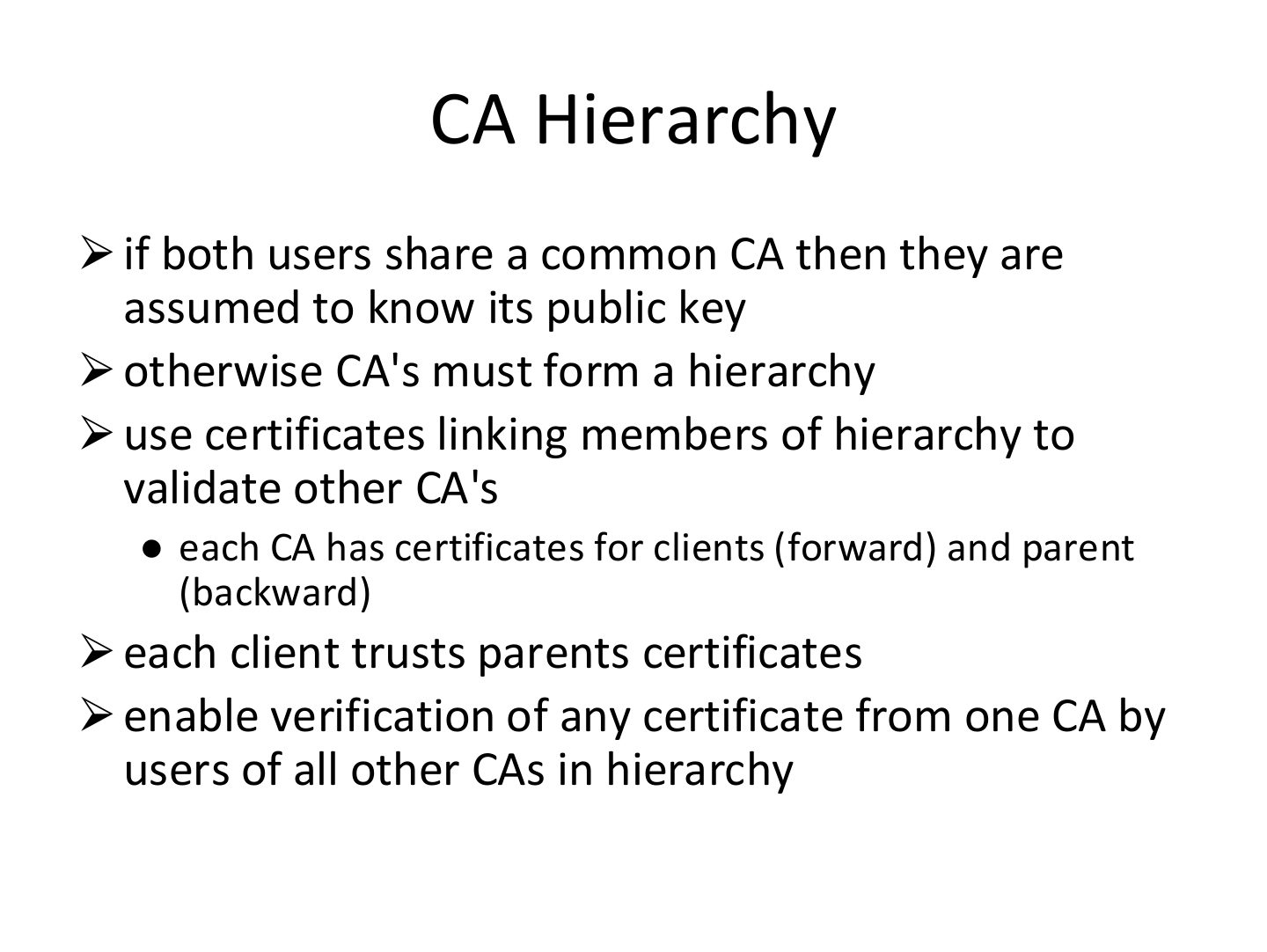
CA Hierarchy
Notes
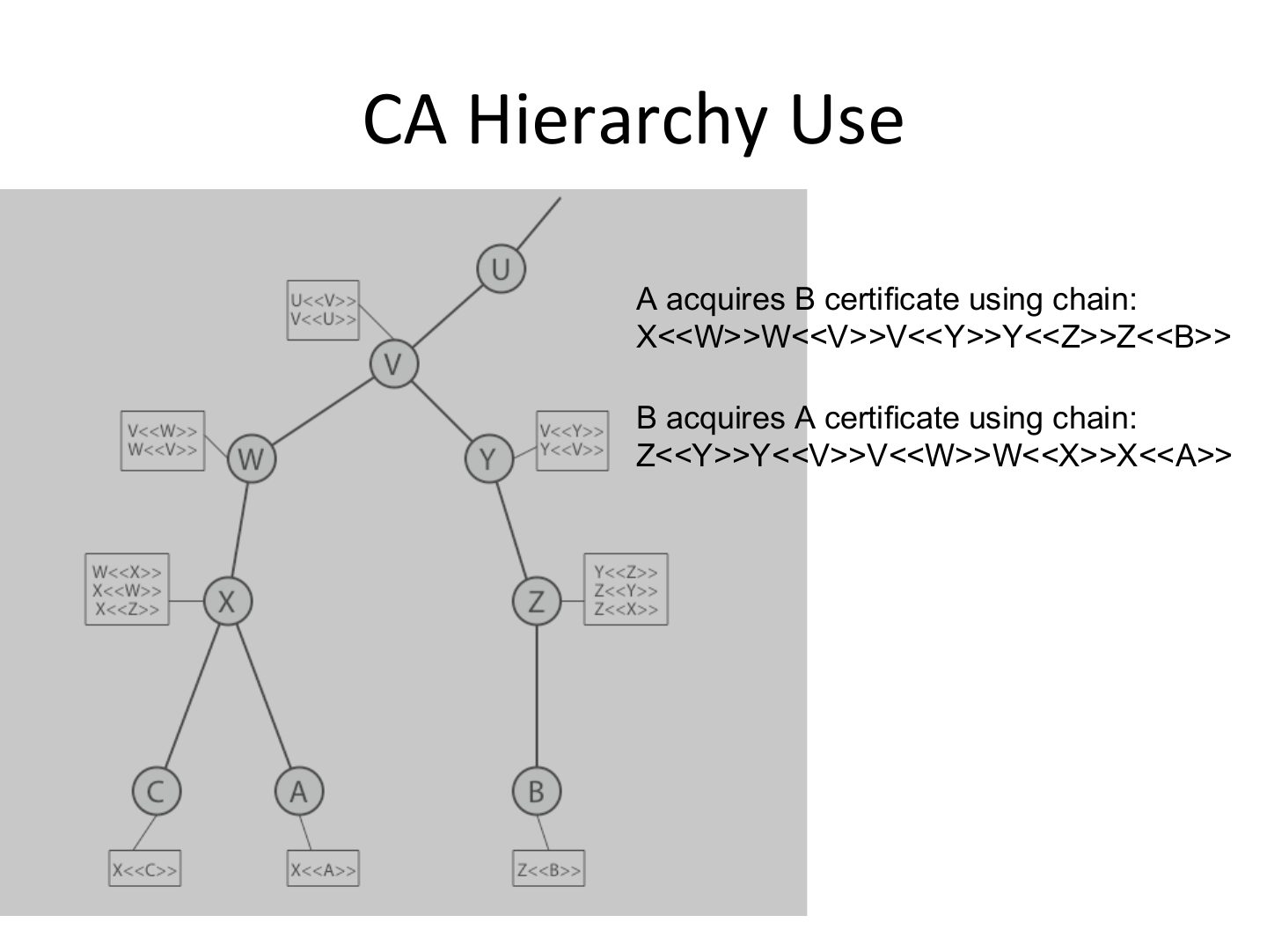
CA hierarchy: root CA → intermediate CAs → end entities; trust flows down a certificate chain.
CA Hierarchy Use
Certificate Revocation
Notes
Revocation: compromised key, changed affiliation, superseded. Checked with CRLs or OCSP.
X.509 Version 3
Certificate Extensions
Public Key Infrastructure (PKI)
Notes
PKI: the hardware, software, people, policies and procedures to create, manage, distribute, use, store and revoke certificates. Parts: CA, RA, repository, end entities.
Exam angle
The PKI component that verifies a requester’s identity before the CA issues a certificate is the:
Public Key Infrastructure
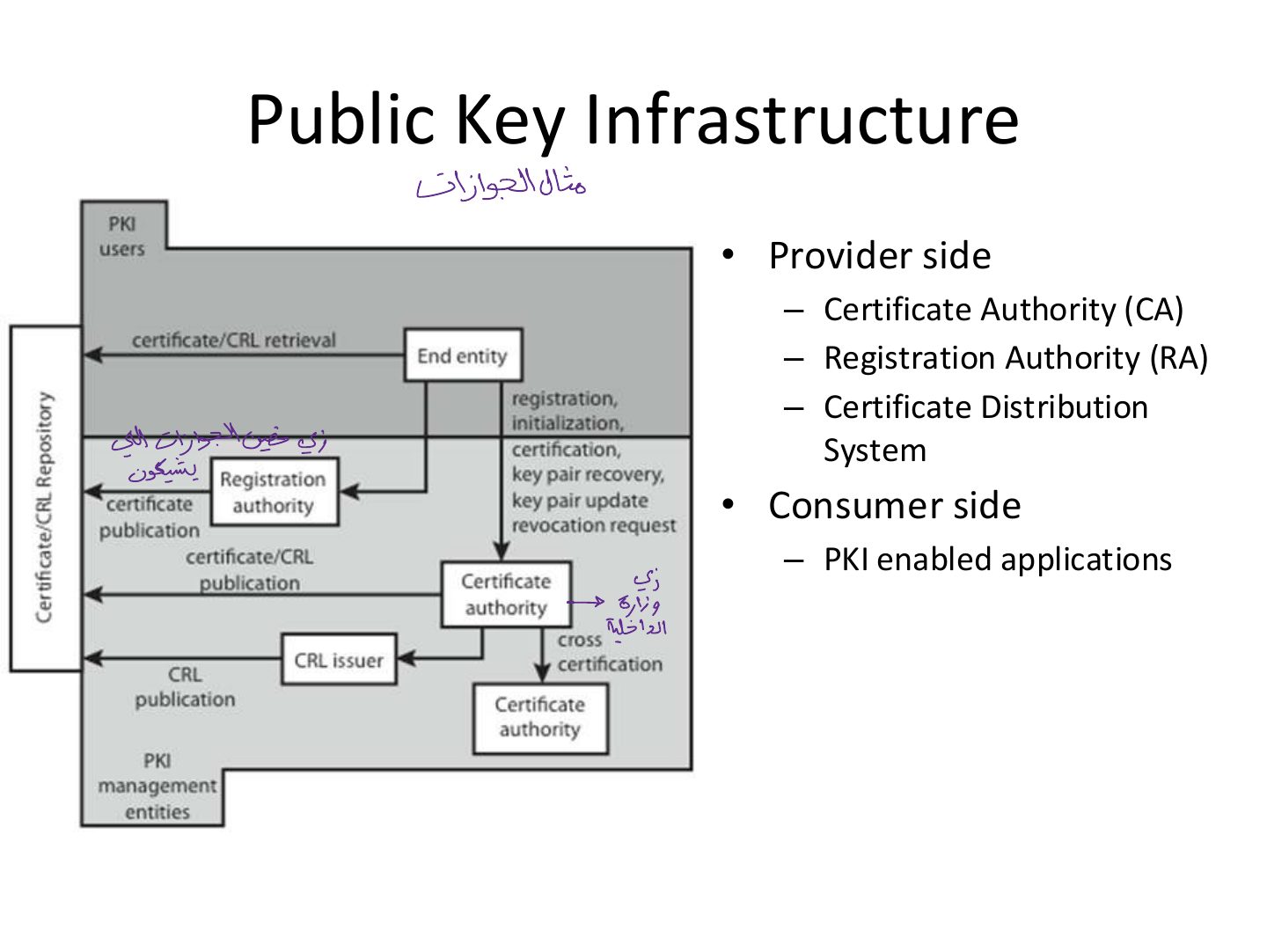
X.509 PKI Simple Model
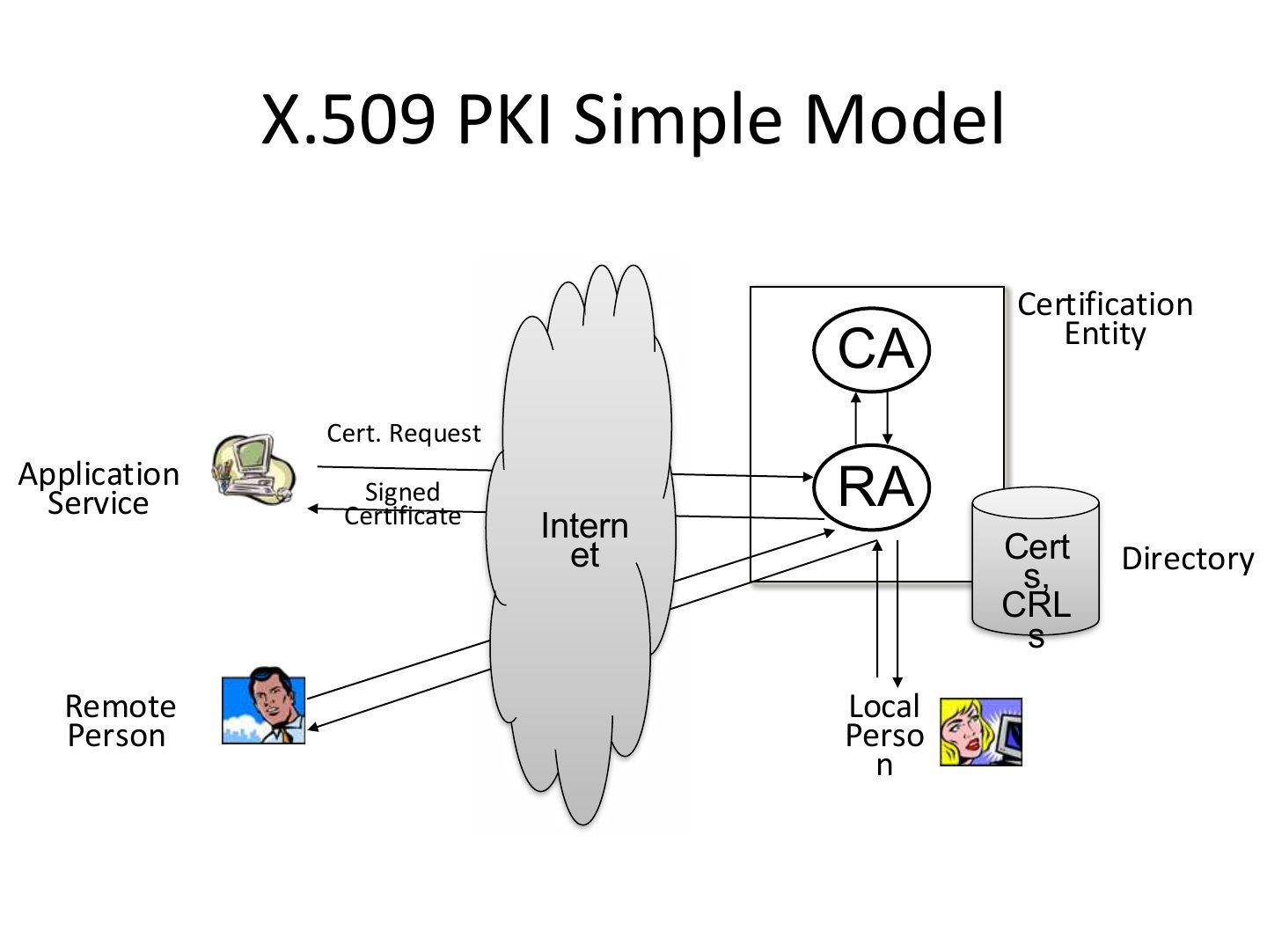
X.509 PKI Certificate Authority (CA)
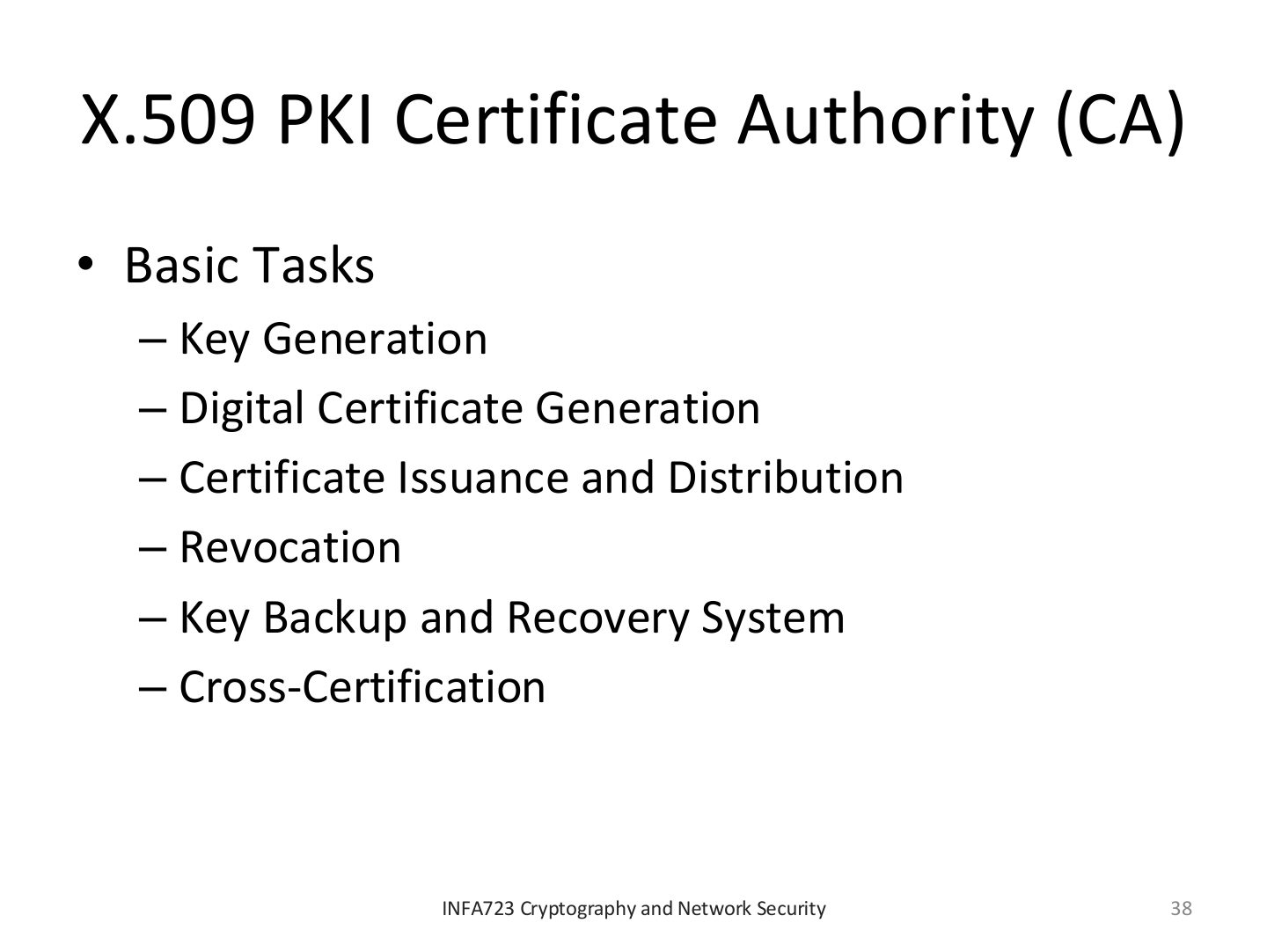
X.509 PKI Registration Authority (RA)
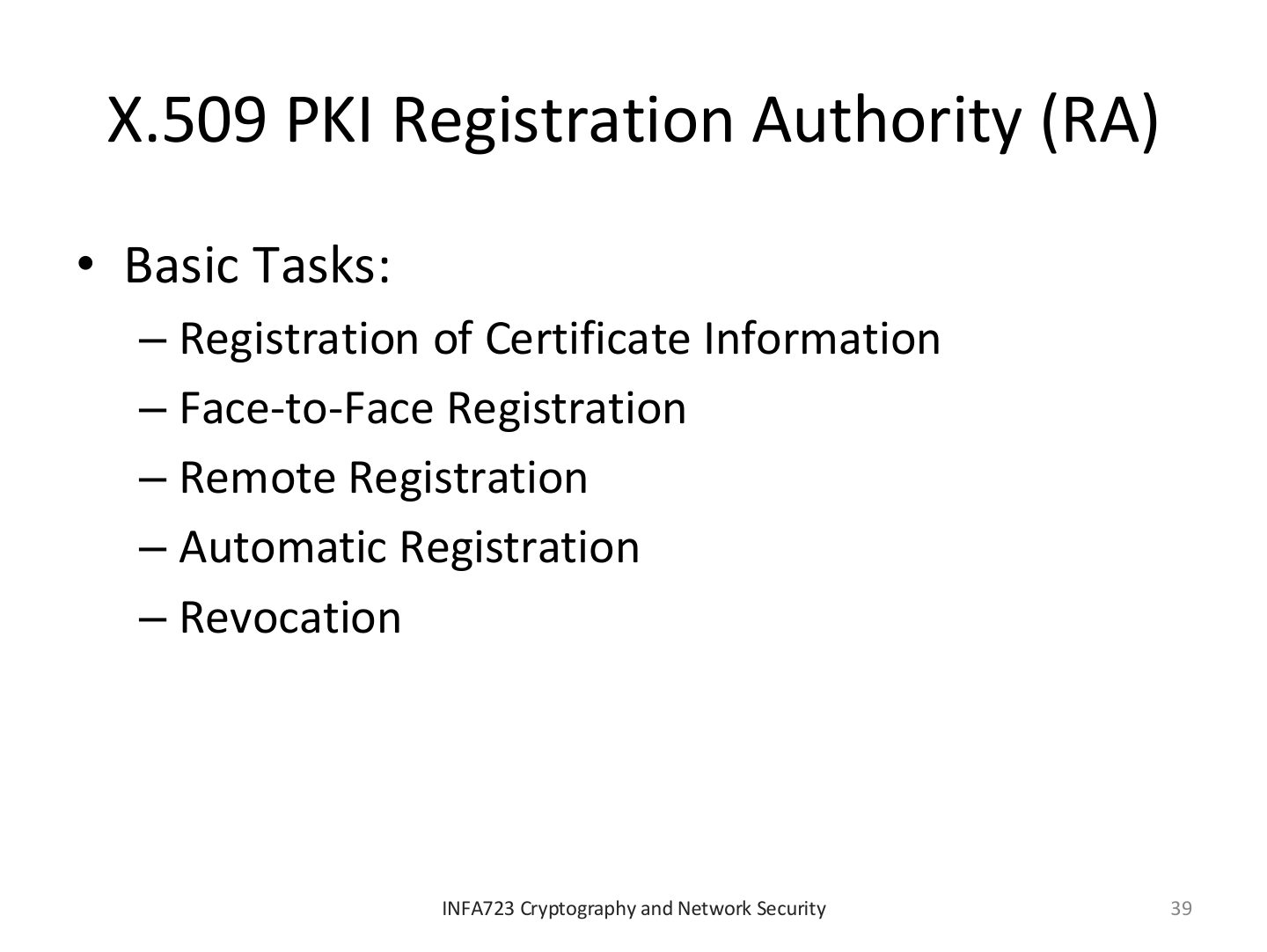
X.509 PKI Certificate Distribution System
Case Study 1: WellsSecure PKI SHA-1 Hierarchy
Case Study 2: WellsSecure PKI SHA-2 Hierarchy
Certificate Revocation List (CRL)
Notes
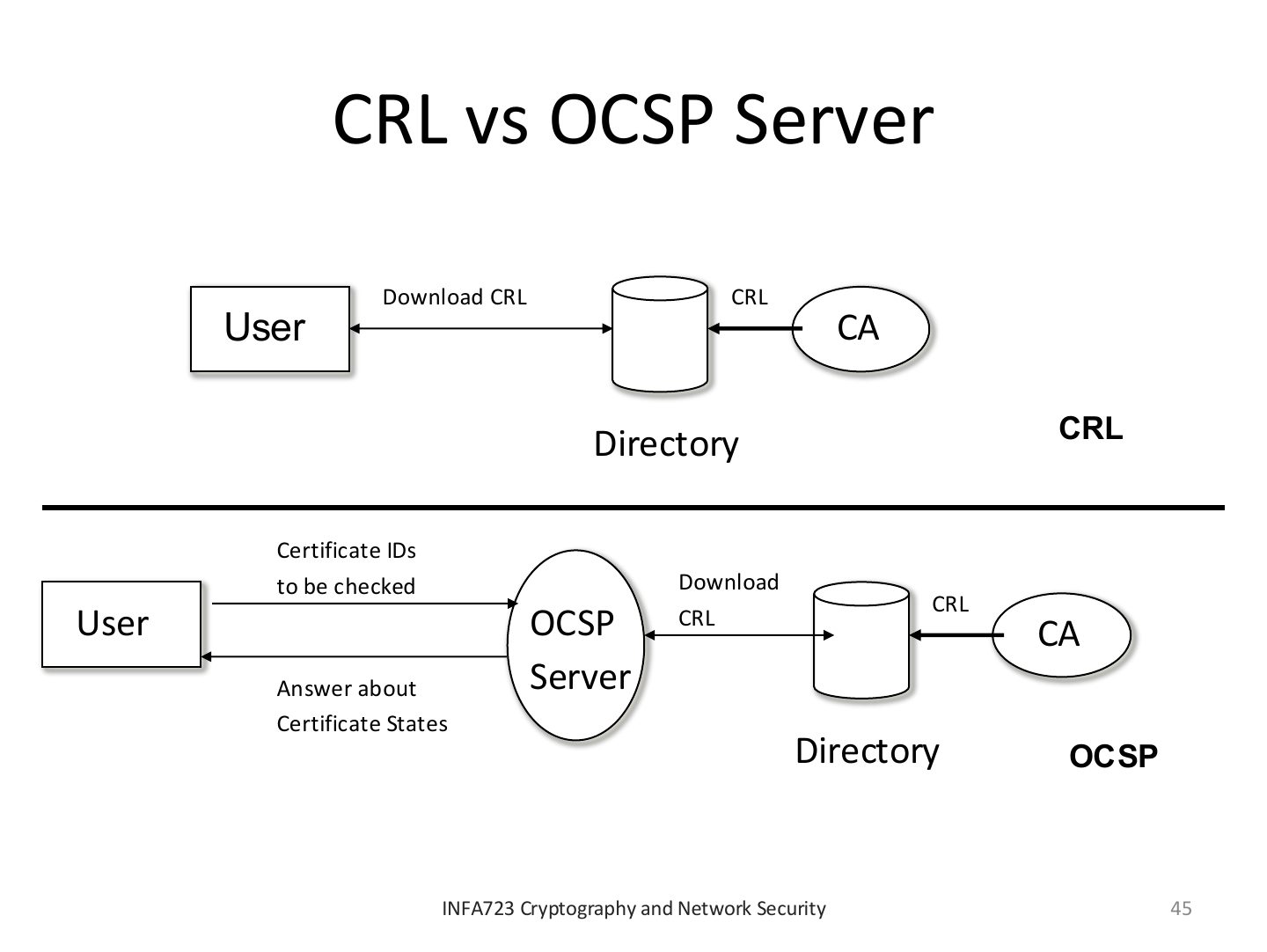
CRL: a periodically published, signed list of revoked serial numbers.
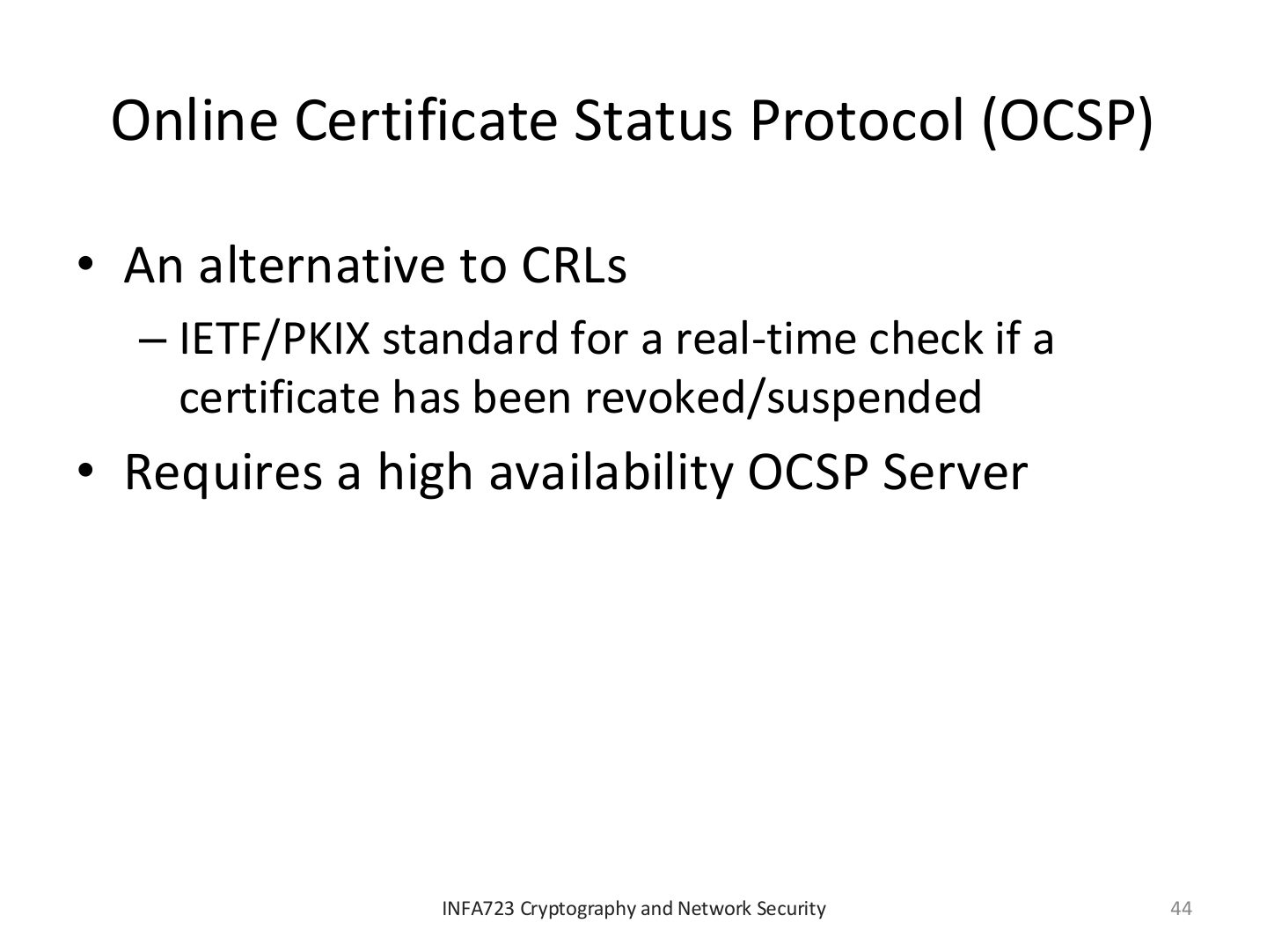
Online Certificate Status Protocol (OCSP)
Notes
OCSP: ask a responder in real time about ONE certificate (good / revoked / unknown).
Exam angle
Which checks a certificate’s revocation status in real time?
CRL vs OCSP Server
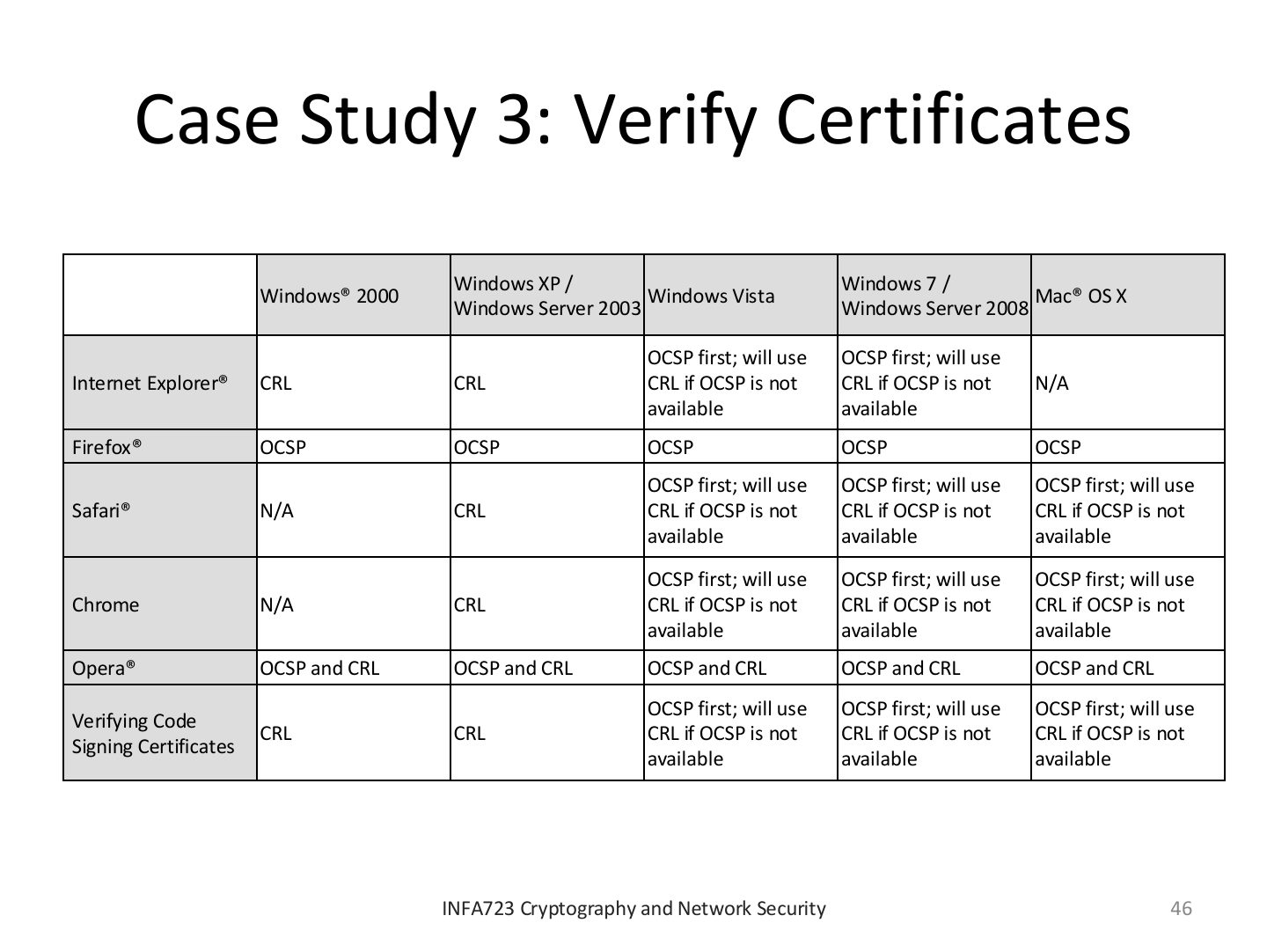
Case Study 3: Verify Certificates
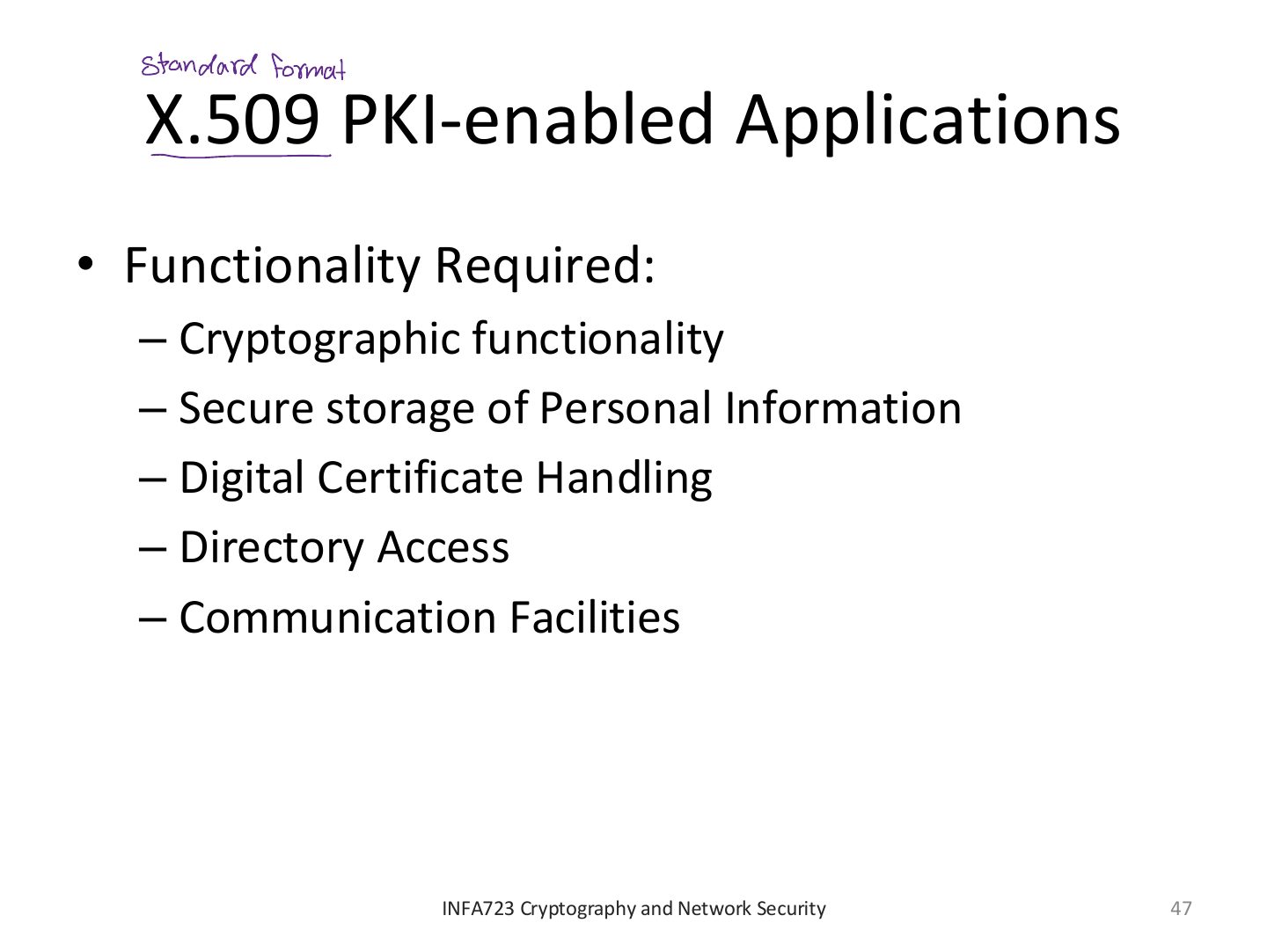
X.509 PKI-enabled Applications
Summary