To send Bob a confidential message, Alice encrypts with:
Public-Key Cryptography and RSA
Why public-key cryptography, how it gives confidentiality and authentication, its requirements and applications, RSA key setup, encryption and decryption with a worked example, fast exponentiation, and the security of RSA (factoring, timing and chosen-ciphertext attacks).
How to read this page
Every original slide is shown unchanged. Yellow marks on a slide point to a numbered note: hover or tap a mark to jump to its note, and hover a note to see its marks. Questions tagged Past exam appeared on a real paper; Prediction questions are likely angles, not confirmed. Pick an answer to each question: a wrong pick tells you why it is wrong, so you can try again.
All 35 slides
- 1 Slide 1
- 2 Private-Key Cryptography
- 3 Challenges To Be Considered
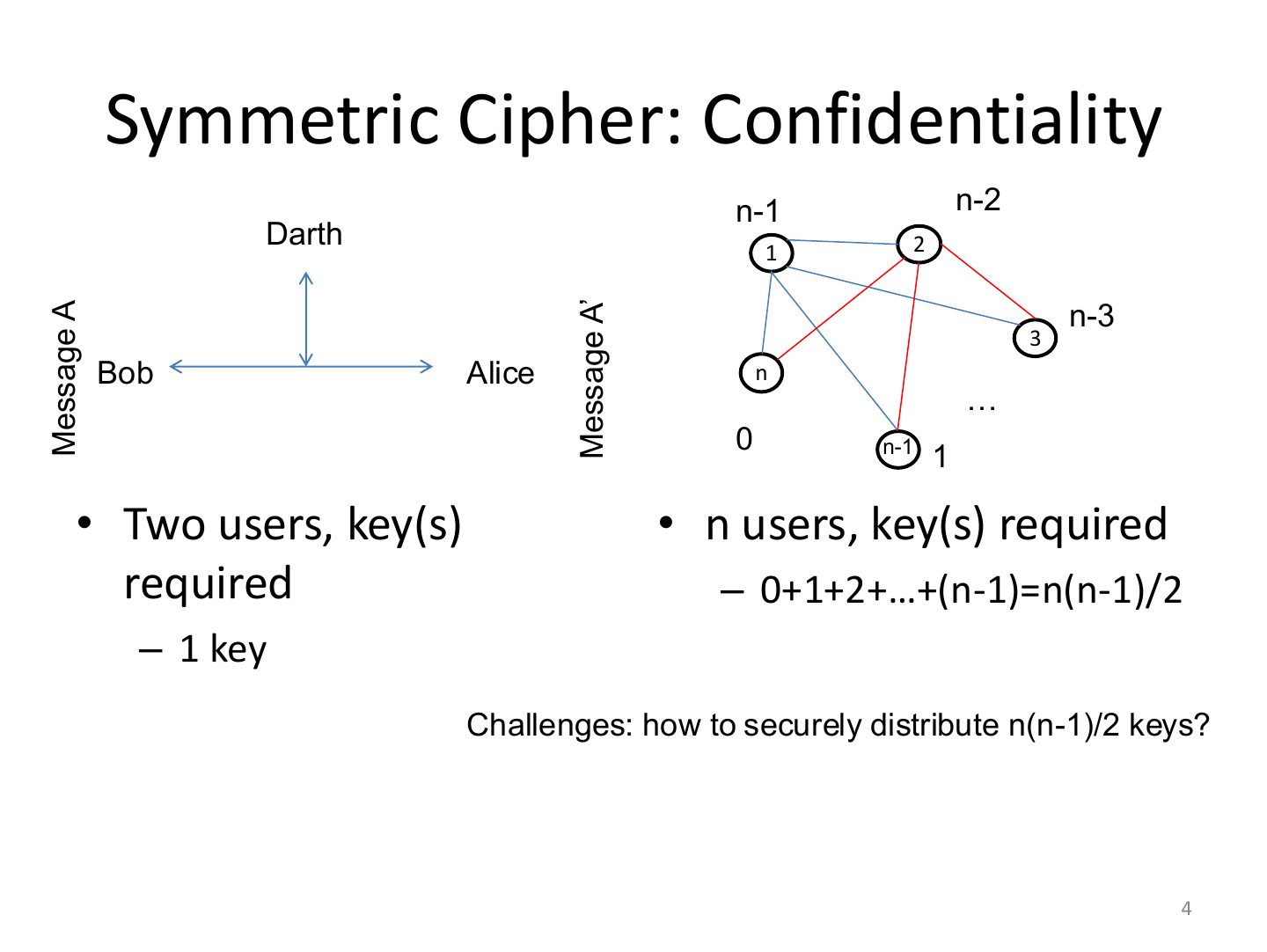
- 4 Symmetric Cipher: Confidentiality
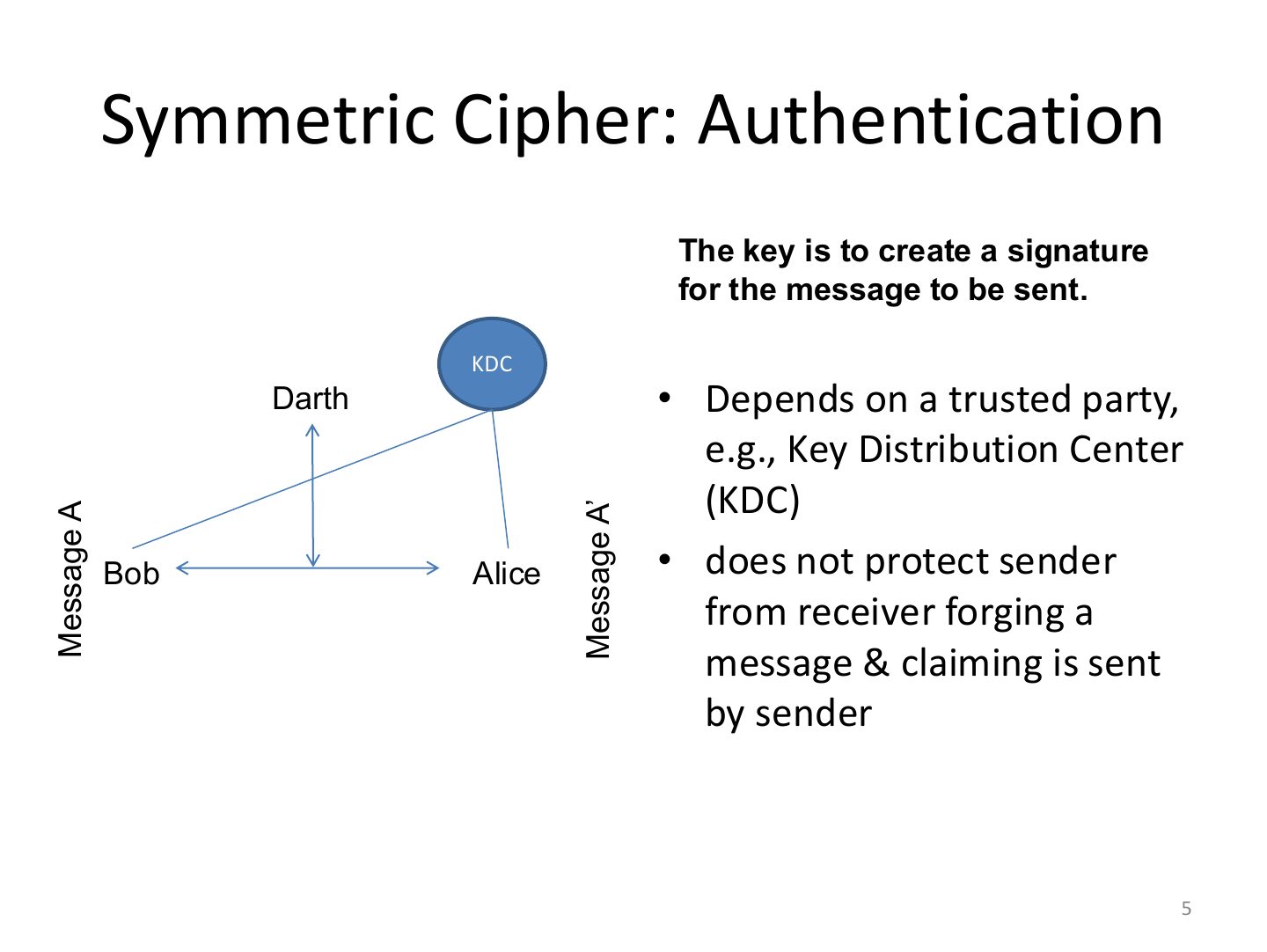
- 5 Symmetric Cipher: Authentication
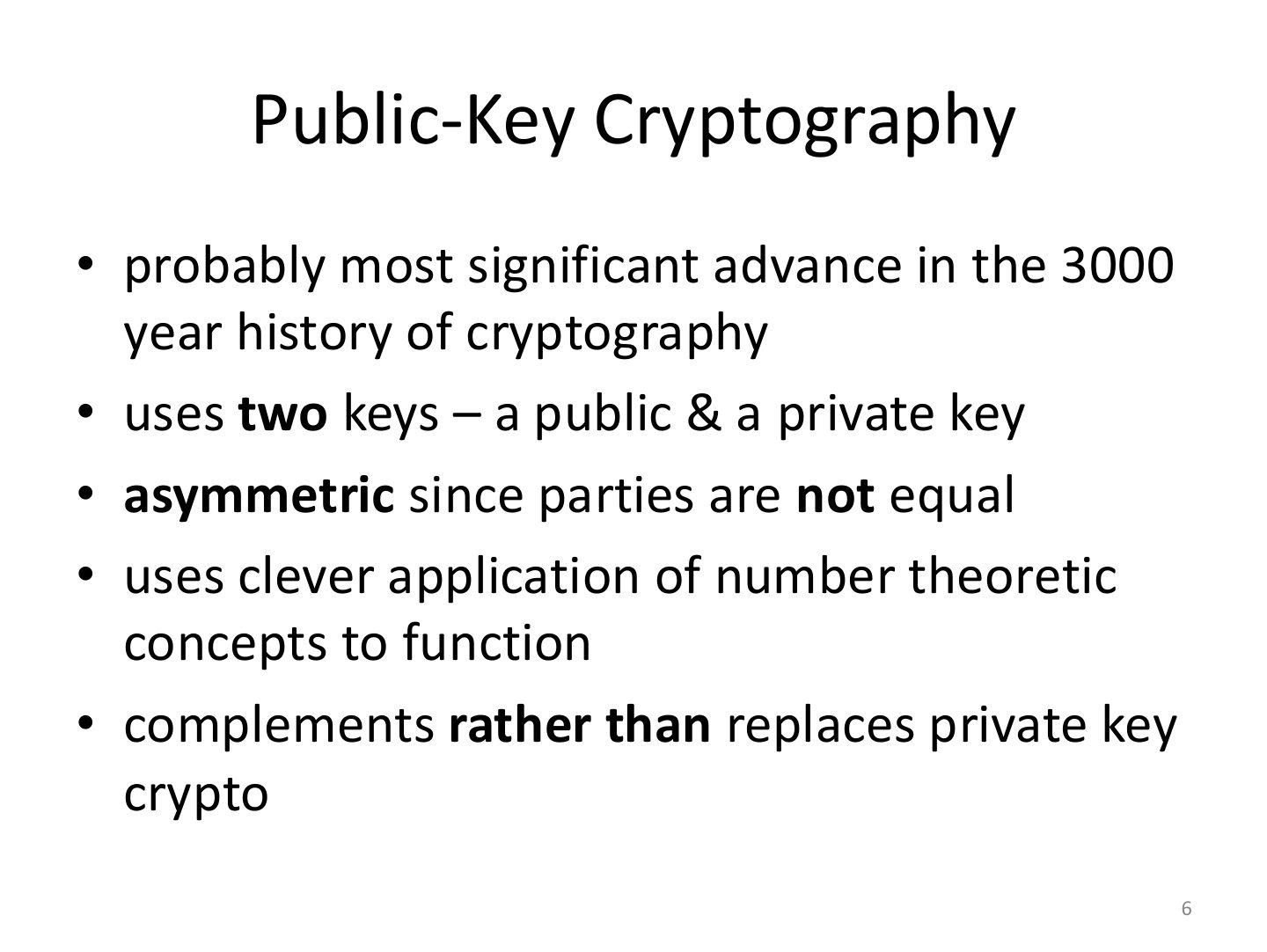
- 6 Public-Key Cryptography
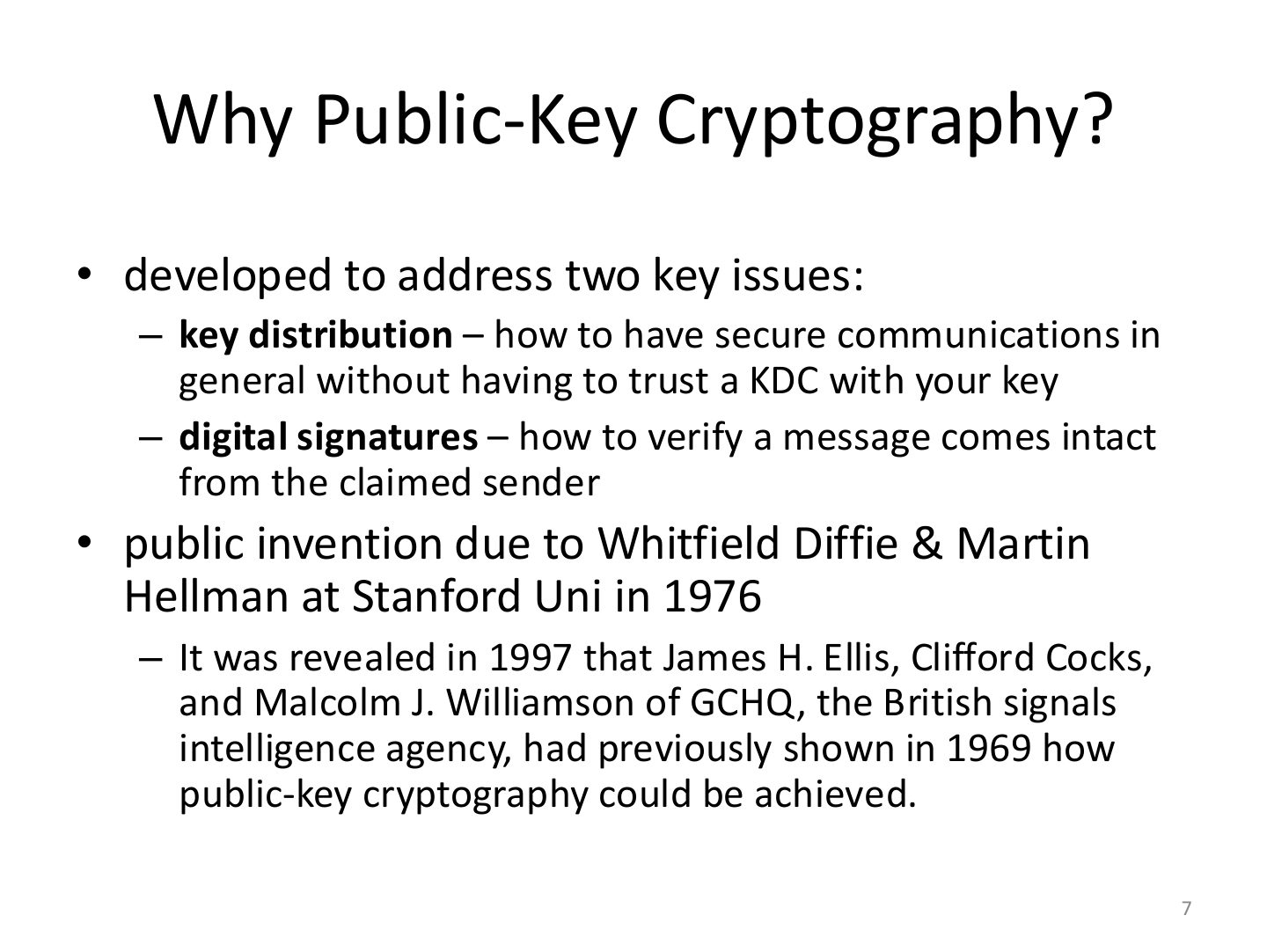
- 7 Why Public-Key Cryptography?
- 8 Public-Key Cryptography
- 9 Public-Key Cryptography
- 10 Symmetric vs Public-Key
- 11 Public-Key Cryptosystems
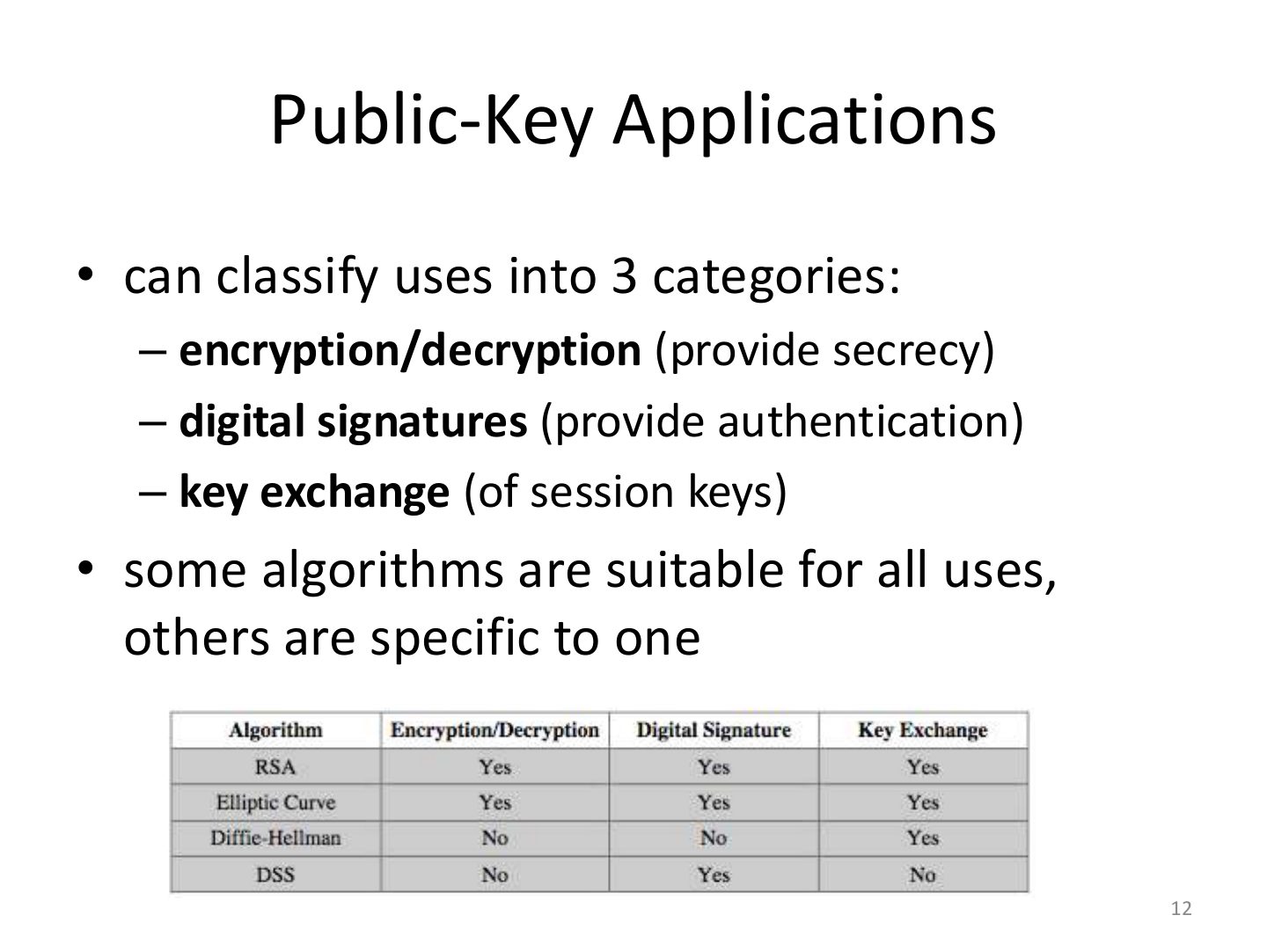
- 12 Public-Key Applications
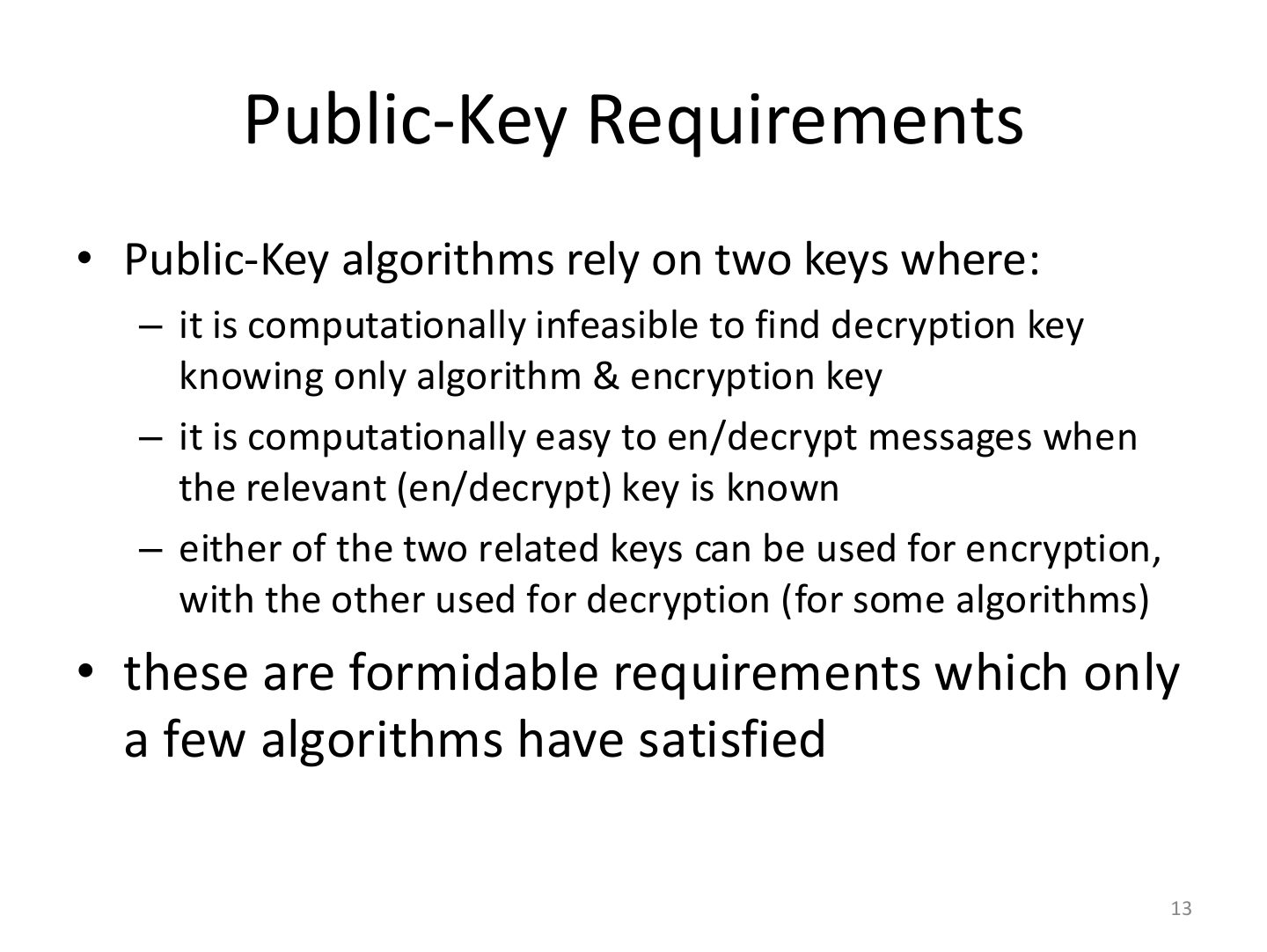
- 13 Public-Key Requirements
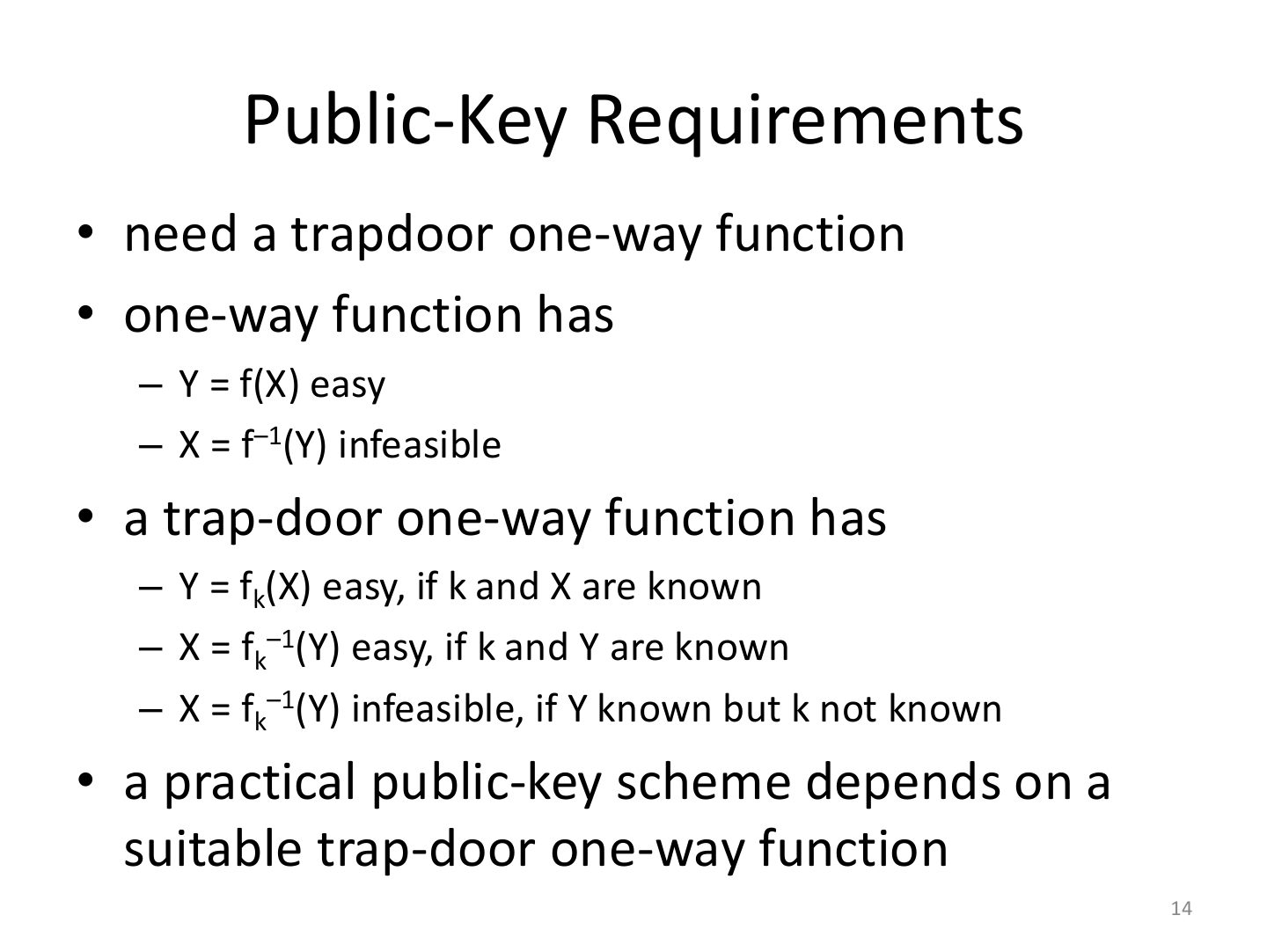
- 14 Public-Key Requirements
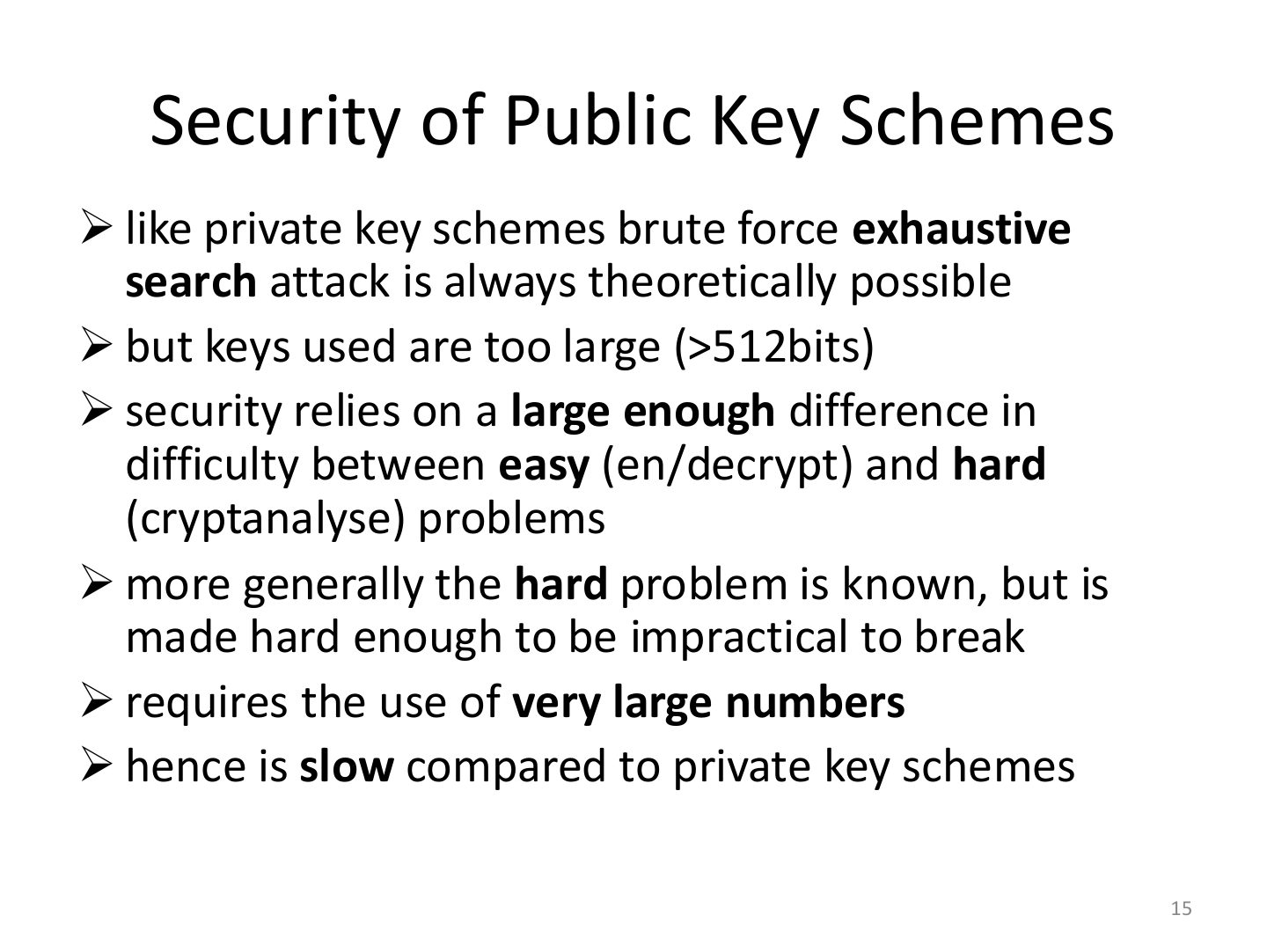
- 15 Security of Public Key Schemes
- 16 RSA
- 17 RSA Example
- 18 RSA En/decryption
- 19 RSA Key Setup
- 20 Why RSA Works
- 21 RSA Example - Key Setup
- 22 RSA Example - En/Decryption
- 23 Exponentiation
- 24 Exponentiation
- 25 Exponentiation Example
- 26 Efficient Encryption
- 27 Efficient Decryption
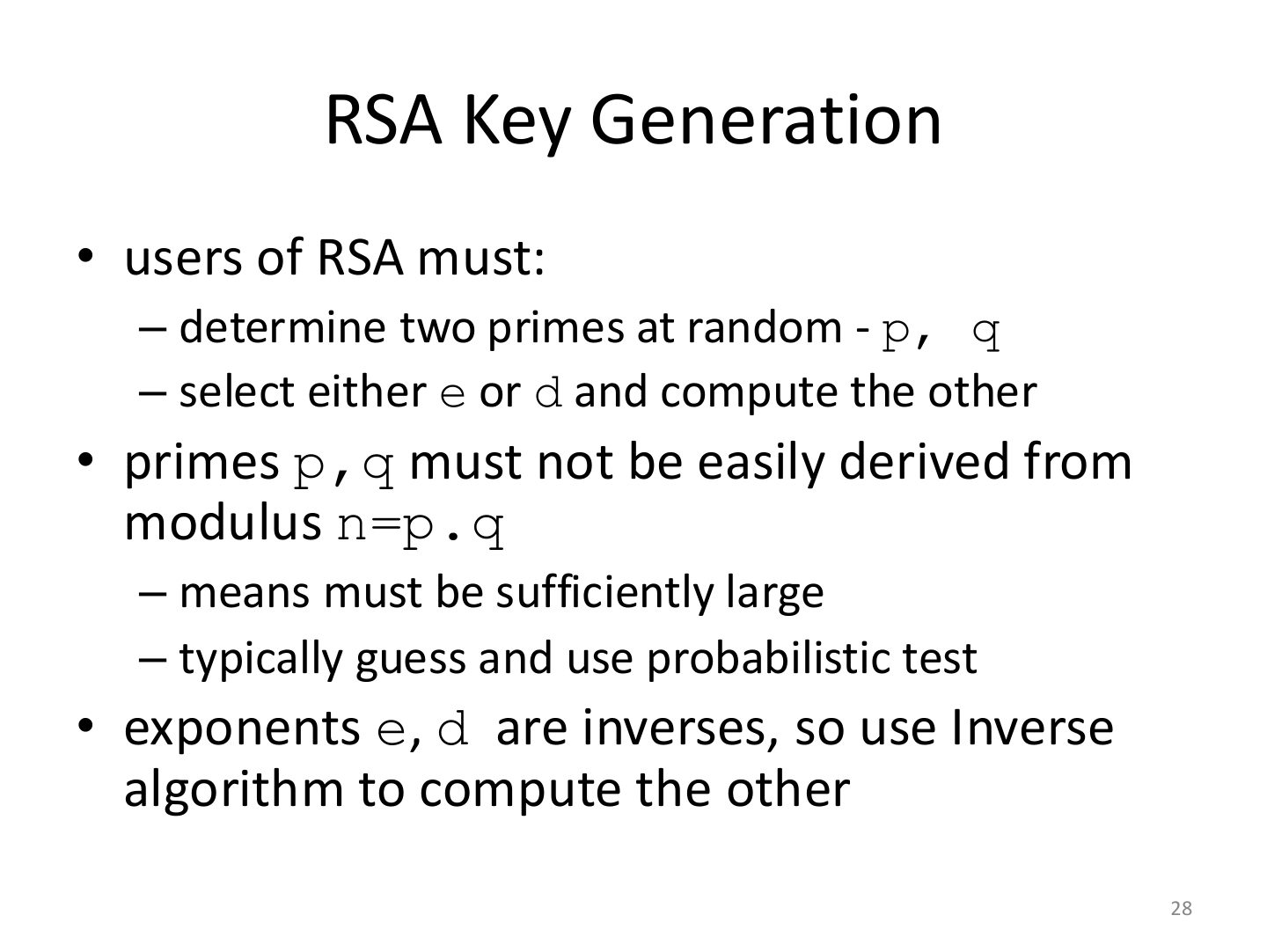
- 28 RSA Key Generation
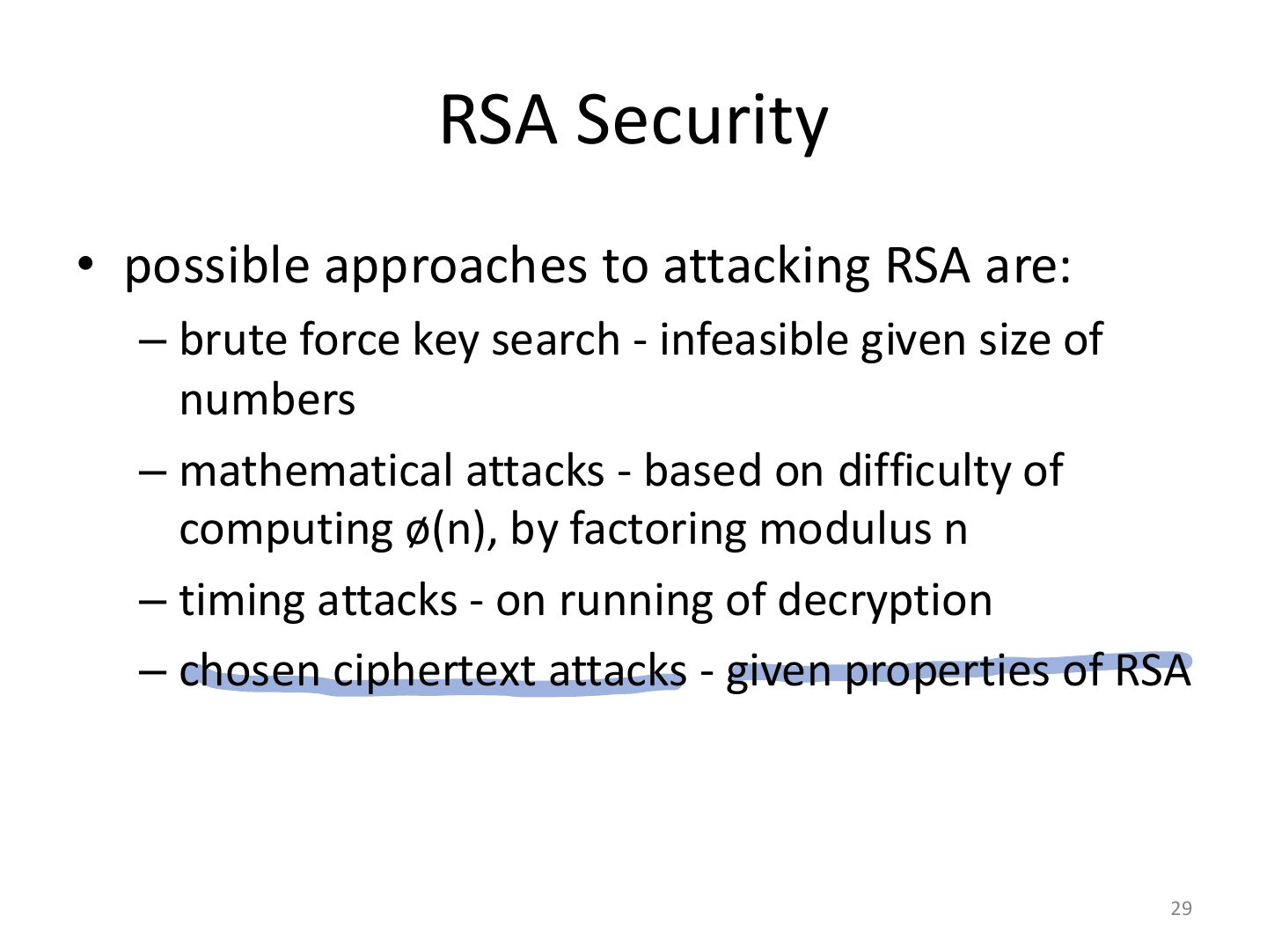
- 29 RSA Security
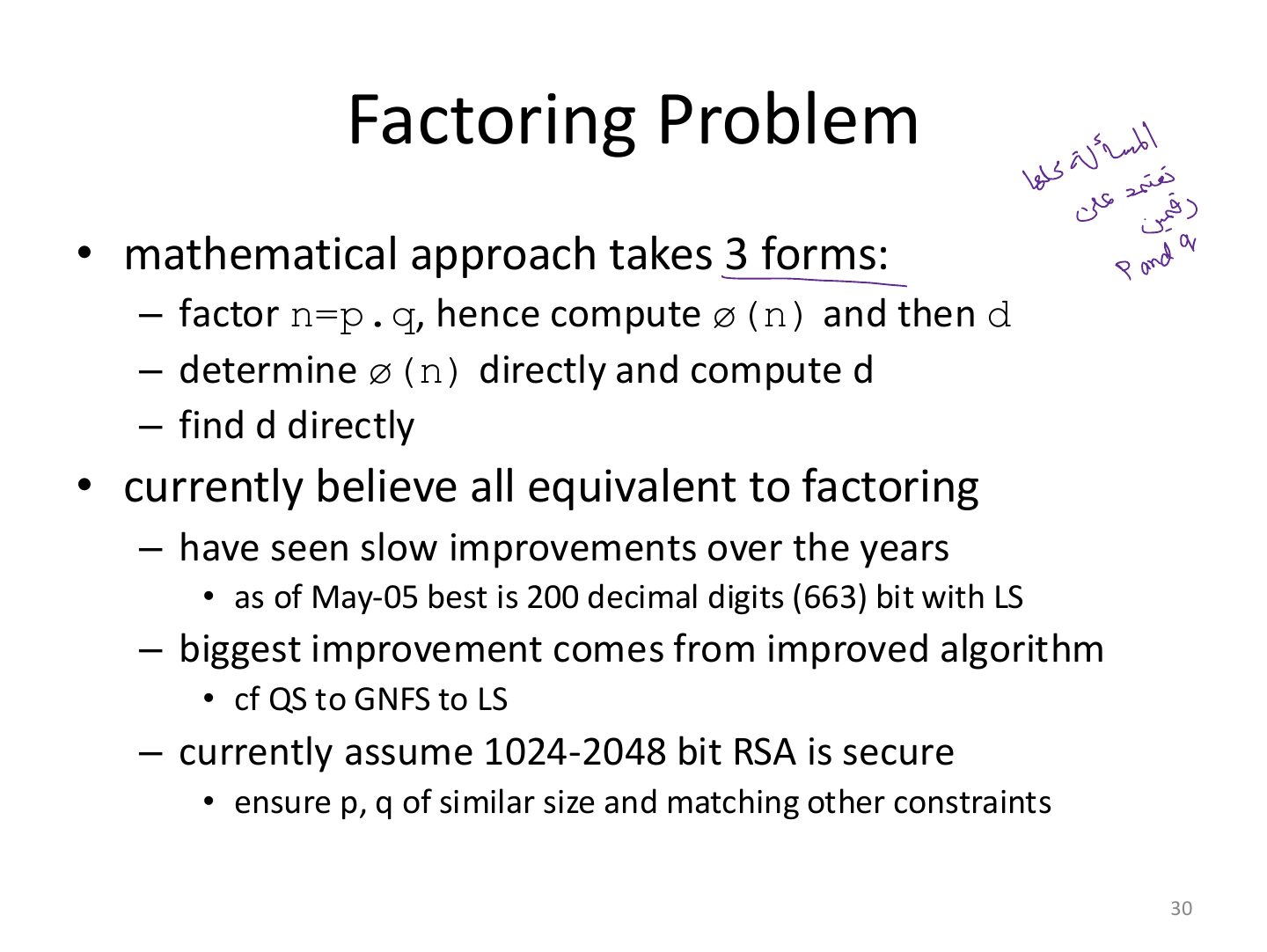
- 30 Factoring Problem
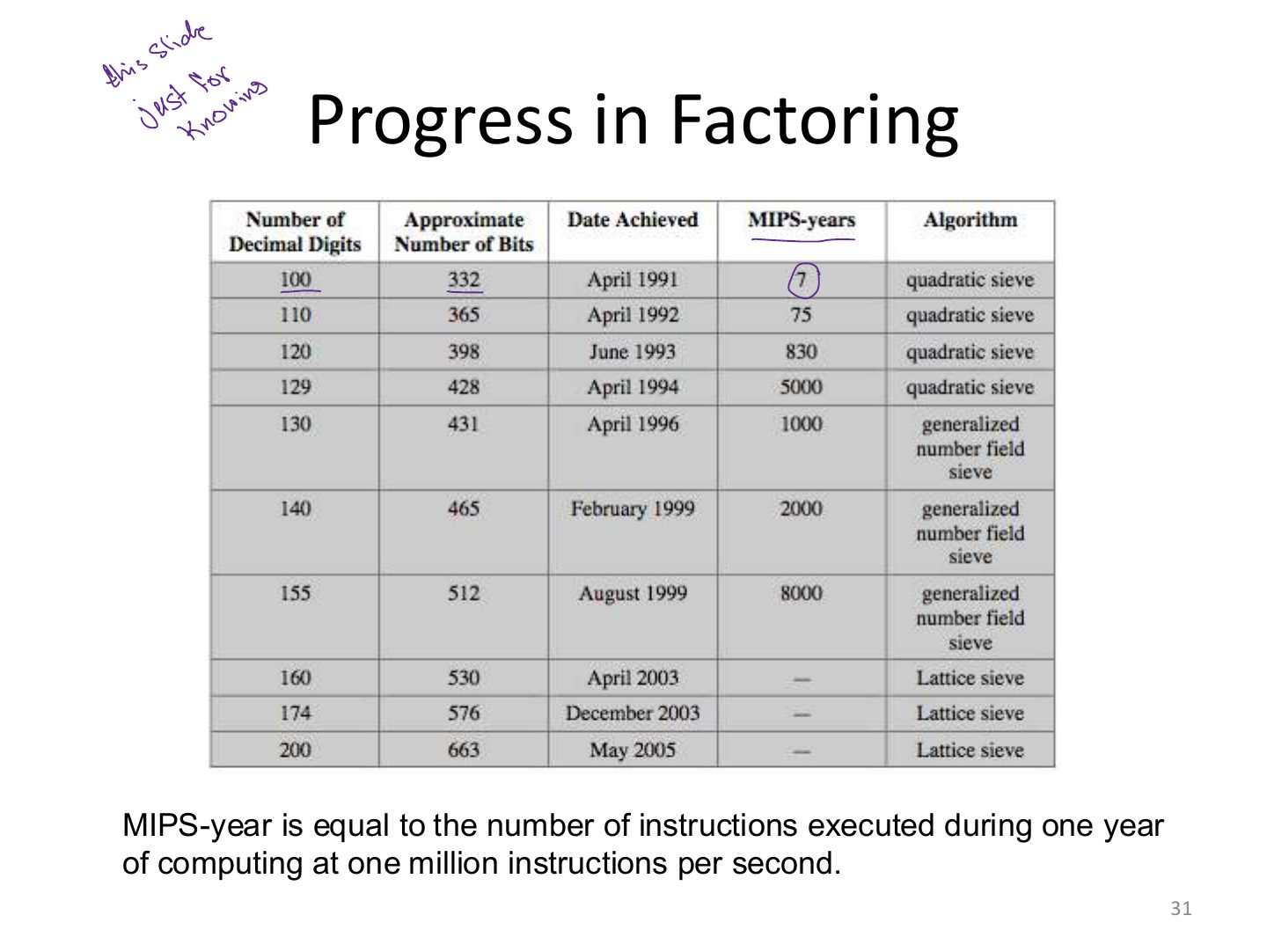
- 31 Progress in Factoring
- 32 Slide 32
- 33 Timing Attacks
- 34 Chosen Ciphertext Attacks
- 35 Summary
Slide 1
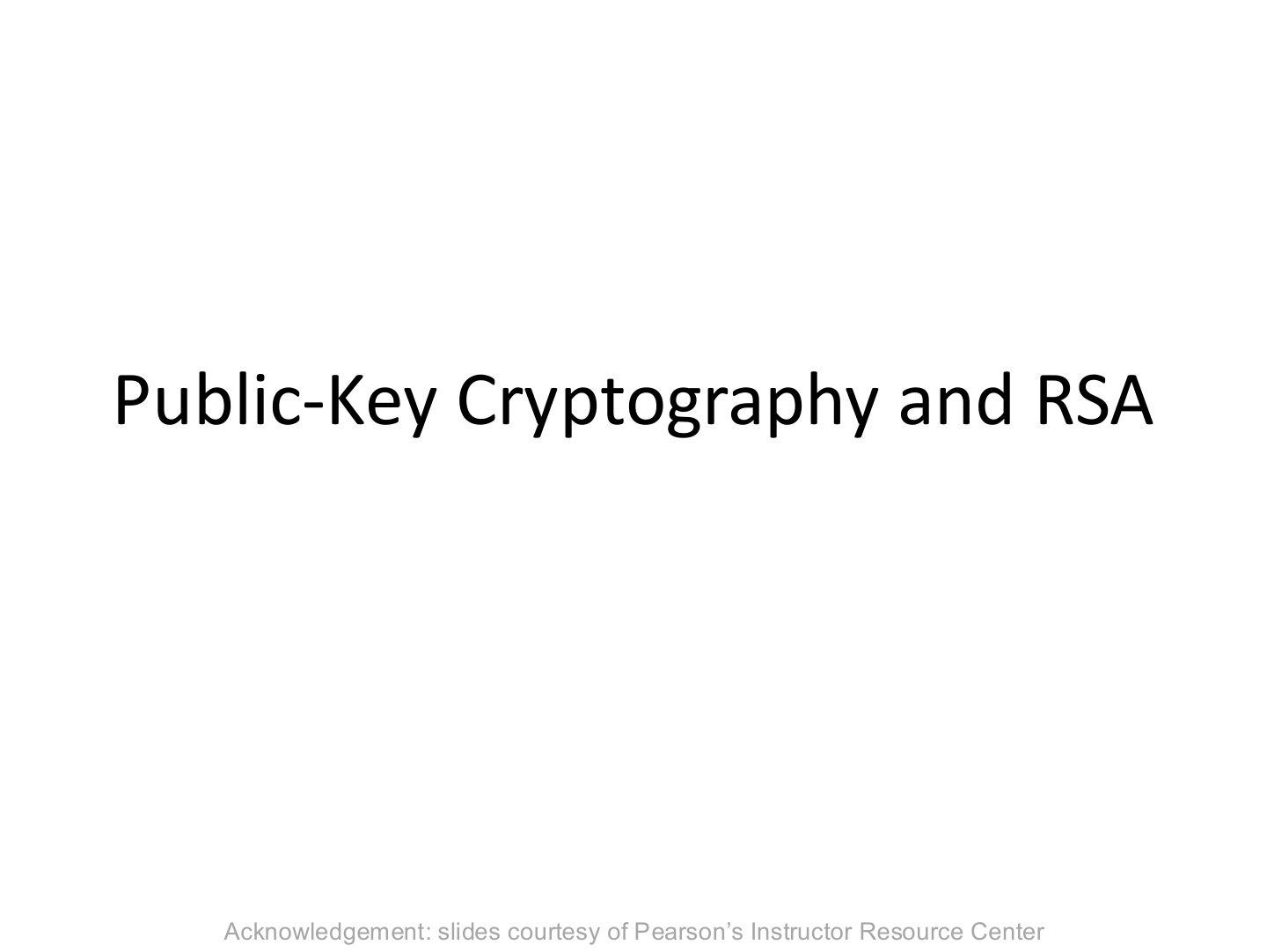
Private-Key Cryptography
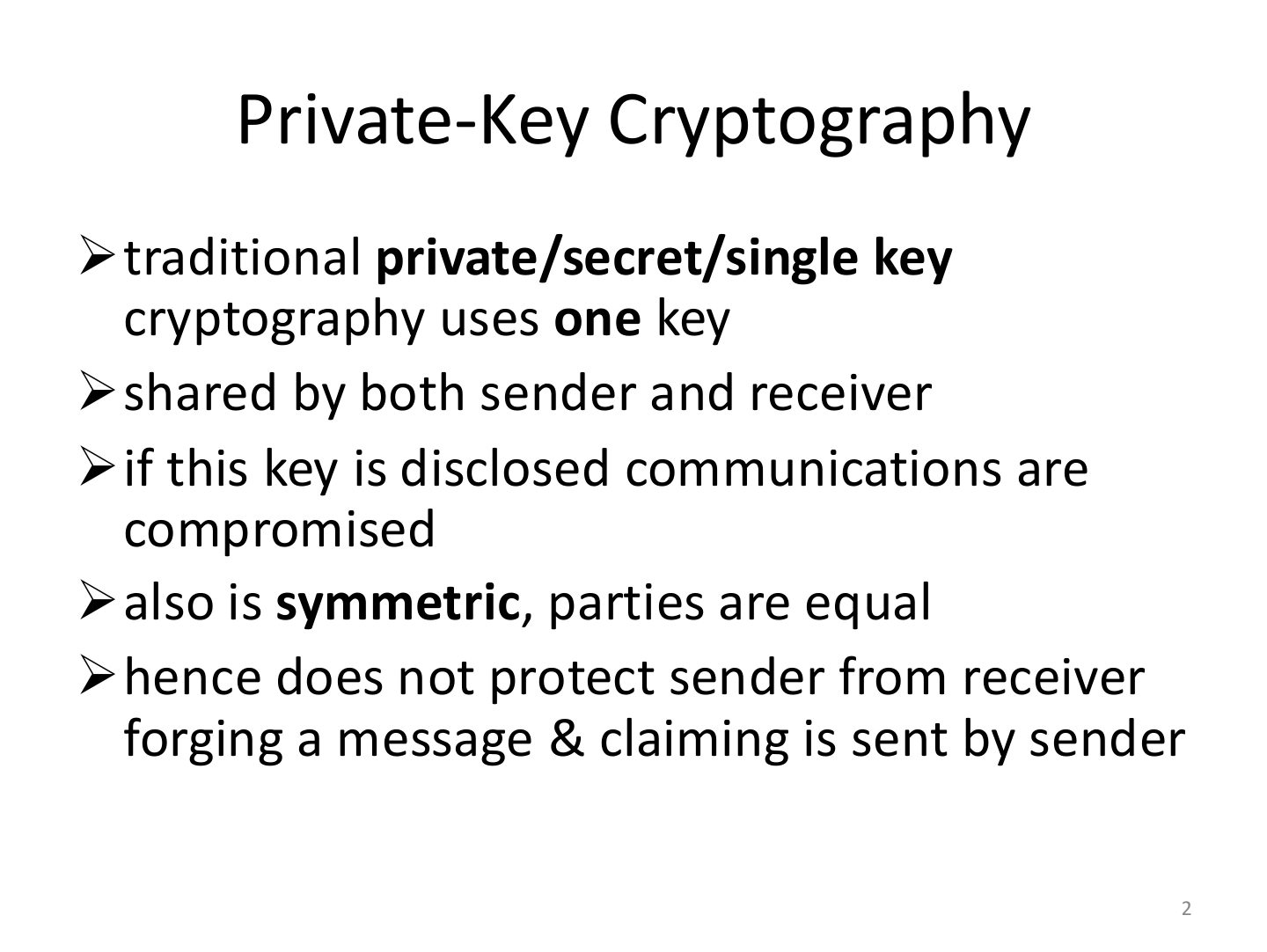
Challenges To Be Considered
Symmetric Cipher: Confidentiality
Symmetric Cipher: Authentication
Public-Key Cryptography
Notes
Public-key: encrypt with the receiver’s PUBLIC key for confidentiality; sign with your PRIVATE key for authentication.
Trap Confidentiality: encrypt with the RECEIVER’s public key. Signature: encrypt (sign) with the SENDER’s private key.
Exam angle
A digital signature is created with:
Why Public-Key Cryptography?
Public-Key Cryptography
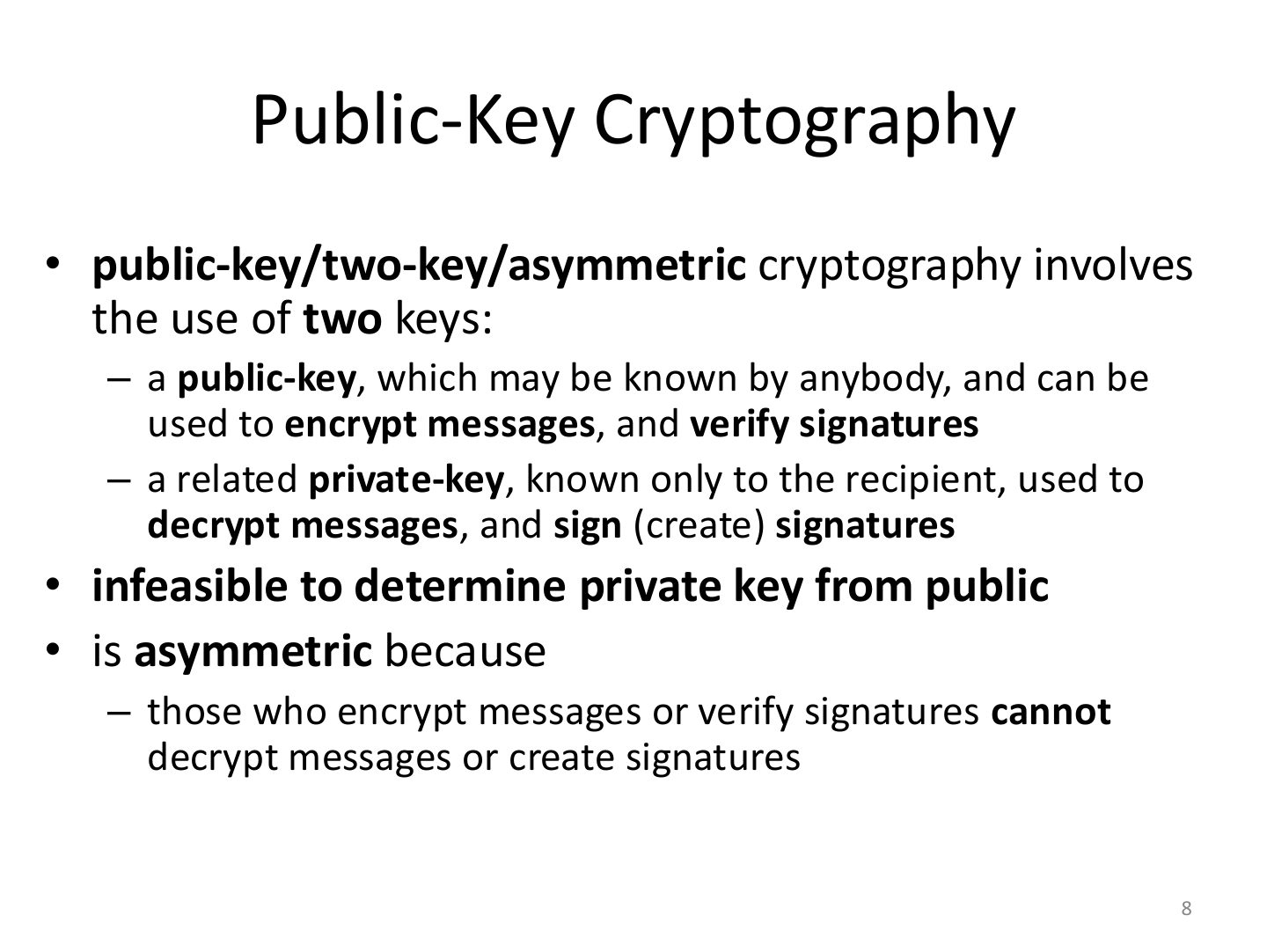
Public-Key Cryptography
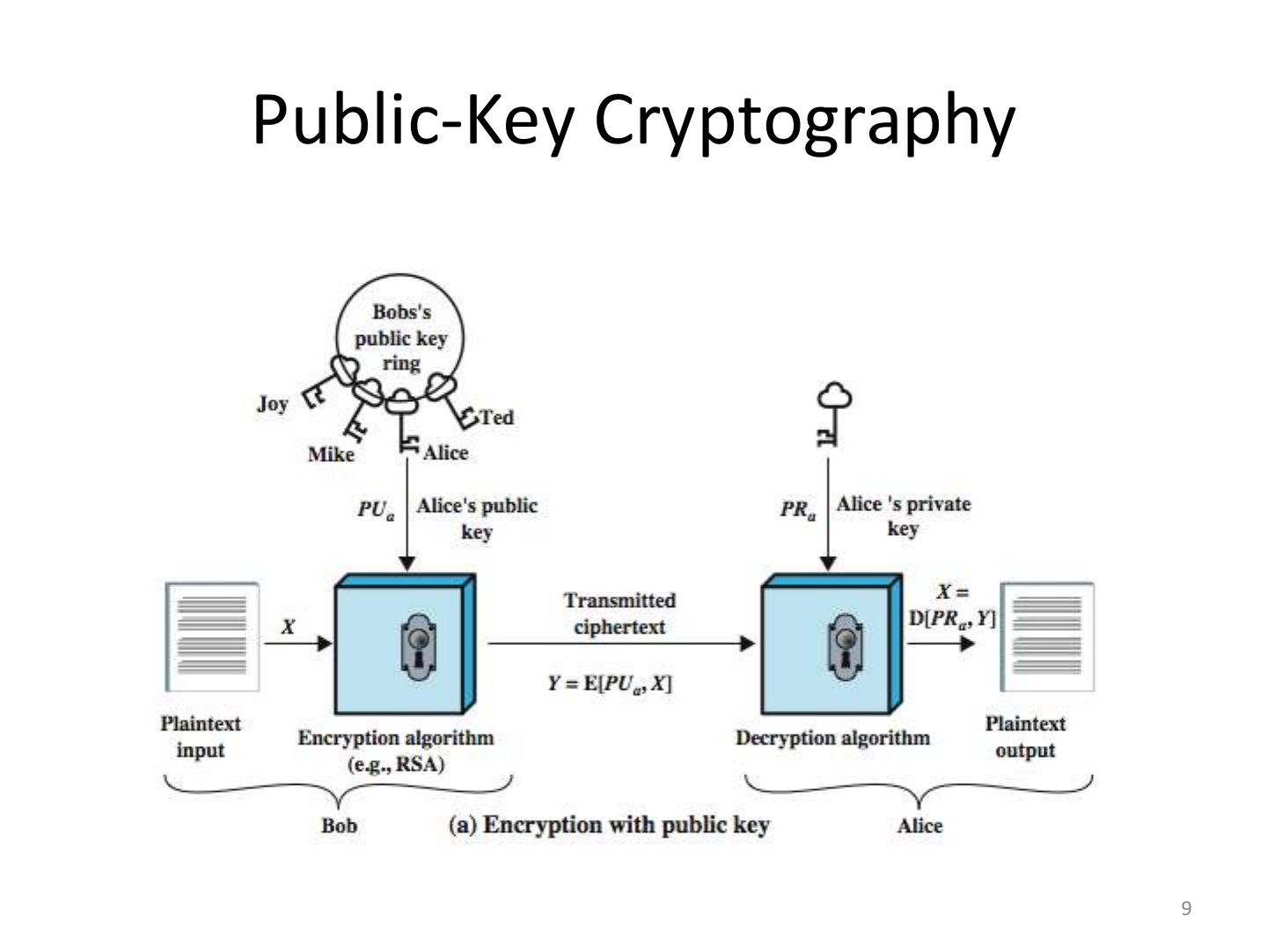
Symmetric vs Public-Key
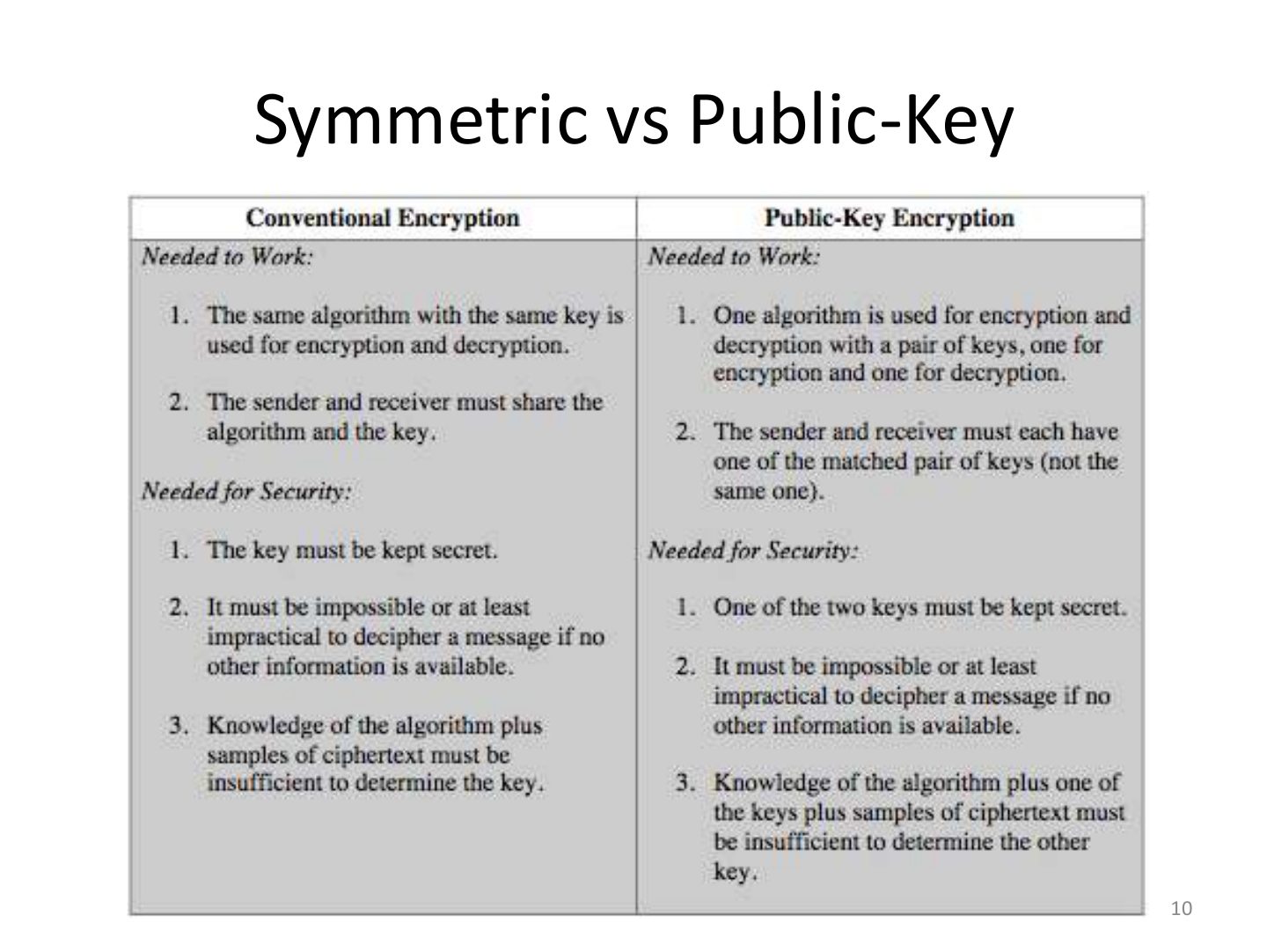
Public-Key Cryptosystems
Public-Key Applications
Public-Key Requirements
Public-Key Requirements
Security of Public Key Schemes
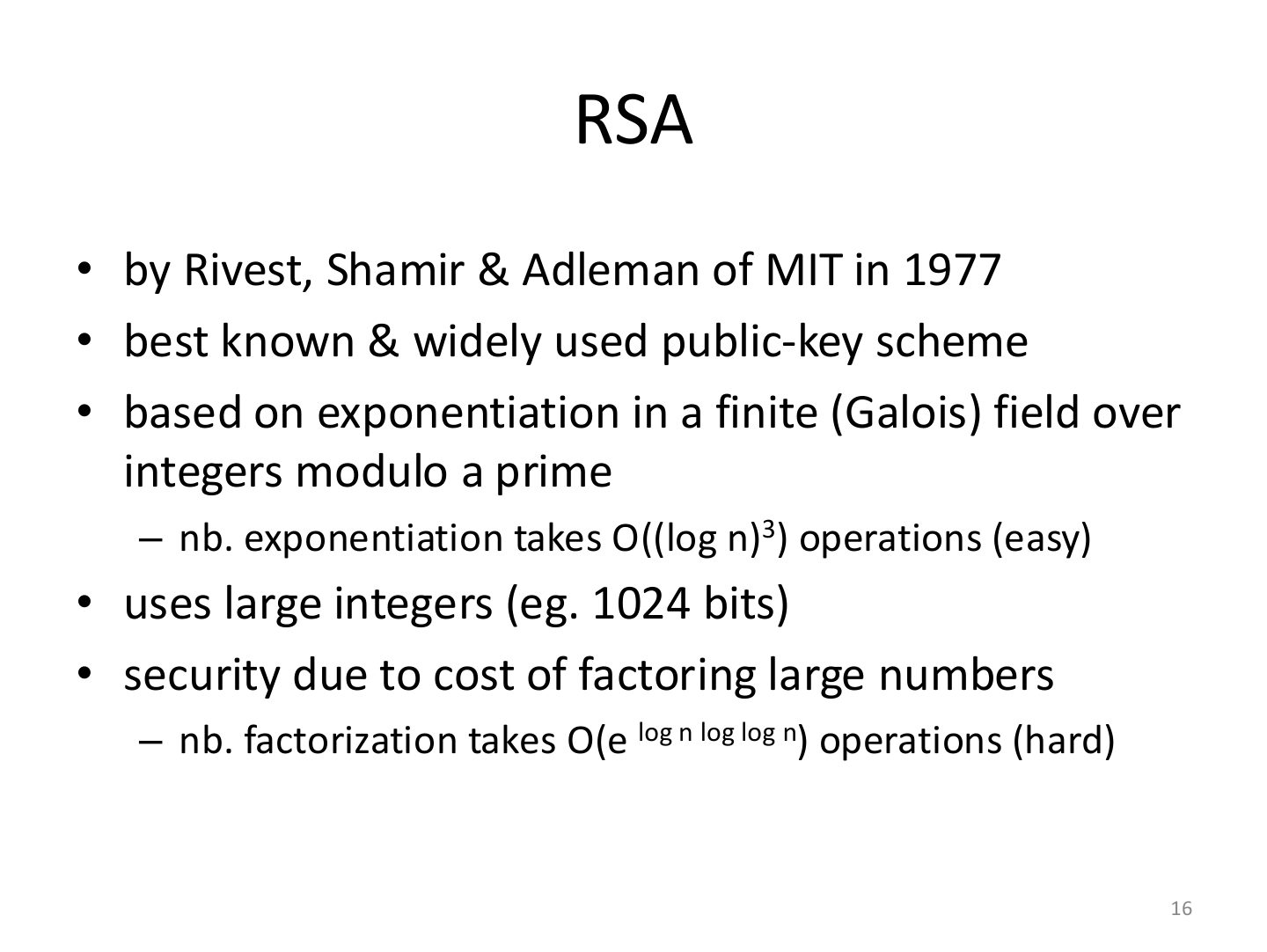
RSA
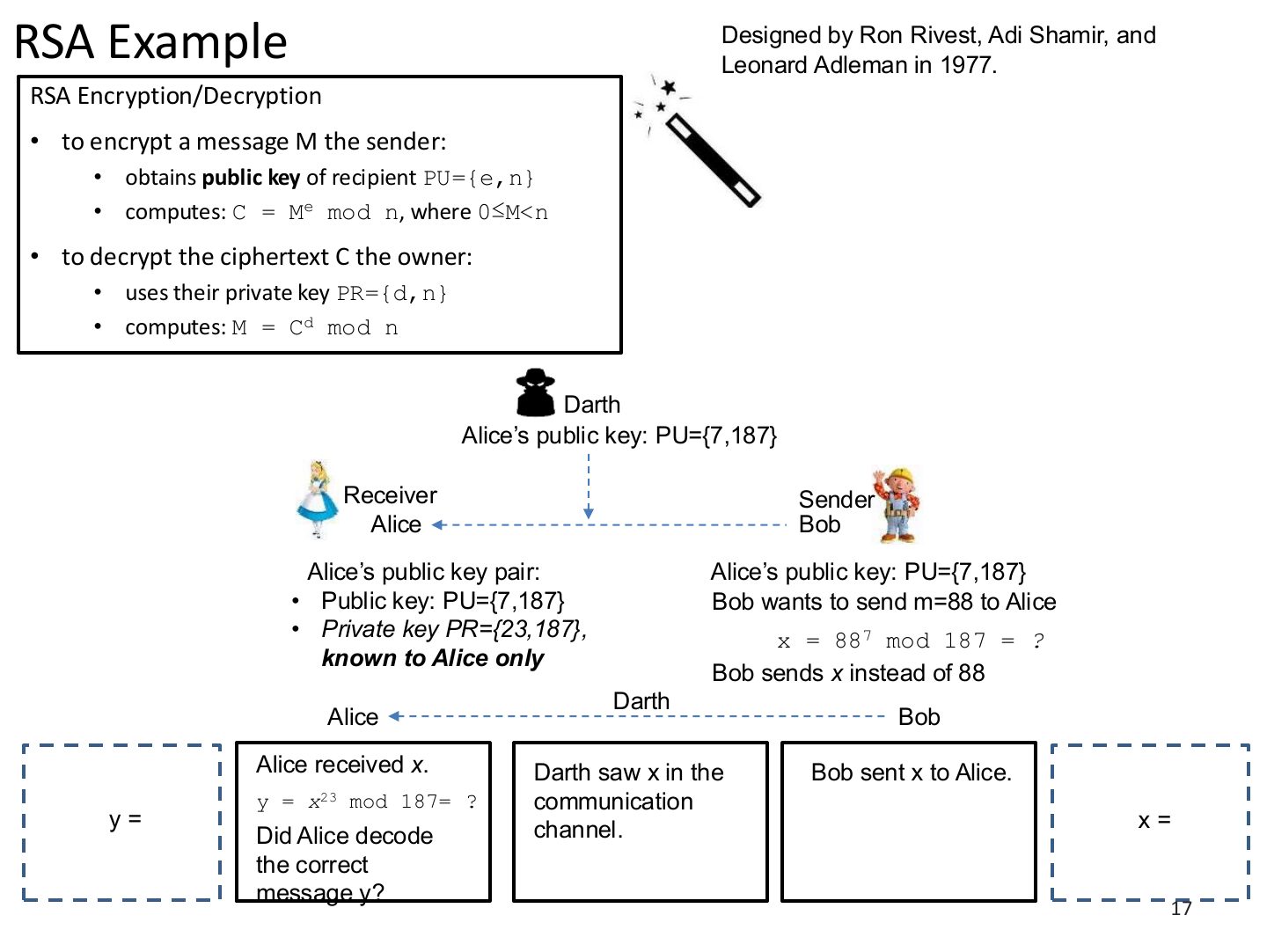
RSA Example
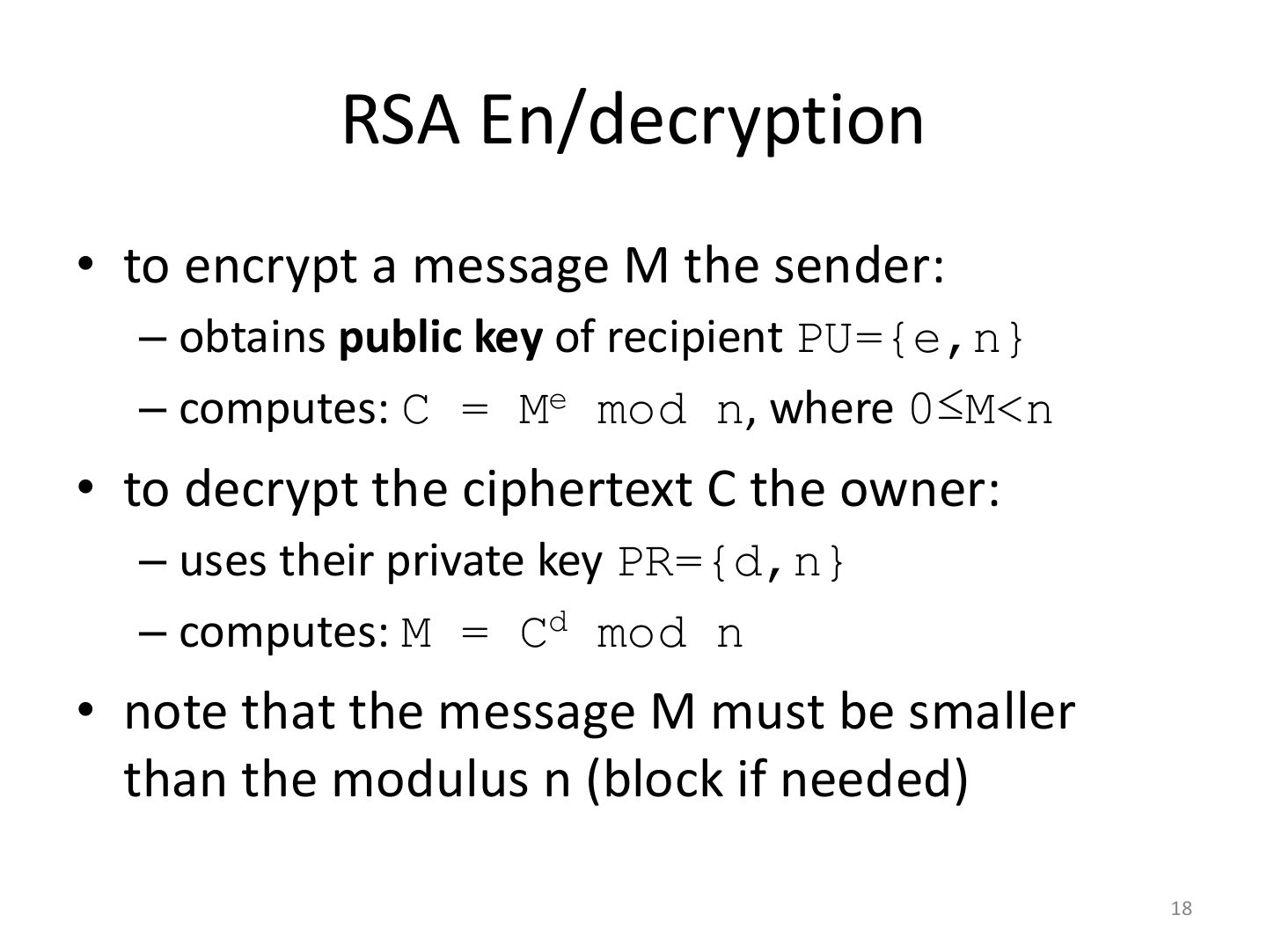
RSA En/decryption
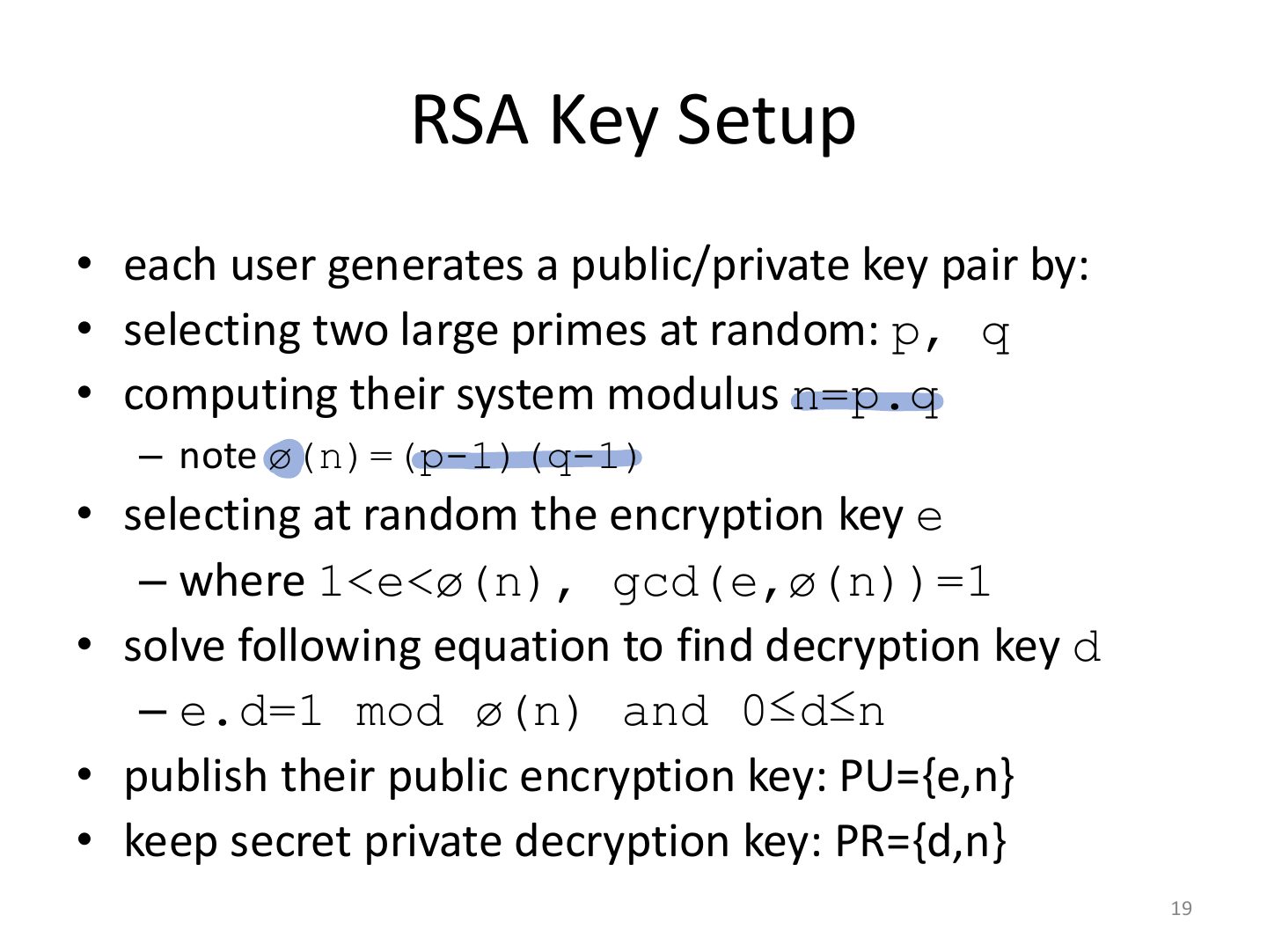
RSA Key Setup
Why RSA Works
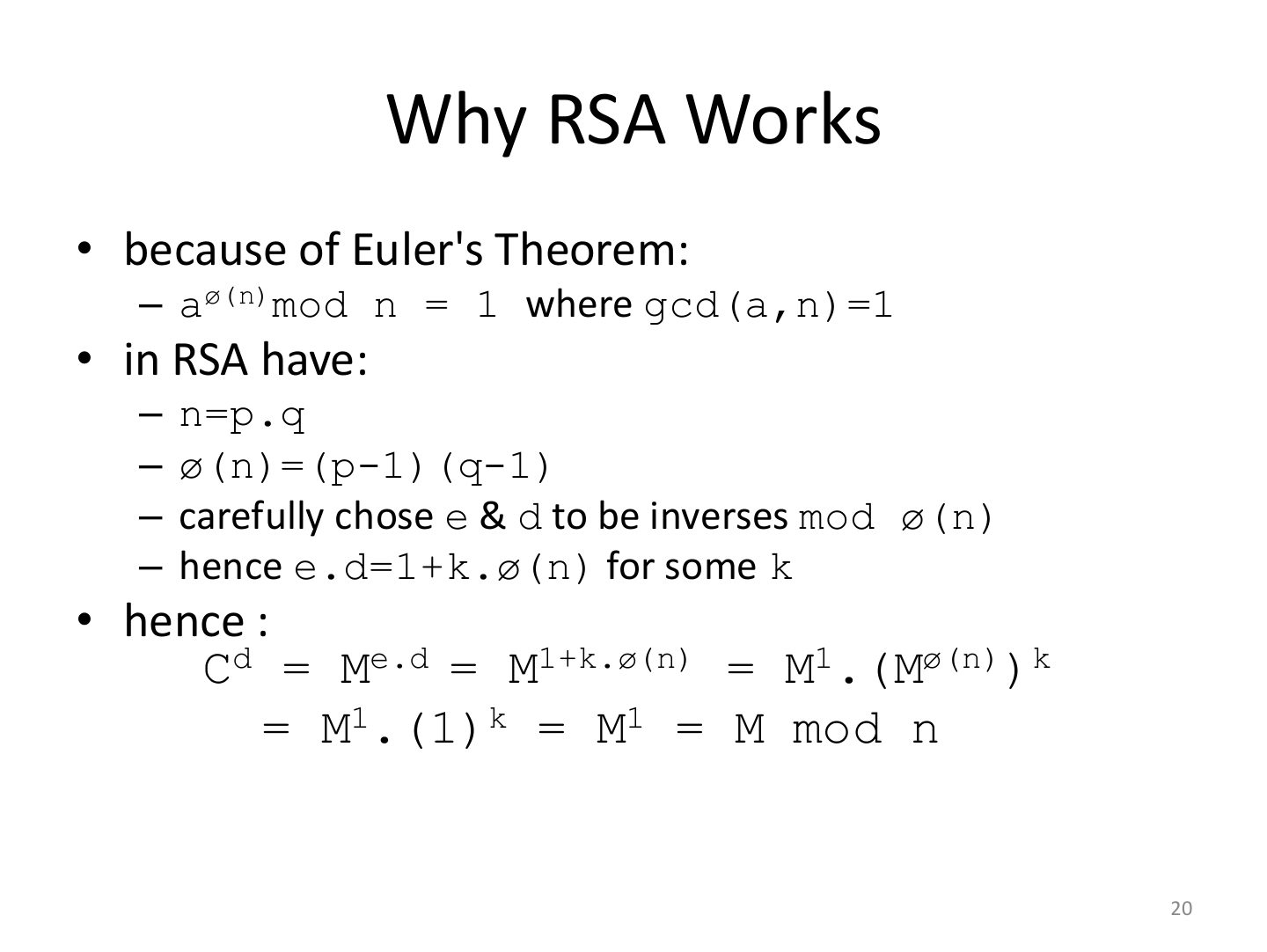
RSA Example - Key Setup
Exam angle
p = 5, q = 11, e = 3. Find n, φ(n) and d.
Compare with the model answer
n = 55, φ = 4·10 = 40. d = 3⁻¹ mod 40 = 27 (3·27 = 81 = 2·40 + 1).
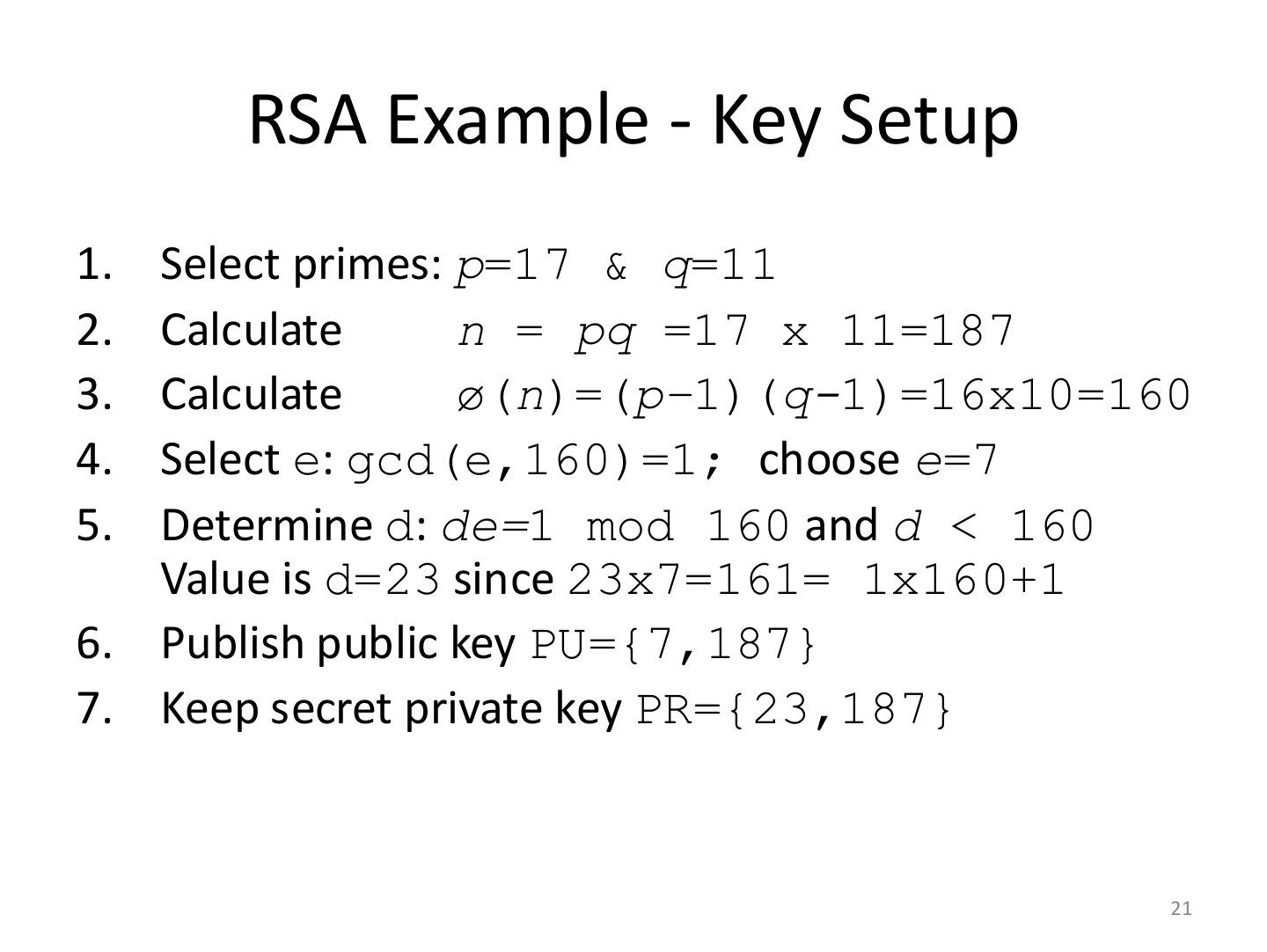
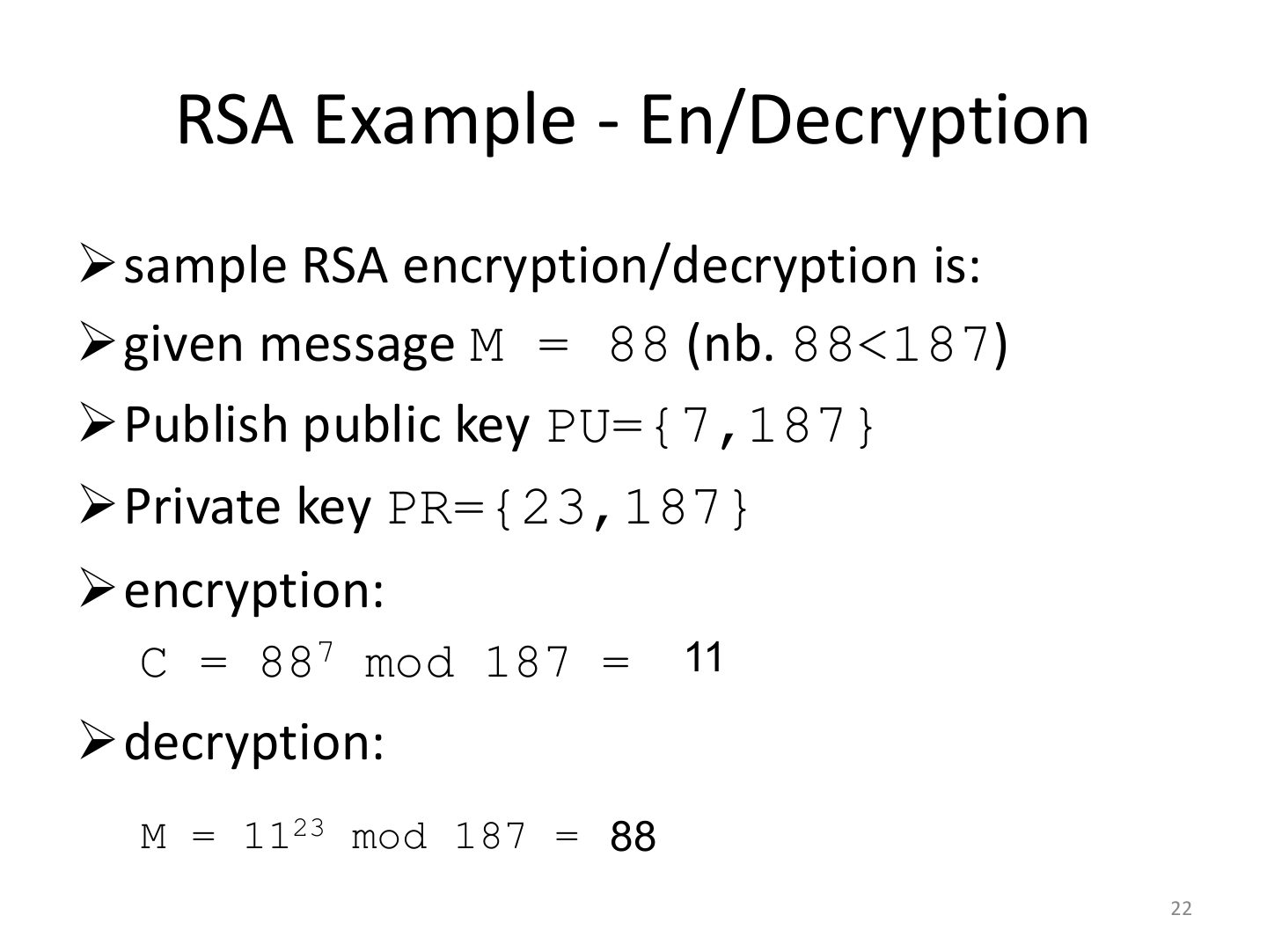
RSA Example - En/Decryption
Exam angle
In RSA, decryption computes:
Exponentiation
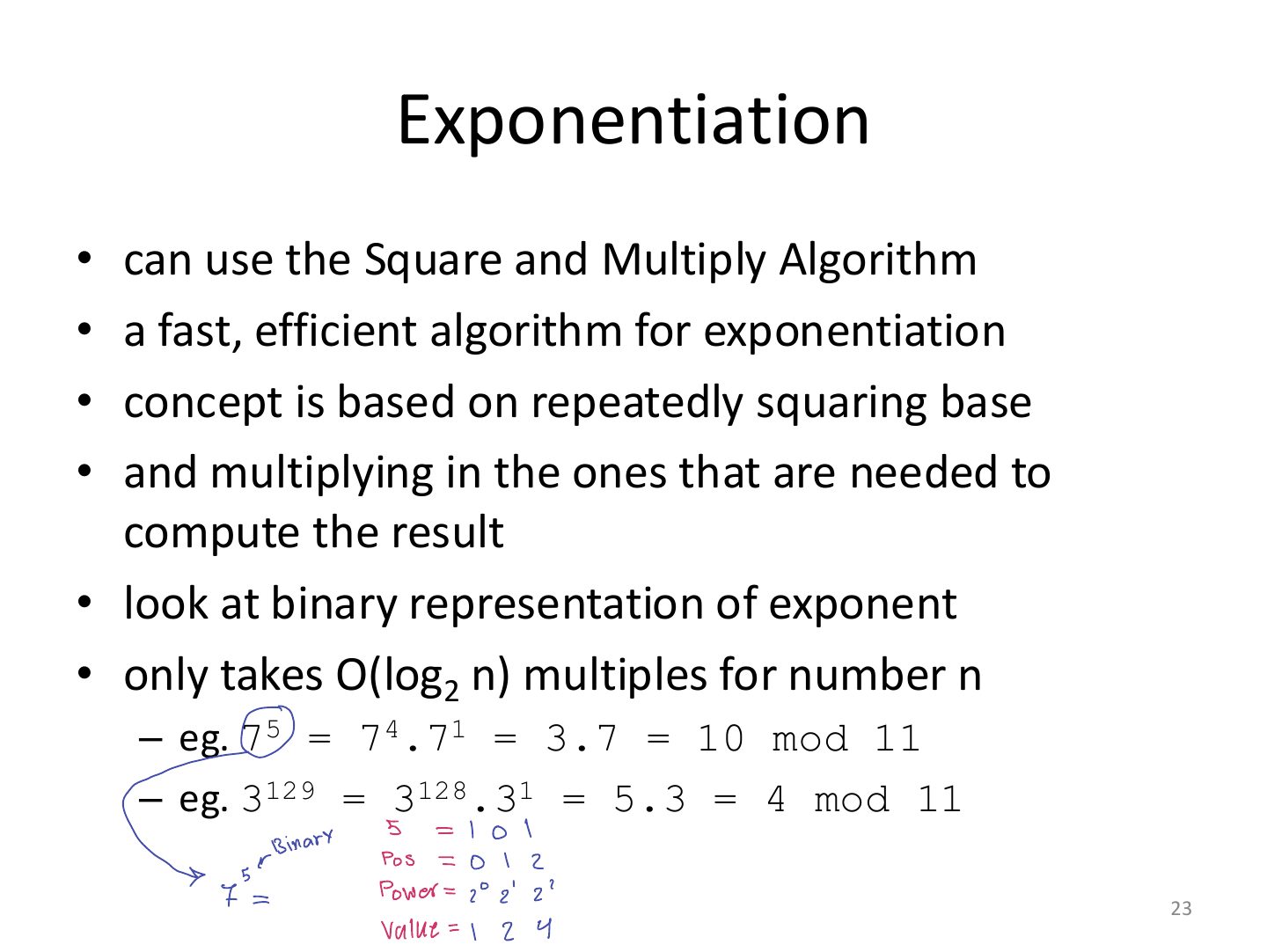
Exponentiation
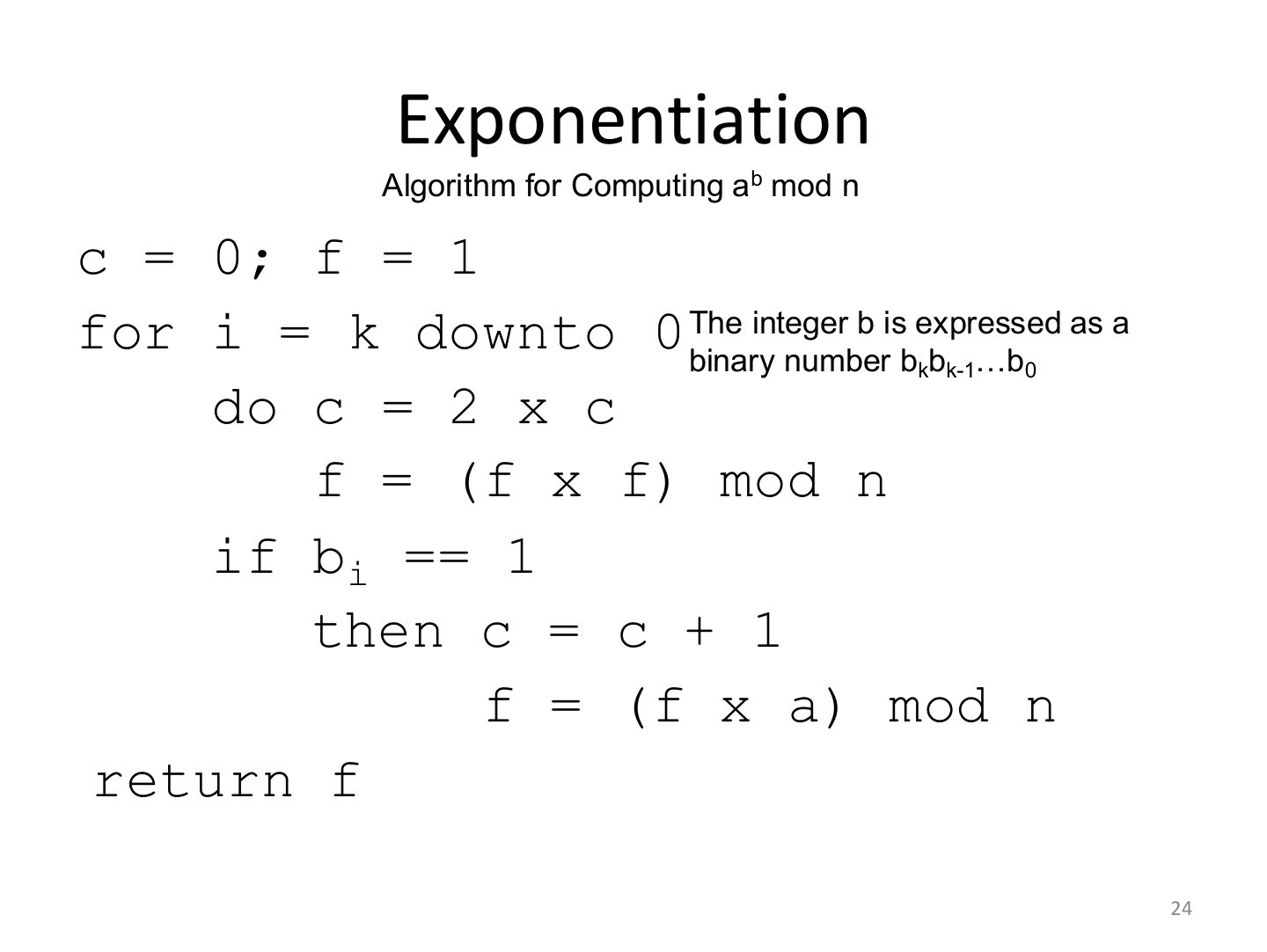
Exponentiation Example
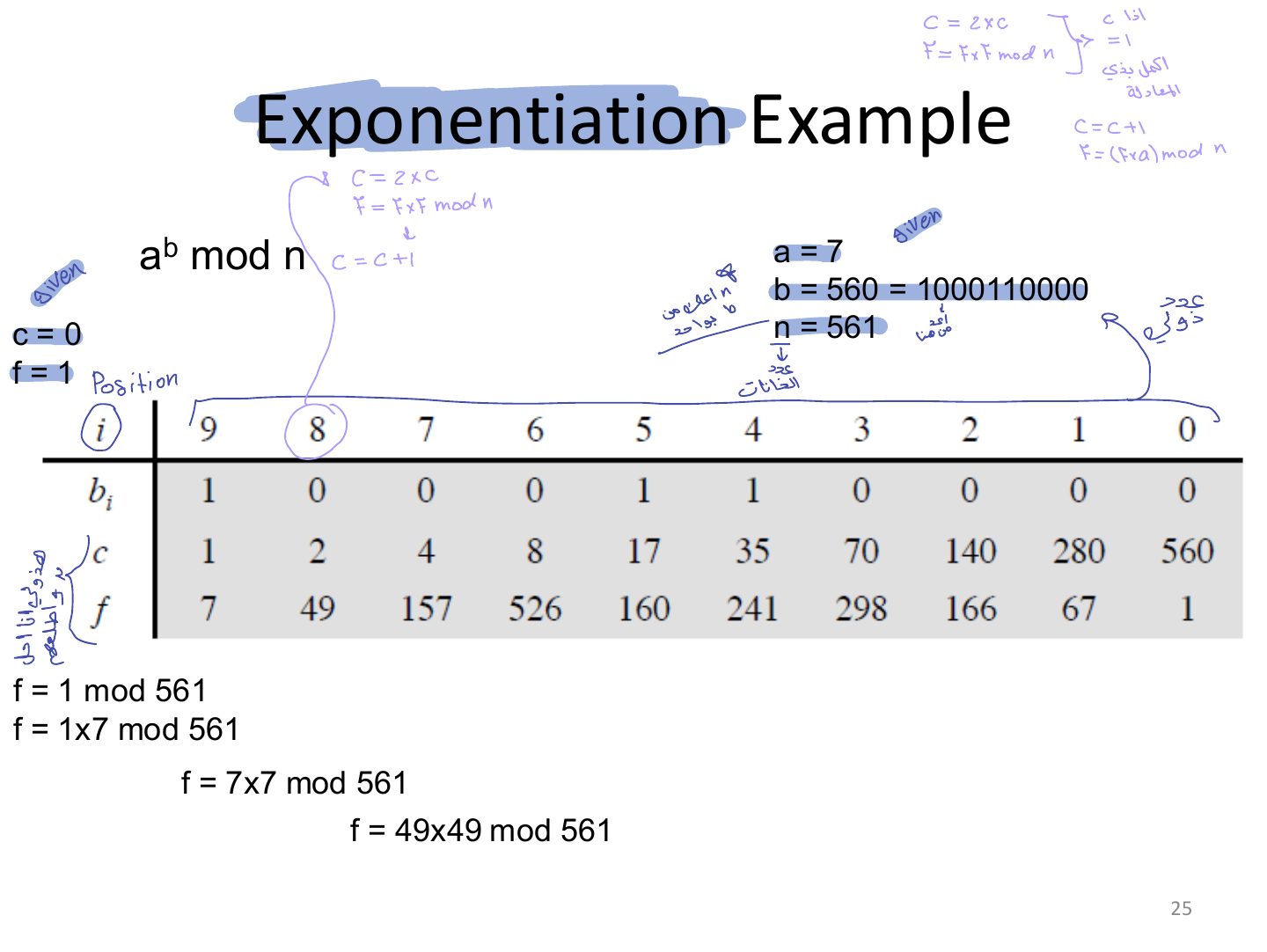
Efficient Encryption
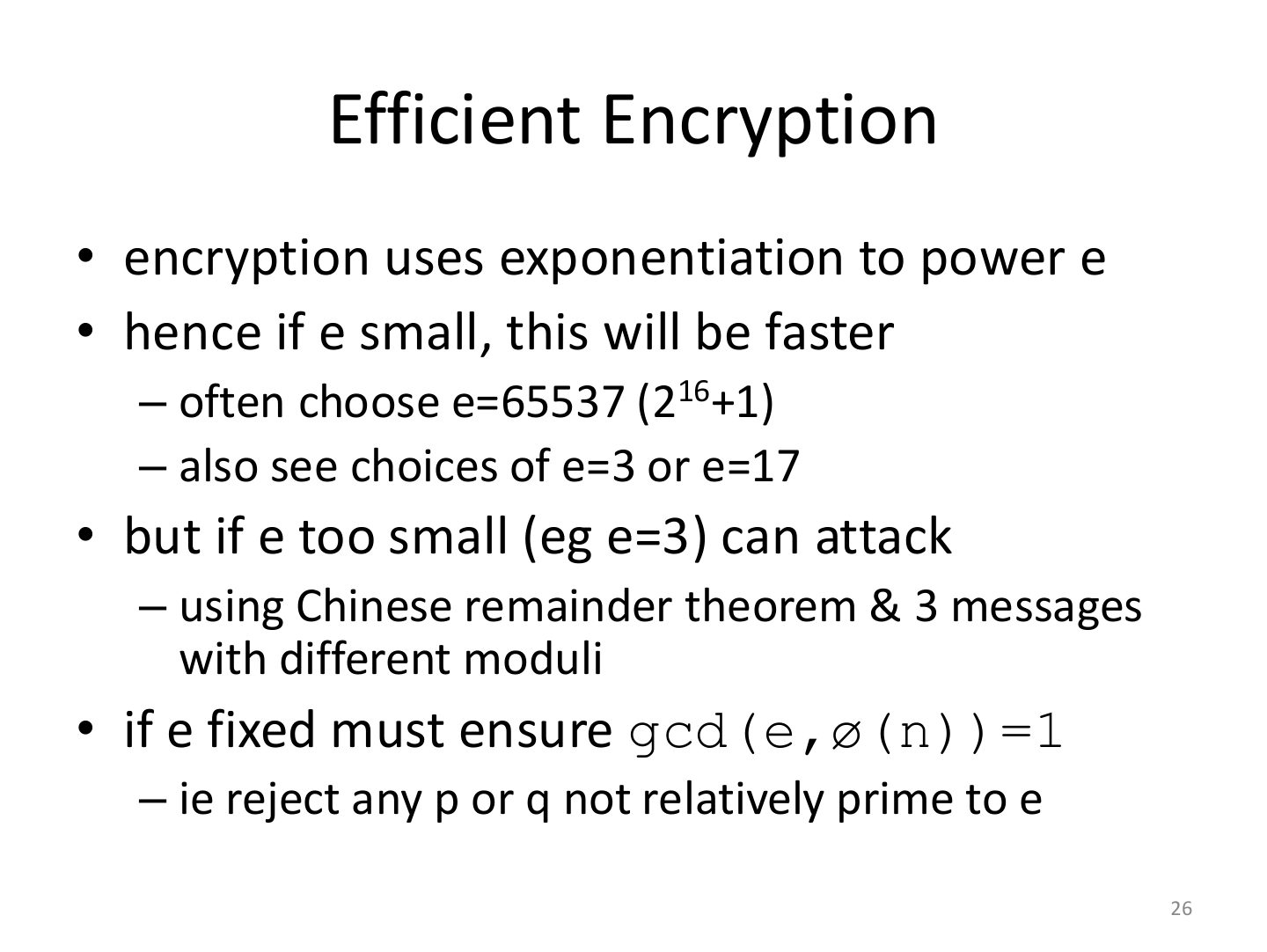
Efficient Decryption
RSA Key Generation
RSA Security
Factoring Problem
Notes
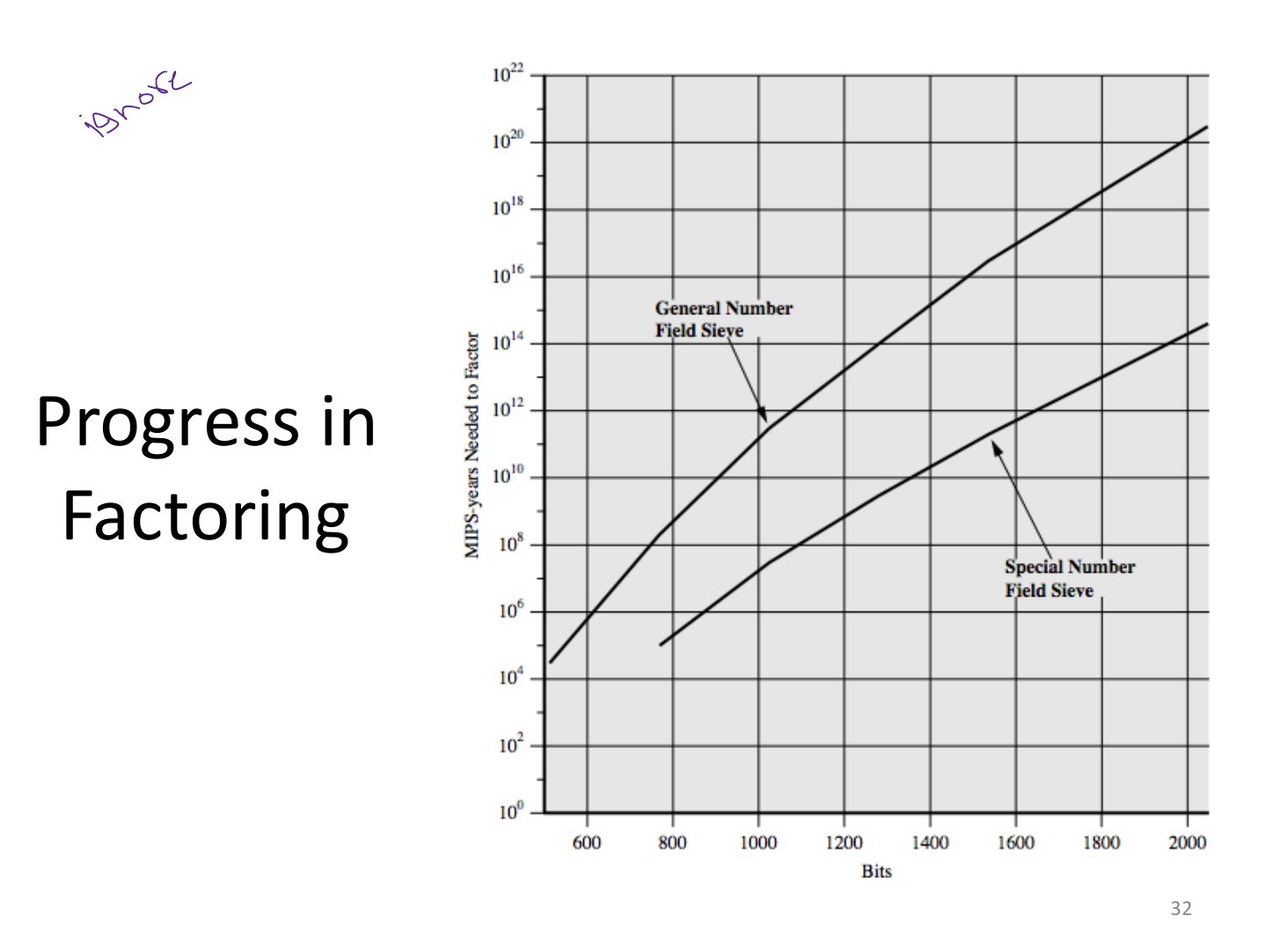
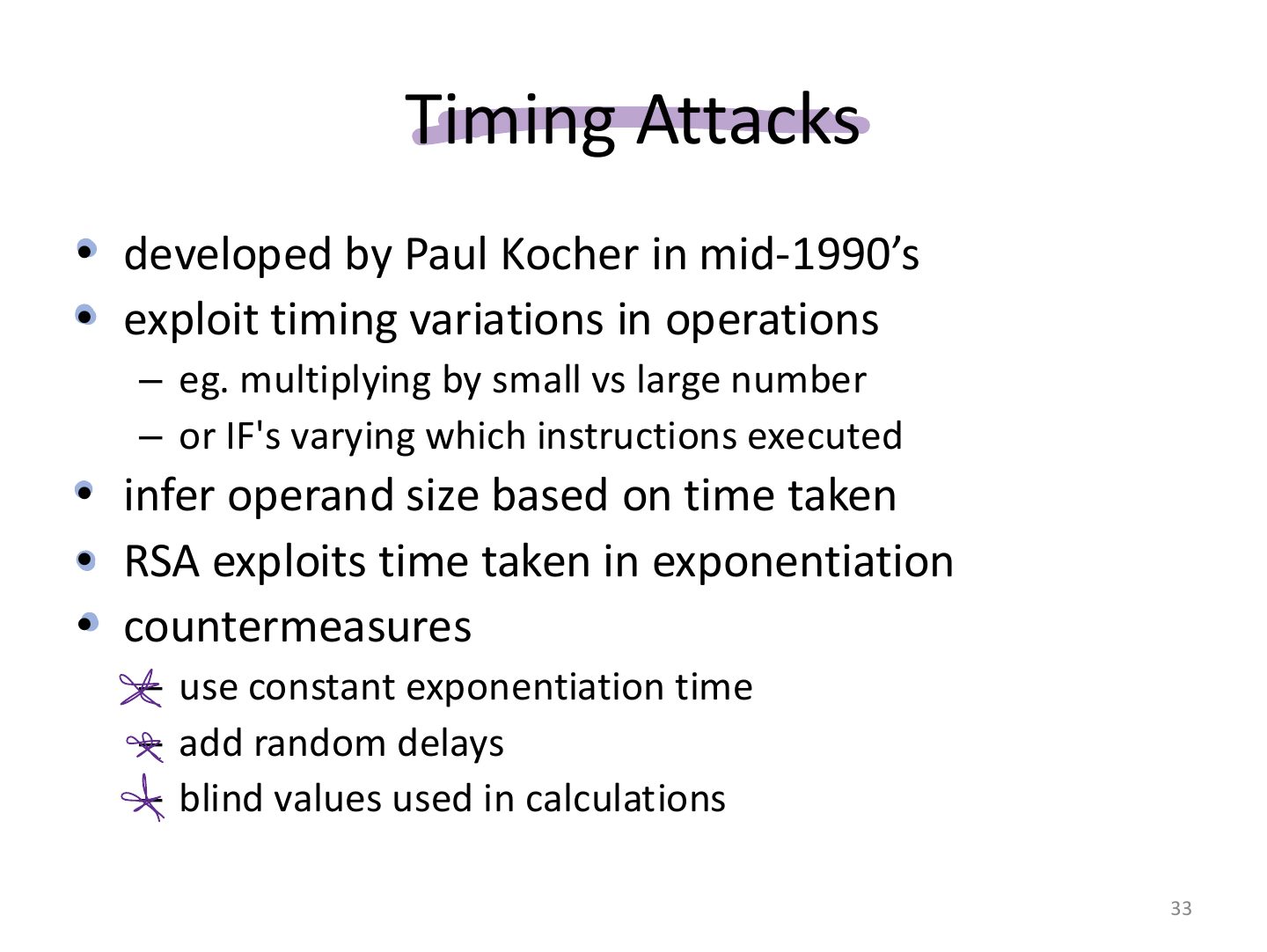
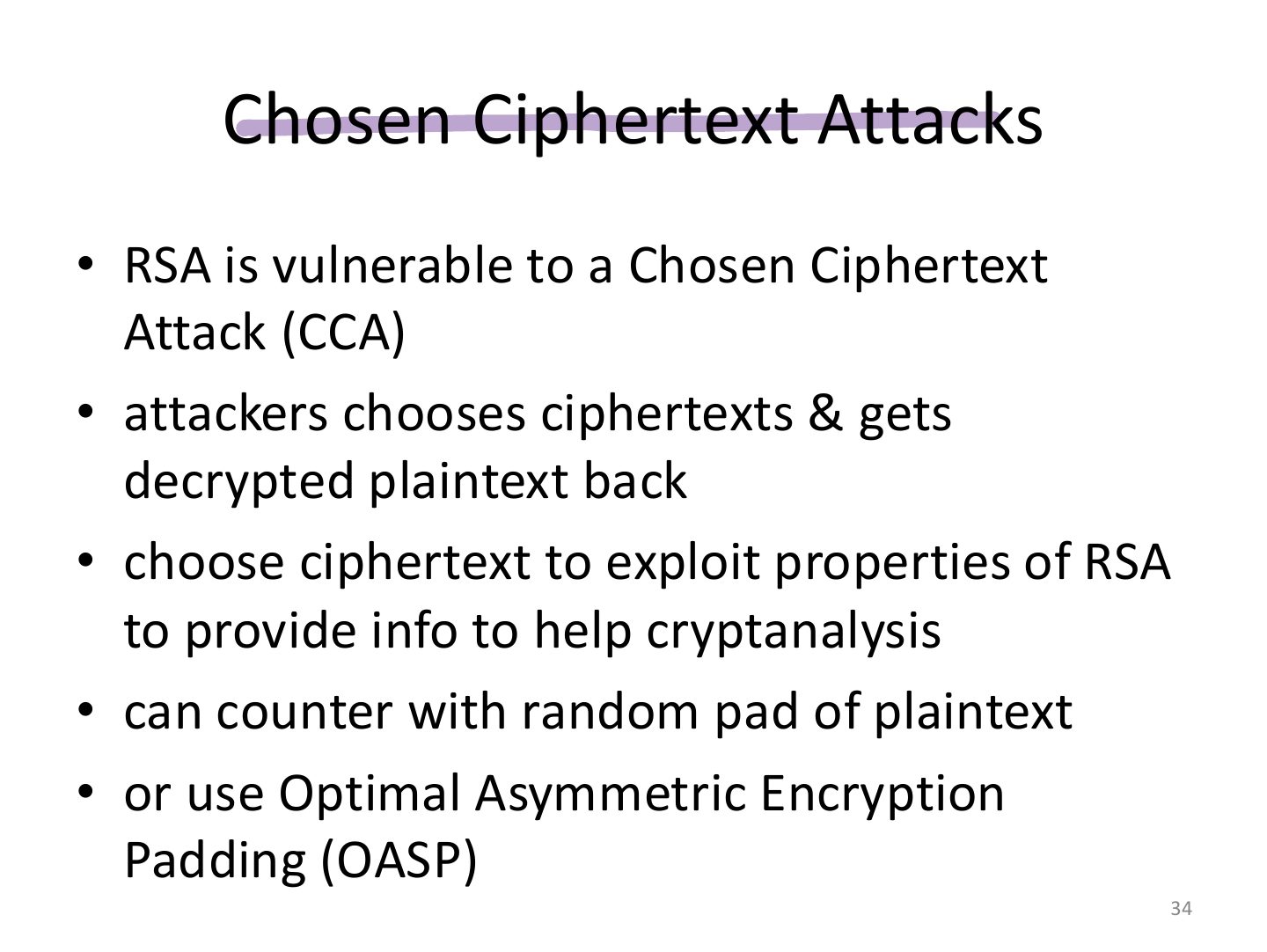
Attacks: brute force on d, factoring n (keys ≥ 2048 bits), timing attacks (constant-time code, blinding), chosen-ciphertext attacks (OAEP padding).
Progress in Factoring
Slide 32
Timing Attacks
Chosen Ciphertext Attacks
Summary