How many keys do n users need for pairwise symmetric encryption?
Cryptography Basics: DES and AES
Cryptography and encryption, symmetric vs. asymmetric encryption, government access to keys, ciphers (block and stream), DES and its Feistel structure, and AES (Rijndael): key expansion and the four round transformations.
How to read this page
Every original slide is shown unchanged. Yellow marks on a slide point to a numbered note: hover or tap a mark to jump to its note, and hover a note to see its marks. Questions tagged Past exam appeared on a real paper; Prediction questions are likely angles, not confirmed. Pick an answer to each question: a wrong pick tells you why it is wrong, so you can try again.
All 38 slides
- 1 Slide 1
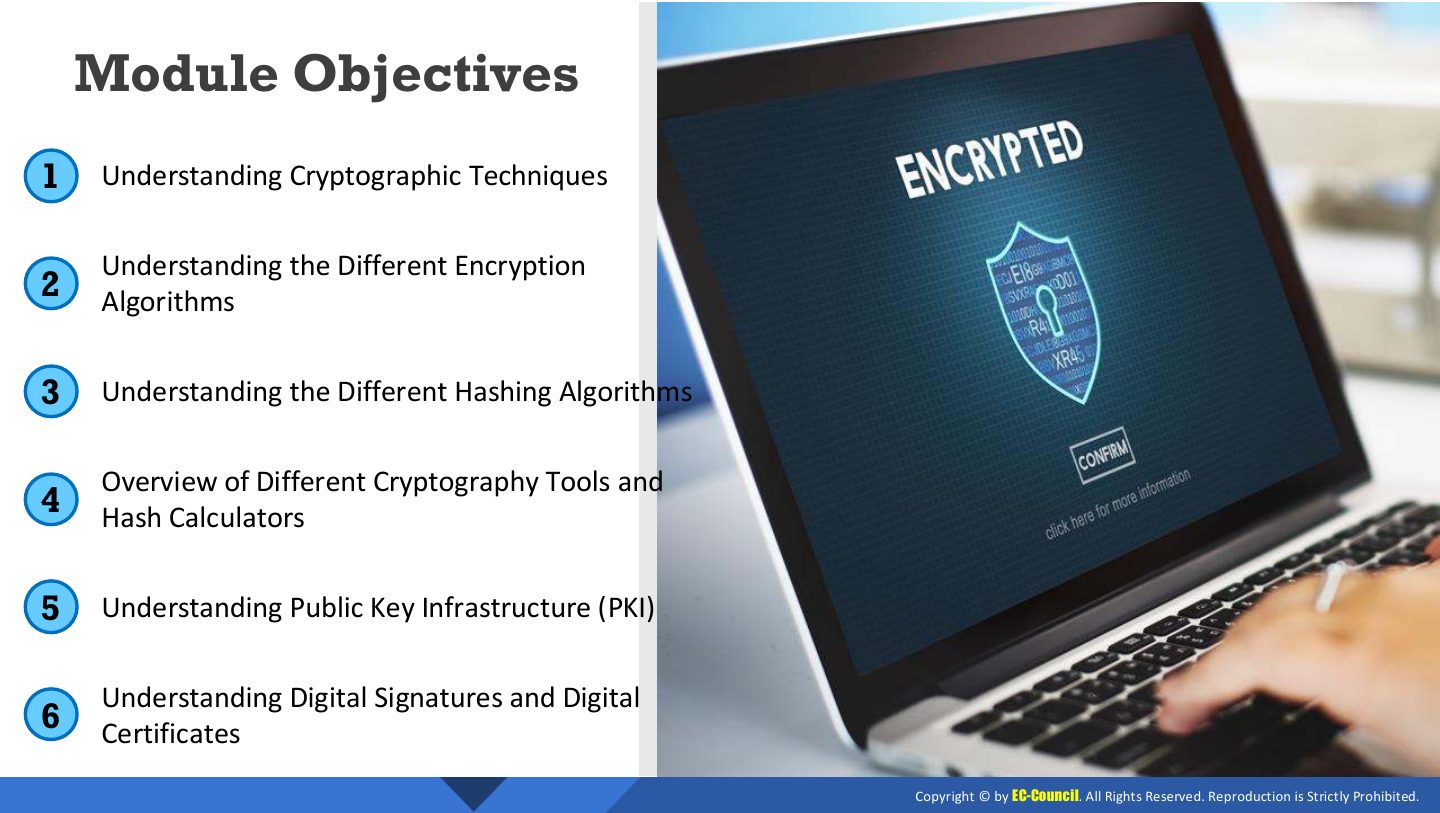
- 2 Module Objectives
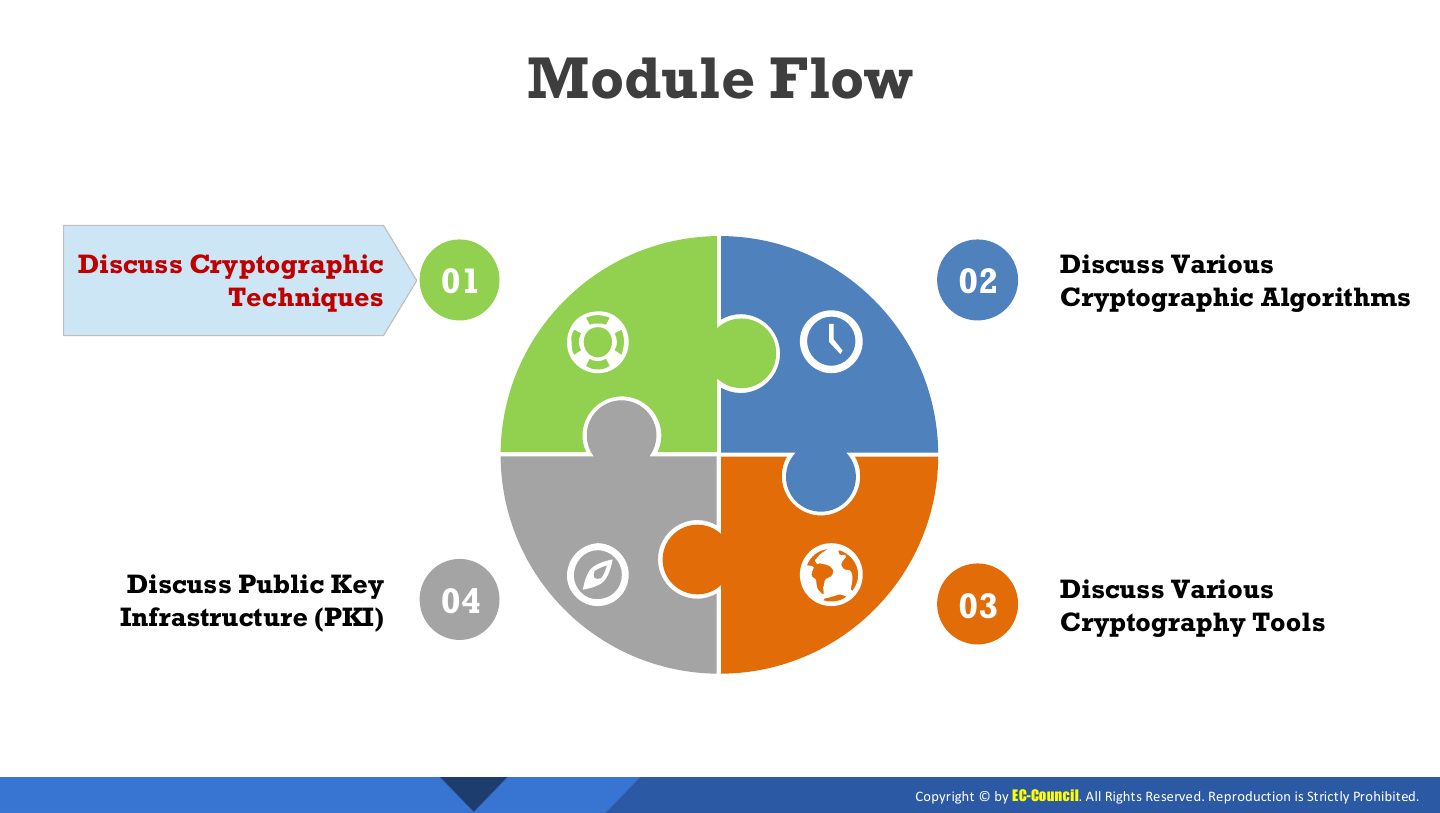
- 3 Module Flow
- 4 Cryptography
- 5 Encryption
- 6 Symmetric Encryption
- 7 Asymmetric Encryption
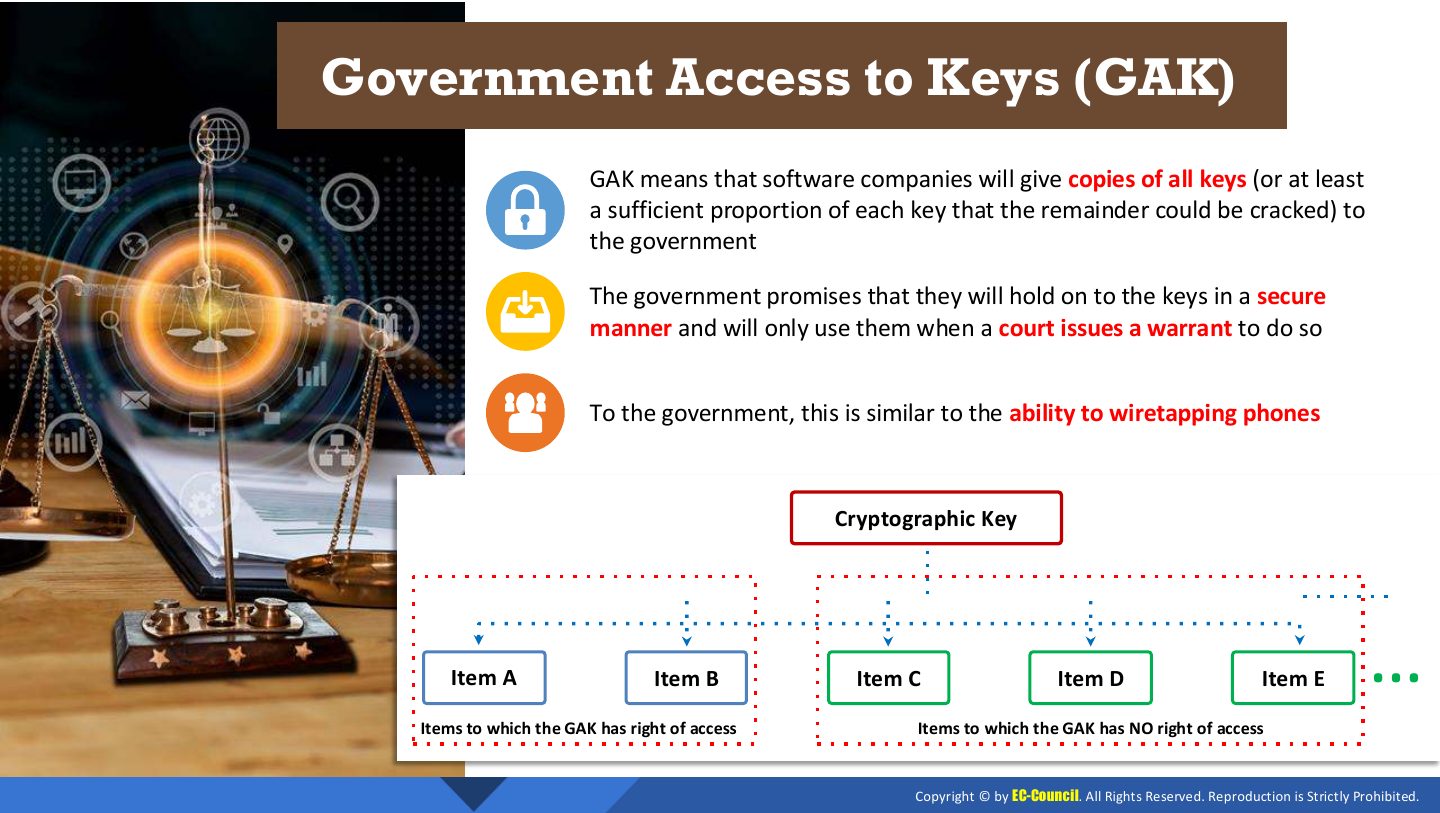
- 8 Government Access to Keys (GAK)
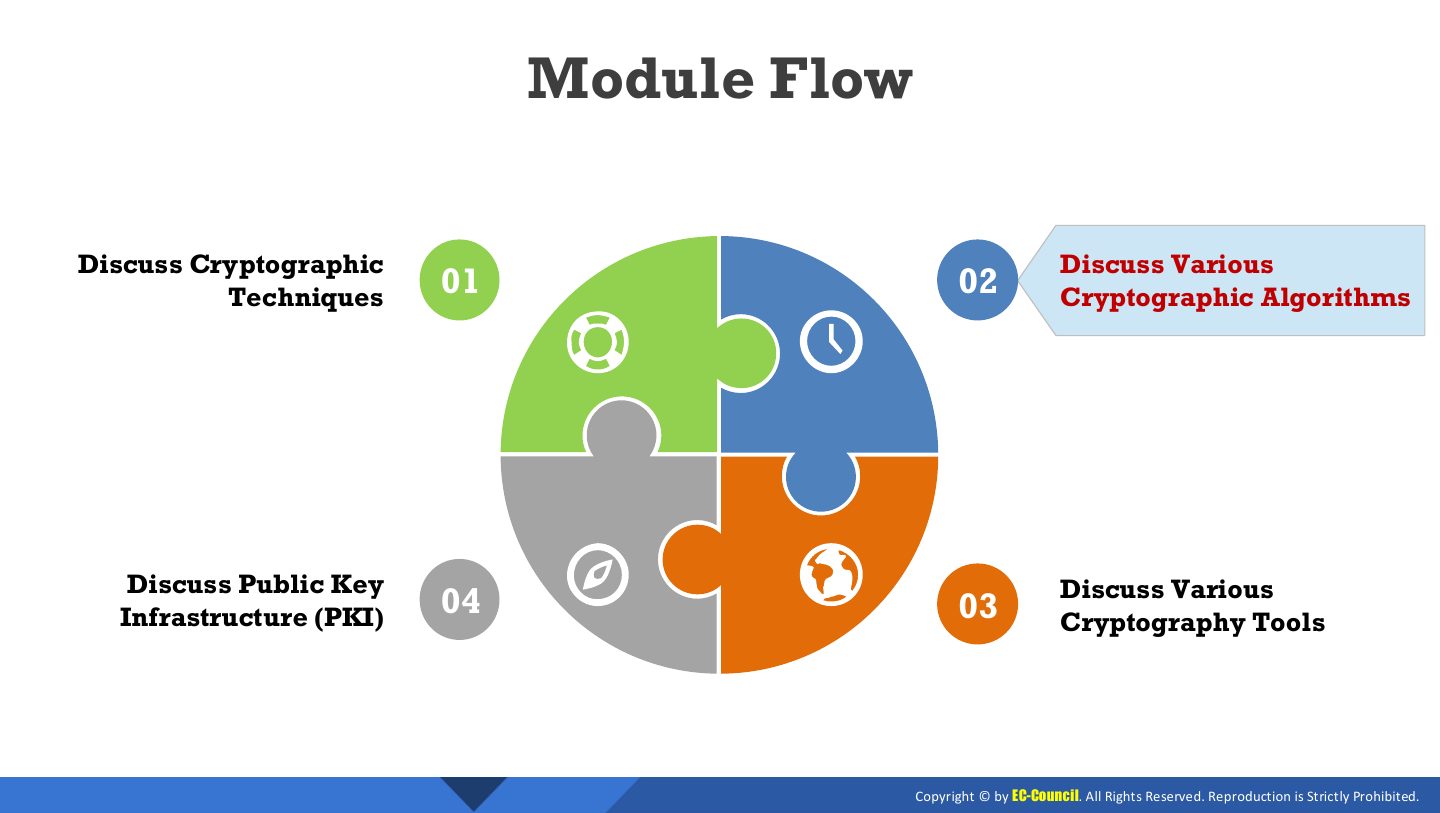
- 9 Module Flow
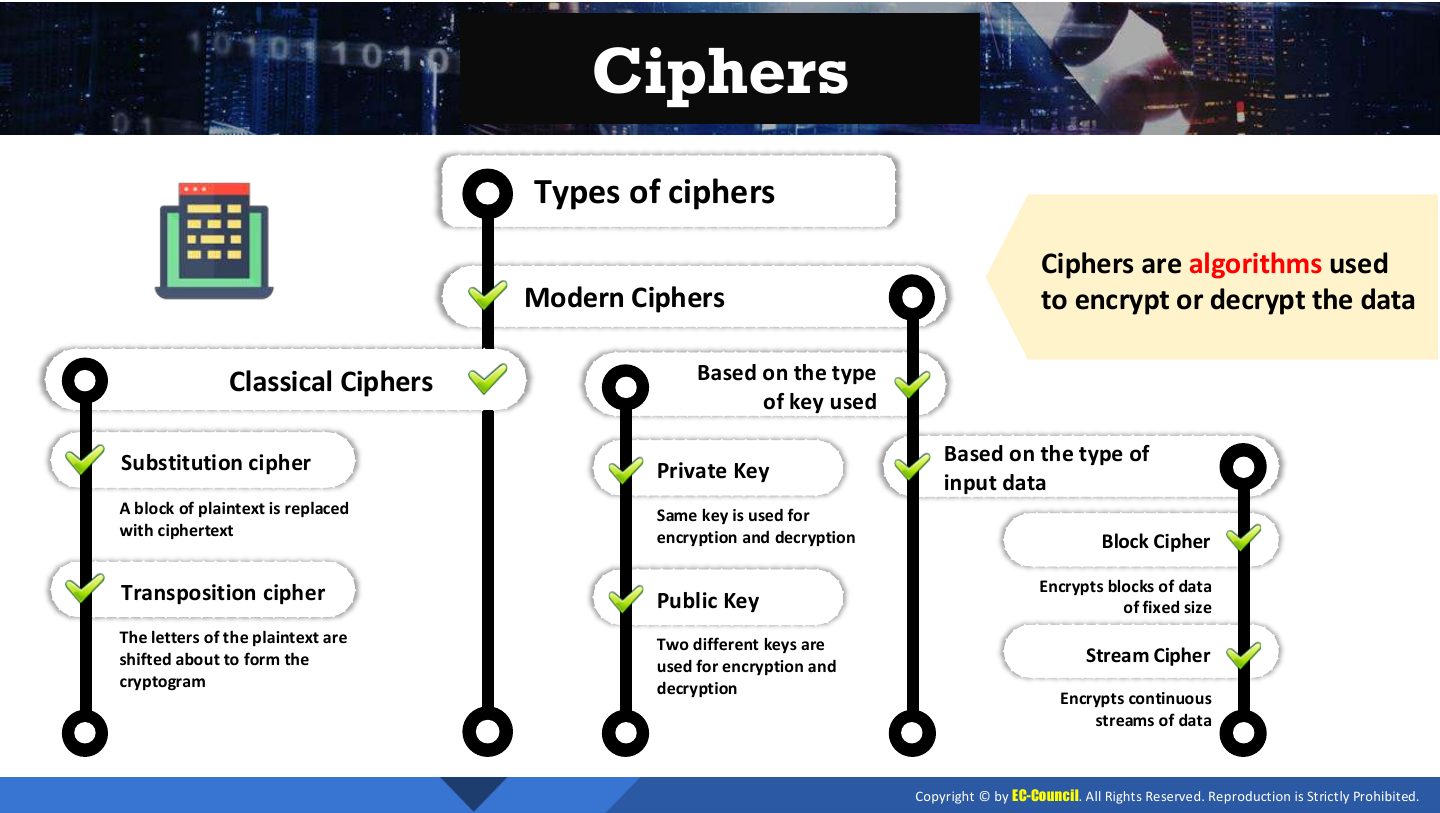
- 10 Ciphers are algorithms used to encrypt or decrypt the data
- 11 Secret Key algorithms
- 12 Secret Key algorithms ● Block ciphers (e.g., DES, AES)
- 13 Data Encryption
- 14 Slide 14
- 15 Slide 15
- 16 Slide 16
- 17 Slide 17
- 18 Slide 18
- 19 Slide 19
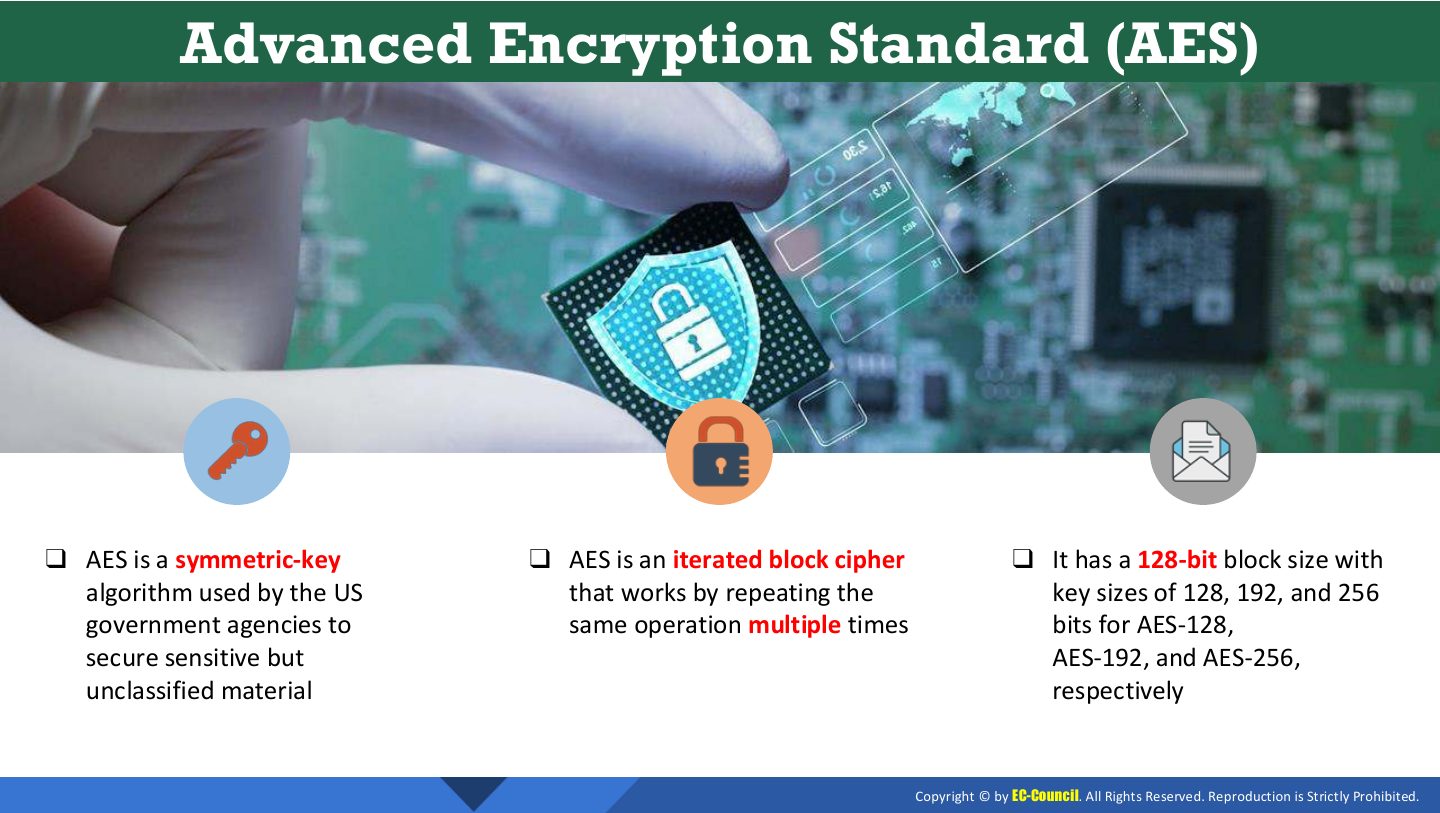
- 20 Advanced Encryption Standard (AES)
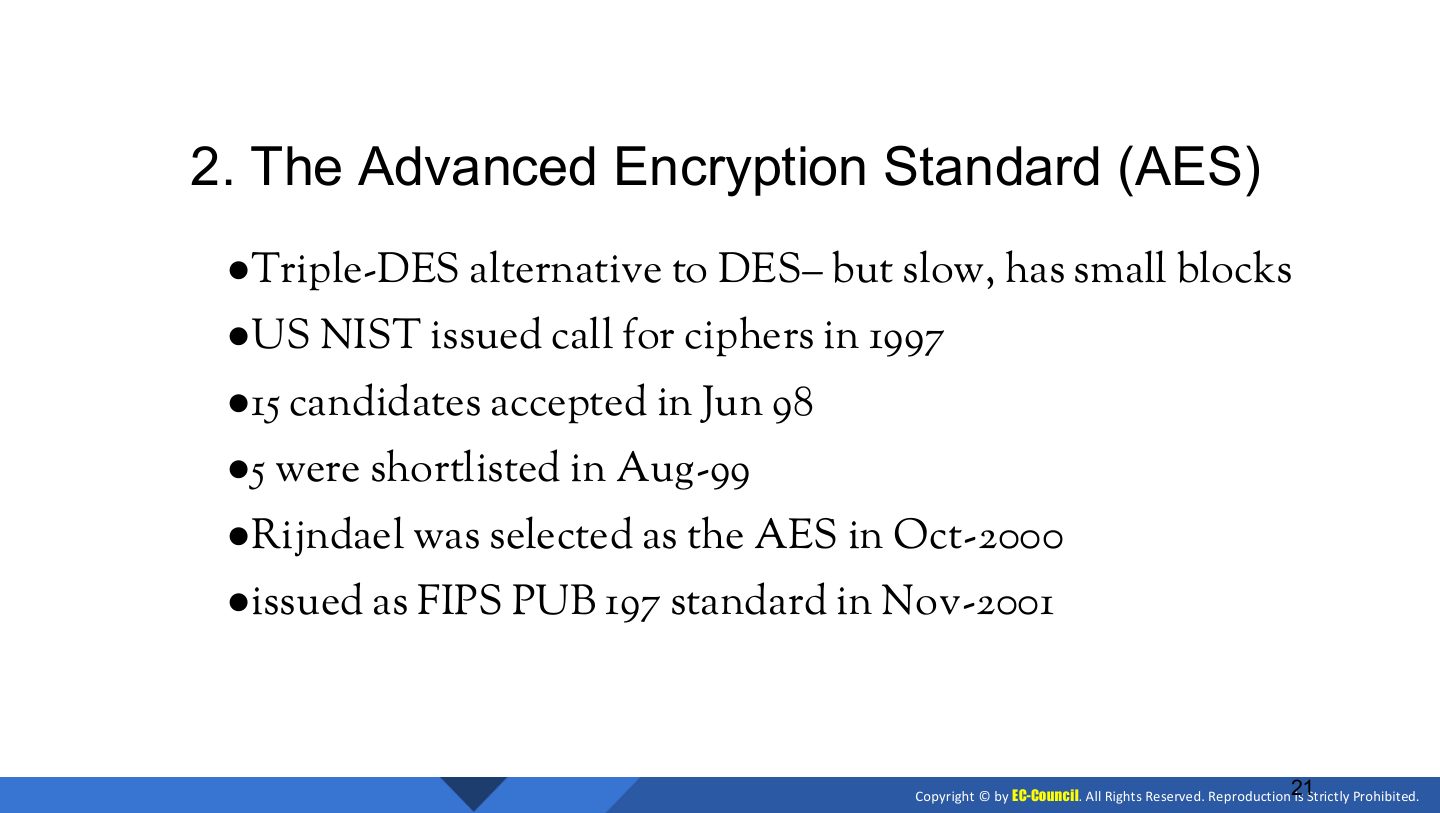
- 21 2. The Advanced Encryption Standard (AES)
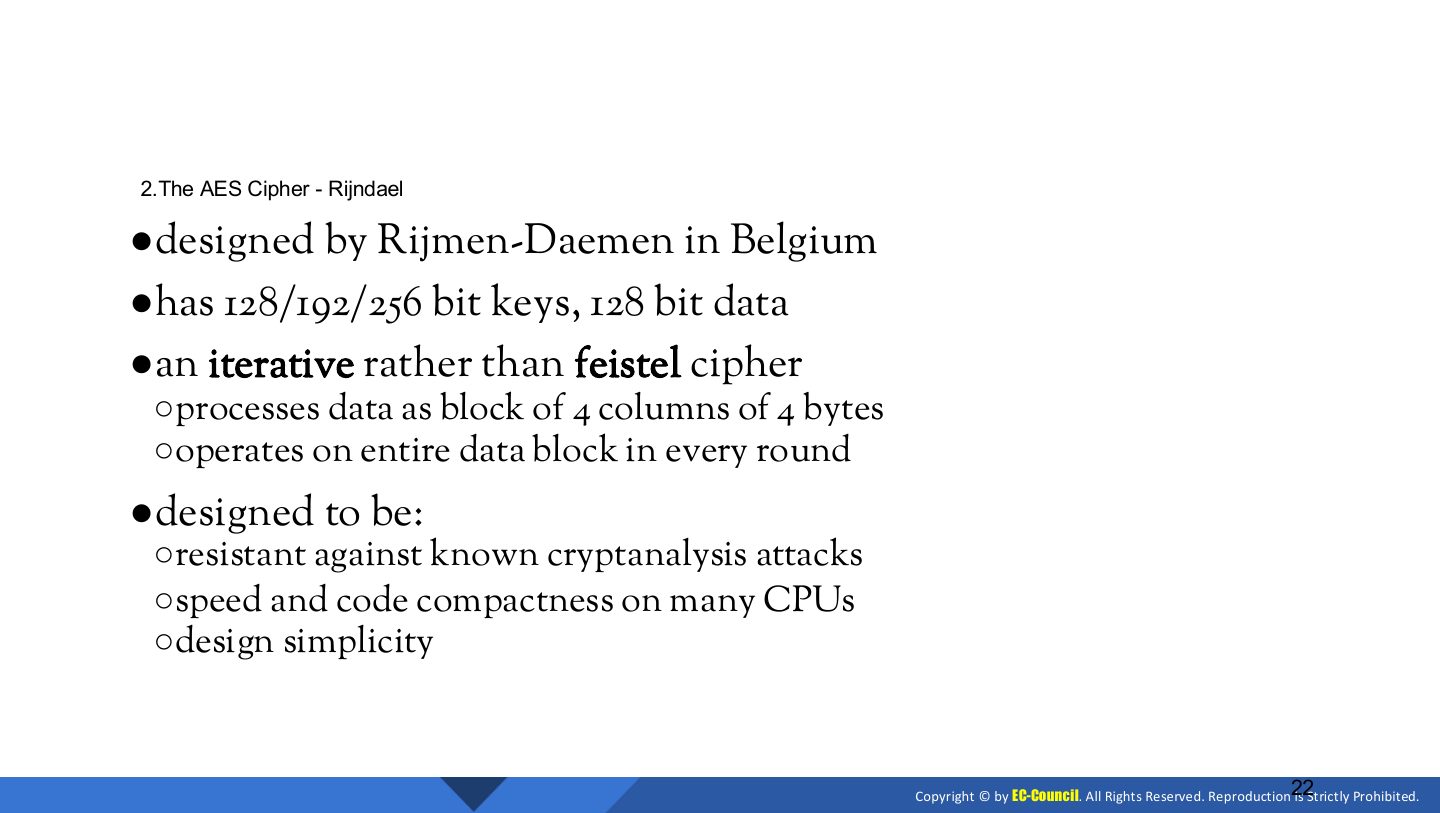
- 22 2.The AES Cipher - Rijndael
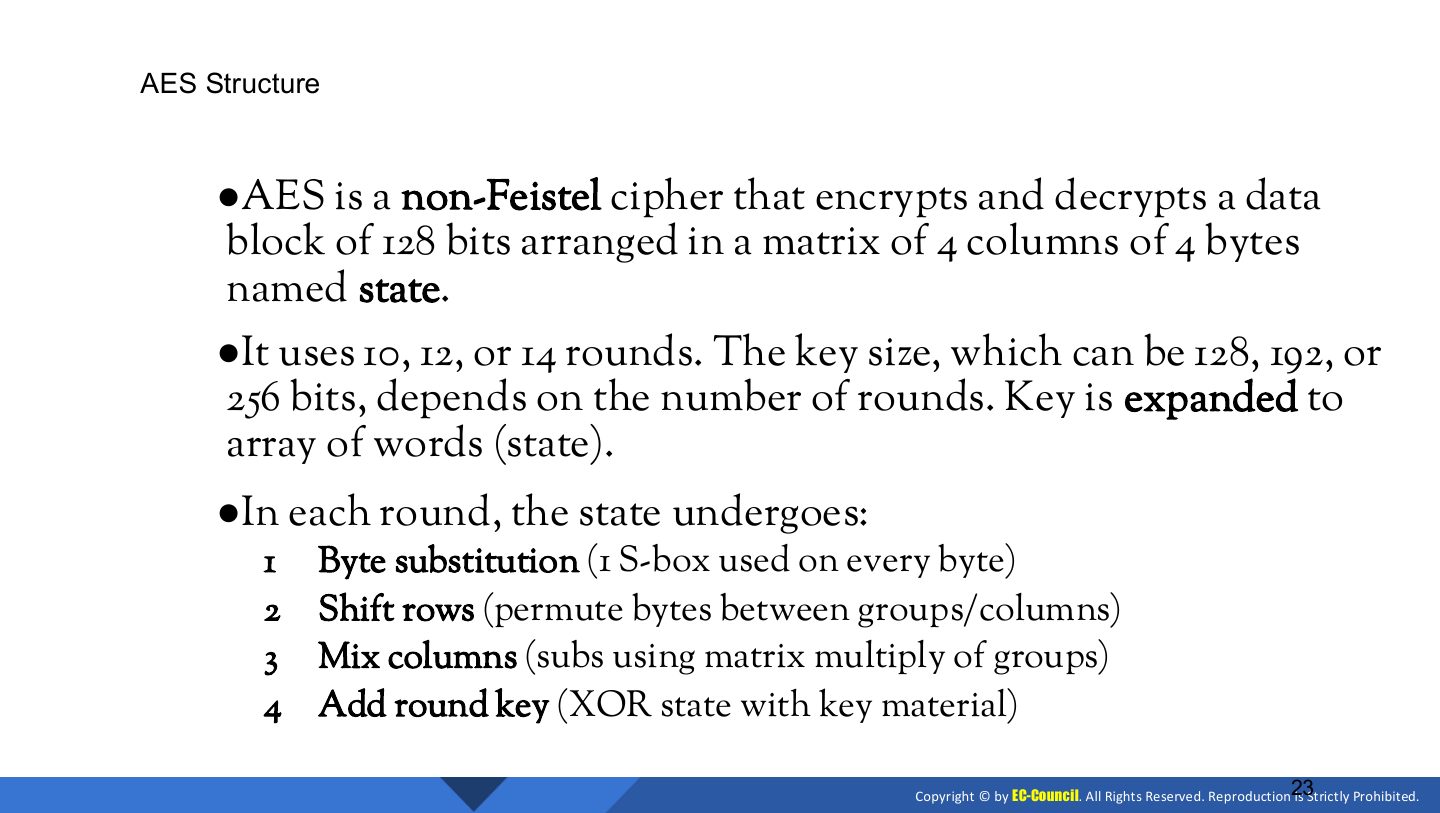
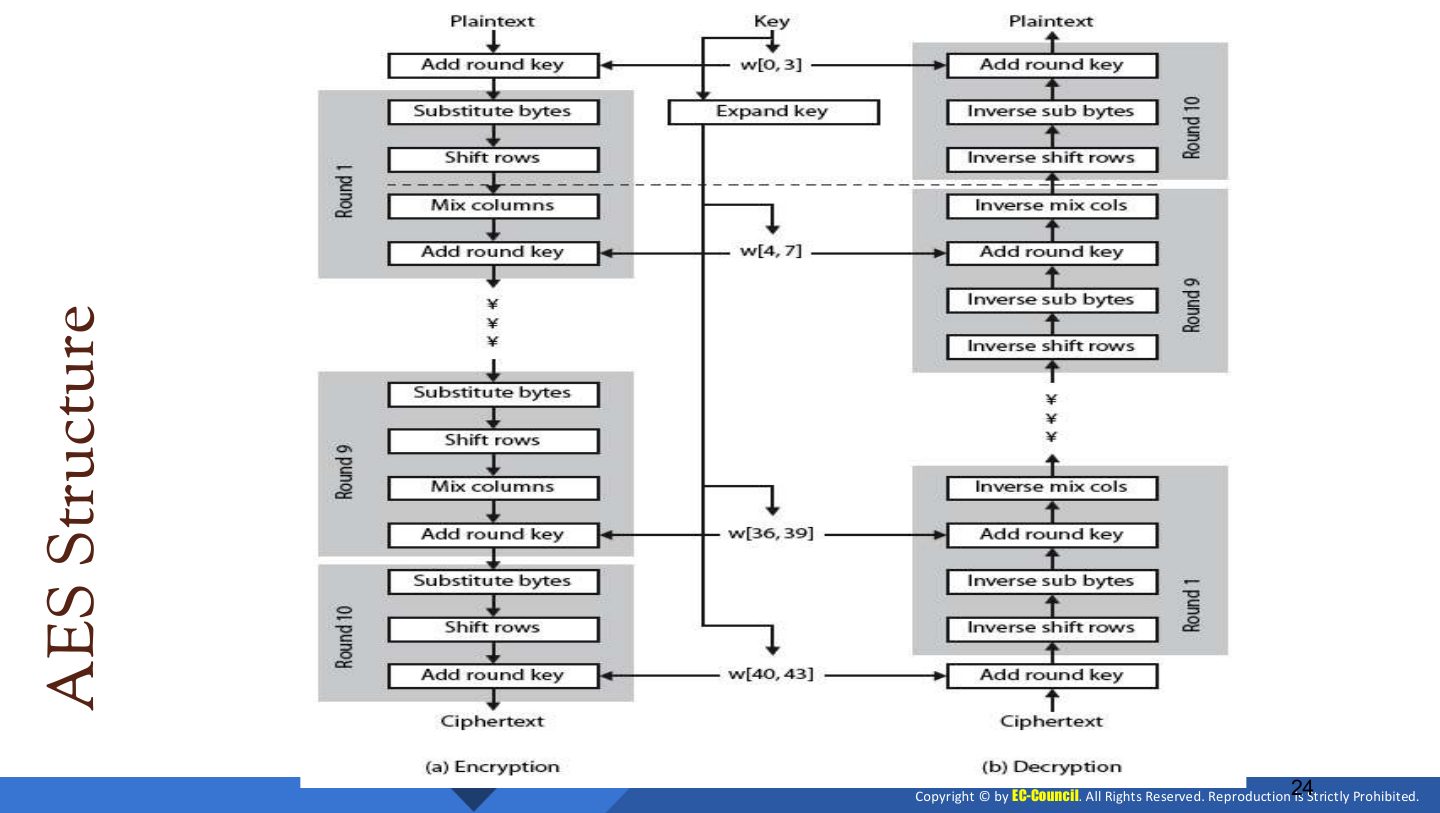
- 23 AES Structure
- 24 Slide 24
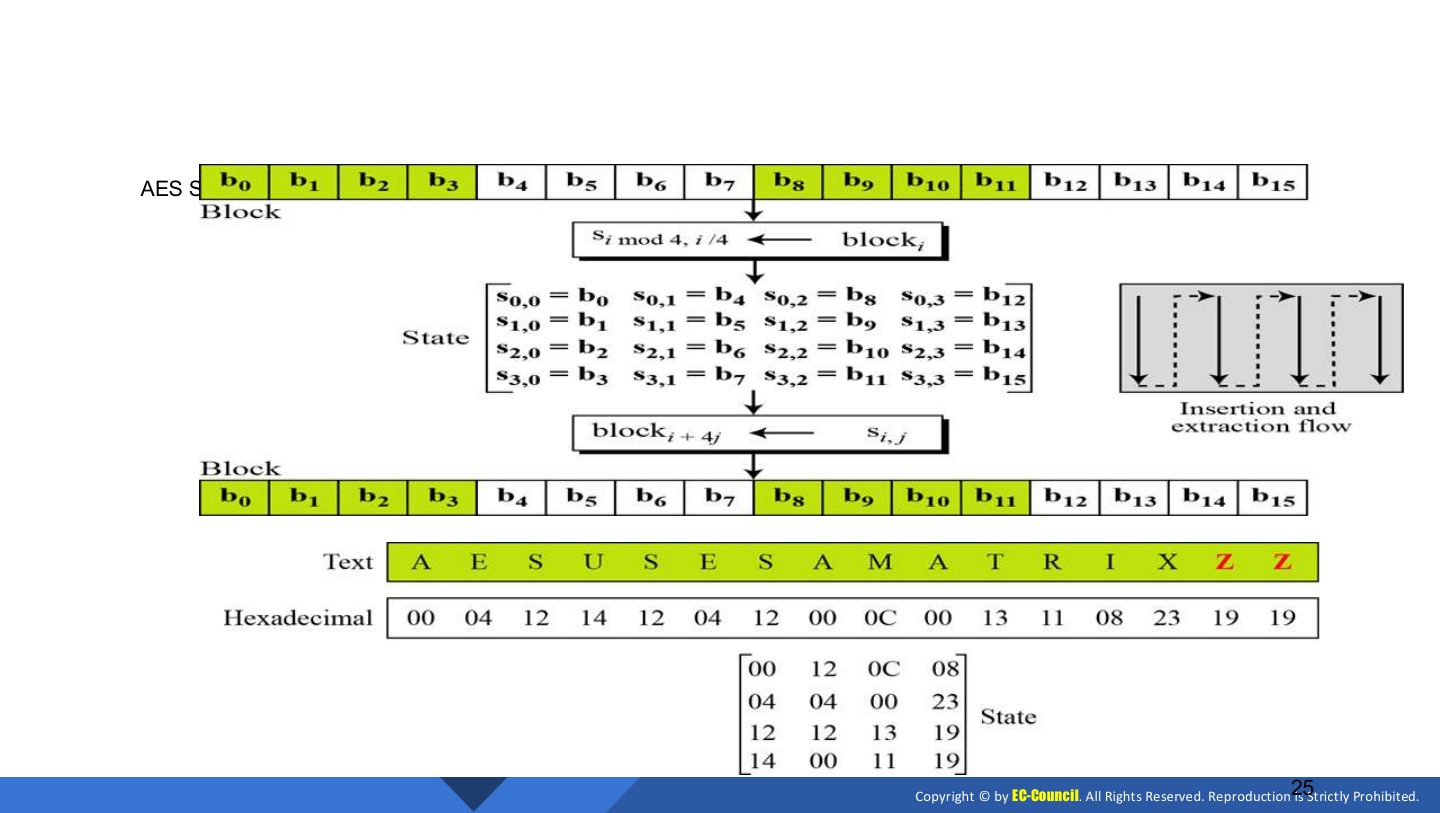
- 25 AES Structure-State
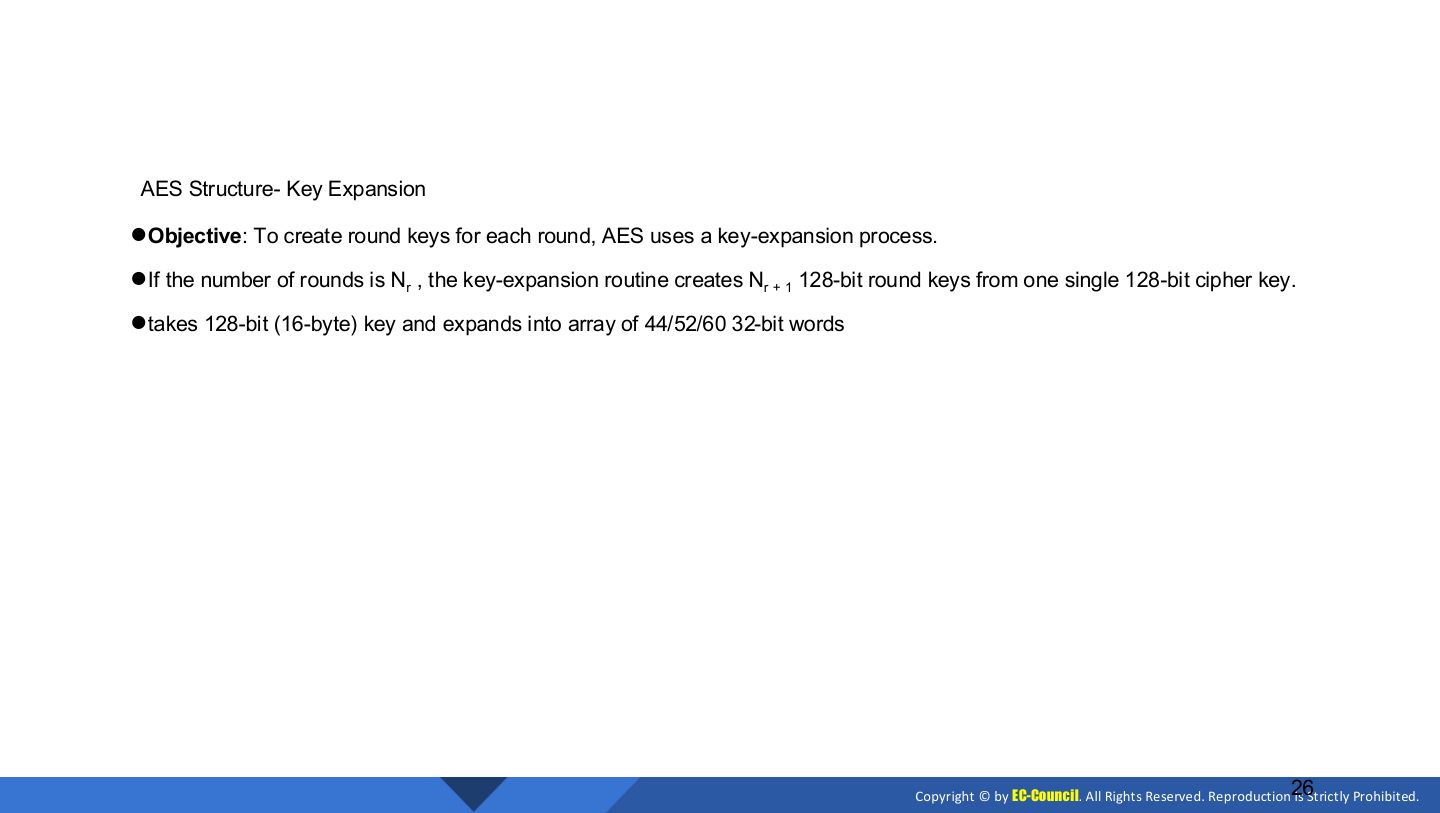
- 26 AES Structure- Key Expansion
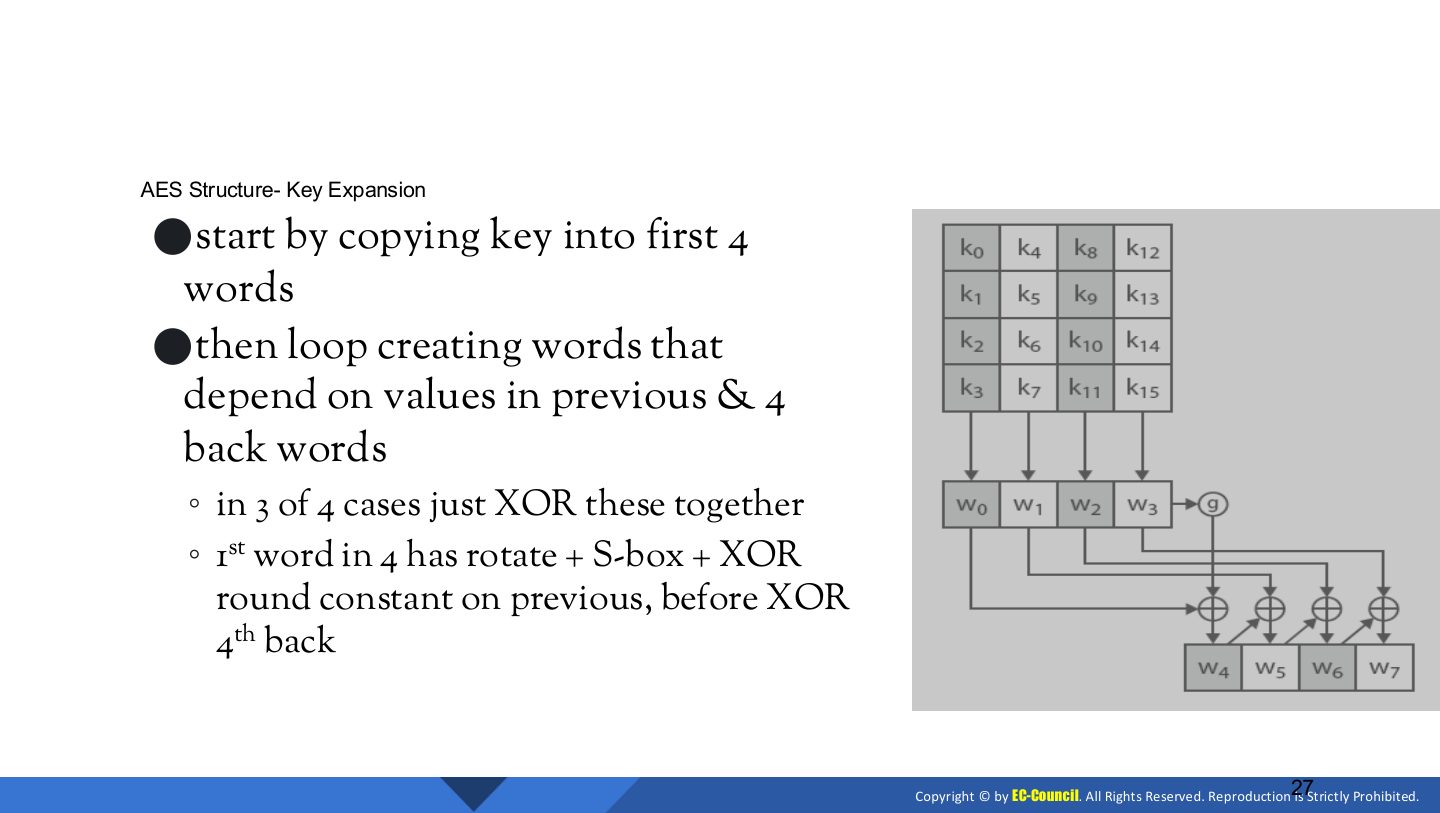
- 27 AES Structure- Key Expansion
- 28 AES Structure- Round
- 29 AES Structure- SubBytes
- 30 AES Structure- SubBytes
- 31 AES Structure- Shift Rows
- 32 AES Structure-Shift Rows
- 33 AES Structure- Mix Columns
- 34 AES Structure- Add Round Key
- 35 AES Structure- Add Round Key
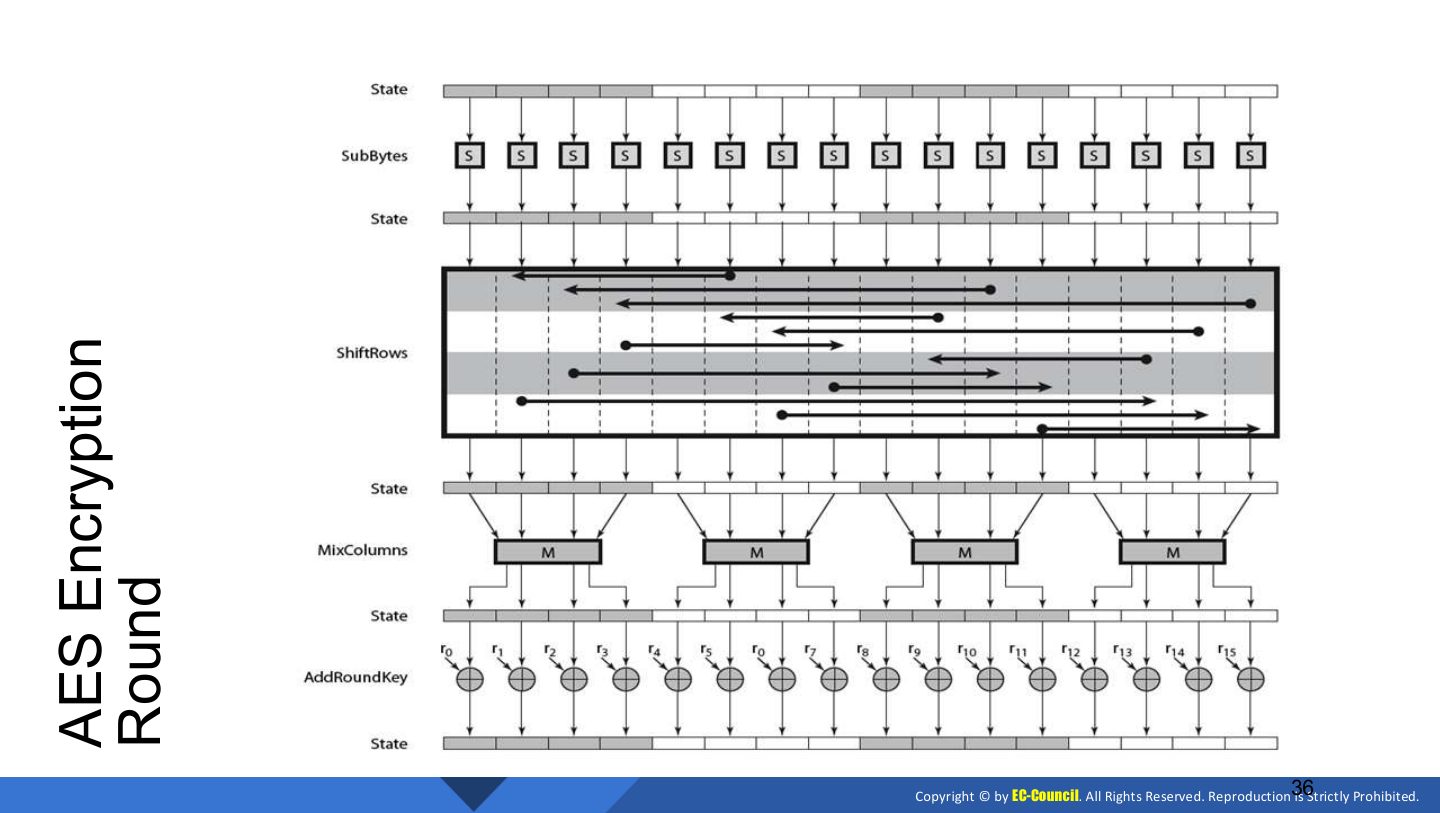
- 36 Slide 36
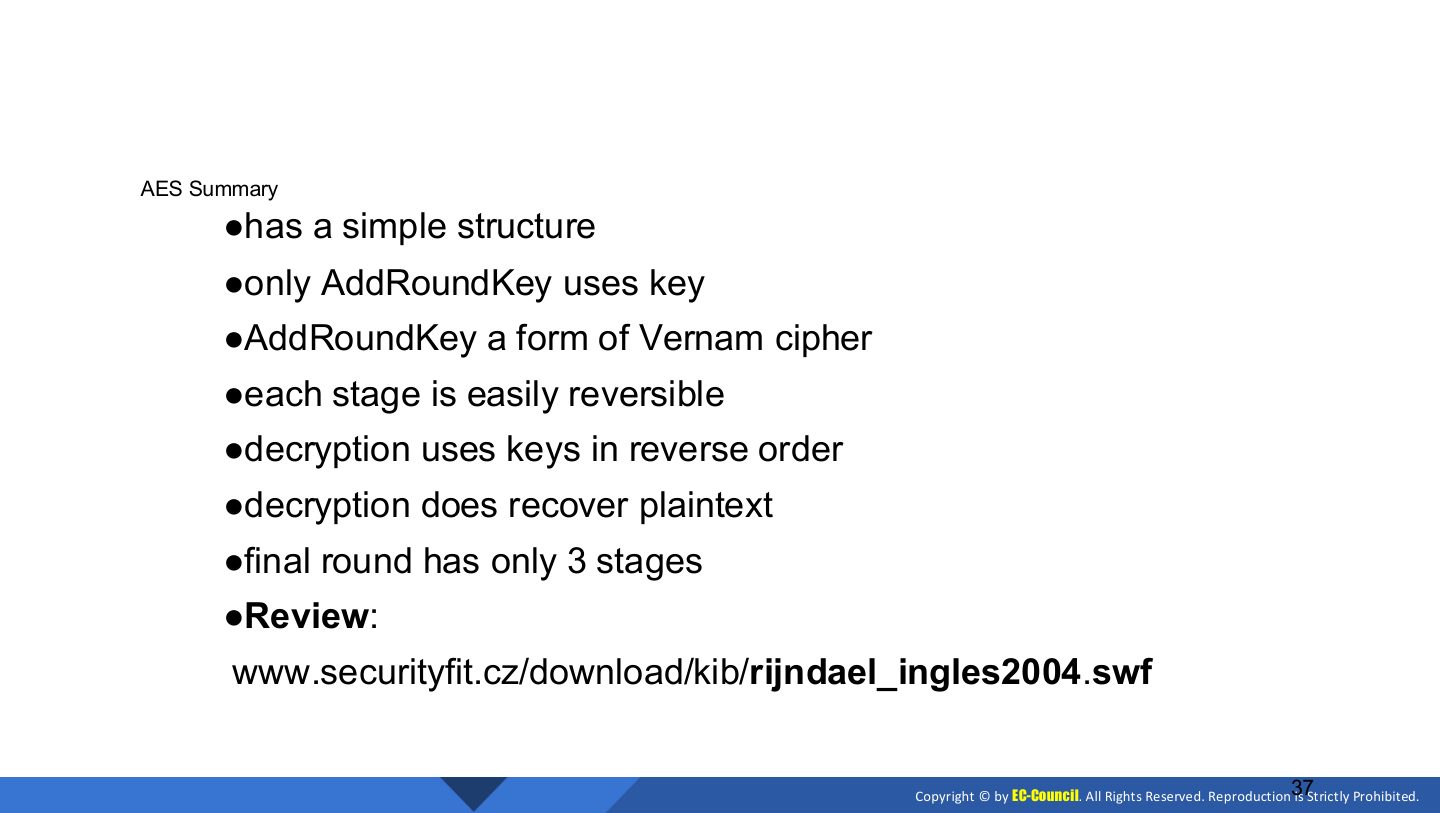
- 37 AES Summary
- 38 Module Summary
Slide 1
Module Objectives
Module Flow
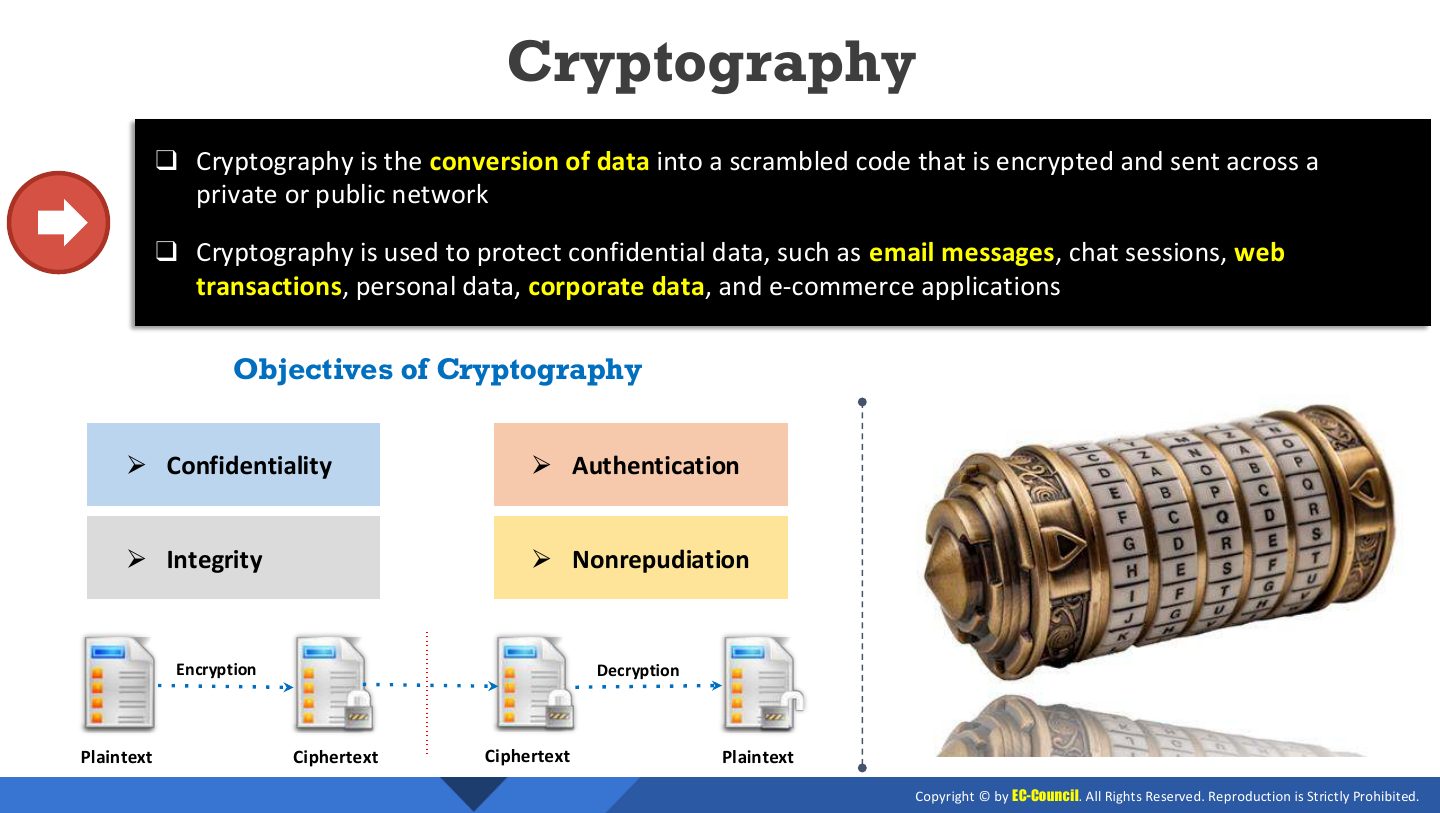
Cryptography
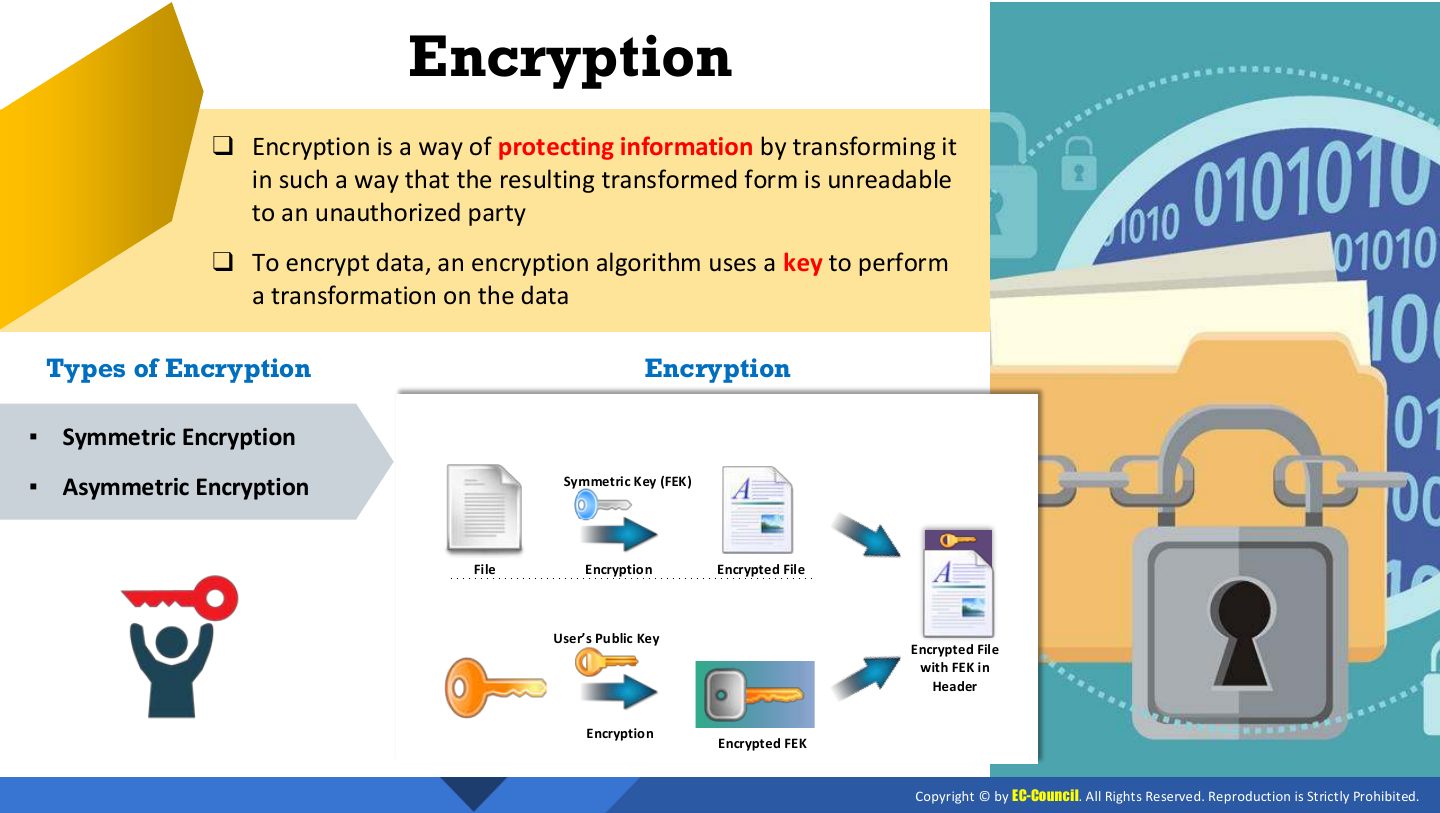
Encryption
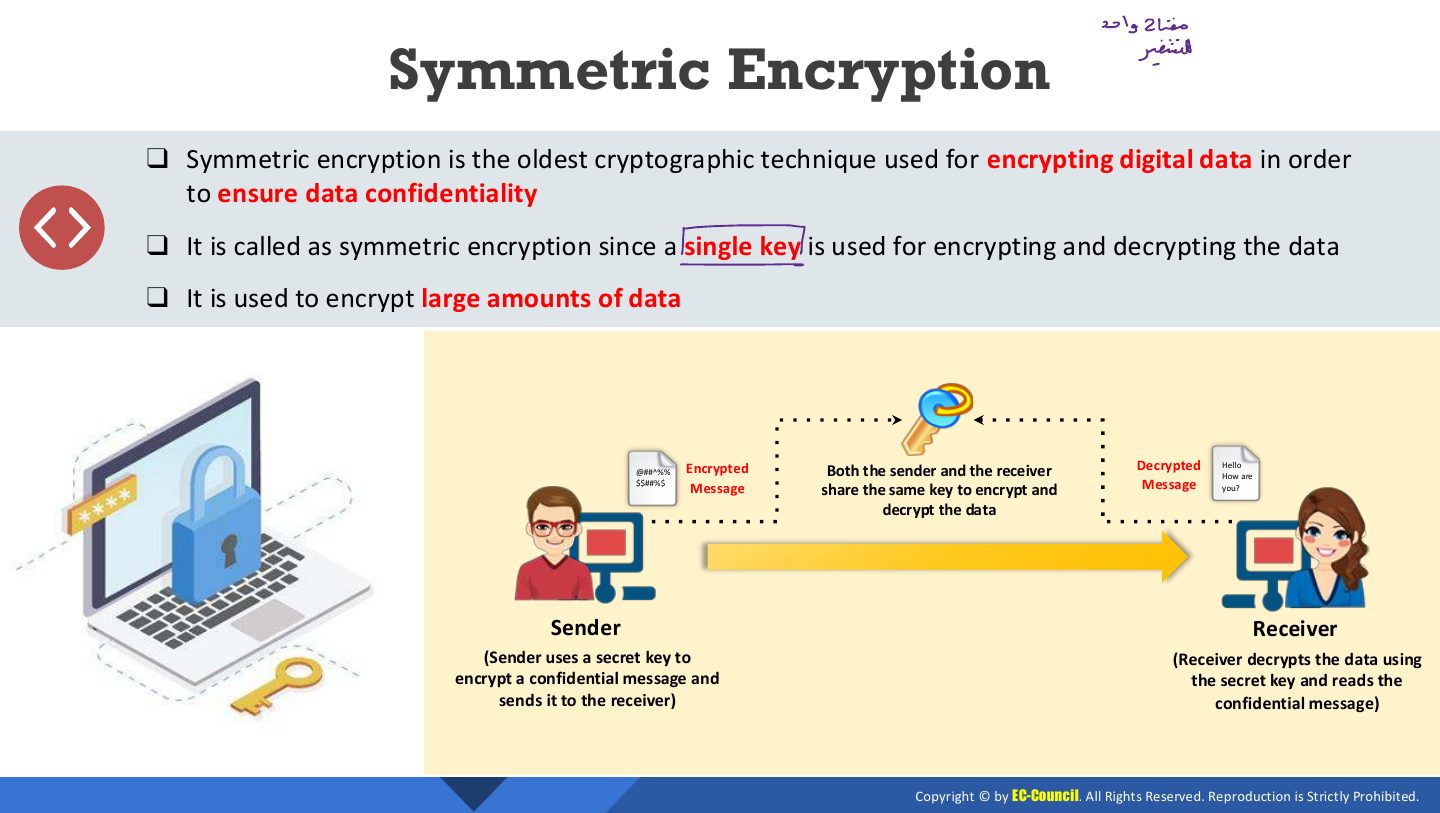
Symmetric Encryption
Notes
Symmetric: ONE shared secret key for encryption and decryption. Fast; the problem is key distribution.
Exam angle
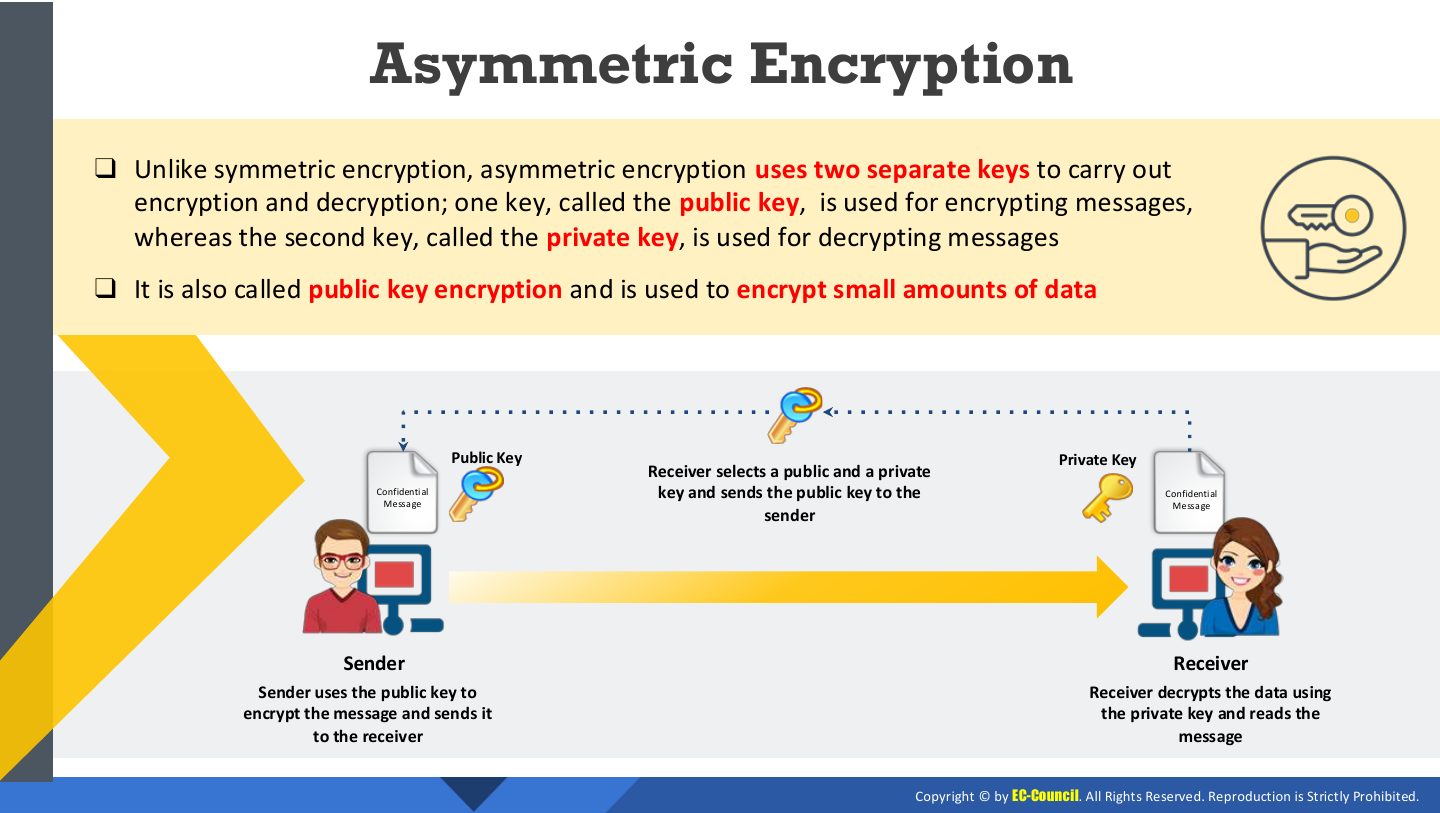
Asymmetric Encryption
Notes
Asymmetric: a public key and a private key. Slower; solves key distribution and enables digital signatures.
Government Access to Keys (GAK)
Module Flow
Ciphers are algorithms used to encrypt or decrypt the data
Notes
Block ciphers encrypt fixed-size blocks (DES 64-bit, AES 128-bit); stream ciphers encrypt bit by bit (RC4).
Exam angle
AES encrypts blocks of:
- Keys may be 128, 192 or 256 bits.
Secret Key algorithms
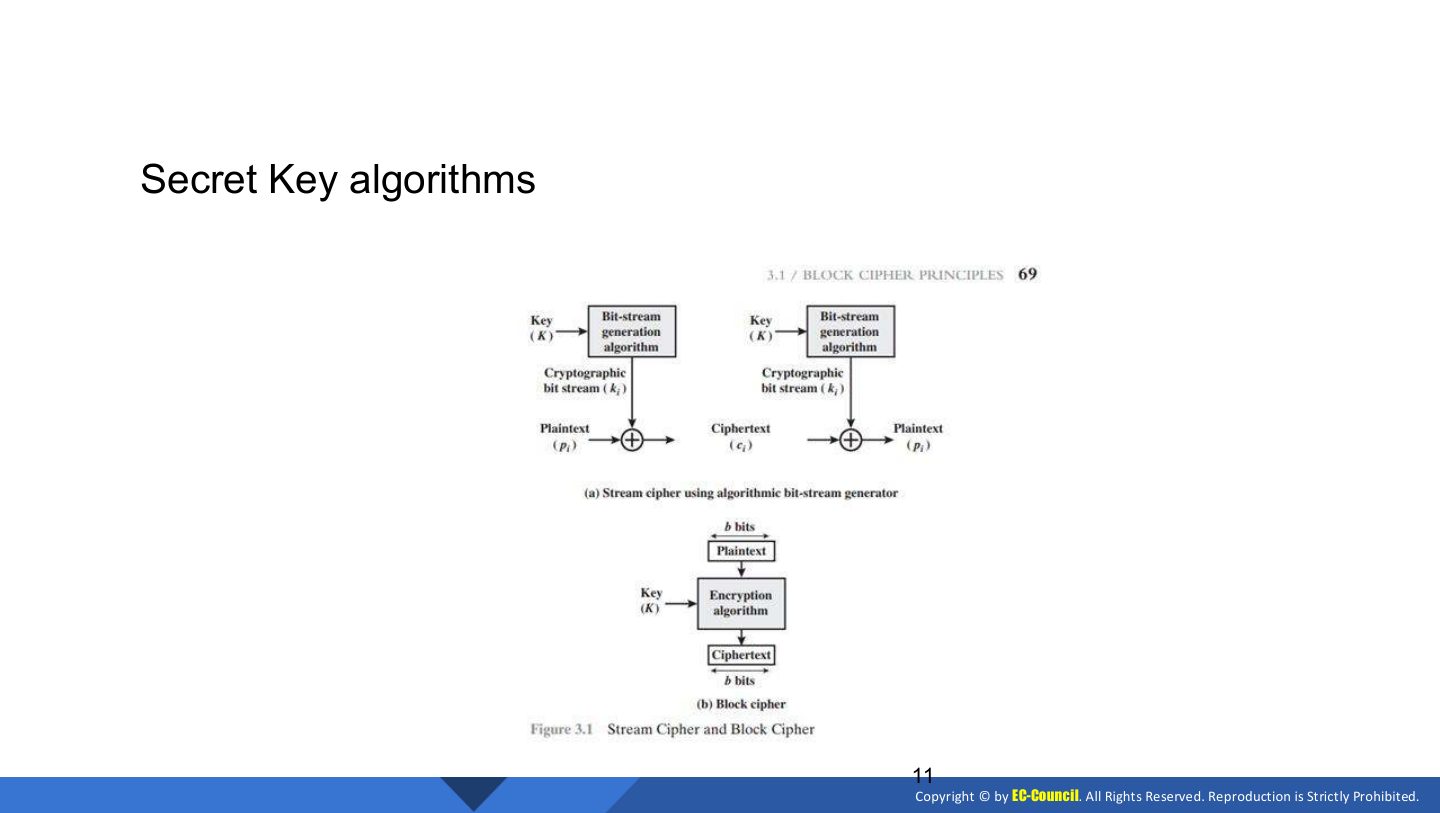
Secret Key algorithms ● Block ciphers (e.g., DES, AES)
Data Encryption
Notes
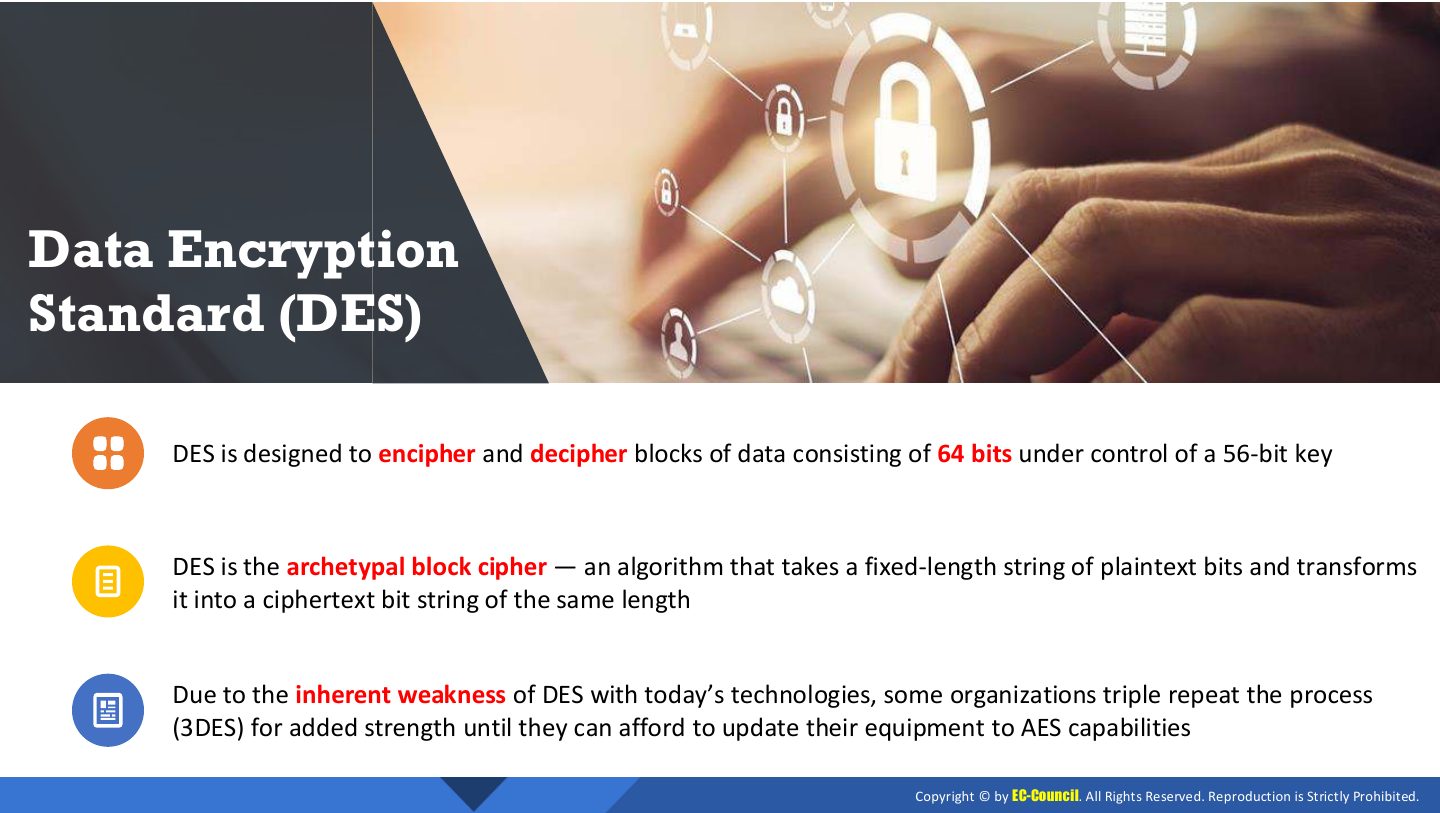
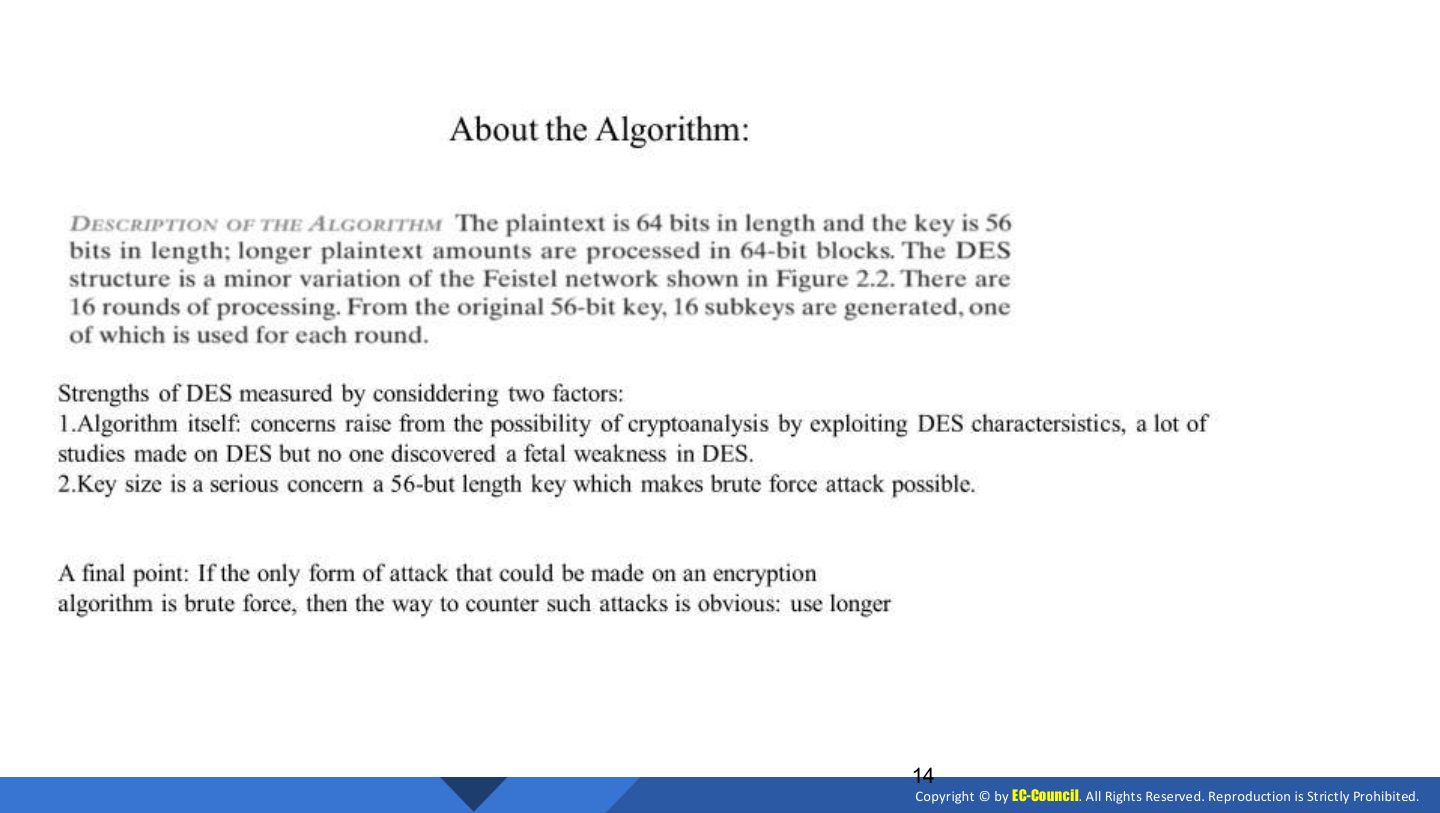
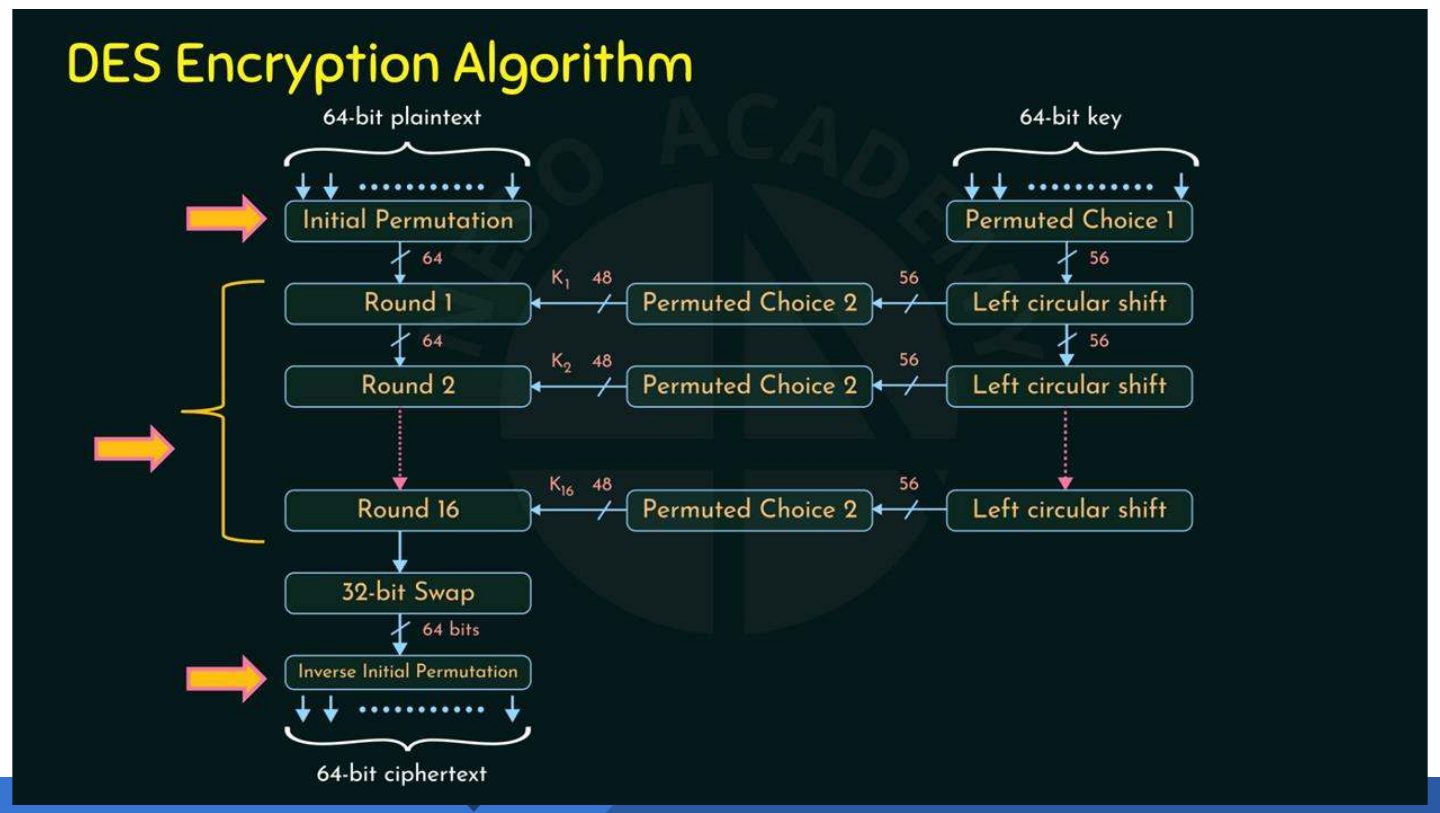
DES: 64-bit blocks, 56-bit effective key, 16 Feistel rounds. Broken by brute force; 3DES applies it three times.
Exam angle
DES’s effective key length is:
Slide 14
Slide 15
Slide 16
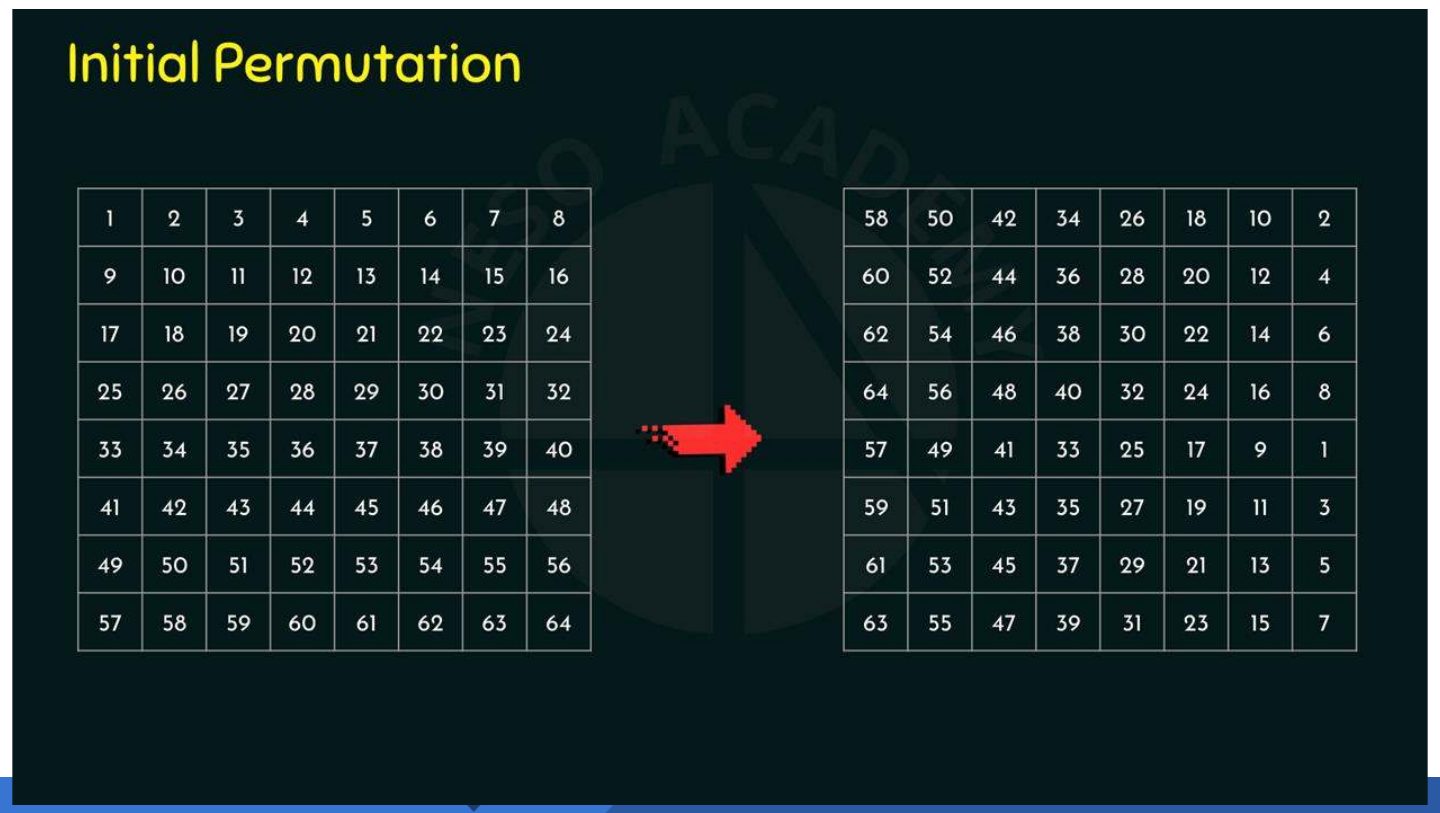
Slide 17
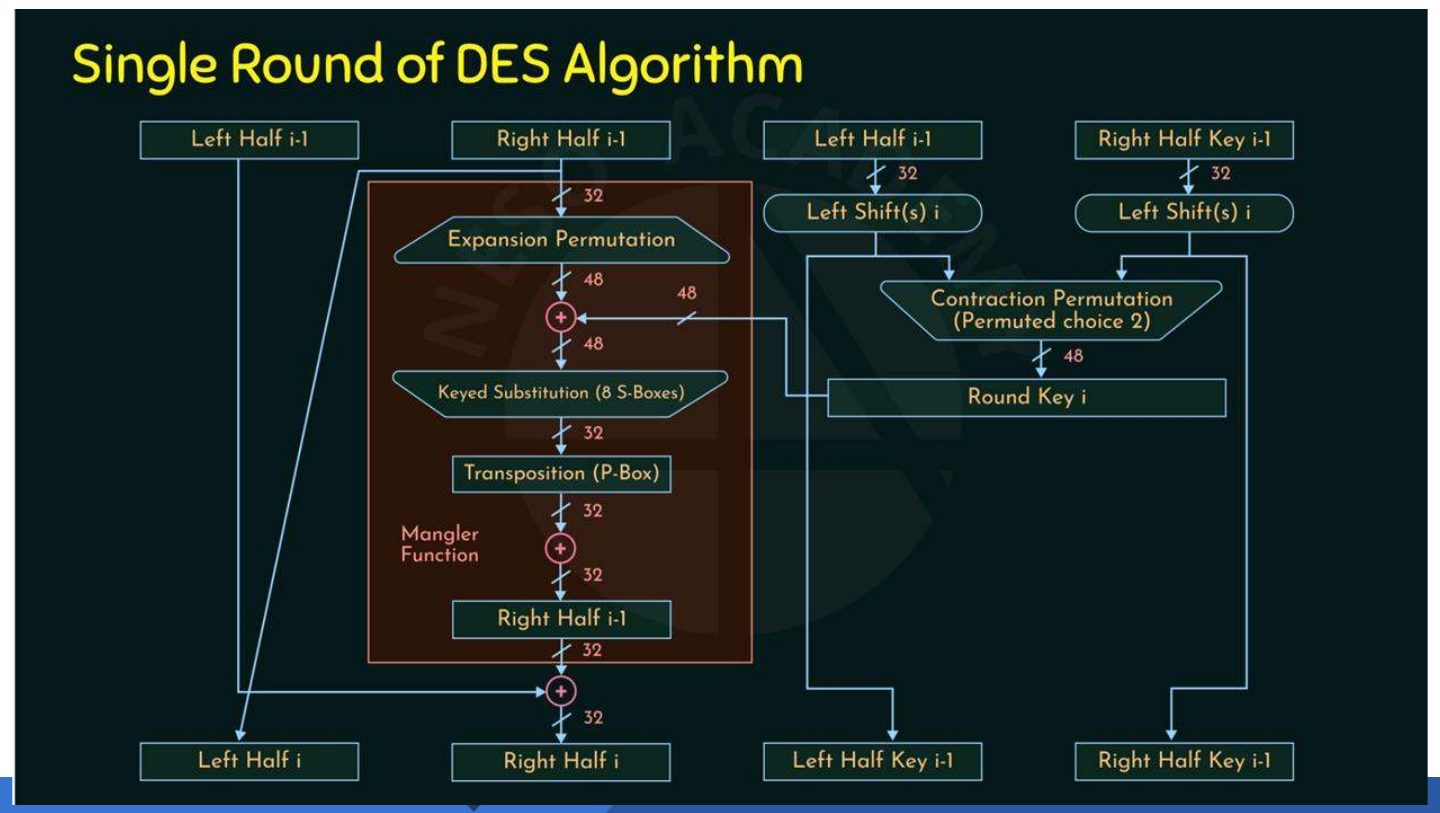
Slide 18
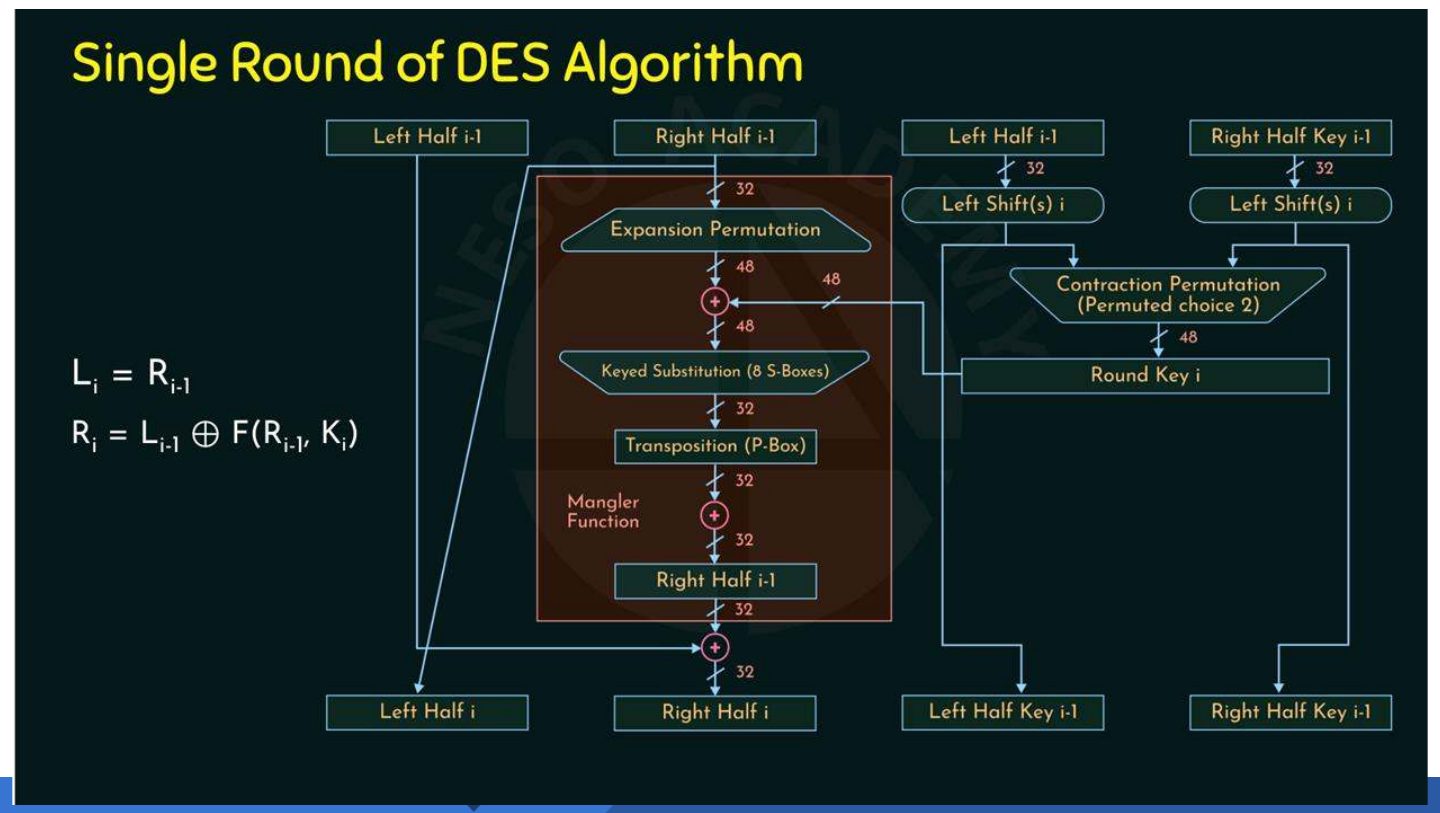
Slide 19
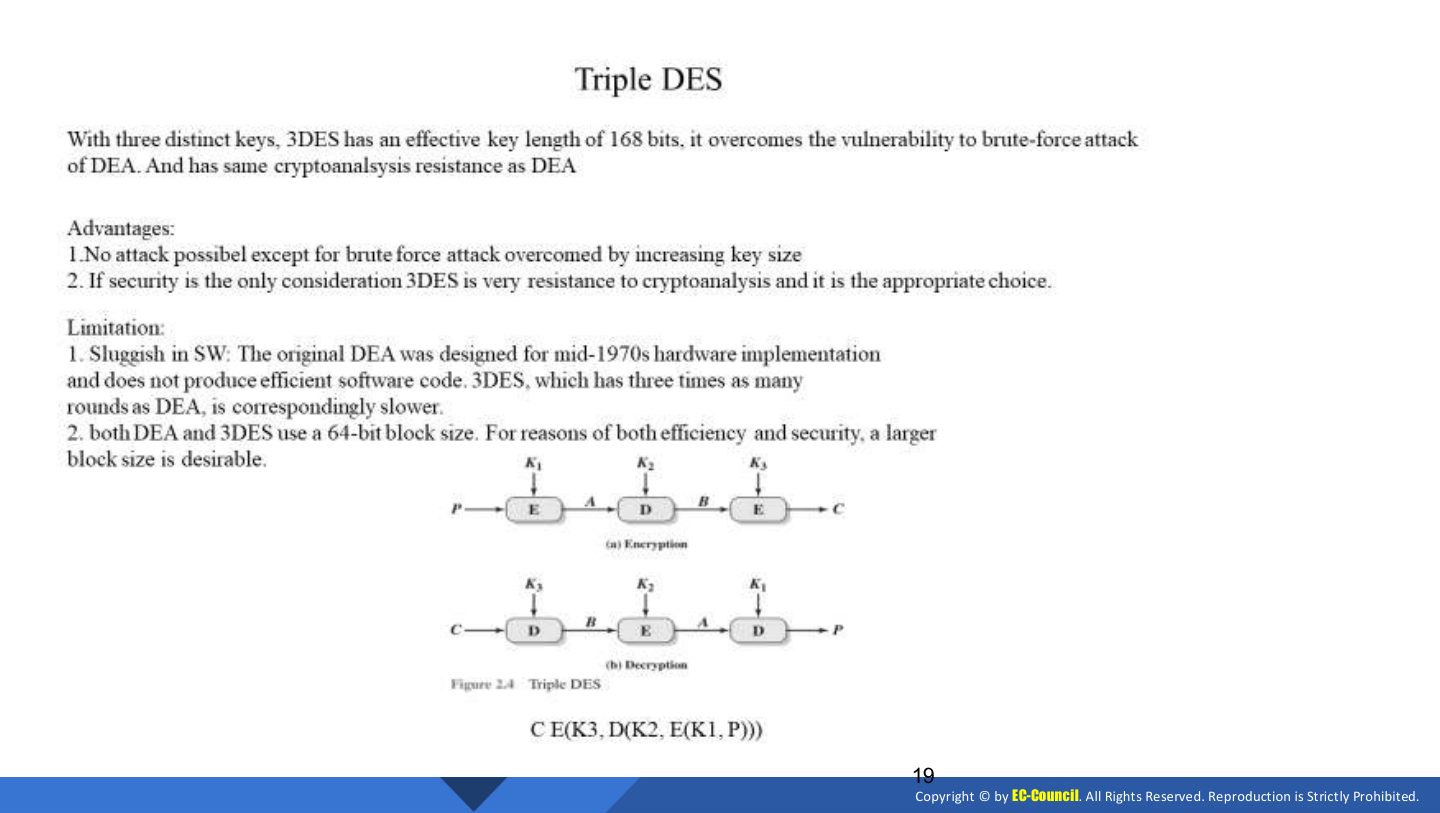
Advanced Encryption Standard (AES)
Notes
AES (Rijndael) replaced DES: 128-bit block; 128/192/256-bit keys with 10/12/14 rounds.
Exam angle
AES-256 uses how many rounds?
2. The Advanced Encryption Standard (AES)
2.The AES Cipher - Rijndael
AES Structure
Slide 24
AES Structure-State
AES Structure- Key Expansion
AES Structure- Key Expansion
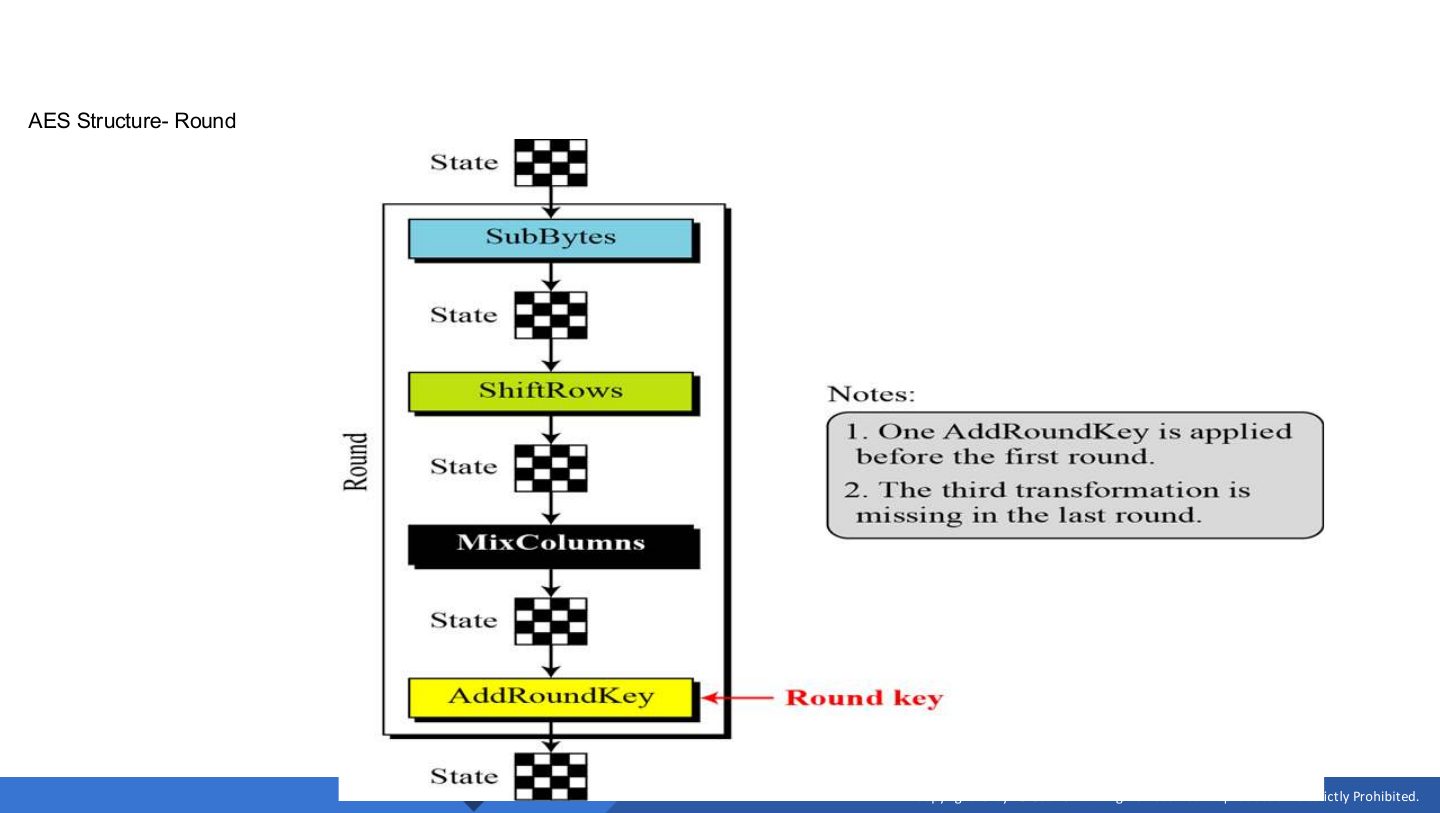
AES Structure- Round
Notes
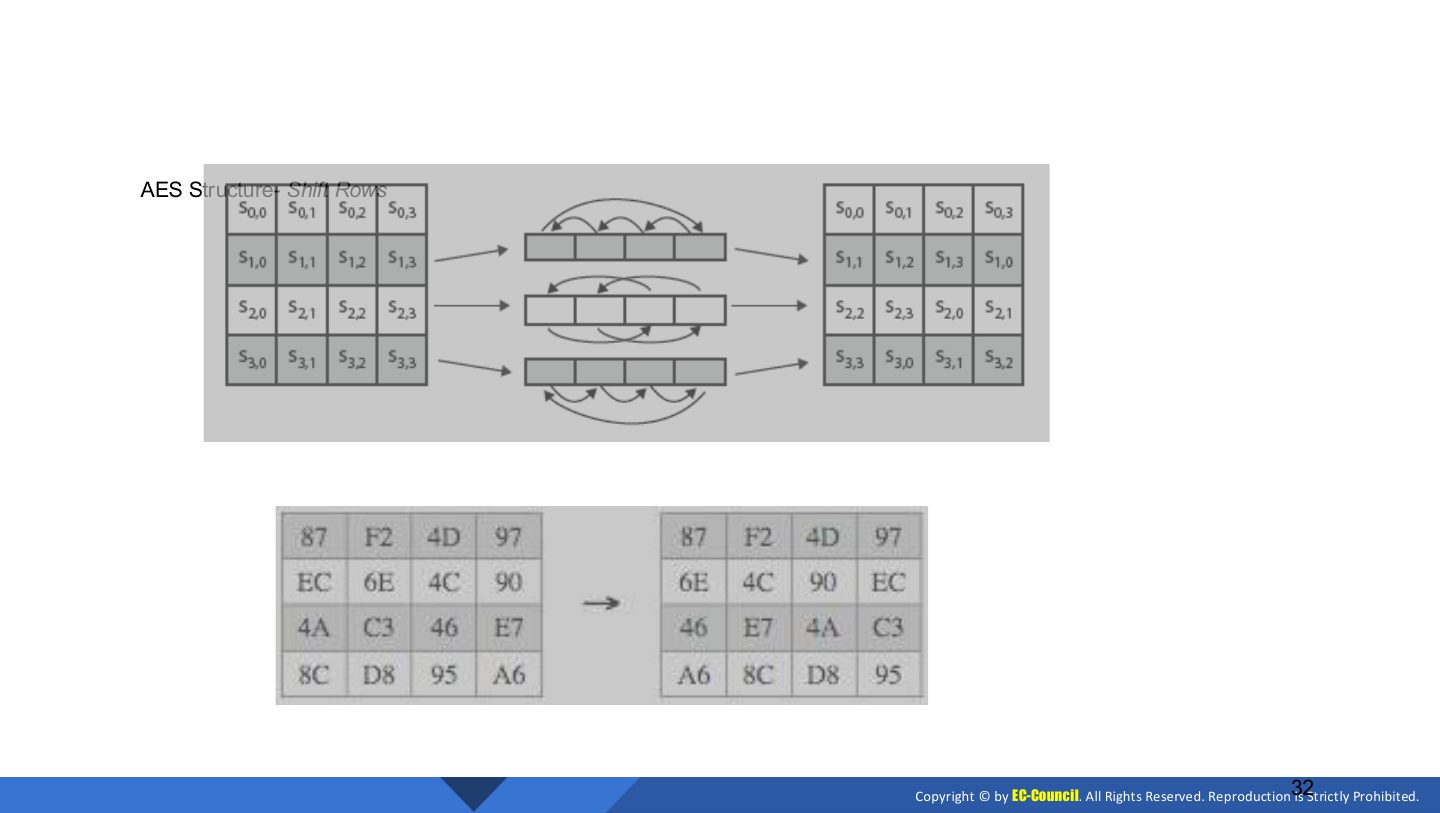
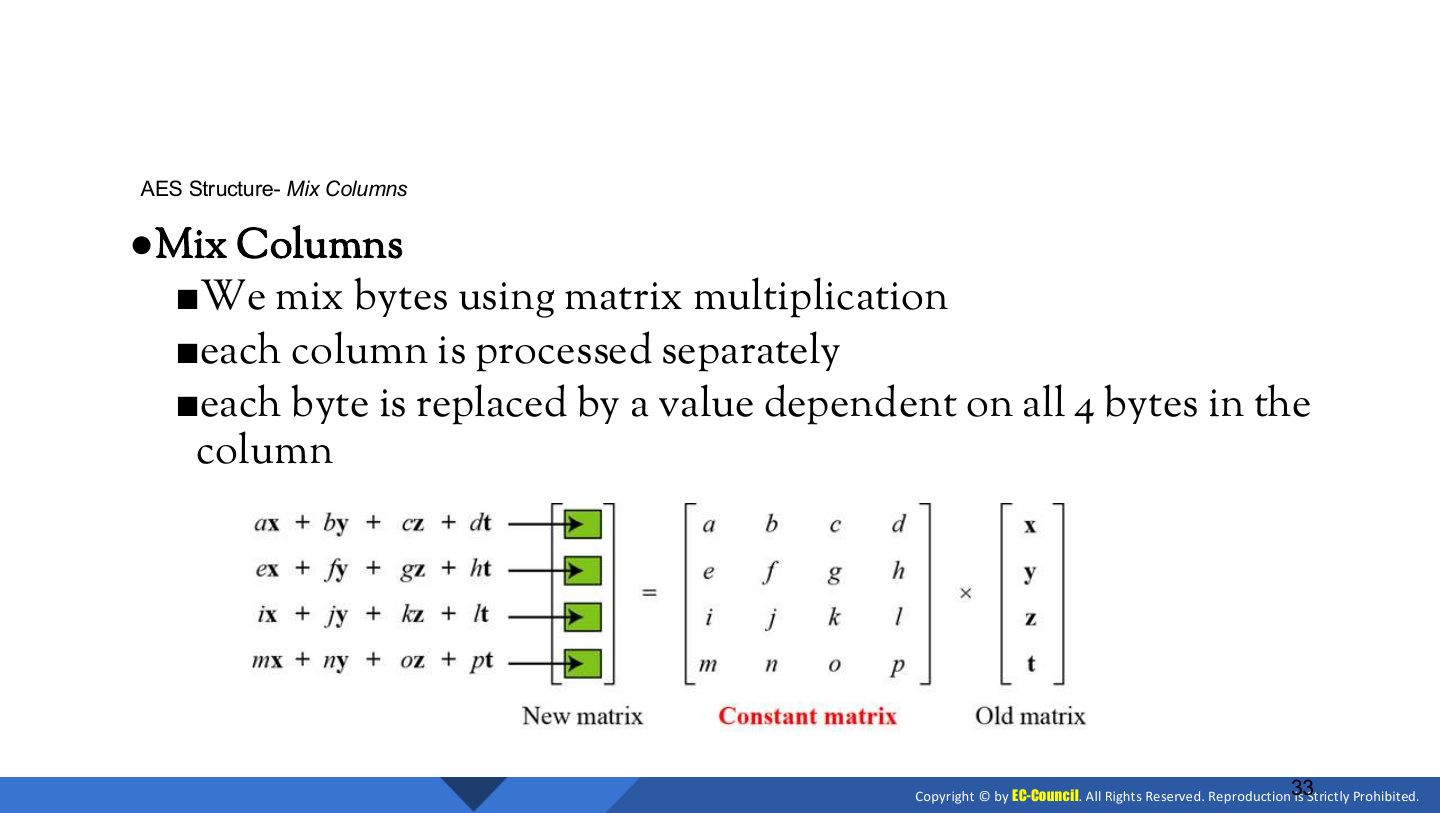
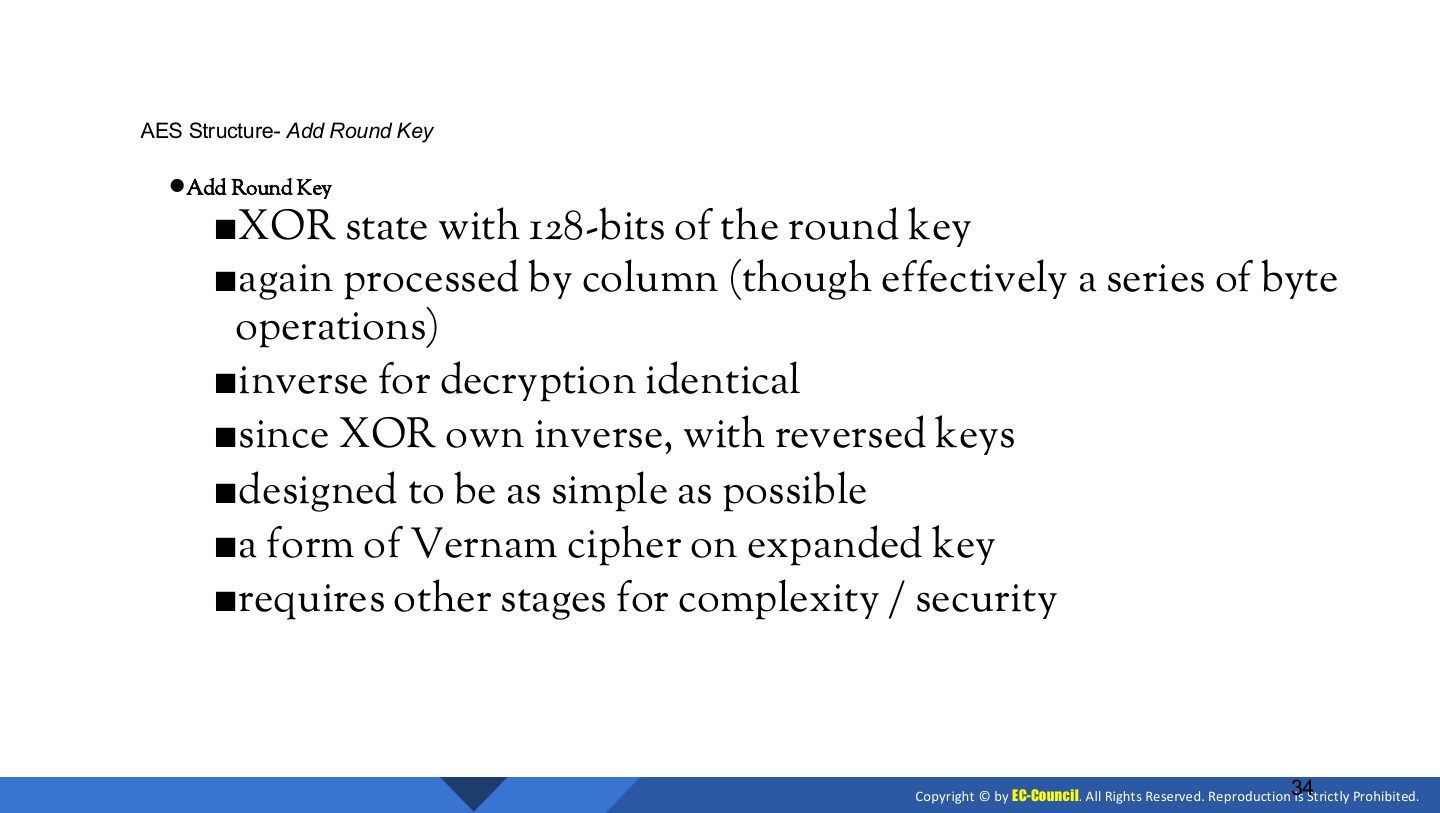
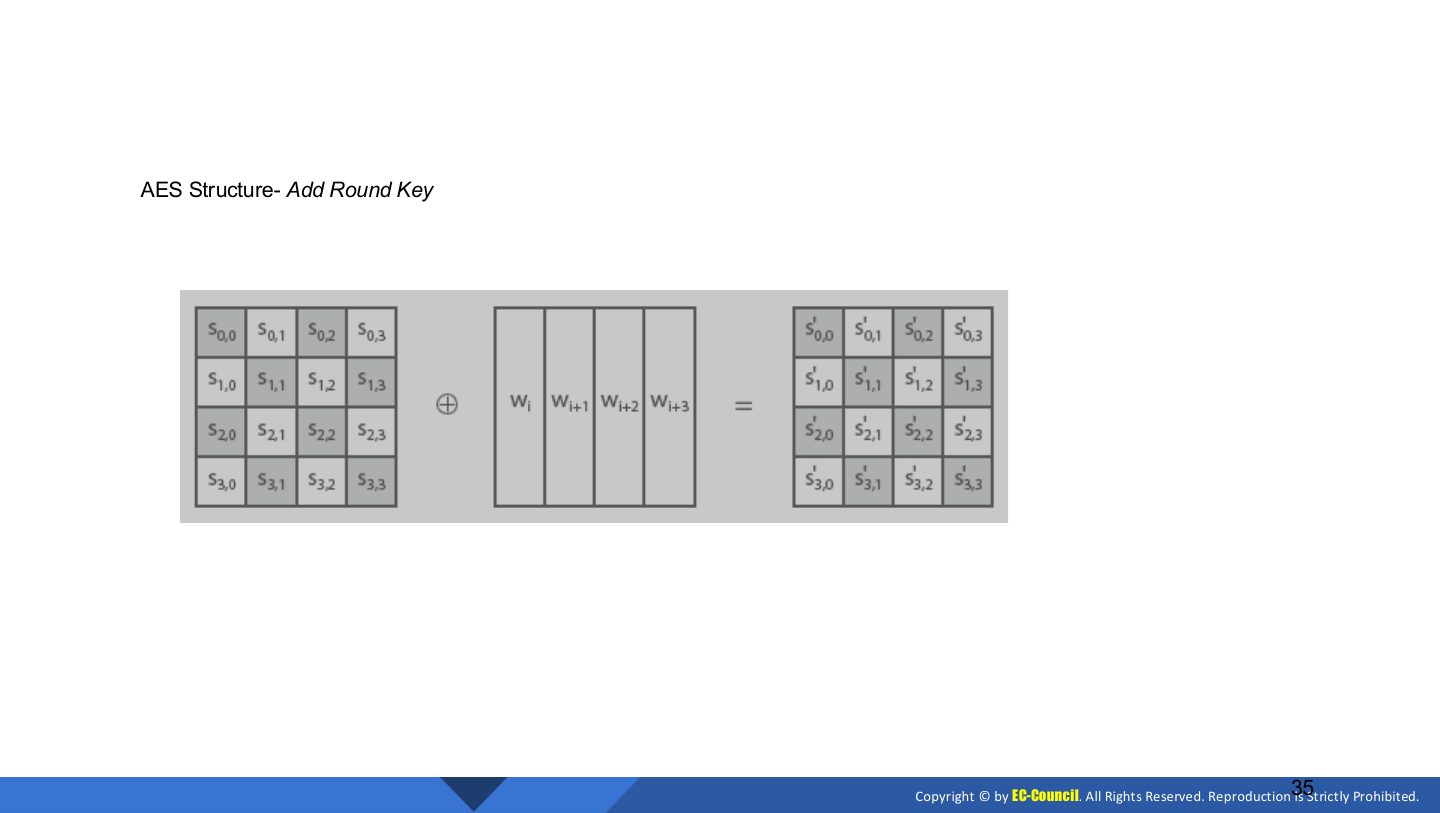
Each round: SubBytes (S-box substitution), ShiftRows (permutation), MixColumns (mixing), AddRoundKey (XOR with the round key). The last round skips MixColumns.
Memory trick Sub, Shift, Mix, Add.
Exam angle
Which AES step is omitted in the final round?
AES Structure- SubBytes
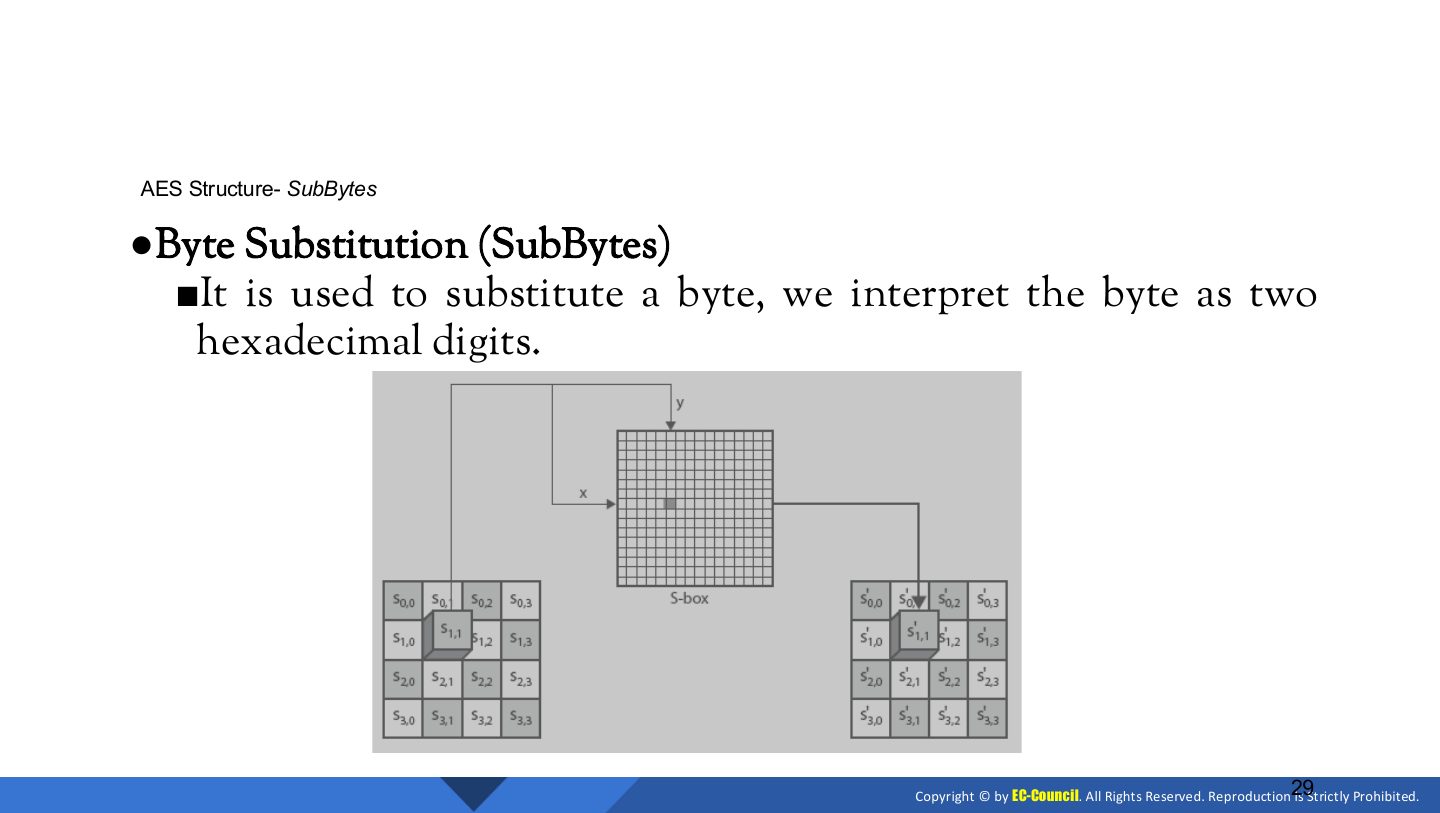
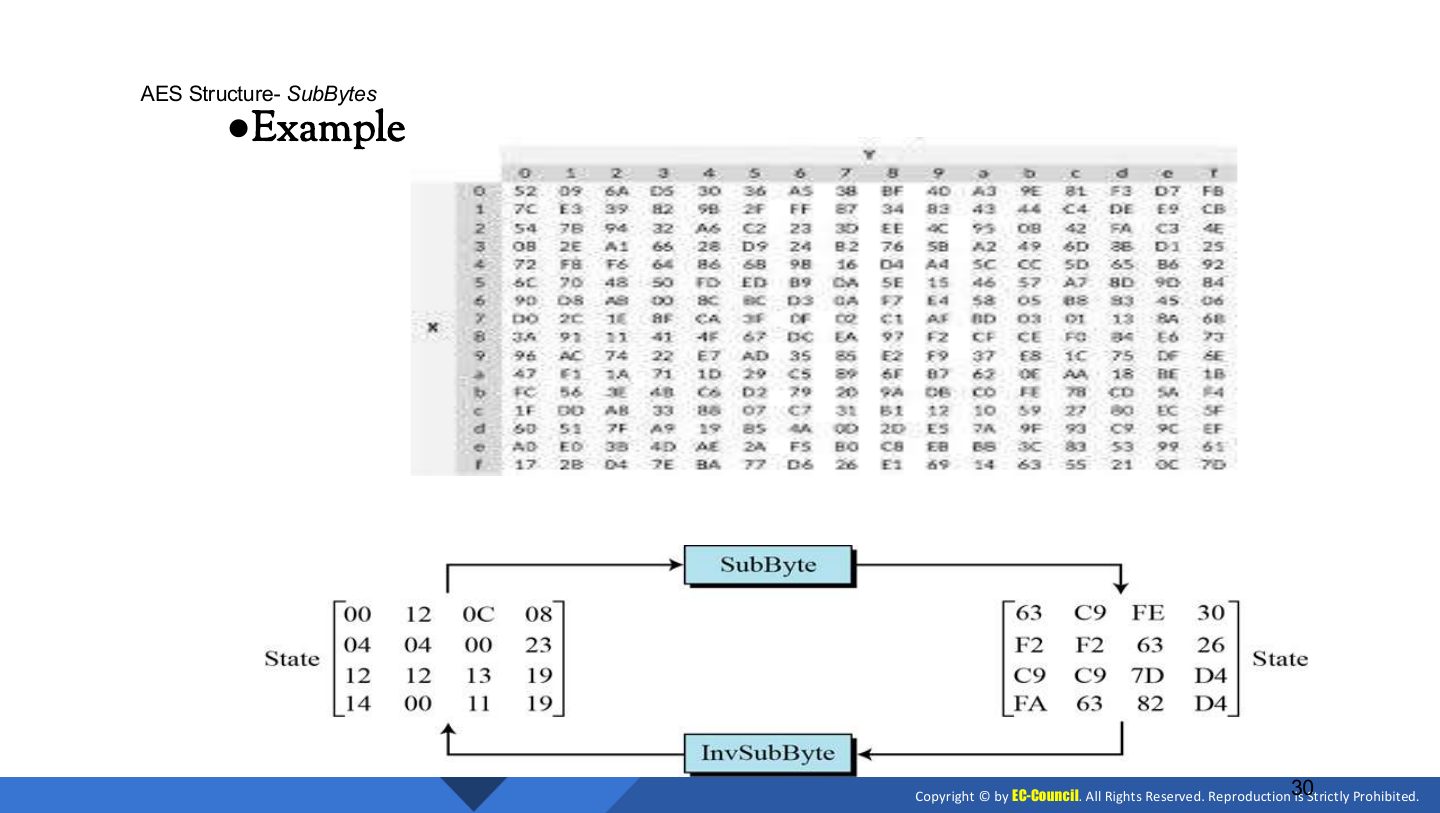
AES Structure- SubBytes
AES Structure- Shift Rows
AES Structure-Shift Rows
AES Structure- Mix Columns
AES Structure- Add Round Key
AES Structure- Add Round Key
Slide 36
AES Summary
Notes
AES is not a Feistel cipher: every round processes the whole block.
Module Summary