Entering a username is:
Identification, Authentication and Authorization
Access-control terminology and principles, the DAC, MAC, RBAC and rule-based models, identity and access management, the types of authentication (password, two-factor, biometrics, smart cards, SSO), authorization and accounting.
How to read this page
Every original slide is shown unchanged. Yellow marks on a slide point to a numbered note: hover or tap a mark to jump to its note, and hover a note to see its marks. Questions tagged Past exam appeared on a real paper; Prediction questions are likely angles, not confirmed. Pick an answer to each question: a wrong pick tells you why it is wrong, so you can try again.
All 30 slides
- 1 Slide 1
- 2 Module Objectives
- 3 Module Flow
- 4 Access Control
- 5 Access Control Terminologies
- 6 Access Control Principles
- 7 ❑ Access control models are the standards which provide a predefined framework for implementing the necessary level of access control
- 8 Slide 8
- 9 Slide 9
- 10 Slide 10
- 11 Slide 11
- 12 Slide 12
- 13 Slide 13
- 14 Slide 14
- 15 Slide 15
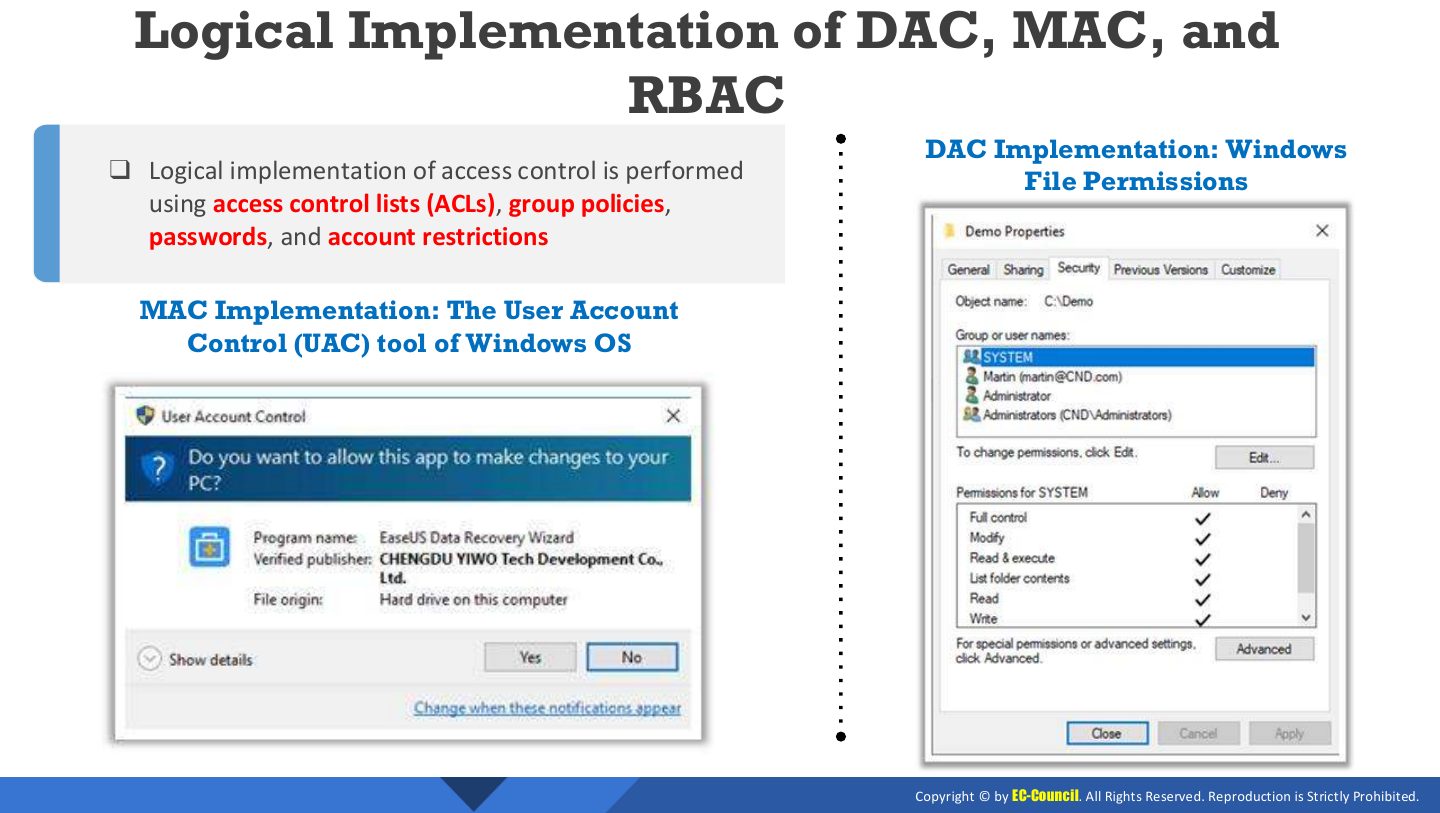
- 16 Logical Implementation of DAC, MAC, and RBAC
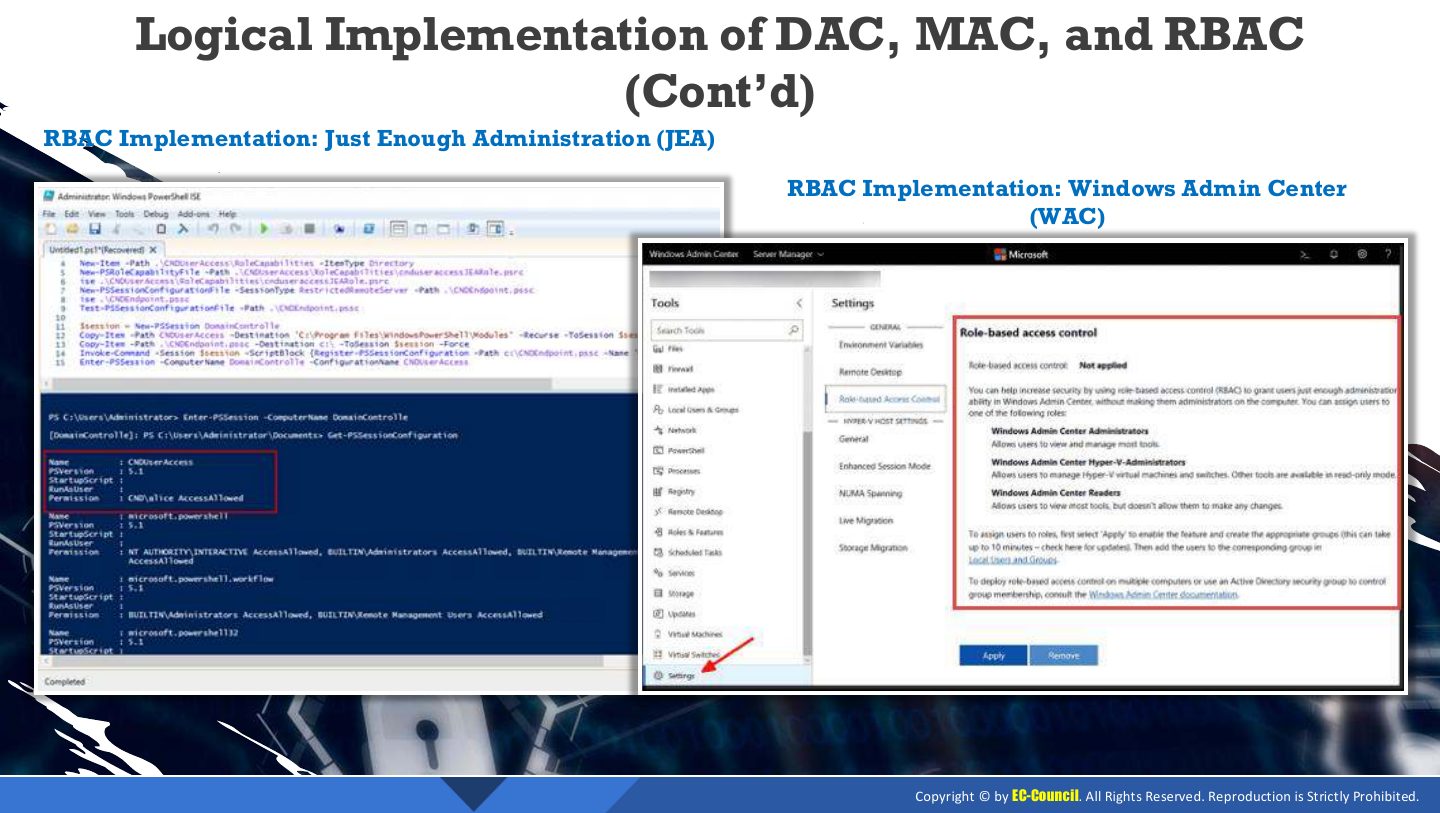
- 17 Logical Implementation of DAC, MAC, and RBAC (Cont’d)
- 18 Module Flow
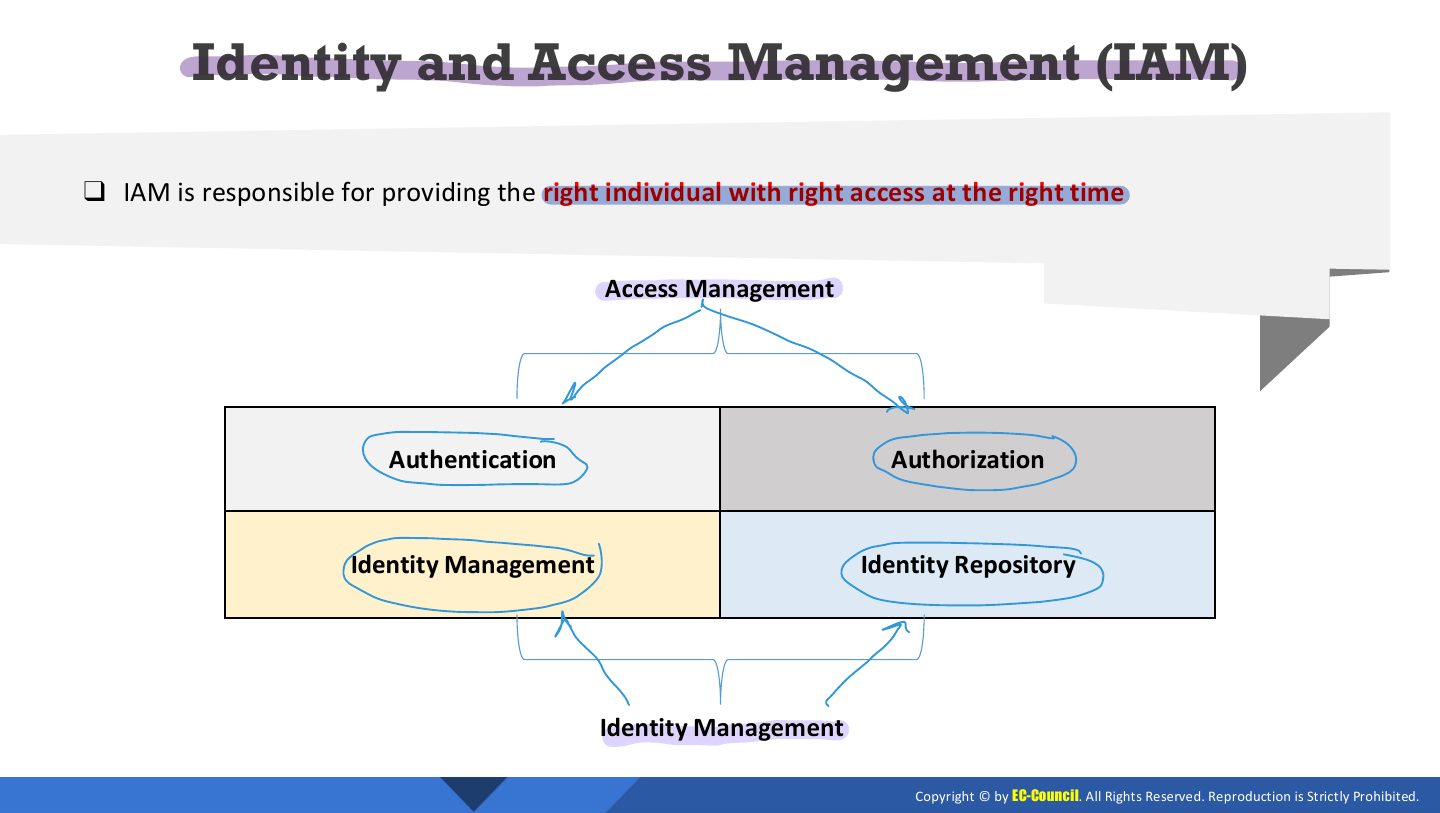
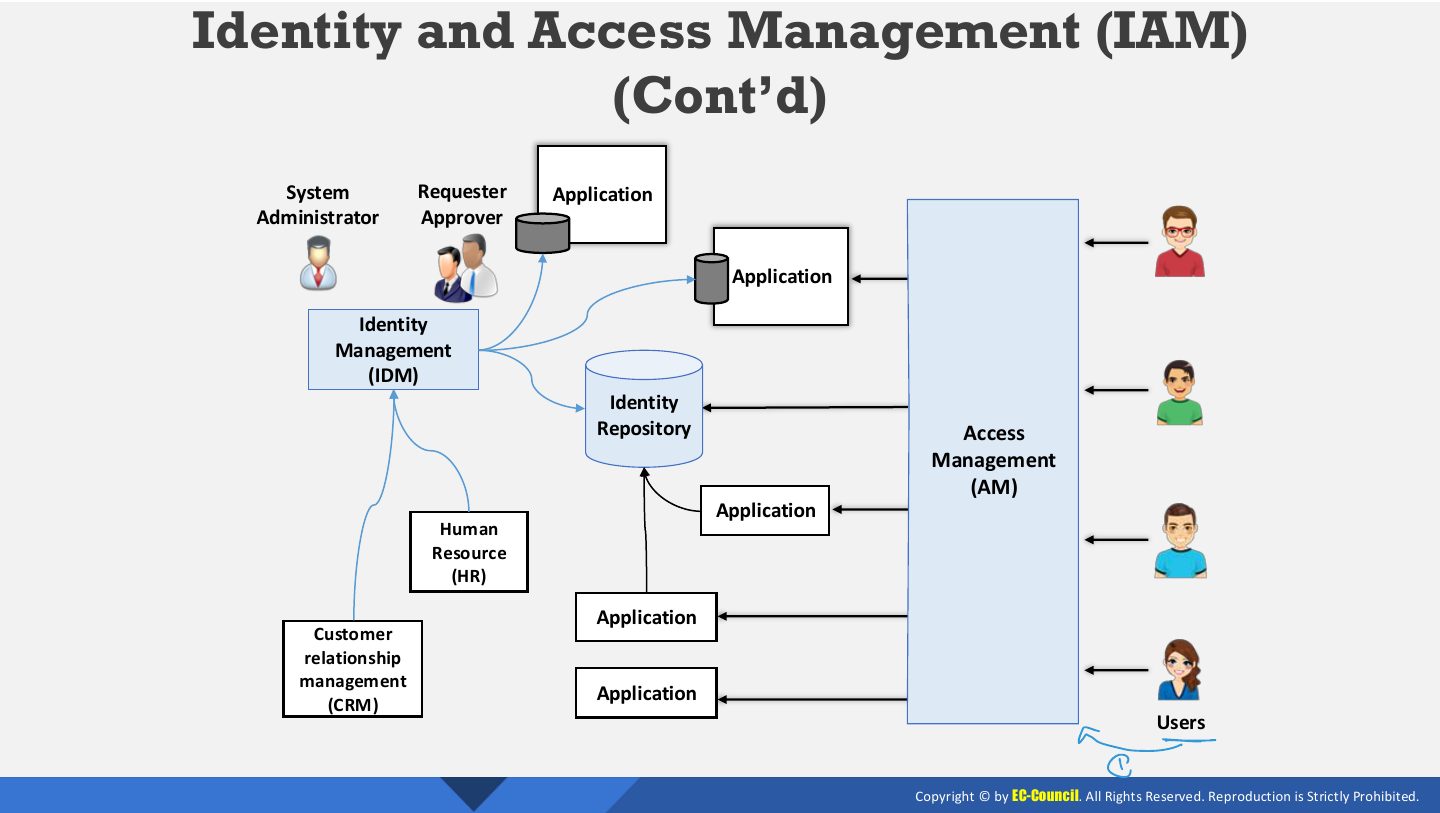
- 19 Identity and Access Management (IAM)
- 20 Identity and Access Management (IAM) (Cont’d)
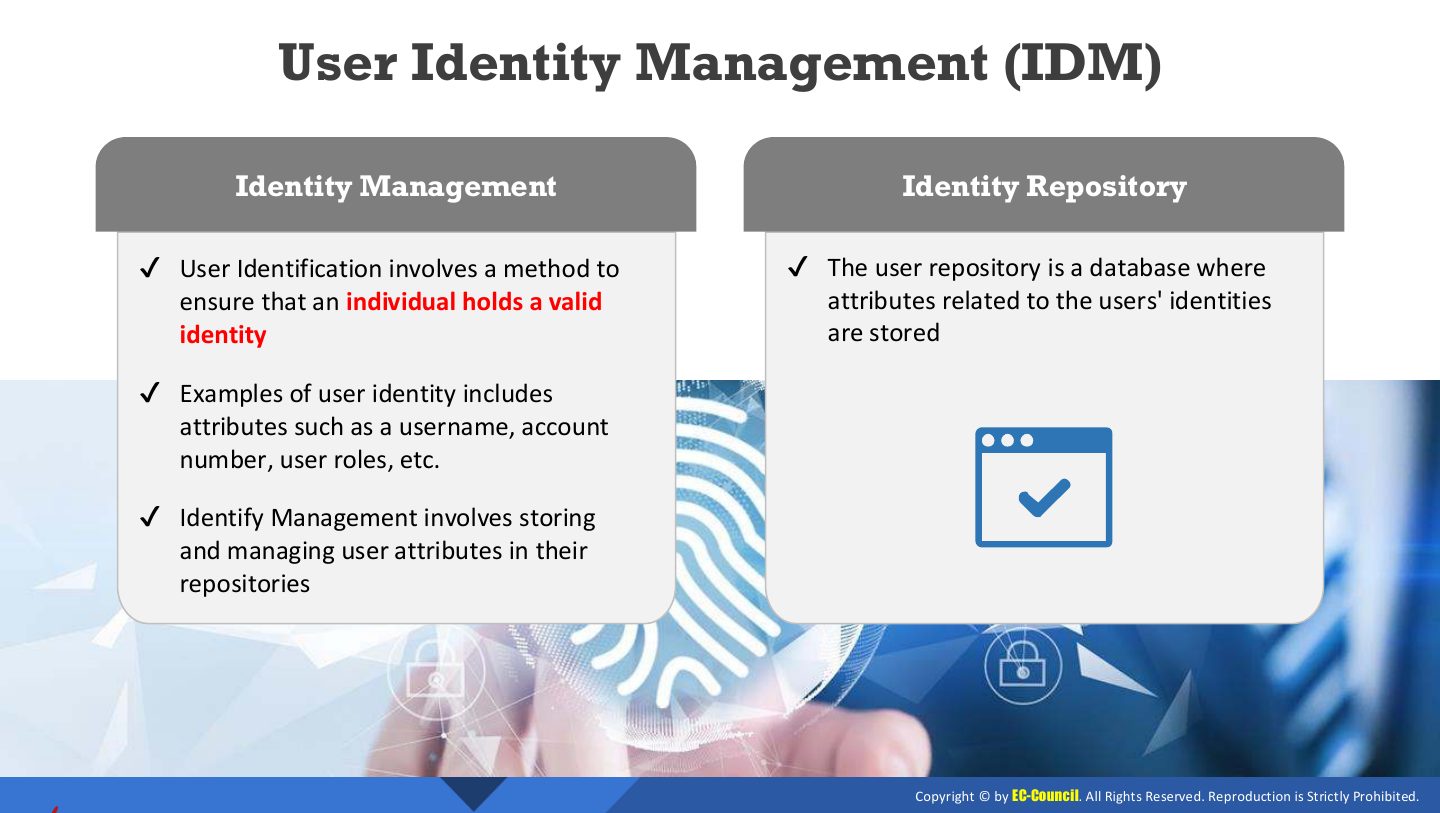
- 21 User Identity Management (IDM)
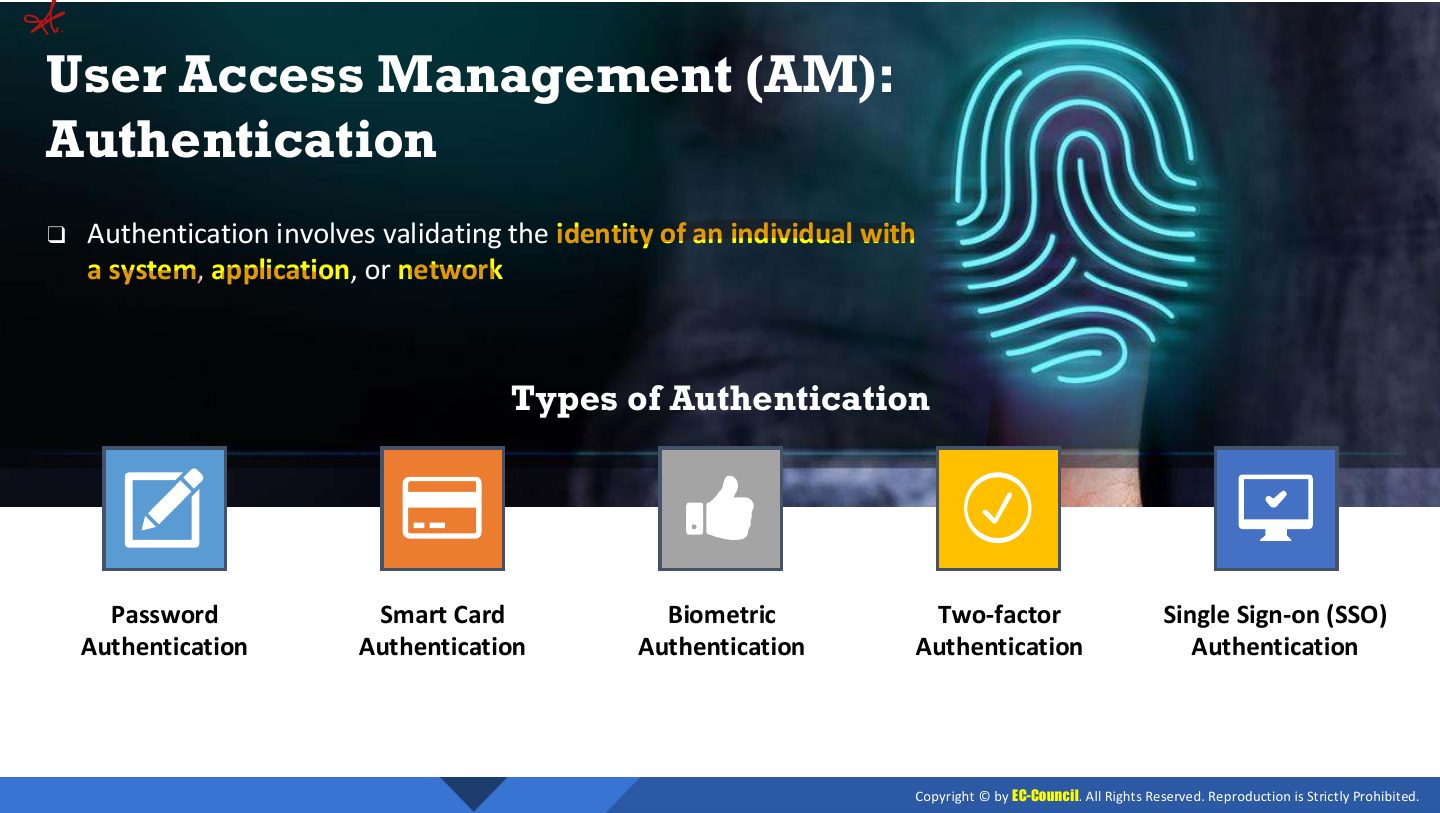
- 22 User Access Management (AM): Authentication
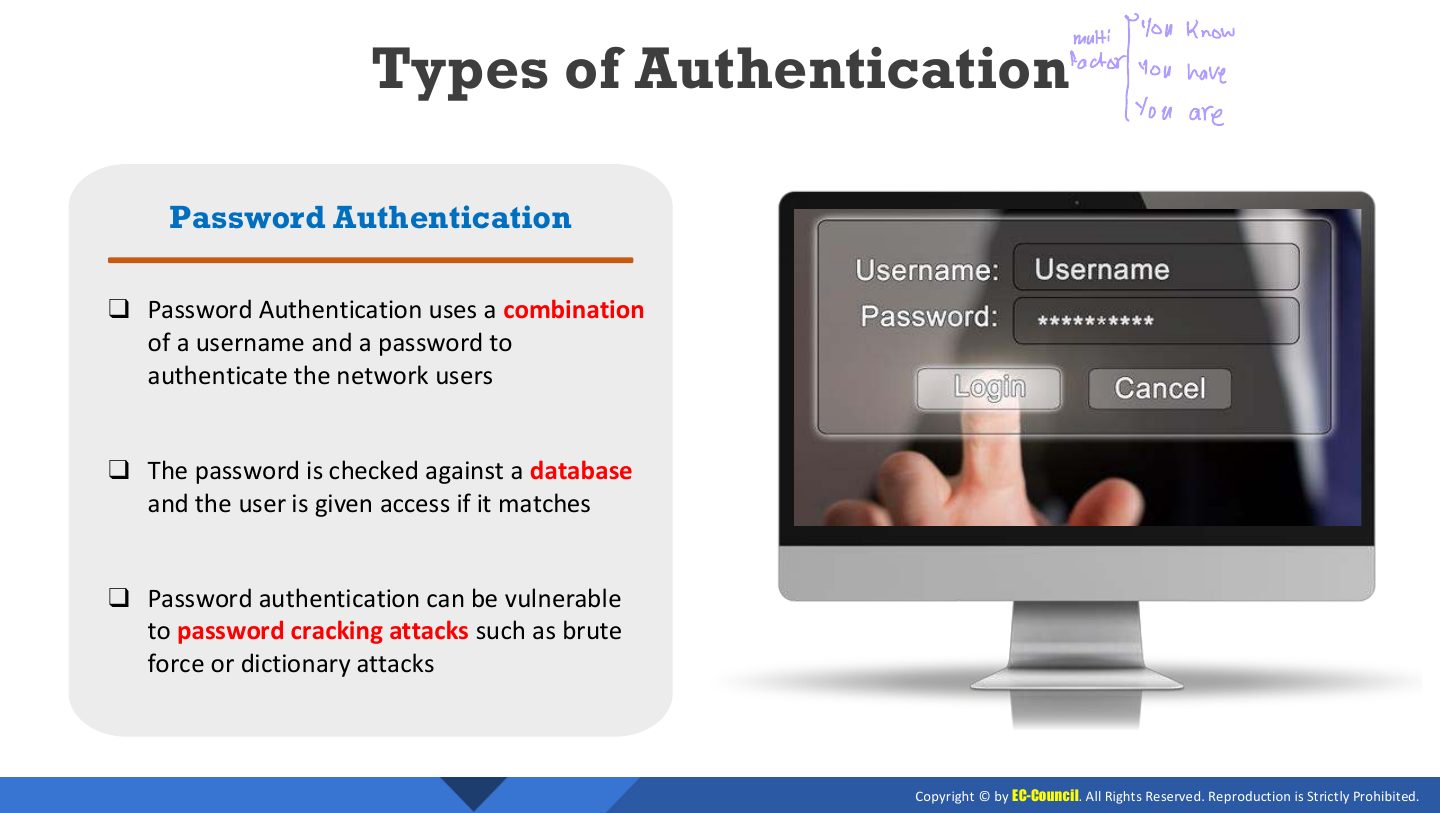
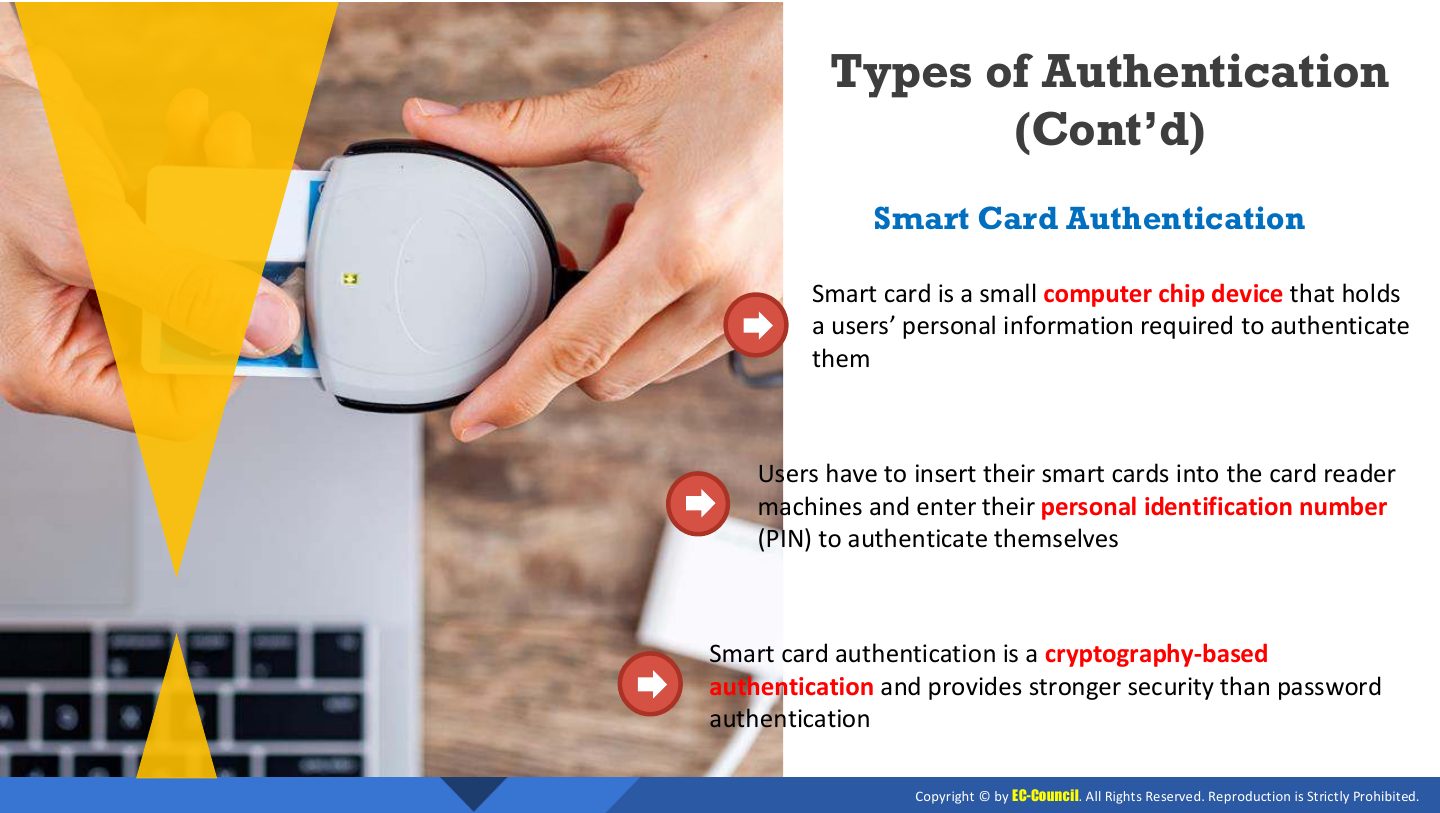
- 23 Types of Authentication
- 24 Types of Authentication (Cont’d)
- 25 Types of Authentication
- 26 Types of Authentication (Cont’d)
- 27 Types of Authentication (Cont’d)
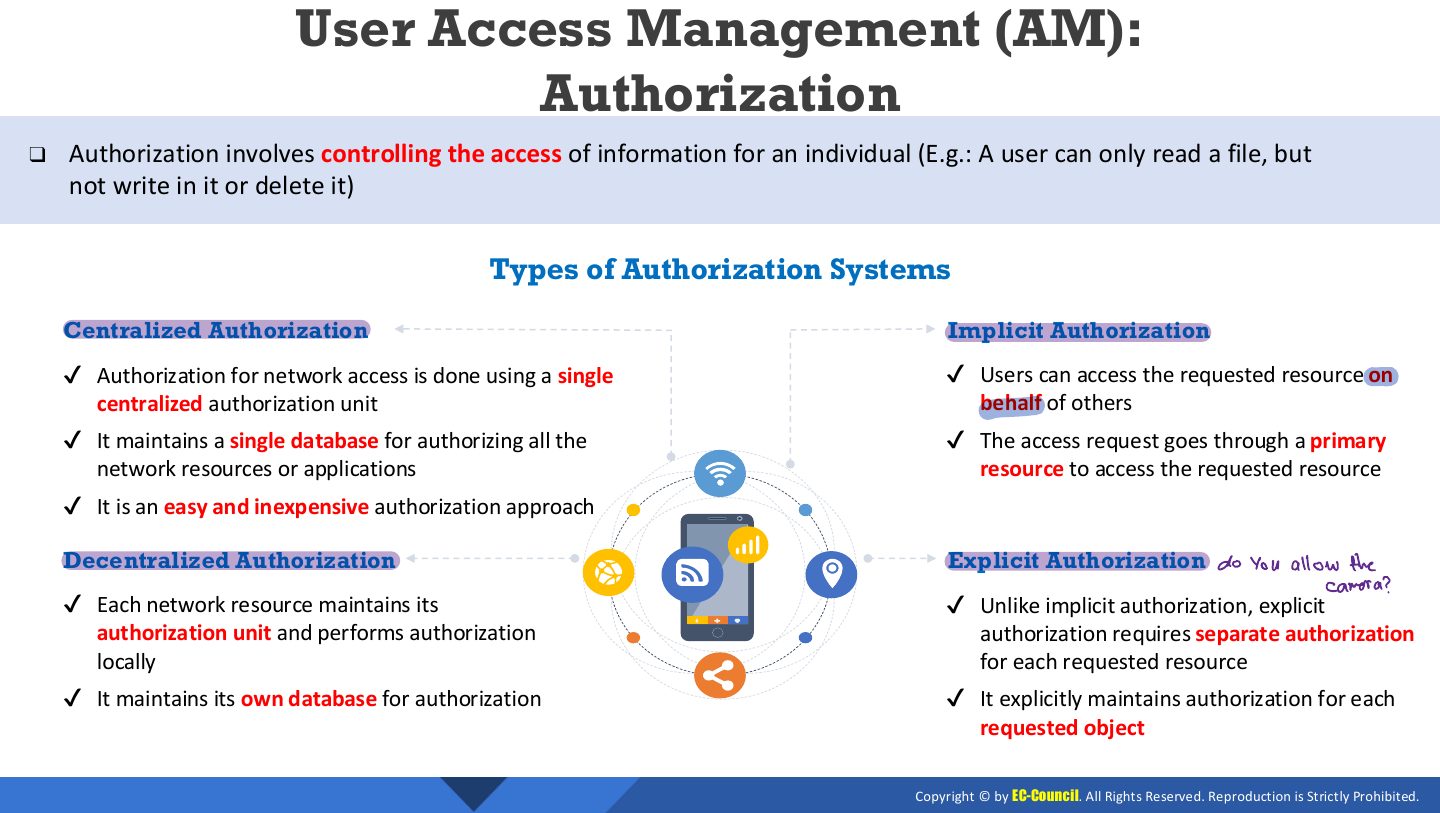
- 28 User Access Management (AM): Authorization
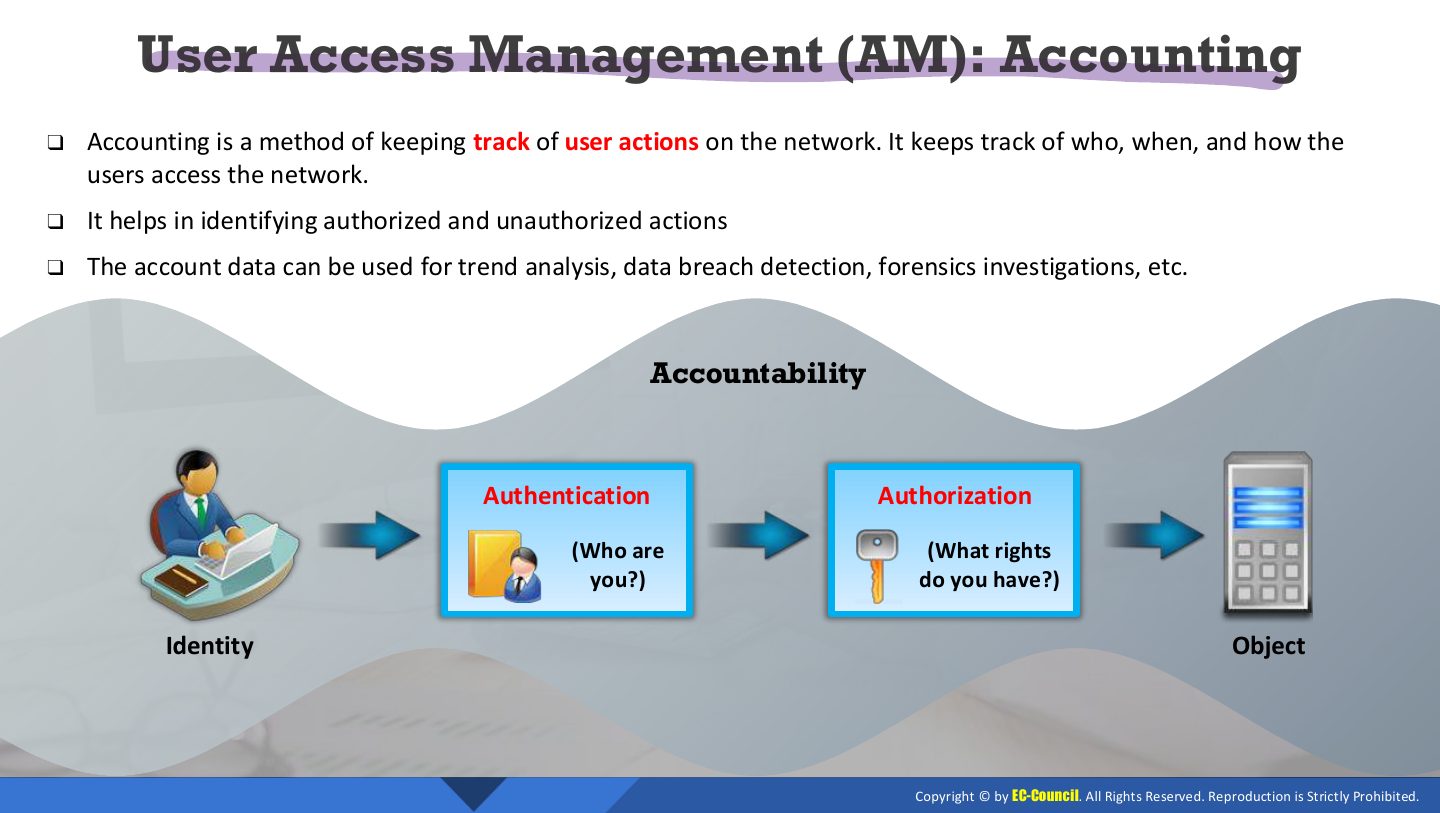
- 29 User Access Management (AM): Accounting
- 30 Module Summary
Slide 1
Module Objectives
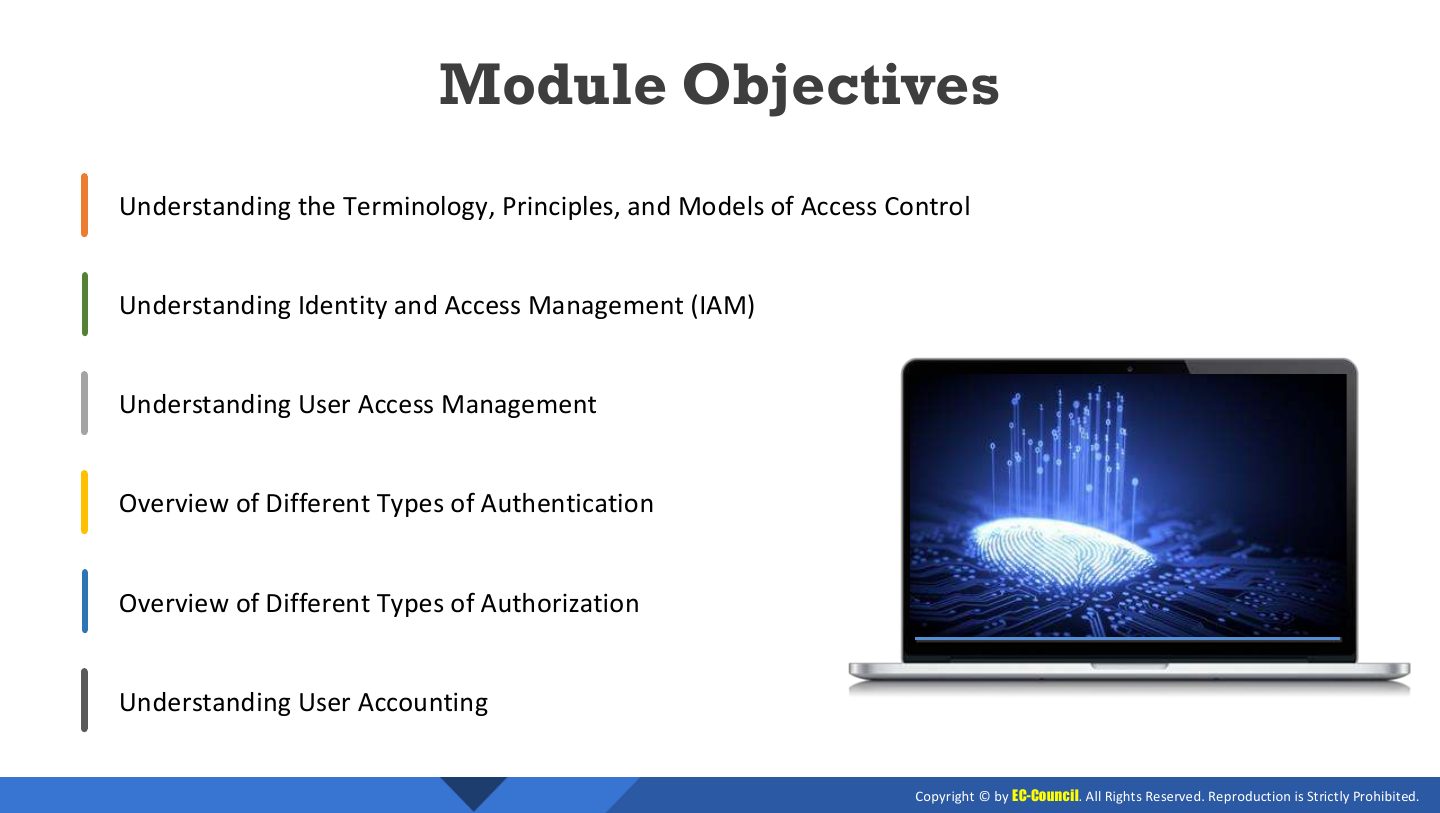
Module Flow
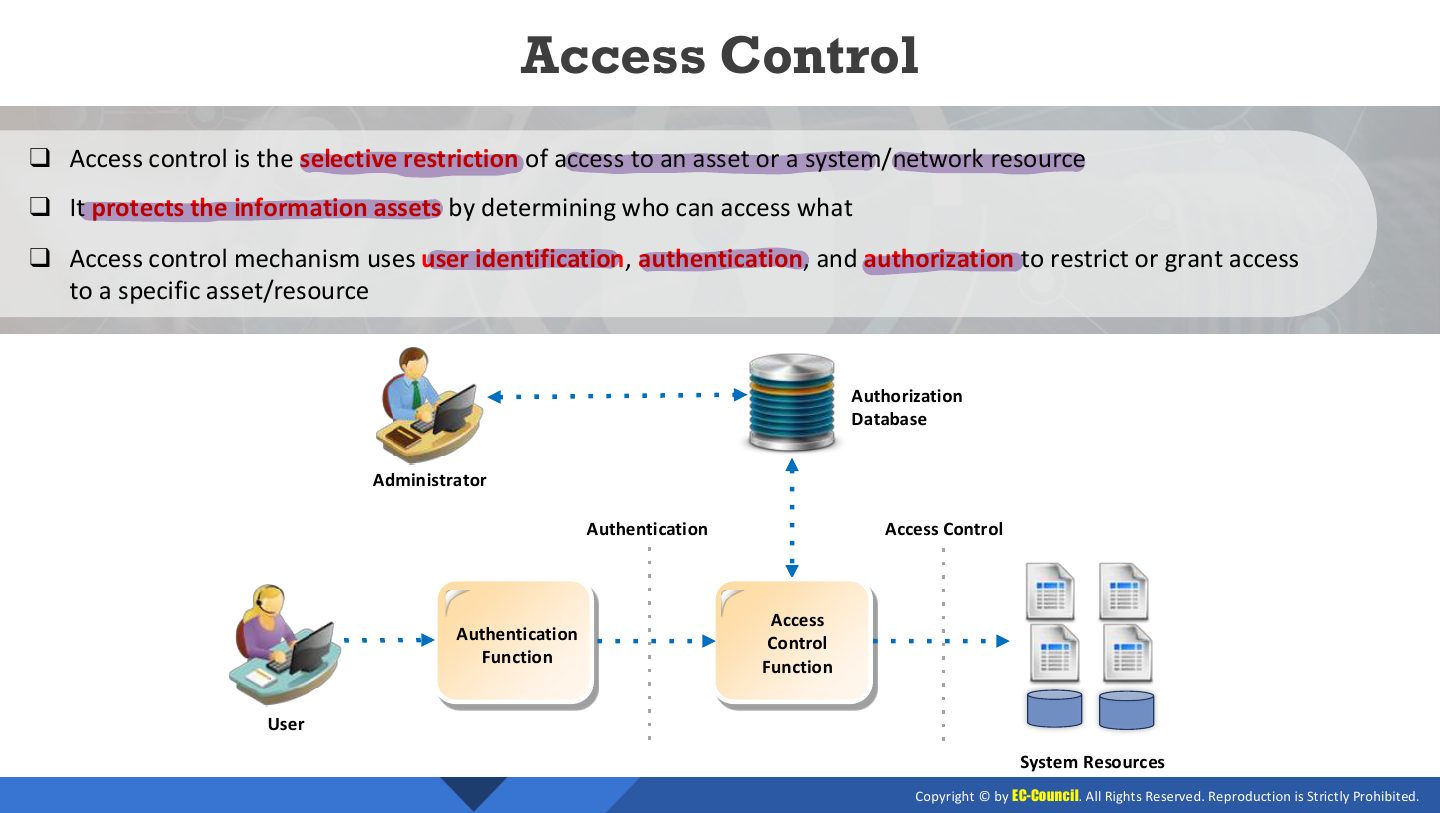
Access Control
Notes
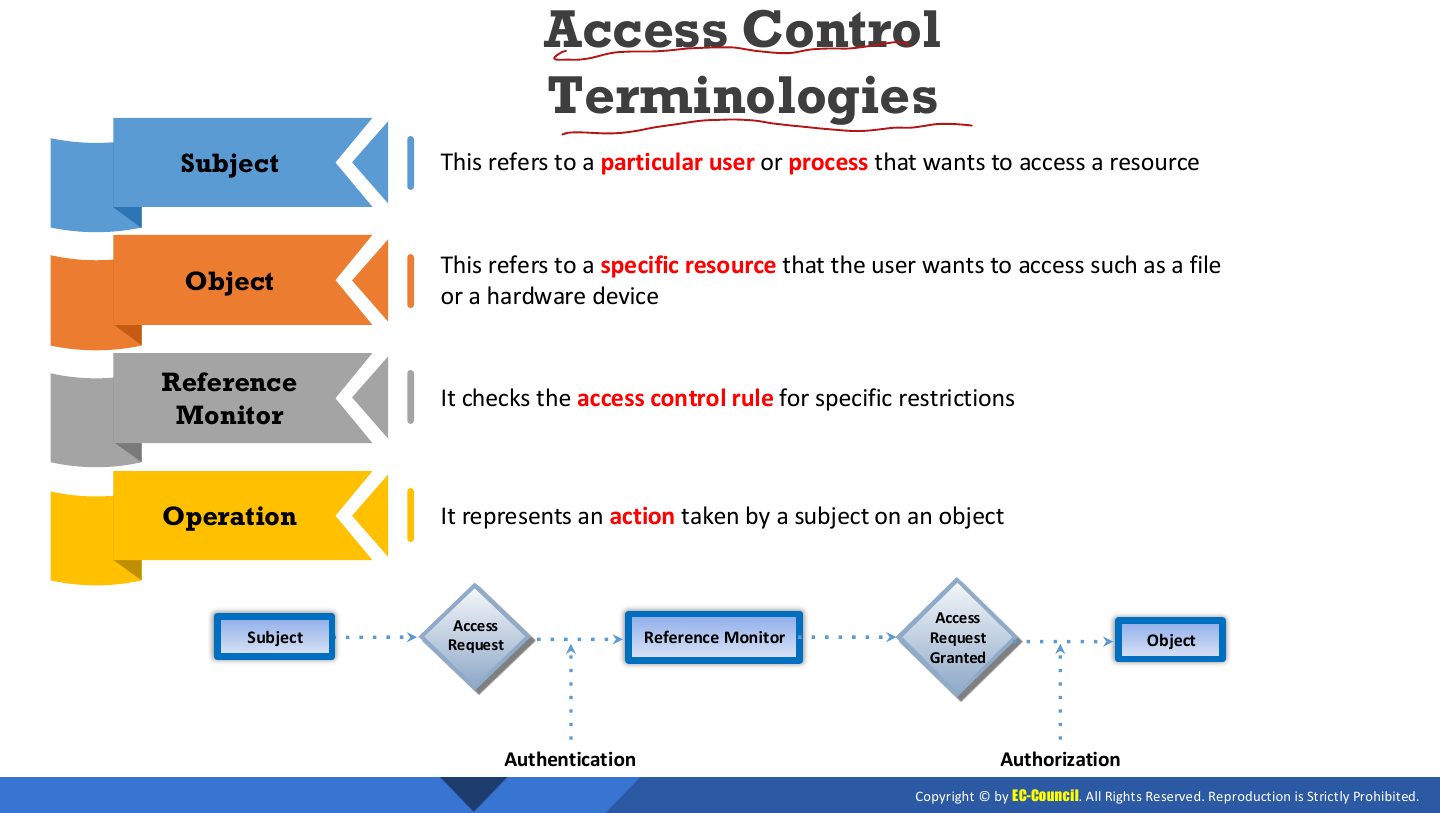
Access control: who (subject) can do what (operation) to which resource (object).
Access Control Terminologies
Notes
Identification (claim who you are) → Authentication (prove it) → Authorization (what you may do) → Accounting (log what you did).
Memory trick I-A-A-A: Identify, Authenticate, Authorize, Account.
Exam angle
Deciding which files a logged-in user may open is:
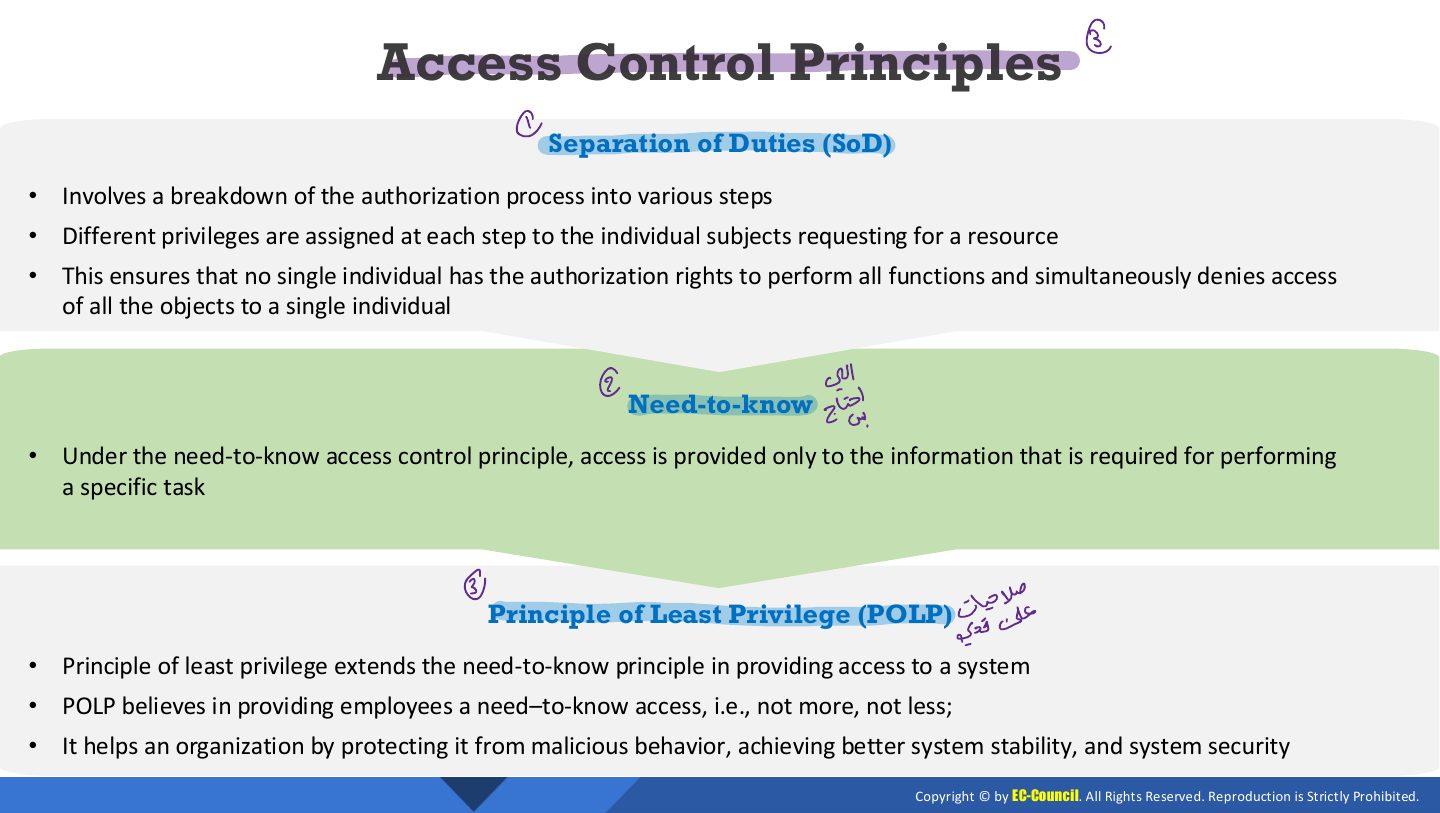
Access Control Principles
Exam angle
Giving users only the access they need for their job is:
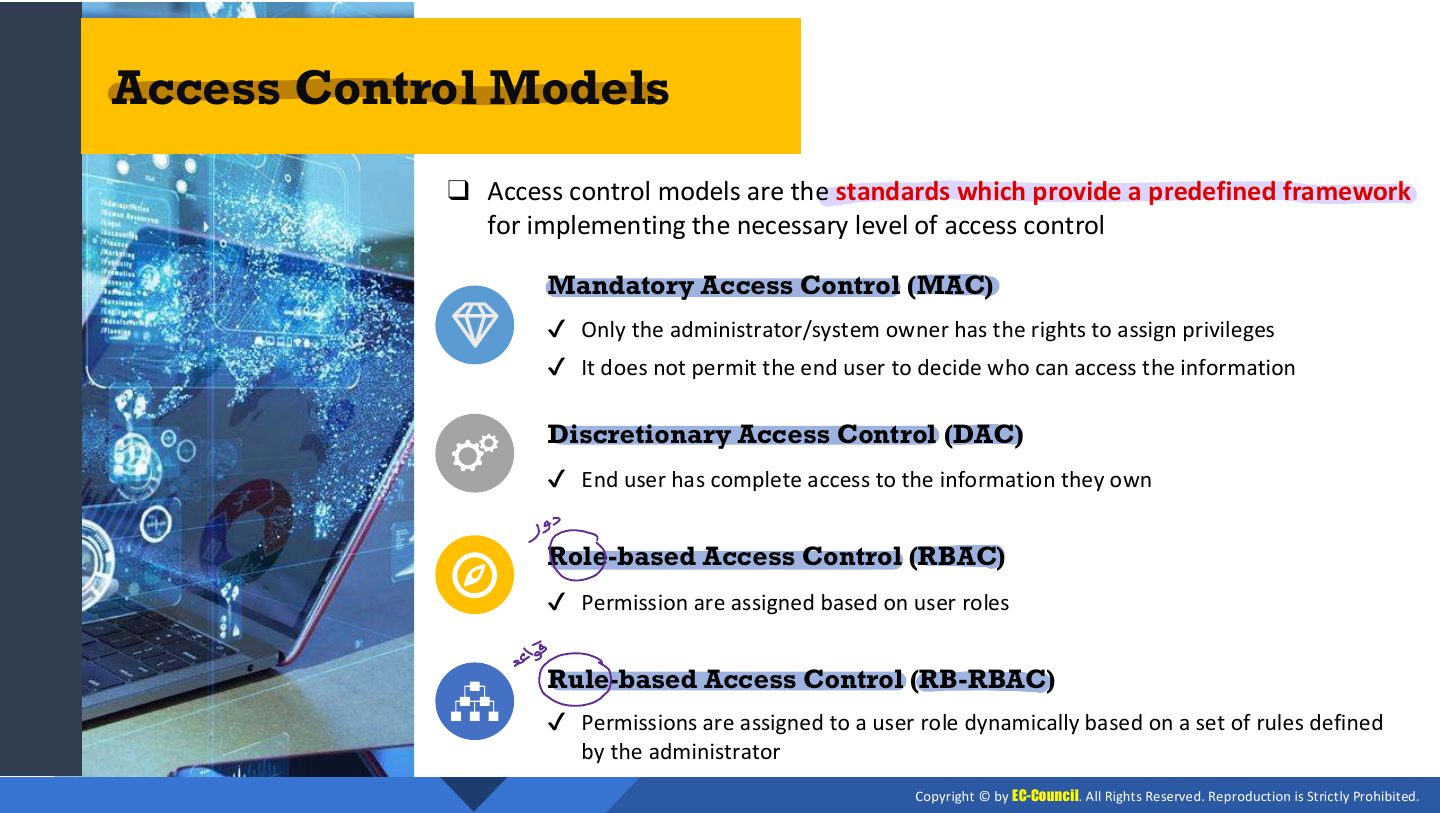
❑ Access control models are the standards which provide a predefined framework for implementing the necessary level of access control
Notes
DAC: the owner decides access. MAC: the system decides by labels/clearances (military). RBAC: by job role. Rule-based: by rules (e.g. time of day).
Exam angle
Access decided by security labels and clearance levels is:
A file owner granting a colleague read access is:
Slide 8
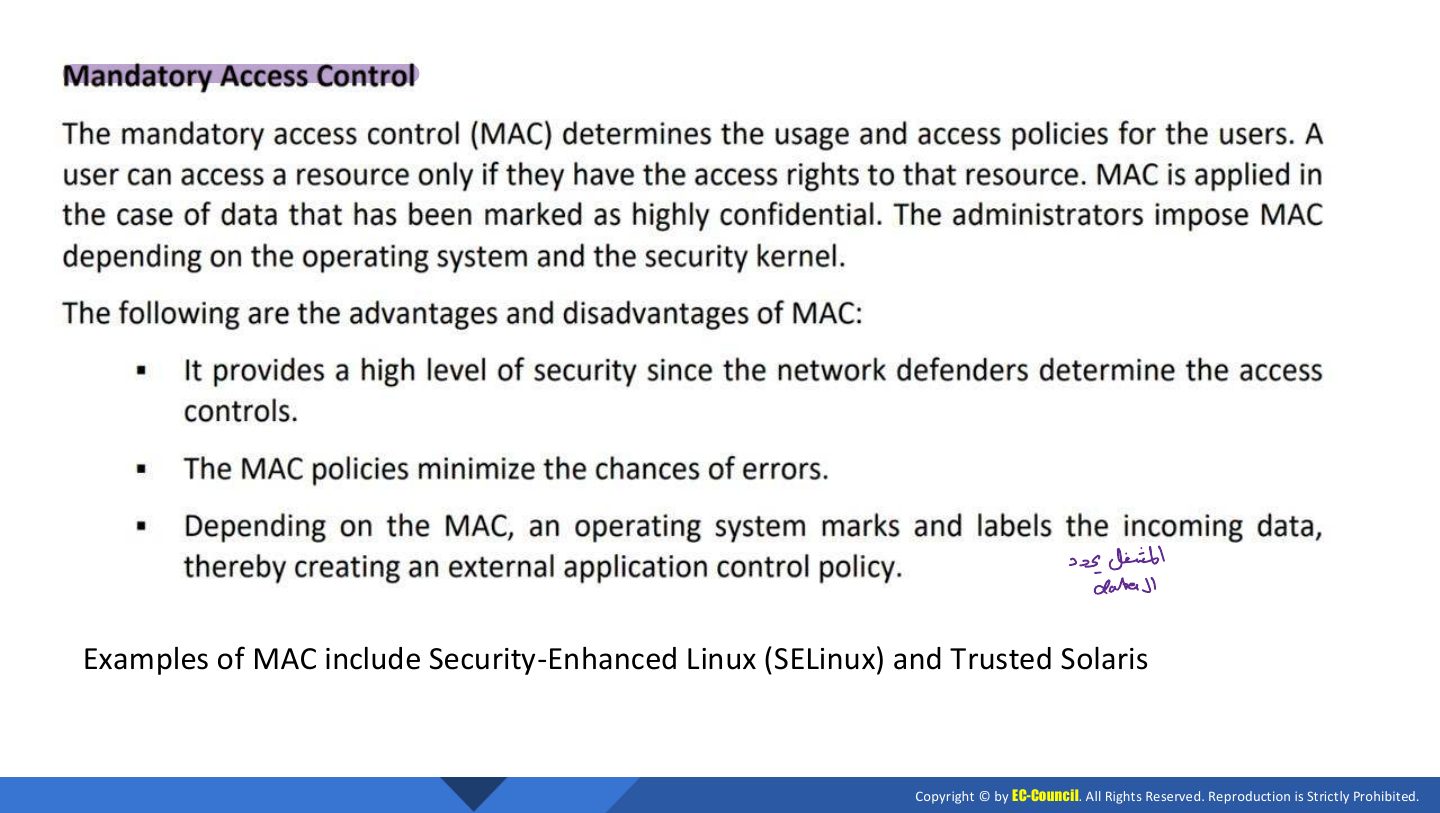
Slide 9
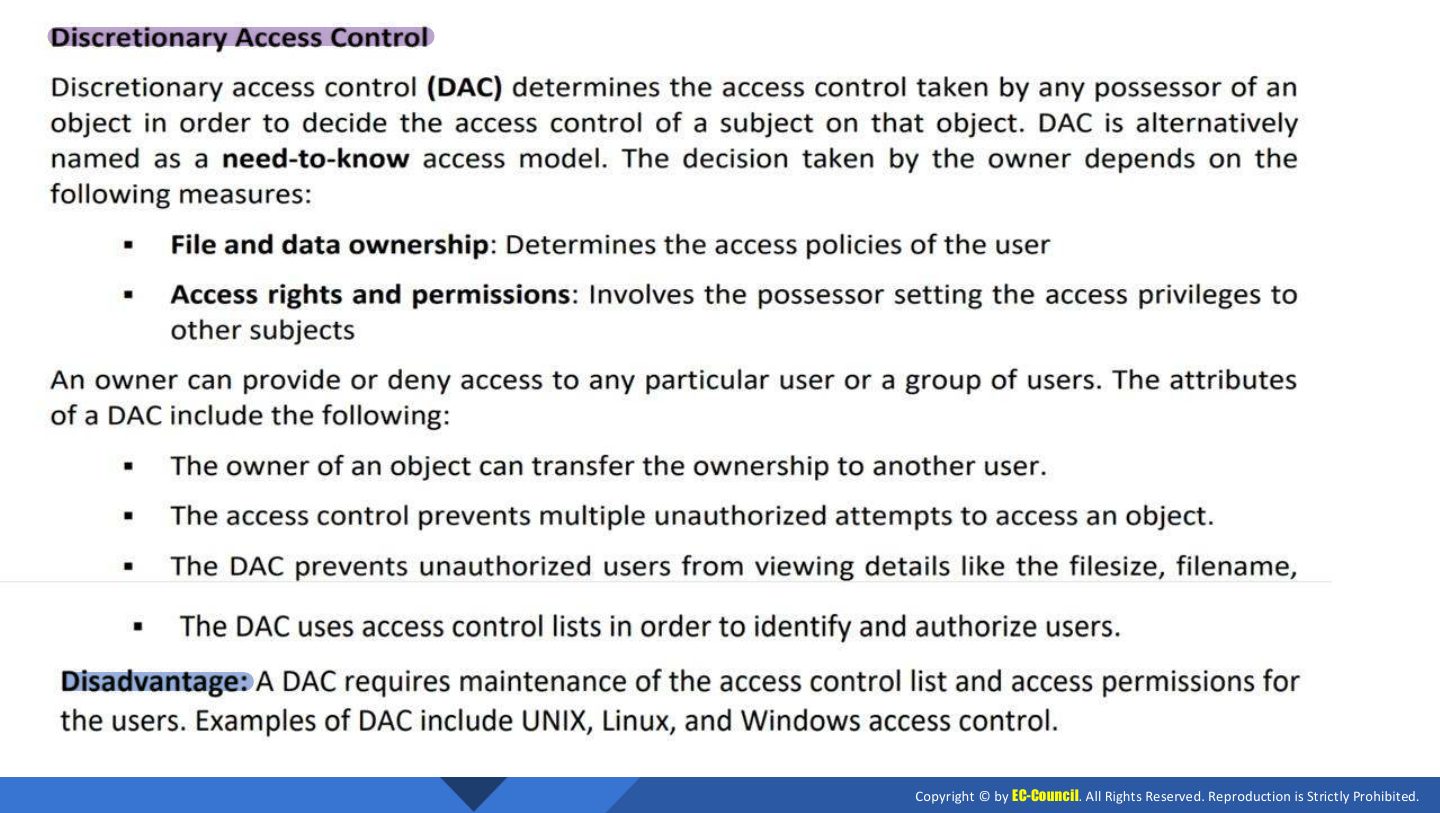
Slide 10
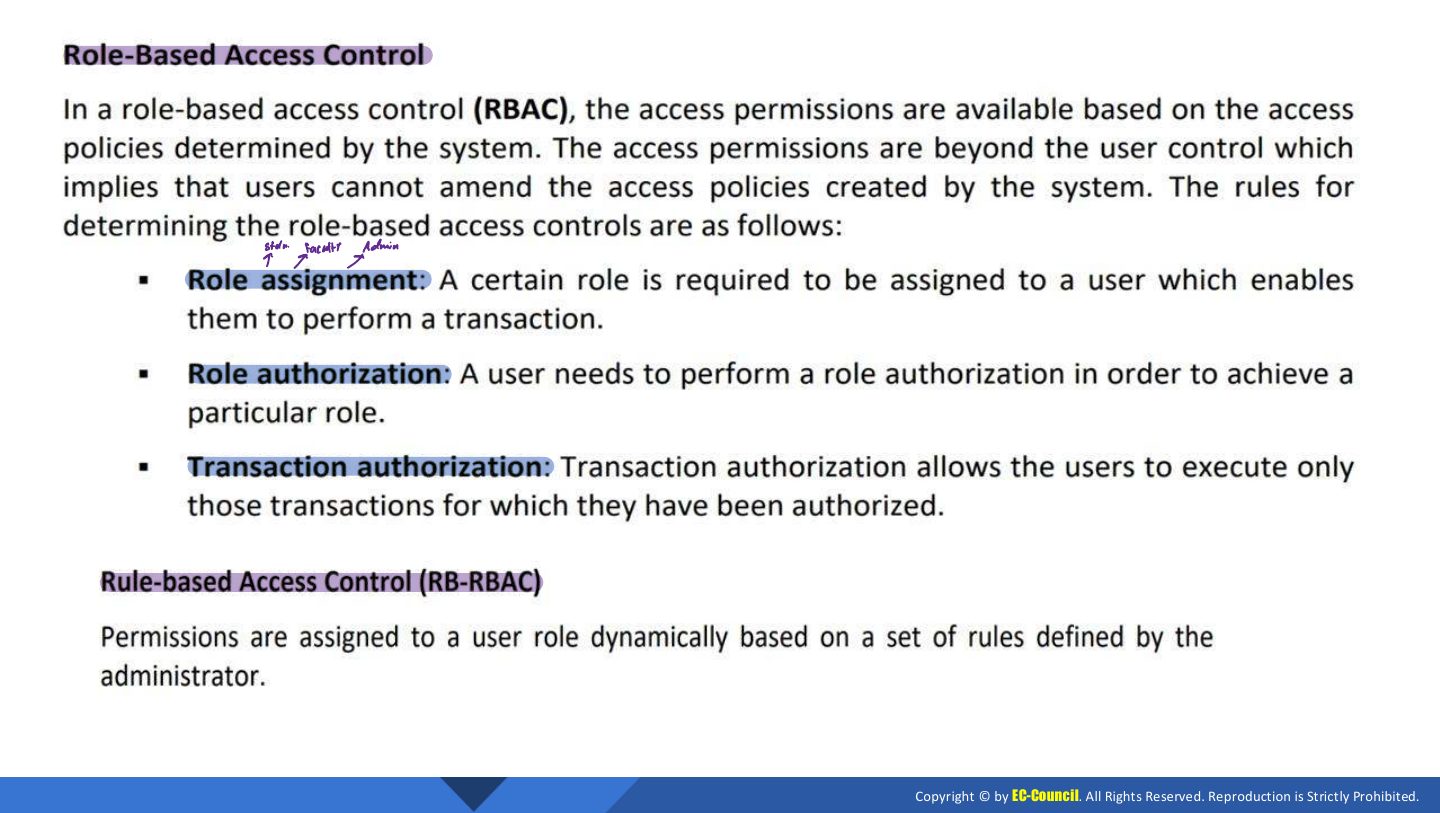
Slide 11
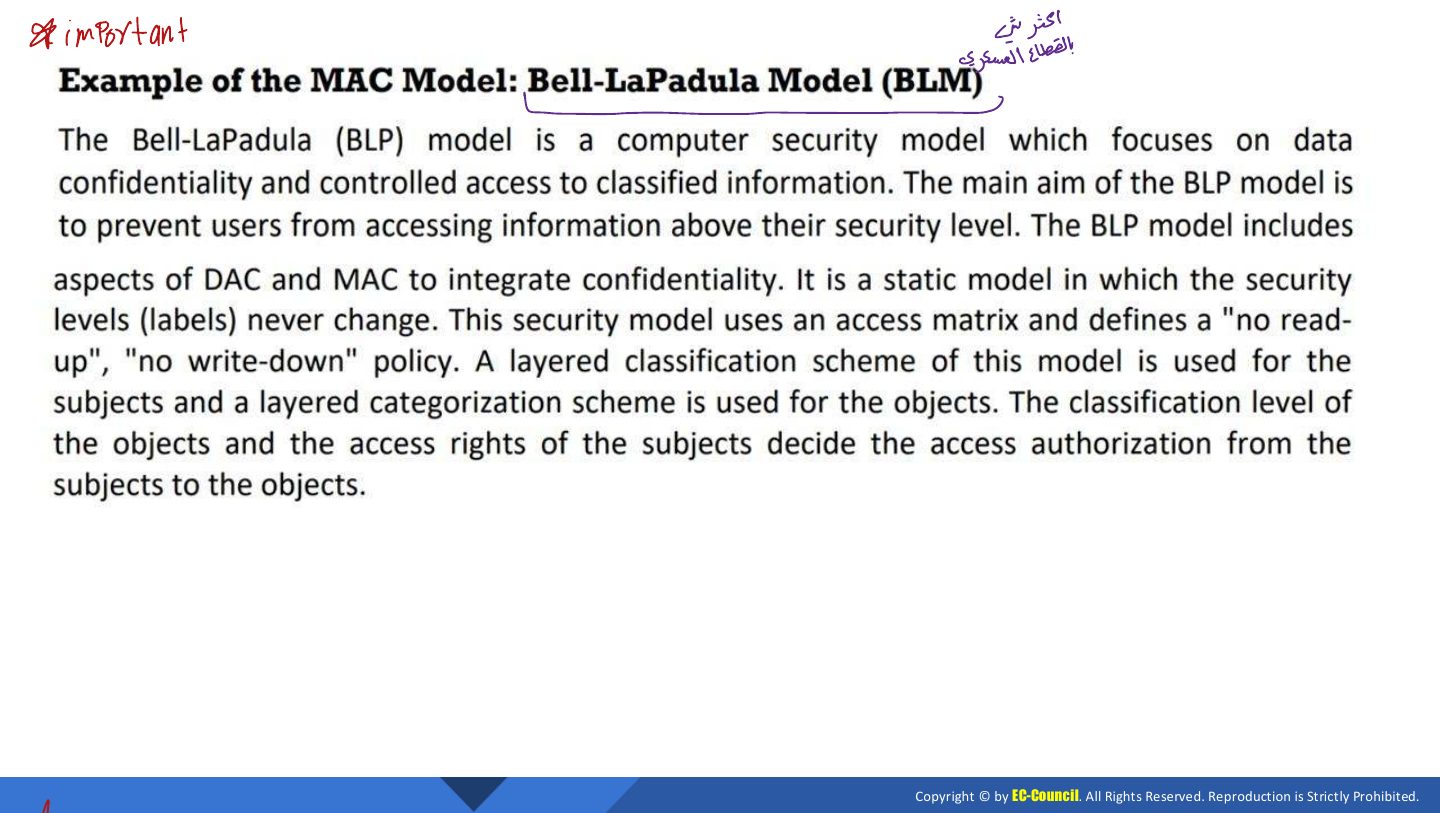
Slide 12
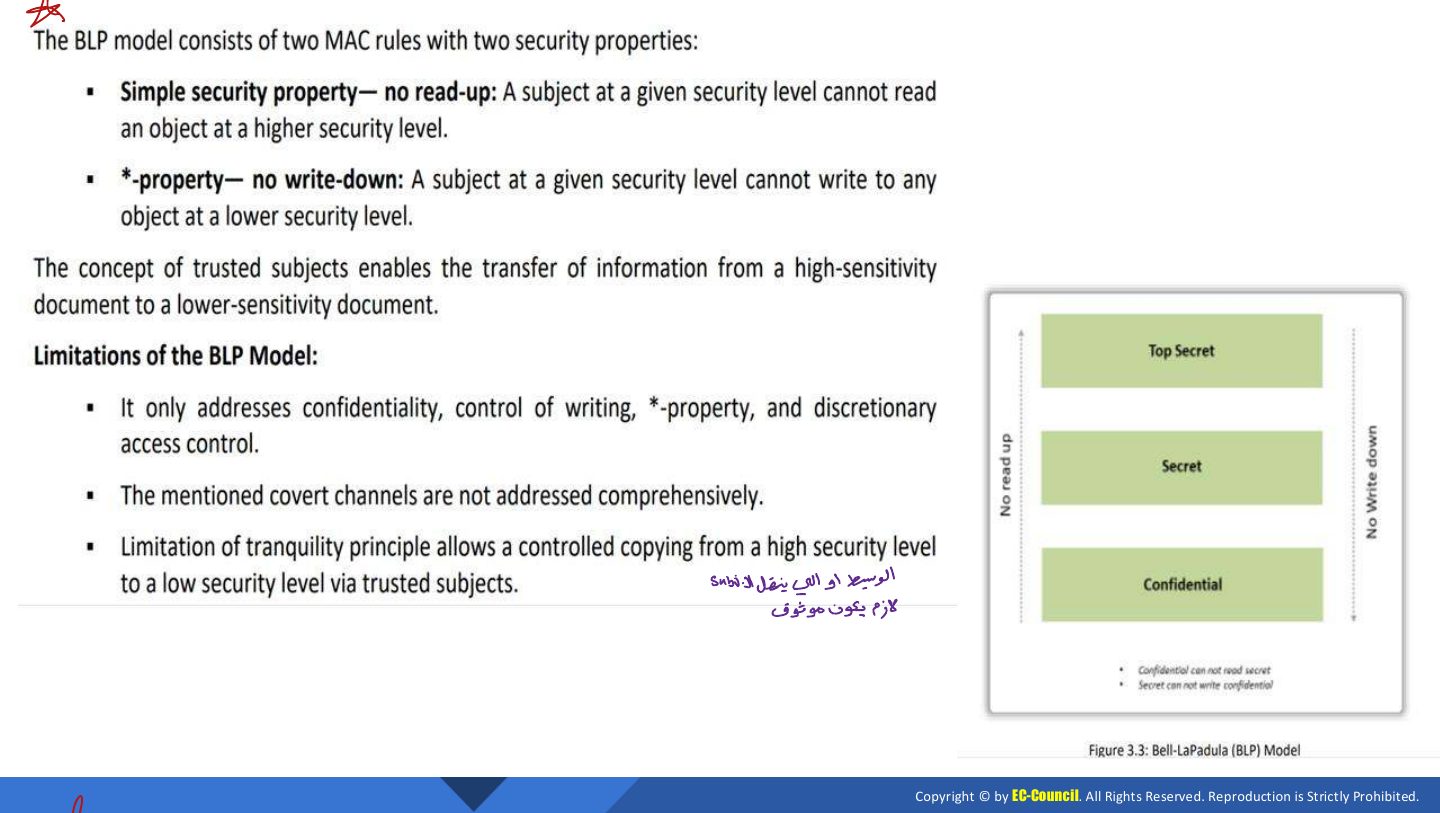
Slide 13
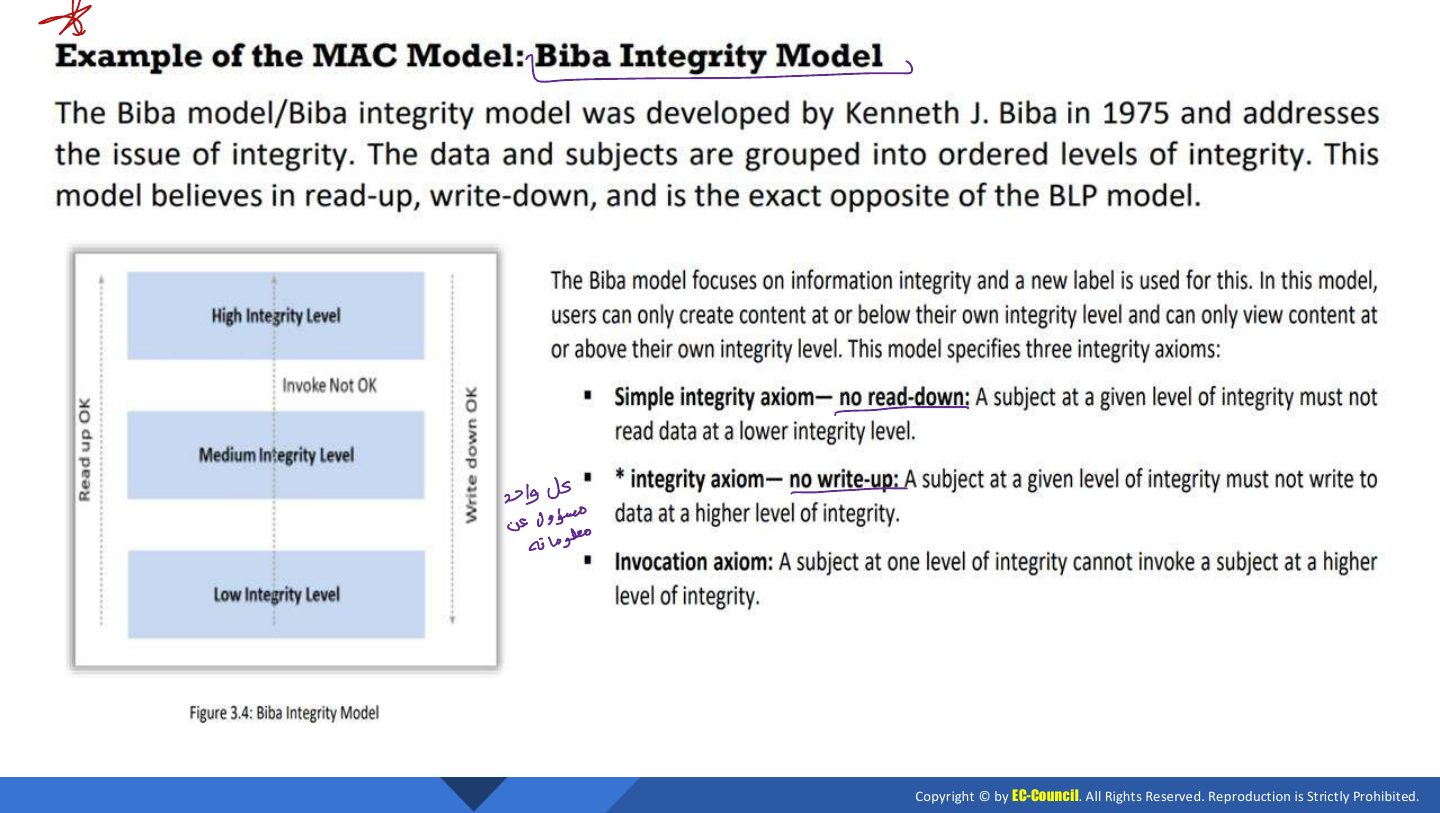
Slide 14
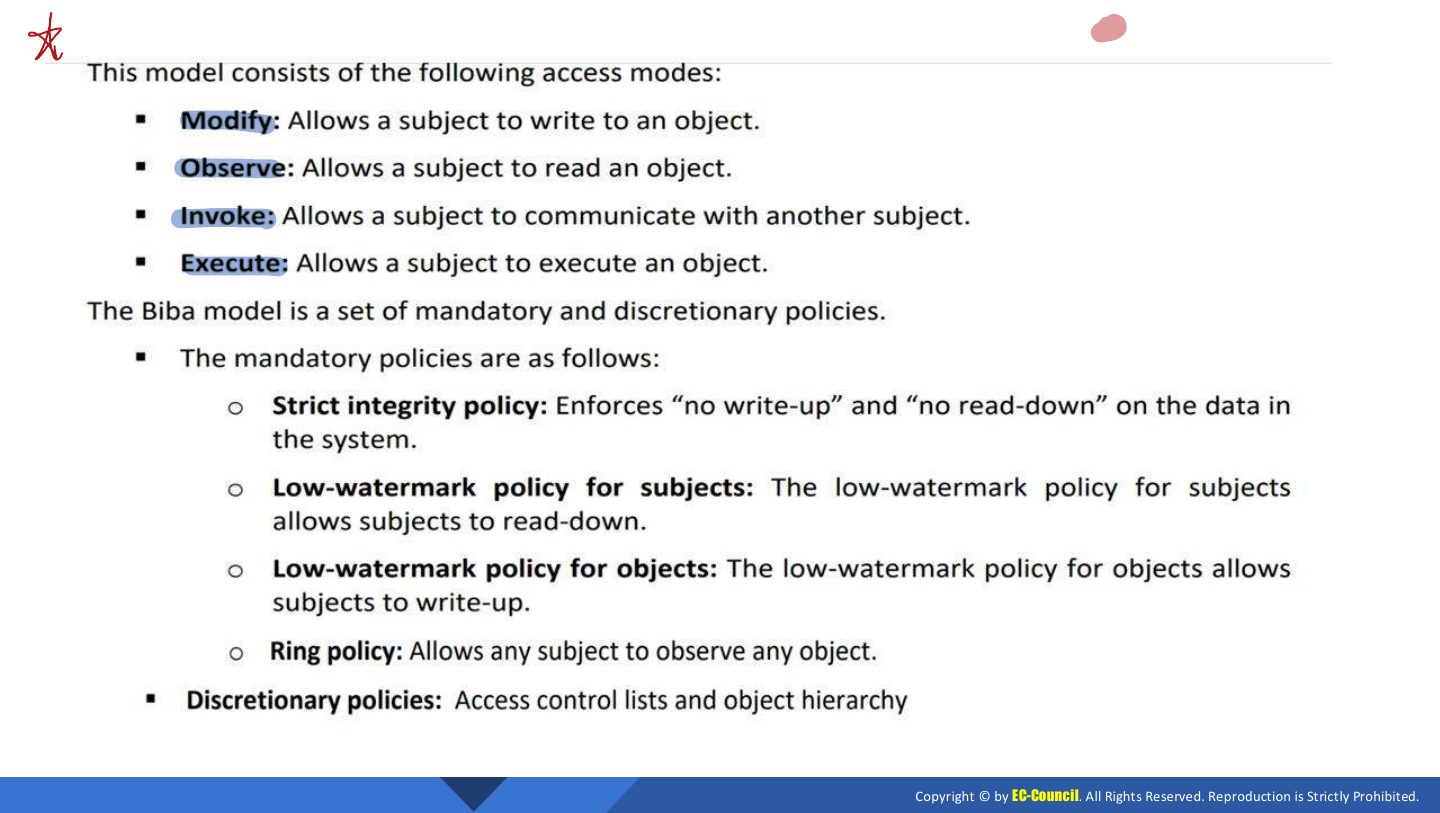
Slide 15
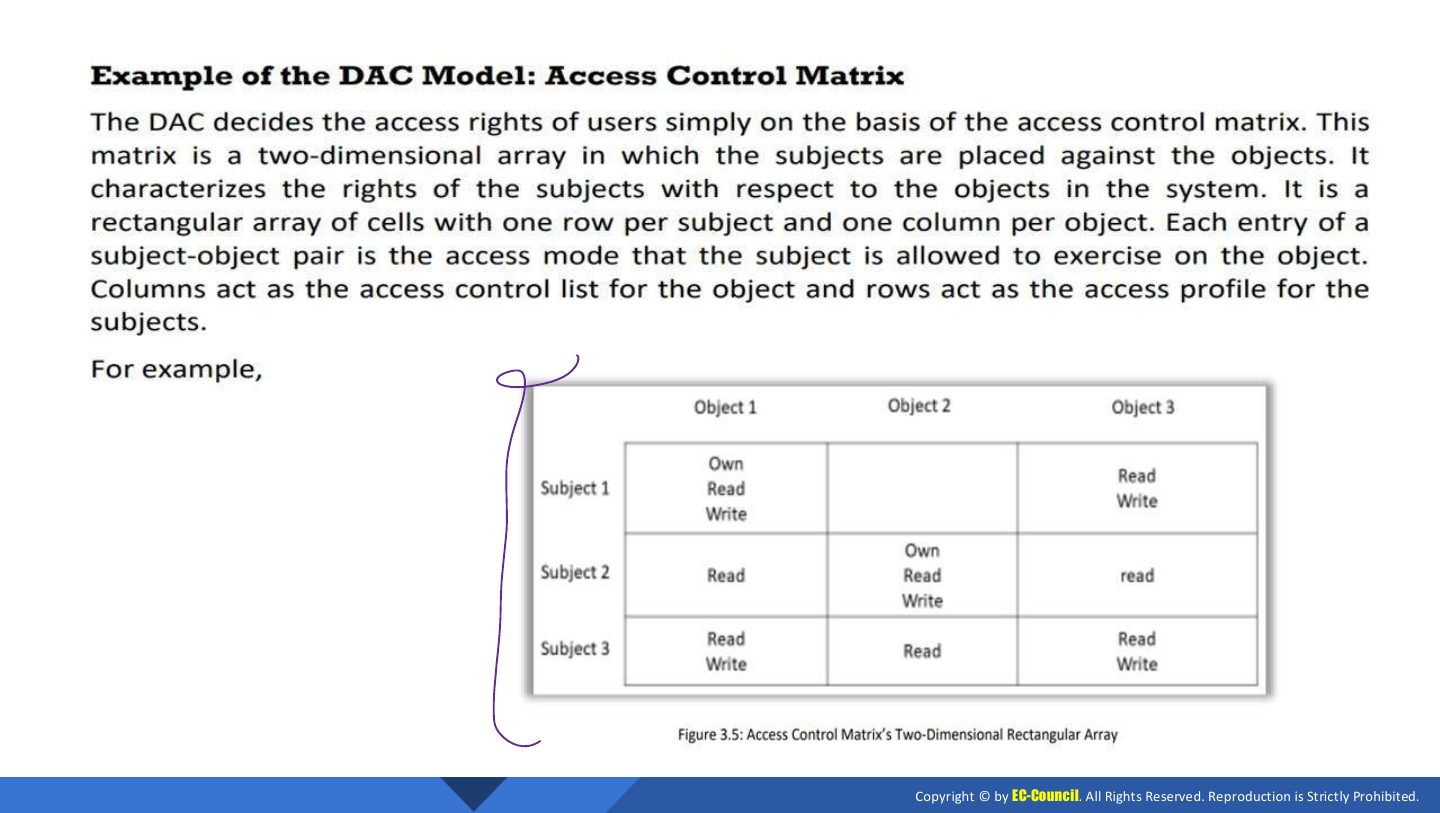
Logical Implementation of DAC, MAC, and RBAC
Logical Implementation of DAC, MAC, and RBAC (Cont’d)
Module Flow
Identity and Access Management (IAM)
Identity and Access Management (IAM) (Cont’d)
User Identity Management (IDM)
User Access Management (AM): Authentication
Types of Authentication
Notes
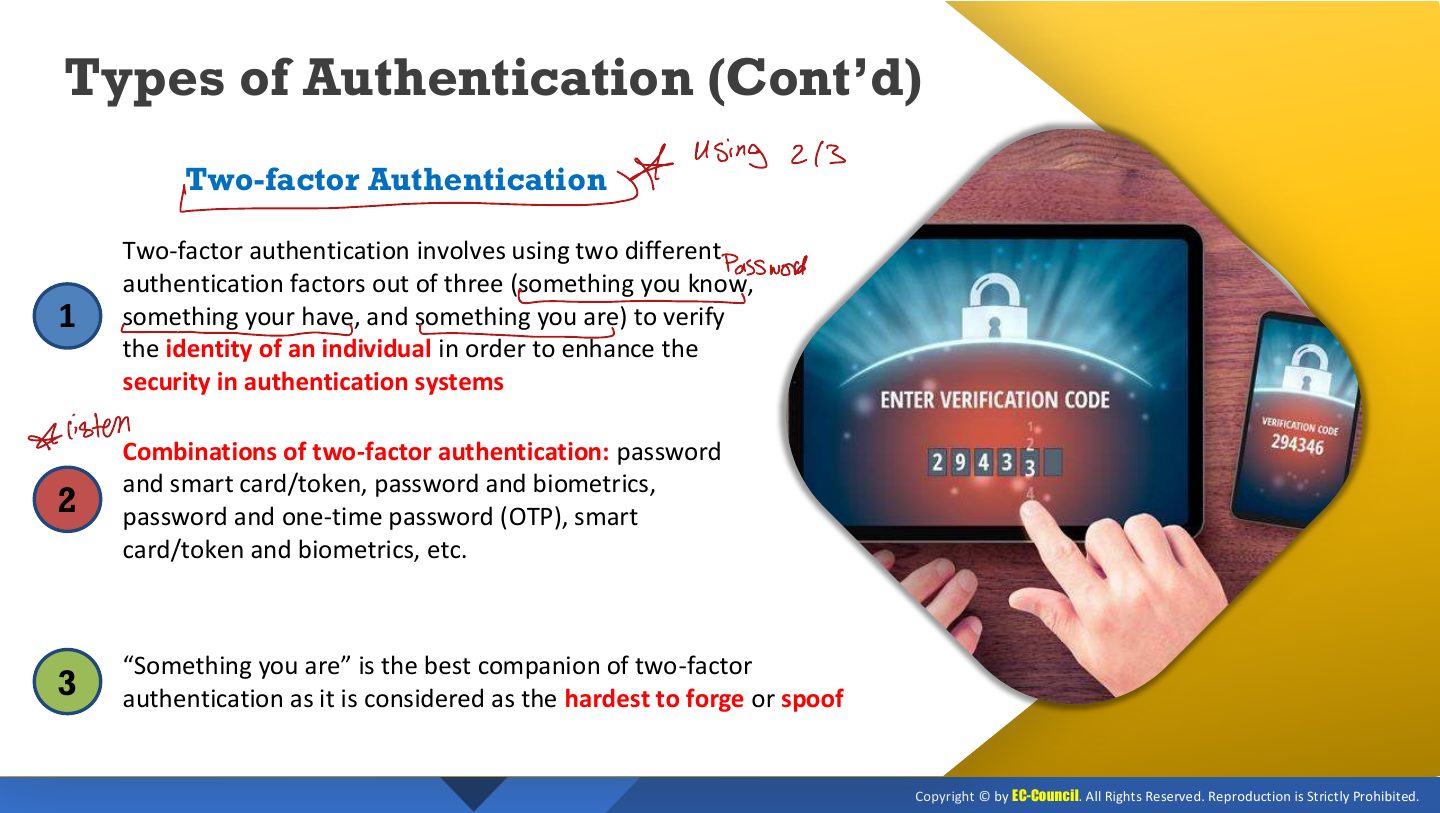
Factors: something you KNOW (password), HAVE (token, smart card), ARE (biometric). Two-factor = two DIFFERENT categories.
Trap A password + a PIN is still ONE factor (both are something you know).
Exam angle
Which is two-factor authentication?
Types of Authentication (Cont’d)
Types of Authentication
Notes
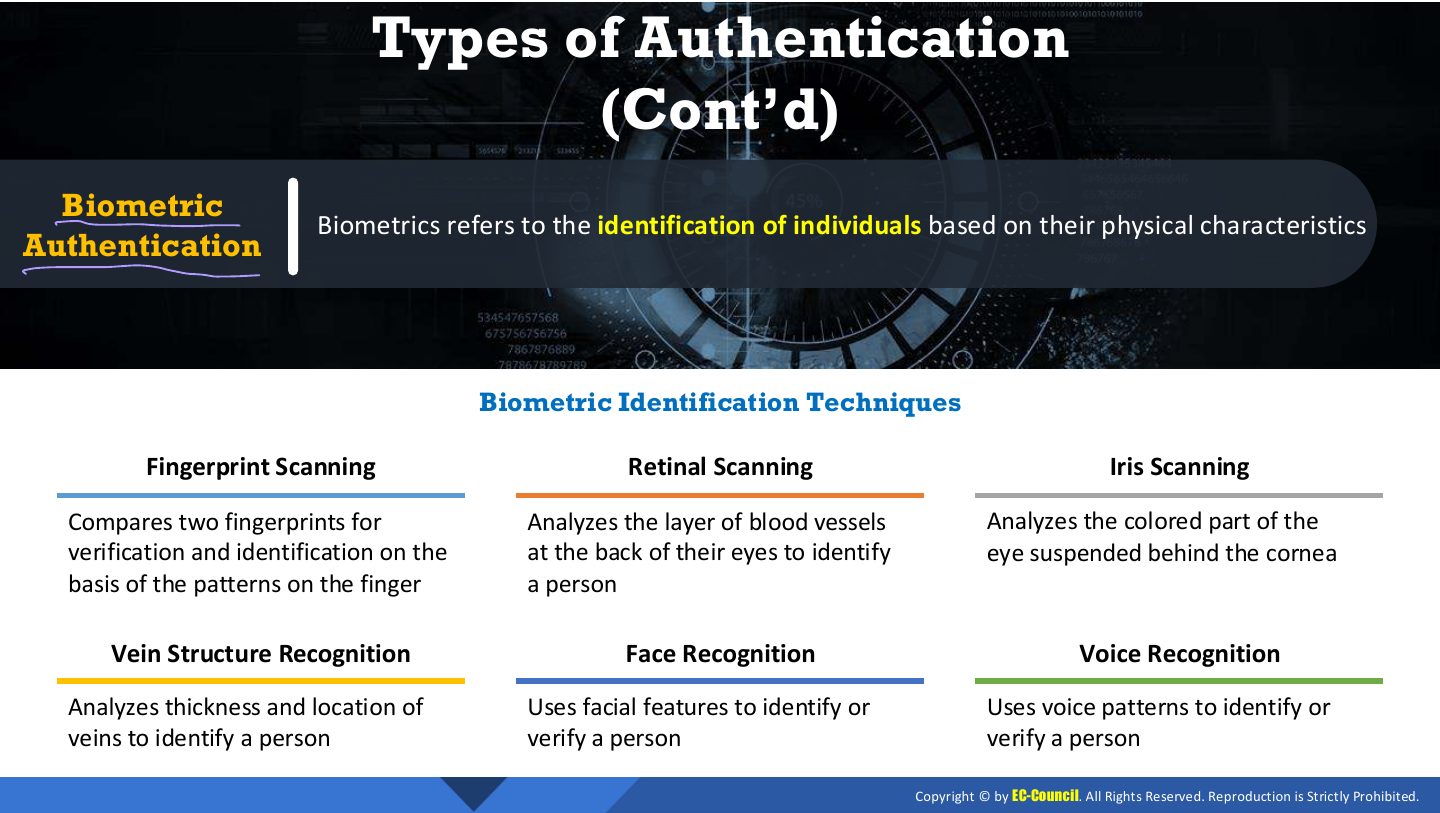
Biometrics: fingerprint, face, iris, retina, voice, vein. Errors: false acceptance (FAR) and false rejection (FRR); CER is where they are equal.
Exam angle
A biometric system letting in an unauthorized person is a:
Types of Authentication (Cont’d)
Types of Authentication (Cont’d)
User Access Management (AM): Authorization
User Access Management (AM): Accounting
Module Summary