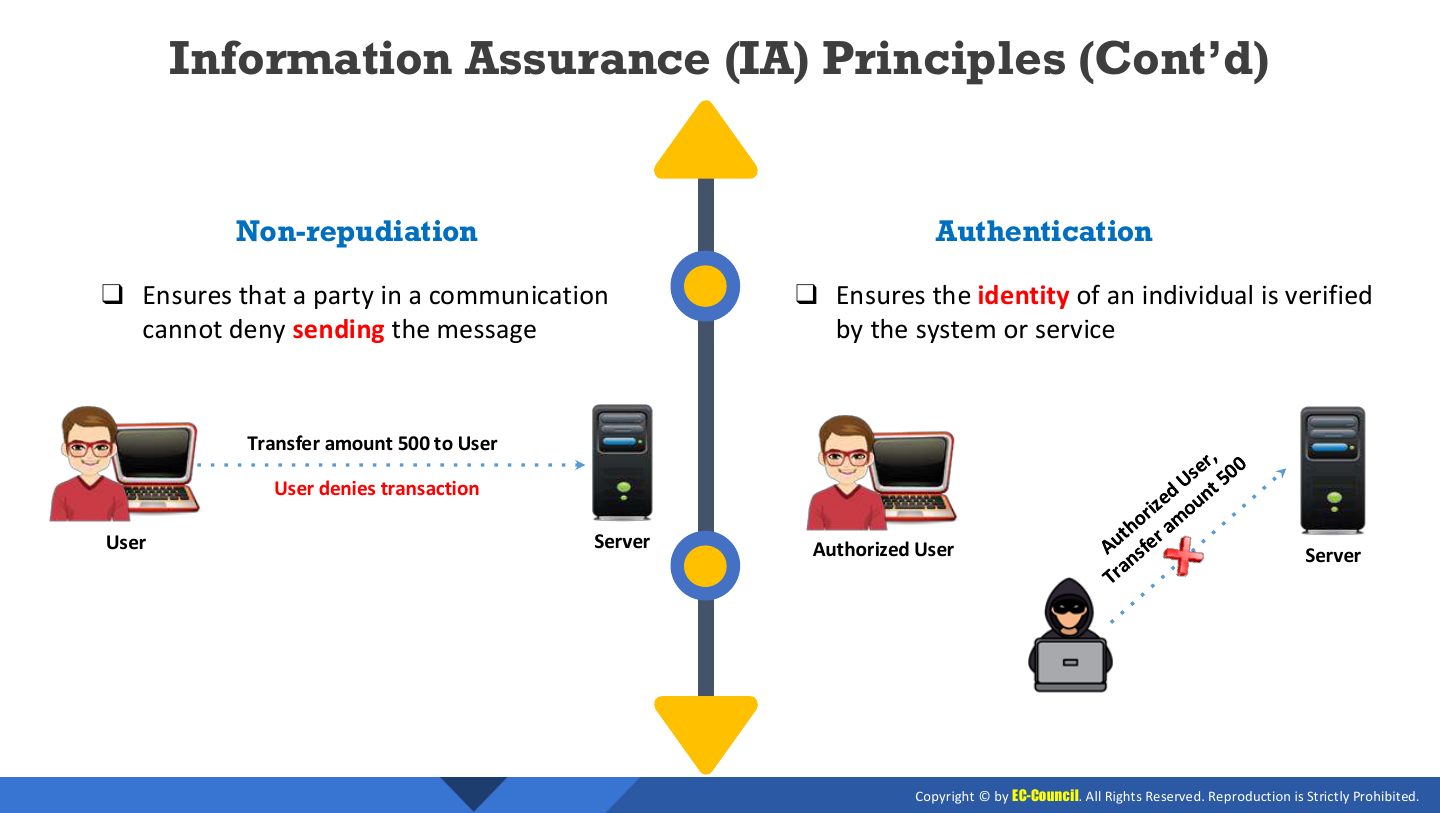
Proving a sender cannot deny having sent a message is:
Network Security Fundamentals
Threats, vulnerabilities, attacks and threat actors, attacker methodologies, the goals and principles of network defense (information assurance), defense approaches, administrative controls: regulatory frameworks, ISO standards, security policies and awareness training, then physical and technical controls.
How to read this page
Every original slide is shown unchanged. Yellow marks on a slide point to a numbered note: hover or tap a mark to jump to its note, and hover a note to see its marks. Questions tagged Past exam appeared on a real paper; Prediction questions are likely angles, not confirmed. Pick an answer to each question: a wrong pick tells you why it is wrong, so you can try again.
All 47 slides
- 1 C|ND
- 2 Module Objectives Network Security Attacks
- 3 Module Objectives Network Defenses
- 4 Module Flow
- 5 Essential terminologies related to Network Security
- 6 Definitions
- 7 Definitions
- 8 Types of Threat Actors
- 9 Types of Threat Actors
- 10 Causes of Vulnerabilities: - Hardware or Software Misconfiguration - Insecure or poor design of network - Inherent technology weaknesses - End-user carelessness
- 11 Definitions
- 12 Definitions
- 13 Slide 13
- 14 Slide 14
- 15 Slide 15
- 16 Slide 16
- 17 Slide 17
- 18 Slide 18
- 19 Examples of Wireless Network Specific Attack Techniques
- 20 Attacker Hacking Methodologies and Frameworks
- 21 Importance of Network Security
- 22 Goal of Network Defense
- 23 Information Assurance (IA) Principles
- 24 Information Assurance (IA) Principles (Cont’d)
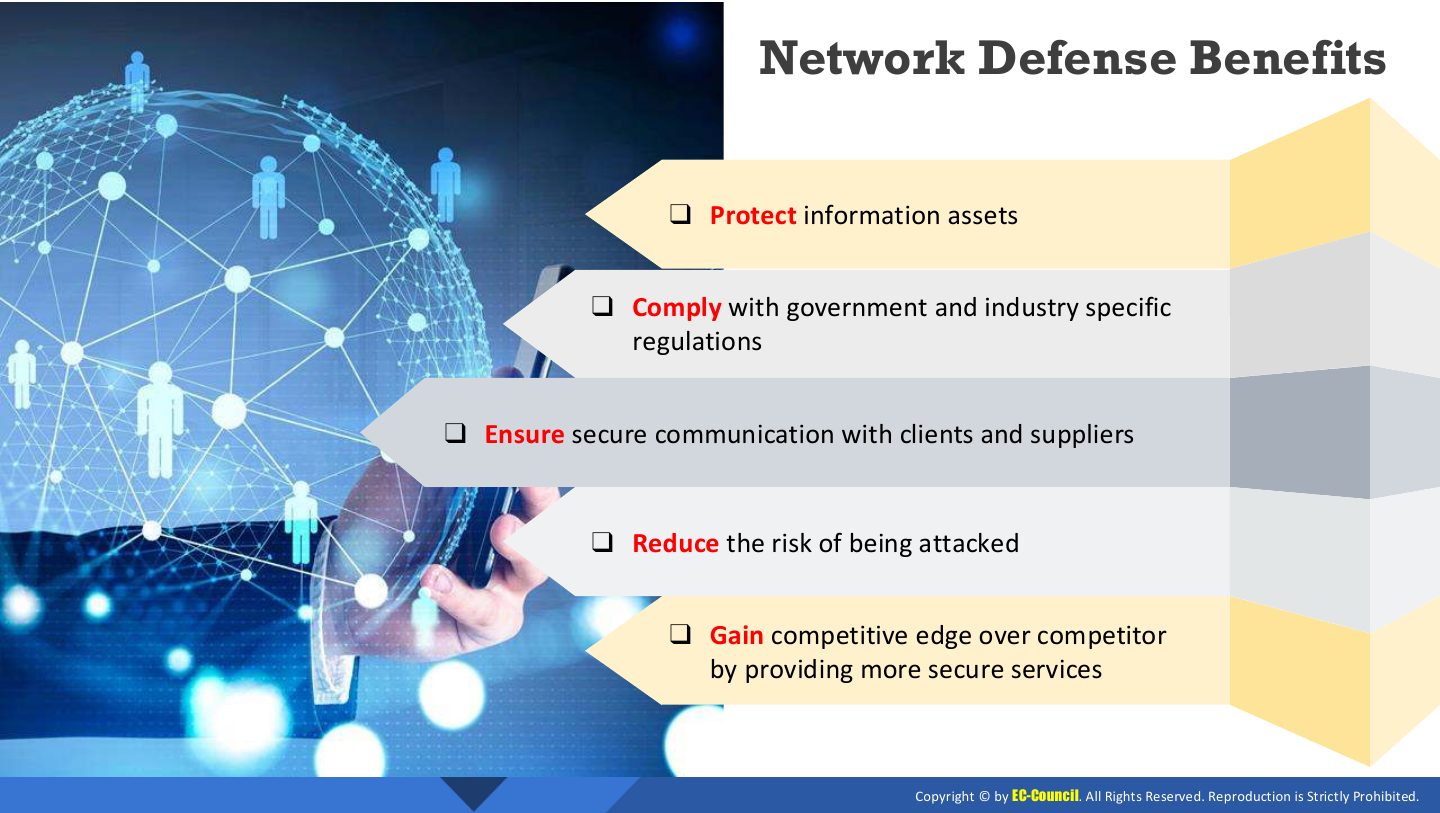
- 25 Network Defense Benefits
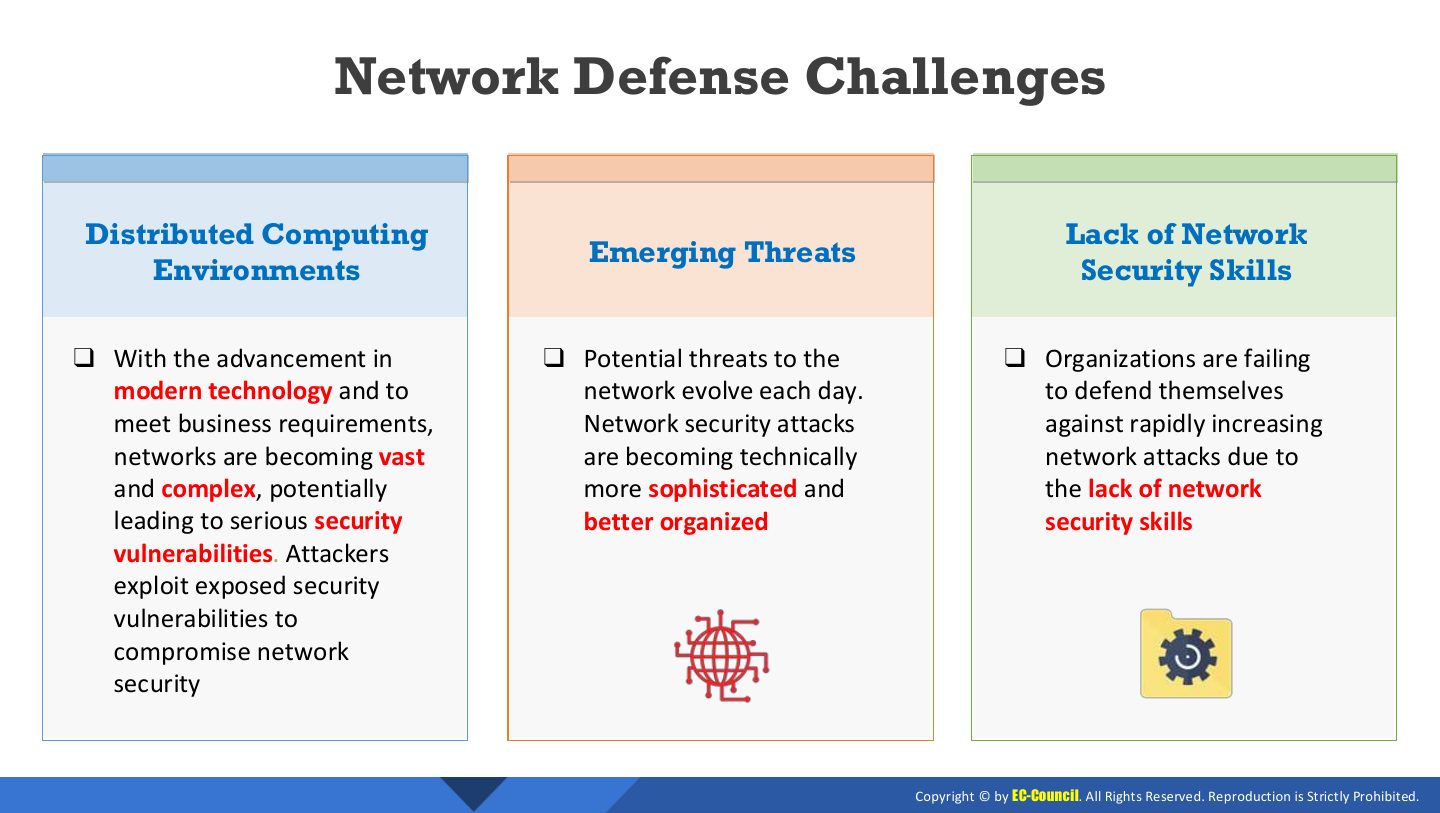
- 26 Network Defense Challenges
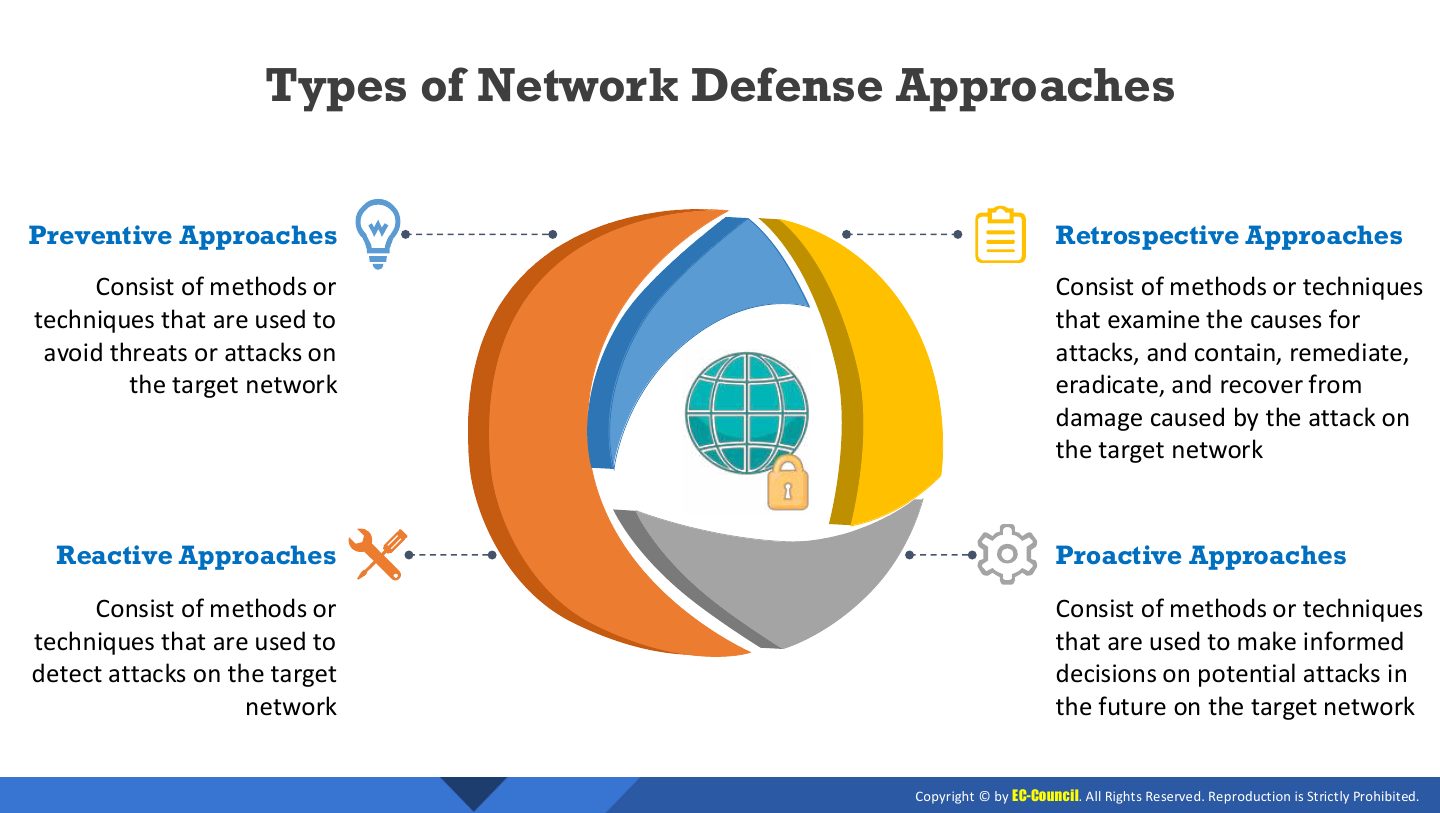
- 27 Types of Network Defense Approaches
- 28 Network Security Controls: Administrative Security Controls
- 29 Regulatory Frameworks Compliance
- 30 Regulatory Frameworks Compliance (Cont’d)
- 31 Identifying Which Regulatory Framework to Comply
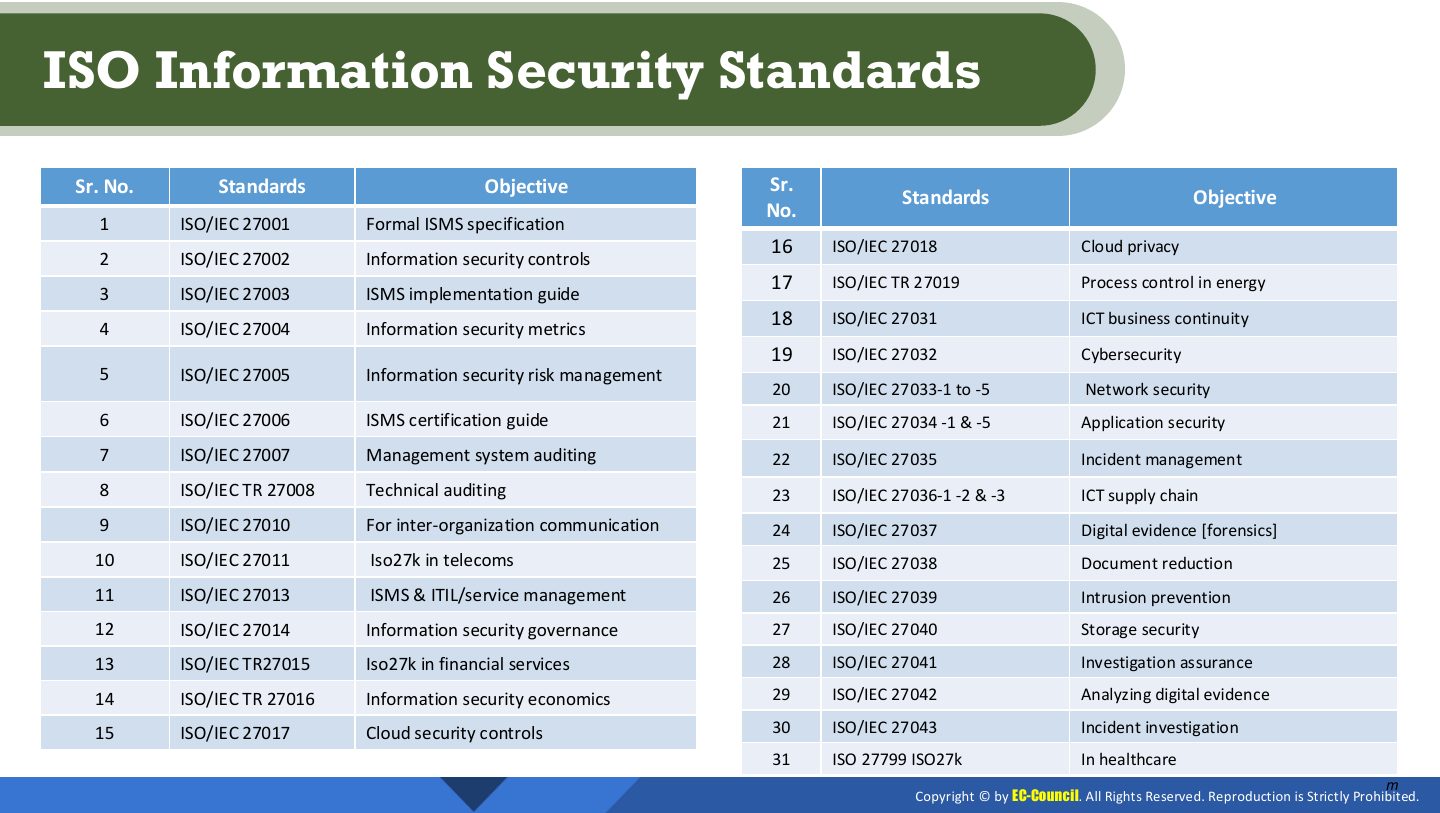
- 32 ISO Information Security Standards
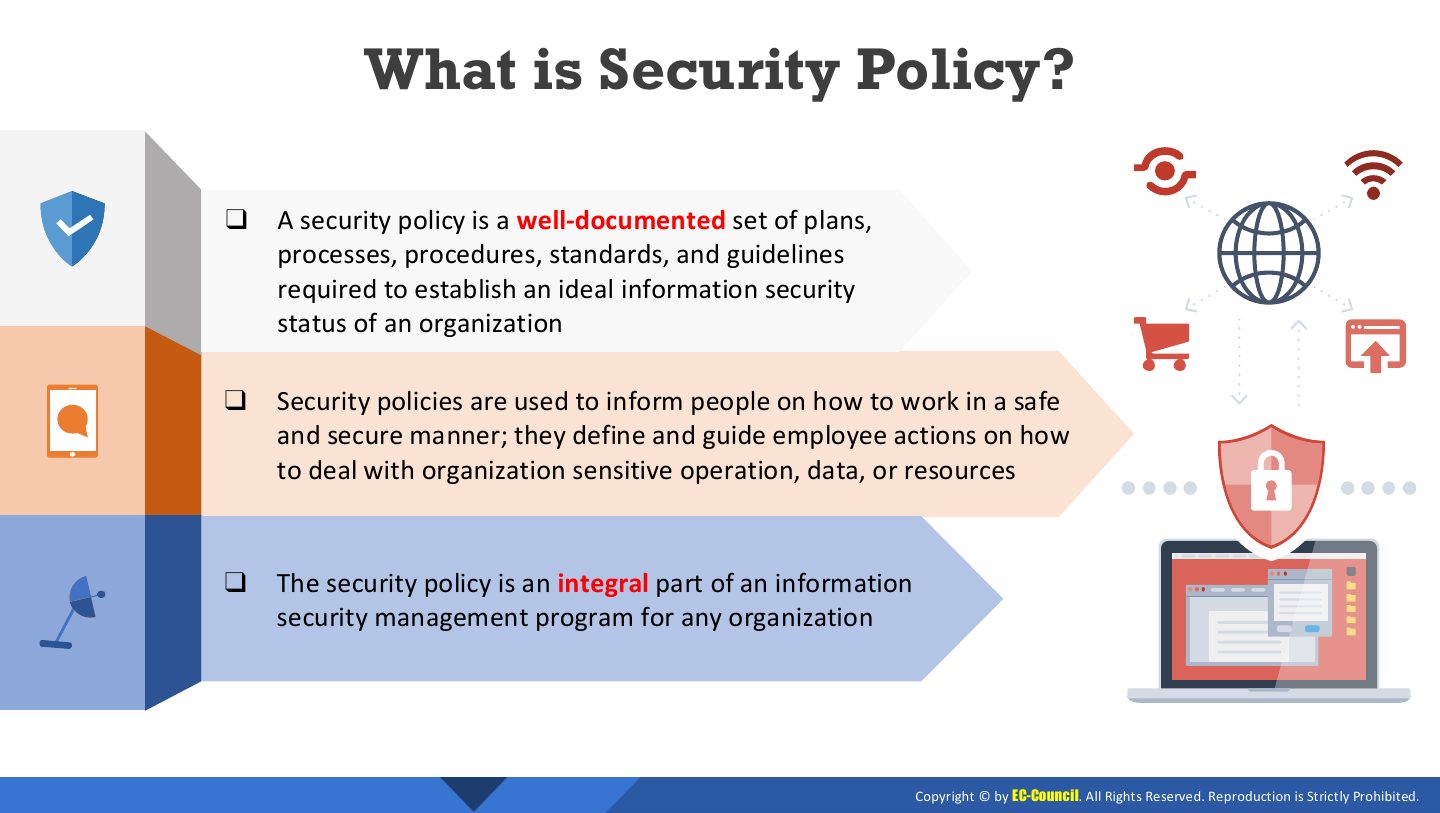
- 33 What is Security Policy?
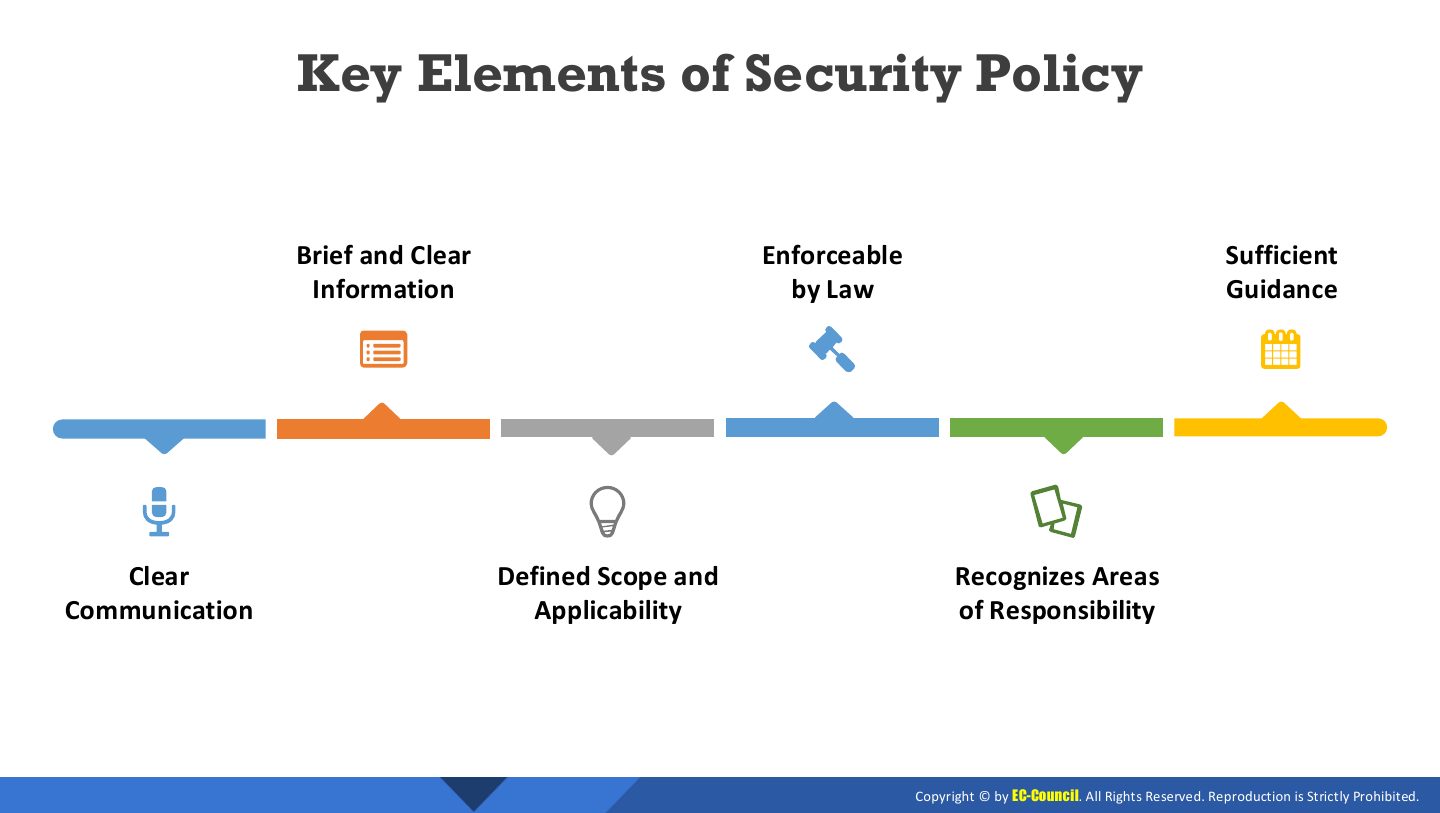
- 34 Key Elements of Security Policy
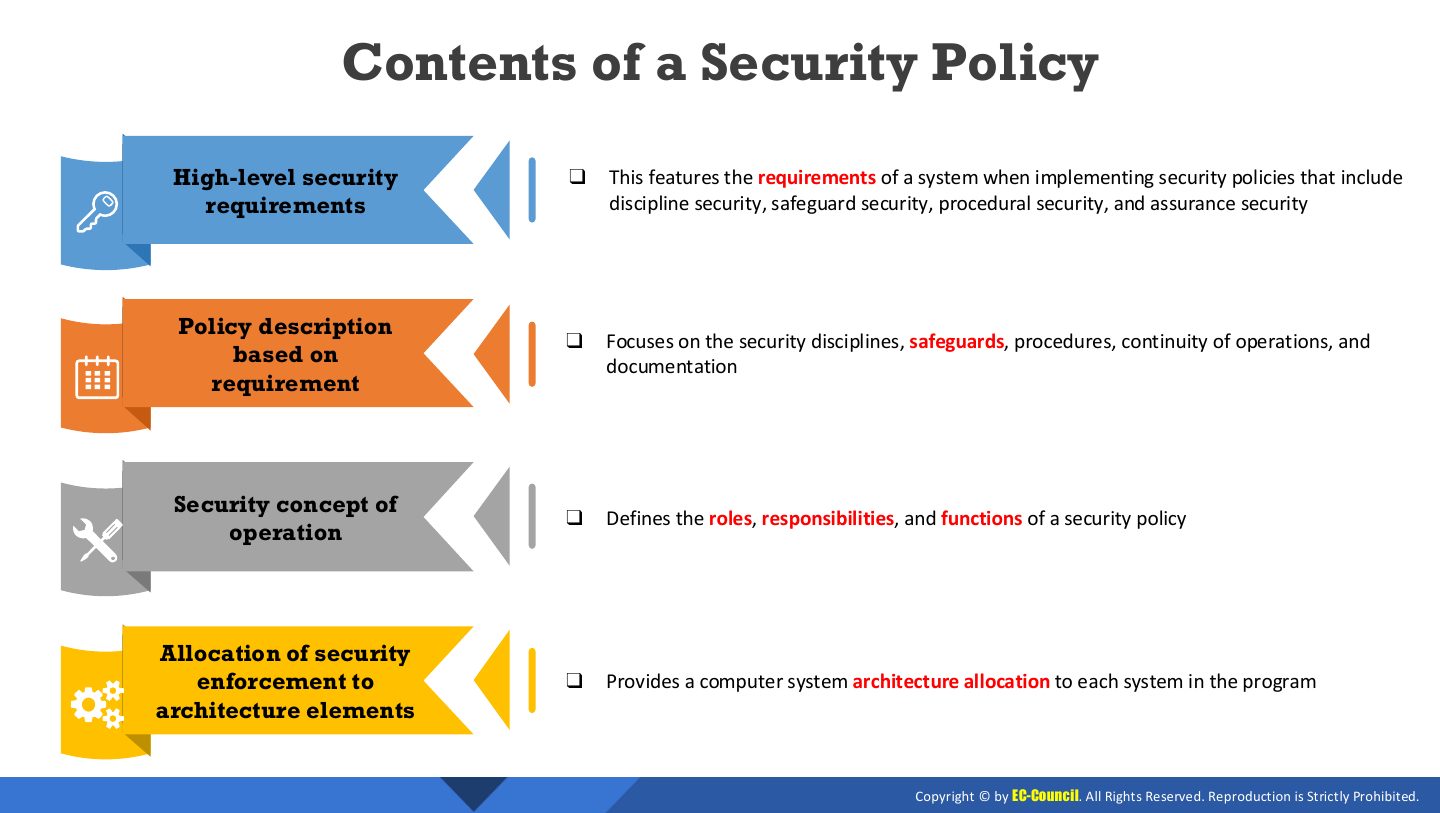
- 35 Contents of a Security Policy
- 36 Types of Information Security Policies
- 37 Internet Access Policies
- 38 Password Policy
- 39 Network Security Controls: Physical Security Controls
- 40 Employee Awareness and Training
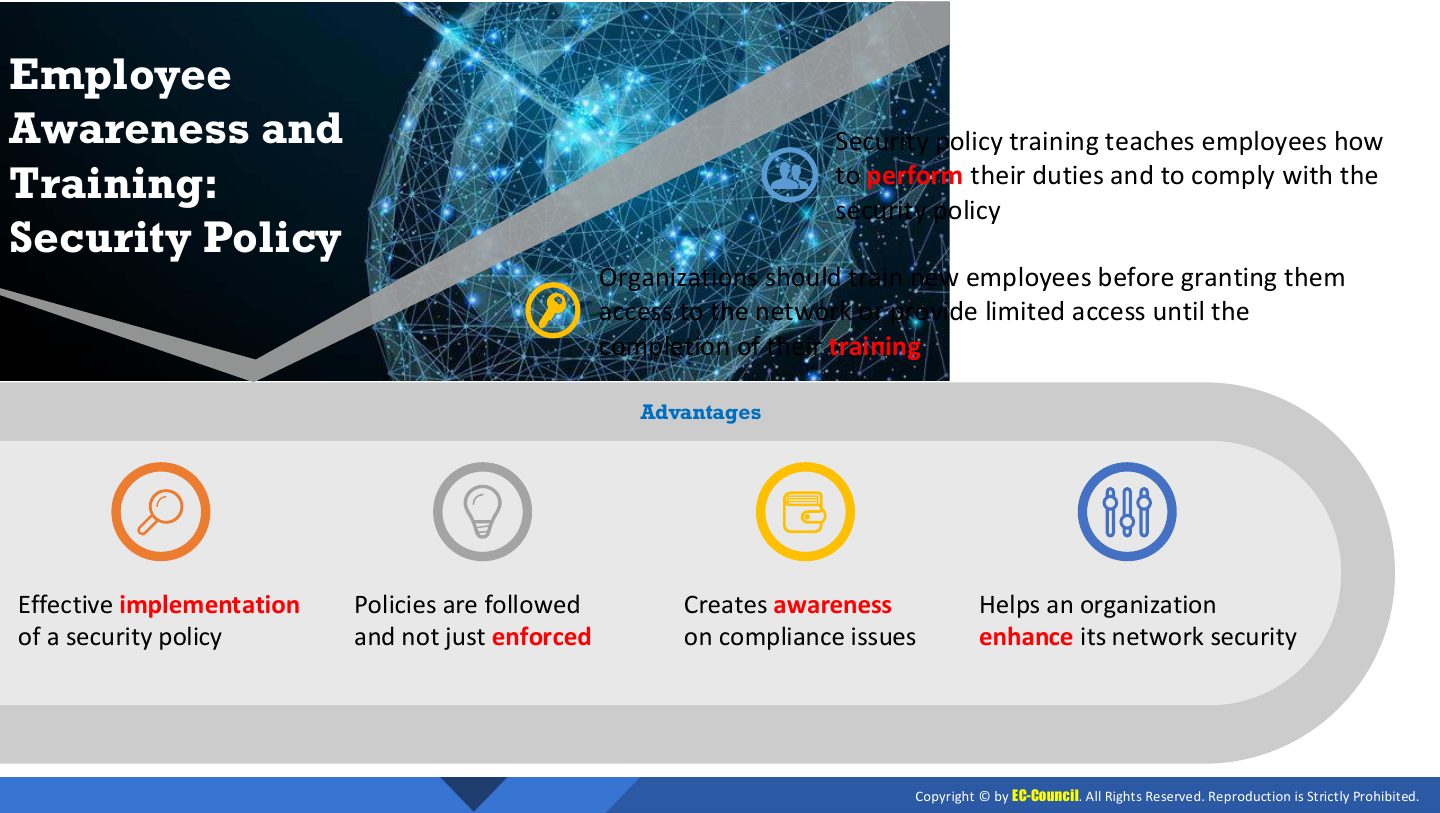
- 41 Security policy training teaches employees how their duties and to comply with the
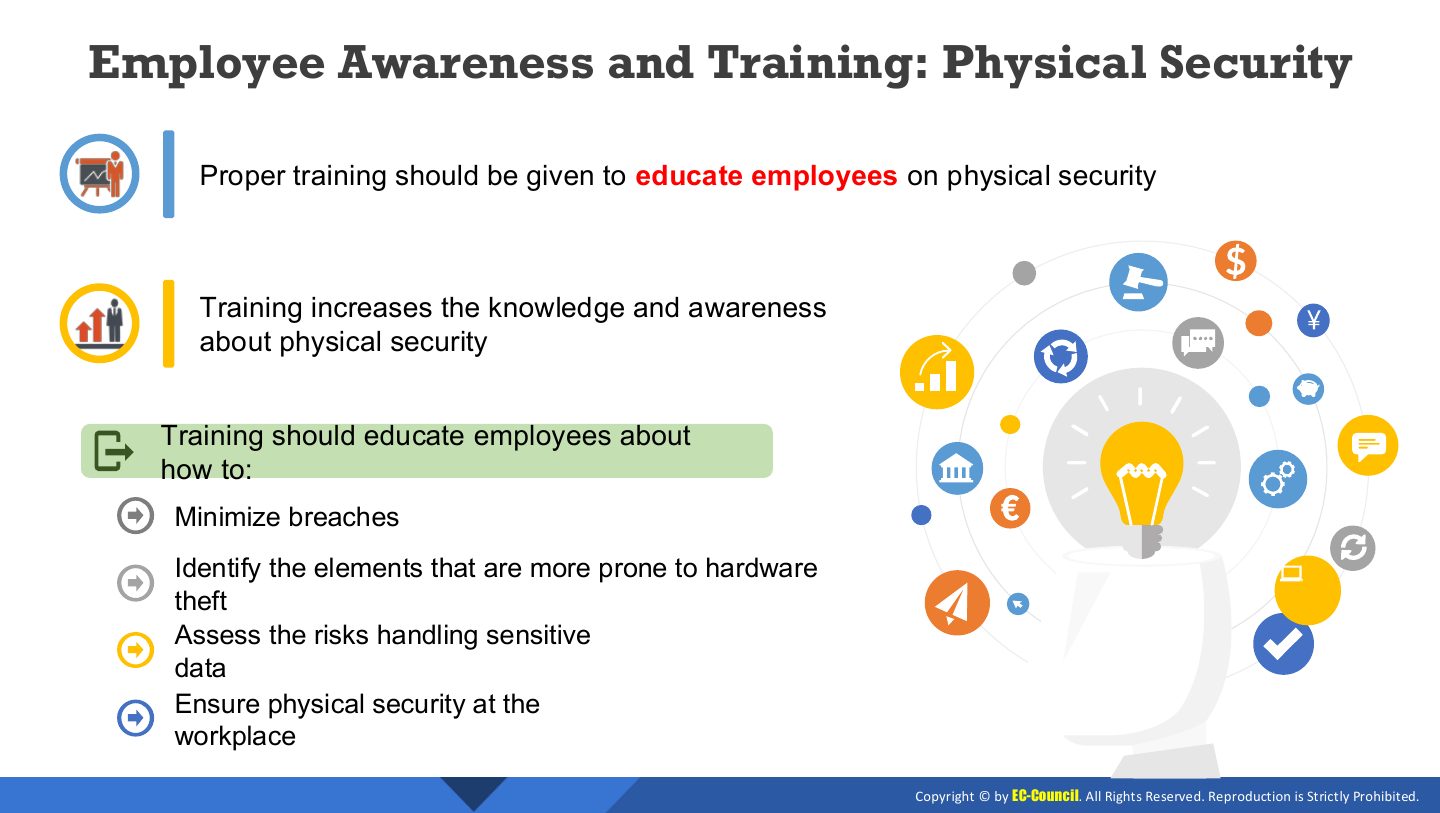
- 42 Employee Awareness and Training: Physical Security
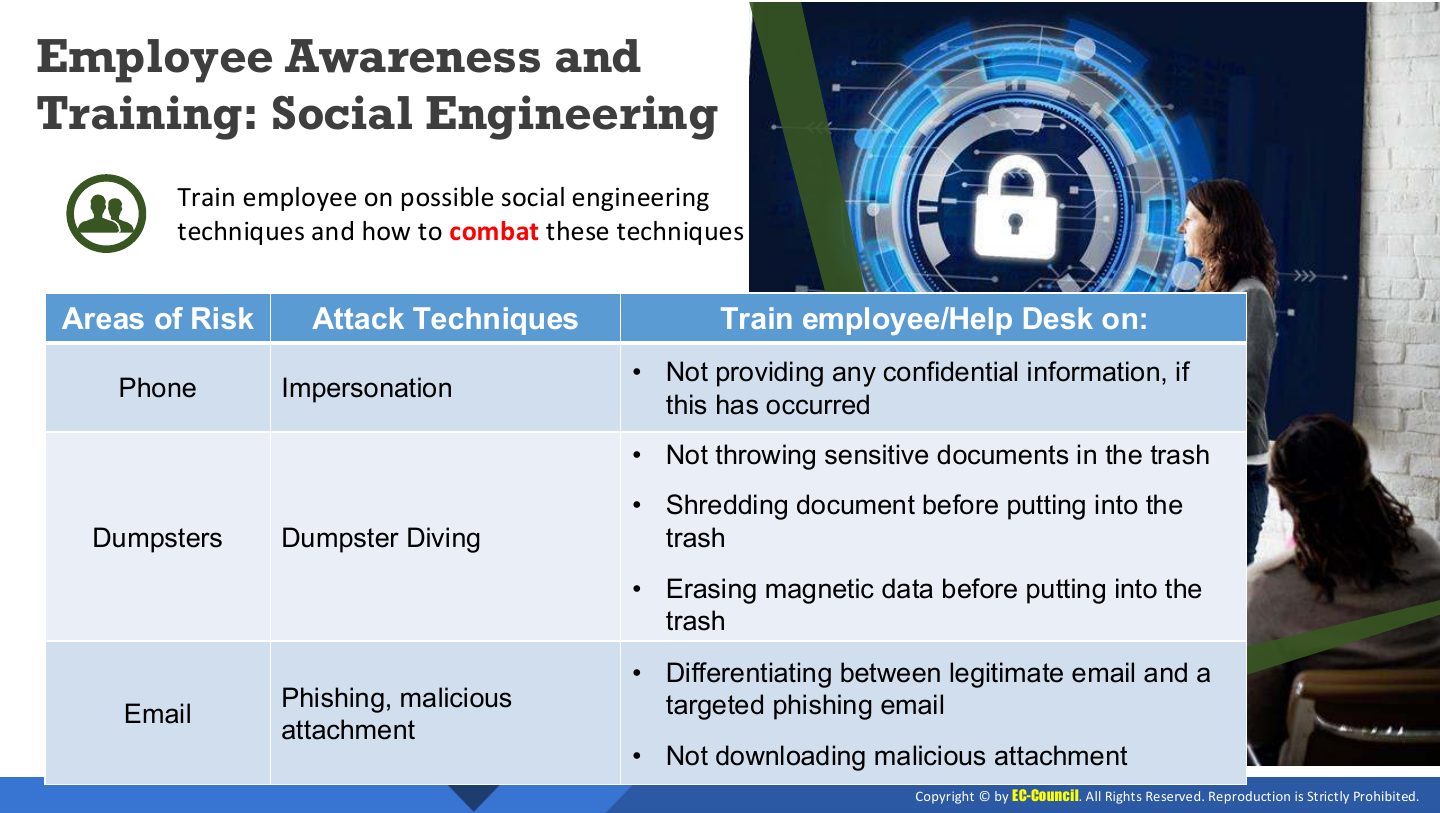
- 43 Employee Awareness and Training: Social Engineering
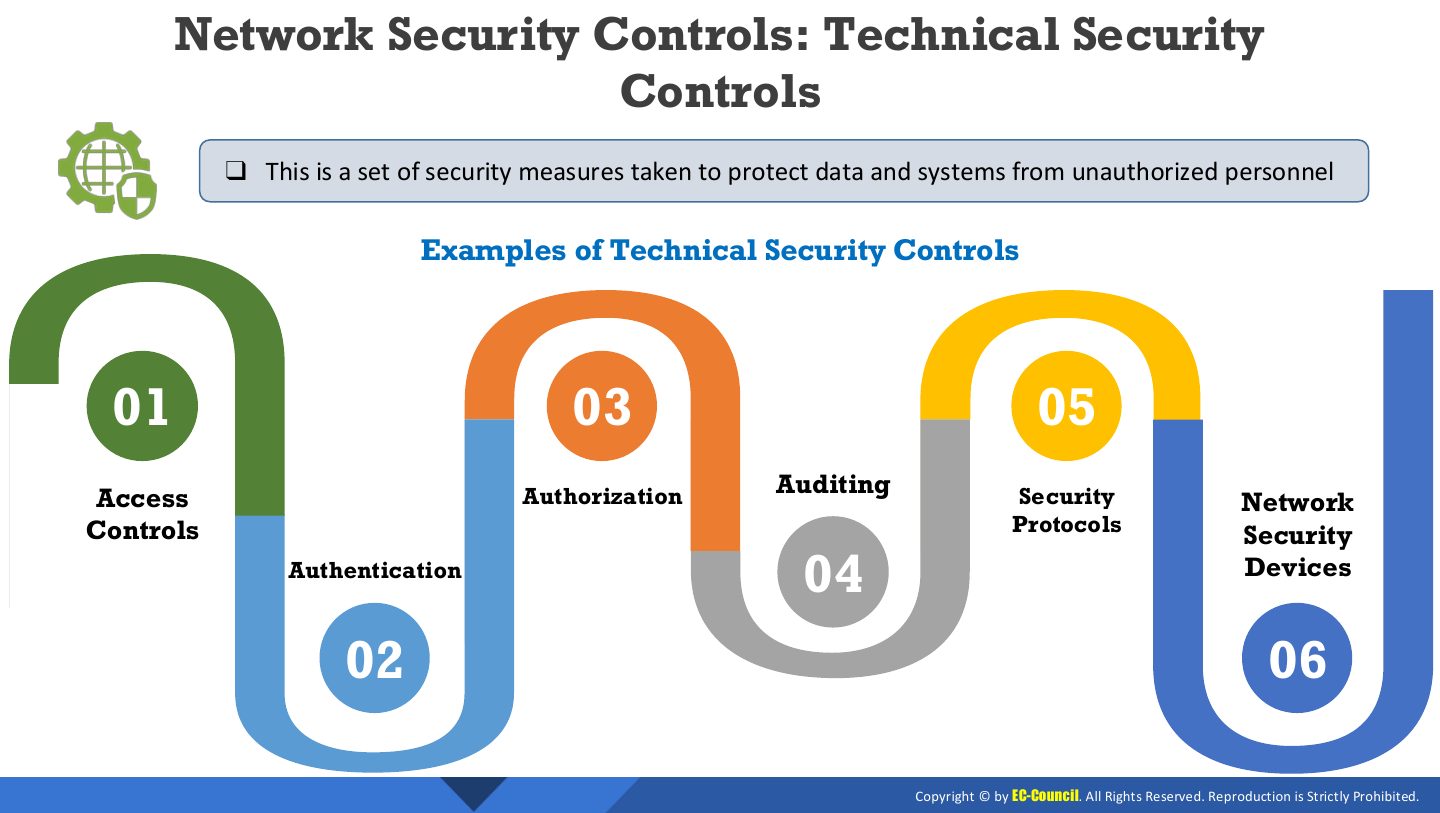
- 44 Network Security Controls: Technical Security Controls
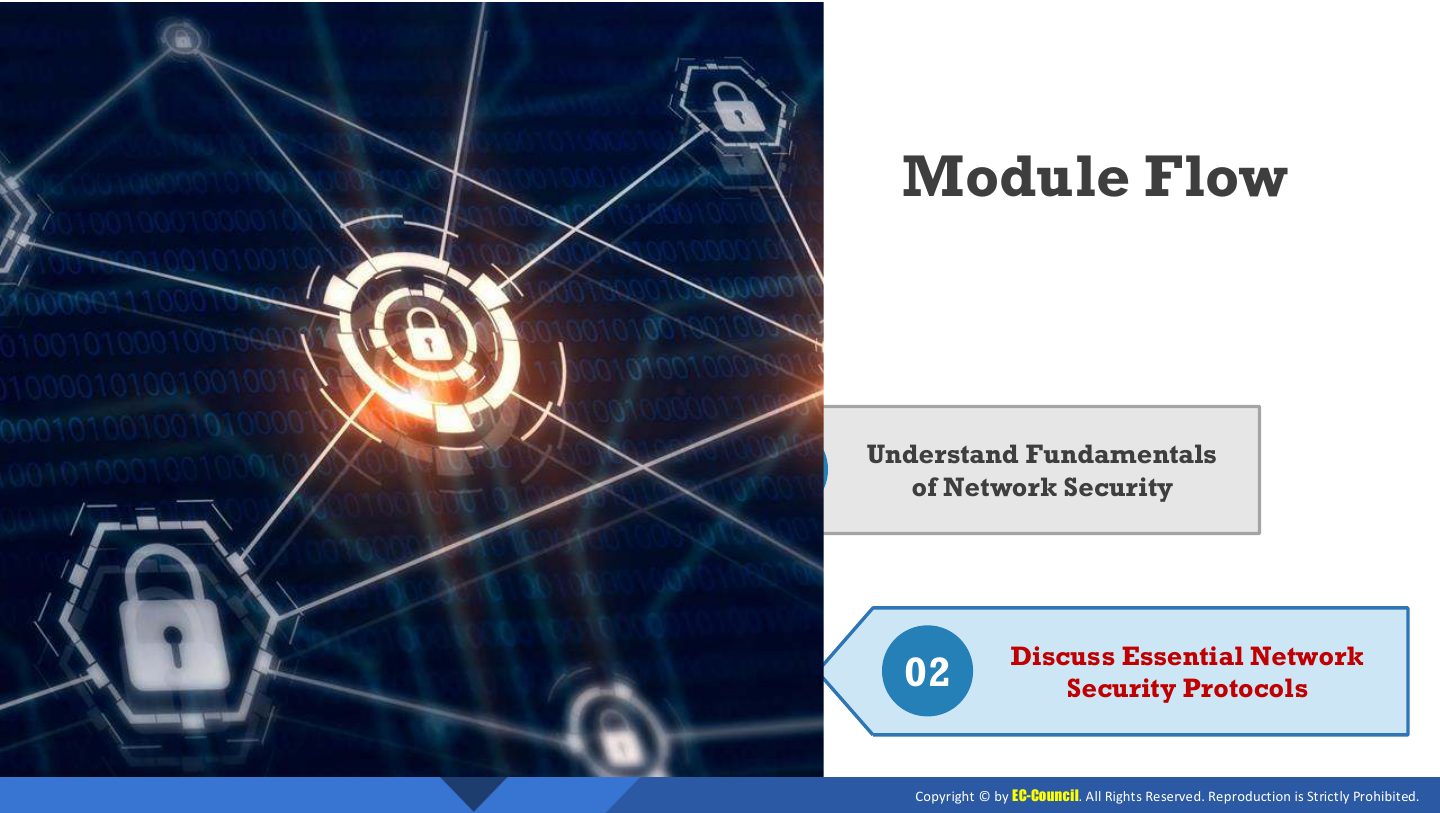
- 45 Module Flow
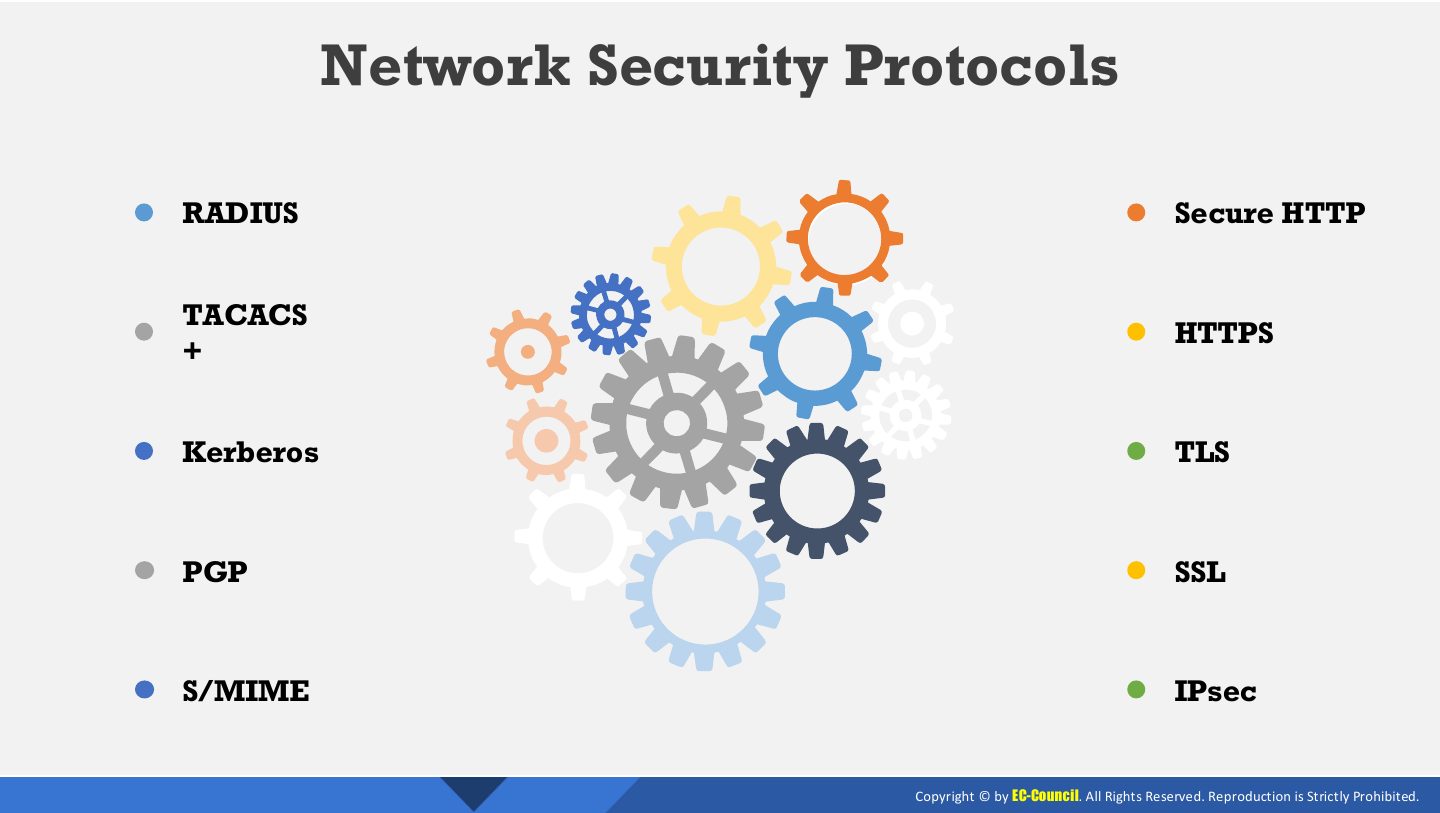
- 46 Network Security Protocols
- 47 Module Summary
C|ND
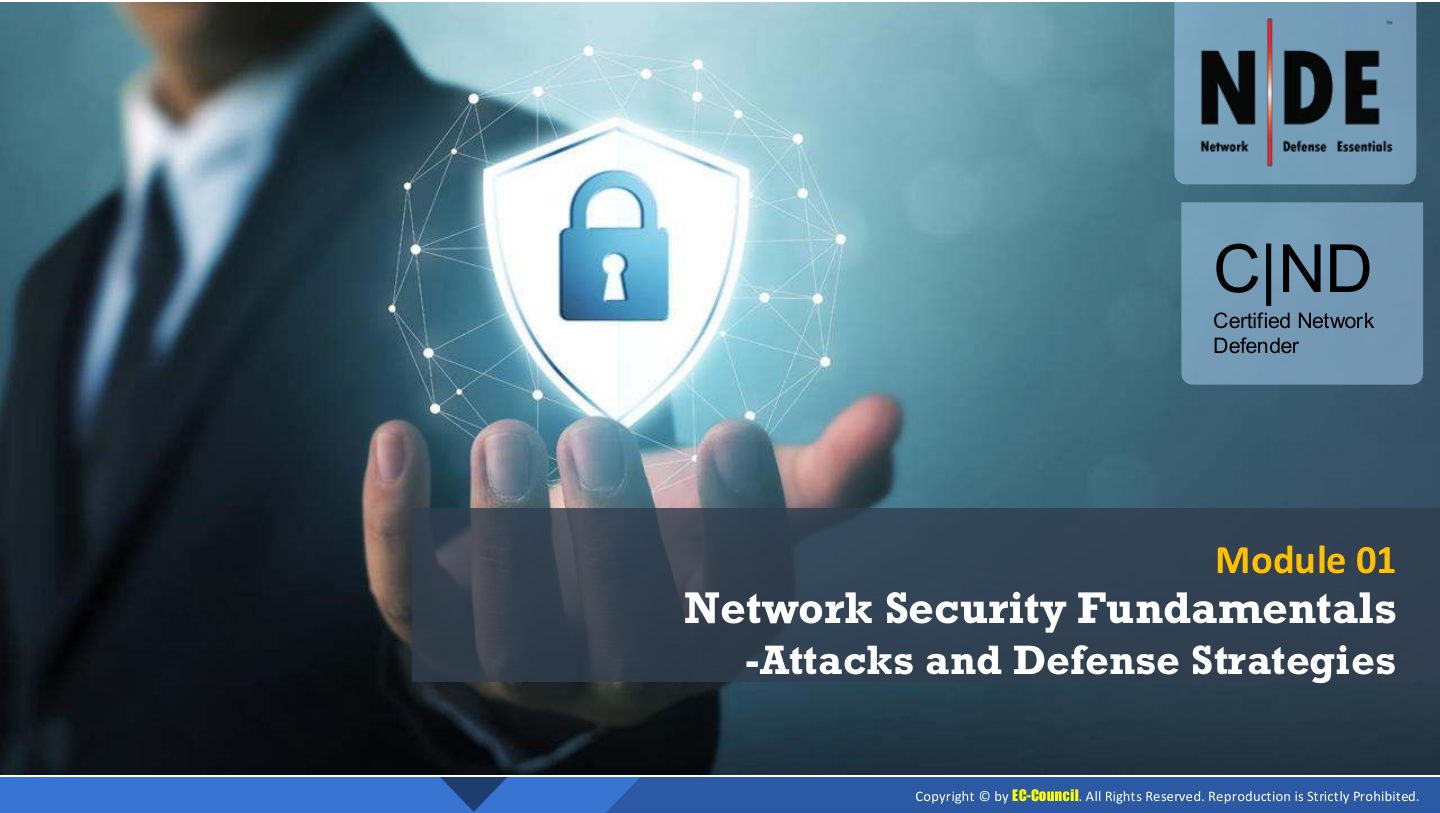
Module Objectives Network Security Attacks
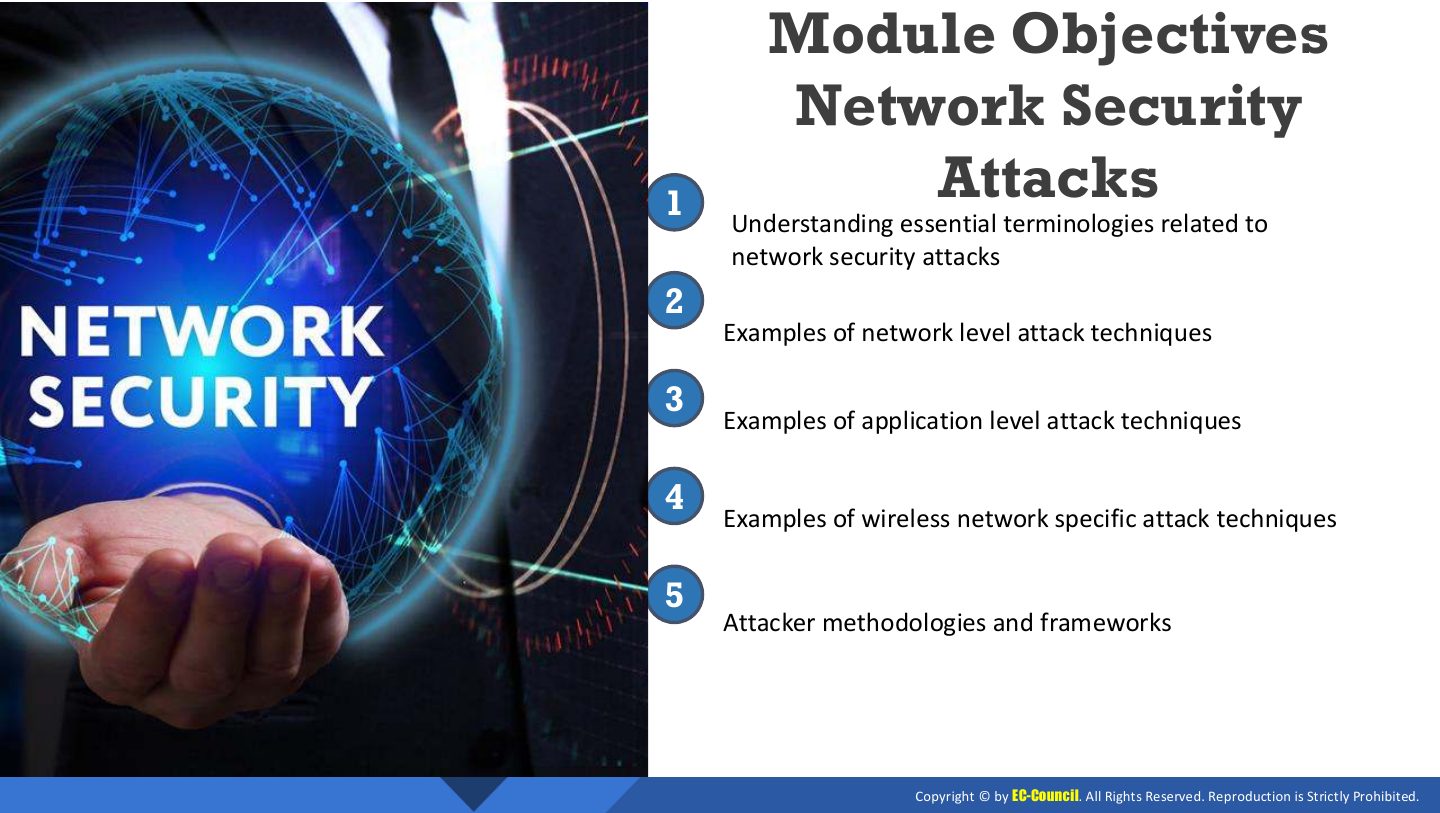
Module Objectives Network Defenses
Module Flow
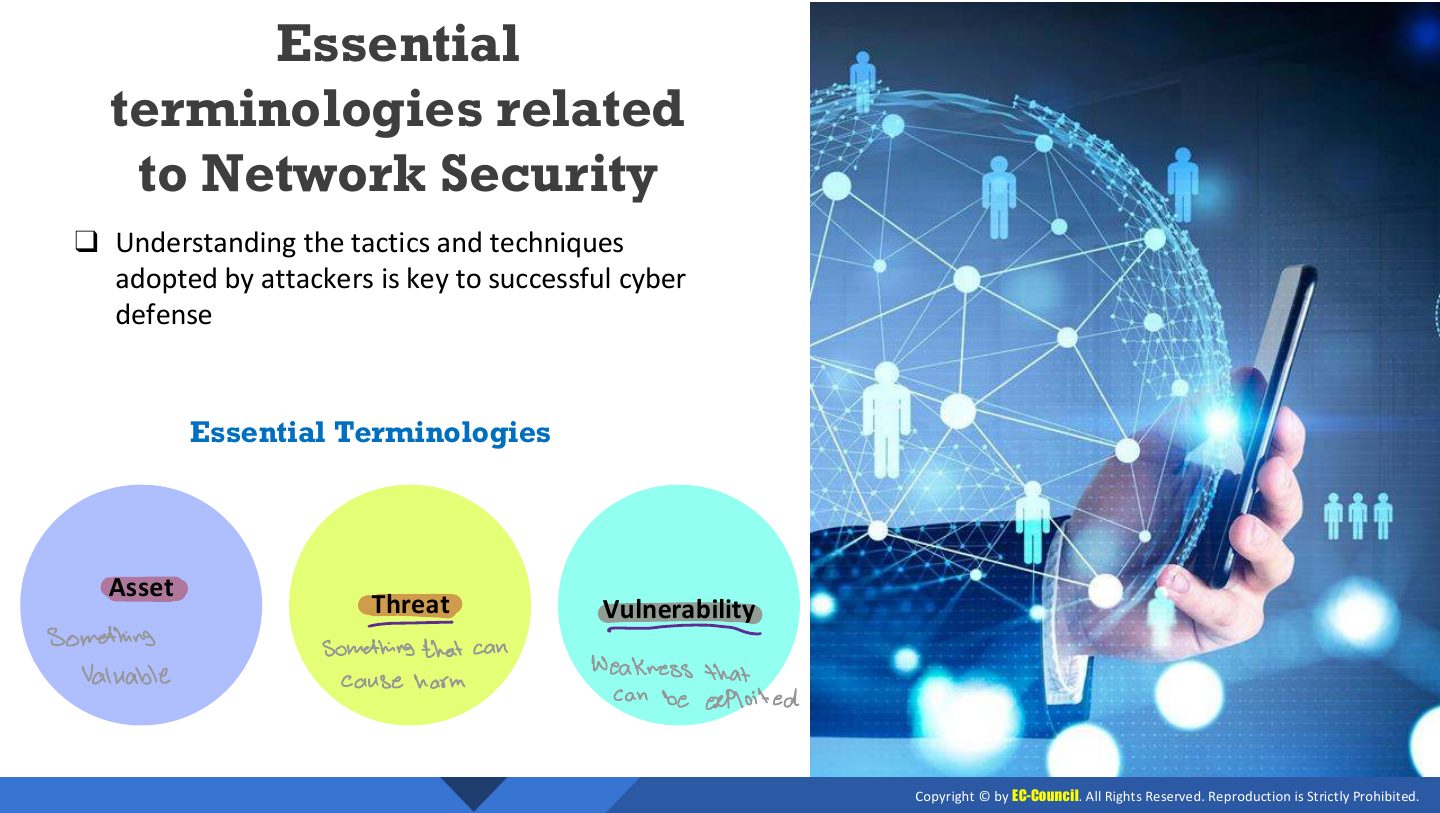
Essential terminologies related to Network Security
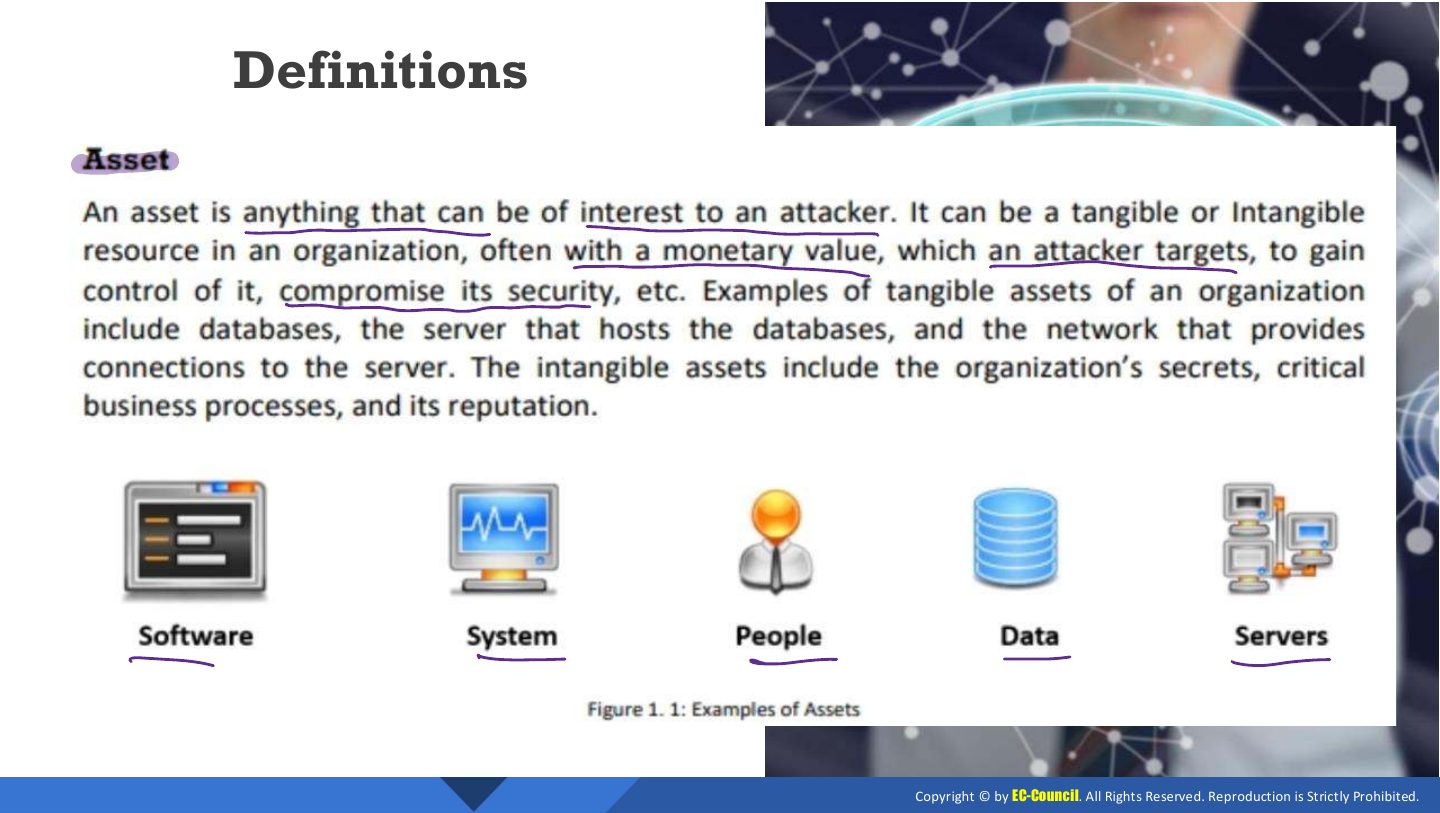
Definitions
Notes
Threat: potential harm. Vulnerability: weakness. Attack: an attempt to exploit a vulnerability. Risk: threat × vulnerability × impact.
Definitions
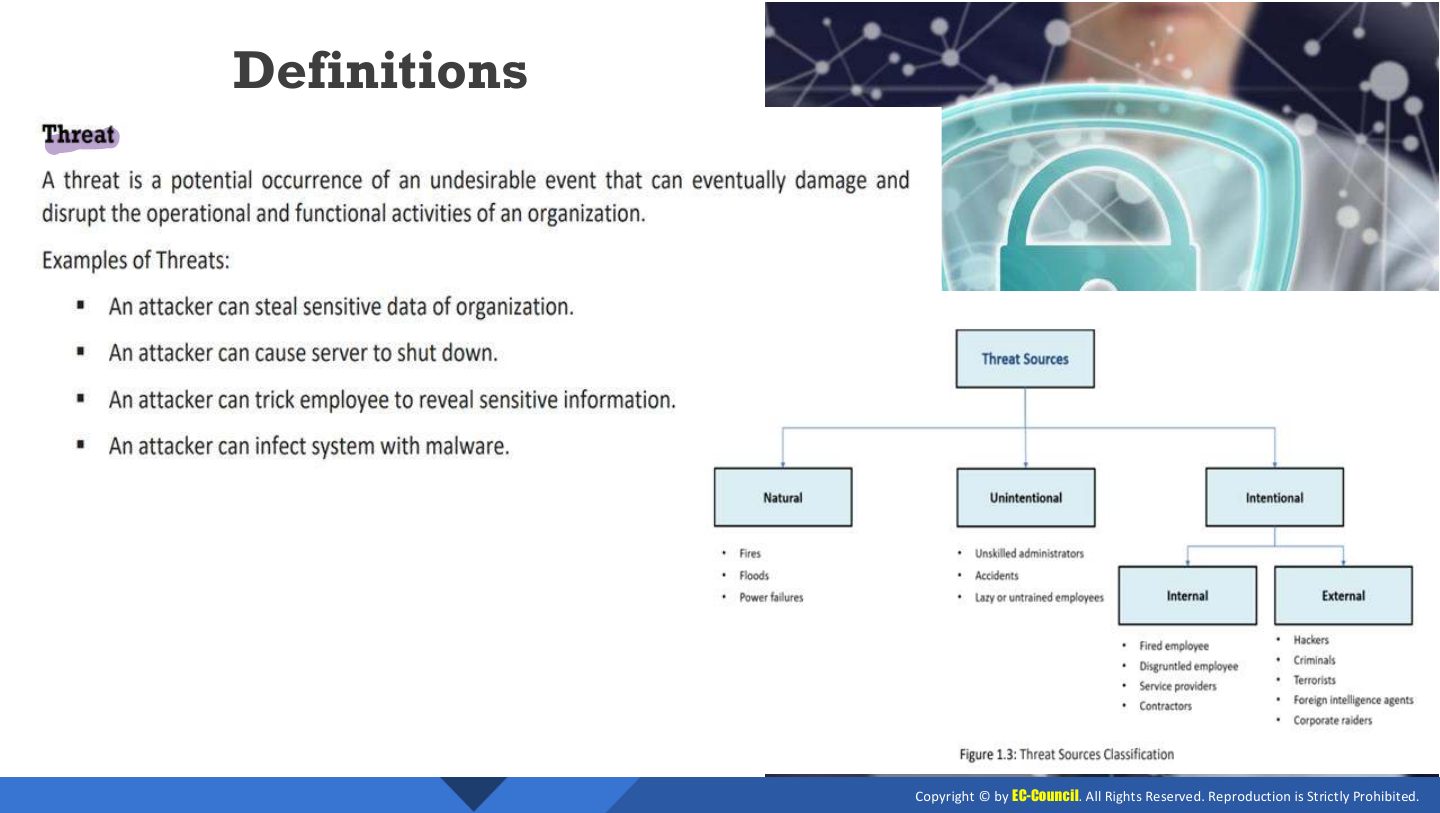
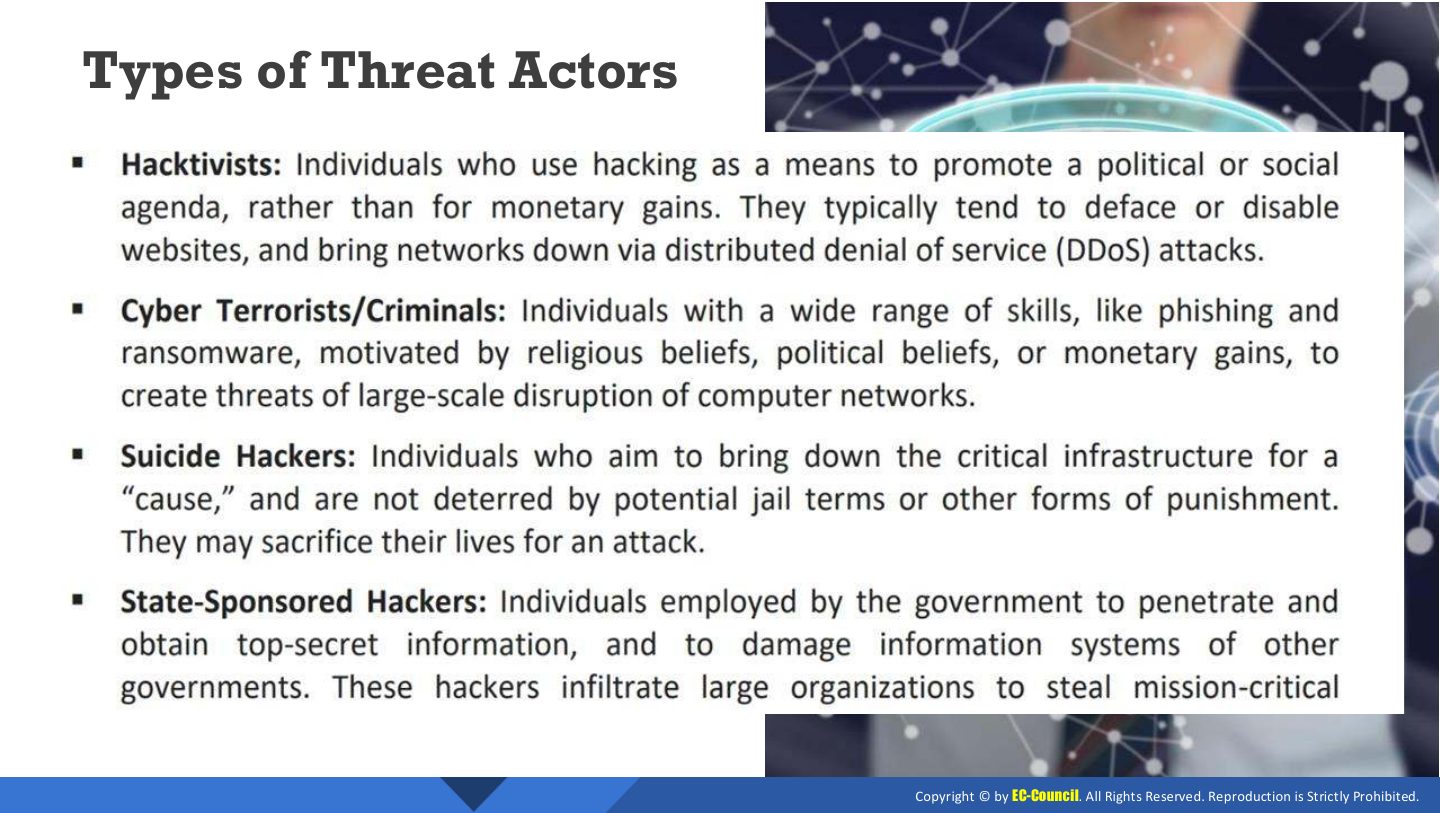
Types of Threat Actors
Notes
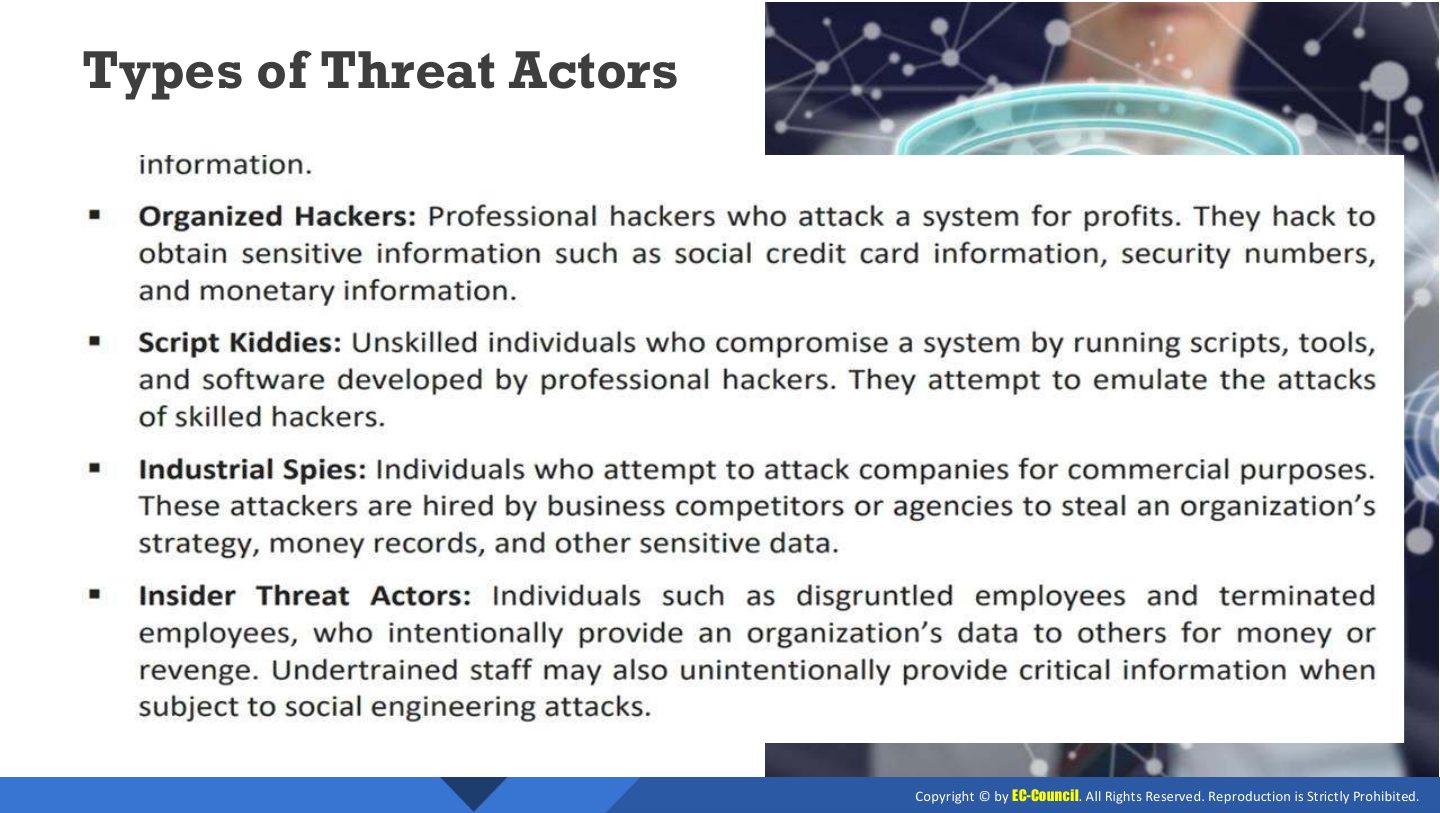
Threat actors: script kiddies, hacktivists, organized crime, nation states, insiders, cyber terrorists.
Types of Threat Actors
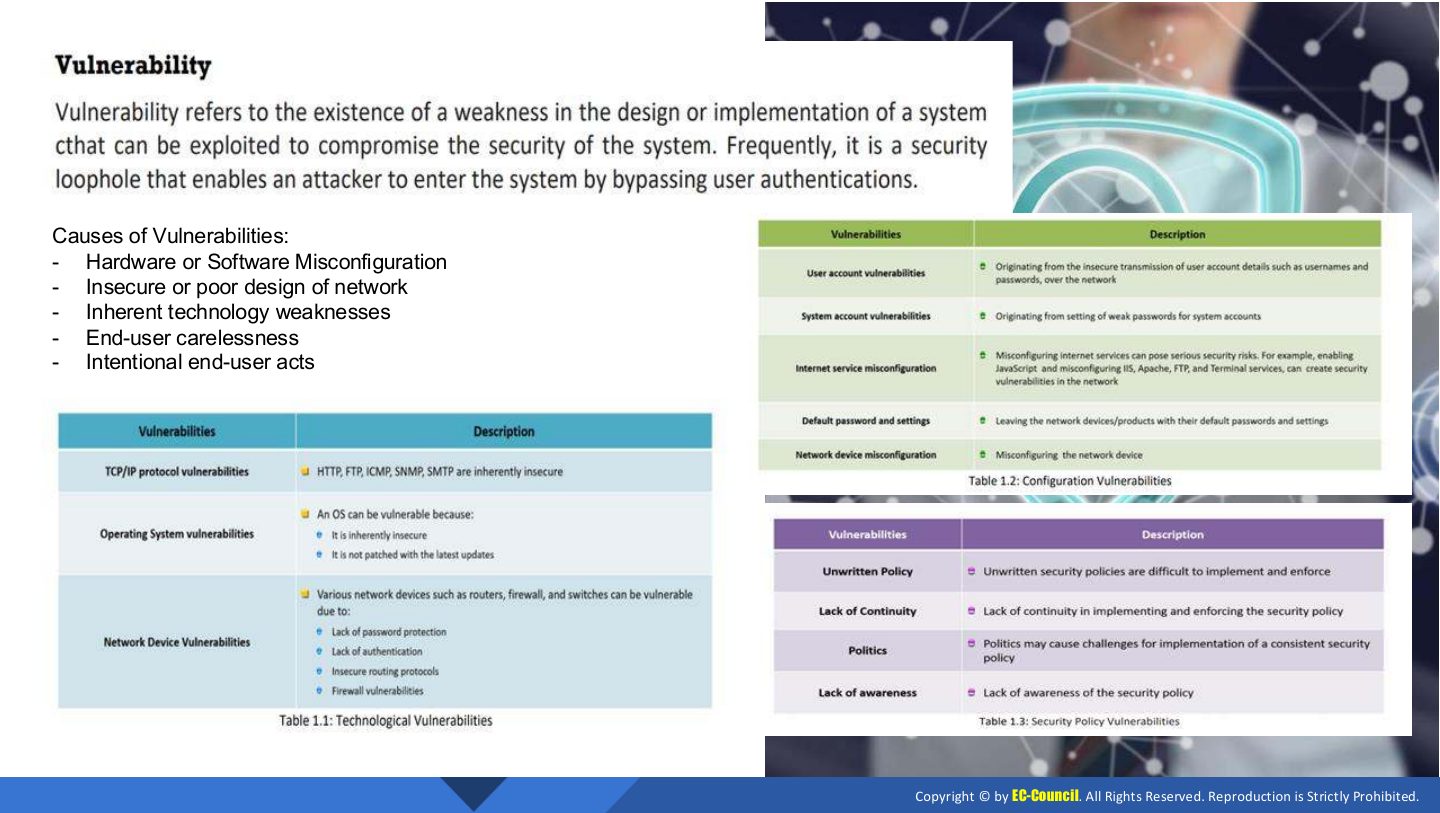
Causes of Vulnerabilities: - Hardware or Software Misconfiguration - Insecure or poor design of network - Inherent technology weaknesses - End-user carelessness
Notes
Vulnerabilities come from misconfiguration, design flaws, unpatched software, weak policies and human error.
Definitions
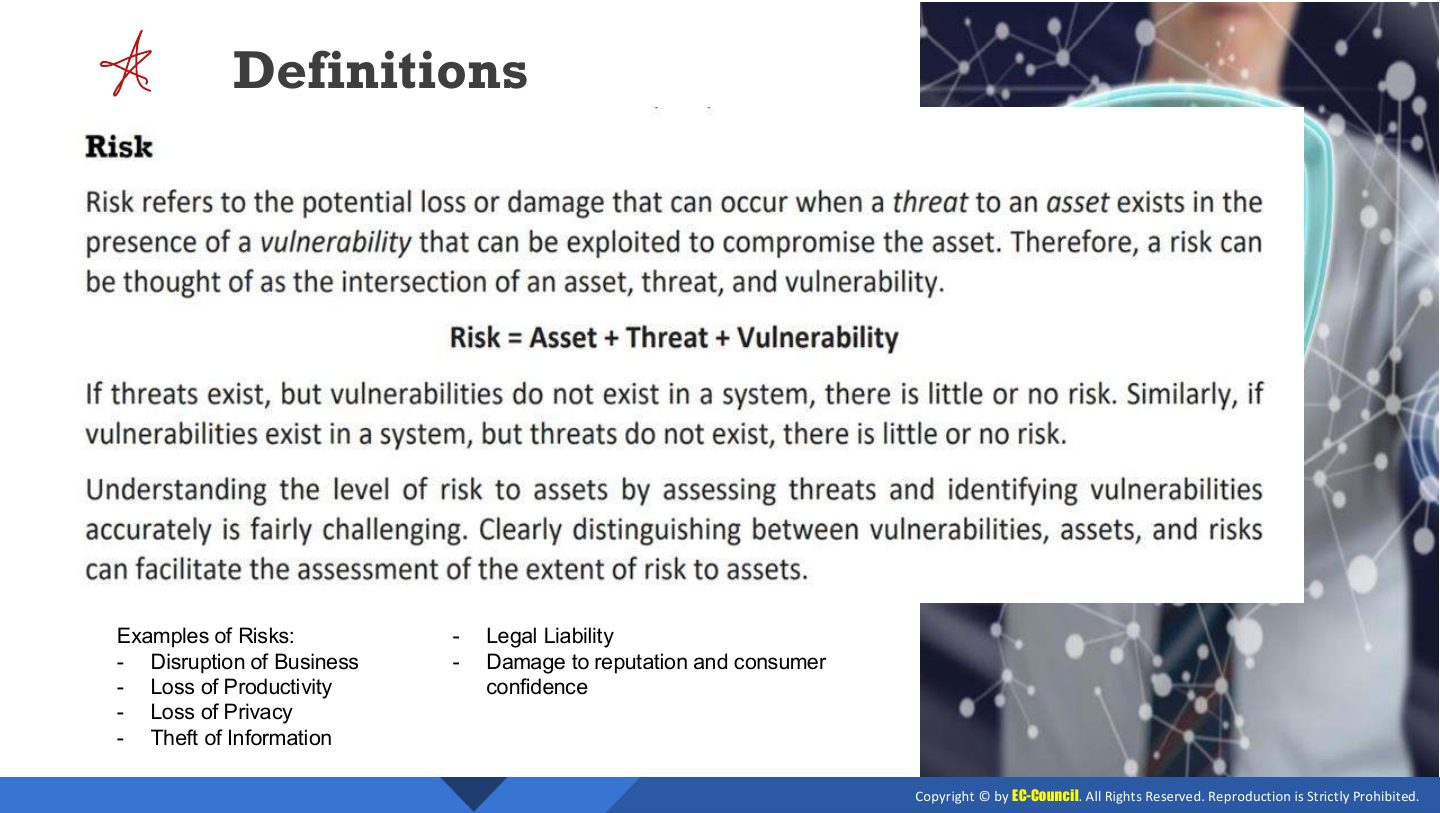
Definitions
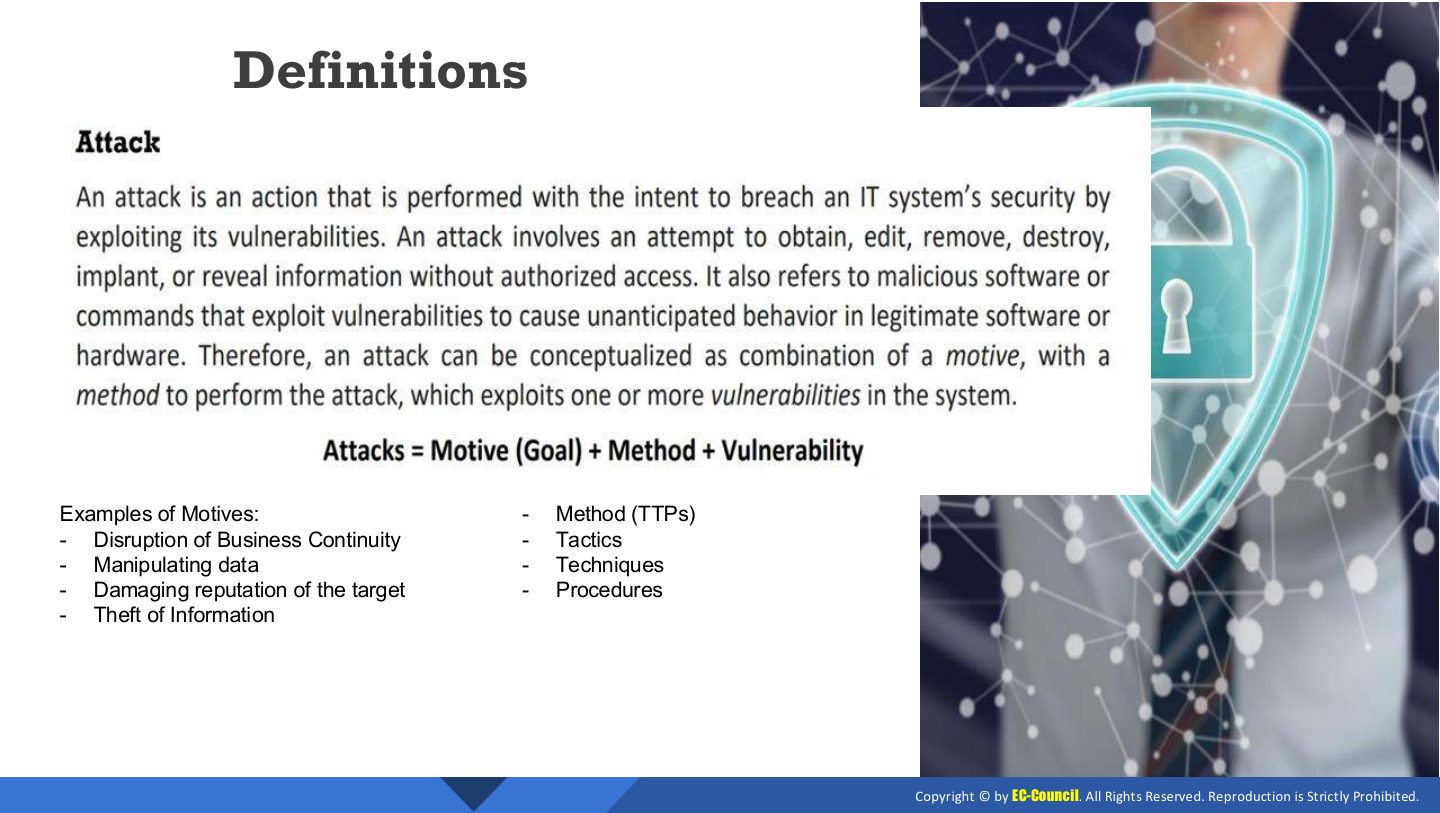
Slide 13
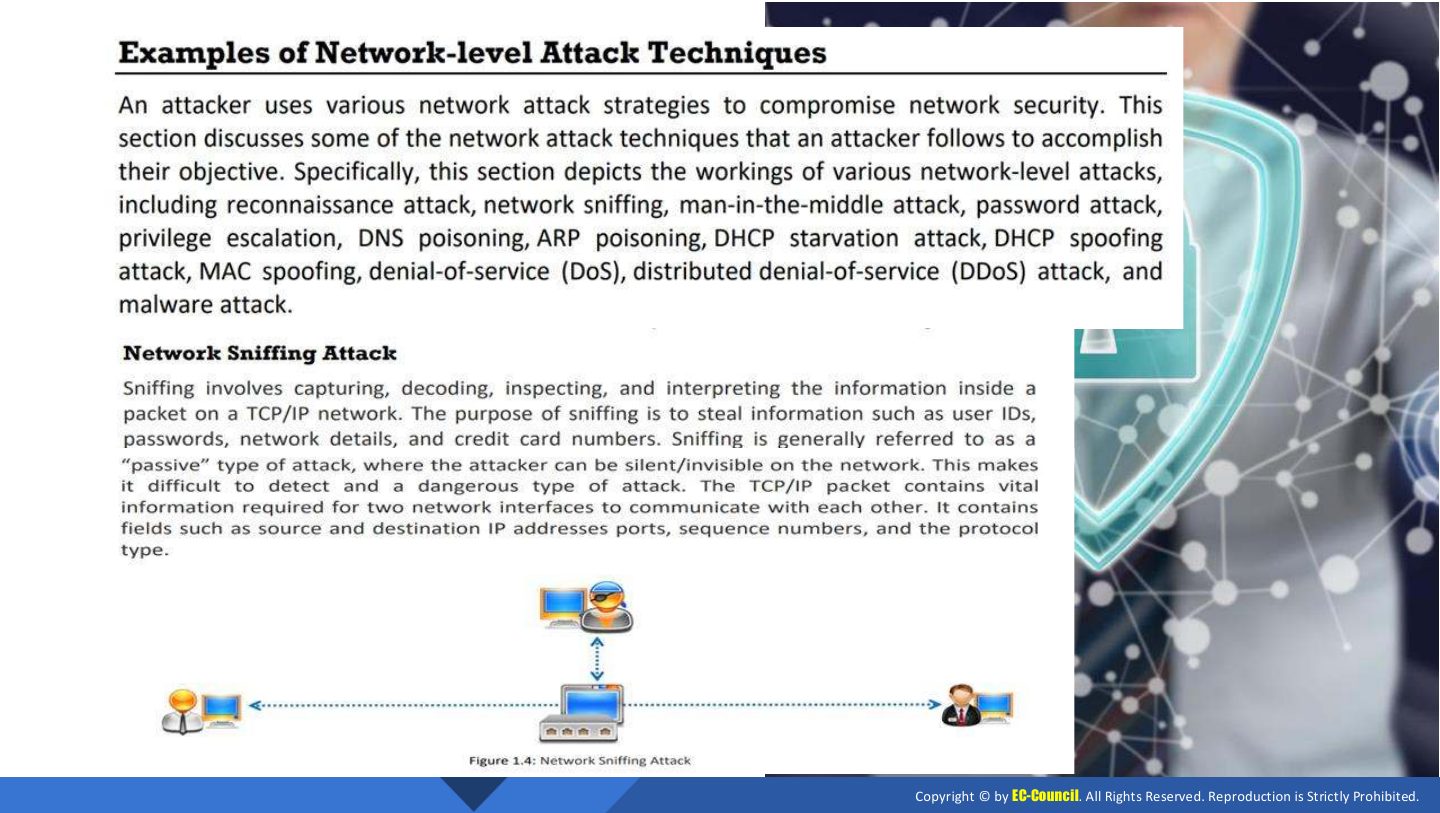
Slide 14
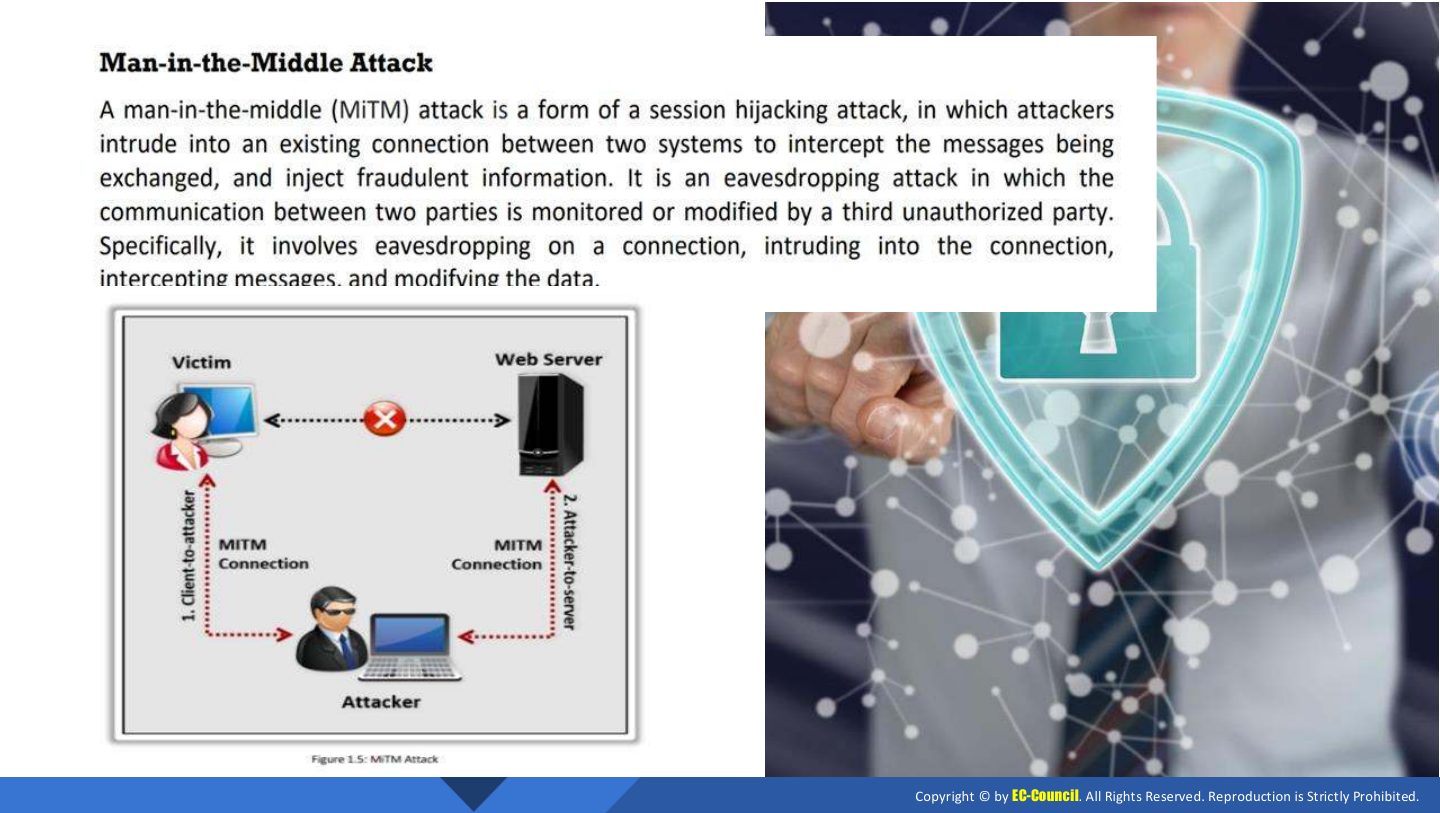
Slide 15
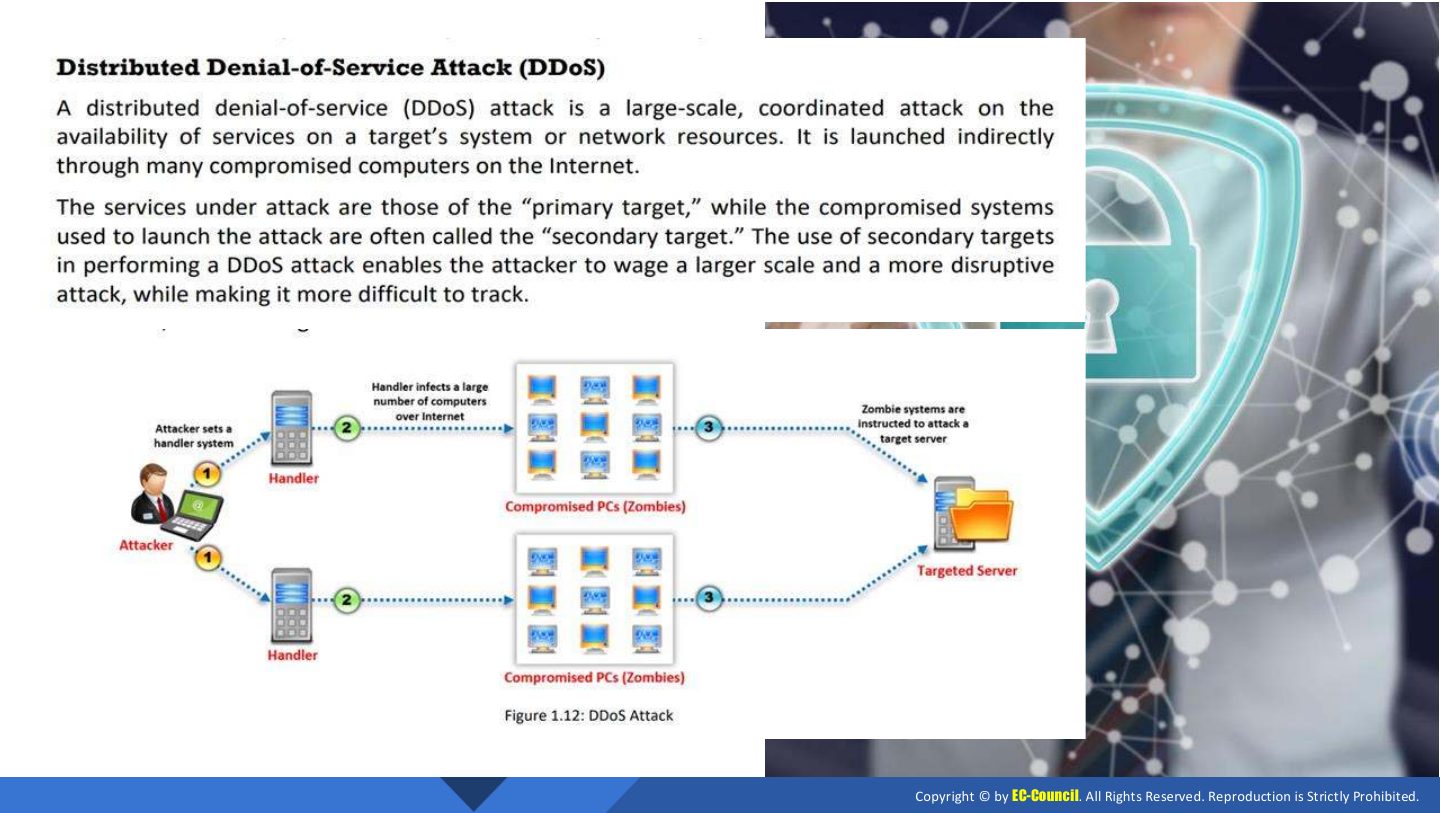
Slide 16
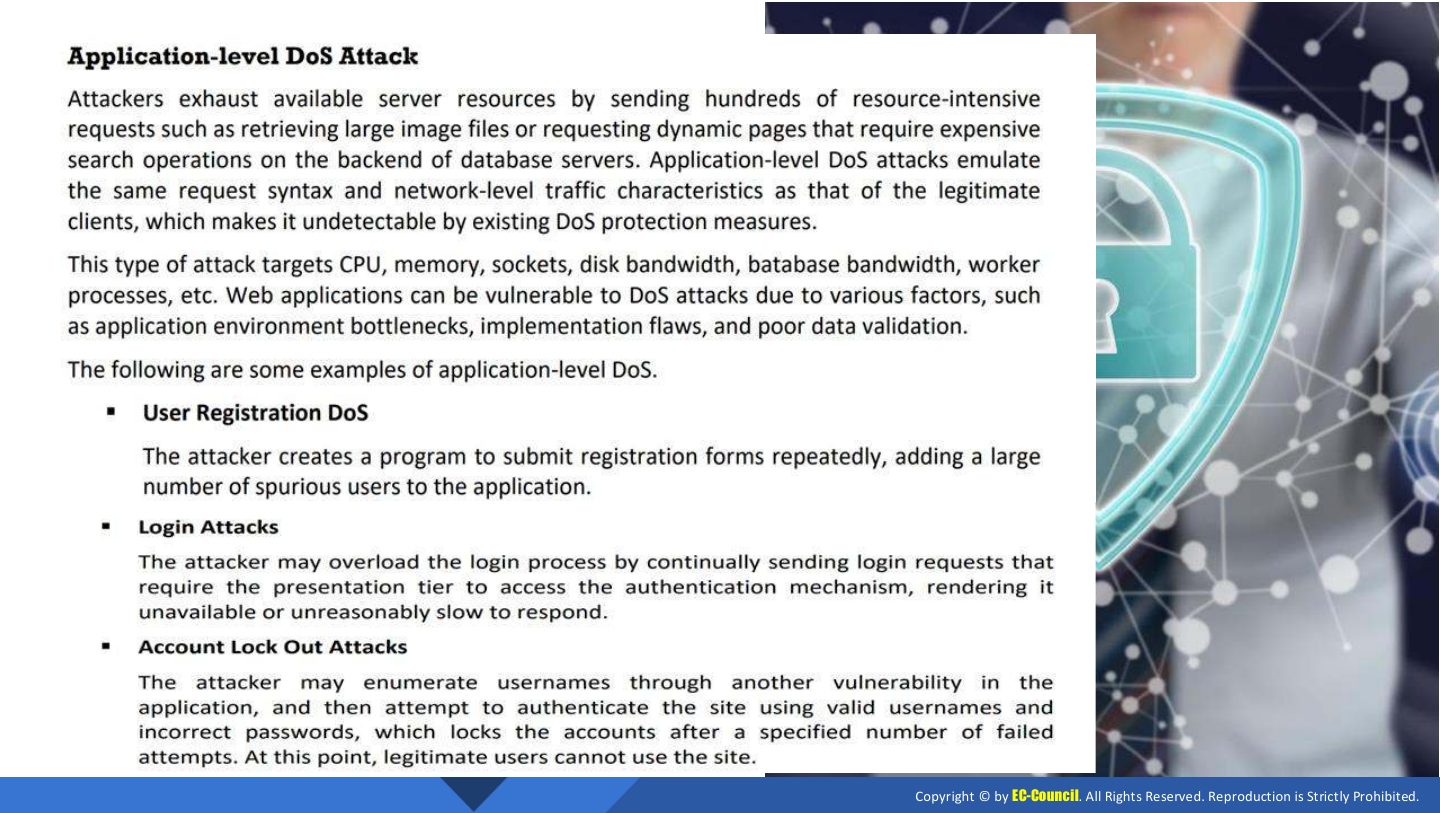
Slide 17
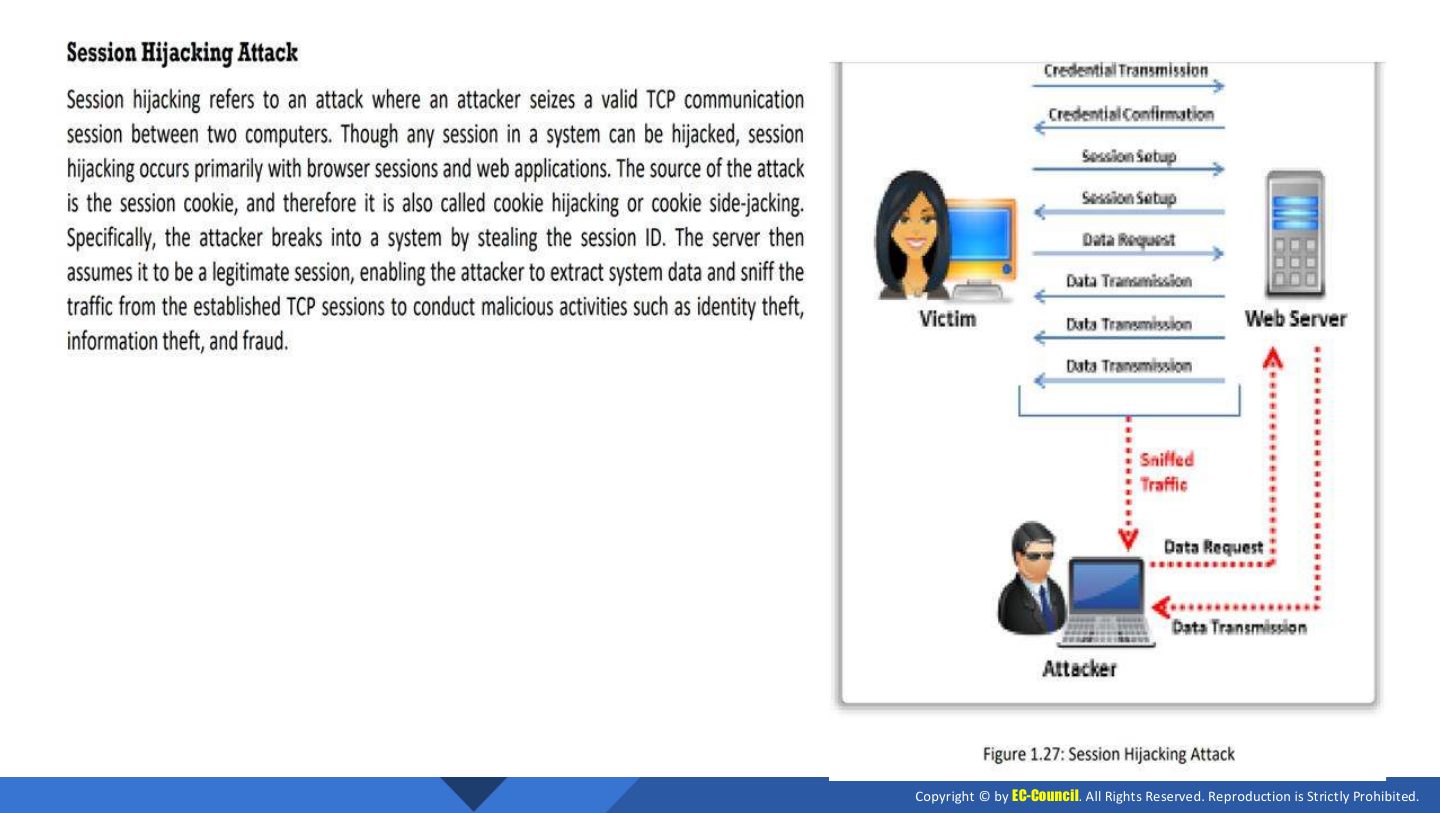
Slide 18
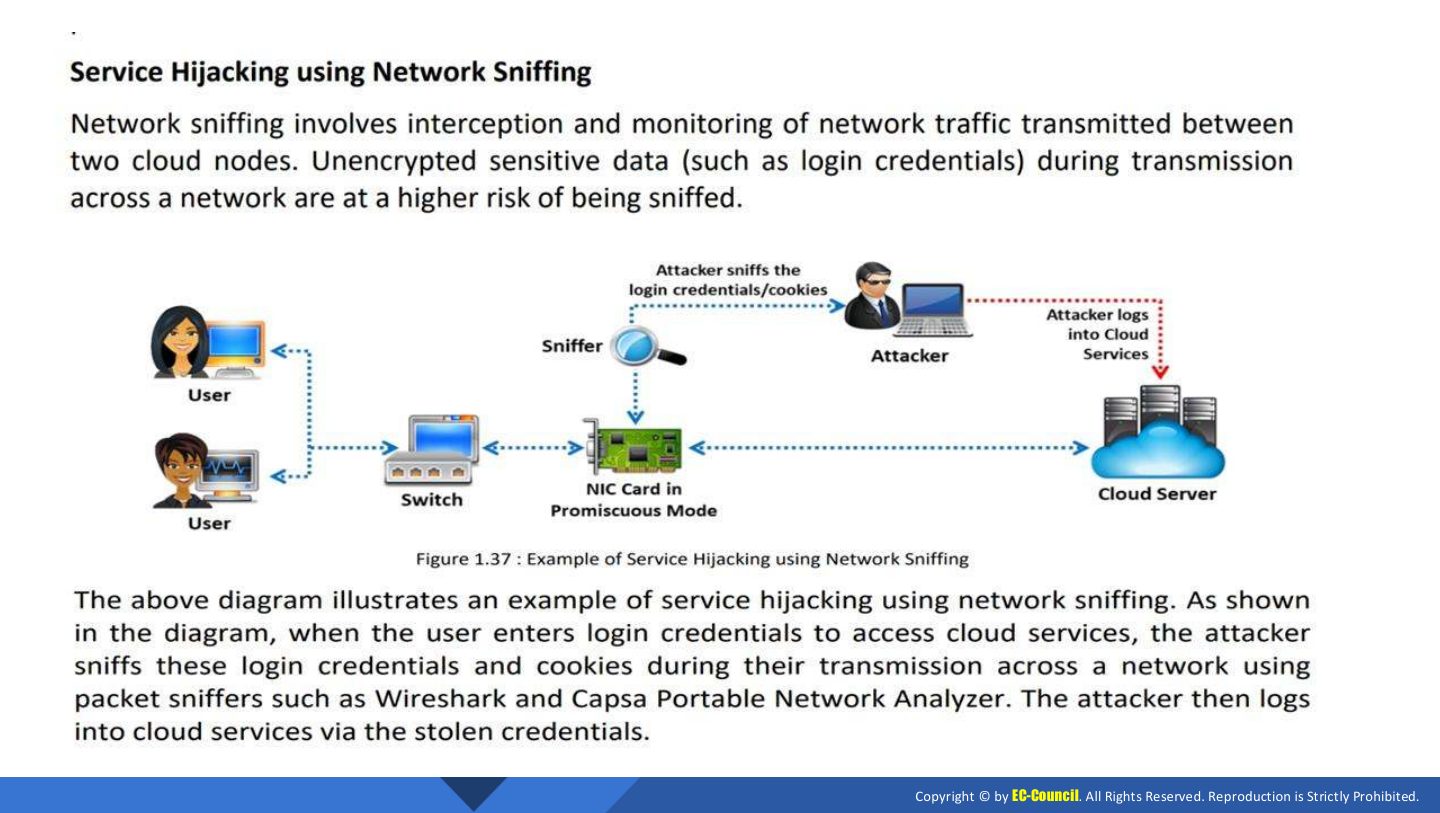
Examples of Wireless Network Specific Attack Techniques
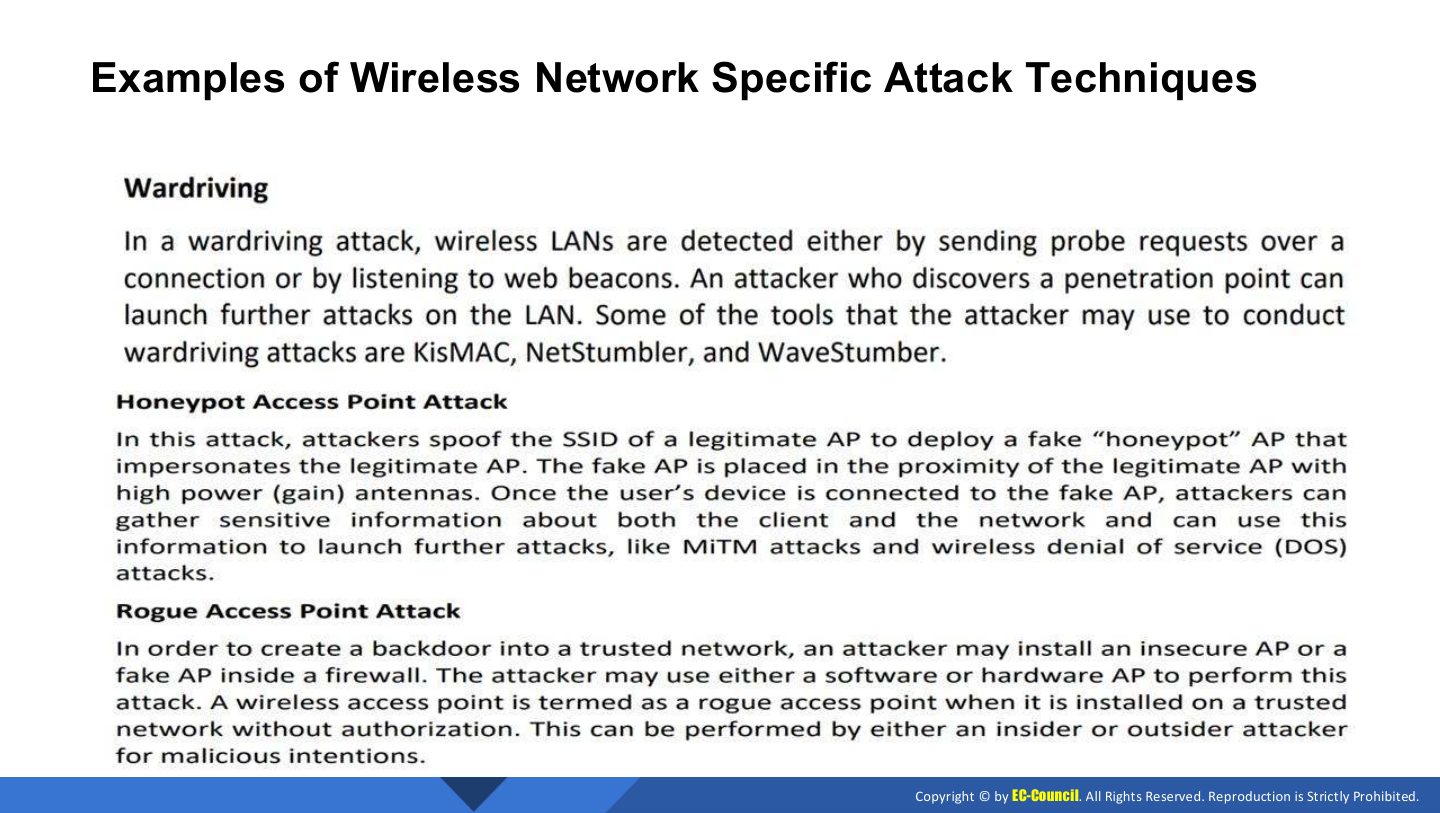
Attacker Hacking Methodologies and Frameworks
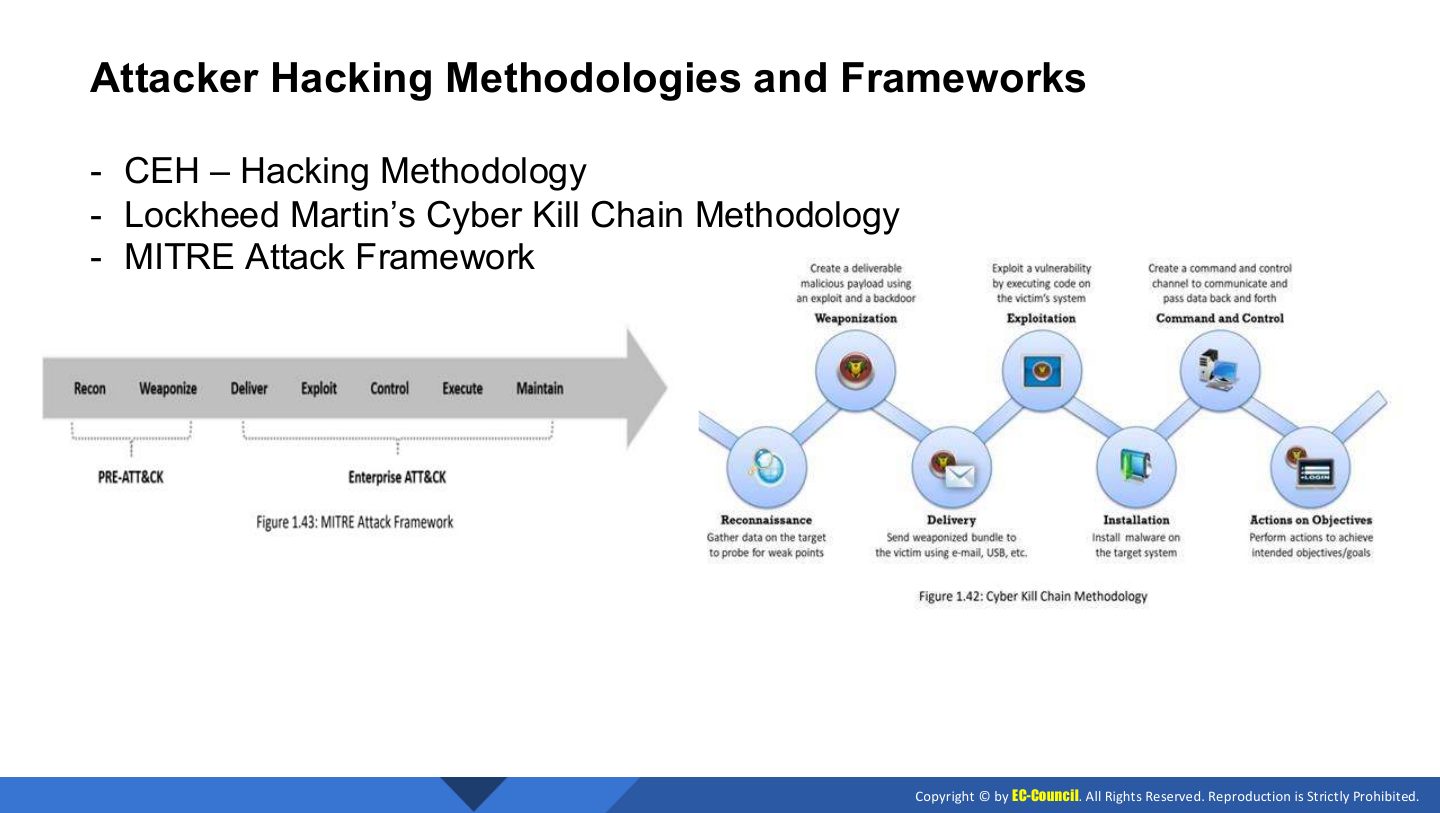
Importance of Network Security
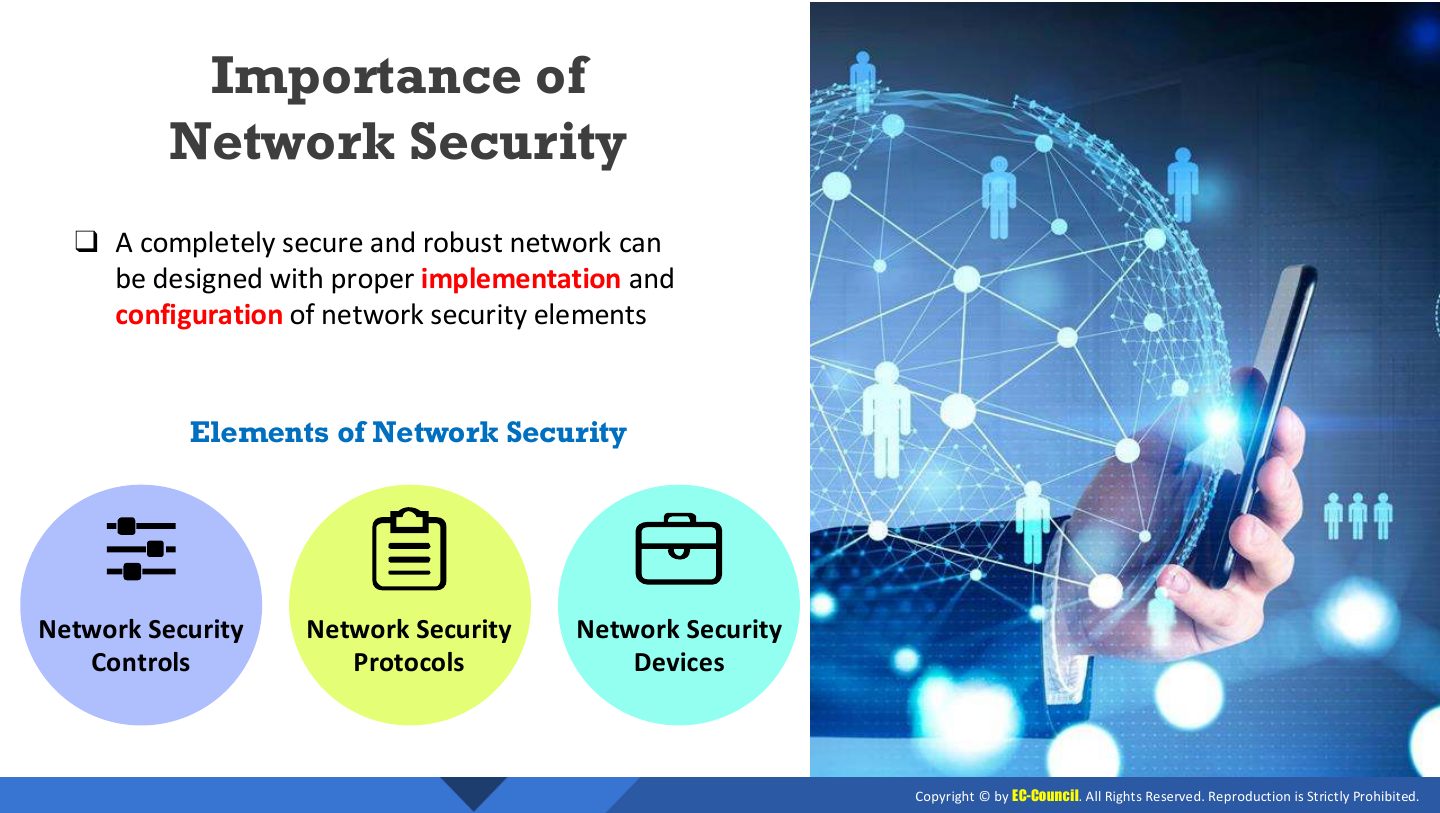
Goal of Network Defense
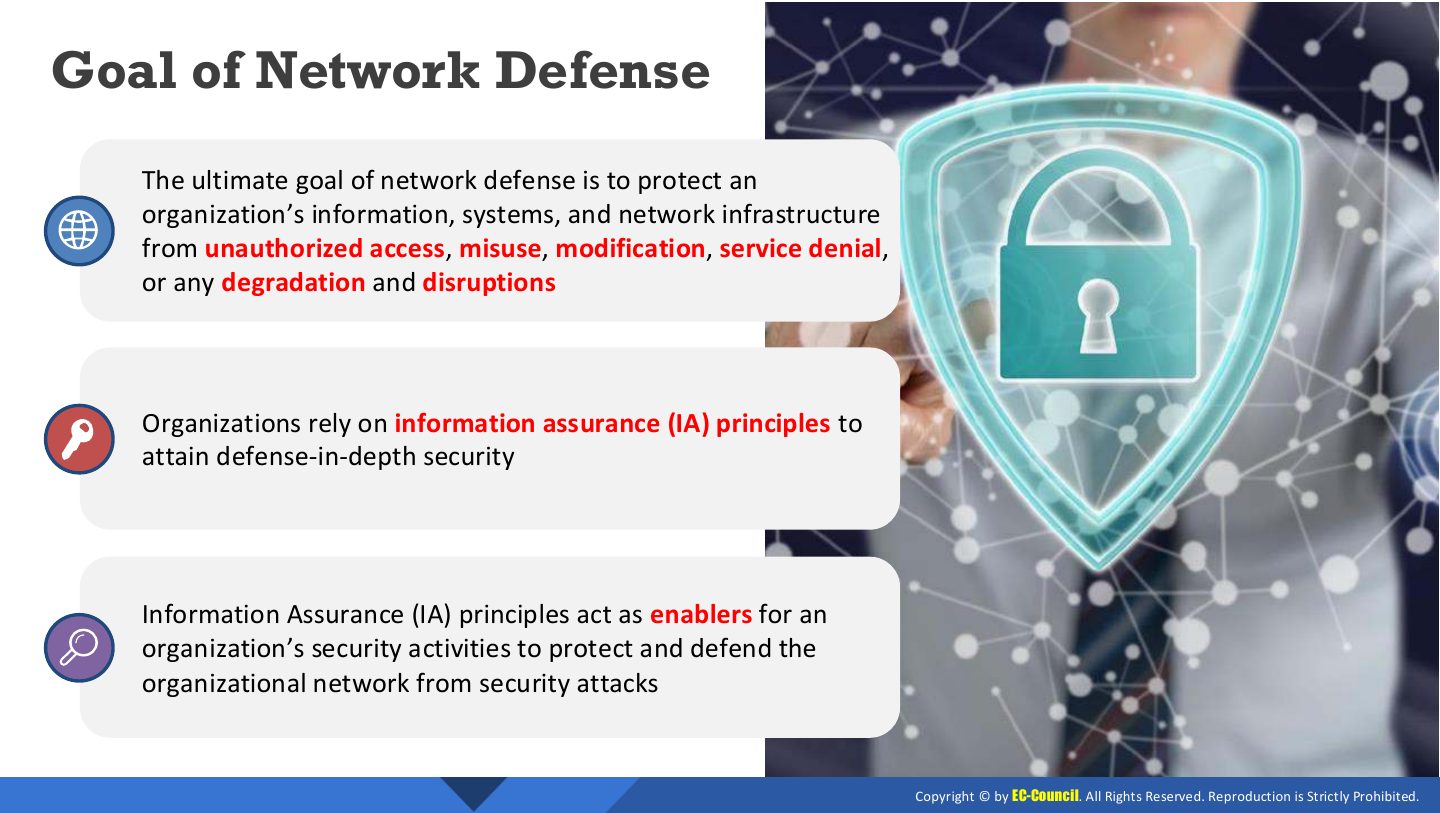
Information Assurance (IA) Principles
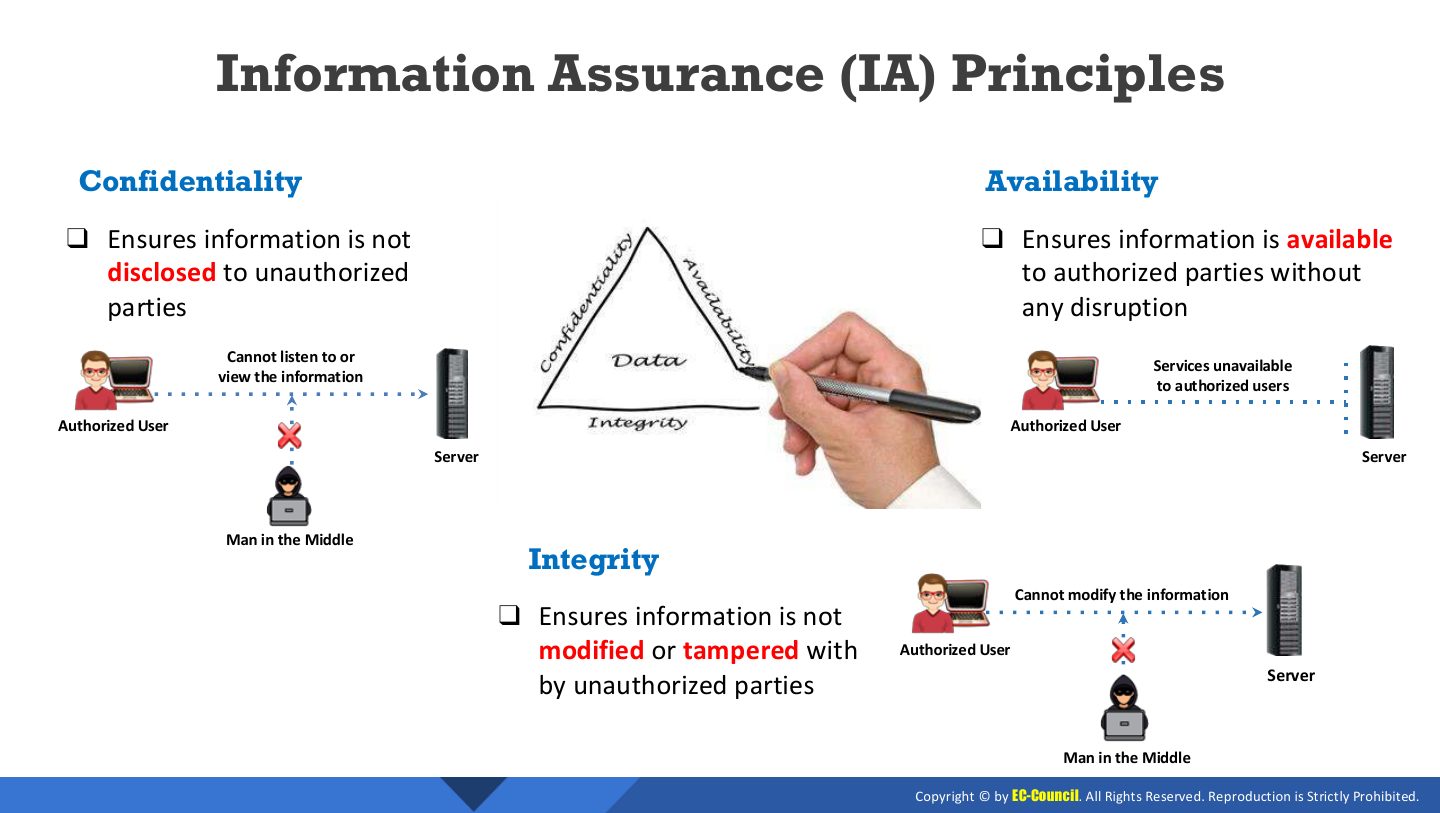
Notes
Information Assurance principles: confidentiality, integrity, availability, authentication, non-repudiation.
Exam angle
Information Assurance (IA) Principles (Cont’d)
Network Defense Benefits
Network Defense Challenges
Types of Network Defense Approaches
Exam angle
Analysing past incidents to find what went wrong is which approach?
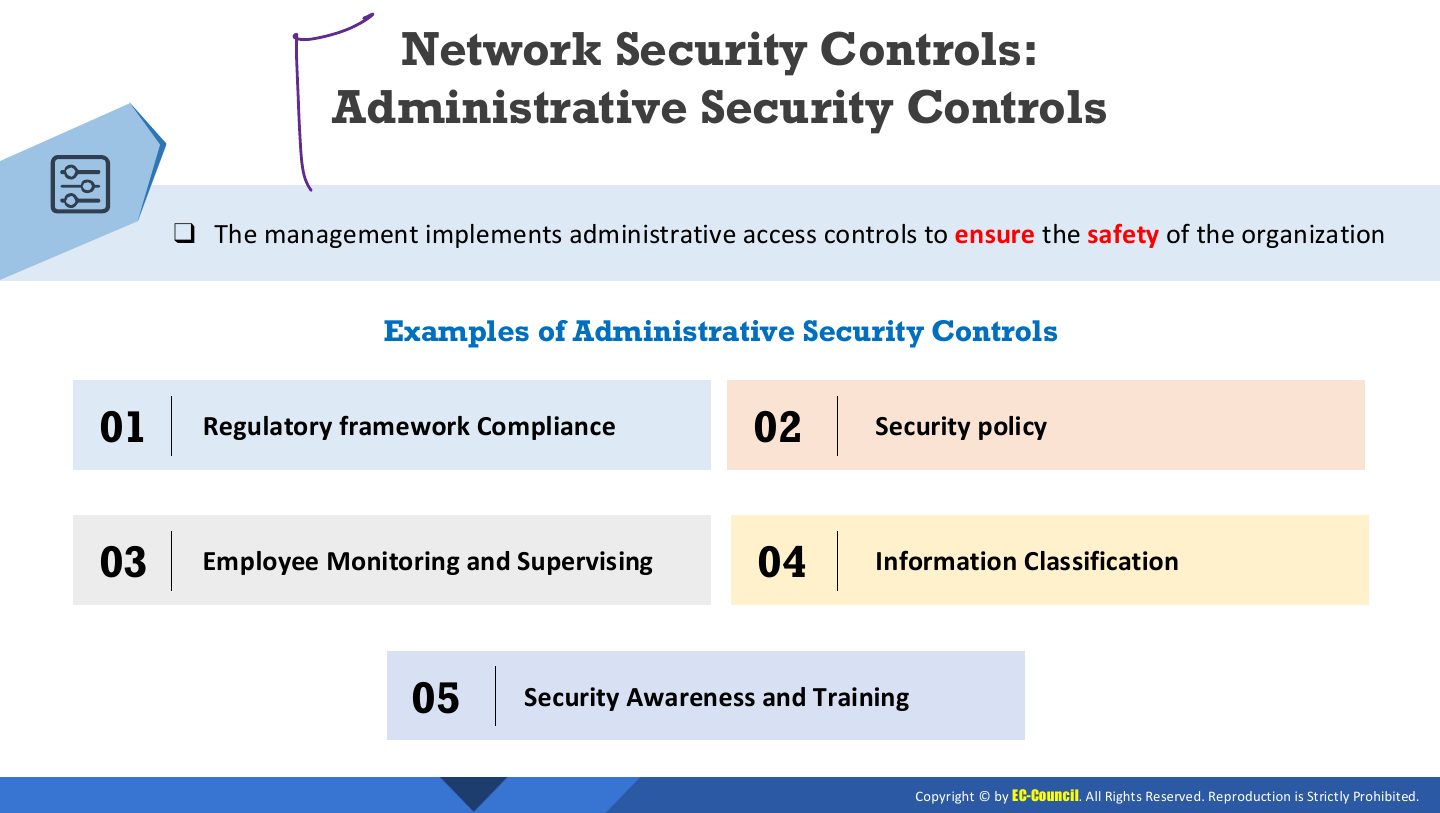
Network Security Controls: Administrative Security Controls
Notes
Three control families: administrative (policies, training), physical (locks, guards), technical (firewalls, encryption, access control).
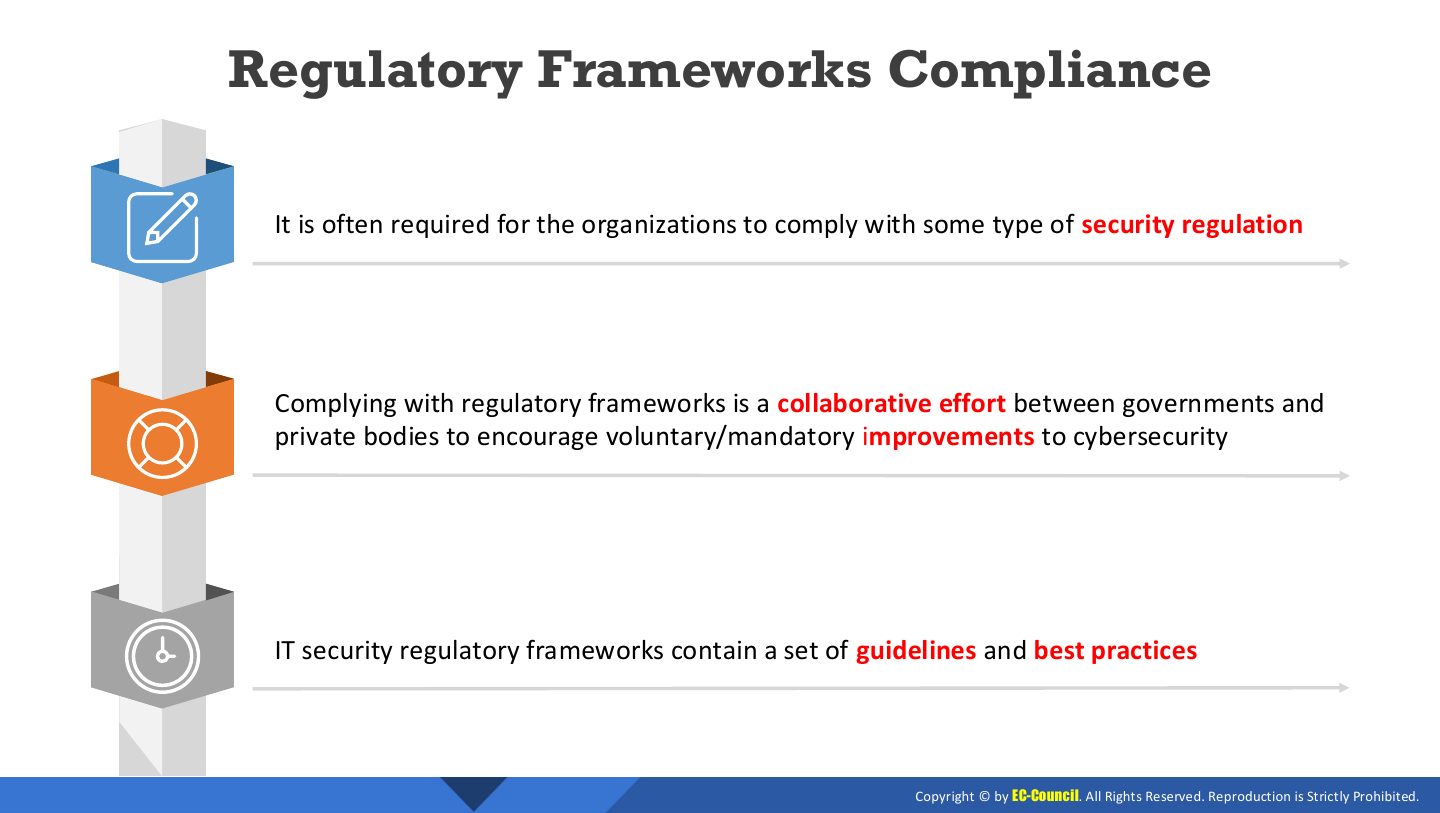
Regulatory Frameworks Compliance
Notes
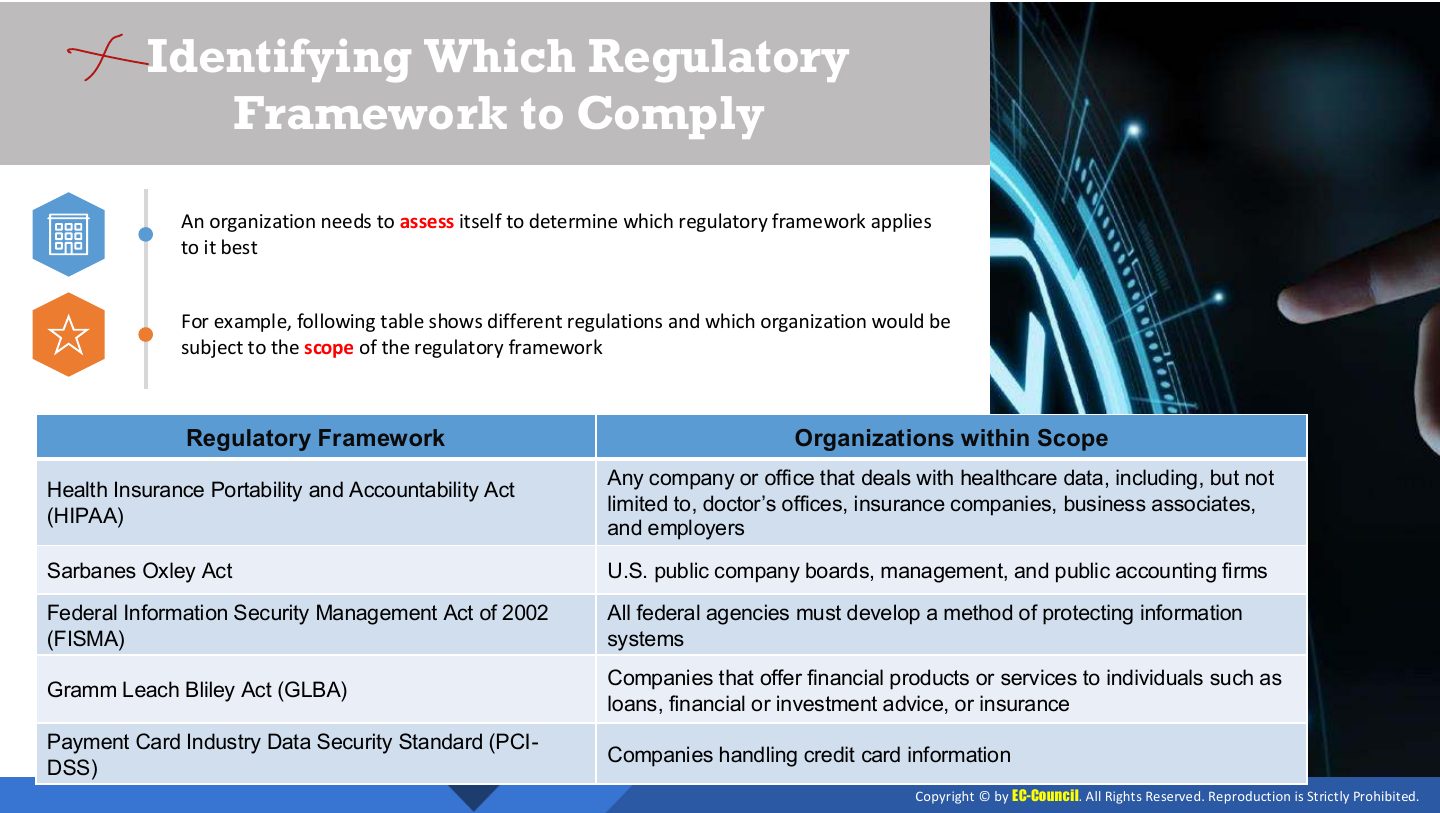
Regulatory frameworks: PCI DSS (cards), HIPAA (health), SOX (finance), GDPR (EU personal data), ISO 27001.
Exam angle
Which standard governs organizations that process payment cards?
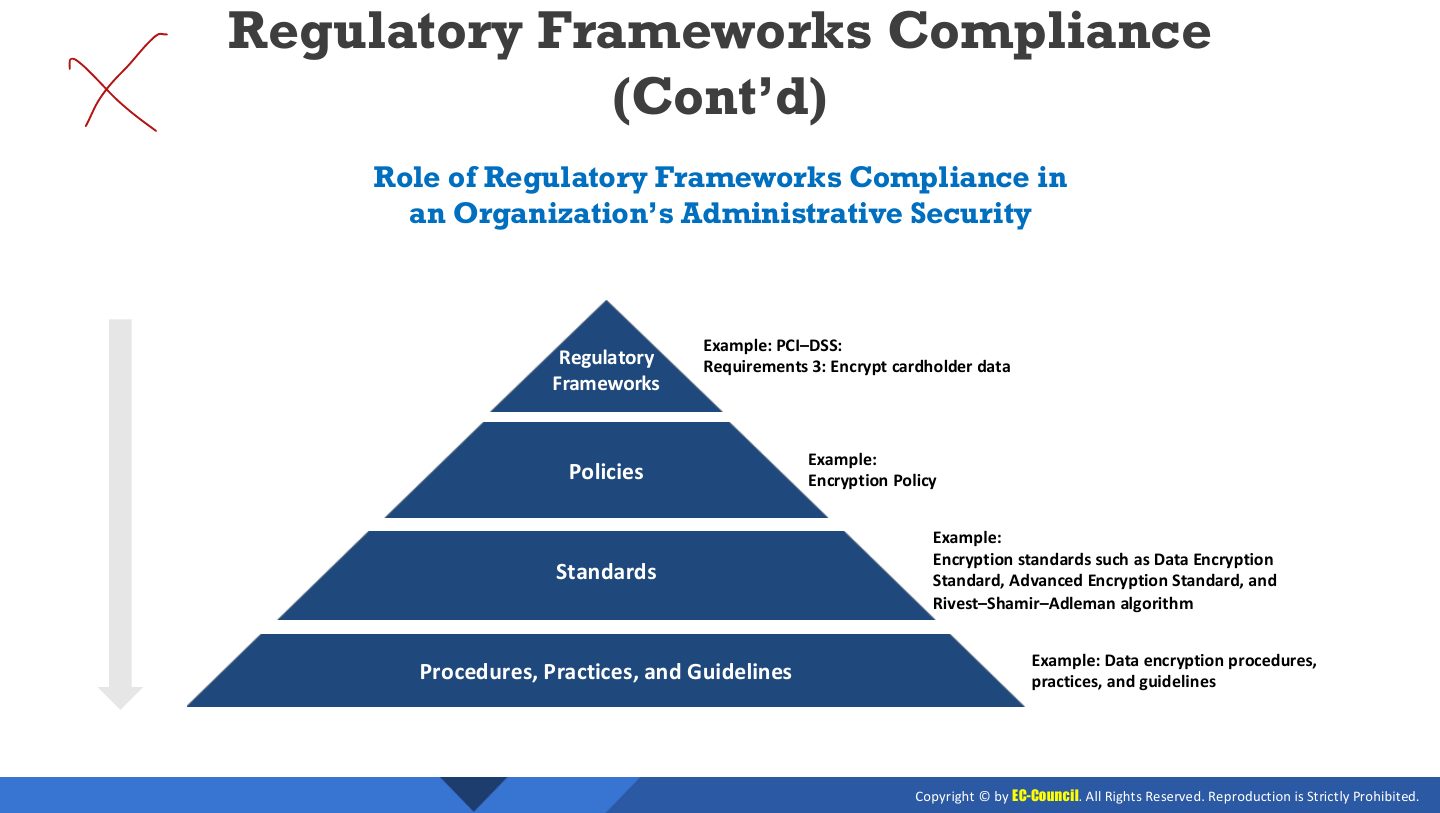
Regulatory Frameworks Compliance (Cont’d)
Identifying Which Regulatory Framework to Comply
ISO Information Security Standards
What is Security Policy?
Notes
Security policy: a document stating how the organization protects its assets; sets rules and responsibilities.
Key Elements of Security Policy
Contents of a Security Policy
Types of Information Security Policies
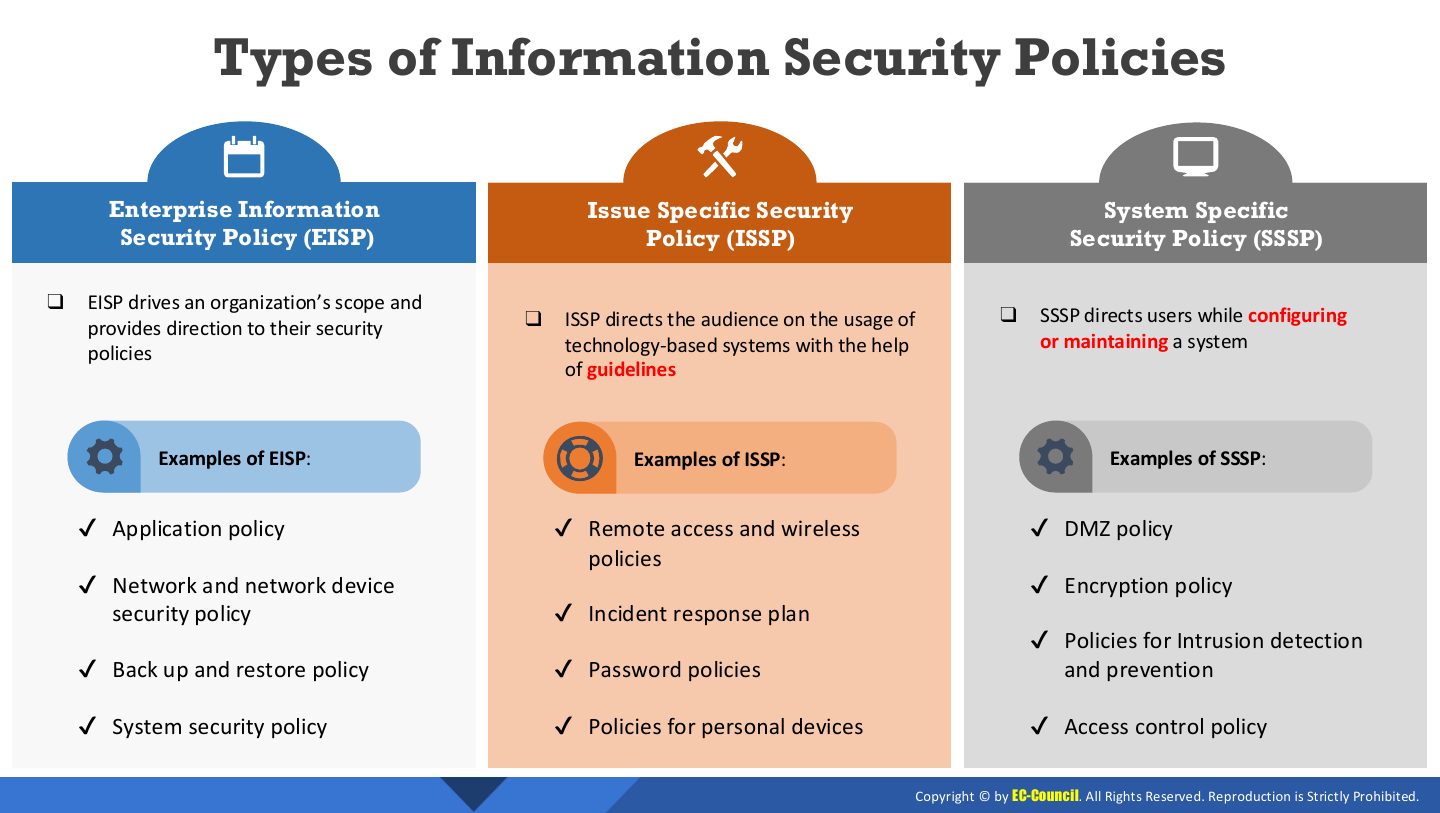
Notes
Policy types by strictness: promiscuous (no restrictions), permissive (block known-bad), prudent (block most, allow needed), paranoid (block everything).
Exam angle
A policy that allows everything except known dangerous services is:
Internet Access Policies
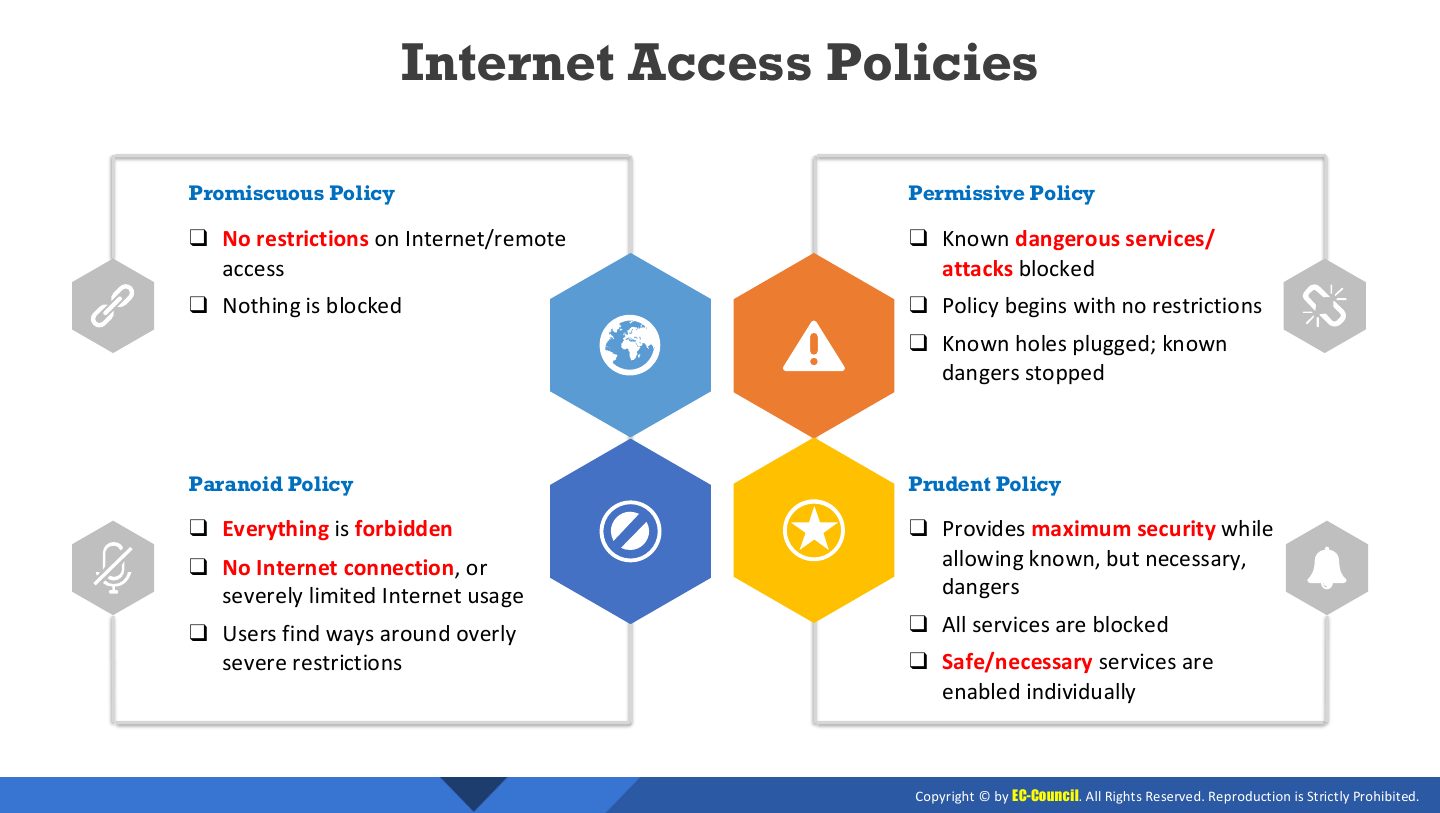
Password Policy
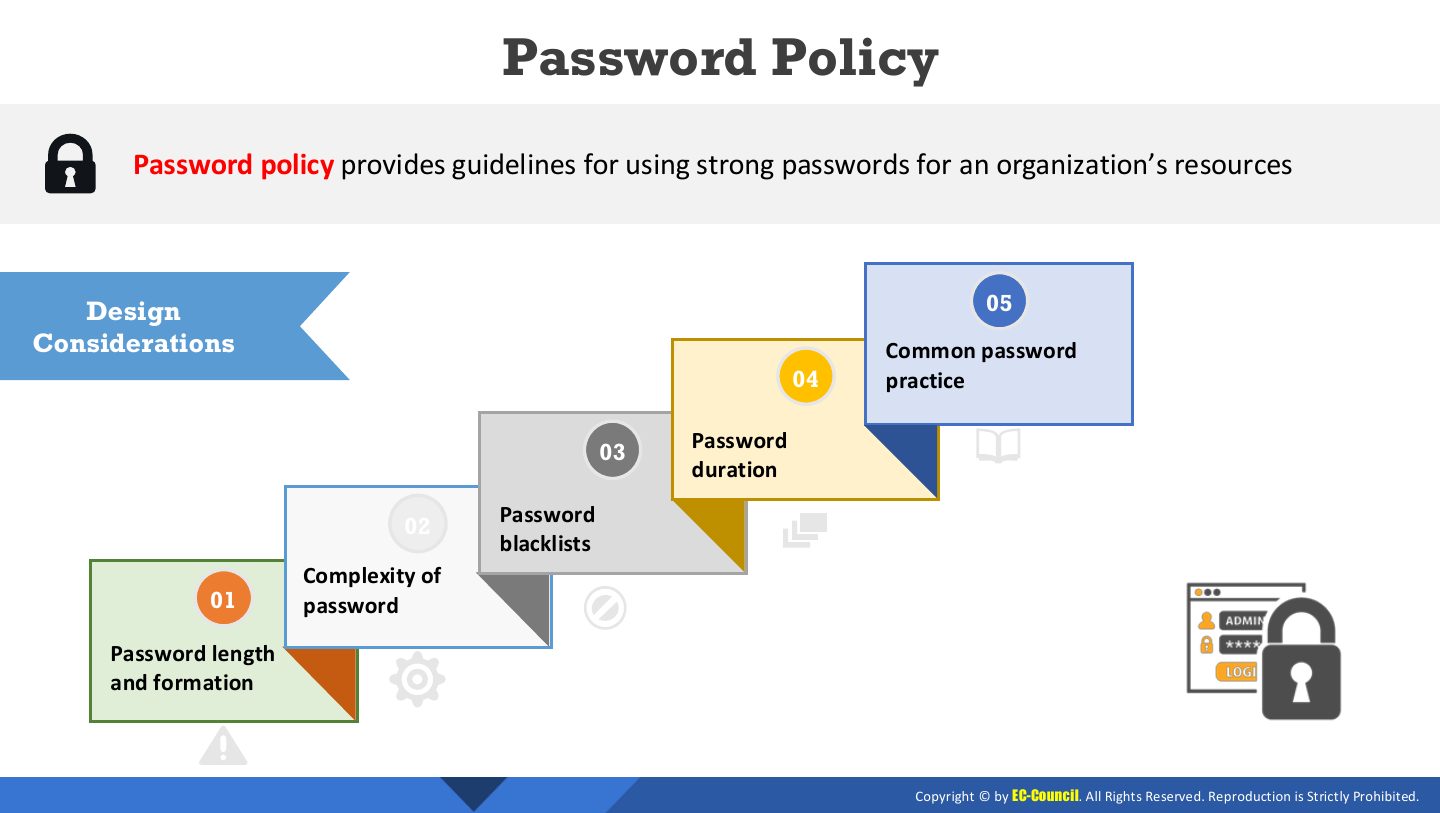
Notes
Password policy: length, complexity, history, expiry, lockout.
Network Security Controls: Physical Security Controls
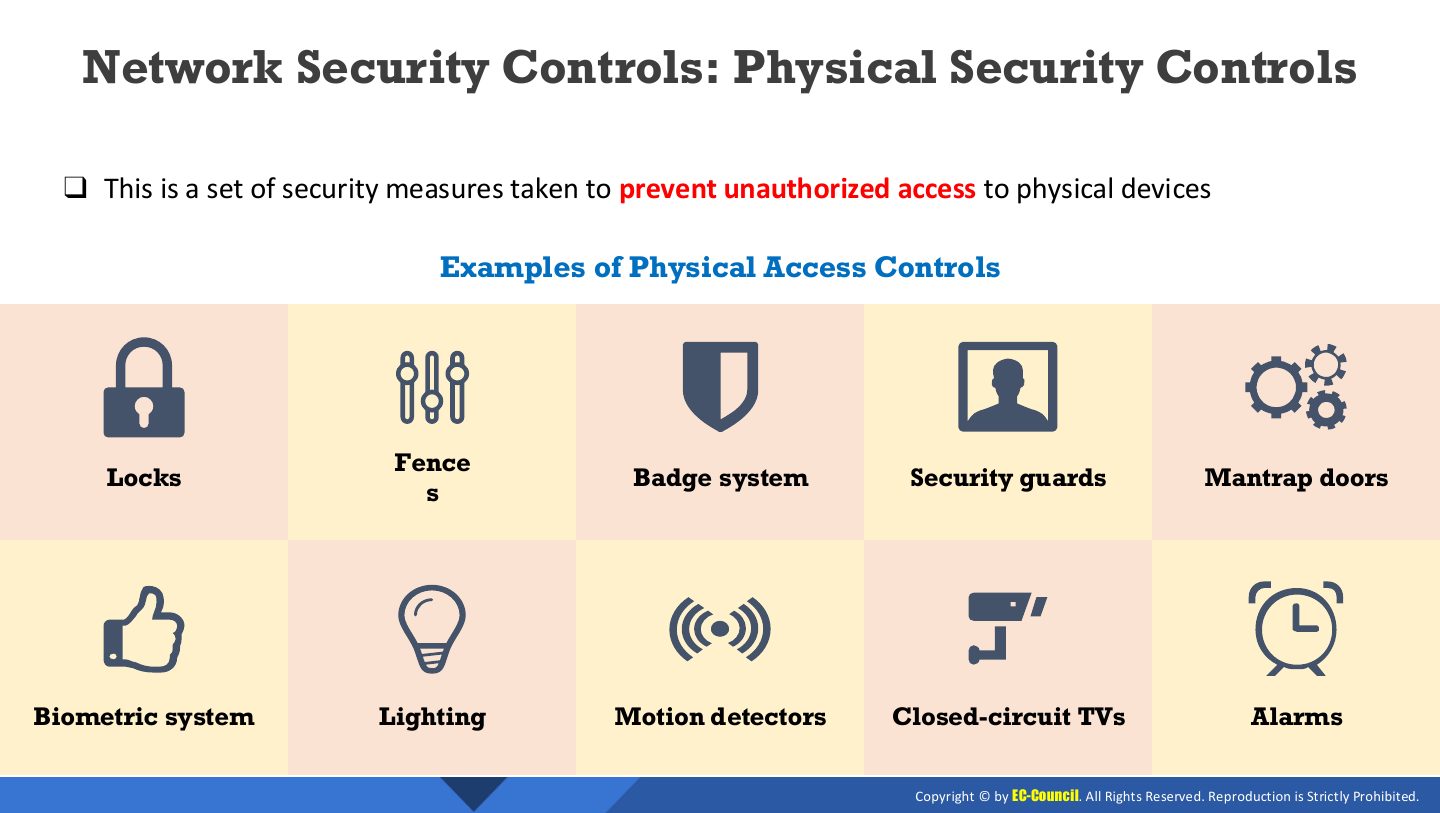
Employee Awareness and Training
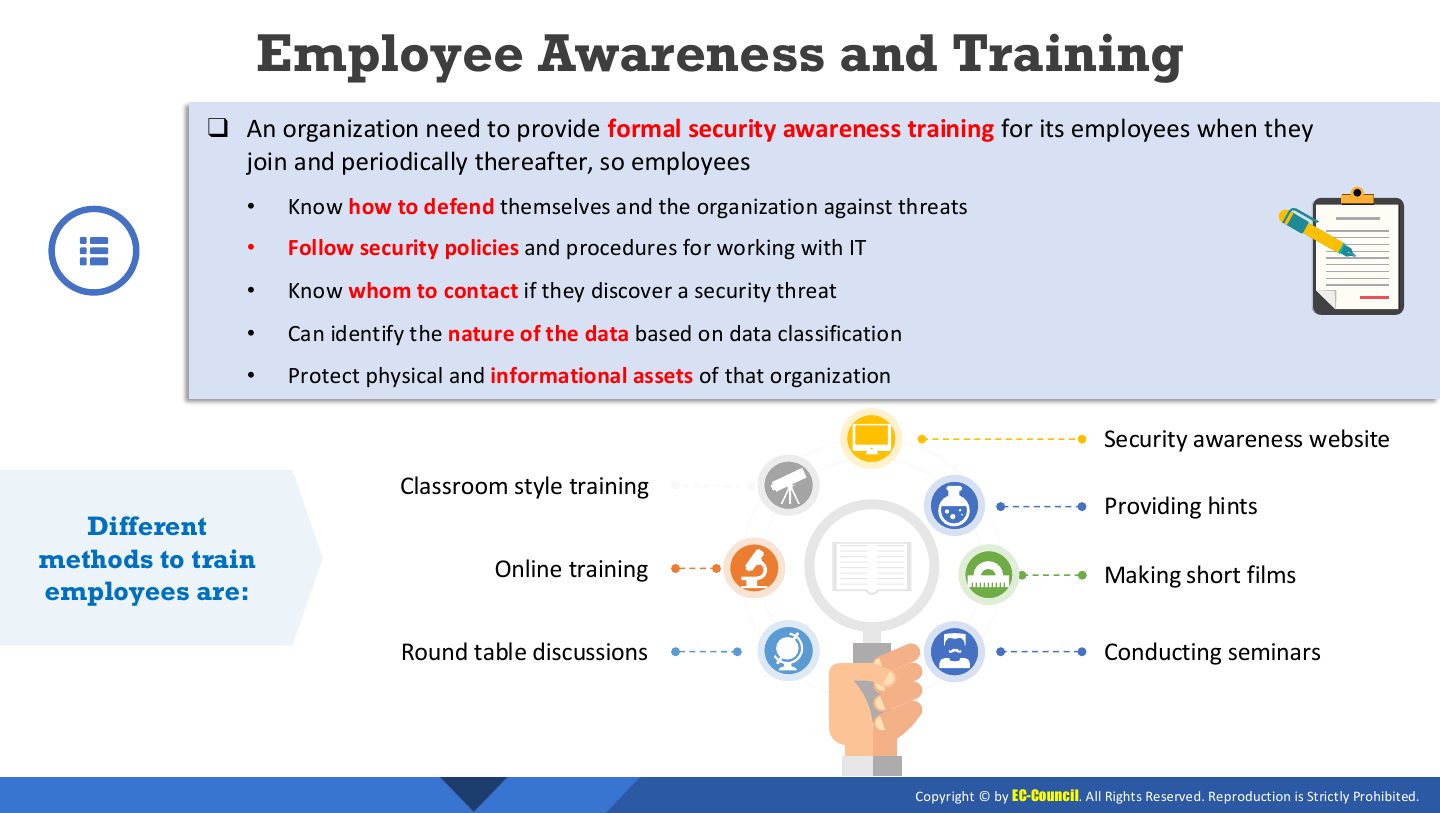
Notes
Awareness training reduces social engineering and policy violations: people are the weakest link.
Security policy training teaches employees how their duties and to comply with the
Employee Awareness and Training: Physical Security
Employee Awareness and Training: Social Engineering
Network Security Controls: Technical Security Controls
Module Flow
Network Security Protocols
Module Summary