Leaving "admin/admin" on a router is which class of vulnerability?
Vulnerability Analysis
Vulnerability research and classification (misconfiguration, defaults, buffer overflows, unpatched servers, design flaws…), network, host, wireless and application scans, scan targets and frequency, scanner pros and cons, PCI DSS, CVSS, CVE and assessment tools.
How to read this page
Every original slide is shown unchanged. Yellow marks on a slide point to a numbered note: hover or tap a mark to jump to its note, and hover a note to see its marks. Questions tagged Past exam appeared on a real paper; Prediction questions are likely angles, not confirmed. Pick an answer to each question: a wrong pick tells you why it is wrong, so you can try again.
All 43 slides
- 1 Slide 1
- 2 INTRODUCTION
- 3 Traditionally, cyber security professionals are trained to
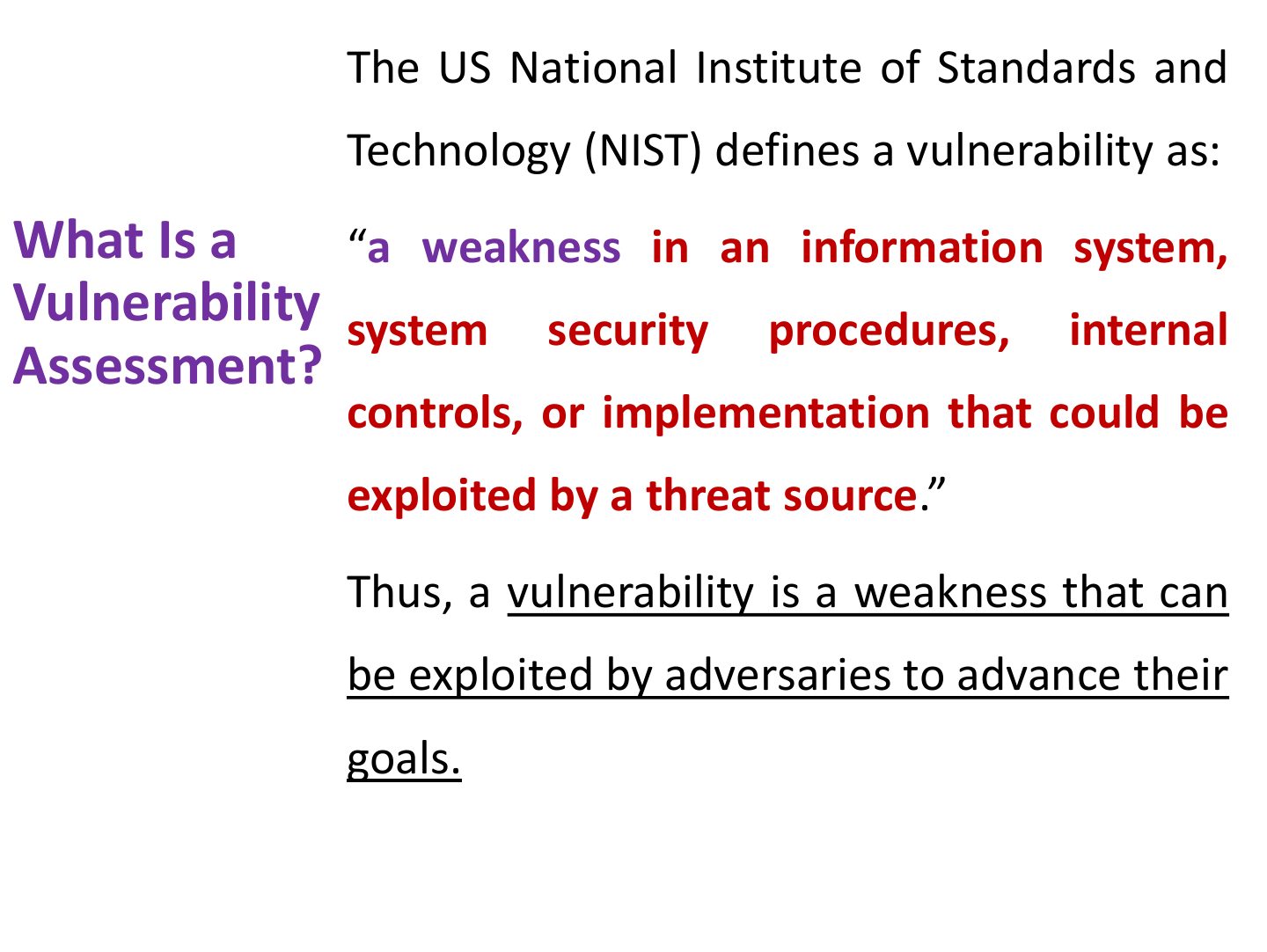
- 4 The US National Institute of Standards and
- 5 An ethical hacker needs to keep up with the most recently discovered
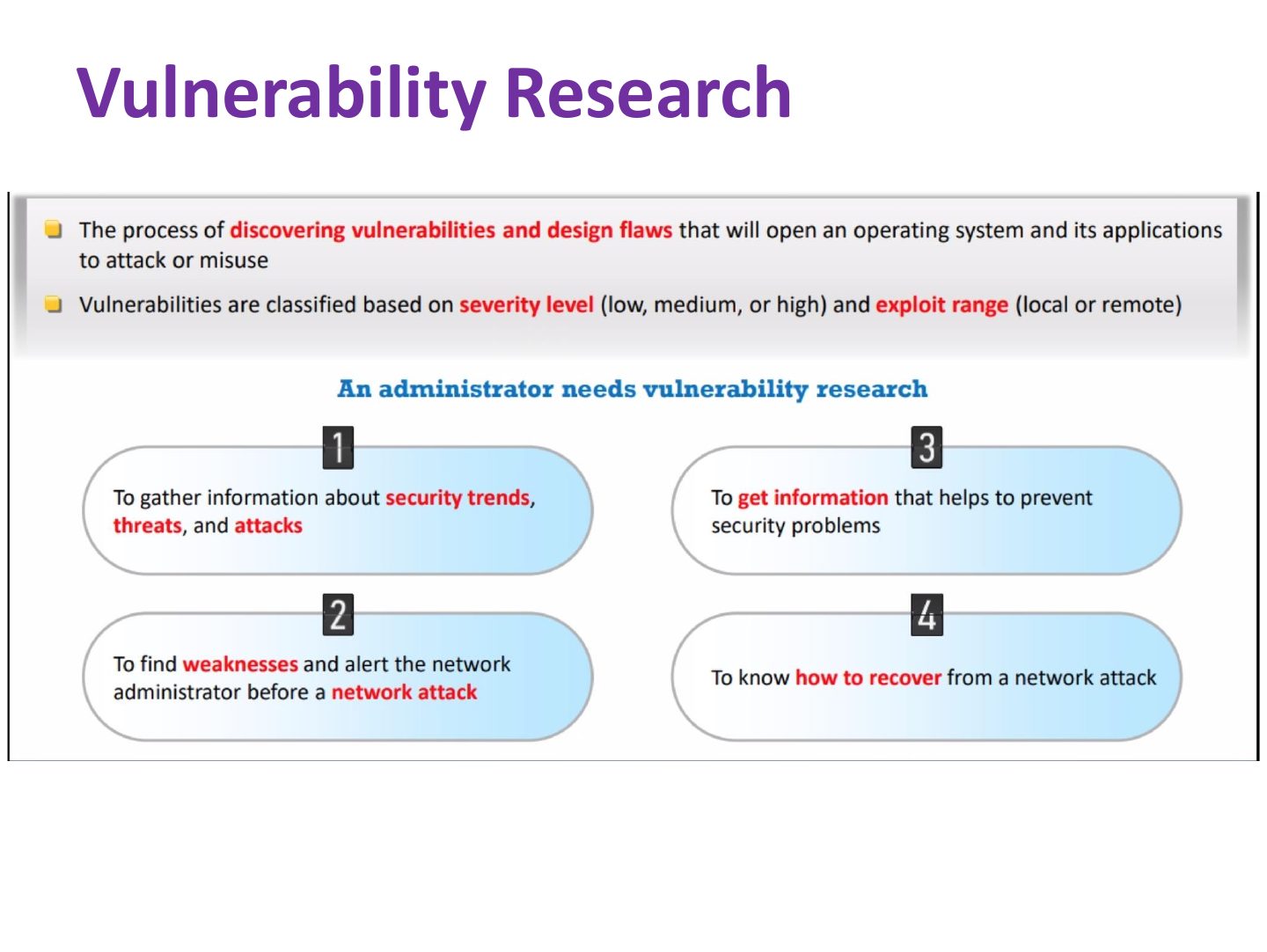
- 6 Vulnerability Research
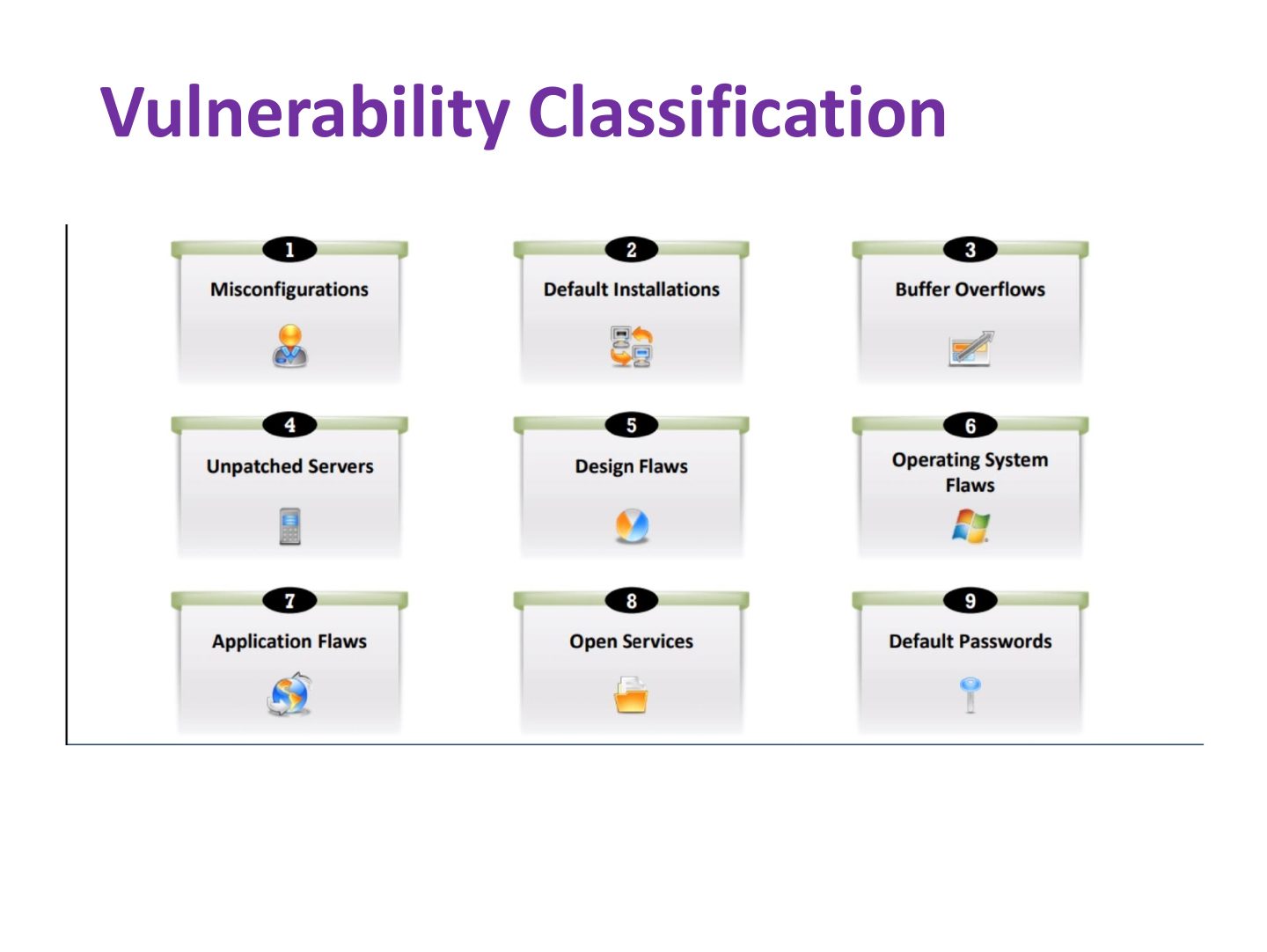
- 7 Vulnerability Classification
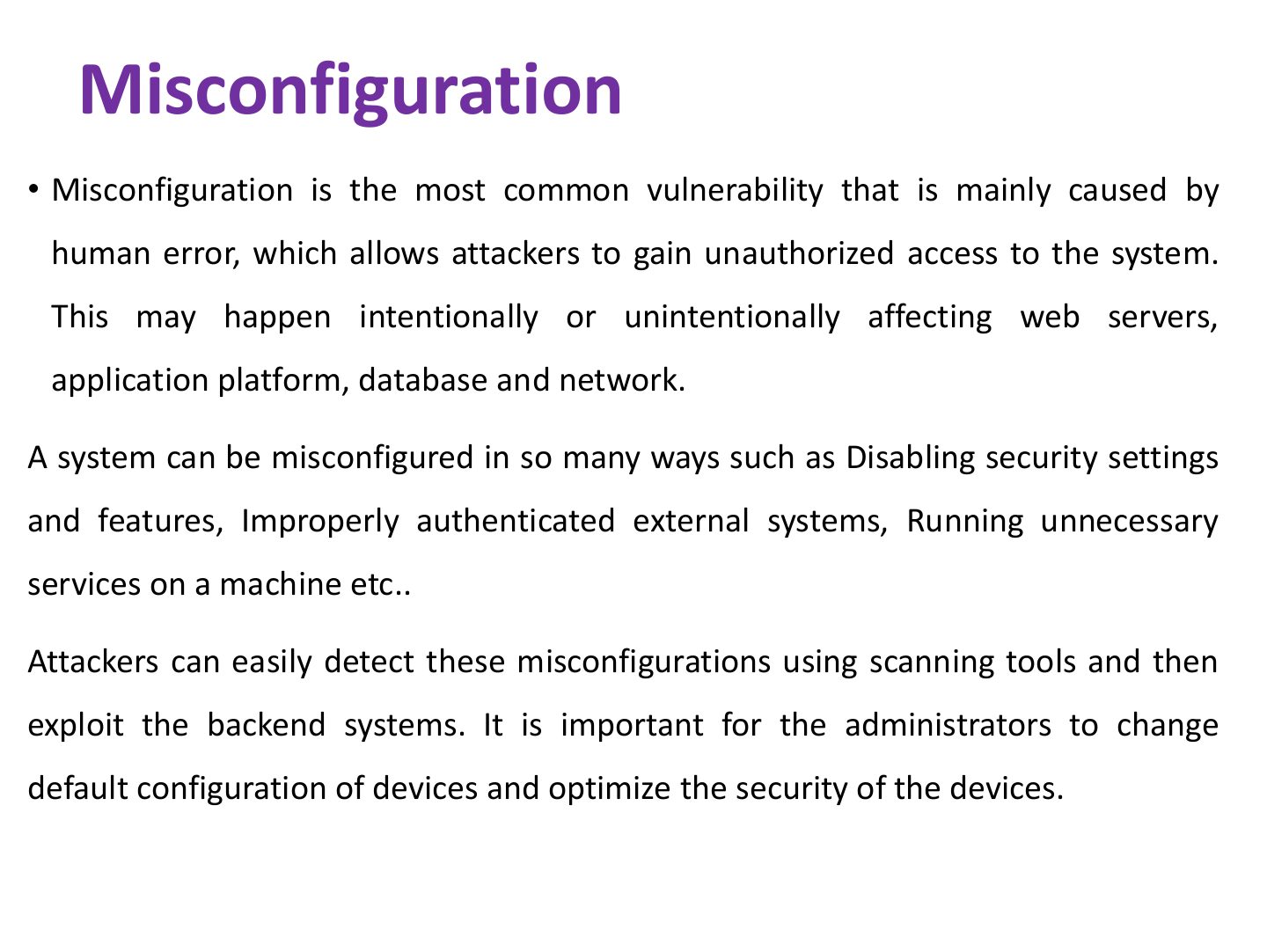
- 8 Misconfiguration
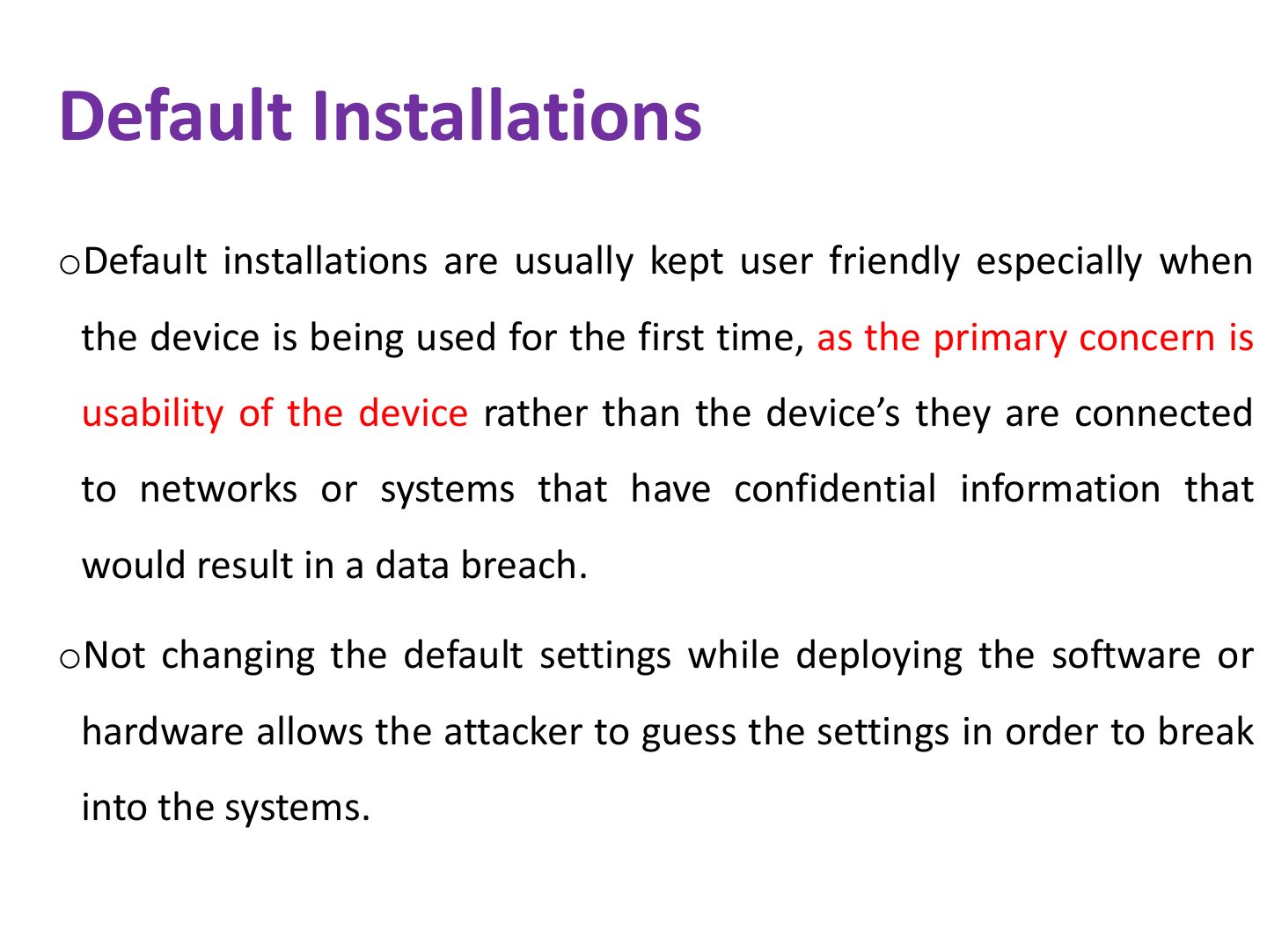
- 9 Default Installations
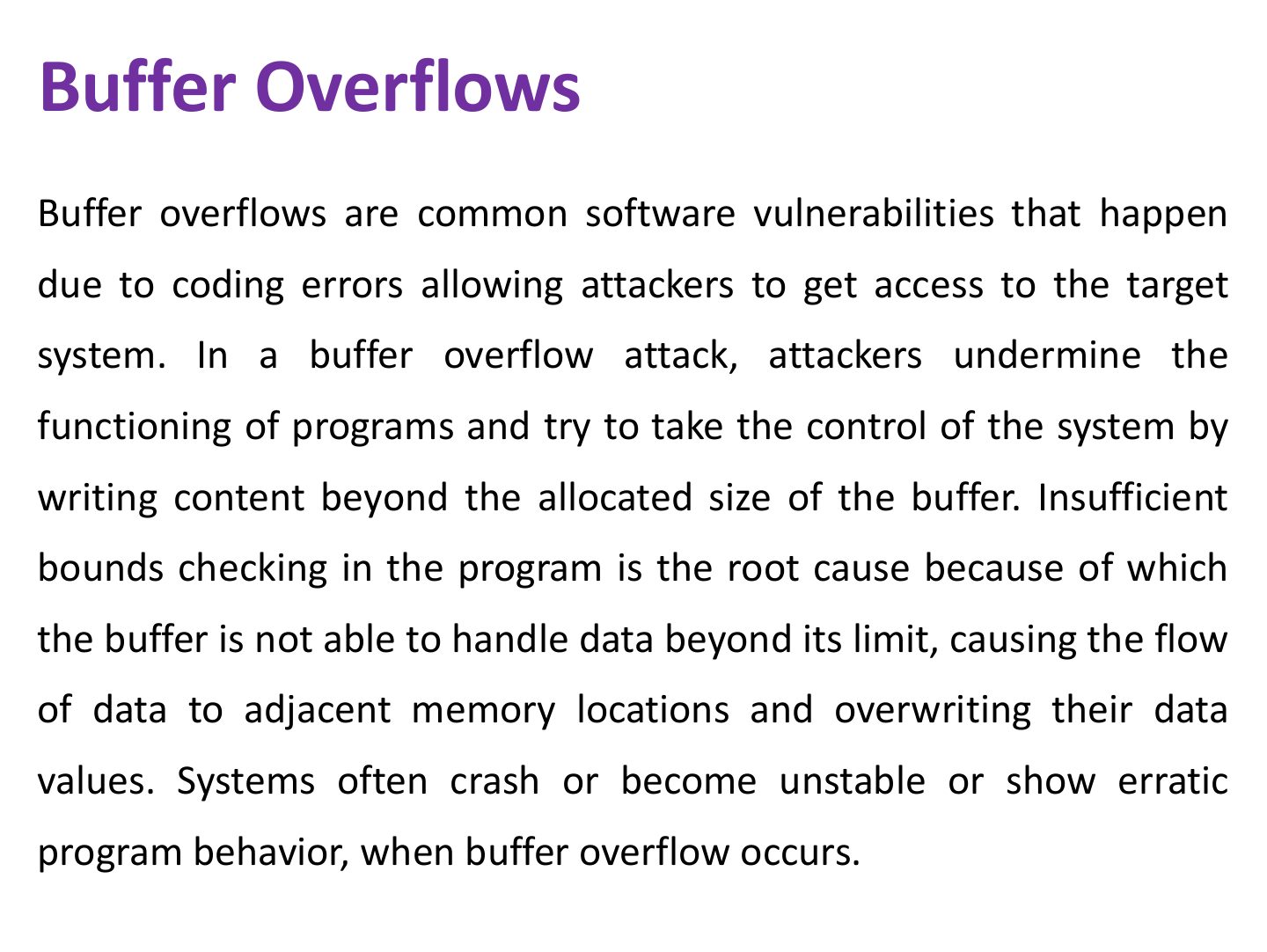
- 10 Buffer Overflows
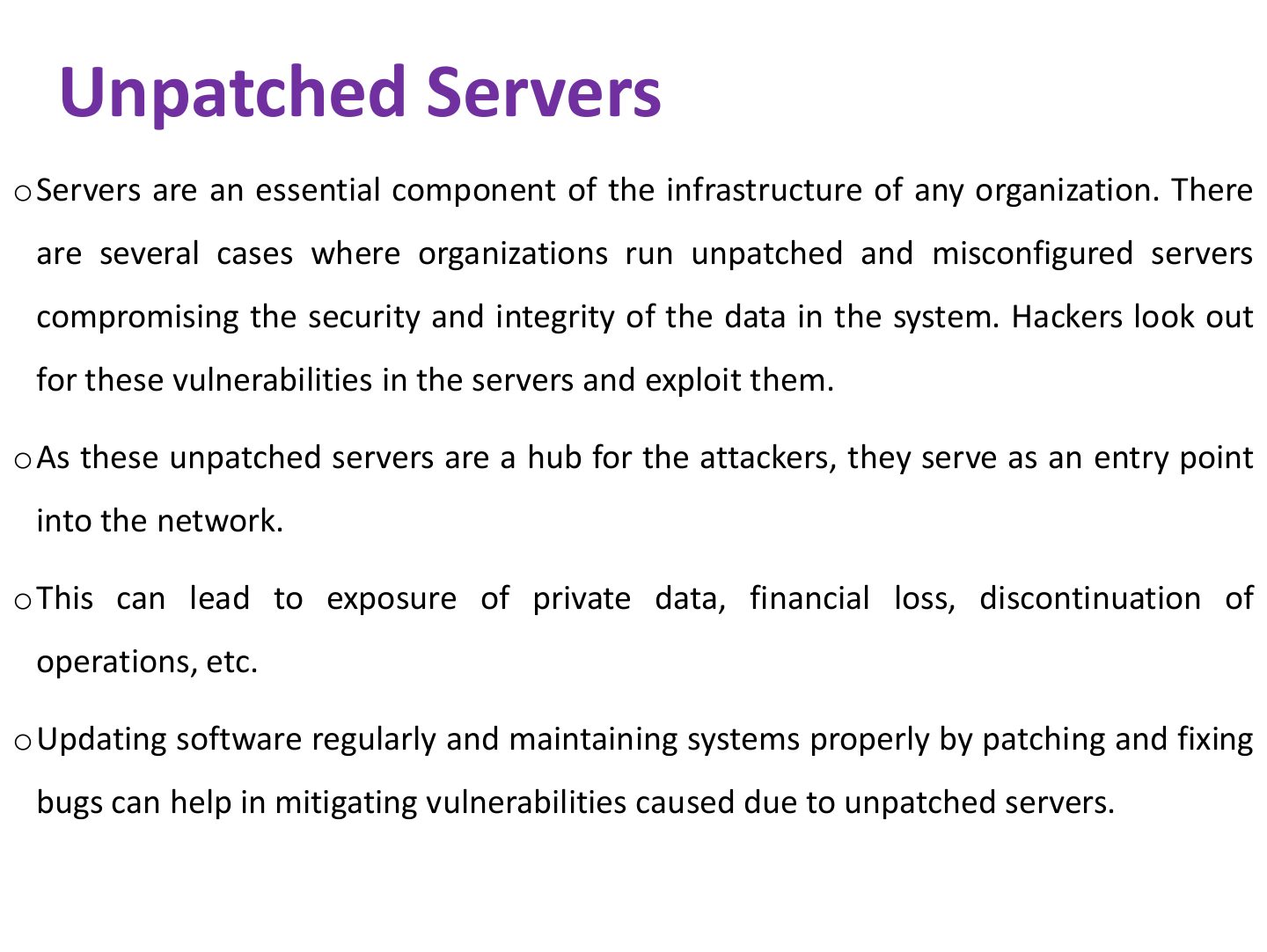
- 11 Unpatched Servers
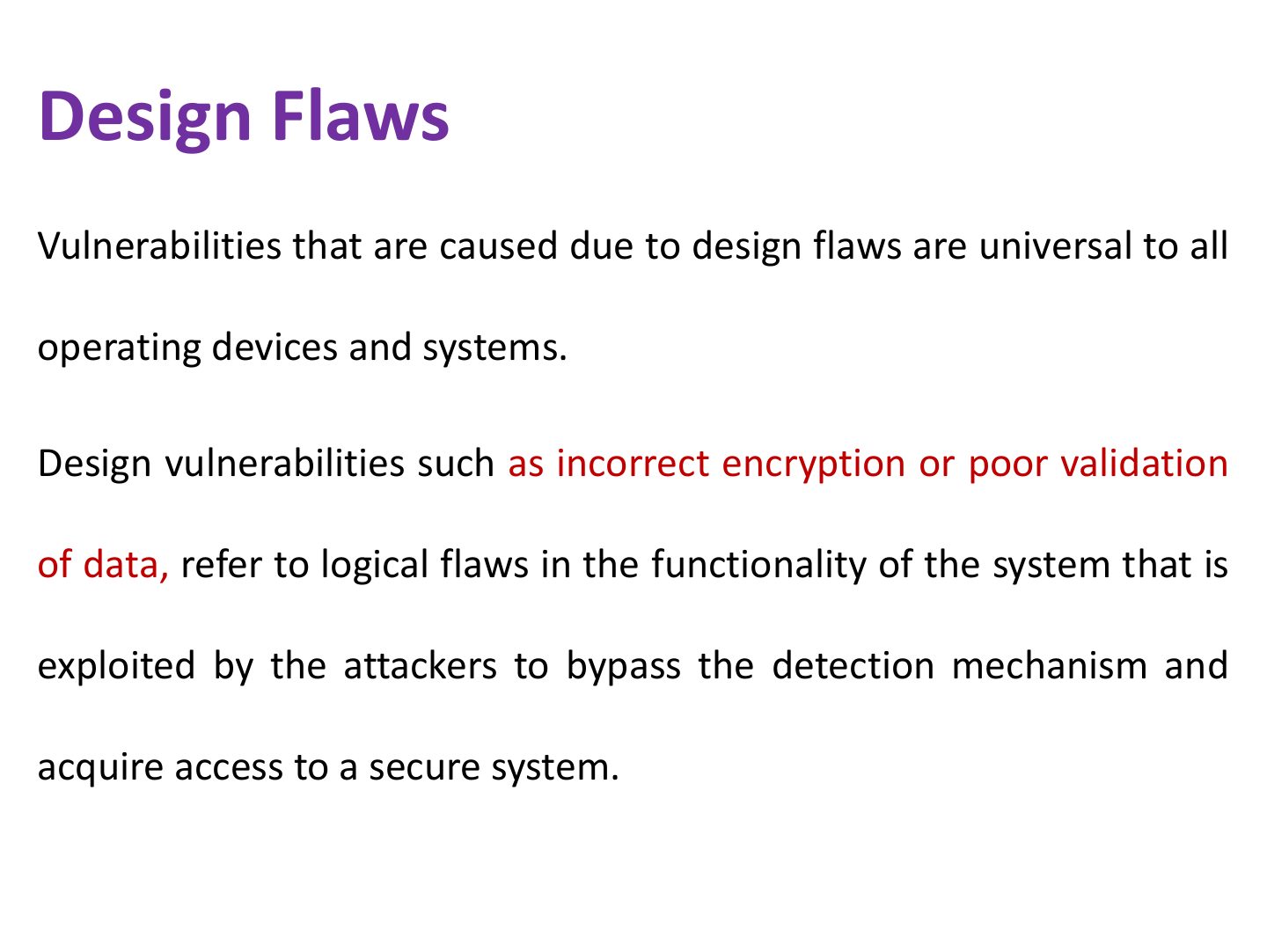
- 12 Design Flaws
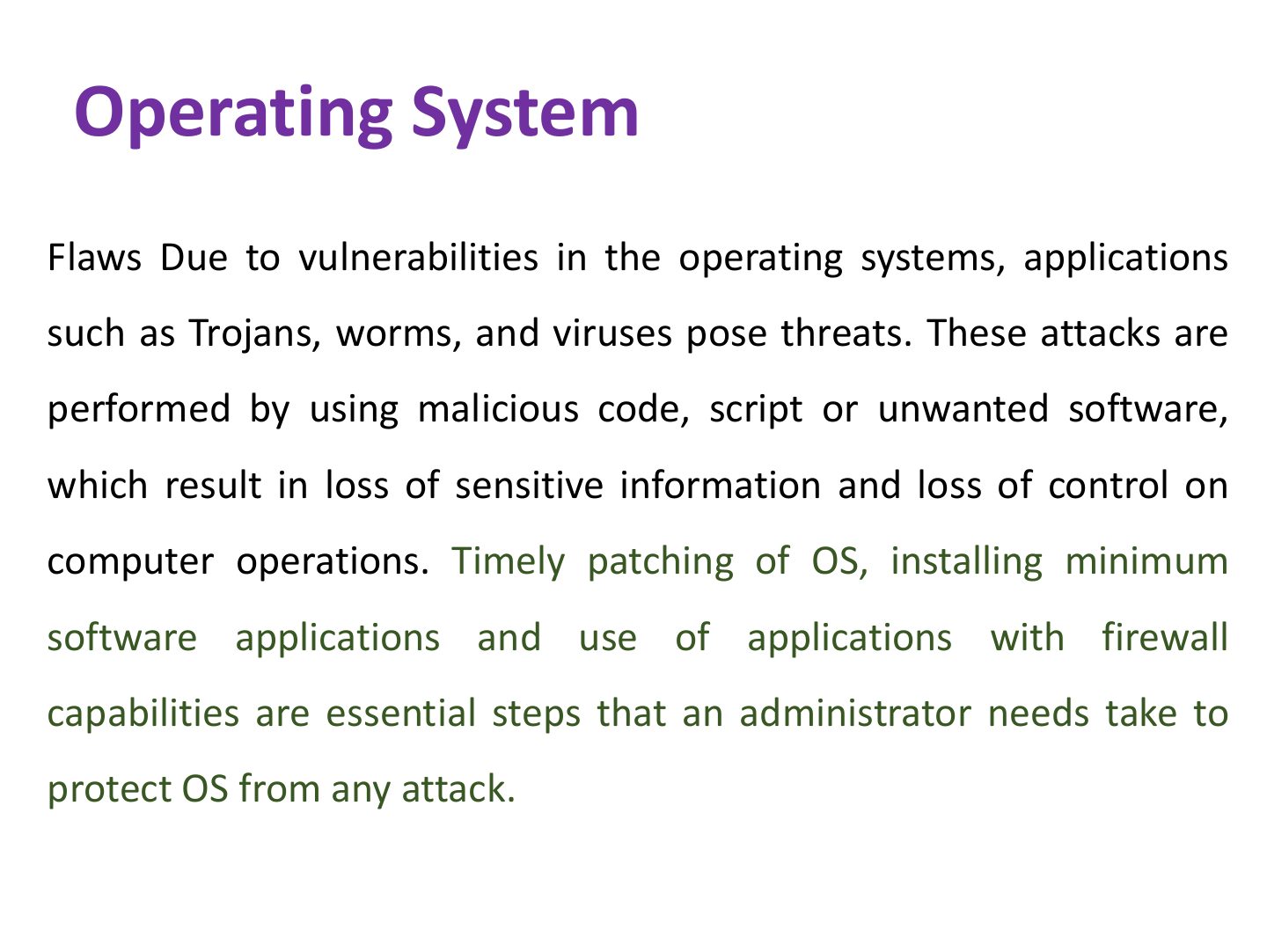
- 13 Operating System
- 14 Application Flaws
- 15 Open Services
- 16 Default Passwords
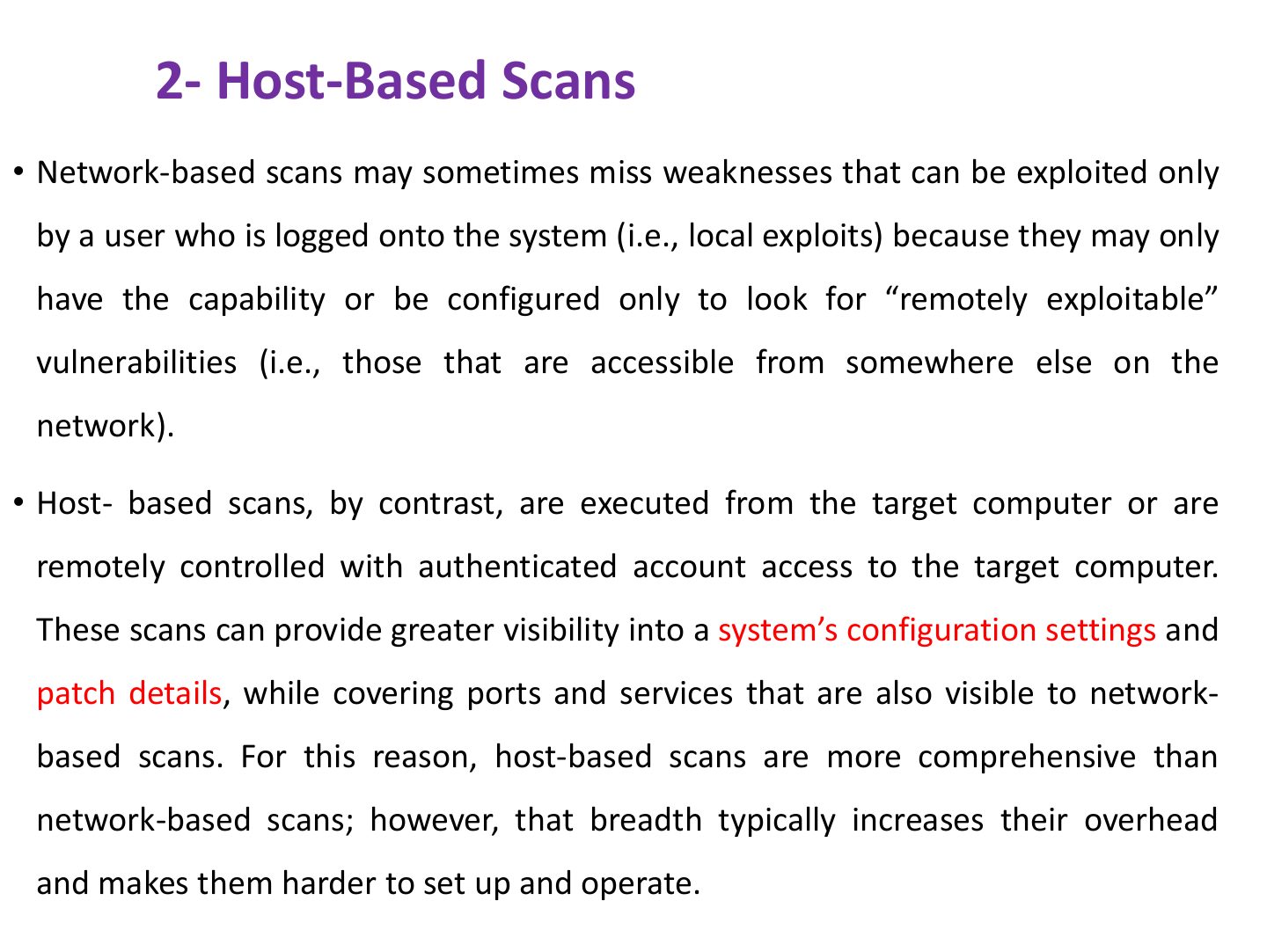
- 17 As a practical matter, it is impossible to remove every technical vulnerability from a given environment. There are several reasons for this. o Some vulnerabilities are latent until they are
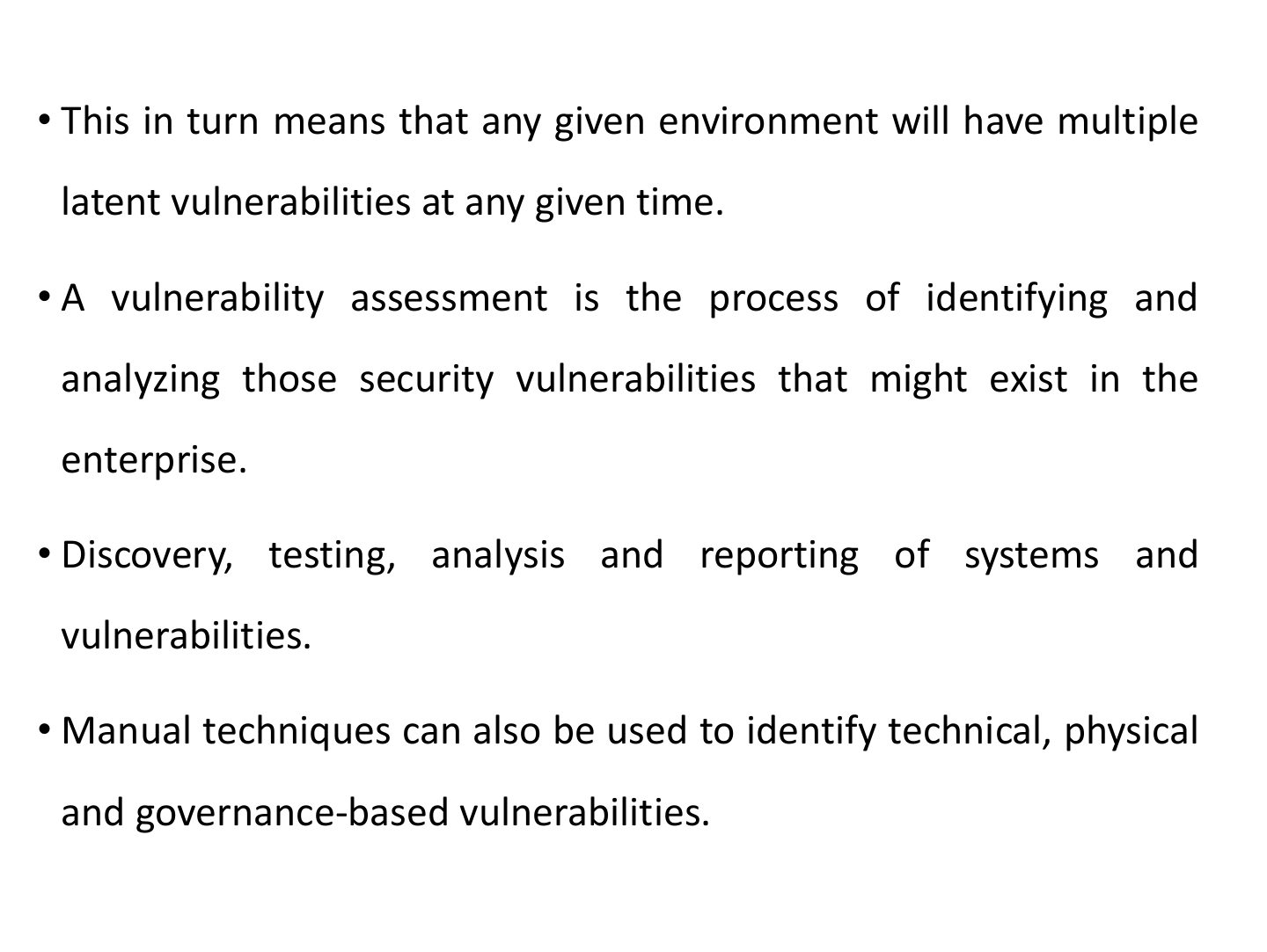
- 18 • This in turn means that any given environment will have multiple
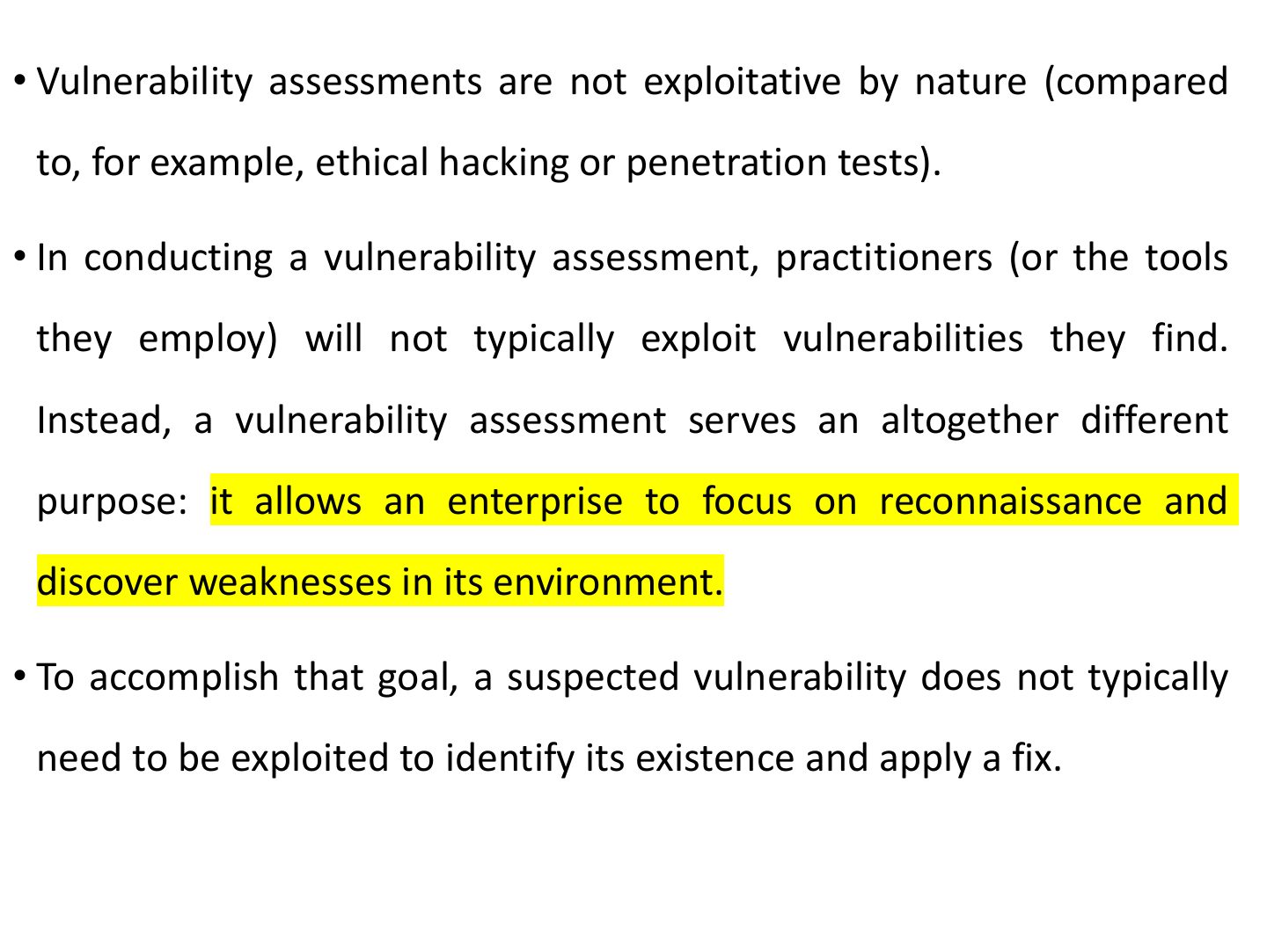
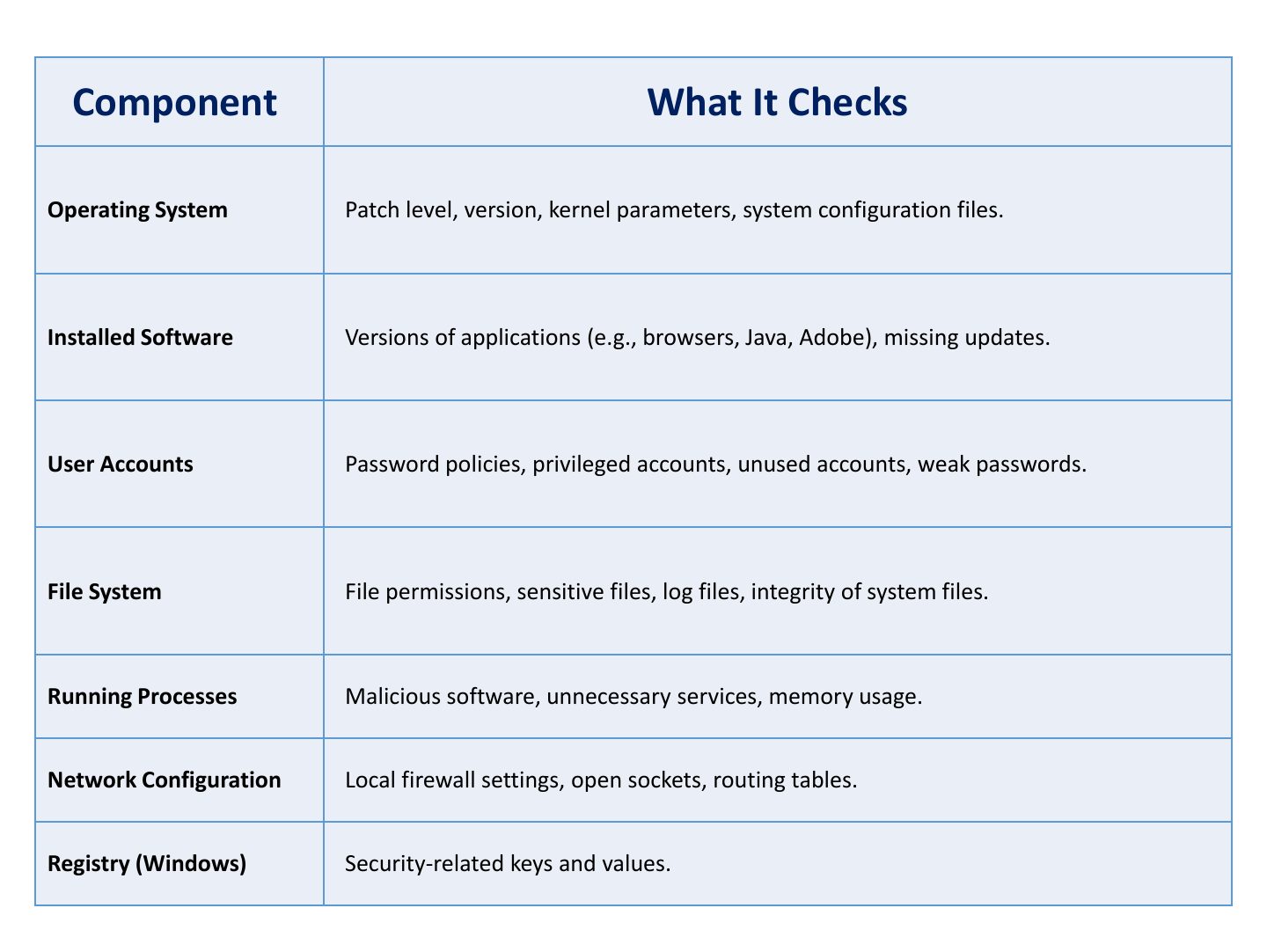
- 19 • Vulnerability assessments are not exploitative by nature (compared
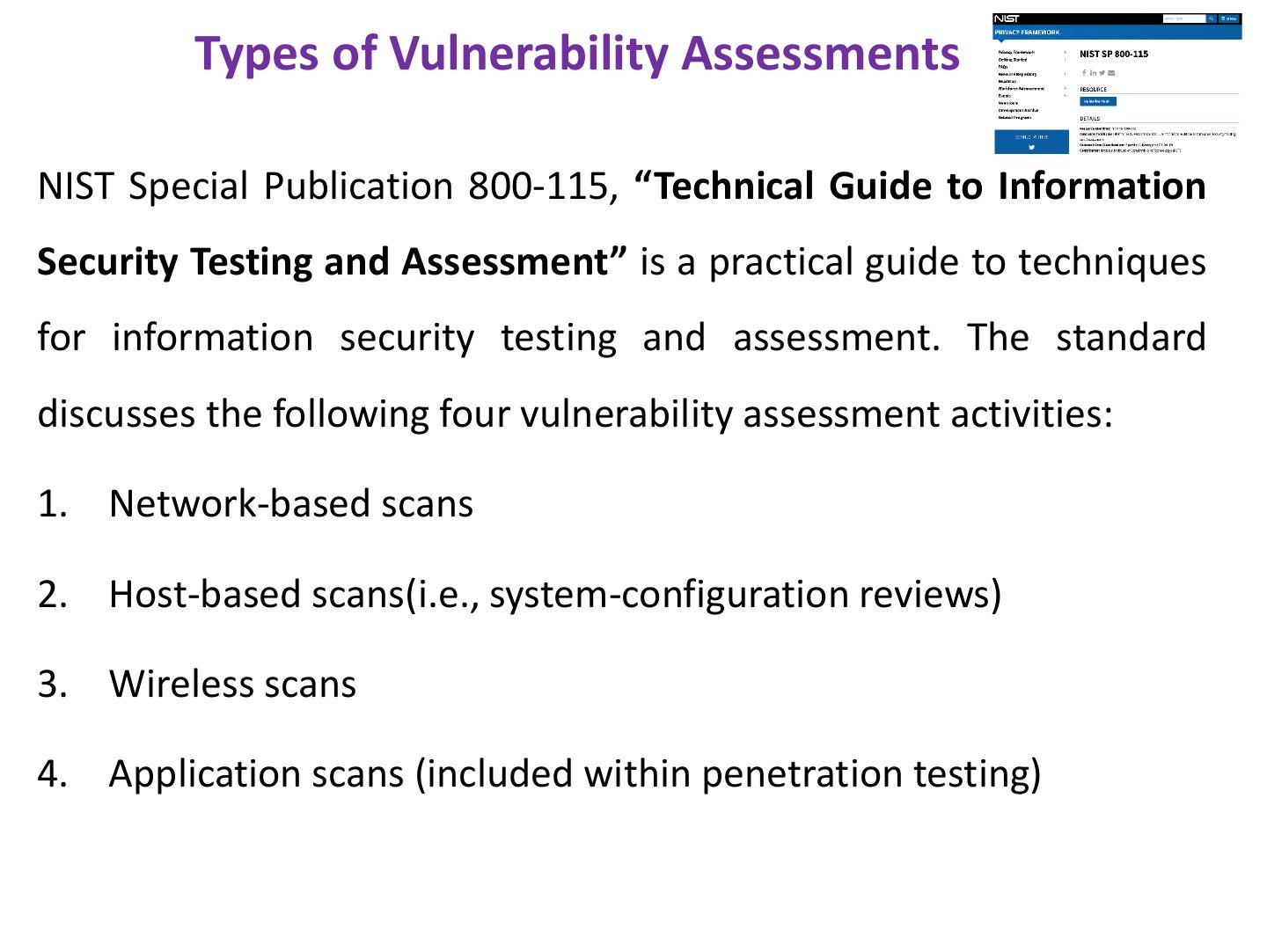
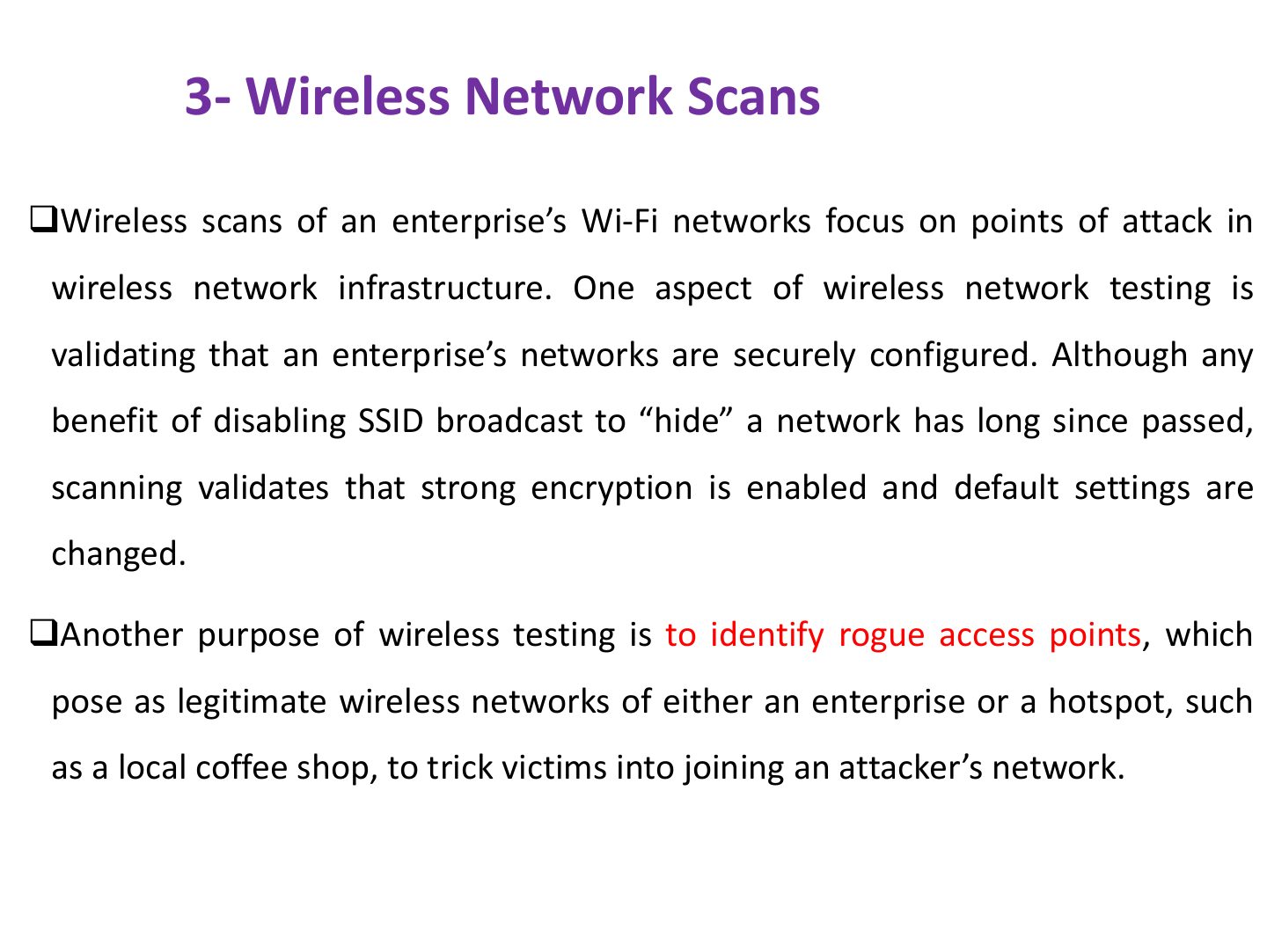
- 20 Types of Vulnerability Assessments
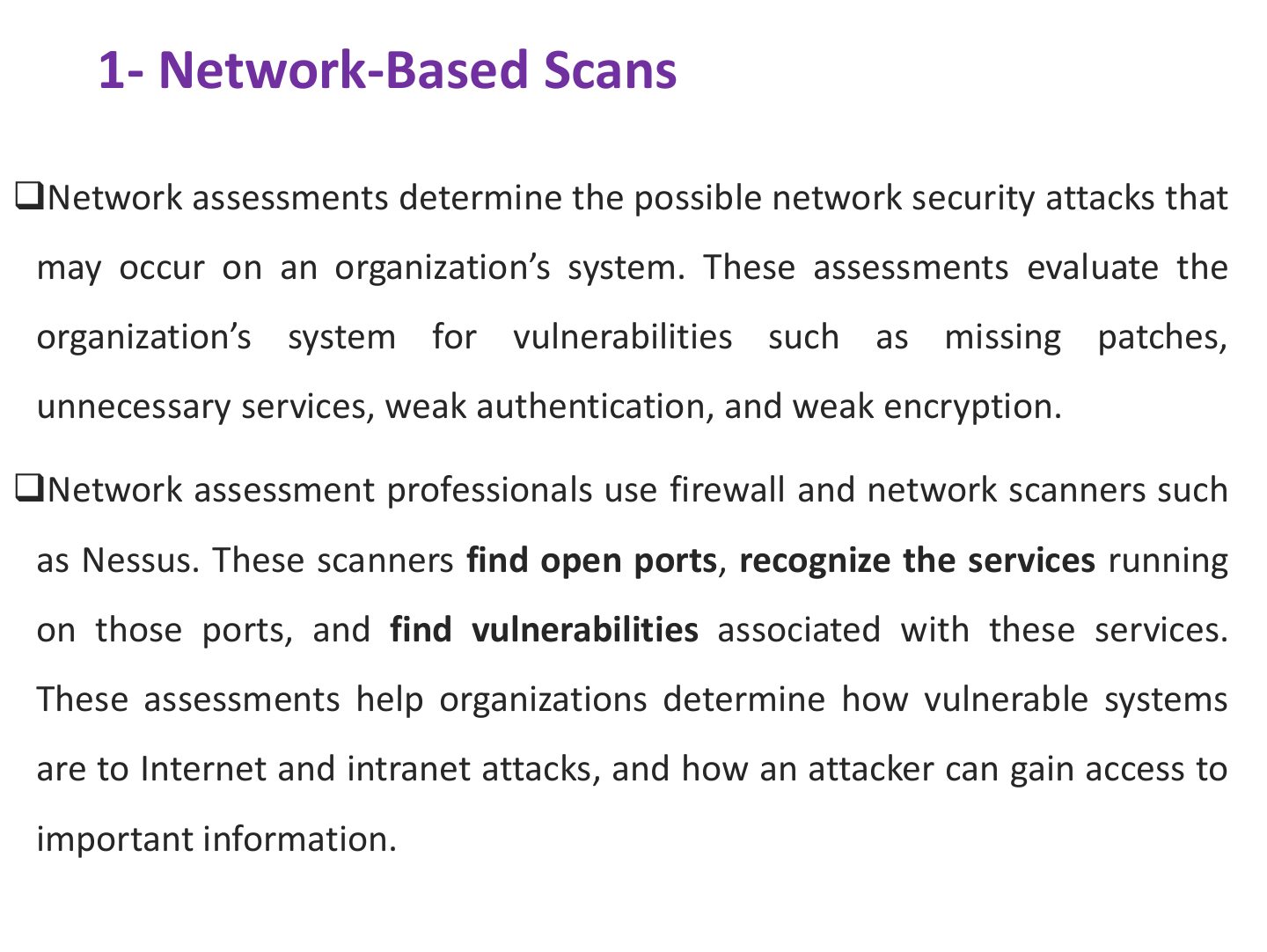
- 21 1- Network-Based Scans
- 22 2- Host-Based Scans
- 23 2- Host-Based Scans Scope (Cont ... )
- 24 Component What It Checks
- 25 3- Wireless Network Scans
- 26 Host-Based vs. Network-Based Scans
- 27 4- Application Scans
- 28 Identifying Scan Targets
- 29 • What is the data classification of the information stored, processed, or
- 30 Determining Scan Frequency
- 31 What are vulnerability scanners and how do they work?
- 32 Pros and Cons of a Vulnerability Scanner
- 33 Many organizations find themselves bound by
- 34 Security Standard
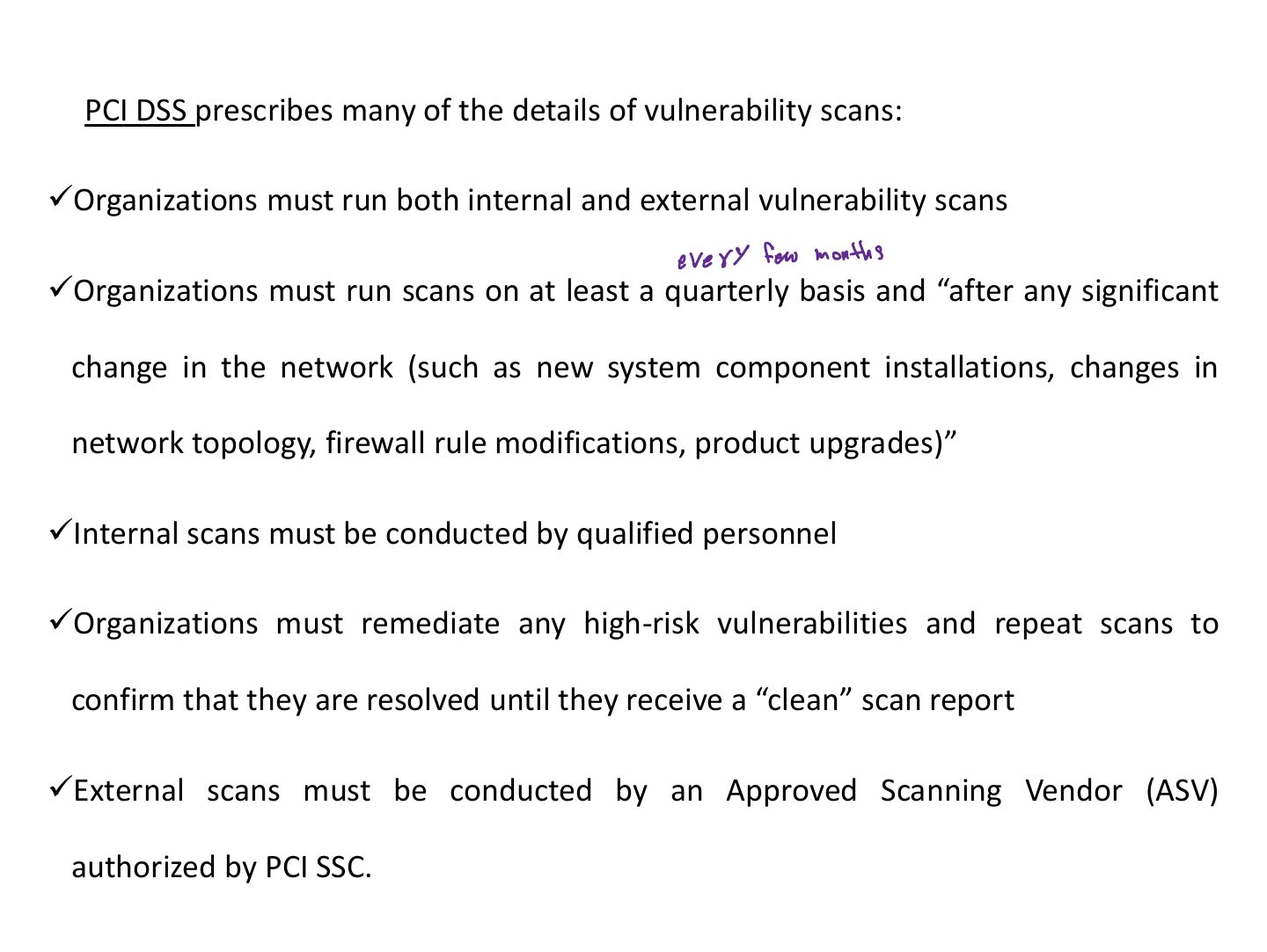
- 35 PCI DSS prescribes many of the details of vulnerability scans:
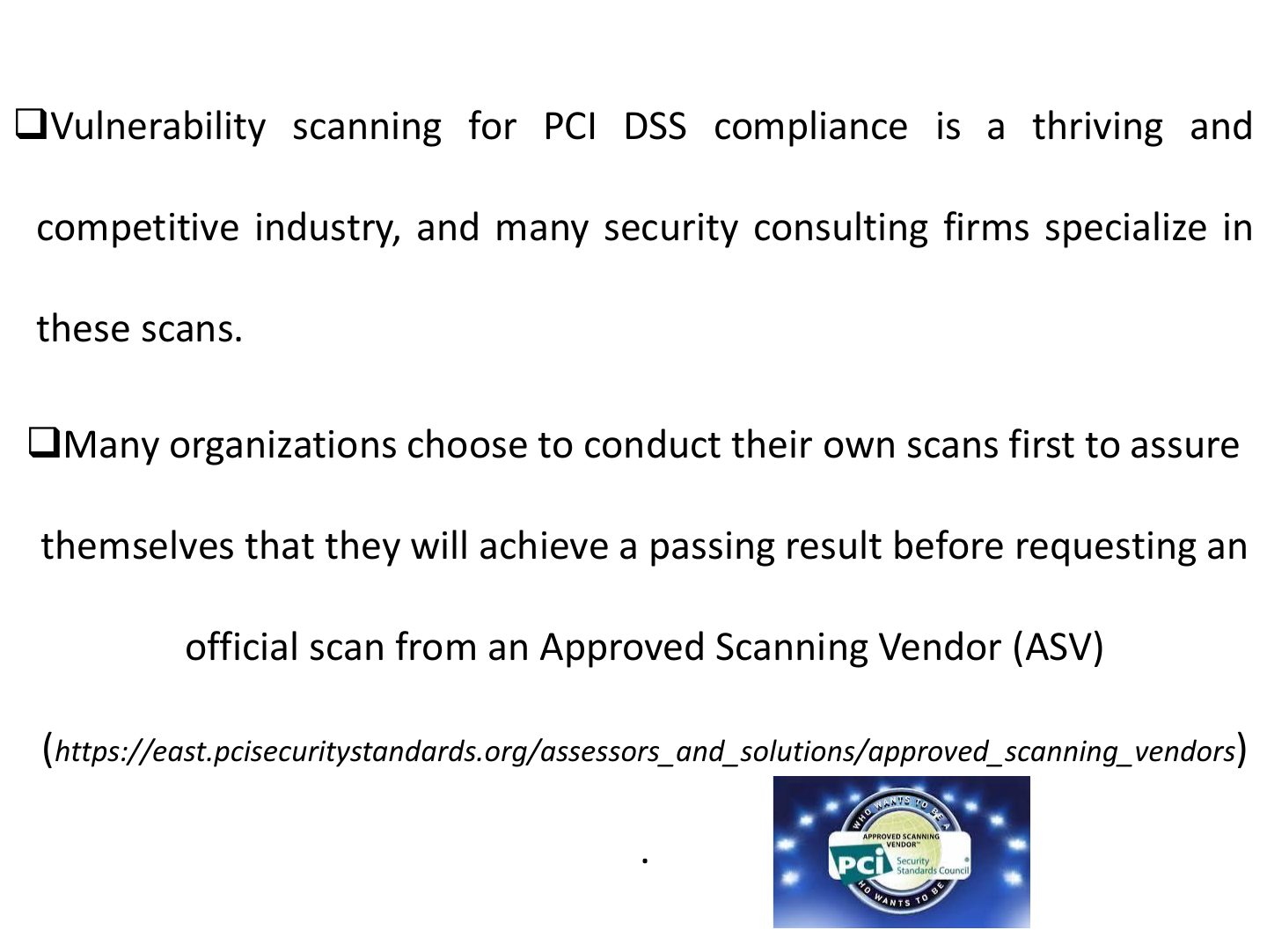
- 36 ❑ Vulnerability scanning for PCI DSS compliance is a thriving and
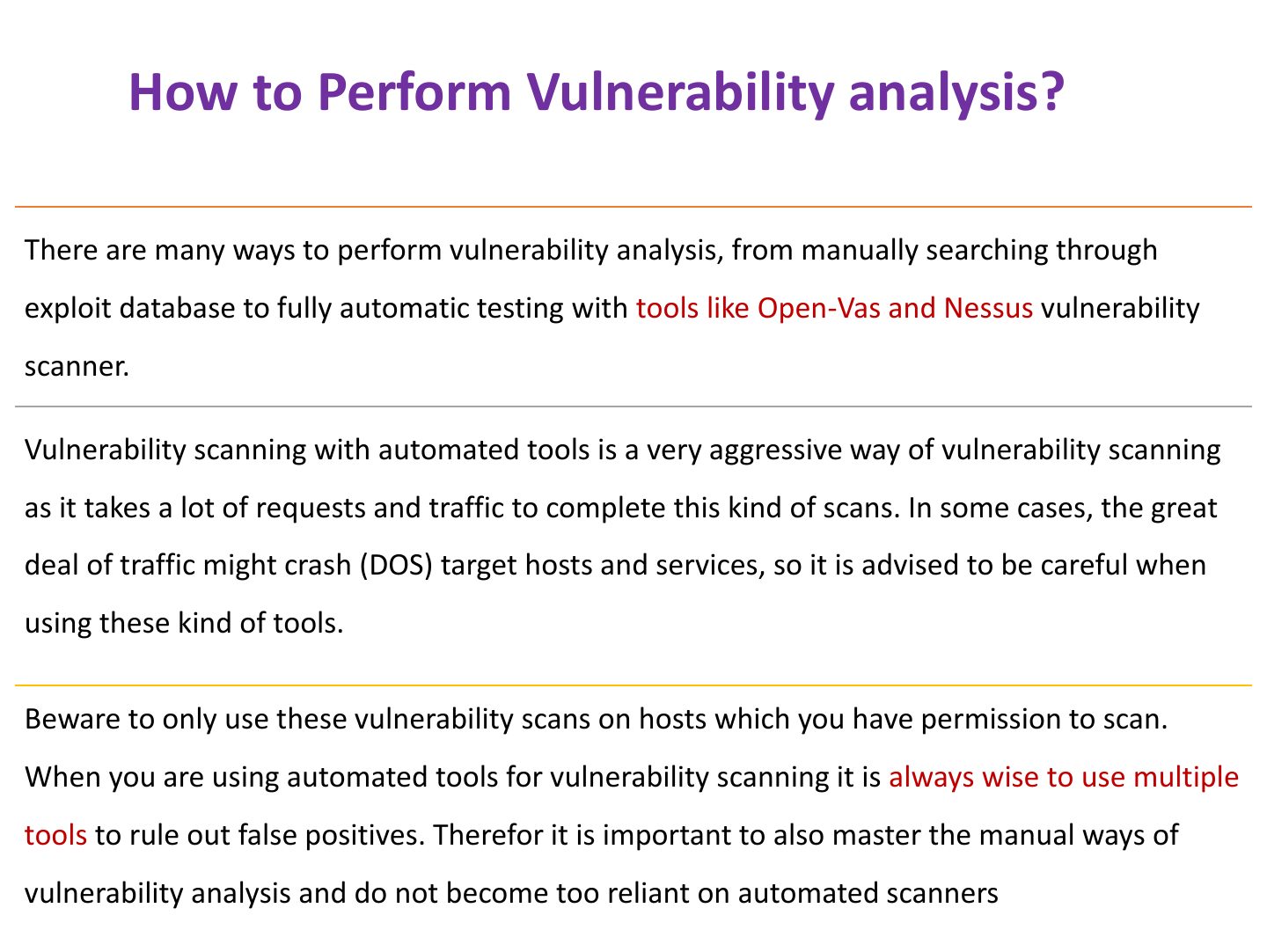
- 37 How to Perform Vulnerability analysis?
- 38 Many of the services contain known vulnerabilities which can be
- 39 Common Vulnerability Scoring System
- 40 CVSS assessment consists of three metrics for measuring vulnerabilities:
- 41 Common Vulnerabilities and Exposures (CVE)
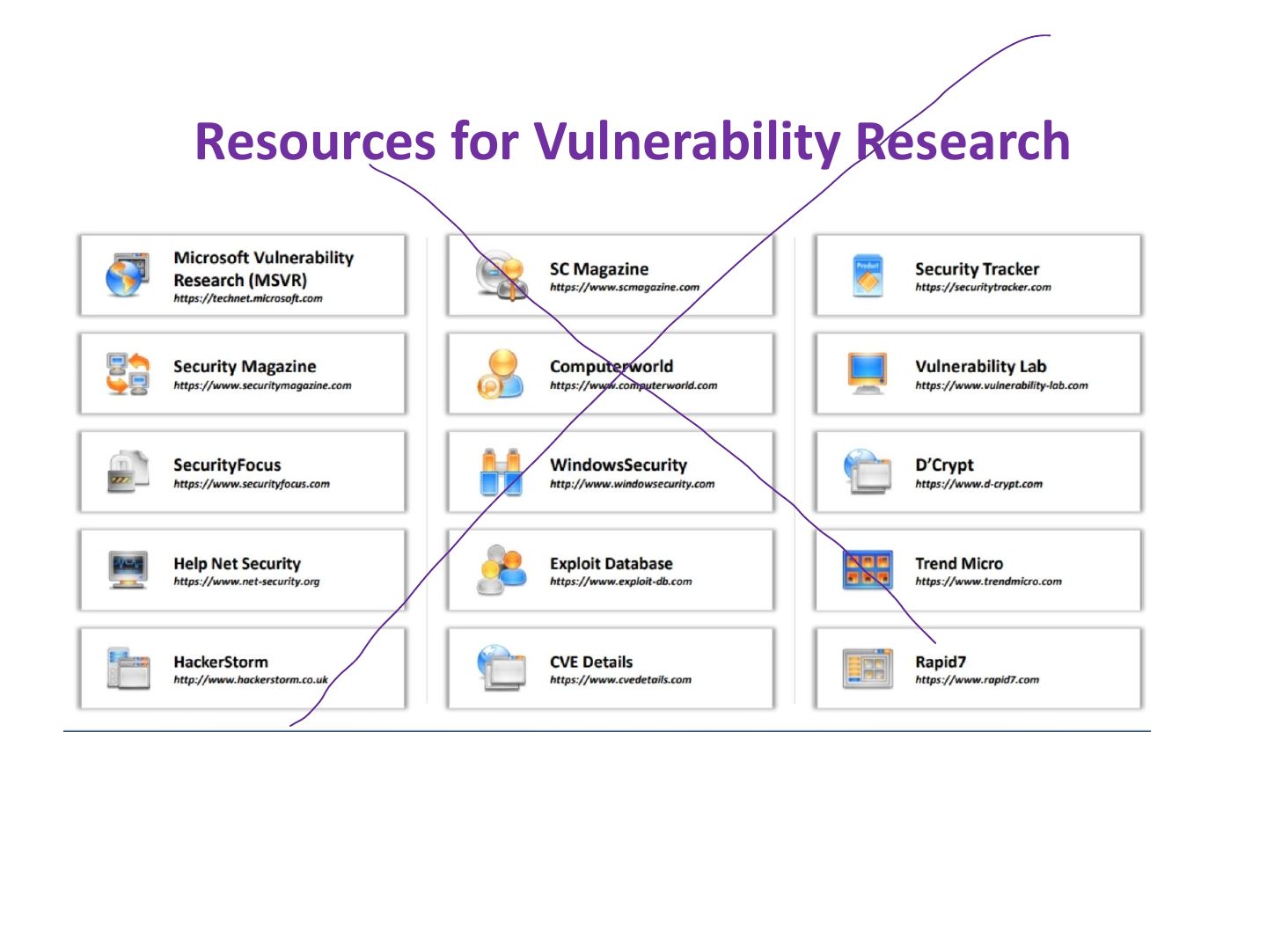
- 42 Resources for Vulnerability Research
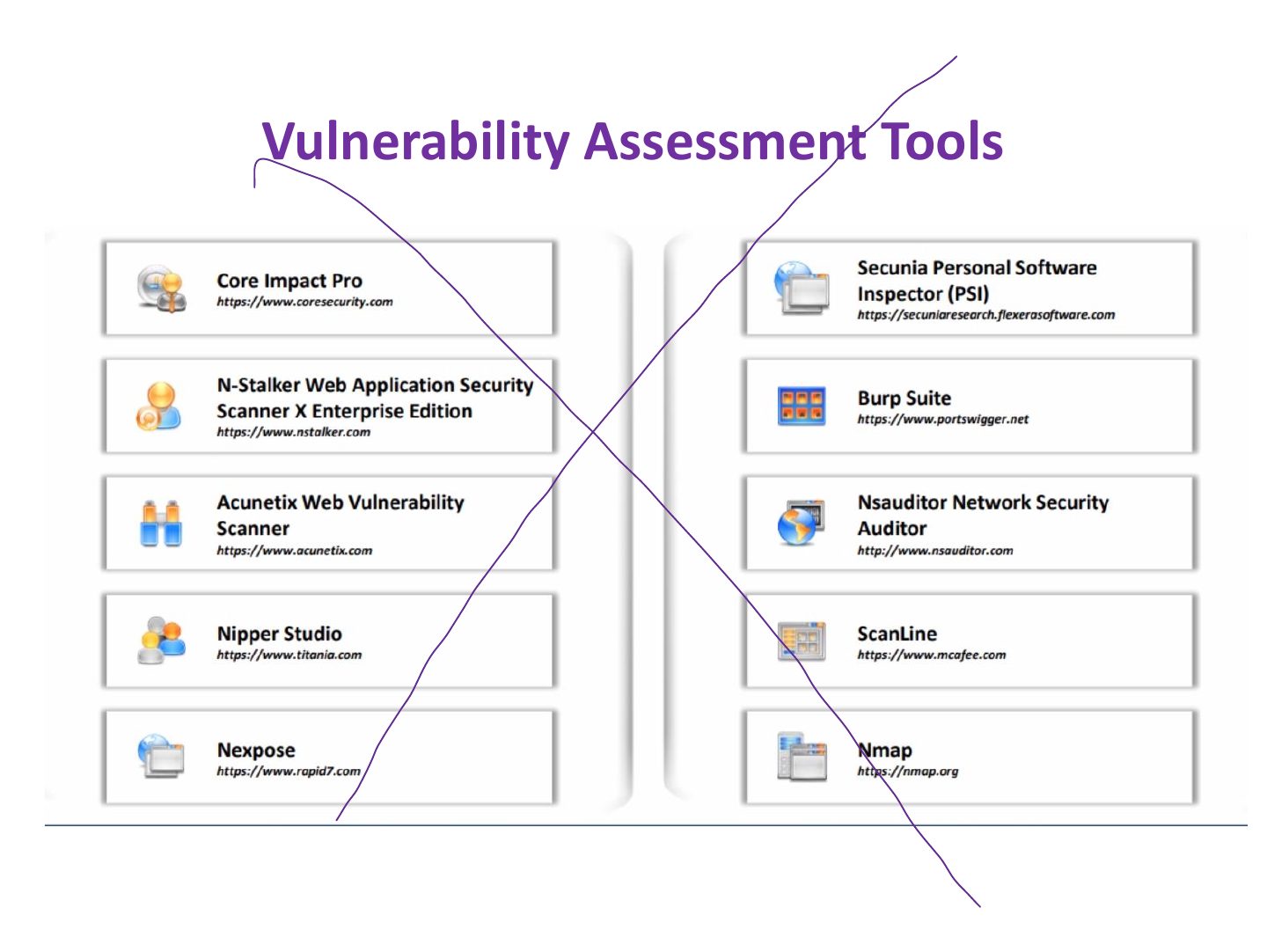
- 43 Vulnerability Assessment Tools
Slide 1

INTRODUCTION
Traditionally, cyber security professionals are trained to
The US National Institute of Standards and
An ethical hacker needs to keep up with the most recently discovered
Vulnerability Research
Notes
Vulnerability research: keep up with newly discovered weaknesses (advisories, CVE, vendor bulletins).
Vulnerability Classification
Exam angle
Misconfiguration
Default Installations
Buffer Overflows
Notes
Buffer overflow: writing more data than a buffer holds overwrites memory and can run attacker code.
Unpatched Servers
Design Flaws
Operating System
Application Flaws
Open Services
Default Passwords
As a practical matter, it is impossible to remove every technical vulnerability from a given environment. There are several reasons for this. o Some vulnerabilities are latent until they are
• This in turn means that any given environment will have multiple
• Vulnerability assessments are not exploitative by nature (compared
Types of Vulnerability Assessments
1- Network-Based Scans
2- Host-Based Scans
2- Host-Based Scans Scope (Cont ... )
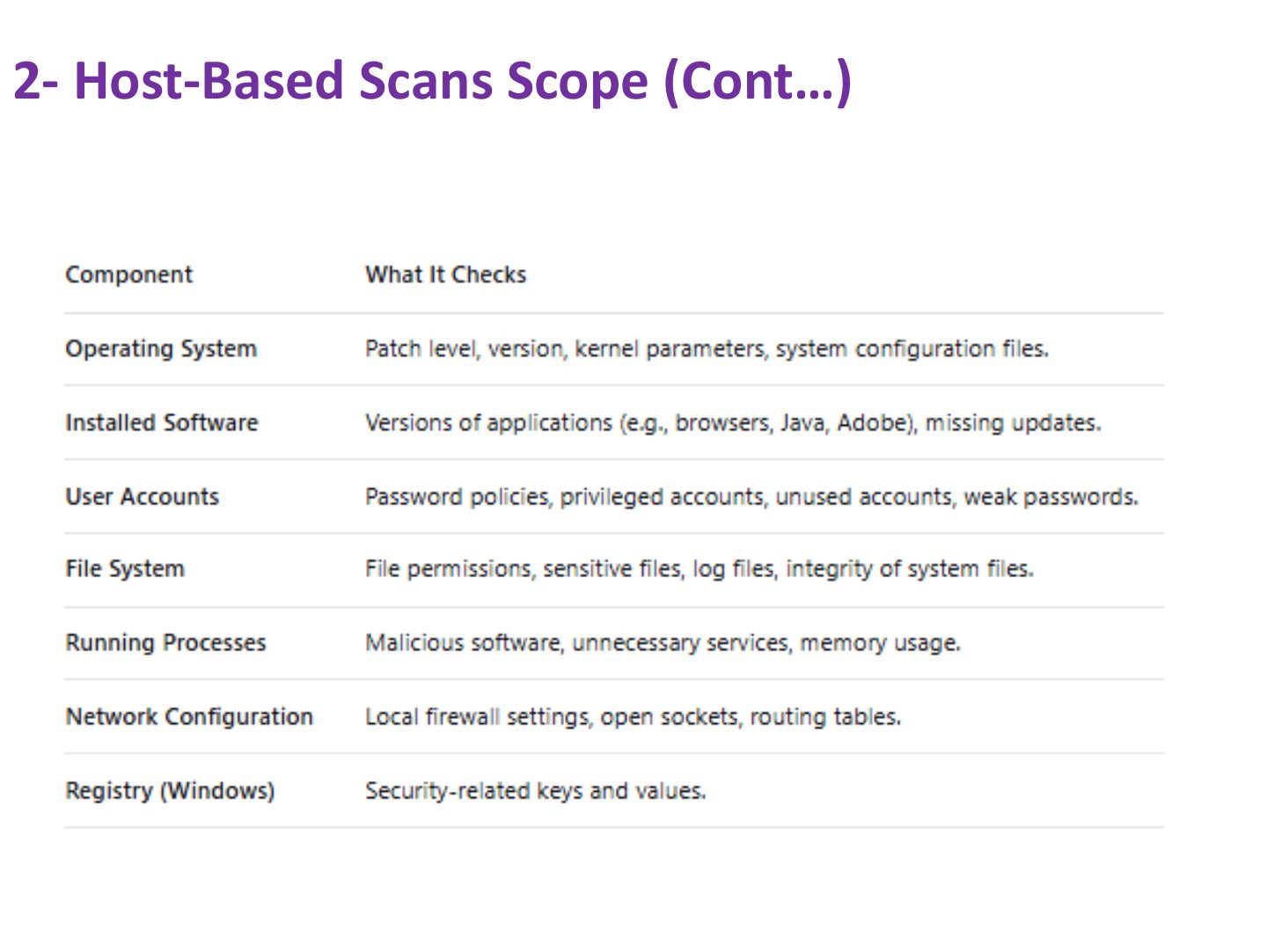
Component What It Checks
3- Wireless Network Scans
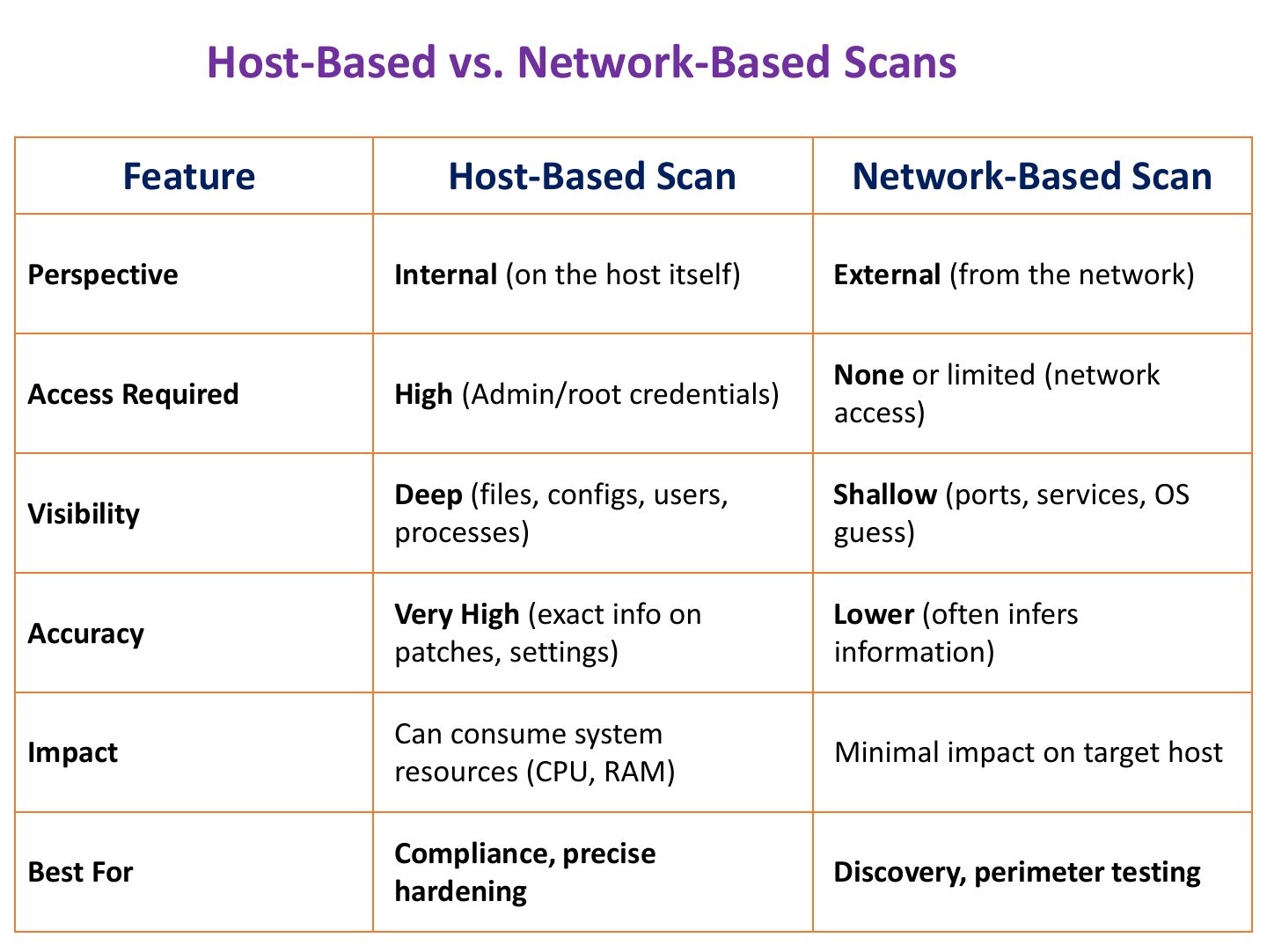
Host-Based vs. Network-Based Scans
Notes
Network-based scans see services exposed over the network; host-based scans (with an agent or credentials) see local config, patches and accounts.
Exam angle
Which scan type best finds missing local patches and weak file permissions?
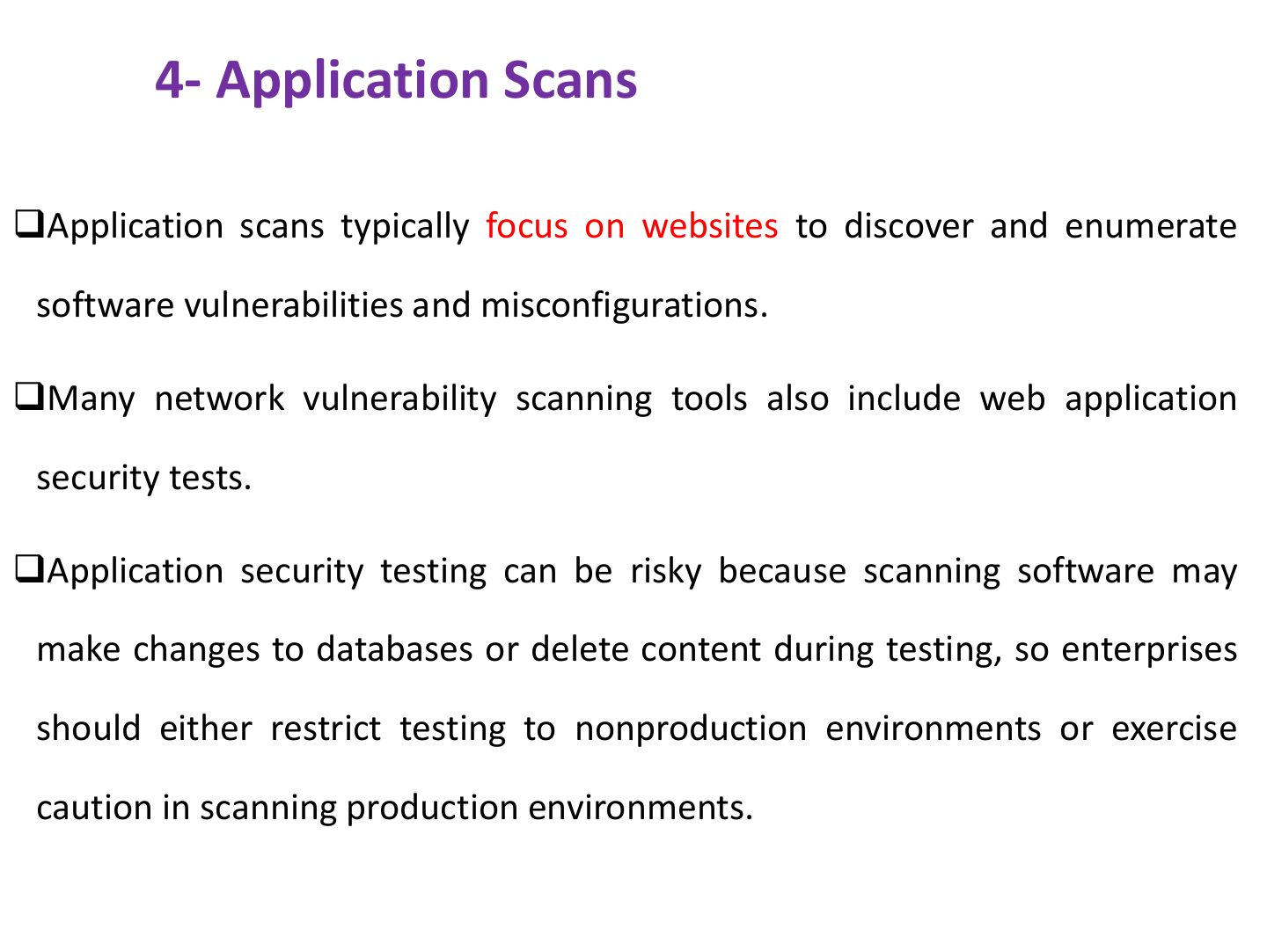
4- Application Scans
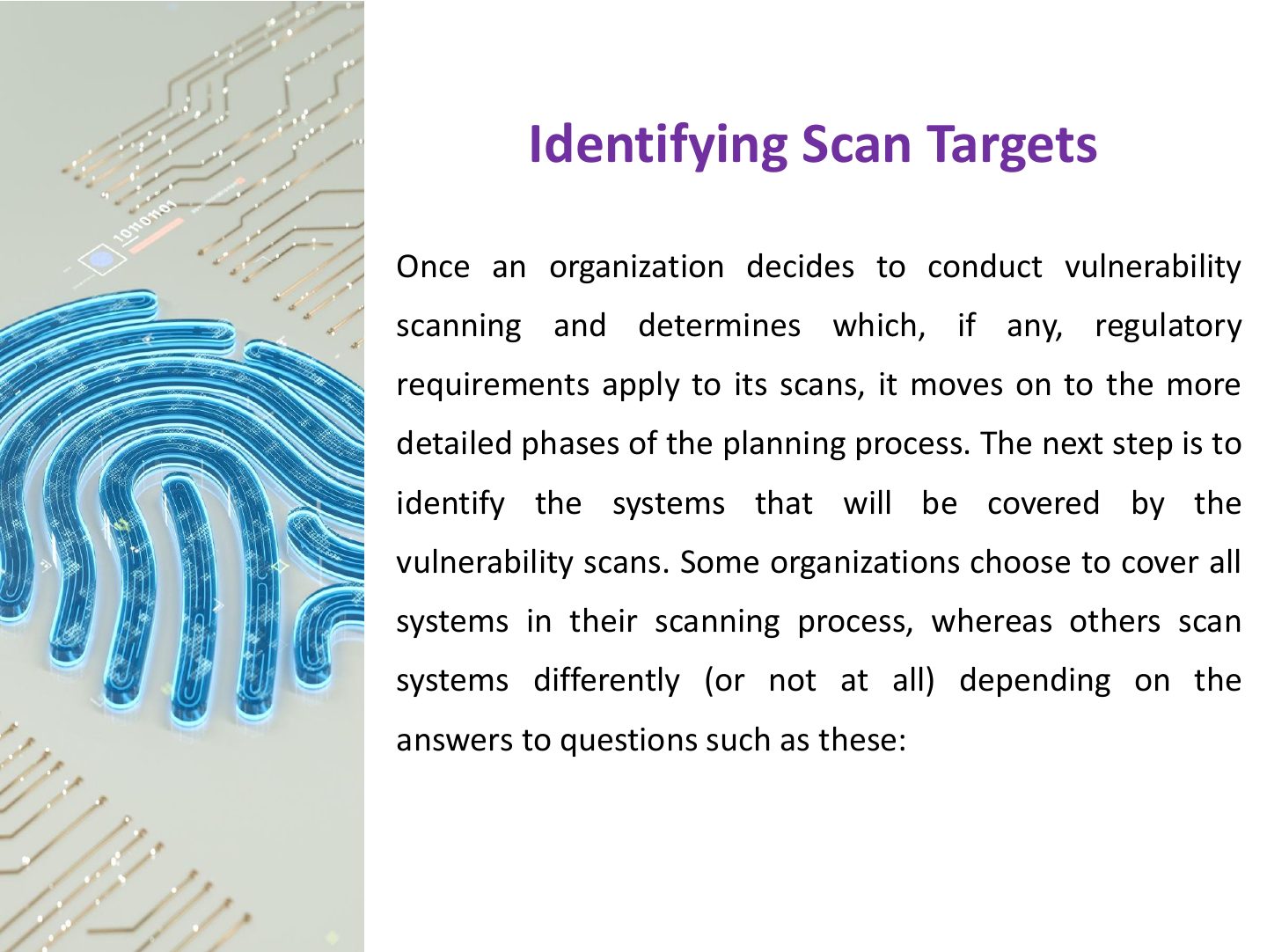
Identifying Scan Targets
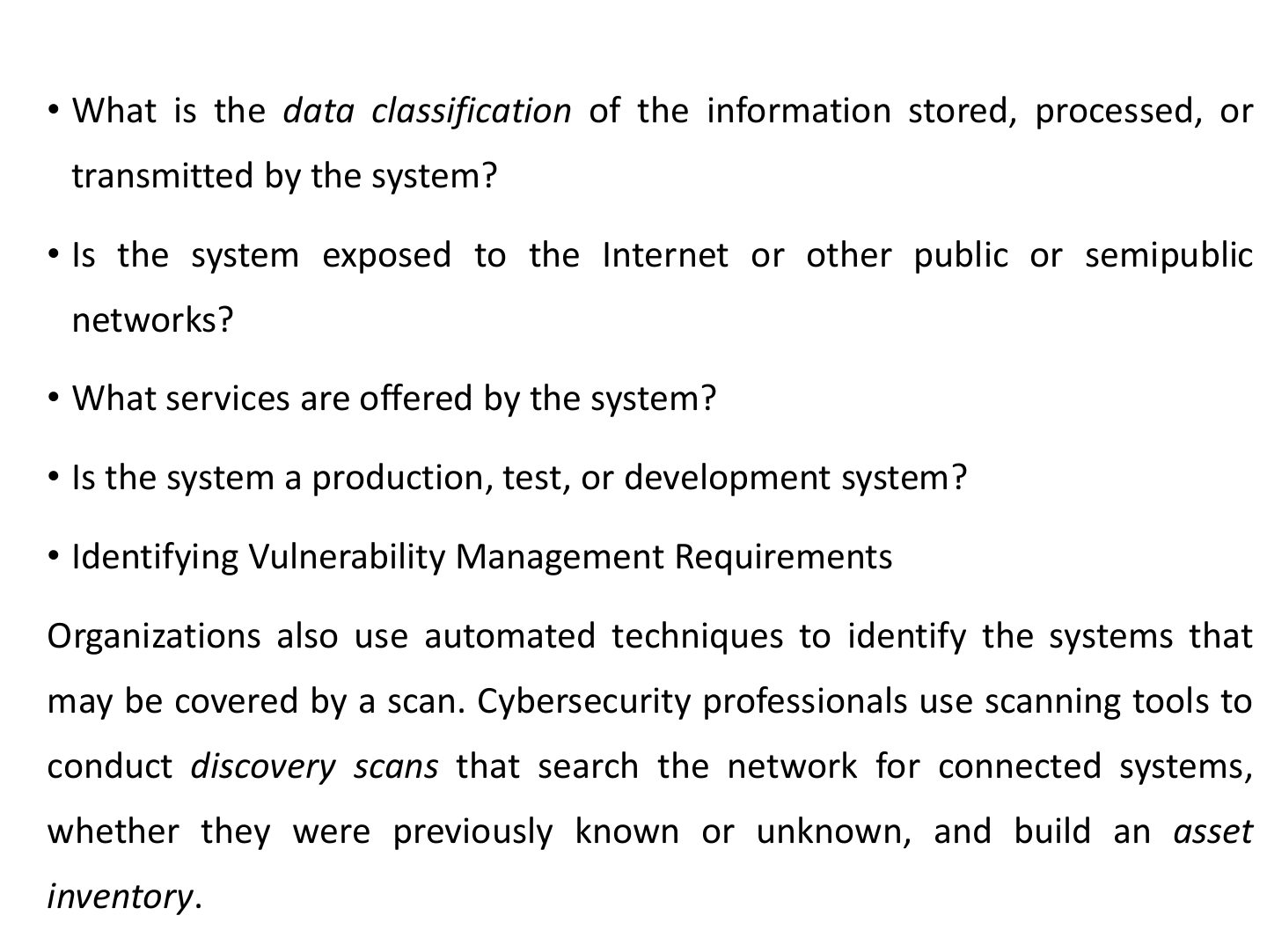
• What is the data classification of the information stored, processed, or
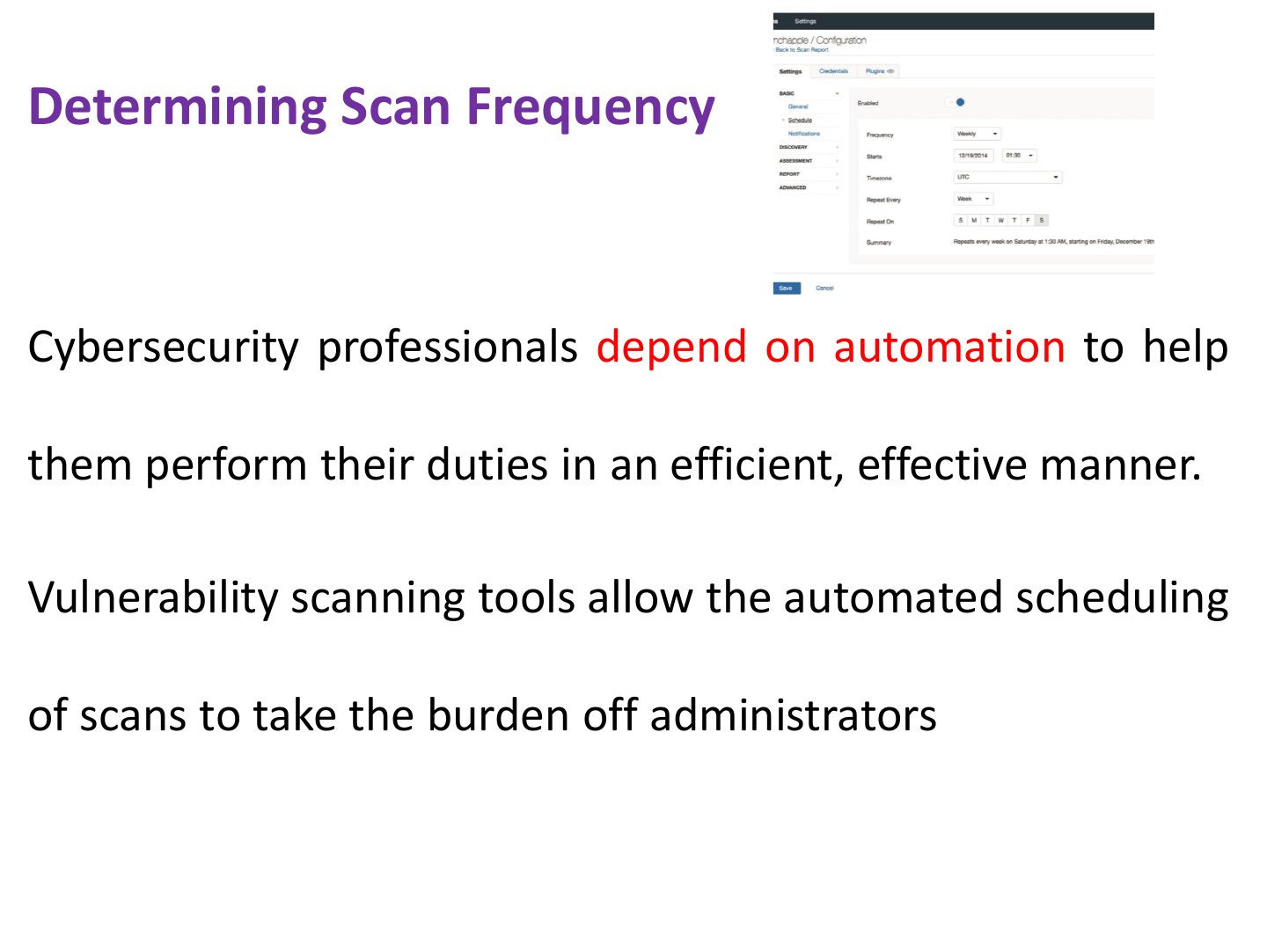
Determining Scan Frequency
Notes
Scan frequency depends on risk appetite, regulations (PCI DSS: quarterly), resources and licensing.
What are vulnerability scanners and how do they work?
Pros and Cons of a Vulnerability Scanner
Notes
Scanners are fast and repeatable but give false positives, miss logic flaws and can disrupt systems.
Exam angle
A clean vulnerability scan proves a system is secure.
- Scanners miss unknown and logic flaws.
Many organizations find themselves bound by
Security Standard
PCI DSS prescribes many of the details of vulnerability scans:
Notes
PCI DSS (card payments) requires quarterly internal and external scans (external by an Approved Scanning Vendor).
❑ Vulnerability scanning for PCI DSS compliance is a thriving and
How to Perform Vulnerability analysis?
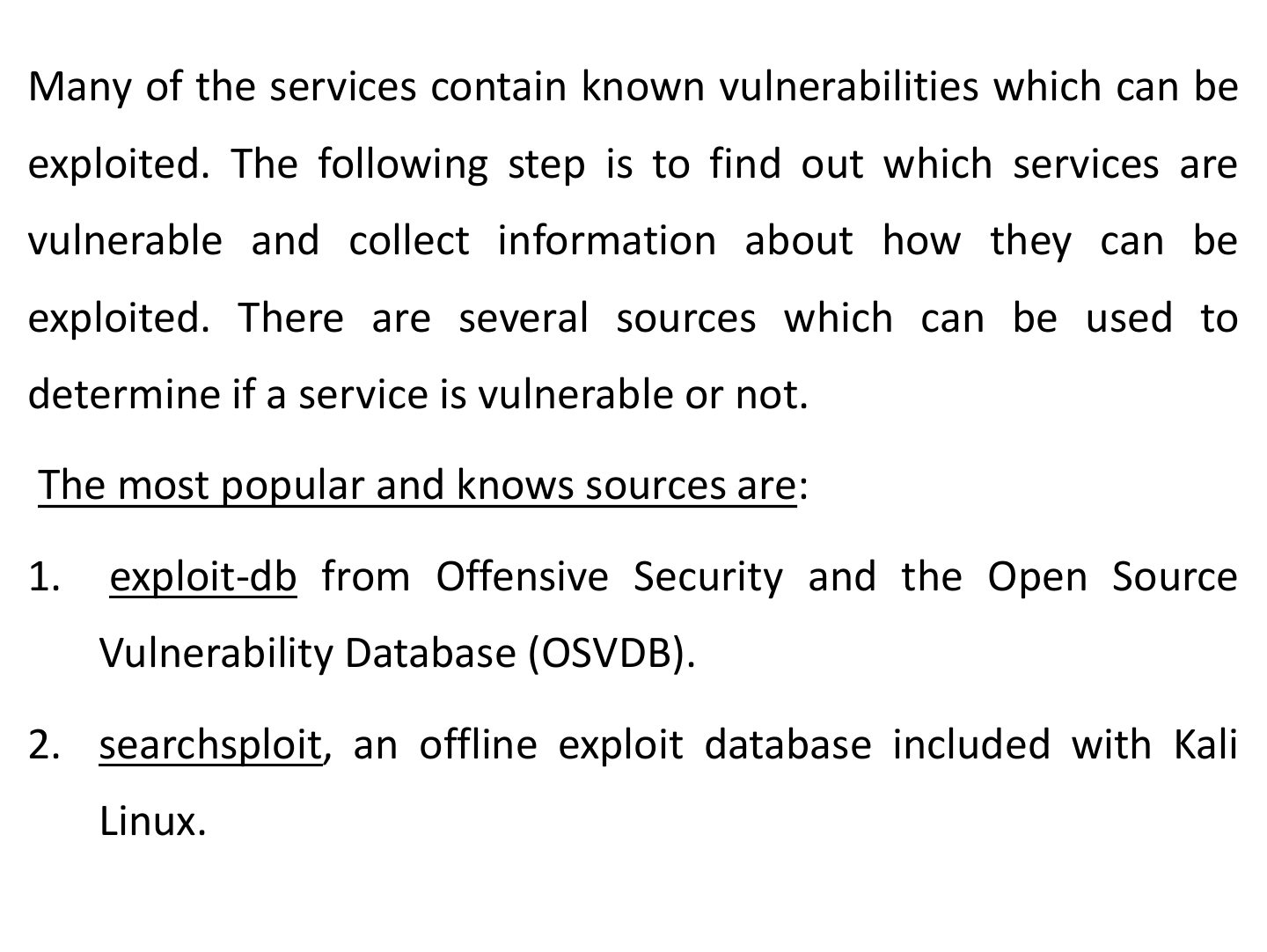
Many of the services contain known vulnerabilities which can be
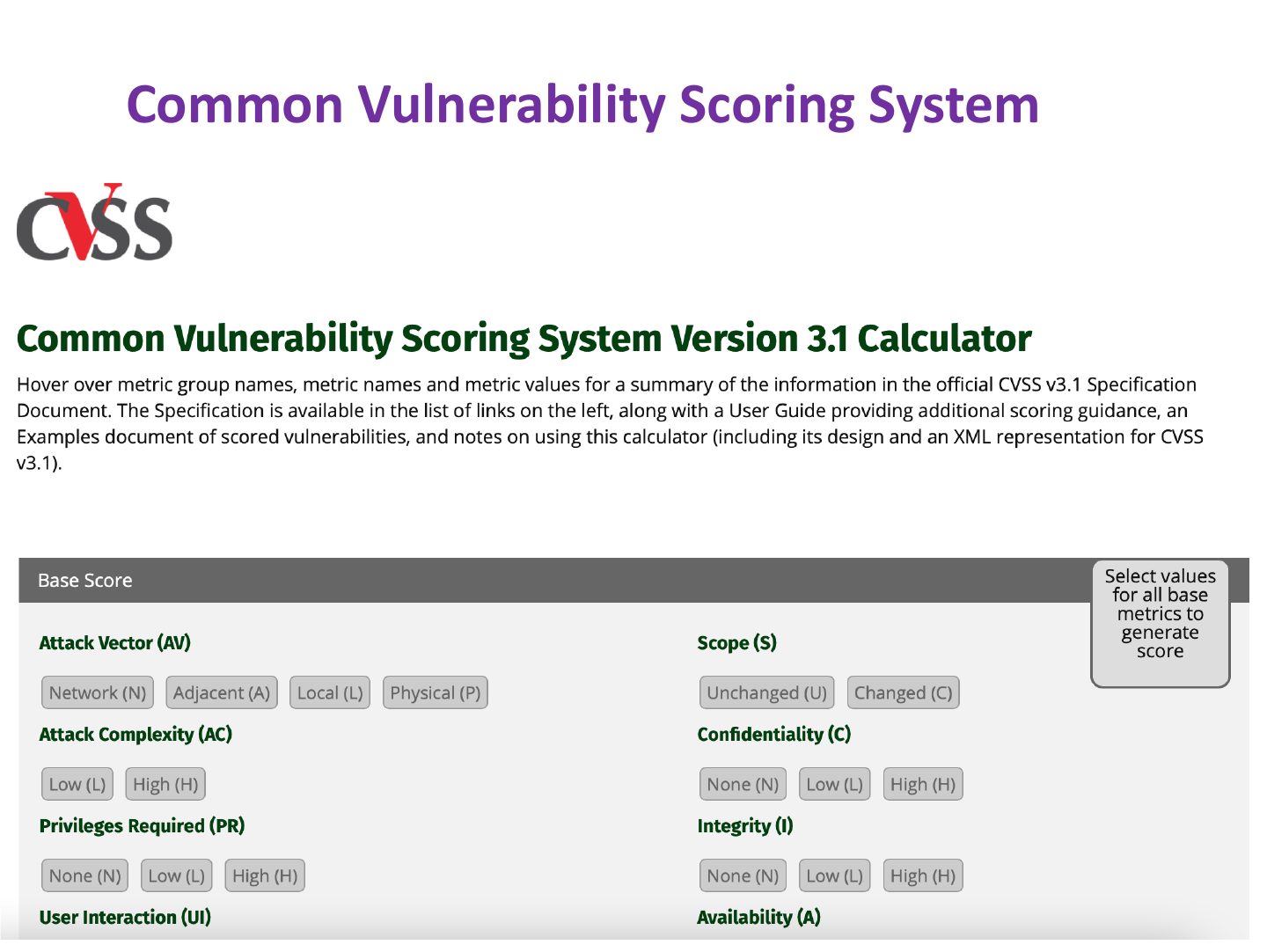
Common Vulnerability Scoring System
Exam angle
CVSS is used to:
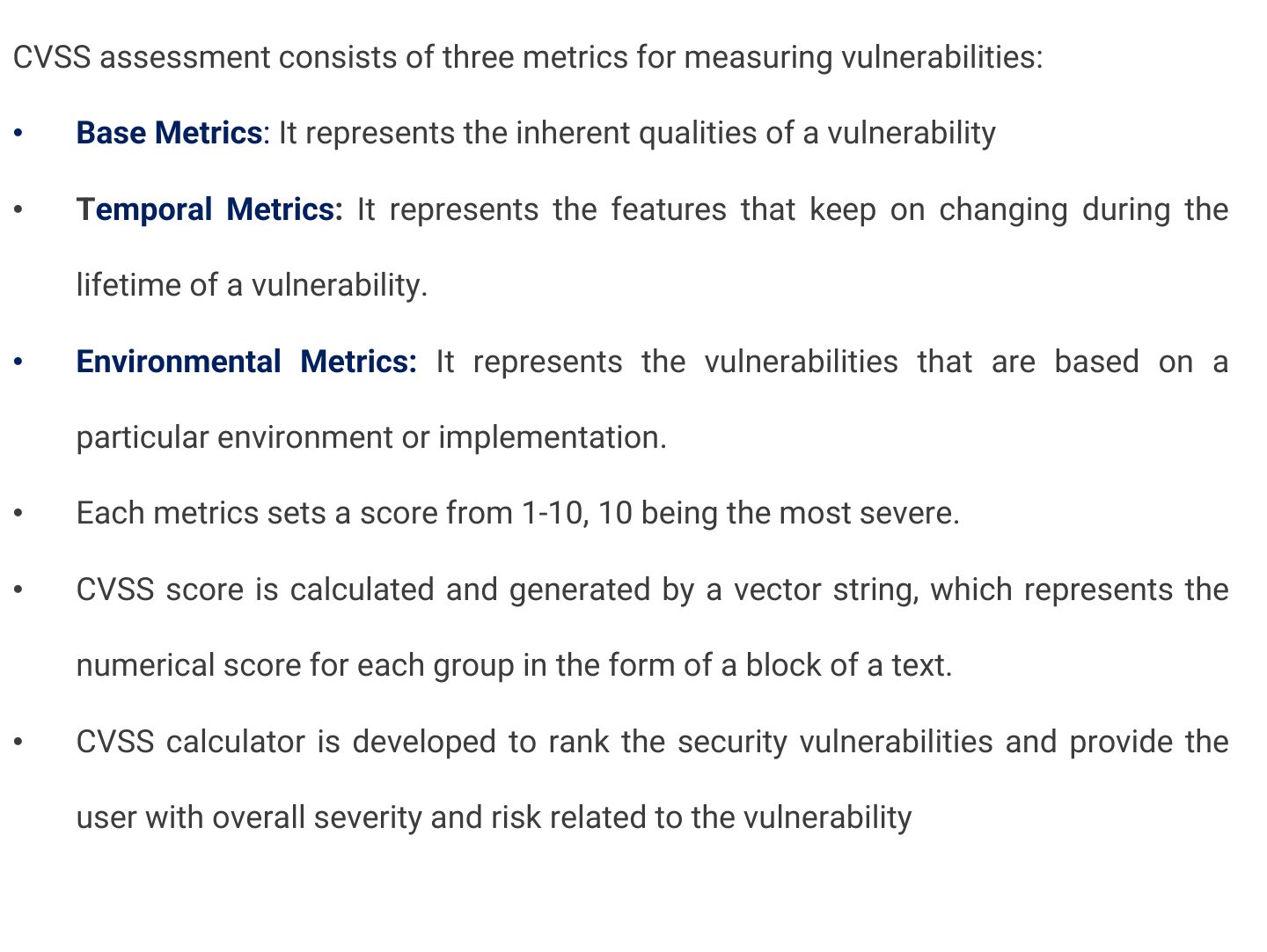
CVSS assessment consists of three metrics for measuring vulnerabilities:
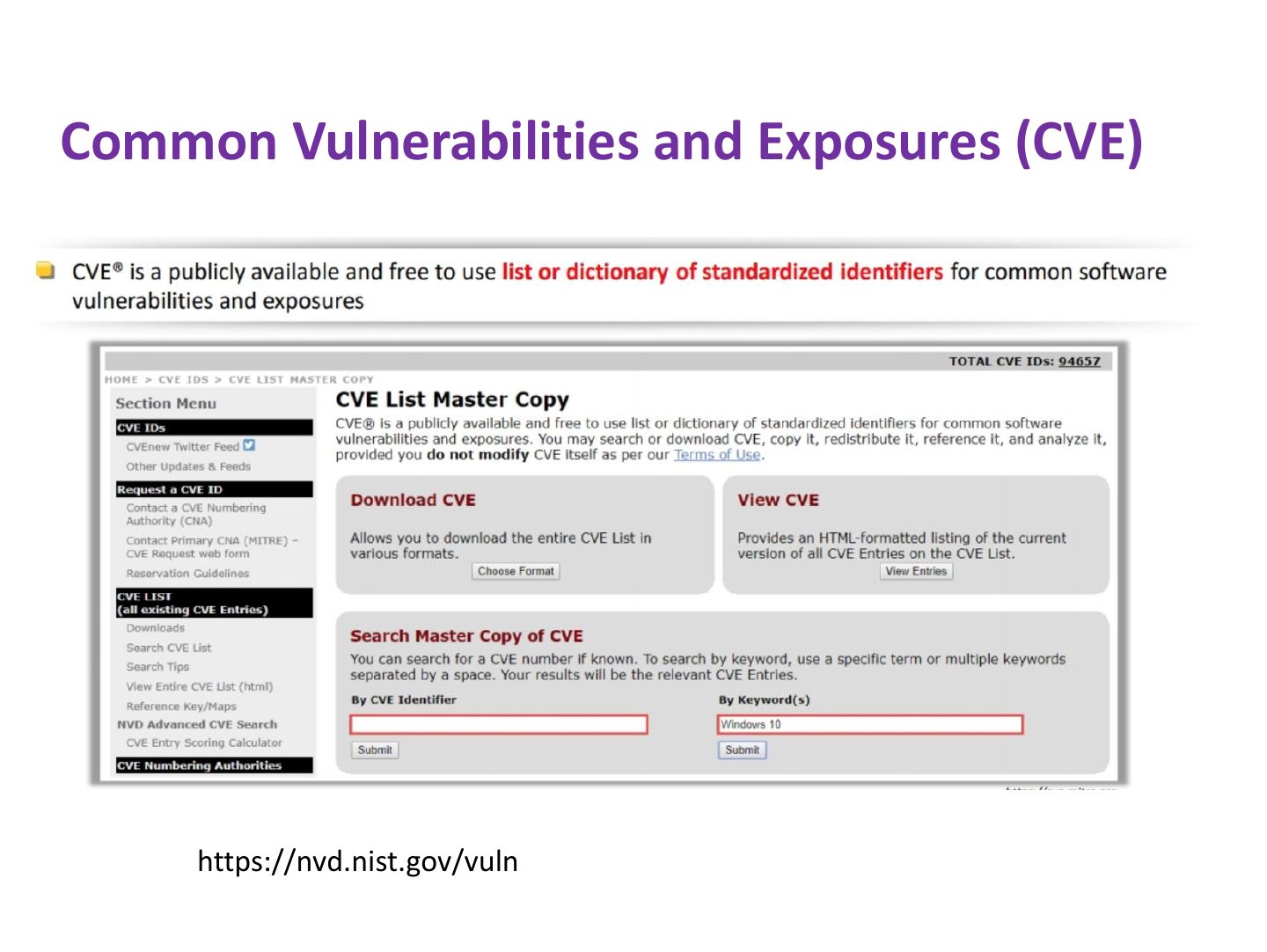
Common Vulnerabilities and Exposures (CVE)
Resources for Vulnerability Research
Vulnerability Assessment Tools
Notes
Tools: Nessus, OpenVAS, Qualys, Nexpose, Nikto (web).