A hacker who works with the owner’s permission to find weaknesses is a:
Introduction to Ethical Hacking and Penetration Testing
Hacker profiles and motives, the TAP principle of controls, ethical hacking vs. penetration testing vs. audits and vulnerability assessments, ethical hackers and the CIA triad, the five hacking phases, the skills and ethics of a pen tester, laws and certifications.
How to read this page
Every original slide is shown unchanged. Yellow marks on a slide point to a numbered note: hover or tap a mark to jump to its note, and hover a note to see its marks. Questions tagged Past exam appeared on a real paper; Prediction questions are likely angles, not confirmed. Pick an answer to each question: a wrong pick tells you why it is wrong, so you can try again.
All 30 slides
- 1 Slide 1
- 2 Learning Objective
- 3 Key Concepts
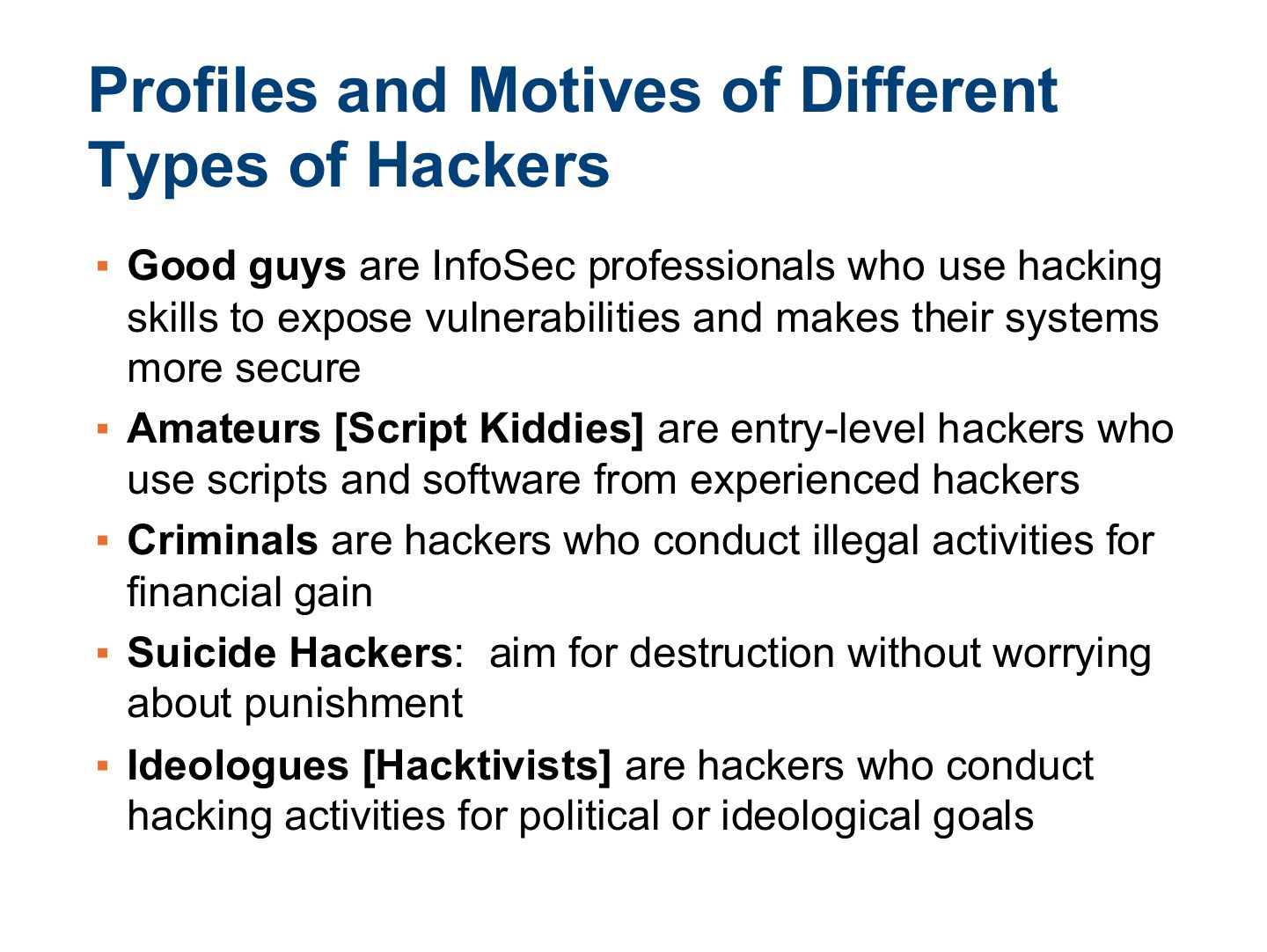
- 4 Profiles and Motives of Different Types of Hackers
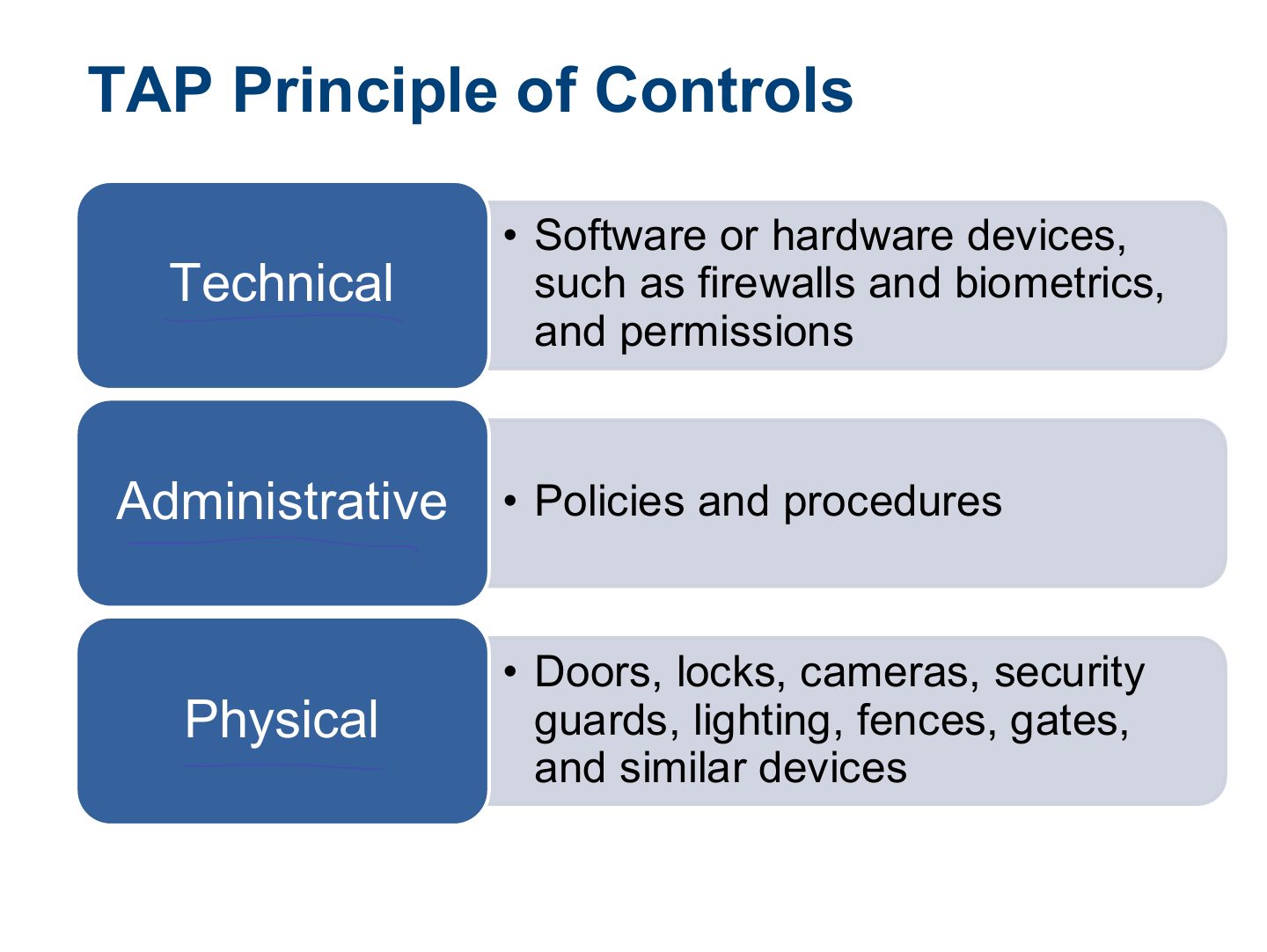
- 5 TAP Principle of Controls
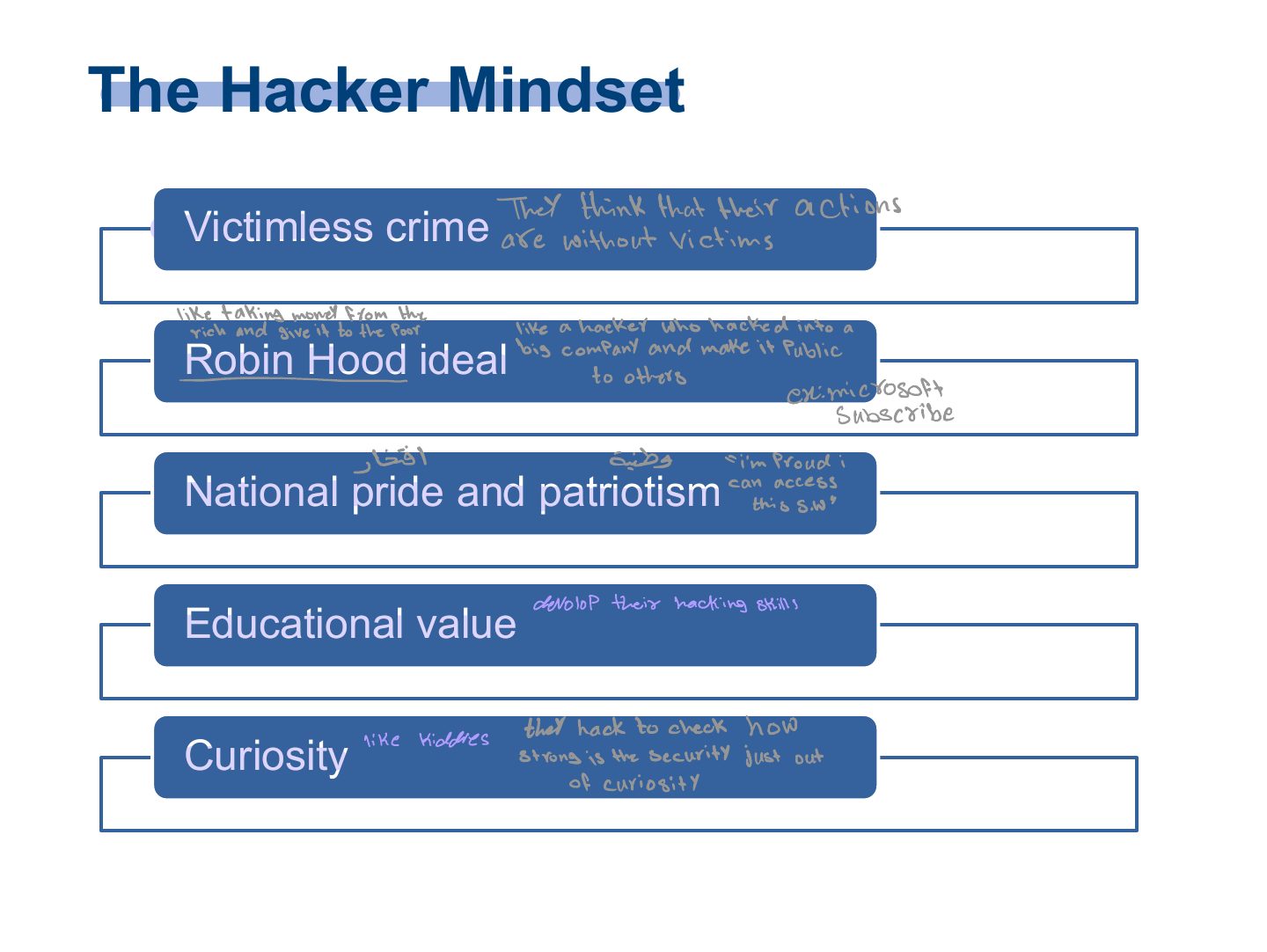
- 6 The Hacker Mindset
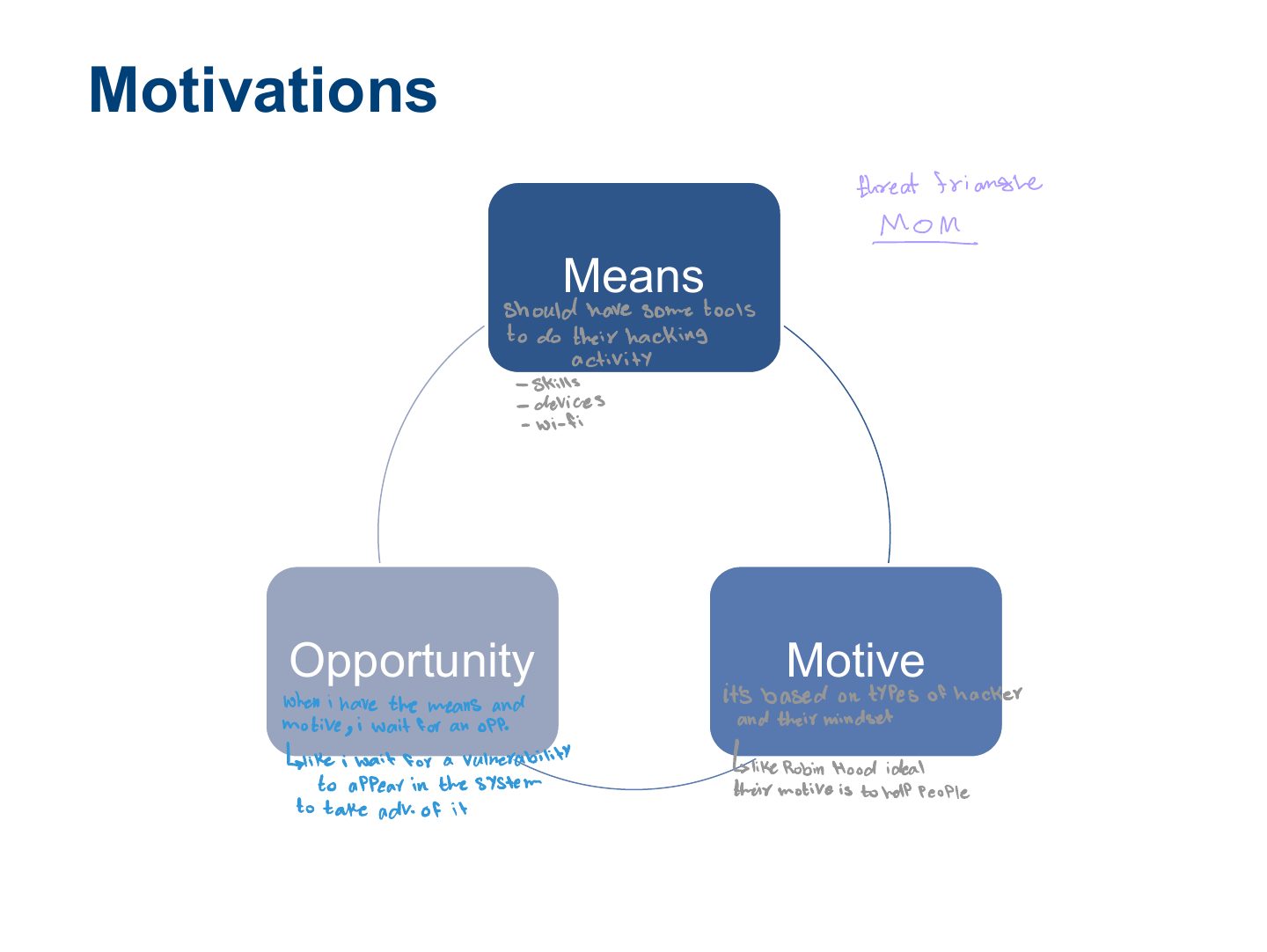
- 7 Motivations
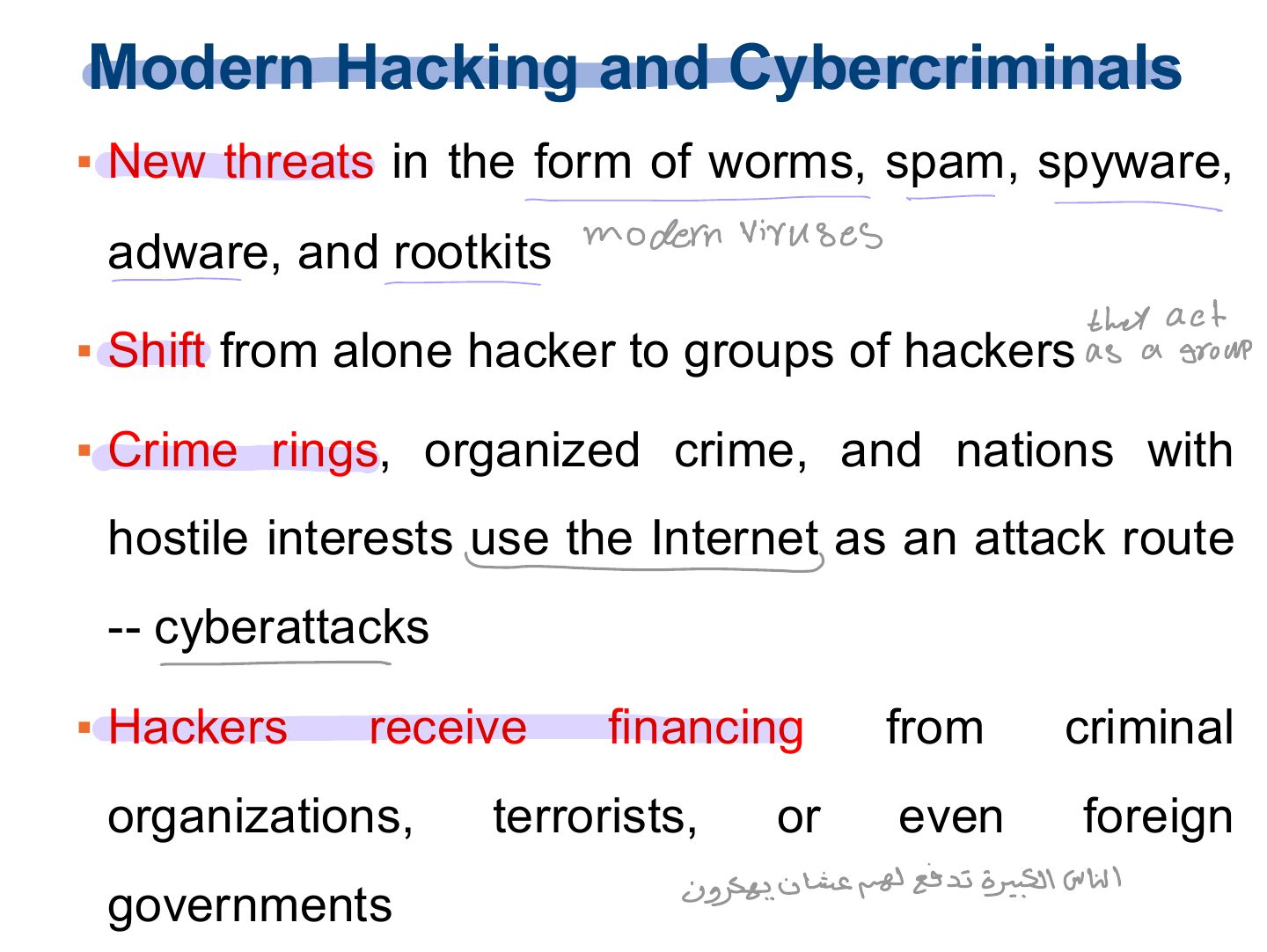
- 8 Modern Hacking and Cybercriminals
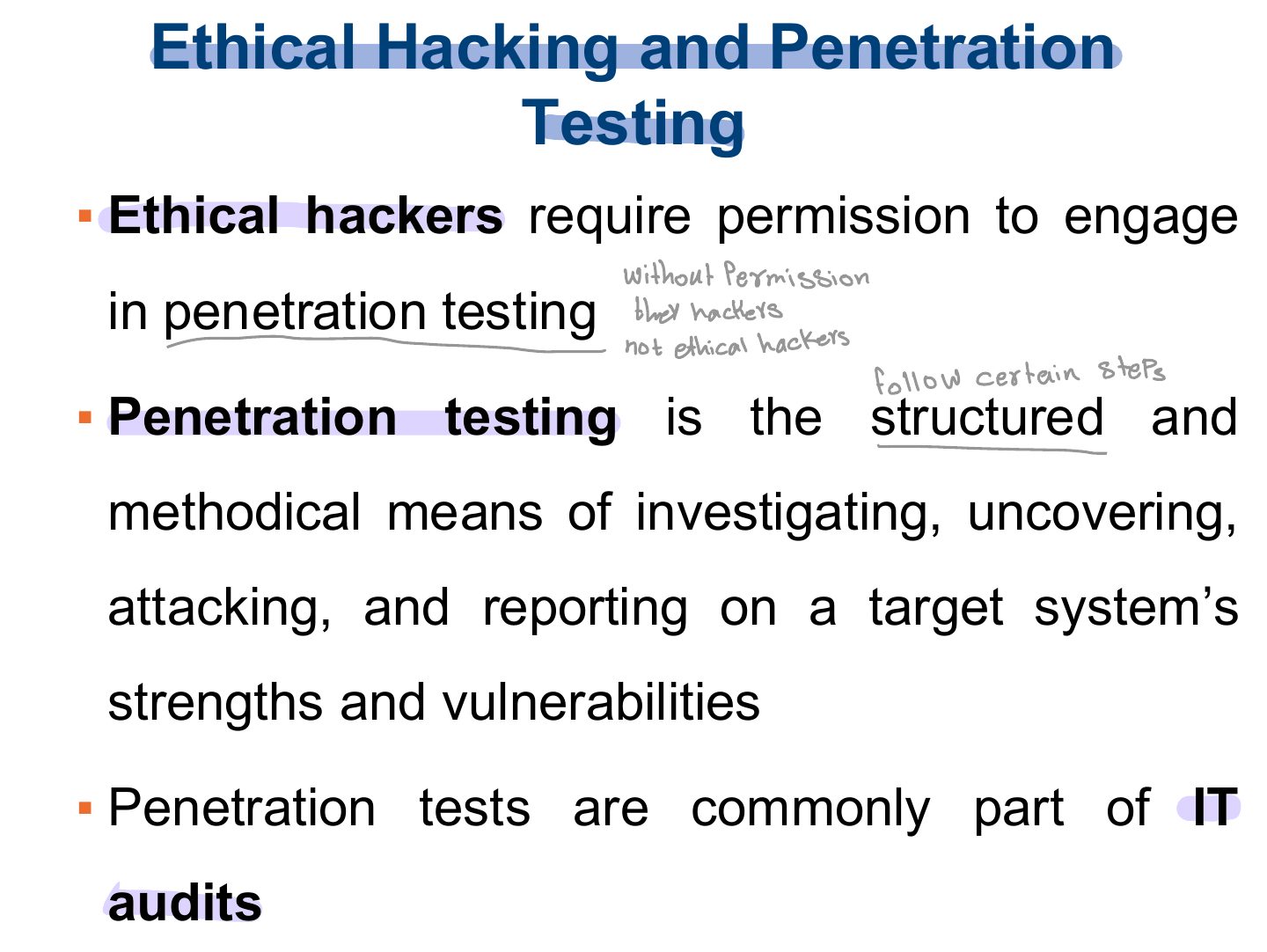
- 9 Ethical Hacking and Penetration Testing
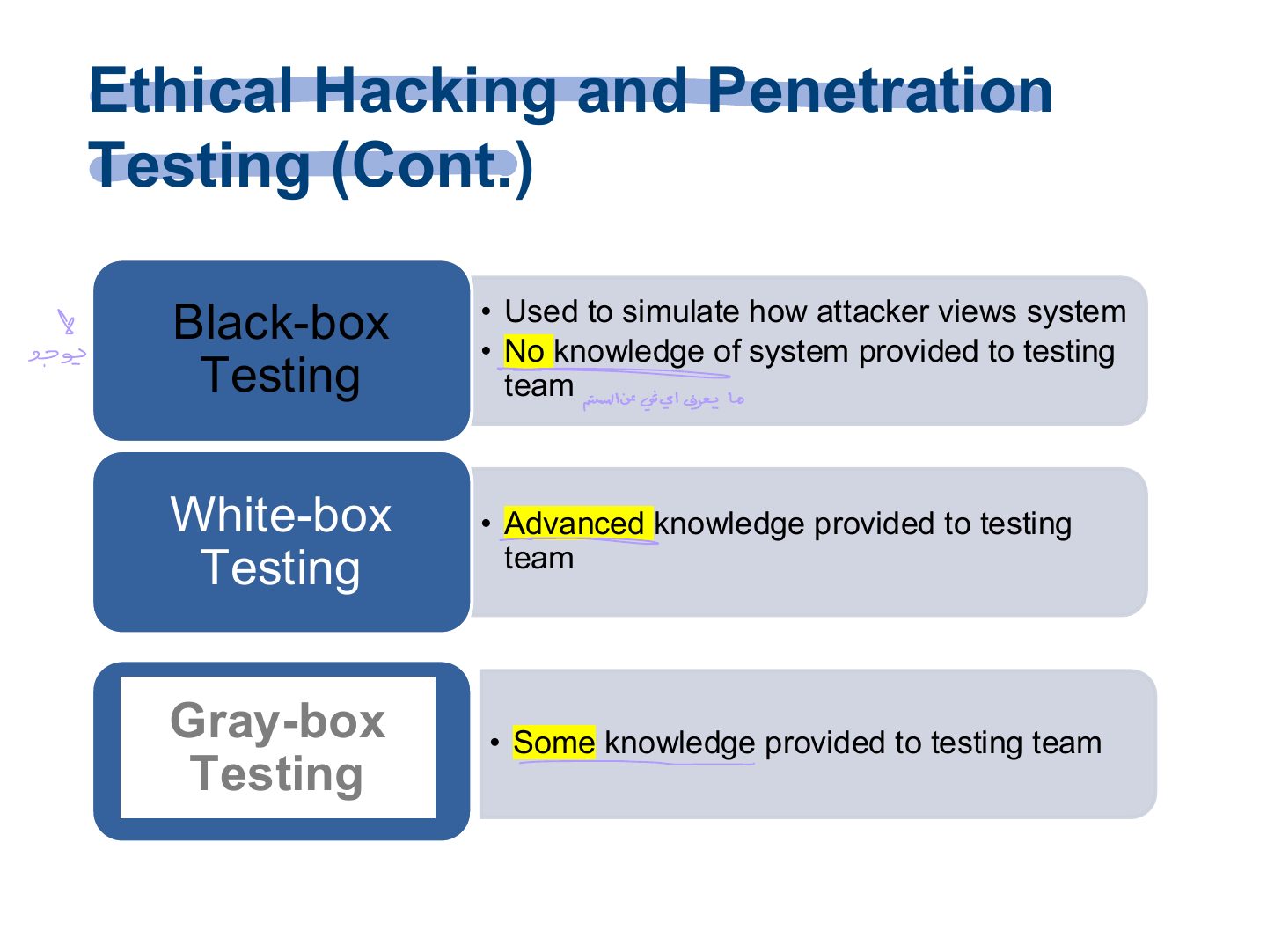
- 10 Ethical Hacking and Penetration Testing (Cont.)
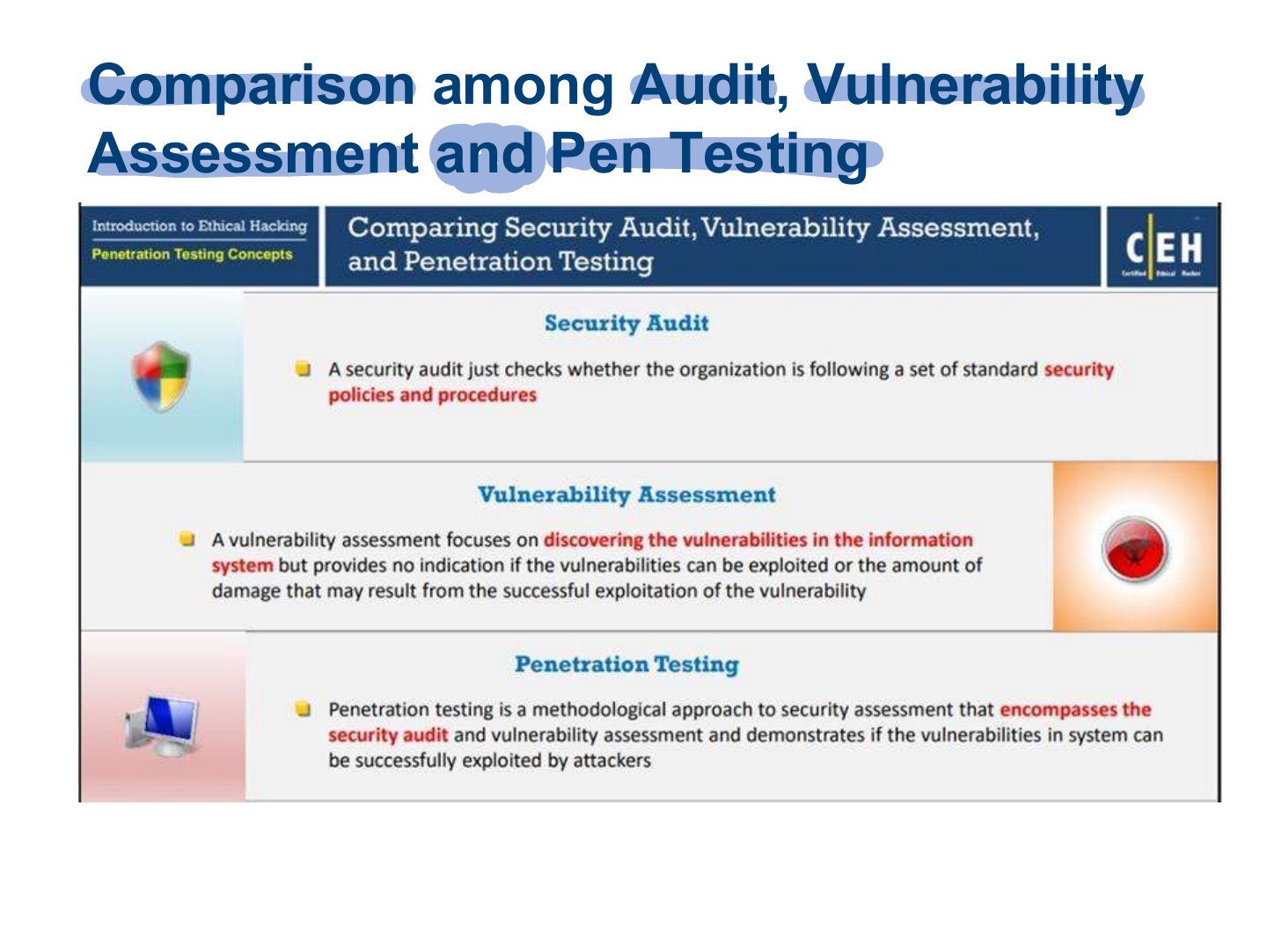
- 11 Comparison among Audit, Vulnerability Assessment and Pen Testing
- 12 Role of Ethical Hacking
- 13 Role of Ethical Hacking (Cont.)
- 14 Slide 14
- 15 Ethical Hackers and the C-I-A Triad: The C-I-A Triad
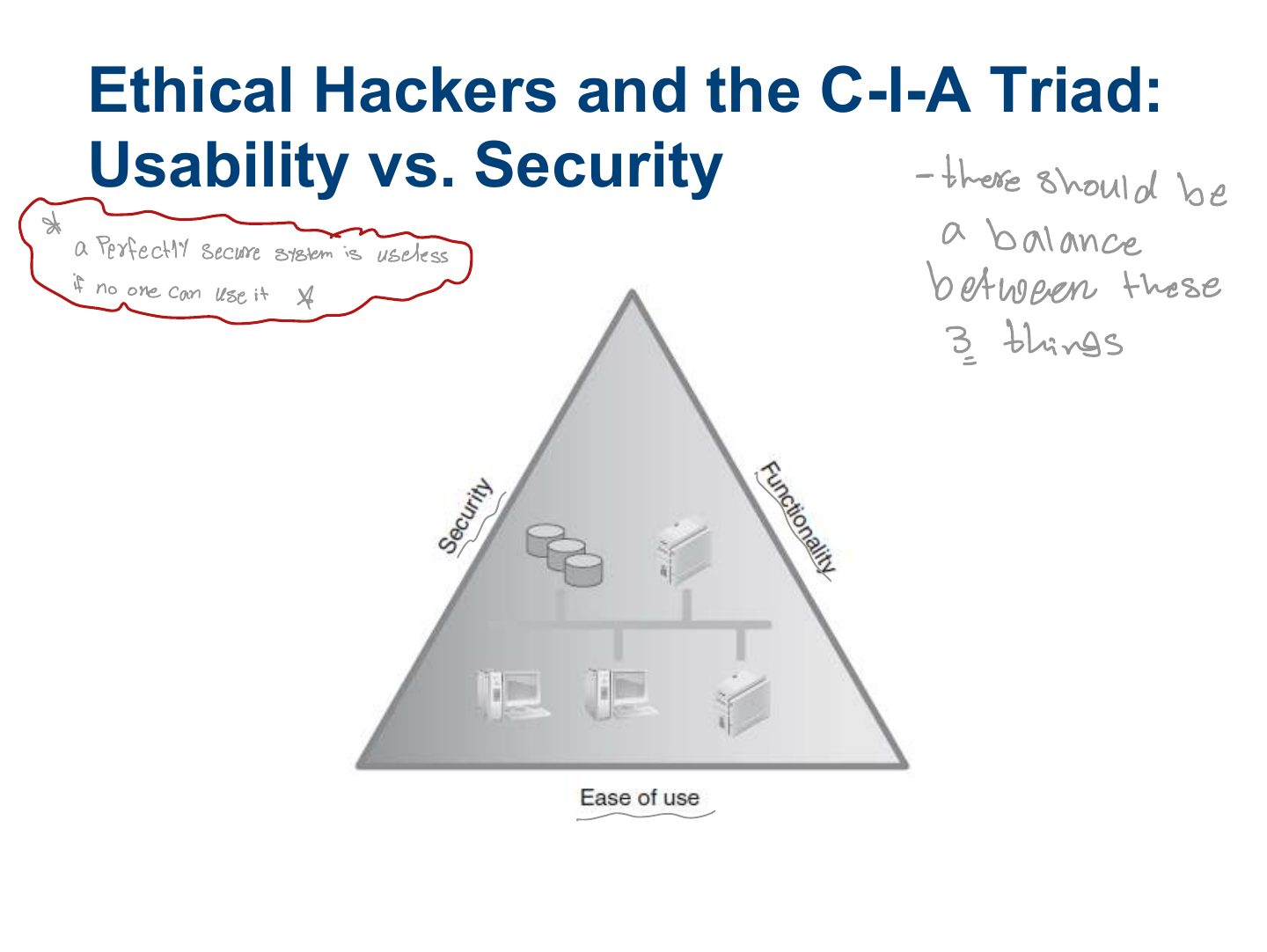
- 16 Ethical Hackers and the C-I-A Triad: Usability vs. Security
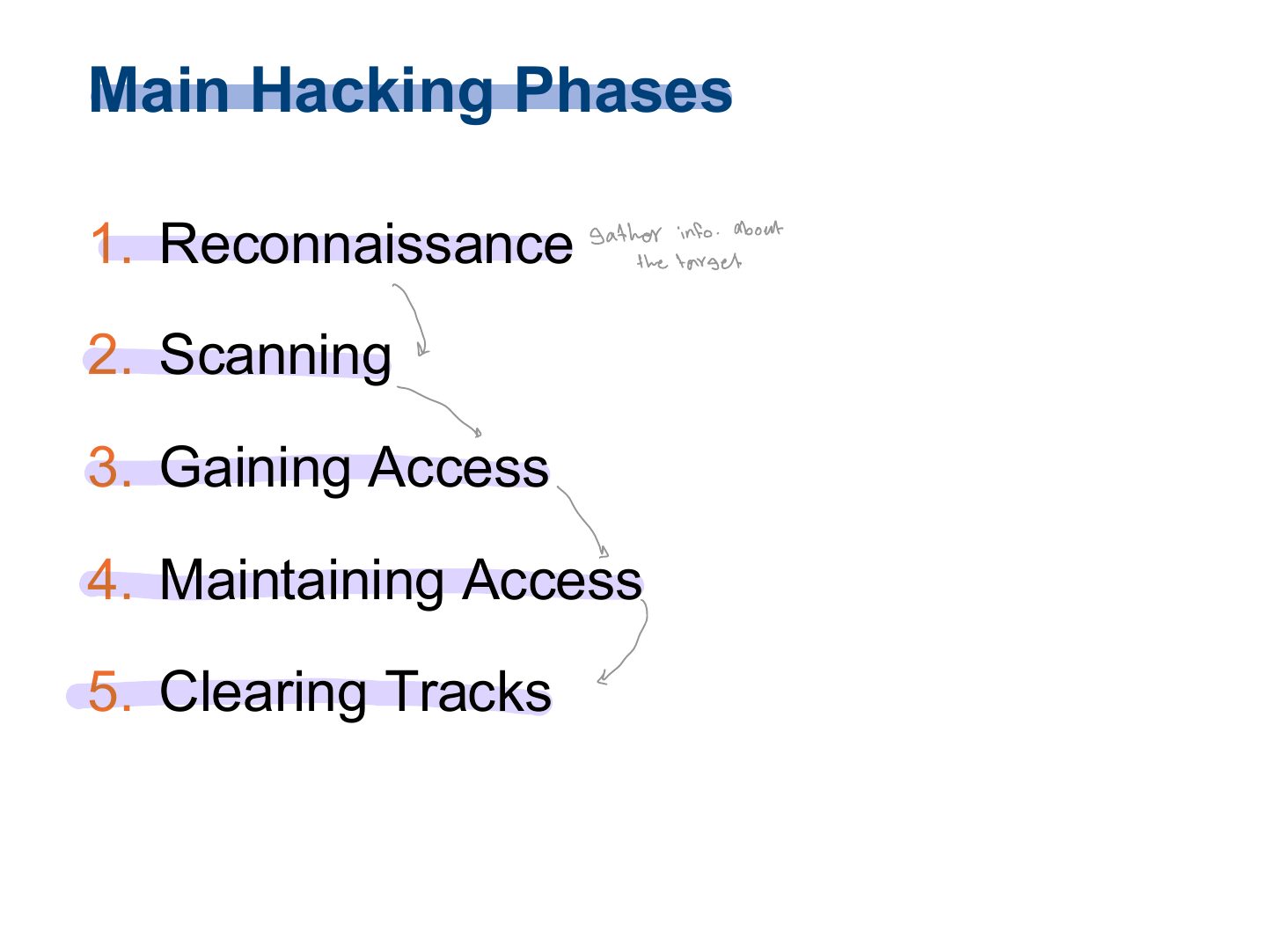
- 17 Main Hacking Phases
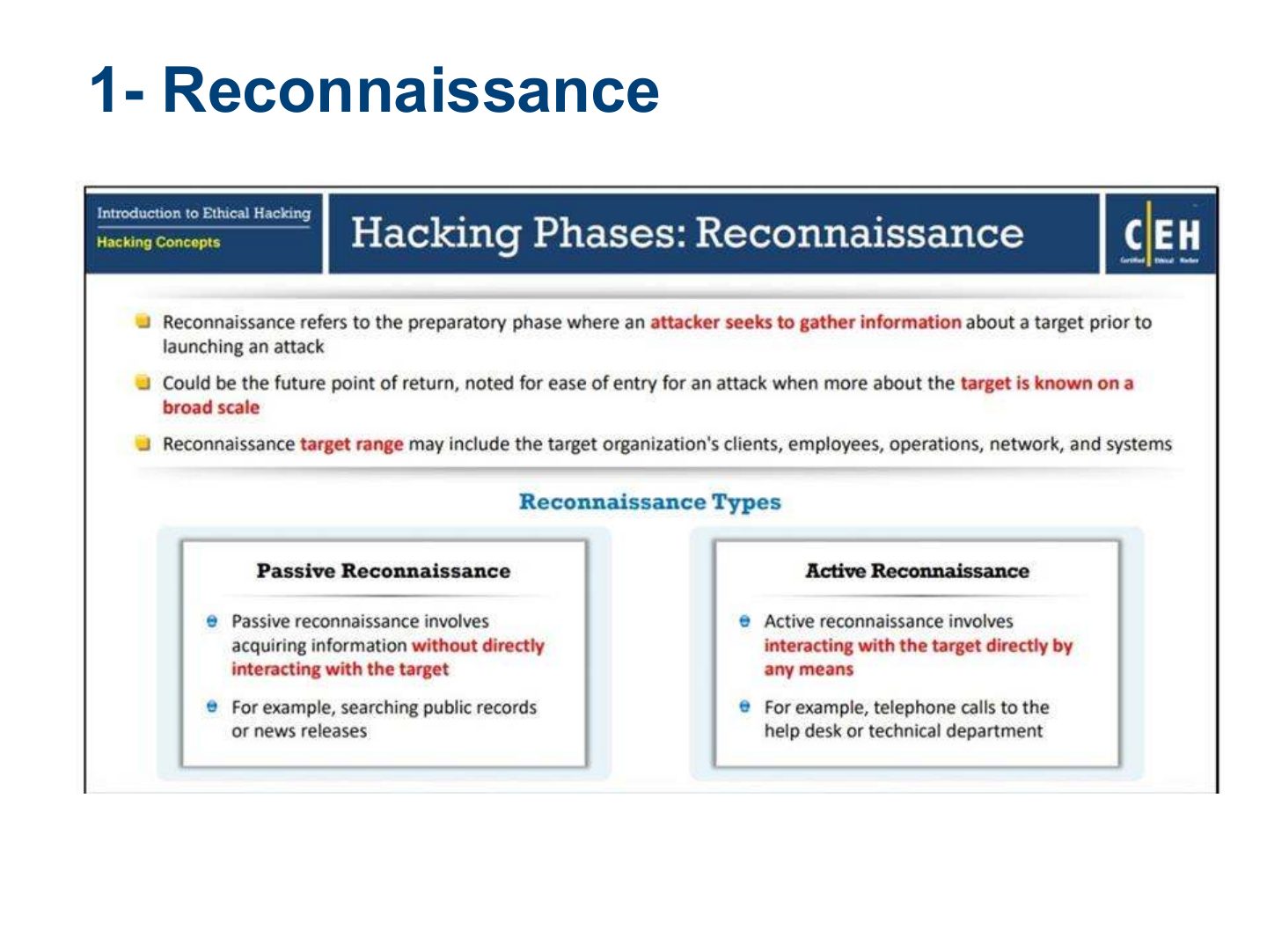
- 18 1- Reconnaissance
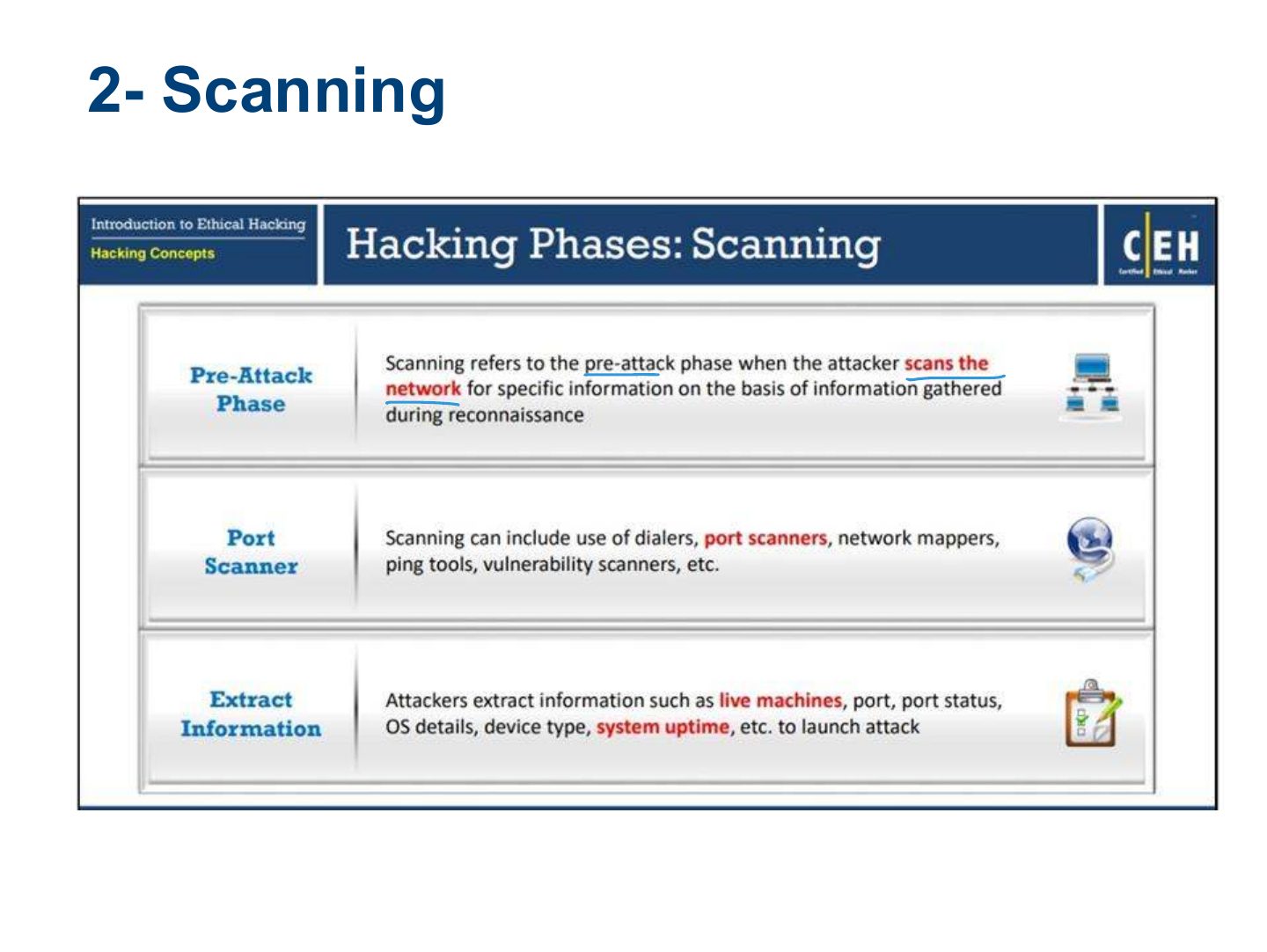
- 19 2- Scanning
- 20 3- Gaining Access
- 21 4- Maintaining Access
- 22 5- Clearing Tracks
- 23 Slide 23
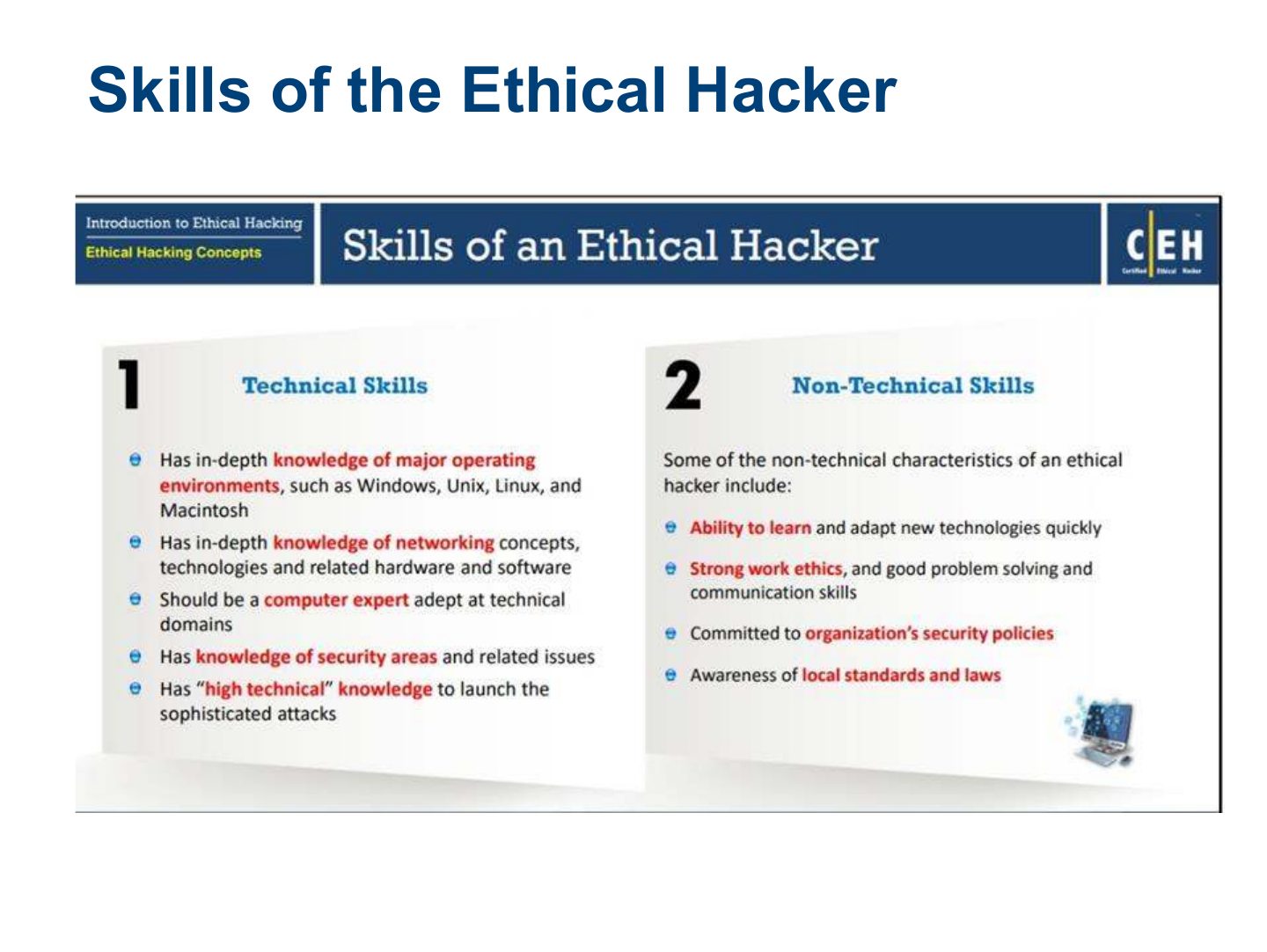
- 24 Skills of the Ethical Hacker
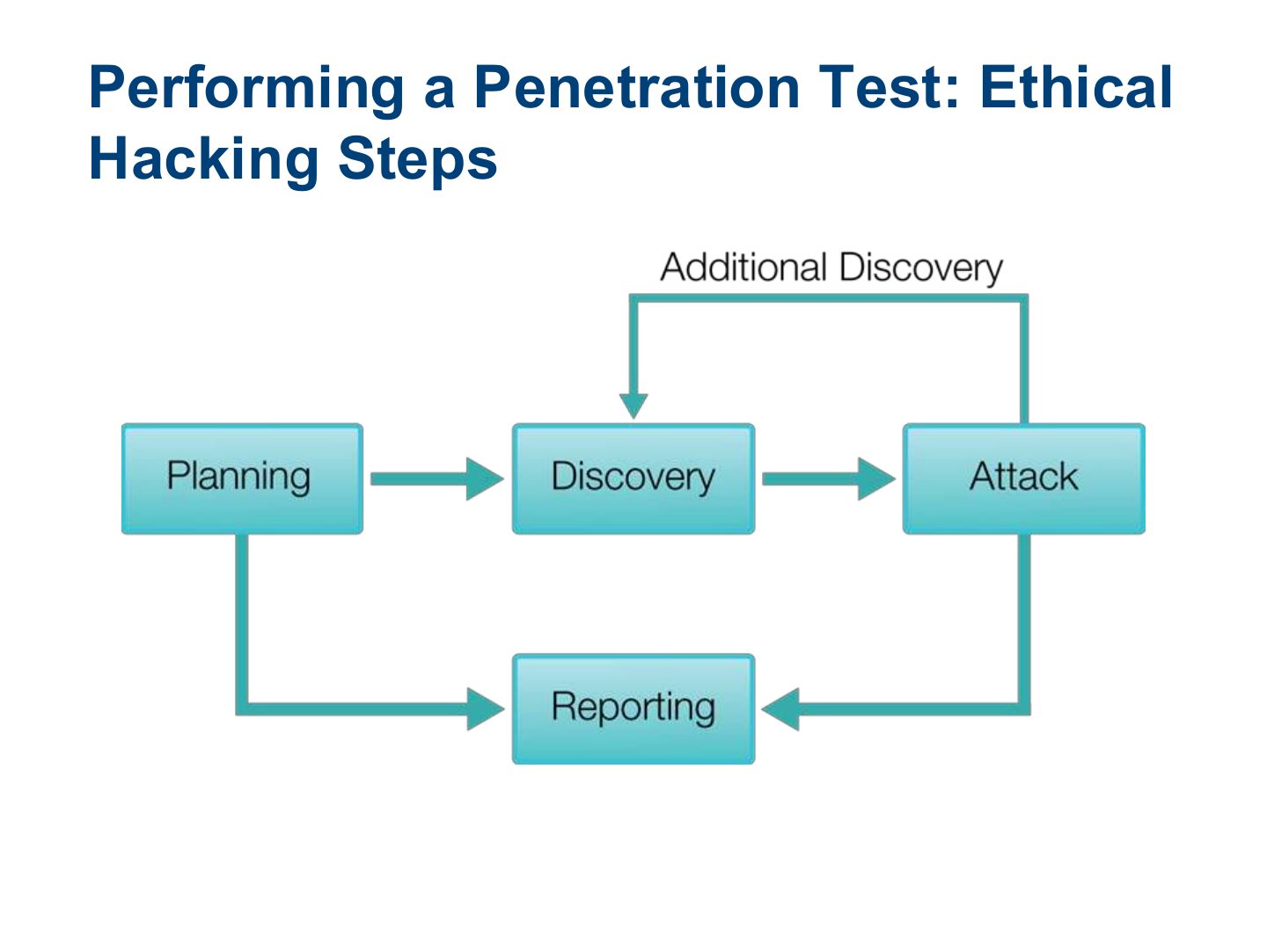
- 25 Performing a Penetration Test: Ethical Hacking Steps
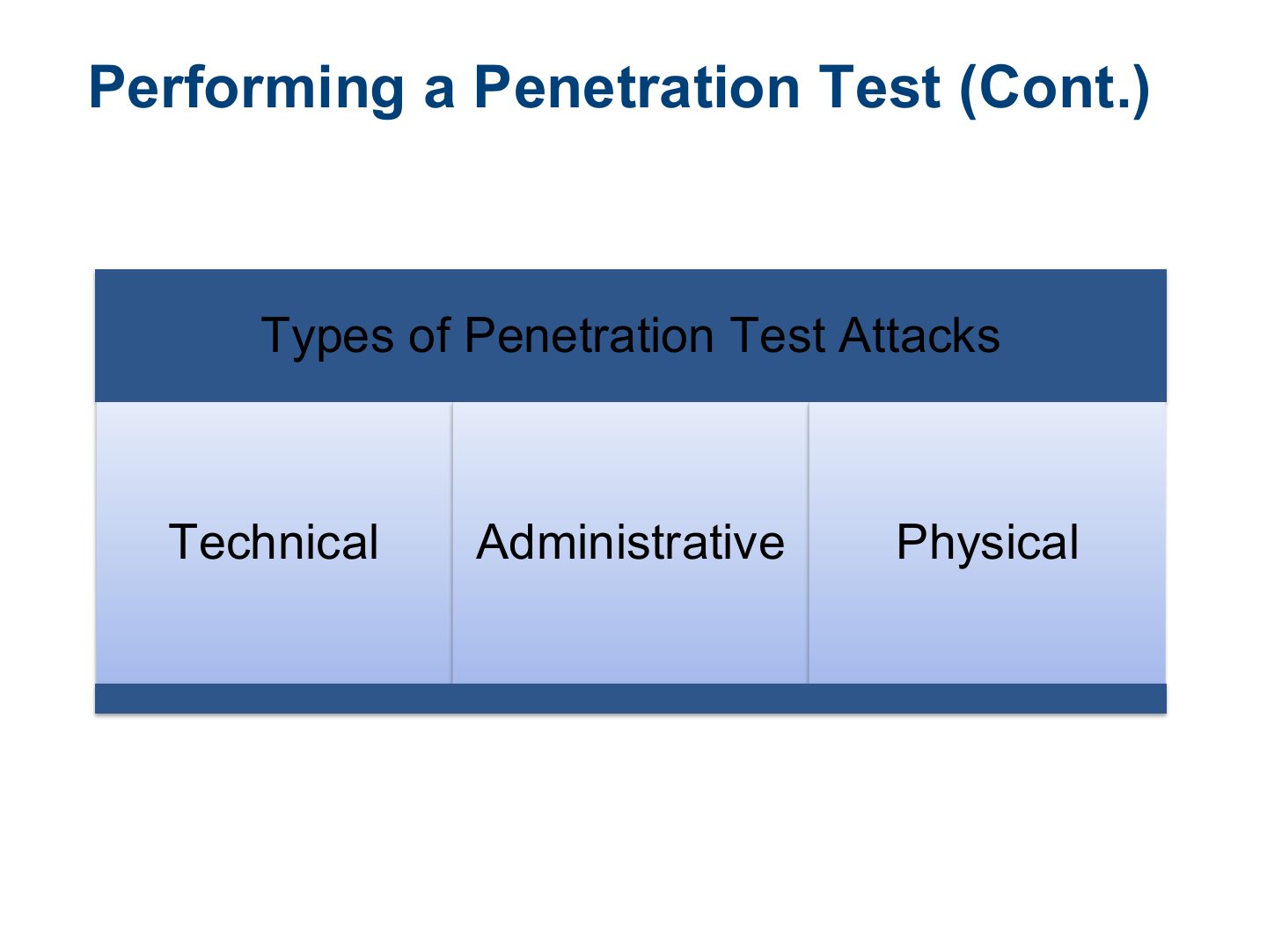
- 26 Performing a Penetration Test (Cont.)
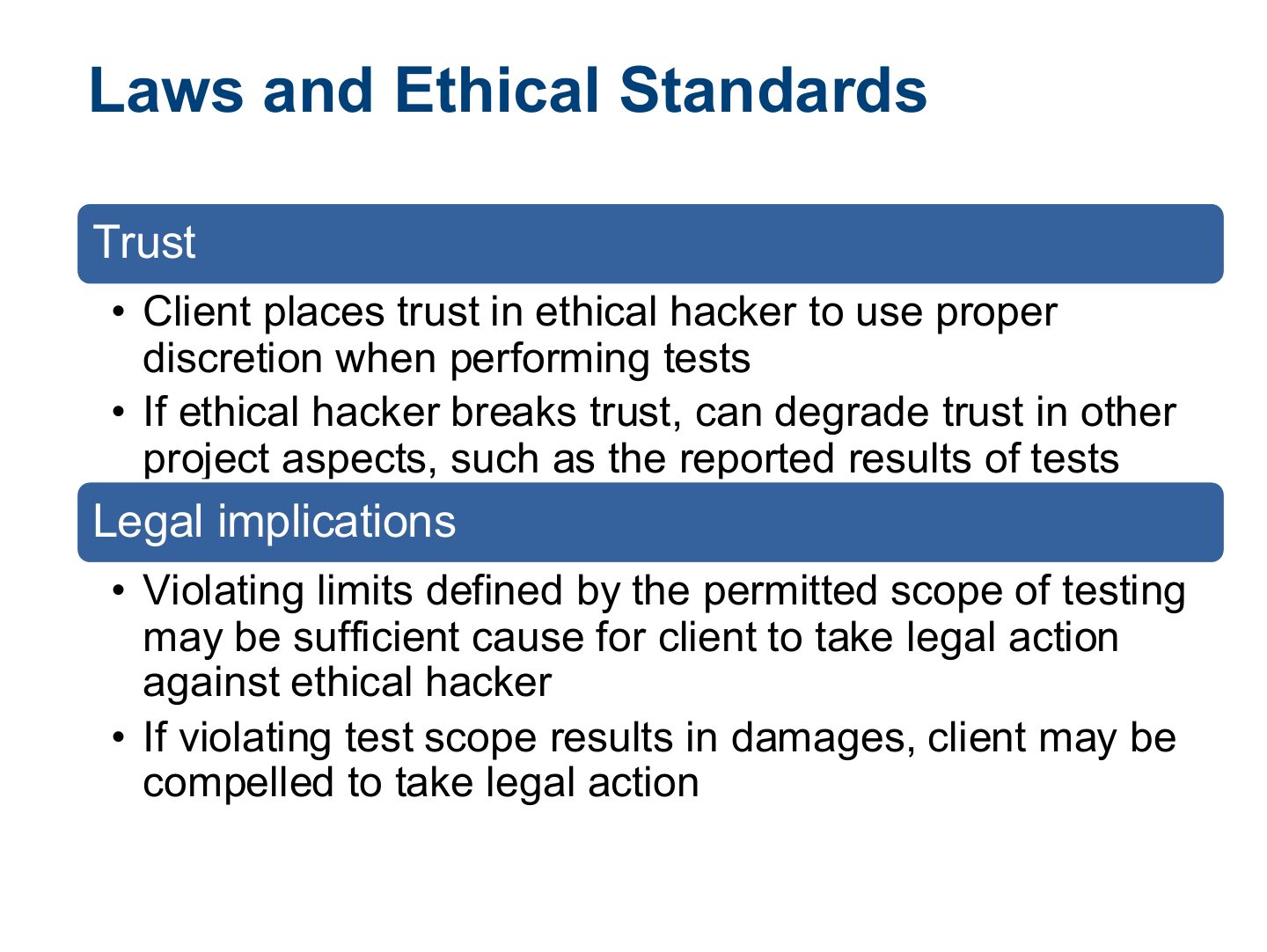
- 27 Laws and Ethical Standards
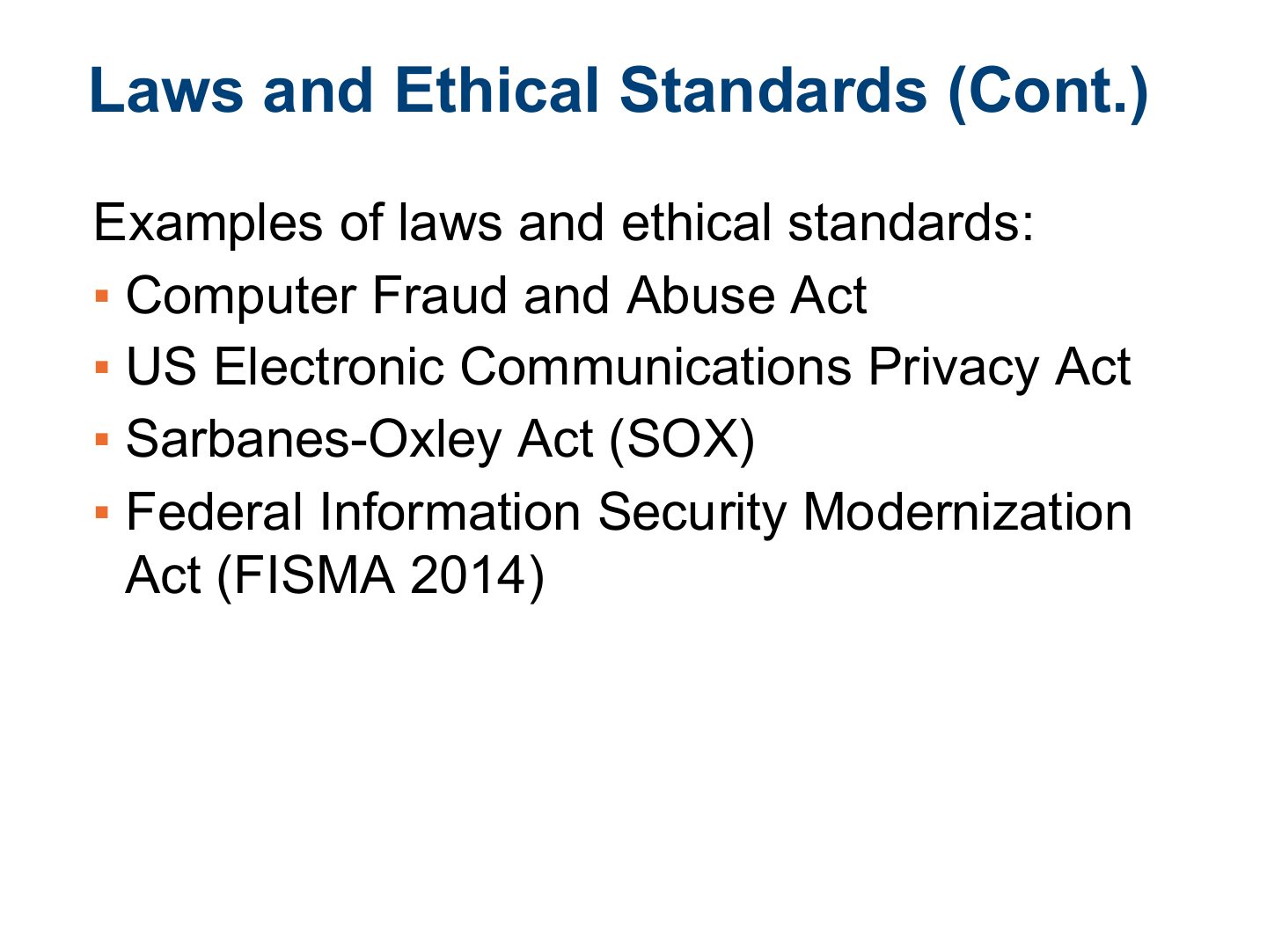
- 28 Laws and Ethical Standards (Cont.)
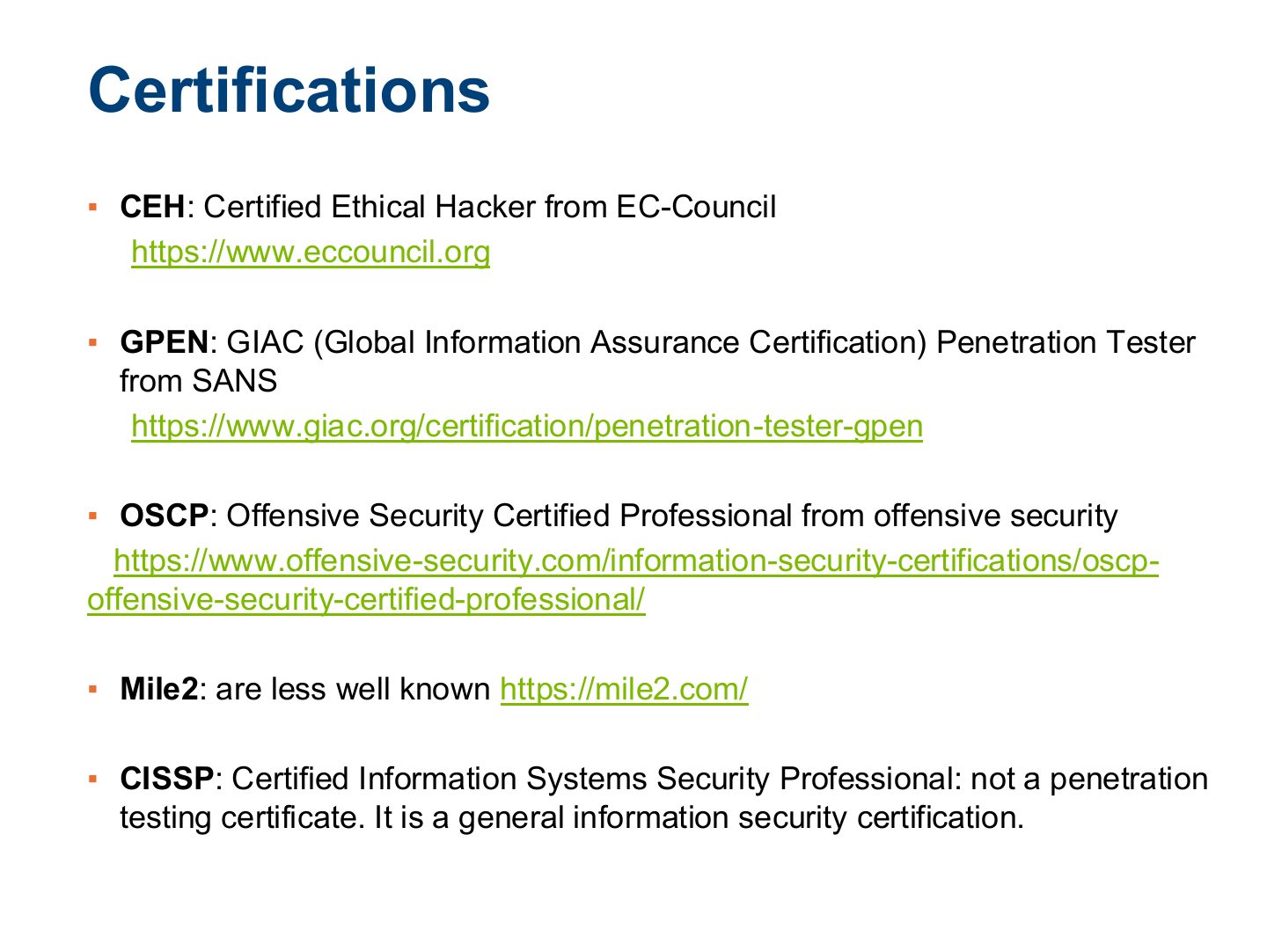
- 29 Certifications
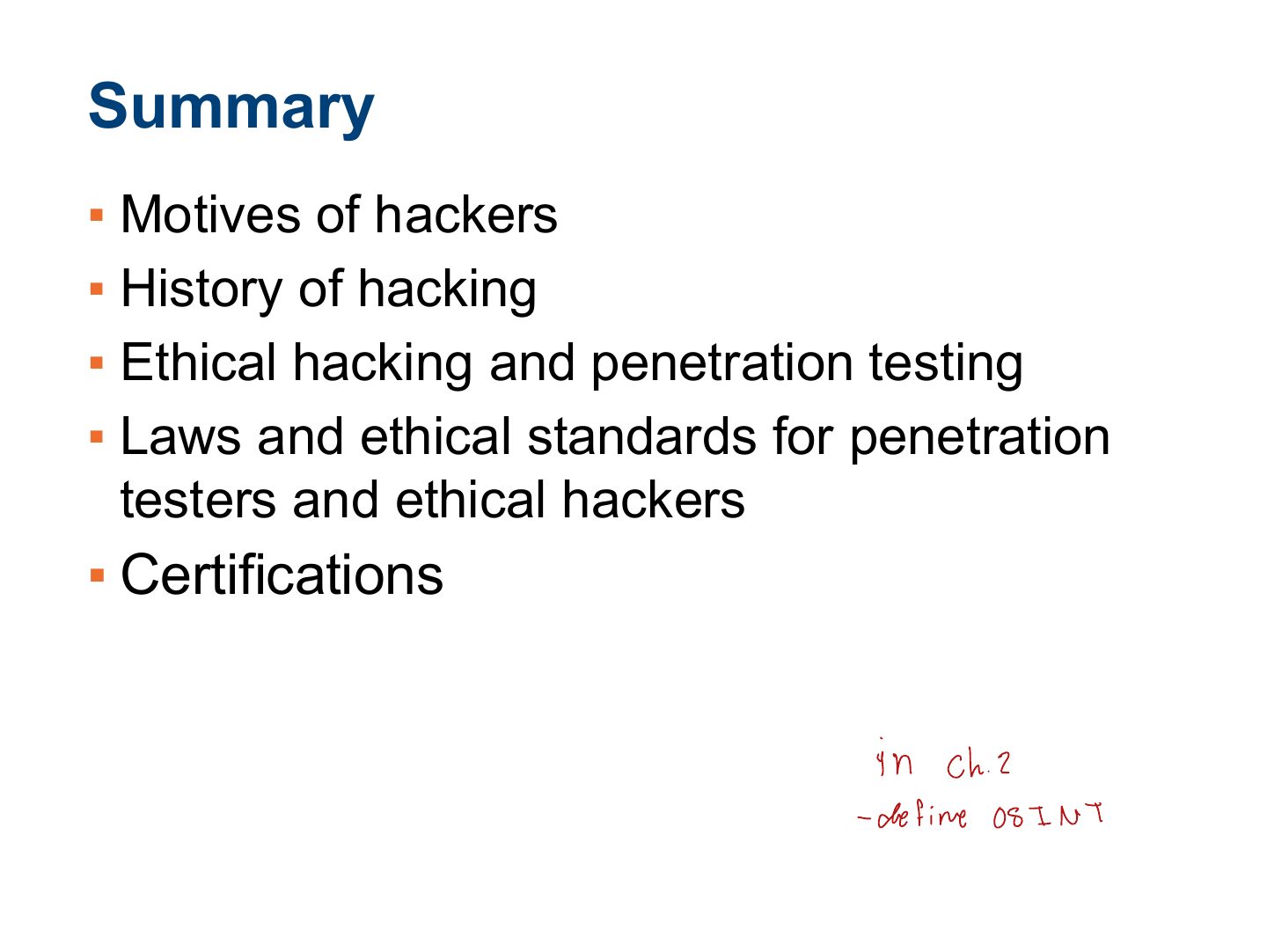
- 30 Summary
Slide 1
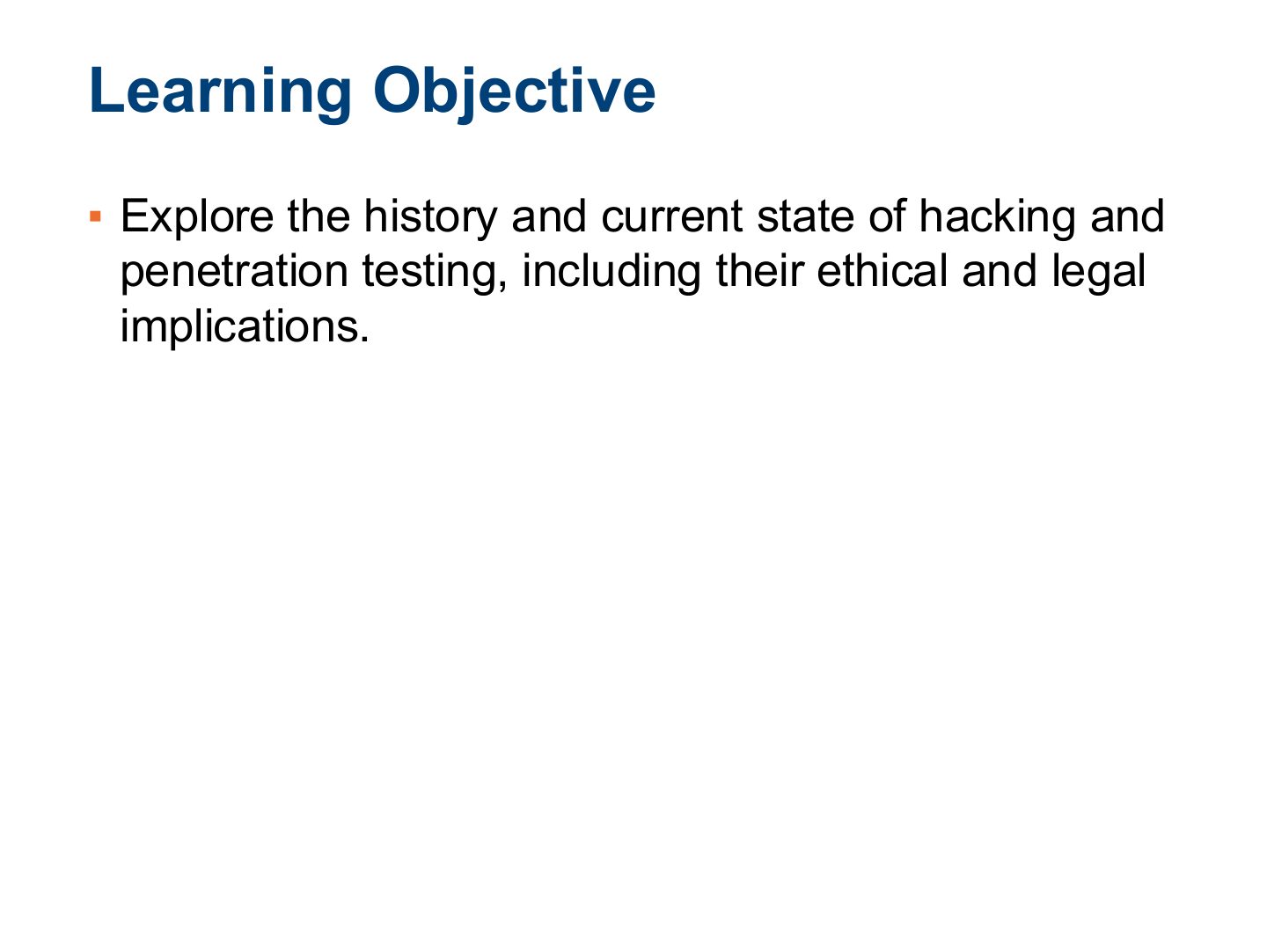
Learning Objective
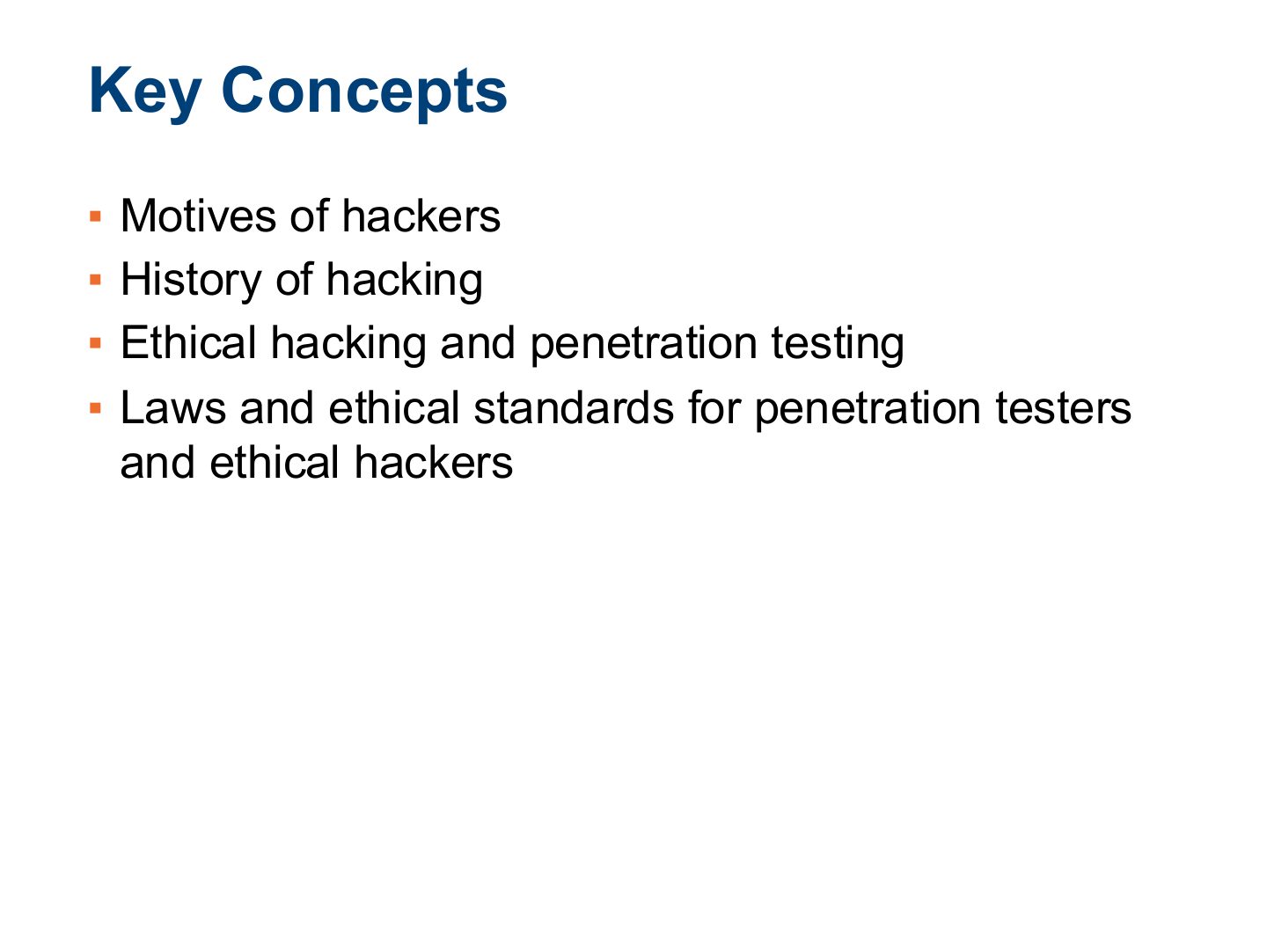
Key Concepts
Profiles and Motives of Different Types of Hackers
Notes
Hat colours: black hat (malicious), white hat (authorized, ethical), gray hat (in between, may act without permission). Also script kiddies, hacktivists, suicide hackers, state-sponsored, cyber terrorists.
Exam angle
TAP Principle of Controls
The Hacker Mindset
Motivations
Modern Hacking and Cybercriminals
Ethical Hacking and Penetration Testing
Notes
Ethical hacking = authorized hacking to find and fix weaknesses before attackers do. A pen test simulates a real attack within an agreed scope.
Exam angle
The key difference between an ethical hacker and a criminal hacker is permission (authorization).
Ethical Hacking and Penetration Testing (Cont.)
Comparison among Audit, Vulnerability Assessment and Pen Testing
Notes
Audit: checks compliance with a standard. Vulnerability assessment: finds and lists weaknesses. Pen test: actually exploits them to prove impact.
Trap A vulnerability assessment does NOT exploit; a penetration test does.
Exam angle
Which activity actually exploits weaknesses to show their impact?
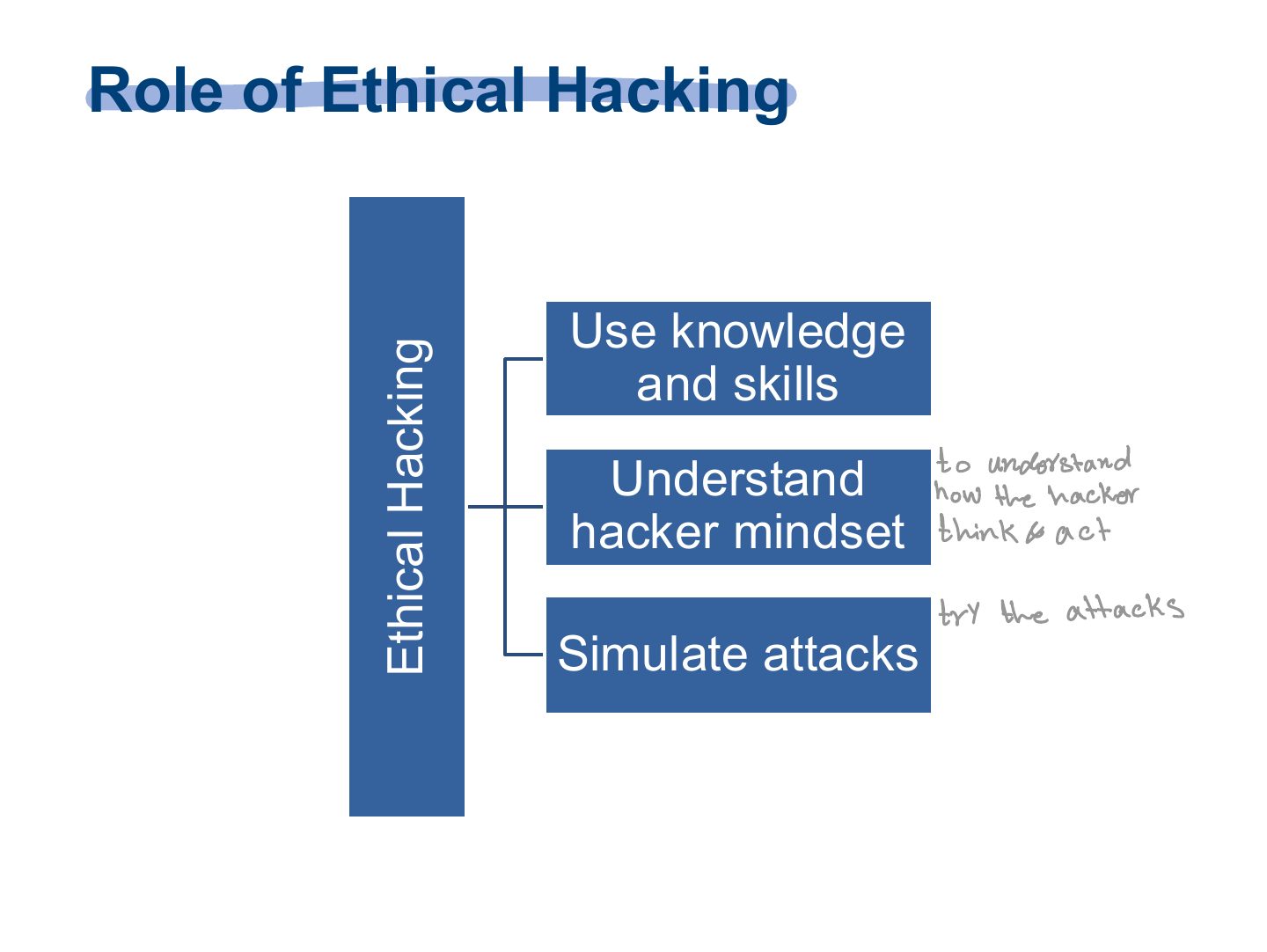
Role of Ethical Hacking
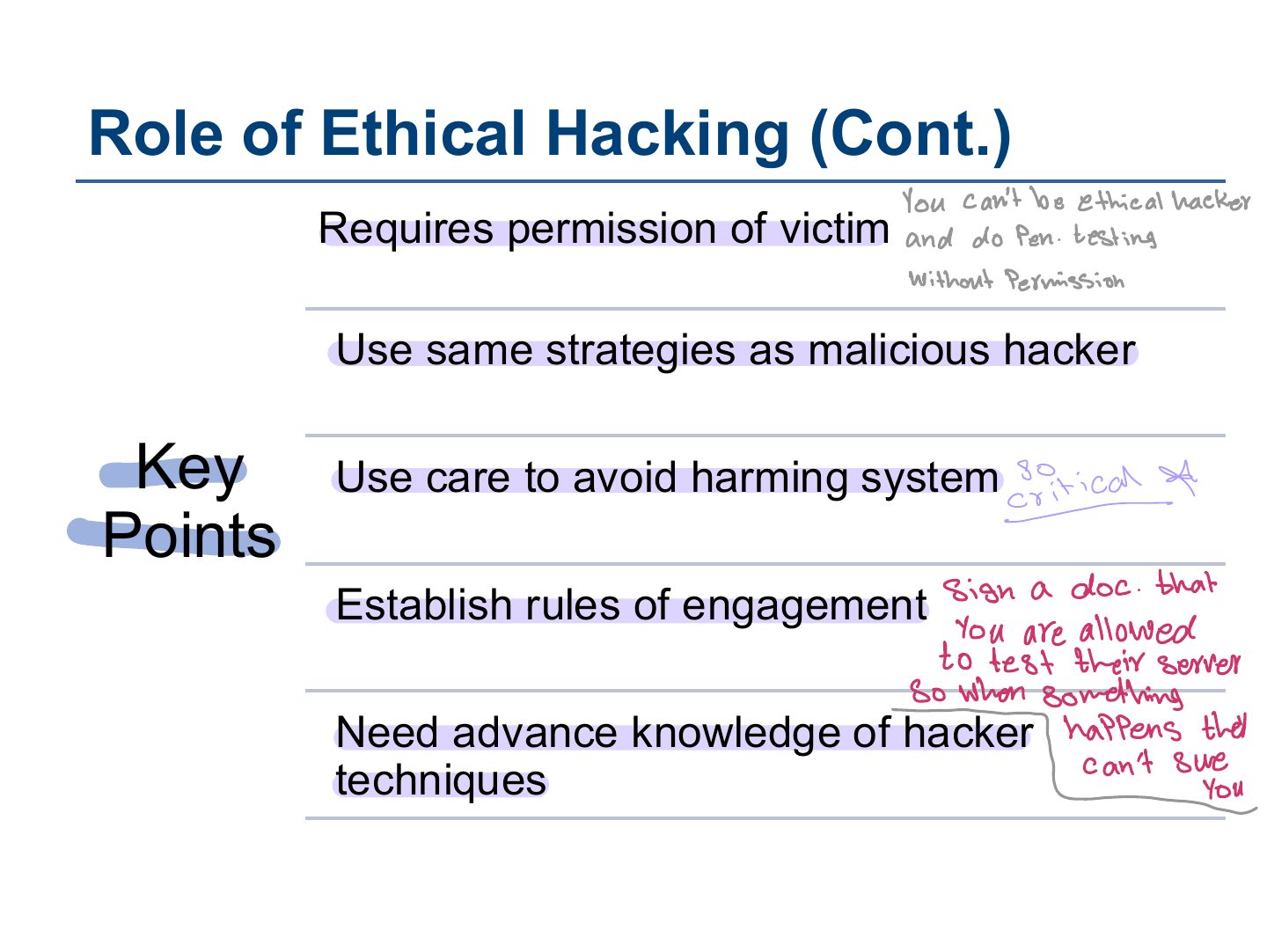
Role of Ethical Hacking (Cont.)
Slide 14
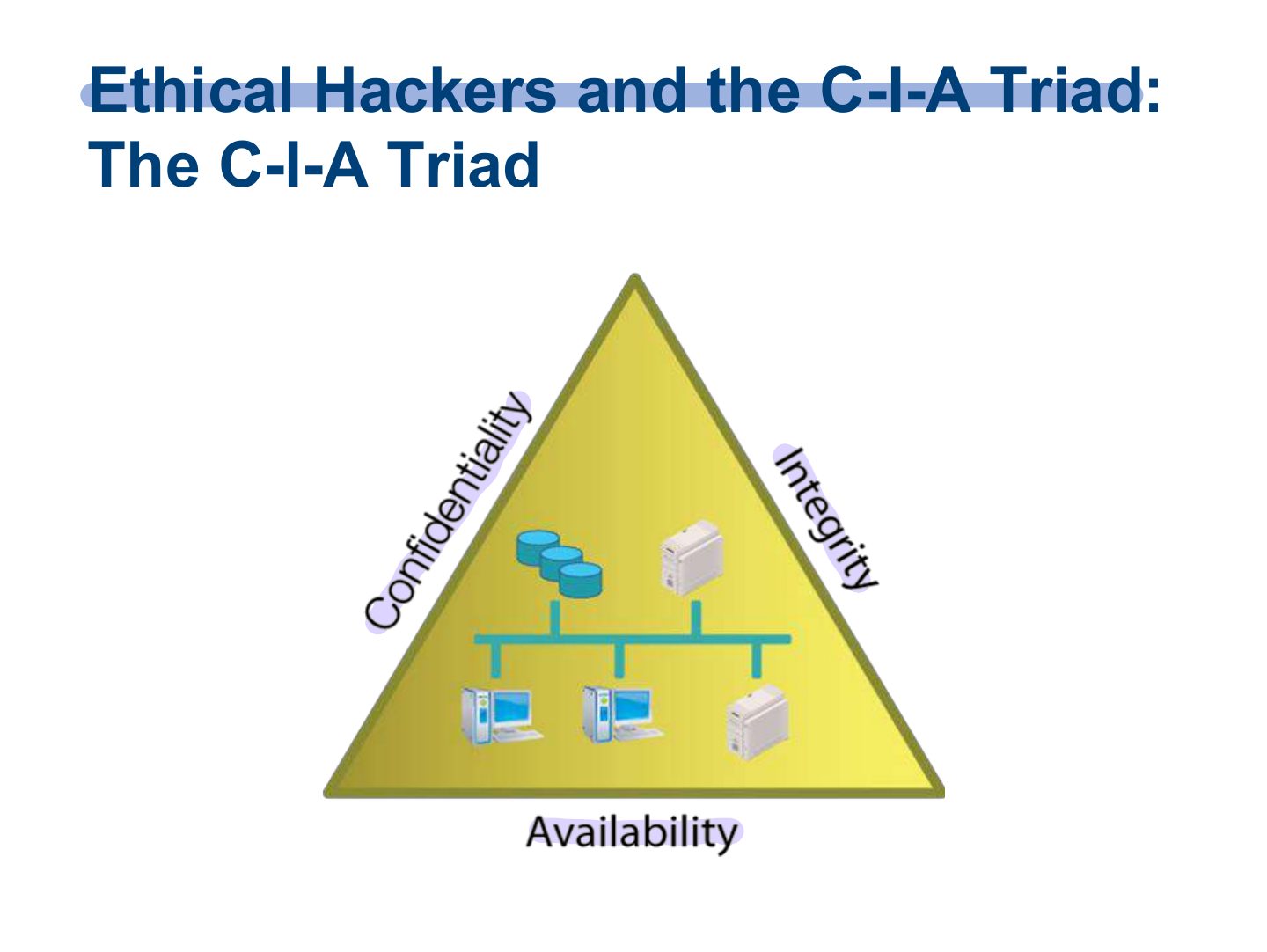
Ethical Hackers and the C-I-A Triad: The C-I-A Triad
Notes
Attacks map onto the CIA triad: disclosure (confidentiality), alteration (integrity), denial (availability), the DAD triad.
Exam angle
A DoS attack targets:
Ethical Hackers and the C-I-A Triad: Usability vs. Security
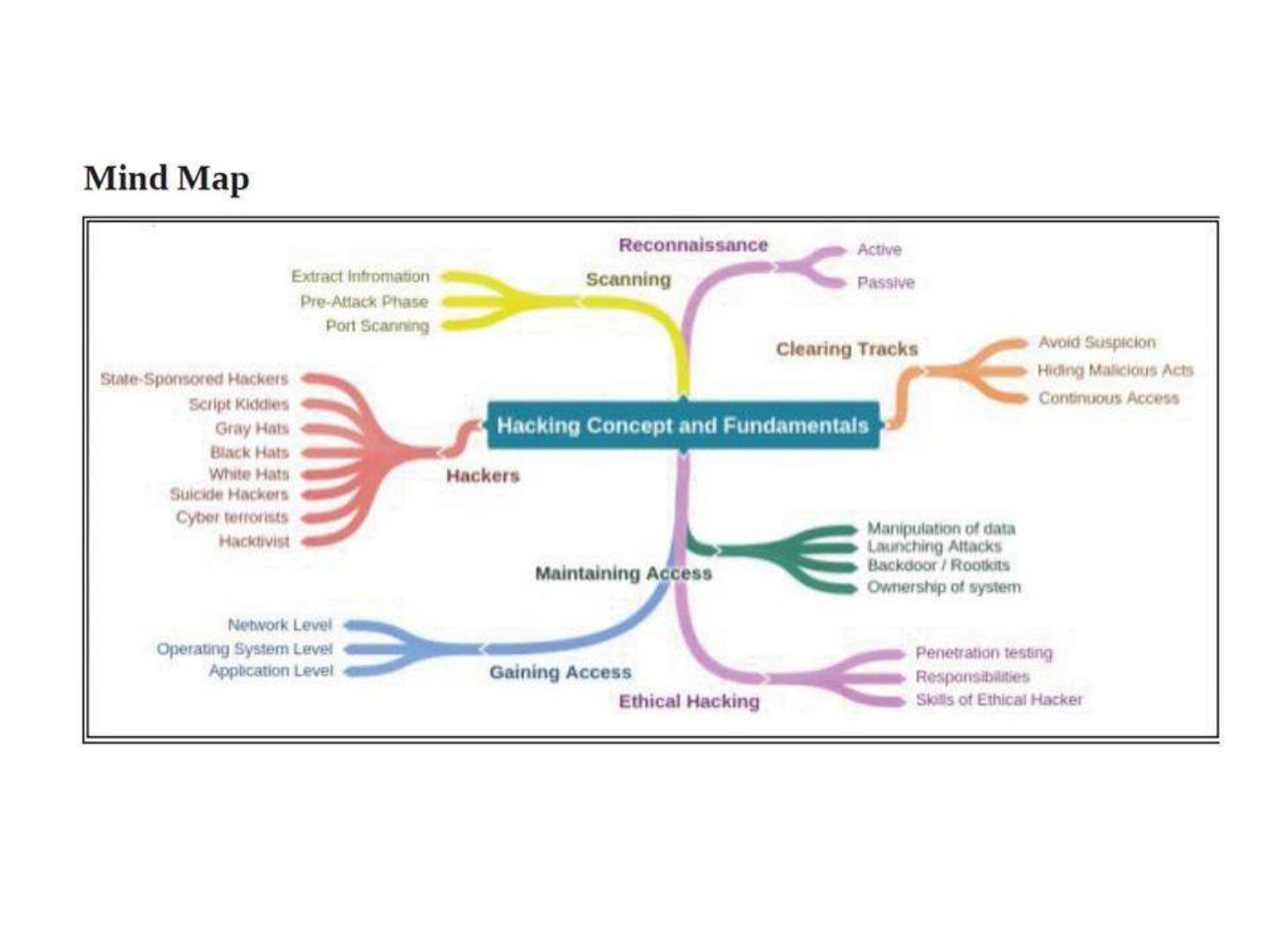
Main Hacking Phases
Notes
Tip Five phases: 1 Reconnaissance → 2 Scanning → 3 Gaining access → 4 Maintaining access → 5 Clearing tracks.
1- Reconnaissance
Exam angle
Searching the target’s website and news articles without touching their systems is:
2- Scanning
Notes
Scanning: probe the network for live hosts, open ports, services and vulnerabilities.
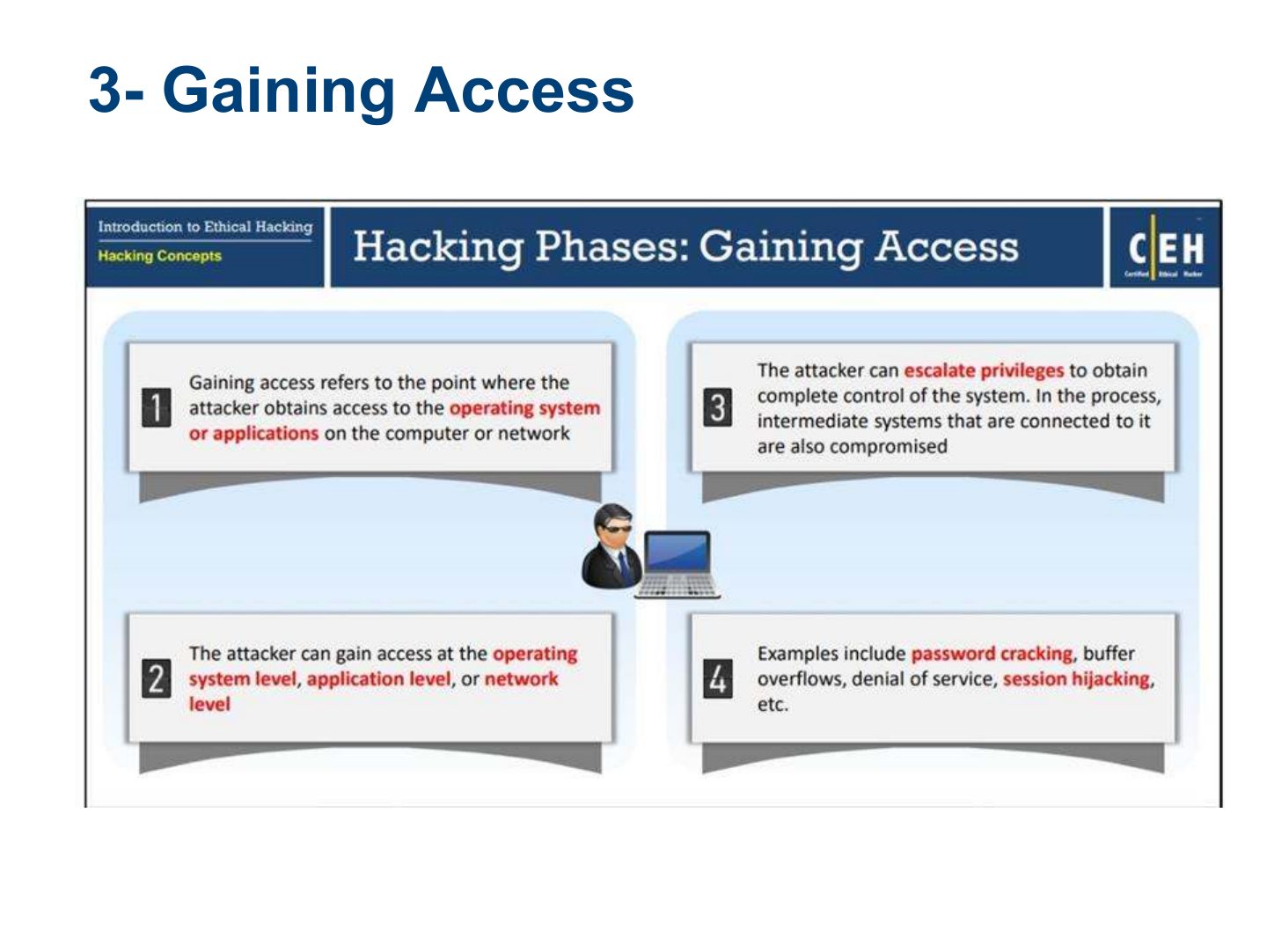
3- Gaining Access
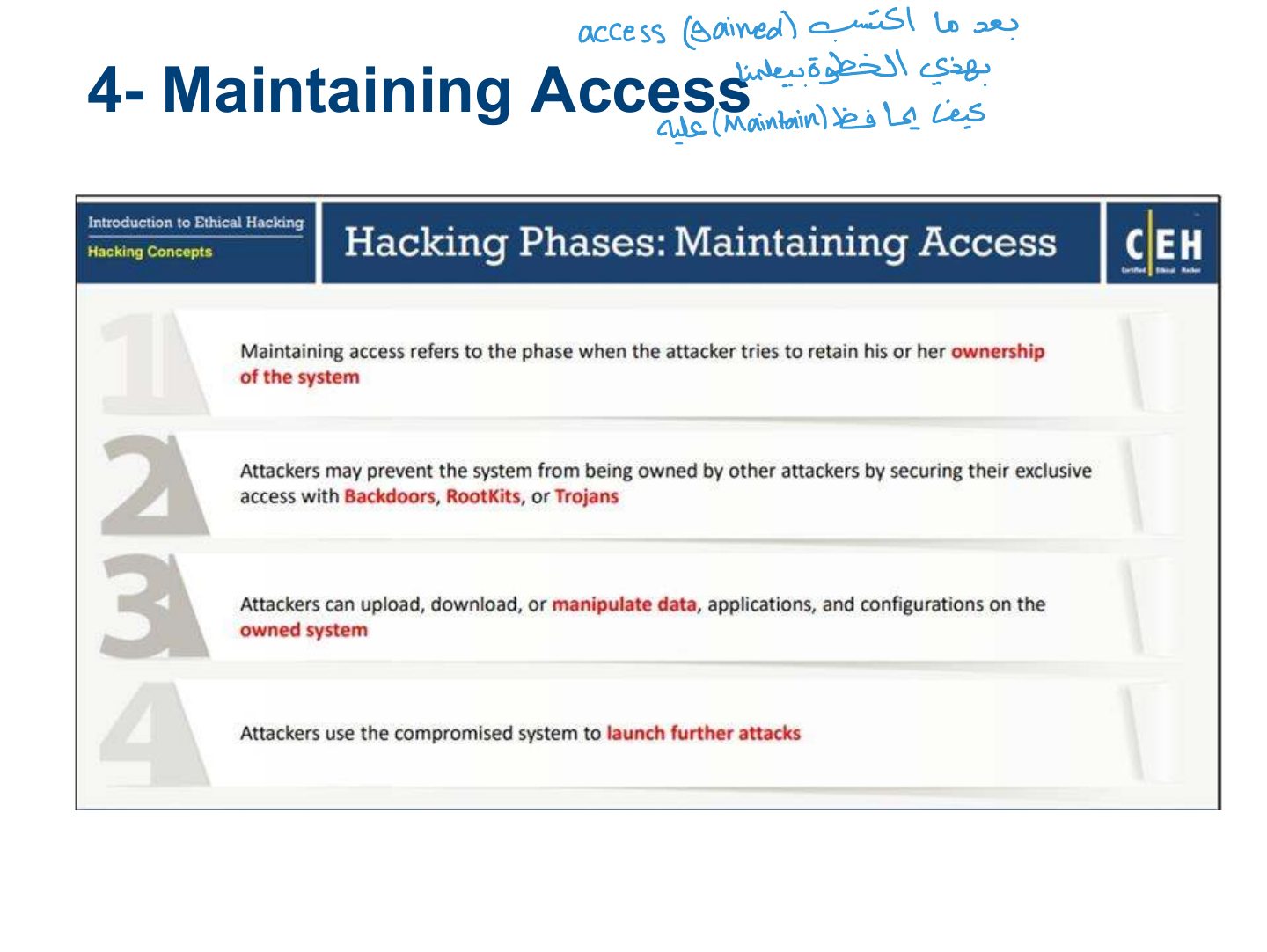
4- Maintaining Access
Notes
Maintaining access: backdoors, rootkits, Trojans to come back later.
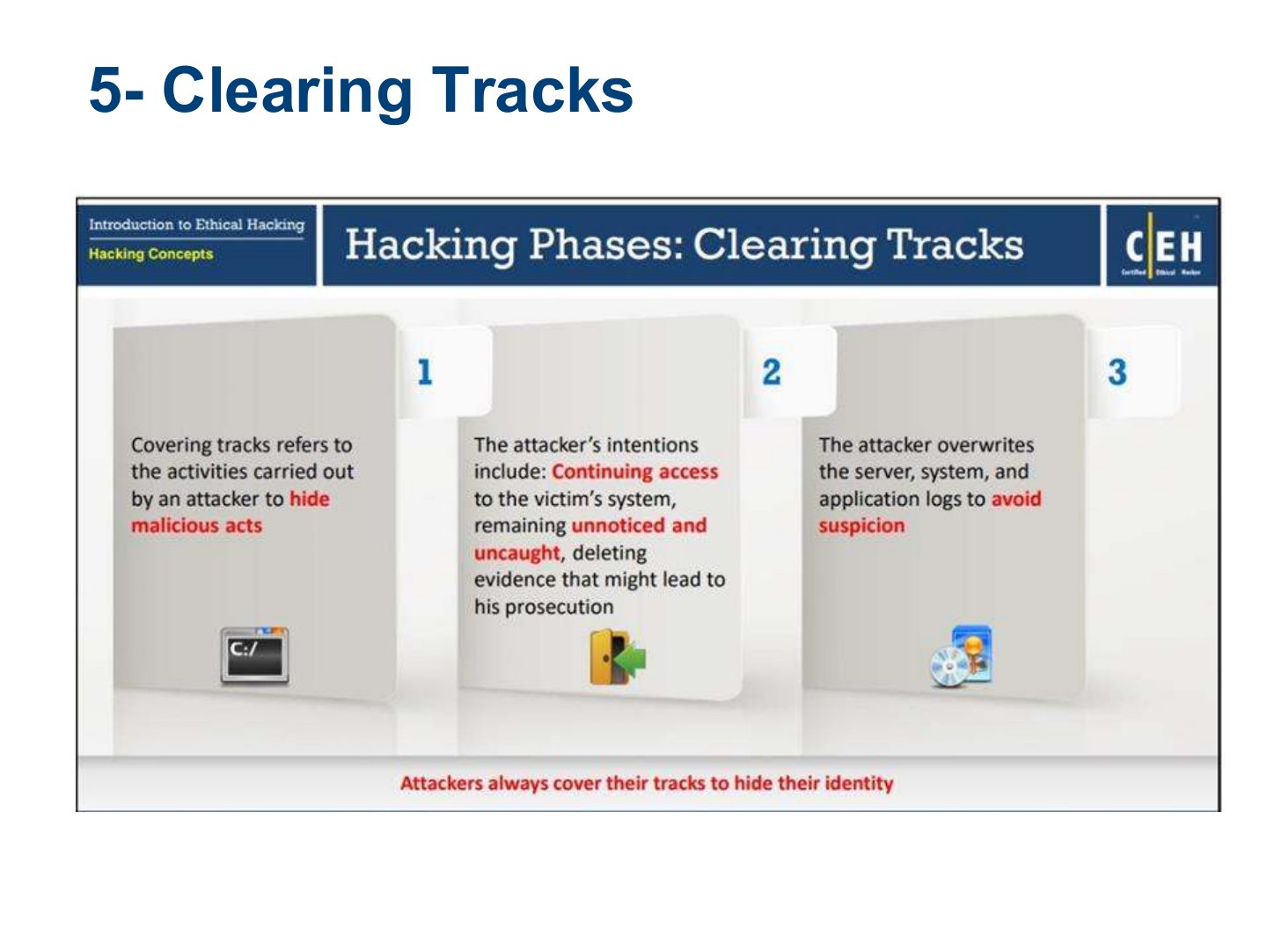
5- Clearing Tracks
Exam angle
Deleting log entries happens in which phase?
Slide 23
Skills of the Ethical Hacker
Performing a Penetration Test: Ethical Hacking Steps
Notes
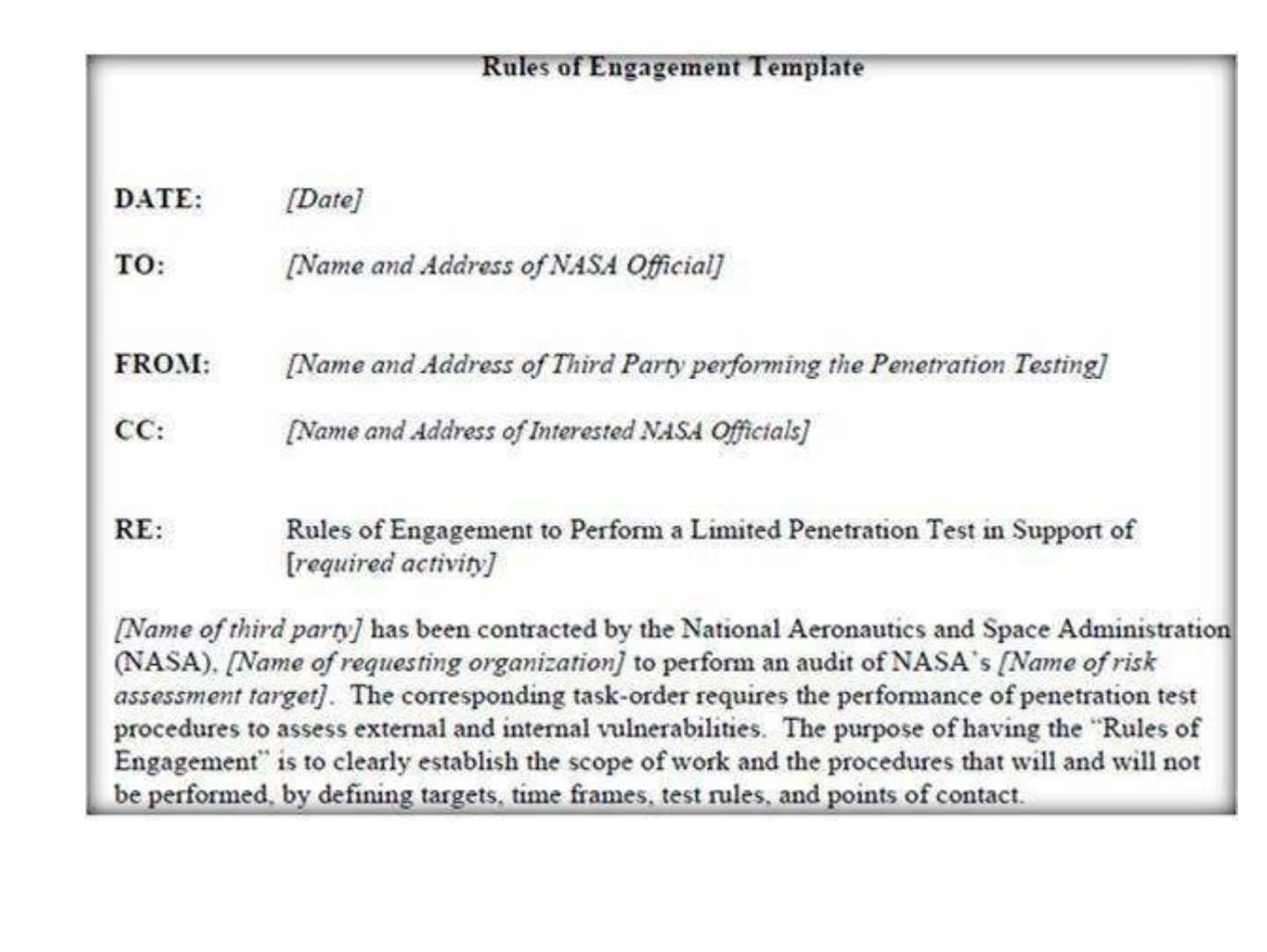
Before testing: written permission (contract), scope, rules of engagement, NDA. Test types: black box (no knowledge), white box (full knowledge), gray box (partial).
Exam angle
A test where the tester has no prior knowledge of the target is:
An ethical hacker may start testing once the scope is agreed verbally.
- Always get written authorization.
Performing a Penetration Test (Cont.)
Laws and Ethical Standards
Notes
Laws (e.g. computer-misuse acts) make unauthorized access a crime regardless of intent.
Laws and Ethical Standards (Cont.)
Certifications
Summary