two steps after finishing the risk assessment
Performing a Risk Assessment
Preparing for a risk assessment, the RA plan, identifying assets and activities, evaluating threats, vulnerabilities and countermeasures, writing mitigating recommendations, presenting the results and best practices.
How to read this page
Every original slide is shown unchanged. Yellow marks on a slide point to a numbered note: hover or tap a mark to jump to its note, and hover a note to see its marks. Questions tagged Past exam appeared on a real paper; Prediction questions are likely angles, not confirmed. Pick an answer to each question: a wrong pick tells you why it is wrong, so you can try again.
All 18 slides
- 1 Slide 1
- 2 Prepare for RA
- 3 Prepare for RA
- 4 Prepare for RA
- 5 Prepare for RA
- 6 Prepare for RA
- 7 RA plan (steps to do)
- 8 Identify assets and activities to address.
- 9 Identify assets and activities to address.
- 10 Identify assets and activities to address.
- 11 Identifying and Evaluating Relevant Threats
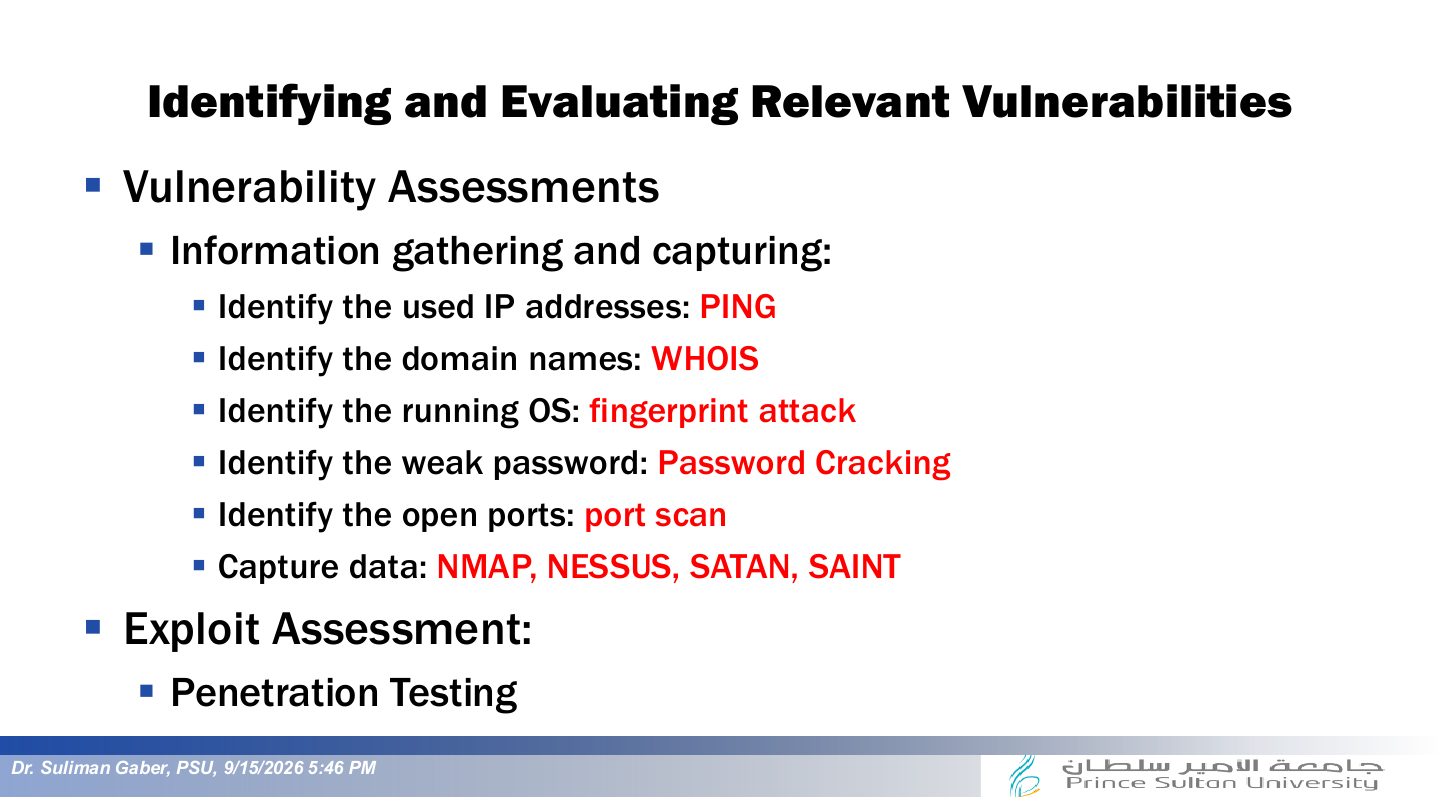
- 12 Identifying and Evaluating Relevant Vulnerabilities
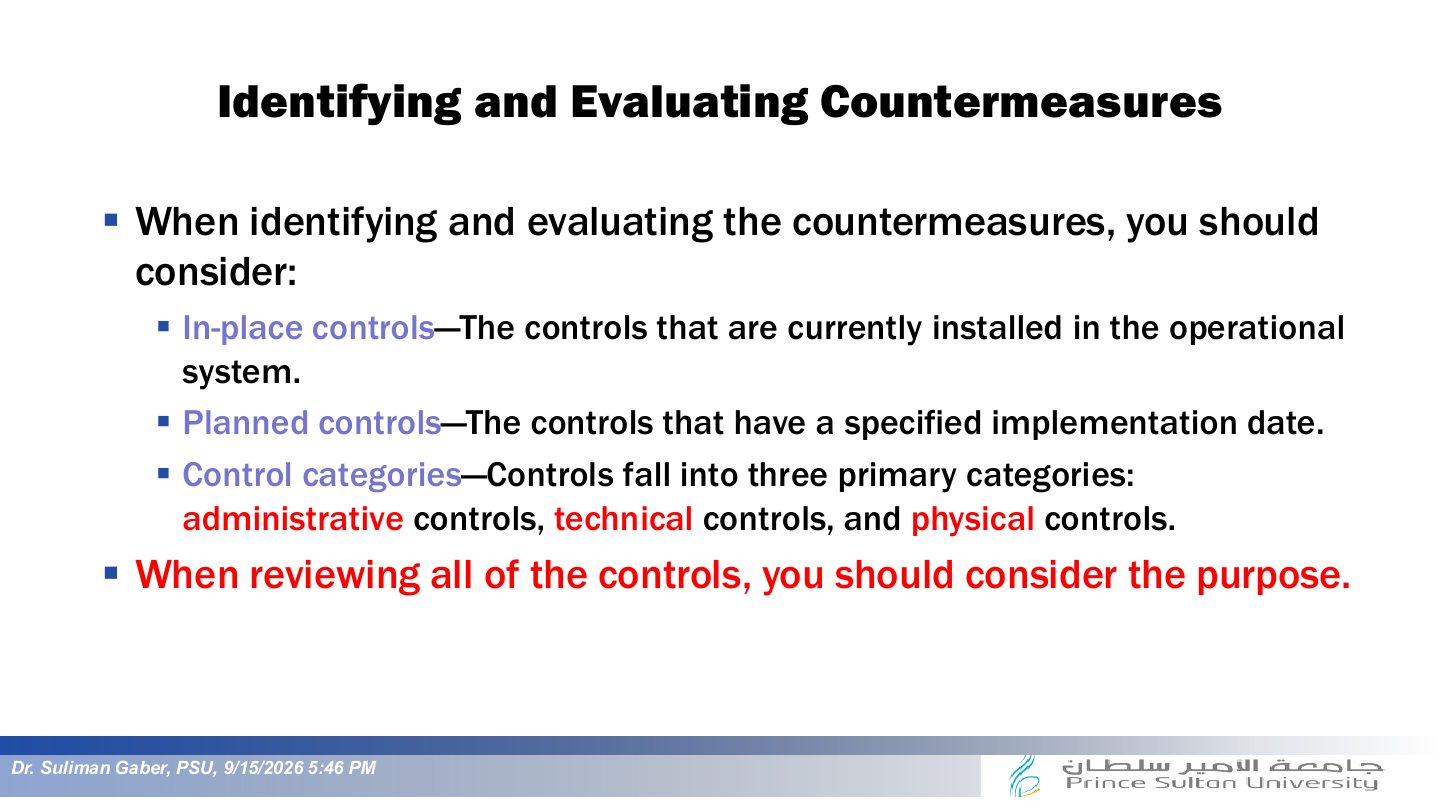
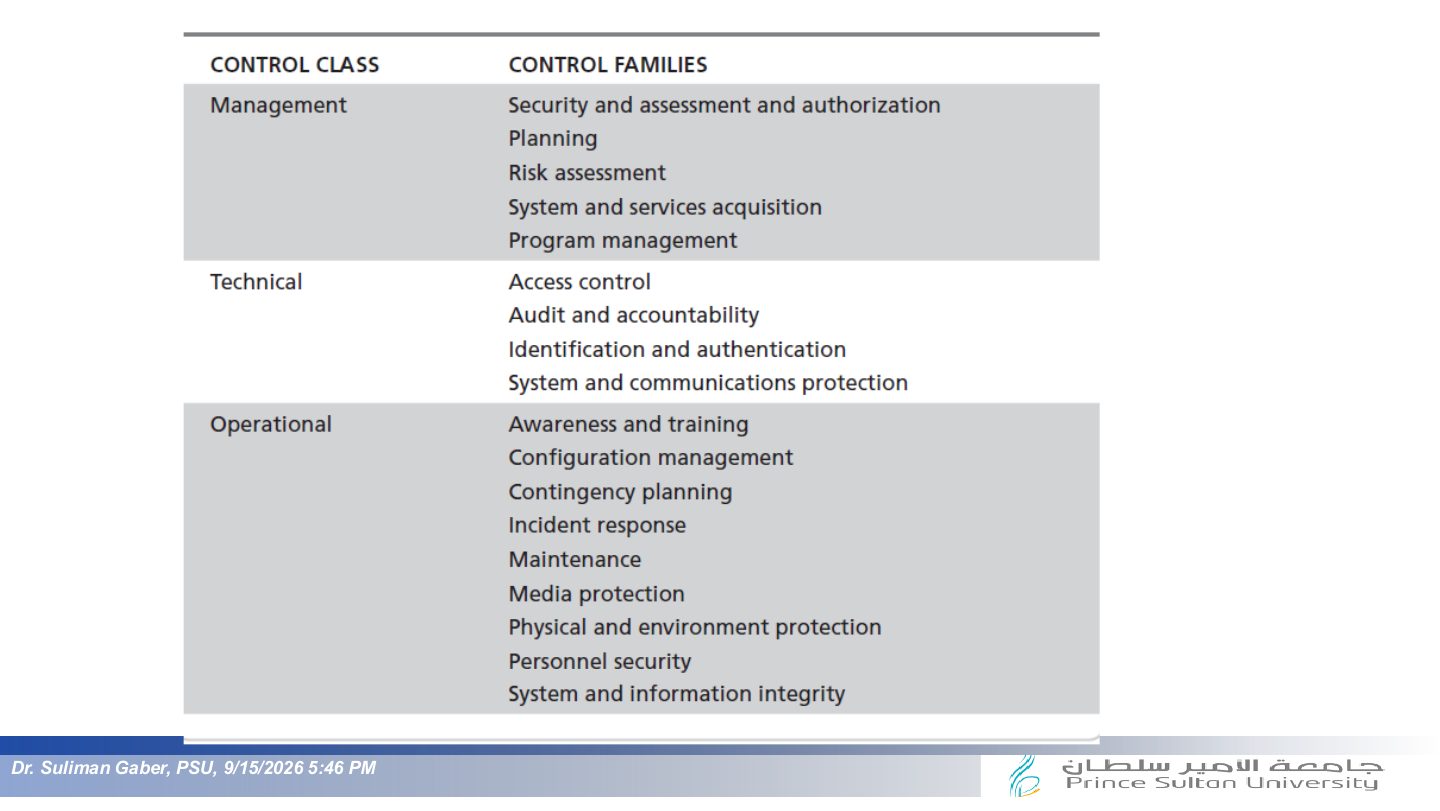
- 13 Identifying and Evaluating Countermeasures
- 14 Slide 14
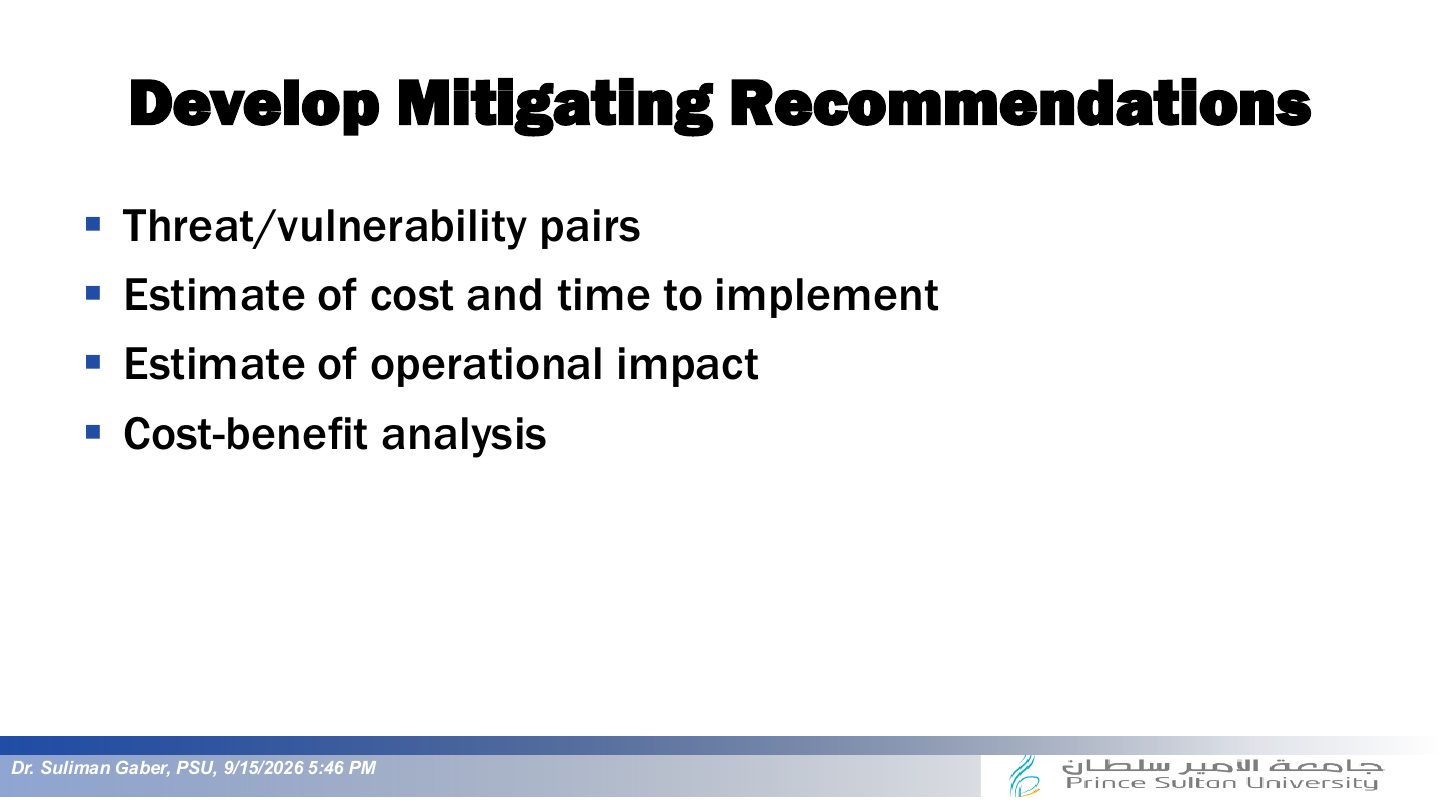
- 15 Develop Mitigating Recommendations
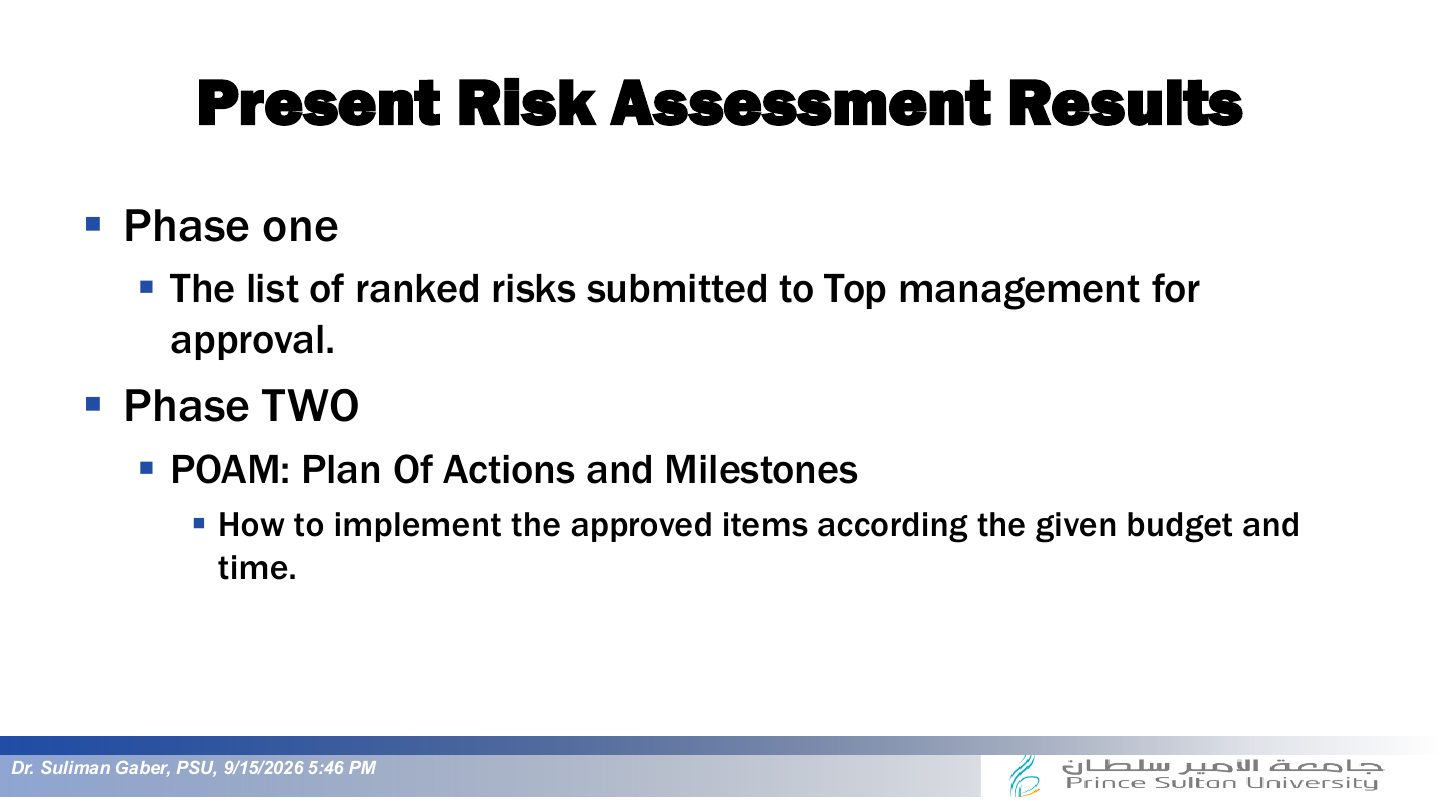
- 16 Present Risk Assessment Results
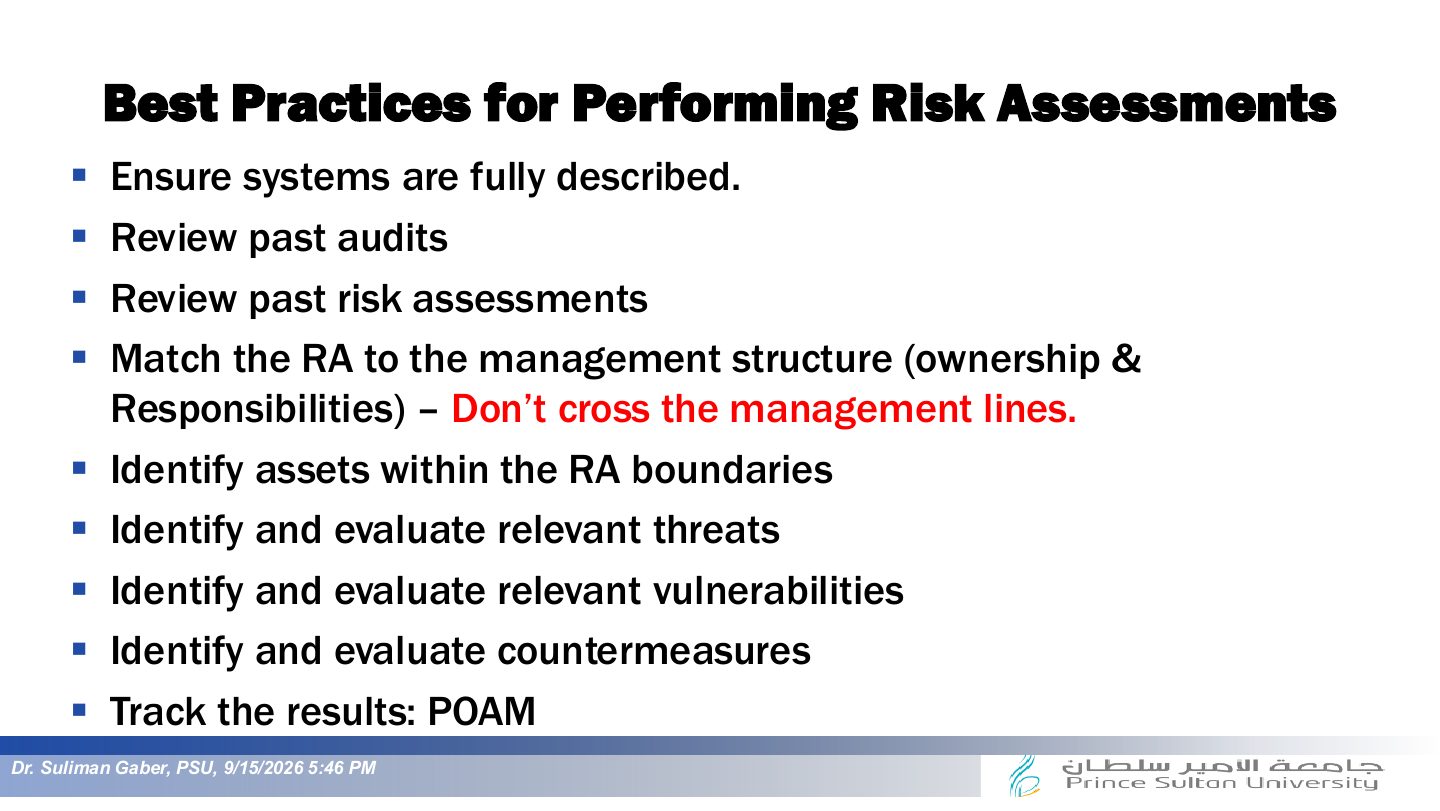
- 17 Best Practices for Performing Risk Assessments
- 18 Slide 18
Slide 1
Prepare for RA
Notes
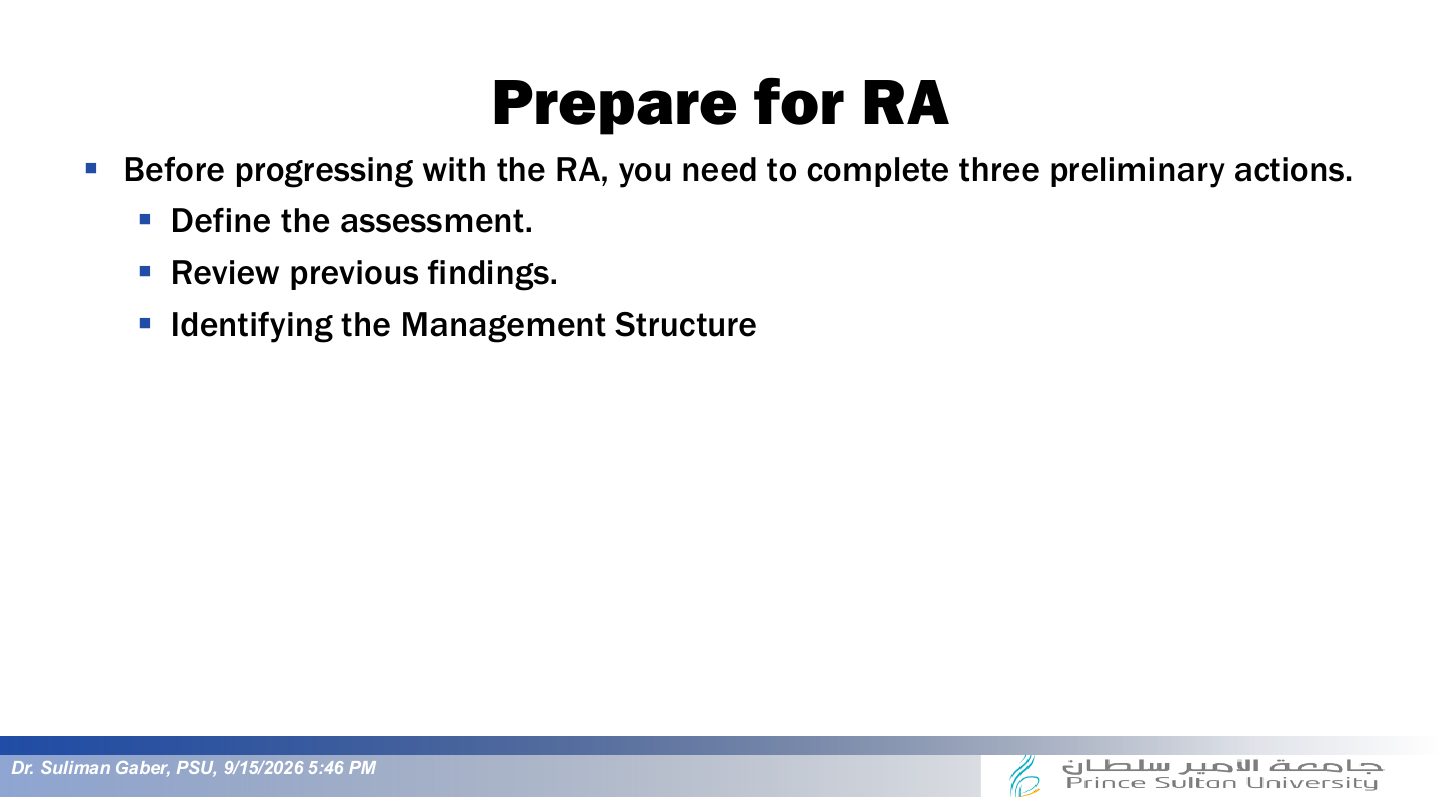
Prepare: define scope and boundaries, get management support, identify stakeholders and data sources.
Prepare for RA
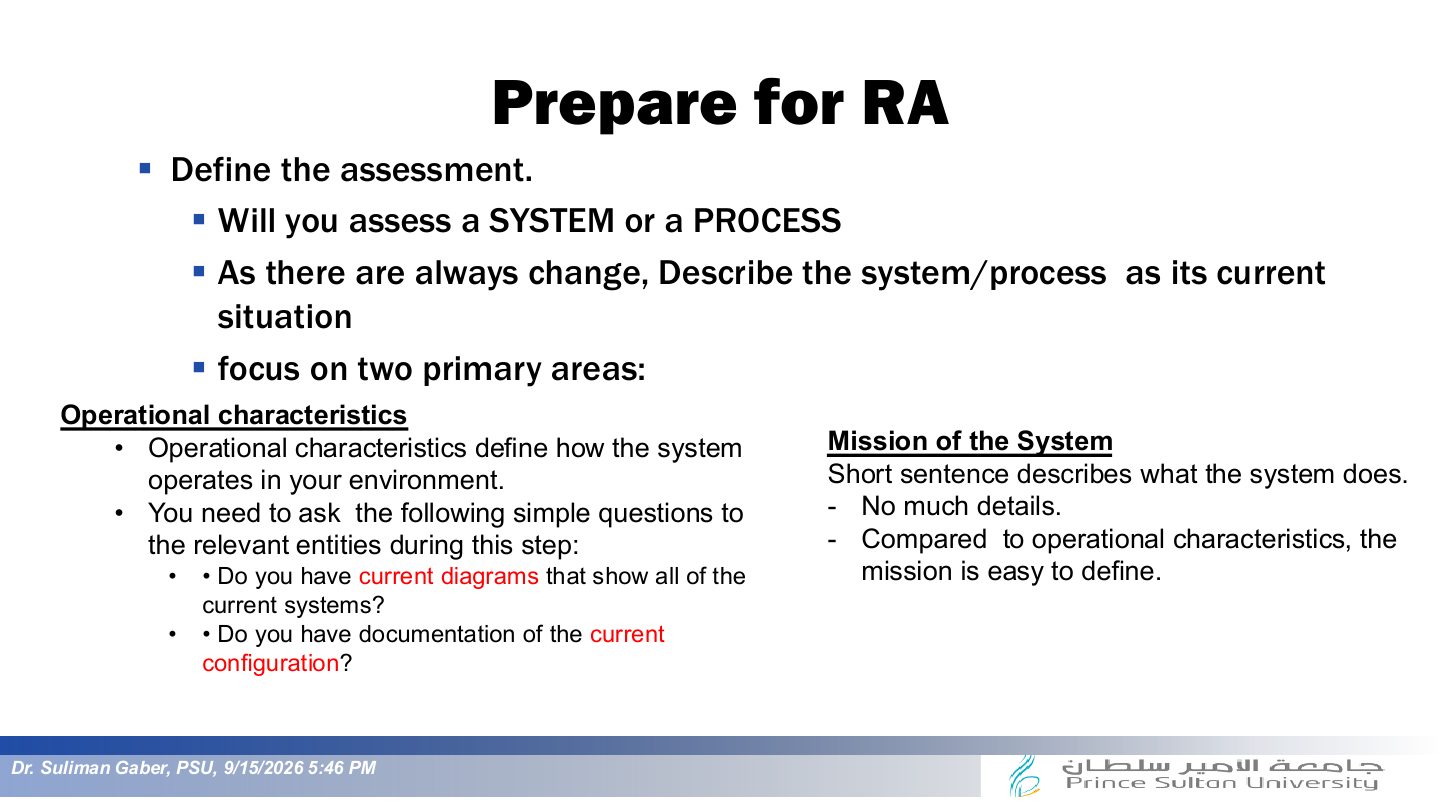
Prepare for RA
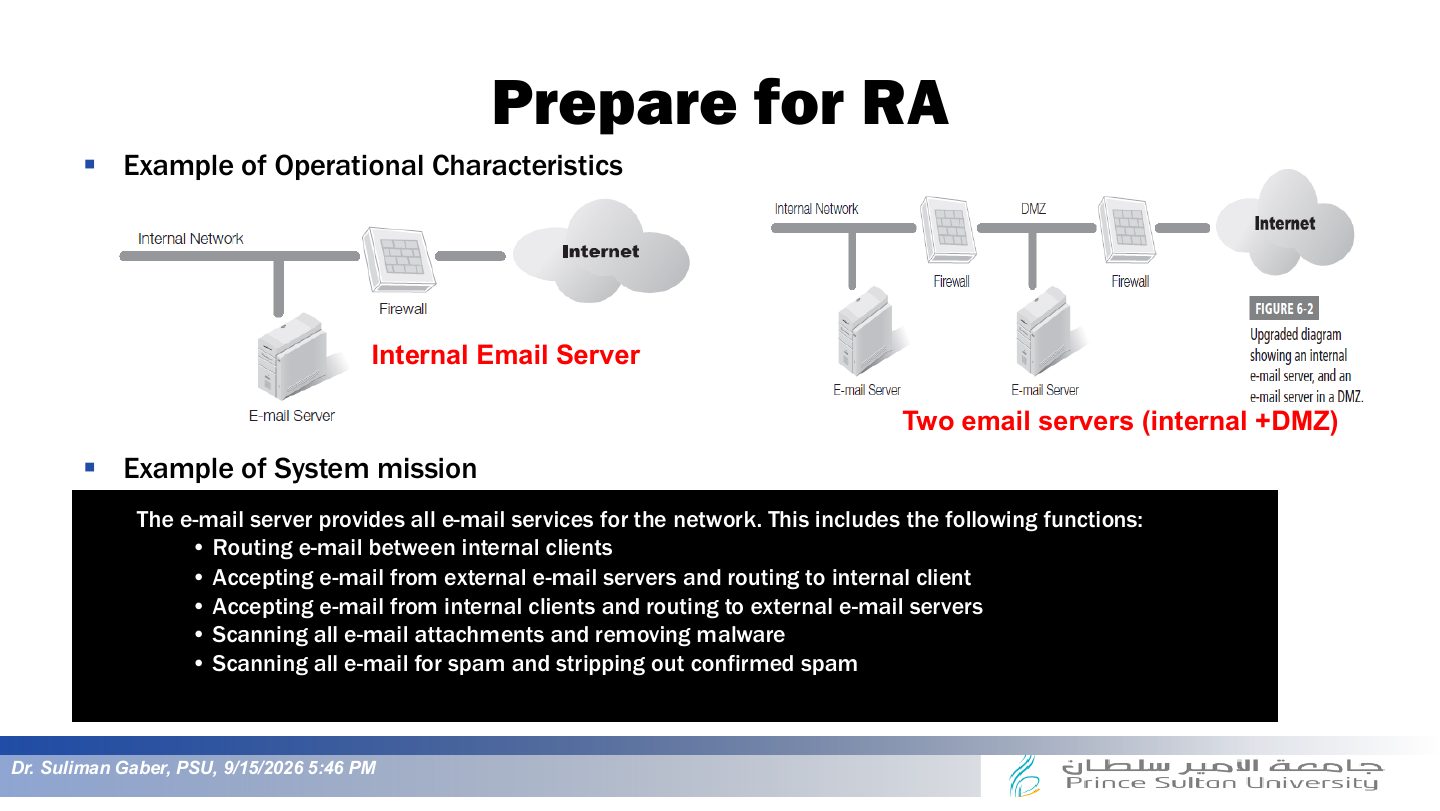
Prepare for RA
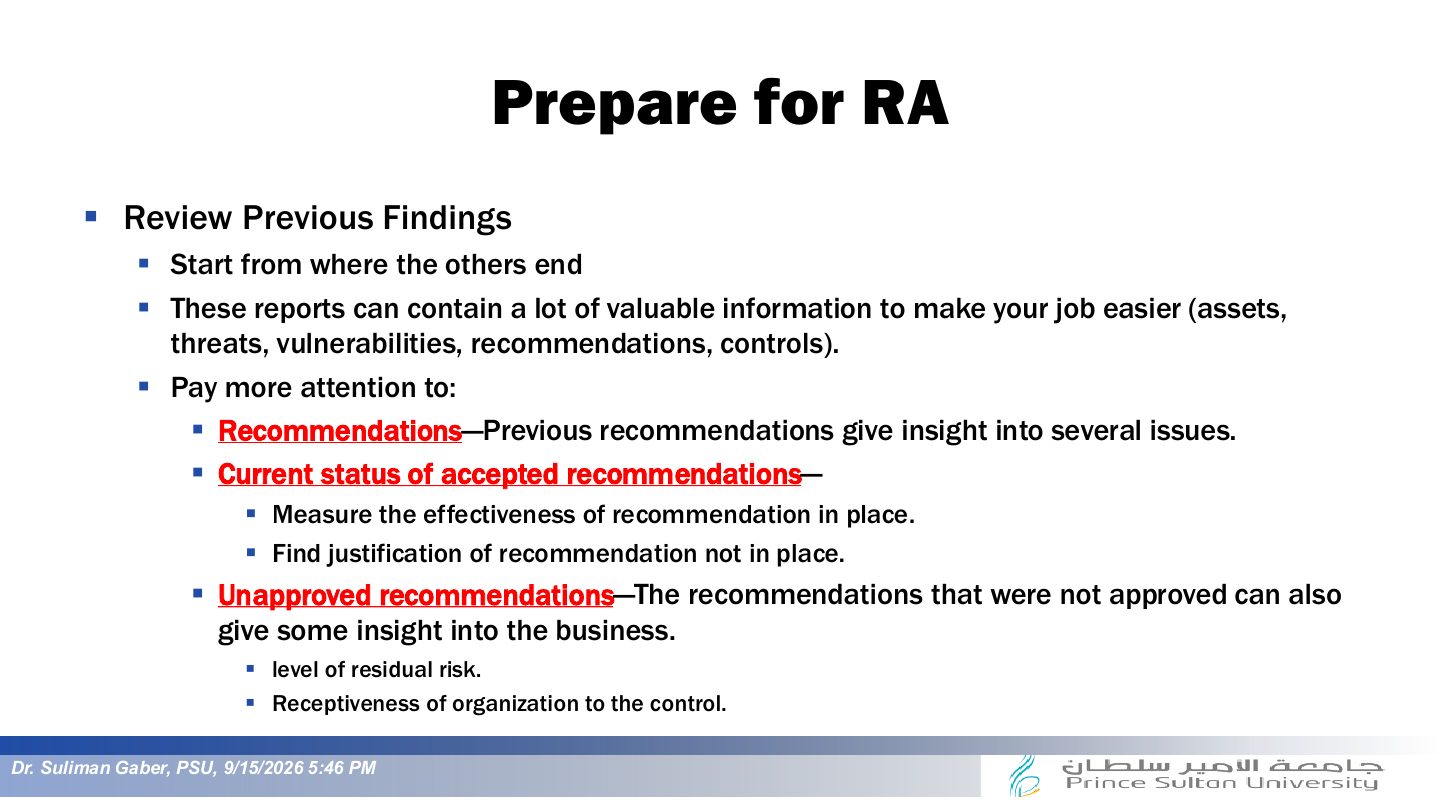
Prepare for RA
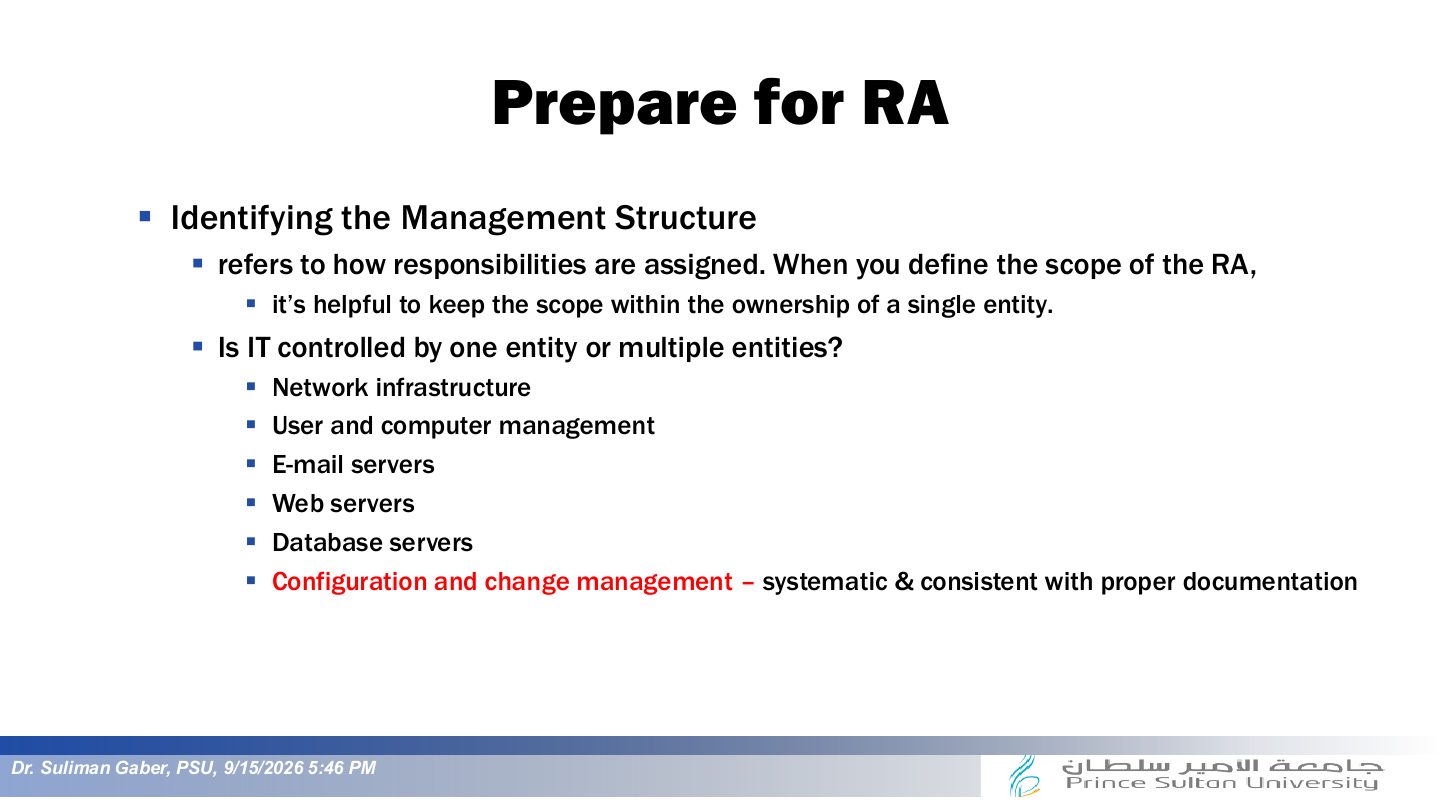
RA plan (steps to do)
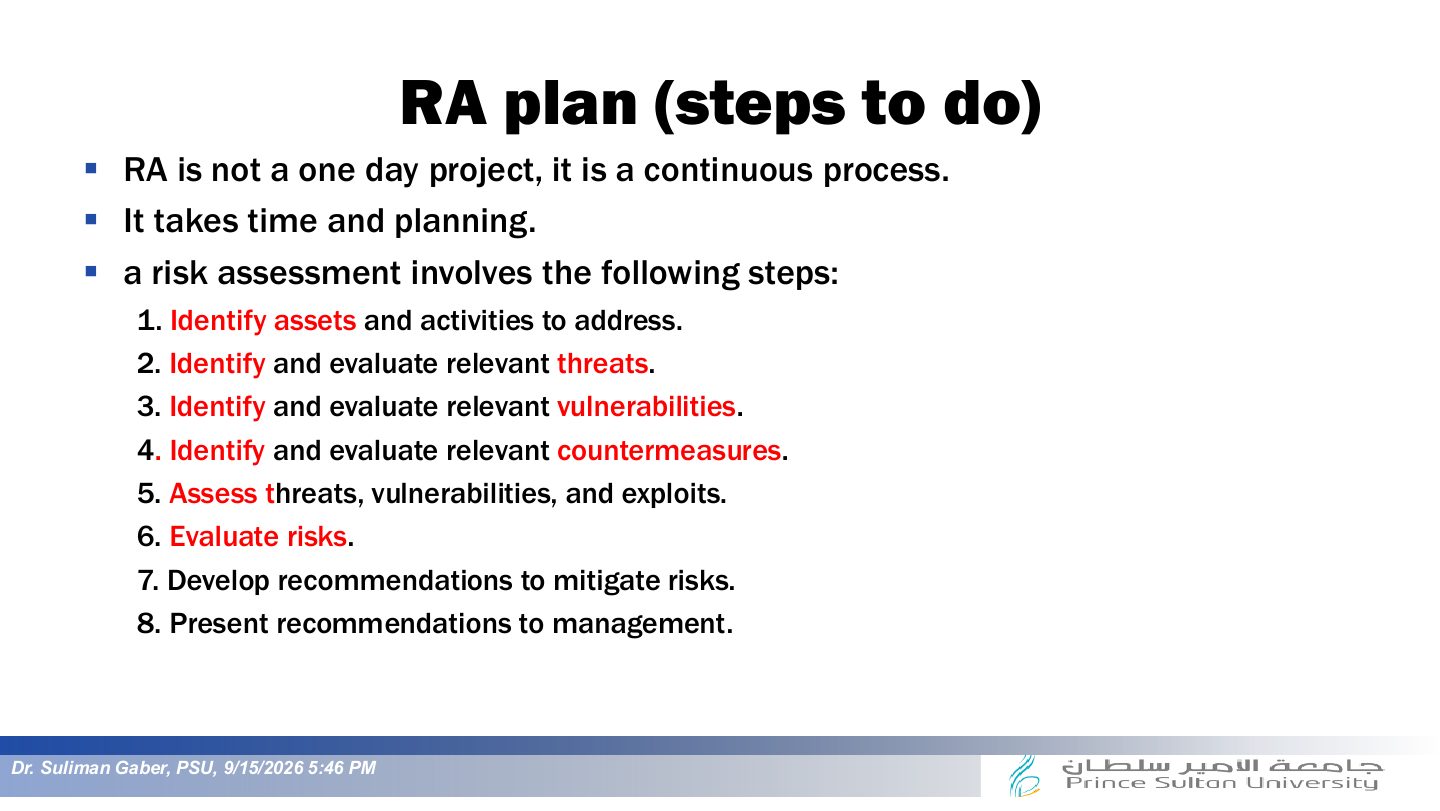
Notes
RA plan: the step-by-step list of what will be assessed, by whom, how and when.
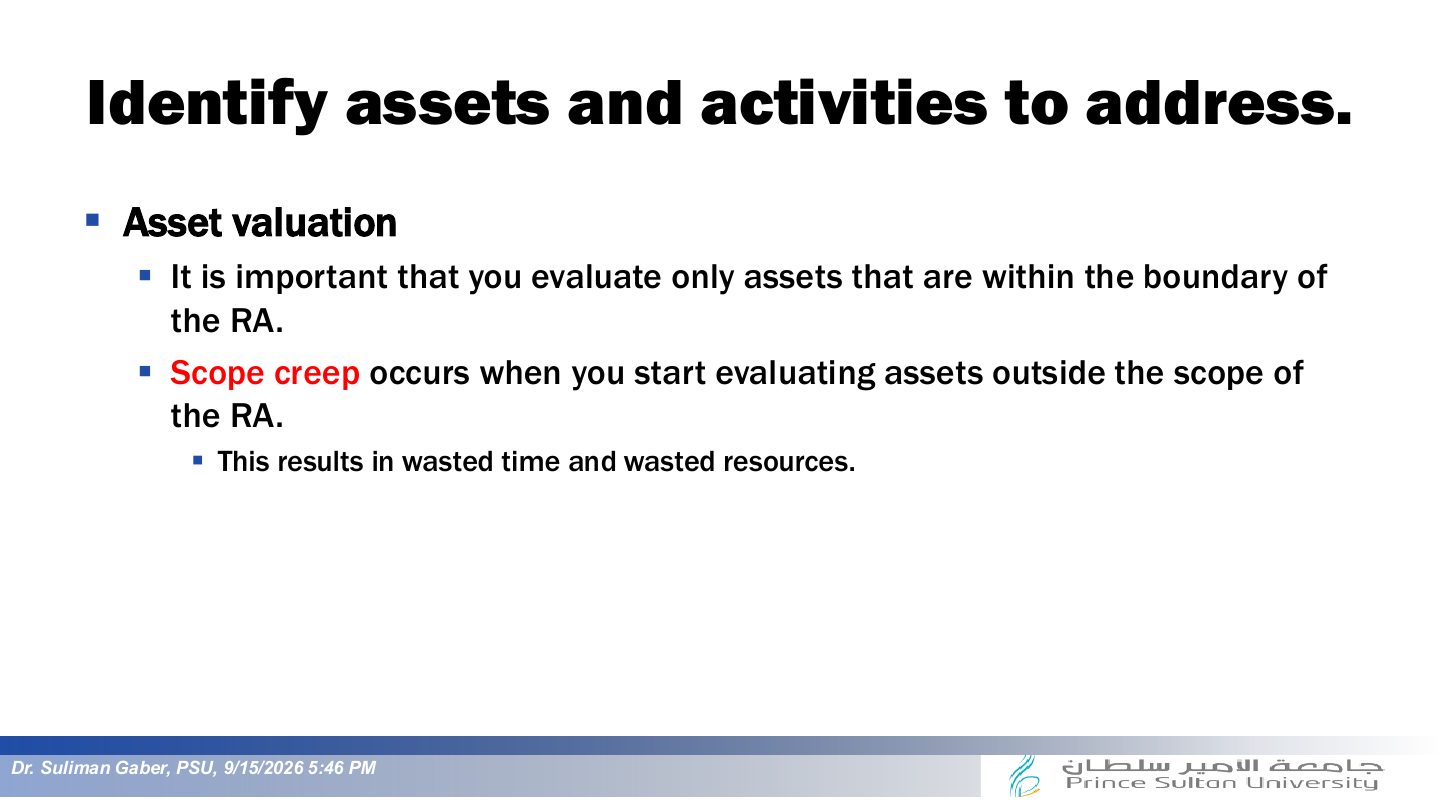
Identify assets and activities to address.
Notes
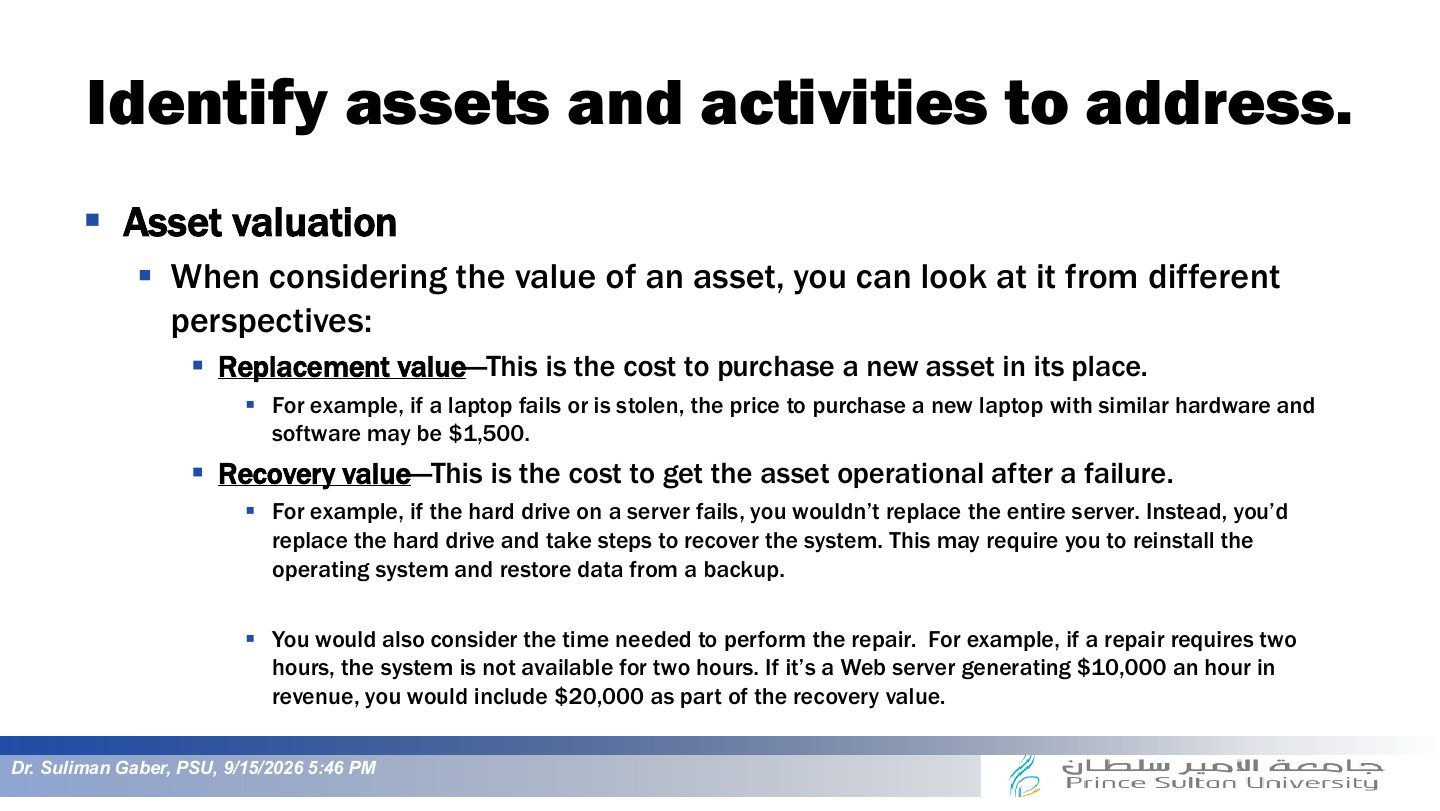
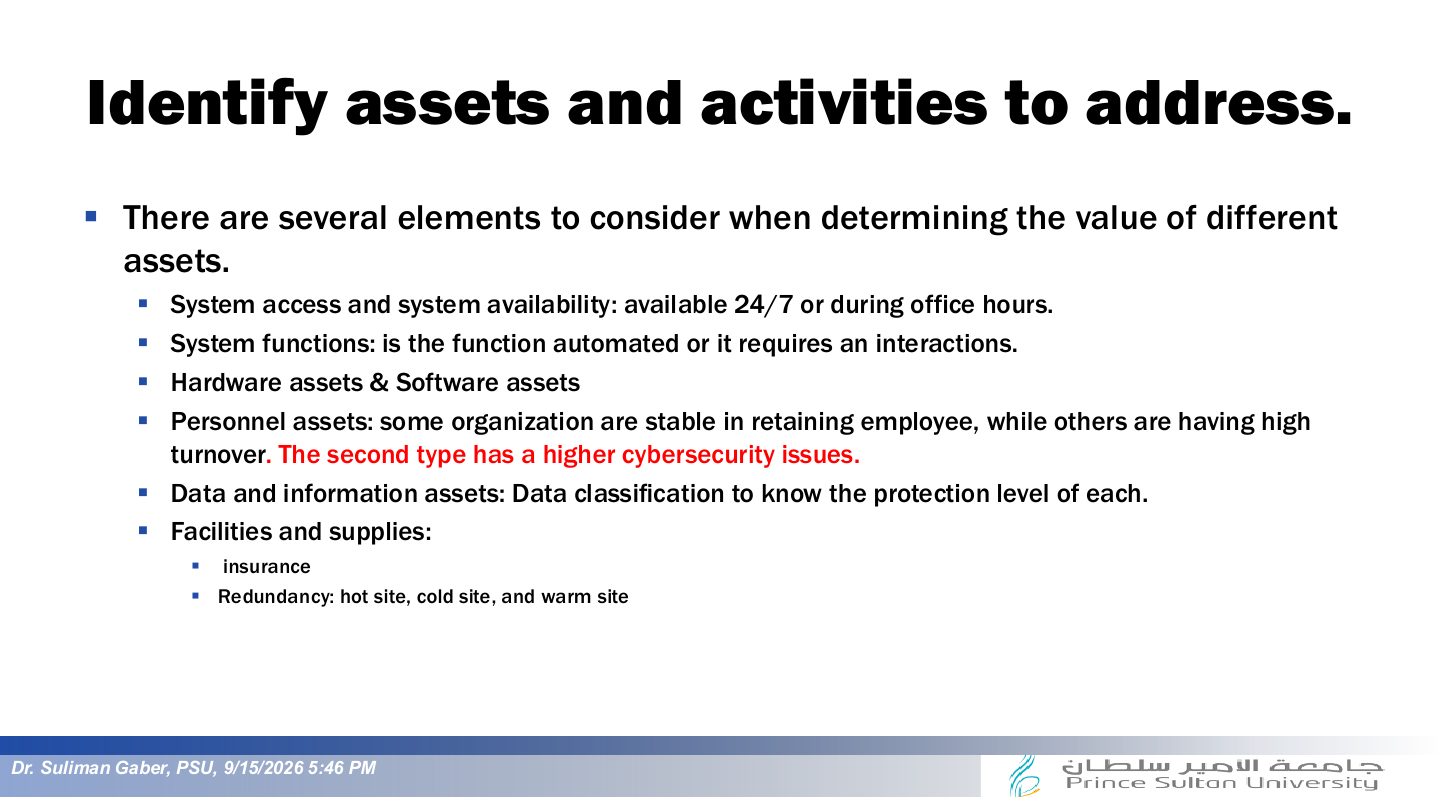
Identify the assets and activities in scope (systems, data, processes) and who owns them.
Identify assets and activities to address.
Identify assets and activities to address.
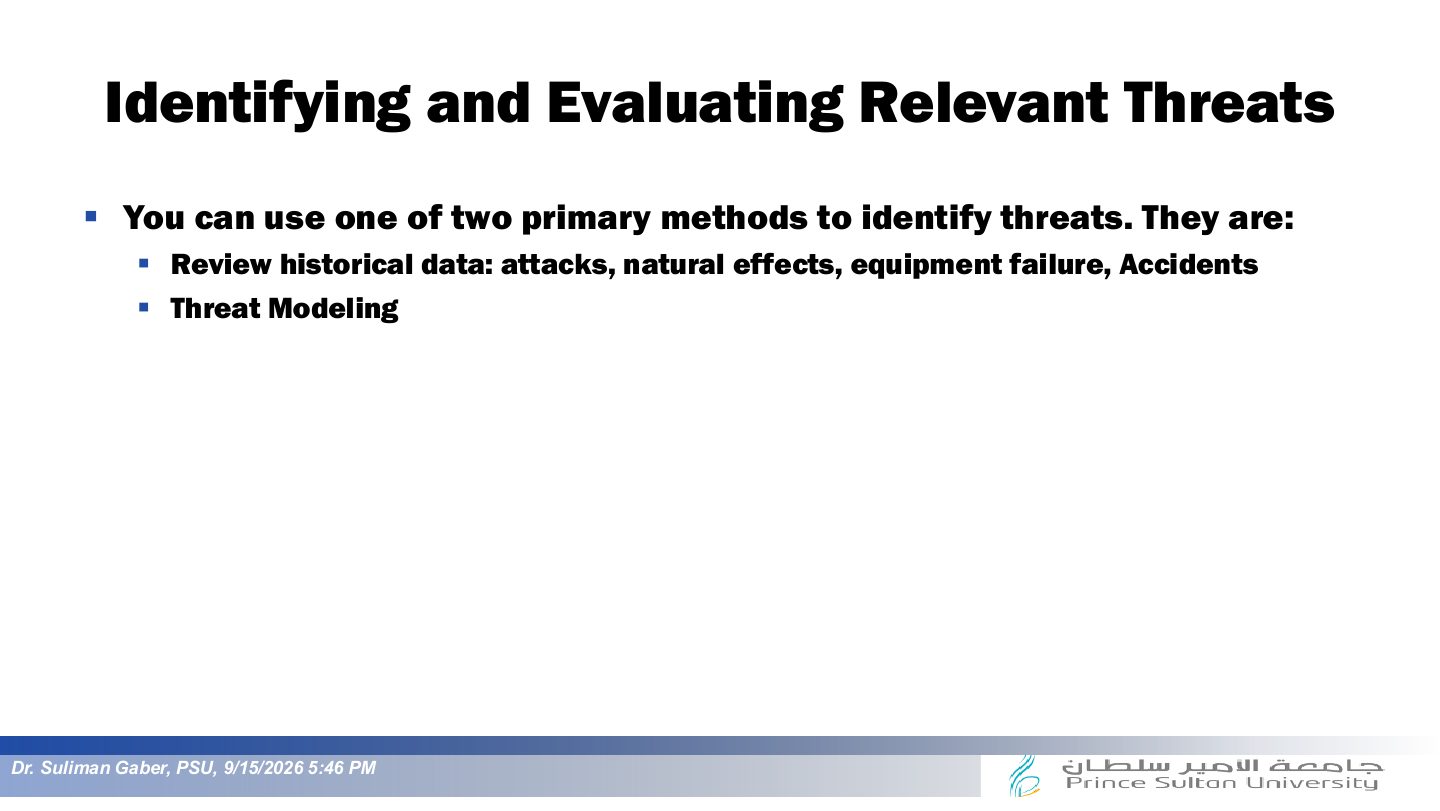
Identifying and Evaluating Relevant Threats
Notes
Evaluate relevant threats: which threat sources could target each asset, and how likely they are.
Identifying and Evaluating Relevant Vulnerabilities
Notes
Evaluate vulnerabilities: scans, audits, interviews, documentation reviews.
Identifying and Evaluating Countermeasures
Slide 14
Develop Mitigating Recommendations
Notes
Recommend mitigations: controls ranked by the risk they reduce and their cost.
Present Risk Assessment Results
Notes
Present the results to management, then track the agreed actions (implementation, monitoring, reassessment).
Exam angle
Name two steps to do after finishing a risk assessment.
Compare with the model answer
Present the results and recommendations to management for decisions; implement the approved controls (a mitigation plan with owners and deadlines); then monitor and reassess the risks periodically.
Best Practices for Performing Risk Assessments
Notes
Best practices: involve stakeholders, use a consistent method, document everything, repeat regularly.
Slide 18