when risk identification is performed
Risk Management Lifecycle
Accountability for risk, the risk-management cycle, risk identification, building an information-asset inventory, classifying, valuing and ranking assets, threat identification, vulnerability assessment and the TVA worksheet.
How to read this page
Every original slide is shown unchanged. Yellow marks on a slide point to a numbered note: hover or tap a mark to jump to its note, and hover a note to see its marks. Questions tagged Past exam appeared on a real paper; Prediction questions are likely angles, not confirmed. Pick an answer to each question: a wrong pick tells you why it is wrong, so you can try again.
All 31 slides
- 1 Slide 1
- 2 ▪ CLO 2: Synthesize the principles of cyber security risk management
- 3 Overview on the Risk management lifecycle
- 4 Risk Management
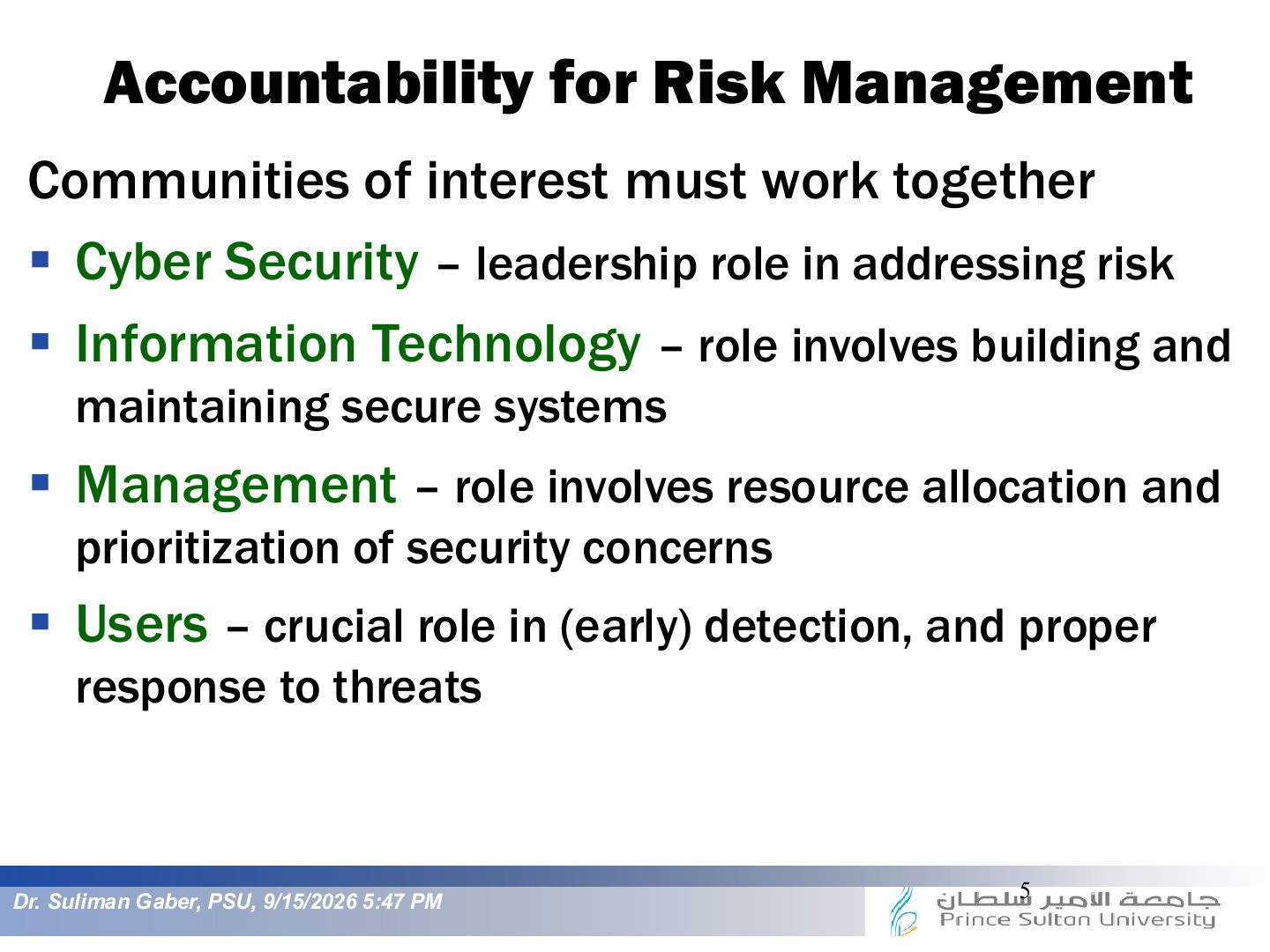
- 5 Accountability for Risk Management
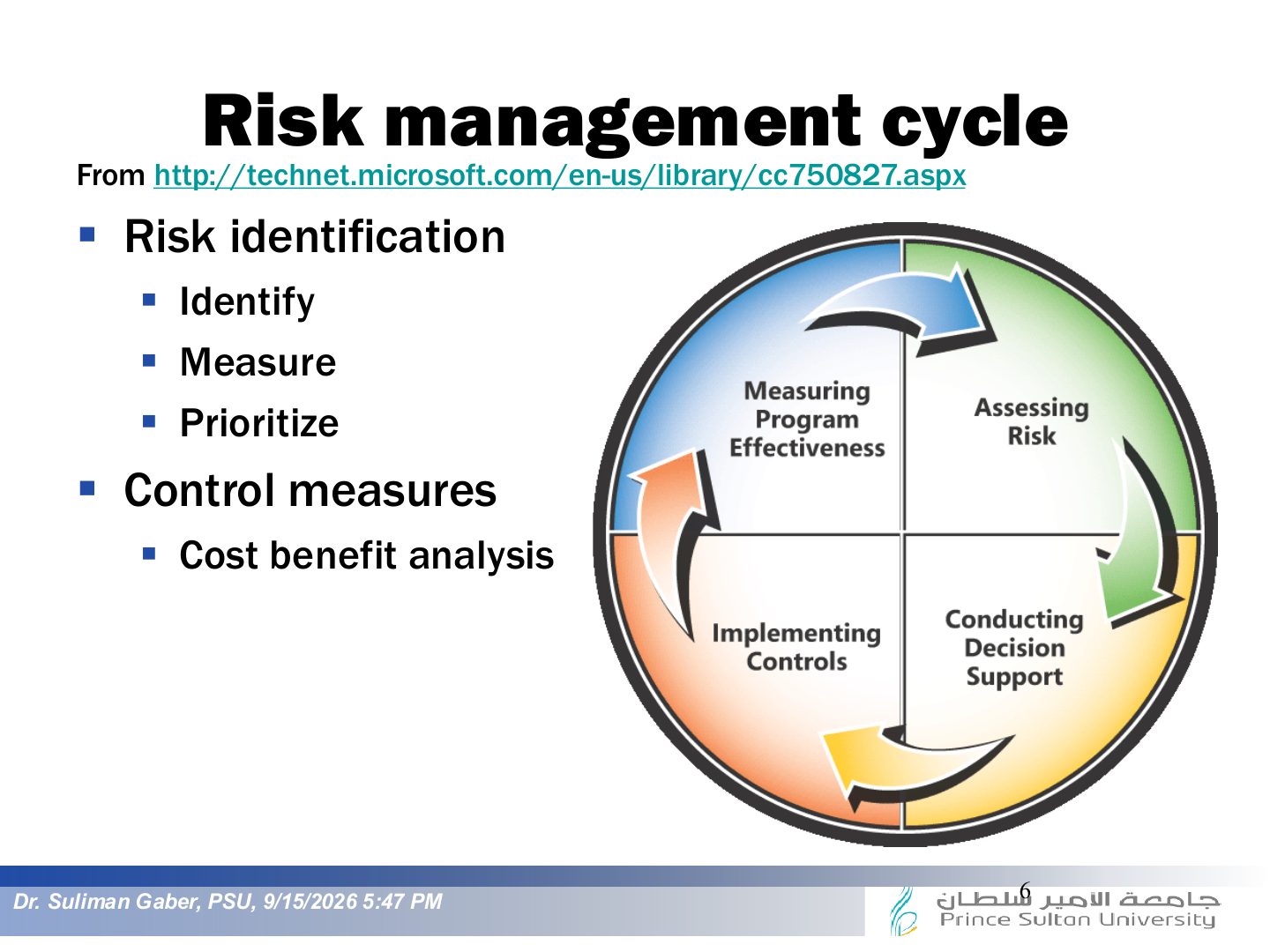
- 6 Risk management cycle
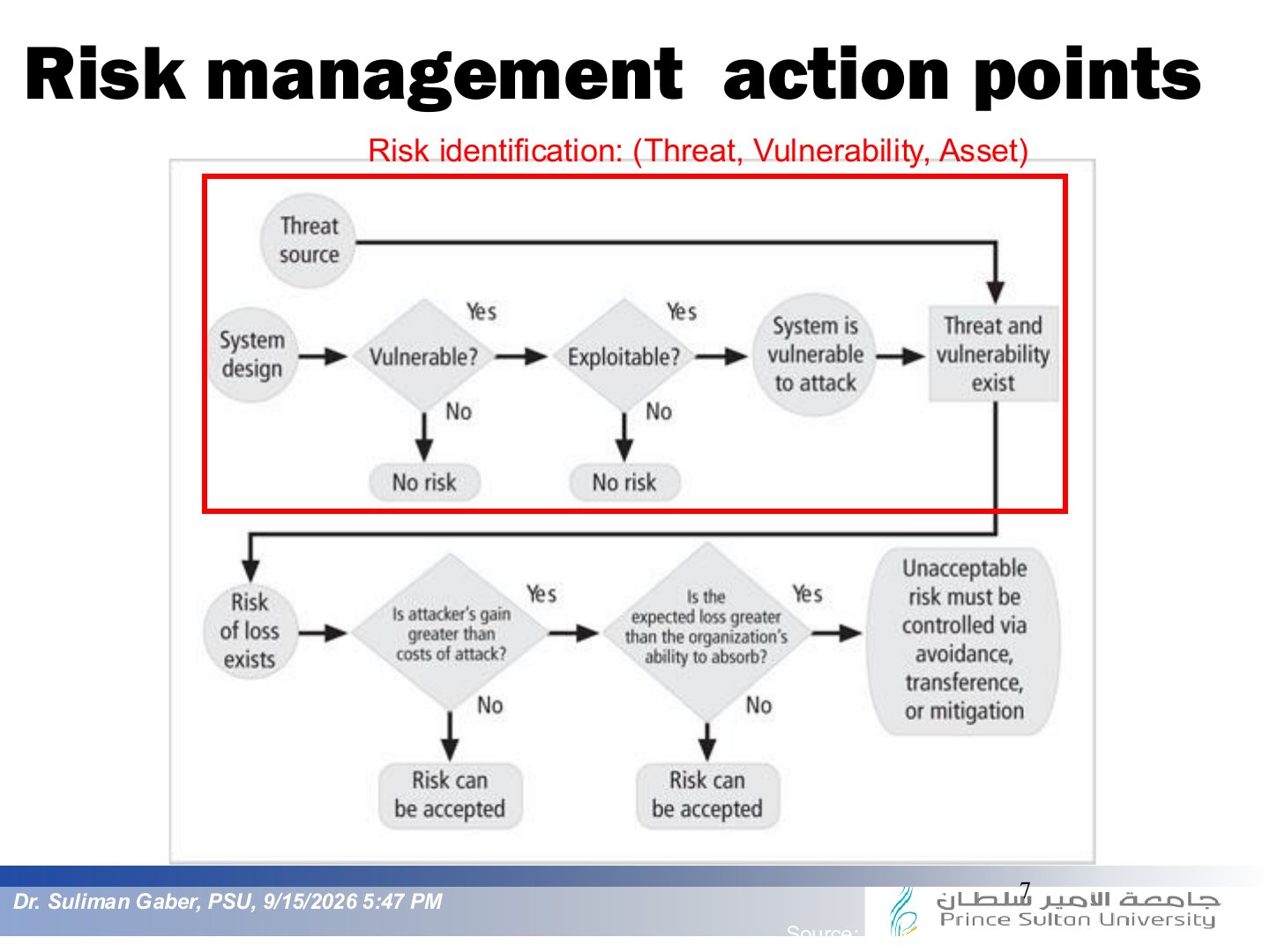
- 7 Risk management action points
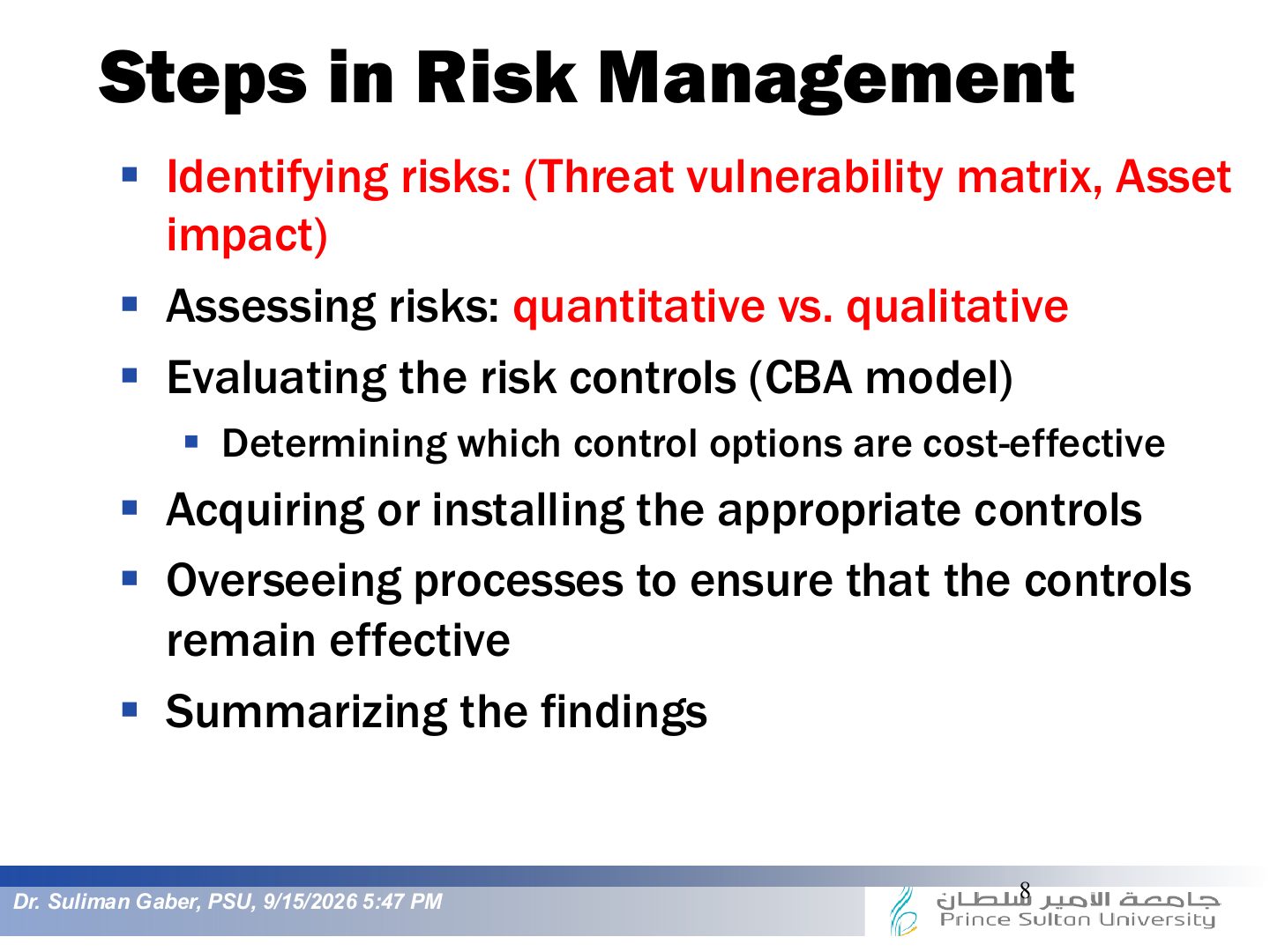
- 8 Steps in Risk Management
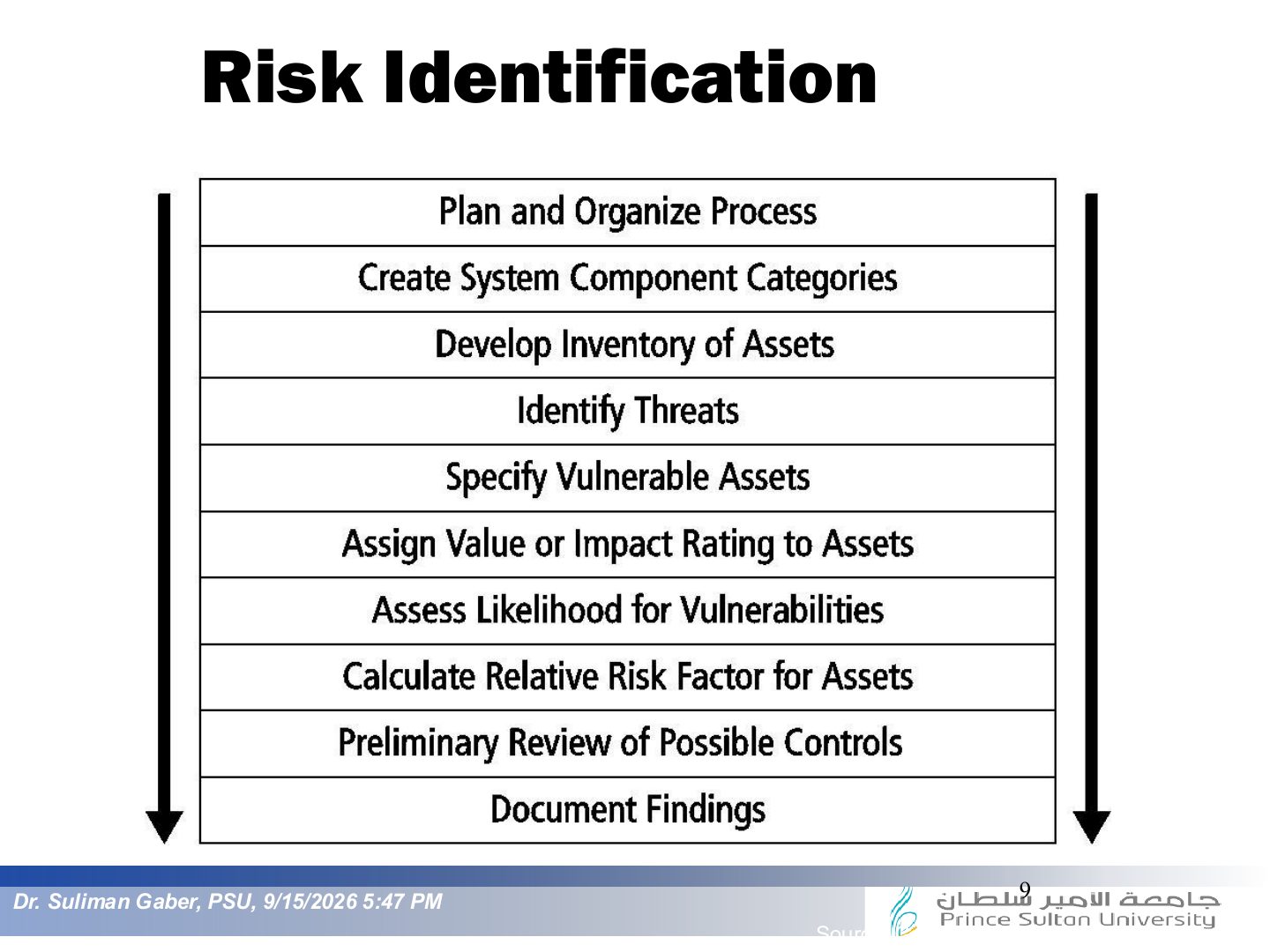
- 9 Risk Identification
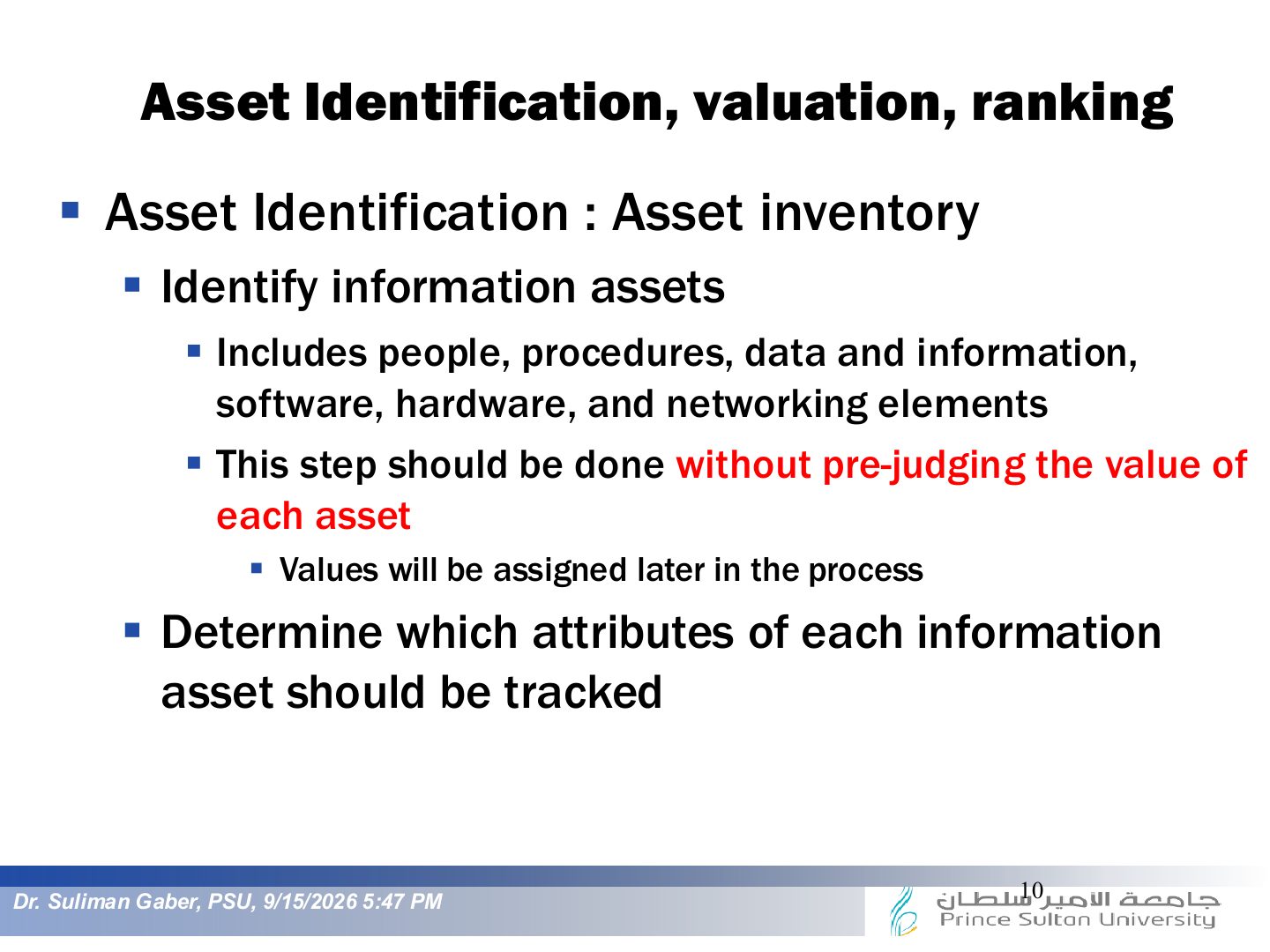
- 10 Asset Identification, valuation, ranking
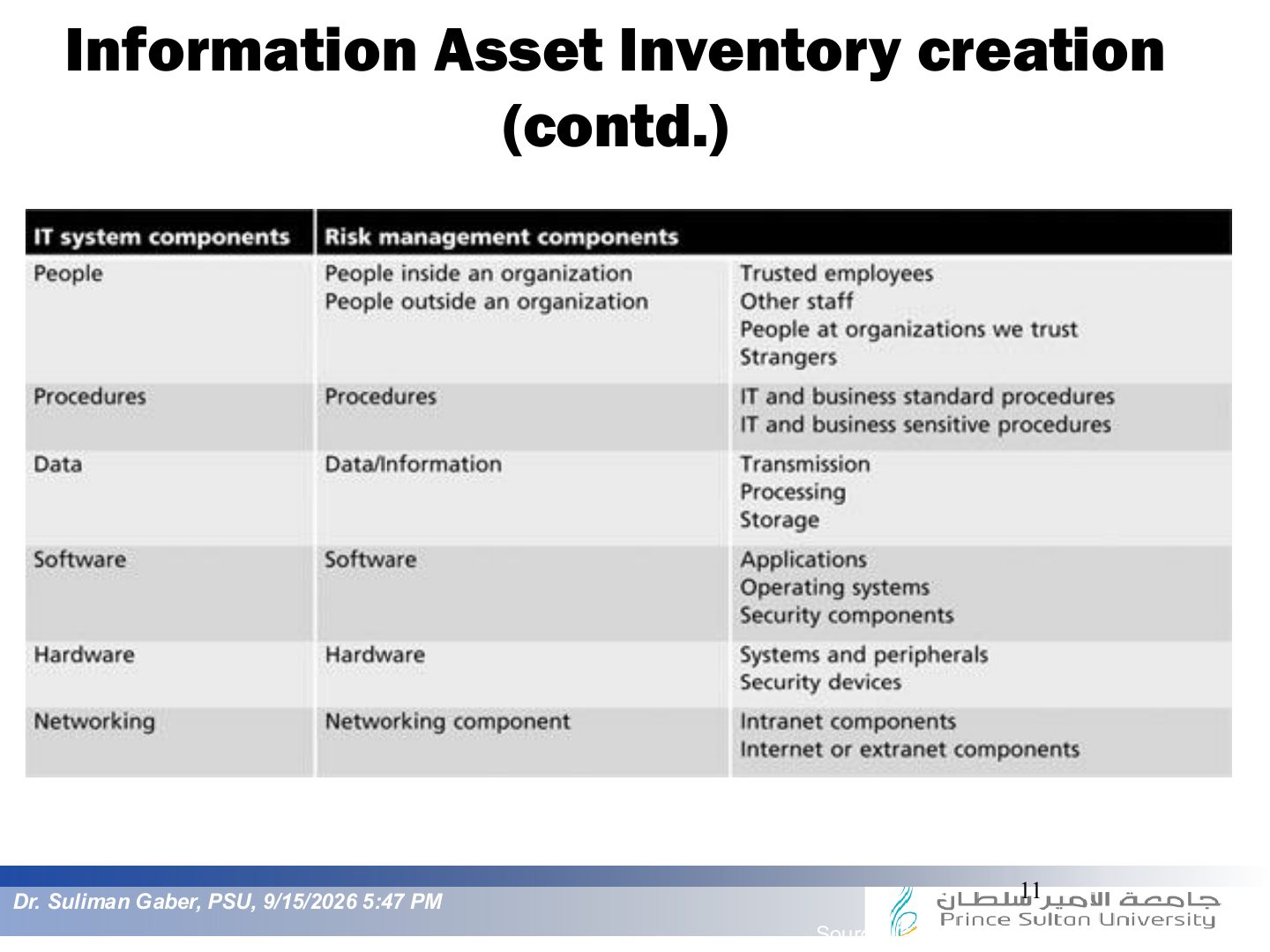
- 11 Information Asset Inventory creation (contd.)
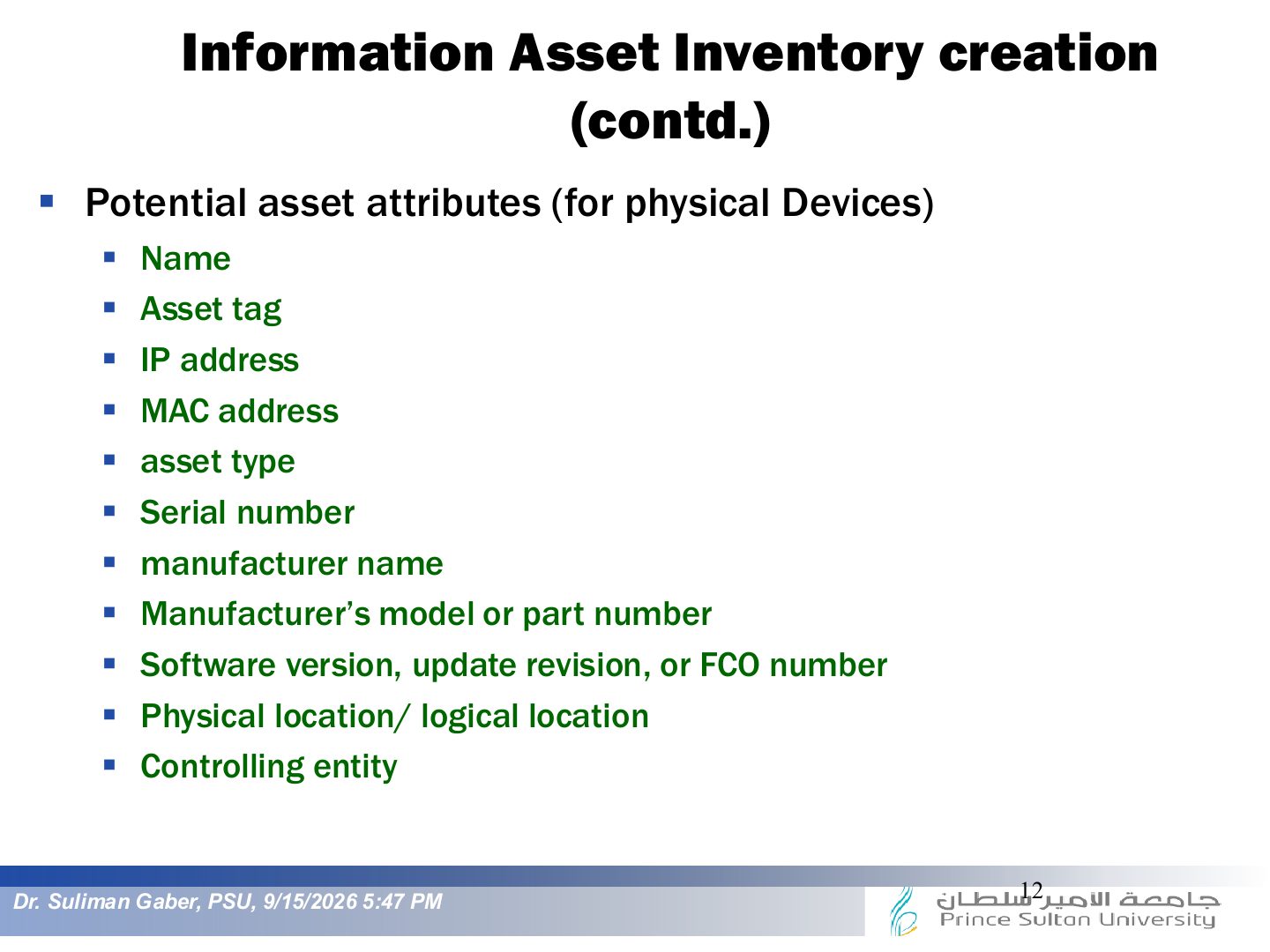
- 12 Information Asset Inventory creation (contd.)
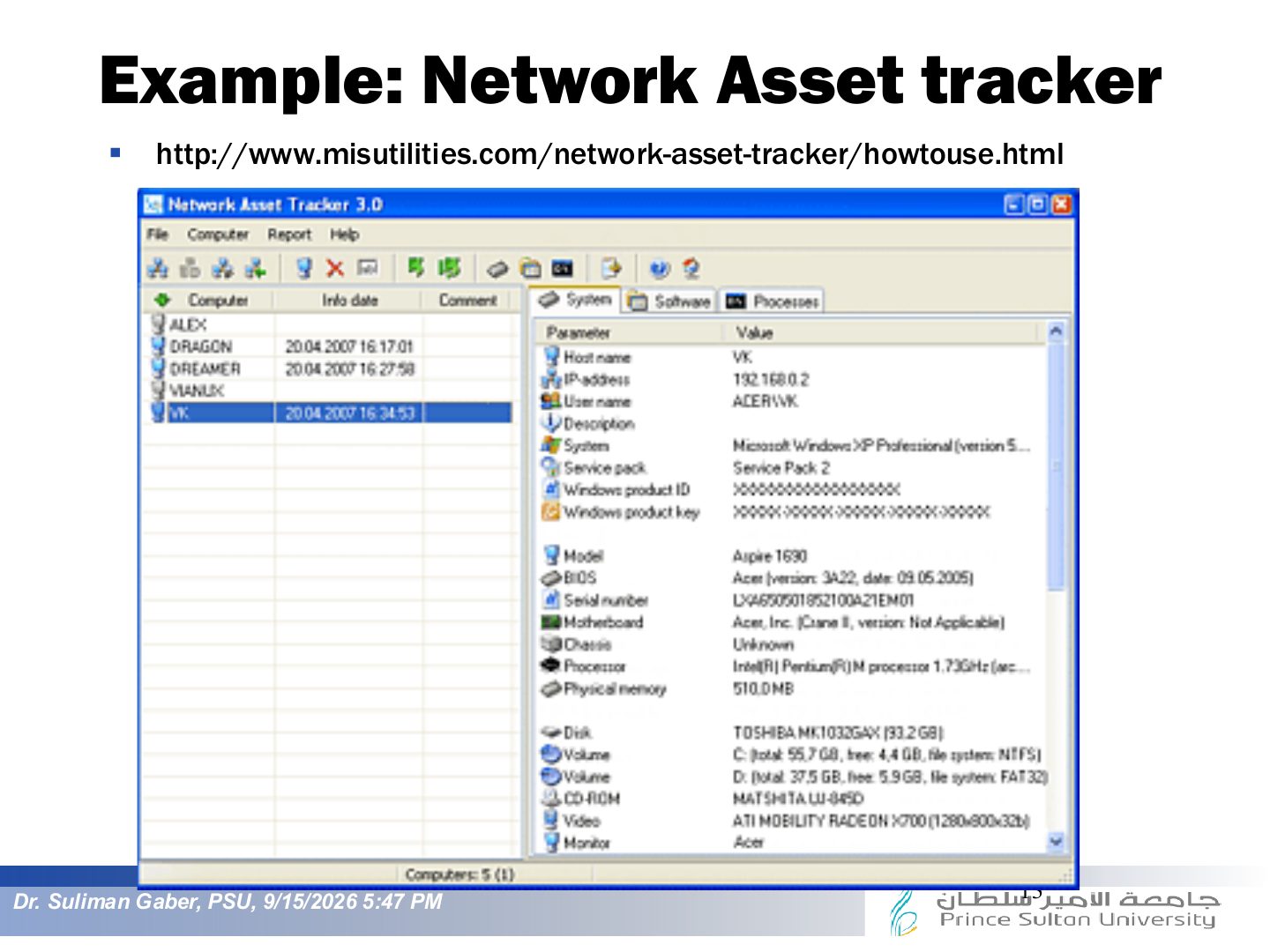
- 13 Example: Network Asset tracker
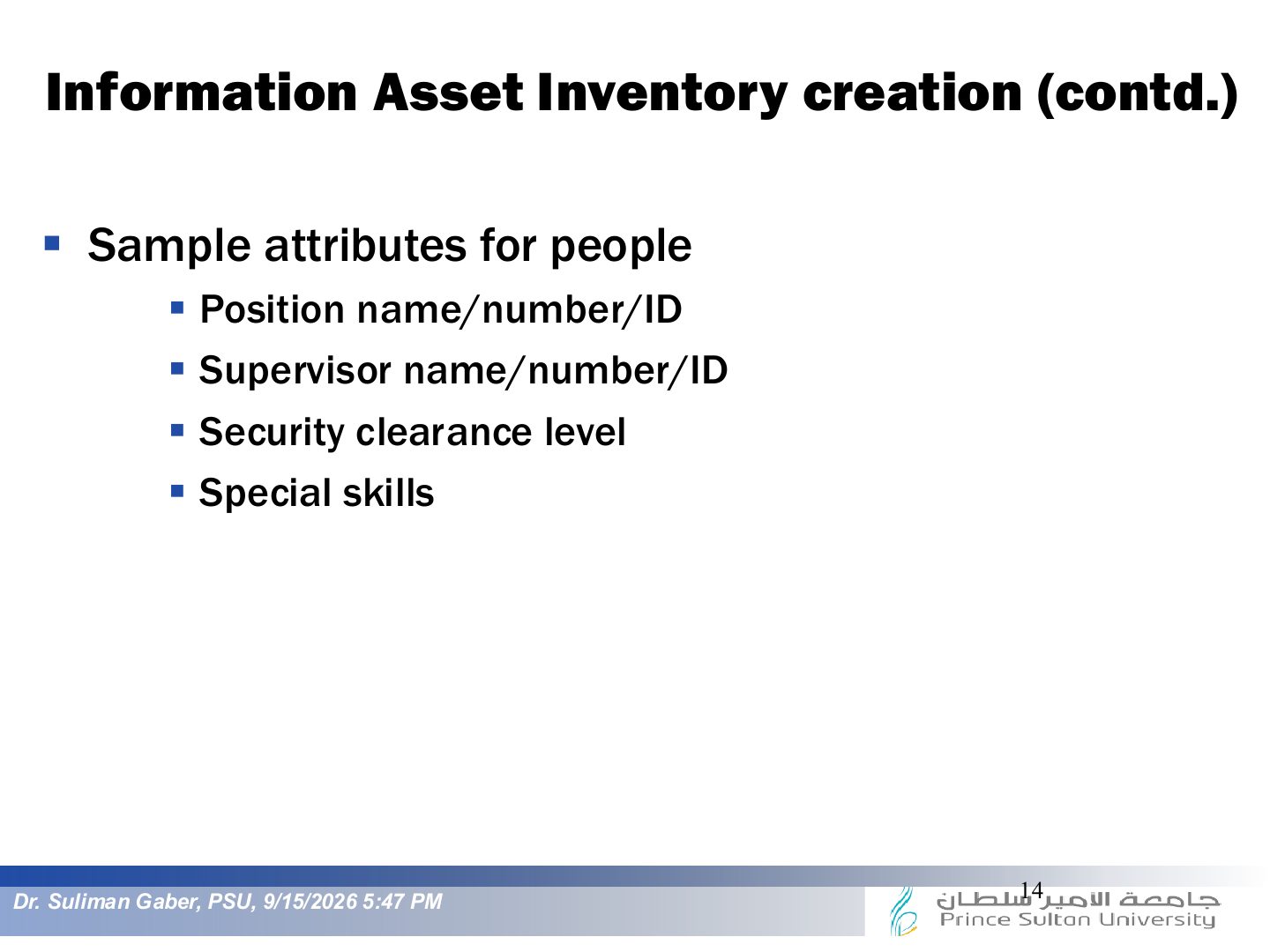
- 14 Information Asset Inventory creation (contd.)
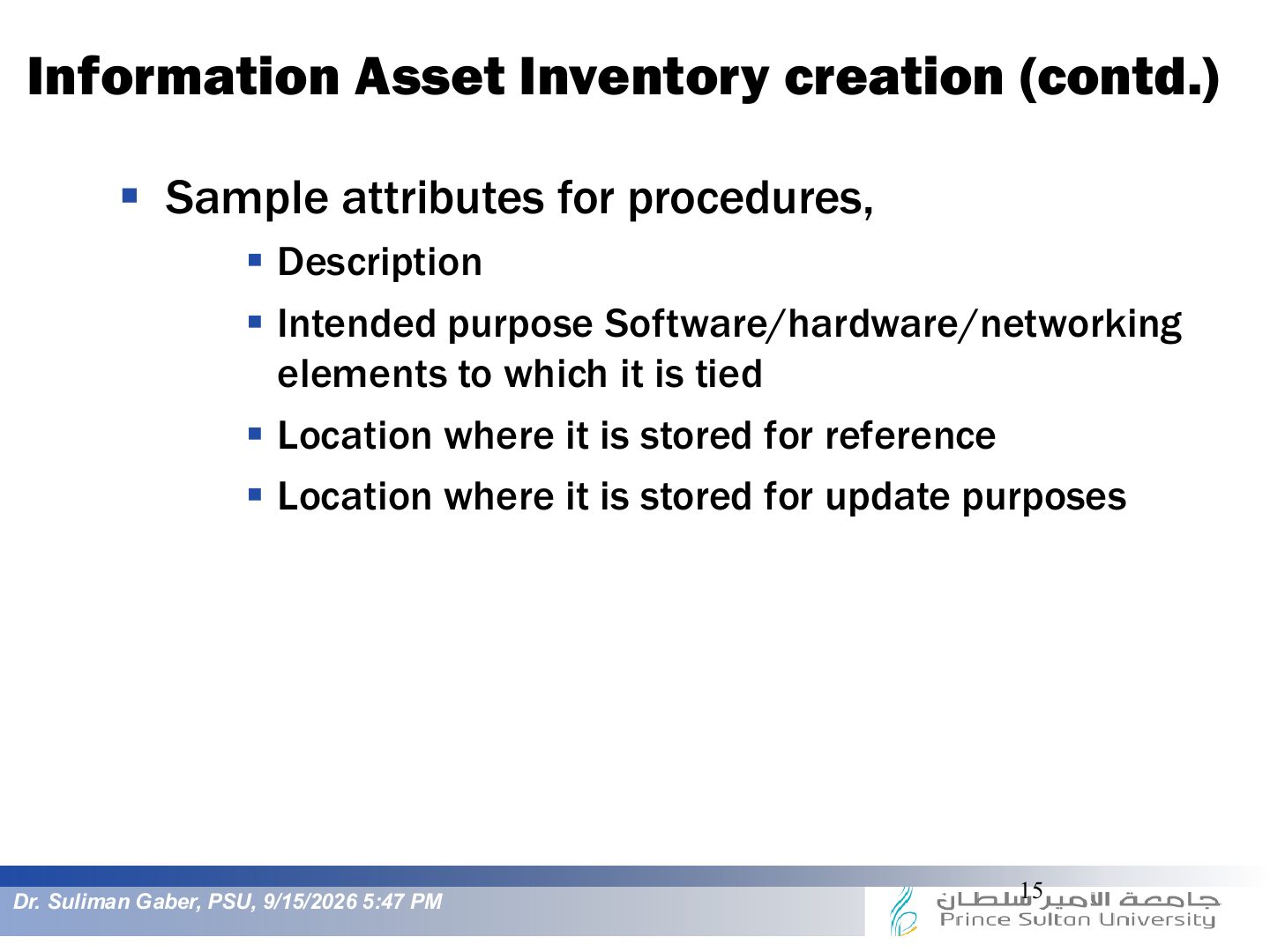
- 15 Information Asset Inventory creation (contd.)
- 16 Information Asset Inventory creation (contd.)
- 17 Information Asset Inventory creation (contd.)
- 18 Classifying and Categorizing Assets
- 19 Slide 19
- 20 Asset Valuation
- 21 Assessing Values for Information Assets - Questions
- 22 Example on asset valuation
- 23 Next: Asset ranking
- 24 Next step: Threat Identification
- 25 Vulnerability Assessment
- 26 Examples
- 27 Summary of Threat Vulnerability Analysis
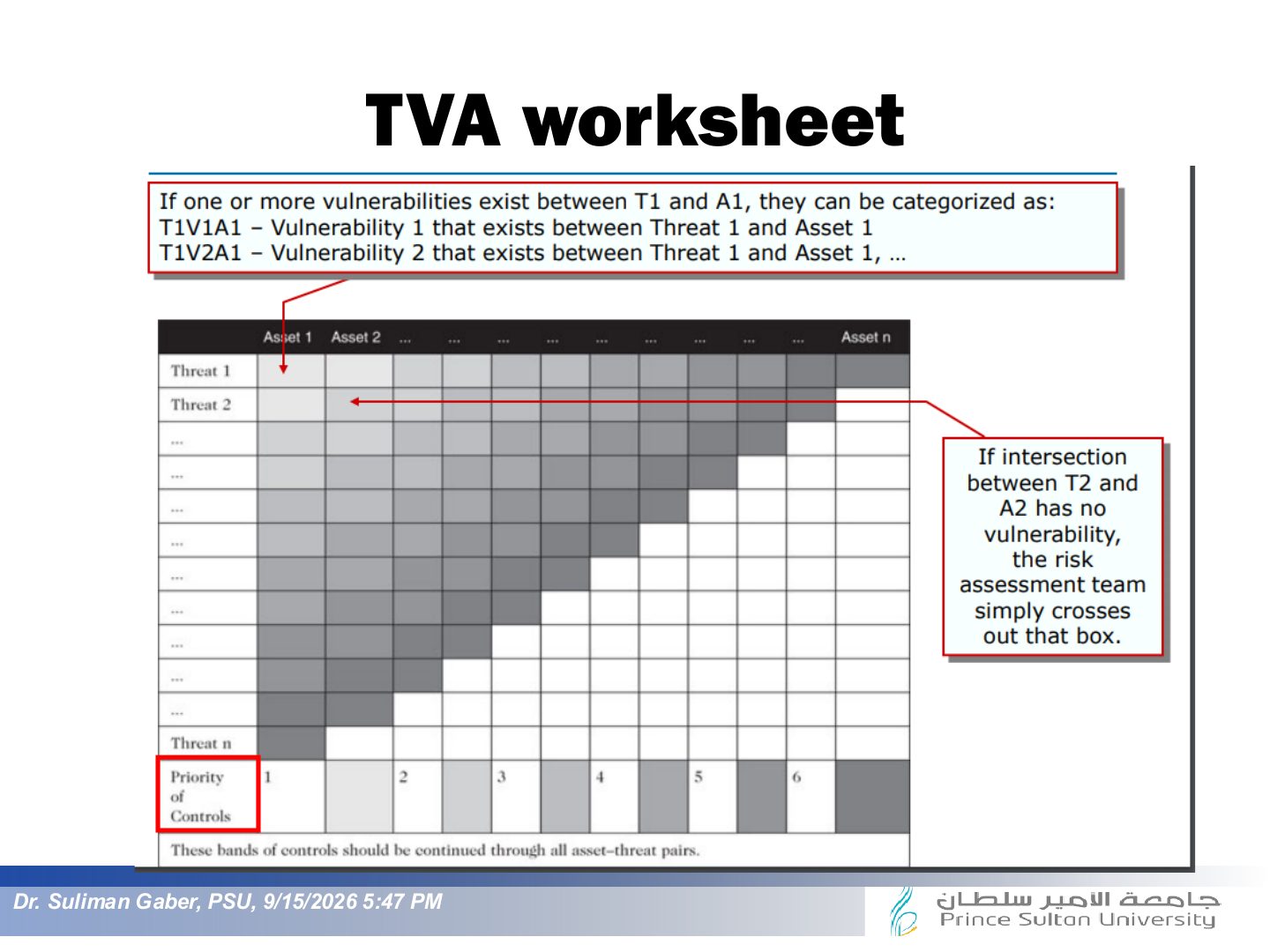
- 28 T VA Worksheet
- 29 T VA worksheet
- 30 What is next?
- 31 Slide 31
Slide 1
▪ CLO 2: Synthesize the principles of cyber security risk management
Overview on the Risk management lifecycle
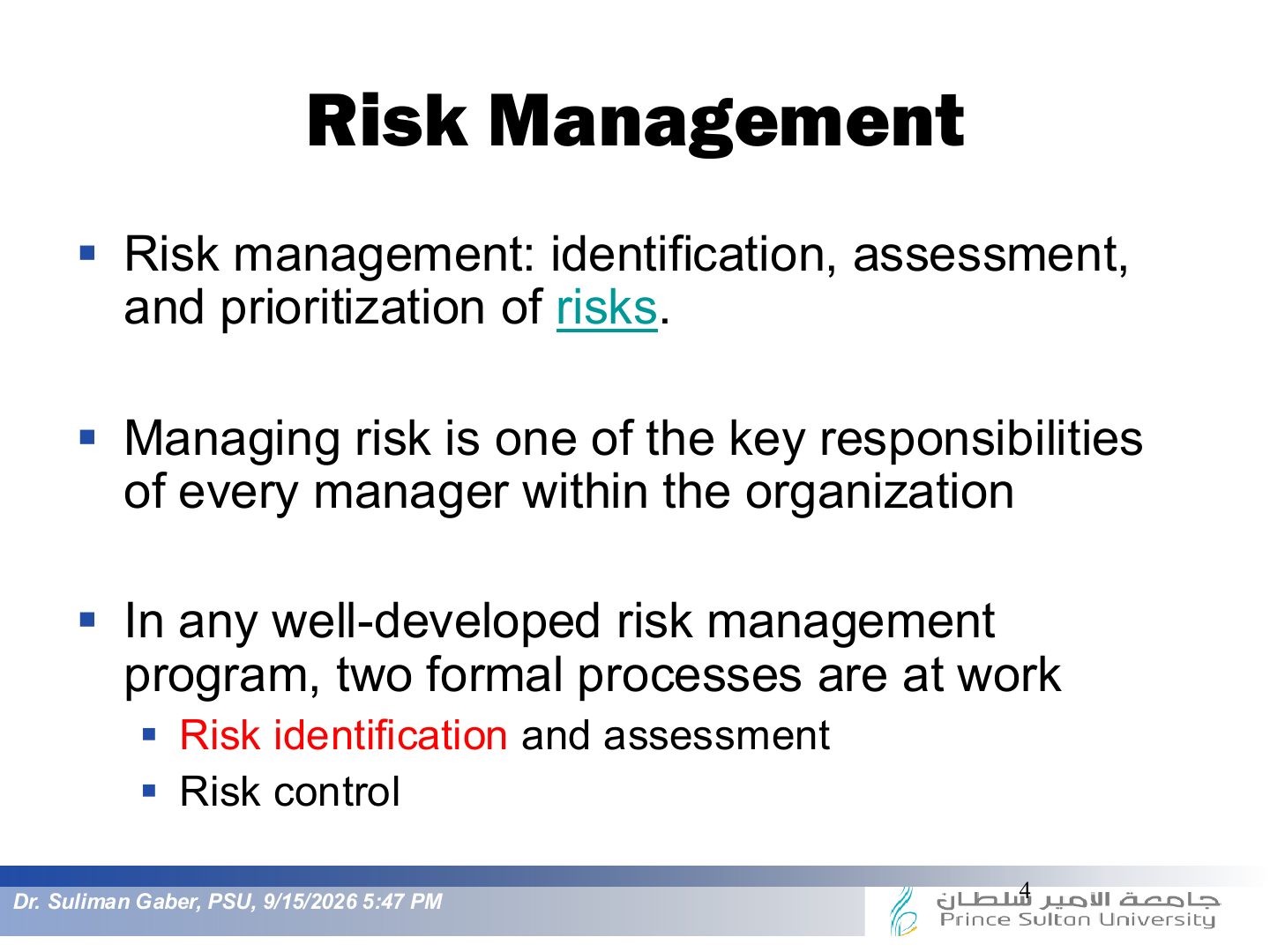
Risk Management
Accountability for Risk Management
Notes
Everyone has a role: management sets direction, IT/security implement, users follow policy, auditors check.
Risk management cycle
Notes
Cycle: identify → assess → treat → monitor and review → repeat. Risk identification happens continuously, not once.
Exam angle
Risk identification should be performed:
Risk management action points
Steps in Risk Management
Risk Identification
Notes
Risk identification = identify, classify and prioritize assets, then the threats and vulnerabilities against them.
Asset Identification, valuation, ranking
Exam angle
asset identification documentation; two assets with two attributes
List two information assets with two attributes each.
Compare with the model answer
Server: name/IP address, location (or MAC, serial number). Customer database: data owner, classification level (or format, size). Any asset with identifying attributes such as name, ID, location, owner, version, classification.
Information Asset Inventory creation (contd.)
Information Asset Inventory creation (contd.)
Example: Network Asset tracker
Information Asset Inventory creation (contd.)
Information Asset Inventory creation (contd.)
Information Asset Inventory creation (contd.)
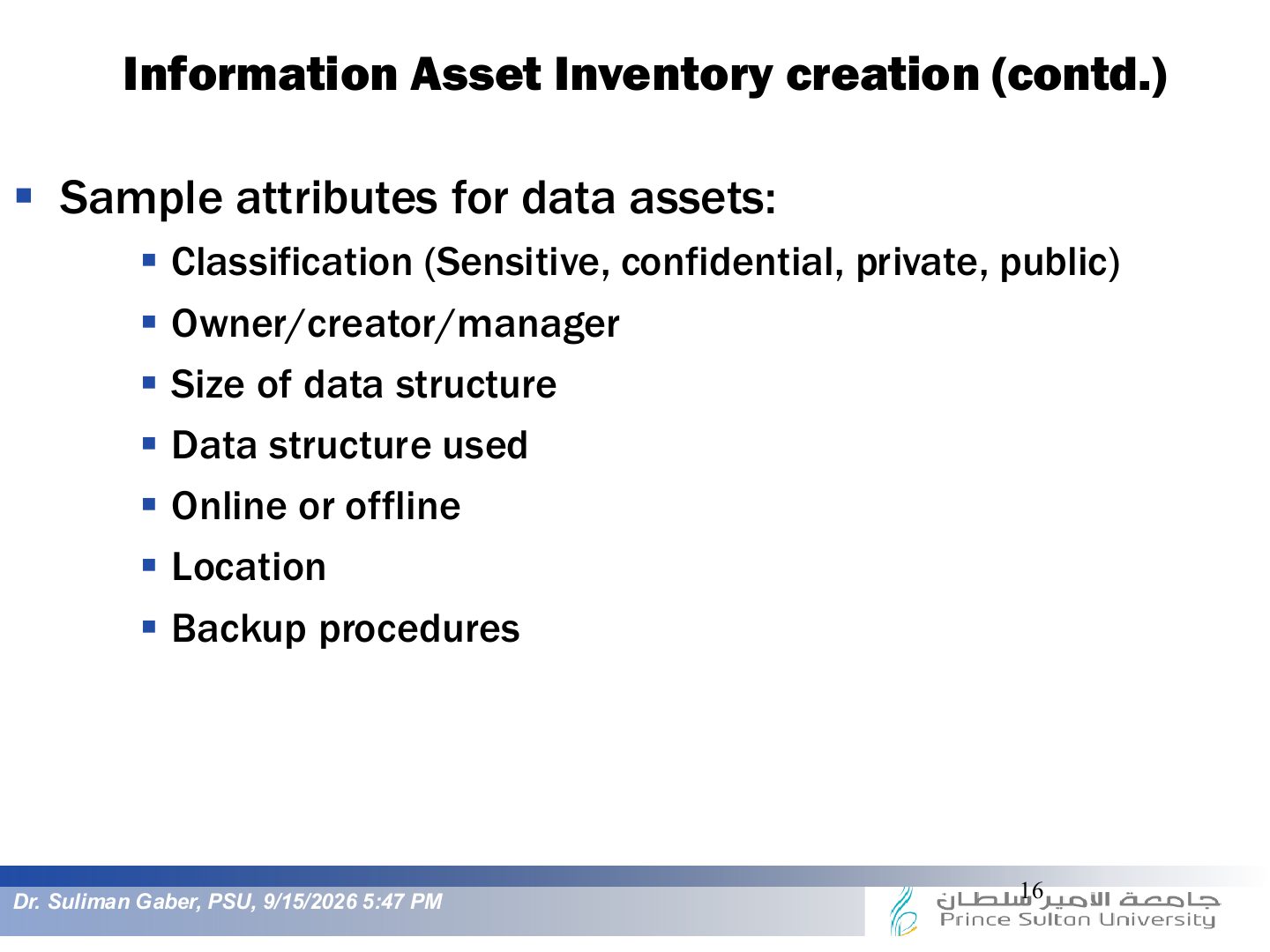
Information Asset Inventory creation (contd.)
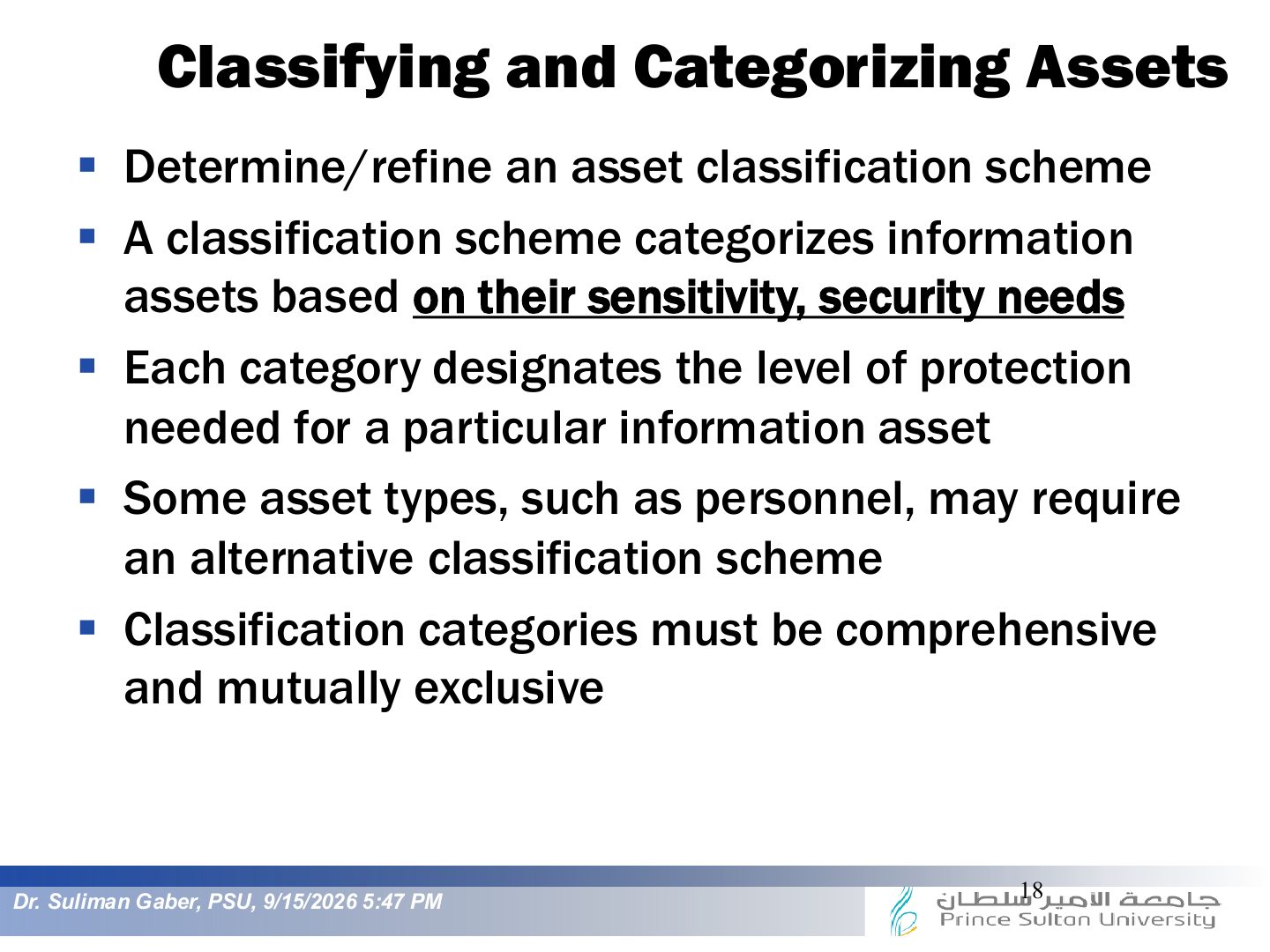
Classifying and Categorizing Assets
Notes
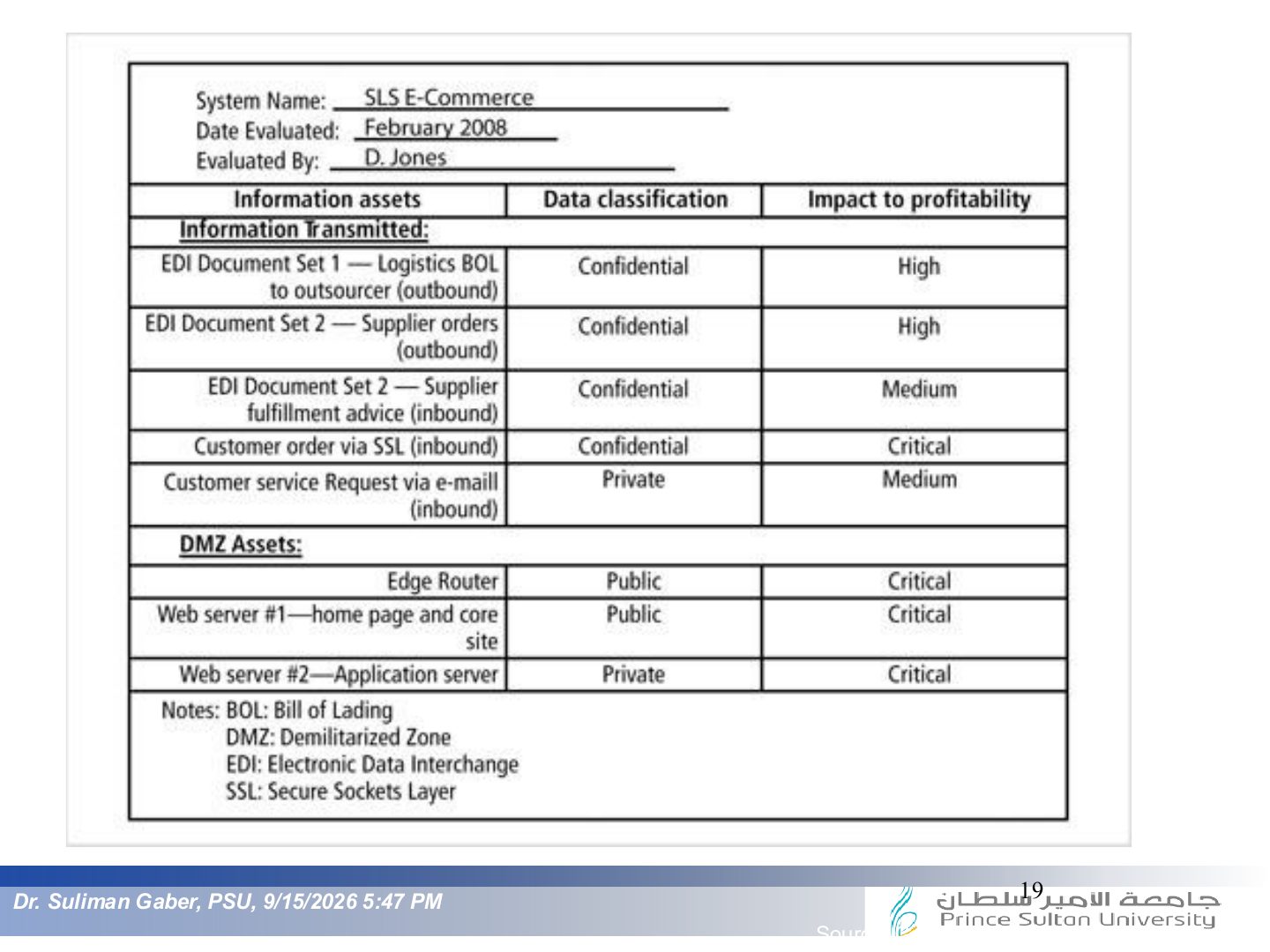
Classify assets (confidential, internal, public…) and categorize them so their importance can be compared.
Slide 19
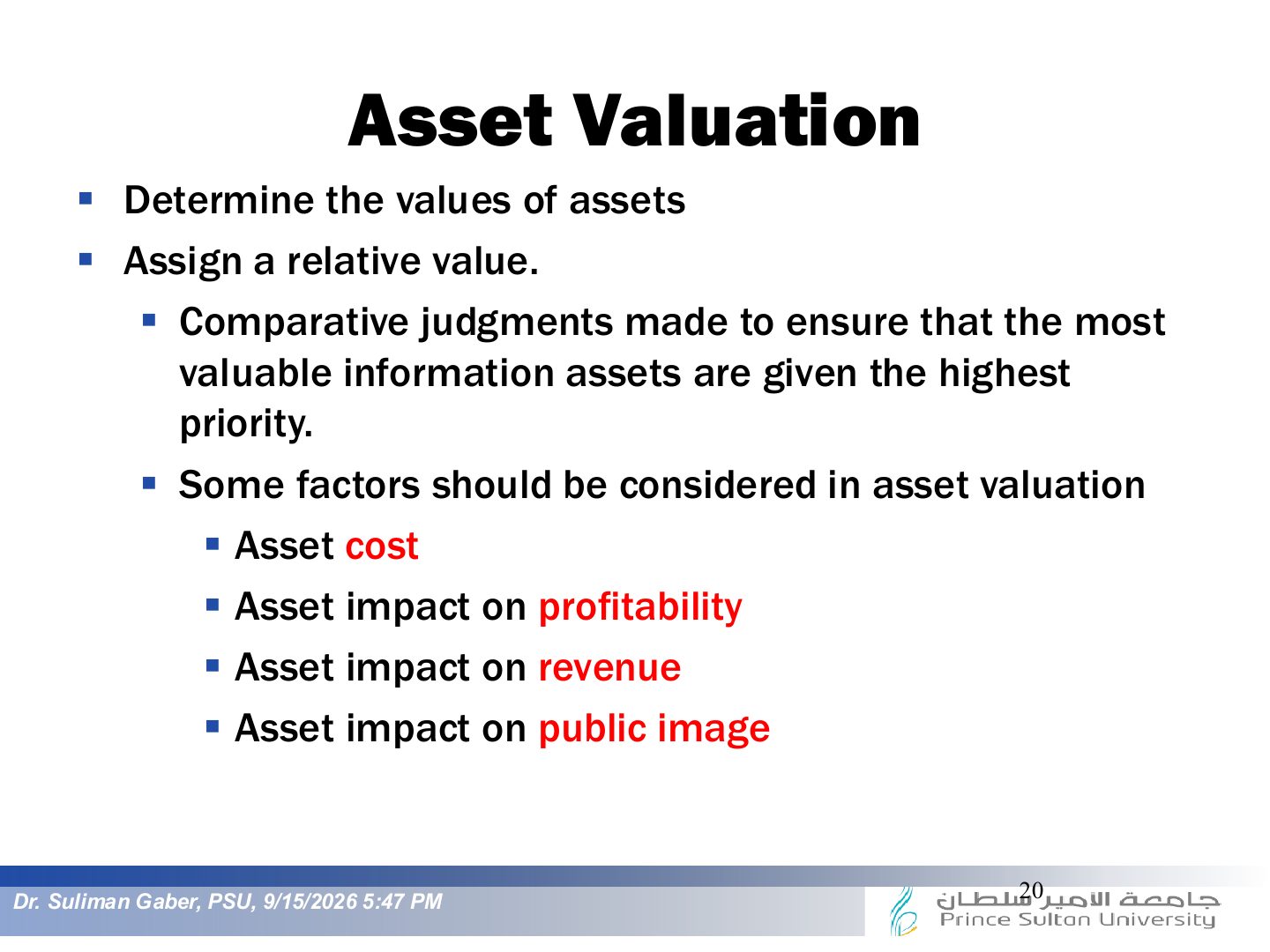
Asset Valuation
Notes
Valuation questions: how critical to the mission, how much revenue or profit, cost to replace or protect, embarrassment if lost.
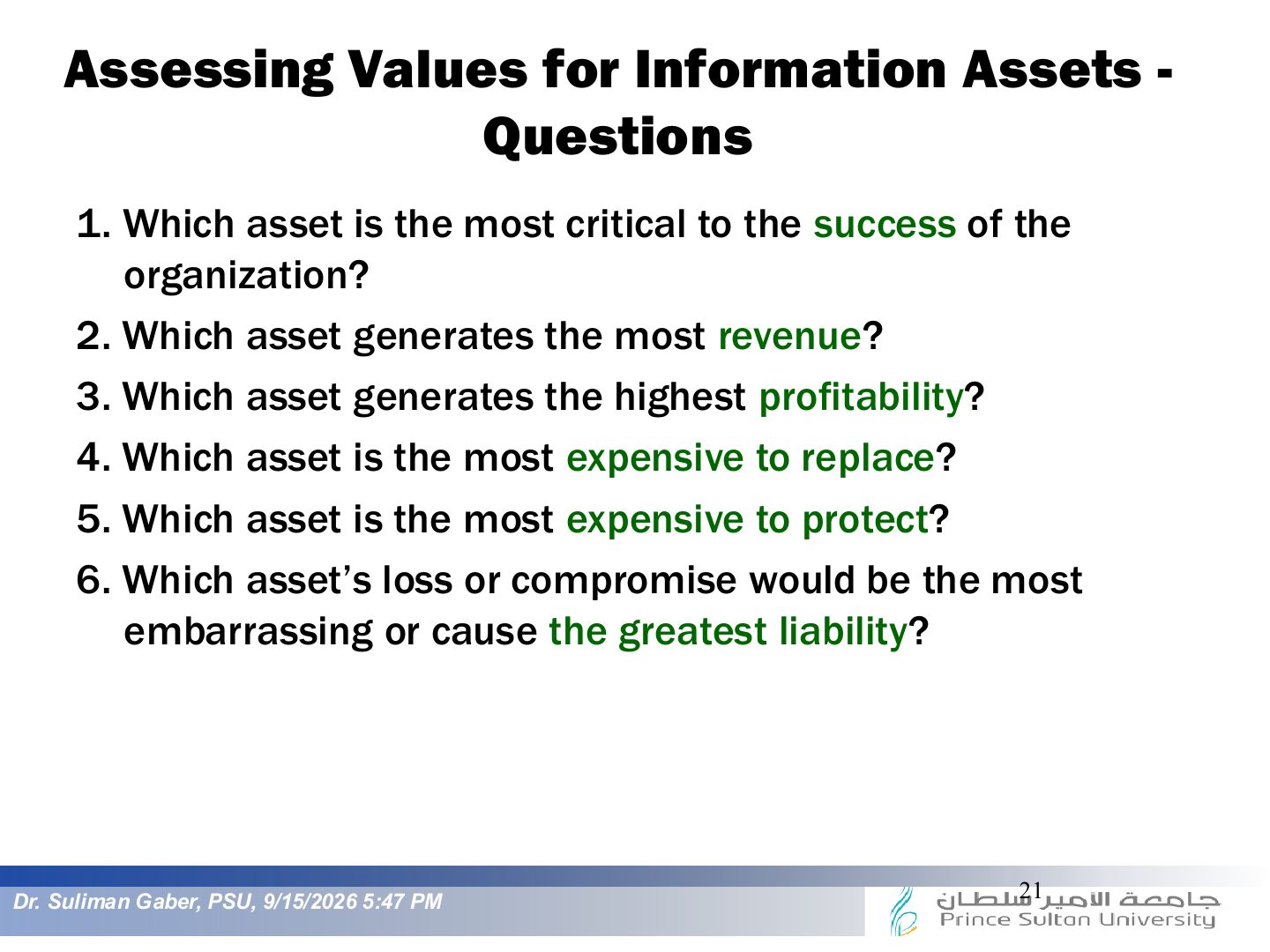
Assessing Values for Information Assets - Questions
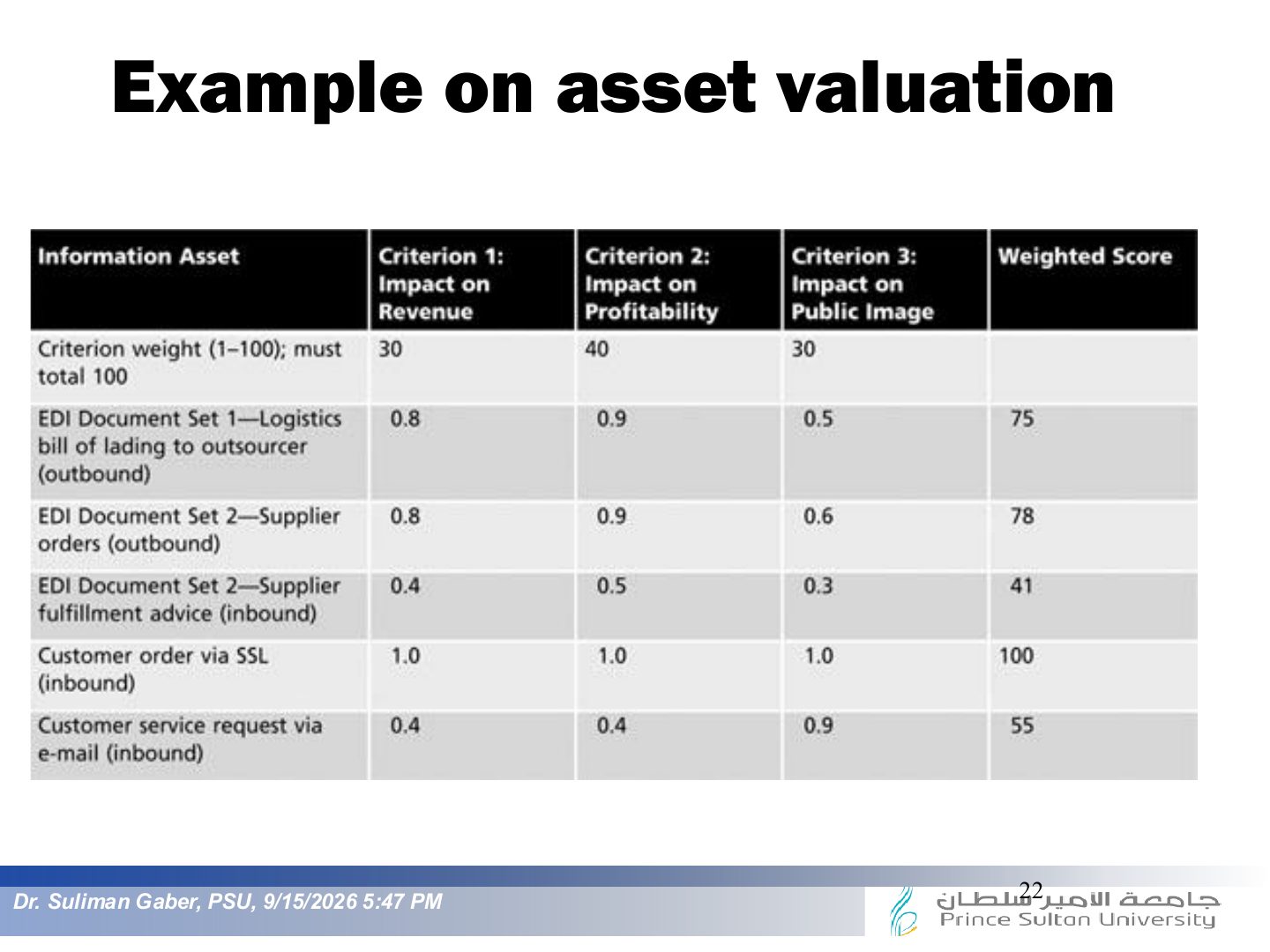
Example on asset valuation
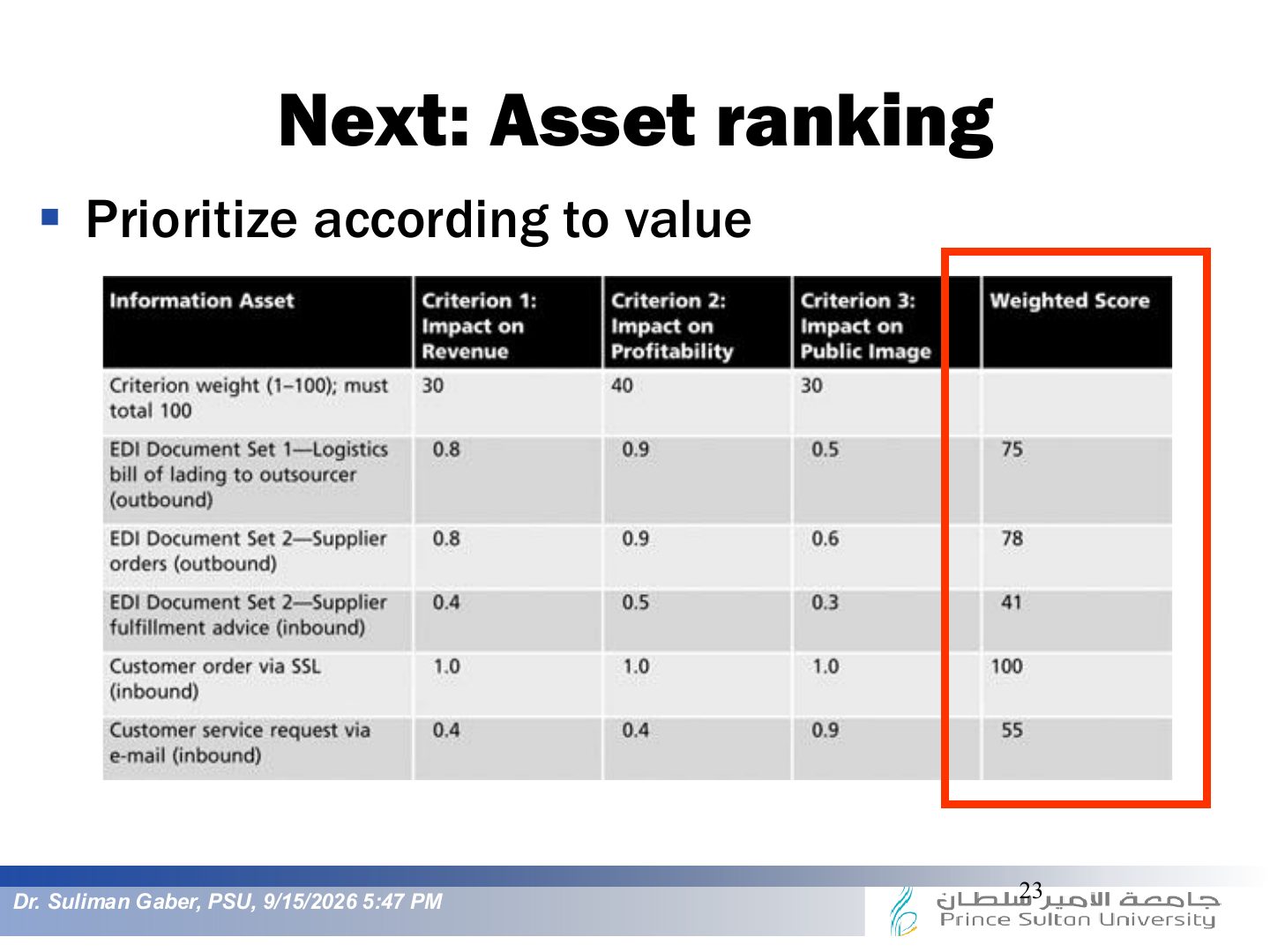
Next: Asset ranking
Notes
Rank assets by weighted factor analysis to decide what to protect first.
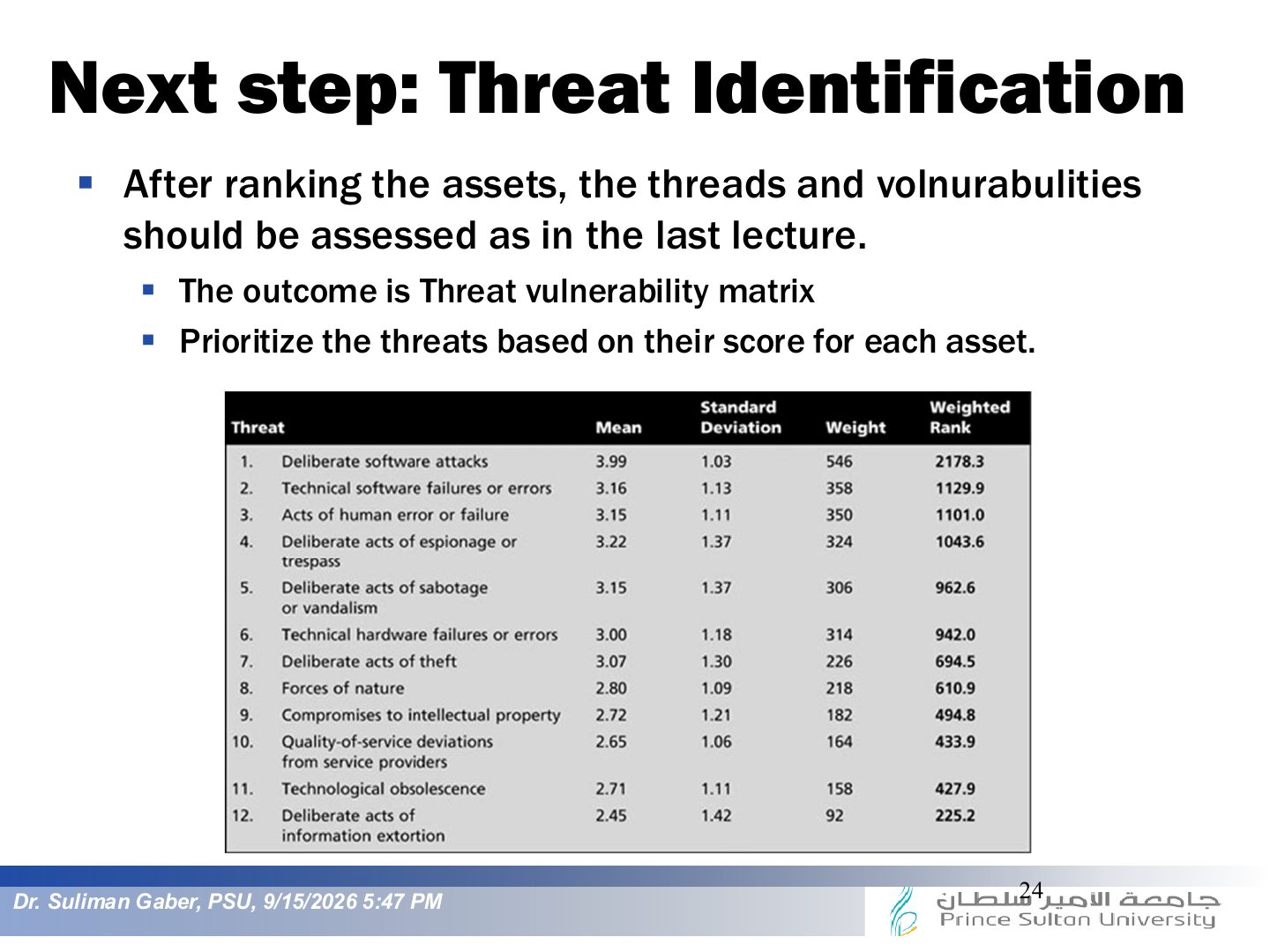
Next step: Threat Identification
Vulnerability Assessment
Notes
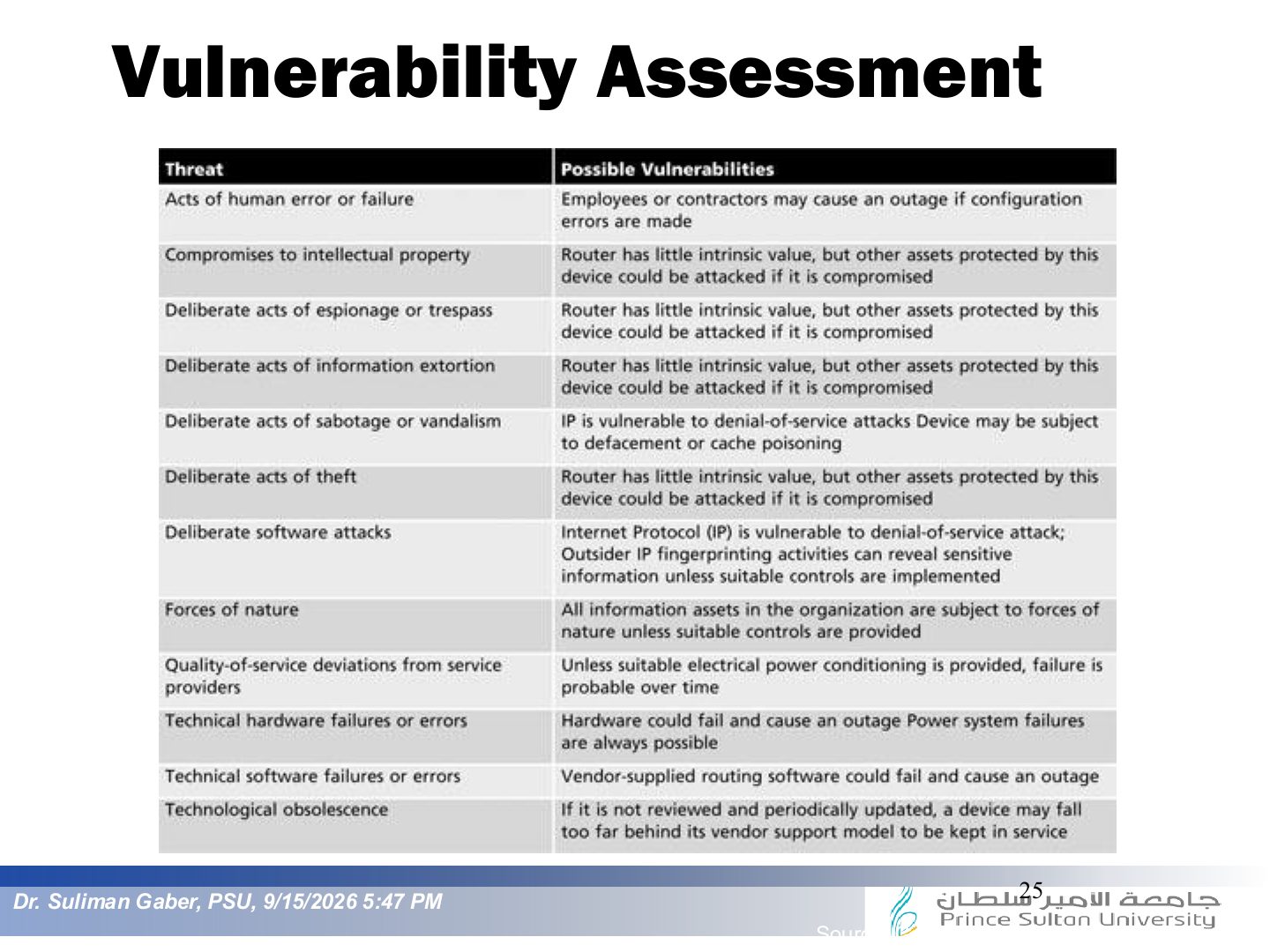
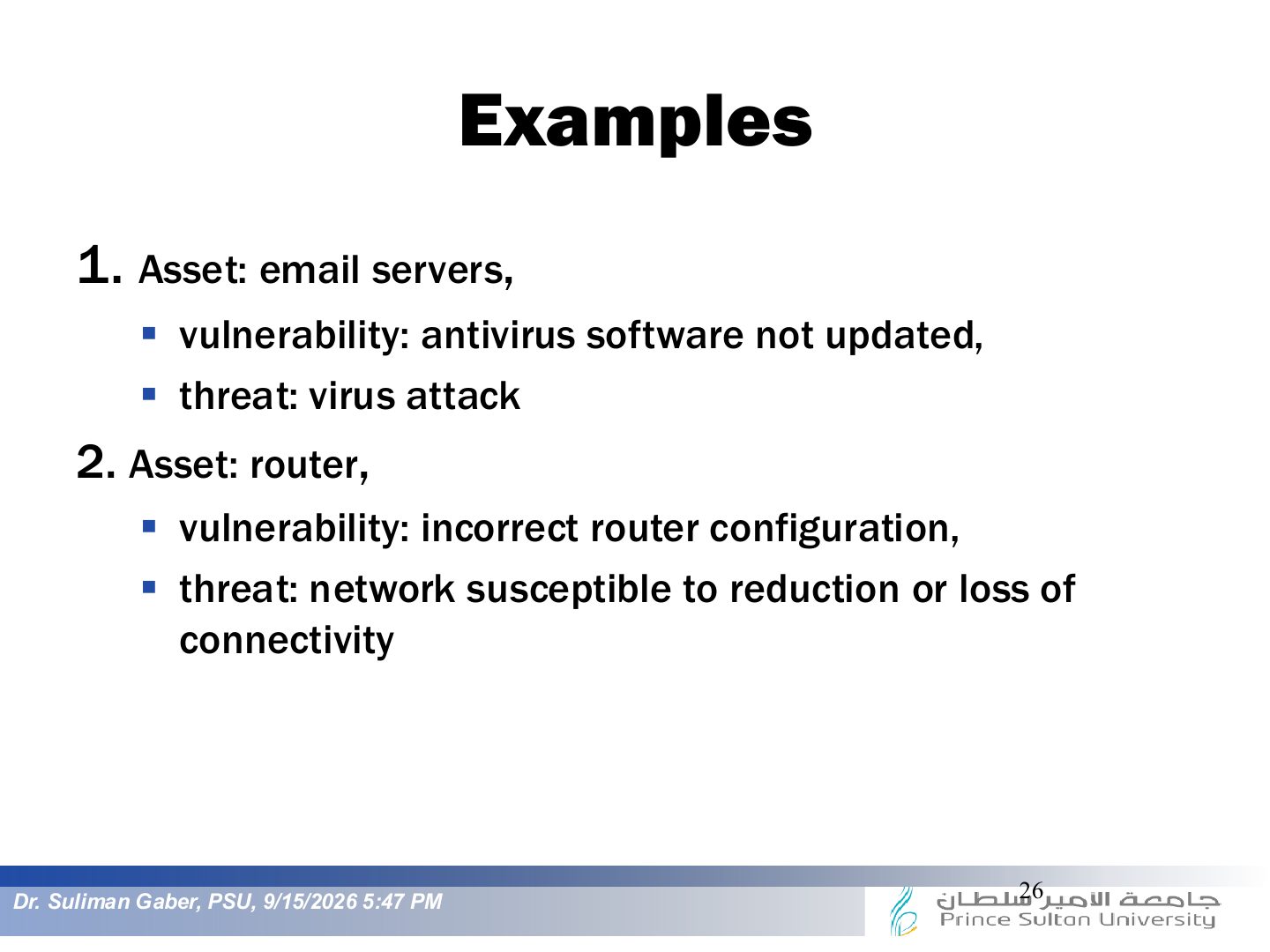
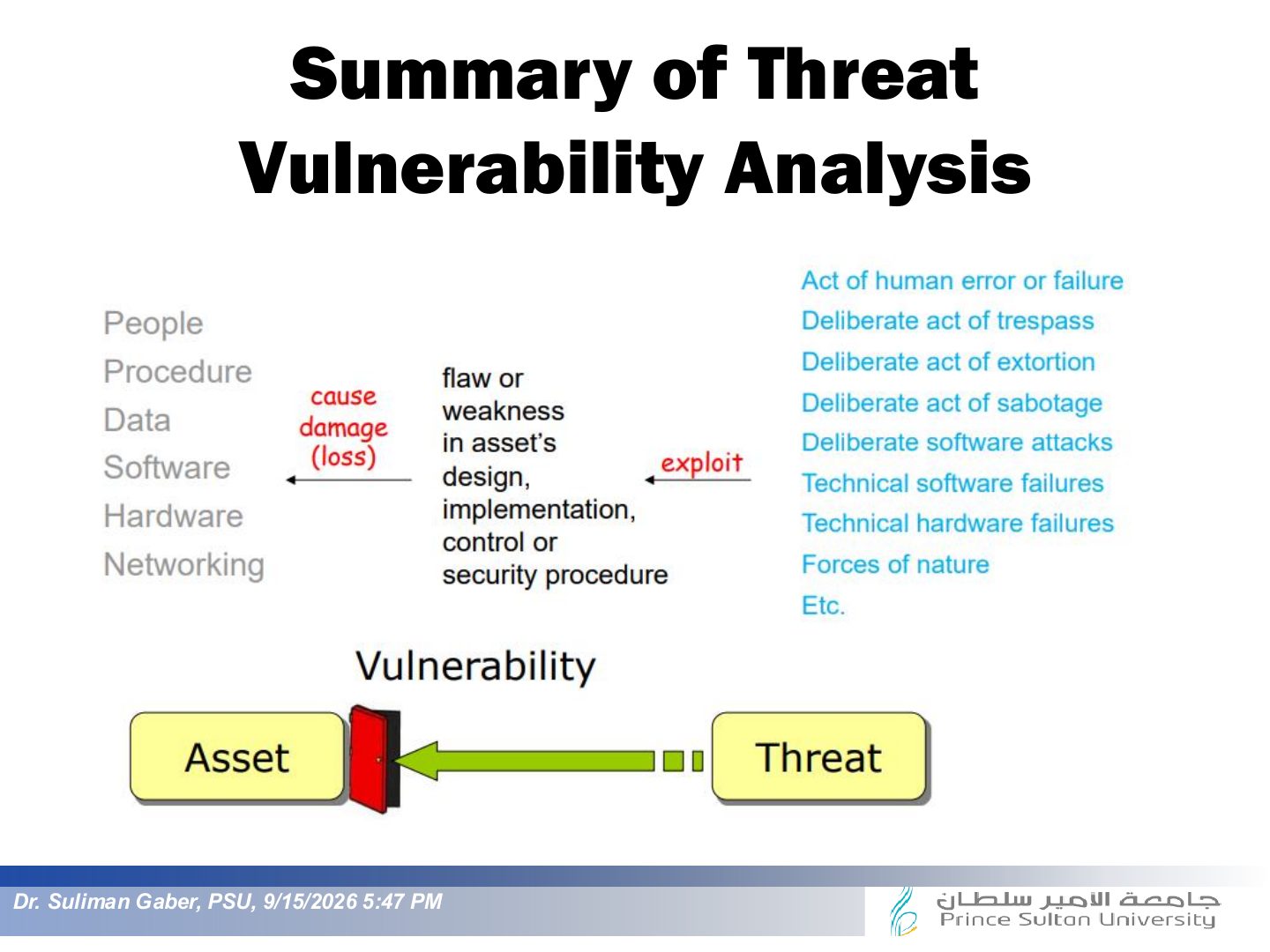
Vulnerability assessment: for each threat to each asset, list how it could be exploited.
Examples
Summary of Threat Vulnerability Analysis
T VA Worksheet
Notes
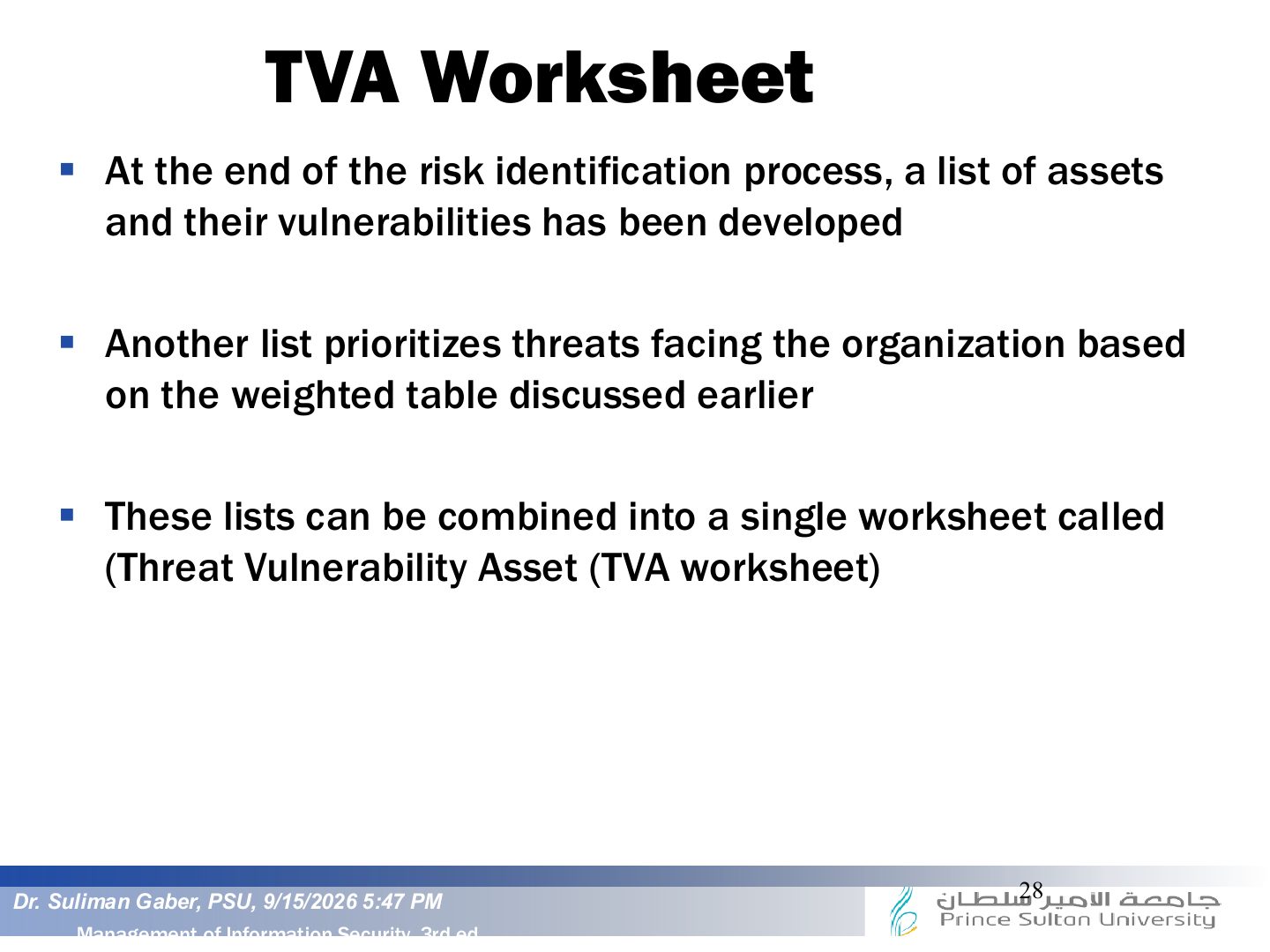
TVA worksheet: assets (ranked) on one axis, threats (ranked) on the other; each cell lists the vulnerabilities; work from the top-left (highest priority).
Exam angle
In a TVA worksheet, the highest-priority cells are:
T VA worksheet
What is next?
Slide 31