Q2: storing the same data in many places
Introduction to Databases
What a database and a DBMS are, why a DBMS beats a file-based system, what a DBMS does, the steps for designing a database (conceptual, logical, optimization, querying, applications), and the main characteristics of the database approach.
How to read this page
Every original slide is shown unchanged. Yellow marks on a slide point to a numbered note: hover or tap a mark to jump to its note, and hover a note to see its marks. Questions tagged Past exam appeared on a real paper; Prediction questions are likely angles, not confirmed. Pick an answer to each question: a wrong pick tells you why it is wrong, so you can try again.
All 29 slides
- 1 Introduction to Databases
- 2 LEARNING GOALS
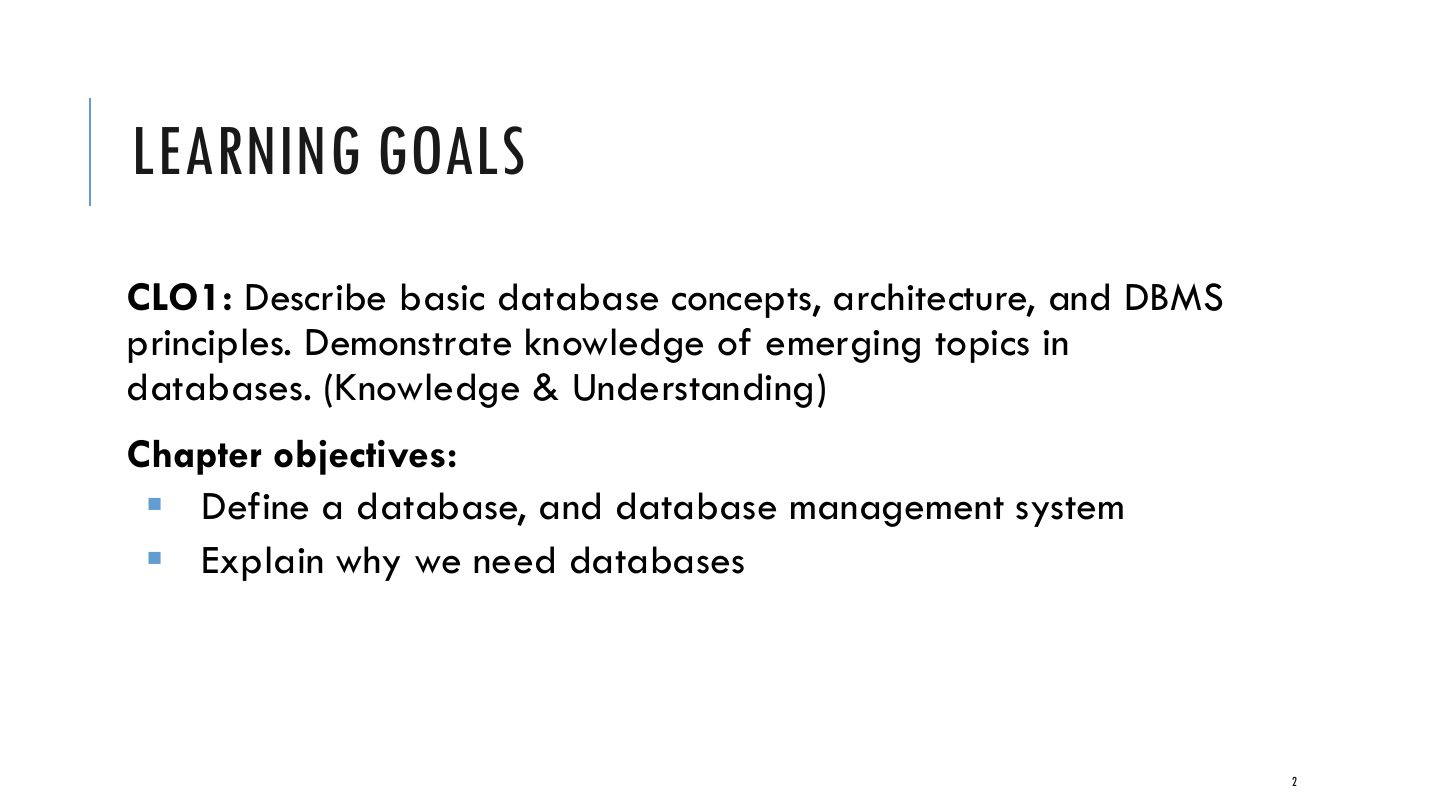
- 3 DEFINITIONS
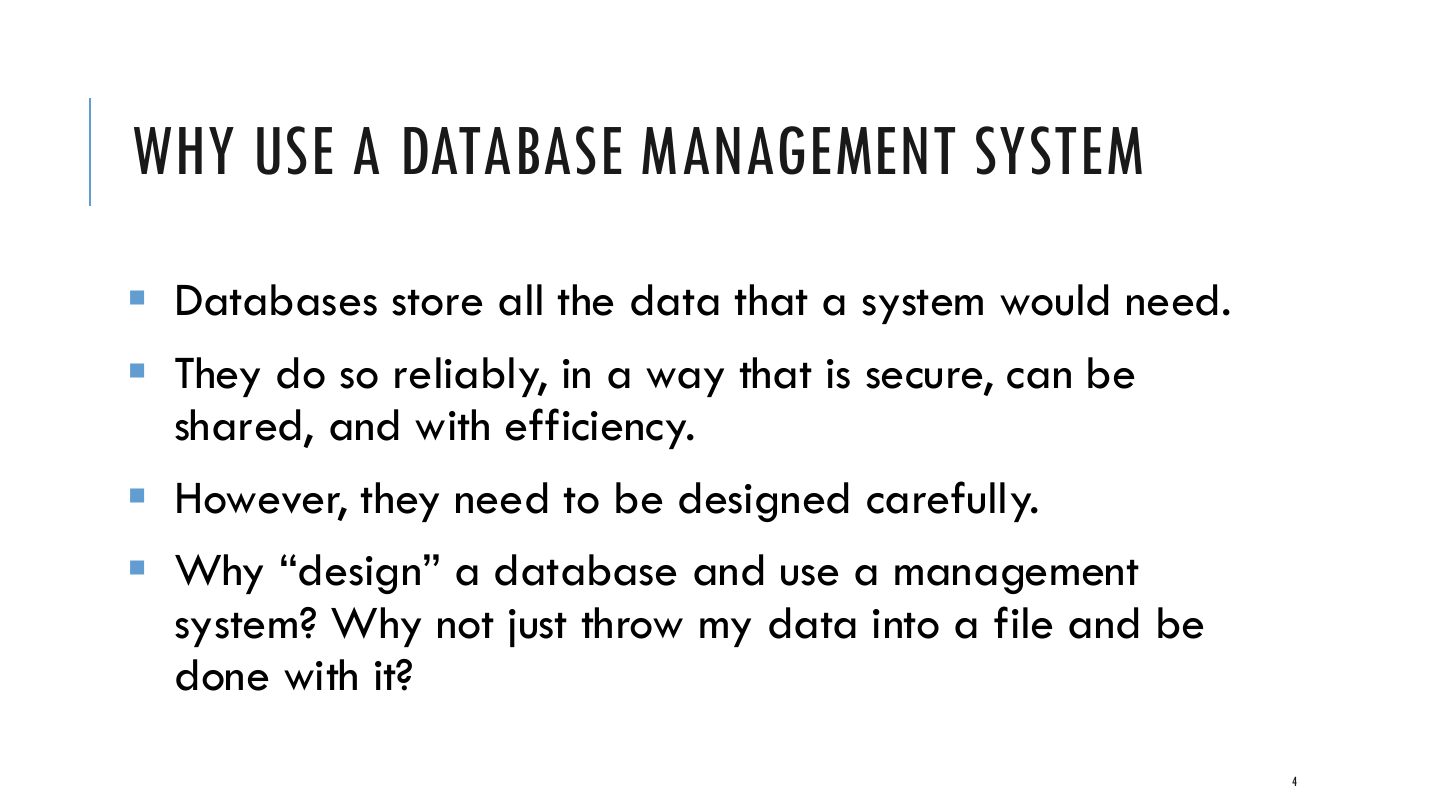
- 4 WHY USE A DATABASE MANAGEMENT SYSTEM
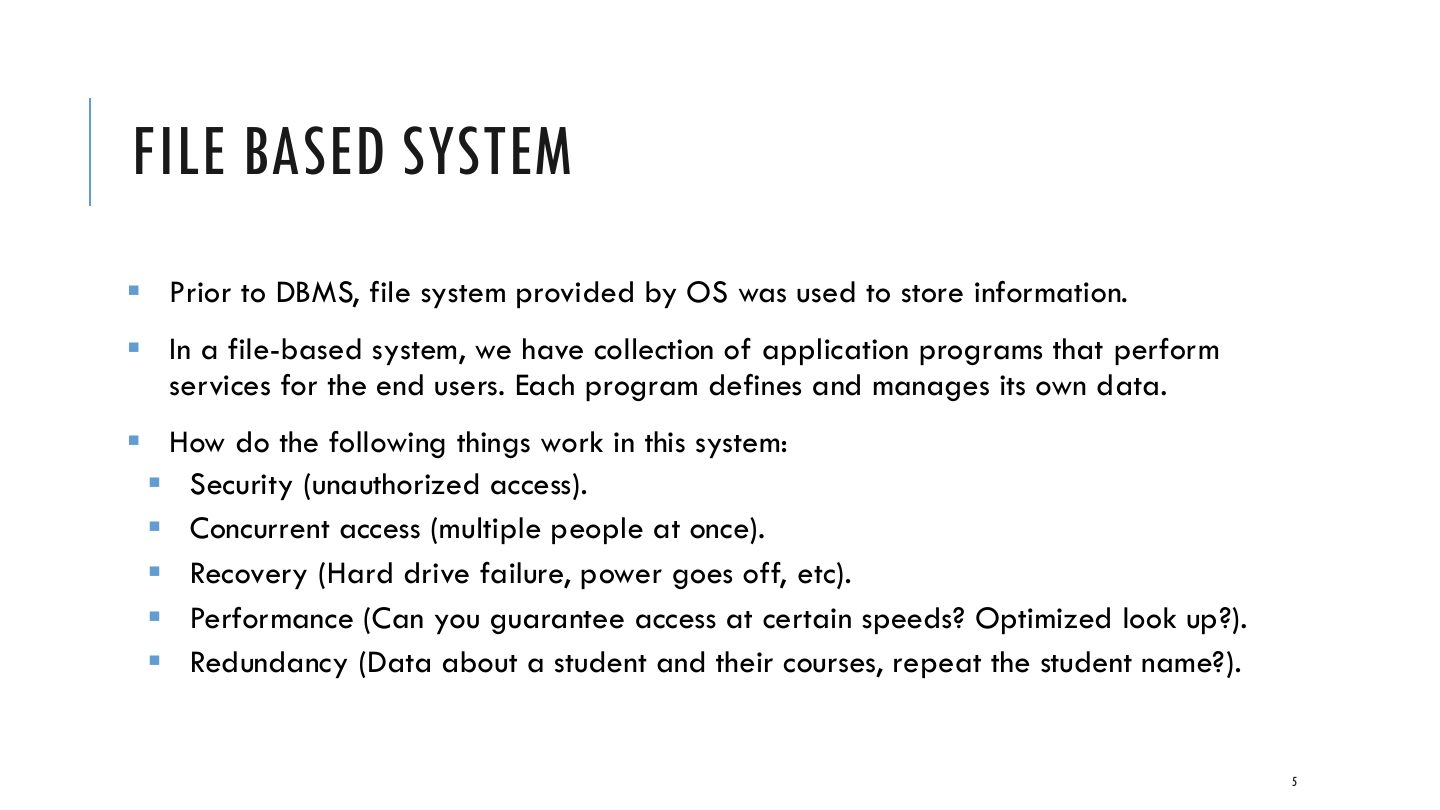
- 5 FILE BASED SYSTEM
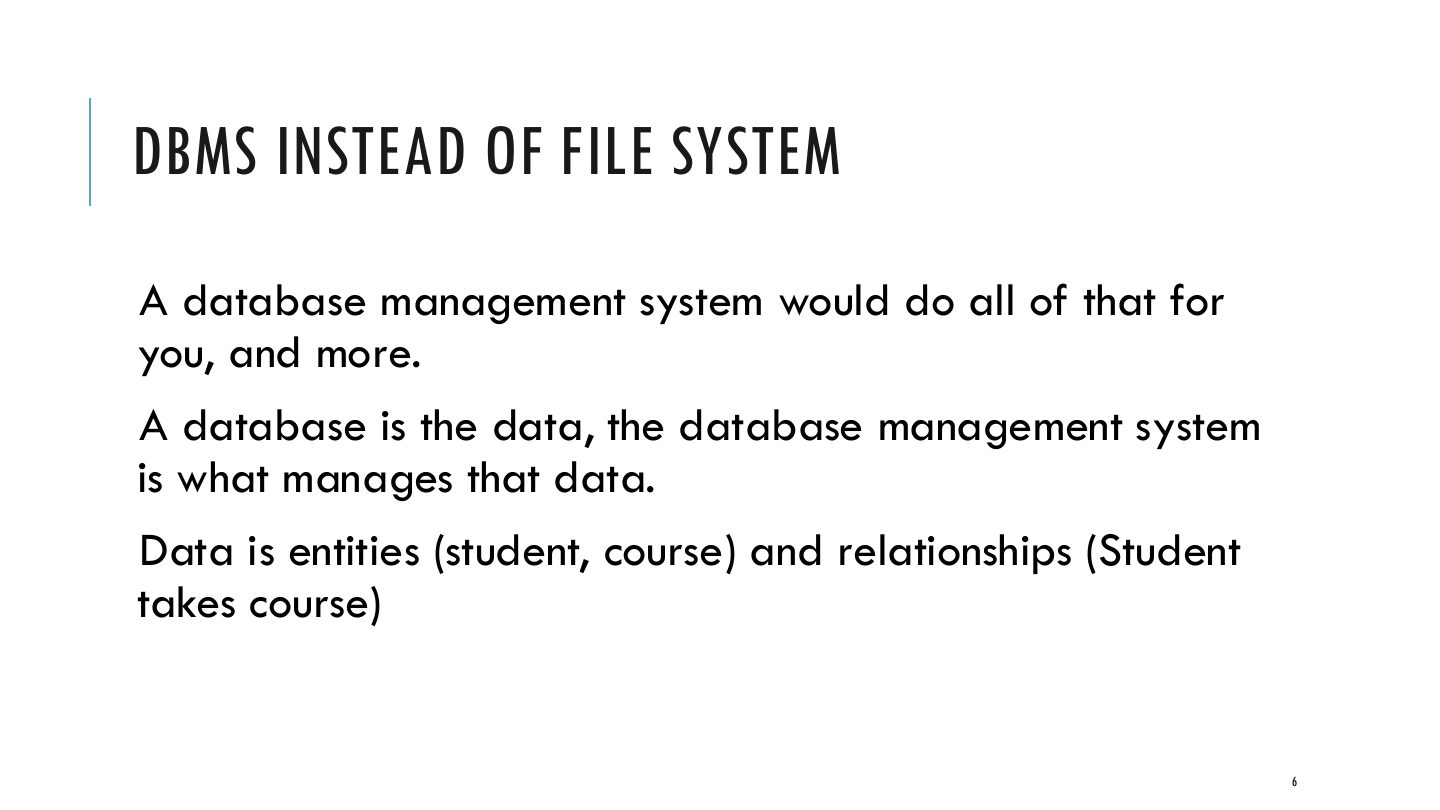
- 6 DBMS INSTEAD OF FILE SYSTEM
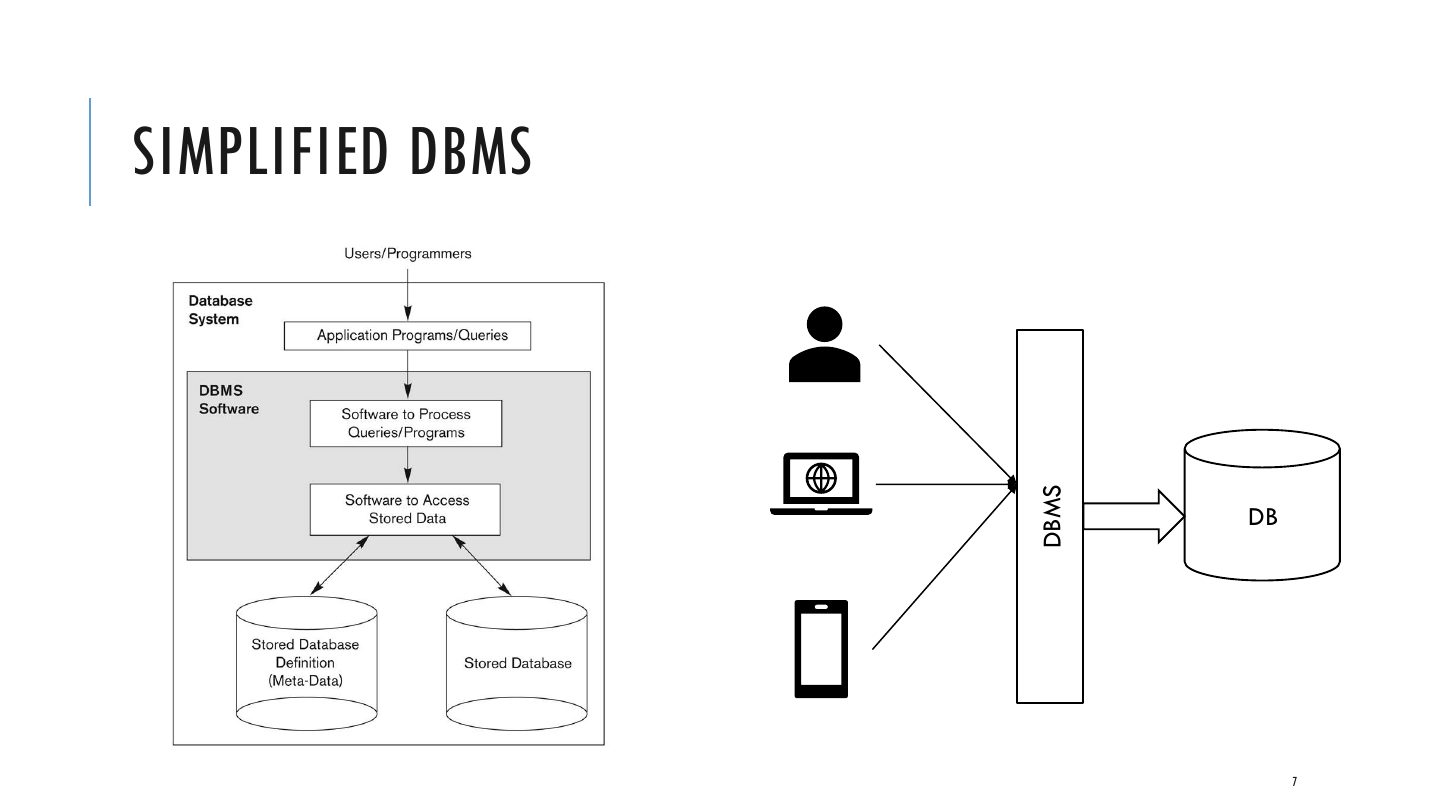
- 7 SIMPLIFIED DBMS
- 8 OTHER USEFUL FUNCTIONS OF A DBMS
- 9 OBJECTIVES OF DBMS
- 10 MAIN CHARACTERISTICS OF THE DATABASE APPROACH
- 11 HOW DO I DESIGN AND IMPLEMENT A DATABASE?
- 12 1. CONCEPTUAL MODELING
- 13 2. LOGICAL MODELING
- 14 3. OPTIMIZATION
- 15 4. QUERYING THE DATA
- 16 4. QUERYING THE DATA (CONTD)
- 17 5. OTHER DATABASE APPLICATIONS
- 18 5. OTHER DATABASE APPLICATIONS (CONTD)
- 19 5. OTHER DATABASE APPLICATIONS (CONTD)
- 20 6. CREATE YOUR OWN APPLICATION
- 21 MAIN CHARACTERISTICS OF THE DATABASE APPROACH
- 22 EXAMPLE OF A SIMPLIFIED DATABASE CATALOG
- 23 EXAMPLE OF A SIMPLIFIED DATABASE CATALOG
- 24 MAIN CHARACTERISTICS OF THE DATABASE APPROACH (CONTINUED)
- 25 MAIN CHARACTERISTICS OF THE DATABASE APPROACH (CONTINUED)
- 26 MAIN CHARACTERISTICS OF THE DATABASE APPROACH (CONTINUED)
- 27 MAIN CHARACTERISTICS OF THE DATABASE APPROACH (CONTINUED)
- 28 DO I ALWAYS NEED A DATABASE?
- 29 SUMMARY
Introduction to Databases
LEARNING GOALS
DEFINITIONS
Notes
Database: an organized collection of related data. DBMS: the software that defines, builds, manipulates and shares it (Oracle, PostgreSQL, MySQL, MongoDB).
WHY USE A DATABASE MANAGEMENT SYSTEM
FILE BASED SYSTEM
Notes
File-based systems: each application owns its files → redundancy, inconsistency, hard access, no concurrency control, weak security.
Exam angle
Storing the same data in many places is called:
DBMS INSTEAD OF FILE SYSTEM
SIMPLIFIED DBMS
OTHER USEFUL FUNCTIONS OF A DBMS
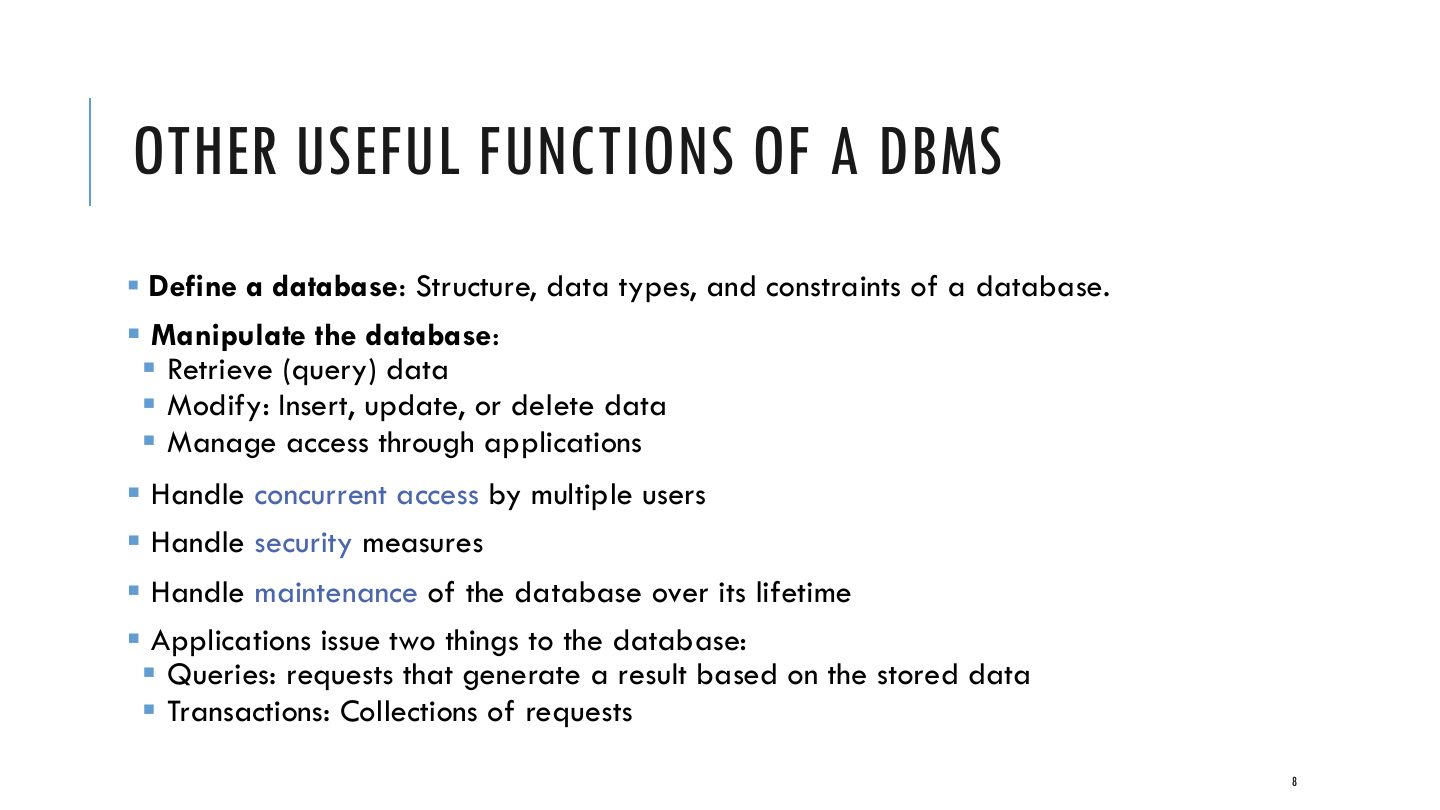
OBJECTIVES OF DBMS
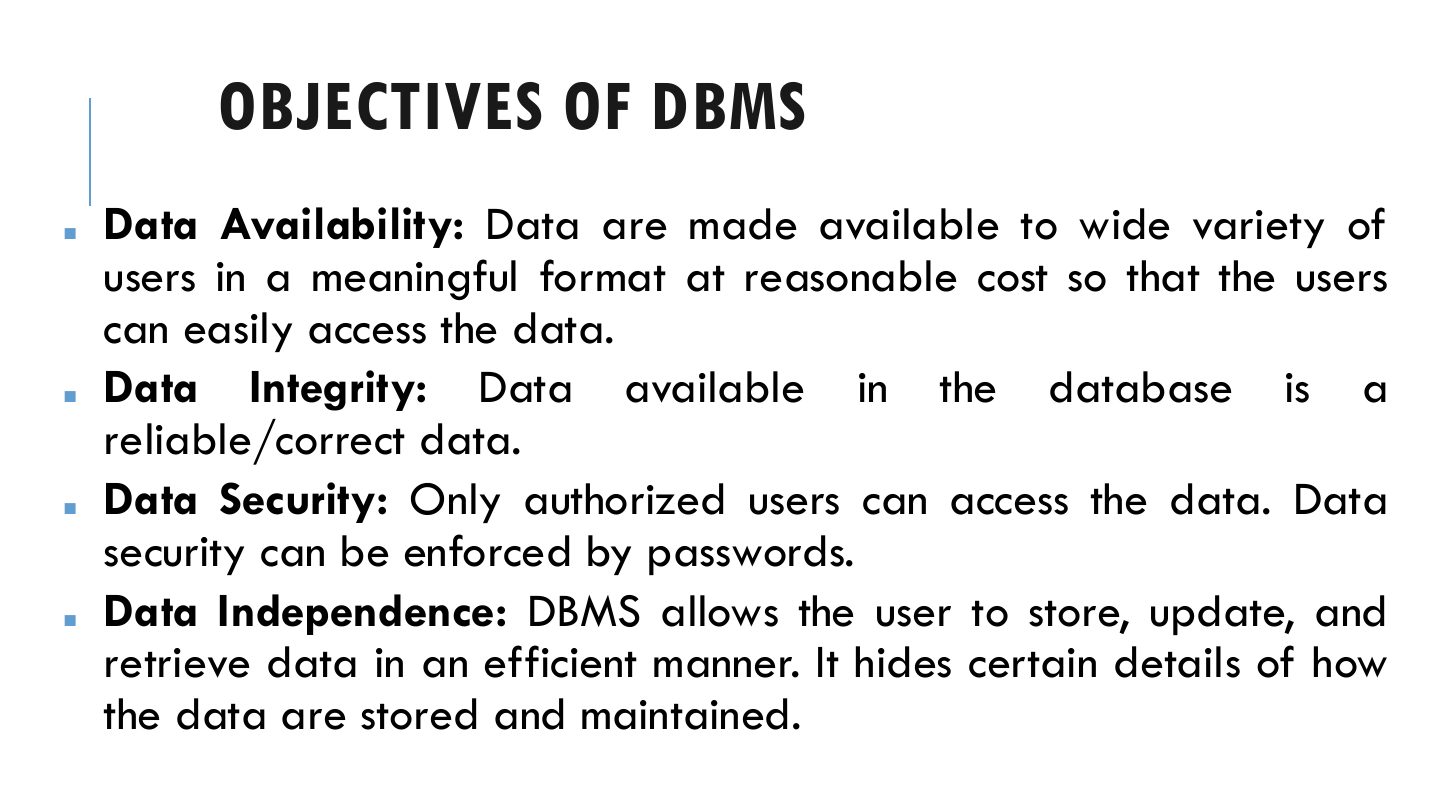
MAIN CHARACTERISTICS OF THE DATABASE APPROACH
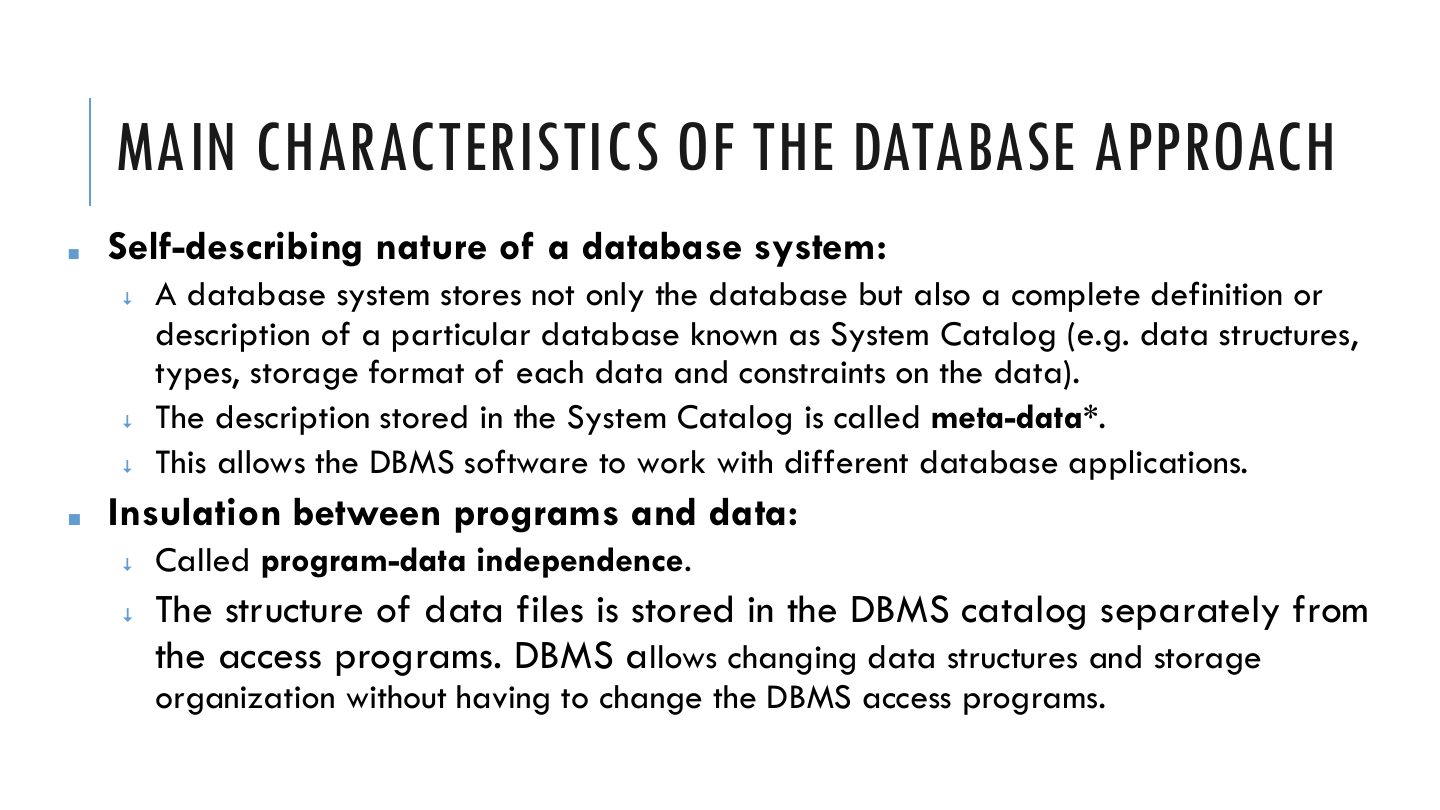
Notes
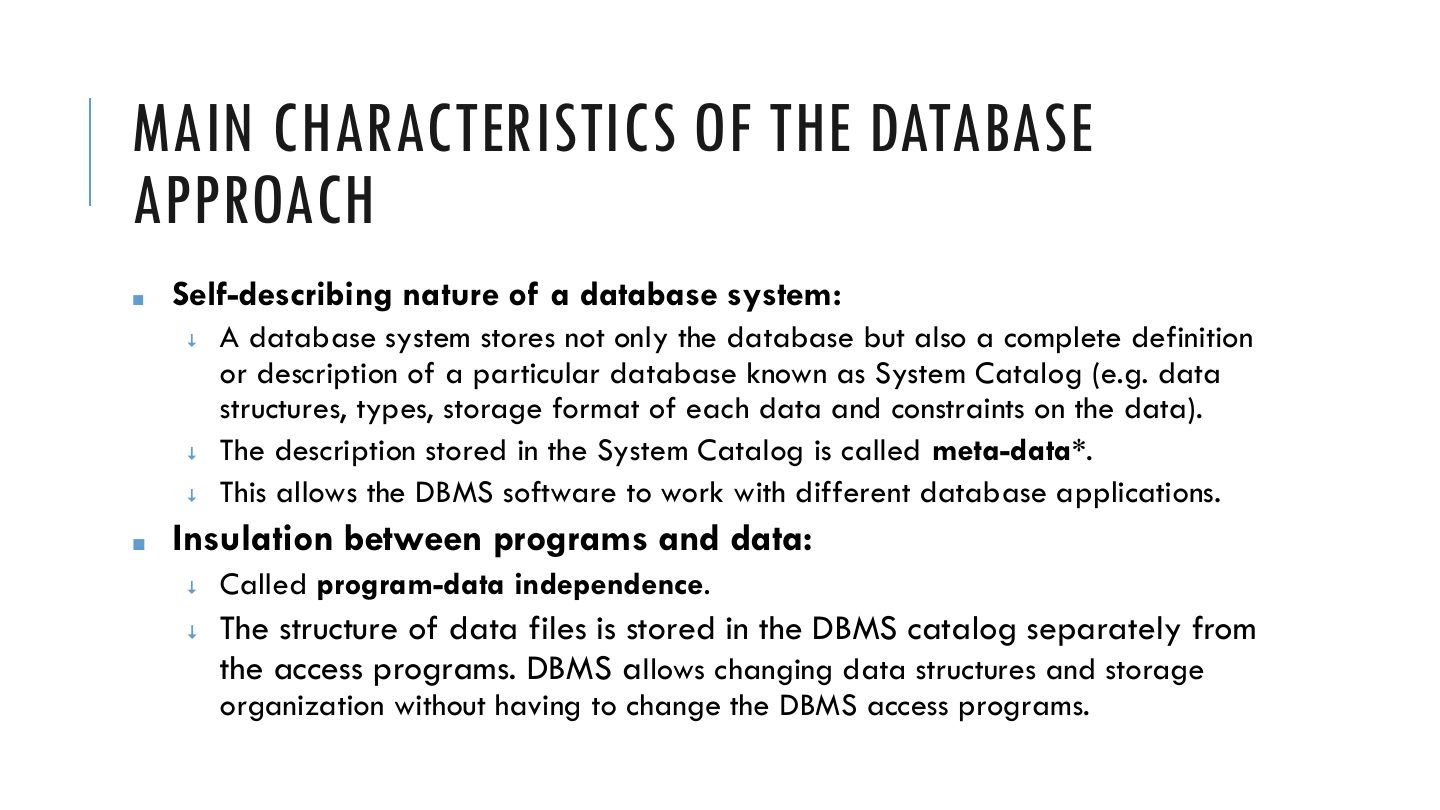
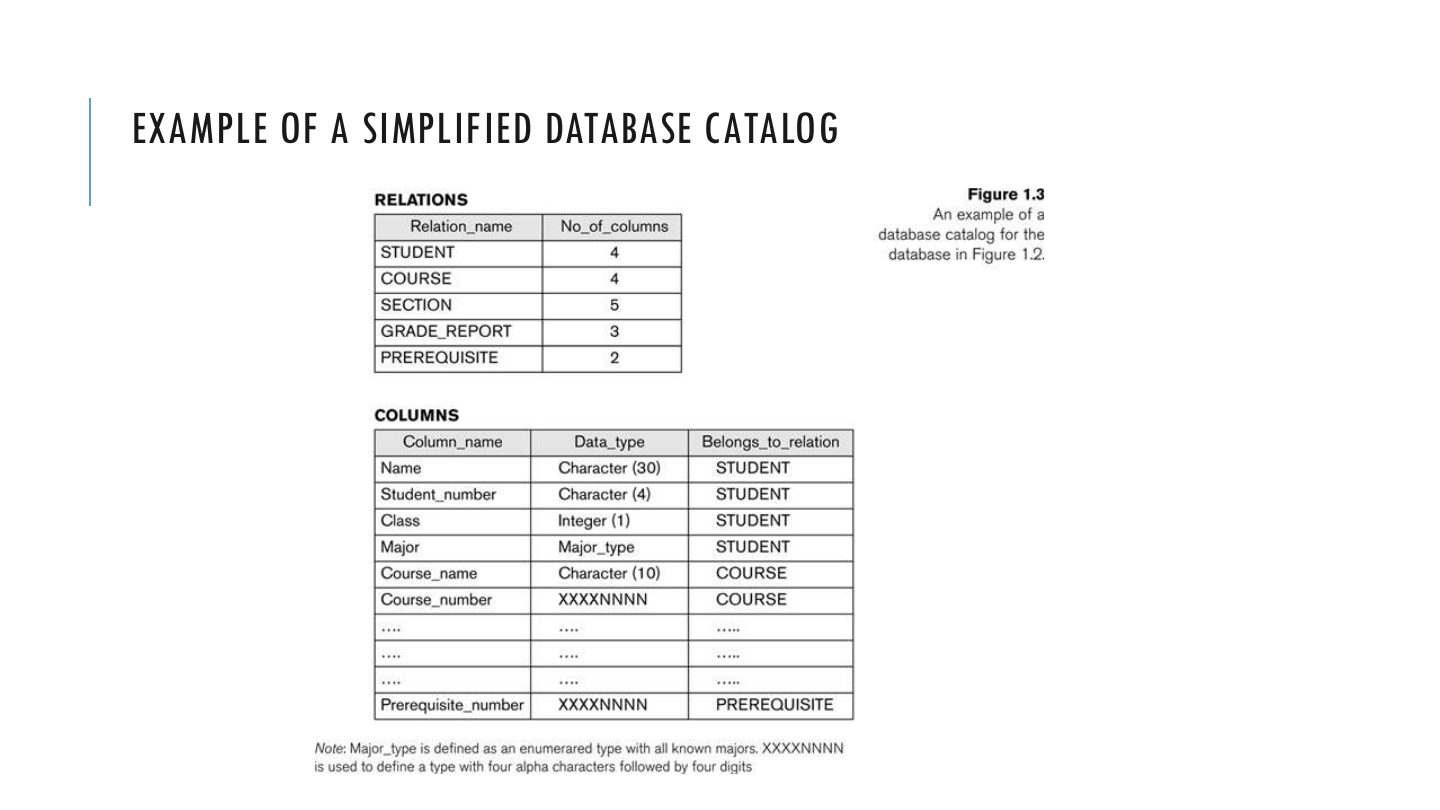
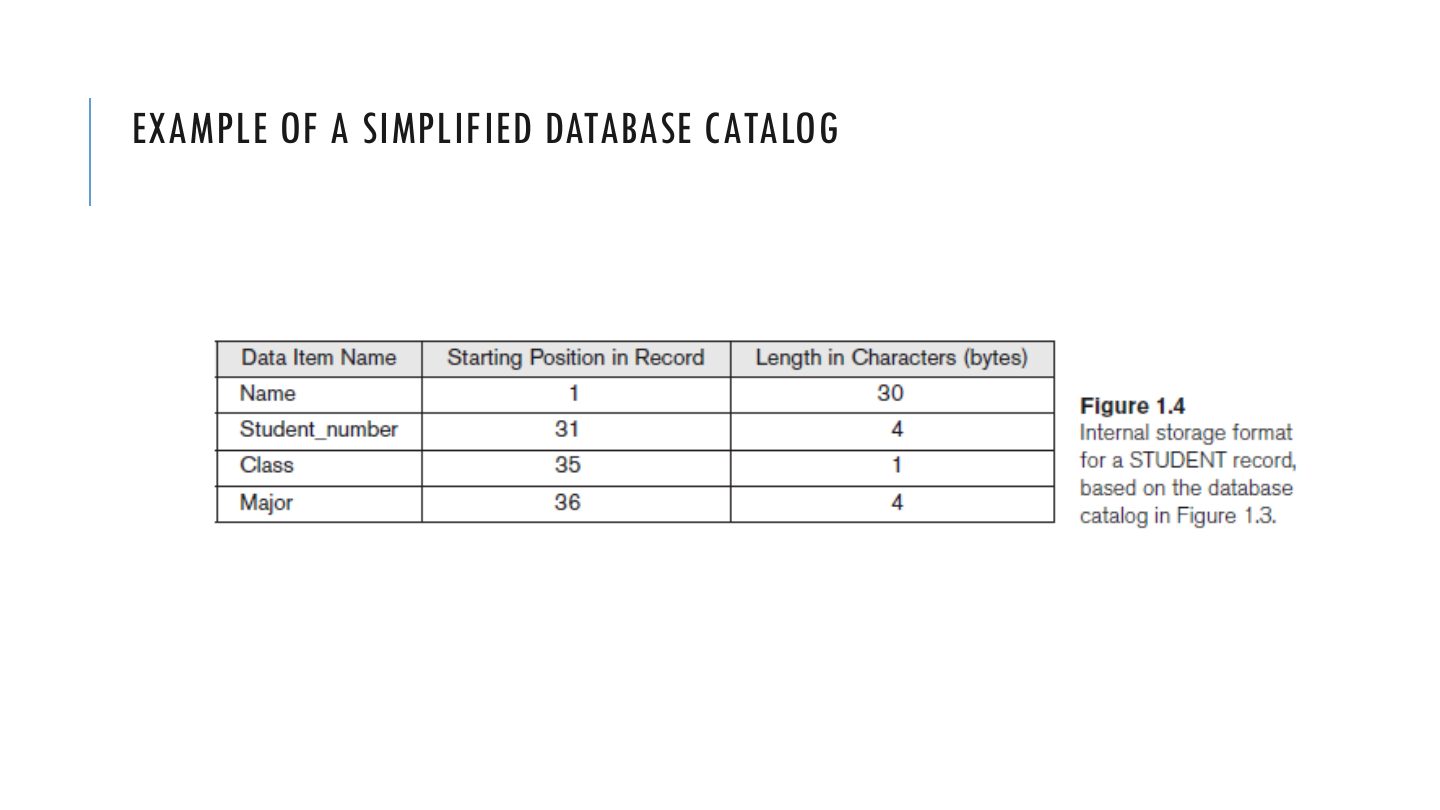
Characteristics: self-describing (catalog / metadata), program–data independence, multiple views, sharing and multi-user transactions.
Exam angle
A database is "self-describing" because it stores:
HOW DO I DESIGN AND IMPLEMENT A DATABASE?
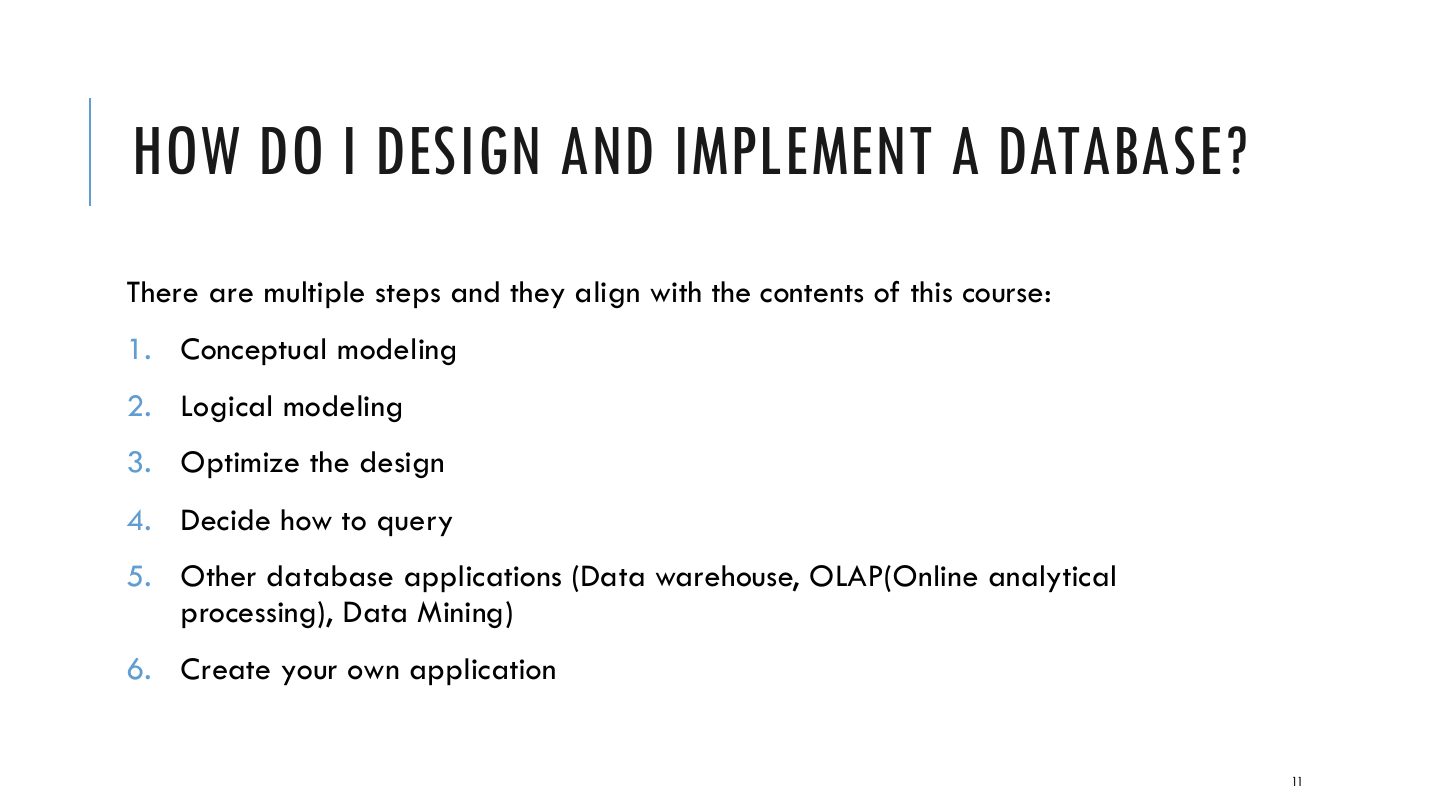
Exam angle
Q1: the design steps in order
Correct order for designing a database:
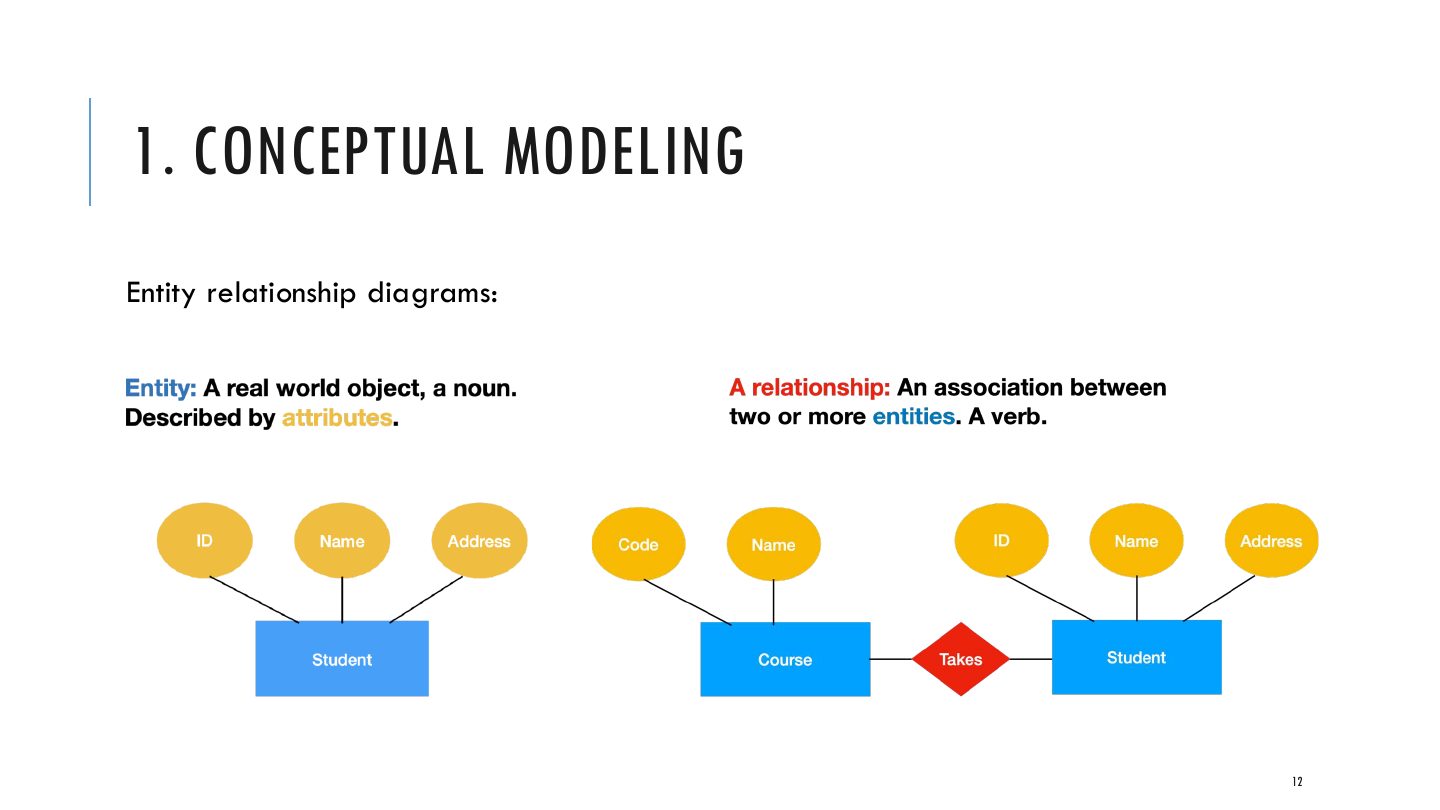
1. CONCEPTUAL MODELING
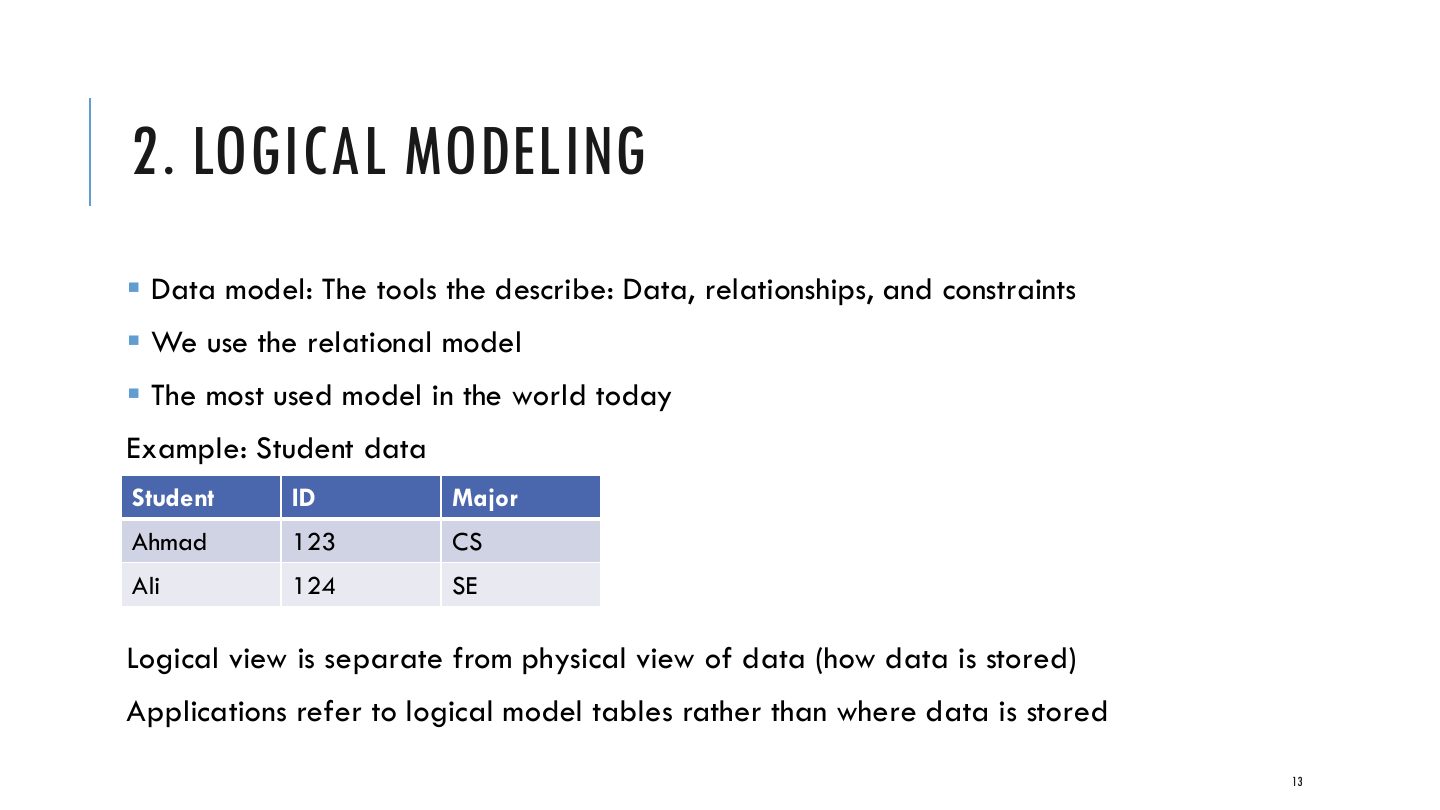
2. LOGICAL MODELING
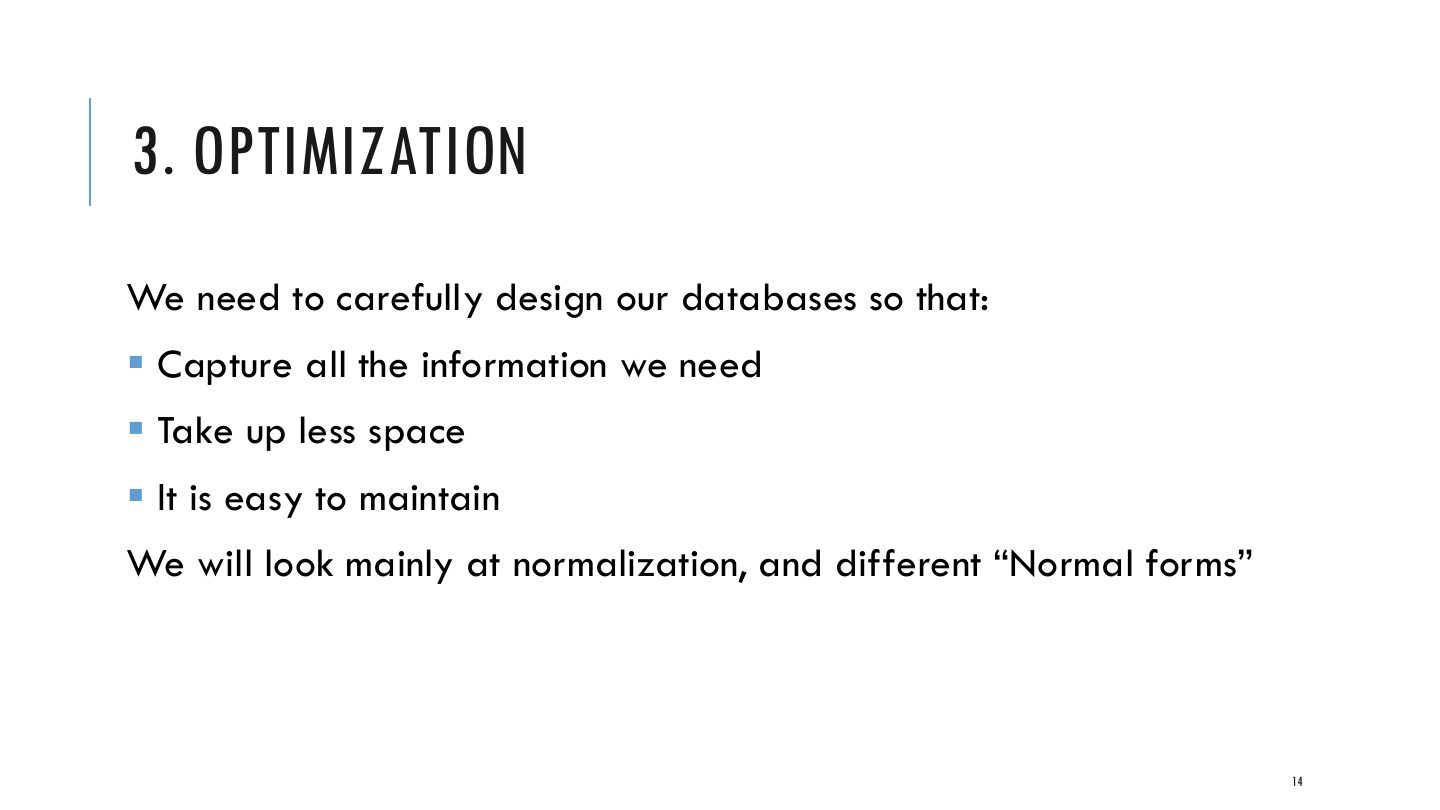
3. OPTIMIZATION
Notes
Optimization = normalization: capture everything, take less space, avoid anomalies.
Seen again Chapter 9: Normalization, slide 8: normalization
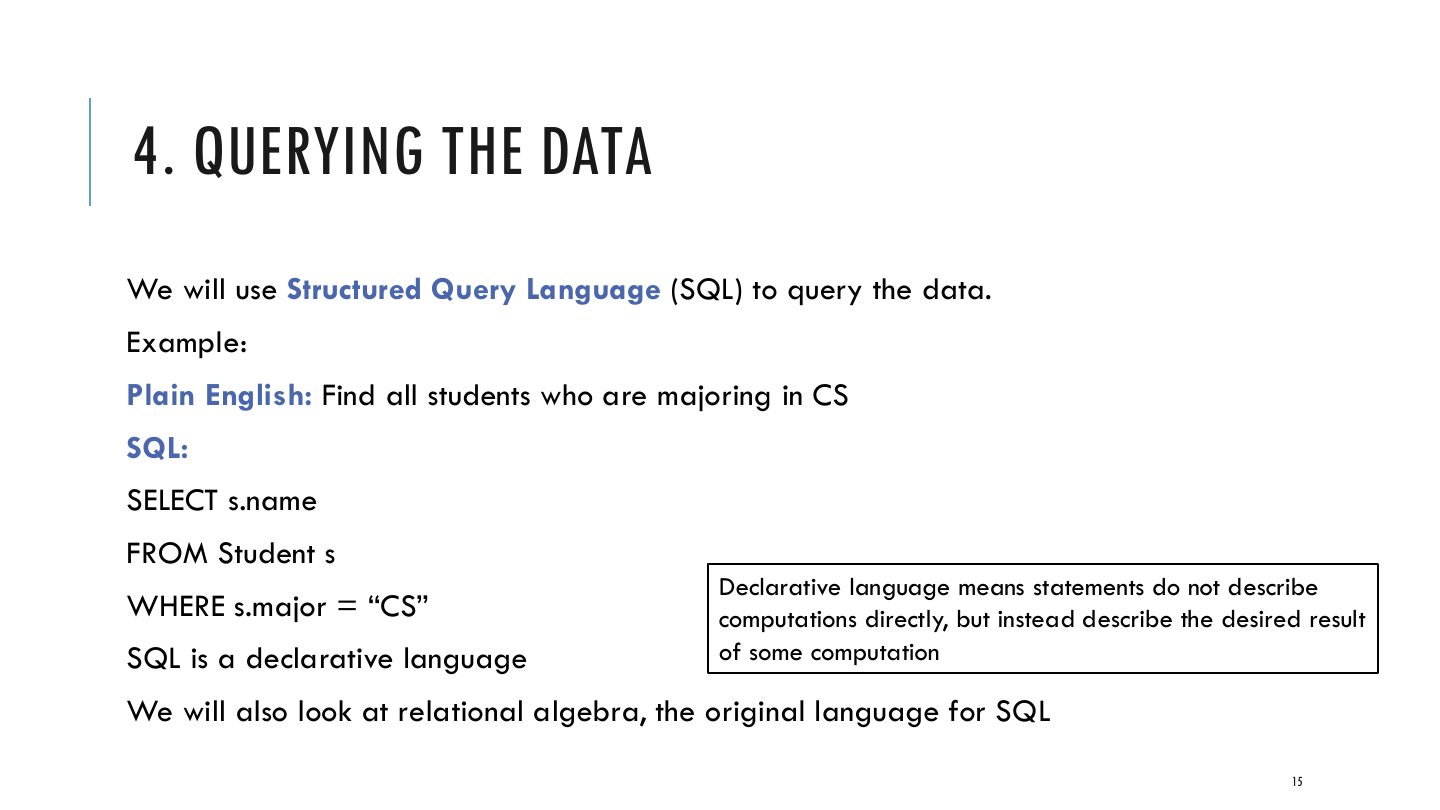
4. QUERYING THE DATA
4. QUERYING THE DATA (CONTD)
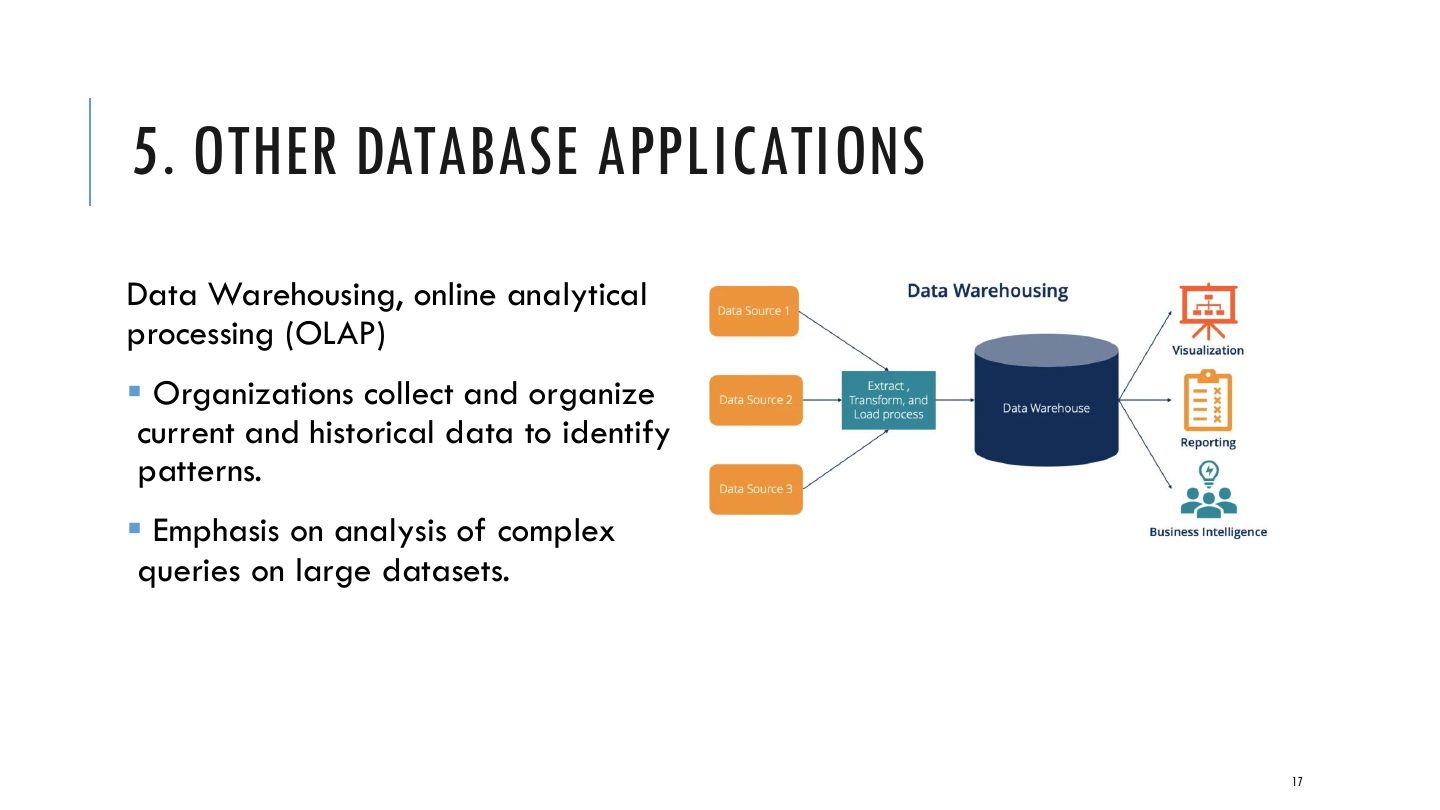
5. OTHER DATABASE APPLICATIONS
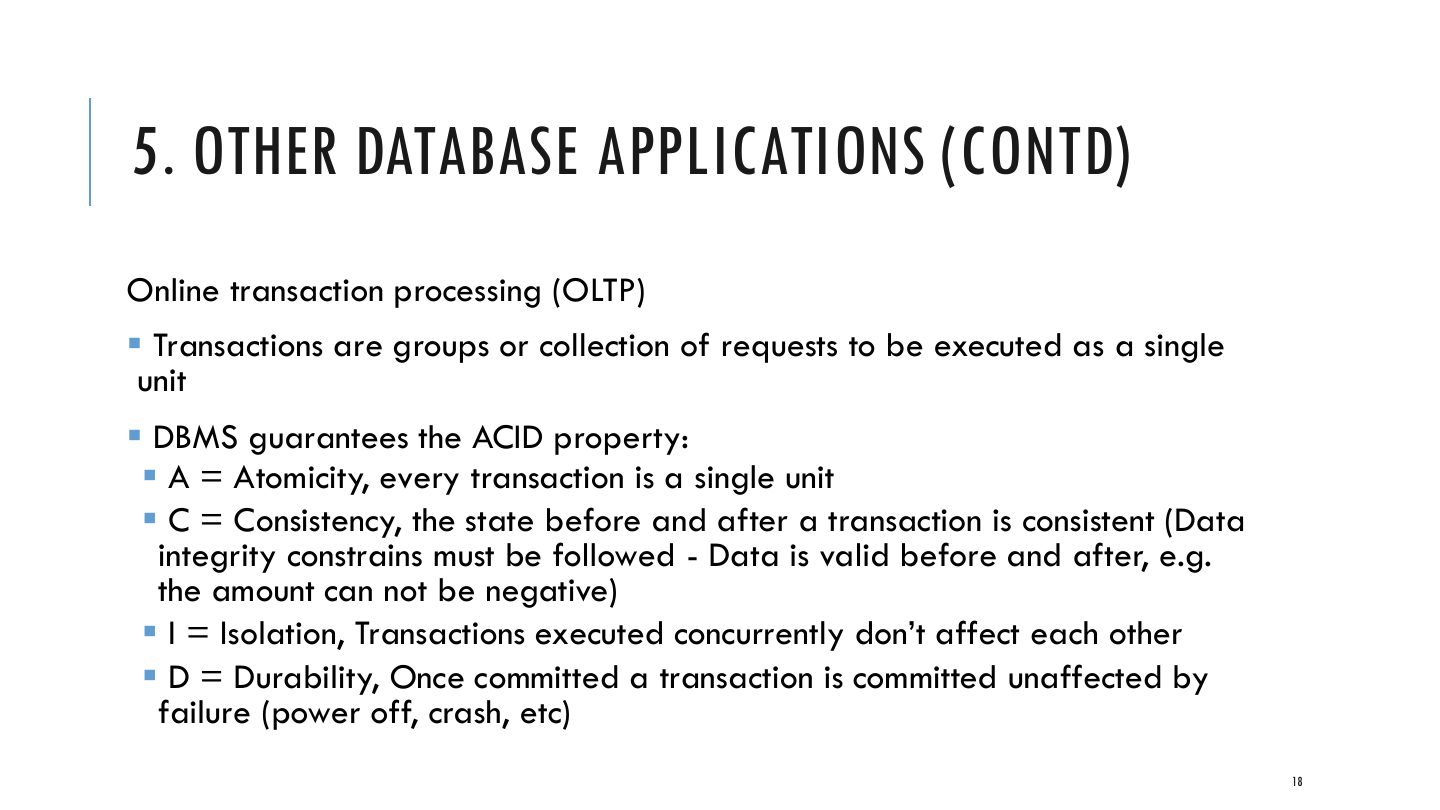
5. OTHER DATABASE APPLICATIONS (CONTD)
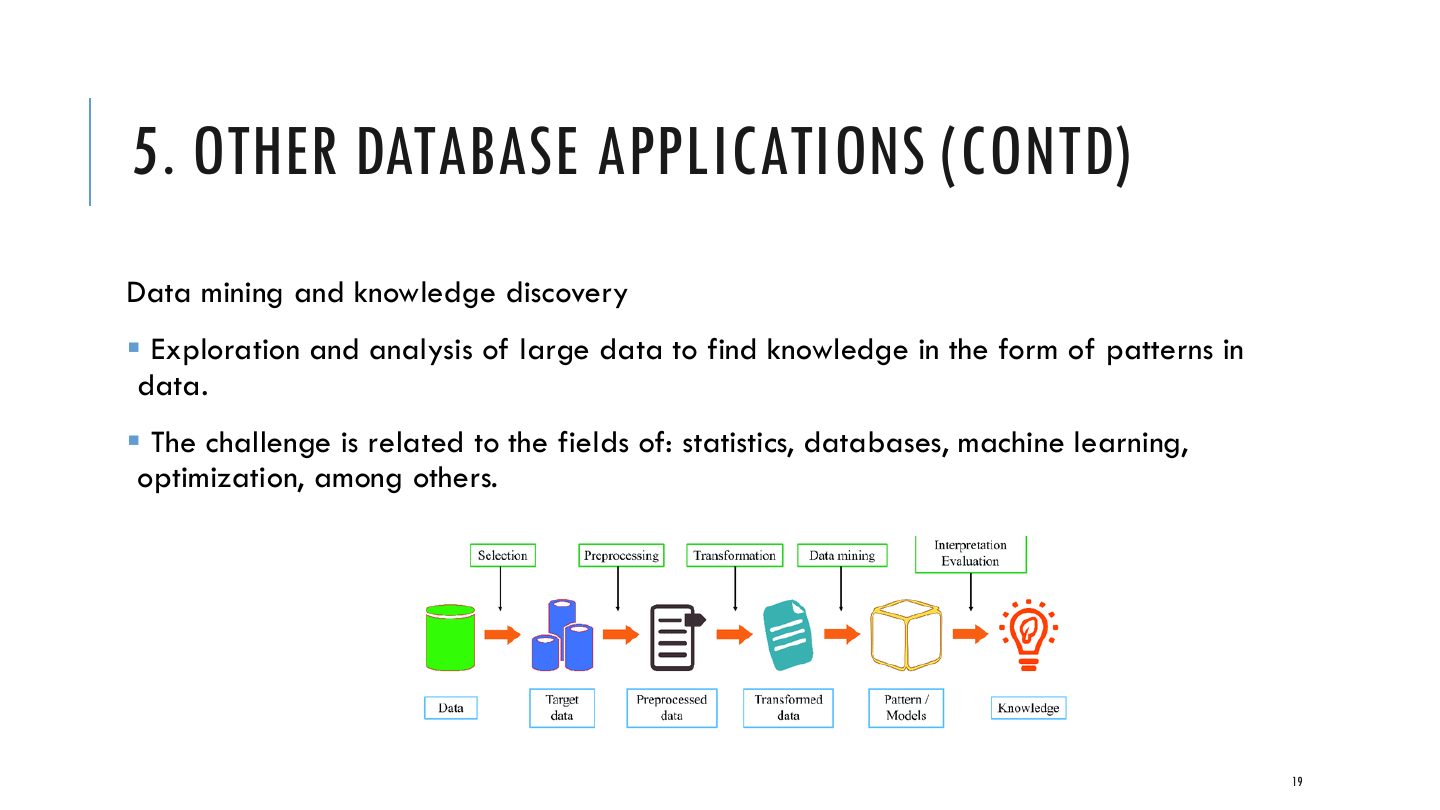
5. OTHER DATABASE APPLICATIONS (CONTD)
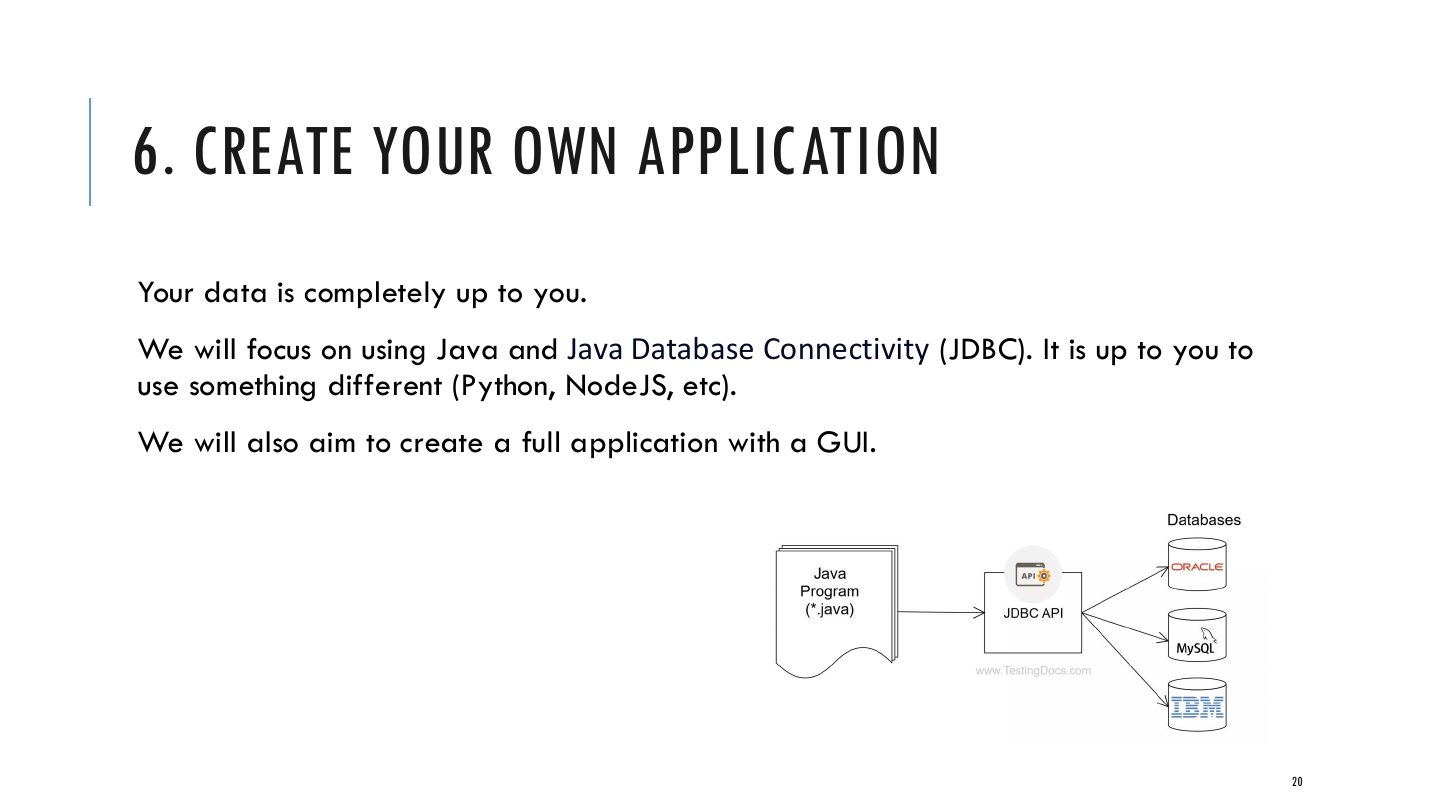
6. CREATE YOUR OWN APPLICATION
MAIN CHARACTERISTICS OF THE DATABASE APPROACH
EXAMPLE OF A SIMPLIFIED DATABASE CATALOG
EXAMPLE OF A SIMPLIFIED DATABASE CATALOG
MAIN CHARACTERISTICS OF THE DATABASE APPROACH (CONTINUED)
MAIN CHARACTERISTICS OF THE DATABASE APPROACH (CONTINUED)
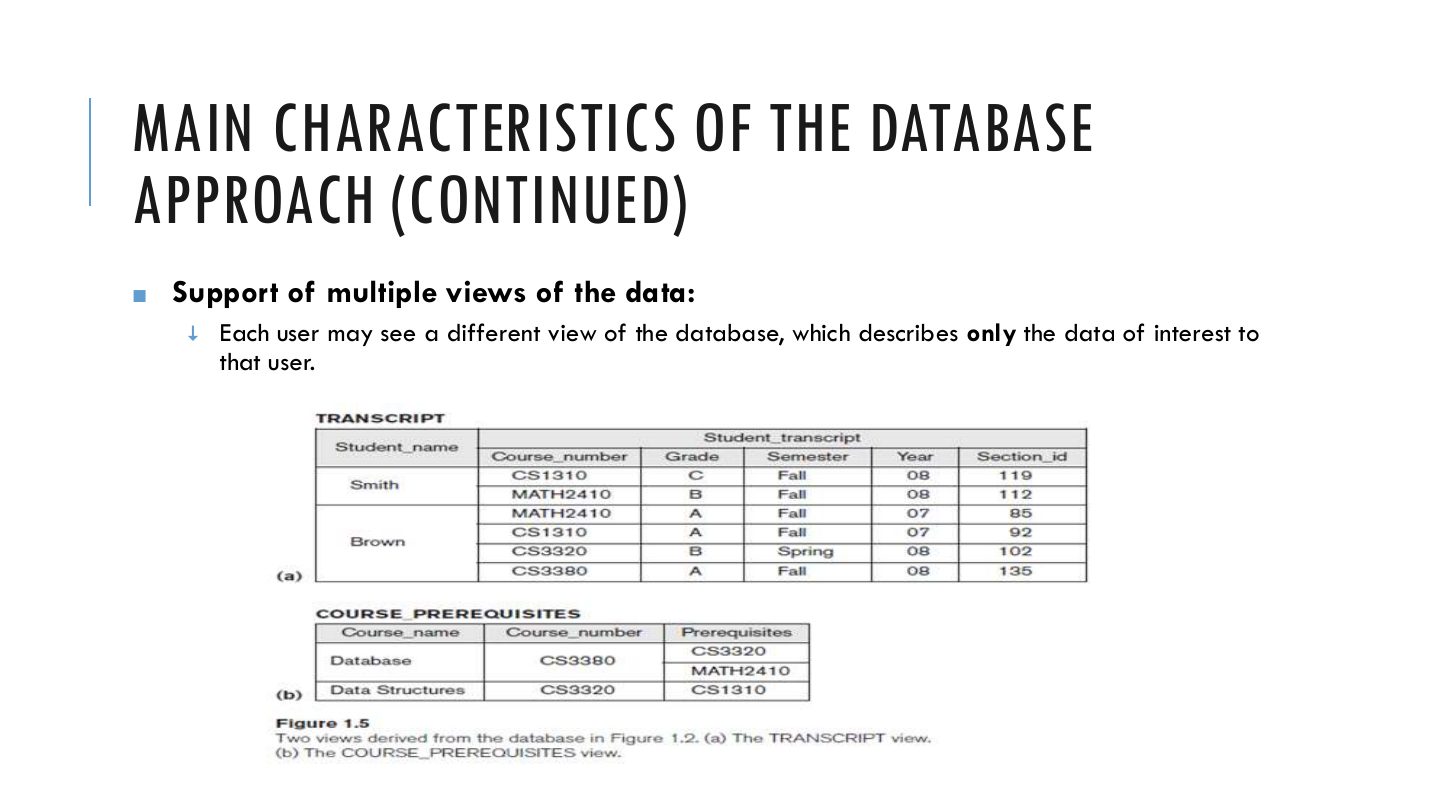
MAIN CHARACTERISTICS OF THE DATABASE APPROACH (CONTINUED)
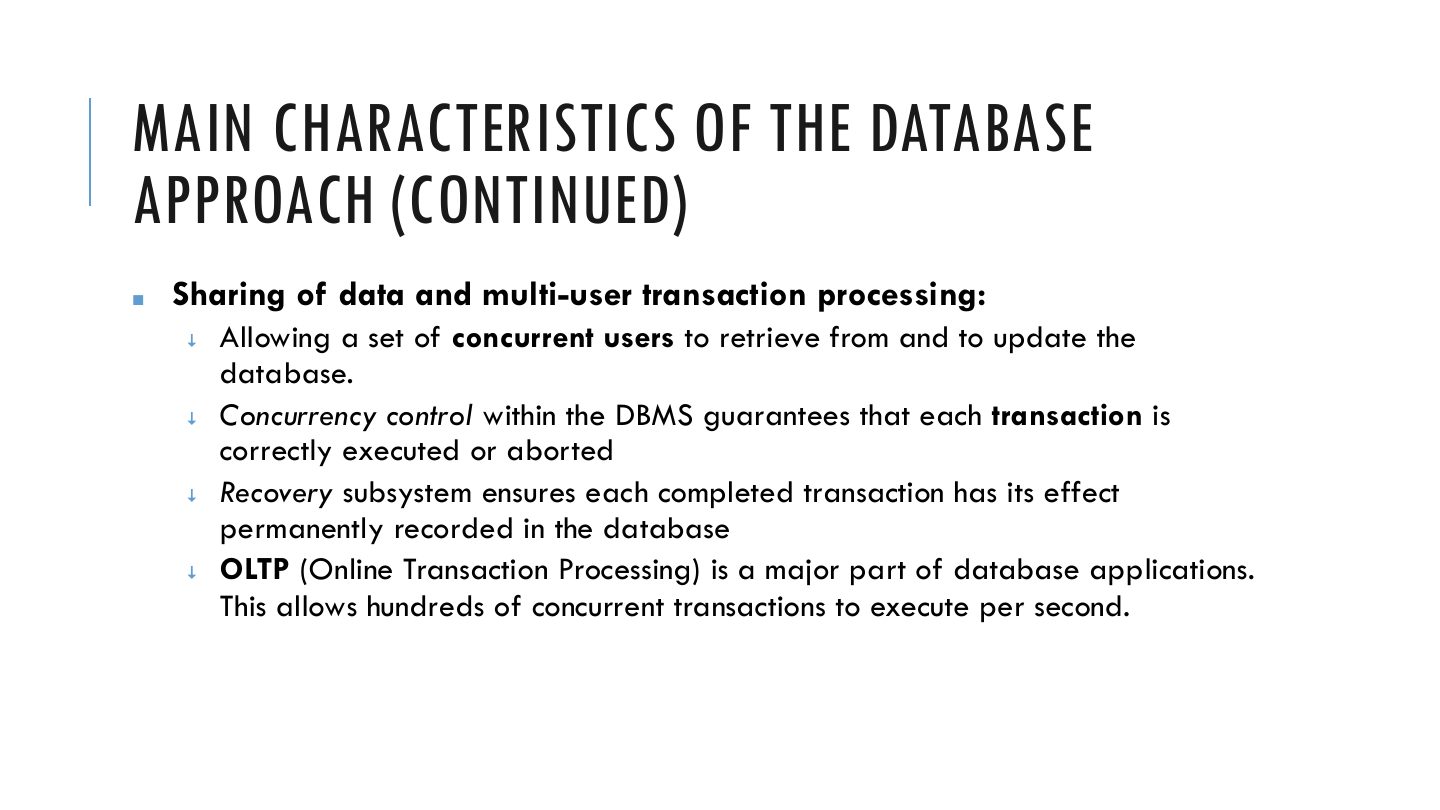
MAIN CHARACTERISTICS OF THE DATABASE APPROACH (CONTINUED)
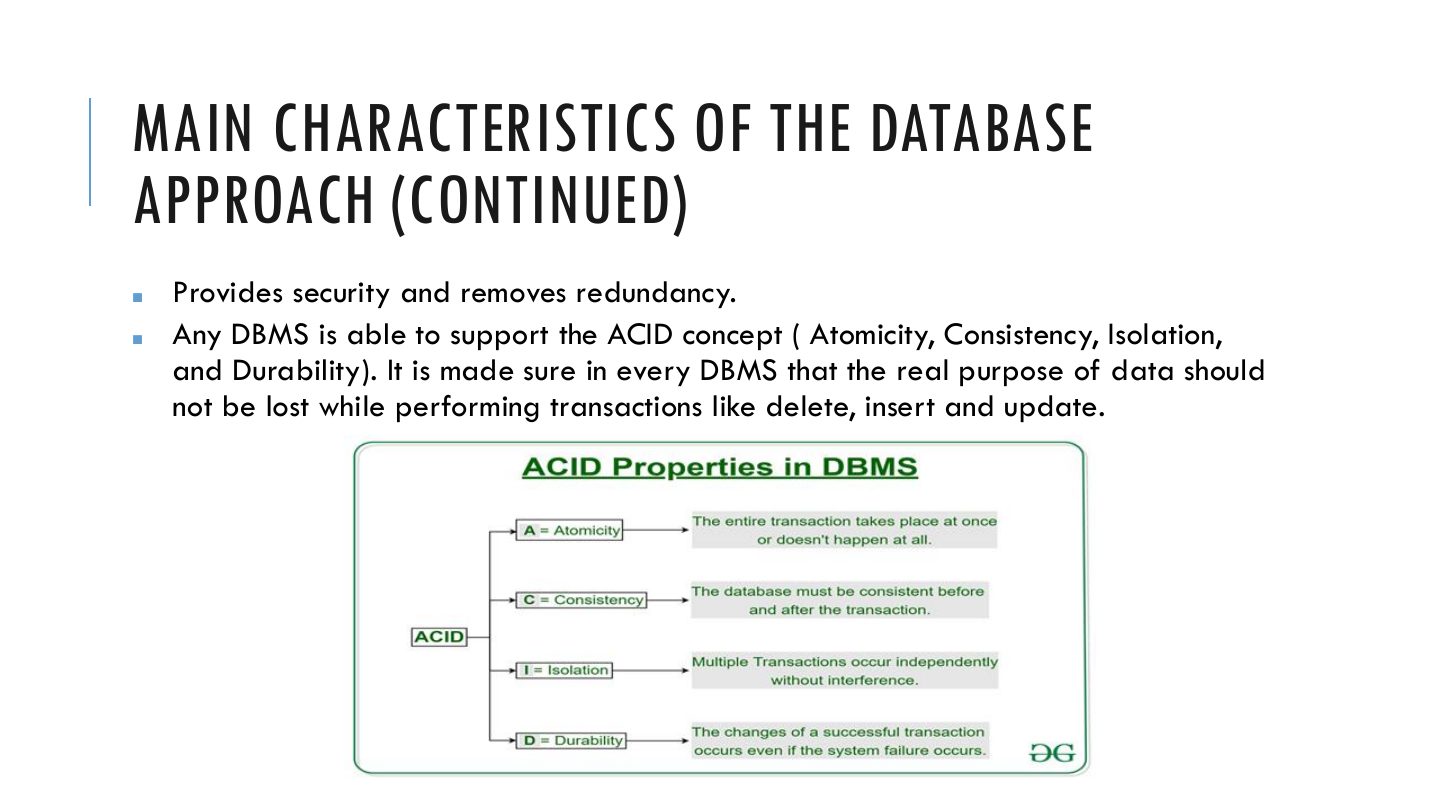
Notes
Memory trick Durability = Doesn’t disappear after commit.
Exam angle
Q6: the property that survives failures
Which ACID property ensures committed changes persist despite failures?
All of a transaction’s operations happen or none do. This is:
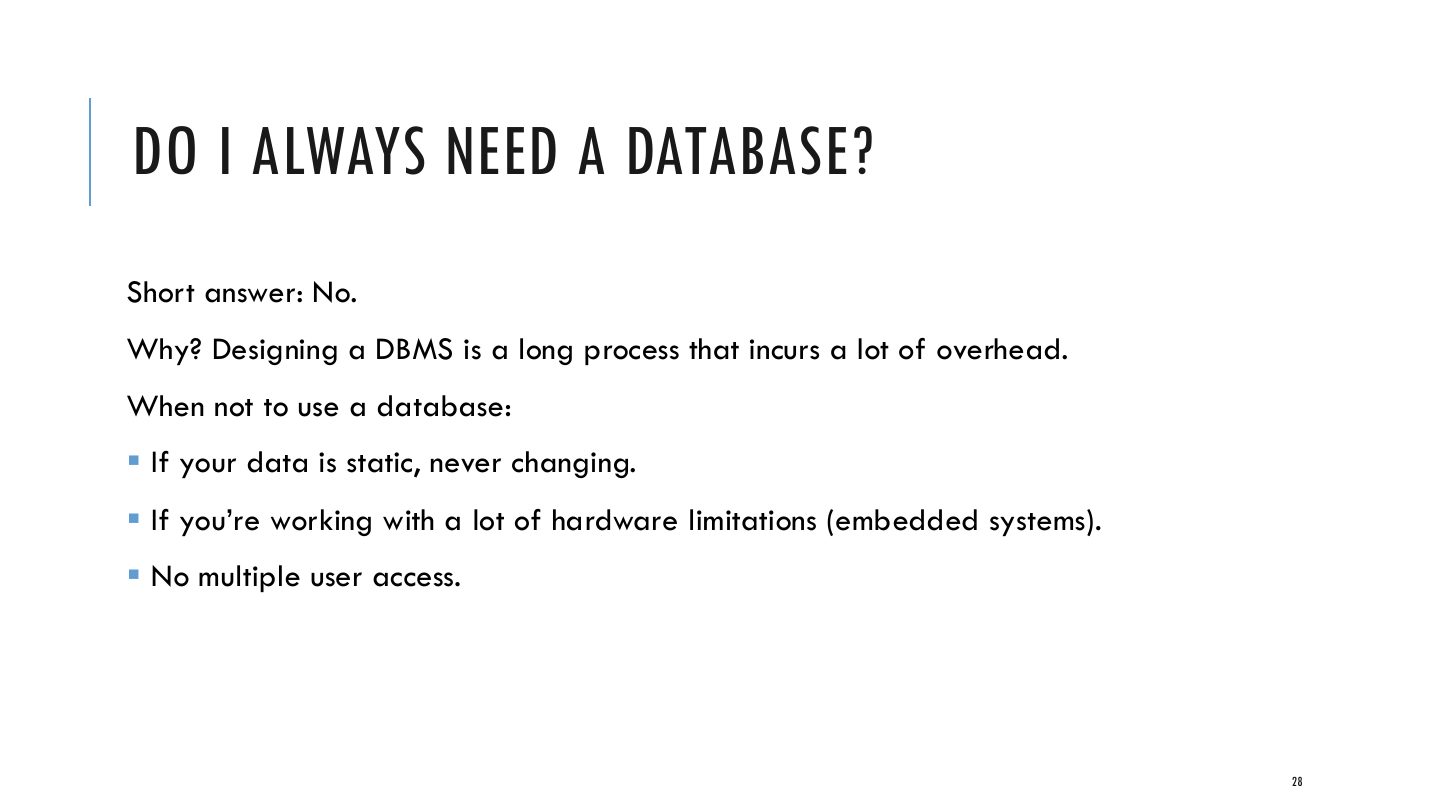
DO I ALWAYS NEED A DATABASE?
Notes
You may not need a DBMS for small, simple, single-user, fixed data, or when the overhead isn’t worth it.
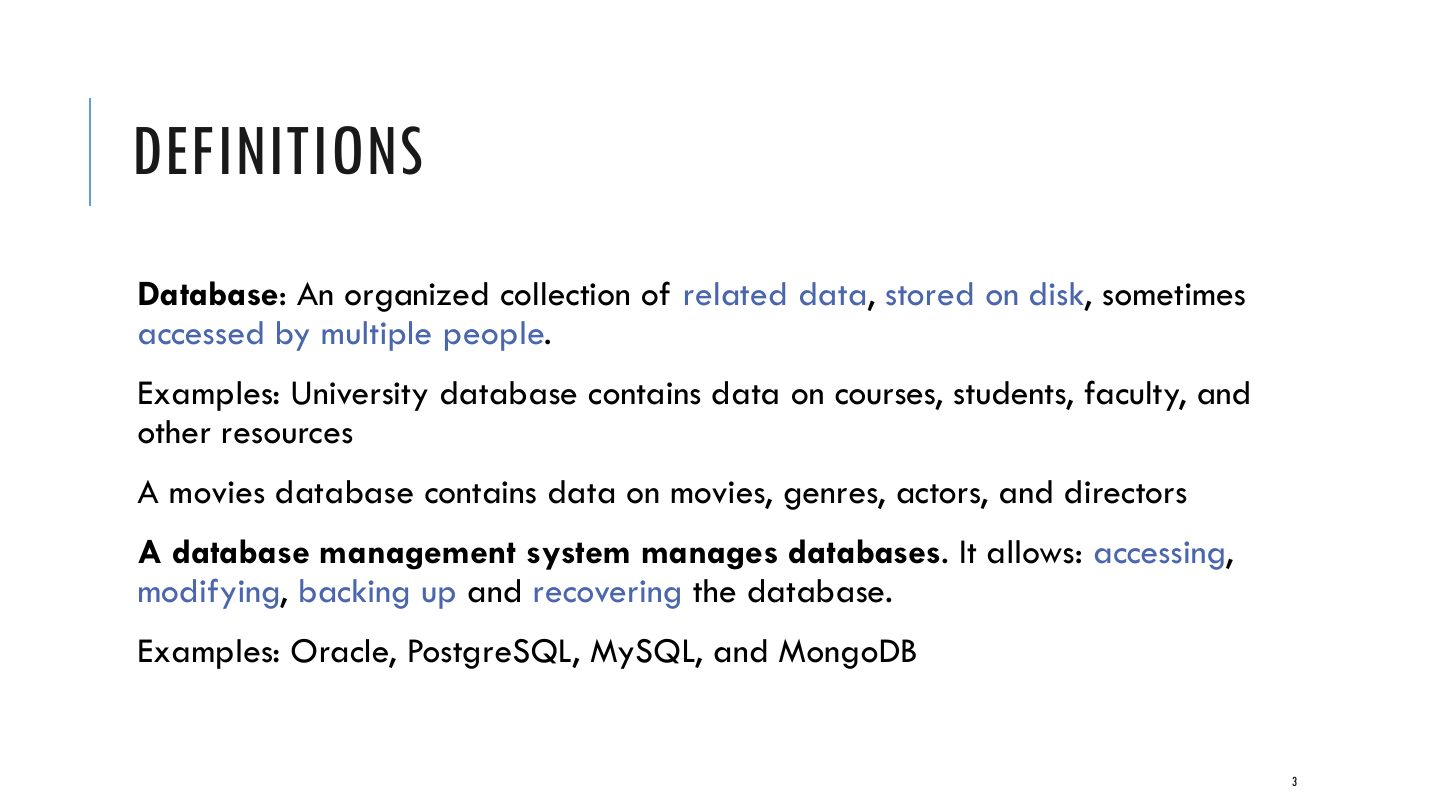
SUMMARY