A situation where the outcome depends on the order of access to shared data is a:
Process Synchronization
Race conditions, the critical-section problem and its three requirements, Peterson’s solution, hardware support (test_and_set, swap), semaphores and their implementation, deadlock and starvation, the bounded-buffer, readers–writers and dining-philosophers problems, and monitors.
How to read this page
Every original slide is shown unchanged. Yellow marks on a slide point to a numbered note: hover or tap a mark to jump to its note, and hover a note to see its marks. Questions tagged Past exam appeared on a real paper; Prediction questions are likely angles, not confirmed. Pick an answer to each question: a wrong pick tells you why it is wrong, so you can try again.
All 45 slides
- 1 Slide 1
- 2 Outline of this lecture
- 3 Objectives
- 4 Background
- 5 Producer
- 6 Race condition example
- 7 Race Condition
- 8 Race condition
- 9 The Critical Section (CS) Problem
- 10 Critical Section
- 11 Solution to Critical-Section Problem
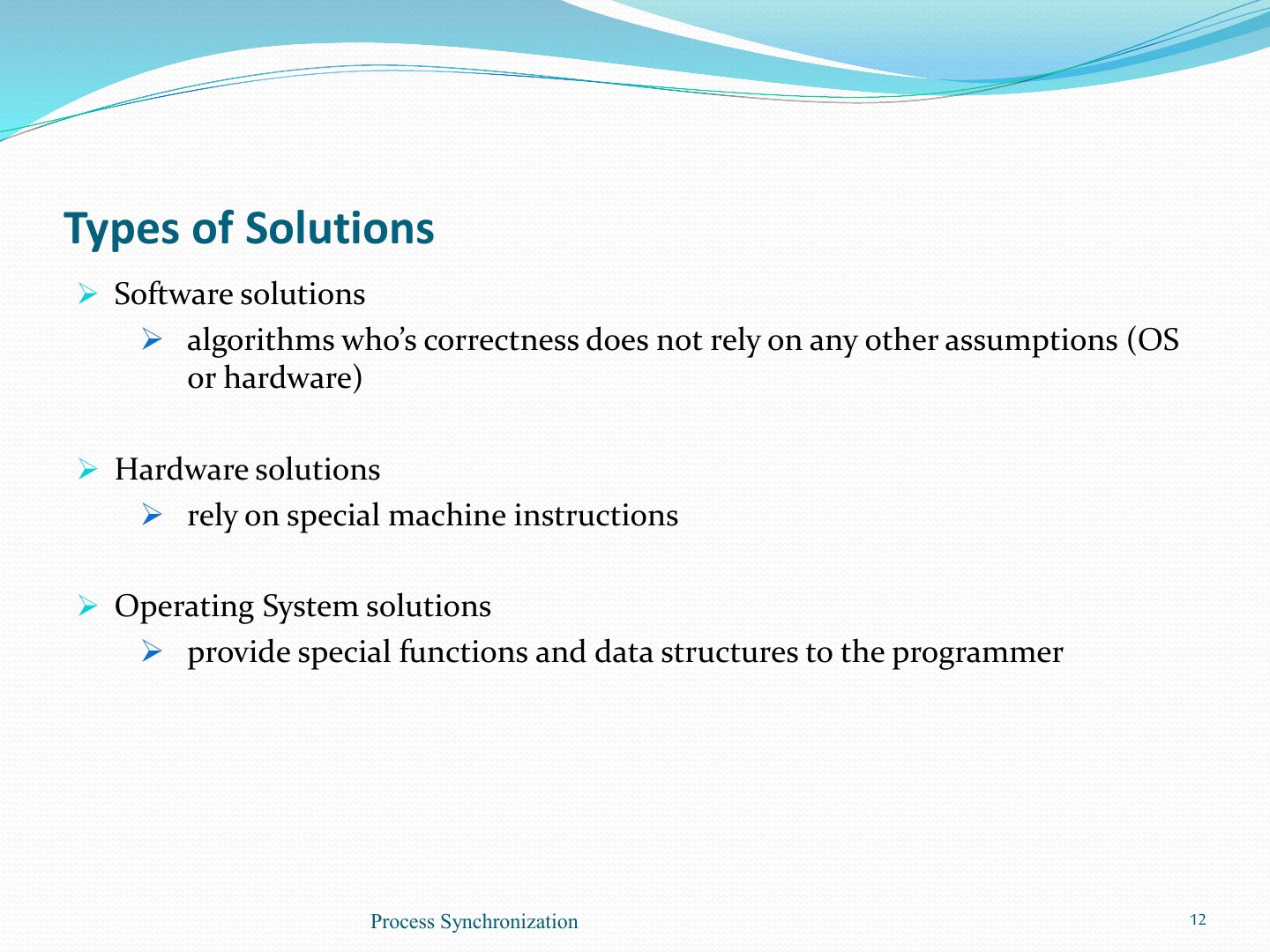
- 12 Types of Solutions
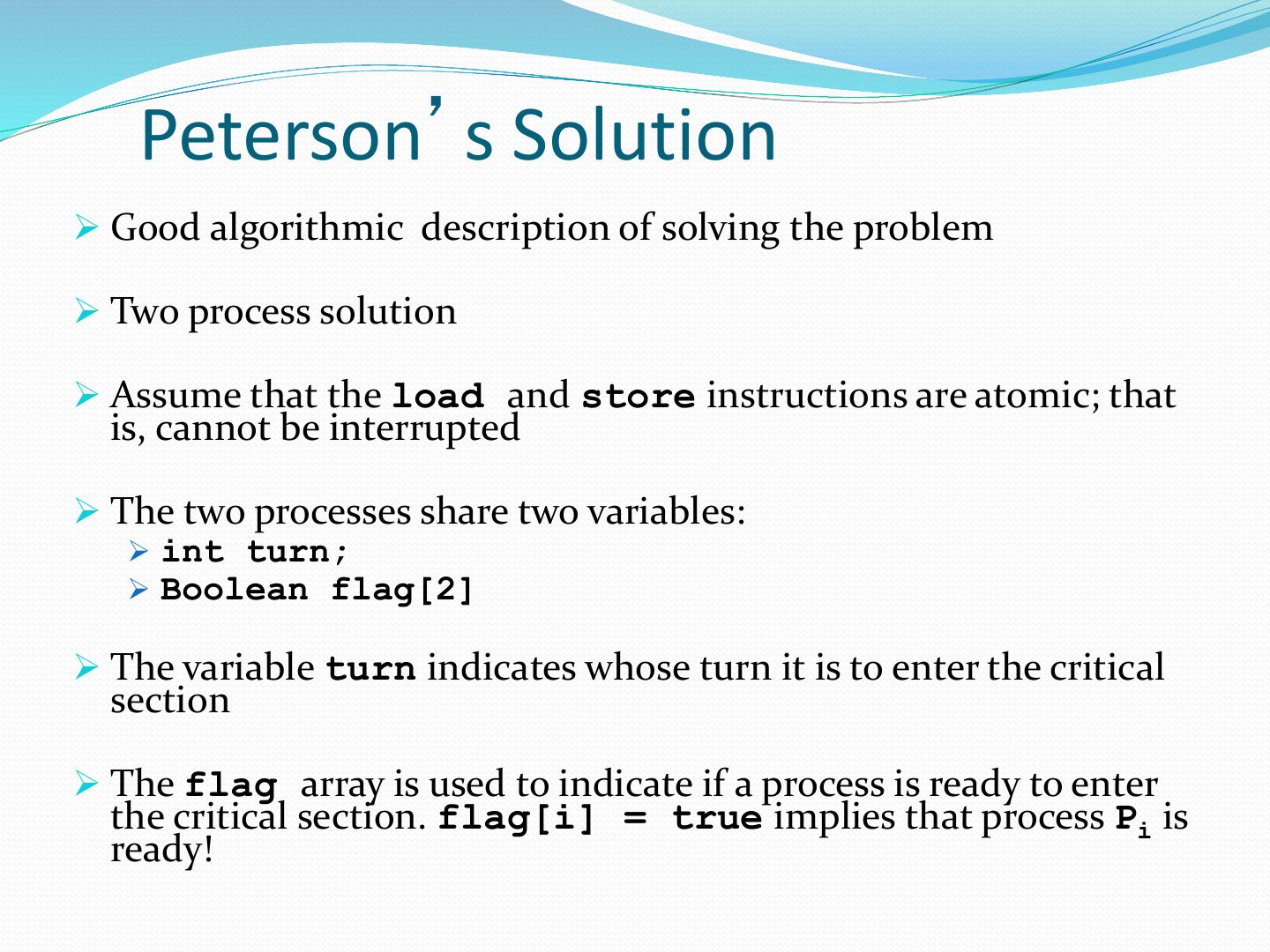
- 13 Peterson ’ s Solution
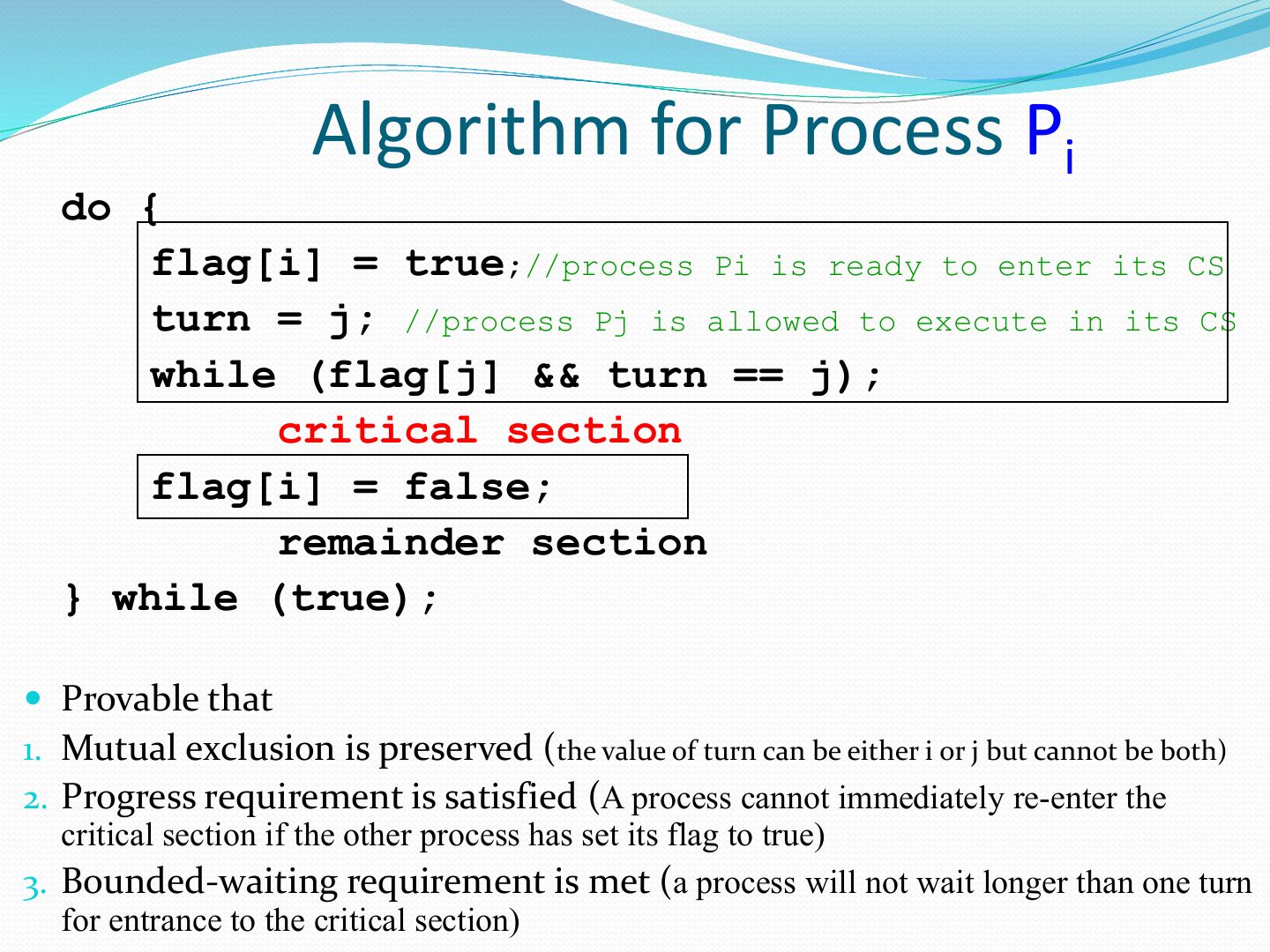
- 14 Algorithm for Process P
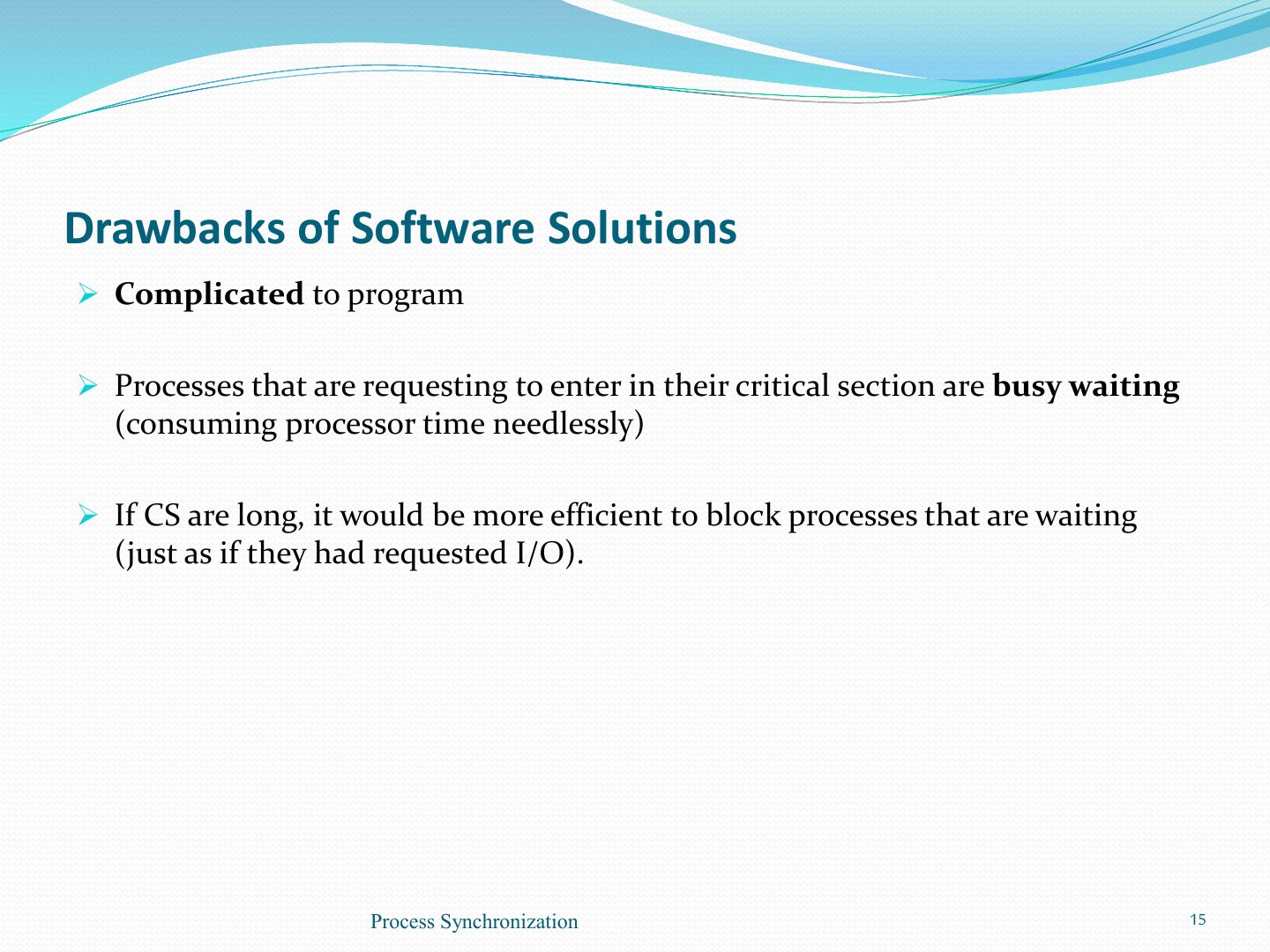
- 15 Drawbacks of Software Solutions
- 16 Synchronization Hardware
- 17 test_and_set Instruction
- 18 Solution using test_and_set
- 19 swap Instruction
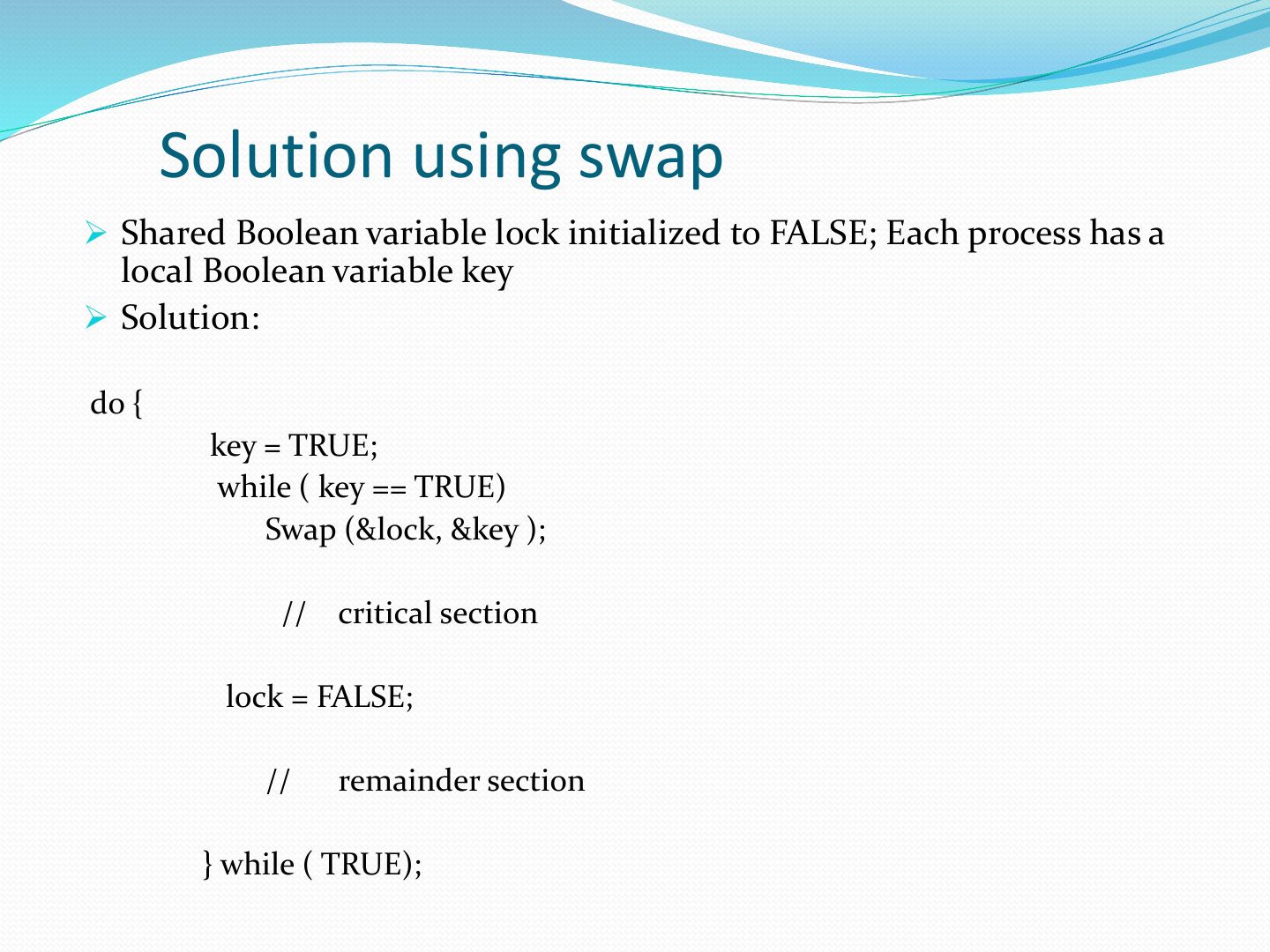
- 20 Solution using swap
- 21 Semaphore
- 22 Semaphore Usage
- 23 Semaphore Implementation
- 24 Semaphore Implementation with no Busy waiting
- 25 Semaphore Implementation with no Busy waiting (Cont.)
- 26 Deadlock and Starvation
- 27 Classical Problems of Synchronization
- 28 Bounded-Buffer Problem
- 29 Bounded Buffer Problem (Cont.)
- 30 Bounded Buffer Problem (Cont.)
- 31 Readers-Writers Problem
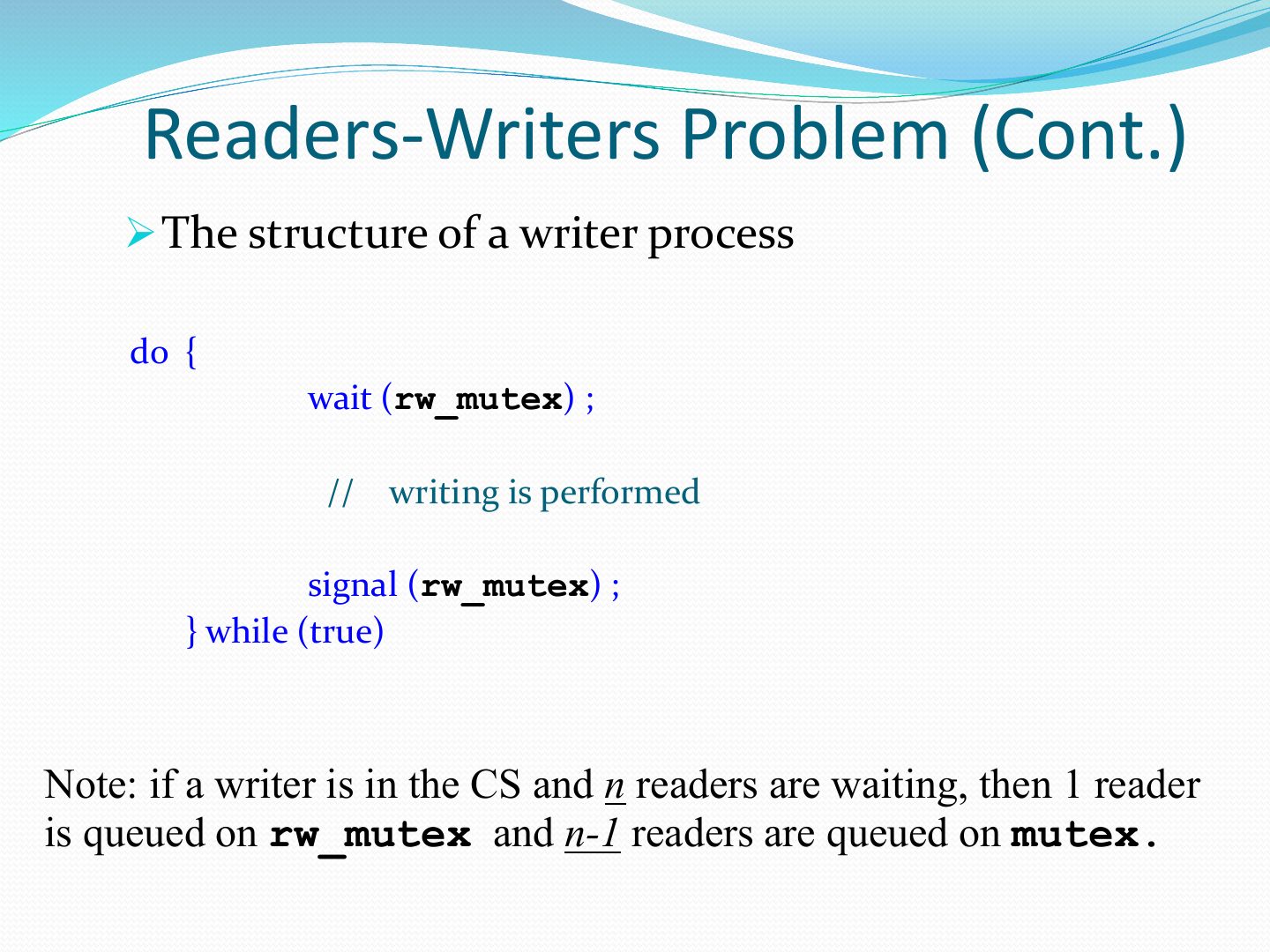
- 32 Readers-Writers Problem (Cont.)
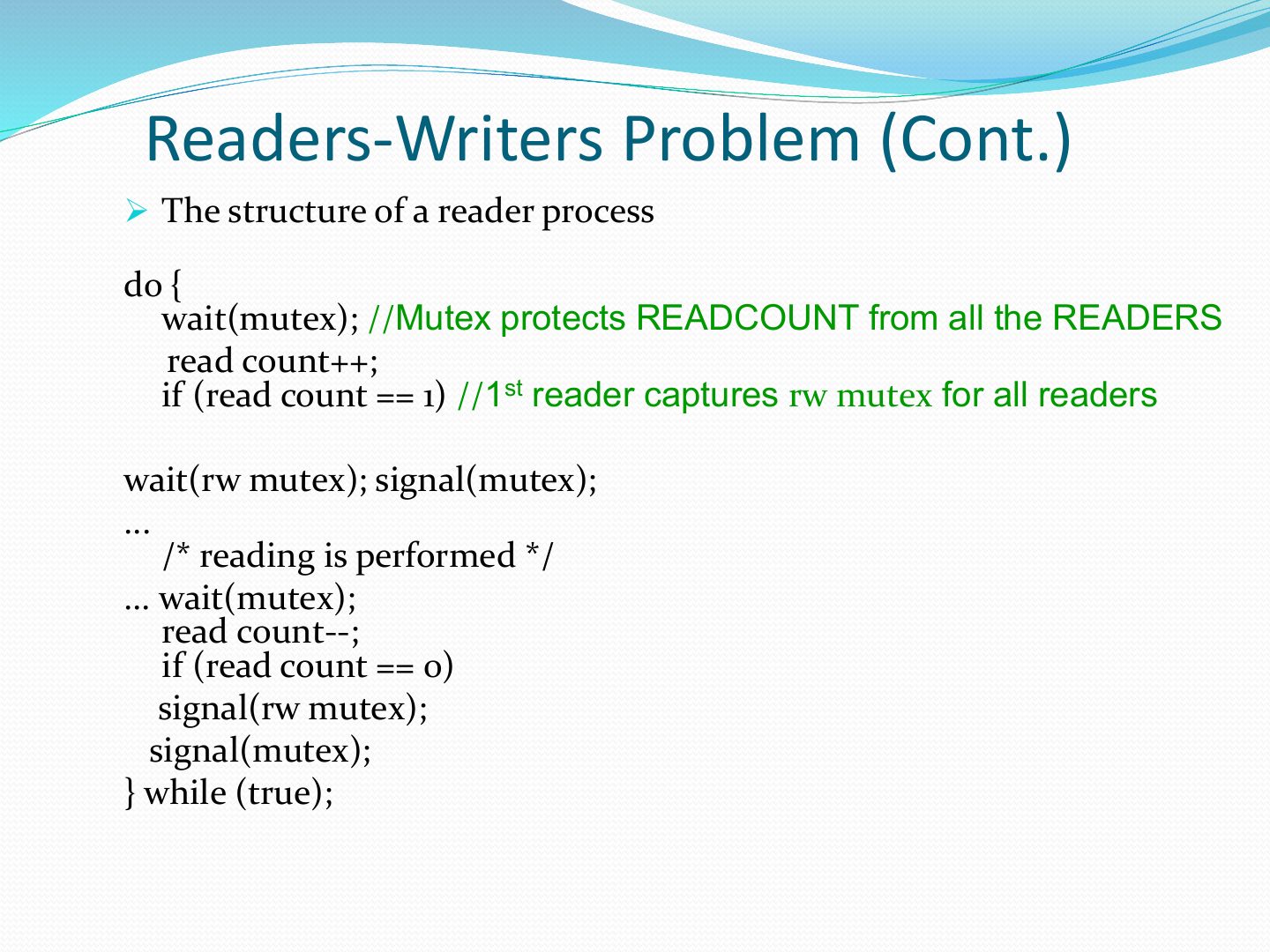
- 33 Readers-Writers Problem (Cont.)
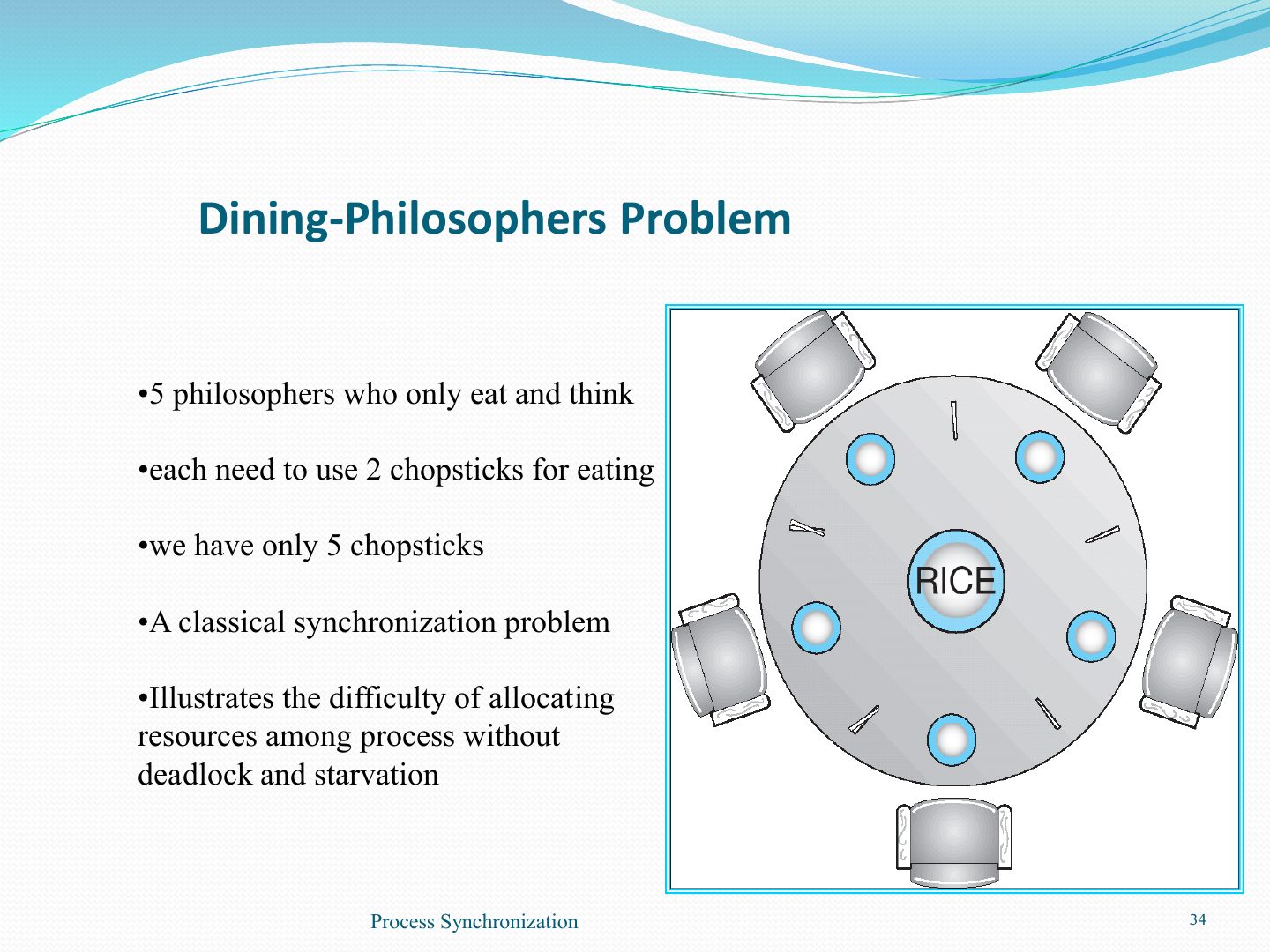
- 34 Dining-Philosophers Problem
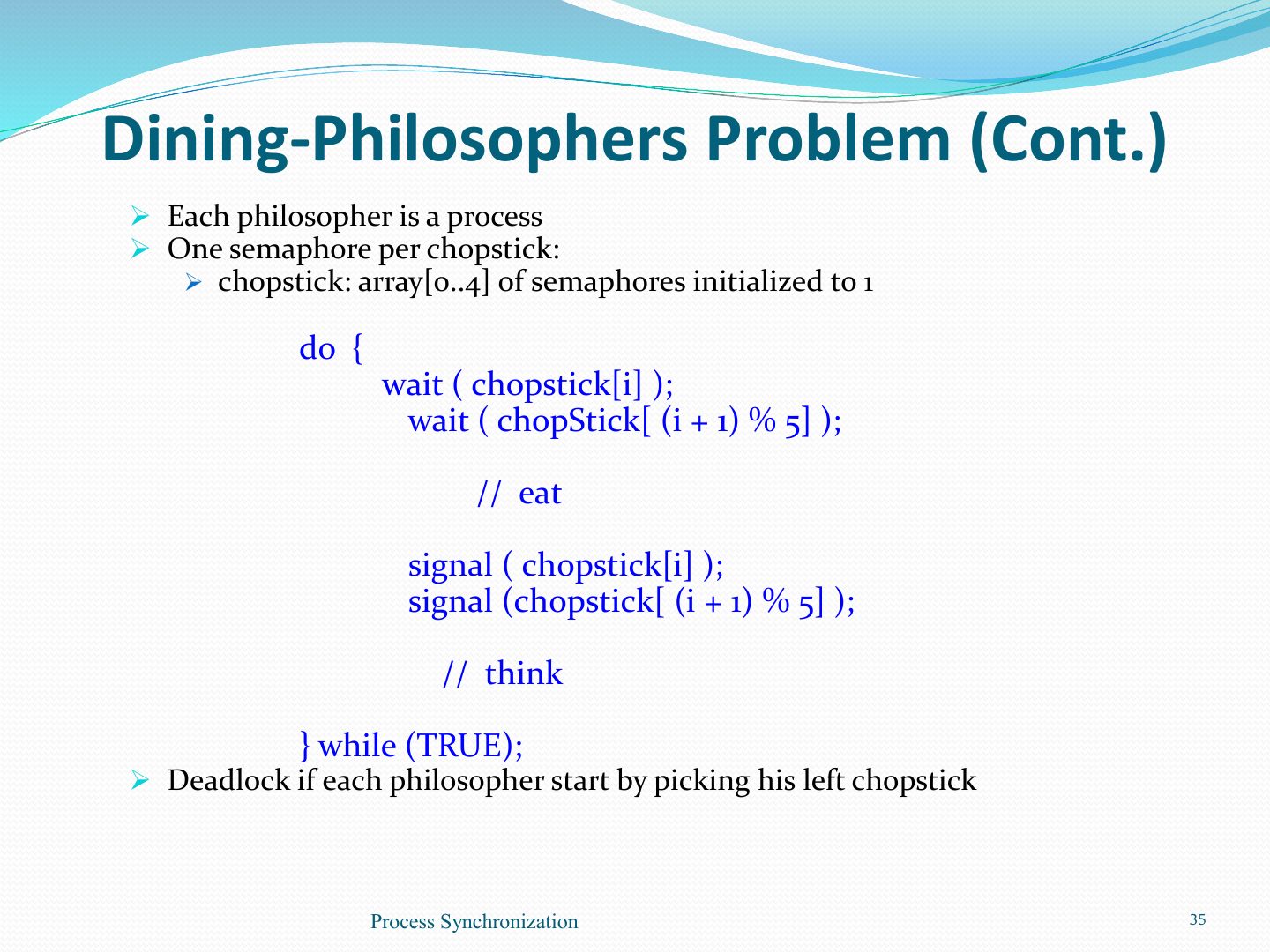
- 35 Dining-Philosophers Problem (Cont.)
- 36 Problems with Semaphores
- 37 Operating System Solutions: Monitors
- 38 Operating System Solutions: Monitors
- 39 Operating System Solutions: Monitors
- 40 Variables
- 41 Monitor with Condition Variables
- 42 Condition Variables choices
- 43 Solution to Dining Philosophers
- 44 Solution to Dining Philosophers (cont)
- 45 Process Synchronization Conclusion
Slide 1
Outline of this lecture
Objectives
Background
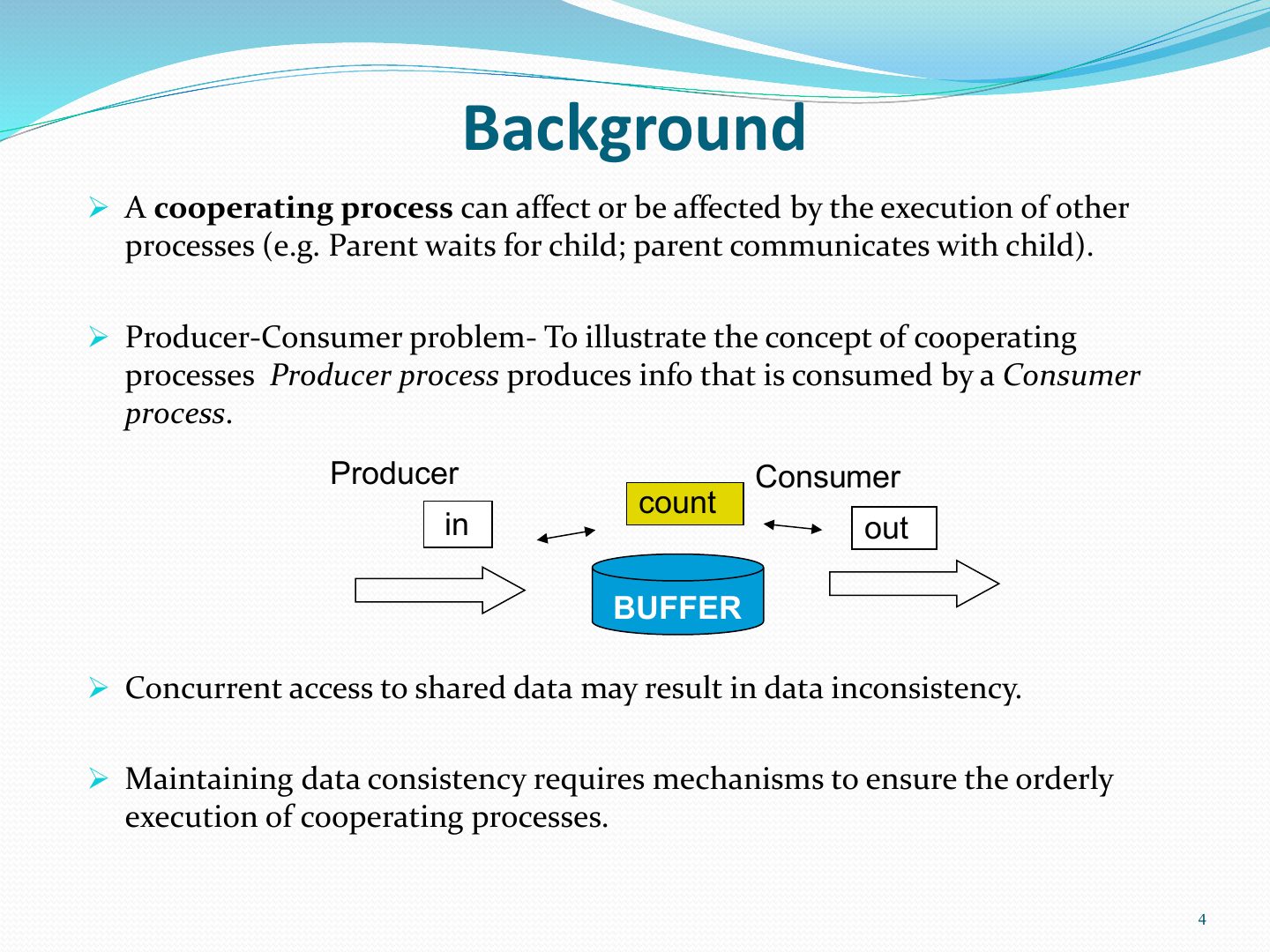
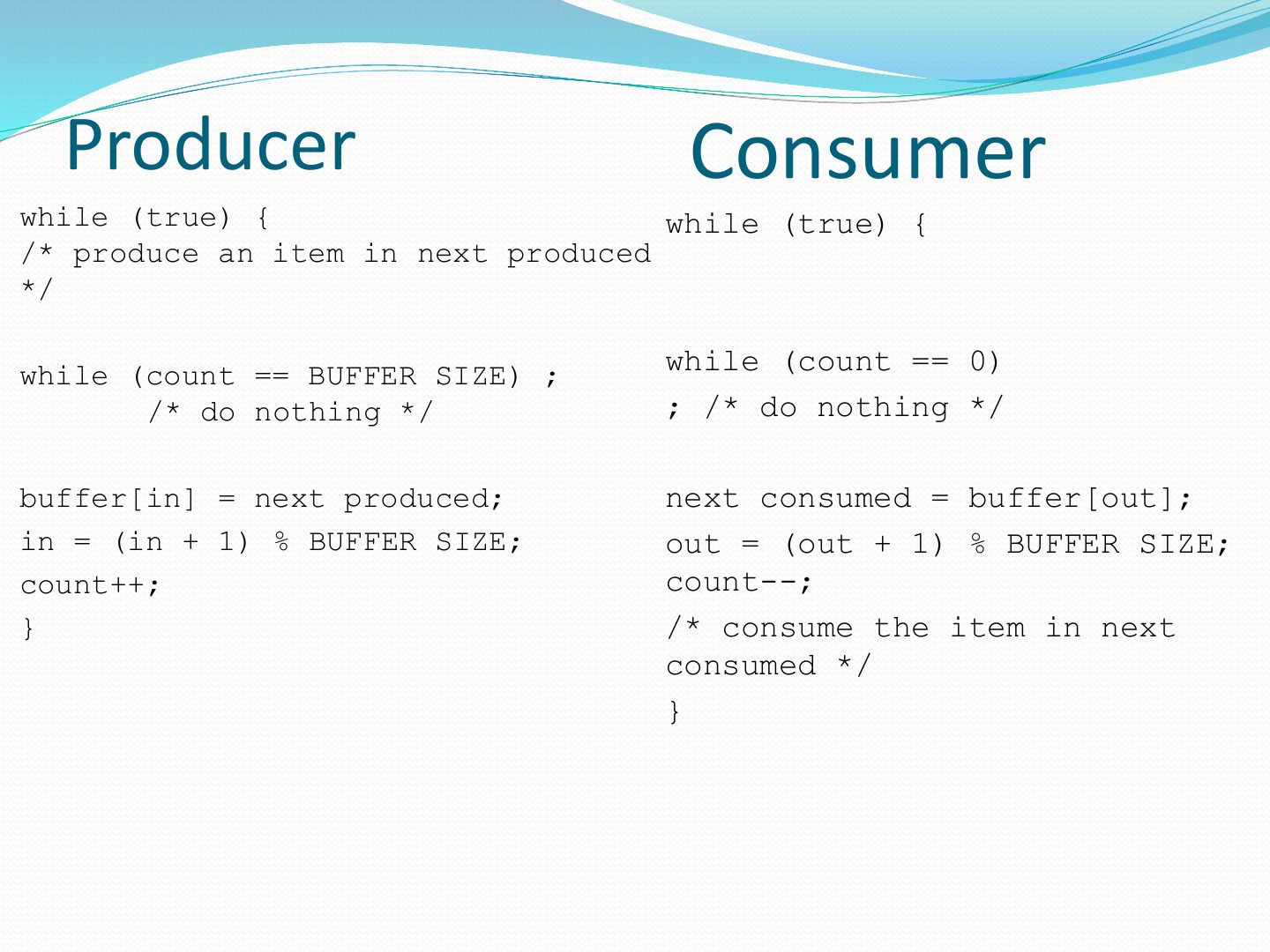
Producer
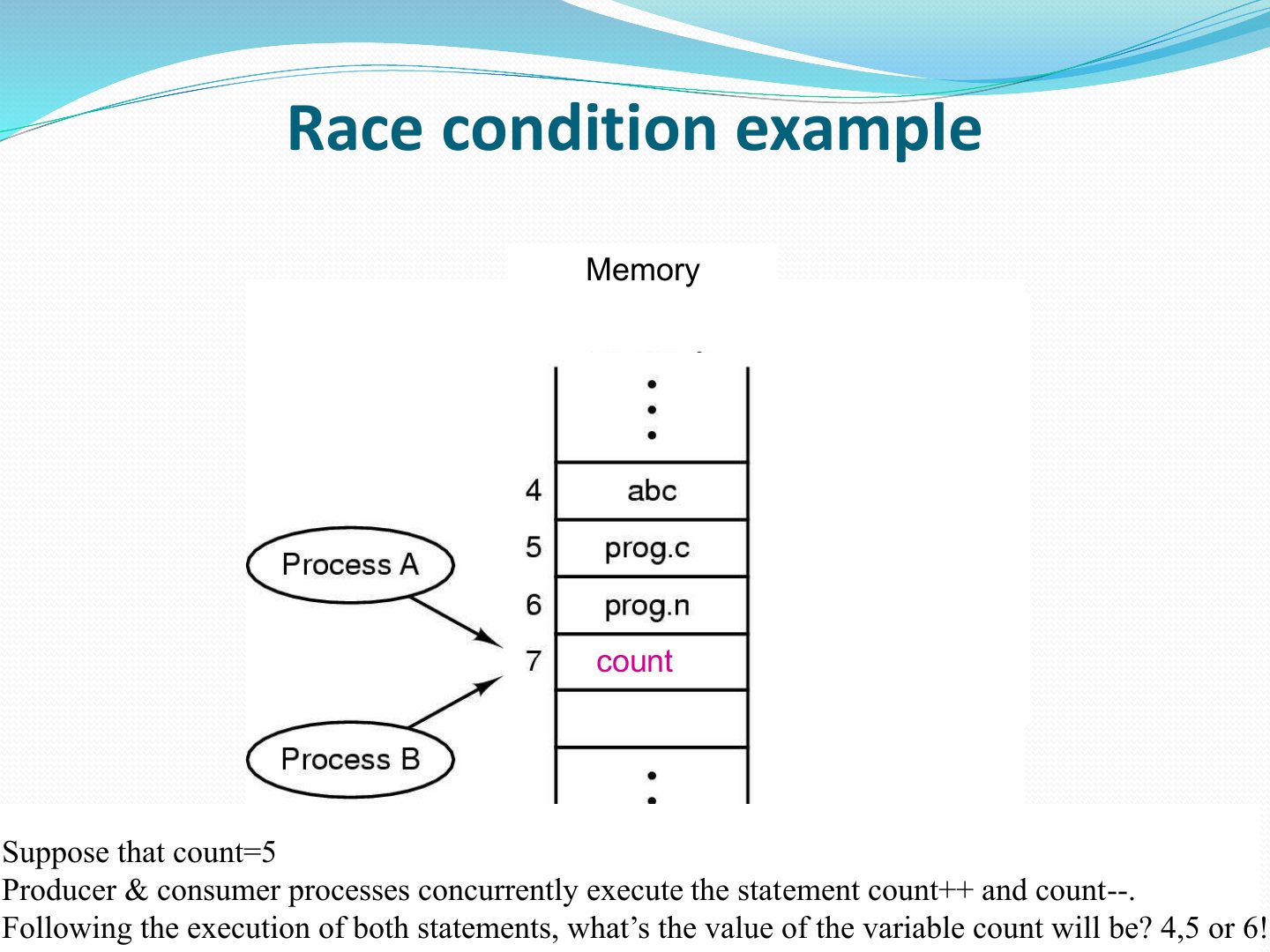
Race condition example
Notes
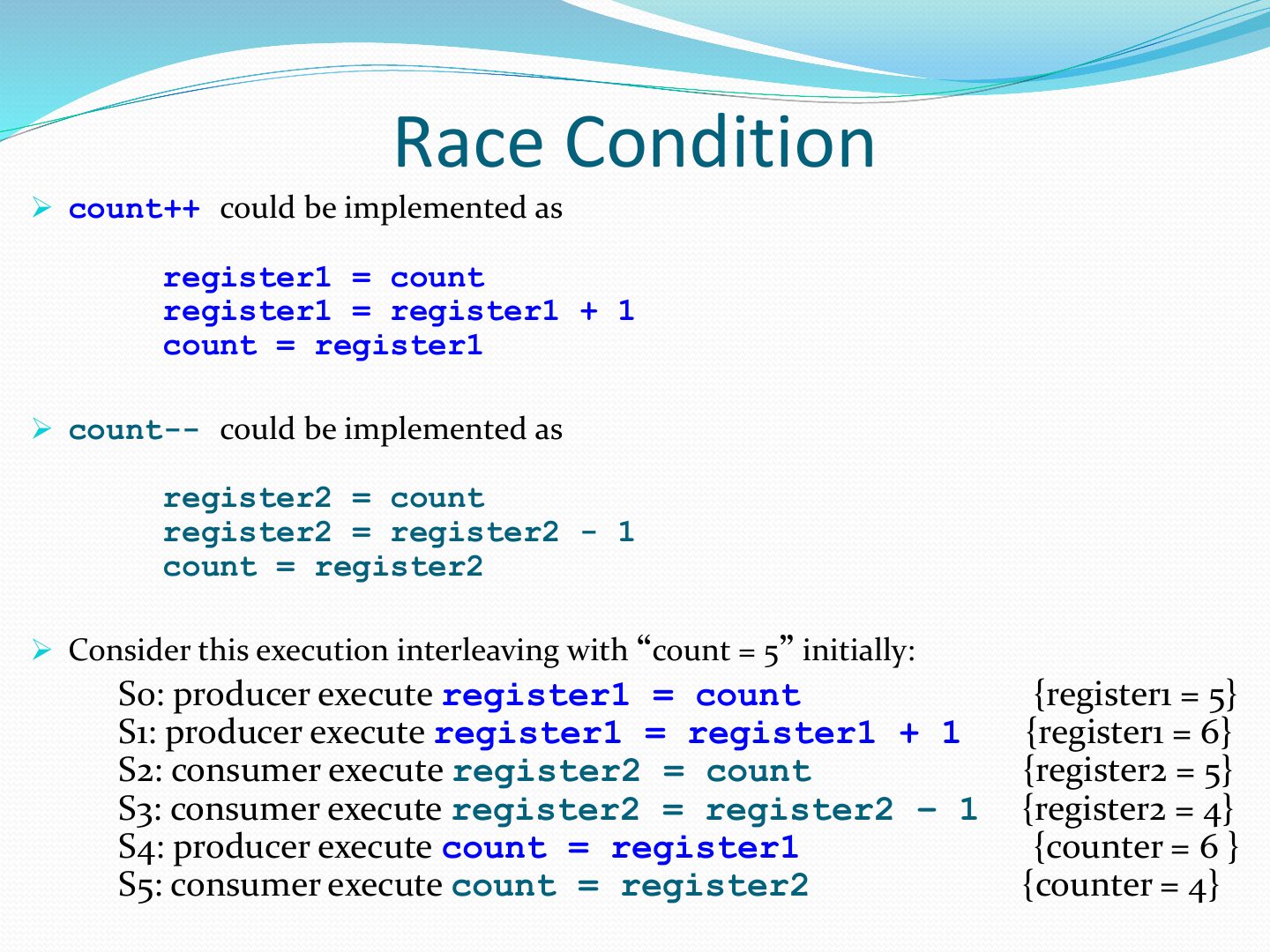
count++ is load–increment–store; interleaving these steps from two processes can lose an update.
Race Condition
Notes
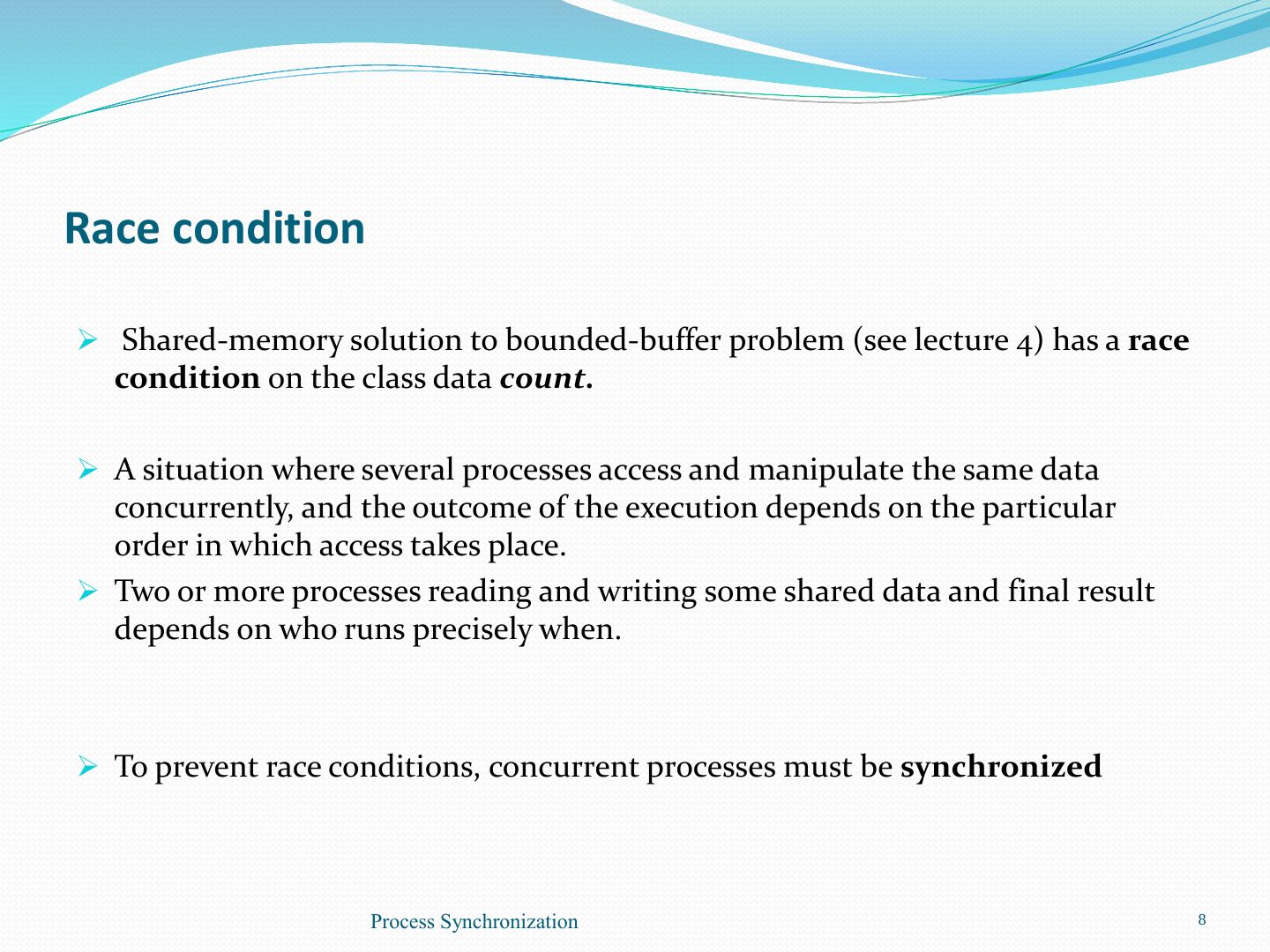
Race condition: the result depends on the order in which processes access shared data.
Exam angle
Race condition
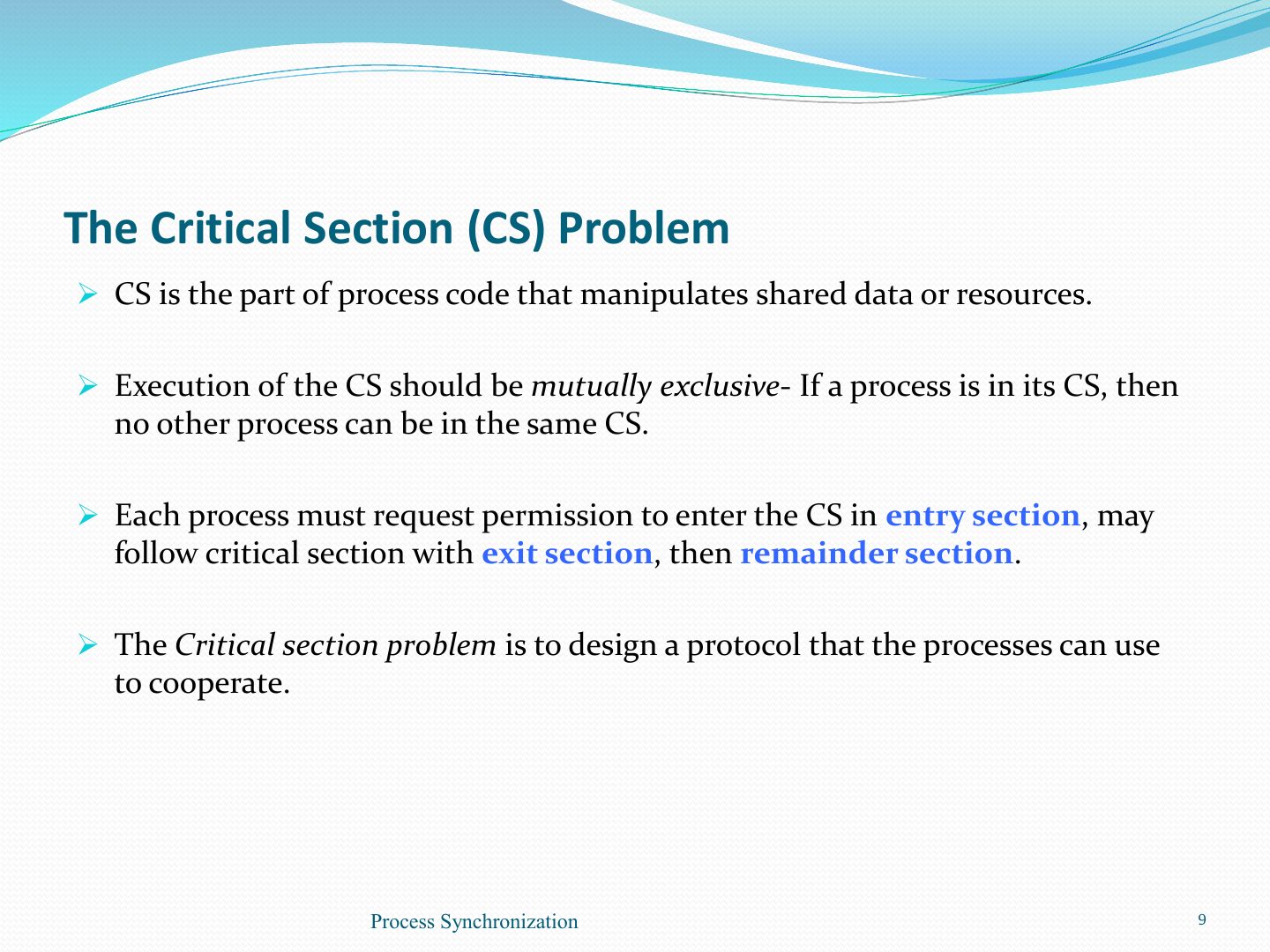
The Critical Section (CS) Problem
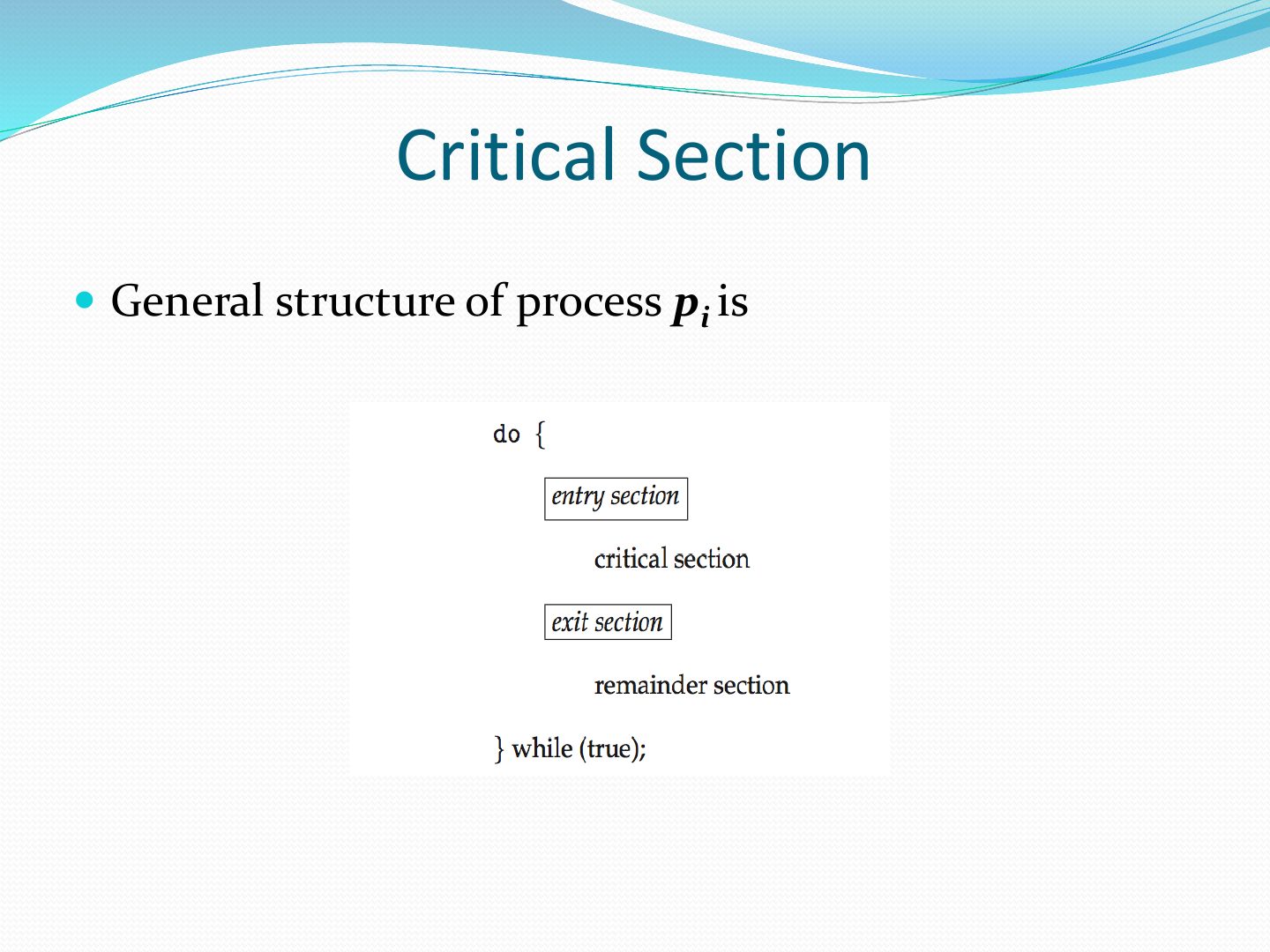
Critical Section
Notes
Critical section: the code that touches shared data. Structure: entry section, critical section, exit section, remainder section.
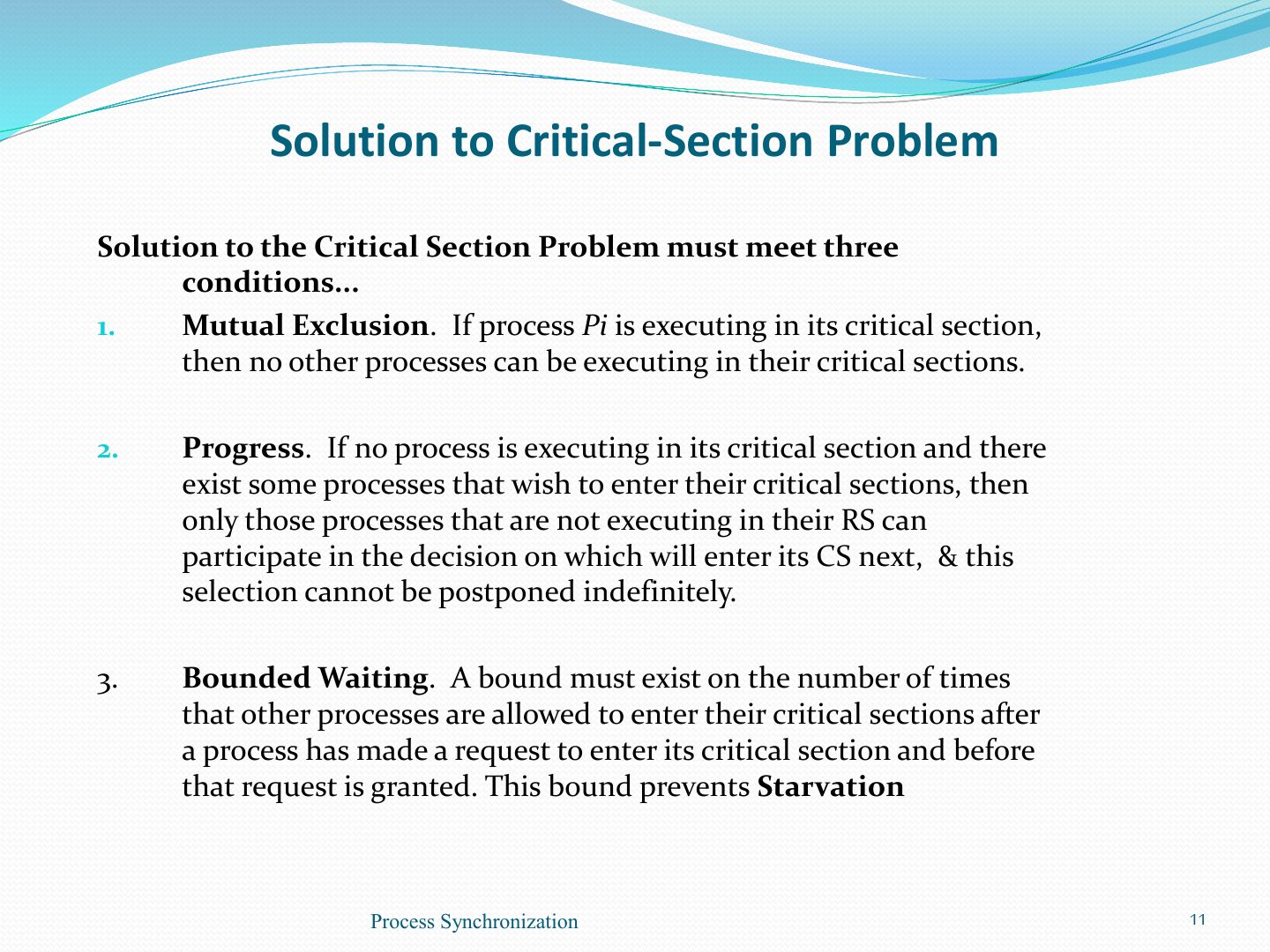
Solution to Critical-Section Problem
Notes
Requirements: Mutual exclusion (one at a time), Progress (no needless waiting when the CS is free), Bounded waiting (no starvation).
Memory trick M-P-B: Mutual exclusion, Progress, Bounded waiting.
Exam angle
Which is NOT a requirement of a critical-section solution?
Types of Solutions
Peterson ’ s Solution
Notes
Peterson’s solution (2 processes): shared turn and flag[2]. Pᵢ sets flag[i] = true, turn = j, then waits while flag[j] && turn == j.
Algorithm for Process P
Drawbacks of Software Solutions
Synchronization Hardware
Notes
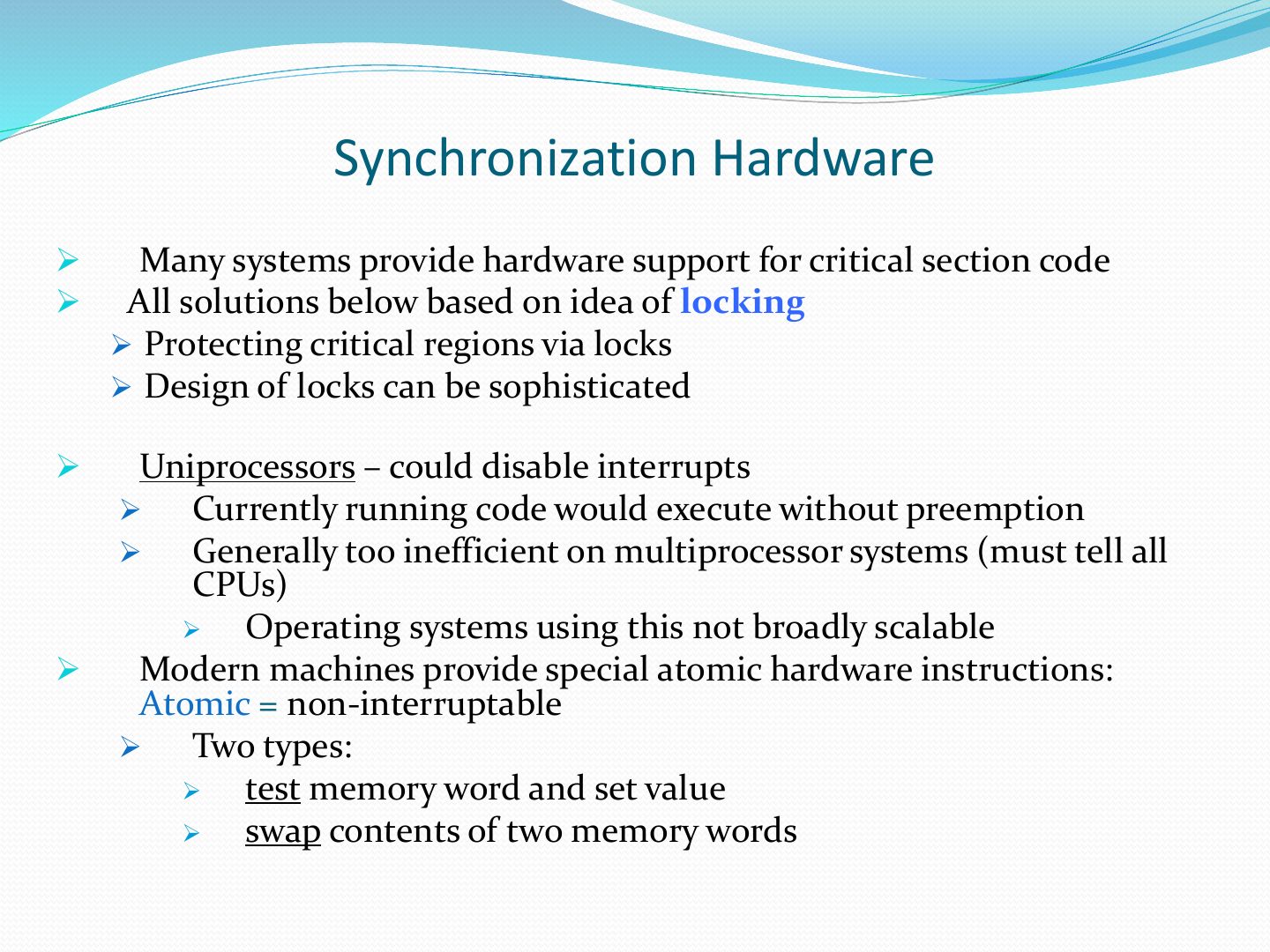
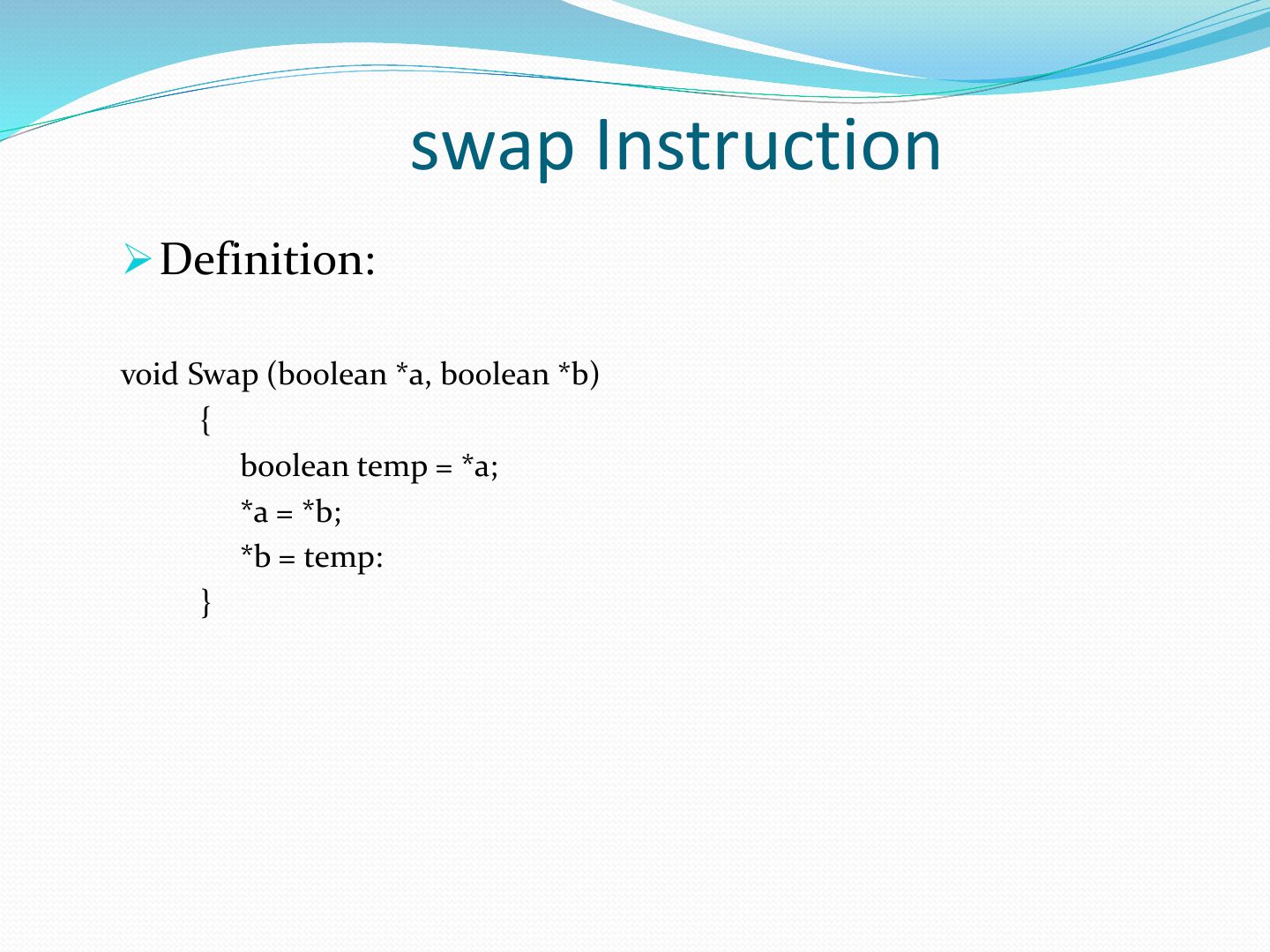
Hardware support: atomic (uninterruptible) instructions such as test_and_set and compare_and_swap.
test_and_set Instruction
Notes
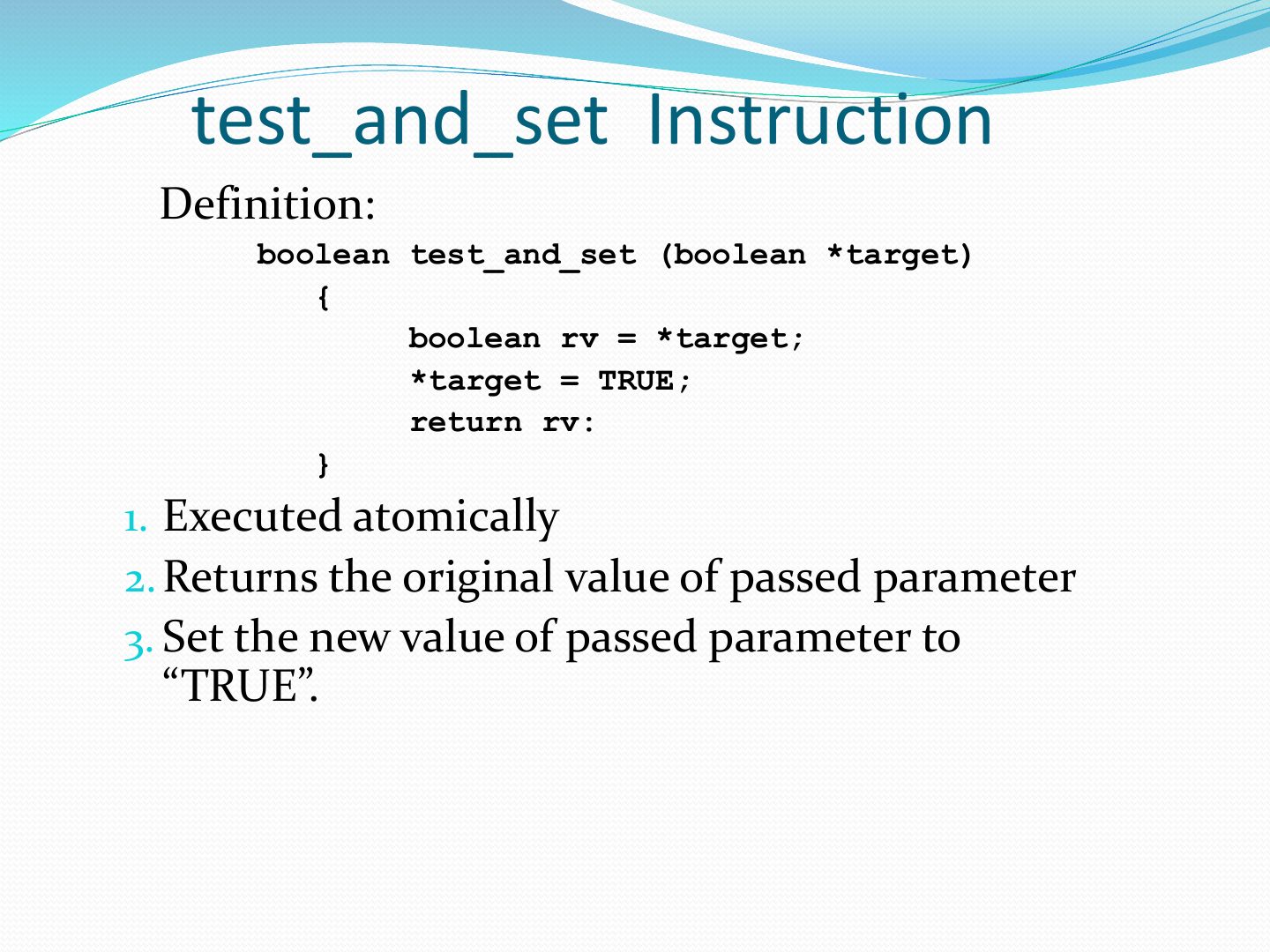
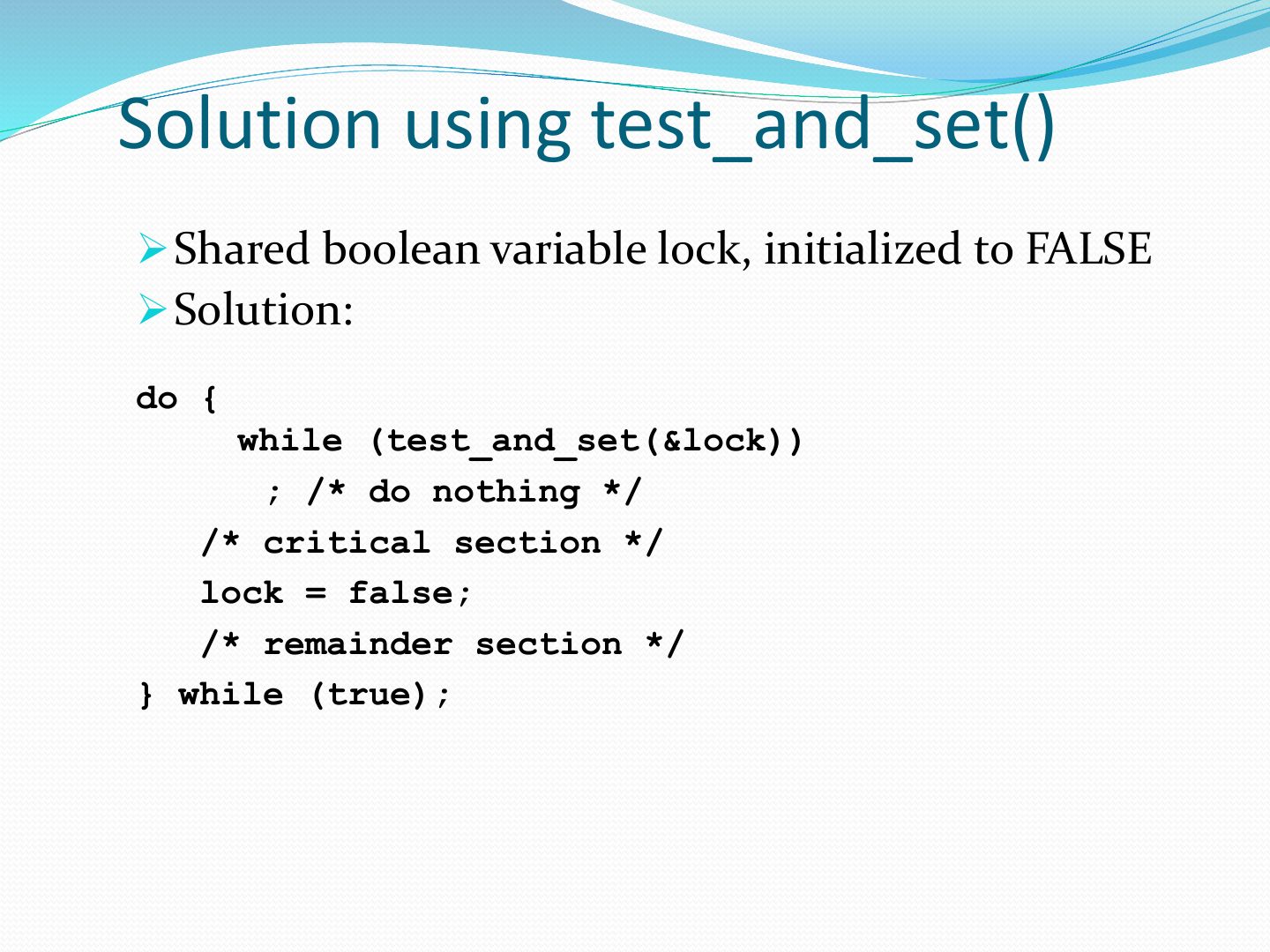
test_and_set returns the old value and sets the lock to true, in one atomic step.
Solution using test_and_set
swap Instruction
Solution using swap
Semaphore
Notes
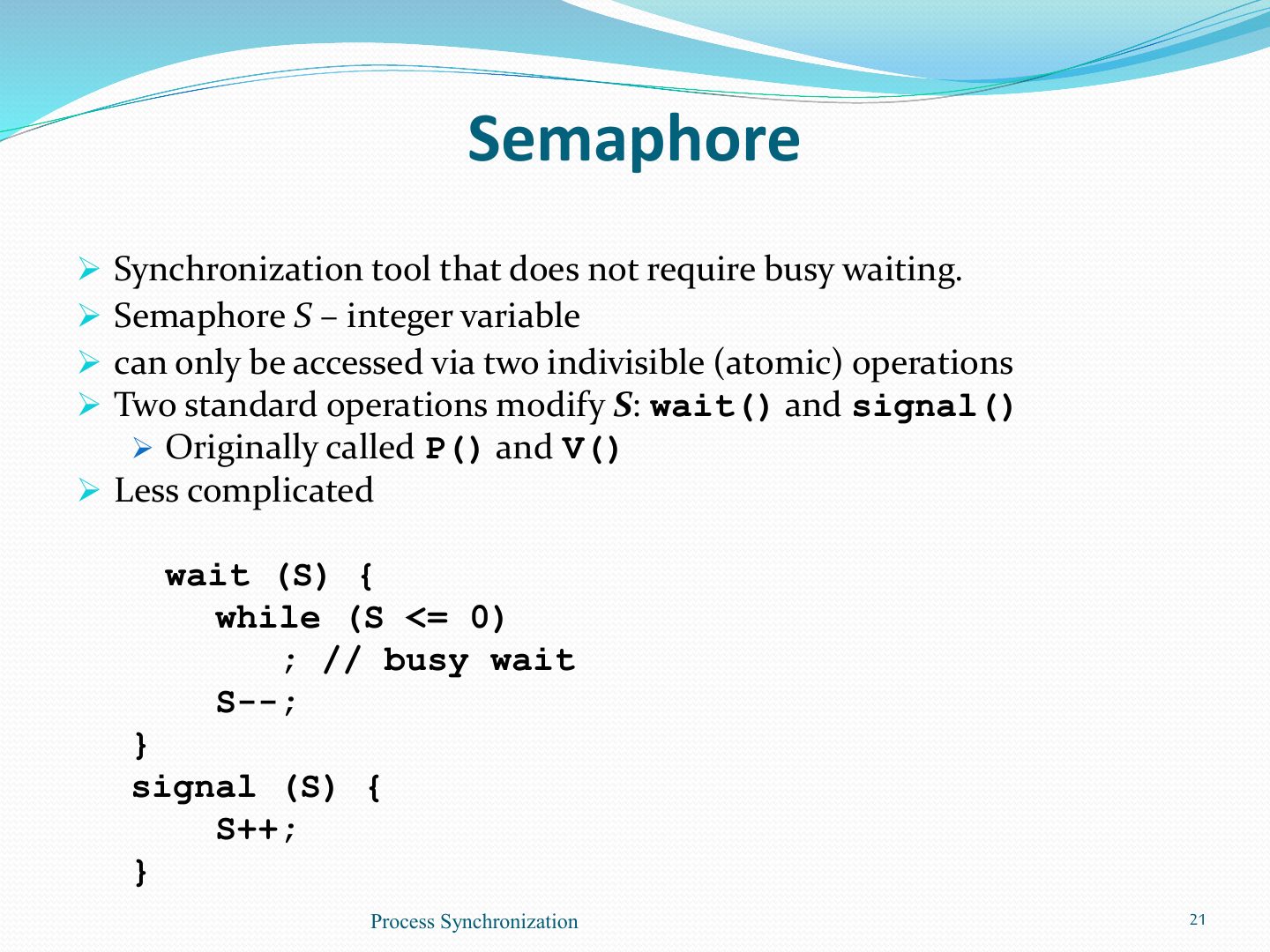
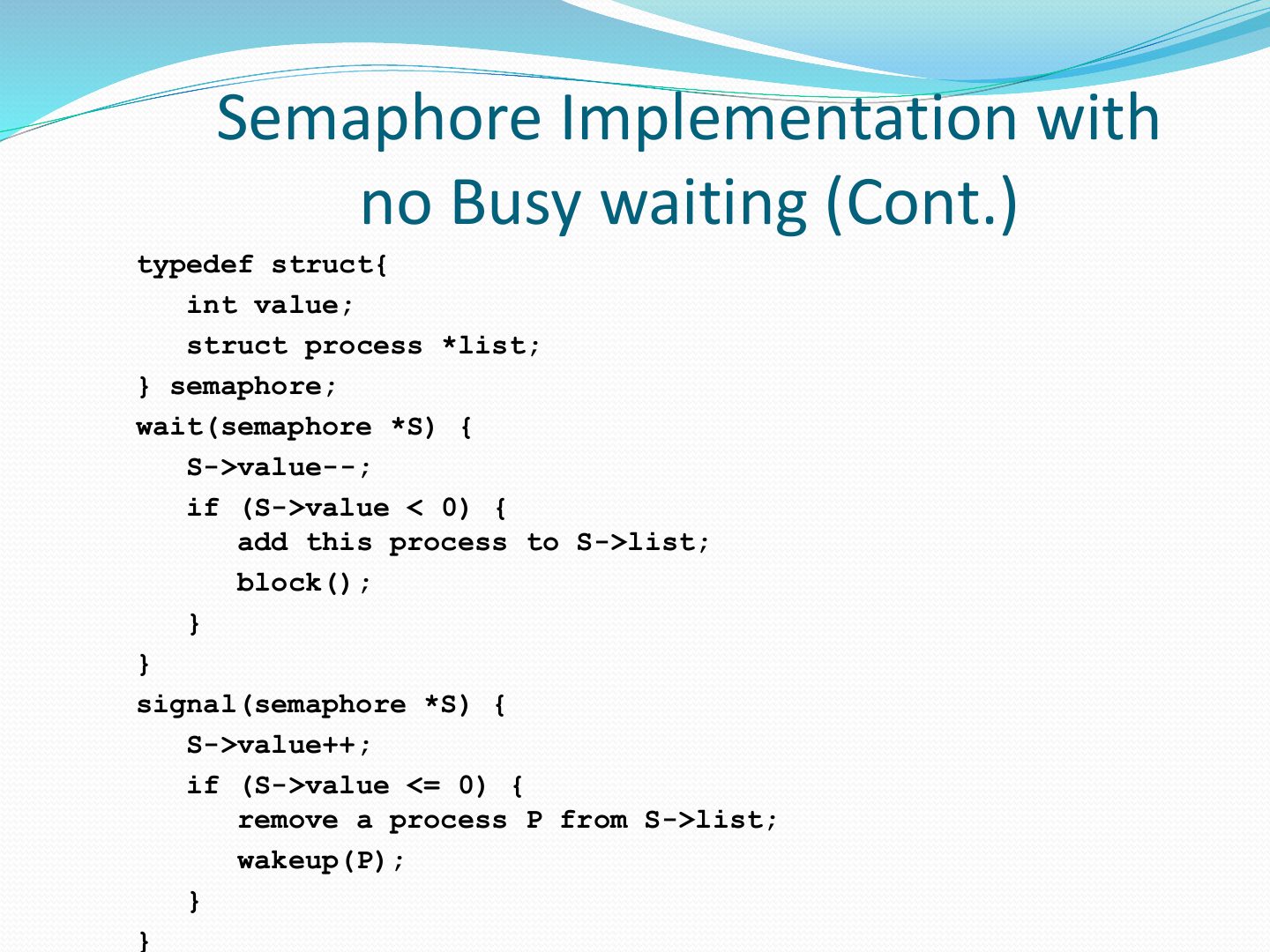
Semaphore S: integer accessed only by wait() (P: decrement, block if < 0) and signal() (V: increment, wake one).
Exam angle
wait(S) on a semaphore:
Semaphore Usage
Notes
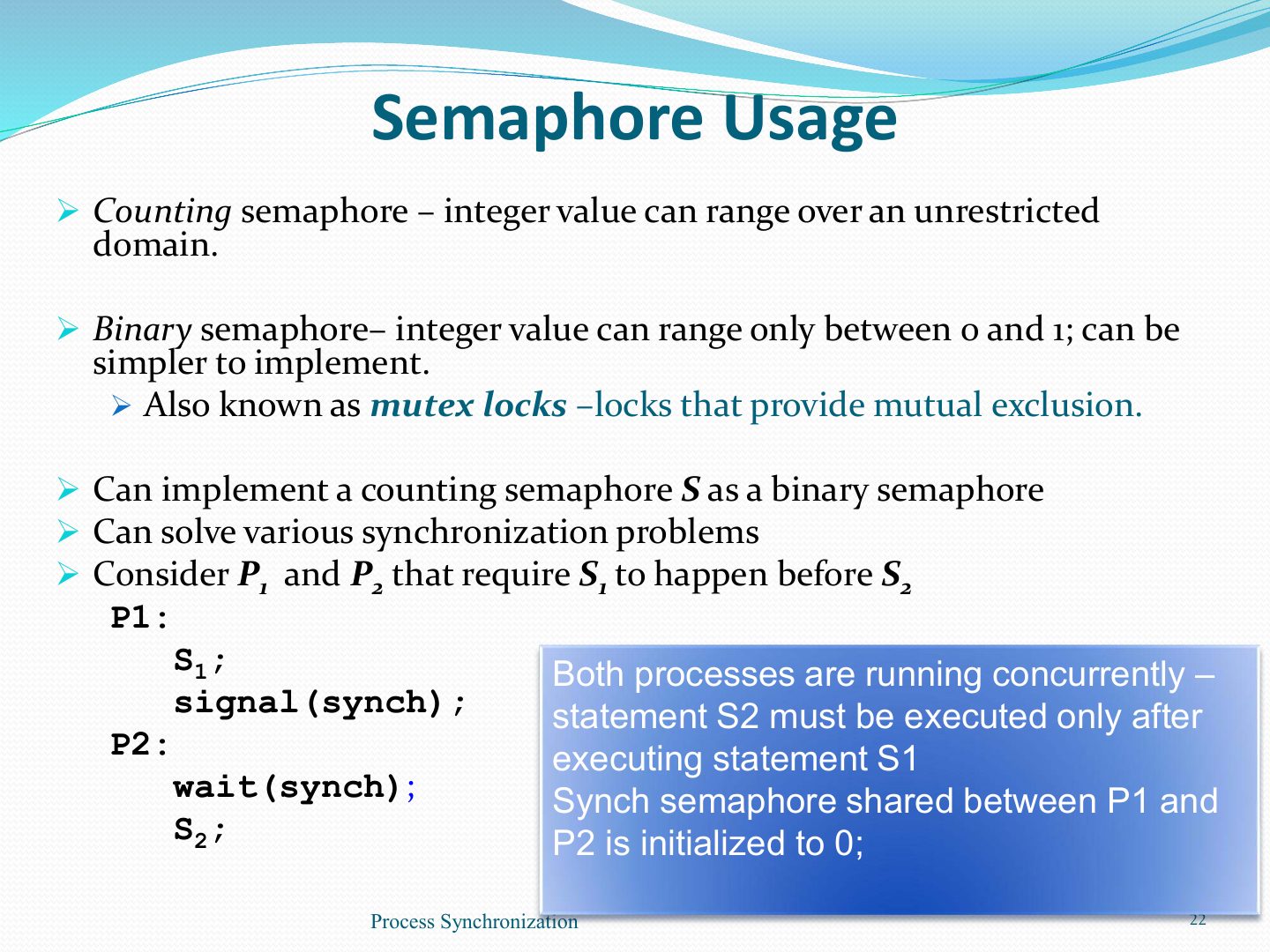
Binary semaphore (0/1) = mutex lock. Counting semaphore controls access to N instances; initialize it to N.
Exam angle
A counting semaphore guarding 5 identical printers should be initialized to:
Semaphore Implementation
Notes
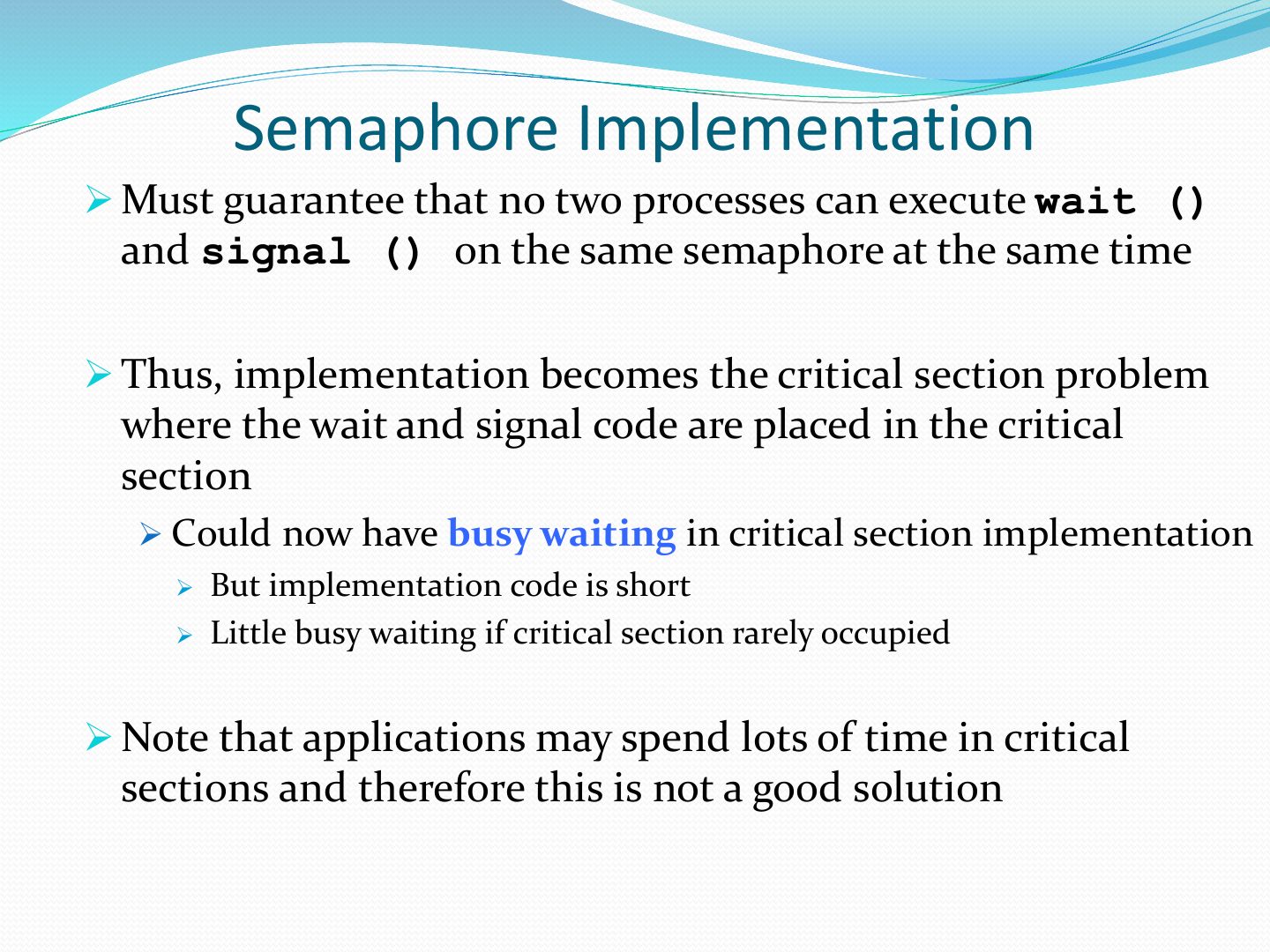
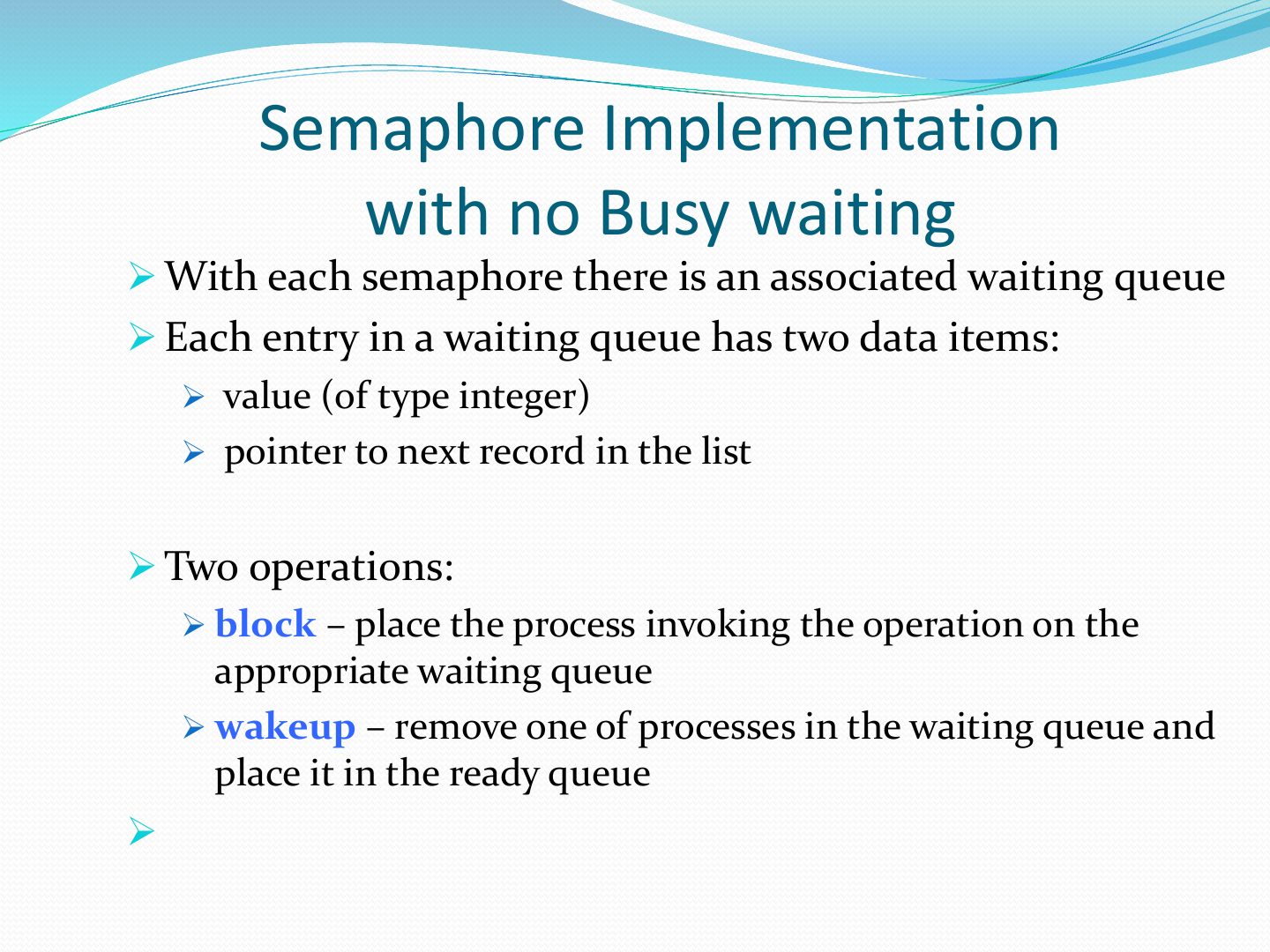
Busy waiting (spinlock) wastes CPU; better implementation blocks the process on the semaphore’s waiting list.
Semaphore Implementation with no Busy waiting
Semaphore Implementation with no Busy waiting (Cont.)
Deadlock and Starvation
Exam angle
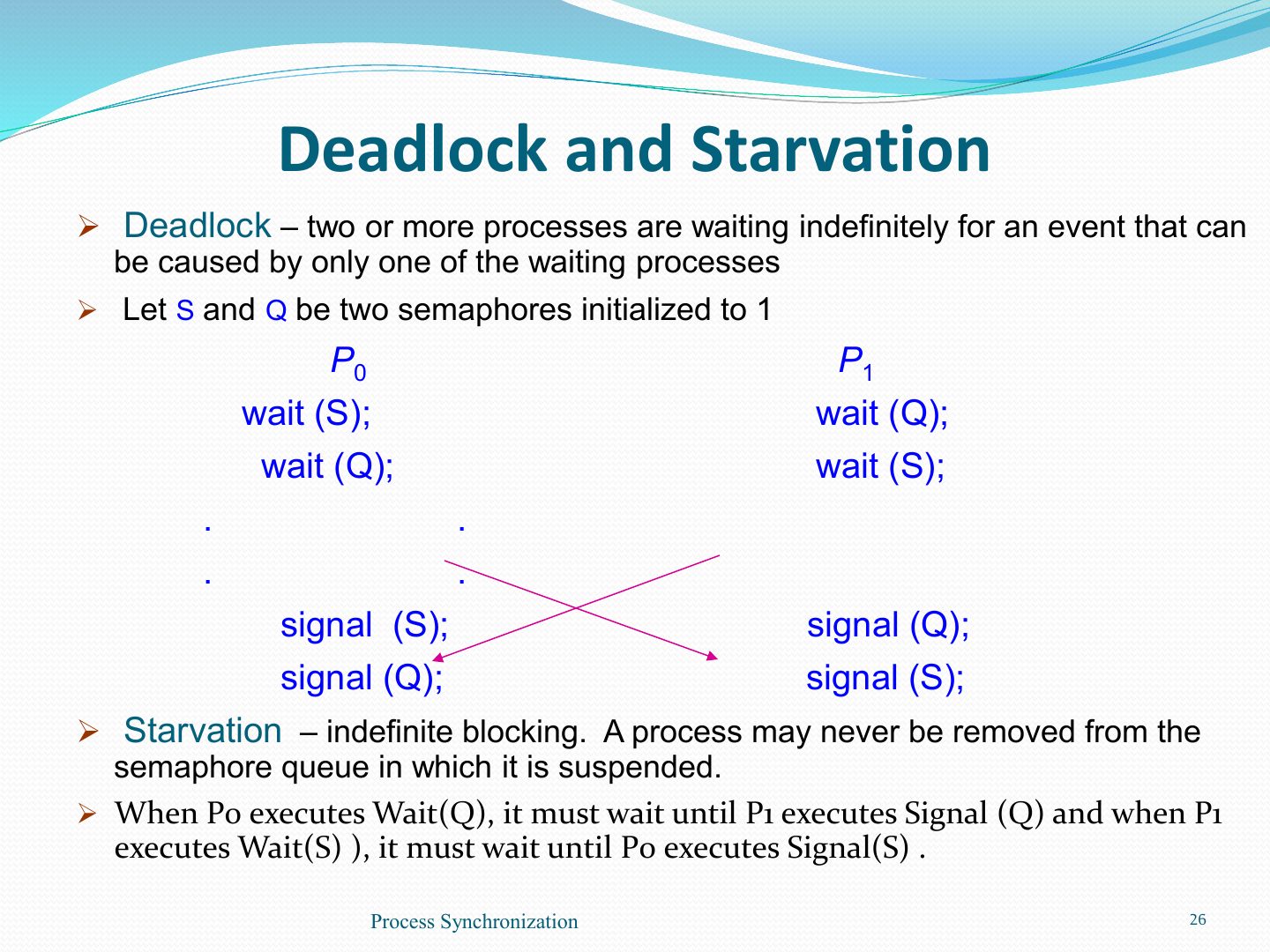
P0 runs wait(S); wait(Q); and P1 runs wait(Q); wait(S); with S = Q = 1. What can happen?
Compare with the model answer
Deadlock: P0 gets S, P1 gets Q, then each waits forever for the semaphore the other holds.
Classical Problems of Synchronization
Bounded-Buffer Problem
Notes
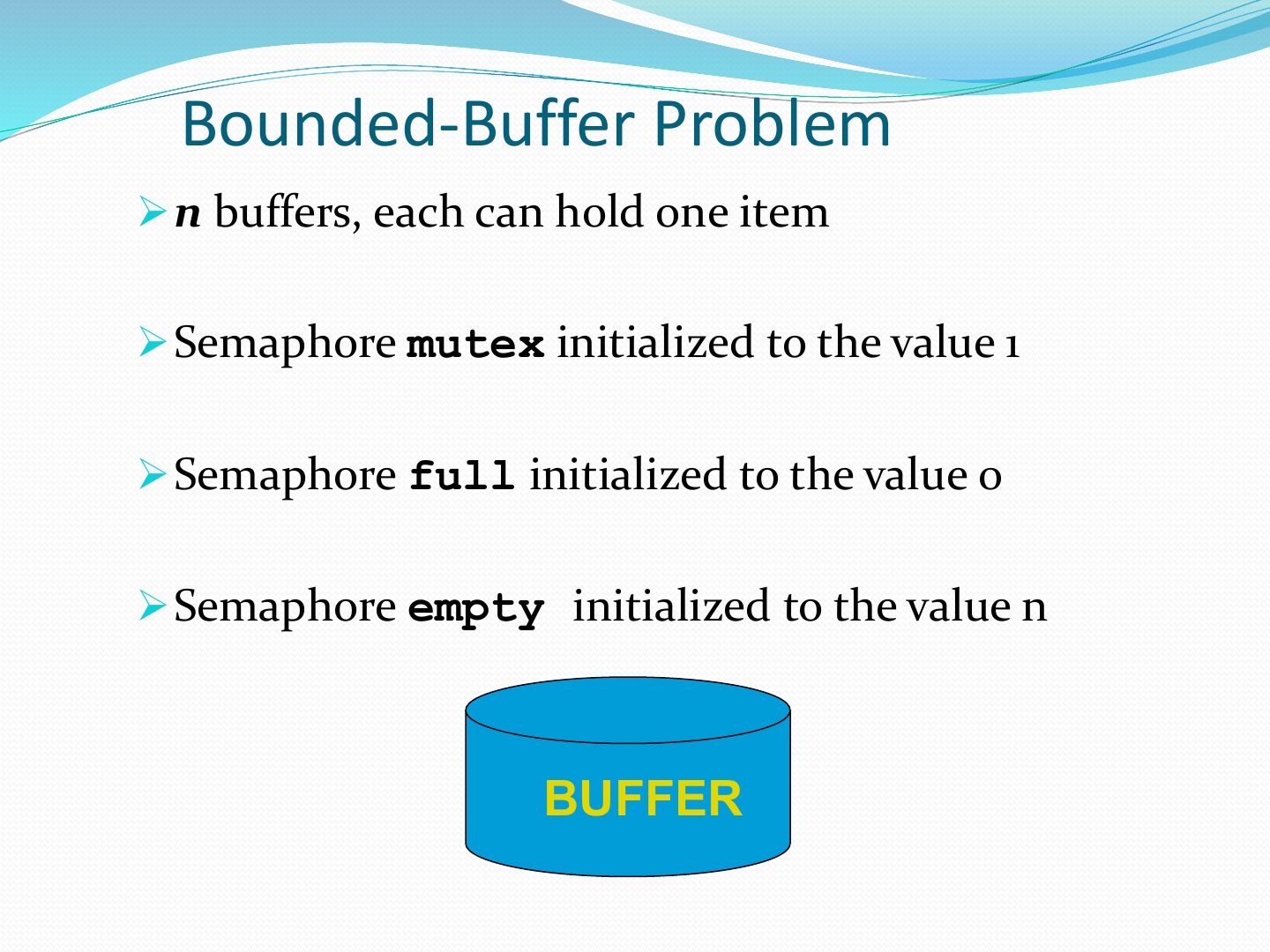
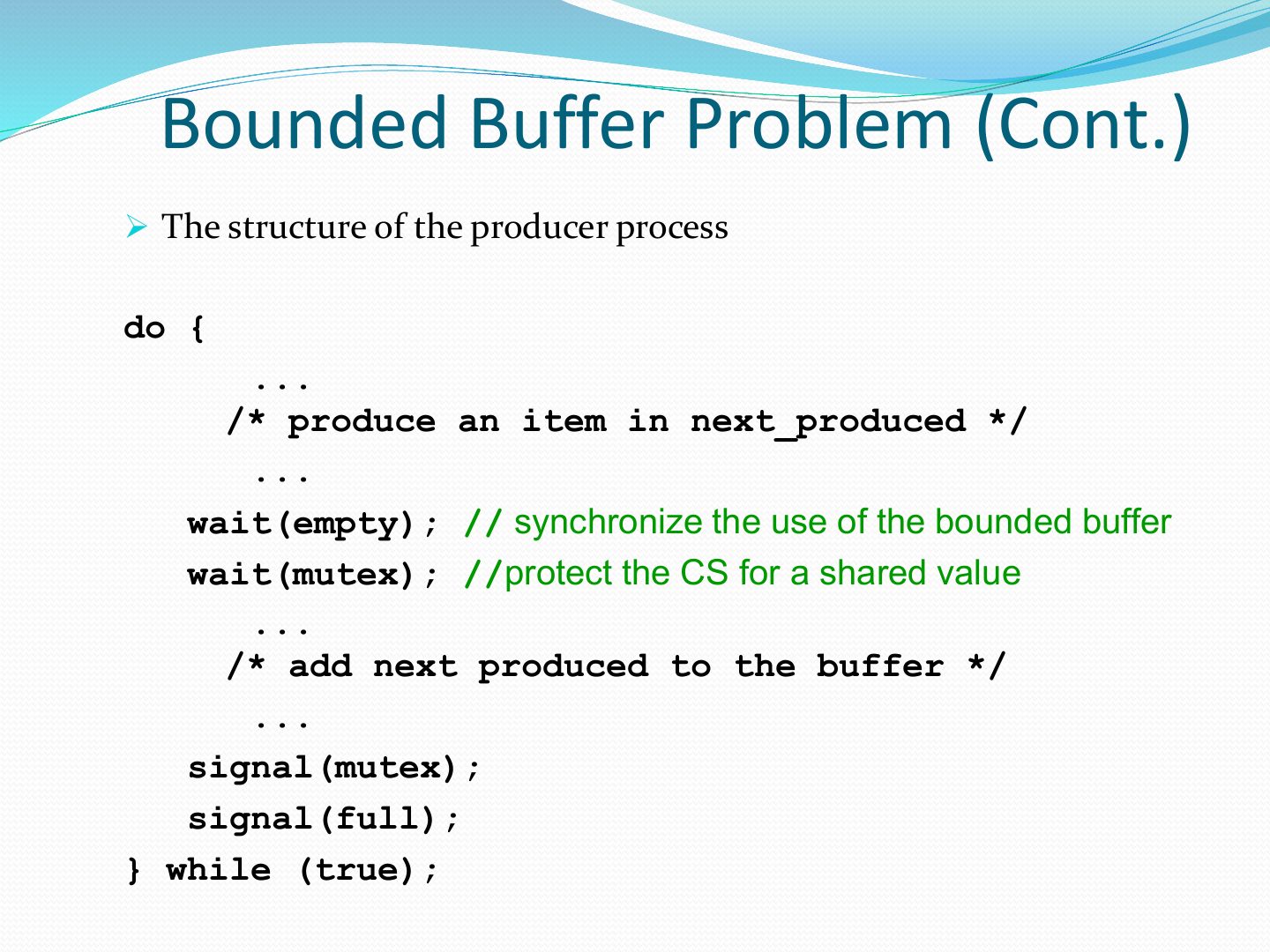
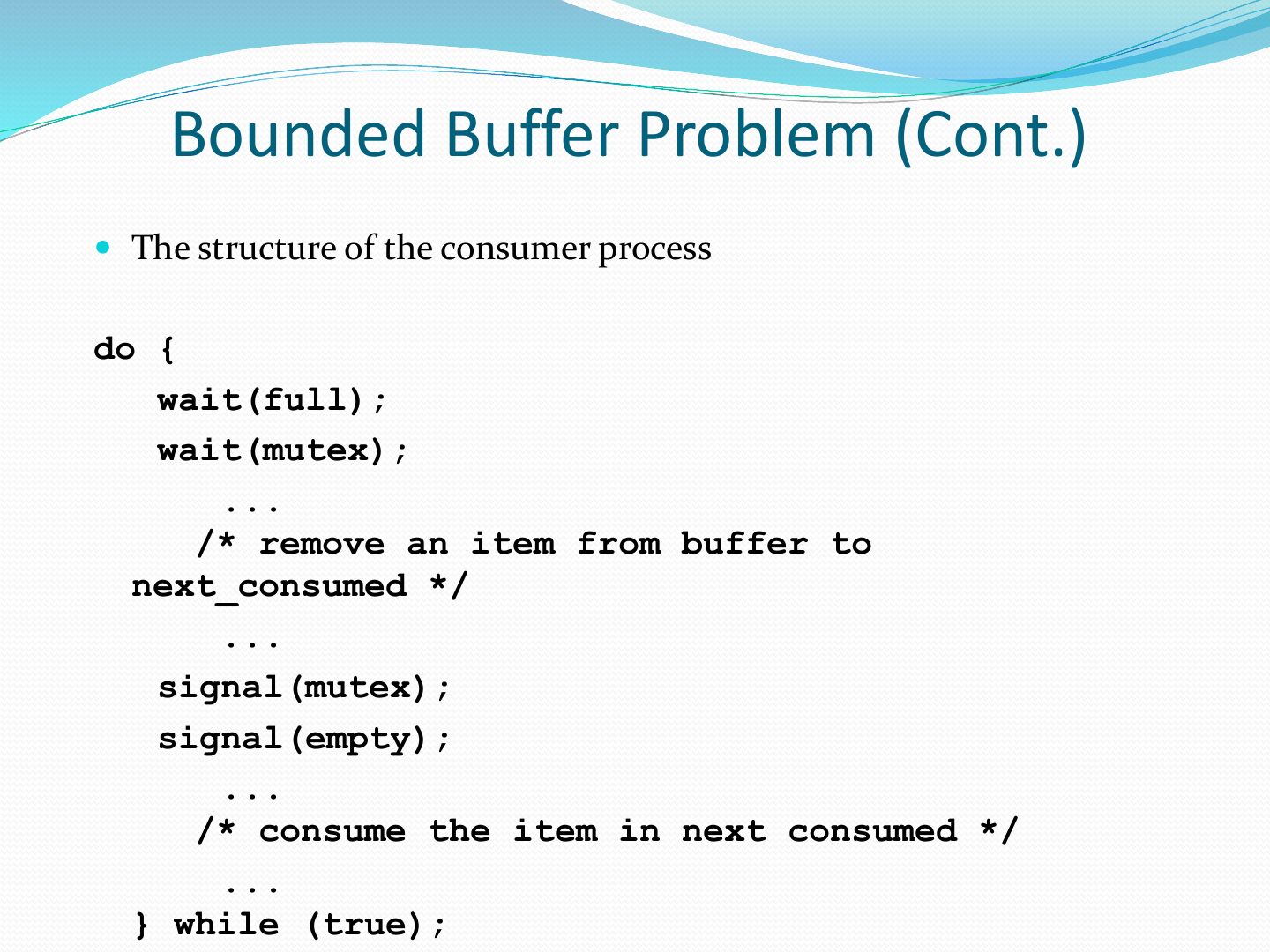
Bounded buffer: mutex = 1, full = 0, empty = n. Producer: wait(empty); wait(mutex); … signal(mutex); signal(full).
Trap Swapping the order to wait(mutex); wait(empty) can deadlock when the buffer is full.
Exam angle
In the bounded-buffer solution with n slots, empty starts at:
Bounded Buffer Problem (Cont.)
Bounded Buffer Problem (Cont.)
Readers-Writers Problem
Readers-Writers Problem (Cont.)
Readers-Writers Problem (Cont.)
Dining-Philosophers Problem
Dining-Philosophers Problem (Cont.)
Exam angle
Which avoids deadlock in dining philosophers?
- Also: pick up both only if both are free, or odd/even asymmetric ordering.
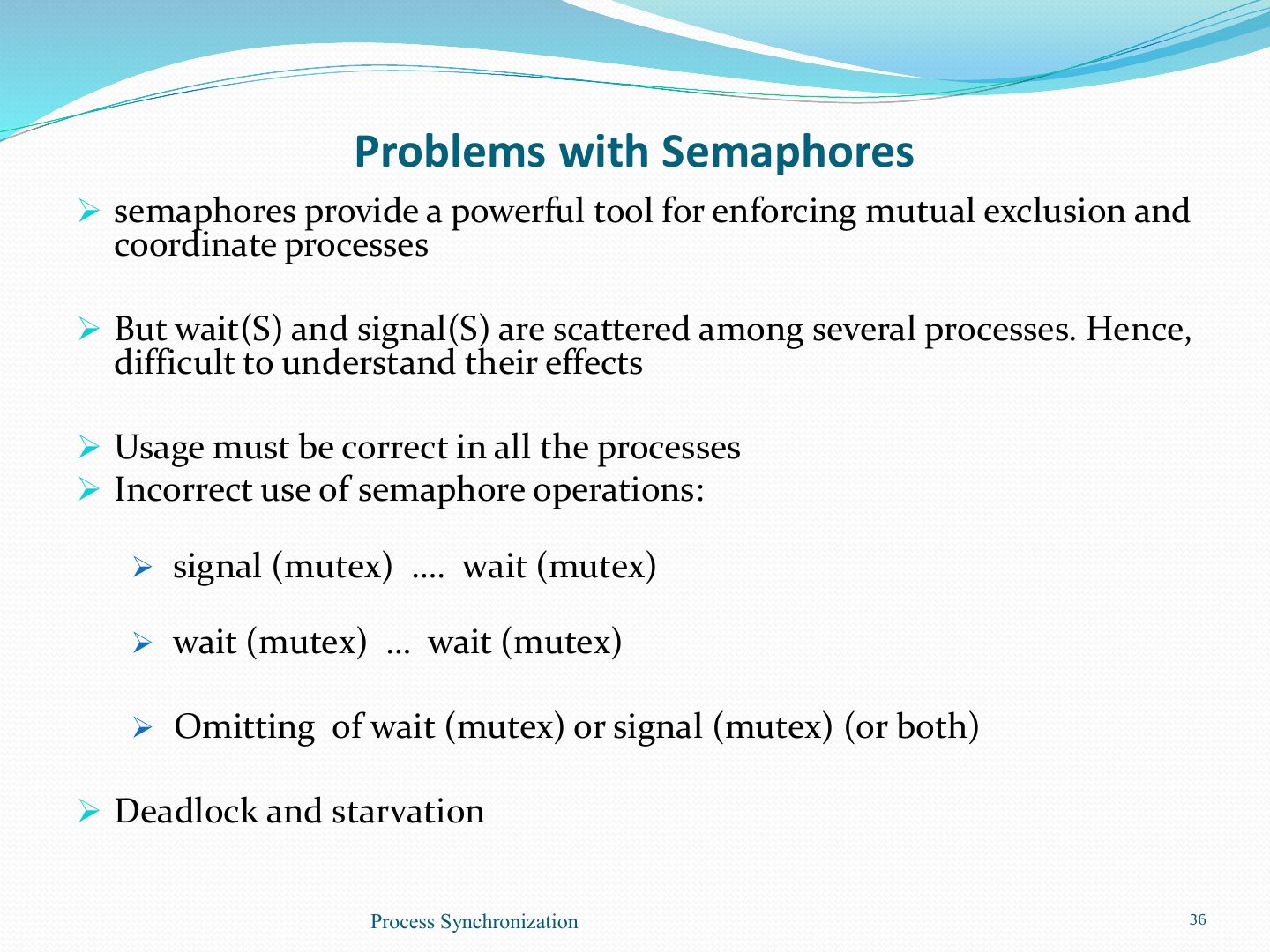
Problems with Semaphores
Notes
Semaphore misuse: signal before wait, wait twice, or forgetting one → broken mutual exclusion or deadlock.
Operating System Solutions: Monitors
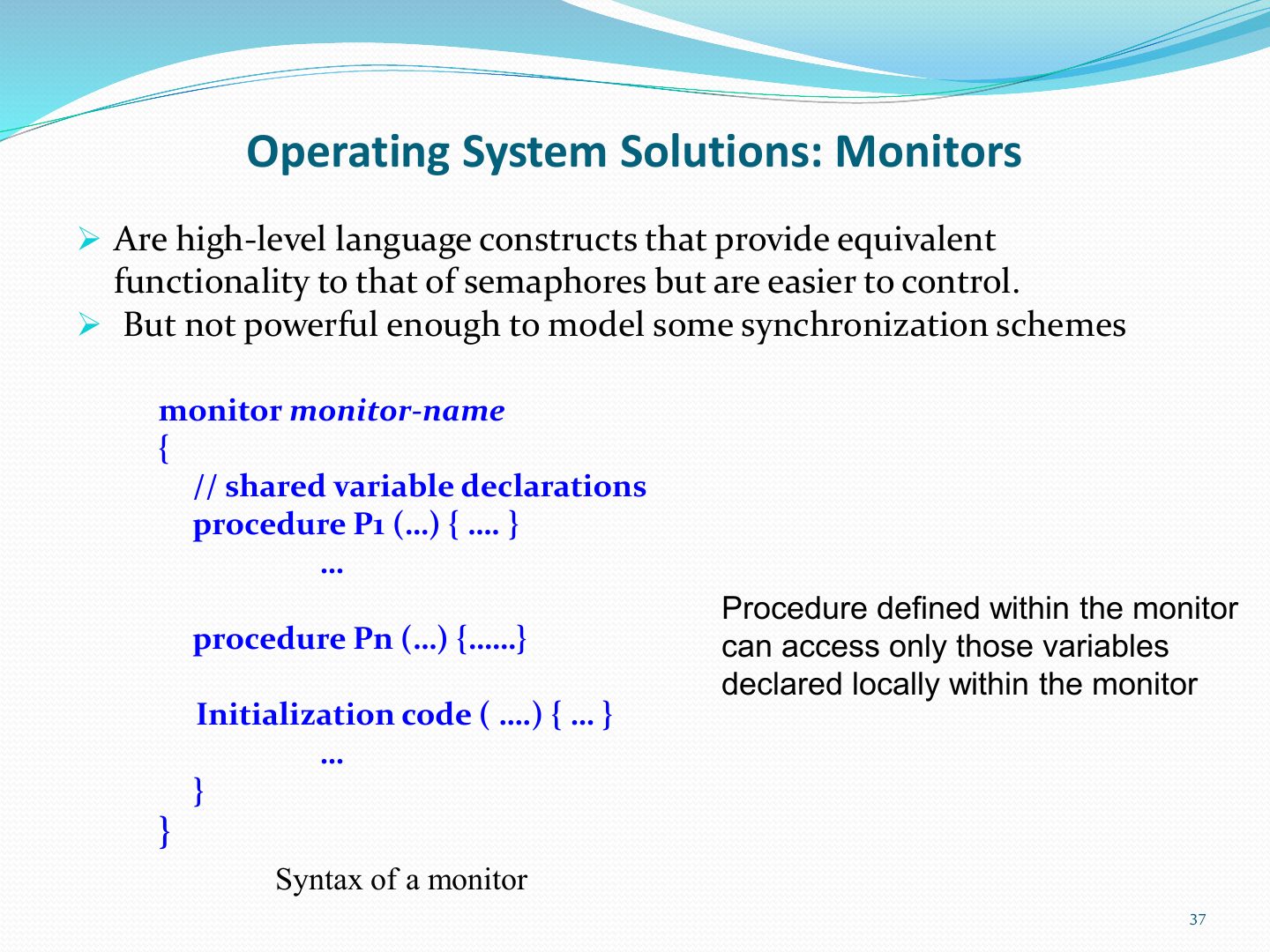
Notes
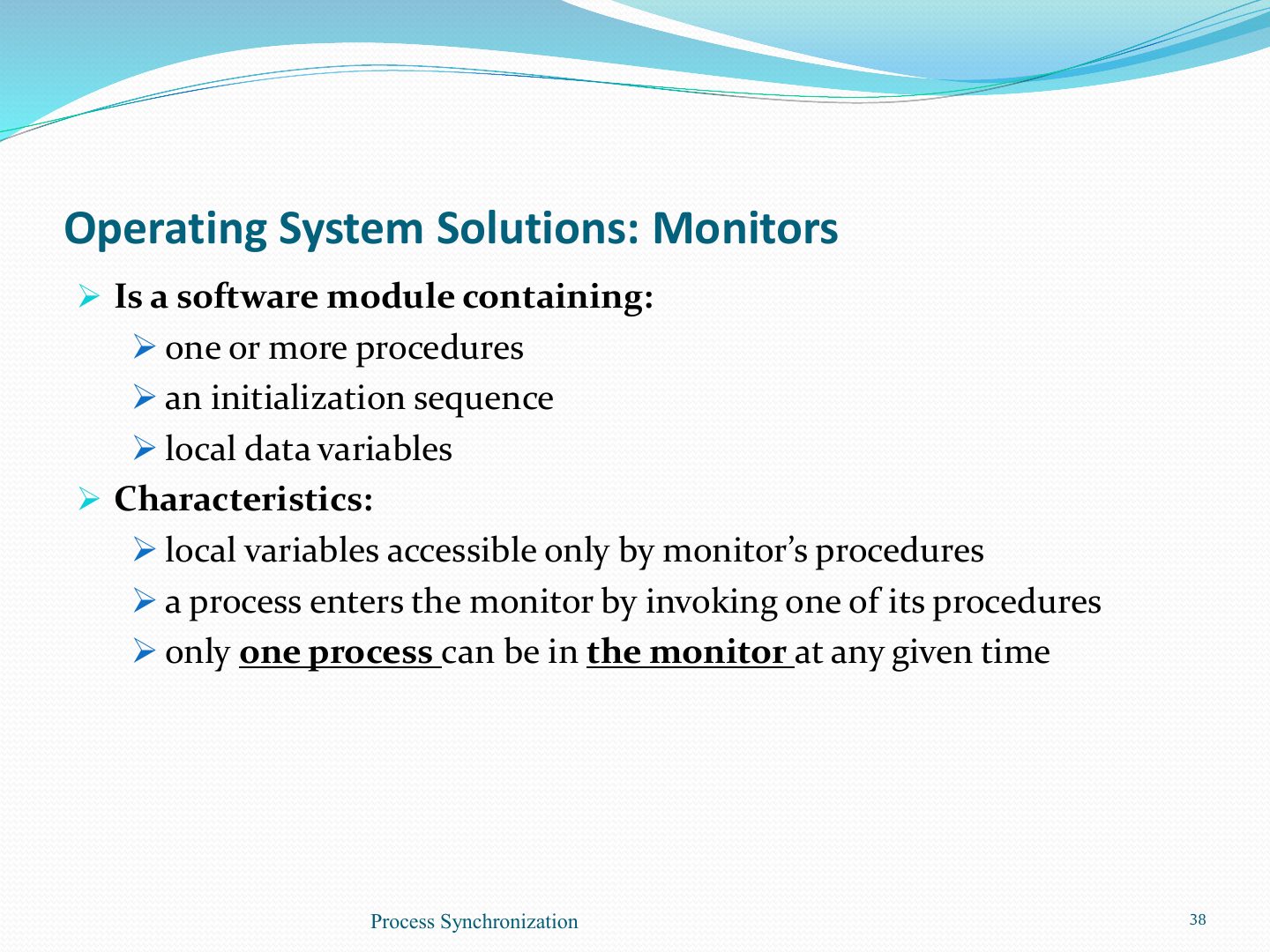
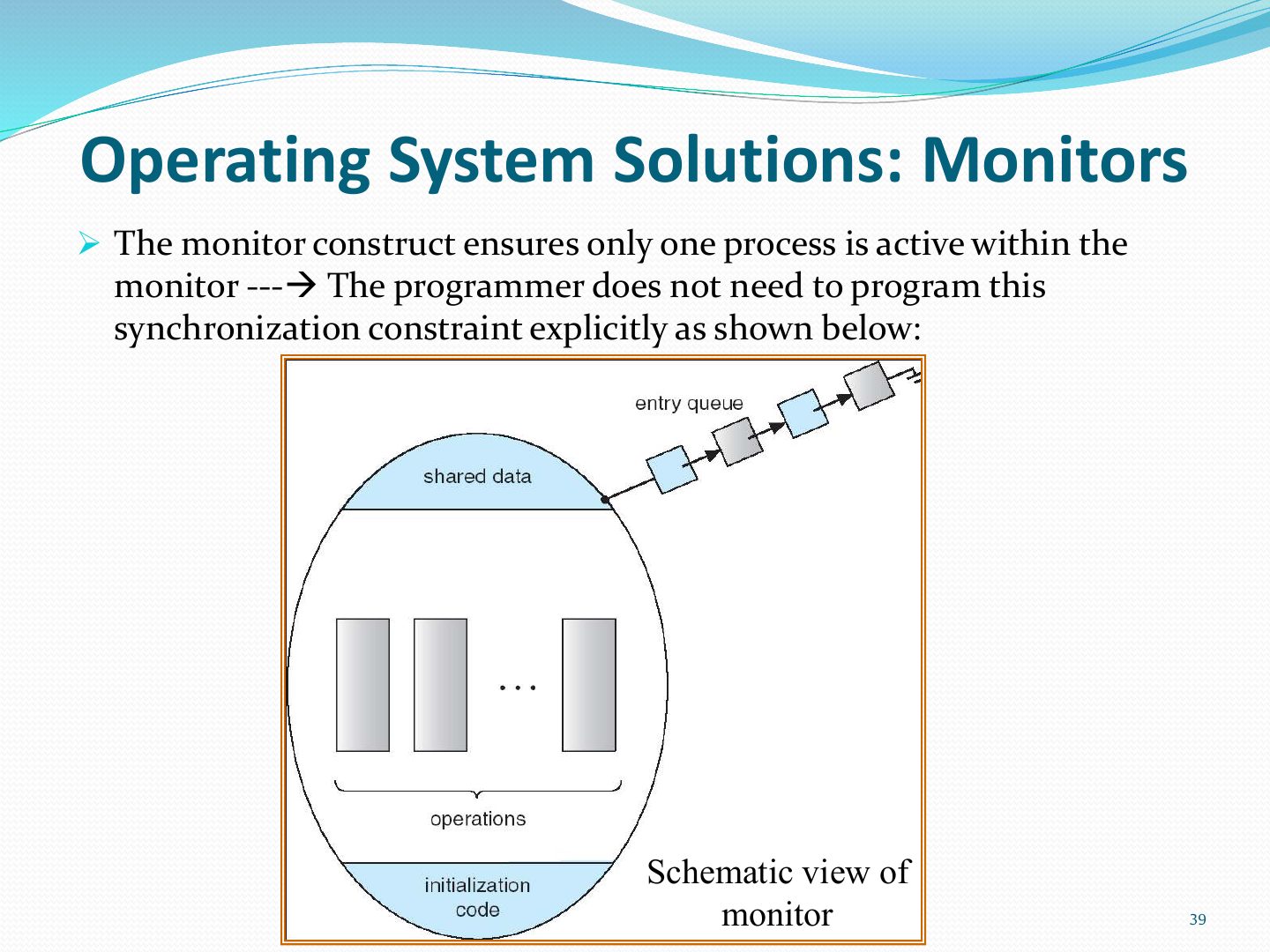
Monitor: high-level construct; only one process active inside at a time.
Operating System Solutions: Monitors
Operating System Solutions: Monitors
Variables
Notes
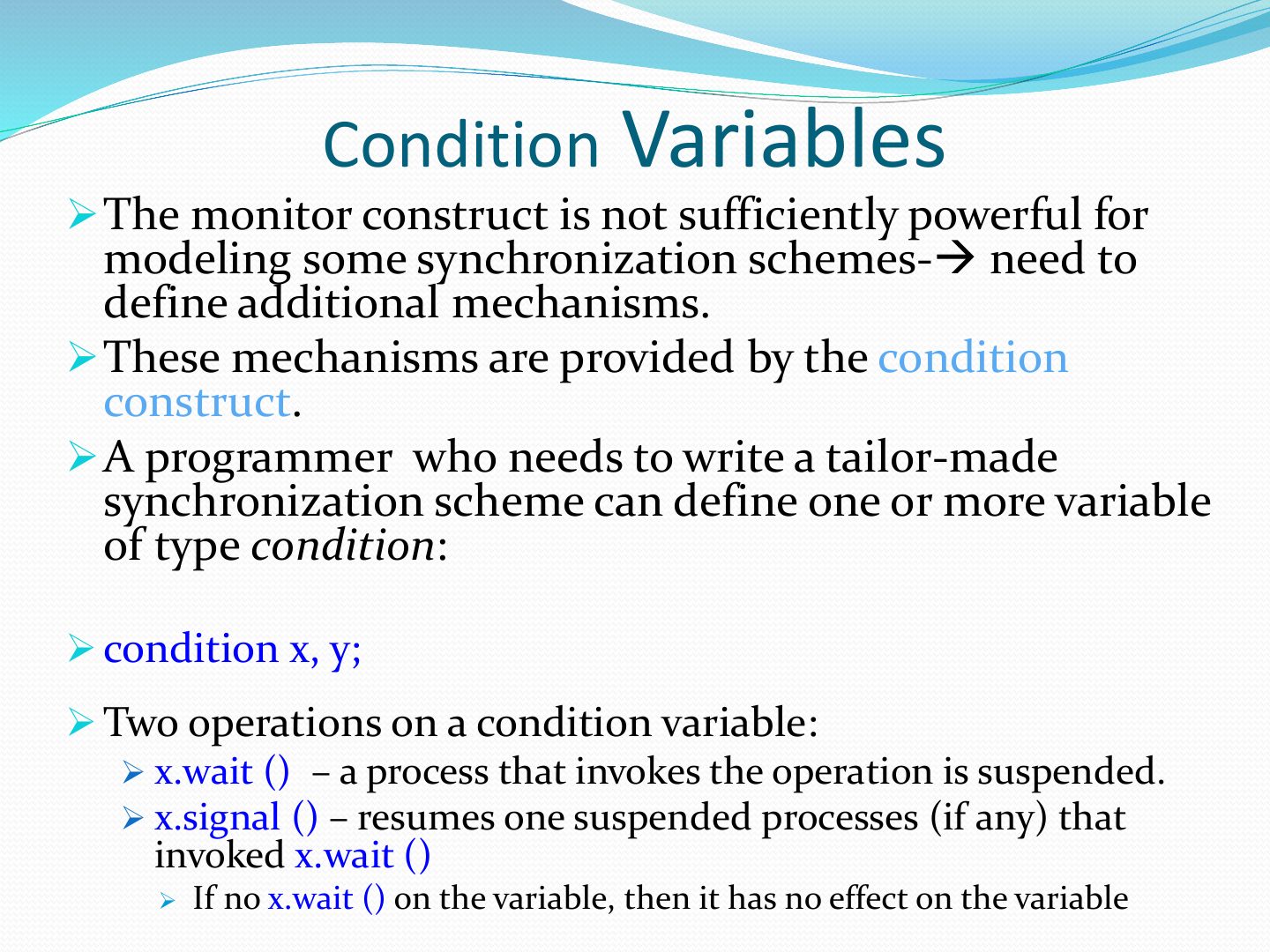
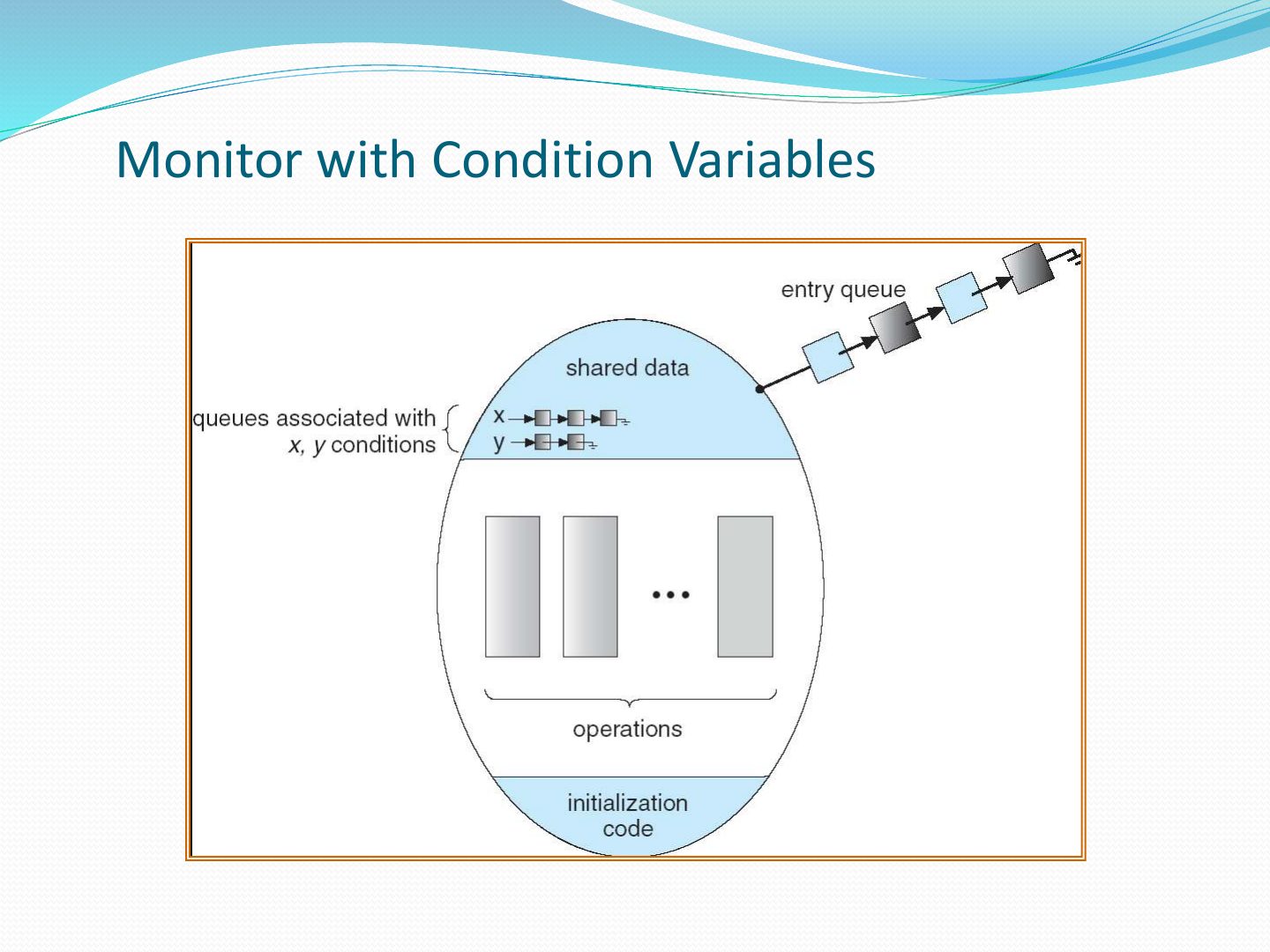
Condition variables: x.wait() suspends the caller; x.signal() resumes one waiting process (no effect if none).
Monitor with Condition Variables
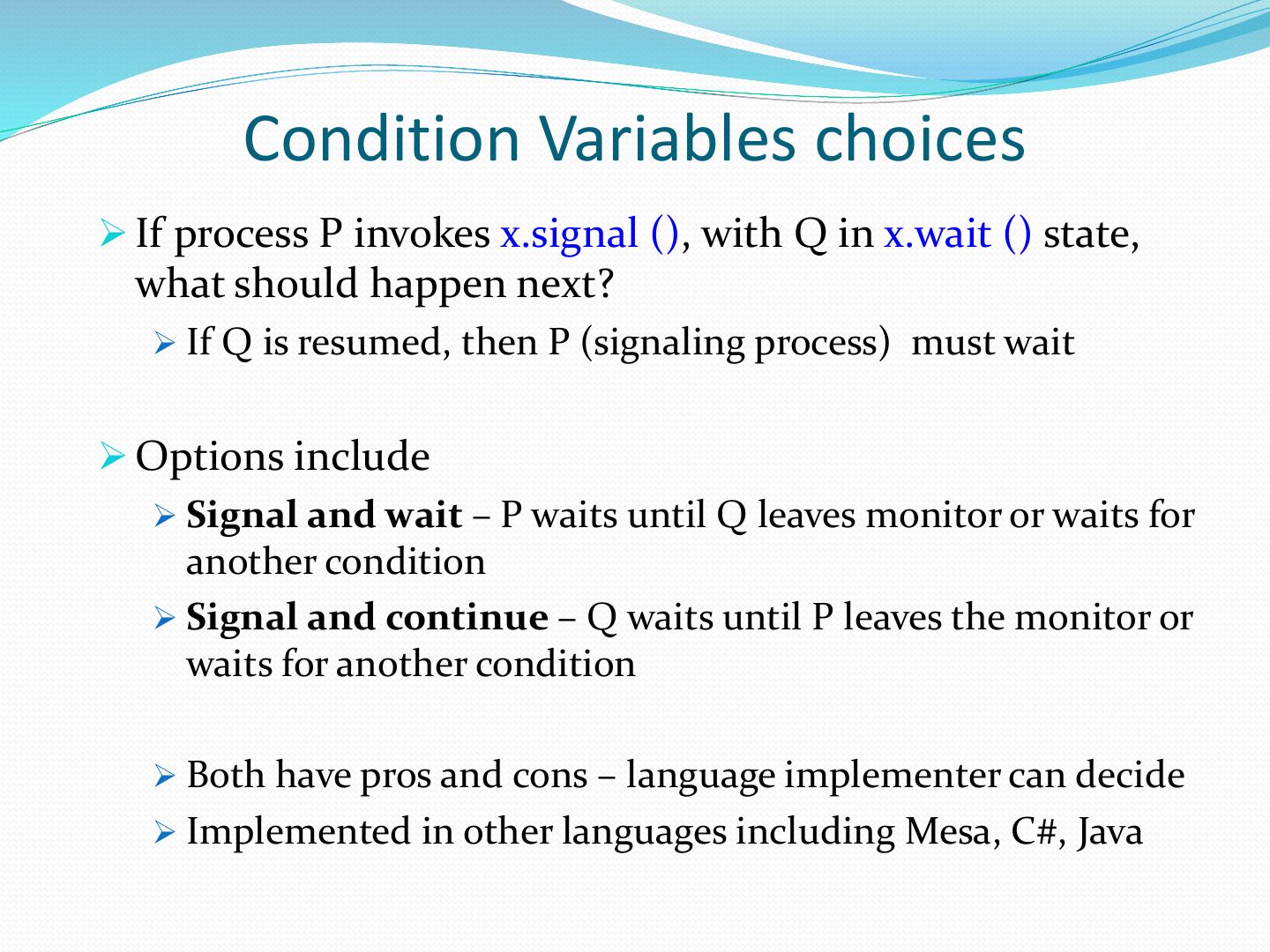
Condition Variables choices
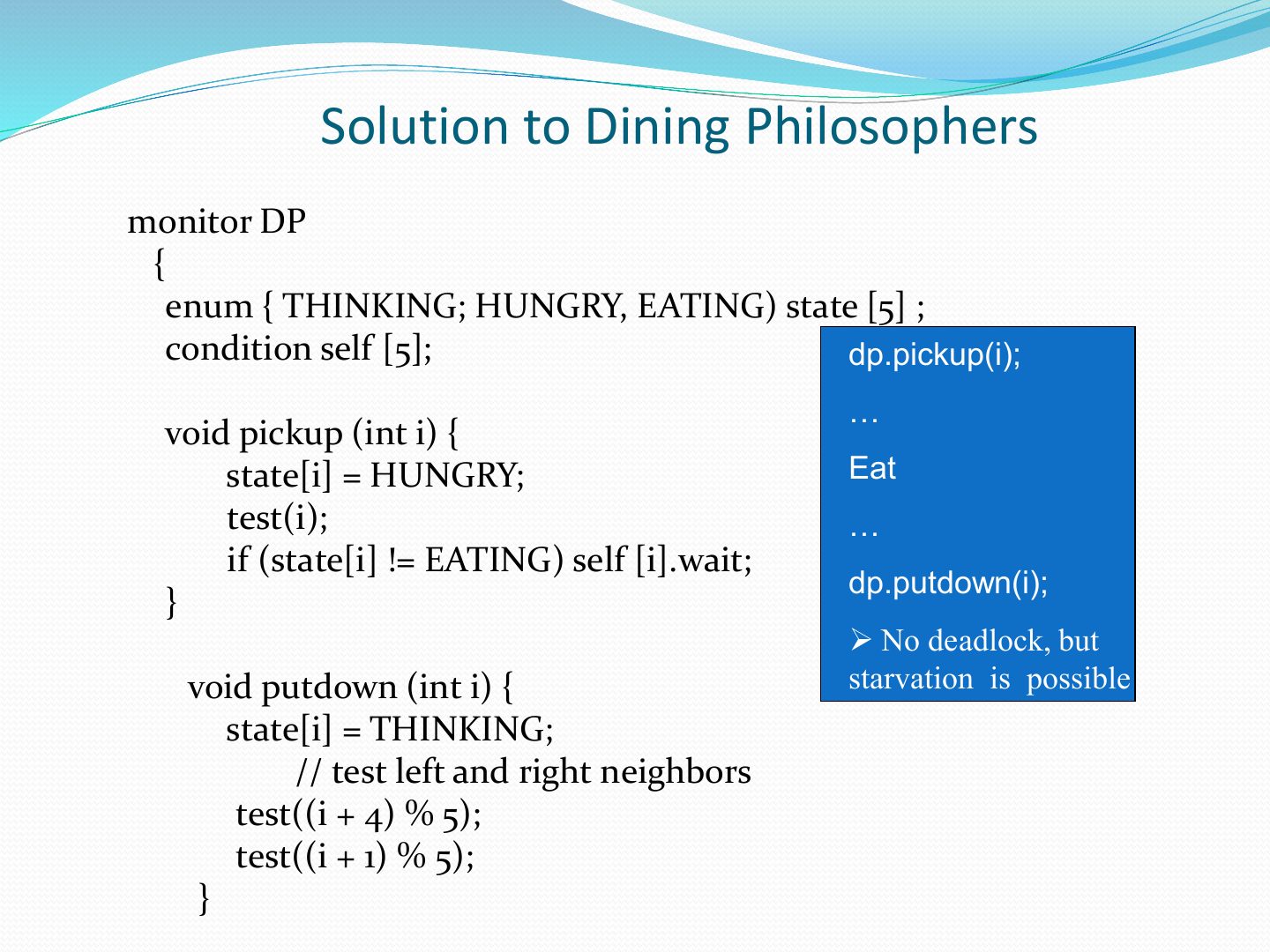
Solution to Dining Philosophers
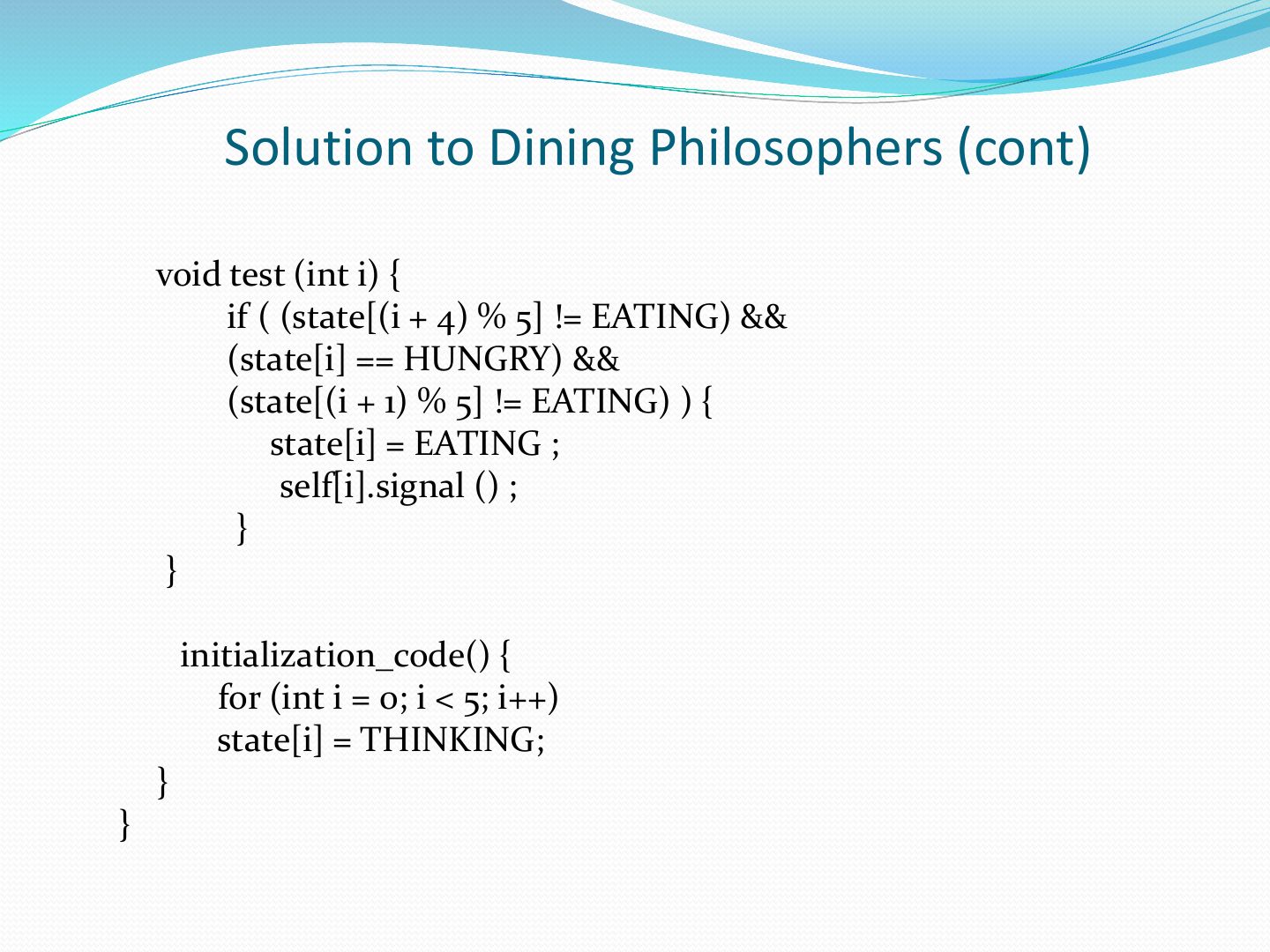
Solution to Dining Philosophers (cont)
Process Synchronization Conclusion