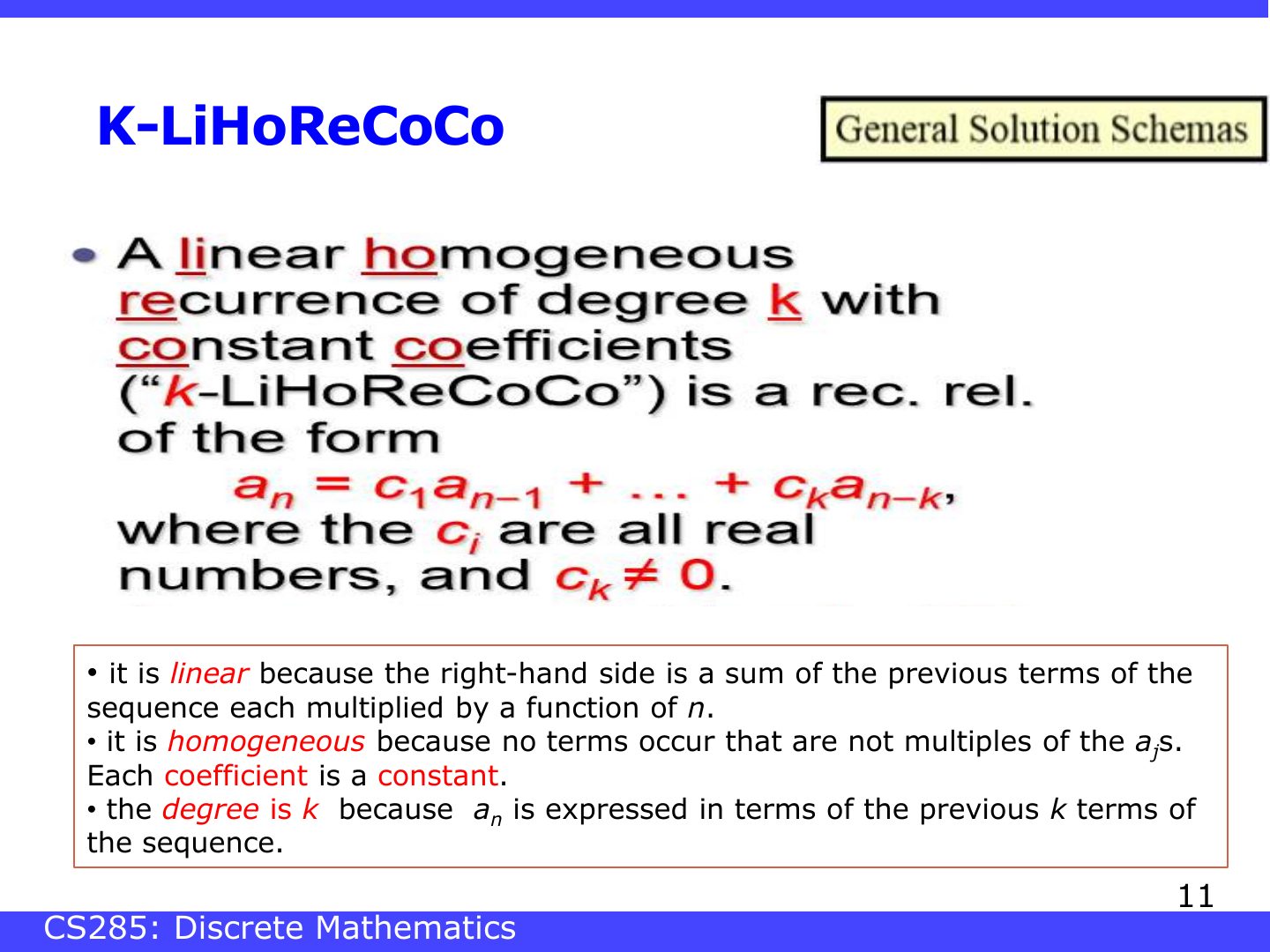
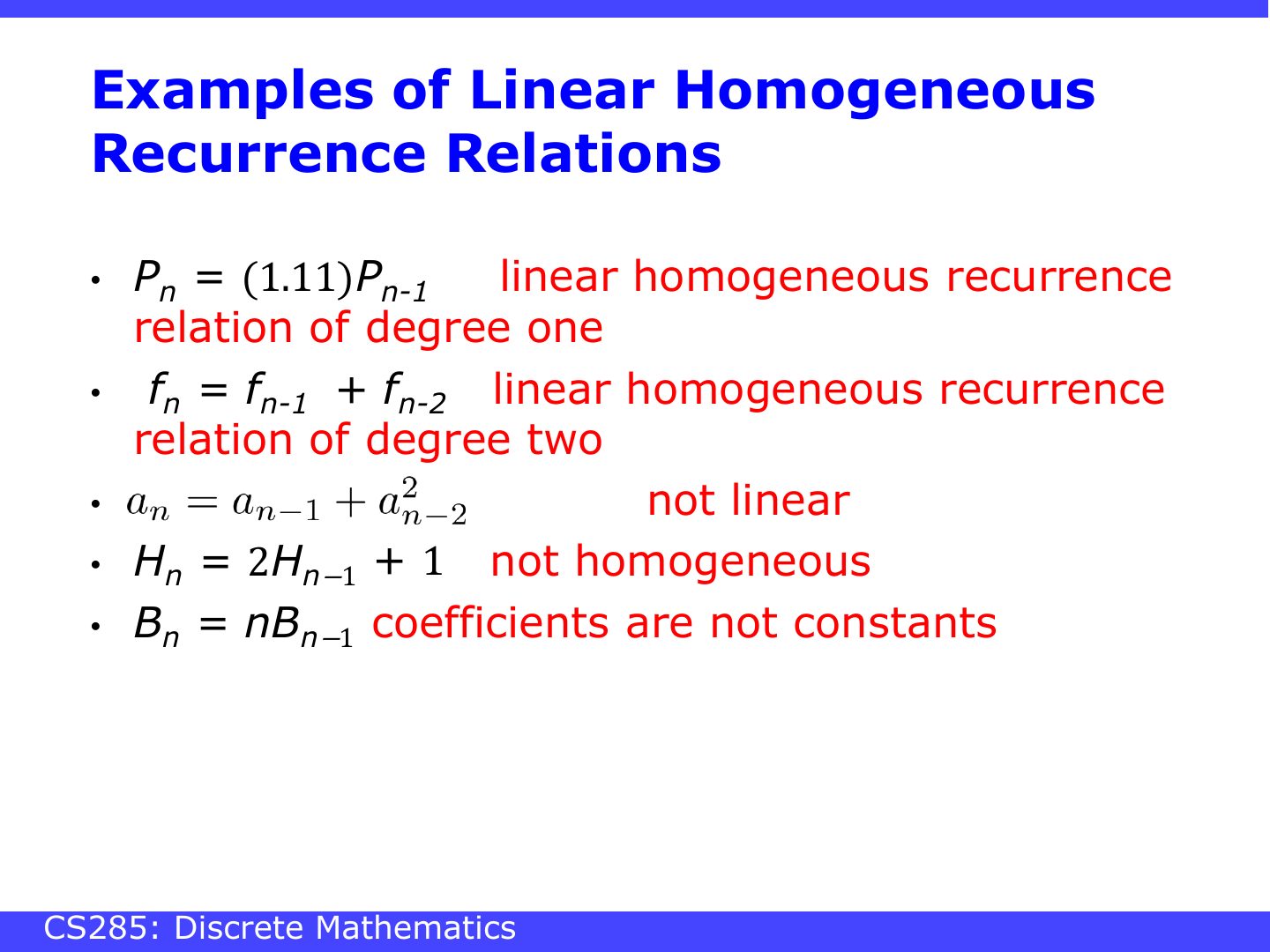
Which is a linear homogeneous recurrence with constant coefficients?
Advanced Counting Techniques
Recurrence relations and modelling with them, solving linear homogeneous recurrences with constant coefficients (distinct and repeated roots, degree 2 and higher), and linear nonhomogeneous recurrences with particular solutions.
How to read this page
Every original slide is shown unchanged. Yellow marks on a slide point to a numbered note: hover or tap a mark to jump to its note, and hover a note to see its marks. Questions tagged Past exam appeared on a real paper; Prediction questions are likely angles, not confirmed. Pick an answer to each question: a wrong pick tells you why it is wrong, so you can try again.
All 36 slides
- 1 Slide 1
- 2 Chapter Summary
- 3 Slide 3
- 4 Recurrence Relations
- 5 Recurrence Relations
- 6 Recurrence Relation Example
- 7 Recurrence Relation Example
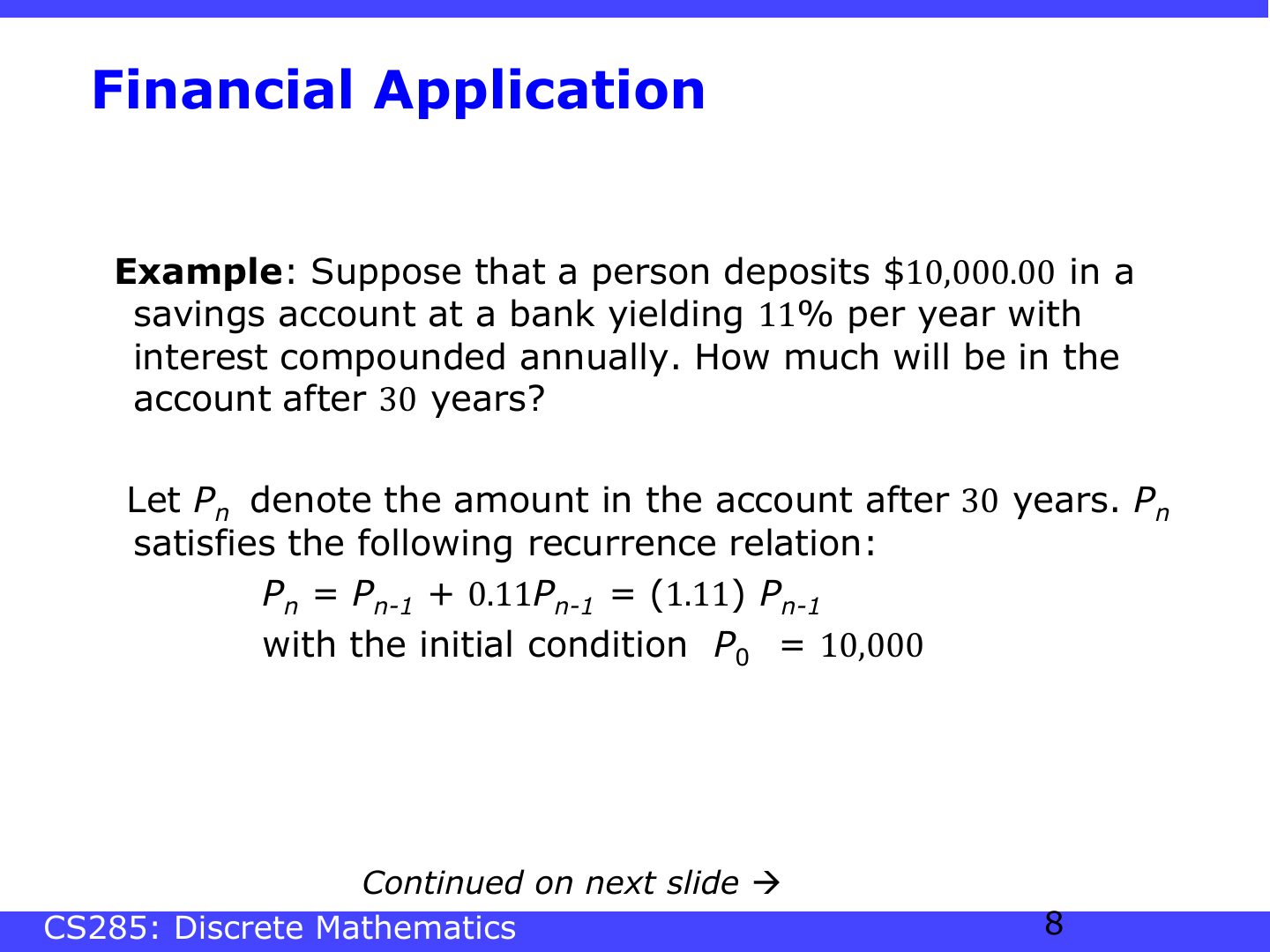
- 8 Financial Application
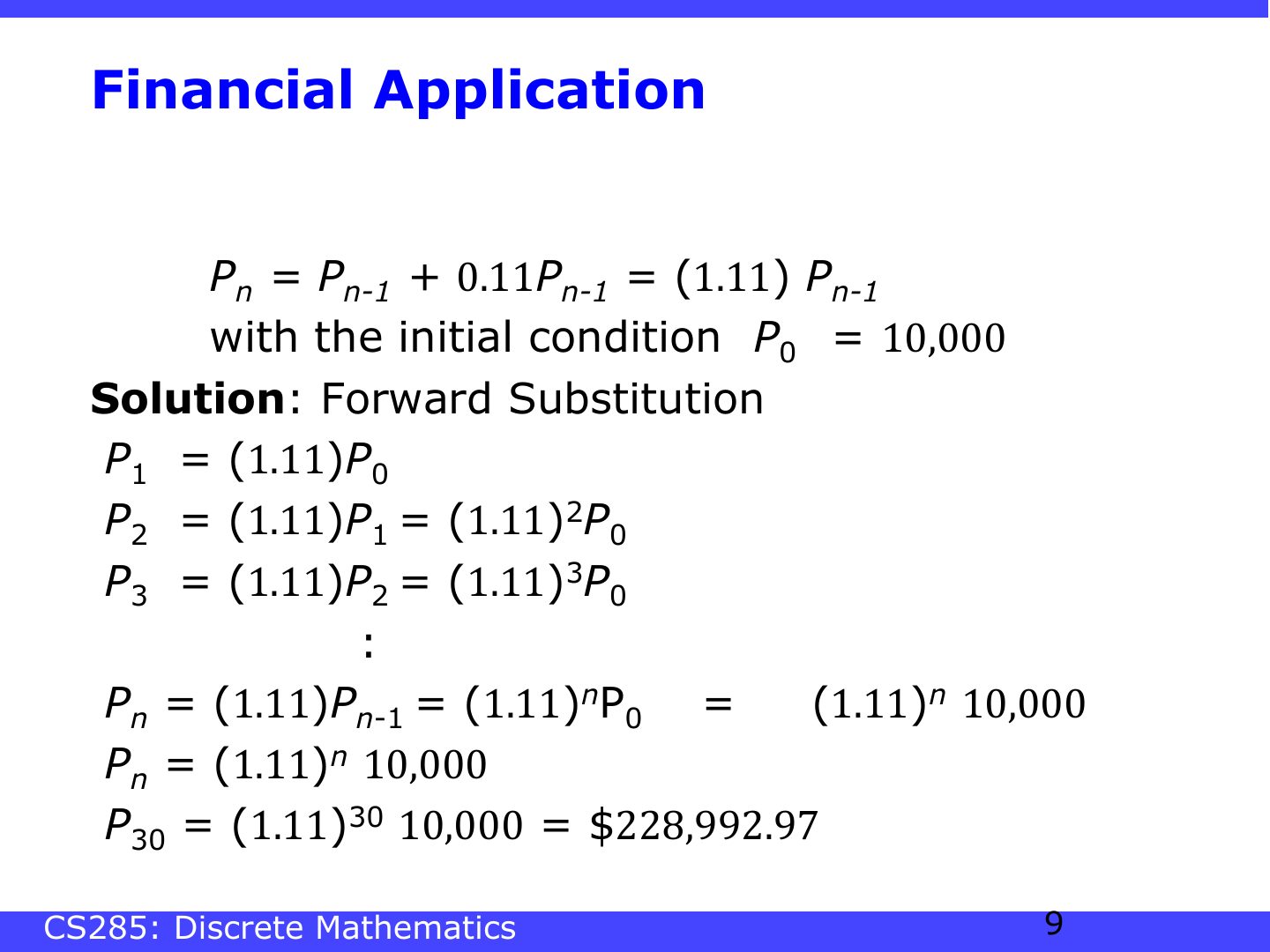
- 9 Financial Application
- 10 Slide 10
- 11 K-LiHoReCoCo
- 12 Examples of Linear Homogeneous Recurrence Relations linear? Homogeneous? Which degree?
- 13 Examples of Linear Homogeneous Recurrence Relations
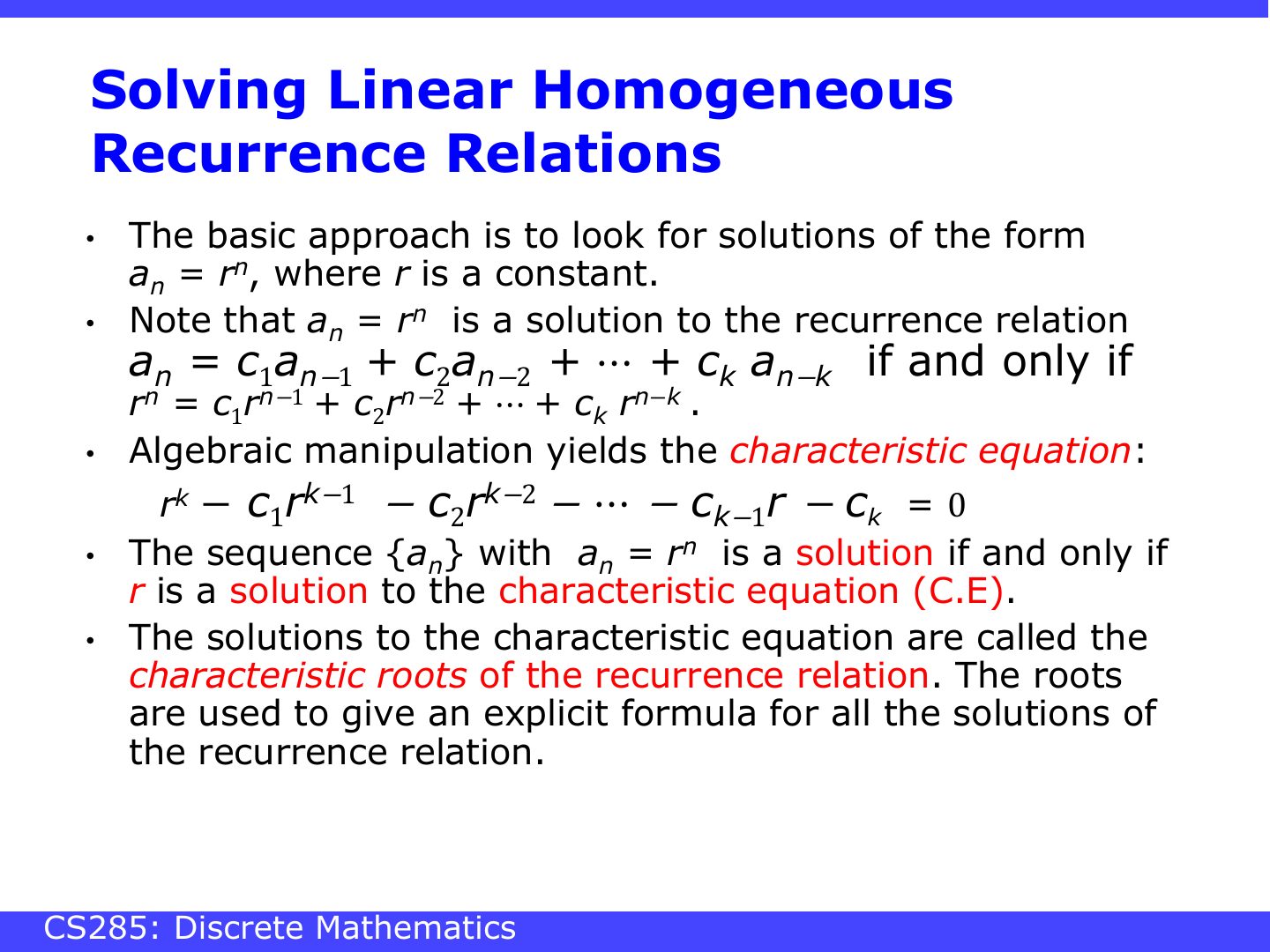
- 14 Solving Linear Homogeneous Recurrence Relations
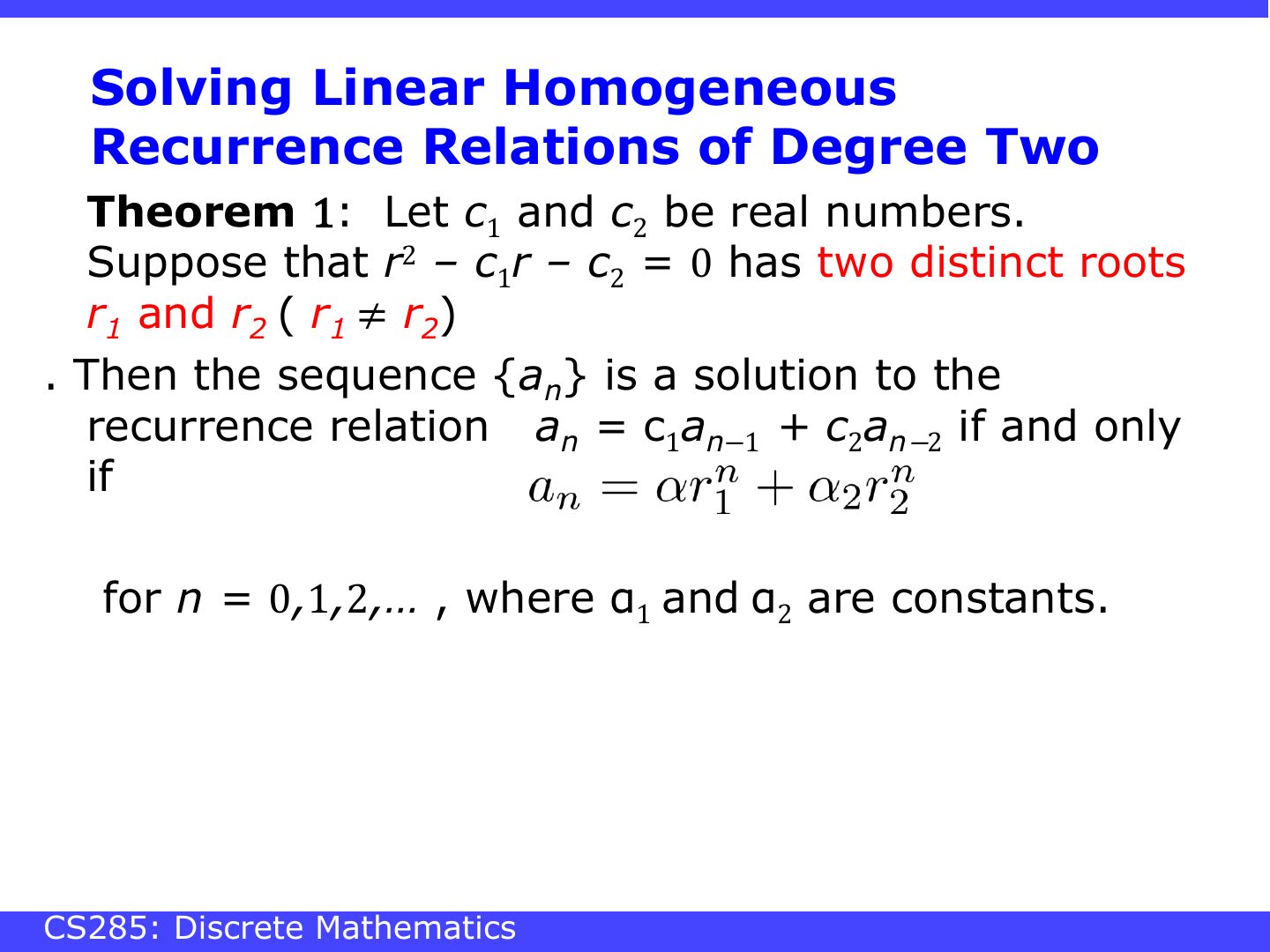
- 15 Solving Linear Homogeneous Recurrence Relations of Degree Two
- 16 Using Theorem 1
- 17 Using Theorem 1
- 18 Example Cont...
- 19 The Solution when there is a Repeated Root
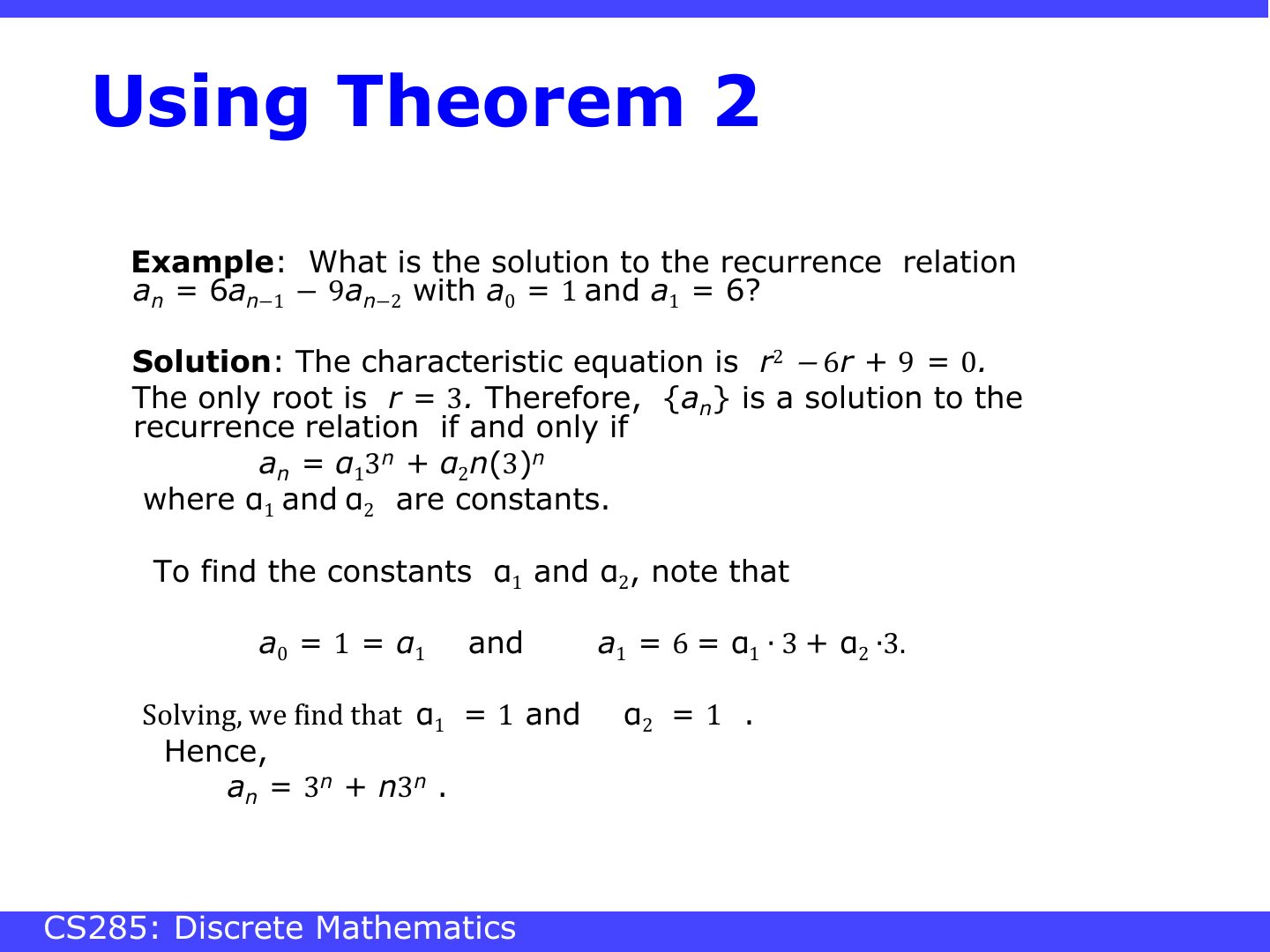
- 20 Using Theorem 2
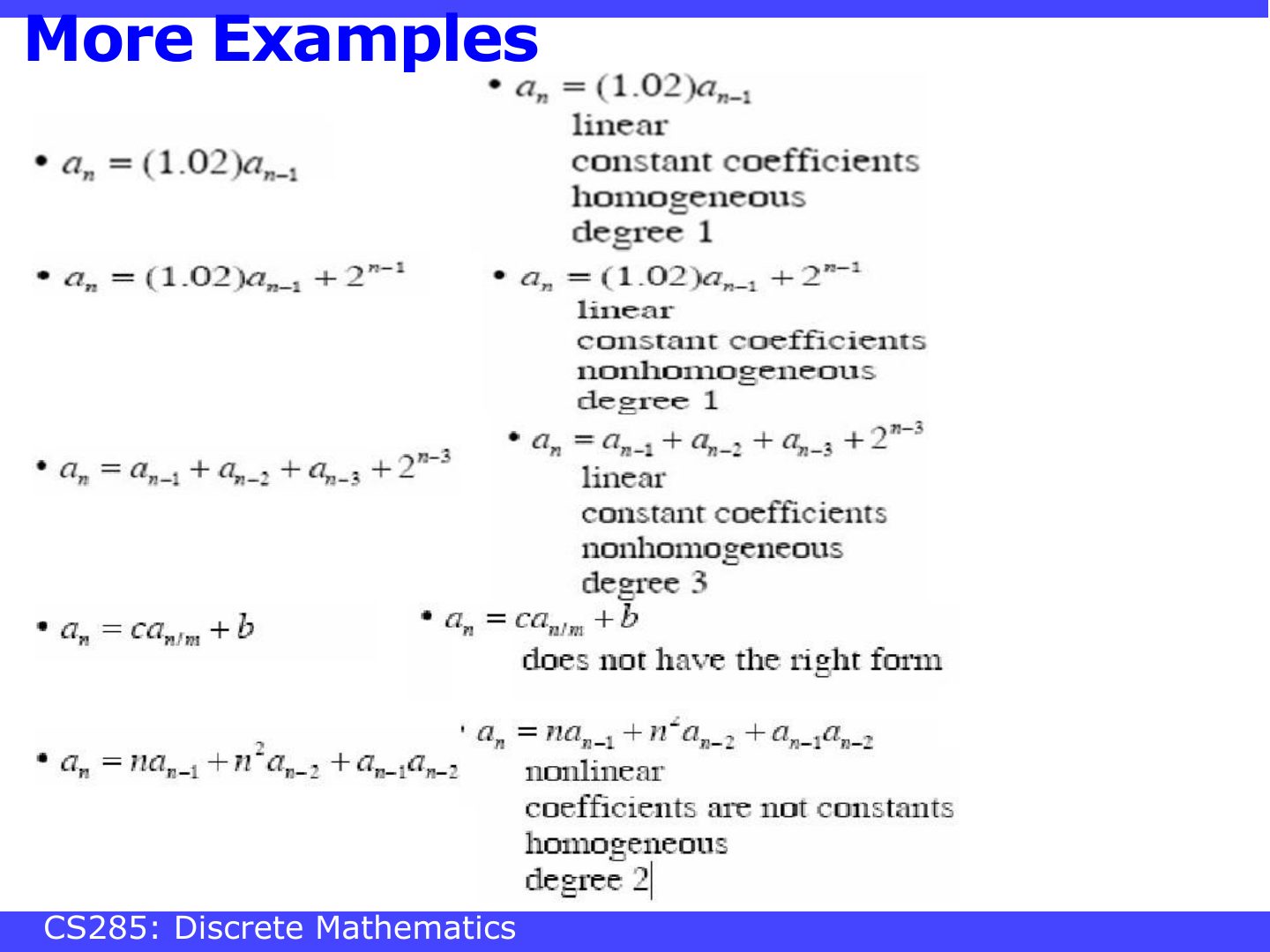
- 21 More Examples
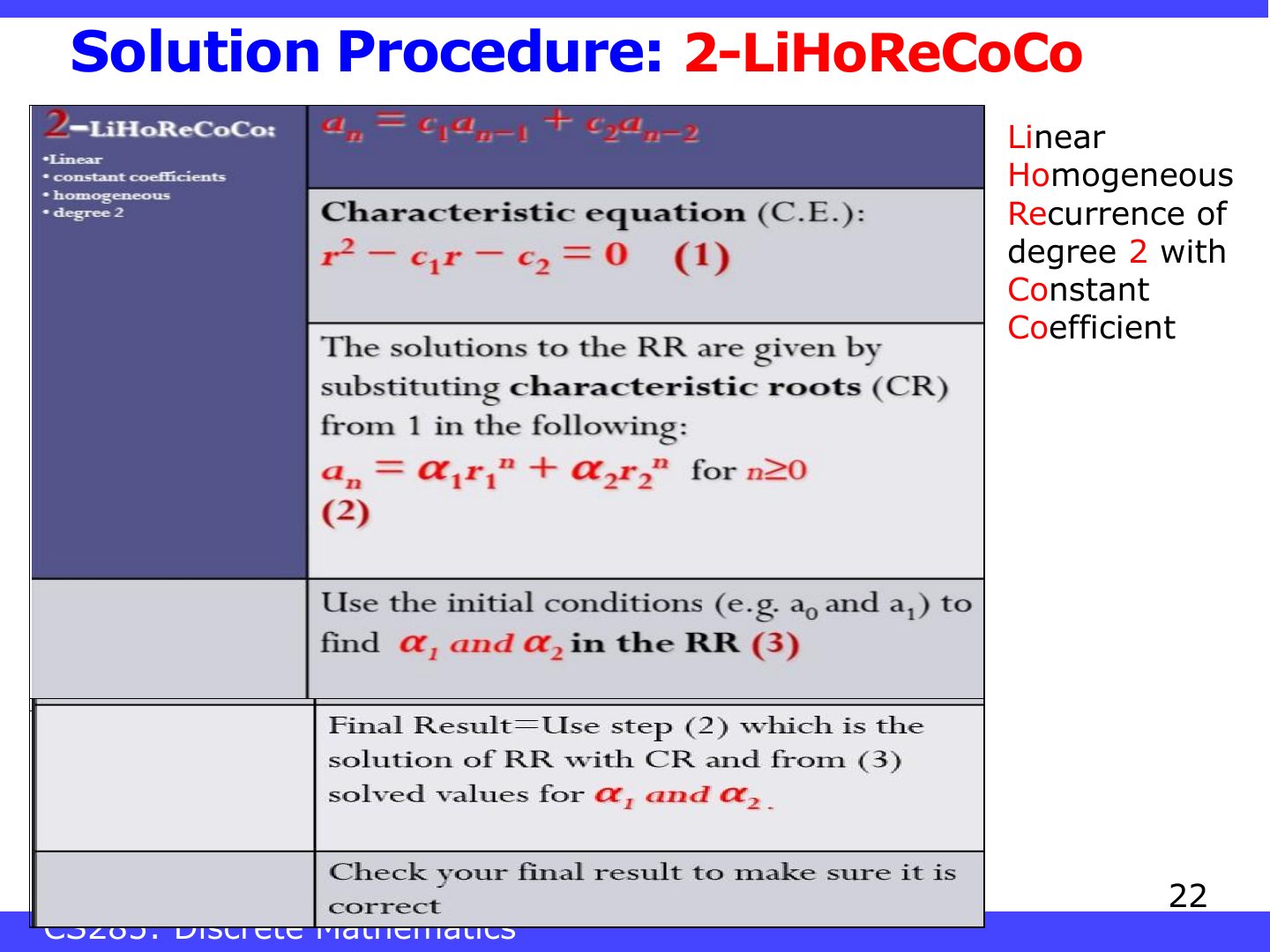
- 22 Solution Procedure: 2-LiHoReCoCo
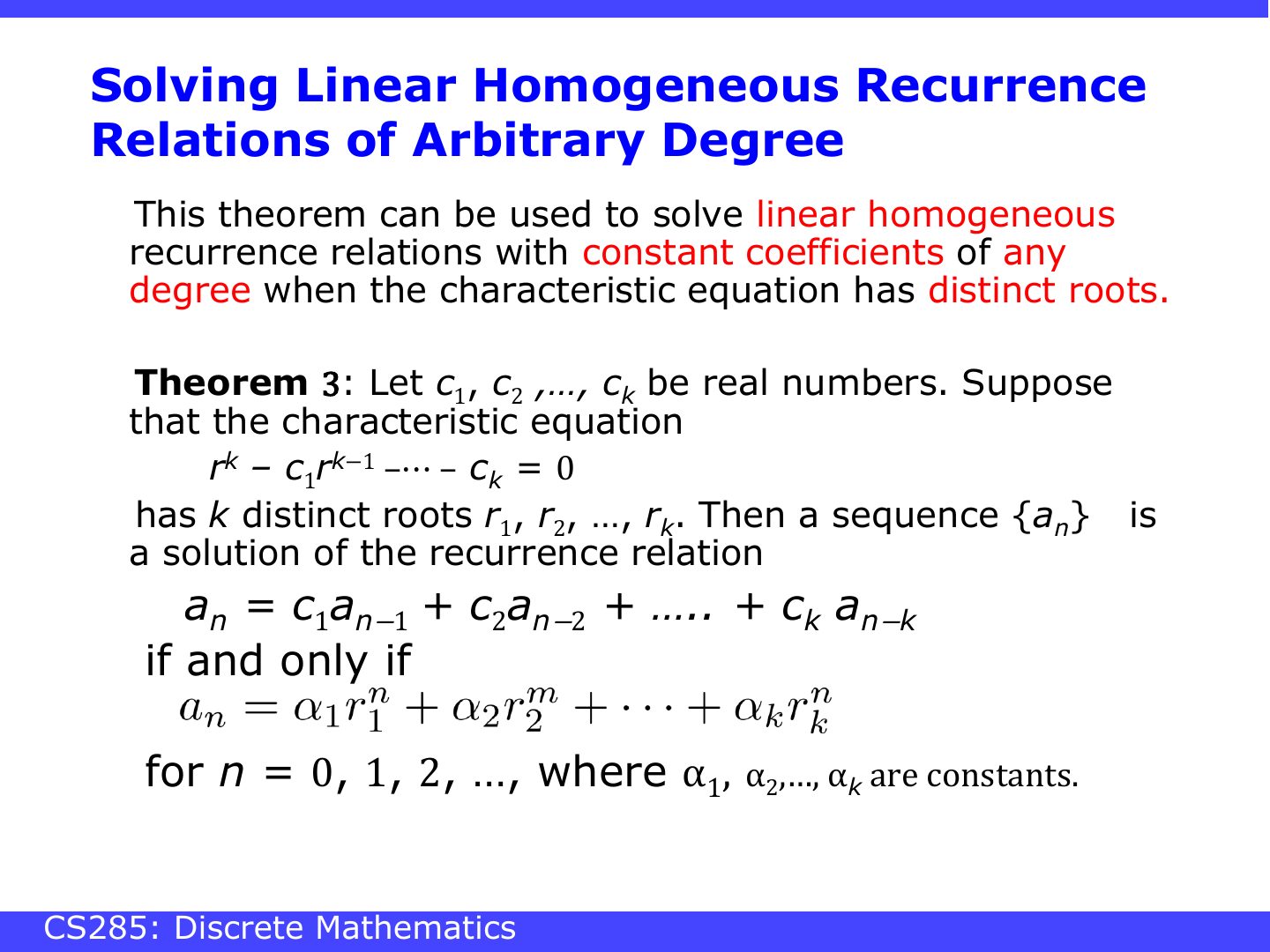
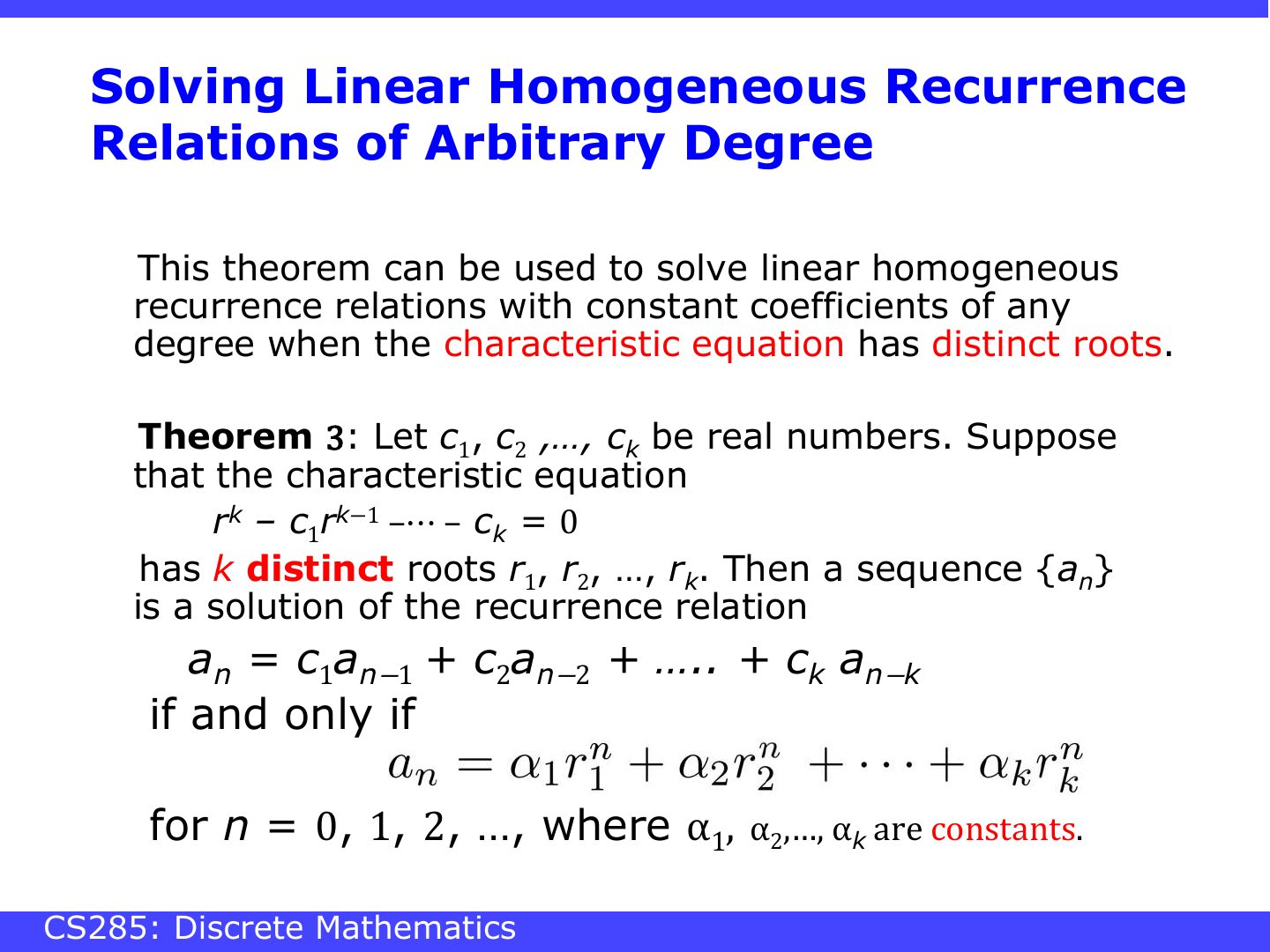
- 23 Solving Linear Homogeneous Recurrence Relations of Arbitrary Degree
- 24 Solving Linear Homogeneous Recurrence Relations of Arbitrary Degree
- 25 Using Theorem 3
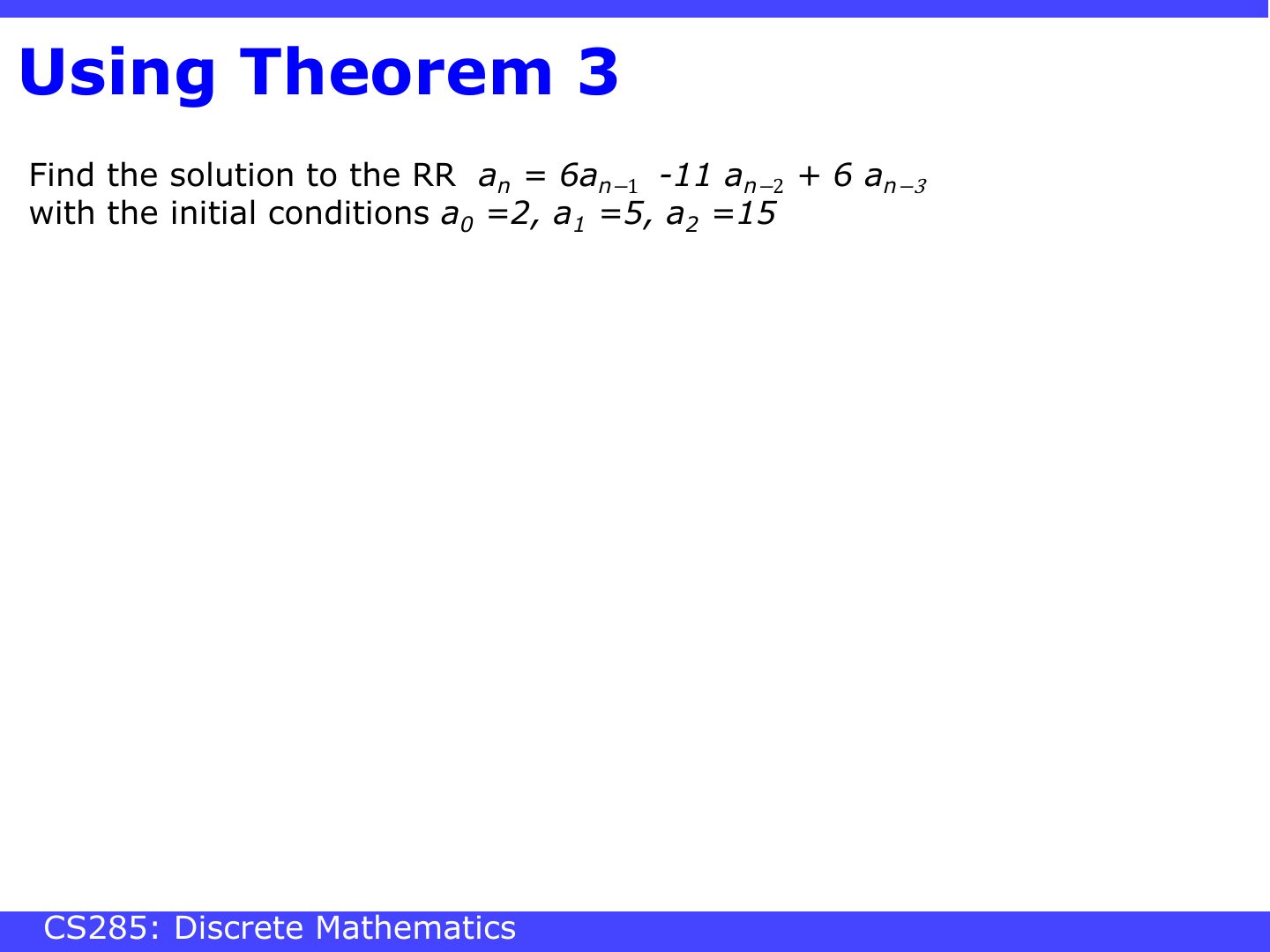
- 26 The General Case with Repeated Roots Allowed
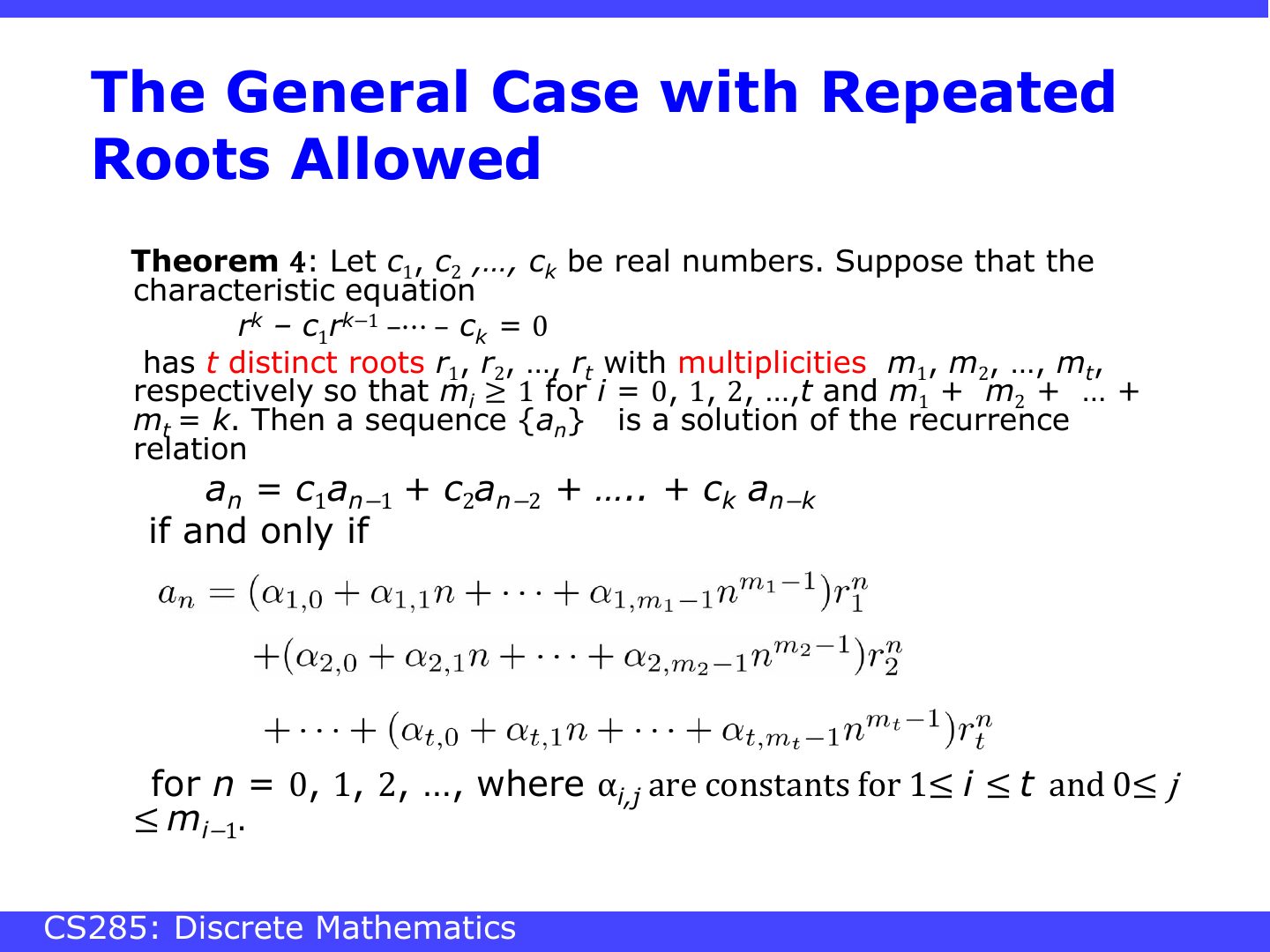
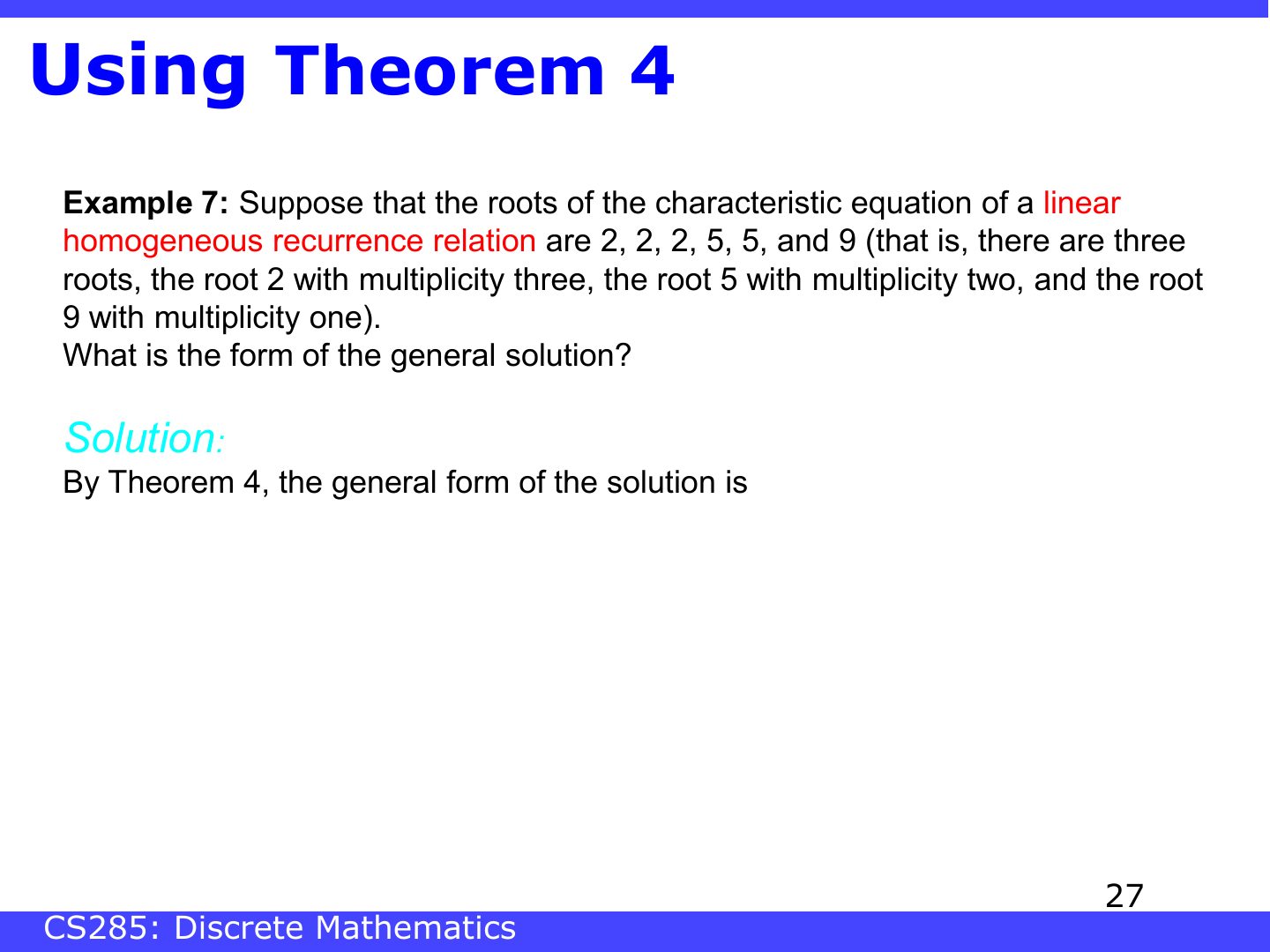
- 27 Using Theorem 4
- 28 Theorem 4
- 29 Homogeneous & Nonhomogenes
- 30 Linear Nonhomogeneous Recurrence Relations with Constant Coefficients (LiNoReCoCos)
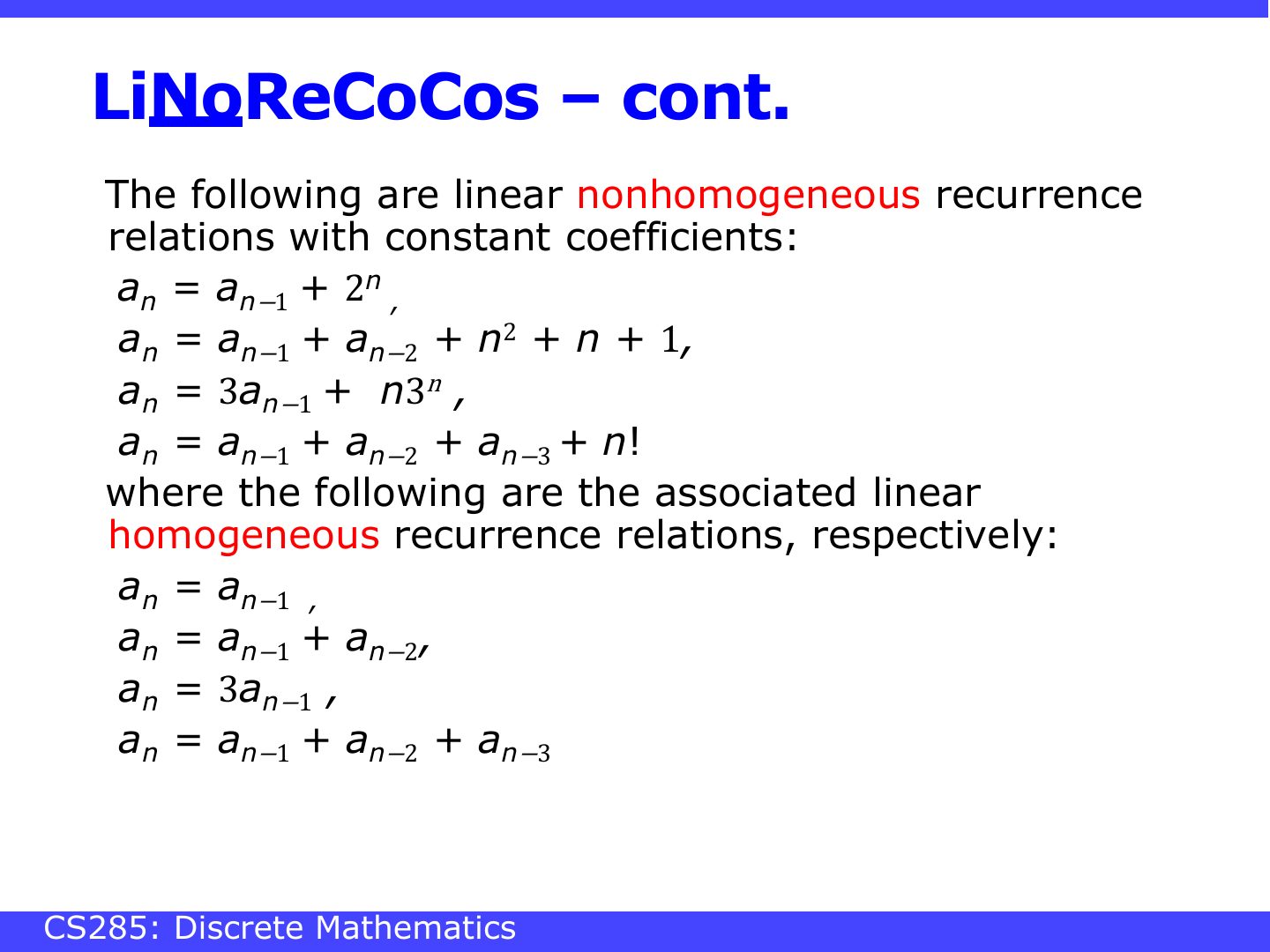
- 31 LiNoReCoCos – cont.
- 32 LiNoReCoCos – cont.
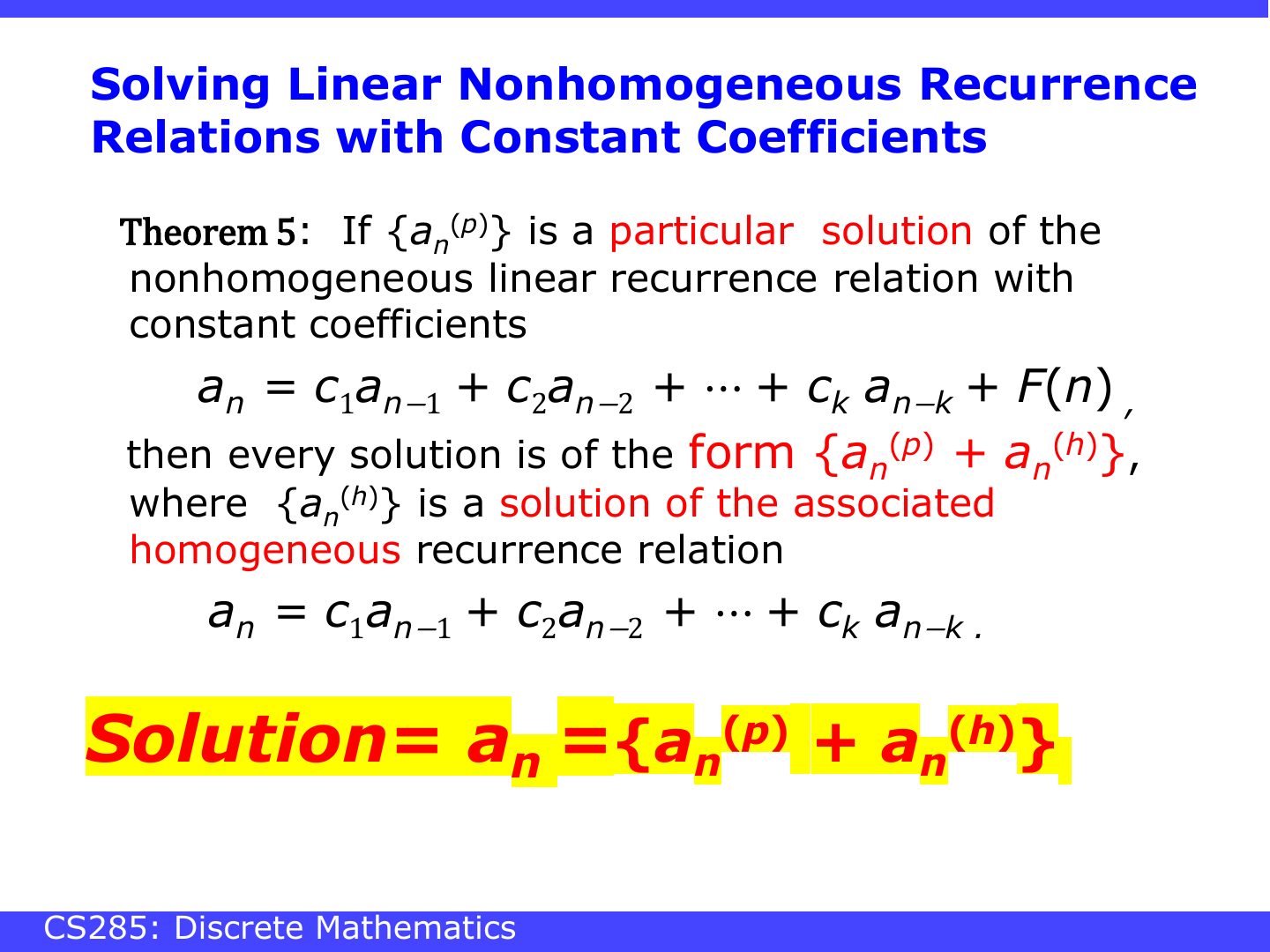
- 33 Solving Linear Nonhomogeneous Recurrence Relations with Constant Coefficients
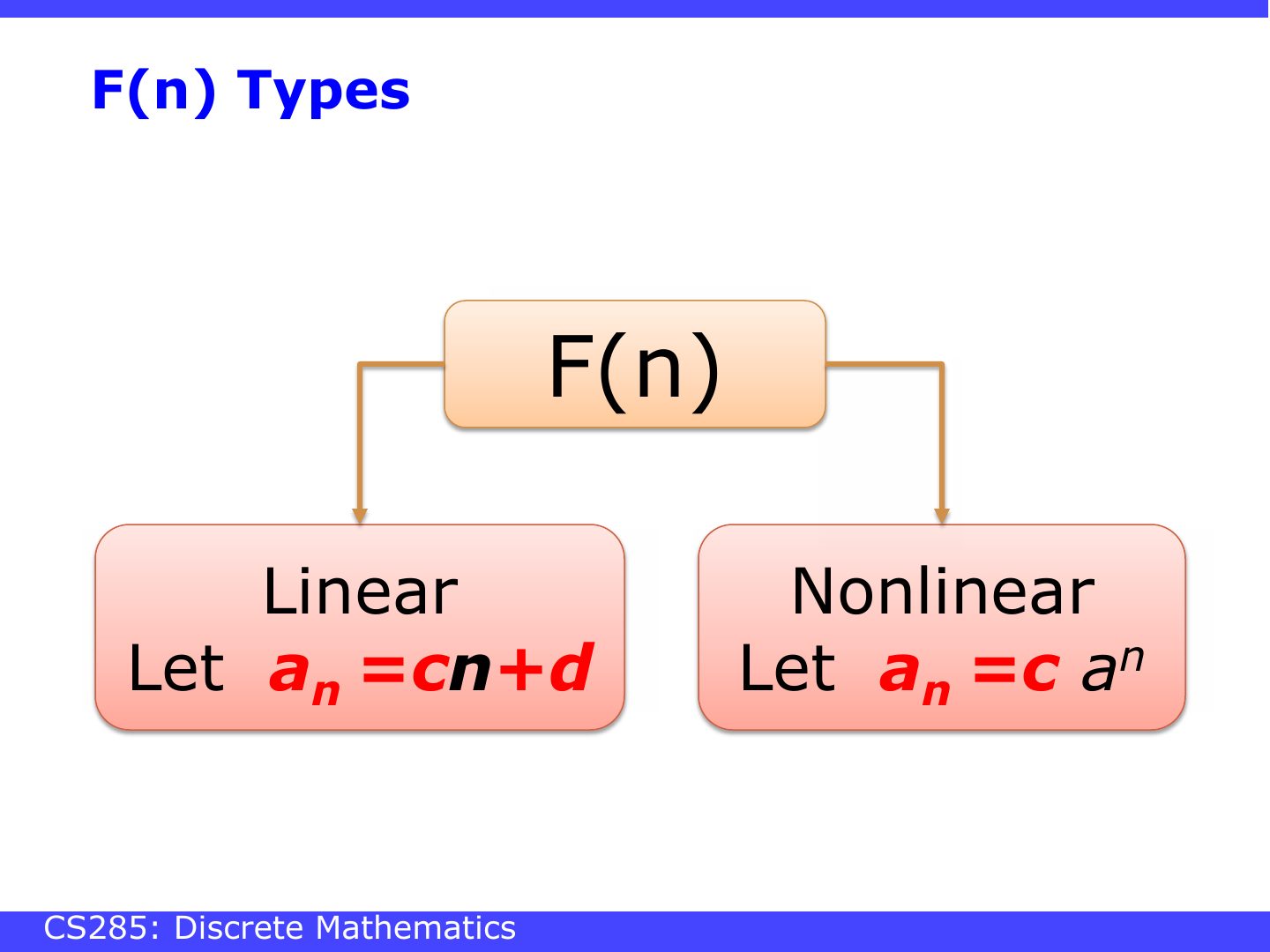
- 34 F(n) Types
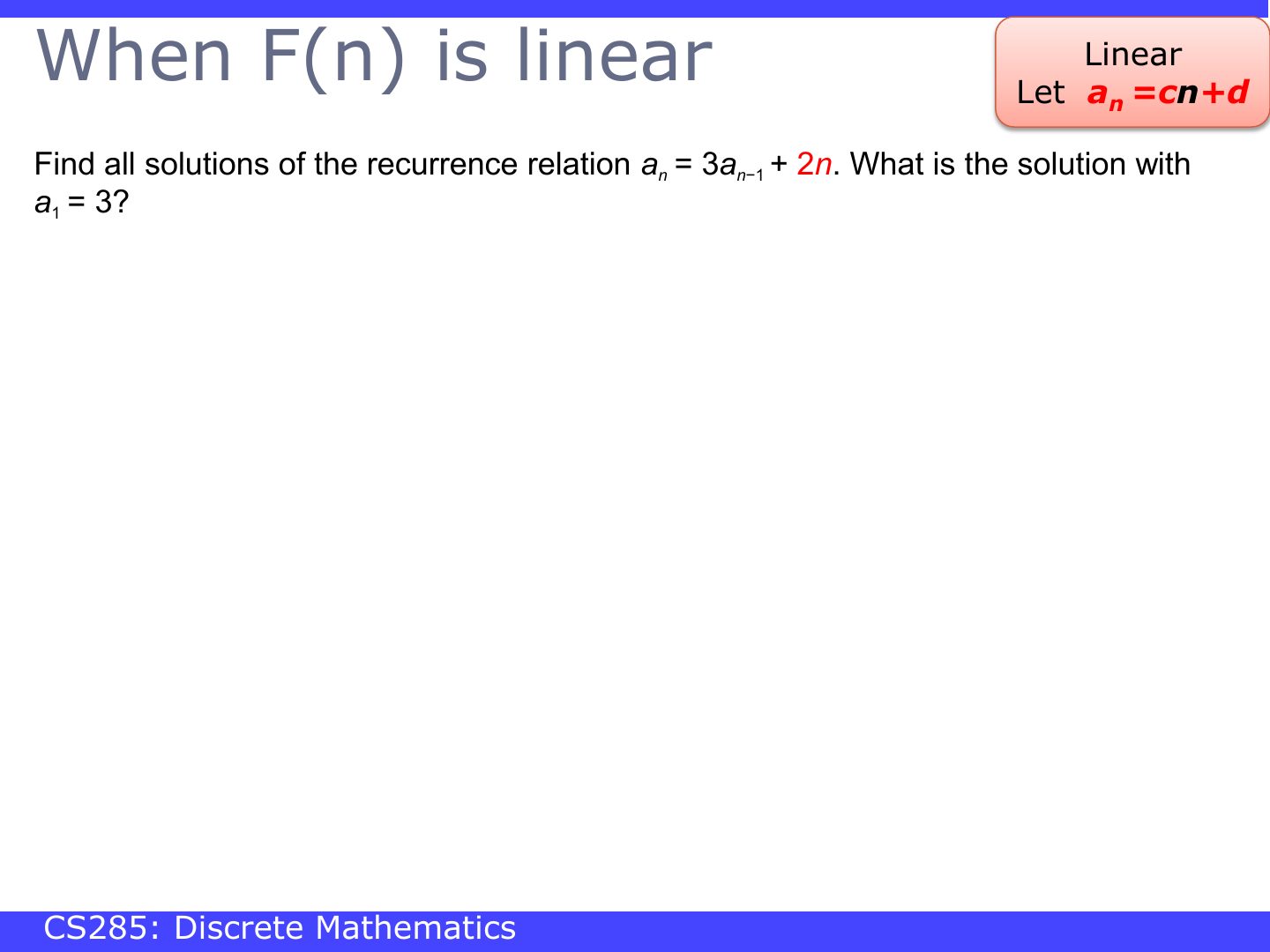
- 35 When F(n) is linear
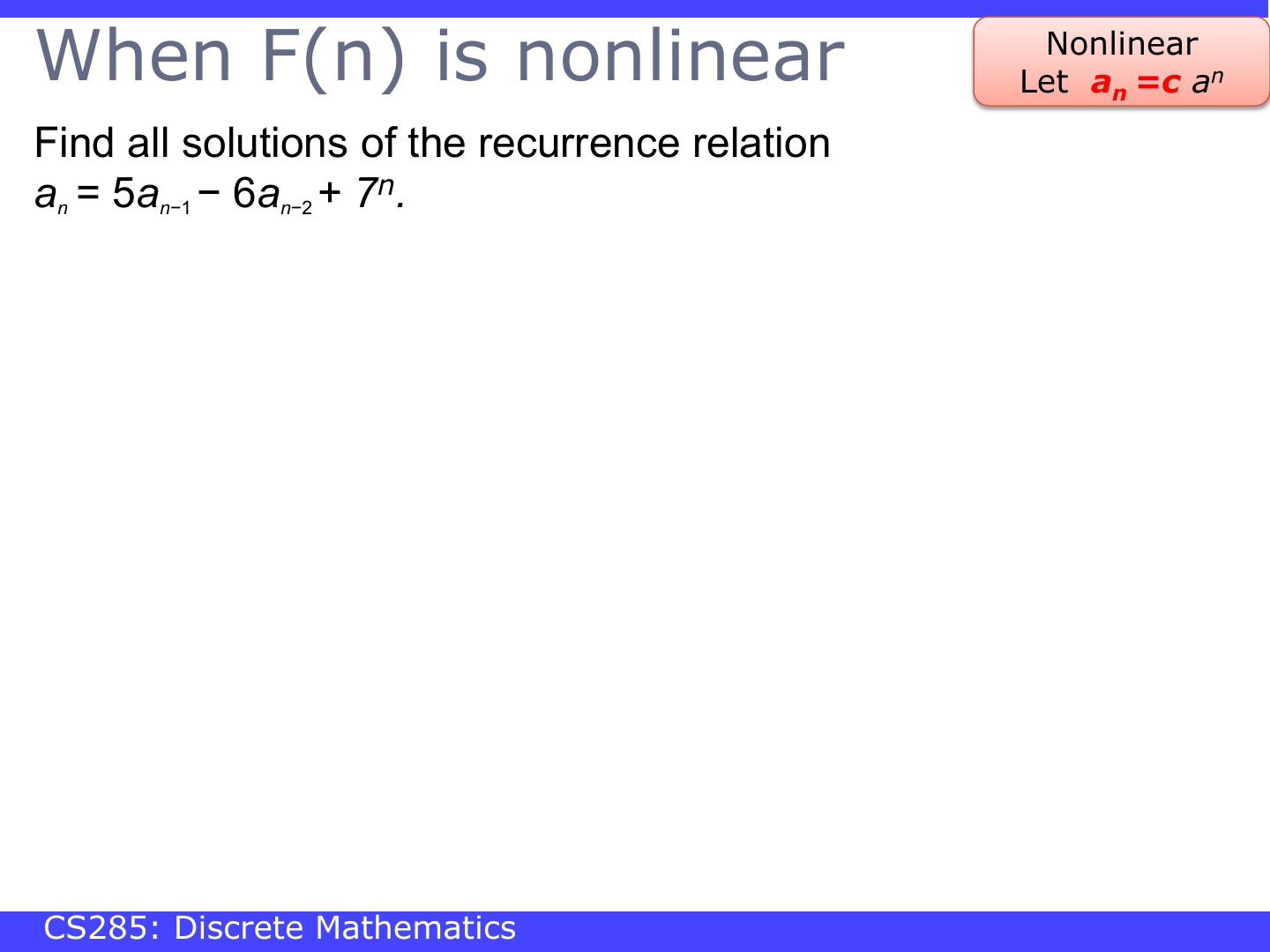
- 36 When F(n) is nonlinear
Slide 1
Chapter Summary
Slide 3
Recurrence Relations
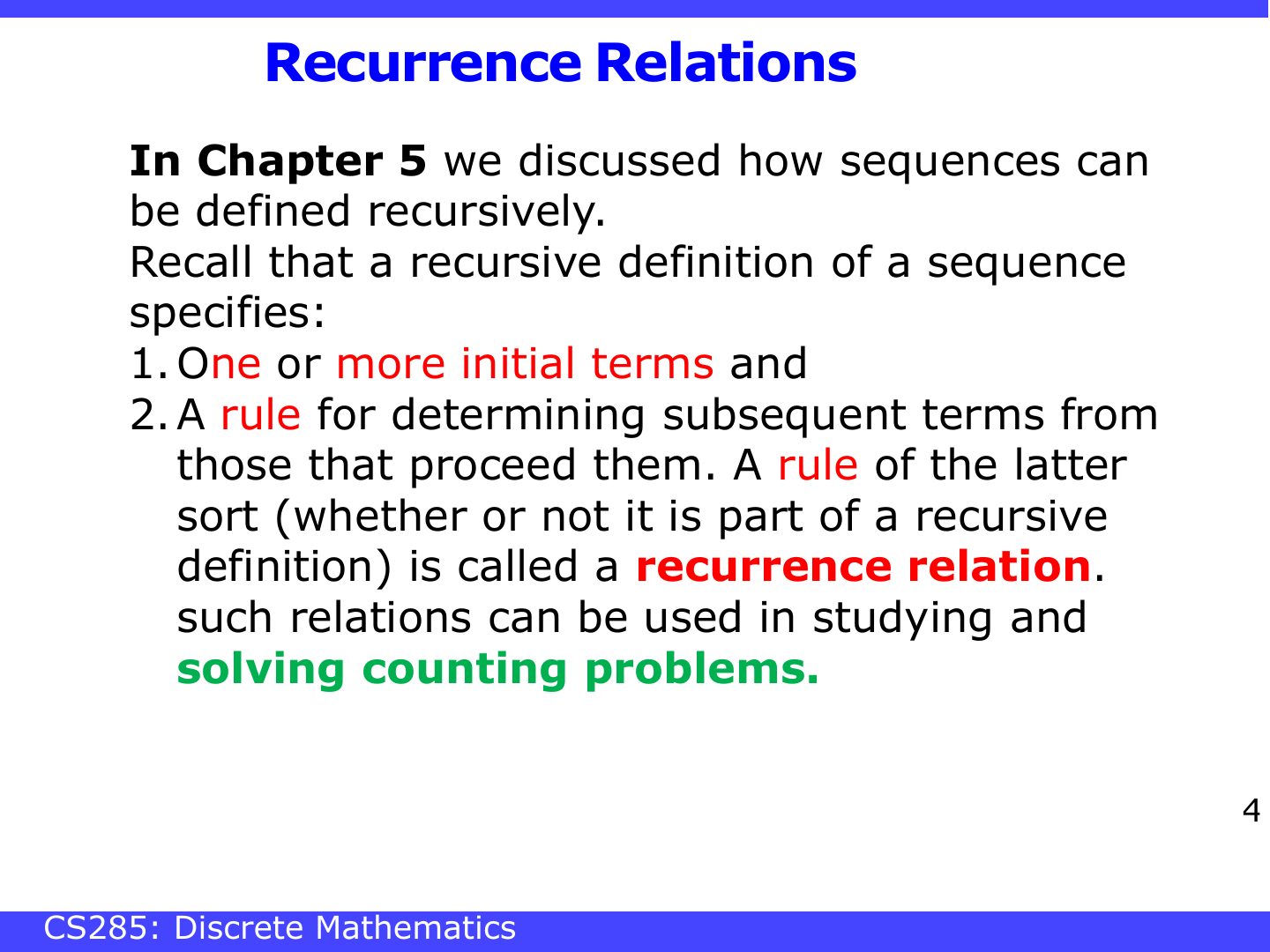
Recurrence Relations
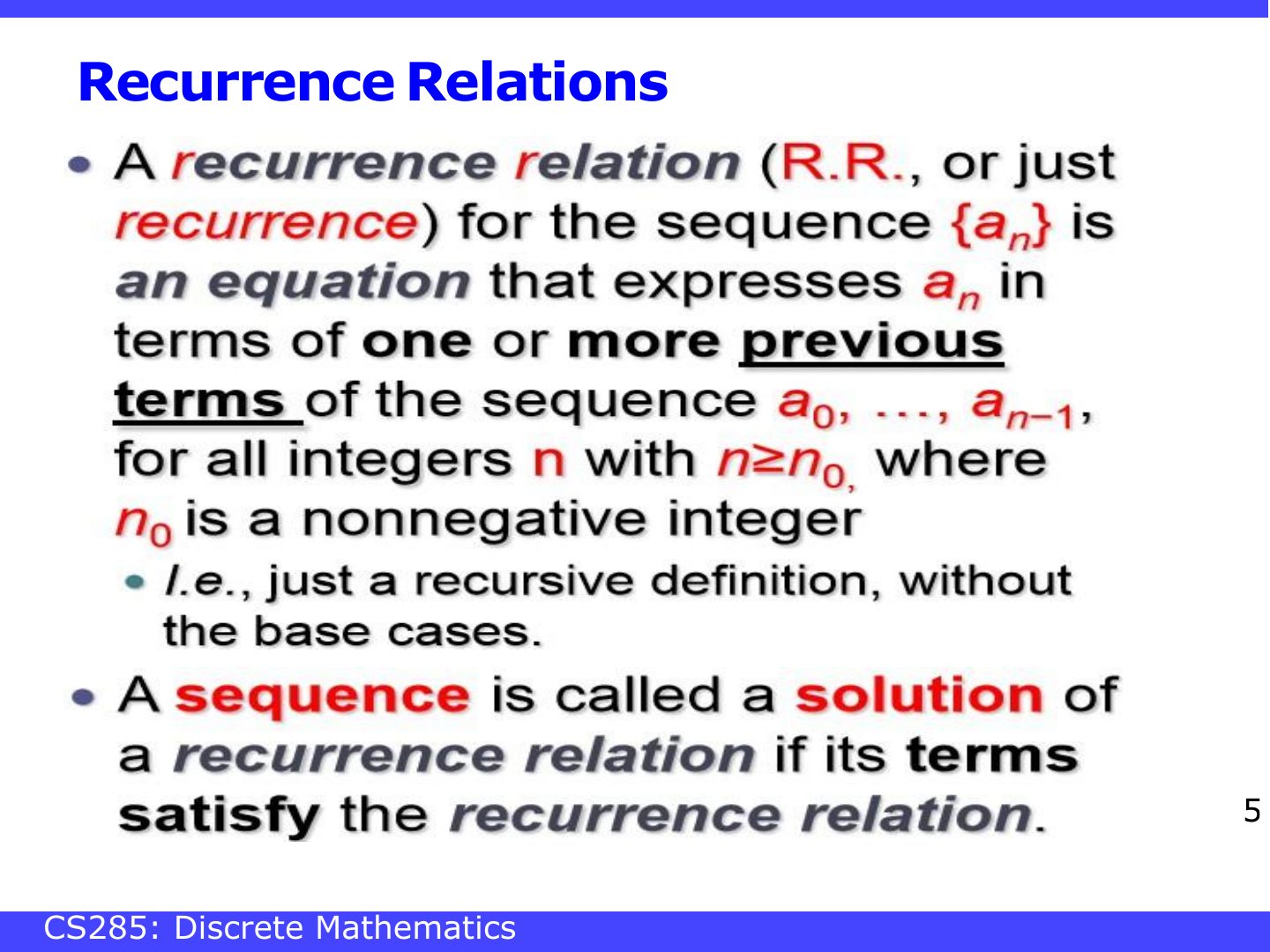
Notes
A recurrence expresses aₙ in terms of earlier terms; initial conditions pin down one solution.
Recurrence Relation Example
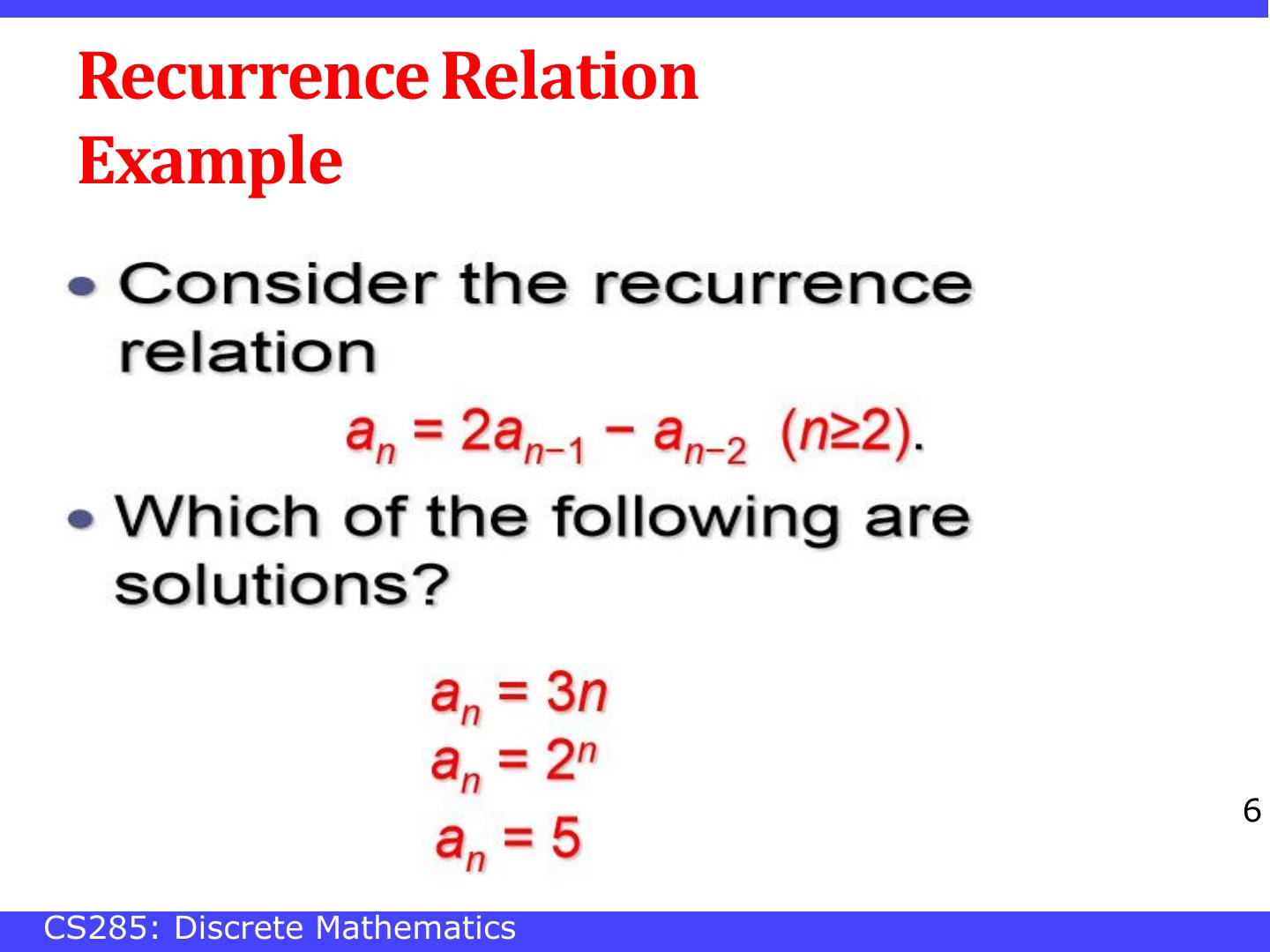
Recurrence Relation Example
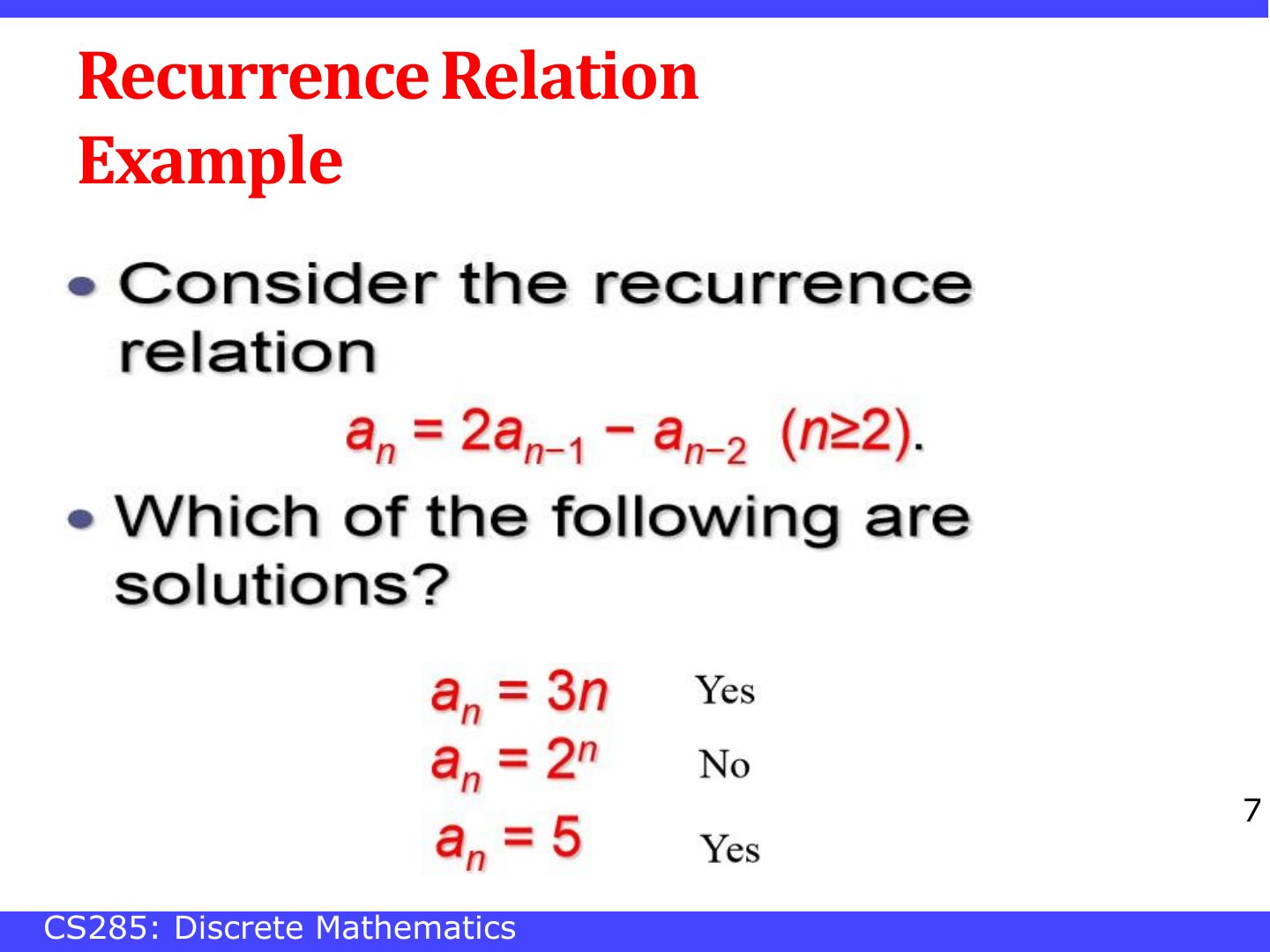
Financial Application
Financial Application
Slide 10
K-LiHoReCoCo
Exam angle
Examples of Linear Homogeneous Recurrence Relations linear? Homogeneous? Which degree?
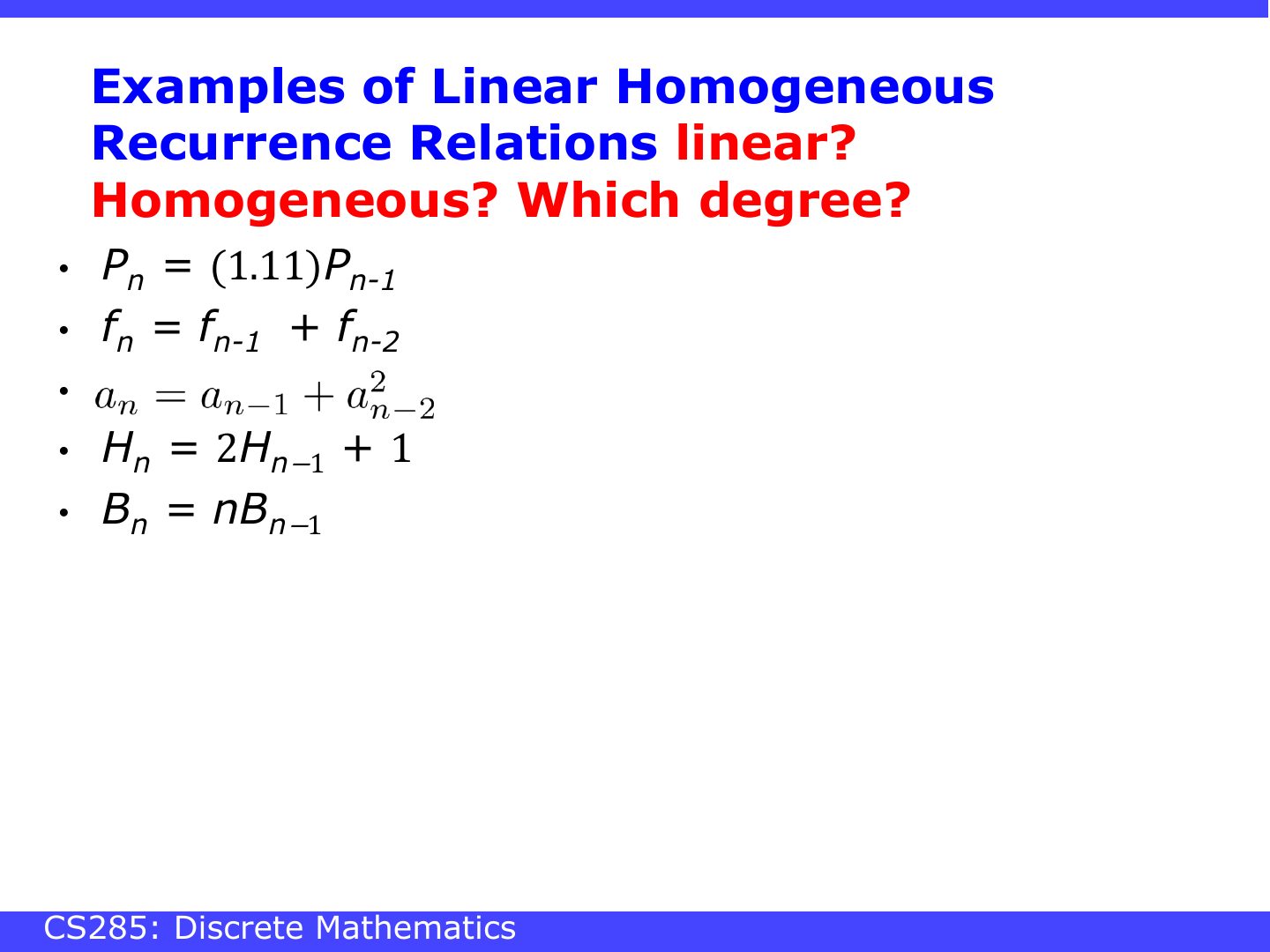
Examples of Linear Homogeneous Recurrence Relations
Solving Linear Homogeneous Recurrence Relations
Solving Linear Homogeneous Recurrence Relations of Degree Two
Notes
Distinct roots r₁, r₂: aₙ = α₁r₁ⁿ + α₂r₂ⁿ; find α’s from initial conditions.
Exam angle
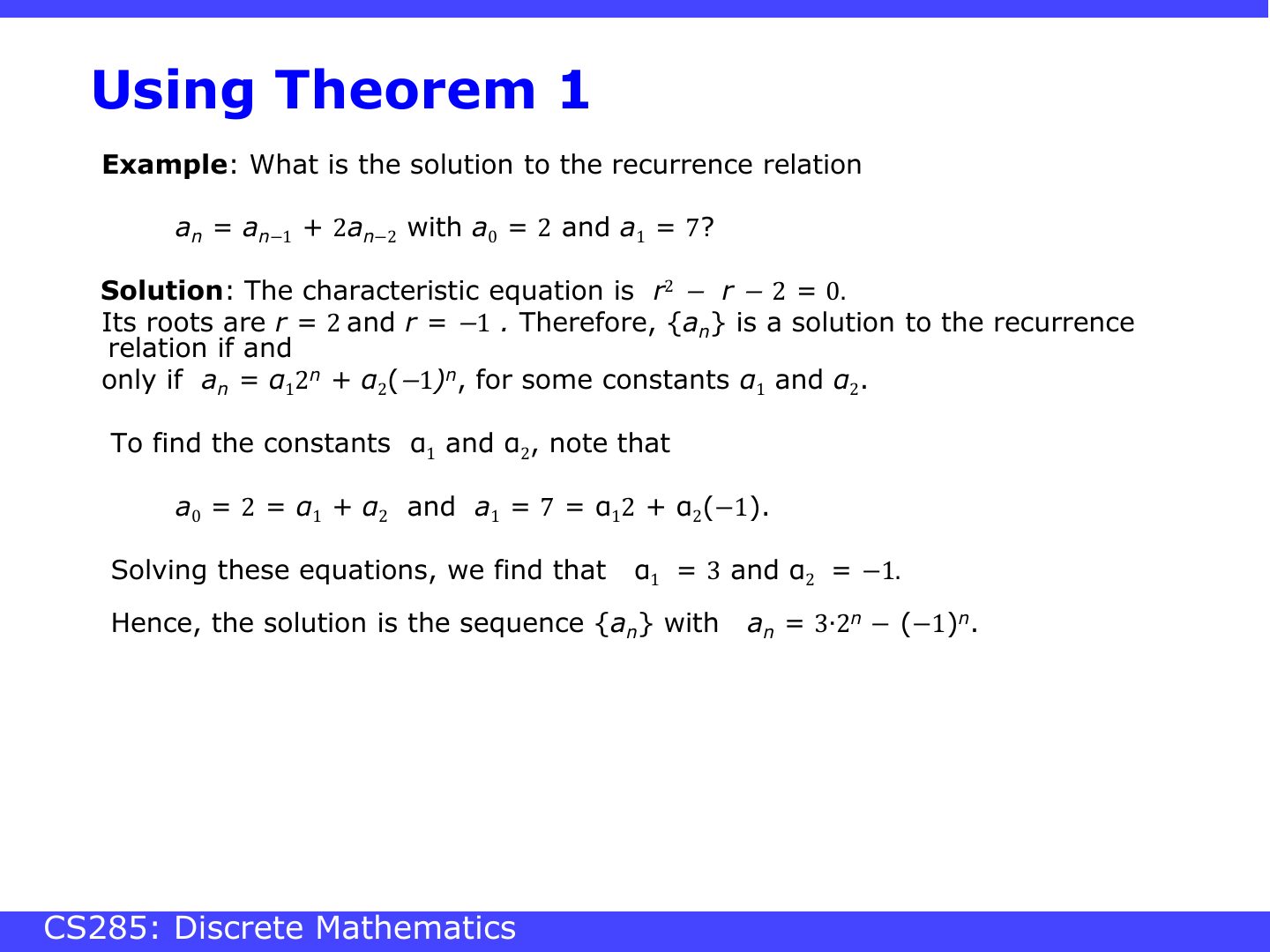
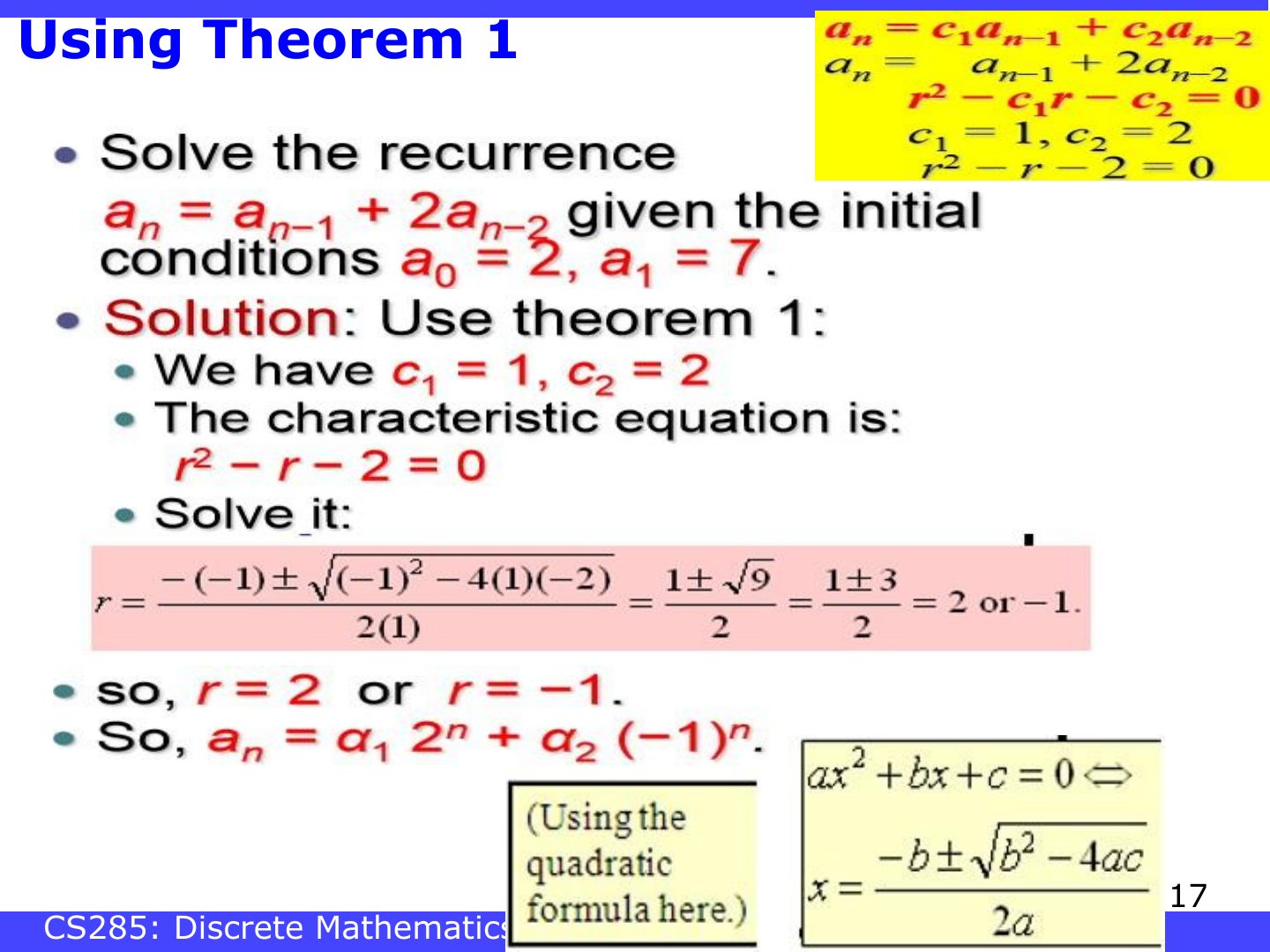
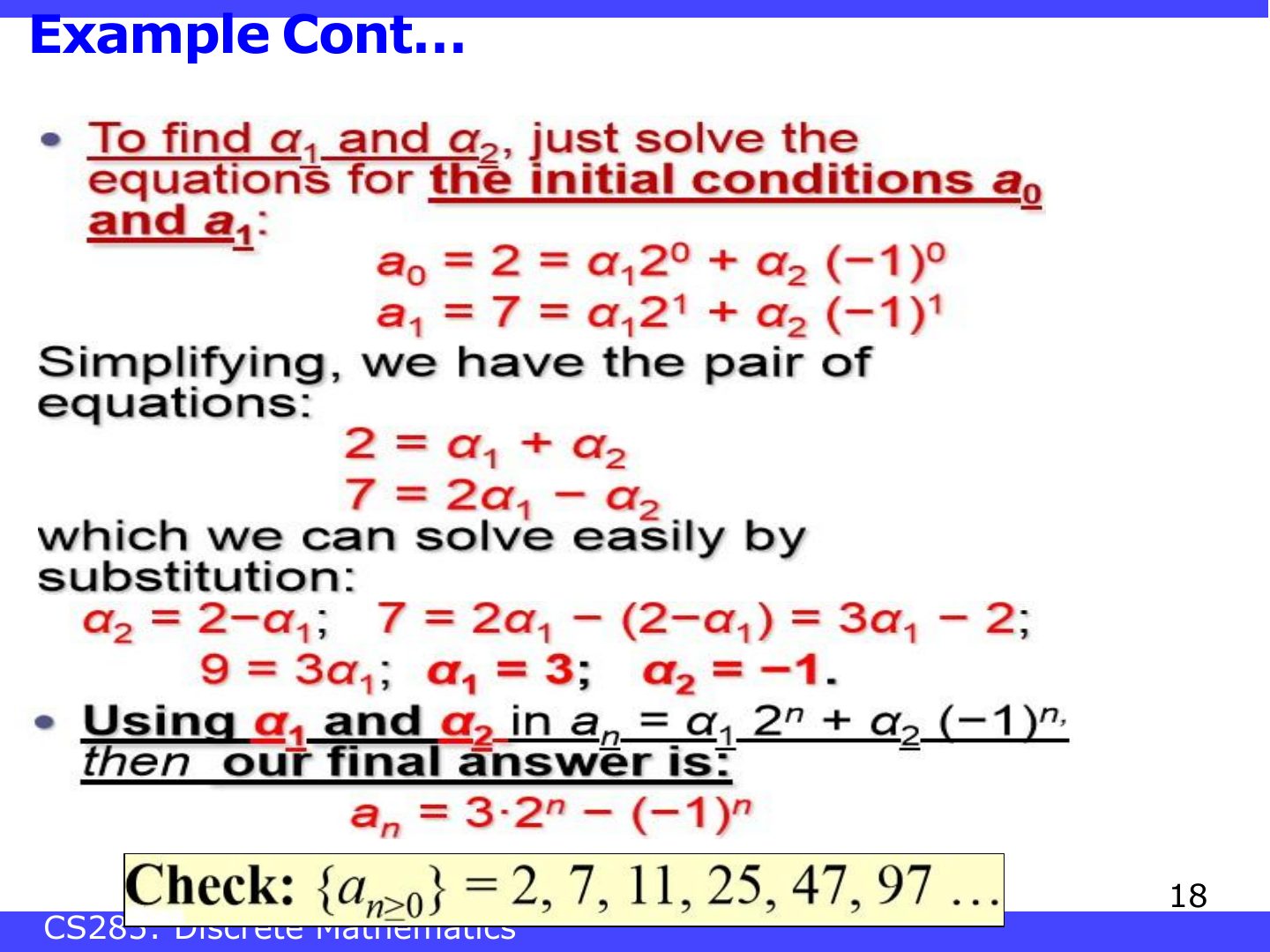
Solve aₙ = aₙ₋₁ + 2aₙ₋₂, a₀ = 2, a₁ = 7.
Compare with the model answer
Characteristic r² − r − 2 = 0 → r = 2, −1. aₙ = α₁2ⁿ + α₂(−1)ⁿ. a₀: α₁ + α₂ = 2; a₁: 2α₁ − α₂ = 7 → α₁ = 3, α₂ = −1. So aₙ = 3·2ⁿ − (−1)ⁿ.
Using Theorem 1
Using Theorem 1
Example Cont...
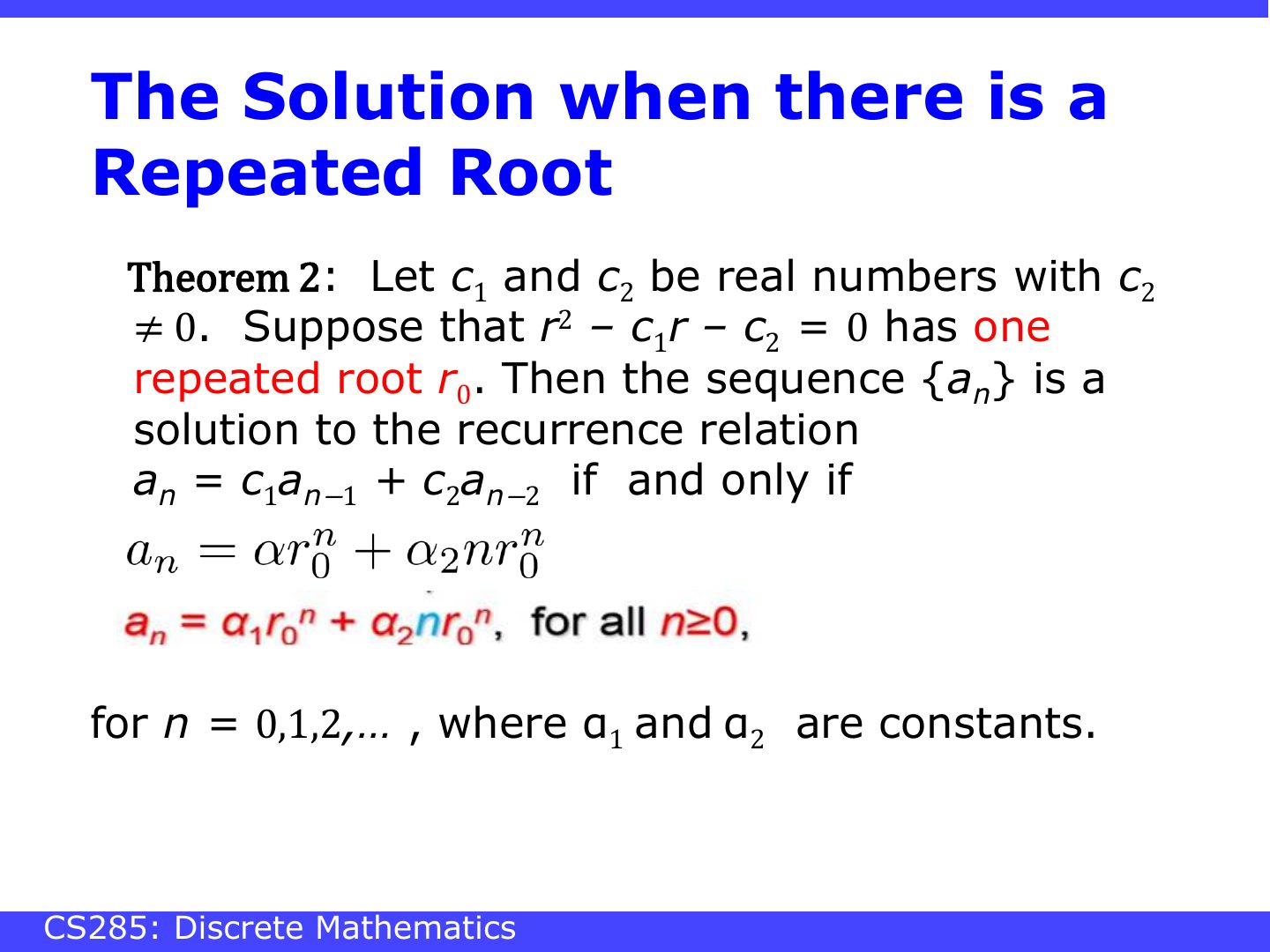
The Solution when there is a Repeated Root
Notes
Trap Forgetting the extra factor n on the second term for a repeated root.
Exam angle
Characteristic root 3 with multiplicity 2 gives the general solution:
Using Theorem 2
More Examples
Solution Procedure: 2-LiHoReCoCo
Solving Linear Homogeneous Recurrence Relations of Arbitrary Degree
Solving Linear Homogeneous Recurrence Relations of Arbitrary Degree
Using Theorem 3
The General Case with Repeated Roots Allowed
Notes
Root of multiplicity m contributes (α₀ + α₁n + … + αₘ₋₁nᵐ⁻¹)rⁿ.
Using Theorem 4
Theorem 4
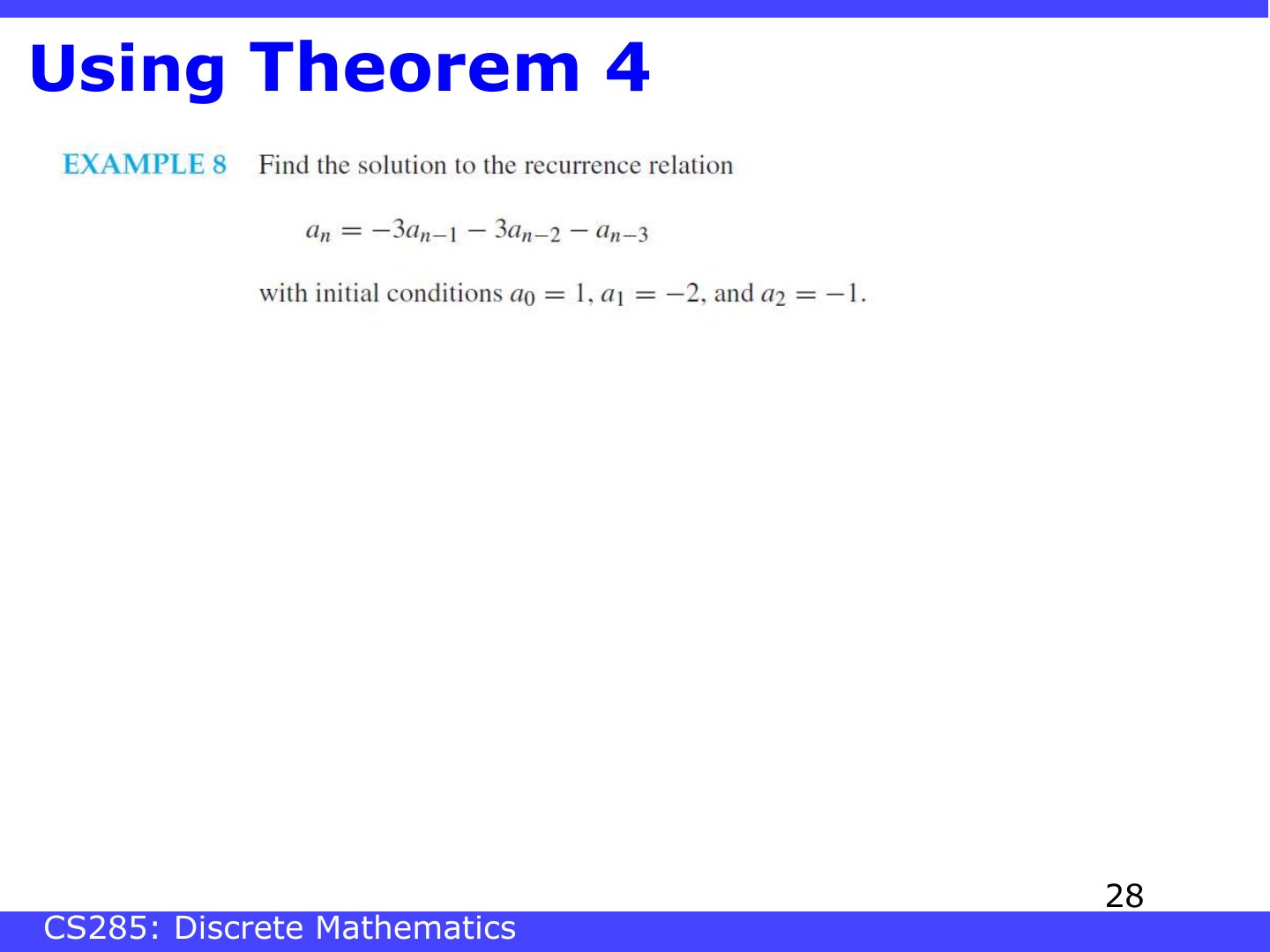
Homogeneous & Nonhomogenes
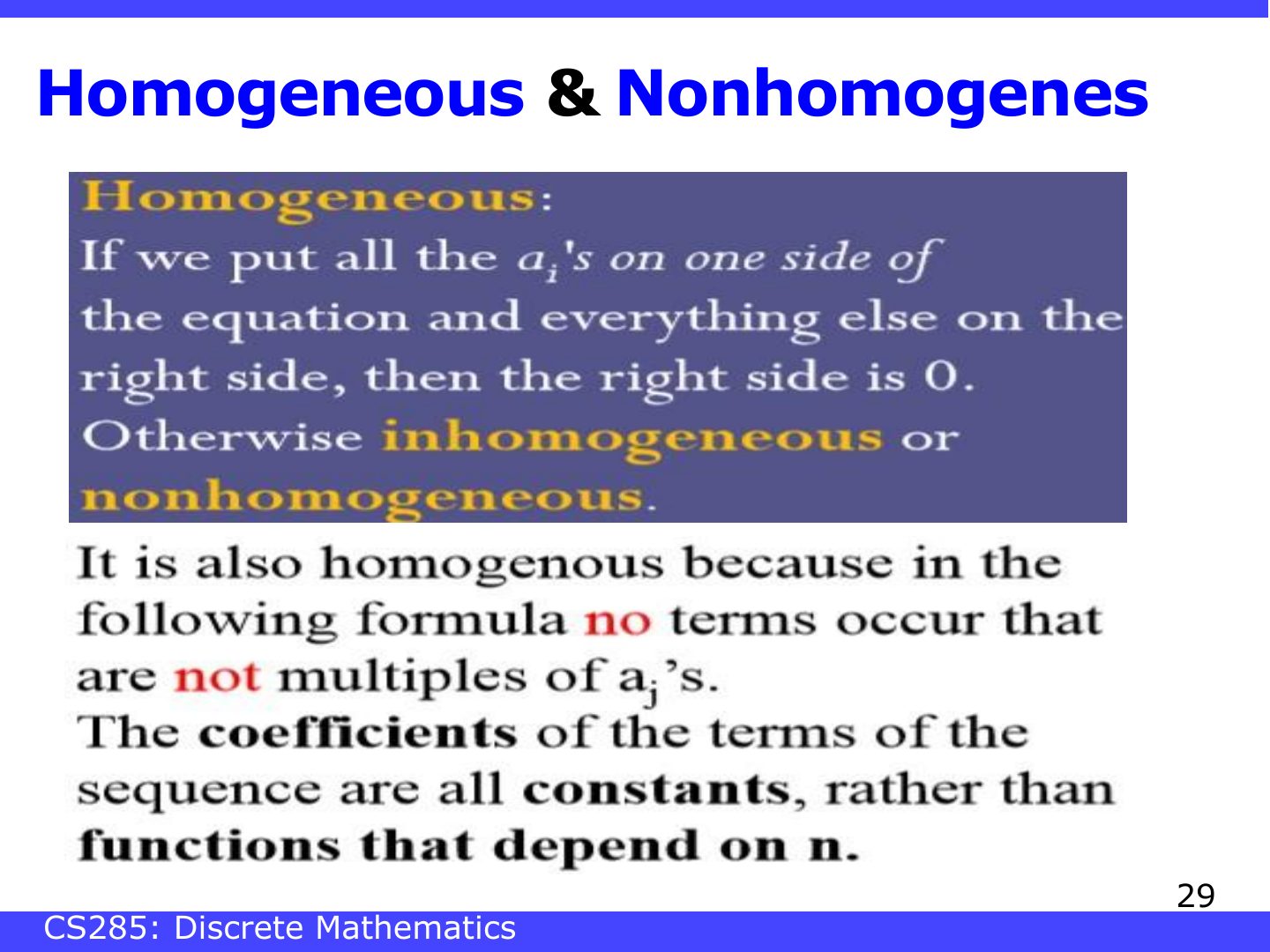
Linear Nonhomogeneous Recurrence Relations with Constant Coefficients (LiNoReCoCos)
Notes
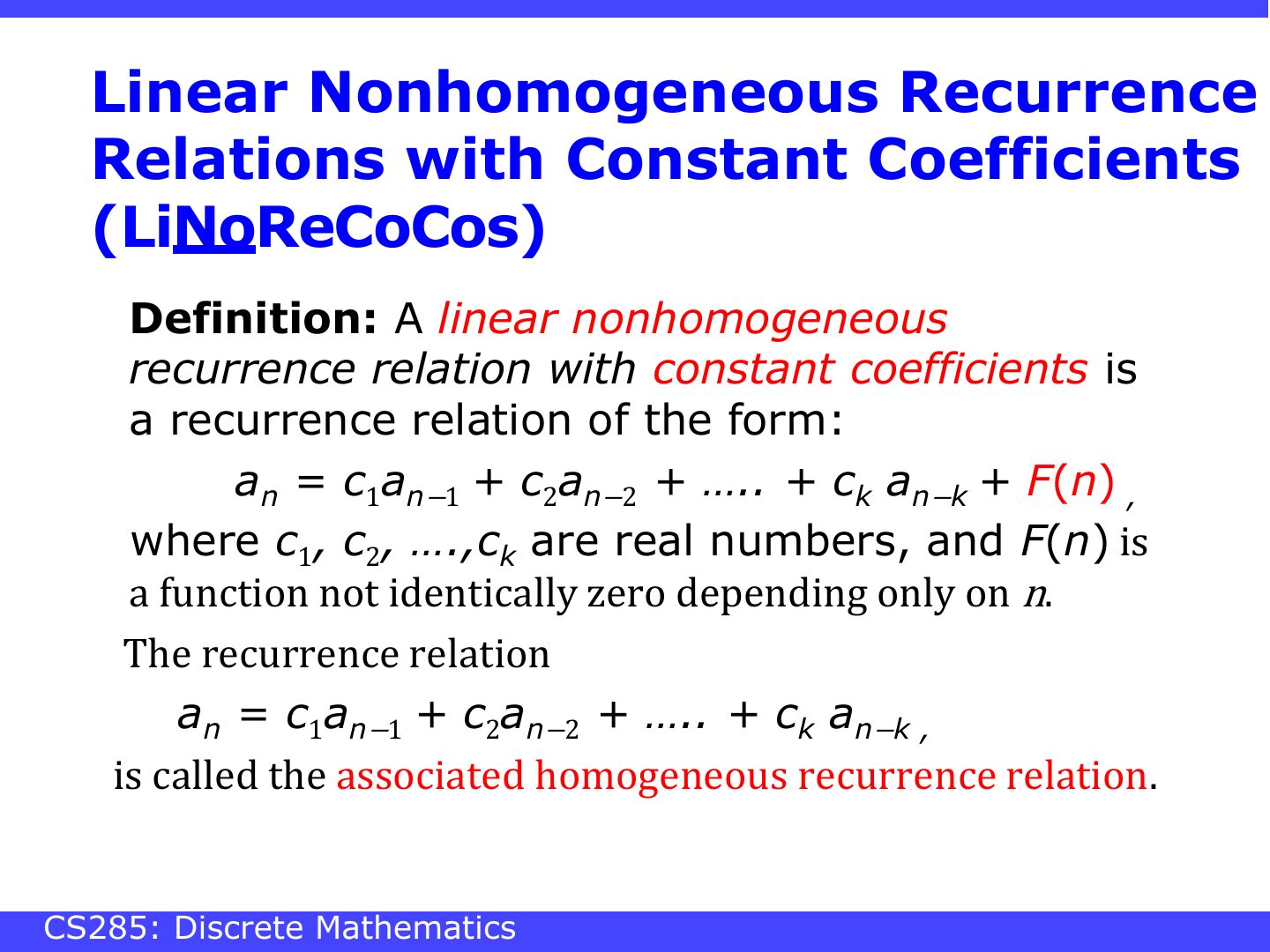
Nonhomogeneous: aₙ = (homogeneous solution) + (a particular solution for F(n)).
LiNoReCoCos – cont.
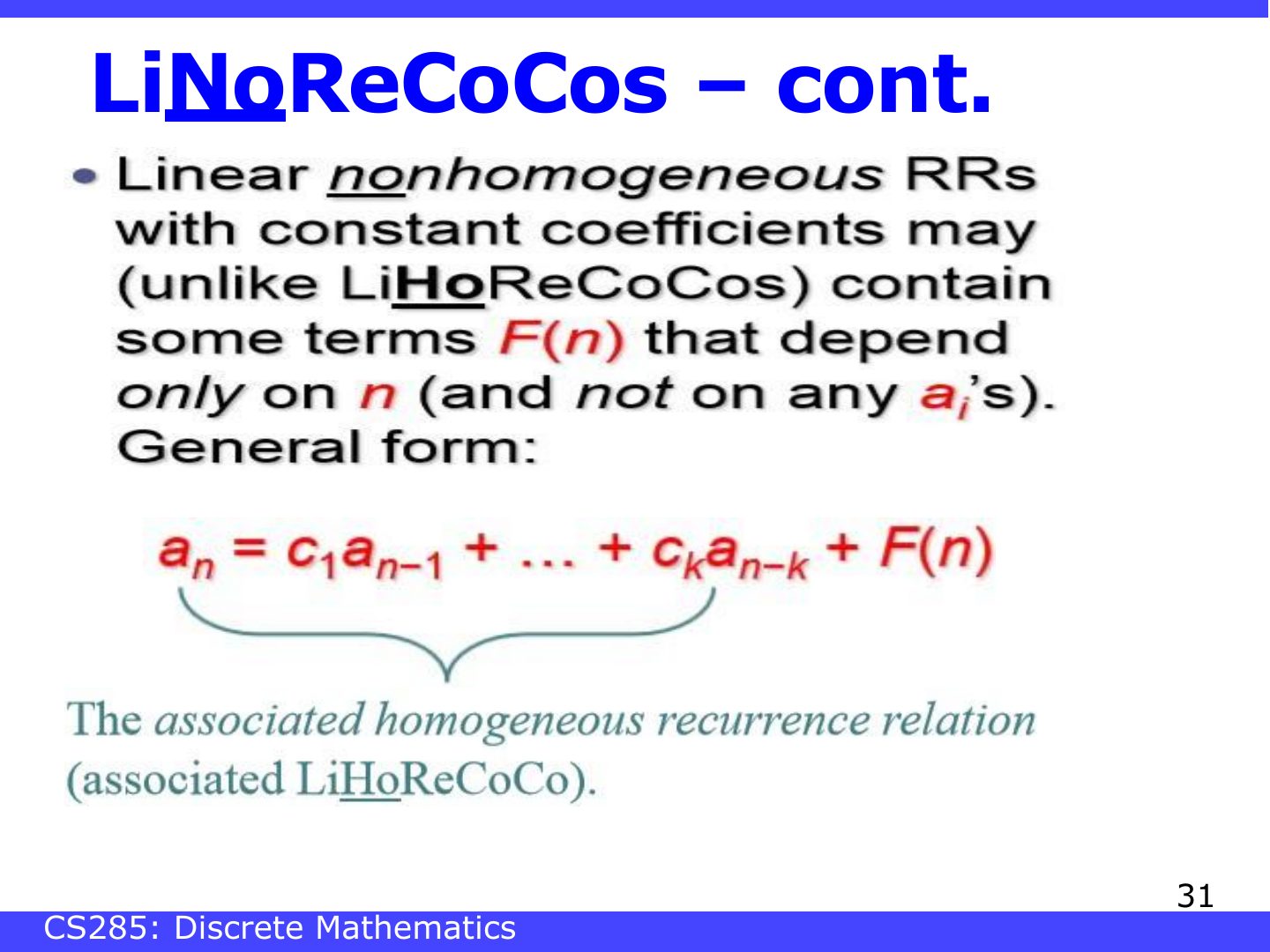
LiNoReCoCos – cont.
Solving Linear Nonhomogeneous Recurrence Relations with Constant Coefficients
F(n) Types
Notes
Guess the particular solution by the form of F(n): constant → C, linear → cn + d, quadratic → an² + bn + c, sⁿ → C·sⁿ (times nᵐ if s is a root).
Exam angle
For aₙ = 3aₙ₋₁ + 2n, the particular solution to try is:
- F(n) = 2n is linear.
When F(n) is linear
When F(n) is nonlinear