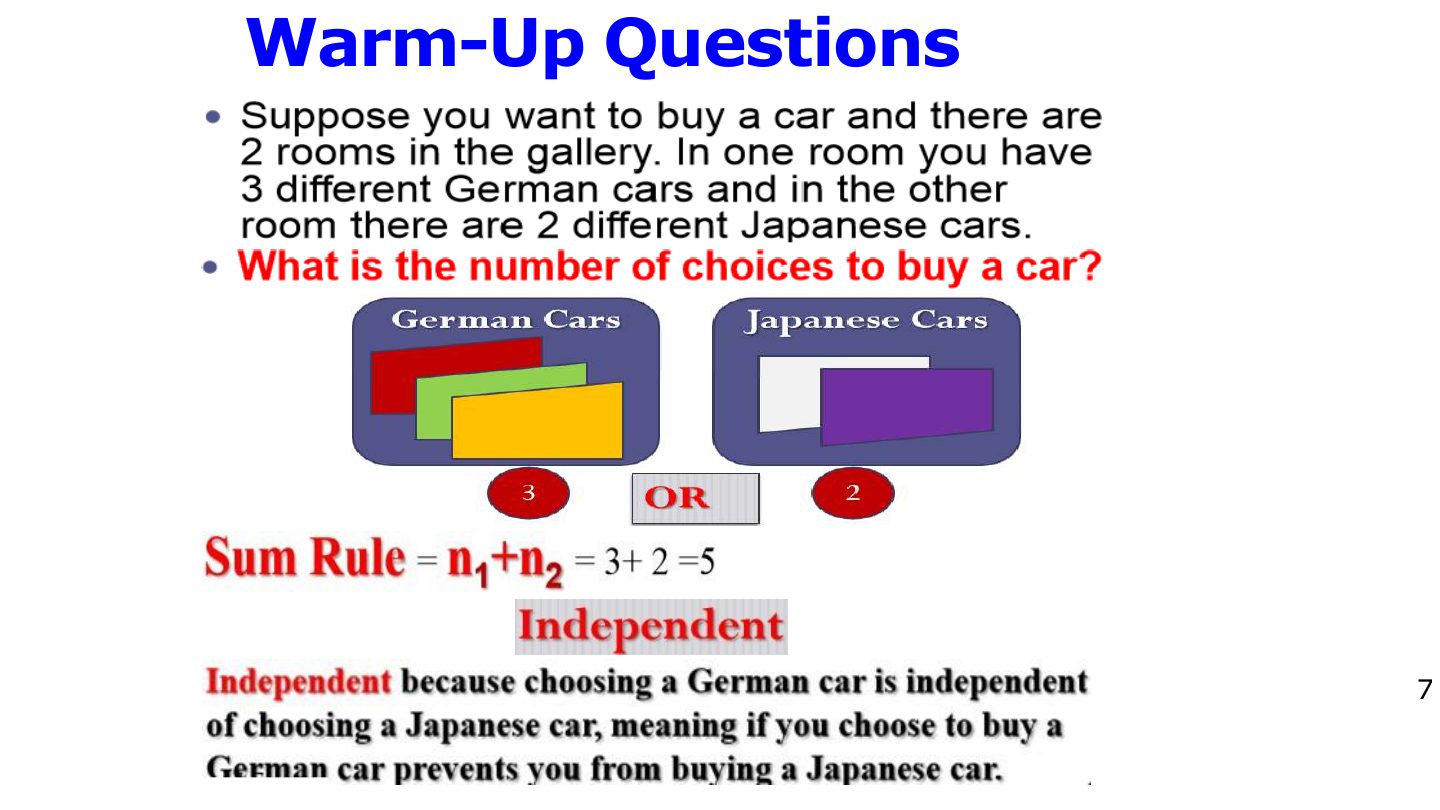
A student picks a project from list A (23) or list B (15), no overlap. Number of choices:
Counting
The sum, product and subtraction (inclusion–exclusion) rules, permutations and combinations, the binomial theorem, and Pascal’s triangle.
How to read this page
Every original slide is shown unchanged. Yellow marks on a slide point to a numbered note: hover or tap a mark to jump to its note, and hover a note to see its marks. Questions tagged Past exam appeared on a real paper; Prediction questions are likely angles, not confirmed. Pick an answer to each question: a wrong pick tells you why it is wrong, so you can try again.
All 49 slides
- 1 Slide 1
- 2 Chapter Summary
- 3 Slide 3
- 4 Section Summary
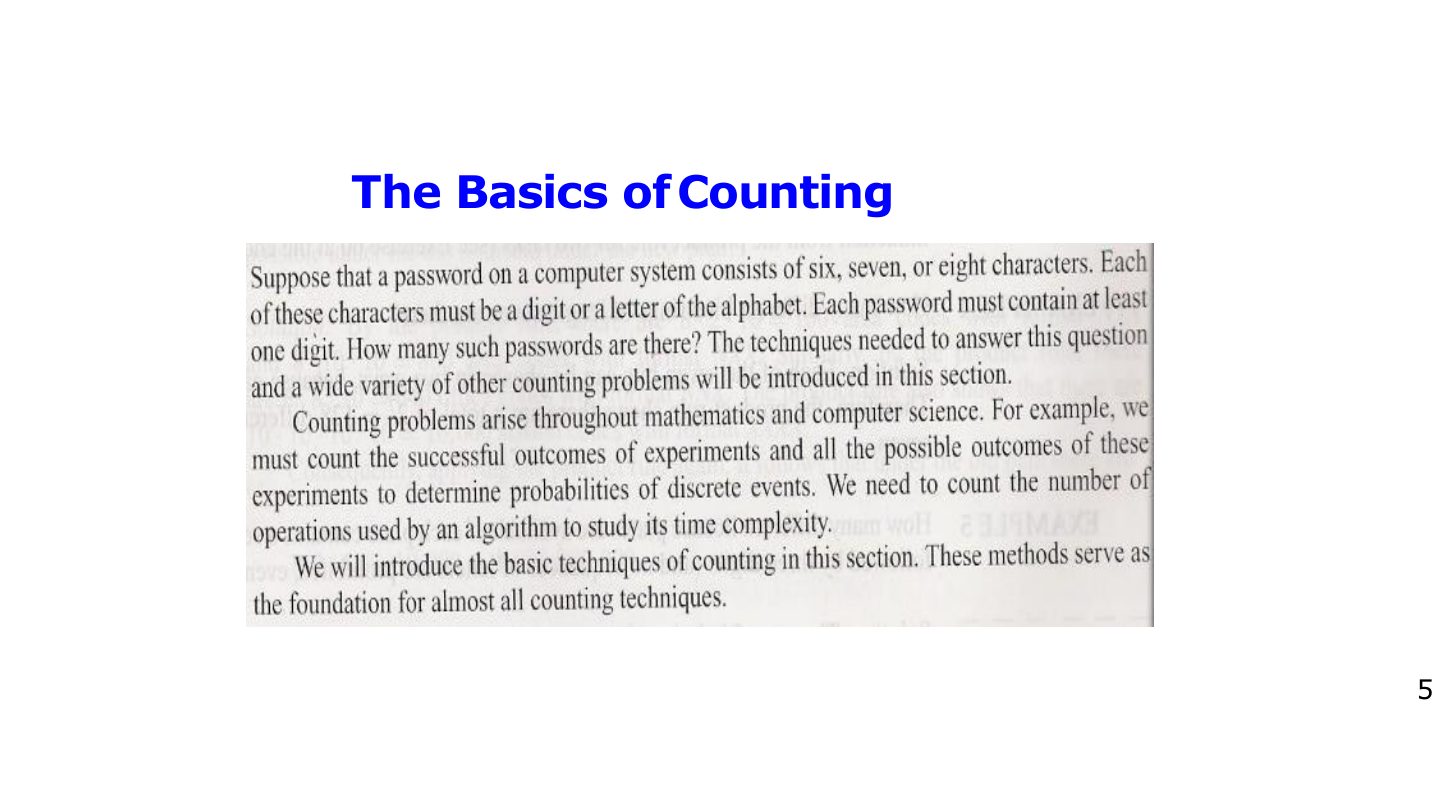
- 5 The Basics of Counting
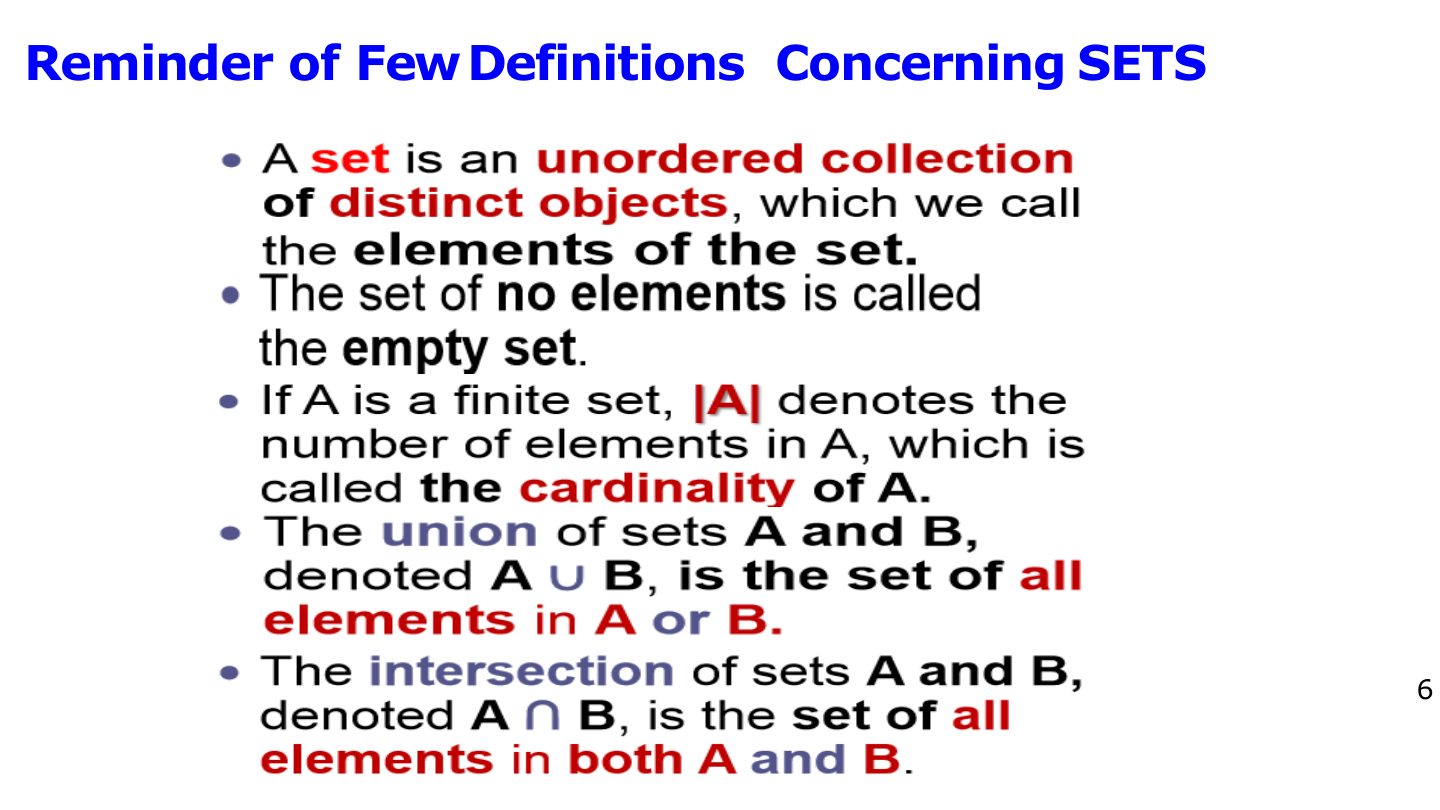
- 6 Reminder of Few Definitions Concerning SETS
- 7 Warm-Up Questions
- 8 Basic Counting Principles The SUM Rule:
- 9 SUM The Rule of
- 10 Slide 10
- 11 Warm- Up Questions
- 12 Slide 12
- 13 Basic Counting Principles - The PRODUCT Rule:
- 14 Product Example
- 15 Slide 15
- 16 Slide 16
- 17 Examples
- 18 solution
- 19 Solution
- 20 Solution
- 21 Example
- 22 Slide 22
- 23 Basic Counting Principles: Subtraction Rule
- 24 Inclusion - Exclusion
- 25 Inclusion - Exclusion
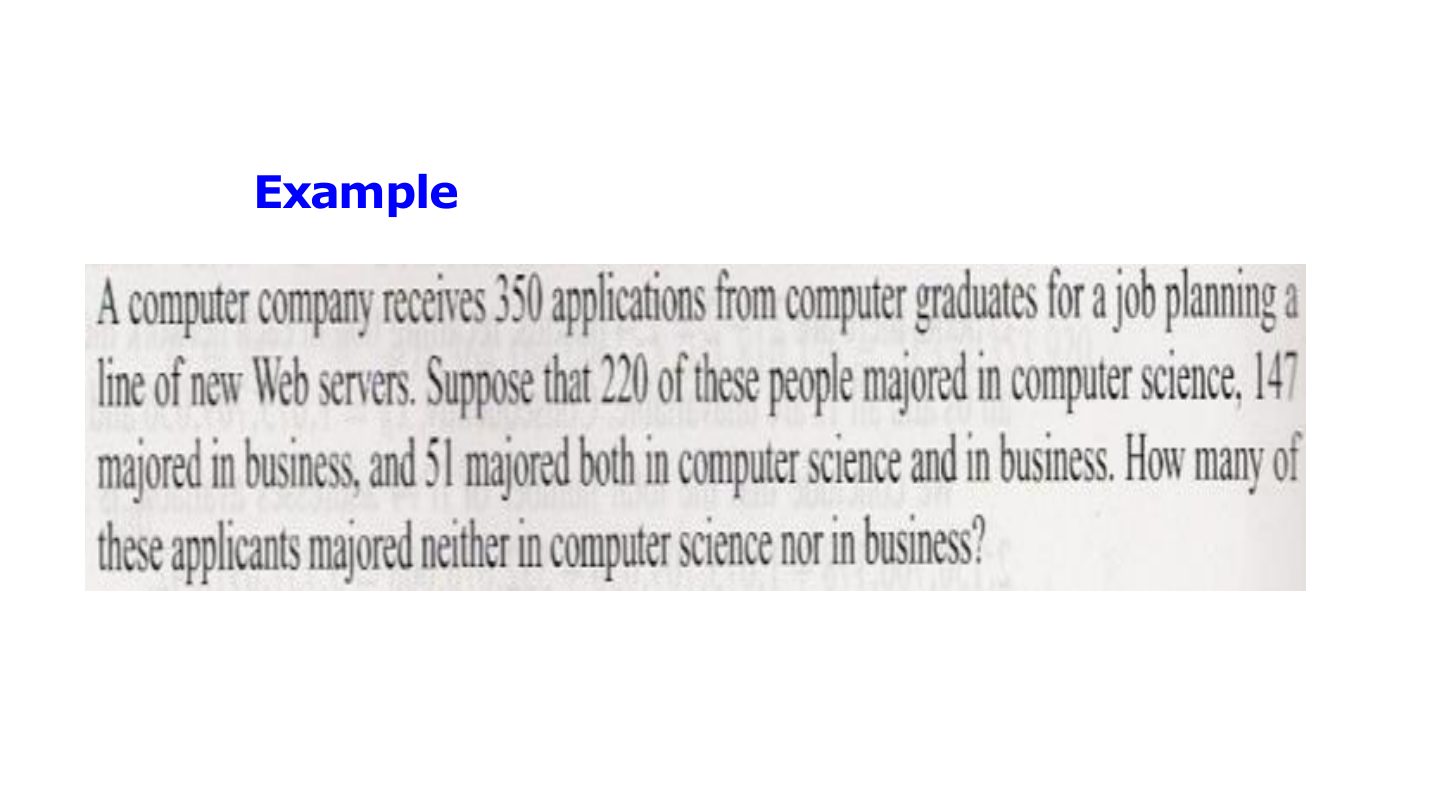
- 26 Example
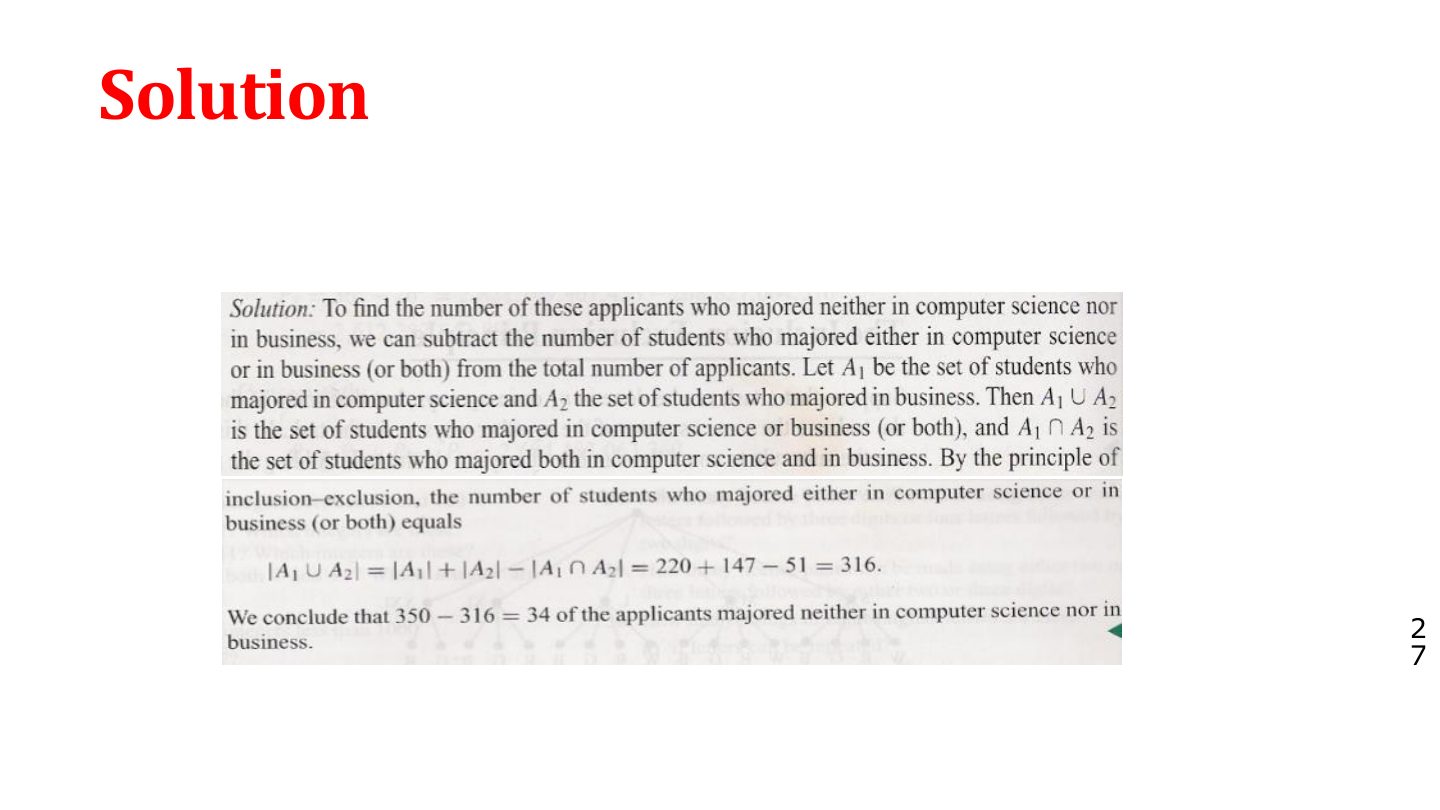
- 27 Solution
- 28 Slide 28
- 29 Section Summary
- 30 Permutations
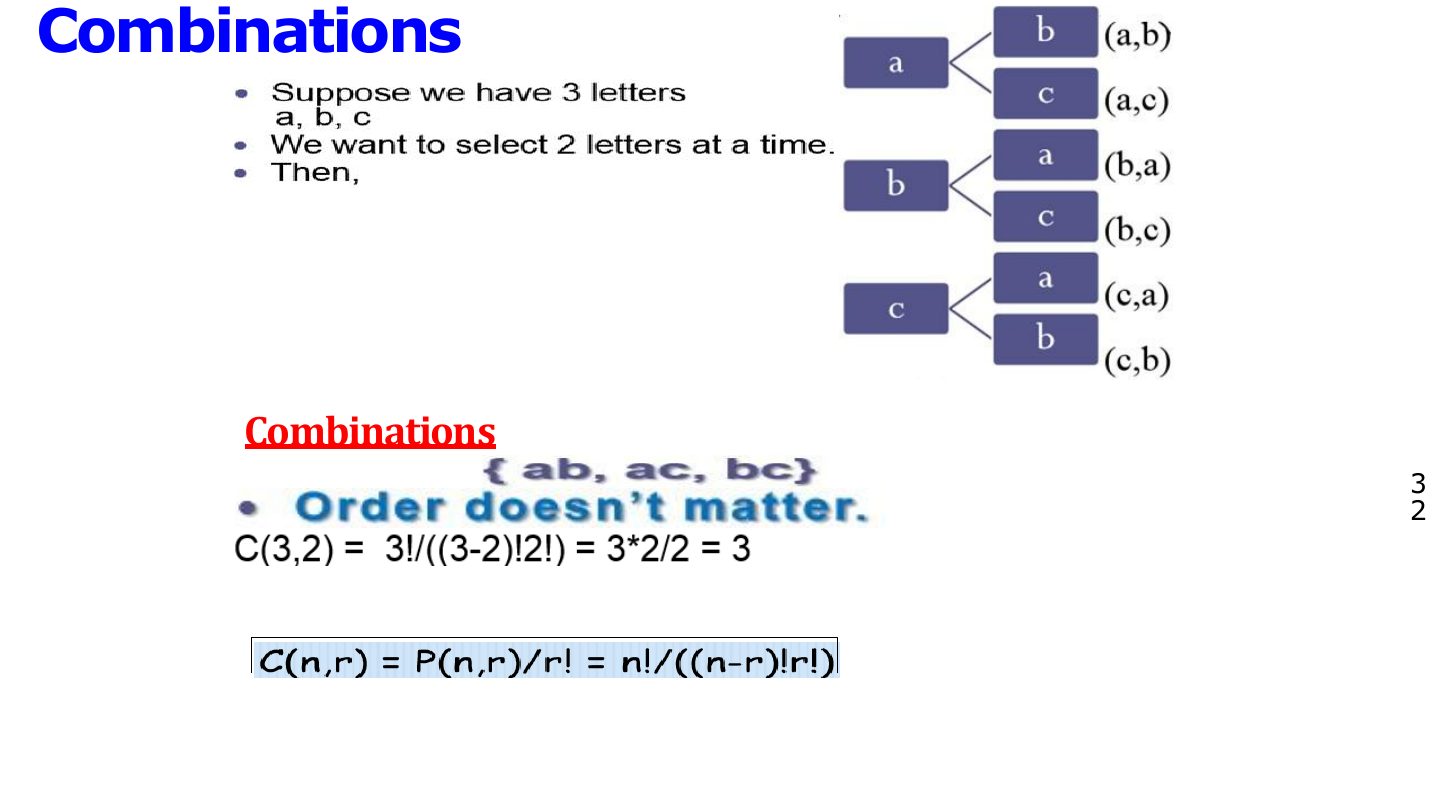
- 31 Cominations
- 32 Combinations
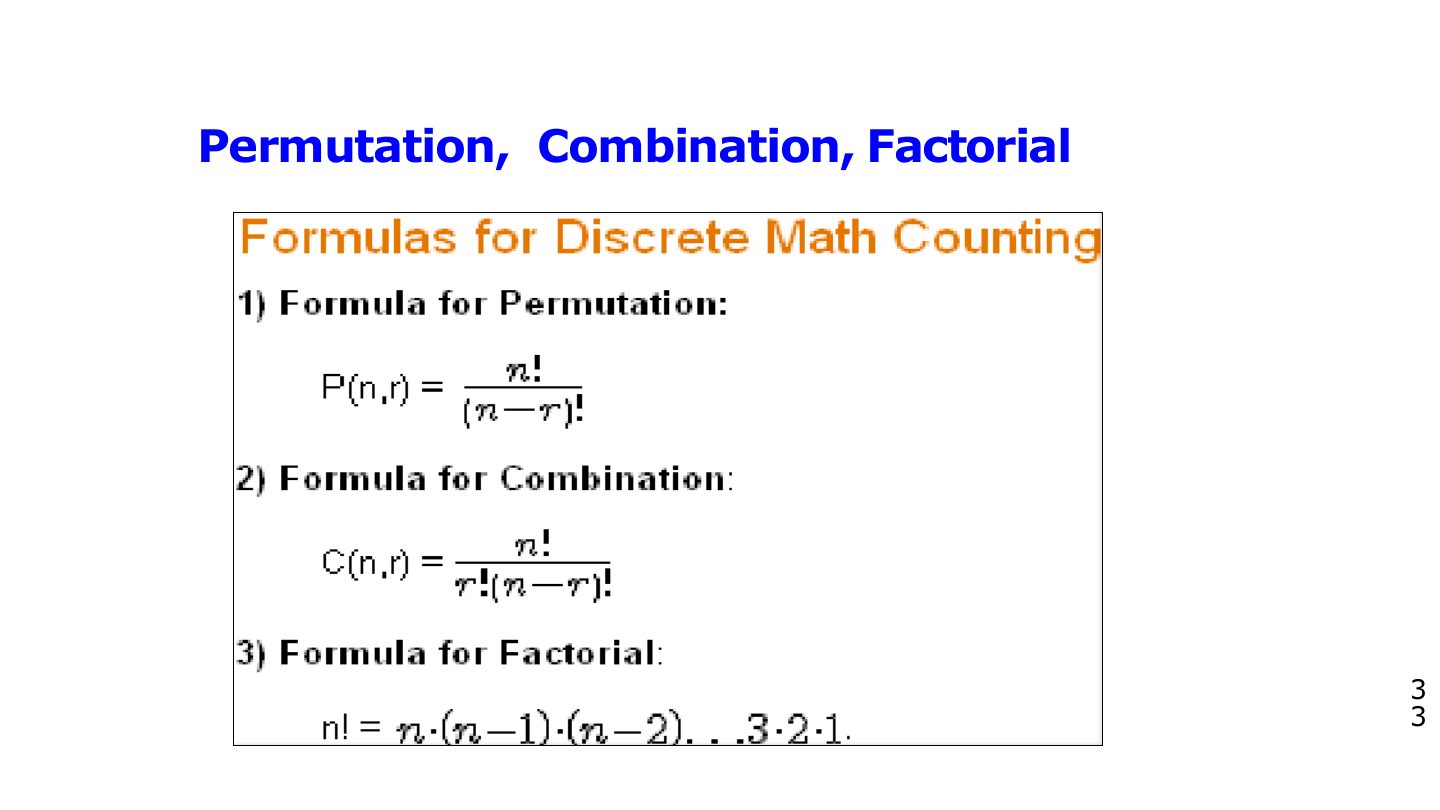
- 33 Permutation, Combination, Factorial
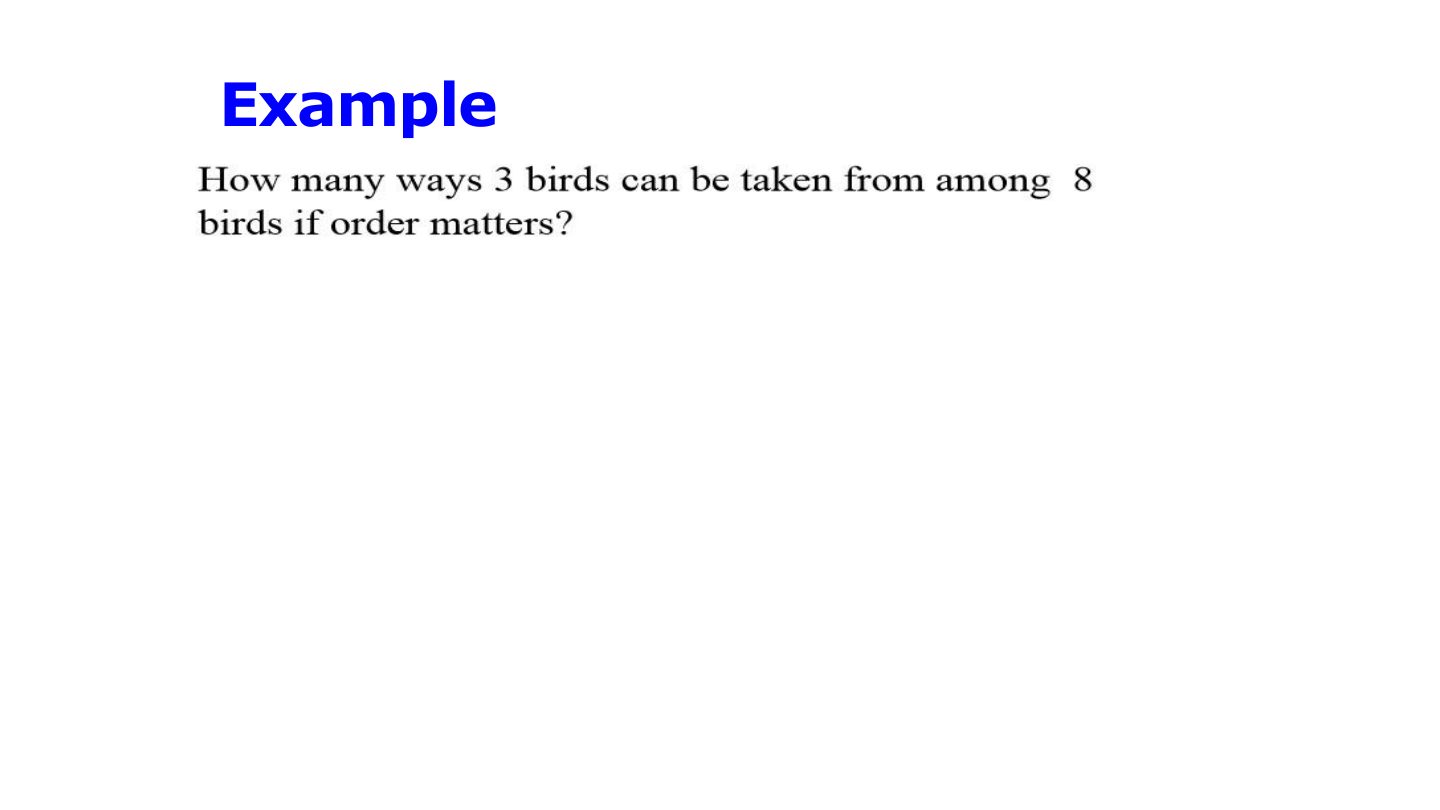
- 34 Example
- 35 Solution
- 36 Example
- 37 Solution
- 38 Example
- 39 Slide 39
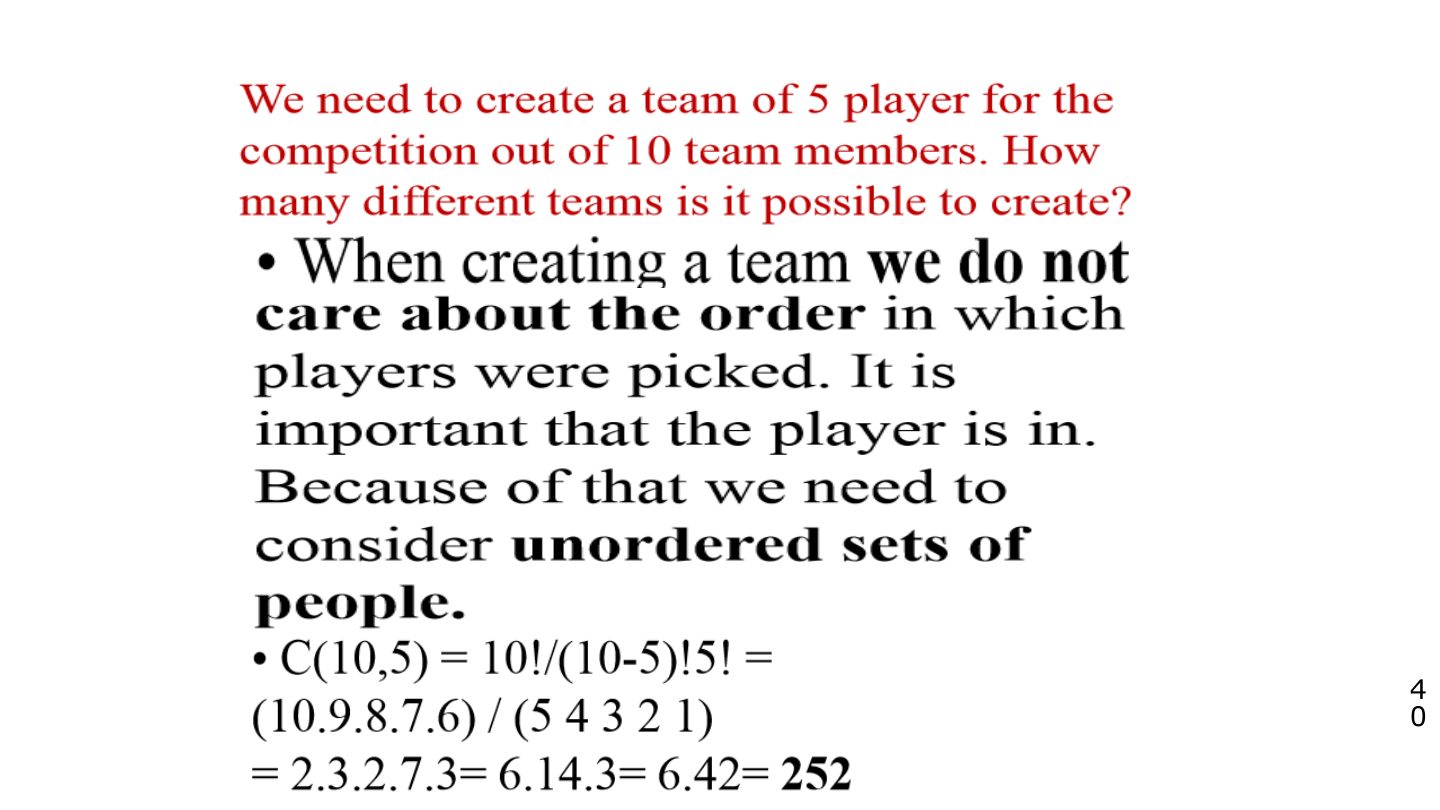
- 40 Example
- 41 Slide 41
- 42 Section Summary
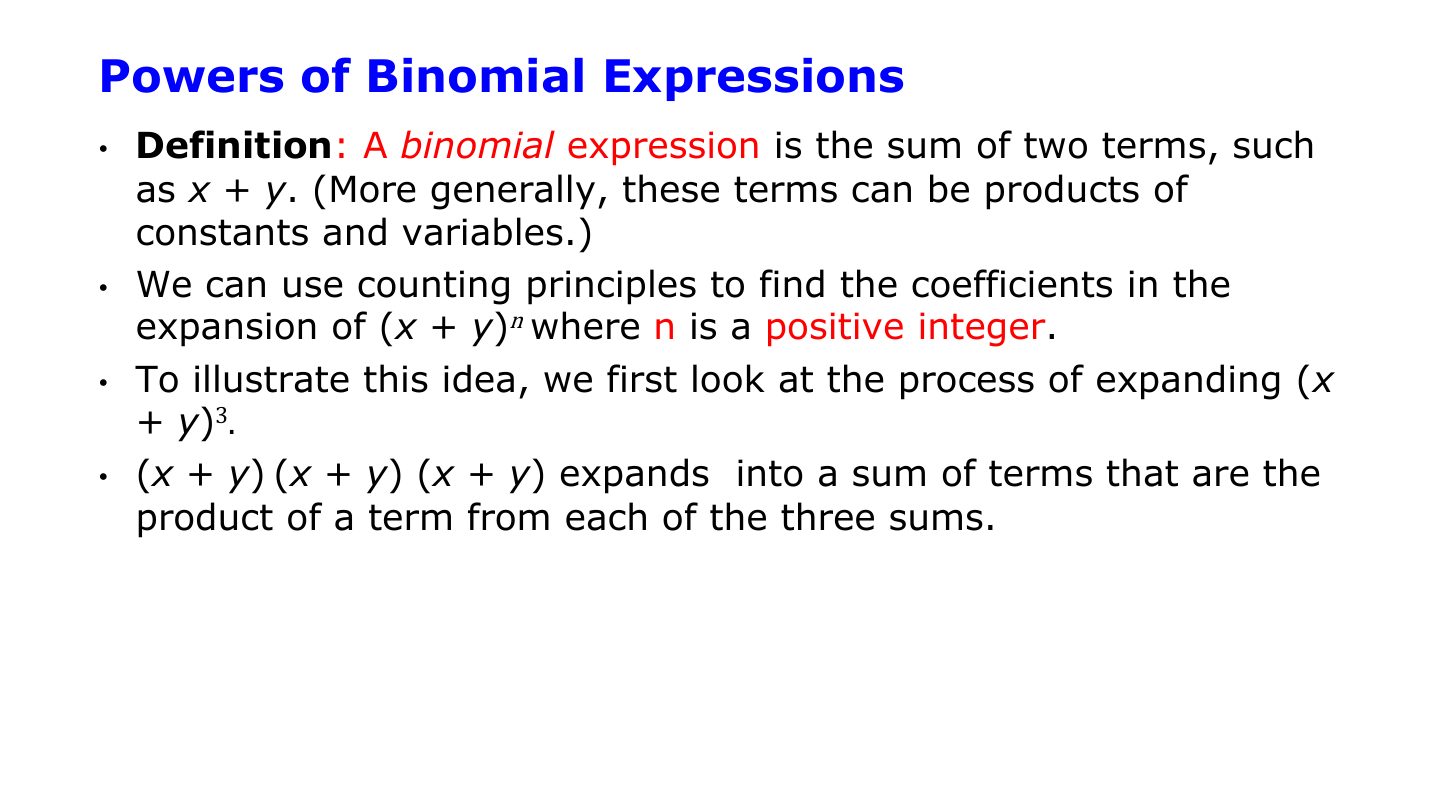
- 43 Powers of Binomial Expressions
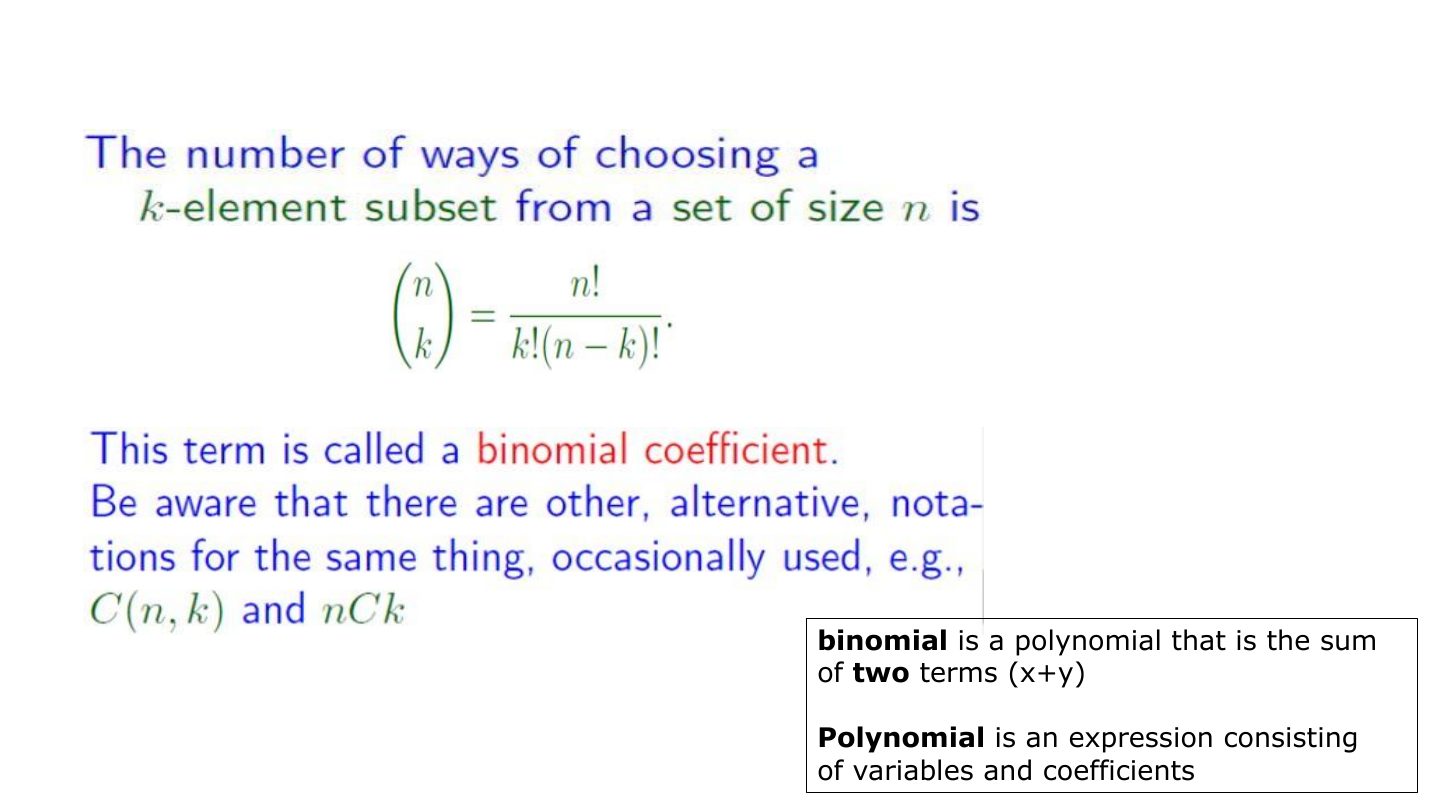
- 44 Binomial Coefficients
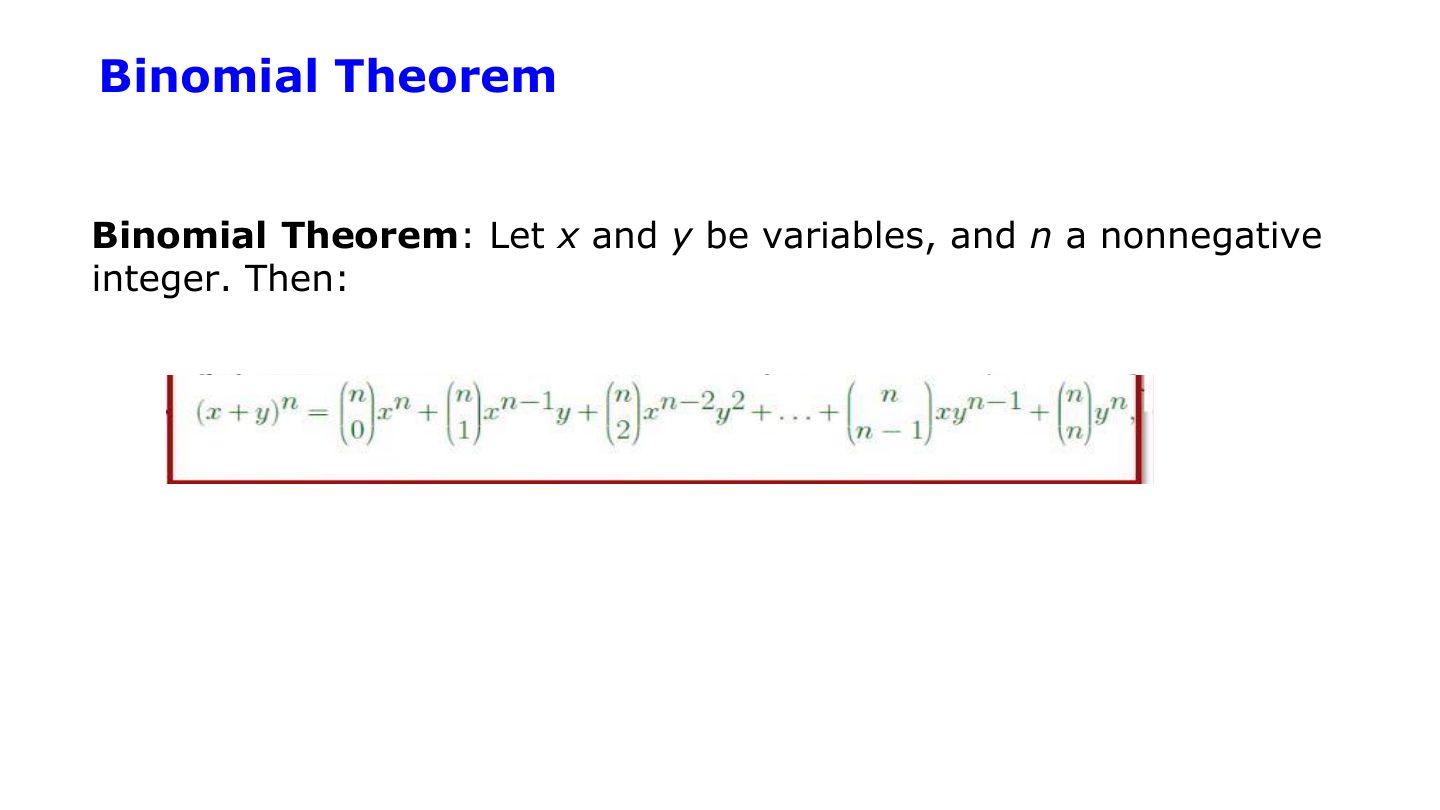
- 45 Binomial Theorem
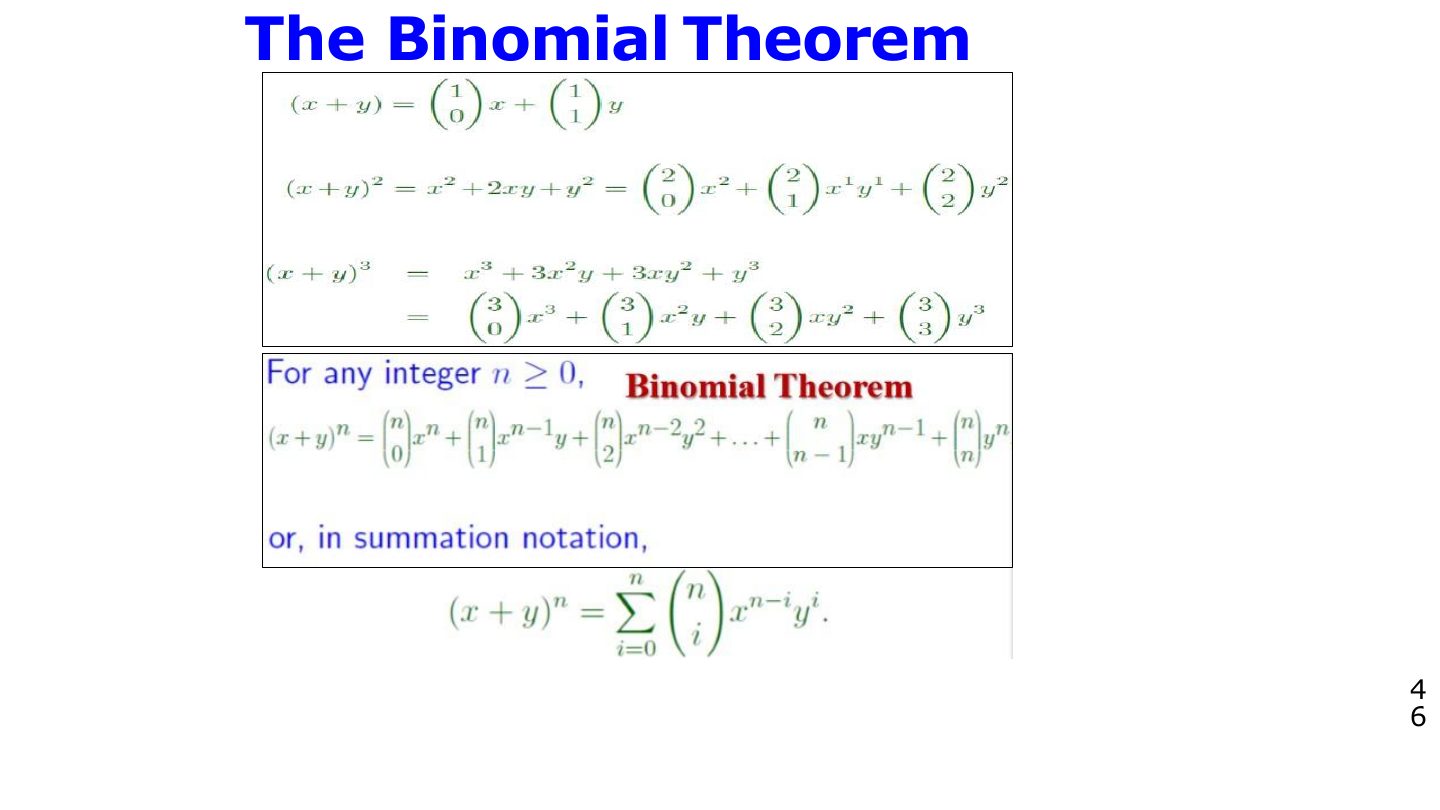
- 46 The Binomial Theorem
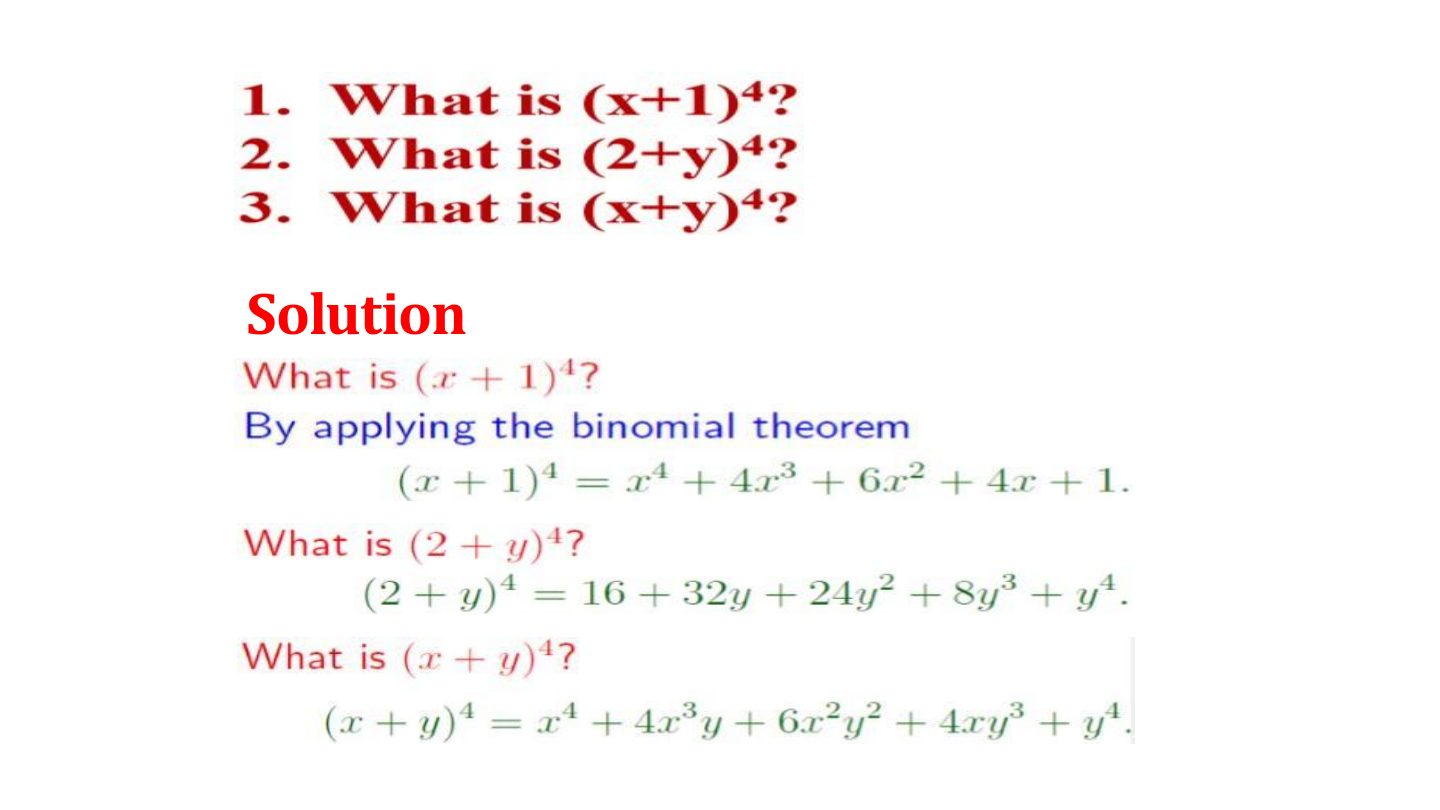
- 47 Slide 47
- 48 Pascal Triangle
- 49 Slide 49
Slide 1
Chapter Summary
Slide 3
Section Summary
The Basics of Counting
Reminder of Few Definitions Concerning SETS
Warm-Up Questions
Basic Counting Principles The SUM Rule:
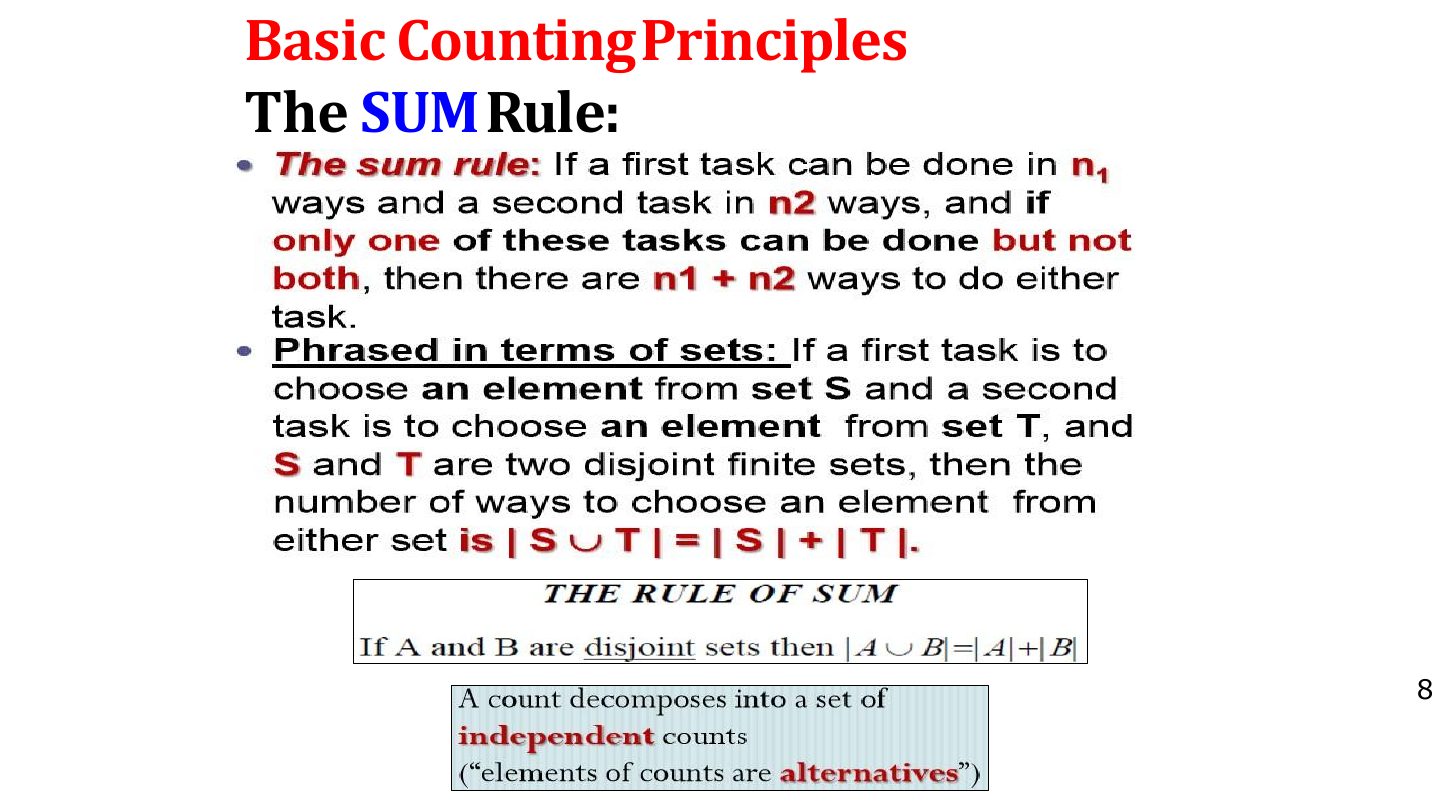
Exam angle
SUM The Rule of
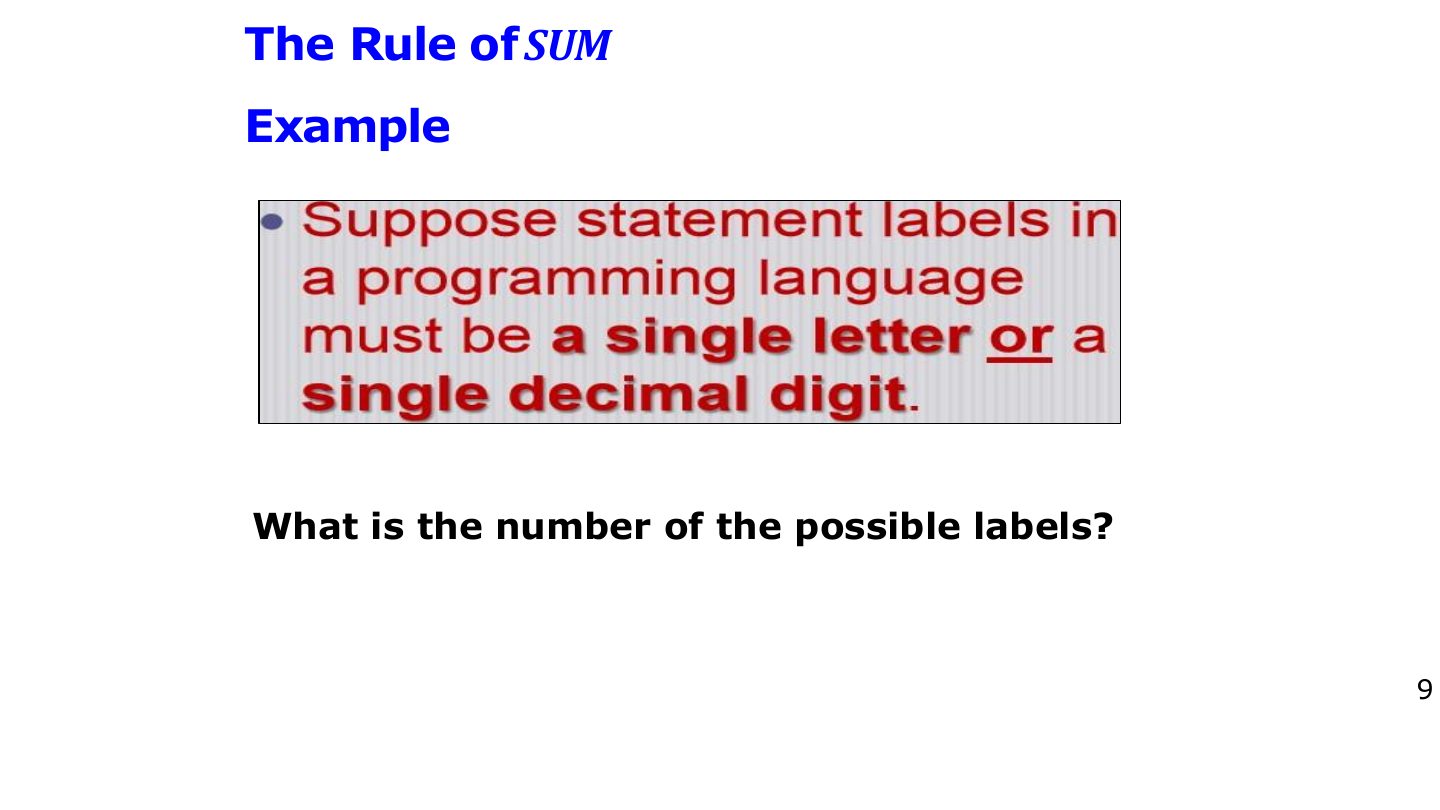
Slide 10
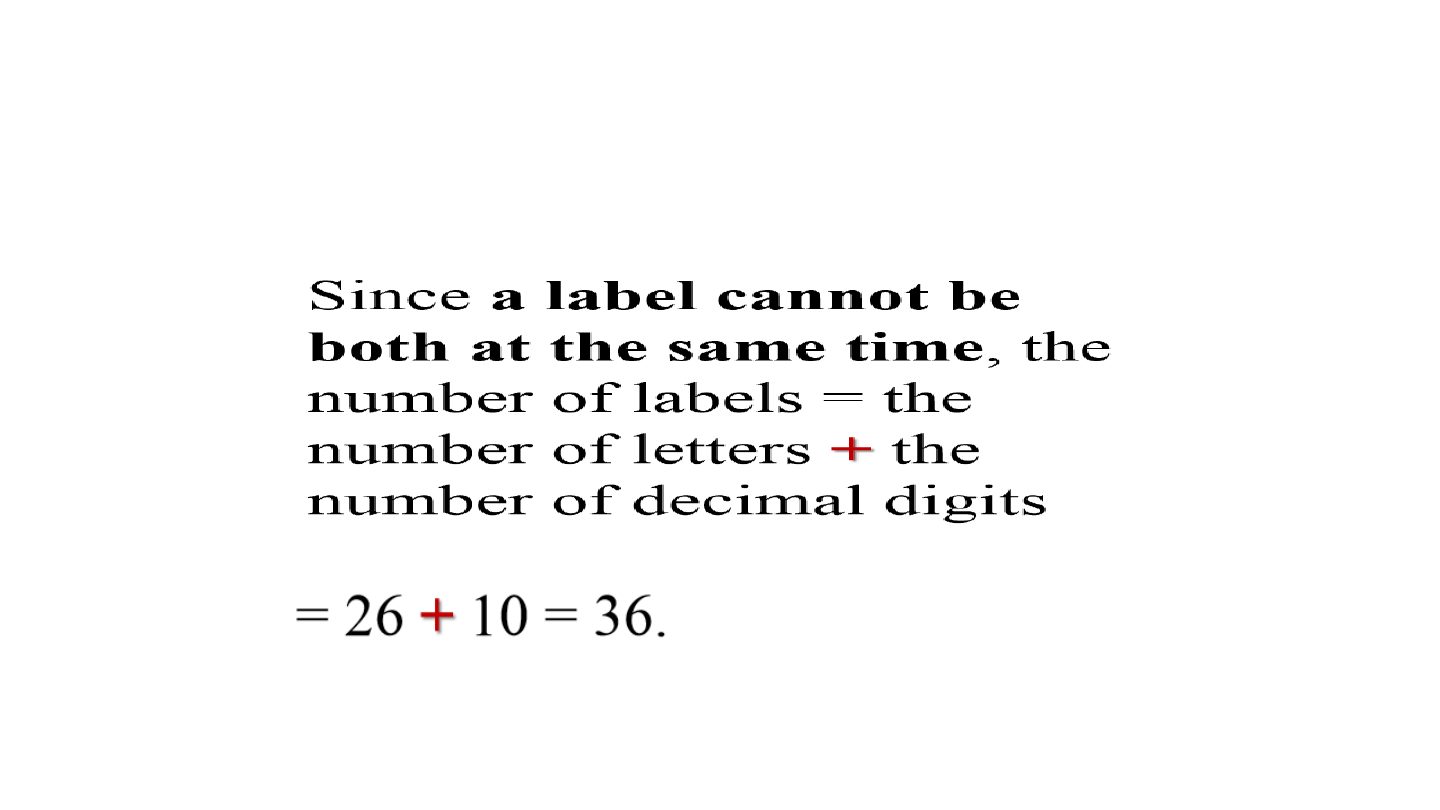
Warm- Up Questions
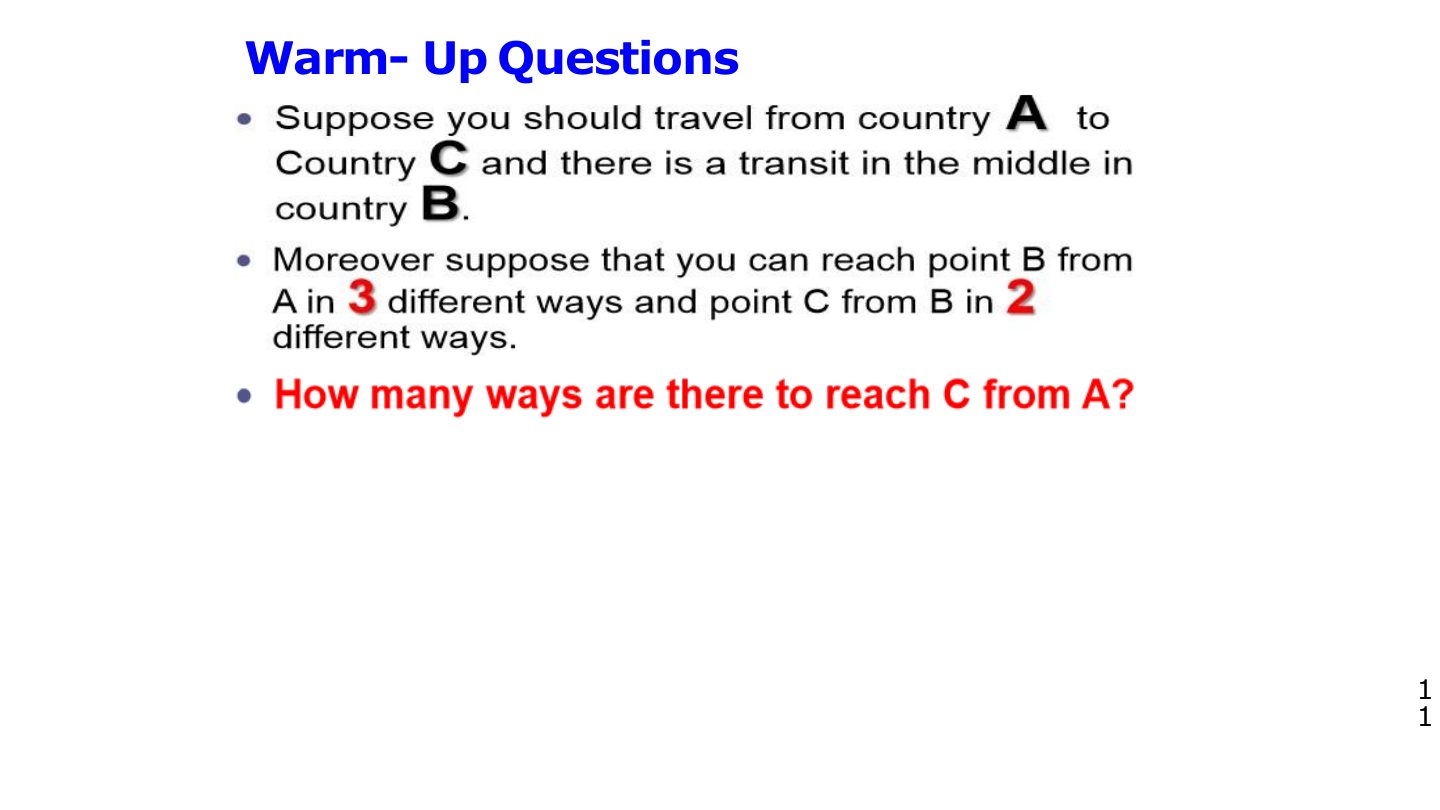
Slide 12
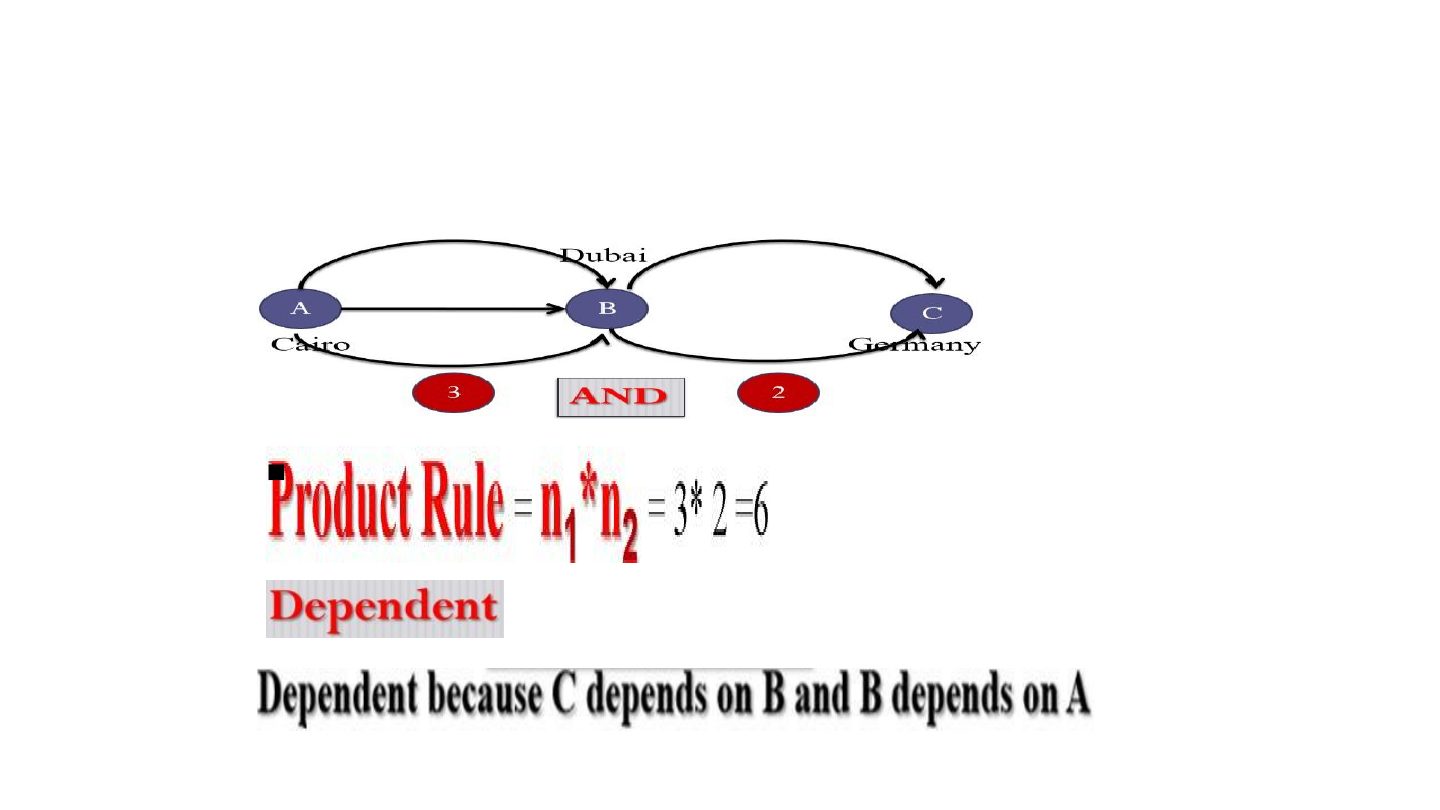
Basic Counting Principles - The PRODUCT Rule:
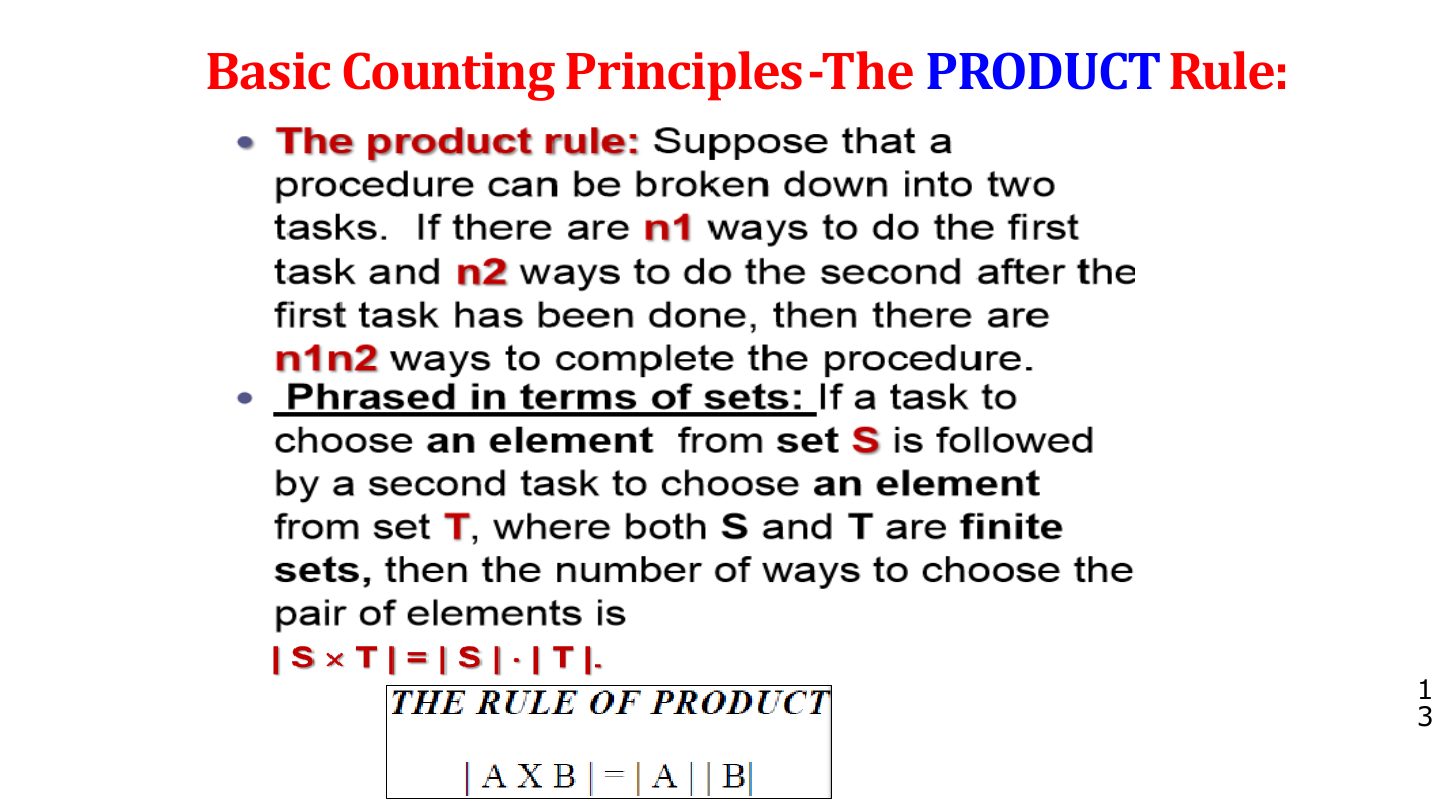
Notes
Memory trick "or" → add, "and then" → multiply.
Exam angle
How many bit strings of length 8 are there?
- 2⁸.
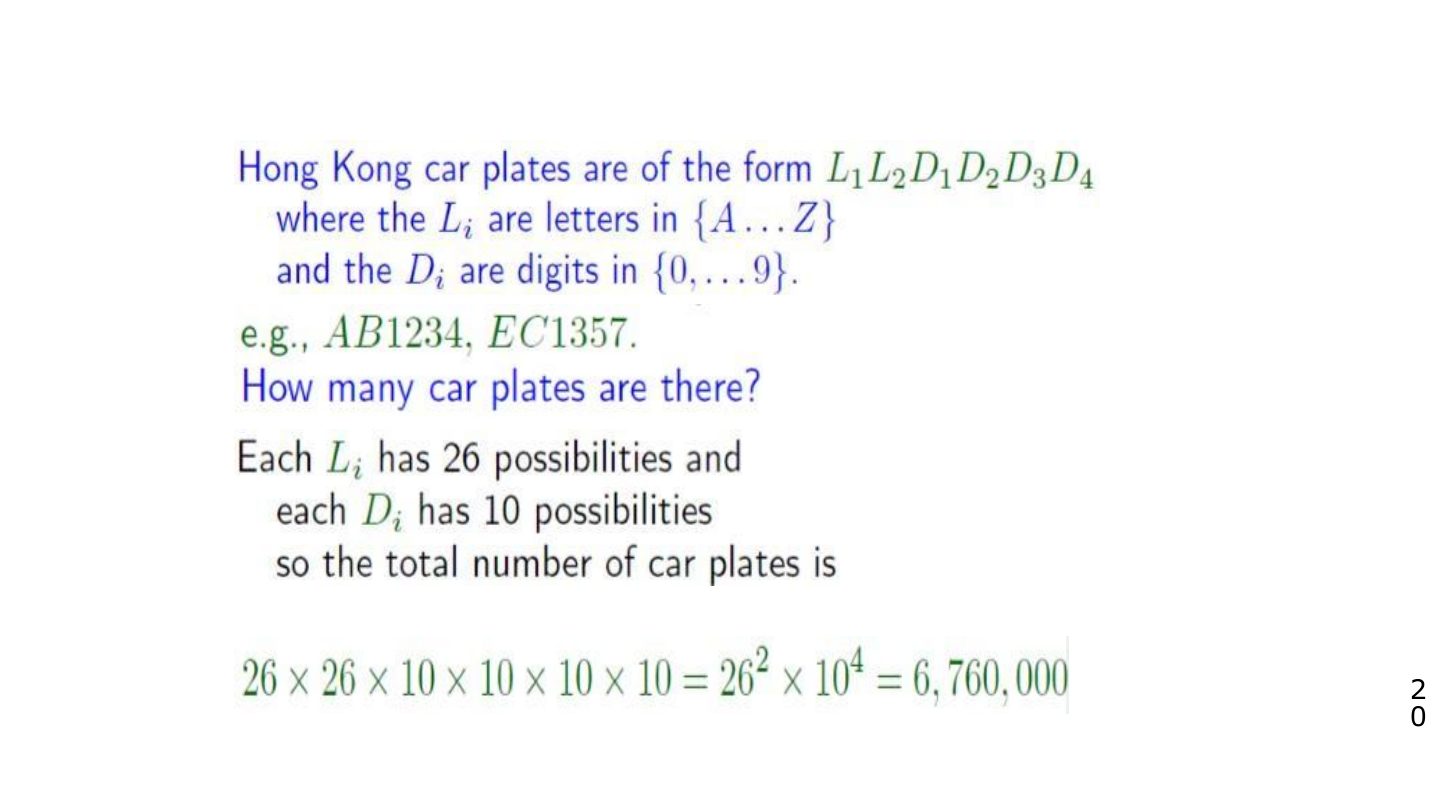
License plates of 3 letters followed by 3 digits:
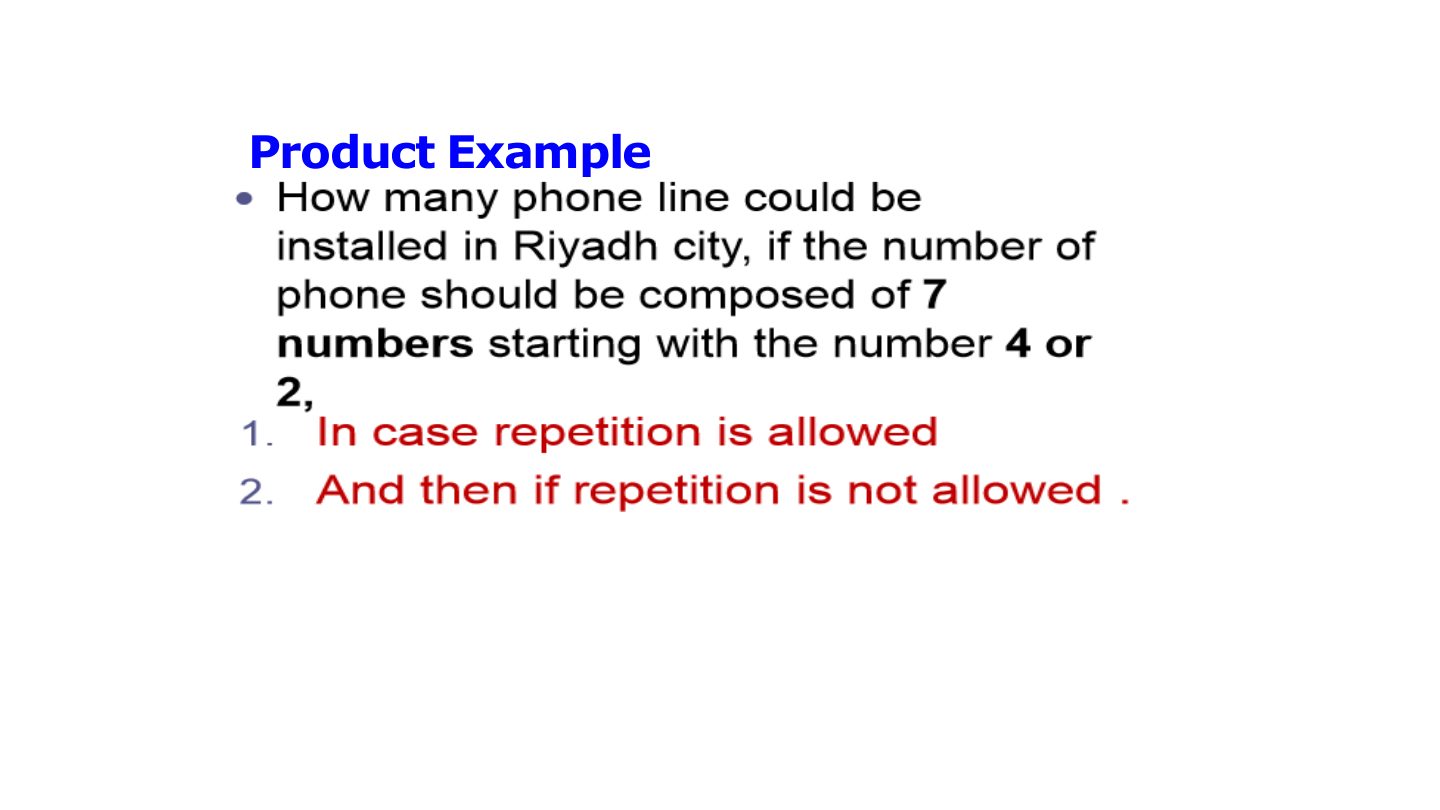
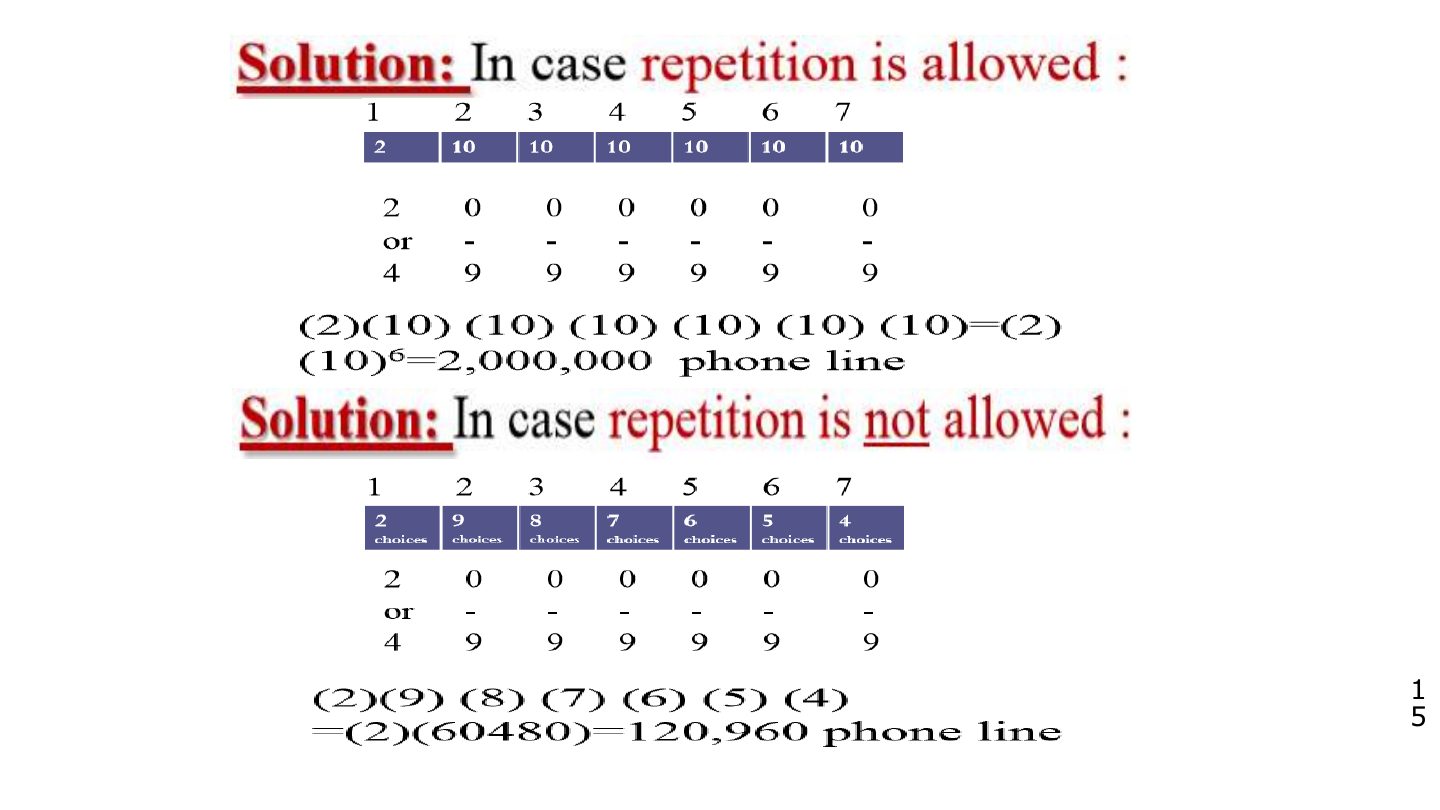
Product Example
Slide 15
Slide 16
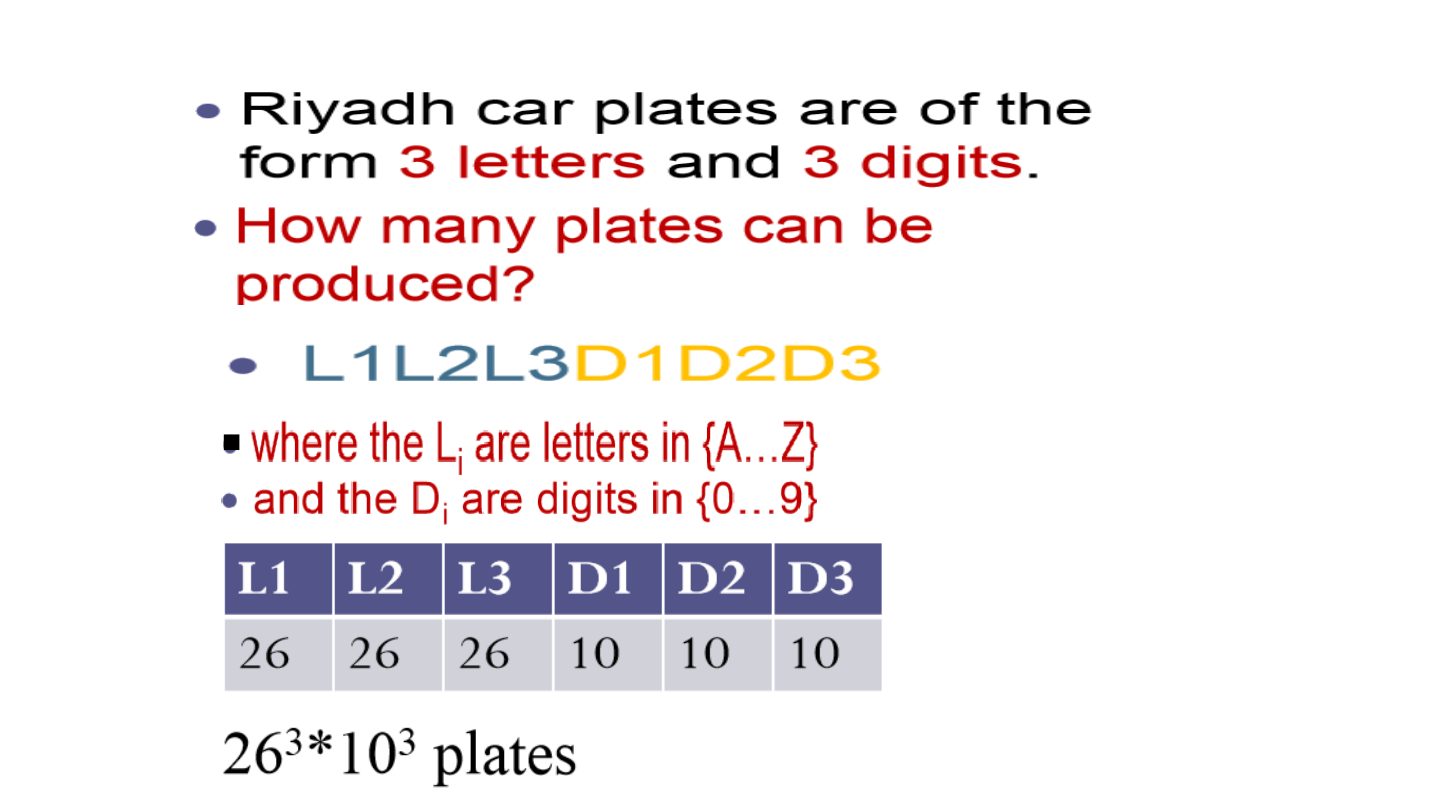
Examples
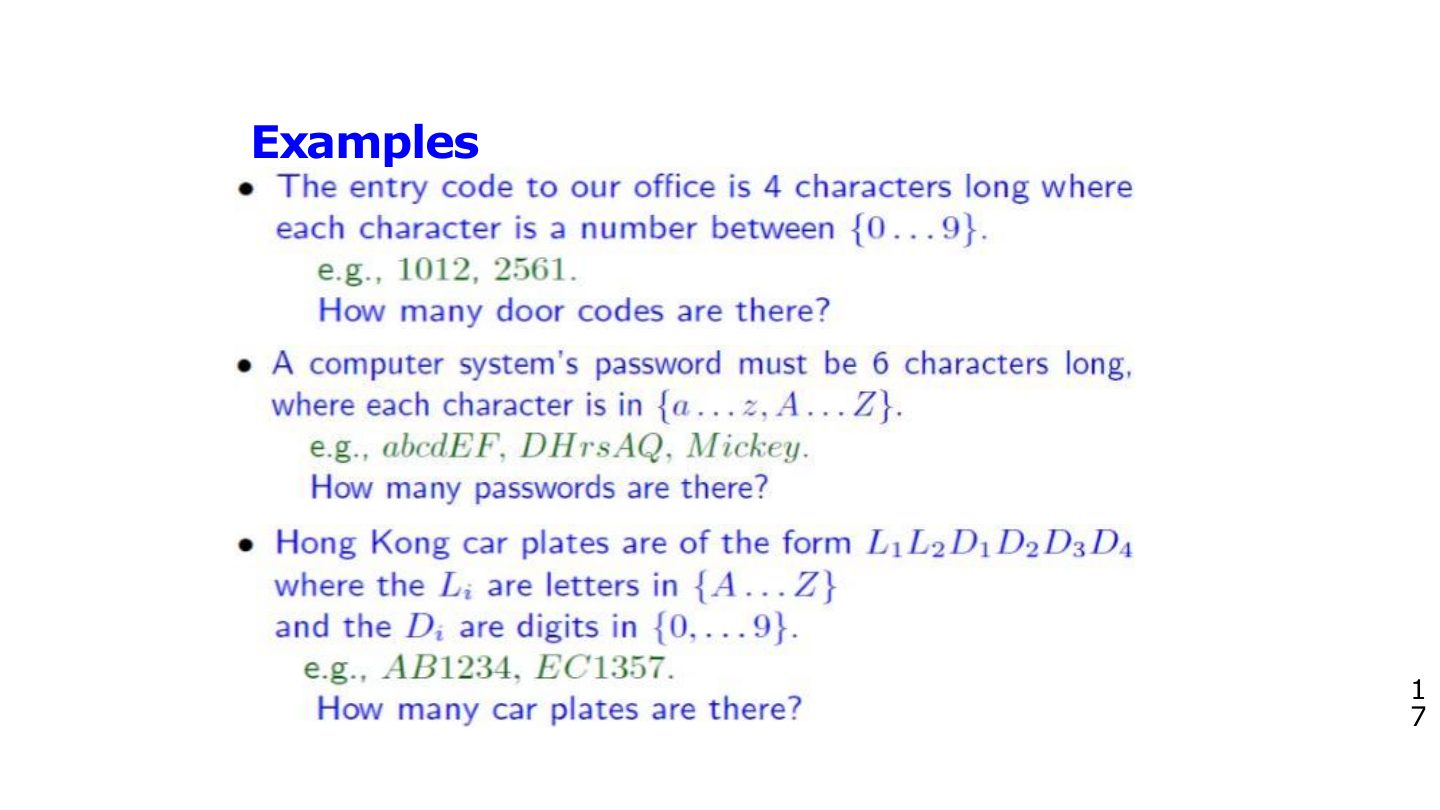
solution
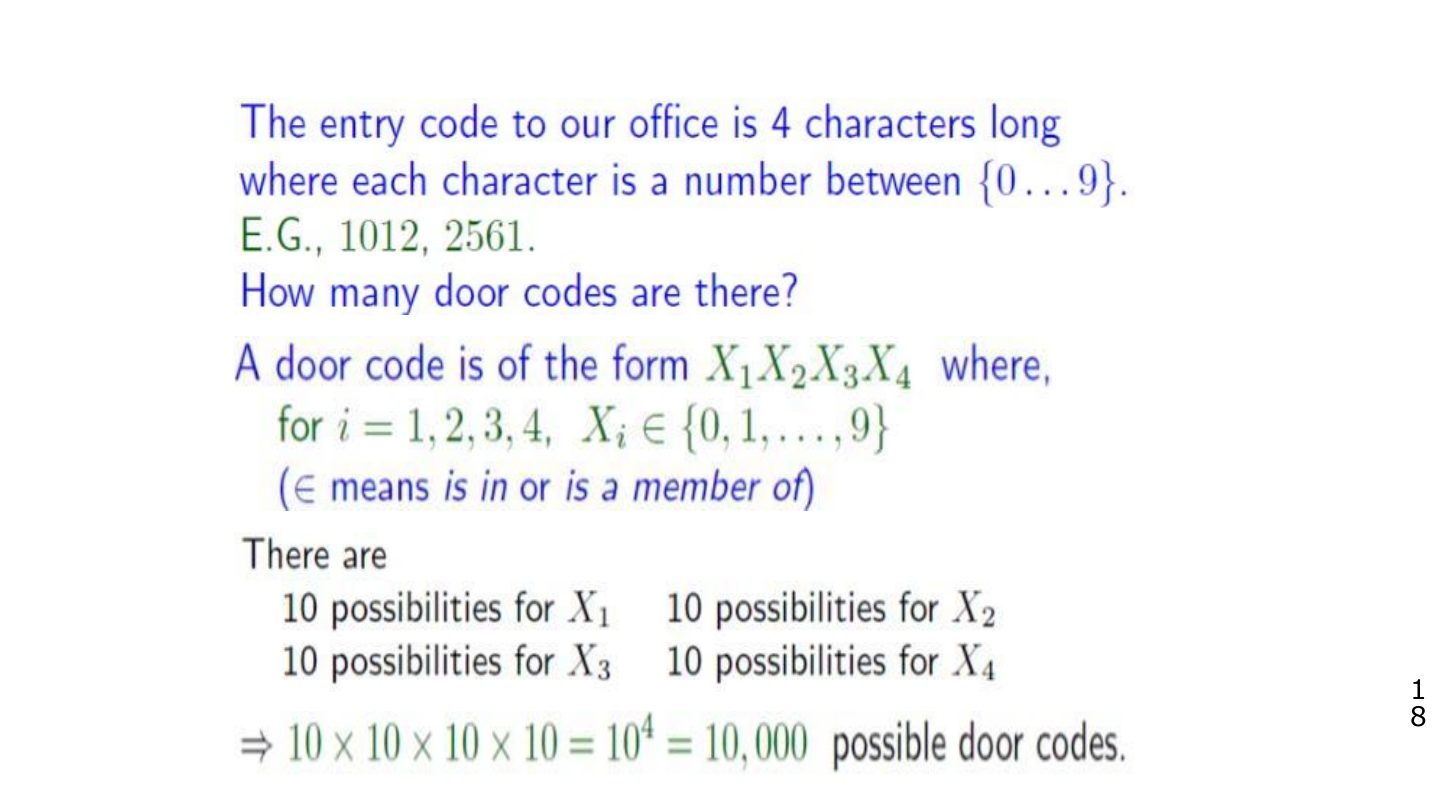
Solution
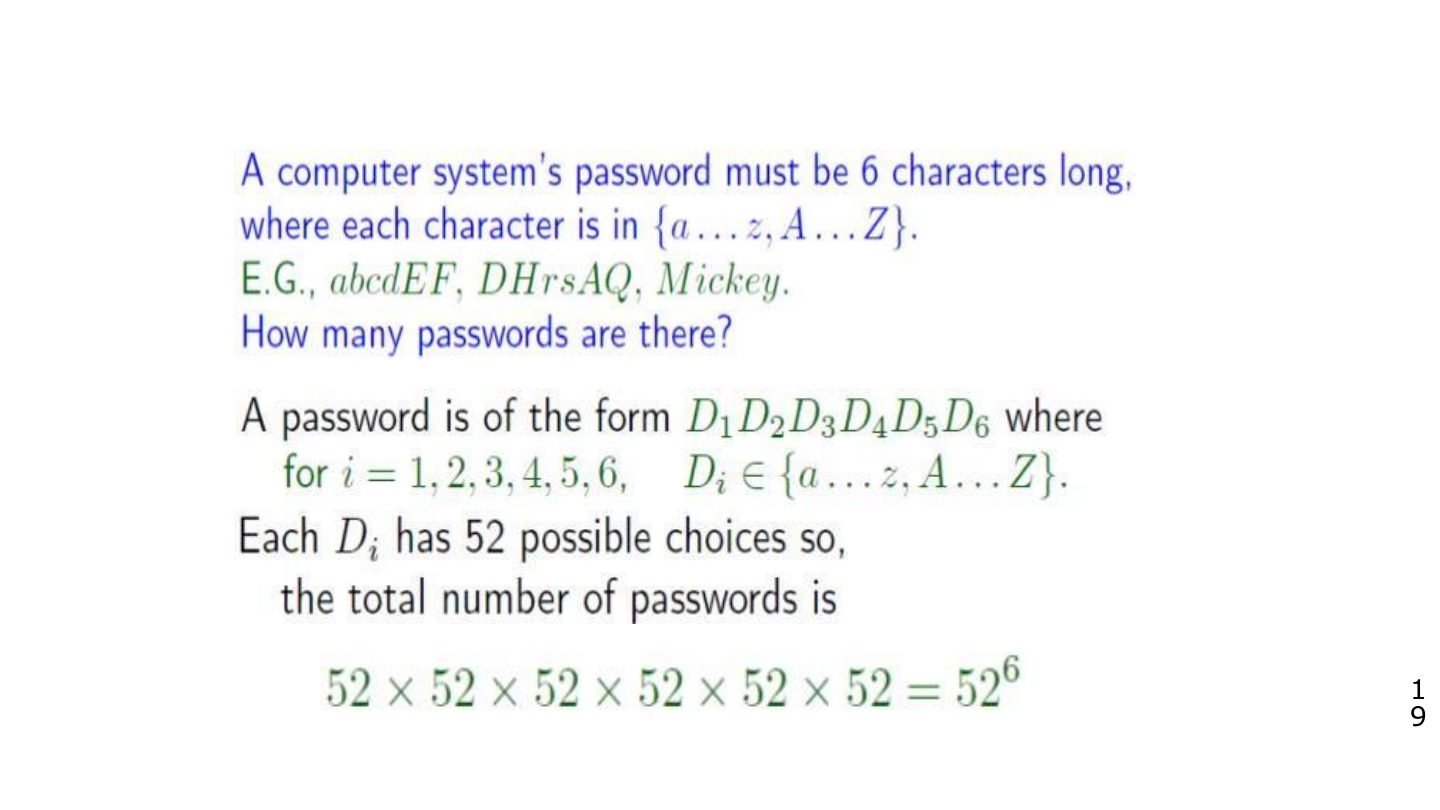
Solution
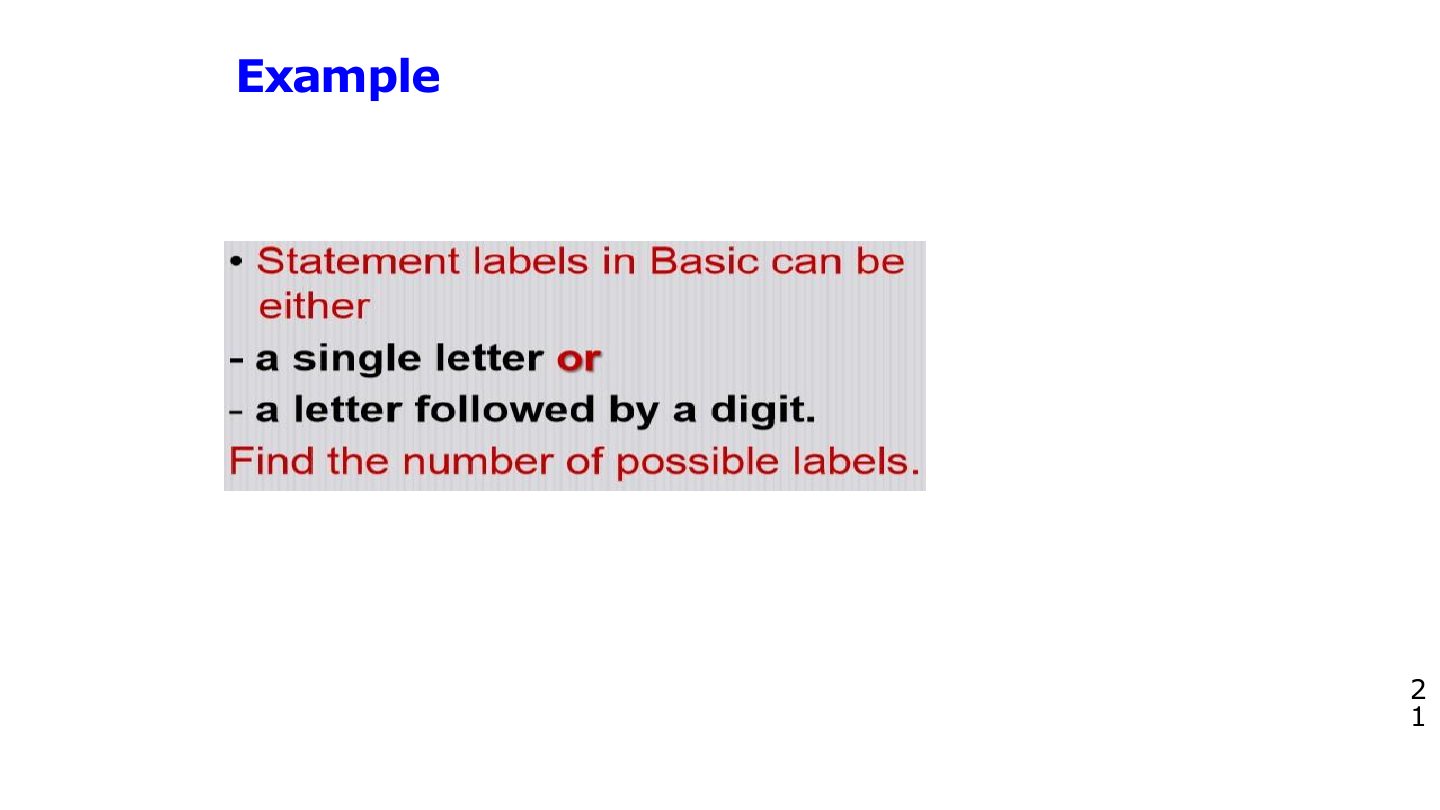
Example
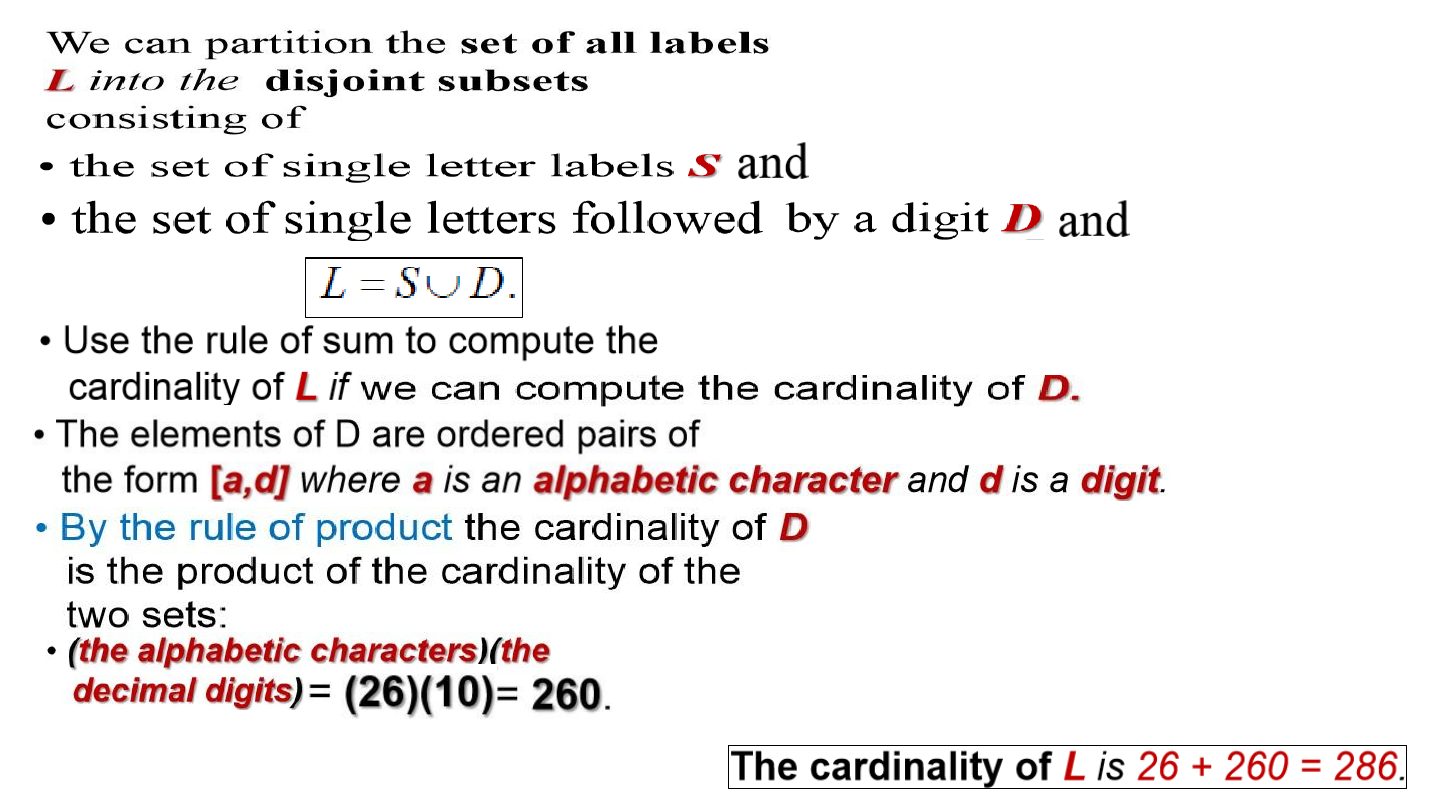
Slide 22
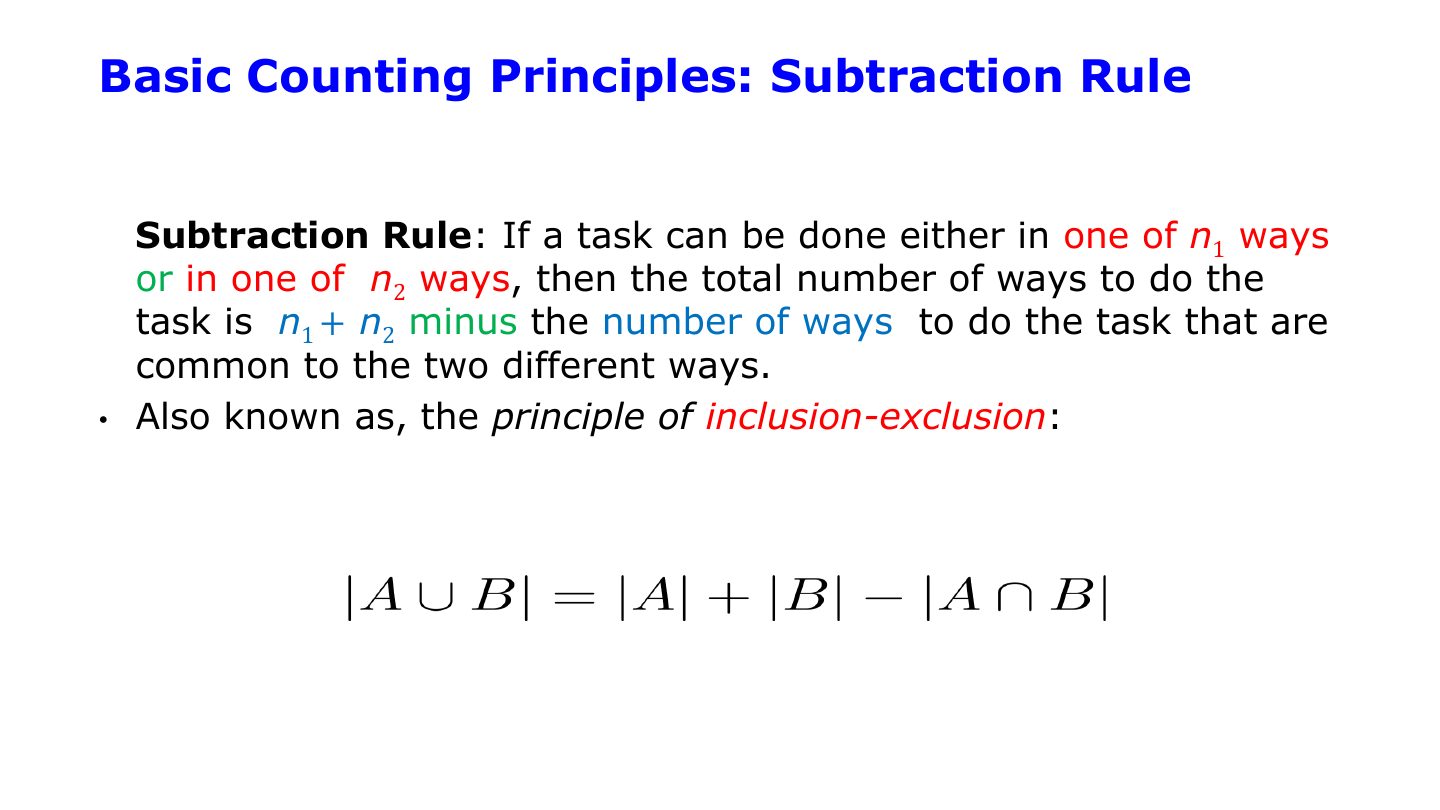
Basic Counting Principles: Subtraction Rule
Inclusion - Exclusion
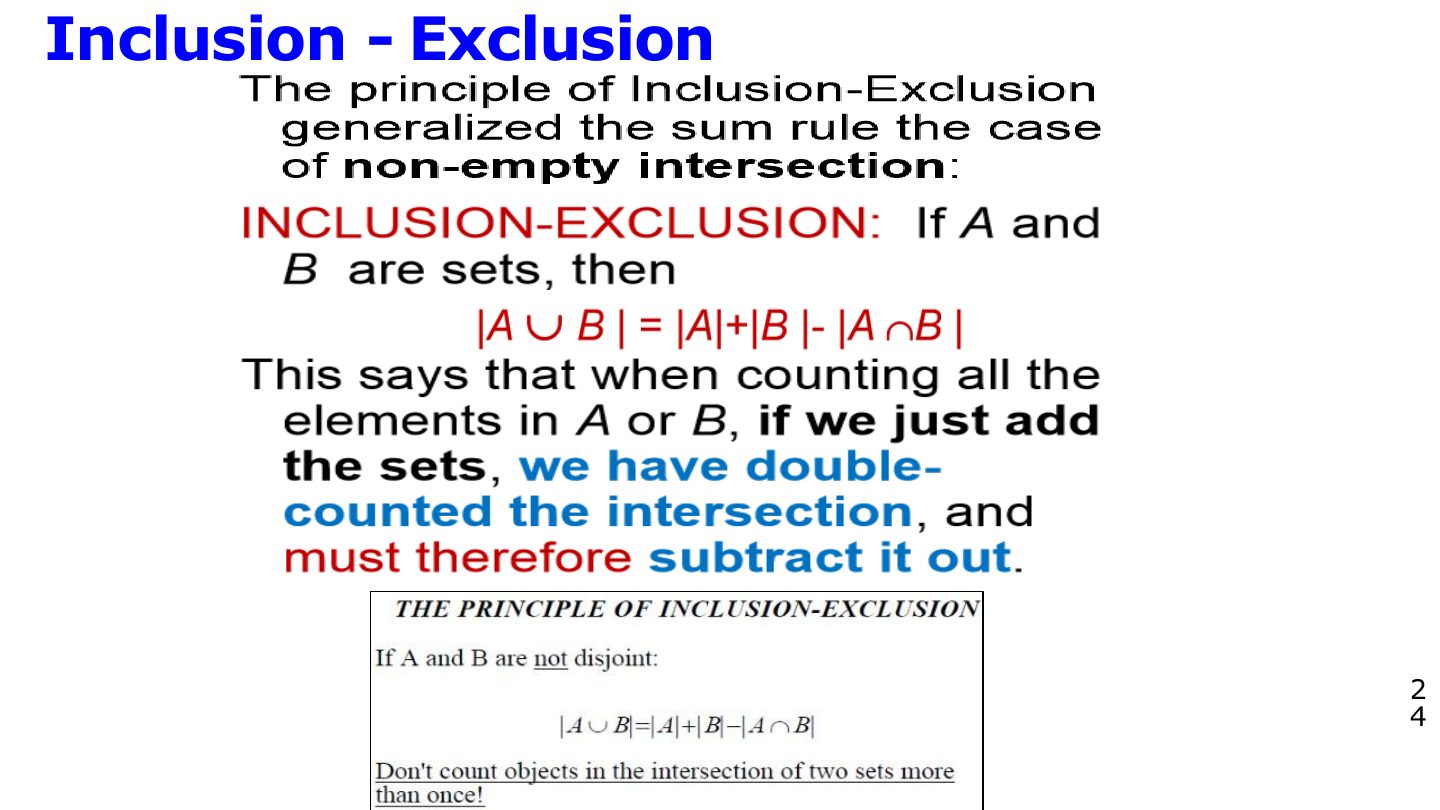
Notes
|A ∪ B| = |A| + |B| − |A ∩ B|.
Exam angle
How many bit strings of length 8 start with 1 or end with 00?
- 128 + 64 − 32.
Inclusion - Exclusion
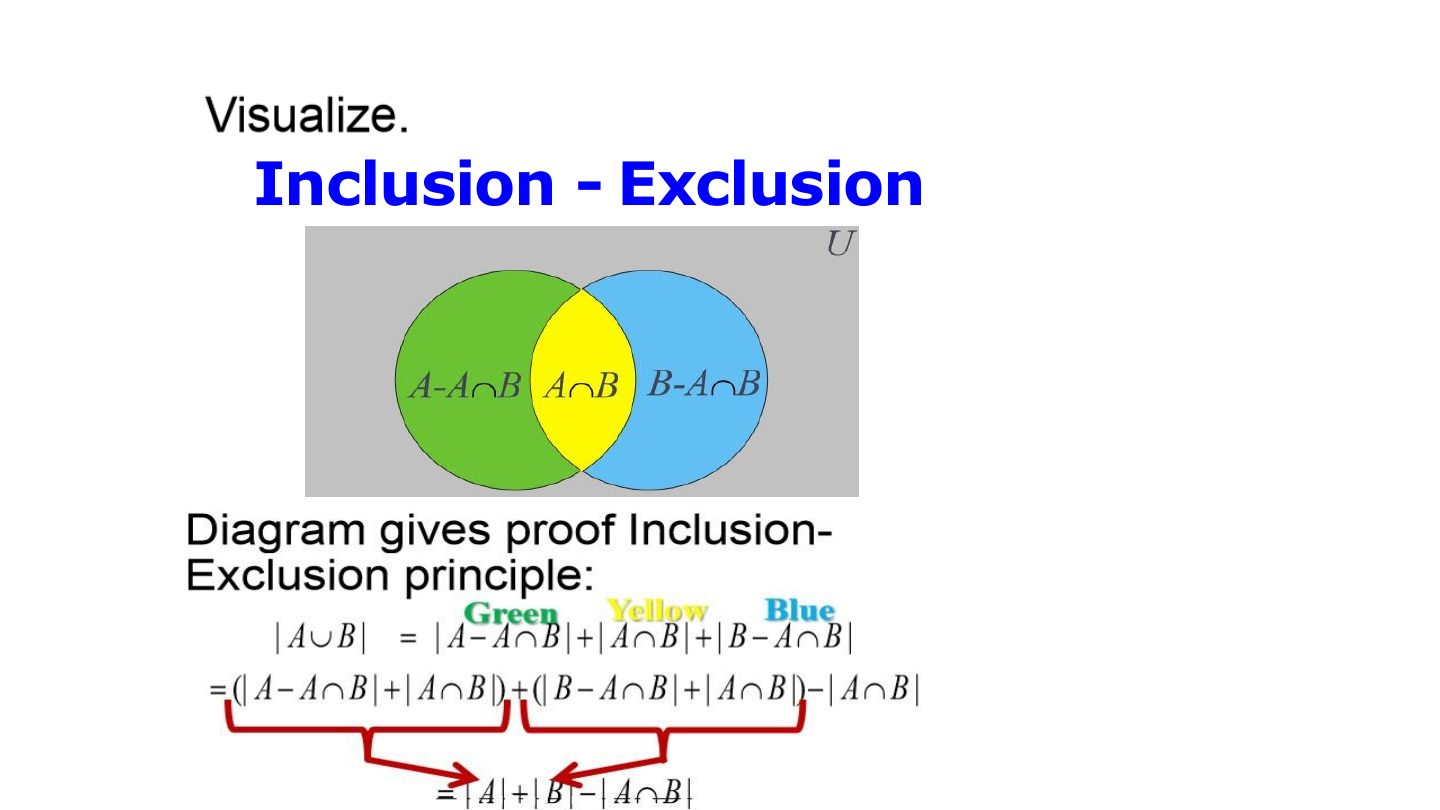
Example
Solution
Slide 28
Section Summary
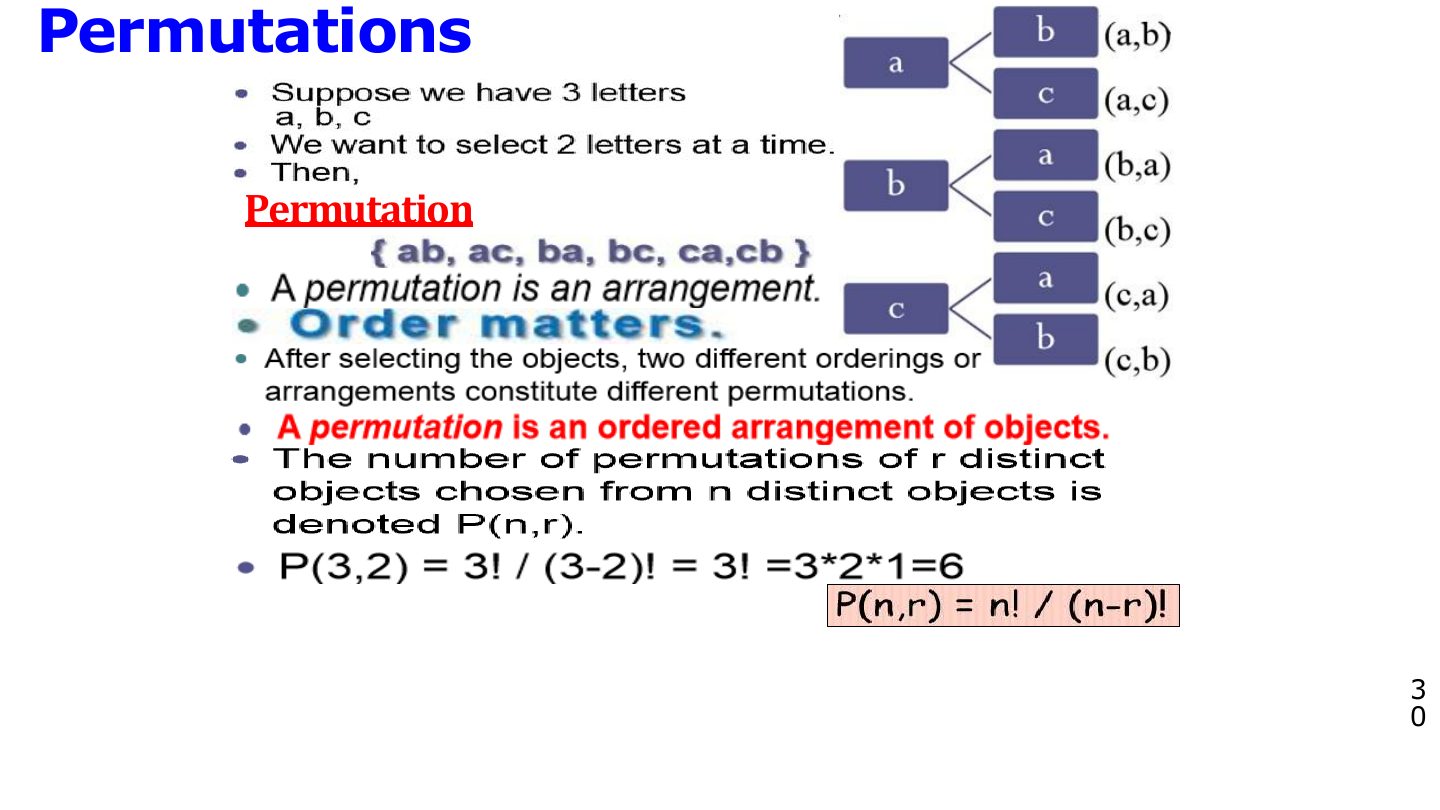
Permutations
Exam angle
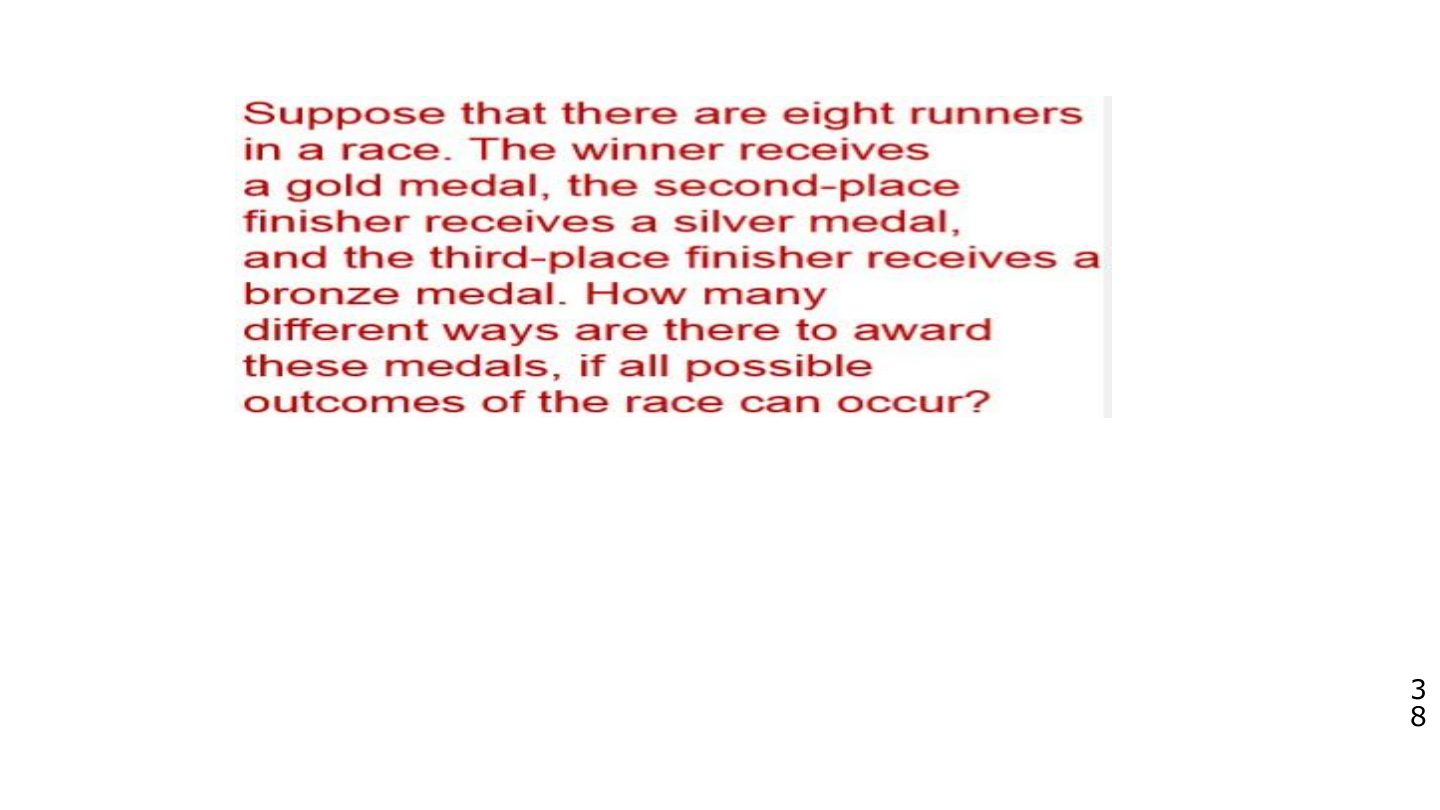
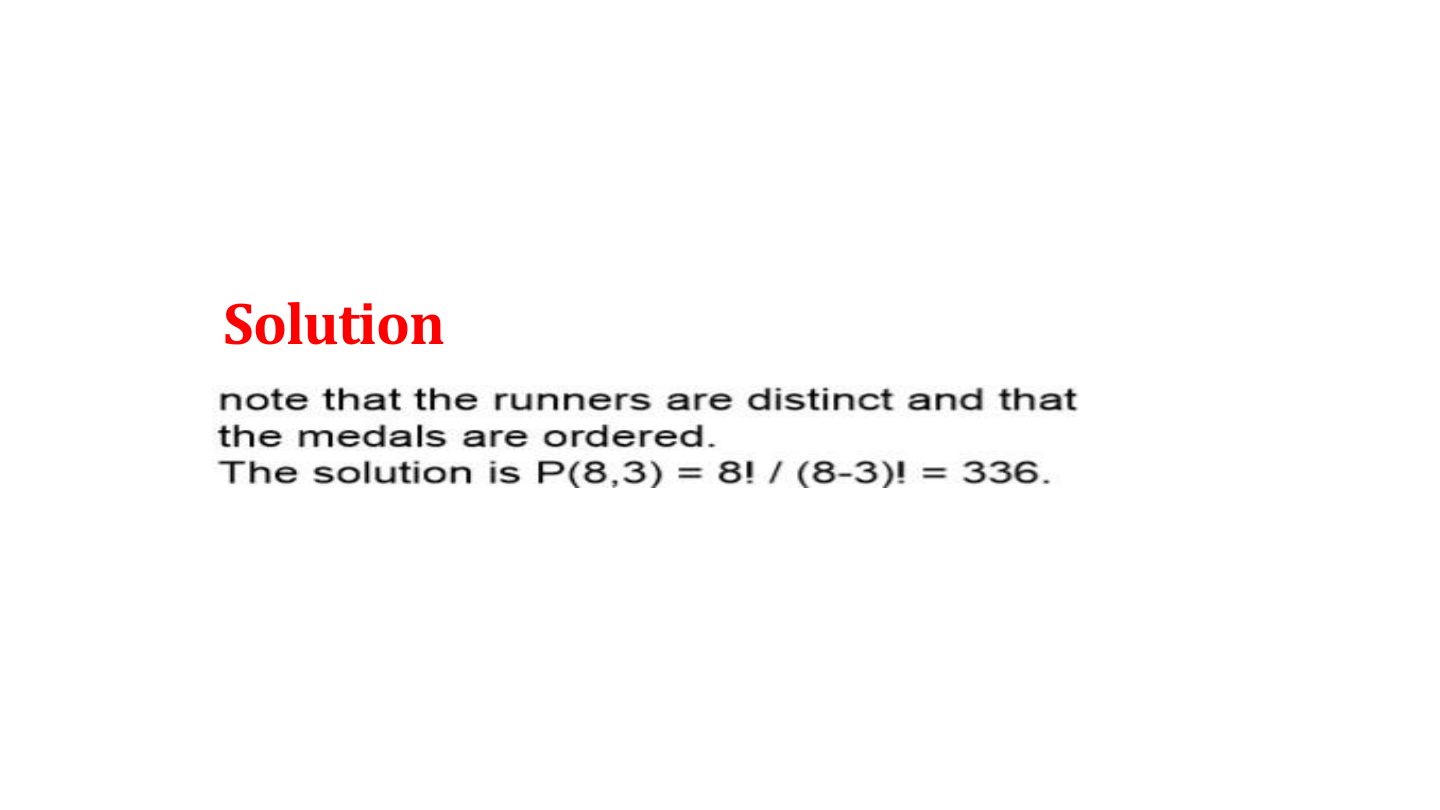
Ways to award gold, silver, bronze among 8 runners:
- P(8,3) = 8·7·6.
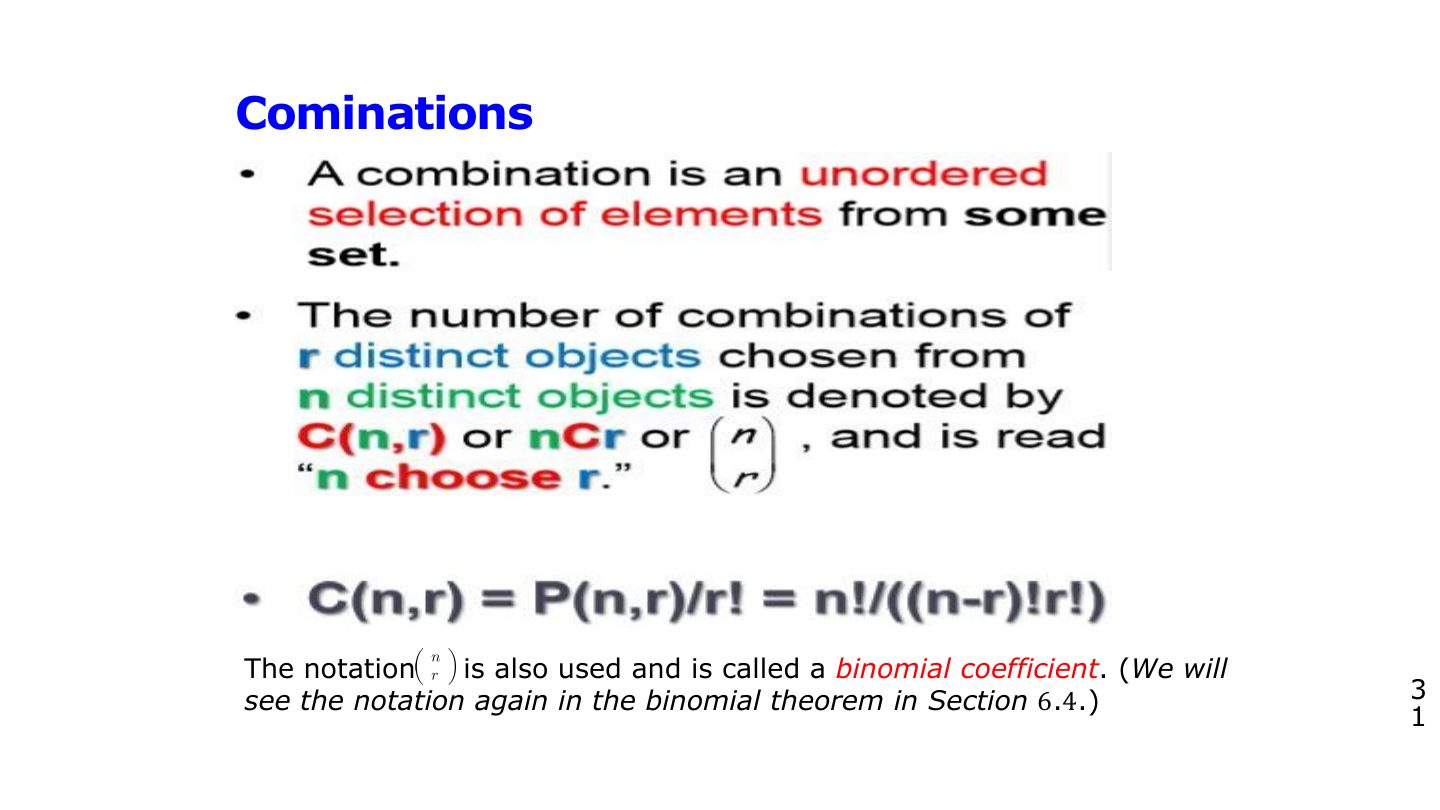
Cominations
Notes
Combination (order doesn’t matter): C(n, r) = n!/(r!(n − r)!), and C(n, r) = C(n, n − r).
Memory trick Ask: does swapping two chosen items give a new outcome? Yes → permutation; no → combination.
Exam angle
Ways to choose a 5-player team from 10 people:
- C(10,5).
Combinations
Permutation, Combination, Factorial
Example
Solution
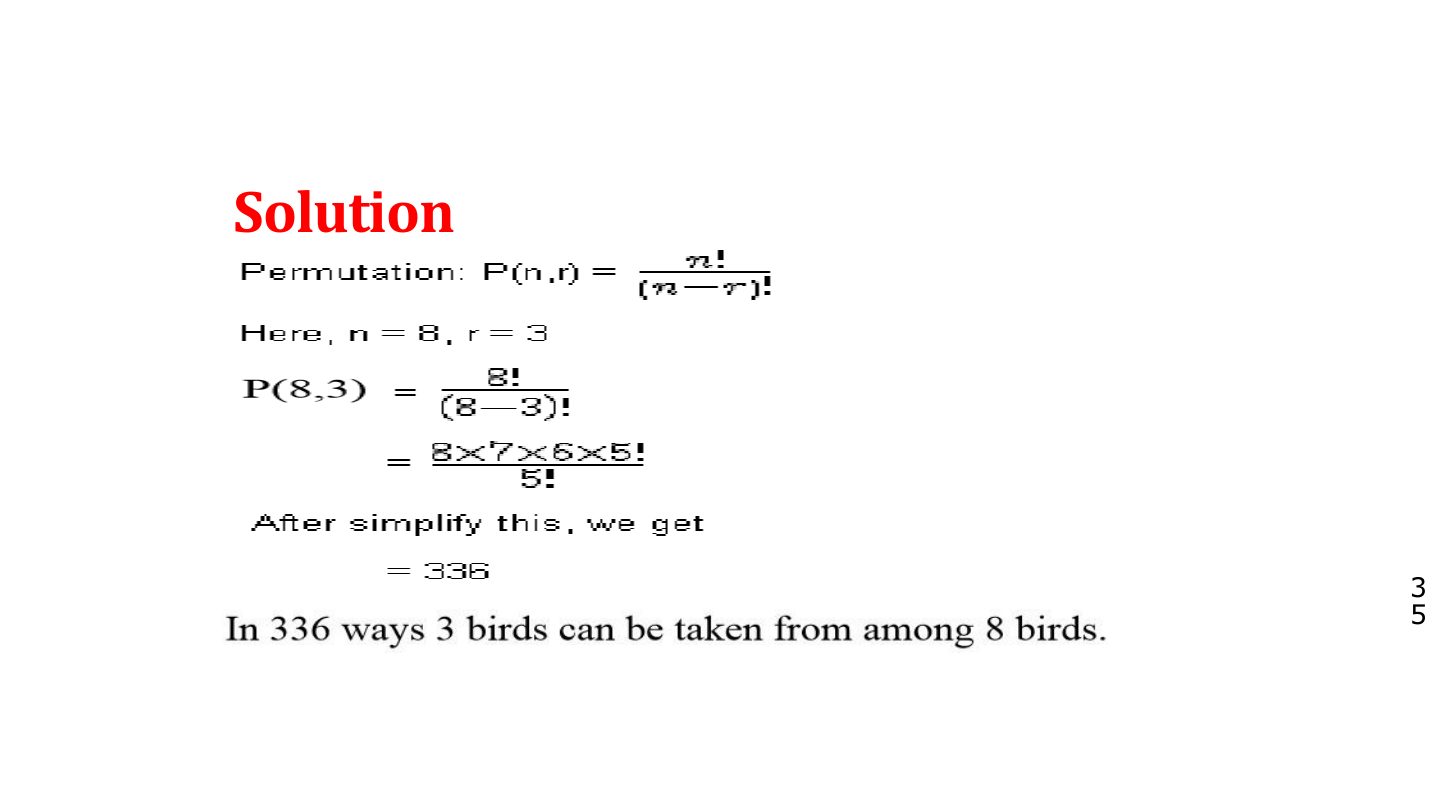
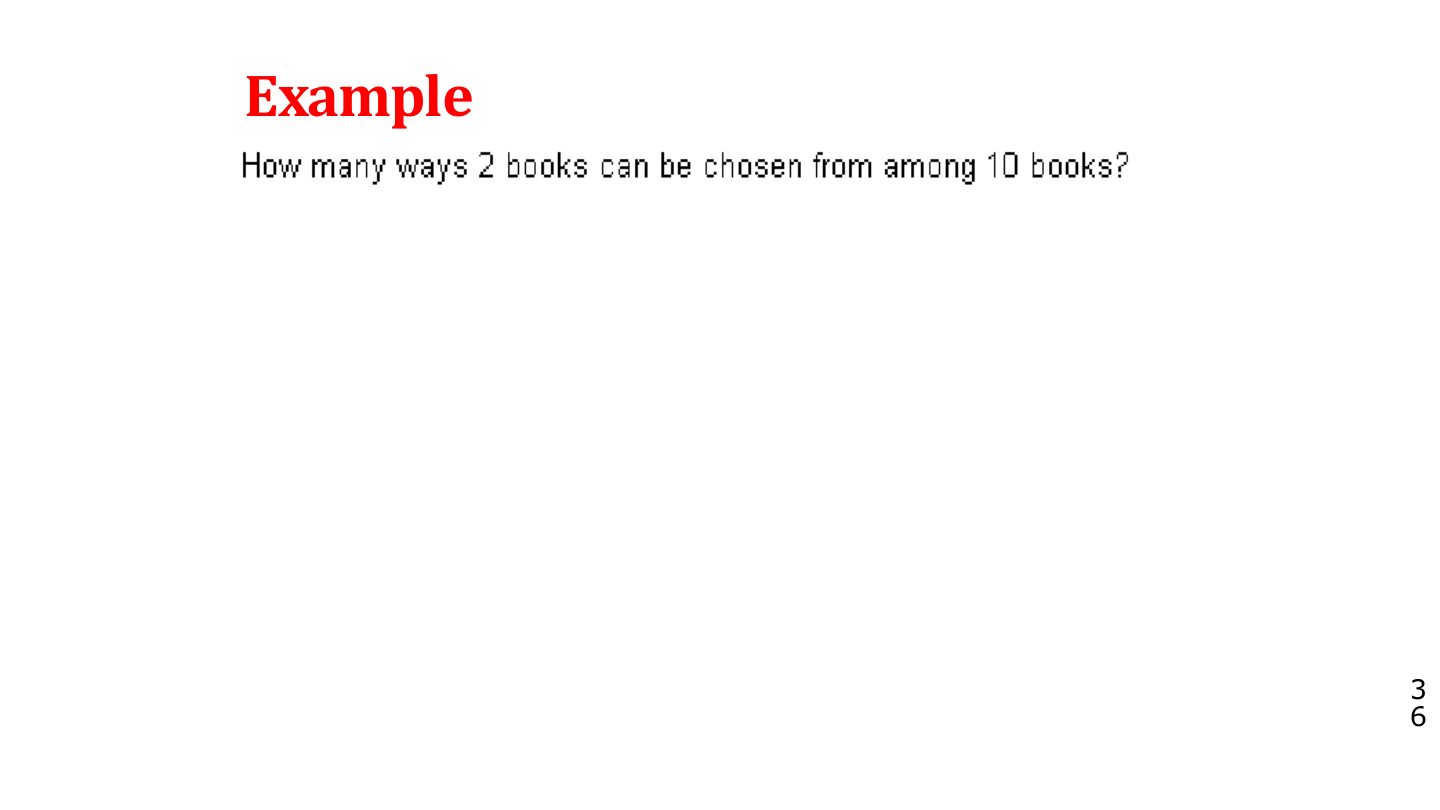
Example
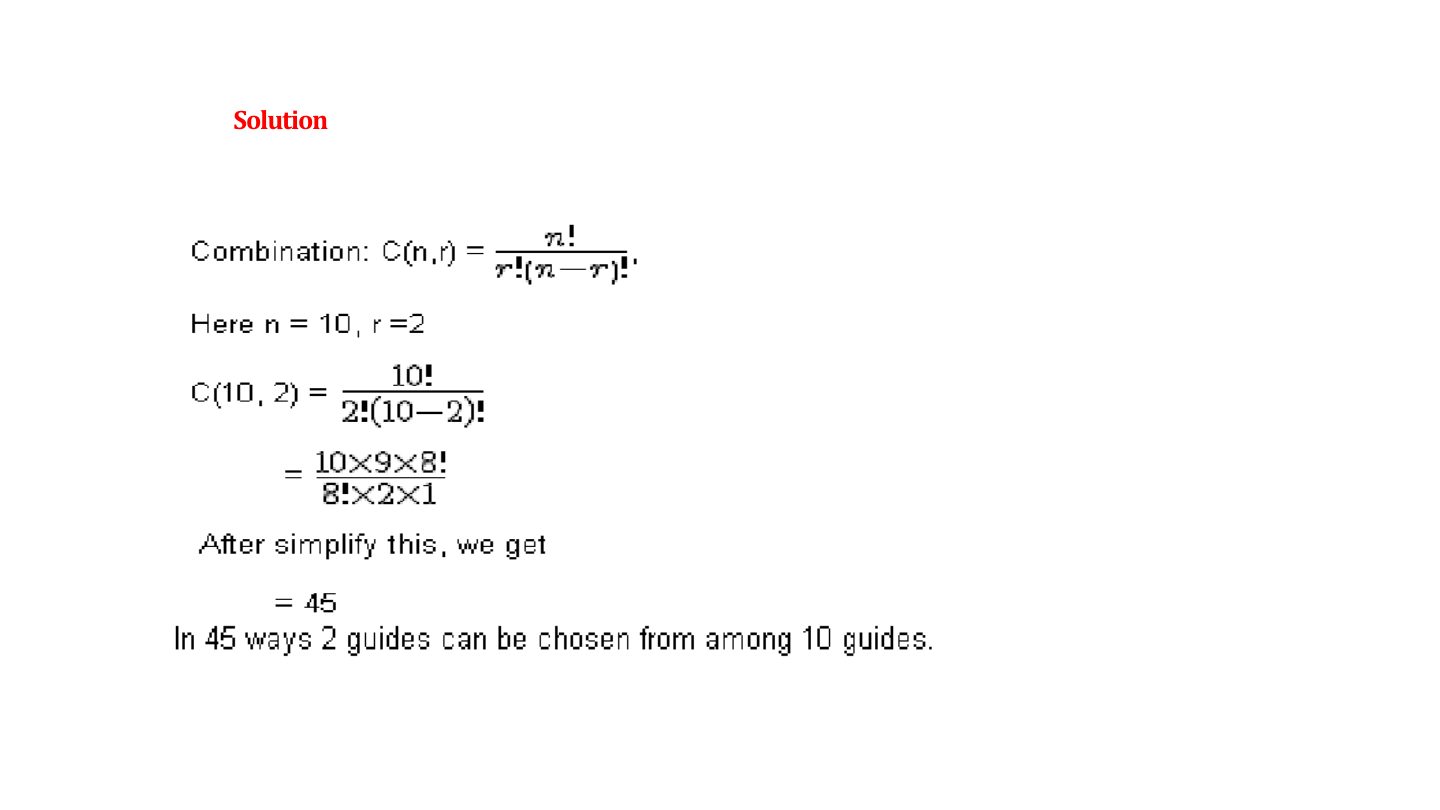
Solution
Example
Slide 39
Example
Slide 41
Section Summary
Powers of Binomial Expressions
Binomial Coefficients
Binomial Theorem
Exam angle
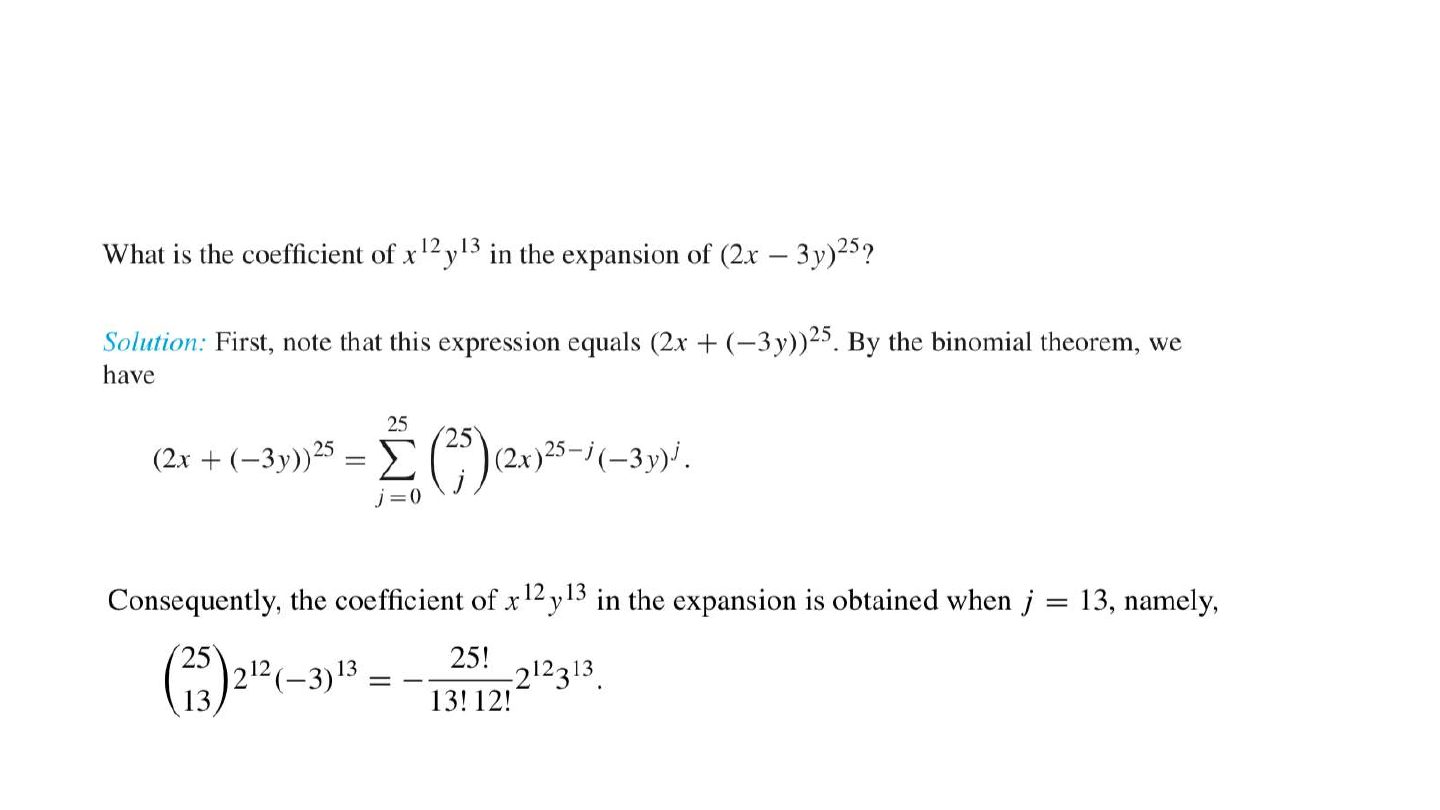
The coefficient of x²y³ in (x + y)⁵ is:
- C(5,3).
The coefficient of x³ in (2x + 1)⁴ is:
- C(4,3)·2³ = 4·8.
The Binomial Theorem
Slide 47
Pascal Triangle
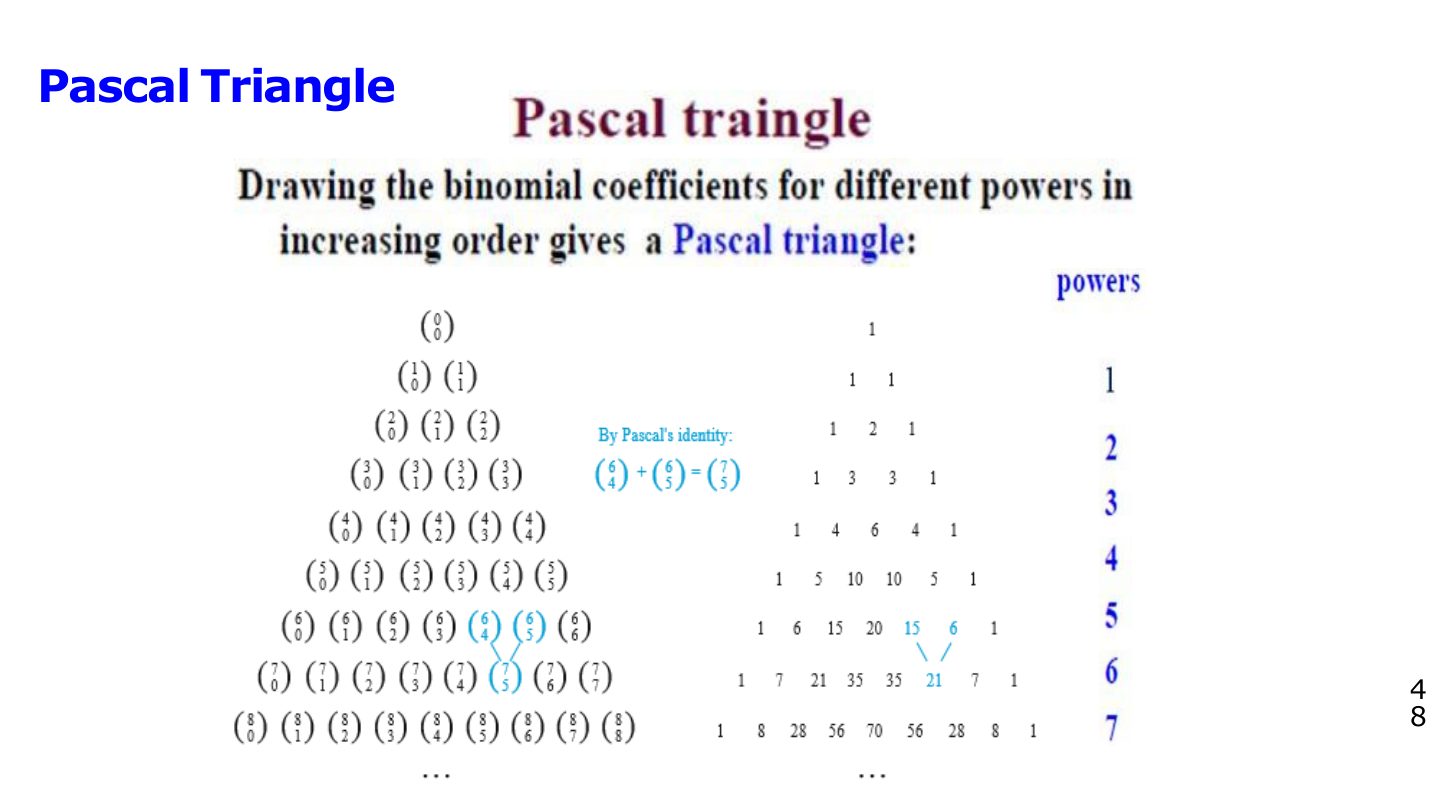
Notes
Pascal’s identity: C(n + 1, k) = C(n, k − 1) + C(n, k); each entry = sum of the two above it.
Slide 49