In an induction proof, the assumption that P(k) is true is called the:
Mathematical Induction and Recursion
The principle of mathematical induction, its template, proofs of summation formulas, inequalities and divisibility, conjecturing a formula, and recursively defined functions.
How to read this page
Every original slide is shown unchanged. Yellow marks on a slide point to a numbered note: hover or tap a mark to jump to its note, and hover a note to see its marks. Questions tagged Past exam appeared on a real paper; Prediction questions are likely angles, not confirmed. Pick an answer to each question: a wrong pick tells you why it is wrong, so you can try again.
All 33 slides
- 1 Slide 1
- 2 Chapter Summary
- 3 Climbing an Infinite Ladder
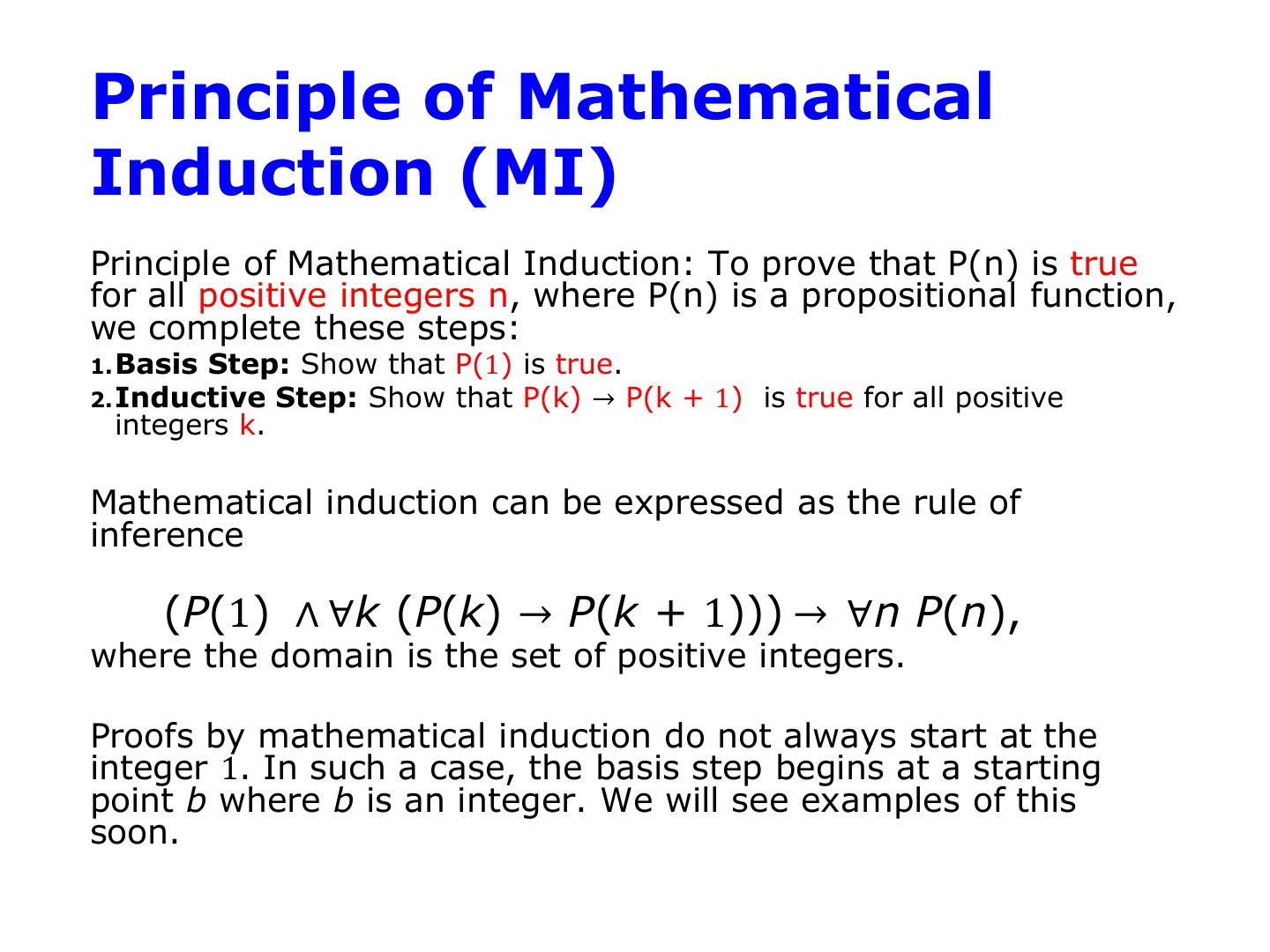
- 4 Principle of Mathematical Induction (MI)
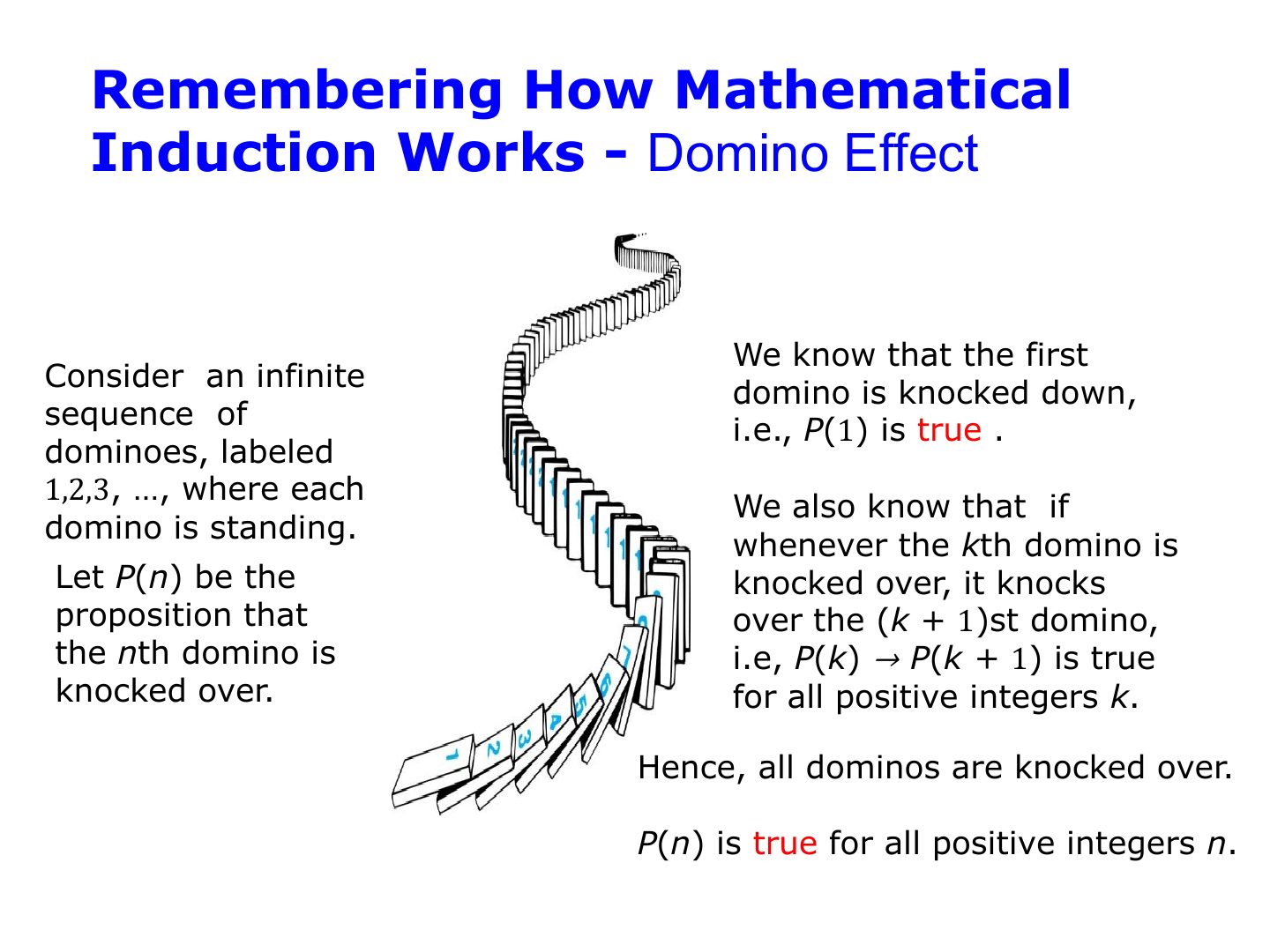
- 5 Remembering How Mathematical Domino Effect Induction Works -
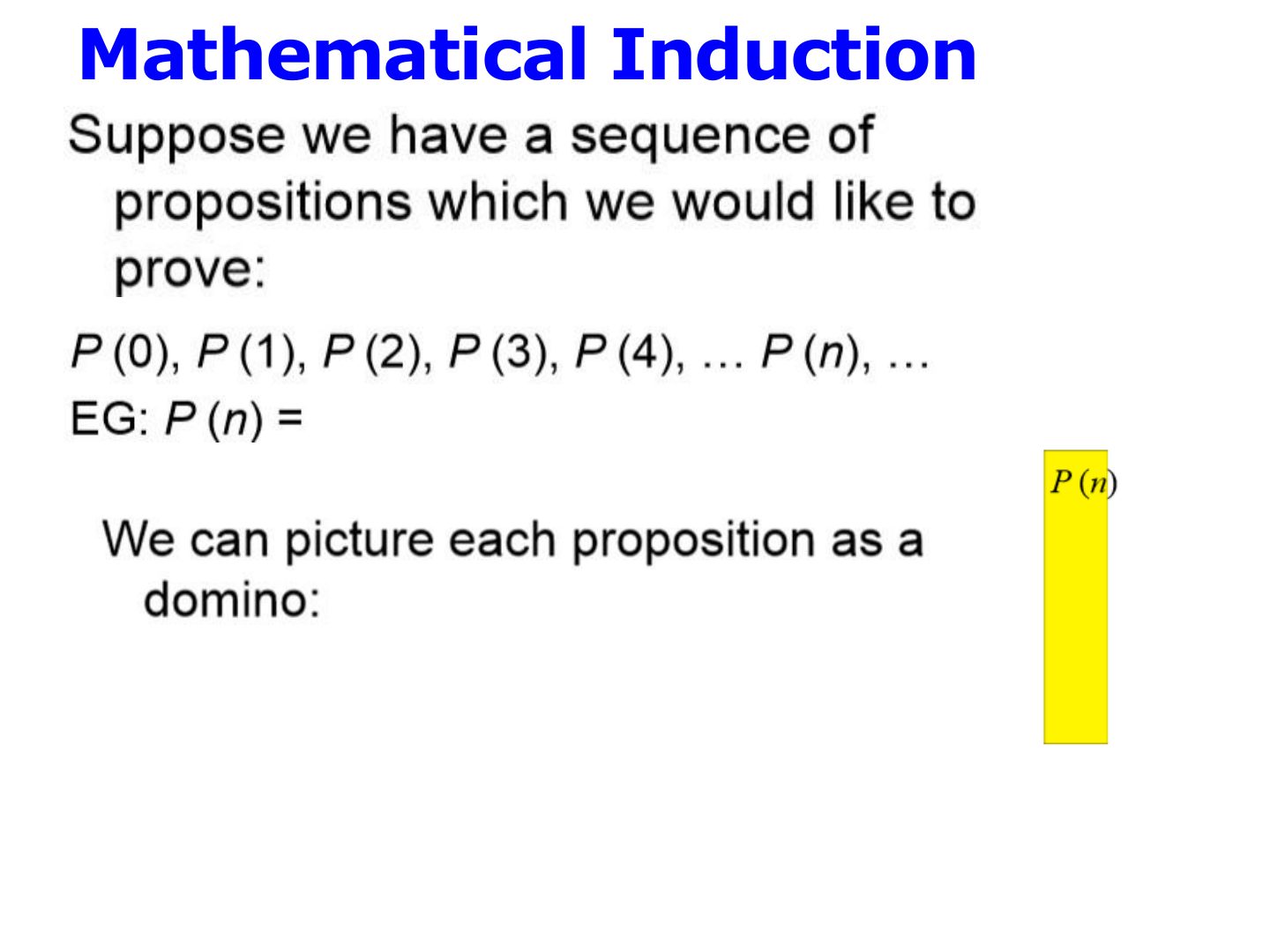
- 6 Mathematical Induction
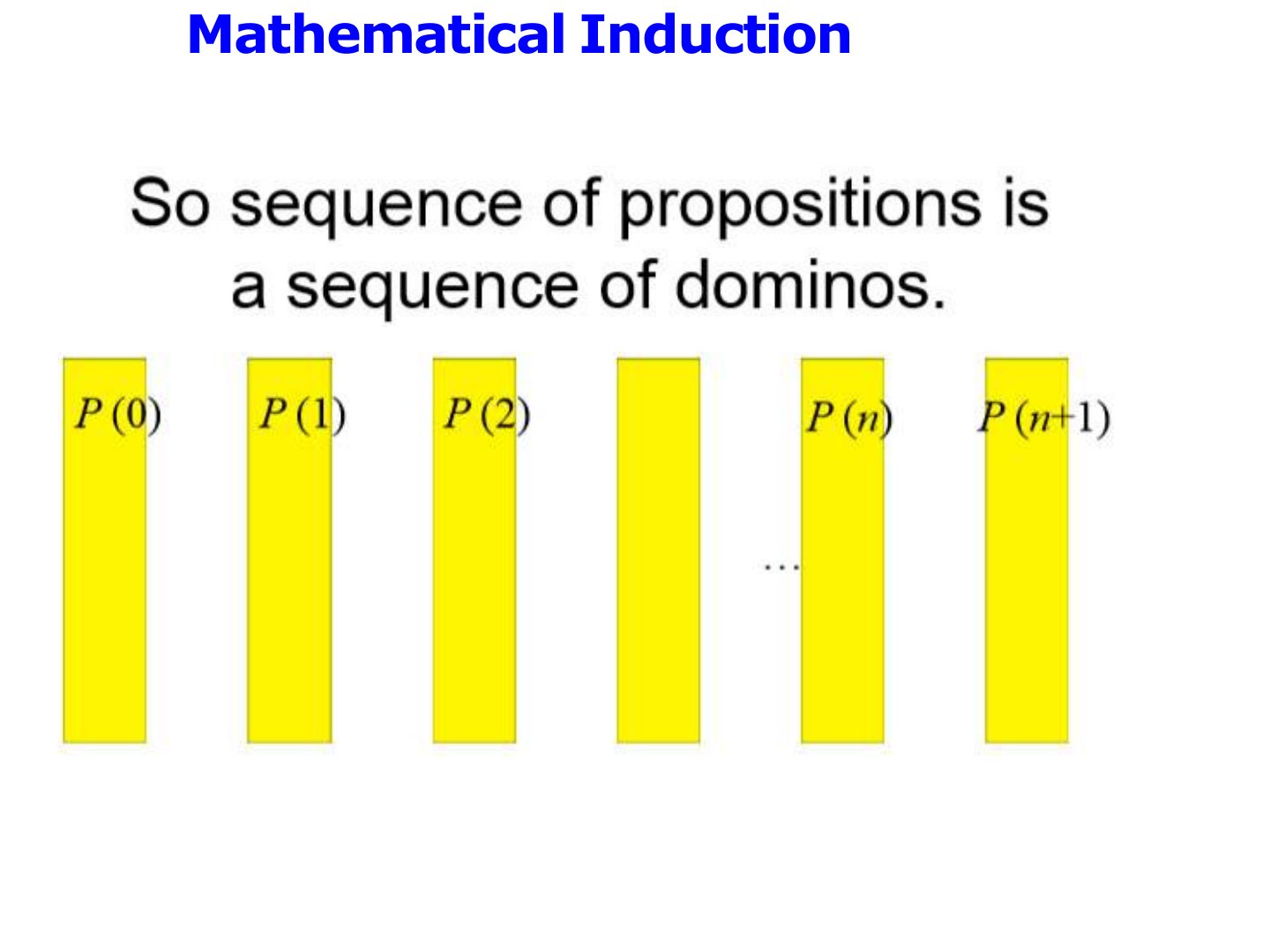
- 7 Mathematical Induction
- 8 Mathematical Induction
- 9 Mathematical Induction
- 10 Mathematical Induction
- 11 Mathematical Induction
- 12 Mathematical Induction
- 13 Mathematical Induction
- 14 Mathematical Induction
- 15 Mathematical Induction
- 16 Mathematical Induction
- 17 Mathematical Induction
- 18 Conjecturing and Proving Correct a Summation Formula
- 19 Mathematical Induction Example-p.316
- 20 Proof:
- 21 Mathematical Induction Example-p.318
- 22 Mathematical Induction Example-p.318
- 23 Slide 23
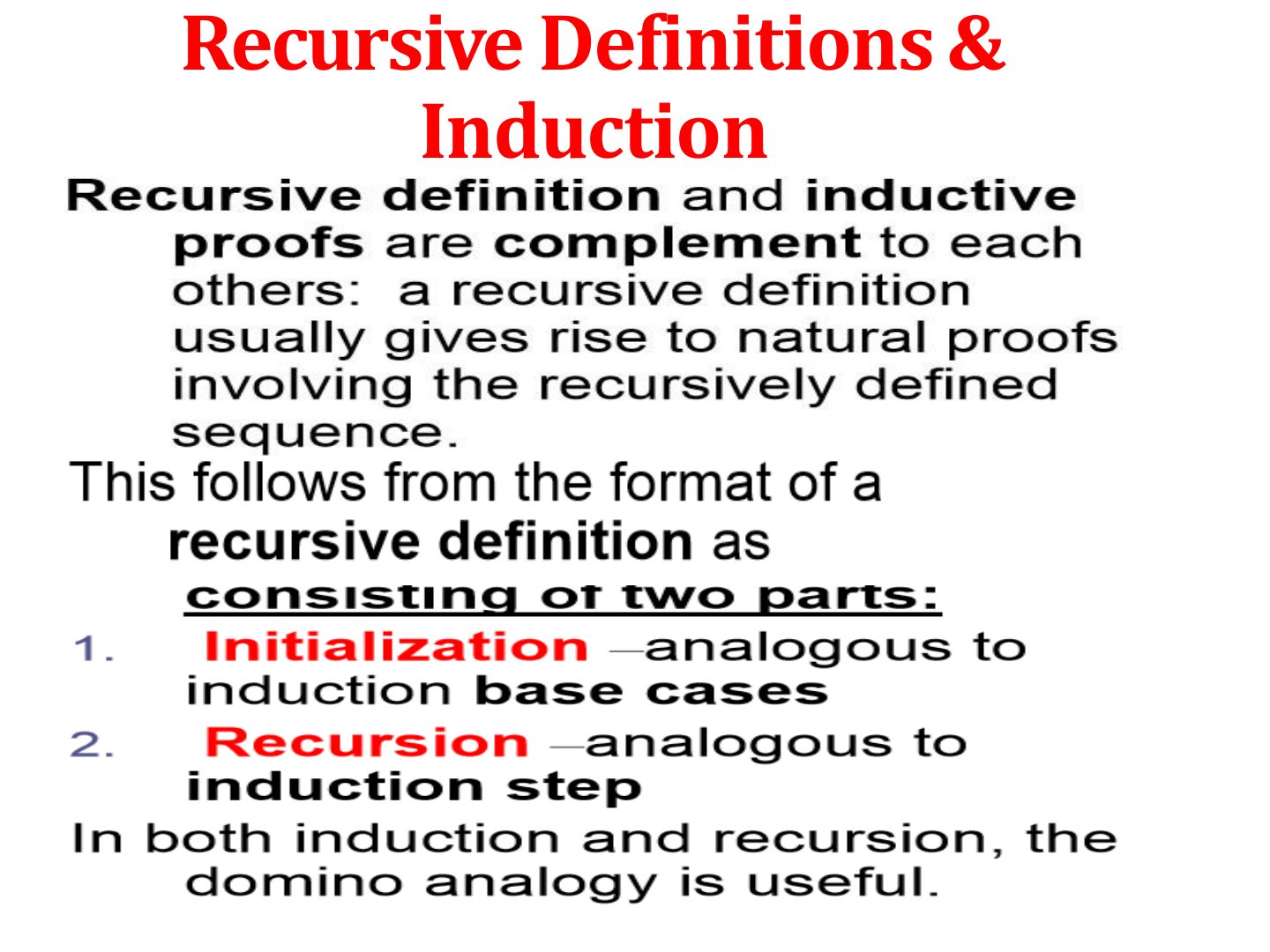
- 24 Recursive Definitions & Induction
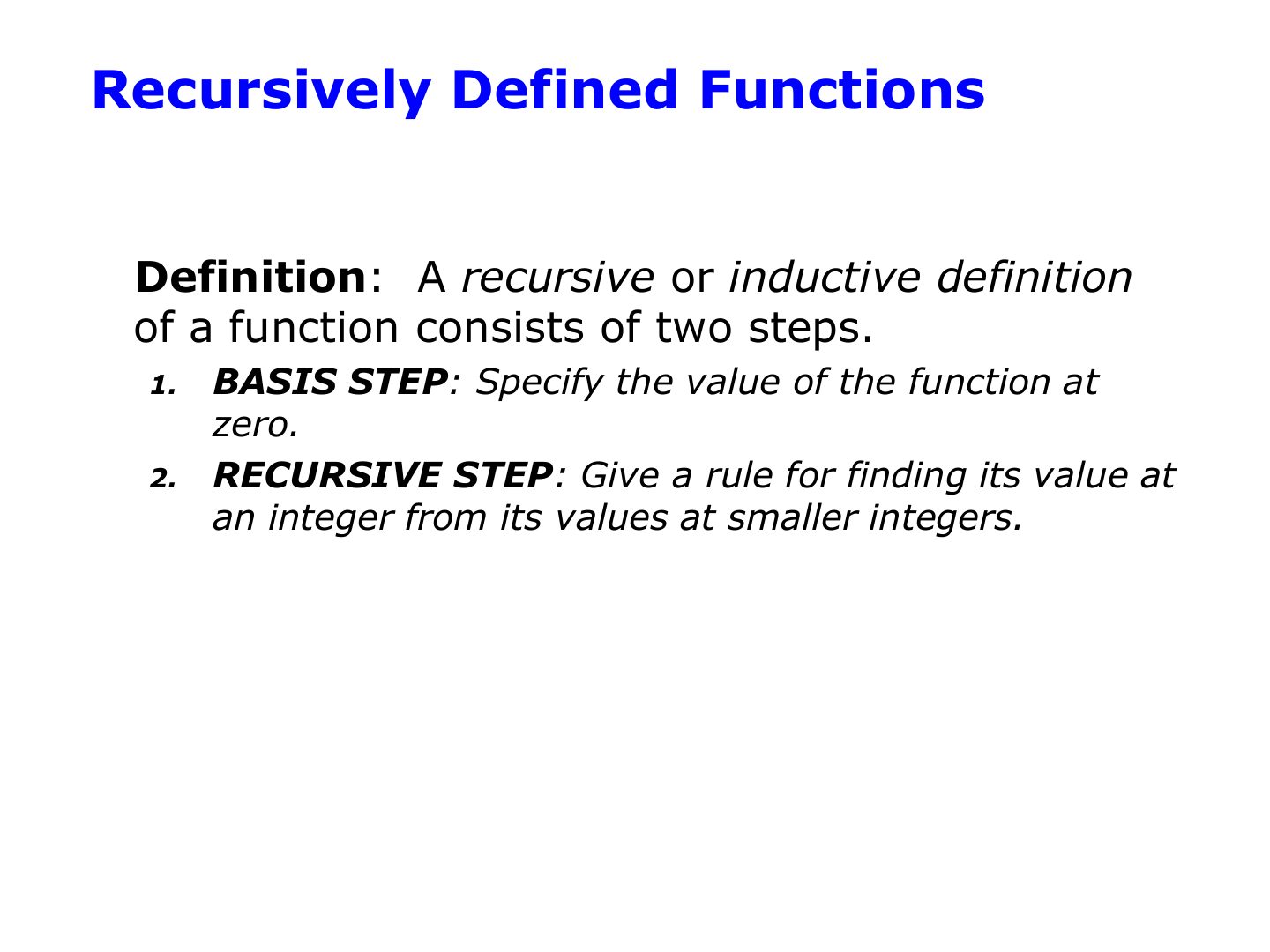
- 25 Recursively Defined Functions
- 26 Recursively Defined Functions
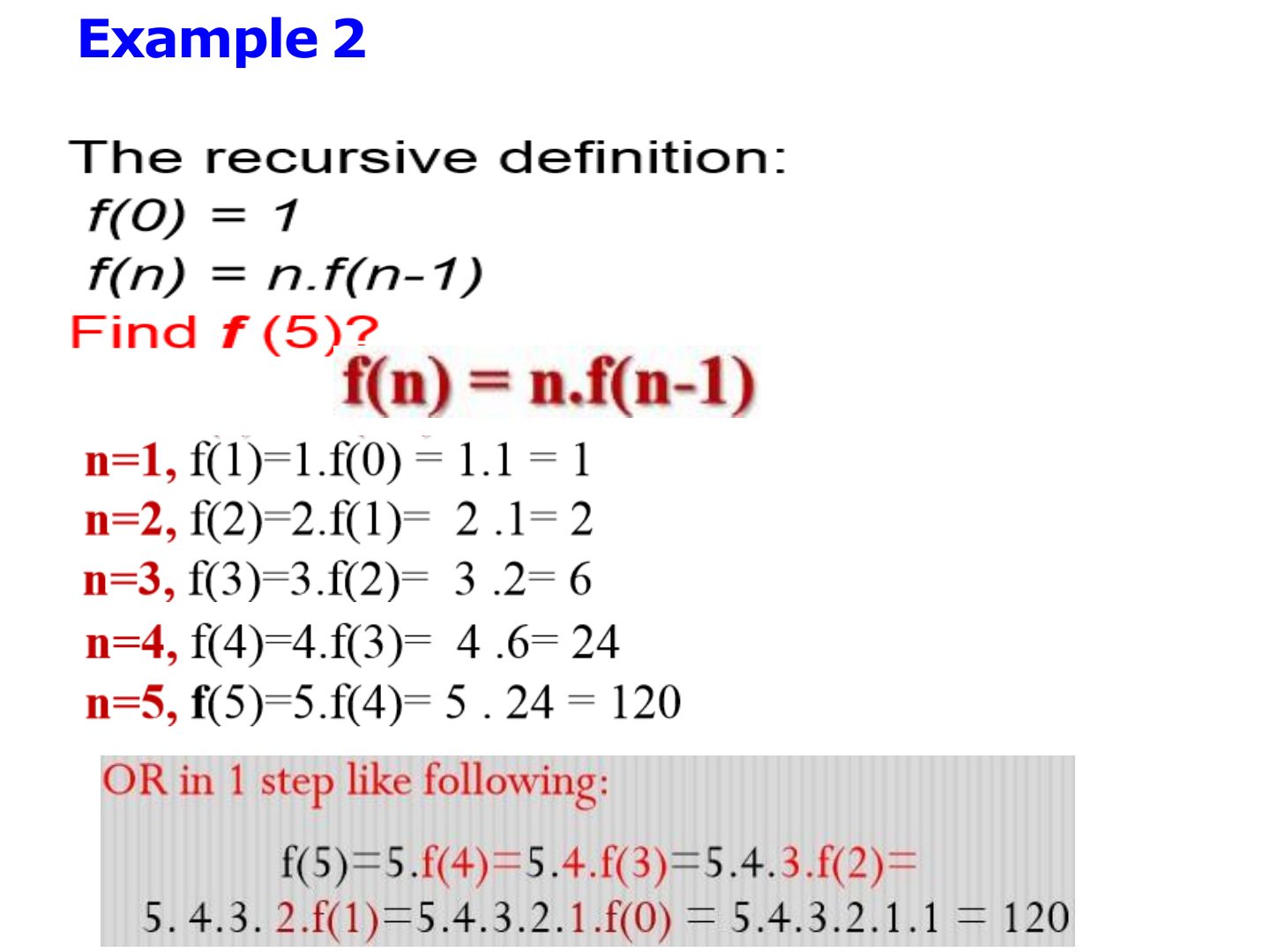
- 27 Example 2
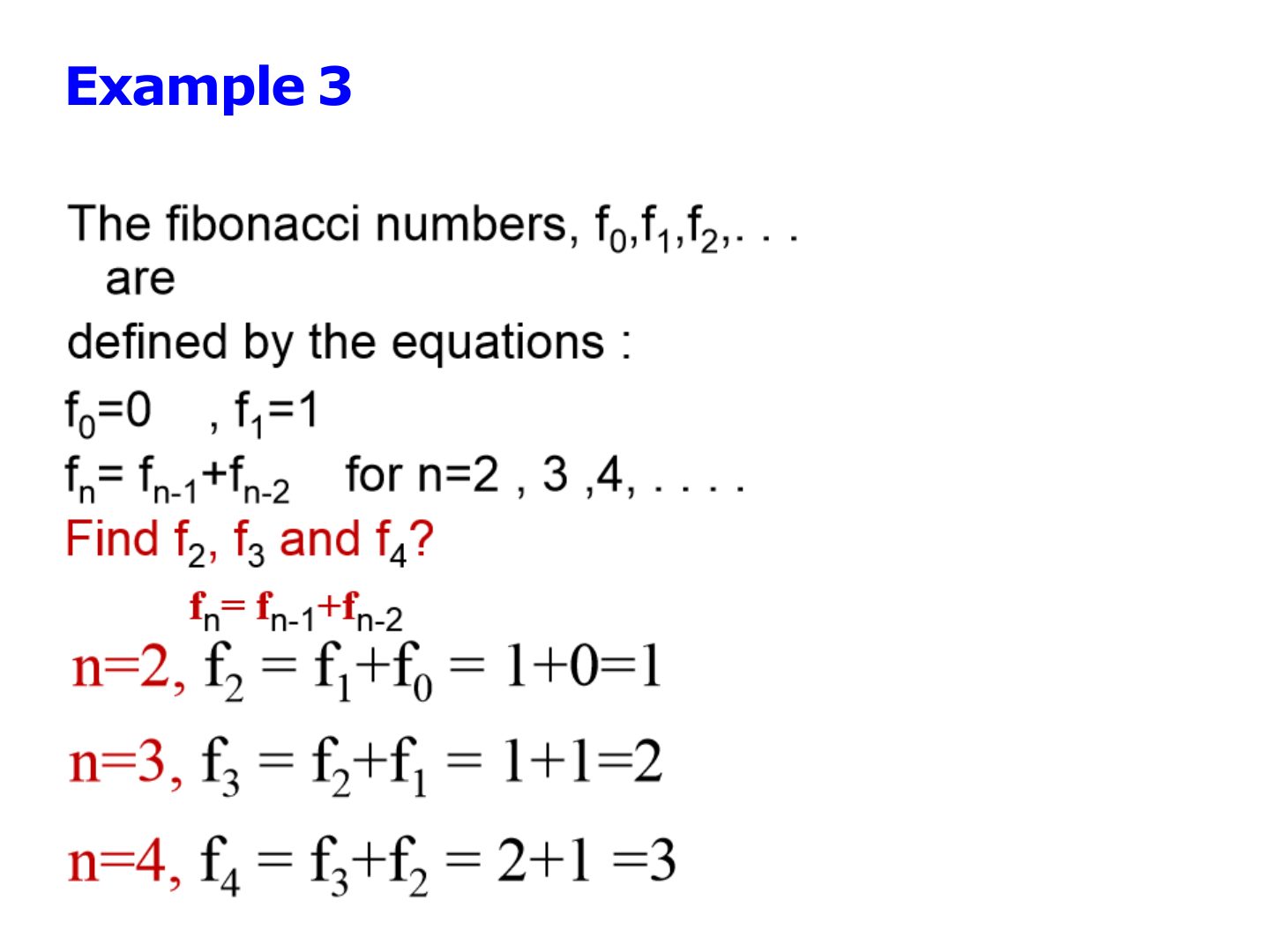
- 28 Example 3
- 29 Example 3
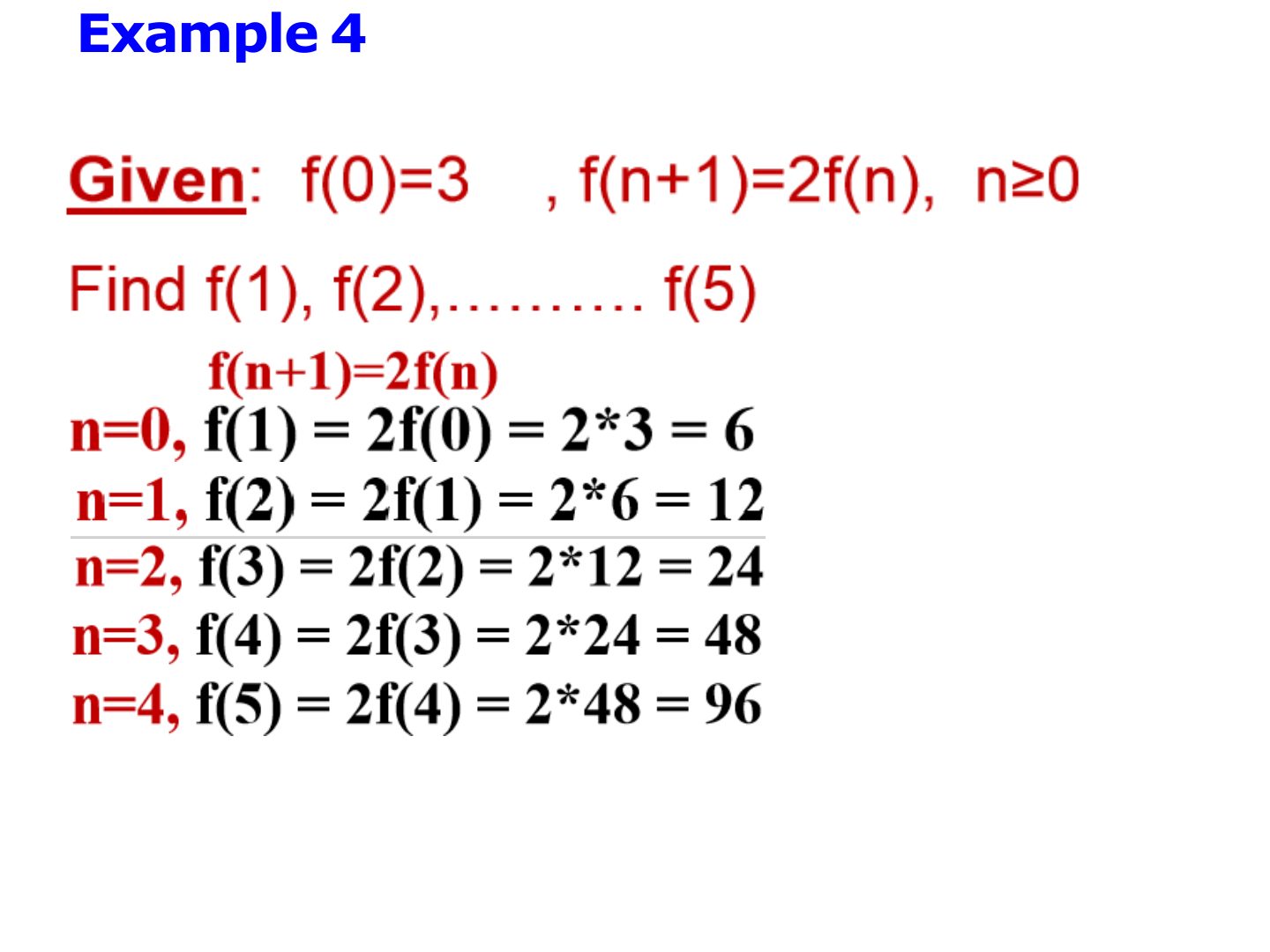
- 30 Example 4
- 31 Example 4
- 32 Example 5
- 33 Example 5
Slide 1
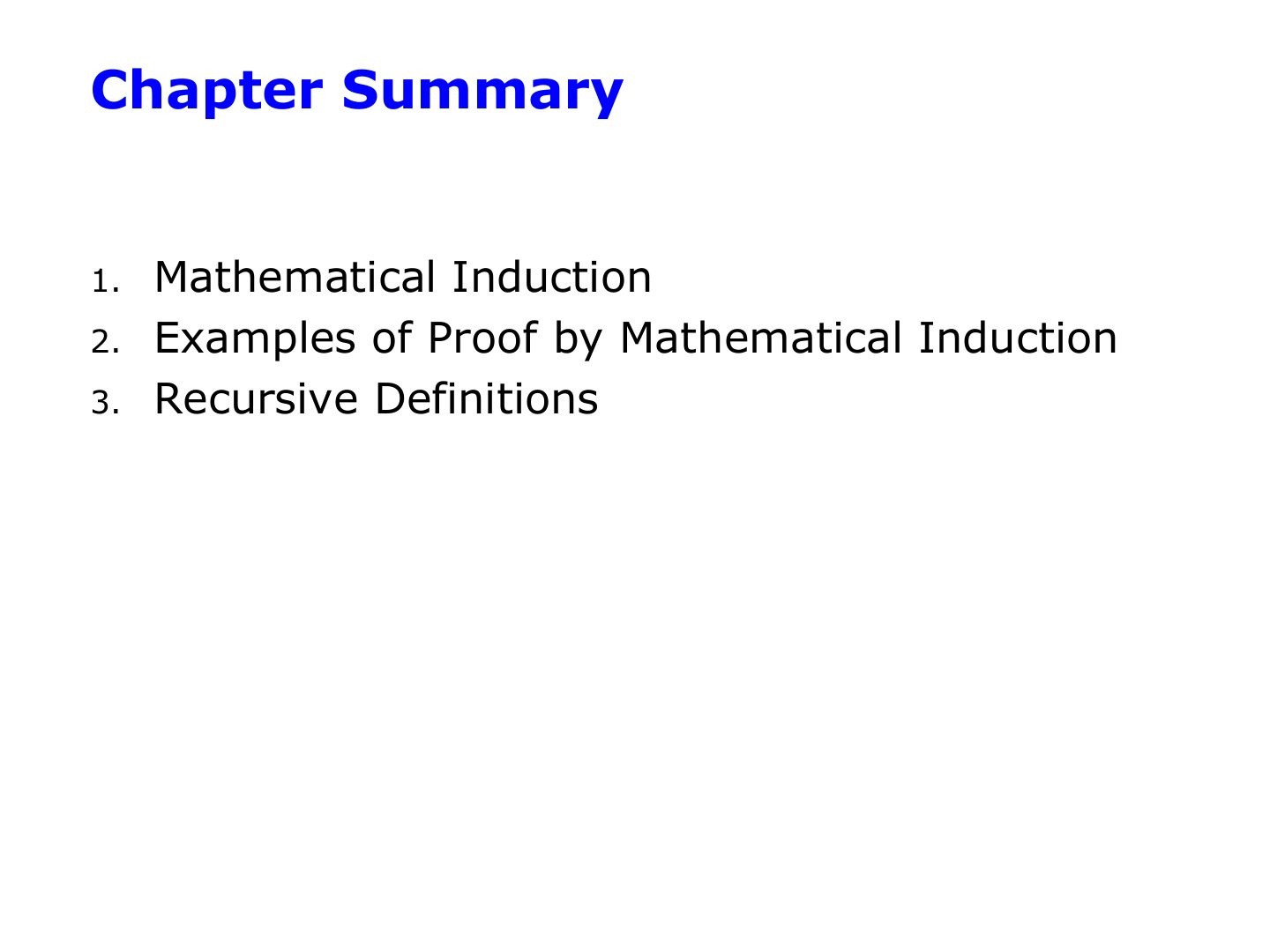
Chapter Summary
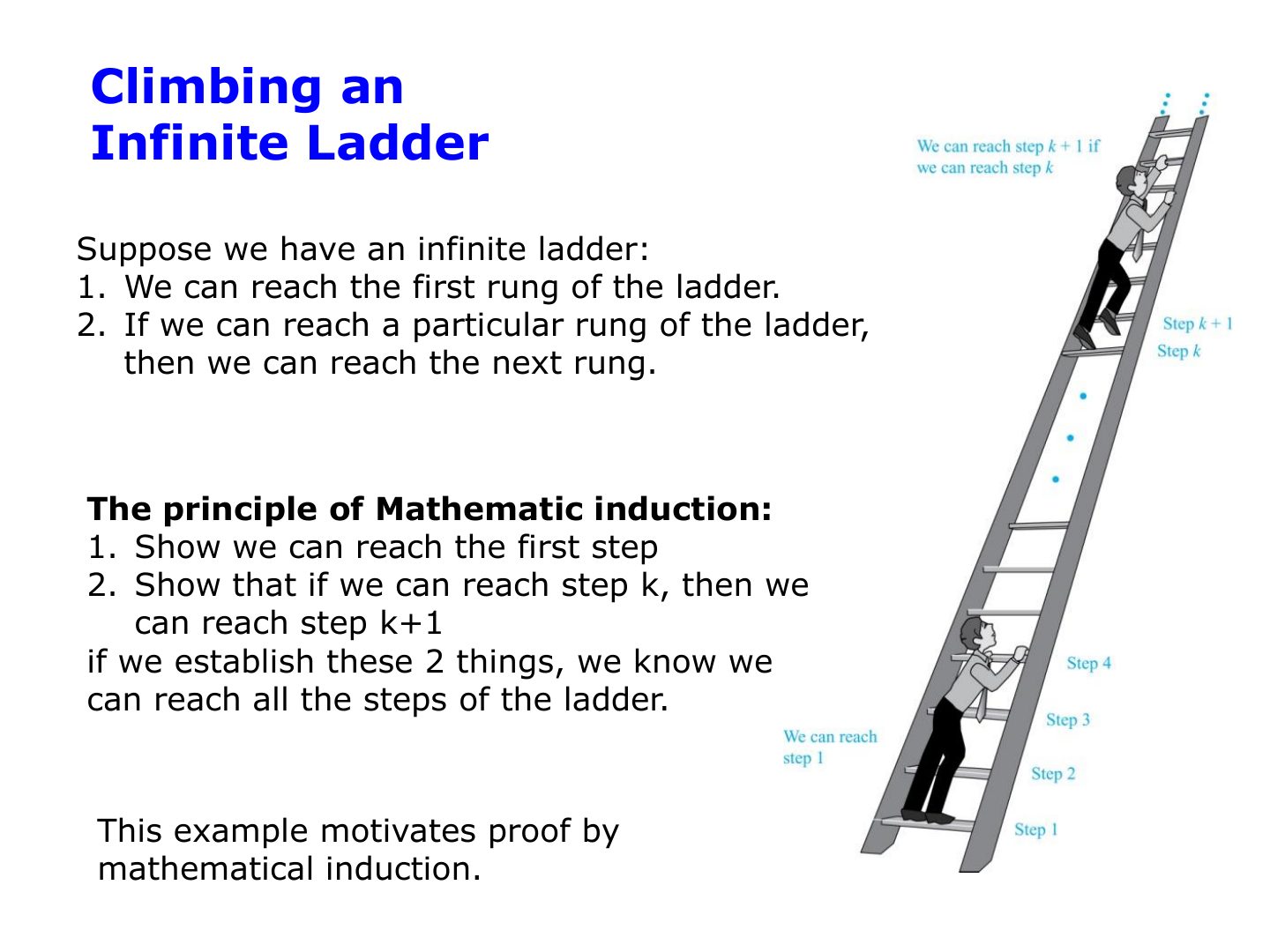
Climbing an Infinite Ladder
Principle of Mathematical Induction (MI)
Exam angle
Remembering How Mathematical Domino Effect Induction Works -
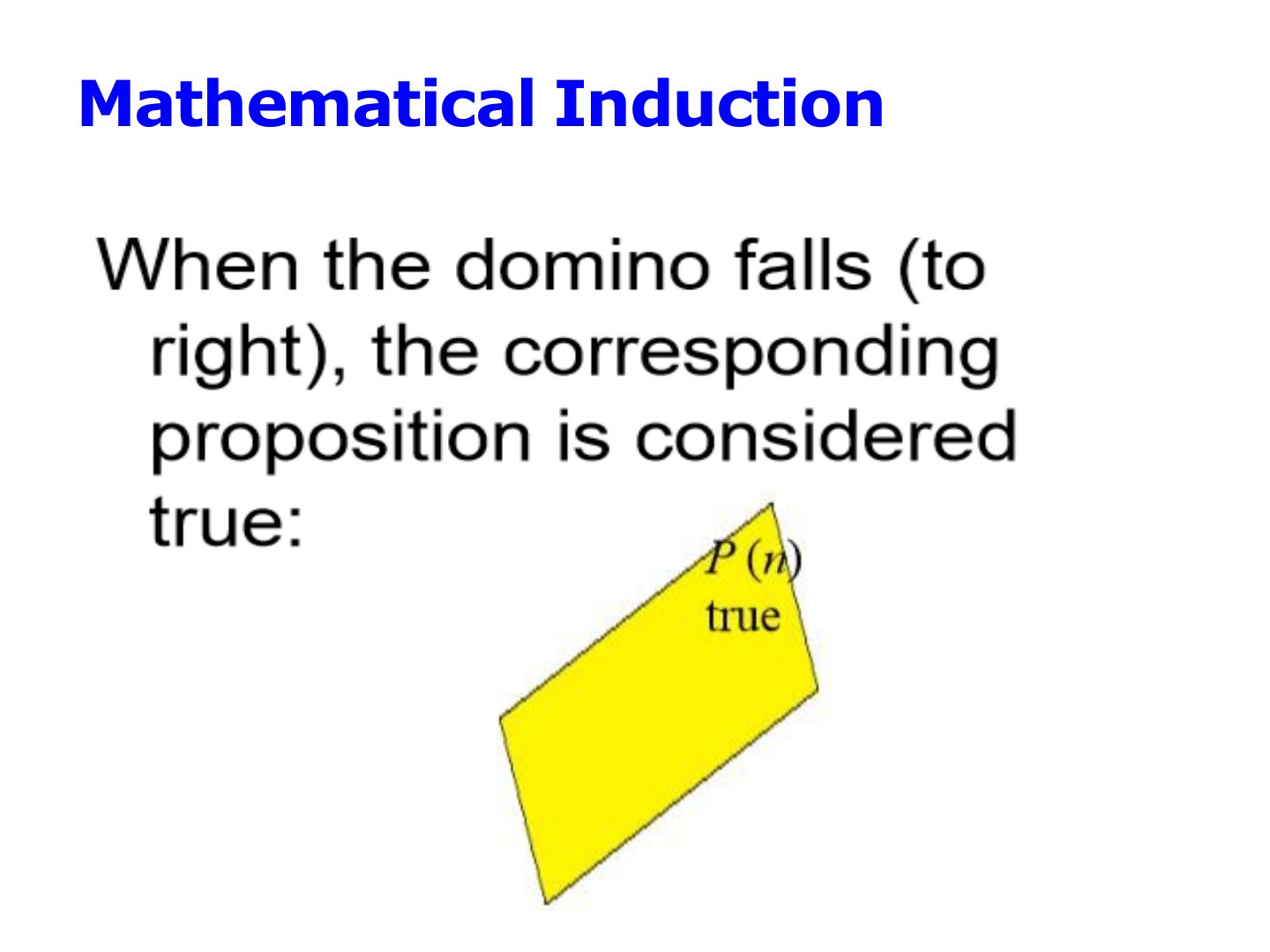
Mathematical Induction
Notes
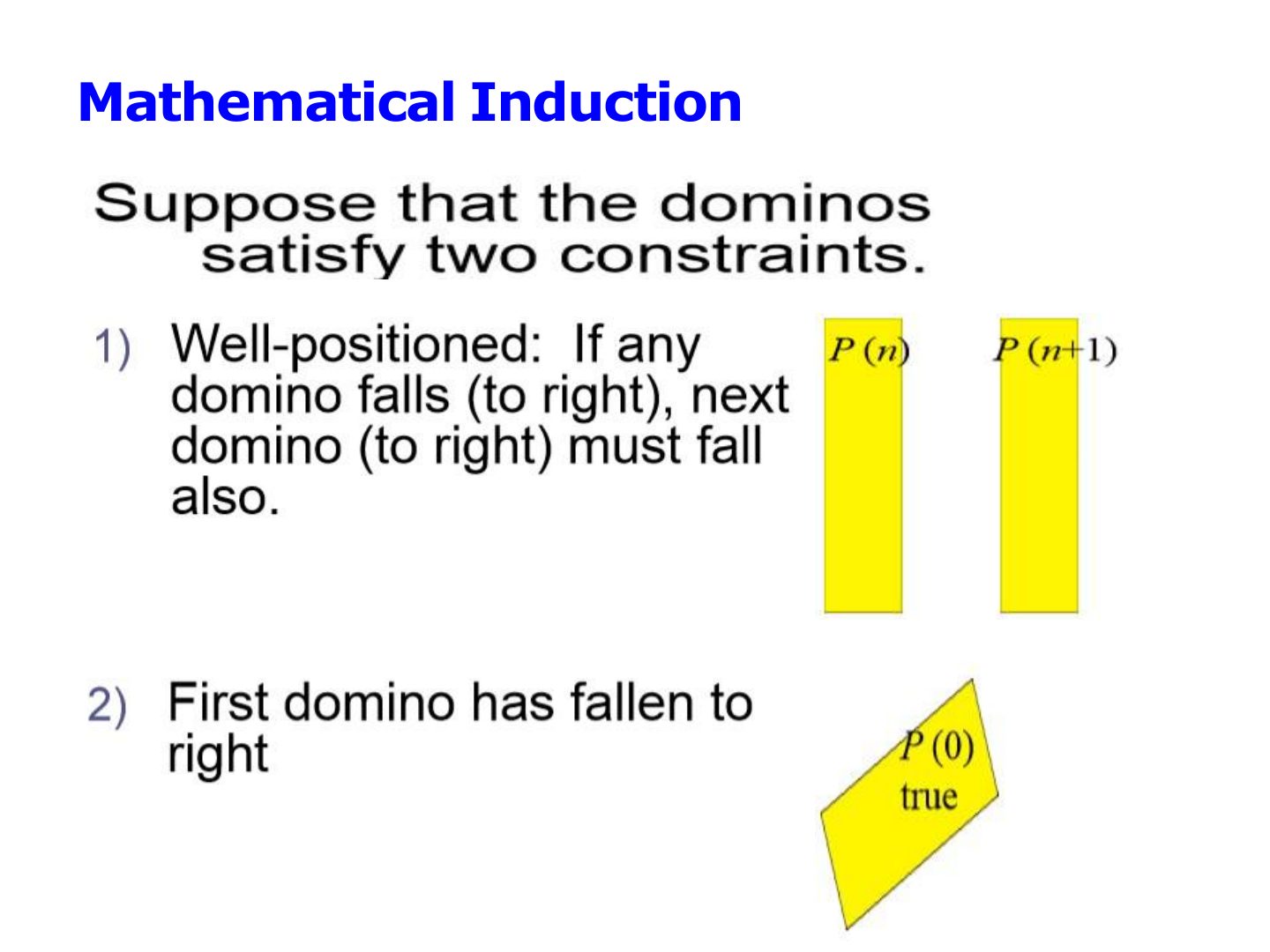
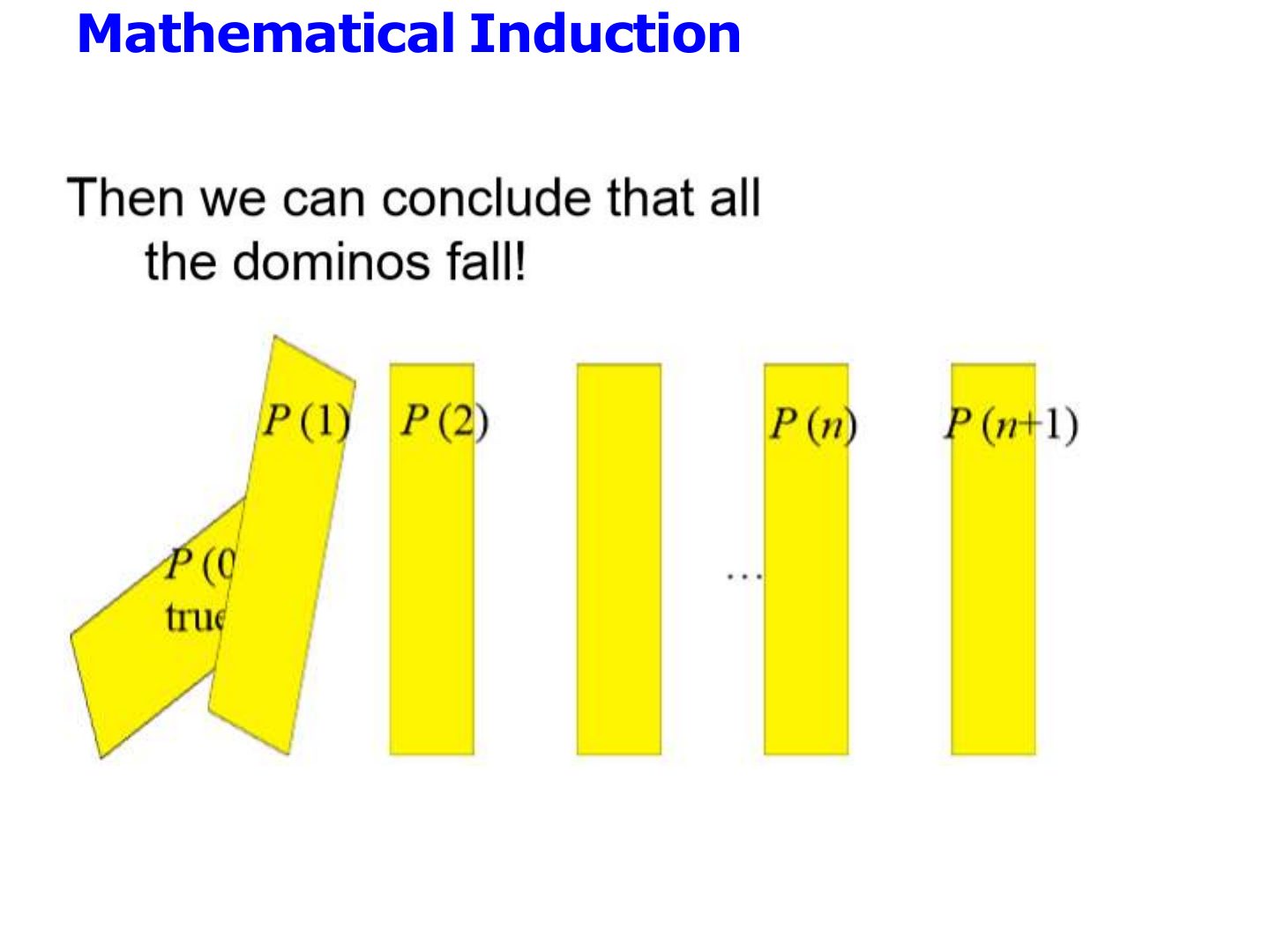
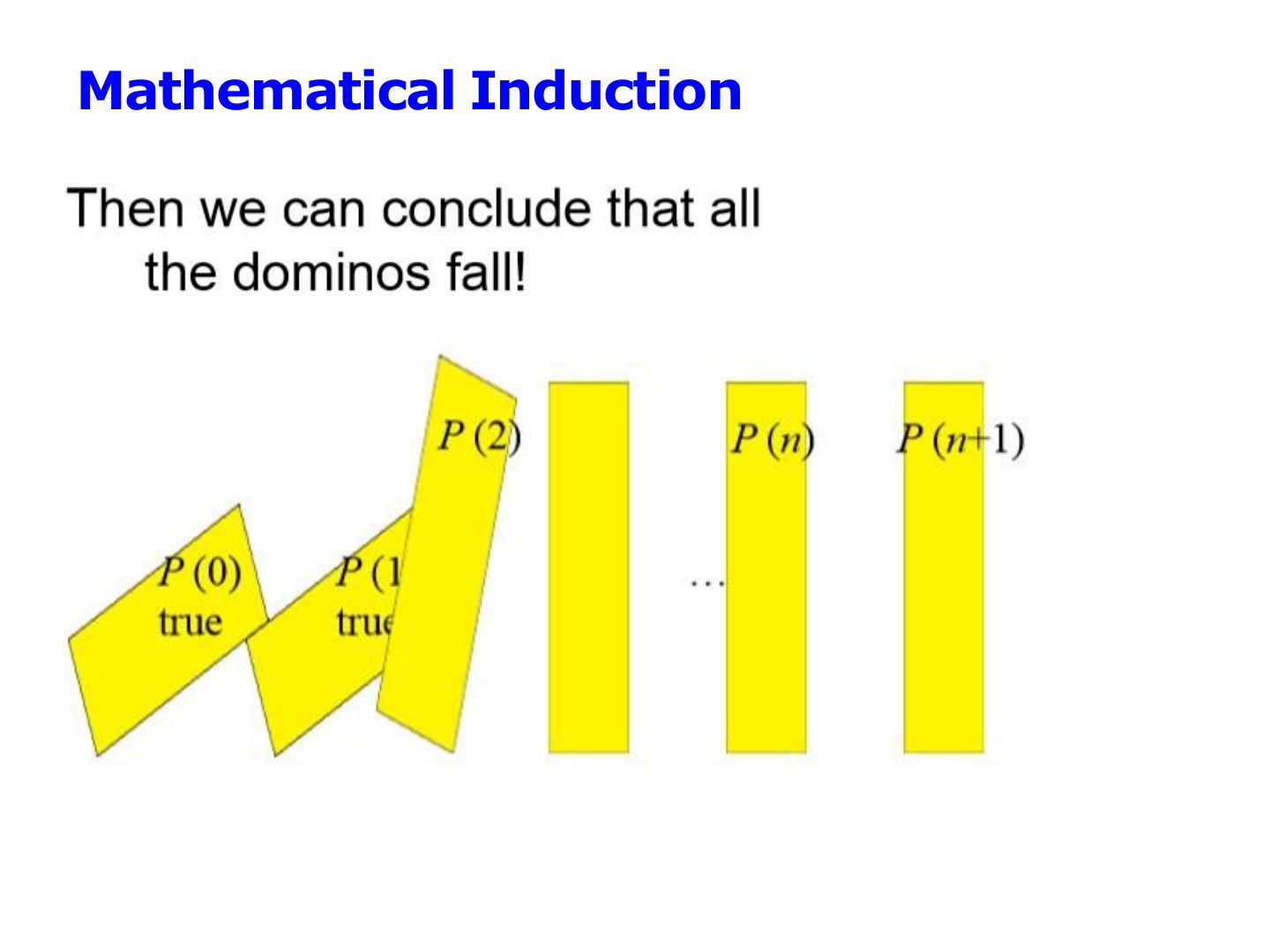
Template: state P(n) → basis → assume P(k) → show P(k + 1) → conclude.
Mathematical Induction
Mathematical Induction
Notes
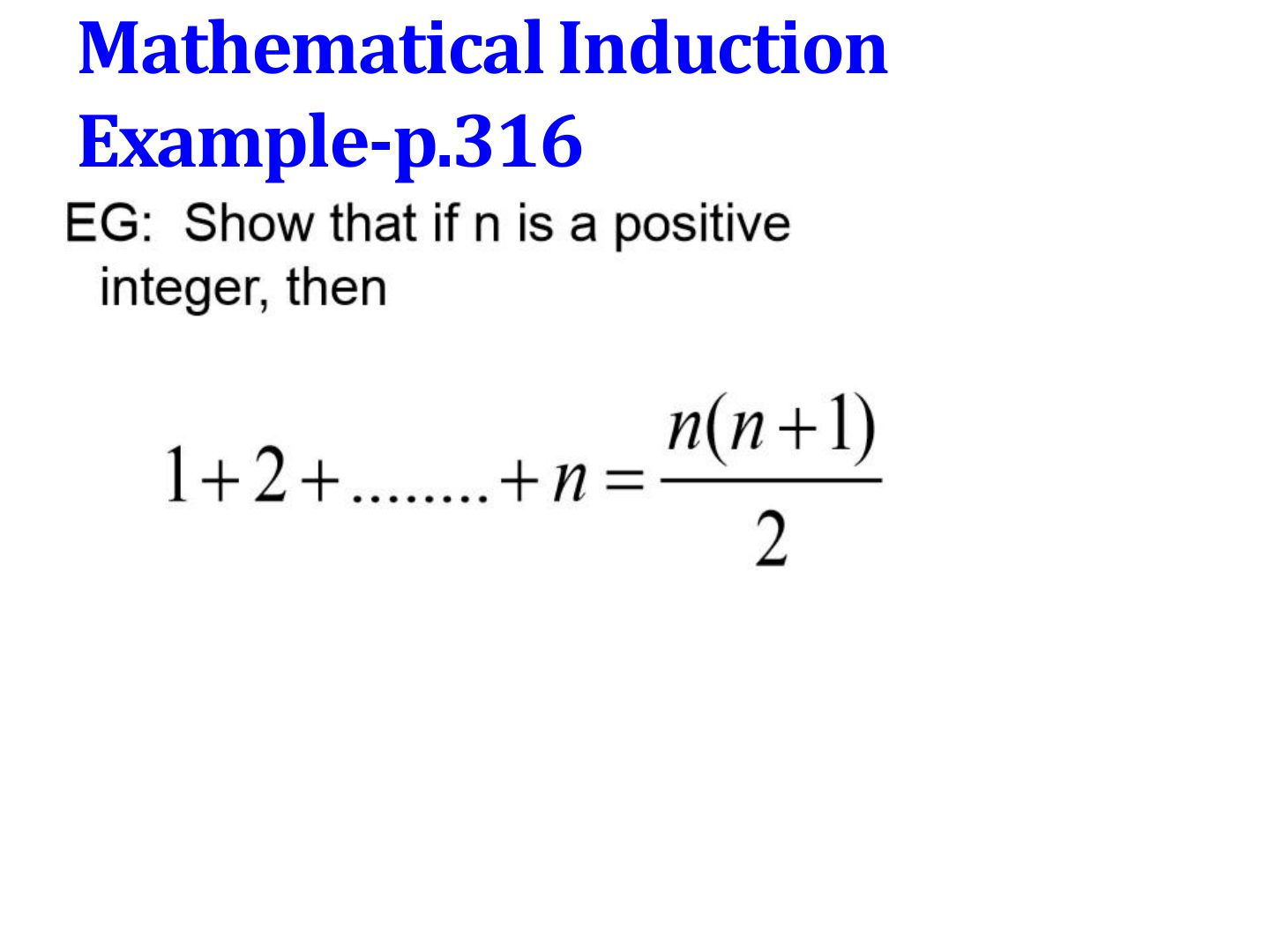
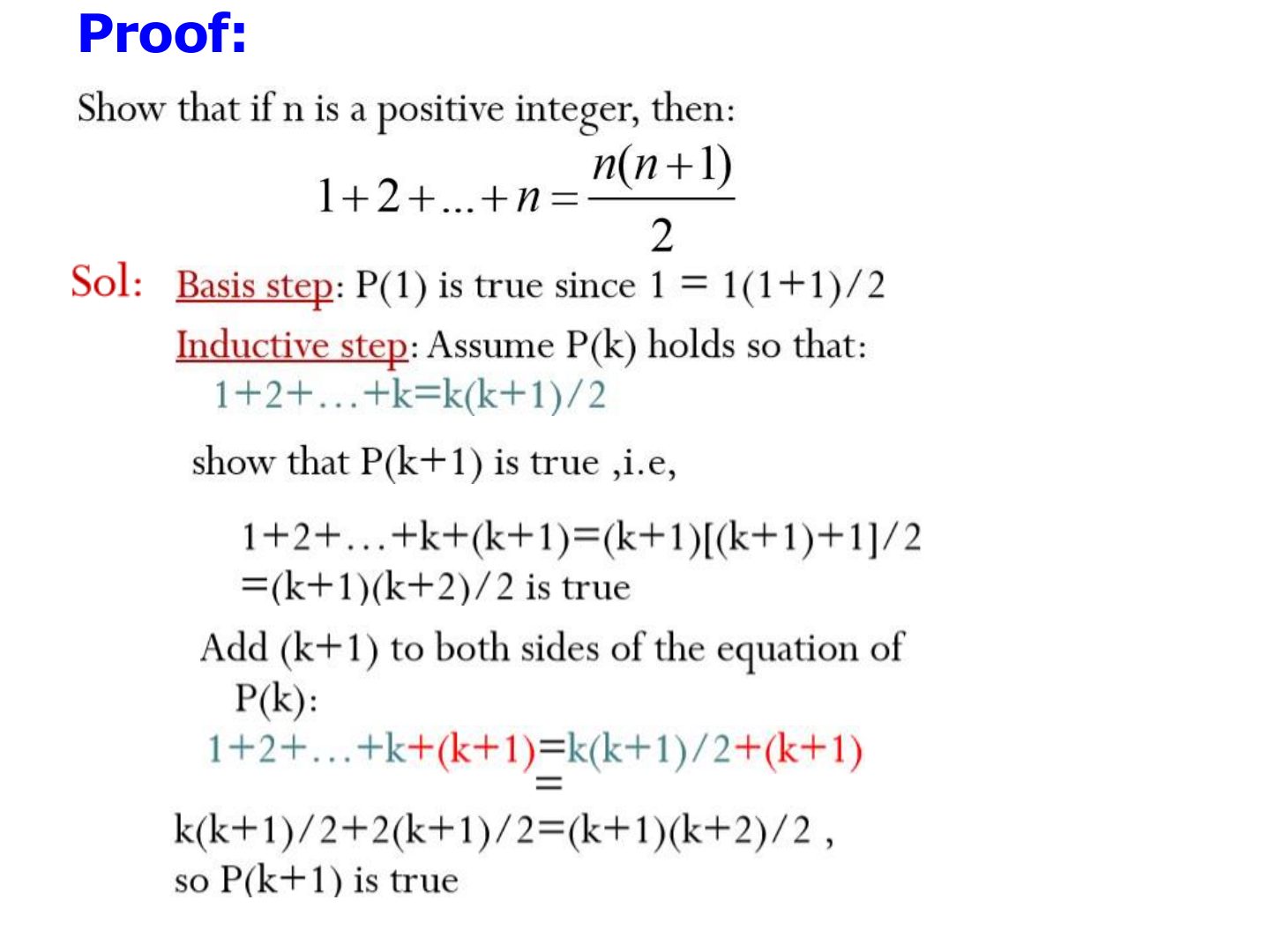
Sum example: 1 + 2 + … + n = n(n + 1)/2. Add (k + 1) to both sides of P(k).
Exam angle
Prove 1 + 2 + … + n = n(n + 1)/2 for n ≥ 1.
Compare with the model answer
Basis: n = 1: 1 = 1·2/2. Inductive step: assume 1 + … + k = k(k + 1)/2. Then 1 + … + k + (k + 1) = k(k + 1)/2 + (k + 1) = (k + 1)(k + 2)/2, which is P(k + 1). So P(n) holds for all n ≥ 1.
Mathematical Induction
Mathematical Induction
Mathematical Induction
Mathematical Induction
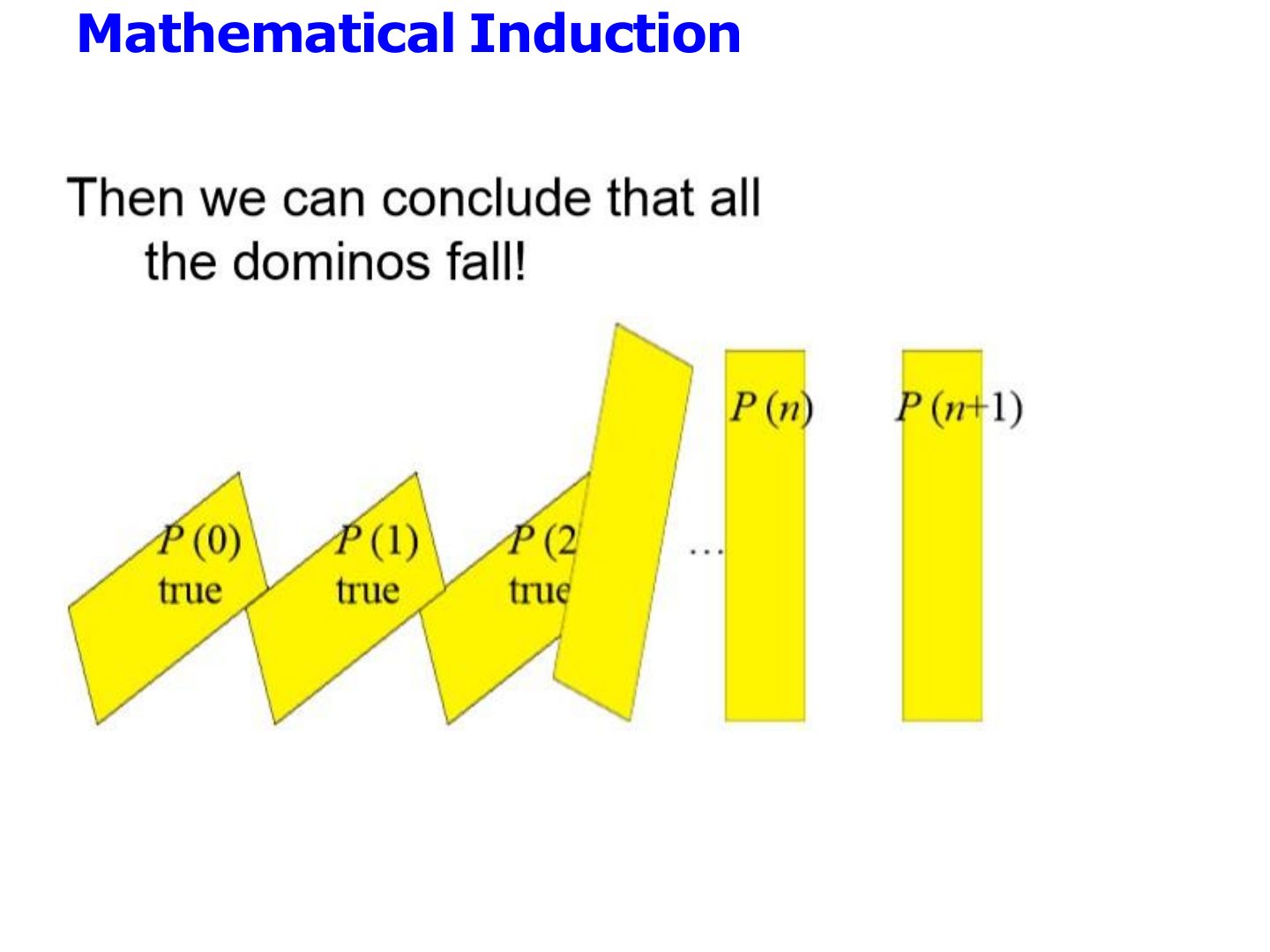
Notes
Divisibility example: n³ − n divisible by 3. Expand (k + 1)³ − (k + 1) = (k³ − k) + 3(k² + k).
Mathematical Induction
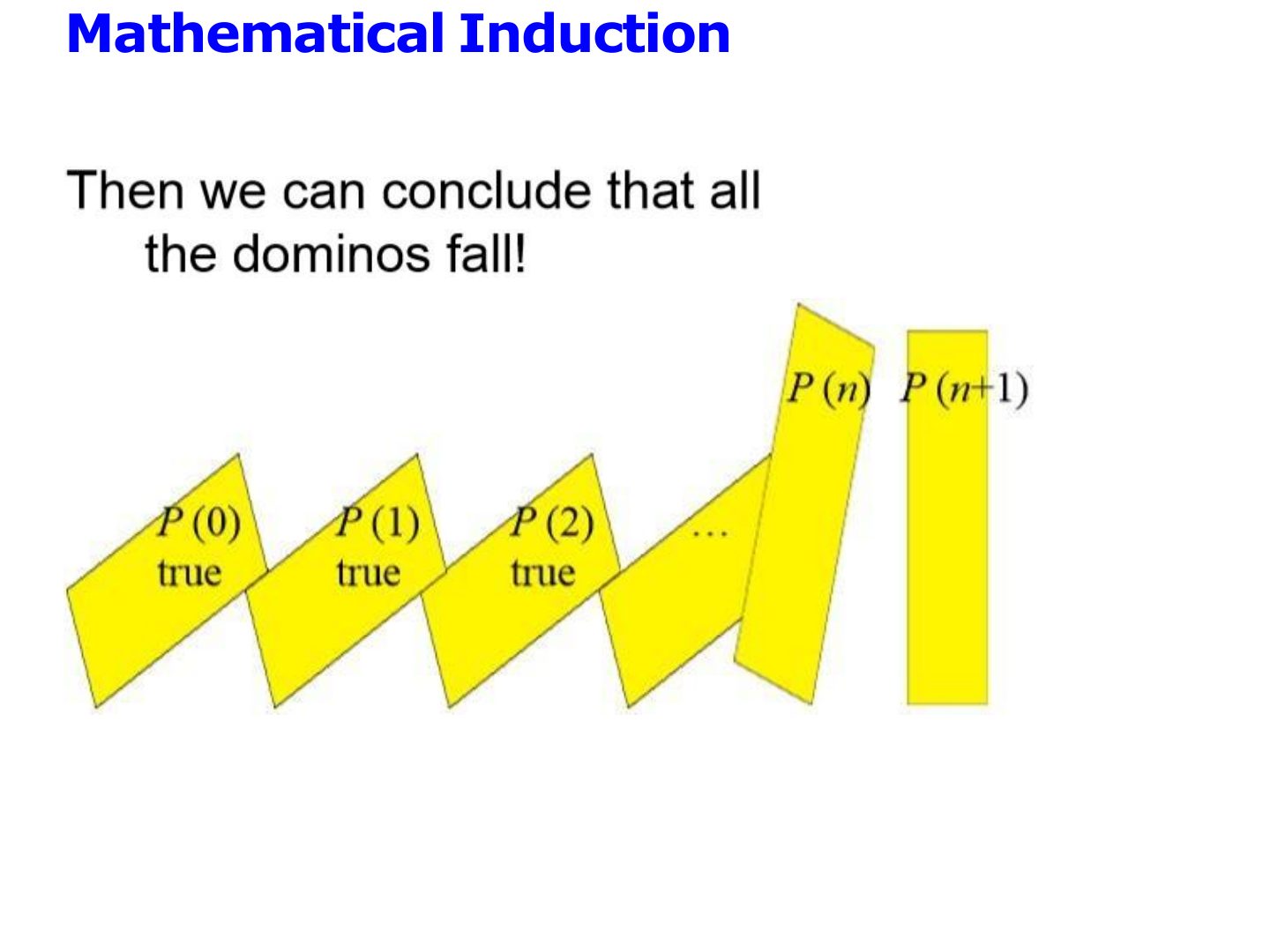
Mathematical Induction
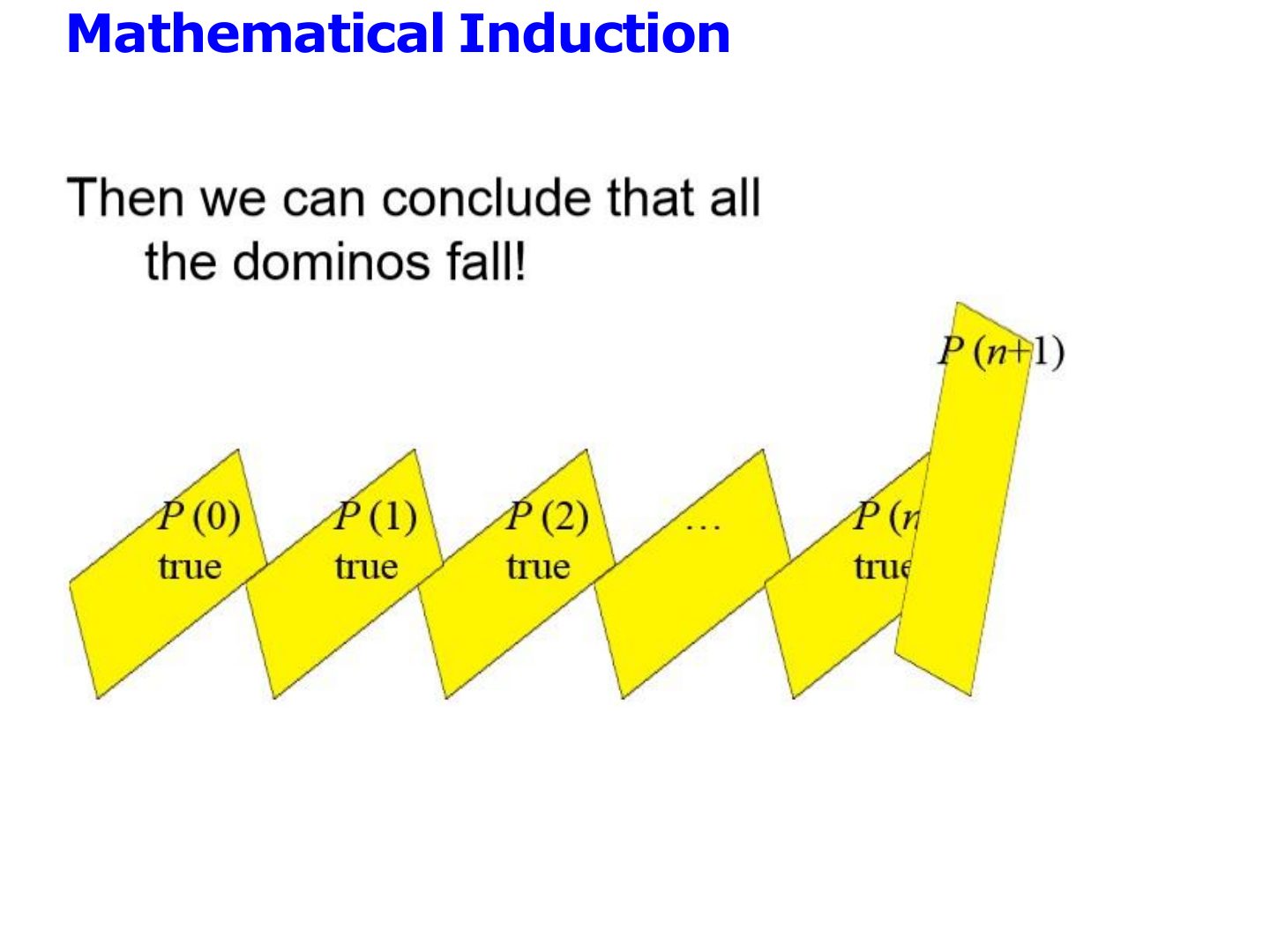
Notes
Inequality example: 2ⁿ < n!. The basis may start later than 1 (here n ≥ 4).
Exam angle
The basis step for "2ⁿ < n! for n ≥ 4" checks:
Mathematical Induction
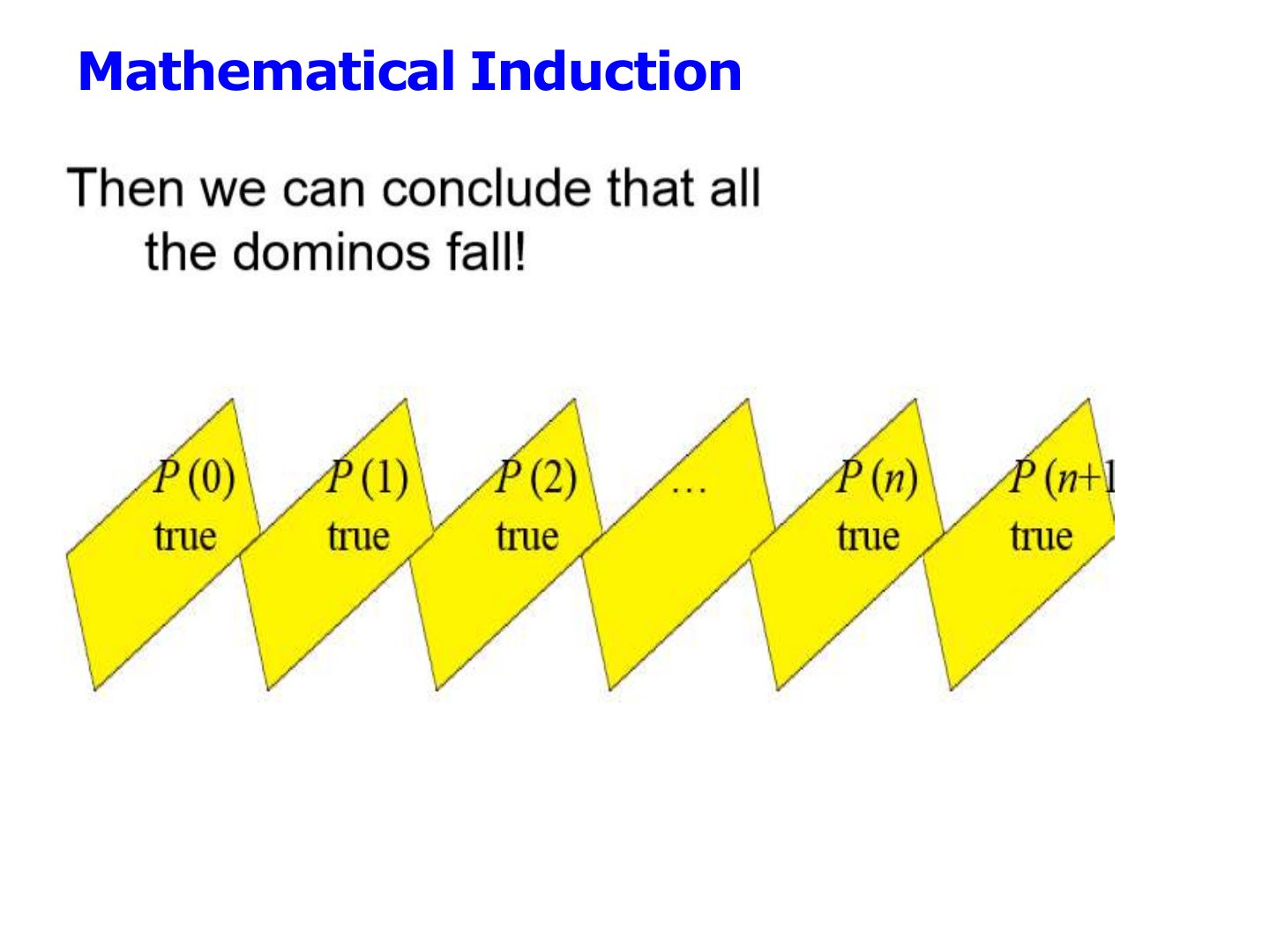
Mathematical Induction
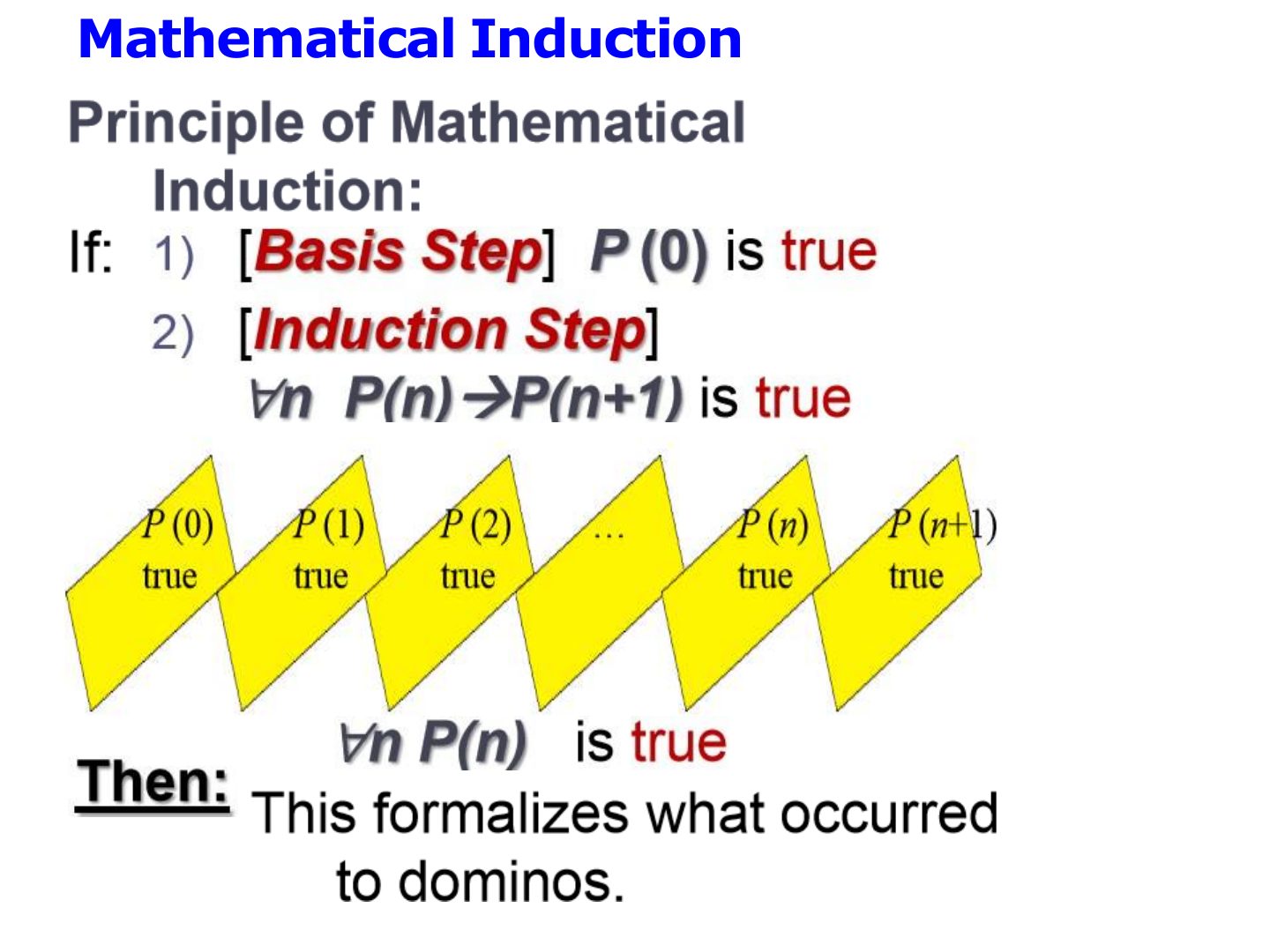
Mathematical Induction
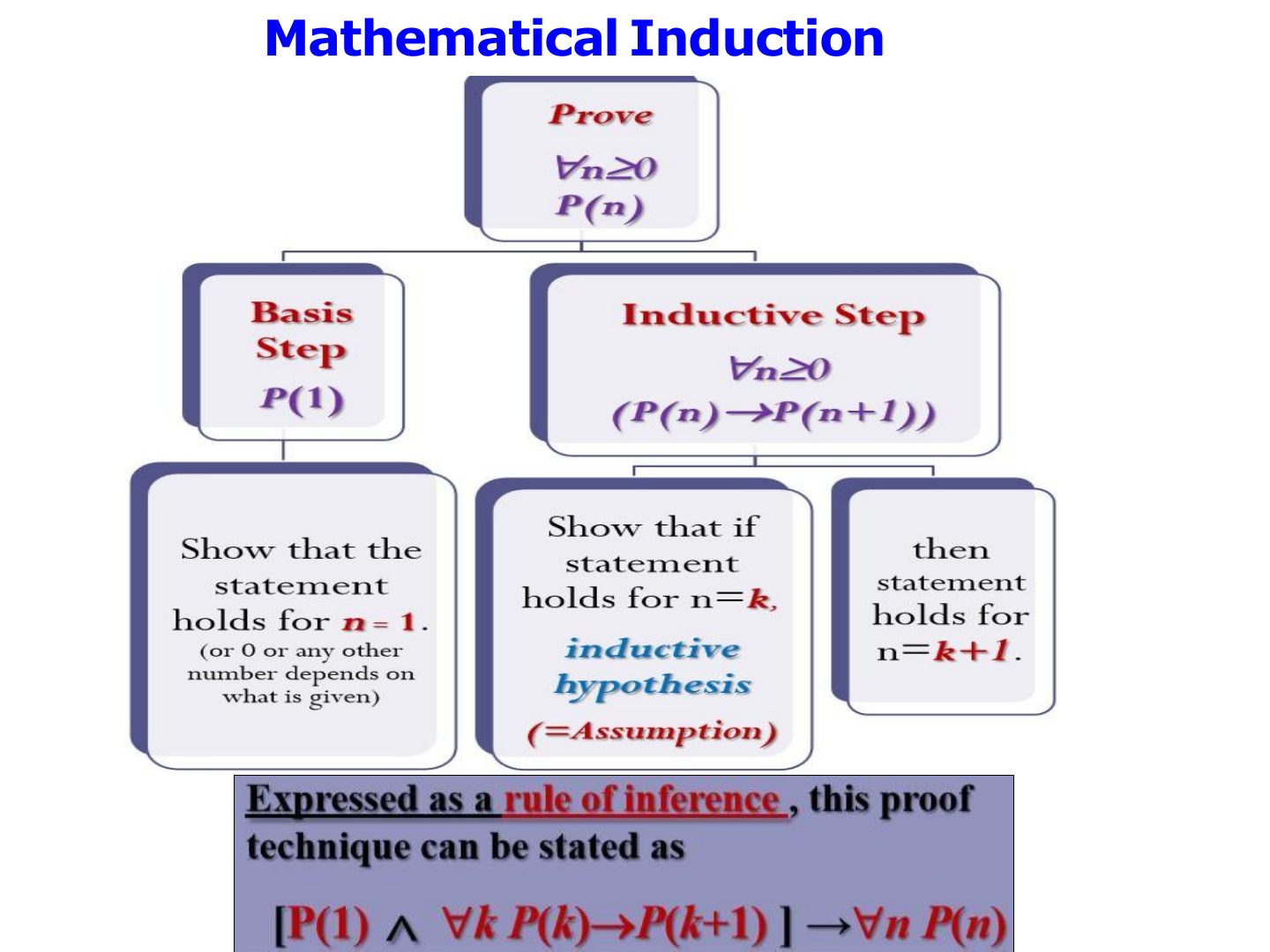
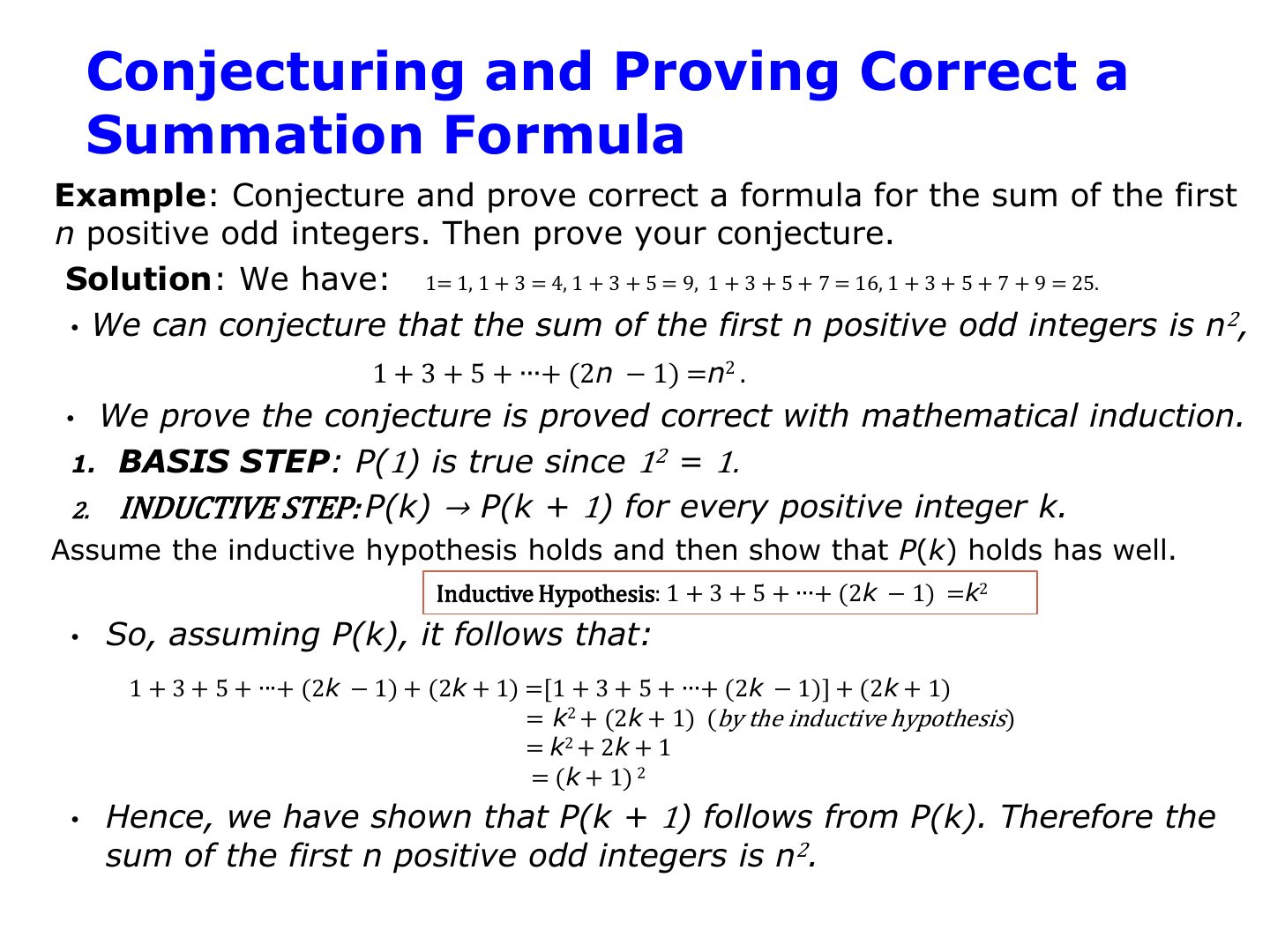
Conjecturing and Proving Correct a Summation Formula
Notes
Conjecture a formula by computing the first few values, then prove it by induction.
Mathematical Induction Example-p.316
Proof:
Mathematical Induction Example-p.318
Mathematical Induction Example-p.318
Slide 23
Recursive Definitions & Induction
Recursively Defined Functions
Exam angle
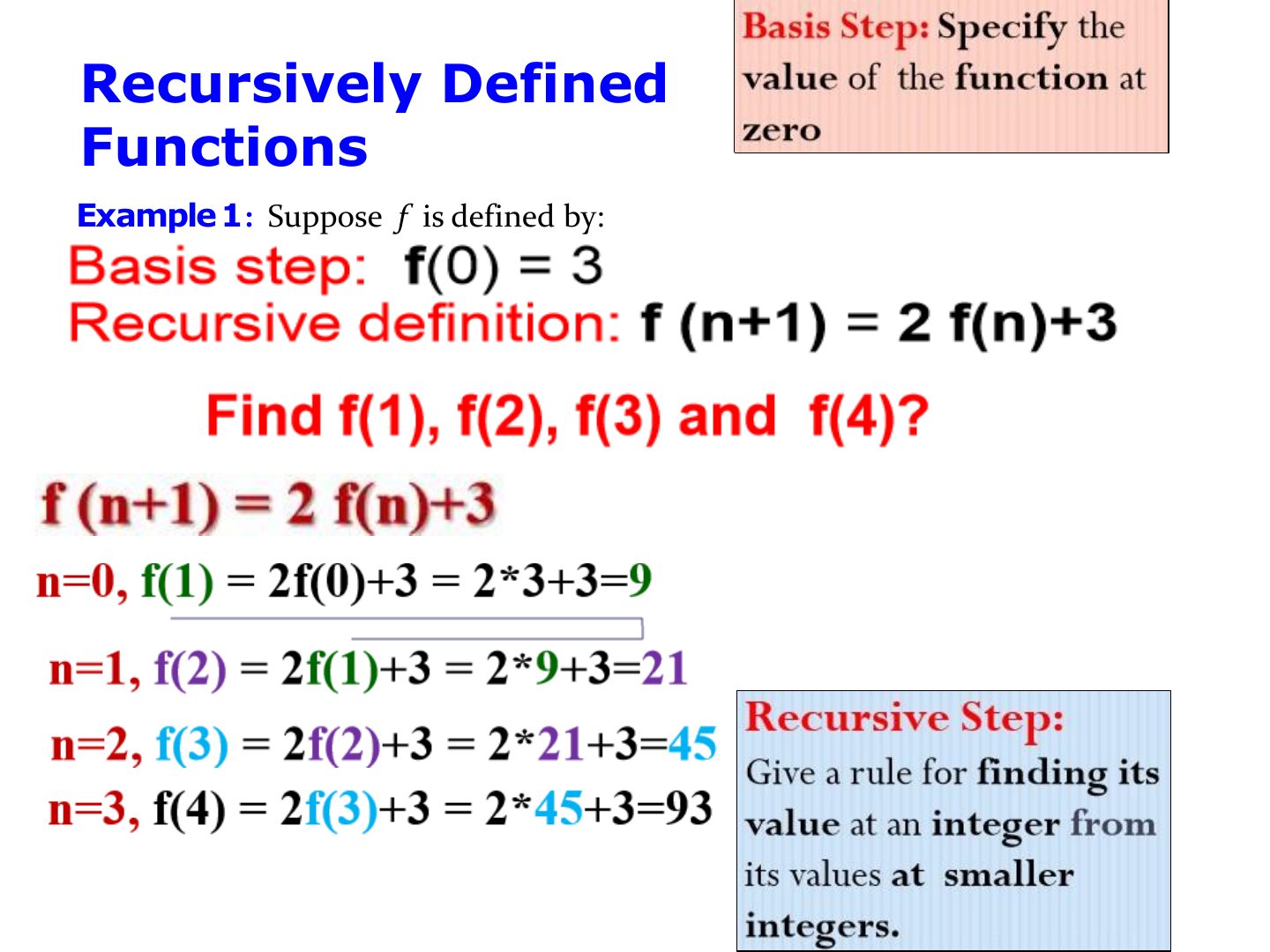
f(0) = 3, f(n + 1) = 2f(n) + 3. f(2) =
- f(1) = 9, f(2) = 21.
Recursively Defined Functions
Example 2
Example 3
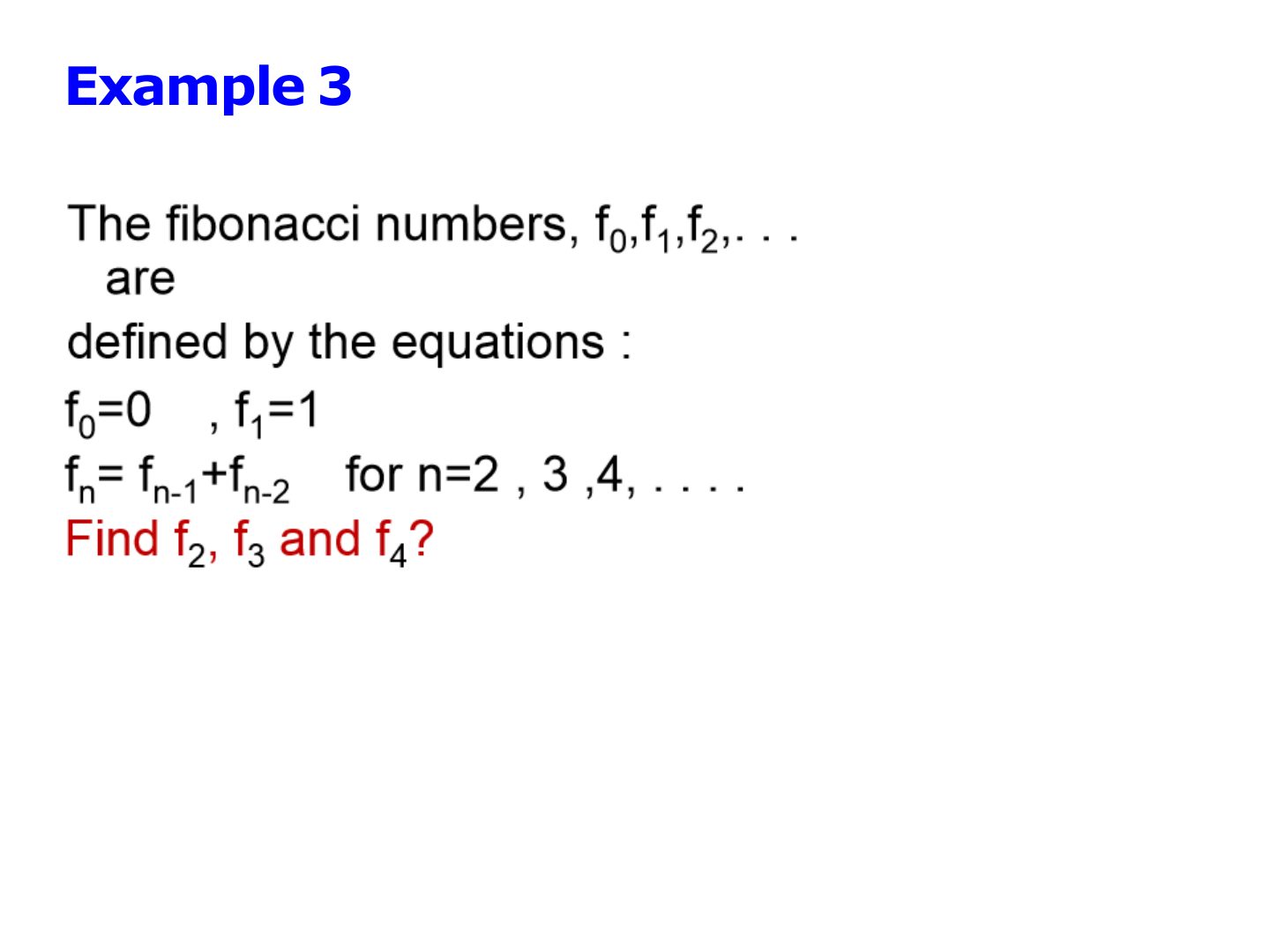
Example 3
Example 4
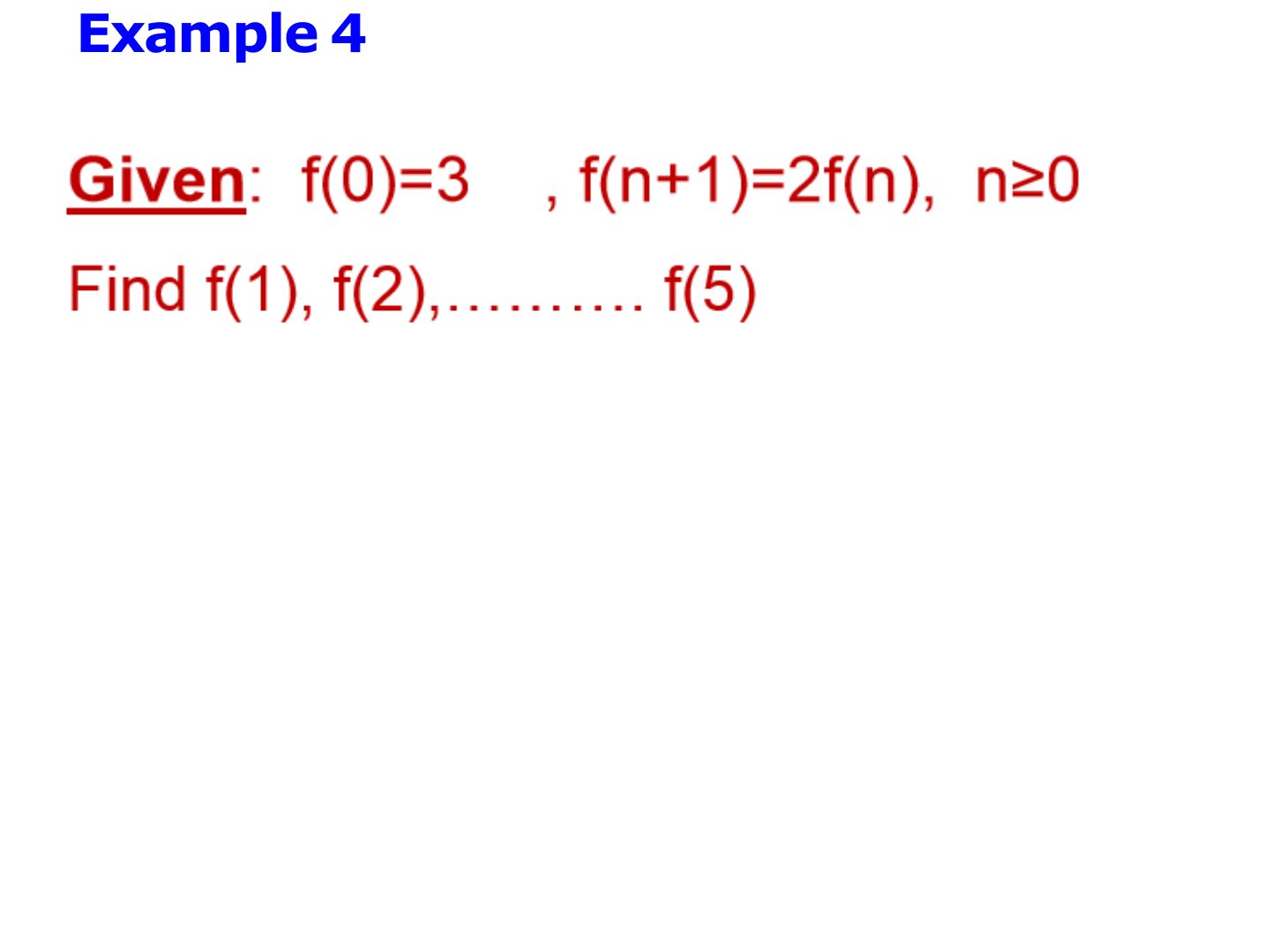
Example 4
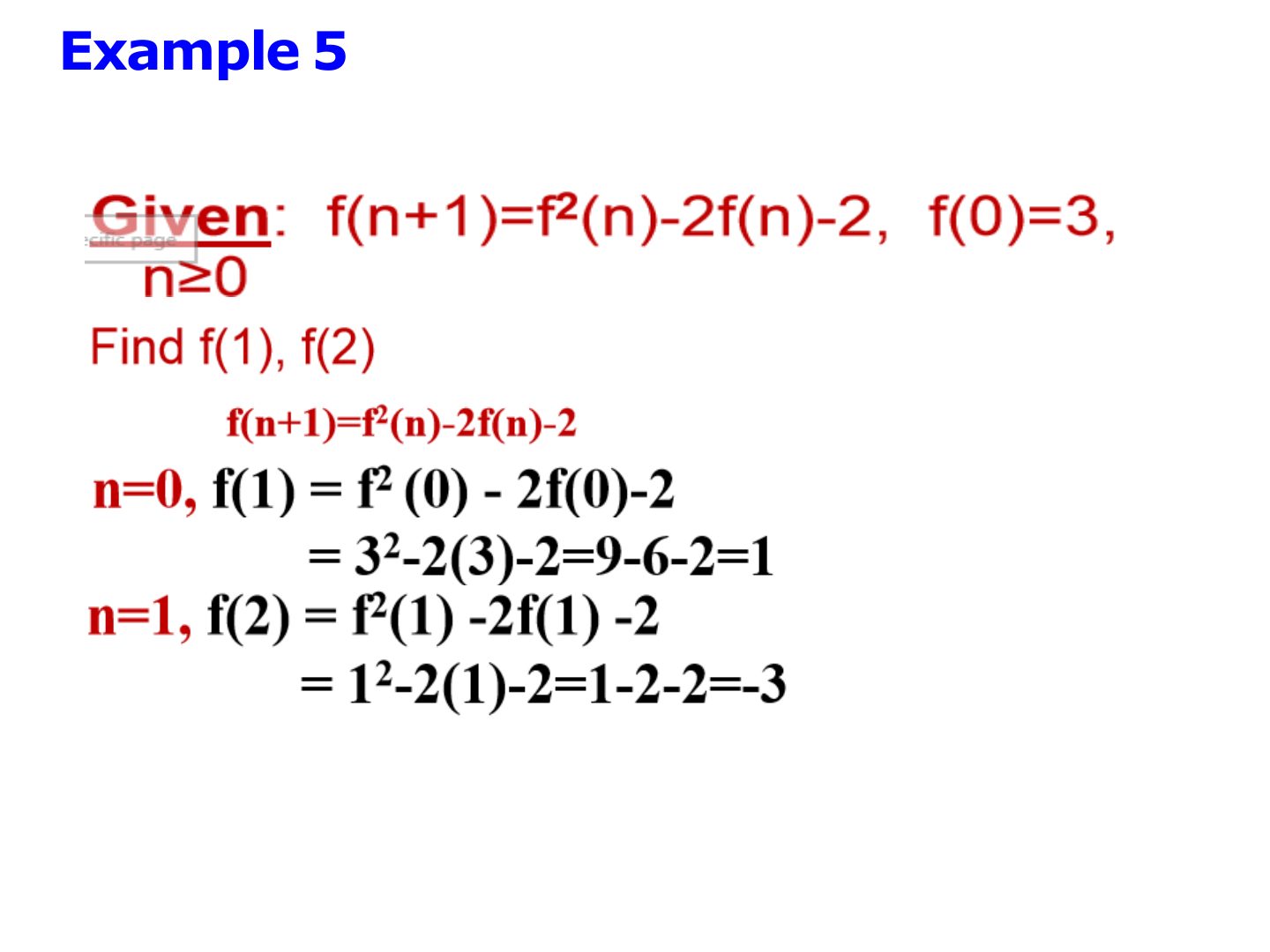
Example 5
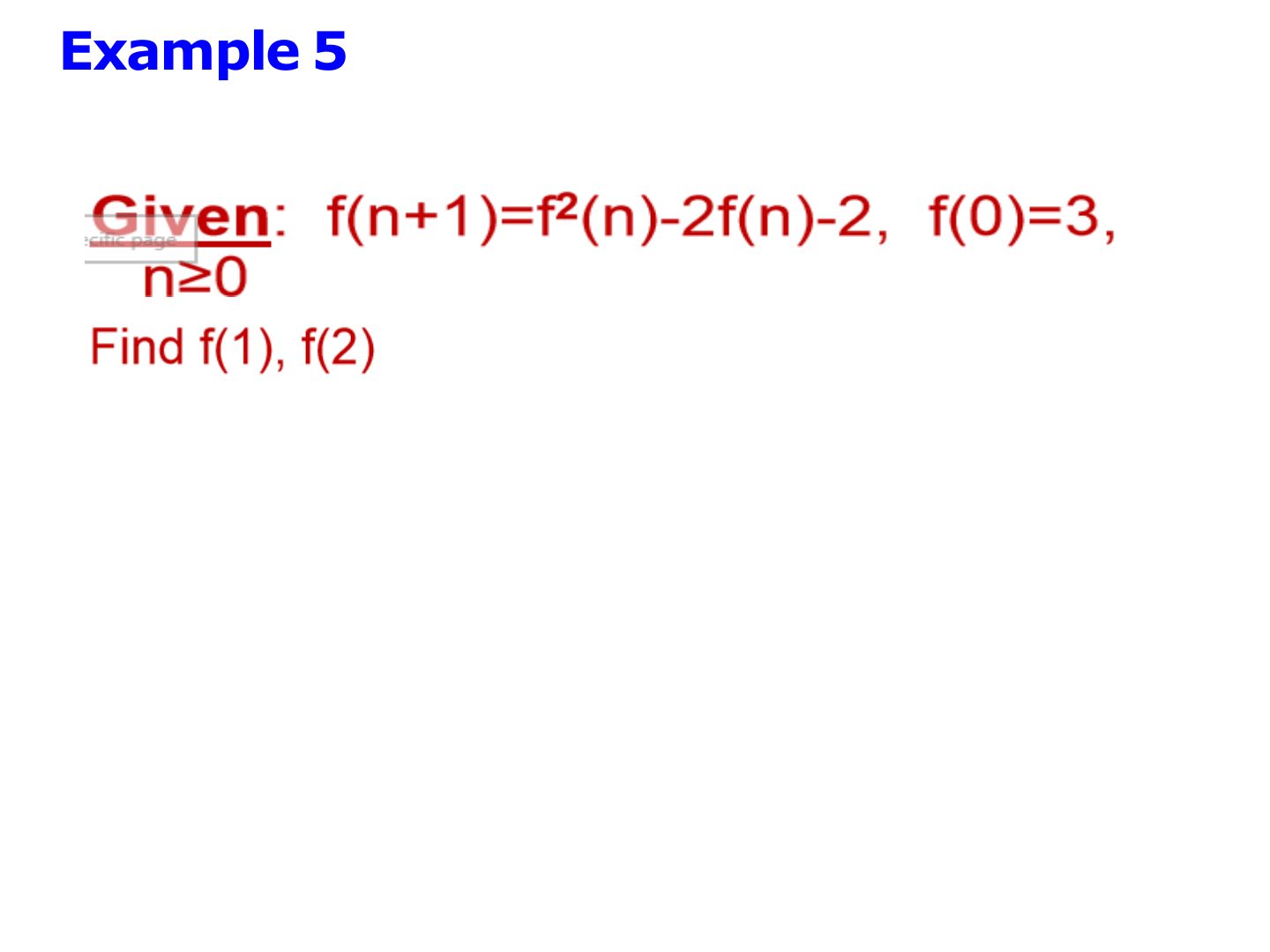
Example 5