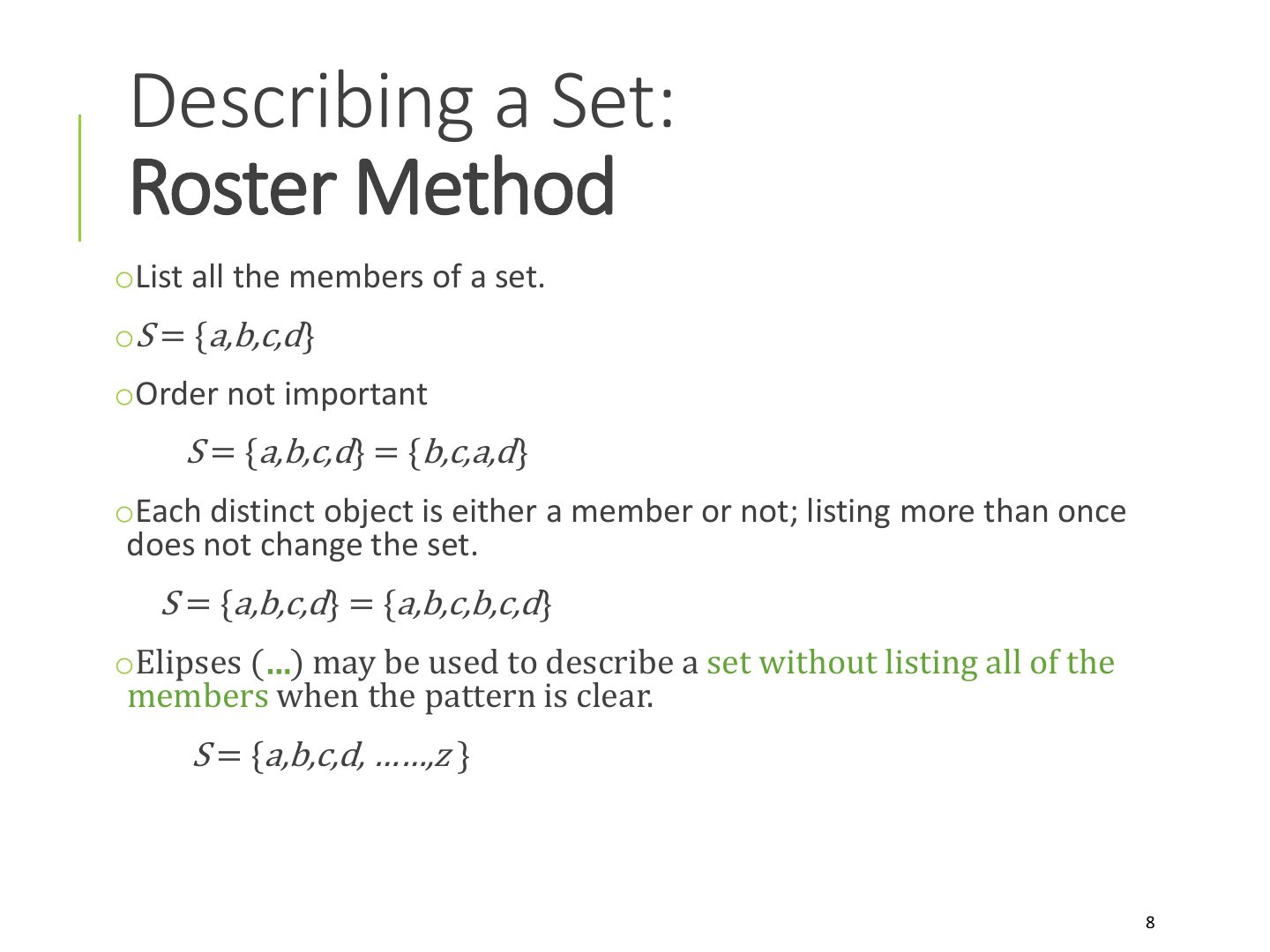
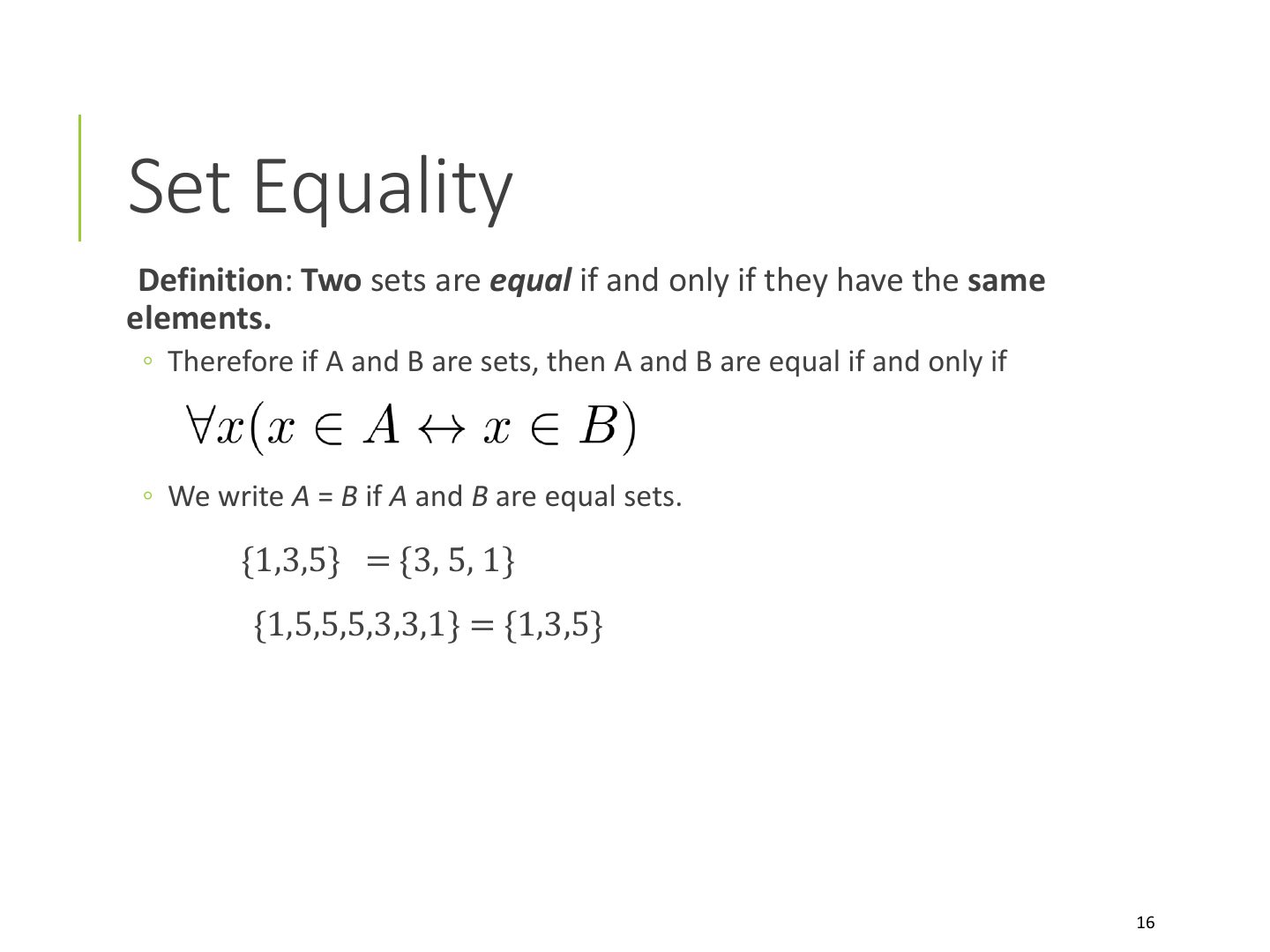
{1, 3, 3, 5} and {5, 3, 1} are equal sets.
Basic Structures: Sets, Functions, Sequences, Sums, and Matrices
Sets (roster and set-builder notation, subsets, cardinality, power sets, Cartesian products), set operations and identities, functions (one-to-one, onto, bijections, inverses, composition, floor and ceiling), sequences and summations, recurrence relations, and matrices including zero-one matrices and Boolean products.
How to read this page
Every original slide is shown unchanged. Yellow marks on a slide point to a numbered note: hover or tap a mark to jump to its note, and hover a note to see its marks. Questions tagged Past exam appeared on a real paper; Prediction questions are likely angles, not confirmed. Pick an answer to each question: a wrong pick tells you why it is wrong, so you can try again.
All 145 slides
- 1 Basic Structures: Sets, Functions,
- 2 Chapter Summary
- 3 Slide 3
- 4 Section Summary
- 5 Introduction
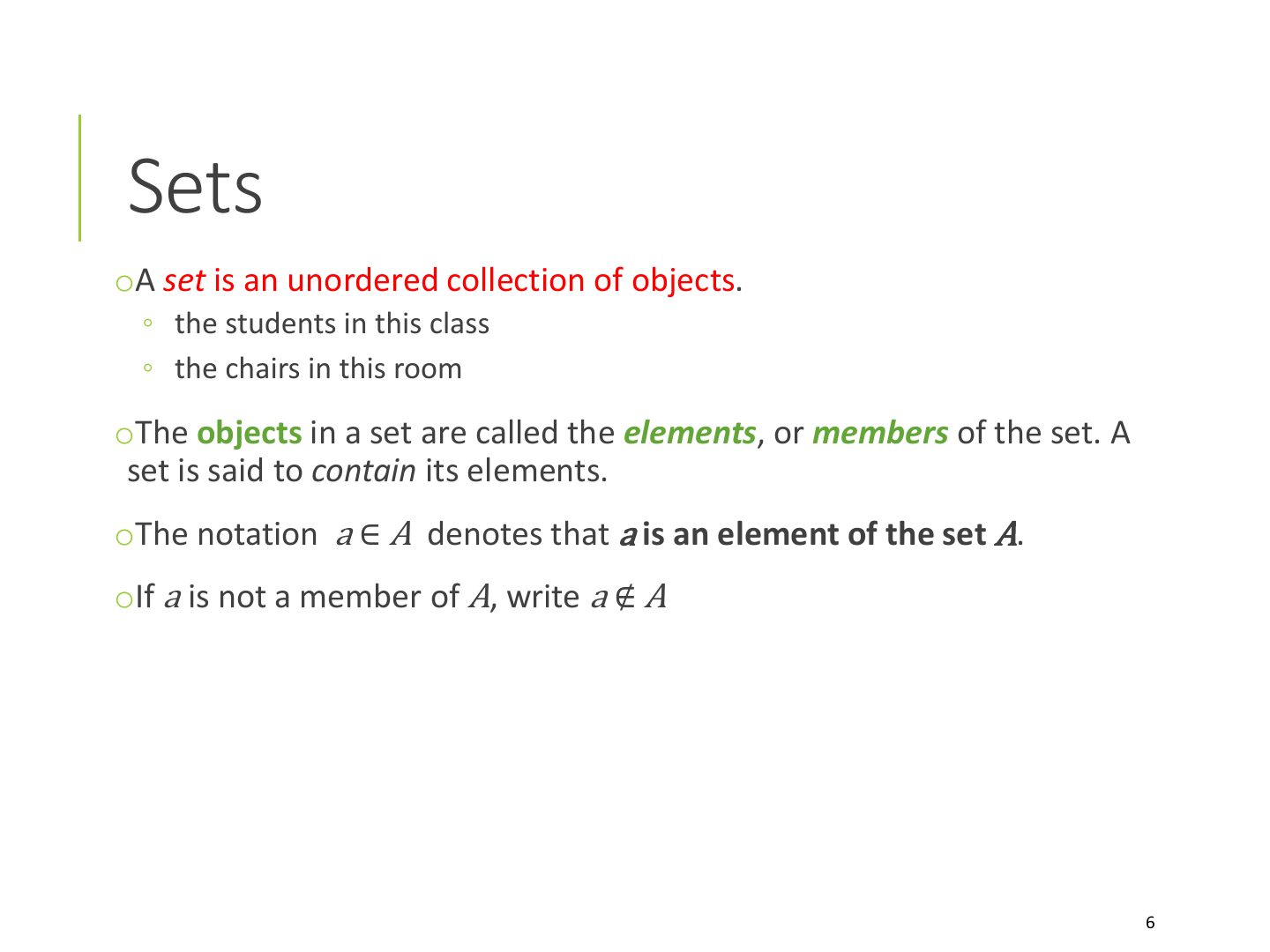
- 6 Sets
- 7 Describing Sets
- 8 Describing a Set: Roster Method
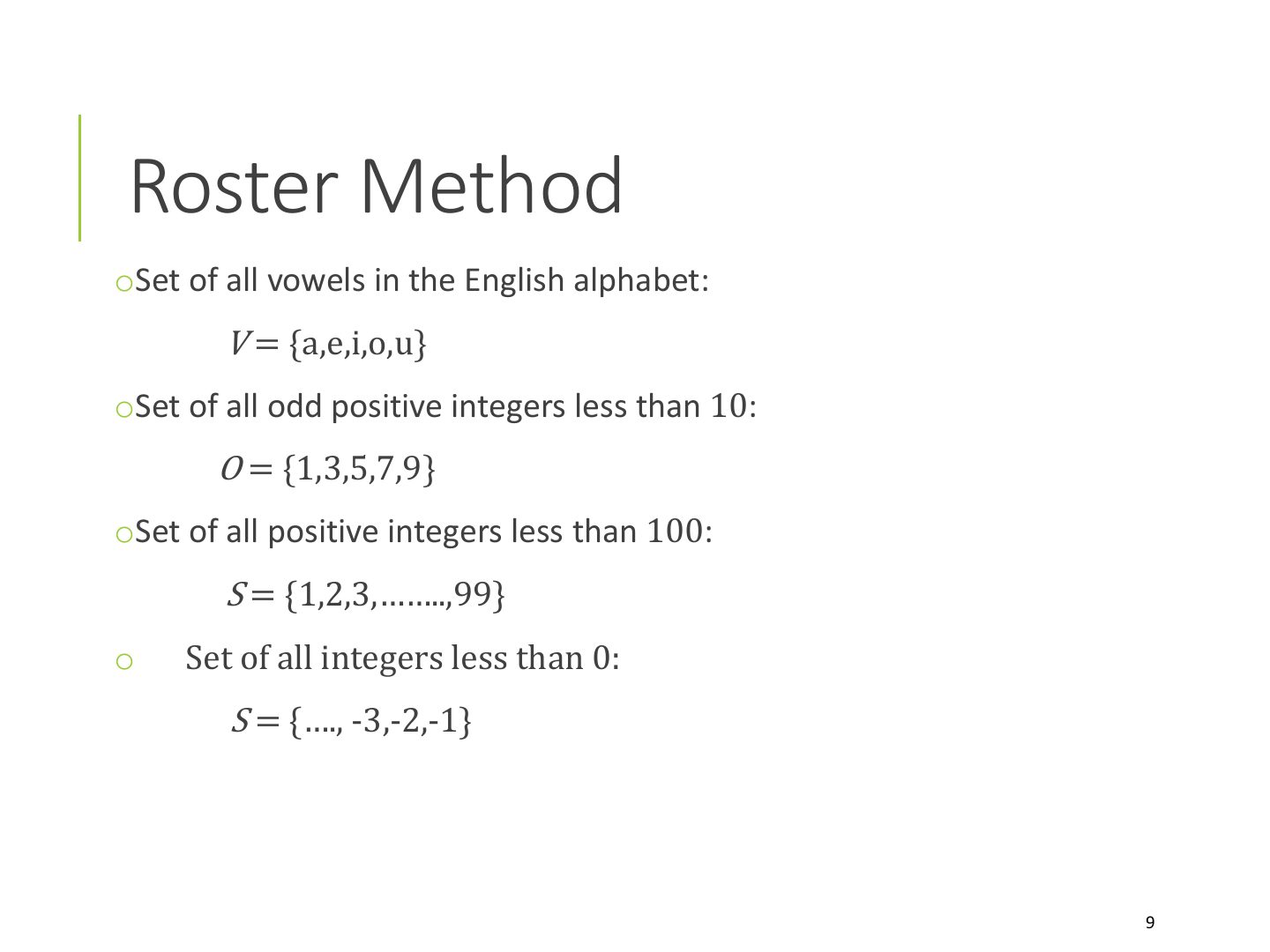
- 9 Roster Method
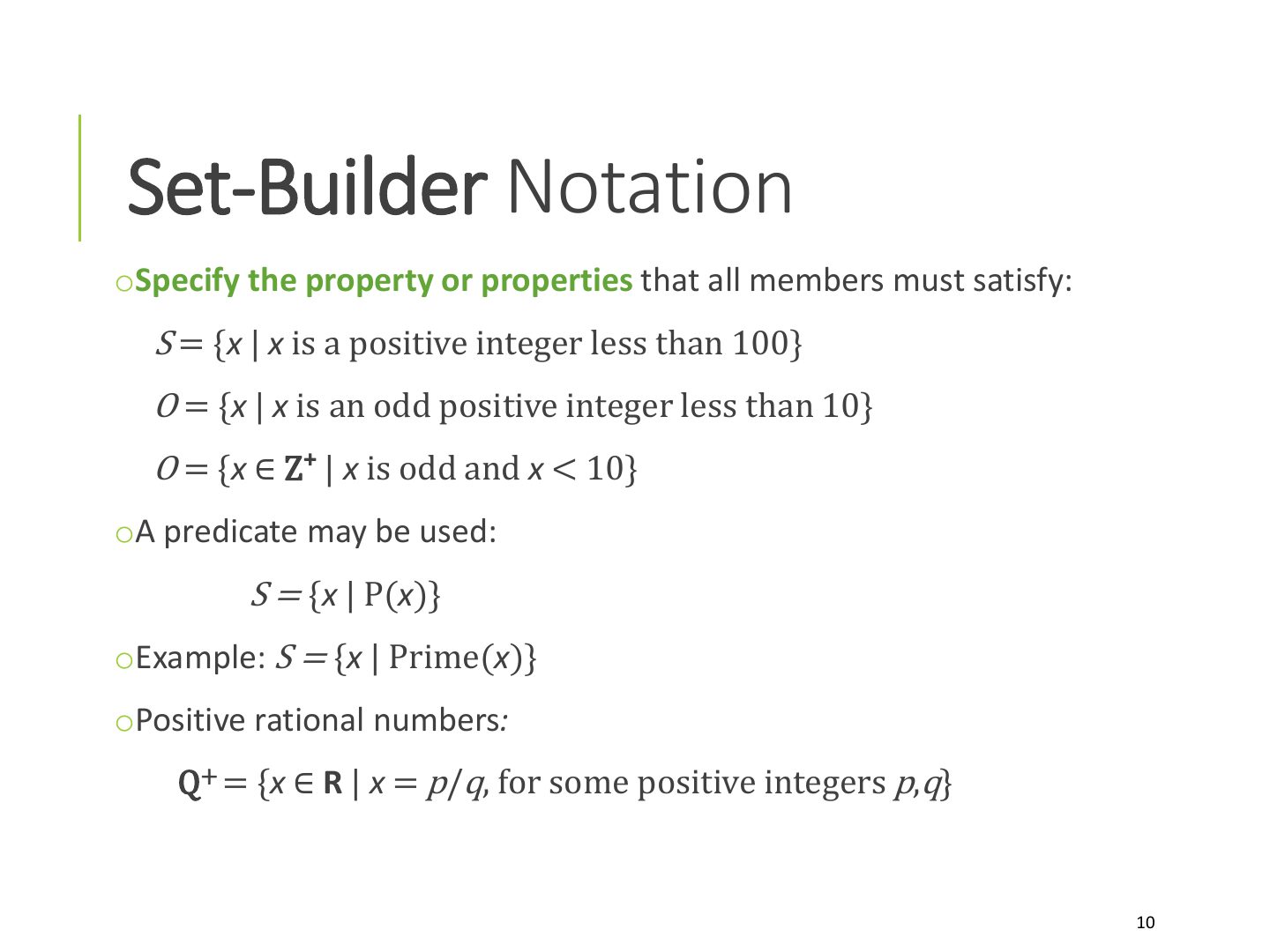
- 10 Set-Builder Notation
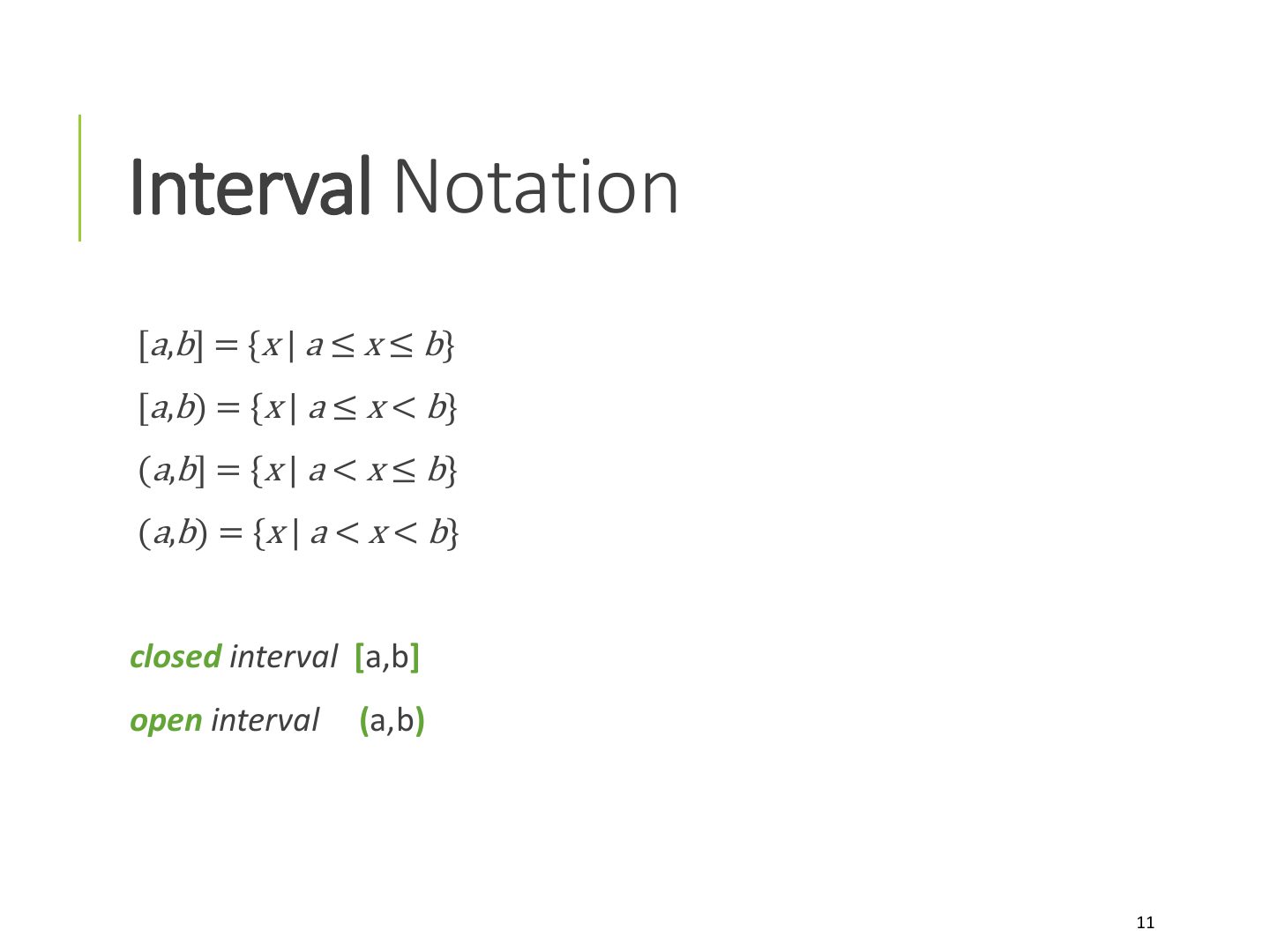
- 11 Interval Notation
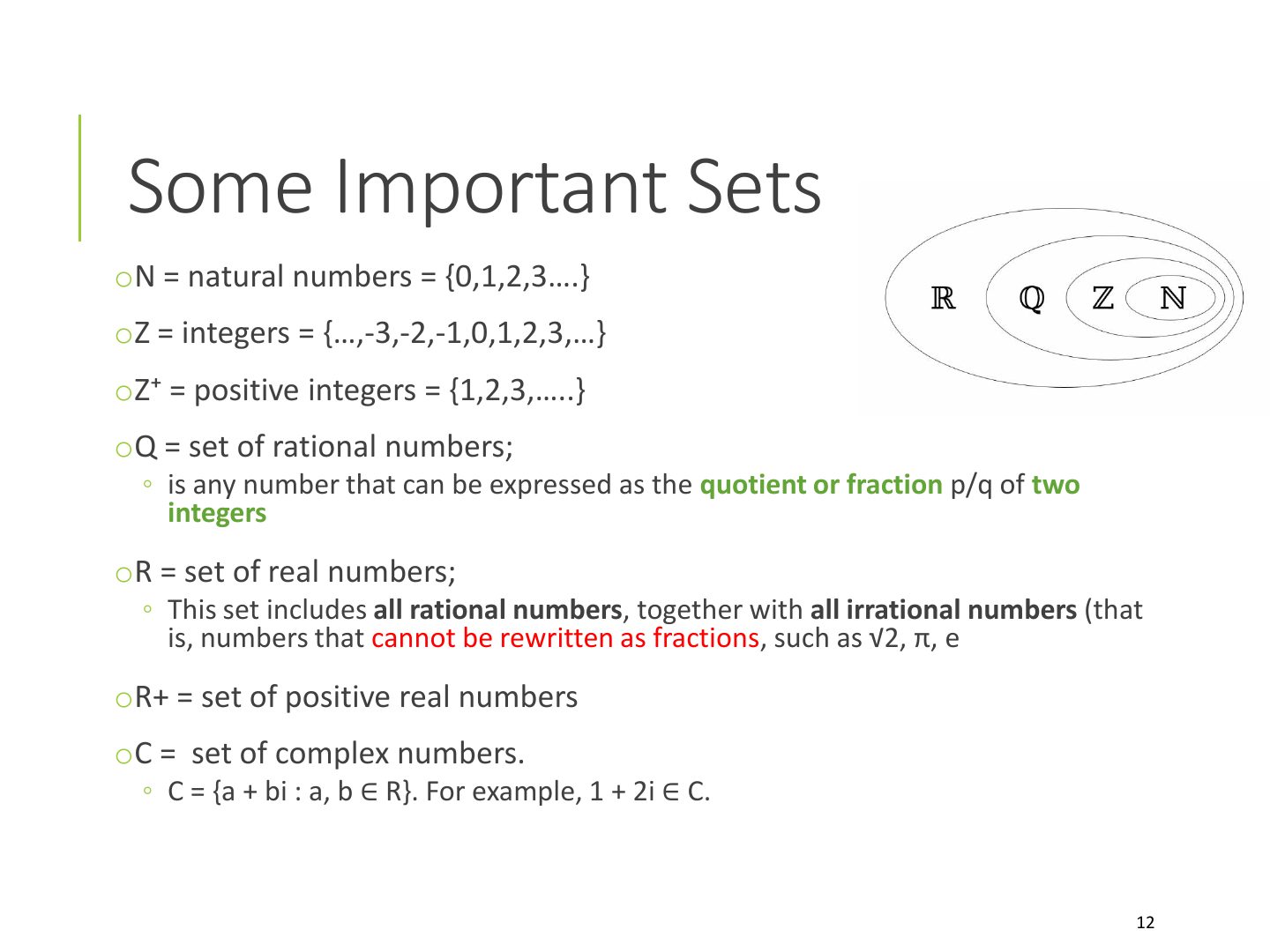
- 12 Some Important Sets
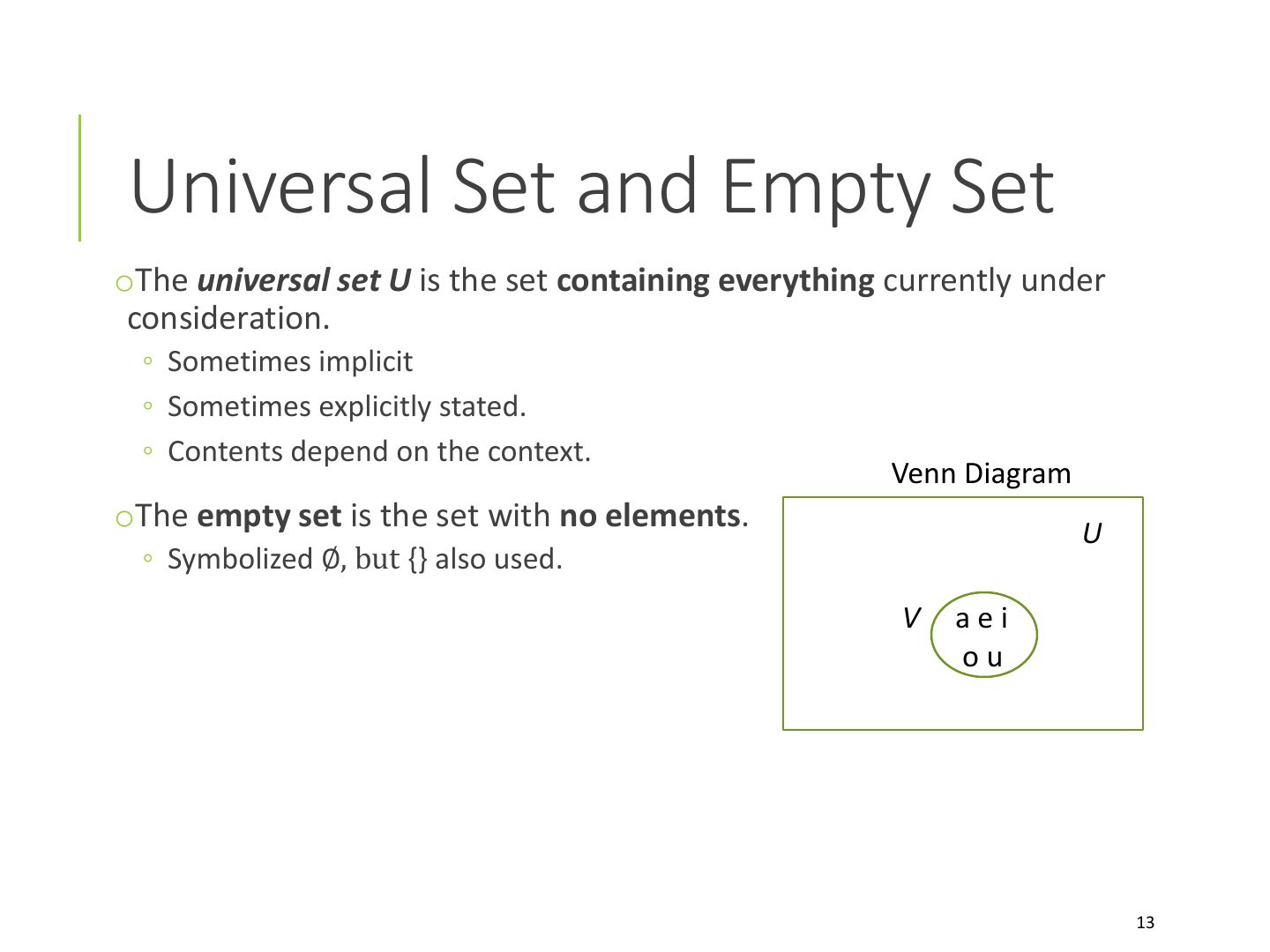
- 13 Universal Set and Empty Set
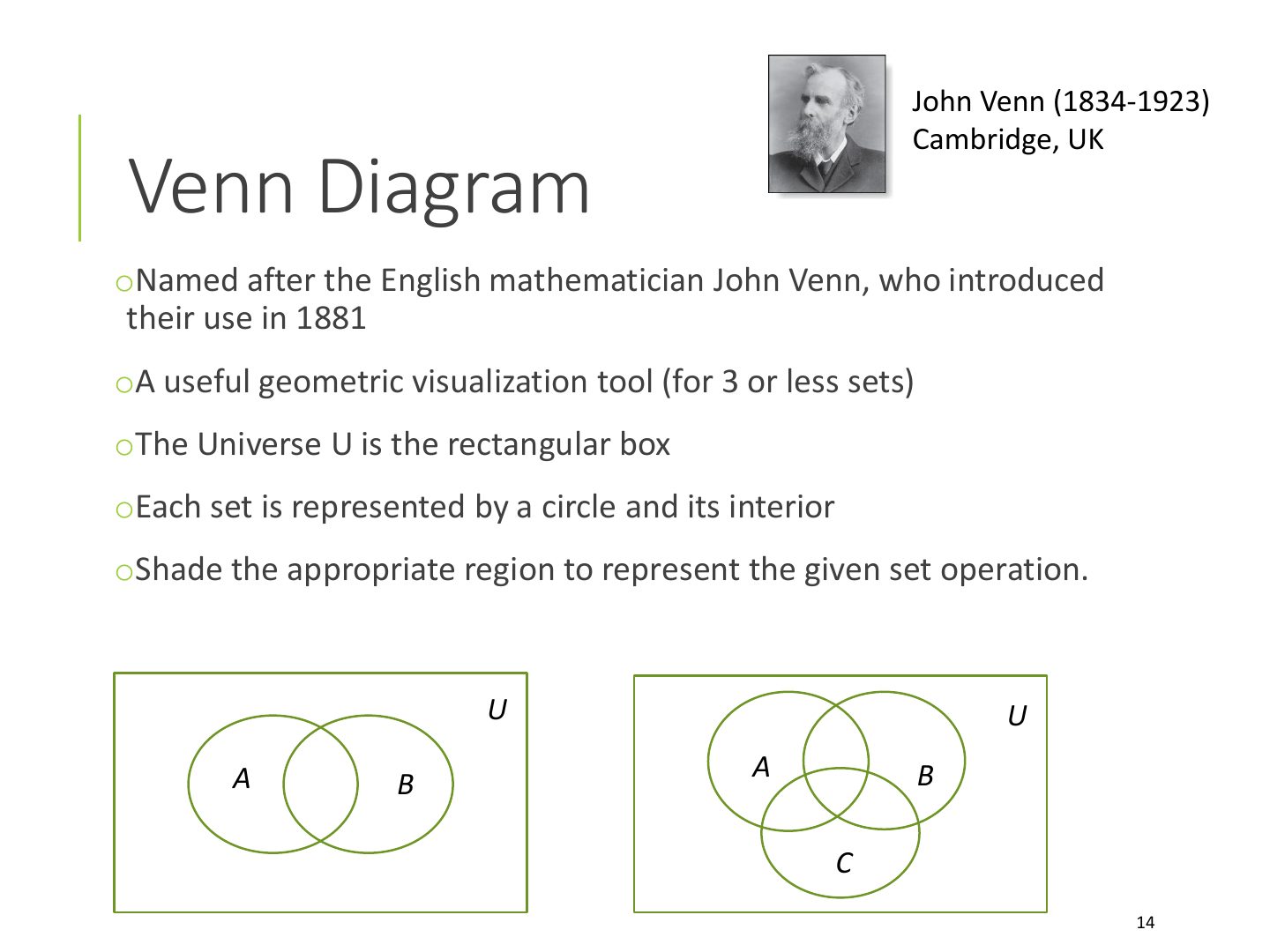
- 14 John Venn (1834-1923) Cambridge, UK
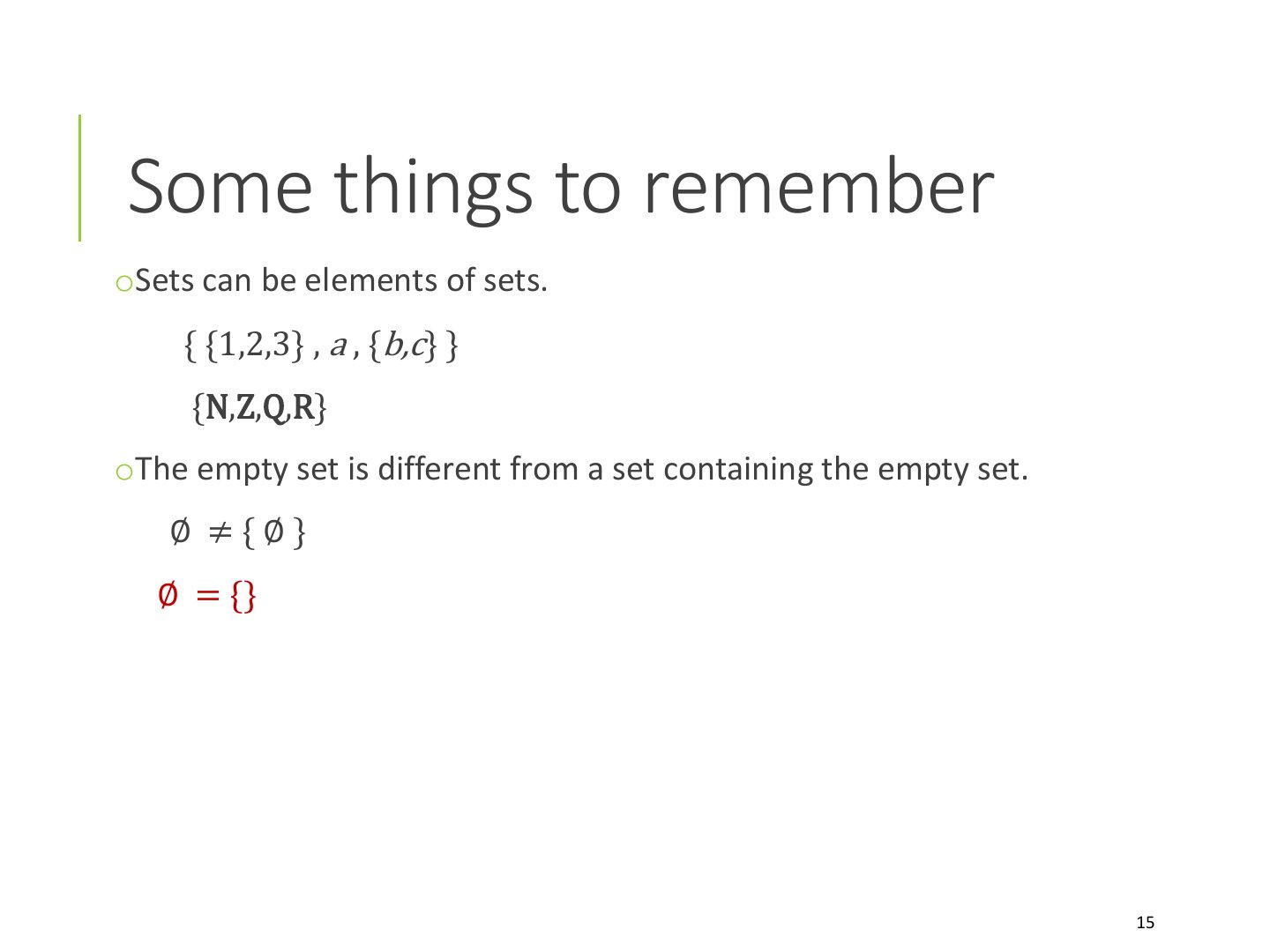
- 15 Some things to remember
- 16 Set Equality
- 17 Subsets
- 18 Showing a Set is or is not a Subset of Another Set
- 19 Another look at Equality of Sets
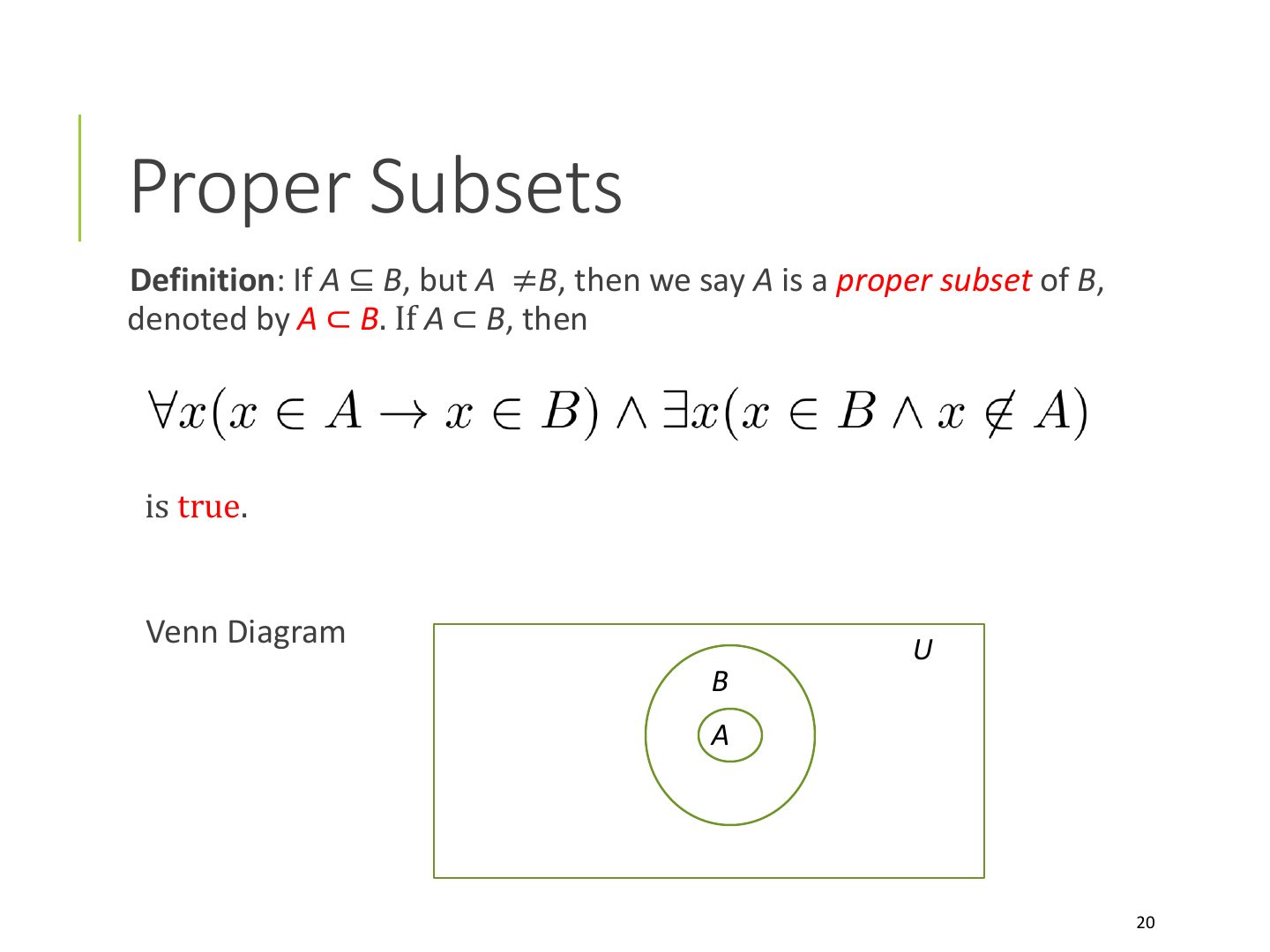
- 20 Proper Subsets
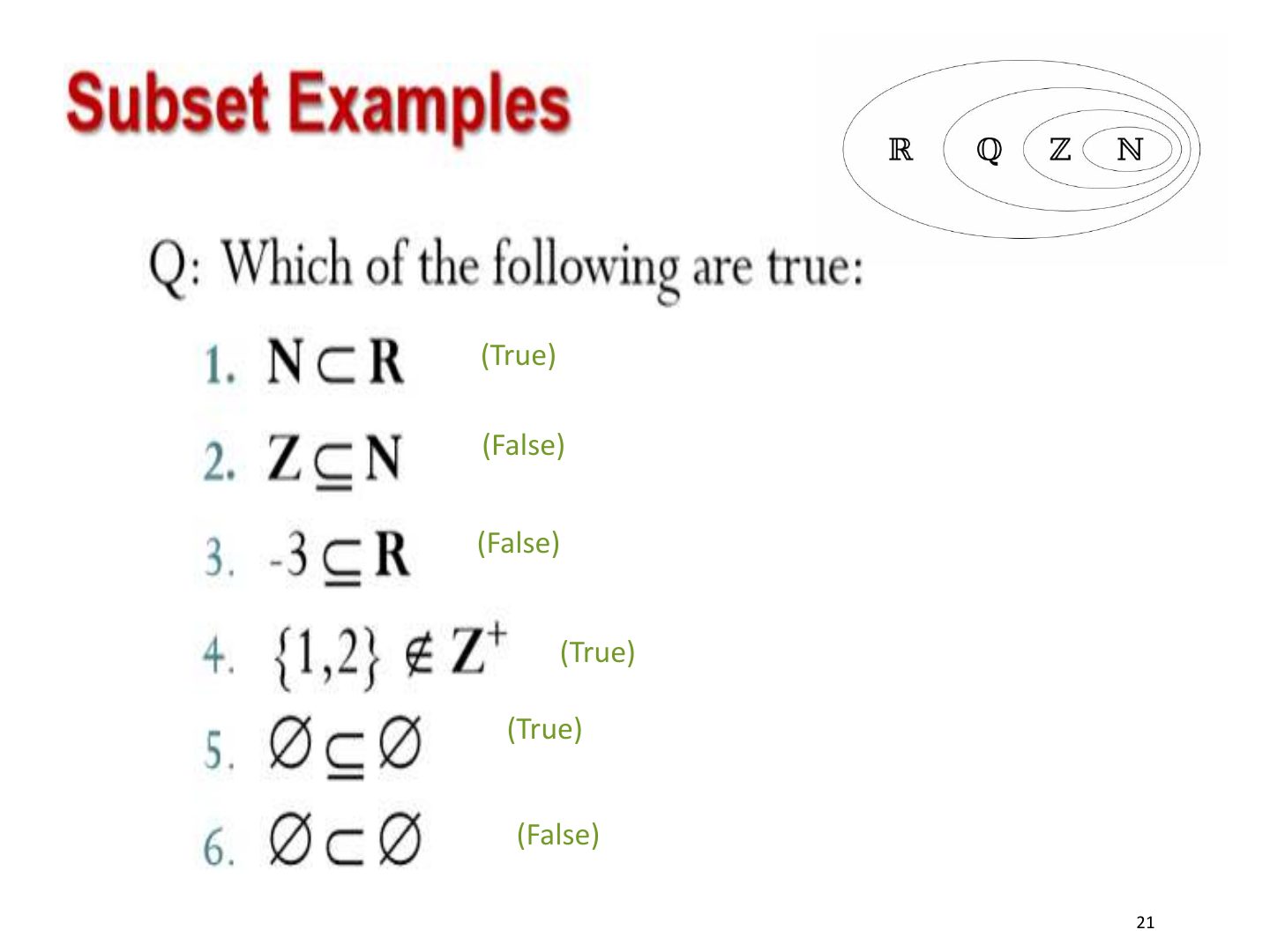
- 21 Slide 21
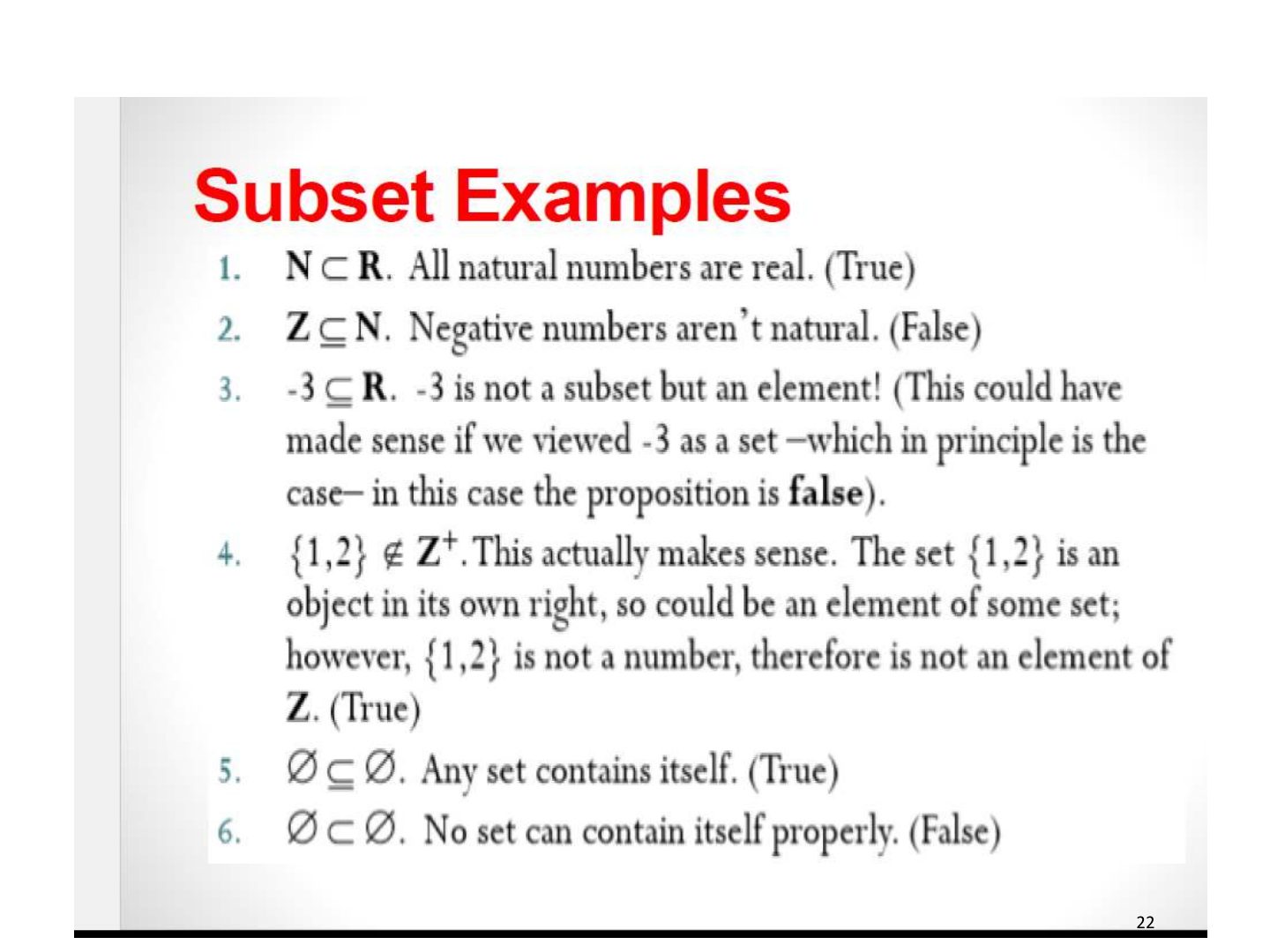
- 22 Slide 22
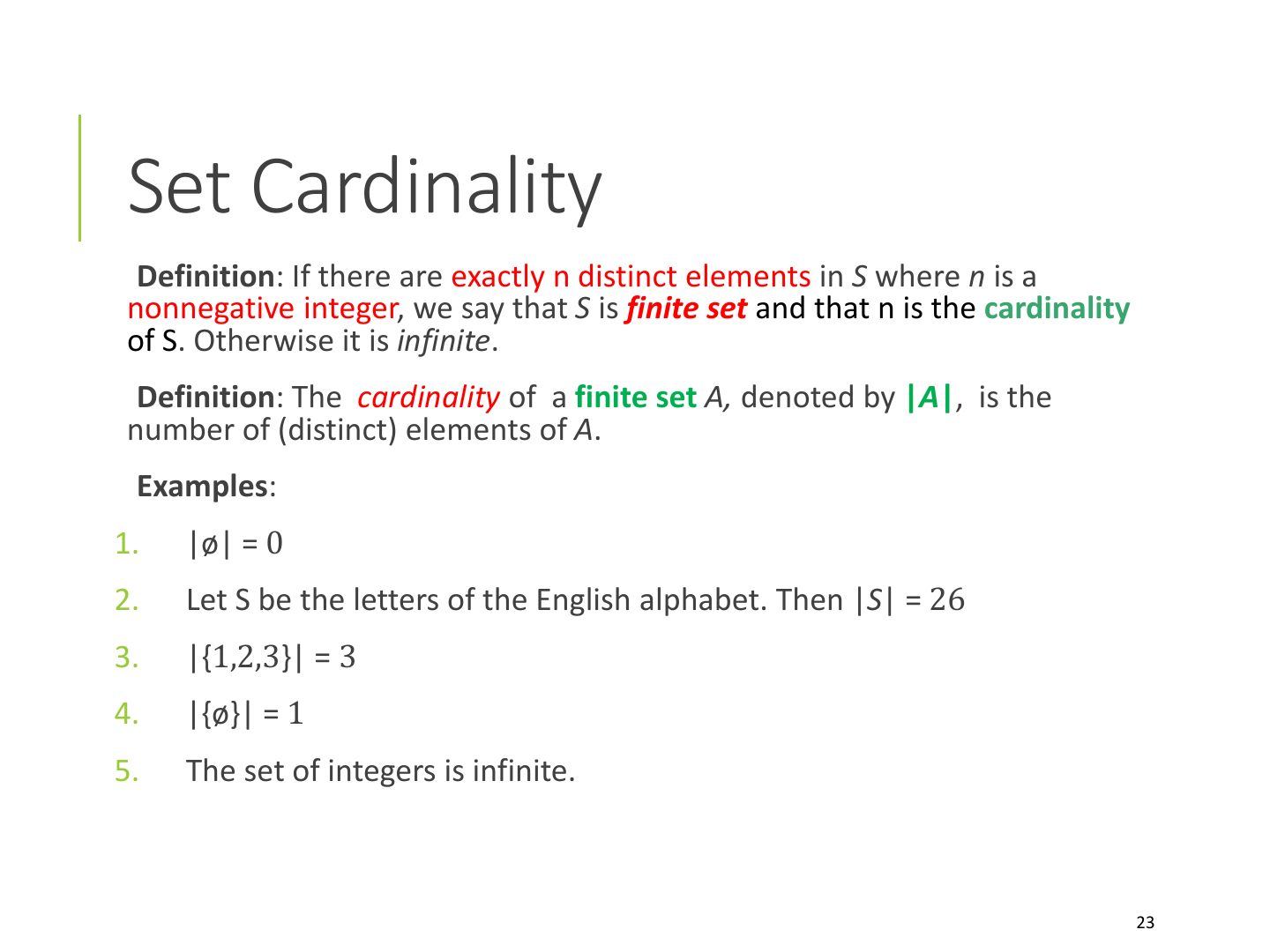
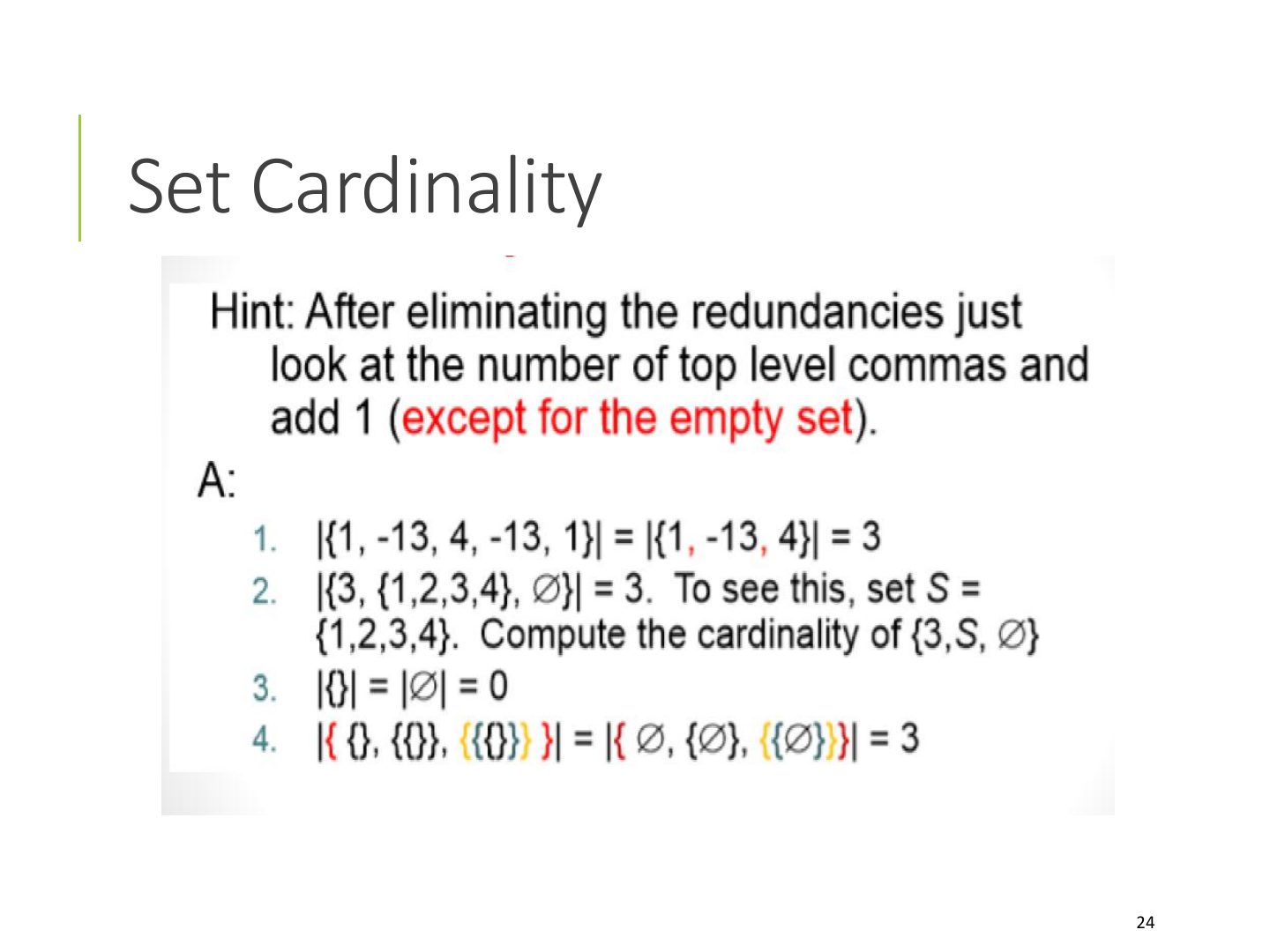
- 23 Set Cardinality
- 24 Set Cardinality
- 25 Power Sets
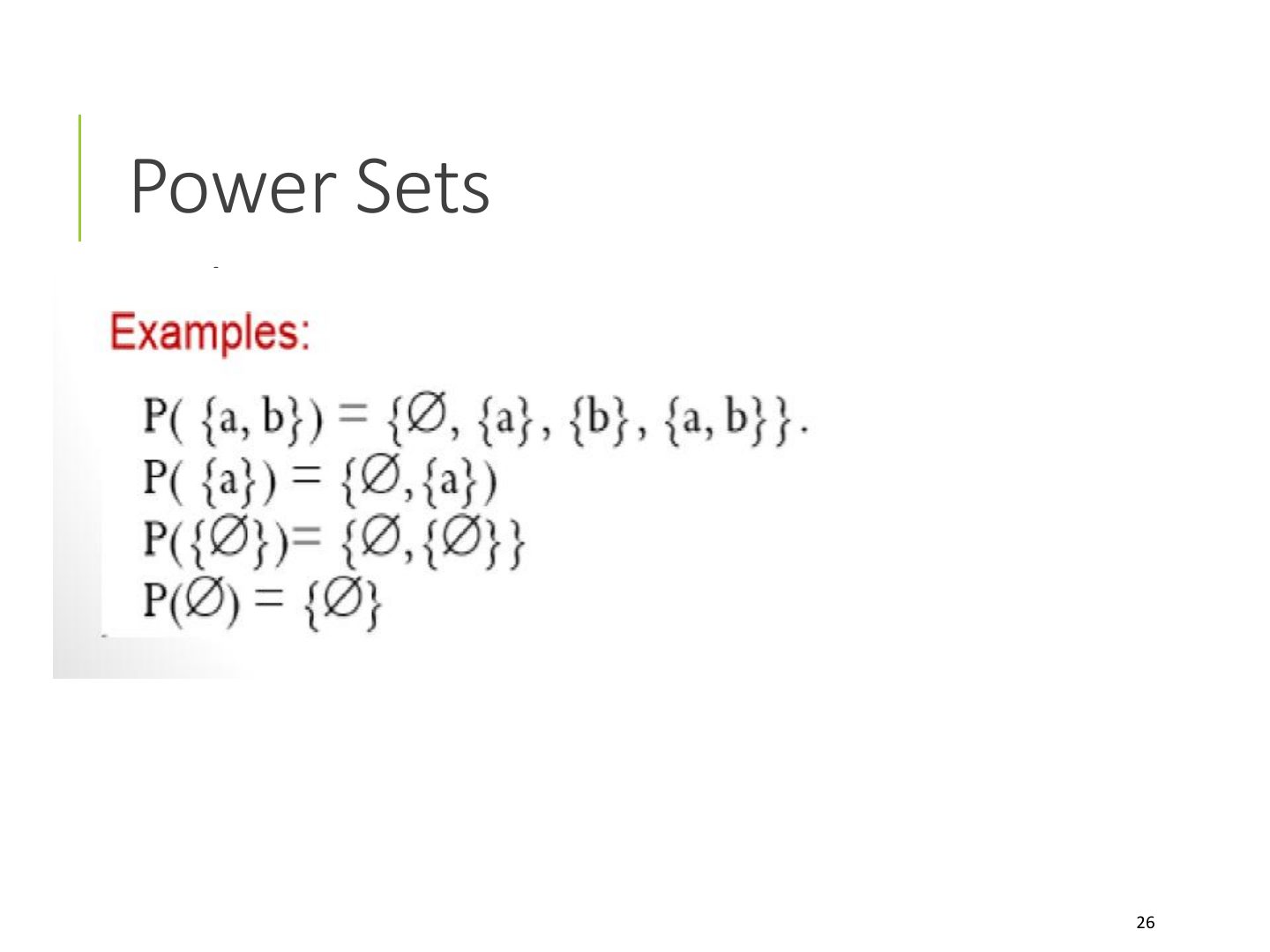
- 26 Power Sets
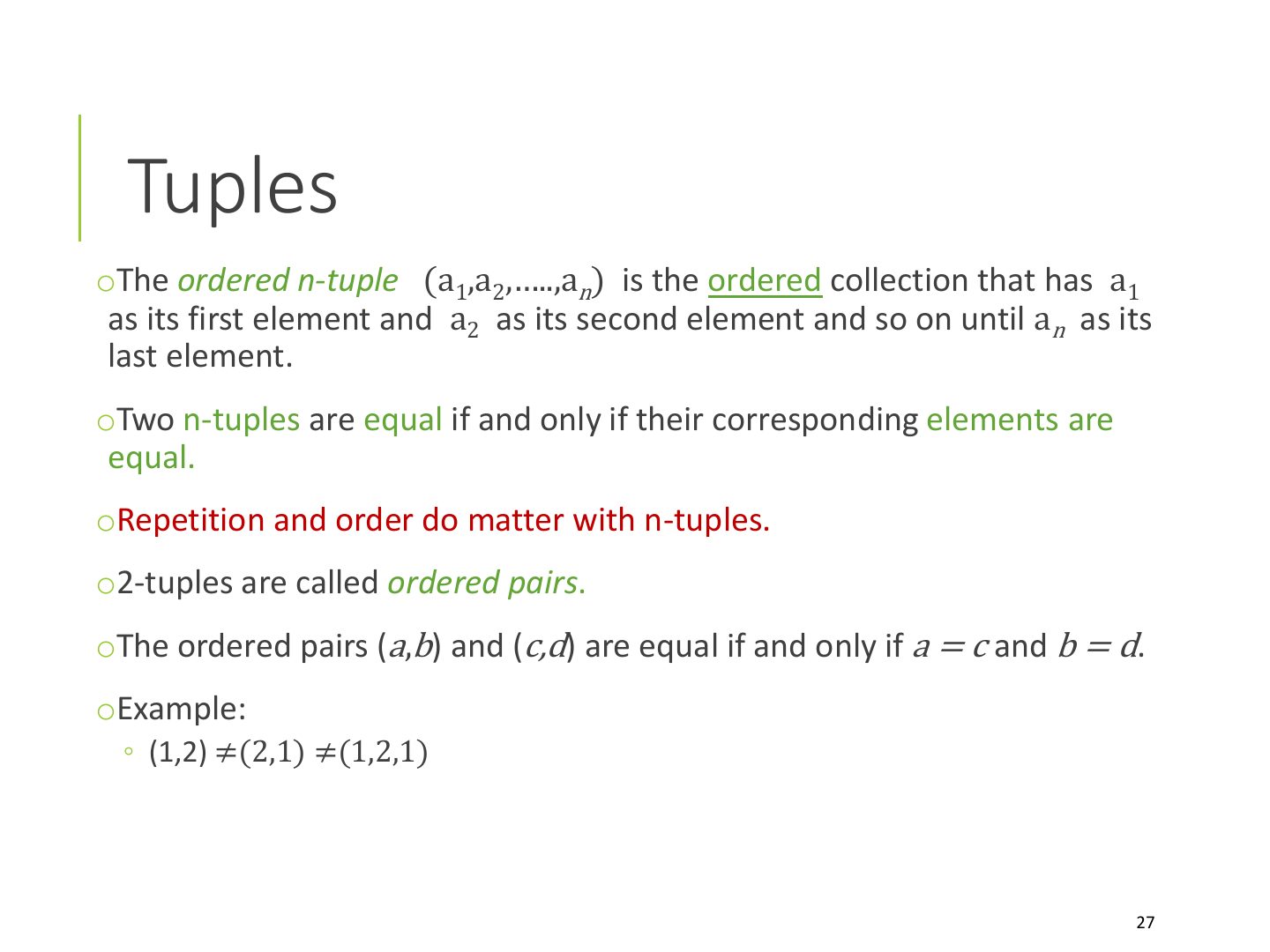
- 27 Tuples
- 28 Ren é Descartes (1596-1650)
- 29 Cartesian Product
- 30 Slide 30
- 31 Slide 31
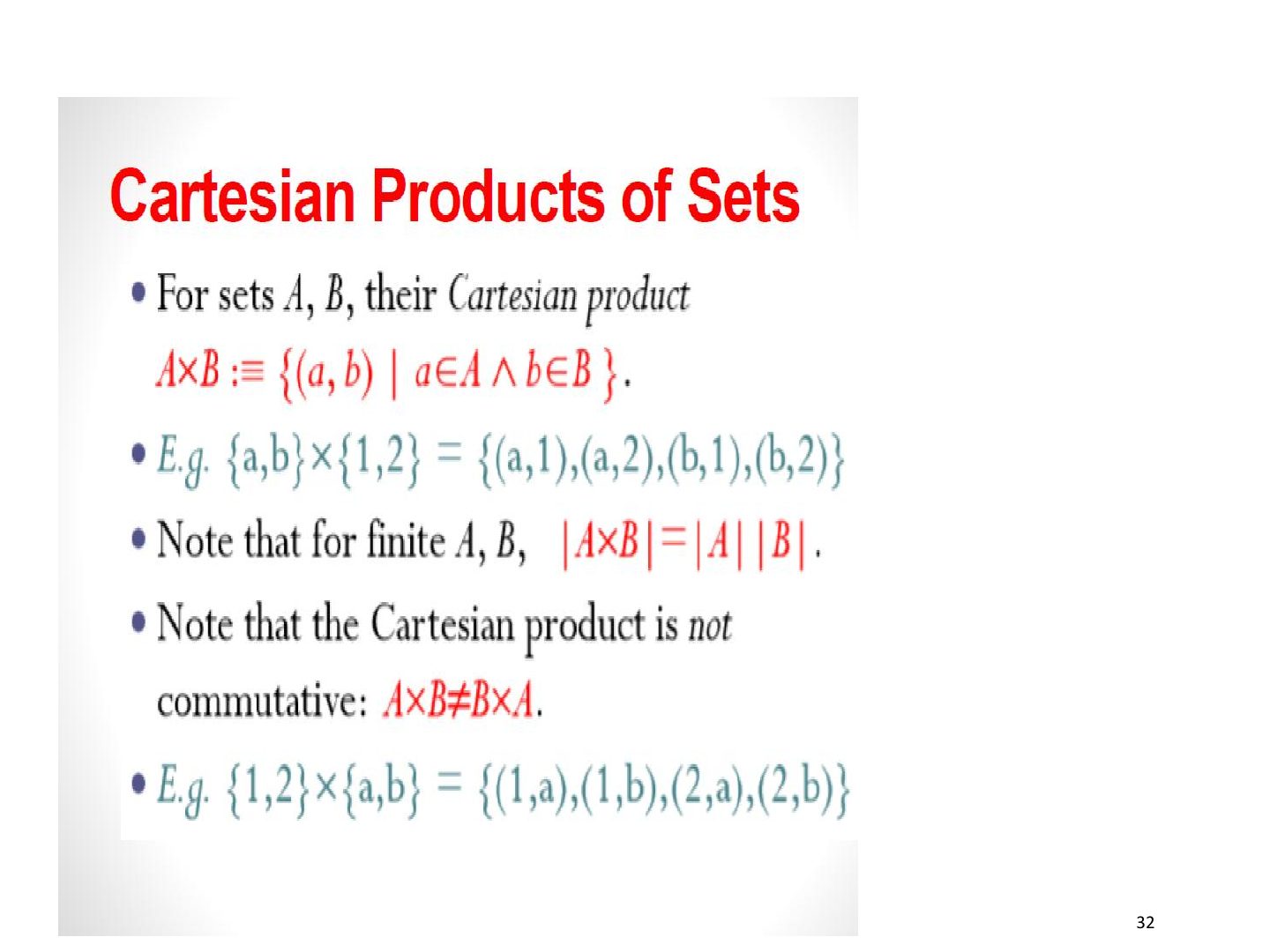
- 32 Slide 32
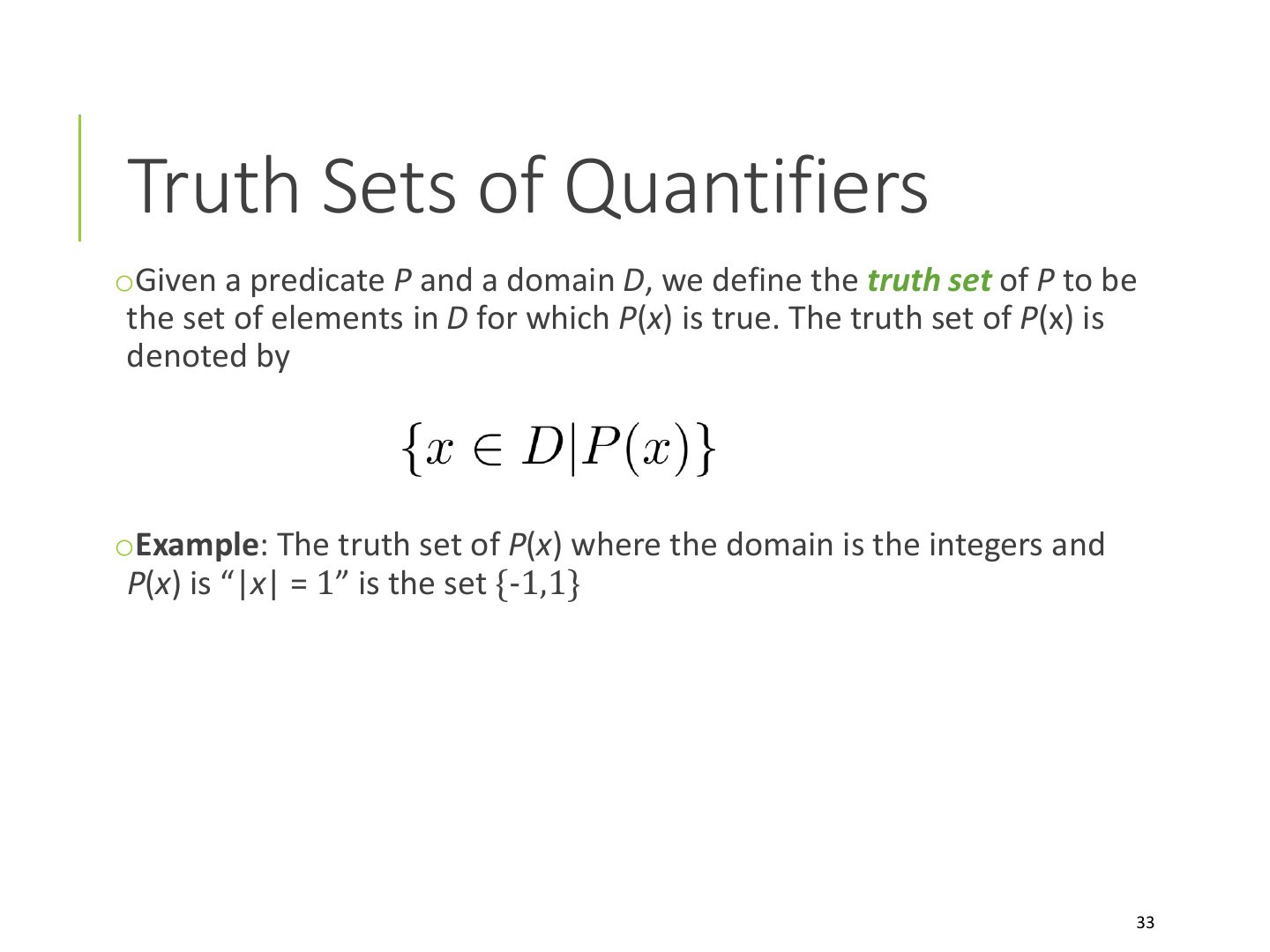
- 33 Truth Sets of Quantifiers
- 34 Slide 34
- 35 Section Summary
- 36 Boolean Algebra
- 37 Union
- 38 Intersection
- 39 Complement
- 40 Difference
- 41 The Cardinality of the Union of Two Sets
- 42 Review Questions
- 43 Symmetric Difference ( optional )
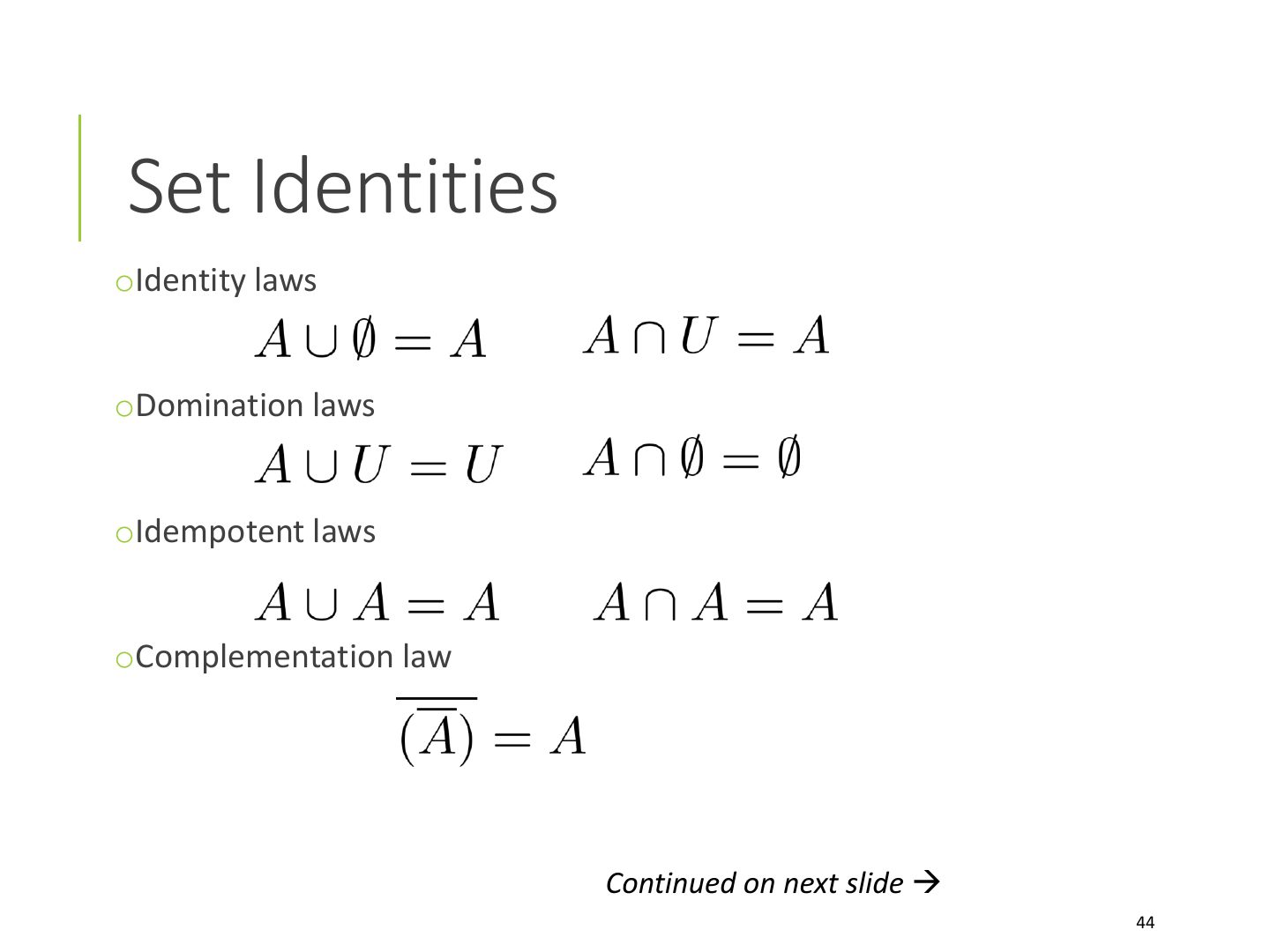
- 44 Set Identities
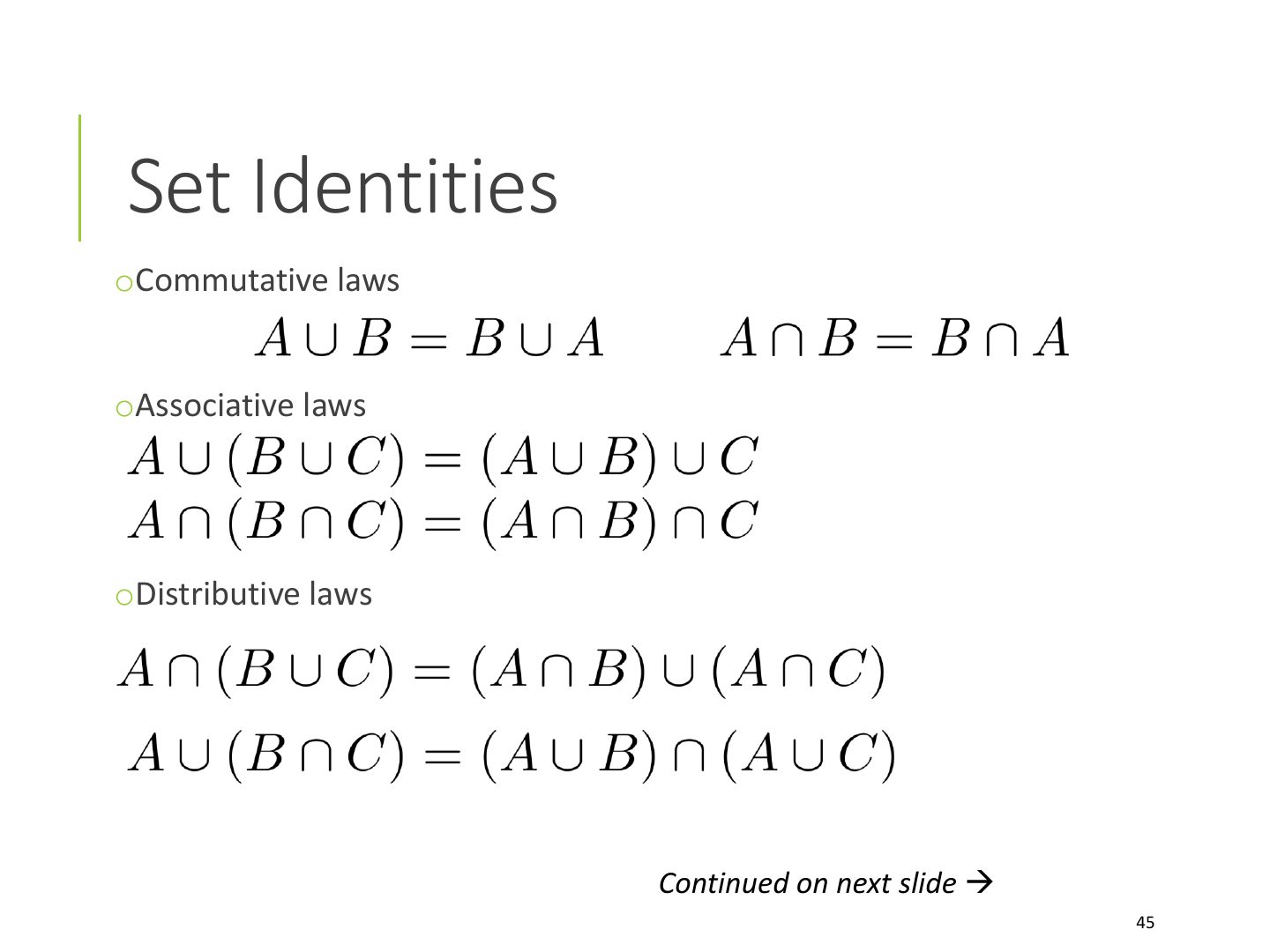
- 45 Set Identities
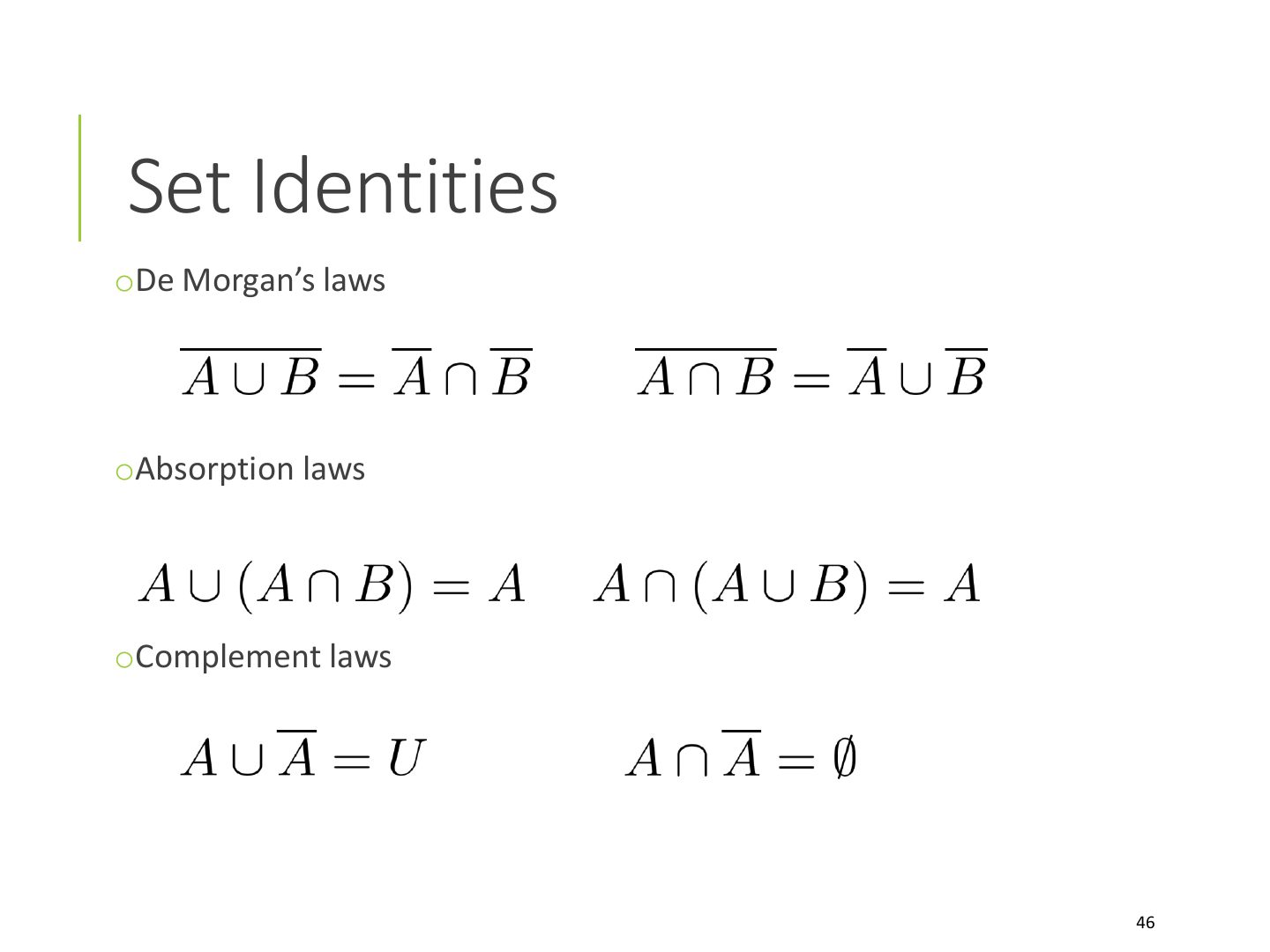
- 46 Set Identities
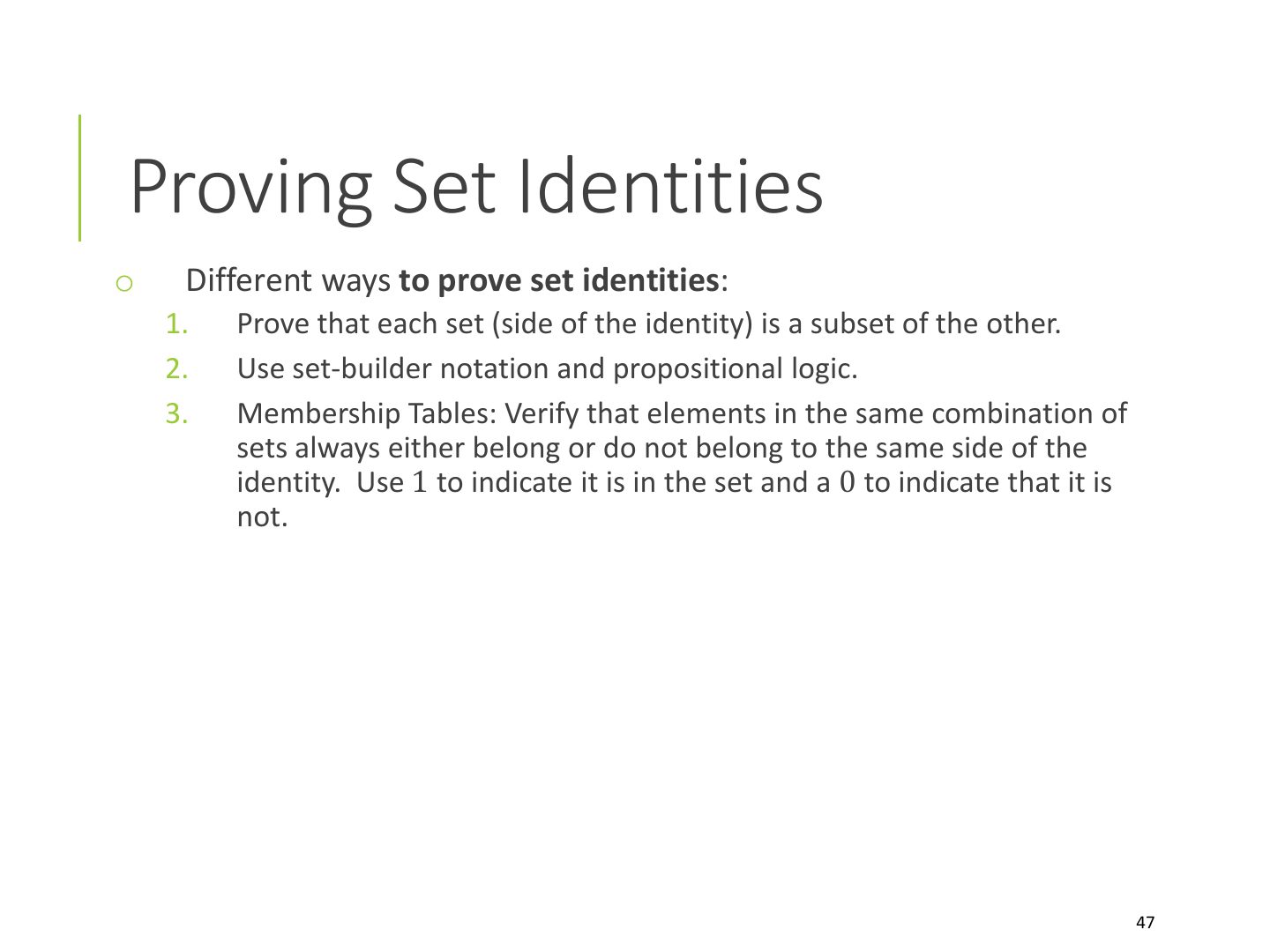
- 47 Proving Set Identities
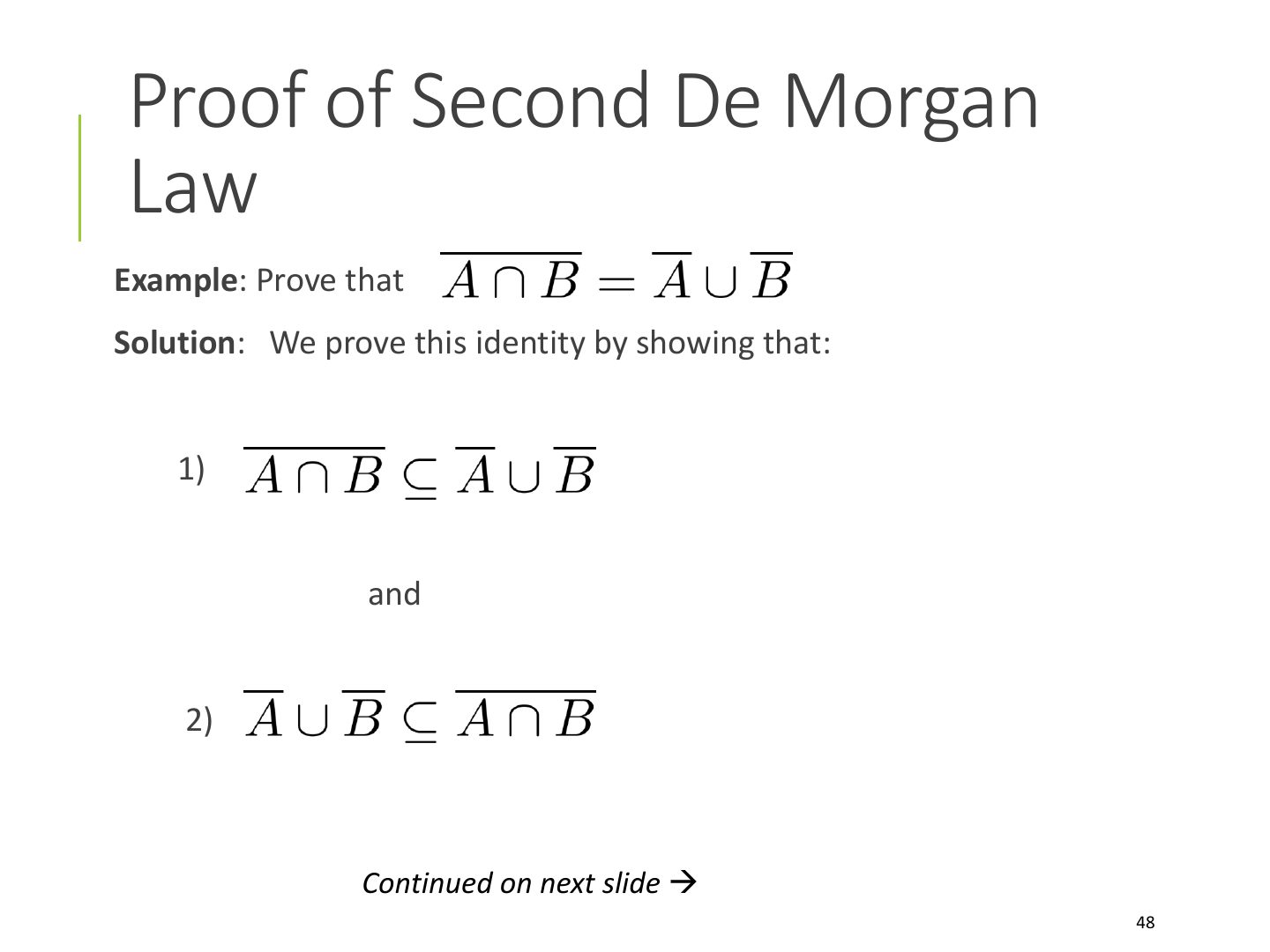
- 48 Proof of Second De Morgan Law
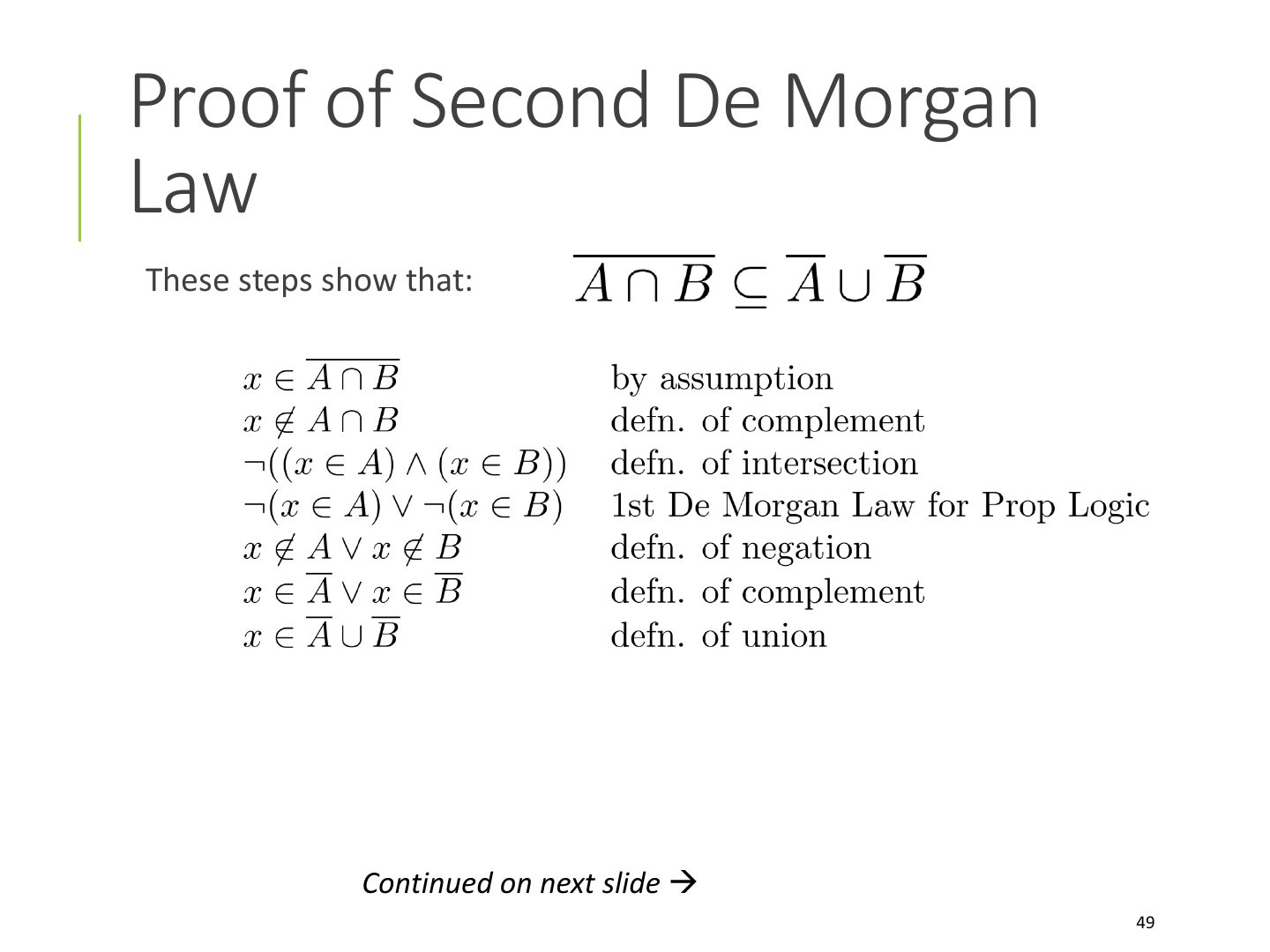
- 49 Proof of Second De Morgan Law
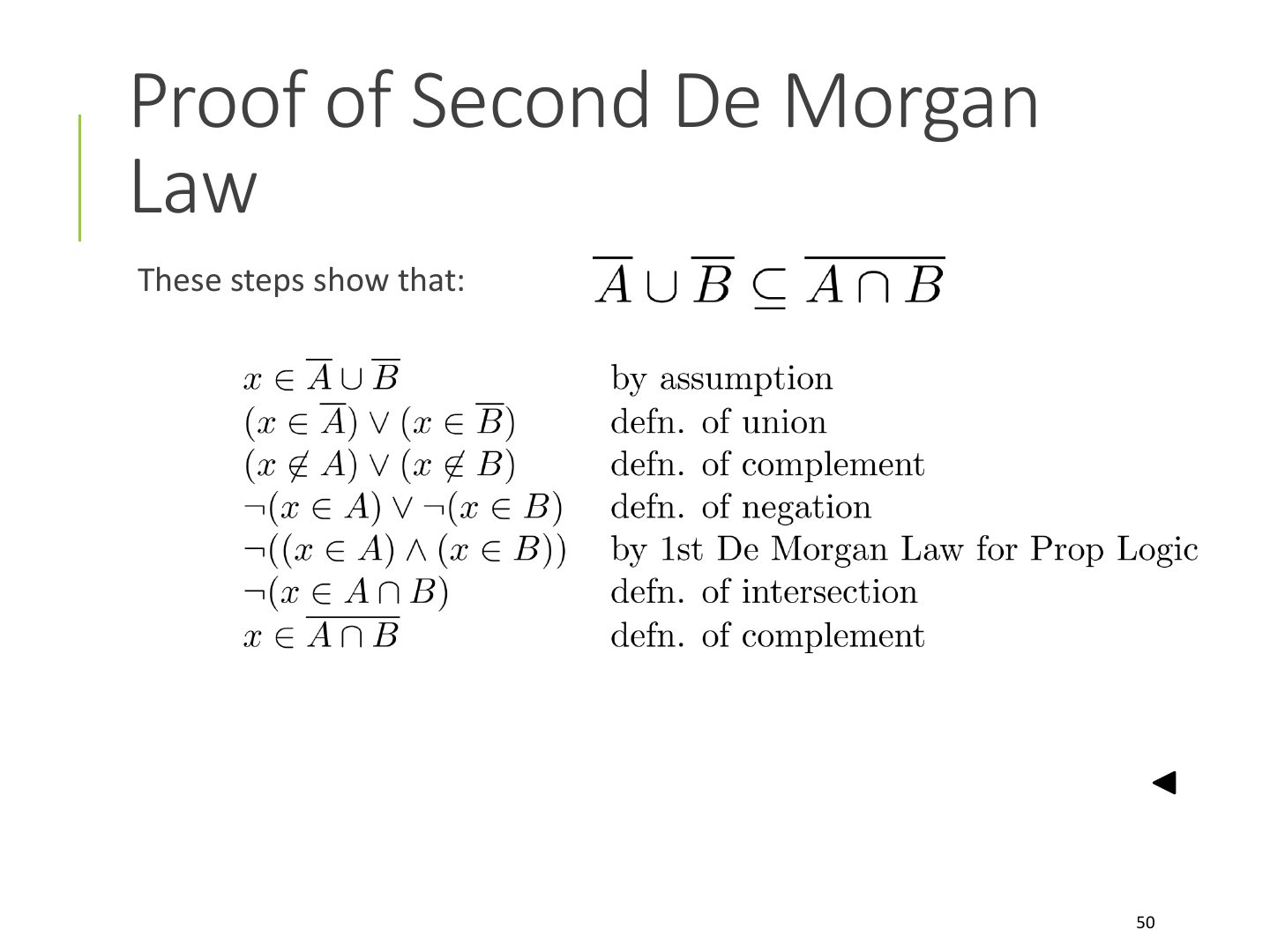
- 50 Proof of Second De Morgan Law
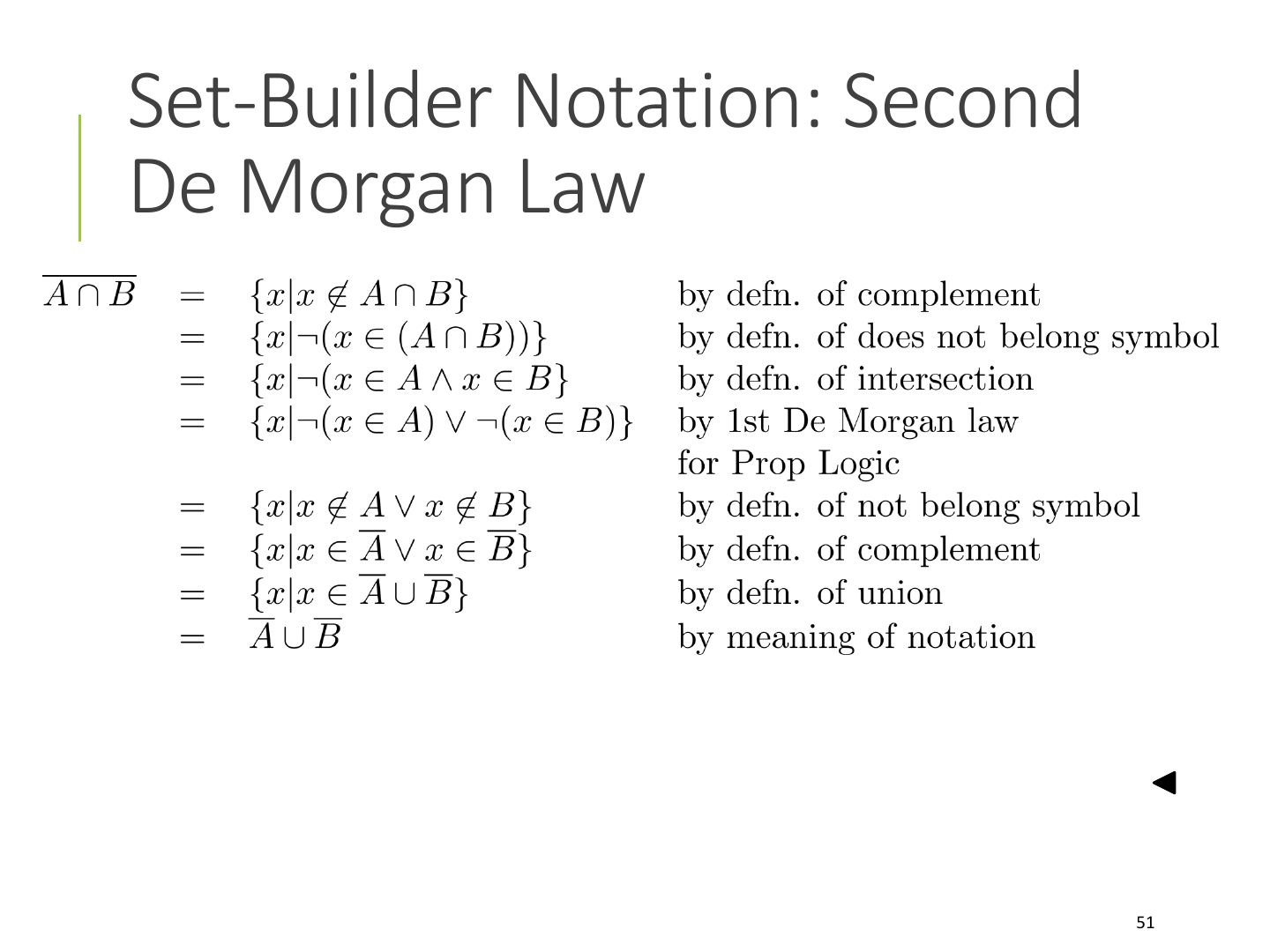
- 51 Set-Builder Notation: Second De Morgan Law
- 52 Membership Table
- 53 Generalized Unions and Intersections
- 54 Slide 54
- 55 Section Summary
- 56 Functions
- 57 Functions
- 58 Functions
- 59 Representing Functions
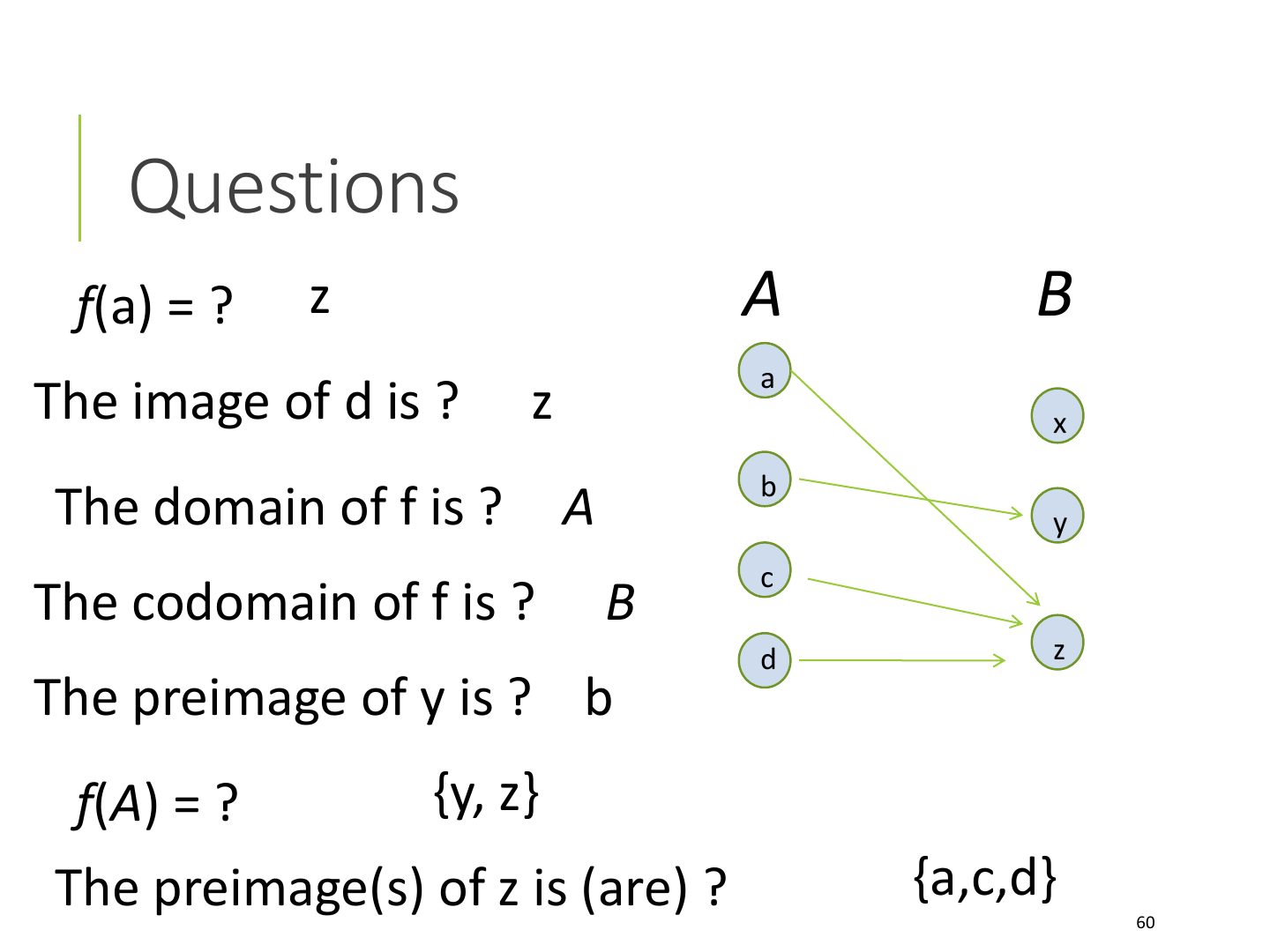
- 60 Questions
- 61 Question on Functions and Sets
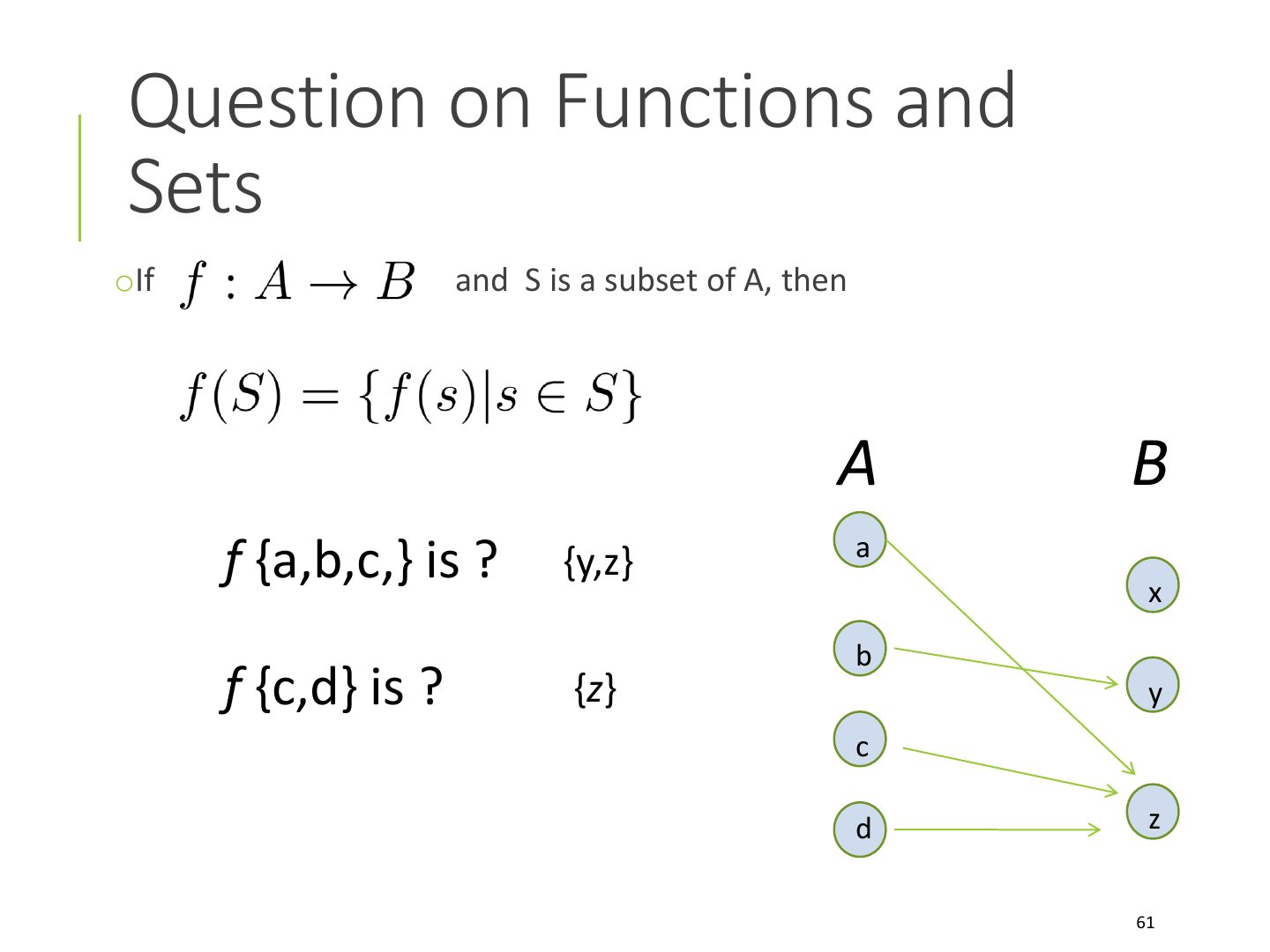
- 62 Injections
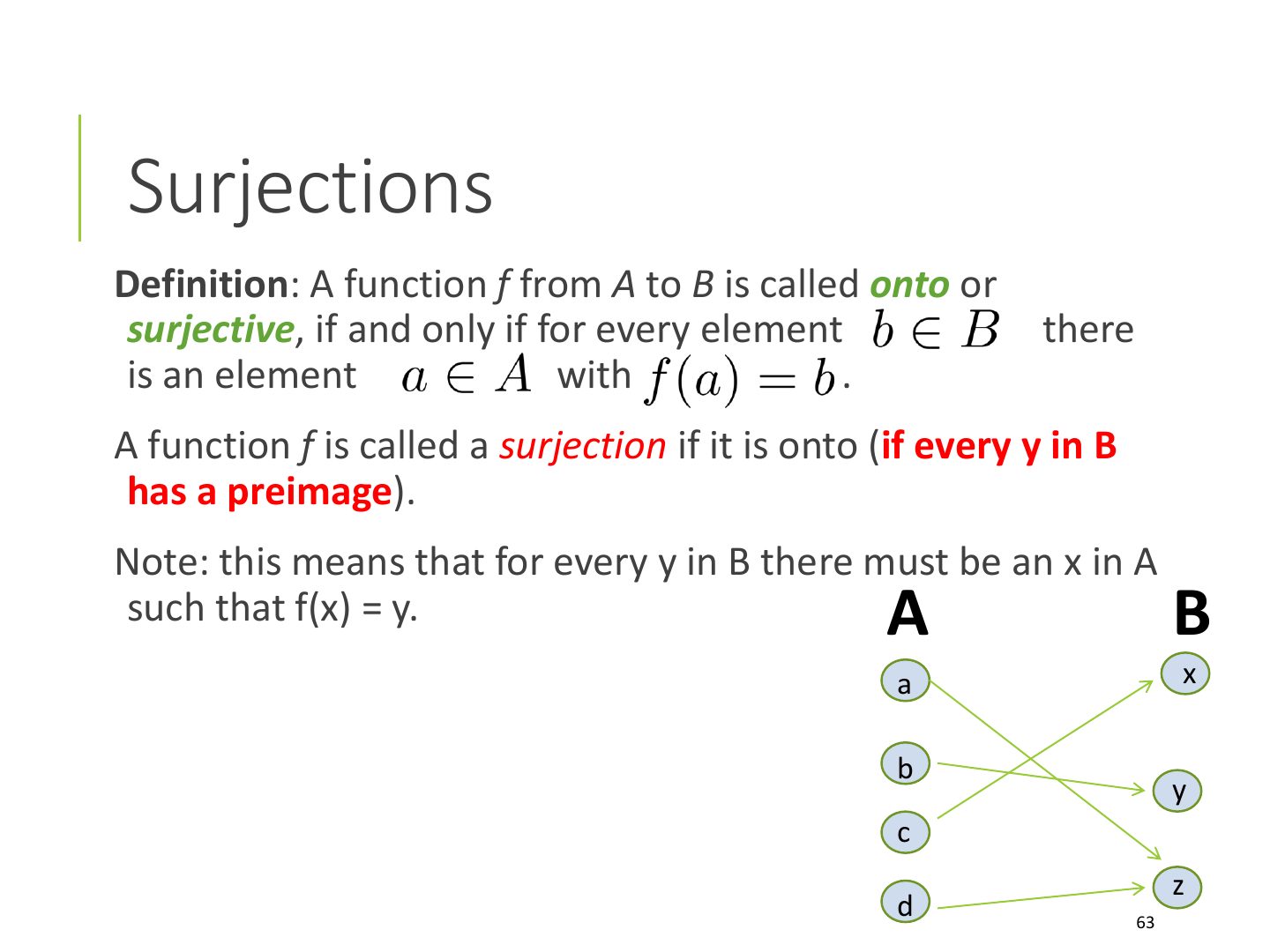
- 63 Surjections
- 64 Bijections
- 65 Slide 65
- 66 Showing that f is one-to-one or onto
- 67 Showing that f is one-to-one or onto
- 68 Injections, Surjections and Bijections
- 69 Injections, Surjections and Bijections
- 70 Showing that f is one-to-one or onto
- 71 Recall
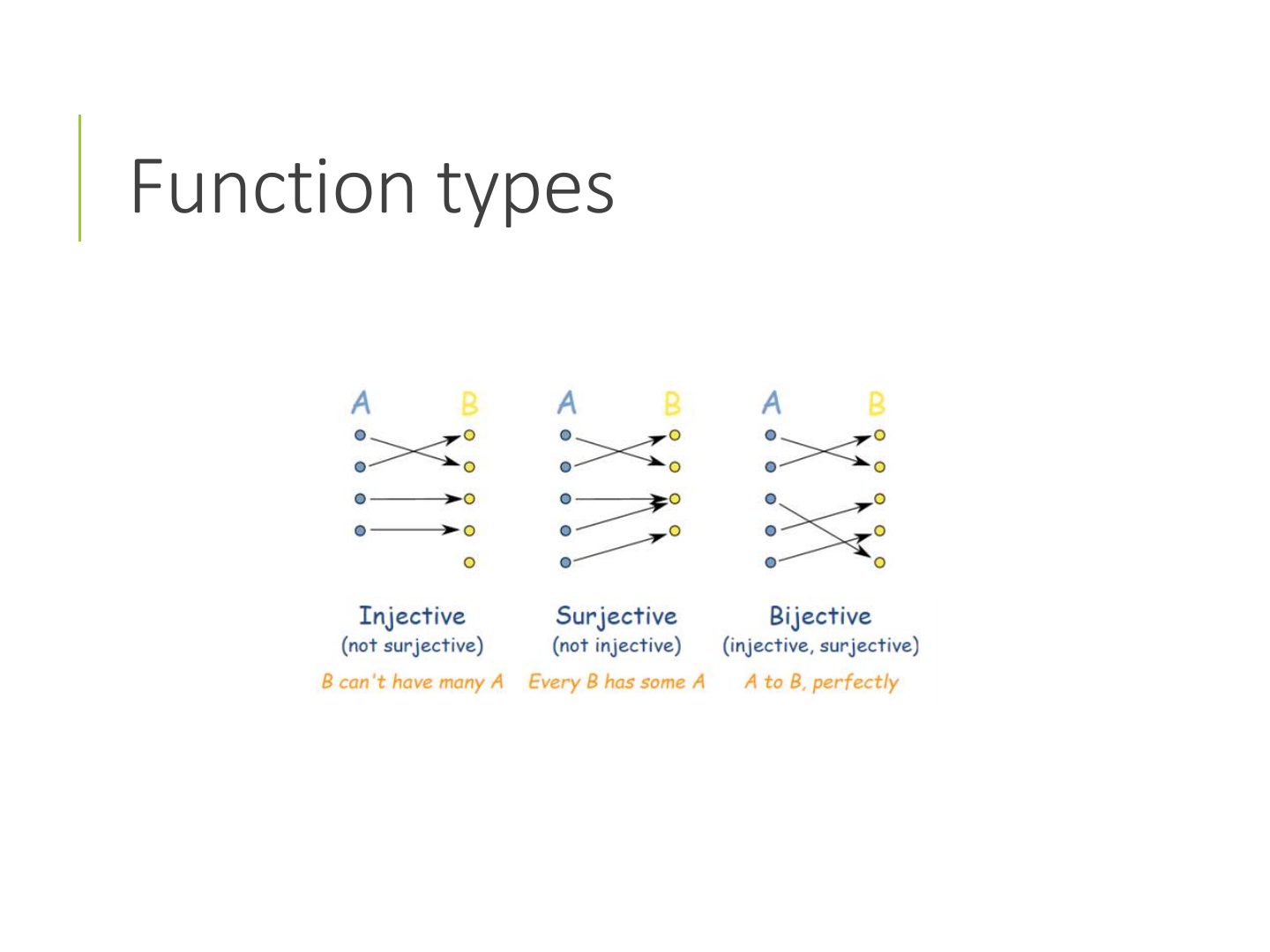
- 72 Function types
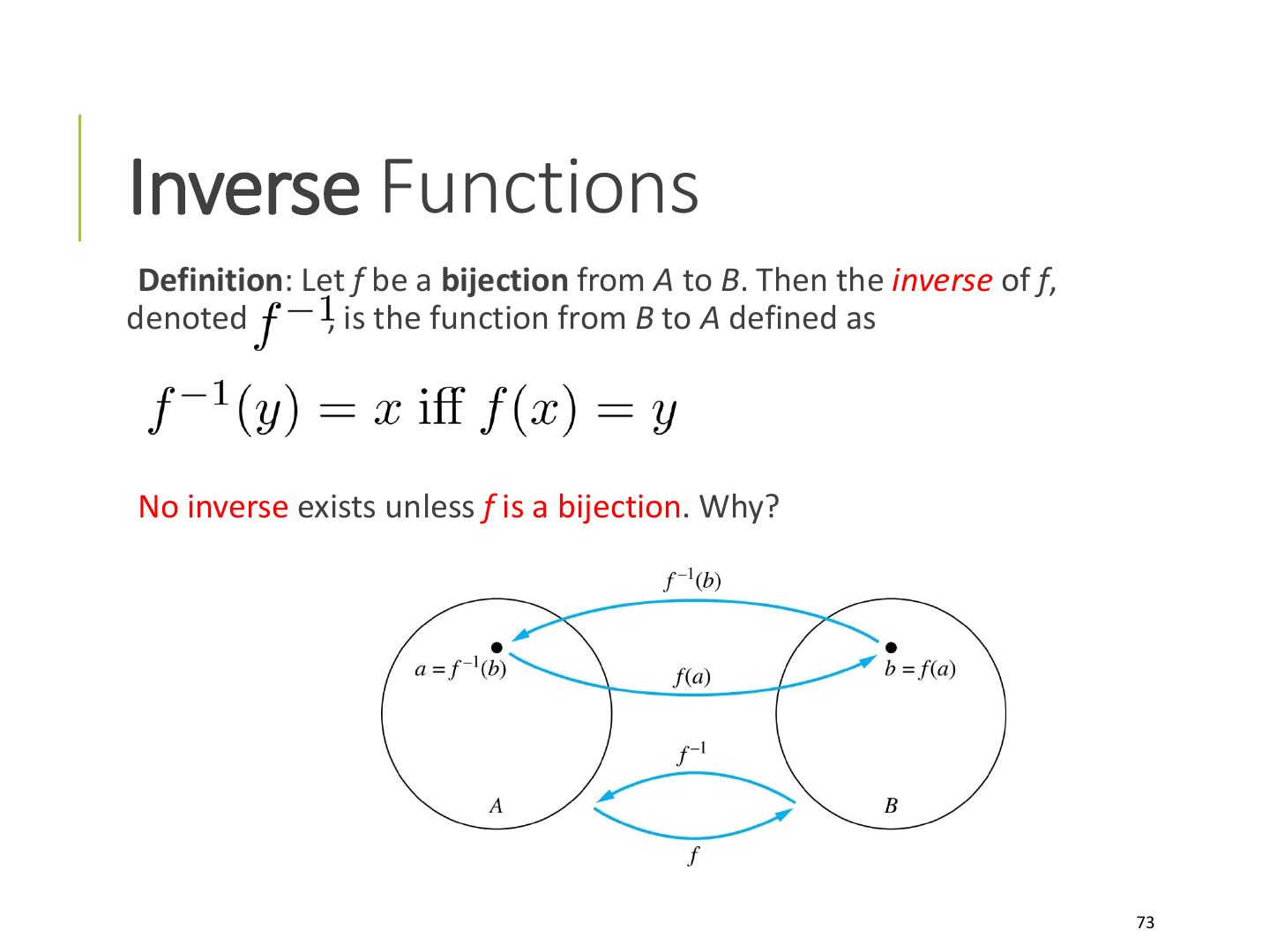
- 73 Inverse Functions
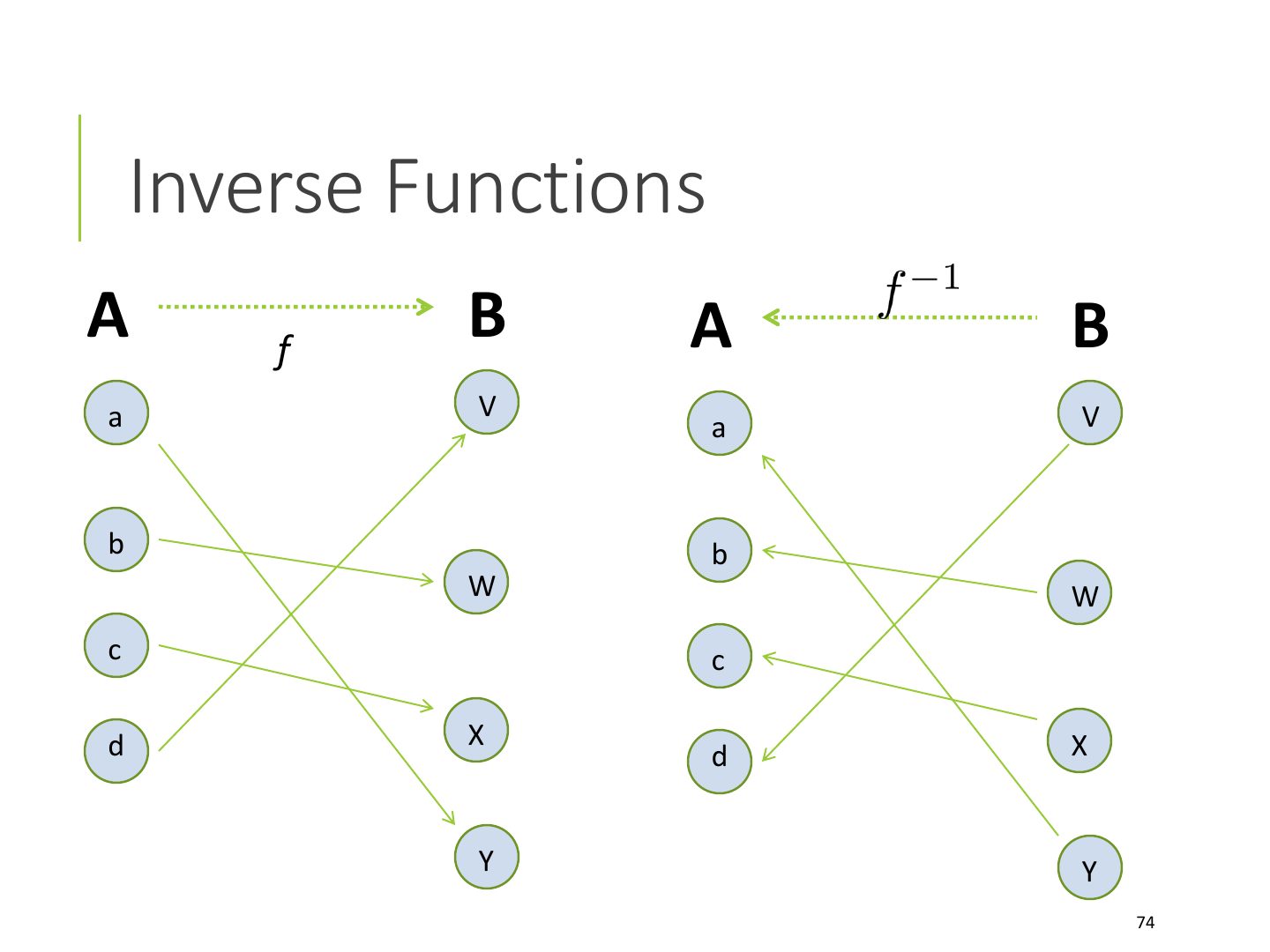
- 74 Inverse Functions
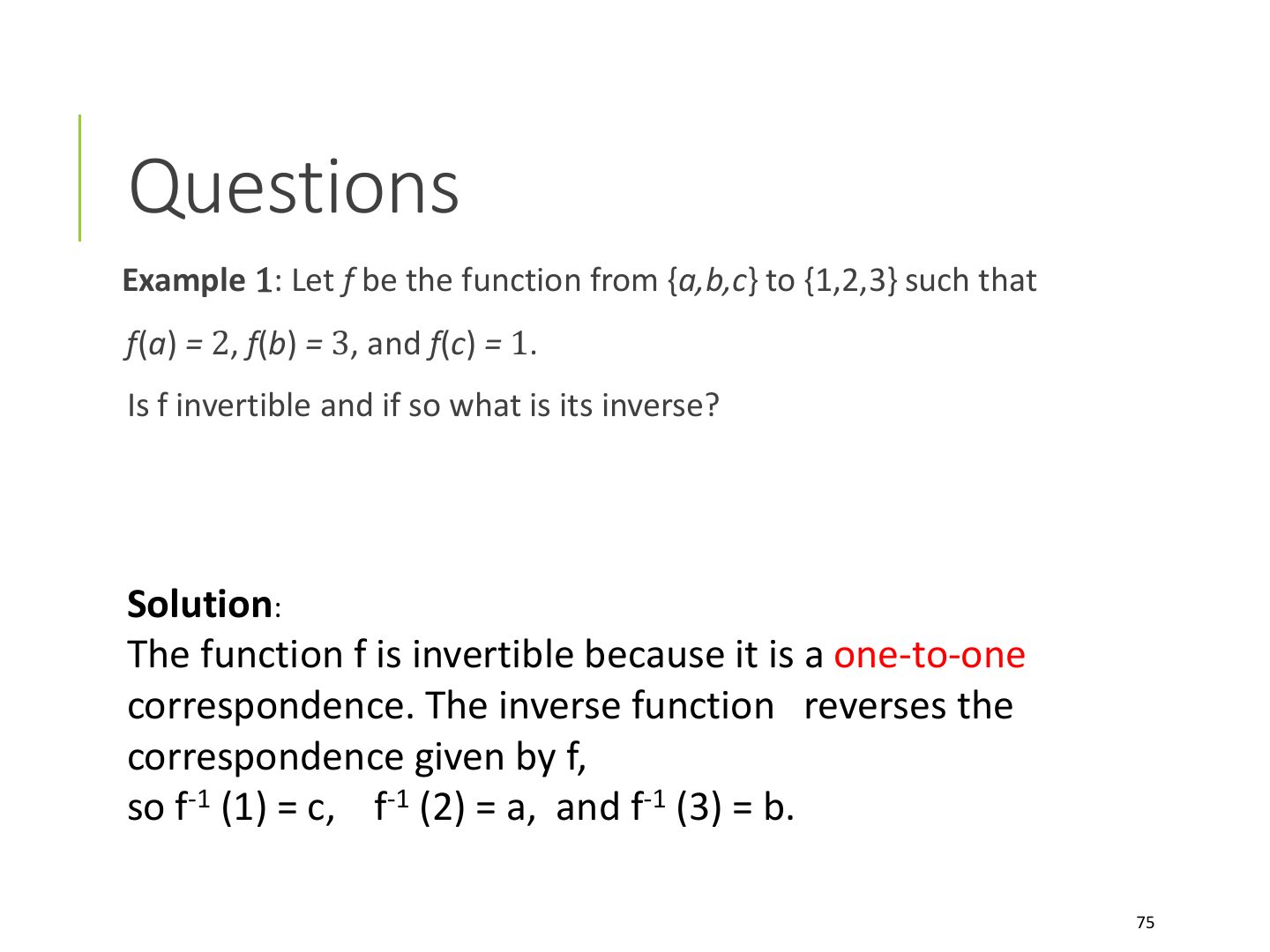
- 75 Questions
- 76 Questions
- 77 Questions
- 78 Slide 78
- 79 Composition
- 80 Composition
- 81 Composition
- 82 Composition Questions
- 83 Composition Questions
- 84 Slide 84
- 85 Graphs of Functions
- 86 Slide 86
- 87 Some Important Functions
- 88 Some Important Functions
- 89 Floor and Ceiling Functions
- 90 Factorial Function
- 91 Slide 91
- 92 Section Summary
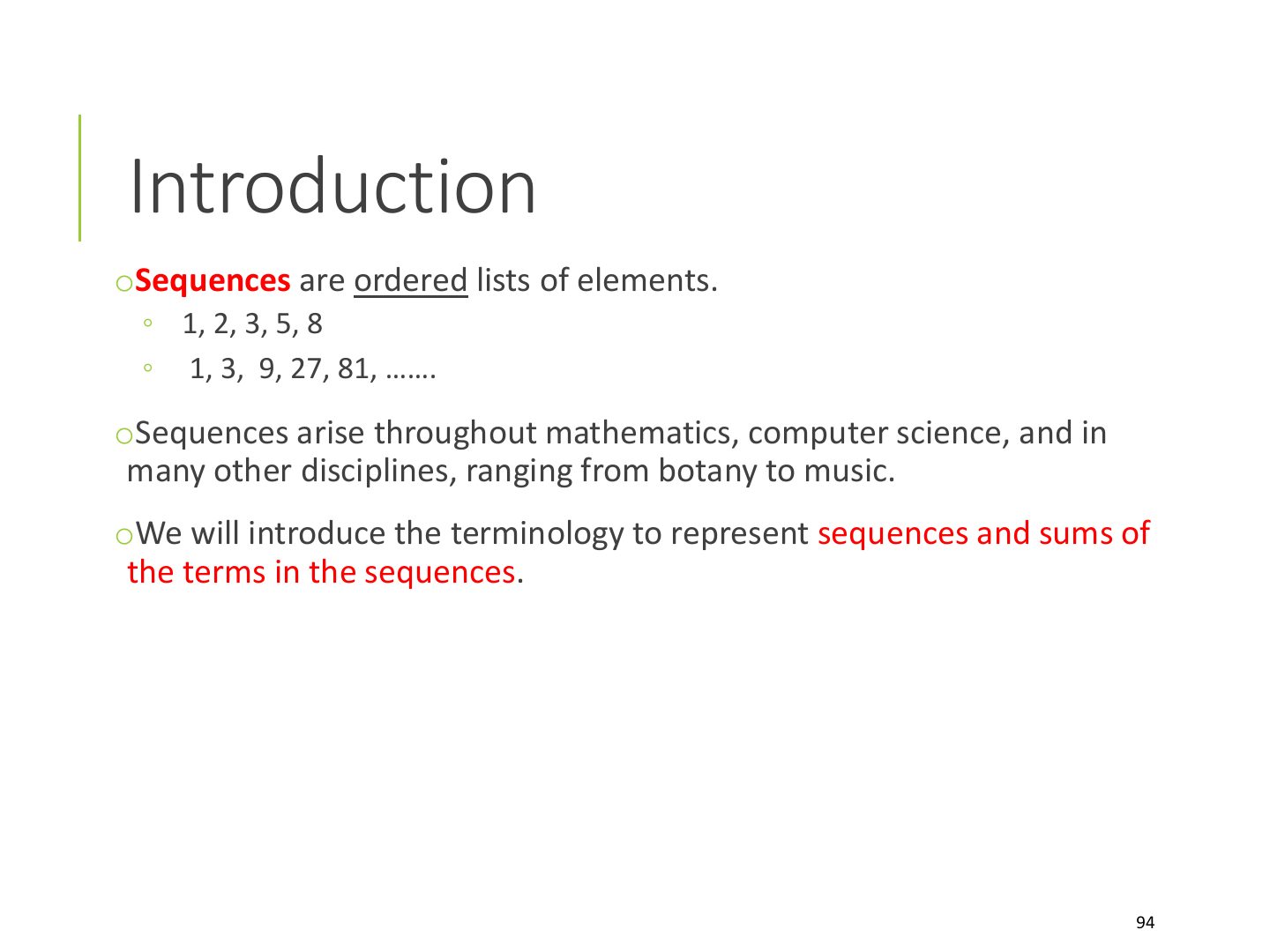
- 93 Introduction
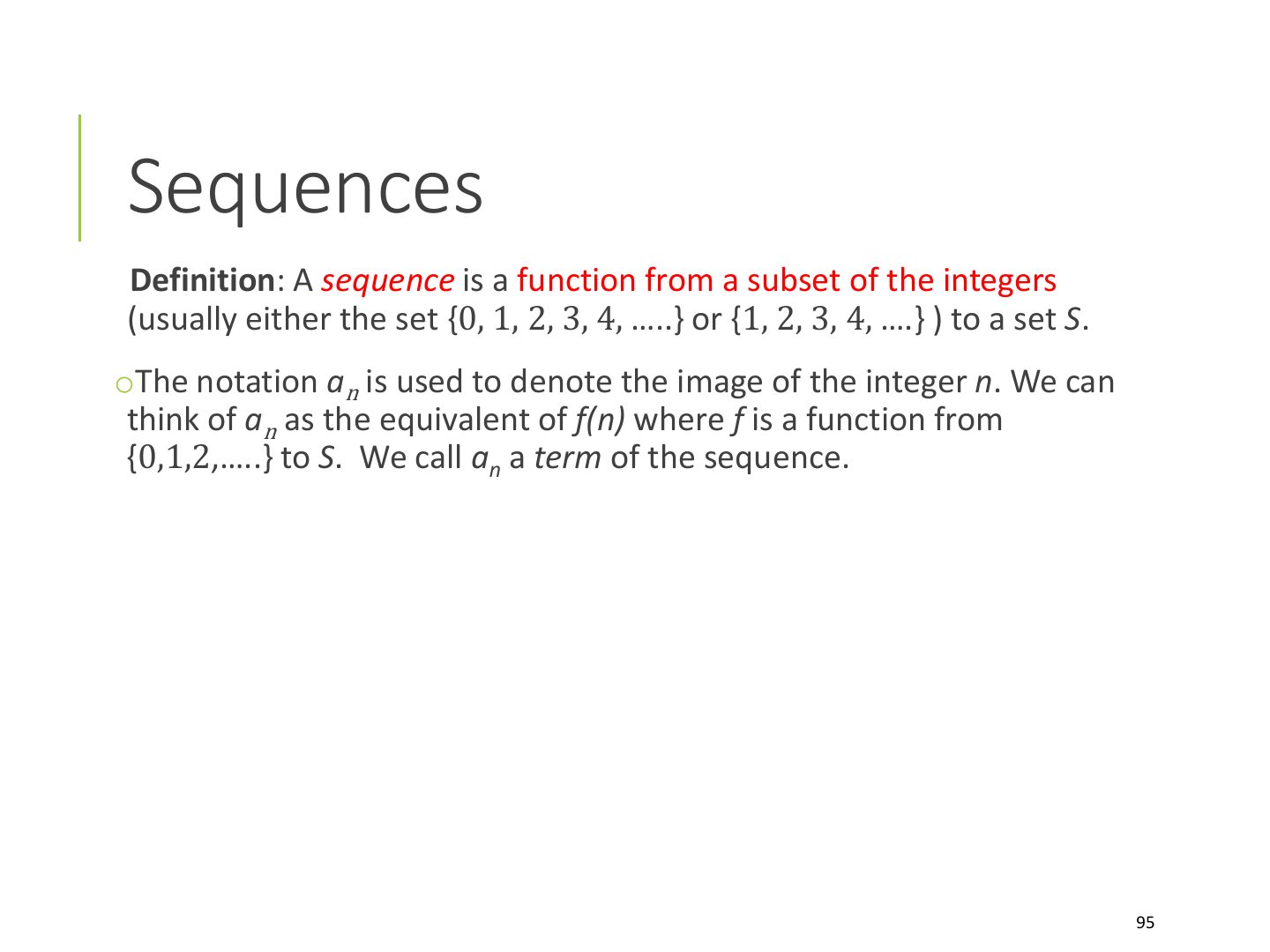
- 94 Sequences
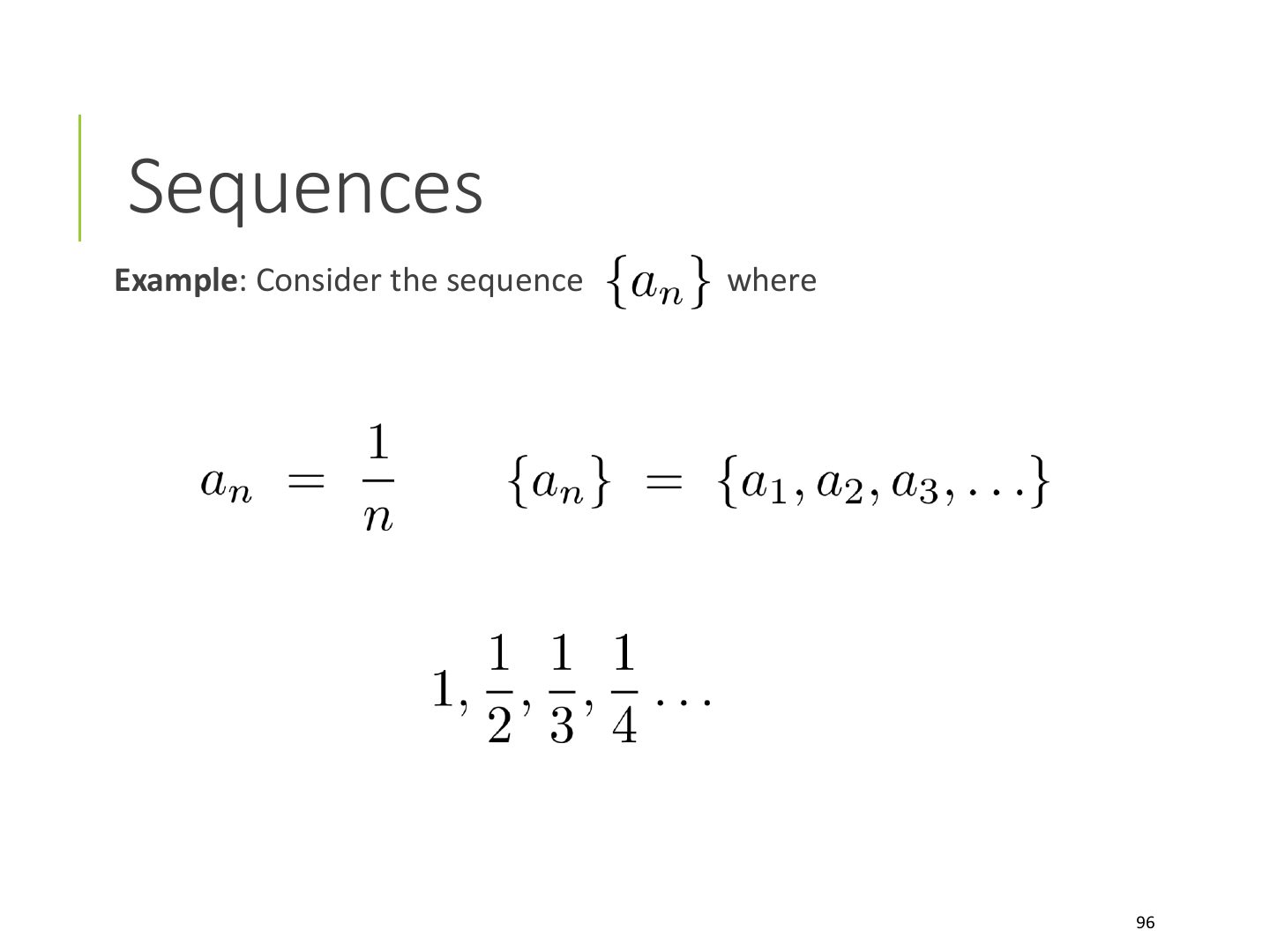
- 95 Sequences
- 96 Geometric Progression
- 97 Arithmetic Progression
- 98 Special Integer Sequences ( opt )
- 99 Questions on Special Integer Sequences ( opt )
- 100 Useful Sequences
- 101 Guessing Sequences ( optional )
- 102 Integer Sequences ( optional )
- 103 Integer Sequences ( optional )
- 104 Slide 104
- 105 Summations
- 106 Example
- 107 Example
- 108 Summations
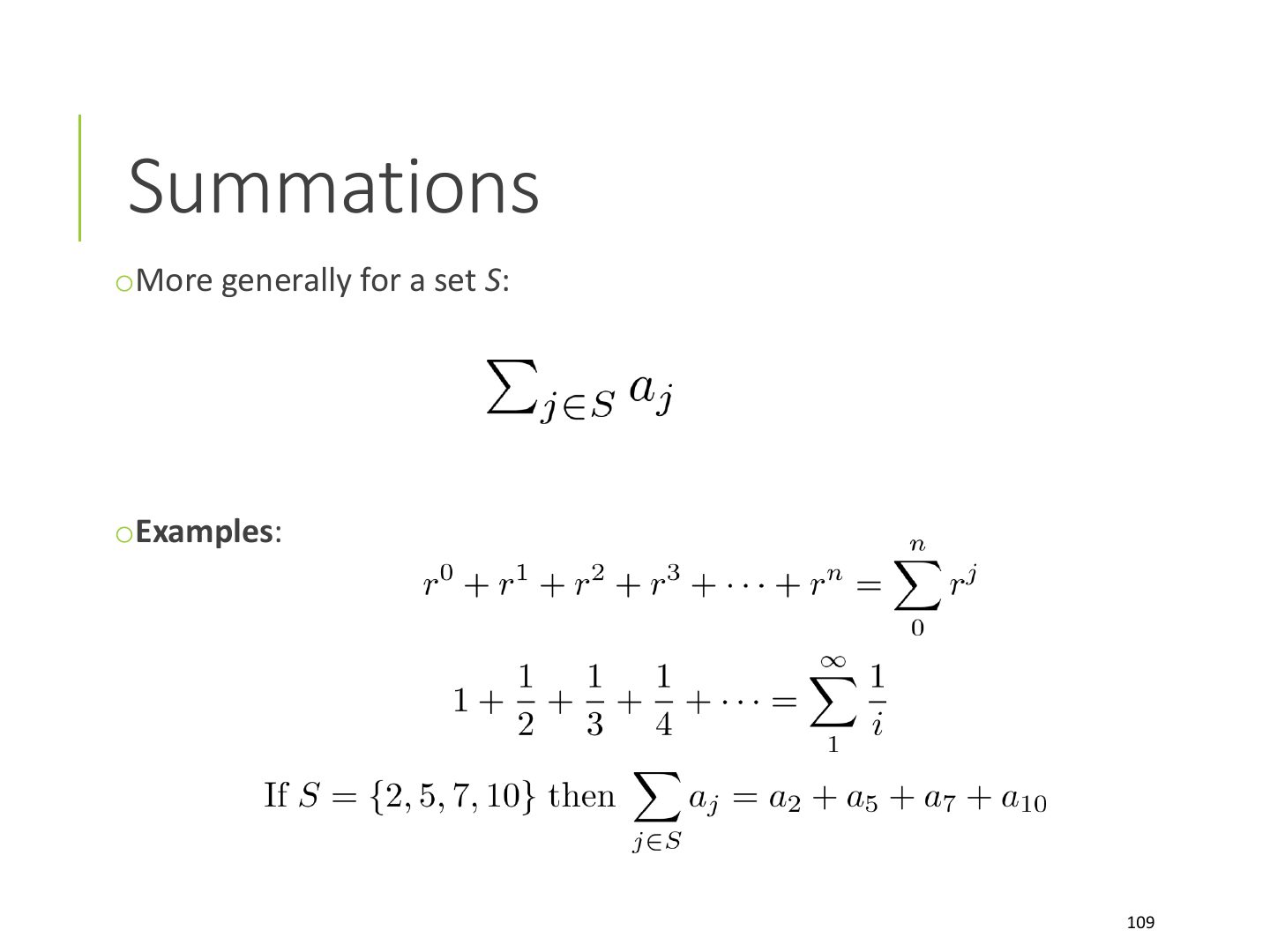
- 109 Product Notation ( optional )
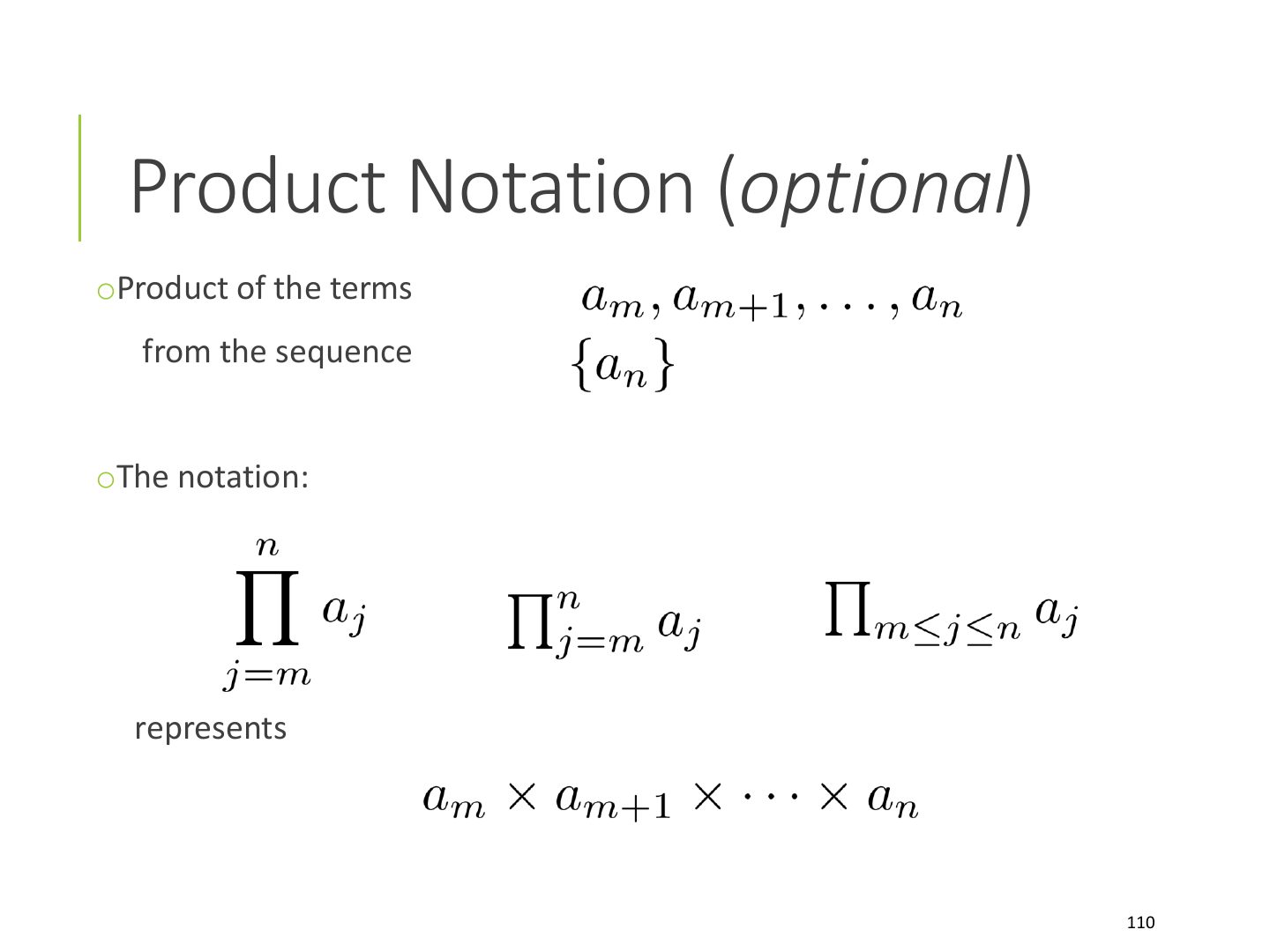
- 110 Some Useful Summation Formulae
- 111 Slide 111
- 112 Slide 112
- 113 Example
- 114 Slide 114
- 115 Slide 115
- 116 Example
- 117 Example
- 118 Slide 118
- 119 Recurrence Relations
- 120 Questions about Recurrence Relations
- 121 Questions about Recurrence Relations
- 122 Fibonacci Sequence
- 123 Solving Recurrence Relations
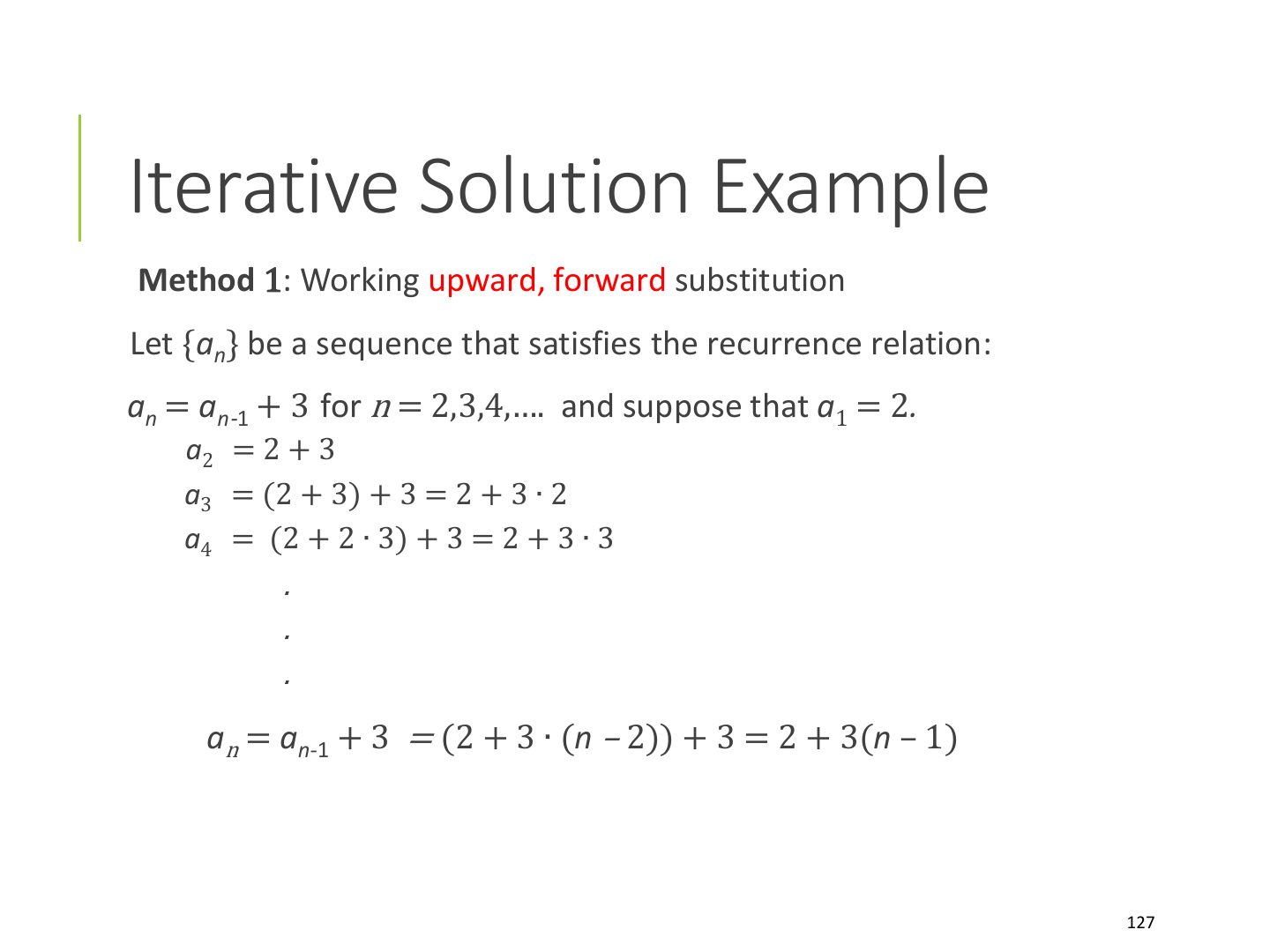
- 124 Iterative Solution Example
- 125 Iterative Solution Example
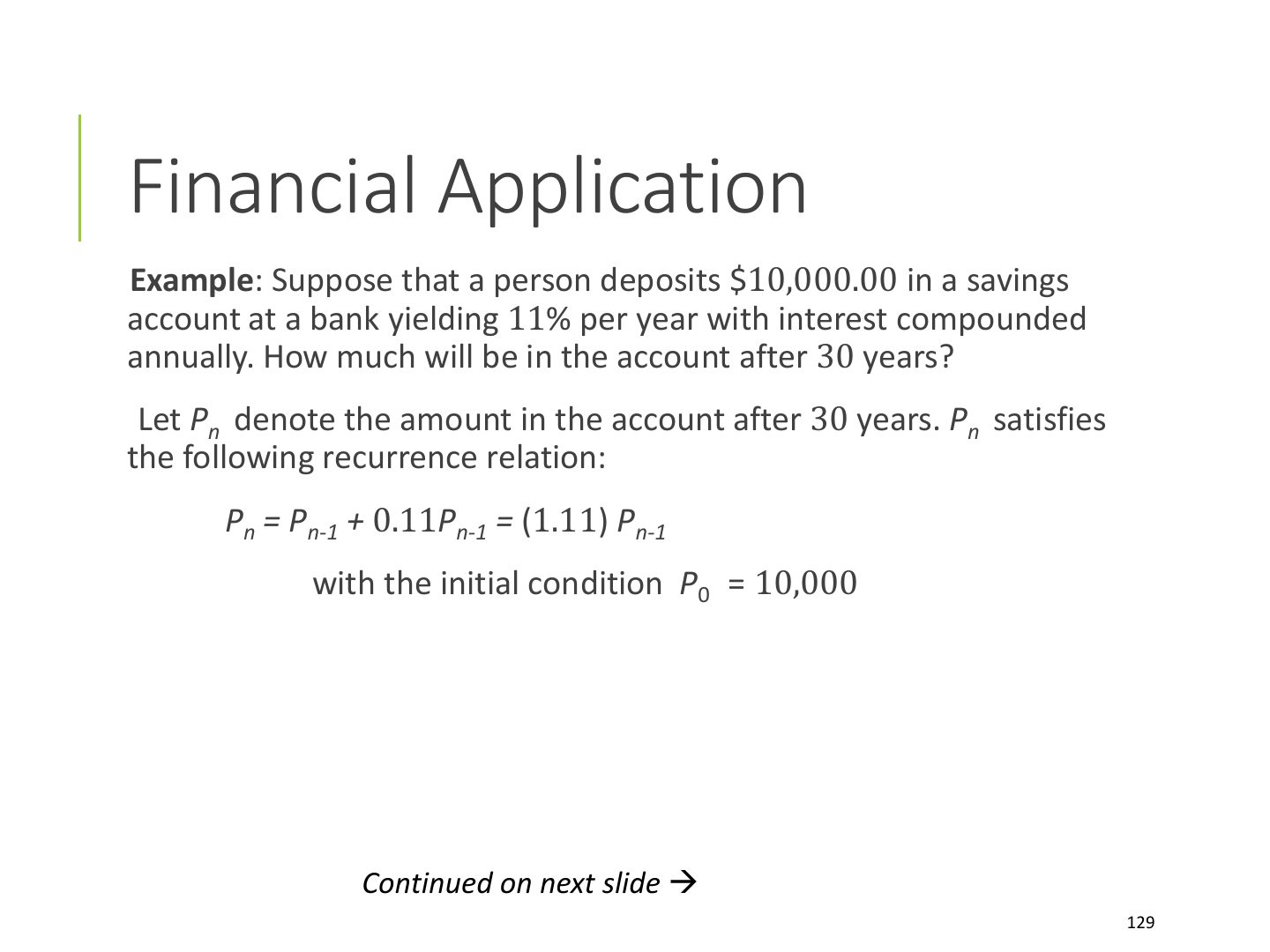
- 126 Financial Application
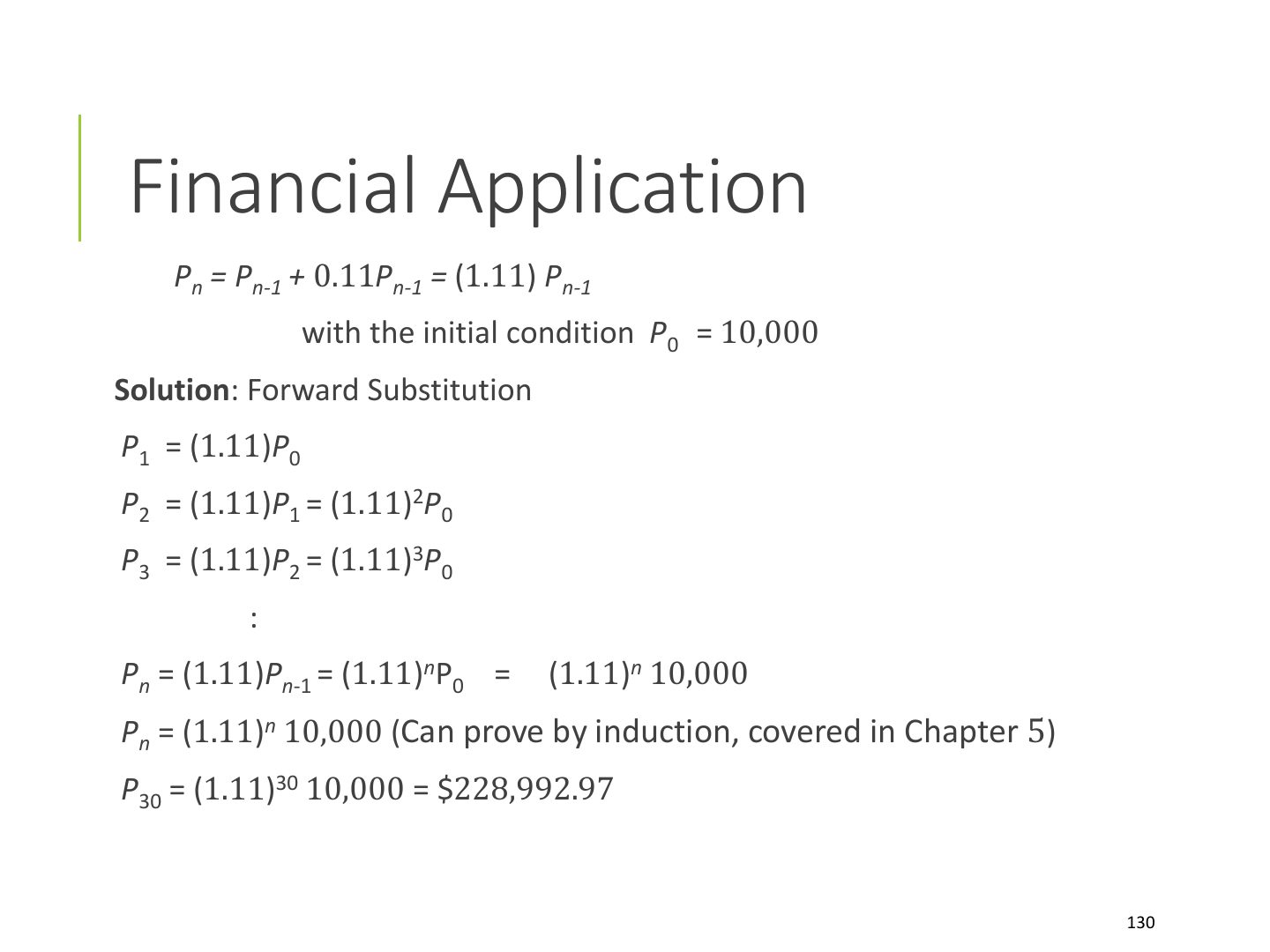
- 127 Financial Application
- 128 Slide 128
- 129 2.6. Matrices
- 130 Matrix Equality
- 131 Row and Column Order
- 132 Matrix Sums
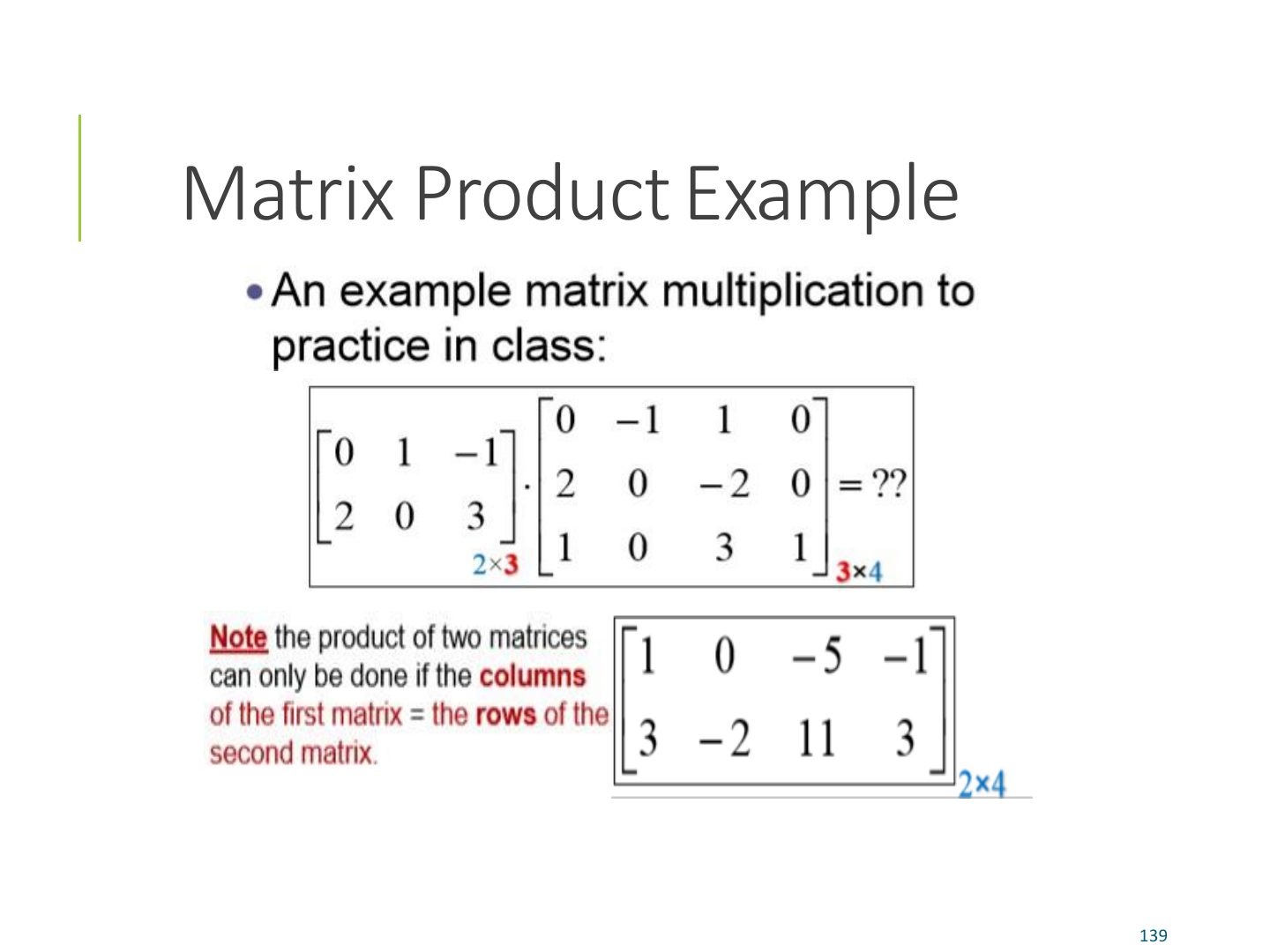
- 133 Matrix Products
- 134 Matrix Product Example
- 135 Matrix Product Example
- 136 Matrix Product Example
- 137 Identity Matrices
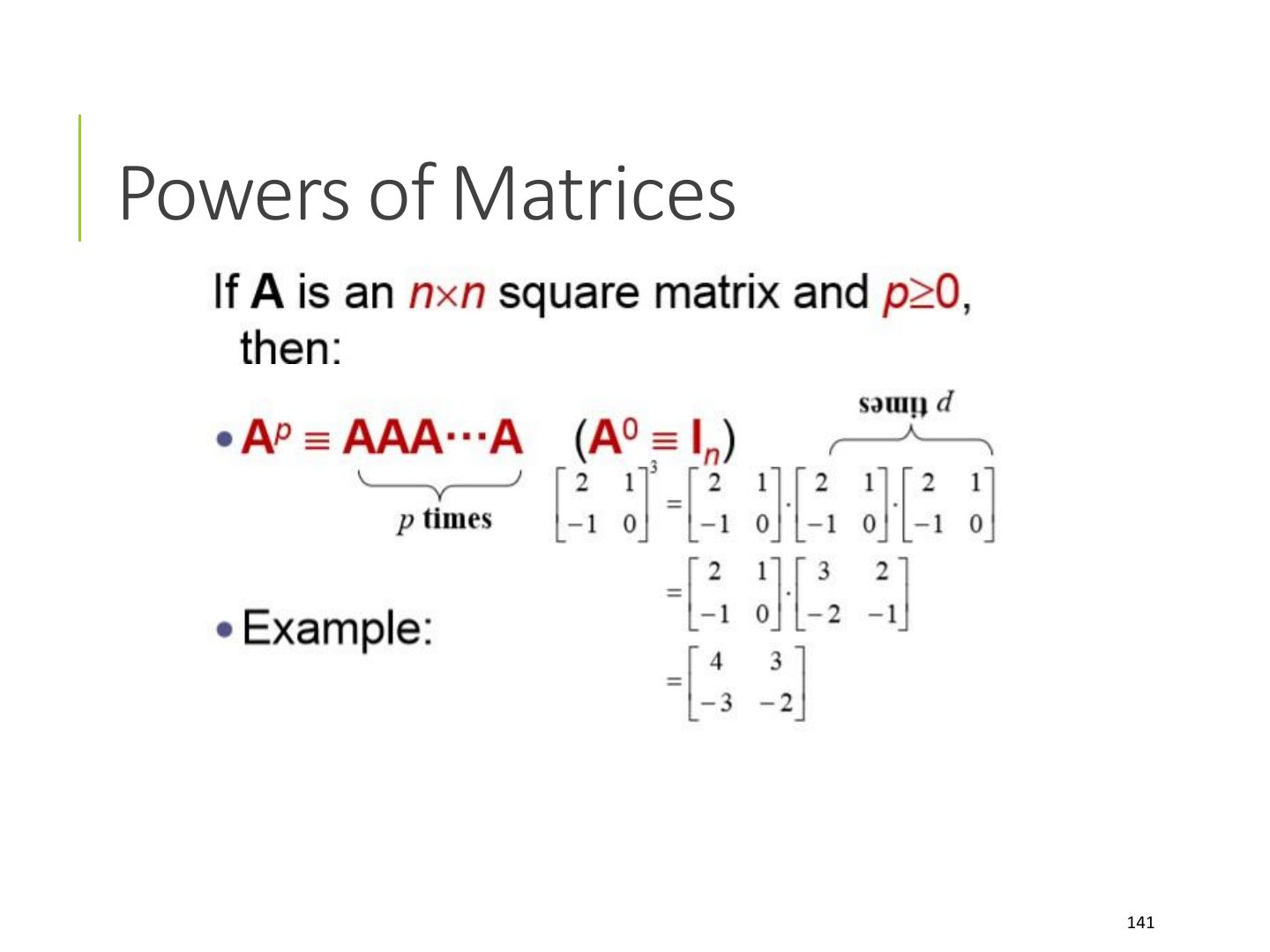
- 138 Powers of Matrices
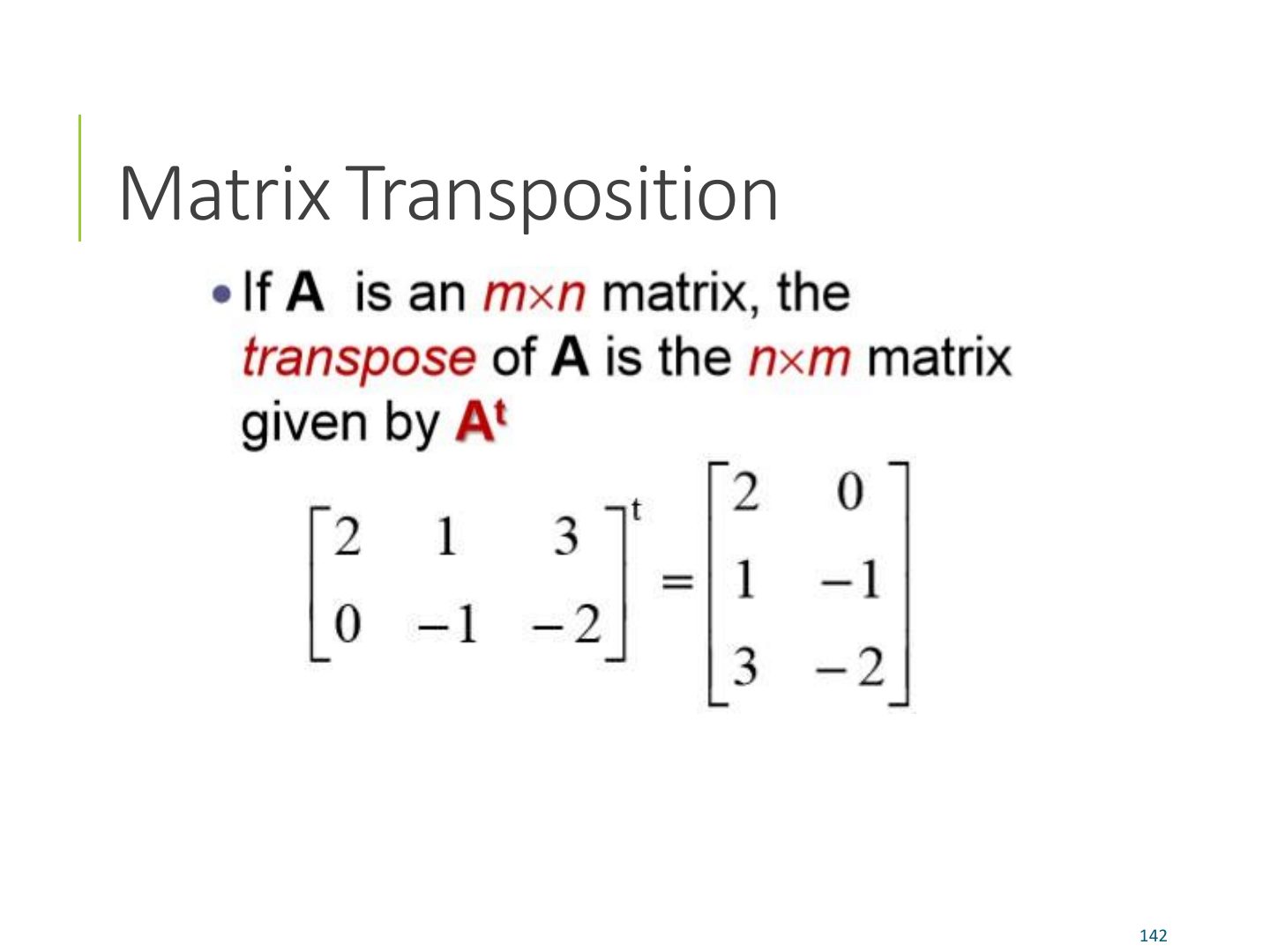
- 139 Matrix Transposition
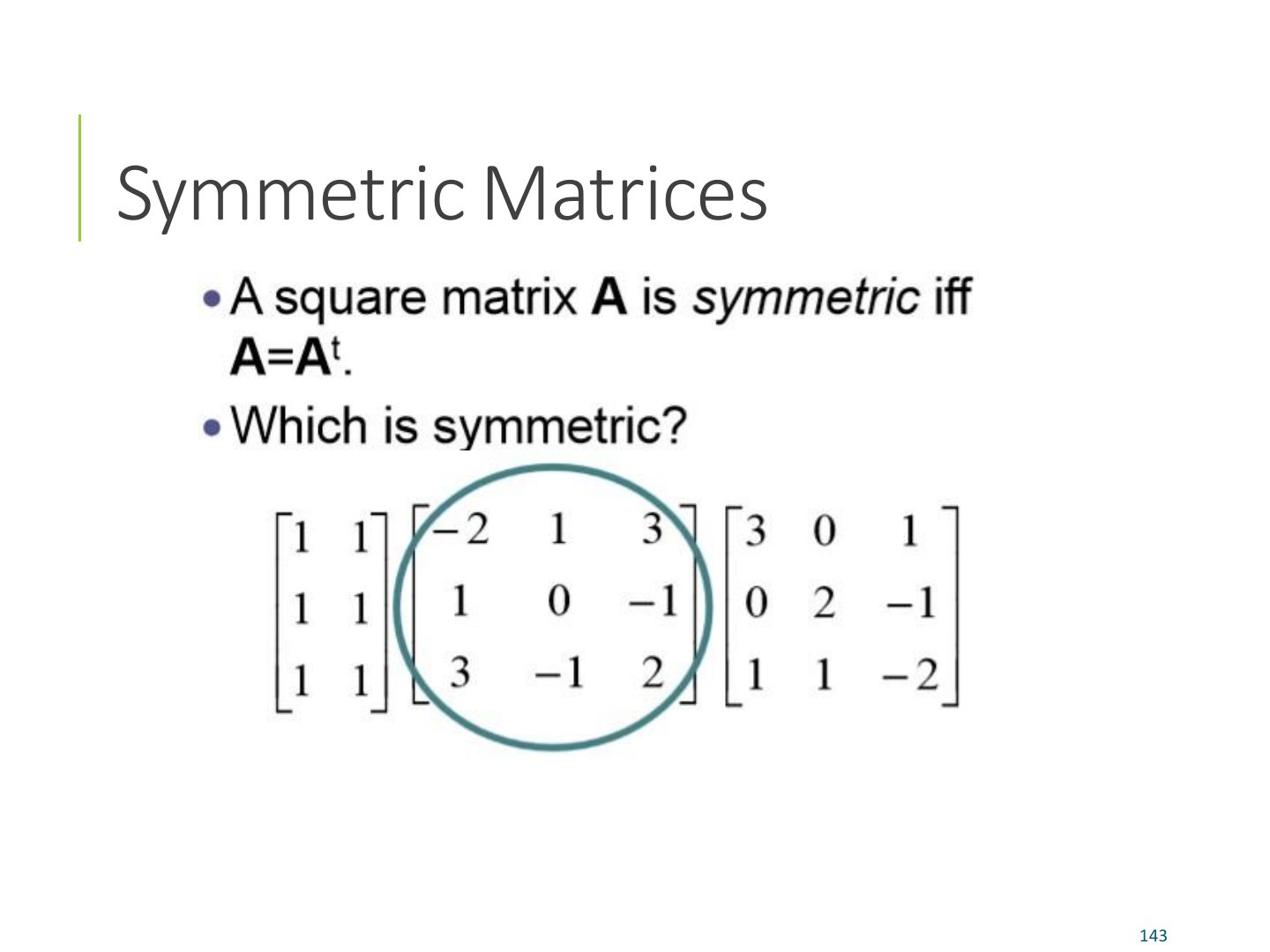
- 140 Symmetric Matrices
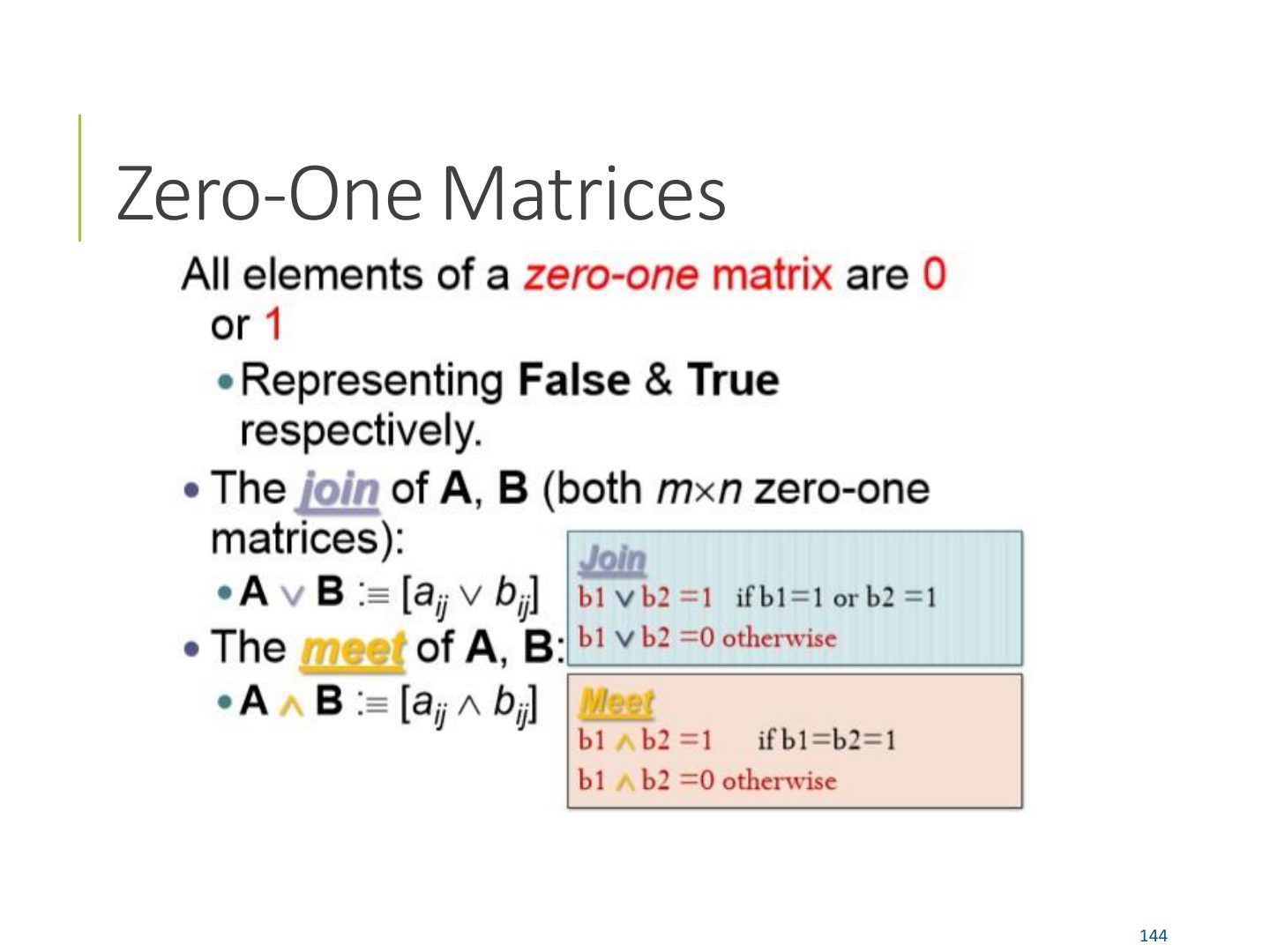
- 141 Zero-One Matrices
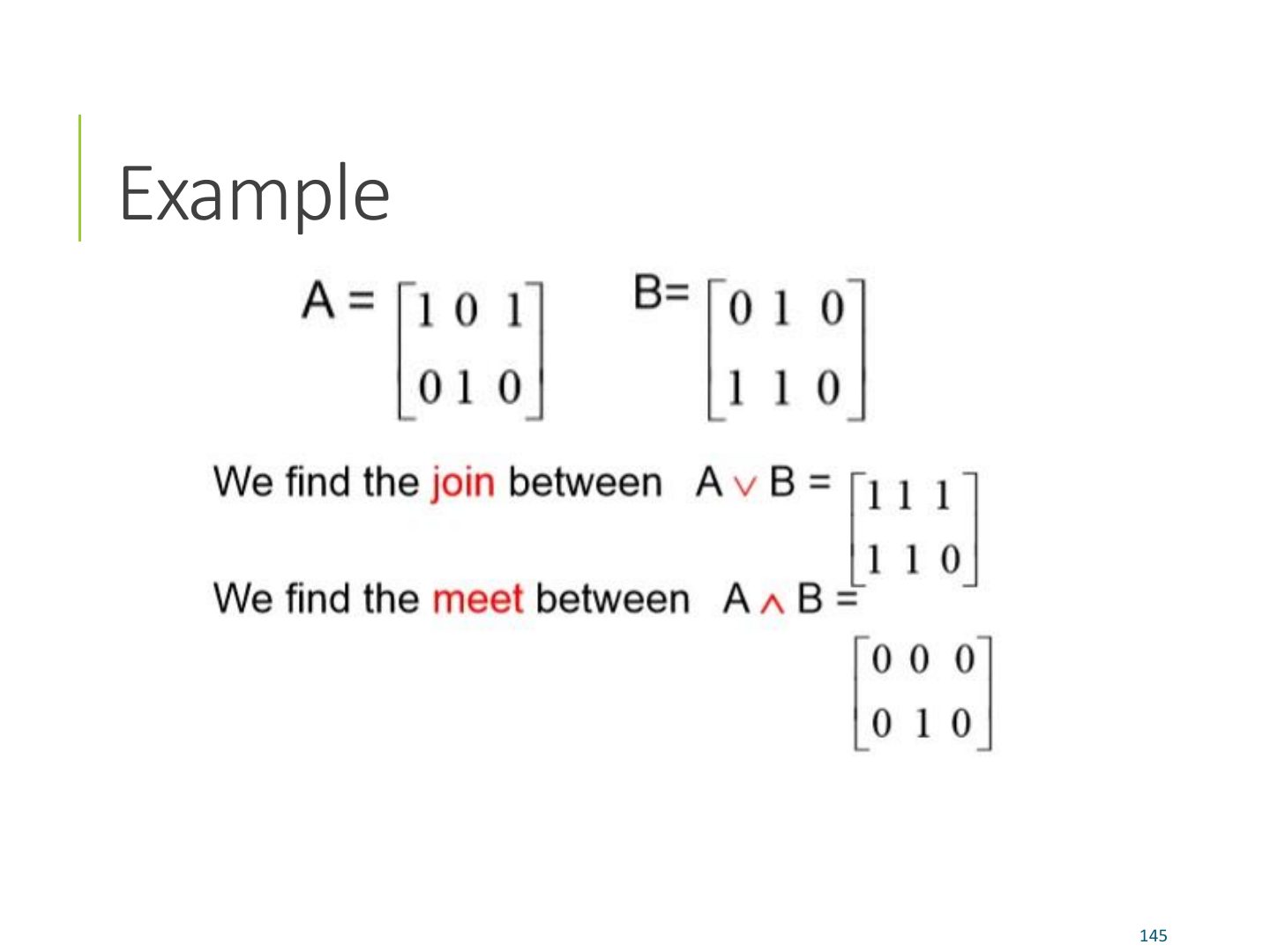
- 142 Example
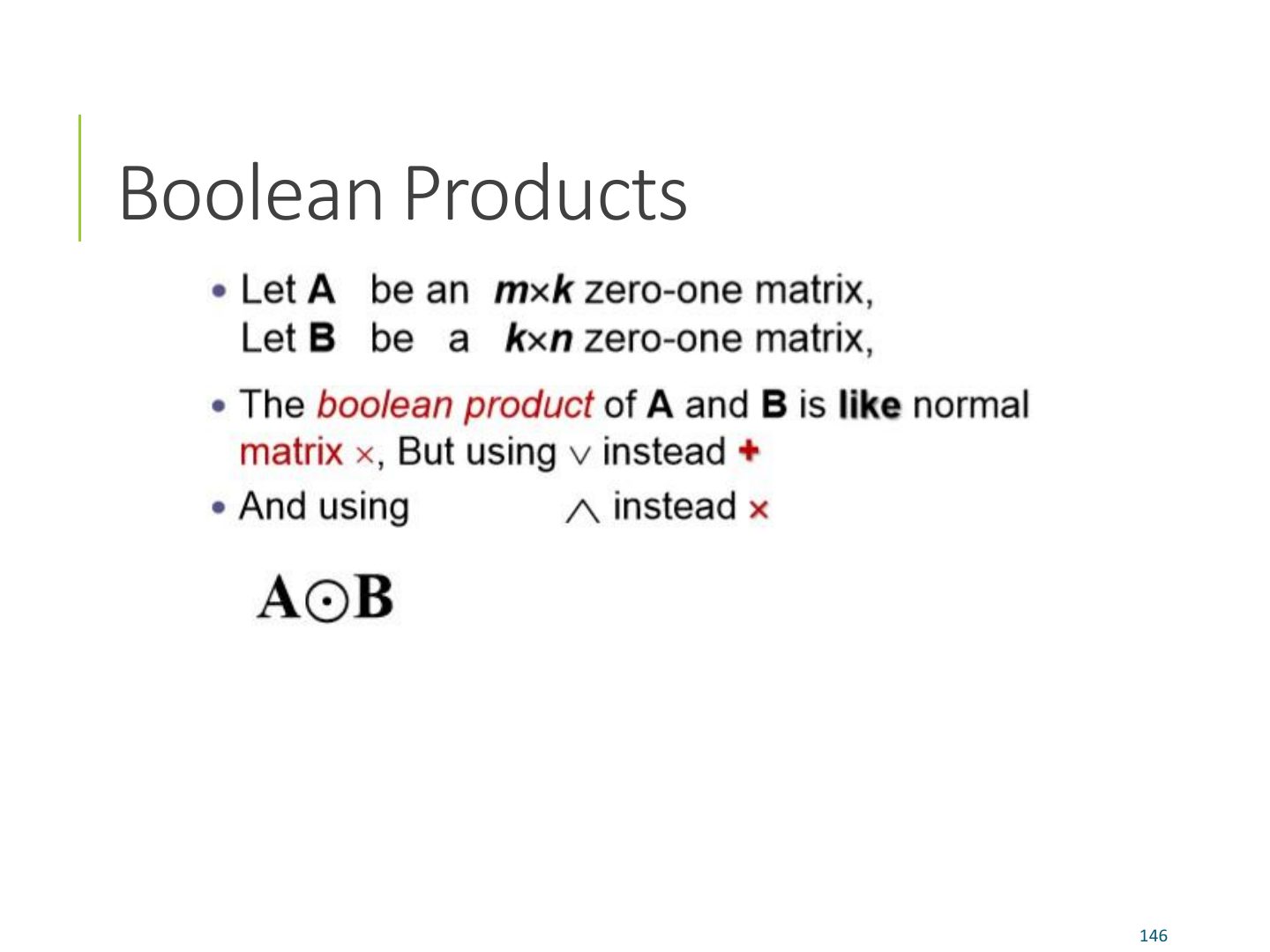
- 143 Boolean Products
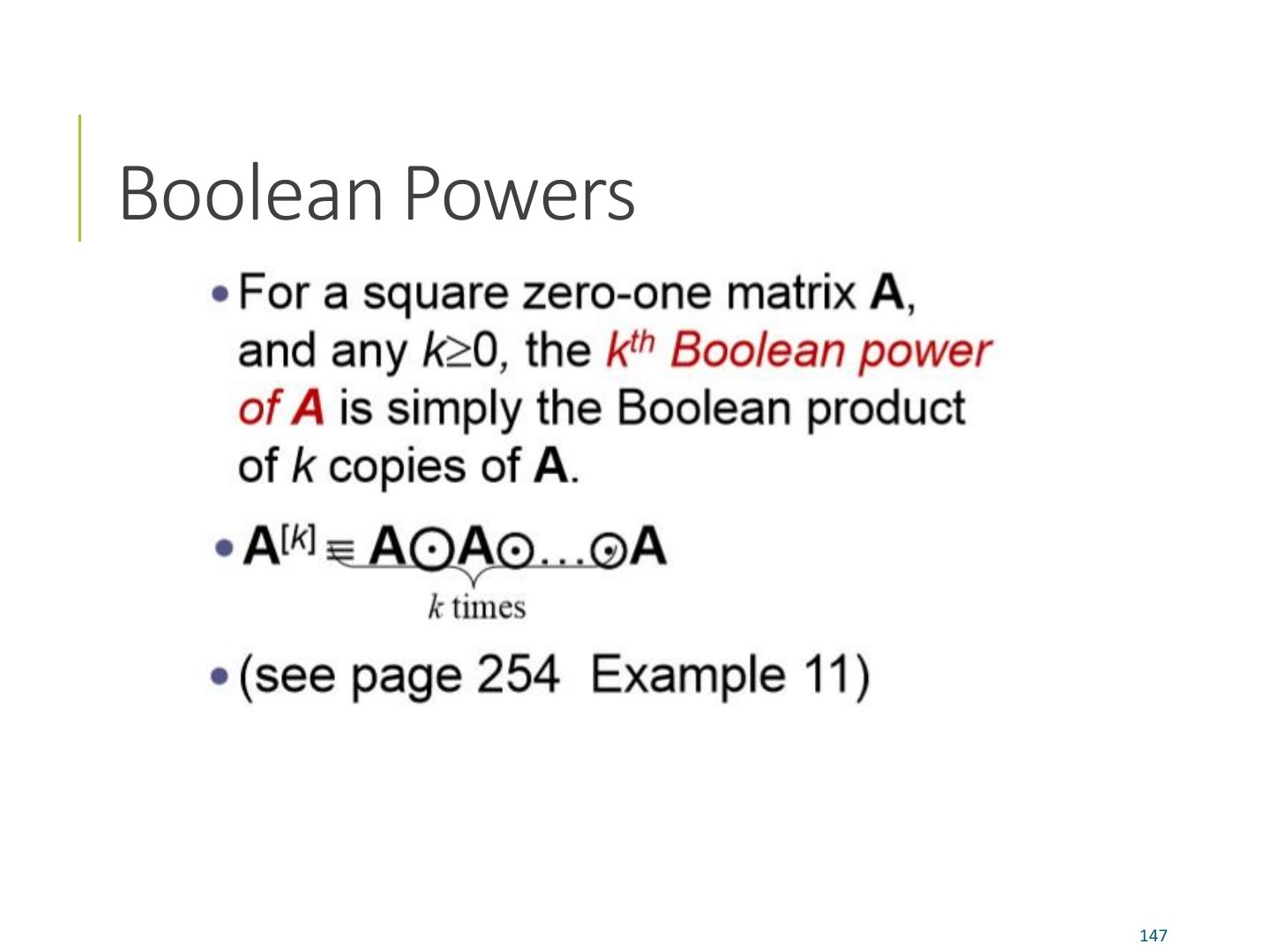
- 144 Boolean Powers
- 145 Example
Basic Structures: Sets, Functions,
Chapter Summary
Slide 3
Section Summary
Introduction
Sets
Describing Sets
Describing a Set: Roster Method
Notes
Roster method lists the elements: {a, e, i, o, u}. Order and repetition don’t matter: {1, 2, 2} = {2, 1}.
Exam angle
Roster Method
Set-Builder Notation
Interval Notation
Some Important Sets
Universal Set and Empty Set
Notes
Universal set U holds everything under discussion; ∅ = {} has no elements, and {∅} is NOT empty (it has one element).
Trap ∅ ≠ {∅}: |∅| = 0 but |{∅}| = 1.
Exam angle
|{∅, {∅}}| equals:
- Two distinct elements: ∅ and {∅}.
John Venn (1834-1923) Cambridge, UK
Some things to remember
Set Equality
Subsets
Exam angle
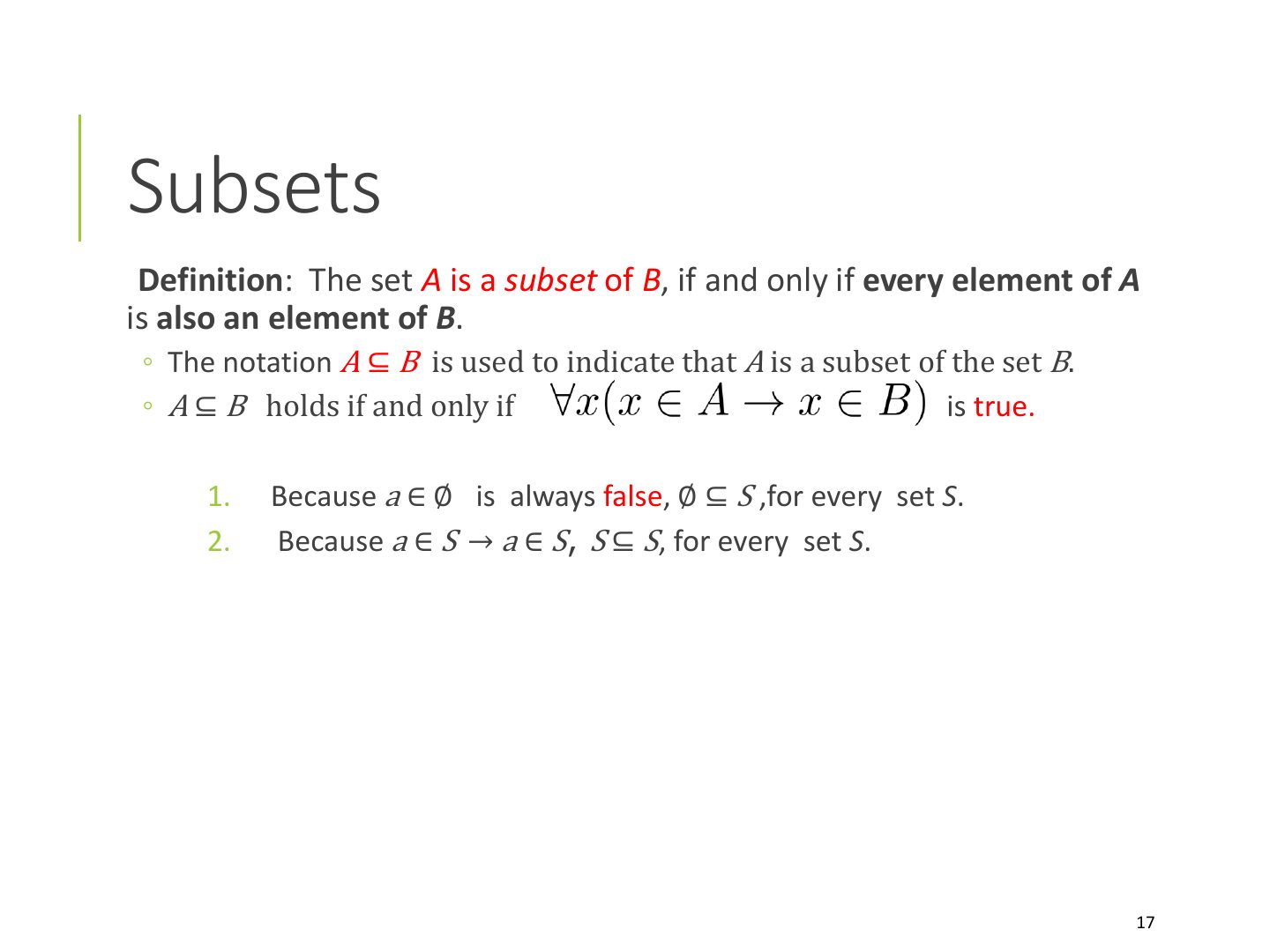
∅ ⊆ A for every set A.
Showing a Set is or is not a Subset of Another Set
Another look at Equality of Sets
Proper Subsets
Slide 21
Slide 22
Set Cardinality
Set Cardinality
Power Sets
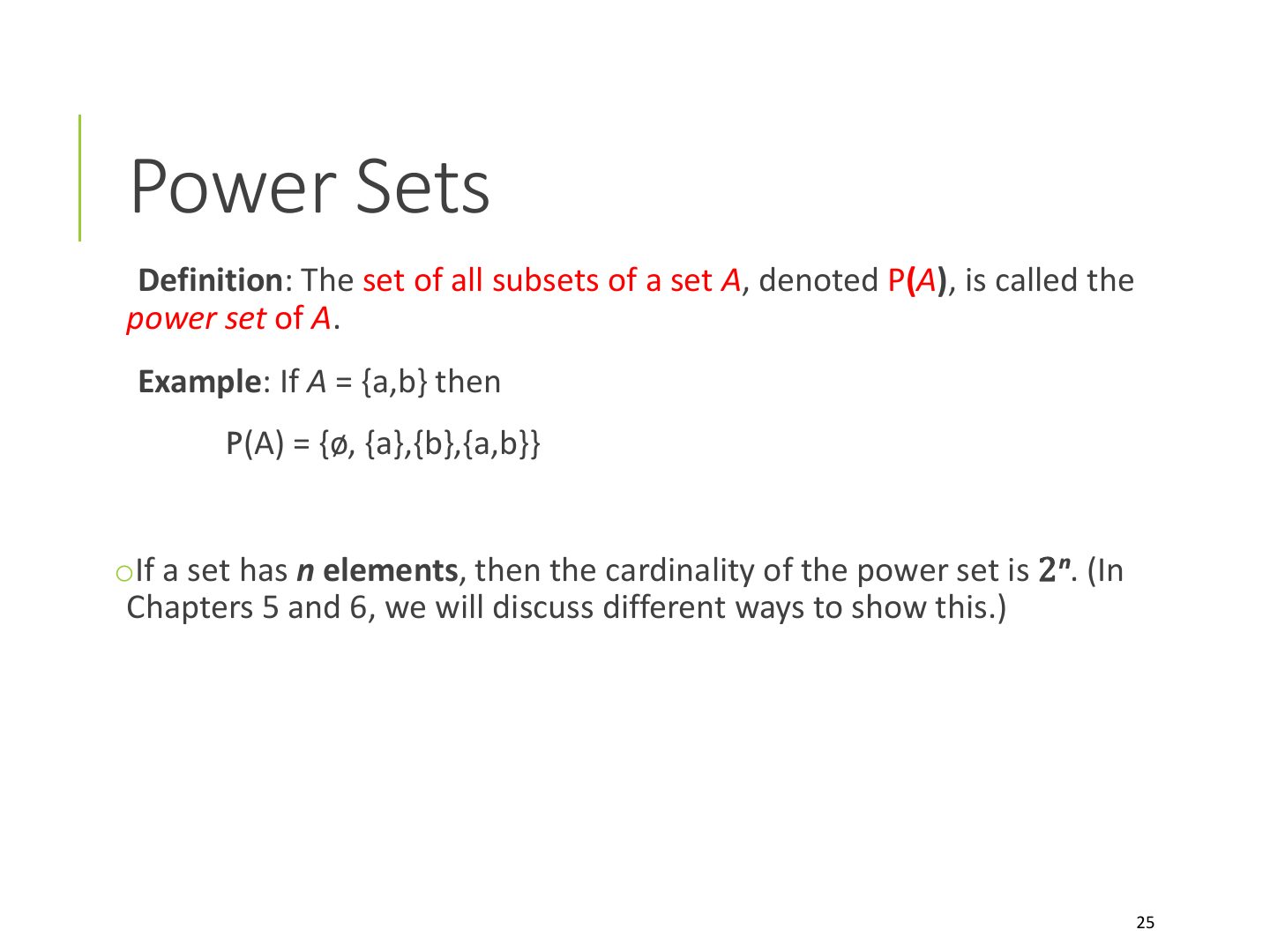
Exam angle
If A = {a, b, c}, |P(A)| is:
- 2³ = 8, including ∅ and A.
P(∅) equals:
- The only subset of ∅ is ∅ itself.
Power Sets
Tuples
Ren é Descartes (1596-1650)
Cartesian Product
Notes
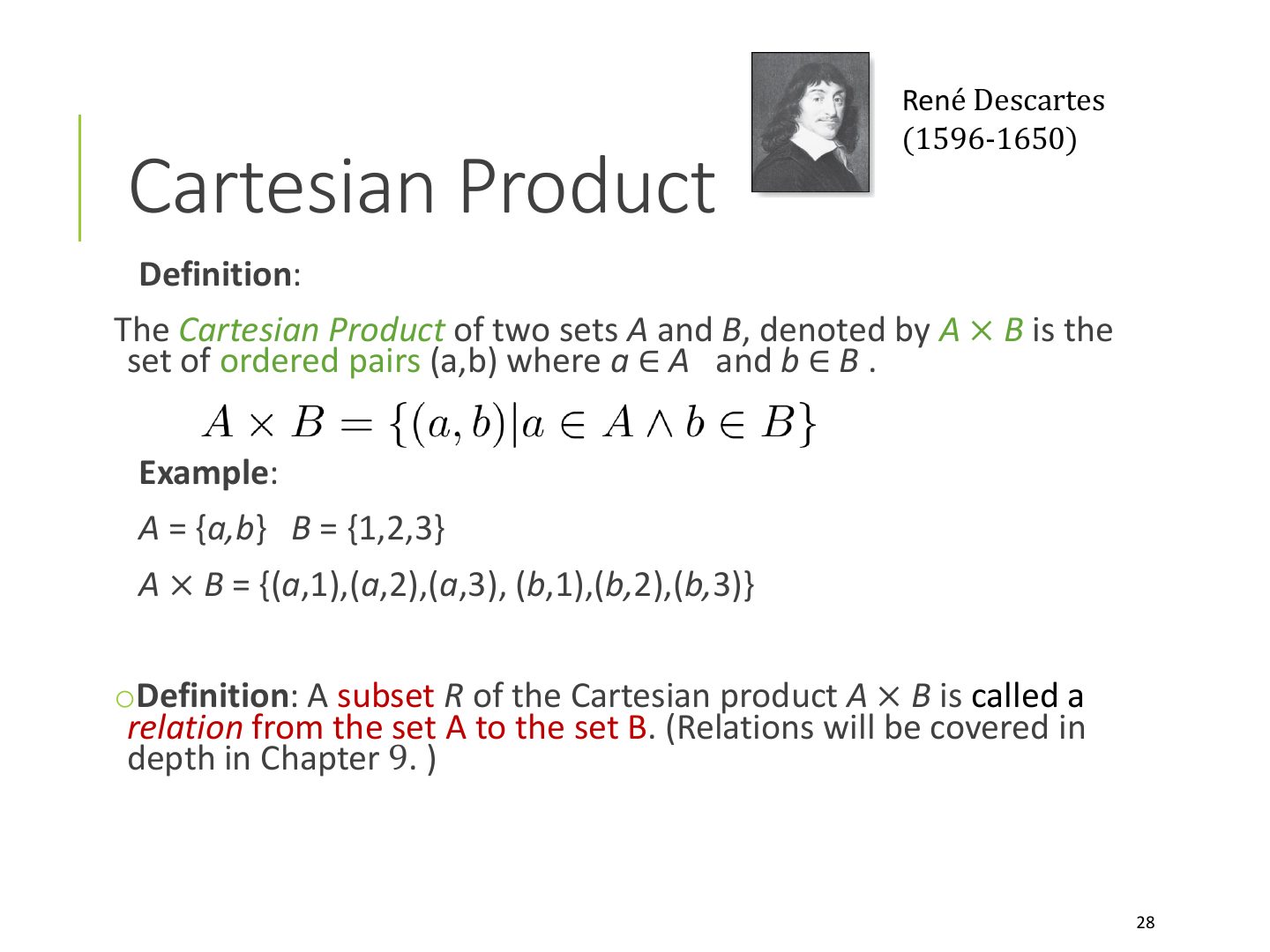
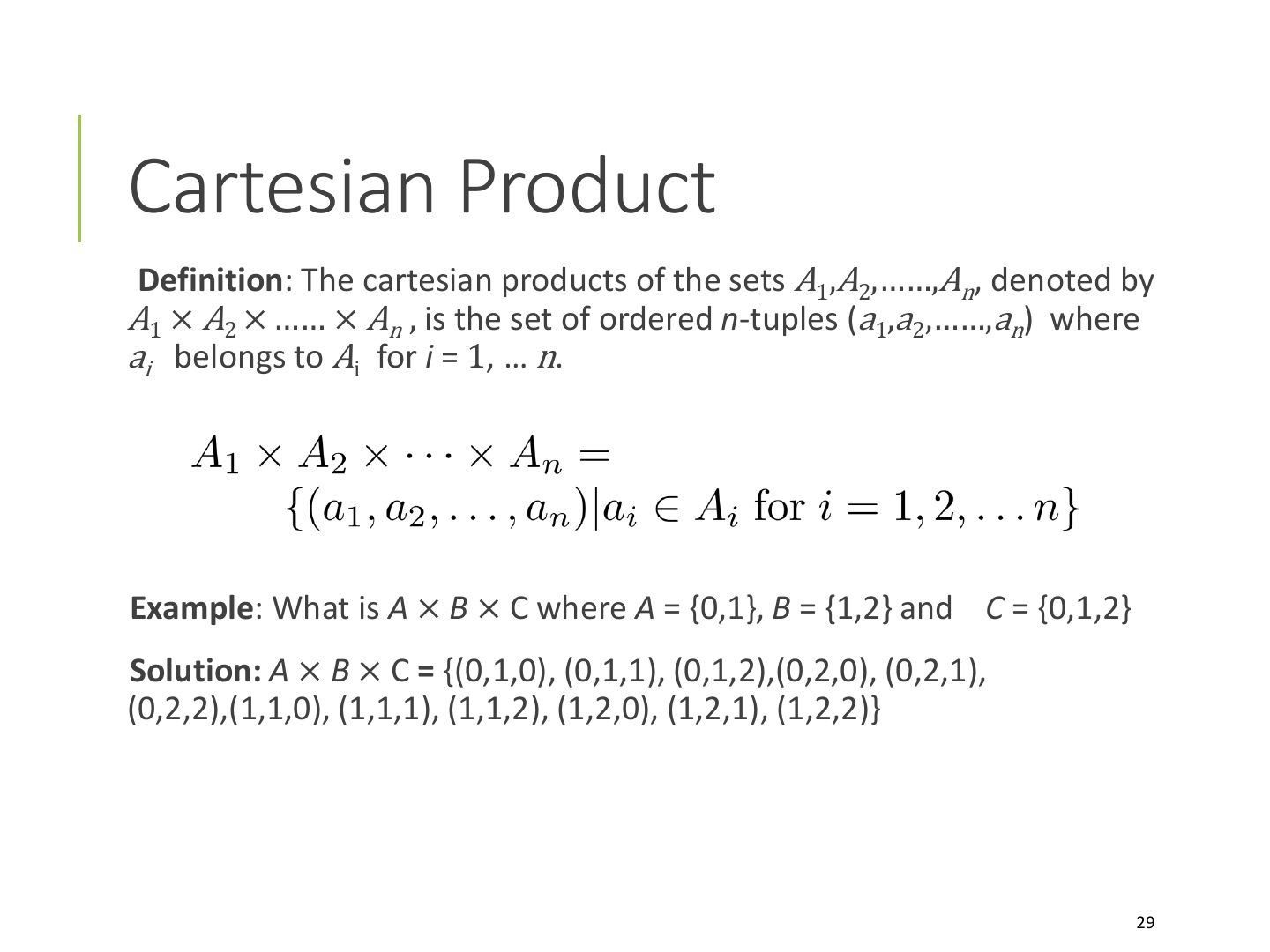
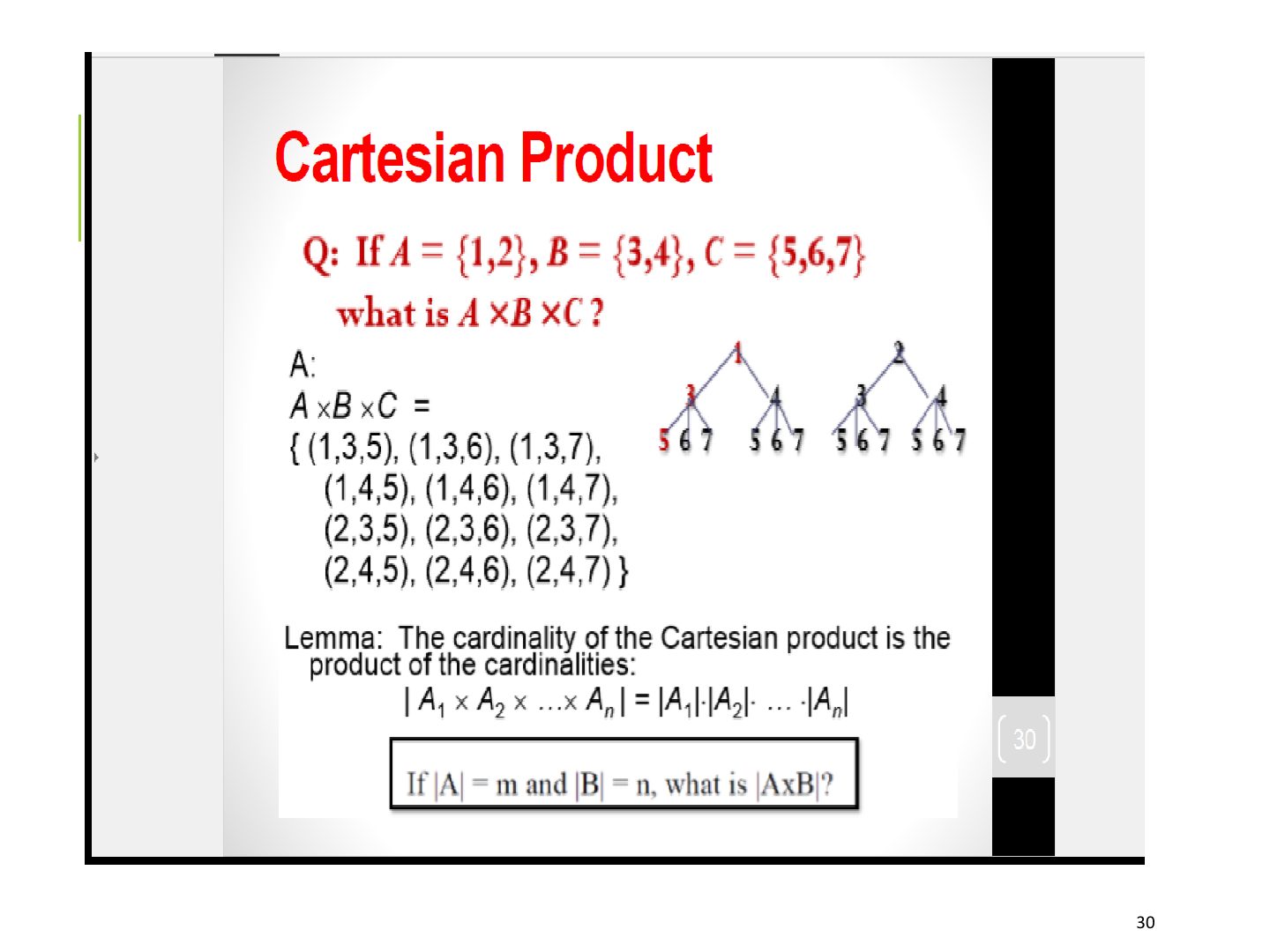
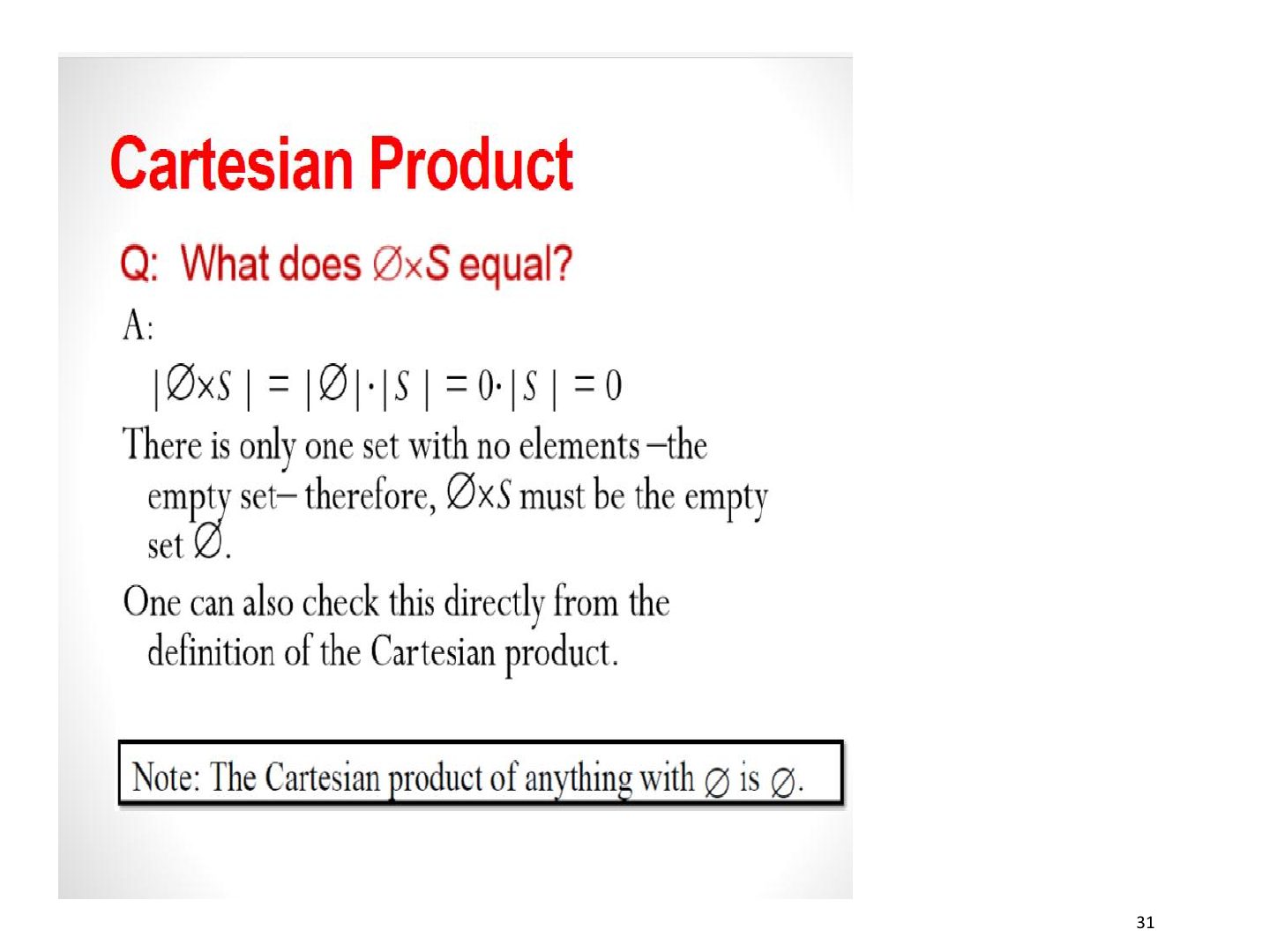
A × B = {(a, b) | a ∈ A, b ∈ B}; |A × B| = |A|·|B|; A × B ≠ B × A in general.
Exam angle
If |A| = 3 and |B| = 4, |A × B| is:
Slide 30
Slide 31
Slide 32
Truth Sets of Quantifiers
Slide 34
Section Summary
Boolean Algebra
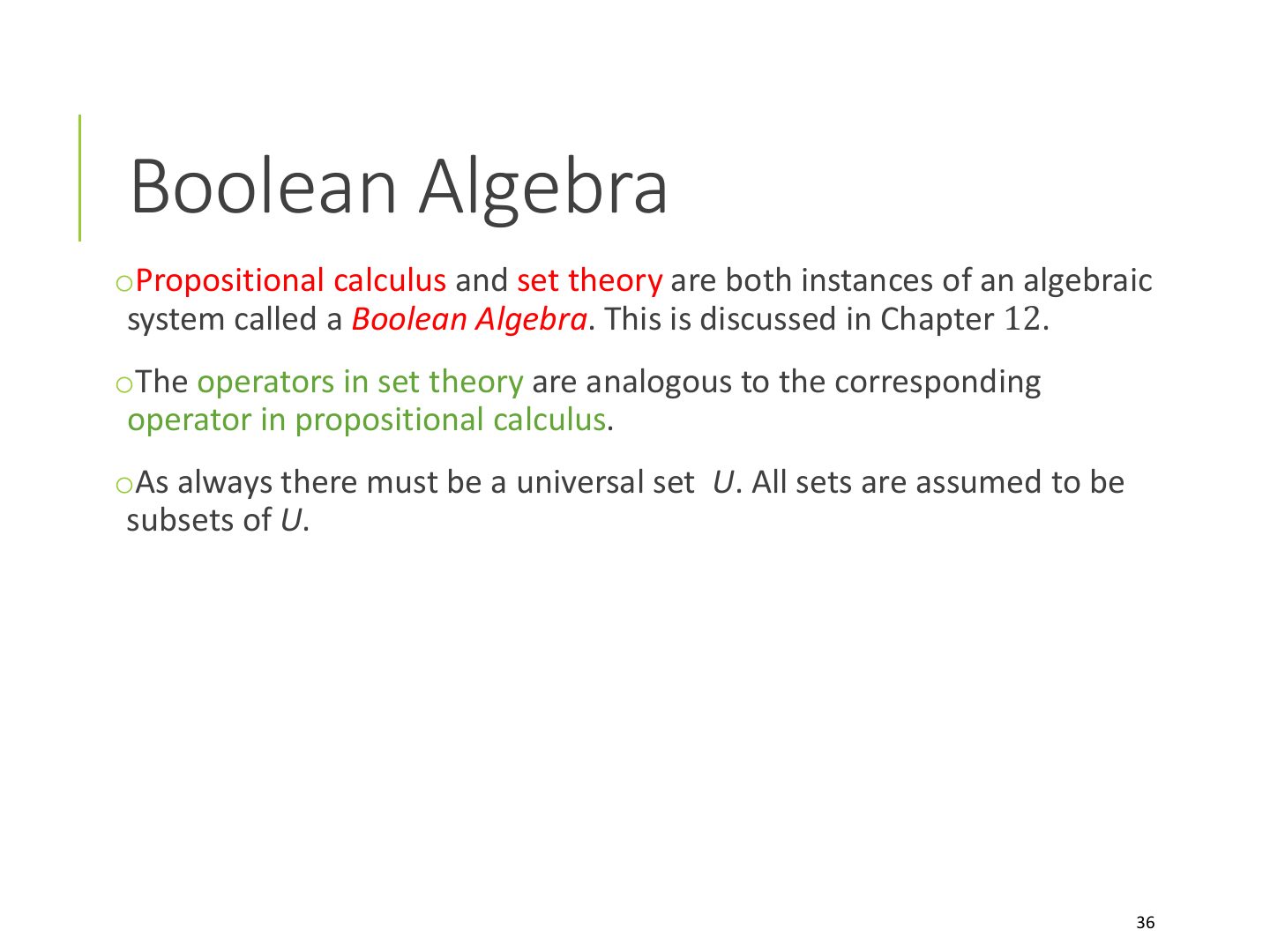
Union
Notes
A ∪ B: in A or B (or both).
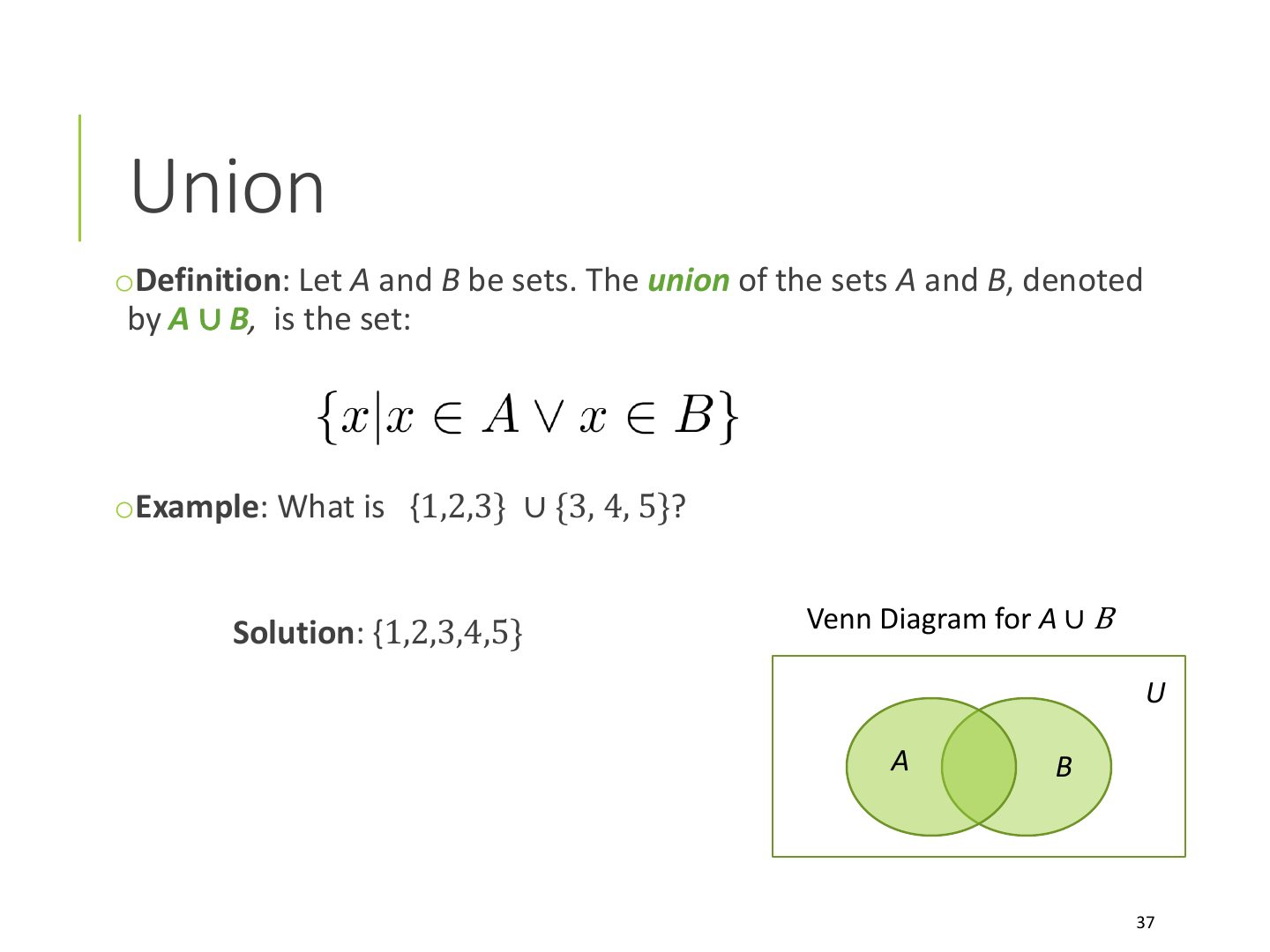
Intersection
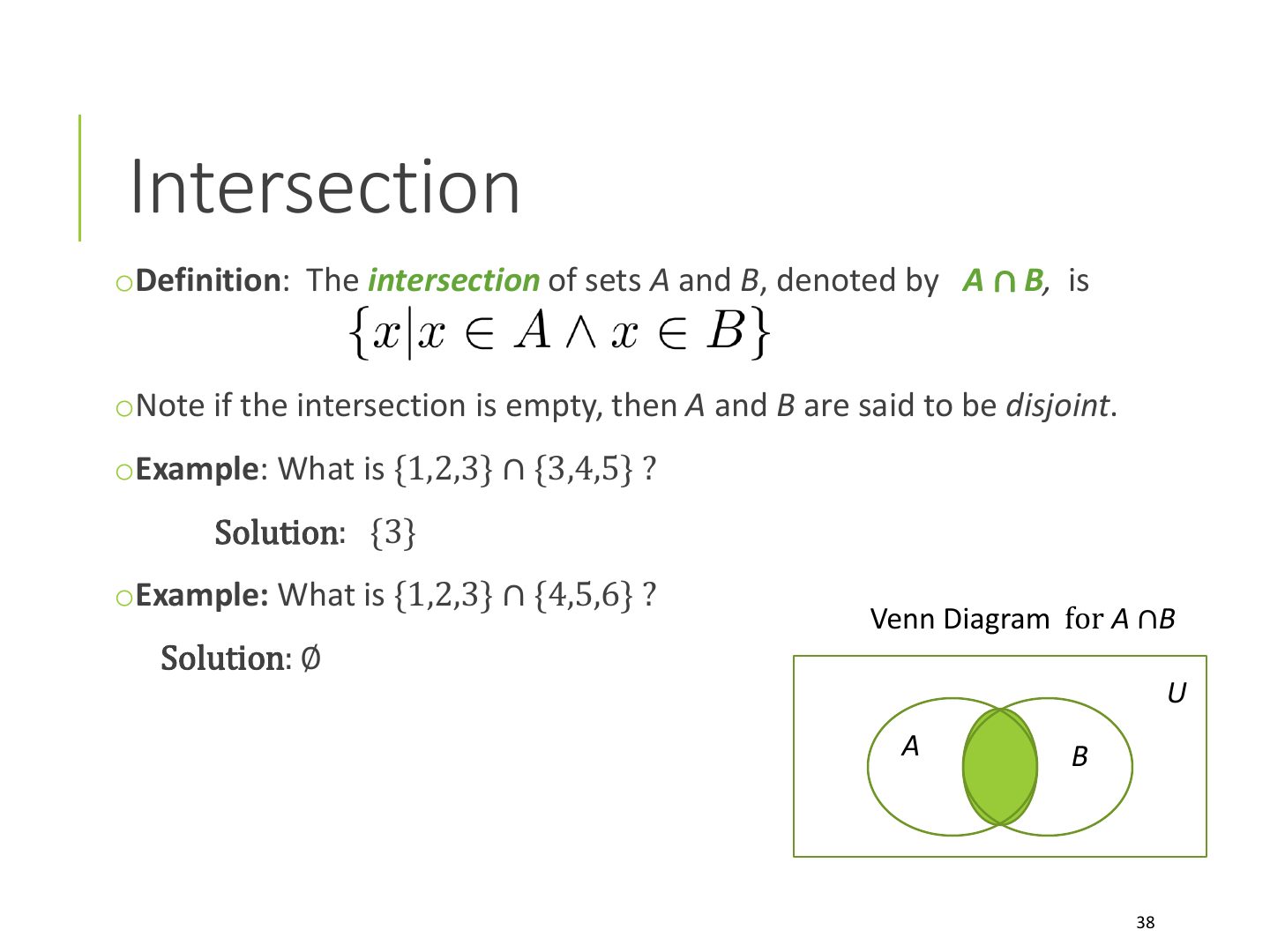
Complement
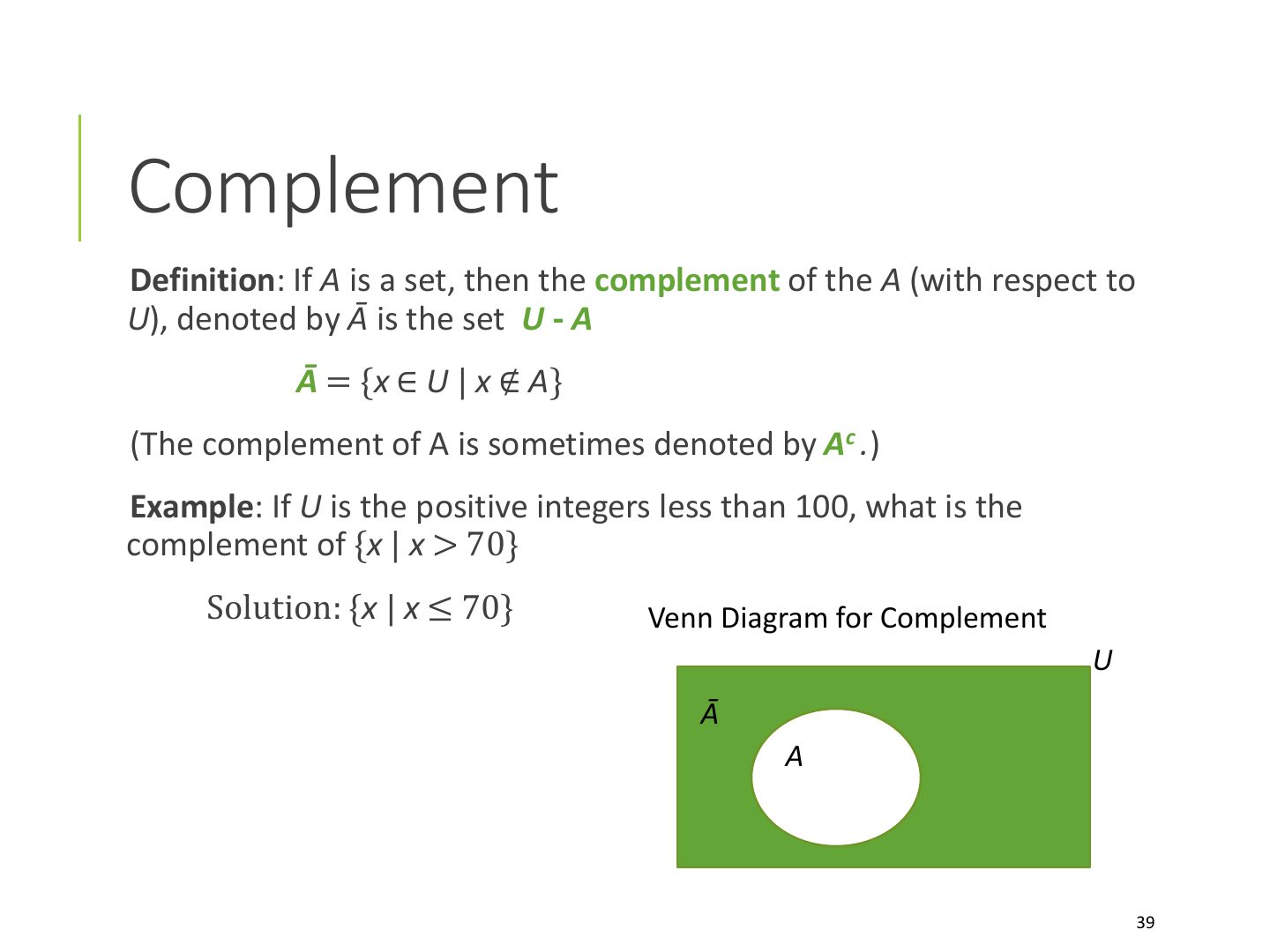
Notes
Complement Ā = U − A.
Difference
Notes
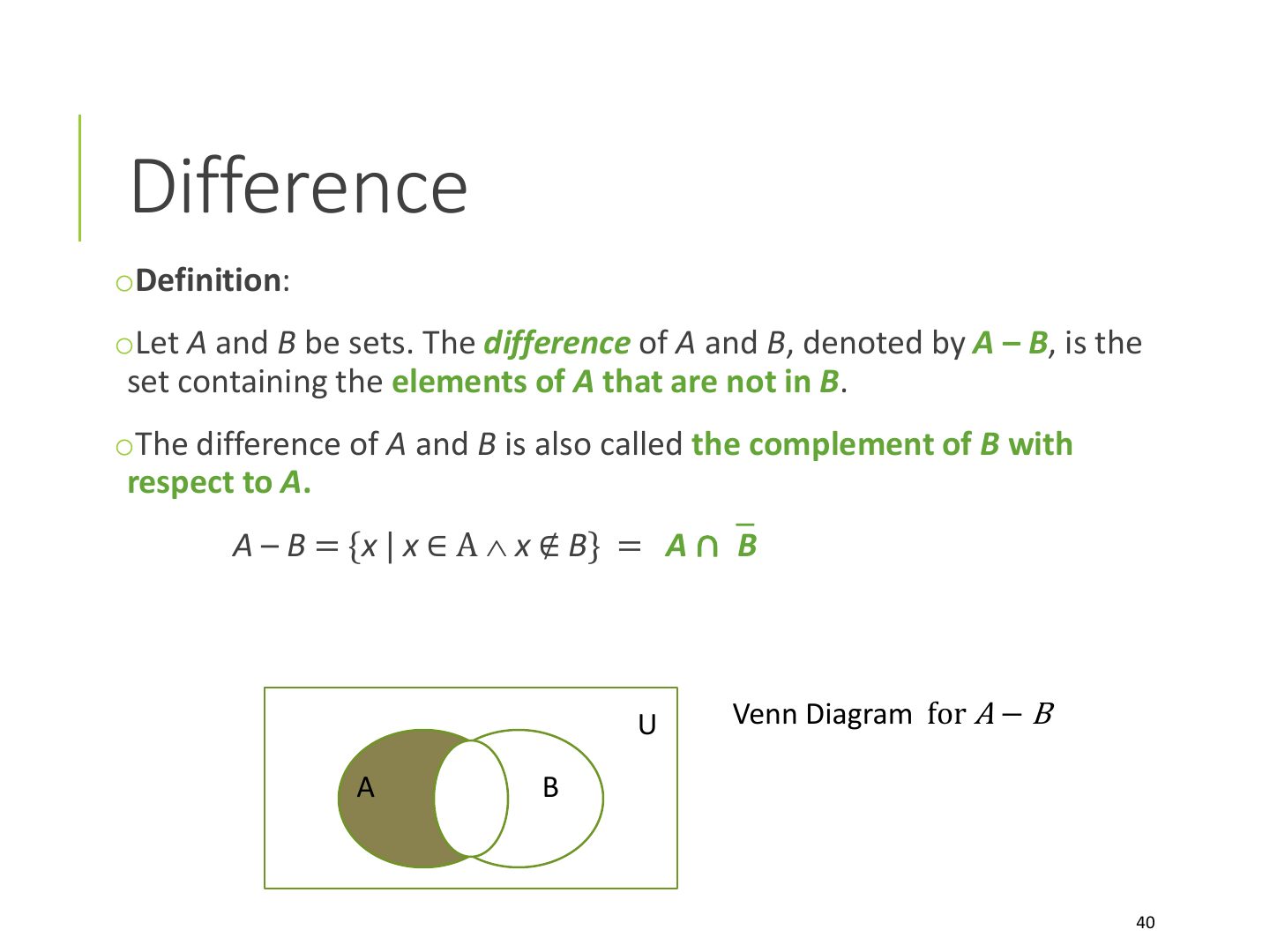
A − B: in A but not in B (= A ∩ B̄).
The Cardinality of the Union of Two Sets
Exam angle
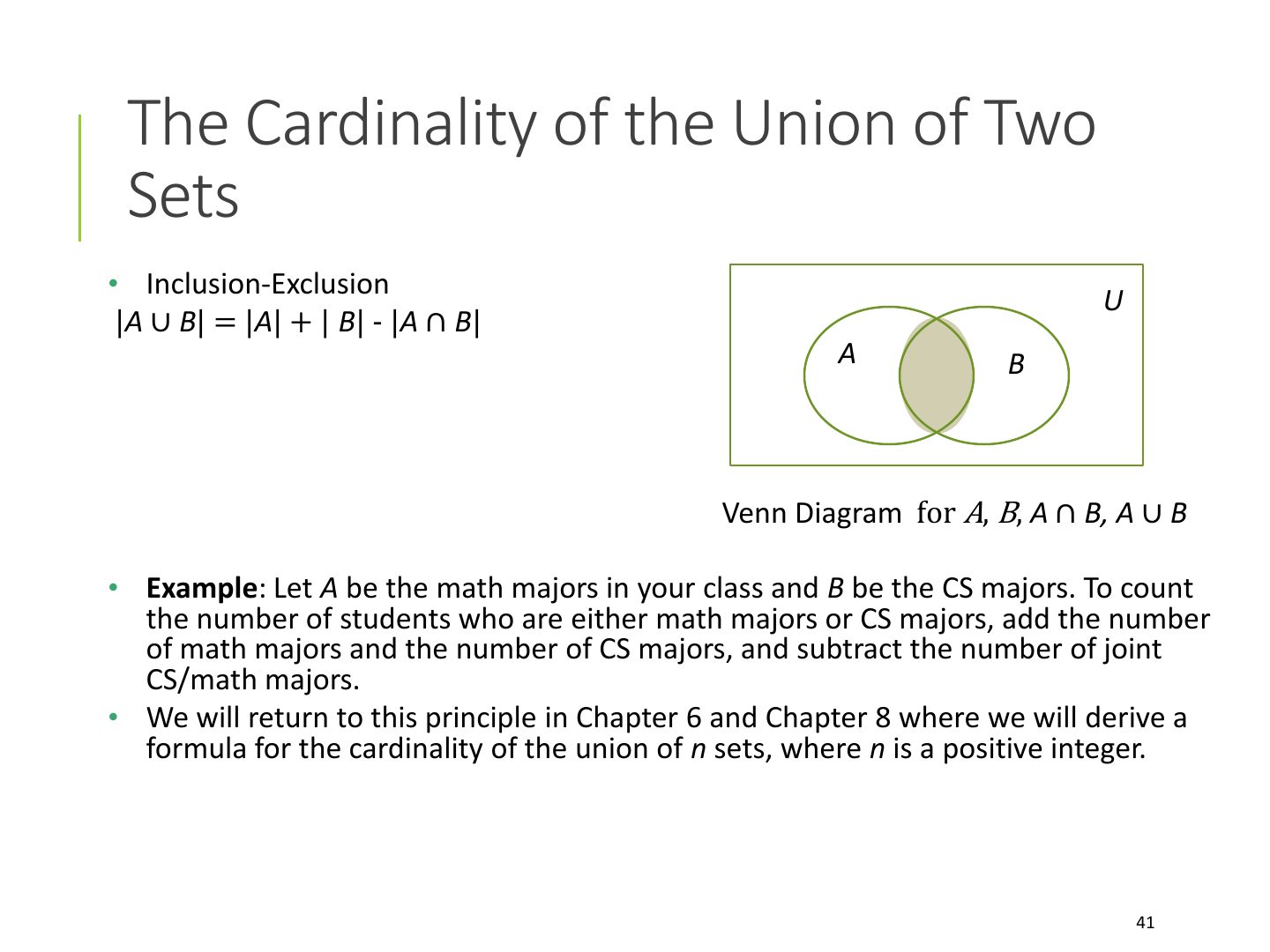
|A| = 10, |B| = 7, |A ∩ B| = 3. |A ∪ B| =
- 10 + 7 − 3.
Review Questions
Symmetric Difference ( optional )
Set Identities
Notes
Set identities mirror the logical equivalences (∪ ↔ ∨, ∩ ↔ ∧, complement ↔ ¬).
Set Identities
Set Identities
Proving Set Identities
Proof of Second De Morgan Law
Notes
De Morgan for sets: (A ∩ B)‾ = Ā ∪ B̄ and (A ∪ B)‾ = Ā ∩ B̄.
Proof of Second De Morgan Law
Proof of Second De Morgan Law
Set-Builder Notation: Second De Morgan Law
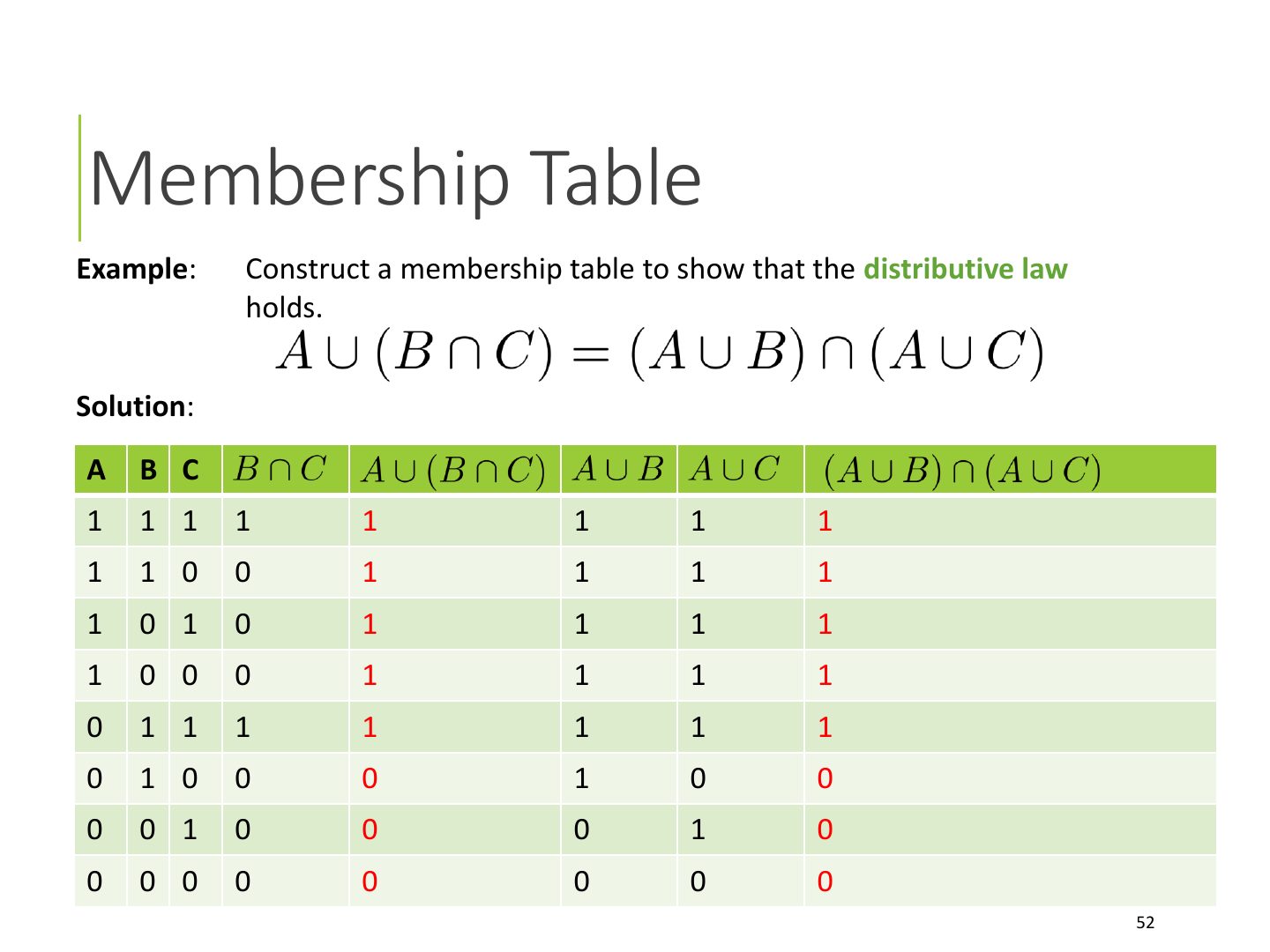
Membership Table
Notes
Membership table: 1/0 for "in"/"not in"; the identity holds if both columns match.
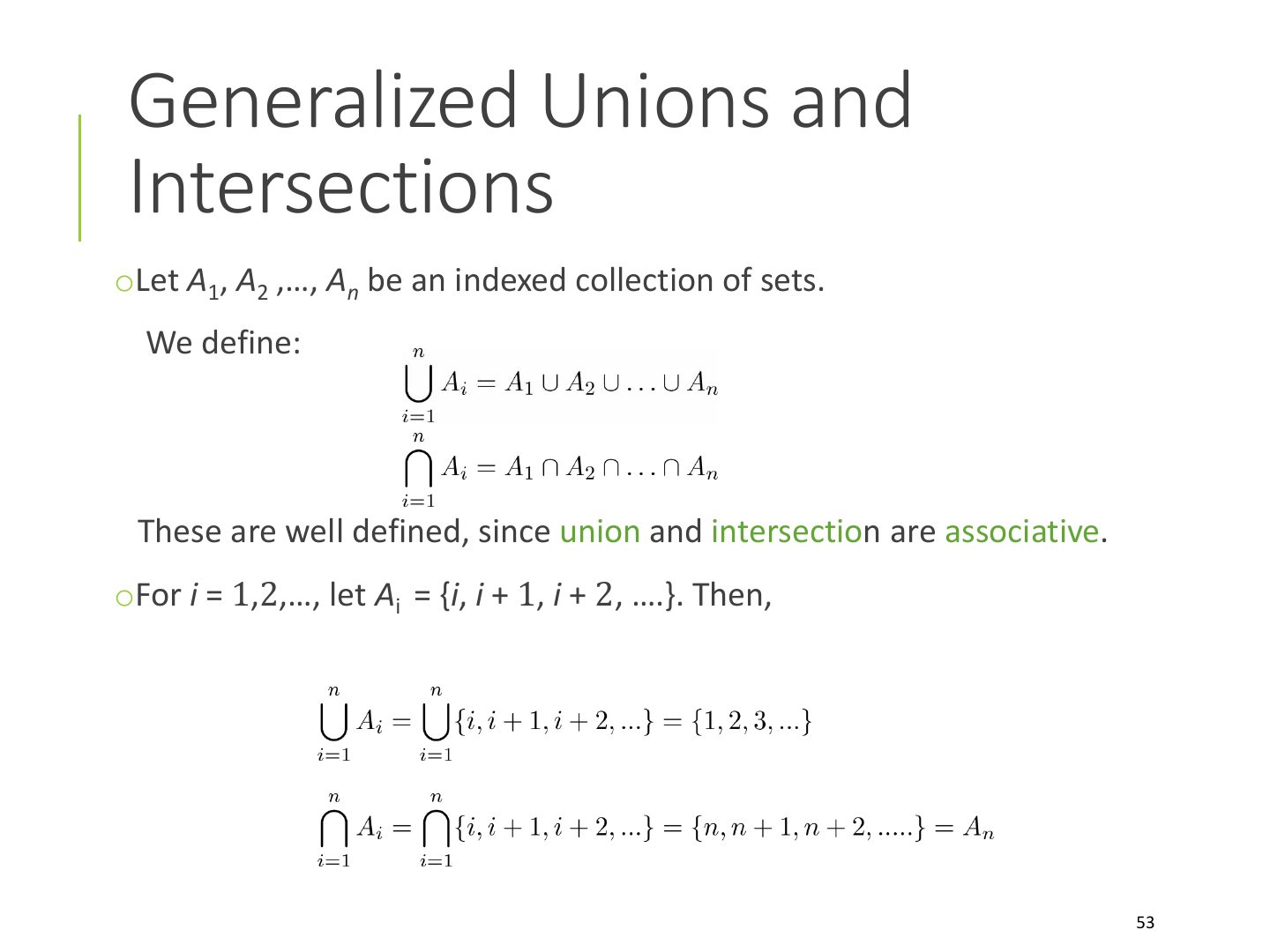
Generalized Unions and Intersections
Slide 54
Section Summary
Functions
Notes
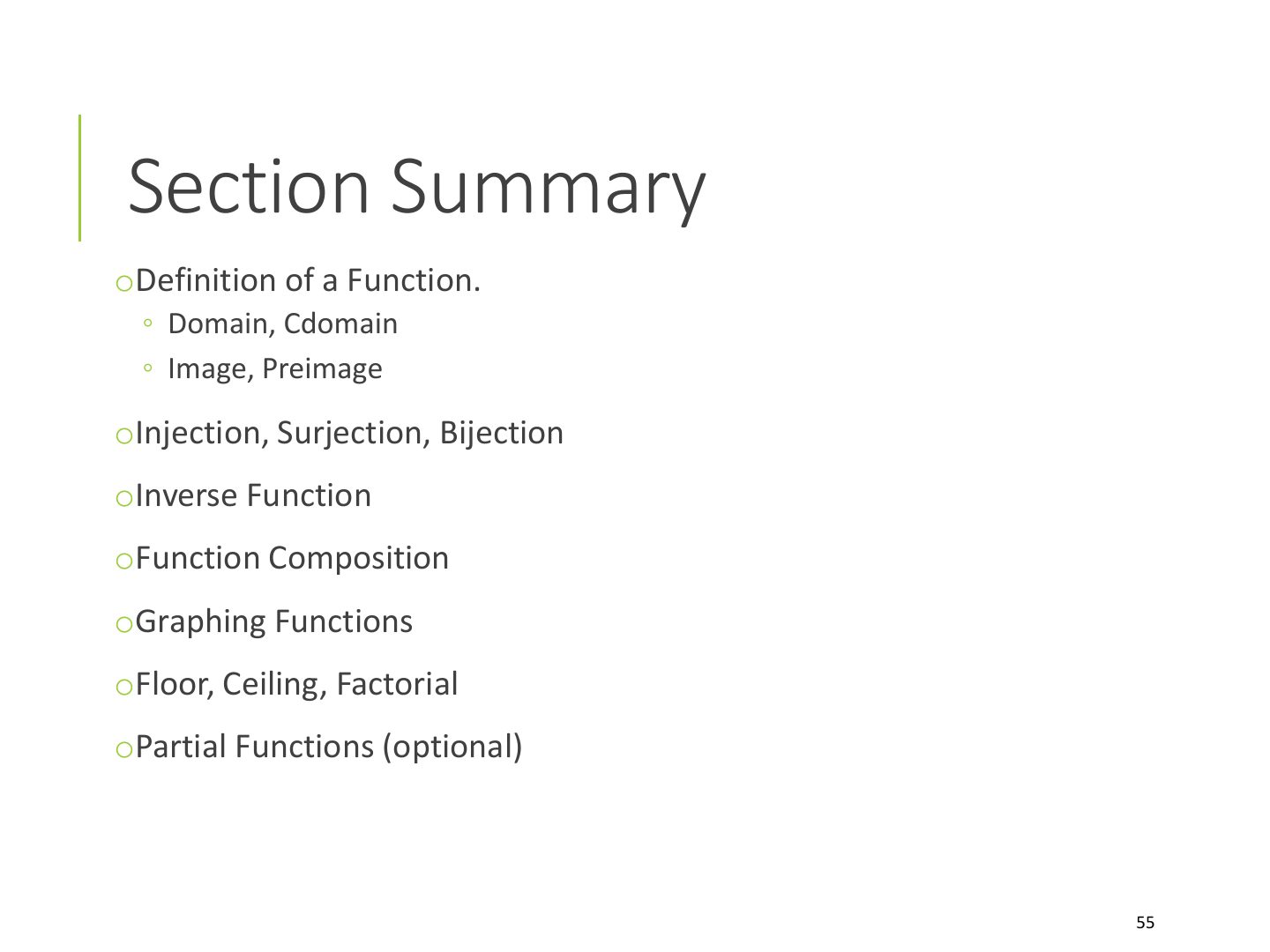
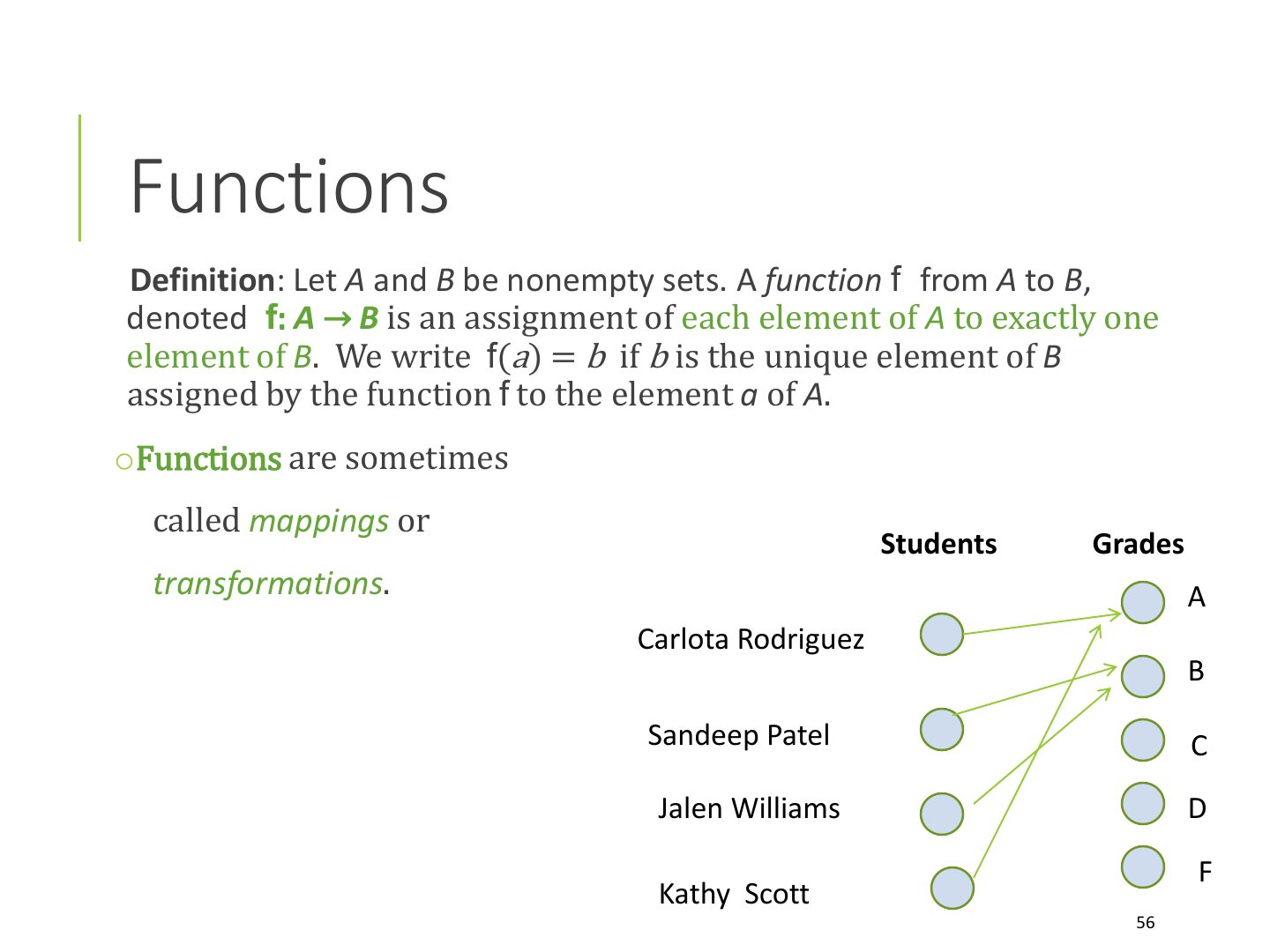
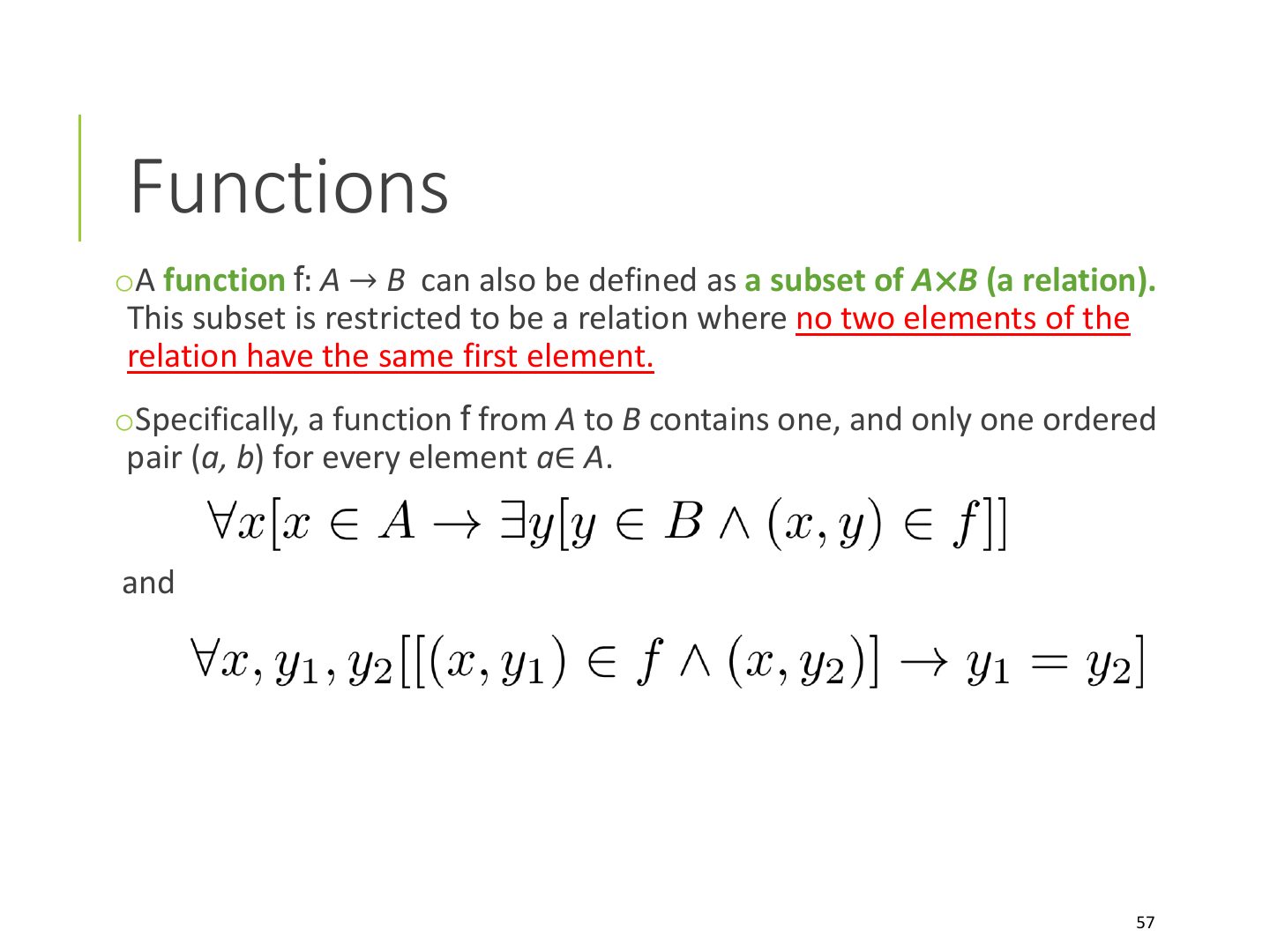
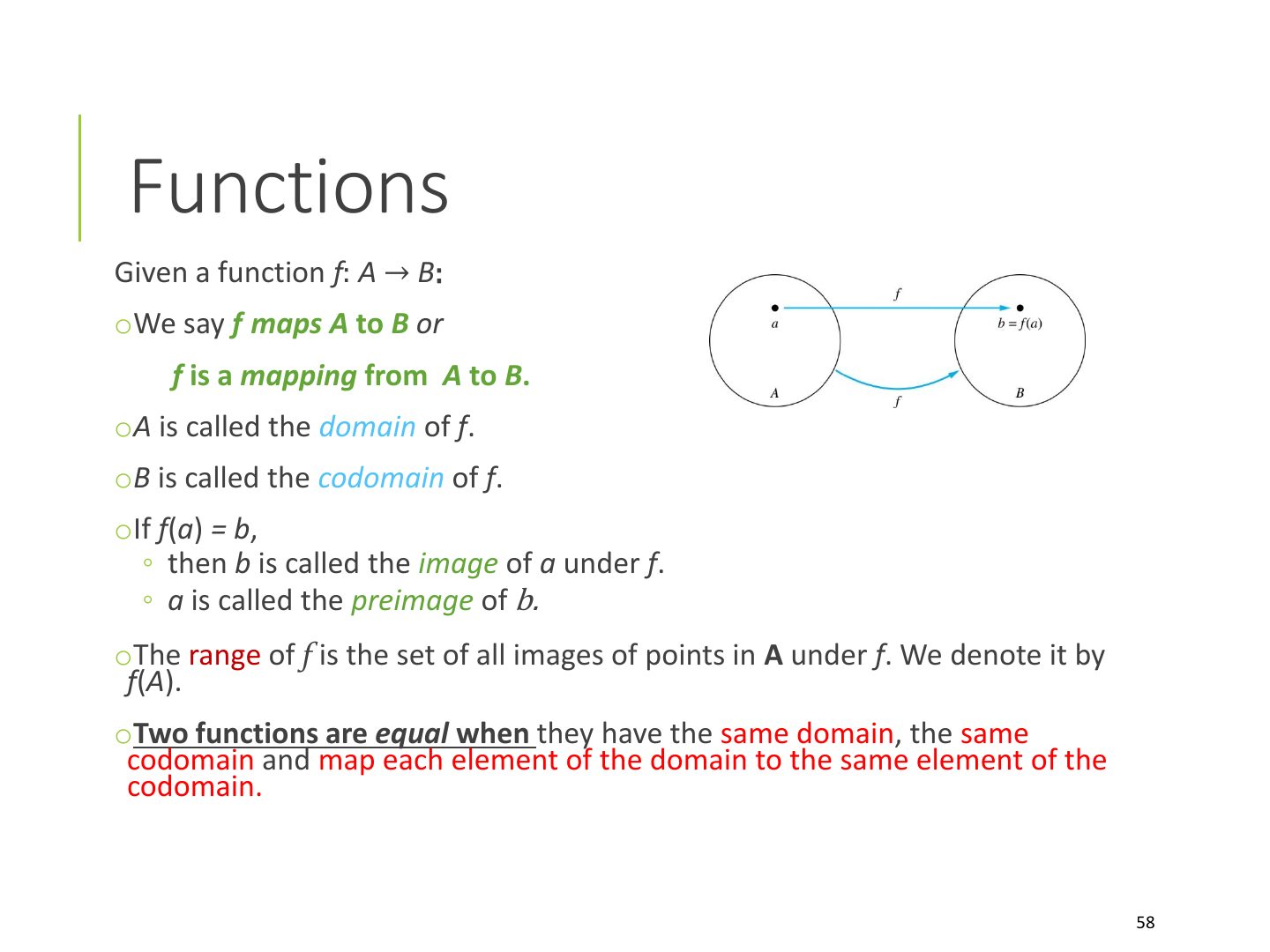
A function f: A → B assigns EXACTLY ONE element of B to each element of A. A is the domain, B the codomain, f(A) the range.
Trap Range ⊆ codomain; they are not always equal.
Exam angle
For f: A → B, the set of values actually taken by f is the:
Functions
Functions
Representing Functions
Questions
Question on Functions and Sets
Injections
Notes
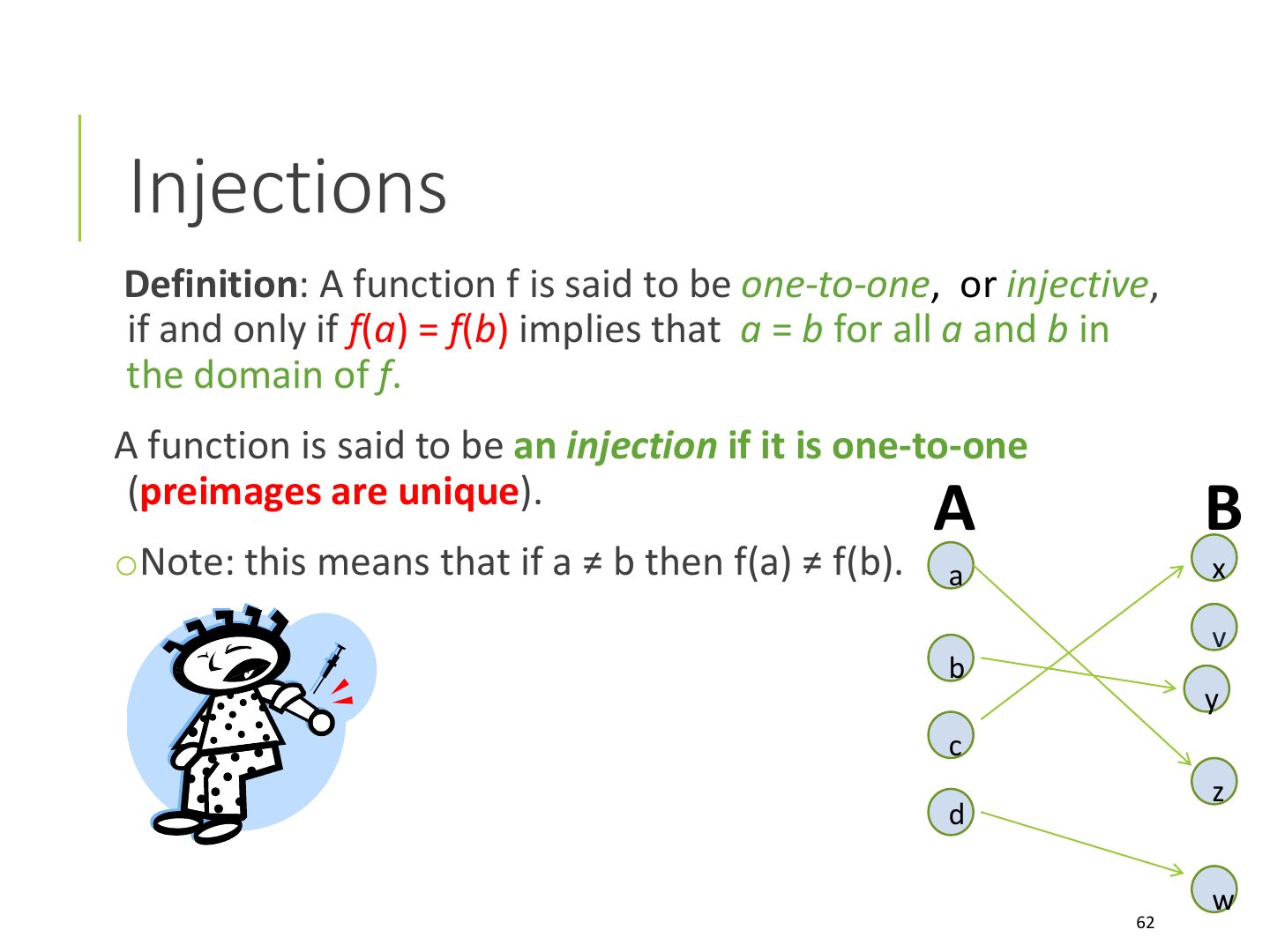
One-to-one (injective): f(a) = f(b) ⇒ a = b, no two inputs share an output.
Surjections
Bijections
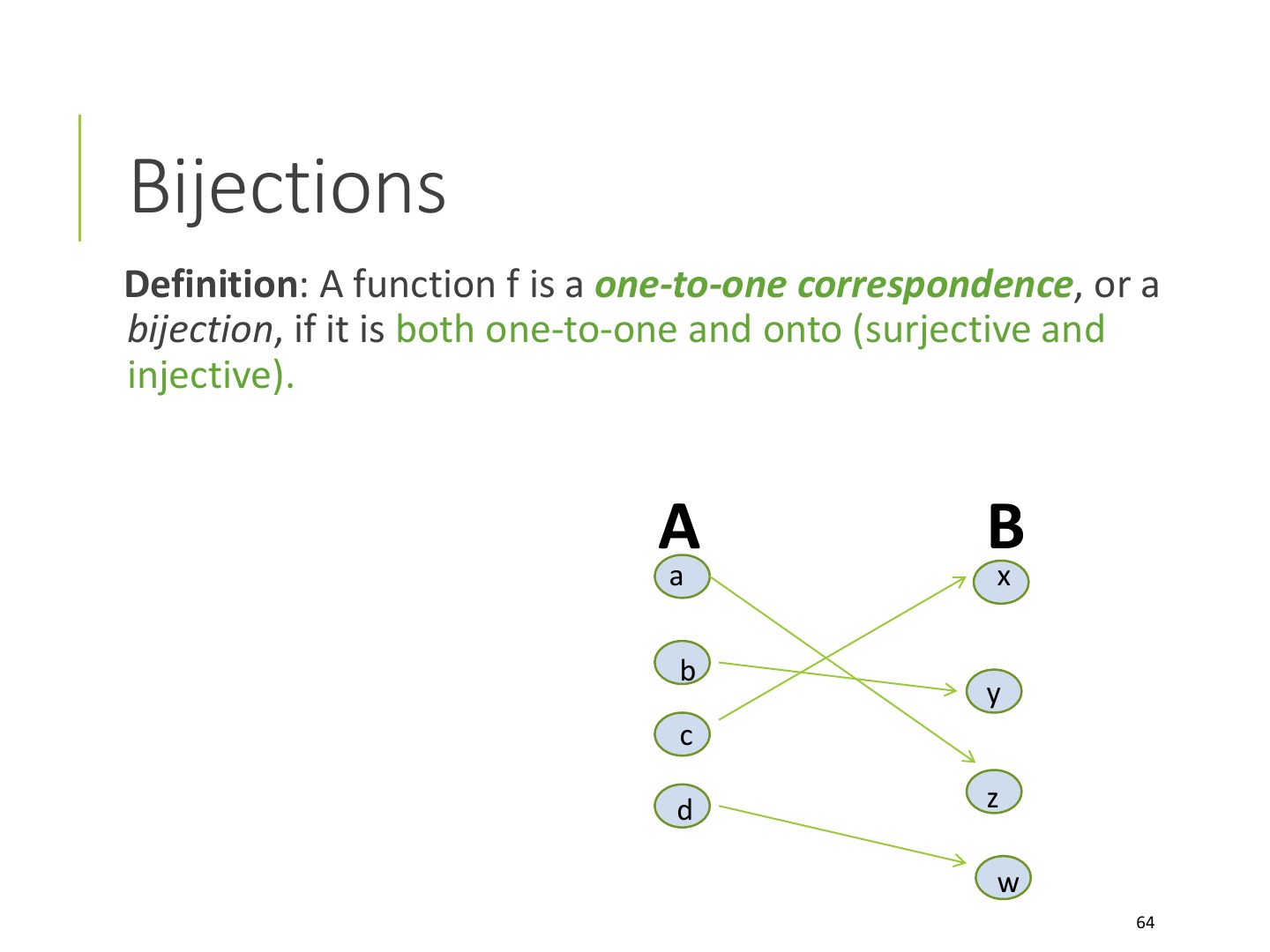
Exam angle
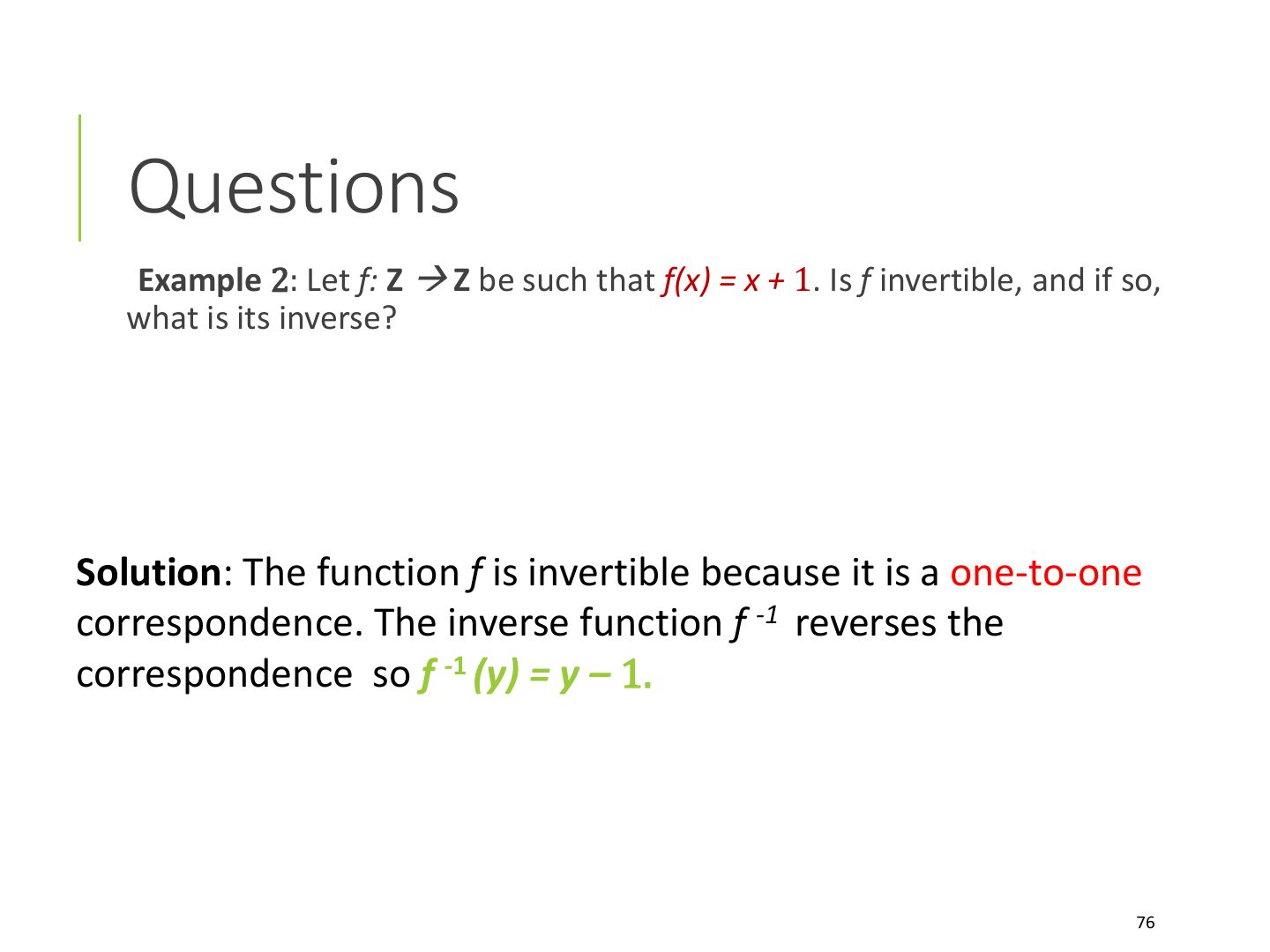
f: ℤ → ℤ, f(x) = x + 1 is:
f: ℤ → ℤ, f(x) = 2x is:
- Odd numbers are never hit.
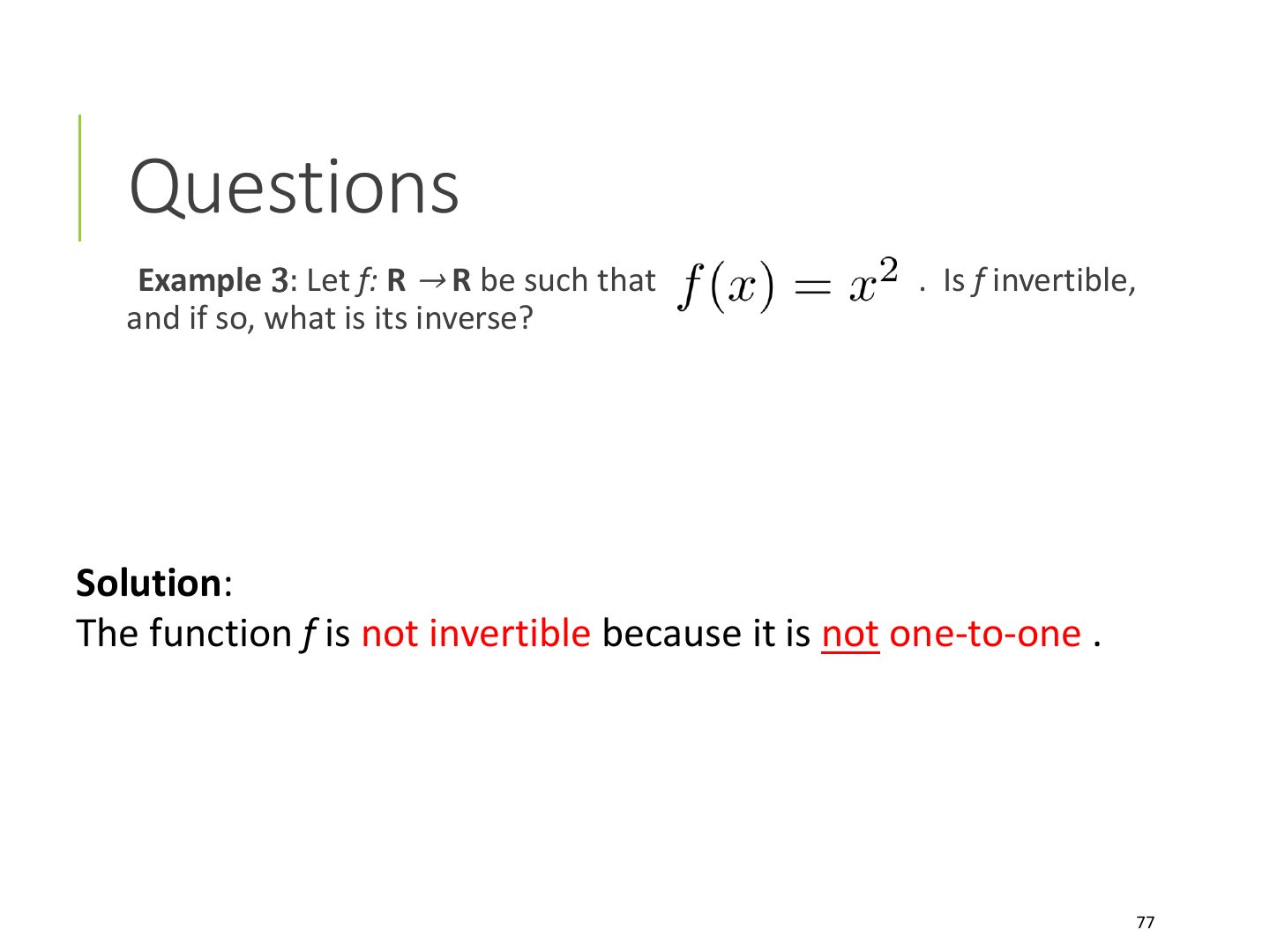
f: ℝ → ℝ, f(x) = x² is:
- f(−1) = f(1), and negatives are never hit.
Slide 65
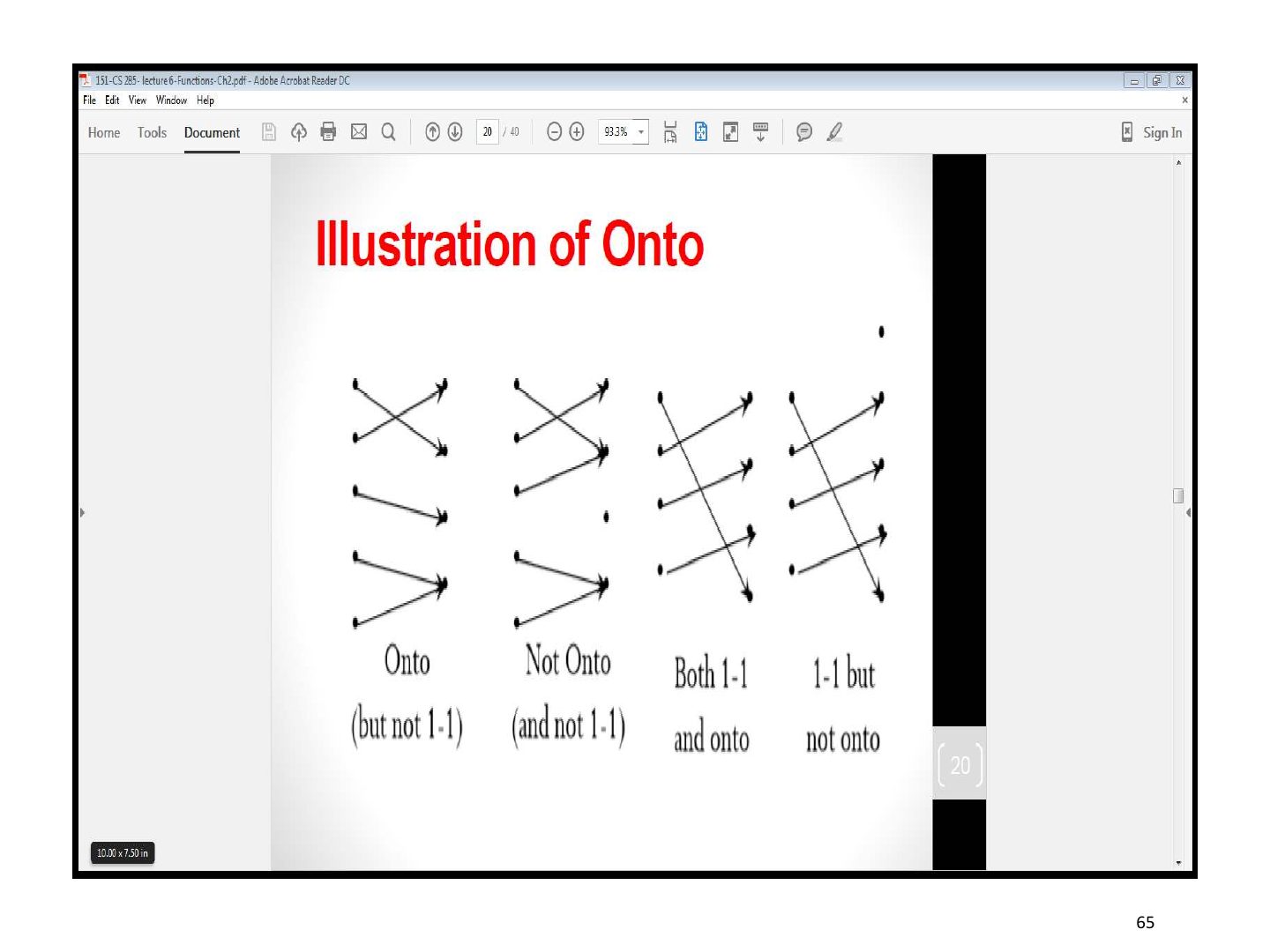
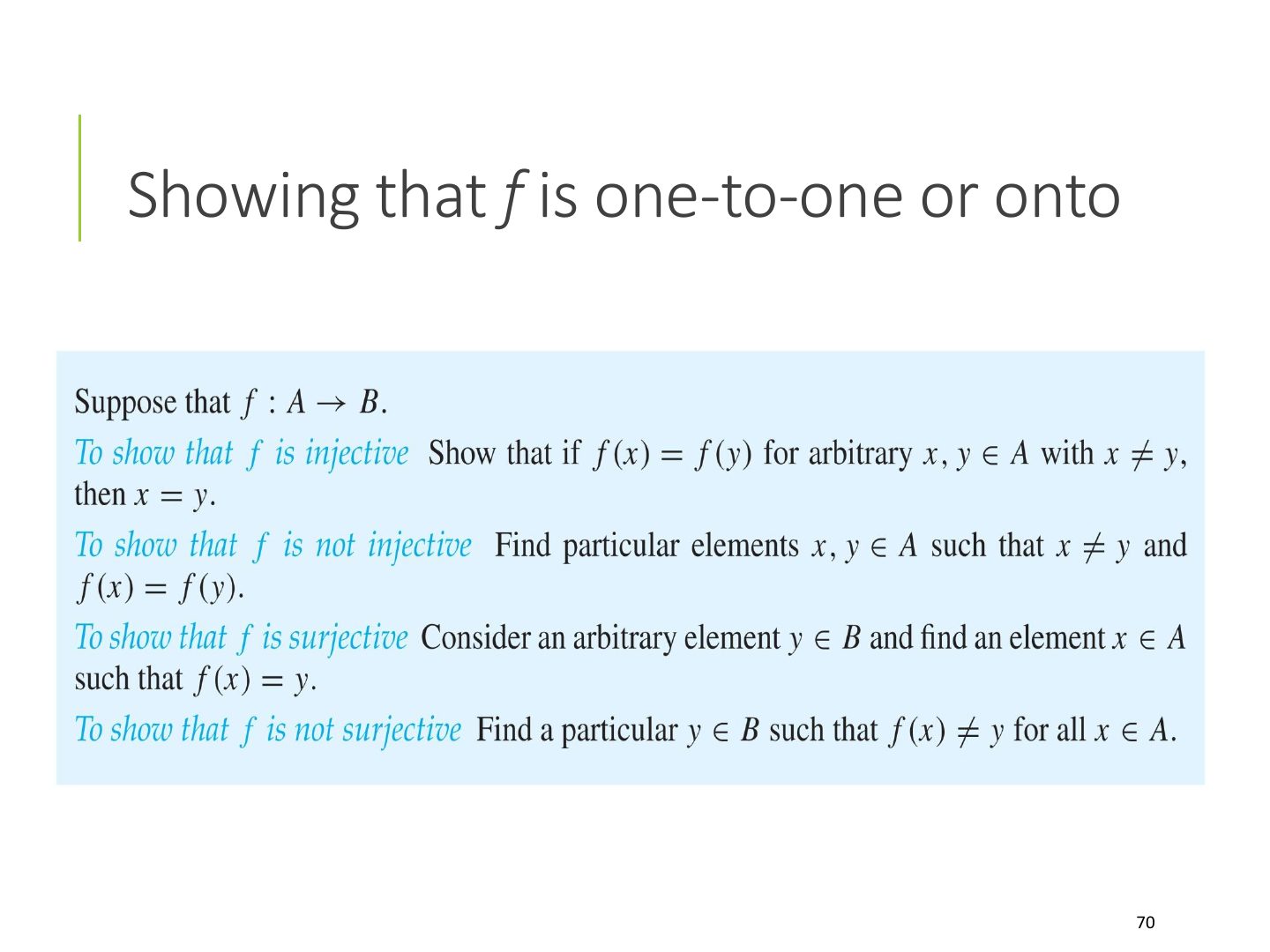
Showing that f is one-to-one or onto
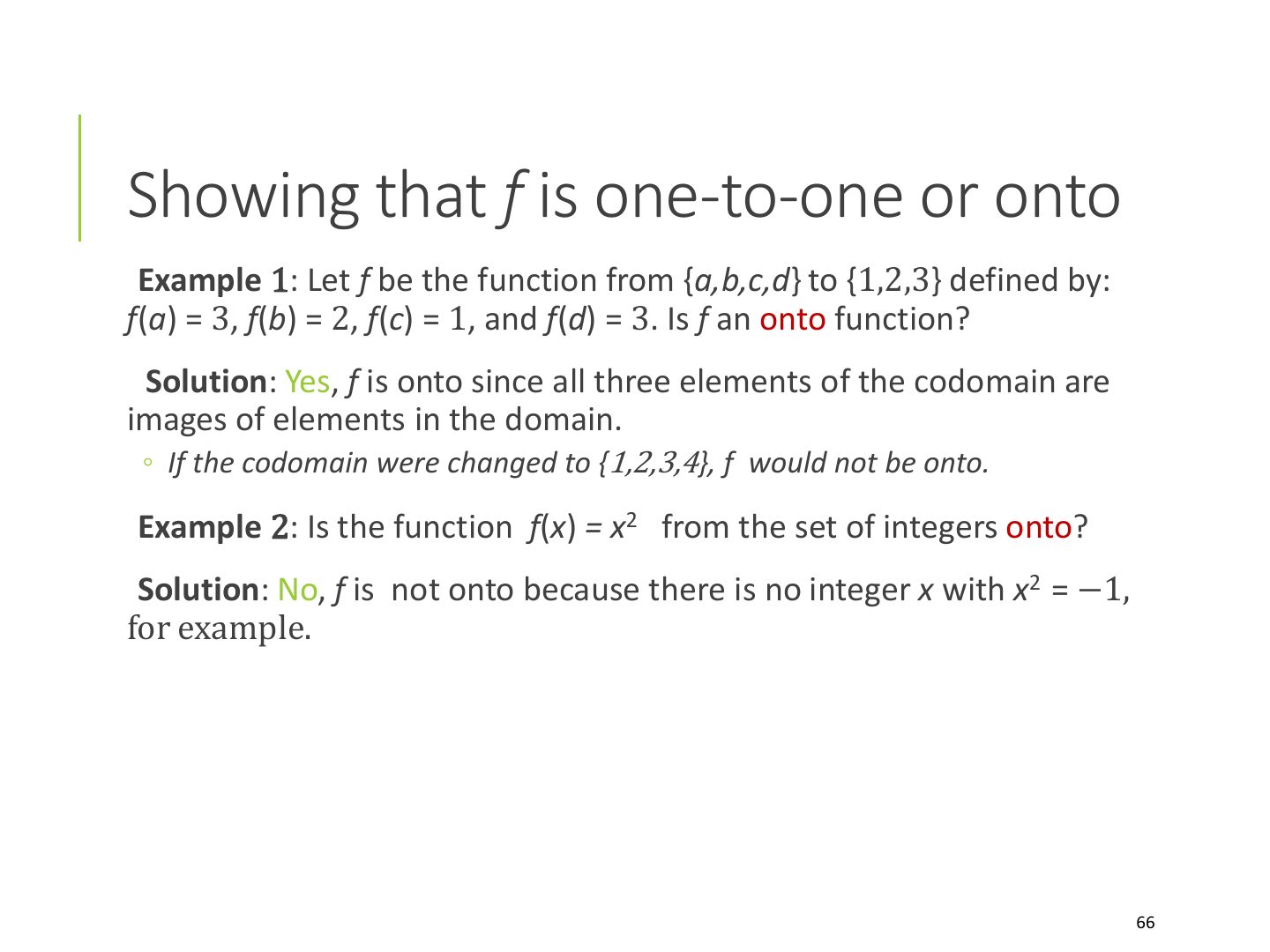
Showing that f is one-to-one or onto
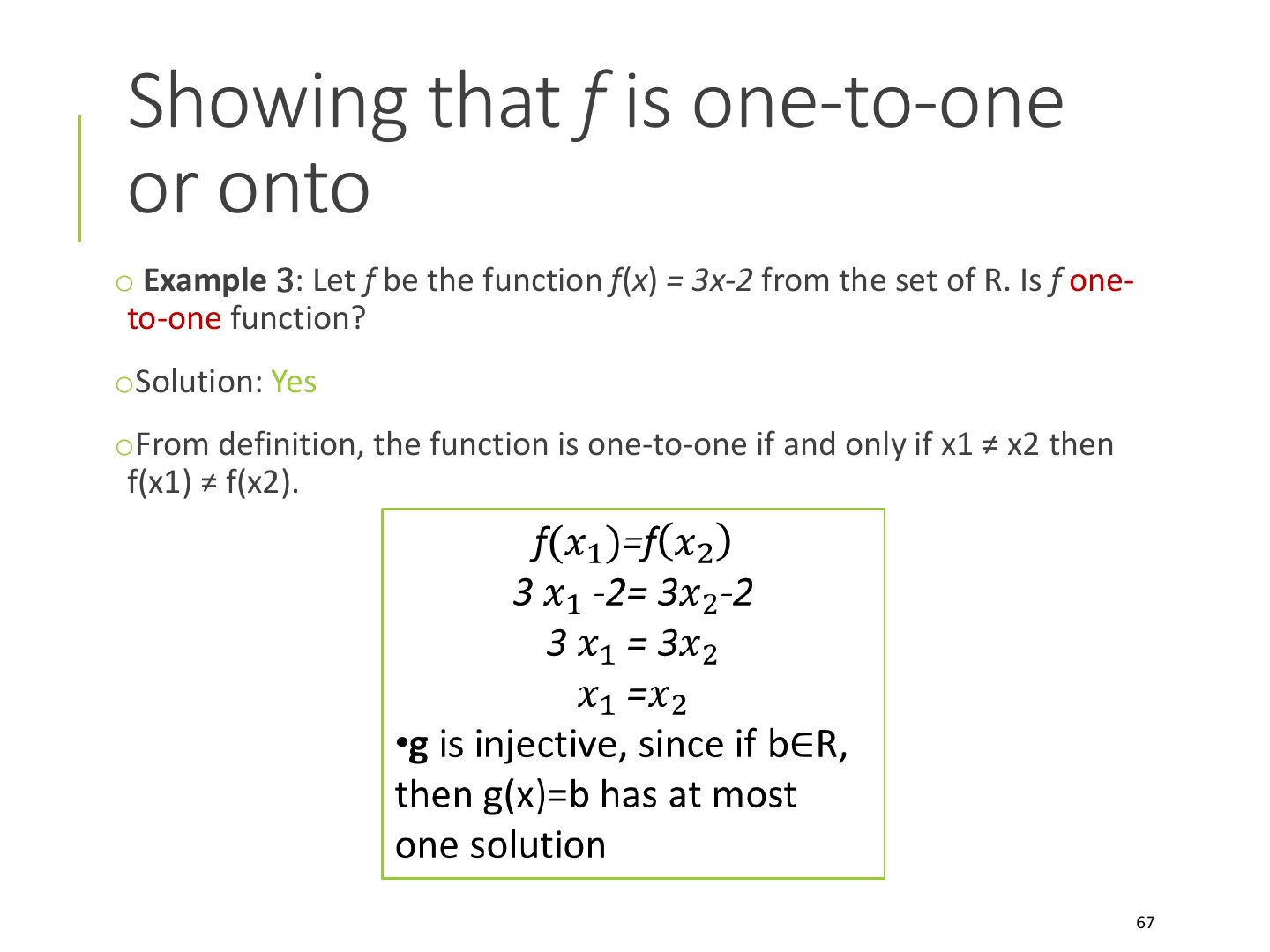
Notes
To show one-to-one: assume f(x) = f(y) and derive x = y. To show onto: take any y and solve for an x with f(x) = y.
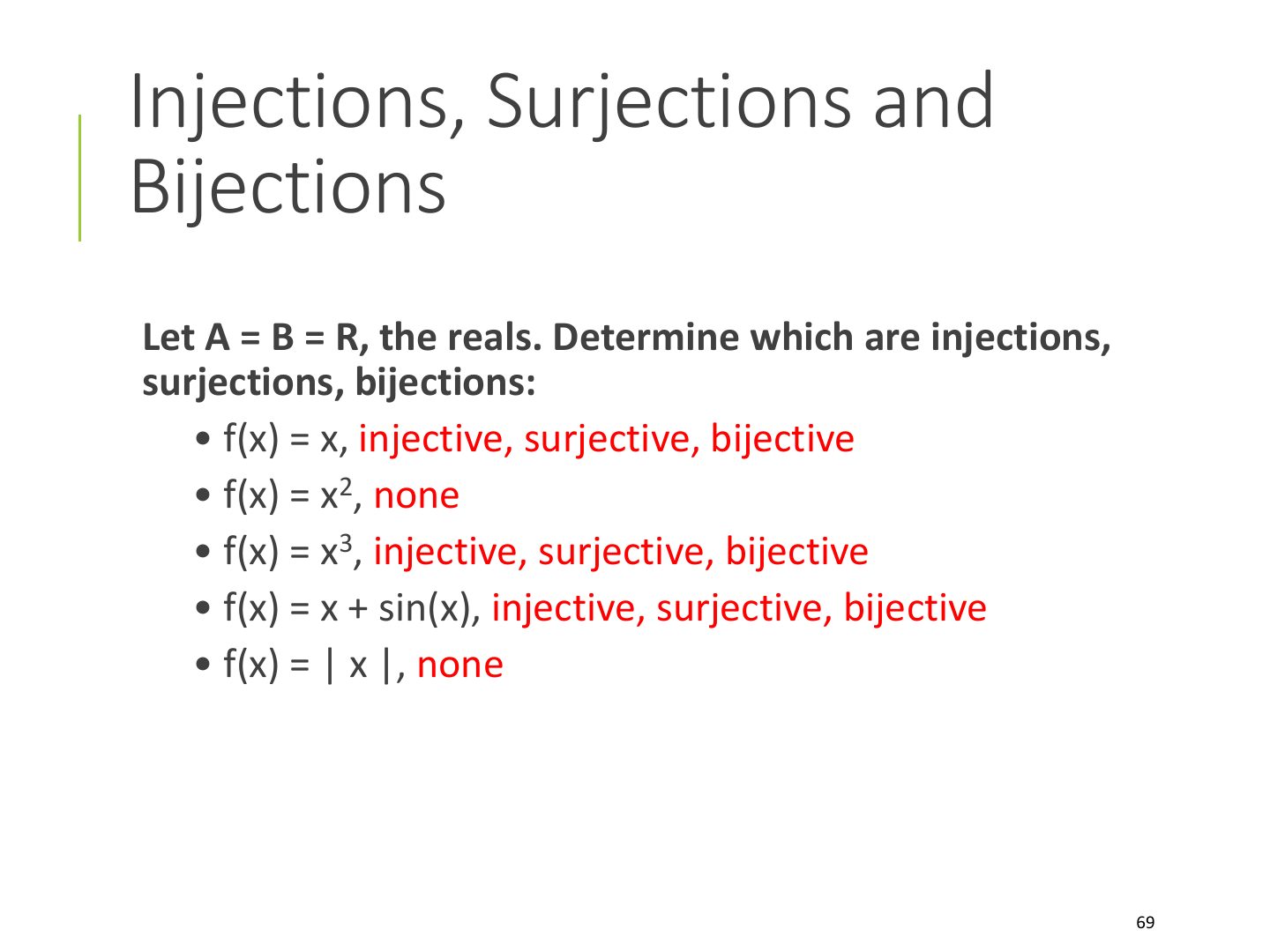
Injections, Surjections and Bijections
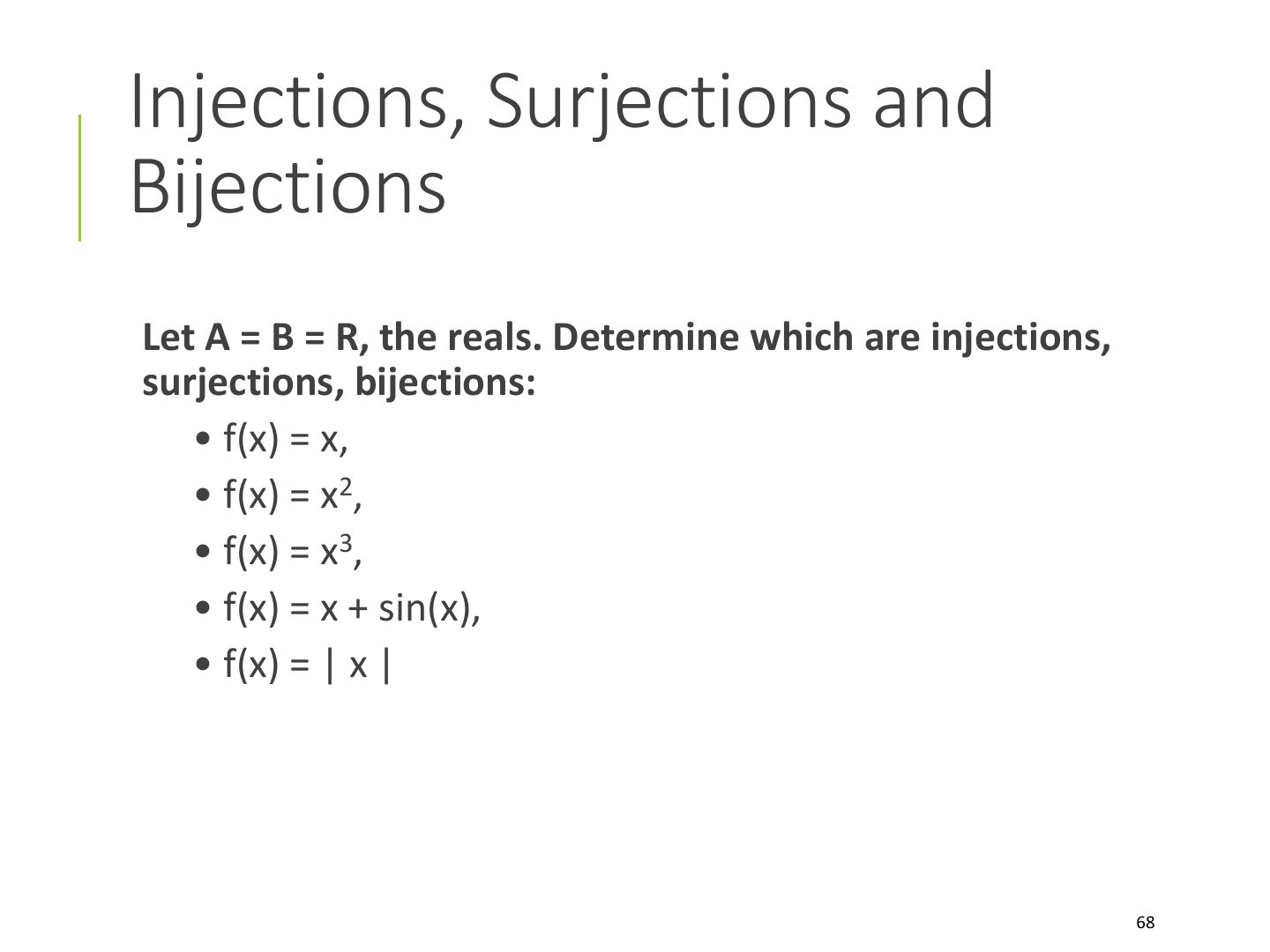
Injections, Surjections and Bijections
Showing that f is one-to-one or onto
Recall
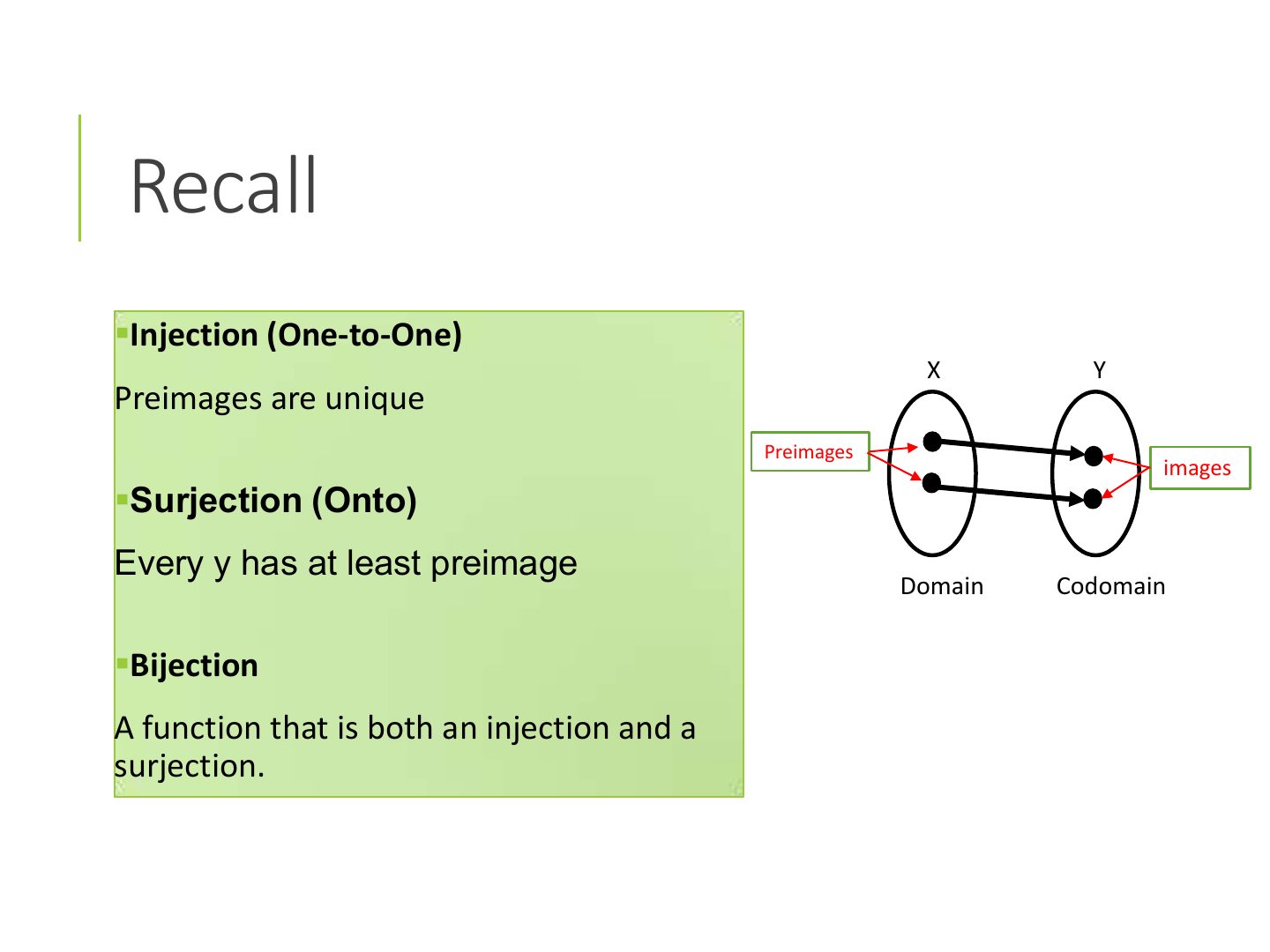
Function types
Inverse Functions
Exam angle
Find the inverse of f: ℝ → ℝ, f(x) = 3x − 2.
Compare with the model answer
Let y = 3x − 2, so x = (y + 2)/3; f⁻¹(y) = (y + 2)/3. It exists because f is a bijection.
Inverse Functions
Questions
Questions
Questions
Slide 78
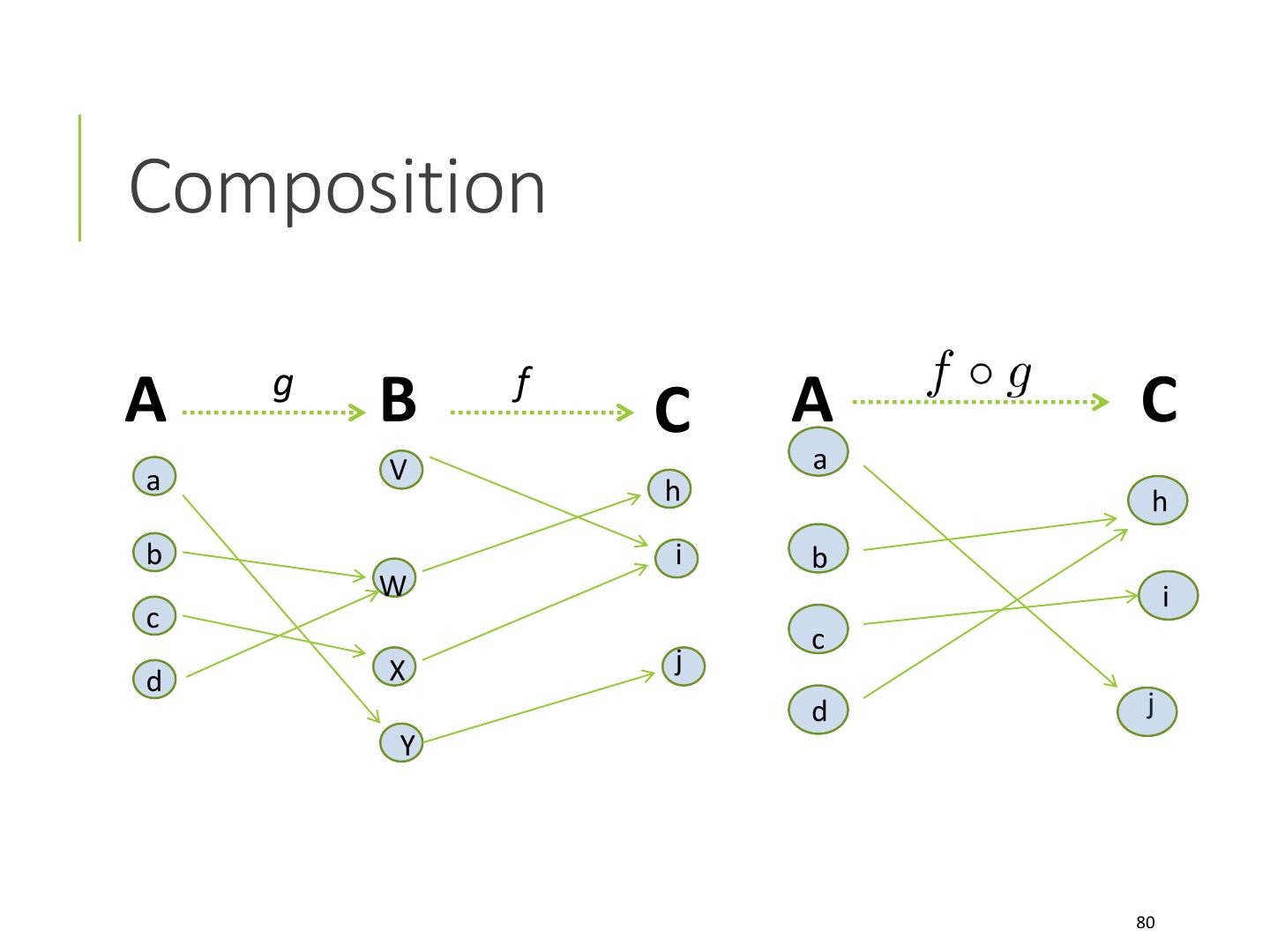
Composition
Notes
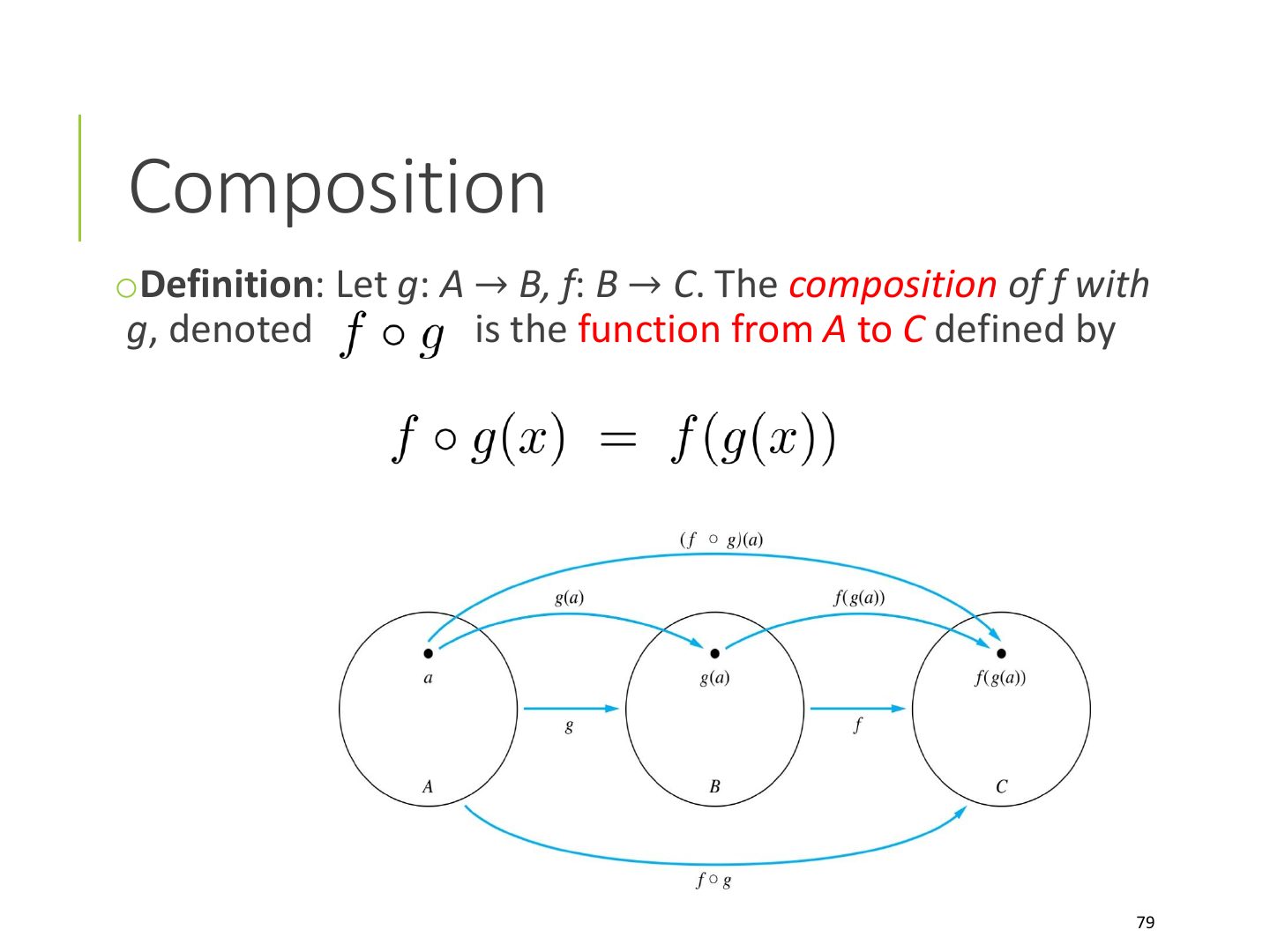
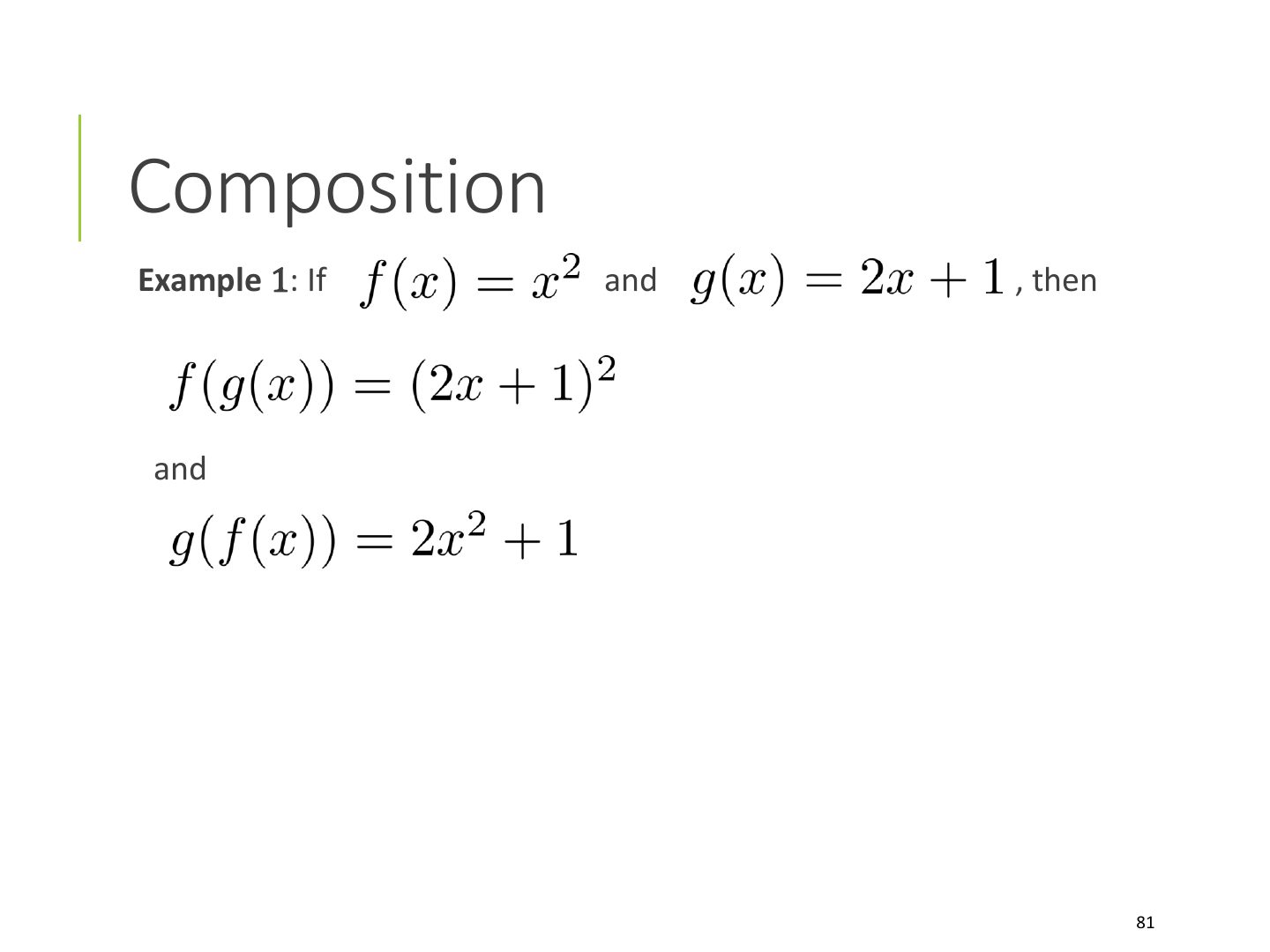
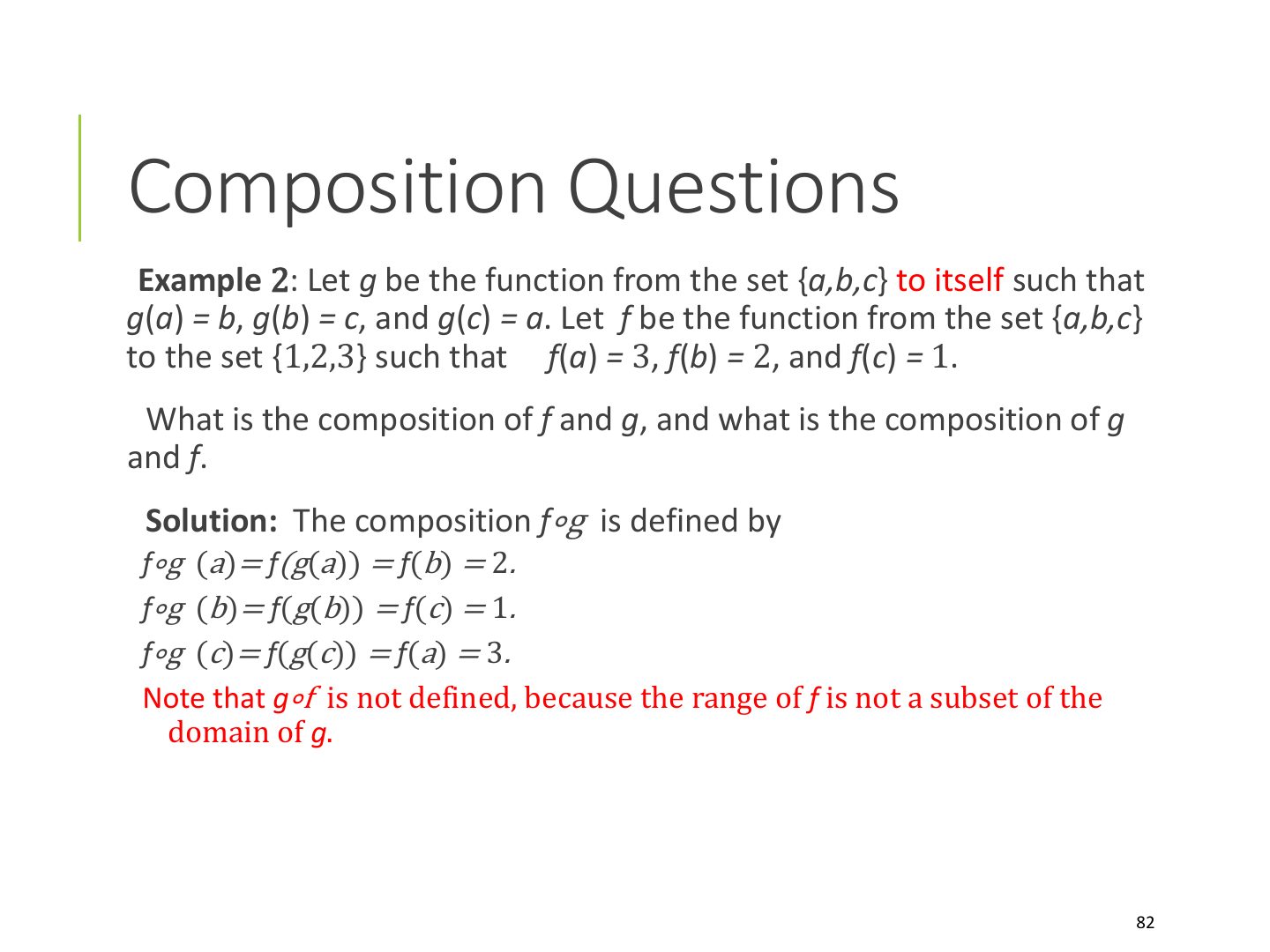
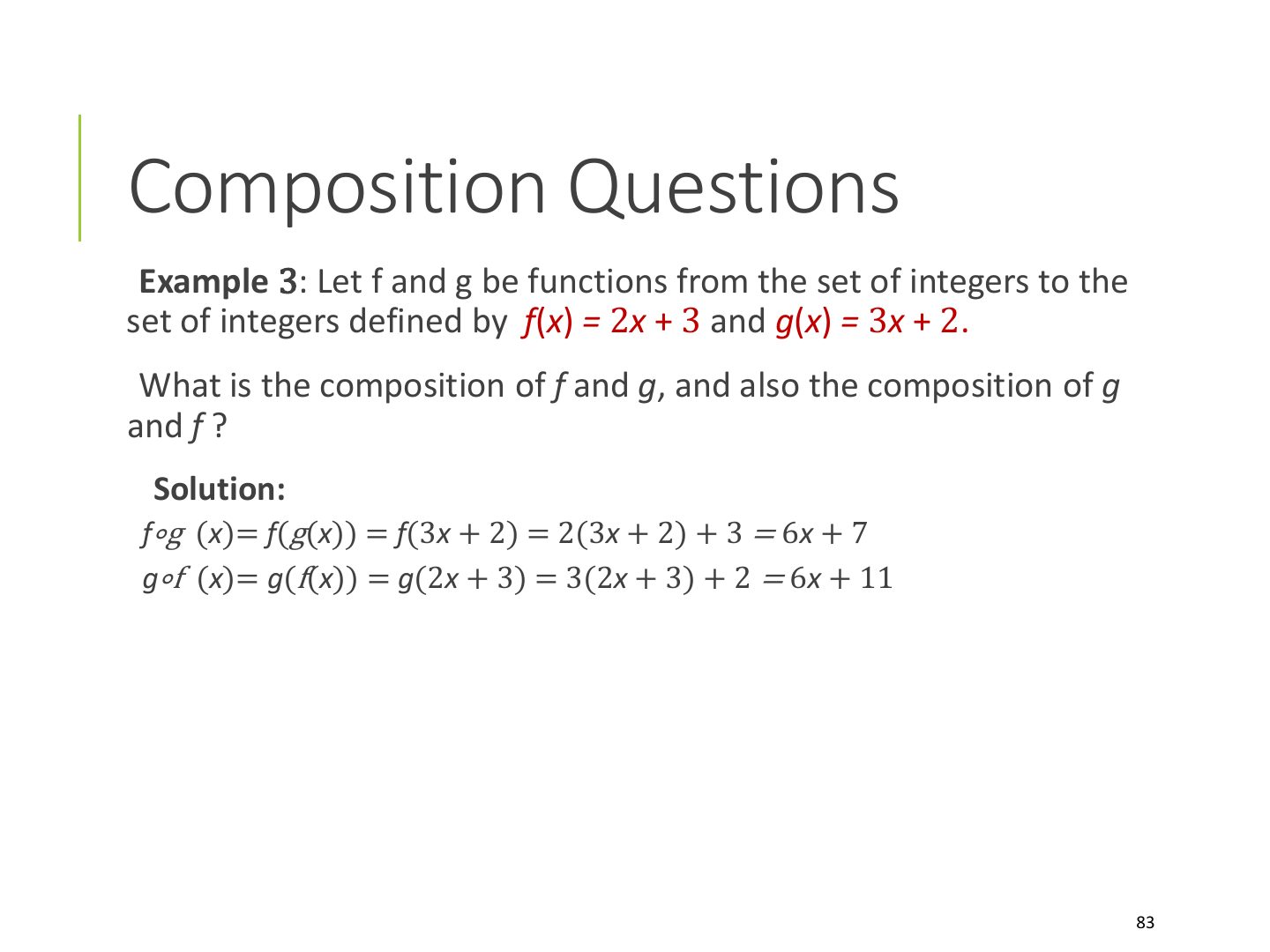
(f ∘ g)(x) = f(g(x)): apply g FIRST.
Trap f ∘ g ≠ g ∘ f in general.
Exam angle
f(x) = 2x + 3, g(x) = 3x + 2. (f ∘ g)(x) =
- f(3x + 2) = 2(3x + 2) + 3.
Composition
Composition
Composition Questions
Composition Questions
Slide 84
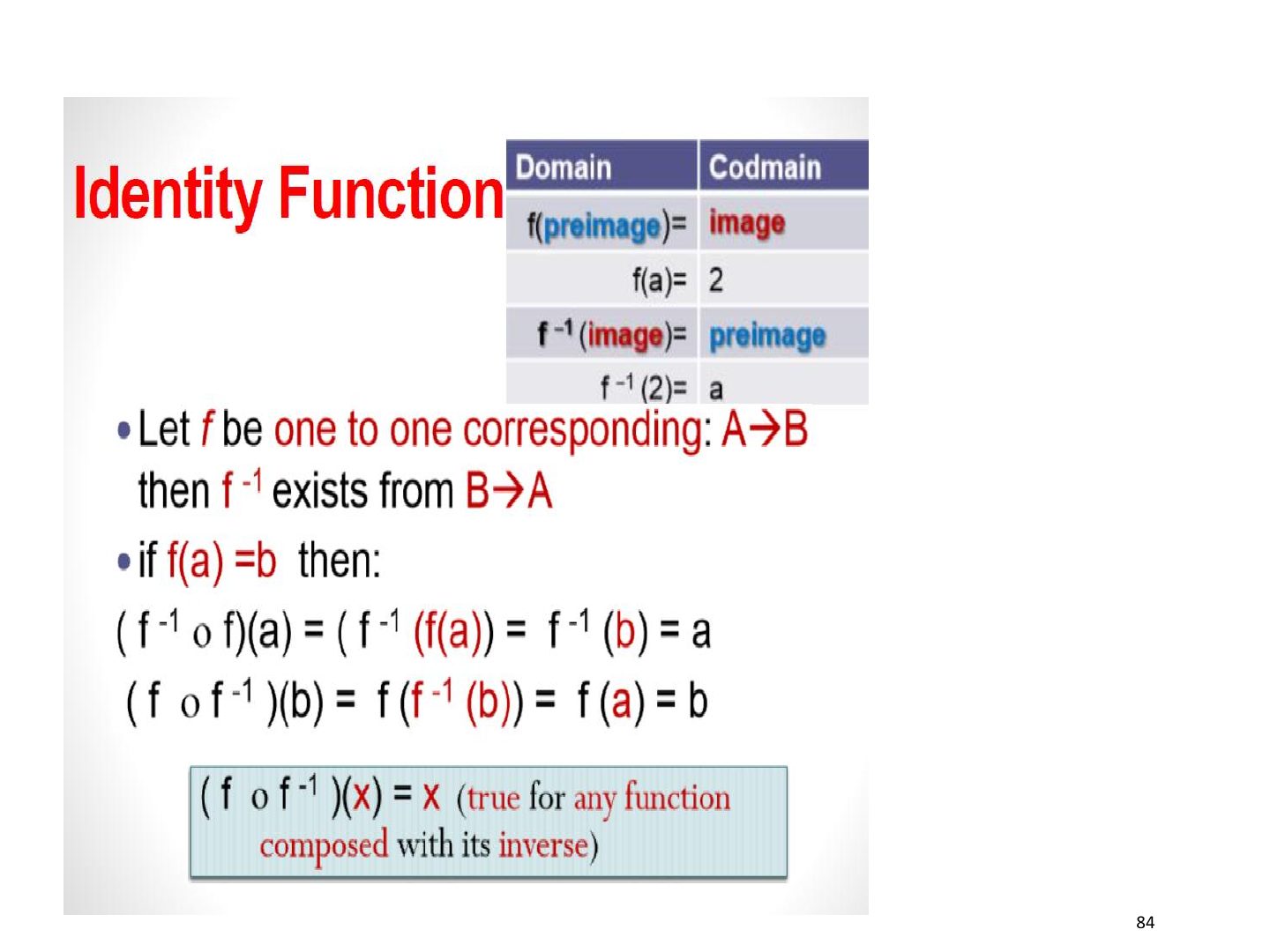
Graphs of Functions
Slide 86
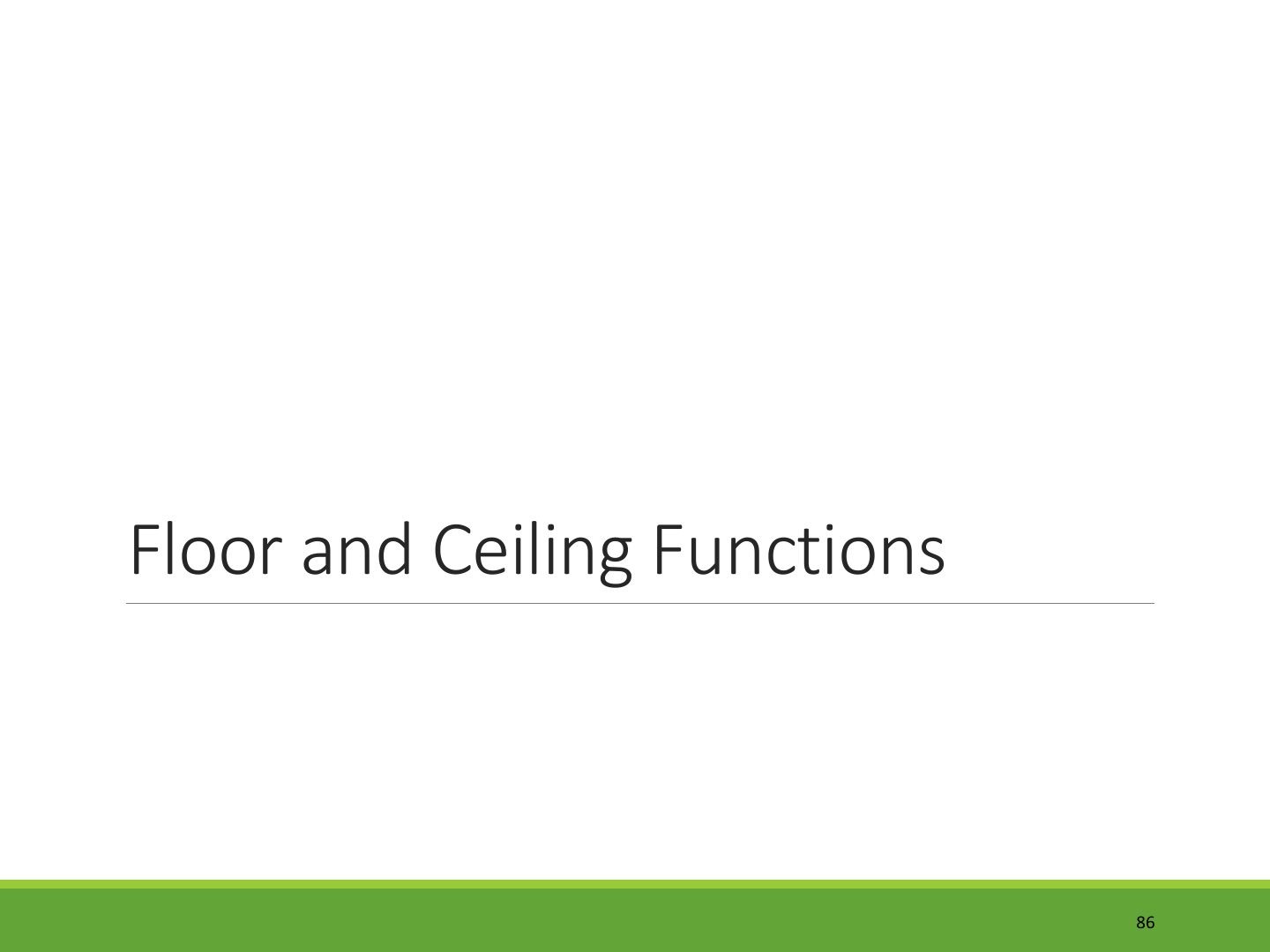
Some Important Functions
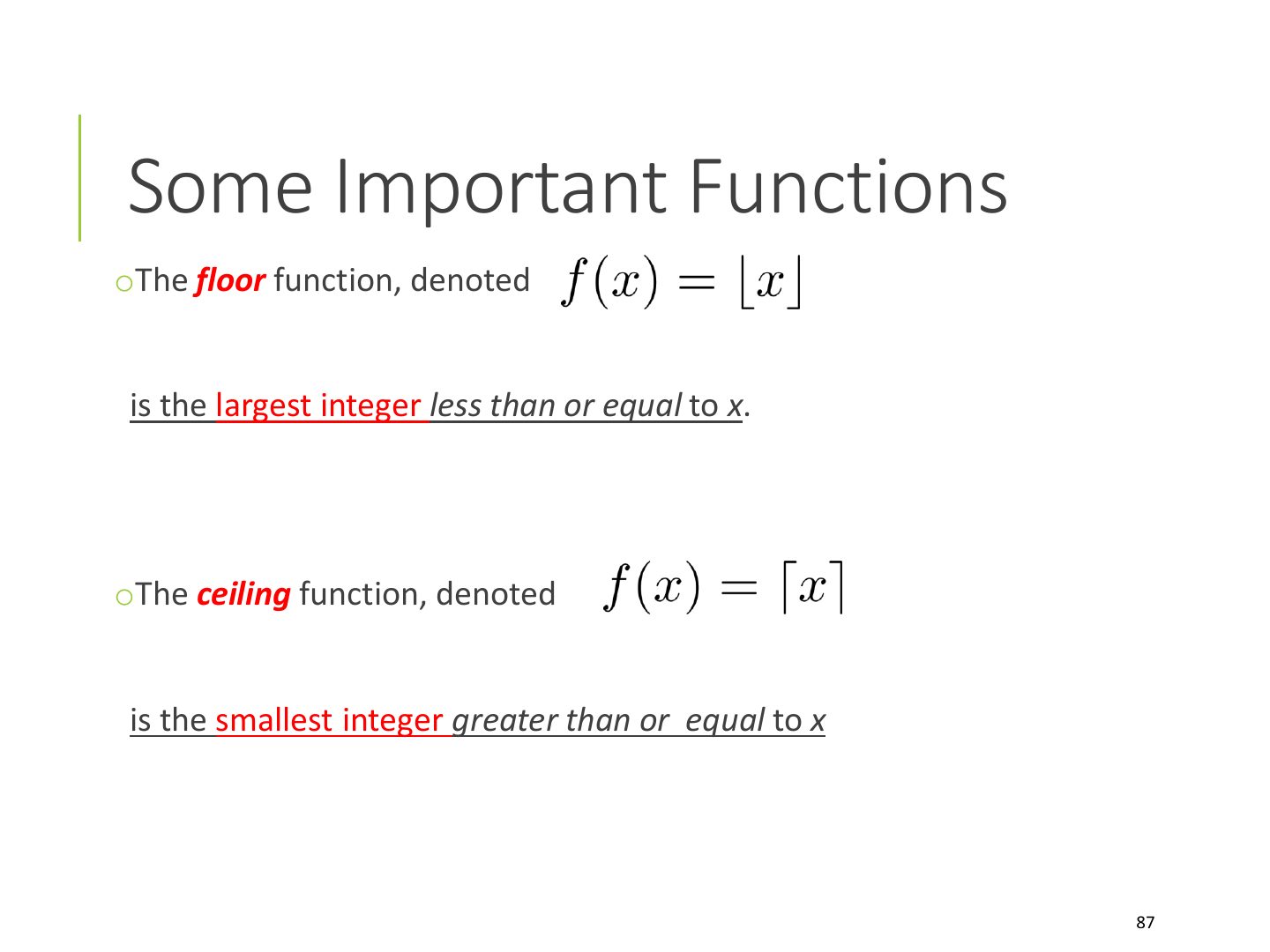
Some Important Functions
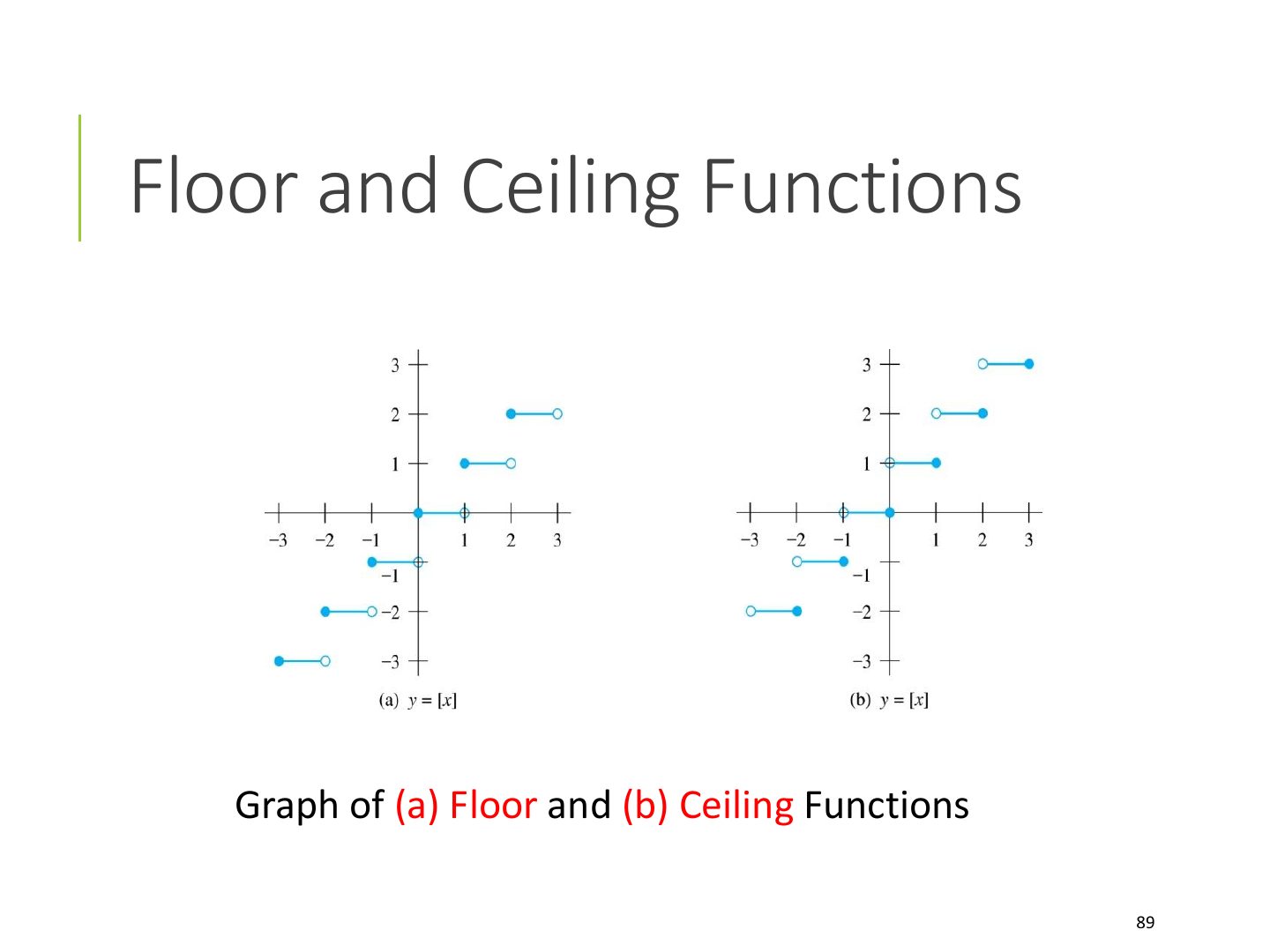
Floor and Ceiling Functions
Notes
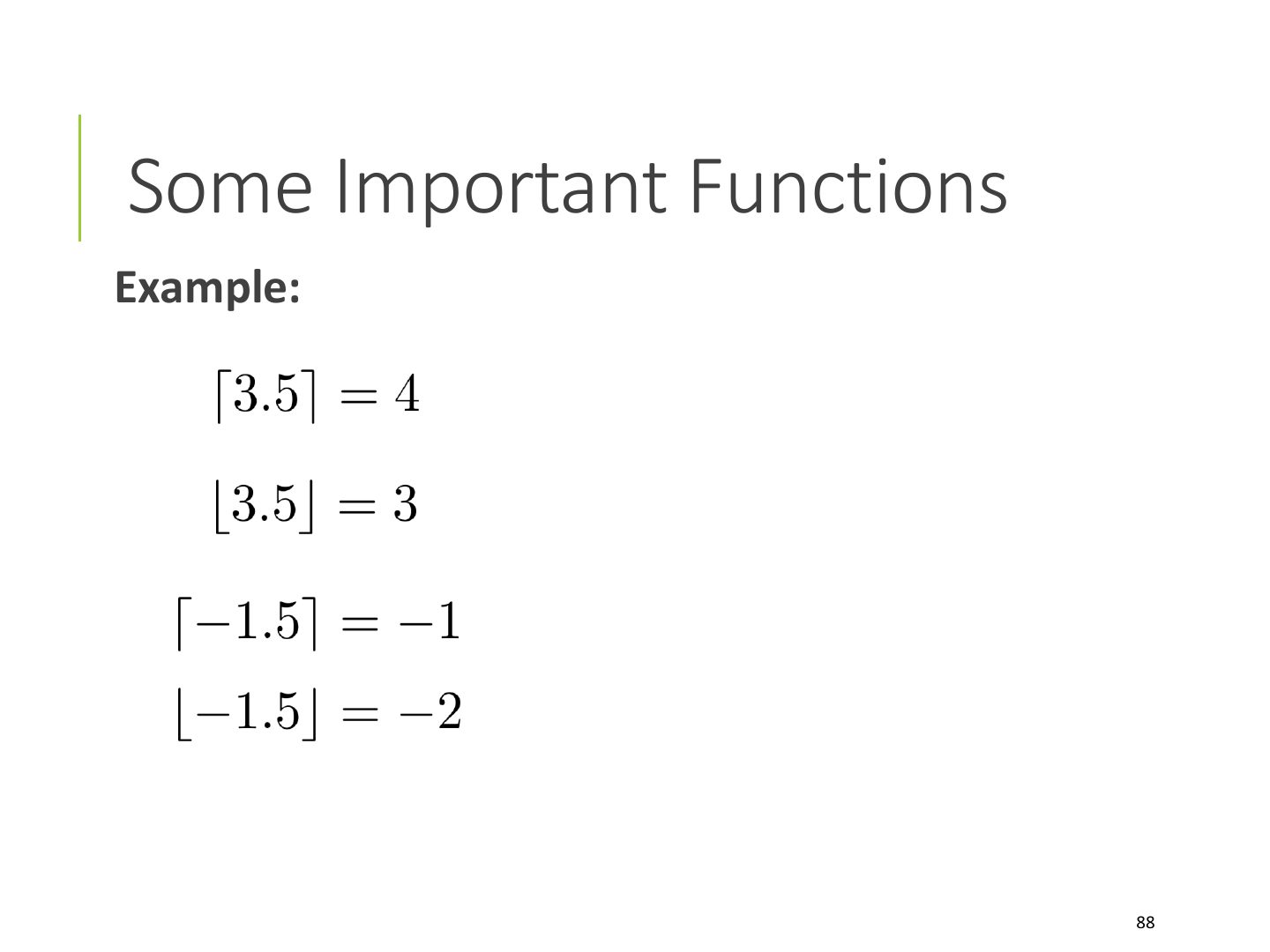
⌊x⌋ largest integer ≤ x; ⌈x⌉ smallest integer ≥ x. ⌊−1.5⌋ = −2, ⌈−1.5⌉ = −1.
Exam angle
⌊−2.3⌋ + ⌈2.3⌉ equals:
- −3 + 3.
Factorial Function
Notes
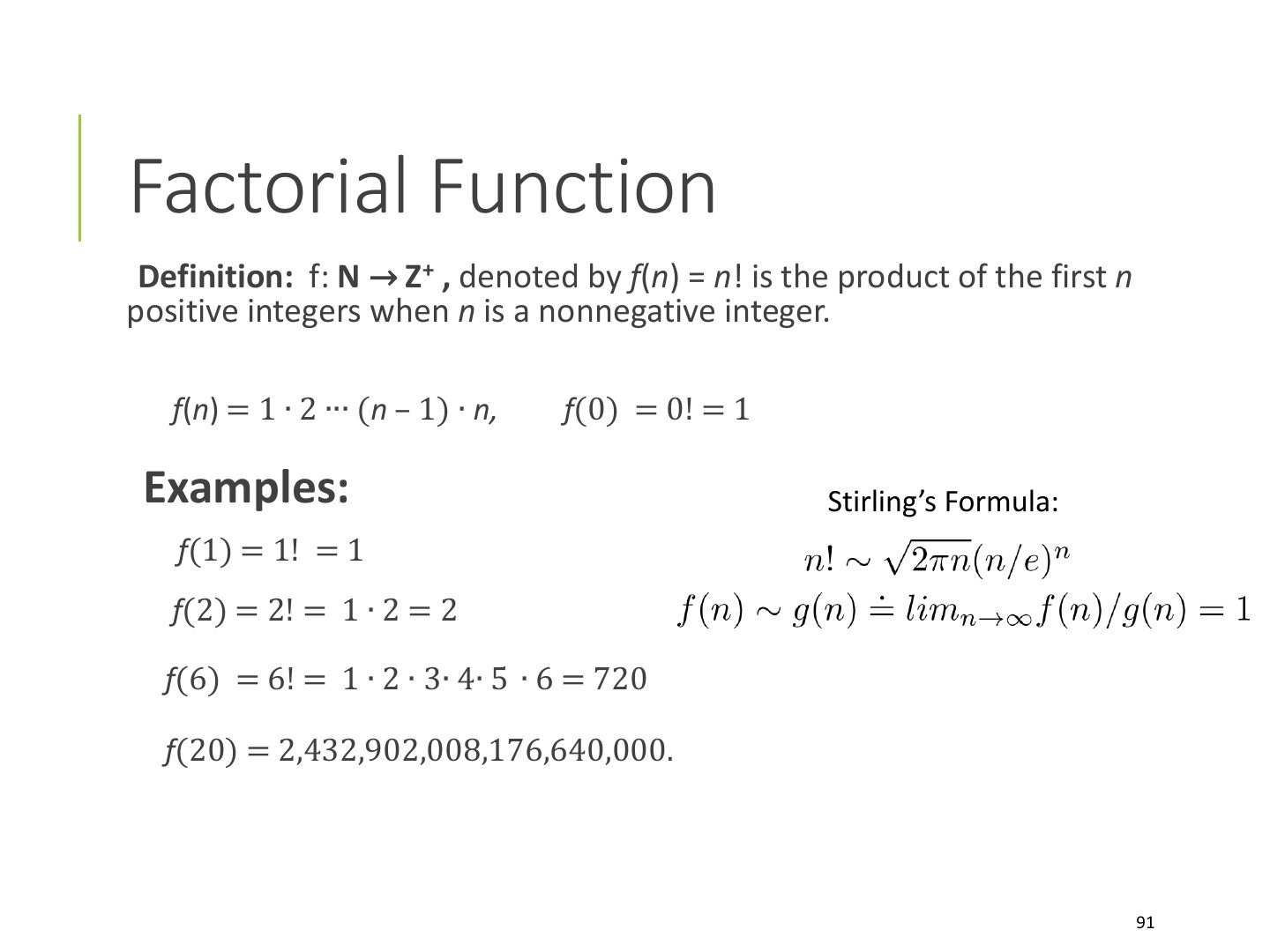
n! = 1·2·…·n, 0! = 1.
Slide 91
Section Summary
Introduction
Sequences
Sequences
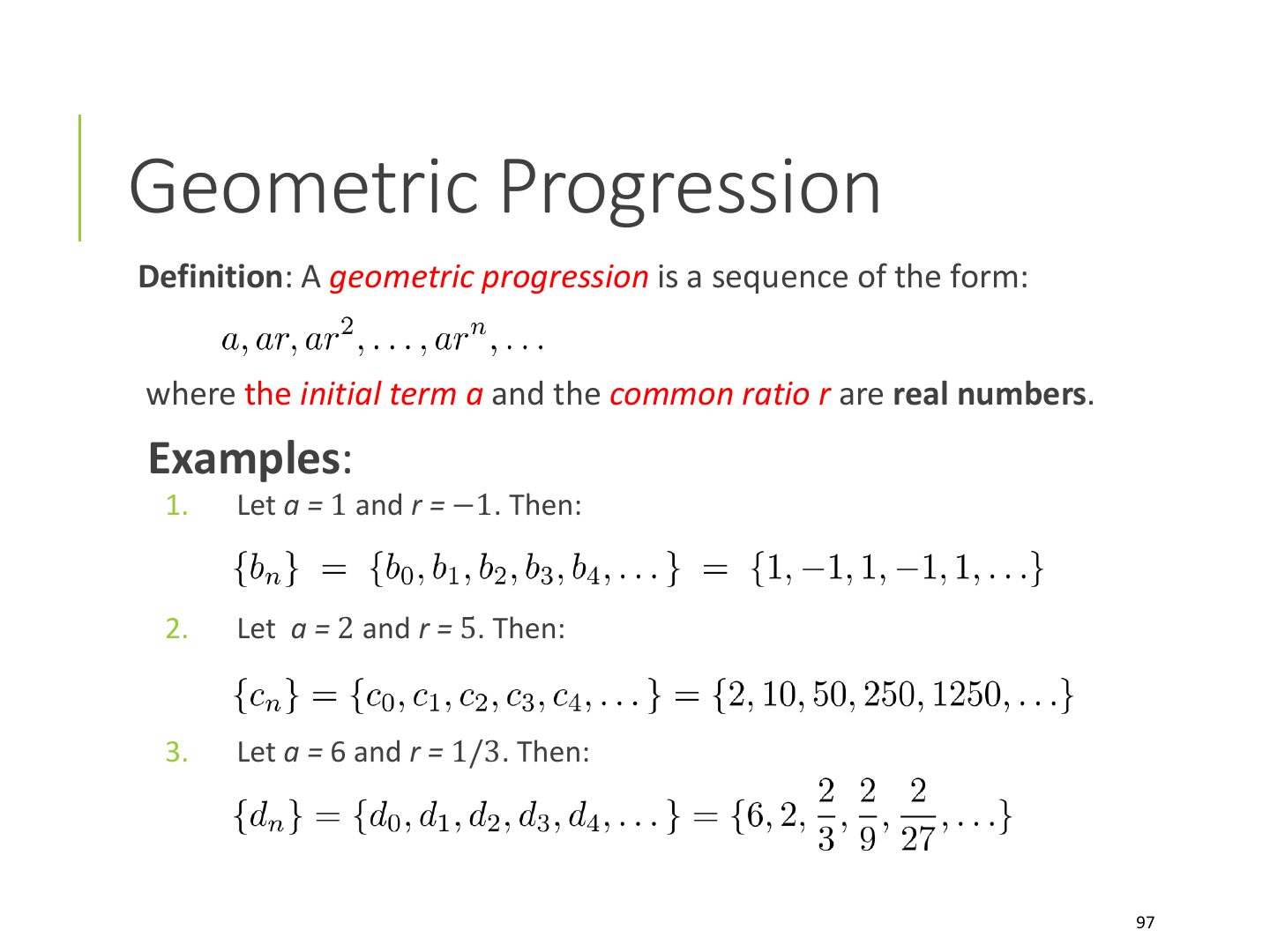
Geometric Progression
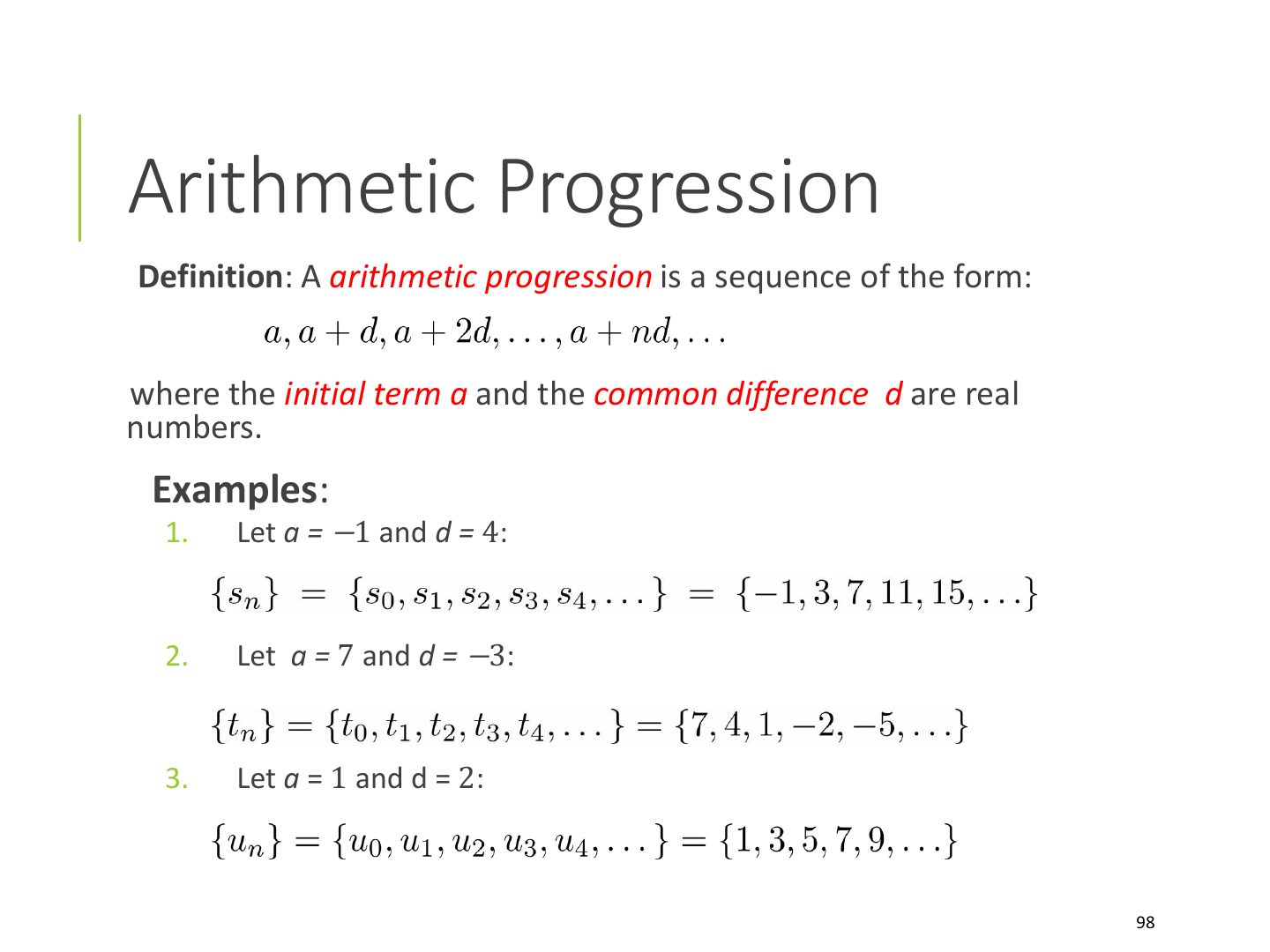
Arithmetic Progression
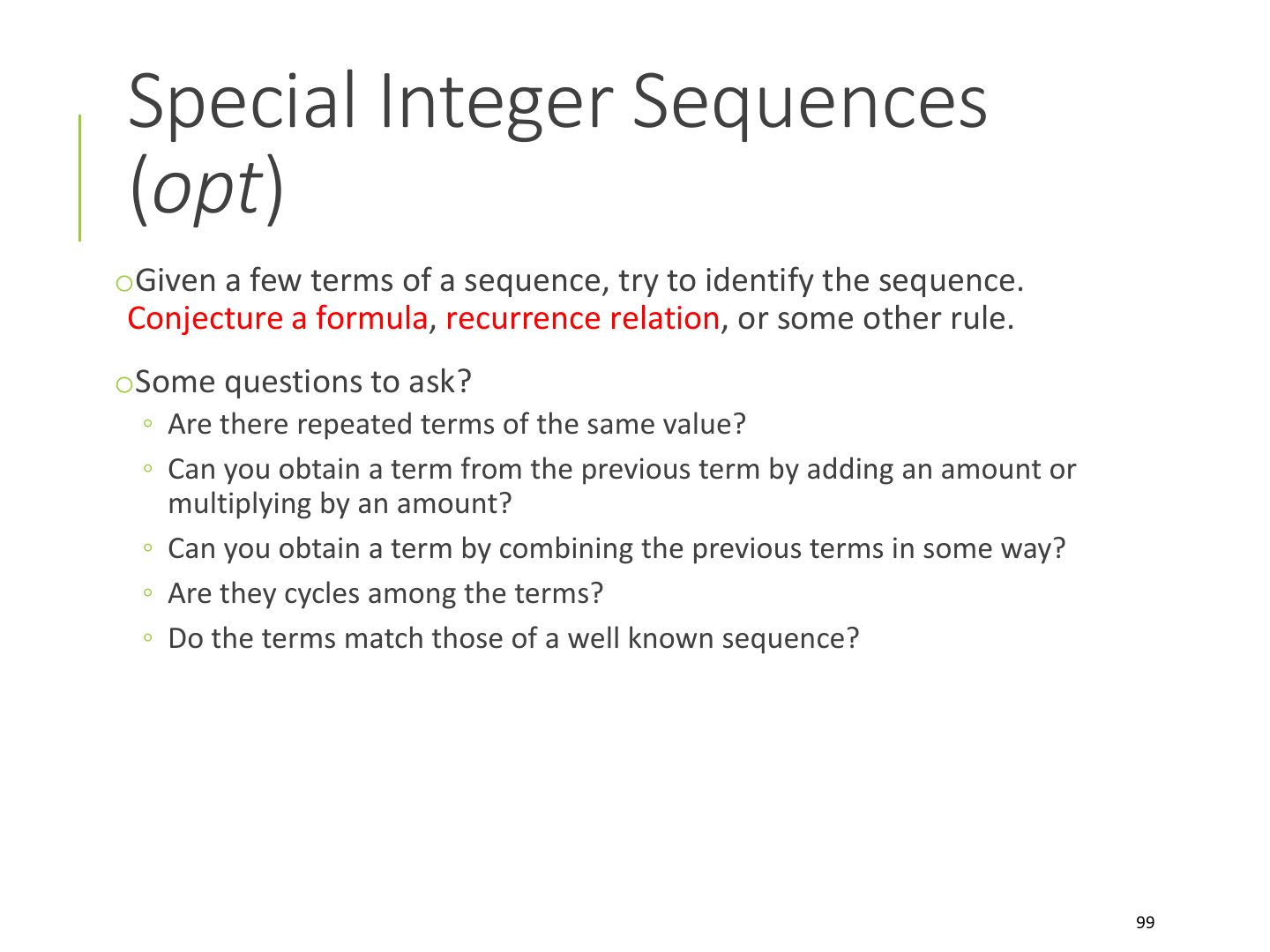
Special Integer Sequences ( opt )
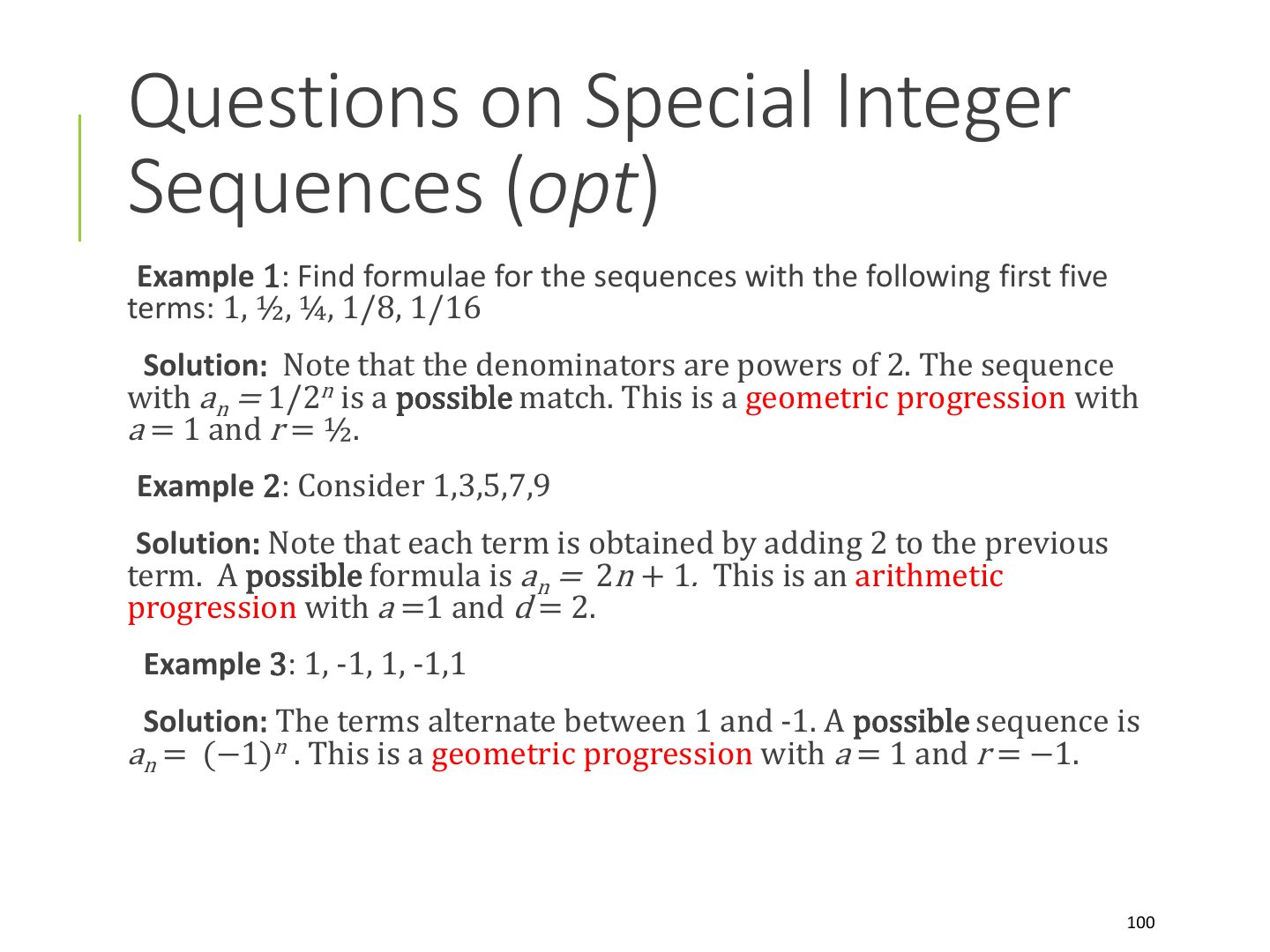
Questions on Special Integer Sequences ( opt )
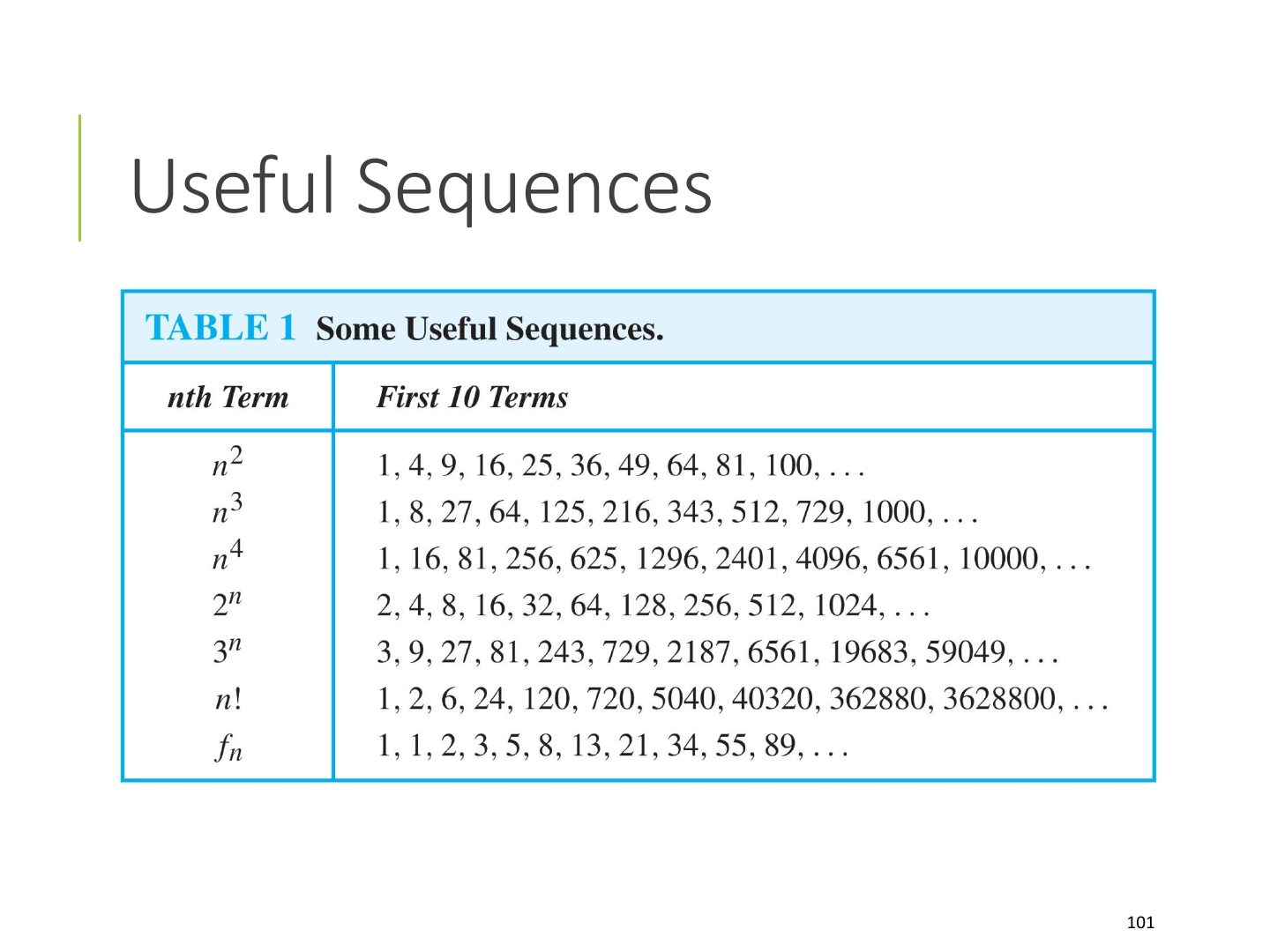
Useful Sequences
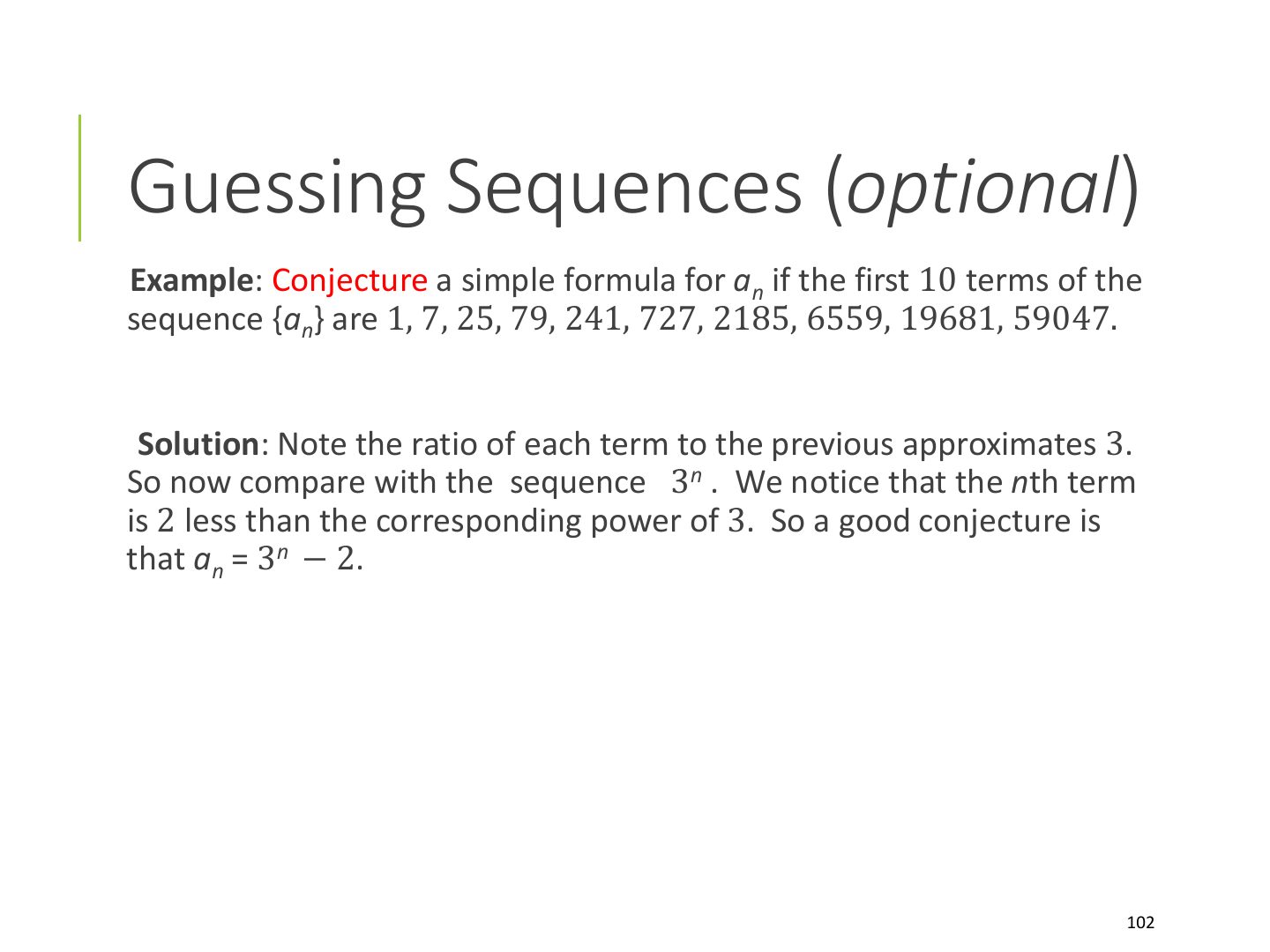
Guessing Sequences ( optional )
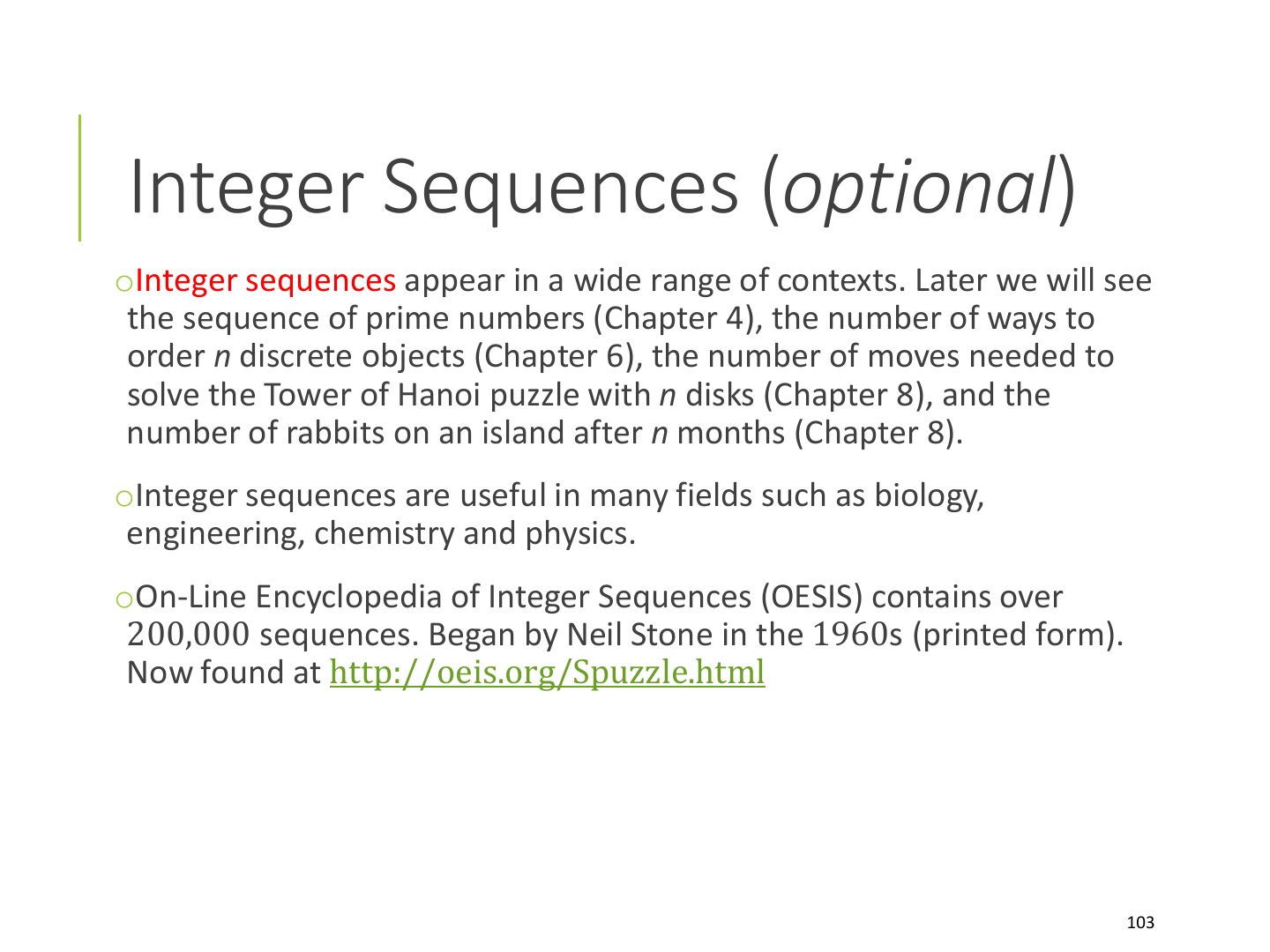
Integer Sequences ( optional )
Integer Sequences ( optional )
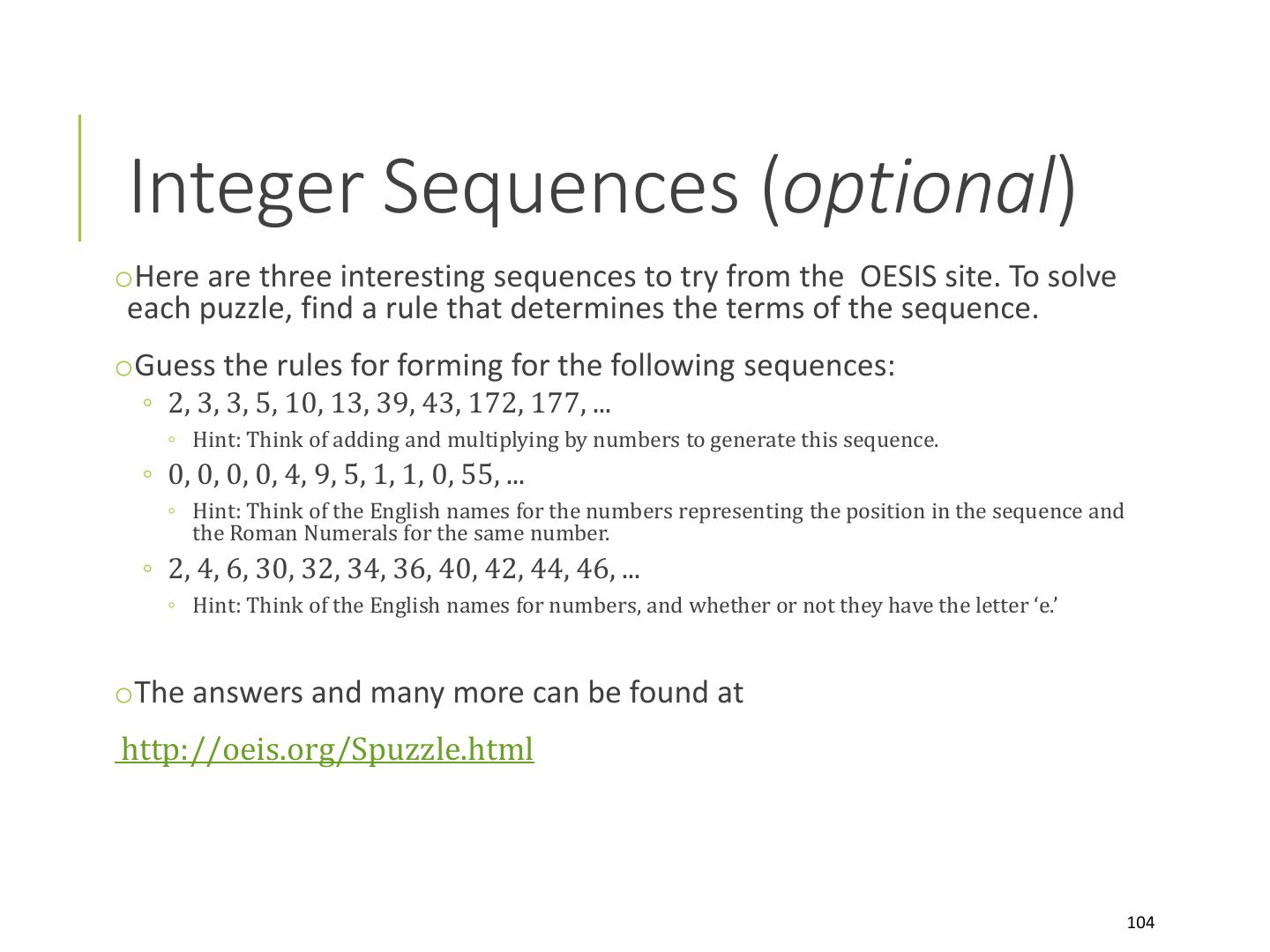
Slide 104
Summations
Example
Example
Summations
Product Notation ( optional )
Some Useful Summation Formulae
Notes
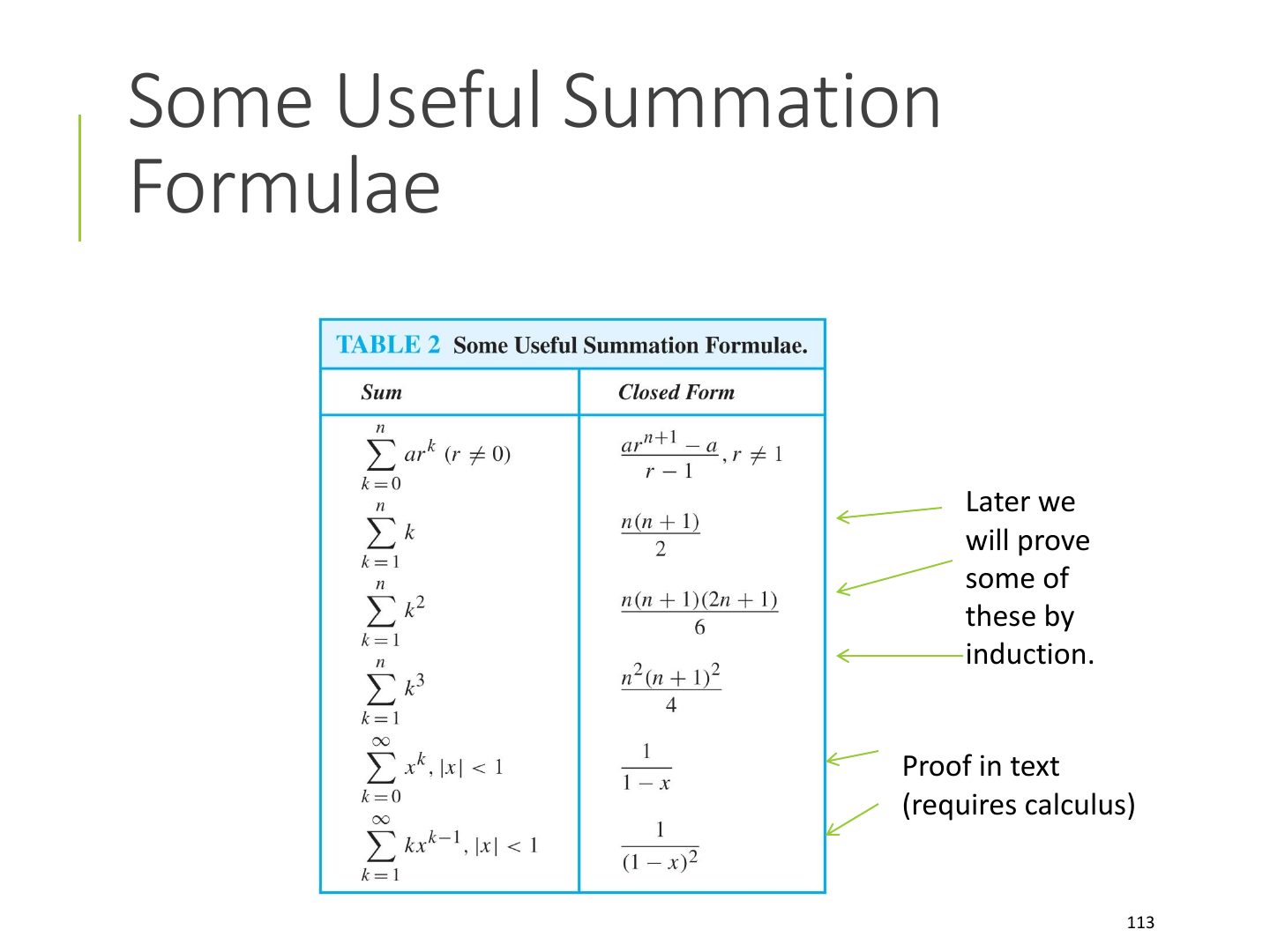
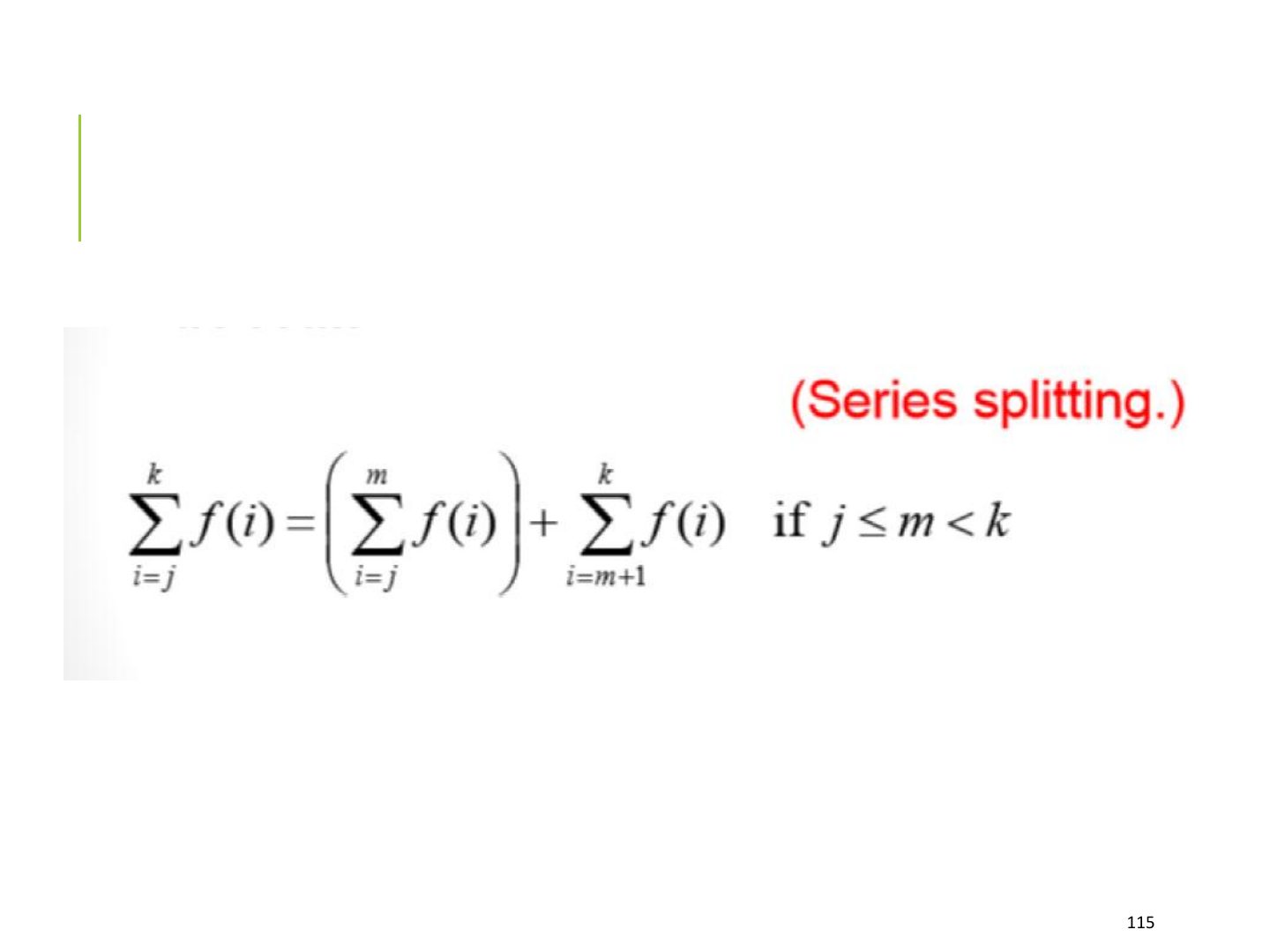
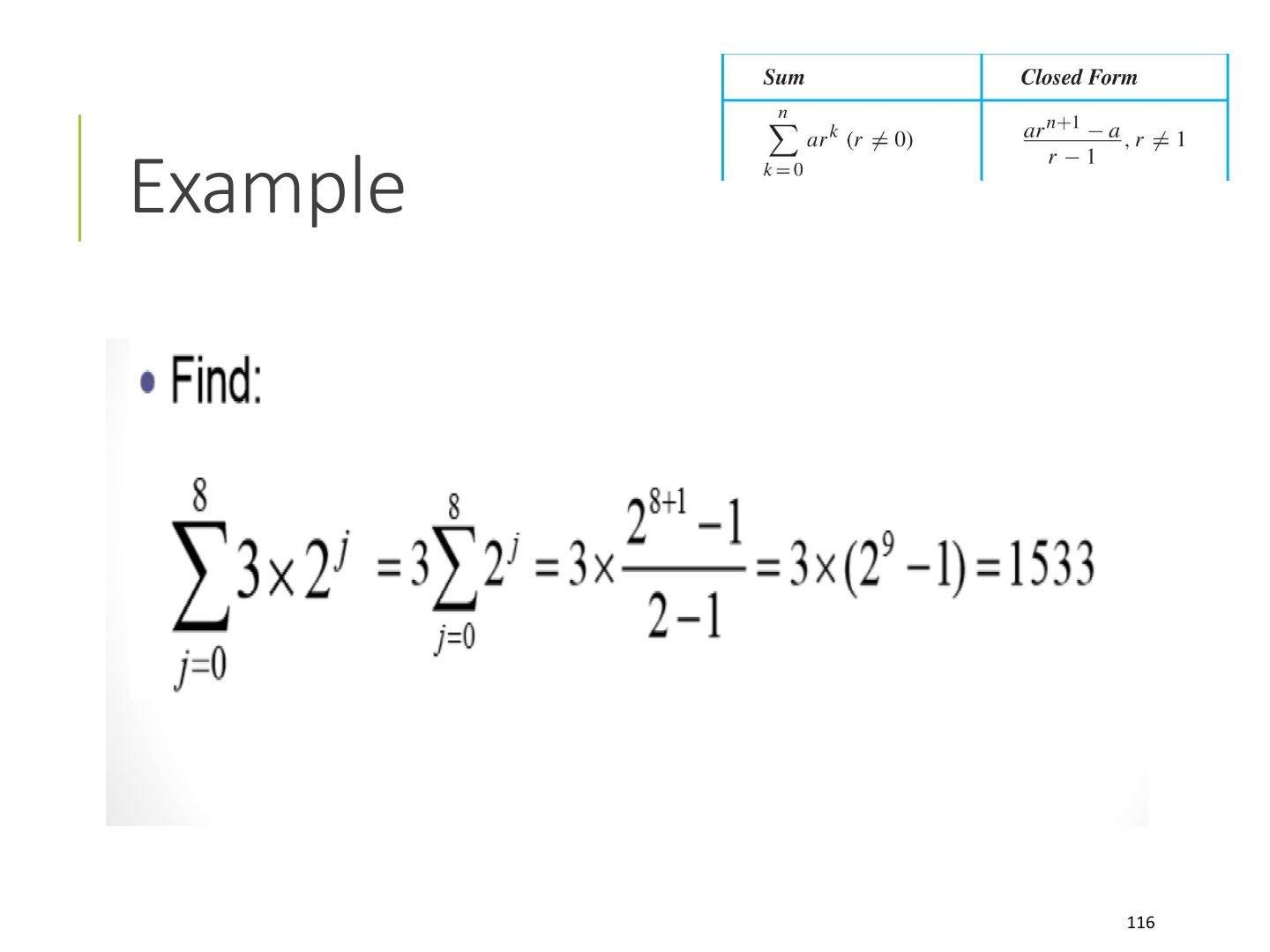
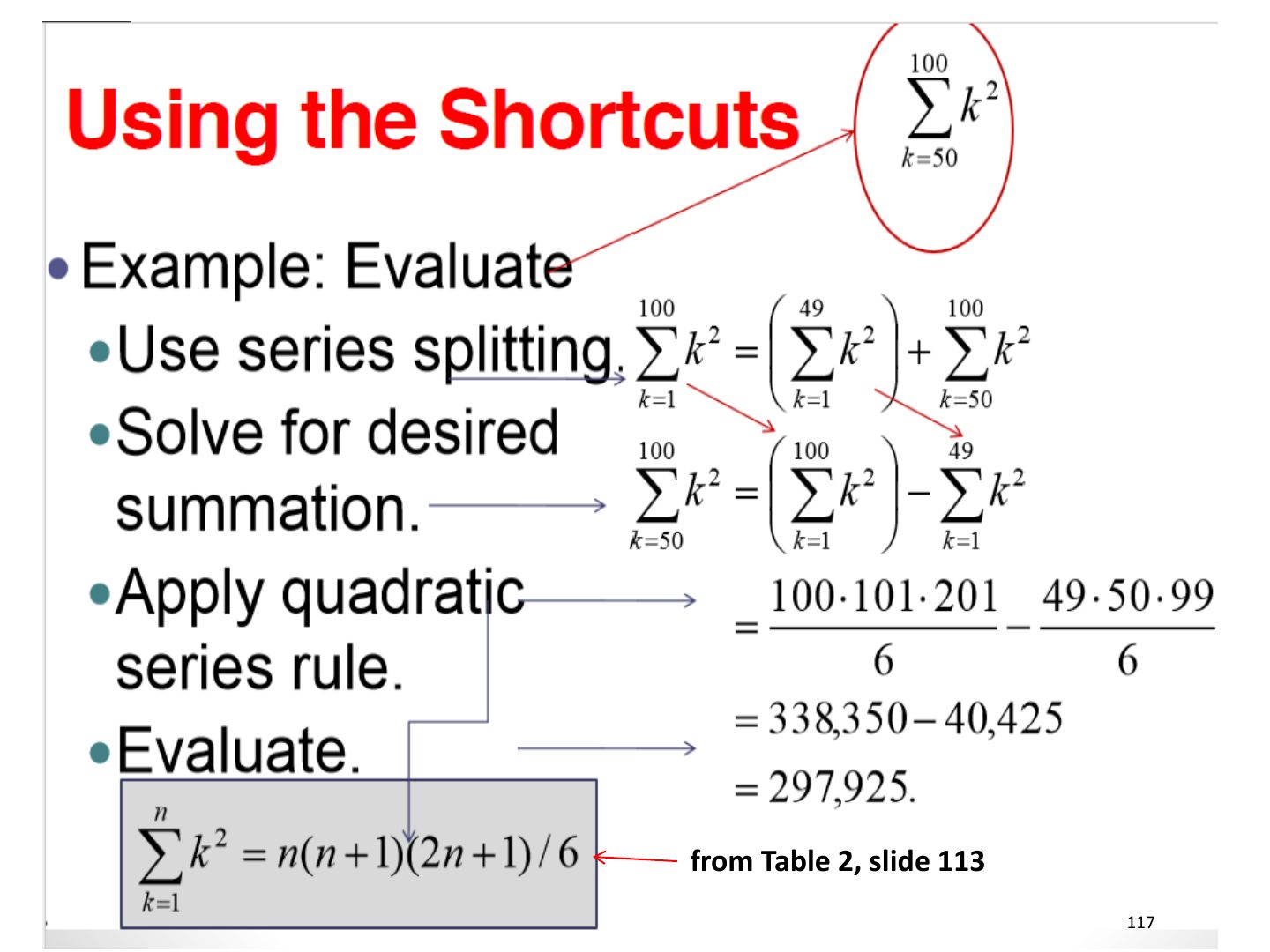
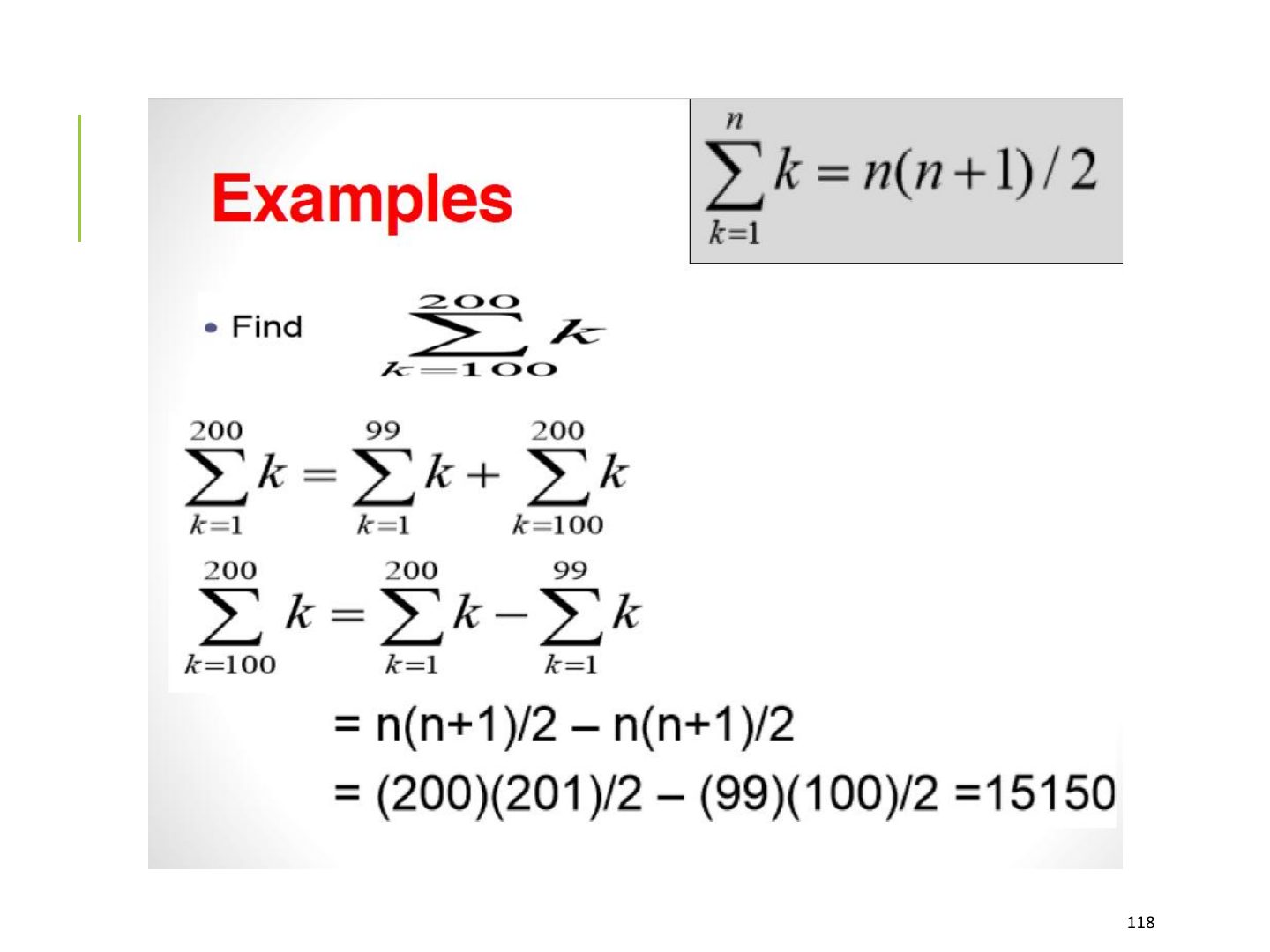
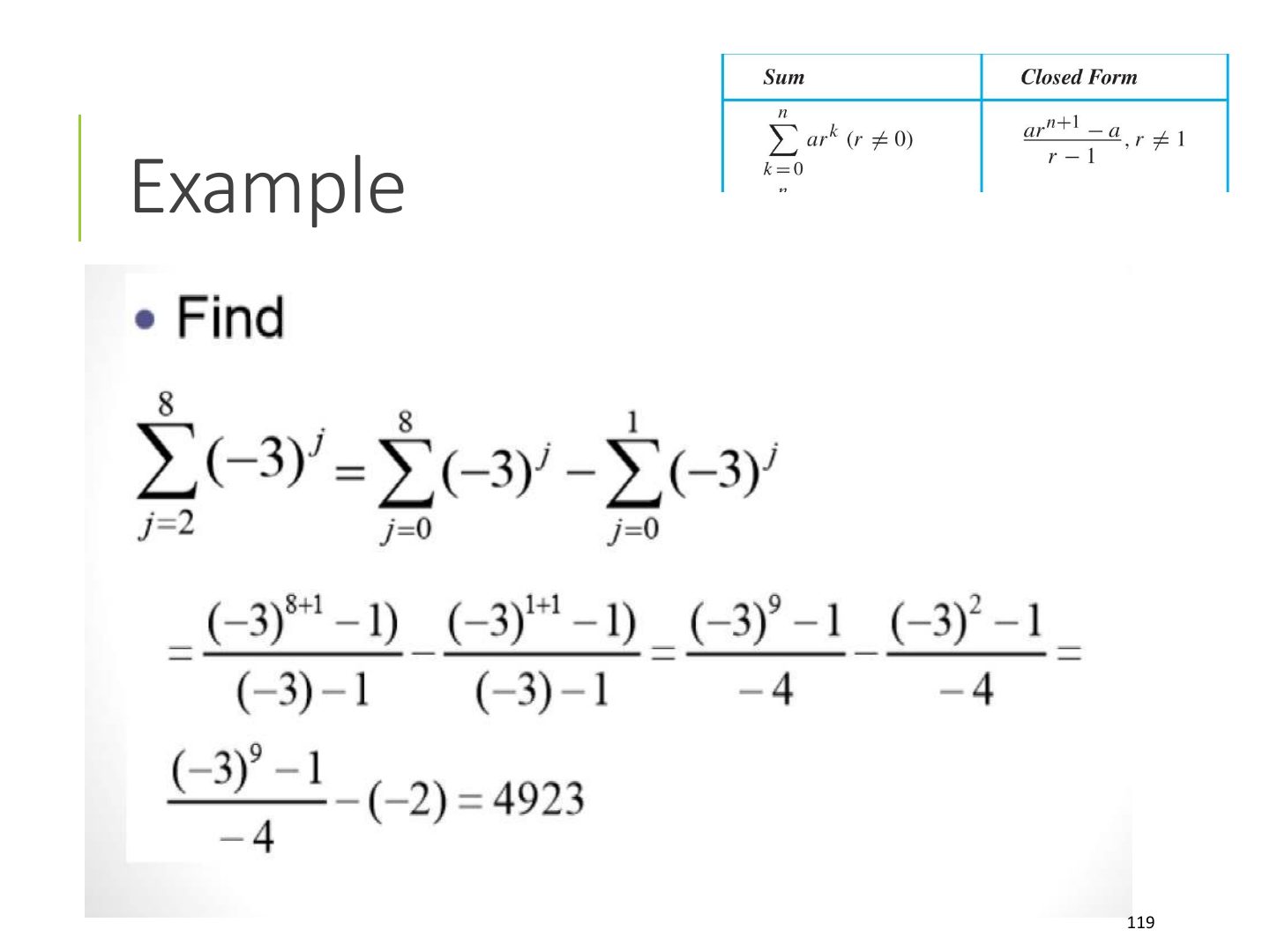
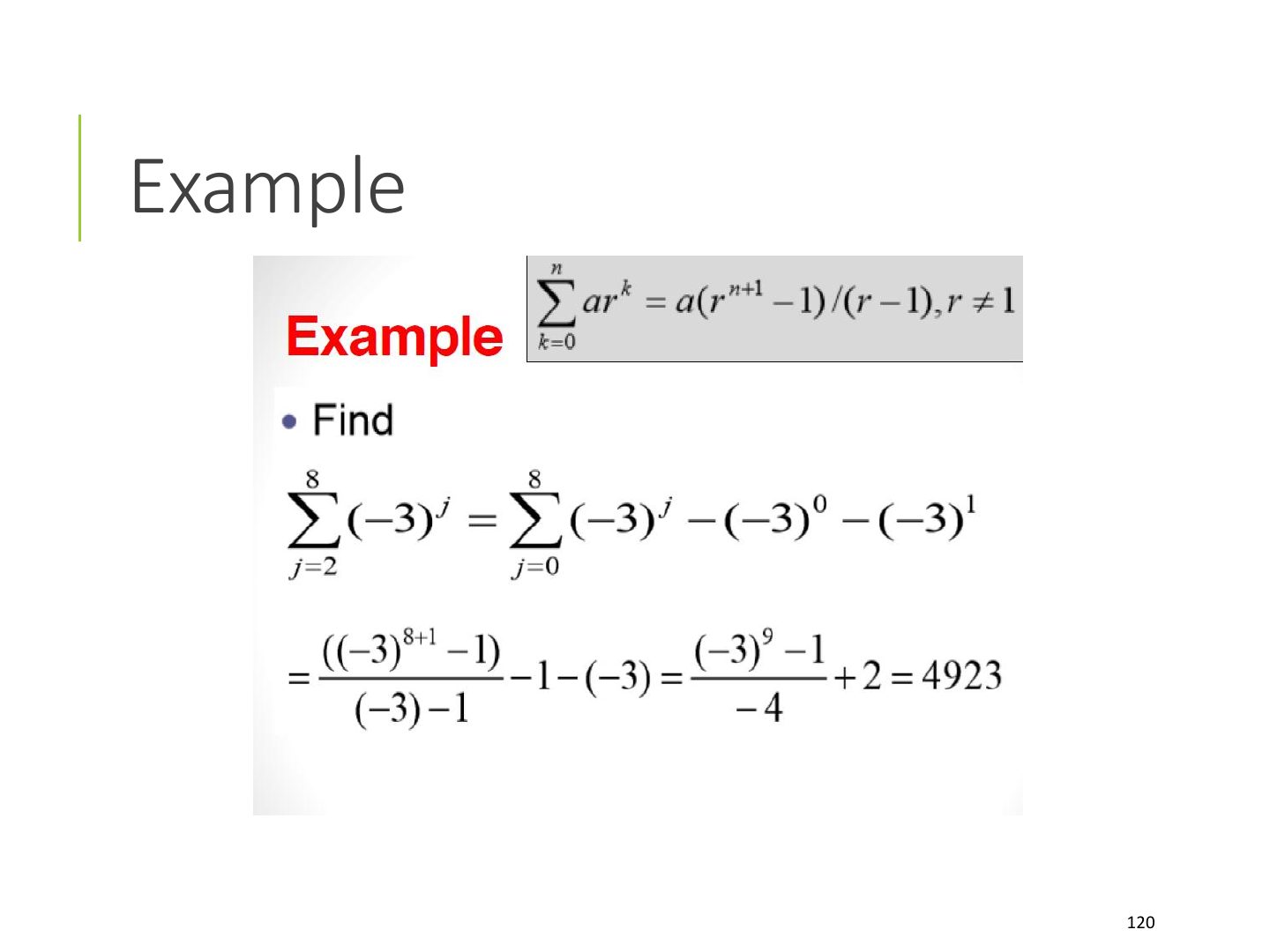
Key sums: Σk = n(n+1)/2, Σk² = n(n+1)(2n+1)/6, Σarᵏ (k = 0…n) = (arⁿ⁺¹ − a)/(r − 1) for r ≠ 1.
Exam angle
Σ_{k=1}^{100} k =
- 100·101/2.
Slide 111
Slide 112
Example
Slide 114
Slide 115
Example
Example
Slide 118
Recurrence Relations
Exam angle
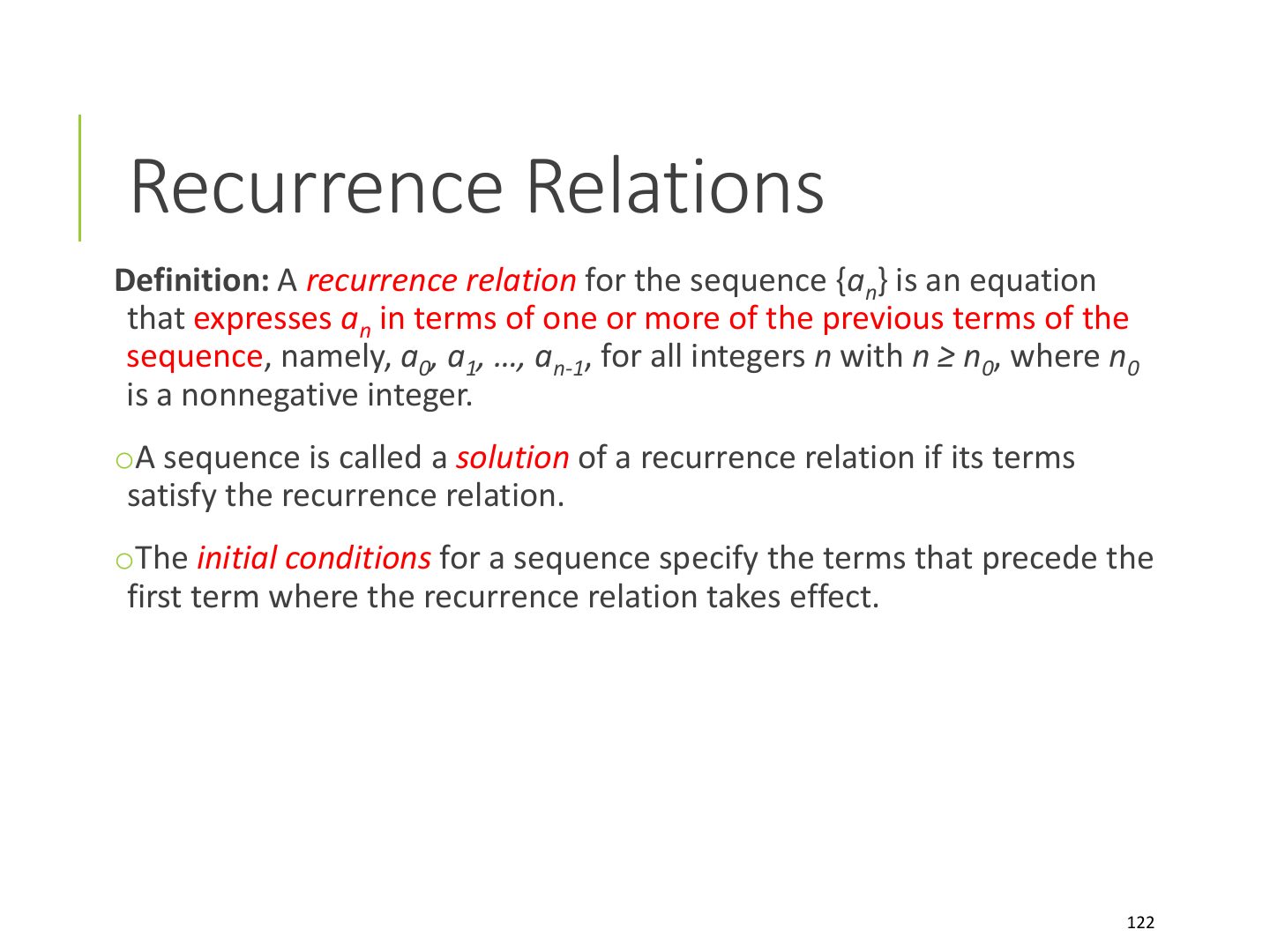
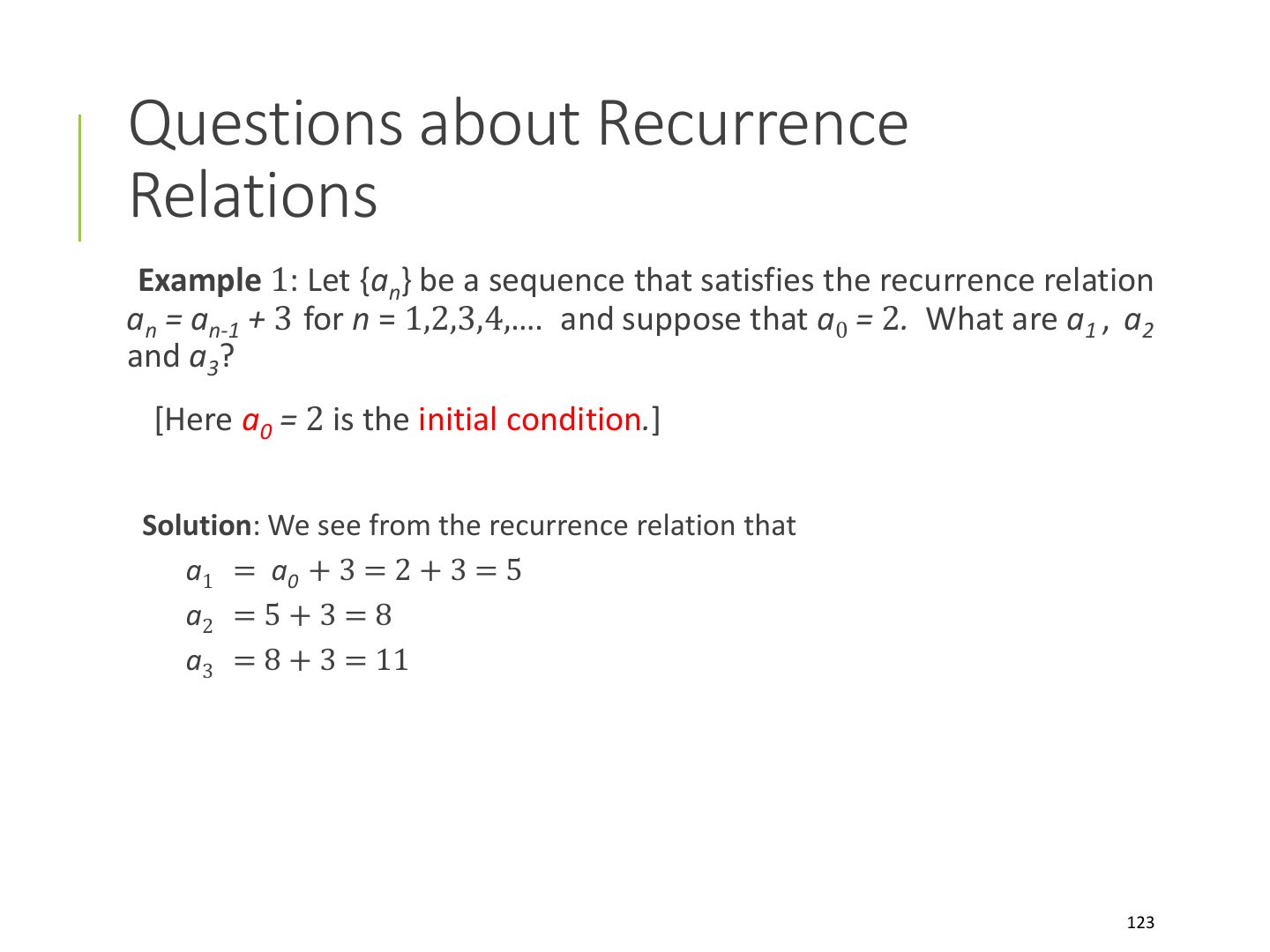
aₙ = aₙ₋₁ + 3, a₀ = 2. a₃ =
- 2, 5, 8, 11.
Questions about Recurrence Relations
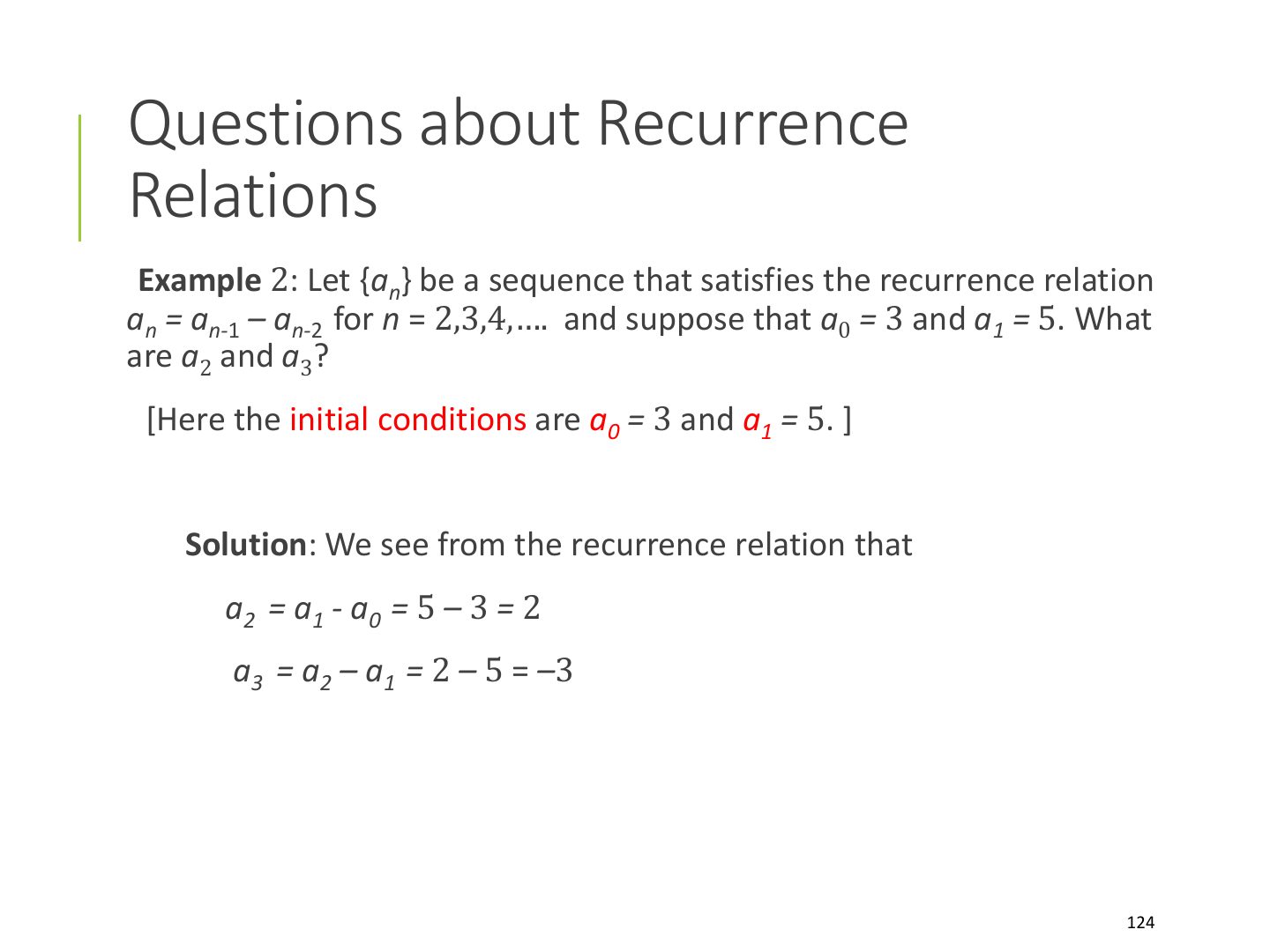
Questions about Recurrence Relations
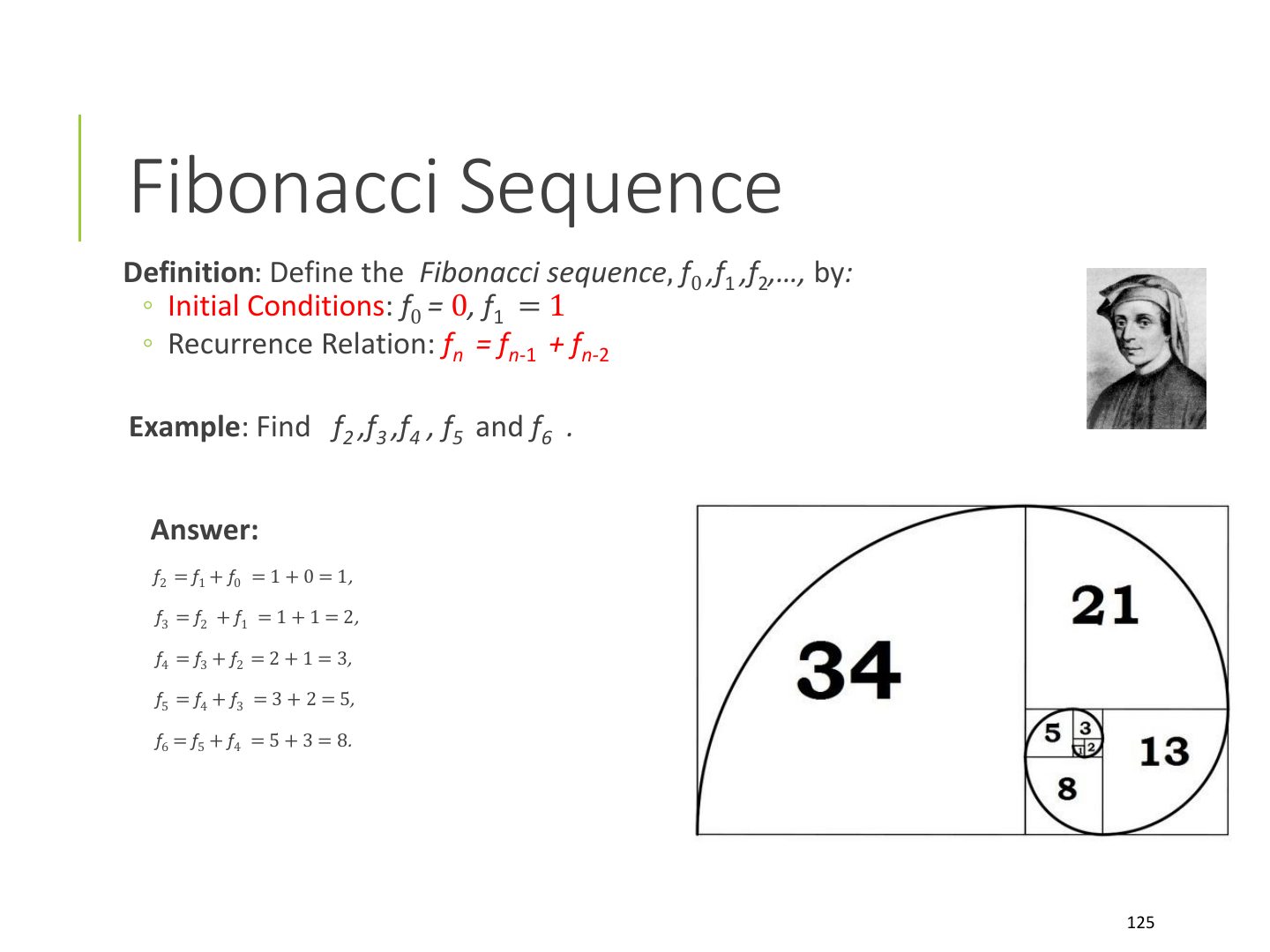
Fibonacci Sequence
Notes
Fibonacci: f₀ = 0, f₁ = 1, fₙ = fₙ₋₁ + fₙ₋₂.
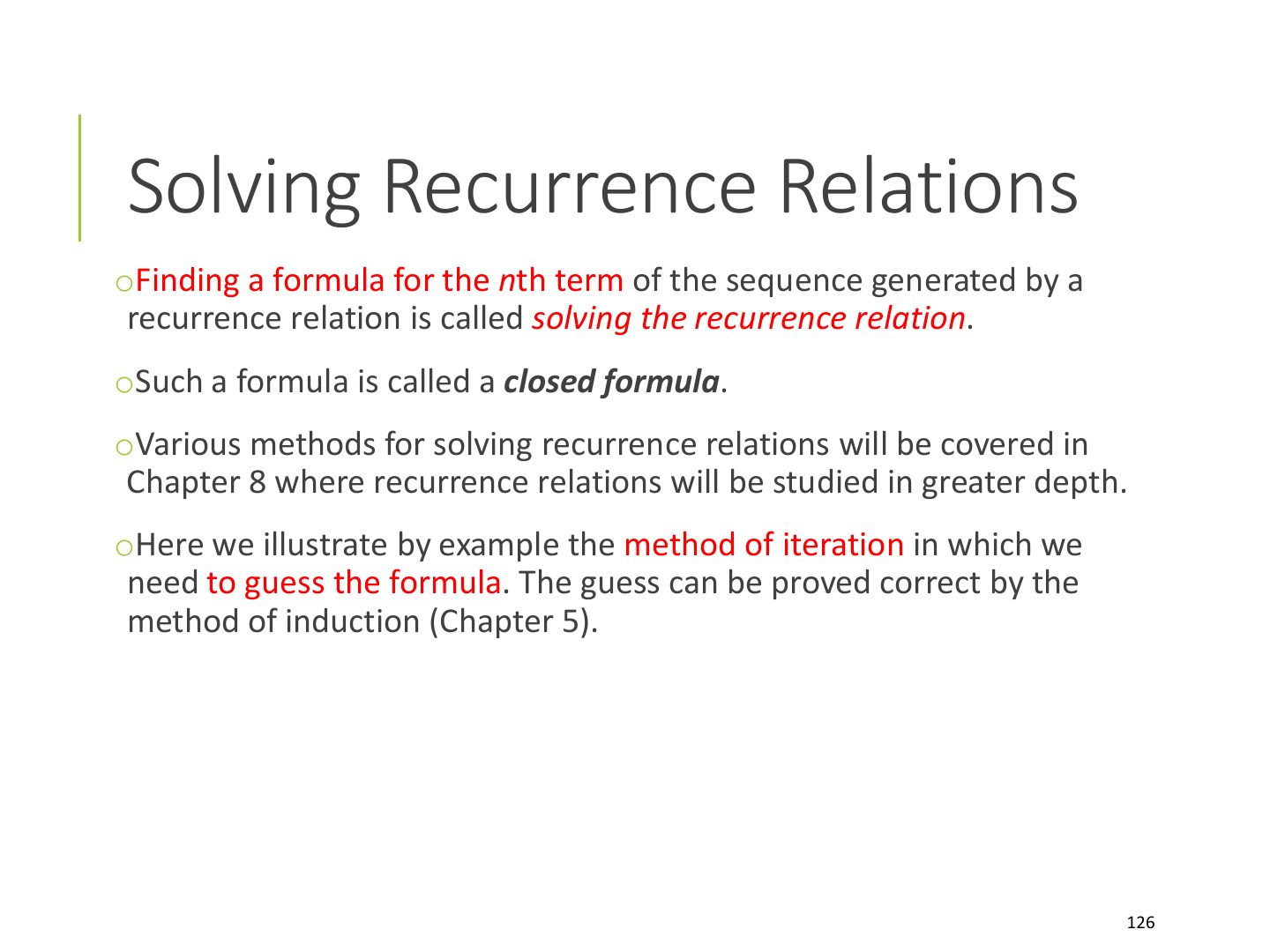
Solving Recurrence Relations
Iterative Solution Example
Notes
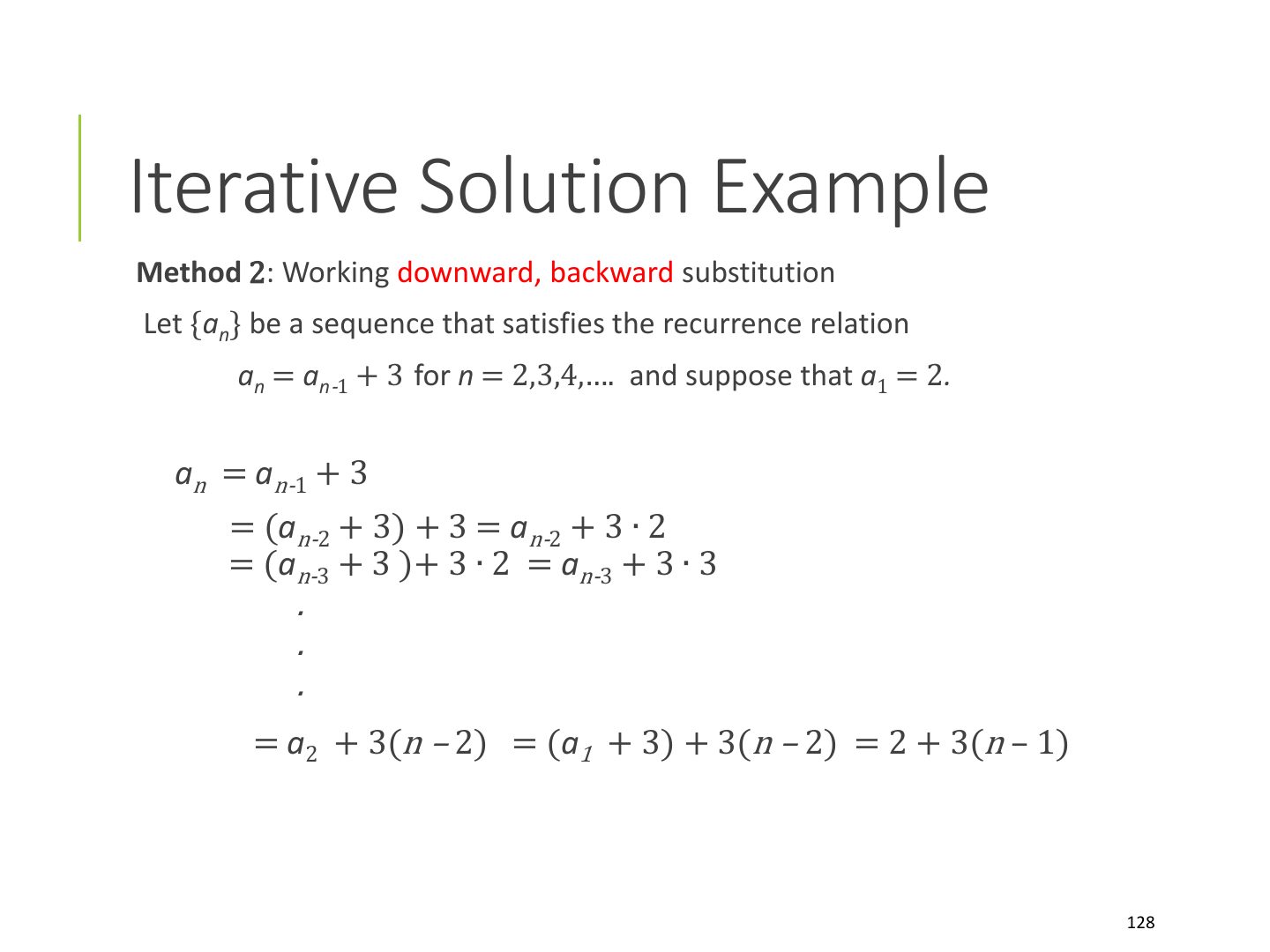
Iteration (forward/backward substitution): expand until a pattern appears, then close the formula.
Iterative Solution Example
Financial Application
Financial Application
Slide 128
2.6. Matrices
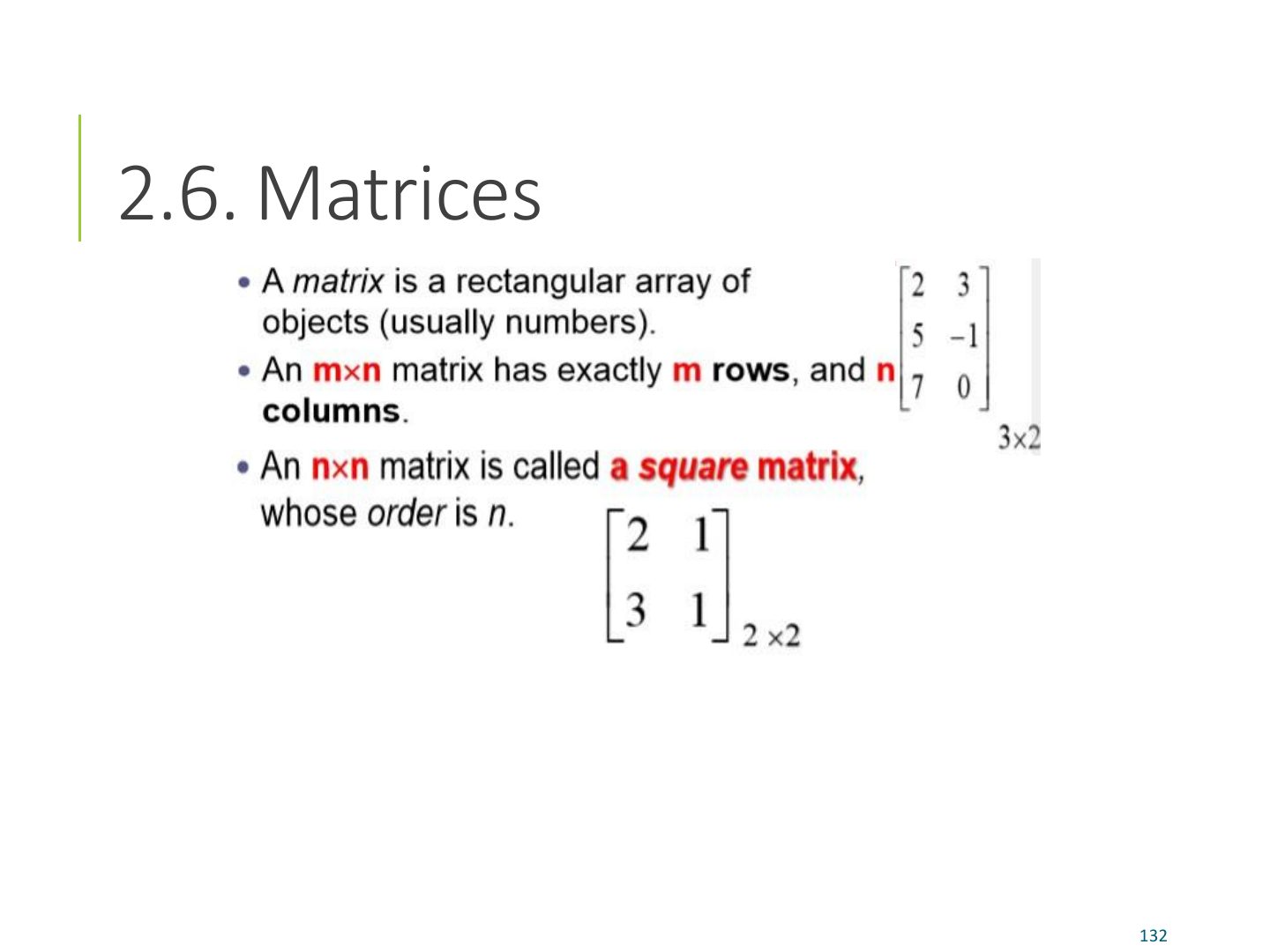
Matrix Equality
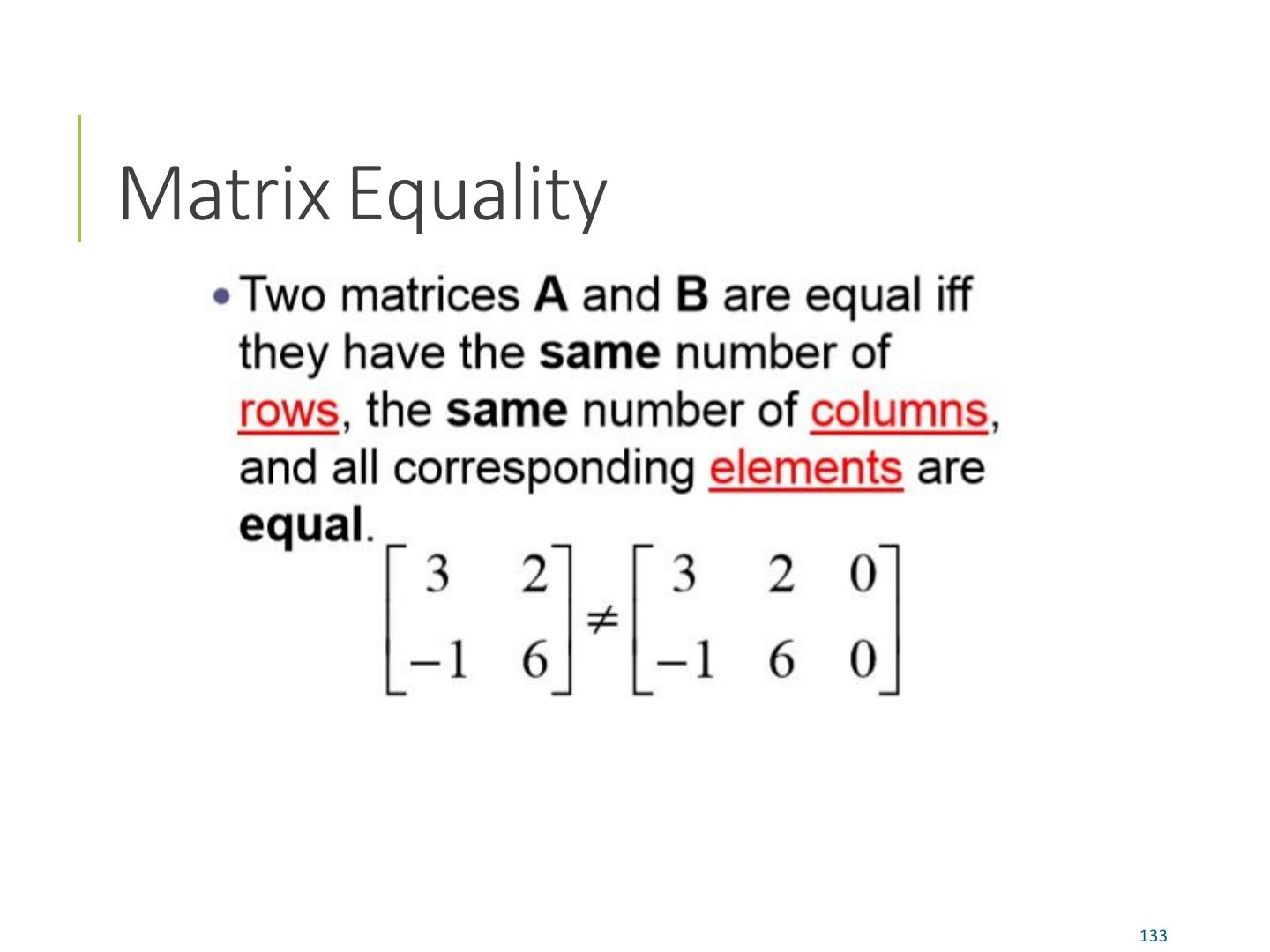
Row and Column Order
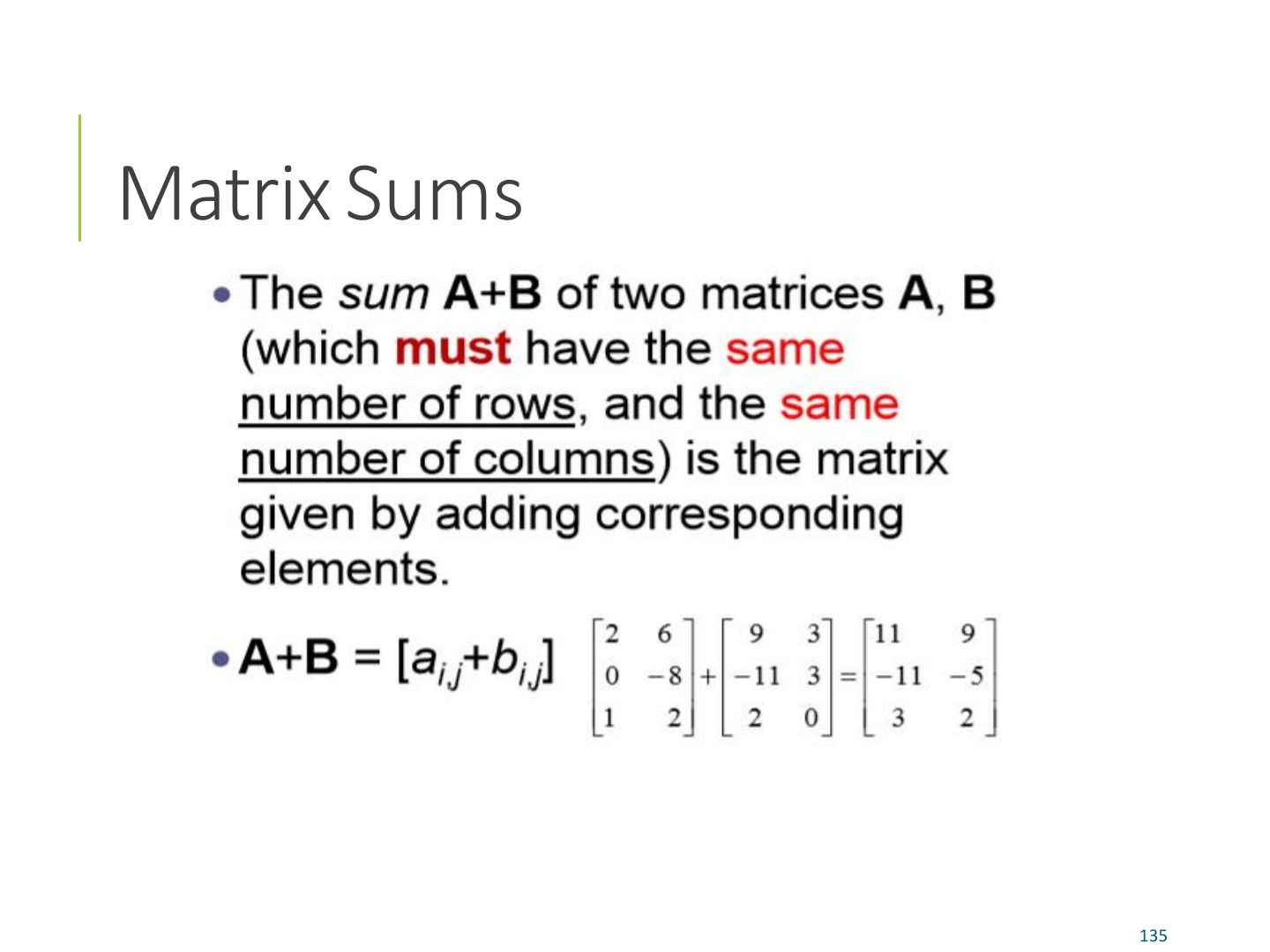
Matrix Sums
Matrix Products
Notes
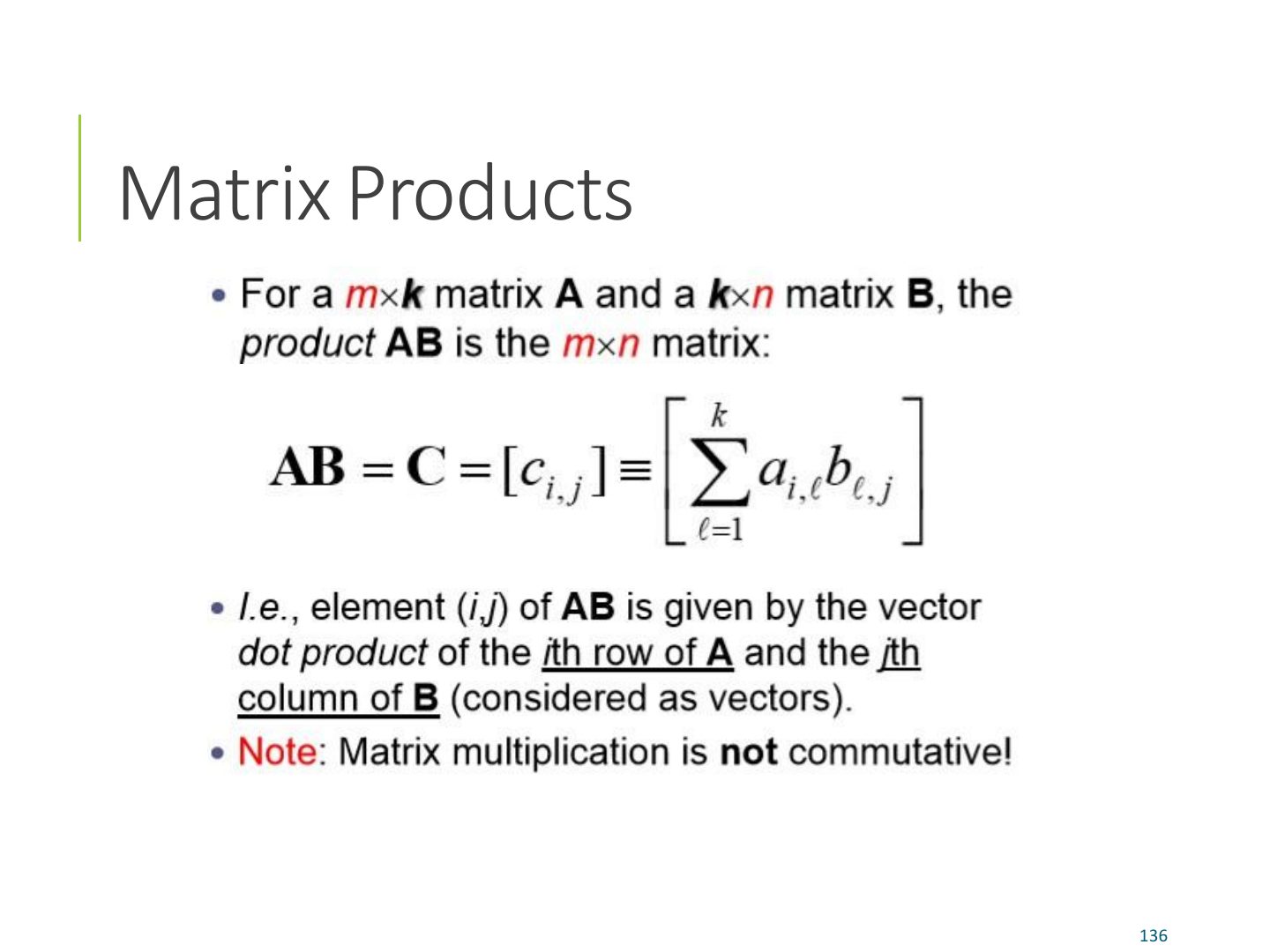
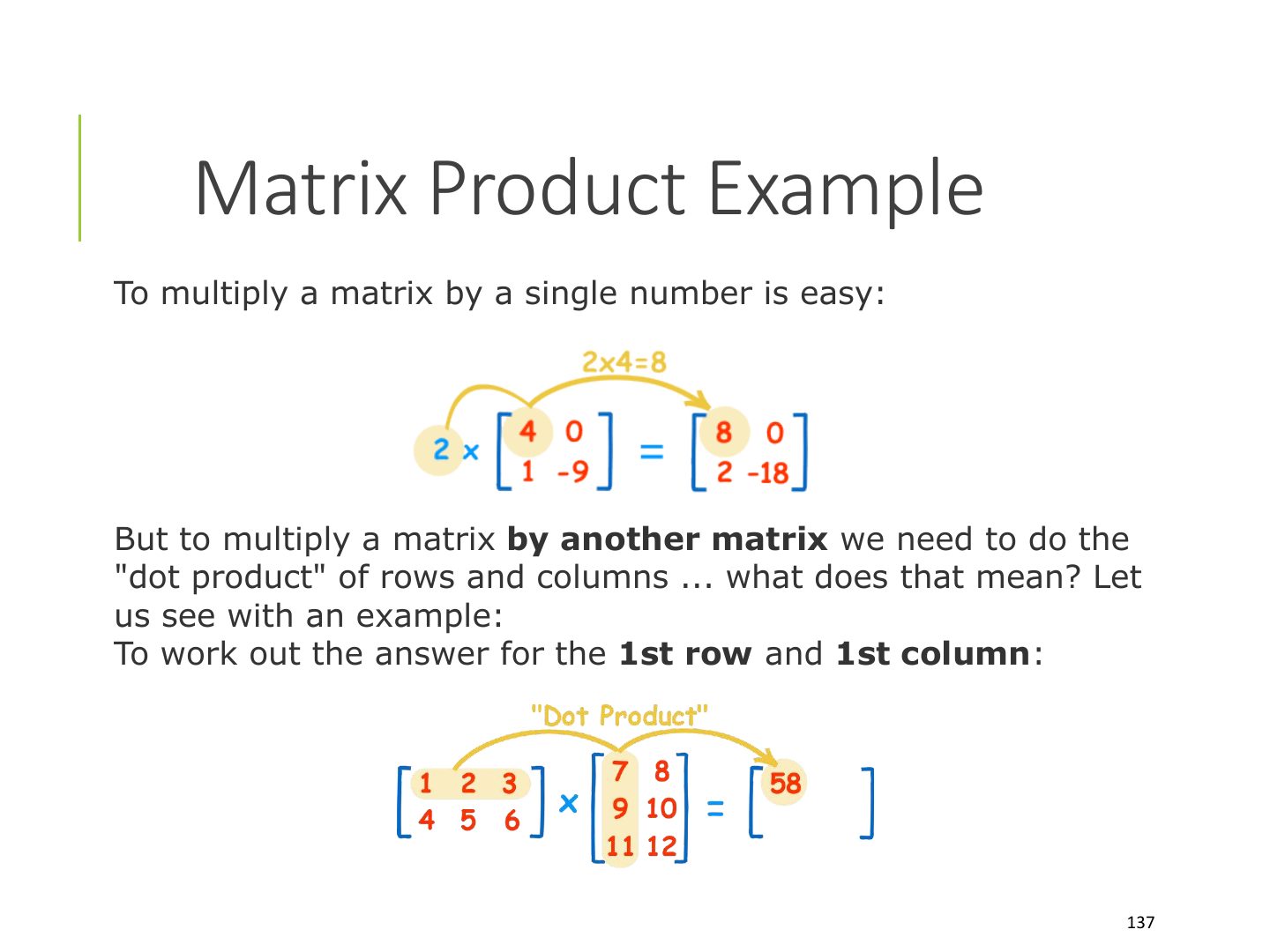
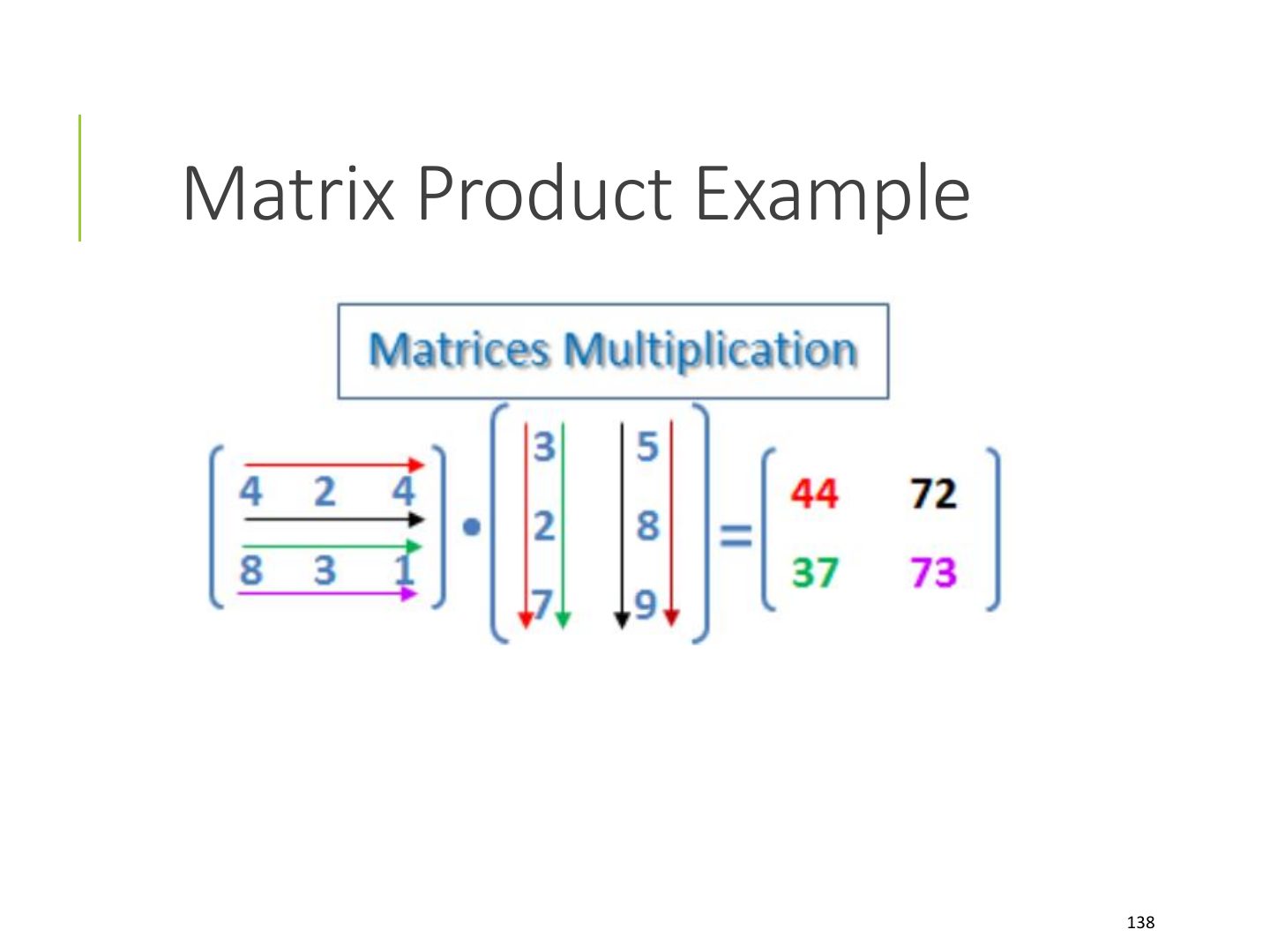
A (m×k) times B (k×n) gives an m×n matrix; cᵢⱼ = row i of A · column j of B. Inner sizes must match.
Trap AB ≠ BA in general, and BA may not even be defined.
Exam angle
A is 2×3 and B is 3×4. AB is:
Matrix Product Example
Matrix Product Example
Matrix Product Example
Identity Matrices
Powers of Matrices
Matrix Transposition
Notes
Transpose Aᵗ swaps rows and columns; symmetric when A = Aᵗ.
Symmetric Matrices
Zero-One Matrices
Example
Boolean Products
Boolean Powers
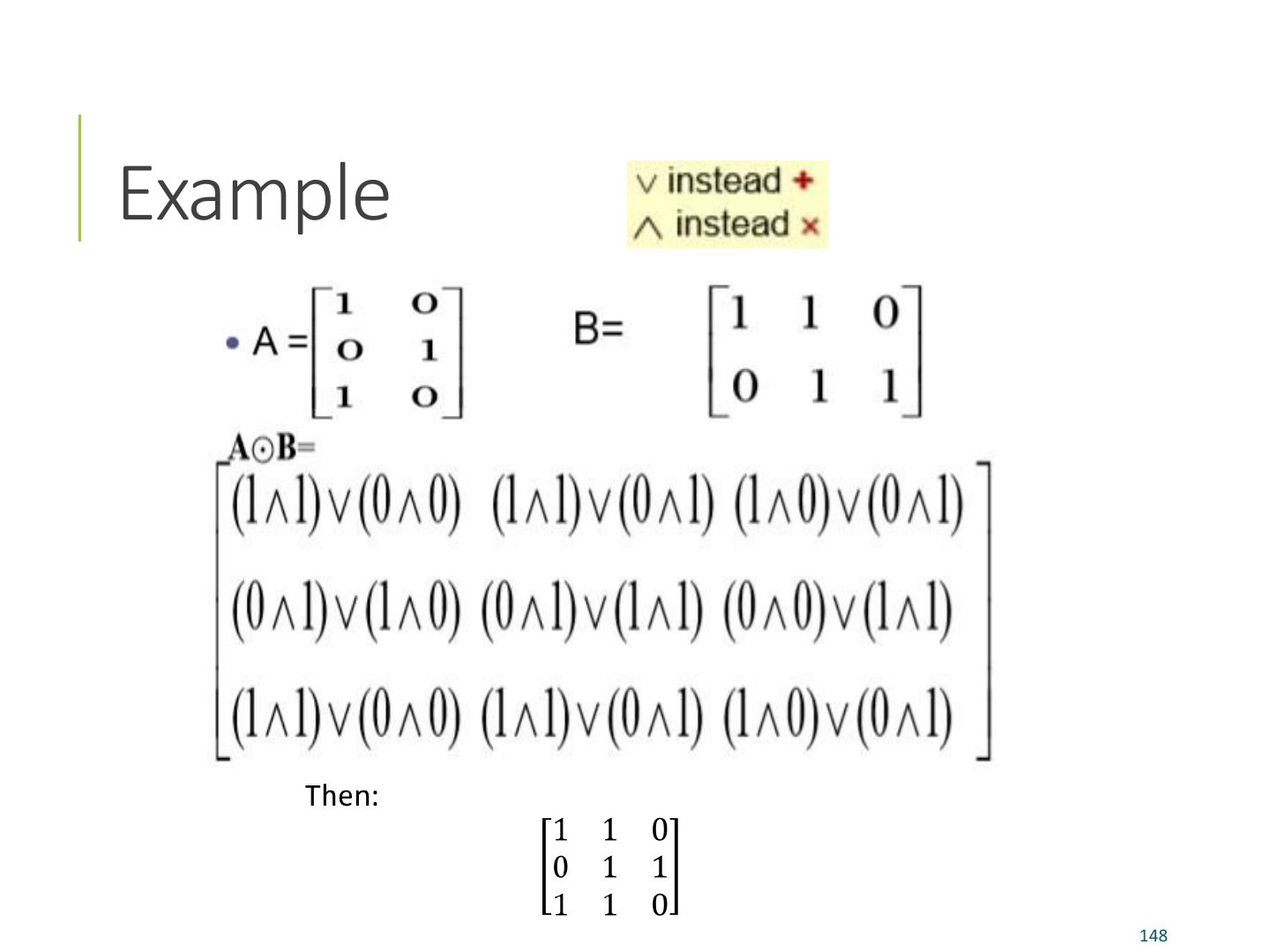
Example