Which collection type does NOT allow duplicate elements?
Java Collection Framework
The Collections Framework (interfaces, implementations, algorithms), Collection vs. Map, Set vs. List, ArrayList and its methods, iterators, the diamond <>, Collections.sort and Collections.binarySearch.
How to read this page
Every original slide is shown unchanged. Yellow marks on a slide point to a numbered note: hover or tap a mark to jump to its note, and hover a note to see its marks. Questions tagged Past exam appeared on a real paper; Prediction questions are likely angles, not confirmed. Pick an answer to each question: a wrong pick tells you why it is wrong, so you can try again.
All 33 slides
- 1 Slide 1
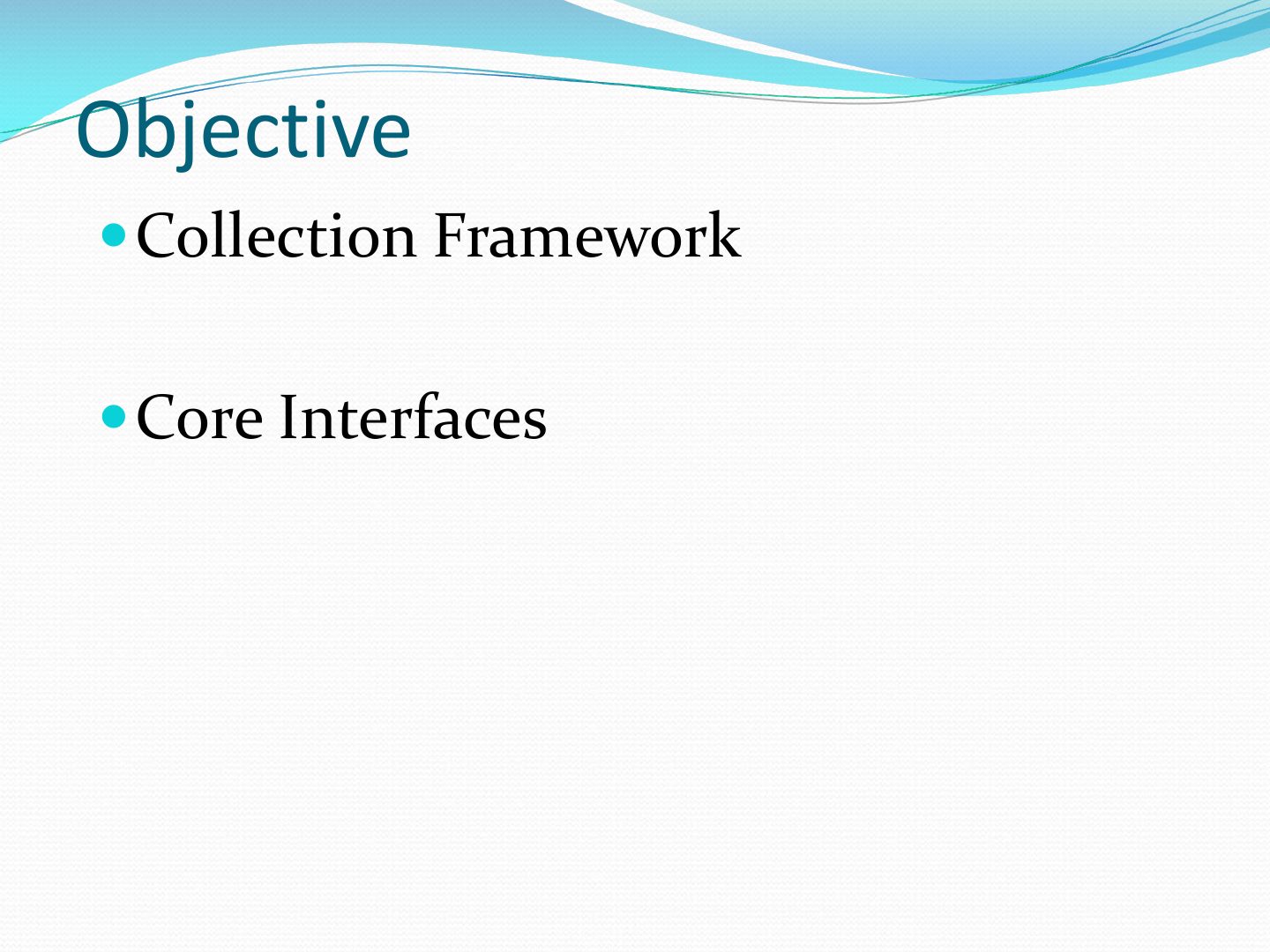
- 2 Objective
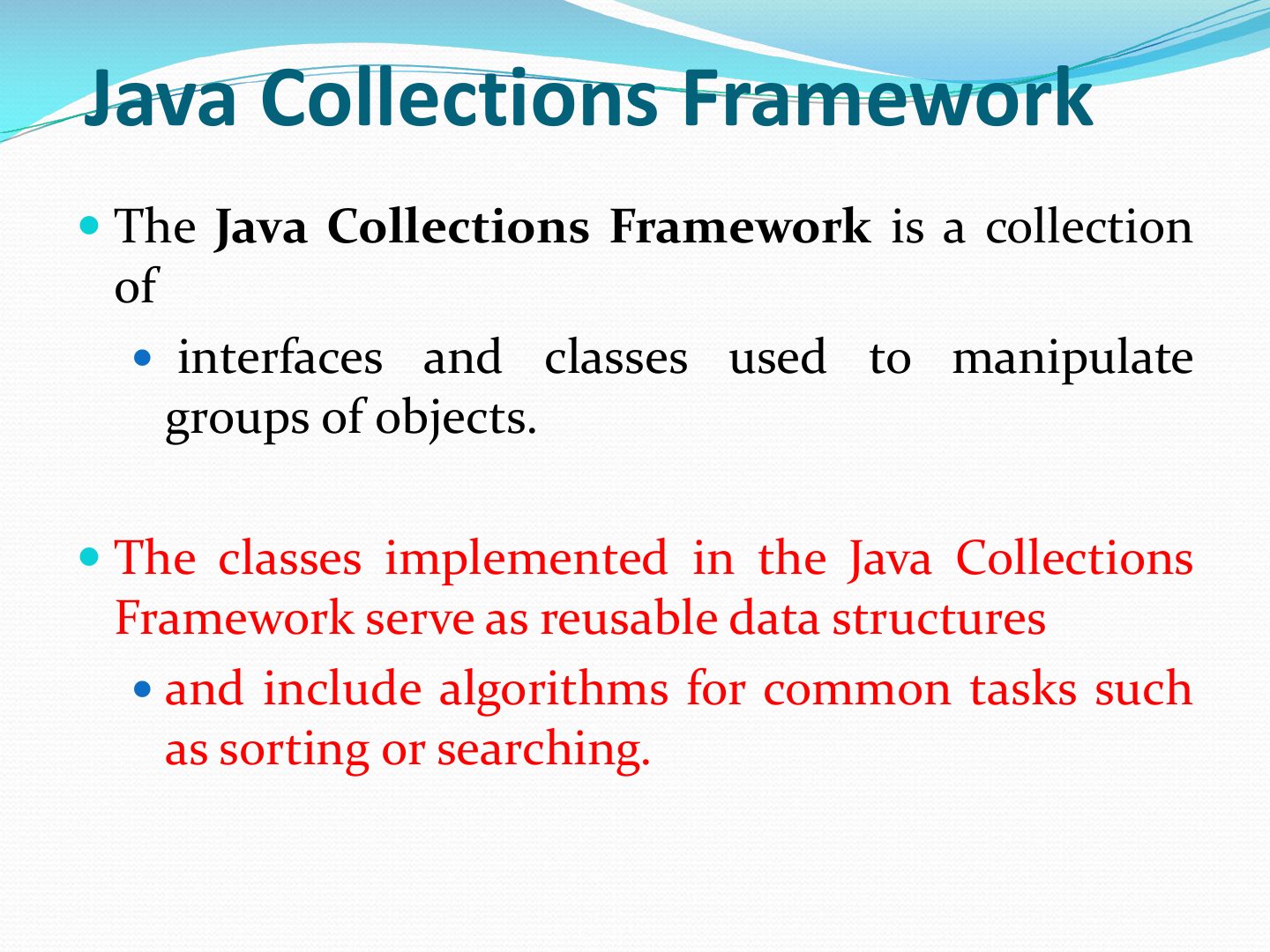
- 3 Java Collections Framework
- 4 Collections Framework is a unified architecture for managing collections
- 5 Interfaces
- 6 Collections Framework Implementations
- 7 Collection
- 8 Map
- 9 Operations
- 10 Collections Methods
- 11 Slide 11
- 12 Slide 12
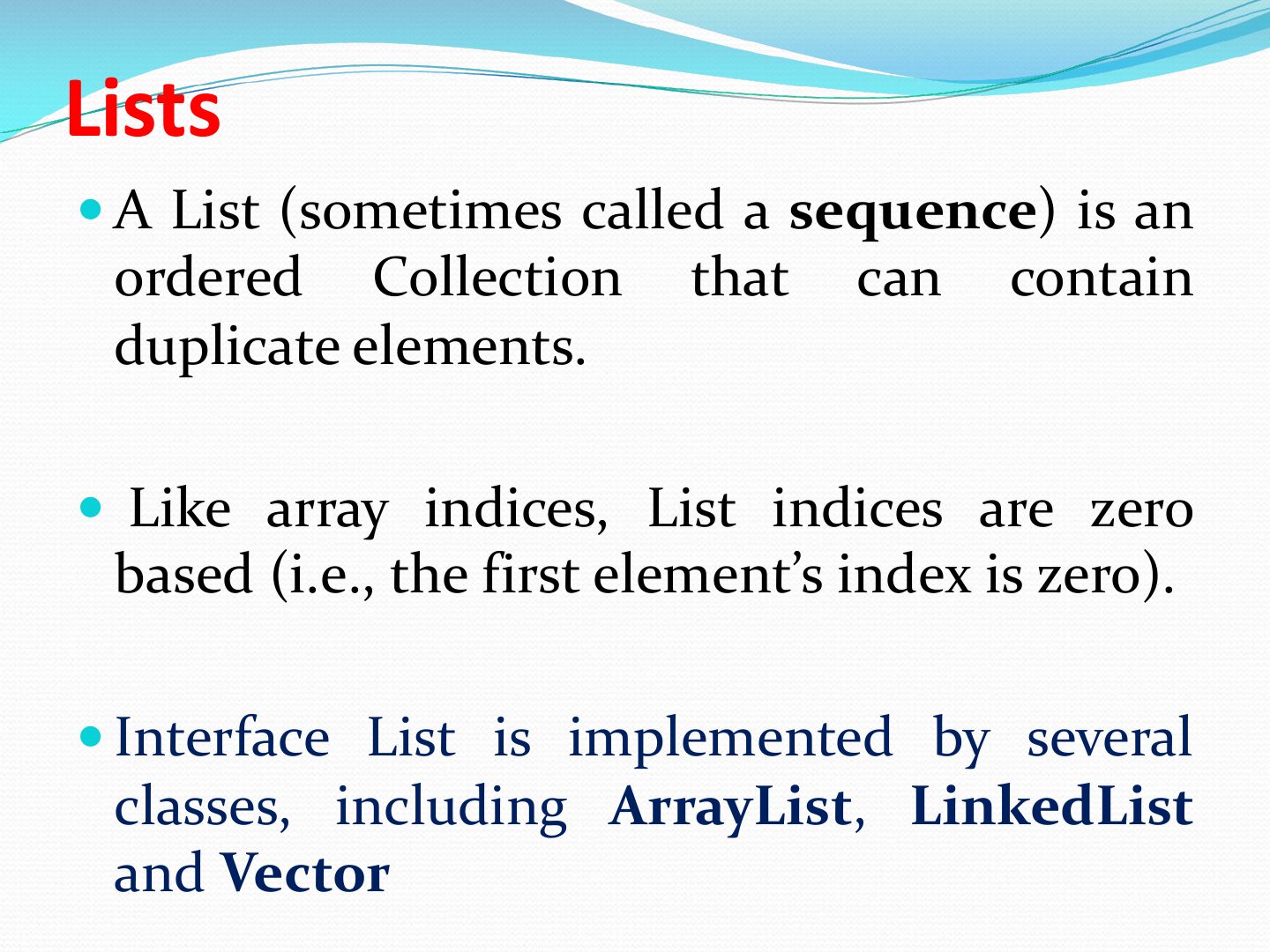
- 13 A List (sometimes called a sequence ) is an
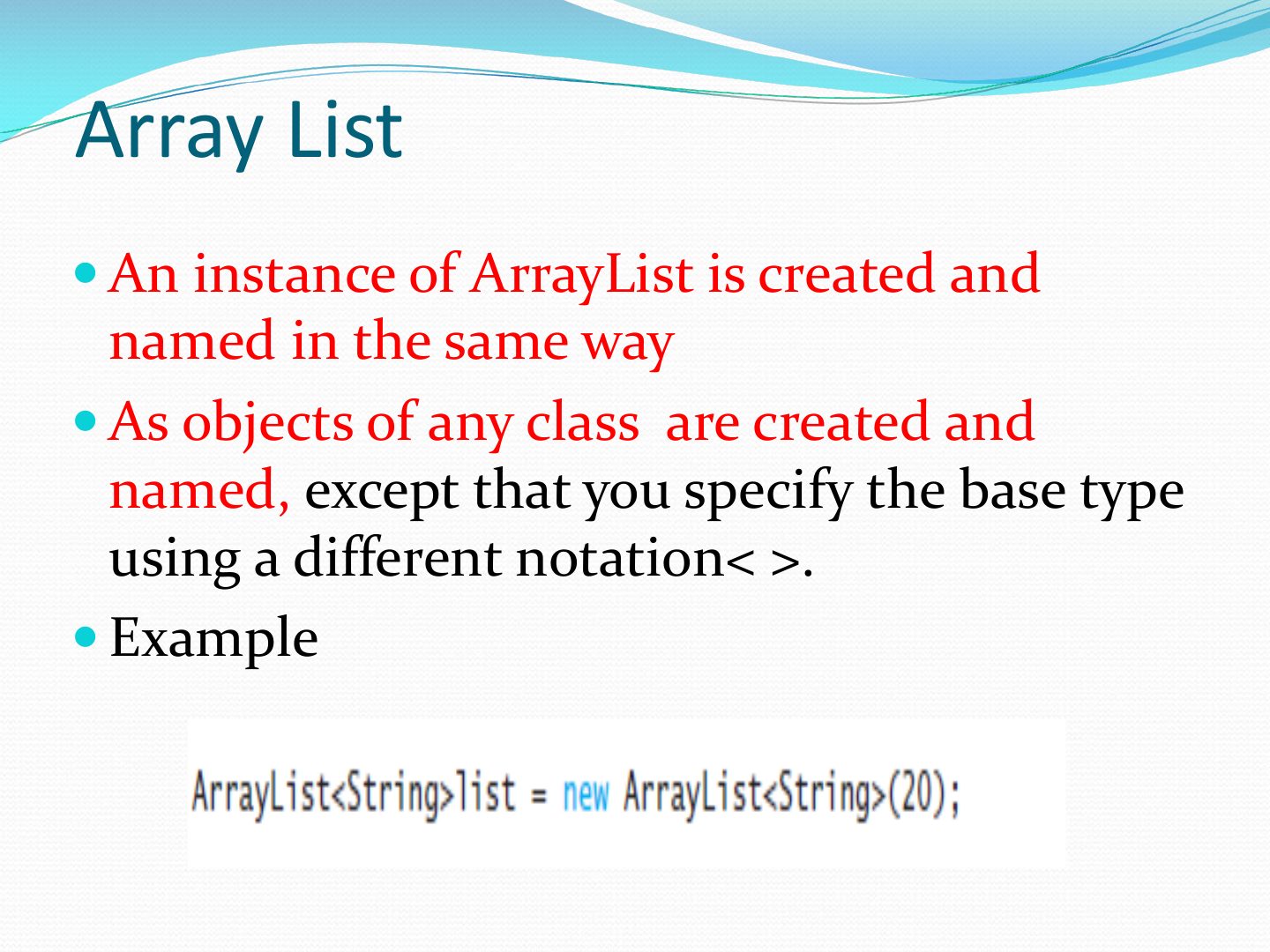
- 14 Array List
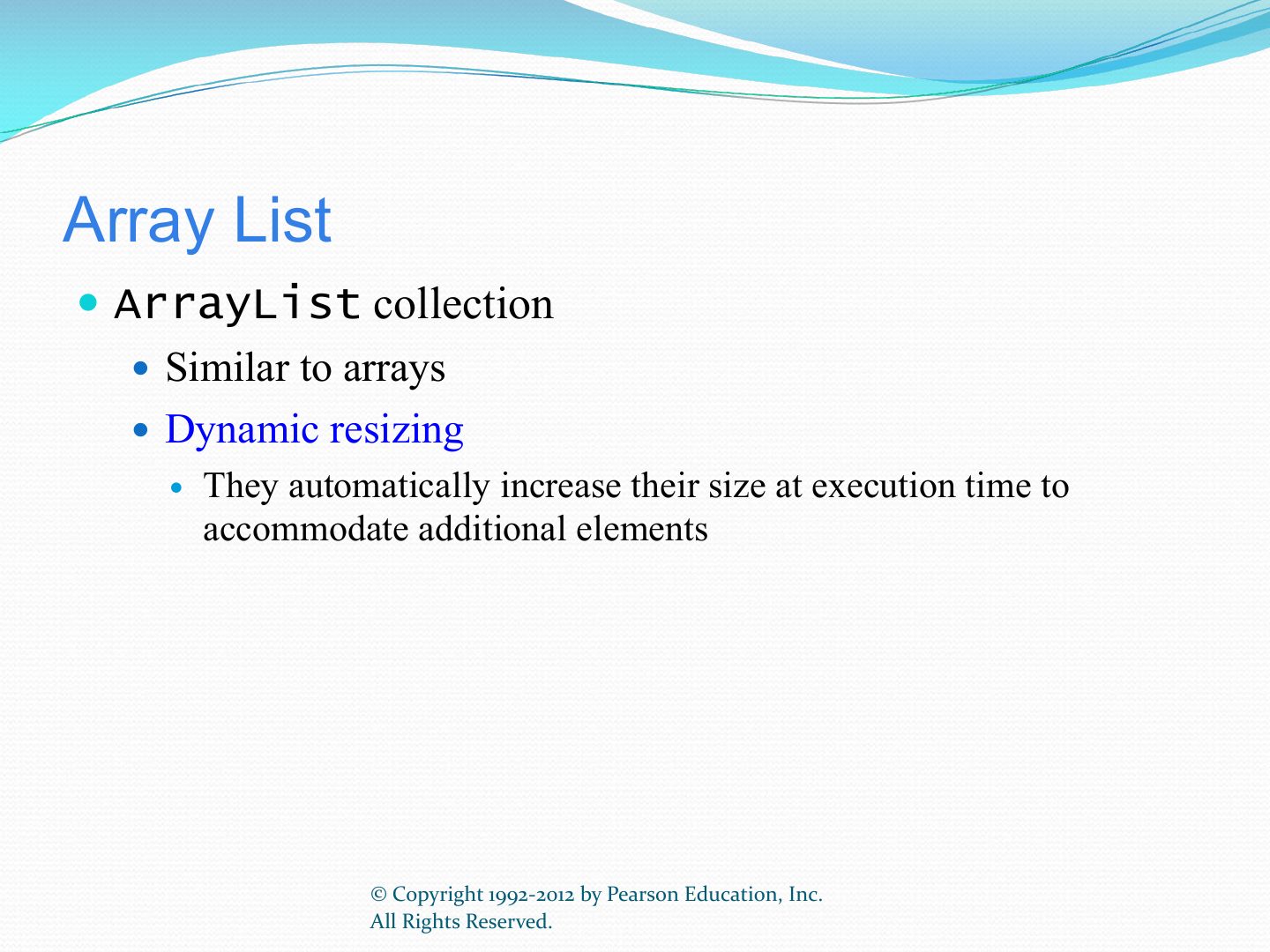
- 15 Array List
- 16 Introduction to Collections and Class ArrayList
- 17 Introduction to Collections and Class ArrayList (Cont.)
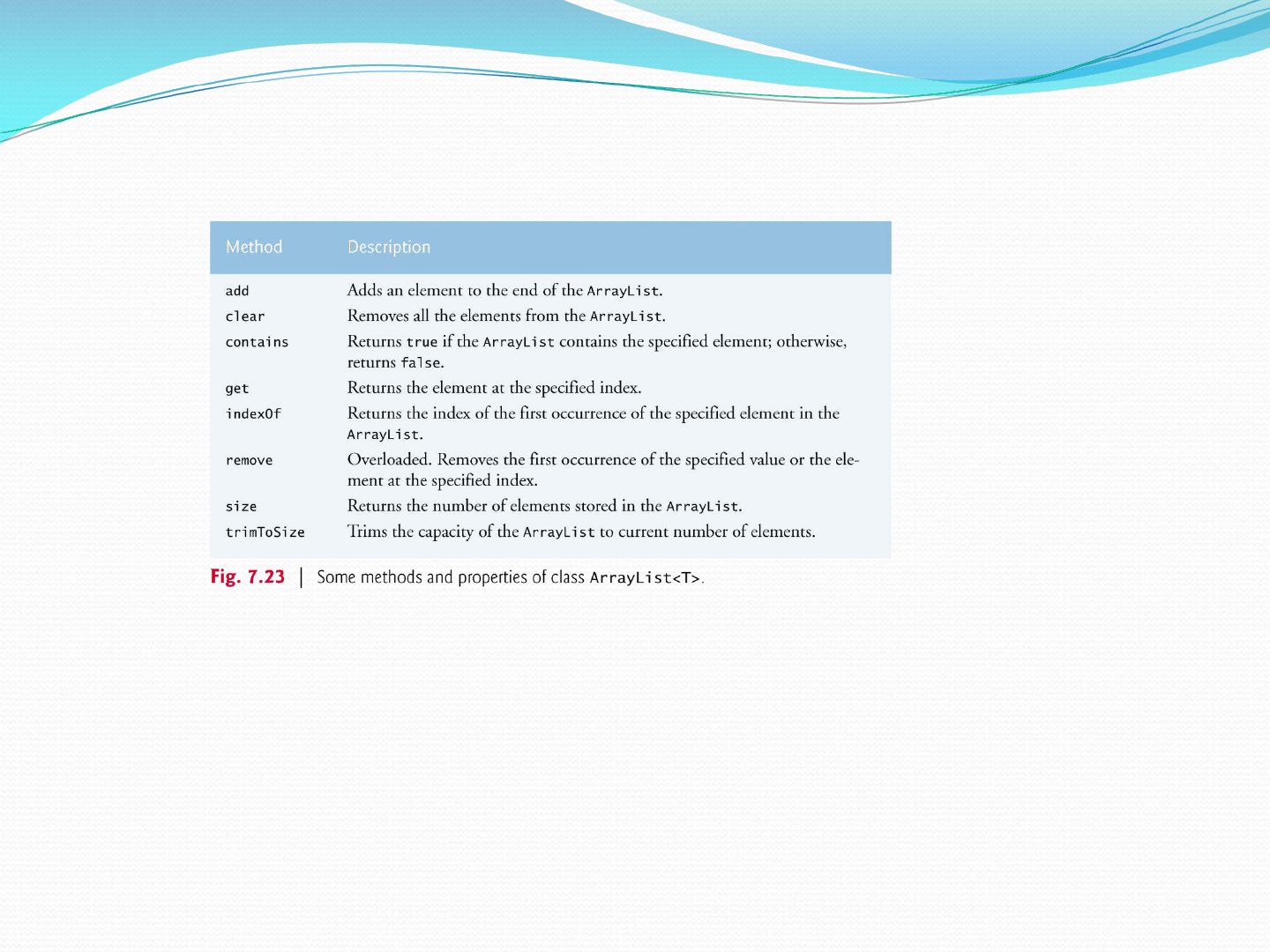
- 18 Slide 18
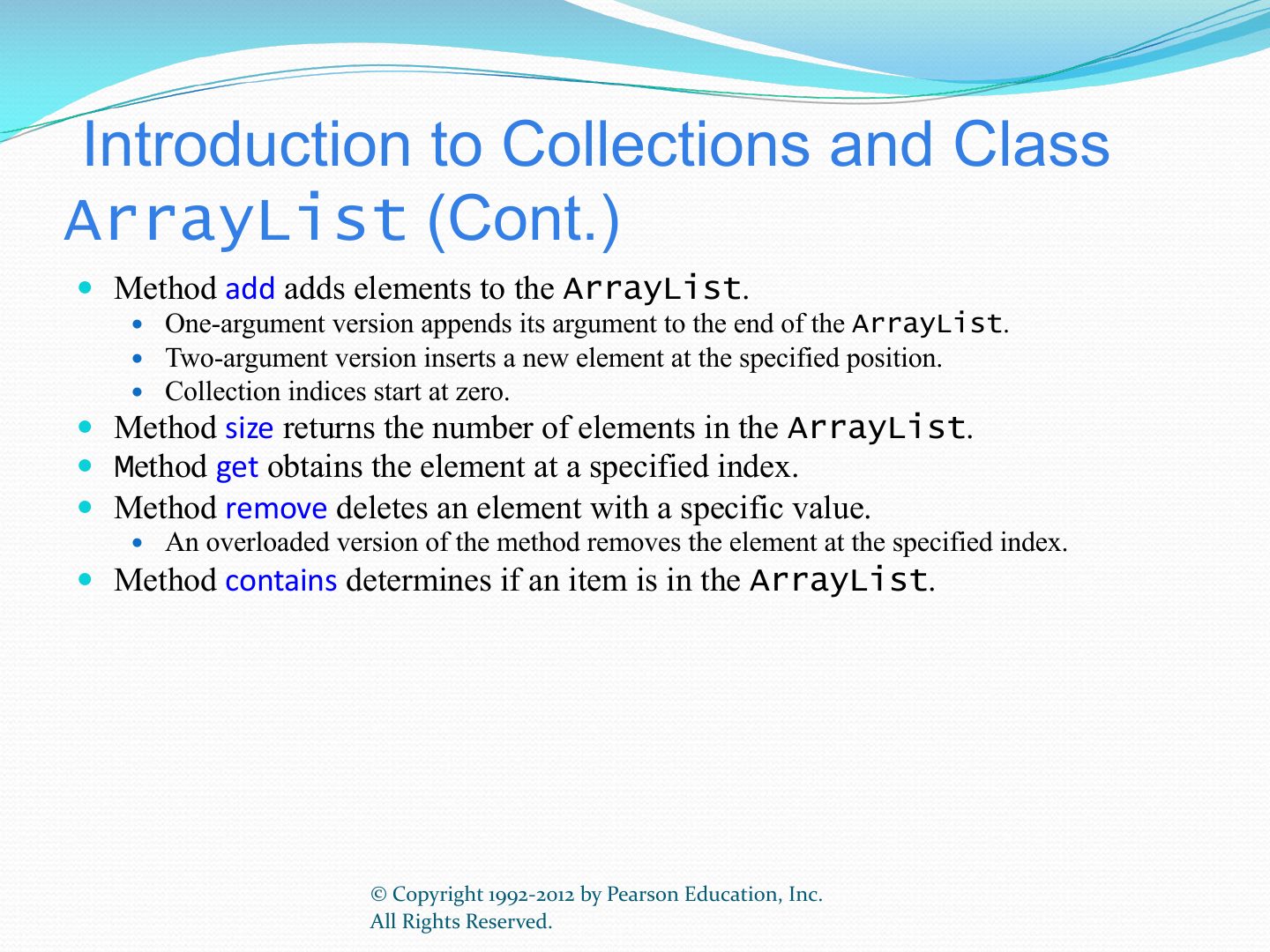
- 19 Introduction to Collections and Class ArrayList (Cont.)
- 20 Slide 20
- 21 Slide 21
- 22 Slide 22
- 23 Code Example: ArrayListCollection
- 24 and ArrayList Iterator
- 25 Collection Interface
- 26 Slide 26
- 27 and ArrayList Iterator
- 28 Method sort
- 29 Arrays static asList
- 30 Collection Method Sort
- 31 Slide 31
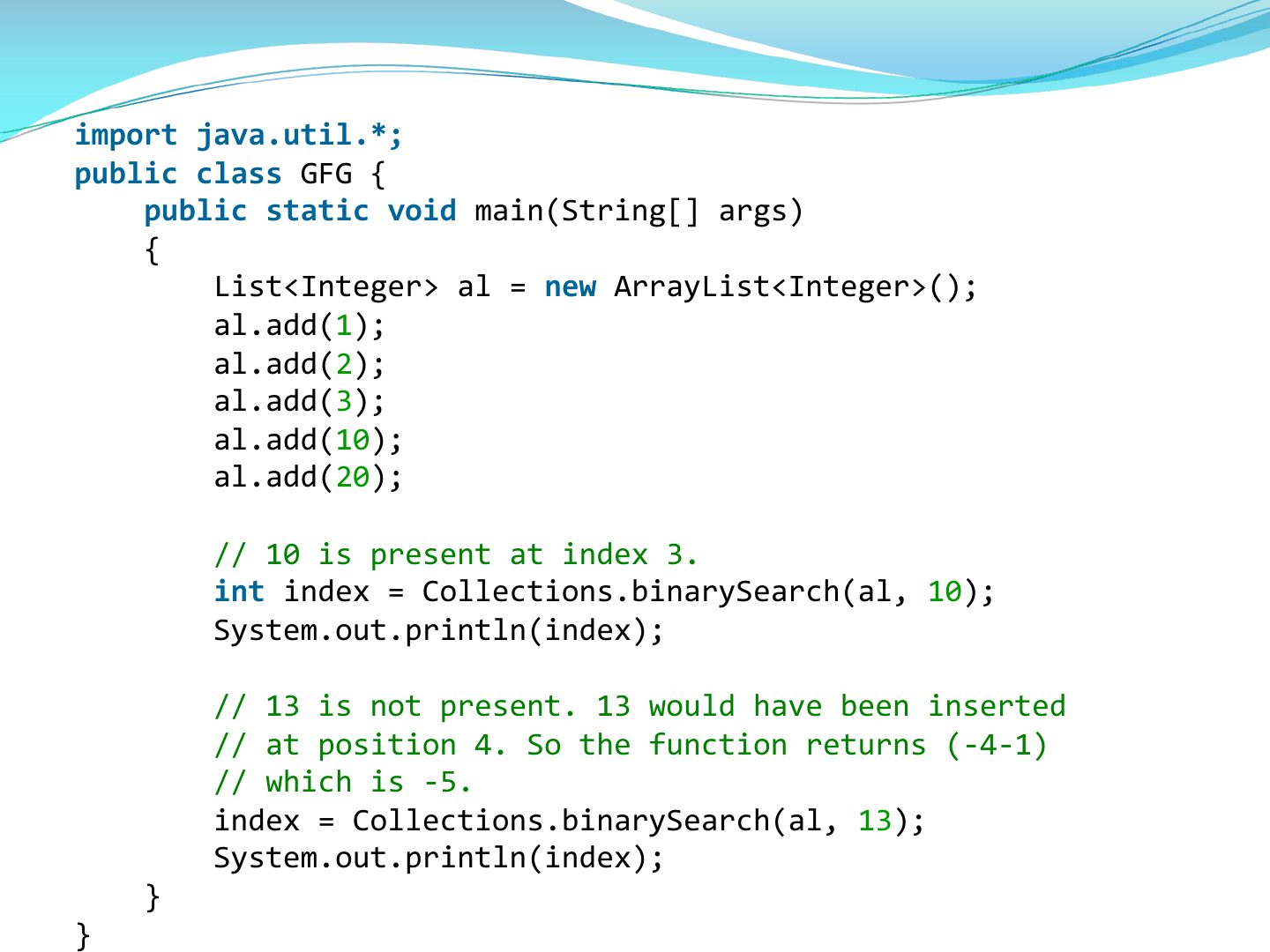
- 32 Binary Search
- 33 public class GFG { public static void main(String[] args) {
Slide 1
Objective
Java Collections Framework
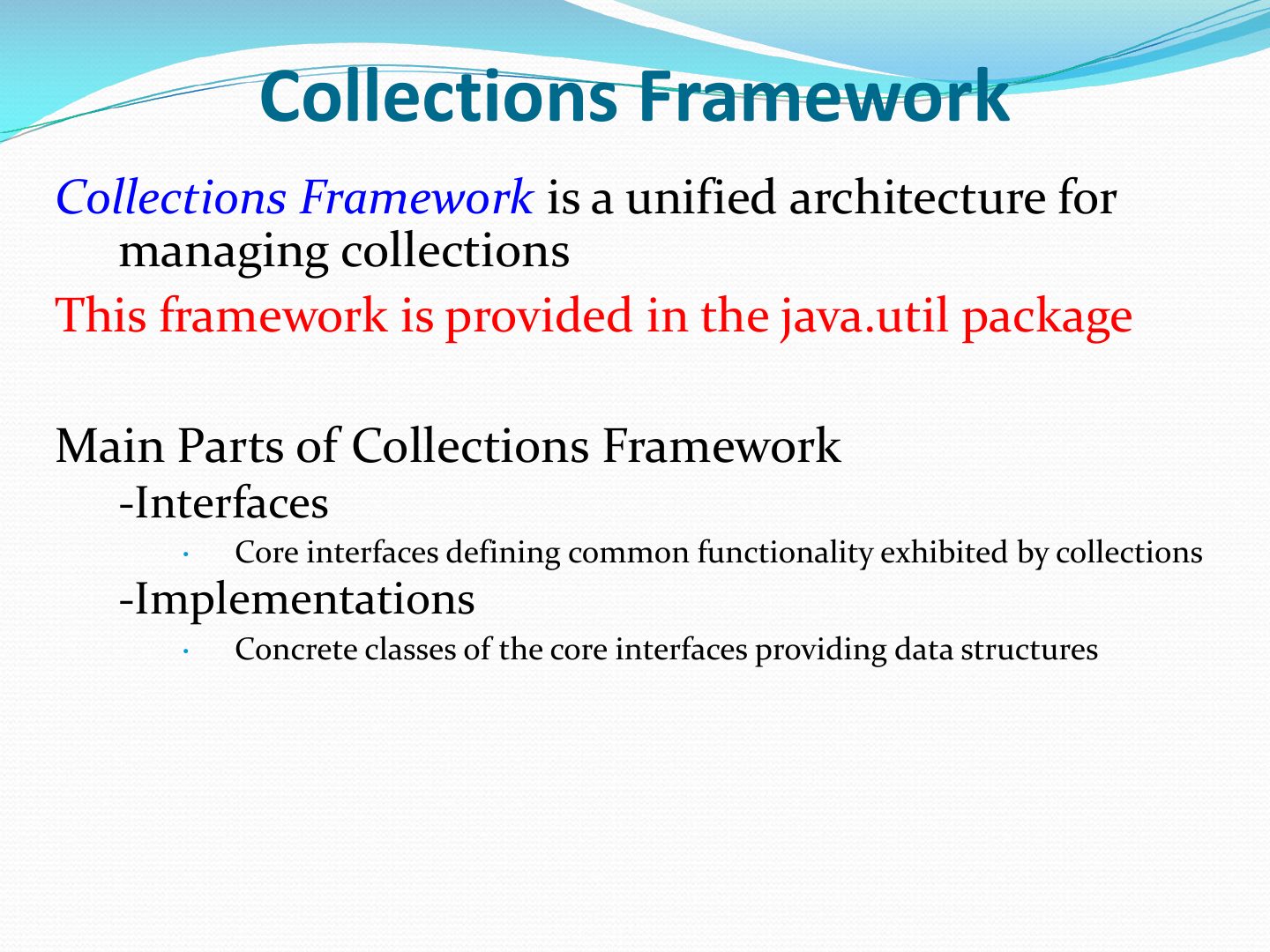
Collections Framework is a unified architecture for managing collections
Notes
Three parts: interfaces, implementations (classes), algorithms (static methods in Collections).
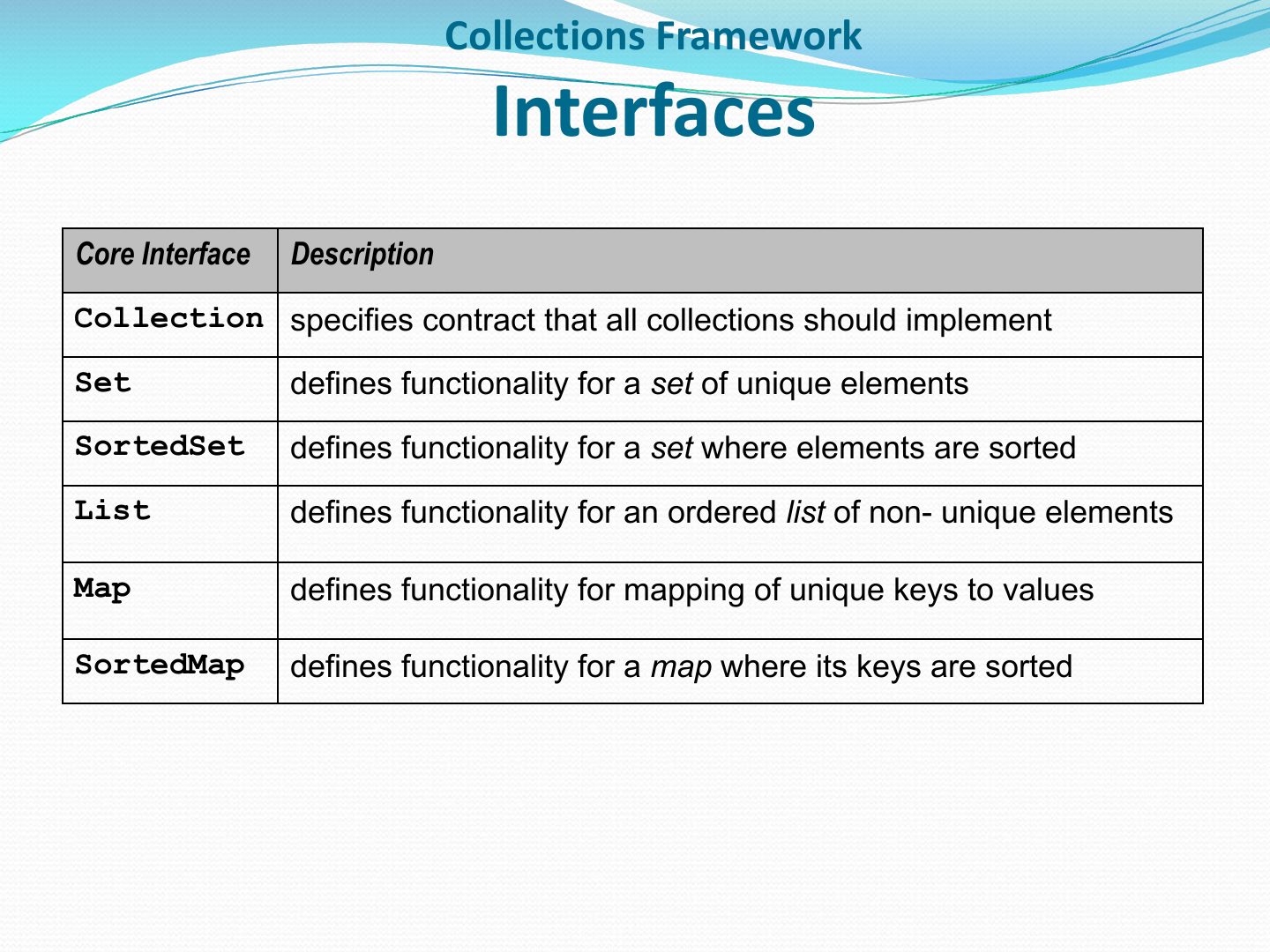
Interfaces
Notes
Core interfaces: Collection, Set (no duplicates), List (ordered, duplicates allowed), Queue, Map (key → value).
Exam angle
Collections Framework Implementations
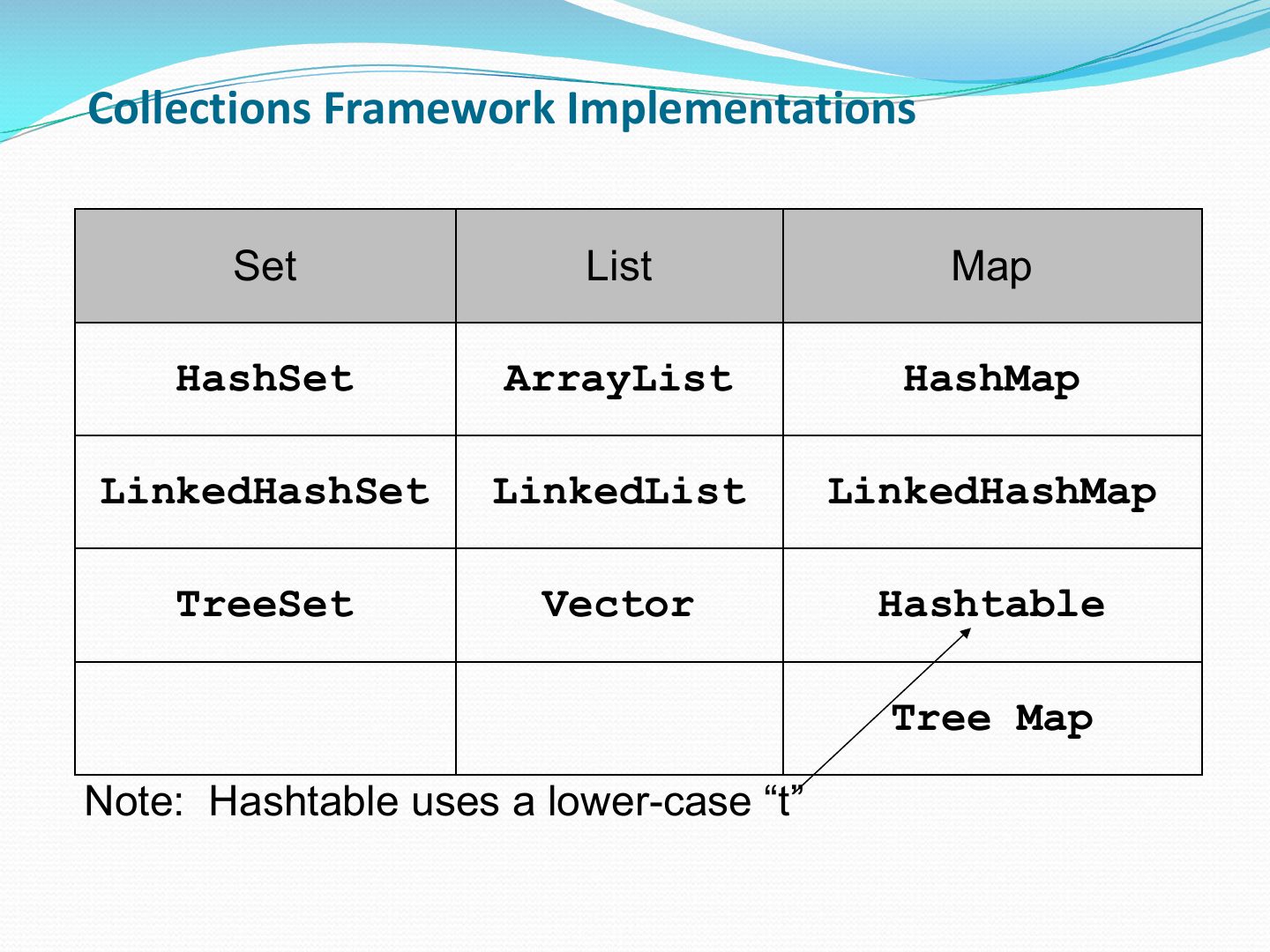
Collection
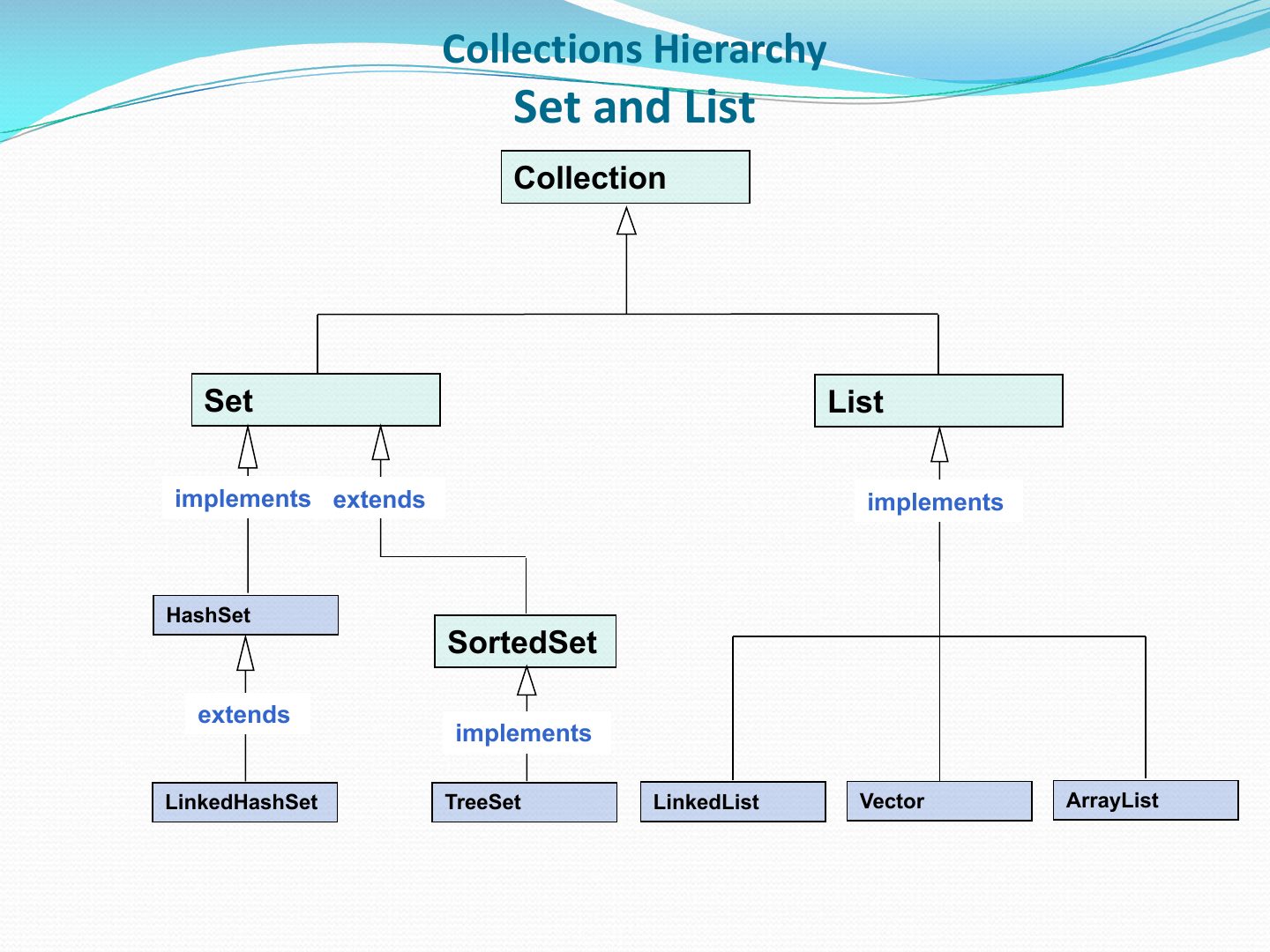
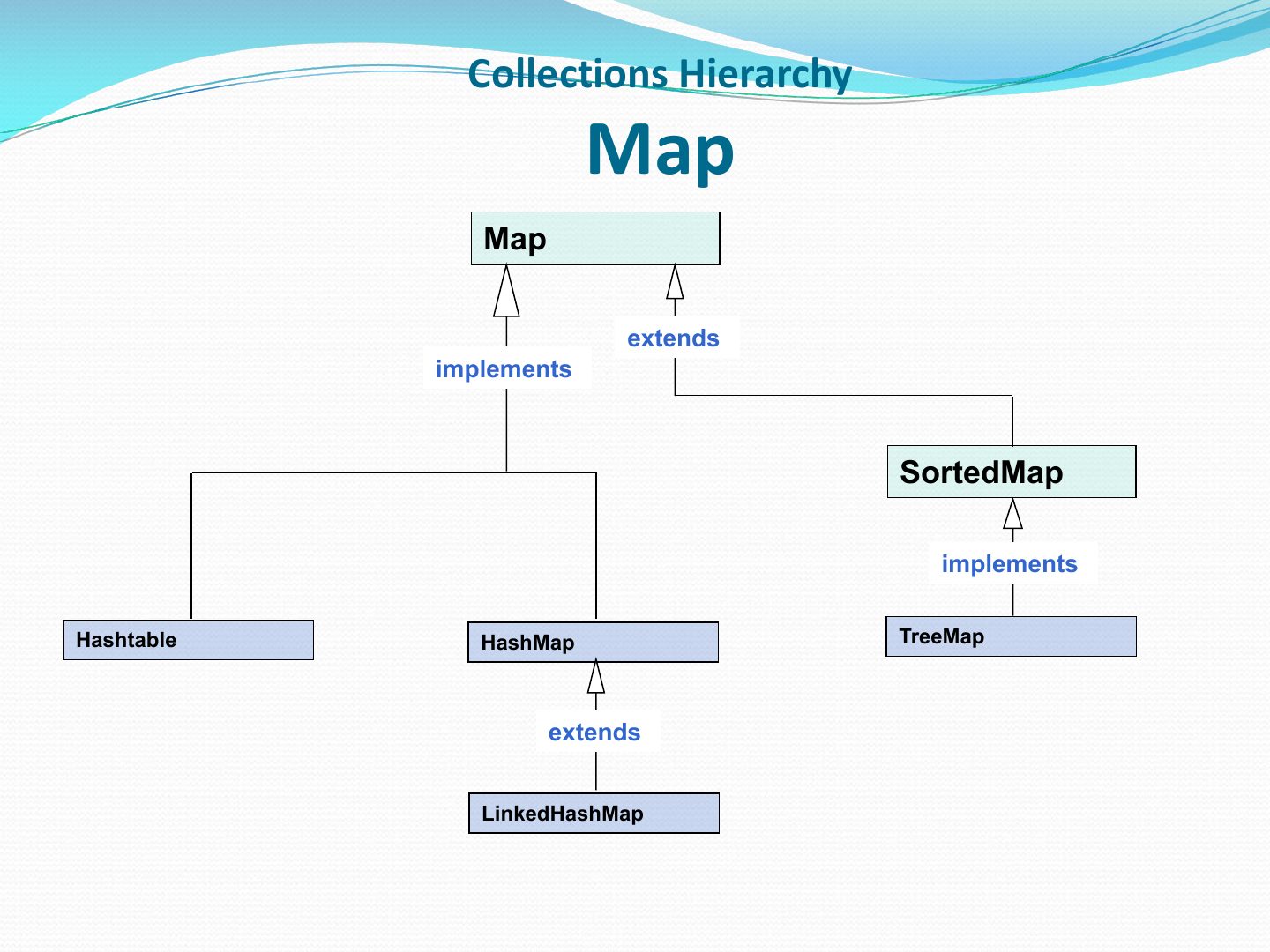
Map
Notes
Map is NOT a Collection: it stores key–value pairs.
Exam angle
Map extends the Collection interface.
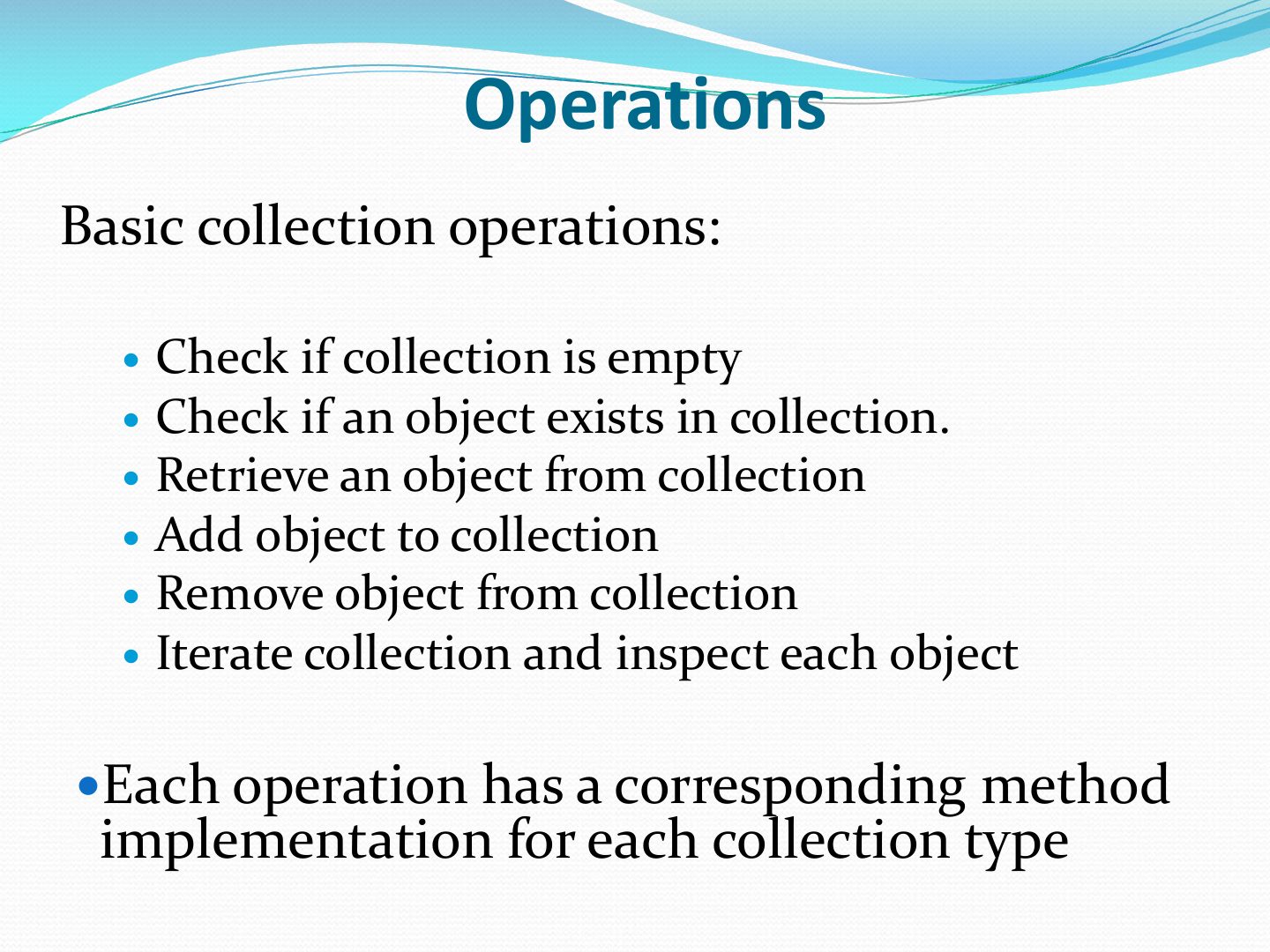
Operations
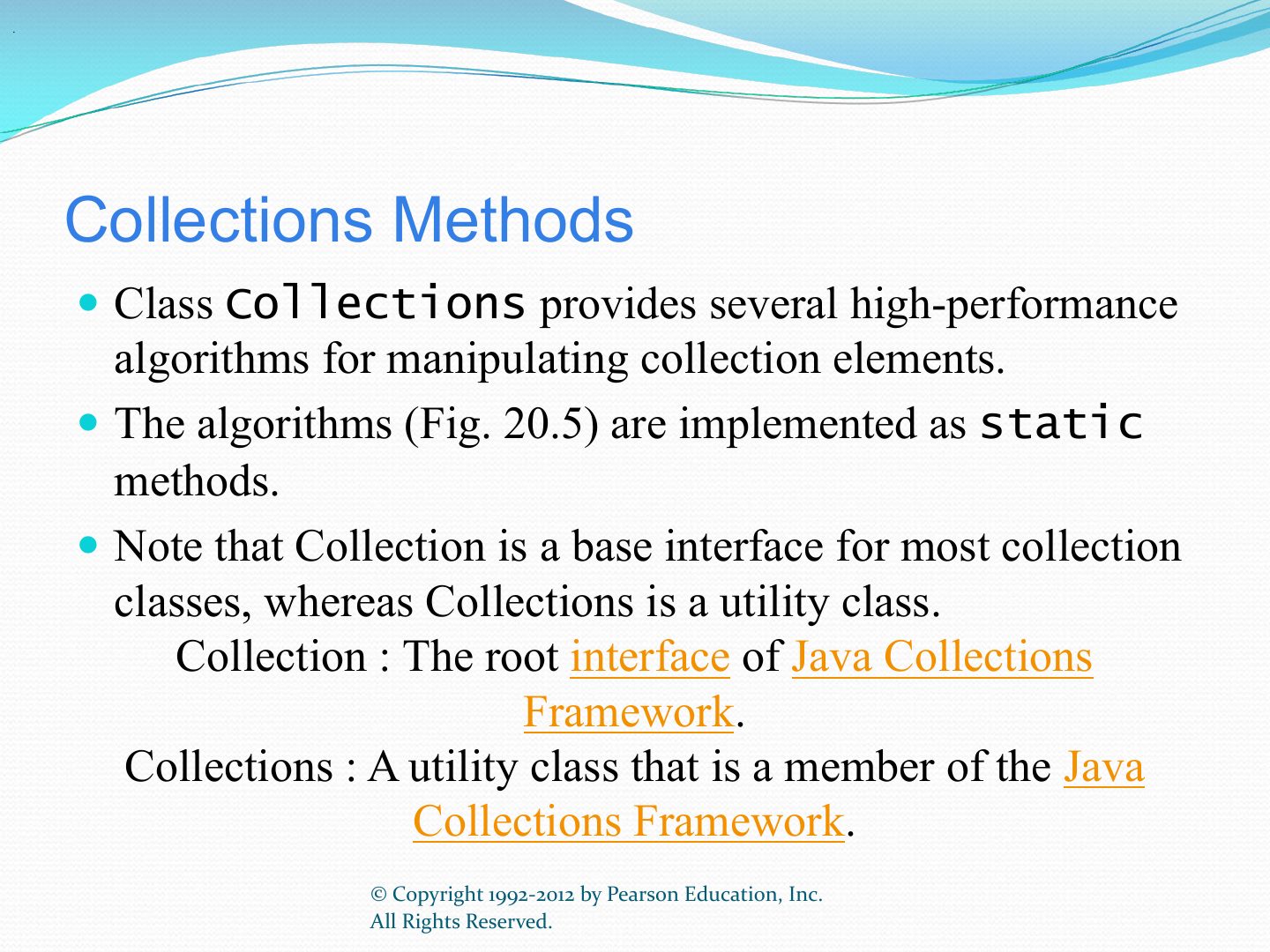
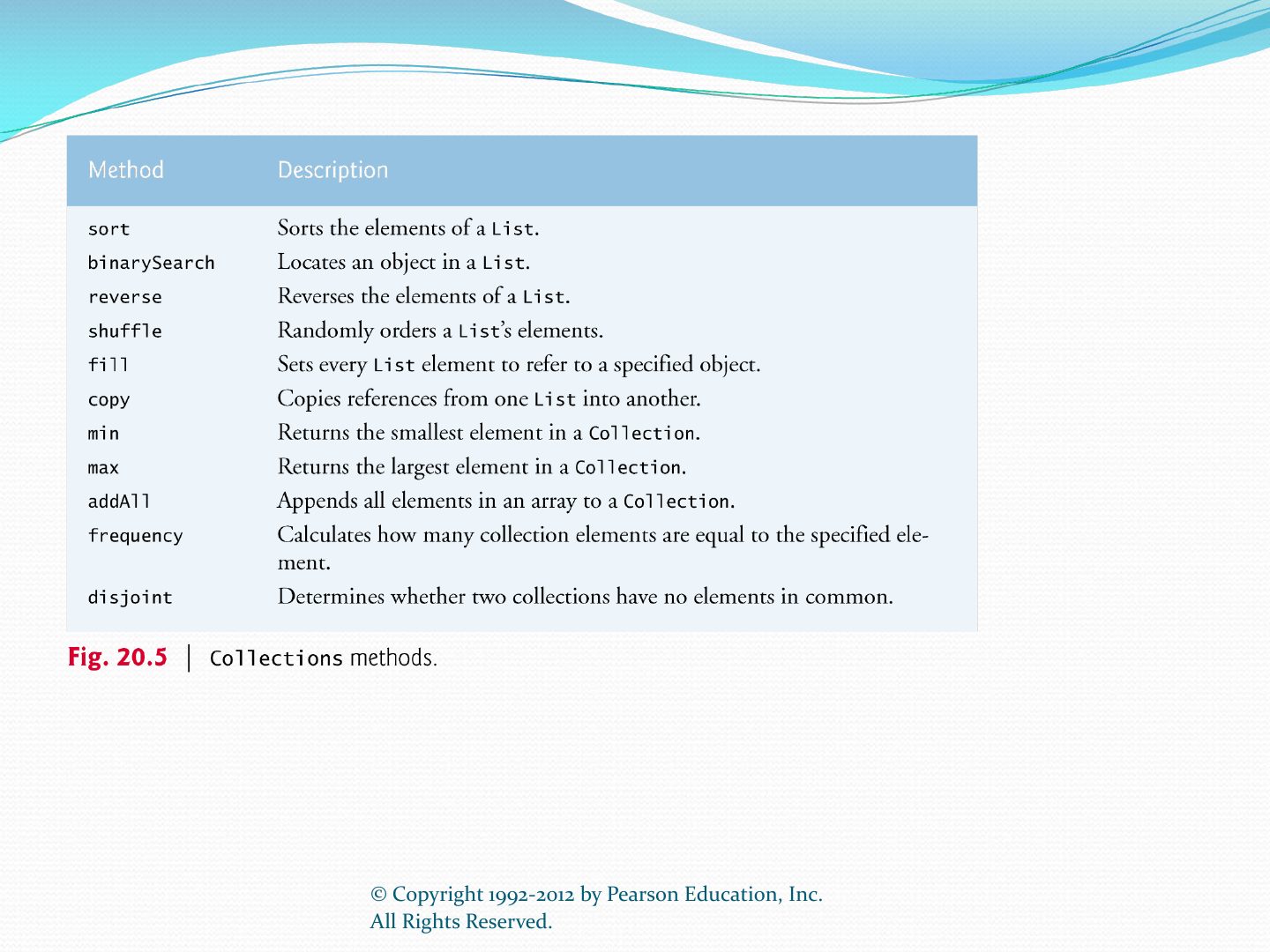
Collections Methods
Slide 11
Slide 12
A List (sometimes called a sequence ) is an
Array List
Array List
Notes
ArrayList: like an array but resizes automatically; holds objects only (Integer, not int).
Exam angle
An ArrayList<int> declaration:
Introduction to Collections and Class ArrayList
Introduction to Collections and Class ArrayList (Cont.)
Slide 18
Introduction to Collections and Class ArrayList (Cont.)
Notes
Methods: add, add(index, e), get, set, remove, size, contains, indexOf, clear, isEmpty.
Exam angle
Which returns the number of elements in an ArrayList list?
Slide 20
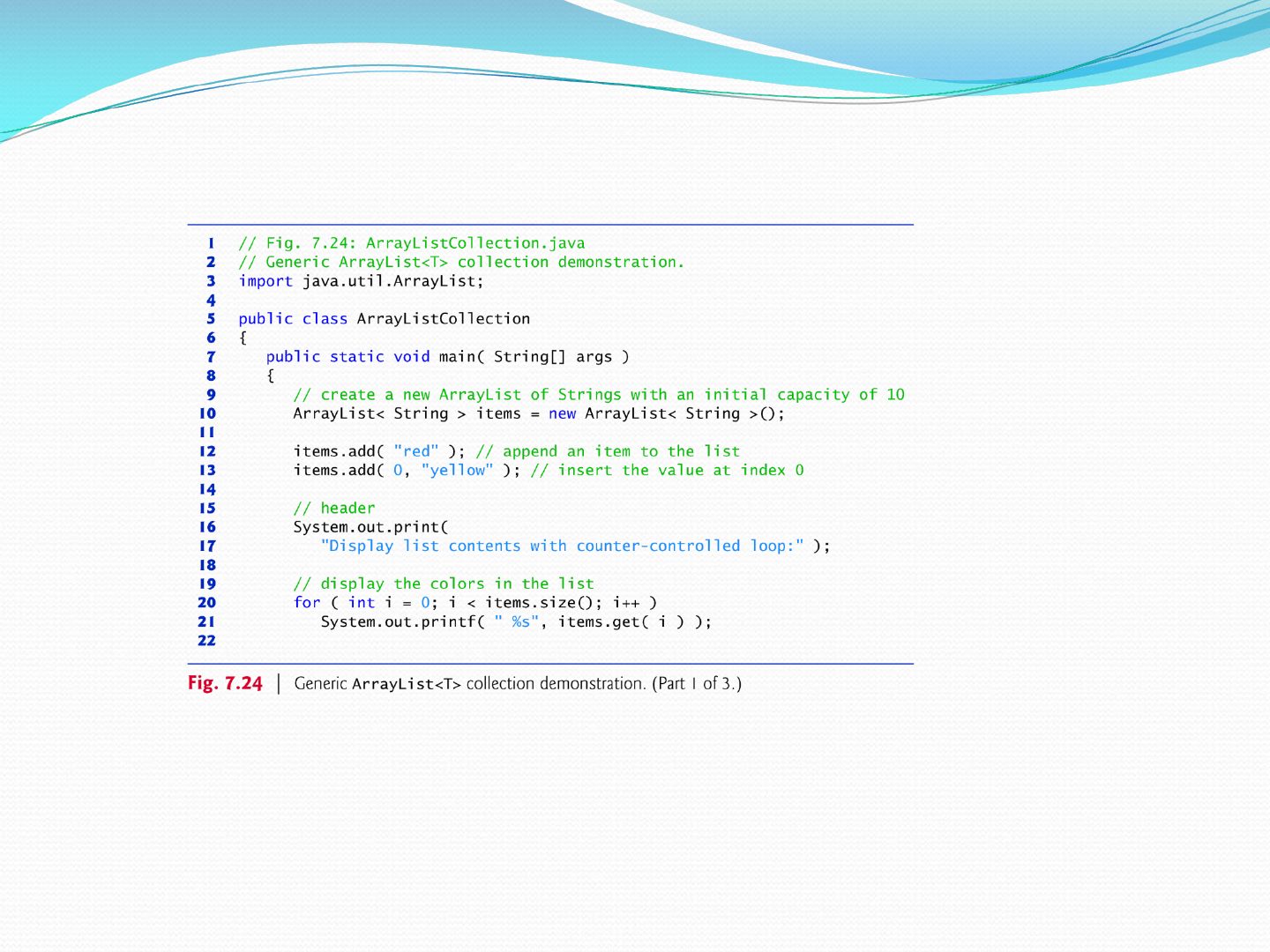
Slide 21
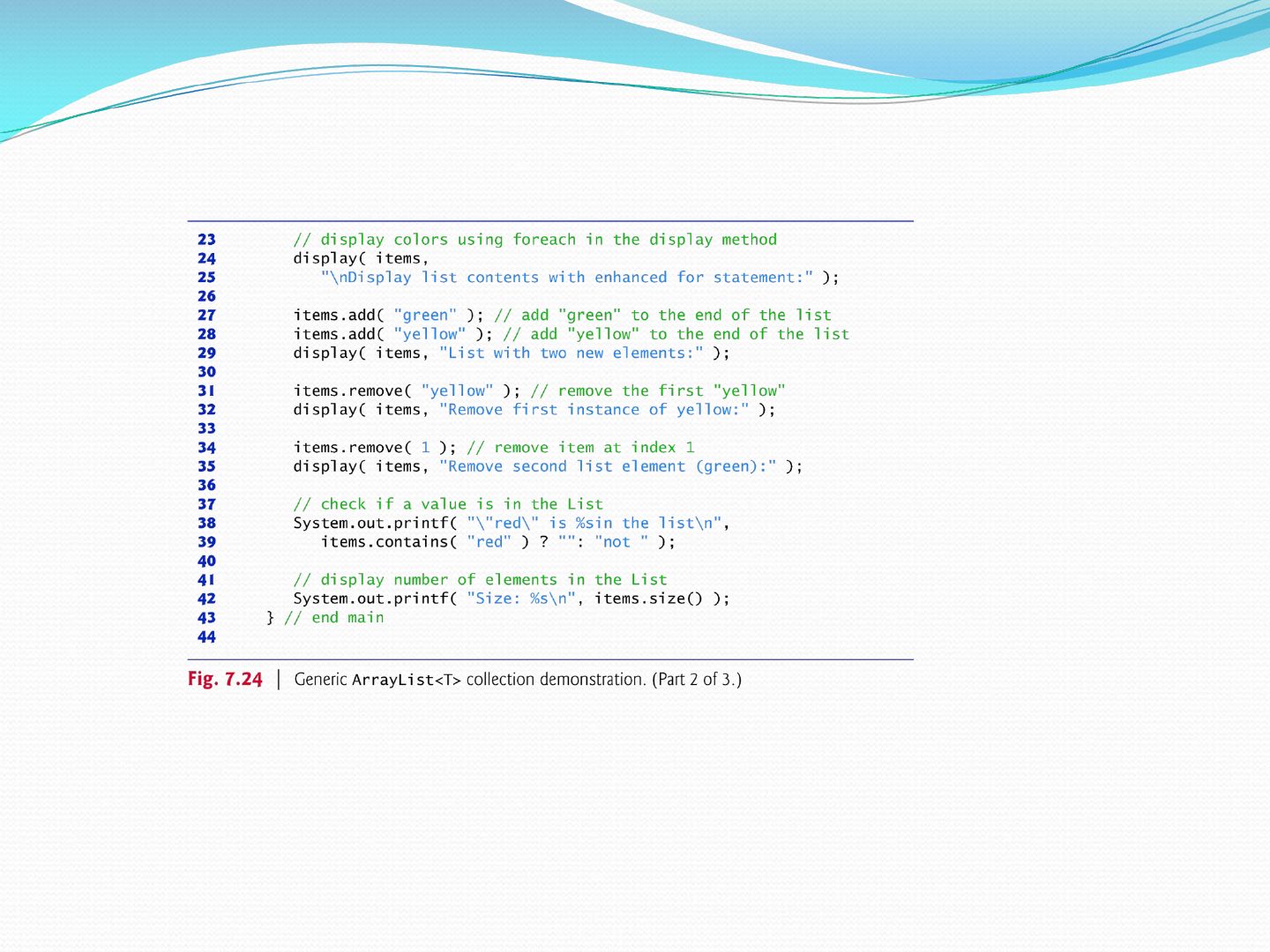
Slide 22
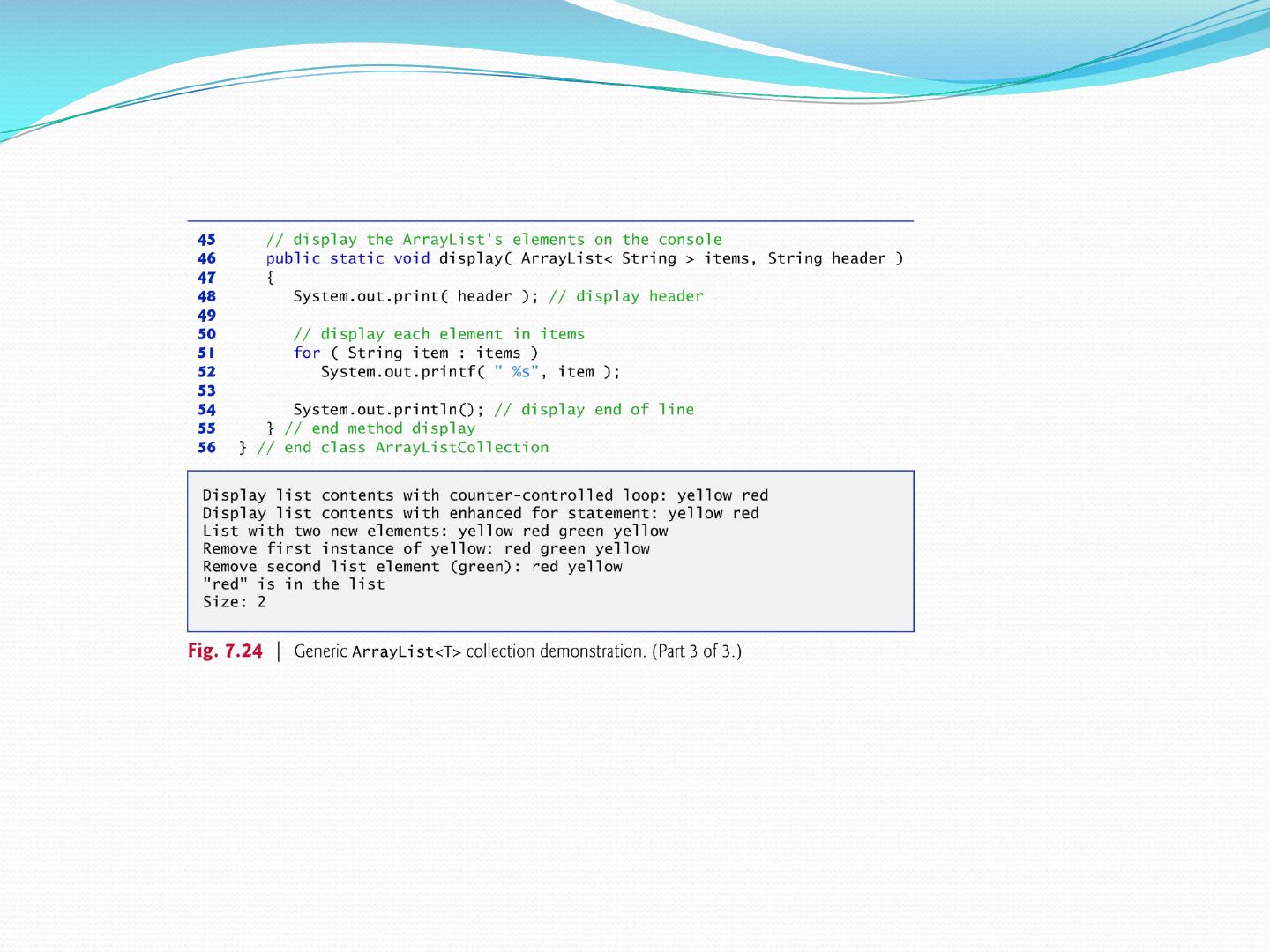
Code Example: ArrayListCollection
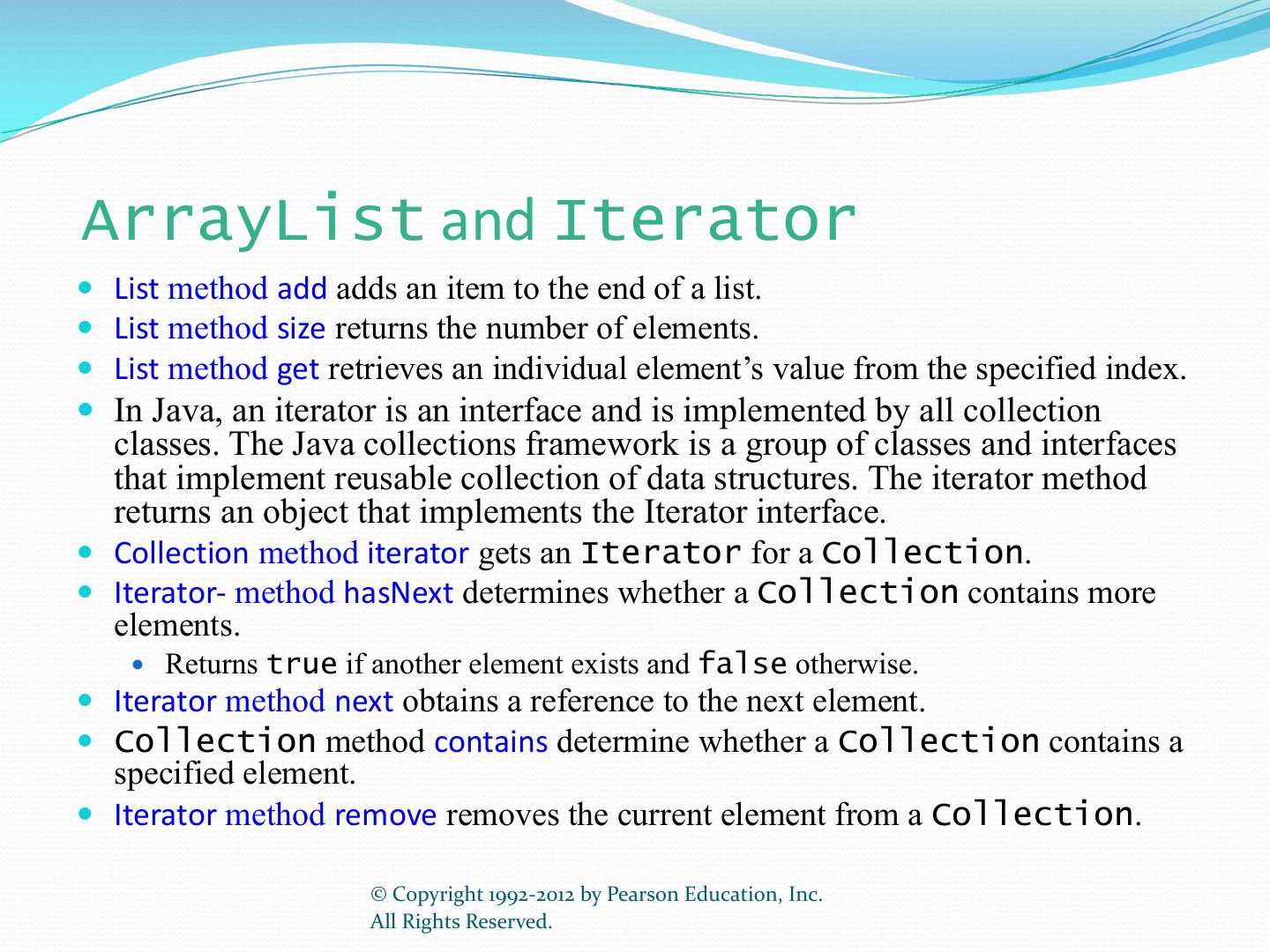
and ArrayList Iterator
Notes
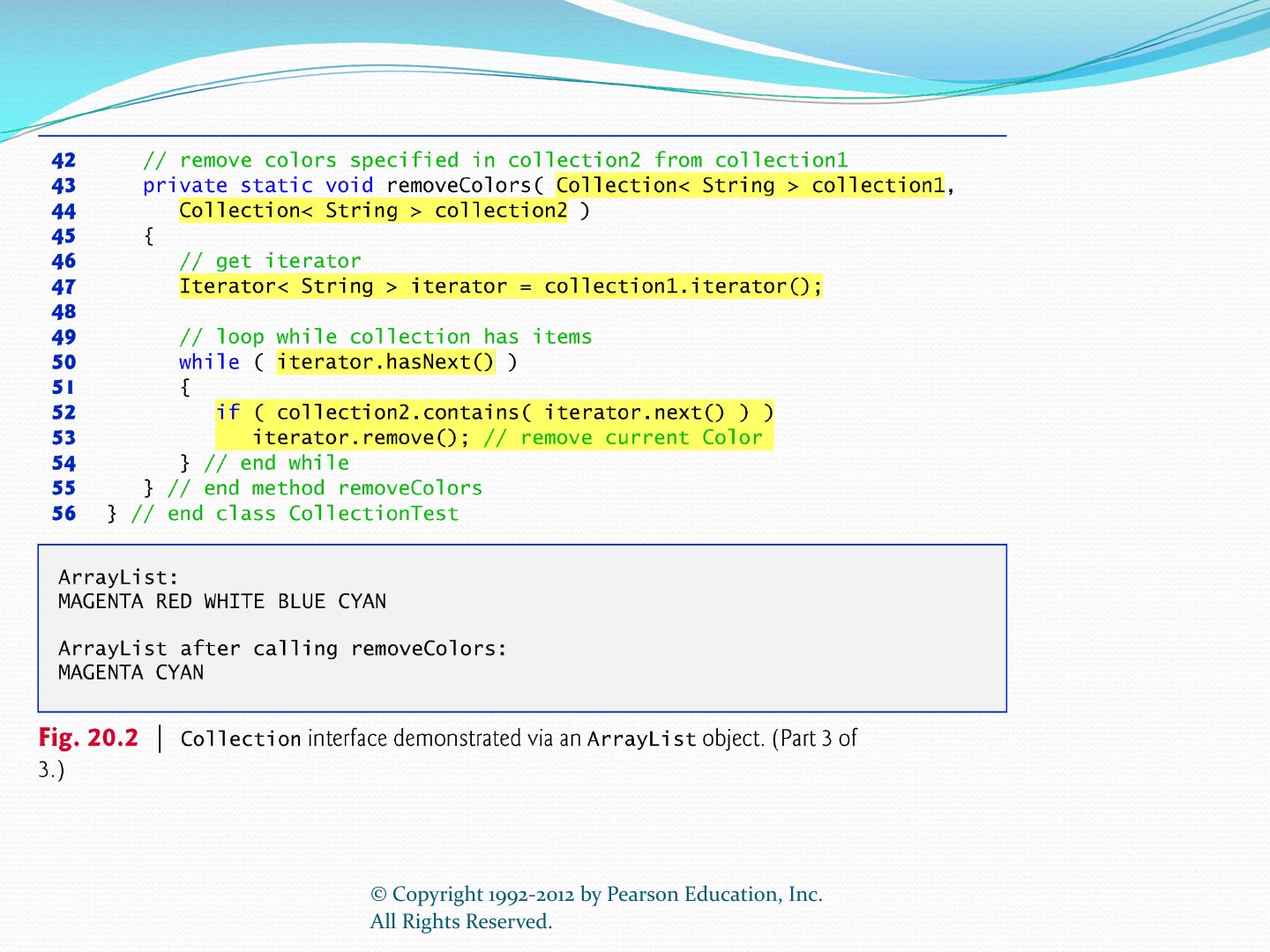
Iterator: hasNext(), next(), remove(): the safe way to remove while iterating.
Exam angle
Removing elements from a list inside a for-each loop is safe.
- Use an Iterator’s remove() (else ConcurrentModificationException).
Collection Interface
Slide 26
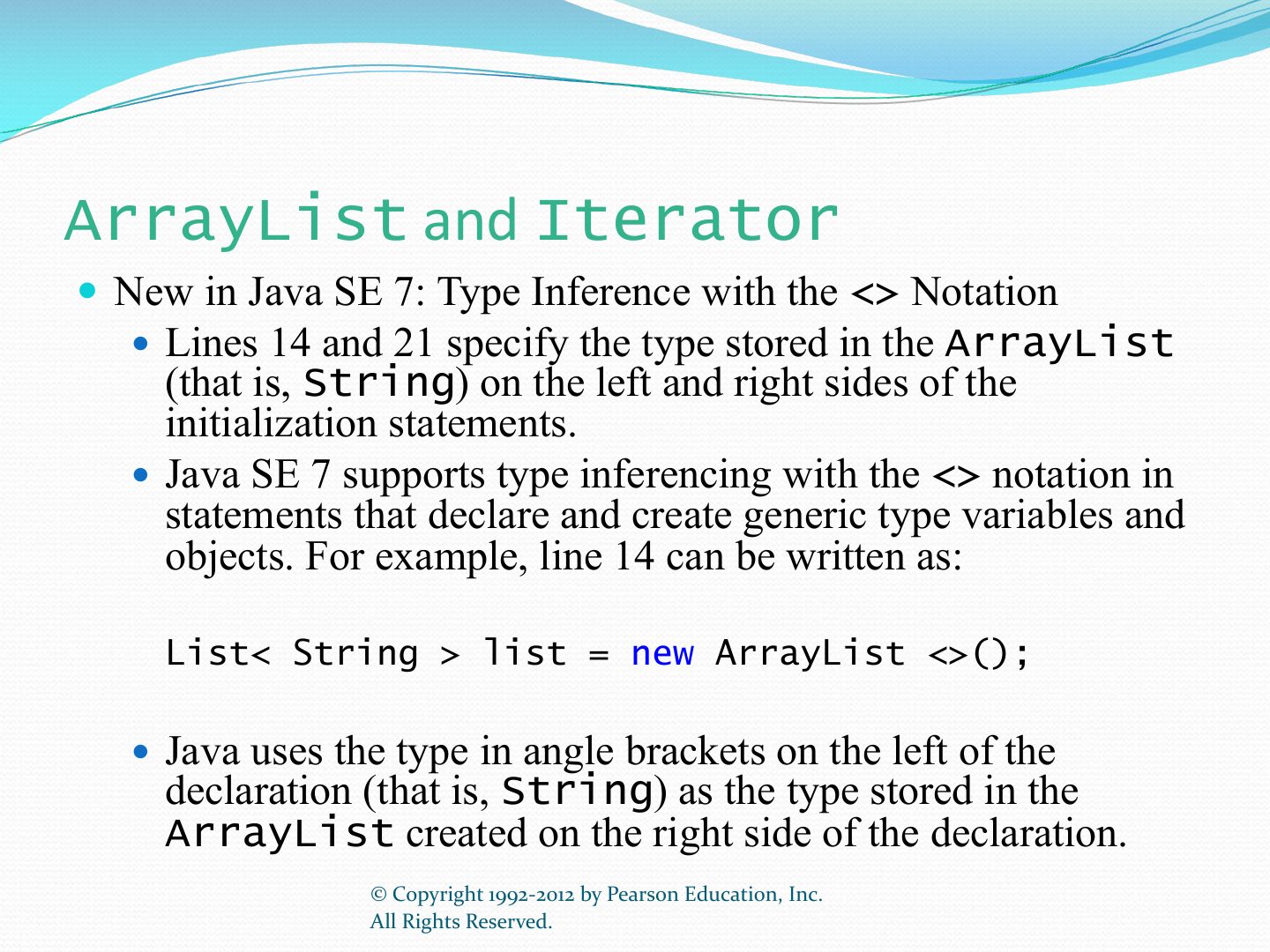
and ArrayList Iterator
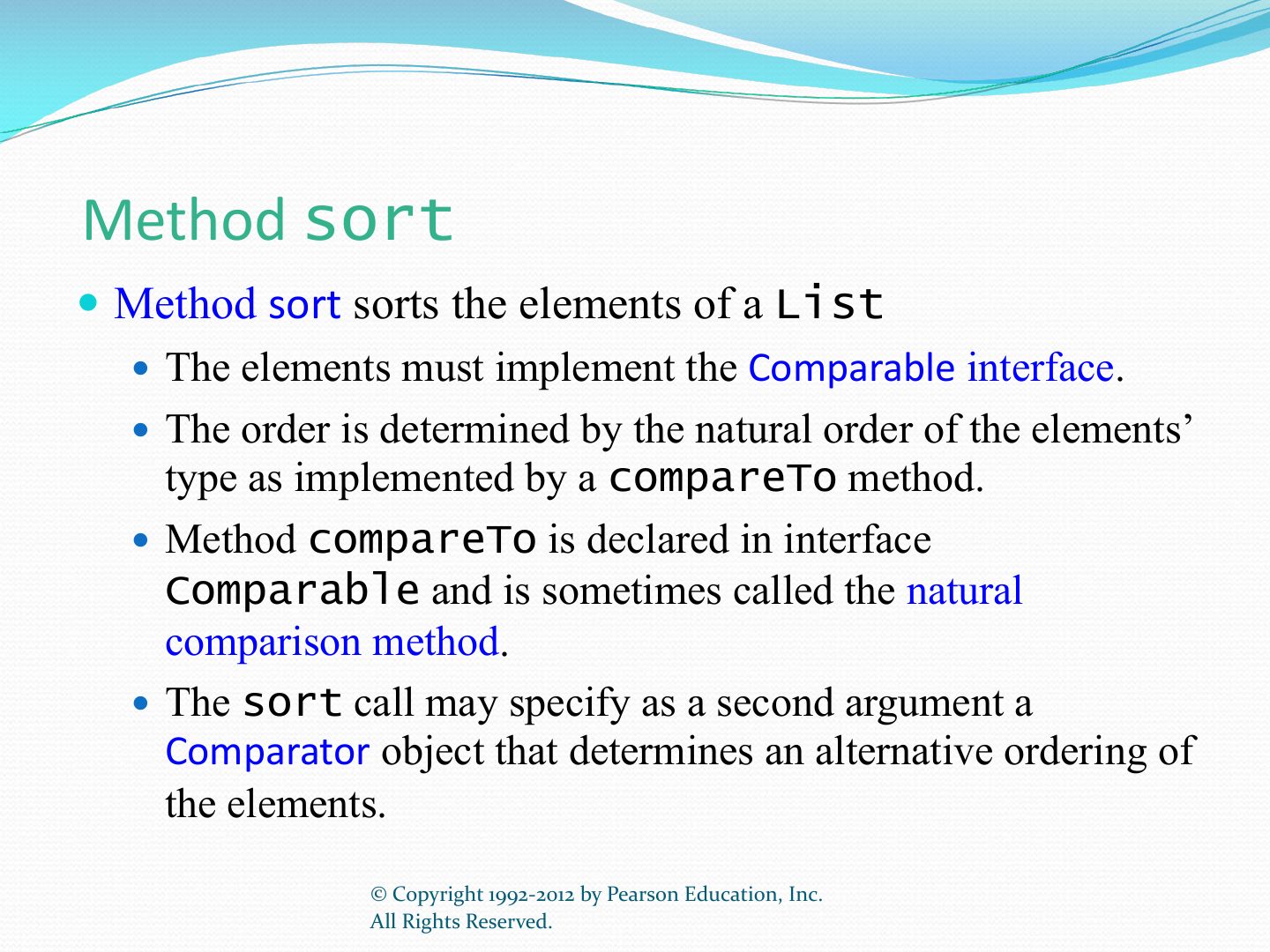
Method sort
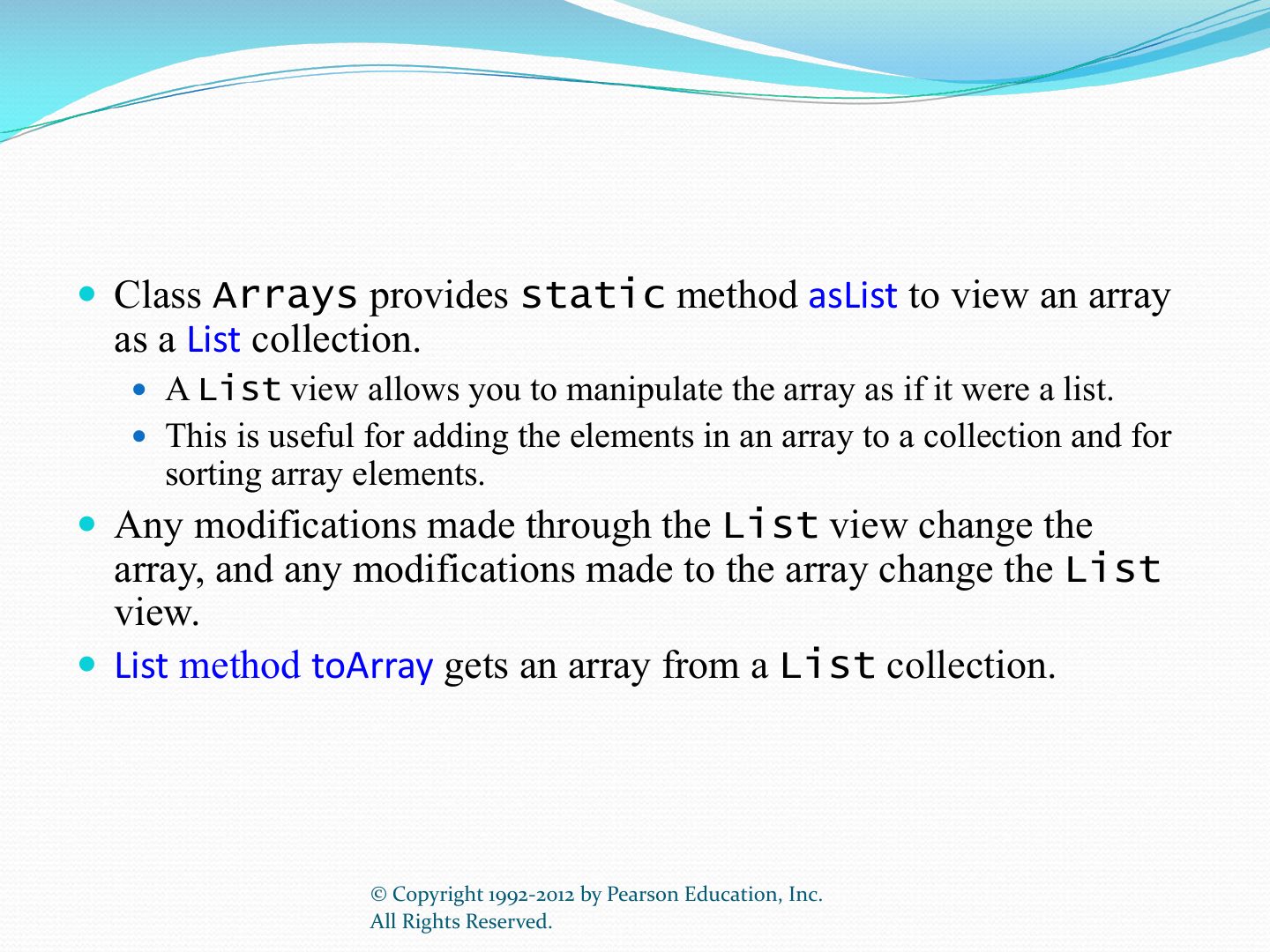
Arrays static asList
Collection Method Sort
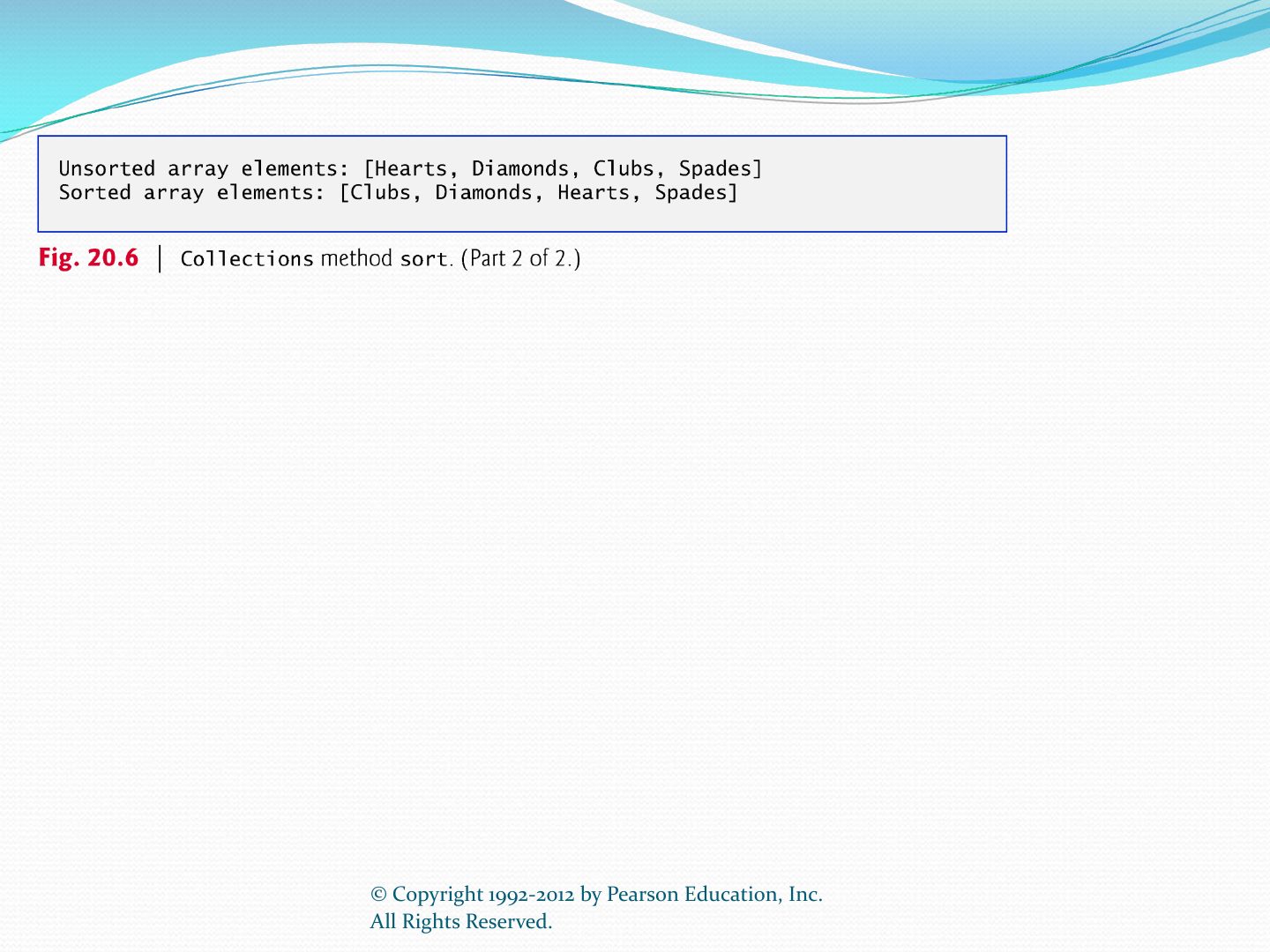
Slide 31
Binary Search
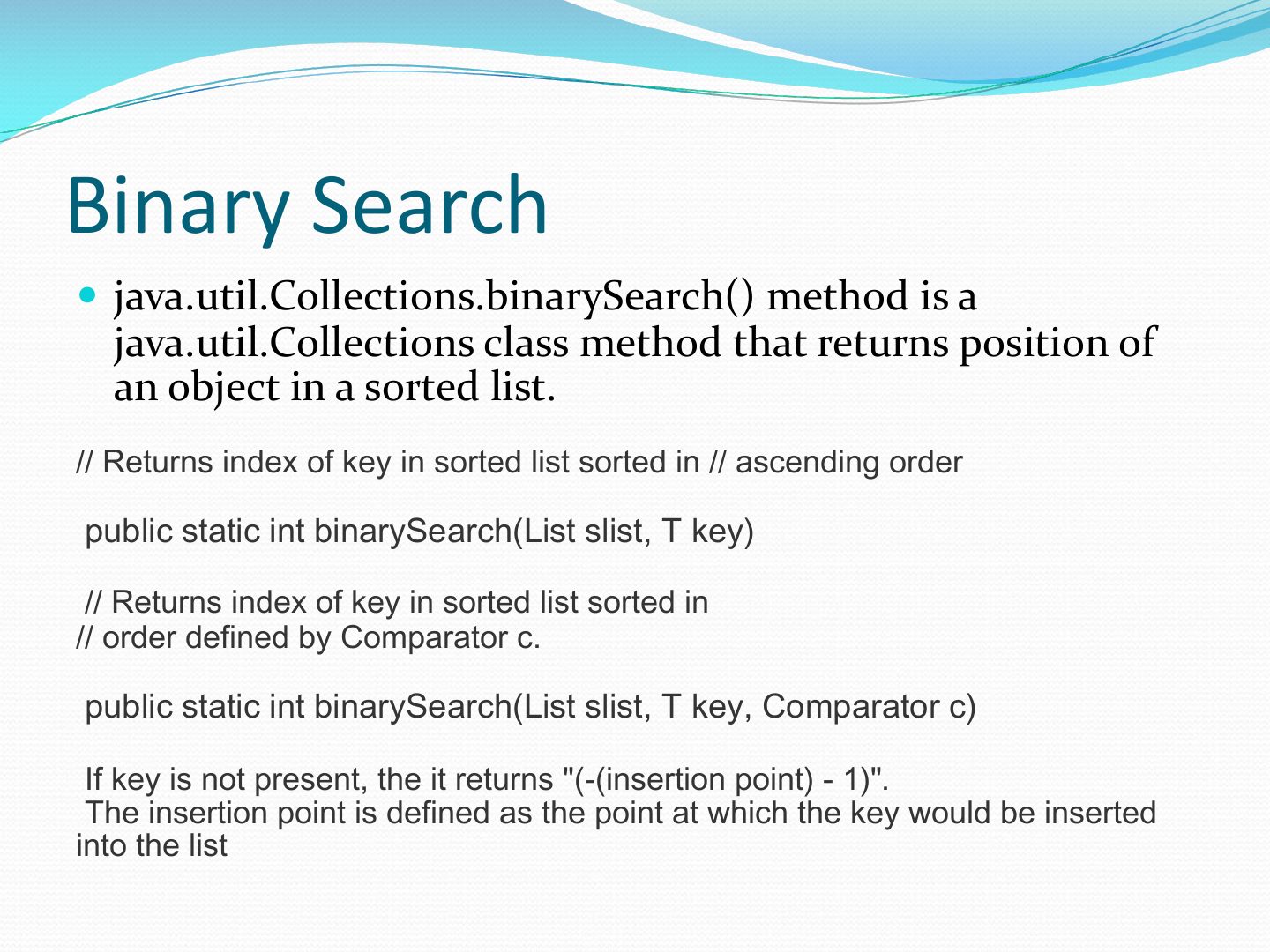
Exam angle
Collections.binarySearch requires the list to be:
public class GFG { public static void main(String[] args) {