Which keyword makes a class inherit from another?
Inheritance
Superclasses and subclasses, direct vs. indirect superclasses and Object, is-a vs. has-a, the CommissionEmployee / BasePlusCommissionEmployee example with and without inheritance, constructors and super(...), overriding with @Override, and private members in a hierarchy.
How to read this page
Every original slide is shown unchanged. Yellow marks on a slide point to a numbered note: hover or tap a mark to jump to its note, and hover a note to see its marks. Questions tagged Past exam appeared on a real paper; Prediction questions are likely angles, not confirmed. Pick an answer to each question: a wrong pick tells you why it is wrong, so you can try again.
All 26 slides
- 1 Inheritance
- 2 Learning Outcomes
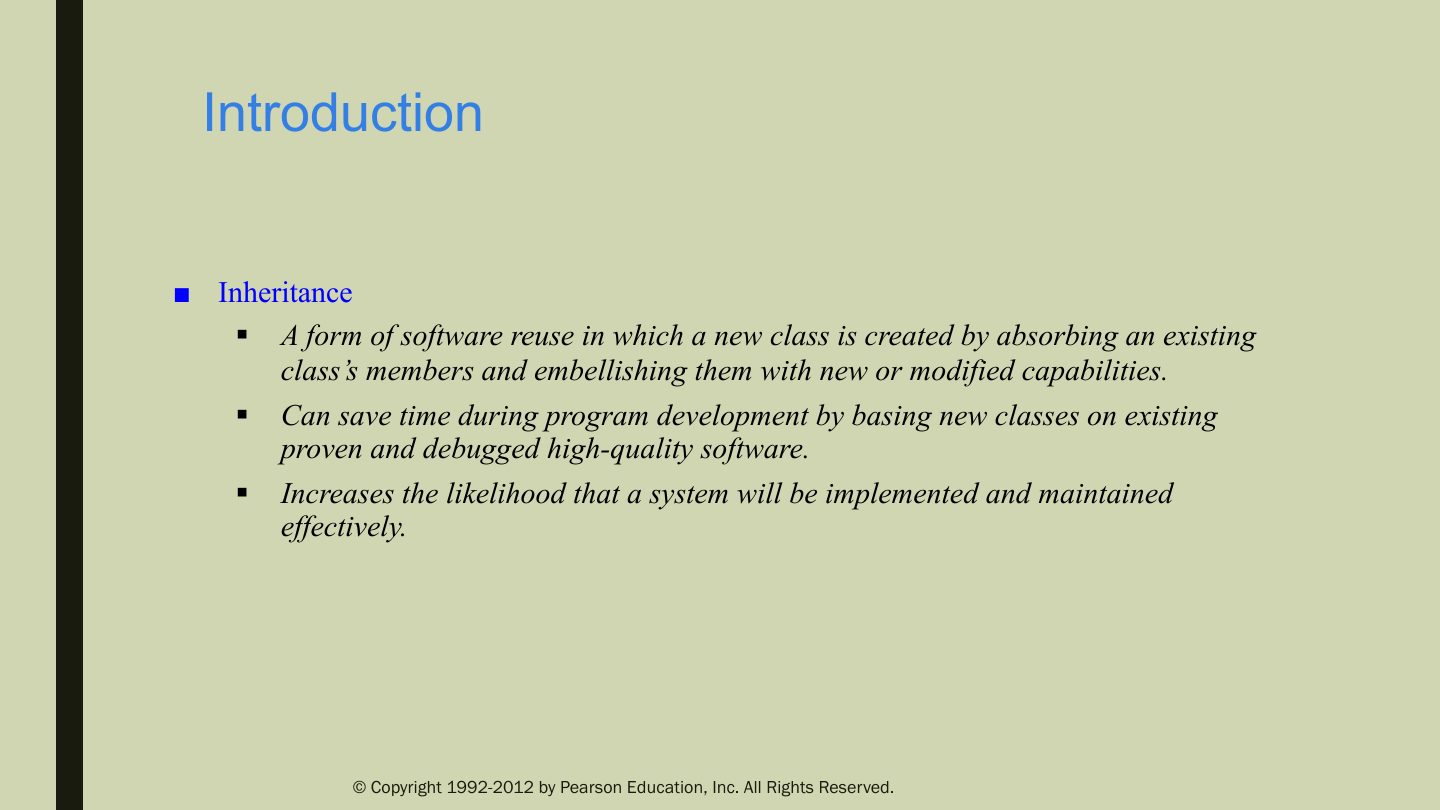
- 3 Introduction
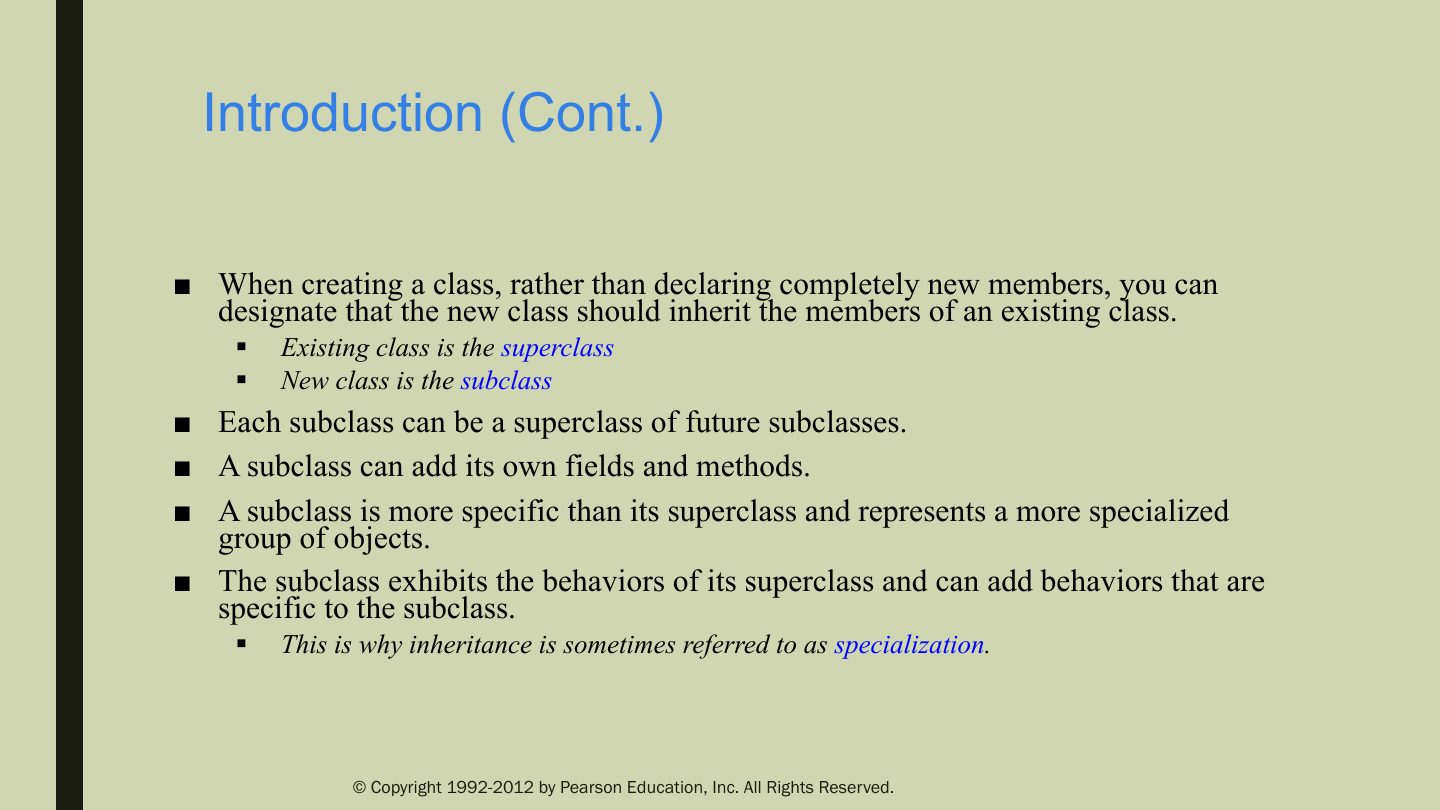
- 4 Introduction (Cont.)
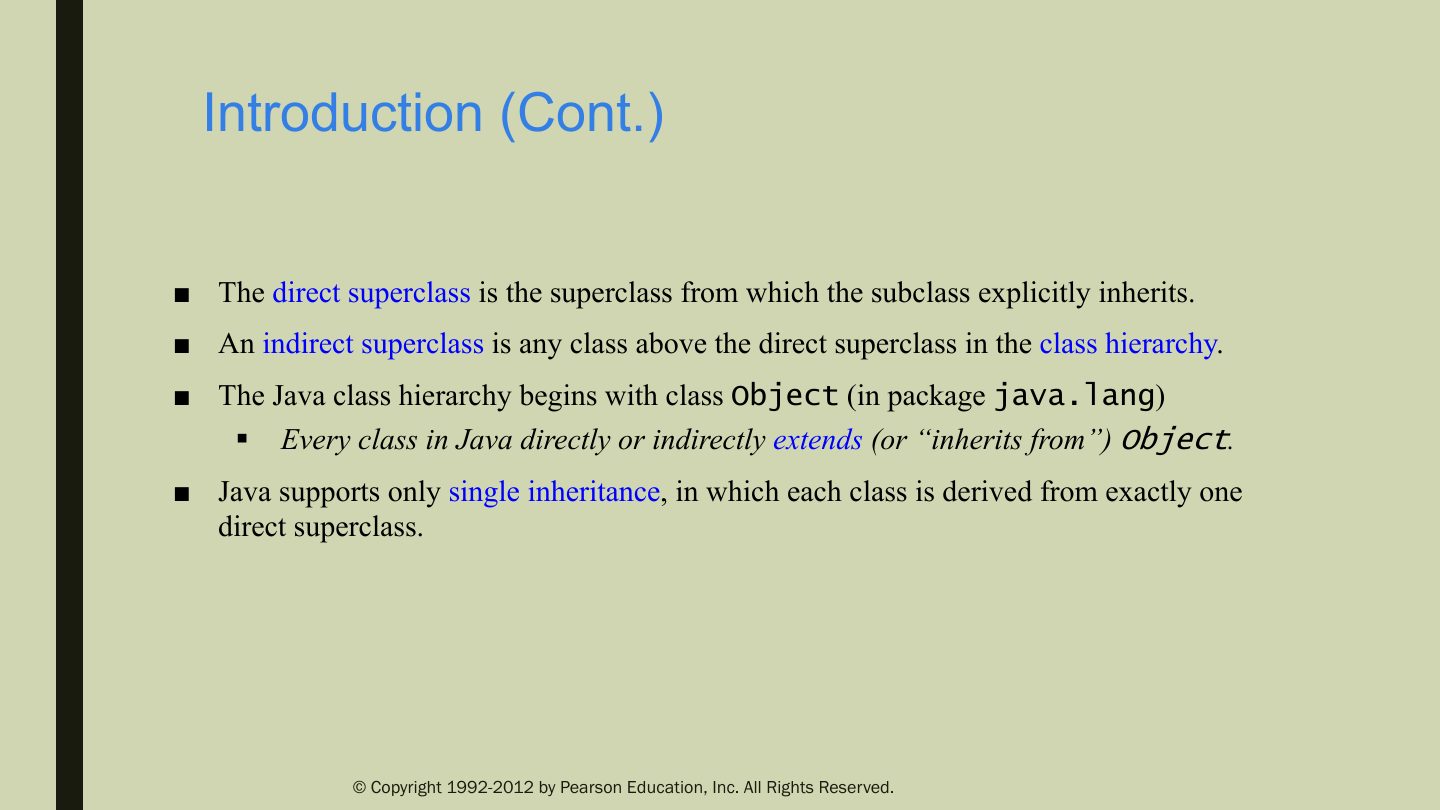
- 5 Introduction (Cont.)
- 6 Inheritance
- 7 Superclasses and Subclasses
- 8 Slide 8
- 9 Superclasses and Subclasses (Cont.)
- 10 Slide 10
- 11 Relationship
- 12 Superclasses and Subclasses (Cont.)
- 13 Superclasses and Subclasses (Cont.)
- 14 Example Without Using Inheritance
- 15 See code Without Using Inheritance
- 16 Relationship between Superclasses and Subclasses
- 17 Example Using Inheritance
- 18 See Code Using Inheritance
- 19 Creating and Using a CommissionEmployee Class
- 20 Creating and Using a CommissionEmployee Class (Cont.)
- 21 Creating and Using a BasePlus- CommissionEmployee Class
- 22 Creating and Using a BasePlus- CommissionEmployee Class (Cont.)
- 23 Creating and Using a BasePlus- CommissionEmployee Class (Cont.)
- 24 Creating a CommissionEmployee – BasePlusCommissionEmployee Inheritance Hierarchy
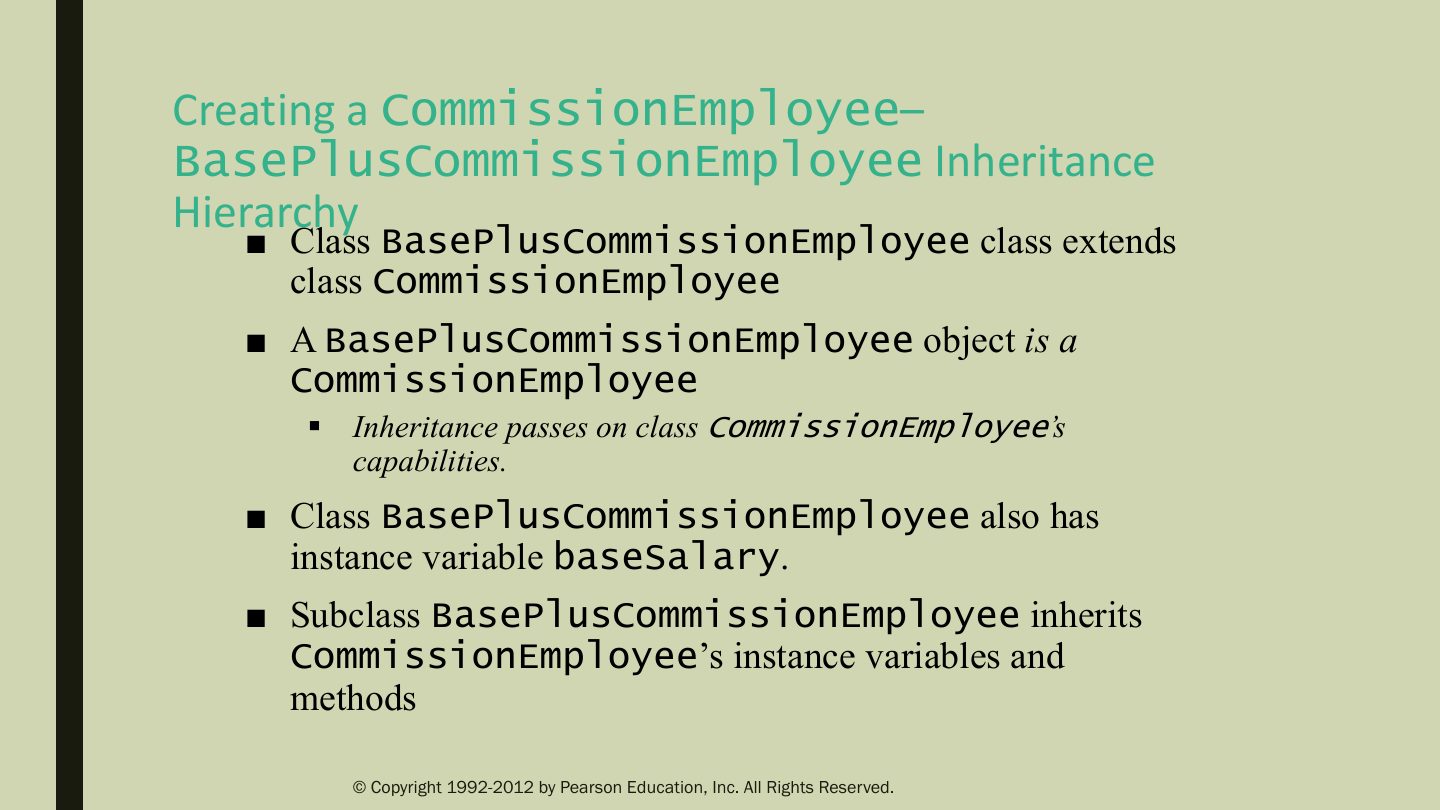
- 25 Creating a CommissionEmployee – BasePlusCommissionEmployee Inheritance Hierarchy (Cont.)
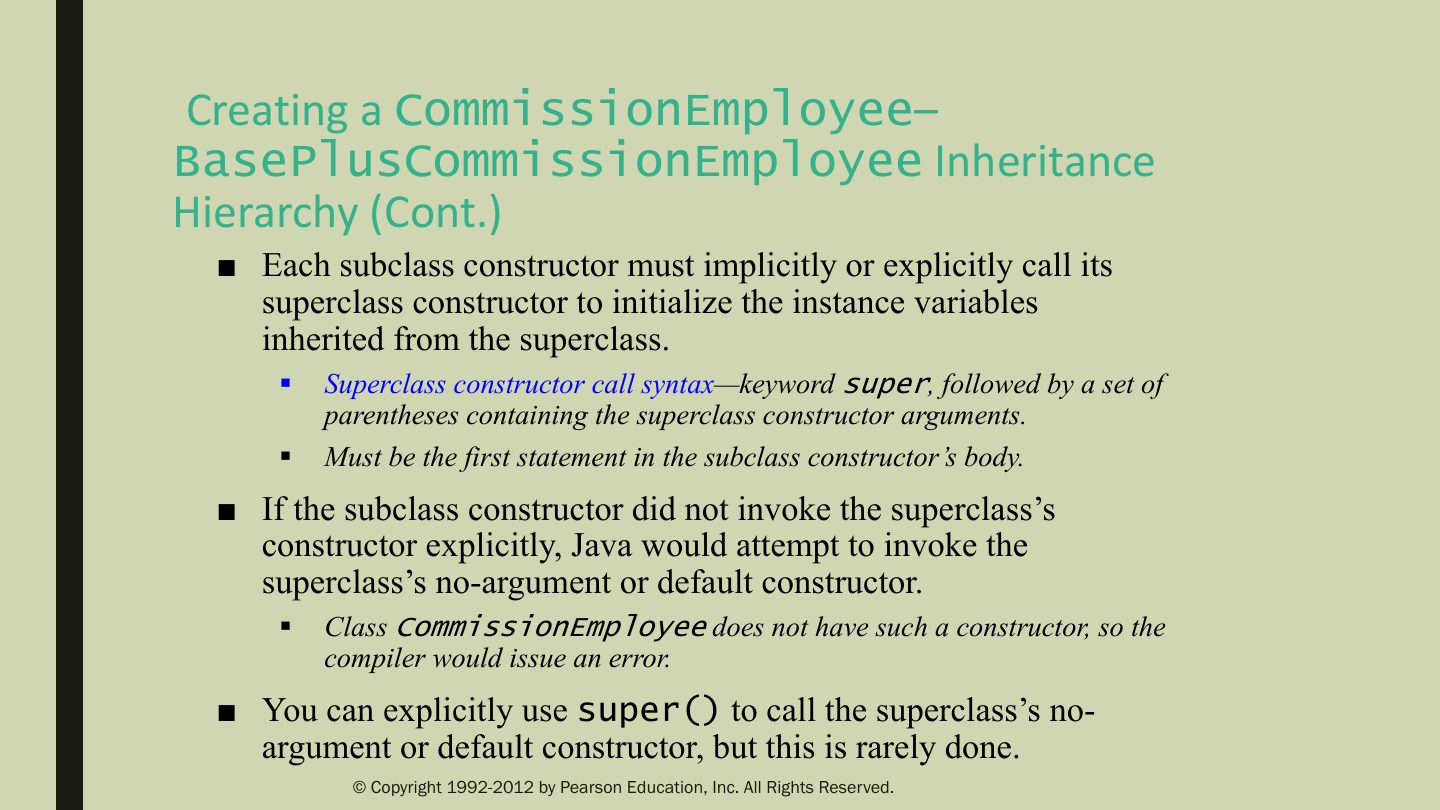
- 26 Creating a CommissionEmployee – BasePlusCommissionEmployee Inheritance Hierarchy (Cont.)
Inheritance

Learning Outcomes
Introduction
Introduction (Cont.)
Exam angle
Introduction (Cont.)
Notes
Direct superclass: the one you extend. Indirect: higher up. Every class ultimately extends Object.
Exam angle
Java supports multiple inheritance of classes (a class can extend two classes).
- Single inheritance; use interfaces for more.
Inheritance
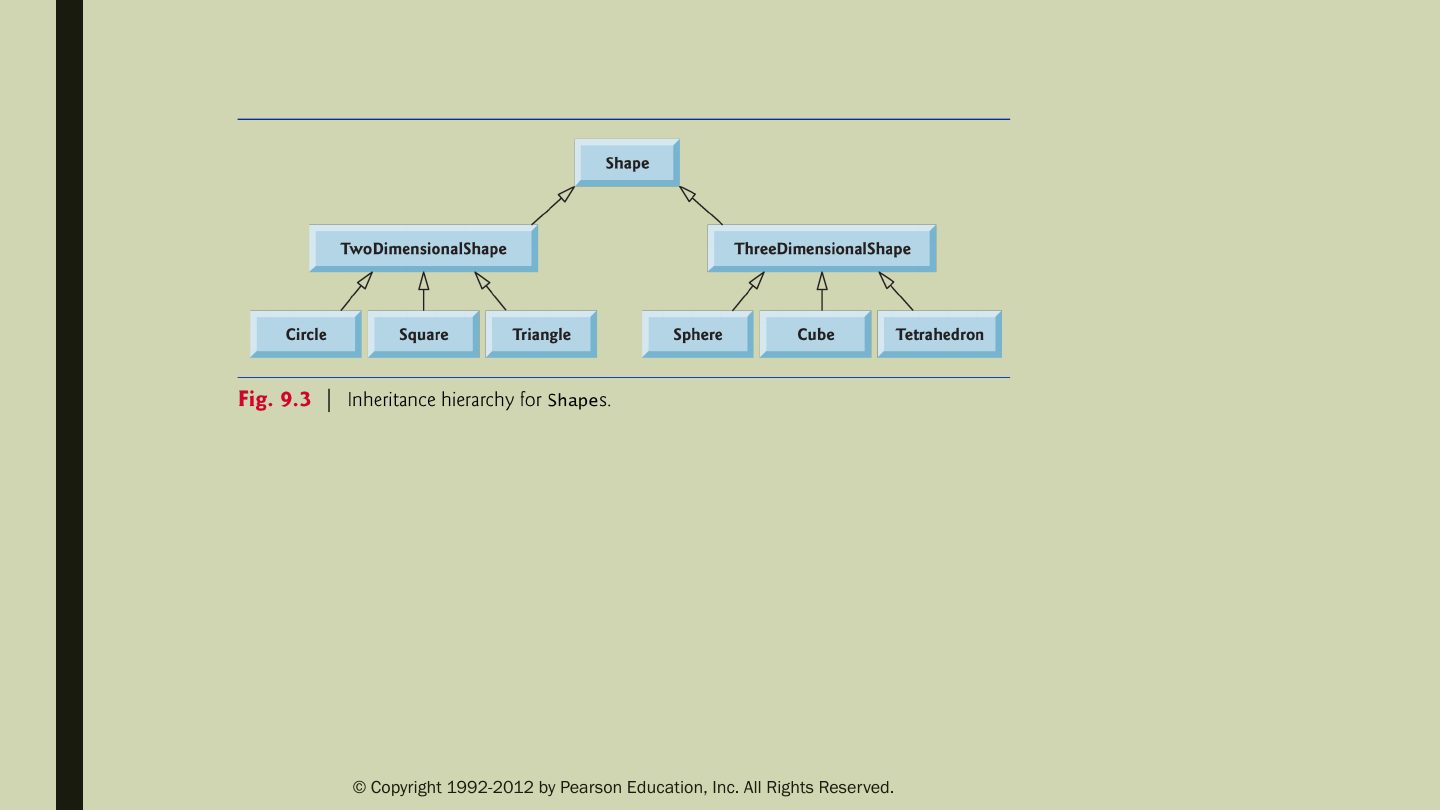
Superclasses and Subclasses
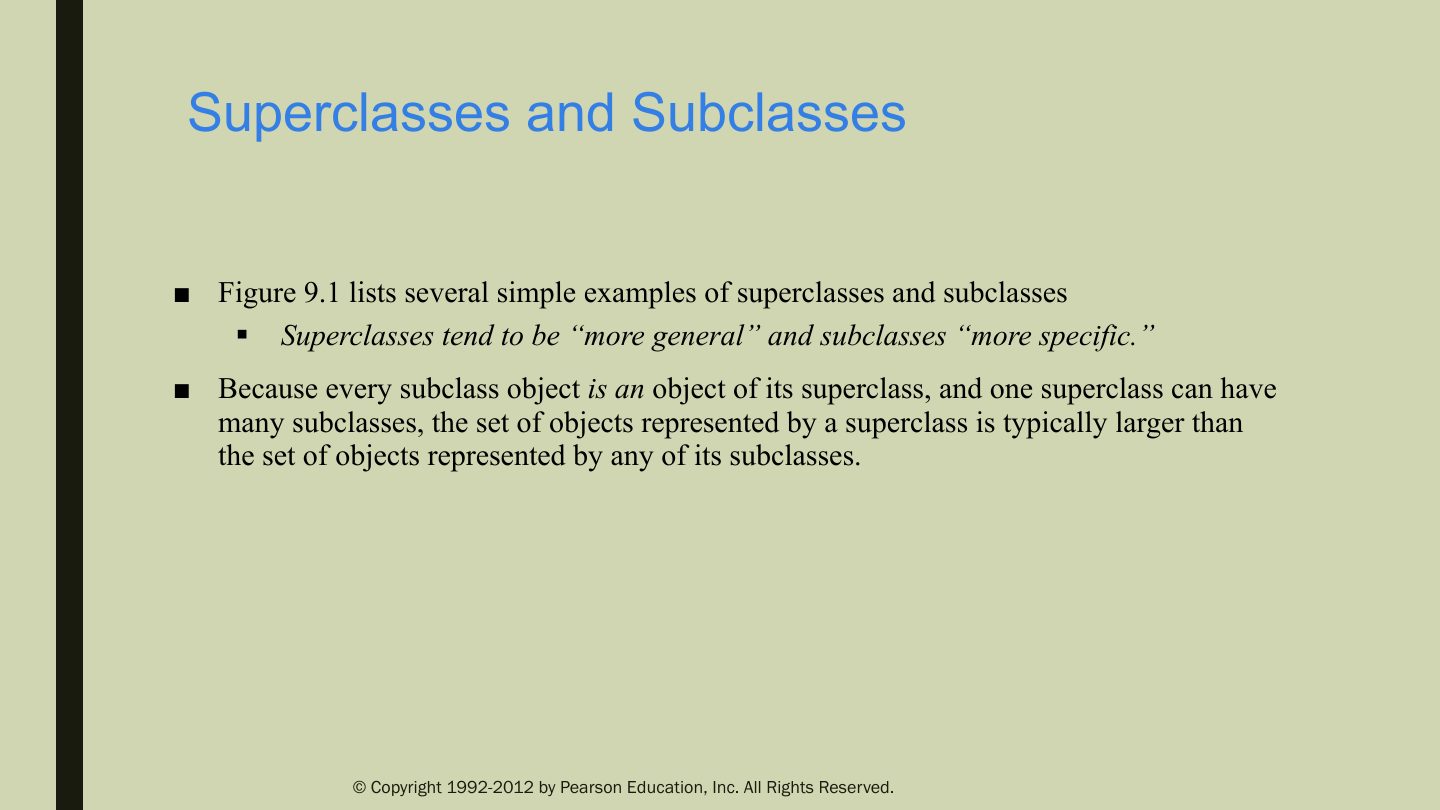
Slide 8
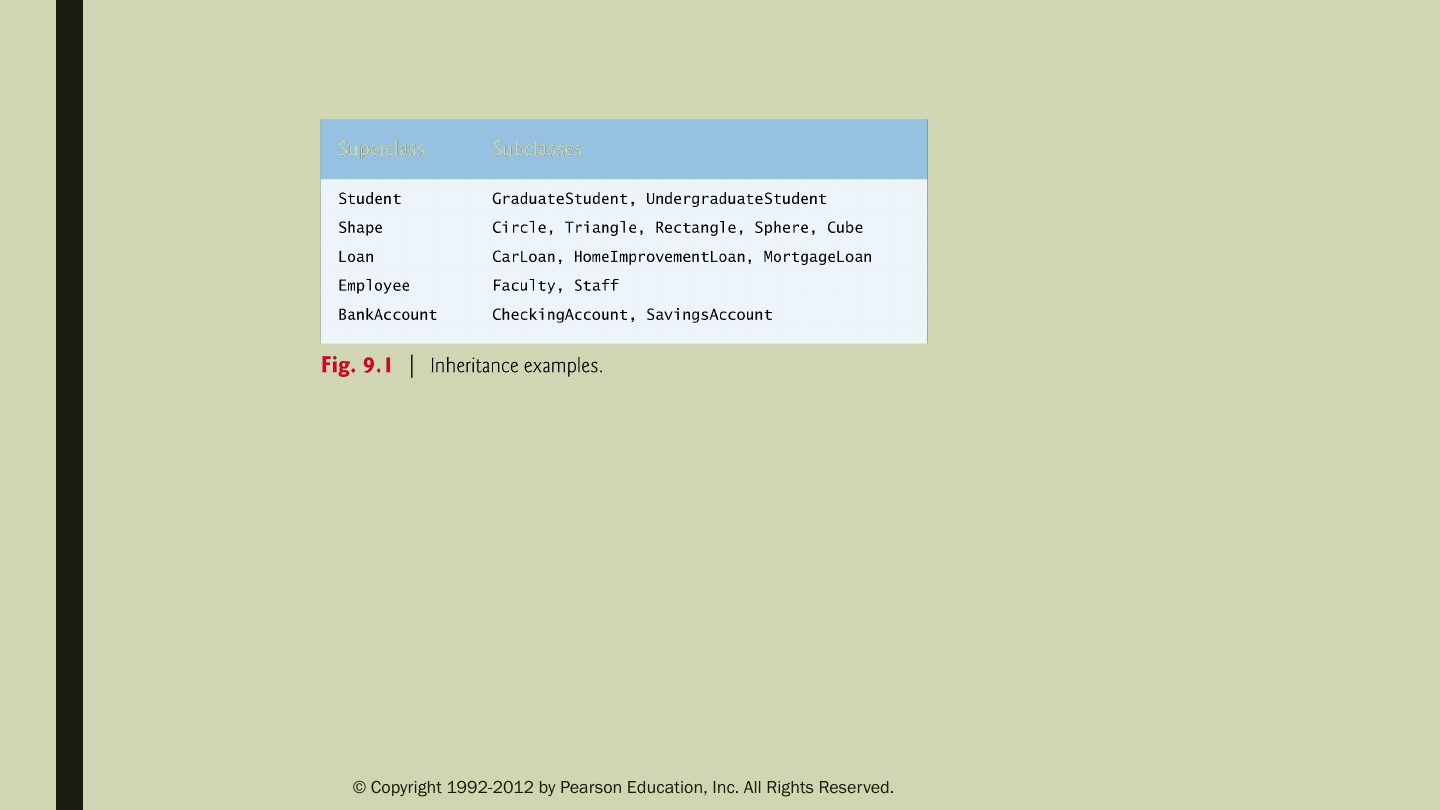
Superclasses and Subclasses (Cont.)
Slide 10
Relationship
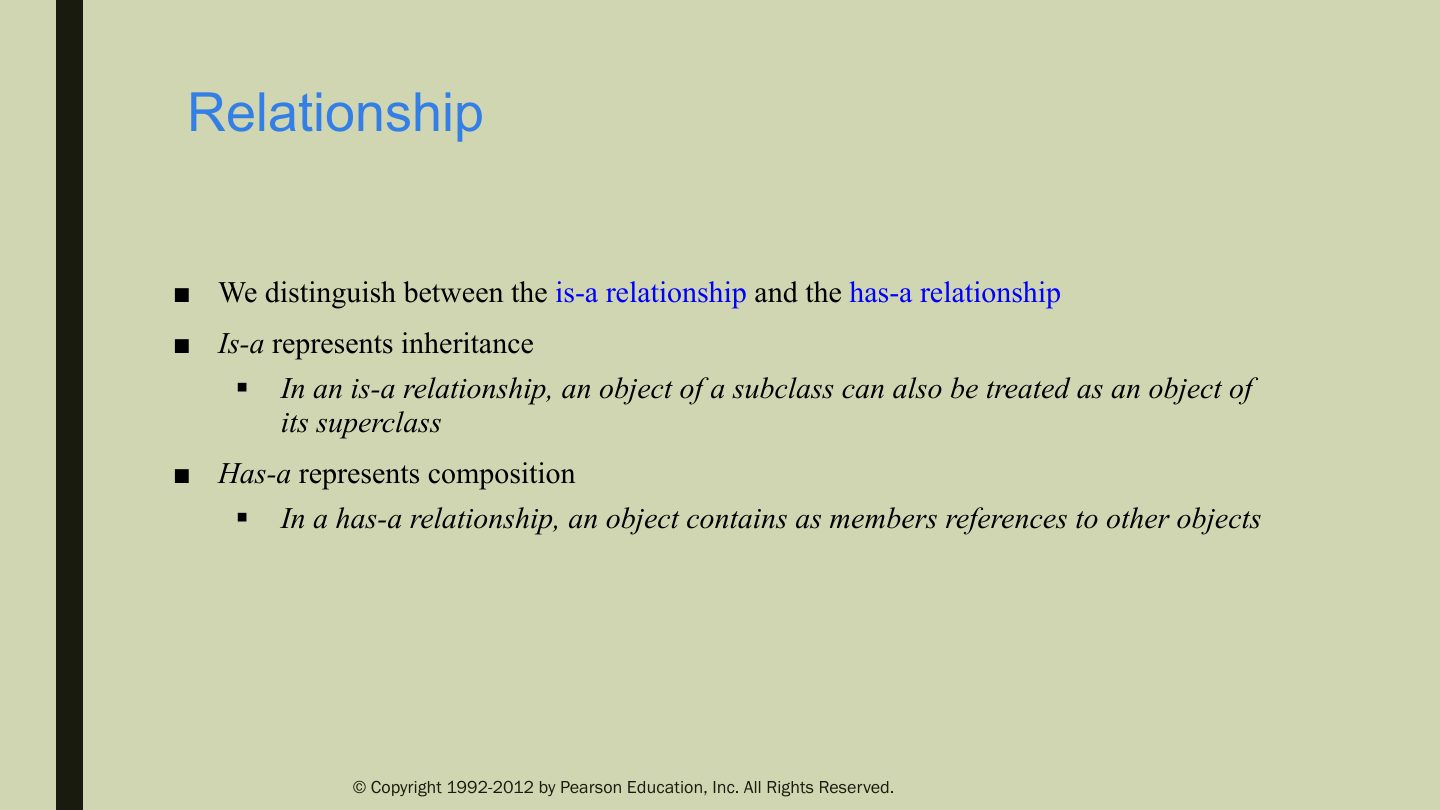
Notes
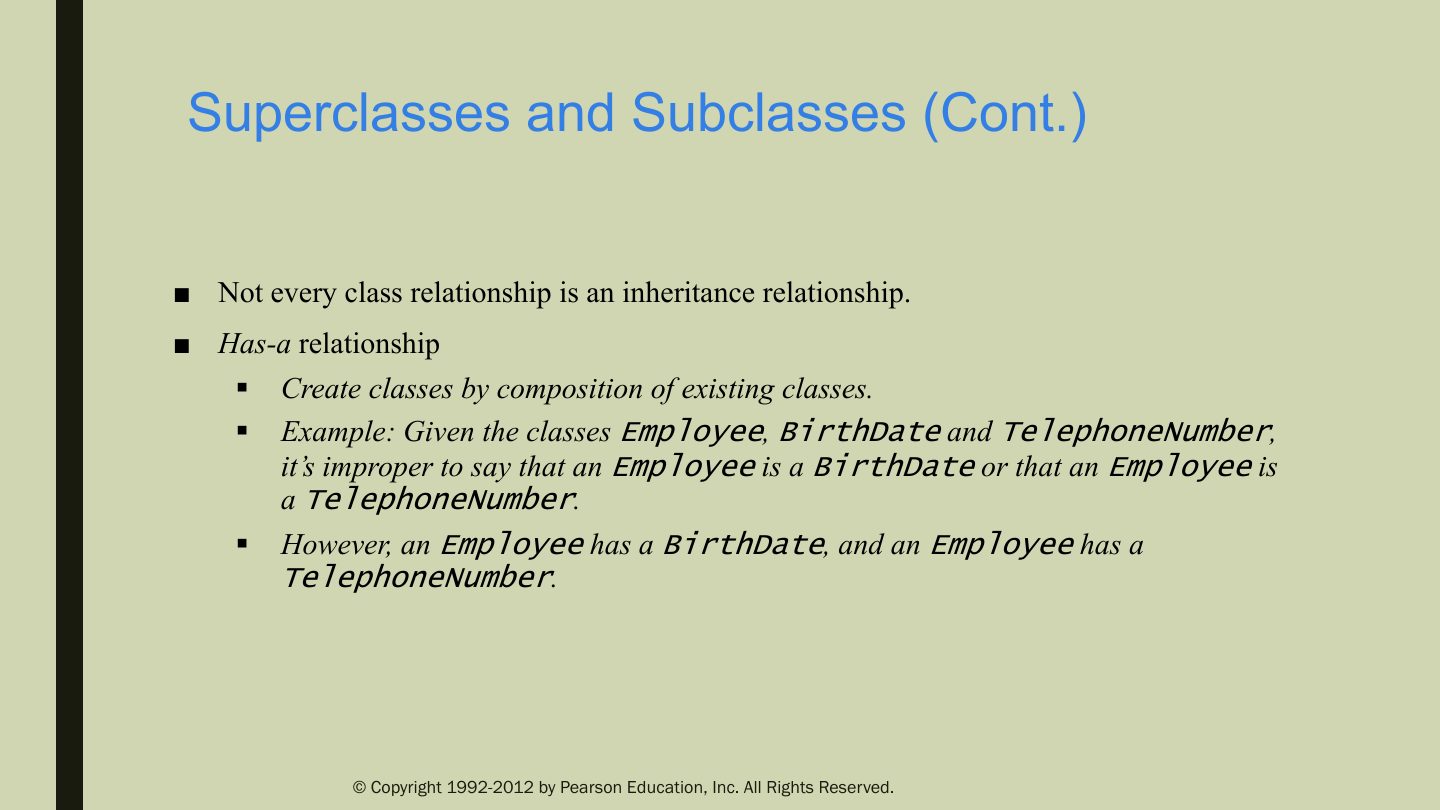
is-a = inheritance (a Car is a Vehicle). has-a = composition (a Car has an Engine).
Exam angle
“A Manager is an Employee” suggests:
Superclasses and Subclasses (Cont.)
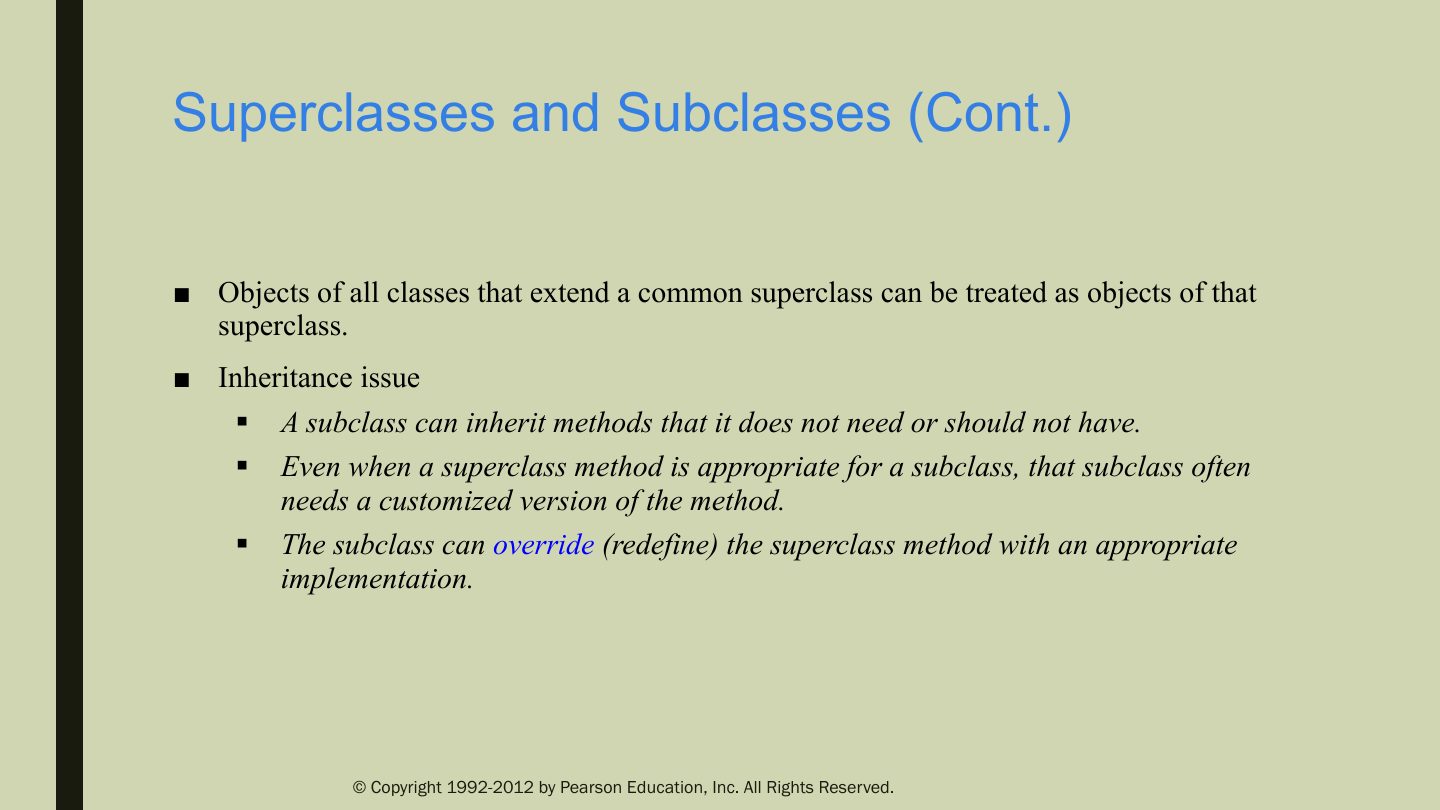
Superclasses and Subclasses (Cont.)
Example Without Using Inheritance
See code Without Using Inheritance
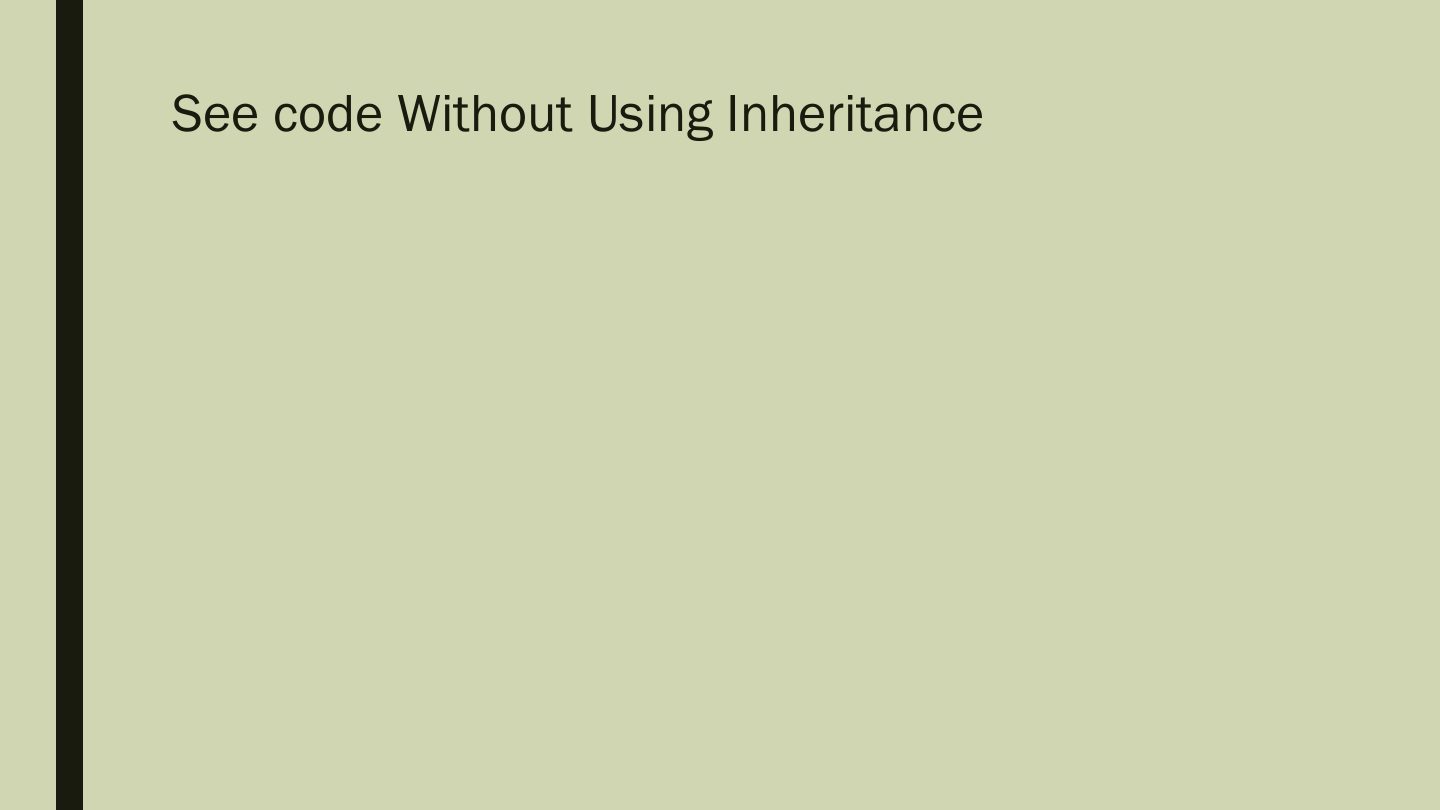
Relationship between Superclasses and Subclasses
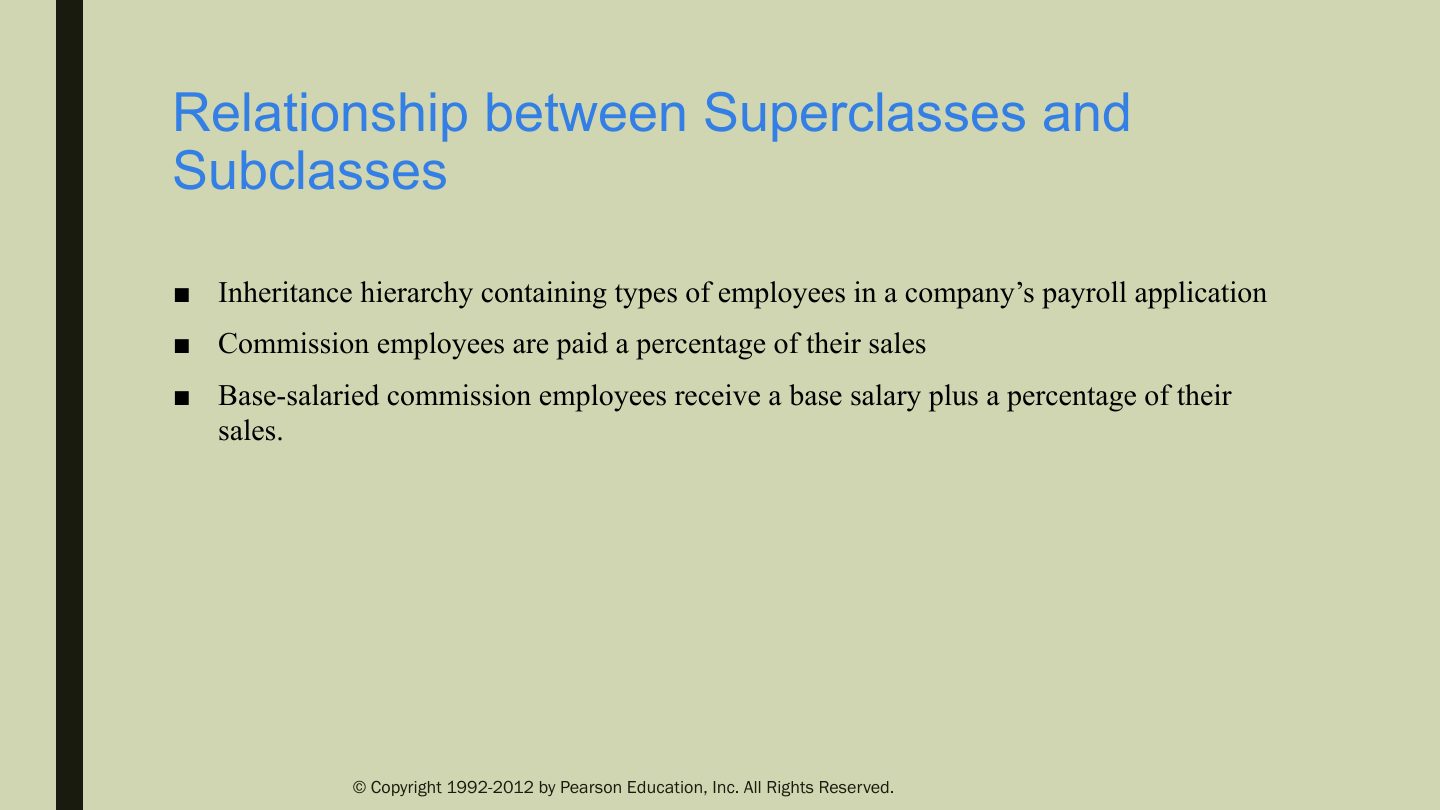
Example Using Inheritance
See Code Using Inheritance
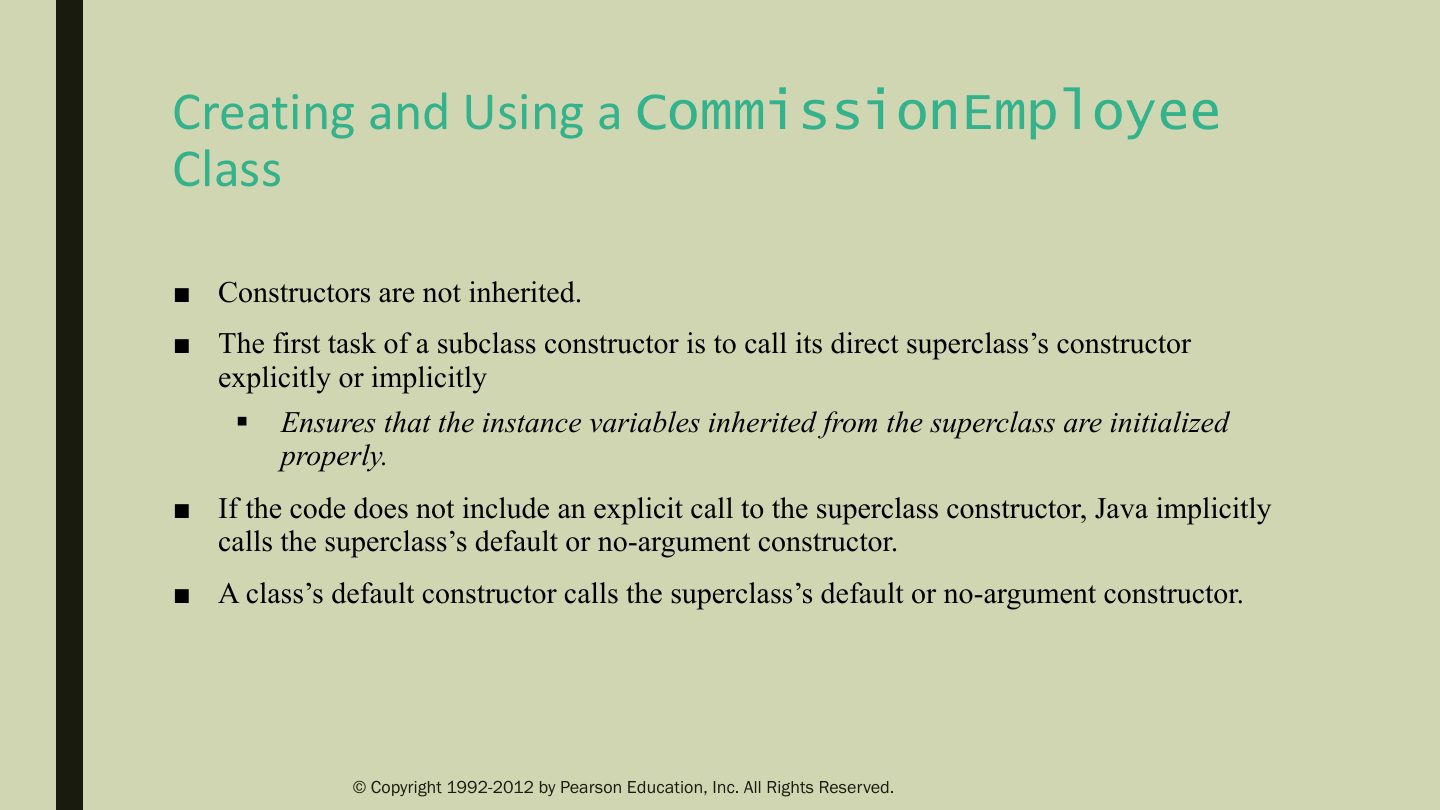
Creating and Using a CommissionEmployee Class
Exam angle
Constructors are inherited by subclasses.
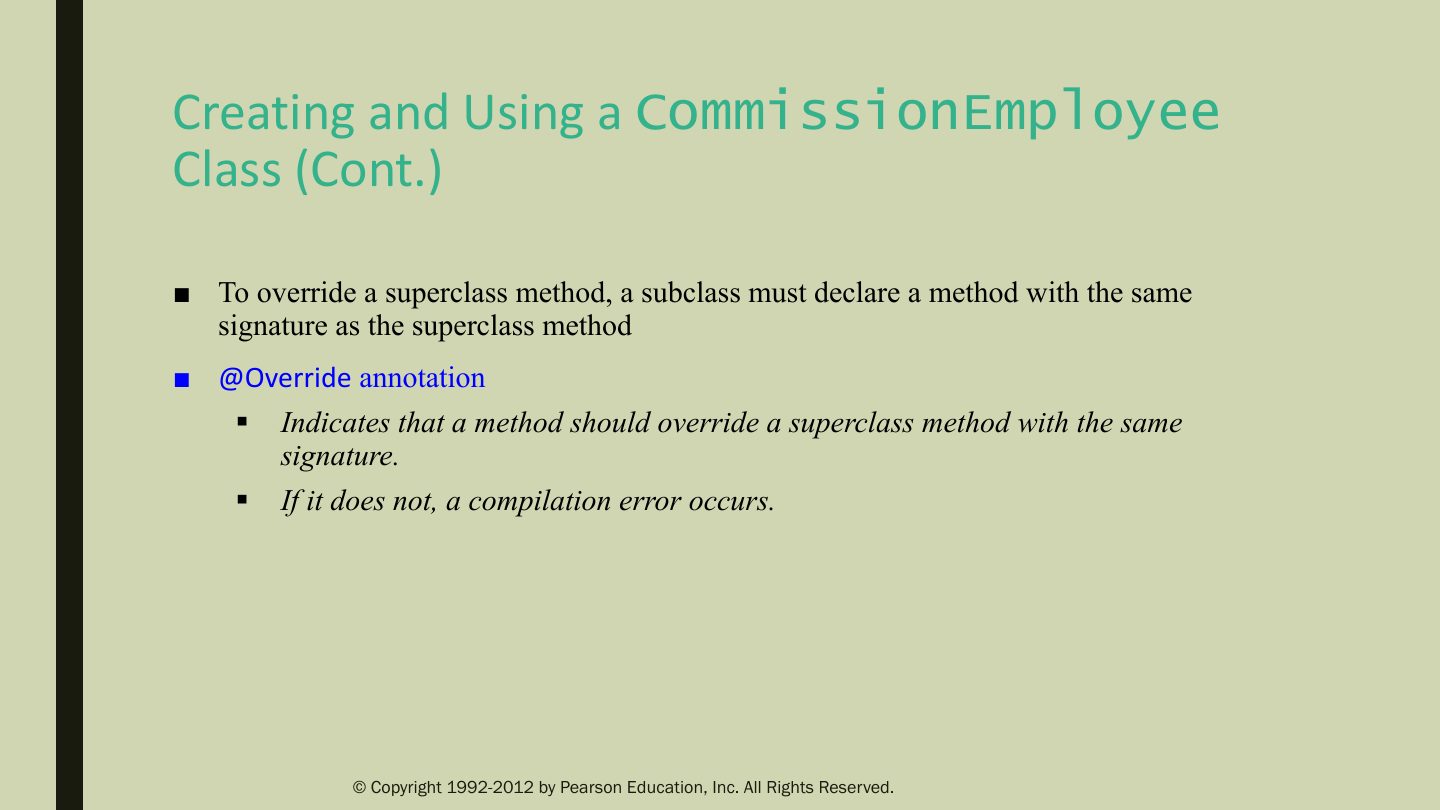
Creating and Using a CommissionEmployee Class (Cont.)
Notes
Trap Overloading = same name, different parameters (same class). Overriding = same signature in a subclass.
Exam angle
A subclass method with the same signature as a superclass method:
Creating and Using a BasePlus- CommissionEmployee Class
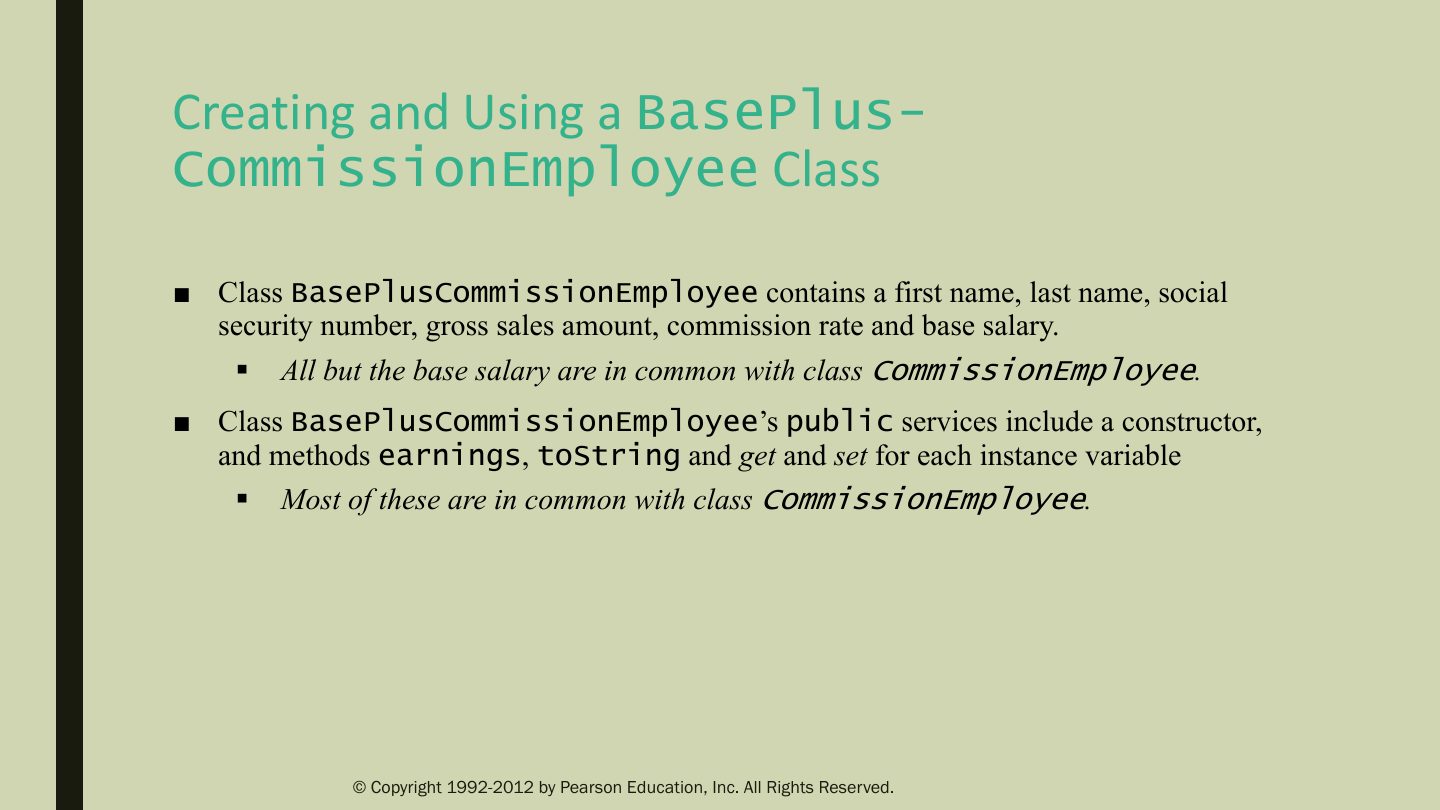
Creating and Using a BasePlus- CommissionEmployee Class (Cont.)
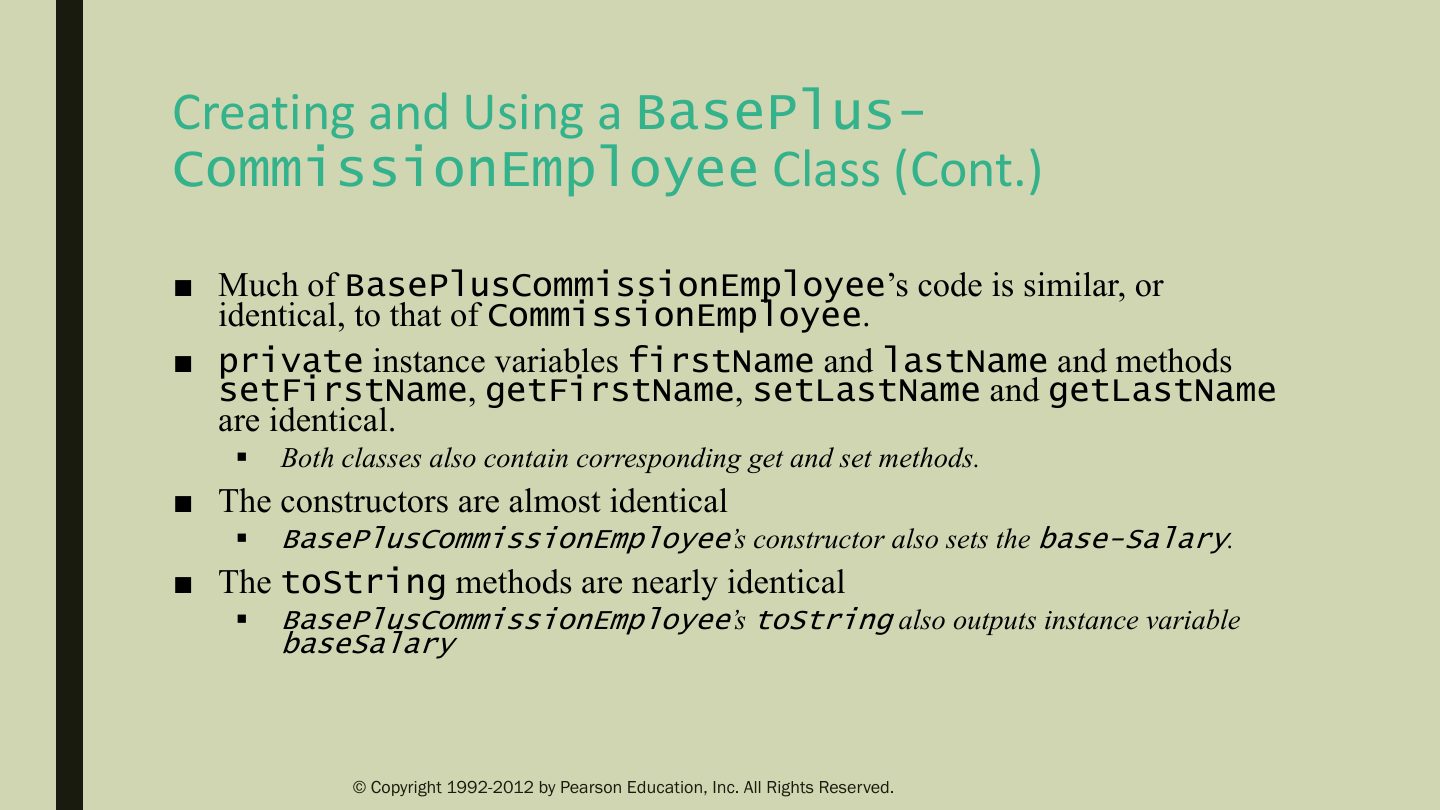
Creating and Using a BasePlus- CommissionEmployee Class (Cont.)
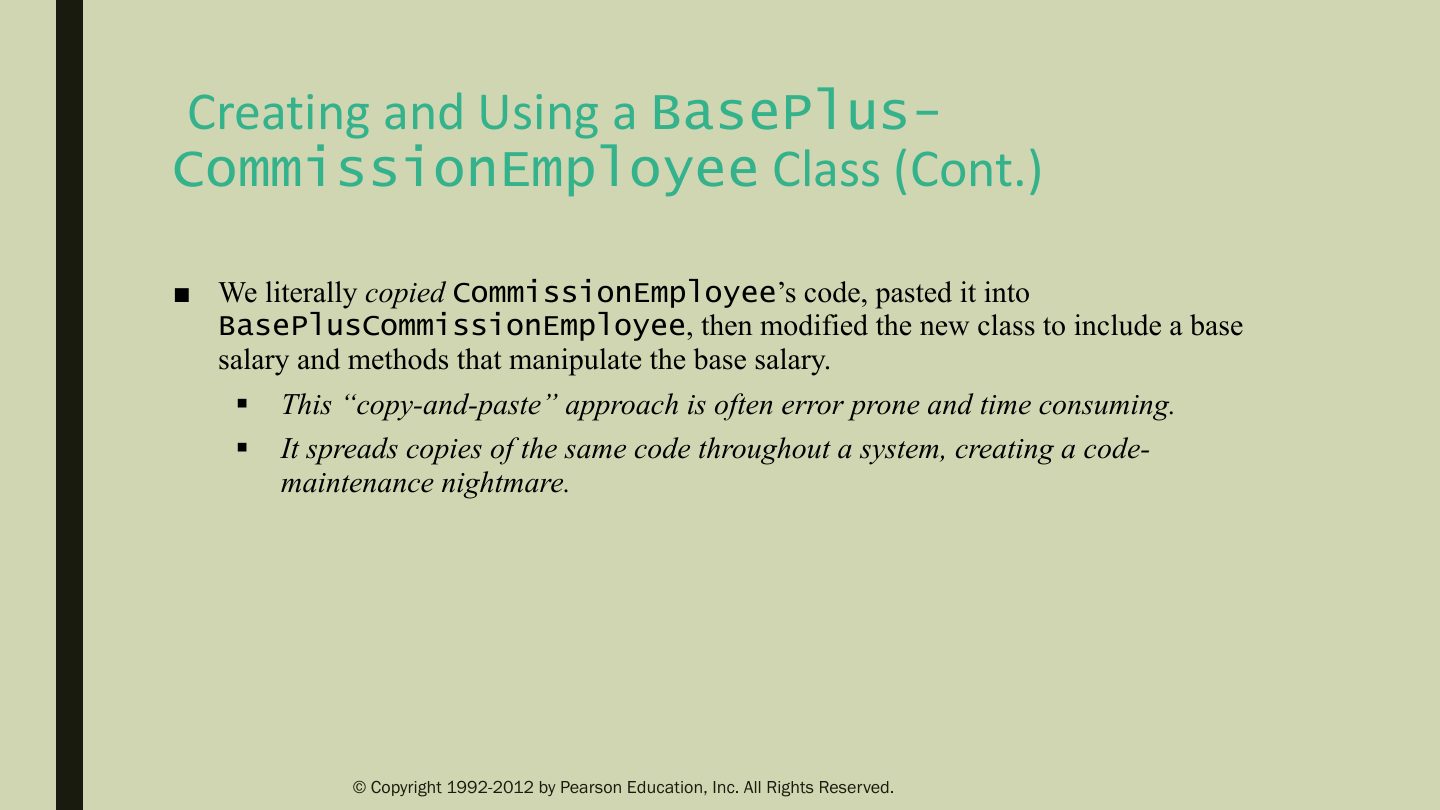
Creating a CommissionEmployee – BasePlusCommissionEmployee Inheritance Hierarchy
Notes
class BasePlusCommissionEmployee extends CommissionEmployee: only the base salary is new.
Creating a CommissionEmployee – BasePlusCommissionEmployee Inheritance Hierarchy (Cont.)
Exam angle
Where must the call super(first, last, ssn) appear in a subclass constructor?
Creating a CommissionEmployee – BasePlusCommissionEmployee Inheritance Hierarchy (Cont.)
Notes
A subclass can’t access the superclass’s PRIVATE fields directly → use get methods (or protected).
Exam angle
A subclass can directly read its superclass’s private instance variables.
- Use getters or protected access.