Which operator tests equality?
Selections
The boolean type and relational operators, one-way, two-way, nested and multi-way if statements, common if mistakes, logical operators and truth tables, switch, the conditional (ternary) operator, operator precedence and associativity, and debugging. Worked problems: math quiz, BMI, taxes, leap year, lottery, Chinese zodiac.
How to read this page
Every original slide is shown unchanged. Yellow marks on a slide point to a numbered note: hover or tap a mark to jump to its note, and hover a note to see its marks. Questions tagged Past exam appeared on a real paper; Prediction questions are likely angles, not confirmed. Pick an answer to each question: a wrong pick tells you why it is wrong, so you can try again.
All 62 slides
- 1 Selections
- 2 Motivations
- 3 § To declare boolean operators ( § 3.2). § To implement selection control using one-way statements ( § 3.3).
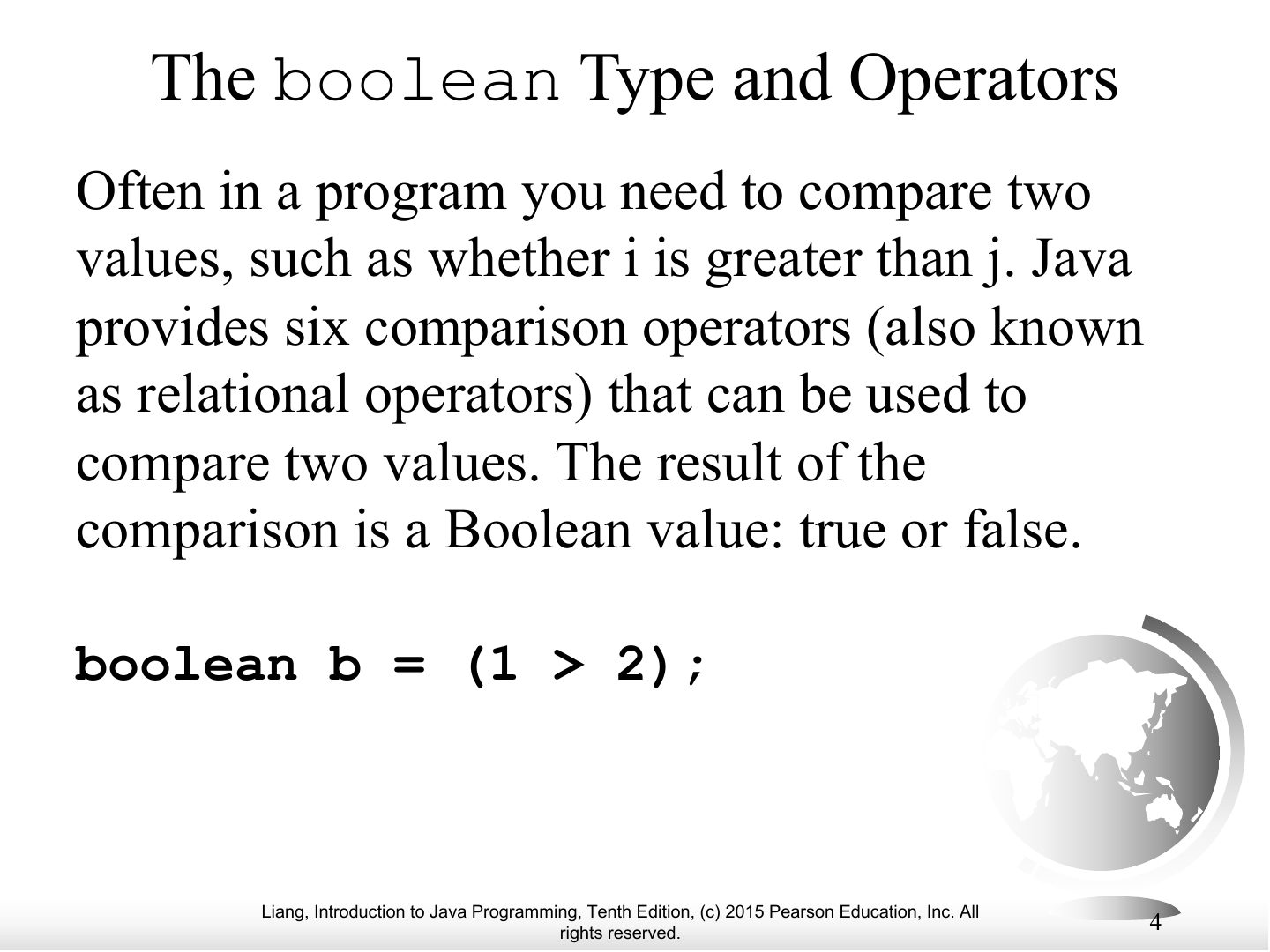
- 4 boolean The Type and Operators
- 5 Relational Operators
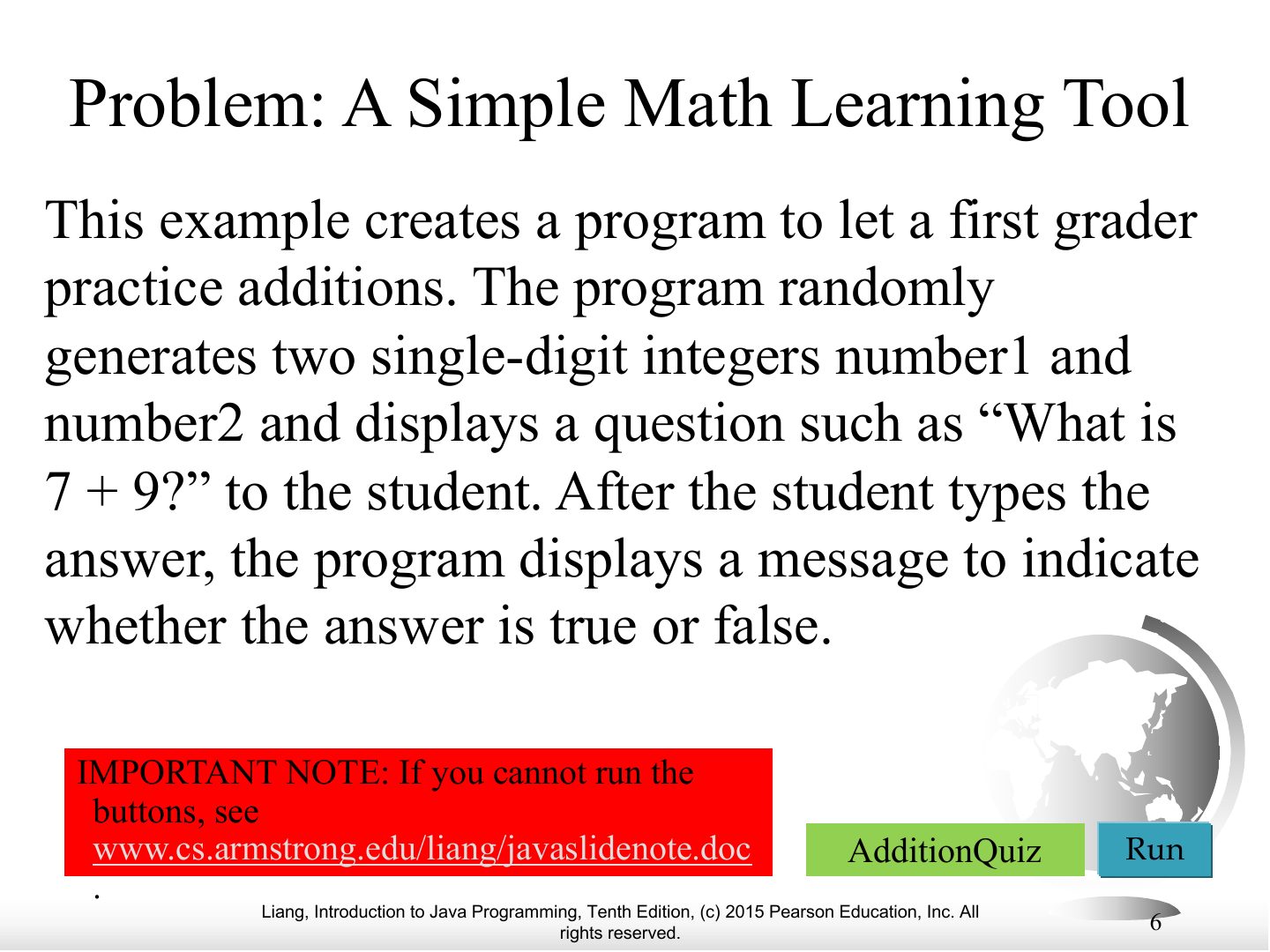
- 6 Problem: A Simple Math Learning Tool
- 7 if
- 8 Note
- 9 Simple if Demo
- 10 if
- 11 if-else
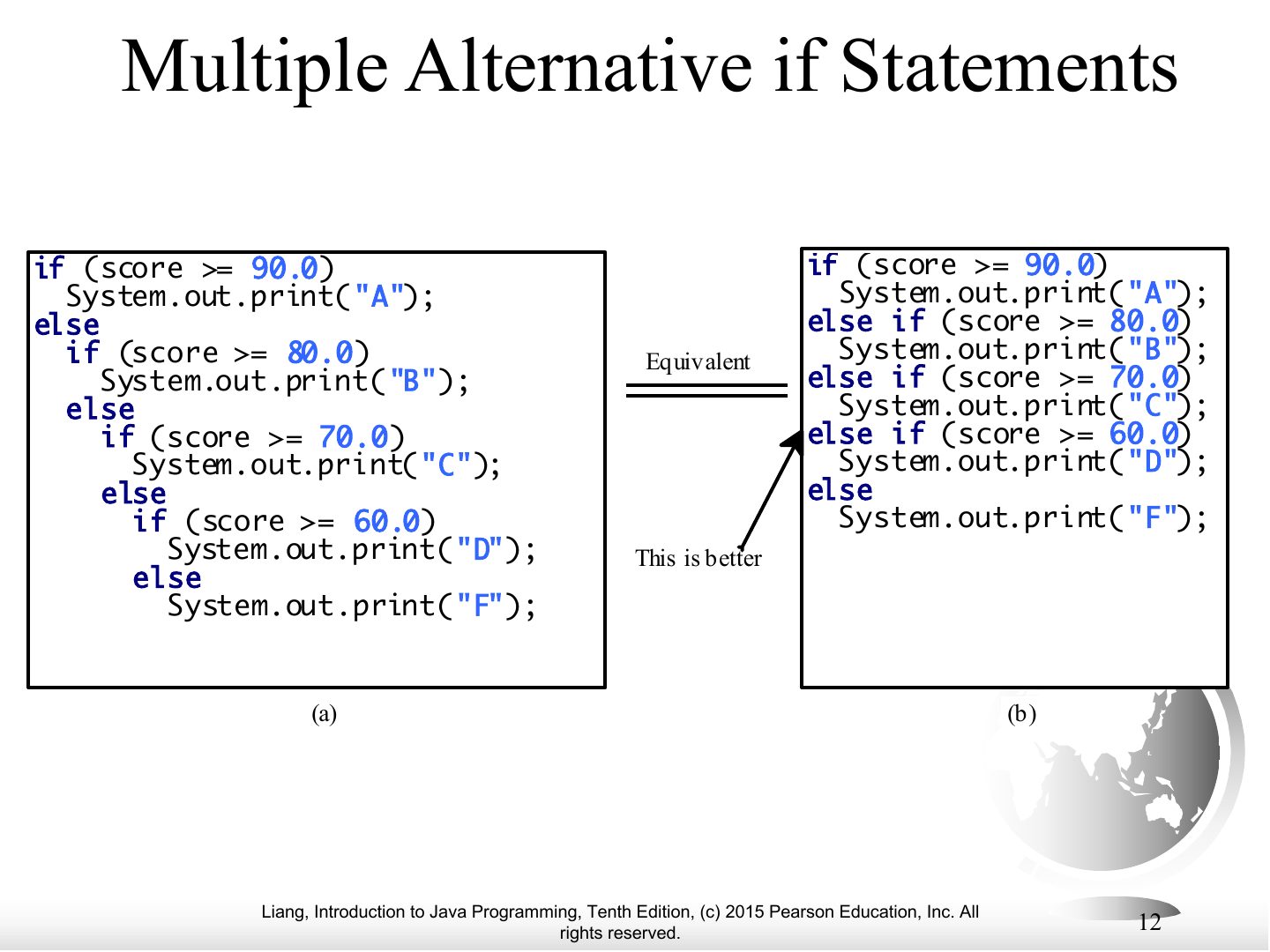
- 12 Multiple Alternative if Statements
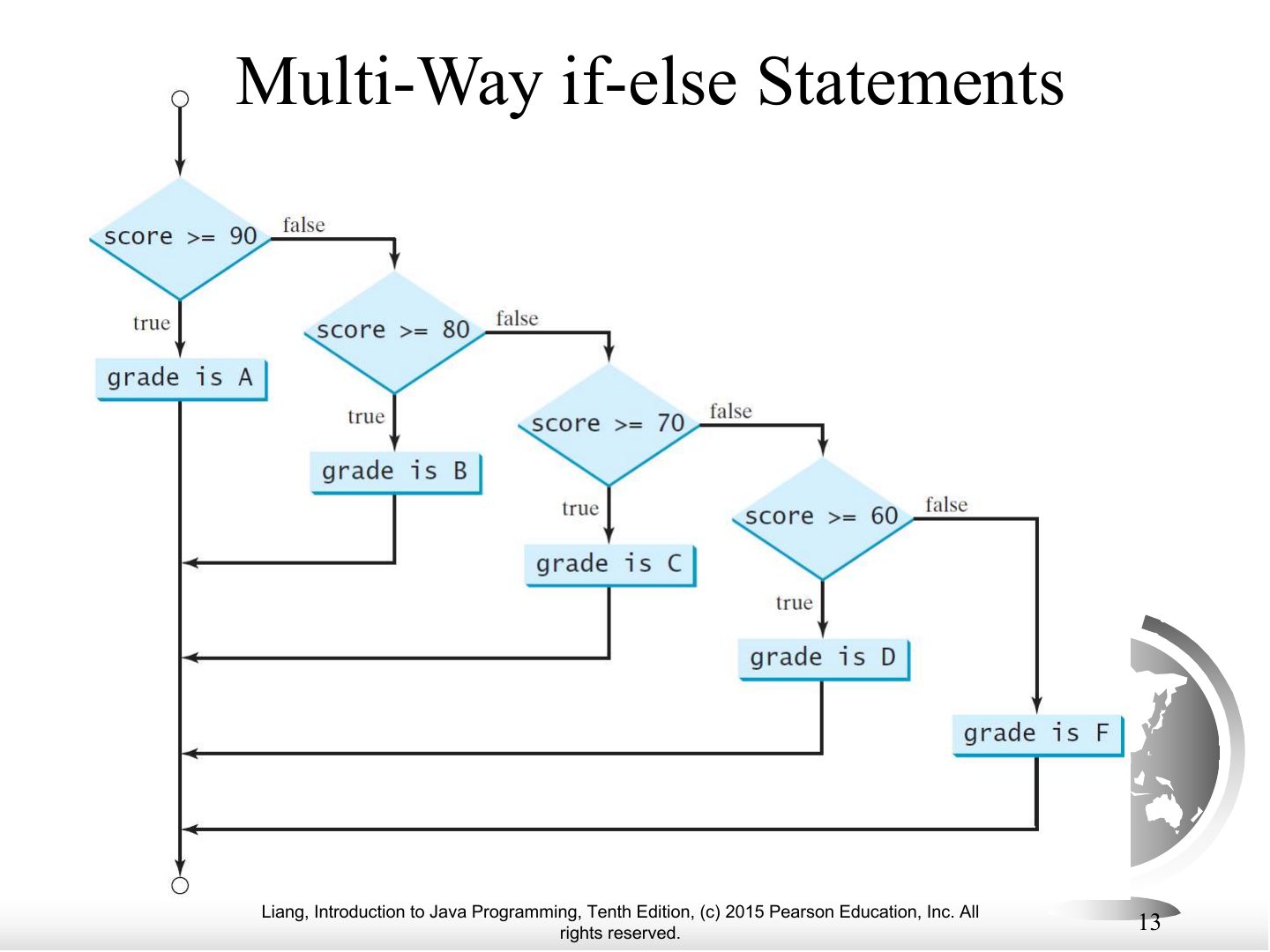
- 13 Multi-Way if-else Statements
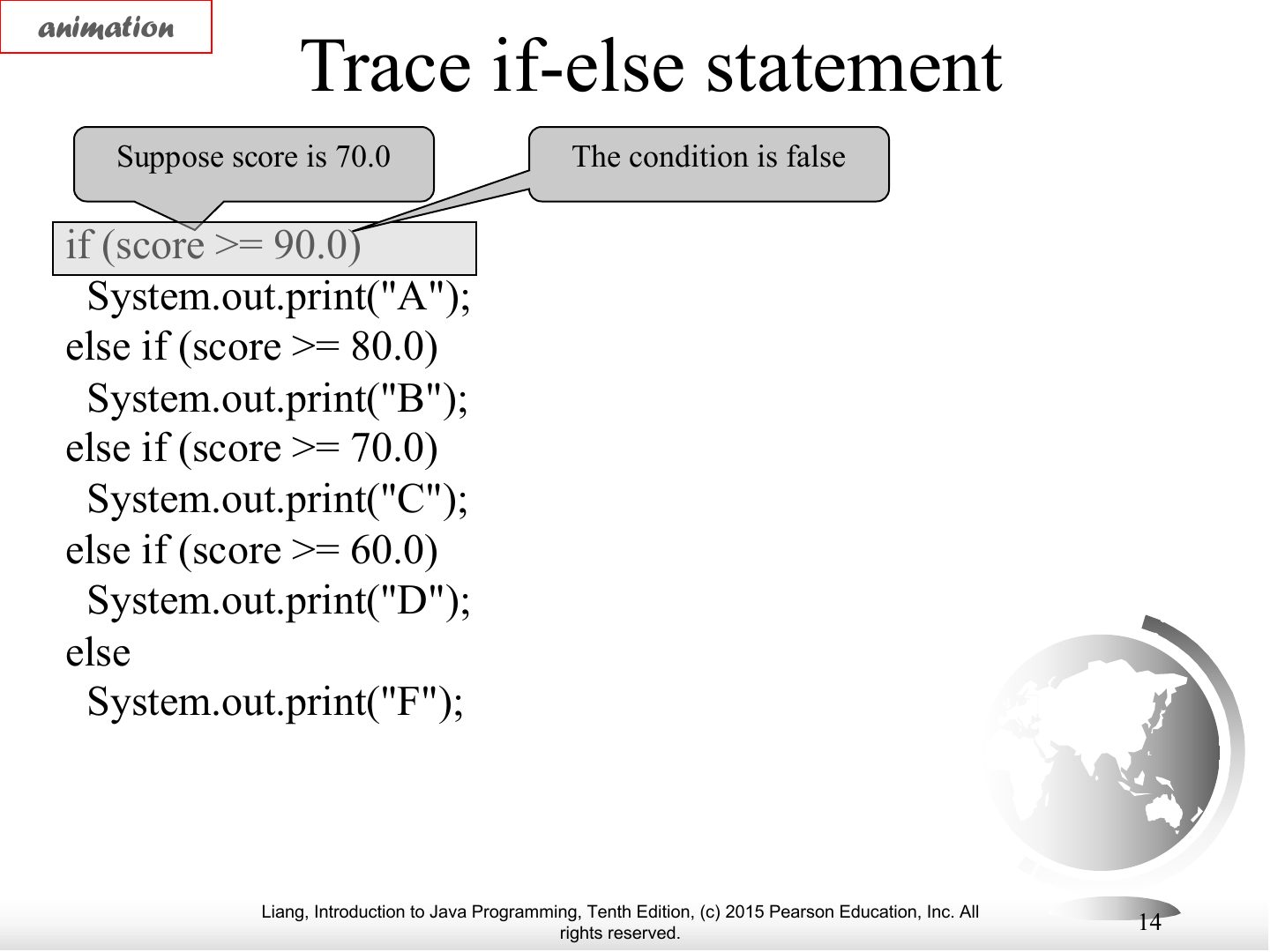
- 14 animation
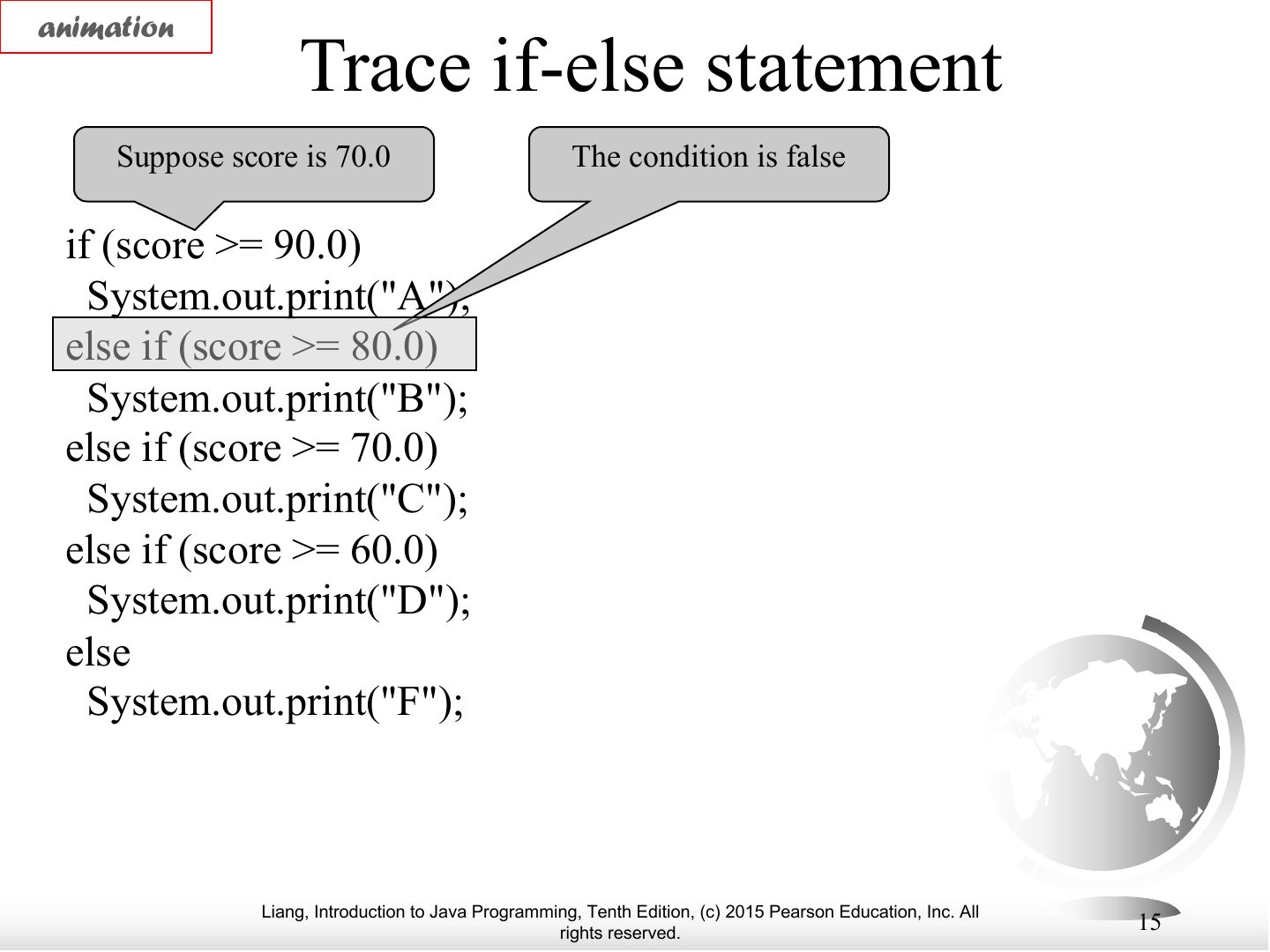
- 15 animation
- 16 animation
- 17 animation
- 18 animation
- 19 Note
- 20 Note, cont.
- 21 Common Errors
- 22 TIP
- 23 CAUTION
- 24 Problem: An Improved Math Learning Tool
- 25 Problem: Body Mass Index
- 26 Problem: Computing Taxes
- 27 Problem: Computing Taxes, cont.
- 28 Logical Operators
- 29 Truth Table for Operator !
- 30 Truth Table for Operator &&
- 31 Truth Table for Operator ||
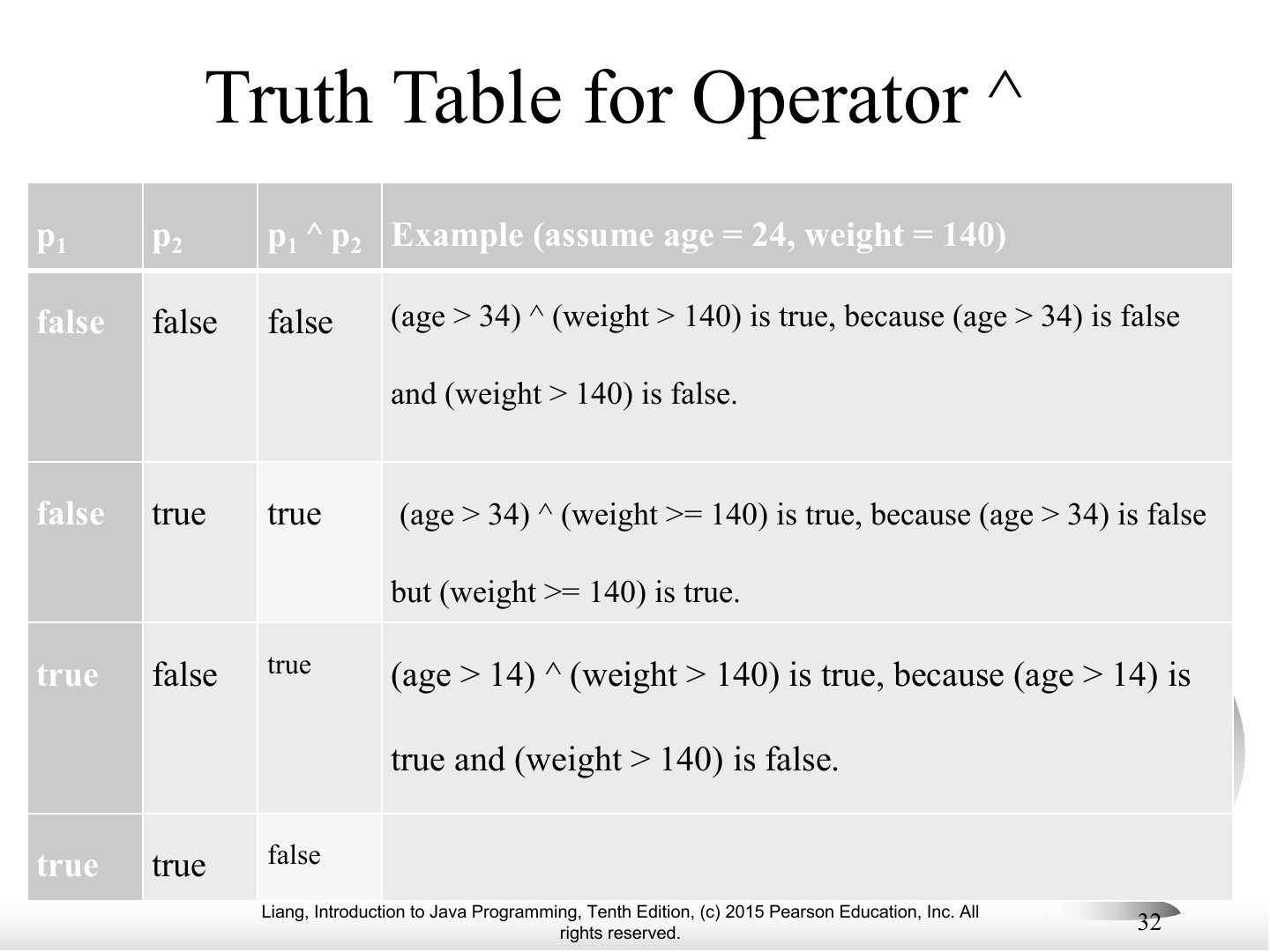
- 32 Truth Table for Operator ^
- 33 Examples
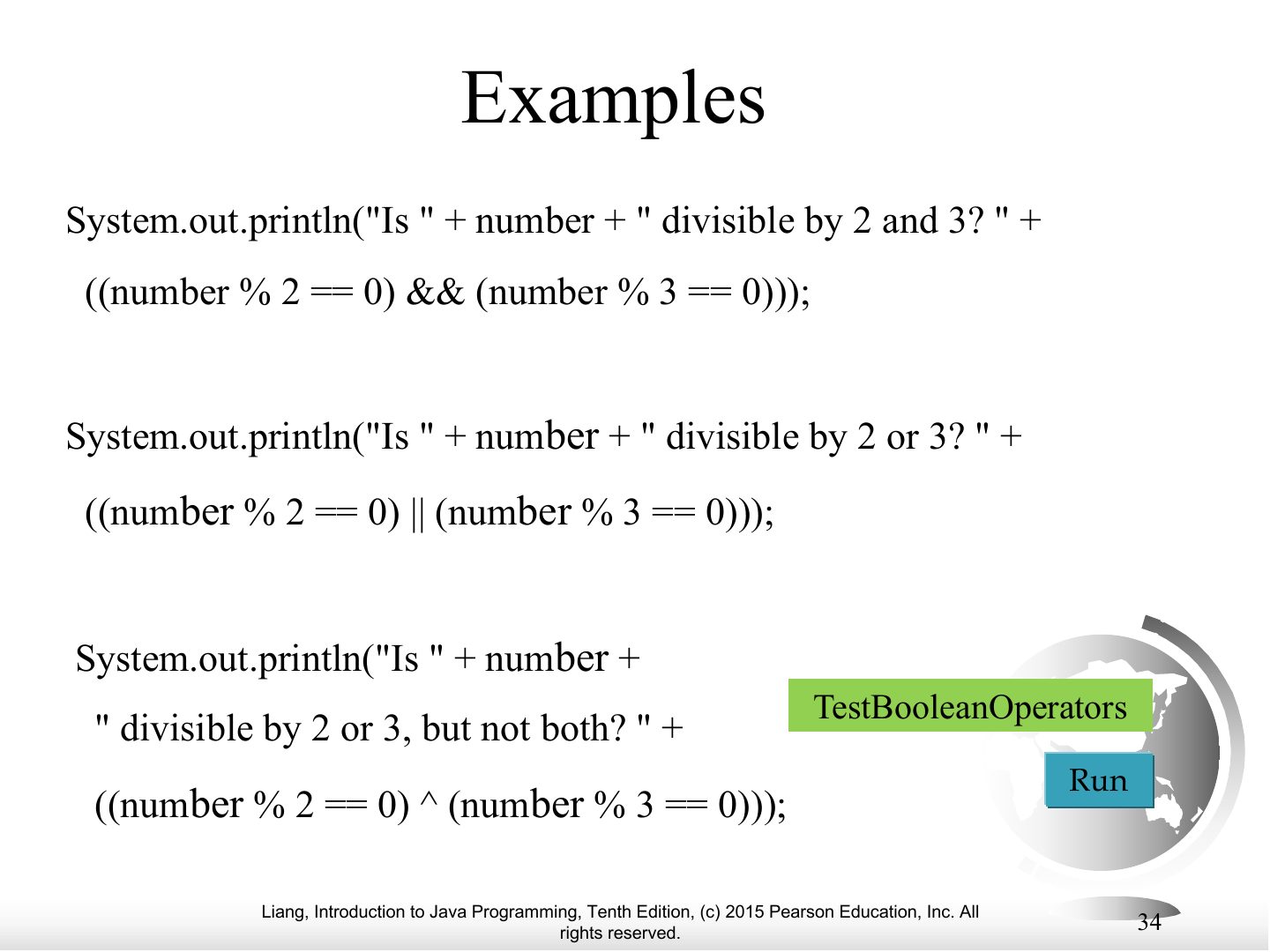
- 34 Examples
- 35 Companion Website
- 36 Companion Website
- 37 Problem: Determining Leap Year?
- 38 Problem: Lottery
- 39 switch
- 40 switch
- 41 switch
- 42 switch
- 43 animation
- 44 animation
- 45 animation
- 46 animation
- 47 animation
- 48 animation
- 49 animation
- 50 Problem: Chinese Zodiac
- 51 Conditional Expressions
- 52 Conditional Operator
- 53 Conditional Operator, cont.
- 54 Operator Precedence
- 55 Operator Precedence and Associativity
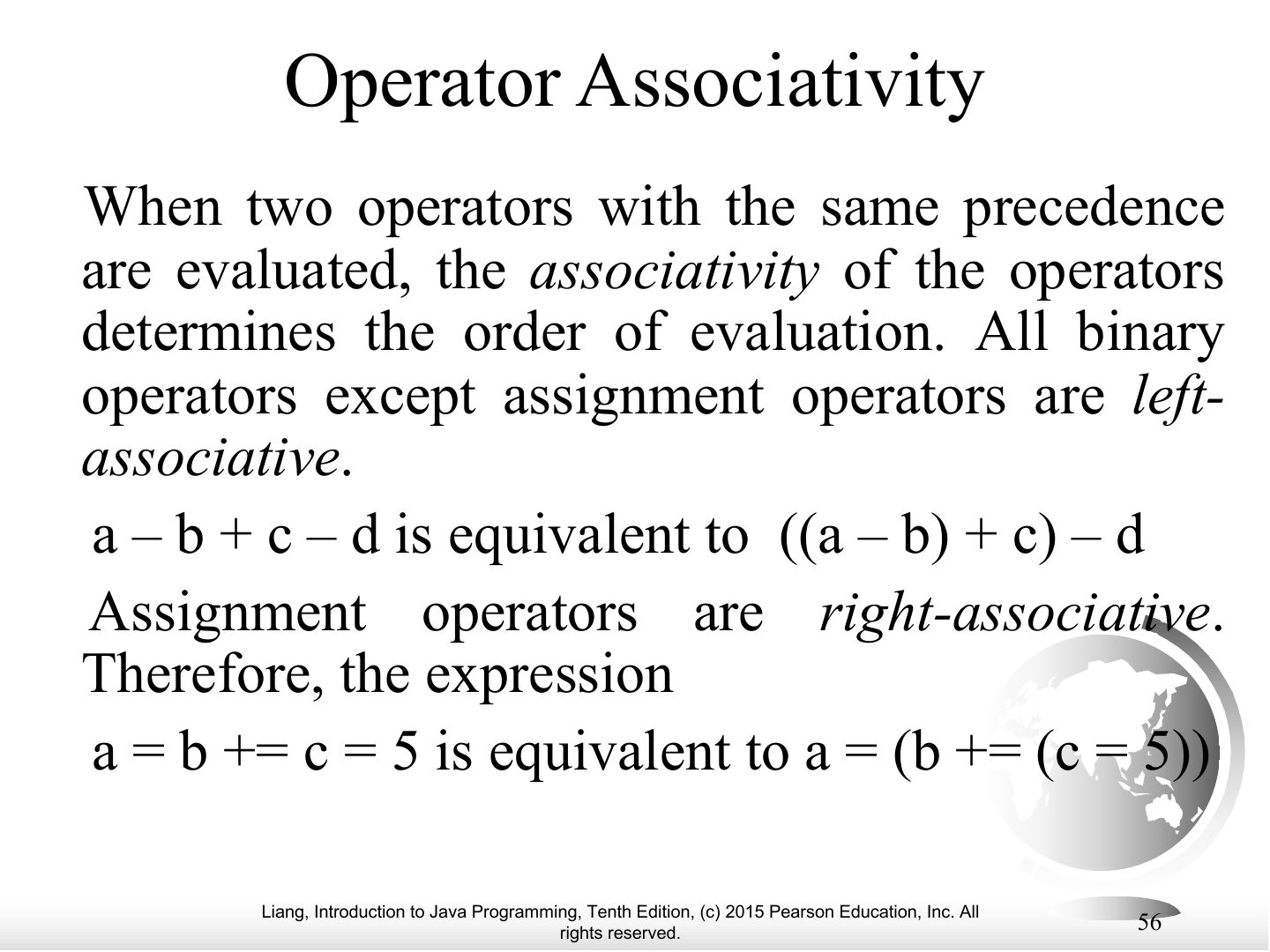
- 56 Operator Associativity
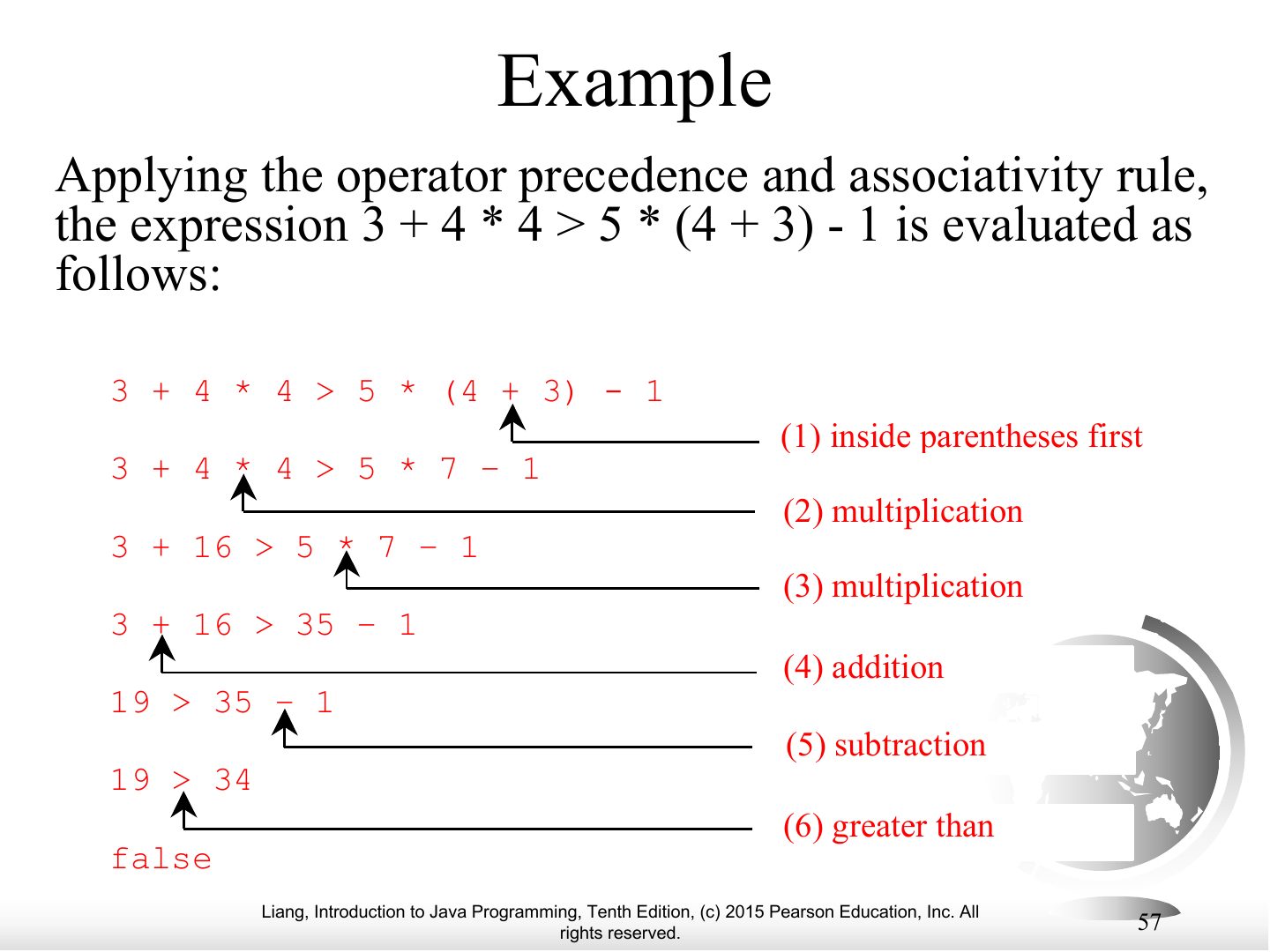
- 57 Example
- 58 Companion
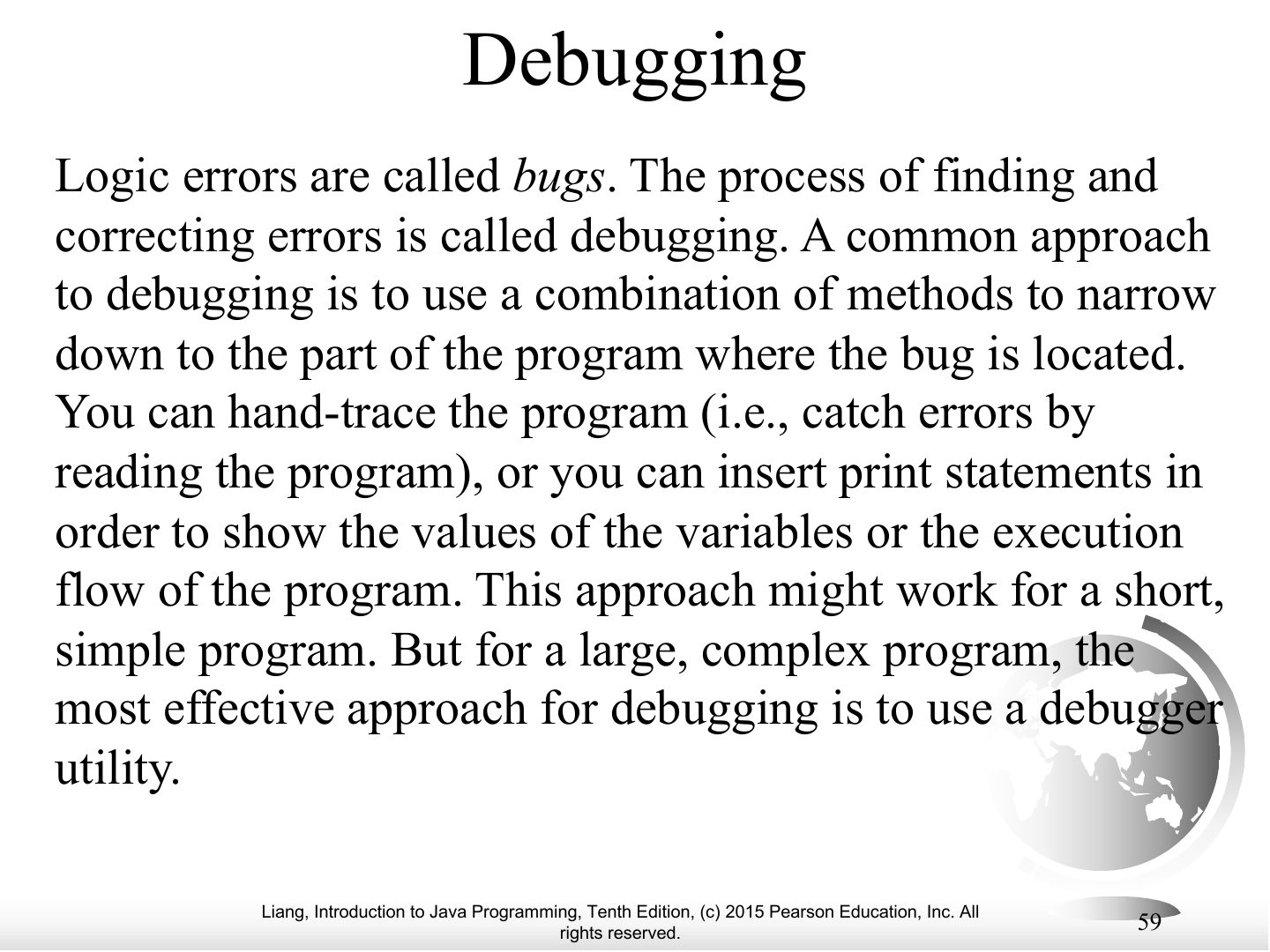
- 59 Debugging
- 60 Debugger
- 61 Debugging in NetBeans
- 62 Debugging in Eclipse
Selections
Motivations
Notes
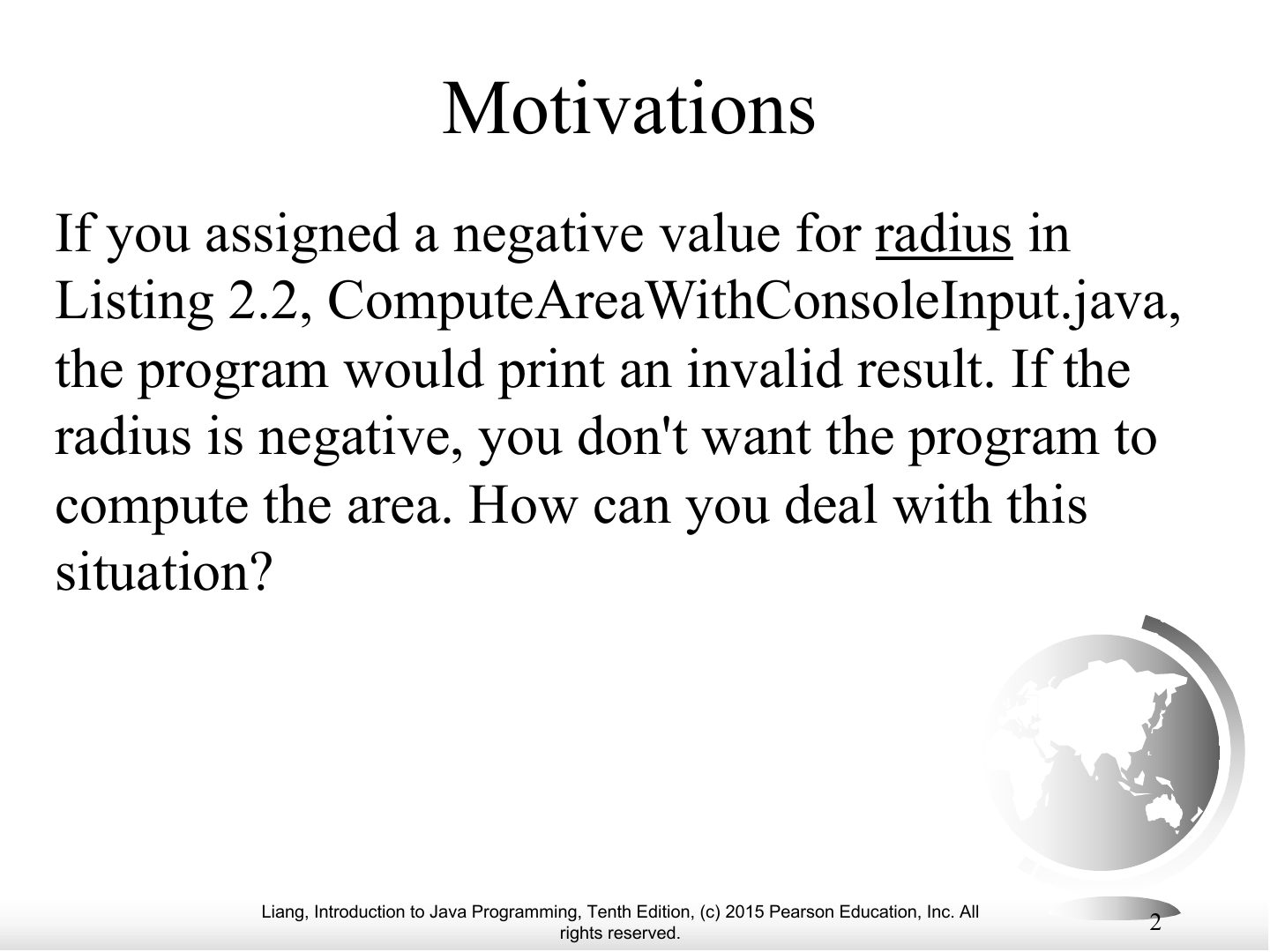
Programs need to choose between paths: selection statements.
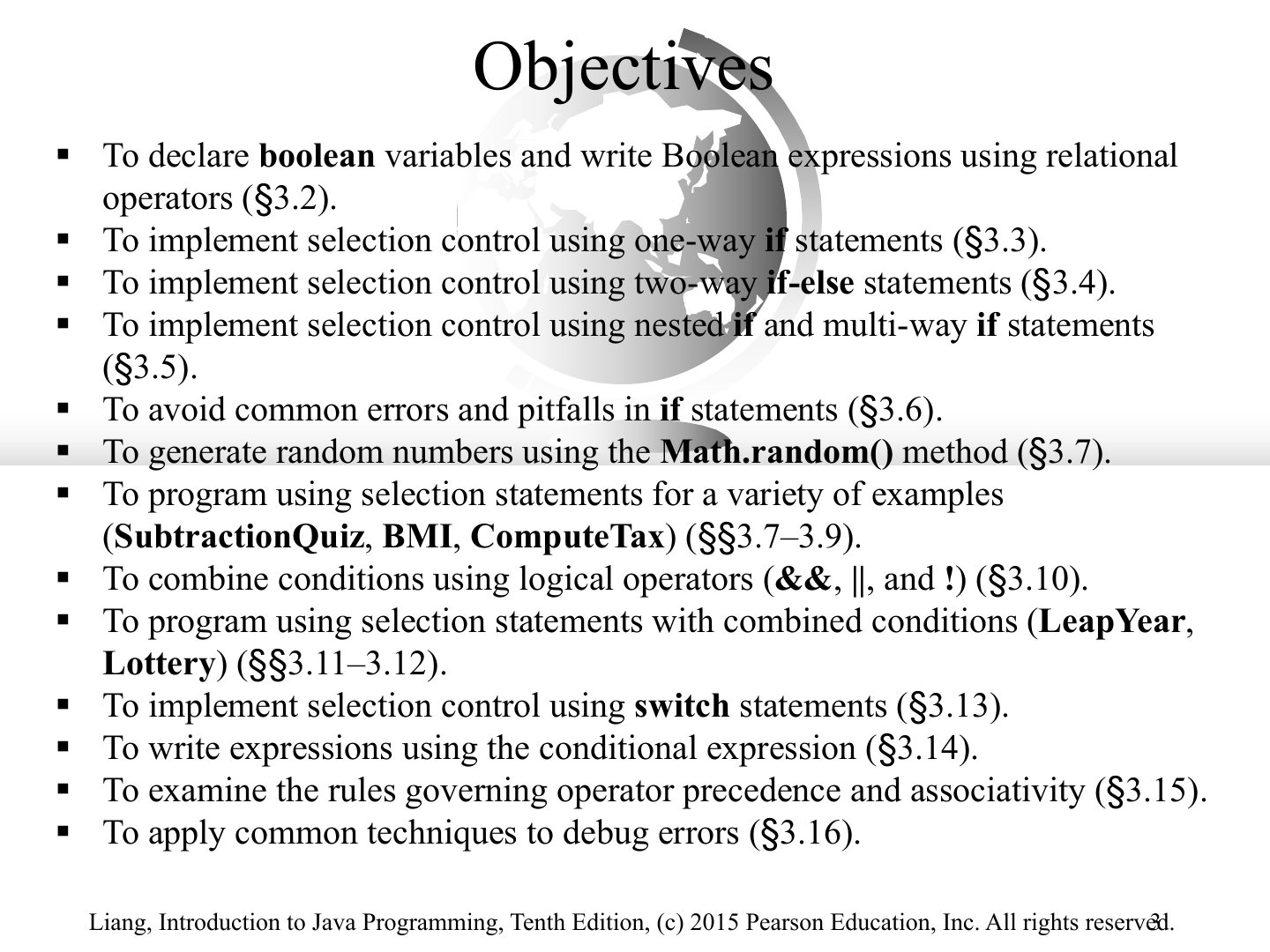
§ To declare boolean operators ( § 3.2). § To implement selection control using one-way statements ( § 3.3).
boolean The Type and Operators
Relational Operators
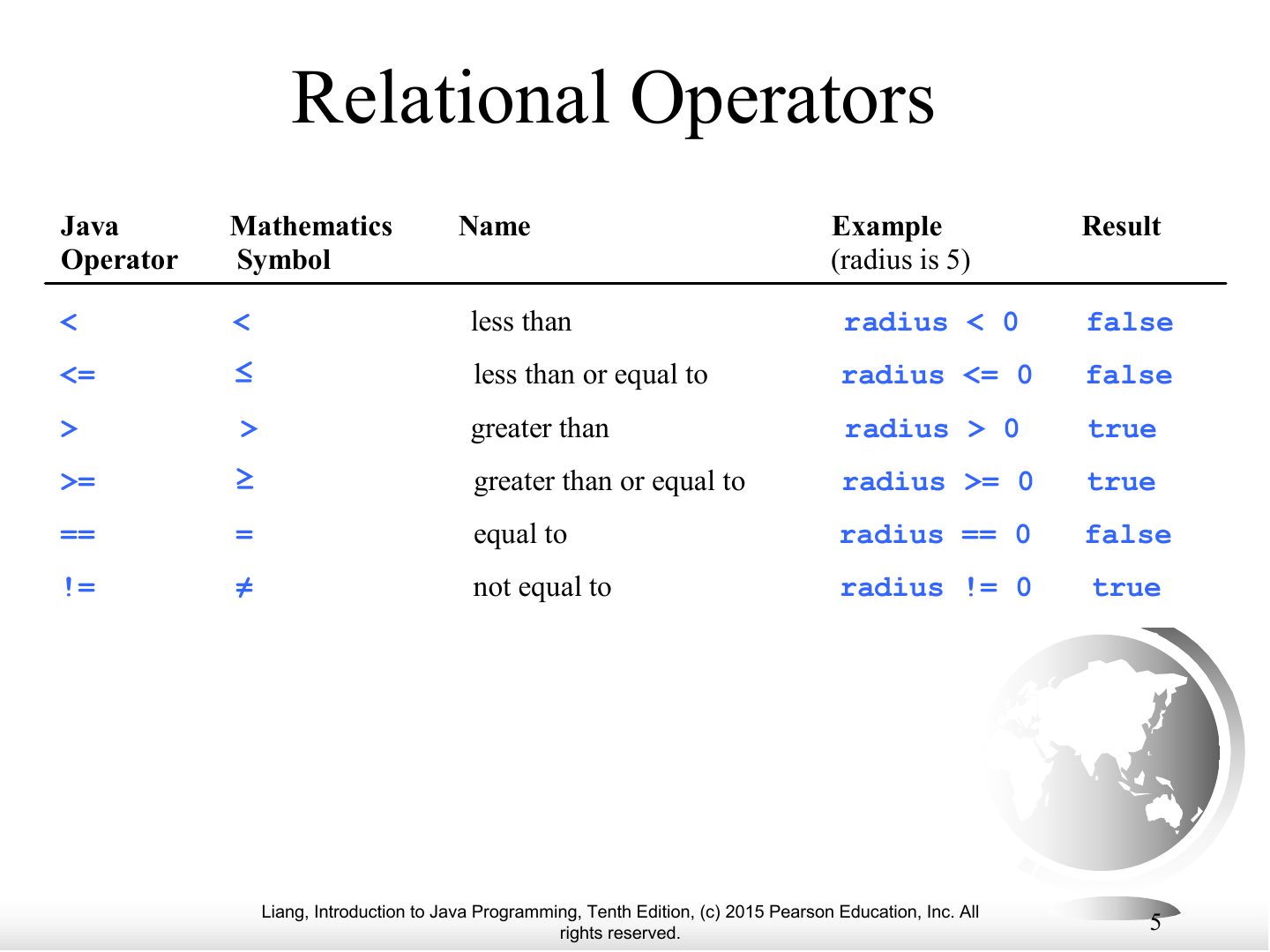
Notes
Trap = assigns; == compares.
Exam angle
Problem: A Simple Math Learning Tool
if
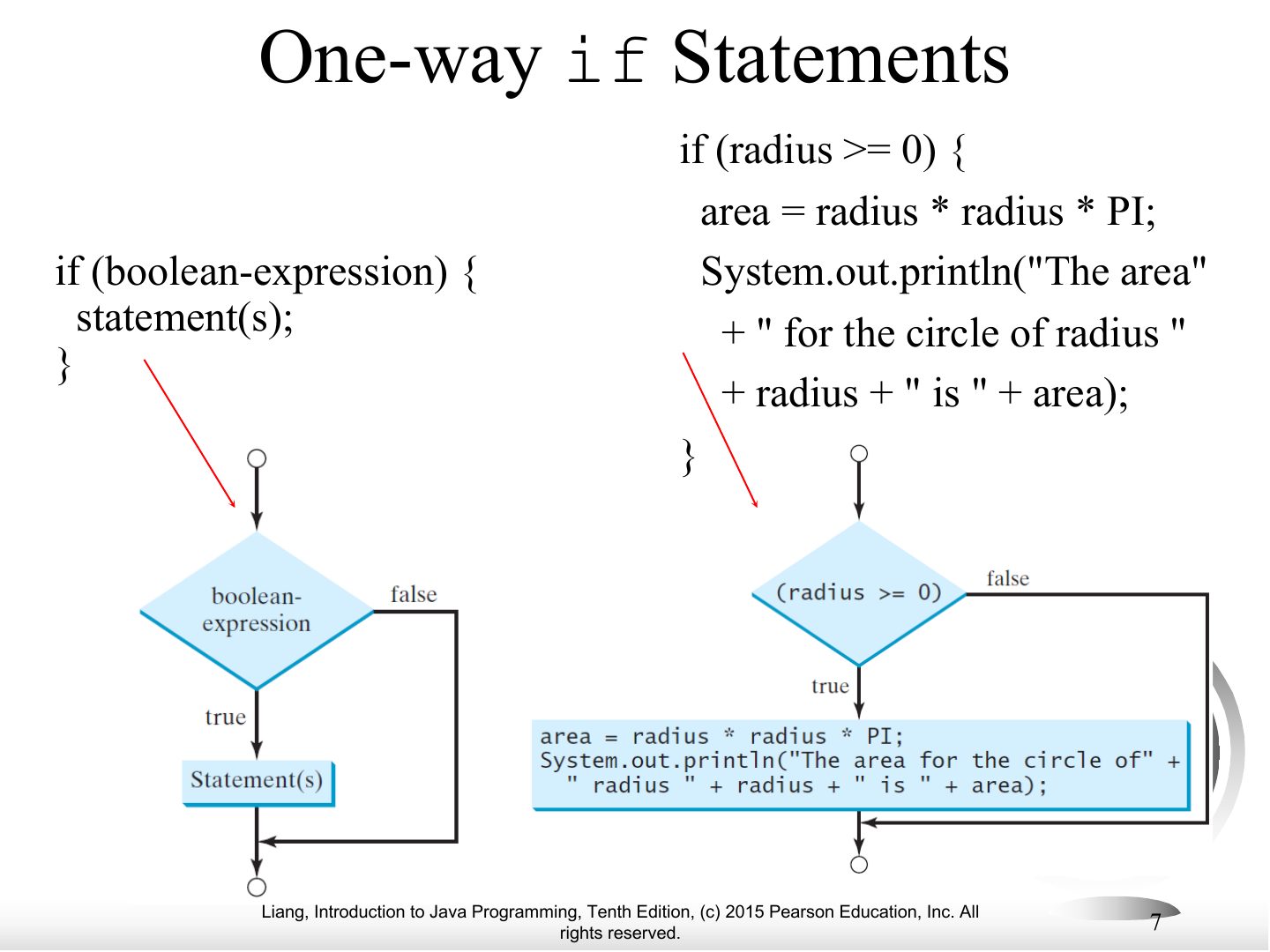
Notes
One-way if: run the block only when the condition is true.
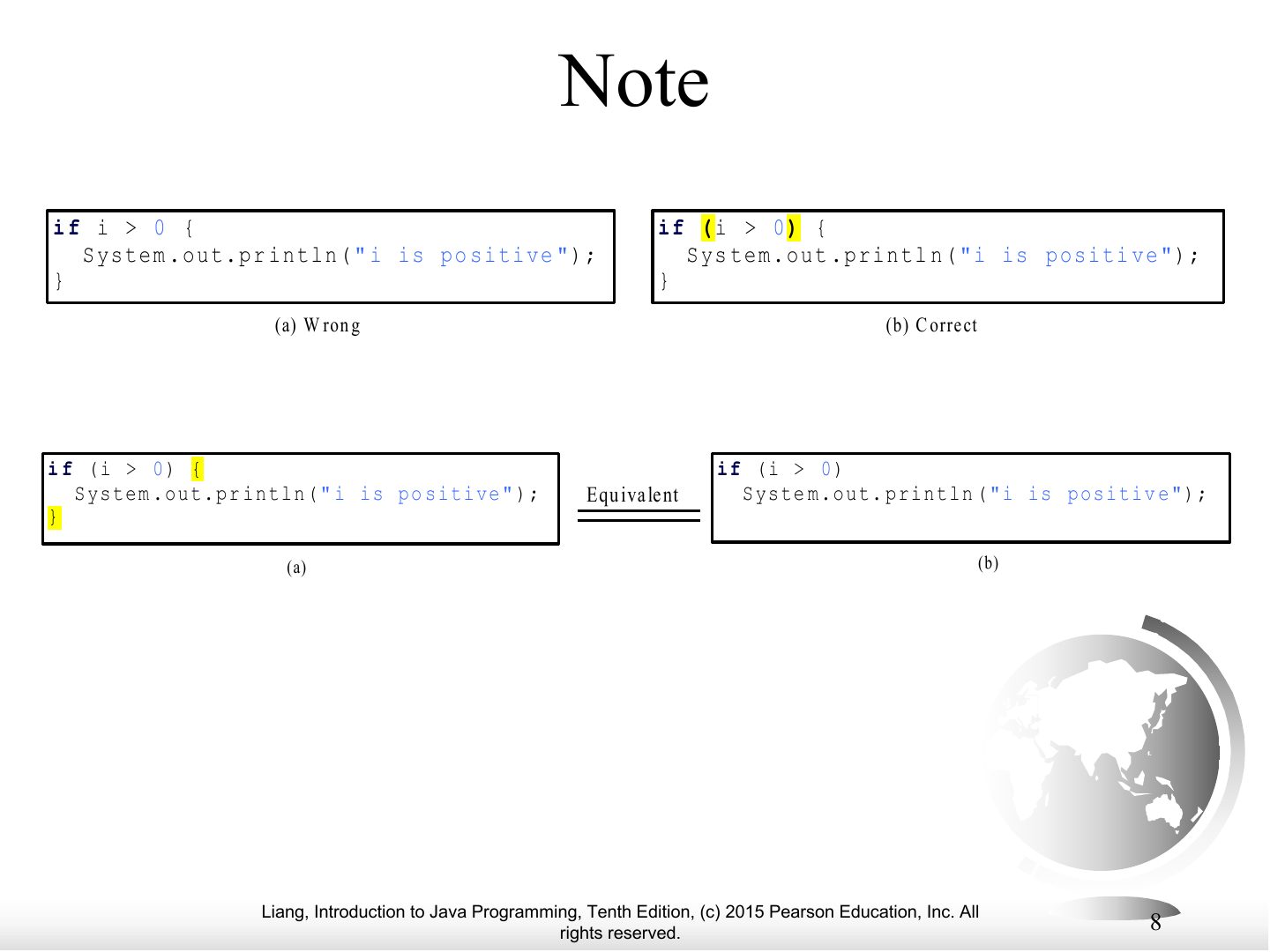
Note
Notes
The condition must be in parentheses; braces can be omitted for a single statement.
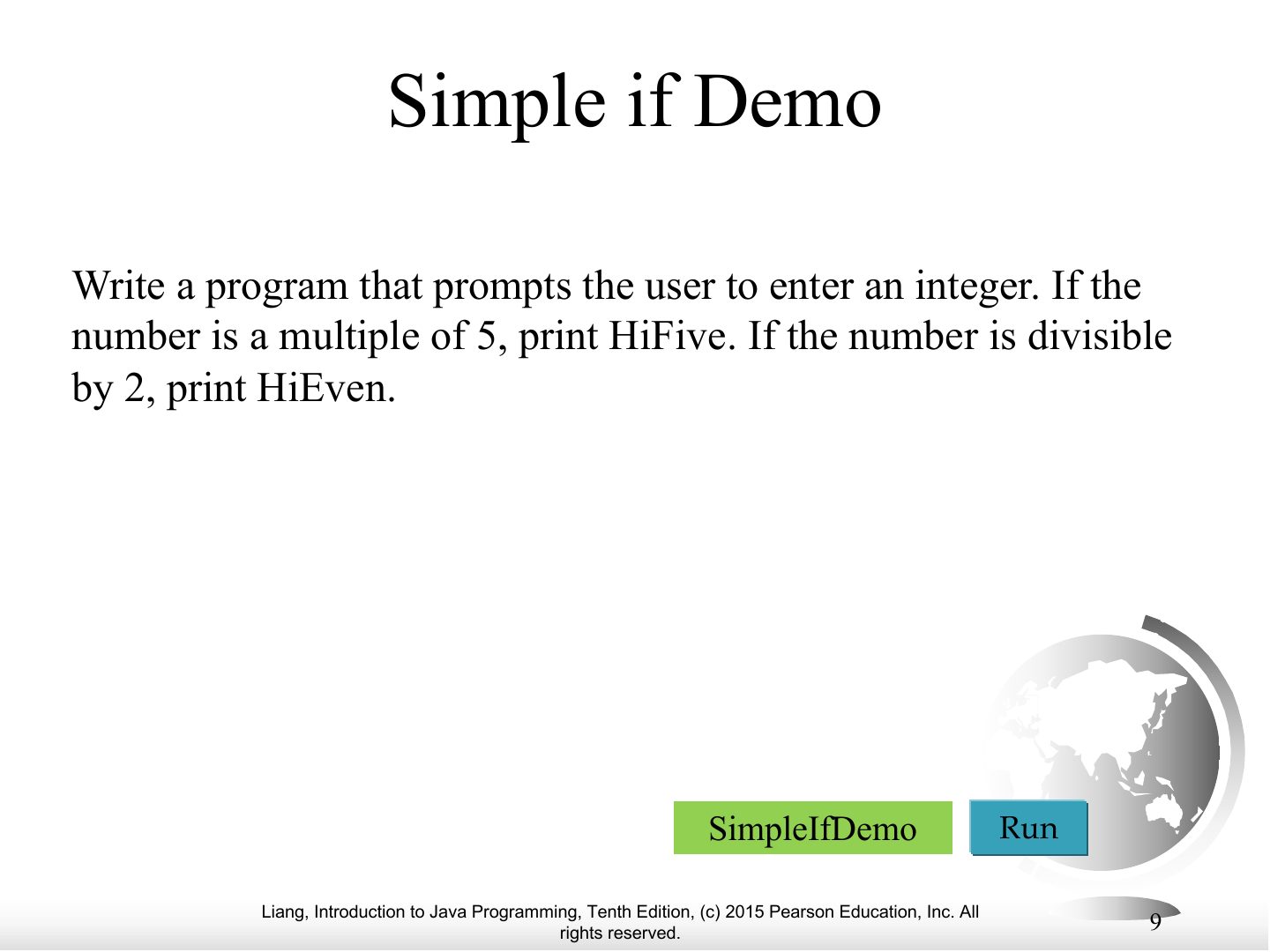
Simple if Demo
Notes
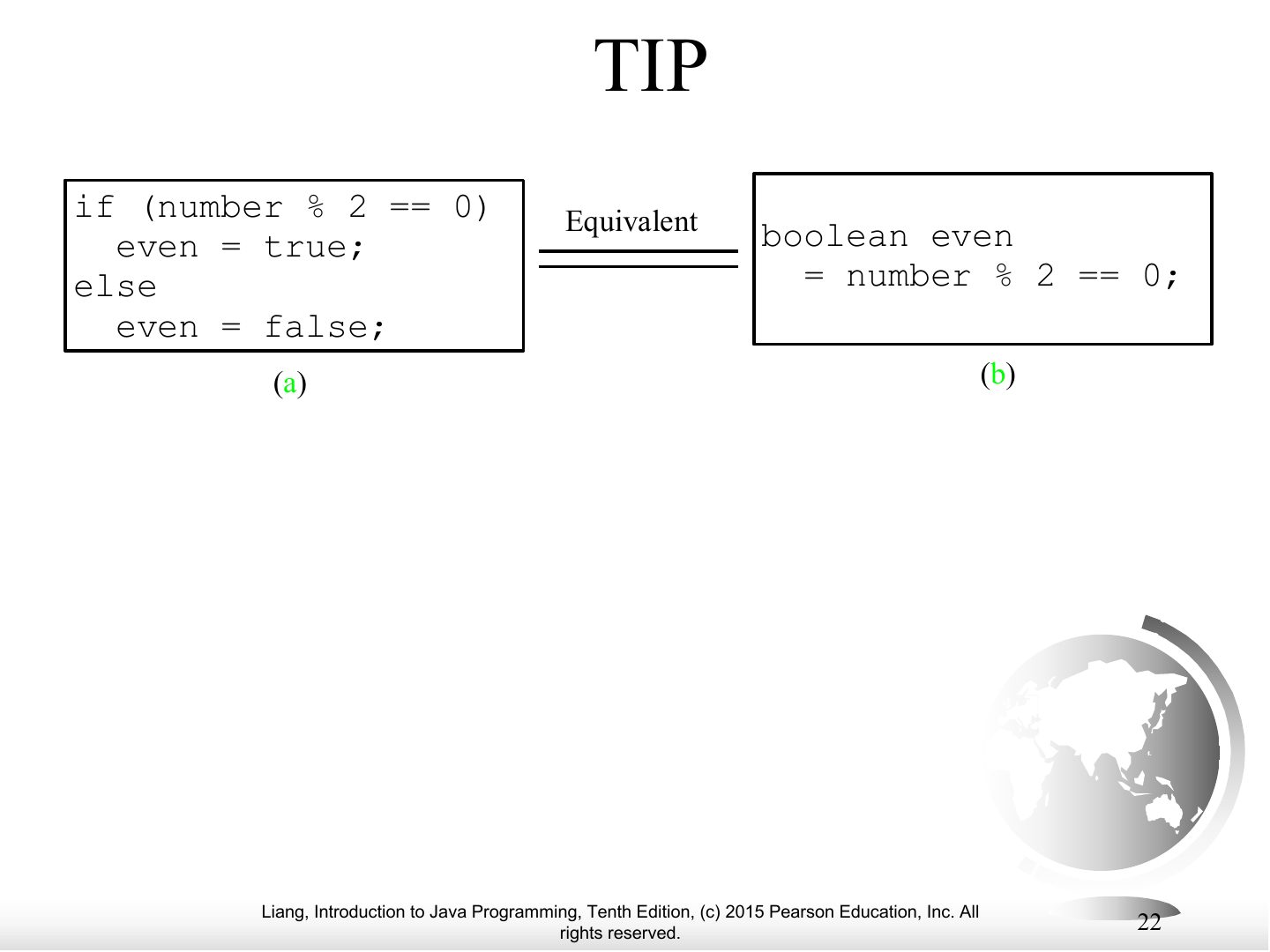
Example: even/odd with if.
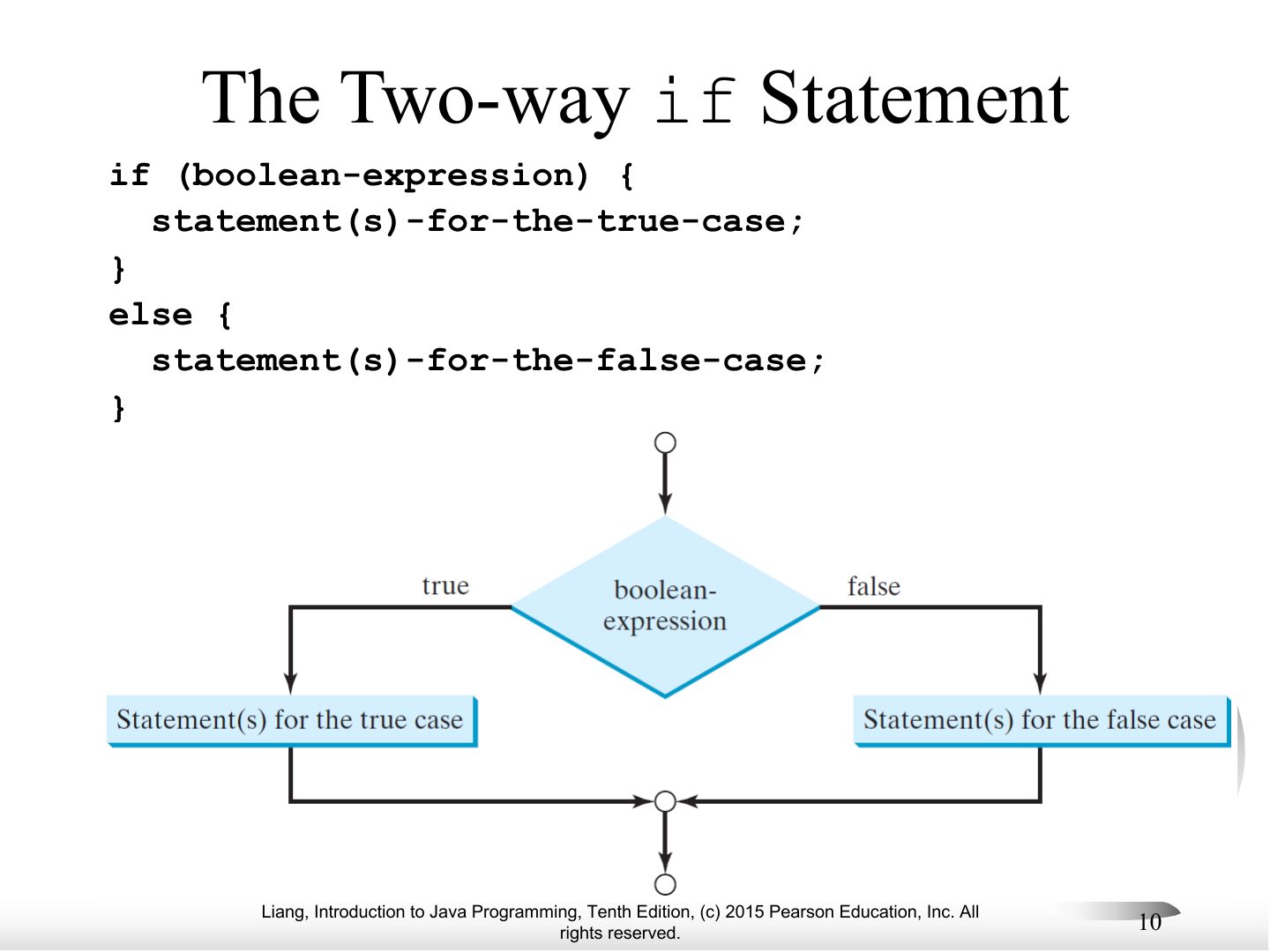
if
Notes
if flowchart.
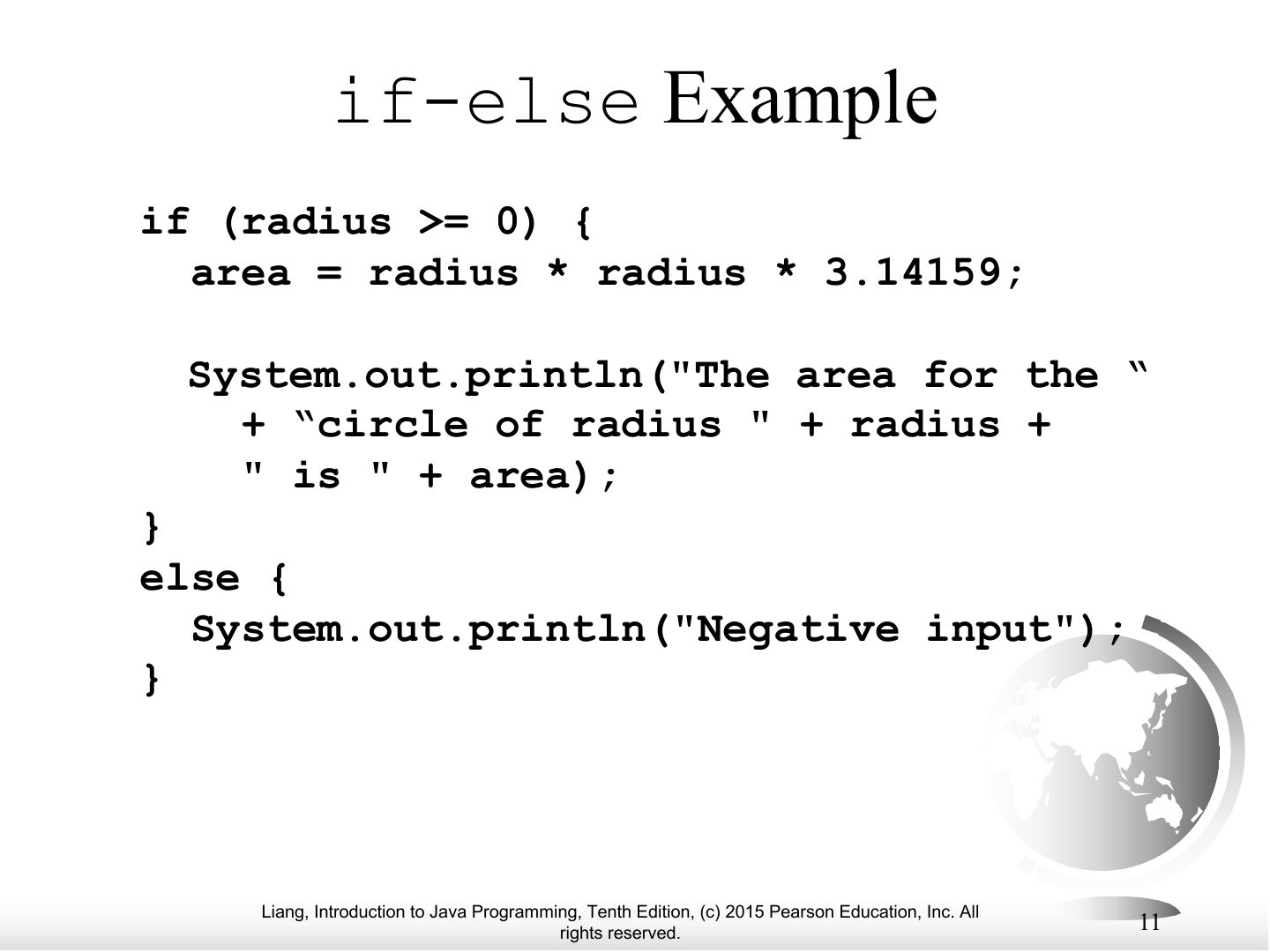
if-else
Notes
if-else: two paths.
Multiple Alternative if Statements
Multi-Way if-else Statements
Notes
Multi-way if-else: check conditions in order; the first true one runs.
Exam angle
score = 85: if (score >= 90) A; else if (score >= 80) B; else if (score >= 70) C. Which grade?
animation
Notes
Trace of the multi-way if.
animation
Notes
Trace.
animation
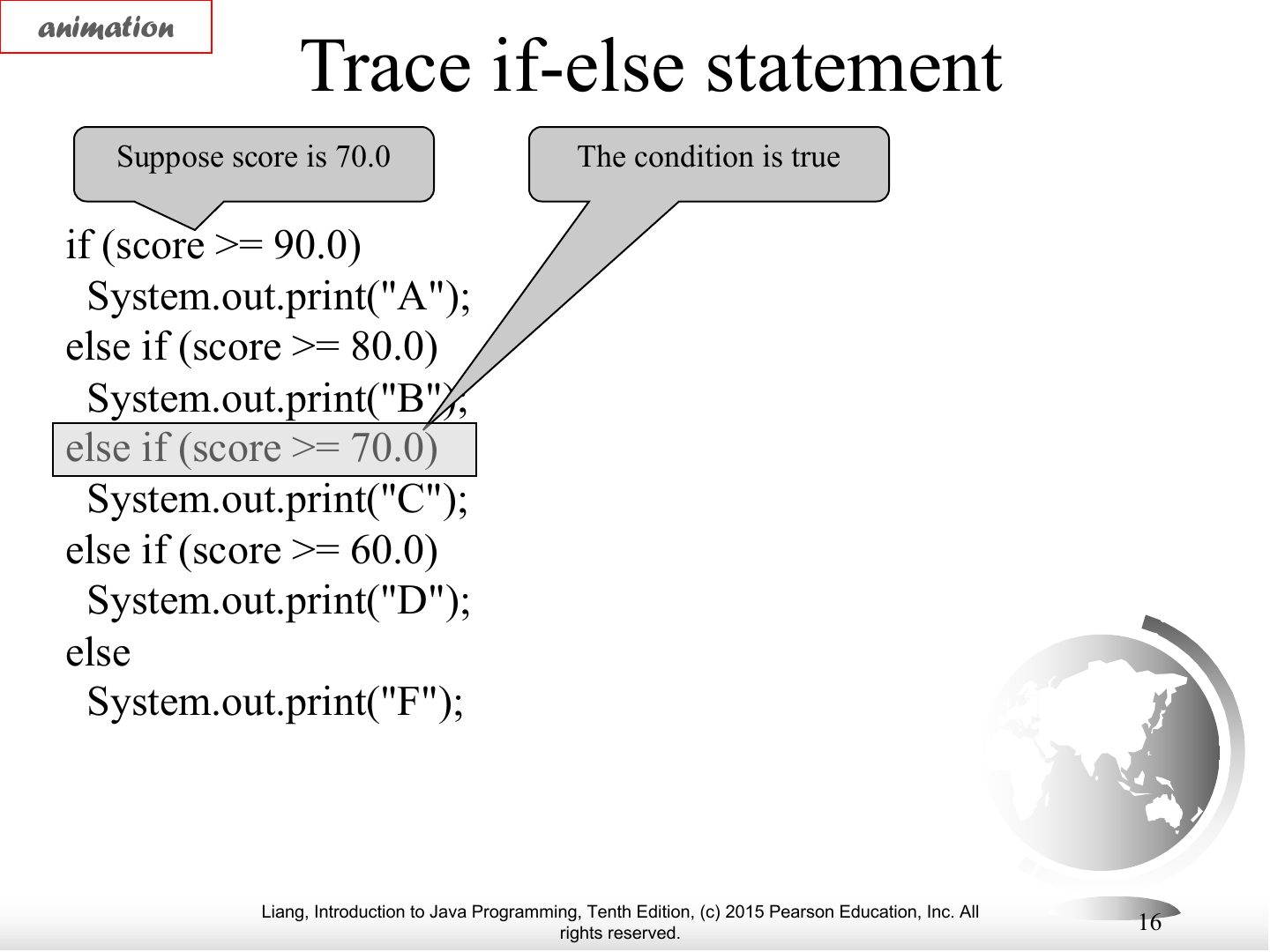
Notes
Trace.
animation
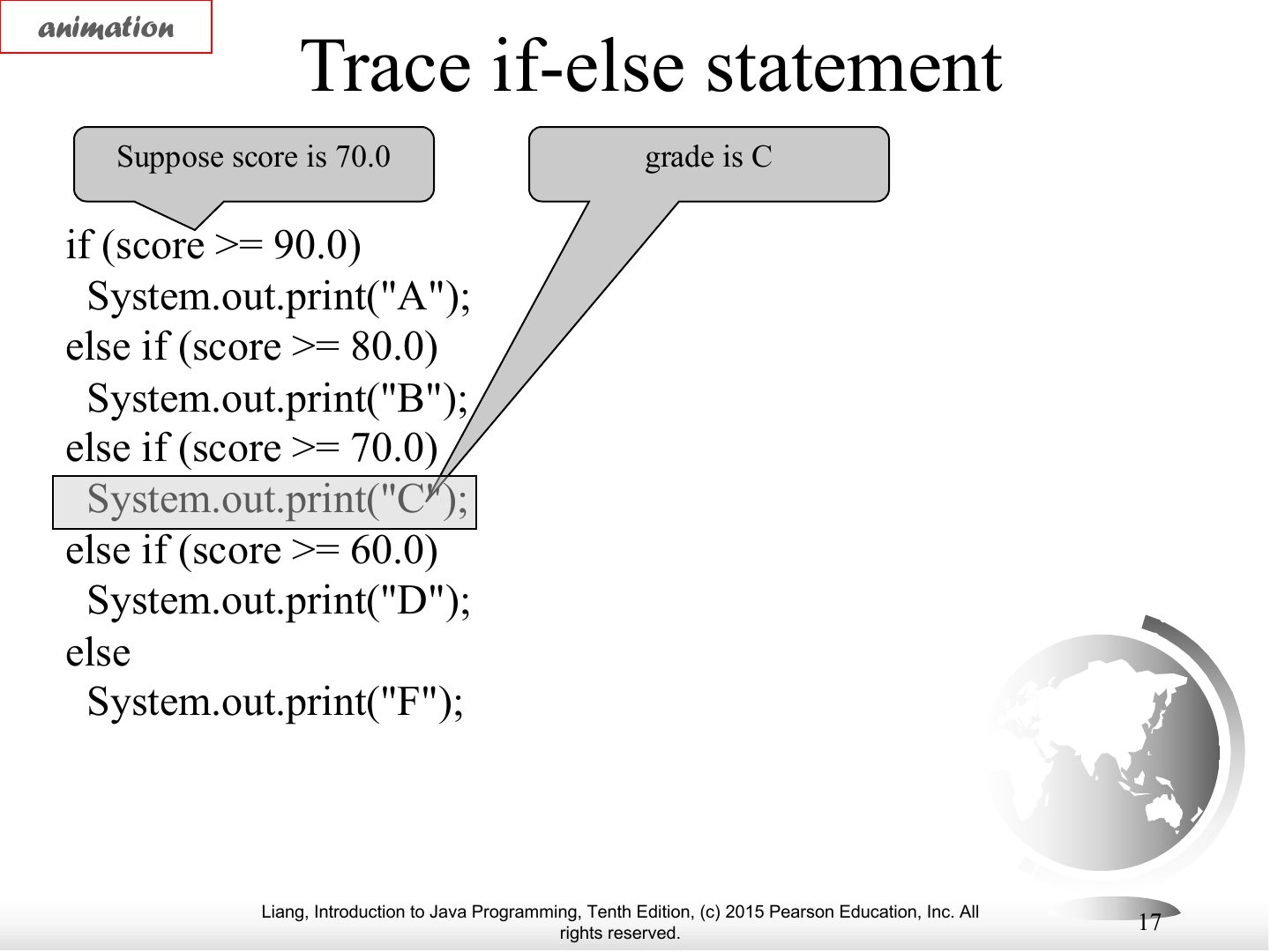
Notes
Trace.
animation
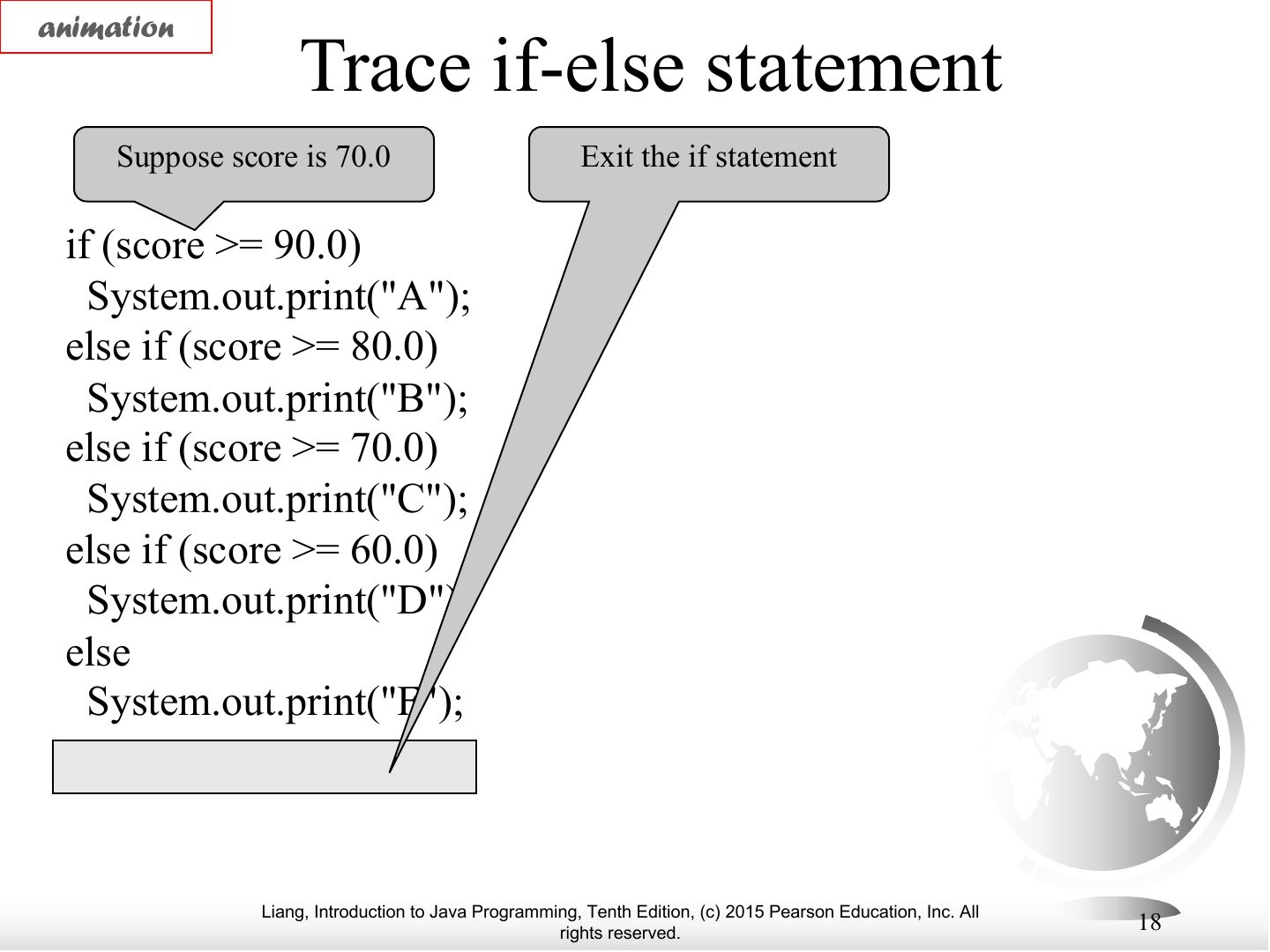
Notes
Trace.
Note
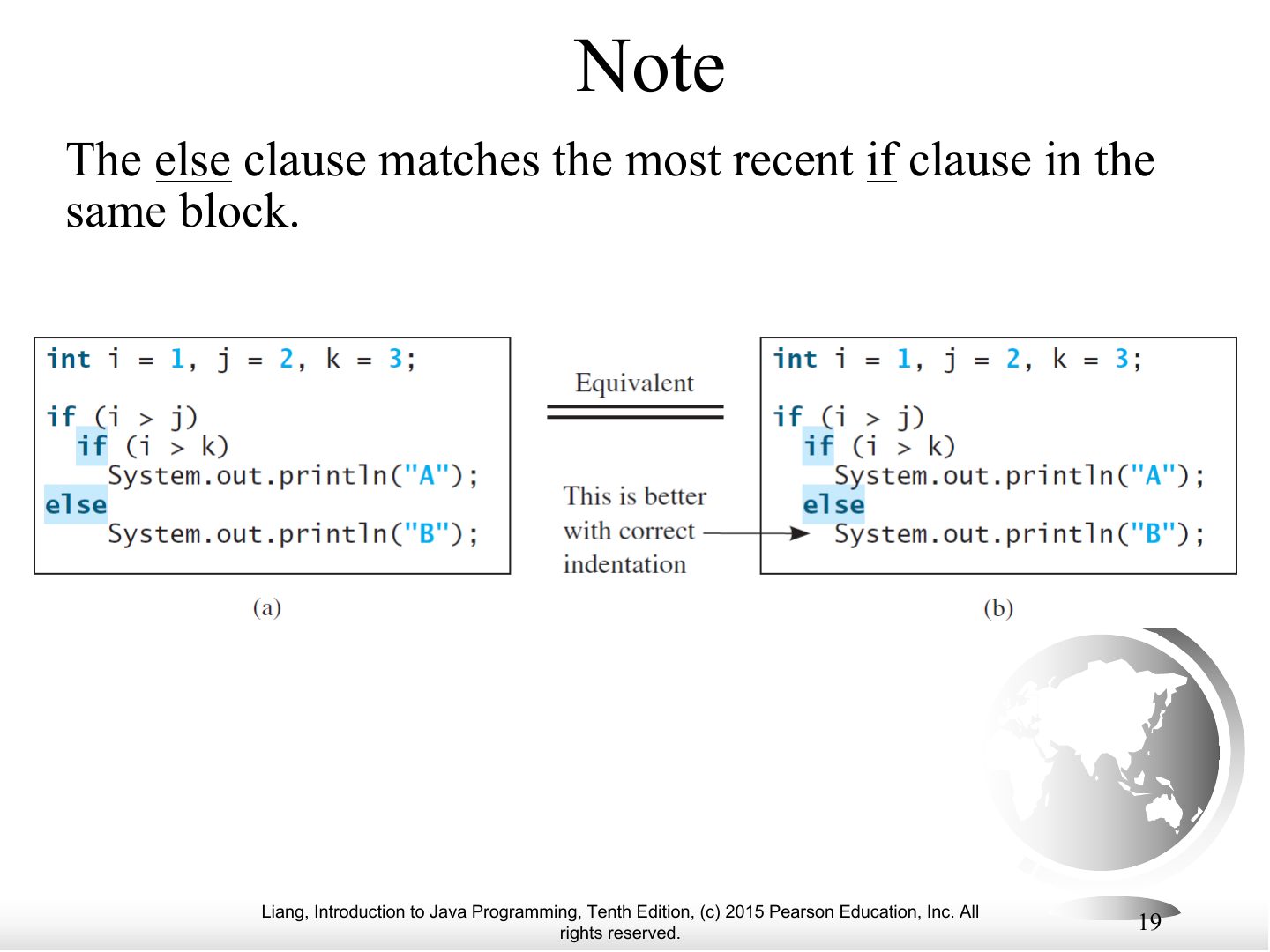
Notes
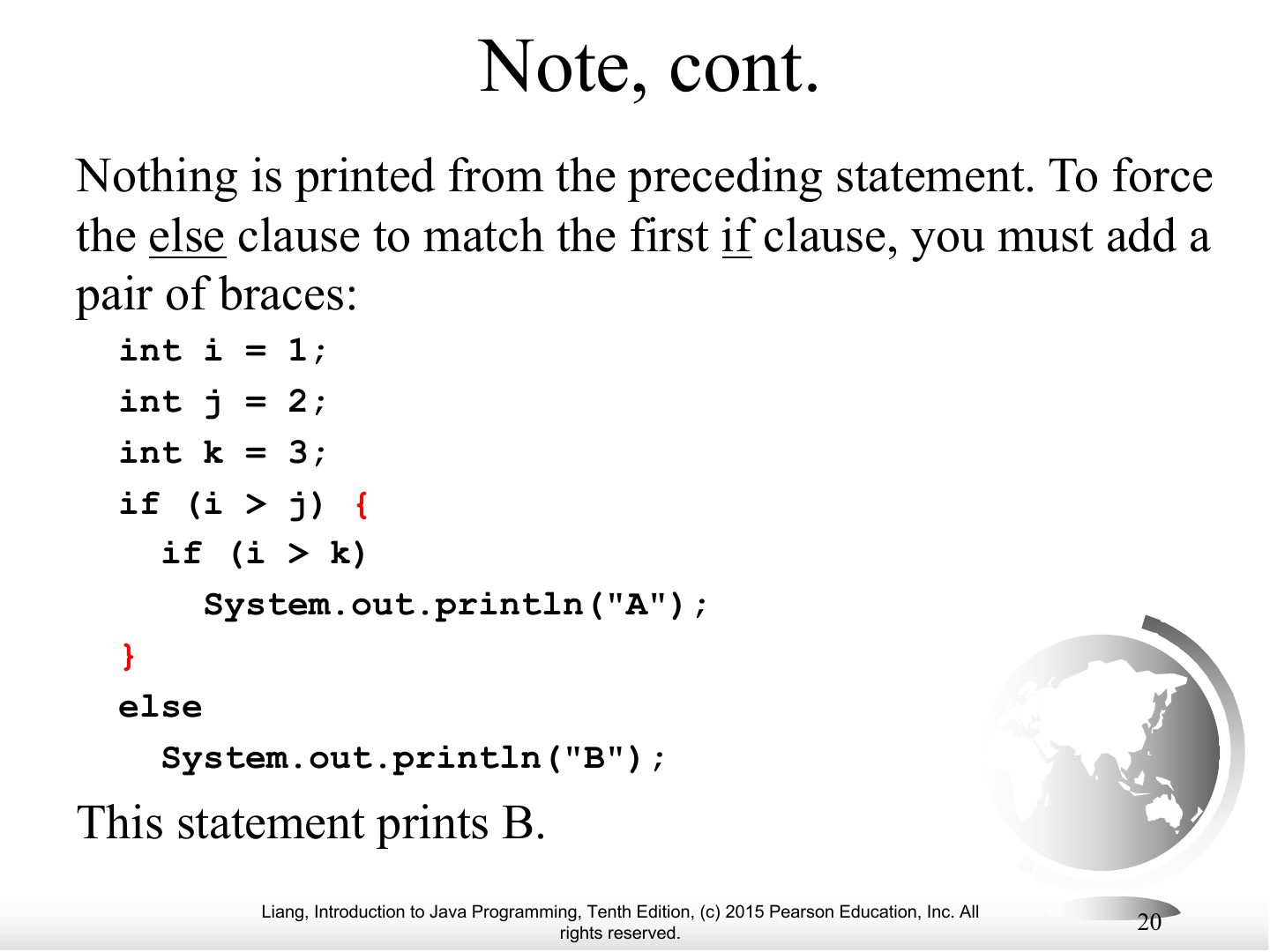
An else matches the NEAREST unmatched if in the same block (dangling else).
Exam angle
An else always matches the first if in the code.
- It matches the nearest unmatched if.
Note, cont.
Common Errors
Notes
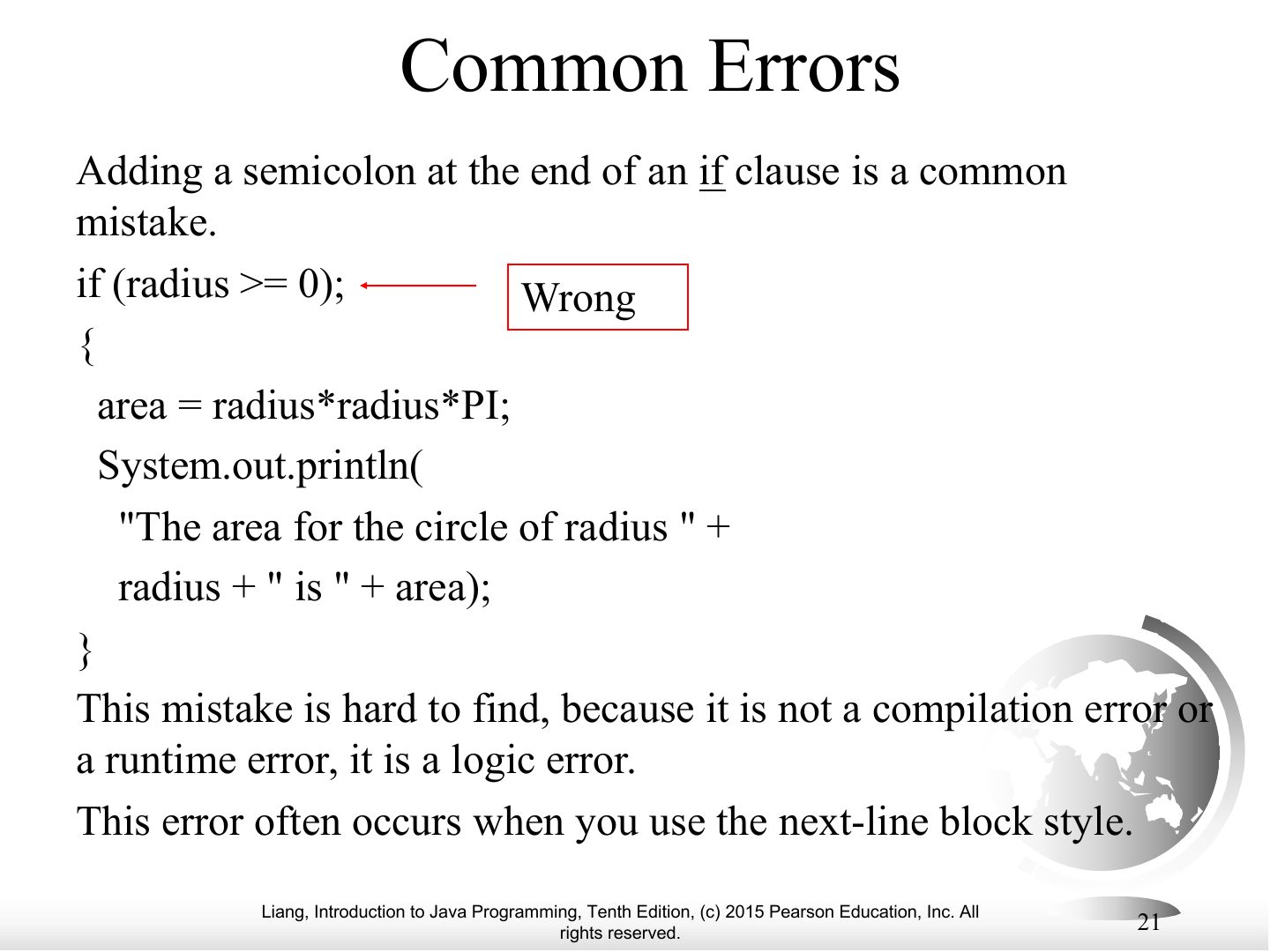
Common error: a semicolon after if (radius >= 0); makes an empty body.
Exam angle
What is wrong with: if (radius >= 0); { area = radius * radius * PI; }
Compare with the model answer
The semicolon ends the if with an empty statement, so the block always runs regardless of the condition.
TIP
CAUTION
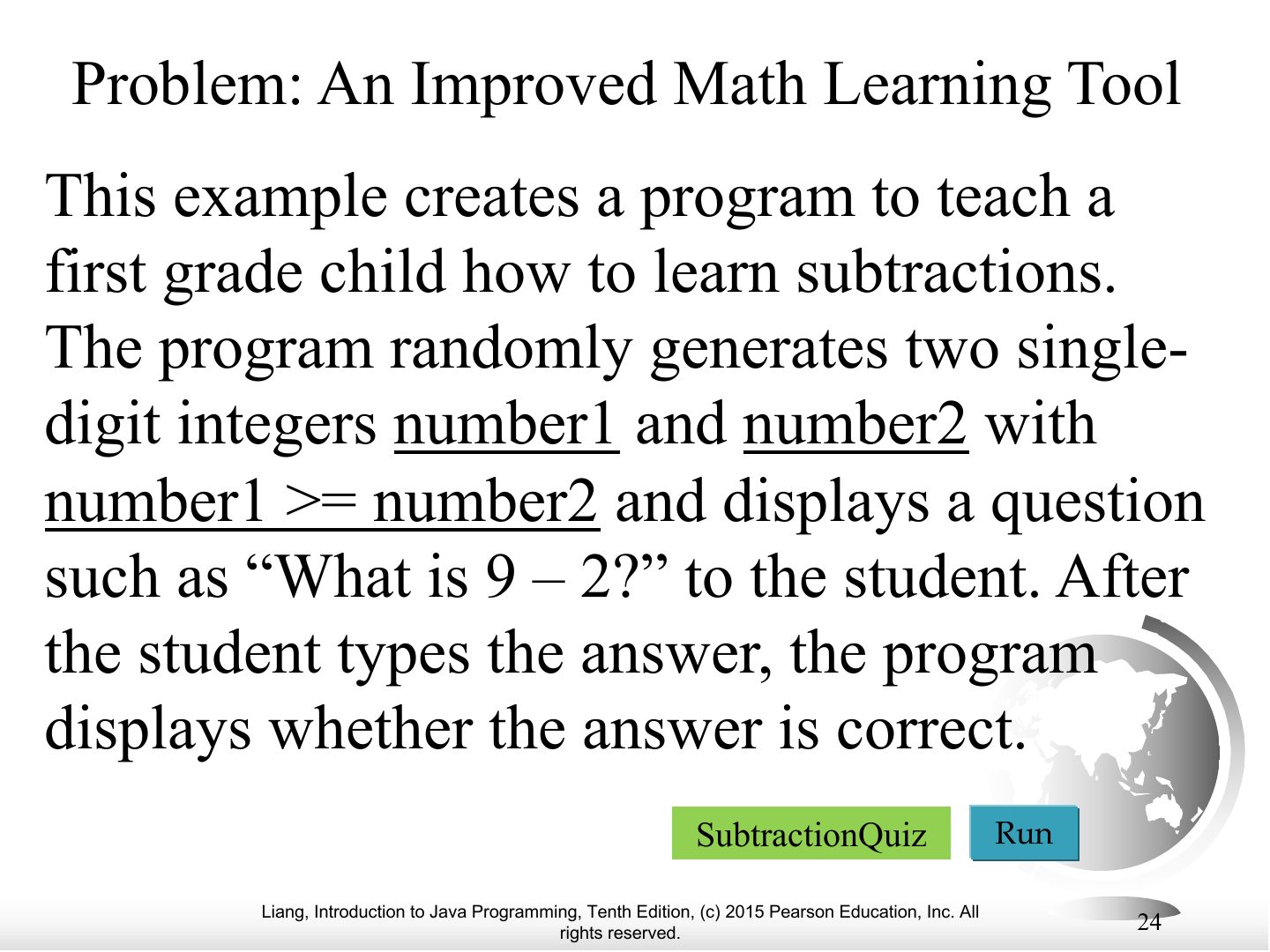
Problem: An Improved Math Learning Tool
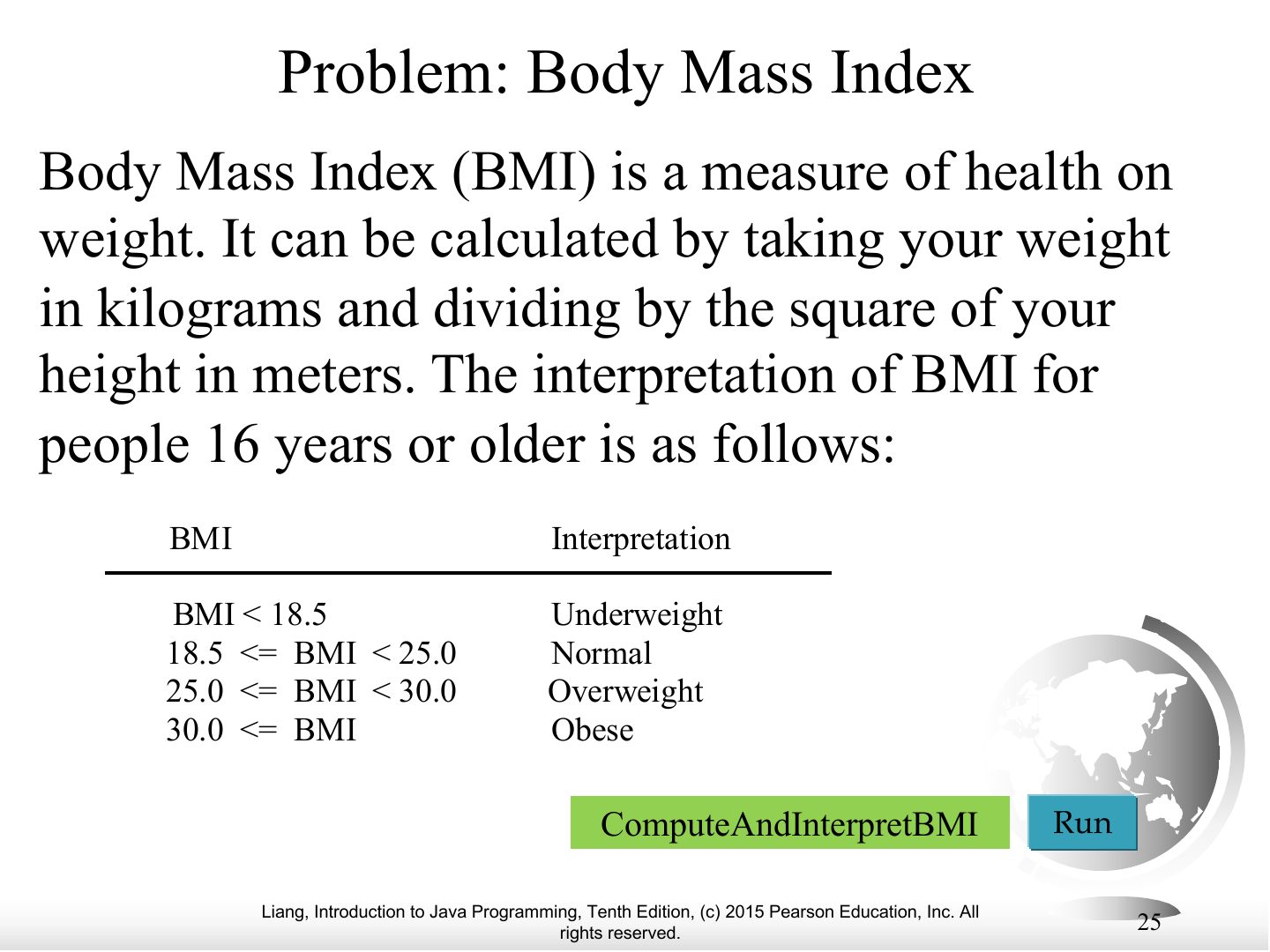
Problem: Body Mass Index
Notes
BMI = weight / height²; categories by multi-way if.
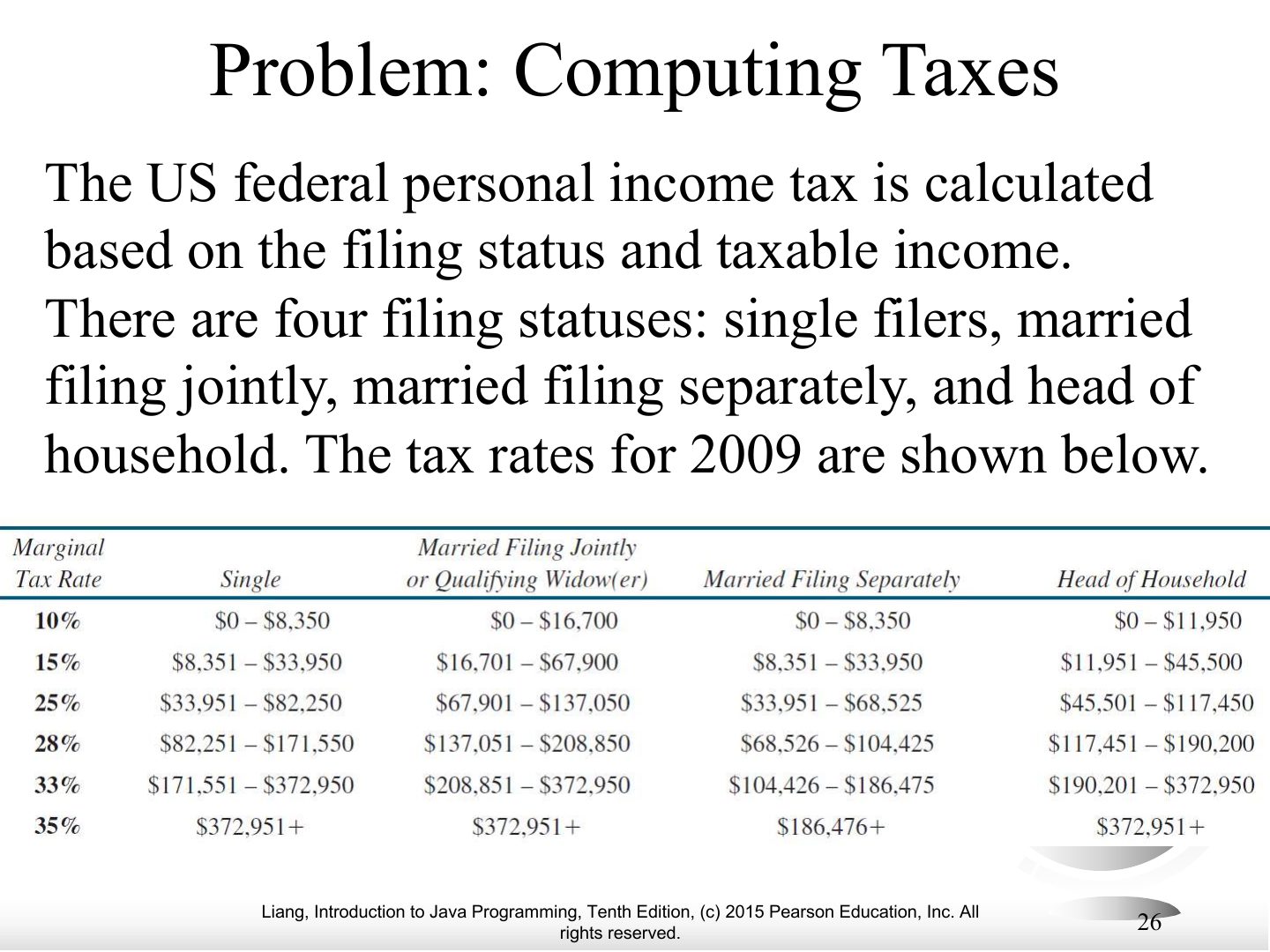
Problem: Computing Taxes
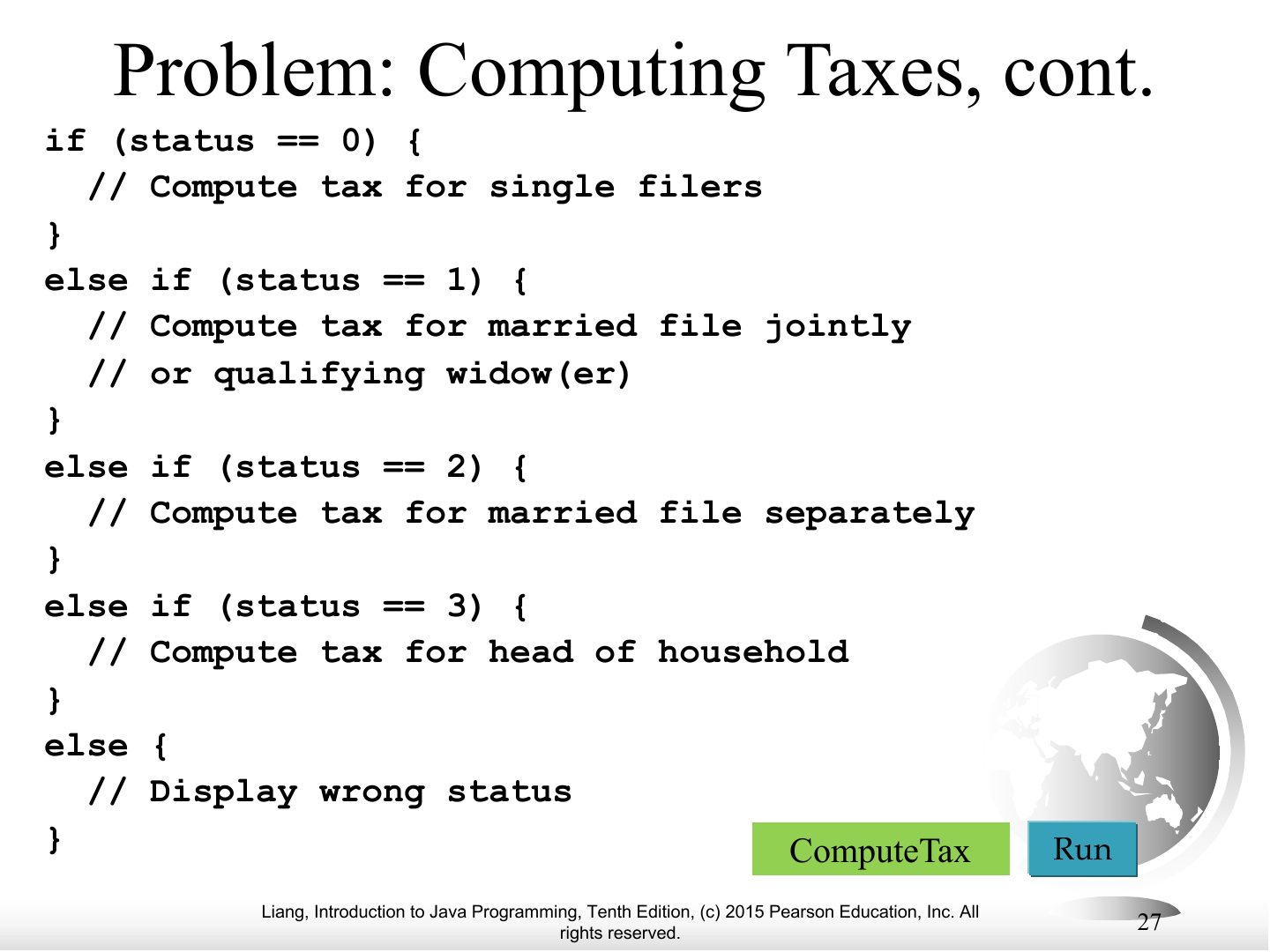
Problem: Computing Taxes, cont.
Notes
Taxes continued.
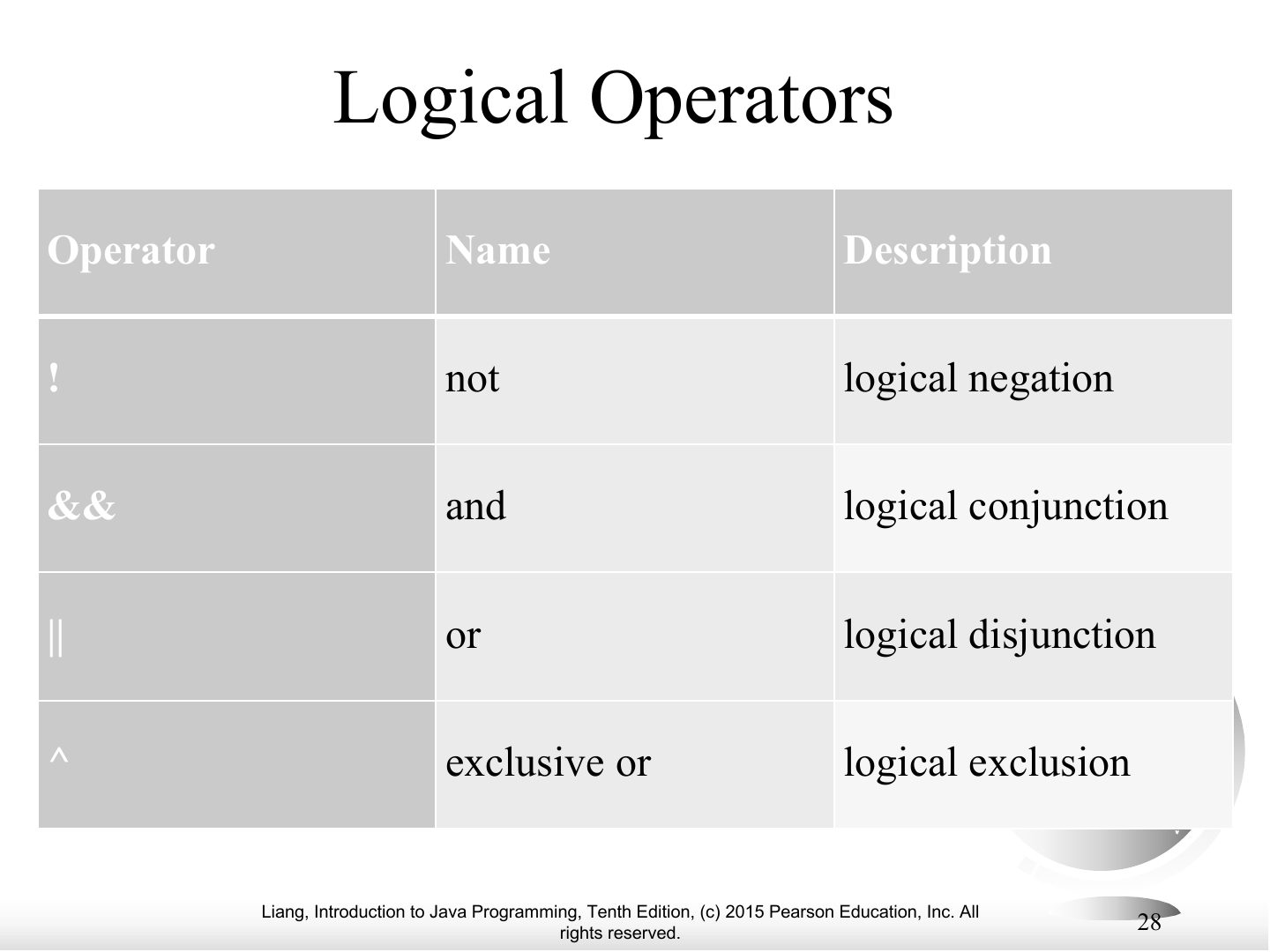
Logical Operators
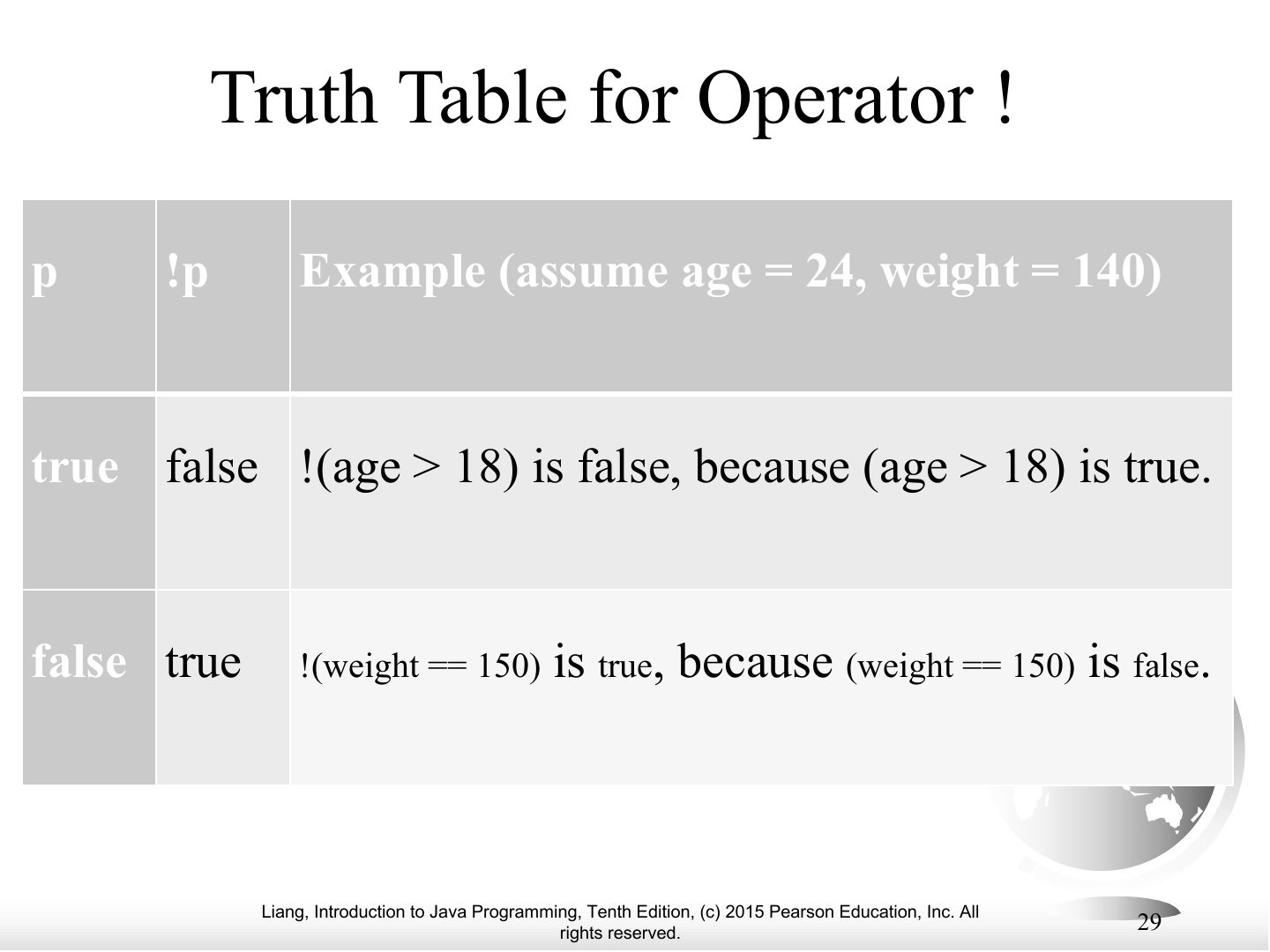
Truth Table for Operator !
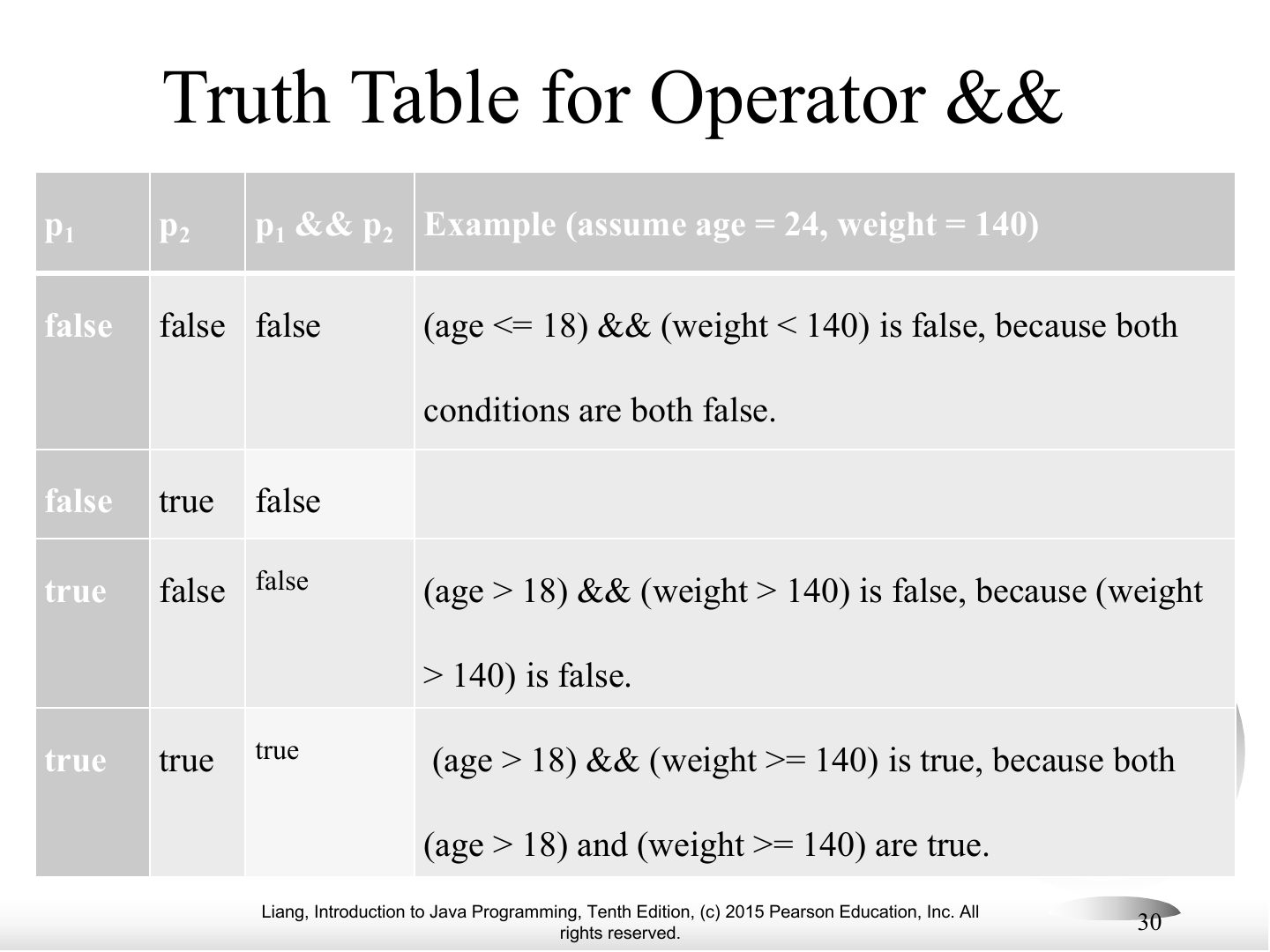
Truth Table for Operator &&
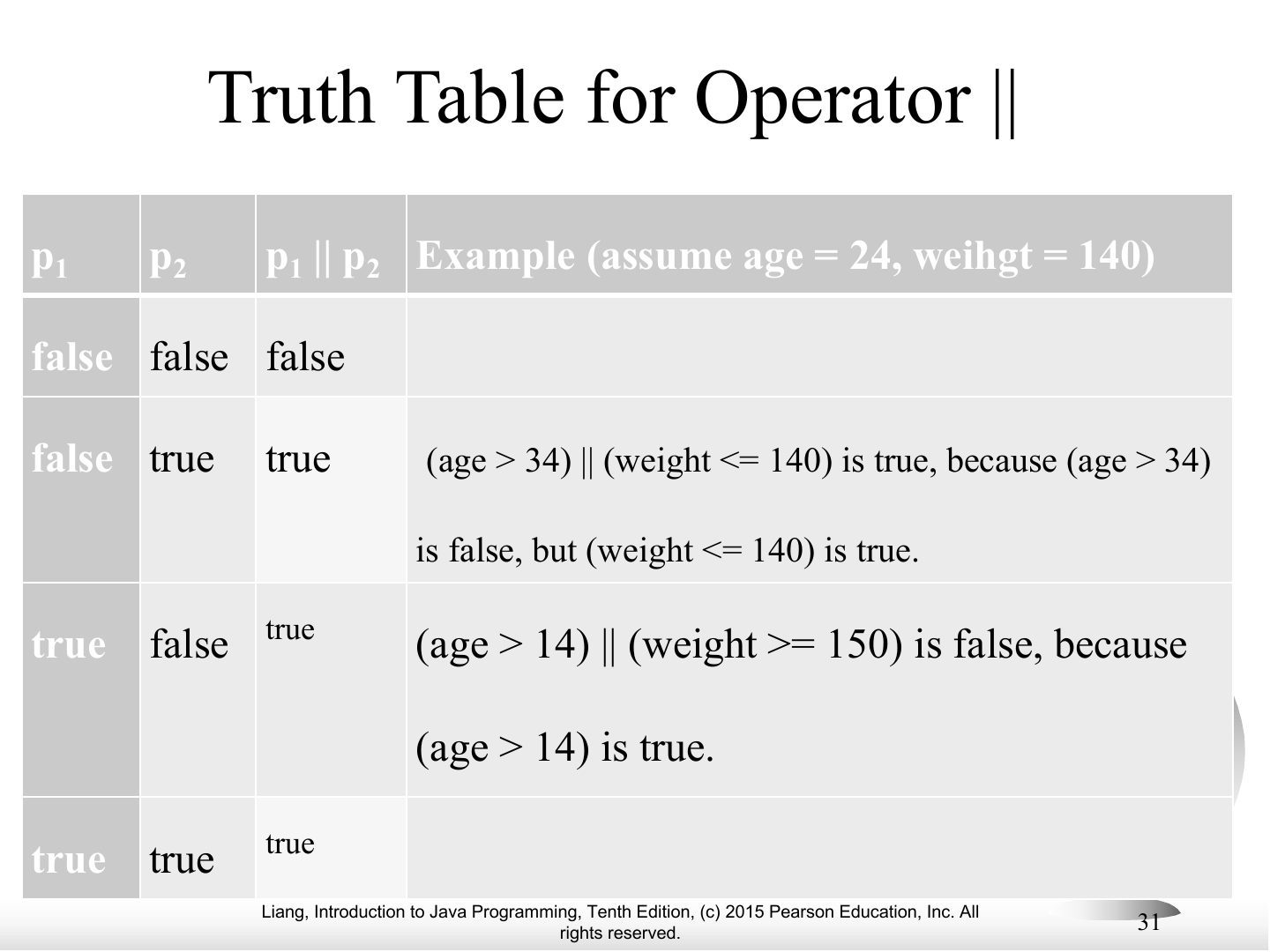
Truth Table for Operator ||
Notes
|| is true if at least one is true.
Truth Table for Operator ^
Notes
^ is true if exactly one is true.
Exam angle
true ^ true evaluates to:
Examples
Examples
Notes
More examples.
Companion Website
Notes
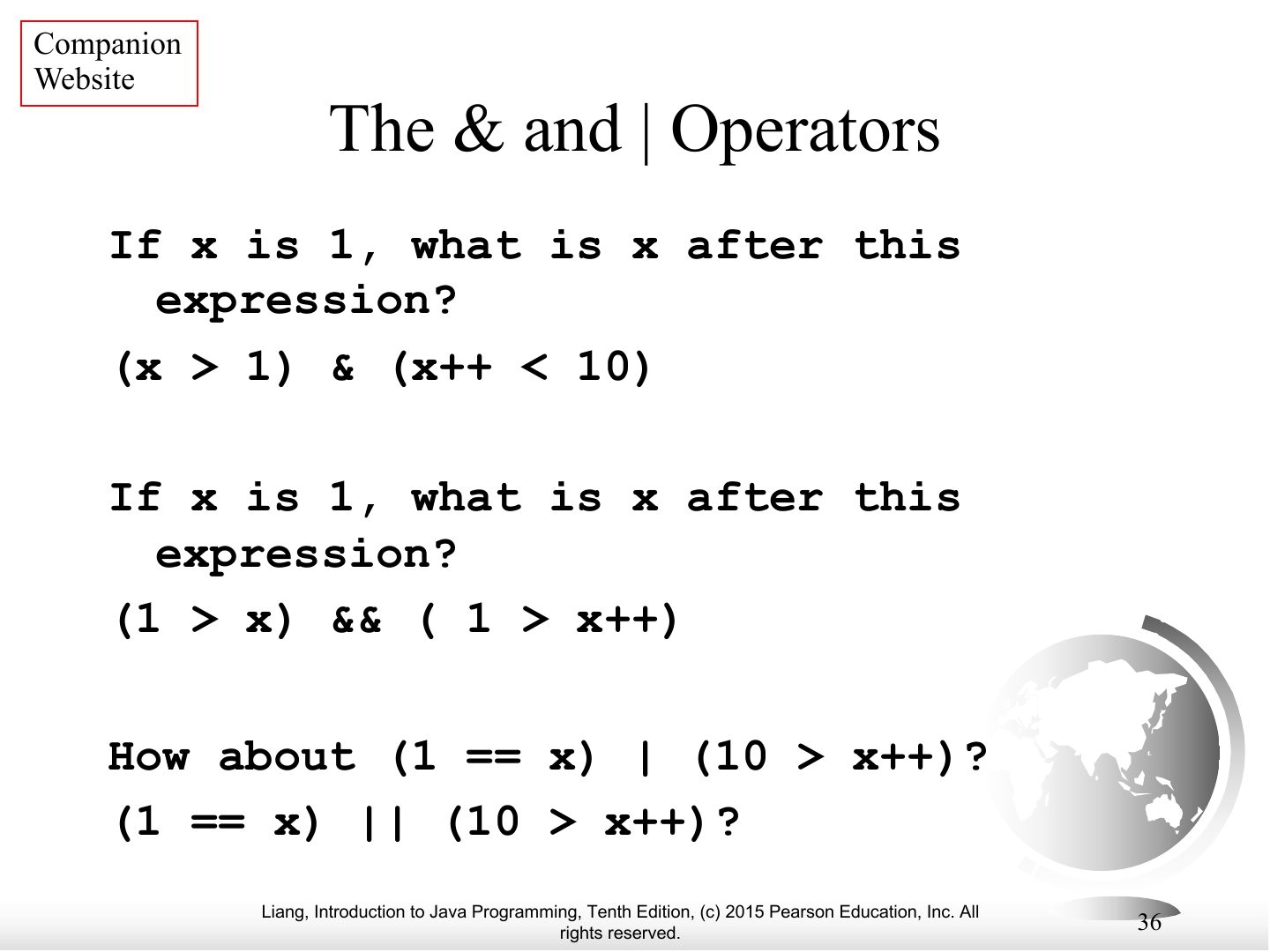
Short-circuit: && stops if the left side is false; || stops if the left side is true.
Exam angle
In (x != 0 && 10 / x > 1), the division is not evaluated when x is 0.
- Short-circuit evaluation.
Companion Website
Notes
Short-circuit continued.
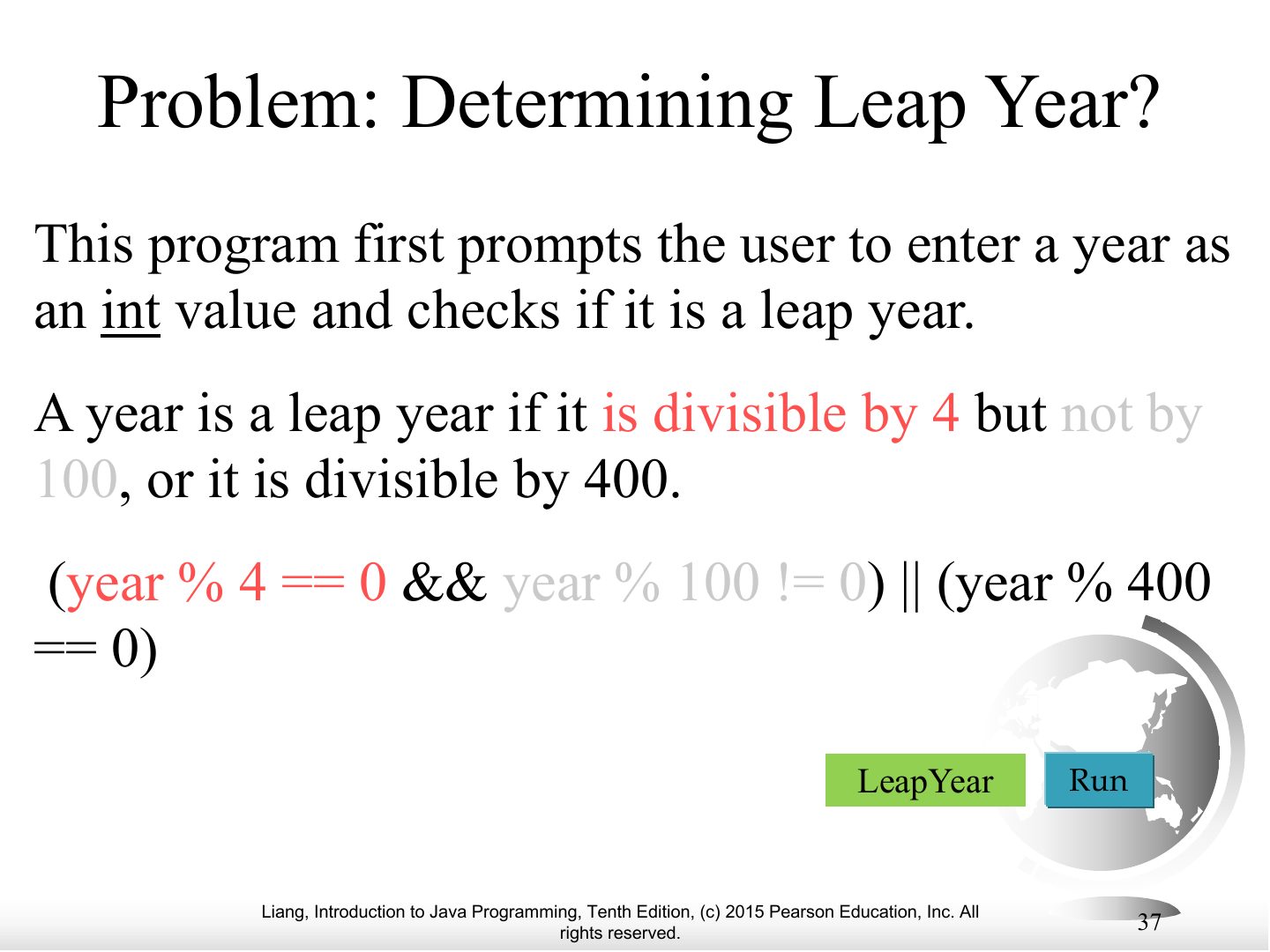
Problem: Determining Leap Year?
Exam angle
Is 1900 a leap year?
- Divisible by 100 but not 400.
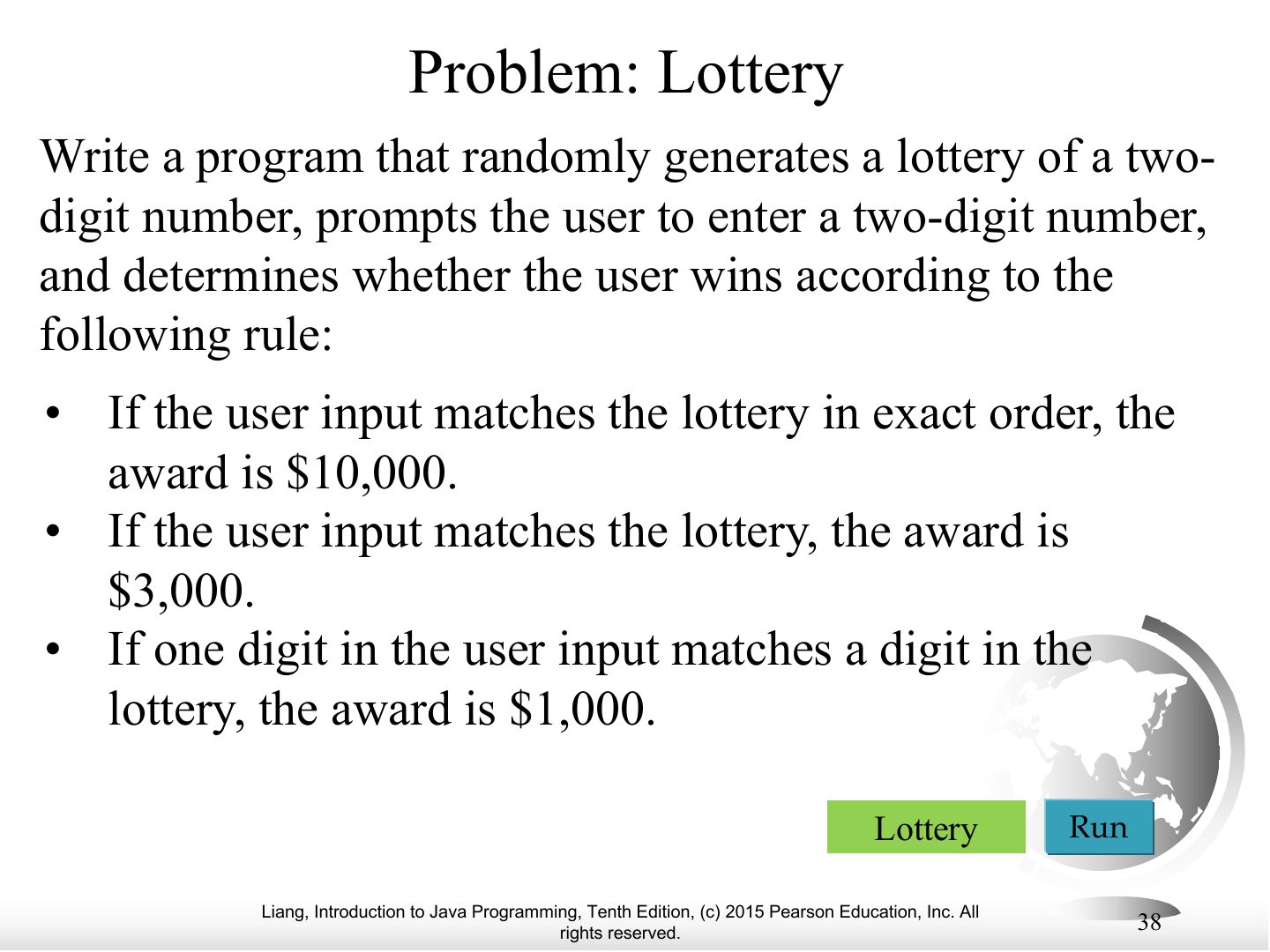
Problem: Lottery
switch
Notes
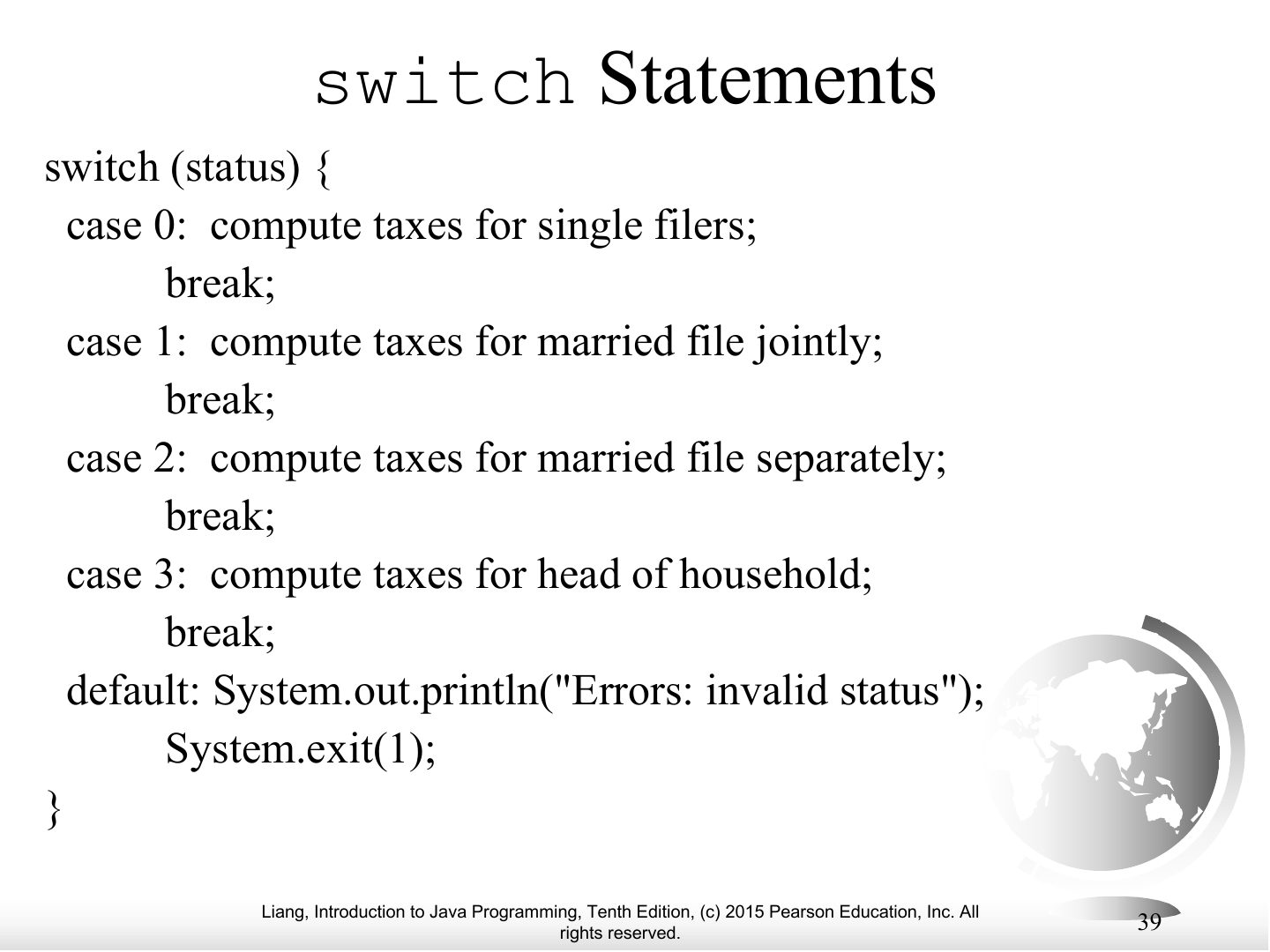
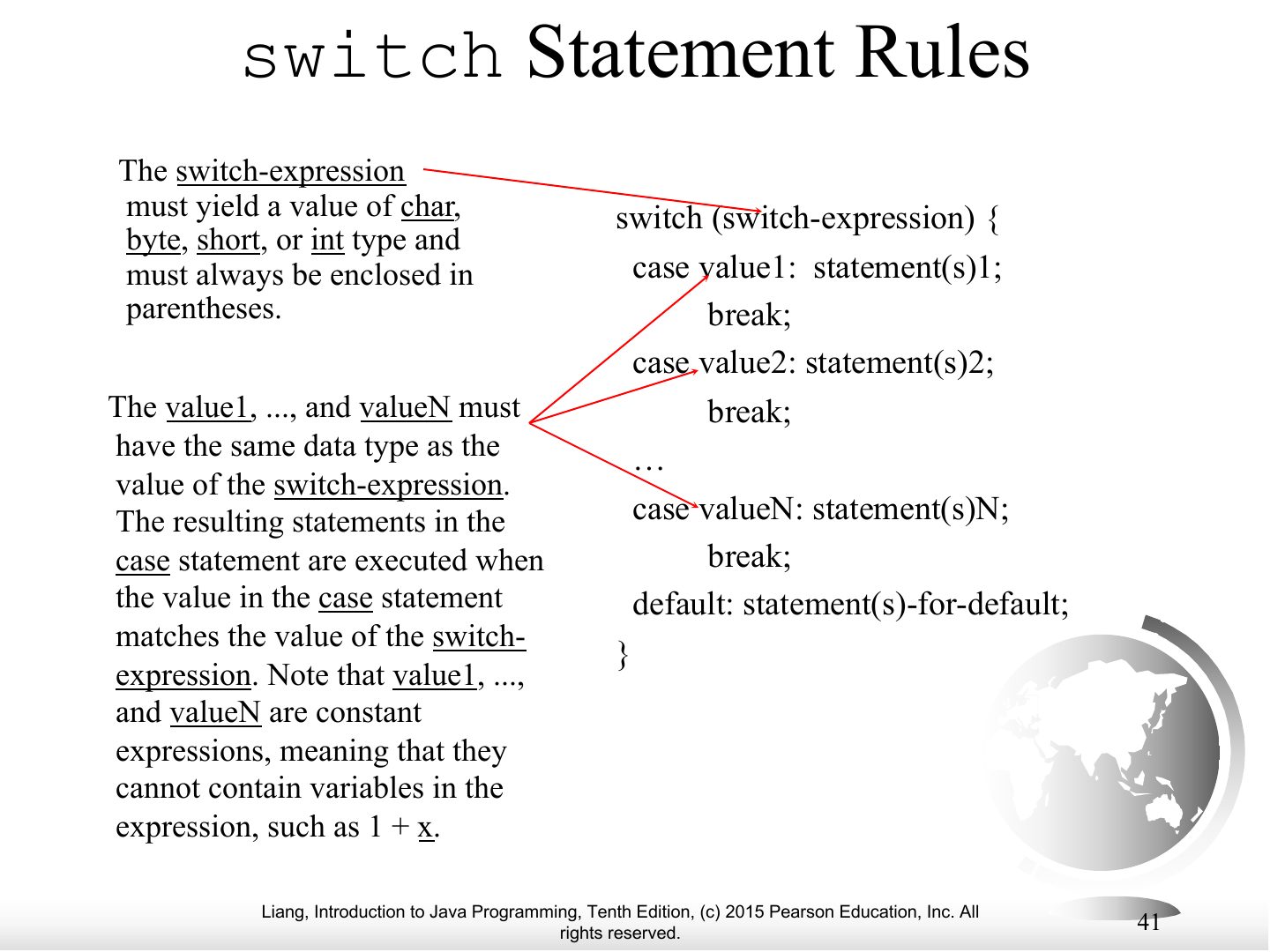
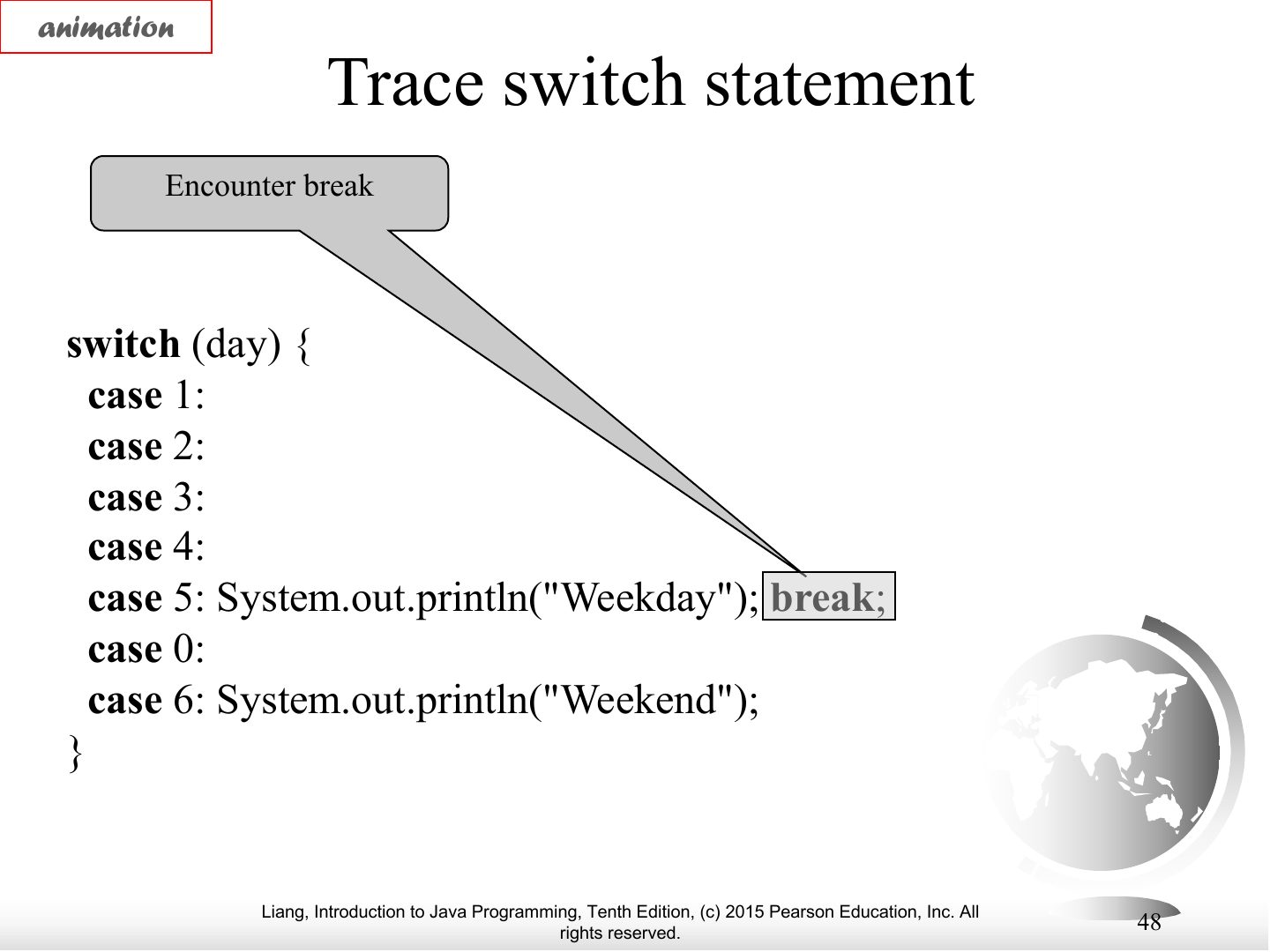
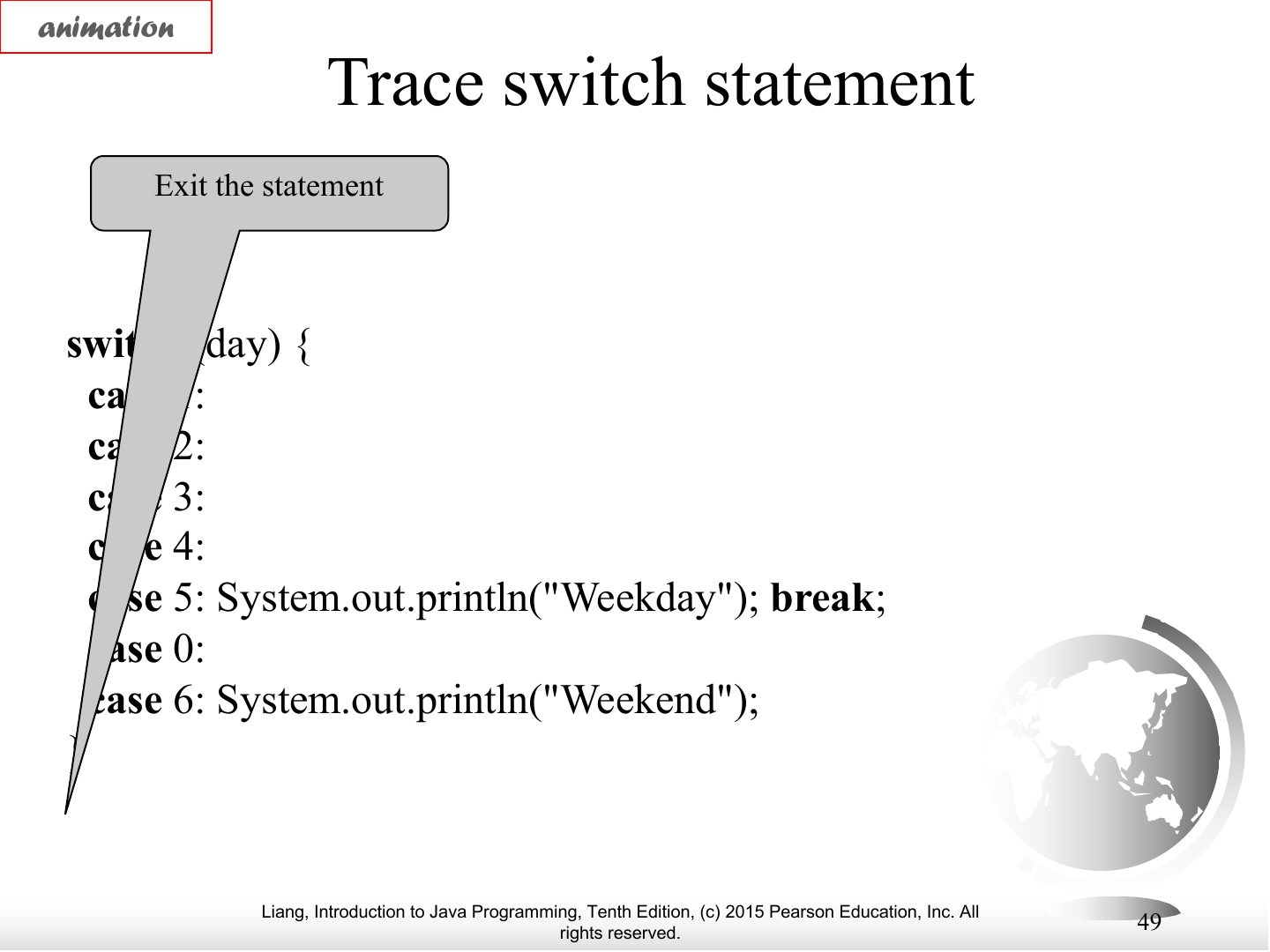
switch on an int, char, String or enum; each case ends with break.
switch
Notes
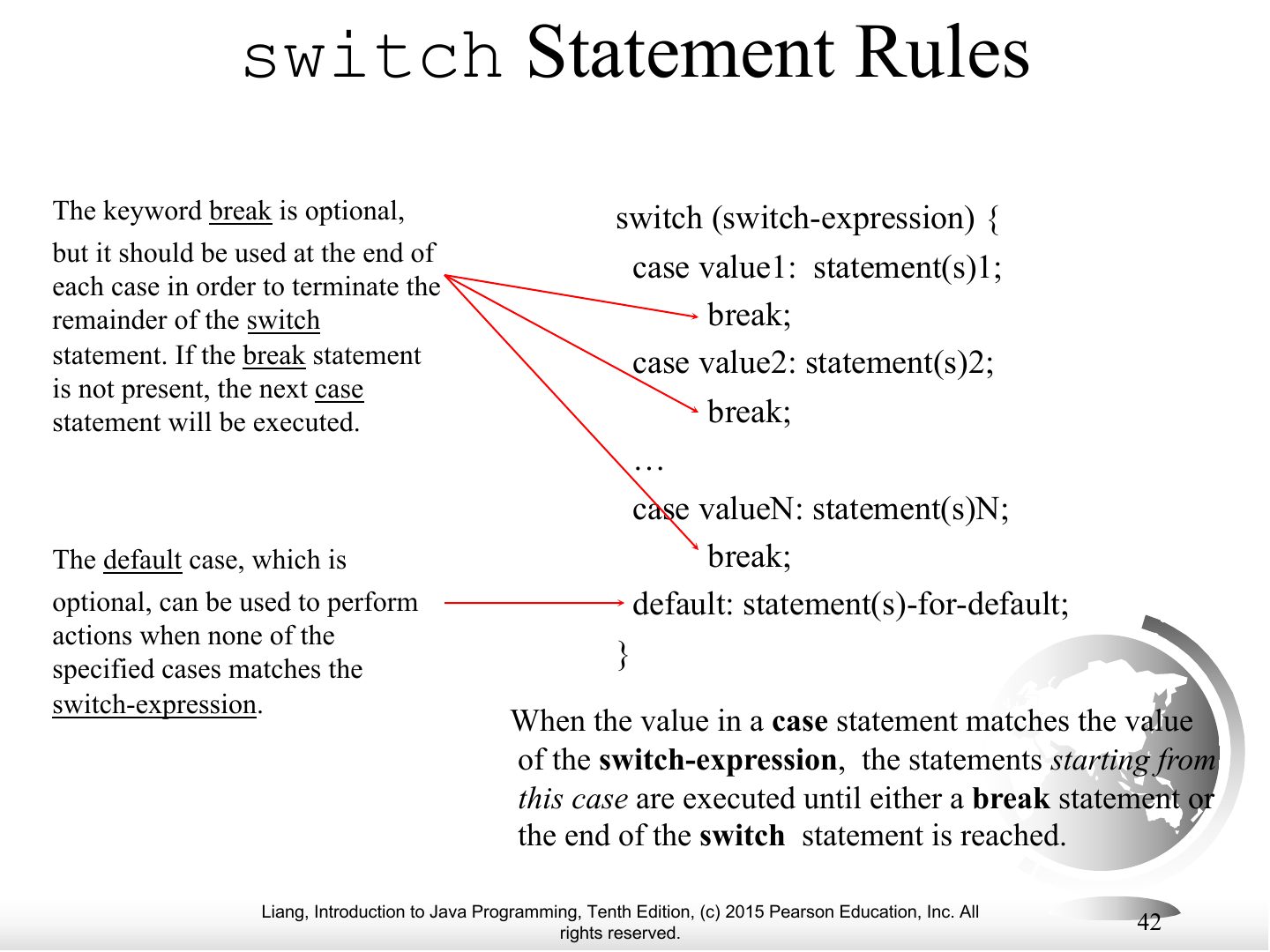
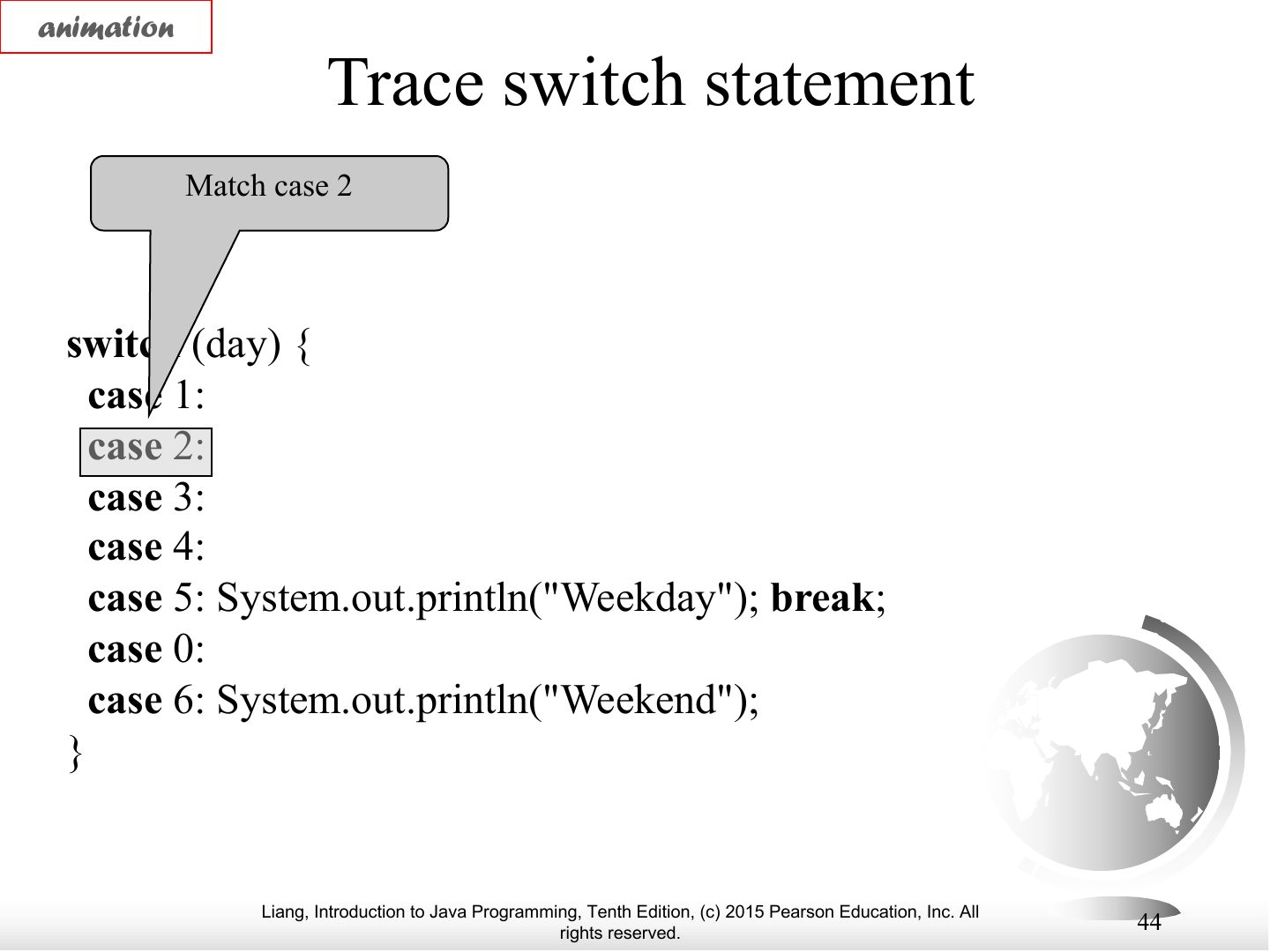
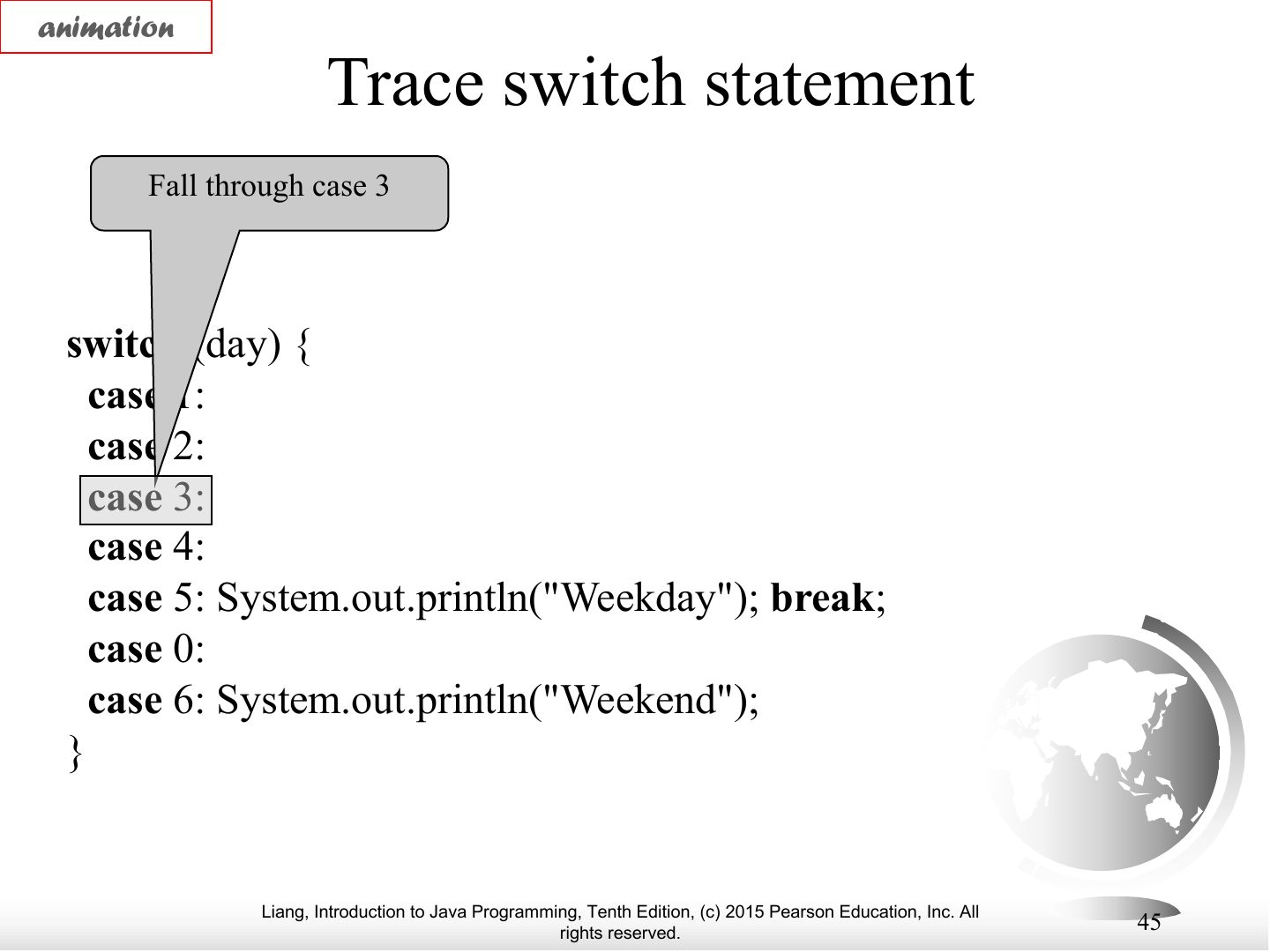
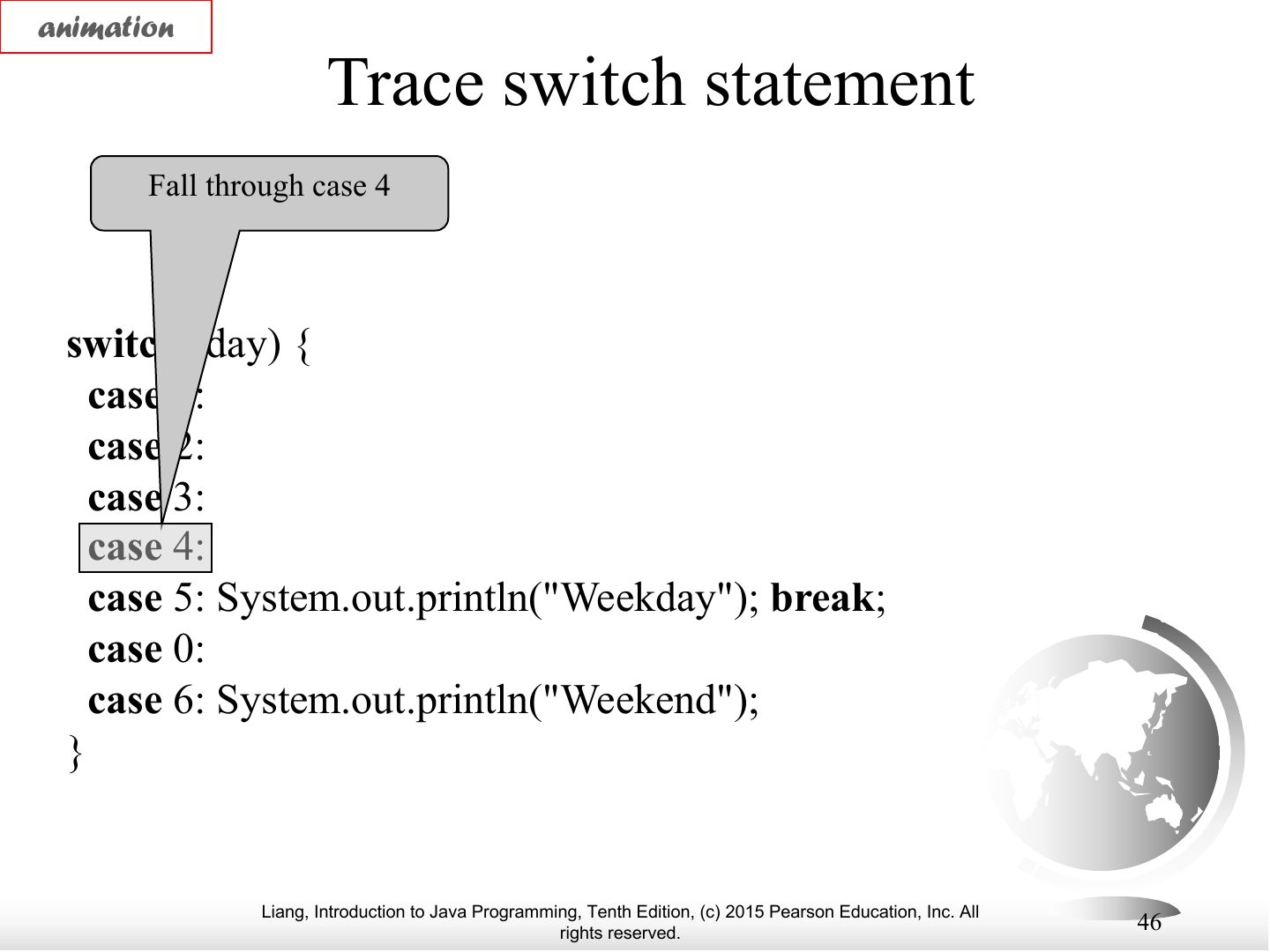
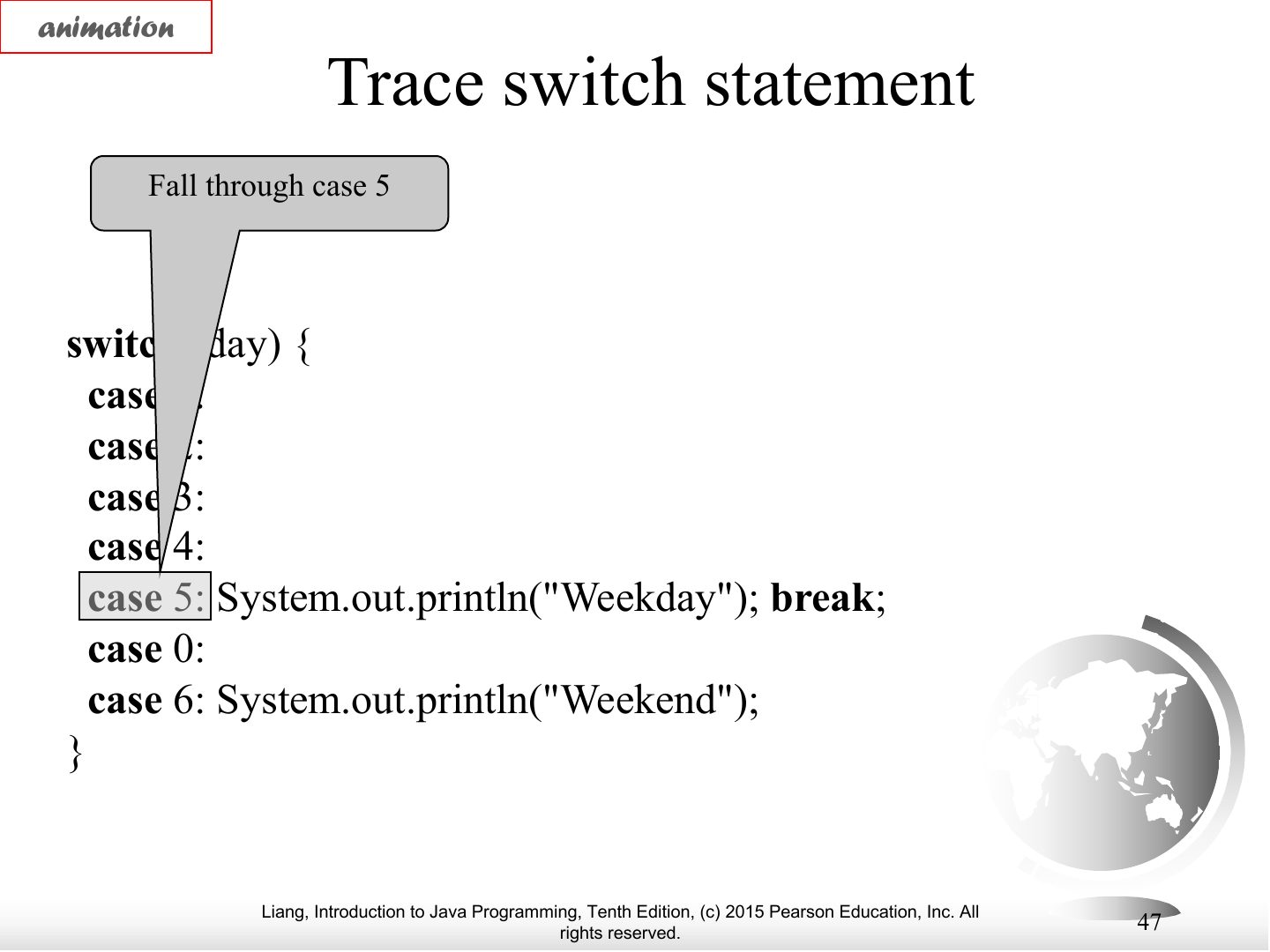
Without break, execution falls through to the next case.
Trap Forgetting break makes the following cases run too (fall-through).
Exam angle
What happens if you omit break in a switch case?
Compare with the model answer
Execution falls through and the statements of the following cases run as well, until a break or the end of the switch.
switch
switch
Notes
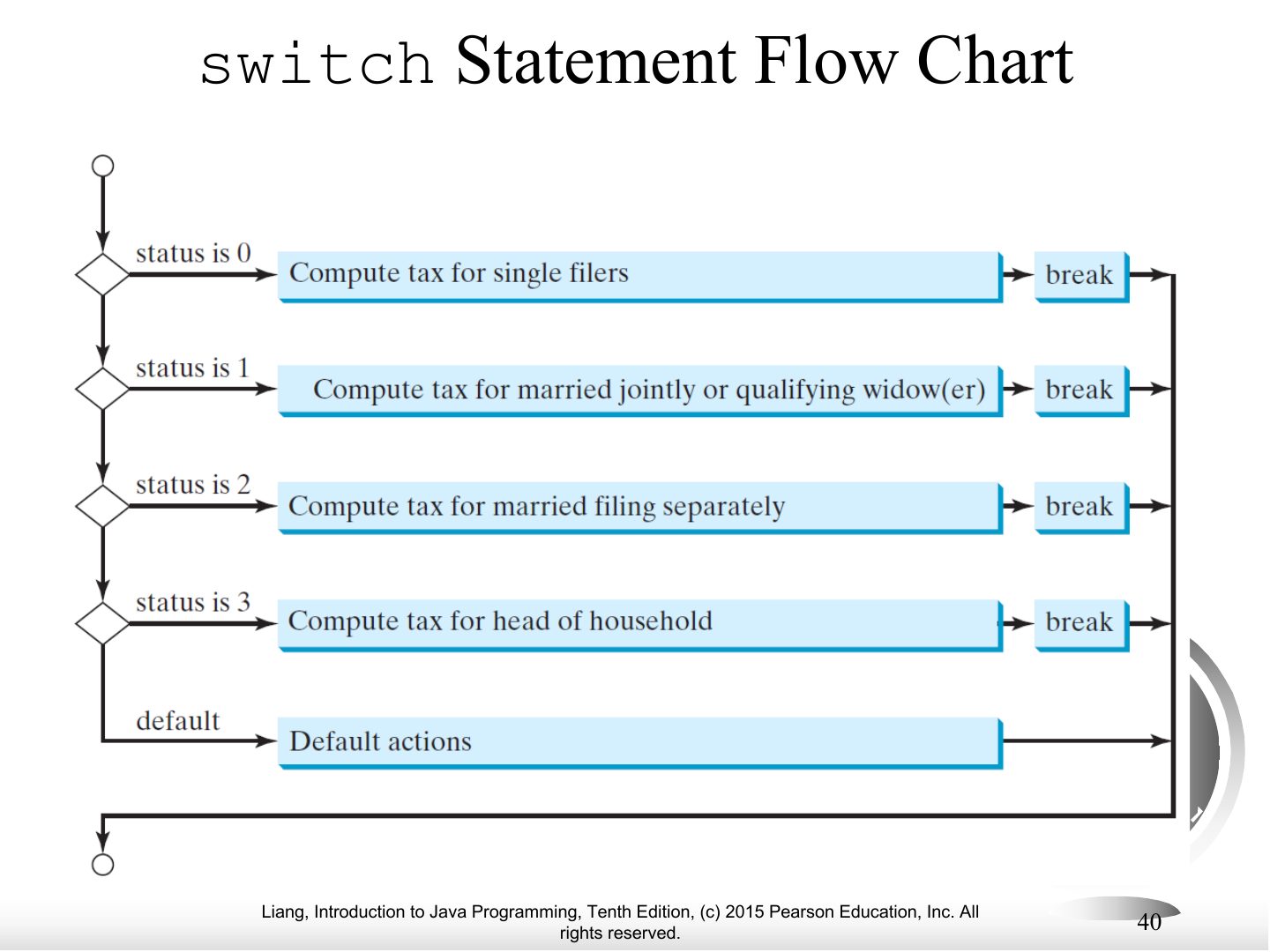
switch flowchart.
animation
animation
Notes
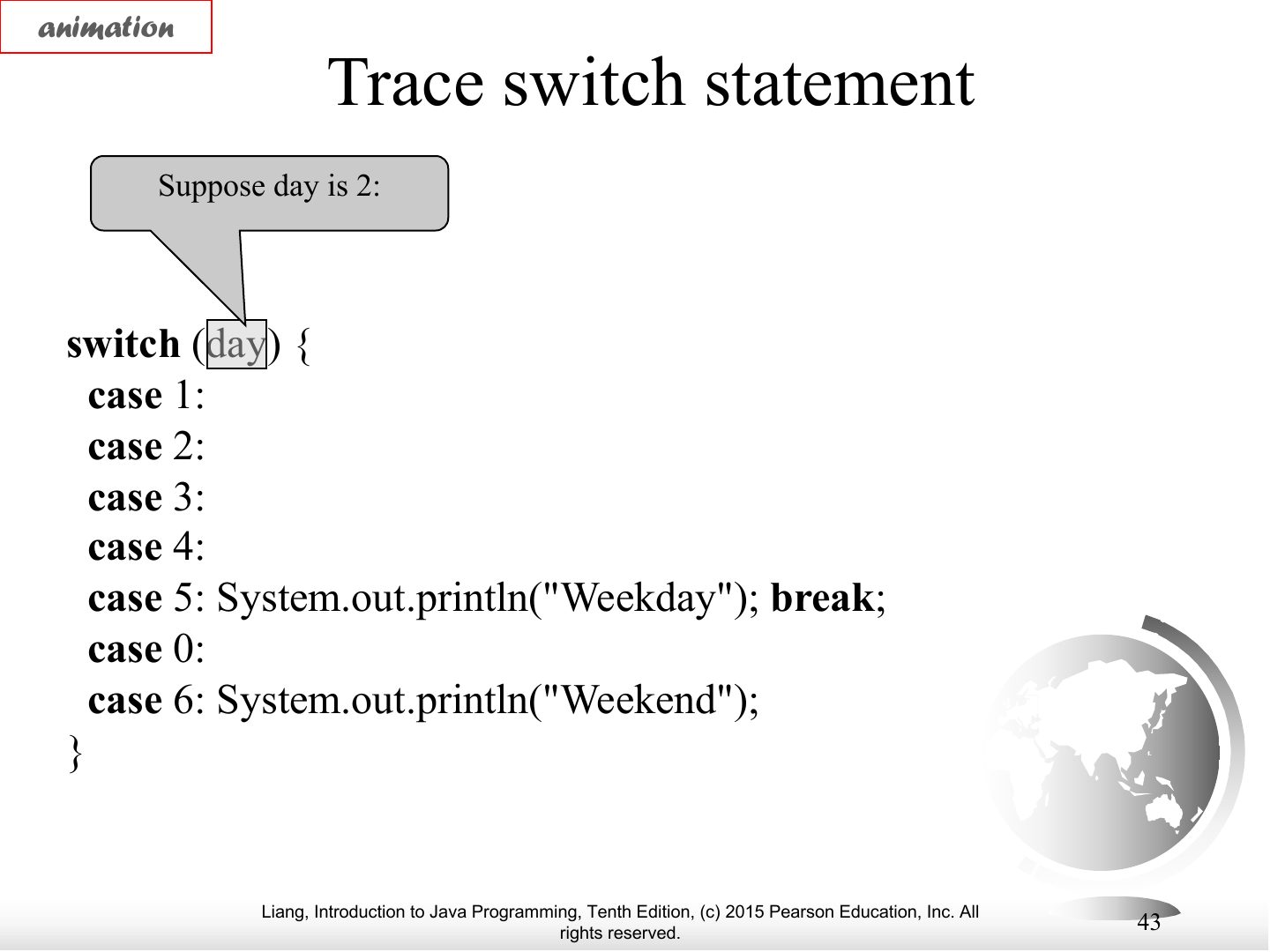
Trace.
animation
Notes
Trace.
animation
Notes
Trace.
animation
Notes
Trace.
animation
Notes
Trace.
animation
Notes
Trace.
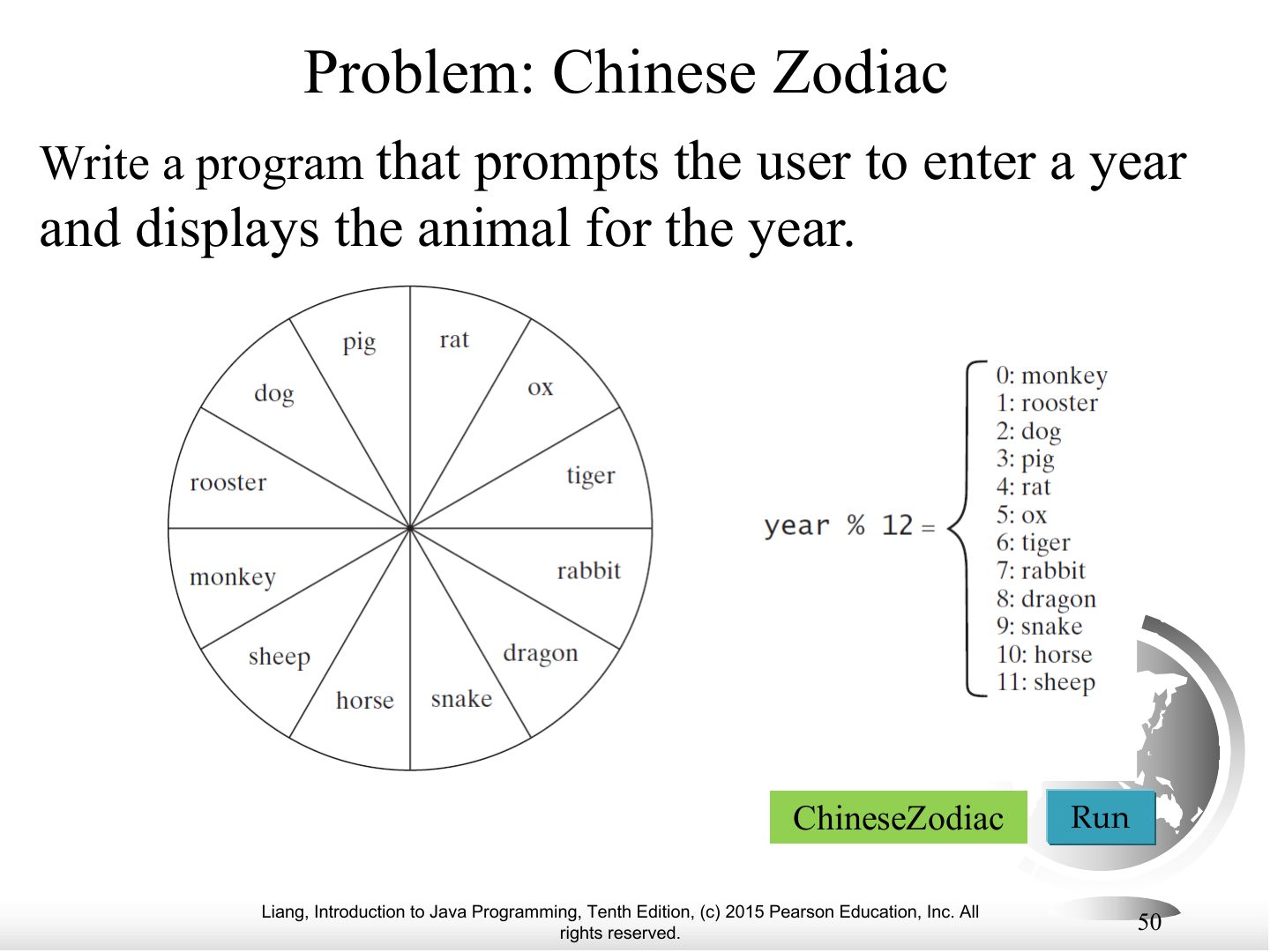
Problem: Chinese Zodiac
Conditional Expressions
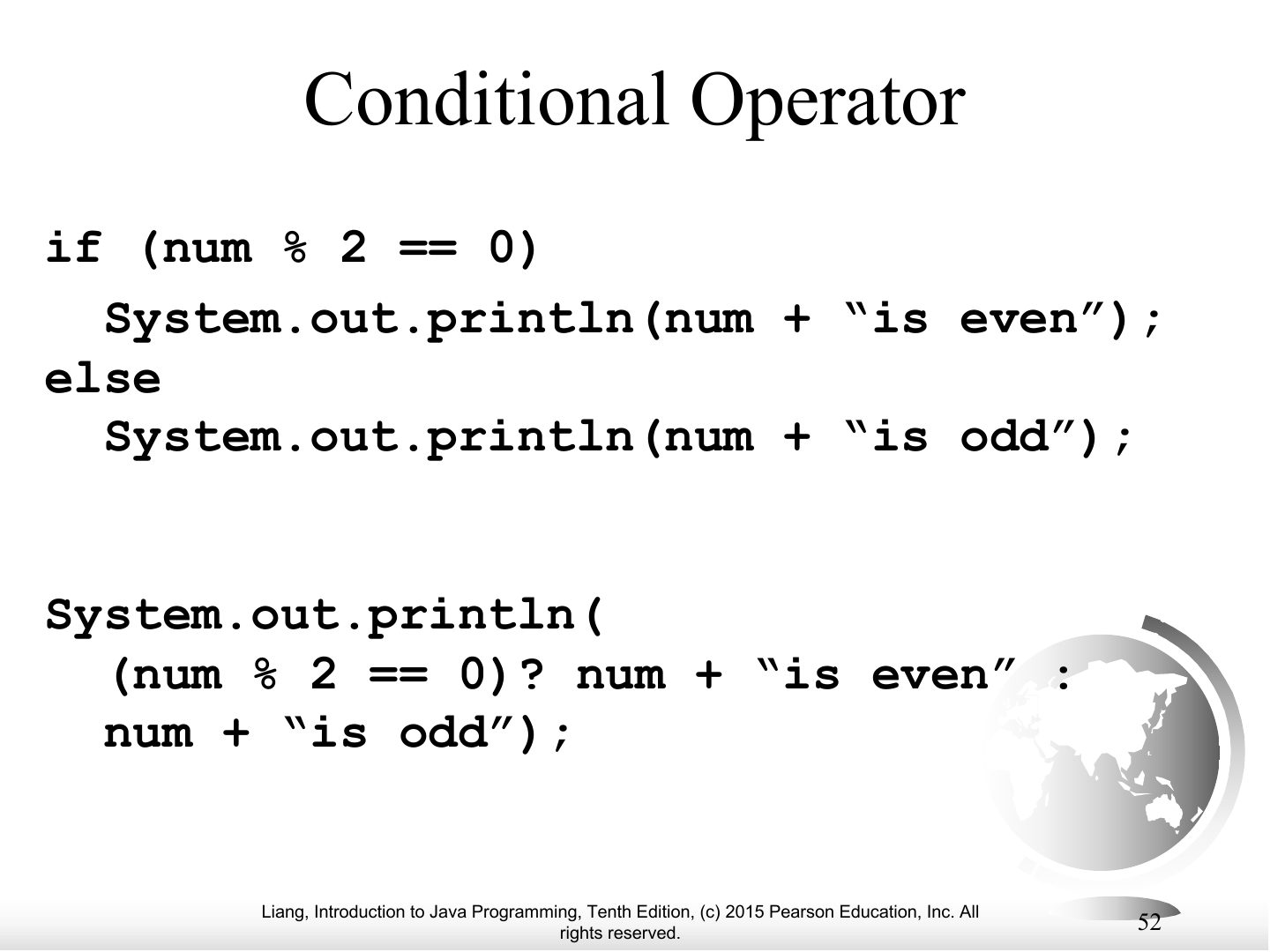
Conditional Operator
Notes
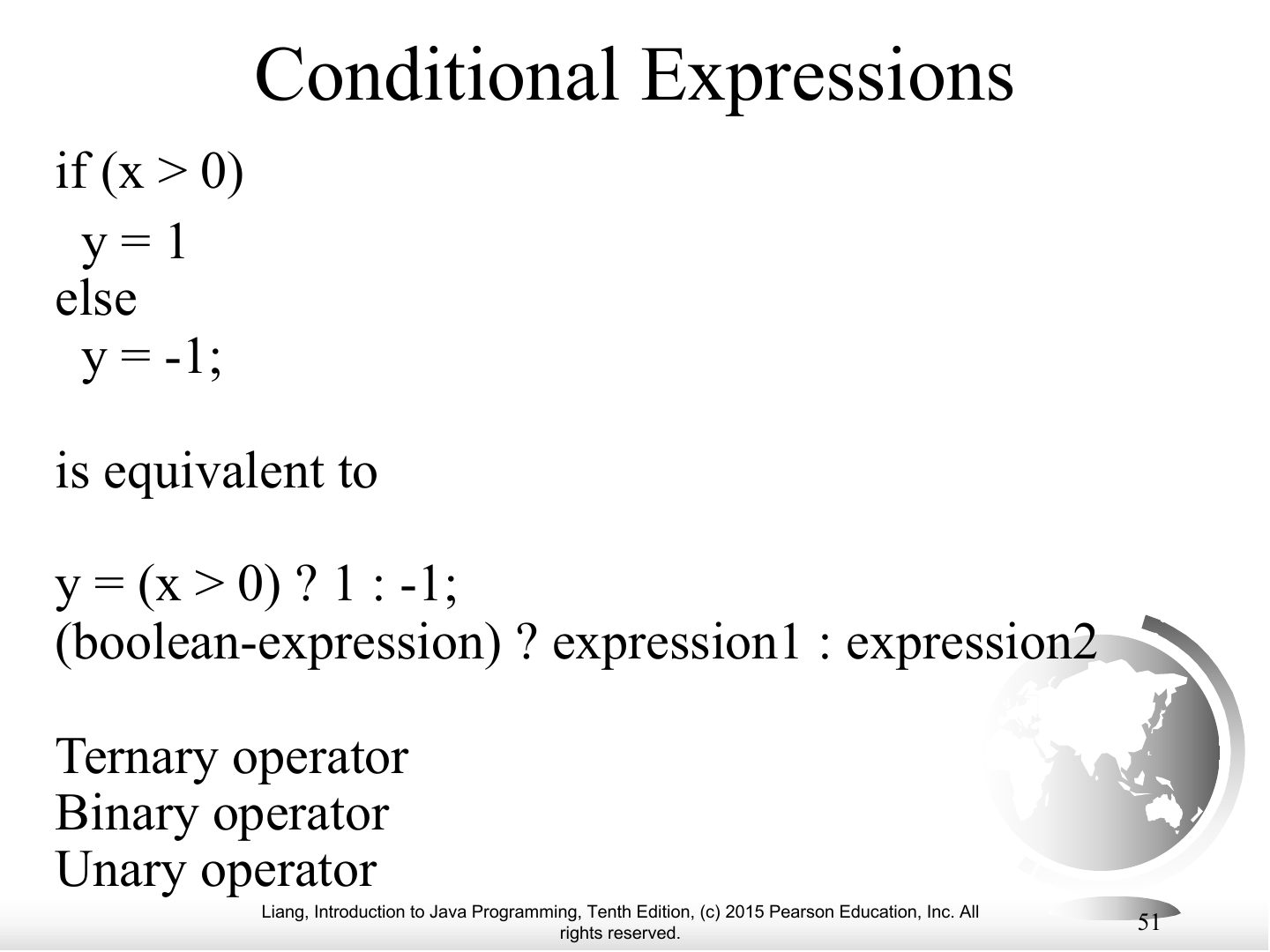
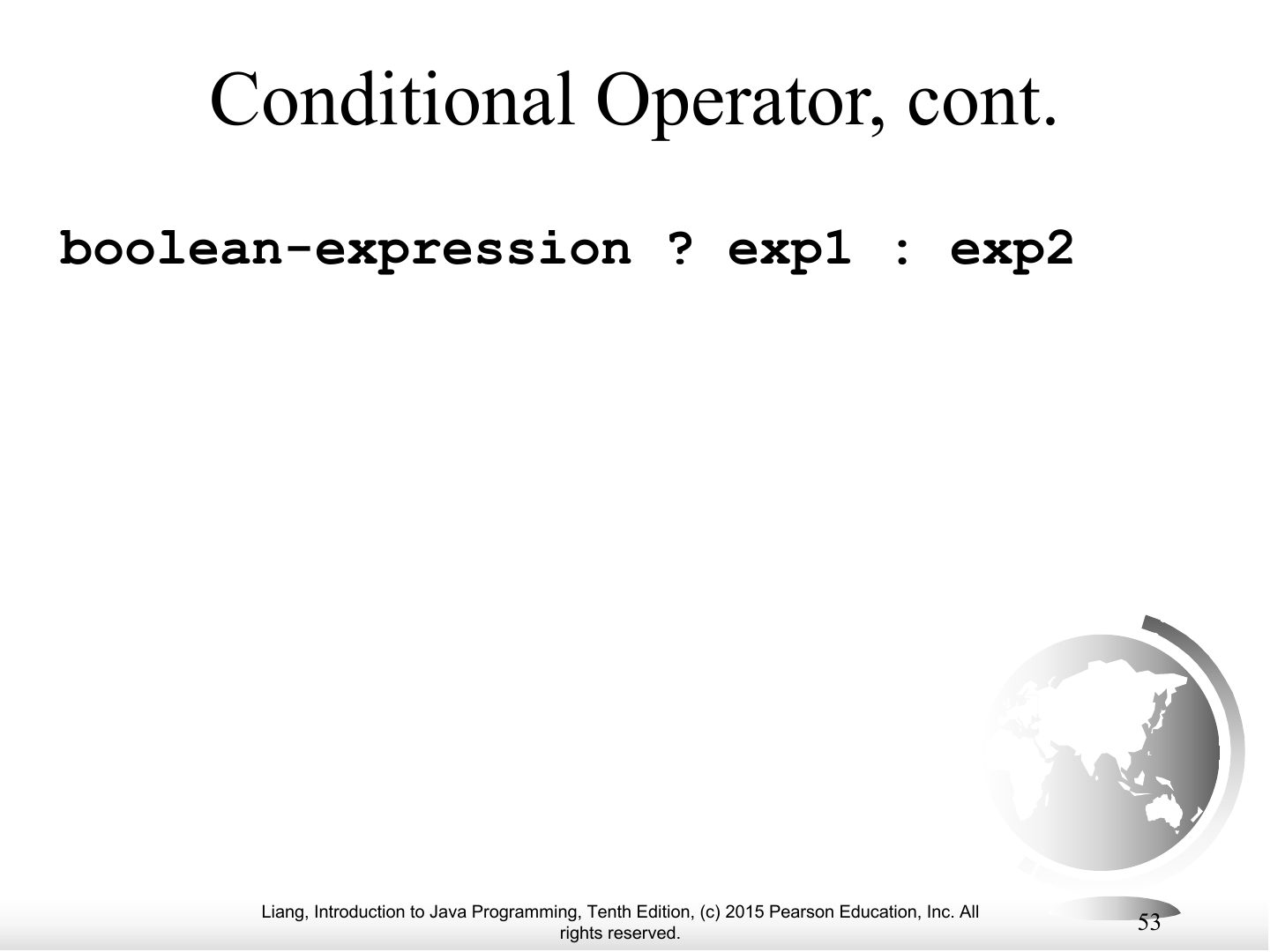
boolean-expression ? exp1 : exp2.
Exam angle
What is max = (a > b) ? a : b; when a = 3, b = 7?
Conditional Operator, cont.
Notes
Example: print even/odd with the conditional operator.
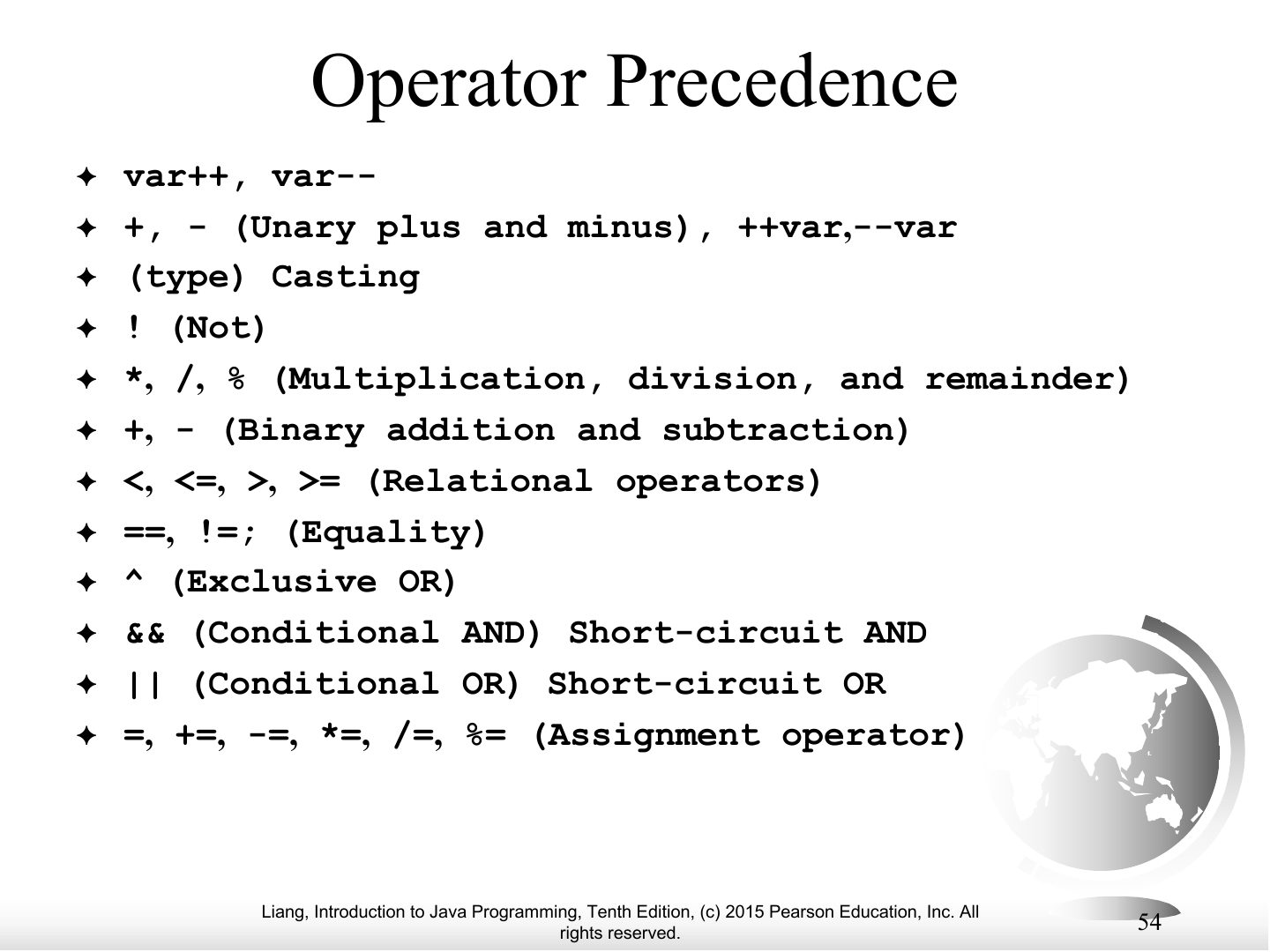
Operator Precedence
Notes
Precedence (high → low): ++/-- , ! , * / % , + − , < <= > >= , == != , ^ , && , || , = op=.
Operator Precedence and Associativity
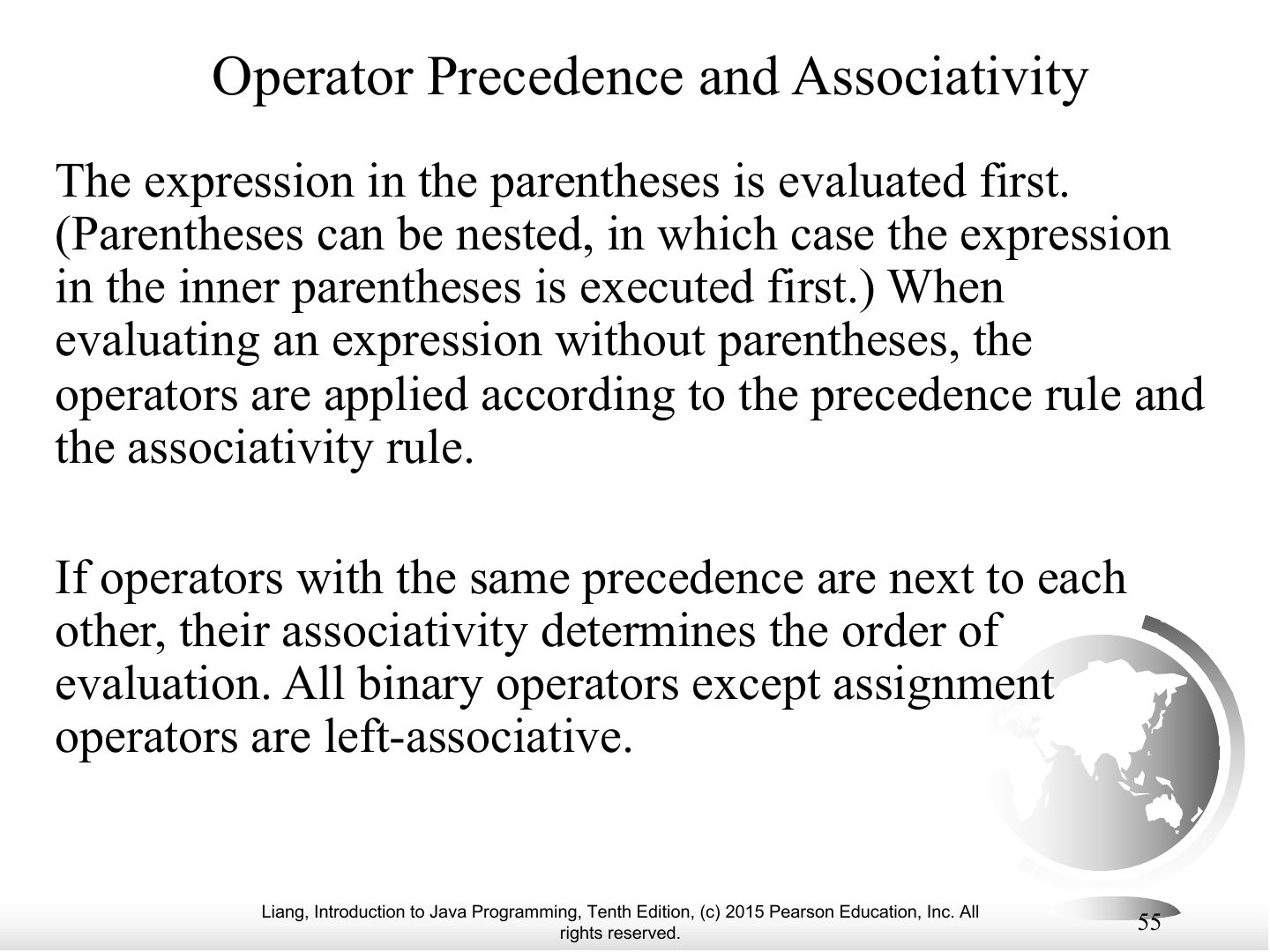
Operator Associativity
Example
Notes
Precedence example worked step by step.
Companion
Notes
Companion material.
Debugging
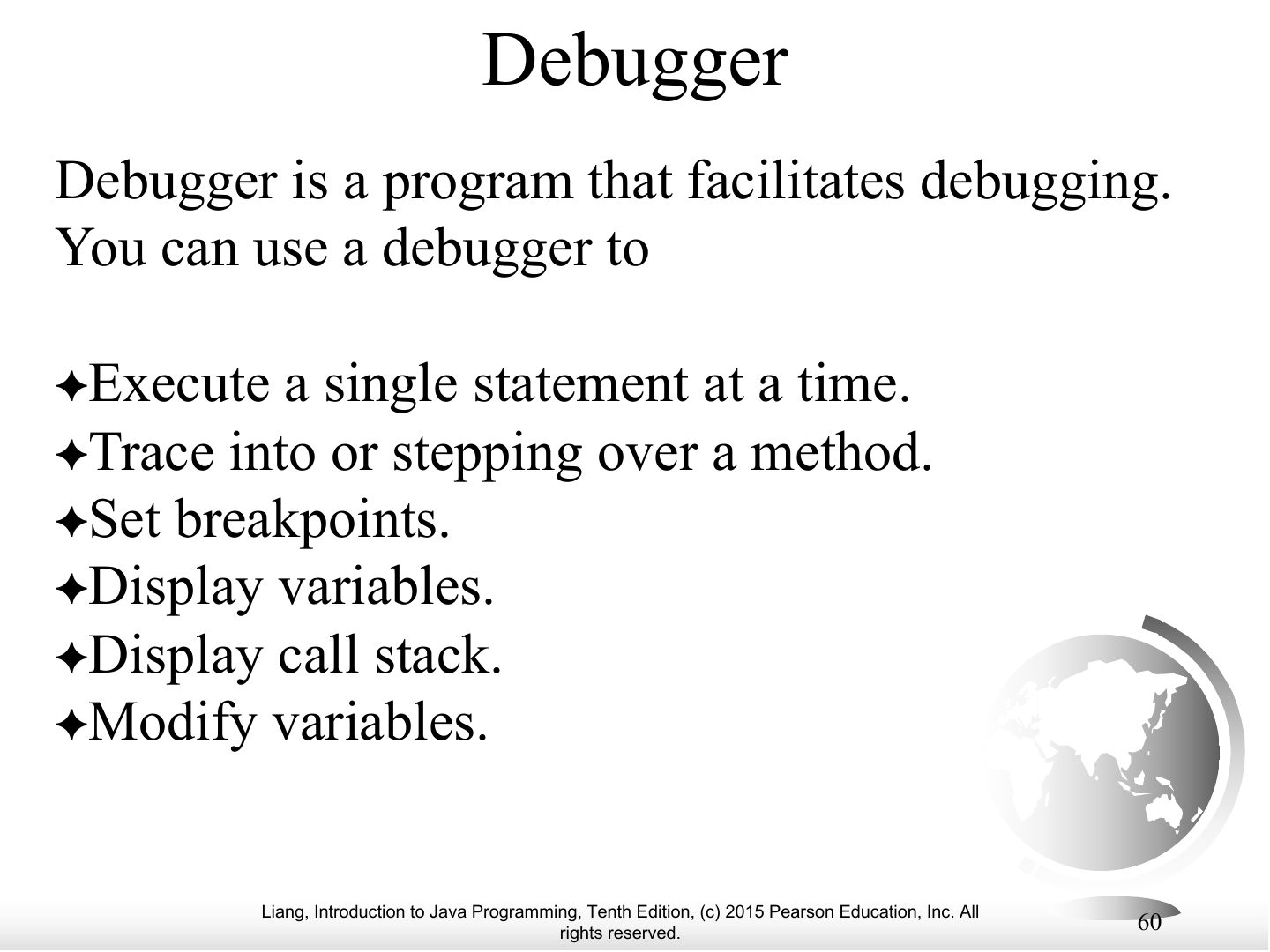
Debugger
Notes
A debugger lets you step through code, set breakpoints and watch variables.
Debugging in NetBeans
Debugging in Eclipse